EP1771151B1 - Composition, comprising hydrofluoric acid, for inhibiting dental erosion - Google Patents
Composition, comprising hydrofluoric acid, for inhibiting dental erosion Download PDFInfo
- Publication number
- EP1771151B1 EP1771151B1 EP05750454A EP05750454A EP1771151B1 EP 1771151 B1 EP1771151 B1 EP 1771151B1 EP 05750454 A EP05750454 A EP 05750454A EP 05750454 A EP05750454 A EP 05750454A EP 1771151 B1 EP1771151 B1 EP 1771151B1
- Authority
- EP
- European Patent Office
- Prior art keywords
- composition
- fluoride
- dental
- concentration
- hydrofluoric acid
- Prior art date
- Legal status (The legal status is an assumption and is not a legal conclusion. Google has not performed a legal analysis and makes no representation as to the accuracy of the status listed.)
- Expired - Lifetime
Links
Images


Classifications
-
- A—HUMAN NECESSITIES
- A61—MEDICAL OR VETERINARY SCIENCE; HYGIENE
- A61K—PREPARATIONS FOR MEDICAL, DENTAL OR TOILETRY PURPOSES
- A61K8/00—Cosmetics or similar toiletry preparations
- A61K8/18—Cosmetics or similar toiletry preparations characterised by the composition
- A61K8/19—Cosmetics or similar toiletry preparations characterised by the composition containing inorganic ingredients
- A61K8/20—Halogens; Compounds thereof
- A61K8/21—Fluorides; Derivatives thereof
-
- A—HUMAN NECESSITIES
- A61—MEDICAL OR VETERINARY SCIENCE; HYGIENE
- A61P—SPECIFIC THERAPEUTIC ACTIVITY OF CHEMICAL COMPOUNDS OR MEDICINAL PREPARATIONS
- A61P1/00—Drugs for disorders of the alimentary tract or the digestive system
- A61P1/02—Stomatological preparations, e.g. drugs for caries, aphtae, periodontitis
-
- A—HUMAN NECESSITIES
- A61—MEDICAL OR VETERINARY SCIENCE; HYGIENE
- A61Q—SPECIFIC USE OF COSMETICS OR SIMILAR TOILETRY PREPARATIONS
- A61Q11/00—Preparations for care of the teeth, of the oral cavity or of dentures; Dentifrices, e.g. toothpastes; Mouth rinses
Definitions
- the present invention comprises a composition for inhibiting dental erosion and a process for the preparation thereof.
- the present invention relates to oral compositions which contain fluoride in suitable concentrations. It has surprisingly been found that diluted hydrofluoric acid applied on dental hard tissues at pH 2.5-4.5 reduces their solubility to up to 90%, when these are subsequently exposed to erosive acids.
- the oral compositions of the present invention are thus formulated to reduce solubility of teeth and prevent or stop development of dental erosions.
- Dental erosions represent loss of dental hard tissues (enamel, dentine and cementum) presumably due to excessive consumption of acidic beverages, juices or fruits.
- strong acid from the stomach may reach the oral cavity and cause severe dental erosions.
- Food and beverages may contain weak inorganic acids which may provide a pH as low as 3 or less on the tooth surfaces, whereas the strong acid from the stomach may yield a pH at 1.5 or below.
- Teeth are very strong and resistant against mechanical wear, but dissolve and lose their integrity at pH levels below pH 5.5.
- Dental erosions are related to dental caries, which are caused by organic acids.
- the organic acids are formed in small amounts by bacteria located on the tooth surfaces (bacterial plaque) during metabolism of dietary carbohydrates, in particular sucrose.
- the carious lesions formed are in areas which are usually covered with dental plaque, i. e. along the gingival margin, aproximally and in occlusal fissures.
- the caries process progresses slowly and is caused by small amounts of acids. pH levels below 5.5 are known to cause cavities over time, and in dental cementum the "critical pH" is as high as pH 6.
- Dental caries was previously a major public health problem in the industrialized world.
- fluoride prophylaxis mainly in the form of fluorinated toothpaste
- dental caries is now mainly found in high risk groups, which constitute about 10% of the population in the industrialized world.
- Dental erosions on the other hand are found in large numbers of teenagers who consume high amounts of acidic beverages. It appears that some individuals have higher resistance against these challenges than others, and all individuals with high consumption of acidic beverages do not contract dental erosions.
- Fluoride toothpaste and other conventional methods designed to stop dental caries are not effective against dental erosions. The mechanism of the inhibition of caries by fluoride, is now well understood.
- fluoride works mainly by re-mineralization. If fluoride ions are available in the plaque during a pH challenge in plaque, the calcium and phosphate released from the plaque become supersaturated with respect to fluorapatite (with contribution by the fluoride ions in plaque), and this solid phase is re-deposited on the tooth surface, thus eliminating the loss of mineral. However, this re-mineralization can only occur at pH above 4.5 and conventional fluoride methods are thus not effective concerning dental erosions which originate at pH levels below 4.5, as discussed above.
- Stannous fluoride represents a special case. It was observed that stannous fluoride in toothpastes and in aqueous solution reduced the solubility of enamel at pH 4.5 ( US patent no 2,946,725 ) and this was thought to be caused by the low pH of the toothpaste, which were due to stannous ions being hydrolized by formation of SnOH and liberation of H+. Stannous pyrophosphate was added as an extra source of Sn ++ ions. A claim of the patent above was that slightly soluble stannous compounds should be added to the toothpaste to obtain a pH between 3.5 and 6. No reference was made to dental erosions. Stannous fluoride toothpastes are still in use but they suffer from stability problems concerning both fluoride and stannous ions, and dental staining is a problem in even new and improved products (Perlich 1995).
- stannous fluoride containing toothpaste which claims to be able to reduce the development of dental erosions (Solidox syreblokk), has recently been introduced on the Norwegian market.
- stannous fluoride preparations have certain disadvantages; their shelf life is limited (due to oxidations of stannous ions), stannous fluoride is expensive, and dental stain is known to develop in some cases during long-term use of stannous fluoride. Titanium tetrafluoride is very expensive, and aqueous solutions exhibit a low pH and contain very high amounts of fluoride. None of these references disclose or teach a composition for inhibiting dental erosion and use thereof with diluted hydrofluoric acid of a pH between 2.5 and 4.5 as active agents against dental erosions.
- NO 155225 B describes attempts to reduce the erosive potential of citric acid and citric acid containing beverages by adding fluoride to beverages.
- US 2,946,725 deals with toothpaste formulations concerning stannous fluoride-containing pastes and is thus not related to the present patent application.
- the pH of the pastes is also not relevant, as it relates to pH caused by hydrolysis of stannous ions and not by addition of diluted hydrofluoric acid.
- US5071637 describes a foamable fluoride composition, comprising hydrofluoric acid and additional fluoride, which is adapted to provide stable foams for use in dental therapy.
- Dental erosions are caused by acid-containing fruits and drinks. Traditional caries preventive measures including use of fluoride, are not effective against dental erosions.
- the invention involves use of diluted hydrofluoric acid, which is a weak acid with a pKa of 3.45. Pre-treatment of teeth with such acid in concentrations of 0.1-1%, has been shown to be able to protect tooth mineral against erosive acids. This effect is probably associated with the presence of un-dissociated HF which is abundant in aqueous solutions of hydrofluoric acid, in particular below the pKa of such acids.
- the present invention provides a composition for inhibiting dental erosion comprising as the sole fluoride source hydrofluorine acid in aqueous solution at a concentration of 0.1% - 1% (w/w), the pH of the aqueous solution being between 2.5 and 4.5.
- the present invention provides a composition comprising hydrofluorine acid in aqueous solution at a concentration of 0.1% - 1% (w/w) for use in inhibiting dental erosion.
- the present invention provides use of a composition comprising hydrofluorine acid in aqueous solution in a concentration of 0.1% - 1% (w/w) for the preparation of a composition for inhibiting dental erosion.
- Un-dissociated HF is thought to be able to get in contact with the mineralized tooth surface and thus get closer to this surface than any charged species of fluoride. It is thereby able to form erosion resistant products on the tooth surface which do not form in the absence of un-dissociated HF. This species is probably able to transfer fluoride to the mineral surface with a minimum of exposure free protons, which can cause damage to such surfaces.
- the invention can be used in product designed to enhance the resistance of teeth against erosive acids such as mouth rinses, gels and toothpastes.
- the present invention is based on a new method by which the solubility of teeth is reduced and thus improved, beyond what is possible by use of the methods outlined above. It has now been discovered that diluted aqueous solutions of hydrofluoric acid reduces the solubility of teeth against erosive acids, markedly, without having any of the disadvantages connected with the above methods.
- the composition for inhibiting dental erosion comprises an aqueous solution of hydrofluoric acid in a concentration of 0.1% - 1% with a pH between 2.5 and 4.5.
- the said composition comprises at least one of a humectant, a binder, a thickening agent, one or more abrasive agents, a liquid phase including a humectant, a surfactant and a flavouring.
- the abrasive agent is any one of silica, xerogels, hydrogels and aerogels.
- the abrasive agent is silica in a concentration of 3- 75% by weight.
- the liquid phase of the composition comprises the humectant in a concentration of 10-90% by weight of the composition.
- the humectant is chosen from cellulose, xanthan gum, sorbitol, glycerol, propylene glycol, polypropylene and polyethylene glycol.
- the binder and the thickening agent is any one of sodium carboxymethyl cellulose, hydroxyethyl cellulose, xanthan gum, finely divided silica, Irish moss and synthetic hectorities in a concentration of 0.5 - 10% by weight of the composition.
- the composition comprises an anionic surfactant.
- the composition for inhibiting dental erosion is prepared by a process comprising the steps of adding an aqueous solution of hydrofluoric acid in a concentration of 0.1% - 1% to other components of the composition.
- the pH of the aqueous solution is between 2.5 and 4.5.
- the composition comprises at least one of a humectant, a binder, a thickening agent, one or more abrasive agents, a liquid phase including a humectant, a surfactant and a flavouring.
- the abrasive agent is any one of silica, xerogels, hydrogels and aerogels, and the abrasive agent is silica in a concentration of 3 % - 75% by weight.
- the liquid phase of the composition comprises the humectant in a concentration of 10-90% by weight of the composition.
- the humectant is chosen from cellulose, xanthan gum, sorbitol, glycerol, propylene glycol, polypropylene and polyethylene glycol.
- the binder and the thickening agent is any one of sodium carboxymethyl cellulose, hydroxyethyl cellulose, xanthan gum, finely divided silica, Irish moss and synthetic hectorities in a concentration of 0.5 10% by weight of the composition.
- the surfactant is an anionic surfactant.
- the present invention describes a composition comprising an aqueous solution of hydrofluoric acid in a concentration of 0.1 - 1% for use in inhibiting dental erosion.
- compositions consisting of diluted hydrofluoric acid pH 2.5 - 4.5 decrease the solubility of dental enamel in erosive acids ( hydrochloric acid at pH 2.2 or citric acid pH 3.5) markedly (to 80% or more), even after a brief exposure of human teeth to the said compositions, before subsequent exposure to erosive acids.
- erosive acids hydrochloric acid at pH 2.2 or citric acid pH 3.5
- these compositions provide protection even against severe dental erosions caused by eating disorder whereby strong HCl may reach the oral cavity and the teeth.
- These compositions also protect against any organic or inorganic weak acids which may be present in beverages or fruits.
- the compositions include dentifrices, gels for topical application, lozenges and liquids.
- Aqueous solutions of hydrofluoric acid are a weak acid which buffers between pH 3 and 4 and has a Pka of 3.45.
- the present invention is based on the observation that HF between pH3 and pH 4 has unique properties by providing dental mineral tissues (i.e. enamel dentine and cementum) with a surface layer which forms immediately, and protects the mineralized tissues against erosive acids.
- This layer consists of calcium fluoride-like material which is particularly resistant against erosive acids. Possibly because it is formed under acidic condition.
- the erosive challenge was 0.1 M citric acid of pH 2.2, for 30 min., and human teeth were used.
- the oral compositions of the present invention may contain orally acceptable ingredients in conventional amounts, depending upon the final form of the composition, i. e. whether a dentifrice, a gel or a lozenge.
- a dentifrice will usually comprise an abrasive cleaning agent in an amount of from 3-75% by weight.
- Suitable abrasive cleaning agents are particulate aluminas, silica, xerogels, hydrogels and aerogels, and precipitated particulate silicas, calcium pyrophosphate, insoluble sodium metaphosphate, calcium carbonate, dicalcium orthophosphate and several others.
- Dentifrices usually contain liquid phase comprising water and humectants in amounts of 10-99 % by weight.
- Typical humectants are sorbitol, glycerol, propylene glycol, polypropylene glycol and many others.
- a wide variety of thickening agents or binders are used in dentifrices including sodium carboxyl methyl cellulose, hydroxyethyl cellulose, finely devided silica, xanthan gum, Irish moss and synthetic hectorites.
- the amount of binders will usually range from 0.5-10% by weight of the dentifrice.
- a further conventional ingredient of a dentifrice is an organic surfactant.
- Anionic surfactant is usually preferred because of their good foaming properties.
- Sodium lauryl sulphate is usually chosen, but alkyl aryl sulphates, especially sodium dodecyl benzene sulphonate can be used in the present invention.
- compositions of the invention including flavouring agents, sweetening agent such as sodium saccharin, and whitening agent such as titanium dioxide, anti-plaque agents, and agents for adjusting the pH of the dentifrice, which may range from 2.8 - 4.5.
- agents for acidification include citric- , acetic- or maleic acids and their buffers.
- Weak inorganic acids such as phosphoric or fluoride acids, and strong acids such as hydrochloric acid and its buffers.
- a gel for topical application according to the present invention contains from 1 % to 0.1 % F - , depending on whether the gel is designed for weekly or daily use.
- the gel contains a thickening agent such as water soluble salts such as sodium carboxy methyl cellulose. Natural gums like gum arabic can also be used as thickeners in gels. The concentration of thickener is usually from 1-2%.
- a sweetening agent such as xylitol or saccharin can be added in amounts of 5-10% or 0.2-0.3 % respectively, and a flavouring agent can also be present.
- a lozenge according to the present invention should contain 0.25 mg F - and 100 mg of citric acid, and in addition 400 mg of xylitol, a flavouring agent and necessary constituents up to 0.6g.
- Extracted teeth were cleaned and pre-treated for 5 min with 0.01 % HCl to eliminate differences in solubility between the individual teeth, and then treated with diluted hydrofluoric acid.
- the teeth (usually 6 parallels) were then exposed to 0.1 M citric acid or 0.01 % HCl for 30 min, and the release of calcium into the acid measured by atomic absorption.
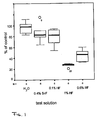
- the teeth treated with hydrofluoric acid were compared with control teeth (usually 6) which were only exposed to water. The results are given in Fig 1 . It can be seen that treatment with 0.1 % hydrofluoric acid gave a solubility reduction of 20 % of the control, whereas 1% hydrofluoric acid gave a solubility reduction of close to 80 %.
- Teeth treated with 0.4 % of stannous fluoride was included for comparison.
- Fig. 1 shows the results of whole teeth treated with 0.01 M HCl
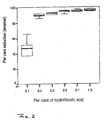
- Fig 2 , 3 and 4 shows the result of etching with 0.1 % citric acid on enamel, dentine and cementum.
- Treatment with low concentrations of aqueous solutions of HF cause major reductions in solubility of the tooth samples.
- This example demonstrates that diluted hydrofluoric acid (0.1-1.0%) reduces the solubility of enamel (see figure 2 ), dentine (see figure 3 ) and cementum (see figure 4 ) in 0.1 M citric acid.
- the teeth were cut in two at the enamel cementum junction and the exposed dentine covered by acid resistant varnish. Dentine samples were made by removing enamel from tooth crowns and varnished as described above. The experiments were performed in 6 parallels. The tooth samples were first exposed to 0.1 M citric acid for 30 min. The teeth were then washed in distilled water and dried, and then treated with the respective dilutions of hydrofluoric acid for 10 min. The teeth were individually treated and each tooth served as its own control. The teeth were again washed and dried and then treated with 0.1 M citric acid for the second time.
- the solubility of the tooth samples was assessed by measuring the concentration of calcium in the citric acid. A reduction in calcium concentration between the first and second citric acid samples was assumed to be caused by the prophyactic treatment with hydrofluoric acid dilutions.
- a gel having the following composition was made: Ingredient % Silica thickener 50% Xanthan gum 0.1 % Sodium saccharin 0.23% Xylitol 5% Cardemom oil 1% Hydrofluoric acid 0.3% Water ad 100%
- a dentifrice having the following composition was made: Silica abrasive 60 % Sorbitol syrup (70% sol) 25 % Xanthan gum 1 % Sodium saccharide 0.25% Sodium lauryl sulphate 1.0% Flavour (Cardedmom oil) 1.0% Hydrofluoric acid 0.1% Water ad 100%
Landscapes
- Health & Medical Sciences (AREA)
- Life Sciences & Earth Sciences (AREA)
- Veterinary Medicine (AREA)
- Public Health (AREA)
- General Health & Medical Sciences (AREA)
- Animal Behavior & Ethology (AREA)
- Chemical & Material Sciences (AREA)
- Inorganic Chemistry (AREA)
- Birds (AREA)
- Epidemiology (AREA)
- Oral & Maxillofacial Surgery (AREA)
- Organic Chemistry (AREA)
- Pharmacology & Pharmacy (AREA)
- Nuclear Medicine, Radiotherapy & Molecular Imaging (AREA)
- Medicinal Chemistry (AREA)
- General Chemical & Material Sciences (AREA)
- Chemical Kinetics & Catalysis (AREA)
- Bioinformatics & Cheminformatics (AREA)
- Engineering & Computer Science (AREA)
- Cosmetics (AREA)
Abstract
Description
- The present invention comprises a composition for inhibiting dental erosion and a process for the preparation thereof.
- The present invention relates to oral compositions which contain fluoride in suitable concentrations. It has surprisingly been found that diluted hydrofluoric acid applied on dental hard tissues at pH 2.5-4.5 reduces their solubility to up to 90%, when these are subsequently exposed to erosive acids. The oral compositions of the present invention are thus formulated to reduce solubility of teeth and prevent or stop development of dental erosions.
- Dental erosions represent loss of dental hard tissues (enamel, dentine and cementum) presumably due to excessive consumption of acidic beverages, juices or fruits. In some cases concerning subjects with eating disturbances, strong acid from the stomach may reach the oral cavity and cause severe dental erosions. Food and beverages may contain weak inorganic acids which may provide a pH as low as 3 or less on the tooth surfaces, whereas the strong acid from the stomach may yield a pH at 1.5 or below.
- Teeth are very strong and resistant against mechanical wear, but dissolve and lose their integrity at pH levels below pH 5.5. Dental erosions are related to dental caries, which are caused by organic acids. However, in the case of caries the organic acids are formed in small amounts by bacteria located on the tooth surfaces (bacterial plaque) during metabolism of dietary carbohydrates, in particular sucrose. The carious lesions formed are in areas which are usually covered with dental plaque, i. e. along the gingival margin, aproximally and in occlusal fissures. The caries process progresses slowly and is caused by small amounts of acids. pH levels below 5.5 are known to cause cavities over time, and in dental cementum the "critical pH" is as high as
pH 6. This is due to the chemical properties of cementum, which contains more carbonate than enamel and thus has a higher solubility. The caries process produces cavities i.e. localized loss of hard tissue underneath dental plaque, whereas dental erosions involve loss of hard dental tissue over whole surfaces. Dental erosions are caused by acids originating from the diet (or from the stomach) and involve most frequently the lingual and buccal aspects of the incisors and the occlusal surfaces of molars, mainly the mandibular molars. - Dental caries was previously a major public health problem in the industrialized world. The use of fluoride prophylaxis, mainly in the form of fluorinated toothpaste, has improved the situation markedly, and dental caries is now mainly found in high risk groups, which constitute about 10% of the population in the industrialized world. Dental erosions on the other hand are found in large numbers of teenagers who consume high amounts of acidic beverages. It appears that some individuals have higher resistance against these challenges than others, and all individuals with high consumption of acidic beverages do not contract dental erosions. Fluoride toothpaste and other conventional methods designed to stop dental caries, are not effective against dental erosions. The mechanism of the inhibition of caries by fluoride, is now well understood. It was originally thought that fluoride worked solely by reducing the solubility of enamel at the pH related to dental caries (pH 5.5-4.5). However, it is now realized that fluoride works mainly by re-mineralization. If fluoride ions are available in the plaque during a pH challenge in plaque, the calcium and phosphate released from the plaque become supersaturated with respect to fluorapatite (with contribution by the fluoride ions in plaque), and this solid phase is re-deposited on the tooth surface, thus eliminating the loss of mineral. However, this re-mineralization can only occur at pH above 4.5 and conventional fluoride methods are thus not effective concerning dental erosions which originate at pH levels below 4.5, as discussed above.
- Prior art fluoride methods are, with few exception, designed as prophylaxis for dental caries. At a certain time it was believed that fluoride inhibited caries by reducing the solubility of dental enamel.
- It has now been convincingly demonstrated that this is not an important aspect of the mechanism of fluoride in caries prophylaxis. It was shown that shark enamel, which consists of solid fluorapatite, showed caries lesions when introduced into the human oral cavity in in situ experiments in a high caries challenge regimen. Many experiments have been performed to reduce enamel solubility, usually at pH 4.5. Another frequently used experimental design was to measure acquisition of fluoride on the surface and in the depth of dental enamel. However, it was observed that no relationship existed between the acquisition of surface fluoride by a method, and its clinical effect (Murrey). It was reported that an acidulated phosphofluoride preparation was able to deposit high amounts of fluoride in the enamel surface, but no corresponding convincing improved caries inhibition was experienced, although some positive results were reported. However, no reference was given to a composition for inhibiting dental erosions. This problem was previously related to people (mostly farmhands) that worked on orange or lemon plantations and were supposed to eat large quantities of such fruits.
- Stannous fluoride represents a special case. It was observed that stannous fluoride in toothpastes and in aqueous solution reduced the solubility of enamel at pH 4.5 (
US patent no 2,946,725 ) and this was thought to be caused by the low pH of the toothpaste, which were due to stannous ions being hydrolized by formation of SnOH and liberation of H+. Stannous pyrophosphate was added as an extra source of Sn ++ ions. A claim of the patent above was that slightly soluble stannous compounds should be added to the toothpaste to obtain a pH between 3.5 and 6. No reference was made to dental erosions. Stannous fluoride toothpastes are still in use but they suffer from stability problems concerning both fluoride and stannous ions, and dental staining is a problem in even new and improved products (Perlich 1995). - In vitro studies showed that solutions of stannous fluoride showed decreasing pH upon storage, and that lowered pH reduced the solubility reduction of enamel (Muhler J.dent Res.). Büyükyilmaz et al. (1997) reported that pre-treatment of teeth with 1-4% aqueous solutions of titanium tetrafluoride inhibited the solubility of enamel in hydrochloric acid. The effect was suggested to be due to formation of a titanium containing "glaze" on the surface of the enamel.
US patent 5,004,597 represents an improvement where the stability of fluoride and stannous ions in toothpaste are improved. A stannous fluoride containing toothpaste which claims to be able to reduce the development of dental erosions (Solidox syreblokk), has recently been introduced on the Norwegian market. However, stannous fluoride preparations have certain disadvantages; their shelf life is limited (due to oxidations of stannous ions), stannous fluoride is expensive, and dental stain is known to develop in some cases during long-term use of stannous fluoride. Titanium tetrafluoride is very expensive, and aqueous solutions exhibit a low pH and contain very high amounts of fluoride. None of these references disclose or teach a composition for inhibiting dental erosion and use thereof with diluted hydrofluoric acid of a pH between 2.5 and 4.5 as active agents against dental erosions. - NO
155225 B - Hughes, J.A.et al. "The protective effect of fluoride treatments against enamel erosion in vitro " J. of Oral Rehabilitation, 2004,31; 357-363 describes the effect of addition of sodium fluoride to citric acid or citric acid-based drinks on the erosion, and also addition of several commercial fluoride products. The authors found a slight effect by adding fluoride to citric acid or corresponding beverages, but these differences were not statistically significant. The acidulated gel which showed some beneficial effect on erosion, had a pH of 5.15, and can thus not relate to the present patent application. Citric acid with addition of fluoride was not significantly different from citric acid without fluoride (Table 3). The paper cites a paper by Larsen and Richards Caries Res 2002: 36-73: Fluoride is unable to reduce dental erosions from soft drinks. The authors conclude in their discussion "differences in erosion between with and without fluoride were small and most did not achieve statistical significance".
- Van Rijkom, H. et. al."Erosion-inhibiting effect of sodium fluoride and titanium tetrafluoride treatment as in vitro" Eur. J. Oral Sci, 2003,111;253-257 concerns the erosive inhibiting effect of 1% neutral NaF treatment and a 4% solution of TiF4, Bovine teeth were pre-treated with either NaF or TiF4 and then exposed to 50 mM citric acid which contained calcium and phosphate and had a pH of 3. The results showed that the NaF reduced the mean lesion depth from 4.5 um to 3.5 um after 30 min of exposure, whereas TiF4 caused a reduction to 2.7 um. This is a moderate inhibition considering the mild erosion regime used. The differences were however statistically significant. TiF4 is an agent of academic interest, but it has no practical use due to a very high price. The TiF4 is furthermore very hygroscopic and difficult to handle. Solutions of TiF4 have a pH of about 1.5.
- Sorvari, R. et al, "Effect of fluoride varnish and solution on enamel erosion in vitro," Caries Res., 1994, 28; 227-232 examine the effect of 24h treatment with 1.2% NaF and of the commercial varnish Duraphat on the hardness of enamel after subsequent exposure of the enamel samples to a cola-drink of pH 2.6 for 4 min. Both treatments improved the treatment compared with an untreated control. To expose teeth to 1.2% F- for 24 h Is not a practical procedure, but is theoretically interesting. The effect should be seen in the light of the very light erosive power of a cola drink and the short exposure time.
-
US 2,946,725 deals with toothpaste formulations concerning stannous fluoride-containing pastes and is thus not related to the present patent application. The pH of the pastes is also not relevant, as it relates to pH caused by hydrolysis of stannous ions and not by addition of diluted hydrofluoric acid. -
US5071637 describes a foamable fluoride composition, comprising hydrofluoric acid and additional fluoride, which is adapted to provide stable foams for use in dental therapy. - Dental erosions are caused by acid-containing fruits and drinks. Traditional caries preventive measures including use of fluoride, are not effective against dental erosions. The invention involves use of diluted hydrofluoric acid, which is a weak acid with a pKa of 3.45. Pre-treatment of teeth with such acid in concentrations of 0.1-1%, has been shown to be able to protect tooth mineral against erosive acids. This effect is probably associated with the presence of un-dissociated HF which is abundant in aqueous solutions of hydrofluoric acid, in particular below the pKa of such acids.
- According to one aspect, the present invention provides a composition for inhibiting dental erosion comprising as the sole fluoride source hydrofluorine acid in aqueous solution at a concentration of 0.1% - 1% (w/w), the pH of the aqueous solution being between 2.5 and 4.5.
- According to another aspect the present invention provides a composition comprising hydrofluorine acid in aqueous solution at a concentration of 0.1% - 1% (w/w) for use in inhibiting dental erosion.
- According to a further aspect, the present invention provides use of a composition comprising hydrofluorine acid in aqueous solution in a concentration of 0.1% - 1% (w/w) for the preparation of a composition for inhibiting dental erosion.
- Un-dissociated HF is thought to be able to get in contact with the mineralized tooth surface and thus get closer to this surface than any charged species of fluoride. It is thereby able to form erosion resistant products on the tooth surface which do not form in the absence of un-dissociated HF. This species is probably able to transfer fluoride to the mineral surface with a minimum of exposure free protons, which can cause damage to such surfaces. The invention can be used in product designed to enhance the resistance of teeth against erosive acids such as mouth rinses, gels and toothpastes.
- The present invention is based on a new method by which the solubility of teeth is reduced and thus improved, beyond what is possible by use of the methods outlined above. It has now been discovered that diluted aqueous solutions of hydrofluoric acid reduces the solubility of teeth against erosive acids, markedly, without having any of the disadvantages connected with the above methods.
- The composition for inhibiting dental erosion comprises an aqueous solution of hydrofluoric acid in a concentration of 0.1% - 1% with a pH between 2.5 and 4.5. The said composition comprises at least one of a humectant, a binder, a thickening agent, one or more abrasive agents, a liquid phase including a humectant, a surfactant and a flavouring. The abrasive agent is any one of silica, xerogels, hydrogels and aerogels. The abrasive agent is silica in a concentration of 3- 75% by weight. The liquid phase of the composition comprises the humectant in a concentration of 10-90% by weight of the composition. The humectant is chosen from cellulose, xanthan gum, sorbitol, glycerol, propylene glycol, polypropylene and polyethylene glycol. The binder and the thickening agent is any one of sodium carboxymethyl cellulose, hydroxyethyl cellulose, xanthan gum, finely divided silica, Irish moss and synthetic hectorities in a concentration of 0.5 - 10% by weight of the composition. The composition comprises an anionic surfactant.
- The composition for inhibiting dental erosion is prepared by a process comprising the steps of adding an aqueous solution of hydrofluoric acid in a concentration of 0.1% - 1% to other components of the composition. The pH of the aqueous solution is between 2.5 and 4.5. The composition comprises at least one of a humectant, a binder, a thickening agent, one or more abrasive agents, a liquid phase including a humectant, a surfactant and a flavouring. Further, the abrasive agent is any one of silica, xerogels, hydrogels and aerogels, and the abrasive agent is silica in a concentration of 3 % - 75% by weight. The liquid phase of the composition comprises the humectant in a concentration of 10-90% by weight of the composition. The humectant is chosen from cellulose, xanthan gum, sorbitol, glycerol, propylene glycol, polypropylene and polyethylene glycol. Further, the binder and the thickening agent is any one of sodium carboxymethyl cellulose, hydroxyethyl cellulose, xanthan gum, finely divided silica, Irish moss and synthetic hectorities in a concentration of 0.5 10% by weight of the composition. The surfactant is an anionic surfactant.
- The present invention describes a composition comprising an aqueous solution of hydrofluoric acid in a concentration of 0.1 - 1% for use in inhibiting dental erosion.
- It has now been found that dental compositions consisting of diluted hydrofluoric acid pH 2.5 - 4.5 decrease the solubility of dental enamel in erosive acids ( hydrochloric acid at pH 2.2 or citric acid pH 3.5) markedly (to 80% or more), even after a brief exposure of human teeth to the said compositions, before subsequent exposure to erosive acids. This shows that these compositions provide protection even against severe dental erosions caused by eating disorder whereby strong HCl may reach the oral cavity and the teeth. These compositions also protect against any organic or inorganic weak acids which may be present in beverages or fruits. The compositions include dentifrices, gels for topical application, lozenges and liquids. The maximum amounts of fluoride needed in the said compositions are the conventional concentrations used in such compositions, but dental hard tissues (enamel, dentine and cementum) are known to be highly soluble in erosive acids. The observations leading to the present invention were thus totally unexpected.
-
-
Figure 1 describes solubility reduction of teeth in aqueous solutions. -
Figure 2 describes solubility reduction of enamel. -
Figure 3 describes solubility reduction of dentine. -
Figure 4 describes solubility reduction of cementum. - Aqueous solutions of hydrofluoric acid (HF) are a weak acid which buffers between
pH 3 and 4 and has a Pka of 3.45. The present invention is based on the observation that HF between pH3 and pH 4 has unique properties by providing dental mineral tissues (i.e. enamel dentine and cementum) with a surface layer which forms immediately, and protects the mineralized tissues against erosive acids. This layer consists of calcium fluoride-like material which is particularly resistant against erosive acids. Possibly because it is formed under acidic condition. In the experiments concerning this effect we have used severe erosive challenges to ascertain that this was a clinically significant effect. The erosive challenge was 0.1 M citric acid of pH 2.2, for 30 min., and human teeth were used. In vivo it is known that human saliva can neutralize acids, and that proteins adsorbed to teeth will protect the dental surfaces to some degree, against erosive acids. No attempts to mimic these protective forces were included, and it is believed that the experimental conditions used are more severe than most clinical challenges. - Because of the buffering capacity of aqueous solutions of HF, the formation of the protective layer is formed at low pH, which appears to be favourable. It is furthermore believed that un-dissociated HF has the ability to come closer to the charged enamel surface than charged species of F. Un-dissociated HF can probably interact with the tooth surface by ionic exchange without, (or a minimum of) free protons, which could etch and cause damage to the tooth surface. This concept would indicate that the region below the Pka is of particular significance for the unique effect of aqueous HF.
- The oral compositions of the present invention may contain orally acceptable ingredients in conventional amounts, depending upon the final form of the composition, i. e. whether a dentifrice, a gel or a lozenge. A dentifrice will usually comprise an abrasive cleaning agent in an amount of from 3-75% by weight. Suitable abrasive cleaning agents are particulate aluminas, silica, xerogels, hydrogels and aerogels, and precipitated particulate silicas, calcium pyrophosphate, insoluble sodium metaphosphate, calcium carbonate, dicalcium orthophosphate and several others.
- Dentifrices usually contain liquid phase comprising water and humectants in amounts of 10-99 % by weight. Typical humectants are sorbitol, glycerol, propylene glycol, polypropylene glycol and many others.
- A wide variety of thickening agents or binders are used in dentifrices including sodium carboxyl methyl cellulose, hydroxyethyl cellulose, finely devided silica, xanthan gum, Irish moss and synthetic hectorites. The amount of binders will usually range from 0.5-10% by weight of the dentifrice.
- A further conventional ingredient of a dentifrice is an organic surfactant. Anionic surfactant is usually preferred because of their good foaming properties. Sodium lauryl sulphate is usually chosen, but alkyl aryl sulphates, especially sodium dodecyl benzene sulphonate can be used in the present invention.
- Various optional ingredient may be included in the compositions of the invention including flavouring agents, sweetening agent such as sodium saccharin, and whitening agent such as titanium dioxide, anti-plaque agents, and agents for adjusting the pH of the dentifrice, which may range from 2.8 - 4.5. Such agents for acidification include citric- , acetic- or maleic acids and their buffers. Weak inorganic acids such as phosphoric or fluoride acids, and strong acids such as hydrochloric acid and its buffers.
- A gel for topical application according to the present invention contains from 1 % to 0.1 % F-, depending on whether the gel is designed for weekly or daily use. The gel contains a thickening agent such as water soluble salts such as sodium carboxy methyl cellulose. Natural gums like gum arabic can also be used as thickeners in gels. The concentration of thickener is usually from 1-2%. A sweetening agent such as xylitol or saccharin can be added in amounts of 5-10% or 0.2-0.3 % respectively, and a flavouring agent can also be present. A lozenge according to the present invention should contain 0.25 mg F- and 100 mg of citric acid, and in addition 400 mg of xylitol, a flavouring agent and necessary constituents up to 0.6g.
- Extracted teeth were cleaned and pre-treated for 5 min with 0.01 % HCl to eliminate differences in solubility between the individual teeth, and then treated with diluted hydrofluoric acid. The teeth (usually 6 parallels) were then exposed to 0.1 M citric acid or 0.01 % HCl for 30 min, and the release of calcium into the acid measured by atomic absorption. The teeth treated with hydrofluoric acid were compared with control teeth (usually 6) which were only exposed to water. The results are given in
Fig 1 . It can be seen that treatment with 0.1 % hydrofluoric acid gave a solubility reduction of 20 % of the control, whereas 1% hydrofluoric acid gave a solubility reduction of close to 80 %. Teeth treated with 0.4 % of stannous fluoride was included for comparison.Fig. 1 shows the results of whole teeth treated with 0.01 M HCl, whereasFig 2 ,3 and4 shows the result of etching with 0.1 % citric acid on enamel, dentine and cementum. Treatment with low concentrations of aqueous solutions of HF cause major reductions in solubility of the tooth samples. This example demonstrates that diluted hydrofluoric acid (0.1-1.0%) reduces the solubility of enamel (seefigure 2 ), dentine (seefigure 3 ) and cementum (seefigure 4 ) in 0.1 M citric acid. - The teeth were cut in two at the enamel cementum junction and the exposed dentine covered by acid resistant varnish. Dentine samples were made by removing enamel from tooth crowns and varnished as described above. The experiments were performed in 6 parallels. The tooth samples were first exposed to 0.1 M citric acid for 30 min. The teeth were then washed in distilled water and dried, and then treated with the respective dilutions of hydrofluoric acid for 10 min. The teeth were individually treated and each tooth served as its own control. The teeth were again washed and dried and then treated with 0.1 M citric acid for the second time.
- The solubility of the tooth samples was assessed by measuring the concentration of calcium in the citric acid. A reduction in calcium concentration between the first and second citric acid samples was assumed to be caused by the prophyactic treatment with hydrofluoric acid dilutions.
- It can be seen from the figures that 0.1 % of HF caused about a 45 % reduction in the solubility of enamel (
figure 2 ), 80 % reduction in dentine solubility (figure 3 ), and 95% reduction of cementum solubility (figure 4 ). 0.2% HF reduced thesolubility 90%, 90% and 95 % respectively. - It can thus be seen that very low concentrations of HF have major effects on solubility. (0.1 % HF represents 1 part of 40% HF in 399 parts of water and its application on teeth represents no health hazard).
- A gel having the following composition was made:
Ingredient % Silica thickener 50% Xanthan gum 0.1 % Sodium saccharin 0.23% Xylitol 5 % Cardemom oil 1% Hydrofluoric acid 0.3 % Water ad 100% - A dentifrice having the following composition was made:
Silica abrasive 60 % Sorbitol syrup (70% sol) 25 % Xanthan gum 1 % Sodium saccharide 0.25% Sodium lauryl sulphate 1.0% Flavour (Cardedmom oil) 1.0% Hydrofluoric acid 0.1 % Water ad 100% -
- Muhler et al.: J.dent Res.1952:31:756-60
- Ellingsen et al.Scand.J.dent.res.1982:90:9-13
- Perlich et al. J.Clin.dent. 1995,VI:54-58
- White : J.Clin.dent. 1995 , VI: 29-36.
- Rolla and Saxegaard : Jdent.Res 1990 69: 412-418
- Rolla: Acta Odontol.Scand. 1988:46 341-345.
- Brudevold et al, J.det.Res 1967,37 Sn kan redusere F opptak
- Murrey: Fluorides in caries prevention,Wright and Sons ltd 1976 p 129.
- Büyükylmaz et al. Eur J Oral Sci 1997:105: 473-77
- Crisp Practitioner 1974; 212: 525-35
- Miles et al. J Can Dent Ass 1985; 10: 750-60
- Levinson NY J Dent 1986;56: 90-4
- Gilmore et al. Brit.Dent J 1993; 175:368-72
- Meurman et al. Oral Surg Oral Med Oral Pathol 1994;78 : 583-9
- Meurman and Frank ;Caries Res 1991;25:1-6
-
-
Rolla et al US Patent number 5,096,702 5/1992 -
Norris er al. U.S patent.number 2,946,725 7/1960 -
Grigor et al. US patent number 5,833,925 11/199
Claims (9)
- Composition for inhibiting dental erosion comprising as the sole fluoride source hydrofluoric acid in aqueous solution at a concentration of 0.1% - 1% (w/w), the pH of the aqueous solution being between 2.5 and 4.5.
- A composition according to claim 1, which also comprises at least one of a humectant, a binder, a thickening agent, one or more abrasive agents, a liquid phase including a humectant, a surfactant and a flavouring.
- A composition according to claim 2, wherein the abrasive agent is any one of silica, xerogels, hydrogels and aerogels.
- A composition according to claim 3, wherein the abrasive agent is silica in a concentration of 3 - 75% by weight.
- A composition according to claim 2, wherein the liquid phase comprises the humectant in a concentration of 10 - 90% by weight of the composition.
- A composition according to claim 2 or 5, wherein the humectant is chosen from cellulose, xanthan gum, sorbitol, glycerol, propylene glycol, polypropylene and polyethylene glycol.
- A composition according to claim 2, wherein the binder or the thickening agent is any one of sodium carboxymethyl cellulose, hydroxyethyl cellulose, xanthan gum, finely divided silica, Irish moss and synthetic hectorities in a concentration of 0.5 - 10% by weight of the composition.
- A composition according to claim 2, wherein the surfactant is an anionic surfactant.
- Use of a composition comprising hydrofluoric acid in aqueous solution in a concentration of 0.1% - 1% (w/w) for the preparation of a composition for inhibiting dental erosion.
Priority Applications (1)
| Application Number | Priority Date | Filing Date | Title |
|---|---|---|---|
| PL05750454T PL1771151T3 (en) | 2004-05-14 | 2005-05-18 | Composition, comprising hydrofluoric acid, for inhibiting dental erosion |
Applications Claiming Priority (2)
| Application Number | Priority Date | Filing Date | Title |
|---|---|---|---|
| NO20042027A NO322065B1 (en) | 2004-05-14 | 2004-05-14 | Oral composition |
| PCT/NO2005/000167 WO2005110347A1 (en) | 2004-05-14 | 2005-05-18 | Composition, compising hydrofluoric acid, for inhibiting dental erosion |
Publications (2)
| Publication Number | Publication Date |
|---|---|
| EP1771151A1 EP1771151A1 (en) | 2007-04-11 |
| EP1771151B1 true EP1771151B1 (en) | 2012-06-20 |
Family
ID=34880521
Family Applications (1)
| Application Number | Title | Priority Date | Filing Date |
|---|---|---|---|
| EP05750454A Expired - Lifetime EP1771151B1 (en) | 2004-05-14 | 2005-05-18 | Composition, comprising hydrofluoric acid, for inhibiting dental erosion |
Country Status (10)
| Country | Link |
|---|---|
| US (2) | US9808406B2 (en) |
| EP (1) | EP1771151B1 (en) |
| CN (1) | CN1960704B (en) |
| AU (1) | AU2005244272B2 (en) |
| CA (1) | CA2566408C (en) |
| DK (1) | DK1771151T3 (en) |
| NO (1) | NO322065B1 (en) |
| PL (1) | PL1771151T3 (en) |
| RU (1) | RU2384321C2 (en) |
| WO (1) | WO2005110347A1 (en) |
Cited By (1)
| Publication number | Priority date | Publication date | Assignee | Title |
|---|---|---|---|---|
| EP3157498B1 (en) * | 2014-06-18 | 2023-06-07 | Meda OTC AB | Composition for preventing or treating dental erosion |
Families Citing this family (3)
| Publication number | Priority date | Publication date | Assignee | Title |
|---|---|---|---|---|
| PL2349489T3 (en) * | 2008-11-25 | 2016-05-31 | Procter & Gamble | Low ph oral care compositions with fused silica and a fluoride source |
| US20120161067A1 (en) * | 2010-12-22 | 2012-06-28 | Far Eastern New Century Corporation | Dental etching gel composition and method of use thereof |
| CN112870109B (en) * | 2021-02-26 | 2023-08-25 | 云南诺特金参口腔护理用品有限公司 | Antibacterial whitening dentifrice and preparation method thereof |
Family Cites Families (15)
| Publication number | Priority date | Publication date | Assignee | Title |
|---|---|---|---|---|
| US2946725A (en) * | 1957-03-25 | 1960-07-26 | Procter & Gamble | Dentifrice compositions |
| US3862307A (en) * | 1973-04-09 | 1975-01-21 | Procter & Gamble | Dentifrices containing a cationic therapeutic agent and improved silica abrasive |
| GB1450881A (en) * | 1974-03-14 | 1976-09-29 | Amalgamated Dental Co Ltd | Fluoride gels |
| US4080440A (en) * | 1974-12-13 | 1978-03-21 | The Procter & Gamble Company | Method for remineralizing tooth enamel |
| NO155225C (en) | 1984-10-09 | 1987-03-04 | Gunnar Roella | DENTAL TREATMENT PREPARATION CONTAINING FLUORIDIONS. |
| US5004597A (en) | 1987-09-14 | 1991-04-02 | The Procter & Gamble Company | Oral compositions comprising stannous flouride and stannous gluconate |
| US5071637A (en) * | 1989-10-06 | 1991-12-10 | Pellico Michael A | Foamable fluoride compositions and method |
| US5073363A (en) * | 1989-10-06 | 1991-12-17 | Pellico Michael A | Foamable fluoride gels and method |
| JP3616828B2 (en) * | 1991-03-06 | 2005-02-02 | ステラケミファ株式会社 | Dilute hydrofluoric acid supply method and dilute hydrofluoric acid supply device used in this method |
| RU2008893C1 (en) * | 1992-01-28 | 1994-03-15 | Евгений Алексеевич Волков | Method for medicinal-prophylaxis treatment of dental enamel |
| US6685920B2 (en) * | 1999-11-12 | 2004-02-03 | The Procter & Gamble Company | Method of protecting teeth against erosion |
| US6496998B2 (en) * | 2000-08-24 | 2002-12-24 | Francis Xavier Moran | Proton motive force toothbrush |
| RU2195920C2 (en) * | 2000-10-24 | 2003-01-10 | Дедеян Вадим Рафаэлевич | Method for treating dental hard tissues hyperesthesia |
| DE60236611D1 (en) * | 2001-11-28 | 2010-07-15 | Procter & Gamble | DENTAL CARE COMPOSITIONS |
| US20030157145A1 (en) * | 2002-01-24 | 2003-08-21 | Kalili Tom K. | Fluoridated products |
-
2004
- 2004-05-14 NO NO20042027A patent/NO322065B1/en unknown
-
2005
- 2005-05-18 PL PL05750454T patent/PL1771151T3/en unknown
- 2005-05-18 DK DK05750454.0T patent/DK1771151T3/en active
- 2005-05-18 CA CA2566408A patent/CA2566408C/en not_active Expired - Lifetime
- 2005-05-18 AU AU2005244272A patent/AU2005244272B2/en not_active Expired
- 2005-05-18 CN CN2005800154579A patent/CN1960704B/en not_active Expired - Lifetime
- 2005-05-18 US US11/596,104 patent/US9808406B2/en active Active
- 2005-05-18 EP EP05750454A patent/EP1771151B1/en not_active Expired - Lifetime
- 2005-05-18 RU RU2006144441/15A patent/RU2384321C2/en active
- 2005-05-18 WO PCT/NO2005/000167 patent/WO2005110347A1/en not_active Ceased
-
2014
- 2014-04-07 US US14/246,655 patent/US10022309B2/en not_active Expired - Lifetime
Cited By (1)
| Publication number | Priority date | Publication date | Assignee | Title |
|---|---|---|---|---|
| EP3157498B1 (en) * | 2014-06-18 | 2023-06-07 | Meda OTC AB | Composition for preventing or treating dental erosion |
Also Published As
| Publication number | Publication date |
|---|---|
| CA2566408C (en) | 2014-11-18 |
| US20090010856A1 (en) | 2009-01-08 |
| NO20042027D0 (en) | 2004-05-14 |
| WO2005110347A1 (en) | 2005-11-24 |
| AU2005244272B2 (en) | 2011-03-31 |
| CA2566408A1 (en) | 2005-11-24 |
| CN1960704B (en) | 2012-08-22 |
| US20140242000A1 (en) | 2014-08-28 |
| NO322065B1 (en) | 2006-08-07 |
| DK1771151T3 (en) | 2012-10-01 |
| AU2005244272A1 (en) | 2005-11-24 |
| RU2006144441A (en) | 2008-06-20 |
| US10022309B2 (en) | 2018-07-17 |
| US9808406B2 (en) | 2017-11-07 |
| EP1771151A1 (en) | 2007-04-11 |
| NO20042027L (en) | 2005-11-15 |
| RU2384321C2 (en) | 2010-03-20 |
| PL1771151T3 (en) | 2012-12-31 |
| CN1960704A (en) | 2007-05-09 |
Similar Documents
| Publication | Publication Date | Title |
|---|---|---|
| US5180576A (en) | Anticalculus dentifrices | |
| US5182099A (en) | Preparation for prevention of emission of mercury from amalgam fillings and method | |
| JP2573685B2 (en) | Anticalculus oral composition | |
| RU2092162C1 (en) | Composition preventing calculus formation for oral administration | |
| EP0329069B1 (en) | Anticalculus oral composition | |
| WO2009158564A1 (en) | Composition and method for enhancing flouride uptake using bioactive glass | |
| IE850984L (en) | Oral hygiene compositions | |
| EP2131806B1 (en) | Dental care composition comprising particulate zinc oxide | |
| AU2011359108B2 (en) | Dentifrice composition | |
| US20220241161A1 (en) | Oral Care Compositions | |
| AU2022316128B2 (en) | Oral care compositions comprising hydroxyapatite | |
| JPH10505831A (en) | Oral composition | |
| US10022309B2 (en) | Composition, comprising hydrofluoric acid, for inhibiting dental erosion | |
| CN102245157B (en) | Novel use of triple polymer system and a source of fluoride ions in oral care composition | |
| US20190008746A1 (en) | Oral Hygiene Products and Method of Using the Same | |
| CN112334197A (en) | Dentifrice comprising carboxylic acid or alkali metal salt thereof and free fluoride ion source | |
| KR20040021954A (en) | Composition of Whitening Toothpaste |
Legal Events
| Date | Code | Title | Description |
|---|---|---|---|
| PUAI | Public reference made under article 153(3) epc to a published international application that has entered the european phase |
Free format text: ORIGINAL CODE: 0009012 |
|
| 17P | Request for examination filed |
Effective date: 20061214 |
|
| AK | Designated contracting states |
Kind code of ref document: A1 Designated state(s): AT BE BG CH CY CZ DE DK EE ES FI FR GB GR HU IE IS IT LI LT LU MC NL PL PT RO SE SI SK TR |
|
| DAX | Request for extension of the european patent (deleted) | ||
| 17Q | First examination report despatched |
Effective date: 20081218 |
|
| GRAP | Despatch of communication of intention to grant a patent |
Free format text: ORIGINAL CODE: EPIDOSNIGR1 |
|
| RTI1 | Title (correction) |
Free format text: COMPOSITION, COMPRISING HYDROFLUORIC ACID, FOR INHIBITING DENTAL EROSION |
|
| GRAS | Grant fee paid |
Free format text: ORIGINAL CODE: EPIDOSNIGR3 |
|
| GRAA | (expected) grant |
Free format text: ORIGINAL CODE: 0009210 |
|
| AK | Designated contracting states |
Kind code of ref document: B1 Designated state(s): AT BE BG CH CY CZ DE DK EE ES FI FR GB GR HU IE IS IT LI LT LU MC NL PL PT RO SE SI SK TR |
|
| REG | Reference to a national code |
Ref country code: GB Ref legal event code: FG4D |
|
| REG | Reference to a national code |
Ref country code: CH Ref legal event code: EP |
|
| REG | Reference to a national code |
Ref country code: AT Ref legal event code: REF Ref document number: 562608 Country of ref document: AT Kind code of ref document: T Effective date: 20120715 |
|
| REG | Reference to a national code |
Ref country code: IE Ref legal event code: FG4D |
|
| REG | Reference to a national code |
Ref country code: DE Ref legal event code: R096 Ref document number: 602005034846 Country of ref document: DE Effective date: 20120816 |
|
| REG | Reference to a national code |
Ref country code: DK Ref legal event code: T3 |
|
| REG | Reference to a national code |
Ref country code: SE Ref legal event code: TRGR |
|
| REG | Reference to a national code |
Ref country code: NL Ref legal event code: T3 |
|
| PG25 | Lapsed in a contracting state [announced via postgrant information from national office to epo] |
Ref country code: LT Free format text: LAPSE BECAUSE OF FAILURE TO SUBMIT A TRANSLATION OF THE DESCRIPTION OR TO PAY THE FEE WITHIN THE PRESCRIBED TIME-LIMIT Effective date: 20120620 |
|
| REG | Reference to a national code |
Ref country code: LT Ref legal event code: MG4D Effective date: 20120620 |
|
| PG25 | Lapsed in a contracting state [announced via postgrant information from national office to epo] |
Ref country code: SI Free format text: LAPSE BECAUSE OF FAILURE TO SUBMIT A TRANSLATION OF THE DESCRIPTION OR TO PAY THE FEE WITHIN THE PRESCRIBED TIME-LIMIT Effective date: 20120620 Ref country code: GR Free format text: LAPSE BECAUSE OF FAILURE TO SUBMIT A TRANSLATION OF THE DESCRIPTION OR TO PAY THE FEE WITHIN THE PRESCRIBED TIME-LIMIT Effective date: 20120921 |
|
| REG | Reference to a national code |
Ref country code: CH Ref legal event code: NV Representative=s name: LUCHS AND PARTNER AG PATENTANWAELTE, CH |
|
| REG | Reference to a national code |
Ref country code: PL Ref legal event code: T3 |
|
| PG25 | Lapsed in a contracting state [announced via postgrant information from national office to epo] |
Ref country code: RO Free format text: LAPSE BECAUSE OF FAILURE TO SUBMIT A TRANSLATION OF THE DESCRIPTION OR TO PAY THE FEE WITHIN THE PRESCRIBED TIME-LIMIT Effective date: 20120620 Ref country code: CY Free format text: LAPSE BECAUSE OF FAILURE TO SUBMIT A TRANSLATION OF THE DESCRIPTION OR TO PAY THE FEE WITHIN THE PRESCRIBED TIME-LIMIT Effective date: 20120620 Ref country code: IS Free format text: LAPSE BECAUSE OF FAILURE TO SUBMIT A TRANSLATION OF THE DESCRIPTION OR TO PAY THE FEE WITHIN THE PRESCRIBED TIME-LIMIT Effective date: 20121020 Ref country code: BE Free format text: LAPSE BECAUSE OF FAILURE TO SUBMIT A TRANSLATION OF THE DESCRIPTION OR TO PAY THE FEE WITHIN THE PRESCRIBED TIME-LIMIT Effective date: 20120620 Ref country code: EE Free format text: LAPSE BECAUSE OF FAILURE TO SUBMIT A TRANSLATION OF THE DESCRIPTION OR TO PAY THE FEE WITHIN THE PRESCRIBED TIME-LIMIT Effective date: 20120620 Ref country code: CZ Free format text: LAPSE BECAUSE OF FAILURE TO SUBMIT A TRANSLATION OF THE DESCRIPTION OR TO PAY THE FEE WITHIN THE PRESCRIBED TIME-LIMIT Effective date: 20120620 Ref country code: SK Free format text: LAPSE BECAUSE OF FAILURE TO SUBMIT A TRANSLATION OF THE DESCRIPTION OR TO PAY THE FEE WITHIN THE PRESCRIBED TIME-LIMIT Effective date: 20120620 |
|
| PG25 | Lapsed in a contracting state [announced via postgrant information from national office to epo] |
Ref country code: IT Free format text: LAPSE BECAUSE OF FAILURE TO SUBMIT A TRANSLATION OF THE DESCRIPTION OR TO PAY THE FEE WITHIN THE PRESCRIBED TIME-LIMIT Effective date: 20120620 Ref country code: PT Free format text: LAPSE BECAUSE OF FAILURE TO SUBMIT A TRANSLATION OF THE DESCRIPTION OR TO PAY THE FEE WITHIN THE PRESCRIBED TIME-LIMIT Effective date: 20121022 |
|
| PLBE | No opposition filed within time limit |
Free format text: ORIGINAL CODE: 0009261 |
|
| STAA | Information on the status of an ep patent application or granted ep patent |
Free format text: STATUS: NO OPPOSITION FILED WITHIN TIME LIMIT |
|
| PG25 | Lapsed in a contracting state [announced via postgrant information from national office to epo] |
Ref country code: ES Free format text: LAPSE BECAUSE OF FAILURE TO SUBMIT A TRANSLATION OF THE DESCRIPTION OR TO PAY THE FEE WITHIN THE PRESCRIBED TIME-LIMIT Effective date: 20121001 |
|
| 26N | No opposition filed |
Effective date: 20130321 |
|
| REG | Reference to a national code |
Ref country code: DE Ref legal event code: R097 Ref document number: 602005034846 Country of ref document: DE Effective date: 20130321 |
|
| PG25 | Lapsed in a contracting state [announced via postgrant information from national office to epo] |
Ref country code: BG Free format text: LAPSE BECAUSE OF FAILURE TO SUBMIT A TRANSLATION OF THE DESCRIPTION OR TO PAY THE FEE WITHIN THE PRESCRIBED TIME-LIMIT Effective date: 20120920 |
|
| PG25 | Lapsed in a contracting state [announced via postgrant information from national office to epo] |
Ref country code: MC Free format text: LAPSE BECAUSE OF FAILURE TO SUBMIT A TRANSLATION OF THE DESCRIPTION OR TO PAY THE FEE WITHIN THE PRESCRIBED TIME-LIMIT Effective date: 20120620 |
|
| REG | Reference to a national code |
Ref country code: DE Ref legal event code: R082 Ref document number: 602005034846 Country of ref document: DE Representative=s name: HOFFMANN - EITLE, DE |
|
| REG | Reference to a national code |
Ref country code: CH Ref legal event code: PUE Owner name: ZPEARPOINT AS, NO Free format text: FORMER OWNER: IN 2 GROUP AS, NO |
|
| REG | Reference to a national code |
Ref country code: GB Ref legal event code: 732E Free format text: REGISTERED BETWEEN 20140130 AND 20140205 |
|
| REG | Reference to a national code |
Ref country code: DE Ref legal event code: R082 Ref document number: 602005034846 Country of ref document: DE Representative=s name: HOFFMANN - EITLE PATENT- UND RECHTSANWAELTE PA, DE Effective date: 20140128 Ref country code: DE Ref legal event code: R082 Ref document number: 602005034846 Country of ref document: DE Representative=s name: HOFFMANN - EITLE, DE Effective date: 20140128 Ref country code: DE Ref legal event code: R081 Ref document number: 602005034846 Country of ref document: DE Owner name: ZPEARPOINT AS, NO Free format text: FORMER OWNER: IN 2 GROUP AS, HVALSTAD, NO Effective date: 20140128 Ref country code: DE Ref legal event code: R081 Ref document number: 602005034846 Country of ref document: DE Owner name: ZPEARPOINT AS, NO Free format text: FORMER OWNER: IN 2 GROUP AS, HVALSTAD, NO Effective date: 20120621 |
|
| REG | Reference to a national code |
Ref country code: NL Ref legal event code: SD Effective date: 20140305 |
|
| REG | Reference to a national code |
Ref country code: AT Ref legal event code: PC Ref document number: 562608 Country of ref document: AT Kind code of ref document: T Owner name: ZPEARPOINT AS, NO Effective date: 20140206 |
|
| REG | Reference to a national code |
Ref country code: FR Ref legal event code: TP Owner name: ZPEARPOINT AS, NO Effective date: 20140218 |
|
| PG25 | Lapsed in a contracting state [announced via postgrant information from national office to epo] |
Ref country code: TR Free format text: LAPSE BECAUSE OF FAILURE TO SUBMIT A TRANSLATION OF THE DESCRIPTION OR TO PAY THE FEE WITHIN THE PRESCRIBED TIME-LIMIT Effective date: 20120620 |
|
| PG25 | Lapsed in a contracting state [announced via postgrant information from national office to epo] |
Ref country code: LU Free format text: LAPSE BECAUSE OF NON-PAYMENT OF DUE FEES Effective date: 20130518 Ref country code: HU Free format text: LAPSE BECAUSE OF FAILURE TO SUBMIT A TRANSLATION OF THE DESCRIPTION OR TO PAY THE FEE WITHIN THE PRESCRIBED TIME-LIMIT; INVALID AB INITIO Effective date: 20050518 |
|
| REG | Reference to a national code |
Ref country code: FR Ref legal event code: PLFP Year of fee payment: 12 |
|
| REG | Reference to a national code |
Ref country code: FR Ref legal event code: PLFP Year of fee payment: 13 |
|
| REG | Reference to a national code |
Ref country code: FR Ref legal event code: PLFP Year of fee payment: 14 |
|
| PGFP | Annual fee paid to national office [announced via postgrant information from national office to epo] |
Ref country code: NL Payment date: 20240527 Year of fee payment: 20 |
|
| PGFP | Annual fee paid to national office [announced via postgrant information from national office to epo] |
Ref country code: IE Payment date: 20240520 Year of fee payment: 20 |
|
| PGFP | Annual fee paid to national office [announced via postgrant information from national office to epo] |
Ref country code: GB Payment date: 20240521 Year of fee payment: 20 |
|
| PGFP | Annual fee paid to national office [announced via postgrant information from national office to epo] |
Ref country code: DE Payment date: 20240529 Year of fee payment: 20 |
|
| PGFP | Annual fee paid to national office [announced via postgrant information from national office to epo] |
Ref country code: DK Payment date: 20240527 Year of fee payment: 20 |
|
| PGFP | Annual fee paid to national office [announced via postgrant information from national office to epo] |
Ref country code: CH Payment date: 20240602 Year of fee payment: 20 |
|
| PGFP | Annual fee paid to national office [announced via postgrant information from national office to epo] |
Ref country code: AT Payment date: 20240521 Year of fee payment: 20 |
|
| PGFP | Annual fee paid to national office [announced via postgrant information from national office to epo] |
Ref country code: FR Payment date: 20240527 Year of fee payment: 20 Ref country code: FI Payment date: 20240527 Year of fee payment: 20 |
|
| PGFP | Annual fee paid to national office [announced via postgrant information from national office to epo] |
Ref country code: PL Payment date: 20240506 Year of fee payment: 20 |
|
| PGFP | Annual fee paid to national office [announced via postgrant information from national office to epo] |
Ref country code: SE Payment date: 20240527 Year of fee payment: 20 |
|
| REG | Reference to a national code |
Ref country code: DE Ref legal event code: R071 Ref document number: 602005034846 Country of ref document: DE |
|
| REG | Reference to a national code |
Ref country code: DK Ref legal event code: EUP Expiry date: 20250518 |
|
| REG | Reference to a national code |
Ref country code: NL Ref legal event code: MK Effective date: 20250517 |
|
| REG | Reference to a national code |
Ref country code: CH Ref legal event code: PL |
|
| REG | Reference to a national code |
Ref country code: GB Ref legal event code: PE20 Expiry date: 20250517 |
|
| REG | Reference to a national code |
Ref country code: SE Ref legal event code: EUG |
|
| REG | Reference to a national code |
Ref country code: IE Ref legal event code: MK9A |
|
| PG25 | Lapsed in a contracting state [announced via postgrant information from national office to epo] |
Ref country code: GB Free format text: LAPSE BECAUSE OF EXPIRATION OF PROTECTION Effective date: 20250517 |
|
| REG | Reference to a national code |
Ref country code: AT Ref legal event code: MK07 Ref document number: 562608 Country of ref document: AT Kind code of ref document: T Effective date: 20250518 |
|
| PG25 | Lapsed in a contracting state [announced via postgrant information from national office to epo] |
Ref country code: IE Free format text: LAPSE BECAUSE OF EXPIRATION OF PROTECTION Effective date: 20250518 |