EP1770518A2 - Procédé et système de planification de ressources - Google Patents
Procédé et système de planification de ressources Download PDFInfo
- Publication number
- EP1770518A2 EP1770518A2 EP06116169A EP06116169A EP1770518A2 EP 1770518 A2 EP1770518 A2 EP 1770518A2 EP 06116169 A EP06116169 A EP 06116169A EP 06116169 A EP06116169 A EP 06116169A EP 1770518 A2 EP1770518 A2 EP 1770518A2
- Authority
- EP
- European Patent Office
- Prior art keywords
- resources
- task
- tasks
- resource
- attributes
- Prior art date
- Legal status (The legal status is an assumption and is not a legal conclusion. Google has not performed a legal analysis and makes no representation as to the accuracy of the status listed.)
- Withdrawn
Links
Images


Classifications
-
- G—PHYSICS
- G06—COMPUTING OR CALCULATING; COUNTING
- G06Q—INFORMATION AND COMMUNICATION TECHNOLOGY [ICT] SPECIALLY ADAPTED FOR ADMINISTRATIVE, COMMERCIAL, FINANCIAL, MANAGERIAL OR SUPERVISORY PURPOSES; SYSTEMS OR METHODS SPECIALLY ADAPTED FOR ADMINISTRATIVE, COMMERCIAL, FINANCIAL, MANAGERIAL OR SUPERVISORY PURPOSES, NOT OTHERWISE PROVIDED FOR
- G06Q10/00—Administration; Management
- G06Q10/06—Resources, workflows, human or project management; Enterprise or organisation planning; Enterprise or organisation modelling
-
- G—PHYSICS
- G06—COMPUTING OR CALCULATING; COUNTING
- G06Q—INFORMATION AND COMMUNICATION TECHNOLOGY [ICT] SPECIALLY ADAPTED FOR ADMINISTRATIVE, COMMERCIAL, FINANCIAL, MANAGERIAL OR SUPERVISORY PURPOSES; SYSTEMS OR METHODS SPECIALLY ADAPTED FOR ADMINISTRATIVE, COMMERCIAL, FINANCIAL, MANAGERIAL OR SUPERVISORY PURPOSES, NOT OTHERWISE PROVIDED FOR
- G06Q10/00—Administration; Management
- G06Q10/06—Resources, workflows, human or project management; Enterprise or organisation planning; Enterprise or organisation modelling
- G06Q10/063—Operations research, analysis or management
- G06Q10/0631—Resource planning, allocation, distributing or scheduling for enterprises or organisations
- G06Q10/06311—Scheduling, planning or task assignment for a person or group
-
- G—PHYSICS
- G06—COMPUTING OR CALCULATING; COUNTING
- G06Q—INFORMATION AND COMMUNICATION TECHNOLOGY [ICT] SPECIALLY ADAPTED FOR ADMINISTRATIVE, COMMERCIAL, FINANCIAL, MANAGERIAL OR SUPERVISORY PURPOSES; SYSTEMS OR METHODS SPECIALLY ADAPTED FOR ADMINISTRATIVE, COMMERCIAL, FINANCIAL, MANAGERIAL OR SUPERVISORY PURPOSES, NOT OTHERWISE PROVIDED FOR
- G06Q10/00—Administration; Management
- G06Q10/06—Resources, workflows, human or project management; Enterprise or organisation planning; Enterprise or organisation modelling
- G06Q10/063—Operations research, analysis or management
- G06Q10/0631—Resource planning, allocation, distributing or scheduling for enterprises or organisations
- G06Q10/06316—Sequencing of tasks or work
-
- G—PHYSICS
- G06—COMPUTING OR CALCULATING; COUNTING
- G06Q—INFORMATION AND COMMUNICATION TECHNOLOGY [ICT] SPECIALLY ADAPTED FOR ADMINISTRATIVE, COMMERCIAL, FINANCIAL, MANAGERIAL OR SUPERVISORY PURPOSES; SYSTEMS OR METHODS SPECIALLY ADAPTED FOR ADMINISTRATIVE, COMMERCIAL, FINANCIAL, MANAGERIAL OR SUPERVISORY PURPOSES, NOT OTHERWISE PROVIDED FOR
- G06Q10/00—Administration; Management
- G06Q10/06—Resources, workflows, human or project management; Enterprise or organisation planning; Enterprise or organisation modelling
- G06Q10/063—Operations research, analysis or management
- G06Q10/0637—Strategic management or analysis, e.g. setting a goal or target of an organisation; Planning actions based on goals; Analysis or evaluation of effectiveness of goals
- G06Q10/06375—Prediction of business process outcome or impact based on a proposed change
Definitions
- the present invention relates to a method of, and system for, scheduling resources to perform tasks requiring a plurality of capabilities or capabilities and capacities, and has particular application to highly changeable or uncertain environments in which the status and the composition of tasks and/or resources changes frequently.
- the process of allocating and scheduling resources in order to execute certain tasks has been, and is, applied to many areas of technology. These include the use of computational resources to process data; the use of equipment and manpower resources to perform various installation and repair tasks; the use of track and signaling resources to carry trains; and the use of frequency bands or channels to carry data communications; among many others.
- the resources in each of these applications can be conveniently defined in terms of respective capabilities and capacities: for example, in the case of computational resources, memory and disk space are storage capabilities having a capacity defined by amounts of storage, and a microprocessor constitutes a processing capability having a capacity defined by its associated processing speed; in the case of equipment and manpower resources, equipment is a facilitating capability having a capacity defined by respective functional attributes, and manpower constitutes a skill-based capability having a capacity defined by periods of availability; in the case of track and signaling resources, track apparatus constitute a conveying capability from location A to location B and having a capacity defined by a number of trains that can be supported at any point in time, and signaling apparatus constitute a facilitating capability having a capacity defined by functional attributes; in the case of frequency bands or channels, frequency channels constitute a capability, and bandwidth of a given channel constitutes capacity of the channel.
- resource scheduling involves identifying one or more resources that are capable of performing, and are available to perform, a task, or set(s) of tasks.
- Such tasks are defined by attributes such as start time, capacity (in terms of, among other things, duration), and capability requirements, and when faced with the problem of trying to schedule resources to perform the tasks, the attributes and availability of various resources are reviewed against those of the tasks.
- a resource is an entity having an amount of capacity that can be allocated to one or more tasks over time.
- the term "resource” is used herein to refer to a unit-capacity-resource, which is a type of resource that can be allocated to only one task at a time (e.g. a register in a single processor); to a batch-capacity-resource, which can simultaneously provide capacity to multiple tasks, if these tasks are synchronised to occur over the same time interval (e.g.
- a static-aggregate-resource which represents the composition of unit-capacity resources, members of which can be individually allocated to tasks, and where the unavailability of a member may result in unavailability of the entire resource (e.g. a delivery van without a driver (the composite resource being van and driver)).
- a delivery van without a driver the composite resource being van and driver
- tasks frequently require use of two or more capabilities (e.g. skills) and a specified amount of the capability (i.e. capacity) either simultaneously or sequentially within a specified time period.
- this requirement can be met by an individual resource, such as a static-aggregate-resource, which has multiple capabilities, each of which can potentially be used either simultaneously or sequentially, and certain unit-capacity resources, which have more than one capability (with the caveat that only one capability can be used at a given time).
- a situation can arise in which existing resources are neither capable nor available for allocation to a particular task, and/or there might be a constraint mandating against use of otherwise an available and capable resource (e.g. excessive set up activities and costs associated therewith).
- some known scheduling methods operate so as to split tasks requiring a plurality of capabilities into a corresponding number of individual tasks, each being linked to a or some different one(s) of the number, and each requiring a unit capacity resource.
- Each of the tasks is then treated by the scheduling process as an independent task (albeit having this linked inter-task dependency to other of the individual tasks).
- modifications are made to the task specification and are made during process planning (or project decomposition) only, limiting the potential range of scheduling solutions that can be generated during scheduling.
- a method for use in a scheduling process for scheduling allocation of resources to a task each resource having a plurality of attributes, the task having one or more operational constraints including a required plurality of capabilities, and having a performance condition associated therewith, the method comprising:
- changes to resource configurations are effected as part of the scheduling process. These changes can be made dynamically, in response to the occurrence of events that have a bearing on the scheduling process, and involve aggregating resources together so as to create, essentially, a new resource pool from which selection can be made. It will be appreciated that this represents a complete departure from previous methods from several perspectives: a first being that the process involves a modification to resource configuration instead of to task configuration, which is not even envisaged, never mind possible, with existing methods; a second being that the process of resource modification is event driven, and thus dynamic; a third resulting from the second, and being that the process of resource configuration can be performed at any stage of the scheduling process.
- resources are combined on the basis of existing unitary, batch or static-aggregate resources, each which of which is itself indivisible, but which, when combined dynamically, can be separated at a later date, thereby effectively introducing a resource type having a dynamically configurable range of capabilities that can be subsequently used in this form, or disbanded, in respect of other tasks.
- embodiments introduce the above-mentioned increased level of flexibility into the scheduling process, since uncertainty over resource availability can be managed in real-time by retracting previous decisions and rescheduling tasks to alternative, dynamically created resources.
- Examples of the events that cause resources to be aggregated include (but are not limited to): environment uncertainty, such as new tasks entering the schedule demanding resource time; and/or the existence of under-resourcing in respect of certain sets of capabilities, and the process of dynamically modifying resource composition supports an immediate, real-time, response to these conditions which respects the context of current commitments.
- environment uncertainty such as new tasks entering the schedule demanding resource time
- under-resourcing in respect of certain sets of capabilities
- the process of dynamically modifying resource composition supports an immediate, real-time, response to these conditions which respects the context of current commitments.
- the performance condition is quantified by expressions that balance a need to minimize the overall cost of the solution, which factors in the cost of failing to meet the operational constraints of the task (or conversely the 'value' of meeting the constraints (i.e. doing the task on-time)) with a need to minimize the cost of using the identified resources and with any operational cost of changing resource configurations.
- the resources and tasks are represented as variables capable of having a range of values (known as a domain of values) assigned thereto and having constraints associated therewith; the constraints are identified on the basis of data associated with attributes such as capabilities, availability and capacity. Resource assignments can then be generated and reviewed in respect of these constraints, while different selection criteria can be used to drive the generation of potential resource assignments.
- the scheduling problem is represented and solved as a constraint satisfaction problem, for which the domains of variables can be discrete, continuous, finite, or infinite. This is in contrast to mathematical methods, for which the constraints can only be expressed between numerical values, as described above. Therefore embodiments of the invention are able to identify potential resource assignments for considerably reduced computational effort than is possible with the traditional mathematical methods.
- the selection criteria effectively represent different objectives, such as most efficient, earliest to complete etc.
- a particular advantage of applying different selection criteria in order to generate different potential resource allocation is that it provides a means of biasing the generation of potential resource allocations in certain directions, and indeed results in an extremely rich pool of potential resource allocations for subsequent evaluation.
- the potential resource assignments have been generated in accordance with specific objectives, they are automatically sensitive to different performance objectives. As a result, depending on the form of the performance algorithm, certain of the potential resource assignments will naturally lend themselves to certain performance conditions.
- the plurality of tasks is arranged as a set of tasks having operational constraints specifying inter-task dependencies.
- the set of tasks is ordered by identifying temporal dependencies between said tasks and then using the temporal dependencies to order the tasks.
- tasks can have related start time requirements, in which case it is convenient to create associations between these related tasks and to order respective associations thereof; in such configurations, the selection of resources is performed in respect of all of the tasks in an association.
- tasks within a set are described as being ordered into successive task levels in dependence on their respective start times; any task level can have one or more task assigned thereto, and when a plurality of tasks is assigned to a task level the plurality represents such an association of tasks.
- An association of tasks can additionally or alternatively be identified on the basis of the start time dependency of tasks.
- Such an arrangement of tasks provides a convenient way of identifying, in relation to the set of tasks as a whole, the effect of changes to a given task within the set, since the start time of a task is only dependent on tasks having earlier start times. This also means that any pre-allocations made in relation to tasks assigned to tasks having an earlier start time are unaffected by changes to the set having a later start time.
- Embodiments of the invention describe, and provide a mechanism for, dynamically creating aggregate resources in response to certain scheduling conditions, and also provide a new process for encoding scheduling problems involving tasks that require a plurality of capabilities or a plurality of capabilities and capacities.
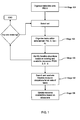
- a schedule generation process can be considered to involve a constraint based search, which, as shown in overview in Figure 1, involves the following stages: tasks are organized into sets of tasks on the basis of respective task attributes at stage 101; a first set of tasks is then selected and, at stage 103, the tasks within the selected set are ordered in accordance with one or more precedent criteria; at stage 105, resources are either selected or configured to cover the tasks within the selected set so as to identify feasible partial and complete allocations to the set of tasks; stages 103 and 105 are then repeated in respect of successive sets of tasks, and at stage 107 the potential allocations are evaluated. Having evaluated the identified potential partial and complete allocations, some of the allocations are assigned to the schedule, and the availability of the affected resources is updated to reflect a change in their availability status (stage 109).
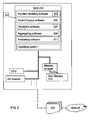
- Each stage is performed by one or more software components, which, as shown schematically in Figure 2, are configured to run on a computer terminal comprising processing unit (CPU), memory, hard disc drive and I/O device, which facilitate interconnection of the computer with remotely connected storage and processing components.
- Operating system programs are stored on the hard disc drive, and control, in a known manner, low level operation of the computer.
- the computer also includes a display and keyboard (not shown), which receive input from an operator and pass, via I/O device, input to the O/S programs in accordance with known techniques.
- the computer is configured with a bespoke scheduling system 201, which in one arrangement is conveniently arranged into functional software components that correspond closely to the stages shown in Figure 1.
- the scheduling system 201 comprises problem modeling software 203, which is arranged to process data indicative of the resources, tasks, and sets of tasks, so as to create a representation thereof that is suitable for processing by other components of the scheduling system 201.
- the system 201 includes processing software component 207, which is arranged to order the tasks within a set and, in accordance with various decision making techniques, to generate a plurality of feasible assignments of resources (unit-capacity-resources, batch-capacity-resources, and/or static-aggregate-resources), at specific times to the individual tasks within the set.
- the scheduling system 201 includes resource aggregating software 209, which is arranged to combine unit-capacity-resources, batch-capacity-resources, and/or static-aggregate-resources as part of the process of identifying potential resource assignments; these dynamically created resources can then be included in the pool of resources considered for feasible resource assignments by the processing software component 207.
- the scheduling system 201 includes search engine 205, which searches through, and selects from, the feasible assignments generated by the processing software component 207, evaluating them by means of evaluating software component 211, and assigning resources to a given set of tasks on the basis of respective evaluations.
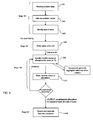
- step 303 involves generating data indicative of representations of resources, tasks, and operational constraints, and initialising the generated data with attribute values specified in the problem data 231, such as task due dates, task durations, resource capabilities, resource time availability, etc.
- step 303 maintains data indicative of the availability of each resource.
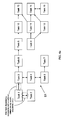
- the processing software component 207 reviews the data relating to the tasks, so as to identify tasks that are interrelated by task dependencies; such interrelated tasks are grouped into so-called sets of tasks (step 305), and an example of such a set S 1 is shown in Figure 4a.
- This example set comprises 15 tasks that are linked by sequential (dependency, follow-on or prior links) and parallel dependencies (cooperative or assistance links); tasks within the set S 1 are then ordered according to the inter-task dependencies (step 307).
- this ordering at step 307 is performed on the basis of a start time relationship between tasks, e.g. a start-after or start-at-same time dependency, such that, and with reference to Figure 4b, each task is assigned to a task level TL i on the basis of its start time; it will be appreciated that, for any given task level TL x , the tasks assigned to this level need to be performed in parallel (e.g. tasks 3, 4 and 5 are performed in parallel).
- a start time relationship between tasks e.g. a start-after or start-at-same time dependency
- Step 309 involves applying various search decision criteria to trial selected ⁇ resource, task, start-time ⁇ -tuples, with the objective of balancing a) individual assignment of resources to tasks within the set S 1 with b) the quality and the potential impact on future scheduling decisions.
- Decision criteria are chosen so as to impose an ordering on the processing of resources and tasks and effectively parameterise a search for potential and valid resource allocations; in one arrangement the criteria used by the processing software 207 include the following:
- the processing software component 207 has performed step 309 on the basis of resources defined in the problem data 231.
- embodiments of the second aspect of the invention ⁇ namely dynamic aggregation of resources ⁇ can be employed in order to effectively modify the Resource Pool from which resources can be selected.
- This dynamic aggregation of resources is context-dependent, in so far as the aggregation is performed in relation to specific task requirements; thus, when applied to the problem of scheduling resources to a set of tasks such as set S1, the dynamic resource aggregation process is most conveniently performed between steps 307 and 309, so that the dynamically created resources can be reviewed by the processing software component 207 in relation to the various criteria described above.
- the dynamic resource aggregation process could be performed part-way through step 309 (as indicated by the large arrow in Figure 3), using those resources that have not yet been assigned to a leaf node N j on the tree T.
- FIG. 6 At stage 601, for time intervals within a Task Level TL i , plural resource availability is identified from the problem data 231 by evaluating the overlap between the availability of two or more resources (if the availability interval of two resources overlaps then these two resources can contribute to executing any task within that interval).
- resource availability can be represented in the form of a graph G, where the vertices represent resources R1 .... R10 and the edges (connections between vertices) indicate that the connected resources can work on a task within the task interval corresponding to the graph G.
- resource combinations that can work together on the task(s) in the time interval of a Task Level TL i are then identified by using a greedy search with backtracking over the graph G.
- Such resource combinations are referred to as configurable-composite resources, and creating these configurable-composite resources involves the aggregating software 209 evaluating a contribution score in respect of the constituent resources of the configurable-composite resource.
- the contribution score of a resource is a measure of the capacity that the resource can contribute to the configurable-composite resource, and for any given resource, the contribution score is equal to the number of capabilities that the resource can contribute to a given the configurable-composite resource.
- Step 603 An example illustrating the stages involved in step 603 will now be described with reference to Figure 8, which shows the search stages in respect of a task requiring 4 capabilities (A, B, C, and D) and for which there are 3 available resources.
- the respective task requirements and resource capacities are summarised below: Capabilities Capacity Task A, B, C, D 3 ⁇ 4 ⁇ 5 R1 A, B, C (2) R2 A, D (2) R3 D (1)
- the resources are ordered according to their contribution scores, which, for this example, are ordered as follows: R1 (2 capabilities) R2 (2 capabilities) and R3 (1 capability).
- the aggregating software 209 selects R1 as part of the configurable-composite resource and updates the needed task capabilities and contribution of the remaining resources accordingly.
- a next resource is chosen on the basis of its contribution score and capacity; in this example R2 is chosen because it can contribute the one capability still needed to the task and has more capacity than R3.
- the output of step 803 is a first feasible configurable-composite resource comprising R1 and R2.
- the aggregating software 209 backtracks (step 805) and selects a resource other than R2 to combine with R1; in the present example, the aggregating software 209 selects R3 at step 807, thereby supplementing configurable-composite resource so as to form a resource having the required capabilities, but being short of the required capacity of 4 Accordingly, at step 809, R2 is added to the configurable-composite resource, thereby creating a second feasible resource.
- the backtracking step 805 is repeated in accordance with specified conditions that are selectable so as to create a sufficient number of such feasible configurable-composite resources.
- each such clique C 1 is a configurable-composite resource comprising two or more of unit-capacity-resources, batch-capacity-resources, and/or static-aggregate-resources.
- dynamic generation of configurable-composite resources is a preferred, and not essential, feature of the overall resource scheduling process; in relation to the configurable-composite resources per se, it is to be appreciated that such resources can be created for use in allocation to individual tasks as well as to sets of tasks, as will be described in more detail later in the description.
- the search engine 205 explores the feasible allocations, effectively selecting certain of the allocations for evaluation
- the search method employed by the search engine 205 is preferably a systematic-search method, which, referring to Figure 9, searches through a finite number of feasible allocations identified and stored at steps 309 and 311, evaluating the allocations in accordance with an evaluation function (described below).
- Each row of nodes in Figure 9 corresponds to a set of tasks S p , and individual nodes within a given row identify different feasible resource allocations in respect of the set of tasks S p ⁇ thus, referring back to Figure 5, each node corresponds to different paths P k in the tree T, and differs from another node by, for example, start times associated with tasks within the set and/or resource compositions. As will be recalled from the discussion above in relation to Figure 5, some of the resource allocations are partial resource allocations.
- the search engine 205 preferably employs a systematic search method such as a tree search method, since this provides a convenient way of updating attributes of the various resources when feasible resource allocations have become actual resource allocations and added to a schedule.
- each node in a tree has only one incoming edge, which is beneficial in relation to the pruning of unwanted paths since removal of a path below a node leaves other parts of the search space unaffected.
- the search engine 205 triggers operation of the evaluating software 211 so as to evaluate the selected allocation.
- the criteria used by the evaluating software 211 is problem-specific, and for the purposes of illustration it will be assumed that the problem domain relates to scheduling of equipment and manpower to perform repair and/or installation tasks. These tasks have problem-specific constraints such as location of the task to be performed. Accordingly, the evaluating software 211 retrieves data specifying the cost function specific to the problem domain in question (which most conveniently could be included in the problem data 231).
- a suitable cost function evaluates resource assignments on the basis of a weighted combination of at least some of Quality of Service, set-up, operational preference associated with capability, capacity of capability, configurable-composite resource capabilities. It is to be understood that the precise form of the cost function is a matter of design: many such cost functions exist and would be easily identifiable by the skilled person.
- the following cost function is used by the evaluating software 211: max ⁇ ⁇ criteria ⁇ score criteria ⁇ ⁇ criteria where ⁇ represents the weight of a given criterion. In one arrangement, a contribution score between 0 and 1 is calculated in respect of each criterion, a score of 1 representing the best possible outcome for a given criteria and a score of 0 being equivalent with the task being left unassigned.
- the Standard Minute Value is a standard value that is representative of an expected amount of time it takes for a standard resource, having certain (measurable) characteristics, to perform the given task.
- the variable perf is a relative variable, whose value is calculated on the basis of the performance of the standard resource and the differences between attributes of an actual resource and those of a standard resource.
- SMV and perf standard values can be determined by so-called 'Time and Motion' studies, which leads to standard values such as "a 100 performer can perform an operation with a 1 minute SMV in 1 minute, and a 50 performer would take 2 minutes, etc.”
- a suitable tree search is the beam search method, which, as is known in the art, constrains the number of nodes to be searched by means of a configurable beam width.
- nodes corresponding to feasible allocations that have been discarded are shown crossed through, whereas those nodes corresponding to selected feasible allocations are connected to other such nodes by means of a full line; nodes that have been/will be explored are interconnected by means of dotted lines. Therefore dotted lines that lead to a crossed out node indicate feasible allocations that have been analysed but discarded on the basis of the evaluations performed by the evaluating software 211.
- Resources corresponding to nodes that are interconnected by means of a full line are added to a schedule, and attributes of those affected resources are updated by the problem modeling system 201, thereby ensuring that any subsequently received problem data are executed on the basis of current resource attributes.
- the processing software component 207 identifies resource combinations for combinations of two parallel tasks within a Task Level based on earliest start times of the respective tasks. More specifically, for any combination of two tasks, the time availability associated with respective resources is queried in order to identify a next available time interval in which a given resource can perform each of the two tasks within an earliest-latest start time interval (EST, LST).
- EST earliest-latest start time interval
- the time interval where both resources can carry out tasks at the same time is given by the intersection of their start time intervals.
- resources R i , R j and R k having, respectively, earliest and latest start times (EST i , LST i ), (EST j , LST j ) and (EST j , LST j ) where EST i is earlier than EST j , resources R i and R k cannot be selected to perform a parallel task.
- any such resource comprises more than one capability, since it comprises a combination of one or more of each and any of the following static and indivisible resources: unit-capacity-resources, batch-capacity-resources, and/or static-aggregate-resource.
- the process described above with reference to Figures 6, 7 and 8 can be applied in respect of single tasks that require a plurality of capabilities and/or a set of tasks, each of which requires one or more capabilities or one or more capabilities and one or more capacities in respect of one or more such capabilities.
- the aggregating software component 209 is most conveniently configured as a modular software component, which can interface with any problem modeling software component so as to receive data indicative of the, or each, task to be scheduled.
- An advantage of dynamically creating resources in this manner is that the combination can be localized and temporary, lasting either for the duration of the task or set(s) of tasks to which they have been scheduled or being applied in respect of other tasks to be scheduled.
- the dynamically created combination resource can be broken up ⁇ for use either as individual resources or as part of other combinations in relation to future task scheduling events; when deciding whether to or not to break up a given configurable-composite resource, the costs associated with fragmenting the configurable-composite resource would be reviewed against the benefits of keeping the combination.
- dynamically created combination resources are associated with a tag (or similar), so that, post-schedule execution, a dynamic resource combination can easily be identified for post processing and possible fragmentation.
- the search engine 205 could alternatively use a systematic search to construct an initial solution and, if there is sufficient time before the schedule is required to be executed, the schedule could be improved by means of local search methods. Also, in the event that those feasible resource allocations that have been selected for evaluation are poor (the search effectively being stuck in a local minima), a local search method could be used to force the search out of the local minima (or vice-versa, out of a local optima).
- the scheduling system 201 preferably comprises a suite of software modules; however, it will be appreciated that the scheduling system 201 can be configured so as to comprise one or a group of the software modules specified above.
- the software is written in Java and configured into a number of packages so as to form the software components described above.
- Java is a convenient choice of programming language because it allows rapid prototyping within the JBuilder environment and the executables created thereby can run on both PC (Windows) and Unix operating systems.
- the software modules are processed sequentially, as shown in the accompanying figures; however, Java threads could be used to concurrently search through several P l...k paths of a given set of tasks, while the search engine 205 executes according to a separate thread, possibly on a different terminal (or different processor of the same terminal).
- Java has been described as a preferred programming language, it will be appreciated that any alternative programming language could be used, and that the various processes could be coded in accordance with a procedural programming language instead of an object-oriented language.
Landscapes
- Business, Economics & Management (AREA)
- Human Resources & Organizations (AREA)
- Engineering & Computer Science (AREA)
- Strategic Management (AREA)
- Economics (AREA)
- Entrepreneurship & Innovation (AREA)
- Educational Administration (AREA)
- Development Economics (AREA)
- Game Theory and Decision Science (AREA)
- Marketing (AREA)
- Operations Research (AREA)
- Quality & Reliability (AREA)
- Tourism & Hospitality (AREA)
- Physics & Mathematics (AREA)
- General Business, Economics & Management (AREA)
- General Physics & Mathematics (AREA)
- Theoretical Computer Science (AREA)
- Management, Administration, Business Operations System, And Electronic Commerce (AREA)
Applications Claiming Priority (1)
| Application Number | Priority Date | Filing Date | Title |
|---|---|---|---|
| GBGB0513045.5A GB0513045D0 (en) | 2005-06-27 | 2005-06-27 | Resource scheduling method and system |
Publications (2)
| Publication Number | Publication Date |
|---|---|
| EP1770518A2 true EP1770518A2 (fr) | 2007-04-04 |
| EP1770518A3 EP1770518A3 (fr) | 2007-12-26 |
Family
ID=34856193
Family Applications (1)
| Application Number | Title | Priority Date | Filing Date |
|---|---|---|---|
| EP06116169A Withdrawn EP1770518A3 (fr) | 2005-06-27 | 2006-06-27 | Procédé et système de planification de ressources |
Country Status (3)
| Country | Link |
|---|---|
| US (1) | US8225319B2 (fr) |
| EP (1) | EP1770518A3 (fr) |
| GB (1) | GB0513045D0 (fr) |
Cited By (2)
| Publication number | Priority date | Publication date | Assignee | Title |
|---|---|---|---|---|
| CN101710292B (zh) * | 2009-12-21 | 2013-03-27 | 中国人民解放军信息工程大学 | 一种可重构任务处理系统、调度器及任务调度方法 |
| KR101401523B1 (ko) | 2013-02-08 | 2014-06-03 | 한국과학기술정보연구원 | 복수의 가상 머신들 간 조립 공유 gpu 스케줄링 방법 및 장치 |
Families Citing this family (180)
| Publication number | Priority date | Publication date | Assignee | Title |
|---|---|---|---|---|
| US20090164288A1 (en) * | 2005-08-25 | 2009-06-25 | Hiroshi Kojima | Scheduling Apparatus, Scheduling Method and Recording Medium |
| US20080216012A1 (en) * | 2005-08-26 | 2008-09-04 | United Space Alliance, Llc | Instruction and training tool |
| US8103533B2 (en) | 2005-08-26 | 2012-01-24 | United Space Alliance, Llc | Automated resource planning tool and user interface |
| US20070240126A1 (en) * | 2006-02-01 | 2007-10-11 | International Business Machines Corporation | System and method for event based resource selection |
| US8300798B1 (en) | 2006-04-03 | 2012-10-30 | Wai Wu | Intelligent communication routing system and method |
| US8301473B2 (en) | 2006-08-24 | 2012-10-30 | United Space Alliance, Llc | Stowage and center of gravity verification and assessment tool |
| US20080082980A1 (en) * | 2006-09-28 | 2008-04-03 | Edge Inova International, Inc. | System and method for using filters and standardized messages to identify and schedule appointments in aggregate resource scheduling applications |
| US8141089B2 (en) * | 2007-01-11 | 2012-03-20 | International Business Machines Corporation | Method and apparatus for reducing contention for computer system resources using soft locks |
| US20080244602A1 (en) * | 2007-03-30 | 2008-10-02 | Bennington Bud J | Method for task and resource management |
| US20080244605A1 (en) * | 2007-03-30 | 2008-10-02 | Bennington Bud J | Method for task and resource management |
| US20080244603A1 (en) * | 2007-03-30 | 2008-10-02 | Bennington Bud J | Method for task and resource management |
| US20080244604A1 (en) * | 2007-03-30 | 2008-10-02 | Bennington Bud J | Method for task and resource management |
| US20080306802A1 (en) * | 2007-06-05 | 2008-12-11 | On Time Systems Inc. | System and Method for Distribution of Campaign Resources |
| US20080313005A1 (en) * | 2007-06-15 | 2008-12-18 | Edgelnova International, Inc. | System and method for real-time scheduling of human and non-human resources |
| US7991910B2 (en) | 2008-11-17 | 2011-08-02 | Amazon Technologies, Inc. | Updating routing information based on client location |
| US8028090B2 (en) | 2008-11-17 | 2011-09-27 | Amazon Technologies, Inc. | Request routing utilizing client location information |
| JP5075577B2 (ja) * | 2007-10-29 | 2012-11-21 | 株式会社東芝 | 車両運用計画作成装置および方法 |
| US8180780B2 (en) * | 2007-12-06 | 2012-05-15 | International Business Machines Corporation | Collaborative program development method and system |
| US8156243B2 (en) | 2008-03-31 | 2012-04-10 | Amazon Technologies, Inc. | Request routing |
| US8606996B2 (en) | 2008-03-31 | 2013-12-10 | Amazon Technologies, Inc. | Cache optimization |
| US7970820B1 (en) | 2008-03-31 | 2011-06-28 | Amazon Technologies, Inc. | Locality based content distribution |
| US8321568B2 (en) | 2008-03-31 | 2012-11-27 | Amazon Technologies, Inc. | Content management |
| US8601090B1 (en) | 2008-03-31 | 2013-12-03 | Amazon Technologies, Inc. | Network resource identification |
| US8447831B1 (en) | 2008-03-31 | 2013-05-21 | Amazon Technologies, Inc. | Incentive driven content delivery |
| US8533293B1 (en) | 2008-03-31 | 2013-09-10 | Amazon Technologies, Inc. | Client side cache management |
| US7962597B2 (en) | 2008-03-31 | 2011-06-14 | Amazon Technologies, Inc. | Request routing based on class |
| US8561072B2 (en) * | 2008-05-16 | 2013-10-15 | Microsoft Corporation | Scheduling collections in a scheduler |
| US20140201017A1 (en) | 2008-06-19 | 2014-07-17 | Servicemesh, Inc. | Systems and methods for providing repeated use of computing resources |
| US7925782B2 (en) | 2008-06-30 | 2011-04-12 | Amazon Technologies, Inc. | Request routing using network computing components |
| US9407681B1 (en) | 2010-09-28 | 2016-08-02 | Amazon Technologies, Inc. | Latency measurement in resource requests |
| US9912740B2 (en) | 2008-06-30 | 2018-03-06 | Amazon Technologies, Inc. | Latency measurement in resource requests |
| US9367257B2 (en) * | 2008-09-11 | 2016-06-14 | Microsoft Technology Licensing, Llc | Techniques for resource location and migration across data centers |
| US7930393B1 (en) | 2008-09-29 | 2011-04-19 | Amazon Technologies, Inc. | Monitoring domain allocation performance |
| US8286176B1 (en) | 2008-09-29 | 2012-10-09 | Amazon Technologies, Inc. | Optimizing resource configurations |
| US8316124B1 (en) | 2008-09-29 | 2012-11-20 | Amazon Technologies, Inc. | Managing network data display |
| US8117306B1 (en) | 2008-09-29 | 2012-02-14 | Amazon Technologies, Inc. | Optimizing content management |
| US8051166B1 (en) | 2008-09-29 | 2011-11-01 | Amazon Technologies, Inc. | Service provider optimization of content management |
| US7865594B1 (en) | 2008-09-29 | 2011-01-04 | Amazon Technologies, Inc. | Managing resources consolidation configurations |
| US8122124B1 (en) | 2008-09-29 | 2012-02-21 | Amazon Technologies, Inc. | Monitoring performance and operation of data exchanges |
| US8065417B1 (en) | 2008-11-17 | 2011-11-22 | Amazon Technologies, Inc. | Service provider registration by a content broker |
| US8122098B1 (en) | 2008-11-17 | 2012-02-21 | Amazon Technologies, Inc. | Managing content delivery network service providers by a content broker |
| US8732309B1 (en) | 2008-11-17 | 2014-05-20 | Amazon Technologies, Inc. | Request routing utilizing cost information |
| US8521880B1 (en) | 2008-11-17 | 2013-08-27 | Amazon Technologies, Inc. | Managing content delivery network service providers |
| US8060616B1 (en) | 2008-11-17 | 2011-11-15 | Amazon Technologies, Inc. | Managing CDN registration by a storage provider |
| US8073940B1 (en) | 2008-11-17 | 2011-12-06 | Amazon Technologies, Inc. | Managing content delivery network service providers |
| US8255259B2 (en) * | 2008-12-24 | 2012-08-28 | International Business Machines Corporation | Extending constraint satisfaction problem solving |
| JP4636184B2 (ja) * | 2009-01-06 | 2011-02-23 | コニカミノルタビジネステクノロジーズ株式会社 | ワークフロー管理装置、ワークフロー管理方法およびワークフロー管理プログラム |
| US7917618B1 (en) | 2009-03-24 | 2011-03-29 | Amazon Technologies, Inc. | Monitoring web site content |
| US8756341B1 (en) | 2009-03-27 | 2014-06-17 | Amazon Technologies, Inc. | Request routing utilizing popularity information |
| US8412823B1 (en) | 2009-03-27 | 2013-04-02 | Amazon Technologies, Inc. | Managing tracking information entries in resource cache components |
| US8521851B1 (en) | 2009-03-27 | 2013-08-27 | Amazon Technologies, Inc. | DNS query processing using resource identifiers specifying an application broker |
| US8688837B1 (en) | 2009-03-27 | 2014-04-01 | Amazon Technologies, Inc. | Dynamically translating resource identifiers for request routing using popularity information |
| US9965333B2 (en) | 2009-04-13 | 2018-05-08 | International Business Machines Corporation | Automated workload selection |
| US8671009B1 (en) | 2009-04-28 | 2014-03-11 | Schedulicity Inc. | Systems and methods for on-line scheduling of appointments and other resources |
| US8782236B1 (en) | 2009-06-16 | 2014-07-15 | Amazon Technologies, Inc. | Managing resources using resource expiration data |
| US20100332281A1 (en) * | 2009-06-26 | 2010-12-30 | Microsoft Corporation | Task allocation mechanisms and markets for acquiring and harnessing sets of human and computational resources for sensing, effecting, and problem solving |
| EP2282264A1 (fr) * | 2009-07-24 | 2011-02-09 | ProximusDA GmbH | Programmation et communication dans des systèmes informatiques |
| WO2011014442A1 (fr) * | 2009-07-27 | 2011-02-03 | Nextgen Healthcare Information Systems, Inc. | Allocation de tâches dans un flux dexécution et planification dévènements, de façon systématique et sur la base de règles |
| US8397073B1 (en) | 2009-09-04 | 2013-03-12 | Amazon Technologies, Inc. | Managing secure content in a content delivery network |
| US8433771B1 (en) | 2009-10-02 | 2013-04-30 | Amazon Technologies, Inc. | Distribution network with forward resource propagation |
| US8331370B2 (en) | 2009-12-17 | 2012-12-11 | Amazon Technologies, Inc. | Distributed routing architecture |
| US8331371B2 (en) | 2009-12-17 | 2012-12-11 | Amazon Technologies, Inc. | Distributed routing architecture |
| US8640108B2 (en) * | 2009-12-31 | 2014-01-28 | International Business Machines Corporation | Method for managing hardware resources within a simultaneous multi-threaded processing system |
| US9495338B1 (en) | 2010-01-28 | 2016-11-15 | Amazon Technologies, Inc. | Content distribution network |
| US8424006B2 (en) * | 2010-06-03 | 2013-04-16 | International Business Machines Corporation | Task assignment on heterogeneous three-dimensional/stacked microarchitectures |
| US9129266B2 (en) * | 2010-06-18 | 2015-09-08 | Sharat NAGARAJ | Automated schedule systems and methods |
| US10636015B2 (en) | 2010-06-18 | 2020-04-28 | Sharat NAGARAJ | Automated schedule systems and methods |
| WO2012005728A1 (fr) * | 2010-07-08 | 2012-01-12 | Hewlett-Packard Development Company, L.P. | Affectation de ressources pour travaux dans un système comprenant un pipeline de traitement |
| JP5388134B2 (ja) * | 2010-08-06 | 2014-01-15 | 株式会社日立製作所 | 計算機システム、及び、移動データ決定方法 |
| KR101710910B1 (ko) * | 2010-09-27 | 2017-03-13 | 삼성전자 주식회사 | 프로세싱 유닛의 동적 자원 할당을 위한 방법 및 장치 |
| US8930513B1 (en) | 2010-09-28 | 2015-01-06 | Amazon Technologies, Inc. | Latency measurement in resource requests |
| US9712484B1 (en) | 2010-09-28 | 2017-07-18 | Amazon Technologies, Inc. | Managing request routing information utilizing client identifiers |
| US9003035B1 (en) | 2010-09-28 | 2015-04-07 | Amazon Technologies, Inc. | Point of presence management in request routing |
| US8468247B1 (en) | 2010-09-28 | 2013-06-18 | Amazon Technologies, Inc. | Point of presence management in request routing |
| US8938526B1 (en) | 2010-09-28 | 2015-01-20 | Amazon Technologies, Inc. | Request routing management based on network components |
| US8819283B2 (en) | 2010-09-28 | 2014-08-26 | Amazon Technologies, Inc. | Request routing in a networked environment |
| US10097398B1 (en) | 2010-09-28 | 2018-10-09 | Amazon Technologies, Inc. | Point of presence management in request routing |
| US8577992B1 (en) | 2010-09-28 | 2013-11-05 | Amazon Technologies, Inc. | Request routing management based on network components |
| US10958501B1 (en) | 2010-09-28 | 2021-03-23 | Amazon Technologies, Inc. | Request routing information based on client IP groupings |
| US8924528B1 (en) | 2010-09-28 | 2014-12-30 | Amazon Technologies, Inc. | Latency measurement in resource requests |
| US8452874B2 (en) | 2010-11-22 | 2013-05-28 | Amazon Technologies, Inc. | Request routing processing |
| US9391949B1 (en) | 2010-12-03 | 2016-07-12 | Amazon Technologies, Inc. | Request routing processing |
| US8626950B1 (en) | 2010-12-03 | 2014-01-07 | Amazon Technologies, Inc. | Request routing processing |
| US20120253879A1 (en) * | 2011-03-31 | 2012-10-04 | Santos Cipriano A | Optimizing workforce capacity and capability |
| US10467042B1 (en) | 2011-04-27 | 2019-11-05 | Amazon Technologies, Inc. | Optimized deployment based upon customer locality |
| US8689226B2 (en) * | 2011-05-11 | 2014-04-01 | Hewlett-Packard Development Company, L.P. | Assigning resources to processing stages of a processing subsystem |
| US8874751B2 (en) | 2011-12-01 | 2014-10-28 | International Business Machines Corporation | Candidate set solver with user advice |
| US8898505B2 (en) * | 2011-12-01 | 2014-11-25 | International Business Machines Corporation | Dynamically configureable placement engine |
| US10554782B2 (en) | 2011-12-01 | 2020-02-04 | International Business Machines Corporation | Agile hostpool allocator |
| US8615504B2 (en) * | 2011-12-14 | 2013-12-24 | Artist Growth, Llc | Action alignment for event planning, project management and process structuring |
| US20140007098A1 (en) * | 2011-12-28 | 2014-01-02 | Paul M. Stillwell, Jr. | Processor accelerator interface virtualization |
| US8904009B1 (en) | 2012-02-10 | 2014-12-02 | Amazon Technologies, Inc. | Dynamic content delivery |
| US10021179B1 (en) | 2012-02-21 | 2018-07-10 | Amazon Technologies, Inc. | Local resource delivery network |
| US9081618B2 (en) * | 2012-03-19 | 2015-07-14 | Ati Technologies Ulc | Method and apparatus for the scheduling of computing tasks |
| US9172674B1 (en) | 2012-03-21 | 2015-10-27 | Amazon Technologies, Inc. | Managing request routing information utilizing performance information |
| US10623408B1 (en) | 2012-04-02 | 2020-04-14 | Amazon Technologies, Inc. | Context sensitive object management |
| US9154551B1 (en) | 2012-06-11 | 2015-10-06 | Amazon Technologies, Inc. | Processing DNS queries to identify pre-processing information |
| US20130339969A1 (en) * | 2012-06-19 | 2013-12-19 | Nmetric, Llc | Scheduling and Decision System |
| US9525659B1 (en) | 2012-09-04 | 2016-12-20 | Amazon Technologies, Inc. | Request routing utilizing point of presence load information |
| US9323577B2 (en) | 2012-09-20 | 2016-04-26 | Amazon Technologies, Inc. | Automated profiling of resource usage |
| US9135048B2 (en) | 2012-09-20 | 2015-09-15 | Amazon Technologies, Inc. | Automated profiling of resource usage |
| US10205698B1 (en) | 2012-12-19 | 2019-02-12 | Amazon Technologies, Inc. | Source-dependent address resolution |
| US8949224B2 (en) | 2013-01-15 | 2015-02-03 | Amazon Technologies, Inc. | Efficient query processing using histograms in a columnar database |
| US9720732B1 (en) | 2013-02-11 | 2017-08-01 | Amazon Technologies, Inc. | Parameter selection for optimization of task execution based on execution history for prior tasks |
| US10552774B2 (en) * | 2013-02-11 | 2020-02-04 | Amazon Technologies, Inc. | Cost-minimizing task scheduler |
| US20140280977A1 (en) * | 2013-03-15 | 2014-09-18 | Servicemesh, Inc. | Systems and methods for evaluating computing resources |
| FR3004274A1 (fr) * | 2013-04-09 | 2014-10-10 | Krono Safe | Procede d'execution de taches dans un systeme temps-reel critique |
| US9286106B1 (en) * | 2013-04-16 | 2016-03-15 | Ca, Inc. | Scheduling periodic tasks with dependencies and determining improper loop dependencies between tasks placed in a waiting tasks set and in a unfinished dependent tasks set |
| US10204387B2 (en) | 2013-05-08 | 2019-02-12 | Nmetric, Llc | Sequentially configuring manufacturing equipment to reduce reconfiguration times |
| US9294391B1 (en) | 2013-06-04 | 2016-03-22 | Amazon Technologies, Inc. | Managing network computing components utilizing request routing |
| US20150012323A1 (en) * | 2013-07-02 | 2015-01-08 | Oracle International Corporation | Generating multiple optimal daily schedules for multiple time periods in a day and for multiple daily patterns |
| CN103795804A (zh) * | 2014-02-24 | 2014-05-14 | 华为技术有限公司 | 存储资源调度方法及存储计算系统 |
| EP2953069A1 (fr) * | 2014-06-05 | 2015-12-09 | ABB Technology AG | Procédé et système pour améliorer les performances d'attribution de route |
| US9807008B2 (en) | 2014-06-06 | 2017-10-31 | Google Inc. | Tournament scheduling |
| US10489729B2 (en) * | 2014-06-24 | 2019-11-26 | Tata Consultancy Services Limited | Task scheduling assistance |
| CN105718316A (zh) * | 2014-12-01 | 2016-06-29 | 中国移动通信集团公司 | 一种作业调度的方法及装置 |
| US9769248B1 (en) | 2014-12-16 | 2017-09-19 | Amazon Technologies, Inc. | Performance-based content delivery |
| US10027739B1 (en) | 2014-12-16 | 2018-07-17 | Amazon Technologies, Inc. | Performance-based content delivery |
| US10091096B1 (en) | 2014-12-18 | 2018-10-02 | Amazon Technologies, Inc. | Routing mode and point-of-presence selection service |
| US10097448B1 (en) | 2014-12-18 | 2018-10-09 | Amazon Technologies, Inc. | Routing mode and point-of-presence selection service |
| US10033627B1 (en) | 2014-12-18 | 2018-07-24 | Amazon Technologies, Inc. | Routing mode and point-of-presence selection service |
| US10311372B1 (en) | 2014-12-19 | 2019-06-04 | Amazon Technologies, Inc. | Machine learning based content delivery |
| US10311371B1 (en) | 2014-12-19 | 2019-06-04 | Amazon Technologies, Inc. | Machine learning based content delivery |
| US10225365B1 (en) | 2014-12-19 | 2019-03-05 | Amazon Technologies, Inc. | Machine learning based content delivery |
| US10225326B1 (en) | 2015-03-23 | 2019-03-05 | Amazon Technologies, Inc. | Point of presence based data uploading |
| US9887932B1 (en) | 2015-03-30 | 2018-02-06 | Amazon Technologies, Inc. | Traffic surge management for points of presence |
| US9819567B1 (en) | 2015-03-30 | 2017-11-14 | Amazon Technologies, Inc. | Traffic surge management for points of presence |
| US9887931B1 (en) | 2015-03-30 | 2018-02-06 | Amazon Technologies, Inc. | Traffic surge management for points of presence |
| US9832141B1 (en) | 2015-05-13 | 2017-11-28 | Amazon Technologies, Inc. | Routing based request correlation |
| WO2016203315A2 (fr) | 2015-06-15 | 2016-12-22 | Milwaukee Electric Tool Corporation | Système de communication d'outil électrique |
| US10616179B1 (en) | 2015-06-25 | 2020-04-07 | Amazon Technologies, Inc. | Selective routing of domain name system (DNS) requests |
| US9678796B2 (en) | 2015-07-24 | 2017-06-13 | Xerox Corporation | Methods and systems for determining computational resource requirement |
| US10097566B1 (en) | 2015-07-31 | 2018-10-09 | Amazon Technologies, Inc. | Identifying targets of network attacks |
| US9742795B1 (en) | 2015-09-24 | 2017-08-22 | Amazon Technologies, Inc. | Mitigating network attacks |
| US9774619B1 (en) | 2015-09-24 | 2017-09-26 | Amazon Technologies, Inc. | Mitigating network attacks |
| US9794281B1 (en) | 2015-09-24 | 2017-10-17 | Amazon Technologies, Inc. | Identifying sources of network attacks |
| US10693807B2 (en) * | 2015-11-06 | 2020-06-23 | Cable Television Laboratories, Inc | Method and system for mediated resource allocation |
| US10270878B1 (en) | 2015-11-10 | 2019-04-23 | Amazon Technologies, Inc. | Routing for origin-facing points of presence |
| US10257307B1 (en) | 2015-12-11 | 2019-04-09 | Amazon Technologies, Inc. | Reserved cache space in content delivery networks |
| US10049051B1 (en) | 2015-12-11 | 2018-08-14 | Amazon Technologies, Inc. | Reserved cache space in content delivery networks |
| US10348639B2 (en) | 2015-12-18 | 2019-07-09 | Amazon Technologies, Inc. | Use of virtual endpoints to improve data transmission rates |
| US20170329640A1 (en) * | 2016-05-10 | 2017-11-16 | HGST Netherlands B.V. | Systems and methods for designating storage processing units as communication hubs and allocating processing tasks in a storage processor array |
| US10075551B1 (en) | 2016-06-06 | 2018-09-11 | Amazon Technologies, Inc. | Request management for hierarchical cache |
| US10110694B1 (en) | 2016-06-29 | 2018-10-23 | Amazon Technologies, Inc. | Adaptive transfer rate for retrieving content from a server |
| CN106295117B (zh) * | 2016-07-22 | 2019-03-29 | 中国船舶重工集团公司第七二四研究所 | 一种被动相控阵雷达资源动态排队管控方法 |
| US9992086B1 (en) | 2016-08-23 | 2018-06-05 | Amazon Technologies, Inc. | External health checking of virtual private cloud network environments |
| US10033691B1 (en) | 2016-08-24 | 2018-07-24 | Amazon Technologies, Inc. | Adaptive resolution of domain name requests in virtual private cloud network environments |
| US11023330B2 (en) * | 2016-09-02 | 2021-06-01 | Vmware, Inc. | Efficient scheduling of backups for cloud computing systems |
| US10469513B2 (en) | 2016-10-05 | 2019-11-05 | Amazon Technologies, Inc. | Encrypted network addresses |
| CN106651139A (zh) * | 2016-11-21 | 2017-05-10 | 哈尔滨理工大学 | 考虑同种设备工序的非对称多车间综合调度方法 |
| US10831549B1 (en) | 2016-12-27 | 2020-11-10 | Amazon Technologies, Inc. | Multi-region request-driven code execution system |
| US10372499B1 (en) | 2016-12-27 | 2019-08-06 | Amazon Technologies, Inc. | Efficient region selection system for executing request-driven code |
| CN106802553B (zh) * | 2017-01-13 | 2019-10-11 | 清华大学 | 一种基于强化学习的铁路机车运行操控系统混合任务调度方法 |
| CN106773711B (zh) * | 2017-01-13 | 2019-09-17 | 清华大学 | 一种铁路机车运行操纵系统的混合任务调度方法及模型 |
| US10938884B1 (en) | 2017-01-30 | 2021-03-02 | Amazon Technologies, Inc. | Origin server cloaking using virtual private cloud network environments |
| US20180260878A1 (en) * | 2017-03-09 | 2018-09-13 | Microsoft Technology Licensing, Llc | Item delivery fulfillment plan determination |
| US10503613B1 (en) | 2017-04-21 | 2019-12-10 | Amazon Technologies, Inc. | Efficient serving of resources during server unavailability |
| US11132631B2 (en) * | 2017-05-26 | 2021-09-28 | Oracle International Corporation | Computerized system and method for resolving cross-vehicle dependencies for vehicle scheduling |
| US11075987B1 (en) | 2017-06-12 | 2021-07-27 | Amazon Technologies, Inc. | Load estimating content delivery network |
| US10447648B2 (en) | 2017-06-19 | 2019-10-15 | Amazon Technologies, Inc. | Assignment of a POP to a DNS resolver based on volume of communications over a link between client devices and the POP |
| CN107194612B (zh) * | 2017-06-20 | 2020-10-13 | 清华大学 | 一种基于深度强化学习的列车运行调度方法及系统 |
| US10742593B1 (en) | 2017-09-25 | 2020-08-11 | Amazon Technologies, Inc. | Hybrid content request routing system |
| TWI633504B (zh) * | 2017-11-16 | 2018-08-21 | 財團法人工業技術研究院 | 基於樹狀搜尋的排程方法與使用此方法的電子裝置 |
| US10592578B1 (en) | 2018-03-07 | 2020-03-17 | Amazon Technologies, Inc. | Predictive content push-enabled content delivery network |
| US10713090B2 (en) * | 2018-05-17 | 2020-07-14 | American Express Travel Related Services Company, Inc. | Context aware prioritization in a distributed environment using tiered queue allocation |
| US12614132B1 (en) * | 2018-06-12 | 2026-04-28 | Blue Yonder Group, Inc. | Volume based visualization tool for scheduling tasks in a warehouse |
| US10855532B2 (en) * | 2018-10-08 | 2020-12-01 | Dell Products L.P. | System and method to perform solution aware server compliance and configuration |
| US10862852B1 (en) | 2018-11-16 | 2020-12-08 | Amazon Technologies, Inc. | Resolution of domain name requests in heterogeneous network environments |
| US11025747B1 (en) | 2018-12-12 | 2021-06-01 | Amazon Technologies, Inc. | Content request pattern-based routing system |
| CN109947837A (zh) * | 2019-03-21 | 2019-06-28 | 上海富数科技有限公司 | 实现智能调度数据抓取功能的系统及方法 |
| CN112148466A (zh) * | 2019-06-28 | 2020-12-29 | 北京京东尚科信息技术有限公司 | 任务扩容的方法和系统 |
| CA3148240A1 (fr) * | 2019-07-25 | 2021-01-28 | Licorice App Pty Ltd | Systeme centre sur l'utilisateur pour la planification dynamique de plans de travail personnalises |
| US20240012682A1 (en) * | 2020-10-28 | 2024-01-11 | Nippon Telegraph And Telephone Corporation | Placement search device, placement search method and placement search program |
| CN112422171B (zh) * | 2020-11-09 | 2021-09-03 | 西安电子科技大学 | 环境不确定遥感卫星网络下的智能资源联合调度方法 |
| CN112817721B (zh) * | 2021-01-29 | 2022-08-09 | 中国平安财产保险股份有限公司 | 基于人工智能的任务调度方法、装置、计算机设备和介质 |
| CN114356554B (zh) * | 2021-12-06 | 2025-06-17 | 上海浦东发展银行股份有限公司 | 资源配置方法、装置及服务器 |
| CN114518944B (zh) * | 2021-12-30 | 2024-07-16 | 河南大学 | 一种异构环境下的批处理独立任务调度方法 |
| US20240078487A1 (en) * | 2022-09-01 | 2024-03-07 | Verizon Patent And Licensing Inc. | Constructing and utilizing a search structure for identifying tasks to assign to entities |
| CN115756794A (zh) * | 2022-11-22 | 2023-03-07 | 北京地平线信息技术有限公司 | 任务调度执行方法、任务调度执行指令的生成方法及装置 |
| CN115529249B (zh) * | 2022-11-28 | 2023-02-17 | 中国西安卫星测控中心 | 一种面向任务需求的航天测控数传资源配置评估方法 |
Family Cites Families (10)
| Publication number | Priority date | Publication date | Assignee | Title |
|---|---|---|---|---|
| JP2940450B2 (ja) * | 1995-10-26 | 1999-08-25 | 日本電気株式会社 | クラスタ型コンピュータのジョブスケジュール方法及び装置 |
| US7082606B2 (en) * | 2001-05-01 | 2006-07-25 | The Regents Of The University Of California | Dedicated heterogeneous node scheduling including backfill scheduling |
| US7065764B1 (en) * | 2001-07-20 | 2006-06-20 | Netrendered, Inc. | Dynamically allocated cluster system |
| US7076781B2 (en) * | 2002-05-31 | 2006-07-11 | International Business Machines Corporation | Resource reservation for large-scale job scheduling |
| US7010596B2 (en) * | 2002-06-28 | 2006-03-07 | International Business Machines Corporation | System and method for the allocation of grid computing to network workstations |
| US20060294238A1 (en) * | 2002-12-16 | 2006-12-28 | Naik Vijay K | Policy-based hierarchical management of shared resources in a grid environment |
| US7644408B2 (en) * | 2003-04-25 | 2010-01-05 | Spotware Technologies, Inc. | System for assigning and monitoring grid jobs on a computing grid |
| US7984441B2 (en) | 2003-09-30 | 2011-07-19 | Telecom Italia S.P.A. | Method and system for tuning a taskscheduling process |
| US7406689B2 (en) * | 2005-03-22 | 2008-07-29 | International Business Machines Corporation | Jobstream planner considering network contention & resource availability |
| US7716336B2 (en) * | 2006-04-28 | 2010-05-11 | International Business Machines Corporation | Resource reservation for massively parallel processing systems |
-
2005
- 2005-06-27 GB GBGB0513045.5A patent/GB0513045D0/en not_active Ceased
-
2006
- 2006-06-27 EP EP06116169A patent/EP1770518A3/fr not_active Withdrawn
- 2006-06-27 US US11/475,238 patent/US8225319B2/en active Active
Non-Patent Citations (1)
| Title |
|---|
| No Search * |
Cited By (2)
| Publication number | Priority date | Publication date | Assignee | Title |
|---|---|---|---|---|
| CN101710292B (zh) * | 2009-12-21 | 2013-03-27 | 中国人民解放军信息工程大学 | 一种可重构任务处理系统、调度器及任务调度方法 |
| KR101401523B1 (ko) | 2013-02-08 | 2014-06-03 | 한국과학기술정보연구원 | 복수의 가상 머신들 간 조립 공유 gpu 스케줄링 방법 및 장치 |
Also Published As
| Publication number | Publication date |
|---|---|
| US20070021998A1 (en) | 2007-01-25 |
| GB0513045D0 (en) | 2005-08-03 |
| EP1770518A3 (fr) | 2007-12-26 |
| US8225319B2 (en) | 2012-07-17 |
Similar Documents
| Publication | Publication Date | Title |
|---|---|---|
| US8225319B2 (en) | Scheduling allocation of a combination of resources to a task that has a constraint | |
| Li et al. | A decision support system for the single-depot vehicle rescheduling problem | |
| Aytug et al. | Executing production schedules in the face of uncertainties: A review and some future directions | |
| US8606386B2 (en) | Multi-agent system for distributed manufacturing scheduling with Genetic Algorithms and Tabu Search | |
| US7562062B2 (en) | Forecasting system tool | |
| Kliewer et al. | Multiple depot vehicle and crew scheduling with time windows for scheduled trips | |
| Da Cunha et al. | Data mining for improvement of product quality | |
| US20170185943A1 (en) | Data analysis for predictive scheduling optimization for product production | |
| Bi et al. | Dynamic distributed decision-making for resilient resource reallocation in disrupted manufacturing systems | |
| Van Lon et al. | Optimizing agents with genetic programming: an evaluation of hyper-heuristics in dynamic real-time logistics | |
| CN115685892B (zh) | 工业规划的方法、装置、设备、存储介质和程序产品 | |
| Baydoun et al. | A rough-cut capacity planning model with overlapping | |
| ElMekkawy et al. | Real-time scheduling with deadlock avoidance in flexible manufacturing systems | |
| Sauer | Knowledge-based systems in scheduling | |
| Dávid et al. | Application oriented variable fixing methods for the multiple depot vehicle scheduling problem | |
| Barták | Visopt ShopFloor: On the edge of planning and scheduling | |
| Miyashita | Case-based knowledge acquisition for schedule optimization | |
| EP1221667A1 (fr) | Outil logiciel pour des méthodes de recherche heuristique | |
| Tian et al. | A deep reinforcement learning approach for dynamic task scheduling of flight tests | |
| Vinod et al. | Development and analysis of scheduling decision rules for a dynamic flexible job shop production system: a simulation study | |
| Boyer et al. | Toward generation of dependability assessment models for industrial control system | |
| Johnsson et al. | Quantifying software product line ageing | |
| Burke | Scheduling in dynamic environments | |
| Rajpathak | Intelligent scheduling-A literature review | |
| Barlatt et al. | A hybridization of mathematical programming and dominance-driven enumeration for solving shift-selection and task-sequencing problems |
Legal Events
| Date | Code | Title | Description |
|---|---|---|---|
| PUAI | Public reference made under article 153(3) epc to a published international application that has entered the european phase |
Free format text: ORIGINAL CODE: 0009012 |
|
| AK | Designated contracting states |
Kind code of ref document: A2 Designated state(s): AT BE BG CH CY CZ DE DK EE ES FI FR GB GR HU IE IS IT LI LT LU LV MC NL PL PT RO SE SI SK TR |
|
| AX | Request for extension of the european patent |
Extension state: AL BA HR MK YU |
|
| PUAL | Search report despatched |
Free format text: ORIGINAL CODE: 0009013 |
|
| AK | Designated contracting states |
Kind code of ref document: A3 Designated state(s): AT BE BG CH CY CZ DE DK EE ES FI FR GB GR HU IE IS IT LI LT LU LV MC NL PL PT RO SE SI SK TR |
|
| AX | Request for extension of the european patent |
Extension state: AL BA HR MK YU |
|
| RIC1 | Information provided on ipc code assigned before grant |
Ipc: G06Q 10/00 20060101AFI20071121BHEP |
|
| 17P | Request for examination filed |
Effective date: 20080626 |
|
| RAP1 | Party data changed (applicant data changed or rights of an application transferred) |
Owner name: TRIMBLE MRM LTD. |
|
| AKX | Designation fees paid |
Designated state(s): GB |
|
| 17Q | First examination report despatched |
Effective date: 20080808 |
|
| REG | Reference to a national code |
Ref country code: DE Ref legal event code: 8566 |
|
| RAP1 | Party data changed (applicant data changed or rights of an application transferred) |
Owner name: TRIMBLE NAVIGATION LIMITED |
|
| STAA | Information on the status of an ep patent application or granted ep patent |
Free format text: STATUS: THE APPLICATION IS DEEMED TO BE WITHDRAWN |
|
| 18D | Application deemed to be withdrawn |
Effective date: 20170310 |