EP1770153A1 - Process for the preparation of organo-molybdenum compounds - Google Patents
Process for the preparation of organo-molybdenum compounds Download PDFInfo
- Publication number
- EP1770153A1 EP1770153A1 EP06121001A EP06121001A EP1770153A1 EP 1770153 A1 EP1770153 A1 EP 1770153A1 EP 06121001 A EP06121001 A EP 06121001A EP 06121001 A EP06121001 A EP 06121001A EP 1770153 A1 EP1770153 A1 EP 1770153A1
- Authority
- EP
- European Patent Office
- Prior art keywords
- process according
- ammonia
- molybdenum
- formula
- derived
- Prior art date
- Legal status (The legal status is an assumption and is not a legal conclusion. Google has not performed a legal analysis and makes no representation as to the accuracy of the status listed.)
- Granted
Links
- 0 CCN(CC*)[C@](C)C(C)=O Chemical compound CCN(CC*)[C@](C)C(C)=O 0.000 description 2
Images


Classifications
-
- C—CHEMISTRY; METALLURGY
- C07—ORGANIC CHEMISTRY
- C07F—ACYCLIC, CARBOCYCLIC OR HETEROCYCLIC COMPOUNDS CONTAINING ELEMENTS OTHER THAN CARBON, HYDROGEN, HALOGEN, OXYGEN, NITROGEN, SULFUR, SELENIUM OR TELLURIUM
- C07F11/00—Compounds containing elements of Groups 6 or 16 of the Periodic Table
- C07F11/005—Compounds containing elements of Groups 6 or 16 of the Periodic Table compounds without a metal-carbon linkage
-
- C—CHEMISTRY; METALLURGY
- C10—PETROLEUM, GAS OR COKE INDUSTRIES; TECHNICAL GASES CONTAINING CARBON MONOXIDE; FUELS; LUBRICANTS; PEAT
- C10M—LUBRICATING COMPOSITIONS; USE OF CHEMICAL SUBSTANCES EITHER ALONE OR AS LUBRICATING INGREDIENTS IN A LUBRICATING COMPOSITION
- C10M2227/00—Organic non-macromolecular compounds containing atoms of elements not provided for in groups C10M2203/00, C10M2207/00, C10M2211/00, C10M2215/00, C10M2219/00 or C10M2223/00 as ingredients in lubricant compositions
- C10M2227/06—Organic compounds derived from inorganic acids or metal salts
- C10M2227/066—Organic compounds derived from inorganic acids or metal salts derived from Mo or W
Definitions
- the invention relates to the preparation of 2,4-heteroatom-substituted molybdena-3,3-dioxocycloalkane compounds by reacting diol-, diamino, thiol-alcohol- and amino-alcohol-compounds.
- ammonium molybdate as the molybdenum source with the addition of small amounts of excess ammonia or alkyl amine.
- hydrogen peroxide 1 to 5 percent based on total weight of reagents added can enhance the invention process.
- the invention process offers advantages of process time reduction, elimination of filtration, and continuous process adaptability (versus batch processing).
- this invention is a process for preparation of heterocyclic molybdates by reacting diol-, diamino, thiol-alcohol- and amino-alcohol-compounds with the following reagents, to produce a molybdate derivative:
- the invention process is compatible with the use of imidazoline derived reaction enhancers/phase-transfer-agent, as described in US 5,412,130 (Karol ), although these agents are not required for the invention process.
- the optimal amount of imidazoline type phase transfer for the invention process is up to 8 percent and more preferably 6-8%.
- Alkylamines can be utilized with the ammonia (but at additional expense as amines are more expensive). Therefore mixtures of ammonia and amine are chemically adaptable as well.
- diol-, diamino-, thiol-, alcohol- and amino- alcohol compound refer to compounds derived from triglycerides, poly-alpha-olefins, polypropene, polybutylene, polyisobutylene, fatty acids, fatty oils, and fatty amides.
- 2,4-heteroatom substituted-molybdena-3,3-dioxacylcoalkane-fatty acid-derived compounds herein generically describes the heterocyclic compounds obtained by reacting the diol-, diamino, thiol-alcohol- and amino-alcohol-triglyceride compounds in the presence of ammonium molybdate or trialkyl ammonium molybdate or mixtures thereof; with either no or minimal imidazoline derived phase transfer agent.
- the invention may also comprise a process which takes place in the absence of imidazoline derived phase transfer agent; though the invention may also utilize any amount of imidazoline, for example, up to about 20% or more, but preferably no more than about 8% of such agent.
- Ammonium molybdate or trialkyl ammonium molybdate or mixtures thereof may be made from molybdenum trioxide and water or molybdic acid. It is chemically known that molybdenum trioxide and water form molybdic acid with mild heating. Molybdic acid reacts with ammonia to form ammonium molybdate rapidly and exothermically. Therefore molybdenum oxide or molybdic acid can be used in situ with ammonia and/or trialkyl amines to form ammonium molybdate(s).
- 2,4-heteroatom substituted-molybdena-3,3-dioxacylcoalkane-polymer-derived compounds herein generically describes the heterocyclic compounds obtained by reacting the diol-, diamino, thiol-alcohol- and amino-alcohol-substituted poly-alpha-olefins, polypropene, polybutylene, or polyisobutylene in the presence of ammonium molybdate, with or without an amount of phase transfer agent.
- Ammonium molybdate is available commercially as (NH 4 ) 6 Mo 7 O 24 .4H 2 O, and the terminology “ammonium molybdate” refers to this structure in the industry. This is because the higher ammonia content in ammonium molybdate salts is typically not stable and dissociates readily, releasing ammonia gas and producing (NH 4 ) 6 Mo 7 O 24 .4H 2 O. Ammonia is used in the invention as a secondary reagent or promoter. This reagent/promoter chemically shifts the equilibrium to form higher ammoniated molybdate, which are only stable in excess ammonia solution and which has been found to greatly improve the organic molybdate conversion process.
- the invention uses ammonium molybdate, which can be made in situ from molybdenum trioxide reaction and ammonia (conversion to ammonium molybdate prior to addition of the alcohol substrate(s)). Since ammonia facilitates this process, an excess of ammonia is required as part of the invention. Accordingly, the process of the invention utilizes a molar ratio NH 3 :Mo (amount of molybdenum in the molybdenum source) of ⁇ 1:1, preferably 1-3:1, more preferably 2-3:1, and most preferred 2.2-2.65:1.
- the 2.07:1 ratio is equivalent to about 40% excess ammonia as compared to the basic stoichiometric ammonia molybdate (NH 4 ) 6 Mo 7 O 24 .4H 2 O.
- the excess ammonia is utilized herein as a secondary reagent or promoter, and amount higher than preferred levels will achieve the same process invention, though without further benefit from the additional ammonia promoter/reagent. Therefore, it is considered that higher ammonia levels, e.g. anything as a ratio to molybdenum of ⁇ 1:1 would function with the current process and therefore is considered part of the disclosed invention, though an overly excessive amount would provide no additional conversion advantage. It is envisioned that ammonia can be recycled, and in this light, further excess of ammonia may not be an economical debit.
- the process invention achieves remarkable batch conversion (or low hexane insoluble content because of low inorganic residue) minimizing process time and avoiding filtration.
- Table 1 Elucidating Preferred Molar ratios, NH 3 :Mo Lot Moles Ratio NH3/MoO3 Moles Ratio Water/MoO3 Hex Ins DG-1-30 1.83 23.58 high DG-1-33 1.85 23.61 high DG-1-38 1.85 23.69 high DG-1-51 1.85 45.35 did not work DG-1-64 2.06 11.30 high RD-1-81 2.06 11.31 slightly high RD-1-82 2.06 11.31 good RD-1-83 2.07 11.35 good RD-1-56 2.09 28.66 high RD-1-43 2.10 24.19 good RD-1-45 2.10 24.19 good RD-1-48 2.10 20.16 good RD-1-57 2.10 24.19 high RD-1-36 2.10 28.74 high RD-1-39 2.10 28.74 good RD-1-
- the invention process may also be characterized as one that produces organo-molybdenum product in the absence of a filtration step.
- Imidazoline is described in the prior art US 5,412,130 (Karol ) as an essential promoter that improved the phase transfer of molybdenum from the aqueous to the organic phase and is claimed in all proportions.
- the invention in this application successfully produced conversion with low or no imidazoline, provided that a vacuum is in place, prior to temperature elevation, sufficient to remove water and avoid detrimental hydrolysis in the water removal strip.
- ammonium molybdate utilized in the current invention as shown in the above table is prepared in situ by initial charge of water, ammonia, and molybdenum trioxide which converts rapidly and exothermically to ammonium molybdate with excess ammonia (one minute stir).
- the water of reaction is slowly produced in the prior art and molybdenum incorporation is measured by hexane insoluble material (commonly referred to as "hexane insolubles").
- the inorganic molybdenum must be below 0.20% to be considered a good reaction conversion and filtration with little plugging of the filter. Hexane insoluble levels below 0.10% typically require no filtration as this low level meets the specification of "filtered" product. Therefore by the comparison in the table above, the prior art process requires lengthy reaction time as compared against the invention process. Additionally the invention offers exceptionally low hexane insoluble material indicating exceptional conversion and thus no filtration step is required.
- Another advantage of the invention process is that a smooth removal of water is evident.
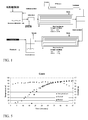
- the distillate and temperature profiles of the process were observed and are recorded in the graph shown in Fig. 3. Once the reaction reaches 54°C, water distillation removal goes rapidly until most of the water has been overhead collected.
- Another advantage of the new process invention is that the distillate from previous batches may be recycled. Three repeated experiments demonstrated that using the distillate from the previous batch as water affords conversion without disposal of distillate.
- Another unexpected utility and advantage of the invention process is the adaptability to continuous processing. Typically chemical batches are made in lots where a certain amount of material is converted to the desired product batch by batch. In adaptation to continuous processing, simply put, the reagents are fed in at one end of the process and the product comes out the other end.
- the continuous process would consist of either plug flow reactors, PFRs (also called tubular reactors) (see Figure 1), continuous-flow stirred tank reactors, CSTRs (see Figure 2), or a mixture of PFRs and CSTRs..
- the process would have an evaporation (or stripping) stage where the water and excess ammonia are removed from the reactants. This could be done using a PFR or a CSTR. Following the stripping stage, the reactants would then flow into another reactor where they would be reacted; again this could be done in a PFR or a CSTR.
- a CSTR process reactants are charged to and the products are removed from the reactor continuously. Inlet reactants are dispersed quickly due to quick agitation, and the composition at any point is equal to the average composition of the system. The time needed for the reaction or evaporation to take place is called the residence time. So, the size of the reactor would have to be greater than the product of the residence time and the inlet flow rate.
- reactors At large residence times, reactors would have to be very large.
- the reactants enter one end of a long tube and the products exit the other end.
- the mixing is dependent on the fluid, the tube size and the flow rate.
- the residence time is the time it takes the fluid to enter one and exit the other. So for large residence times, longer or thicker tubes would have to be used.
- both stages could take place in either one or multiple reactors, although the two-reactor process would be easier to control as each reactor is used for one stage of the process.
Landscapes
- Chemical & Material Sciences (AREA)
- Organic Chemistry (AREA)
- Organic Low-Molecular-Weight Compounds And Preparation Thereof (AREA)
- Catalysts (AREA)
- Inorganic Compounds Of Heavy Metals (AREA)
Abstract
Description
- The invention relates to the preparation of 2,4-heteroatom-substituted molybdena-3,3-dioxocycloalkane compounds by reacting diol-, diamino, thiol-alcohol- and amino-alcohol-compounds.
-
US 5,412,130 (Karol ) describes a process for the preparation of molybdates (2,4-heteroatom substituted-molybdena-3,3-dioxacycloalkane compounds) by reacting the intended substrate with molybdenum source and in the presence of any proportion of phase transfer agent of the imidazoline type. The original composition of matter patent for the molybdates is underUS 4,889,647 (Rowan, Karol, and Farmer ). -
US 3,285,942 (Price et. al. ) describes an improved process for the manufacture of molybdenum complexes of monoglycerides with an "organic nitrogen base" selected from alkylamines having at least 6 carbons selected from aryl-, N-dialkyl amides, azines and oxazines, and said nitrogen base being added to the reaction material in an amount of 1 - 50% weight percent of the amount of molybdenum compound used in the reaction. Also dimethylformamide is claimed. - It has been unexpectedly discovered that the level of imidazoline can be minimized or eliminated by using ammonium molybdate as the molybdenum source with the addition of small amounts of excess ammonia or alkyl amine. Additionally, hydrogen peroxide of 1 to 5 percent based on total weight of reagents added can enhance the invention process. The invention process offers advantages of process time reduction, elimination of filtration, and continuous process adaptability (versus batch processing).
- Accordingly, this invention is a process for preparation of heterocyclic molybdates by reacting diol-, diamino, thiol-alcohol- and amino-alcohol-compounds with the following reagents, to produce a molybdate derivative:
- ammonium molybdate (or in situ produced ammonium molybdate by the reaction of ammonia with molybdenum trioxide or molybdic acid) as a molybdenum source,
- ammonia as an additional or secondary reagent or promoter, in molar ratio NH3:Mo (amount of molybdenum in the molybdenum source) of ≥1:1, preferably 1-3:1, more preferably 2-3:1, and most preferred 2.2-2.65:1.
- This would be considerably more ammonia than ammonium molybdate of the prior art (
US 5412130 ), which has a 0.86:1 NH3:Mo ratio. It has been deduced that when acting as an additional secondary reagent/promoter, ammonia functions to greatly facilitate the reaction process. - The invention process is compatible with the use of imidazoline derived reaction enhancers/phase-transfer-agent, as described in
US 5,412,130 (Karol ), although these agents are not required for the invention process. The optimal amount of imidazoline type phase transfer for the invention process is up to 8 percent and more preferably 6-8%. - Alkylamines can be utilized with the ammonia (but at additional expense as amines are more expensive). Therefore mixtures of ammonia and amine are chemically adaptable as well.
- As used in
US 5,412,130 and herein, the term diol-, diamino-, thiol-, alcohol- and amino- alcohol compound refer to compounds derived from triglycerides, poly-alpha-olefins, polypropene, polybutylene, polyisobutylene, fatty acids, fatty oils, and fatty amides. The term 2,4-heteroatom substituted-molybdena-3,3-dioxacylcoalkane-fatty acid-derived compounds herein generically describes the heterocyclic compounds obtained by reacting the diol-, diamino, thiol-alcohol- and amino-alcohol-triglyceride compounds in the presence of ammonium molybdate or trialkyl ammonium molybdate or mixtures thereof; with either no or minimal imidazoline derived phase transfer agent. Thus, the invention may also comprise a process which takes place in the absence of imidazoline derived phase transfer agent; though the invention may also utilize any amount of imidazoline, for example, up to about 20% or more, but preferably no more than about 8% of such agent. - Ammonium molybdate or trialkyl ammonium molybdate or mixtures thereof, may be made from molybdenum trioxide and water or molybdic acid. It is chemically known that molybdenum trioxide and water form molybdic acid with mild heating. Molybdic acid reacts with ammonia to form ammonium molybdate rapidly and exothermically. Therefore molybdenum oxide or molybdic acid can be used in situ with ammonia and/or trialkyl amines to form ammonium molybdate(s).
- The term 2,4-heteroatom substituted-molybdena-3,3-dioxacylcoalkane-polymer-derived compounds herein generically describes the heterocyclic compounds obtained by reacting the diol-, diamino, thiol-alcohol- and amino-alcohol-substituted poly-alpha-olefins, polypropene, polybutylene, or polyisobutylene in the presence of ammonium molybdate, with or without an amount of phase transfer agent. The invention process is disclosed for preparation of a 2,4-heteroatom-substituted-molybdena-3,3-dioxocycloalkane composition by reacting material having the structural formula:


- Additionally, trace amounts (0.3-0.5%) of hydrogen peroxide were found to improve the process.
- The products of these molybdate processes (prior art as well as the present invention) are believed to be a complex mixture. The prior references often simplified the complex mixture by using structures V and VI as the simplest esters envisioned (the diester of


US 5,412,130 (Karol ) andUS 4,889,647 (Rowan, Karol, Farmer ) can be duplicated with the present invention. -
- Fig. 1 shows a Plug Flow Reactor (PFR), which can be used with the present invention.
- Fig. 2 shows a Continuous-flow Stirred Tank Reactor (CSTR), which can be used with the present invention.
- Fig. 3 is a graph showing temperature and distillate over process time.
- Fig. 4 is a graph showing the natural log of the reactant concentration versus time.
- Fig. 5 is a graph showing conversion as a function of time and temperature.
- Ammonium molybdate is available commercially as (NH4)6Mo7O24.4H2O, and the terminology "ammonium molybdate" refers to this structure in the industry. This is because the higher ammonia content in ammonium molybdate salts is typically not stable and dissociates readily, releasing ammonia gas and producing (NH4)6Mo7O24.4H2O. Ammonia is used in the invention as a secondary reagent or promoter. This reagent/promoter chemically shifts the equilibrium to form higher ammoniated molybdate, which are only stable in excess ammonia solution and which has been found to greatly improve the organic molybdate conversion process.
- The invention uses ammonium molybdate, which can be made in situ from molybdenum trioxide reaction and ammonia (conversion to ammonium molybdate prior to addition of the alcohol substrate(s)). Since ammonia facilitates this process, an excess of ammonia is required as part of the invention. Accordingly, the process of the invention utilizes a molar ratio NH3:Mo (amount of molybdenum in the molybdenum source) of ≥1:1, preferably 1-3:1, more preferably 2-3:1, and most preferred 2.2-2.65:1.
- Less than about 2.07 moles ammonia to Mo will achieve improved reaction, but conversion levels may not be high enough to afford a product that does not require filtration. Levels of 1-2.07:1 are nonetheless higher ammonia content than the commercial ammonium molybdate (NH4)6Mo7O24.4H2O, which has a 0.86:1, NH3:Mo molar ratio. The more preferred molar ratio is therefore2.07-2.95:1 NH3:Mo, which achieves both good conversion and no filtration. The most preferred molar amount is 2.2-2.65:1, NH3:Mo, because this ratio insures reproducibility of the reaction. The 2.07:1 ratio is equivalent to about 40% excess ammonia as compared to the basic stoichiometric ammonia molybdate (NH4)6Mo7O24.4H2O. The excess ammonia is utilized herein as a secondary reagent or promoter, and amount higher than preferred levels will achieve the same process invention, though without further benefit from the additional ammonia promoter/reagent. Therefore, it is considered that higher ammonia levels, e.g. anything as a ratio to molybdenum of ≥ 1:1 would function with the current process and therefore is considered part of the disclosed invention, though an overly excessive amount would provide no additional conversion advantage. It is envisioned that ammonia can be recycled, and in this light, further excess of ammonia may not be an economical debit. The process invention achieves remarkable batch conversion (or low hexane insoluble content because of low inorganic residue) minimizing process time and avoiding filtration.
Table 1 Elucidating Preferred Molar ratios, NH3:Mo Lot Moles Ratio NH3/MoO3 Moles Ratio Water/MoO3 Hex Ins DG-1-30 1.83 23.58 high DG-1-33 1.85 23.61 high DG-1-38 1.85 23.69 high DG-1-51 1.85 45.35 did not work DG-1-64 2.06 11.30 high RD-1-81 2.06 11.31 slightly high RD-1-82 2.06 11.31 good RD-1-83 2.07 11.35 good RD-1-56 2.09 28.66 high RD-1-43 2.10 24.19 good RD-1-45 2.10 24.19 good RD-1-48 2.10 20.16 good RD-1-57 2.10 24.19 high RD-1-36 2.10 28.74 high RD-1-39 2.10 28.74 good RD-1-78 2.21 12.12 good RD-1-77 2.51 12.79 good RD-1-75 2.65 15.12 good RD-1-76 2.65 14.17 good RD-1-59 2.95 26.11 good RD-1-61 2.95 26.11 good RD-1-63 2.95 26.11 good RD-1-65 2.95 26.11 good RD-1-69 2.95 23.17 good RD-1-66 2.95 25.14 good RD-1-70 2.95 22.23 good RD-1-71 2.95 21.28 good RD-1-73 2.95 18.44 good RD-1-74 2.95 16.54 good RD-1-68 2.95 24.12 good RD-1-72 2.95 20.33 good DG-1-21 2.95 26.11 good - The above table demonstrates ratios ofNH3:Mo to achieve product not requiring filtration (hexane insoluble <0.1% have a "good" designation).
- Process technology under
US 5,412,130 (Karol ) can have failure due to the build up of solid during the later stages of the water removal strip. A solid precipitate was always noticed when utilizing ammonium molybdate as the molybdenum source. However, unlike the Karol process, this solid re-dissolves during the reaction stage of the new process. Filtration is a significant delay in the time to process. The new invention offers the ability to avoid filtration completely. - Below is a list of batches produced using the new process. Consistently, though unexpectedly in view of the prior art, no filtration is needed by this new process invention. Accordingly, the invention process may also be characterized as one that produces organo-molybdenum product in the absence of a filtration step.
Table 2 Lot g H2O g MoO3 g NH3 g Reagent Moles NH3:Mo G Oil g Product IR Hex Ins % % Mo % N % Sediment RD-1-59 167.1 68.8 81.5 550 2.94 40 0.13 0.04 7.4 3.4 0.1 RD-1-61 167.1 68.8 81.5 550 2.94 40 0.13 0.04 7.3 3.4 0.075 RD-1-63 167.1 68.8 81.5 550 2.94 40 0.15 0.04 7.3 3 0.1 RD-1-65 167.1 68.8 81.5 550 2.94 40 0.25 0.05 7.3 3 0.1 RD-1-66 163.0 70.7 83.7 550 2.94 40 0.21 0.09 7.5 2.7 0.15 RD-1-68 154.8 71.0 84.1 550 2.94 40 0.17 0.04 7.5 3 0.15 RD-1-69 146.1 70.9 84.0 550 2.94 40 0.12 0.03 7.5 3 0.15 RD-1-70 136.5 70.3 83.2 550 2.94 40 629 0.08 0.03 7.6 3.1 0.15 RD-I-71 154.0 84.4 100.0 662 2.94 724 0.07 0.04 8 3.3 0.15 RD-1-72 118.4 69.4 82.2 550 2.94 40 623 0.15 0.04 7.4 3 0.25 RD-I-73 102.8 70.0 82.9 550 2.94 40 630 0.1 0.03 7.7 2.7 0.25 RD-1-74 88.7 72.0 85.3 550 2.94 40 652 0.06 0.04 7.5 2.7 0.4 RD-1-75 83.1 73.0 77.9 550 2.65 40 650 0.1 0.05 7.5 3.2 0.5 RD-1-76 73.0 71.6 76.4 550 2.65 40 630 0.21 0.00 7.5 3.2 0.025 RD-1-77 62.9 70.8 71.3 550 2.50 41 602 0.13 0.03 7.5 3.4 0.15 RD-1-78 62.4 70.2 62.4 550 2.21 40 617 0.4 0.03 7.5 3.5 0.1 RD-1-79 64.0 72.0 64.0 550 6 2.21 40 641 0.06 0.02 7.7 3.2 0.25 RD-1-80 64.0 72.0 64.0 550 4 2.21 40 640 0.15 0.01 7.7 3.2 0.05 RD-1-81 62.4 75.2 62.4 550 2 2.06 40 0.15 7.8 3.1 0.3 RD-1-82 62.9 75.8 62.9 550 2.06 45 610 0.13 0.03 7.5 3.3 0.35 RD-1-83 62.9 75.8 62.9 550 2.06 45 579 0.08 0.07 8.1 3.5 0.35 RD-1-84 68.7 77.3 64.08 550 2.06 40 0.25 7.9 3.3 0.1 DG-1-62 105 118.2 105 860 2.21 60 987 0.094 7.8 3.6 0.3 DG-1-64 66.7 80.5 66.7 550 2.06 40 604 0.15 8.2 3.4 0.3 DG-1-66 66.7 80.5 66.7 550 0 2.06 49 615 0.46 0.07 8 2.7 0.3 DG-1-70 133.4 161 133.4 1130 0 2.06 96 1182 0.27 0.05 7.9 3 0.075 DG-1-71 133.4 161 133.4 1100 0 2.06 96 1301 0.12 0.04 8.1 3.2 <0.05 DG-1-74 133.4 161 133.4 1004 0 2.06 1066 0.491 0.11 9.1 3.3 0.5 DG-1-75 133.4 161 133.4 900 0 2.06 1069 0.47 0.04 9.8 3.3 0.65 DG-1-77 133.4 p 161 133.4 1100 0 2.06 94 1278 0.16 0.025 8.1 2.8 0.3 DG-1-78 133.4 161 133.4 1100 0 2.06 94 1226 0.13 0.037 8.4 3.1 0.15 6 contains 6% imidazoline
4 contains 4% imidazoline
2 contains 2% imidazoline
0 contains 0% imidazoline
p contains 30 g of 35% hydrogen peroxide in water
a 29.4% mass ammonia in water
Reagent = reagent mixture containing 92 - 94% (cocodiethanolamide and coco-monoglyceride prepared by reacting coconut oil and diethanol amine) and 6-8% 1-(2-hydroxyethyl)-2-imidazoline tall oil. "Oil" may be present as a diluent, and may be of the type described inUS 5,412,130 (Karol ), which is incorporated herein by reference. - Imidazoline is described in the prior art
US 5,412,130 (Karol ) as an essential promoter that improved the phase transfer of molybdenum from the aqueous to the organic phase and is claimed in all proportions. The invention in this application successfully produced conversion with low or no imidazoline, provided that a vacuum is in place, prior to temperature elevation, sufficient to remove water and avoid detrimental hydrolysis in the water removal strip. - High molybdenum content of 10% or greater can be achieved by this improved process for mixtures of cocodiethanolamide and coco-monoglyceride (coconut-oil diethanolamine derived derivatives).
- The process without trace amount of hydrogen peroxide affords product not requiring filtration (low hexane insolubles material commonly referred to as low hexane "insolubles") but it is still desirable to produce the least amount of hexane insolubles as possible (striving for complete conversion of the reaction by converting inorganic hexane insoluble materials to products with hexane solubility). In the invention process, hydrogen peroxide will afford conversions with exceptionally low hexane insolubles (0.025%). Hydrogen peroxide is believed to stabilize ammonium molybdate during processing.
- The process time is an important consideration in chemical manufacturing and the shorter the process time (faster to make) of a chemical the more desirable for cost considerations (a faster process typically reduces cost). It was determined that the invention's process time is significantly shorter than the prior art.
Table 3 Invention Process Reaction Time Advantage comparisons Prior Art US 5,412,130 Current Invention Coconut Oil diethanol amine reaction product consisting of essentially Cocodiethanolamide and coco-monoglyceride 314.6 grams 900 grams 1-(2-hydroxyethyl)-2-imidazoline derived from 50:50 oleic : linoleic acid 27.4 grams 0 grams Molybdenum trioxide 49.9 grams 161 grams Water 63.4 grams 133.4 grams 29.4% ammonia in water 0 133.4 grams 7 Hour @ 80C ; Hexane insoluble results 0.25% No pre-reaction required 9 Hour @ 80 C; Hexane insoluble results 0.07% No pre-reaction required 1.5 hour vacuum strip @ 90C 25 - 35 minutes vacuum strip @ 90 C 2 hour vacuum strip @135C 20 - 30 minutes vacuum strip @ 148C Final Hexane Insolubles <0.10 0.04 % molybdenum 8.6 % Mo 9.6% Mo Total reaction time 12.5 hours 1 hour - The ammonium molybdate utilized in the current invention as shown in the above table is prepared in situ by initial charge of water, ammonia, and molybdenum trioxide which converts rapidly and exothermically to ammonium molybdate with excess ammonia (one minute stir). The water of reaction is slowly produced in the prior art and molybdenum incorporation is measured by hexane insoluble material (commonly referred to as "hexane insolubles"). The inorganic molybdenum must be below 0.20% to be considered a good reaction conversion and filtration with little plugging of the filter. Hexane insoluble levels below 0.10% typically require no filtration as this low level meets the specification of "filtered" product. Therefore by the comparison in the table above, the prior art process requires lengthy reaction time as compared against the invention process. Additionally the invention offers exceptionally low hexane insoluble material indicating exceptional conversion and thus no filtration step is required.
- Another advantage of the invention process is that a smooth removal of water is evident. The distillate and temperature profiles of the process were observed and are recorded in the graph shown in Fig. 3. Once the reaction reaches 54°C, water distillation removal goes rapidly until most of the water has been overhead collected.
- Water is produced during the reaction of ammonium molybdate and precursor diols. Since at lower temperatures it is hard to distinguish between excess water and product water, the water of reaction modeling was only started when the overall temperature hit 136°C. The model does not take into account temperature changes. The chart in Fig. 4 shows the natural log of the reactant concentration versus time in order to figure out the rate constant, k, for the reaction. The rate constant for a first order reaction is the slope.
- Using this rate constant value, -0.1237 min-1, the graph of Fig. 5 for the conversion was produced. The time scale was reset for this chart.
- Another advantage of the new process invention is that the distillate from previous batches may be recycled. Three repeated experiments demonstrated that using the distillate from the previous batch as water affords conversion without disposal of distillate.
- Another unexpected utility and advantage of the invention process is the adaptability to continuous processing. Typically chemical batches are made in lots where a certain amount of material is converted to the desired product batch by batch. In adaptation to continuous processing, simply put, the reagents are fed in at one end of the process and the product comes out the other end.
- The continuous process would consist of either plug flow reactors, PFRs (also called tubular reactors) (see Figure 1), continuous-flow stirred tank reactors, CSTRs (see Figure 2), or a mixture of PFRs and CSTRs..
- The process would have an evaporation (or stripping) stage where the water and excess ammonia are removed from the reactants. This could be done using a PFR or a CSTR. Following the stripping stage, the reactants would then flow into another reactor where they would be reacted; again this could be done in a PFR or a CSTR. In a CSTR process reactants are charged to and the products are removed from the reactor continuously. Inlet reactants are dispersed quickly due to quick agitation, and the composition at any point is equal to the average composition of the system. The time needed for the reaction or evaporation to take place is called the residence time. So, the size of the reactor would have to be greater than the product of the residence time and the inlet flow rate. At large residence times, reactors would have to be very large. In a PFR, the reactants enter one end of a long tube and the products exit the other end. In this case, the mixing is dependent on the fluid, the tube size and the flow rate. For a PFR, the residence time is the time it takes the fluid to enter one and exit the other. So for large residence times, longer or thicker tubes would have to be used.
- One of the benefits of the CSTR method over the PFR is that it is easily converted from older batch equipment. Whereas the PFR has great potential when it comes to scaling up - since tube length, size, flow rate, and number of tubes can all be changed to increase production.
- If designed correctly, both stages could take place in either one or multiple reactors, although the two-reactor process would be easier to control as each reactor is used for one stage of the process.
Claims (18)
- A process for preparing 2,4-heteroatom-substituted molybdena-3,3-dioxocycloalkane compounds, comprising the steps of:reacting(A) a starting material having the structural formula

 (B) ammonium molybdate as a molybdenum source sufficient to yield about 2 to 20 percent of molybdenum based on the weight of the molybdena-compound, in the presence of water, and(C) an additional or secondary reagent or promoter in molar amount ≥1:1, Z:Mo, where Z is one of or both in combination of (i) ammonia and (ii) an alkylamine where the alkyl groups are independently selected from straight or branched chain C1 to C6;removing water; andrecovering the molybdena-compounds.
 - The process of claim 1, wherein the recovered molybdena compounds comprise a complex mixture represented by a generic formula as


wherein R1, R2, R3, R4, R5, X1, X2, n and m are defined and correspond to the starting materials in formula (I) and (II). - The process according to claim 1, further comprising adding as an additional reagent up to 20% of a phase transfer agent of the formula


- The process according to claim 3, wherein the phase transfer agent is added in an amount up to 8%.
- The process according to claim 1, further comprising adding as an additional reagent hydrogen peroxide from 1 to 5 percent of 35% hydrogen peroxide or the equivalent thereof.
- The process according to claim 4, wherein the phase transfer agent is 1-(2-hydroxyethyl)-2-octadecylimidazoline.
- The process according to claim 1, wherein the starting material of formula I is derived from epoxidized fatty oils or fatty acids.
- The process according to claim 1 wherein the starting material of formula I is derived from triglycerides.
- The process according to claim 1, wherein the starting material of formula I is derived from epoxidized polymers having a molecular weight in the range of 150 to 1200 and selected from poly-alpha-olefins, polypropene, polybutylene and polyisobutylene.
- The process according to claim 1, wherein the ammonium molybdate is produced in situ from molybdenum trioxide or molybdic acid and ammonia.
- A process according to claim 1, wherein the reaction ratio is 1-3: 1, and which further comprises a filtration step where the ratio is at a level less than 2.06:1.
- The process according to claim 4, wherein R6 is derived from tall oil (50:50 oleic:linoleic acid).
- The process according to claim 12, wherein the imidazoline derivative is 1-(2-hydroxyethyl)-2-imidazoline derived from 50:50 oleic:linoleic acid in an amount of 6 to 8 percent by mass.
- The process of claim 1, wherein the reaction ratio is 1-3:1.
- The process of claim 14, wherein the reaction ratio is 2.07-2.95.
- The process of claim 15, wherein the reaction ratio is 2.2-2.65:1.
- The process of claim 14, wherein Z is ammonia.
- The process of claim 1, wherein the reaction takes place at 60 to 150° C.
Priority Applications (2)
| Application Number | Priority Date | Filing Date | Title |
|---|---|---|---|
| PL06121001T PL1770153T3 (en) | 2005-09-23 | 2006-09-20 | Process for the preparation of organo-molybdenum compounds |
| SI200630248T SI1770153T1 (en) | 2005-09-23 | 2006-09-20 | Process for the preparation of organo-molybdenum compounds |
Applications Claiming Priority (2)
| Application Number | Priority Date | Filing Date | Title |
|---|---|---|---|
| US72026005P | 2005-09-23 | 2005-09-23 | |
| US11/385,291 US7205423B1 (en) | 2005-09-23 | 2006-03-21 | Process for the preparation of organo-molybdenum compounds |
Publications (2)
| Publication Number | Publication Date |
|---|---|
| EP1770153A1 true EP1770153A1 (en) | 2007-04-04 |
| EP1770153B1 EP1770153B1 (en) | 2008-12-31 |
Family
ID=37087743
Family Applications (1)
| Application Number | Title | Priority Date | Filing Date |
|---|---|---|---|
| EP06121001A Active EP1770153B1 (en) | 2005-09-23 | 2006-09-20 | Process for the preparation of organo-molybdenum compounds |
Country Status (10)
| Country | Link |
|---|---|
| US (1) | US7205423B1 (en) |
| EP (1) | EP1770153B1 (en) |
| JP (1) | JP4812580B2 (en) |
| CN (1) | CN1982320B (en) |
| AT (1) | ATE419322T1 (en) |
| DE (1) | DE602006004523D1 (en) |
| ES (1) | ES2320692T3 (en) |
| PL (1) | PL1770153T3 (en) |
| SI (1) | SI1770153T1 (en) |
| WO (1) | WO2007038086A2 (en) |
Cited By (11)
| Publication number | Priority date | Publication date | Assignee | Title |
|---|---|---|---|---|
| WO2011161662A1 (en) | 2010-06-25 | 2011-12-29 | Total Raffinage Marketing | Lubricant compositions for motor vehicle transmissions |
| WO2015091466A1 (en) | 2013-12-17 | 2015-06-25 | Total Marketing Services | Lubricant composition made from fatty triamines |
| WO2017021523A1 (en) | 2015-08-06 | 2017-02-09 | Total Marketing Services | Lubricating compositions for preventing or reducing pre-ignition in an engine |
| WO2017149119A1 (en) | 2016-03-03 | 2017-09-08 | Total Marketing Services | Lubricant composition based on neutralized amines and molybdenum |
| WO2018189223A1 (en) | 2017-04-11 | 2018-10-18 | Total Marketing Services | Lubricant composition, in particular for limiting friction |
| FR3091874A1 (en) | 2019-01-22 | 2020-07-24 | Total Marketing Services | Molybdenum dinuclear complex and its use in lubricating compositions |
| WO2021198131A1 (en) | 2020-04-01 | 2021-10-07 | Total Marketing Services | Lubricant composition comprising a 2,5-dimercapto-1,3,4-thiadiazole alkyl polycarboxylate compound |
| US11268044B2 (en) | 2015-07-23 | 2022-03-08 | Total Marketing Services | Long duration fuel economy lubricating composition |
| FR3118630A1 (en) | 2021-01-06 | 2022-07-08 | Total Marketing Services | Lubricating composition having cold stability and improved fuel eco properties |
| WO2023031417A1 (en) | 2021-09-03 | 2023-03-09 | Totalenergies Onetech | Lubricating composition with improved cold thickening properties |
| WO2023217874A1 (en) | 2022-05-11 | 2023-11-16 | Totalenergies Onetech | Lubricant composition having improved emulsion stability |
Families Citing this family (9)
| Publication number | Priority date | Publication date | Assignee | Title |
|---|---|---|---|---|
| CN101674974B (en) * | 2007-03-06 | 2013-01-30 | R.T.范德比尔特公司 | Molybdenum compound |
| US9222050B1 (en) | 2012-02-29 | 2015-12-29 | Rand Innovations, Llc | Lubricant composition, method of preparing the same, and firearm cleaner including the same |
| US9228151B1 (en) | 2012-11-07 | 2016-01-05 | Rand Innovations, Llc | Lubricant additive composition, lubricant, and method of preparing the same |
| CN104844656A (en) * | 2015-03-24 | 2015-08-19 | 上海交通大学 | Non-sulfur and non-phosphorus organic molybdenum compound and preparation method and application thereof |
| KR101878913B1 (en) * | 2015-04-28 | 2018-07-16 | (주)포스코엠텍 | Process of preparing molybdenum trioxide from molybdenite |
| US9534186B1 (en) | 2015-06-17 | 2017-01-03 | Chevron Oronite Company Llc | Multifunctional molybdenum containing compounds, method of making and using, and lubricating oil compositions containing same |
| CN107384513A (en) * | 2017-07-26 | 2017-11-24 | 山东源根石油化工有限公司 | A kind of non-sulphur phosphorus organic tungsten additive of environment-friendly type antifriction antioxygen and the lubricating oil containing the additive |
| CN112961721B (en) * | 2020-12-30 | 2022-09-20 | 徐州振峰新材料科技有限公司 | Graphene-containing lubricating protection additive for lubricating oil |
| CN118290249B (en) * | 2023-01-04 | 2025-11-14 | 中国石油化工股份有限公司 | A method and apparatus for synthesizing homogeneous organic molybdenum-containing compounds and their applications |
Citations (3)
| Publication number | Priority date | Publication date | Assignee | Title |
|---|---|---|---|---|
| US3285942A (en) * | 1962-03-06 | 1966-11-15 | Exxon Research Engineering Co | Preparation of glycol molybdate complexes |
| EP0222143A1 (en) * | 1985-11-14 | 1987-05-20 | R.T. Vanderbilt Company, Inc. | Organic molybdenum complexes |
| US5412130A (en) * | 1994-06-08 | 1995-05-02 | R. T. Vanderbilt Company, Inc. | Method for preparation of organic molybdenum compounds |
Family Cites Families (3)
| Publication number | Priority date | Publication date | Assignee | Title |
|---|---|---|---|---|
| US4164473A (en) * | 1977-10-20 | 1979-08-14 | Exxon Research & Engineering Co. | Organo molybdenum friction reducing antiwear additives |
| US5137647A (en) * | 1991-12-09 | 1992-08-11 | R. T. Vanderbilt Company, Inc. | Organic molybdenum complexes |
| EP1169421B1 (en) * | 1999-03-15 | 2003-01-08 | Shell Internationale Researchmaatschappij B.V. | Grease composition for constant velocity joints |
-
2006
- 2006-03-21 US US11/385,291 patent/US7205423B1/en not_active Expired - Lifetime
- 2006-09-19 WO PCT/US2006/036465 patent/WO2007038086A2/en not_active Ceased
- 2006-09-20 AT AT06121001T patent/ATE419322T1/en not_active IP Right Cessation
- 2006-09-20 PL PL06121001T patent/PL1770153T3/en unknown
- 2006-09-20 DE DE602006004523T patent/DE602006004523D1/en active Active
- 2006-09-20 ES ES06121001T patent/ES2320692T3/en active Active
- 2006-09-20 SI SI200630248T patent/SI1770153T1/en unknown
- 2006-09-20 EP EP06121001A patent/EP1770153B1/en active Active
- 2006-09-21 JP JP2006255555A patent/JP4812580B2/en active Active
- 2006-09-25 CN CN2006101397979A patent/CN1982320B/en active Active
Patent Citations (3)
| Publication number | Priority date | Publication date | Assignee | Title |
|---|---|---|---|---|
| US3285942A (en) * | 1962-03-06 | 1966-11-15 | Exxon Research Engineering Co | Preparation of glycol molybdate complexes |
| EP0222143A1 (en) * | 1985-11-14 | 1987-05-20 | R.T. Vanderbilt Company, Inc. | Organic molybdenum complexes |
| US5412130A (en) * | 1994-06-08 | 1995-05-02 | R. T. Vanderbilt Company, Inc. | Method for preparation of organic molybdenum compounds |
Cited By (18)
| Publication number | Priority date | Publication date | Assignee | Title |
|---|---|---|---|---|
| WO2011161662A1 (en) | 2010-06-25 | 2011-12-29 | Total Raffinage Marketing | Lubricant compositions for motor vehicle transmissions |
| WO2015091466A1 (en) | 2013-12-17 | 2015-06-25 | Total Marketing Services | Lubricant composition made from fatty triamines |
| US11268044B2 (en) | 2015-07-23 | 2022-03-08 | Total Marketing Services | Long duration fuel economy lubricating composition |
| WO2017021523A1 (en) | 2015-08-06 | 2017-02-09 | Total Marketing Services | Lubricating compositions for preventing or reducing pre-ignition in an engine |
| WO2017149119A1 (en) | 2016-03-03 | 2017-09-08 | Total Marketing Services | Lubricant composition based on neutralized amines and molybdenum |
| WO2018189223A1 (en) | 2017-04-11 | 2018-10-18 | Total Marketing Services | Lubricant composition, in particular for limiting friction |
| FR3091874A1 (en) | 2019-01-22 | 2020-07-24 | Total Marketing Services | Molybdenum dinuclear complex and its use in lubricating compositions |
| WO2020152137A1 (en) | 2019-01-22 | 2020-07-30 | Total Marketing Services | Dinuclear molybdenum complex and use of same in lubricating compositions |
| US11572522B2 (en) | 2019-01-22 | 2023-02-07 | Total Marketing Services | Dinuclear molybdenum complex and use of same in lubricating compositions |
| CN113661167A (en) * | 2019-01-22 | 2021-11-16 | 道达尔销售服务公司 | Binuclear molybdenum complexes and their use in lubricating compositions |
| FR3108914A1 (en) | 2020-04-01 | 2021-10-08 | Total Marketing Services | Lubricating composition comprising a 2,5-dimercapto-1,3,4-thiadiazole alkyl polycarboxylate compound |
| WO2021198131A1 (en) | 2020-04-01 | 2021-10-07 | Total Marketing Services | Lubricant composition comprising a 2,5-dimercapto-1,3,4-thiadiazole alkyl polycarboxylate compound |
| FR3118630A1 (en) | 2021-01-06 | 2022-07-08 | Total Marketing Services | Lubricating composition having cold stability and improved fuel eco properties |
| WO2022148753A1 (en) | 2021-01-06 | 2022-07-14 | Totalenergies Onetech | Lubricant composition with improved cold stability and eco-fuel properties |
| WO2023031417A1 (en) | 2021-09-03 | 2023-03-09 | Totalenergies Onetech | Lubricating composition with improved cold thickening properties |
| FR3126711A1 (en) | 2021-09-03 | 2023-03-10 | Totalenergies Marketing Services | Lubricant composition with improved cold thickening properties |
| WO2023217874A1 (en) | 2022-05-11 | 2023-11-16 | Totalenergies Onetech | Lubricant composition having improved emulsion stability |
| FR3135465A1 (en) | 2022-05-11 | 2023-11-17 | Totalenergies Onetech | Lubricating composition having improved emulsion stability |
Also Published As
| Publication number | Publication date |
|---|---|
| EP1770153B1 (en) | 2008-12-31 |
| WO2007038086A3 (en) | 2007-07-12 |
| SI1770153T1 (en) | 2009-06-30 |
| PL1770153T3 (en) | 2009-06-30 |
| CN1982320A (en) | 2007-06-20 |
| JP2007084545A (en) | 2007-04-05 |
| JP4812580B2 (en) | 2011-11-09 |
| ATE419322T1 (en) | 2009-01-15 |
| ES2320692T3 (en) | 2009-05-27 |
| US7205423B1 (en) | 2007-04-17 |
| US20070073073A1 (en) | 2007-03-29 |
| CN1982320B (en) | 2012-03-21 |
| WO2007038086A2 (en) | 2007-04-05 |
| DE602006004523D1 (en) | 2009-02-12 |
Similar Documents
| Publication | Publication Date | Title |
|---|---|---|
| EP1770153B1 (en) | Process for the preparation of organo-molybdenum compounds | |
| EP0049463B1 (en) | Preparation of linear polyalkylene polyamines | |
| JP4471073B2 (en) | Method for producing bifunctional phenylene ether oligomer | |
| US7914762B2 (en) | Preparation method of chalcopyrite-type compounds with microwave irradiation | |
| EP0349926A2 (en) | Process for producing quarternary ammonium pendant siloxane copolymers | |
| US5412130A (en) | Method for preparation of organic molybdenum compounds | |
| DE3120214A1 (en) | POLYMERE TERTIASES AND SECONDARY AMINES WITH SILICANE-BASIC BASE, METHOD FOR THEIR PRODUCTION AND USE | |
| EP2007778B1 (en) | Process for preparing sulfurized molybdenum dialkyldithiocarbamates | |
| EP0639589A1 (en) | Process for the production of fuel additives from chlorinated polybutenes | |
| KR20180127064A (en) | Preparing method of electrolyte additives with lowered acidity | |
| EP0075935B1 (en) | Preparation of polyalkylene polyamines | |
| JPS63185945A (en) | Derivative containing amino group of 1,3-di-substituted 2-propanol, manufacture and use | |
| US4256666A (en) | Preparation of β-aminopropionamides | |
| US5912382A (en) | Hydroxyalkyl carbamate compositions and processes for manufacturing same | |
| US4272455A (en) | Production of monoalkyleneglycols, monoalkanolamines and alkylenediamine | |
| JP3731909B2 (en) | Method for producing hydroxyoxaalkylmelamine | |
| CA1105058A (en) | Process for the manufacture of polyalkylenepolyamines | |
| US5491240A (en) | Quaternary compound of a tertiary amine and methyl chloride | |
| JP2524339B2 (en) | A process for producing liquid, very concentrated amine oxides. | |
| JP3840695B2 (en) | Method for producing oxetane compound having hydroxyl group | |
| EP0832874B1 (en) | Process for preparing bis-substituted phenolic amides in the presence of an alcohol as solvent | |
| EP0151967B1 (en) | Process for the preparation of n-substituted alpha, beta-unsaturated carboxylic acid amides | |
| WO1999054281A1 (en) | Process for producing dimethylacetamide | |
| JPH064572B2 (en) | Process for producing N-vinylformamide | |
| JPH02135144A (en) | Alkoxylating catalyst |
Legal Events
| Date | Code | Title | Description |
|---|---|---|---|
| PUAI | Public reference made under article 153(3) epc to a published international application that has entered the european phase |
Free format text: ORIGINAL CODE: 0009012 |
|
| AK | Designated contracting states |
Kind code of ref document: A1 Designated state(s): AT BE BG CH CY CZ DE DK EE ES FI FR GB GR HU IE IS IT LI LT LU LV MC NL PL PT RO SE SI SK TR |
|
| AX | Request for extension of the european patent |
Extension state: AL BA HR MK YU |
|
| 17P | Request for examination filed |
Effective date: 20070314 |
|
| AKX | Designation fees paid |
Designated state(s): AT BE BG CH CY CZ DE DK EE ES FI FR GB GR HU IE IS IT LI LT LU LV MC NL PL PT RO SE SI SK TR |
|
| GRAP | Despatch of communication of intention to grant a patent |
Free format text: ORIGINAL CODE: EPIDOSNIGR1 |
|
| GRAS | Grant fee paid |
Free format text: ORIGINAL CODE: EPIDOSNIGR3 |
|
| GRAA | (expected) grant |
Free format text: ORIGINAL CODE: 0009210 |
|
| AK | Designated contracting states |
Kind code of ref document: B1 Designated state(s): AT BE BG CH CY CZ DE DK EE ES FI FR GB GR HU IE IS IT LI LT LU LV MC NL PL PT RO SE SI SK TR |
|
| REG | Reference to a national code |
Ref country code: GB Ref legal event code: FG4D Ref country code: CH Ref legal event code: EP |
|
| REF | Corresponds to: |
Ref document number: 602006004523 Country of ref document: DE Date of ref document: 20090212 Kind code of ref document: P |
|
| REG | Reference to a national code |
Ref country code: IE Ref legal event code: FG4D |
|
| REG | Reference to a national code |
Ref country code: RO Ref legal event code: EPE |
|
| REG | Reference to a national code |
Ref country code: ES Ref legal event code: FG2A Ref document number: 2320692 Country of ref document: ES Kind code of ref document: T3 |
|
| PG25 | Lapsed in a contracting state [announced via postgrant information from national office to epo] |
Ref country code: LV Free format text: LAPSE BECAUSE OF FAILURE TO SUBMIT A TRANSLATION OF THE DESCRIPTION OR TO PAY THE FEE WITHIN THE PRESCRIBED TIME-LIMIT Effective date: 20081231 Ref country code: FI Free format text: LAPSE BECAUSE OF FAILURE TO SUBMIT A TRANSLATION OF THE DESCRIPTION OR TO PAY THE FEE WITHIN THE PRESCRIBED TIME-LIMIT Effective date: 20081231 |
|
| REG | Reference to a national code |
Ref country code: PL Ref legal event code: T3 |
|
| PG25 | Lapsed in a contracting state [announced via postgrant information from national office to epo] |
Ref country code: LT Free format text: LAPSE BECAUSE OF FAILURE TO SUBMIT A TRANSLATION OF THE DESCRIPTION OR TO PAY THE FEE WITHIN THE PRESCRIBED TIME-LIMIT Effective date: 20081231 Ref country code: EE Free format text: LAPSE BECAUSE OF FAILURE TO SUBMIT A TRANSLATION OF THE DESCRIPTION OR TO PAY THE FEE WITHIN THE PRESCRIBED TIME-LIMIT Effective date: 20081231 |
|
| REG | Reference to a national code |
Ref country code: HU Ref legal event code: AG4A Ref document number: E005363 Country of ref document: HU |
|
| PG25 | Lapsed in a contracting state [announced via postgrant information from national office to epo] |
Ref country code: AT Free format text: LAPSE BECAUSE OF FAILURE TO SUBMIT A TRANSLATION OF THE DESCRIPTION OR TO PAY THE FEE WITHIN THE PRESCRIBED TIME-LIMIT Effective date: 20081231 Ref country code: PT Free format text: LAPSE BECAUSE OF FAILURE TO SUBMIT A TRANSLATION OF THE DESCRIPTION OR TO PAY THE FEE WITHIN THE PRESCRIBED TIME-LIMIT Effective date: 20090601 Ref country code: SE Free format text: LAPSE BECAUSE OF FAILURE TO SUBMIT A TRANSLATION OF THE DESCRIPTION OR TO PAY THE FEE WITHIN THE PRESCRIBED TIME-LIMIT Effective date: 20090331 Ref country code: IS Free format text: LAPSE BECAUSE OF FAILURE TO SUBMIT A TRANSLATION OF THE DESCRIPTION OR TO PAY THE FEE WITHIN THE PRESCRIBED TIME-LIMIT Effective date: 20090430 |
|
| PG25 | Lapsed in a contracting state [announced via postgrant information from national office to epo] |
Ref country code: DK Free format text: LAPSE BECAUSE OF FAILURE TO SUBMIT A TRANSLATION OF THE DESCRIPTION OR TO PAY THE FEE WITHIN THE PRESCRIBED TIME-LIMIT Effective date: 20081231 |
|
| PLBE | No opposition filed within time limit |
Free format text: ORIGINAL CODE: 0009261 |
|
| STAA | Information on the status of an ep patent application or granted ep patent |
Free format text: STATUS: NO OPPOSITION FILED WITHIN TIME LIMIT |
|
| 26N | No opposition filed |
Effective date: 20091001 |
|
| PG25 | Lapsed in a contracting state [announced via postgrant information from national office to epo] |
Ref country code: MC Free format text: LAPSE BECAUSE OF NON-PAYMENT OF DUE FEES Effective date: 20090930 |
|
| REG | Reference to a national code |
Ref country code: IE Ref legal event code: MM4A |
|
| PG25 | Lapsed in a contracting state [announced via postgrant information from national office to epo] |
Ref country code: IE Free format text: LAPSE BECAUSE OF NON-PAYMENT OF DUE FEES Effective date: 20090920 |
|
| REG | Reference to a national code |
Ref country code: CH Ref legal event code: NV Representative=s name: BOVARD AG PATENTANWAELTE |
|
| PG25 | Lapsed in a contracting state [announced via postgrant information from national office to epo] |
Ref country code: GR Free format text: LAPSE BECAUSE OF FAILURE TO SUBMIT A TRANSLATION OF THE DESCRIPTION OR TO PAY THE FEE WITHIN THE PRESCRIBED TIME-LIMIT Effective date: 20090401 |
|
| REG | Reference to a national code |
Ref country code: CH Ref legal event code: PFA Owner name: R.T. VANDERBILT COMPANY, INC. Free format text: R.T. VANDERBILT COMPANY, INC.#30 WINFIELD STREET#NORWALK CONNECTICUT 06855 (US) -TRANSFER TO- R.T. VANDERBILT COMPANY, INC.#30 WINFIELD STREET#NORWALK CONNECTICUT 06855 (US) |
|
| PG25 | Lapsed in a contracting state [announced via postgrant information from national office to epo] |
Ref country code: LU Free format text: LAPSE BECAUSE OF NON-PAYMENT OF DUE FEES Effective date: 20090920 |
|
| PG25 | Lapsed in a contracting state [announced via postgrant information from national office to epo] |
Ref country code: TR Free format text: LAPSE BECAUSE OF FAILURE TO SUBMIT A TRANSLATION OF THE DESCRIPTION OR TO PAY THE FEE WITHIN THE PRESCRIBED TIME-LIMIT Effective date: 20081231 |
|
| PG25 | Lapsed in a contracting state [announced via postgrant information from national office to epo] |
Ref country code: CY Free format text: LAPSE BECAUSE OF FAILURE TO SUBMIT A TRANSLATION OF THE DESCRIPTION OR TO PAY THE FEE WITHIN THE PRESCRIBED TIME-LIMIT Effective date: 20081231 |
|
| REG | Reference to a national code |
Ref country code: DE Ref legal event code: R082 Ref document number: 602006004523 Country of ref document: DE Representative=s name: GULDE HENGELHAUPT ZIEBIG & SCHNEIDER, DE |
|
| REG | Reference to a national code |
Ref country code: DE Ref legal event code: R082 Ref document number: 602006004523 Country of ref document: DE Representative=s name: GULDE HENGELHAUPT ZIEBIG & SCHNEIDER, DE |
|
| BECH | Be: change of holder |
Owner name: VANDERBILT CHEMICALS, LLC Effective date: 20130716 |
|
| REG | Reference to a national code |
Ref country code: CH Ref legal event code: PFUS Owner name: VANDERBILT MINERALS, LLC, US Free format text: FORMER OWNER: R.T. VANDERBILT COMPANY, INC., US Ref country code: CH Ref legal event code: PUE Owner name: VANDERBILT CHEMICALS, LLC, US Free format text: FORMER OWNER: VANDERBILT MINERALS, LLC, US Ref country code: CH Ref legal event code: NV Representative=s name: SCHNEIDER FELDMANN AG PATENT- UND MARKENANWAEL, CH |
|
| REG | Reference to a national code |
Ref country code: NL Ref legal event code: SD Owner name: VANDERBILT MINERALS, LLC Effective date: 20130729 Ref country code: NL Ref legal event code: SD Effective date: 20130729 |
|
| REG | Reference to a national code |
Ref country code: DE Ref legal event code: R082 Ref document number: 602006004523 Country of ref document: DE Representative=s name: GULDE HENGELHAUPT ZIEBIG & SCHNEIDER, DE Effective date: 20130730 Ref country code: DE Ref legal event code: R081 Ref document number: 602006004523 Country of ref document: DE Owner name: VANDERBILT CHEMICALS, LLC, US Free format text: FORMER OWNER: R.T. VANDERBILT CO., INC., NORWALK, US Effective date: 20130729 Ref country code: DE Ref legal event code: R081 Ref document number: 602006004523 Country of ref document: DE Owner name: VANDERBILT CHEMICALS, LLC, US Free format text: FORMER OWNER: VANDERBILT MINERALS, LLC, NORWALK, US Effective date: 20130730 Ref country code: DE Ref legal event code: R082 Ref document number: 602006004523 Country of ref document: DE Representative=s name: GULDE HENGELHAUPT ZIEBIG & SCHNEIDER, DE Effective date: 20130729 Ref country code: DE Ref legal event code: R082 Ref document number: 602006004523 Country of ref document: DE Representative=s name: GULDE & PARTNER PATENT- UND RECHTSANWALTSKANZL, DE Effective date: 20130729 Ref country code: DE Ref legal event code: R081 Ref document number: 602006004523 Country of ref document: DE Owner name: VANDERBILT CHEMICALS, LLC, NORWALK, US Free format text: FORMER OWNER: VANDERBILT MINERALS, LLC, NORWALK, CONN., US Effective date: 20130730 Ref country code: DE Ref legal event code: R081 Ref document number: 602006004523 Country of ref document: DE Owner name: VANDERBILT CHEMICALS, LLC, NORWALK, US Free format text: FORMER OWNER: R.T. VANDERBILT CO., INC., NORWALK, CONN., US Effective date: 20130729 Ref country code: DE Ref legal event code: R082 Ref document number: 602006004523 Country of ref document: DE Representative=s name: GULDE & PARTNER PATENT- UND RECHTSANWALTSKANZL, DE Effective date: 20130730 |
|
| REG | Reference to a national code |
Ref country code: FR Ref legal event code: TP Owner name: VANDERBILT MINERALS, LLC, US Effective date: 20130822 |
|
| REG | Reference to a national code |
Ref country code: ES Ref legal event code: PC2A Owner name: VANDERBILT MINERALS, LLC Effective date: 20130912 |
|
| REG | Reference to a national code |
Ref country code: GB Ref legal event code: 732E Free format text: REGISTERED BETWEEN 20130829 AND 20130904 Ref country code: ES Ref legal event code: PC2A Owner name: VANDERBILT CHEMICALS,LLC Effective date: 20130913 |
|
| REG | Reference to a national code |
Ref country code: SI Ref legal event code: SP73 Owner name: VANDERBILT CHEMICALS, LLC; US Effective date: 20130823 Ref country code: HU Ref legal event code: GB9C Owner name: VANDERBILT CHEMICALS, LLC, US Free format text: FORMER OWNER(S): R.T. VANDERBILT COMPANY, INC., US; VANDERBILT MINERALS, LLC, US |
|
| REG | Reference to a national code |
Ref country code: GB Ref legal event code: 732E Free format text: REGISTERED BETWEEN 20130905 AND 20130911 |
|
| REG | Reference to a national code |
Ref country code: FR Ref legal event code: TP Owner name: VANDERBILT CHEMICALS, LLC, US Effective date: 20130910 |
|
| REG | Reference to a national code |
Ref country code: SK Ref legal event code: PC4A Ref document number: E 5279 Country of ref document: SK Owner name: VANDERBILT CHEMICALS, LLC, NORWALK, CT, US Free format text: FORMER OWNER: VANDERBILT MINERALS, LLC, NORWALK, CT, US Effective date: 20130517 Ref country code: SK Ref legal event code: PC4A Ref document number: E 5279 Country of ref document: SK Owner name: VANDERBILT MINERALS, LLC, NORWALK, CT, US Free format text: FORMER OWNER: R.T. VANDERBILT COMPANY, INC., NORWALK, CONNECTICUT, US Effective date: 20131115 |
|
| REG | Reference to a national code |
Ref country code: CH Ref legal event code: PCOW Free format text: NEW ADDRESS: 30 WINFIELD STREET, NORWALK CT 06856 (US) |
|
| REG | Reference to a national code |
Ref country code: FR Ref legal event code: PLFP Year of fee payment: 10 |
|
| REG | Reference to a national code |
Ref country code: FR Ref legal event code: PLFP Year of fee payment: 11 |
|
| REG | Reference to a national code |
Ref country code: FR Ref legal event code: PLFP Year of fee payment: 12 |
|
| REG | Reference to a national code |
Ref country code: FR Ref legal event code: PLFP Year of fee payment: 13 |
|
| REG | Reference to a national code |
Ref country code: CH Ref legal event code: PFA Owner name: VANDERBILT CHEMICALS, LLC, US Free format text: FORMER OWNER: VANDERBILT CHEMICALS, LLC, US |
|
| PGFP | Annual fee paid to national office [announced via postgrant information from national office to epo] |
Ref country code: NL Payment date: 20250704 Year of fee payment: 20 |
|
| REG | Reference to a national code |
Ref country code: CH Ref legal event code: U11 Free format text: ST27 STATUS EVENT CODE: U-0-0-U10-U11 (AS PROVIDED BY THE NATIONAL OFFICE) Effective date: 20251001 |
|
| PGFP | Annual fee paid to national office [announced via postgrant information from national office to epo] |
Ref country code: DE Payment date: 20250702 Year of fee payment: 20 |
|
| PGFP | Annual fee paid to national office [announced via postgrant information from national office to epo] |
Ref country code: PL Payment date: 20250714 Year of fee payment: 20 Ref country code: IT Payment date: 20250825 Year of fee payment: 20 |
|
| PGFP | Annual fee paid to national office [announced via postgrant information from national office to epo] |
Ref country code: HU Payment date: 20250828 Year of fee payment: 20 Ref country code: BE Payment date: 20250703 Year of fee payment: 20 Ref country code: BG Payment date: 20250715 Year of fee payment: 20 Ref country code: GB Payment date: 20250703 Year of fee payment: 20 |
|
| PGFP | Annual fee paid to national office [announced via postgrant information from national office to epo] |
Ref country code: FR Payment date: 20250708 Year of fee payment: 20 |
|
| PGFP | Annual fee paid to national office [announced via postgrant information from national office to epo] |
Ref country code: CZ Payment date: 20250905 Year of fee payment: 20 |
|
| PGFP | Annual fee paid to national office [announced via postgrant information from national office to epo] |
Ref country code: RO Payment date: 20250828 Year of fee payment: 20 |
|
| PGFP | Annual fee paid to national office [announced via postgrant information from national office to epo] |
Ref country code: SK Payment date: 20250812 Year of fee payment: 20 |
|
| PGFP | Annual fee paid to national office [announced via postgrant information from national office to epo] |
Ref country code: SI Payment date: 20250724 Year of fee payment: 20 |
|
| PGFP | Annual fee paid to national office [announced via postgrant information from national office to epo] |
Ref country code: CH Payment date: 20251001 Year of fee payment: 20 |
|
| PGFP | Annual fee paid to national office [announced via postgrant information from national office to epo] |
Ref country code: ES Payment date: 20251017 Year of fee payment: 20 |