EP1761896B1 - Filtrage des bords d'image - Google Patents
Filtrage des bords d'image Download PDFInfo
- Publication number
- EP1761896B1 EP1761896B1 EP05763582A EP05763582A EP1761896B1 EP 1761896 B1 EP1761896 B1 EP 1761896B1 EP 05763582 A EP05763582 A EP 05763582A EP 05763582 A EP05763582 A EP 05763582A EP 1761896 B1 EP1761896 B1 EP 1761896B1
- Authority
- EP
- European Patent Office
- Prior art keywords
- samples
- edge
- image
- results
- bit
- Prior art date
- Legal status (The legal status is an assumption and is not a legal conclusion. Google has not performed a legal analysis and makes no representation as to the accuracy of the status listed.)
- Expired - Lifetime
Links
Images
Classifications
-
- G—PHYSICS
- G06—COMPUTING OR CALCULATING; COUNTING
- G06T—IMAGE DATA PROCESSING OR GENERATION, IN GENERAL
- G06T5/00—Image enhancement or restoration
- G06T5/70—Denoising; Smoothing
-
- G—PHYSICS
- G06—COMPUTING OR CALCULATING; COUNTING
- G06T—IMAGE DATA PROCESSING OR GENERATION, IN GENERAL
- G06T2200/00—Indexing scheme for image data processing or generation, in general
- G06T2200/28—Indexing scheme for image data processing or generation, in general involving image processing hardware
-
- G—PHYSICS
- G06—COMPUTING OR CALCULATING; COUNTING
- G06T—IMAGE DATA PROCESSING OR GENERATION, IN GENERAL
- G06T2207/00—Indexing scheme for image analysis or image enhancement
- G06T2207/20—Special algorithmic details
- G06T2207/20021—Dividing image into blocks, subimages or windows
Definitions
- Embodiments of the present invention relate generally to image processing, and more particularly to techniques for streamlining image edge filtering.
- Image filtering is a common process used for improving the quality of a rendered image.
- image filters are processed in order to enhance an image's native data for purposes of improving the quality of that image's data when it is rendered on a display device or rendered on print media.
- Filters may be used for a variety of purposes. For example, some filters remove objectionable artifacts introduced into an image by the process of image compression and decompression.
- Image data is actually natively represented as a series of rectangles having pixel data which represents values for light, color, texture, etc. organized into a rectangle which represents the entire image.
- Many image processing operations artificially subdivide the image into multiple smaller blocks for processing purposes.
- common image compression algorithms subdivide the image into blocks of pixel data of width and height equal to sixteen pixels.
- the boundaries between these blocks of pixel data are commonly referred to as edges.
- the image itself usually depicts scenes or objects which transition within the image to other scenes or objects.
- a crisp image provides good delineation between different scenes or objects within the image, and often this crisp delineation is achieved through filter processing.
- a crisp image also does not include visible edges or other objects which were not in the original scene, artifacts which can result from image compression and decompression.
- edge filter processing Removal of these artifacts is achieved through edge filter processing. If no filter processing takes place for an image, then a viewer may actually see a series of edges appearing within the image in a grid format, corresponding to edges of the blocks used in image compression. Accordingly, filter processing has become a necessity when rendering images reconstituted from compressed images.
- image filter processing manipulating and enhancing an image's native data is a processor and memory intensive task. That is, an image is typically represented as pixel data and that pixel data is voluminous. Moreover, determining what modification to make to any particular pixel value may not be completely resolved until values for surrounding pixels are known. Thus, pixel modifications (achieved through filter processing) are often dependent upon surrounding pixels.
- filters may have to process data rapidly, such as when a video, which is comprised of a series of frames (still images), is dynamically rendered to a display device. In these situations, the filters have to be as efficient as possible so that a viewer of the video does not notice any delay between frames being rendered in the video.
- SIMD Single Instruction Multiple Data
- filter definitions may not be well-suited for SIMD techniques due to data-dependent processing (for which each data value may require different operations), because SIMD operations require processing multiple data samples with the same instruction.
- filter definitions may not match SIMD data lengths. For example, a filter defined in terms of four samples, possibly requiring different operations for each set of four values, does not match up well with a SIMD capability of eight data values at once.
- YU-WEN HUANG TO-WEI CHEN; BING-YU HSIEH; TU-CHIH WANG; TE-HAO CHANG; LIANG GEE CHEN: "Architecture design for deblocking filter in H.264/JVT/AVC" MULTIMEDIA AND EXPO, 2003. ICME '03. PROCEEDINGS. 2003 INTERNATIONAL CONFERENCE ON, vol. 1, 6 September 2003, pages 693-696 , XP002392477 relates to an architecture design for deblocking filters in H.264/JVT/AVC. Two 4x4 blocks that surround a block boundary are buffered. Moreover, the filters that are applied to the samples are 3-TAP, 4-TAP or 5-TAP.
- the samples are input in the port 0 of the register array. If the edge is vertical, the samples are input in ports 1 and 2 of the register array.
- the 4x4 left and right parts of the register array represent first and second buffers and filtering of the samples provides the two filtered blocks.
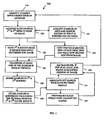
- FIG. 1 is a flowchart of a method for processing an image, according to an example embodiment of the invention.
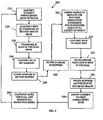
- FIG. 2 is a flowchart of another method for processing an image, according to an example embodiment of the invention.
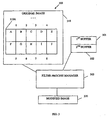
- FIG. 3 is a diagram of an image filter processing system, according to an example embodiment of the invention.
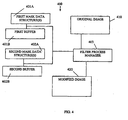
- FIG. 4 is a diagram of an image filtering processing apparatus, according to an example embodiment of the invention.
- FIG. 1 illustrates a flowchart of one method 100 for filtering images.
- the method 100 is implemented in a machine accessible medium.
- the method 100 may be implemented in many manners, such as, and by way of example only, the method 2 100 may be implemented as a series of signals, as a part of a hardware implementation, etc .
- the method 100 (herein after "processing") is service within a processor architecture that scans image data and selectively filters the image data using a Single Instruction Multiple Data (SIMD) technique in which multiple portions of the image data are processed by a single filter instruction. This provides improved processing throughput for purposes of filtering an image.
- SIMD Single Instruction Multiple Data
- an image is acquired in a machine-accessible medium from memory, storage, or a combination of memory and storage.
- the image includes pixels representing lumen, chroma, texture, etc. Selective pixels are grouped together within the image to form various scenes or objects of the image. Filters are processed against the pixels to improve scene or object delineation or to improve color quality, light quality, texture quality, etc . Any existing or custom-developed filters may be used with the teachings presented herein.
- the image is also natively represented as a series of rectangular boxes having edged perimeter lines. These edges are more visible when the image is natively stored in compressed format and has under gone compression, the edges become discernable upon decompression and are removed using various edge filters.
- the lines of the rectangles are vertically and horizontally situated within the image. Whether a particular line is vertical or horizontal is determined based on a native layout for the image or based on an initial selection. In other words, if an image is associated with metadata that defines the default layout or view of the image, this default layout or view will dictate which lines are considered vertical and which lines are considered horizontal.
- the determination of which lines are vertical and which are horizontal may be arbitrarily made by selecting an initial set of lines as being horizontal or vertical. This means once a selection is made to consider some lines vertical the other lines that perpendicular to those selected lines are horizontally situated. Thus, selection of a line as being vertical or horizontal is relative, but once that selection is made resolving the horizontal or vertical placement of the remaining lines within the image is done consistently to comport with the original selection. Therefore, as long as a direction is consistently selected as being horizontal or vertical, the determination of what is horizontal and what is vertical is relative.
- a current unprocessed edge of an image is identified.
- unprocessed it is meant that the determination as to whether to apply or not to apply one or more filters against data that surrounds that edge has not yet been made.
- an edge is a line within the image. Lines combine to form rectangles, and some lines are vertically situated and other lines are horizontally situated within each rectangle. Moreover, an edge remains unprocessed until such time as both data samples that surround that edge have been processed.
- a first set of samples is acquired for a first side and a second side of the unprocessed edge.
- the samples sizes are acquired, at 121, in excess of what is defined by edge filters. That is, a variety of edge filters that are processed against data of the image have predefined sizes for samples that they process. Typically, these sizes are 4 sets of four samples. In various embodiments of this invention, 4 sets of eight-bit or sixteen bit samples are used. These additional sample sizes are processed using SIMD techniques as is described herein and below.
- both the first and second samples are acquired by reading data that surrounds the unprocessed edge from the image. This occurs when the method 100 is iterating for the first time, such that no edges have yet been processed for the image.
- the first-side samples are acquired, at 123, by copying previous second-side samples and using them as new first-side samples; the new second-side samples are acquired by reading from data from the image.
- Edges and their surrounding data samples may be managed and processed using pointers or offsets into the image.
- Each rectangle within the image is of a pre-defined length (e.g ., bytes, pixels, bits, etc .); the pre-defined length permits pointers or off sets into the image data to acquire the samples.
- each sample is acquired initially by reading eight-bits of data from the image. That is, each sample is an 8-bit word of data having potential values of 0-255. However, often any particular filter applied to a data sample may result in a larger value than 0-255; accordingly; in some embodiments at 130, each sample is converted from a native bit-length ( e.g. , eight bits) to a larger bit-length ( e . g ., sixteen bits).
- a native bit-length e.g. , eight bits
- a larger bit-length e.g ., sixteen bits
- the data samples are organized serially next to one another, such that columns may be associated serially with one another and processed as columns.
- rows For example, consider samples identified as row 1: A, B, C, and D; row 2: E, F, G, and H; row 3: I, J, K, and L; and row 4: M, N, O, and P.
- the rows are transposed as four new rows, row 1: A, E, I, and M; row 2: B, F, J, and N; row 3: C, G, K, and O; and row 4: D, H, L, and P.
- the data vertically surrounding an edge is relevant for purposes of applying or not applying a filter. So, by transposing the data the original read rows are translated into columns represented in row formats. The transposed rows may then be processed against one another, since they are data samples of related columns for an unprocessed vertical edge.
- the first-side samples are housed in a first buffer and the second-side samples are housed in a second buffer.
- the buffers may be represented in memory, registers, storage, or combinations of the same.
- the selected filters are processed against the samples in the first and second buffers.
- the first-side and second-side samples are two sets of eight data samples. These two sets of eight are processed by the selected filter operation.
- a single selected filter operation is processed against two-sets of eight data samples. This is achieved via SIMD (Single Instruction Multiple Data) techniques, and is a technique to achieve more efficient processing, since rather than processing a single filter operation for multiple iterations ( e.g. , 8 or 4 iterations) the filter instruction is processed once (single operation) for two sets of eight data samples (multiple data).
- SIMD Single Instruction Multiple Data
- each data sample included in the first-side samples of the first buffer and the second-side samples of the second buffer is also associated with a bit mask value.
- the bit mask value indicates whether a particular data sample is altered upon processing in a selected filter.
- a bit mask is associated with each filtered result which is produced by processing the selected filter(s). For example, if one data sample had an original value of 250 and after a selected filter was processed had a modified or changed value of 255, then the bit mask value for the modified sample value would be set (value of 1) indicating that the sample value had changed (or vice-versa; e.g. , set to 0 to indicate a change occurred).
- bit masks form strings or arrays and are housed in registers or memory locations during iterations of the method 100. These arrays may then be compared via Boolean operations that add them together or perform a Boolean "or" operation against the two arrays, as depicted at 142. Any resulting arrays indicate which data sample values are to be retained or discarded in favor of original unmodified data sample values.
- an entry in the resulting array is set to "1" this may indicate that the values included within the first and second buffers for that particular sample set is to be retained in a modified version of the image. Conversely, if an entry in the resulting array is set to "0" this may indicate that the values included in the first and second buffers for that particular sample set is to be discarded and the original values for the image retained in a modified version of the image.
- Embodiments of this invention do not rely on multiple conditional statements to decide whether to accept or reject a modified sample value; rather, in some embodiments, this is achieved via arrays of bit masks that may be processed against one another using Boolean operations in a single instruction.
- some changed data sample values may not be written from the buffers as modified portions of the image, such as when the resulting bit mask array indicates that original data sample values are to remain unchanged.
- the original values for the data samples that are not to change may be acquired directly from the original image, memory, storage, etc.
- the filtered results are housed in registers or memory and used in combination with the original values for the samples housed in the buffers and the mask arrays during the write operations at 150.
- the method 100 stops iterating if all vertical and horizontal edges have been processed. However, if unprocessed edges remain, then, the method iterates again at 110 for the next unprocessed edge.
- FIG. 2 illustrates a diagram of a method 200 for performing image filtering.
- the method 200 is implemented in a machine-accessible and readable medium and is optionally accessible over a network.
- the method 200 may be implemented in hardware, firmware, software, or combinations of hardware, firmware, and/or software.
- the method executes and performs image filtering using a SIMD technique, in which sets of eight samples of data from one side of an edge is processed against sets of eight samples of data from the other side of the edge in a series of eight-wide SIMD operations ( i . e ., the filtering operations are performed in parallel for eight edge positions).
- a current unprocessed edge of an image is identified, at 210.
- An image is processed against one or more filters for purposes of improving that image's quality (e.g. , smoothing to eliminate edge artifacts introduced by image compressing, etc .). Improving quality provides for better scene and object delineation with the image and is therefore more easily comprehended by a viewer of that image.
- Filtering may be used to render an improved image to a display device or to render an improved image to print media.
- Pointers or offset counters may be used to iterate through the data of an image for purposes of keeping track of what portions of the data associated with edges have been processed and what portions have not been processed.
- At 220 four sets of eight samples are acquired on each side of an unprocessed edge. That is, there is one group of an eight sample set of four which is read or acquired from the image.
- the group of samples on the first side of an unprocessed edge (required for filtering operations) does not need to be acquired from the image because they are present in the buffers from filtering of the previous edge.
- the collected samples are transposed if the unprocessed edge is a vertical edge.
- Transposition reconfigures the acquired data samples into a format amenable to the SIMD operations described above.
- a read operation acquires a single record or amount of data in a serial fashion from the image. For horizontal edges this results in the desired format, with the samples on the edge being contiguous (four read operations acquire four rows of 8 samples each from the second side of the edge).
- each read operation acquires a row of four samples corresponding to one edge position; eight reads are required to obtain the data for all eight edge positions.
- the transposition operation reorganizes the eight rows of four samples into the required four sets of 8 samples. If the unprocessed edge is a horizontal edge, then no transposition takes place.
- newly acquired samples are converted from eight-bit samples to sixteen-bit samples. This is done because the filtering operations may result in intermediate values exceeding 255, so filtering operations are sixteen-bit operations, which consume sixteen-bit data representation as inputs.
- the group of four sets of eight first-side samples are housed or stored in a first buffer and the eight second-side samples are housed or stored in a second buffer.
- the two groups are filtered within the buffers using multiple filter definitions using eight-wide SIMD filter operations to obtain multiple filtered results for each filtered position.
- the particular filters used are based on what type of filter is desired ( e.g. , strong (heavy), weak (minimal), etc .).
- the filtering operations may include limiting the amount of change from filtering, called clipping.
- the clipping level is defined for four-sample edges, and is used in the eight-wide SIMD operations by creating an eight-wide clipping set of values by combination and replication, from the two clipping levels for the two four-sample edges being filtered.
- bit masks are assigned to each sample within the first buffer and each sample within the second buffer. Because the samples are sixteen-bit values, the masks are also sixteen-bit values of either all zero bits or all one bits for each sample. The masks are created based upon edge-specific inputs to the filter ( e.g. , do not filter this edge, strong-filter this edge, etc .) and based upon inspected values of the samples prior to filtering.
- the edge-specific inputs in one embodiment, are defined for four-sample edges, similar to clipping levels, and similarly require combination and replication to create eight-wide masks for the SIMD operations.
- Boolean operations e.g. , AND, OR, NOR, etc. which are also eight-wide SIMD compliant
- Unconditional SIMD Boolean operations are more processor efficient in determining which filter values to accept or to reject than using a plurality of conditional software logic statements, which has been conventionally the technique of choice.
- the use of the masks and Boolean operations is also significant because it enables SIMD operations using wider data than the filter inputs.
- the filter inputs define clipping and filter selection for edges of length four, a conventional SIMD technique is used to then perform the filtering using matching four-wide SIMD operations.
- the techniques described herein double the filter throughput by using eight-wide SIMD operations.
- the sample values in the first buffer are re-converted back to eight bits from sixteen bits; and, at 275, if the unprocessed edge is a vertical edge, then the sample values are re-transposed.
- the first buffer is written as portions of a modified version of the image.
- the sample values in the second buffer are copied to the first buffer to be used when filtering the next unprocessed edge. Doing this instead of also storing the second buffer back to the image, avoids the steps of transposition and eight-bit to sixteen-bit conversion for these samples at the beginning of filtering the next unprocessed edge.
- the current unprocessed edge is assigned to a new or next unprocessed edge; and, at 295, the method 200 is processed for another iteration until each vertical and horizontal edge of the image has been processed and iterated through the method 200.
- FIG. 3 is a diagram of an image filter processing system 300.
- the image filter processing system 300 is implemented in a machine-accessible or readable medium and is optionally accessible over a network.
- the image filter processing system 300 includes techniques presented above with respect to methods 100 and 200 of FIGS. 1 and 2 , respectively.
- the image filter processing system 300 determines when to execute image filters and calls those filters with data managed by the image filter processing system 300 when appropriate to do so. In this way, the image filter processing system 300 improves processing throughput associated with processing image filters by performing single filter operations on multiple data in the manners described herein.
- the image filter processing system 300 includes a first buffer 301, a second buffer 302, and a filter process manager 303.
- the first and second buffers 301 and 302 may be represented within memory, storage, registers, or various combinations of memory, storage, and/or registers.
- the first and second buffers 301 and 302 house data samples acquired by the filter process manager 303 and any modified values assigned to those samples after the filter process manager 303 selects and executes a desired filter operation.
- the first and second buffers 301 and 302 may also be associated with first and second bit-mask arrays.
- the arrays include a mapped value to a particular data sample within the buffer, and that mapped value is set if a value for the corresponding data sample is altered after a filter operation is executed.
- the first and second bit-mask arrays are resident in a register or memory of a device that performs the image edge filtering.
- the filter process manager 303 iterates an image 310 for purposes of identifying unprocessed edges of that image 310 and acquiring eight-bit samples of data on a second side of each unprocessed edge. These eight-bit samples are transposed if the current edge being processed is a vertical edge. In one embodiment, these eight-bit samples are also converted to larger bit lengths, such as sixteen bits.
- the filter process manager 303 stores the second-side samples in the second buffer 302. Care in ordering of the filtering of edges allows the filtered second-side result from one edge to become the first-side samples for filtering the next edge, so these samples are simply copied from buffer 302 to buffer 301 prior to buffer 302 being filled with new samples. This avoids the formatting steps associated with storing and loading these samples.
- a selection of one or more filters are made by the filter process manager 303. Selection may be based on configured parameters associated with the filter process manager 303, based on inspected values for the data samples housed in the buffers 301 and 302, or based on combinations of the same or other factors.
- filter operations from the selected filters are executed against the first-side samples and the second-side samples. This may result in one or more data sample values being changed in the first or second buffers 301 and 302.
- bit mask arrays associated with each filtered sample provide the final result selection mechanism, selecting among original samples, and one or more filtered results for each sample.
- SIMD Boolean operations are used, providing multiple results per operation and avoiding performance-costly data-dependent per-sample conditional branching operations.
- the filtered results may be temporarily housed in registers or memory along with the bit mask arrays and processed as needed back to the first and second buffers 301 and 302. In other embodiments, the filtered results and/or the bit mask arrays may be housed within the first and second buffers 301 and 302.
- the filter process manager 303 continues to iterate each vertical and horizontal edge of the image 310 until a complete modified image 320 is produced. Two blocks of data samples are processed during a single iteration of the filter process manager 303.
- the data chunk 310A includes 8 vertical edges (numbered 1-8 and represented as lines in FIG. 3 ), each vertical edge having data two blocks of data samples surrounding it (labeled A-J in FIG. 3 ).
- the filter process manager 303 copies the data in buffer 302 to buffer 301, this data being filtered samples of block B resulting from the previous filtering of edge 1.
- the filter process manager 303 acquires all eight samples (rows of data) from block C which is on the right side of vertical edge 2, transposes this data (since edge 2 is a vertical edge), coverts the data to sixteen-bit data sample values, and stores the data in the first buffer 301.
- the filter process manager 303 now selects one or more filters to process against the data in the first and second buffers 301 and 302. These filters perform eight-wide SIMD operations against the data in the first and second buffers 301 and 302 and produce modified versions of data sample values within the first and second buffers 301 and 302.
- bit-masks associated with each buffer 301 and 302 may be properly set after the filter operation is executed and used to select from among original data and multiple filtered data for each sample. The final selection for all samples is stored in buffers 301 and 302.
- the data in the buffer 301 is re-transposed, re-converted back to eight-bit sample sizes, and written out as a modified portion of the original image 310.
- the iterations continue with vertical edge 3, and finally 4.
- the horizontal edges are processed (not labeled in FIG. 3 ) during horizontal edge iterations the data samples are not transposed going into the buffers or re-transposed coming out of the buffers.
- a complete modified image 320 is created.
- FIG. 4 illustrates a filter processing apparatus 400, according to an example embodiment of the invention.
- the filter processing apparatus 400 is implemented in a machine-accessible or readable medium and is optionally accessible over a network.
- the filter processing apparatus 400 implements various portions of the methods 100 and 200 of FIGS. 1 and 2 and the system 300 of FIG. 3 .
- the filter processing apparatus 400 includes a first mask data structure 401A associated with a first buffer 401B, a second mask data structure 402A associated with a second buffer 402B, and a filter process manager 403.
- the mask data structures 401A and 402A may be any custom-defined data structure or object.
- the mask data structures 401A and 402A are bit arrays or strings, where each entry of the array or string corresponds to a particular data sample housed in one of the buffers 401B or 402B.
- Each entry within the mask data structures 401A and 402A include a value.
- a set value (e.g. , 1 or yes) may mean that a data sample value was changed from its original value within a particular buffer 401B or 402B after a filter operation was processed.
- a set value may mean to keep unchanged values for particular data samples from what was provided with the original image 410. That is, set may be configured to indicate an action to take, such as to keep unchanged values.
- the unset value (e.g. , 0 or no) may mean that any changed values for data samples after applying a filter are to be accepted as portions of a modified version of the original image 410.
- Each entry's value within the mask data structures 401A and 402A informs the filter process manager 403 as to whether to filtered values for the data samples or to reject those values in favor of values that were originally provided for those data samples in the original image 410.
- the filter process manager 403 iterates the vertical and horizontal edges of the original image 410 until each vertical and horizontal edge has been processed by the filter process manager 403. Each vertical edge is processed and then each horizontal edge is processed. If, during a particular iteration, the edge being processed is a vertical edge, then data samples are transposed before being stored in the first and second buffers 401B and 402B. In some embodiments, the data samples are also converted to larger bit lengths or sizes before being processed by filters within the buffers 401B and 402B in order to account for a filter operation that may produce larger bit lengths.
- the filter process manager 403 selects and executes a filter operation against the data samples in the first buffer 401B and the data samples in the second buffer 402B. This may produce modified data sample values.
- the first and second mask data structures 401A and 402A will also change values for its entries if a particular entry's corresponding data sample value was changed after processing a filter operation.
- first and second data structures 401A and 402A provide instruction to the filter process manager 403.
- the instruction is a value for each entry within the first and second data structures 401A and 402A which corresponds to data sample values in the first and second buffers 401B and 402B.
- the value of a particular entry in the first and second data structure 401A and 402A instructs the filter process manager 403 to accept the filtered value of a data sample within one of the buffers 401B and 402B or to reject the value in favor of an original data sample value provided in the original image 410.
- the filter process manager 403 then reconverts any previously converted bit lengths for the buffers 401B back to their original sizes, and re-transposes the data samples in the buffer 401B if the current processed edge is a vertical edge, and writes the data out of the buffer 401B as portions of a modified version of the original image 410.
- the filter process manager 303 continues to iterate through the original image 410 until each vertical and horizontal edge of the original image 410 is processed. Upon completely iterating each vertical and horizontal edge, a complete modified image 420 is produced.
Landscapes
- Physics & Mathematics (AREA)
- General Physics & Mathematics (AREA)
- Engineering & Computer Science (AREA)
- Theoretical Computer Science (AREA)
- Image Processing (AREA)
- Lubrication Details And Ventilation Of Internal Combustion Engines (AREA)
Claims (21)
- Procédé pour filtrer une image, comprenant :acquérir (120, 121) des échantillons du premier côté et des échantillons du second côté qui entourent un bord d'une image, les échantillons dépassant ce qui est défini par la taille d'un ou plusieurs filtres qui traitent les échantillons,transposer (124) au moins l'un des échantillons, si le bord est un bord vertical, de sorte qu'en transposant les données, les rangées lues à l'origine sont traduites en colonnes représentées sous forme de formats de rangée,loger (130) les échantillons dans un premier tampon et un second tampon, etfiltrer (140) les échantillons pour créer des premier et second résultats, caractérisé parl'association (141) d'un ou plusieurs masques binaires au premier et second échantillons dans les premier et second tampons, dans lequel les masques binaires indiquent s'il faut accepter ou rejeter chacun des résultats inclus dans les premier et second résultats.
- Procédé selon la revendication 1, dans lequel l'acquisition inclut :d'acquérir (123) les échantillons de premier coté en copiant depuis le second tampon des contenus précédents qui étaient associés aux échantillons du second côté précédents pendant une itération précédente du procédé, etd'acquérir les échantillons du second côté en lisant à partir de l'image, et dans lequel si le bord est le bord vertical, d'effectuer alors la transposition sur les échantillons du second côté et non pas sur les échantillons du premier côté.
- Procédé selon la revendication 1, dans lequel le filtrage inclut le traitement du ou des filtres par rapport aux échantillons en utilisant des techniques de Multiples Données, Instruction Unique (SIMD).
- Procédé selon la revendication 3, dans lequel le filtrage inclut le traitement d'opérations SIMD de largeur quatre ou huit par rapport aux échantillons du premier côté et aux échantillons du second côté.
- Procédé selon la revendication 1, comprenant en outre de traiter (142) une ou plusieurs opérations Booléennes par rapport au masque binaire ou aux masques binaires pour déterminer s'il faut accepter ou rejeter, de manière sélective, le résultat ou chacun des résultats inclus dans les premier et second résultats.
- Procédé selon la revendication 1, comprenant en outre de retransposer (150) les premier et second résultats si les échantillons sont associés au bord vertical et de les réécrire en tant que partie d'une version modifiée de l'image.
- Procédé selon la revendication 1, comprenant en outre de convertir au moins l'un des échantillons d'une longueur en une longueur plus grande.
- Procédé selon l'une quelconque des revendications précédentes, comprenant :identifier (110, 210) un bord non traité courant d'une image,acquérir (120, 220) quatre ensembles de huit échantillons sur un premier côté et quatre ensembles de huit échantillons sur un second côté du bord non traité courant,transposer (124, 230) les échantillons si le bord non traité courant est un bord vertical,mémoriser (120, 250) les échantillons dans un premier tampon et un second tampon, etfiltrer (140, 260) les échantillons du premier côté et les échantillons du second côté dans leurs tampons respectifs.
- Procédé selon la revendication 8 comprenant en outre :de retransposer (275) les échantillons du premier côté et les échantillons du second côté dans les premier et second tampons, si le bord non traité courant est le bord vertical, etd'écrire (280) les premier et second tampons en tant que partie d'une version modifiée de l'image.
- Procédé selon la revendication 8, comprenant en outre d'attribuer (290) le bord non traité courant à un bord non traité suivant dans l'image et de répéter le procédé jusqu'à ce que chaque bord vertical et horizontal de l'image ait été traité.
- Procédé selon la revendication 8, comprenant en outre d'attribuer le bord non traité courant au bord non traité suivant dans l'image, et dans lequel les quatre ensembles de huit échantillons sur le second côté deviennent les quatre ensembles de huit échantillons sur le premier côté du bord non traité suivant, et dans lequel la transposition est évitée pour les échantillons sur le premier côté si le bord non traité suivant est le bord vertical et une transposition se produit pour les échantillons du second côté.
- Procédé selon la revendication 8 comprenant en outre :d'attribuer des masques à des résultats modifiés associés aux échantillons des premier et second cotés après le filtrage, etde déterminer s'il faut accepter un certain nombre des résultats modifiés sur la base des valeurs associées aux masques.
- Procédé selon la revendication 12, dans lequel la détermination inclut de traiter une ou plusieurs opérations Booléennes et, en réponse aux résultats Booléens, de sélectionner ou d'ignorer un certain nombre des résultats modifiés.
- Procédé selon la revendication 8, comprenant en outre de convertir les échantillons d'échantillons à huit bits en échantillons à seize bits à la fois pour les premier et second côtés dans les premier et second tampons avant le filtrage.
- Procédé selon la revendication 14, comprenant en outre :d'attribuer des masques binaires à des premiers résultats dans le premier tampon après le filtrage et à des seconds résultats dans le second tampon avec le filtrage,de déterminer lesquels parmi les premiers résultats et les seconds résultats ont des changements qui doivent être conservés ou ignorés sur la base des masques binaires,de convertir les premiers résultats à seize bits en premiers résultats à huit bits et les seconds résultats à seize bits en seconds résultats à huit bits,de retransposer les premiers résultats à huit bits et les seconds résultats à huit bits dans les premier et second tampons, si le bord non traité courant est le bord vertical, etd'écrire les premier et second tampons en tant que parties d'une version modifiée de l'image.
- Système pour un filtrage de bord d'une image, comprenant :un premier tampon, un second tampon, etun gestionnaire de processus de filtrage configuré pour acquérir des échantillons à huit bits sur les deux côtés d'un bord non traité d'une image, pour transposer les échantillons si le bord non traité est un bord vertical dans lequel les rangées d'échantillons sont transformées en colonnes d'échantillons pendant la transposition, et pour mémoriser un ensemble pour un côté dans le premier tampon et un autre ensemble pour l'autre côté dans le second tampon, et pour inspecter des valeurs pour les échantillons et pour sélectionner un filtre afin d'effectuer un traitement par rapport aux échantillons en réponse aux valeurs,caractérisé en ce quele gestionnaire de processus de filtrage est en outre configuré pour attribuer des masques binaires afin de filtrer des résultats dans les premier et second tampons, dans lequel chaque masque indique si une valeur originale pour un échantillon doit être conservée à la place du résultat filtré inclus dans les résultats de filtrage.
- Système selon la revendication 16, dans lequel le gestionnaire de processus de filtrage est en outre configuré pour traiter une ou plusieurs opérations Booléennes par rapport aux masques afin de déterminer si des résultats sélectifs qui ont été modifiés après le traitement du filtre sélectionné doivent être acceptés ou rejetés en faveur de la valeur originale.
- Système selon la revendication 17, dans lequel le gestionnaire de processus de filtrage est en outre configuré pour retransposer les premier et second tampons si le bord non traité est le bord vertical et pour écrire les premier et second tampons retransposés en tant que partie d'une version modifiée de l'image.
- Système selon la revendication 16, dans lequel le gestionnaire de processus de filtrage est en outre configuré pour convertir les échantillons à huit bits dans les premier et second tampons en échantillons à seize bits avant le traitement du filtre sélectif.
- Système selon la revendication 16, dans lequel le gestionnaire de processus de filtrage est en outre configuré pour traverser de manière itérative des bords vertical et horizontal d'une image jusqu'à ce que chaque bord de l'image soit traité par le filtre sélectif.
- Support accessible par machine ayant des instructions associées lequel, lorsqu'il fait l'objet d'un accès, aboutit à une machine mettant en oeuvre un procédé selon l'une quelconque des revendications 1 à 15.
Applications Claiming Priority (2)
| Application Number | Priority Date | Filing Date | Title |
|---|---|---|---|
| US10/880,977 US7551322B2 (en) | 2004-06-29 | 2004-06-29 | Image edge filtering |
| PCT/US2005/022576 WO2006012340A2 (fr) | 2004-06-29 | 2005-06-24 | Filtrage des bords d'image |
Publications (2)
| Publication Number | Publication Date |
|---|---|
| EP1761896A2 EP1761896A2 (fr) | 2007-03-14 |
| EP1761896B1 true EP1761896B1 (fr) | 2009-07-29 |
Family
ID=35345383
Family Applications (1)
| Application Number | Title | Priority Date | Filing Date |
|---|---|---|---|
| EP05763582A Expired - Lifetime EP1761896B1 (fr) | 2004-06-29 | 2005-06-24 | Filtrage des bords d'image |
Country Status (7)
| Country | Link |
|---|---|
| US (1) | US7551322B2 (fr) |
| EP (1) | EP1761896B1 (fr) |
| CN (1) | CN100354892C (fr) |
| AT (1) | ATE438158T1 (fr) |
| DE (1) | DE602005015716D1 (fr) |
| TW (1) | TWI310528B (fr) |
| WO (1) | WO2006012340A2 (fr) |
Families Citing this family (9)
| Publication number | Priority date | Publication date | Assignee | Title |
|---|---|---|---|---|
| US7551322B2 (en) | 2004-06-29 | 2009-06-23 | Intel Corporation | Image edge filtering |
| KR100614647B1 (ko) * | 2004-07-02 | 2006-08-22 | 삼성전자주식회사 | 디블록킹 필터에서의 효과적인 에지 필터링 연산을 위한레지스터 어레이 구조 |
| GB0807803D0 (en) * | 2008-04-29 | 2008-06-04 | Imagination Tech Ltd | An efficient apparatus for fast video edge filitering |
| TWI447643B (zh) * | 2011-06-17 | 2014-08-01 | Mstar Semiconductor Inc | 資料存取方法以及可存取資料的電子裝置 |
| MX340366B (es) * | 2012-01-17 | 2016-07-07 | Infobridge Pte Ltd | Metodo para aplicar compensacion del borde. |
| JP6116291B2 (ja) * | 2013-02-27 | 2017-04-19 | オリンパス株式会社 | 画像処理装置、画像処理方法及び画像処理プログラム |
| CN104243996B (zh) * | 2013-06-14 | 2017-07-28 | 瑞昱半导体股份有限公司 | 回路内处理装置及选择性的像素差值补偿方法和编码系统 |
| JP6874626B2 (ja) * | 2017-09-29 | 2021-05-19 | ブラザー工業株式会社 | プリンタドライバ |
| CN111105356B (zh) * | 2019-12-26 | 2023-06-02 | Tcl华星光电技术有限公司 | 图像处理方法、装置及计算机可读存储介质 |
Family Cites Families (12)
| Publication number | Priority date | Publication date | Assignee | Title |
|---|---|---|---|---|
| GB2261565B (en) * | 1991-11-15 | 1995-05-03 | Sony Broadcast & Communication | Video image filtering |
| DE69738787D1 (de) * | 1996-05-14 | 2008-07-31 | Daewoo Electronics Corp | Reduzierung von Blockeffekten in einem Bewegtbilddekoder |
| US6466581B1 (en) * | 1998-08-03 | 2002-10-15 | Ati Technologies, Inc. | Multistream data packet transfer apparatus and method |
| US6384872B1 (en) * | 1999-09-13 | 2002-05-07 | Intel Corporation | Method and apparatus for interlaced image enhancement |
| AU5652700A (en) * | 1999-09-24 | 2001-03-29 | Nintendo Co., Ltd. | Method and apparatus for providing non-photorealistic cartoon outlining within a 3D vodeographic system |
| US6999100B1 (en) * | 2000-08-23 | 2006-02-14 | Nintendo Co., Ltd. | Method and apparatus for anti-aliasing in a graphics system |
| US6993191B2 (en) | 2001-05-04 | 2006-01-31 | Pts Corporation | Methods and apparatus for removing compression artifacts in video sequences |
| US6823087B1 (en) * | 2001-05-15 | 2004-11-23 | Advanced Micro Devices, Inc. | Parallel edge filters in video codec |
| US6831658B2 (en) * | 2002-07-22 | 2004-12-14 | Sun Microsystems, Inc. | Anti-aliasing interlaced video formats for large kernel convolution |
| US7463688B2 (en) * | 2003-01-16 | 2008-12-09 | Samsung Electronics Co., Ltd. | Methods and apparatus for removing blocking artifacts of MPEG signals in real-time video reception |
| US7170529B2 (en) * | 2003-10-24 | 2007-01-30 | Sigmatel, Inc. | Image processing |
| US7551322B2 (en) | 2004-06-29 | 2009-06-23 | Intel Corporation | Image edge filtering |
-
2004
- 2004-06-29 US US10/880,977 patent/US7551322B2/en not_active Expired - Fee Related
-
2005
- 2005-06-23 TW TW094120936A patent/TWI310528B/zh not_active IP Right Cessation
- 2005-06-24 EP EP05763582A patent/EP1761896B1/fr not_active Expired - Lifetime
- 2005-06-24 AT AT05763582T patent/ATE438158T1/de not_active IP Right Cessation
- 2005-06-24 DE DE602005015716T patent/DE602005015716D1/de not_active Expired - Lifetime
- 2005-06-24 WO PCT/US2005/022576 patent/WO2006012340A2/fr not_active Ceased
- 2005-06-29 CN CNB2005100923883A patent/CN100354892C/zh not_active Expired - Fee Related
Also Published As
| Publication number | Publication date |
|---|---|
| TWI310528B (en) | 2009-06-01 |
| CN1728182A (zh) | 2006-02-01 |
| WO2006012340A2 (fr) | 2006-02-02 |
| EP1761896A2 (fr) | 2007-03-14 |
| DE602005015716D1 (de) | 2009-09-10 |
| TW200606756A (en) | 2006-02-16 |
| US20050286082A1 (en) | 2005-12-29 |
| US7551322B2 (en) | 2009-06-23 |
| CN100354892C (zh) | 2007-12-12 |
| WO2006012340A3 (fr) | 2006-11-23 |
| ATE438158T1 (de) | 2009-08-15 |
Similar Documents
| Publication | Publication Date | Title |
|---|---|---|
| US8977048B2 (en) | Method medium system encoding and/or decoding an image using image slices | |
| US10194150B2 (en) | Method and device for coding image, and method and device for decoding image | |
| CN110648278B (zh) | 一种图像的超分辨率处理方法、系统及设备 | |
| US20120257836A1 (en) | Method for storing and processing image sequence and method for compressing, storing and processing image sequence | |
| JP2001320588A (ja) | メモリ管理方法及びその装置とその記憶媒体 | |
| JPH06326875A (ja) | 画像データの圧縮および復元装置 | |
| EA032859B1 (ru) | Многоуровневое декодирование сигнала и восстановление сигнала | |
| US20100034473A1 (en) | Image processing apparatus, image processing method, and computer program product | |
| JP2009200642A (ja) | 画像符号化装置及びその制御方法 | |
| US7551322B2 (en) | Image edge filtering | |
| CN102708542A (zh) | 生成用于去块滤波器的边缘掩码 | |
| CN100531392C (zh) | H.264去块效应滤波器的硬件实现方法 | |
| JPH10271529A (ja) | 画像処理装置及び静止画像撮像装置並びに画像処理方法 | |
| US20060088221A1 (en) | Method and device for randomly accessing a region of an encoded image for the purpose of decoding it and a method and device for encoding an image | |
| CN107241597A (zh) | 一种结合四叉树自适应编码的可逆信息隐藏方法 | |
| KR100877164B1 (ko) | 비디오 매크로블록들을 에지 필터링하는 방법, 장치 및 비디오 시스템 | |
| US8111931B2 (en) | Image processing device | |
| CN102724472B (zh) | 用于图像处理的图像数据格式转换方法及其系统 | |
| CN111105356A (zh) | 图像处理方法、装置及计算机可读存储介质 | |
| US7903124B2 (en) | Individual channel filtering of palettized image formats | |
| JPH01144778A (ja) | 画像符号化方法 | |
| CN119788873B (zh) | 屏幕图像的后处理增强方法及设备 | |
| US7835584B1 (en) | Method and apparatus for processing video data | |
| CN110392259A (zh) | 影像压缩系统及利用影像压缩系统以压缩影像画面的方法 | |
| TWI245228B (en) | Digital picture processing method |
Legal Events
| Date | Code | Title | Description |
|---|---|---|---|
| PUAI | Public reference made under article 153(3) epc to a published international application that has entered the european phase |
Free format text: ORIGINAL CODE: 0009012 |
|
| 17P | Request for examination filed |
Effective date: 20061006 |
|
| AK | Designated contracting states |
Kind code of ref document: A2 Designated state(s): AT BE BG CH CY CZ DE DK EE ES FI FR GB GR HU IE IS IT LI LT LU MC NL PL PT RO SE SI SK TR |
|
| AX | Request for extension of the european patent |
Extension state: AL BA HR LV MK YU |
|
| REG | Reference to a national code |
Ref country code: HK Ref legal event code: DE Ref document number: 1095410 Country of ref document: HK |
|
| DAX | Request for extension of the european patent (deleted) | ||
| 17Q | First examination report despatched |
Effective date: 20080102 |
|
| GRAP | Despatch of communication of intention to grant a patent |
Free format text: ORIGINAL CODE: EPIDOSNIGR1 |
|
| GRAS | Grant fee paid |
Free format text: ORIGINAL CODE: EPIDOSNIGR3 |
|
| GRAA | (expected) grant |
Free format text: ORIGINAL CODE: 0009210 |
|
| AK | Designated contracting states |
Kind code of ref document: B1 Designated state(s): AT BE BG CH CY CZ DE DK EE ES FI FR GB GR HU IE IS IT LI LT LU MC NL PL PT RO SE SI SK TR |
|
| REG | Reference to a national code |
Ref country code: GB Ref legal event code: FG4D |
|
| REG | Reference to a national code |
Ref country code: CH Ref legal event code: EP |
|
| REG | Reference to a national code |
Ref country code: IE Ref legal event code: FG4D |
|
| REF | Corresponds to: |
Ref document number: 602005015716 Country of ref document: DE Date of ref document: 20090910 Kind code of ref document: P |
|
| NLV1 | Nl: lapsed or annulled due to failure to fulfill the requirements of art. 29p and 29m of the patents act | ||
| PG25 | Lapsed in a contracting state [announced via postgrant information from national office to epo] |
Ref country code: FI Free format text: LAPSE BECAUSE OF FAILURE TO SUBMIT A TRANSLATION OF THE DESCRIPTION OR TO PAY THE FEE WITHIN THE PRESCRIBED TIME-LIMIT Effective date: 20090729 Ref country code: LT Free format text: LAPSE BECAUSE OF FAILURE TO SUBMIT A TRANSLATION OF THE DESCRIPTION OR TO PAY THE FEE WITHIN THE PRESCRIBED TIME-LIMIT Effective date: 20090729 Ref country code: ES Free format text: LAPSE BECAUSE OF FAILURE TO SUBMIT A TRANSLATION OF THE DESCRIPTION OR TO PAY THE FEE WITHIN THE PRESCRIBED TIME-LIMIT Effective date: 20091109 Ref country code: SE Free format text: LAPSE BECAUSE OF FAILURE TO SUBMIT A TRANSLATION OF THE DESCRIPTION OR TO PAY THE FEE WITHIN THE PRESCRIBED TIME-LIMIT Effective date: 20090729 Ref country code: AT Free format text: LAPSE BECAUSE OF FAILURE TO SUBMIT A TRANSLATION OF THE DESCRIPTION OR TO PAY THE FEE WITHIN THE PRESCRIBED TIME-LIMIT Effective date: 20090729 Ref country code: IS Free format text: LAPSE BECAUSE OF FAILURE TO SUBMIT A TRANSLATION OF THE DESCRIPTION OR TO PAY THE FEE WITHIN THE PRESCRIBED TIME-LIMIT Effective date: 20091129 |
|
| PG25 | Lapsed in a contracting state [announced via postgrant information from national office to epo] |
Ref country code: NL Free format text: LAPSE BECAUSE OF FAILURE TO SUBMIT A TRANSLATION OF THE DESCRIPTION OR TO PAY THE FEE WITHIN THE PRESCRIBED TIME-LIMIT Effective date: 20090729 Ref country code: PL Free format text: LAPSE BECAUSE OF FAILURE TO SUBMIT A TRANSLATION OF THE DESCRIPTION OR TO PAY THE FEE WITHIN THE PRESCRIBED TIME-LIMIT Effective date: 20090729 Ref country code: SI Free format text: LAPSE BECAUSE OF FAILURE TO SUBMIT A TRANSLATION OF THE DESCRIPTION OR TO PAY THE FEE WITHIN THE PRESCRIBED TIME-LIMIT Effective date: 20090729 |
|
| PG25 | Lapsed in a contracting state [announced via postgrant information from national office to epo] |
Ref country code: PT Free format text: LAPSE BECAUSE OF FAILURE TO SUBMIT A TRANSLATION OF THE DESCRIPTION OR TO PAY THE FEE WITHIN THE PRESCRIBED TIME-LIMIT Effective date: 20091129 Ref country code: BG Free format text: LAPSE BECAUSE OF FAILURE TO SUBMIT A TRANSLATION OF THE DESCRIPTION OR TO PAY THE FEE WITHIN THE PRESCRIBED TIME-LIMIT Effective date: 20091029 |
|
| PG25 | Lapsed in a contracting state [announced via postgrant information from national office to epo] |
Ref country code: RO Free format text: LAPSE BECAUSE OF FAILURE TO SUBMIT A TRANSLATION OF THE DESCRIPTION OR TO PAY THE FEE WITHIN THE PRESCRIBED TIME-LIMIT Effective date: 20090729 Ref country code: DK Free format text: LAPSE BECAUSE OF FAILURE TO SUBMIT A TRANSLATION OF THE DESCRIPTION OR TO PAY THE FEE WITHIN THE PRESCRIBED TIME-LIMIT Effective date: 20090729 Ref country code: CZ Free format text: LAPSE BECAUSE OF FAILURE TO SUBMIT A TRANSLATION OF THE DESCRIPTION OR TO PAY THE FEE WITHIN THE PRESCRIBED TIME-LIMIT Effective date: 20090729 Ref country code: EE Free format text: LAPSE BECAUSE OF FAILURE TO SUBMIT A TRANSLATION OF THE DESCRIPTION OR TO PAY THE FEE WITHIN THE PRESCRIBED TIME-LIMIT Effective date: 20090729 |
|
| PG25 | Lapsed in a contracting state [announced via postgrant information from national office to epo] |
Ref country code: BE Free format text: LAPSE BECAUSE OF FAILURE TO SUBMIT A TRANSLATION OF THE DESCRIPTION OR TO PAY THE FEE WITHIN THE PRESCRIBED TIME-LIMIT Effective date: 20090729 Ref country code: SK Free format text: LAPSE BECAUSE OF FAILURE TO SUBMIT A TRANSLATION OF THE DESCRIPTION OR TO PAY THE FEE WITHIN THE PRESCRIBED TIME-LIMIT Effective date: 20090729 |
|
| PLBE | No opposition filed within time limit |
Free format text: ORIGINAL CODE: 0009261 |
|
| STAA | Information on the status of an ep patent application or granted ep patent |
Free format text: STATUS: NO OPPOSITION FILED WITHIN TIME LIMIT |
|
| 26N | No opposition filed |
Effective date: 20100503 |
|
| PG25 | Lapsed in a contracting state [announced via postgrant information from national office to epo] |
Ref country code: GR Free format text: LAPSE BECAUSE OF FAILURE TO SUBMIT A TRANSLATION OF THE DESCRIPTION OR TO PAY THE FEE WITHIN THE PRESCRIBED TIME-LIMIT Effective date: 20091030 |
|
| PG25 | Lapsed in a contracting state [announced via postgrant information from national office to epo] |
Ref country code: MC Free format text: LAPSE BECAUSE OF NON-PAYMENT OF DUE FEES Effective date: 20100630 |
|
| REG | Reference to a national code |
Ref country code: CH Ref legal event code: PL |
|
| REG | Reference to a national code |
Ref country code: FR Ref legal event code: ST Effective date: 20110228 |
|
| PG25 | Lapsed in a contracting state [announced via postgrant information from national office to epo] |
Ref country code: IT Free format text: LAPSE BECAUSE OF FAILURE TO SUBMIT A TRANSLATION OF THE DESCRIPTION OR TO PAY THE FEE WITHIN THE PRESCRIBED TIME-LIMIT Effective date: 20090729 |
|
| PG25 | Lapsed in a contracting state [announced via postgrant information from national office to epo] |
Ref country code: LI Free format text: LAPSE BECAUSE OF NON-PAYMENT OF DUE FEES Effective date: 20100630 Ref country code: CH Free format text: LAPSE BECAUSE OF NON-PAYMENT OF DUE FEES Effective date: 20100630 Ref country code: IE Free format text: LAPSE BECAUSE OF NON-PAYMENT OF DUE FEES Effective date: 20100624 |
|
| PG25 | Lapsed in a contracting state [announced via postgrant information from national office to epo] |
Ref country code: FR Free format text: LAPSE BECAUSE OF NON-PAYMENT OF DUE FEES Effective date: 20100630 |
|
| PG25 | Lapsed in a contracting state [announced via postgrant information from national office to epo] |
Ref country code: CY Free format text: LAPSE BECAUSE OF FAILURE TO SUBMIT A TRANSLATION OF THE DESCRIPTION OR TO PAY THE FEE WITHIN THE PRESCRIBED TIME-LIMIT Effective date: 20090729 |
|
| PG25 | Lapsed in a contracting state [announced via postgrant information from national office to epo] |
Ref country code: HU Free format text: LAPSE BECAUSE OF FAILURE TO SUBMIT A TRANSLATION OF THE DESCRIPTION OR TO PAY THE FEE WITHIN THE PRESCRIBED TIME-LIMIT Effective date: 20100130 Ref country code: LU Free format text: LAPSE BECAUSE OF NON-PAYMENT OF DUE FEES Effective date: 20100624 |
|
| PG25 | Lapsed in a contracting state [announced via postgrant information from national office to epo] |
Ref country code: TR Free format text: LAPSE BECAUSE OF FAILURE TO SUBMIT A TRANSLATION OF THE DESCRIPTION OR TO PAY THE FEE WITHIN THE PRESCRIBED TIME-LIMIT Effective date: 20090729 |
|
| REG | Reference to a national code |
Ref country code: HK Ref legal event code: WD Ref document number: 1095410 Country of ref document: HK |
|
| PGFP | Annual fee paid to national office [announced via postgrant information from national office to epo] |
Ref country code: GB Payment date: 20160622 Year of fee payment: 12 Ref country code: DE Payment date: 20160622 Year of fee payment: 12 |
|
| REG | Reference to a national code |
Ref country code: DE Ref legal event code: R119 Ref document number: 602005015716 Country of ref document: DE |
|
| GBPC | Gb: european patent ceased through non-payment of renewal fee |
Effective date: 20170624 |
|
| PG25 | Lapsed in a contracting state [announced via postgrant information from national office to epo] |
Ref country code: GB Free format text: LAPSE BECAUSE OF NON-PAYMENT OF DUE FEES Effective date: 20170624 Ref country code: DE Free format text: LAPSE BECAUSE OF NON-PAYMENT OF DUE FEES Effective date: 20180103 |