EP1758637B1 - Wound dressings for vacuum therapy - Google Patents
Wound dressings for vacuum therapy Download PDFInfo
- Publication number
- EP1758637B1 EP1758637B1 EP05755604A EP05755604A EP1758637B1 EP 1758637 B1 EP1758637 B1 EP 1758637B1 EP 05755604 A EP05755604 A EP 05755604A EP 05755604 A EP05755604 A EP 05755604A EP 1758637 B1 EP1758637 B1 EP 1758637B1
- Authority
- EP
- European Patent Office
- Prior art keywords
- wound
- vacuum
- screen structure
- cover
- freeze
- Prior art date
- Legal status (The legal status is an assumption and is not a legal conclusion. Google has not performed a legal analysis and makes no representation as to the accuracy of the status listed.)
- Expired - Lifetime
Links
Images

Classifications
-
- A—HUMAN NECESSITIES
- A61—MEDICAL OR VETERINARY SCIENCE; HYGIENE
- A61M—DEVICES FOR INTRODUCING MEDIA INTO, OR ONTO, THE BODY; DEVICES FOR TRANSDUCING BODY MEDIA OR FOR TAKING MEDIA FROM THE BODY; DEVICES FOR PRODUCING OR ENDING SLEEP OR STUPOR
- A61M27/00—Drainage appliance for wounds or the like, i.e. wound drains, implanted drains
-
- A—HUMAN NECESSITIES
- A61—MEDICAL OR VETERINARY SCIENCE; HYGIENE
- A61F—FILTERS IMPLANTABLE INTO BLOOD VESSELS; PROSTHESES; DEVICES PROVIDING PATENCY TO, OR PREVENTING COLLAPSING OF, TUBULAR STRUCTURES OF THE BODY, e.g. STENTS; ORTHOPAEDIC, NURSING OR CONTRACEPTIVE DEVICES; FOMENTATION; TREATMENT OR PROTECTION OF EYES OR EARS; BANDAGES, DRESSINGS OR ABSORBENT PADS; FIRST-AID KITS
- A61F13/00—Bandages or dressings; Absorbent pads
- A61F13/02—Adhesive bandages or dressings
- A61F13/0203—Adhesive bandages or dressings with fluid retention members
- A61F13/0206—Adhesive bandages or dressings with fluid retention members with absorbent fibrous layers, e.g. woven or non-woven absorbent pads or island dressings
-
- A—HUMAN NECESSITIES
- A61—MEDICAL OR VETERINARY SCIENCE; HYGIENE
- A61F—FILTERS IMPLANTABLE INTO BLOOD VESSELS; PROSTHESES; DEVICES PROVIDING PATENCY TO, OR PREVENTING COLLAPSING OF, TUBULAR STRUCTURES OF THE BODY, e.g. STENTS; ORTHOPAEDIC, NURSING OR CONTRACEPTIVE DEVICES; FOMENTATION; TREATMENT OR PROTECTION OF EYES OR EARS; BANDAGES, DRESSINGS OR ABSORBENT PADS; FIRST-AID KITS
- A61F13/00—Bandages or dressings; Absorbent pads
- A61F13/02—Adhesive bandages or dressings
- A61F13/0203—Adhesive bandages or dressings with fluid retention members
- A61F13/0213—Adhesive bandages or dressings with fluid retention members the fluid retention member being a layer of hydrocolloid, gel forming material
-
- A—HUMAN NECESSITIES
- A61—MEDICAL OR VETERINARY SCIENCE; HYGIENE
- A61F—FILTERS IMPLANTABLE INTO BLOOD VESSELS; PROSTHESES; DEVICES PROVIDING PATENCY TO, OR PREVENTING COLLAPSING OF, TUBULAR STRUCTURES OF THE BODY, e.g. STENTS; ORTHOPAEDIC, NURSING OR CONTRACEPTIVE DEVICES; FOMENTATION; TREATMENT OR PROTECTION OF EYES OR EARS; BANDAGES, DRESSINGS OR ABSORBENT PADS; FIRST-AID KITS
- A61F13/00—Bandages or dressings; Absorbent pads
- A61F13/02—Adhesive bandages or dressings
- A61F13/0203—Adhesive bandages or dressings with fluid retention members
- A61F13/0226—Adhesive bandages or dressings with fluid retention members characterised by the support layer
-
- A—HUMAN NECESSITIES
- A61—MEDICAL OR VETERINARY SCIENCE; HYGIENE
- A61F—FILTERS IMPLANTABLE INTO BLOOD VESSELS; PROSTHESES; DEVICES PROVIDING PATENCY TO, OR PREVENTING COLLAPSING OF, TUBULAR STRUCTURES OF THE BODY, e.g. STENTS; ORTHOPAEDIC, NURSING OR CONTRACEPTIVE DEVICES; FOMENTATION; TREATMENT OR PROTECTION OF EYES OR EARS; BANDAGES, DRESSINGS OR ABSORBENT PADS; FIRST-AID KITS
- A61F13/00—Bandages or dressings; Absorbent pads
- A61F13/05—Bandages or dressings; Absorbent pads specially adapted for use with sub-pressure or over-pressure therapy, wound drainage or wound irrigation, e.g. for use with negative-pressure wound therapy [NPWT]
-
- A—HUMAN NECESSITIES
- A61—MEDICAL OR VETERINARY SCIENCE; HYGIENE
- A61M—DEVICES FOR INTRODUCING MEDIA INTO, OR ONTO, THE BODY; DEVICES FOR TRANSDUCING BODY MEDIA OR FOR TAKING MEDIA FROM THE BODY; DEVICES FOR PRODUCING OR ENDING SLEEP OR STUPOR
- A61M1/00—Suction or pumping devices for medical purposes; Devices for carrying-off, for treatment of, or for carrying-over, body-liquids; Drainage systems
- A61M1/90—Negative pressure wound therapy devices, i.e. devices for applying suction to a wound to promote healing, e.g. including a vacuum dressing
- A61M1/91—Suction aspects of the dressing
- A61M1/915—Constructional details of the pressure distribution manifold
-
- A—HUMAN NECESSITIES
- A61—MEDICAL OR VETERINARY SCIENCE; HYGIENE
- A61M—DEVICES FOR INTRODUCING MEDIA INTO, OR ONTO, THE BODY; DEVICES FOR TRANSDUCING BODY MEDIA OR FOR TAKING MEDIA FROM THE BODY; DEVICES FOR PRODUCING OR ENDING SLEEP OR STUPOR
- A61M1/00—Suction or pumping devices for medical purposes; Devices for carrying-off, for treatment of, or for carrying-over, body-liquids; Drainage systems
- A61M1/90—Negative pressure wound therapy devices, i.e. devices for applying suction to a wound to promote healing, e.g. including a vacuum dressing
- A61M1/96—Suction control thereof
- A61M1/964—Suction control thereof having venting means on or near the dressing
-
- A—HUMAN NECESSITIES
- A61—MEDICAL OR VETERINARY SCIENCE; HYGIENE
- A61M—DEVICES FOR INTRODUCING MEDIA INTO, OR ONTO, THE BODY; DEVICES FOR TRANSDUCING BODY MEDIA OR FOR TAKING MEDIA FROM THE BODY; DEVICES FOR PRODUCING OR ENDING SLEEP OR STUPOR
- A61M1/00—Suction or pumping devices for medical purposes; Devices for carrying-off, for treatment of, or for carrying-over, body-liquids; Drainage systems
- A61M1/90—Negative pressure wound therapy devices, i.e. devices for applying suction to a wound to promote healing, e.g. including a vacuum dressing
- A61M1/98—Containers specifically adapted for negative pressure wound therapy
- A61M1/982—Containers specifically adapted for negative pressure wound therapy with means for detecting level of collected exudate
-
- A—HUMAN NECESSITIES
- A61—MEDICAL OR VETERINARY SCIENCE; HYGIENE
- A61F—FILTERS IMPLANTABLE INTO BLOOD VESSELS; PROSTHESES; DEVICES PROVIDING PATENCY TO, OR PREVENTING COLLAPSING OF, TUBULAR STRUCTURES OF THE BODY, e.g. STENTS; ORTHOPAEDIC, NURSING OR CONTRACEPTIVE DEVICES; FOMENTATION; TREATMENT OR PROTECTION OF EYES OR EARS; BANDAGES, DRESSINGS OR ABSORBENT PADS; FIRST-AID KITS
- A61F13/00—Bandages or dressings; Absorbent pads
- A61F2013/00089—Wound bandages
- A61F2013/00165—Wound bandages not touching the wound
-
- A—HUMAN NECESSITIES
- A61—MEDICAL OR VETERINARY SCIENCE; HYGIENE
- A61F—FILTERS IMPLANTABLE INTO BLOOD VESSELS; PROSTHESES; DEVICES PROVIDING PATENCY TO, OR PREVENTING COLLAPSING OF, TUBULAR STRUCTURES OF THE BODY, e.g. STENTS; ORTHOPAEDIC, NURSING OR CONTRACEPTIVE DEVICES; FOMENTATION; TREATMENT OR PROTECTION OF EYES OR EARS; BANDAGES, DRESSINGS OR ABSORBENT PADS; FIRST-AID KITS
- A61F13/00—Bandages or dressings; Absorbent pads
- A61F2013/00089—Wound bandages
- A61F2013/0017—Wound bandages possibility of applying fluid
-
- A—HUMAN NECESSITIES
- A61—MEDICAL OR VETERINARY SCIENCE; HYGIENE
- A61F—FILTERS IMPLANTABLE INTO BLOOD VESSELS; PROSTHESES; DEVICES PROVIDING PATENCY TO, OR PREVENTING COLLAPSING OF, TUBULAR STRUCTURES OF THE BODY, e.g. STENTS; ORTHOPAEDIC, NURSING OR CONTRACEPTIVE DEVICES; FOMENTATION; TREATMENT OR PROTECTION OF EYES OR EARS; BANDAGES, DRESSINGS OR ABSORBENT PADS; FIRST-AID KITS
- A61F13/00—Bandages or dressings; Absorbent pads
- A61F2013/00361—Plasters
- A61F2013/00365—Plasters use
- A61F2013/00536—Plasters use for draining or irrigating wounds
-
- A—HUMAN NECESSITIES
- A61—MEDICAL OR VETERINARY SCIENCE; HYGIENE
- A61F—FILTERS IMPLANTABLE INTO BLOOD VESSELS; PROSTHESES; DEVICES PROVIDING PATENCY TO, OR PREVENTING COLLAPSING OF, TUBULAR STRUCTURES OF THE BODY, e.g. STENTS; ORTHOPAEDIC, NURSING OR CONTRACEPTIVE DEVICES; FOMENTATION; TREATMENT OR PROTECTION OF EYES OR EARS; BANDAGES, DRESSINGS OR ABSORBENT PADS; FIRST-AID KITS
- A61F13/00—Bandages or dressings; Absorbent pads
- A61F2013/00361—Plasters
- A61F2013/00902—Plasters containing means
- A61F2013/0091—Plasters containing means with disinfecting or anaesthetics means, e.g. anti-mycrobic
-
- A—HUMAN NECESSITIES
- A61—MEDICAL OR VETERINARY SCIENCE; HYGIENE
- A61M—DEVICES FOR INTRODUCING MEDIA INTO, OR ONTO, THE BODY; DEVICES FOR TRANSDUCING BODY MEDIA OR FOR TAKING MEDIA FROM THE BODY; DEVICES FOR PRODUCING OR ENDING SLEEP OR STUPOR
- A61M1/00—Suction or pumping devices for medical purposes; Devices for carrying-off, for treatment of, or for carrying-over, body-liquids; Drainage systems
- A61M1/88—Draining devices having means for processing the drained fluid, e.g. an absorber
- A61M1/884—Draining devices provided with means for filtering out the harmless water content before discarding the drainage container
-
- A—HUMAN NECESSITIES
- A61—MEDICAL OR VETERINARY SCIENCE; HYGIENE
- A61M—DEVICES FOR INTRODUCING MEDIA INTO, OR ONTO, THE BODY; DEVICES FOR TRANSDUCING BODY MEDIA OR FOR TAKING MEDIA FROM THE BODY; DEVICES FOR PRODUCING OR ENDING SLEEP OR STUPOR
- A61M1/00—Suction or pumping devices for medical purposes; Devices for carrying-off, for treatment of, or for carrying-over, body-liquids; Drainage systems
- A61M1/90—Negative pressure wound therapy devices, i.e. devices for applying suction to a wound to promote healing, e.g. including a vacuum dressing
- A61M1/91—Suction aspects of the dressing
- A61M1/918—Suction aspects of the dressing for multiple suction locations
-
- A—HUMAN NECESSITIES
- A61—MEDICAL OR VETERINARY SCIENCE; HYGIENE
- A61M—DEVICES FOR INTRODUCING MEDIA INTO, OR ONTO, THE BODY; DEVICES FOR TRANSDUCING BODY MEDIA OR FOR TAKING MEDIA FROM THE BODY; DEVICES FOR PRODUCING OR ENDING SLEEP OR STUPOR
- A61M2205/00—General characteristics of the apparatus
- A61M2205/58—Means for facilitating use, e.g. by people with impaired vision
- A61M2205/583—Means for facilitating use, e.g. by people with impaired vision by visual feedback
- A61M2205/584—Means for facilitating use, e.g. by people with impaired vision by visual feedback having a color code
Definitions
- the present invention relates to improved wound dressings for use in vacuum therapy of wounds.
- the invention also relates to wound treatment systems incorporating such dressings, and to kits for the manufacture of such dressings.
- EP-A-062072-0 and EP-A-0688189 describe vacuum treatment for accelerating wound healing. They describe the use of a cover for sealing about the outer perimeter of the wound, under which a vacuum is established to act on the wound surface. This vacuum applied to the wound surface accelerates healing of chronic wounds.
- a screen of open cell foam material is provided under the cover to provide the space in which the vacuum is formed and to reduce tissue ingrowth. Sufficient vacuum is applied for a suitable duration to promote tissue migration in order to facilitate the closure of the wound. Suitable vacuum is between about 0.1 and 0.99 atmospheres.
- the vacuum can be substantially continuous, wherein the pressure is relieved only to change the dressing on the wound.
- the patent teaches cyclic application of vacuum in alternating periods of application and nonapplication. In a preferred embodiment, vacuum is applied in 5 minute periods of application and non-application.
- WO01/89431 describes vacuum wound dressings further comprising a layer of a collagen scaffold material to promote wound healing.
- the preferred collagen material is small intestine submucosa (SIS).
- WO2004/03733 describes an apparatus for cleansing wounds in which irrigant fluid from a reservoir is supplied to a conformable wound dressing, and wound exudate from the dressing is recirculated through a flow path which passes through the dressing.
- the apparatus further comprises a means, located outside the dressing, for cleansing the wound fluid before it is recirculated back to the dressing.
- the cleansing means removes materials deleterious to wound healing. It may comprise one or more of a microfiltration system, adsorption means and/or dialysis means.
- the cleansed fluid still containing materials that are beneficial in promoting wound healing, is returned to the wound bed.
- the dressing may be a vacuum treatment dressing.
- the described apparatus is unsatisfactory in a number of respects. In particular, the wound is continuously immersed in the recycled liquid, which can result in maceration of skin around the wound an other problems. Furthermore, the cleansing equipment is complex, hard to clean, and requires a large volume of liquid to be recirculated.
- WO 02/083046 describes a wound dressing system that includes a dressing and an irrigation system.
- the dressing includes a wound-contacting layer and an outer layer.
- the irrigation system is interposed between these two layers.
- WO 03/057307 describes a wound vacuum therapy dressing kit for use with a wound drainage system.
- the kit includes a wound dressing member and various components or accessory items that are used in conjunction with the wound dressing member.
- the present invention provides a wound dressing for vacuum therapy comprising: a cover configured for placement over a wound to maintain a reduced pressure over the wound and adapted for communication with a source of vacuum, and a screen structure for placement between the cover and the wound, characterized in that said screen structure comprises a freeze-dried sponge made by freeze-drying or solvent drying a dispersion of oxidized regenerated cellulose (ORC) with collagen or chitosan in water, whereby the screen structure is adapted to remove or inactivate undesirable components from the wound environment and/or to concentrate desirable components present in the wound environment.
- ORC oxidized regenerated cellulose
- the cover may be any one of the cover types described in the aforementioned patent applications EP-A-0620720 , EP-A-0688189 , WO01/89431 , and WO2004/037334 relaxing to vacuum wound treatment .
- the cover should be formed from substantially gas-impermeable material in order to be able to maintain a reduced pressure in the space over the wound being treated.
- Thermoplastic sheet materials of various types are suitable.
- the cover may suitably be substantially convex, and/or it may suitably be made of a semi-rigid material in order to help support the vacuum without collapsing.
- the cover may be provided with a layer of a medically acceptable pressure-sensitive adhesive on at least the periphery thereof for attachment of the cover to the skin around the wound to be treated.
- the adhesive may be omitted and the cover sheet may be attached to the wound by suction.
- the wound dressing according to the present invention further comprises tubing for connecting the cover to the vacuum source.
- the connection is usually made through an aperture in the cover.
- the tubing may extend only outwardly of the cover, or it may extend inwardly through the cover into the vacuum wound treatment space.
- the dressing may be provided with a push, screw, snap or bayonet-type fitting for attachment of the vacuum tubing.
- the tubing may be connected to a fluid collection manifold located inside the cover sheet.
- the term "fluid collection manifold" refers to a hollow body having a plurality of apertures for collecting fluid from a plurality of locations under the cover sheet.
- the manifold may for example comprise an apertured envelope or a perforated spiral-wound tube.
- the tubing may further be provided with a valve for controlling the application of vacuum.
- the valve may be closed to maintain a desired atmosphere or pressure in the wound treatment space, or it may be a one-way or non-return valve to maintain reduced pressure over the wound after removal of the vacuum, source.
- the tubing and/or the cover sheet may be provided with a suitable coupling for attachment of a vacuum source.
- the wound dressing of the present invention makes use of a screen structure that is adapted to removed or inactivate materials deleterious to wound healing and/or retain or concentrated materials that are beneficial in promoting wound healing.
- This screen structure therefore achieves not only the mechanical functions of supporting the cover sheet and filling the wound, but also enhances the metabolism wound healing without recourse to the complex external purification apparatus described in WO2004/037334 .
- the wound dressing according to the present invention may comprise, in addition to the oxidized regenerated cellulose (ORC), any of the screen components previously described for vacuum wound treatment in EP-A-0620720 , BP-A4688189 , WO01/89431 , and WO2004/037334 .
- the screen structure used in the present invention may be made by chemical modification or addition to any of the screens described in EP-A-0620720 , EP-A-0688189 , WO01/89431 , and WO2004/037334 .
- Suitable conventional screen components include foams formed of a polymeric material, such as polyurethane or polyester.
- the conventional portion of the screen may be in the form of, or comprise one or more conformable hollow bodies defined by a film, sheet or membrane, such as a bag, chamber, pouch or other structure, filled with a fluid or solid that urges it to the wound shape.
- Wound is a complex, dynamic process that results in the restoration of anatomic continuity and function; an ideally healed wound is one that has returned to normal anatomic structure, function and appearance.
- the wound fluid accordingly contains a complex and changing mixture of active components. Certain components are harmful to wound healing when present in excessive amounts. Other components of the wound fluid are known to promote wound healing.
- wound infection in acute and chronic wound is associated with elevated levels of protease enzymes, in particular of elastase.
- Chronic wounds such as venous ulcers, pressure sores and diabetic ulcers, have a disordered wound healing metabolism even in the absence of infection.
- wound chronicity is associated with elevated levels of protease enzymes in the wound that interfere with the normal processes of tissue formation and destruction in the wound.
- the protease enzymes include collagenases and gelatinases, in particular matrix metalloproteinases 2 and 9 and elastase.
- the screen structure in the wound dressings according to the present invention is adapted to remove or inactivate at least one endogenous protease enzyme present in wound fluid.
- it is adapted to remove or inactivate at least one endogenous protease enzyme selected from the group consisting of collagenases, gelatinases and elastases.
- the screen structure may remove or inactivate the protease enzymes, for example, by binding the enzymes to a solid substrate in the screen structure by ion exchange or affinity binding.
- oxidative stress may delay healing because it will produce chronic inflammation, divert available energy supply towards antioxidant defence at the expense of tissue reconstruction, and increase levels of matrix metalloproteinases which cause tissue breakdown.
- elevated levels of reactive oxygen species can give rise to hydrogen peroxide-induced senescence or apoptosis (that is, programmed cell death) or tissue necrosis (that is, uncontrolled cell death and therefore permanent tissue damage).
- the screen structure is adapted to remove or inactivate at least one oxidative free radical present in wound fluid.
- the screen structure may comprise an antioxidant or free radical scavenger such as Vitamin C (ascorbic acid), retinoids such as Vitamin A, Vitamin E, hydroquinones, benzimidazoles, antioxidant-grafted polysaccharides such as those described in - US-A-5612321 , aniline or acridine dyes, or mixtures or combinations thereof, along with ORC (which has been shown to have antioxidant properties).
- the screen structure is preferably adapted to increase the concentration of at least one growth factor in the wound fluid.
- it is preferably adapted to selectively bind at least one growth factor selected from the group consisting of platelet derived growth factor (PDGF), fibroblast growth factors (FGF), transforming growth factor beta (TGF- ⁇ ), epidermal growth factor (EGF), vascular endothelial growth factor (VEGF) and insulin-like growth factor (IGF), and mixtures thereof , and allow their subsequent delivery back to the wound.
- the screen may comprise a solid substrate to which the growth factors are bound by ion exchange, size exclusion, or affinity binding.
- the substrate may be biodegradable in the wound, thereby gradually releasing the growth factors back into the wound.
- the growth factors may be released back into the wound by addition of a dissociation buffer.
- the screen structure is adapted to remove water from the wound fluid, thereby further increasing the concentration of wound healing factors at the wound surface.
- the screen structure may comprise a molecular sieve drying agent, or a hydrogel drying agents
- the screen structure may be adapted to filter the wound fluid to remove solid particles, debris, cells and even microorganisms from the wound fluid.
- the screen structure may be adapted to remove or inactivate at least one infective microorganism.
- the screen structure may be adapted to remove or inactivate at least one bacterial endotoxin, for example
- the screen structure may comprise a peptidomimetic or a positively charged material that binds to the negatively charged lipopolysaccharide endotoxins.
- the screen structure may be adapted to remove or inactivate at least one dissolved iron species in the wound fluid.
- the iron is removed preferentially over other multivalent ions, such as zinc, that are beneficial to wound healing.
- Suitable iron sequestering substances include iron chelators such as desferrioxamine, and oxidized regenerated cellulose, which has been shown to sequester iron selectively over Zinc.
- Resorbable wound dressing materials comprise, or consist essentially of oxidized regenerated cellulose (ORC). ORC is usually made by oxidation of a regenerated cellulose fabric or fibers with dinitrogen tetroxide.
- ORC fibrillar ORC It is available as loose fibers, fabrics (such as the fabrics available under the Registered Trade Marks SURGICEL, NU-KNIT and INTERCEED from Johnson & Johnson), or sponges. Advantages of fibrillar ORC include that it is resorbable and the degradation products stimulate cell proliferation and chemotaxis. ORC is an effective haemostat and is bactericidal. ORC can modify the pH of the wound environment, which in turn may stimulate chronic wound repair.
- ORC alone can positively influence the wound environment by modulating growth factor function and inactivating proteases.
- the data also show that ORC binds to growth factors present in wound fluid. The gradual breakdown of the ORC in vivo then releases the growth factors back into the wound, thereby promoting wound heating.
- Wound dressings of the present invention are complexes of ORC with collagen or chitosan, in particular freeze-dried sponges made by freeze-drying or solvent-drying dispersions of ORC with collagen or chitosan in a suitable solvent such as water. Complexes of this type are described in detail in W098/00180 .Freeze-dried collagen/ORC sponges are commercially available from Johnson & Johnson Medical Limited under the Registered Trade Mark PROMOGRAN, and are described in detail in EP-A-091 8548 and EP-A-1153622 . The sponges can be modified to ensure they last longer at the wound site by changes in the manufacturing process eg increased chemical cross-linking, increase in solids content and/or increase in thickness of the final product.
- the biocompatible sponge screen is soft, conformable and biocompatible. It encourages cellular ingrowth and repair.
- the bioresorbable sponges can be left in the wound after removal of the vacuum or can slowly disappear during use.
- the sponge provides a filter to ensure that growth factors are retained at the wound site, while allowing for efficient removal of wound exudate effectively concentrating the growth factors which would otherwise be removed from the wound.
- the screen structure may comprise a molecular sieve material that is adapted to absorb water but not higher molecular weight components of the wound fluid, such as growth factors.
- the screen structure in the dressings according to the present invention comprises a gel-forming polymer (Hydrogel) that absorbs water from the wound fluid to form a gel.
- Hydrogel gel-forming polymer
- gel-forming polymer refers to medically acceptable macromolecular substances that form a gel with water under physiological conditions of temperature and pH. Such hydrogels preferably have the ability to swell and absorb fluid while maintaining a strong integral structure. Preferably, the hydrogel composition forms a gel that is substantially insoluble in water under physiological conditions, whereby the hydrogel is not washed away by the wound fluid.
- Exemplary insoluble gels include certain cross-linked polyacrylate gels, calcium alginate gels, cross-linked hyaluronate gels, wherein the hydrogel layer comprises a hydrogel material selected from gels formed from vinyl alcohols, vinyl esters, vinyl ethers and carboxy vinyl monomers, meth(acrylic) acid, acrylamide, N-vinyl pyrrolidone, acylamidopropane sulphonic acid, PLURONIC (Registered Trade Mark) (block polyethylene glycol, block polypropylene glycol) polystyrene-, maleic acid, NN-dimothylacrylamide diacetone acrylamide, acryloyl morpholine, and mixtures thereof.
- PLURONIC Registered Trade Mark
- the hydrogel comprises a hydrogel material selected from polyurethane gels, biopolymer gels, carboxymethyl cellulose gels, hydroxyethyl cellulose gels, hydroxy propyl ethyl cellulose, modified acrylamide and mixtures thereof.
- Suitable biopolymer gels include alginates, pectins, galactomannans, chitosan, gelatin, hyaluronates and mixtures thereof. Some of these biopolymer materials also promote wound heating.
- the hydrogel comprises a hydrogel material of the kind described in WO00/07638 .
- the gel-forming polymer may comprise or consist essentially of a superabsorbent polymer.
- the gels may be cross-linked, and the cross-linking may be either covalent or ionic.
- the hydrogel material may further comprise from 5 to 50% by weight on a dry weight basis of one or more humectants such as glycerol.
- the hydrogel material may be supported or reinforced by a support layer such as textile filaments.
- the gel-forming fibers such as superabsorbent fibers may be formed into a woven or nonwoven fabic, optionally in admixture with textile fibers to reinforce the superabsorbent.
- the use of the gel-forming polymer retains the wound fluid within dressing, so that no collection chamber is needed in the vacuum line, and fewer components are needed for the device.
- the vacuum tubing and pump remain uncontaminated by wound fluid. A smaller pump can be used, giving greater mobility for patient. A static vacuum can be applied and then the pump disconnected leaving negative pressure still maintained within the dressing,
- the screen structure comprises, or consists essentially of, a solid hydrogel layer having fluid flow passages extending therethrough.
- the gel screen may comprise a network of channels or tubes within the screen for the passage of fluid, thereby preventing gel blocking.
- the channels may be formed by selectively cross-linking the gel.
- the channels can for example be formed by piercing a gel slab with a metallic rod or wire and then applying a voltage to the wire. This will result in a rapid increase in temperature of the rod or wire thus effectively forming a tube which is more resilient than the surrounding gel/bioabsorbable. By piercing the gel/bioabsorbable multiple times and in various directions and then cross-linking, a resilient tubular network will be formed.
- Suitable antimicrobial agents may be selected from the group consisting of antiseptics and antibiotics and mixtures thereof.
- Suitable antibiotics include peptide antimicrobials (e.g. defensins, Magainin, synthetic derivatives of them) tetracycline, penicillins, terramycins, erythromycin, bacitracin, neomycin, polymycin B, mupirocin, clindamycin and mixtures thereof.
- Suitable antiseptics include silver sulfadiazine, chlorhexidine, povidone iodine, triclosan, other silver salts and colloidal silver, sucralfate, quaternary ammonium salts and mixtures thereof.
- An especially suitable antimicrobial structure for use as or in the screen structure is a silver impregnated charcoal cloth, for example of the kind described in US-A-4529623 .
- the activated charcoal reduces bioburden in the wound, by trapping bacteria and binding endotoxins which can be detrimental to the wound healing process.
- the silver impregnated onto the charcoal has bactericidal effect, and the activated charcoal has a primary odour-absorbency function.
- the screen structure comprises more than one layer of material selected from: active biopolymer layers, hydrogel layers, antimicrobial layers, and support layers.
- the screen structure may comprise at least one active layer adapted to remove or inactivate undesirable components from the wound environment and/or to concentrate desirable components present in the wound environment, and at least one support body for the active layer.
- the support body may, for example, comprise a layer of textile, mesh, foam or gauze.
- textile fibers from the support body may extend into the active layer(s).
- the textile layer may be woven or nonwoven , and can be folded or multiple to provide adequate packing. Such layers provide structural integrity to the active layer.
- the screen structure further comprises a dressing change indicator.
- a dressing change indicator is a region adjacent to the cover sheet, and visible through a transparent region of the cover sheet, that changes appearance when a dressing change is needed. For example, it may change colour when the hydrogel layer of the dressing is saturated with wound fluid.
- the active layers of the wound dressing according to the present invention may be associated with one or more layers of conventional screen means, for example as described in EP-A-0620720 , EP-A-0688189 , WO01/89431 , and WO2004/037334 .
- the screen structures in the wound dressings according to the present invention comprise or consist of materials that selectively remove components from wound fluid by filtration, affinity binding, or size exclusion.
- These materials are typically non-resorbable materials that selectively bind either bad factors such as proteases, or good factors such as growth factors. (The good factors can be released from the binding materials e.g. by buffers or salt and cycled back into the wound either during vacuum treatmemt or after the dressing is removed).
- the screen selectively binds proteases, in particular matrix metalloproteinases, allowing passage of exudate containing more good factors which is then expected be more mitogenic in cell proliferation tests.
- proteases in particular matrix metalloproteinases
- Benzamidine Sepharose 6B (available from Amersham Bioscience) could be included in the screen for this purpose.
- At least a portion of the screen releasably binds growth factors but not proteases to the same extent. It has been shown that ORC binds growth factors found in wound fluid. The bound growth factors can then be released back into the wound either by gradual breakdown of the material in vivo (e.g. for ORC), or by the addition of a suitable affinity release serum. HiTrap Heparin HP (available from Amersham Bioscience) could be included in the screen for this purpose.
- the screen may comprise an immobilized affinity binding partner (e.g. an antibody) that selectively binds to matrix metalloproteinases and/or other undesirable components of wound fluid. All MMP's have significant homology and a single affinity site may be used to remove all MMP's.
- the binding partner may be conjugated to a solid substrate, for example by avidin-biotin linkage.
- a suitable affinity binding partner for matrix metalloproteinases is TIMP-1.
- a further embodiment of this invention uses size exclusion chromatography materials in the screen structure, for example reticulated polystyrene beads such as those described in EP-A-088783 , for removal of proteases from wound fluid.
- the screen structure could also include an ultrafiltration (or dialysis) membrane having a molecular weight cut-off adapted to block the passage of proteases but to allow the passage of water and relatively low molecular weight desirable factors such as growth factors.
- the ultrafiltration membrane can be used to separate an absorbent or superabsorbent material in the screen structure from the wound fluid.
- a molecular weight cut-off in the range of from about 10,000 to about 50,000 is suitable for the ultrafiltration/dialysis membrane.
- the selective materials in the screen structure could comprise ion exchange separation materials (for example DEAE cellulose) to selectively bind ionically charged components (e.g. bacterial endotoxins, growth factors) which could then optionally be returned to the wound following exudate removal by suitable salt treatment of the materials.
- ion exchange separation materials for example DEAE cellulose
- ionically charged components e.g. bacterial endotoxins, growth factors
- suitable ion exchange materials could also be used to buffer the wound to the optimal slightly acidic (pH 4.5 to about 6.5) for wound healing.
- the selective materials in the screen structure could comprise one or more molecularly imprinted polymers for selective binding of one or more wound fluid components.
- These polymers have complex surfaces with three-dimensional topologies possessing a specific spatial arrangement of chemical functional groups for selective binding of predetermined molecules.
- Most of these polymers are created by interaction of a template molecule with either a pre-formed polymer or by polymerization of monomers in the presence of a template.
- the resulting structures are bulk polymers in which the template leaves behind cavities, which are more or less complementary to the shape and spatial distribution of functional groups of the template.
- the screen structure comprises a plurality of relatively movable screen particles enclosed by a structure of sheet material.
- the particles are typically small beads, for example having a diameter of from about 0.1mm to about 5mm, typically about 0.5mm to about 3mm.
- the enclosing structure of sheet material is usually liquid permeable, for example an envelope, and the sheet material is typically a perforated thermoplastic sheet or a textile material.
- the particles are loosely packed in the envelope so that they are able to move about and conform to the shape of the wound while allowing vacuum to be applied to the wound and functioning as an efficient screen to tissue overgrowth.
- the scrim prevents the microbeads from being sucked from the wound by the vacuum.
- the microbeads can move about the wound bed to micro-massage the wound. This could potentially encourage microcirculation stimulation, increasing oxygen and nutrient delivery to cells, resulting in faster wound closure.
- Microbeads could be made from either bioabsorbable or non- bioabsorbable materials used either individually or in combination. If made of a non- bioabsorbable material the microbeads could be strung together for ease of removal. They could also be coated with agents that would improve healing.
- microbeads rather than a sponge may allow the vacuum to be applied more efficiently or evenly over the wound bed.
- Using microbeads rather than a sponge may allow more efficient extract of the wound fluid due to decreased friction.
- Microbeads would have a smoother surface than that of a sponge.
- the use of microbeads as a screen would allow the screen to fit any size or shape of wound cavity. This would remove the need for cutting to size prior to application making the product easier to use and reduce the chance of bacterial contamination.
- the screen structure according to this aspect of the invention could comprise or consist essentially of microbeads, without a retaining scrim.
- the microbeads would be easily removed from the wound bed by irrigation if made of a non- bioabsorbable material. This contrasts with sponge screens, which can be difficult to remove due to tissue re-growth into the sponge causing pain to the patient. Tissue re-growth around the microbeads could occur to some extent without effecting removal.
- the beads could be made of a bioabsorbable material negating the need for removal.
- the beads may be any of the separation beads described above in relation to affinity separation, ion exchange, or size-exclusion separation.
- the beads may be manufactured from, encapsulated in, or coated with any of the active materials discussed above, including any of the biopolymers having selective activity against protease enzymes. Mixtures of different types of beads are also contemplated.
- the beads used in the screen structure comprise beads substantially as described in EP-A-0888140 , wherein each bead comprises a porous core of a first bioabsorbable material and a substantially non-porous layer of a second bioabsorbable material around the core.
- the porous core is preferably a sponge formed by freeze-drying a liquid suspension of the first bioabsorbable material.
- the preferred diameter of the beads is 0.1-4.0 mm, and the beads are preferably dispensed in a liquid or solid matrix.
- the screen structure incorporates a separation device comprising: an inlet for wound fluid; a separation member; and an outlet for returning wound fluid to the wound after it has passed through the separation member.
- a device for purification and optional concentration of the wound fluid is provided integrally with the dressing, usually below the cover sheet, and preferably forming part of a larger screen structure.
- the device may be embedded in a resilient screen layer, for example a layer of hydrophilic foam and/or textile material.
- the device normally comprises a housing, for example formed from thermoplastic sheet material.
- the device comprises an inlet to collect exudate from a wound - this exudate is then treated in the separation member by removing harmful or wound healing inhibiting substances from the exudate.
- the inlet may, for example, be an opening or a plurality of openings in the housing, normally in the side of the housing that faces the wound under treatment in use.
- the separation member is usually fitted in the housing for the device. may comprise a bed of separation beads as hereinbefore described, e.g. affinity separation beads, size exclusion separation beads, ion exchange beads, or biopolymer-containing beads.
- the separation member may comprise an ultrafiltration or dialysis membrane, for example having a molecular weight cut-off selected around 10,000 to 50,000 so as to remote proteases but allow the passage of growth factors.
- the device may also comprise a reservoir for storage of the wound fluid inside the housing before, during, or after the purification and concentration steps taking place in the device.
- the device is also adapted to concentrate beneficial substances from the exudate.
- the device may comprise an absorbent body to absorb water from the wound fluid, and the absorbent body may be covered by a suitable ultrafiltration membrane to prevent absorption of the desirable growth factors.
- the housing usually comprises a vacuum port for connection to a source of suction located outside the dressing.
- the vacuum port communicates with the inlet and optionally with the separation member to draw wound fluid into the device, and preferably to draw the wound fluid through the separation member and optionally into the reservoir.
- the device may comprise a one-way valve to prevent wound fluid flowing out of the reservoir back to the separation member and the inlet.
- a second vacuum port is provided in the device in communication with the optional absorbent body to draw wound fluid into the absorbent body, for example to draw water from the wound fluid through a size exclusion membrane into the absorbent layer , thereby concentrating the wound fluid.
- the size exclusion membrane is provided between the reservoir as hereinbefore described and the absorbent layer, whereby the vacuum can be switched from the reservoir to the absorbent layer to concentrate the purified wound fluid in the reservoir.
- the device may further comprise a pressure inlet (or the vacuum inlet may be used for this purpose) for applying hydraulic or preferably gas pressure to expel purified and optionally concentrated wound fluid from the device through the outlet to the wound.
- a pressure inlet or the vacuum inlet may be used for this purpose
- the pressure inlet is configured to apply pressure to the reservoir as hereinbefore described.
- a filtration member may be provided in the reservoir or the outlet conduit to remove solid particles, including cells, from the purified and optionally concentrated wound fluid before it is returned to the wound.
- the outlet may comprise a one-way valve to block return of wound fluid to the device through the outlet when vacuum is reapplied to the device to draw wound fluid into the device through the inlet.
- the wound fluid purification device comprises: a housing; a wound fluid inlet in the housing communicating with the wound facing side of the dressing, through which wound fluid can be drawn into the housing; a vacuum inlet communicating with the outside of the wound dressing for applying suction to an interior region of the housing a bed of a selectively adsorbent material through which the wound fluid can be drawn under suction from the vacuum inlet; a reservoir into which the wound fluid can be drawn under suction from the vacuum inlet; and a wound fluid outlet communicating with the reservoir and with the wound facing side of the dressing, through which purified wound fluid from the reservoir can be returned to the wound from the reservoir.
- the device further comprises an absorbent body to concentrate the wound fluid by selectively removing water from the wound fluid.
- the absorbent body may, for example, comprise a suitable molecular sieve material.
- the absorbent body may be separated from the wound fluid by a size exclusion membrane.
- the device may further comprise a second vacuum inlet for applying suction to the absorbent body to draw water into the absorbent body through the membrane.
- the device preferably further comprises a filter to remove particles and cells from the wound fluid, and the filter is preferably located in the reservoir or in the wound fluid outlet.
- the present invention provides a kit for assembly into a wound dressing according to the present invention, said kit comprising: a cover configured for placement over the wound to provide a sealed environment around the wound and adapted for communication with a source of vacuum, and a screen structure for placement between the cover and the wound, characterized in that said screen structure comprises a freeze-dried sponge made by freeze-drying or solvent drying a dispersion of oxidized regenerated cellulose (ORC) with collagen or chitosan in water, whereby the screen structure is adapted to remove or inactivate undesirable components from the wound environment and/or to concentrate desirable components present in the wound environment.
- ORC oxidized regenerated cellulose
- the features of the cover and the screen structure may suitably be any of the features as hereinbefore described in relation to the first aspect of the invention.
- the cover and the screen structure may be packaged together, or separately.
- One or both of the cover and the screen structure may be sterile and packaged in a microorganism-impermeable container.
- the use of a kit allows assembly of the wound dressing by the care giver, A given cover may be combined with a screen structure having the most appropriate therapeutic effect at the time of treatment in order to optimize wound healing.
- the kit according to the present invention may comprise a cover and a plurality of loose particles, such as the selectively absorbent beads described hereinbefore.
- the kit according to the present invention may further comprise a conventional screen material, for example a hydrophilic foam, for use in conjunction with any of the special screen materials described hereinbefore.
- the present invention provides a wound treatment system comprising a wound dressing according to the present invention as hereinbefore defined, and a vacuum source for providing said vacuum treatment to a wound.
- the wound dressing, kit and system of the present invention may be used for promoting wound healing in a mammal comprising the steps of : applying a wound dressing according to the present invention over a wound in substantially airtight fashion to define a wound treatment space between the cover and a surface of the would, connecting the cover to a vacuum source, and creating a vacuum within the wound treatment space.
- the term "vacuum" here and elsewhere in the present specification refers to any pressure below ambient atmospheric pressure.
- the step of applying a vacuum includes lowering the pressure in the wound treatment space to an absolute value of from about 0.1bar to about 0.95bar, suitably from about 0.5 bar to about 0.9 bar and typically to an absolute value of from about 0.75bar to about 0.85bar.
- the vacuum may be static or dynamic.
- the vacuum may be applied continuously or intermittently to the wound treatment space, substantially as hereinbefore described.
- the wound dressing according to the first embodiment comprises a cover sheet 1 formed of substantially impermeable, thermoformed thermoplastic.
- a tube 2 passes through the cover sheet 1, for connection to a source of vacuum.
- a layer of medically acceptable pressure-sensitive adhesive 3 extends around the periphery of the underside of the cover sheet 1, for attachment of the cover sheet to the skin around the wound being treated.
- the wound dressing further comprises a screen 4, which in this particular embodiment comprises a freeze-dried pad formed from a mixture of fibrillar collagen and oxidised regenerated cellulose (ORC) in the ratio approximately 55:45 by weight, and made substantially as described in EP-A-1153622 . These freeze-dried sponges are very light and conformable.
- the pad 4 is secured to the cover sheet 1 by the adhesive 3.
- the marginal regions of the adhesive 3 in this and the other embodiments may be protected by a release-coated cover sheet (not shown) prior to use.
- the dressing is usually packaged in a microorganism impermeable container, and is sterilised e.g. by gamma-irradiation.
- Figure 1 could also be made up from a kit according to the present invention.
- the kit would comprise the screen 4 and, separately, the cover sheet, tube and adhesive layer (with cover sheet), packaged separately or together, for assembly at the time of use.
- the other embodiments shown in Figures 2 to 6 could likewise be made up from a kit in accordance with the present invention.
- freeze-dried sponge screen 4 could be replaced by freeze-dried sponges made from other materials that inactivate matrix metalloproteinases and/or retain and release growth factors.
- a freeze-dried pad of collagen with alginate or chitosan with ORC could also be replaced by a liquid-permeable envelope, for example a liquid-permeable non-woven scrim envelope, containing one or more of the active polymers in particulate or fibrillar form.
- the construction of the dressing 5 according to the second embodiment of the invention is generally similar that of the embodiment of Figure 1 .
- the embodiment of Figure 2 further includes an air outlet manifold 7 for distributing the suction from the vacuum line 6 across the upper surface of the screen structure.
- the manifold 7 may, for example, comprise a spirally wound, perforated tube, or any of other suitable manifold structures, for example as described in WO2004/37334 . It will be appreciated that the manifold may be positioned on the lower (wound-facing) surface of the screen, or within the screen structure at any point intermediate between the upper and lower surfaces. The use of a manifold enables more uniform suction to be applied to the wound, and draws wound fluid more uniformly into the screen structure.
- the overall structure of the wound dressing 10 is similar to that of Figure 1 , including a cover sheet 11, a vacuum tube 13 and an adhesive layer 12.
- the screen structure in Figure 3 is a laminate made up of three layers 14, 15, 16.
- Layer 14 is a freeze-dried collagen/ORC sponge as described in relation to Figure 1 .
- Layer 15 is a silver-impregnated charcoal cloth of the kind described for example in US-A-4529623 .
- the activated charcoal is effective to remove bacterial toxins from the wound fluid.
- the silver impregnated onto the charcoal has bactericidal effect, and the activated charcoal has a primary odour-absorbency function.
- Layer 16 is a water-absorbent layer.
- a non-woven fibrous web of hydrophilic textile fibers e.g. viscose fibers, and superabsorbent polyacrylate gel-forming fibers.
- a size exclusion membrane (not shown) separating layers 15 and 16 and having a molecular weight cut-off such that it allows water to pass through into layer 16, but does not allow the passage of growth factors, whereby the growth factors are concentrated in the wound fluid in contact with the wound.
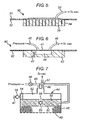
- this embodiment of the wound dressing has similar overall construction to Figure 1 including a cover sheet 21, a vacuum tube 23 and an adhesive layer 22.
- the screen structure of Figure 4 comprises an envelope of a water-permeable, non-woven nylon scrim 25 enclosing a quantity of selectively absorbent beads 24.
- the selectively absorbent beads typically have a diameter of 1 or 2 mm. They may be chromatography beads, for example size exclusion chromatography beads, ion exchange chromatography beads or affinity chromatography beads specifically adapted to remove or retain predetermined components of the wound fluid.
- the beads comprise HiTrap Heparin HP (available from Amersham Bioscience) to selectively and reversibly absorb growth factors. In use, the beads are periodically treated by simple addition of salt and/or buffer of suitable pH to release growth factors back to the wound.
- the dressing 30 comprises a cover sheet 31, and an adhesive layer 32 and a vacuum tube 33 substantially as hereinbefore described in relation to Figure 1 .
- the screen structure in the embodiment of Figure 5 comprises a slab of polyacrylate hydrogel 34 having a manifold of air passages 35 formed therein for maintaining vacuum at the wound surface, and to ensure uniform swelling of the hydrogel by the wound fluid.
- the dressing 40 comprises a semi-rigid, impermeable cover sheet 41 having an adhesive periphery 42 substantially as described in relation to the other embodiments.
- the screen assembly comprises a foam pad 43. In the embodiment shown in the drawing this pad is formed of an open-cell foam, for example a polyester foam. However, any kind of liquid-permeable pad, for example any of the screen assemblies shown in the embodiments of Figures 1 to 5 would be suitable.
- the screen assembly of Figure 6 further comprises a wound fluid purification device 44 located inside the wound dressing.
- the wound fluid purification device 44 is linked to a source of vacuum through vacuum line 46, and to a source of pressurised gas through pressure line 45.
- a return channel 47 is provided for returning purified and concentrated wound fluid from the device 44 to the wound surface.
- the wound fluid purification device 44 comprises a housing having an apertured base 49, which functions as the inlet through which wound fluid is drawn from the pad into the device.
- the wound fluid passes through a bed 48 of ion-exchange resin beads for removal of matrix metalloproteinases.
- the wound fluid then passes through one-way valve 53 into reservoir 52.
- the vacuum is switched to absorbent layer 50, and water from the reservoir 52 is drawn through size exclusion membrane 58 into absorbent layer 50 to concentrate the higher molecular weight wound healing and growth factors in the wound fluid in reservoir 52.
- the concentrated purified wound fluid is returned to the wound through line 47 and valve 55 by applying pressure to the reservoir 52 through pressure line 45.
- the returning wound fluid passes through the bacterial filter 54 before it is returned to the wound surface.
Landscapes
- Health & Medical Sciences (AREA)
- Heart & Thoracic Surgery (AREA)
- Animal Behavior & Ethology (AREA)
- General Health & Medical Sciences (AREA)
- Biomedical Technology (AREA)
- Veterinary Medicine (AREA)
- Engineering & Computer Science (AREA)
- Life Sciences & Earth Sciences (AREA)
- Public Health (AREA)
- Vascular Medicine (AREA)
- Anesthesiology (AREA)
- Hematology (AREA)
- Chemical & Material Sciences (AREA)
- Dispersion Chemistry (AREA)
- Otolaryngology (AREA)
- Materials For Medical Uses (AREA)
- External Artificial Organs (AREA)
Abstract
Description
- The present invention relates to improved wound dressings for use in vacuum therapy of wounds. The invention also relates to wound treatment systems incorporating such dressings, and to kits for the manufacture of such dressings.
-
EP-A-062072-0 andEP-A-0688189 describe vacuum treatment for accelerating wound healing. They describe the use of a cover for sealing about the outer perimeter of the wound, under which a vacuum is established to act on the wound surface. This vacuum applied to the wound surface accelerates healing of chronic wounds. A screen of open cell foam material is provided under the cover to provide the space in which the vacuum is formed and to reduce tissue ingrowth. Sufficient vacuum is applied for a suitable duration to promote tissue migration in order to facilitate the closure of the wound. Suitable vacuum is between about 0.1 and 0.99 atmospheres. The vacuum can be substantially continuous, wherein the pressure is relieved only to change the dressing on the wound. Alternatively, the patent teaches cyclic application of vacuum in alternating periods of application and nonapplication. In a preferred embodiment, vacuum is applied in 5 minute periods of application and non-application. -
WO01/89431 -
WO2004/03733 -
WO 02/083046 -
WO 03/057307 - The present invention provides a wound dressing for vacuum therapy comprising: a cover configured for placement over a wound to maintain a reduced pressure over the wound and adapted for communication with a source of vacuum, and a screen structure for placement between the cover and the wound, characterized in that said screen structure comprises a freeze-dried sponge made by freeze-drying or solvent drying a dispersion of oxidized regenerated cellulose (ORC) with collagen or chitosan in water, whereby the screen structure is adapted to remove or inactivate undesirable components from the wound environment and/or to concentrate desirable components present in the wound environment.
- The cover may be any one of the cover types described in the aforementioned patent applications
EP-A-0620720 ,EP-A-0688189 ,WO01/89431 WO2004/037334 relaxing to vacuum wound treatment . Briefly, the cover should be formed from substantially gas-impermeable material in order to be able to maintain a reduced pressure in the space over the wound being treated. Thermoplastic sheet materials of various types are suitable. The cover may suitably be substantially convex, and/or it may suitably be made of a semi-rigid material in order to help support the vacuum without collapsing. The cover may be provided with a layer of a medically acceptable pressure-sensitive adhesive on at least the periphery thereof for attachment of the cover to the skin around the wound to be treated. In other embodiments, the adhesive may be omitted and the cover sheet may be attached to the wound by suction. - Suitably, the wound dressing according to the present invention further comprises tubing for connecting the cover to the vacuum source. The connection is usually made through an aperture in the cover. The tubing may extend only outwardly of the cover, or it may extend inwardly through the cover into the vacuum wound treatment space. The dressing may be provided with a push, screw, snap or bayonet-type fitting for attachment of the vacuum tubing. The tubing may be connected to a fluid collection manifold located inside the cover sheet. The term "fluid collection manifold" refers to a hollow body having a plurality of apertures for collecting fluid from a plurality of locations under the cover sheet. The manifold may for example comprise an apertured envelope or a perforated spiral-wound tube. Other suitable fluid collection manifolds are described in
WO2004/037334 . The tubing may further be provided with a valve for controlling the application of vacuum. In certain embodiments the valve may be closed to maintain a desired atmosphere or pressure in the wound treatment space, or it may be a one-way or non-return valve to maintain reduced pressure over the wound after removal of the vacuum, source. The tubing and/or the cover sheet may be provided with a suitable coupling for attachment of a vacuum source. - The wound dressing of the present invention makes use of a screen structure that is adapted to removed or inactivate materials deleterious to wound healing and/or retain or concentrated materials that are beneficial in promoting wound healing. This screen structure therefore achieves not only the mechanical functions of supporting the cover sheet and filling the wound, but also enhances the metabolism wound healing without recourse to the complex external purification apparatus described in
WO2004/037334 . - It will be appreciated that the wound dressing according to the present invention may comprise, in addition to the oxidized regenerated cellulose (ORC), any of the screen components previously described for vacuum wound treatment in
EP-A-0620720 ,BP-A4688189 ,WO01/89431 WO2004/037334 . Furthermore, the screen structure used in the present invention may be made by chemical modification or addition to any of the screens described inEP-A-0620720 ,EP-A-0688189 ,WO01/89431 WO2004/037334 . Suitable conventional screen components include foams formed of a polymeric material, such as polyurethane or polyester. Alternatively or additionally, the conventional portion of the screen may be in the form of, or comprise one or more conformable hollow bodies defined by a film, sheet or membrane, such as a bag, chamber, pouch or other structure, filled with a fluid or solid that urges it to the wound shape. - In mammals, injury triggers an organised complex cascade of cellular and biochemical events that result in a healed wound. Wound is a complex, dynamic process that results in the restoration of anatomic continuity and function; an ideally healed wound is one that has returned to normal anatomic structure, function and appearance. The wound fluid accordingly contains a complex and changing mixture of active components. Certain components are harmful to wound healing when present in excessive amounts. Other components of the wound fluid are known to promote wound healing.
- For example, wound infection in acute and chronic wound is associated with elevated levels of protease enzymes, in particular of elastase. Chronic wounds, such as venous ulcers, pressure sores and diabetic ulcers, have a disordered wound healing metabolism even in the absence of infection. In particular, wound chronicity is associated with elevated levels of protease enzymes in the wound that interfere with the normal processes of tissue formation and destruction in the wound. The protease enzymes include collagenases and gelatinases, in
particular matrix metalloproteinases 2 and 9 and elastase. - Accordingly, the screen structure in the wound dressings according to the present invention is adapted to remove or inactivate at least one endogenous protease enzyme present in wound fluid. In particular, it is adapted to remove or inactivate at least one endogenous protease enzyme selected from the group consisting of collagenases, gelatinases and elastases. The screen structure may remove or inactivate the protease enzymes, for example, by binding the enzymes to a solid substrate in the screen structure by ion exchange or affinity binding.
- Concentrations of reactive oxygen species such as hydroxyl radicals (OH), singlet oxygen (1O2), hydroperoxyl radicals (-OOH), superoxideradical anions (-O2 -), and hydrogen peroxide (H2O2) can rise in damaged tissues, producing a condition known as oxidative stress. The presence of a low level of reactive oxygen species may be advantageous in the early stages of wound healing by both attracting and activating macrophages which engulf and kill bacteria and release cytokines and growth factors. Under mild oxidative stress conditions when hydrogen peroxide levels are slightly raised (around 10-8 to 10-4 molar), it has also been found that the rate of cell proliferation in fibroblast cultures is stimulated. However, prolonged and more severe oxidative stress may delay healing because it will produce chronic inflammation, divert available energy supply towards antioxidant defence at the expense of tissue reconstruction, and increase levels of matrix metalloproteinases which cause tissue breakdown. In more severe cases, elevated levels of reactive oxygen species can give rise to hydrogen peroxide-induced senescence or apoptosis (that is, programmed cell death) or tissue necrosis (that is, uncontrolled cell death and therefore permanent tissue damage).
- Accordingly, the screen structure is adapted to remove or inactivate at least one oxidative free radical present in wound fluid. For example, the screen structure may comprise an antioxidant or free radical scavenger such as Vitamin C (ascorbic acid), retinoids such as Vitamin A, Vitamin E, hydroquinones, benzimidazoles, antioxidant-grafted polysaccharides such as those described in -
US-A-5612321 , aniline or acridine dyes, or mixtures or combinations thereof, along with ORC (which has been shown to have antioxidant properties). - A number of components of wound fluid are known, to promote wound healing, in particular the so-called growth factors. Accordingly, the screen structure is preferably adapted to increase the concentration of at least one growth factor in the wound fluid. In particular, it is preferably adapted to selectively bind at least one growth factor selected from the group consisting of platelet derived growth factor (PDGF), fibroblast growth factors (FGF), transforming growth factor beta (TGF-β), epidermal growth factor (EGF), vascular endothelial growth factor (VEGF) and insulin-like growth factor (IGF), and mixtures thereof , and allow their subsequent delivery back to the wound. For example, the screen may comprise a solid substrate to which the growth factors are bound by ion exchange, size exclusion, or affinity binding. The substrate may be biodegradable in the wound, thereby gradually releasing the growth factors back into the wound. In other embodiments the growth factors may be released back into the wound by addition of a dissociation buffer.
- The screen structure is adapted to remove water from the wound fluid, thereby further increasing the concentration of wound healing factors at the wound surface. For example the screen structure may comprise a molecular sieve drying agent, or a hydrogel drying agents
- In certain embodiments the screen structure may be adapted to filter the wound fluid to remove solid particles, debris, cells and even microorganisms from the wound fluid. Advantageously, the screen structure may be adapted to remove or inactivate at least one infective microorganism. The screen structure may be adapted to remove or inactivate at least one bacterial endotoxin, for example The screen structure may comprise a peptidomimetic or a positively charged material that binds to the negatively charged lipopolysaccharide endotoxins.
- It is recognised that availability of iron is essential for the survival, replication, and differentiation of invading micro-organisms, Many micro-organisms can either secrete their own siderophores or utilise the siderophores secreted by other micro-organisms For the purpose of scavenging iron from their surroundings. It therefore appears that removal of iron (which may be present as free Fe2+/F3+ ions or in weak association with a complexant) from damaged tissue could assist in the prevention and treatment of infection by micro-organisms such as bacteria and yeasts.
- Accordingly, the screen structure may be adapted to remove or inactivate at least one dissolved iron species in the wound fluid. Preferably, the iron is removed preferentially over other multivalent ions, such as zinc, that are beneficial to wound healing. Suitable iron sequestering substances include iron chelators such as desferrioxamine, and oxidized regenerated cellulose, which has been shown to sequester iron selectively over Zinc. Resorbable wound dressing materials comprise, or consist essentially of oxidized regenerated cellulose (ORC). ORC is usually made by oxidation of a regenerated cellulose fabric or fibers with dinitrogen tetroxide. It is available as loose fibers, fabrics (such as the fabrics available under the Registered Trade Marks SURGICEL, NU-KNIT and INTERCEED from Johnson & Johnson), or sponges. Advantages of fibrillar ORC include that it is resorbable and the degradation products stimulate cell proliferation and chemotaxis. ORC is an effective haemostat and is bactericidal. ORC can modify the pH of the wound environment, which in turn may stimulate chronic wound repair.
- Data presented in
EP-A-0919548 have shown that ORC alone can positively influence the wound environment by modulating growth factor function and inactivating proteases. The data also show that ORC binds to growth factors present in wound fluid. The gradual breakdown of the ORC in vivo then releases the growth factors back into the wound, thereby promoting wound heating. - Wound dressings of the present invention are complexes of ORC with collagen or chitosan, in particular freeze-dried sponges made by freeze-drying or solvent-drying dispersions of ORC with collagen or chitosan in a suitable solvent such as water. Complexes of this type are described in detail in
W098/00180 EP-A-091 8548 andEP-A-1153622 . The sponges can be modified to ensure they last longer at the wound site by changes in the manufacturing process eg increased chemical cross-linking, increase in solids content and/or increase in thickness of the final product. The biocompatible sponge screen is soft, conformable and biocompatible. It encourages cellular ingrowth and repair. The bioresorbable sponges can be left in the wound after removal of the vacuum or can slowly disappear during use. The sponge provides a filter to ensure that growth factors are retained at the wound site, while allowing for efficient removal of wound exudate effectively concentrating the growth factors which would otherwise be removed from the wound. - In some embodiments, the screen structure may comprise a molecular sieve material that is adapted to absorb water but not higher molecular weight components of the wound fluid, such as growth factors. In other embodiments, the screen structure in the dressings according to the present invention comprises a gel-forming polymer (Hydrogel) that absorbs water from the wound fluid to form a gel.
- The term "gel-forming polymer" refers to medically acceptable macromolecular substances that form a gel with water under physiological conditions of temperature and pH. Such hydrogels preferably have the ability to swell and absorb fluid while maintaining a strong integral structure. Preferably, the hydrogel composition forms a gel that is substantially insoluble in water under physiological conditions, whereby the hydrogel is not washed away by the wound fluid.
- Exemplary insoluble gels include certain cross-linked polyacrylate gels, calcium alginate gels, cross-linked hyaluronate gels, wherein the hydrogel layer comprises a hydrogel material selected from gels formed from vinyl alcohols, vinyl esters, vinyl ethers and carboxy vinyl monomers, meth(acrylic) acid, acrylamide, N-vinyl pyrrolidone, acylamidopropane sulphonic acid, PLURONIC (Registered Trade Mark) (block polyethylene glycol, block polypropylene glycol) polystyrene-, maleic acid, NN-dimothylacrylamide diacetone acrylamide, acryloyl morpholine, and mixtures thereof.
- Suitably, the hydrogel comprises a hydrogel material selected from polyurethane gels, biopolymer gels, carboxymethyl cellulose gels, hydroxyethyl cellulose gels, hydroxy propyl ethyl cellulose, modified acrylamide and mixtures thereof. Suitable biopolymer gels include alginates, pectins, galactomannans, chitosan, gelatin, hyaluronates and mixtures thereof. Some of these biopolymer materials also promote wound heating. In certain embodiments, the hydrogel comprises a hydrogel material of the kind described in
WO00/07638 - The gels may be cross-linked, and the cross-linking may be either covalent or ionic. The hydrogel material may further comprise from 5 to 50% by weight on a dry weight basis of one or more humectants such as glycerol. The hydrogel material may be supported or reinforced by a support layer such as textile filaments. In certain embodiments, the gel-forming fibers such as superabsorbent fibers may be formed into a woven or nonwoven fabic, optionally in admixture with textile fibers to reinforce the superabsorbent.
- The use of the gel-forming polymer retains the wound fluid within dressing, so that no collection chamber is needed in the vacuum line, and fewer components are needed for the device. The vacuum tubing and pump remain uncontaminated by wound fluid. A smaller pump can be used, giving greater mobility for patient. A static vacuum can be applied and then the pump disconnected leaving negative pressure still maintained within the dressing,
- In especially suitable embodiments, the screen structure comprises, or consists essentially of, a solid hydrogel layer having fluid flow passages extending therethrough. The gel screen may comprise a network of channels or tubes within the screen for the passage of fluid, thereby preventing gel blocking. In certain embodiments the channels may be formed by selectively cross-linking the gel. The channels can for example be formed by piercing a gel slab with a metallic rod or wire and then applying a voltage to the wire. This will result in a rapid increase in temperature of the rod or wire thus effectively forming a tube which is more resilient than the surrounding gel/bioabsorbable. By piercing the gel/bioabsorbable multiple times and in various directions and then cross-linking, a resilient tubular network will be formed. This will have the advantages of: supporting the gel/bioabsorbable so that it is not removed by the vacuum device; allowing more efficient passage of fluid through the gel, thus allowing a lower vacuum to be used; allowing a bioabsorbable gel to be used if required as the tubular network will stay in place, thus utilising any potential advantages of the bioabsorbable material; and extending the lifetime of the gel.
- Any of the component materials making up the screen structure may comprise an antimicrobial material. Suitable antimicrobial agents may be selected from the group consisting of antiseptics and antibiotics and mixtures thereof. Suitable antibiotics include peptide antimicrobials (e.g. defensins, Magainin, synthetic derivatives of them) tetracycline, penicillins, terramycins, erythromycin, bacitracin, neomycin, polymycin B, mupirocin, clindamycin and mixtures thereof. Suitable antiseptics include silver sulfadiazine, chlorhexidine, povidone iodine, triclosan, other silver salts and colloidal silver, sucralfate, quaternary ammonium salts and mixtures thereof.
- An especially suitable antimicrobial structure for use as or in the screen structure is a silver impregnated charcoal cloth, for example of the kind described in
US-A-4529623 . The activated charcoal reduces bioburden in the wound, by trapping bacteria and binding endotoxins which can be detrimental to the wound healing process. Furthermore, the silver impregnated onto the charcoal has bactericidal effect, and the activated charcoal has a primary odour-absorbency function. - In certain embodiments, the screen structure comprises more than one layer of material selected from: active biopolymer layers, hydrogel layers, antimicrobial layers, and support layers.
- For example, the screen structure may comprise at least one active layer adapted to remove or inactivate undesirable components from the wound environment and/or to concentrate desirable components present in the wound environment, and at least one support body for the active layer. The support body may, for example, comprise a layer of textile, mesh, foam or gauze. Optionally textile fibers from the support body may extend into the active layer(s). The textile layer may be woven or nonwoven , and can be folded or multiple to provide adequate packing. Such layers provide structural integrity to the active layer.
- In certain embodiments the screen structure further comprises a dressing change indicator. This is a region adjacent to the cover sheet, and visible through a transparent region of the cover sheet, that changes appearance when a dressing change is needed. For example, it may change colour when the hydrogel layer of the dressing is saturated with wound fluid.
- As already noted, the active layers of the wound dressing according to the present invention may be associated with one or more layers of conventional screen means, for example as described in
EP-A-0620720 ,EP-A-0688189 ,WO01/89431 WO2004/037334 . - In certain embodiments, the screen structures in the wound dressings according to the present invention comprise or consist of materials that selectively remove components from wound fluid by filtration, affinity binding, or size exclusion.
- These materials are typically non-resorbable materials that selectively bind either bad factors such as proteases, or good factors such as growth factors. (The good factors can be released from the binding materials e.g. by buffers or salt and cycled back into the wound either during vacuum treatmemt or after the dressing is removed).
- The use of molecular sieve materials to remove water selectively from the wound fluid has been discussed above.
- In certain embodiments, the screen selectively binds proteases, in particular matrix metalloproteinases, allowing passage of exudate containing more good factors which is then expected be more mitogenic in cell proliferation tests. For example, Benzamidine Sepharose 6B, (available from Amersham Bioscience) could be included in the screen for this purpose.
- At least a portion of the screen releasably binds growth factors but not proteases to the same extent. It has been shown that ORC binds growth factors found in wound fluid. The bound growth factors can then be released back into the wound either by gradual breakdown of the material in vivo (e.g. for ORC), or by the addition of a suitable affinity release serum. HiTrap Heparin HP (available from Amersham Bioscience) could be included in the screen for this purpose.
- The screen may comprise an immobilized affinity binding partner (e.g. an antibody) that selectively binds to matrix metalloproteinases and/or other undesirable components of wound fluid. All MMP's have significant homology and a single affinity site may be used to remove all MMP's. The binding partner may be conjugated to a solid substrate, for example by avidin-biotin linkage. A suitable affinity binding partner for matrix metalloproteinases is TIMP-1.
- A further embodiment of this invention uses size exclusion chromatography materials in the screen structure, for example reticulated polystyrene beads such as those described in
EP-A-088783 - In yet other embodiments the selective materials in the screen structure could comprise ion exchange separation materials (for example DEAE cellulose) to selectively bind ionically charged components (e.g. bacterial endotoxins, growth factors) which could then optionally be returned to the wound following exudate removal by suitable salt treatment of the materials. Suitable ion exchange materials could also be used to buffer the wound to the optimal slightly acidic (pH 4.5 to about 6.5) for wound healing.
- In yet other embodiments the selective materials in the screen structure could comprise one or more molecularly imprinted polymers for selective binding of one or more wound fluid components. These polymers have complex surfaces with three-dimensional topologies possessing a specific spatial arrangement of chemical functional groups for selective binding of predetermined molecules. Most of these polymers are created by interaction of a template molecule with either a pre-formed polymer or by polymerization of monomers in the presence of a template. The resulting structures are bulk polymers in which the template leaves behind cavities, which are more or less complementary to the shape and spatial distribution of functional groups of the template.
- In certain embodiments of the wound dressing according to the present invention, the screen structure comprises a plurality of relatively movable screen particles enclosed by a structure of sheet material. The particles are typically small beads, for example having a diameter of from about 0.1mm to about 5mm, typically about 0.5mm to about 3mm. The enclosing structure of sheet material is usually liquid permeable, for example an envelope, and the sheet material is typically a perforated thermoplastic sheet or a textile material.
- The particles are loosely packed in the envelope so that they are able to move about and conform to the shape of the wound while allowing vacuum to be applied to the wound and functioning as an efficient screen to tissue overgrowth. The scrim prevents the microbeads from being sucked from the wound by the vacuum. The microbeads can move about the wound bed to micro-massage the wound. This could potentially encourage microcirculation stimulation, increasing oxygen and nutrient delivery to cells, resulting in faster wound closure.
- Microbeads could be made from either bioabsorbable or non- bioabsorbable materials used either individually or in combination. If made of a non- bioabsorbable material the microbeads could be strung together for ease of removal. They could also be coated with agents that would improve healing.
- Using microbeads rather than a sponge may allow the vacuum to be applied more efficiently or evenly over the wound bed. Using microbeads rather than a sponge may allow more efficient extract of the wound fluid due to decreased friction. Microbeads would have a smoother surface than that of a sponge. The use of microbeads as a screen would allow the screen to fit any size or shape of wound cavity. This would remove the need for cutting to size prior to application making the product easier to use and reduce the chance of bacterial contamination.
- It is also envisaged that the screen structure according to this aspect of the invention could comprise or consist essentially of microbeads, without a retaining scrim. The microbeads would be easily removed from the wound bed by irrigation if made of a non- bioabsorbable material. This contrasts with sponge screens, which can be difficult to remove due to tissue re-growth into the sponge causing pain to the patient. Tissue re-growth around the microbeads could occur to some extent without effecting removal. Alternatively the beads could be made of a bioabsorbable material negating the need for removal.
- The beads may be any of the separation beads described above in relation to affinity separation, ion exchange, or size-exclusion separation. Alternatively or additionally, the beads may be manufactured from, encapsulated in, or coated with any of the active materials discussed above, including any of the biopolymers having selective activity against protease enzymes. Mixtures of different types of beads are also contemplated.
- In yet other embodiments, the beads used in the screen structure comprise beads substantially as described in
EP-A-0888140 , wherein each bead comprises a porous core of a first bioabsorbable material and a substantially non-porous layer of a second bioabsorbable material around the core. The porous core is preferably a sponge formed by freeze-drying a liquid suspension of the first bioabsorbable material. The preferred diameter of the beads is 0.1-4.0 mm, and the beads are preferably dispensed in a liquid or solid matrix. - In other embodiments of the present invention, the screen structure incorporates a separation device comprising: an inlet for wound fluid; a separation member; and an outlet for returning wound fluid to the wound after it has passed through the separation member. That is to say, a device for purification and optional concentration of the wound fluid is provided integrally with the dressing, usually below the cover sheet, and preferably forming part of a larger screen structure. For example, the device may be embedded in a resilient screen layer, for example a layer of hydrophilic foam and/or textile material.
- The device normally comprises a housing, for example formed from thermoplastic sheet material. The device comprises an inlet to collect exudate from a wound - this exudate is then treated in the separation member by removing harmful or wound healing inhibiting substances from the exudate. The inlet may, for example, be an opening or a plurality of openings in the housing, normally in the side of the housing that faces the wound under treatment in use. The separation member is usually fitted in the housing for the device. may comprise a bed of separation beads as hereinbefore described, e.g. affinity separation beads, size exclusion separation beads, ion exchange beads, or biopolymer-containing beads. Alternatively or additionally, the separation member may comprise an ultrafiltration or dialysis membrane, for example having a molecular weight cut-off selected around 10,000 to 50,000 so as to remote proteases but allow the passage of growth factors. The device may also comprise a reservoir for storage of the wound fluid inside the housing before, during, or after the purification and concentration steps taking place in the device.
- Preferably the device is also adapted to concentrate beneficial substances from the exudate. Accordingly, the device may comprise an absorbent body to absorb water from the wound fluid, and the absorbent body may be covered by a suitable ultrafiltration membrane to prevent absorption of the desirable growth factors.
- The housing usually comprises a vacuum port for connection to a source of suction located outside the dressing. The vacuum port communicates with the inlet and optionally with the separation member to draw wound fluid into the device, and preferably to draw the wound fluid through the separation member and optionally into the reservoir. The device may comprise a one-way valve to prevent wound fluid flowing out of the reservoir back to the separation member and the inlet. In certain embodiments, a second vacuum port is provided in the device in communication with the optional absorbent body to draw wound fluid into the absorbent body, for example to draw water from the wound fluid through a size exclusion membrane into the absorbent layer , thereby concentrating the wound fluid. In certain embodiments, the size exclusion membrane is provided between the reservoir as hereinbefore described and the absorbent layer, whereby the vacuum can be switched from the reservoir to the absorbent layer to concentrate the purified wound fluid in the reservoir.
- The device may further comprise a pressure inlet (or the vacuum inlet may be used for this purpose) for applying hydraulic or preferably gas pressure to expel purified and optionally concentrated wound fluid from the device through the outlet to the wound. Suitably, the pressure inlet is configured to apply pressure to the reservoir as hereinbefore described. A filtration member may be provided in the reservoir or the outlet conduit to remove solid particles, including cells, from the purified and optionally concentrated wound fluid before it is returned to the wound.
- The outlet may comprise a one-way valve to block return of wound fluid to the device through the outlet when vacuum is reapplied to the device to draw wound fluid into the device through the inlet.
- In certain embodiments, the wound fluid purification device comprises: a housing; a wound fluid inlet in the housing communicating with the wound facing side of the dressing, through which wound fluid can be drawn into the housing; a vacuum inlet communicating with the outside of the wound dressing for applying suction to an interior region of the housing a bed of a selectively adsorbent material through which the wound fluid can be drawn under suction from the vacuum inlet; a reservoir into which the wound fluid can be drawn under suction from the vacuum inlet; and a wound fluid outlet communicating with the reservoir and with the wound facing side of the dressing, through which purified wound fluid from the reservoir can be returned to the wound from the reservoir. Preferably, the device further comprises an absorbent body to concentrate the wound fluid by selectively removing water from the wound fluid. The absorbent body may, for example, comprise a suitable molecular sieve material. In other embodiments the absorbent body may be separated from the wound fluid by a size exclusion membrane. In these embodiments, the device may further comprise a second vacuum inlet for applying suction to the absorbent body to draw water into the absorbent body through the membrane. The device preferably further comprises a filter to remove particles and cells from the wound fluid, and the filter is preferably located in the reservoir or in the wound fluid outlet.
- In another aspect, the present invention provides a kit for assembly into a wound dressing according to the present invention, said kit comprising: a cover configured for placement over the wound to provide a sealed environment around the wound and adapted for communication with a source of vacuum, and a screen structure for placement between the cover and the wound, characterized in that said screen structure comprises a freeze-dried sponge made by freeze-drying or solvent drying a dispersion of oxidized regenerated cellulose (ORC) with collagen or chitosan in water, whereby the screen structure is adapted to remove or inactivate undesirable components from the wound environment and/or to concentrate desirable components present in the wound environment.
- The features of the cover and the screen structure may suitably be any of the features as hereinbefore described in relation to the first aspect of the invention. The cover and the screen structure may be packaged together, or separately. One or both of the cover and the screen structure may be sterile and packaged in a microorganism-impermeable container. The use of a kit allows assembly of the wound dressing by the care giver, A given cover may be combined with a screen structure having the most appropriate therapeutic effect at the time of treatment in order to optimize wound healing. It will be appreciated that the kit according to the present invention may comprise a cover and a plurality of loose particles, such as the selectively absorbent beads described hereinbefore. It will also be appreciated that the kit according to the present invention may further comprise a conventional screen material, for example a hydrophilic foam, for use in conjunction with any of the special screen materials described hereinbefore.
- In another aspect, the present invention provides a wound treatment system comprising a wound dressing according to the present invention as hereinbefore defined, and a vacuum source for providing said vacuum treatment to a wound.
- The wound dressing, kit and system of the present invention may be used for promoting wound healing in a mammal comprising the steps of : applying a wound dressing according to the present invention over a wound in substantially airtight fashion to define a wound treatment space between the cover and a surface of the would, connecting the cover to a vacuum source, and creating a vacuum within the wound treatment space.
- The term "vacuum" here and elsewhere in the present specification refers to any pressure below ambient atmospheric pressure. Suitably, the step of applying a vacuum includes lowering the pressure in the wound treatment space to an absolute value of from about 0.1bar to about 0.95bar, suitably from about 0.5 bar to about 0.9 bar and typically to an absolute value of from about 0.75bar to about 0.85bar. The vacuum may be static or dynamic. The vacuum may be applied continuously or intermittently to the wound treatment space, substantially as hereinbefore described.
- It will be appreciated that any feature or embodiment of the present invention that is described in relation to any one embodiment is equally applicable to any other embodiment of the invention mutatis mutandis.
- Specific embodiments of the present invention will now be discussed further, by way of example, with reference to the accompany drawings, in which:
-
Figure 1 shows a longitudinal cross-section through a wound dressing according to the first embodiment of the present invention; -
Figure 2 shows a longitudinal cross-section through a wound dressing according to a second embodiment of the present invention; -
Figure 3 shows a longitudinal cross-section through a wound dressing according to a third embodiment of the present invention; -
Figure 4 shows a longitudinal cross-section through a wound dressing according to a fourth embodiment of the present invention; -
Figure 5 shows a longitudinal cross-section through a wound dressing according to a fifth embodiment of the present invention; -
Figure 6 shows a longitudinal cross-section through a wound dressing according to a sixth embodiment of the present invention; and -
Figure 7 shows a detailed longitudinal cross-section through the wound fluid purification device in the embodiment ofFigure 6 . - Referring to
Figure 1 , the wound dressing according to the first embodiment comprises a cover sheet 1 formed of substantially impermeable, thermoformed thermoplastic. Atube 2 passes through the cover sheet 1, for connection to a source of vacuum. A layer of medically acceptable pressure-sensitive adhesive 3 extends around the periphery of the underside of the cover sheet 1, for attachment of the cover sheet to the skin around the wound being treated. The wound dressing further comprises ascreen 4, which in this particular embodiment comprises a freeze-dried pad formed from a mixture of fibrillar collagen and oxidised regenerated cellulose (ORC) in the ratio approximately 55:45 by weight, and made substantially as described inEP-A-1153622 . These freeze-dried sponges are very light and conformable. Thepad 4 is secured to the cover sheet 1 by the adhesive 3. The marginal regions of the adhesive 3 in this and the other embodiments may be protected by a release-coated cover sheet (not shown) prior to use. The dressing is usually packaged in a microorganism impermeable container, and is sterilised e.g. by gamma-irradiation. - It will be appreciated that the embodiment of
Figure 1 could also be made up from a kit according to the present invention. The kit would comprise thescreen 4 and, separately, the cover sheet, tube and adhesive layer (with cover sheet), packaged separately or together, for assembly at the time of use. The other embodiments shown inFigures 2 to 6 could likewise be made up from a kit in accordance with the present invention. - It will also be appreciated that the freeze-dried
sponge screen 4 could be replaced by freeze-dried sponges made from other materials that inactivate matrix metalloproteinases and/or retain and release growth factors. For example, a freeze-dried pad of collagen with alginate or chitosan with ORC. Thescreen 4 could also be replaced by a liquid-permeable envelope, for example a liquid-permeable non-woven scrim envelope, containing one or more of the active polymers in particulate or fibrillar form. - Referring to
Figure 2 , the construction of the dressing 5 according to the second embodiment of the invention is generally similar that of the embodiment ofFigure 1 . However, the embodiment ofFigure 2 further includes anair outlet manifold 7 for distributing the suction from the vacuum line 6 across the upper surface of the screen structure. Themanifold 7 may, for example, comprise a spirally wound, perforated tube, or any of other suitable manifold structures, for example as described inWO2004/37334 - Referring to
Figure 3 , the overall structure of the wound dressing 10 according to this embodiment is similar to that ofFigure 1 , including acover sheet 11, avacuum tube 13 and anadhesive layer 12. However, the screen structure inFigure 3 is a laminate made up of threelayers Layer 14 is a freeze-dried collagen/ORC sponge as described in relation toFigure 1 .Layer 15 is a silver-impregnated charcoal cloth of the kind described for example inUS-A-4529623 . The activated charcoal is effective to remove bacterial toxins from the wound fluid. Furthermore, the silver impregnated onto the charcoal has bactericidal effect, and the activated charcoal has a primary odour-absorbency function.Layer 16 is a water-absorbent layer. Suitably it is a non-woven fibrous web of hydrophilic textile fibers, e.g. viscose fibers, and superabsorbent polyacrylate gel-forming fibers. Suitably, there is a size exclusion membrane (not shown) separating layers 15 and 16 and having a molecular weight cut-off such that it allows water to pass through intolayer 16, but does not allow the passage of growth factors, whereby the growth factors are concentrated in the wound fluid in contact with the wound. - Referring to
Figure 4 , this embodiment of the wound dressing has similar overall construction toFigure 1 including acover sheet 21, avacuum tube 23 and anadhesive layer 22. However, the screen structure ofFigure 4 comprises an envelope of a water-permeable,non-woven nylon scrim 25 enclosing a quantity of selectivelyabsorbent beads 24. The selectively absorbent beads typically have a diameter of 1 or 2 mm. They may be chromatography beads, for example size exclusion chromatography beads, ion exchange chromatography beads or affinity chromatography beads specifically adapted to remove or retain predetermined components of the wound fluid. In this embodiment, the beads comprise HiTrap Heparin HP (available from Amersham Bioscience) to selectively and reversibly absorb growth factors. In use, the beads are periodically treated by simple addition of salt and/or buffer of suitable pH to release growth factors back to the wound. - Referring to
Figure 5 , in this embodiment the dressing 30 comprises acover sheet 31, and anadhesive layer 32 and avacuum tube 33 substantially as hereinbefore described in relation toFigure 1 . However, the screen structure in the embodiment ofFigure 5 comprises a slab ofpolyacrylate hydrogel 34 having a manifold ofair passages 35 formed therein for maintaining vacuum at the wound surface, and to ensure uniform swelling of the hydrogel by the wound fluid. - Referring to
Figure 6 , the dressing 40 according to this embodiment comprises a semi-rigid,impermeable cover sheet 41 having anadhesive periphery 42 substantially as described in relation to the other embodiments. The screen assembly comprises afoam pad 43. In the embodiment shown in the drawing this pad is formed of an open-cell foam, for example a polyester foam. However, any kind of liquid-permeable pad, for example any of the screen assemblies shown in the embodiments ofFigures 1 to 5 would be suitable. The screen assembly ofFigure 6 further comprises a woundfluid purification device 44 located inside the wound dressing. The woundfluid purification device 44 is linked to a source of vacuum throughvacuum line 46, and to a source of pressurised gas throughpressure line 45. Areturn channel 47 is provided for returning purified and concentrated wound fluid from thedevice 44 to the wound surface. - Referring to
Figure 7 , the woundfluid purification device 44 comprises a housing having anapertured base 49, which functions as the inlet through which wound fluid is drawn from the pad into the device. The wound fluid passes through abed 48 of ion-exchange resin beads for removal of matrix metalloproteinases. The wound fluid then passes through one-way valve 53 intoreservoir 52. When the reservoir is full, the vacuum is switched toabsorbent layer 50, and water from thereservoir 52 is drawn throughsize exclusion membrane 58 intoabsorbent layer 50 to concentrate the higher molecular weight wound healing and growth factors in the wound fluid inreservoir 52. When this process is complete, the concentrated purified wound fluid is returned to the wound throughline 47 andvalve 55 by applying pressure to thereservoir 52 throughpressure line 45. The returning wound fluid passes through thebacterial filter 54 before it is returned to the wound surface. - The above embodiments have been described for purpose of illustration. Many other embodiments falling within the scope of the accompanying claims will be apparent to the skilled reader.
Claims (10)
- A wound dressing for vacuum therapy comprising: a cover (1) configured for placement over a wound to maintain a reduced pressure over the wound and adapted for communication with a source of vacuum, and a screen structure (4) for placement between the cover (1) and the wound, characterized in that said screen structure (4) comprises a freeze-dried sponge made by freeze-dryiwg or solvent drying a dispersion of oxidized regenerated cellulose (ORC) with collagen or chitosan in water, whereby the screen structure is adapted to remove or inactivate undesirable components from the wound environment and/or to concentrate desirable components present in the wound environment.
- A wound dressing according to claim 1, wherein the cover (1) is semi-rigid.
- A wound dressing according to any preceding claim, further comprising tubing (2) for connecting the cover (1) to the vacuum source.
- A wound dressing according to any preceding claim, wherein said a freeze-dried sponge is made by freeze-drying a dispersion of oxidized regenerated cellulose (ORC) with collagen in water,
- A wound dressing according to any preceding claim, wherein the screen structure (4) consists of said freeze-dried sponge.
- A kit for assembly into a wound dressing according to any of claims 1 to 5, said kit comprising: a cover configured for placement over the wound to provide a sealed environment around the wound and adapted for communication with a source of vacuum, and a screen structure for placement between the cover and the wound, characterized in that said screen structure comprises a freeze-dried sponge made by freeze-drying or solvent drying a dispersion of oxidized regenerated cellulose (ORC) with collagen or chitosan in water, whereby the screen structure is adapted to remove or inactivate undesirable components from the wound environment and/or to concentrate desirable components present in the wound environment.
- A wound treatment system comprising a wound dressing according to claim 1 and a vacuum source for providing said vacuum treatment to a wound.
- The system of claim 7, wherein the vacuum source is programmed to supply vacuum intermittently to the wound treatment space.
- The system of claim 7, wherein the step of applying a vacuum includes lowering the pressure in the wound treatment space to an absolute value of from 10kpa (0. 1bar) to 90kPa (0.9bar).
- The system of claim 9, wherein the step of applying a vacuum includes lowering the pressure in the wound treatment space to an absolute value of from 75kPa (0.75bar) to 85kPa (0.85bar).
Applications Claiming Priority (2)
| Application Number | Priority Date | Filing Date | Title |
|---|---|---|---|
| GB0413867A GB2415382A (en) | 2004-06-21 | 2004-06-21 | Wound dressings for vacuum therapy |
| PCT/GB2005/002423 WO2005123170A1 (en) | 2004-06-21 | 2005-06-20 | Wound dressings for vacuum therapy |
Publications (2)
| Publication Number | Publication Date |
|---|---|
| EP1758637A1 EP1758637A1 (en) | 2007-03-07 |
| EP1758637B1 true EP1758637B1 (en) | 2012-02-01 |
Family
ID=32750312
Family Applications (1)
| Application Number | Title | Priority Date | Filing Date |
|---|---|---|---|
| EP05755604A Expired - Lifetime EP1758637B1 (en) | 2004-06-21 | 2005-06-20 | Wound dressings for vacuum therapy |
Country Status (5)
| Country | Link |
|---|---|
| US (1) | US20070225663A1 (en) |
| EP (1) | EP1758637B1 (en) |
| ES (1) | ES2380027T3 (en) |
| GB (1) | GB2415382A (en) |
| WO (1) | WO2005123170A1 (en) |
Cited By (2)
| Publication number | Priority date | Publication date | Assignee | Title |
|---|---|---|---|---|
| US8998866B2 (en) | 2010-07-02 | 2015-04-07 | Smith & Nephew Plc | Provision of wound filler |
| US10183093B2 (en) | 2006-11-30 | 2019-01-22 | Kci Usa, Inc. | Wound dressing compositions |
Families Citing this family (312)
| Publication number | Priority date | Publication date | Assignee | Title |
|---|---|---|---|---|
| US7700819B2 (en) * | 2001-02-16 | 2010-04-20 | Kci Licensing, Inc. | Biocompatible wound dressing |
| US7763769B2 (en) | 2001-02-16 | 2010-07-27 | Kci Licensing, Inc. | Biocompatible wound dressing |
| GB0224986D0 (en) | 2002-10-28 | 2002-12-04 | Smith & Nephew | Apparatus |
| EA007994B1 (en) | 2003-07-22 | 2007-02-27 | КейСиАй ЛАЙСЕНЗИНГ, ИНК. | Negative pressure wound treatment dressing |
| GB0325129D0 (en) | 2003-10-28 | 2003-12-03 | Smith & Nephew | Apparatus in situ |
| US11298453B2 (en) | 2003-10-28 | 2022-04-12 | Smith & Nephew Plc | Apparatus and method for wound cleansing with actives |
| GB0325130D0 (en) * | 2003-10-28 | 2003-12-03 | Smith & Nephew | Apparatus with scaffold |
| JP2005243197A (en) | 2004-02-27 | 2005-09-08 | Sony Corp | Operating condition setting system |
| US10058642B2 (en) | 2004-04-05 | 2018-08-28 | Bluesky Medical Group Incorporated | Reduced pressure treatment system |
| US8062272B2 (en) | 2004-05-21 | 2011-11-22 | Bluesky Medical Group Incorporated | Flexible reduced pressure treatment appliance |
| US7909805B2 (en) | 2004-04-05 | 2011-03-22 | Bluesky Medical Group Incorporated | Flexible reduced pressure treatment appliance |
| US7951124B2 (en) * | 2004-04-13 | 2011-05-31 | Boehringer Technologies, Lp | Growth stimulating wound dressing with improved contact surfaces |
| DE202004017052U1 (en) | 2004-11-02 | 2005-06-09 | Riesinger, Birgit | Device for wound treatment using negative pressure |
| JP5154228B2 (en) | 2004-11-05 | 2013-02-27 | コンバテック・テクノロジーズ・インコーポレイテッド | Vacuum wound dressing |
| DE202004018245U1 (en) † | 2004-11-24 | 2005-07-07 | Riesinger, Birgit | Drainage device for treating wounds using reduced pressure has absorption body with layer(s) of textile section enriched with super-absorbents enclosed by liquid transmissive sleeve; absorbed wound secretions remain in absorption body |
| JP2008531498A (en) | 2005-02-15 | 2008-08-14 | バージニア コモンウェルス ユニバーシティ | Mineral technology (MT) for emergency hemostasis and treatment of acute wounds and chronic ulcers |
| CA2619925A1 (en) | 2005-09-07 | 2007-03-15 | Tyco Healthcare Group Lp | Wound dressing with vacuum reservoir |
| BRPI0616591A2 (en) | 2005-09-07 | 2011-06-28 | Tyco Healthcare | independent wound dressing apparatus |
| JP2009506878A (en) | 2005-09-07 | 2009-02-19 | タイコ ヘルスケア グループ リミテッド パートナーシップ | Self-contained wound care with micropump |
| US10166147B2 (en) * | 2005-11-02 | 2019-01-01 | Bsn Medical Gmbh | Absorbent article for application to human or animal skin surfaces |
| GB0524027D0 (en) * | 2005-11-25 | 2006-01-04 | Smith & Nephew | Fibrous dressing |
| WO2007087811A1 (en) * | 2006-02-02 | 2007-08-09 | Coloplast A/S | A suction system |
| US8938898B2 (en) | 2006-04-27 | 2015-01-27 | Z-Medica, Llc | Devices for the identification of medical products |
| US7615036B2 (en) | 2006-05-11 | 2009-11-10 | Kalypto Medical, Inc. | Device and method for wound therapy |
| US7779625B2 (en) | 2006-05-11 | 2010-08-24 | Kalypto Medical, Inc. | Device and method for wound therapy |
| JP5436205B2 (en) * | 2006-05-12 | 2014-03-05 | スミス アンド ネフュー ピーエルシー | scaffold |
| US7604819B2 (en) | 2006-05-26 | 2009-10-20 | Z-Medica Corporation | Clay-based hemostatic agents and devices for the delivery thereof |
| CA2591499A1 (en) * | 2006-07-07 | 2008-01-07 | Tyco Healthcare Group Lp | Novel tissue support |
| AU2013206572B2 (en) * | 2006-09-19 | 2016-04-21 | Solventum Intellectual Properties Company | Component module for a reduced pressure treatment system |
| US9820888B2 (en) | 2006-09-26 | 2017-11-21 | Smith & Nephew, Inc. | Wound dressing |
| CA2604623C (en) | 2006-09-28 | 2018-10-30 | Tyco Healthcare Group Lp | Portable wound therapy system |
| DE102006047041A1 (en) | 2006-10-02 | 2008-04-10 | Birgit Riesinger | Areal absorbent body |
| US7967810B2 (en) * | 2006-10-20 | 2011-06-28 | Mary Beth Kelley | Sub-atmospheric wound-care system |
| SG175690A1 (en) | 2006-11-09 | 2011-11-28 | Kci Licensing Inc | Porous bioresorbable dressing conformable to a wound and methods of making same |
| AU2007327300A1 (en) * | 2006-11-30 | 2008-06-05 | Medela Holding Ag | Device for treating wounds |
| CN103284843B (en) * | 2007-02-09 | 2015-01-28 | 凯希特许有限公司 | Breathable interface system for topical reduced pressure |
| AU2013221917B2 (en) * | 2007-02-09 | 2015-06-04 | Solventum Intellectual Properties Company | A breathable interface system for topical reduced pressure |
| AU2015218431B2 (en) * | 2007-02-09 | 2017-05-11 | Solventum Intellectual Properties Company | A breathable interface system for topical reduced pressure |
| WO2008104609A1 (en) * | 2007-03-01 | 2008-09-04 | Coloplast A/S | Pressure-distributing elements for use with negative pressure therapy |
| GB0707758D0 (en) * | 2007-04-21 | 2007-05-30 | Smith & Nephew | A foam material for medical use and method for producing same |
| DE102008020552A1 (en) * | 2007-04-29 | 2008-10-30 | Iskia Gmbh & Co.Kg | Drainage agent for performing vacuum wound treatments |
| DE102008020553A1 (en) * | 2007-04-29 | 2008-10-30 | Iskia Gmbh & Co.Kg | Flat drainage for wound treatment |
| US7790946B2 (en) * | 2007-07-06 | 2010-09-07 | Tyco Healthcare Group Lp | Subatmospheric pressure wound therapy dressing |
| US8486033B2 (en) * | 2007-07-18 | 2013-07-16 | Marine Polymer Technologies, Inc. | Application of polymeric materials to screens to facilitate hemostasis and wound healing |
| AU2014262261A1 (en) * | 2007-07-18 | 2014-12-04 | Marine Polymer Technologies, Inc. | Application of polymeric materials to screens to facilitate hemostasis and wound healing |
| AU2008275935A1 (en) * | 2007-07-18 | 2009-01-22 | Marine Polymer Technologies, Inc. | Application of polymeric materials to screens to facilitate hemostasis and wound healing |
| WO2009016605A2 (en) * | 2007-08-01 | 2009-02-05 | Blackbeard, Graham Alan | Wound contact means for a reduced pressure wound treatment apparatus |
| EP3590480B1 (en) | 2007-10-11 | 2023-05-03 | 3M Innovative Properties Company | Closed incision negative pressure wound therapy device |
| JP5613566B2 (en) | 2007-11-21 | 2014-10-22 | スミス アンド ネフュー ピーエルシーSmith & Nephew Public Limited Company | Wound dressing |
| CN104382691B (en) | 2007-11-21 | 2018-08-31 | 史密夫及内修公开有限公司 | wound dressing |
| WO2009067711A2 (en) | 2007-11-21 | 2009-05-28 | T.J. Smith & Nephew, Limited | Suction device and dressing |
| GB0722820D0 (en) | 2007-11-21 | 2008-01-02 | Smith & Nephew | Vacuum assisted wound dressing |
| GB0723855D0 (en) | 2007-12-06 | 2008-01-16 | Smith & Nephew | Apparatus and method for wound volume measurement |
| US20130096518A1 (en) | 2007-12-06 | 2013-04-18 | Smith & Nephew Plc | Wound filling apparatuses and methods |
| GB0723874D0 (en) * | 2007-12-06 | 2008-01-16 | Smith & Nephew | Dressing |
| GB0723872D0 (en) | 2007-12-06 | 2008-01-16 | Smith & Nephew | Apparatus for topical negative pressure therapy |
| US11253399B2 (en) | 2007-12-06 | 2022-02-22 | Smith & Nephew Plc | Wound filling apparatuses and methods |
| GB2455962A (en) | 2007-12-24 | 2009-07-01 | Ethicon Inc | Reinforced adhesive backing sheet, for plaster |
| US8377017B2 (en) | 2008-01-03 | 2013-02-19 | Kci Licensing, Inc. | Low-profile reduced pressure treatment system |
| US20090177133A1 (en) * | 2008-01-04 | 2009-07-09 | Kristine Kieswetter | Reduced pressure dressing coated with biomolecules |
| WO2009094436A1 (en) * | 2008-01-22 | 2009-07-30 | Innovative Therapies, Inc. | Wound dressing having undercut channels for negative pressure wound therapy |
| US8449508B2 (en) | 2008-03-05 | 2013-05-28 | Kci Licensing, Inc. | Dressing and method for applying reduced pressure to and collecting and storing fluid from a tissue site |
| EP2361641B2 (en) * | 2008-03-05 | 2021-11-03 | KCI Licensing, Inc. | Dressing for applying reduced pressure to and collecting and storing fluid from a tissue site |
| US9033942B2 (en) | 2008-03-07 | 2015-05-19 | Smith & Nephew, Inc. | Wound dressing port and associated wound dressing |
| US8021347B2 (en) * | 2008-07-21 | 2011-09-20 | Tyco Healthcare Group Lp | Thin film wound dressing |
| US8298200B2 (en) | 2009-06-01 | 2012-10-30 | Tyco Healthcare Group Lp | System for providing continual drainage in negative pressure wound therapy |
| US8152785B2 (en) * | 2008-03-13 | 2012-04-10 | Tyco Healthcare Group Lp | Vacuum port for vacuum wound therapy |
| AU2009223267B2 (en) | 2008-03-13 | 2014-04-03 | Kci Licensing, Inc. | Foot manifolds, apparatuses, systems, and methods for applying reduced pressure to a tissue site on a foot |
| US20090234306A1 (en) | 2008-03-13 | 2009-09-17 | Tyco Healthcare Group Lp | Vacuum wound therapy wound dressing with variable performance zones |
| US8414519B2 (en) | 2008-05-21 | 2013-04-09 | Covidien Lp | Wound therapy system with portable container apparatus |
| US10912869B2 (en) | 2008-05-21 | 2021-02-09 | Smith & Nephew, Inc. | Wound therapy system with related methods therefor |
| EP3115034B1 (en) | 2008-05-30 | 2020-05-06 | KCI Licensing, Inc. | Reduced-pressure, linear wound closing bolsters and systems |
| AU2016208311B2 (en) * | 2008-05-30 | 2017-12-14 | Solventum Intellectual Properties Company | Reduced-pressure dressing assemblies for use in applying a closing force |
| JP5406283B2 (en) | 2008-05-30 | 2014-02-05 | ケーシーアイ ライセンシング インコーポレイテッド | Decompression / compression system and device for curved body parts |
| JP5322002B2 (en) * | 2008-06-19 | 2013-10-23 | アルケア株式会社 | Wound device and wound device using the wound device |
| ITMI20081177A1 (en) * | 2008-06-27 | 2009-12-28 | Eurosets Srl | DEVICE FOR THE TREATMENT OF A WOUND WITH MEANS TO CREATE A NEGATIVE PRESSURE. |
| US8257326B2 (en) | 2008-06-30 | 2012-09-04 | Tyco Healthcare Group Lp | Apparatus for enhancing wound healing |
| EP2300069B1 (en) | 2008-07-08 | 2017-12-13 | Smith & Nephew, Inc | Portable negative pressure wound therapy device |
| GB0813542D0 (en) * | 2008-07-24 | 2008-08-27 | Brightwake Ltd | Material for use as a wound packing element in particulary negative pressure wound therapy (NPWT) |
| AU2009279525B2 (en) | 2008-08-08 | 2015-04-09 | Smith & Nephew Inc. | Wound dressing of continuous fibers |
| US9414968B2 (en) | 2008-09-05 | 2016-08-16 | Smith & Nephew, Inc. | Three-dimensional porous film contact layer with improved wound healing |
| MX2011002864A (en) * | 2008-09-18 | 2011-04-26 | Kci Licensing Inc | Laminar dressings, systems, and methods for applying reduced pressure at a tissue site. |
| GB0817796D0 (en) * | 2008-09-29 | 2008-11-05 | Convatec Inc | wound dressing |
| US8158844B2 (en) | 2008-10-08 | 2012-04-17 | Kci Licensing, Inc. | Limited-access, reduced-pressure systems and methods |
| US9107985B2 (en) | 2008-10-29 | 2015-08-18 | Northwestern University | Wound treatment containment apparatus |
| US8636709B2 (en) * | 2008-10-29 | 2014-01-28 | Northwestern University | Fluid containment apparatus |
| RU2011114002A (en) | 2008-11-14 | 2012-12-20 | КейСиАй ЛАЙСЕНЗИНГ, ИНК. | FLUID POCKET, SYSTEM AND METHOD FOR STORING A FLUID FROM A FABRIC SECTION |
| US10893983B2 (en) * | 2008-12-03 | 2021-01-19 | Abigo Medical Ab | Method for dressing a wound |
| DE102008062472A1 (en) | 2008-12-16 | 2010-06-17 | Paul Hartmann Aktiengesellschaft | Wound dressing for negative pressure therapy |
| US8529528B2 (en) * | 2008-12-24 | 2013-09-10 | Kci Licensing, Inc. | Reduced-pressure wound treatment systems and methods employing microstrain-inducing manifolds |
| BRPI0918381A2 (en) | 2008-12-31 | 2019-09-24 | Kci Ilicensing | system for treating a cavity wound, apparatus for treating a cavity wound, method for treating a cavity wound and method for growing a tissue site |
| GB0900423D0 (en) | 2009-01-12 | 2009-02-11 | Smith & Nephew | Negative pressure device |
| US20100191196A1 (en) * | 2009-01-26 | 2010-07-29 | Heagle David G | Fibrous Wound Filler Material for Negative Pressure Wound Therapy |
| US7873772B2 (en) * | 2009-02-17 | 2011-01-18 | Tyco Healthcare Group Lp | Portable and programmable medical device |
| US8444614B2 (en) | 2009-04-10 | 2013-05-21 | Spiracur, Inc. | Methods and devices for applying closed incision negative pressure wound therapy |
| AU2010233221B2 (en) | 2009-04-10 | 2014-09-04 | Kci Licensing, Inc. | Methods and devices for applying closed incision negative pressure wound therapy |
| EP2419157A4 (en) | 2009-04-17 | 2018-01-03 | Kalypto Medical, Inc. | Negative pressure wound therapy device |
| US9421309B2 (en) * | 2009-06-02 | 2016-08-23 | Kci Licensing, Inc. | Reduced-pressure treatment systems and methods employing hydrogel reservoir members |
| US20110196321A1 (en) | 2009-06-10 | 2011-08-11 | Tyco Healthcare Group Lp | Fluid Collection Canister Including Canister Top with Filter Membrane and Negative Pressure Wound Therapy Systems Including Same |
| GB2470940A (en) | 2009-06-10 | 2010-12-15 | Systagenix Wound Man Ip Co Bv | Vacuum wound dressing with hydrogel layer |
| US20100324516A1 (en) | 2009-06-18 | 2010-12-23 | Tyco Healthcare Group Lp | Apparatus for Vacuum Bridging and/or Exudate Collection |
| DE102009031992A1 (en) * | 2009-07-06 | 2011-01-13 | Paul Hartmann Ag | Device for negative pressure therapy of wounds |
| US20110015565A1 (en) * | 2009-07-15 | 2011-01-20 | Hursey Francis X | Gas dispenser with therapeutic agent |
| JP5281715B2 (en) * | 2009-08-05 | 2013-09-04 | コヴィディエン リミテッド パートナーシップ | Surgical wound covering incorporating connecting hydrogel beads with electrodes embedded therein |
| CA2769671A1 (en) * | 2009-08-13 | 2011-04-14 | Michael Simms Shuler | Methods and dressing systems for promoting healing of injured tissue |
| DE102009038387A1 (en) * | 2009-08-24 | 2011-03-03 | Birgit Riesinger | Wound care article with convex insert |
| US8690844B2 (en) | 2009-08-27 | 2014-04-08 | Kci Licensing, Inc. | Re-epithelialization wound dressings and systems |
| US20110066123A1 (en) * | 2009-09-15 | 2011-03-17 | Aidan Marcus Tout | Medical dressings, systems, and methods employing sealants |
| WO2011035464A1 (en) * | 2009-09-22 | 2011-03-31 | 武汉维斯第医用科技有限公司 | Vacuum sealing drainage device for healing wound on body surface |
| US9452247B2 (en) | 2009-12-16 | 2016-09-27 | Paul Hartmann Ag | Device for negative pressure wound therapy |
| EP2335747B1 (en) | 2009-12-16 | 2016-12-14 | Paul Hartmann AG | Device for negative pressure wound therapy |
| EP2335661B1 (en) * | 2009-12-18 | 2012-12-12 | Paul Hartmann AG | Cutting aid for wound dressing for suppression therapy |
| EP2515961B1 (en) | 2009-12-22 | 2019-04-17 | Smith & Nephew, Inc. | Apparatuses for negative pressure wound therapy |
| US20110152924A1 (en) * | 2009-12-22 | 2011-06-23 | Michel Gensini | Oxidized regenerated cellulose adhesive tape |
| US8814842B2 (en) | 2010-03-16 | 2014-08-26 | Kci Licensing, Inc. | Delivery-and-fluid-storage bridges for use with reduced-pressure systems |
| US9358158B2 (en) * | 2010-03-16 | 2016-06-07 | Kci Licensing, Inc. | Patterned neo-epithelialization dressings, systems, and methods |
| US9999702B2 (en) | 2010-04-09 | 2018-06-19 | Kci Licensing Inc. | Apparatuses, methods, and compositions for the treatment and prophylaxis of chronic wounds |
| US8632512B2 (en) | 2010-04-09 | 2014-01-21 | Kci Licensing, Inc. | Apparatuses, methods, and compositions for the treatment and prophylaxis of chronic wounds |
| US8702665B2 (en) * | 2010-04-16 | 2014-04-22 | Kci Licensing, Inc. | Reduced-pressure sources, systems, and methods employing a polymeric, porous, hydrophobic material |
| US9061095B2 (en) | 2010-04-27 | 2015-06-23 | Smith & Nephew Plc | Wound dressing and method of use |
| GB201006986D0 (en) | 2010-04-27 | 2010-06-09 | Smith & Nephew | Wound dressing |
| US8623047B2 (en) | 2010-04-30 | 2014-01-07 | Kci Licensing, Inc. | System and method for sealing an incisional wound |
| USRE48117E1 (en) | 2010-05-07 | 2020-07-28 | Smith & Nephew, Inc. | Apparatuses and methods for negative pressure wound therapy |
| US20120197229A1 (en) * | 2010-08-04 | 2012-08-02 | Kalypto Medical, Inc. | Sacral wound dressing and method of manufacturing a wound therapy device |
| GB201015656D0 (en) | 2010-09-20 | 2010-10-27 | Smith & Nephew | Pressure control apparatus |
| RU2599326C2 (en) | 2010-09-20 | 2016-10-10 | СМИТ ЭНД НЕФЬЮ ПиЭлСи | Negative pressure device |
| US8858969B2 (en) | 2010-09-22 | 2014-10-14 | Z-Medica, Llc | Hemostatic compositions, devices, and methods |
| DE102010050251A1 (en) * | 2010-11-02 | 2012-05-03 | Alfons Erdmann | Device for extracting fluid from gas-tight flexible cover of body part of living being, has suction opening, which is arranged in cover, where partially strand-type suction body extends between cover and body part along surface of body part |
| GB201020005D0 (en) | 2010-11-25 | 2011-01-12 | Smith & Nephew | Composition 1-1 |
| CN107033596A (en) * | 2010-11-25 | 2017-08-11 | 史密夫及内修公开有限公司 | Composition I-II and products thereof and purposes |
| JP2012125266A (en) * | 2010-12-10 | 2012-07-05 | Coloplast As | Method of forming opening in base plate of stoma device, template sheet and label to be used in the method, and base plate and stoma device |
| USD714433S1 (en) | 2010-12-22 | 2014-09-30 | Smith & Nephew, Inc. | Suction adapter |
| RU2016111981A (en) | 2010-12-22 | 2018-11-27 | Смит Энд Нефью, Инк. | DEVICE AND METHOD FOR TREATING RAS WITH NEGATIVE PRESSURE |
| US11352715B2 (en) * | 2010-12-23 | 2022-06-07 | David A. Gray | Active apparel and fabric and coverings |
| GB2488749A (en) | 2011-01-31 | 2012-09-12 | Systagenix Wound Man Ip Co Bv | Laminated silicone coated wound dressing |
| US8597264B2 (en) | 2011-03-24 | 2013-12-03 | Kci Licensing, Inc. | Apparatuses, methods, and compositions for the treatment and prophylaxis of chronic wounds |
| US9302034B2 (en) * | 2011-04-04 | 2016-04-05 | Smith & Nephew, Inc. | Negative pressure wound therapy dressing |
| US20120253302A1 (en) * | 2011-04-04 | 2012-10-04 | Tyco Healthcare Group Lp | Negative Pressure Wound Therapy Dressing |
| GB201106491D0 (en) | 2011-04-15 | 2011-06-01 | Systagenix Wound Man Ip Co Bv | Patterened silicone coating |
| GB201108229D0 (en) | 2011-05-17 | 2011-06-29 | Smith & Nephew | Tissue healing |
| US8961496B2 (en) * | 2011-05-25 | 2015-02-24 | Kci Licensing, Inc. | Wound healing system using positive pressure to promote granulation at a tissue site |
| KR20140039024A (en) | 2011-06-07 | 2014-03-31 | 스미쓰 앤드 네퓨 피엘씨 | Wound contacting members and methods |
| EP2545943A1 (en) | 2011-07-12 | 2013-01-16 | Dr. Suwelack Skin & Health Care AG | Perforated, coated wound healing material |
| US9877872B2 (en) | 2011-07-14 | 2018-01-30 | Smith & Nephew Plc | Wound dressing and method of treatment |
| US9393354B2 (en) * | 2011-11-01 | 2016-07-19 | J&M Shuler Medical, Inc. | Mechanical wound therapy for sub-atmospheric wound care system |
| US9084845B2 (en) | 2011-11-02 | 2015-07-21 | Smith & Nephew Plc | Reduced pressure therapy apparatuses and methods of using same |
| US20150159066A1 (en) | 2011-11-25 | 2015-06-11 | Smith & Nephew Plc | Composition, apparatus, kit and method and uses thereof |
| GB201120693D0 (en) * | 2011-12-01 | 2012-01-11 | Convatec Technologies Inc | Wound dressing for use in vacuum therapy |
| US10940047B2 (en) | 2011-12-16 | 2021-03-09 | Kci Licensing, Inc. | Sealing systems and methods employing a hybrid switchable drape |
| EP2802304B1 (en) | 2011-12-16 | 2015-12-09 | KCI Licensing, Inc. | Releasable medical drapes |
| WO2013096605A1 (en) * | 2011-12-20 | 2013-06-27 | Bionova Medical, Inc. | Systems and methods for delivering an agent to a wound under negative pressure |
| EP2825220B2 (en) | 2012-03-12 | 2021-03-03 | Smith & Nephew PLC | Reduced pressure apparatus and methods |
| CN104507513B (en) | 2012-03-20 | 2017-04-12 | 史密夫及内修公开有限公司 | Controlling operation of a reduced pressure therapy system based on dynamic duty cycle threshold determination |
| US20130296769A1 (en) * | 2012-05-03 | 2013-11-07 | Charles A. Howell | Systems for providing wound care using air fluidized therapy |
| US9427505B2 (en) | 2012-05-15 | 2016-08-30 | Smith & Nephew Plc | Negative pressure wound therapy apparatus |
| BR112014029100A2 (en) | 2012-05-23 | 2017-06-27 | Smith & Nephew | negative pressure wound therapy apparatus and methods |
| WO2013191836A1 (en) | 2012-06-22 | 2013-12-27 | Z-Medica, Llc | Hemostatic devices |
| AU2013298198B2 (en) | 2012-08-01 | 2017-05-11 | Smith & Nephew Plc | Wound dressing |
| BR112015002154A2 (en) | 2012-08-01 | 2017-07-04 | Smith & Nephew | wound dressing |
| JP6184670B2 (en) * | 2012-08-31 | 2017-08-23 | 株式会社リブドゥコーポレーション | Absorber and absorbent article using the same |
| US9572968B2 (en) * | 2012-10-11 | 2017-02-21 | Hanuman Pelican, Inc. | Compressive oxygen diffusive wound dressings |
| US9345869B2 (en) | 2012-10-11 | 2016-05-24 | Owl Manor Medical, Llc | Oxygen diffusive wound dressings and methods of manufacturing and use |
| BR112015011271B1 (en) | 2012-11-16 | 2022-03-03 | 3M Innovative Properties Company | Surgical drape, system and method of manufacturing a surgical drape |
| GB201222770D0 (en) | 2012-12-18 | 2013-01-30 | Systagenix Wound Man Ip Co Bv | Wound dressing with adhesive margin |
| AU2013371545B2 (en) * | 2013-01-03 | 2018-05-17 | 3M Innovative Properties Company | Moisture absorbing seal |
| GB201317746D0 (en) | 2013-10-08 | 2013-11-20 | Smith & Nephew | PH indicator |
| US20190212311A1 (en) | 2013-01-11 | 2019-07-11 | Smith & Nephew Plc | Ph and moisture indicator devices and formulations |
| GB201300470D0 (en) * | 2013-01-11 | 2013-02-27 | Smith & Nephew | Moisture indicator dressing |
| US10973962B2 (en) * | 2013-01-16 | 2021-04-13 | Kci Licensing, Inc. | Ion exchange enhanced absorbent systems |
| EP2968013B1 (en) * | 2013-03-14 | 2017-05-03 | KCI Licensing, Inc. | Absorbent dressing and method of making the same |
| EP4018985B1 (en) | 2013-03-14 | 2024-10-02 | Solventum Intellectual Properties Company | Absorbent dressing with hybrid drape |
| US20160120706A1 (en) | 2013-03-15 | 2016-05-05 | Smith & Nephew Plc | Wound dressing sealant and use thereof |
| WO2014151107A1 (en) | 2013-03-15 | 2014-09-25 | Kcl Licensing, Inc. | Wound healing compositions |
| US10493184B2 (en) | 2013-03-15 | 2019-12-03 | Smith & Nephew Plc | Wound dressing and method of treatment |
| US10695226B2 (en) | 2013-03-15 | 2020-06-30 | Smith & Nephew Plc | Wound dressing and method of treatment |
| EP2968647B1 (en) | 2013-03-15 | 2022-06-29 | Smith & Nephew plc | Wound dressing sealant and use thereof |
| US8893721B2 (en) | 2013-03-15 | 2014-11-25 | Futrell Medical Corporation | Surgical drape with vapor evacuation |
| US20140336557A1 (en) * | 2013-05-10 | 2014-11-13 | Biovation Ii, Llc | Biopolymer multi-layer multi-functional medical dressing and method of making same |
| CN103691010B (en) * | 2013-06-04 | 2016-09-14 | 武汉维斯第医用科技股份有限公司 | Multi-layer foam dressing for negative pressure sealing drainage and manufacturing method thereof |
| US20160193106A1 (en) * | 2013-08-20 | 2016-07-07 | Wake Forest University Health Sciences | Tissue repair devices utilizing self-assembled materials |
| EP3038667B1 (en) | 2013-08-26 | 2019-10-09 | KCI Licensing, Inc. | Dressing interface with moisture controlling feature and sealing function |
| WO2015031389A2 (en) * | 2013-08-26 | 2015-03-05 | Lightside Md, Llc | Adhesive support devices and methods of making and using them |
| EP3470030B1 (en) | 2013-10-28 | 2024-06-26 | Solventum Intellectual Properties Company | Hybrid sealing tape |
| WO2015065616A1 (en) | 2013-10-30 | 2015-05-07 | Kci Licensing, Inc. | Dressing with sealing and retention intereface |
| CN110652396B (en) | 2013-10-30 | 2021-11-23 | 3M创新知识产权公司 | Dressings with perforations of different sizes |
| EP3656362A1 (en) | 2013-10-30 | 2020-05-27 | KCI Licensing, Inc. | Condensate absorbing and dissipating system related application |
| US9925092B2 (en) | 2013-10-30 | 2018-03-27 | Kci Licensing, Inc. | Absorbent conduit and system |
| CA2940730C (en) | 2014-02-28 | 2022-07-26 | Kci Licensing, Inc. | Hybrid drape having a gel-coated perforated mesh |
| US11026844B2 (en) | 2014-03-03 | 2021-06-08 | Kci Licensing, Inc. | Low profile flexible pressure transmission conduit |
| US10226376B2 (en) | 2014-03-19 | 2019-03-12 | Purewick Corporation | Apparatus and methods for receiving discharged urine |
| US10390989B2 (en) | 2014-03-19 | 2019-08-27 | Purewick Corporation | Apparatus and methods for receiving discharged urine |
| US11376152B2 (en) | 2014-03-19 | 2022-07-05 | Purewick Corporation | Apparatus and methods for receiving discharged urine |
| US10952889B2 (en) | 2016-06-02 | 2021-03-23 | Purewick Corporation | Using wicking material to collect liquid for transport |
| US10406266B2 (en) | 2014-05-02 | 2019-09-10 | Kci Licensing, Inc. | Fluid storage devices, systems, and methods |
| CA2949167A1 (en) | 2014-05-16 | 2015-11-19 | Smith & Nephew Plc | Reduced pressure wound therapy kit and packaging |
| USD758851S1 (en) | 2014-06-03 | 2016-06-14 | Smith & Nephew Plc | Packaging for a wound therapy system |
| AU2015269359B2 (en) | 2014-06-05 | 2019-08-15 | Kci Licensing, Inc. | Dressing with fluid acquisition and distribution characteristics |
| CN106659590B (en) | 2014-06-18 | 2020-08-21 | 史密夫及内修公开有限公司 | Wound dressing |
| EP3167007A1 (en) | 2014-07-10 | 2017-05-17 | Smith & Nephew PLC | Improvements in and relating to polymer materials |
| EP3203954B1 (en) * | 2014-10-06 | 2018-12-05 | KCI Licensing, Inc. | Multi-function dressing structure for negative-pressure therapy |
| WO2016100098A1 (en) | 2014-12-17 | 2016-06-23 | Kci Licensing, Inc. | Dressing with offloading capability |
| US10737002B2 (en) | 2014-12-22 | 2020-08-11 | Smith & Nephew Plc | Pressure sampling systems and methods for negative pressure wound therapy |
| US9238090B1 (en) | 2014-12-24 | 2016-01-19 | Fettech, Llc | Tissue-based compositions |
| EP3701920B1 (en) | 2015-04-27 | 2024-06-05 | Smith & Nephew plc | Reduced pressure apparatus and methods |
| WO2016182977A1 (en) | 2015-05-08 | 2016-11-17 | Kci Licensing, Inc. | Low acuity dressing with integral pump |
| US10076594B2 (en) | 2015-05-18 | 2018-09-18 | Smith & Nephew Plc | Fluidic connector for negative pressure wound therapy |
| DE102015007622A1 (en) | 2015-06-16 | 2016-12-22 | Paul Hartmann Ag | Device for negative pressure therapy of wounds containing silicone-containing polyurethane foam |
| DE202015004965U1 (en) | 2015-07-10 | 2015-08-24 | Norbert Neubauer | Labyrinth foils drainage |
| US10583228B2 (en) | 2015-07-28 | 2020-03-10 | J&M Shuler Medical, Inc. | Sub-atmospheric wound therapy systems and methods |
| EP3741335B1 (en) | 2015-09-01 | 2023-05-24 | KCI Licensing, Inc. | Dressing with increased apposition force |
| WO2017048866A1 (en) | 2015-09-17 | 2017-03-23 | Kci Licensing, Inc. | Hybrid silicone and acrylic adhesive cover for use with wound treatment |
| CN105434107A (en) * | 2015-12-13 | 2016-03-30 | 浙江隆泰医疗科技股份有限公司 | Silica gel vacuum sealing drainage dressing |
| CN105662713A (en) * | 2015-12-29 | 2016-06-15 | 无锡恒成医疗科技股份有限公司 | Medical dressing for treating large area wound and manufacturing method thereof |
| EP3397219B1 (en) | 2015-12-30 | 2020-10-21 | Smith & Nephew plc | Absorbent negative pressure wound therapy dressing |
| AU2016383524A1 (en) | 2015-12-30 | 2018-05-24 | Smith & Nephew Plc | Negative pressure wound therapy apparatus |
| GB201600747D0 (en) | 2016-01-14 | 2016-03-02 | Smith & Nephew | Improvements in and relating to devices |
| GB201600746D0 (en) | 2016-01-14 | 2016-03-02 | Smith & Nephew | Improvements in and relating to polymer materials |
| US10912679B2 (en) * | 2016-02-17 | 2021-02-09 | Clear Care Products, Inc. | Transparent tourniquet and bandage material system utilizing absorbing components and treatment gas |
| JP1586116S (en) | 2016-02-29 | 2017-09-19 | ||
| USD796735S1 (en) | 2016-02-29 | 2017-09-05 | Smith & Nephew Plc | Mount apparatus for portable negative pressure apparatus |
| EP3423123B1 (en) | 2016-03-04 | 2024-11-13 | Smith & Nephew plc | Negative pressure wound therapy apparatus for post breast surgery wounds |
| US11723809B2 (en) | 2016-03-07 | 2023-08-15 | Smith & Nephew Plc | Wound treatment apparatuses and methods with negative pressure source integrated into wound dressing |
| WO2017176849A1 (en) * | 2016-04-05 | 2017-10-12 | Patrick Kenneth Powell | Wound therapy system |
| JP7027332B2 (en) | 2016-04-26 | 2022-03-01 | スミス アンド ネフュー ピーエルシー | Wound dressing and usage with an integrated negative pressure source with fluid infiltration prevention components |
| US11305047B2 (en) | 2016-05-03 | 2022-04-19 | Smith & Nephew Plc | Systems and methods for driving negative pressure sources in negative pressure therapy systems |
| CA3038206A1 (en) | 2016-05-03 | 2017-11-09 | Smith & Nephew Plc | Optimizing power transfer to negative pressure sources in negative pressure therapy systems |
| WO2017191154A1 (en) | 2016-05-03 | 2017-11-09 | Smith & Nephew Plc | Negative pressure wound therapy device activation and control |
| US10376406B2 (en) | 2016-07-27 | 2019-08-13 | Purewick Corporation | Male urine collection device using wicking material |
| CA3034789A1 (en) | 2016-08-25 | 2018-03-01 | Smith & Nephew Plc | Absorbent negative pressure wound therapy dressing |
| US12447260B2 (en) | 2016-09-30 | 2025-10-21 | Smith & Nephew Plc | Negative pressure wound treatment apparatuses and methods with integrated electronics |
| JP7055795B2 (en) | 2016-09-30 | 2022-04-18 | スミス アンド ネフュー ピーエルシー | Negative pressure wound healing equipment and methods with integrated electronic devices |
| WO2019053101A1 (en) | 2017-09-13 | 2019-03-21 | Smith & Nephew Plc | Negative pressure wound treatment apparatuses and methods with integrated electronics |
| WO2018067782A1 (en) * | 2016-10-05 | 2018-04-12 | Temple University-Of The Commonwealth System Of Higher Education | Negative pressure enhanced cellular infiltration |
| EP3315145B2 (en) | 2016-10-28 | 2025-07-16 | BSN medical GmbH | Multi-layer wound care product with perforated collagen layer |
| GB2555584B (en) | 2016-10-28 | 2020-05-27 | Smith & Nephew | Multi-layered wound dressing and method of manufacture |
| US12005181B2 (en) | 2016-12-12 | 2024-06-11 | Smith & Nephew Plc | Pressure wound therapy status indication via external device |
| US11806217B2 (en) | 2016-12-12 | 2023-11-07 | Smith & Nephew Plc | Wound dressing |
| WO2018144463A1 (en) | 2017-01-31 | 2018-08-09 | Purewick Corporation | Apparatus and methods for receiving discharged urine |
| WO2018162613A1 (en) | 2017-03-08 | 2018-09-13 | Smith & Nephew Plc | Negative pressure wound therapy device control in presence of fault condition |
| WO2018206420A1 (en) | 2017-05-09 | 2018-11-15 | Smith & Nephew Plc | Redundant controls for negative pressure wound therapy systems |
| AU2018285235B2 (en) | 2017-06-14 | 2023-11-02 | T.J.Smith & Nephew, Limited | Negative pressure wound therapy apparatus |
| EP4445922A3 (en) | 2017-07-31 | 2024-12-04 | KCI USA, Inc. | Bioresorbable dressing with structural support |
| CA3073325A1 (en) | 2017-08-25 | 2019-02-28 | AZ Solutions LLC | System and method for wound treatment and irrigation |
| US10960129B2 (en) | 2017-08-25 | 2021-03-30 | AZ Solutions LLC | System and method for patient skin treatment and irrigation |
| US11918549B2 (en) | 2017-08-25 | 2024-03-05 | AZ Solutions LLC | System and method for wound treatment and irrigation |
| GB201718070D0 (en) | 2017-11-01 | 2017-12-13 | Smith & Nephew | Negative pressure wound treatment apparatuses and methods with integrated electronics |
| WO2019086332A1 (en) | 2017-11-01 | 2019-05-09 | Smith & Nephew Plc | Negative pressure wound treatment apparatuses and methods with integrated electronics |
| GB201718054D0 (en) | 2017-11-01 | 2017-12-13 | Smith & Nephew | Sterilization of integrated negative pressure wound treatment apparatuses and sterilization methods |
| GB201718072D0 (en) | 2017-11-01 | 2017-12-13 | Smith & Nephew | Negative pressure wound treatment apparatuses and methods with integrated electronics |
| CN112367948A (en) * | 2018-05-01 | 2021-02-12 | 普利维克公司 | Fluid collection devices, related systems, and related methods |
| US11938053B2 (en) | 2018-05-01 | 2024-03-26 | Purewick Corporation | Fluid collection devices, systems, and methods |
| KR102492111B1 (en) | 2018-05-01 | 2023-01-27 | 퓨어윅 코포레이션 | Fluid Collection Devices and Methods of Using The Same |
| CN112367949B (en) | 2018-05-01 | 2023-09-12 | 普利维克公司 | Fluid collection devices, related systems and related methods |
| CA3098569C (en) | 2018-05-01 | 2023-09-26 | Purewick Corporation | Fluid collection devices, systems, and methods |
| WO2019212956A1 (en) | 2018-05-02 | 2019-11-07 | Purewick Corporation | Fluid collection devices, systems, and methods |
| GB201811449D0 (en) | 2018-07-12 | 2018-08-29 | Smith & Nephew | Apparatuses and methods for negative pressure wound therapy |
| US11878135B2 (en) | 2018-08-27 | 2024-01-23 | Systagenix Wound Management, Limited | Material application system for tunneling wounds that allows co-delivery of solutions |
| USD898925S1 (en) | 2018-09-13 | 2020-10-13 | Smith & Nephew Plc | Medical dressing |
| WO2020128804A1 (en) * | 2018-12-21 | 2020-06-25 | Systagenix Wound Management, Limited | Wound dressing material for visual indication of wound protease activity |
| GB201903774D0 (en) | 2019-03-20 | 2019-05-01 | Smith & Nephew | Negative pressure wound treatment apparatuses and methods with integrated electronics |
| GB201907716D0 (en) | 2019-05-31 | 2019-07-17 | Smith & Nephew | Systems and methods for extending operational time of negative pressure wound treatment apparatuses |
| EP3986344B1 (en) | 2019-06-21 | 2023-08-09 | Purewick Corporation | Fluid collection devices including a base securement area, and related systems and methods |
| US20220395400A1 (en) * | 2019-06-28 | 2022-12-15 | Kci Licensing, Inc. | Dressings With Polymer Delivery |
| WO2020261189A1 (en) * | 2019-06-28 | 2020-12-30 | Systagenix Wound Management, Limited | Collagen polysaccharide wound dressing |
| CA3143476C (en) | 2019-07-11 | 2024-03-26 | Purewick Corporation | Fluid collection devices, systems, and methods |
| EP3999003B1 (en) | 2019-07-19 | 2024-05-01 | Purewick Corporation | Fluid collection devices including at least one shape memory material |
| GB201914725D0 (en) | 2019-10-11 | 2019-11-27 | Smith & Nephew | Apparatuses and methods for negative pressure wound therapy |
| WO2021086868A1 (en) | 2019-10-28 | 2021-05-06 | Purewick Corporation | Fluid collection assemblies including a sample port |
| WO2021138414A1 (en) | 2020-01-03 | 2021-07-08 | Purewick Corporation | Urine collection devices having a relatively wide portion and an elongated portion and related methods |
| GB202000274D0 (en) | 2020-01-09 | 2020-02-26 | Smith & Nephew | Systems and methods for monitoring operational lifetime of negative pressure wound treatment apparatuses |
| GB202000574D0 (en) | 2020-01-15 | 2020-02-26 | Smith & Nephew | Fluidic connectors for negative pressure wound therapy |
| US11160917B2 (en) | 2020-01-22 | 2021-11-02 | J&M Shuler Medical Inc. | Negative pressure wound therapy barrier |
| GB202001212D0 (en) | 2020-01-29 | 2020-03-11 | Smith & Nephew | Systems and methods for measuring and tracking wound volume |
| EP4120971A1 (en) | 2020-03-19 | 2023-01-25 | Purewick Corporation | Fluid collection assemblies including one or more movement enhancing features |
| EP4125746B1 (en) | 2020-03-26 | 2024-05-15 | Purewick Corporation | Multi-layered urine capture device and related methods |
| WO2021207621A1 (en) | 2020-04-10 | 2021-10-14 | Purewick Corporation | Fluid collection assemblies including one or more leak prevention features |
| WO2021211599A1 (en) | 2020-04-17 | 2021-10-21 | Purewick Corporation | Female external catheter devices having a urethral cup, and related systems and methods |
| WO2021211729A1 (en) | 2020-04-17 | 2021-10-21 | Purewick Corporation | Fluid collection devices, systems, and methods securing a protruding portion in position for use |
| WO2021211801A1 (en) | 2020-04-17 | 2021-10-21 | Purewick Corporation | Fluid collection assemblies including a fluid impermeable barrier having a sump and a base |
| US12491104B2 (en) | 2020-04-20 | 2025-12-09 | Purewick Corporation | Fluid collection devices adjustable between a vacuum-based orientation and a gravity-based orientation, and related systems and methods |
| US12048643B2 (en) | 2020-05-27 | 2024-07-30 | Purewick Corporation | Fluid collection assemblies including at least one inflation device and methods and systems of using the same |
| EP4188294B1 (en) * | 2020-07-30 | 2025-06-18 | Solventum Intellectual Properties Company | Bioresorbable dressing for negative-pressure therapy |
| WO2022031943A1 (en) | 2020-08-06 | 2022-02-10 | Purewick Corporation | A fluid collection system including a garment and a fluid collection device |
| US12350187B2 (en) | 2020-08-11 | 2025-07-08 | Purewick Corporation | Fluid collection assemblies defining waist and leg openings |
| EP4210643A1 (en) | 2020-09-09 | 2023-07-19 | Purewick Corporation | Fluid collection devices, systems, and methods |
| US12156792B2 (en) | 2020-09-10 | 2024-12-03 | Purewick Corporation | Fluid collection assemblies including at least one inflation device |
| US12042423B2 (en) | 2020-10-07 | 2024-07-23 | Purewick Corporation | Fluid collection systems including at least one tensioning element |
| US12569365B2 (en) | 2020-10-21 | 2026-03-10 | Purewick Corporation | Fluid collection assemblies including at least one shape memory material disposed in the conduit |
| US12440370B2 (en) | 2020-10-21 | 2025-10-14 | Purewick Corporation | Apparatus with compressible casing for receiving discharged urine |
| US12208031B2 (en) | 2020-10-21 | 2025-01-28 | Purewick Corporation | Adapters for fluid collection devices |
| US12257174B2 (en) | 2020-10-21 | 2025-03-25 | Purewick Corporation | Fluid collection assemblies including at least one of a protrusion or at least one expandable material |
| US12048644B2 (en) | 2020-11-03 | 2024-07-30 | Purewick Corporation | Apparatus for receiving discharged urine |
| US12070432B2 (en) | 2020-11-11 | 2024-08-27 | Purewick Corporation | Urine collection system including a flow meter and related methods |
| US12245967B2 (en) | 2020-11-18 | 2025-03-11 | Purewick Corporation | Fluid collection assemblies including an adjustable spine |
| US12599495B2 (en) | 2021-01-05 | 2026-04-14 | Purewick Corporation | Male external catheter with attachment interface configured to bias against penis |
| US12268627B2 (en) | 2021-01-06 | 2025-04-08 | Purewick Corporation | Fluid collection assemblies including at least one securement body |
| EP4274522A1 (en) | 2021-01-07 | 2023-11-15 | Purewick Corporation | Wheelchair securable urine collection systems and related methods |
| JP7500744B2 (en) | 2021-01-19 | 2024-06-17 | ピュアウィック コーポレイション | Variable Fluid Collection Devices, Systems, and Methods |
| US12178735B2 (en) | 2021-02-09 | 2024-12-31 | Purewick Corporation | Noise reduction for a urine suction system |
| CA3195841A1 (en) | 2021-02-26 | 2022-09-01 | Camille Rose Newton | Fluid collection devices having a sump between a tube opening and a barrier, and related systems and methods |
| US12558472B2 (en) | 2021-03-05 | 2026-02-24 | Purewick Corporation | Portable fluid collection systems with storage and related methods |
| US12551385B2 (en) | 2021-03-05 | 2026-02-17 | Purewick Corporation | Fluid collection assembly including a tube having porous wicking material for improved fluid transport |
| US12458525B2 (en) | 2021-03-10 | 2025-11-04 | Purewick Corporation | Acoustic silencer for a urine suction system |
| US12029677B2 (en) | 2021-04-06 | 2024-07-09 | Purewick Corporation | Fluid collection devices having a collection bag, and related systems and methods |
| US12233003B2 (en) | 2021-04-29 | 2025-02-25 | Purewick Corporation | Fluid collection assemblies including at least one length adjusting feature |
| US12251333B2 (en) | 2021-05-21 | 2025-03-18 | Purewick Corporation | Fluid collection assemblies including at least one inflation device and methods and systems of using the same |
| US12324767B2 (en) | 2021-05-24 | 2025-06-10 | Purewick Corporation | Fluid collection assembly including a customizable external support and related methods |
| US12150885B2 (en) | 2021-05-26 | 2024-11-26 | Purewick Corporation | Fluid collection system including a cleaning system and methods |
| US12575960B2 (en) | 2021-06-24 | 2026-03-17 | Purewick Corporation | Urine collection systems having one or more of volume, pressure, or flow indicators, and related methods |
| US12551366B2 (en) | 2021-08-02 | 2026-02-17 | Purewick Corporation | Fluid collection devices having multiple fluid collection regions, and related systems and methods |
| US12594062B2 (en) | 2021-09-08 | 2026-04-07 | Purewick Corporation | Fluid collection assemblies including an extension |
| CA3236242A1 (en) * | 2021-12-13 | 2023-06-22 | Stephen Welsh | Adhesive bandage system for medication delivery and indication of procedure location |
Family Cites Families (17)
| Publication number | Priority date | Publication date | Assignee | Title |
|---|---|---|---|---|
| US3520300A (en) * | 1967-03-15 | 1970-07-14 | Amp Inc | Surgical sponge and suction device |
| WO1980001139A1 (en) * | 1978-12-06 | 1980-06-12 | Svedman Paul | Device for treating tissues,for example skin |
| GB8509977D0 (en) * | 1985-04-18 | 1985-05-30 | Juhasz L | Wound dressings |
| US4909244B1 (en) * | 1986-11-26 | 1994-07-05 | Kendall & Co | Hydrogel wound dressing |
| US5645081A (en) | 1991-11-14 | 1997-07-08 | Wake Forest University | Method of treating tissue damage and apparatus for same |
| US5636643A (en) * | 1991-11-14 | 1997-06-10 | Wake Forest University | Wound treatment employing reduced pressure |
| US5549584A (en) * | 1994-02-14 | 1996-08-27 | The Kendall Company | Apparatus for removing fluid from a wound |
| US5505952A (en) * | 1994-04-19 | 1996-04-09 | United States Surgical Corporation | Modified synthetic cross-linked amino acid polymers and medical devices formed therefrom |
| GB2311027B (en) | 1996-03-15 | 1999-10-27 | Johnson & Johnson Medical | Coated bioabsorbable beads for wound treatment |
| US6500777B1 (en) * | 1996-06-28 | 2002-12-31 | Ethicon, Inc. | Bioresorbable oxidized cellulose composite material for prevention of postsurgical adhesions |
| US20010043943A1 (en) | 2000-05-22 | 2001-11-22 | Coffey Arthur C. | Combination SIS and vacuum bandage and method |
| US6685681B2 (en) * | 2000-11-29 | 2004-02-03 | Hill-Rom Services, Inc. | Vacuum therapy and cleansing dressing for wounds |
| US20020156437A1 (en) * | 2000-12-22 | 2002-10-24 | Kimberly-Clark Worldwide, Inc. | Removal of targeted proteases with proteinaceous wound dressings containing growth factors |
| US6695824B2 (en) | 2001-04-16 | 2004-02-24 | The United States Of America As Represented By The Secretary Of The Army | Wound dressing system |
| WO2003057307A1 (en) | 2001-12-26 | 2003-07-17 | Hill-Rom Services, Inc. | Wound vacuum therapy dressing kit |
| US20040101548A1 (en) * | 2002-11-26 | 2004-05-27 | Pendharkar Sanyog Manohar | Hemostatic wound dressing containing aldehyde-modified polysaccharide |
| GB0224986D0 (en) * | 2002-10-28 | 2002-12-04 | Smith & Nephew | Apparatus |
-
2004
- 2004-06-21 GB GB0413867A patent/GB2415382A/en not_active Withdrawn
-
2005
- 2005-06-20 EP EP05755604A patent/EP1758637B1/en not_active Expired - Lifetime
- 2005-06-20 ES ES05755604T patent/ES2380027T3/en not_active Expired - Lifetime
- 2005-06-20 WO PCT/GB2005/002423 patent/WO2005123170A1/en not_active Ceased
-
2006
- 2006-12-13 US US11/609,964 patent/US20070225663A1/en not_active Abandoned
Cited By (3)
| Publication number | Priority date | Publication date | Assignee | Title |
|---|---|---|---|---|
| US10183093B2 (en) | 2006-11-30 | 2019-01-22 | Kci Usa, Inc. | Wound dressing compositions |
| US8998866B2 (en) | 2010-07-02 | 2015-04-07 | Smith & Nephew Plc | Provision of wound filler |
| US9801761B2 (en) | 2010-07-02 | 2017-10-31 | Smith & Nephew Plc | Provision of wound filler |
Also Published As
| Publication number | Publication date |
|---|---|
| WO2005123170A1 (en) | 2005-12-29 |
| US20070225663A1 (en) | 2007-09-27 |
| GB2415382A (en) | 2005-12-28 |
| GB0413867D0 (en) | 2004-07-21 |
| EP1758637A1 (en) | 2007-03-07 |
| ES2380027T3 (en) | 2012-05-07 |
Similar Documents
| Publication | Publication Date | Title |
|---|---|---|
| US20070225663A1 (en) | Wound dressings for vacuum therapy | |
| US10874556B2 (en) | Hydrogel wound dressing for use with suction | |
| US6399091B1 (en) | Wound dressing for the controlled release of active substance to wounds, and process for its manufacture | |
| CN101657222B (en) | Wound dressing with a bacterial adsorbing composition and moisture holding system | |
| JP2020523056A (en) | Wound dressing with odor absorption and increased water vapor permeability | |
| EP3061467A1 (en) | Wound dressing with a bacterial adsorbing composition | |
| DE102011120491A1 (en) | Wound dressing useful for treating wound e.g. mechanical wound, comprises multilayer structure comprising at least one hydraulic colloid layer, preferably collagen-containing layer and at least one activated carbon-containing layer | |
| DE102011120487A1 (en) | Wound dressing, useful e.g. for topical wound care, comprises a wound-covering layer and a sorbent based on an activated carbon, which comprises a biocidal and/or biostatic, preferably antimicrobial activity and/or equipment | |
| JP2022523780A (en) | Antibacterial dressings, dressing components, and methods | |
| US20140221948A1 (en) | Hygienic or personal care article having a content of copper or copper ions | |
| US20140088527A1 (en) | System for Wound Therapy | |
| EA010316B1 (en) | Wound dressing based on microbial-derived cellulose, use thereof and kit containing thereof | |
| US11813143B2 (en) | Tissue care devices including microstructures | |
| US20140228786A1 (en) | Absorbent body for the therapeutic treatment of a wound by means of negative pressure | |
| US20140018654A1 (en) | Color change wound dressing | |
| US20240016974A1 (en) | Transparent dressing with hydrogel layer | |
| RU2240140C2 (en) | Medicinal multilayer bandage and articles based on such bandage | |
| Ulubayram et al. | Polymeric materials in wound healing | |
| EP4094784A1 (en) | System for removing bacterial toxins from wound fluid |
Legal Events
| Date | Code | Title | Description |
|---|---|---|---|
| PUAI | Public reference made under article 153(3) epc to a published international application that has entered the european phase |
Free format text: ORIGINAL CODE: 0009012 |
|
| 17P | Request for examination filed |
Effective date: 20061127 |
|
| AK | Designated contracting states |
Kind code of ref document: A1 Designated state(s): DE ES FR GB IT |
|
| DAX | Request for extension of the european patent (deleted) | ||
| RBV | Designated contracting states (corrected) |
Designated state(s): DE ES FR GB IT |
|
| RAP1 | Party data changed (applicant data changed or rights of an application transferred) |
Owner name: SYSTAGENIX WOUND MANAGEMENT IP CO. BV. |
|
| 17Q | First examination report despatched |
Effective date: 20100111 |
|
| RAP1 | Party data changed (applicant data changed or rights of an application transferred) |
Owner name: SYSTAGENIX WOUND MANAGEMENT IP CO. BV. |
|
| GRAP | Despatch of communication of intention to grant a patent |
Free format text: ORIGINAL CODE: EPIDOSNIGR1 |
|
| GRAS | Grant fee paid |
Free format text: ORIGINAL CODE: EPIDOSNIGR3 |
|
| GRAA | (expected) grant |
Free format text: ORIGINAL CODE: 0009210 |
|
| AK | Designated contracting states |
Kind code of ref document: B1 Designated state(s): DE ES FR GB IT |
|
| REG | Reference to a national code |
Ref country code: GB Ref legal event code: FG4D |
|
| REG | Reference to a national code |
Ref country code: DE Ref legal event code: R081 Ref document number: 602005032518 Country of ref document: DE Owner name: SYSTAGENIX WOUND MANAGEMENT, LTD., GATWICK AIR, GB Free format text: FORMER OWNER: ETHICON, INC., SOMERVILLE, N.J., US |
|
| REG | Reference to a national code |
Ref country code: DE Ref legal event code: R096 Ref document number: 602005032518 Country of ref document: DE Effective date: 20120329 |
|
| REG | Reference to a national code |
Ref country code: ES Ref legal event code: FG2A Ref document number: 2380027 Country of ref document: ES Kind code of ref document: T3 Effective date: 20120507 |
|
| PLBE | No opposition filed within time limit |
Free format text: ORIGINAL CODE: 0009261 |
|
| STAA | Information on the status of an ep patent application or granted ep patent |
Free format text: STATUS: NO OPPOSITION FILED WITHIN TIME LIMIT |
|
| 26N | No opposition filed |
Effective date: 20121105 |
|
| REG | Reference to a national code |
Ref country code: DE Ref legal event code: R097 Ref document number: 602005032518 Country of ref document: DE Effective date: 20121105 |
|
| REG | Reference to a national code |
Ref country code: FR Ref legal event code: PLFP Year of fee payment: 12 |
|
| REG | Reference to a national code |
Ref country code: FR Ref legal event code: PLFP Year of fee payment: 13 |
|
| REG | Reference to a national code |
Ref country code: DE Ref legal event code: R082 Ref document number: 602005032518 Country of ref document: DE Representative=s name: OLSWANG GERMANY LLP, DE Ref country code: DE Ref legal event code: R081 Ref document number: 602005032518 Country of ref document: DE Owner name: SYSTAGENIX WOUND MANAGEMENT, LTD., GATWICK AIR, GB Free format text: FORMER OWNER: SYSTAGENIX WOUND MANAGEMENT IP CO. BV., AMSTERDAM, NL Ref country code: DE Ref legal event code: R082 Ref document number: 602005032518 Country of ref document: DE Representative=s name: SIMMONS & SIMMONS LLP, DE |
|
| REG | Reference to a national code |
Ref country code: GB Ref legal event code: 732E Free format text: REGISTERED BETWEEN 20180215 AND 20180221 |
|
| REG | Reference to a national code |
Ref country code: FR Ref legal event code: PLFP Year of fee payment: 14 |
|
| REG | Reference to a national code |
Ref country code: DE Ref legal event code: R082 Ref document number: 602005032518 Country of ref document: DE Representative=s name: SIMMONS & SIMMONS LLP, DE |
|
| PGFP | Annual fee paid to national office [announced via postgrant information from national office to epo] |
Ref country code: ES Payment date: 20200701 Year of fee payment: 16 |
|
| PGFP | Annual fee paid to national office [announced via postgrant information from national office to epo] |
Ref country code: IT Payment date: 20220518 Year of fee payment: 18 Ref country code: GB Payment date: 20220519 Year of fee payment: 18 Ref country code: FR Payment date: 20220519 Year of fee payment: 18 Ref country code: DE Payment date: 20220518 Year of fee payment: 18 |
|
| REG | Reference to a national code |
Ref country code: ES Ref legal event code: FD2A Effective date: 20220805 |
|
| PG25 | Lapsed in a contracting state [announced via postgrant information from national office to epo] |
Ref country code: ES Free format text: LAPSE BECAUSE OF NON-PAYMENT OF DUE FEES Effective date: 20210621 |
|
| REG | Reference to a national code |
Ref country code: DE Ref legal event code: R119 Ref document number: 602005032518 Country of ref document: DE |
|
| GBPC | Gb: european patent ceased through non-payment of renewal fee |
Effective date: 20230620 |
|
| PG25 | Lapsed in a contracting state [announced via postgrant information from national office to epo] |
Ref country code: DE Free format text: LAPSE BECAUSE OF NON-PAYMENT OF DUE FEES Effective date: 20240103 Ref country code: GB Free format text: LAPSE BECAUSE OF NON-PAYMENT OF DUE FEES Effective date: 20230620 |
|
| PG25 | Lapsed in a contracting state [announced via postgrant information from national office to epo] |
Ref country code: FR Free format text: LAPSE BECAUSE OF NON-PAYMENT OF DUE FEES Effective date: 20230630 |
|
| PG25 | Lapsed in a contracting state [announced via postgrant information from national office to epo] |
Ref country code: IT Free format text: LAPSE BECAUSE OF NON-PAYMENT OF DUE FEES Effective date: 20230620 |