EP1754483A1 - Use of thienopyridone derivatives as AMPK activators and pharmaceutical compositions containing them - Google Patents
Use of thienopyridone derivatives as AMPK activators and pharmaceutical compositions containing them Download PDFInfo
- Publication number
- EP1754483A1 EP1754483A1 EP05291753A EP05291753A EP1754483A1 EP 1754483 A1 EP1754483 A1 EP 1754483A1 EP 05291753 A EP05291753 A EP 05291753A EP 05291753 A EP05291753 A EP 05291753A EP 1754483 A1 EP1754483 A1 EP 1754483A1
- Authority
- EP
- European Patent Office
- Prior art keywords
- formula
- alkyl
- compound
- hydroxy
- pyridin
- Prior art date
- Legal status (The legal status is an assumption and is not a legal conclusion. Google has not performed a legal analysis and makes no representation as to the accuracy of the status listed.)
- Withdrawn
Links
- 0 C*C(C(C(N*)=O)C1=BCC(*)=CC(*)=C1)O Chemical compound C*C(C(C(N*)=O)C1=BCC(*)=CC(*)=C1)O 0.000 description 2
- BLARTJWPDDGSPV-UHFFFAOYSA-N CC(C)c1c[s]c(N2)c1C(O)=C(c1ccccc1)C2=O Chemical compound CC(C)c1c[s]c(N2)c1C(O)=C(c1ccccc1)C2=O BLARTJWPDDGSPV-UHFFFAOYSA-N 0.000 description 1
Classifications
-
- A—HUMAN NECESSITIES
- A61—MEDICAL OR VETERINARY SCIENCE; HYGIENE
- A61K—PREPARATIONS FOR MEDICAL, DENTAL OR TOILETRY PURPOSES
- A61K31/00—Medicinal preparations containing organic active ingredients
- A61K31/33—Heterocyclic compounds
- A61K31/395—Heterocyclic compounds having nitrogen as a ring hetero atom, e.g. guanethidine or rifamycins
- A61K31/435—Heterocyclic compounds having nitrogen as a ring hetero atom, e.g. guanethidine or rifamycins having six-membered rings with one nitrogen as the only ring hetero atom
- A61K31/4353—Heterocyclic compounds having nitrogen as a ring hetero atom, e.g. guanethidine or rifamycins having six-membered rings with one nitrogen as the only ring hetero atom ortho- or peri-condensed with heterocyclic ring systems
- A61K31/437—Heterocyclic compounds having nitrogen as a ring hetero atom, e.g. guanethidine or rifamycins having six-membered rings with one nitrogen as the only ring hetero atom ortho- or peri-condensed with heterocyclic ring systems the heterocyclic ring system containing a five-membered ring having nitrogen as a ring hetero atom, e.g. indolizine, beta-carboline
-
- C—CHEMISTRY; METALLURGY
- C07—ORGANIC CHEMISTRY
- C07D—HETEROCYCLIC COMPOUNDS
- C07D495/00—Heterocyclic compounds containing in the condensed system at least one hetero ring having sulfur atoms as the only ring hetero atoms
- C07D495/02—Heterocyclic compounds containing in the condensed system at least one hetero ring having sulfur atoms as the only ring hetero atoms in which the condensed system contains two hetero rings
- C07D495/04—Ortho-condensed systems
-
- A—HUMAN NECESSITIES
- A61—MEDICAL OR VETERINARY SCIENCE; HYGIENE
- A61K—PREPARATIONS FOR MEDICAL, DENTAL OR TOILETRY PURPOSES
- A61K31/00—Medicinal preparations containing organic active ingredients
- A61K31/33—Heterocyclic compounds
- A61K31/395—Heterocyclic compounds having nitrogen as a ring hetero atom, e.g. guanethidine or rifamycins
- A61K31/435—Heterocyclic compounds having nitrogen as a ring hetero atom, e.g. guanethidine or rifamycins having six-membered rings with one nitrogen as the only ring hetero atom
- A61K31/44—Non condensed pyridines; Hydrogenated derivatives thereof
- A61K31/4427—Non condensed pyridines; Hydrogenated derivatives thereof containing further heterocyclic ring systems
- A61K31/4436—Non condensed pyridines; Hydrogenated derivatives thereof containing further heterocyclic ring systems containing a heterocyclic ring having sulfur as a ring hetero atom
-
- A—HUMAN NECESSITIES
- A61—MEDICAL OR VETERINARY SCIENCE; HYGIENE
- A61P—SPECIFIC THERAPEUTIC ACTIVITY OF CHEMICAL COMPOUNDS OR MEDICINAL PREPARATIONS
- A61P3/00—Drugs for disorders of the metabolism
-
- A—HUMAN NECESSITIES
- A61—MEDICAL OR VETERINARY SCIENCE; HYGIENE
- A61P—SPECIFIC THERAPEUTIC ACTIVITY OF CHEMICAL COMPOUNDS OR MEDICINAL PREPARATIONS
- A61P3/00—Drugs for disorders of the metabolism
- A61P3/04—Anorexiants; Antiobesity agents
-
- A—HUMAN NECESSITIES
- A61—MEDICAL OR VETERINARY SCIENCE; HYGIENE
- A61P—SPECIFIC THERAPEUTIC ACTIVITY OF CHEMICAL COMPOUNDS OR MEDICINAL PREPARATIONS
- A61P3/00—Drugs for disorders of the metabolism
- A61P3/08—Drugs for disorders of the metabolism for glucose homeostasis
- A61P3/10—Drugs for disorders of the metabolism for glucose homeostasis for hyperglycaemia, e.g. antidiabetics
-
- A—HUMAN NECESSITIES
- A61—MEDICAL OR VETERINARY SCIENCE; HYGIENE
- A61P—SPECIFIC THERAPEUTIC ACTIVITY OF CHEMICAL COMPOUNDS OR MEDICINAL PREPARATIONS
- A61P43/00—Drugs for specific purposes, not provided for in groups A61P1/00-A61P41/00
-
- C—CHEMISTRY; METALLURGY
- C07—ORGANIC CHEMISTRY
- C07D—HETEROCYCLIC COMPOUNDS
- C07D233/00—Heterocyclic compounds containing 1,3-diazole or hydrogenated 1,3-diazole rings, not condensed with other rings
- C07D233/54—Heterocyclic compounds containing 1,3-diazole or hydrogenated 1,3-diazole rings, not condensed with other rings having two double bonds between ring members or between ring members and non-ring members
- C07D233/64—Heterocyclic compounds containing 1,3-diazole or hydrogenated 1,3-diazole rings, not condensed with other rings having two double bonds between ring members or between ring members and non-ring members with substituted hydrocarbon radicals attached to ring carbon atoms, e.g. histidine
Definitions
- This invention relates to thienopyridone derivatives that are activators of AMP-activated protein kinase (AMPK).
- AMPK AMP-activated protein kinase
- the invention also relates to the preparation and use of these thienopyridones in the treatment of disorders such as diabetes, metabolic syndrome and obesity.
- AMPK is well established as a sensor and regulator of cellular energy homeostasis ( Hardie, D. G. and Hawley, S. A., "AMP- activated protein kinase: the energy charge hypothesis revisited", Bioassays, 23, 1112, (2001 ), Kemp, B. E. et al., "AMP-activated protein kinase, super metabolic regulator", Biochem. Soc. Transactions, 31, 162 (2003 )). Allosteric activation of this kinase due to rising AMP levels occurs in states of cellular energy depletion. The resulting serine/threonine phosphorylation of target enzymes leads to an adaptation of cellular metabolism to the low energy state.
- AMPK activation induced changes are inhibition of ATP consuming processes and activation of ATP generating pathways, and therefore regeneration of ATP stores.
- AMPK substrates include acetyl-CoA-carboxylase (ACC) and HMG-CoA-reductase ( Carling D. et al., "A common bicyclic protein kinase cascade inactivates the regulatory enzymes of fatty acid and cholesterol biosynthesis", FEBS Letters, 223, 217 (1987 )).
- ACC acetyl-CoA-carboxylase
- HMG-CoA-reductase Carling D. et al., "A common bicyclic protein kinase cascade inactivates the regulatory enzymes of fatty acid and cholesterol biosynthesis", FEBS Letters, 223, 217 (1987 )
- Phosphorylation and therefore inhibition of ACC leads to a decrease in fatty acid synthesis (ATP-consuming) and at the same time to an increase in fatty acid oxidation
- Phosphorylation and resulting inhibition of HMG-CoA reductase leads to a decrease in cholesterol synthesis.
- Other substrates of AMPK include hormone sensitive lipase ( Garton, A. J. et al., "Phosphorylation of bovine hormone-sensitive lipase by the AMP-activated protein kinase. A possible antilipolytic mechanism", Eur. J. Biochem., 179, 249, (1989 )), glycerol-3- phosphate acyltransferase ( Muoio D. M.
- Hepatocyte nuclear factor-4 ⁇ involved in type-1 maturityonset diabetes of the young is a novel target of AMP-activated protein kinase", Diabetes, 50, 1515, (2001 )
- Additional processes that are believed to be regulated through AMPK activation, but for which the exact AMPK substrates have not been identified, include stimulation of glucose transport in skeletal muscle and expressional regulation of key genes in fatty acid and glucose metabolism in liver ( Hardie D. G. and Hawley S.
- Endothelial NO synthase (eNOS) has been shown to be activated through AMPK mediated phosphorylation ( Chen Z.-P., et al., "AMP-activated protein kinase phosphorylation of endothelial NO synthase", FEBS Letters, 443, 285, (1999 )), therefore AMPK activation can be used to improve local circulatory systems.
- US 5602144 describes and claims new thienopyridone derivatives as compounds useful for the treatment of neurodegenerative diseases. It has now been discovered that these compounds and some new analogues are activator of AMP-activated protein kinase (AMPK) and therefore useful for the treatment of disorders such as diabetes, metabolic syndrome and obesity.
- AMPK AMP-activated protein kinase
- the present invention is directed not only to racemic mixtures of these compounds, but also to individual stereoisomers and diastereoisomers, including their mixtures in all proportions.
- the present invention also includes pharmaceutically acceptable and/or useful salts of the compounds of formula (I), including acid addition salts.
- the present invention also includes oxides, and solvates, as well as eventual tautomeric forms.
- the present invention also encompasses prodrugs of compounds of formula (I).
- the acids used for the preparation of the pharmaceutically acceptable salts are inorganic or organic acids.
- the resulting salts are for example hydrochlorides, hydrobromides, sulfates, hydrogenosulfates, dihydrogenophosphates, citrates, maleates, fumarates, trifluoroacetates, 2-naphtalenesulfonates, para-toluenesulfonates.
- the invention also relates to pharmaceutically acceptable salts with organic or inorganic bases.
- the resulting salts are for example sodium salts, potassium salts, lithium salts.
- the invention also relates to the salts used for the chiral resolution of the racemates.
- (+)-D-di-O-benzoyltartaric acid (+)-D-di-O-benzoyltartaric acid, (-)-L-di-O-benzoyltartaric acid, (-)-L-di-O,O'-p-toluyl-L-tartaric acid, (+)-D-di-O,O'-p-toluyl- L-tartaric acid, (R) -(+)-malic acid, (S) -(-)-malic acid, (+)-camphoric acid, (-)-camphoric acid, R -(-)-1,1'-binaphtalen-2,2'-diyl hydrogenophosphonic, (+)-camphanic acid, (-)-camphanic acid, (S)- (+)-2-phenylpropionic acid, ( R )-(+)-2-phenylpropionic acid, D-(-)-mandelic acid, L-(
- prodrugs of the compounds of formula (I) are prodrugs of the compounds of formula (I).
- prodrug refers to any compound that when administered to a biological system generates the "drug” substance (a biologically active compound) as a result of spontaneous chemical reaction(s), enzyme catalyzed chemical reaction(s), and/or metabolic chemical reaction(s).
- Standard prodrugs are formed using groups attached to functionality, e.g. HO-, HS-, HOOC- , R 2 N-, associated with the AMPK activator, that cleave in vivo.
- Standard prodrugs include but are not limited to carboxylate esters where the group is alkyl, aryl, aralkyl, acyloxyalkyl, alkoxycarbonyloxyalkyl as well as esters of hydroxyl, thiol and amines where the group attached is an acyl group, an alkoxycarbonyl, aminocarbonyl, phosphate or sulfate.
- Prodrugs must undergo some form of a chemical transformation to produce the compound that is biologically active or is a precursor of the biologically active compound. In some cases, the prodrug is biologically active, usually less than the drug itself, and serves to imprive efficacy or safety through improved oral bioavailability, pharmacodynamic half-life, etc.
- linear or branched (C 1 -C 4 )alkyl refers to saturated aliphatic groups including straight chain or branched chain groups. Alkyl groups may be optionally substituted. Suitable groups include methyl, ethyl, propyl, butyl, isopropyl, isobutyl, ter-butyl, sec-butyl.
- linear or branched (C 1 -C 4 )cycloalkyl refers to cyclopropyl or cyclobutyl.
- halogen refers to Cl, Br, I, F.
- optionally substituted or “substituted” includes groups substituted by one to four substituents, independently selected from lower alkyl, lower aryl, lower aralkyl, lower alicyclic, hydroxy, lower alkoxy, lower aryloxy, perhaloalkoxy, aralkoxy, heteroaryl, heteroaryloxy, heteroarylalkyl, heteroaralkoxy, azido, amino, guanidino, amidino.
- halo lower alkylthio, oxo, acylalkyl, carboxy esters, carboxyl, -carboxamido, nitro, acyloxy, aminoalkyl, alkylaminoaryl, alkylaryl, alkylaminoalkyl, alkoxyaryl, arylamino, aralkylamino, phosphono, sulfonyl, -carboxamidoalkylaryl, -carboxamidoaryl, hydroxyalkyl, haloalkyl, alkylaminoalkylcarboxy-, aminocarboxamidoalkyl-, cyano, lower alkoxyalkyl, lower perhaloalkyl, perhaloalkoxy, and arylalkyloxyalkyl.
- the underlying object of the invention was to discover novel compounds having valuable properties, in particular those which can be used to prepare medicaments.
- the compounds of the formula (I), and their physiologically harmless salts possess valuable pharmacological properties. They are able to activate AMPK and are therefore suitable, for treating disorders regulated by the activation of AMPK.
- the compounds are particularly suitable for the treatment or prophylaxis of diabetes, metabolic syndrome, obesity.
- the compounds can therefore be used as medicinal active compounds in human and veterinary medicine. In addition, they are suitable as intermediates for preparing other compounds possessing valuable properties.
- compounds of formula (I) encompass compounds known from US 5,602,144 , as well as new compounds.
- the present invention therefore also pertains to such new compounds of formulae (I A ), (I B ) and (I C ), as defined below, all compounds disclosed in US 5,602,144 , together with compounds of formulae (I A ), (I B ) and (I C ), forming the entire set of compounds of formula (I) as defined above.
- the present invention also encompasses new compounds of formula (I B ): in which R B is H or wherein R 3 and R 4 , independently from one another, represent optionally substituted anilino, optionally substituted phenoxy, or optionally substituted benzyl, B, -Y-Z-, R 1 , R 2 , R 5 , R 6 and X being as defined above in formula (I), and their pharmaceutically acceptable salts.
- the present invention also refers to compounds of formula (I C ): in which R 6 is linear or branched (C 1 -C 4 )alkyl, (C 1 -C 4 )cycloalkyl, or (C 1 -C 4 )cycloalkyl(C 1 -C 4 )alkyl, B, -Y-Z-, R, R 1 , R 2 , R 3 , R 4 , R 5 and X being as defined above in formula (I), and their pharmaceutically acceptable salts.
- salts are meant the various salts obtained by reaction of compounds (I A ) to (I C ) with acids or bases as previously disclosed for compounds of formula (I). These salts also include salts useful for the chiral resolution of the racemates.
- the present invention also encompasses the isomers of compounds (I A ) to (I C ) as defined above.
- the term "isomer” is as described above for compounds of formula (I) and comprises not only racemic mixtures of these compounds, but also individual stereoisomers and/or diastereoisomers, including their mixtures in all proportions.
- the invention relates to the use of compounds of formula (I) and their salts as defined above, and also to a process for preparing these compounds, and their salts, said process comprising the steps wherein:
- radicals and/or parameters B, R, R 1 to R 6 , X, -Y-Z-, and halogen have, both above and below, the meanings indicated in association with the above defined formula (I).
- the radical X is preferably -CH 2 -, -CO-, -O-, -NH-, and, furthermore, -N R"'- or -S-.
- B is preferably CH, but also N.
- the group -Y-Z- is preferably 4-R 1 -5-R 2 -thiophen-2,3-diyl, and, furthermore, preferably 2-R 1 -5-R 2 -thiophen-3,4-diyl or 3-R 1 -2-R 2 -thiophen-4,5-diyl.
- R is preferably H, and, furthermore, preferably unsubstituted or monosubstituted phenoxy, specifically and preferably o-, m- or p-methylphenoxy, o-, m- or p-methoxyphenoxy, o-, m- or p-fluorophenoxy, o-, m- or p-chlorophenoxy, and, in addition, preferably o-, m- or p-trifluoromethylphenoxy.
- R is preferably unsubstituted or monosubstituted benzyl, specifically and preferably o-, m- or p-methylbenzyl, o-, m- or p-methoxybenzyl, o-, m- or p-fluorobenzyl, o-, m- or p-chlorobenzyl, and, in addition, preferably o-, m- or p-trifluoromethylbenzyl.
- R is preferably unsubstituted or monosubstituted benzoyl, specifically and preferably o-, m- or p-methylbenzoyl, o-, m- or p-methoxybenzoyl, o-, m- or p-fluorobenzoyl, o-, m- or p-chlorobenzoyl, and, in addition, preferably o-, m- or p-triflouromethylbenzoyl.
- R is preferably unsubstituted or monosubstituted anilino, specifically and preferably o-, m- or p-methylanilino, o-, m- or p-methoxyanilino, o-, m- or p-fluoroanilino, o-, m- or p-chloroanilino, and, in addition, preferably o-, m- or p-trifluoromethylanilino.
- R is preferably o-, m- or p-nitrophenoxy, o-, m- or p-N,N-dimethylaminophenoxy, o-, m- or p-acetamidophenoxy, o-, m- or p-nitrobenzyl, o-, m- or p-N,N-dimethylaminobenzyl, o-, m- or p-acetamidobenzyl, o-, m- or p-nitrobenzoyl, o-, m- or p-N,N-dimethylaminobenzoyl, o-, m- or p-acetamidobenzoyl, o-, m- or p-nitroanilino, o-, m- or p-N,N-dimethylaminoanilino or o-, m- or p-acetamidoanilino.
- R 1 , R 2 and R 5 are preferably H, methyl, ethyl, chloro, and, in addition, propyl or bromo, while R 3 and R 4 are in each case preferably H, and, in addition, methyl, methoxy, fluoro, chloro or trifluoromethyl.
- R 6 is preferably H or F, and, in addition Br.
- Preferred compounds of formula (If) are:
- Preferred compounds of formula (Ig) are:
- the starting compounds can also be formed in situ, so that they are not isolated from the reaction mixture but are instead immediately subjected to further reaction to form the compounds of the formula (I).
- the compounds of formula (I) are, for example, obtained by treating a compound of formula (II) with a cyclising agent, preferably a base.
- bases which may be used are potassium or sodium alcoholate, such as potassium or sodium methoxide, ethoxide or tert-butoxide, in an inert solvent, preferably the underlying alcohol, NaH in dimethylformamide (DMF) or KN[Si(CH 3 ) 3 ] 2 in an inert solvent.
- the cyclisation reaction is expediently carried out at temperatures of between about -100°C and about +160°C; it is preferably carried out at a temperature of between -85°C and +50°C.
- Suitable inert solvents are, in particular, alcohols, such as methanol, ethanol, isopropanol, n-butanol or tert -butanol; ethers, such as diethyl ether, diisopropyl ether, tetrahydrofuran (THF) or dioxane; glycol ethers, such as ethylene glycol monomethyl ether or ethylene glycol monoethyl ether (methyl glycol or ethyl glycol) or ethylene glycol dimethyl ether (diglyme); ketones, such as acetone or butanone; nitriles, such as acetonitrile; nitro compounds, such as nitromethane or nitrobenzene; carboxylic acids, such as formic acid or acetic acid; esters, such as ethyl acetate; amides, such as DMF, dimethylacetamide or hexamethyl phosphoric triamide (HMPT); sulphoxid
- W is preferably methyl, and, in addition, ethyl.
- the starting compounds of formula (II) may be prepared by methods which are known per se.
- methyl 2-amino-4-methylthiophene-3-carboxylate is reacted with, for example, phenylacetyl chloride in an inert solvent, resulting in the formation of methyl 2-phenylacetamido-4-methylthiophene-3-carboxylate.
- This is expediently carried out at temperatures of between about 0°C and about 200°C; the reaction is preferably carried out at between 60°C and 90°C.
- a compound of formula (I) into another compound of the formula (I) by converting the radical R into another radical, for example by reducing nitro groups (for example by hydrogenating on Raney nickel or Pd/charcoal in an inert solvent such as methanol or ethanol) to form amino groups, and/or functionally modifying free amino and/or hydroxyl groups, and/or liberating functionally modified amino and/or hydroxyl groups by solvolysis or hydrogenolysis.
- reducing nitro groups for example by hydrogenating on Raney nickel or Pd/charcoal in an inert solvent such as methanol or ethanol
- free amino groups can, for example, be acylated, in a customary manner, with an acid chloride or acid anhydride, or alkylated with an unsubstituted or substituted alkyl halide, expediently in an inert solvent such as dichloromethane or THF, and/or in the presence of a base such as triethylamine or pyridine, at temperatures of between -60°C and +30°C.
- Free hydroxyl groups can be alkylated in an analogous manner.
- a functionally modified amino and/or hydroxyl group in a compound of the formula (I) can be liberated by solvolysis or hydrogenolysis using customary methods.
- a compound of the formula (I), in which R represents -NHCOA or ⁇ OA can, for example, be converted into the corresponding compound of formula (I) in which R represents -NH 2 or -OH.
- A represents a linear or branched lower alkyl, for example methyl or ethyl.
- Acylated amines of the formula (I) in which the phenyl radical or pyridyl radical is substituted once by -NHCOA can be cleaved, resulting in the formation of the corresponding amino derivatives.
- the acylamino compounds can be cleaved by treating them with methanolic potassium hydroxide solution at a temperature comprised between about 20°C to 140°C.
- Ethers of the formula (I) in which the phenyl radical or pyridyl radical is substituted once by -O-A can be cleaved, resulting in the formation of the corresponding hydroxyl derivatives.
- the ethers can be cleaved by treating them with dimethyl sulphide/boron tribromide complex, for example in toluene, ethers such as THF, or dimethyl sulphoxide, or by fusing them with pyridine hydrohalides or aniline hydrohalides, preferably pyridine hydrochloride, at about 150°C-250°C, or by treating them with diisobutylaluminium hydride in toluene at about 0°C-110°C.
- a base of the formula (I) can be converted with an acid into the affiliated acid addition salt, for example by reacting equivalent quantities of the base and of the acid in an inert solvent such as ethanol, and then evaporating. Acids which yield physiologically harmless salts are particularly suitable for this reaction.
- inorganic acids which can be used are, for example, chosen from among sulphuric acid, nitric acid, hydrohalic acids, such as hydrochloric acid or hydrobromic acid, phosphoric acids, such as orthophosphoric acid, and sulphamic acid, and, in addition, organic acids, in particular aliphatic, alicyclic, araliphatic, aromatic or heterocyclic monobasic or polybasic carboxylic, sulphonic or sulphuric acids, for example formic acid, acetic acid, propionic acid, pivalic acid, diethylacetic acid, malonic acid, succinic acid, pimelic acid, fumaric acid, maleic acid, lactic acid, tartaric acid, malic acid, citric acid, gluconic acid, ascorbic acid, nicotinic acid, isonicotinic acid, methanesulphonic acid, ethanesulphonic acid, ethanedisulphonic acid, 2-hydroxyethanesulphonic acid,
- compounds of the formula (I) can be converted with bases (for example sodium hydroxide or potassium hydroxide or sodium carbonate or potassium carbonate) into the corresponding metal salts, in particular alkali metal salts or alkaline earth metal salts, or into the corresponding ammonium salts.
- bases for example sodium hydroxide or potassium hydroxide or sodium carbonate or potassium carbonate
- the invention also relates to the use of the compounds of the formula (I), and their physiologically harmless salts, for producing pharmaceutical preparations, in particular by a non-chemical route.
- they can be brought into a suitable dosage form together with at least one solid, liquid and/or semi-liquid carrier and/or auxiliary substance and, where appropriate, in combination with one or more additional active compounds.
- the invention furthermore relates to pharmaceutical preparations which contain at least one compound of the formula (I) and/or one of its physiologically harmless salts.
- Suitable carrier substances are organic or inorganic substances which are suitable for enteral (for example oral), parenteral or topical administration and which do not react with the novel compounds, for example water, vegetable oils, benzyl alcohols, alkylene glycols, polyethylene glycols, glycerol triacetate, gelatin, carbohydrates such as lactose or starch, magnesium stearate, talc or vaseline.
- Tablets, pills, coated tablets, capsules, powders, granules, syrups, juices or drops serve, in particular, for oral use, suppositories serve for rectal use, solutions, preferably oily or aqueous solutions, and, in addition, suspensions, emulsions or implants, serve for parenteral use, while ointments, creams or powders serve for topical use.
- the compounds of the present invention can also be lyophilized, and the resulting lyophilisates can be used, for example for preparing injection preparations.
- the listed preparations can be sterilized and/or contain auxiliary substances such as lubricants, preservatives, stabilizers and/or wetting agents, emulsifiers, salts for influencing the osmotic pressure, buffer substances, dyes, flavourings and/or aromatizing agents. If desired, they can also contain one or more additional active compounds, for example, one or more vitamins.
- the compounds of the formula (I), and their physiologically harmless salts can be used in the control of diseases, in particular conditions related to glucose homeostasia and energy expenditure.
- the compounds are particularly suitable for treating diabetes, metabolic syndrome, related disorders and obesity.
- the substances are, as a rule, preferably administered in doses of between about 1 mg and 500 mg, in particular of between 5 mg and 100 mg, per dosage unit.
- the daily dose is preferably between about 0.02 mg/kg and 10 mg/kg of body weight.
- the specific dose for each particular patient depends on a wide variety of factors, for example on the activity of the specific compound employed, on the age, body weight, general state of health and sex, on the nutrition, on the time and route of administration, on the speed of excretion, on the drug combination and on the severity of the particular disease to which the therapy applies. Oral administration is preferred.
- customary working-up denotes: if necessary, water is added, if necessary, depending on the constitution of the end product, the pH of the mixture is adjusted to pH values of between 2 and 10, and the mixture is then extracted with ethyl acetate or dichloromethane; the organic phase is then separated off, dried over sodium sulphate and evaporated, and the residue is purified by chromatography on silica gel and/or by crystallization.
- Rf values correspond to Rf values obtained from thin layer chromatography on silica gel.
- aqueous phase is then acidified with 2 N HCl, and the precipitate is filtered off, washed with water and, after having been digested with diethyl ether, filtered off once again and dried.
- 2-Chloro-3-methyl-4-hydroxy-5-phenyl-6,7-dihydrothieno[2,3-b]pyridin-6-one is obtained.
- A stands for the methyl or ethyl ester group.
- Human recombinant AMPK enzyme was expressed in E. Coli and was reactivated in vitro by LKB1 prior to enzyme activity determination.
- AMPK enzyme activities were assayed by using 2 fluorescent based technologies (AlphaScreen / Delfia) and were carried out in microtiter plates (containing 25 mM Tris/HCl buffer, pH 7,5 with 100 ⁇ M ATP / 50 mM Hepes buffer, pH 7,4 with 125 ⁇ M ATP respectively) in the presence of a synthetic peptide substrate (AMARAASAAALARRR, the "AMARAA” peptide) and activators in serial dilutions. Reactions were initiated by the addition of AMPK (50-100 ng). Following mixing, the plates were incubated for 30 min at room temperature.
- Enzyme activity was assayed by using an anti-phosphoserine antibody to measure the quantity of phosphate incorporated into the AMARAA. Activity is expressed in % of control (basal activity): Compound number structure ⁇ -Screen Delfia 200 154 232 201 150 219 202 322 313 203 286 271 204 181 233 205 166 151 206 269 164 207 131 169 208 154 163 209 156 201 210 176 286
- Example A Tablets and coated tablets
- active compound of formula (I) 100 mg microcrystalline cellulose 278.8 mg lactose 110 mg corn starch 11 mg magnesium stearate 5 mg finely divided silicon dioxide 0.2 mg
- Example B Hard gelatin capsules
- Customary two-part hard gelatin capsules are in each case filled with active compound of formula (I) 100 mg lactose 150 mg cellulose 50 mg magnesium stearate 6 mg
- Example C Soft gelatin capsules
- Customary soft gelatin capsules are filled with a mixture comprising in each case 50 mg of active compound and 250 mg of olive oil.
- a solution of 200 g of active compound in 2 kg of 1,2-propanediol is made up to 10 L with water and used to fill ampoules such that each ampoule contains 20 mg of active compound.
- Example E Aqueous suspension for oral administration
- An aqueous suspension of the active compound is prepared in the customary manner.
- the single dose (5 mL) contains 100 mg of active compound, 100 mg of Na carboxymethylcellulose, 5 mg of Na benzoate and 100 mg of sorbitol.
Landscapes
- Health & Medical Sciences (AREA)
- Chemical & Material Sciences (AREA)
- Organic Chemistry (AREA)
- General Health & Medical Sciences (AREA)
- Veterinary Medicine (AREA)
- Public Health (AREA)
- Medicinal Chemistry (AREA)
- Animal Behavior & Ethology (AREA)
- Life Sciences & Earth Sciences (AREA)
- Pharmacology & Pharmacy (AREA)
- Diabetes (AREA)
- General Chemical & Material Sciences (AREA)
- Engineering & Computer Science (AREA)
- Bioinformatics & Cheminformatics (AREA)
- Chemical Kinetics & Catalysis (AREA)
- Nuclear Medicine, Radiotherapy & Molecular Imaging (AREA)
- Hematology (AREA)
- Obesity (AREA)
- Epidemiology (AREA)
- Child & Adolescent Psychology (AREA)
- Emergency Medicine (AREA)
- Endocrinology (AREA)
- Heterocyclic Carbon Compounds Containing A Hetero Ring Having Oxygen Or Sulfur (AREA)
- Pharmaceuticals Containing Other Organic And Inorganic Compounds (AREA)
Abstract
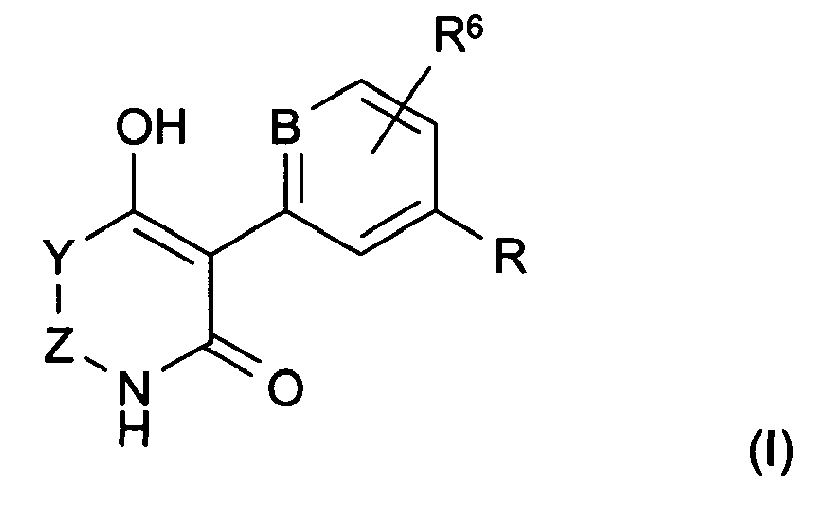
B, R, R6, Y and Z are as defined in the description,
and their pharmaceutically acceptable salts,
for the preparation of a pharmaceutical composition useful for the treatment of diabetes, metabolic syndrome, related disorders and obesity.
Description
- This invention relates to thienopyridone derivatives that are activators of AMP-activated protein kinase (AMPK). The invention also relates to the preparation and use of these thienopyridones in the treatment of disorders such as diabetes, metabolic syndrome and obesity.
- AMPK is well established as a sensor and regulator of cellular energy homeostasis (Hardie, D. G. and Hawley, S. A., "AMP- activated protein kinase: the energy charge hypothesis revisited", Bioassays, 23, 1112, (2001), Kemp, B. E. et al., "AMP-activated protein kinase, super metabolic regulator", Biochem. Soc. Transactions, 31, 162 (2003)). Allosteric activation of this kinase due to rising AMP levels occurs in states of cellular energy depletion. The resulting serine/threonine phosphorylation of target enzymes leads to an adaptation of cellular metabolism to the low energy state. The net effect of AMPK activation induced changes is inhibition of ATP consuming processes and activation of ATP generating pathways, and therefore regeneration of ATP stores. Examples of AMPK substrates include acetyl-CoA-carboxylase (ACC) and HMG-CoA-reductase (Carling D. et al., "A common bicyclic protein kinase cascade inactivates the regulatory enzymes of fatty acid and cholesterol biosynthesis", FEBS Letters, 223, 217 (1987)). Phosphorylation and therefore inhibition of ACC leads to a decrease in fatty acid synthesis (ATP-consuming) and at the same time to an increase in fatty acid oxidation (ATP-generating). Phosphorylation and resulting inhibition of HMG-CoA reductase leads to a decrease in cholesterol synthesis. Other substrates of AMPK include hormone sensitive lipase (Garton, A. J. et al., "Phosphorylation of bovine hormone-sensitive lipase by the AMP-activated protein kinase. A possible antilipolytic mechanism", Eur. J. Biochem., 179, 249, (1989)), glycerol-3- phosphate acyltransferase (Muoio D. M. et al., "AMP-activated kinase reciprocally regulates triacylglycerol synthesis and fatty acid oxidation in liver and muscle: evidence that sn-glycerol-3-phosphate acyltransferase is a novel target", Biochem. J., 338, 783, (1999)), malonyl-CoA decarboxylase (Saha A. K. et al., "Activation of malonyl-CoA decarboxylase in rat skeletal muscle by contraction and the AMP-activated protein kinase activator 5-aminoimidazole-4-carboxamide-1-β-D-ribofuranoside", J. Biol. Chem., 275, 24279, (2000)), and hepatocyte nuclear factor-4α (Leclerc I. et al., "Hepatocyte nuclear factor-4α involved in type-1 maturityonset diabetes of the young is a novel target of AMP-activated protein kinase", Diabetes, 50, 1515, (2001)), some of which are potential drug targets for components of the metabolic syndrome. Additional processes that are believed to be regulated through AMPK activation, but for which the exact AMPK substrates have not been identified, include stimulation of glucose transport in skeletal muscle and expressional regulation of key genes in fatty acid and glucose metabolism in liver (Hardie D. G. and Hawley S. A., "AMP-activated protein kinase: the energy charge hypothesis revisited", Bioassays, 23, 1112, (2001), Kemp B. E. et al., "AMP-activated protein kinase, super metabolic regulator", Biochem. Soc. Transactions, 31, 162, (2003), Musi N. and Goodyear L. J., "Targeting the AMP-activated protein kinase for the treatment of type 2 diabetes", Current Drug Targets-Immune, Endocrine and Metabolic Disorders, 2, 119, (2002)). For example, decreased expression of glucose-6-phosphatase (Lochhead P. A. et al., "5-aminoimidazole-4-carboxamide riboside mimics the effects of insulin on the expression of the 2 key gluconeogenic genes PEPCK and glucose-6-phosphatase", Diabetes, 49, 896, (2000)), a key enzyme in hepatic glucose production, and SREBP-1c (Zhou G. et al., "Role of AMP-activated protein kinase in mechanism of metformin action", The J. of Clin. Invest., 108, 1167, (2001)), a key lipogenic transcription factor, has been found following AMPK stimulation.
- More recently an involvement of AMPK in the regulation of not only cellular but also whole body energy metabolism has become apparent. It was shown that the adipocyte-derived hormone leptin leads to a stimulation of AMPK and therefore to an increase in fatty acid oxidation in skeletal muscle (Minokoshi Y. et al., "Leptin stimulates fatty-acid oxidation by activating AMP-activated protein kinase", Nature, 415, 339, (2002)). Adiponectin, another adipocyte derived hormone leading to improved carbohydrate and lipid metabolism, has been demonstrated to stimulate AMPK in liver and skeletal muscle (Yamauchi T. et al., "Adiponectin stimulates glucose utilization and fatty acid oxidation by activating AMP-activated protein kinase", Nature Medicine, 8, 1288, (2002), Tomas E. et al., "Enhanced muscle fat oxidation and glucose transport by ACRP30 globular domain: Acetyl-CoA carboxylase inhibition and AMP- activated protein kinase activation", PNAS, 99, 16309,(2002)). The activation of AMPK in these circumstances seems to be independent of increasing cellular AMP levels but rather due to phosphorylation by one or more yet to be identified upstream kinases.
- Based on the knowledge of the above-mentioned consequences of AMPK activation, profound beneficial effects would be expected from in vivo activation of AMPK. In liver, decreased expression of gluconeogenic enzymes would reduce hepatic glucose output and improve overall glucose homeostasis, and both direct inhibition and/or reduced expression of key enzymes in lipid metabolism would lead to decreased fatty acid and cholesterol synthesis and increased fatty acid oxidation. Stimulation of AMPK in skeletal muscle would increase glucose uptake and fatty acid oxidation with resulting improvement of glucose homeostasis and, due to a reduction in intra-myocyte triglyceride accumulation, to improved insulin action. Finally, the increase in energy expenditure should lead to a decrease in body weight. The combination of these effects in the metabolic syndrome would be expected to significantly reduce the risk for acquiring cardiovascular diseases.
- Several studies in rodents support this hypothesis (Bergeron R. et al., "Effect of 5-aminoimidazole-4-carboxamide-1(beta)-D-ribofuranoside infusion on in vivo glucose metabolism in lean and obese Zucker rats", Diabetes, 50, 1076, (2001), Song S. M. et al., "5-Aminoimidazole- 4- dicarboxamide ribonucleoside treatment improves glucose homeostasis in insulin-resistant diabeted (ob/ob) mice", Diabetologia, 45, 56, (2002), Halseth A. E. et al., "Acute and chronic treatment of ob/ob and db/db mice with AICAR decreases blood glucose concentrations", Biochem. and Biophys. Res. Comm., 294, 798, (2002), Buhl E. S. et al., "Long-term AICAR administration reduces metabolic disturbances and lowers blood pressure in rats displaying feature of the insulin resistance syndrome", Diabetes, 51, 2199, (2002)). Until recently most in vivo studies have relied on the AMPK activator AICAR, a cell permeable precursor of ZMP. ZMP acts as an intracellular AMP mimic, and, when accumulated to high enough levels, is able to stimulate AMPK activity (Corton J. M. et al., "5-Aminoimidazole-4- carboxamide ribonucleoside, a specific method for activating AMP- activated protein kinase in intact cells?", Eur. J. Biochem., 229, 558, (1995)). However, ZMP also acts as an AMP mimic in the regulation of other enzymes, and is therefore not a specific AMPK activator (Musi N. and Goodyear L. J., "Targeting the AMP-activated protein kinase for the treatment of type 2 diabetes", Current Drug Targets-Immune, Endocrine and Metabolic Disorders, 2, 119 (2002)). Several in vivo studies have demonstrated beneficial effects of both acute and chronic AICAR administration in rodent models of obesity and type 2 diabetes (Bergeron R. et al., "Effect of 5-aminoimidazole-4-carboxamide-1β-D-ribofuranoside infusion on in vivo glucose metabolism in lean and obese Zucker rats", Diabetes, 50,1076, (2001), Song S. M. et al., "5-Aminoimidazole- 4-darboxamide ribonucleoside treatment improves glucose homeostasis in insulin-resistant diabeted (ob/ob) mice", Diabetologia, 45, 56, (2002), Halseth A. E. et al., "Acute and chronic treatment of ob/ob and db/db mice with AICAR decreases blood glucose concentrations", Biochem. and Biophys. Res. Comm., 294, 798, (2002), Buhl E. S. et al., "Long-term AICAR administration reduces metabolic disturbances and lowers blood pressure in rats displaying feature of the insulin resistance syndrome", Diabetes, 51, 2199, (2002)). For example, 7 week AICAR administration in the obese Zucker (fa/fa) rat leads to a reduction in plasma triglycerides and free fatty acids, an increase in HDL cholesterol, and a normalization of glucose metabolism as assessed by an oral glucose tolerance test (Minokoshi Y. et al., "Leptin stimulates fatty-acid oxidation by activating AMP-activated protein kinase", Nature, 415, 339, (2002)). In both ob/ob and db/db mice, 8 day AICAR administration reduces blood glucose by 35% (Halseth A. E. et al., "Acute and chronic treatment of ob/ob and db/db mice with AICAR decreases blood glucose concentrations", Biochem. and Biophys. Res. Comm., 294, 798, (2002)). In addition to AICAR, more recently it was found that the diabetes drug metformin can activate AMPK in vivo at high concentrations (Zhou G. et al., "Role of AMP-activated protein kinase in mechanism of metformin action", The J. of Clin. Invest., 108, 1167, (2001), Musi N. et al., "Metformin increases AMP-activated protein kinase activity in skeletal muscle of subjects with type 2 diabetes", Diabetes, 51, 2074, (2002)), although it has to be determined to what extent its antidiabetic action relies on this activation. As with leptin and adiponectin, the stimulatory effect of metformin is indirect via activation of an upstream kinase (Zhou G. et al., "Role of AMP-activated protein kinase in mechanism of metformin action", The J. of Clin. Invest., 108, 1167, (2001)). In addition to pharmacologic intervention, several transgenic mouse models have been developed in the last years, and initial results are becoming available. Expression of dominant negative AMPK in skeletal muscle of transgenic mice has demonstrated that the AICAR effect on stimulation of glucose transport is dependent on AMPK activation (Mu J. et al., "A role for AMP-activated protein kinase in contraction and hypoxia-regulated glucose transport in skeletal muscle", Molecular Cell, 7, 1085, (2001)), and therefore likely not caused by non- specific ZMP effects. Similar studies in other tissues will help to further define the consequences of AMPK activation. It is expected that pharmacologic activation of AMPK will have benefits in the metabolic syndrome with improved glucose and lipid metabolism and a reduction in body weight. To qualify a patient as having metabolic syndrome, three out of the five following criteria must be met: elevated blood pressure above 130/85 mmHg, fasting blood glucose above 110 mg/dl, abdominal obesity above 40" (men) or 35" (women) waist circumference, and blood lipid changes as defined by an increase in triglycerides above 150 mg/dl or decreased HDL cholesterol below 40 mg/dl (men) or 50 mg/dl (women). Therefore, the combined effects that may be achieved through activation of AMPK in a patient who qualifies as having metabolic syndrome would raise the interest of this target.
- Stimulation of AMPK has been shown to stimulate expression of uncoupling protein 3 (UCP3) in skeletal muscle (Zhou M. et al., "UCP-3 expression in skeletal muscle: effects of exercise, hypoxia, and AMP-activated protein kinase", Am. J. Physiol. Endocrinol. Metab., 279, E622, (2000)) and might therefore be a way to prevent damage from reactive oxygen species. Endothelial NO synthase (eNOS) has been shown to be activated through AMPK mediated phosphorylation (Chen Z.-P., et al., "AMP-activated protein kinase phosphorylation of endothelial NO synthase", FEBS Letters, 443, 285, (1999)), therefore AMPK activation can be used to improve local circulatory systems.
- In addition to AICAR and derivatives, other AMPK activators have been described (
WO 2005/928464 ,US 2005/038068 ,WO 2004/043957 ). -
US 5602144 describes and claims new thienopyridone derivatives as compounds useful for the treatment of neurodegenerative diseases. It has now been discovered that these compounds and some new analogues are activator of AMP-activated protein kinase (AMPK) and therefore useful for the treatment of disorders such as diabetes, metabolic syndrome and obesity. The invention relates to the use of the compounds described inUS 5602144 , incorporated herein, and of certain new thienopyridone derivatives, said known and new compounds being of formula (I):
B is CH or N,

together form a group -(CH2)n-, with n = 1 to 4,
R3 and R4, independently from one another, represent H, linear or branched (C1-C4)alkyl, OH, linear or branched (C1-C4)alkoxy, halogen, CF3, NO2, NH2, NHR' where R' is linear or branched (C1-C6)acyl, NHR", N(R")2, where R" is linear or branched (C1-C4)alkyl, optionally substituted anilino, optionally substituted phenoxy, optionally substituted benzyl, or optionally substituted benzoyl,
R5 is H, linear or branched (C1-C4)alkyl, or halogen,
R6 is H or halogen, linear or branched (C1-C4)alkyl, (C1-C4)cycloalkyl, (C1-C4)cycloalkyl(C1-C4)alkyl,
X is -CH2-, -CO-, -O-, -S-, -NH-, or -NR"'- , where R''' is linear or branched (C1-C4)alkyl,
and their pharmaceutically acceptable salts,
for the preparation of a pharmaceutical composition useful for the treatment of diabetes, metabolic syndrome, related disorders and obesity. - Since these compounds may have asymmetric centers, the present invention is directed not only to racemic mixtures of these compounds, but also to individual stereoisomers and diastereoisomers, including their mixtures in all proportions. The present invention also includes pharmaceutically acceptable and/or useful salts of the compounds of formula (I), including acid addition salts. The present invention also includes oxides, and solvates, as well as eventual tautomeric forms. The present invention also encompasses prodrugs of compounds of formula (I).
- The acids used for the preparation of the pharmaceutically acceptable salts are inorganic or organic acids. The resulting salts are for example hydrochlorides, hydrobromides, sulfates, hydrogenosulfates, dihydrogenophosphates, citrates, maleates, fumarates, trifluoroacetates, 2-naphtalenesulfonates, para-toluenesulfonates.
- The invention also relates to pharmaceutically acceptable salts with organic or inorganic bases. The resulting salts are for example sodium salts, potassium salts, lithium salts.
- The invention also relates to the salts used for the chiral resolution of the racemates.
- As examples the following chiral acids can be used: (+)-D-di-O-benzoyltartaric acid, (-)-L-di-O-benzoyltartaric acid, (-)-L-di-O,O'-p-toluyl-L-tartaric acid, (+)-D-di-O,O'-p-toluyl- L-tartaric acid, (R)-(+)-malic acid, (S)-(-)-malic acid, (+)-camphoric acid, (-)-camphoric acid, R-(-)-1,1'-binaphtalen-2,2'-diyl hydrogenophosphonic, (+)-camphanic acid, (-)-camphanic acid, (S)-(+)-2-phenylpropionic acid, (R)-(+)-2-phenylpropionic acid, D-(-)-mandelic acid, L-(+)-mandelic acid, D-tartaric acid, L-tartaric acid, or a mixture of them.
- Also included in the scope of the present invention are prodrugs of the compounds of formula (I).
The term "prodrug" as used herein refers to any compound that when administered to a biological system generates the "drug" substance (a biologically active compound) as a result of spontaneous chemical reaction(s), enzyme catalyzed chemical reaction(s), and/or metabolic chemical reaction(s). Standard prodrugs are formed using groups attached to functionality, e.g. HO-, HS-, HOOC- , R2N-, associated with the AMPK activator, that cleave in vivo. Standard prodrugs include but are not limited to carboxylate esters where the group is alkyl, aryl, aralkyl, acyloxyalkyl, alkoxycarbonyloxyalkyl as well as esters of hydroxyl, thiol and amines where the group attached is an acyl group, an alkoxycarbonyl, aminocarbonyl, phosphate or sulfate. Prodrugs must undergo some form of a chemical transformation to produce the compound that is biologically active or is a precursor of the biologically active compound. In some cases, the prodrug is biologically active, usually less than the drug itself, and serves to imprive efficacy or safety through improved oral bioavailability, pharmacodynamic half-life, etc. - In accordance with the present invention and as used herein, the following terms are defined with the following meanings, unless explicitly stated otherwise.
- The term "linear or branched (C1-C4)alkyl" refers to saturated aliphatic groups including straight chain or branched chain groups. Alkyl groups may be optionally substituted. Suitable groups include methyl, ethyl, propyl, butyl, isopropyl, isobutyl, ter-butyl, sec-butyl.
- The term "linear or branched (C1-C4)cycloalkyl" refers to cyclopropyl or cyclobutyl.
- The term "linear or branched (C1-C6)acyl" refers to saturated aliphatic alkyl-C(=O)- groups including straight chain or branched chain groups. Alkyl groups may be optionally substituted. Suitable (C1-C6)acyl groups include acetyl, propanoyl, butanoyl, pentanoyl, hexanoyl, isobutyryl.
- The term "halogen" refers to Cl, Br, I, F.
- The term "optionally substituted" or "substituted" includes groups substituted by one to four substituents, independently selected from lower alkyl, lower aryl, lower aralkyl, lower alicyclic, hydroxy, lower alkoxy, lower aryloxy, perhaloalkoxy, aralkoxy, heteroaryl, heteroaryloxy, heteroarylalkyl, heteroaralkoxy, azido, amino, guanidino, amidino. halo, lower alkylthio, oxo, acylalkyl, carboxy esters, carboxyl, -carboxamido, nitro, acyloxy, aminoalkyl, alkylaminoaryl, alkylaryl, alkylaminoalkyl, alkoxyaryl, arylamino, aralkylamino, phosphono, sulfonyl, -carboxamidoalkylaryl, -carboxamidoaryl, hydroxyalkyl, haloalkyl, alkylaminoalkylcarboxy-, aminocarboxamidoalkyl-, cyano, lower alkoxyalkyl, lower perhaloalkyl, perhaloalkoxy, and arylalkyloxyalkyl.
- The underlying object of the invention was to discover novel compounds having valuable properties, in particular those which can be used to prepare medicaments.
- According to one embodiment of the invention, it has been found that the compounds of the formula (I), and their physiologically harmless salts, possess valuable pharmacological properties. They are able to activate AMPK and are therefore suitable, for treating disorders regulated by the activation of AMPK.
- The compounds are particularly suitable for the treatment or prophylaxis of diabetes, metabolic syndrome, obesity.
- The compounds can therefore be used as medicinal active compounds in human and veterinary medicine. In addition, they are suitable as intermediates for preparing other compounds possessing valuable properties.
- As already mentioned, compounds of formula (I) encompass compounds known from
US 5,602,144 , as well as new compounds. - The present invention therefore also pertains to such new compounds of formulae (IA), (IB) and (IC), as defined below, all compounds disclosed in
US 5,602,144 , together with compounds of formulae (IA), (IB) and (IC), forming the entire set of compounds of formula (I) as defined above. - Therefore, the present invention further relates to compounds of formula (IA):
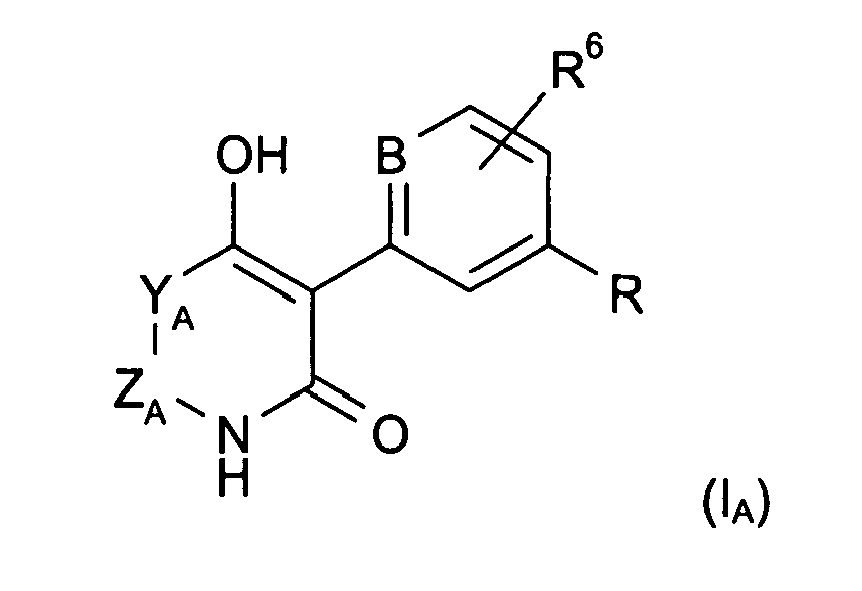

together form a group -(CH2)n-, with n = 1 to 4,
B, R, R3, R4, R5, R6 and X being as defined above in formula (I),
and their pharmaceutically acceptable salts. - The present invention also encompasses new compounds of formula (IB):

RB is H or
B, -Y-Z-, R1, R2, R5, R6 and X being as defined above in formula (I),
and their pharmaceutically acceptable salts. - As new compounds, the present invention also refers to compounds of formula (IC):

R6 is linear or branched (C1-C4)alkyl, (C1-C4)cycloalkyl, or (C1-C4)cycloalkyl(C1-C4)alkyl,
B, -Y-Z-, R, R1, R2, R3, R4, R5 and X being as defined above in formula (I),
and their pharmaceutically acceptable salts. - By "pharmaceutically acceptable salts" is meant the various salts obtained by reaction of compounds (IA) to (IC) with acids or bases as previously disclosed for compounds of formula (I). These salts also include salts useful for the chiral resolution of the racemates.
- The present invention also encompasses the isomers of compounds (IA) to (IC) as defined above. The term "isomer" is as described above for compounds of formula (I) and comprises not only racemic mixtures of these compounds, but also individual stereoisomers and/or diastereoisomers, including their mixtures in all proportions.
- Also encompassed are the oxides and solvates, as well as eventual tautomeric forms of compounds (IA) to (IC), and their corresponding prodrugs.
- The invention relates to the use of compounds of formula (I) and their salts as defined above, and also to a process for preparing these compounds, and their salts, said process comprising the steps wherein:
- 1) a compound of formula (II)

B, R, R6 and -Y-Z- have the above-mentioned meanings, and W is a (C1-C4)alkyl,
is treated with a cyclising agent, and - 2) where appropriate, a radical R in a compound of formula (I) is transformed into another radical R, thereby forming another compound of formula (I), and/or a compound of formula (I) is converted into one of its pharmaceutically acceptable salts by being treated with an acid or base.
- Unless expressly indicated otherwise, the radicals and/or parameters B, R, R1 to R6, X, -Y-Z-, and halogen have, both above and below, the meanings indicated in association with the above defined formula (I).
- The radical X is preferably -CH2-, -CO-, -O-, -NH-, and, furthermore, -N R"'- or -S-.
- B is preferably CH, but also N.
- The group -Y-Z- is preferably 4-R1-5-R2-thiophen-2,3-diyl, and, furthermore, preferably 2-R1-5-R2-thiophen-3,4-diyl or 3-R1-2-R2-thiophen-4,5-diyl.
- In one preferred embodiment of the present invention R is preferably H, and, furthermore, preferably unsubstituted or monosubstituted phenoxy, specifically and preferably o-, m- or p-methylphenoxy, o-, m- or p-methoxyphenoxy, o-, m- or p-fluorophenoxy, o-, m- or p-chlorophenoxy, and, in addition, preferably o-, m- or p-trifluoromethylphenoxy.
- In an other preferred embodiment of the invention, R is preferably unsubstituted or monosubstituted benzyl, specifically and preferably o-, m- or p-methylbenzyl, o-, m- or p-methoxybenzyl, o-, m- or p-fluorobenzyl, o-, m- or p-chlorobenzyl, and, in addition, preferably o-, m- or p-trifluoromethylbenzyl. Furthermore, R is preferably unsubstituted or monosubstituted benzoyl, specifically and preferably o-, m- or p-methylbenzoyl, o-, m- or p-methoxybenzoyl, o-, m- or p-fluorobenzoyl, o-, m- or p-chlorobenzoyl, and, in addition, preferably o-, m- or p-triflouromethylbenzoyl. Furthermore, R is preferably unsubstituted or monosubstituted anilino, specifically and preferably o-, m- or p-methylanilino, o-, m- or p-methoxyanilino, o-, m- or p-fluoroanilino, o-, m- or p-chloroanilino, and, in addition, preferably o-, m- or p-trifluoromethylanilino.
- In addition, R is preferably o-, m- or p-nitrophenoxy, o-, m- or p-N,N-dimethylaminophenoxy, o-, m- or p-acetamidophenoxy, o-, m- or p-nitrobenzyl, o-, m- or p-N,N-dimethylaminobenzyl, o-, m- or p-acetamidobenzyl, o-, m- or p-nitrobenzoyl, o-, m- or p-N,N-dimethylaminobenzoyl, o-, m- or p-acetamidobenzoyl, o-, m- or p-nitroanilino, o-, m- or p-N,N-dimethylaminoanilino or o-, m- or p-acetamidoanilino.
- R1, R2 and R5 are preferably H, methyl, ethyl, chloro, and, in addition, propyl or bromo, while R3 and R4 are in each case preferably H, and, in addition, methyl, methoxy, fluoro, chloro or trifluoromethyl.
- R6 is preferably H or F, and, in addition Br.
- Some preferred groups of compounds are expressed by the following partial formulae (la) to (le), which correspond to formula (I) in which the radicals which are not designated in more detail have the meanings indicated in association with formula (I), but in which:
- in (Ia), B is CH;
- in (Ib), B is N;
- in (Ic), -Y-Z- is

- An other preferred embodiment of the present invention relates to compounds of formula (I) (formula (If)) where:
- B is CH,
- R and R6 are each H,
- -Y-Z- is

- Preferred compounds of formula (If) are:
- 4-Hydroxy-2,3-dimethyl-5-phenyl-7H-thieno[2,3-b]pyridin-6-one;
- 2-Ethyl-4-hydroxy-5-phenyl-7H-thieno[2,3-b]pyridin-6-one;
- 2-Bromo-4-hydroxy-3-methyl-5-phenyl-7H-thieno[2,3-b]pyridin-6-one;
- 2-Bromo-4-hydroxy-5-phenyl-7H-thieno[2,3-b]pyridin-6-one;
- 2-Chloro-4-hydroxy-3-isopropyl-5-phenyl-7H-thieno[2,3-b]pyridin-6-one;
- 3-sec-Butyl-2-chloro-4-hydroxy-5-phenyl-7H-thieno[2,3-b]pyridin-6-one;
- 4-Hydroxy-3-isopropyl-5-phenyl-7H-thieno[2,3-b]pyridin-6-one;
- 3-sec-Butyl-4-hydroxy-5-phenyl-7H-thieno[2,3-b]pyridin-6-one; and
- 2-chloro-3-cyclopropyl-4-hydroxy-5-(3-phenoxy-phenyl)-7H-thieno[2,3-b]pyridine-6-one.
- An other preferred embodiment of the present invention relates to new compounds of formula (I) (formula (Ig)) wherein:
- B is CH,
- R and R6 are each H,
- -Y-Z- is

- Preferred compounds of formula (Ig) are:
- 4-Hydroxy-3-phenyl-5,6,7,8-tetrahydro-1H-benzo[4,5]thieno[2,3-b]pyridin-2-one, and
- 3-Cyclopropyl-4-hydroxy-5-phenyl-7H-thieno[2,3-b]pyridin-6-one.
- Compounds of formula(I), as well as the starting compounds for their preparation, are otherwise prepared by methods which are known per se, as described in the literature (for example in the standard works such as Houben-Weyl, "Methoden der organischen Chemie" [Methods of organic chemistry], Georg-Thieme-Verlag, Stuttgart; in particular, however, in Journal of Medicinal Chemistry, (1994), 37, 1402-1405), and specifically under reaction conditions which are known, and are suitable, for the said reactions. In this context, use can also be made of variants which are known per se but which are not mentioned here in more detail.
- If desired, the starting compounds can also be formed in situ, so that they are not isolated from the reaction mixture but are instead immediately subjected to further reaction to form the compounds of the formula (I).
- The compounds of formula (I) are, for example, obtained by treating a compound of formula (II) with a cyclising agent, preferably a base. Examples of bases which may be used are potassium or sodium alcoholate, such as potassium or sodium methoxide, ethoxide or tert-butoxide, in an inert solvent, preferably the underlying alcohol, NaH in dimethylformamide (DMF) or KN[Si(CH3)3]2 in an inert solvent.
- The cyclisation reaction is expediently carried out at temperatures of between about -100°C and about +160°C; it is preferably carried out at a temperature of between -85°C and +50°C.
- Suitable inert solvents are, in particular, alcohols, such as methanol, ethanol, isopropanol, n-butanol or tert-butanol; ethers, such as diethyl ether, diisopropyl ether, tetrahydrofuran (THF) or dioxane; glycol ethers, such as ethylene glycol monomethyl ether or ethylene glycol monoethyl ether (methyl glycol or ethyl glycol) or ethylene glycol dimethyl ether (diglyme); ketones, such as acetone or butanone; nitriles, such as acetonitrile; nitro compounds, such as nitromethane or nitrobenzene; carboxylic acids, such as formic acid or acetic acid; esters, such as ethyl acetate; amides, such as DMF, dimethylacetamide or hexamethyl phosphoric triamide (HMPT); sulphoxides, such as dimethyl sulphoxide; carbon disulphide; chlorinated hydrocarbons, such as methylene chloride, chloroform, trichloroethylene, 1,2-dichloroethane or carbon tetrachloride; and hydrocarbons, such as hexane, petroleum ether, benzene, toluene or xylene. Mixtures of these solvents with each other are also suitable.
- In the compounds of the formula (II), W is preferably methyl, and, in addition, ethyl.
- The starting compounds of formula (II) may be prepared by methods which are known per se. Thus, for example, methyl 2-amino-4-methylthiophene-3-carboxylate is reacted with, for example, phenylacetyl chloride in an inert solvent, resulting in the formation of methyl 2-phenylacetamido-4-methylthiophene-3-carboxylate. This is expediently carried out at temperatures of between about 0°C and about 200°C; the reaction is preferably carried out at between 60°C and 90°C.
- It is furthermore possible to convert a compound of formula (I) into another compound of the formula (I) by converting the radical R into another radical, for example by reducing nitro groups (for example by hydrogenating on Raney nickel or Pd/charcoal in an inert solvent such as methanol or ethanol) to form amino groups, and/or functionally modifying free amino and/or hydroxyl groups, and/or liberating functionally modified amino and/or hydroxyl groups by solvolysis or hydrogenolysis.
- Thus, free amino groups can, for example, be acylated, in a customary manner, with an acid chloride or acid anhydride, or alkylated with an unsubstituted or substituted alkyl halide, expediently in an inert solvent such as dichloromethane or THF, and/or in the presence of a base such as triethylamine or pyridine, at temperatures of between -60°C and +30°C. Free hydroxyl groups can be alkylated in an analogous manner.
- If desired, a functionally modified amino and/or hydroxyl group in a compound of the formula (I) can be liberated by solvolysis or hydrogenolysis using customary methods. Thus, a compound of the formula (I), in which R represents -NHCOA or ―OA, can, for example, be converted into the corresponding compound of formula (I) in which R represents -NH2 or -OH.
- Here-above, A represents a linear or branched lower alkyl, for example methyl or ethyl.
- Acylated amines of the formula (I) in which the phenyl radical or pyridyl radical is substituted once by -NHCOA can be cleaved, resulting in the formation of the corresponding amino derivatives. For example, the acylamino compounds can be cleaved by treating them with methanolic potassium hydroxide solution at a temperature comprised between about 20°C to 140°C.
- Ethers of the formula (I) in which the phenyl radical or pyridyl radical is substituted once by -O-A can be cleaved, resulting in the formation of the corresponding hydroxyl derivatives. For example, the ethers can be cleaved by treating them with dimethyl sulphide/boron tribromide complex, for example in toluene, ethers such as THF, or dimethyl sulphoxide, or by fusing them with pyridine hydrohalides or aniline hydrohalides, preferably pyridine hydrochloride, at about 150°C-250°C, or by treating them with diisobutylaluminium hydride in toluene at about 0°C-110°C.
- A base of the formula (I) can be converted with an acid into the affiliated acid addition salt, for example by reacting equivalent quantities of the base and of the acid in an inert solvent such as ethanol, and then evaporating. Acids which yield physiologically harmless salts are particularly suitable for this reaction. Thus, inorganic acids which can be used are, for example, chosen from among sulphuric acid, nitric acid, hydrohalic acids, such as hydrochloric acid or hydrobromic acid, phosphoric acids, such as orthophosphoric acid, and sulphamic acid, and, in addition, organic acids, in particular aliphatic, alicyclic, araliphatic, aromatic or heterocyclic monobasic or polybasic carboxylic, sulphonic or sulphuric acids, for example formic acid, acetic acid, propionic acid, pivalic acid, diethylacetic acid, malonic acid, succinic acid, pimelic acid, fumaric acid, maleic acid, lactic acid, tartaric acid, malic acid, citric acid, gluconic acid, ascorbic acid, nicotinic acid, isonicotinic acid, methanesulphonic acid, ethanesulphonic acid, ethanedisulphonic acid, 2-hydroxyethanesulphonic acid, benzenesulphonic acid, p-toluenesulphonic acid, naphthalenemonosulphonic acid, naphthalenedisulphonic acid and laurylsulphuric acid. Salts with physiologically harmful acids, for example picrates, can be used to isolate and/or purify the compounds of formula (I).
- On the other hand, compounds of the formula (I) can be converted with bases (for example sodium hydroxide or potassium hydroxide or sodium carbonate or potassium carbonate) into the corresponding metal salts, in particular alkali metal salts or alkaline earth metal salts, or into the corresponding ammonium salts.
- The invention also relates to the use of the compounds of the formula (I), and their physiologically harmless salts, for producing pharmaceutical preparations, in particular by a non-chemical route. In this context, they can be brought into a suitable dosage form together with at least one solid, liquid and/or semi-liquid carrier and/or auxiliary substance and, where appropriate, in combination with one or more additional active compounds.
- The invention furthermore relates to pharmaceutical preparations which contain at least one compound of the formula (I) and/or one of its physiologically harmless salts.
- These preparations can be used as medicaments in human or veterinary medicine. Suitable carrier substances are organic or inorganic substances which are suitable for enteral (for example oral), parenteral or topical administration and which do not react with the novel compounds, for example water, vegetable oils, benzyl alcohols, alkylene glycols, polyethylene glycols, glycerol triacetate, gelatin, carbohydrates such as lactose or starch, magnesium stearate, talc or vaseline. Tablets, pills, coated tablets, capsules, powders, granules, syrups, juices or drops serve, in particular, for oral use, suppositories serve for rectal use, solutions, preferably oily or aqueous solutions, and, in addition, suspensions, emulsions or implants, serve for parenteral use, while ointments, creams or powders serve for topical use.
- The compounds of the present invention can also be lyophilized, and the resulting lyophilisates can be used, for example for preparing injection preparations. The listed preparations can be sterilized and/or contain auxiliary substances such as lubricants, preservatives, stabilizers and/or wetting agents, emulsifiers, salts for influencing the osmotic pressure, buffer substances, dyes, flavourings and/or aromatizing agents. If desired, they can also contain one or more additional active compounds, for example, one or more vitamins.
- The compounds of the formula (I), and their physiologically harmless salts, can be used in the control of diseases, in particular conditions related to glucose homeostasia and energy expenditure. The compounds are particularly suitable for treating diabetes, metabolic syndrome, related disorders and obesity.
- In this context, the substances (compounds of the present invention) are, as a rule, preferably administered in doses of between about 1 mg and 500 mg, in particular of between 5 mg and 100 mg, per dosage unit. The daily dose is preferably between about 0.02 mg/kg and 10 mg/kg of body weight. However, the specific dose for each particular patient depends on a wide variety of factors, for example on the activity of the specific compound employed, on the age, body weight, general state of health and sex, on the nutrition, on the time and route of administration, on the speed of excretion, on the drug combination and on the severity of the particular disease to which the therapy applies. Oral administration is preferred.
- Both above and below, all temperatures are given in °C. In the following examples, "customary working-up" denotes: if necessary, water is added, if necessary, depending on the constitution of the end product, the pH of the mixture is adjusted to pH values of between 2 and 10, and the mixture is then extracted with ethyl acetate or dichloromethane; the organic phase is then separated off, dried over sodium sulphate and evaporated, and the residue is purified by chromatography on silica gel and/or by crystallization.
- Rf values correspond to Rf values obtained from thin layer chromatography on silica gel.
- m.p. stands for "melting point".
- The invention is further illustrated by the following representatives and non-limiting examples:
- A solution of 0.6 g of methyl 5-chloro-4-methyl-2-(phenylacetamido)thiophene-3-carboxylate (m.p.: 105-107°; obtainable by chlorinating the corresponding chlorine-free compound with N-chlorosuccinimide) in 20 mL of THF is cooled down to -70°. 8.16 mL of a 0.5 molar solution of KN(Si(CH3)3)2 in toluene are then added dropwise. The reaction solution is slowly brought to room temperature and then evaporated. The residue is taken up in water, and this solution is extracted several times with diethyl ether. The aqueous phase is then acidified with 2 N HCl, and the precipitate is filtered off, washed with water and, after having been digested with diethyl ether, filtered off once again and dried. 2-Chloro-3-methyl-4-hydroxy-5-phenyl-6,7-dihydrothieno[2,3-b]pyridin-6-one is obtained.
- Rf(CH2Cl2/MeOH 10:1): 0.43.
- The following 2-R2-3-R1-4-hydroxy-5-phenyl-6,7-dihydrothieno[2,3-b] pyridin-6-ones:
Ex. R1 R2 Rf (CH2Cl2 /MeOH 10:1) 2 Me H 0.43 3 H Me 0.36 4 Me Me 0.49 5 H Et 0.44 6 H H 0.31 7 Me Br 0.38 8 H Br 0.34 Precursor of Ex. R1 R2 A M.p. 2 Me H Me 105.5-106.5° 3 H Me Me 110.5-111.5° 4 Me Me Et 84-86° 5 H Et Me 105-106° 6 H H Me 90-92° 7 Me Br Me 105-106.5° 8 H Br Me - - In the above table, A stands for the methyl or ethyl ester group.
- The following 2-chloro-3-methyl-4-hydroxy-5-(3-R-phenyl)-6,7-dihydrothieno[2,3-b]pyridin-6-ones:
Ex. R 9 phenoxy, Rf 0.44 10 o-methylphenxoy 11 m-methylphenoxy 12 p-methylphenoxy 13 o-methoxyphenoxy 14 m-methoxyphenoxy 15 p-methoxyphenoxy 16 o-fluorophenoxy 17 m-fluorophenoxy 18 p-fluorophenoxy 19 o-chlorophenoxy 20 m-chlorophenoxy 21 p-chlorophenoxy 22 o-trifluoromethylphenoxy 23 m-trifluoromethylphenoxy 24 p-trifluoromethylphenoxy 25 benzyl 26 o-methylbenzyl 27 m-methylbenzyl 28 p-methylbenzyl 29 o-methoxybenzyl 30 m-methoxybenzyl 31 p-methoxybenzyl 32 o-fluorobenzyl 33 m-fluorobenzyl 34 p-fluorobenzyl 35 o-chlorobenzyl 36 m-chlorobenzyl 37 p-chlorobenzyl 38 o-trifluoromethylbenzyl 39 m-trifluoromethylbenzyl 40 p-trifluoromethylbenzyl 41 benzoyl 42 o-methylbenzoyl 43 m-methylbenzoyl 44 p-methylbenzoyl 45 o-methoxybenzoyl 46 m-methoxybenzoyl 47 p-methoxybenzoyl 48 o-fluorobenzoyl 49 m-fluorobenzoyl 50 p-fluorobenzoyl 51 o-trifluoromethylbenzoyl 52 m-trifluoromethylbenzoyl 53 p-trifluoromethylbenzoyl 54 o-chlorobenzoyl 55 m-chlorobenzoyl 56 p-chlorobenzoyl 57 anilino 58 o-methylanilino 59 m-methylanilino 60 p-methylanilino 61 o-methoxyanilino 62 m-methoxyanilino 63 p-methoxyanilino 64 o-fluoroanilino 65 m-fluoroanilino 66 p-fluoroanilino 67 o-chloroanilino 68 m-chloroanilino 69 p-chloroanilino 70 o-trifluoromethylanilino 71 m-trifluoromethylanilino 72 p-trifluoromethylanilino Precursor of Ex. R 9 phenoxy, m.p. 113-115° 10 o-methylphenoxy 11 m-methylphenoxy 12 p-methylphenoxy 13 o-methoxyphenoxy 14 m-methoxyphenoxy 15 p-methoxyphenoxy 16 o-fluorophenoxy 17 m-fluorophenoxy 18 p-fluorophenoxy 19 o-chlorophenoxy 20 m-chlorophenoxy 21 p-chlorophenoxy 22 o-trifluoromethylphenoxy 23 m-trifluoromethylphenoxy 24 p-trifluoromethylphenoxy 25 benzyl 26 o-methylbenzyl 27 m-methylbenzyl 28 p-methylbenzyl 29 o-methoxybenzyl 30 m-methoxybenzyl 31 p-methoxybenzyl 32 o-fluorobenzyl 33 m-fluorobenzyl 34 p-fluorobenzyl 35 o-chlorobenzyl 36 m-chlorobenzyl 37 p-chlorobenzyl 38 o-trifluoromethylbenzyl 39 m-trifluoromethylbenzyl 40 p-trifluoromethylbenzyl 41 benzoyl 42 o-methylbenzoyl 43 m-methylbenzoyl 44 p-methylbenzoyl 45 o-methoxybenzoyl 46 m-methoxybenzoyl 47 p-methoxybenzoyl 48 o-fluorobenzoyl 49 m-fluorobenzoyl 50 p-fluorobenzoyl 51 o-trifluoromethylbenzoyl 52 m-trifluoromethylbenzyl 53 p-trifluoromethylbenzoyl 54 o-chlorobenzoyl 55 m-chlorobenzoyl 56 p-chlorobenzoyl 57 anilino 58 o-methylanilino 59 m-methylanilino 60 p-methylanilino 61 o-methoxyanilino 62 m-methoxyanilino 63 p-methoxyanilino 64 o-fluoroanilino 65 m-fluoroanilino 66 p-fluoroanilino 67 o-chloroanilino 68 m-chloroanilino 69 p-chloroanilino 70 o-trifluoromethylanilino 71 m-trifluoromethylanilino 72 p-trifluoromethylanilino. - The following 2-chloro-3-methyl-4-hydroxy-5-(4-R-2-pyridyl)-6,7-dihydrothieno[2,3-b]pyridin-6-ones:
Ex. R 73 phenoxy 74 o-methylphenoxy 75 m-methylphenoxy 76 p-methylphenoxy 77 o-methoxyphenoxy 78 m-methoxyphenoxy 79 p-methoxyphenoxy 80 o-fluorophenoxy 81 m-fluorophenoxy 82 p-fluorophenoxy 83 o-chlorophenoxy 84 m-chlorophenoxy 85 p-chlorophenoxy 86 o-trifluoromethylphenoxy 87 m-trifluoromethylphenoxy 88 p-trifluoromethylphenoxy 89 benzyl 90 o-methylbenzyl 91 m-methylbenzyl 92 p-methylbenzyl 93 o-methoxybenzyl 94 m-methoxybenzyl 95 p-methoxybenzyl 96 o-fluorobenzyl 97 m-fluorobenzyl 98 p-fluorobenzyl 99 o-chlorobenzyl 100 m-chlorobenzyl 101 p-chlorobenzyl 102 o-trifluoromethylbenzyl 103 m-trifluoromethylbenzyl 104 p-trifluoromethylbenzyl 105 benzoyl 106 o-methylbenzoyl 107 m-methylbenzoyl 108 p-methylbenzoyl 109 o-methoxybenzoyl 110 m-methoxybenzoyl 111 p-methoxybenzoyl 112 o-fluorobenzoyl 113 m-fluorobenzoyl 114 p-fluorobenzoyl 115 o-trifluoromethylbenzoyl 116 m-trifluoromethylbenzoyl 117 p-trifluoromethylbenzoyl 118 o-chlorobenzoyl 119 m-chlorobenzoyl 120 p-chlorobenzoyl 121 anilino 122 o-methylanilino 123 m-methylanilino 124 p-methylanilino 125 o-methoxyanilino 126 m-methoxyanilino 127 p-methoxyanilino 128 o-fluoroanilino 129 m-fluoroanilino 130 p-fluoroanilino 131 o-chloroanilino 132 m-chloroanilino 133 p-chloroanilino 134 o-trifluoromethylanilino 135 m-trifluoromethylanilino 136 p-trifluoromethylanilino Precursor of Ex. R 73 phenoxy 74 o-methylphenoxy 75 m-methylphenoxy 76 p-methylphenoxy 77 o-methoxyphenoxy 78 m-methoxyphenoxy 79 p-methoxyphenoxy 80 o-fluorophenoxy 81 m-fluorophenoxy 82 p-fluorophenoxy 83 o-chlorophenoxy 84 m-chlorophenoxy 85 p-chlorophenoxy 86 o-trifluoromethylphenoxy 87 m-trifluoromethylphenoxy 88 p-trifluoromethylphenoxy 89 benzyl 90 o-methylbenzyl 91 m-methylbenzyl 92 p-methylbenzyl 93 o-methoxybenzyl 94 m-methoxybenzyl 95 p-methoxybenzyl 96 o-fluorobenzyl 97 m-fluorobenzyl 98 p-fluorobenzyl 99 o-chlorobenzyl 100 m-chlorobenzyl 101 p-chlorobenzyl 102 o-trifluoromethylbenzyl 103 m-trifluoromethylbenzyl 104 p-trifluoromethylbenzyl 105 benzoyl 106 o-methylbenzoyl 107 m-methylbenzoyl 108 p-methylbenzoyl 109 o-methoxybenzoyl 110 m-methoxybenzoyl 111 p-methoxybenzoyl 112 o-fluorobenzoyl 113 m-fluorobenzoyl 114 p-fluorobenzoyl 115 o-trifluoromethylbenzoyl 116 m-trifluoromethylbenzoyl 117 p-trifluoromethylbenzoyl 118 o-chlorobenzoyl 119 m-chlorobenzoyl 120 p-chlorobenzoyl 121 anilino 122 o-methylanilino 123 m-methylanilino 124 p-methylanilino 125 o-methoxyanilino 126 m-methoxyanilino 127 p-methoxyanilino 128 o-fluoroanilino 129 m-fluoroanilino 130 p-fluoroanilino 131 o-chloroanilino 132 m-chloroanilino 133 p-chloroanilino 134 o-trifluoromethylanilino 135 m-trifluoromethylanilino 136 p-trifluoromethylanilino - The following 2-R2-3-R1-4-hydroxy-5-(2-pyridyl)-6,7-dihydrothieno[2,3-b]pyridin-6-ones:
Ex. R1 R2 137 Me H 138 H Me 139 Me Me 140 H Et 141 H H 142 Me Br 143 H Br Precursor of Ex. R1 R2 137 Me H 138 H Me 139 Me Me 140 H Et 141 H H 142 Me Br 143 H Br - The following 2-chloro-3-methyl-4-hydroxy-5-(3-R-phenyl)-6,7-dihydrothieno[2,3-b]pyridin-6-ones:
Ex. R 144 2-thienylcarbonyl 145 2-thienylmethyl 146 3-thienylcarbonyl 147 3-thienylmethyl Precursor of Ex. R 144 2-thienylcarbonyl 145 2-thienylmethyl 146 3-thienylcarbonyl 147 3-thienylmethyl - The following 2-chloro-3-methyl-4-hydroxy-5-(3-R-phenyl)-6,7-dihydrothieno[2,3-b]pyridin-6-ones:
Ex. R 148 o-nitrophenoxy 149 m-nitrophenoxy 150 p-nitrophenoxy 151 o-N,N-dimethylaminophenoxy 152 m-N,N-dimethylaminophenoxy 153 p-N,N-dimethylaminophenoxy 154 o-acetamidophenoxy 155 m-acetamidophenoxy 156 p-acetamidophenoxy 157 o-nitrobenzyl 158 m-nitrobenzyl 159 p-nitrobenzyl 160 o-N,N-dimethylaminobenzyl 161 m-N,N-dimethylaminobenzyl 162 p-N,N-dimethylaminobenzyl 163 o-acetamidobenzyl 164 m-acetamidobenzyl 165 p-acetamidobenzyl 166 o-nitrobenzoyl 167 m-nitrobenzoyl 168 p-nitrobenzoyl 169 o-N,N-dimethylaminobenzoyl 170 m-N,N-dimethylaminobenzoyl 171 p-N,N-dimethylaminobenzoyl 172 o-acetamidobenzoyl 173 m-acetamidobenzoyl 174 p-acetamidobenzoyl 175 o-nitroanilino 176 m-nitroanilino 177 p-nitroanilino 178 o-N,N-dimethylaminoanilino 179 m-N,N-dimethylaminoanilino 180 p-N,N-dimethylaminoanilino 181 o-acetamidoanilino 182 m-acetamidoanilino 183 p-acetamidoanilino Precursor of Ex. R 148 o-nitrophenoxy 149 m-nitrophenoxy 150 p-nitrophenoxy 151 o-N,N-dimethylaminophenoxy 152 m-N,N-dimethylaminophenoxy 153 p-N,N-dimethylaminophenoxy 154 o-acetamidophenoxy 155 m-acetamidophenoxy 156 p-acetamidophenoxy 157 o-nitrobenzyl 158 m-nitrobenzyl 159 p-nitrobenzyl 160 o-N,N-dimethylaminobenzyl 161 m-N,N-dimethylaminobenzyl 162 p-N,N-dimethylaminobenzyl 163 o-acetamidobenzyl 164 m-acetamidobenzyl 165 p-acetamidobenzyl 166 o-nitrobenzoyl 167 m-nitrobenzoyl 168 p-nitrobenzoyl 169 o-N,N-dimethylaminobenzoyl 170 m-N,N-dimethylaminobenzoyl 171 p-N,N-dimethylaminobenzoyl 172 o-acetamidobenzoyl 173 m-acetamidobenzoyl 174 p-acetamidobenzoyl 175 o-nitroanilino 176 m-nitroanilino 177 p-nitroanilino 178 o-N,N-dimethylaminoanilino 179 m-N,N-dimethylaminoanilino 180 p-N,N-dimethylaminoanilino 181 o-acetamidoanilino 182 m-acetamidoanilino 183 p-acetamidoanilino. - 7-Hydroxy-6-phenyl-4,5-dihydrothieno-[3,2-b]-pyridin-5-one (Rf 0.31, dichloromethane/methanol 10:1), is obtained, in analogy with Example 1, by cyclisation, from methyl 3-phenylacetamidothiophene-2-carboxylate.
- The compound 4-hydroxy-3-phenyl-1,2-dihydrothieno[3,4-b]pyridin-2-one (Rf 0.37, dichloromethane/ methanol 10:1), is obtained, in analogy with Example 1, from methyl 4-phenylacetamidothiophene-3-carboxylate.
- 20 mg of platinum oxide are added to a solution of 4.28 g of 2-chloro-3-methyl-4-hydroxy-5-(3-m-nitrophenoxyphenyl)-6,7-dihydrothieno[2,3-b]pyridin-6-one in 50 mL of 95% ethanol. Hydrogen is passed through the solution until three molar equivalents have been absorbed. The platinum is filtered off and the alcohol is distilled off. 2-Chloro-3-methyl-4-hydroxy-5-(3-m-aminophenoxyphenyl)-6,7-dihydrothieno[2,3-b]pyridin-6-one is obtained.
- A solution of 4.4 g of 2-chloro-3-methyl-4-hydroxy-5-(3-o-acetamidophenoxyphenyl)-6,7-dihydrothieno [2,3-b]pyridin-6-one in 80 mL of 10% methanolic KOH solution is boiled for 48 hours. 2-Chloro-3-methyl-4-hydroxy-5-(3-o-aminophenoxyphenyl)-6,7-dihydro-thieno[2,3-b]pyridin-6-one is obtained after the customary working-up.
- A mixture of 4.25 g of 2-chloro-3-methyl-4-hydroxy-5-(3-p-methoxybenzoylphenyl)-6,7-dihydrothieno[2,3-b]pyridin-6-one and 3.5 g of pyridine hydrochloride is stirred at 160° for 3 hours. 2-Chloro-3-methyl-4-hydroxy-5-(3-p-hydroxybenzoylphenyl)-6,7-dihy-drothieno[2,3-b]pyridin-6-one is obtained after the customary working-up.
- The following 2-R2-3-R1-4-hydroxy-5-(3-R-4-R6-phenyl)-6,7-dihydrothieno[2,3-b]pyridin-6-ones:
Ex. R R6 R1 R2 Rf(CH2Cl2 /MeOH 10:1) 189 H F H H 0.34 190 H H Ethyl H 0.38 191 H H Ethyl Br 0.35 192 H H Ethyl Cl 0.4 193 OC6H5 H Methyl H 0.39 194 OC6H5 H Ethyl Cl 0.59 195 H H CH(CH3)2 Cl 0.56 196 OC6H5 H CH(CH3)2 Cl 0.58 197 OC6H5 H cyclohexyl Cl 0.44 198 OC6H5 H cyclopropyl Cl 0.42 199 OC6H5 H tert.-butyl Cl 0.45 Precursor of Ex. R R6 R1 R2 m.p. 189 H F H H 102.5-104° 190 H H Ethyl H 116-117° 191 H H Ethyl Br 92-93° 192 H H Ethyl Cl 89.5-91.5 193 OC6H5 H Methyl H 83-85° 194 OC6H5 H Ethyl Cl 116-118° 195 H H CH(CH3)2 Cl 70-71° 196 OC6H5 H CH(CH3)2 Cl 61-63° 197 OC6H5 H cyclohexyl Cl 83.5-84.5° 198 OC6H5 H cyclopropyl Cl 95-97° 199 OC6H5 H tert.-butyl Cl 63.5-66° - The following 2-R2-3-R1-4-hydroxy-5-(3-R-4-R6-phenyl)-6,7-dihydrothieno[2,3-b]pyridin-6-ones:
Ex. R R6 R1 R2 200 H H Methyl Methyl 201 H H H Ethyl 202 H H Mehyl Br 203 H H H Br 204 H H Isopropyl Cl 205 OC6H5 H cyclopropyl Cl 206 H H isobutyl Cl 207 H H isopropyl H 208 H H cyclopropyl H 209 H H isobutyl H Precursor of Ex. R R6 R1 R2 200 H H Methyl Methyl 201 H H H Ethyl 202 H H Mehyl Br 203 H H H Br 204 H H Isopropyl Cl 205 OC6H5 H cyclopropyl Cl 206 H H isobutyl Cl 207 H H isopropyl H 208 H H cyclopropyl H 209 H H isobutyl H - 4-Hydroxy-3-phenyl-5,6,7,8-tetrahydro-1-benzothieno[2,3-b]pyridin-2(1H)-one is obtained, in analogy with example 1, by cyclisation, from ethyl 2-(phenylacetyl)amino-4,5,6,7-tetrahydro-1-benzothiophene-3-carboxylate
- Human recombinant AMPK enzyme was expressed in E. Coli and was reactivated in vitro by LKB1 prior to enzyme activity determination.
- AMPK enzyme activities were assayed by using 2 fluorescent based technologies (AlphaScreen / Delfia) and were carried out in microtiter plates (containing 25 mM Tris/HCl buffer, pH 7,5 with 100 µM ATP / 50 mM Hepes buffer, pH 7,4 with 125 µM ATP respectively) in the presence of a synthetic peptide substrate (AMARAASAAALARRR, the "AMARAA" peptide) and activators in serial dilutions. Reactions were initiated by the addition of AMPK (50-100 ng). Following mixing, the plates were incubated for 30 min at room temperature. Enzyme activity was assayed by using an anti-phosphoserine antibody to measure the quantity of phosphate incorporated into the AMARAA. Activity is expressed in % of control (basal activity):
Compound number structure α-Screen Delfia 200 
154 232 201 
150 219 202 
322 313 203 
286 271 204 
181 233 205 
166 151 206 
269 164 207 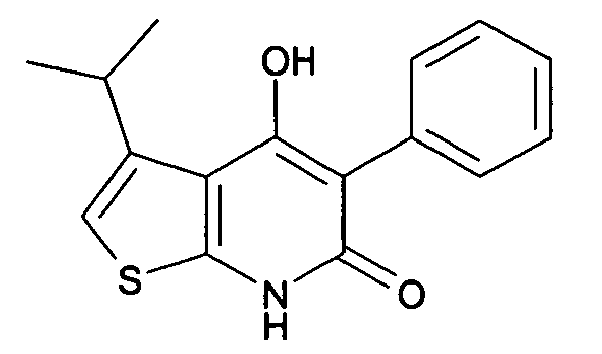
131 169 208 
154 163 209 
156 201 210 
176 286 - The following examples relate to pharmaceutical preparations which comprise active compounds of the formula I or their salts.
- Tablets of the following composition, which, as required, are coated with a customary sugar coating surface on a sucrose base, are pressed in the customary manner:
active compound of formula (I) 100 mg microcrystalline cellulose 278.8 mg lactose 110 mg corn starch 11 mg magnesium stearate 5 mg finely divided silicon dioxide 0.2 mg - Customary two-part hard gelatin capsules are in each case filled with
active compound of formula (I) 100 mg lactose 150 mg cellulose 50 mg magnesium stearate 6 mg - Customary soft gelatin capsules are filled with a mixture comprising in each case 50 mg of active compound and 250 mg of olive oil.
- A solution of 200 g of active compound in 2 kg of 1,2-propanediol is made up to 10 L with water and used to fill ampoules such that each ampoule contains 20 mg of active compound.
- An aqueous suspension of the active compound is prepared in the customary manner. The single dose (5 mL) contains 100 mg of active compound, 100 mg of Na carboxymethylcellulose, 5 mg of Na benzoate and 100 mg of sorbitol.
R1 is H or CH3,
R2 is H, CH3, C2H5, Cl or Br,
R3 is H, CH3, OH, OCH3, F, Cl, CF3, NO2, NH2, N(CH3)2 or NHCOCH3,
R4 is H,
R5 is H and
X is -CH2-, -CO-, -O- or -NH-;
in (Id), -Y-Z- is


R2 is H, CH3, C2H5, Cl or Br,
R3 is H, CH3, OCH3, F, Cl or CF3,
R4 is H, and
X is -CH2-, -CO-, -O- or -NH-;
in (Ie), B is CH,
-Y-Z- is

R1 is H or CH3, and
R2 is H, CH3, C2H5, Cl or Br.
R1 is H, methyl, ethyl, isopropyl, isobutyl, cyclopropyl,
R2 is H, Cl, Br or methyl,
or,
R1 and R2 together form the group ―(CH2)4-.
R1 is cyclopropyl,
R2 is H, or
R1 and R2 together form-(CH2)4-.
Claims (11)
- Use of a compound of formula (I):

B is CH or N,

together form a group -(CH2)n-, with n = 1 to 4,
R3 and R4 independently from one another, represent H, linear or branched (C1-C4)alkyl, OH, linear or branched (C1-C4)alkoxy, halogen, CF3, NO2, NH2, NHR' where R' is linear or branched (C1-C6)acyl, NHR", N(R")2, where R" is linear or branched (C1-C4)alkyl, optionally substituted anilino, optionally substituted phenoxy, optionally substituted benzyl, or optionally substituted benzoyl,
R5 is H, linear or branched (C1-C4)alkyl, or halogen,
R6 is H or halogen, linear or branched (C1-C4)alkyl, (C1-C4)cycloalkyl, (C1-C4)cycloalkyl(C1-C4)alkyl,
X is -CH2-, -CO-, -O-, -S-, -NH-, or -NR'''- , where R''' is linear or branched (C1-C4)alkyl,
and their pharmaceutically acceptable salts,
for the preparation of a pharmaceutical composition useful for the treatment of diabetes, metabolic syndrome, related disorders and obesity. - Use according to claim 1 of a compound of formula (I) wherein:B is CH,R and R6 are each H,-Y-Z- iswherein

R1 is H, methyl, ethyl, isopropyl, isobutyl, cyclopropyl,
R2 is H, Cl, Br or methyl,
or,
R1 and R2 together form the group -(CH2)4-. - Use according to claim 1 or 2 wherein the compound of formula (I) is chosen from among:- 4-Hydroxy-2,3-dimethyl-5-phenyl-7H-thieno[2,3-b]pyridin-6-one;- 2-Ethyl-4-hydroxy-5-phenyl-7H-thieno[2,3-b]pyridin-6-one;- 2-Bromo-4-hydroxy-3-methyl-5-phenyl-7H-thieno[2,3-b]pyridin-6-one;- 2-Bromo-4-hydroxy-5-phenyl-7H-thieno[2,3-b]pyridin-6-one;- 2-Chloro-4-hydroxy-3-isopropyl-5-phenyl-7H-thieno[2,3-b] pyridin-6-one;- 3-sec-Butyl-2-chloro-4-hydroxy-5-phenyl-7H-thieno[2,3-b] pyridin-6-one;- 4-Hydroxy-3-phenyl-5,6,7,8-tetrahydro-1H-benzo[4,5]thieno [2,3-b]pyridin-2-one; and- 3-Cyclopropyl-4-hydroxy-5-phenyl-7H-thieno[2,3-b]pyridin-6-one.
- Pharmaceutical preparation comprising at least one compound as defined in any of claims 1 to 3, and/or one of its physiologically harmless salts.
- Pharmaceutical composition according to claim 4, wherein at least said one compound, and/or physiologically harmless salts, is present in an amount ranging from 1 mg to 500 mg, preferably from 5 mg to 100 mg, per dosage unit.
- Use of a compound of formula (I) according to any of claims 1 to 3, or of one of its pharmaceutically acceptable salts, for the preparation of a medicament.
- Use of a compound of formula (I) according to any of claims 1 to 3, or of one of its pharmaceutically acceptable salts, in the control of diseases, in particular for the treatment of diabetes, metabolic syndrome, related disorders and obesity
- Process for producing a pharmaceutical preparation, wherein at least one compound of formula (I), as defined in any of claims 1 to 3, and/or one of its pharmaceutically acceptable salts, is brought into a dosage form together with at least one solid, liquid or semi-liquid carrier and/or auxiliary substance.
- Compound of formula (IA):
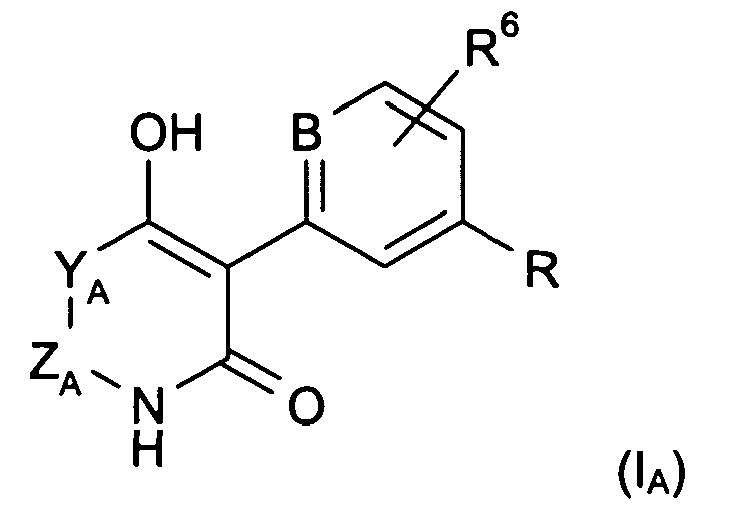

together form a group ―(CH2)n-, with n = 1 to 4,
B, R, R3, R4, R5, R6 and X being as defined in claim 1,
its pharmaceutically acceptable salts, as well as stereoisomers and/or diastereoisomers, in all proportions, oxides, solvates, tautomeric forms and prodrugs thereof. - Compound of formula (IB):

RB is H or
B, -Y-Z-, R1, R2, R5, R6 and X being as defined in claim 1,
its pharmaceutically acceptable salts, as well as stereoisomers and/or diastereoisomers, in all proportions, oxides, solvates, tautomeric forms and prodrugs thereof. - Compound of formula (IC):
in which
B, -Y-Z-, R, R1, R2, R3, R4, R5 and X being as defined above in claim 1,
its pharmaceutically acceptable salts, as well as stereoisomers and/or diastereoisomers, in all proportions, oxides, solvates, tautomeric forms and prodrugs thereof.
Priority Applications (21)
| Application Number | Priority Date | Filing Date | Title |
|---|---|---|---|
| EP05291753A EP1754483A1 (en) | 2005-08-18 | 2005-08-18 | Use of thienopyridone derivatives as AMPK activators and pharmaceutical compositions containing them |
| JP2008526387A JP5161774B2 (en) | 2005-08-18 | 2006-07-03 | Use of thienopyridone derivatives as AMPK activators and pharmaceutical compositions containing them |
| PCT/EP2006/006446 WO2007019914A1 (en) | 2005-08-18 | 2006-07-03 | Use of thienopyridone derivatives as ampk activators and pharmaceutical compositions containing them |
| AT06762350T ATE496622T1 (en) | 2005-08-18 | 2006-07-03 | USE OF THIENOPYRIDONE DERIVATIVES AS AMPK ACTIVATORS AND PHARMACEUTICAL COMPOSITIONS CONTAINING SAME |
| DE602006019880T DE602006019880D1 (en) | 2005-08-18 | 2006-07-03 | USE OF THIENOPYRIDONE DERIVATIVES AS AMPK ACTIVATORS AND PHARMACEUTICAL COMPOSITIONS CONTAINING THEM |
| EP06762350A EP1915150B1 (en) | 2005-08-18 | 2006-07-03 | Use of thienopyridone derivatives as ampk activators and pharmaceutical compositions containing them |
| MX2008002062A MX2008002062A (en) | 2005-08-18 | 2006-07-03 | Use of thienopyridone derivatives as ampk activators and pharmaceutical compositions containing them. |
| SI200630954T SI1915150T1 (en) | 2005-08-18 | 2006-07-03 | Use of thienopyridone derivatives as ampk activators and pharmaceutical compositions containing them |
| PT06762350T PT1915150E (en) | 2005-08-18 | 2006-07-03 | Use of thienopyridone derivatives as ampk activators and pharmaceutical compositions containing them |
| DK06762350.4T DK1915150T3 (en) | 2005-08-18 | 2006-07-03 | Use of thienopyridinone derivatives as AMPK activators and pharmaceutical compositions |
| RU2008109914/04A RU2416409C2 (en) | 2005-08-18 | 2006-07-03 | Application of thienopyridone derivatives as ampa-activators and pharmaceutic compositions, containing them |
| CA2619505A CA2619505C (en) | 2005-08-18 | 2006-07-03 | Use of thienopyridone derivatives as ampk activators and pharmaceutical compositions containing them |
| CNA2006800282800A CN101232883A (en) | 2005-08-18 | 2006-07-03 | Use of thienopyridone derivatives as AMPK activators and pharmaceutical compositions containing them |
| US11/997,470 US20090105293A1 (en) | 2005-08-18 | 2006-07-03 | Use of thienopyridone derivatives as ampk activators and pharmaceutical compositions containing them |
| ES06762350T ES2359860T3 (en) | 2005-08-18 | 2006-07-03 | USE OF TIENOPIRIDINE DERIVATIVES AS AMPK ACTIVATORS AND PHARMACEUTICAL COMPOSITIONS CONTAINING THEM. |
| PL06762350T PL1915150T3 (en) | 2005-08-18 | 2006-07-03 | Use of thienopyridone derivatives as ampk activators and pharmaceutical compositions containing them |
| KR1020087005115A KR20080034491A (en) | 2005-08-18 | 2006-07-03 | Thienopyridone Derivatives as APM Activators and Use of Pharmaceutical Compositions Comprising the Same |
| AU2006281761A AU2006281761B2 (en) | 2005-08-18 | 2006-07-03 | Use of thienopyridone derivatives as AMPK activators and pharmaceutical compositions containing them |
| BRPI0614828-0A BRPI0614828A2 (en) | 2005-08-18 | 2006-07-03 | use of thienopyridone derivatives as ampk activators and pharmaceutical compositions containing them |
| ZA200802454A ZA200802454B (en) | 2005-08-18 | 2008-03-17 | Use of thienopyridone derivatives as AMPK activators and pharmaceutical compositions containing them |
| CY20111100285T CY1111660T1 (en) | 2005-08-18 | 2011-03-14 | USE OF THIENOPYRIDONES PRODUCERS AS AMRK ACTIVATORS AND PHARMACEUTICAL COMPOSITIONS CONTAINING THEM |
Applications Claiming Priority (1)
| Application Number | Priority Date | Filing Date | Title |
|---|---|---|---|
| EP05291753A EP1754483A1 (en) | 2005-08-18 | 2005-08-18 | Use of thienopyridone derivatives as AMPK activators and pharmaceutical compositions containing them |
Publications (1)
| Publication Number | Publication Date |
|---|---|
| EP1754483A1 true EP1754483A1 (en) | 2007-02-21 |
Family
ID=35636709
Family Applications (2)
| Application Number | Title | Priority Date | Filing Date |
|---|---|---|---|
| EP05291753A Withdrawn EP1754483A1 (en) | 2005-08-18 | 2005-08-18 | Use of thienopyridone derivatives as AMPK activators and pharmaceutical compositions containing them |
| EP06762350A Active EP1915150B1 (en) | 2005-08-18 | 2006-07-03 | Use of thienopyridone derivatives as ampk activators and pharmaceutical compositions containing them |
Family Applications After (1)
| Application Number | Title | Priority Date | Filing Date |
|---|---|---|---|
| EP06762350A Active EP1915150B1 (en) | 2005-08-18 | 2006-07-03 | Use of thienopyridone derivatives as ampk activators and pharmaceutical compositions containing them |
Country Status (20)
| Country | Link |
|---|---|
| US (1) | US20090105293A1 (en) |
| EP (2) | EP1754483A1 (en) |
| JP (1) | JP5161774B2 (en) |
| KR (1) | KR20080034491A (en) |
| CN (1) | CN101232883A (en) |
| AT (1) | ATE496622T1 (en) |
| AU (1) | AU2006281761B2 (en) |
| BR (1) | BRPI0614828A2 (en) |
| CA (1) | CA2619505C (en) |
| CY (1) | CY1111660T1 (en) |
| DE (1) | DE602006019880D1 (en) |
| DK (1) | DK1915150T3 (en) |
| ES (1) | ES2359860T3 (en) |
| MX (1) | MX2008002062A (en) |
| PL (1) | PL1915150T3 (en) |
| PT (1) | PT1915150E (en) |
| RU (1) | RU2416409C2 (en) |
| SI (1) | SI1915150T1 (en) |
| WO (1) | WO2007019914A1 (en) |
| ZA (1) | ZA200802454B (en) |
Cited By (14)
| Publication number | Priority date | Publication date | Assignee | Title |
|---|---|---|---|---|
| WO2010025295A3 (en) * | 2008-08-27 | 2010-06-17 | Calcimedica Inc. | Compounds that modulate intracellular calcium |
| US7997003B2 (en) * | 2005-04-13 | 2011-08-16 | Lindauer Dornier Gesellschaft Mbh | Multistage continuous dryer, especially for plate-shaped products |
| WO2011121109A1 (en) | 2010-04-02 | 2011-10-06 | INSERM (Institut National de la Santé et de la Recherche Médicale) | Methods and compositions comprising ampk activator (metformin/troglitazone) for the treatment of myotonic dystrophy type 1 (dm1) |
| US8263641B2 (en) | 2007-09-10 | 2012-09-11 | Calcimedica, Inc. | Compounds that modulate intracellular calcium |
| US8524763B2 (en) | 2008-09-22 | 2013-09-03 | Calcimedica, Inc. | Inhibitors of store operated calcium release |
| US8618307B2 (en) | 2009-09-16 | 2013-12-31 | Calcimedica, Inc. | Compounds that modulate intracellular calcium |
| US8686000B2 (en) | 2010-09-01 | 2014-04-01 | Bayer Cropscience Ag | Herbicidally active ketosultams and diketopyridines |
| US8889730B2 (en) | 2012-04-10 | 2014-11-18 | Pfizer Inc. | Indole and indazole compounds that activate AMPK |
| US9079891B2 (en) | 2010-08-27 | 2015-07-14 | Calcimedica, Inc. | Compounds that modulate intracellular calcium |
| US9394285B2 (en) | 2013-03-15 | 2016-07-19 | Pfizer Inc. | Indole and indazole compounds that activate AMPK |
| US9512116B2 (en) | 2012-10-12 | 2016-12-06 | Calcimedica, Inc. | Compounds that modulate intracellular calcium |
| WO2017055925A2 (en) | 2015-09-30 | 2017-04-06 | Instituto De Medicina Molecular | Methods for attenuating parasite virulence |
| WO2018156459A1 (en) * | 2017-02-22 | 2018-08-30 | University Of Pittsburgh - Of The Commonwealth System Of Higher Education | Compounds and methods for inhibiting emt pathways to treat cancer, organ fibrosis and metabolic disorders |
| WO2022106892A1 (en) | 2020-11-17 | 2022-05-27 | Instituto De Medicina Molecular | Anti-malarial compounds |
Families Citing this family (17)
| Publication number | Priority date | Publication date | Assignee | Title |
|---|---|---|---|---|
| UA103321C2 (en) * | 2008-04-11 | 2013-10-10 | Мерк Патент Гмбх | Thienopyridone derivatives as amp-activated protein kinase (ampk) activators |
| SI2280952T1 (en) * | 2008-05-05 | 2012-09-28 | Merck Patent Gmbh | Thienopyridone derivatives as amp-activated protein kinase (ampk) activators |
| GB0813403D0 (en) * | 2008-07-22 | 2008-08-27 | Lectus Therapeutics Ltd | Potassium ion channel modulators & uses thereof |
| WO2010103040A1 (en) | 2009-03-10 | 2010-09-16 | INSERM (Institut National de la Santé et de la Recherche Médicale) | 5'-adenosine monophosphate-activated protein kinase (ampk) activators for treating pulmonary hypertension |
| KR101062670B1 (en) * | 2009-06-01 | 2011-09-06 | (주)아모레퍼시픽 | Composition for the prevention or treatment of obesity-related diseases mediated by the activation of AMPK containing 2,5-bis-aryl-3,4-dimethyltetrahydrofuran lignan as an active ingredient |
| CN102666485A (en) * | 2009-09-21 | 2012-09-12 | 霍夫曼-拉罗奇有限公司 | Alkene oxindole derivatives and their uses to treat obesity, diabetes and hyperlipidemia |
| US9005909B2 (en) | 2011-01-06 | 2015-04-14 | Rigel Pharmaceuticals, Inc. | Whole blood assay for measuring AMPK activation |
| WO2012119978A1 (en) * | 2011-03-07 | 2012-09-13 | Glaxosmithkline Llc | Quinolinone derivatives |
| EP2679591A1 (en) * | 2012-06-29 | 2014-01-01 | Poxel | Thienopyridone derivatives useful as activators of AMPK |
| EP3089748A4 (en) | 2014-01-02 | 2017-09-27 | Massachusetts Eye & Ear Infirmary | Treating ocular neovascularization |
| CN105315275B (en) * | 2014-07-14 | 2019-10-01 | 中国科学院上海药物研究所 | Pyrazole ketone compound and application thereof |
| EP3478297A1 (en) | 2016-06-30 | 2019-05-08 | INSERM (Institut National de la Santé et de la Recherche Médicale) | Methods and pharmaceutical compositions for the treatment of cardiomyopathies |
| AU2017340403B2 (en) | 2016-10-05 | 2022-03-17 | The United States as Represented by the Department of Veterans Affairs | Small molecule AMPK activators |
| BR112021009270A2 (en) * | 2018-11-16 | 2021-08-10 | Poxel | monohydrate potassium salt of a thienopyridone derivative and its preparation process |
| WO2020201263A1 (en) | 2019-04-01 | 2020-10-08 | INSERM (Institut National de la Santé et de la Recherche Médicale) | Methods and pharmaceutical compositions for the treatment and prevention of cardiac remodeling |
| EP4027987A4 (en) | 2019-09-10 | 2023-11-29 | University of Pittsburgh - Of the Commonwealth System of Higher Education | METHODS AND MATERIALS FOR INCREASING PHOSPHORYLATED AMPK PROTEIN LEVELS |
| US12404348B2 (en) | 2021-11-19 | 2025-09-02 | The Brigham And Women's Hospital, Inc. | Bifunctional chimeric molecules for labeling of kinases with target binding moieties and methods of use thereof |
Citations (4)
| Publication number | Priority date | Publication date | Assignee | Title |
|---|---|---|---|---|
| US5602144A (en) | 1994-12-15 | 1997-02-11 | Merck Patent Gesellschaft Mit Beschrankter Haftung | Thienopyridones |
| WO2004043957A1 (en) | 2002-11-05 | 2004-05-27 | Les Laboratoires Servier | Imidazopyridine derivatives, preparation method and pharmaceutical compositions containing same |
| US20050038068A1 (en) | 2003-05-16 | 2005-02-17 | Iyengar Rajesh R. | Thienopyridones as AMPK activators for the treatment of diabetes and obesity |
| WO2005028464A1 (en) | 2003-09-18 | 2005-03-31 | Kao Corporation | Endurance improving agent |
Family Cites Families (2)
| Publication number | Priority date | Publication date | Assignee | Title |
|---|---|---|---|---|
| FR2358150A1 (en) * | 1976-07-13 | 1978-02-10 | Parcor | NEW THIENO (2,3-C) AND (3,2-C) PYRIDINES, THEIR PREPARATION PROCESS AND THEIR APPLICATION |
| GB8625941D0 (en) * | 1986-10-30 | 1986-12-03 | Sandoz Ltd | Substituted alpha-amino acids |
-
2005
- 2005-08-18 EP EP05291753A patent/EP1754483A1/en not_active Withdrawn
-
2006
- 2006-07-03 DE DE602006019880T patent/DE602006019880D1/en active Active
- 2006-07-03 CA CA2619505A patent/CA2619505C/en active Active
- 2006-07-03 AU AU2006281761A patent/AU2006281761B2/en not_active Ceased
- 2006-07-03 KR KR1020087005115A patent/KR20080034491A/en not_active Ceased
- 2006-07-03 PT PT06762350T patent/PT1915150E/en unknown
- 2006-07-03 MX MX2008002062A patent/MX2008002062A/en active IP Right Grant
- 2006-07-03 PL PL06762350T patent/PL1915150T3/en unknown
- 2006-07-03 US US11/997,470 patent/US20090105293A1/en not_active Abandoned
- 2006-07-03 ES ES06762350T patent/ES2359860T3/en active Active
- 2006-07-03 AT AT06762350T patent/ATE496622T1/en active
- 2006-07-03 SI SI200630954T patent/SI1915150T1/en unknown
- 2006-07-03 JP JP2008526387A patent/JP5161774B2/en not_active Expired - Fee Related
- 2006-07-03 DK DK06762350.4T patent/DK1915150T3/en active
- 2006-07-03 EP EP06762350A patent/EP1915150B1/en active Active
- 2006-07-03 WO PCT/EP2006/006446 patent/WO2007019914A1/en not_active Ceased
- 2006-07-03 BR BRPI0614828-0A patent/BRPI0614828A2/en not_active IP Right Cessation
- 2006-07-03 RU RU2008109914/04A patent/RU2416409C2/en active
- 2006-07-03 CN CNA2006800282800A patent/CN101232883A/en active Pending
-
2008
- 2008-03-17 ZA ZA200802454A patent/ZA200802454B/en unknown
-
2011
- 2011-03-14 CY CY20111100285T patent/CY1111660T1/en unknown
Patent Citations (4)
| Publication number | Priority date | Publication date | Assignee | Title |
|---|---|---|---|---|
| US5602144A (en) | 1994-12-15 | 1997-02-11 | Merck Patent Gesellschaft Mit Beschrankter Haftung | Thienopyridones |
| WO2004043957A1 (en) | 2002-11-05 | 2004-05-27 | Les Laboratoires Servier | Imidazopyridine derivatives, preparation method and pharmaceutical compositions containing same |
| US20050038068A1 (en) | 2003-05-16 | 2005-02-17 | Iyengar Rajesh R. | Thienopyridones as AMPK activators for the treatment of diabetes and obesity |
| WO2005028464A1 (en) | 2003-09-18 | 2005-03-31 | Kao Corporation | Endurance improving agent |
Non-Patent Citations (30)
Cited By (21)
| Publication number | Priority date | Publication date | Assignee | Title |
|---|---|---|---|---|
| US7997003B2 (en) * | 2005-04-13 | 2011-08-16 | Lindauer Dornier Gesellschaft Mbh | Multistage continuous dryer, especially for plate-shaped products |
| US8263641B2 (en) | 2007-09-10 | 2012-09-11 | Calcimedica, Inc. | Compounds that modulate intracellular calcium |
| US8524765B2 (en) | 2007-09-10 | 2013-09-03 | Calcimedica, Inc. | Compounds that modulate intracellular calcium |
| US8383670B2 (en) | 2008-08-27 | 2013-02-26 | Calcimedica, Inc. | Trisubstituted thiophenes that modulate intracellular calcium |
| US8394848B2 (en) | 2008-08-27 | 2013-03-12 | Calcimedica, Inc. | Compounds that modulate intracellular calcium |
| TWI392673B (en) * | 2008-08-27 | 2013-04-11 | Calcimedica Inc | Compounds that modulate intracellular calcium |
| WO2010025295A3 (en) * | 2008-08-27 | 2010-06-17 | Calcimedica Inc. | Compounds that modulate intracellular calcium |
| US8524763B2 (en) | 2008-09-22 | 2013-09-03 | Calcimedica, Inc. | Inhibitors of store operated calcium release |
| US8618307B2 (en) | 2009-09-16 | 2013-12-31 | Calcimedica, Inc. | Compounds that modulate intracellular calcium |
| WO2011121109A1 (en) | 2010-04-02 | 2011-10-06 | INSERM (Institut National de la Santé et de la Recherche Médicale) | Methods and compositions comprising ampk activator (metformin/troglitazone) for the treatment of myotonic dystrophy type 1 (dm1) |
| US9079891B2 (en) | 2010-08-27 | 2015-07-14 | Calcimedica, Inc. | Compounds that modulate intracellular calcium |
| US10336738B2 (en) | 2010-08-27 | 2019-07-02 | Calcimedica, Inc. | Compounds that modulate intracellular calcium |
| US8686000B2 (en) | 2010-09-01 | 2014-04-01 | Bayer Cropscience Ag | Herbicidally active ketosultams and diketopyridines |
| US8889730B2 (en) | 2012-04-10 | 2014-11-18 | Pfizer Inc. | Indole and indazole compounds that activate AMPK |
| US9512116B2 (en) | 2012-10-12 | 2016-12-06 | Calcimedica, Inc. | Compounds that modulate intracellular calcium |
| US9394285B2 (en) | 2013-03-15 | 2016-07-19 | Pfizer Inc. | Indole and indazole compounds that activate AMPK |
| WO2017055925A2 (en) | 2015-09-30 | 2017-04-06 | Instituto De Medicina Molecular | Methods for attenuating parasite virulence |
| WO2018156459A1 (en) * | 2017-02-22 | 2018-08-30 | University Of Pittsburgh - Of The Commonwealth System Of Higher Education | Compounds and methods for inhibiting emt pathways to treat cancer, organ fibrosis and metabolic disorders |
| US11078159B2 (en) | 2017-02-22 | 2021-08-03 | University of Pittsburgh—of the Commonwealth System of Higher Education | Compounds and methods for inhibiting EMT pathways to treat cancer, organ fibrosis and metabolic disorders |
| US12297176B2 (en) | 2017-02-22 | 2025-05-13 | University of Pittsburgh—of the Commonwealth System of Higher Education | Compounds and methods for inhibiting EMT pathways to treat cancer, organ fibrosis and metabolic disorders |
| WO2022106892A1 (en) | 2020-11-17 | 2022-05-27 | Instituto De Medicina Molecular | Anti-malarial compounds |
Also Published As
| Publication number | Publication date |
|---|---|
| BRPI0614828A2 (en) | 2011-04-19 |
| EP1915150A1 (en) | 2008-04-30 |
| CN101232883A (en) | 2008-07-30 |
| US20090105293A1 (en) | 2009-04-23 |
| ZA200802454B (en) | 2009-01-28 |
| JP5161774B2 (en) | 2013-03-13 |
| DK1915150T3 (en) | 2011-02-21 |
| CA2619505A1 (en) | 2007-02-22 |
| ES2359860T3 (en) | 2011-05-27 |
| PT1915150E (en) | 2011-05-02 |
| JP2009504693A (en) | 2009-02-05 |
| RU2008109914A (en) | 2009-09-27 |
| ATE496622T1 (en) | 2011-02-15 |
| DE602006019880D1 (en) | 2011-03-10 |
| SI1915150T1 (en) | 2011-04-29 |
| KR20080034491A (en) | 2008-04-21 |
| CA2619505C (en) | 2015-04-28 |
| PL1915150T3 (en) | 2011-05-31 |
| WO2007019914A1 (en) | 2007-02-22 |
| MX2008002062A (en) | 2008-04-16 |
| RU2416409C2 (en) | 2011-04-20 |
| CY1111660T1 (en) | 2015-10-07 |
| AU2006281761A1 (en) | 2007-02-22 |
| EP1915150B1 (en) | 2011-01-26 |
| AU2006281761B2 (en) | 2012-01-19 |
Similar Documents
| Publication | Publication Date | Title |
|---|---|---|
| EP1915150B1 (en) | Use of thienopyridone derivatives as ampk activators and pharmaceutical compositions containing them | |
| EP1910359B1 (en) | PYRIDO [2 , 3-D]PYRIMIDINE-2 , 4-DIAMINE COMPOUNDS AS PTPlB INHIBITORS | |
| US9284329B2 (en) | Thienopyridone derivatives useful as activators of AMPK | |
| KR101469002B1 (en) | Thieno [2,3-b] pyridinedione activators of ampk and therapeutic uses thereof | |
| EP1036078B1 (en) | Thienopyrimidines | |
| NO315704B1 (en) | Heterocyclic Compounds for Inhibition of Stomach Acid Secretion, Pharmaceutical Preparations Containing Such Compounds, Methods Required for Preparation, and Their Use | |
| HUP0102425A2 (en) | Imidazo pyridine derivatives which inhibit gastric acid secretion, process for producing them and pharmaceutical compositions containing them | |
| WO2009093013A1 (en) | Fused thiophene derivatives as mek inhibitors | |
| EP3029024A1 (en) | 2-(2-aminophenoxy)-3-chloronaphthalene-1,4-dione compounds having orexin 2 receptor agonist activity | |
| EP1228073B1 (en) | Imidazole compounds used as phosphodiesterase vii inhibitors | |
| EP1301516B1 (en) | Modulators of protein tyrosine phosphatases (ptpases) | |
| JP2014507453A (en) | 1H-pyrrolo [3,2-d] pyrimidinedione derivative | |
| EP0472116B1 (en) | Thienopyridine Derivatives, their production and use | |
| EP0335979A1 (en) | Thienopyrimidine derivatives | |
| US6613903B2 (en) | Modulators of protein tyrosine phosphatases (PTPases) | |
| EP0479480A3 (en) | Substituted thieno(2,3-b)(1,4)thiazine-6-sulfonamides as antiglaucoma agents | |
| KR101749314B1 (en) | Prodrugs of bicyclic substituted pyrimidine type PDE-5 inhibitors | |
| HK1122993A (en) | Use of thienopyridone derivatives as ampk activators and pharmaceutical compositions containing them | |
| DE10060388A1 (en) | Use of pyrazolo [4,3-d] pyrimidines | |
| EP1212329A2 (en) | Amine derivatives of benzo[4,5]thieno[2,3-d]pyrimidine | |
| DE10104096A1 (en) | Pharmaceutical composition useful for treating e.g. cardiovascular and pulmonary diseases, comprises a nitrate and a 3-benzylamino-benzo(4,5)thieno(2,3-d)pyrimidine derivative | |
| MXPA00005232A (en) | Thienopyrimidines | |
| KR20190103385A (en) | 4,4-diphenylpiperidine compound or a pharmaceutically acceptable salt thereof, pharmaceutical composition and use thereof |
Legal Events
| Date | Code | Title | Description |
|---|---|---|---|
| PUAI | Public reference made under article 153(3) epc to a published international application that has entered the european phase |
Free format text: ORIGINAL CODE: 0009012 |
|
| AK | Designated contracting states |
Kind code of ref document: A1 Designated state(s): AT BE BG CH CY CZ DE DK EE ES FI FR GB GR HU IE IS IT LI LT LU LV MC NL PL PT RO SE SI SK TR |
|
| AX | Request for extension of the european patent |
Extension state: AL BA HR MK YU |
|
| 17P | Request for examination filed |
Effective date: 20070726 |
|
| 17Q | First examination report despatched |
Effective date: 20070831 |
|
| AKX | Designation fees paid |
Designated state(s): AT BE BG CH CY CZ DE DK EE ES FI FR GB GR HU IE IS IT LI LT LU LV MC NL PL PT RO SE SI SK TR |
|
| AXX | Extension fees paid |
Extension state: YU Payment date: 20070726 Extension state: MK Payment date: 20070726 Extension state: HR Payment date: 20070726 Extension state: BA Payment date: 20070726 Extension state: AL Payment date: 20070726 |
|
| STAA | Information on the status of an ep patent application or granted ep patent |
Free format text: STATUS: THE APPLICATION IS DEEMED TO BE WITHDRAWN |
|
| 18D | Application deemed to be withdrawn |
Effective date: 20080111 |