EP1740702B1 - Ghrh gen vom hunde, polypeptide und methoden zu deren gebrauch - Google Patents
Ghrh gen vom hunde, polypeptide und methoden zu deren gebrauch Download PDFInfo
- Publication number
- EP1740702B1 EP1740702B1 EP05752603.0A EP05752603A EP1740702B1 EP 1740702 B1 EP1740702 B1 EP 1740702B1 EP 05752603 A EP05752603 A EP 05752603A EP 1740702 B1 EP1740702 B1 EP 1740702B1
- Authority
- EP
- European Patent Office
- Prior art keywords
- ghrh
- seq
- canine
- plasmid
- vector
- Prior art date
- Legal status (The legal status is an assumption and is not a legal conclusion. Google has not performed a legal analysis and makes no representation as to the accuracy of the status listed.)
- Expired - Lifetime
Links
Images








Classifications
-
- C—CHEMISTRY; METALLURGY
- C07—ORGANIC CHEMISTRY
- C07K—PEPTIDES
- C07K14/00—Peptides having more than 20 amino acids; Gastrins; Somatostatins; Melanotropins; Derivatives thereof
- C07K14/435—Peptides having more than 20 amino acids; Gastrins; Somatostatins; Melanotropins; Derivatives thereof from animals; from humans
- C07K14/575—Hormones
- C07K14/60—Growth hormone-releasing factor [GH-RF], i.e. somatoliberin
-
- A—HUMAN NECESSITIES
- A61—MEDICAL OR VETERINARY SCIENCE; HYGIENE
- A61P—SPECIFIC THERAPEUTIC ACTIVITY OF CHEMICAL COMPOUNDS OR MEDICINAL PREPARATIONS
- A61P17/00—Drugs for dermatological disorders
- A61P17/02—Drugs for dermatological disorders for treating wounds, ulcers, burns, scars, keloids, or the like
-
- A—HUMAN NECESSITIES
- A61—MEDICAL OR VETERINARY SCIENCE; HYGIENE
- A61P—SPECIFIC THERAPEUTIC ACTIVITY OF CHEMICAL COMPOUNDS OR MEDICINAL PREPARATIONS
- A61P19/00—Drugs for skeletal disorders
-
- A—HUMAN NECESSITIES
- A61—MEDICAL OR VETERINARY SCIENCE; HYGIENE
- A61P—SPECIFIC THERAPEUTIC ACTIVITY OF CHEMICAL COMPOUNDS OR MEDICINAL PREPARATIONS
- A61P19/00—Drugs for skeletal disorders
- A61P19/08—Drugs for skeletal disorders for bone diseases, e.g. rachitism, Paget's disease
- A61P19/10—Drugs for skeletal disorders for bone diseases, e.g. rachitism, Paget's disease for osteoporosis
-
- A—HUMAN NECESSITIES
- A61—MEDICAL OR VETERINARY SCIENCE; HYGIENE
- A61P—SPECIFIC THERAPEUTIC ACTIVITY OF CHEMICAL COMPOUNDS OR MEDICINAL PREPARATIONS
- A61P3/00—Drugs for disorders of the metabolism
- A61P3/04—Anorexiants; Antiobesity agents
-
- A—HUMAN NECESSITIES
- A61—MEDICAL OR VETERINARY SCIENCE; HYGIENE
- A61P—SPECIFIC THERAPEUTIC ACTIVITY OF CHEMICAL COMPOUNDS OR MEDICINAL PREPARATIONS
- A61P37/00—Drugs for immunological or allergic disorders
- A61P37/02—Immunomodulators
- A61P37/04—Immunostimulants
-
- A—HUMAN NECESSITIES
- A61—MEDICAL OR VETERINARY SCIENCE; HYGIENE
- A61P—SPECIFIC THERAPEUTIC ACTIVITY OF CHEMICAL COMPOUNDS OR MEDICINAL PREPARATIONS
- A61P5/00—Drugs for disorders of the endocrine system
- A61P5/10—Drugs for disorders of the endocrine system of the posterior pituitary hormones, e.g. oxytocin, ADH
-
- A—HUMAN NECESSITIES
- A61—MEDICAL OR VETERINARY SCIENCE; HYGIENE
- A61P—SPECIFIC THERAPEUTIC ACTIVITY OF CHEMICAL COMPOUNDS OR MEDICINAL PREPARATIONS
- A61P7/00—Drugs for disorders of the blood or the extracellular fluid
-
- A—HUMAN NECESSITIES
- A61—MEDICAL OR VETERINARY SCIENCE; HYGIENE
- A61P—SPECIFIC THERAPEUTIC ACTIVITY OF CHEMICAL COMPOUNDS OR MEDICINAL PREPARATIONS
- A61P7/00—Drugs for disorders of the blood or the extracellular fluid
- A61P7/06—Antianaemics
Definitions
- the present description relates to a canine pre-proGHRH polypeptide, a canine mature GHRH peptide, an isolated polynucleotide which encodes the canine pre-proGHRH or the canine mature GHRH.
- the description relates to a vector encoding and expressing pre-proGHRH or GHRH.
- a vector can be used to treat disease and growth hormone deficiencies by gene therapy in vertebrates, in particular in dogs.
- the description relates to a method for delivering the peptide GHRH to a vertebrate, in particular to a dog, comprising injecting the vector expressing in vivo the canine pre-proGHRH or the canine GHRH to the animal host.
- the description relates also to method of treatment of anaemia, cachexia, wound healing, bone healing, osteoporosis, obesity in vertebrates, in particular in dog.
- GHRH Growth hormone-releasing hormone
- GH growth hormone
- Human GHRH is a C-terminal amidated peptide of 44 amino acids.
- rat GHRH is a 43 amino acids long, non-amidated peptide, which is only 67% homologous to human GHRH. It is established that GHRH originates from a precursor (pre-proGHRH) that is processed to mature GHRH by removal of the signal peptide and proteolytic cleavage at C-terminal region.
- the amino acid sequence of the precursor comprises 107 or 108 residues depending upon differential usage of two possible splice-acceptor sites.
- the gene of the human and the rat GHRH includes five small exons separated by 4 introns and spans over 10 kilobases on genomic DNA but differs by the position and the size of the introns.
- the patent application EP1052286 illustrates a non-specific method to clone the canine GHRH gene from a genomic library but the description does not disclose the nucleotide sequence of the gene or provides any guidance how to remove the introns and how to assemble the exon sequences to obtain the full coding sequence.
- GHRH is galactopoietic with no alteration in milk composition, increases the feed to milk conversion and sustains growth, mostly through increased lean body mass. By stimulation of GH secretion, the GHRH enhances the immune functions in animals.
- the GHRH have a great therapeutic utility in the treatment of cachexia ( Bartlett et al Cancer 1994, 73, 1499-1504 and Surgery 1995, 117, 260-267 ) in chronic diseases such as cancer, due to growth hormone production abnormalities, in wound healing, bone healing, retardation of the aging process, osteoporosis and in anaemia ( Sohmiya et al J. Endocrinol. Invest. 2000, 23, 31-36 and Clin. Endocrin1. 2001, 55, 749-754 ).
- the present description is based, in part, on Applicants' identification of novel canine pre-proGHRH and canine mature GHRH polynucleotide and polypeptide sequences.
- the present invention provides an expression vector comprising a polynucleotide that encodes a hybrid protein containing equine IGF-1 signal peptide fused to canine mature GHRH and a c-myc epitope tag, wherein the polynucleotide is operatively linked to an enhancer and/or a promoter, and wherein the canine mature GHRH has the amino acid sequence shown as amino acids 31-74 of SEQ ID NO:1 (page 7, paragraph [0049], and pages 31-32, paragraph [0136]).
- the present invention provides an expression vector comprising a polynucleotide that encodes a hybrid protein containing equine IGF-1 signal peptide fused to canine proGHRH and a c-myc epitope tag, wherein the polynucleotide is operatively linked to an enhancer and/or a promoter, and wherein the canine proGHRH has the amino acid sequence shown as amino acids 20-74 of SEQ ID NO:1 (page 7, paragraph [0049], and pages 31-32, paragraph [0136]).
- the present invention provides a formulation for delivery and expression of a canine mature GHRH in a cell, wherein the formulation comprises the vector of the present invention and a pharmaceutically or veterinarily acceptable carrier, vehicle or excipient.
- the present invention provides, in another aspect, a formulation for delivery and expression of a canine proGHRH in a cell, wherein the formulation comprises the vector of the present invention and a pharmaceutically or veterinarily acceptable carrier, vehicle or excipient.
- the present invention provides, in a further aspect, the use of an expression vector of the present invention, or a formulation of the present invention for the manufacture of a medicament for treating anaemia, cachexia, obesity or osteoporosis in a vertebrate.
- the present invention provides, in another aspect, an expression vector of the present invention, or a formulation of the present invention for use in the treatment of anaemia, cachexia, obesity or osteoporosis in a vertebrate.
- the present description relates to a canine pre-proGHRH polypeptide, a canine mature GHRH peptide and isolated polynucleotides which encodes the canine pre-proGHRH or the canine mature GHRH.
- the canine pre-proGHRH polypeptide consists essentially of the amino acid residues of SEQ ID NO: 1.
- the canine mature GHRH peptide consists essentially of the amino acid residues of SEQ ID NO: 2.
- the description also encompasses an isolated polynucleotide, or an antisense strand that is fully complementary thereto, that consists essentially of canine pre-proGHRH, having the sequence of SEQ ID NO: 3 and an isolated polynucleotide, or an antisense strand that is fully complementary thereto, that consists essentially of canine mature GHRH, having the sequence of SEQ ID NO: 4.
- the polynucleotides can be DNA or RNA molecules.
- the description relates to a vector encoding and expressing the canine pre-proGHRH or the canine GHRH.
- a vector can be used to treat disease and growth hormone deficiencies by gene therapy in vertebrates.
- the expression vector comprises a polynucleotide that encodes a canine pre-proGHRH, wherein the polynucleotide comprises the nucleotide base sequence of SEQ ID NO: 3.
- the expression vector comprises polynucleotide that encodes a canine mature GHRH, wherein the polynucleotide comprises the nucleotide base sequence of SEQ ID NO: 4.
- the nucleotide base sequence is operatively linked to a promoter and optionally an enhancer.
- the description relates to a vector encoding and expressing the canine proGHRH, the canine proGHRH deleted of the propeptide N-terminus (corresponding to 31-106 AA) or the canine GHRH wherein a peptide signal sequence is fused to the canine proGHRH, the canine proGHRH deleted of the propeptide N-terminus (corresponding to 31-106 AA) or the canine GHRH.
- the peptide signal sequence is an insulin-like growth factor (IGF) peptide signal sequence.
- the peptide signal sequence is an IGF-1 peptide signal sequence, more advantageously, an equine IGF-1 peptide signal sequence.
- the description encompasses a vector encoding and expressing a GHRH containing a peptide signal sequence, advantageously an IGF-1 peptide signal sequence and a proGHRH deleted of the propeptide N-terminus and optionally, the addition of a glycine at the C-terminus.
- the description provides for a vector backbone containing a peptide signal sequence, advantageously an IGF-1 signal sequence fused to a mature GHRH and a serum albumin optionally linked through a linker tetrapeptide.
- the GHRH may be derived from pig or cattle as well as dogs.
- the expression vector comprises a polynucleotide that encodes a canine pre-proGHRH, wherein the polynucleotide comprises the nucleotide base sequence of SEQ ID NO: 3.
- the expression vector comprises polynucleotide that encodes a canine mature GHRH, wherein the polynucleotide comprises the nucleotide base sequence of SEQ ID NO:-4.
- the nucleotide base sequence is operatively linked to a promoter and optionally an enhancer.
- the description relates to a method for delivering the peptide GHRH to a vertebrate, in particular to a dog, comprising injecting the vector expressing in vivo the canine pre-proGHRH or the canine GHRH to the animal host.
- the animal host is a dog.
- a formulation comprising a vector expressing canine GHRH or a canine pre-proGHRH and a pharmaceutically or veterinarily acceptable carrier or vehicle or excipient that facilitates delivery and expression canine GHRH or a canine pre-proGHRH the in a cell or improves the stability of the vector.
- the delivery is in vivo to an animal, advantageously a vertebrate, more advantageously, a dog.
- the vector in the formulation comprises the canine pre-proGHRH sequence consisting essentially of SEQ ID NO: 3 or the canine mature GHRH sequence consisting essentially of SEQ ID NO: 4.
- the description also provides for methods for delivering GHRH to an animal, advantageously a vertebrate, more advantageously a dog, comprising injecting a GHRH formulation to the animal.
- the formulation comprises a vector expressing canine GHRH and a pharmaceutically or veterinarily acceptable carrier or vehicle or excipient.
- the description relates also to method of treatment of anaemia, cachexia, wound healing, bone healing, osteoporosis and obesity in vertebrates.
- the description also relates to a method to stimulate the immune response of a vertebrate.
- the present description is based, in part, on Applicants' identification of novel canine pre-proGHRH and canine mature GHRH polynucleotide and polypeptide sequences.
- Prior to the present description there were available GHRH peptides and coding sequences from different animal species such as mouse, rat, pig and bovine. Using a heterogous GHRH in dog may lead to to a less potent stimulation of the GH release and may induce antibody response in the host after repeated injections.
- the DNA encoding the canine GHRH was unknown until the present description and there was a need to make available canine GHRH in sufficient quantity to treat dogs.
- the present description relates to a canine pre-proGHRH polypeptide having the following amino acid sequence: H-MPLWVFFLVILTLSSGSHSSPPSLPIRIPRYADAIFTNSYRKVLGQLSARKLLQDIMSRQ QGERNREQGAKVRLGRQVDSLWASQKQMALENILASLLQKRRNSQG-OH (SEQ ID NO: 1).
- the peptide signal (prepeptide) sequence spans from Met(1) to Ser(20). The cleavage of the signal peptide can also occur after the Ser(19). The number between brackets means the amino acid position in the pre-proGHRH sequence.
- the H-M and G-OH means the Met amino acid at the N terminus and the Gly amino acid at the carboxy terminus of the pre-propeptide are not modified.
- the proGHRH peptide is cleaved after the Arg(30) and after the Leu(74) to lead to the mature GHRH peptide.
- a variant of the canine pre-proGHRH polypeptide has a substitution of the amino acid Pro in position 2 by the amino acid Leu.
- the present description relates also to a canine mature GHRH peptide having the following amino acid sequence: R 1 -YADAIFTNSYRKVLGQLSARKLLQDIMSRQQGERNREQGAKVRL-R 2 (SEQ ID NO: 2) wherein R 1 is hydrogen or H-Met and R 2 is OH or NH 2 .
- R 1 is hydrogen or H-Met and R 2 is OH or NH 2 .
- the H-Met or the H-Y at the N terminus means that the methionine or the tyrosine are not modified.
- the L-OH or L-NH2 at the carboxy terminus of the mature peptide means that the leucine amino acid is either unmodified or amidated.
- the description comprises a canine mature GHRH analogue with improved stability.
- This analogue has at least one amino acid substitution selected among the group consisting of Tyr(1) to His(1), Ala(2) to Val(2), Gly(15) to Ala(15), Met(27) to Leu(27) or Ser(28) to Asn(28).
- the number between parentheses means the amino acid position in the mature GHRH sequence.
- site-directed mutagenesis of the canine mature GHRH polynucleotide can be carried out to obtain a mutant canine mature GHRH peptide with one or more of the above-listed amino acid substitutions.
- the gene can also be synthetized chemically using methods known in the art.
- protein protein
- peptide polypeptide
- polypeptide fragment polymers of amino acid residues of any length.
- the polymer can be linear or branched, it may comprise modified amino acids or amino acid analogs, and it may be interrupted by chemical moieties other than amino acids.
- the terms also encompass an amino acid polymer that has been modified naturally or by intervention; for example disulfide bond formation, glycosylation, lipidation, acetylation, phosphorylation, or any other manipulation or modification, such as conjugation with a labeling or bioactive component.
- the present description encompasses an isolated polynucleotide encoding the canine pre-proGHRH having the sequence and fragments:
- the description also provides for a variant of the polynucleotide encoding the canine pre-proGHRH has a substitution of the nucleotides C and A in position 5 and 6 by T and G, respectively.
- the present description also comprises an isolated polynucleotide encoding the canine mature GHRH having the sequence:
- polynucleotide is a polymeric form of nucleotides of any length, which contain deoxyribonuelcotides, ribonucleotides, and analogs in any combination. Polynucleotides may have three-dimensional structure, and may perform any function, known or unknown.
- the term "polynucleotide” includes double-, single-stranded, and triple-helical molecules. Unless otherwise specified or required, any embodiment of the description described herein that is a polynucleotide encompasses both the double stranded form and each of two complementary forms known or predicted to make up the double stranded form of either the DNA, RNA or hybrid molecule.
- polynucleotides a gene or gene fragment, exons, introns, mRNA, tRNA, rRNA, ribozymes, cDNA, recombinant polynucleotides, branched polynucleotides, plasmids, vectors, isolated DNA of any sequence, isolated RNA of any sequence, nucleic acid probes and primers.
- a polynucleotide may comprise modified nucleotides, such as methylated nucleotides and nucleotide analogs, uracyl, other sugars and linking groups such as fluororibose and thiolate, and nucleotide branches.
- sequence of nucleotides may be further modified after polymerization, such as by conjugation, with a labeling component.
- modifications included in this definition are caps, substitution of one or more of the naturally occurring nucleotides with an analog, and introduction of means for attaching the polynucleotide to proteins, metal ions, labeling components, other polynucleotides or solid support.
- isolated polynucleotide or polypeptide is one that is substantially free of the materials with which it is associated in its native environment.
- substantially free is meant at least 50%, advantageously at least 70%, more advantageously at least 80%, and even more advantageously at least 90% free of these materials.
- the description further comprises a complementary strand to the GHRH polynucleotide.
- the complementary strand can be polymeric and of any length, and can contain deoxyribonucleotides, ribonucleotides, and analogs in any combination.
- Hybridization reactions can be performed under conditions of different "stringency.” Conditions that increase stringency of a hybridization reaction are well known. See for example, " Molecular Cloning: A Laboratory Manual", second edition (Sambrook et al. 1989 ). Examples of relevant conditions include (in order of increasing stringency): incubation temperatures of 25°C, 37°C, 50°C, and 68°C; buffer concentrations of 10 x SSC, 6 x SSC, 1 x SSC, 0.1 x SSC (where SSC is 0.15 M NaCl and 15 mM citrate buffer) and their equivalent using other buffer systems; formamide concentrations of 0%, 25%, 50%, and 75%; incubation times from 5 minutes to 24 hours; 1,2 or more washing steps; wash incubation times of 1, 2, or 15 minutes; and wash solutions of G x SSC, 1 x SSC, 0.1 x SSC, or deionized water.
- the description further encompasses polynucleotides encoding functionally equivalent variants and derivatives of the canine GHRH polypeptides and functionally equivalent fragments thereof which may enhance, decrease or not significantly affect properties of the polypeptides encoded thereby.
- These functionally equivalent variants, derivatives, and fragments display the ability to retain canine GHRH activity. For instance, changes in a DNA sequence that do not change the encoded amino acid sequence, as well as those that result in conservative substitutions of amino acid residues, one or a few amino acid deletions or additions, and substitution of amino acid residues by amino acid analogs are those which will not significantly affect properties of the encoded polypeptide.
- Conservative amino acid substitutions are glycine/alanine; valine/isoleucine/leucine; asparagine/glutamine; aspartic acid/glutamic acid; serine/threonine/methionine; lysine/arginine; and phenylalanine/tyrosine/tryptophan.
- the description comprises a canine pre-proGHRH polypeptide variant having at least at least 87%, at least 88%, at least 89%, at least 90%, at least 91%, at least 92%, at least 93%, at least 94%, at least 95%, at least 96%, at least 97%, at least 98% or at least 99% homology or identity to SEQ ID NO: 1.
- the description comprises a canine mature GHRH polypeptide variant having at least 97 %, at least 97.5%, at least 98%, at least 98.5%, or at least 99% homology or identity to SEQ ID NO: 2.
- the description comprises a variant of the polynucleotide encoding the canine pre-proGHRH having at least 86.5%, at least 87%, at least 87.5%, at least 88%, at least 88.5%, at least 89%, at least 89.5%, at least 90%, at least 90.5%, at least 91%, at least 91.5%, at least 92%, at least 92.5%, at least 93%, at least 93.5%, at least 94%, at least 94.5%, at least 95%, at least 95.5%, at least 96%, at least 96.5%, at least 97%, at least 97.5%, at least 98% at least 98.5%, at least 99% or at least 99.5% homology or identity to SEQ ID NO: 3.
- the description encompasses also a polynucleotide encoding a canine pre-proGHRH analogue.
- the canine pre-proGHRH analogue has at least 86.5%, at least 87%, at least 87.5%, at least 88%, at least 88.5%, at least 89%, at least 89.5%, at least 90%, at least 90.5%, at least 91%, at least 91.5%, at least 92%, at least 92.5%, at least 93%, at least 93.5%, at least 94%, at least 94.5%, at least 95%, at least 95.5%, at least 96%, at least 96.5%, at least 97%, at least 97.5%, at least 98% at least 98.5%, or at least 99% or at least 99.5% homology or identity to SEQ ID NO: 1.
- the description comprises a variant of the polynucleotide encoding the canine mature GHRH having 90.5%, at least 91%, at least 91.5%, at least 92%, at least 92.5%, at least 93%, at least 93.5%, at least 94%, at least 94.5%, at least 95%, at least 95,5%, at least 96%, at least 96.5%, at least 97%, at least 97.5%, at least 98% at least 98.5%, at least 99% or at least 99.5% homology or identity to SEQ ID NO: 4.
- the description encompasses also a polynucleotide encoding a canine mature GHRH analogue.
- the canine mature GHRH analogue has 97.5%, at least 98% at least 98.5%, at least 99% or at least 99.5% homology or identity to SEQ ID NO: 2.
- sequence identity or homology is determined by comparing the sequences when aligned so as to maximize overlap and identity while minimizing sequence gaps.
- sequence identity may be determined using any of a number of mathematical algorithms.
- a nonlimiting example of a mathematical algorithm used for comparison of two sequences is the algorithm of Karlin & Altschul, Proc. Natl. Acad. Sci. USA 1990; 87: 2264-2268 , modified as in Karlin & Altschul, Proc. Natl. Acad. Sci. USA 1993;90: 5873-5877 .
- Another example of a mathematical algorithm used for comparison of sequences is the algorithm of Myers & Miller, CABIOS 1988;4: 11-17 . Such an algorithm is incorporated into the ALIGN program (version 2.0) which is part of the GCG sequence alignment software package. When utilizing the ALIGN program for comparing amino acid sequences, a PAM120 weight residue table, a gap length penalty of 12, and a gap penalty of 4 can be used. Yet another useful algorithm for identifying regions of local sequence similarity and alignment is the FASTA algorithm as described in Pearson & Lipman, Proc. Natl. Acad. Sci. USA 1988; 85: 2444-2448 .
- WU-BLAST Woodington University BLAST
- WU-BLAST version 2.0 executable programs for several UNIX platforms can be downloaded from ftp ://blast. wustl. edu/blast/executables.
- This program is based on WU-BLAST version 1.4, which in turn is based on the public domain NCBI-BLAST version 1.4 ( Altschul & Gish, 1996, Local alignment statistics, Doolittle ed., Methods in Enzymology 266: 460-480 ; Altschul et al., Journal of Molecular Biology 1990; 215: 403-410 ; Gish & States, 1993;Nature Genetics 3: 266-272 ; Karlin & Altschul, 1993;Proc. Natl. Acad. Sci. USA 90: 5873-5877 .
- comparison of amino acid sequences is accomplished by aligning an amino acid sequence of a polypeptide of a known structure with the amino acid sequence of a the polypeptide of unknown structure. Amino acids in the sequences are then compared and groups of amino acids that are homologous are grouped together. This method detects conserved regions of the polypeptides and accounts for amino acid insertions and deletions. Homology between amino acid sequences can be determined by using commercially available algorithms (see also the description of homology above). In addition to those otherwise mentioned herein, mention is made too of the programs BLAST, gapped BLAST, BLASTN, BLASTP, and PSI-BLAST, provided by the National Center for Biotechnology Information. These programs are widely used in the art for this purpose and can align homologous regions of two amino acid sequences.
- the gapped alignment routines are integral to the database search itself. Gapping can be turned off if desired.
- the default amino acid comparison matrix is BLOSUM62, but other amino acid comparison matrices such as PAM can be utilized.
- the term “homology " or “identity”, for instance, with respect to a nucleotide or amino acid sequence, can indicate a quantitative measure of homology between two sequences. The percent sequence homology can be calculated as
- N ref (N ref - N dif )*100/N ref , wherein N dif is the total number of non-identical residues in the two sequences when aligned and wherein N ref is the number of residues in one of the sequences.
- homology or “identity” with respect to sequences can refer to the number of positions with identical nucleotides or amino acids divided by the number of nucleotides or amino acids in the shorter of the two sequences wherein alignment of the two sequences can be determined in accordance with the Wilbur and Lipman algorithm ( Wilbur & Lipman, Proc Natl Acad Sci USA 1983; 80:726 ), for instance, using a window size of 20 nucleotides, a word length of 4 nucleotides, and a gap penalty of 4, and computer-assisted analysis and interpretation of the sequence data including alignment can be conveniently performed using commercially available programs (e.g., Intelligenetics TM Suite, Intelligenetics Inc. CA).
- Intelligenetics TM Suite Intelligenetics Inc. CA
- RNA sequences are said to be similar, or have a degree of sequence identity or homology with DNA sequences, thymidine (T) in the DNA sequence is considered equal to uracil (U) in the RNA sequence.
- RNA sequences are within the scope of the description and can be derived from DNA sequences, by thymidine (T) in the DNA sequence being considered equal to uracil (U) in RNA sequences.
- the description further encompasses the canine GHRH polynucleotides contained in a vector molecule or an expression vector and operably linked to a promoter element and optionally to an enhancer.
- the description further encompasses the canine GHRH polynucleotides contained in a vector molecule or an expression vector wherein a peptide signal sequence is fused to the canine proGHRH, the canine proGHRH deleted of the propeptide N-terminus (corresponding to 31-106 AA) or the canine GHRH.
- the peptide signal sequence is an insulin-like growth factor (IGF) peptide signal sequence.
- the peptide signal sequence is an IGF-1 peptide signal sequence, more advantageously, an equine IGF-1 peptide signal sequence.
- One of skill in the art may optimize the expression of the canine proGHRH, the canine proGHRH deleted of the propeptide N-terminus (corresponding to 31-106 AA) or the canine GHRH nucleotide sequence fused to the peptide signal sequence by removing cryptic splice sites, e.g., by adapting the codon usage by introducing a Kozak consensus sequence before the start codon to improve expression.
- the promoter is the promoter of the cytomegalovirus (CMV) immediate early gene.
- the promoter and/or enhancer elements are oxygen-inducible. Examples of oxygen-inducible promoters and/or enhancers that can be used in the methods of the present description include, but are not limited to, early growth response-1 (Egrl) promoter (see, e.g., Park et al., J Clin Invest. 2002 Aug; 110(3):403-1 ), hypoxia-inducible factor (HIF) inducible enhancers (see e.g., Cuevas et al., Cancer Res.
- Egrl early growth response-1
- HIF hypoxia-inducible factor
- Mn-superoxide dismutase promoters see, e.g., Gao et al., Gene. 1996 Oct 17;176(1-2):269-70 ).
- the enhancers and/or promoters include various cell or tissue specific promoters (e.g., muscle, endothelial cell, liver, somatic cell or stem cell), various viral promoters and enhancers and various GHRH DNA sequences isogenically specific for each animal species.
- the enhancers and/or promoters can be specific to a canine muscle cell in order to optimize expression of canine GHRH.
- muscle-specific promoters and enhancers have been described are are known to one of skill in the art (see, e.g., Li et al., Gene Ther. 1999 Dec;6(12):2005-11 ; Li et al., Nat Biotechnol. 1999 Mar;17(3):241-5 and Loirat et al., Virology. 1999 Jul 20;260(1):74-83 ).
- Promoters and enhancers that may be employed in the present invention include, but are not limited to LTR or the Rous sarcoma virus, TK of HSV-1, early or late promoter of SV40, adenovirus major late (MLP), phosphoglycerate kinase, metallothionein, ⁇ -1 antitrypsin, albumin, collagenese, elastase I, ⁇ -actin, ⁇ -globin, ⁇ -globin, ⁇ -fetoprotein, muscle creatin kinase.
- MLP adenovirus major late
- a “vector” refers to a recombinant DNA or RNA plasmid or virus that comprises a heterologous polynucleotide to be delivered to a target cell, either in vitro or in vivo.
- the heterologous polynucleotide may comprise a sequence of interest for purposes of therapy, and may optionally be in the form of an expression cassette.
- a vector need not be capable of replication in the ultimate target cell or subject.
- the term includes cloning vectors also included are viral vectors.
- recombinant means a polynucleotide semisynthetic, or synthetic origin which either does not occur in nature or is linked to another polynucleotide in an arrangement not found in nature.
- Heterologous means derived from a genetically distinct entity from the rest of the entity to which it is being compared.
- a polynucleotide may be placed by genetic engineering techniques into a plasmid or vector derived from a different source, and is a heterologous polynucleotide.
- a promoter removed from its native coding sequence and operatively linked to a coding sequence other than the native sequence is a heterologous promoter.
- the polynucleotides of the description may comprise additional sequences, such as additional encoding sequences within the same transcription unit, controlling elements such as promoters, ribosome binding sites, polyadenylation sites, additional transcription units under control of the same or a different promoter, sequences that permit cloning, expression, homologous recombination, and transformation of a host cell, and any such construct as may be desirable to provide embodiments of this description.
- additional sequences such as additional encoding sequences within the same transcription unit, controlling elements such as promoters, ribosome binding sites, polyadenylation sites, additional transcription units under control of the same or a different promoter, sequences that permit cloning, expression, homologous recombination, and transformation of a host cell, and any such construct as may be desirable to provide embodiments of this description.
- the present description encompasses a vector expressing pre-proGHRH, the mature GHRH, the proGHRH or variants or analogues or fragments.
- the nucleotide sequence encoding the peptide is preceded immediately by a nucleotide sequence in frame encoding a peptide signal to get the GHRH secreted in the extra cellular medium.
- the signal sequence can be the natural sequence from the pre-proGHRH or a peptide signal from a secreted protein e.g. the signal peptide from the tissue plasminogen activator protein (tPA), in particular the human tPA ( S. Friezner Degen et al J. Biol. Chem.
- IGF1 Insulin-like growth factor 1
- equine IGF1 K. Otte et al. Gen. Comp. Endocrinol. 1996, 102(1), 11-15
- canine IGF1 P. Delafontaine et al. Gene 1993, 130, 305-306
- feline IGF1 WO-A-03/022886
- bovine IGF1 S.
- the signal peptide from IGF1 may be natural or optimized, in particular optimized by removing cryptic splice sites and/or by adapting the codon usage.
- Gly and Arg can be added at the C-terminus of the peptide in the coding polynucleotide sequence in order to obtain amidation.
- Elements for the expression of canine GHRH are advantageously present in an inventive vector.
- this comprises, consists essentially of, or consists of an initiation codon (ATG), a stop codon and a promoter, and optionally also a polyadenylation sequence for certain vectors such as plasmid and certain viral vectors, e.g., viral vectors other than poxviruses.
- ATG initiation codon
- viral vectors e.g., viral vectors other than poxviruses.
- the polynucleotide encodes a polyprotein fragment, e.g. canine GHRH
- an ATG is placed at 5' of the reading frame and a stop codon is placed at 3'.
- Other elements for controlling expression may be present, such as enhancer sequences, stabilizing sequences, such as intron and signal sequences permitting the secretion of the protein.
- Methods for making and/or administering a vector or recombinants or plasmid for expression of gene products of genes of the description either in vivo or in vitro can be any desired method, e.g., a method which is by or analogous to the methods disclosed in, or disclosed in documents cited in: U.S. Patent Nos.
- the vectorin the description can be any suitable recombinant virus or virus vector, such as a poxvirus (e.g., vaccinia virus, avipox virus, canarypox virus, fowlpox virus, raccoonpox virus, swinepox virus, etc.), adenovirus (e.g., human adenovirus, canine adenovirus), herpesvirus (e.g. canine herpesvirus), baculovirus, retrovirus, etc.; or the vector can be a plasmid.
- a poxvirus e.g., vaccinia virus, avipox virus, canarypox virus, fowlpox virus, raccoonpox virus, swinepox virus, etc.
- adenovirus e.g., human adenovirus, canine adenovirus
- herpesvirus e.g. canine herpesvirus
- non-canine GHRH peptides or fragments thereof e.g., non-canine mature GHRH peptides, non-canine pre-proGHRH peptides, non-canine preGHRH peptides, non-canine proGHRH peptides or fragments thereof, cytokines, etc. to be expressed by vector or vectors in, or included in, the compositions of the description.
- the present description also relates to preparations comprising vectors, such as expression vectors, e.g., therapeutic compositions.
- the preparations can comprise, consist essentially of, or consist of one or more vectors, e.g., expression vectors, such as in vivo expression vectors, comprising, consisting essentially or consisting of (and advantageously expressing) one or more of the GHRH polynucleotides.
- the vector contains and expresses a polynucleotide that includes, consists essentially of, or consists of a coding region encoding canine GHRH, in a pharmaceutically or veterinarily acceptable carrier, excipient or vehicle.
- the other vector or vectors in the preparation comprises, consists essentially of or consists of a polynucleotide that encodes, and under appropriate circumstances the vector expresses one or more other proteins of canine GHRH or a fragment thereof.
- the vector or vectors in the preparation comprise, or consist essentially of, or consist of polynucleotide(s) encoding one or more proteins or fragment(s) thereof of canine GHRH, the vector or vectors have expression of the polynucleotide(s).
- the preparation advantageously comprises, consists essentially of, or consists of, at least two vectors comprising, consisting essentially of, or consisting of, and advantageously also expressing, advantageously in vivo under appropriate conditions or suitable conditions or in a suitable host cell, polynucleotides from different canine GHRH isolates encoding the same proteins and/or for different proteins, but advantageously for the same proteins.
- the description is also directed at mixtures of vectors that contain, consist essentially of, or consist of coding for, and express, different GHRH, e.g., GHRH from different species such as, but not limited to, cats, cows, goats, humans, mice, monkeys, pigs, rats and sheep, in addition to dogs.
- the expression vector is a viral vector, in particular an in vivo expression vector.
- the expression vector is an adenovirus vector.
- the adenovirus is a human Ad5 vector, an El-deleted and/ or an E3-deleted adenovirus.
- the viral vector is a poxvirus, e.g. a vaccinia virus or an attenuated vaccinia virus, (for instance, MVA, a modified Ankara strain obtained after more than 570 passages of the Ankara vaccine strain on chicken embryo fibroblasts; see Stickl & Hochstein-Mintzel, Munch. Med. Wschr., 1971, 113, 149-1153 ; Sutter et al., Proc. Natl. Acad. Sci. U.S.A., 1992, 89,10847-10851 ; available as ATCC VR-1508; or NYVAC, see U.S. Patent No.
- the poxvirus vector is a canarypox virus or a fowlpox virus vector, advantageously an attenuated canarypox virus or fowlpox virus.
- canarypox available from the ATCC under access number VR-111.
- Attenuated canarypox viruses are described in U.S. Patent No. 5,756,103 (ALVAC) and WO01/05934 .
- Numerous fowlpox virus vaccination strains are also available, e.g. the DIFTOSEC CT strain marketed by MERIAL and the NOBILIS VARIOLE vaccine marketed by INTERVET; and, reference is also made to U.S. Patent No. 5,766,599 which pertains to the atenuated fowlpox strain TROVAC.
- insertion site or sites for the polynucleotide or polynucleotides to be expressed are advantageously at the thymidine kinase (TK) gene or insertion site, the hemagglutinin (HA) gene or insertion site, the region encoding the inclusion body of the A type (ATI); see also documents cited herein, especially those pertaining to vaccinia virus.
- TK thymidine kinase
- HA hemagglutinin
- ATI inclusion body of the A type
- the insertion site or sites are ORF(s) C3, C5 and/or C6; see also documents cited herein, especially those pertaining to canarypox virus.
- the insertion site or sites are ORFs F7 and/or F8; see also documents cited herein, especially those pertaining to fowlpox virus.
- the insertion site or sites for MVA virus area advantageously as in various publications, including Carroll M. W. et al., Vaccine, 1997, 15 (4), 387-394 ; Stittelaar K. J. et al., J. Virol., 2000, 74 (9), 4236-4243 ; Sutter G.
- the polynucleotide to be expressed is inserted under the control of a specific poxvirus promoter, e.g., the vaccinia promoter 7.5 kDa ( Cochran et al., J. Virology, 1985, 54, 30-35 ), the vaccinia promoter I3L ( Riviere et al., J. Virology, 1992, 66, 3424-3434 ), the vaccinia promoter HA ( Shida, Virology, 1986, 150, 451-457 ), the cowpox promoter ATI ( Funahashi et al., J. Gen. Virol., 1988, 69, 35-47 ), the vaccinia promoter H6 ( Taylor J.
- a specific poxvirus promoter e.g., the vaccinia promoter 7.5 kDa ( Cochran et al., J. Virology, 1985, 54, 30-35 ), the vaccinia promoter I3L ( Riviere et al
- the viral vector is an adenovirus, such as a human adenovirus (HAV) or a canine adenovirus (CAV).
- HAV human adenovirus
- CAV canine adenovirus
- the viral vector is a human adenovirus, in particular a serotype 5 adenovirus, rendered incompetent for replication by a deletion in the E1 region of the viral genome, in particular from about nucleotide 459 to about nucleotide 3510 by reference to the sequence of the hAd5 disclosed in Genbank under the accession number M73260 and in the referenced publication J. Chroboczek et al Virol. 1992, 186, 280-285 .
- the deleted adenovirus is propagated in E1-expressing 293 ( F. Graham et al J. Gen. Virol. 1977, 36, 59-72 ) or PER cells, in particular PER.C6 ( F.
- the human adenovirus can be deleted in the E3 region, in particular from about nucleotide 28592 to about nucleotide 30470.
- the deletion in the E1 region can be done in combination with a deletion in the E3 region ( see, e.g. J.shriver et al. Nature, 2002, 415, 331-335 , F. Graham et al Methods in Molecular Biology Vol .7: Gene Transfer and Expression Protocols Edited by E. Murray, The Human Press Inc, 1991, p 109-128 ; Y. Ilan et al Proc. Natl. Acad. Sci.
- the insertion sites can be the E1 and/or E3 loci (region) eventually after a partial or complete deletion of the E1 and/or E3 regions.
- the expression vector is an adenovirus
- the polynucleotide to be expressed is inserted under the control of a promoter functional in eukaryotic cells, such as a strong promoter, preferably a cytomegalovirus immediate-early gene promoter (CMV-IE promoter), in particular the enhancer / promoter region from about nucleotide -734 to about nucleotide +7 in M. Boshart et al Cell 1985, 41, 521-530 or the enhancer / promoter region from the pCI vector from Promega Corp.
- a promoter functional in eukaryotic cells such as a strong promoter, preferably a cytomegalovirus immediate-early gene promoter (CMV-IE promoter), in particular the enhancer / promoter region from about nucleotide -734 to about
- the CMV-IE promoter is advantageously of murine or human origin.
- the promoter of the elongation factor 1 ⁇ can also be used.
- a promoter regulated by hypoxia e.g. the promoter HRE described in K. Boast et al Human Gene Therapy 1999, 13, 2197-2208
- a muscle specific promoter can also be used ( X. Li et al Nat. Biotechnol. 1999, 17, 241-245 ). Strong promoters are also discussed herein in relation to plasmid vectors.
- a splicing sequence can be located downstream of the enhancer / promoter region. For example, the intron 1 isolated from the CMV-IE gene ( R. Stenberg et al J.
- the intron isolated from the rabbit or human ⁇ -globin gene in particular the intron 2 from the b-globin gene, the intron isolated from the immunoglobulin gene, a splicing sequence from the SV40 early gene or the chimeric intron sequence isolated from the pCI vector from Promege Corp. comprising the human ⁇ -globin donor sequence fused to the mouse immunoglobulin acceptor sequence (from about nucleotide 890 to about nucleotide 1022 in Genbank under the accession number CVU47120).
- a poly(A) sequence and terminator sequence can be inserted downstream the polynucleotide to be expressed, e.g.
- a bovine growth hormone gene in particular from about nucleotide 2339 to about nucleotide 2550 in Genbank under the accession number BOVGHRH, a rabbit ⁇ -globin gene or a SV40 late gene polyadenylation signal.
- the viral vector is a canine adenovirus, in particular a CAV-2 (see, e.g. L. Fischer et al. Vaccine, 2002, 20, 3485-3497 ; U.S. Patent No. 5,529,780 ; U.S. Patent No. 5,688,920 ; PCT Application No. WO95/14102 ).
- the insertion sites can be in the E3 region and /or in the region located between the E4 region and the right ITR region (see U.S. Patent No. 6,090,393 ; U.S. Patent No. 6,156,567 ).
- the insert is under the control of a promoter, such as a cytomegalovirus immediate-early gene promoter (CMV-IE promoter) or a promoter already described for a human adenovirus vector.
- a promoter such as a cytomegalovirus immediate-early gene promoter (CMV-IE promoter) or a promoter already described for a human adenovirus vector.
- a poly(A) sequence and terminator sequence can be inserted downstream the polynucleotide to be expressed, e.g. a bovine growth hormone gene or a rabbit ⁇ -globin gene polyadenylation signal.
- the viral vector is a herpesvirus such as a canine herpesvirus (CHV) or a feline herpesvirus (FHV).
- CHV canine herpesvirus
- FHV feline herpesvirus
- the insertion sites may be in particular in the thymidine kinase gene, in the ORF3, or in the UL43 ORF (see U.S. Patent No. 6,159,477 ).
- the polynucleotide to be expressed is inserted under the control of a promoter functional in eukaryotic cells, advantageously a CMV-IE promoter (murine or human).
- a promoter regulated by hypoxia e.g. the promoter HRE described in K.
- Boast et al Human Gene Therapy 1999, 13, 2197-2208 can be used.
- a poly(A) sequence and terminator sequence can be inserted downstream the polynucleotide to be expressed, e.g. bovine growth hormone or a rabbit ⁇ -globin gene polyadenylation signal.
- the expression vector is a plasmid vector or a DNA plasmid vector, in particular an in vivo expression vector.
- the pVR1020 or 1012 plasmid VICAL Inc.; Luke C. et al., Journal of Infectious Diseases, 1997, 175, 91-97 ; Hartikka J. et al., Human Gene Therapy, 1996, 7, 1205-1217 , see, e.g., U.S. Patent Nos. 5,846,946 and 6,451,769 ) can be utilized as a vector for the insertion of a polynucleotide sequence.
- the pVR1020 plasmid is derived from pVR1012 and contains the human tPA signal sequence.
- the human tPA signal comprises from amino acid M(1) to amino acid S(23) in Genbank under the accession number HUMTPA14.
- the plasmid utilized as a vector for the insertion of a polynucleotide sequence can contain the signal peptide sequence of equine IGF1 from amino acid M(24) to amino acid A(48) in Genbank under the accession number U28070. Additional information on DNA plasmids which may be consulted or employed in the practice are found, for example, in U.S. Patent Nos. 6,852,705 ; 6,818,628 ; 6,586,412 ; 6,576,243 ; 6,558,674 ; 6,464,984 ; 6,451,770 ; 6,376,473 and 6,221,362 .
- plasmid covers any DNA transcription unit comprising a polynucleotide according to the description and the elements necessary for its in vivo expression in a cell or cells of the desired host or target; and, in this regard, it is noted that a supercoiled or non-supercoiled, circular plasmid, as well as a linear form, are intended to be within the scope of the description.
- Each plasmid comprises or contains or consists essentially of, in addition to the polynucleotide encoding the canine GHRH mature, the canine pre-proGHRH, the canine proGHRH fused with a heterologous peptide sequence, the propeptide GHRH deleted of the propeptide N-terminus (corresponding to 31-106 AA), variant, analog or fragment, operably linked to a promoter or under the control of a promoter or dependent upon a promoter.
- a strong promoter functional in eukaryotic cells it is advantageous to employ a strong promoter functional in eukaryotic cells.
- the preferred strong promoter is the immediate early cytomegalovirus promoter (CMV-IE) of human or murine origin, or optionally having another origin such as the rat or guinea pig.
- CMV-IE promoter can comprise the actual promoter part, which may or may not be associated with the enhancer part.
- EP-A-260 148 EP-A-323 597 , U.S. Patents Nos. 5,168,062 , 5,385,839 , and 4,968,615 , as well as to PCT Application No WO87/03905 .
- the CMV-IE promoter is advantageously a human CMV-IE ( Boshart M. et al., Cell., 1985, 41, 521-530 ) or murine CMV-IE.
- the promoter has either a viral or a cellular origin.
- a strong viral promoter other than CMV-IE that may be usefully employed in the practice of the invention is the early/late promoter of the SV40 virus or the LTR promoter of the Rous sarcoma virus.
- a strong cellular promoter that may be usefully employed in the practice of the invention is the promoter of a gene of the cytoskeleton, such as e.g. the desmin promoter ( Kwissa M. et al., Vaccine, 2000, 18, 2337-2344 ), or the actin promoter ( Miyazaki J. et al., Gene, 1989, 79, 269-277 ).
- a promoter in the practice of the invention consequently includes derivatives and sub fragments of a full-length promoter that maintain an adequate promoting activity and hence function as a promoter, preferably promoting activity substantially similar to that of the actual or full-length promoter from which the derivative or sub fragment is derived, e.g., akin to the activity of the truncated CMV-IE promoters of U.S.
- a CMV-IE promoter in the practice of the invention can comprise or consist essentially of or consist of the promoter portion of the full-length promoter and/or the enhancer portion of the full-length promoter, as well as derivatives and sub fragments.
- the plasmids comprise or consist essentially of other expression control elements. It is particularly advantageous to incorporate stabilizing sequence(s), e.g., intron sequence(s), preferably the first intron of the hCMV-IE ( PCT Application N° WO89/01036 ), the intron II of the rabbit ⁇ -globin gene ( van Ooyen et al., Science, 1979, 206, 337-344 ).
- stabilizing sequence(s) e.g., intron sequence(s), preferably the first intron of the hCMV-IE ( PCT Application N° WO89/01036 ), the intron II of the rabbit ⁇ -globin gene ( van Ooyen et al., Science, 1979, 206, 337-344 ).
- polyA polyadenylation signal
- bGH bovine growth hormone
- the expression vector comprises the polynucleotides encoding the signal peptide of IGF1 and the propeptide GHRH deleted of the propeptide N-terminus (corresponding to 31-106 AA).
- the expression vector comprises the polynucleotides encoding the signal peptide of IGF1 and the mature GHRH (corresponding to 31-74 AA).
- the description encompasses a vector encoding and expressing a GHRH containing a peptide signal sequence, advantageously an IGF-1 peptide signal sequence and a proGHRH deleted of the propeptide N-terminus and optionally, the addition of a glycine at the C-terminus.
- the description provides for a vector backbone containing a peptide signal sequence, advantageously an IGF-1 signal sequence fused to a mature GHRH and a serum albumin optionally linked through a linker tetrapeptide.
- the GHRH may be derived from pig or cattle as well as dogs.
- the expression vectors are expression vectors used for the in vitro expression of proteins in an appropriate cell system.
- the expressed proteins can be harvested in or from the culture supernatant after, or not after secretion (if there is no secretion a cell lysis typically occurs or is performed), optionally concentrated by concentration methods such as ultrafiltration and/or purified by purification means, such as affinity, ion exchange or gel filtration-type chromatography methods.
- Host cells that can be used in the present description include, but are not limited to, muscle cells, keratinocytes, myoblasts, Chinese Hamster ovary cells (CHO), vero cells, BHK21, sf9 cells, and the like. It is understood to one of skill in the art that conditions for culturing a host cell varies according to the particular gene and that routine experimentation is necessary at times to determine the optimal conditions for culturing canine GHRH depending on the host cell.
- the vector encoding canine GHRH can be transformed into myoblasts (which can be obtained from muscle tissue from the animal in need of treatment), and the transformed myoblasts can be transplanted to the animal.
- myoblasts genetically engineered to express recombinant canine GHRH can secrete the hormone into the animal's blood.
- keratinocytes can also be transformed with a vector encoding GHRH and transplanted into the animal, resulting in secretion of canine GHRH into circulation.
- a "host cell” denotes a prokaryotic or eukaryotic cell that has been genetically altered, or is capable of being genetically altered by administration of an exogenous polynucleotide, such as a recombinant plasmid or vector.
- an exogenous polynucleotide such as a recombinant plasmid or vector.
- genetically altered cells the term refers both to the originally altered cell and to the progeny thereof.
- Polynucleotides comprising a desired sequence can be inserted into a suitable cloning or expression vector, and the vector in turn can be introduced into a suitable host cell for replication and amplification.
- Polynucleotides can be introduced into host cells by any means known in the art.
- the vectors containing the polynucleotides of interest can be introduced into the host cell by any of a number of appropriate means, including direct uptake, endocytosis, transfection, f-mating, electroporation, transfection employing calcium chloride, rubidium chloride, calcium phosphate, DEAE-dextran, or other substances; microprojectile bombardment; lipofection; and infection (where the vector is infectious, for instance, a retroviral vector).
- the choice of introducing vectors or polynucleotides will often depend on features of the host cell.
- the description provides for the administration of a therapeutically effective amount of a formulation for the delivery and expression of a canine GHRH in a target cell. Determination of the therapeutically effective amount is routine experimentation for one of ordinary skill in the art.
- the formulation comprises an expression vector comprising a polynucleotide that expresses canine GHRH and a pharmaceutically or veterinarily acceptable carrier, vehicle or excipient.
- the pharmaceutically or veterinarily acceptable carrier, vehicle or excipient facilitates transfection and/or improves preservation of the vector or protein.
- a pharmaceutically or veterinarily acceptable carrier or vehicle or excipient can be a 0.9% NaCl (e.g., saline) solution or a phosphate buffer.
- Other pharmaceutically or veterinarily acceptable carrier or vehicle or excipients that can be used for methods of this description include, but are not limited to, poly-(L-glutamate) or polyvinylpyrrolidone.
- the pharmaceutically or veterinarily acceptable carrier or vehicle or excipients may be any compound or combination of compounds facilitating the administration of the vector (or protein expressed from an inventive vector in vitro ); advantageously, the carrier, vehicle or excipient may facilitate transfection and/or improve preservation of the vector (or protein). Doses and dose volumes are herein discussed in the general description and can also be determined by the skilled artisan from this disclosure read in conjunction with the knowledge in the art, without any undue experimentation.
- the cationic lipids containing a quaternary ammonium salt which are advantageously but not exclusively suitable for plasmids, are advantageously those having the following formula: in which R 1 is a saturated or unsaturated straight-chain aliphatic radical having 12 to 18 carbon atoms, R 2 is another aliphatic radical containing 2 or 3 carbon atoms and X is an amine or hydroxyl group, e.g. the DMRIE.
- the cationic lipid can be associated with a neutral lipid, e.g. the DOPE.
- DMRIE N-(2-hydroxyethyl)-N,N-dimethyl-2,3-bis(tetradecyloxy)-1-propane ammonium; WO96/34109
- DOPE dioleoyl-phosphatidyl-ethanol amine
- the plasmid mixture with the adjuvant is formed extemporaneously and advantageously contemporaneously with administration of the preparation or shortly before administration of the preparation; for instance, shortly before or prior to administration, the plasmid-adjuvant mixture is formed, advantageously so as to give enough time prior to administration for the mixture to form a complex, e.g. between about 10 and about 60 minutes prior to administration, such as approximately 30 minutes prior to administration.
- the DMRIE:DOPE molar ratio is advantageously about 95: about 5 to about 5:about 95, more advantageously about 1: about 1, e.g., 1:1.
- the DMRIE or DMRIE-DOPE adjuvant:plasmid weight ratio can be between about 50: about 1 and about 1: about 10, such as about 10: about 1 and about 1:about 5, and advantageously about 1: about 1 and about 1: about 2, e.g., 1:1 and 1:2.
- the pharmaceutical composition is directly administered in vivo, and the encoded product is expressed by the vector in the host.
- the methods of in vivo delivery a vector encoding GHRH can be modified to deliver the canine GHRH of the present description to a dog.
- the in vivo delivery of a vector encoding the canine GHRH described herein can be accomplished by one of ordinary skill in the art given the teachings of the above-mentioned references.
- compositions and/or formulations comprise or consist essentially of or consist of an effective quantity to elicit a therapeutic response of one or more expression vectors and/or polypeptide as discussed herein; and, an effective quantity can be determined from this disclosure, and the knowledge in the art, without undue experimentation.
- a dose can comprise, consist essentially of or consist of, in general terms, about in 1 ⁇ g to about 2000 ⁇ g, advantageously about 50 ⁇ g to about 1000 ⁇ g and more advantageously from about 100 ⁇ g to about 800 ⁇ g of plasmid expressing GHRH.
- the dose of plasmid is generally between about 0.1 ⁇ g and 1mg, advantageously between about 1 ⁇ g and 100 ⁇ g, advantageously between about 2 ⁇ g and 50 ⁇ g.
- the dose volumes can be between about 0.1 and about 2 ml, advantageously between about 0.2 and about 1 ml.
- the therapeutic and/or pharmaceutical composition contains per dose from about 10 4 to about 10 11 , advantageously from about 10 5 to about 10 10 and more advantageously from about 10 6 to about 10 9 viral particles of recombinant adenovirus expressing GHRH.
- a dose can be between about 10 2 pfu and about 10 9 pfu.
- the pharmaceutical composition contains per dose from about 10 5 to 10 9 , advantageously from about 10 6 to 10 8 pfu of poxvirus or herpesvirus recombinant expressing GHRH.
- the dose volume of compositions for target species that are mammals is generally between about 0.1 to about 2.0 ml, preferably between about 0.1 to about 1.0 ml, and more preferably between about 0.5 ml to about 1.0 ml.
- the present description contemplates at least one administration to an animal of an efficient amount of the therapeutic composition made according to the description.
- the animal may be male, female, pregnant female and newborn. This administration may be via various routes including, but not limited to, intramuscular (IM), intradermal (ID) or subcutaneous (SC) injection or via intranasal or oral administration.
- IM intramuscular
- ID intradermal
- SC subcutaneous
- the therapeutic composition according to the description can also be administered by a needleless apparatus (as, for example with a Pigjet, Biojector or Vitajet apparatus (Bioject, Oregon, USA)).
- Another approach to administer plasmid compositions is to use electroporation (see, e.g. S. Tollefsen et al. Vaccine, 2002, 20, 3370-3378 ; S.
- the plasmid is delivered to the animal by gene gun or gold particle bombardment.
- the animal is a vertebrate.
- the vertebrate is a dog.
- the present description relates to the use of a viral vector encoding and expressing canine GHRH, canine GHRH mature, canine pre-proGHRH, canine proGHRH, variant, analog or fragment to produce a pharmaceutical composition for the treatment of a disease condition.
- a disease condition For example, the secretion of GH stimulated by the administration of GHRH according to the present description may have a direct stimulatory effect on erythroid cells in an anaemic animal.
- other disease conditions that may benefit from administration of a GHRH composition include, but not limited to, cachexia, in particular, cachexia resulting from cancer, wound healing, bone healing, osteoporosis, obesity, and the like in a vertebrate.
- the vector expressing canine GHRH of the present description has therapeutic utility in the treatment of cachexia ( Bartlett et al Cancer 1994, 73, 1499-1504 and Surgery 1995, 117, 260-267 ) in chronic diseases such as cancer, due to growth hormone production abnormalities, in wound healing, bone healing, retardation of the aging process, osteoporosis and in anaemia ( Sohmiya et al J. Endocrinol. Invest. 2000, 23, 31-36 and Clin. Endocrinl. 2001, 55, 749-754 ).
- Intramuscular delivery of a plasmid encoding porcine GHRH has been demonstrated to stimulate growth hormone and IGF-I release in dogs to treat anemia and cachexia (see, e.g., Draghia-Akli et al., Mol Ther. 2002 Dec;6(6):830-6 ).
- Chronic administration of GHRH has been demonstrated to promote bone healing in dogs (see, e.g., Dubreuil et al., Can J Vet Res. 1996 Jan;60(1):7-13 ). It would be advantageous to administer the therapeutic canine GHRH vector of the present description instead of the polyethylene rod surgical implant of Dubreuil et al. (Can J Vet Res. 1996 Jan;60(1):7-13 ) to promote bone growth in an animal.
- GHRH chornic administration of GHRH has been shown to promote wound healing in rats (see, e.g., Garrel et al., Surg Res. 1991 Oct;51(4):297-302 ). Again, it would be advantageous to administer the therapeutic canine GHRH vector of the present description instead of the slow-release pellet implant implant of Garrel et al. (Surg Res. 1991 Oct;51 (4):297-302 ) to promote wound healing in an animal.
- the description also relates to a method to stimulate the immune response of a vertebrate.
- the vertebrate is a bird, cat, cow, dog, fish, goat, horse, human, mouse, monkey, pig, rat or sheep.
- the vertebrate is a dog.
- GHRH Because lymphocytes express GH-IGF-I, GHRH and their respective receptors, administration of GHRH has been hypothesized to enhance immune cell function (see, e.g, Khorram et al., J Clin Endocrinol Metab. 1997 Nov;82(11):3590-6 ). In humans, administration of GHRH analog to healthy elderly humans resulted in profound immune-enhancing effects and may provide therapeutic benefit in states of compromised immune function (see, e.g., Khorram et al., J Clin Endocrinol Metab. 1997 Nov;82(11):3590-6 ).
- GHRH Overpexression of GHRH in transgenic mice led to significant stimulation of some parameters of immune function (see, e.g., Dialynas et al., J Clin Endocrinol Metab. 1997 Nov;82(11):3590-6 ).
- GHRH played a crucial role in the development of experimental autoimmune encephalomyelitis and may provide the basis for a therapeutic approach from protecting from autoimmune diseases (see, e.g., Ikushima et al., J Immunol. 2003 Sep 15;171(6):2769-72 ). Since the above-mentioned studies suggest that GHRH enhances immune cell function, administration of the therapeutic canine GHRH vector of the present description would be advantageous for stimulation of an immune response in a vertebrate.
- RNAs were extracted from the tissue using a kit from QIAGEN (Rneasy Mini Protocol for Isolation of Total RNA Catalog ref. 74104).
- the cells from the hypothalami were dissociated with a Potter Dounce in 600 ⁇ l of denaturing solution from the kit.
- This solution contained guanidinium isothiocyanate and beta-mercaptoethanol.
- the tissue homogenate was centrifuged 5 minutes at 14000 RPM (rotations per minute) to remove debris. 600 ⁇ l of a 70 % ethanol solution was added and the mixture was loaded onto a Rneasy colomn and centrifuged 15 seconds at 10000 RPM.
- the column was rinsed two times with the RW1 buffer provided with the kit.
- the RNA was eluted with 50 ⁇ l RNAse-free buffer after centrifugation 1 minute at 14000 RPM.
- the cDNAs were synthesized in 20 ⁇ l reaction mixture containing 5 mM MgCl 2 , 20 mM Tris HCl pH 8.3, 100mM KCl, 1 mM DTT, 1 mM each dNTP, 20 units RNAse inhibitor, 50 units Moloney murine leukemia virus reverse transcriptase, 2.5 ⁇ M random hexanucleotide primers and 2 ⁇ l of total hypothalamic RNA.
- the reverse transcription step was done with the following cycle: 23°C for 5 minutes, 42°C for 20 minutes, 99°C for 5 minutes and 10°C for 5 minutes.
- the cDNAs pool was amplified by Polymerase Chain Reaction (PCR) using the following oligonucleotides for the reaction:
- oligonucleotides NB151 and NB154 were used to amplify a 136 base pairs (bp) fragment corresponding to the 5' end of the GHRH gene.
- NB152 and NB153 oligonucleotides were used to amplify an overlapping 206 bp fragment corresponding to the 3' end of the GHRH gene.
- 100 ⁇ l reaction mixture contains 20 ⁇ l cDNA mixture, 2.5 units DNA polymerase ( J. Cline et al. Nucl. Acid Res.1996, 24, 3546-3551 and H. Hogrefe et al. Proc. Natl. Acad. Sci. U.S.A 2002, 99, 596-601 ), 50 mM Tris HCl pH 8.2, 0.5 ⁇ g each oligonucleotide (NB151/NB154 or NB152/NB153).
- the amplification was carried out with 35 cycles: 94°C for 30 seconds, 55°C for 30 seconds, 72 °C for 1 minute, followed at the end by a 10 minutes extension at 72°C.
- the 5' and 3' ends of the cDNAs were amplified according a RACE protocol.
- a 5 ⁇ l mixture containing 3 ⁇ l of total hypothalamic RNA, 2 ⁇ M primer oligo dT 5'-CDS, 2 ⁇ M Smt oligonucleotide was heated at 70°C and chilled on ice for denaturation.
- 2.5 ⁇ l aliquot was used for amplification in a 50 ⁇ l reaction mixture containing also 0.04 ⁇ M Universal primer, 0.2 ⁇ M NB154 oligonucleotide, 40 mM Tricine-KOH pH 8.7, 15 mM KOAc, 3.5 mM Mg(OAc) 2 , 3.75 ⁇ g/ml BSA, 0.005 % Tween 20 ®, 0.005 % Nonidet-P40, 0.2 ⁇ M each dNTP, 2.5 units Taq DNA polymerase.
- the amplification was carried out with 5 cyclation is carried out with 5 cycl 3 minutes and 30 cycles 94°C for 30 seconds, 65°C for 3 minutes, 72°C for 3 minutes. A 239 bp fragment was obtained.
- the procedure is the same as described above except the 5 ⁇ l mixture containing only 3 ⁇ l of total hypothalamic RNA, 2 ⁇ M SMART (Clontech Laboratories, Palo Alto, California) oligonucleotide and the 50 ⁇ l reaction mixture for PCR containing 2.5 ⁇ l aliquot of diluted cDNA, 0.04 ⁇ M universal primer mix, 0.2 ⁇ M NB153 oligonucleotide, 50 mM Tris HCl pH 8.3, 75 mM KCl, 6 mM MgCl2, 3.75 ⁇ g/ml BSA, 0.005 % Tween 20 ®, 0.005 % Nonodet-P40, 0.2 ⁇ M each dNTP, 2.5 units Taq DNA polymerase. A 386 bp fragment was obtained.
- the PCR amplified fragments were cloned directly into an appropriate plasmid. E. coli colonies were screened by colony lift hybridation. The plasmids with GHRH cDNA were identified using the NB155 probe labeled with alkaline phosphatase, corresponding to plasmids pCRII NB151/154 and pCRII NB152/153.
- the polynucleotide encoding the canine GHRH is obtained by RT-PCR from the total hypothalamic RNA using the NB 184 and NB 185 oligonucleotides and the DNA Polymerase (J. Cline et al.1996 and H. Hogrefe et al. 2002).
- the amplification is carried out with 1 cycle for reverse transcription step 42°C for 15 minutes, 95°C for 5 minutes, 4°C for 5 minutes and 30 cycles for PCR step 95°C for 45 seconds, 55°C for 45 seconds, 72°C for 1 minute.
- the PCR product (164 pb) is purified by phenol-chloroform extraction and subsequently digested by BamH I and Xba I to generate a BamH I/Xba I of 147 bp (fragment A).
- the plasmid pAB110 is derived from pVR1020 plasmid (Vical Inc) by insertion of a polylinker (BamH I, Not I, EcoR I, EcoR V, Xba I, Pml I, Pst I, Bgl II) corresponding to the PB326 and PB329 oligonucleotides after BamH I/Bgl II digestion of the plasmid.
- a polylinker BamH I, Not I, EcoR I, EcoR V, Xba I, Pml I, Pst I, Bgl II
- Plasmid pAB110 is linearized by a BamH I/Xba I digestion to generate fragment B (5055 bp).
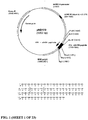
- Fragments A and B are subsequently purified and are ligated to generate plasmid pNB179 (5202 bp) ( FIG. 1 ).
- the plasmid pCRII NB151/154 is first digested by EcoRI.
- the EcoRI fragment (167 bp) is purified and finally digested by BsaWI to generate a EcoRI-BsaWI fragment (143 bp).
- the plasmid pCRII NB 152/153 is fisrt digested by EcoRI.
- the EcoRI fragment (235 bp) is purified and finally digested by BsaWI to generate a BsaWI-EcoRI fragment (220 bp).
- Construction of pNB209 is based on a pVR1012 plasmid (Vical Inc.) encoding the canine GHRH precursor (106 amino acid polypeptide).
- the DNA fragment corresponding to the cGHRH gene, with additional SalI and XbaI sites at respectively, the 5' and 3' ends, is amplified by PCR using primers NB361 and NB360, the plasmid pCRIINB151/152 as a template and the DNA Polymerase.
- the PCR fragment (345 bp) was purified by phenol-chloroform extraction and subsequently digested by SalI and XbaI to generate fragment A (327 bp).
- Plasmid pVR1012 is linearized by a SalI/XbaI digestion to generate fragment B (4880 bp).
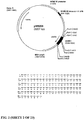
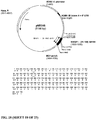
- FIG. 2 shows the plasmid map and the encoded ORF of pNB209.
- Plasmids pNB210/pNB211/pNB212/pNB213 pAB110-derived plasmids containing modified GHRH genes, encoding hybrid proteins containing the eukaryotic tPA leader peptide fused to the GHRH propeptide.
- the DNA fragment corresponding to the tPA (1-23 AA) with additional SalI and Eco47III sites at, respectively, the 5' and 3' ends, is obtained by PCR using primers NB355 and NB356, plasmid pAB110 as a template and the DNA Polymerase (J. Cline et al. 1996 and H. Hogrefe et al. 2002).
- the PCR fragment (184 bp) is purified by phenol-chloroform extraction and subsequently digested by SalI and Eco47III to generate fragment A (172 bp).
- the DNA fragment corresponding to the tPA (1-28 AA) with additional SalI and Nael sites at, respectively, the 5' and 3' ends, is obtained by PCR using primers NB355 and NB357, the plasmid pAB110 as a template and the DNA Polymerase.
- the PCR fragment (199 bp) is purified by phenol-chloroform extraction and subsequently digested by SalI and Nael to generate fragment B (187 bp).
- the DNA fragment corresponding to the deletion (1-19 AA) GHRH with additional NlaIV and XbaI sites at, respectively, the 5' and 3' ends, is obtained by PCR using primers NB358 and NB360, the plasmid pCRII NB151/152 as a template and the DNA Polymerase.
- the PCR fragment (281 bp) is purified by phenol-chloroform extraction and subsequently digested by NlaIV and XbaI to generate fragment C (265 bp).
- the DNA fragment corresponding to the deletion (1-20 AA) GHRH with additional StuI and XbaII sites at, respectively, the 5' and 3' ends, is obtained by PCR using primers NB359 and NB360, the plasmid pCRII NB151/152 as a template and the DNA Polymerase.
- the PCR fragment (278 bp) is purified by phenol-chloroform extraction and subsequently digested by StuI and XbaI to generate fragment D (262 bp).
- Plasmid pVR1012 is linearized by a SalI/XbaI digestion to generate fragment E (4880 bp).
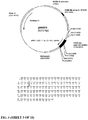
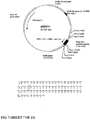
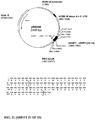
- FIG. 3 shows the plasmid map and the encoded ORF of pNB210.
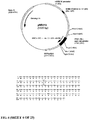
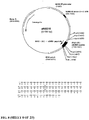
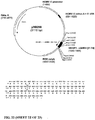
- FIG. 4 shows the plasmid map and the encoded ORF of pNB211.
- FIG. 5 shows the plasmid map and the encoded ORF of pNB212.
- FIG. 6 shows the plasmid map and the encoded ORF of pNB213.
- Plasmids pNB214/pNB215 Construction of plasmids pNB214/pNB215: pAB110-derived plasmids containing modified GHRH genes, encoding hybrid proteins containing the human tPA fused to the canine GHRH mature peptide.
- the DNA fragment corresponding to the peptide (31-74 AA) GHRH with additional Bst1107I and XbaII sites at, respectively, the 5' and 3' ends, is obtained by PCR using primers NB362 and NB363, the plasmid pCRII NB151/152 as a template and the DNA Polymerase (J. Cline et al. 1996 and H. Hogrefe et al. 2002).
- the PCR fragment (152 bp) is purified by phenol-chloroform extraction and subsequently digested by Bst1107II and XbaI to generate fragment F (136 bp).
- FIG. 7 shows the plasmid map and the encoded ORF of pNB214.
- FIG. 8 shows the plasmid map and the encoded ORF of pNB215.
- Fragment E, A and B are described in example 5.
- the canine pre-pro GHRH nucleotide sequence is optimized by removing cryptic splice sites, by adapting the codon usage to the one of Canis familiaris, by introducing Kozak consensus sequence in order to improve expression.
- Such a modified gene is obtained by synthesis: SEQ ID NO: 40.
- Construction of pNB216 is based on a pVR1012 plasmid (Vical Inc.) encoding the canine GHRH optimized precursor (106 amino acid polypeptide) SEQ ID NO: 40.
- the plasmid pCR-Script Amp-GHRH (Stratagene, Lajolla, CA, USA) inserting the optimized canine pre-proGHRH gene is digested with SalI and XbaI to generate a SalI-XbaI fragment (336 bp) and plasmid pVR1012 is linearized by a SalI/XbaI digestion to generate fragment E (4880 bp). These two fragments are subsequently purified and ligated to generate the final plasmid pNB216 (5216 bp).
- Plasmids pNB217/pNB218 pAB110-derived plasmids containing modified GHRH genes, encoding hybrid proteins containing the eukaryotic tPA leader peptide fused to the GHRH propeptide optimized.
- the DNA fragment corresponding to the deletion (1-20 AA) GHRH optimized with additional NlaIV and XbaI sites at, respectively, the 5' and 3' ends, is obtained by PCR using primers NB364 and NB365, the pCR-Script Amp-GHRH plasmid as a template and the DNA Polymerase.
- the PCR fragment (281 bp) is purified by phenol-chloroform extraction and subsequently digested by NlaIV and XbaI to generate fragment G (265 bp).
- Plasmid pVR1012 is linearized by a SalI/XbaI digestion to generate fragment E (4880 bp).
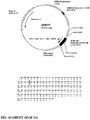
- FIG. 10 shows the plasmid map and the encoded ORF of pNB217.
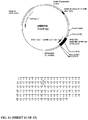
- FIG. 11 shows the plasmid map and the encoded ORF of pNB218.
- Fragment A and B are described in example 5.
- Plasmids pNB219/pNB220 pAB110-derived plasmids containing modified GHRH genes, encoding hybrid proteins containing the human tPA fused to the canine GHRH mature peptide optimized.
- the DNA fragment corresponding to the peptide (31-74 AA) GHRH optimized with additional Bst1107I and XbaI sites at, respectively, the 5' and 3' ends, is obtained by PCR using primers NB366 and NB367, the plasmid pCRII NB151/152 as a template and the DNA Polymerase (J. Cline et al. 1996 and H. Hogrefe et al. 2002).
- the PCR fragment (152 bp) is purified by phenol-chloroform extraction and subsequently digested by Bst1107I and XbaI to generate fragment H (136 bp).
- FIG. 12 shows the plasmid map and the encoded ORF of pNB219.
- FIG. 13 shows the plasmid map and the encoded ORF of pNB220.
- Fragment A and B are described in example 5.
- a method for low voltage electroporation for DNA uptake and expression in an animal can be adapted from Example 2 of U.S. patent publication 20040057941 .
- the method described herein can be modified to deliver the plasmid of the present description without undue experimentation.
- Direct intra-muscular plasmid DNA injection followed by electroporation is a method for the local and controlled delivery of plasmid DNA into skeletal muscle. It has the advantage that is uses low plasmid quantities (as low as 0.1 mg), rather than the high quantities typically used with passive delivery modalities.
- the mechanism of the increased plasmid uptake by electroporation probably occurs through newly created membrane pores with or without protein active transport.
- the degree of permeabilization of the muscle cells is dependent on the electric field intensity, length of pulses, shape and type of electrodes ( Bureau et al., Biochim Biophys Acta.
- the pSP-HV-GHRH system (a vector expressing porcine GHRH) was delivered to the left tibialis anterior muscle of healthy dogs via in vivo electroporation.
- a group of 4 dogs (2 males and 2 females) were used as controls and 3 groups of 8 dogs (4 males and 4 females) were injected with the pSP-HV-GHRH system.
- the dogs were injected with vehicle alone (control), or 200mcg, or 600mcg or 1000mcg of pSP-HV-GHRH followed by needle electroporation.
- An indication of increased systemic levels of GHRH and GH is an increase in serum IGF-I concentration.
- Increased IGF-I levels corresponding to higher GHRH levels are in agreement with other studies that utilized recombinant porcine GH ("pGH") in dogs. For example, there were dose-related increased serum IGF-I levels (approximately 2-10-fold) that correlated with the elevated serum GH levels in pGH-treated dogs.
- growth hormone releasing hormone stimulates the production and release from the anterior pituitary of growth hormone (GH), which in turn stimulates the production of IGF-I from the liver and other target organs.
- GHRH growth hormone releasing hormone
- GH growth hormone
- an indication of increased systemic levels of GHRH and GH is an increase in serum IGF-I concentration.
- the level of serum IGF-I in healthy dogs injected with 200, 600 and 1000 mcg of pSP-HV-GHRH were all higher 28 days post-injection when compared to the pre-injection values. Dogs injected with 600 mcg pSP-HV-GHRH showed the highest statistically significant increase (e.g. greater than 90%, p ⁇ 0.046) in IGF-I levels, which indicates that 600 mcg may be the optimal concentration for healthy dogs.
- Example 11 Construction of plasmids pNB240, pNB239 and pNB244.
- pNB240 is based on a pVR1012 plasmid (Vical Inc.) comprising a modified GHRH gene, encoding a hybrid protein containing the pre-proGHRH deleted of the propeptide C-terminus and fused to the c-myc epitope tag.
- Constructions of pNB239 and pNB244 are based on a pVR1012 plasmid (Vical Inc.) comprising a modified GHRH gene, encoding a hybrid protein containing the equine IGF1 (Insulin-like Growth Factor 1) peptide signal sequence (SSIGF1, disclosed in Genbank under the accession numbers U28070 (24-48 AA) and U85272) fused to the modified GHRH and fused to the c-myc epitope tag.
- equine IGF1 Insulin-like Growth Factor 1
- SSIGF1 peptide signal sequence
- the DNA fragment encoding the pre-proGHRH deleted of the propeptide C-terminus (corresponding to 1-74 AA) and fused to the c-myc epitope tag, with additional XbaI site at the 3' end, is amplified by PCR using primers PB091 and NB412, the plasmid pNB209 (see example 4) as a template and the DNA Polymerase.
- the PCR fragment (338 bp) was purified by phenol-chloroform extraction and subsequently digested by SalI and XbaI to generate fragment A (261 bp).
- the equine pre-pro IGF1 nucleotide sequence is optimized by removing cryptic splice sites, by adapting the codon usage, by introducing a Kozak consensus sequence before the start codon in order to improve expression.
- Such a modified gene is obtained by synthesis: SEQ ID NO: 65.
- the plasmid pCR-Script Amp-eIGF1 (Stratagene, Lajolla, CA, USA) comprising the optimized equine IGF1 gene is used as a template for PCR with primers NB393 and NB394 and the DNA Polymerase.
- the PCR fragment (424 bp) is purified by phenol-chloroform extraction and subsequently digested by SalI and XbaI to generate fragment F (408 bp).
- Plasmid pVR1012 is linearized by a SalI/XbaI digestion to generate fragment E (4880 bp).
- Fragments E and F are subsequently purified and are ligated to generate plasmid pNB231 (5288bp).
- the DNA fragment corresponding to the equine SSIFG1 (1-25 AA of FIGS. 15-18 ), with additional Nael site at the 3' end, is obtained by PCR using primers PB091 and NB398, plasmid pNB231 as a template and the DNA Polymerase (J. Cline et al. 1996 and H. Hogrefe et al. 2002).
- the PCR fragment (159 bp) is purified by phenol-chloroform extraction and subsequently digested by SalI and NaeI to generate fragment B (86 bp).
- the DNA fragment corresponding to the GHRH mature peptide (31-74 AA) fused to the c-myc epitope tag, with additional Bst1107I and XbaI sites at, respectively, the 5' and 3' ends, is obtained by PCR using primers NB362 and NB412, the plasmid pNB209 as a template and the DNA Polymerase.
- the PCR fragment (182 bp) is purified by phenol-chloroform extraction and subsequently digested by Bst1107I and XbaI to generate fragment C (166 bp).
- the DNA fragment corresponding to the GHRH pro-peptide deleted of the propeptide C-terminus (20-74 AA) fused to the c-myc epitope tag, with additional NlaIV and XbaI sites at, respectively, the 5' and 3' ends, is obtained by PCR using primers NB358 and NB412, the plasmid pNB209 as a template and the DNA Polymerase.
- the PCR fragment (215 bp) is purified by phenol-chloroform extraction and subsequently digested by Bst1107I and XbaI to generate fragment D (199 bp).
- Plasmid pVR1012 is linearized by a SalI/XbaI digestion to generate fragment E (4880 bp).
- FIG. 14 shows the plasmid map and the encoded ORF of pNB240.
- FIG. 15 shows the plasmid map and the encoded ORF of pNB239.
- FIG. 16 shows the plasmid map and the encoded ORF of pNB244.
- CHO-K1 cells Choinese hamster ovary cells, available before the American Tissue Culture Collection ATCC under Cat. No. CCl-61
- Lipofectamin 2000 CHO-K1 cells at 90% confluency in 6 cm diameter plates were transfected with 5 ⁇ g plasmid and 10 ⁇ l lipofectamine each, according manufacturer's instructions. After transfection, cells were cultivated in MEM-glutamax medium containing 1% FCV (fetal calf serum) for 24 hours. Culture supernatants were harvested and concentrated 40 times by trichoroacetic acid precipitation of proteins.
- FCV fetal calf serum
- Plasmid pNB240 encodes a hybrid protein containing aminoacids 1 to 74 of the preproGHRH and fused to the c-myc epitope tag.
- Plasmid pNB239 encodes a hybrid protein containing the equine IGF1 peptide signal sequence (SSIGF1) fused to the GHRH mature peptide (31-74 AA) and the c-myc epitope tag.
- SSIGF1 equine IGF1 peptide signal sequence
- Plasmid pNB244 encodes a hybrid protein containing the equine IGF1 peptide signal sequence (SSIGF1) fused to the GHRH propeptide (20-74 AA) and the c-myc epitope tag.
- SSIGF1 equine IGF1 peptide signal sequence
- Table 1 pNB239 pNB240 pNB244 Cell extracts Supernatants Cell extracts Supernatants Cell extracts Supernatants Cell extracts Supernatants Cell extracts Supernatants Major 9,5 kDa Major 9,5 kDa Minor 9,5 kDa Minor 7,5 kDa Minor 7,5 kDa Major 7,5 kDa Major 6,3 kDa Major 6,3 kDa Minor 6,3 kDa Minor 6,3 kDa Minor 6,3 kDa Minor 6,3 kDa Minor 6,3 kDa Minor 6,3 kDa Minor 6,3 kDa Minor 6,3 kDa Minor 6,3 kDa Minor 6,3 kDa Minor 6,3 kDa Minor 6,3 kDa Minor 6,3 kDa Minor 6,3 kDa Minor 6,3 kDa Minor 6,3 kDa Minor 6,3 kDa Minor 6,3 kDa Minor 6,3 kDa Minor 6,3 kDa Minor 6,3 kDa
- Constructions of pNB232 and pNB245 are based on a pVR1012 plasmid (Vical Inc.) comprising a modified GHRH gene, encoding a hybrid protein containing the equine IGF1 peptide sequence signal (SSIGF1, disclosed in Genbank under the accession numbers U28070 (24-48 AA) and U85272) fused to the modified GHRH.
- a pVR1012 plasmid Vical Inc.
- SSIGF1 equine IGF1 peptide sequence signal
- the DNA fragment corresponding to the propeptide GHRH deleted of the propeptide N-terminus (corresponding to 31-106 AA) with additional Bst1107I and XbaI sites at, respectively, the 5' and 3' ends, is obtained by PCR using primers NB362 and NB421, the plasmid pNB209 (see example 4) as a template and the DNA Polymerase (J. Cline et al. 1996 and H. Hogrefe et al. 2002).
- the PCR fragment (248 bp) is purified by phenol-chloroform extraction and subsequently digested by Bst1107I and XbaI to generate fragment G (232 bp).
- Plasmid pVR1012 is linearized by a SalI/XbaI digestion to generate fragment H (4880 bp).
- FIG. 17 shows the plasmid map and the encoded ORF of pNB232.
- FIG. 18 shows the plasmid map and the encoded ORF of pNB245.
- the fragment B is described in example 11.
- the fragment F is described in example 6.
- the pNB228 plasmid corresponds to the pVR1012 plasmid (Vical Inc.) backbone containing the nucleic acid fragment encoding the preproGHRH peptide deleted of the carboxy-terminal propeptide.
- the pNB297 plasmid corresponds to the pVR1012 plasmid (Vical Inc.) backbone containing the nucleic acid fragment encoding the amino acids 1 to 74 of the preproGHRH and a glycine at its carboxy-terminal end.
- the carboxy-terminal glycine should be easily amidated by amidation enzyme.
- the pNB298 plasmid corresponds to the pVR1012 plasmid (Vical Inc.) backbone containing the nucleic acid fragment encoding the equine IGF1 signal sequence (SSIGF1) fused to the mature GHRH (31-74 AA) and a glycine at its carboxy-terminal end.
- SSIGF1 equine IGF1 signal sequence
- the DNA fragment corresponding to the preproGHRH deleted of the carboxy-terminal propeptide, with additional SalI and XbaI sites at the 5' and 3' ends, respectively, is amplified by PCR using the primers NB361 and NB363, the plasmid pNB209 as a template and the DNA polymerase.
- the PCR fragment (249 bp) is purified by phenol-chloroform extraction and subsequently digested by SalI and XbaI to generate the fragment A (231 bp).
- the DNA fragment corresponding to the preproGHRH (1-74 AA) and a glycine at its carboxy-terminal end, with additional SalI and XbaI sites at the 5' and 3' ends, respectively, is amplified by PCR using the primers NB361 and NB476, the plasmid pNB209 as a template and the DNA polymerase.
- the PCR fragment (252 bp) is purified by phenol-chloroform extraction and subsequently digested by SalI and XbaI to generate the fragment B (234 bp).
- the DNA fragment corresponding to the equine IGF1 signal sequence (SSIGF1) fused to the mature GHRH (31-74 AA) and a glycine at its carboxy-terminal end, with additional SalI and XbaI sites at the 5' and 3' ends, respectively, is obtained by PCR using the primers NB393 and NB476, the plasmid pNB232 as a template and the DNA polymerase (J. Cline et al. 1996 and H. Hogrefe et al. 2002).
- the PCR fragment (241 bp) is purified by phenol-chloroform extraction and subsequently digested by SalI and XbaI to generate the fragment C (225 bp).
- the plasmid pVR1012 is linearized by a SalI/XbaI digestion to generate the fragment E (4880 bp).
- FIG. 19 shows the plasmid map and the encoded ORF of pNB228.
- FIG. 20 shows the plasmid map and the encoded ORF of pNB297.
- FIG. 21 shows the plasmid map and the encoded ORF of pNB298.
- Plasmids similar to plasmids pNB297 and pNB298 containing the porcine GHRH (SEQ ID NO: 82) instead of canine GHRH sequence according to the method described in example 13 and examples 6, 11, 12 using the following primers, are constructed:
- the pNB299 plasmid corresponds to the pVR1012 plasmid (Vical Inc.) backbone containing the nucleic acid fragment encoding the equine IGF1 signal sequence (SSIGF1) fused to the mature GHRH (31-74 AA).
- the pNB300 plasmid corresponds to the pVR1012 plasmid (Vical Inc.) backbone containing the nucleic acid fragment encoding the equine IGF1 signal sequence (SSIGF1) fused to the mature GHRH (amino acids 31-74 of the precursor) and the canine serum albumin (amino acids 25 to 608 of the precursor) through a linker tetrapeptide (GSGS).
- SSIGF1 equine IGF1 signal sequence
- the DNA fragment corresponding to the equine IGF1 signal sequence (SSIGF1) fused to the mature GHRH (31-74 AA), with additional SalI and PshAI sites at, respectively, the 5' and 3' ends, is obtained by PCR using the primers NB393 and NB477, the plasmid pNB232 as a template and the DNA polymerase.
- the PCR fragment (250 bp) is purified by phenol-chloroform extraction and subsequently digested by SalI and XbaI to generate the fragment A (236 bp).
- the plasmid pVR1012 is linearized by a SalI/XbaI digestion to generate the fragment E (4880 bp).
- FIG. 22 shows the plasmid map and the encoded ORF of pNB299.
- RNAs are extracted from the tissue using a kit from QIAGEN (Rneasy Mini Protocol for Isolation of Total RNA Catalog ref. 74104).
- the cells from the liver are dissociated with a Potter Dounce in 600 ⁇ l of denaturing solution from the kit.
- This solution contains guanidinium isothiocyanate and beta-mercaptoethanol.
- the tissue homogenate is centrifuged 5 minutes at 14000 RPM (rotations per minute) to remove debris. 600 ⁇ l of a 70 % ethanol solution is added and the mixture is loaded onto a Rneasy colomn and centrifuged 15 seconds at 10000 RPM.
- the column is rinsed two times with the RW1 buffer provided with the kit.
- the RNA is eluted with 50 ⁇ l RNAse-free buffer after centrifugation 1 minute at 14000 RPM.
- the cDNAs are synthesized in 20 ⁇ l reaction mixture containing 5 mM MgCl2, 20 mM Tris HCl pH 8.3, 100mM KCl, 1 mM DTT, 1 mM each dNTP, 20 units RNAse inhibitor, 50 units Moloney murine leukemia virus reverse transcriptase, 2.5 ⁇ M random hexanucleotide primers and 2 ⁇ l of total RNA from the liver.
- the reverse transcription step is done with the following cycle: 23°C for 5 minutes, 42°C for 20 minutes, 99°C for 5 minutes and 10°C for 5 minutes.
- the cDNAs pool is amplified by Polymerase Chain Reaction (PCR) using the DNA polymerase and the following oligonucleotides for the reaction:
- the PCR fragment (1784 bp) is purified by phenol-chloroform extraction and subsequently digested by NaeI and XbaI to generate the fragment B (1768 bp).
- the plasmid pNB299 is linearized by a PshAI/XbaI digestion to generate the fragment C (5098 bp).
- FIG. 23 shows the plasmid map and the encoded ORF of pNB300.
- Plasmids similar to plasmids pNB299 and pNB300 containing the porcine GHRH (SEQ ID NO: 82) instead of canine GHRH sequence according to the method described in the present example 14 using the following primers, are constructed:
Landscapes
- Health & Medical Sciences (AREA)
- Chemical & Material Sciences (AREA)
- Life Sciences & Earth Sciences (AREA)
- Organic Chemistry (AREA)
- Medicinal Chemistry (AREA)
- General Health & Medical Sciences (AREA)
- Nuclear Medicine, Radiotherapy & Molecular Imaging (AREA)
- General Chemical & Material Sciences (AREA)
- Chemical Kinetics & Catalysis (AREA)
- Bioinformatics & Cheminformatics (AREA)
- Pharmacology & Pharmacy (AREA)
- Engineering & Computer Science (AREA)
- Animal Behavior & Ethology (AREA)
- Public Health (AREA)
- Veterinary Medicine (AREA)
- Endocrinology (AREA)
- Physical Education & Sports Medicine (AREA)
- Diabetes (AREA)
- Hematology (AREA)
- Immunology (AREA)
- Gastroenterology & Hepatology (AREA)
- Genetics & Genomics (AREA)
- Proteomics, Peptides & Aminoacids (AREA)
- Orthopedic Medicine & Surgery (AREA)
- Rheumatology (AREA)
- Toxicology (AREA)
- Zoology (AREA)
- Molecular Biology (AREA)
- Biophysics (AREA)
- Biochemistry (AREA)
- Obesity (AREA)
- Child & Adolescent Psychology (AREA)
- Dermatology (AREA)
- Medicines That Contain Protein Lipid Enzymes And Other Medicines (AREA)
- Peptides Or Proteins (AREA)
- Micro-Organisms Or Cultivation Processes Thereof (AREA)
- Pharmaceuticals Containing Other Organic And Inorganic Compounds (AREA)
- Medicines Containing Material From Animals Or Micro-Organisms (AREA)
Claims (12)
- Expressionsvektor, der ein Polynucleotid umfasst, das ein Hybridprotein codiert, das ein IGF-1-Signalpeptid vom Pferd enthält, das mit einem reifen GHRH vom Hund und einem c-myc-Epitop-Tag fusioniert ist, wobei das Polynucleotid mit einem Enhancer und/oder Promotor funktionell verknüpft ist und wobei das reife GHRH vom Hund die als Aminosäuren 31-74 von SEQ ID NO:1 gezeigte Aminosäuresequenz hat (Seite 7, Absatz [0049] und Seiten 31-32, Absatz [0136]).
- Expressionsvektor nach Anspruch 1, wobei das Hybridprotein die als SEQ ID NO:58 gezeigte Aminosäuresequenz umfasst (Seite 6, Absatz [0039] und Figur 15, Seite 15/23).
- Expressionsvektor, der ein Polynucleotid umfasst, das ein Hybridprotein codiert, das ein IGF-1-Signalpeptid vom Pferd enthält, das mit einem proGHRH vom Hund und einem c-myc-Epitop-Tag fusioniert ist, wobei das Polynucleotid mit einem Enhancer und/oder Promotor funktionell verknüpft ist und wobei das proGHRH vom Hund die als Aminosäuren 20-74 von SEQ ID NO:1 gezeigte Aminosäuresequenz hat (Seite 7, Absatz [0049] und Seiten 31-32, Absatz [0136]).
- Expressionsvektor nach Anspruch 3, wobei das Hybridprotein die als SEQ ID NO:60 gezeigte Aminosäuresequenz umfasst (Seite 6, Absatz [0040] und Figur 16, Seite 16/23).
- Formulierung für die Abgabe (Delivery) und Expression eines reifen GHRH vom Hund in einer Zelle, wobei die Formulierung den Vektor nach Anspruch 1 oder 2 und einen pharmazeutisch oder veterinärmedizinisch verträglichen Träger, Trägerstoff oder Exzipienten umfasst.
- Formulierung für die Abgabe und Expression eines proGHRH vom Hund in einer Zelle, wobei die Formulierung den Vektor nach Anspruch 3 oder 4 und einen pharmazeutisch oder veterinärmedizinisch verträglichen Träger, Trägerstoff oder Exzipienten umfasst.
- Formulierung nach Anspruch 5, wobei der Träger, Trägerstoff oder Exzipient die Transfektion ermöglicht und/oder die Erhaltung des Vektors oder Proteins verbessert.
- Formulierung nach Anspruch 6, wobei der Träger, Trägerstoff oder Exzipient die Transfektion ermöglicht und/oder die Erhaltung des Vektors oder Proteins verbessert.
- Verwendung eines Expressionsvektors nach einem der Ansprüche 1 bis 4 oder einer Formulierung nach Anspruch 5 oder 6 zur Herstellung eines Medikaments für die Behandlung von Anämie, Kachexie, Adipositas oder Osteoporose in einem Wirbeltier.
- Expressionsvektor nach einem der Ansprüche 1 bis 4 oder Formulierung nach Anspruch 5 oder 6 für die Verwendung bei der Behandlung von Anämie, Kachexie, Adipositas oder Osteoporose in einem Wirbeltier.
- Verwendung nach Anspruch 9, wobei das Wirbeltier ein Rind, Hund oder Schwein ist.
- Expressionsvektor oder Formulierung zur Verwendung nach Anspruch 10, wobei das Wirbeltier ein Rind, Hund oder Schwein ist.
Applications Claiming Priority (3)
| Application Number | Priority Date | Filing Date | Title |
|---|---|---|---|
| US10/838,122 US7351815B2 (en) | 2003-05-01 | 2004-05-03 | Canine pre-proGHRH and mature GHRH genes |
| US11/015,461 US7468273B2 (en) | 2003-05-01 | 2004-12-17 | Canine GHRH gene, polypeptides and methods of use |
| PCT/US2005/015522 WO2005085448A2 (en) | 2003-05-01 | 2005-05-02 | Canine ghrh gene, polypeptides and methdos of use |
Publications (2)
| Publication Number | Publication Date |
|---|---|
| EP1740702A2 EP1740702A2 (de) | 2007-01-10 |
| EP1740702B1 true EP1740702B1 (de) | 2017-04-05 |
Family
ID=37487906
Family Applications (1)
| Application Number | Title | Priority Date | Filing Date |
|---|---|---|---|
| EP05752603.0A Expired - Lifetime EP1740702B1 (de) | 2004-05-03 | 2005-05-02 | Ghrh gen vom hunde, polypeptide und methoden zu deren gebrauch |
Country Status (6)
| Country | Link |
|---|---|
| US (1) | US7468273B2 (de) |
| EP (1) | EP1740702B1 (de) |
| JP (1) | JP2007535936A (de) |
| AU (1) | AU2005219885B2 (de) |
| CA (1) | CA2566307C (de) |
| WO (1) | WO2005085448A2 (de) |
Families Citing this family (6)
| Publication number | Priority date | Publication date | Assignee | Title |
|---|---|---|---|---|
| EP3147296A1 (de) * | 2005-11-14 | 2017-03-29 | Merial, Inc. | Gentherapie für nierenversagen |
| US7771995B2 (en) * | 2005-11-14 | 2010-08-10 | Merial Limited | Plasmid encoding human BMP-7 |
| NZ596453A (en) | 2009-05-22 | 2013-09-27 | Merial Ltd | Antibiotic-free plasmid |
| US20130261058A1 (en) * | 2010-09-16 | 2013-10-03 | University Of Miami | Acceleration of wound healing by growth hormone releasing hormone and its agonists |
| US8993316B2 (en) | 2011-11-16 | 2015-03-31 | Brian P. Hanley | Methods and compositions for gene therapy and GHRH therapy |
| RU2539768C2 (ru) * | 2012-02-17 | 2015-01-27 | Общество с ограниченной ответственностью "ЭдиВак" | ИНТЕГРАТИВНАЯ ГЕНЕТИЧЕСКАЯ КОНСТРУКЦИЯ pWpr-le |
Family Cites Families (82)
| Publication number | Priority date | Publication date | Assignee | Title |
|---|---|---|---|---|
| US4394448A (en) | 1978-02-24 | 1983-07-19 | Szoka Jr Francis C | Method of inserting DNA into living cells |
| US4769331A (en) | 1981-09-16 | 1988-09-06 | University Patents, Inc. | Recombinant methods and materials |
| US5505941A (en) | 1981-12-24 | 1996-04-09 | Health Research, Inc. | Recombinant avipox virus and method to induce an immune response |
| US5110587A (en) | 1981-12-24 | 1992-05-05 | Health Research, Incorporated | Immunogenic composition comprising synthetically modified vaccinia virus |
| US5833975A (en) | 1989-03-08 | 1998-11-10 | Virogenetics Corporation | Canarypox virus expressing cytokine and/or tumor-associated antigen DNA sequence |
| US5338683A (en) | 1981-12-24 | 1994-08-16 | Health Research Incorporated | Vaccinia virus containing DNA sequences encoding herpesvirus glycoproteins |
| US4722848A (en) | 1982-12-08 | 1988-02-02 | Health Research, Incorporated | Method for immunizing animals with synthetically modified vaccinia virus |
| US4769330A (en) | 1981-12-24 | 1988-09-06 | Health Research, Incorporated | Modified vaccinia virus and methods for making and using the same |
| US5174993A (en) | 1981-12-24 | 1992-12-29 | Health Research Inc. | Recombinant avipox virus and immunological use thereof |
| US4603112A (en) | 1981-12-24 | 1986-07-29 | Health Research, Incorporated | Modified vaccinia virus |
| US4745051A (en) | 1983-05-27 | 1988-05-17 | The Texas A&M University System | Method for producing a recombinant baculovirus expression vector |
| PT79094B (en) | 1983-08-29 | 1986-08-14 | Salk Inst For Biological Studi | Grf analogs |
| EP0173552B1 (de) | 1984-08-24 | 1991-10-09 | The Upjohn Company | Rekombinante DNA-Verbindungen und Expression von Polypeptiden wie tPA |
| US4945050A (en) | 1984-11-13 | 1990-07-31 | Cornell Research Foundation, Inc. | Method for transporting substances into living cells and tissues and apparatus therefor |
| US5168062A (en) | 1985-01-30 | 1992-12-01 | University Of Iowa Research Foundation | Transfer vectors and microorganisms containing human cytomegalovirus immediate-early promoter-regulatory DNA sequence |
| US4968615A (en) | 1985-12-18 | 1990-11-06 | Ciba-Geigy Corporation | Deoxyribonucleic acid segment from a virus |
| US4963481A (en) | 1985-12-18 | 1990-10-16 | Genetics Institute Inc | Promoter system |
| AU613316B2 (en) | 1986-09-12 | 1991-08-01 | Genentech Inc. | Improved recombinant expression |
| IE872748L (en) | 1986-10-16 | 1988-04-16 | Arjomari Europ | Polypeptides derived from the evvelope gene of human¹immunodeficiency virus in recombinant baculovirus infected¹insect cells |
| GB8717430D0 (en) | 1987-07-23 | 1987-08-26 | Celltech Ltd | Recombinant dna product |
| DE3743138A1 (de) | 1987-12-18 | 1989-09-14 | Mayr Christian Gmbh & Co Kg | Schleifringlose, elektromagnetische ueberlastkupplung |
| EP0386185A1 (de) | 1988-07-29 | 1990-09-12 | IntraCel Corporation | Verfahren zur genexpression von heterologischen proteinen durch in-vivo-zelltransfektion |
| CA2003300A1 (en) | 1988-11-21 | 1990-05-21 | Franklin Volvovitz | Skin test and test kit for aids |
| US5703055A (en) | 1989-03-21 | 1997-12-30 | Wisconsin Alumni Research Foundation | Generation of antibodies through lipid mediated DNA delivery |
| US5591439A (en) | 1989-03-24 | 1997-01-07 | The Wistar Institute Of Anatomy And Biology | Recombinant cytomegalovirus vaccine |
| US5552143A (en) | 1989-03-24 | 1996-09-03 | The Wistar Institute Of Anatomy & Biology | Recombinant cytomegalovirus vaccine |
| US4917196A (en) | 1989-08-15 | 1990-04-17 | Kennametal Inc. | Excavating tooth for an earth auger |
| GB9001766D0 (en) | 1990-01-25 | 1990-03-28 | Univ Court Of The University O | Vaccines |
| IL98210A0 (en) | 1990-05-29 | 1992-06-21 | Lilly Co Eli | Precursor forms of porcine growth hormone releasing factor and related dna compounds |
| MY109299A (en) | 1990-08-15 | 1996-12-31 | Virogenetics Corp | Recombinant pox virus encoding flaviviral structural proteins |
| US5514375A (en) | 1990-08-15 | 1996-05-07 | Virogenetics Corporation | Flavivirus recombinant poxvirus vaccine |
| DE69233158T2 (de) | 1991-03-07 | 2004-05-13 | Connaught Technology Corp., Greenville | Gentechnologisch hergestellter stamm für impfstoffe |
| US5997878A (en) | 1991-03-07 | 1999-12-07 | Connaught Laboratories | Recombinant poxvirus-cytomegalovirus, compositions and uses |
| US5843456A (en) | 1991-03-07 | 1998-12-01 | Virogenetics Corporation | Alvac poxvirus-rabies compositions and combination compositions and uses |
| US5382425A (en) | 1992-01-13 | 1995-01-17 | Syntro Corporation | Recombinant swinepox virus |
| US5801029A (en) | 1993-02-16 | 1998-09-01 | Onyx Pharmaceuticals, Inc. | Cytopathic viruses for therapy and prophylaxis of neoplasia |
| US6133028A (en) | 1993-05-28 | 2000-10-17 | Transgene S.A. | Defective adenoviruses and corresponding complementation lines |
| US6485729B1 (en) | 1993-09-13 | 2002-11-26 | Protein Sciences Corporation | Neuraminidase-supplemented compositions |
| FR2712603B1 (fr) | 1993-11-18 | 1996-02-09 | Centre Nat Rech Scient | Virus recombinants, préparation et utilisation en thérapie génique. |
| US5529780A (en) | 1994-03-30 | 1996-06-25 | Virogenetics Corporation | Nucleotide and amino acid sequences of canine herpesvirus gB and gC |
| FR2728795B1 (fr) | 1994-12-30 | 1997-03-21 | Rhone Merieux | Vaccin vivant recombinant aviaire, utilisant comme vecteur un virus herpes aviaire |
| JPH11504631A (ja) | 1995-04-25 | 1999-04-27 | バイカル インコーポレイテッド | Dna/脂質複合体の単一バイアル製剤 |
| FR2741806B1 (fr) | 1995-11-30 | 1998-02-20 | Rhone Merieux | Vaccin vivant recombinant a base d'herpesvirus felin de type 1, notamment contre la peritonite infectieuse feline |
| US5846946A (en) | 1996-06-14 | 1998-12-08 | Pasteur Merieux Serums Et Vaccins | Compositions and methods for administering Borrelia DNA |
| FR2750866B1 (fr) | 1996-06-27 | 1998-11-27 | Rhone Merieux | Vaccin vivant recombinant aviaire, utilisant comme vecteur le virus de la laryngotracheite infectieuse aviaire |
| FR2750865B1 (fr) | 1996-06-27 | 1998-12-04 | Rhone Merieux | Vaccin vivant recombinant a base d'herpesvirus canin, notamment contre la maladie de carre, la rage ou le virus parainfluenza de type 2 |
| EP0979101B1 (de) | 1996-07-03 | 2010-10-27 | Merial, Inc. | Rekombinanter hunde-adenovirus 2 (cav2), welcher exogene dna enthält |
| US6090393A (en) | 1996-07-03 | 2000-07-18 | Merial | Recombinant canine adenoviruses, method for making and uses thereof |
| US6156567A (en) | 1996-07-03 | 2000-12-05 | Merial | Truncated transcriptionally active cytomegalovirus promoters |
| FR2751228B1 (fr) | 1996-07-19 | 1998-11-20 | Rhone Merieux | Vaccin polynucleotidique bovin pour voie intradermique |
| FR2751227B1 (fr) | 1996-07-19 | 1998-11-27 | Rhone Merieux | Formule de vaccin polynucleotidique contre les pathologies canines, notamment les pathologies respiratoires et digestives |
| FR2751229B1 (fr) | 1996-07-19 | 1998-11-27 | Rhone Merieux | Formule de vaccin polynucleotidique notamment contre la pathologie respiratoire des bovins |
| FR2751223B1 (fr) | 1996-07-19 | 1998-12-04 | Rhone Merieux | Formule de vaccin polynucleotidique felin |
| FR2751226B1 (fr) | 1996-07-19 | 1998-11-27 | Rhone Merieux | Formule de vaccin polynucleotidique contre les pathologies du cheval |
| FR2751225B1 (fr) | 1996-07-19 | 1998-11-27 | Rhone Merieux | Formule de vaccin polynucleotidique aviaire |
| FR2751224B1 (fr) | 1996-07-19 | 1998-11-20 | Rhone Merieux | Formule de vaccin polynucleotidique contre les pathologies respiratoires et de reproduction des porcs |
| PT904392E (pt) | 1996-10-17 | 2001-06-29 | Oxford Biomedica Ltd | Vectores retrovirais |
| FR2757061B1 (fr) | 1996-12-16 | 1999-03-26 | Rhone Merieux | Vaccin vivant recombinant aviaire, utilisant comme vecteur le virus de la laryngotracheite infectieuse aviaire |
| FR2758986B1 (fr) | 1997-01-31 | 1999-04-30 | Rhone Merieux | Vaccin vivant recombinant aviaire, utilisant comme vecteur le virus de la laryngotracheite infectieuse aviaire |
| US6183752B1 (en) | 1997-02-05 | 2001-02-06 | Pasteur Merieux Serums Et Vaccins | Restenosis/atherosclerosis diagnosis, prophylaxis and therapy |
| US6368603B1 (en) | 1997-03-05 | 2002-04-09 | Merial Limited | Lyme combination compositions and uses |
| US6004777A (en) | 1997-03-12 | 1999-12-21 | Virogenetics Corporation | Vectors having enhanced expression, and methods of making and uses thereof |
| US5990091A (en) | 1997-03-12 | 1999-11-23 | Virogenetics Corporation | Vectors having enhanced expression, and methods of making and uses thereof |
| AU8444798A (en) | 1997-06-30 | 1999-01-25 | Centre National De La Recherche Scientifique | Improved method for transferring nucleic acid into the striped muscle and combination therefor |
| AU8589998A (en) | 1997-07-24 | 1999-02-16 | Valentis, Inc. | Ghrh expression system and methods of use |
| US6348450B1 (en) | 1997-08-13 | 2002-02-19 | The Uab Research Foundation | Noninvasive genetic immunization, expression products therefrom and uses thereof |
| FR2781159B1 (fr) | 1998-07-06 | 2000-10-06 | Merial Sas | Vaccin circovirus et parvovirus porcin |
| US6391314B1 (en) | 1997-10-03 | 2002-05-21 | Merial | Porcine circoviruses vaccines diagnostic reagents |
| US6224882B1 (en) | 1997-11-07 | 2001-05-01 | Protein Science Corp. | Insect cells or fractions as adjuvant for antigens |
| ES2373406T3 (es) | 1997-12-22 | 2012-02-03 | Oxford Biomedica (Uk) Limited | Vectores basados en el virus de la anemia infecciosa equina (vaie). |
| US6294176B1 (en) | 1998-07-10 | 2001-09-25 | Schering-Plough Veterinary Corp. | Recombinant raccoonpox virus and uses thereof as a vaccine in mammalian and avian species |
| US6103526A (en) | 1998-10-08 | 2000-08-15 | Protein Sciences Corporation | Spodoptera frugiperda single cell suspension cell line in serum-free media, methods of producing and using |
| EP1052286A3 (de) | 1999-04-12 | 2001-07-25 | Pfizer Products Inc. | Wachstumshormon- (GH) und Wachstumshormon-freisetzenden Hormon (GHRH) enthaltende Zusammensetzungen |
| US6497883B1 (en) | 1999-06-10 | 2002-12-24 | Merial | Porcine circovirus recombinant poxvirus vaccine |
| FR2796397B1 (fr) | 1999-07-16 | 2006-09-01 | Merial Sas | Genes de calicivirus felin et vaccins notamment vaccins recombines |
| US6852705B2 (en) | 2000-01-21 | 2005-02-08 | Merial | DNA vaccines for farm animals, in particular bovines and porcines |
| EP1203819A3 (de) | 2000-10-06 | 2002-08-07 | Transgene S.A. | Entzündungshemmende Vektoren |
| EP1205551A1 (de) | 2000-11-09 | 2002-05-15 | Pfizer Products Inc. | Wachstumshormon- (GH) und Wachstumshormon-freisetzenden Hormon (GHRH) enthaltende Zusammensetzungen |
| FR2829498B1 (fr) | 2001-09-11 | 2003-11-28 | Merial Sas | Igf-1 comme adjuvant de vaccin felin, notamment contre les retrovirus felins |
| AU2002357143B2 (en) | 2001-12-11 | 2009-07-30 | Advisys, Inc. | Growth hormone releasing hormone supplementation for treating chronically ill subjects |
| WO2004016742A2 (en) * | 2002-08-14 | 2004-02-26 | Immerge Biotherapeutics, Inc. | α(1,3)-GALACTOSYLTRANSFERASE NULL CELLS, METHODS OF SELECTING AND α(1,3)-GALACTOSYLTRANSFERASE NULL SWINE PRODUCED THEREFROM |
| HUE034672T2 (hu) | 2003-05-01 | 2018-02-28 | Merial Inc | Kutya GHRH-gén, polipeptidek és eljárások alkalmazásukra |
-
2004
- 2004-12-17 US US11/015,461 patent/US7468273B2/en not_active Expired - Lifetime
-
2005
- 2005-05-02 EP EP05752603.0A patent/EP1740702B1/de not_active Expired - Lifetime
- 2005-05-02 CA CA2566307A patent/CA2566307C/en not_active Expired - Lifetime
- 2005-05-02 WO PCT/US2005/015522 patent/WO2005085448A2/en not_active Ceased
- 2005-05-02 JP JP2007511544A patent/JP2007535936A/ja active Pending
- 2005-05-02 AU AU2005219885A patent/AU2005219885B2/en not_active Expired
Also Published As
| Publication number | Publication date |
|---|---|
| CA2566307C (en) | 2014-07-15 |
| US20050164946A1 (en) | 2005-07-28 |
| AU2005219885A1 (en) | 2005-09-15 |
| WO2005085448A8 (en) | 2007-09-13 |
| US7468273B2 (en) | 2008-12-23 |
| EP1740702A2 (de) | 2007-01-10 |
| AU2005219885B2 (en) | 2012-05-10 |
| WO2005085448A2 (en) | 2005-09-15 |
| JP2007535936A (ja) | 2007-12-13 |
| CA2566307A1 (en) | 2005-09-15 |
Similar Documents
| Publication | Publication Date | Title |
|---|---|---|
| EP0525838A2 (de) | Analogen von Wachstum-Hormon-befreundem Hormon | |
| IL98638A (en) | Analogs of the factor that releases human growth hormone, their preparation and pharmaceutical preparations that contain them | |
| EP1618197B1 (de) | Ghrh gen eines hundes, polypeptide und methoden zu dessen verwending | |
| EP1740702B1 (de) | Ghrh gen vom hunde, polypeptide und methoden zu deren gebrauch | |
| DK1740702T3 (en) | DOG-GHRH GENES, POLYPEPTIDES AND METHODS OF USE | |
| US20060034867A1 (en) | Needle-free administration of FeLV vaccines | |
| HK1095047A (en) | Canine ghrh gene, polypeptides and methods of use | |
| HK1095047B (en) | Canine ghrh gene, polypeptides and methods of use | |
| HK1078901B (en) | Canine ghrh gene, polypeptides and methods of use | |
| HK1078901A (en) | Canine ghrh gene, polypeptides and methods of use | |
| MXPA06012693A (es) | Gen grhr canino, polipeptidos y metodos de uso. | |
| HUE033580T2 (hu) | Kutyaféle GHRH génje, polipeptidjei és eljárás alkalmazásukra | |
| CN1288754A (zh) | 提高饲料效率和家畜生长速度的基因处理 | |
| US20110034544A1 (en) | COMPOSITIONS COMPRISING GHRH AND GnRH AND METHODS OF USING THE SAME | |
| WO2009065121A1 (en) | Increased stability of a dna formulation by including poly-l-glutamate | |
| WO2005016964A2 (en) | Canine specific growth hormone releasing hormone | |
| MC et al. | GHRH ZUR VERWENDUNG BEI DER BEHANDLUNG VON CHRONISCHER NIERENINSUFFIZIENZ GHRH POUR LE TRAITEMENT DES INSUFFISANCES RENALES CHRONIQUES |
Legal Events
| Date | Code | Title | Description |
|---|---|---|---|
| PUAI | Public reference made under article 153(3) epc to a published international application that has entered the european phase |
Free format text: ORIGINAL CODE: 0009012 |
|
| 17P | Request for examination filed |
Effective date: 20060228 |
|
| AK | Designated contracting states |
Kind code of ref document: A2 Designated state(s): AT BE BG CH CY CZ DE DK EE ES FI FR GB GR HU IE IS IT LI LT LU MC NL PL PT RO SE SI SK TR |
|
| AX | Request for extension of the european patent |
Extension state: AL BA HR LV MK YU |
|
| REG | Reference to a national code |
Ref country code: HK Ref legal event code: DE Ref document number: 1095047 Country of ref document: HK |
|
| RIC1 | Information provided on ipc code assigned before grant |
Ipc: C07K 14/60 20060101AFI20070719BHEP |
|
| 17Q | First examination report despatched |
Effective date: 20100302 |
|
| RAP1 | Party data changed (applicant data changed or rights of an application transferred) |
Owner name: MERIAL, INC. |
|
| GRAP | Despatch of communication of intention to grant a patent |
Free format text: ORIGINAL CODE: EPIDOSNIGR1 |
|
| INTG | Intention to grant announced |
Effective date: 20161028 |
|
| GRAS | Grant fee paid |
Free format text: ORIGINAL CODE: EPIDOSNIGR3 |
|
| STAA | Information on the status of an ep patent application or granted ep patent |
Free format text: STATUS: GRANT OF PATENT IS INTENDED |
|
| GRAA | (expected) grant |
Free format text: ORIGINAL CODE: 0009210 |
|
| STAA | Information on the status of an ep patent application or granted ep patent |
Free format text: STATUS: THE PATENT HAS BEEN GRANTED |
|
| AK | Designated contracting states |
Kind code of ref document: B1 Designated state(s): AT BE BG CH CY CZ DE DK EE ES FI FR GB GR HU IE IS IT LI LT LU MC NL PL PT RO SE SI SK TR |
|
| AX | Request for extension of the european patent |
Extension state: AL BA HR LV MK YU |
|
| REG | Reference to a national code |
Ref country code: GB Ref legal event code: FG4D |
|
| REG | Reference to a national code |
Ref country code: DE Ref legal event code: R081 Ref document number: 602005051681 Country of ref document: DE Owner name: BOEHRINGER INGELHEIM ANIMAL HEALTH USA INC., D, US Free format text: FORMER OWNER: MERIAL LTD., DULUTH, GA., US |
|
| REG | Reference to a national code |
Ref country code: CH Ref legal event code: EP |
|
| REG | Reference to a national code |
Ref country code: AT Ref legal event code: REF Ref document number: 881738 Country of ref document: AT Kind code of ref document: T Effective date: 20170415 |
|
| REG | Reference to a national code |
Ref country code: IE Ref legal event code: FG4D |
|
| REG | Reference to a national code |
Ref country code: DK Ref legal event code: T3 Effective date: 20170503 |
|
| REG | Reference to a national code |
Ref country code: CH Ref legal event code: NV Representative=s name: BOHEST AG, CH |
|
| REG | Reference to a national code |
Ref country code: DE Ref legal event code: R096 Ref document number: 602005051681 Country of ref document: DE |
|
| REG | Reference to a national code |
Ref country code: FR Ref legal event code: PLFP Year of fee payment: 13 |
|
| REG | Reference to a national code |
Ref country code: SE Ref legal event code: TRGR |
|
| REG | Reference to a national code |
Ref country code: NL Ref legal event code: FP |
|
| REG | Reference to a national code |
Ref country code: LT Ref legal event code: MG4D |
|
| REG | Reference to a national code |
Ref country code: AT Ref legal event code: MK05 Ref document number: 881738 Country of ref document: AT Kind code of ref document: T Effective date: 20170405 |
|
| PG25 | Lapsed in a contracting state [announced via postgrant information from national office to epo] |
Ref country code: GR Free format text: LAPSE BECAUSE OF FAILURE TO SUBMIT A TRANSLATION OF THE DESCRIPTION OR TO PAY THE FEE WITHIN THE PRESCRIBED TIME-LIMIT Effective date: 20170706 Ref country code: AT Free format text: LAPSE BECAUSE OF FAILURE TO SUBMIT A TRANSLATION OF THE DESCRIPTION OR TO PAY THE FEE WITHIN THE PRESCRIBED TIME-LIMIT Effective date: 20170405 Ref country code: ES Free format text: LAPSE BECAUSE OF FAILURE TO SUBMIT A TRANSLATION OF THE DESCRIPTION OR TO PAY THE FEE WITHIN THE PRESCRIBED TIME-LIMIT Effective date: 20170405 Ref country code: LT Free format text: LAPSE BECAUSE OF FAILURE TO SUBMIT A TRANSLATION OF THE DESCRIPTION OR TO PAY THE FEE WITHIN THE PRESCRIBED TIME-LIMIT Effective date: 20170405 |
|
| PG25 | Lapsed in a contracting state [announced via postgrant information from national office to epo] |
Ref country code: PL Free format text: LAPSE BECAUSE OF FAILURE TO SUBMIT A TRANSLATION OF THE DESCRIPTION OR TO PAY THE FEE WITHIN THE PRESCRIBED TIME-LIMIT Effective date: 20170405 Ref country code: IS Free format text: LAPSE BECAUSE OF FAILURE TO SUBMIT A TRANSLATION OF THE DESCRIPTION OR TO PAY THE FEE WITHIN THE PRESCRIBED TIME-LIMIT Effective date: 20170805 Ref country code: BG Free format text: LAPSE BECAUSE OF FAILURE TO SUBMIT A TRANSLATION OF THE DESCRIPTION OR TO PAY THE FEE WITHIN THE PRESCRIBED TIME-LIMIT Effective date: 20170705 |
|
| REG | Reference to a national code |
Ref country code: HU Ref legal event code: AG4A Ref document number: E033580 Country of ref document: HU |
|
| REG | Reference to a national code |
Ref country code: DE Ref legal event code: R097 Ref document number: 602005051681 Country of ref document: DE |
|
| PG25 | Lapsed in a contracting state [announced via postgrant information from national office to epo] |
Ref country code: RO Free format text: LAPSE BECAUSE OF FAILURE TO SUBMIT A TRANSLATION OF THE DESCRIPTION OR TO PAY THE FEE WITHIN THE PRESCRIBED TIME-LIMIT Effective date: 20170405 Ref country code: CZ Free format text: LAPSE BECAUSE OF FAILURE TO SUBMIT A TRANSLATION OF THE DESCRIPTION OR TO PAY THE FEE WITHIN THE PRESCRIBED TIME-LIMIT Effective date: 20170405 Ref country code: SK Free format text: LAPSE BECAUSE OF FAILURE TO SUBMIT A TRANSLATION OF THE DESCRIPTION OR TO PAY THE FEE WITHIN THE PRESCRIBED TIME-LIMIT Effective date: 20170405 Ref country code: EE Free format text: LAPSE BECAUSE OF FAILURE TO SUBMIT A TRANSLATION OF THE DESCRIPTION OR TO PAY THE FEE WITHIN THE PRESCRIBED TIME-LIMIT Effective date: 20170405 |
|
| PLBE | No opposition filed within time limit |
Free format text: ORIGINAL CODE: 0009261 |
|
| STAA | Information on the status of an ep patent application or granted ep patent |
Free format text: STATUS: NO OPPOSITION FILED WITHIN TIME LIMIT |
|
| REG | Reference to a national code |
Ref country code: HK Ref legal event code: GR Ref document number: 1095047 Country of ref document: HK |
|
| PG25 | Lapsed in a contracting state [announced via postgrant information from national office to epo] |
Ref country code: IT Free format text: LAPSE BECAUSE OF FAILURE TO SUBMIT A TRANSLATION OF THE DESCRIPTION OR TO PAY THE FEE WITHIN THE PRESCRIBED TIME-LIMIT Effective date: 20170405 |
|
| 26N | No opposition filed |
Effective date: 20180108 |
|
| REG | Reference to a national code |
Ref country code: BE Ref legal event code: MM Effective date: 20170531 |
|
| REG | Reference to a national code |
Ref country code: FR Ref legal event code: PLFP Year of fee payment: 14 |
|
| PG25 | Lapsed in a contracting state [announced via postgrant information from national office to epo] |
Ref country code: SI Free format text: LAPSE BECAUSE OF FAILURE TO SUBMIT A TRANSLATION OF THE DESCRIPTION OR TO PAY THE FEE WITHIN THE PRESCRIBED TIME-LIMIT Effective date: 20170405 |
|
| PG25 | Lapsed in a contracting state [announced via postgrant information from national office to epo] |
Ref country code: BE Free format text: LAPSE BECAUSE OF NON-PAYMENT OF DUE FEES Effective date: 20170531 |
|
| REG | Reference to a national code |
Ref country code: NL Ref legal event code: PD Owner name: BOEHRINGER INGELHEIM ANIMAL HEALTH USA INC.; US Free format text: DETAILS ASSIGNMENT: CHANGE OF OWNER(S), MERGE Effective date: 20191011 Ref country code: NL Ref legal event code: PD Owner name: BOEHRINGER INGELHEIM ANIMAL HEALTH USA INC.; US Free format text: DETAILS ASSIGNMENT: CHANGE OF OWNER(S), MERGE; FORMER OWNER NAME: MERIAL, INC. Effective date: 20191011 |
|
| PG25 | Lapsed in a contracting state [announced via postgrant information from national office to epo] |
Ref country code: CY Free format text: LAPSE BECAUSE OF NON-PAYMENT OF DUE FEES Effective date: 20170405 |
|
| REG | Reference to a national code |
Ref country code: DE Ref legal event code: R082 Ref document number: 602005051681 Country of ref document: DE Representative=s name: VOSSIUS & PARTNER PATENTANWAELTE RECHTSANWAELT, DE Ref country code: DE Ref legal event code: R081 Ref document number: 602005051681 Country of ref document: DE Owner name: BOEHRINGER INGELHEIM ANIMAL HEALTH USA INC., D, US Free format text: FORMER OWNER: MERIAL, INC., DULUTH, GA., US |
|
| PG25 | Lapsed in a contracting state [announced via postgrant information from national office to epo] |
Ref country code: TR Free format text: LAPSE BECAUSE OF FAILURE TO SUBMIT A TRANSLATION OF THE DESCRIPTION OR TO PAY THE FEE WITHIN THE PRESCRIBED TIME-LIMIT Effective date: 20170405 |
|
| PG25 | Lapsed in a contracting state [announced via postgrant information from national office to epo] |
Ref country code: PT Free format text: LAPSE BECAUSE OF FAILURE TO SUBMIT A TRANSLATION OF THE DESCRIPTION OR TO PAY THE FEE WITHIN THE PRESCRIBED TIME-LIMIT Effective date: 20170405 |
|
| REG | Reference to a national code |
Ref country code: GB Ref legal event code: 732E Free format text: REGISTERED BETWEEN 20210211 AND 20210217 |
|
| PGFP | Annual fee paid to national office [announced via postgrant information from national office to epo] |
Ref country code: LU Payment date: 20240522 Year of fee payment: 20 |
|
| PGFP | Annual fee paid to national office [announced via postgrant information from national office to epo] |
Ref country code: NL Payment date: 20240521 Year of fee payment: 20 |
|
| PGFP | Annual fee paid to national office [announced via postgrant information from national office to epo] |
Ref country code: IE Payment date: 20240524 Year of fee payment: 20 |
|
| PGFP | Annual fee paid to national office [announced via postgrant information from national office to epo] |
Ref country code: GB Payment date: 20240521 Year of fee payment: 20 |
|
| PGFP | Annual fee paid to national office [announced via postgrant information from national office to epo] |
Ref country code: DE Payment date: 20240521 Year of fee payment: 20 |
|
| PGFP | Annual fee paid to national office [announced via postgrant information from national office to epo] |
Ref country code: MC Payment date: 20240527 Year of fee payment: 20 Ref country code: DK Payment date: 20240527 Year of fee payment: 20 |
|
| PGFP | Annual fee paid to national office [announced via postgrant information from national office to epo] |
Ref country code: CH Payment date: 20240602 Year of fee payment: 20 |
|
| PGFP | Annual fee paid to national office [announced via postgrant information from national office to epo] |
Ref country code: FR Payment date: 20240529 Year of fee payment: 20 Ref country code: FI Payment date: 20240527 Year of fee payment: 20 |
|
| PGFP | Annual fee paid to national office [announced via postgrant information from national office to epo] |
Ref country code: SE Payment date: 20240521 Year of fee payment: 20 Ref country code: HU Payment date: 20240523 Year of fee payment: 20 |
|
| REG | Reference to a national code |
Ref country code: DE Ref legal event code: R071 Ref document number: 602005051681 Country of ref document: DE |
|
| REG | Reference to a national code |
Ref country code: DK Ref legal event code: EUP Expiry date: 20250502 |
|
| REG | Reference to a national code |
Ref country code: NL Ref legal event code: MK Effective date: 20250501 |
|
| REG | Reference to a national code |
Ref country code: CH Ref legal event code: PL |
|
| REG | Reference to a national code |
Ref country code: GB Ref legal event code: PE20 Expiry date: 20250501 |
|
| REG | Reference to a national code |
Ref country code: SE Ref legal event code: EUG |
|
| REG | Reference to a national code |
Ref country code: IE Ref legal event code: MK9A |
|
| PG25 | Lapsed in a contracting state [announced via postgrant information from national office to epo] |
Ref country code: GB Free format text: LAPSE BECAUSE OF EXPIRATION OF PROTECTION Effective date: 20250501 |
|
| PG25 | Lapsed in a contracting state [announced via postgrant information from national office to epo] |
Ref country code: IE Free format text: LAPSE BECAUSE OF EXPIRATION OF PROTECTION Effective date: 20250502 |