EP1739548A2 - Device, system and method of generating an execution instruction based on a memory-access instruction - Google Patents
Device, system and method of generating an execution instruction based on a memory-access instruction Download PDFInfo
- Publication number
- EP1739548A2 EP1739548A2 EP20060253398 EP06253398A EP1739548A2 EP 1739548 A2 EP1739548 A2 EP 1739548A2 EP 20060253398 EP20060253398 EP 20060253398 EP 06253398 A EP06253398 A EP 06253398A EP 1739548 A2 EP1739548 A2 EP 1739548A2
- Authority
- EP
- European Patent Office
- Prior art keywords
- memory
- instruction
- address data
- execution
- execution instruction
- Prior art date
- Legal status (The legal status is an assumption and is not a legal conclusion. Google has not performed a legal analysis and makes no representation as to the accuracy of the status listed.)
- Withdrawn
Links
Images



Classifications
-
- G—PHYSICS
- G06—COMPUTING OR CALCULATING; COUNTING
- G06F—ELECTRIC DIGITAL DATA PROCESSING
- G06F1/00—Details not covered by groups G06F3/00 - G06F13/00 and G06F21/00
- G06F1/26—Power supply means, e.g. regulation thereof
- G06F1/32—Means for saving power
- G06F1/3203—Power management, i.e. event-based initiation of a power-saving mode
-
- G—PHYSICS
- G06—COMPUTING OR CALCULATING; COUNTING
- G06F—ELECTRIC DIGITAL DATA PROCESSING
- G06F9/00—Arrangements for program control, e.g. control units
- G06F9/06—Arrangements for program control, e.g. control units using stored programs, i.e. using an internal store of processing equipment to receive or retain programs
- G06F9/30—Arrangements for executing machine instructions, e.g. instruction decode
- G06F9/30003—Arrangements for executing specific machine instructions
- G06F9/30076—Arrangements for executing specific machine instructions to perform miscellaneous control operations, e.g. NOP
- G06F9/30083—Power or thermal control instructions
-
- G—PHYSICS
- G06—COMPUTING OR CALCULATING; COUNTING
- G06F—ELECTRIC DIGITAL DATA PROCESSING
- G06F1/00—Details not covered by groups G06F3/00 - G06F13/00 and G06F21/00
- G06F1/26—Power supply means, e.g. regulation thereof
- G06F1/32—Means for saving power
- G06F1/3203—Power management, i.e. event-based initiation of a power-saving mode
- G06F1/3234—Power saving characterised by the action undertaken
-
- G—PHYSICS
- G06—COMPUTING OR CALCULATING; COUNTING
- G06F—ELECTRIC DIGITAL DATA PROCESSING
- G06F1/00—Details not covered by groups G06F3/00 - G06F13/00 and G06F21/00
- G06F1/26—Power supply means, e.g. regulation thereof
- G06F1/32—Means for saving power
- G06F1/3203—Power management, i.e. event-based initiation of a power-saving mode
- G06F1/3234—Power saving characterised by the action undertaken
- G06F1/325—Power saving in peripheral device
Definitions
- Power management operations may relate, for example, to core clocking control, active state operation, idle state control, and/or thermal control, e.g., as defined by the Advanced Configuration and Power Interface (ACPI) specification.
- ACPI Advanced Configuration and Power Interface
- Conventional computing platforms may execute an operating system, which may be able to activate a power management operation by generating an Input/Output-mapped transaction indicating a memory address representing the operation to be activated.
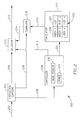
- Fig. 1 is a schematic illustration of a computing platform including an execution instruction generator in accordance with some demonstrative embodiments of the present invention
- Fig. 2 is a schematic illustration of an execution instruction generator in accordance with one demonstrative embodiment of the invention.
- Fig. 3 is a schematic illustration of an execution instruction generator in accordance with another demonstrative embodiment of the invention.
- Fig. 4 is a schematic flowchart illustration of a method of generating an execution instruction in accordance with some demonstrative embodiments of the invention.
- memory-access instruction may refer to an instruction, command, order, and/or function for accessing one or more memory addresses, e.g., by writing to and/or reading from the one or more memory addresses.
- the memory-access instruction may include an Input/Output (I/O) mapped transaction instruction, e.g., as is known in the art.
- the memory-access instruction may be generated by an Operating System (OS) and/or any other suitable module, and may include, for example, an I/O mapped instruction as defined by the Advanced Configuration and Power Interface (ACPI) specification, Revision 2.0, Published July 27, 2000.
- OS Operating System
- ACPI Advanced Configuration and Power Interface
- the memory-access instruction may indicate a desired operation, e.g., a core clocking control operation, an active state control operation (also referred to as a "P-state operation"), an idle state control operation (also referred to as a "C-state operation”), a thermal control operation, and/or any other suitable operation to be performed, for example, as part of a control scheme, e.g., a power management control scheme, and/or a power optimization control scheme, as are defined by the ACPI specification.
- the memory-access instruction may include address data corresponding to a memory address, which may represent the desired operation.
- execution instruction may refer to an instruction, command, order, and/or function of a type and/or format executable by a processor, e.g., by one or more logical elements of the processor.
- the execution instruction may include a Monitor Wait (MWAIT) instruction, e.g., as defined by the IA-32 Intel® Architecture Software Developer's Manual, Volume 2A: Instruction Set Reference A-M, Published April 2005 .
- MWAIT Monitor Wait
- the MWAIT instruction may relate, for example, to a desired C-state operation.
- the MWAIT instruction may include a target C-state parameter representing a desired C-state operation.
- a C-1 state may relate to an executing state
- a C-2 state may relate to a low power saving state
- a C-3 state may relate to a medium power saving state
- a C-4 state may relate to a high power saving state, e.g., as are defined by the ACPI specification.
- Some demonstrative embodiments of the invention include a device, system, and/or method of generating an execution instruction of a predetermined executable format based on address data of a received memory-access instruction, as described in detail below.
- the memory-address instruction may be at least partially converted into the execution instruction, e.g., as described below.
- FIG. 1 schematically illustrates a computing platform 100 in accordance with some demonstrative embodiments of the invention.
- computing platform 100 may include or may be a portable computing platform, which may be, for example, powered by a portable power source, e.g., a battery. In other embodiments of the invention, computing platform 100 may include or may be a non-portable computing platform.
- platform 100 may include or may be, for example, a personal computer, a desktop computer, a mobile computer, a laptop computer, a notebook computer, a terminal, a workstation, a server computer, a Personal Digital Assistant (PDA) device, a tablet computer, a network device, a microcontroller, a cellular phone, a camera, or any other suitable computing and/or communication device.
- PDA Personal Digital Assistant
- platform 100 may include a processor 102.
- Processor 102 may include, for example, a Central Processing Unit (CPU), a Digital Signal Processor (DSP), a microprocessor, a host processor, a plurality of processors, a controller, a chip, a microchip, or any other suitable multi-purpose or specific processor or controller.
- Processor 101 may include a processor core 104, e.g., including one or more Arithmetic Logic Units (ALUs) as are known in the art.
- ALUs Arithmetic Logic Units
- platform 100 may also include an input unit 118, an output unit 120, a memory unit 114, and/or a storage unit 122. Platform 100 may additionally include other suitable hardware components and/or software components.
- Input unit 118 may include, for example, a keyboard, a mouse, a touch-pad, or other suitable pointing device or input device.
- Output unit 120 may include, for example, a Cathode Ray Tube (CRT) monitor, a Liquid Crystal Display (LCD) monitor, or other suitable monitor or display unit.
- CTR Cathode Ray Tube
- LCD Liquid Crystal Display
- Storage unit 122 may include, for example, a hard disk drive, a floppy disk drive, a Compact Disk (CD) drive, a CD-Recordable (CD-R) drive, or other suitable removable and/or fixed storage unit.
- a hard disk drive a floppy disk drive
- a Compact Disk (CD) drive a CD-Recordable (CD-R) drive
- CD-R CD-Recordable
- Memory unit 114 may include, for example, a Random Access Memory (RAM), a Read Only Memory (ROM), a Dynamic RAM (DRAM), a Synchronous DRAM (SD-RAM), a Flash memory, a volatile memory, a non-volatile memory, a cache memory, a buffer, a short term memory unit, a long term memory unit, or other suitable memory units or storage units.
- RAM Random Access Memory
- ROM Read Only Memory
- DRAM Dynamic RAM
- SD-RAM Synchronous DRAM
- Flash memory a volatile memory
- non-volatile memory a cache memory
- buffer a short term memory unit
- long term memory unit a long term memory unit
- memory unit 114 may store, for example, one or more OS instructions 116.
- OS instructions 116 When executed by processor 102, OS instructions 116 may result in an OS application 108, e.g., as is known in the art.
- OS 108 may generate at least one memory-access instruction 110, for example, as part of a power management control scheme, e.g., according to the ACPI specification.
- Memory-access instruction 110 may include, for example, an I/O read instruction including address data corresponding to a memory address, e.g., of memory 114, which may represent a predetermined operation.
- the predetermined operation may include, for example, a power management/optimization operation, e.g., a C-state operation.
- the address data may correspond to an address data of memory 114 representing a C-state operation to be performed.
- processor 102 may include an execution instruction generator 106 to generate an execution instruction 112, e.g., of a predetermined format executable by processor core 104, based on the address data of memory-access instruction 110.
- instruction generator 106 may generate an MWAIT instruction corresponding to the address data of memory-access instruction 110, e.g., as described below.
- computing platform 100 including an instruction generator, e.g., generator 106, being part of a processor, e.g., processor 102.
- an instruction generator e.g., generator 106
- processor 102 e.g., processor 102
- the instruction generator and the processor may be separate parts of the computing platform.
- Fig. 2 schematically illustrates an instruction generator 200 in accordance with a demonstrative embodiment of the invention.
- instruction generator 200 may perform the functionality of instruction generator 106 (Fig. 1).
- instruction generator 200 may include an instruction capture module 204 to capture ("flag") a received memory-access instruction signal 202.
- Memory-access instruction signal 202 may include, for example, address data, e.g., corresponding to an address of memory 114 (Fig. 1).
- Memory-access instruction 202 may also include any suitable non-address data, e.g., including instruction data, and/or instruction parameters, e.g., as are known in the art.
- Instruction capture module 204 may generate a signal 206 substantially identical to memory-access instruction signal 202, and a signal 228 including the address data of instruction signal 202.
- Capture module 204 may also generate a signal 208 including at least part of the non-address data of instruction signal 202.
- instruction generator 200 may generate an instruction signal 210 to be provided, for example, to processor core 104 (Fig. 1), based on the address data of memory-access instruction signal 202, e.g., as described below.
- instruction generator 200 may selectively generate instruction signal 210 including either memory-access instruction 202, or an execution instruction 214 corresponding to the address data of memory-access instruction 202, e.g., based on the address data of memory-access instruction 202 as described below.
- instruction generator 200 may also include a controller 226, a translator 222, a combiner 218, and/or a selector 212, as are described below.
- controller 226 may determine whether the address data of memory-access instruction 202 corresponds to one or more predetermined execution instructions, e.g., as described below.
- controller 226 may compare the address data of signal 228 to predetermined address data of a set of one or more memory addresses corresponding to the one or more predetermined execution instructions.
- the one or more predetermined execution instructions may be represented by a sequence of memory addresses, e.g., of memory 114 (Fig. 1).
- the sequence of memory addresses may be defined, for example, by a base pointer value 230 corresponding to a first memory address of the sequence of memory addresses, and a range value 232 corresponding to a number of addresses in the sequence. It will be appreciated by those skilled in the art that in other embodiments of the invention the sequence of memory addresses may be defined in any other suitable way.
- the sequence of memory addresses may be defined by base pointer value 230 and an end pointer corresponding to a last address in the sequence of addresses.
- controller 226 may compare the address data of signal 228 to the values of base pointer value 230 and/or range value 232. Controller 226 may determine whether memory-access instruction 202 corresponds to one of the predetermined execution instructions, e.g., based on the comparison between the memory address data of signal 228, and base pointer value 230 and/or range value 232. For example, controller 226 may determine that memory-access instruction 202 corresponds to one of the predetermined execution instructions, if the address data of signal 228 corresponds to an address value, which is equal to or bigger than base pointer value 230; and equal to or smaller than the sum of base pointer value 230 and range value 232.
- instruction generator 200 may be able to determine at least one execution-instruction parameter 220 corresponding to an operation represented by the address data of signal 228, for example, if controller 226 determines that memory-access instruction 202 corresponds to one of the predetermined execution instructions e.g., as described below.
- translator 222 may translate the memory address represented by memory access signal 202 into execution-instruction parameter 220.
- translator 222 may include a table, e.g., a Look-Up-Table (LUT) 223, including a set of predetermined execution instruction parameters 227, e.g., C-state parameters, identified by a set of index values 229.
- Controller 226 may generate an index signal 224 having a value corresponding to one of index values 229 indicating an execution instruction parameter, e.g., corresponding to the memory address of signal 202.
- parameters 227 may be arranged according to the order of the memory addresses representing the execution instructions corresponding to parameters 227.
- index values 229 may include a predetermined sequence of values, e.g., the sequence 1, 2, 3.... Accordingly, controller 226 may generate index signal 224 having a value corresponding to a difference between the address value of signal 228 and base pointer value 230.
- the one or more predetermined execution instructions may include N execution instructions represented by a sequence of N memory addresses n, n+1, n+2...n+N-1, respectively.
- combiner 218 may generate execution instruction 214 by combining execution-instruction parameter 220 with the non-address data of signal 208.
- Combiner 218 may implement any suitable combining method, e.g., depending on a type of parameter 220 and/or the non-address data of signal 208.
- controller 226 may control selector 212, e.g., using a control signal 216, to selectively generate instruction signal 210 including either execution instruction 214, or the memory-access instruction of signal 206.
- controller 226 may control selector 212 to generate instruction signal 210 including execution instruction 214, e.g., if controller 226 determines the memory address data of memory-access instruction 202 corresponds to one of the predetermined execution instructions; and to generate instruction signal 210 including memory access instruction 202, e.g., if controller 226 determines the memory address data of memory-access instruction 202 does not correspond to any one of the predetermined execution instructions.
- processor core 104 may be able to execute one or more MWAIT instructions, e.g., for activating corresponding C-state operations.
- the MWAIT instruction may include an MWAIT(Target C-state) instruction relating to a target C-state, e.g., in accordance with the ACPI specification.
- instruction generator 106 may be able to generate execution instruction 112 including an MWAIT(Target C-state) corresponding to the target C-state represented by memory-access instruction 110, e.g., as described below.
- FIG. 3 schematically illustrates an instruction generator 300 in accordance with another demonstrative embodiment of the invention.
- instruction generator 300 may perform the functionality of instruction generator 106 (Fig. 1).
- instruction generator 300 may generate an instruction signal 310, e.g., to be provided to processor core 104 (Fig. 1), based on the address data of a memory-access instruction signal 302.
- instruction generator 300 may selectively generate instruction signal 310 including either memory-access instruction 302, or an MWAIT instruction 314 corresponding to the address data of memory-access instruction 302, e.g., based on the address data of memory access instruction 302, as described below.
- instruction generator 300 may include an instruction capture module 304 to flag memory-access instruction signal 302.
- Memory-access instruction signal 302 may include, for example, address data, e.g., corresponding to an address of memory 114 (Fig. 1).
- Instruction capture module 304 may generate a signal 306 substantially identical to memory-access instruction signal 302; and a signal 328 including the address data of instruction signal 302.
- instruction generator 300 may also include a controller 326, a translator 322, and/or a selector 312, as are described below.
- controller 326 may determine whether the address data of memory-access instruction 302 corresponds to one or more predetermined MWAIT instructions, respectively, e.g., as described below.
- controller 326 may compare the address data of signal 328 to predetermined address data of a set of one or more memory addresses corresponding to the one or more MWAIT instructions.
- the one or more MWAIT instructions may be represented by a sequence of memory addresses, e.g., of memory 114 (Fig. 1).
- the sequence of memory addresses may be defined, for example, by a Level two Base point (“LVL2B”) value 330 corresponding to a memory address representing a C-2 state operation; and a C-state Range (“CST_RANGE”) value 332 corresponding to a number of addresses in the sequence of memory addresses.
- LDL2B Level two Base point
- CST_RANGE C-state Range
- controller 326 may determine whether memory-access instruction 302 corresponds to one of the MWAIT instructions, e.g., based on the comparison between the memory address data of signal 328; and LVL2B value 330, and/or CST_RANGE value 332. For example, controller 326 may determine that memory-access instruction 302 corresponds to one of the MWAIT instructions, if the address data of signal 328 corresponds to an address value, which is equal to or bigger than LVL2B value 330; and equal to or smaller than the sum of LVL2B value 330 and CST_RANGE value 332.
- translator 322 may translate the memory address represented by memory access instruction 302 into MWAIT instruction 314.
- controller 326 may generate an index signal 324 having a value indicating a c-state parameter represented by the memory address data of memory-access instruction 302, and translator 322 may generate MWAIT instruction 314 based on index signal 324.
- the one or more MWAIT instructions may include N' MWAIT instructions represented by a sequence of N' memory addresses n', n'+1, n'+2...n'+N'-1, respectively.
- the MWAIT instructions may include three MWAIT instructions corresponding to the states C-2 , C-3, and C4, respectively.
- controller 326 may generate index signal 324, e.g., having a value m'-L, wherein m' denotes the memory address of signal 328, and L denotes the value of LVL2B 330.
- Translator 322 may generate MWAIT instruction 314 corresponding to the state j' + 2, wherein j' denotes the value of index 324.
- controller 326 may control selector 312, e.g., using a control signal 316, to selectively generate instruction signal 310 including either MWAIT instruction 314, or the memory-access instruction of signal 306.
- controller 326 may control selector 312 to generate instruction signal 310 including execution instruction 314, e.g., if controller 326 determines the memory address data of memory-access instruction 302 corresponds to one of the predetermined MWAIT instructions; and to generate instruction signal 310 including memory access instruction 302, e.g., if controller 326 determines the memory address data of memory-access instruction 302 does not correspond to any one of the predetermined execution instructions.
- some demonstrative embodiments of the invention may relate to an instruction generator, e.g., instruction generator 300, able to generate an execution instruction, for example, in compliance with one or more energy conservation schemes, e.g., a power optimization scheme, and/or a power management scheme.
- instruction generator 300 able to generate an execution instruction, for example, in compliance with one or more energy conservation schemes, e.g., a power optimization scheme, and/or a power management scheme.
- an execution instruction generator which may able to generate an execution instruction compliance with any other suitable scheme, for example, a temperature scheme, a frequency scheme, and/or a voltage scaling scheme, e.g., as are known in the art.
- FIG. 4 schematically illustrates a method of generating an execution instruction in accordance with some demonstrative embodiments of the invention.
- the method may include generating an execution instruction of a predetermined executable format based on address data of a received memory-access instruction representing a memory address.
- Generating the execution instruction based on the address data of the received memory-access instruction may include, for example, generating the execution instruction based on address data of a received input/output mapped instruction for accessing the memory address.
- generating the execution instruction may include, for example, selectively generating the execution instruction based on the address data.
- the method may include comparing the address data of the memory-access instruction to predetermined address data of a set of one or more memory addresses corresponding to one or more predetermined execution instructions, as indicated at block 406.
- the method may also include generating the execution instruction, e.g., if the address data of the memory-access instruction matches the address data of one of the set of memory addresses, as indicated at block 408.
- the method may include selecting the memory-access instruction, e.g., if the address data of the memory-access instruction does not match the address data of one of the set of memory addresses, as indicated at block 415.
- generating the execution instruction may include determining one or more parameters of the execution instruction based on the address data. Generating the execution instruction may include combining the one or more parameters of the execution instruction with non-address data of the memory-access instruction, as indicated at block 412.
- Embodiments of the present invention may be implemented by software, by hardware, by firmware, or by any combination of software, hardware, and/or firmware as may be suitable for specific applications or in accordance with specific design requirements.
- Embodiments of the present invention may include units and sub-units, which may be separate of each other or combined together, in whole or in part, and may be implemented using specific, multi-purpose or general processors, or devices as are known in the art.
- Some embodiments of the present invention may include buffers, registers, storage units and/or memory units, for temporary or long-term storage of data and/or in order to facilitate the operation of a specific embodiment.
Landscapes
- Engineering & Computer Science (AREA)
- Theoretical Computer Science (AREA)
- Software Systems (AREA)
- Physics & Mathematics (AREA)
- General Engineering & Computer Science (AREA)
- General Physics & Mathematics (AREA)
- Executing Machine-Instructions (AREA)
- Power Sources (AREA)
- Devices For Executing Special Programs (AREA)
- Advance Control (AREA)
Abstract
Embodiments of the present invention provide an apparatus, system, and method of generating an execution instruction. Some demonstrative embodiments my include generating an execution instruction of a predetermined executable format based on memory address data of a memory-access instruction representing a memory address. Other embodiments are described and claimed.
Description
- Power management operations may relate, for example, to core clocking control, active state operation, idle state control, and/or thermal control, e.g., as defined by the Advanced Configuration and Power Interface (ACPI) specification.
- Conventional computing platforms may execute an operating system, which may be able to activate a power management operation by generating an Input/Output-mapped transaction indicating a memory address representing the operation to be activated.
- The subject matter regarded as the invention is particularly pointed out and distinctly claimed in the concluding portion of the specification. The invention, however, both as to organization and method of operation, together with objects, features and advantages thereof, may best be understood by reference to the following detailed description when read with the accompanied drawings in which:
- Fig. 1 is a schematic illustration of a computing platform including an execution instruction generator in accordance with some demonstrative embodiments of the present invention;
- Fig. 2 is a schematic illustration of an execution instruction generator in accordance with one demonstrative embodiment of the invention;
- Fig. 3 is a schematic illustration of an execution instruction generator in accordance with another demonstrative embodiment of the invention; and
- Fig. 4 is a schematic flowchart illustration of a method of generating an execution instruction in accordance with some demonstrative embodiments of the invention.
- It will be appreciated that for simplicity and clarity of illustration, elements shown in the figures have not necessarily been drawn to scale. For example, the dimensions of some of the elements may be exaggerated relative to other elements for clarity. Further, where considered appropriate, reference numerals may be repeated among the figures to indicate corresponding or analogous elements.
- In the following detailed description, numerous specific details are set forth in order to provide a thorough understanding of the invention. However, it will be understood by those of ordinary skill in the art that the present invention may be practiced without these specific details. In other instances, well-known methods, procedures, components and circuits have not been described in detail so as not to obscure the present invention.
- Unless specifically stated otherwise, as apparent from the following discussions, it is appreciated that throughout the specification discussions utilizing terms such as "processing," "computing," "calculating," "determining," or the like, refer to the action and/or processes of a computer or computing system, or similar electronic computing device, that manipulate and/or transform data represented as physical, such as electronic, quantities within the computing system's registers and/or memories into other data similarly represented as physical quantities within the computing system's memories, registers or other such information storage, transmission or display devices. In addition, the term "plurality" may be used throughout the specification to describe two or more components, devices, elements, parameters and the like.
- The phrase "memory-access instruction" as used herein may refer to an instruction, command, order, and/or function for accessing one or more memory addresses, e.g., by writing to and/or reading from the one or more memory addresses. In some demonstrative embodiments of the invention, the memory-access instruction may include an Input/Output (I/O) mapped transaction instruction, e.g., as is known in the art. In some demonstrative embodiments of the invention, the memory-access instruction may be generated by an Operating System (OS) and/or any other suitable module, and may include, for example, an I/O mapped instruction as defined by the Advanced Configuration and Power Interface (ACPI) specification, Revision 2.0, Published July 27, 2000. The memory-access instruction may indicate a desired operation, e.g., a core clocking control operation, an active state control operation (also referred to as a "P-state operation"), an idle state control operation (also referred to as a "C-state operation"), a thermal control operation, and/or any other suitable operation to be performed, for example, as part of a control scheme, e.g., a power management control scheme, and/or a power optimization control scheme, as are defined by the ACPI specification. For example, the memory-access instruction may include address data corresponding to a memory address, which may represent the desired operation.
- The phrase "execution instruction" as used herein may refer to an instruction, command, order, and/or function of a type and/or format executable by a processor, e.g., by one or more logical elements of the processor. In some exemplary embodiments of the invention, the execution instruction may include a Monitor Wait (MWAIT) instruction, e.g., as defined by the IA-32 Intel® Architecture Software Developer's Manual, Volume 2A: Instruction Set Reference A-M, Published April 2005. The MWAIT instruction may relate, for example, to a desired C-state operation. For example, the MWAIT instruction may include a target C-state parameter representing a desired C-state operation. For example, a C-1 state may relate to an executing state, a C-2 state may relate to a low power saving state, a C-3 state may relate to a medium power saving state, a C-4 state may relate to a high power saving state, e.g., as are defined by the ACPI specification.
- Some demonstrative embodiments of the invention include a device, system, and/or method of generating an execution instruction of a predetermined executable format based on address data of a received memory-access instruction, as described in detail below. In some demonstrative embodiments of the invention the memory-address instruction may be at least partially converted into the execution instruction, e.g., as described below.
- Reference is made to Fig. 1, which schematically illustrates a
computing platform 100 in accordance with some demonstrative embodiments of the invention. - In some embodiments of the invention,
computing platform 100 may include or may be a portable computing platform, which may be, for example, powered by a portable power source, e.g., a battery. In other embodiments of the invention,computing platform 100 may include or may be a non-portable computing platform. - Although the invention is not limited in this respect,
platform 100 may include or may be, for example, a personal computer, a desktop computer, a mobile computer, a laptop computer, a notebook computer, a terminal, a workstation, a server computer, a Personal Digital Assistant (PDA) device, a tablet computer, a network device, a microcontroller, a cellular phone, a camera, or any other suitable computing and/or communication device. - According to some demonstrative embodiments of the invention,
platform 100 may include aprocessor 102.Processor 102 may include, for example, a Central Processing Unit (CPU), a Digital Signal Processor (DSP), a microprocessor, a host processor, a plurality of processors, a controller, a chip, a microchip, or any other suitable multi-purpose or specific processor or controller. Processor 101 may include aprocessor core 104, e.g., including one or more Arithmetic Logic Units (ALUs) as are known in the art. - According to some demonstrative embodiments of the invention,
platform 100 may also include aninput unit 118, anoutput unit 120, amemory unit 114, and/or astorage unit 122.Platform 100 may additionally include other suitable hardware components and/or software components. -
Input unit 118 may include, for example, a keyboard, a mouse, a touch-pad, or other suitable pointing device or input device.Output unit 120 may include, for example, a Cathode Ray Tube (CRT) monitor, a Liquid Crystal Display (LCD) monitor, or other suitable monitor or display unit. -
Storage unit 122 may include, for example, a hard disk drive, a floppy disk drive, a Compact Disk (CD) drive, a CD-Recordable (CD-R) drive, or other suitable removable and/or fixed storage unit. -
Memory unit 114 may include, for example, a Random Access Memory (RAM), a Read Only Memory (ROM), a Dynamic RAM (DRAM), a Synchronous DRAM (SD-RAM), a Flash memory, a volatile memory, a non-volatile memory, a cache memory, a buffer, a short term memory unit, a long term memory unit, or other suitable memory units or storage units. - According to some demonstrative embodiments of the invention,
memory unit 114 may store, for example, one ormore OS instructions 116. When executed byprocessor 102,OS instructions 116 may result in anOS application 108, e.g., as is known in the art. OS 108 may generate at least one memory-access instruction 110, for example, as part of a power management control scheme, e.g., according to the ACPI specification. Memory-access instruction 110 may include, for example, an I/O read instruction including address data corresponding to a memory address, e.g., ofmemory 114, which may represent a predetermined operation. The predetermined operation may include, for example, a power management/optimization operation, e.g., a C-state operation. Accordingly, the address data may correspond to an address data ofmemory 114 representing a C-state operation to be performed. - According to some demonstrative embodiments of the invention,
processor 102 may include anexecution instruction generator 106 to generate anexecution instruction 112, e.g., of a predetermined format executable byprocessor core 104, based on the address data of memory-access instruction 110. For example,instruction generator 106 may generate an MWAIT instruction corresponding to the address data of memory-access instruction 110, e.g., as described below. - Aspects of the invention are described herein in the context of a demonstrative embodiment of a computing platform, e.g.,
computing platform 100, including an instruction generator, e.g.,generator 106, being part of a processor, e.g.,processor 102. However, it will be appreciated by those skilled in the art that, according to other embodiments of the invention, the instruction generator and the processor may be separate parts of the computing platform. - Reference is made to Fig. 2, which schematically illustrates an
instruction generator 200 in accordance with a demonstrative embodiment of the invention. Although the invention is not limited in this respect,instruction generator 200 may perform the functionality of instruction generator 106 (Fig. 1). - According to some demonstrative embodiments of the invention,
instruction generator 200 may include aninstruction capture module 204 to capture ("flag") a received memory-access instruction signal 202. Memory-access instruction signal 202 may include, for example, address data, e.g., corresponding to an address of memory 114 (Fig. 1). Memory-access instruction 202 may also include any suitable non-address data, e.g., including instruction data, and/or instruction parameters, e.g., as are known in the art.Instruction capture module 204 may generate asignal 206 substantially identical to memory-access instruction signal 202, and asignal 228 including the address data ofinstruction signal 202.Capture module 204 may also generate asignal 208 including at least part of the non-address data ofinstruction signal 202. - According to some demonstrative embodiments of the invention,
instruction generator 200 may generate aninstruction signal 210 to be provided, for example, to processor core 104 (Fig. 1), based on the address data of memory-access instruction signal 202, e.g., as described below. - In some demonstrative embodiments of the
invention instruction generator 200 may selectively generateinstruction signal 210 including either memory-access instruction 202, or anexecution instruction 214 corresponding to the address data of memory-access instruction 202, e.g., based on the address data of memory-access instruction 202 as described below. - According to some demonstrative embodiments of the invention,
instruction generator 200 may also include acontroller 226, atranslator 222, acombiner 218, and/or aselector 212, as are described below. - According to some demonstrative embodiments of the invention,
controller 226 may determine whether the address data of memory-access instruction 202 corresponds to one or more predetermined execution instructions, e.g., as described below. - According to some demonstrative embodiments of the invention,
controller 226 may compare the address data ofsignal 228 to predetermined address data of a set of one or more memory addresses corresponding to the one or more predetermined execution instructions. For example, the one or more predetermined execution instructions may be represented by a sequence of memory addresses, e.g., of memory 114 (Fig. 1). The sequence of memory addresses may be defined, for example, by abase pointer value 230 corresponding to a first memory address of the sequence of memory addresses, and arange value 232 corresponding to a number of addresses in the sequence. It will be appreciated by those skilled in the art that in other embodiments of the invention the sequence of memory addresses may be defined in any other suitable way. For example, the sequence of memory addresses may be defined bybase pointer value 230 and an end pointer corresponding to a last address in the sequence of addresses. - Although some demonstrative embodiments of the invention are described herein with relation to one or more execution instructions represented by a sequence of memory addresses, it will be appreciated by those skilled in the art that in other embodiments of the invention the one or more execution instructions may be represented by any other desired configuration of memory addresses, e.g., a non-sequential set of memory addresses.
- According to some demonstrative embodiments of the invention,
controller 226 may compare the address data ofsignal 228 to the values ofbase pointer value 230 and/orrange value 232.Controller 226 may determine whether memory-access instruction 202 corresponds to one of the predetermined execution instructions, e.g., based on the comparison between the memory address data ofsignal 228, andbase pointer value 230 and/orrange value 232. For example,controller 226 may determine that memory-access instruction 202 corresponds to one of the predetermined execution instructions, if the address data ofsignal 228 corresponds to an address value, which is equal to or bigger thanbase pointer value 230; and equal to or smaller than the sum ofbase pointer value 230 andrange value 232. - According to some demonstrative embodiments of he invention,
instruction generator 200 may be able to determine at least one execution-instruction parameter 220 corresponding to an operation represented by the address data ofsignal 228, for example, ifcontroller 226 determines that memory-access instruction 202 corresponds to one of the predetermined execution instructions e.g., as described below. - According to some demonstrative embodiments of the invention,
translator 222 may translate the memory address represented bymemory access signal 202 into execution-instruction parameter 220. For example,translator 222 may include a table, e.g., a Look-Up-Table (LUT) 223, including a set of predeterminedexecution instruction parameters 227, e.g., C-state parameters, identified by a set of index values 229.Controller 226 may generate anindex signal 224 having a value corresponding to one of index values 229 indicating an execution instruction parameter, e.g., corresponding to the memory address ofsignal 202. For example,parameters 227 may be arranged according to the order of the memory addresses representing the execution instructions corresponding toparameters 227. According to this example, index values 229 may include a predetermined sequence of values, e.g., thesequence controller 226 may generate index signal 224 having a value corresponding to a difference between the address value ofsignal 228 andbase pointer value 230. - In one demonstrative embodiment of the invention, the one or more predetermined execution instructions may include N execution instructions represented by a sequence of N memory addresses n, n+1, n+2...n+N-1, respectively. Accordingly, table 223 may include
N instruction parameters 227 identified by N respective index values 229 having the values i, i+1, i+2, ...i+N-1, e.g., wherein i=1 or any other desired number. Thus,controller 226 may generate index signal 224, e.g., having a value j=m-bp+i, wherein m denotes the memory address ofsignal 228, and bp denotesbase pointer value 230. - According to some demonstrative embodiments of the invention,
combiner 218 may generateexecution instruction 214 by combining execution-instruction parameter 220 with the non-address data ofsignal 208.Combiner 218 may implement any suitable combining method, e.g., depending on a type of parameter 220 and/or the non-address data ofsignal 208. - According to some demonstrative embodiments of the invention,
controller 226 may controlselector 212, e.g., using acontrol signal 216, to selectively generateinstruction signal 210 including eitherexecution instruction 214, or the memory-access instruction ofsignal 206. For example,controller 226 may controlselector 212 to generateinstruction signal 210 includingexecution instruction 214, e.g., ifcontroller 226 determines the memory address data of memory-access instruction 202 corresponds to one of the predetermined execution instructions; and to generateinstruction signal 210 includingmemory access instruction 202, e.g., ifcontroller 226 determines the memory address data of memory-access instruction 202 does not correspond to any one of the predetermined execution instructions. - Referring back to Fig. 1, in some demonstrative embodiments of the invention,
processor core 104 may be able to execute one or more MWAIT instructions, e.g., for activating corresponding C-state operations. The MWAIT instruction may include an MWAIT(Target C-state) instruction relating to a target C-state, e.g., in accordance with the ACPI specification. In these exemplary embodiments of the invention,instruction generator 106 may be able to generateexecution instruction 112 including an MWAIT(Target C-state) corresponding to the target C-state represented by memory-access instruction 110, e.g., as described below. - Reference is now made to Fig. 3, which schematically illustrates an
instruction generator 300 in accordance with another demonstrative embodiment of the invention. Although the invention is not limited in this respect,instruction generator 300 may perform the functionality of instruction generator 106 (Fig. 1). - According to some demonstrative embodiments of the invention,
instruction generator 300 may generate aninstruction signal 310, e.g., to be provided to processor core 104 (Fig. 1), based on the address data of a memory-access instruction signal 302. In some demonstrative embodiments of theinvention instruction generator 300 may selectively generateinstruction signal 310 including either memory-access instruction 302, or anMWAIT instruction 314 corresponding to the address data of memory-access instruction 302, e.g., based on the address data ofmemory access instruction 302, as described below. - According to some demonstrative embodiments of the invention,
instruction generator 300 may include aninstruction capture module 304 to flag memory-access instruction signal 302. Memory-access instruction signal 302 may include, for example, address data, e.g., corresponding to an address of memory 114 (Fig. 1).Instruction capture module 304 may generate asignal 306 substantially identical to memory-access instruction signal 302; and asignal 328 including the address data ofinstruction signal 302. - According to some demonstrative embodiments of the invention,
instruction generator 300 may also include acontroller 326, atranslator 322, and/or aselector 312, as are described below. - According to some demonstrative embodiments of the invention,
controller 326 may determine whether the address data of memory-access instruction 302 corresponds to one or more predetermined MWAIT instructions, respectively, e.g., as described below. - According to some demonstrative embodiments of the invention,
controller 326 may compare the address data ofsignal 328 to predetermined address data of a set of one or more memory addresses corresponding to the one or more MWAIT instructions. In one exemplary embodiment, the one or more MWAIT instructions may be represented by a sequence of memory addresses, e.g., of memory 114 (Fig. 1). The sequence of memory addresses may be defined, for example, by a Level two Base point ("LVL2B")value 330 corresponding to a memory address representing a C-2 state operation; and a C-state Range ("CST_RANGE")value 332 corresponding to a number of addresses in the sequence of memory addresses. - According to some demonstrative embodiments of the invention,
controller 326 may determine whether memory-access instruction 302 corresponds to one of the MWAIT instructions, e.g., based on the comparison between the memory address data ofsignal 328; andLVL2B value 330, and/orCST_RANGE value 332. For example,controller 326 may determine that memory-access instruction 302 corresponds to one of the MWAIT instructions, if the address data ofsignal 328 corresponds to an address value, which is equal to or bigger thanLVL2B value 330; and equal to or smaller than the sum ofLVL2B value 330 andCST_RANGE value 332. - According to some demonstrative embodiments of the invention,
translator 322 may translate the memory address represented bymemory access instruction 302 intoMWAIT instruction 314. For example,controller 326 may generate anindex signal 324 having a value indicating a c-state parameter represented by the memory address data of memory-access instruction 302, andtranslator 322 may generateMWAIT instruction 314 based onindex signal 324. - In one demonstrative embodiment of the invention, the one or more MWAIT instructions may include N' MWAIT instructions represented by a sequence of N' memory addresses n',
n'+ 1,n'+ 2...n'+N'-1, respectively. For example, the MWAIT instructions may include three MWAIT instructions corresponding to the states C-2, C-3, and C4, respectively. Accordingly,controller 326 may generate index signal 324, e.g., having a value m'-L, wherein m' denotes the memory address ofsignal 328, and L denotes the value ofLVL2B 330.Translator 322 may generateMWAIT instruction 314 corresponding to thestate j'+ 2, wherein j' denotes the value ofindex 324. - According to some demonstrative embodiments of the invention,
controller 326 may controlselector 312, e.g., using acontrol signal 316, to selectively generateinstruction signal 310 including eitherMWAIT instruction 314, or the memory-access instruction ofsignal 306. For example,controller 326 may controlselector 312 to generateinstruction signal 310 includingexecution instruction 314, e.g., ifcontroller 326 determines the memory address data of memory-access instruction 302 corresponds to one of the predetermined MWAIT instructions; and to generateinstruction signal 310 includingmemory access instruction 302, e.g., ifcontroller 326 determines the memory address data of memory-access instruction 302 does not correspond to any one of the predetermined execution instructions. - Although the scope of the present invention is not limited in this respect, some demonstrative embodiments of the invention may relate to an instruction generator, e.g.,
instruction generator 300, able to generate an execution instruction, for example, in compliance with one or more energy conservation schemes, e.g., a power optimization scheme, and/or a power management scheme. However, it will be appreciated by those with ordinary skill in the art that other embodiments of the invention may include an execution instruction generator, which may able to generate an execution instruction compliance with any other suitable scheme, for example, a temperature scheme, a frequency scheme, and/or a voltage scaling scheme, e.g., as are known in the art. - Reference is now made to Fig. 4, which schematically illustrates a method of generating an execution instruction in accordance with some demonstrative embodiments of the invention.
- As indicated at
block 402, the method may include generating an execution instruction of a predetermined executable format based on address data of a received memory-access instruction representing a memory address. Generating the execution instruction based on the address data of the received memory-access instruction may include, for example, generating the execution instruction based on address data of a received input/output mapped instruction for accessing the memory address. - As indicated at
block 404, generating the execution instruction may include, for example, selectively generating the execution instruction based on the address data. For example, the method may include comparing the address data of the memory-access instruction to predetermined address data of a set of one or more memory addresses corresponding to one or more predetermined execution instructions, as indicated atblock 406. The method may also include generating the execution instruction, e.g., if the address data of the memory-access instruction matches the address data of one of the set of memory addresses, as indicated atblock 408. The method may include selecting the memory-access instruction, e.g., if the address data of the memory-access instruction does not match the address data of one of the set of memory addresses, as indicated atblock 415. - As indicated at
block 410, generating the execution instruction may include determining one or more parameters of the execution instruction based on the address data. Generating the execution instruction may include combining the one or more parameters of the execution instruction with non-address data of the memory-access instruction, as indicated atblock 412. - Embodiments of the present invention may be implemented by software, by hardware, by firmware, or by any combination of software, hardware, and/or firmware as may be suitable for specific applications or in accordance with specific design requirements. Embodiments of the present invention may include units and sub-units, which may be separate of each other or combined together, in whole or in part, and may be implemented using specific, multi-purpose or general processors, or devices as are known in the art. Some embodiments of the present invention may include buffers, registers, storage units and/or memory units, for temporary or long-term storage of data and/or in order to facilitate the operation of a specific embodiment.
- While certain features of the invention have been illustrated and described herein, many modifications, substitutions, changes, and equivalents may occur to those of ordinary skill in the art. It is, therefore, to be understood that the appended claims are intended to cover all such modifications and changes as fall within the true spirit of the invention.
Claims (22)
- A device comprising:an instruction generator to generate an execution instruction of a predetermined executable format based on memory address data of a memory-access instruction representing a memory address.
- The device of claim 1, wherein said memory-access instruction comprises an input/output mapped instruction for accessing the memory address of said memory-access instruction.
- The device of claim 1, wherein said instruction generator is able to selectively generate said execution instruction based on said address data.
- The device of claim 3, wherein said instruction generator comprises:a controller to compare the address data of said memory-access instruction to predetermined address data of a set of one or more memory addresses representing one or more predetermined execution instructions,wherein said instruction generator is able to generate said execution instruction represented by an address memory matching the address data.
- The device of claim 4, wherein said set of one or more memory addresses comprises a sequence of memory addresses, and wherein said predetermined address data comprises at least first and second values defining said sequence of memory addresses.
- The device of claim 5, wherein said first value comprises a base pointer value indicating a first memory address of said sequence, and wherein said second value comprises a range value indicating a number of memory addresses in said sequence.
- The device of claim 6, wherein said base pointer comprises a level two base pointer value, and wherein said range value comprises a c-state range value.
- The device of claim 4, wherein said instruction generator is able to determine one or more parameters of said execution instruction based on said address data, and to combine the one or more parameters of said execution instruction with non-address data of said memory-access instruction.
- The device of claim 4, wherein said controller is able to generate an index value indicating said execution instruction based on said address data, and wherein said instruction generator further comprises:a translator to translate said index value into one or more parameters of said execution instruction; anda combiner to generate said execution instruction by combining the one or more parameters of said execution instruction with non-address data of said memory-access instruction.
- The device of claim 1, wherein said execution instruction comprises a power management instruction to be executed by a processor.
- The device of claim 1, wherein said execution instruction comprises an MWAIT instruction corresponding to a target c-state operation, which is associated with said memory address.
- A method comprising:generating an execution instruction of a predetermined executable format based on memory address data of a memory-access instruction representing a memory address.
- The method of claim 12, wherein generating said execution instruction based on the address data of said received memory-access instruction comprises generating said execution instruction based on address data of a received input/output mapped instruction for accessing said memory address.
- The method of claim 12, wherein generating said execution instruction comprises selectively generating said execution instruction based on said address data.
- The method of claim 14, wherein selectively generating said execution instruction comprises:comparing the address data of said memory-access instruction to predetermined address data of a set of one or more memory addresses representing one or more predetermined execution instructions; andgenerating said execution instruction if the address data of said memory-access instruction matches the address data of one of said set of memory addresses.
- The method of claim 15, wherein comparing the address data of said memory-access instruction to said predetermined address data comprises comparing the address data of said memory-access instruction to the predetermined address data of said set of memory addresses including a sequence of memory addresses, said predetermined address data comprising at least first and second values defining said sequence of memory addresses.
- The method of claim 16, wherein comparing the address data of said memory-access instruction to said predetermined address data comprises comparing the address data of said memory-access instruction to the predetermined address data comprising said first value including a first memory address of said sequence, and said second value including a number of memory addresses in said sequence.
- The method of claim 12, wherein generating said execution instruction based on said address data comprises:determining one or more parameters of said execution instruction based on said address data; andcombining the one or more parameters of said execution instruction with non-address of said memory-access instruction.
- The method of claim 12, wherein generating said execution instruction comprises generating an MWAIT instruction corresponding to a target c-state operation, which is associated with said memory address.
- A system comprising:a memory having one or more memory addresses; andan instruction generator to generate an execution instruction of a predetermined executable format based on memory address data of a memory-access instruction representing one of said memory addresses.
- The system of claim 20 comprising a processor core to execute said execution instruction.
- The system of claim 20, wherein said instruction generator is able to selectively generate said execution instruction based on said address data.
Applications Claiming Priority (1)
| Application Number | Priority Date | Filing Date | Title |
|---|---|---|---|
| US11/170,115 US8281083B2 (en) | 2005-06-30 | 2005-06-30 | Device, system and method of generating an execution instruction based on a memory-access instruction |
Publications (1)
| Publication Number | Publication Date |
|---|---|
| EP1739548A2 true EP1739548A2 (en) | 2007-01-03 |
Family
ID=37081611
Family Applications (1)
| Application Number | Title | Priority Date | Filing Date |
|---|---|---|---|
| EP20060253398 Withdrawn EP1739548A2 (en) | 2005-06-30 | 2006-06-29 | Device, system and method of generating an execution instruction based on a memory-access instruction |
Country Status (4)
| Country | Link |
|---|---|
| US (2) | US8281083B2 (en) |
| EP (1) | EP1739548A2 (en) |
| JP (2) | JP4805037B2 (en) |
| CN (1) | CN100424634C (en) |
Families Citing this family (7)
| Publication number | Priority date | Publication date | Assignee | Title |
|---|---|---|---|---|
| US8064197B2 (en) * | 2009-05-22 | 2011-11-22 | Advanced Micro Devices, Inc. | Heat management using power management information |
| CA2837863C (en) * | 2011-06-03 | 2020-07-28 | Darin R. Kruse | Lubricated soil mixing systems and methods |
| WO2013147865A1 (en) * | 2012-03-30 | 2013-10-03 | Intel Corporation | A mechanism for saving and retrieving micro-architecture context |
| CN104731616A (en) * | 2015-03-25 | 2015-06-24 | 浪潮集团有限公司 | Method for closing energy-saving mode of Intel CPU under Linux OS |
| US10372616B2 (en) * | 2015-06-03 | 2019-08-06 | Renesas Electronics America Inc. | Microcontroller performing address translations using address offsets in memory where selected absolute addressing based programs are stored |
| US10108529B2 (en) | 2015-10-13 | 2018-10-23 | International Business Machines Corporation | Dynamic instrumentation based on detected errors |
| CN110647234B (en) * | 2019-09-27 | 2021-08-17 | 联想(北京)有限公司 | Instruction processing method and electronic equipment |
Family Cites Families (13)
| Publication number | Priority date | Publication date | Assignee | Title |
|---|---|---|---|---|
| US5802338A (en) * | 1996-10-01 | 1998-09-01 | International Business Machines Corporation | Method of self-parallelizing and self-parallelizing multiprocessor using the method |
| JP4020500B2 (en) | 1998-07-03 | 2007-12-12 | 富士通株式会社 | Memory access instruction reduction device and recording medium |
| US6360327B1 (en) * | 1999-03-12 | 2002-03-19 | Compaq Information Technologies Group, L.P. | System with control registers for managing computer legacy peripheral devices using an advanced configuration power interface software power management system |
| US6425086B1 (en) * | 1999-04-30 | 2002-07-23 | Intel Corporation | Method and apparatus for dynamic power control of a low power processor |
| US6789184B1 (en) * | 2000-09-29 | 2004-09-07 | Intel Corporation | Instruction address generation and tracking in a pipelined processor |
| CN100351935C (en) * | 2000-10-23 | 2007-11-28 | 松下电器产业株式会社 | Main system, driving device, and information recording and reading method for said main system and said driving device |
| US7418714B2 (en) * | 2002-02-26 | 2008-08-26 | Microsoft Corporation | Employing three parameter buffer access in connection with SMBus notifications |
| JP3851289B2 (en) | 2003-04-22 | 2006-11-29 | インターナショナル・ビジネス・マシーンズ・コーポレーション | Information processing apparatus, program, recording medium, and control method |
| JP2005141522A (en) * | 2003-11-07 | 2005-06-02 | Naltec Inc | Data processing device |
| US7457936B2 (en) * | 2003-11-19 | 2008-11-25 | Intel Corporation | Memory access instruction vectorization |
| US7451333B2 (en) * | 2004-09-03 | 2008-11-11 | Intel Corporation | Coordinating idle state transitions in multi-core processors |
| US7386688B2 (en) * | 2004-07-29 | 2008-06-10 | Hewlett-Packard Development Company, L.P. | Communication among partitioned devices |
| US7257679B2 (en) * | 2004-10-01 | 2007-08-14 | Advanced Micro Devices, Inc. | Sharing monitored cache lines across multiple cores |
-
2005
- 2005-06-30 US US11/170,115 patent/US8281083B2/en not_active Expired - Fee Related
-
2006
- 2006-06-29 EP EP20060253398 patent/EP1739548A2/en not_active Withdrawn
- 2006-06-29 JP JP2006180086A patent/JP4805037B2/en not_active Expired - Fee Related
- 2006-06-30 CN CNB2006101007821A patent/CN100424634C/en not_active Expired - Fee Related
-
2011
- 2011-02-08 JP JP2011024488A patent/JP5172979B2/en not_active Expired - Fee Related
-
2012
- 2012-08-22 US US13/591,482 patent/US9063729B2/en not_active Expired - Fee Related
Also Published As
| Publication number | Publication date |
|---|---|
| US20130036317A1 (en) | 2013-02-07 |
| US8281083B2 (en) | 2012-10-02 |
| JP4805037B2 (en) | 2011-11-02 |
| US9063729B2 (en) | 2015-06-23 |
| JP2011134340A (en) | 2011-07-07 |
| CN100424634C (en) | 2008-10-08 |
| JP2007026436A (en) | 2007-02-01 |
| CN1892588A (en) | 2007-01-10 |
| US20070005910A1 (en) | 2007-01-04 |
| JP5172979B2 (en) | 2013-03-27 |
Similar Documents
| Publication | Publication Date | Title |
|---|---|---|
| US9063729B2 (en) | Device, system and method of generating an execution instruction based on a memory-access instruction | |
| CN102959504B (en) | Method and apparatus to facilitate shared pointers in a heterogeneous platform | |
| US20160335020A1 (en) | Method, Apparatus, and System for Energy Efficiency and Energy Conservation Including Autonomous Hardware-Based Deep Power Down in Devices | |
| US10824574B2 (en) | Multi-port storage device multi-socket memory access system | |
| US20140189192A1 (en) | Apparatus and method for a multiple page size translation lookaside buffer (tlb) | |
| KR20130103553A (en) | Low-power audio decoding and playback using cached images | |
| US10248574B2 (en) | Input/output translation lookaside buffer prefetching | |
| US8359433B2 (en) | Method and system of handling non-aligned memory accesses | |
| US20100281276A1 (en) | Computer system with power source control and power source control method | |
| CN116860665A (en) | Address translation method executed by processor and related product | |
| US9183161B2 (en) | Apparatus and method for page walk extension for enhanced security checks | |
| US9032099B1 (en) | Writeback mechanisms for improving far memory utilization in multi-level memory architectures | |
| JP7455856B2 (en) | Adjusting throttling thresholds on processors | |
| US8595470B2 (en) | DSP performing instruction analyzed m-bit processing of data stored in memory with truncation / extension via data exchange unit | |
| CN106502924A (en) | A kind of Memory Optimize Method and system | |
| CN114661346A (en) | Instructions and logic for sum of squared differences | |
| CN107533510A (en) | The adaptive paging based on compression | |
| US11675680B2 (en) | Computing system initialization system | |
| US10910025B2 (en) | Flexible utilization of block storage in a computing system | |
| US9330022B2 (en) | Power logic for memory address conversion | |
| US20100077145A1 (en) | Method and system for parallel execution of memory instructions in an in-order processor | |
| JPH1185617A (en) | Computer system | |
| CN104461395A (en) | Novel computer memory system and computer system | |
| JP2009151707A (en) | Information processing apparatus and operating system discrimination method | |
| US20070005940A1 (en) | System, apparatus and method of executing a micro operation |
Legal Events
| Date | Code | Title | Description |
|---|---|---|---|
| PUAI | Public reference made under article 153(3) epc to a published international application that has entered the european phase |
Free format text: ORIGINAL CODE: 0009012 |
|
| AK | Designated contracting states |
Kind code of ref document: A2 Designated state(s): AT BE BG CH CY CZ DE DK EE ES FI FR GB GR HU IE IS IT LI LT LU LV MC NL PL PT RO SE SI SK TR |
|
| AX | Request for extension of the european patent |
Extension state: AL BA HR MK YU |
|
| 17P | Request for examination filed |
Effective date: 20080325 |
|
| STAA | Information on the status of an ep patent application or granted ep patent |
Free format text: STATUS: THE APPLICATION HAS BEEN WITHDRAWN |
|
| 18W | Application withdrawn |
Effective date: 20100616 |