EP1726359A1 - Exhaust gas-purifying catalyst - Google Patents
Exhaust gas-purifying catalyst Download PDFInfo
- Publication number
- EP1726359A1 EP1726359A1 EP06004020A EP06004020A EP1726359A1 EP 1726359 A1 EP1726359 A1 EP 1726359A1 EP 06004020 A EP06004020 A EP 06004020A EP 06004020 A EP06004020 A EP 06004020A EP 1726359 A1 EP1726359 A1 EP 1726359A1
- Authority
- EP
- European Patent Office
- Prior art keywords
- catalyst
- zirconium
- rare earth
- composite oxide
- earth element
- Prior art date
- Legal status (The legal status is an assumption and is not a legal conclusion. Google has not performed a legal analysis and makes no representation as to the accuracy of the status listed.)
- Granted
Links
Images

Classifications
-
- B—PERFORMING OPERATIONS; TRANSPORTING
- B01—PHYSICAL OR CHEMICAL PROCESSES OR APPARATUS IN GENERAL
- B01J—CHEMICAL OR PHYSICAL PROCESSES, e.g. CATALYSIS OR COLLOID CHEMISTRY; THEIR RELEVANT APPARATUS
- B01J37/00—Processes, in general, for preparing catalysts; Processes, in general, for activation of catalysts
- B01J37/02—Impregnation, coating or precipitation
- B01J37/024—Multiple impregnation or coating
- B01J37/0248—Coatings comprising impregnated particles
-
- B—PERFORMING OPERATIONS; TRANSPORTING
- B01—PHYSICAL OR CHEMICAL PROCESSES OR APPARATUS IN GENERAL
- B01D—SEPARATION
- B01D53/00—Separation of gases or vapours; Recovering vapours of volatile solvents from gases; Chemical or biological purification of waste gases, e.g. engine exhaust gases, smoke, fumes, flue gases, aerosols
- B01D53/34—Chemical or biological purification of waste gases
- B01D53/92—Chemical or biological purification of waste gases of engine exhaust gases
- B01D53/94—Chemical or biological purification of waste gases of engine exhaust gases by catalytic processes
- B01D53/9445—Simultaneously removing carbon monoxide, hydrocarbons or nitrogen oxides making use of three-way catalysts [TWC] or four-way-catalysts [FWC]
- B01D53/945—Simultaneously removing carbon monoxide, hydrocarbons or nitrogen oxides making use of three-way catalysts [TWC] or four-way-catalysts [FWC] characterised by a specific catalyst
-
- B—PERFORMING OPERATIONS; TRANSPORTING
- B01—PHYSICAL OR CHEMICAL PROCESSES OR APPARATUS IN GENERAL
- B01J—CHEMICAL OR PHYSICAL PROCESSES, e.g. CATALYSIS OR COLLOID CHEMISTRY; THEIR RELEVANT APPARATUS
- B01J23/00—Catalysts comprising metals or metal oxides or hydroxides, not provided for in group B01J21/00
- B01J23/10—Catalysts comprising metals or metal oxides or hydroxides, not provided for in group B01J21/00 of rare earths
-
- B—PERFORMING OPERATIONS; TRANSPORTING
- B01—PHYSICAL OR CHEMICAL PROCESSES OR APPARATUS IN GENERAL
- B01J—CHEMICAL OR PHYSICAL PROCESSES, e.g. CATALYSIS OR COLLOID CHEMISTRY; THEIR RELEVANT APPARATUS
- B01J23/00—Catalysts comprising metals or metal oxides or hydroxides, not provided for in group B01J21/00
- B01J23/38—Catalysts comprising metals or metal oxides or hydroxides, not provided for in group B01J21/00 of noble metals
- B01J23/54—Catalysts comprising metals or metal oxides or hydroxides, not provided for in group B01J21/00 of noble metals combined with metals, oxides or hydroxides provided for in groups B01J23/02 - B01J23/36
- B01J23/56—Platinum group metals
- B01J23/63—Platinum group metals with rare earths or actinides
-
- B—PERFORMING OPERATIONS; TRANSPORTING
- B01—PHYSICAL OR CHEMICAL PROCESSES OR APPARATUS IN GENERAL
- B01J—CHEMICAL OR PHYSICAL PROCESSES, e.g. CATALYSIS OR COLLOID CHEMISTRY; THEIR RELEVANT APPARATUS
- B01J37/00—Processes, in general, for preparing catalysts; Processes, in general, for activation of catalysts
- B01J37/02—Impregnation, coating or precipitation
- B01J37/024—Multiple impregnation or coating
- B01J37/0244—Coatings comprising several layers
-
- B—PERFORMING OPERATIONS; TRANSPORTING
- B01—PHYSICAL OR CHEMICAL PROCESSES OR APPARATUS IN GENERAL
- B01J—CHEMICAL OR PHYSICAL PROCESSES, e.g. CATALYSIS OR COLLOID CHEMISTRY; THEIR RELEVANT APPARATUS
- B01J35/00—Catalysts, in general, characterised by their form or physical properties
- B01J35/50—Catalysts, in general, characterised by their form or physical properties characterised by their shape or configuration
- B01J35/56—Foraminous structures having flow-through passages or channels, e.g. grids or three-dimensional [3D] monoliths
- B01J35/57—Honeycombs
-
- B—PERFORMING OPERATIONS; TRANSPORTING
- B01—PHYSICAL OR CHEMICAL PROCESSES OR APPARATUS IN GENERAL
- B01J—CHEMICAL OR PHYSICAL PROCESSES, e.g. CATALYSIS OR COLLOID CHEMISTRY; THEIR RELEVANT APPARATUS
- B01J37/00—Processes, in general, for preparing catalysts; Processes, in general, for activation of catalysts
- B01J37/02—Impregnation, coating or precipitation
- B01J37/0234—Impregnation and coating simultaneously
-
- Y—GENERAL TAGGING OF NEW TECHNOLOGICAL DEVELOPMENTS; GENERAL TAGGING OF CROSS-SECTIONAL TECHNOLOGIES SPANNING OVER SEVERAL SECTIONS OF THE IPC; TECHNICAL SUBJECTS COVERED BY FORMER USPC CROSS-REFERENCE ART COLLECTIONS [XRACs] AND DIGESTS
- Y02—TECHNOLOGIES OR APPLICATIONS FOR MITIGATION OR ADAPTATION AGAINST CLIMATE CHANGE
- Y02T—CLIMATE CHANGE MITIGATION TECHNOLOGIES RELATED TO TRANSPORTATION
- Y02T10/00—Road transport of goods or passengers
- Y02T10/10—Internal combustion engine [ICE] based vehicles
- Y02T10/12—Improving ICE efficiencies
Definitions
- the present invention relates to an exhaust gas-purifying catalyst.
- WO90/14887 discloses an exhaust gas-purifying catalyst which has at least two catalytic component layers on a support.
- the inner catalytic component layer contains a catalytic component including at least one element of the platinum group, activated alumina, and cerium oxide.
- the outer catalytic component layer contains a catalytic component including at least one element of the platinum group, and activated alumina. At least one of the inner and outer catalytic component layers further contains a coprecipitated oxide of zirconium stabilized by cerium.
- Japanese Patent No. 3330154 discloses an exhaust gas-purifying catalyst, which is obtained by forming an alumina coating layer on an inorganic refractory catalyst support.
- the alumina coating layer contains one or more catalytic components selected from the group consisting of platinum, palladium, and rhodium.
- the alumina coating layer contains 10 to 40 wt% of a composite oxide and 2 to 20 wt% of lanthanum oxide with respect to the whole alumina coating layer.
- a solid solution is used as the composite oxide, which is obtained by mixing 5 to 15 wt% of zirconium oxide with cerium oxide having a grain size of 50 to 300 ⁇ .
- Jpn. Pat. Appln. KOKAI Publication No. 2003-299967 discloses a structure of catalyst support obtained by coating a monolithic support with a layer of cerium-zirconium composite oxide.
- the layer is made up of at least two layers.
- the Ce/Zr molar ratio in the upper cerium-zirconium composite oxide layer is 1/1 or more.
- the Ce/Zr molar ratio in the upper cerium-zirconium composite oxide layer is higher than that in the lower cerium-zirconium composite oxide layer.
- An object of the present invention is to provide an exhaust gas-purifying catalyst, which achieves satisfactory performance in the HT phase.
- an exhaust gas-purifying catalyst comprising a support substrate, a catalyst support layer formed on the support substrate and containing a composite oxide of a rare earth element and zirconium, and a catalytic metal supported by the catalyst support layer, wherein all oxides containing the rare earth element are composite oxides of the rare earth element and zirconium in which the atomic ratio of zirconium to the rare earth element is 0.8 or more.
- an exhaust gas-purifying catalyst comprising a support substrate, a first catalyst support layer formed on the support substrate and containing a composite oxide of a first rare earth element and zirconium, a first catalytic metal supported by the first catalyst support layer, a second catalyst support layer formed on the first catalyst support layer and containing a composite oxide of a second rare earth element and zirconium, and a second catalytic metal supported by the second catalyst support layer and differing from the first catalytic metal, wherein all oxides containing the first rare earth element are composite oxides of the first rare earth element and zirconium in which the atomic ratio of zirconium to the first rare earth element is 0.8 or more, and all oxides containing the second rare earth element are composite oxides of the second rare earth element and zirconium in which the atomic ratio of zirconium to the second rare earth element is 0.8 or more.
- an exhaust gas-purifying catalyst comprising a support substrate, a catalyst support layer formed on the support substrate and containing a composite oxide of cerium and zirconium, and a catalytic metal supported by the catalyst support layer, wherein all oxides containing cerium are composite oxides of cerium and zirconium in which the atomic ratio of zirconium to cerium is 0.8 or more.
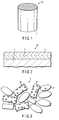
- FIG. 1 is a view schematically showing an exhaust gas-purifying catalyst according to the embodiment of the present invention.
- FIG. 2 is a sectional view schematically showing the exhaust gas-purifying catalyst shown in FIG. 1.
- the exhaust gas-purifying catalyst 10 is a monolithic catalyst.
- the monolithic catalyst 10 includes a cylindrical support substrate 1 having a honeycomb structure in which a large number of fine through-holes are formed.
- the shape of the support substrate 1 may be a rectangular parallelepiped.
- the support substrate 1 is typically made of ceramics such as cordierite. Alternatively, the support substrate 1 may be made of metal.
- a first catalyst support layer (inner layer) 2 is formed on walls of the support substrate 1, and a second catalyst support layer (outer layer) 3 is formed on the inner layer 2.
- the inner layer 2 and outer layer 3 will be explained below with reference to FIGS. 3 and 4, respectively.
- FIG. 3 is a view schematically showing the inner layer of the catalyst shown in FIG. 1.
- FIG. 4 is a view schematically showing the outer layer of the catalyst shown in FIG. 1.
- the inner layer 2 contains a composite oxide 21 of a rare earth element and zirconium, and alumina 22.
- the inner layer 2 supports a first catalytic metal 23.
- the outer layer 3 contains a composite oxide 31 of a rare earth element and zirconium, and alumina 32.
- the outer layer 3 supports a second catalytic metal 33.
- most of the first catalytic metals 23 are supported by the alumina 22 in FIG. 3, and most of the second catalytic metals 33 are supported by the composite oxide 31 in FIG. 4.
- the composite oxides 21 and 31 and alumina 22 and 32 which are catalyst supports, increase the specific surface area of the catalytic metals, and suppress sintering of the catalytic metals by radiating the heat generated by the catalytic reaction.
- the atomic ratio R of zirconium to the rare earth element is 0.8 or more.
- the catalytic metals 23 and 33 are different types of precious metals. Examples of the catalytic metals 23 and 33 are rhodium (Rh), platinum (Pt), palladium (Pd), and their mixtures.
- the catalytic metals 23 and 33 accelerate the reducing reaction of NO x and the oxidation reactions of CO and HC.
- the catalytic metal 23 is Pt or Pd, and the catalytic metal 33 is Rh.
- the monolithic catalyst 10 contains only the composite oxides 21 and 31 of a rare earth element and zirconium, in each of which the atomic ratio R of zirconium to the rare earth element is 0.8 or more.
- the monolithic catalyst 10 contains the composite oxides 21 and 31 and does not contain any composite oxide in which the atomic ratio R is lower than 0.8 and any oxide containing only a rare earth element as a metal element, this monolithic catalyst achieves satisfactory exhaust gas purification performance in the HT phase.
- the atomic ratio R typically falls within a range from 1 to 20. If the atomic ratio R is low, the exhaust gas purification performance in the HT phase may become unsatisfactory. If the atomic ratio R is high, the exhaust gas purification performance in the CT phase may become unsatisfactory.
- zirconium contained in the catalyst support layers 2 and 3 generally exists in the form of zirconium oxide.
- 90 wt% or more of zirconium exist in the form of a composite oxide of zirconium and a rare earth element.
- rare-earth element examples include La, Ce, Pr, Nd, Pm, Sm, Eu, Gd, Tb, Dy, Ho, Er, Tm, Yb, Lu, Sc, and Y. It is possible to use only one of rare-earth elements. Alternatively, two or more of rare-earth elements may be used.
- the weight ratios of the alumina 22 and 32 to the composite oxides 21 and 31 in the catalyst support layers 2 and 3 typically fall within a range from 1/200 to 200/1. If the weight ratio of alumina to the composite oxide is low, the catalyst support layer may peel off. If the weight ratio of alumina to the composite oxide is high, the performance of the catalyst in the HT phase tends to deteriorate.
- the weight ratio of alumina to the composite oxide in the catalyst support layer preferably falls within a range from 1/20 to 20/1.
- the weight ratio of alumina to the composite oxide in the inner layer 2 and that in the outer layer 3 may be the same or different.
- the weight ratio in the outer layer 3 may be higher than that in the inner layer 2.
- the exhaust gas-purifying catalyst 10 can be manufactured by, e.g., the following method.
- an aqueous solution of a rare earth element salt and an aqueous solution of a zirconium salt are mixed such that the molar ratio of zirconium to the rare earth element is 0.8 or more.
- an aqueous cerium nitrate solution and an aqueous zirconium nitrate solution are mixed.
- an aqueous ammonia solution is added to the mixture to obtain a coprecipitate of cerium and zirconium. After that, this coprecipitate is fired to obtain composite oxides 21 and 31 of cerium and zirconium.
- the composite oxide 21, a solution containing a catalytic metal salt, and the alumina 22 are mixed to prepare a first slurry.
- the composite oxide 31, a solution containing a catalytic metal salt, and the alumina 32 are mixed to prepare a second slurry.
- the catalytic metal is Pd
- an aqueous palladium nitrate solution or the like can be used as the solution containing a catalytic metal salt.
- the catalytic metal is Rh
- an aqueous rhodium nitrate solution or the like can be used.
- the catalytic metal is Pt, an aqueous dinitrodiamino platinum solution or the like can be used.
- the support substrate 1 is immersed in the first slurry to form a coating film on the surface of the support substrate 1.
- this coating film is dried, another coating film is formed on the surface of the support substrate 1 following the same method as above except that the second slurry is used. This coating film is dried, and fired if necessary. In this manner, the exhaust gas-purifying catalyst 10 is obtained.
- the method of manufacturing the exhaust gas-purifying catalyst 10 is not limited to the above method.
- the exhaust gas-purifying catalyst 10 may be manufactured as follows.
- the alumina 22 and a solution containing a first catalytic metal salt are mixed, and the mixture is dried and fired to obtain alumina 22 which supports the catalytic metal 23.
- the composite oxide 31 obtained as described above and a solution containing a second catalytic metal salt are mixed, and the mixture is dried and fired to obtain a composite oxide 31 which supports the catalytic metal 33.
- the solution containing the first catalytic metal salt is, e.g., an aqueous palladium nitrate solution or aqueous dinitrodiamino platinum solution.
- the solution containing the second catalytic metal salt is, e.g., an aqueous rhodium nitrate solution.
- the composite oxide 21 obtained as described above, the alumina 22 which supports the catalytic metal 23, and water are mixed to prepare a first slurry.
- the composite oxide 31 which supports the catalytic metal 33, the alumina 32, and water are mixed to prepare a second slurry.
- the support substrate 1 is immersed in the first slurry to form a coating film on the surface of the support substrate 1.
- this coating film is dried, another coating film is formed on the surface of the support substrate 1 following the same method as above except that the second slurry is used. This coating film is dried, and fired if necessary. In this manner, the exhaust gas-purifying catalyst 10 is obtained.
- FIG. 2 shows an embodiment in which the number of catalyst support layers is two, the number of catalyst support layers may be one or more than two.
- the present invention is applied to a monolithic catalyst.
- the present invention is applicable to another catalyst.
- a composite oxide X of zirconium and rare earth elements was manufactured by the method explained previously.
- the manufactured composite oxide X contained cerium (Ce), lanthanum (La), and neodymium (Nd) as rare earth elements. Also, a ratio R of the number of zirconium atoms to the sum of the numbers of Ce atoms, La atoms, and Nd atoms was 85/15.
- the monolithic honeycomb support coated with the slurry A was further coated with the slurry B, and the resultant structure dried at 250°C for 1 hr. After that, the resultant structure was fired at 500°C for 1 hr to obtain a catalyst of Example 1.
- the compositions of the obtained catalyst were as follows:
- the monolithic honeycomb support coated with the slurry C was further coated with the slurry B, and the resultant structure was dried at 250°C for 1 hr. After that, the resultant structure was fired at 500°C for 1 hr to obtain a catalyst of Example 2.
- the compositions of the obtained catalyst were as follows:
- a composite oxide Y of zirconium and rare earth elements was manufactured following the same procedures as in Example 1 except that the mixing amount of the rare earth element salts was changed. That is, in this example, the ratio R of the number of zirconium atoms to the sum of the numbers of Ce atoms, La atoms, and Nd atoms was 65/35.
- the monolithic honeycomb support coated with the slurry D was further coated with the slurry B, and the resultant structure was dried at 250°C for 1 hr. After that, the resultant structure was fired at 500°C for 1 hr to obtain a catalyst of Example 3.
- the compositions of the obtained catalyst were as follows:
- the monolithic honeycomb support coated with the slurry E was further coated with the slurry B, and the resultant structure was dried at 250°C for 1 hr. After that, the resultant structure was fired at 500°C for 1 hr to obtain a catalyst of Example 4.
- the compositions of the obtained catalyst were as follows:
- a composite oxide Z of zirconium and rare earth elements was manufactured following the same procedures as in Example 1 except that the mixing amount of the rare earth element salts was changed. That is, in this example, the ratio R of the number of zirconium atoms to the sum of the numbers of Ce atoms, La atoms, and Nd atoms was 45/55.
- a monolithic honeycomb support (volume 1 L) was coated with the slurry F, and the resultant structure was dried at 250°C for 1 hr.
- the monolithic honeycomb support coated with the slurry F was further coated with the slurry B, and the resultant structure was dried at 250°C for 1 hr. After that, the resultant structure was fired at 500°C for 1 hr to obtain a catalyst of Example 5.
- the compositions of the obtained catalyst were as follows:
- a monolithic honeycomb support (volume 1 L) was coated with the slurry G, and the resultant structure was dried at 250°C for 1 hr.
- the monolithic honeycomb support coated with the slurry G was further coated with the slurry B, and the resultant structure was dried at 250°C for 1 hr. After that, the resultant structure was fired at 500°C for 1 hr to obtain a catalyst of Example 6.
- the compositions of the obtained catalyst were as follows:
- This Pd-supporting alumina powder, 100g of the composite oxide X, and water were mixed to prepare a slurry J.
- a monolithic honeycomb support (volume 1 L) was coated with the slurry J, and the resultant structure was dried at 250°C for 1 hr.
- the monolithic honeycomb support coated with the slurry J was further coated with the slurry K, and the resultant structure was dried at 250°C for 1 hr. After that, the resultant structure was fired at 500°C for 1 hr to obtain a catalyst of Example 7.
- the compositions of the obtained catalyst were as follows:
- a composite oxide W of zirconium and rare earth elements was manufactured following the same procedures as in Example 1 except that the mixing amount of the rare earth element salts was changed. That is, in this example, the ratio R of the number of zirconium atoms to the sum of the numbers of Ce atoms, La atoms, and Nd atoms was 25/75.
- a monolithic honeycomb support (volume 1 L) was coated with the slurry H, and the resultant structure was dried at 250°C for 1 hr.
- the monolithic honeycomb support coated with the slurry H was further coated with the slurry B, and the resultant structure was dried at 250°C for 1 hr. After that, the resultant structure was fired at 500°C for 1 hr to obtain a catalyst of Comparative Example 1.
- the compositions of the obtained catalyst were as follows:
- a monolithic honeycomb support (volume 1 L) was coated with the slurry I, and the resultant structure was dried at 250°C for 1 hr.
- the monolithic honeycomb support coated with the slurry I was further coated with the slurry B, and the resultant structure was dried at 250°C for 1 hr. After that, the resultant structure was fired at 500°C for 1 hr to obtain a catalyst of Comparative Example 2.
- the compositions of the obtained catalyst were as follows:
- a composite oxide Q of zirconium and rare earth elements was manufactured following the same procedures as in Example 1 except that the mixing amount of the rare earth element salts was changed. That is, in this example, the ratio R of the number of zirconium atoms to the sum of the numbers of Ce atoms, La atoms, and Nd atoms was 10/90.
- a monolithic honeycomb support (volume 1 L) was coated with the slurry L, and the resultant structure was dried at 250°C for 1 hr.
- the monolithic honeycomb support coated with the slurry L was further coated with the slurry B, and the resultant structure was dried at 250°C for 1 hr. After that, the resultant structure was fired at 500°C for 1 hr to obtain a catalyst of Comparative Example 3.
- the compositions of the obtained catalyst were as follows:
- a monolithic honeycomb support (volume 1 L) was coated with the slurry M, and the resultant structure was dried at 250°C for 1 hr.
- the monolithic honeycomb support coated with the slurry M was further coated with the slurry B, and the resultant structure was dried at 250°C for 1 hr. After that, the resultant structure was fired at 500°C for 1 hr to obtain a catalyst of Comparative Example 4.
- the compositions of the obtained catalyst were as follows:
- Each exhaust gas-purifying catalyst according to Examples 1 to 7 and Comparative Examples 1 to 4 was mounted in an automobile having an engine whose piston displacement was 2.2-L. The automobile was driven in the LA#4 mode, and the HC, CO, and NO x emissions of the automobile were measured.
- the following table shows the emissions of non-methane hydrocarbons (NMHC) obtained for bag1 to bag3.
- NMHC non-methane hydrocarbons
- FIG. 5 the results obtained for the catalysts according to Examples 1 to 6 and Comparative Examples 1 to 4 are summarized in FIG. 5. Referring to FIG. 5, the ordinate indicates the NMHC emission (mg/mile), and the abscissa indicates the zirconium content (atomic%) in the composite oxide.
- solid rhombus, square, and triangle indicate the results obtained for the catalysts containing Rh and Pt as the catalytic metals
- open rhombus, square, and triangle indicate the results obtained for the catalysts containing Rh and Pd as the catalytic metals.
- LA#4 mode is a test mode in the U.S.A., which is defined in the Federal Test Procedure FTP75. Also, in the table and FIG. 5, "bag1" indicates the exhaust gases sampled in the CT phase of the test, “bag2” indicates the exhaust gases sampled in the stabilized (S) phase, and “bag3” indicates the exhaust gases sampled in the HT phase.
Landscapes
- Chemical & Material Sciences (AREA)
- Engineering & Computer Science (AREA)
- Chemical Kinetics & Catalysis (AREA)
- Organic Chemistry (AREA)
- Materials Engineering (AREA)
- Health & Medical Sciences (AREA)
- Analytical Chemistry (AREA)
- General Chemical & Material Sciences (AREA)
- Oil, Petroleum & Natural Gas (AREA)
- Environmental & Geological Engineering (AREA)
- Biomedical Technology (AREA)
- Combustion & Propulsion (AREA)
- Catalysts (AREA)
- Exhaust Gas Treatment By Means Of Catalyst (AREA)
- Exhaust Gas After Treatment (AREA)
Abstract
Description
- The present invention relates to an exhaust gas-purifying catalyst.
- Conventionally, various types of three-way catalysts are used to purify the exhaust gas of automotive vehicle such as an automobile. For example,
International Publication No. WO90/14887 -
Japanese Patent No. 3330154 - Jpn. Pat. Appln. KOKAI Publication No. 2003-299967 discloses a structure of catalyst support obtained by coating a monolithic support with a layer of cerium-zirconium composite oxide. The layer is made up of at least two layers. The Ce/Zr molar ratio in the upper cerium-zirconium composite oxide layer is 1/1 or more. The Ce/Zr molar ratio in the upper cerium-zirconium composite oxide layer is higher than that in the lower cerium-zirconium composite oxide layer.
- Recently, emission standards have been tightened throughout the world. Accordingly, automobiles and the like are being required to further reduce the emissions of, e.g., hydrocarbons (HC), carbon monoxide (CO), and nitrogen oxide (NOx). The exhaust gas-purifying catalysts disclosed in the
International Publication No. WO90/14887 Japanese Patent No. 3330154 Jpn. Pat. Appln. KOKAI Publication No. 2003-299967 - An object of the present invention is to provide an exhaust gas-purifying catalyst, which achieves satisfactory performance in the HT phase.
- According to the first aspect of the present invention, there is provided an exhaust gas-purifying catalyst, comprising a support substrate, a catalyst support layer formed on the support substrate and containing a composite oxide of a rare earth element and zirconium, and a catalytic metal supported by the catalyst support layer, wherein all oxides containing the rare earth element are composite oxides of the rare earth element and zirconium in which the atomic ratio of zirconium to the rare earth element is 0.8 or more.
- According to the second aspect of the present invention, there is provided an exhaust gas-purifying catalyst, comprising a support substrate, a first catalyst support layer formed on the support substrate and containing a composite oxide of a first rare earth element and zirconium, a first catalytic metal supported by the first catalyst support layer, a second catalyst support layer formed on the first catalyst support layer and containing a composite oxide of a second rare earth element and zirconium, and a second catalytic metal supported by the second catalyst support layer and differing from the first catalytic metal, wherein all oxides containing the first rare earth element are composite oxides of the first rare earth element and zirconium in which the atomic ratio of zirconium to the first rare earth element is 0.8 or more, and all oxides containing the second rare earth element are composite oxides of the second rare earth element and zirconium in which the atomic ratio of zirconium to the second rare earth element is 0.8 or more.
- According to the third aspect of the present invention, there is provided an exhaust gas-purifying catalyst, comprising a support substrate, a catalyst support layer formed on the support substrate and containing a composite oxide of cerium and zirconium, and a catalytic metal supported by the catalyst support layer, wherein all oxides containing cerium are composite oxides of cerium and zirconium in which the atomic ratio of zirconium to cerium is 0.8 or more.
- This summary of the invention does not necessarily describe all necessary features so that the invention may also be a sub-combination of these described features.
- The invention can be more fully understood from the following detailed description when taken in conjunction with the accompanying drawings, in which:
- FIG. 1 is a view schematically showing an exhaust gas-purifying catalyst according to an embodiment of the present invention;
- FIG. 2 is a sectional view schematically showing the exhaust gas-purifying catalyst shown in FIG. 1;
- FIG. 3 is a view schematically showing an inner layer of the catalyst shown in FIG. 1;
- FIG. 4 is a view schematically showing an outer layer of the catalyst shown in FIG. 1; and
- FIG. 5 is a graph showing the relationship between the zirconium content and the NMHC emission.
- An embodiment of the present invention will be described below.
- FIG. 1 is a view schematically showing an exhaust gas-purifying catalyst according to the embodiment of the present invention. FIG. 2 is a sectional view schematically showing the exhaust gas-purifying catalyst shown in FIG. 1. The exhaust gas-purifying
catalyst 10 is a monolithic catalyst. Themonolithic catalyst 10 includes acylindrical support substrate 1 having a honeycomb structure in which a large number of fine through-holes are formed. The shape of thesupport substrate 1 may be a rectangular parallelepiped. Thesupport substrate 1 is typically made of ceramics such as cordierite. Alternatively, thesupport substrate 1 may be made of metal. - As shown in FIG. 2, a first catalyst support layer (inner layer) 2 is formed on walls of the
support substrate 1, and a second catalyst support layer (outer layer) 3 is formed on theinner layer 2. Theinner layer 2 andouter layer 3 will be explained below with reference to FIGS. 3 and 4, respectively. - FIG. 3 is a view schematically showing the inner layer of the catalyst shown in FIG. 1. FIG. 4 is a view schematically showing the outer layer of the catalyst shown in FIG. 1. The
inner layer 2 contains acomposite oxide 21 of a rare earth element and zirconium, andalumina 22. Theinner layer 2 supports a firstcatalytic metal 23. Theouter layer 3 contains acomposite oxide 31 of a rare earth element and zirconium, andalumina 32. Theouter layer 3 supports a secondcatalytic metal 33. As an example, most of the firstcatalytic metals 23 are supported by thealumina 22 in FIG. 3, and most of the secondcatalytic metals 33 are supported by thecomposite oxide 31 in FIG. 4. - The
composite oxides alumina composite oxides - The
catalytic metals catalytic metals catalytic metals catalytic metal 23 is Pt or Pd, and thecatalytic metal 33 is Rh. - As an oxide containing a rare earth element, the
monolithic catalyst 10 contains only thecomposite oxides monolithic catalyst 10 contains thecomposite oxides - The atomic ratio R typically falls within a range from 1 to 20. If the atomic ratio R is low, the exhaust gas purification performance in the HT phase may become unsatisfactory. If the atomic ratio R is high, the exhaust gas purification performance in the CT phase may become unsatisfactory.
- Note that a portion of zirconium contained in the catalyst support layers 2 and 3 generally exists in the form of zirconium oxide. Typically, 90 wt% or more of zirconium exist in the form of a composite oxide of zirconium and a rare earth element.
- Examples of the rare-earth element are La, Ce, Pr, Nd, Pm, Sm, Eu, Gd, Tb, Dy, Ho, Er, Tm, Yb, Lu, Sc, and Y. It is possible to use only one of rare-earth elements. Alternatively, two or more of rare-earth elements may be used.
- The weight ratios of the
alumina composite oxides - The weight ratio of alumina to the composite oxide in the
inner layer 2 and that in theouter layer 3 may be the same or different. For example, the weight ratio in theouter layer 3 may be higher than that in theinner layer 2. - The exhaust gas-purifying
catalyst 10 can be manufactured by, e.g., the following method. - First, an aqueous solution of a rare earth element salt and an aqueous solution of a zirconium salt are mixed such that the molar ratio of zirconium to the rare earth element is 0.8 or more. Assume, for example, that an aqueous cerium nitrate solution and an aqueous zirconium nitrate solution are mixed. Then, an aqueous ammonia solution is added to the mixture to obtain a coprecipitate of cerium and zirconium. After that, this coprecipitate is fired to obtain
composite oxides - Then, the
composite oxide 21, a solution containing a catalytic metal salt, and thealumina 22 are mixed to prepare a first slurry. Also, thecomposite oxide 31, a solution containing a catalytic metal salt, and thealumina 32 are mixed to prepare a second slurry. When the catalytic metal is Pd, an aqueous palladium nitrate solution or the like can be used as the solution containing a catalytic metal salt. When the catalytic metal is Rh, an aqueous rhodium nitrate solution or the like can be used. When the catalytic metal is Pt, an aqueous dinitrodiamino platinum solution or the like can be used. - Subsequently, the
support substrate 1 is immersed in the first slurry to form a coating film on the surface of thesupport substrate 1. After this coating film is dried, another coating film is formed on the surface of thesupport substrate 1 following the same method as above except that the second slurry is used. This coating film is dried, and fired if necessary. In this manner, the exhaust gas-purifyingcatalyst 10 is obtained. - The method of manufacturing the exhaust gas-purifying
catalyst 10 is not limited to the above method. For example, the exhaust gas-purifyingcatalyst 10 may be manufactured as follows. - First, the
alumina 22 and a solution containing a first catalytic metal salt are mixed, and the mixture is dried and fired to obtainalumina 22 which supports thecatalytic metal 23. Similarly, thecomposite oxide 31 obtained as described above and a solution containing a second catalytic metal salt are mixed, and the mixture is dried and fired to obtain acomposite oxide 31 which supports thecatalytic metal 33. The solution containing the first catalytic metal salt is, e.g., an aqueous palladium nitrate solution or aqueous dinitrodiamino platinum solution. The solution containing the second catalytic metal salt is, e.g., an aqueous rhodium nitrate solution. - Then, the
composite oxide 21 obtained as described above, thealumina 22 which supports thecatalytic metal 23, and water are mixed to prepare a first slurry. On the other hand, thecomposite oxide 31 which supports thecatalytic metal 33, thealumina 32, and water are mixed to prepare a second slurry. - Subsequently, the
support substrate 1 is immersed in the first slurry to form a coating film on the surface of thesupport substrate 1. After this coating film is dried, another coating film is formed on the surface of thesupport substrate 1 following the same method as above except that the second slurry is used. This coating film is dried, and fired if necessary. In this manner, the exhaust gas-purifyingcatalyst 10 is obtained. - Although FIG. 2 shows an embodiment in which the number of catalyst support layers is two, the number of catalyst support layers may be one or more than two.
- In this embodiment, the present invention is applied to a monolithic catalyst. However, the present invention is applicable to another catalyst.
- Examples of the present invention will be explained below.
- A composite oxide X of zirconium and rare earth elements was manufactured by the method explained previously. The manufactured composite oxide X contained cerium (Ce), lanthanum (La), and neodymium (Nd) as rare earth elements. Also, a ratio R of the number of zirconium atoms to the sum of the numbers of Ce atoms, La atoms, and Nd atoms was 85/15.
- To prepare a slurry A, 50g of alumina, a Pd nitrate solution (Pd content = 1g), and 100g of the composite oxide X were mixed. A monolithic honeycomb support (volume = 1 L) was coated with the slurry A, and the resultant structure was dried at 250°C for 1 hr.
- Then, 90g of alumina, an Rh nitrate solution (Rh content = 0.2g), and 70g of the composite oxide X were mixed to prepare a slurry B. The monolithic honeycomb support coated with the slurry A was further coated with the slurry B, and the resultant structure dried at 250°C for 1 hr. After that, the resultant structure was fired at 500°C for 1 hr to obtain a catalyst of Example 1. The compositions of the obtained catalyst were as follows:
- Outer layer: Rh 0.2g, alumina 90g, composite oxide X (R = 85/15) 70g
- Inner layer: Pd 1.0g, alumina 50g, composite oxide X (R = 85/15) 100g
- To prepare a slurry C, 50g of alumina, a dinitrodiamino Pt solution (Pt content = 1g), and 100g of the composite oxide X were mixed. A monolithic honeycomb support (volume = 1 L) was coated with the slurry C, and the resultant structure was dried at 250°C for 1 hr.
- The monolithic honeycomb support coated with the slurry C was further coated with the slurry B, and the resultant structure was dried at 250°C for 1 hr. After that, the resultant structure was fired at 500°C for 1 hr to obtain a catalyst of Example 2. The compositions of the obtained catalyst were as follows:
- Outer layer: Rh 0.2g, alumina 90g, composite oxide X (R = 85/15) 70g
- Inner layer: Pt 1.0g, alumina 50g, composite oxide X (R = 85/15) 100g
- A composite oxide Y of zirconium and rare earth elements was manufactured following the same procedures as in Example 1 except that the mixing amount of the rare earth element salts was changed. That is, in this example, the ratio R of the number of zirconium atoms to the sum of the numbers of Ce atoms, La atoms, and Nd atoms was 65/35.
- To prepare a slurry D, 50g of alumina, a Pd nitrate solution (Pd content = 1g), and 100g of the composite oxide Y were mixed. A monolithic honeycomb support (volume = 1 L) was coated with the slurry D, and the resultant structure was dried at 250°C for 1 hr.
- The monolithic honeycomb support coated with the slurry D was further coated with the slurry B, and the resultant structure was dried at 250°C for 1 hr. After that, the resultant structure was fired at 500°C for 1 hr to obtain a catalyst of Example 3. The compositions of the obtained catalyst were as follows:
- Outer layer: Rh 0.2g, alumina 90g, composite oxide X (R = 85/15) 70g
- Inner layer: Pd 1.0g, alumina 50g, composite oxide Y (R = 65/35) 100g
- To prepare a slurry E, 50g of alumina, a dinitrodiamino Pt solution (Pt content = 1g), and 100g of the composite oxide Y were mixed. A monolithic honeycomb support (volume = 1 L) was coated with the slurry E, and the resultant structure was dried at 250°C for 1 hr.
- The monolithic honeycomb support coated with the slurry E was further coated with the slurry B, and the resultant structure was dried at 250°C for 1 hr. After that, the resultant structure was fired at 500°C for 1 hr to obtain a catalyst of Example 4. The compositions of the obtained catalyst were as follows:
- Outer layer: Rh 0.2g, alumina 90g, composite oxide X (R = 85/15) 70g
- Inner layer: Pt 1.0g, alumina 50g, composite oxide Y (R = 65/35) 100g
- A composite oxide Z of zirconium and rare earth elements was manufactured following the same procedures as in Example 1 except that the mixing amount of the rare earth element salts was changed. That is, in this example, the ratio R of the number of zirconium atoms to the sum of the numbers of Ce atoms, La atoms, and Nd atoms was 45/55.
- To prepare a slurry F, 50g of alumina, a Pd nitrate solution (Pd content = 1g), and 100g of the composite oxide Z were mixed. A monolithic honeycomb support (volume = 1 L) was coated with the slurry F, and the resultant structure was dried at 250°C for 1 hr.
- The monolithic honeycomb support coated with the slurry F was further coated with the slurry B, and the resultant structure was dried at 250°C for 1 hr. After that, the resultant structure was fired at 500°C for 1 hr to obtain a catalyst of Example 5. The compositions of the obtained catalyst were as follows:
- Outer layer: Rh 0.2g, alumina 90g, composite oxide X (R = 85/15) 70g
- Inner layer: Pd 1.0g, alumina 50g, composite oxide Z (R = 45/55) 100g
- To prepare a slurry G, 50g of alumina, a dinitrodiamino Pt solution (Pt content = 1g), and 100g of the composite oxide Z were mixed. A monolithic honeycomb support (volume = 1 L) was coated with the slurry G, and the resultant structure was dried at 250°C for 1 hr.
- The monolithic honeycomb support coated with the slurry G was further coated with the slurry B, and the resultant structure was dried at 250°C for 1 hr. After that, the resultant structure was fired at 500°C for 1 hr to obtain a catalyst of Example 6. The compositions of the obtained catalyst were as follows:
- Outer layer: Rh 0.2g, alumina 90g, composite oxide X (R = 85/15) 70g
- Inner layer: Pt 1.0g, alumina 50g, composite oxide Z (R = 45/55) 100g
- To obtain a Pd-supporting alumina powder, 50g of alumina and a Pd nitrate solution (Pd content = 1g) were mixed and the mixture was fired. This Pd-supporting alumina powder, 100g of the composite oxide X, and water were mixed to prepare a slurry J. A monolithic honeycomb support (volume = 1 L) was coated with the slurry J, and the resultant structure was dried at 250°C for 1 hr.
- To obtain an Rh-supporting composite oxide powder, 100g of the composite oxide X and an aqueous Rh nitrate solution (Rh content = 0.2g) were mixed and the mixture was fired. This Rh-supporting composite oxide powder, 90g of alumina, and water were mixed to prepare a slurry K. The monolithic honeycomb support coated with the slurry J was further coated with the slurry K, and the resultant structure was dried at 250°C for 1 hr. After that, the resultant structure was fired at 500°C for 1 hr to obtain a catalyst of Example 7. The compositions of the obtained catalyst were as follows:
- Outer layer: Rh 0.2g, alumina 90g, composite oxide X (R = 85/15) 70g
- Inner layer: Pd 1.0g, alumina 50g, composite oxide X (R = 85/15) 100g
- A composite oxide W of zirconium and rare earth elements was manufactured following the same procedures as in Example 1 except that the mixing amount of the rare earth element salts was changed. That is, in this example, the ratio R of the number of zirconium atoms to the sum of the numbers of Ce atoms, La atoms, and Nd atoms was 25/75.
- To prepare a slurry H, 50g of alumina, a Pd nitrate solution (Pd content = 1g), and 100g of the composite oxide W were mixed. A monolithic honeycomb support (volume = 1 L) was coated with the slurry H, and the resultant structure was dried at 250°C for 1 hr.
- The monolithic honeycomb support coated with the slurry H was further coated with the slurry B, and the resultant structure was dried at 250°C for 1 hr. After that, the resultant structure was fired at 500°C for 1 hr to obtain a catalyst of Comparative Example 1.
The compositions of the obtained catalyst were as follows: - Outer layer: Rh 0.2g, alumina 90g, composite oxide X (R = 85/15) 70g
- Inner layer: Pd 1.0g, alumina 50g, composite oxide W (R = 25/75) 100g
- To prepare a slurry I, 50g of alumina, a dinitrodiamino Pt solution (Pt content = 1g), and 100g of the composite oxide W were mixed. A monolithic honeycomb support (volume = 1 L) was coated with the slurry I, and the resultant structure was dried at 250°C for 1 hr.
- The monolithic honeycomb support coated with the slurry I was further coated with the slurry B, and the resultant structure was dried at 250°C for 1 hr. After that, the resultant structure was fired at 500°C for 1 hr to obtain a catalyst of Comparative Example 2.
The compositions of the obtained catalyst were as follows: - Outer layer: Rh 0.2g, alumina 90g, composite oxide X (R = 85/15) 70 g
- Inner layer: Pt 1.0g, alumina 50g, composite oxide W (R = 25/75) 100 g
- A composite oxide Q of zirconium and rare earth elements was manufactured following the same procedures as in Example 1 except that the mixing amount of the rare earth element salts was changed. That is, in this example, the ratio R of the number of zirconium atoms to the sum of the numbers of Ce atoms, La atoms, and Nd atoms was 10/90.
- To prepare a slurry L, 50g of alumina, a Pd nitrate solution (Pd content = 1g), and 100g of the composite oxide Q were mixed. A monolithic honeycomb support (volume = 1 L) was coated with the slurry L, and the resultant structure was dried at 250°C for 1 hr.
- The monolithic honeycomb support coated with the slurry L was further coated with the slurry B, and the resultant structure was dried at 250°C for 1 hr. After that, the resultant structure was fired at 500°C for 1 hr to obtain a catalyst of Comparative Example 3.
The compositions of the obtained catalyst were as follows: - Outer layer: Rh 0.2g, alumina 90g, composite oxide X (R = 85/15) 70g
- Inner layer: Pd 1.0g, alumina 50g, composite oxide Q (R = 10/90) 100g
- To prepare a slurry M, 50g of alumina, a dinitrodiamino Pt solution (Pt content = 1g), and 100g of the composite oxide Q were mixed. A monolithic honeycomb support (volume = 1 L) was coated with the slurry M, and the resultant structure was dried at 250°C for 1 hr.
- The monolithic honeycomb support coated with the slurry M was further coated with the slurry B, and the resultant structure was dried at 250°C for 1 hr. After that, the resultant structure was fired at 500°C for 1 hr to obtain a catalyst of Comparative Example 4.
The compositions of the obtained catalyst were as follows: - Outer layer: Rh 0.2g, alumina 90g, composite oxide X (R = 85/15) 70g
- Inner layer: Pt 1.0g, alumina 50g, composite oxide Q (R = 10/90) 100g
- Each exhaust gas-purifying catalyst according to Examples 1 to 7 and Comparative Examples 1 to 4 was mounted in an automobile having an engine whose piston displacement was 2.2-L. The automobile was driven in the
LA# 4 mode, and the HC, CO, and NOx emissions of the automobile were measured. The following table shows the emissions of non-methane hydrocarbons (NMHC) obtained for bag1 to bag3. In addition, the results obtained for the catalysts according to Examples 1 to 6 and Comparative Examples 1 to 4 are summarized in FIG. 5. Referring to FIG. 5, the ordinate indicates the NMHC emission (mg/mile), and the abscissa indicates the zirconium content (atomic%) in the composite oxide. Also, solid rhombus, square, and triangle indicate the results obtained for the catalysts containing Rh and Pt as the catalytic metals, and open rhombus, square, and triangle indicate the results obtained for the catalysts containing Rh and Pd as the catalytic metals.Table Ratio R Catalytic metal NMHC emission (mg/mile) Outer layer Inner layer bag1 bag2 bag3 Example 1 85/15 85/15 Rh, Pd 38 6 5 Example 2 85/15 85/15 Rh, Pt 39 4 4 Example 3 85/15 65/35 Rh, Pd 35 8 7 Example 4 85/15 65/35 Rh, Pt 37 7 6 Example 5 85/15 45/55 Rh, Pd 36 10 8 Example 6 85/15 45/55 Rh, Pt 35 9 7 Example 7 85/15 85/15 Rh, Pd 36 5 5 Comparative Example 1 85/15 25/75 Rh, Pd 35 15 13 Comparative Example 2 85/15 25/75 Rh, Pt 34 13 12 Comparative Example 3 85/15 10/90 Rh, Pd 34 17 16 Comparative Example 4 85/15 10/90 Rh, Pt 36 17 13 - "
LA# 4 mode" is a test mode in the U.S.A., which is defined in the Federal Test Procedure FTP75. Also, in the table and FIG. 5, "bag1" indicates the exhaust gases sampled in the CT phase of the test, "bag2" indicates the exhaust gases sampled in the stabilized (S) phase, and "bag3" indicates the exhaust gases sampled in the HT phase. - As shown in the table and FIG. 5, it was possible to reduce the NMHC emissions in the HT and S phases when the catalysts of Examples 1 to 7 were used. In addition, similar results were obtained for the CO and NOx emissions. From these results, it was confirmed that the catalysts of Examples 1 to 7 achieved satisfactory exhaust gas purification performance in the HT phase. Also, the catalyst of Example 7 in which Rh was supported by the composite oxide and Pd was supported by alumina had a notable effect of reducing the NMHC emissions in the CT and S phases.
- By contrast, when the catalysts of Comparative Examples 1 to 4, in each of which the inner layer contained the composite oxide having an atomic ratio of zirconium to rare earth elements lower than 0.8, were used, the NMHC emissions in the HT phase were larger than those obtained when the catalysts of Examples 1 to 7 were used.
Claims (10)
- An exhaust gas-purifying catalyst (10), characterized by comprising:a support substrate (1);a catalyst support layer (2, 3) formed on the support substrate (1) and containing a composite oxide (21, 31) of a rare earth element and zirconium; anda catalytic metal (23, 33) supported by the catalyst support layer (2, 3),wherein all oxides containing the rare earth element are composite oxides of the rare earth element and zirconium in which an atomic ratio of zirconium to the rare earth element is equal to or higher than 0.8.
- A catalyst (10) according to claim 1, characterized in that the rare earth element is at least one element selected from the group consisting of La, Ce, Pr, Nd, Pm, Sm, Eu, Gd, Tb, Dy, Ho, Er, Tm, Yb, Lu, Sc, and Y.
- An exhaust gas-purifying catalyst (10), characterized by comprising:a support substrate (1);a catalyst support layer (2, 3) formed on the support substrate (1) and containing a composite oxide (21, 31) of cerium and zirconium; anda catalytic metal (23, 33) supported by the catalyst support layer (2, 3),wherein all oxides containing cerium are composite oxides of cerium and zirconium in which an atomic ratio of zirconium to cerium is equal to or higher than 0.8.
- A catalyst (10) according to any one of claims 1 to 3, characterized in that the catalytic metal (23, 33) contains at least two elements selected from the group consisting of Pt, Pd, and Rh.
- A catalyst (10) according to any one of claims 1 to 4, characterized in that the catalyst support layer (2, 3) further contains alumina (22, 32), and a weight ratio of the alumina (22, 32) to the composite oxide (21, 31) in the catalyst support layer (2, 3) falls within a range from 1/200 to 200/1.
- An exhaust gas-purifying catalyst (10), characterized by comprising:a support substrate (1);a first catalyst support layer (2) formed on the support substrate (1) and containing a composite oxide (21) of a first rare earth element and zirconium;a first catalytic metal (23) supported by the first catalyst support layer (2);a second catalyst support layer (3) formed on the first catalyst support layer (2) and containing a composite oxide (31) of a second rare earth element and zirconium; anda second catalytic metal (33) supported by the second catalyst support layer (3) and differing from the first catalytic metal (23),wherein all oxides containing the first rare earth element are composite oxides of the first rare earth element and zirconium in which an atomic ratio of zirconium to the first rare earth element is equal to or higher than 0.8, andall oxides containing the second rare earth element are composite oxides of the second rare earth element and zirconium in which an atomic ratio of zirconium to the second rare earth element is equal to or higher than 0.8.
- A catalyst (10) according to claim 6, characterized in that at least one of the first and second rare earth elements is at least one element selected from the group consisting of La, Ce, Pr, Nd, Pm, Sm, Eu, Gd, Tb, Dy, Ho, Er, Tm, Yb, Lu, Sc, and Y.
- A catalyst (10) according to claim 6 or 7, characterized in that the first catalytic metal (23) contains one of Pt and Pd, and the second catalytic metal (33) contains Rh.
- A catalyst (10) according to any one of claims 6 to 8, characterized in that at least one of the first and second catalyst support layers (2, 3) further contains alumina (22, 32), and a weight ratio of the alumina (22, 32) to the composite oxide (21, 31) in the catalyst support layer (2, 3) falls within a range from 1/200 to 200/1.
- A catalyst (10) according to any one of claims 6 to 8, characterized in that the first catalyst support layer (2) further contains alumina (22), the alumina (22) supports the first catalytic metal (23), and the composite oxide (31) of the second rare earth element and zirconium supports the second catalytic metal (33).
Applications Claiming Priority (1)
| Application Number | Priority Date | Filing Date | Title |
|---|---|---|---|
| JP2005155780A JP4648089B2 (en) | 2005-05-27 | 2005-05-27 | Exhaust gas purification catalyst |
Publications (2)
| Publication Number | Publication Date |
|---|---|
| EP1726359A1 true EP1726359A1 (en) | 2006-11-29 |
| EP1726359B1 EP1726359B1 (en) | 2020-04-15 |
Family
ID=36975269
Family Applications (1)
| Application Number | Title | Priority Date | Filing Date |
|---|---|---|---|
| EP06004020.1A Expired - Lifetime EP1726359B1 (en) | 2005-05-27 | 2006-02-28 | Exhaust gas-purifying catalyst |
Country Status (3)
| Country | Link |
|---|---|
| US (1) | US20060270549A1 (en) |
| EP (1) | EP1726359B1 (en) |
| JP (1) | JP4648089B2 (en) |
Cited By (17)
| Publication number | Priority date | Publication date | Assignee | Title |
|---|---|---|---|---|
| WO2008000449A3 (en) * | 2006-06-29 | 2008-02-14 | Umicore Ag & Co Kg | Three-way catalyst |
| EP2042225A1 (en) * | 2007-09-28 | 2009-04-01 | Umicore AG & Co. KG | Removal of particles from exhaust gas from combustion engines run on a primarily stoichiometric air/fuel mixture |
| EP2036603A4 (en) * | 2006-07-04 | 2010-12-01 | Cataler Corp | CATALYST FOR PURIFYING EXHAUST GASES |
| WO2011080567A1 (en) * | 2010-01-04 | 2011-07-07 | Toyota Jidosha Kabushiki Kaisha | Exhaust gas purifying catalyst |
| EP3045226A1 (en) | 2015-01-19 | 2016-07-20 | Umicore AG & Co. KG | Double layer three-way catalytic converter with improved ageing resistance |
| WO2019121994A1 (en) | 2017-12-19 | 2019-06-27 | Umicore Ag & Co. Kg | Mutli-layer three-way catalytic converter |
| DE102020101876A1 (en) | 2020-01-27 | 2021-07-29 | Umicore Ag & Co. Kg | Double-layer three-way catalyst with further improved aging stability |
| WO2023001863A1 (en) | 2021-07-21 | 2023-01-26 | Umicore Ag & Co. Kg | Exhaust gas system for purifying exhaust gases of gasoline engine |
| WO2023001865A1 (en) | 2021-07-21 | 2023-01-26 | Umicore Ag & Co. Kg | Exhaust gas purification system for purifying exhaust gases of gasoline engines |
| DE102021118801A1 (en) | 2021-07-21 | 2023-01-26 | Umicore Ag & Co. Kg | Exhaust gas cleaning system for cleaning exhaust gases from gasoline engines |
| US11623179B2 (en) | 2017-12-19 | 2023-04-11 | Umicore Ag & Co. Kg | Catalytically active particulate filter |
| US11702971B2 (en) | 2017-12-19 | 2023-07-18 | Umicore Ag & Co. Kg | Catalytically active particulate filter |
| DE102022130469A1 (en) | 2022-11-17 | 2024-05-23 | Umicore Ag & Co. Kg | Method and device for producing a substrate for an exhaust gas aftertreatment device |
| US12161998B2 (en) | 2019-03-29 | 2024-12-10 | Umicore Ag & Co. Kg | Catalytically active particulate filter |
| DE102023117464A1 (en) | 2023-07-03 | 2025-01-09 | Umicore Ag & Co. Kg | Method and device for producing a substrate for an exhaust gas aftertreatment device |
| DE102023132075A1 (en) * | 2023-11-17 | 2025-05-22 | Umicore Ag & Co. Kg | Catalytic particulate filter |
| DE102024115458A1 (en) | 2024-06-04 | 2025-12-04 | Umicore Ag & Co. Kg | Double-layered three-way catalyst with significantly improved CO conversion |
Families Citing this family (9)
| Publication number | Priority date | Publication date | Assignee | Title |
|---|---|---|---|---|
| US8067330B2 (en) * | 2007-02-15 | 2011-11-29 | Mazda Motor Corporation | Catalytic material and catalyst for purifying exhaust gas component |
| ATE482766T1 (en) * | 2007-03-19 | 2010-10-15 | Umicore Ag & Co Kg | DOUBLE-LAYER THREE-WAY CATALYST |
| JP2009000648A (en) * | 2007-06-22 | 2009-01-08 | Toyota Motor Corp | Exhaust gas purification catalyst |
| JP5131053B2 (en) * | 2008-06-24 | 2013-01-30 | トヨタ自動車株式会社 | Precious metal supported catalyst and catalyst device |
| EP2347822B1 (en) * | 2008-11-06 | 2016-09-14 | Cataler Corporation | Diesel exhaust gas purification system with diesel exhaust gas purification catalyst |
| US9266092B2 (en) | 2013-01-24 | 2016-02-23 | Basf Corporation | Automotive catalyst composites having a two-metal layer |
| BR112018074300A2 (en) * | 2016-06-13 | 2019-03-12 | Basf Corporation | composite material, three-way catalyst composition and method of preparing a composite oxygen storage component |
| JP7288331B2 (en) * | 2019-03-29 | 2023-06-07 | 株式会社キャタラー | Exhaust gas purification catalyst device |
| CN111078000B (en) * | 2019-11-18 | 2023-04-28 | 中北大学 | A method, device and system for eye-computer interaction based on eye behavior characteristics |
Citations (4)
| Publication number | Priority date | Publication date | Assignee | Title |
|---|---|---|---|---|
| EP0428752A1 (en) * | 1989-06-09 | 1991-05-29 | N.E. Chemcat Corporation | Exhaust gas purifying catalyst excellent in thermal resistance and method of production thereof |
| US5888464A (en) * | 1997-04-08 | 1999-03-30 | Engelhard Corporation | Catalyst composition containing an intimately combined cerium-zirconium oxide |
| EP1136115A1 (en) * | 2000-03-22 | 2001-09-26 | Cataler Corporation | Catalyst for purifying an exhaust gas |
| GB2376903A (en) * | 2001-04-05 | 2002-12-31 | Johnson Matthey Plc | Nitrogen oxides emission control under lean-burn conditions |
Family Cites Families (8)
| Publication number | Priority date | Publication date | Assignee | Title |
|---|---|---|---|---|
| JPS6388040A (en) * | 1986-09-30 | 1988-04-19 | Nippon Engeruharudo Kk | Catalyst for purifying exhaust gas for vehicle and its preparation |
| US5015617A (en) * | 1988-04-14 | 1991-05-14 | Nippon Shokubai Kagaku Kogyo Co., Ltd. | Catalyst for purifying exhaust gas and method for production thereof |
| US5057483A (en) * | 1990-02-22 | 1991-10-15 | Engelhard Corporation | Catalyst composition containing segregated platinum and rhodium components |
| JP2734808B2 (en) * | 1991-05-10 | 1998-04-02 | 日産自動車株式会社 | Exhaust gas purification catalyst |
| JPH0760117A (en) * | 1993-08-30 | 1995-03-07 | Honda Motor Co Ltd | Exhaust gas purification catalyst |
| JP4053623B2 (en) * | 1996-12-27 | 2008-02-27 | 阿南化成株式会社 | Zirconium-cerium composite oxide and method for producing the same |
| DE10024994A1 (en) * | 1999-05-24 | 2001-01-04 | Daihatsu Motor Co Ltd | Catalytic converter for treatment of internal combustion engine exhaust gas comprises heat-resistant substrate with aluminum oxide coating supporting palladium and zirconium-cerium complex oxide coating supporting platinum and rhodium |
| JP3851521B2 (en) * | 2000-09-26 | 2006-11-29 | ダイハツ工業株式会社 | Exhaust gas purification catalyst |
-
2005
- 2005-05-27 JP JP2005155780A patent/JP4648089B2/en not_active Expired - Fee Related
-
2006
- 2006-02-28 EP EP06004020.1A patent/EP1726359B1/en not_active Expired - Lifetime
- 2006-03-02 US US11/367,179 patent/US20060270549A1/en not_active Abandoned
Patent Citations (4)
| Publication number | Priority date | Publication date | Assignee | Title |
|---|---|---|---|---|
| EP0428752A1 (en) * | 1989-06-09 | 1991-05-29 | N.E. Chemcat Corporation | Exhaust gas purifying catalyst excellent in thermal resistance and method of production thereof |
| US5888464A (en) * | 1997-04-08 | 1999-03-30 | Engelhard Corporation | Catalyst composition containing an intimately combined cerium-zirconium oxide |
| EP1136115A1 (en) * | 2000-03-22 | 2001-09-26 | Cataler Corporation | Catalyst for purifying an exhaust gas |
| GB2376903A (en) * | 2001-04-05 | 2002-12-31 | Johnson Matthey Plc | Nitrogen oxides emission control under lean-burn conditions |
Cited By (41)
| Publication number | Priority date | Publication date | Assignee | Title |
|---|---|---|---|---|
| US8663588B2 (en) | 2006-06-29 | 2014-03-04 | Umicore Ag & Co. Kg | Three way catalyst |
| WO2008000449A3 (en) * | 2006-06-29 | 2008-02-14 | Umicore Ag & Co Kg | Three-way catalyst |
| EP2036603A4 (en) * | 2006-07-04 | 2010-12-01 | Cataler Corp | CATALYST FOR PURIFYING EXHAUST GASES |
| US8158552B2 (en) | 2006-07-04 | 2012-04-17 | Cataler Corporation | Exhaust gas purifying catalyst |
| US8640440B2 (en) | 2007-09-28 | 2014-02-04 | Umicore Ag & Co. Kg | Removal of particulates from the exhaust gas of internal combustion engines operated with a predominantly stoichiometric air/fuel mixture |
| WO2009043390A3 (en) * | 2007-09-28 | 2009-09-17 | Umicore Ag & Co. Kg | Removal of particles from the exhaust gas of combustion engines operated with a predominantly stoichiometric air/fuel mixture |
| EP2042225A1 (en) * | 2007-09-28 | 2009-04-01 | Umicore AG & Co. KG | Removal of particles from exhaust gas from combustion engines run on a primarily stoichiometric air/fuel mixture |
| WO2011080567A1 (en) * | 2010-01-04 | 2011-07-07 | Toyota Jidosha Kabushiki Kaisha | Exhaust gas purifying catalyst |
| CN102905776A (en) * | 2010-01-04 | 2013-01-30 | 丰田自动车株式会社 | Exhaust gas purifying catalyst |
| US8580705B2 (en) | 2010-01-04 | 2013-11-12 | Toyota Jidosha Kabushiki Kaisha | Exhaust gas purifying catalyst |
| CN102905776B (en) * | 2010-01-04 | 2015-12-02 | 丰田自动车株式会社 | Exhaust gas purifying catalyst |
| EP3260189A1 (en) | 2010-01-04 | 2017-12-27 | Toyota Jidosha Kabushiki Kaisha | Exhaust gas purifying catalyst |
| US10413886B2 (en) | 2015-01-19 | 2019-09-17 | Umicore Ag & Co. Kg | Double-layer three-way catalyst with improved aging stability |
| EP3045226A1 (en) | 2015-01-19 | 2016-07-20 | Umicore AG & Co. KG | Double layer three-way catalytic converter with improved ageing resistance |
| WO2016116356A1 (en) | 2015-01-19 | 2016-07-28 | Umicore Ag & Co. Kg | Double-layer three-way catalyst with improved ageing stability |
| US11291952B2 (en) | 2017-12-19 | 2022-04-05 | Umicore Ag & Co. Kg | Single-layer 3-way catalytic converter |
| US11623179B2 (en) | 2017-12-19 | 2023-04-11 | Umicore Ag & Co. Kg | Catalytically active particulate filter |
| US11179676B2 (en) | 2017-12-19 | 2021-11-23 | Umicore Ag & Co. Kg | Catalytically active particulate filter |
| US11185820B2 (en) | 2017-12-19 | 2021-11-30 | Umicore Ag & Co. Kg | Multi-layer three-way catalytic converter |
| WO2019121994A1 (en) | 2017-12-19 | 2019-06-27 | Umicore Ag & Co. Kg | Mutli-layer three-way catalytic converter |
| US12128357B2 (en) | 2017-12-19 | 2024-10-29 | Umicore Ag & Co. Kg | Catalytically active particulate filter |
| US11702971B2 (en) | 2017-12-19 | 2023-07-18 | Umicore Ag & Co. Kg | Catalytically active particulate filter |
| US11628400B2 (en) | 2017-12-19 | 2023-04-18 | Umicore Ag & Co. Kg | Catalytically active particulate filter |
| US12161998B2 (en) | 2019-03-29 | 2024-12-10 | Umicore Ag & Co. Kg | Catalytically active particulate filter |
| WO2021151876A1 (en) | 2020-01-27 | 2021-08-05 | Umicore Ag & Co. Kg | Double-layer three-way catalyst with further improved ageing stability |
| US12296298B2 (en) | 2020-01-27 | 2025-05-13 | Umicore Ag & Co. Kg | Double-layer three-way catalyst with further improved ageing stability |
| DE102020101876A1 (en) | 2020-01-27 | 2021-07-29 | Umicore Ag & Co. Kg | Double-layer three-way catalyst with further improved aging stability |
| WO2023001865A1 (en) | 2021-07-21 | 2023-01-26 | Umicore Ag & Co. Kg | Exhaust gas purification system for purifying exhaust gases of gasoline engines |
| US12410741B2 (en) | 2021-07-21 | 2025-09-09 | Umicore Ag & Co. Kg | Exhaust gas purification system for purifying exhaust gases of gasoline engines |
| DE102021118802A1 (en) | 2021-07-21 | 2023-01-26 | Umicore Ag & Co. Kg | Exhaust gas cleaning system for cleaning exhaust gases from gasoline engines |
| DE102021118803A1 (en) | 2021-07-21 | 2023-01-26 | Umicore Ag & Co. Kg | Exhaust gas cleaning system for cleaning exhaust gases from gasoline engines |
| DE102021118801A1 (en) | 2021-07-21 | 2023-01-26 | Umicore Ag & Co. Kg | Exhaust gas cleaning system for cleaning exhaust gases from gasoline engines |
| US12188392B2 (en) | 2021-07-21 | 2025-01-07 | Umicore Ag & Co. Kg | Exhaust gas system for purifying exhaust gases of gasoline engine |
| WO2023001617A1 (en) | 2021-07-21 | 2023-01-26 | Umicore Ag & Co. Kg | Exhaust gas purification system for purifying exhaust gases of internal combustion engines |
| US12247505B2 (en) | 2021-07-21 | 2025-03-11 | Umicore Ag & Co. Kg | Exhaust gas purification system for purifying exhaust gases of internal combustion engines |
| WO2023001863A1 (en) | 2021-07-21 | 2023-01-26 | Umicore Ag & Co. Kg | Exhaust gas system for purifying exhaust gases of gasoline engine |
| DE102022130469A1 (en) | 2022-11-17 | 2024-05-23 | Umicore Ag & Co. Kg | Method and device for producing a substrate for an exhaust gas aftertreatment device |
| DE102023117464A1 (en) | 2023-07-03 | 2025-01-09 | Umicore Ag & Co. Kg | Method and device for producing a substrate for an exhaust gas aftertreatment device |
| WO2025104217A1 (en) | 2023-11-17 | 2025-05-22 | Umicore Ag & Co. Kg | Catalytic particulate filter |
| DE102023132075A1 (en) * | 2023-11-17 | 2025-05-22 | Umicore Ag & Co. Kg | Catalytic particulate filter |
| DE102024115458A1 (en) | 2024-06-04 | 2025-12-04 | Umicore Ag & Co. Kg | Double-layered three-way catalyst with significantly improved CO conversion |
Also Published As
| Publication number | Publication date |
|---|---|
| JP2006326527A (en) | 2006-12-07 |
| JP4648089B2 (en) | 2011-03-09 |
| US20060270549A1 (en) | 2006-11-30 |
| EP1726359B1 (en) | 2020-04-15 |
Similar Documents
| Publication | Publication Date | Title |
|---|---|---|
| EP1726359B1 (en) | Exhaust gas-purifying catalyst | |
| EP1438135B1 (en) | Layered catalyst composite and use thereof | |
| JP5903205B2 (en) | Exhaust gas purification catalyst | |
| EP1810738B1 (en) | Catalyst for exhaust gas purification | |
| CN108472590B (en) | Exhaust purification device | |
| EP2055366B1 (en) | Catalyst-supported particulate filter | |
| EP3885030A1 (en) | Exhaust gas purification catalyst | |
| CN113042045B (en) | Catalyst for exhaust gas purification | |
| KR101432331B1 (en) | Exhaust gas purification catalyst | |
| KR101147055B1 (en) | Catalyst for purification of exhaust gas | |
| EP3842143B1 (en) | Porous structure for exhaust gas purification catalyst, exhaust gas purification catalyst using porous structure, and exhaust gas purification method | |
| JP3297825B2 (en) | Exhaust gas purification catalyst | |
| JP6339013B2 (en) | Exhaust gas purification catalyst carrier, exhaust gas purification catalyst, and exhaust gas purification catalyst structure | |
| EP2992955B1 (en) | Exhaust-gas purification catalyst | |
| EP3978115A1 (en) | Exhaust gas purification catalyst and exhaust gas purification system using said exhaust gas purification catalyst | |
| EP1743696A1 (en) | Exhaust gas clarification catalyst | |
| EP1721655B1 (en) | Hydrogen sulfide generation-suppressed catalyst | |
| WO2013039037A1 (en) | Exhaust gas purification catalyst, and exhaust gas purification catalyst structure | |
| EP1020216B1 (en) | Catalyst for purifying exhaust gas | |
| JP2021104477A (en) | Exhaust gas purification catalyst | |
| EP4316650A1 (en) | Exhaust gas purifying catalyst and exhaust gas purification system | |
| EP4406645A1 (en) | Exhaust gas purification catalyst, and exhaust gas purification catalyst device for vehicles |
Legal Events
| Date | Code | Title | Description |
|---|---|---|---|
| PUAI | Public reference made under article 153(3) epc to a published international application that has entered the european phase |
Free format text: ORIGINAL CODE: 0009012 |
|
| AK | Designated contracting states |
Kind code of ref document: A1 Designated state(s): AT BE BG CH CY CZ DE DK EE ES FI FR GB GR HU IE IS IT LI LT LU LV MC NL PL PT RO SE SI SK TR |
|
| AX | Request for extension of the european patent |
Extension state: AL BA HR MK YU |
|
| 17P | Request for examination filed |
Effective date: 20070321 |
|
| 17Q | First examination report despatched |
Effective date: 20070423 |
|
| AKX | Designation fees paid |
Designated state(s): DE FR GB |
|
| STAA | Information on the status of an ep patent application or granted ep patent |
Free format text: STATUS: EXAMINATION IS IN PROGRESS |
|
| GRAP | Despatch of communication of intention to grant a patent |
Free format text: ORIGINAL CODE: EPIDOSNIGR1 |
|
| STAA | Information on the status of an ep patent application or granted ep patent |
Free format text: STATUS: GRANT OF PATENT IS INTENDED |
|
| INTG | Intention to grant announced |
Effective date: 20191120 |
|
| GRAS | Grant fee paid |
Free format text: ORIGINAL CODE: EPIDOSNIGR3 |
|
| GRAA | (expected) grant |
Free format text: ORIGINAL CODE: 0009210 |
|
| STAA | Information on the status of an ep patent application or granted ep patent |
Free format text: STATUS: THE PATENT HAS BEEN GRANTED |
|
| REG | Reference to a national code |
Ref country code: DE Ref legal event code: R081 Ref document number: 602006059312 Country of ref document: DE Owner name: CATALER CORPORATION, KAKEGAWA-SHI, JP Free format text: FORMER OWNER: CATALER CORP., SHIZUOKA, JP |
|
| AK | Designated contracting states |
Kind code of ref document: B1 Designated state(s): DE FR GB |
|
| REG | Reference to a national code |
Ref country code: GB Ref legal event code: FG4D |
|
| REG | Reference to a national code |
Ref country code: DE Ref legal event code: R096 Ref document number: 602006059312 Country of ref document: DE |
|
| REG | Reference to a national code |
Ref country code: DE Ref legal event code: R097 Ref document number: 602006059312 Country of ref document: DE |
|
| PLBE | No opposition filed within time limit |
Free format text: ORIGINAL CODE: 0009261 |
|
| STAA | Information on the status of an ep patent application or granted ep patent |
Free format text: STATUS: NO OPPOSITION FILED WITHIN TIME LIMIT |
|
| 26N | No opposition filed |
Effective date: 20210118 |
|
| PGFP | Annual fee paid to national office [announced via postgrant information from national office to epo] |
Ref country code: DE Payment date: 20250220 Year of fee payment: 20 |
|
| PGFP | Annual fee paid to national office [announced via postgrant information from national office to epo] |
Ref country code: FR Payment date: 20250228 Year of fee payment: 20 |
|
| PGFP | Annual fee paid to national office [announced via postgrant information from national office to epo] |
Ref country code: GB Payment date: 20250204 Year of fee payment: 20 |
|
| REG | Reference to a national code |
Ref country code: DE Ref legal event code: R071 Ref document number: 602006059312 Country of ref document: DE |