EP1712889B1 - Benzene pre-concentrator and method for manufacturing same - Google Patents
Benzene pre-concentrator and method for manufacturing same Download PDFInfo
- Publication number
- EP1712889B1 EP1712889B1 EP04807290A EP04807290A EP1712889B1 EP 1712889 B1 EP1712889 B1 EP 1712889B1 EP 04807290 A EP04807290 A EP 04807290A EP 04807290 A EP04807290 A EP 04807290A EP 1712889 B1 EP1712889 B1 EP 1712889B1
- Authority
- EP
- European Patent Office
- Prior art keywords
- fine pore
- benzene
- concentrator
- nanosized
- pore
- Prior art date
- Legal status (The legal status is an assumption and is not a legal conclusion. Google has not performed a legal analysis and makes no representation as to the accuracy of the status listed.)
- Expired - Lifetime
Links
- CEKJIOLWTLUJAU-UHFFFAOYSA-N C[Si]1(c2ccccc2)Oc(cccc2)c2O1 Chemical compound C[Si]1(c2ccccc2)Oc(cccc2)c2O1 CEKJIOLWTLUJAU-UHFFFAOYSA-N 0.000 description 1
Images


Classifications
-
- B—PERFORMING OPERATIONS; TRANSPORTING
- B01—PHYSICAL OR CHEMICAL PROCESSES OR APPARATUS IN GENERAL
- B01J—CHEMICAL OR PHYSICAL PROCESSES, e.g. CATALYSIS OR COLLOID CHEMISTRY; THEIR RELEVANT APPARATUS
- B01J20/00—Solid sorbent compositions or filter aid compositions; Sorbents for chromatography; Processes for preparing, regenerating or reactivating thereof
- B01J20/02—Solid sorbent compositions or filter aid compositions; Sorbents for chromatography; Processes for preparing, regenerating or reactivating thereof comprising inorganic material
- B01J20/10—Solid sorbent compositions or filter aid compositions; Sorbents for chromatography; Processes for preparing, regenerating or reactivating thereof comprising inorganic material comprising silica or silicate
-
- B—PERFORMING OPERATIONS; TRANSPORTING
- B01—PHYSICAL OR CHEMICAL PROCESSES OR APPARATUS IN GENERAL
- B01J—CHEMICAL OR PHYSICAL PROCESSES, e.g. CATALYSIS OR COLLOID CHEMISTRY; THEIR RELEVANT APPARATUS
- B01J20/00—Solid sorbent compositions or filter aid compositions; Sorbents for chromatography; Processes for preparing, regenerating or reactivating thereof
- B01J20/28—Solid sorbent compositions or filter aid compositions; Sorbents for chromatography; Processes for preparing, regenerating or reactivating thereof characterised by their form or physical properties
- B01J20/28054—Solid sorbent compositions or filter aid compositions; Sorbents for chromatography; Processes for preparing, regenerating or reactivating thereof characterised by their form or physical properties characterised by their surface properties or porosity
- B01J20/28078—Pore diameter
- B01J20/28083—Pore diameter being in the range 2-50 nm, i.e. mesopores
-
- B—PERFORMING OPERATIONS; TRANSPORTING
- B01—PHYSICAL OR CHEMICAL PROCESSES OR APPARATUS IN GENERAL
- B01J—CHEMICAL OR PHYSICAL PROCESSES, e.g. CATALYSIS OR COLLOID CHEMISTRY; THEIR RELEVANT APPARATUS
- B01J20/00—Solid sorbent compositions or filter aid compositions; Sorbents for chromatography; Processes for preparing, regenerating or reactivating thereof
- B01J20/28—Solid sorbent compositions or filter aid compositions; Sorbents for chromatography; Processes for preparing, regenerating or reactivating thereof characterised by their form or physical properties
- B01J20/28054—Solid sorbent compositions or filter aid compositions; Sorbents for chromatography; Processes for preparing, regenerating or reactivating thereof characterised by their form or physical properties characterised by their surface properties or porosity
- B01J20/28095—Shape or type of pores, voids, channels, ducts
- B01J20/28097—Shape or type of pores, voids, channels, ducts being coated, filled or plugged with specific compounds
-
- B—PERFORMING OPERATIONS; TRANSPORTING
- B01—PHYSICAL OR CHEMICAL PROCESSES OR APPARATUS IN GENERAL
- B01J—CHEMICAL OR PHYSICAL PROCESSES, e.g. CATALYSIS OR COLLOID CHEMISTRY; THEIR RELEVANT APPARATUS
- B01J20/00—Solid sorbent compositions or filter aid compositions; Sorbents for chromatography; Processes for preparing, regenerating or reactivating thereof
- B01J20/30—Processes for preparing, regenerating, or reactivating
- B01J20/32—Impregnating or coating ; Solid sorbent compositions obtained from processes involving impregnating or coating
- B01J20/3202—Impregnating or coating ; Solid sorbent compositions obtained from processes involving impregnating or coating characterised by the carrier, support or substrate used for impregnation or coating
- B01J20/3204—Inorganic carriers, supports or substrates
-
- B—PERFORMING OPERATIONS; TRANSPORTING
- B01—PHYSICAL OR CHEMICAL PROCESSES OR APPARATUS IN GENERAL
- B01J—CHEMICAL OR PHYSICAL PROCESSES, e.g. CATALYSIS OR COLLOID CHEMISTRY; THEIR RELEVANT APPARATUS
- B01J20/00—Solid sorbent compositions or filter aid compositions; Sorbents for chromatography; Processes for preparing, regenerating or reactivating thereof
- B01J20/30—Processes for preparing, regenerating, or reactivating
- B01J20/32—Impregnating or coating ; Solid sorbent compositions obtained from processes involving impregnating or coating
- B01J20/3231—Impregnating or coating ; Solid sorbent compositions obtained from processes involving impregnating or coating characterised by the coating or impregnating layer
- B01J20/3242—Layers with a functional group, e.g. an affinity material, a ligand, a reactant or a complexing group
- B01J20/3244—Non-macromolecular compounds
- B01J20/3246—Non-macromolecular compounds having a well defined chemical structure
- B01J20/3257—Non-macromolecular compounds having a well defined chemical structure the functional group or the linking, spacer or anchoring group as a whole comprising at least one of the heteroatoms nitrogen, oxygen or sulfur together with at least one silicon atom, these atoms not being part of the carrier as such
-
- B—PERFORMING OPERATIONS; TRANSPORTING
- B01—PHYSICAL OR CHEMICAL PROCESSES OR APPARATUS IN GENERAL
- B01J—CHEMICAL OR PHYSICAL PROCESSES, e.g. CATALYSIS OR COLLOID CHEMISTRY; THEIR RELEVANT APPARATUS
- B01J20/00—Solid sorbent compositions or filter aid compositions; Sorbents for chromatography; Processes for preparing, regenerating or reactivating thereof
- B01J20/30—Processes for preparing, regenerating, or reactivating
- B01J20/32—Impregnating or coating ; Solid sorbent compositions obtained from processes involving impregnating or coating
- B01J20/3231—Impregnating or coating ; Solid sorbent compositions obtained from processes involving impregnating or coating characterised by the coating or impregnating layer
- B01J20/3242—Layers with a functional group, e.g. an affinity material, a ligand, a reactant or a complexing group
- B01J20/3244—Non-macromolecular compounds
- B01J20/3246—Non-macromolecular compounds having a well defined chemical structure
- B01J20/3257—Non-macromolecular compounds having a well defined chemical structure the functional group or the linking, spacer or anchoring group as a whole comprising at least one of the heteroatoms nitrogen, oxygen or sulfur together with at least one silicon atom, these atoms not being part of the carrier as such
- B01J20/3261—Non-macromolecular compounds having a well defined chemical structure the functional group or the linking, spacer or anchoring group as a whole comprising at least one of the heteroatoms nitrogen, oxygen or sulfur together with at least one silicon atom, these atoms not being part of the carrier as such comprising a cyclic structure not containing any of the heteroatoms nitrogen, oxygen or sulfur, e.g. aromatic structures
-
- C—CHEMISTRY; METALLURGY
- C01—INORGANIC CHEMISTRY
- C01B—NON-METALLIC ELEMENTS; COMPOUNDS THEREOF; METALLOIDS OR COMPOUNDS THEREOF NOT COVERED BY SUBCLASS C01C
- C01B37/00—Compounds having molecular sieve properties but not having base-exchange properties
- C01B37/02—Crystalline silica-polymorphs, e.g. silicalites dealuminated aluminosilicate zeolites
-
- G—PHYSICS
- G01—MEASURING; TESTING
- G01N—INVESTIGATING OR ANALYSING MATERIALS BY DETERMINING THEIR CHEMICAL OR PHYSICAL PROPERTIES
- G01N21/00—Investigating or analysing materials by the use of optical means, i.e. using sub-millimetre waves, infrared, visible or ultraviolet light
- G01N21/17—Systems in which incident light is modified in accordance with the properties of the material investigated
- G01N21/25—Colour; Spectral properties, i.e. comparison of effect of material on the light at two or more different wavelengths or wavelength bands
- G01N21/31—Investigating relative effect of material at wavelengths characteristic of specific elements or molecules, e.g. atomic absorption spectrometry
- G01N21/33—Investigating relative effect of material at wavelengths characteristic of specific elements or molecules, e.g. atomic absorption spectrometry using ultraviolet light
-
- G—PHYSICS
- G01—MEASURING; TESTING
- G01N—INVESTIGATING OR ANALYSING MATERIALS BY DETERMINING THEIR CHEMICAL OR PHYSICAL PROPERTIES
- G01N33/00—Investigating or analysing materials by specific methods not covered by groups G01N1/00 - G01N31/00
- G01N33/0004—Gaseous mixtures, e.g. polluted air
- G01N33/0009—General constructional details of gas analysers, e.g. portable test equipment
- G01N33/0011—Sample conditioning
-
- G—PHYSICS
- G01—MEASURING; TESTING
- G01N—INVESTIGATING OR ANALYSING MATERIALS BY DETERMINING THEIR CHEMICAL OR PHYSICAL PROPERTIES
- G01N33/00—Investigating or analysing materials by specific methods not covered by groups G01N1/00 - G01N31/00
- G01N33/0004—Gaseous mixtures, e.g. polluted air
- G01N33/0009—General constructional details of gas analysers, e.g. portable test equipment
- G01N33/0027—General constructional details of gas analysers, e.g. portable test equipment concerning the detector
- G01N33/0036—General constructional details of gas analysers, e.g. portable test equipment concerning the detector specially adapted to detect a particular component
- G01N33/0047—Organic compounds
-
- Y—GENERAL TAGGING OF NEW TECHNOLOGICAL DEVELOPMENTS; GENERAL TAGGING OF CROSS-SECTIONAL TECHNOLOGIES SPANNING OVER SEVERAL SECTIONS OF THE IPC; TECHNICAL SUBJECTS COVERED BY FORMER USPC CROSS-REFERENCE ART COLLECTIONS [XRACs] AND DIGESTS
- Y10—TECHNICAL SUBJECTS COVERED BY FORMER USPC
- Y10T—TECHNICAL SUBJECTS COVERED BY FORMER US CLASSIFICATION
- Y10T436/00—Chemistry: analytical and immunological testing
- Y10T436/21—Hydrocarbon
- Y10T436/212—Aromatic
Definitions
- the present invention relates to a benzene pre-concentrator for selectively and highly sensitively detecting benzene in atmospheric air, and a preparation process of the same.
- JP 2003-21595 discloses a benzene pre-concentrator for selectively and highly sensitively detecting benzene present in atmospheric air, there is a detecting element and which acts by adsorbing a target molecule with an adsorbent.
- This adsorbent is one utilizing a substituent which has high affinity with benzene and its analogous aromatic molecule.
- this conventional method is a separation method where only physicochemical properties are used, it is not suitable for separating benzene from molecules having a similar nature or structure to benzene.
- methods using pre-concentrators comprising a molecule having benzene selective sites arc known.
- production of this type of pre-concentrator requires a complex synthetic process. Synthesis of a pre-concentrator to a stable molecule having a remarkably low reactivity like benzene is difficult.
- the object of the present invention is to provide a pre-concentrator comprising mesoporous silicate for selectively and highly sensitively detecting benzene slightly present in atmospheric air.
- This pre-concentrator is designed to have a difference in affinity between benzene molecules and aromatic molecules analogous to benzene.
- a process for preparing the aforementioned pre-concentrator by employing a relatively easy synthetic method is also described.
- the benzene pre-concentrator according to the present invention is a benzene pre-concentrator comprising mesoporous silicate for selectively and highly sensitively detecting benzene particularly present in atmospheric air.
- the pre-concentrator has a nanosized fine pore having a highly ordered periodical fine pore structure, the nanosized fine pore has a sub-nanosized fine pore in its wall surface, the nanosized fine pore has a pore size of from 0.15 nm to 50 nm in radius, the sub-nanosized fine pore has a pore size of from 0.05 nm to 0.5 nm in radius, and at least sub-nanosized fine pore of the fine pores is modified with dimethylphenylsilyloxy (Me 2 PhSiO-). Additionally, the nanosized fine pore more preferably has a cubic crystalline structure, and has a pore size of from 1.5 nm to 2.0 nm in radius. The sub-nanosized fine pore exists in the wall of the nanosized fine pore in such a structure as to communicate the nanosized fine pores.
- the process of preparation of the benzene pre-concentrator comprises the steps of: heating a solution of EO 100 -PO 65 -EO 100 (EO: ethyleneoxide, PO: propyleneoxide, numerals being the number of molecules in each block) as a die for fine pores; adding thereto a precursor of silicate to form a precipitate; and after drying the precipitate, sintering the precipitate to prepare the benzene pre-eoncentrator having a nanosized fine pore with a highly ordered periodical fine pore structure and having a sub-nanosized fine pore in the wall surface of the nanosized fine pore.
- EO ethyleneoxide
- PO propyleneoxide
- the heating is preferably carried out at a temperature range of from 30° C to 130° C, and the sintering is preferably carried out at a temperature of from 450°C to 600°C.
- a pre-conccntrator having the nanosized fine pore of a pore size of from 0.15 nm to 50 nm in radius and the aforementioned sub-nanosized fine pore of a pore size of from 0.15 to 0.5 nm in radius can be obtained.
- the process further includes a step where a silane coupling agent is reacted with the benzene pre-concentrator to introduce dimethylphenylsilyl group.
- Benzine slightly present in atmospheric air can be detected selectively and highly sensitively by controlling, in the mesoporous silicate, the periodic structure of the sub-nanosized fine pore, the pore size of the sub-nanosized fine pore, kind and density of the substituent present on the surface of the inner portion of the sub-nanosized fine pore, and affinity between the inner surface of the sub-nanosized fine pore and benzene molecule.
- This applications shows that a benzene pre-concentrator capable of detecting selectively and highly sensitively benzene slightly present in atmospheric air and the preparation process thereof can be provided.
- the present invention relates to a benzene pre-concentrator comprising a mesoporous silicate having a three-dimensionally highly ordered periodic fine pore structure and the preparation process thereof.
- the pre-concentrator has a nanosized fine pore, and a sub-nanosized fine pore in the wall surface of the nanosized fine pore.
- the pore size of the sub-nanosized fine pore and the surface properties of the sub-nanosized fine pore are controlled such that benzene is detected selectively.
- controlling means that the physical structure of the surface of the inner portion of the fine pore, and the interaction between the surface of the inner portion of the fine pore and the target molecule (benzene molecule) are selected so as to adsorb the target molecule selectively on the pre-concentrator (namely, the pore size of the inner portion of the fine pore being regulated to the particular range, or suitable substituent being introduced to the surface of the fine pore).
- the pre-concentrator comprises a mesoporous silicate having the nanosized highly ordered periodic fine pore structure. This characteristics of the fine pore structure are determined by (i) the shape and size of the fine pore, (ii) the structure of the inner surface of the fine pore such as kind and density of the substituent on the surface of the inner portion of the fine pore, and (iii) the affinity with the molecule to be detected (hereinafter also referred to as benzene molecule or target molecule) by variously selecting the substituents on the inner surface of the fine pore, comply with the target molecule. It is preferable to particularly control the sub-nanosized fine pore of the pre-concentrator. The benzene molecule thereby can be adsorbed on the pre-concentrator selectively.
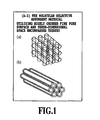
- An exemplified pre-conccntrator has, for instance as shown in Fig. 1 (A-1)(a) and (b), the three-dimensionally highly ordered periodic fine pore structure for selectively adsorbing the target molecule.
- the pre-concentrator is provided with the highly ordered (for example, fine pore profile such as hexagonal system, cubic system, lamella system) nanosized fine pore (hereinafter also referred to as mesopore), and the sub-nanosized fine pore (hereinafter also referred to as micropore) is formed on the wall surface of this nanosized fine pore.
- mesopore nanosized fine pore
- micropore sub-nanosized fine pore
- the pre-concentrator is controlled so that at least the profile of fine pore and the size of fine pore of the sub-nanosized fine pore are suitable to detect benzene, and is made so that the surface of the fine pore is suitable to detect benzene selectively by modifying the surface of the fine pore with a functional dimethylphenylsilyl group.
- the pre-concentrator may have, as mentioned above, a mesoporous silicate, and a thrce-dimensionally highly ordered periodic fine pore structure.
- the nanosized fine pore has a radius of not less than 0.5 nm and not more than 50 nm
- the sub-nanosized fine pore present in the wall surface of the nanosized fine pore preferably has a radius of not less than 0.05 nm and not more than 0.5 nm.
- the surface of this sub-nanosized fine pore is modified by a functional dimethylphenylsilyl group.
- the pre-concentrator may have a periodic cubic structure, and this has the nanosized fine pores which are aligned in high order.
- the nanosized fine pore has a pore size of from 1.5 nm to 2.5 nm in radius
- the aforementioned sub-nanosized fine pore has a pore size of larger than a half size of the benzene molecule (about 0.3 nm) in radius, preferably in the range of from 0.2 to 0.5 nm in radius (that is, 0.15 nm to 0.5 nm, or preferably 0.2 nm to 0.5 nm).
- a fine pore size distribution of the sub-nanosized fine pore has a half value width in the center portion of not more than 0.06 nm, preferably 0.05 nm ⁇ 0.01 nm.
- the benzene pre-concentrator has a size for accommodating only one molecule of benzene or larger, but a size of being difficult to adsorb other molecules (for example toluene).
- the half value width is, as mentioned above, not more than 0.06 nm, and when the distribution becomes larger, molecules other than benzene may enter therein.
- the pre-concentrator may have a nanosized fine pore has a periodic structure.
- the structure of the sub-nanosized fine pore may not be periodical. Accordingly, the word "periodic structure” or "three-dimensional periodic structure” means a structure with respect to the nanosized fine pore.
- the nanosized fine pore and the sub-nanosized fine pore are both uniform in pore size.
- the benzene pre-concentrator of the present invention is a mesoporous silicate modified with functional group (A).
- the mesoporous silicate could be modified with SBA-16 where the surface of the fine pores are modified with dimethylphenylsilyl groups. Highly selective detection of benzene can be achieved by this combination.
- the steric structure of the inner portion of the fine pore can be made into a structure that adsorbs benzene easily, and affinity to benzene can be enhanced higher.
- the benzene-adsorbing ability and benzene-concentrating ability in the sub-nanosized fine pore of the pre-concentrator are enhanced to increase the benzene-selective detection ability, whereby a highly sensitive detection can be achieved.
- the selective concentration of a molecule which is difficult to be adsorbed selectively only by three-dimensional structure or surface affinity can be realized by using, in the synthesis of the mesoporous silicate, temperature of synthesis, degree of acidity, substance of die for the fine pore (surface active agent or self-organizing polymer), sintering temperature and physical stimulations such as light or heat to control the shape and size of the fine pore, the kind and density of the substituent or organic functional group on the surface of the inner portion of the fine pore and the like, and affinity between the inner surface of the fine pore and the target molecule.
- the selective separation and concentration of the benzene molecule can be realized by controlling the inner portion of the fine pore of the mesoporous silicate having the aforementioned highly ordered periodic fine pore structure suitable to adsorb the benzene molecule.
- a control of the inner portion of the fine pore of the mesoporous silicate is achieved, after synthesis, by introducing the organic functional group into the inner portion of the nanosized fine pore, or by controlling the kind (for example silanol group) and density of the substituent on the inner surface of the fine pore with chemicals such as an acid or an alkali or through physical oxidation-reduction reaction.
- mesoporous silicate having the fine pore structure used when bonding an organic functional group having a substituent of a high affinity to benzene (for example organosilicon functional group) to the mesoporous silicate, the benzene molecule interacts not only with such a functional group in one direction like two-dimensional surface, but also, for instance, with the upper and lower functional groups in the pore, whereby three-dimensional interaction is produced. Such an action seems to be a factor to separate the benzene molecule highly selectively.
- organosilicon functional group for example organosilicon functional group
- a preparation process of the benzene pre-concentrator According to the preparation process of the benzene pre-concentrator, a solution containing a substance for a die of the fine pore is heated to a temperature of from 30 to 130° C, a silicate precursor is added thereto to produce a precipitate, and, after drying the precipitate, the precipitate is sintered at a given temperature. Thereby, the mesoporous silicate of the benzene pre-concentrator can he obtained.
- the substance of the die for the nanosized fine pore is preferably EO 100 -PO 65 -EO 100 (EO: ethyleneoxide, PO: propyleneoxide, numerals being the number of molecules in each block) (hereinafter also referred to as F127).
- F127 for example EO20-PO70-EO20 and the like, as the substance for die, it is preferable to use F127.
- F127 difference in selectivity may be caused among the mesoporous silicates obtained from those dies.
- the obtained mesoporous silicate (hexagonal system) has a smaller surface area of the nanosized fine pore than that of mesoporous silicate (cubic system) obtained by using F127, and as a result, the number of exposed sub-nanosized fine pores is reduced in the mesoporous silicate obtained by using EO20-PO70-EO20.
- a solution (for example diluted hydrochloric acid) containing the aforementioned substance (F127) for die is heated to a temperature of from 30° C to 130°C, and to the solution added a silicate precursor (for example TEOS (tetraethylorthosilicate) may be used) to form a precipitate. After drying the precipitate, the dried precipitate is sintered at a temperature of from 450° C to 600° C to prepare the benzene pre-concentrator.
- a silicate precursor for example TEOS (tetraethylorthosilicate)
- reaction temperature temperature of the solution
- sintering temperature temperature higher than 600°C
- crystallization is advanced, and there is the possibility that the fine pore may become small.
- fine pore becomes small, the density of the silanol group on the surface of the fine pore becomes lowered, and thus the selective adsorption may not be caused.
- lower than 450°C there is the possibility that removal of the substance for die of fine pore such as a block copolymer is not sufficient.
- a pre-concentrator may be formed by, after adding the silicate precursor to the solution for die, applying onto a substrate (for example waveguide type chip) to form a thin film, and then removing the substance for die.
- a substrate for example waveguide type chip
- the benzene pre-concentrator obtained has, as mentioned above, the three-dimensionally highly ordered periodic nanosized fine pore structure, and the sub-nanosized fine pores exist on the wall thereof.
- the silanol group exists on the prepared mesoporous silicate as mentioned above.
- the silanol group may be increased by, for example, treating with a sulfuric acid-hydrogen peroxide solution.
- the silanol group may be decreased by heating the mesoporous silicate or surface-treating with a neutral to acidic solution whereby hydrophilic property can be lowered.
- the acidic solution to be used includes for example, hydrochloric acid, nitric acid, sulfuric acid and the like. These solutions preferably have, for example, a pH of from 1 to 6.
- a solution as a mixed solution of sulfuric acid and hydrogen peroxide (mixed ratio; for example, conc. sulfuric acid (96%): hydrogen peroxide: water 2:1:1 to 3:1:1)
- the surface of the fine pore can be made hydrophilic. Namely, it is possible to control an amount of silanol on the surface of the fine pore.
- the next step of the preparation process is to modify the surface of the fine pore with the functional group, by applying a coupling agent to the aforementioned mesoporous silicate.
- the functional group is dimethylphenylsilyl.
- the silane coupling agent reacts with the silanol group on the surface of the fine pore of the mesoporous silicate to bond the organosilicon functional group to the surface of the fine pore.
- the pre-concentrator is prepared by using the particular mesoporous silicate precursor and then by modification of the surface of the fine pore of the obtained pre-concentrator with dimethylphenylsilyl. This is because the benzene molecule can be selectively detected due to the fact that the pre-concentrator has the particular crystalline structure and the inner portion of the fine pore is modified with the functional group.
- the benzene pre-concentrator is a pre-concentrator capable of separating selectively and concentrating the benzene molecule, by suitably selecting the pore size, and/or kind and size and/or density of the functional group to be introduced into the pore to utilize both of effect of physical size of the fine pore and steric effect of the surface of the inner portion of the fine pore (size effect), and effect of chemical affinity simultaneously and three-dimensionally.
- the pre-concentrator can be prepared without a complex synthesis method, and can achieve a high selectivity.
- the detecting method can be achieved by, for instance, a device provided with at least a separation part for selectively separating the benzene molecule and a detection part for detecting the target substance separated in the separation part, including the pre-concentrator.
- a device provided with at least a separation part for selectively separating the benzene molecule and a detection part for detecting the target substance separated in the separation part, including the pre-concentrator.
- Example of such a device is, for instance, one disclosed in JP-A-2003-021595 (Patent Document 1).
- the detection part can be assembled into the separation part.
- the benzene molecule For the detection of the benzene molecule, there may be employed a method where the benzene molecule selectively adsorbed on the pre-concentrator is released, for example, with heating, and the released concentrated gas is measured optically, or a method where optical measurement is carried out in the state in which the benzene molecule is adsorbed and concentrated on the pre-conccntrator.
- the optical measurement is not particularly limited, and, for example, may be carried out by using an ultraviolet detector. Accordingly, the target molecule can be detected.
- the pre-concentrator of the present invention was prepared as mentioned below.
- the preparation flow is shown in Fig.3 .
- Ts 40°C
- TEOS tetraethylorthosilicate
- a mesoporous silicate (SBA-16) having uniform fine pores of two kinds, i.e. a nanosized fine pore having a diameter of 4.0 nm and a sub-nanosized fine pore having a diameter of 0.44 nm was prepared.
- the nanosized fine pore has a cubic system periodic structure, and the sub-nanosized fine pore is present on the wall of the nanosized fine pore so as to communicate the nanosized fine pores.
- the surface of the mesoporous silicate can be modified with the organic functional group by selecting a coupling agent, and a density thereof can be controlled by the aforementioned surface treatment.
- Some examples are reported (Non-patent Document 2).
- Me 2 PhEtO-Si dimethylphcnylethoxysilane
- the functional modification process was carried out by using TEFLON (registered trademark) in an argon gas.
- SBA-16 and Me 2 PhEtO-Si are mixed in toluene at a weight ratio of 1:1, and refluxed at 125°C for 3 hours. After cooling to room temperature, the precipitate is filtrated, and washed with a 1:1 mixed solution of dichloromethane and diethyl ether.
- a benzene pre-concentrator was obtained by drying at 60°C for 3 hours.
- This is assembled to, for example, a micro flow cell (for instance, one disclosed in JP-A-2003-021595 ), and a quantitative and selective detection of benzene from each of mixed gases of benzene, toluene, o-xylene in a low concentration of from ppb to ppm level is carried out.
- a micro flow cell for instance, one disclosed in JP-A-2003-021595
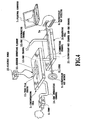
- the flow channel of the micro flow cell shown in Fig. 4 was charged with the mixed gases containing benzene, toluene, and o-xylene.
- the micro flow cell is provided with a concentrating cell 1 and a measuring cell 2.
- the concentrating cell 1 is provided with a gas channel 11 for flowing a gas to be measured, a benzene pre-concentrator 12 incorporated within the gas channel 11 and a thin film heater 13 for heating a substance adsorbed and immobilized on the benzene pre-concentrator 12.
- the measuring cell 2 is provided with an ultraviolet ray channel and gas channel 21 for flowing the gas of a substance to be measured from the gas channel 11, and passing through an ultraviolet ray for measuring.
- the measuring cell is provided with a connecting channel 3 for connecting and communicating the gas channel 11 and the ultraviolet ray channel and gas channel 21, and a gas introducing channel 14 for introducing the gas to be measured into the gas channel 11 of the concentrating cell 1, and a gas discharging channel 22 for discharging the gas which has been measured.
- Numeral 4 is a pump for introducing a gas into the gas introducing channel 14, 15 is an electric power for heating the thin film heater 13
- 5 is a light source for an incident ultraviolet ray into the ultraviolet ray channel and gas channel 21, 5a is a lens for focusing the ultraviolet ray
- 6 is an ultraviolet ray detector for detecting the ultraviolet ray emitted from the ultraviolet ray channel and gas channel 21, 7 is a personal computer.
- An air containing benzene is introduced into the gas channel 11 from the gas introducing channel 14 of the concentrating cell 1 by the pump 4, and the benzene gas is adsorbed and immobilized on the benzene pre-concentrator 12 incorporated within the gas channel 11.
- the thin film heater 13 is turned on by the electric power 15 to heat, and a temperature of the benzene gas adsorbed on the benzene pre-concentrator 12 is elevated to a heat-desorbed temperature to desorb benzene.
- This desorbed and separated gas is introduced through the connecting channel 3 into the ultraviolet ray channel and gas channel 21 of the measuring cell 2.
- Toluene and o-xylene are molecules which are very analogous to benzene in structure, configuration and nature, and it is difficult to adsorb benzene selectively by using a conventional material.
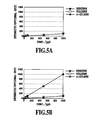
- a ratio of detecting signal intensity of benzene: toluene: o-xylene is about 10:1:1, and a detecting sensitivity as to benzene becomes high ( Figs.5A-5B).
- Fig.5A shows a graph representing a signal intensity of a conventional benzene pre-concentrator
- Fig.5B shows a graph representing a signal intensity of the benzene pre-concentrator.
- benzene, toluene and o-xylene had the same signal intensity over the concentration range of from 0 to 1000 ppb (in the figure, the black circles for benzene are overlapped with the symbols of toluene (white square) and o-xylene (black triangle).
- concentration range of from 0 to 1000 ppb as shown in Fig.5B , though toluene and o-xylene had the same signal intensity, benzene shows a signal intensity 10 times stronger than those of toluene and o-xylene over this concentration range.
- Detection of an exhaust gas from an automobile was carried out by the same manner as in EXAMPLE 1.
- a humidity of the exhaust gas is 80% or higher, and as to the number of molecules contained in the gas, water is predominantly large, therefore, interference by water causes serious problems in a detecting method by using a conventional adsorbent.
- a very strong signal of benzene was detected ( Figs. 6A-6B).
- Fig.6A shows a graph representing a signal intensity of a conventional benzene pre-concentrator
- Fig.6B shows a graph representing a signal intensity of the benzene pre-concentrator. From the above, benzene slightly present in atmospheric air could be detected selectively with a high sensitivity.
- the selectivity of the mesoporous silicate modified with the functional group having the substituent (A) on Si is superior.
- the selectivity of the mesoporous silicate modified the functional group having the substituent (B) on Si was lowered in the combination with SBA-16. It seems that in this combination, since the organic functional group contains two benzene molecules on Si, the selectivity was lowered due to steric hindrance.
- the separation between benzene and toluene is more difficult than the separation between benzene and xylene. Accordingly, the most preferable benzene pre-concentrator has excellent selectivity.
- the pre-concentrator could be utilized in the analytical fields where a specified molecule is selectively detected.
- the benzene pre-concentrator comprising the mesoporous silicate whose fine pore is modified with a particular substituent.
- This pre-concentrator is one controlling the structure of the sub-nanosized fine pore, pore size, state of modification on the surface of the inner portion of the fine pore (kind, density and the like of the organic functional group having a particular substituent), and affinity between the inner surface of the fine pore and benzene molecule.
- benzene slightly present in atmospheric air can be detected selectively and highly sensitively.
Landscapes
- Chemical & Material Sciences (AREA)
- Analytical Chemistry (AREA)
- Organic Chemistry (AREA)
- Chemical Kinetics & Catalysis (AREA)
- Physics & Mathematics (AREA)
- Life Sciences & Earth Sciences (AREA)
- Engineering & Computer Science (AREA)
- Inorganic Chemistry (AREA)
- Health & Medical Sciences (AREA)
- General Health & Medical Sciences (AREA)
- Pathology (AREA)
- Biochemistry (AREA)
- Spectroscopy & Molecular Physics (AREA)
- General Physics & Mathematics (AREA)
- Immunology (AREA)
- Geology (AREA)
- Nanotechnology (AREA)
- General Life Sciences & Earth Sciences (AREA)
- Medicinal Chemistry (AREA)
- Combustion & Propulsion (AREA)
- Food Science & Technology (AREA)
- Investigating Or Analyzing Materials By The Use Of Fluid Adsorption Or Reactions (AREA)
- Silicates, Zeolites, And Molecular Sieves (AREA)
- Sampling And Sample Adjustment (AREA)
- Investigating Or Analysing Materials By The Use Of Chemical Reactions (AREA)
- Solid-Sorbent Or Filter-Aiding Compositions (AREA)
Description
- The present invention relates to a benzene pre-concentrator for selectively and highly sensitively detecting benzene in atmospheric air, and a preparation process of the same.
-
JP 2003-21595 - Yiu H H P et al, J. Molec.Catalysis B 15(2004), 81-92, describes enzyme immobilization using SBA-15 mesoporous molecular sieves with functional surfaces, and Zhao D et al, J. Am. Chem. Soc. 120(1998), 6024-6036, describes a non-ionic triblock and star dibloek co-polymer and oligomeric surfactant syntheses of highly ordered, hydrothermally stable, mesoporous silica structures. Ueno Y et al, sensors and Materials 15(2003), 393-402, describes the use of nanostructured mesoporous silicate as a benzene pre-concentrator.
- The object of the present invention is to provide a pre-concentrator comprising mesoporous silicate for selectively and highly sensitively detecting benzene slightly present in atmospheric air. This pre-concentrator is designed to have a difference in affinity between benzene molecules and aromatic molecules analogous to benzene. In addition, also described is a process for preparing the aforementioned pre-concentrator by employing a relatively easy synthetic method.
- In order to solve the aforementioned problems, the benzene pre-concentrator according to the present invention is a benzene pre-concentrator comprising mesoporous silicate for selectively and highly sensitively detecting benzene particularly present in atmospheric air. The pre-concentrator has a nanosized fine pore having a highly ordered periodical fine pore structure, the nanosized fine pore has a sub-nanosized fine pore in its wall surface, the nanosized fine pore has a pore size of from 0.15 nm to 50 nm in radius, the sub-nanosized fine pore has a pore size of from 0.05 nm to 0.5 nm in radius, and at least sub-nanosized fine pore of the fine pores is modified with dimethylphenylsilyloxy (Me2PhSiO-). Additionally, the nanosized fine pore more preferably has a cubic crystalline structure, and has a pore size of from 1.5 nm to 2.0 nm in radius. The sub-nanosized fine pore exists in the wall of the nanosized fine pore in such a structure as to communicate the nanosized fine pores.
- The process of preparation of the benzene pre-concentrator comprises the steps of: heating a solution of EO100-PO65-EO100 (EO: ethyleneoxide, PO: propyleneoxide, numerals being the number of molecules in each block) as a die for fine pores; adding thereto a precursor of silicate to form a precipitate; and after drying the precipitate, sintering the precipitate to prepare the benzene pre-eoncentrator having a nanosized fine pore with a highly ordered periodical fine pore structure and having a sub-nanosized fine pore in the wall surface of the nanosized fine pore. The heating is preferably carried out at a temperature range of from 30° C to 130° C, and the sintering is preferably carried out at a temperature of from 450°C to 600°C. According to the process , a pre-conccntrator having the nanosized fine pore of a pore size of from 0.15 nm to 50 nm in radius and the aforementioned sub-nanosized fine pore of a pore size of from 0.15 to 0.5 nm in radius can be obtained. The process further includes a step where a silane coupling agent is reacted with the benzene pre-concentrator to introduce dimethylphenylsilyl group.
- Benzine slightly present in atmospheric air can be detected selectively and highly sensitively by controlling, in the mesoporous silicate, the periodic structure of the sub-nanosized fine pore, the pore size of the sub-nanosized fine pore, kind and density of the substituent present on the surface of the inner portion of the sub-nanosized fine pore, and affinity between the inner surface of the sub-nanosized fine pore and benzene molecule. This applications shows that a benzene pre-concentrator capable of detecting selectively and highly sensitively benzene slightly present in atmospheric air and the preparation process thereof can be provided.
-
- [
Fig.1 ] Figure shows the characteristics of the pre-concentrator when utilizing a substituent having high affinity for a target molecule in order to adsorb the target molecule. - [
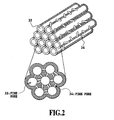
Fig.2 ] Figure shows the characteristics of the pre-concentrator. - [
Fig.3 ] Figure shows a flow diagram of the pre-concentrator preparation process. - [
Fig.4 ] Figure shows the apparatus used in EXAMPLE 1. - [
Fig.5A ] Figure shows the signal intensities of benzene, toluene and o-xylene obtained in EXAMPLE 1 by carrying out the detection of the benzene gas according to the conventional method when using the apparatus shown inFig.4 . - [
Fig.5B ] Figure shows a comparison of the signal intensities of benzene, toluene and o-xylene obtained in EXAMPLE 1 when carrying out the detection of the benzene gas according to the present invention by using the apparatus shown inFig.4 . - [
Fig. 6A ] Figure shows the signal intensity of benzene according to the conventional method in EXAMPLE 2. - [
Fig. 6B ] Figure shows the signal intensity of benzene according to the present invention in EXAMPLE 2. - The present invention relates to a benzene pre-concentrator comprising a mesoporous silicate having a three-dimensionally highly ordered periodic fine pore structure and the preparation process thereof. Particularly, the pre-concentrator has a nanosized fine pore, and a sub-nanosized fine pore in the wall surface of the nanosized fine pore. The pore size of the sub-nanosized fine pore and the surface properties of the sub-nanosized fine pore are controlled such that benzene is detected selectively. Moreover, there is provided an improved preparation process of the benzene pre-concentrators described above.
- In this application, the term "controlling" or "control" means that the physical structure of the surface of the inner portion of the fine pore, and the interaction between the surface of the inner portion of the fine pore and the target molecule (benzene molecule) are selected so as to adsorb the target molecule selectively on the pre-concentrator (namely, the pore size of the inner portion of the fine pore being regulated to the particular range, or suitable substituent being introduced to the surface of the fine pore).
- The present invention will now be further described in detail by way of example with reference to the drawings. The drawings are merely examples and do not restrict the present invention.
- Firstly, with refers to the drawings there is illustrated a benzene pre-concentrator [0013] The pre-concentrator comprises a mesoporous silicate having the nanosized highly ordered periodic fine pore structure. This characteristics of the fine pore structure are determined by (i) the shape and size of the fine pore, (ii) the structure of the inner surface of the fine pore such as kind and density of the substituent on the surface of the inner portion of the fine pore, and (iii) the affinity with the molecule to be detected (hereinafter also referred to as benzene molecule or target molecule) by variously selecting the substituents on the inner surface of the fine pore, comply with the target molecule. It is preferable to particularly control the sub-nanosized fine pore of the pre-concentrator. The benzene molecule thereby can be adsorbed on the pre-concentrator selectively.
- An exemplified pre-conccntrator has, for instance as shown in
Fig. 1 (A-1)(a) and (b), the three-dimensionally highly ordered periodic fine pore structure for selectively adsorbing the target molecule. - The pre-concentrator is provided with the highly ordered (for example, fine pore profile such as hexagonal system, cubic system, lamella system) nanosized fine pore (hereinafter also referred to as mesopore), and the sub-nanosized fine pore (hereinafter also referred to as micropore) is formed on the wall surface of this nanosized fine pore. For instance, in the case of the pre-concentrator shown in
Fig.2 , the mesopore is one so indicated by afine pore 32, and the micropore is one so indicated by afine pore 34. The pre-concentrator is controlled so that at least the profile of fine pore and the size of fine pore of the sub-nanosized fine pore are suitable to detect benzene, and is made so that the surface of the fine pore is suitable to detect benzene selectively by modifying the surface of the fine pore with a functional dimethylphenylsilyl group. - The pre-concentrator may have, as mentioned above, a mesoporous silicate, and a thrce-dimensionally highly ordered periodic fine pore structure. Preferably the nanosized fine pore has a radius of not less than 0.5 nm and not more than 50 nm, and the sub-nanosized fine pore present in the wall surface of the nanosized fine pore preferably has a radius of not less than 0.05 nm and not more than 0.5 nm. The surface of this sub-nanosized fine pore is modified by a functional dimethylphenylsilyl group.
- The pre-concentrator may have a periodic cubic structure, and this has the nanosized fine pores which are aligned in high order. On the wall surface thereof, there preferably exists the sub-nanosized fine pore so as to communicate the nanosized fine pores. Further, the nanosized fine pore has a pore size of from 1.5 nm to 2.5 nm in radius, and the aforementioned sub-nanosized fine pore has a pore size of larger than a half size of the benzene molecule (about 0.3 nm) in radius, preferably in the range of from 0.2 to 0.5 nm in radius (that is, 0.15 nm to 0.5 nm, or preferably 0.2 nm to 0.5 nm). In addition, a fine pore size distribution of the sub-nanosized fine pore has a half value width in the center portion of not more than 0.06 nm, preferably 0.05 nm ± 0.01 nm. Namely, the benzene pre-concentrator has a size for accommodating only one molecule of benzene or larger, but a size of being difficult to adsorb other molecules (for example toluene). The half value width is, as mentioned above, not more than 0.06 nm, and when the distribution becomes larger, molecules other than benzene may enter therein. By using these fine pore structural mesoporous silicates, benzene can be selectively adsorbed and benzene can be detected at a high sensitivity.
- The pre-concentrator may have a nanosized fine pore has a periodic structure. However, the structure of the sub-nanosized fine pore may not be periodical. Accordingly, the word "periodic structure" or "three-dimensional periodic structure" means a structure with respect to the nanosized fine pore. In addition, the nanosized fine pore and the sub-nanosized fine pore are both uniform in pore size.
- The organic functional group bound to the surface of the fine pore of the mesoporous silicate via one Si-O- bond as shown as substituent (A) in the following Table 1.
- [Table 1]
Table 1 Substituent on Si (A) Me2Ph (B) Ph2H (C) MePh Bonding structure to silicate surface 


Bonding form One SiO bond One SiO bond Two SiO bonds Characteristics Easy interaction because of easy moving There are two interactable structures Hard to interact because it's difficult to move - As shown in Table 1, when (A) and (B) arc used as the substituent, the organic functional group moves relatively freely on the mesoporous silicate and the molecule to be detected (benzene molecule) can easily interact with the phenyl group on the organic functional group. On the other hand, when the organic functional group is bonded through two Si-O groups on the mesoporous silicate as shown in (C), the organic functional group cannot move freely, and the interaction between the molecule to be detected (benzene molecule) and the organic functional group is suppressed.
- Also, even when (A) and (B) arc used as the substituent, there is a difference in the selectivity detected. For example, when the organic functional group having the substituent is (B), it is possible to detect the benzene molecule selectively. However, in a gas mixture of benzene and toluene and in case of the combination with the mesoporous silicate represented by SBA-16 mentioned hereinafter, a difference in the selectivity between benzene and toluene can be detected when the modification is performed with (A) or (B) (see EXAMPLE).
- The reason for the above mentioned difference in selectivity may be due to the presence of two benzene molecules in the organic functional group of compounds like (B) which causesteric hindrance, thereby lowering selectivity. Based on this analysis, the benzene pre-concentrator of the present invention is a mesoporous silicate modified with functional group (A). For example, the mesoporous silicate could be modified with SBA-16 where the surface of the fine pores are modified with dimethylphenylsilyl groups. Highly selective detection of benzene can be achieved by this combination.
- As is explained, by modifying with the aforementioned functional group, the steric structure of the inner portion of the fine pore can be made into a structure that adsorbs benzene easily, and affinity to benzene can be enhanced higher. The benzene-adsorbing ability and benzene-concentrating ability in the sub-nanosized fine pore of the pre-concentrator are enhanced to increase the benzene-selective detection ability, whereby a highly sensitive detection can be achieved.
- The selective concentration of a molecule which is difficult to be adsorbed selectively only by three-dimensional structure or surface affinity can be realized by using, in the synthesis of the mesoporous silicate, temperature of synthesis, degree of acidity, substance of die for the fine pore (surface active agent or self-organizing polymer), sintering temperature and physical stimulations such as light or heat to control the shape and size of the fine pore, the kind and density of the substituent or organic functional group on the surface of the inner portion of the fine pore and the like, and affinity between the inner surface of the fine pore and the target molecule.
- Moreover, the selective separation and concentration of the benzene molecule can be realized by controlling the inner portion of the fine pore of the mesoporous silicate having the aforementioned highly ordered periodic fine pore structure suitable to adsorb the benzene molecule. A control of the inner portion of the fine pore of the mesoporous silicate is achieved, after synthesis, by introducing the organic functional group into the inner portion of the nanosized fine pore, or by controlling the kind (for example silanol group) and density of the substituent on the inner surface of the fine pore with chemicals such as an acid or an alkali or through physical oxidation-reduction reaction.
- In addition,he mesoporous silicate having the fine pore structure used, when bonding an organic functional group having a substituent of a high affinity to benzene (for example organosilicon functional group) to the mesoporous silicate, the benzene molecule interacts not only with such a functional group in one direction like two-dimensional surface, but also, for instance, with the upper and lower functional groups in the pore, whereby three-dimensional interaction is produced. Such an action seems to be a factor to separate the benzene molecule highly selectively.
- Next, the preparation process of the benzene pre-concentrator is explained.
- Herein described is a preparation process of the benzene pre-concentrator. According to the preparation process of the benzene pre-concentrator, a solution containing a substance for a die of the fine pore is heated to a temperature of from 30 to 130° C, a silicate precursor is added thereto to produce a precipitate, and, after drying the precipitate, the precipitate is sintered at a given temperature. Thereby, the mesoporous silicate of the benzene pre-concentrator can he obtained. The substance of the die for the nanosized fine pore is preferably EO100-PO65-EO100 (EO: ethyleneoxide, PO: propyleneoxide, numerals being the number of molecules in each block) (hereinafter also referred to as F127).
- According to the preparation process, though there may be used other than the aforementioned F127, for example EO20-PO70-EO20 and the like, as the substance for die, it is preferable to use F127. The reason is that difference in selectivity may be caused among the mesoporous silicates obtained from those dies. The reason why such difference in selectivity is caused seems that when using EO20-PO70-EO20 as the substance for die, the obtained mesoporous silicate (hexagonal system) has a smaller surface area of the nanosized fine pore than that of mesoporous silicate (cubic system) obtained by using F127, and as a result, the number of exposed sub-nanosized fine pores is reduced in the mesoporous silicate obtained by using EO20-PO70-EO20.
- A solution (for example diluted hydrochloric acid) containing the aforementioned substance (F127) for die is heated to a temperature of from 30° C to 130°C, and to the solution added a silicate precursor (for example TEOS (tetraethylorthosilicate) may be used) to form a precipitate. After drying the precipitate, the dried precipitate is sintered at a temperature of from 450° C to 600° C to prepare the benzene pre-concentrator. The mcsoporous silicate obtained from the above materials and through the procedures is referred as SBA-16 in the specification.
- When the reaction temperature (temperature of the solution) is out of the range of from 30 to 130°C, there is the possibility that good fine pore cannot be obtained. Also, when the sintering temperature is higher than 600°C, crystallization is advanced, and there is the possibility that the fine pore may become small. When the fine pore becomes small, the density of the silanol group on the surface of the fine pore becomes lowered, and thus the selective adsorption may not be caused. When lower than 450°C, there is the possibility that removal of the substance for die of fine pore such as a block copolymer is not sufficient.
- A pre-concentrator may be formed by, after adding the silicate precursor to the solution for die, applying onto a substrate (for example waveguide type chip) to form a thin film, and then removing the substance for die.
- The benzene pre-concentrator obtained has, as mentioned above, the three-dimensionally highly ordered periodic nanosized fine pore structure, and the sub-nanosized fine pores exist on the wall thereof.
- The silanol group exists on the prepared mesoporous silicate as mentioned above. The silanol group may be increased by, for example, treating with a sulfuric acid-hydrogen peroxide solution. Also, the silanol group may be decreased by heating the mesoporous silicate or surface-treating with a neutral to acidic solution whereby hydrophilic property can be lowered. The acidic solution to be used includes for example, hydrochloric acid, nitric acid, sulfuric acid and the like. These solutions preferably have, for example, a pH of from 1 to 6. Moreover, by treating the surface with such a solution as a mixed solution of sulfuric acid and hydrogen peroxide (mixed ratio; for example, conc. sulfuric acid (96%): hydrogen peroxide: water 2:1:1 to 3:1:1), the surface of the fine pore can be made hydrophilic. Namely, it is possible to control an amount of silanol on the surface of the fine pore.
- The next step of the preparation process is to modify the surface of the fine pore with the functional group, by applying a coupling agent to the aforementioned mesoporous silicate. The functional group is dimethylphenylsilyl. The silane coupling agent reacts with the silanol group on the surface of the fine pore of the mesoporous silicate to bond the organosilicon functional group to the surface of the fine pore.
- It is most preferable that the pre-concentrator is prepared by using the particular mesoporous silicate precursor and then by modification of the surface of the fine pore of the obtained pre-concentrator with dimethylphenylsilyl. This is because the benzene molecule can be selectively detected due to the fact that the pre-concentrator has the particular crystalline structure and the inner portion of the fine pore is modified with the functional group.
- As mentioned above, the benzene pre-concentrator is a pre-concentrator capable of separating selectively and concentrating the benzene molecule, by suitably selecting the pore size, and/or kind and size and/or density of the functional group to be introduced into the pore to utilize both of effect of physical size of the fine pore and steric effect of the surface of the inner portion of the fine pore (size effect), and effect of chemical affinity simultaneously and three-dimensionally. Further, the pre-concentrator can be prepared without a complex synthesis method, and can achieve a high selectivity.
- Selective detection of benzene can be carried out by using the aforementioned pre-concentrator. The detecting method can be achieved by, for instance, a device provided with at least a separation part for selectively separating the benzene molecule and a detection part for detecting the target substance separated in the separation part, including the pre-concentrator. Example of such a device is, for instance, one disclosed in
JP-A-2003-021595 - For the detection of the benzene molecule, there may be employed a method where the benzene molecule selectively adsorbed on the pre-concentrator is released, for example, with heating, and the released concentrated gas is measured optically, or a method where optical measurement is carried out in the state in which the benzene molecule is adsorbed and concentrated on the pre-conccntrator. The optical measurement is not particularly limited, and, for example, may be carried out by using an ultraviolet detector. Accordingly, the target molecule can be detected.
- In the following, the present invention is more specifically explained by referring to Examples. The present invention is, however, not limited to only the following examples.
- The pre-concentrator of the present invention was prepared as mentioned below. The preparation flow is shown in
Fig.3 . - The block copolymer EO100-PO65-EO100 (EO: ethyleneoxide, PO: propyleneoxide) (F127) is dissolved in a diluted hydrochloric acid. The obtained solution is stirred at a dissolving temperature Ts = 40°C, and then TEOS (tetraethylorthosilicate) as a silicate precursor is added to produce a precipitate. The solution and precipitate are aged at 80°C for one day, and thereafter filtrated, washed with water, and air-dried at room temperature. Finally, gentle sintering is carried out. The sintering is conducted by, after heating up from room temperature to 450°C in 8 hours, allowed to stay at 450° C for 6 hours, cooling from 450° C to 100° C in 8 hours, and finally returning to room temperature by natural cooling.
- According to the above process, a mesoporous silicate (SBA-16) having uniform fine pores of two kinds, i.e. a nanosized fine pore having a diameter of 4.0 nm and a sub-nanosized fine pore having a diameter of 0.44 nm was prepared. In this case, the nanosized fine pore has a cubic system periodic structure, and the sub-nanosized fine pore is present on the wall of the nanosized fine pore so as to communicate the nanosized fine pores. There was 40% to 60% of silanol group on the surface of the thus prepared fine pore of the mesoporous silicate. The silanol group can be increased by treating with a sulfuric acid-hydrogen peroxide solution (a mixed solution of sulfuric acid and hydrogen peroxide solution (ratio; conc. sulfuric acid (96%): hydrogen peroxide: water=2:1:1 to 3:1:1)).
- The surface of the mesoporous silicate can be modified with the organic functional group by selecting a coupling agent, and a density thereof can be controlled by the aforementioned surface treatment. Some examples are reported (Non-patent Document 2). In this EXAMPLE, Me2PhEtO-Si (dimethylphcnylethoxysilane) was used as a coupling agent. The functional modification process was carried out by using TEFLON (registered trademark) in an argon gas. SBA-16 and Me2PhEtO-Si are mixed in toluene at a weight ratio of 1:1, and refluxed at 125°C for 3 hours. After cooling to room temperature, the precipitate is filtrated, and washed with a 1:1 mixed solution of dichloromethane and diethyl ether. A benzene pre-concentrator was obtained by drying at 60°C for 3 hours.
- This is assembled to, for example, a micro flow cell (for instance, one disclosed in
JP-A-2003-021595 - The flow channel of the micro flow cell shown in
Fig. 4 was charged with the mixed gases containing benzene, toluene, and o-xylene. - The micro flow cell is provided with a concentrating
cell 1 and a measuringcell 2. The concentratingcell 1 is provided with agas channel 11 for flowing a gas to be measured, abenzene pre-concentrator 12 incorporated within thegas channel 11 and athin film heater 13 for heating a substance adsorbed and immobilized on thebenzene pre-concentrator 12. On the other hand, the measuringcell 2 is provided with an ultraviolet ray channel andgas channel 21 for flowing the gas of a substance to be measured from thegas channel 11, and passing through an ultraviolet ray for measuring. In addition, the measuring cell is provided with a connectingchannel 3 for connecting and communicating thegas channel 11 and the ultraviolet ray channel andgas channel 21, and agas introducing channel 14 for introducing the gas to be measured into thegas channel 11 of the concentratingcell 1, and agas discharging channel 22 for discharging the gas which has been measured.Numeral 4 is a pump for introducing a gas into thegas introducing channel thin film heater gas channel gas channel - In the following, an example of procedures for measurement is explained. An air containing benzene is introduced into the
gas channel 11 from thegas introducing channel 14 of the concentratingcell 1 by thepump 4, and the benzene gas is adsorbed and immobilized on thebenzene pre-concentrator 12 incorporated within thegas channel 11. After passing the air for a given period of time, thethin film heater 13 is turned on by theelectric power 15 to heat, and a temperature of the benzene gas adsorbed on thebenzene pre-concentrator 12 is elevated to a heat-desorbed temperature to desorb benzene. This desorbed and separated gas is introduced through the connectingchannel 3 into the ultraviolet ray channel andgas channel 21 of the measuringcell 2. By using an optical fiber connected to theultraviolet ray source 5 and theultraviolet ray detector 6, detection of a contaminating substance is carried out by absorption spectrophotometry. After measurement, the gas is discharged from thegas discharging channel 22. The data are processed by thepersonal computer 7. - Toluene and o-xylene are molecules which are very analogous to benzene in structure, configuration and nature, and it is difficult to adsorb benzene selectively by using a conventional material. However, when using the the pre-concentrator, it has been found that a ratio of detecting signal intensity of benzene: toluene: o-xylene is about 10:1:1, and a detecting sensitivity as to benzene becomes high (
Figs.5A-5B). Fig.5A shows a graph representing a signal intensity of a conventional benzene pre-concentrator,Fig.5B shows a graph representing a signal intensity of the benzene pre-concentrator. Specifically, as shown inFig.5A , benzene, toluene and o-xylene had the same signal intensity over the concentration range of from 0 to 1000 ppb (in the figure, the black circles for benzene are overlapped with the symbols of toluene (white square) and o-xylene (black triangle). In the concentration range of from 0 to 1000 ppb, as shown inFig.5B , though toluene and o-xylene had the same signal intensity, benzene shows asignal intensity 10 times stronger than those of toluene and o-xylene over this concentration range. - As is clear from the results, benzene slightly present in atmospheric air could be detected selectively with a high sensitivity.
- Detection of an exhaust gas from an automobile was carried out by the same manner as in EXAMPLE 1. There are cases where a humidity of the exhaust gas is 80% or higher, and as to the number of molecules contained in the gas, water is predominantly large, therefore, interference by water causes serious problems in a detecting method by using a conventional adsorbent. However, when using the present invention, regardless of humidity, a very strong signal of benzene was detected (
Figs. 6A-6B). Fig.6A shows a graph representing a signal intensity of a conventional benzene pre-concentrator, andFig.6B shows a graph representing a signal intensity of the benzene pre-concentrator. From the above, benzene slightly present in atmospheric air could be detected selectively with a high sensitivity. - In the comparative experiments, the variation of selectivity of benzene was studied with combinations of SBA-16 and organic functional groups for modifying SBA-16.
- Mesoporous silicate modified with a functional group was prepared in the same procedures as in EXAMPLE 1, except that the substituent (B) or (C) on Si shown in the following Table 2 was introduced. By using the mesoporous silicate (modified with dimethylphenysilyl) prepared in EXAMPLE 1 and the obtained mesoporous silicates modified with the functional groups, the benzene molecule in benzene-toluene (100 ppb mixed gas) was detected according to the same procedures described in EXAMPLE 1. The results of the detection were shown in Table 2 together. The results of the detection (results of the experiments) are shown as a relative ratio where the selectivity of the mesoporous silicate modified with the functional group having the substituent (C) is assumed to be 1.
- [Table 2]
Table 2 Substituent on Si (A) Mc2Ph (B) Ph2H (C) MePh Bonding structure to silicate surface 


Bonding form One SiO bond One SiO bond Two SiO bonds Characteristics Easy interaction because of easy moving There are two interactable structures Hard to interact because it's difficult to move Effects Exhibit high selectivity Hard to interact because of bulky steric hindrance No selectivity Experimental results >5 about 1 1 - As is clear from the above results, though the benzene molecule can be detected in the case of modifying with the organic functional groups having substituent (B) or (C) on Si of the above Table, the selectivity of the mesoporous silicate modified with the functional group having the substituent (A) on Si is superior. Particularly the selectivity of the mesoporous silicate modified the functional group having the substituent (B) on Si was lowered in the combination with SBA-16. It seems that in this combination, since the organic functional group contains two benzene molecules on Si, the selectivity was lowered due to steric hindrance.
- Besides, the separation between benzene and toluene is more difficult than the separation between benzene and xylene. Accordingly, the most preferable benzene pre-concentrator has excellent selectivity.
- The pre-concentrator could be utilized in the analytical fields where a specified molecule is selectively detected. The benzene pre-concentrator comprising the mesoporous silicate whose fine pore is modified with a particular substituent. This pre-concentrator is one controlling the structure of the sub-nanosized fine pore, pore size, state of modification on the surface of the inner portion of the fine pore (kind, density and the like of the organic functional group having a particular substituent), and affinity between the inner surface of the fine pore and benzene molecule. By using the pre-concentrator described here, benzene slightly present in atmospheric air can be detected selectively and highly sensitively.
Claims (6)
- A benzene pre-concentrator comprising a mesoporous silicate for selectively and highly sensitively concentrating benzene, said pre-concentrator comprising: a nanosized fine pore (32) having a highly ordered periodical fine pore structure, wherein nanosized fine pore has a sub-nanosized fine pore (34) in its wall surface, the nanosized fine pore has a pore size of from 0.15 nm to 50 nm in radius, the sub-nanosized fine pore has a pore size of from 0.05 nm to 0.5 nm in radius, characterised in that at least the sub-nanosized fine pore of the fine pores is modified with a functional dimethylphenylsilyl (Me2PhSi-) group.
- The benzene pre-concentrator of claim 1, wherein the nanosized fine pore has a cubic crystalline structure, and has a pore size of from 1.5 nm to 2.0 nm in radius, and the sub-nanosized fine pore exists in the wall of the nanosized fine pore in such a structure as to communicate the nanosized fine pores.
- A preparation process of a benzene pre-concentrator of claim 1, comprising the steps of:heating a solution of EO100-PO65-EO100 as a die for fine pores;adding thereto a precursor of silicate to form a precipitate;after drying the precipitate, sintering the precipitate to prepare the benzene pre-concentrator having a nanosized fine pore with a highly ordered periodical fine pore structure and having a sub-nanosized fine pore in the wall surface of the nanosized fine pore; andreacting a silane coupling agent having a dimethylphenylsilyl group with the benzene pre-concentrator to introduce the dimethylphenylsilyl group as a functional group into at least the sub-nanosized fine pore.
- The preparation process of a benzene pre-concentrator of claim 3, wherein the heating is carried out at a temperature range of from 30° C to 130°C.
- The preparation process of a benzene pre-concentrator of claim 3, wherein the sintering is carried out at a temperature of from 450° to 600°C
- The preparation process of a benzene pre-concentrator of claim 3, wherein the nanosized fine pore has a pore size of from 0.15 nm to 50 nm in radius and the sub-nanosized fine pore has a pore size of from 0.05 to 0.5 nm in radius.
Applications Claiming Priority (2)
| Application Number | Priority Date | Filing Date | Title |
|---|---|---|---|
| JP2004030556 | 2004-02-06 | ||
| PCT/JP2004/018932 WO2005075954A1 (en) | 2004-02-06 | 2004-12-17 | Benzene sensor and method for manufacturing same |
Publications (3)
| Publication Number | Publication Date |
|---|---|
| EP1712889A1 EP1712889A1 (en) | 2006-10-18 |
| EP1712889A4 EP1712889A4 (en) | 2010-10-27 |
| EP1712889B1 true EP1712889B1 (en) | 2012-12-05 |
Family
ID=34836005
Family Applications (1)
| Application Number | Title | Priority Date | Filing Date |
|---|---|---|---|
| EP04807290A Expired - Lifetime EP1712889B1 (en) | 2004-02-06 | 2004-12-17 | Benzene pre-concentrator and method for manufacturing same |
Country Status (5)
| Country | Link |
|---|---|
| US (1) | US7682564B2 (en) |
| EP (1) | EP1712889B1 (en) |
| JP (1) | JP4064992B2 (en) |
| CN (1) | CN100549658C (en) |
| WO (1) | WO2005075954A1 (en) |
Families Citing this family (8)
| Publication number | Priority date | Publication date | Assignee | Title |
|---|---|---|---|---|
| WO2007065268A1 (en) | 2005-12-08 | 2007-06-14 | Queen's University At Kingston | Optical sensor using functionalized composite materials |
| CN100529754C (en) * | 2006-11-10 | 2009-08-19 | 中国科学院山西煤炭化学研究所 | A method for separating benzene and homologen |
| JP4874946B2 (en) * | 2007-12-18 | 2012-02-15 | 日本電信電話株式会社 | Gas concentration cell and gas concentration method |
| FR2933703B1 (en) | 2008-07-11 | 2012-08-17 | Commissariat Energie Atomique | NANOPOROUS DETECTORS OF MONOCYCLIC AROMATIC COMPOUNDS AND OTHER POLLUTANTS |
| WO2012011124A1 (en) * | 2010-07-20 | 2012-01-26 | Council Of Scientific & Industrial Research | Ordered mesoporous titanosilicate and the process for the preparation thereof |
| EP2743681A1 (en) | 2012-12-13 | 2014-06-18 | Nederlandse Organisatie voor toegepast -natuurwetenschappelijk onderzoek TNO | Fluorescence detector system for detection of an aromatic hydrocarbon |
| JP6736048B2 (en) * | 2016-03-08 | 2020-08-05 | Eneos株式会社 | Catalyst layer, membrane electrode assembly, electrolytic cell, and method for producing catalyst layer |
| JP6624515B2 (en) * | 2016-06-30 | 2019-12-25 | 日本電信電話株式会社 | Method and apparatus for detecting volatile organic compounds |
Family Cites Families (8)
| Publication number | Priority date | Publication date | Assignee | Title |
|---|---|---|---|---|
| US5334368A (en) * | 1990-01-25 | 1994-08-02 | Mobil Oil Corp. | Synthesis of mesoporous oxide |
| US5364797A (en) * | 1993-05-20 | 1994-11-15 | Mobil Oil Corp. | Sensor device containing mesoporous crystalline material |
| US5849258A (en) * | 1996-06-06 | 1998-12-15 | Intevep, S.A. | Material with microporous crystalline walls defining a narrow size distribution of mesopores, and process for preparing same |
| JPH1062401A (en) * | 1996-06-10 | 1998-03-06 | Toyota Central Res & Dev Lab Inc | Fillers for liquid chromatography |
| JP3761123B2 (en) | 1998-07-16 | 2006-03-29 | 三菱電機株式会社 | Network unit |
| JP2000088827A (en) | 1998-09-11 | 2000-03-31 | Hiroki Ri | Carrier for chromatography for separating optical isomer, and preparation thereof |
| JP3583739B2 (en) | 2000-08-22 | 2004-11-04 | 日本電信電話株式会社 | Micro flow cell for gas spectroscopy and method for producing the same |
| EP1394113B1 (en) * | 2002-08-30 | 2009-04-29 | Tokuyama Corporation | Crystalline inorganic porous material |
-
2004
- 2004-12-17 JP JP2005517626A patent/JP4064992B2/en not_active Expired - Lifetime
- 2004-12-17 CN CNB2004800057042A patent/CN100549658C/en not_active Expired - Lifetime
- 2004-12-17 WO PCT/JP2004/018932 patent/WO2005075954A1/en not_active Ceased
- 2004-12-17 US US10/547,460 patent/US7682564B2/en not_active Expired - Lifetime
- 2004-12-17 EP EP04807290A patent/EP1712889B1/en not_active Expired - Lifetime
Also Published As
| Publication number | Publication date |
|---|---|
| JP4064992B2 (en) | 2008-03-19 |
| CN1756946A (en) | 2006-04-05 |
| JPWO2005075954A1 (en) | 2007-08-02 |
| EP1712889A4 (en) | 2010-10-27 |
| US20060258015A1 (en) | 2006-11-16 |
| WO2005075954A1 (en) | 2005-08-18 |
| CN100549658C (en) | 2009-10-14 |
| EP1712889A1 (en) | 2006-10-18 |
| US7682564B2 (en) | 2010-03-23 |
Similar Documents
| Publication | Publication Date | Title |
|---|---|---|
| Hoffmann et al. | Silica‐based mesoporous organic–inorganic hybrid materials | |
| Burleigh et al. | Imprinted polysilsesquioxanes for the enhanced recognition of metal ions | |
| Lofgreen et al. | Controlling morphology and porosity to improve performance of molecularly imprinted sol–gel silica | |
| Vinu et al. | Recent advances in functionalization of mesoporous silica | |
| Walcarius et al. | Rate of access to the binding sites in organically modified silicates. 1. Amorphous silica gels grafted with amine or thiol groups | |
| Collinson | Sol-gel strategies for the preparation of selective materials for chemical analysis | |
| Stein et al. | Hybrid inorganic–organic mesoporous silicates—nanoscopic reactors coming of age | |
| US11628381B2 (en) | Chromatography media and devices | |
| Liu et al. | Direct method for surface silyl functionalization of mesoporous silica | |
| Lashgari et al. | Modification of mesoporous silica SBA-15 with different organic molecules to gain chemical sensors: a review | |
| Athens et al. | Functionalization of mesostructured inorganic–organic and porous inorganic materials | |
| Hosseinpour et al. | Use of metal composite MOF‐5‐Ag2O‐NPs as an adsorbent for the removal of Auramine O dye under ultrasound energy conditions | |
| AU753228B2 (en) | Ion separation using a surface-treated xerogel | |
| US11529610B2 (en) | Functionalized particulate support material and methods of making and using the same | |
| JP4229394B2 (en) | Molecule detection method using porous material, porous material and method for producing porous material | |
| CN112705179A (en) | Hierarchical different-pore covalent organic framework material and preparation method and application thereof | |
| CN111629999A (en) | Functionalized bimodal periodic mesoporous organosilicates (PMOs) and methods for their fabrication using pseudocrystalline transitions | |
| US7682564B2 (en) | Benzene detecting element and preparation process of same | |
| Miyazaki et al. | Titania‐coated monolithic silica as separation medium for high performance liquid chromatography of phosphorus‐containing compounds | |
| Servati et al. | Silica bonded calix [4] arene as an efficient, selective and reusable sorbent for rubber chemical additives | |
| Saad et al. | Dimethoxytriazine-triazole linked mesoporous silica hybrid sorbent for cationic dyes adsorption | |
| US7914663B2 (en) | Structure, porous body, sensor, process of structure and detecting method for specimen | |
| JP3969489B2 (en) | Method for measuring benzene and method for producing benzene gas selective adsorptive porous silica material | |
| WO2011114998A1 (en) | Transparent thin film of transition metal oxide having a large diameter nano-spaces, method for producing same and dye-sensitized device electrode | |
| Georgescu et al. | Adsorptive removal of cadmium and copper from water by mesoporous silica functionalized with N-(aminothioxomethyl)-2-thiophen carboxamide |
Legal Events
| Date | Code | Title | Description |
|---|---|---|---|
| PUAI | Public reference made under article 153(3) epc to a published international application that has entered the european phase |
Free format text: ORIGINAL CODE: 0009012 |
|
| 17P | Request for examination filed |
Effective date: 20051214 |
|
| AK | Designated contracting states |
Kind code of ref document: A1 Designated state(s): DE FR GB |
|
| DAX | Request for extension of the european patent (deleted) | ||
| RBV | Designated contracting states (corrected) |
Designated state(s): DE FR GB |
|
| A4 | Supplementary search report drawn up and despatched |
Effective date: 20100923 |
|
| 17Q | First examination report despatched |
Effective date: 20101209 |
|
| GRAP | Despatch of communication of intention to grant a patent |
Free format text: ORIGINAL CODE: EPIDOSNIGR1 |
|
| GRAS | Grant fee paid |
Free format text: ORIGINAL CODE: EPIDOSNIGR3 |
|
| GRAA | (expected) grant |
Free format text: ORIGINAL CODE: 0009210 |
|
| AK | Designated contracting states |
Kind code of ref document: B1 Designated state(s): DE FR GB |
|
| REG | Reference to a national code |
Ref country code: GB Ref legal event code: FG4D |
|
| REG | Reference to a national code |
Ref country code: DE Ref legal event code: R096 Ref document number: 602004040333 Country of ref document: DE Effective date: 20130131 |
|
| PLBE | No opposition filed within time limit |
Free format text: ORIGINAL CODE: 0009261 |
|
| STAA | Information on the status of an ep patent application or granted ep patent |
Free format text: STATUS: NO OPPOSITION FILED WITHIN TIME LIMIT |
|
| 26N | No opposition filed |
Effective date: 20130906 |
|
| REG | Reference to a national code |
Ref country code: DE Ref legal event code: R097 Ref document number: 602004040333 Country of ref document: DE Effective date: 20130906 |
|
| REG | Reference to a national code |
Ref country code: FR Ref legal event code: PLFP Year of fee payment: 12 |
|
| REG | Reference to a national code |
Ref country code: FR Ref legal event code: PLFP Year of fee payment: 13 |
|
| REG | Reference to a national code |
Ref country code: FR Ref legal event code: PLFP Year of fee payment: 14 |
|
| PGFP | Annual fee paid to national office [announced via postgrant information from national office to epo] |
Ref country code: GB Payment date: 20231220 Year of fee payment: 20 |
|
| PGFP | Annual fee paid to national office [announced via postgrant information from national office to epo] |
Ref country code: FR Payment date: 20231221 Year of fee payment: 20 Ref country code: DE Payment date: 20231214 Year of fee payment: 20 |
|
| REG | Reference to a national code |
Ref country code: DE Ref legal event code: R071 Ref document number: 602004040333 Country of ref document: DE |
|
| REG | Reference to a national code |
Ref country code: GB Ref legal event code: PE20 Expiry date: 20241216 |
|
| PG25 | Lapsed in a contracting state [announced via postgrant information from national office to epo] |
Ref country code: GB Free format text: LAPSE BECAUSE OF EXPIRATION OF PROTECTION Effective date: 20241216 |
|
| PG25 | Lapsed in a contracting state [announced via postgrant information from national office to epo] |
Ref country code: GB Free format text: LAPSE BECAUSE OF EXPIRATION OF PROTECTION Effective date: 20241216 |