EP1705009B1 - Automatic device for the handling and transport of printing sleeves - Google Patents
Automatic device for the handling and transport of printing sleeves Download PDFInfo
- Publication number
- EP1705009B1 EP1705009B1 EP04805128A EP04805128A EP1705009B1 EP 1705009 B1 EP1705009 B1 EP 1705009B1 EP 04805128 A EP04805128 A EP 04805128A EP 04805128 A EP04805128 A EP 04805128A EP 1705009 B1 EP1705009 B1 EP 1705009B1
- Authority
- EP
- European Patent Office
- Prior art keywords
- sleeve
- support
- mobile unit
- basic mobile
- printing machine
- Prior art date
- Legal status (The legal status is an assumption and is not a legal conclusion. Google has not performed a legal analysis and makes no representation as to the accuracy of the status listed.)
- Expired - Lifetime
Links
- 238000006073 displacement reaction Methods 0.000 claims description 41
- 238000012546 transfer Methods 0.000 claims description 20
- 230000004913 activation Effects 0.000 claims description 15
- 238000002347 injection Methods 0.000 claims description 13
- 239000007924 injection Substances 0.000 claims description 13
- 230000033001 locomotion Effects 0.000 claims description 7
- 238000012545 processing Methods 0.000 claims description 7
- 230000008878 coupling Effects 0.000 claims description 5
- 238000010168 coupling process Methods 0.000 claims description 5
- 238000005859 coupling reaction Methods 0.000 claims description 5
- 230000003287 optical effect Effects 0.000 claims description 3
- 230000003213 activating effect Effects 0.000 claims description 2
- 230000010339 dilation Effects 0.000 claims 1
- 238000011084 recovery Methods 0.000 claims 1
- 210000003414 extremity Anatomy 0.000 description 25
- 230000003993 interaction Effects 0.000 description 5
- 238000009434 installation Methods 0.000 description 4
- 238000000034 method Methods 0.000 description 4
- 230000000712 assembly Effects 0.000 description 3
- 238000000429 assembly Methods 0.000 description 3
- 239000011521 glass Substances 0.000 description 3
- 230000001681 protective effect Effects 0.000 description 3
- 230000008859 change Effects 0.000 description 2
- 238000000605 extraction Methods 0.000 description 2
- 238000012423 maintenance Methods 0.000 description 2
- 230000007246 mechanism Effects 0.000 description 2
- 238000007774 anilox coating Methods 0.000 description 1
- 210000000078 claw Anatomy 0.000 description 1
- 238000004140 cleaning Methods 0.000 description 1
- 238000013461 design Methods 0.000 description 1
- 238000011161 development Methods 0.000 description 1
- 230000018109 developmental process Effects 0.000 description 1
- 230000000694 effects Effects 0.000 description 1
- 230000005611 electricity Effects 0.000 description 1
- 230000005484 gravity Effects 0.000 description 1
- 239000000463 material Substances 0.000 description 1
- 238000003825 pressing Methods 0.000 description 1
- 210000001364 upper extremity Anatomy 0.000 description 1
Images

Classifications
-
- B—PERFORMING OPERATIONS; TRANSPORTING
- B41—PRINTING; LINING MACHINES; TYPEWRITERS; STAMPS
- B41F—PRINTING MACHINES OR PRESSES
- B41F27/00—Devices for attaching printing elements or formes to supports
- B41F27/12—Devices for attaching printing elements or formes to supports for attaching flexible printing formes
- B41F27/1206—Feeding to or removing from the forme cylinder
-
- B—PERFORMING OPERATIONS; TRANSPORTING
- B41—PRINTING; LINING MACHINES; TYPEWRITERS; STAMPS
- B41F—PRINTING MACHINES OR PRESSES
- B41F13/00—Common details of rotary presses or machines
- B41F13/08—Cylinders
-
- B—PERFORMING OPERATIONS; TRANSPORTING
- B41—PRINTING; LINING MACHINES; TYPEWRITERS; STAMPS
- B41F—PRINTING MACHINES OR PRESSES
- B41F27/00—Devices for attaching printing elements or formes to supports
-
- B—PERFORMING OPERATIONS; TRANSPORTING
- B41—PRINTING; LINING MACHINES; TYPEWRITERS; STAMPS
- B41N—PRINTING PLATES OR FOILS; MATERIALS FOR SURFACES USED IN PRINTING MACHINES FOR PRINTING, INKING, DAMPING, OR THE LIKE; PREPARING SUCH SURFACES FOR USE AND CONSERVING THEM
- B41N6/00—Mounting boards; Sleeves Make-ready devices, e.g. underlays, overlays; Attaching by chemical means, e.g. vulcanising
-
- B—PERFORMING OPERATIONS; TRANSPORTING
- B41—PRINTING; LINING MACHINES; TYPEWRITERS; STAMPS
- B41P—INDEXING SCHEME RELATING TO PRINTING, LINING MACHINES, TYPEWRITERS, AND TO STAMPS
- B41P2200/00—Printing processes
- B41P2200/10—Relief printing
- B41P2200/12—Flexographic printing
-
- B—PERFORMING OPERATIONS; TRANSPORTING
- B41—PRINTING; LINING MACHINES; TYPEWRITERS; STAMPS
- B41P—INDEXING SCHEME RELATING TO PRINTING, LINING MACHINES, TYPEWRITERS, AND TO STAMPS
- B41P2227/00—Mounting or handling printing plates; Forming printing surfaces in situ
- B41P2227/60—Devices for transferring printing plates
Definitions
- This invention relates to an automatic handling and transportation device for a printer sleeve suitable for use in flexographic printer cylinder changing operations whilst the printer is operating.
- Printing machines are well-known, especially flexographic printing machines which are fitted with a large, central support drum which rotates on a horizontal axis and along which moves a strip of material to be printed and a number of printing clusters are on each side of said support drum.
- Each printing cluster is designed to print, for example, one colour only for which it comprises a printing cylinder bearing a printing plate with the design to be printed and one or more ink-rollers connected to their respective containers of ink of the corresponding colour positioned to ink the corresponding printing cylinder printing plate.
- Both the inking rollers and the printing cylinder are positioned to turn on axes parallel to the axis of the support drum with means provided for moving the printing cylinder laterally into contact with the support drum and the inking rollers into contact with the printing cylinder or for separating them.
- Each printing plate is mounted on a sleeve which in turn is mounted on a sleeve-bearing core supported at each extremity by existing supports on opposite sides of the printing machine and operated in turn from one of said extremities.
- the latest developments in flexographic printing machines incorporate means for maintaining the respective sleeve-bearing core projecting outwards by one of its extermities to allow the withdrawal of the corresponding plate-bearing sleeve by the opposing extremity by sliding it axially along the core and the positioning of a new sleeve by reversing the procedure when a printing cylinder is separated from the support drum.
- Patent US-A-6644188 describes a procedure for changing sleeves with the printing machine of the type described above operating.
- the method foresees the installation of a protective screen between an extremity of the printing cylinder and the support drum so as to provide an area of protection sufficient to allow the operator to take hold of said extremity of the cylinder with relative safety whilst the machine is in operation.
- such screens do not provide total protection and, taking into account that there are flexographic printers with ten or more print clusters and that a protective screen is required for each one, the means for mounting and dismounting such screens is of great complexity in relation to the low level of protection offered.
- the inconveniences associated with the difficulty of handling the sleeves due to their large size and weight persist.
- document WO 03/095207 describes a sleeve-extraction device comprising a tool in the shape of a glass adapted to fit the frontal extremity of the sleeve into its open end locating part of the extremity of the sleeve-bearing core inside said glass form and a means of injecting compressed air using various alternative methods, adapted so as to create air pressure in the interior of the glass-shaped tool able to make the sleeve slide axially along the length of the sleeve-bearing core in order to extract it.
- Patent US-A-5638754 discloses An apparatus for changing printing cylinder sleeves in printing machines, which includes two bearing blocks which serve for the rotatable support of the printing cylinder sleeve during the operation of the printing machine, a shaft running axially through the printing cylinder sleeve, and a lifter disposed at one end of the shaft outside of the corresponding bearing block, by which the shaft can be clutched and can be raised together with the printing cylinder sleeve freely cantilevered, so that the printing cylinder sleeve comes free of the bearing blocks and can be withdrawn axially from the shaft.
- the printing cylinder sleeve is provided with hollow journals at both its ends, which are mounted in the bearing blocks during operation of the printing machine.
- a drawback with this apparatus is that it does not include automatic means for performing the axial withdrawal of the printing cylinder sleeve from the shaft once the bearing blocks are open and the shaft is raised in cantilever and for the subsequent handling of the withdrawn printing cylinder sleeve to move it to a storage place, or vice-versa.
- Patent US-A-5549044 discloses a printing press including a mechanism for exchanging whole cylinders.
- the cylinders have journals projecting from their opposite ends which are supported on releasable split bearings in the printing machine.
- the exchanging mechanism comprises a trolley displaceable on a rail to be positioned over the printing machine, said trolley carrying supports configured to receive the cylinders and support them by gravity at their journals, and lifting jacks associated to the printing machine, said lifting jacks engaging the cylinders at their journals and lifting the cylinders up to the trolley to deposit the cylinders on the supports of the trolley.
- a drawback with this device is that it is not able to exchange hollow sleeves with a printing machine where the sleeves are arranged on shafts or cylinder cores supported in cantilever.
- the trolley moving on a rail needs a wide space over the printing machine which in many cases is not available in the premises where the printing machine is installed.
- an automatic printer sleeve handling and transportation device characterised by comprising a support to guide and support sleeves capable of being positioned in alignment with and close to a sleeve-bearing core and a tool for attachment which can be moved from a transfer position in which the attachment tool interacts with said sleeve mounted on the sleeve-bearing core to attach or to free it and a transportation position in which the sleeve attached by the attachment tool is on the support.
- the support may have distinct configurations such as, for example, a mandril or cradle and the attachment tool activated in order to hold the sleeve by one extremity.
- the attachment tool when the attachment tool is displaced, it drags the sleeve along transferring it from the said sleeve-bearing core which, for example, may be installed in cantilever on a printing machine, to the support for the device.
- An operation in the reverse direction transfers the sleeve from the support for the device to the machine's sleeve-bearing core and frees it in the same operation.
- the device comprises a basic mobile unit and means of displacement arranged to move said basic mobile unit on a first direction.
- Mounted on said basic mobile unit are one or more handles.
- Each handle includes one of the above-mentioned supports which juts out on a second direction, transversal to the previous direction and parallel to the said sleeve-bearing core.
- the attachment tool is connected to a second means of displacement arranged to displace it in the other direction in relation to the support.
- the basic mobile unit is displaced by means of a guide such as, for example, rails arranged horizontally on the first direction along a stretch including a first transfer area in which the handling unit mounted on the basic mobile unit is activated to interract with said printing machine and at least one second transfer area in which the basic mobile unit in which the handling unit mounted on the basic mobile unit is activated to interract with the transportation unit or with said storage place.
- a guide such as, for example, rails arranged horizontally on the first direction along a stretch including a first transfer area in which the handling unit mounted on the basic mobile unit is activated to interract with said printing machine and at least one second transfer area in which the basic mobile unit in which the handling unit mounted on the basic mobile unit is activated to interract with the transportation unit or with said storage place.
- the handling unit mounted on the basic mobile unit changes over the sleeves from the printing machine and the transportation unit either by means of a motorised slide or a self-propelled slide and that this transportation unit will be specific for moving the sleeves between said second transfer area and various other places amongst which may be said storage place and a maintenance area where printing plates may be changed, cleaning carried out etc.
- the installation may be arranged in such a way that the handling unit mounted on the basic mobile unit exchanges the sleeves between the printing machine and the storage place or between the printing machine, the storage place and the transportation unit or other combinations.
- the handling unit on the basic mobile unit there is mounted a single handling unit and a third means of displacement is provided, arranged to move the handling unit in relation to the basic mobile unit on a third direction, vertical or transversal to either the first or the second direction.
- the first, second and third directions correspond respectively to the three orthogonal axes X, Y, Z of a system of Cartesian coordinates where the axes X,Y are horizontal and axis Z is vertical.
- the single support mounted on the handling unit mounted in turn on the basic mobile unit may be positioned in alignment with any sleeve-bearing core on the printing machine or with any support in the storage place or the transportation unit and, by operating the second displacement means a sleeve may be transferred from the chosen sleeve-bearing core on the printing machine or support in the storage place or the transportation unit to the support on the transportation unit or the support on the handling unit or vice-versa.
- the basic mobile unit on the basic mobile unit are mounted various handling units in fixed positions in which the respective supports are at a height coinciding with the height of various sleeve-bearing cores on the printing machine or supports on the transportation unit or in the storage place.
- the third means of displacement on the vertical direction is unnecessary and is not included.
- the said various sleeve-bearing cores of the printing machine comprise all the sleeve-bearing cores on one side of the support drum of the printing machine.
- the handling units mounted on the basic mobile support are useful for changing the sleeves from one side to the other of the printing machine although each handling unit should be individually lined-up with its corresponding sleeve-bearing core of the printing machine by means of the assembling of the first means of displacement.
- the various sleeves on one side of the printing machine are transferred sequentially, one after the other, but with minimal displacements of the basic mobile unit carrying-out at the same time, the transfers of the sleeves between said first and second transfer areas.
- the fixed positions of the various handling units on the basic mobile unit are such that the respective supports may be aligned at once with various sleeve-bearing cores on the printing machine or supports on the transportation unit or the storage place.
- a basic mobile unit may be built on which may be mounted the same number of handling units as printing clusters are arranged around the support drum of the printing machine and in fixed positions such that all the supports on the handling units may be aligned at once with the corresponding sleeve-bearing cores on both sides of the printing machine support drum by a single activation of the first means of displacement.
- a device may also be made with two basic mobile units which will move in opposite directions on the same rails or on different rails and each basic unit will carry as many handling units in fixed, concordant positions as printing assemblies distributed along the corresponding side of the printing machine's support drum with each basic mobile unit responsible for half of the printer's printing clusters.
- the supports on the transportation unit and/or the storage place have to be set out in identical positions relative to the sleeve-bearing cores of the printing machine if it is desired that transfer of all the sleeves from the handling units to the transportation unit or the storage area, or vice-versa, be carried out in one operation.
- any of the embodiment examples described can be controlled remotely using electronic means which may be programmable by which the automatic sleeve handling and transport device of this invention permits completely automatic changes of sleeves operations to be carried out on a printing machine whilst it is in operation without the intervention of the operator.
- the implied risk to the operator of changing sleeves whilst the machine is in operation is eliminated and, on the other, carrying out a change of sleeve whether or not the machine is in operation, significantly more quickly than manually even when aided by means for its drawing and lifting.
- the device also permits the carrying out of automatic operations of movement and storage of sleeves whether or not associated with operations to change sleeves on the printing machine.
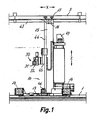
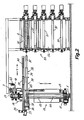
- FIGs. 1 and 2 in which are shown an automatic handling and transportation device for a printer sleeve according to a first embodiment of the present invention.
- the device comprises a basic mobile unit 10 and a handling unit 30 mounted on said basic mobile unit 10.
- Said basic mobile unit 10 comprises a lower section 13 provided with the first means of displacement which comprise wheels 14 adapted for displacement along a lower rail 1 which runs on first direction X, at least one of the wheels 14 being a tractor wheel operated by motor 11.
- On this lower section 12 there is a raised section 15 on which the handling unit 30 supports.
- the basic mobile unit 10 comprises also an upper section 16 provided with wheels 17 arranged to run along the upper rail 3 which also runs on said first direction X, that is to say, parallel with lower rail 1.
- the upper rail 3 has, associated with it, running along its length, an electric current conduit track 43 and control signals and said upper section 16 of the basic mobile unit 10 includes a dynamic current take-up device 18 to take said electricity supply and control signals from said track 43.
- the control signals remotely control the operation of the device and are emitted by electronic means of remote processing, preferably programmable.
- the handling unit 30 mounted on said basic mobile unit 10 is provided with a first support 31, for guiding and supporting the sleeves which is arranged on a second direction Y, transversal to said first direction X and parallel to at least one sleeve-bearing core 51 installed in cantilever on a printing machine 50 (see Fig. 2 ) or second support 71, 81 installed on a transportation unit 70, or in a storage place 80 (see also Fig. 3 ).
- Said first and second supports 31, 71, 81 have, in the illustrated embodiment examples, the form of a mandril held in cantilever with an extremity capable of being situated in alignment with said sleeve-bearing core 51 and capable of taking a sleeve inserted through the axial bore of the same, although this may equally well take the form of a cradle, with one extremity able to be placed in alignment with said sleeve bearing assembly 51 and to receive a sleeve supported by means of the cylindrical, external surface of the same.
- an attachment tool 32 arranged to attach a sleeve 2 and a second means of displacement 35, 39, 40 adapted to displace the attachment tool 32 on said second direction Y between a transferral position in which the attachment tool 32 interacts with said sleeve 2 installed on the sleeve-bearing core 51 (or second support 71, 81 of the transportation unit 70 or storage place 80), and a transportation position in which the sleeve 2, being attached by the attachment tool 32, is on the first support 31.
- Said second means of displacement comprises guide means 40 on the second direction Y, placed adjacent to the first support 31 and at a distance from the same and a slide 39 placed to move along the rails 40 being operated by a motor 35.
- the attachment tool 32 is fixed to the slide 39 and moves with it.
- the device preferably comprises means of movement 33, 37, 38 adapted to move said first support 31 on said second direction Y in order to bring its free extremity close to the corresponding free extremity of the sleeve-bearing core 51 (or second support 71, 81 of the transportation unit 70 or place of storage 80).
- the first support 31 takes the form of a mandril
- the free extremity of the same takes a convex, conical shape fitting into the concave, conical shape formed in the free extremity of the sleeve-bearing core 51, or of the second support 71, 81 of the transportation unit 70, or place of storage 80 when this also takes the form of a jutting mandril.
- the means of movement 33, 37, 38 displace the first support 31 to fit the tapered end into the tapered bore of the sleeve-bearing core 51, which helps to centre both as shown in Figs. 4 to 6 .
- These means of movement 33, 37, 38 comprise guide-rails 38 in the second direction Y, with which is associated a slide 37 to which is fixed an extremity of the first support 31 and a motor 33 connected and adapted to move said slide 37 along said guide-rails 38.
- said guide-rails 40 of the slide 39 carrying the attachment tool 32 are fixed to said slide 37 carrying the first support 31, and move with it.
- the only handling unit 30 is mounted on the basic mobile unit 10 by means of a third means of displacement 44, 45, 46 arranged to move the handling unit 30 in relation to the basic mobile unit 10 on a third direction Z, vertically and transversally to the first and second directions X, Y.
- These third means of displacement comprise guide-rails 44, arranged in said third direction Z along said elevated section 15 of the basic mobile unit 10 and a slide 45, on which is mounted the handling unit 30, arranged to run along said guide-rails 44 by a motor 46 connected and arranged for that purpose.
- the first support 31 of this single handling unit 30 can be positioned in alignment with any sleeve-bearing core 51 of the printing machine 50, or with any second support 71, 81 on the transportation unit 70 or the place of storage 80, by a combined activation of said first and third means of displacement on directions X, Z, and by activating the second means of displacement on direction Y, a sleeve can be transferred from the chosen sleeve-bearing core 50 on the printing machine 50, or second support 71, 81 of the transportation unit 70 or from the place of storage 80, to the first support 31 of the handling unit 30, or vice-versa.
- the handling unit 30 can be mounted on the basic mobile unit 10 by means of a means of rotation (not shown) arranged to rotate the handling unit 30 in relation to the basic mobile unit 10 around an axis parallel to the third direction Z at a certain angle to the second direction Y, such as, for example, 90° or 180°. This possibility of rotation gives the device greater versatility.
- FIG. 3 an installation equipped with a device in accordance with this invention is shown where said rails 1, 3, by means of which the basic mobile unit 10, are extended on said first horizontal direction X, along a stretch which includes the first transferral area in which the handling unit 30 mounted on the basic mobile unit 10 operates in interaction with a printing machine 50 fitted with several printing clusters around a central support drum 52, a second transferral area in which the handling unit 30 mounted on the basic mobile unit 10 operates in interaction with a transportation unit 70, and a third transferral area where the handling unit 30 mounted on the basic mobile unit 10 operates in interaction with a place of storage 80.
- Said transportation unit 70 comprises a structure with a number of jutting second supports 71 each able to hold a sleeve 2.
- the transportation unit is arranged to be transported by a motorised slide 72, for instance to a place for maintenance.
- the transportation unit 70 includes a raising and lowering device operated by a means for that purpose and arranged to lower the second supports 71 to a level which facilitates the manual handling of the sleeves 2, and to raise the second supports 71 to a level suitable for handling by one or more first supports 31 of one or more handling units 30 mounted on the basic mobile unit 10.
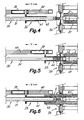
- Figs. 4 to 6 are shown a sequence of operations to transfer the sleeve 2 from the sleeve-bearing core 51 on the printing machine 50 to the first support 31, in the form of a mandril on the handling unit 30.
- the first support 31 has been aligned with the sleeve-bearing core 51 by operating the first and third means of operation on directions X, Z, and the first support 31 has been brought up to and coupled with the sleeve-bearing core 51 by operating the transferral means as described above.
- Fig. 4 the first support 31 has been aligned with the sleeve-bearing core 51 by operating the first and third means of operation on directions X, Z, and the first support 31 has been brought up to and coupled with the sleeve-bearing core 51 by operating the transferral means as described above.
- the second means of displacement on direction Y have moved the attachment tool 32 until it is coupled with the extremity of the sleeve 2 and in this position the attachment tool 32 is activated to take hold of the mandril 2 by an activation means 34, 49 which will be described below.
- the second means of displacement are activated in the opposite direction to direction Y in order to transfer the sleeve 2 held by the attachment tool 32 from the sleeve-bearing core 51 to the first support 31.
- the means of transferral can remove the first support 31 from the sleeve-bearing core 51 to a prudent distance and the first and third activiation means for directions X, Z can remove the basic mobile unit 10 and the handling unit 30 in order to transfer the sleeve 2 from the first support 31 to a second support 71, 81 on the transportation unit 70 or place of storage 80.
- the means of transferral can remove the first support 31 from the sleeve-bearing core 51 to a prudent distance and the first and third activiation means for directions X, Z can remove the basic mobile unit 10 and the handling unit 30 in order to transfer the sleeve 2 from the first support 31 to a second support 71, 81 on the transportation unit 70 or place of storage 80.
- reverse operations are carried out.
- first support 31 for example, be in the form of a cradle rather than a mandril the attachment tool may be taken from the above description or based upon the description in said patent application WO 03/095207 .
- said attachment tool 32 is described below and comprises a tubular body 41 with a hollow interior into which is inserted a first support 31 in the form of a mandril, such that said tubular body 41 can slide along the first support 31, as shown in Fig. 4 .
- the tubular body 41 has an external surface situated at an extremity 42 and arranged to couple with an inner surface at one extremity of the sleeve 2, said internal surface facing a lesser diameter on the sleeve-bearing core 51 (or second support 71, 81 of the transportation unit 70 or place of storage 80).
- the sleeve 2 is slightly longer than a cylindrical support portion on the respective assembly and said external surface of the extremity 42 of the tubular body 41 is sized to couple with the internal surface of the sleeve 2 which stands proud as shown in Fig. 5 .
- Said means of activation of the attachment tool 32 comprise a first device for injecting air including a first valve (not shown) to selectively connect said bore 34 to a source of compressed air 49, which can include a compressor 49 mounted on the basic mobile unit 10.
- the printer incorporates a second air injection device including a second set of valves arranged to connect injection nozzles located in different positions on the sleeve-bearing core 51 to a source of compressed air. Activation of this second air injection device creates a cushion of air between the sleeve 2 and the sleeve-bearing core 51 which allows the sliding of the first along the second.
- the first air injection device alternately works in cooperation with the second to attach the sleeve 2 by the attachment tool 32 and slide the sleeve 2 onto the assembly 5.
- the second injection device begins injecting compressed air between the sleeve 2 and the assembly 51 to create a cushion of air between the two whilst the second displacement means 35, 39, 40 act to transfer the sleeve 2, held by the attachment tool 32, from the assembly 51 to the first support 31.
- the same operations are carried out in reverse order.
- claws may be placed which are activated pneumatically or by one or more electric motors to grip corresponding configurations at the extremity of the sleeve or a rapid coupling of the bearing type with a retractible hose similarly activated or a bayonet type device with rotary activation amongst others.
- the second support 71, 81 of the transportation unit 70 or of the place of storage 80 has the same characteristics as the sleeve-bearing core 51 on the printing machine including an injection device analogous to the second injection device described in relation to the sleeve-bearing core 51.
- the storage place 80 is equipped with a compressed air generator and a connection to a source of compressed air to supply the second injection devices fitted to the second supports 81, and the second transferral area where the transportation unit 70 is stationed to interact with the handling unit 30 which is equipped with a flexible hose connected to a source of compressed air and fitted with a rapid connector able to be connected manually to an inlet port on the transportation unit 70 to supply the second injection devices fitted to the second supports 71 on the same.
- the term 'sleeve' refers to sleeves bearing printing plates whether of the type mounted directly on the assembly or those mounted on intermediate sleeves, to said intermediate sleeves as well as anilox sleeves (inkers).
- the attachment tool 32 on the handling unit 30 will be adapted to the particular characteristics of each sleeve.
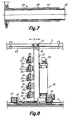
- Figs. 8 and 9 are shown both variants of a second embodiment of the device of the invention characterised by having mounted on the basic mobile unit 10 various handling units 30 in fixed positions in place of the sole handling unit 30 associated with the third means of displacement 44, 45, 46 on the third direction Z foreseen in the first embodiment described above.
- said fixed positions in which the handling units 30 are placed are determined so that the respective first supports 31 are found at a height which coincides with the height of various sleeve-bearing cores 51 on a printing machine 50 (and second supports 71, 81 on the transportation unit 70 or place of storage 80).
- This arrangement allows the third means of displacement on direction Z to be discarded with a saving of time in transferral operations at the expense of a lesser flexibility of the device.
- the various first supports 31 on the different handling units 30 are found at heights coinciding with the heights of all the sleeve-bearing cores 51 placed on one side of the support drum 52 on the printing machine 50.
- the different handling units 30 on the basic mobile unit 10 are aligned vertically and at heights coinciding with those of all the sleeve-bearing cores 51 placed on each side of the support drum 52 on the printing machine 50.
- the device is able to transfer one after the other all the sleeves 2 on the printing clusters on one side of the printing machine 50 with short displacements of the basic mobile unit 10 on direction X.
- the respective second supports 71, 81 will be at heights which coincide with those of the first supports 31 on the handling units 30 and similarly vertically aligned.
- the fixed positions of the various handling units 30 mounted on the basic mobile units 10 are such that the respective first supports 31 can be aligned at once with various sleeve-bearing cores 51 on the printing machine 50 and advantageously with all of the sleeve-bearing cores 51 on the printing machine 50, that is to say, whether with those arranged on one side as well as the other of the support drum 52.
- the basic mobile unit 10 is in position, all of the sleeves on the printing clusters on the printing machine 50 can be transferred simultaneously without any further displacement of basic mobile unit 10 on direction X.
- the second supports 71, 81 on the transportation unit 70 and/or the place of storage 80 can be arranged in identical positions relative to the sleeve-bearing cores 51 on the printing machine 50 in order to permit the simultaneous transfer of all the sleeves 2 between the handling units 30 and the transportation unit 70 and/or the place of storage 80.
- the handling units 30 can be mounted on a giratory structure linked to the basic mobile unit 10 by a means of rotation (not shown) arranged to rotate the giratory structure with all the handling units 30 in relation to the basic mobile unit 10 around an axis parallel to the third direction Z and at a certain angle to the second direction Y.
- a first support 31 is designed to interact with various sleeves 2 with different internal diameters.
- Said first support 31 is in the form of a jutting mandril with an external diameter equal or inferior to the smallest internal diameter of the various types of sleeve 2.
- this incorporates at least one radial centring device 47,48 which includes at least one pivoting arm 47 mounted in a cavity 61 on the mandril so that they can girate relative to the respective axes 60.
- An actuator 48 such as a fluo-dynamic cylinder is fitted and connected to activate the pivoting arms 47 in an extended position - the pivoting arms 47 project from the external surface of the first support 31 pressing against the internal surface of the sleeve 2, and in folded position in which the pivoting arms 47 are hidden inside said cavity 61.
- each of the pivoting arms 47 has a wheel 63 mounted at its distal end.
- Said fluo-dynamic cylinder 48 is housed in the cavity 61 and supplied through a bore 62 through the hollow interior of the mandril.
- the device of the present invention comprises also, a positioning device on the first direction X (not shown) which is made up of at least one detector chosen from a group which includes a telemeter, a codifier and an optical gauge connected to other electronic processing means arranged to control the operation of said first means of displacement 11, 14.
- Said detector gives a rough position by which said positioning device on the first direction X which also includes at least one photo-electric sensor connected to said electronic processing means in order to refine the rough positioning given by said detector.
- the device of the invention comprises a positioning device on the third direction Z (not shown) which is made up of a detector chosen from a group which includes a telemeter, a codifier or an optic gauge connected to electronic processing means arranged to control the operation of said third means of displacement 44, 45, 46, and at least one photo-electric sensor connected to said electronic processing means in order to refine the rough positioning given by said detector.
- a detector chosen from a group which includes a telemeter, a codifier or an optic gauge connected to electronic processing means arranged to control the operation of said third means of displacement 44, 45, 46, and at least one photo-electric sensor connected to said electronic processing means in order to refine the rough positioning given by said detector.
Landscapes
- Engineering & Computer Science (AREA)
- Mechanical Engineering (AREA)
- Rotary Presses (AREA)
- Replacement Of Web Rolls (AREA)
- Treatment Of Fiber Materials (AREA)
- Intermediate Stations On Conveyors (AREA)
- Specific Conveyance Elements (AREA)
Description
- This invention relates to an automatic handling and transportation device for a printer sleeve suitable for use in flexographic printer cylinder changing operations whilst the printer is operating.
- Printing machines are well-known, especially flexographic printing machines which are fitted with a large, central support drum which rotates on a horizontal axis and along which moves a strip of material to be printed and a number of printing clusters are on each side of said support drum. Each printing cluster is designed to print, for example, one colour only for which it comprises a printing cylinder bearing a printing plate with the design to be printed and one or more ink-rollers connected to their respective containers of ink of the corresponding colour positioned to ink the corresponding printing cylinder printing plate. Both the inking rollers and the printing cylinder are positioned to turn on axes parallel to the axis of the support drum with means provided for moving the printing cylinder laterally into contact with the support drum and the inking rollers into contact with the printing cylinder or for separating them.
- Each printing plate is mounted on a sleeve which in turn is mounted on a sleeve-bearing core supported at each extremity by existing supports on opposite sides of the printing machine and operated in turn from one of said extremities. The latest developments in flexographic printing machines incorporate means for maintaining the respective sleeve-bearing core projecting outwards by one of its extermities to allow the withdrawal of the corresponding plate-bearing sleeve by the opposing extremity by sliding it axially along the core and the positioning of a new sleeve by reversing the procedure when a printing cylinder is separated from the support drum. Although technically such sleeve-changing operations can be undertaken with the printer in operation they are extremely dangerous for the operator due to the proximity of the moving support drum. Furthermore, the plate-bearing sleeves can be both large in size and in weight requiring the assistance of a number of workers or the use of lifting devices such as cranes, pulleys etc. adding to the degree of risk with the machine in operation. As a result, in practice, sleeve-changing operations are undertaken with the machine at rest which brings with it a significant loss of productivity.
- Patent
US-A-6644188 describes a procedure for changing sleeves with the printing machine of the type described above operating. The method foresees the installation of a protective screen between an extremity of the printing cylinder and the support drum so as to provide an area of protection sufficient to allow the operator to take hold of said extremity of the cylinder with relative safety whilst the machine is in operation. However, such screens do not provide total protection and, taking into account that there are flexographic printers with ten or more print clusters and that a protective screen is required for each one, the means for mounting and dismounting such screens is of great complexity in relation to the low level of protection offered. Furthermore, even with the use of said protective screens, the inconveniences associated with the difficulty of handling the sleeves due to their large size and weight, persist. - On the other hand, document
WO 03/095207 - Patent
US-A-5638754 discloses An apparatus for changing printing cylinder sleeves in printing machines, which includes two bearing blocks which serve for the rotatable support of the printing cylinder sleeve during the operation of the printing machine, a shaft running axially through the printing cylinder sleeve, and a lifter disposed at one end of the shaft outside of the corresponding bearing block, by which the shaft can be clutched and can be raised together with the printing cylinder sleeve freely cantilevered, so that the printing cylinder sleeve comes free of the bearing blocks and can be withdrawn axially from the shaft. To that end, the printing cylinder sleeve is provided with hollow journals at both its ends, which are mounted in the bearing blocks during operation of the printing machine. A drawback with this apparatus is that it does not include automatic means for performing the axial withdrawal of the printing cylinder sleeve from the shaft once the bearing blocks are open and the shaft is raised in cantilever and for the subsequent handling of the withdrawn printing cylinder sleeve to move it to a storage place, or vice-versa. - Patent
US-A-5549044 discloses a printing press including a mechanism for exchanging whole cylinders. The cylinders have journals projecting from their opposite ends which are supported on releasable split bearings in the printing machine. The exchanging mechanism comprises a trolley displaceable on a rail to be positioned over the printing machine, said trolley carrying supports configured to receive the cylinders and support them by gravity at their journals, and lifting jacks associated to the printing machine, said lifting jacks engaging the cylinders at their journals and lifting the cylinders up to the trolley to deposit the cylinders on the supports of the trolley. A drawback with this device is that it is not able to exchange hollow sleeves with a printing machine where the sleeves are arranged on shafts or cylinder cores supported in cantilever. In addition, the trolley moving on a rail needs a wide space over the printing machine which in many cases is not available in the premises where the printing machine is installed. - There is a need for an automatic sleeve handling and transportation device which permits sleeve changing operations to be carried out on a printer with the machine in operation which is totally automatic and without the need for operator intervention and automatic movement and storage of sleeve operations.
- The present invention seeks to satisfy the above need by providing an automatic printer sleeve handling and transportation device characterised by comprising a support to guide and support sleeves capable of being positioned in alignment with and close to a sleeve-bearing core and a tool for attachment which can be moved from a transfer position in which the attachment tool interacts with said sleeve mounted on the sleeve-bearing core to attach or to free it and a transportation position in which the sleeve attached by the attachment tool is on the support. The support may have distinct configurations such as, for example, a mandril or cradle and the attachment tool activated in order to hold the sleeve by one extremity. So, when the attachment tool is displaced, it drags the sleeve along transferring it from the said sleeve-bearing core which, for example, may be installed in cantilever on a printing machine, to the support for the device. An operation in the reverse direction transfers the sleeve from the support for the device to the machine's sleeve-bearing core and frees it in the same operation.
- According to an embodiment, the device comprises a basic mobile unit and means of displacement arranged to move said basic mobile unit on a first direction. Mounted on said basic mobile unit are one or more handles. Each handle includes one of the above-mentioned supports which juts out on a second direction, transversal to the previous direction and parallel to the said sleeve-bearing core. The attachment tool is connected to a second means of displacement arranged to displace it in the other direction in relation to the support.
- Preferably, the basic mobile unit is displaced by means of a guide such as, for example, rails arranged horizontally on the first direction along a stretch including a first transfer area in which the handling unit mounted on the basic mobile unit is activated to interract with said printing machine and at least one second transfer area in which the basic mobile unit in which the handling unit mounted on the basic mobile unit is activated to interract with the transportation unit or with said storage place. Generally, it is foreseen that the handling unit mounted on the basic mobile unit changes over the sleeves from the printing machine and the transportation unit either by means of a motorised slide or a self-propelled slide and that this transportation unit will be responsable for moving the sleeves between said second transfer area and various other places amongst which may be said storage place and a maintenance area where printing plates may be changed, cleaning carried out etc. However, the installation may be arranged in such a way that the handling unit mounted on the basic mobile unit exchanges the sleeves between the printing machine and the storage place or between the printing machine, the storage place and the transportation unit or other combinations.
- According to a first embodiment, on the basic mobile unit there is mounted a single handling unit and a third means of displacement is provided, arranged to move the handling unit in relation to the basic mobile unit on a third direction, vertical or transversal to either the first or the second direction. In general, the first, second and third directions correspond respectively to the three orthogonal axes X, Y, Z of a system of Cartesian coordinates where the axes X,Y are horizontal and axis Z is vertical. By combined activation of the first and third means of displacement the single support mounted on the handling unit mounted in turn on the basic mobile unit may be positioned in alignment with any sleeve-bearing core on the printing machine or with any support in the storage place or the transportation unit and, by operating the second displacement means a sleeve may be transferred from the chosen sleeve-bearing core on the printing machine or support in the storage place or the transportation unit to the support on the transportation unit or the support on the handling unit or vice-versa.
- According to a second embodiment, on the basic mobile unit are mounted various handling units in fixed positions in which the respective supports are at a height coinciding with the height of various sleeve-bearing cores on the printing machine or supports on the transportation unit or in the storage place. With this, the third means of displacement on the vertical direction is unnecessary and is not included. According to a variant of this second embodiment the said various sleeve-bearing cores of the printing machine comprise all the sleeve-bearing cores on one side of the support drum of the printing machine. That is to say that if we take as an example a printing machine with ten symmetrically distributed printing assemblies, five on each side vertically arranged through the axis of rotation of the central support drum, in the basic mobile unit will be mounted five handling units in positions such that the respective supports are at the same heights as the corresponding sleeve-bearing cores on each side of the printing machine. However, the fixed positions of the various handling units on the basic mobile unit are aligned vertically whilst the sleeve-bearing cores of the printing machine are arranged following the outline of the support drum and as a result are not vertically aligned. As a result, the handling units mounted on the basic mobile support are useful for changing the sleeves from one side to the other of the printing machine although each handling unit should be individually lined-up with its corresponding sleeve-bearing core of the printing machine by means of the assembling of the first means of displacement. In this way, the various sleeves on one side of the printing machine are transferred sequentially, one after the other, but with minimal displacements of the basic mobile unit carrying-out at the same time, the transfers of the sleeves between said first and second transfer areas.
- According to another variant of the second embodiment, the fixed positions of the various handling units on the basic mobile unit are such that the respective supports may be aligned at once with various sleeve-bearing cores on the printing machine or supports on the transportation unit or the storage place. In this way for example a basic mobile unit may be built on which may be mounted the same number of handling units as printing clusters are arranged around the support drum of the printing machine and in fixed positions such that all the supports on the handling units may be aligned at once with the corresponding sleeve-bearing cores on both sides of the printing machine support drum by a single activation of the first means of displacement. That is to say that in a printing machine such as that described in the previous example with ten printing assemblies, the ten sleeves may be transferred at once and transported with a single activation of the first means of displacement. A device may also be made with two basic mobile units which will move in opposite directions on the same rails or on different rails and each basic unit will carry as many handling units in fixed, concordant positions as printing assemblies distributed along the corresponding side of the printing machine's support drum with each basic mobile unit responsible for half of the printer's printing clusters. Clearly, with these two last arrangements, the supports on the transportation unit and/or the storage place have to be set out in identical positions relative to the sleeve-bearing cores of the printing machine if it is desired that transfer of all the sleeves from the handling units to the transportation unit or the storage area, or vice-versa, be carried out in one operation.
- Any of the embodiment examples described can be controlled remotely using electronic means which may be programmable by which the automatic sleeve handling and transport device of this invention permits completely automatic changes of sleeves operations to be carried out on a printing machine whilst it is in operation without the intervention of the operator. With this, on one hand, the implied risk to the operator of changing sleeves whilst the machine is in operation is eliminated and, on the other, carrying out a change of sleeve whether or not the machine is in operation, significantly more quickly than manually even when aided by means for its drawing and lifting. In addition, the device also permits the carrying out of automatic operations of movement and storage of sleeves whether or not associated with operations to change sleeves on the printing machine.
- The previous and other advantages and characteristics of the device of the present invention will be better understood from the following detailed description of embodiment examples with reference to the attached drawings in which:
-
Fig. 1 is a frontal elevation view of a mobile unit according to a first embodiment of the automatic handling and transportation device for a printer sleeve of the present invention; -
Fig. 2 is a side elevation view of the mobile unit inFig. 1 against a printing machine; -
Fig. 3 is a plan view of an installation including the device of the present invention; -
Figs. 4 to 6 are detail cross-section views which show a representative sequence of the interaction between the handling unit mounted on the basic mobile unit and a print cluster on the printing machine; -
Fig. 7 is a detail cross-section view of the attachment tool according to the present invention arranged for attaching a sleeve; -
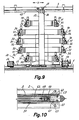
Figs. 8 and9 are frontal elevations of both variants of a second embodiment of the invention; and -
Fig. 10 is a detail cross-section view of a centring device associated with a mandril according to the present invention. - Reference is first made to
Figs. 1 and2 , in which are shown an automatic handling and transportation device for a printer sleeve according to a first embodiment of the present invention. The device comprises a basicmobile unit 10 and ahandling unit 30 mounted on said basicmobile unit 10. Said basicmobile unit 10 comprises alower section 13 provided with the first means of displacement which comprisewheels 14 adapted for displacement along alower rail 1 which runs on first direction X, at least one of thewheels 14 being a tractor wheel operated bymotor 11. On this lower section 12 there is a raisedsection 15 on which thehandling unit 30 supports. At an upper extremity of said raisedsection 15, the basicmobile unit 10 comprises also anupper section 16 provided withwheels 17 arranged to run along theupper rail 3 which also runs on said first direction X, that is to say, parallel withlower rail 1. Theupper rail 3 has, associated with it, running along its length, an electriccurrent conduit track 43 and control signals and saidupper section 16 of the basicmobile unit 10 includes a dynamic current take-updevice 18 to take said electricity supply and control signals from saidtrack 43. The control signals remotely control the operation of the device and are emitted by electronic means of remote processing, preferably programmable. - The
handling unit 30 mounted on said basicmobile unit 10 is provided with afirst support 31, for guiding and supporting the sleeves which is arranged on a second direction Y, transversal to said first direction X and parallel to at least one sleeve-bearingcore 51 installed in cantilever on a printing machine 50 (seeFig. 2 ) orsecond support 71, 81 installed on atransportation unit 70, or in a storage place 80 (see alsoFig. 3 ). Said first andsecond supports core 51 and capable of taking a sleeve inserted through the axial bore of the same, although this may equally well take the form of a cradle, with one extremity able to be placed in alignment with saidsleeve bearing assembly 51 and to receive a sleeve supported by means of the cylindrical, external surface of the same. - Associated with the
first support 31 of thehandling unit 30 there is anattachment tool 32 arranged to attach asleeve 2 and a second means ofdisplacement attachment tool 32 on said second direction Y between a transferral position in which theattachment tool 32 interacts with saidsleeve 2 installed on the sleeve-bearing core 51 (orsecond support 71, 81 of thetransportation unit 70 or storage place 80), and a transportation position in which thesleeve 2, being attached by theattachment tool 32, is on thefirst support 31. Said second means of displacement comprises guide means 40 on the second direction Y, placed adjacent to thefirst support 31 and at a distance from the same and aslide 39 placed to move along therails 40 being operated by amotor 35. Theattachment tool 32 is fixed to theslide 39 and moves with it. - Although it is not indispensable, the device preferably comprises means of
movement first support 31 on said second direction Y in order to bring its free extremity close to the corresponding free extremity of the sleeve-bearing core 51 (orsecond support 71, 81 of thetransportation unit 70 or place of storage 80). When thefirst support 31 takes the form of a mandril, the free extremity of the same takes a convex, conical shape fitting into the concave, conical shape formed in the free extremity of the sleeve-bearingcore 51, or of thesecond support 71, 81 of thetransportation unit 70, or place ofstorage 80 when this also takes the form of a jutting mandril. Thus, when thefirst support 31 is aligned with the sleeve-bearingcore 51, the means ofmovement first support 31 to fit the tapered end into the tapered bore of the sleeve-bearingcore 51, which helps to centre both as shown inFigs. 4 to 6 . - These means of
movement rails 38 in the second direction Y, with which is associated aslide 37 to which is fixed an extremity of thefirst support 31 and amotor 33 connected and adapted to move saidslide 37 along said guide-rails 38. In the example illustrated, said guide-rails 40 of theslide 39 carrying theattachment tool 32 are fixed to saidslide 37 carrying thefirst support 31, and move with it. - In the embodiment shown in
Figs. 1 and2 , theonly handling unit 30 is mounted on the basicmobile unit 10 by means of a third means ofdisplacement handling unit 30 in relation to the basicmobile unit 10 on a third direction Z, vertically and transversally to the first and second directions X, Y. These third means of displacement comprise guide-rails 44, arranged in said third direction Z along saidelevated section 15 of the basicmobile unit 10 and aslide 45, on which is mounted thehandling unit 30, arranged to run along said guide-rails 44 by amotor 46 connected and arranged for that purpose. With this arrangement, thefirst support 31 of thissingle handling unit 30 can be positioned in alignment with any sleeve-bearingcore 51 of theprinting machine 50, or with anysecond support 71, 81 on thetransportation unit 70 or the place ofstorage 80, by a combined activation of said first and third means of displacement on directions X, Z, and by activating the second means of displacement on direction Y, a sleeve can be transferred from the chosen sleeve-bearingcore 50 on theprinting machine 50, orsecond support 71, 81 of thetransportation unit 70 or from the place ofstorage 80, to thefirst support 31 of thehandling unit 30, or vice-versa. - Alternatively or additionally, the
handling unit 30 can be mounted on the basicmobile unit 10 by means of a means of rotation (not shown) arranged to rotate thehandling unit 30 in relation to the basicmobile unit 10 around an axis parallel to the third direction Z at a certain angle to the second direction Y, such as, for example, 90° or 180°. This possibility of rotation gives the device greater versatility. - According to a second embodiment described below in detail in relation to
Figs. 8 and9 , on the basicmobile unit 10 are mountedvarious handling units 30 in fixed positions disposing with the need for the third means ofdisplacement - In
Fig. 3 an installation equipped with a device in accordance with this invention is shown where said rails 1, 3, by means of which the basicmobile unit 10, are extended on said first horizontal direction X, along a stretch which includes the first transferral area in which thehandling unit 30 mounted on the basicmobile unit 10 operates in interaction with aprinting machine 50 fitted with several printing clusters around acentral support drum 52, a second transferral area in which thehandling unit 30 mounted on the basicmobile unit 10 operates in interaction with atransportation unit 70, and a third transferral area where thehandling unit 30 mounted on the basicmobile unit 10 operates in interaction with a place ofstorage 80. Saidtransportation unit 70 comprises a structure with a number of jutting second supports 71 each able to hold asleeve 2. InFig. 3 , the transportation unit is arranged to be transported by amotorised slide 72, for instance to a place for maintenance. Preferably, thetransportation unit 70 includes a raising and lowering device operated by a means for that purpose and arranged to lower the second supports 71 to a level which facilitates the manual handling of thesleeves 2, and to raise the second supports 71 to a level suitable for handling by one or morefirst supports 31 of one ormore handling units 30 mounted on the basicmobile unit 10. - In
Figs. 4 to 6 are shown a sequence of operations to transfer thesleeve 2 from the sleeve-bearingcore 51 on theprinting machine 50 to thefirst support 31, in the form of a mandril on thehandling unit 30. InFig. 4 , thefirst support 31 has been aligned with the sleeve-bearingcore 51 by operating the first and third means of operation on directions X, Z, and thefirst support 31 has been brought up to and coupled with the sleeve-bearingcore 51 by operating the transferral means as described above. InFig. 5 , the second means of displacement on direction Y have moved theattachment tool 32 until it is coupled with the extremity of thesleeve 2 and in this position theattachment tool 32 is activated to take hold of themandril 2 by an activation means 34, 49 which will be described below. InFig. 6 , the second means of displacement are activated in the opposite direction to direction Y in order to transfer thesleeve 2 held by theattachment tool 32 from the sleeve-bearingcore 51 to thefirst support 31. Next, the means of transferral can remove thefirst support 31 from the sleeve-bearingcore 51 to a prudent distance and the first and third activiation means for directions X, Z can remove the basicmobile unit 10 and thehandling unit 30 in order to transfer thesleeve 2 from thefirst support 31 to asecond support 71, 81 on thetransportation unit 70 or place ofstorage 80. To place anew sleeve 2 on the sleeve-bearingcore 51 reverse operations are carried out. - Should the
first support 31 for example, be in the form of a cradle rather than a mandril the attachment tool may be taken from the above description or based upon the description in said patent applicationWO 03/095207 - In relation to
Fig. 7 saidattachment tool 32 is described below and comprises atubular body 41 with a hollow interior into which is inserted afirst support 31 in the form of a mandril, such that saidtubular body 41 can slide along thefirst support 31, as shown inFig. 4 . Thetubular body 41 has an external surface situated at anextremity 42 and arranged to couple with an inner surface at one extremity of thesleeve 2, said internal surface facing a lesser diameter on the sleeve-bearing core 51 (orsecond support 71, 81 of thetransportation unit 70 or place of storage 80). That is to say that thesleeve 2 is slightly longer than a cylindrical support portion on the respective assembly and said external surface of theextremity 42 of thetubular body 41 is sized to couple with the internal surface of thesleeve 2 which stands proud as shown inFig. 5 . Through saidtubular body 41 are one ormore bores 34, which open onto said external surface ofextremity 42. Said means of activation of theattachment tool 32 comprise a first device for injecting air including a first valve (not shown) to selectively connect said bore 34 to a source ofcompressed air 49, which can include acompressor 49 mounted on the basicmobile unit 10. On the other hand, as is the convention with the state of the art, the printer incorporates a second air injection device including a second set of valves arranged to connect injection nozzles located in different positions on the sleeve-bearingcore 51 to a source of compressed air. Activation of this second air injection device creates a cushion of air between thesleeve 2 and the sleeve-bearingcore 51 which allows the sliding of the first along the second. According to the device of this invention the first air injection device alternately works in cooperation with the second to attach thesleeve 2 by theattachment tool 32 and slide thesleeve 2 onto the assembly 5. - Said cooperation is as follows. First of all, in the course of the operation to couple the external surface of the
distal end 42 of thetubular body 41 with the internal surface of an extremity of thesleeve 2, the said first valves are activated to inject compressed air along abore 34 in order to slightly dilate the extremity of thesleeve 2 and facilitate the coupling whilst the second injection device remains inactive. Next, when the coupling has been completed the injection into thebore 34 is halted and the extremity of thesleeve 2 contracts, tightening over the external surface of thedistal end 42 of thetubular body 41. Then, the second injection device begins injecting compressed air between thesleeve 2 and theassembly 51 to create a cushion of air between the two whilst the second displacement means 35, 39, 40 act to transfer thesleeve 2, held by theattachment tool 32, from theassembly 51 to thefirst support 31. For a transfer in reverse the same operations are carried out in reverse order. - In addition, should there be a need to ensure a firmer hold between the
sleeve 2 and thedistal end 42 of thetubular body 41, when the coupling of the two is completed and the injection of air into thebore 34 ceased an intake is made along thesame bore 34. For this, said first valves are activated to disconnect thebore 34 from the source ofcompressed air 49 and to connect it to a vacuum source which can be associated with thesame compressor 49. - It should be pointed out that other configurations are possible for the
attachment tool 32. For example, at the extremity of theattachment tool 32 claws may be placed which are activated pneumatically or by one or more electric motors to grip corresponding configurations at the extremity of the sleeve or a rapid coupling of the bearing type with a retractible hose similarly activated or a bayonet type device with rotary activation amongst others. - Preferably, in order to ease interaction between the
support 30 and theattachment tool 32 of thehandling unit 30, thesecond support 71, 81 of thetransportation unit 70 or of the place ofstorage 80 has the same characteristics as the sleeve-bearingcore 51 on the printing machine including an injection device analogous to the second injection device described in relation to the sleeve-bearingcore 51. As a consequence, thestorage place 80 is equipped with a compressed air generator and a connection to a source of compressed air to supply the second injection devices fitted to the second supports 81, and the second transferral area where thetransportation unit 70 is stationed to interact with thehandling unit 30 which is equipped with a flexible hose connected to a source of compressed air and fitted with a rapid connector able to be connected manually to an inlet port on thetransportation unit 70 to supply the second injection devices fitted to the second supports 71 on the same. - Throughout the specification and in the embodiment examples, the term 'sleeve' refers to sleeves bearing printing plates whether of the type mounted directly on the assembly or those mounted on intermediate sleeves, to said intermediate sleeves as well as anilox sleeves (inkers). In each case, the
attachment tool 32 on thehandling unit 30 will be adapted to the particular characteristics of each sleeve. - In
Figs. 8 and9 are shown both variants of a second embodiment of the device of the invention characterised by having mounted on the basicmobile unit 10various handling units 30 in fixed positions in place of thesole handling unit 30 associated with the third means ofdisplacement handling units 30 are placed are determined so that the respectivefirst supports 31 are found at a height which coincides with the height of various sleeve-bearingcores 51 on a printing machine 50 (andsecond supports 71, 81 on thetransportation unit 70 or place of storage 80). This arrangement allows the third means of displacement on direction Z to be discarded with a saving of time in transferral operations at the expense of a lesser flexibility of the device. - In the variant shown in
Fig. 8 , the variousfirst supports 31 on thedifferent handling units 30 are found at heights coinciding with the heights of all the sleeve-bearingcores 51 placed on one side of thesupport drum 52 on theprinting machine 50. Preferably, thedifferent handling units 30 on the basicmobile unit 10 are aligned vertically and at heights coinciding with those of all the sleeve-bearingcores 51 placed on each side of thesupport drum 52 on theprinting machine 50. With this arrangement, the device is able to transfer one after the other all thesleeves 2 on the printing clusters on one side of theprinting machine 50 with short displacements of the basicmobile unit 10 on direction X. Advantageously, on thetransportation unit 70 and/or the place ofstorage 80 the respectivesecond supports 71, 81 will be at heights which coincide with those of the first supports 31 on the handlingunits 30 and similarly vertically aligned. - According to the second embodiment shown in
Fig. 9 , the fixed positions of thevarious handling units 30 mounted on the basicmobile units 10 are such that the respectivefirst supports 31 can be aligned at once with various sleeve-bearingcores 51 on theprinting machine 50 and advantageously with all of the sleeve-bearingcores 51 on theprinting machine 50, that is to say, whether with those arranged on one side as well as the other of thesupport drum 52. With this arrangement, once the basicmobile unit 10 is in position, all of the sleeves on the printing clusters on theprinting machine 50 can be transferred simultaneously without any further displacement of basicmobile unit 10 on direction X. As a result, the second supports 71, 81 on thetransportation unit 70 and/or the place ofstorage 80 can be arranged in identical positions relative to the sleeve-bearingcores 51 on theprinting machine 50 in order to permit the simultaneous transfer of all thesleeves 2 between the handlingunits 30 and thetransportation unit 70 and/or the place ofstorage 80. - Alternatively or in addition, and analogous to the description in relation to the first embodiment, the handling
units 30 can be mounted on a giratory structure linked to the basicmobile unit 10 by a means of rotation (not shown) arranged to rotate the giratory structure with all the handlingunits 30 in relation to the basicmobile unit 10 around an axis parallel to the third direction Z and at a certain angle to the second direction Y. - Finally, with reference to
Fig. 10 , afirst support 31 is designed to interact withvarious sleeves 2 with different internal diameters. Saidfirst support 31 is in the form of a jutting mandril with an external diameter equal or inferior to the smallest internal diameter of the various types ofsleeve 2. In order to centre and coaxially align thesleeves 2 with the central axis of thefirst support 31, this incorporates at least oneradial centring device arm 47 mounted in acavity 61 on the mandril so that they can girate relative to therespective axes 60. Anactuator 48, such as a fluo-dynamic cylinder is fitted and connected to activate the pivotingarms 47 in an extended position - the pivotingarms 47 project from the external surface of thefirst support 31 pressing against the internal surface of thesleeve 2, and in folded position in which the pivotingarms 47 are hidden inside saidcavity 61. Preferably, each of the pivotingarms 47 has awheel 63 mounted at its distal end. Said fluo-dynamic cylinder 48 is housed in thecavity 61 and supplied through abore 62 through the hollow interior of the mandril. - The device of the present invention comprises also, a positioning device on the first direction X (not shown) which is made up of at least one detector chosen from a group which includes a telemeter, a codifier and an optical gauge connected to other electronic processing means arranged to control the operation of said first means of
displacement displacement - The specific embodiments described above are merely illustrative and by no means limit the scope of the present invention which is defined in the attached claims.
Claims (32)
- Automatic handling and transportation device for printer sleeves comprising a basic mobile unit (10) bearing a first support (31) configured to receive and support a printing element, means of displacement to displace said basic mobile unit (10) relative to a printing machine (50) and transfer means for transferring a printing element from said printing machine (50) to said first support (31), or vice versa, characterized in that:said first support (31) is configured to receive and support a sleeve (2);an attachment tool (32) Is associated with said first support (31)said attachment tool (32) being activated by activation means (34, 39) to attach or free said sleeve (2);said means of displacement comprise at least first means of displacement (11, 14) to displace said basic mobile unit (10) to a printing machine (50) where the first support (31) is positioned in alignment and in proximity with a sleeve-bearing core (51) supported in cantilever on said printing machine (50);second means of displacement (35, 39, 40) are arranged to displace said attachment tool (32) in relation to the first support (31) between a transferral position, in which, when the first support (31) is in alignment and in proximity with said sleeve-bearing core (51), the attachment tool (32) can be activated to interact with a sleeve (2) installed on the sleeve-bearing core (51) to attach or free it, and a transportation position in which the sleeve (2) held by the attachment tool (32) is moved onto the first support (31);so that by displacing and activating the attachment tool (32) the sleeve (2) is transferred from the sleeve-bearing core (51) to the first support (31), or vice versa.
- Device, according to claim 1, characterised in that said first means of displacement (11, 14) are arranged to displace said basic mobile unit (10) on a first direction (X); and said first support (31) is held in cantilever and oriented on a second direction (Y), said second direction (Y) being transversal to said first direction (X) and parallel to said sleeve-bearing core (51) mounted in cantilever on said printing machine (50), and said second means of displacement (35, 39, 40) are arranged to displace said attachment tool (32) on said second direction (Y) in relation to the support (31).
- Device according to claim 2, characterised in that at least one handling unit (30) including said first support (31) and said attachment tool (32) is mounted on said basic mobile unit (10), and the basic mobile unit (10) moves along guide means (1, 3) which extend on said first horizontal direction (X) along a stretch which includes a first transfer area in which said handling unit (30) mounted on the basic mobile unit (10) operates to exchange sleeves (2) with said printing machine (50), and at least a second transfer area in which the support (31) on the handling unit (30) mounted on the basic mobile unit (10) is able to be positioned in alignment with a second support (71, 81) installed on a transportation unit (70) or in a place of storage (80), said handling unit (30) operating to exchange sleeves (2) with said transportation unit (70) or with said place of storage (80).
- Device, according to claim 3, characterised in that a single handling unit (30) is mounted on the basic mobile unit (10), and fitted with third means of displacement (44, 45, 46) arranged to move the handling unit in relation to the basic mobile unit (10) on a third, vertical direction (Z), transversal to the first and second directions (X, Y).
- Device, according to claim 3, characterised in that several handling units (30) are mounted on the basic mobile unit (10) in fixed positions in which the respective first supports (31) are at a height coinciding with the height of several sleeve-bearing cores (51) on the printing machine (50), or second supports (71, 81) on the transportation unit (70), or the place of storage (80).
- Device, according to claim 5, characterised in that several sleeve-bearing cores (51) on the printing machine (50) comprise all of the sleeve-bearing cores (51) arranged on one side of the support drum (52) of the printing machine (50).
- Device, according to claim 6, characterised in that said fixed positions on several handling units (30) on the basic mobile unit (10) are vertically aligned.
- Device, according to claim 5, characterised in that said fixed positions of the various handling units (30) on the basic mobile unit (10) are such that the respective first supports (31) can be aligned at once with various sleeve-bearing cores (51) on the printing machine (50) or second supports (71, 81) on the transportation unit (70), or the place of storage (80).
- Device, according to claim 8, characterised in that various sleeve-bearing cores (51) on the printing machine (50) comprise all of the sleeve-bearing cores (51) on both sides of a support drum (52) on the printing machine (50).
- Device, according to claim 9, characterised in that second supports (71, 81) on the transportation (70) and/or the place of storage (80) are in identical positions relative to the sleeve-bearing cores (51) on the printing machine (50).
- Device, according to claim 3, characterised in that the basic mobile unit (10) comprises a lower section (13) fitted with wheels (14) in contact with at least one rail (1) which forms part of said guide-means (1,3) on the first direction (X) at least one of said wheels (14) being a tractor wheel activated by motor (11) and an elevated section (15) on which supports the handling unit (30).
- Device, according to claim 3, characterised in that said second means of displacement (35, 39, 40) comprises guide means (40) on the second direction (Y), adjacent to the first support (31), with which is associated a slide (39) to which is connected the attachment tool (32), and a motor (35) connected and arranged to move said slide (39) along said guide means (40).
- Device, according to claim 12, characterised in that it comprises means of transference (33, 37, 38) arranged to transfer said first support (31) on said second direction (Y) in order to bring the distal end of the first support (31) close to the distal end of the sleeve-bearing core (51) or second support (71, 81) when the first support (31) is in alignment with the same.
- Device, according to claim 13, characterised in that said means of transfer (33, 37, 38) comprises guide means (38) on the second direction (Y), with which is associated a slide (37) to which is fixed an extremity of the first support (31), and a motor (33) connected and arranged to move said slide (37) along said guide means (38).
- Device, according to claim 14, characterised in that said guide means (40), along which said slide (39) moves, bears the attachment tool (32) fixed to said slide (39), bearing the first support (31) and moving along the same.
- Device, according to claim 3, characterised in that said attachment tool (32) comprises a tubular body (41) mounted to slide along the first support (31) and provided with an external surface at one extremity (42) arranged to couple with the internal surface of an extremity of the sleeve (2) facing a section of the smaller diameter of the sleeve-bearing core (51) or second support (71, 81), and at least one bore (34) through said tubular body (41), open at said external surface.
- Device, according to claim 16, characterised in that said means of activation (34, 49) of the attachment tool (32) comprises first valves arranged to connect said bore (34) to a source of compressed air (49), with which it facilitates a slight dilation of the extremity of the sleeve (2) for said coupling and then disconnecting the bore (34) from said source of compressed air (49), facilitating recovery of the form of the extremity of the sleeve (2) and a tightening of the distal end (42) of the tubular body (41).
- Device, acording to claim 17, characterised in that said valves are arranged also to connect said bore (34) to a vacuum source once disconnected from the source of compressed air (49).
- Device, according to claim 16 or 17, characterised in that the first valves connect alternately with second valves arranged to connect injection nozzles incorporated into the sleeve-bearing core (51) or second support (71, 81) to a source of compressed air in order to create an air cushion between the sleeve (2) and the sleeve-bearing core (51) or second support (71, 81) with which to facilitate a sliding movement between the two.
- Device, according to claim 3, characterised in that said third means of displacement (44, 45, 46) comprises guide means (44), arranged on the third direction (Z) along an elevated section (15) of the basic mobile unit (10), with which is associated a slide (45) on which is mounted a handling unit (30), and a motor (46) connected and arranged to move said slide (45) along said guide means (44).
- Device, according to claim 3, characterised in that the first or second support (31, 71, 81) has the form of a mandril in cantilever and incorporates at least one radial centring device (47, 48) to align the sleeves (2) coaxially with the first or second support (31, 71, 81).
- Device, according to claim 21, characterised in that said radial centring device (47, 48) includes at least two pivoting arms (47), each with a wheel mounted at its furthest point activated by an actuator (48) to project from the external surface of the first support (31) or to be hidden inside the same.
- Device, according to claim 11, characterised in that a basic mobile unit (10) also comprises an upper section (16) fitted with wheels (17) in contact with at least one upper rail (3) which forms part of the guide means (1, 3) on the first direction (X).
- Device, according to claim 23, characterised in that said upper rail (3) has associated with it, along the length of the same, at least one electricical supply conducting track (43) and/or control signals and said upper section (16) of the basic mobile unit (10) including a dynamic current take-up device (18) to supply said electrical current and/or signals from said track (43).
- Device, according to claim 3, characterised in that it comprises a positioning device on the first direction (X) made up of at least one detector chosen from a group which includes a telemeter, a codifier and an optical gauge connected to electronic processing means arranged to control the activation of said first means of displacement (11, 14).
- Device, according to claim 24, characterised in that said positioning device on the first direction (X) also includes at least one photoelectric sensor connected to said electronic processing means for control of the activation of said first means of displacement (11, 14) in order to refine the positioning carried out by said detetctor.
- Device, according to claim 3, characterised in that it comprises a positioning device in third direction (Z) made up of a detector chosen from a group including a telemeter, a codifier or an optical gauge connected to electronic positioning means arranged to control the activation of said third means of displacement (44, 45, 46).
- Device, according to claim 27, characterised in that said positioning device on the first direction (Z) includes also at least one photoelectric sensor connected to said electronic positioning means for controlling the activation of the third means of displacement (44, 45, 46) in order to refine the positioning carried out by said detector.
- Device, according to claim 5, characterised in that said transportation unit (70) comprises a raising and lowering device activated by a means of activation and arranged to lower the second supports (71) to heights suitable for handling the sleeves (2), and for raising the second supports (71) to said heights coinciding with the height of the first supports (31) of the various handling units (30) mounted on the basic mobile unit (10) in fixed positions.
- Device, according to claim 2, characterised in that said handling unit (30) is mounted on said basic mobile unit (10) by means of a means of rotation arranged to rotate the handling unit (30) in relation to the basic mobile unit (10) around an axis parallel to the third vertical direction (Z), transversal to the first and second (X, Y), and at a certain angle with respect to the second direction (Y).
- Device, according to any preceding claims characterised in that said first or second support (31, 71, 81) has the form of a mandril (31) supported in cantilever with the distal end able to be facing, with or without contact, said sleeve-bearing core (51).
- Device, according to any claim 1 a 30, characterised in that said first or second support (31, 71, 81) has the form of a cradle with an extremity able to be situated in alignment with said sleeve-bearing core (51).
Applications Claiming Priority (2)
| Application Number | Priority Date | Filing Date | Title |
|---|---|---|---|
| ES200400066A ES2242520B1 (en) | 2004-01-14 | 2004-01-14 | AUTOMATIC DEVICE FOR HANDLING AND TRANSPORTATION OF PRINT SHIRTS. |
| PCT/ES2004/000585 WO2005068201A1 (en) | 2004-01-14 | 2004-12-29 | Automatic device for the handling and transport of printing sleeves |
Publications (2)
| Publication Number | Publication Date |
|---|---|
| EP1705009A1 EP1705009A1 (en) | 2006-09-27 |
| EP1705009B1 true EP1705009B1 (en) | 2013-01-23 |
Family
ID=34778264
Family Applications (1)
| Application Number | Title | Priority Date | Filing Date |
|---|---|---|---|
| EP04805128A Expired - Lifetime EP1705009B1 (en) | 2004-01-14 | 2004-12-29 | Automatic device for the handling and transport of printing sleeves |
Country Status (5)
| Country | Link |
|---|---|
| US (1) | US7748317B2 (en) |
| EP (1) | EP1705009B1 (en) |
| BR (1) | BRPI0418403A (en) |
| ES (1) | ES2242520B1 (en) |
| WO (1) | WO2005068201A1 (en) |
Cited By (1)
| Publication number | Priority date | Publication date | Assignee | Title |
|---|---|---|---|---|
| EP2857200A1 (en) | 2013-10-07 | 2015-04-08 | Neopack, S.L. | Automatic handling and transport device for printing sleeves |
Families Citing this family (11)
| Publication number | Priority date | Publication date | Assignee | Title |
|---|---|---|---|---|
| DE102004037253B4 (en) * | 2004-07-31 | 2013-09-05 | Windmöller & Hölscher Kg | Sleevewechselsystem |
| DE102007058650B3 (en) | 2007-12-04 | 2009-07-30 | Horst-Walter Hauer | printing system |
| EP2090432B1 (en) * | 2008-02-12 | 2012-06-06 | Müller Martini Holding AG | Cylinder for a printing unit of a printing machine and method for swapping out the printing sleeve of such a cylinder |
| ITFI20130287A1 (en) * | 2013-11-26 | 2015-05-26 | Celli Nonwovens Spa | "SYSTEM FOR THE REPLACEMENT OF INTERCHANGEABLE SLEEVES IN PRINTING AND SIMILAR MACHINES AND ITS METHOD" |
| KR102551427B1 (en) * | 2014-12-04 | 2023-07-04 | 봅스트 맥스 에스에이 | Tool-holder head, transport carriage and method for mounting and removing a tool for a unit for modifying a flat material |
| ES2710333T3 (en) | 2016-01-29 | 2019-04-24 | Comexi Group Industries Sau | Printing installation and method for the arrangement of shirts in said printing facility |
| EP3482934B1 (en) * | 2017-11-10 | 2021-06-30 | Exentis Group AG | 3d screen printing system for printing three dimensionally shaped structures |
| EP3482939B1 (en) | 2017-11-10 | 2020-05-20 | Exentis Group AG | Screen providing system |
| CN116323220B (en) * | 2020-10-19 | 2026-01-20 | 博斯特比勒费尔德有限公司 | Method for automatically changing a sleeve of a printing tool |
| IT202200016581A1 (en) * | 2022-08-04 | 2024-02-04 | Uteco Converting Spa | APPLIANCE FOR AUTOMATIC REPLACEMENT OF PRINTING SLEEVES. |
| IT202200016587A1 (en) | 2022-08-04 | 2024-02-04 | Uteco Converting Spa | EQUIPMENT FOR REPLACING PRINTING SLEEVES. |
Family Cites Families (13)
| Publication number | Priority date | Publication date | Assignee | Title |
|---|---|---|---|---|
| GB1581233A (en) * | 1976-06-02 | 1980-12-10 | Drg Uk Ltd | Printing press |
| DE2941521C2 (en) * | 1979-10-12 | 1982-11-25 | Windmöller & Hölscher, 4540 Lengerich | Process for replacing the forme cylinder of a flexographic printing machine |
| US4386566A (en) * | 1980-10-06 | 1983-06-07 | Mosstype Corporation | Mandrel assembly for demountable printing cylinder |
| US4520728A (en) * | 1982-02-22 | 1985-06-04 | Paper Converting Machine Company | Method of operating a printing press and apparatus |
| CH686355A5 (en) * | 1991-04-09 | 1996-03-15 | Bobst Sa | Rotary printing machine comprising a removable cylinder. |
| US5370047A (en) * | 1993-12-01 | 1994-12-06 | Paper Converting Machine Company | Flexographic press adapted for short runs and method |
| DE4413807C1 (en) * | 1994-04-20 | 1995-09-14 | Windmoeller & Hoelscher | Device for changing the cylinders on a printing press |
| ATE176194T1 (en) * | 1995-10-18 | 1999-02-15 | Fischer & Krecke Gmbh & Co | DEVICE FOR CHANGING PRINTING CYLINDER SLEEVES IN PRINTING MACHINES |
| DE19805898C2 (en) * | 1998-02-13 | 2003-09-18 | Roland Man Druckmasch | Printing unit for a web-fed rotary printing machine |
| IT1299666B1 (en) * | 1998-05-05 | 2000-03-24 | Uteco Spa Roto Flexo & Convert | MULTI-COLOR CENTRAL DRUM FLEXOGRAPHIC ROTARY MACHINE |
| EP1221367B2 (en) | 2001-01-04 | 2010-09-08 | Fischer & Krecke Gmbh & Co. | Method for changing a printing cylinder sleeve and printing machine for carrying out the method |
| EP1504899B1 (en) | 2002-05-10 | 2008-02-13 | Comexi, SA | Device for removing printing cylinder sleeves |
| US6796238B2 (en) * | 2002-09-09 | 2004-09-28 | Delaware Capital Formation, Inc. | Plate roll loading and positioning apparatus and method |
-
2004
- 2004-01-14 ES ES200400066A patent/ES2242520B1/en not_active Expired - Fee Related
- 2004-12-29 WO PCT/ES2004/000585 patent/WO2005068201A1/en not_active Ceased
- 2004-12-29 US US10/586,465 patent/US7748317B2/en active Active
- 2004-12-29 BR BRPI0418403-3A patent/BRPI0418403A/en active Search and Examination
- 2004-12-29 EP EP04805128A patent/EP1705009B1/en not_active Expired - Lifetime
Cited By (3)
| Publication number | Priority date | Publication date | Assignee | Title |
|---|---|---|---|---|
| EP2857200A1 (en) | 2013-10-07 | 2015-04-08 | Neopack, S.L. | Automatic handling and transport device for printing sleeves |
| WO2015052562A1 (en) | 2013-10-07 | 2015-04-16 | Neopack, S.L. | Automatic handling with transport device for printing sleeves |
| US9662924B2 (en) | 2013-10-07 | 2017-05-30 | Neopack S.L. | Automatic handling and transport device for printing sleeves |
Also Published As
| Publication number | Publication date |
|---|---|
| EP1705009A1 (en) | 2006-09-27 |
| ES2242520B1 (en) | 2007-02-16 |
| WO2005068201A1 (en) | 2005-07-28 |
| US7748317B2 (en) | 2010-07-06 |
| ES2242520A1 (en) | 2005-11-01 |
| US20070214978A1 (en) | 2007-09-20 |
| BRPI0418403A (en) | 2007-05-02 |
Similar Documents
| Publication | Publication Date | Title |
|---|---|---|
| EP1705009B1 (en) | Automatic device for the handling and transport of printing sleeves | |
| US11331903B2 (en) | Sleeve exchange system | |
| US8931409B2 (en) | Printing press with multiple inking units | |
| US8141239B2 (en) | Drive assembly for a sleeve housing device in a magazine | |
| EP1352737B1 (en) | Quick change method for a press | |
| US20170217156A1 (en) | Printing facility and method for sleeves arrangement in said printing facility | |
| US20030019374A1 (en) | Flexographic printing machine | |
| CN101104375A (en) | Spindle for fitting vehicle wheel rims on workshop machines, particularly tyre-changing machines or the like | |
| US9056451B2 (en) | System for gripping a cylinder conducting ink in a printing press | |
| JPH0375678B2 (en) | ||
| JP3418944B2 (en) | Plate cylinder changer for gravure printing press | |
| WO2010059707A2 (en) | Flexographic printing apparatus and method | |
| US3289282A (en) | Apparatus for dismantling and assembling roll assemblies | |
| CN213384781U (en) | Auxiliary mounting platform for overhauling and replacing airplane wheel | |
| JPH0390355A (en) | Plate cylinder replacing apparatus of gravure rotary press | |
| HUP0202818A2 (en) | Replaceable inking arrangement in a can decorator | |
| US20050257705A1 (en) | Apparatus for the transportation of printing sleeves | |
| US20050166774A1 (en) | Printing machine | |
| KR102275590B1 (en) | plate exchange device | |
| US20050263023A1 (en) | Printing machine | |
| CN220844153U (en) | Cosmetic bottle thermoprint loading attachment | |
| CN223045411U (en) | A fully automatic inkjet machine tool for liquefied petroleum gas cylinders | |
| CN217073730U (en) | Surface treatment transfer apparatus | |
| EP0904936A2 (en) | Removal and replacement of the impression cylinders of a flexigraphic press | |
| CN109013176A (en) | A kind of outer side ring label spray equipment of petroleum pipeline |
Legal Events
| Date | Code | Title | Description |
|---|---|---|---|
| PUAI | Public reference made under article 153(3) epc to a published international application that has entered the european phase |
Free format text: ORIGINAL CODE: 0009012 |
|
| 17P | Request for examination filed |
Effective date: 20060529 |
|
| AK | Designated contracting states |
Kind code of ref document: A1 Designated state(s): AT BE BG CH CY CZ DE DK EE ES FI FR GB GR HU IE IS IT LI LT LU MC NL PL PT RO SE SI SK TR |
|
| RIN1 | Information on inventor provided before grant (corrected) |
Inventor name: ESPARCH MARTI, LLUIS Inventor name: ROGER I COLOM, PERECOMEXI, S.A. Inventor name: SAHUN PERES, JORDI Inventor name: PUIG I VILA, JORDI |
|
| DAX | Request for extension of the european patent (deleted) | ||
| 17Q | First examination report despatched |
Effective date: 20090807 |
|
| RAP1 | Party data changed (applicant data changed or rights of an application transferred) |
Owner name: COMEXI GROUP INDUSTRIES, S.A. |
|
| GRAP | Despatch of communication of intention to grant a patent |
Free format text: ORIGINAL CODE: EPIDOSNIGR1 |
|
| GRAS | Grant fee paid |
Free format text: ORIGINAL CODE: EPIDOSNIGR3 |
|
| GRAA | (expected) grant |
Free format text: ORIGINAL CODE: 0009210 |
|
| AK | Designated contracting states |
Kind code of ref document: B1 Designated state(s): AT BE BG CH CY CZ DE DK EE ES FI FR GB GR HU IE IS IT LI LT LU MC NL PL PT RO SE SI SK TR |
|
| REG | Reference to a national code |
Ref country code: GB Ref legal event code: FG4D |
|
| REG | Reference to a national code |
Ref country code: CH Ref legal event code: EP |
|
| REG | Reference to a national code |
Ref country code: CH Ref legal event code: EP Ref country code: AT Ref legal event code: REF Ref document number: 594736 Country of ref document: AT Kind code of ref document: T Effective date: 20130215 |
|
| REG | Reference to a national code |
Ref country code: IE Ref legal event code: FG4D |
|
| REG | Reference to a national code |
Ref country code: DE Ref legal event code: R096 Ref document number: 602004040874 Country of ref document: DE Effective date: 20130321 |
|
| REG | Reference to a national code |
Ref country code: AT Ref legal event code: MK05 Ref document number: 594736 Country of ref document: AT Kind code of ref document: T Effective date: 20130123 |
|
| REG | Reference to a national code |
Ref country code: LT Ref legal event code: MG4D |
|
| REG | Reference to a national code |
Ref country code: NL Ref legal event code: VDEP Effective date: 20130123 |
|
| PG25 | Lapsed in a contracting state [announced via postgrant information from national office to epo] |
Ref country code: AT Free format text: LAPSE BECAUSE OF FAILURE TO SUBMIT A TRANSLATION OF THE DESCRIPTION OR TO PAY THE FEE WITHIN THE PRESCRIBED TIME-LIMIT Effective date: 20130123 Ref country code: LT Free format text: LAPSE BECAUSE OF FAILURE TO SUBMIT A TRANSLATION OF THE DESCRIPTION OR TO PAY THE FEE WITHIN THE PRESCRIBED TIME-LIMIT Effective date: 20130123 Ref country code: BG Free format text: LAPSE BECAUSE OF FAILURE TO SUBMIT A TRANSLATION OF THE DESCRIPTION OR TO PAY THE FEE WITHIN THE PRESCRIBED TIME-LIMIT Effective date: 20130423 Ref country code: IS Free format text: LAPSE BECAUSE OF FAILURE TO SUBMIT A TRANSLATION OF THE DESCRIPTION OR TO PAY THE FEE WITHIN THE PRESCRIBED TIME-LIMIT Effective date: 20130523 Ref country code: ES Free format text: LAPSE BECAUSE OF FAILURE TO SUBMIT A TRANSLATION OF THE DESCRIPTION OR TO PAY THE FEE WITHIN THE PRESCRIBED TIME-LIMIT Effective date: 20130504 Ref country code: BE Free format text: LAPSE BECAUSE OF FAILURE TO SUBMIT A TRANSLATION OF THE DESCRIPTION OR TO PAY THE FEE WITHIN THE PRESCRIBED TIME-LIMIT Effective date: 20130123 Ref country code: SE Free format text: LAPSE BECAUSE OF FAILURE TO SUBMIT A TRANSLATION OF THE DESCRIPTION OR TO PAY THE FEE WITHIN THE PRESCRIBED TIME-LIMIT Effective date: 20130123 |
|
| PG25 | Lapsed in a contracting state [announced via postgrant information from national office to epo] |
Ref country code: FI Free format text: LAPSE BECAUSE OF FAILURE TO SUBMIT A TRANSLATION OF THE DESCRIPTION OR TO PAY THE FEE WITHIN THE PRESCRIBED TIME-LIMIT Effective date: 20130123 Ref country code: PT Free format text: LAPSE BECAUSE OF FAILURE TO SUBMIT A TRANSLATION OF THE DESCRIPTION OR TO PAY THE FEE WITHIN THE PRESCRIBED TIME-LIMIT Effective date: 20130523 Ref country code: SI Free format text: LAPSE BECAUSE OF FAILURE TO SUBMIT A TRANSLATION OF THE DESCRIPTION OR TO PAY THE FEE WITHIN THE PRESCRIBED TIME-LIMIT Effective date: 20130123 Ref country code: NL Free format text: LAPSE BECAUSE OF FAILURE TO SUBMIT A TRANSLATION OF THE DESCRIPTION OR TO PAY THE FEE WITHIN THE PRESCRIBED TIME-LIMIT Effective date: 20130123 Ref country code: PL Free format text: LAPSE BECAUSE OF FAILURE TO SUBMIT A TRANSLATION OF THE DESCRIPTION OR TO PAY THE FEE WITHIN THE PRESCRIBED TIME-LIMIT Effective date: 20130123 Ref country code: GR Free format text: LAPSE BECAUSE OF FAILURE TO SUBMIT A TRANSLATION OF THE DESCRIPTION OR TO PAY THE FEE WITHIN THE PRESCRIBED TIME-LIMIT Effective date: 20130424 |
|
| PG25 | Lapsed in a contracting state [announced via postgrant information from national office to epo] |
Ref country code: RO Free format text: LAPSE BECAUSE OF FAILURE TO SUBMIT A TRANSLATION OF THE DESCRIPTION OR TO PAY THE FEE WITHIN THE PRESCRIBED TIME-LIMIT Effective date: 20130123 Ref country code: DK Free format text: LAPSE BECAUSE OF FAILURE TO SUBMIT A TRANSLATION OF THE DESCRIPTION OR TO PAY THE FEE WITHIN THE PRESCRIBED TIME-LIMIT Effective date: 20130123 Ref country code: SK Free format text: LAPSE BECAUSE OF FAILURE TO SUBMIT A TRANSLATION OF THE DESCRIPTION OR TO PAY THE FEE WITHIN THE PRESCRIBED TIME-LIMIT Effective date: 20130123 Ref country code: CZ Free format text: LAPSE BECAUSE OF FAILURE TO SUBMIT A TRANSLATION OF THE DESCRIPTION OR TO PAY THE FEE WITHIN THE PRESCRIBED TIME-LIMIT Effective date: 20130123 Ref country code: EE Free format text: LAPSE BECAUSE OF FAILURE TO SUBMIT A TRANSLATION OF THE DESCRIPTION OR TO PAY THE FEE WITHIN THE PRESCRIBED TIME-LIMIT Effective date: 20130123 |
|
| PG25 | Lapsed in a contracting state [announced via postgrant information from national office to epo] |
Ref country code: CY Free format text: LAPSE BECAUSE OF FAILURE TO SUBMIT A TRANSLATION OF THE DESCRIPTION OR TO PAY THE FEE WITHIN THE PRESCRIBED TIME-LIMIT Effective date: 20130123 |
|
| PLBE | No opposition filed within time limit |
Free format text: ORIGINAL CODE: 0009261 |
|
| STAA | Information on the status of an ep patent application or granted ep patent |
Free format text: STATUS: NO OPPOSITION FILED WITHIN TIME LIMIT |
|
| PG25 | Lapsed in a contracting state [announced via postgrant information from national office to epo] |
Ref country code: IT Free format text: LAPSE BECAUSE OF FAILURE TO SUBMIT A TRANSLATION OF THE DESCRIPTION OR TO PAY THE FEE WITHIN THE PRESCRIBED TIME-LIMIT Effective date: 20130123 |
|
| 26N | No opposition filed |
Effective date: 20131024 |
|
| REG | Reference to a national code |
Ref country code: DE Ref legal event code: R097 Ref document number: 602004040874 Country of ref document: DE Effective date: 20131024 |
|
| PG25 | Lapsed in a contracting state [announced via postgrant information from national office to epo] |
Ref country code: MC Free format text: LAPSE BECAUSE OF FAILURE TO SUBMIT A TRANSLATION OF THE DESCRIPTION OR TO PAY THE FEE WITHIN THE PRESCRIBED TIME-LIMIT Effective date: 20130123 |
|
| REG | Reference to a national code |
Ref country code: CH Ref legal event code: PL |
|
| GBPC | Gb: european patent ceased through non-payment of renewal fee |
Effective date: 20131229 |
|
| PG25 | Lapsed in a contracting state [announced via postgrant information from national office to epo] |
Ref country code: LU Free format text: LAPSE BECAUSE OF FAILURE TO SUBMIT A TRANSLATION OF THE DESCRIPTION OR TO PAY THE FEE WITHIN THE PRESCRIBED TIME-LIMIT Effective date: 20131229 |
|
| REG | Reference to a national code |
Ref country code: IE Ref legal event code: MM4A |
|
| REG | Reference to a national code |
Ref country code: FR Ref legal event code: ST Effective date: 20140829 |
|
| PG25 | Lapsed in a contracting state [announced via postgrant information from national office to epo] |
Ref country code: IE Free format text: LAPSE BECAUSE OF NON-PAYMENT OF DUE FEES Effective date: 20131229 Ref country code: CH Free format text: LAPSE BECAUSE OF NON-PAYMENT OF DUE FEES Effective date: 20131231 Ref country code: LI Free format text: LAPSE BECAUSE OF NON-PAYMENT OF DUE FEES Effective date: 20131231 |
|
| PG25 | Lapsed in a contracting state [announced via postgrant information from national office to epo] |
Ref country code: FR Free format text: LAPSE BECAUSE OF NON-PAYMENT OF DUE FEES Effective date: 20131231 Ref country code: GB Free format text: LAPSE BECAUSE OF NON-PAYMENT OF DUE FEES Effective date: 20131229 |
|
| PG25 | Lapsed in a contracting state [announced via postgrant information from national office to epo] |
Ref country code: TR Free format text: LAPSE BECAUSE OF FAILURE TO SUBMIT A TRANSLATION OF THE DESCRIPTION OR TO PAY THE FEE WITHIN THE PRESCRIBED TIME-LIMIT Effective date: 20130123 |
|
| PG25 | Lapsed in a contracting state [announced via postgrant information from national office to epo] |
Ref country code: HU Free format text: LAPSE BECAUSE OF FAILURE TO SUBMIT A TRANSLATION OF THE DESCRIPTION OR TO PAY THE FEE WITHIN THE PRESCRIBED TIME-LIMIT; INVALID AB INITIO Effective date: 20041229 |
|
| P01 | Opt-out of the competence of the unified patent court (upc) registered |
Effective date: 20230419 |
|
| PGFP | Annual fee paid to national office [announced via postgrant information from national office to epo] |
Ref country code: DE Payment date: 20240130 Year of fee payment: 20 |
|
| REG | Reference to a national code |
Ref country code: DE Ref legal event code: R071 Ref document number: 602004040874 Country of ref document: DE |