EP1702250B1 - Verfahren zum steuern eines datenverarbeitungsgeräts - Google Patents
Verfahren zum steuern eines datenverarbeitungsgeräts Download PDFInfo
- Publication number
- EP1702250B1 EP1702250B1 EP04804423A EP04804423A EP1702250B1 EP 1702250 B1 EP1702250 B1 EP 1702250B1 EP 04804423 A EP04804423 A EP 04804423A EP 04804423 A EP04804423 A EP 04804423A EP 1702250 B1 EP1702250 B1 EP 1702250B1
- Authority
- EP
- European Patent Office
- Prior art keywords
- command
- computer
- file
- special file
- special
- Prior art date
- Legal status (The legal status is an assumption and is not a legal conclusion. Google has not performed a legal analysis and makes no representation as to the accuracy of the status listed.)
- Expired - Lifetime
Links
Images
Classifications
-
- G—PHYSICS
- G06—COMPUTING OR CALCULATING; COUNTING
- G06F—ELECTRIC DIGITAL DATA PROCESSING
- G06F21/00—Security arrangements for protecting computers, components thereof, programs or data against unauthorised activity
- G06F21/70—Protecting specific internal or peripheral components, in which the protection of a component leads to protection of the entire computer
- G06F21/78—Protecting specific internal or peripheral components, in which the protection of a component leads to protection of the entire computer to assure secure storage of data
-
- G—PHYSICS
- G06—COMPUTING OR CALCULATING; COUNTING
- G06F—ELECTRIC DIGITAL DATA PROCESSING
- G06F21/00—Security arrangements for protecting computers, components thereof, programs or data against unauthorised activity
- G06F21/10—Protecting distributed programs or content, e.g. vending or licensing of copyrighted material ; Digital rights management [DRM]
-
- G—PHYSICS
- G06—COMPUTING OR CALCULATING; COUNTING
- G06F—ELECTRIC DIGITAL DATA PROCESSING
- G06F3/00—Input arrangements for transferring data to be processed into a form capable of being handled by the computer; Output arrangements for transferring data from processing unit to output unit, e.g. interface arrangements
- G06F3/06—Digital input from, or digital output to, record carriers, e.g. RAID, emulated record carriers or networked record carriers
- G06F3/0601—Interfaces specially adapted for storage systems
- G06F3/0602—Interfaces specially adapted for storage systems specifically adapted to achieve a particular effect
- G06F3/062—Securing storage systems
- G06F3/0622—Securing storage systems in relation to access
-
- G—PHYSICS
- G06—COMPUTING OR CALCULATING; COUNTING
- G06F—ELECTRIC DIGITAL DATA PROCESSING
- G06F3/00—Input arrangements for transferring data to be processed into a form capable of being handled by the computer; Output arrangements for transferring data from processing unit to output unit, e.g. interface arrangements
- G06F3/06—Digital input from, or digital output to, record carriers, e.g. RAID, emulated record carriers or networked record carriers
- G06F3/0601—Interfaces specially adapted for storage systems
- G06F3/0628—Interfaces specially adapted for storage systems making use of a particular technique
- G06F3/0655—Vertical data movement, i.e. input-output transfer; data movement between one or more hosts and one or more storage devices
- G06F3/0659—Command handling arrangements, e.g. command buffers, queues, command scheduling
-
- G—PHYSICS
- G06—COMPUTING OR CALCULATING; COUNTING
- G06F—ELECTRIC DIGITAL DATA PROCESSING
- G06F3/00—Input arrangements for transferring data to be processed into a form capable of being handled by the computer; Output arrangements for transferring data from processing unit to output unit, e.g. interface arrangements
- G06F3/06—Digital input from, or digital output to, record carriers, e.g. RAID, emulated record carriers or networked record carriers
- G06F3/0601—Interfaces specially adapted for storage systems
- G06F3/0668—Interfaces specially adapted for storage systems adopting a particular infrastructure
- G06F3/0671—In-line storage system
- G06F3/0673—Single storage device
- G06F3/0674—Disk device
Definitions
- the present invention relates to a method for controlling a data processing device which is connected to a computer via an interface.
- Standard operating systems of computers prevent the direct access of application programs to existing hardware or connected devices.
- the operating system manages the hardware and devices and provides operating functions for the application program to use them. This is for reasons of stability and security. In this way, it is impossible that, for example, the contents of mass storage such as a hard disk is incorrectly stored by a malfunctioning application program.
- access to files does not require administrator rights.
- the access rights of a normal user in most cases even the rights of a guest user, are sufficient. This is especially true if the user is the owner of the storage medium.
- An example of a device with device-specific driver shows US 2003 / 074569A1 , A method and storage medium for storing and restoring encryption data to read encrypted data content is shown.
- a proprietary communication protocol is used for exchanging the data with a memory card by means of specially defined interface commands, for example with a "write request” or "read out request”.
- the deterministic program is only suitable for the exchange of ID data and encrypted sequences between a device and a dedicated memory card.
- ID data refers to distinctive, device-specific characteristics that are different for each device.
- US 2003/088868 A1 Depending on the memory card, different, device-specific commands are also required here.
- Flash Management Software M-Systems is also a deterministic sequence control is known, which is limited to the error-free and fail-safe storage and reading of files in a flash memory.
- the scheduler calculates a physical memory location in a flash memory for a logical block address.
- the object is achieved with a method for controlling a data processing device according to the features of patent claim 1, with a system having the features of claim 12 and a device with the features of claim 18.
- the inventive method for controlling a data processing device which is connected to a computer via an interface and that simulates a storage medium with a file system, has a dedicated area with a block address and comprises a command executer for executing device-specific commands, comprises the following steps: generating a device-specific command through an application program that is installed and running on the computer. Store the command in a special file. Transferring the special file from the computer to the device via the interface by addressing the file to a block address by means of the write command of the operating system of the computer. The special file is received by the device. The device-specific command is read from the special file by the command executor in the device. As a last step, the command is executed by the command executor of the device.
- the command generated by the application program may be, for example, a control command for the device or a query of the device status.
- the command is packaged in a "file" which is sent to the connected device via the usual write command of the computer.
- the operating system of the computer is thus “pretended” that a storage medium is present at its interface.
- the computer or its operating system thus “sees” in the connected device a storage medium, such as a hard disk, even if not necessarily a storage medium is present.
- the attached device can be accessed without installing additional driver software. Consequently, no special user rights or even administrator rights are necessary to control the connected external device.
- the operating system's write command can be executed by any normal user without special access rights. Normal users or guest users can simply run the application program on the computer and in this way transfer the special file to the device to execute a command there.
- the application program on the computer packages or hides the device-specific command to be executed in a normal data file.
- the file is a file that is to be stored at a logical block address in the file system of a device or storage medium.
- the special file should be stored in a specific but flexible location. Not the command itself, but the special file is then transferred to the device. Thus, a kind of tunneling takes place using the operating system's write command. The actual command is unknown to the operating system of the computer. The operating system sees only a data file that is stored on a seemingly existing storage medium.
- the processor of the connected device reads out from the special file the device-specific command to be executed.
- the transmitted command is then interpreted and executed by the processor.
- a device-specific command can be executed in a connected device, without the user of the computer must have special rights, since from the point of view of the computer so only an operating system's normal write command is executed on a device that belongs to the user.
- the device may have the form of a USB stick or a dongle, for example.
- the device may be suitable for verifying software licenses for certain application programs, songs, or movies on the computer.
- the application program sends a request to the connected device as to whether there is a license for the program, music or movie to be executed.
- the license is stored in a device-specific format, so that the Information about the existence of a valid license can only be queried via a device-specific command.
- the user himself has no access to the license stored in the device. He can therefore neither change nor manipulate them. In this way, a simple, secure and robust licensing of software, audio or video data is possible. Licenses of different application programs can also be stored on a device and cryptographic commands for further protection of the programs and data can be executed.
- the device can also be any control unit, for example, to control a heating system, a music system, a lighting system.
- the device can not only be connected to the computer via a USB interface, but via any interface. Also suitable for connection are a SCSI interface, Firewire interface, infrared interface or similar. It is also possible to connect the device to an internal interface and integrate the device into the computer.
- the connected device may additionally have a mass storage device.
- a mass storage device In this case, also conventional files or files can be stored on the device in the mass memory.
- the device then has to decide on the received files whether it is a normal data file to be stored in the mass memory of the device or whether the transferred file is a special file with an embedded command.
- This distinction is usually possible because the special file is stored in a specific but flexible location when it contains a device-specific command.
- the file then has a special address as a logical block address and is apparently stored at a certain point of the logical block system. If the particular location is not specified, the file is treated as a common data file and stored on the allocated block of mass storage. This is done by the existing on the device file management system. Alternatively, the special file could also be stored in the fixed storage location.
- the device-specific command is executed only if the special file contains an identification.
- the identification may be in the form of a flag, a parameter or an ID. If a specific ID is set in the special file, it is recognized in the device that a command stored in the file is to be executed. The identification serves to additionally release the execution of the command. If the identification does not exist, e.g. If a specific ID is not set, the execution of the command is prevented by the processor in the device.
- the file can be stored at a given location in the logical block system.
- the storage location can then be the RAM of the device or else a non-volatile memory, as a rule the data memory of the device in which certain data of the controller can also be stored. This allows a special file to be backed up in a device. If the special file is stored in non-volatile memory, it remains secured in the device, even if the device is no longer connected to the computer. Thus, a backup or a backup of the special file can be made in the device.
- the processor of the device can generate a response to the executed command. If the command to be executed is not a pure control command, but should, for example, an adjustment or a query be executed, then the result of the execution of the command is an answer.
- the answer may e.g. contain a current measured value or a confirmation of the execution of the command.
- the result of a query may be, for example, the status of the device. If the device is used to license software, the answer is also the result of a query. The answer then contains either the license itself or, in the presence of a license, the release of the execution of the software. Likewise, the answer may include the result of a cryptographic instruction.
- the processor preferably sets a status flag or flag in the RAM memory or writes it to the special file in the non-volatile memory, by means of which a response to the executed command is generated during the next access to the file.
- the answer will only be generated as soon as further access to the file occurs later, so the computer queries the answer from the device. This ensures that only an up-to-date response to a previous command is transmitted. This is important, for example, when the command to be executed triggers a control in which a setpoint value is to be adjusted.
- the current rule size can be returned, of course, not at the beginning of the scheme, but only interested in a later date.
- the time can be determined by the application program on the computer by accessing the file apparently stored in the device.
- the answer is generated immediately after the command has been executed, it can be temporarily stored in a non-volatile memory of the device. It is ready there until the application program accesses the file again in the device by means of another read or write command.
- the device may be provided with a flash memory, a ROM, an EEPROM, a flash memory.
- the method according to the invention particularly preferably has further steps for transmitting the response:
- a read command of the operating system relating to the special file is sent by the computer to the device.
- the read command is received in the device.
- the answer is stored in a special file, which is generated on the executed command.
- the special file may be cached in the RAM or non-volatile memory of the device.
- the special file is thereby modified.
- the special file is returned from the device to the computer in execution of the read command.
- the communication between the computer and the device takes place via the read command implemented in the operating system of the computer. Since the device itself can not initiate the sending of a file or a response, the computer or the application program running on the computer must initiate the reading of the special file. In turn, no special rights are required to execute the read command of the operating system.
- the processor of the device receives the read command and recognizes that the particular file should be read back. In contrast to reading a normal data file, the unchanged file is not sent back. Instead, the processor determines the response generated by the executed command and creates a sequence corresponding to that of a file. Alternatively, a sequence can be created from the answer that corresponds to that of a special file. Instead of reading and restoring a (unchanged) file, the response to the executed command is temporarily stored in a buffer. In this case, the processor accesses this cache and reads the response from it. If, for example, a license is requested as an answer, the license data is only generated by the processor of the device when it is sent back and written to the special file.
- the processor recognizes that a command was executed when writing the special file in the device.
- the execution of the command is recognized by the fact that an identification in RAM or in the special file is available. This can be for example a set flag, a flag or a specific bit in the special file. If the identification in the special file does not exist, the processor recognizes when executing the read command that no response has been generated. In this case, it is a backup or a backup of the special file that is to be restored.
- the processor of the device detects that the file to be read is not a special file, but rather a normal data file, then it will be sent back unchanged.
- the method according to the invention further comprises the following steps: receiving the special retransferred file on the computer. Subsequent recognition by the application program that the particular file contains a response. Furthermore, the answer is read from the file and further processed in the application program.
- the application recognizes that a special file has been retransferred from the device. It distinguishes between a special file and a normal file. That a special file was retransferred, the application recognizes that the file contains an identification, which was deposited by the processor of the device together with the answer in the file.
- the application program on the computer then recognizes that the restored special file contains the response to the executed command. If the processor of the device has filed a response in the special file, the processor also sets a flag at the same time. This flag can be in the form of a status bit or an ID in the file. The application program identifies this flag and determines that a response is returned from the processor of the device. The response is then further processed in the application program accordingly.
- the response to the executed command is a device status or an error message.
- the device status is returned as a response when a request has been sent to the device. This information can be important when a control is to be triggered in the device and before the current actual value of the controlled variable must be determined. Even if the device can assume various statuses, information about the current device status is important.
- the application program can process further routines based on this information and send status-dependent commands to the device.
- the answer may consist of the result data of a cryptographic command.
- the response is an error message if an error has occurred during the execution of the previously transmitted command in the device, or the command has not been executed or the command has been aborted.
- the application program can then again send a command to the device or interrupt the execution of a routine.
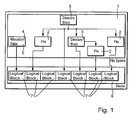
- FIG. 1 shows the file system of the computer 1, as it is the user or the operating system of the computer 1.
- the data stored in a file 2 are organized in a hierarchical tree structure.
- the individual files 2 are assigned to folders 3, so-called directory blocks.
- the file system of the computer 1 has an access table 4 (allocation table) in which information about the physical storage location is stored.
- the access table 4 contains the logical block addresses 5, so-called logical block addresses (LBA).
- LBA logical block addresses
- a data processing device 6 is connected to the computer 1 via an interface.
- the computer 1 recognizes that the device 6 is a storage medium.
- the file system of the computer 1 stores data on the device 6 in a continuous list of data blocks 7, which are designated by logical block addresses 5.
- the data block 7 typically has the length of a physical sector or a multiple of this length. However, the length is fixed for the file system.
- the hierarchical structure of its file system must be transferred to the block structure of the storage system of the device 6. This conversion is done via additional management information, which is also stored in the access table 4.
- the file system When accessing a storage medium, the file system has the authorization to assign a specific block address 5 to a file 2. The assignment is also stored in the access table 4.
- the file system is part of the operating system of the computer 1 and implemented as software.
- the device 6 itself can only process the continuous list of data blocks 7 and execute the data block-based write or read commands, which it receives as a specific logical block address 5 for access. The data is only read or written. The device 6 does not analyze or interpret the data content.
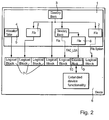
- FIG. 2 first shows the computer 1 with its hierarchical file system, as it already did FIG. 1 is known.
- a special file 8 from the hierarchical file system is stored at a specific location in the file system of the device 6.
- the special data block 9 is addressed by addressing a special file 8 to the special block address 10.
- the special file 8 is stored at a specific but flexible block address 10. It is therefore written in the data block 9 or read from it. This is done via the operating system's own write or read commands.
- the processor of the device 6 can interpret the special data block 9 and execute device-specific operations stored therein.
- the operations are device-specific commands, such as control commands, the read-out of the device status, or the reading or storing of device-specific data or the execution of cryptographic commands.
- the commands also include interpreting specific data and storing in a device-specific manner, for example in the RAM of the device 6.
- the device 6 receives from the computer 1 an operating system's own write command which addresses the specific block address 10 instead of the normal block address 5, the device 6 does not execute the standard write command of the operating system but activates the device-specific command executor, the so-called execution handler.
- the execution handler interprets the special data block 9. The data transferred in the special file 8 and stored in the special data block 9 Command is executed by the execution handler.
- this response is either stored in the special data block 9 or kept available in the RAM of the device.
- special status information can also be stored in the special data block 9, so that the response to the executed command is not determined until the next read command of the operating system wants to access the special block address 10 of the special data block 9.
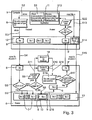
- FIG. 3 shows the basic flow chart of the method according to the invention. Part of the procedure runs in the computer 1; the other part in the device 6.
- a device-specific command is written in a step S 2 together with an identification flag in a special file 8.
- step S 3 the special file 8 is transferred to the file system 12 of the operating system of the computer 1 with the request to save the special file 8 in the device 6.
- the operating system of the computer 1 sends in step S 4, the special file 8 by means of the write command to the device 6.
- the specific block address 10 is specified.
- a fifth step S 5 the processor of the device 6 receives the special file 8. In this step, the processor checks whether the received file 8 is addressed to the specific block address 10.
- the file 8 is stored in the sixth step S 6 in the storage system 13 of the device 6 in the data block 7.
- step S 7 the processor checks in a step S 7 whether the specific file has an identification flag. If no identification flag is present in the special file 8, in step S 8 the special file 8 is stored in the special data block 9 with the special data block address 10.
- step S 10 the device-specific command is then executed by the processor of the device 6.
- step S 11 may also be carried out.
- the device-specific command stored in the special file 8 is transmitted to an external device 14, which is connected to the device 6 via an interface.
- the external device 14 is driven in this way by the device 6. In this case, a command is transferred to the external device 14 and processed there.
- the device 6 can not independently return the answer to the computer 1. Rather, the application program 11 must send a request to the device 6 on the computer 1 and pick up the response from the device 6. This is done in steps S 12 to S 22.
- step S 12 the application program 11 generates a query to read the special file 8 from the device 6.
- the request is first transmitted to the file system 12 of the computer 1.
- step S 13 therefore, the operating system's own read command for reading a "normal" file is sent to the file system 12, since the computer 1 and its operating system mass storage is simulated as a device 6.
- step S 14 the read command is converted so that the file system 12 is requested to read the special file 8 from the special logical block address 10.
- step S 15 the operating system's own read command is transmitted from the file system 12 to the device 6 and then received by the storage system 13 of the device 6.
- the processor of the device 6 reads the special block address 10 of the special data block 9 in step S 16, so that the special file 8 is prepared for returning to the computer 1.
- step S 17 the processor of the device 6 checks whether in the execution of the operating system's own write command of the computer 1, a device-specific command has been executed. For this, the identification flag of the special file 8 is queried. If no device-specific command was previously sent to the device 6, no identification flag has been written to the special file 8 which is located at the special block address 10. If the identification flag is not contained in the file 8 or in the RAM, the file 8 is returned unchanged to the computer 1.
- the processor of the device 6 detects that the identification flag is present in the special file 8
- the processor queries the response to the executed device-specific command in a step S 18. If the device-specific command has been forwarded to an external device 14, a response is determined by the external device 14.
- the answer to the executed device-specific command exists, it is written to the special file 8 in a step S19.
- another flag is written in the special file 8.
- the further flag is an answer flag or an ID identifying the presence of a response to a command executed.
- the application program 11 retrieves the modified special file 8 'from the file system 12. In this case, it checks in a step S 21 whether the response flag is set in the special file 8 '.
- step S 22 On the basis of the response flag in the modified special file 8 ', the application program 11 recognizes in step S 22 that the special file 8' contains the response to the command to be executed. The answer is now read by the application program 11 from the special file 8 'and further processed. If the answer is an error message, this is detected during evaluation by the application program 11.
- step S 18 If no response is returned by the processor of the device 6 in step S 18, the file 8 is written back. In this case, however, the answer flag is not set in step S20. The unmodified special file 8 then does not contain the response flag. Although the special file 8 is also transmitted to the computer 1, the query in step S 21 shows that the response flag is not set. The application program 11 thus recognizes that the special file 8 does not contain the answer to the command to be executed, but an error has occurred.
Landscapes
- Engineering & Computer Science (AREA)
- Theoretical Computer Science (AREA)
- Computer Security & Cryptography (AREA)
- Software Systems (AREA)
- Computer Hardware Design (AREA)
- General Physics & Mathematics (AREA)
- Physics & Mathematics (AREA)
- General Engineering & Computer Science (AREA)
- Technology Law (AREA)
- Multimedia (AREA)
- Storage Device Security (AREA)
- Information Retrieval, Db Structures And Fs Structures Therefor (AREA)
- Selective Calling Equipment (AREA)
- Electrical Discharge Machining, Electrochemical Machining, And Combined Machining (AREA)
- Small-Scale Networks (AREA)
- Stored Programmes (AREA)
Priority Applications (1)
| Application Number | Priority Date | Filing Date | Title |
|---|---|---|---|
| EP04804423A EP1702250B1 (de) | 2003-12-30 | 2004-12-30 | Verfahren zum steuern eines datenverarbeitungsgeräts |
Applications Claiming Priority (3)
| Application Number | Priority Date | Filing Date | Title |
|---|---|---|---|
| EP03029967 | 2003-12-30 | ||
| EP04804423A EP1702250B1 (de) | 2003-12-30 | 2004-12-30 | Verfahren zum steuern eines datenverarbeitungsgeräts |
| PCT/EP2004/014838 WO2005064480A2 (de) | 2003-12-30 | 2004-12-30 | Verfahren zum steuern eines datenverarbeitungsgeräts |
Publications (2)
| Publication Number | Publication Date |
|---|---|
| EP1702250A2 EP1702250A2 (de) | 2006-09-20 |
| EP1702250B1 true EP1702250B1 (de) | 2009-07-08 |
Family
ID=34717200
Family Applications (1)
| Application Number | Title | Priority Date | Filing Date |
|---|---|---|---|
| EP04804423A Expired - Lifetime EP1702250B1 (de) | 2003-12-30 | 2004-12-30 | Verfahren zum steuern eines datenverarbeitungsgeräts |
Country Status (7)
| Country | Link |
|---|---|
| US (1) | US7779033B2 (enExample) |
| EP (1) | EP1702250B1 (enExample) |
| JP (1) | JP4829126B2 (enExample) |
| CN (1) | CN1906559B (enExample) |
| AT (1) | ATE436047T1 (enExample) |
| DE (1) | DE502004009734D1 (enExample) |
| WO (1) | WO2005064480A2 (enExample) |
Cited By (1)
| Publication number | Priority date | Publication date | Assignee | Title |
|---|---|---|---|---|
| DE102014108257B3 (de) * | 2014-06-12 | 2015-08-27 | Hyperstone Gmbh | Verfahren zur Übertragung von erweiterten Befehlen an ein Speichersystem |
Families Citing this family (8)
| Publication number | Priority date | Publication date | Assignee | Title |
|---|---|---|---|---|
| US7779033B2 (en) | 2003-12-30 | 2010-08-17 | Wibu-Systems Ag | Method for controlling a data processing device |
| EP1818793A1 (en) * | 2006-02-14 | 2007-08-15 | Harmony Microelectronic Inc. | USB storage system and control method thereof |
| US8255707B2 (en) * | 2008-03-06 | 2012-08-28 | Fujitsu Limited | System and method for providing a one-step testing architecture |
| FR2983622B1 (fr) * | 2011-12-02 | 2014-01-24 | Morpho | Ecriture de donnees dans une memoire non volatile de carte a puce |
| GB2508214A (en) * | 2012-11-26 | 2014-05-28 | Ibm | Using access to special files to control management functions of a networked attached storage device |
| US9501223B2 (en) | 2014-06-30 | 2016-11-22 | Hyperstone Gmbh | Method for transmitting extended commands to a memory system |
| JP6444932B2 (ja) * | 2016-04-15 | 2018-12-26 | ファナック株式会社 | サーバベースのアプリケーションソフトウエア実行システム |
| CN105975624B (zh) * | 2016-05-27 | 2019-07-30 | 苏州佳世达电通有限公司 | 一种数据传输方法、设备和系统 |
Family Cites Families (41)
| Publication number | Priority date | Publication date | Assignee | Title |
|---|---|---|---|---|
| US4096567A (en) * | 1976-08-13 | 1978-06-20 | Millard William H | Information storage facility with multiple level processors |
| US5379423A (en) * | 1988-09-28 | 1995-01-03 | Hitachi, Ltd. | Information life cycle processor and information organizing method using it |
| US5155809A (en) * | 1989-05-17 | 1992-10-13 | International Business Machines Corp. | Uncoupling a central processing unit from its associated hardware for interaction with data handling apparatus alien to the operating system controlling said unit and hardware |
| JPH0433139A (ja) * | 1990-05-30 | 1992-02-04 | Fujitsu Ltd | ファィルアクセス方式 |
| US5542023A (en) * | 1991-06-05 | 1996-07-30 | Hitachi, Ltd. | Multi-media reproduction processing apparatus |
| US5388219A (en) * | 1992-03-02 | 1995-02-07 | International Business Machines Corporation | Efficient channel and control unit for host computer |
| US5640596A (en) * | 1992-03-10 | 1997-06-17 | Hitachi, Ltd. | Input output control system for transferring control programs collectively as one transfer unit designated by plurality of input output requests to be executed |
| US5566331A (en) * | 1994-01-24 | 1996-10-15 | University Corporation For Atmospheric Research | Mass storage system for file-systems |
| US6073209A (en) * | 1997-03-31 | 2000-06-06 | Ark Research Corporation | Data storage controller providing multiple hosts with access to multiple storage subsystems |
| FR2766592B1 (fr) * | 1997-07-23 | 1999-08-27 | Bull Sa | Dispositif et procede de regulation dynamique de l'attribution des ressources sur un systeme informatique |
| US6351850B1 (en) * | 1997-11-14 | 2002-02-26 | Frank Van Gilluwe | Computer operating system installation |
| JP2000010922A (ja) * | 1998-06-25 | 2000-01-14 | Toshiba Corp | コンピュータネットワークにおけるジヨブの起動方法ならびにシステム、及び同方法がプログラムされ記録される記録媒体 |
| US6199137B1 (en) * | 1999-01-05 | 2001-03-06 | Lucent Technolgies, Inc. | Method and device for controlling data flow through an IO controller |
| US6468160B2 (en) * | 1999-04-08 | 2002-10-22 | Nintendo Of America, Inc. | Security system for video game system with hard disk drive and internet access capability |
| US6473829B1 (en) * | 1999-05-28 | 2002-10-29 | International Business Machines Corporation | Data storage device providing communication between processing units |
| US6862708B1 (en) * | 2000-01-31 | 2005-03-01 | Harris-Exigent, Inc. | Extensible device command commutation engine for formatting device commands for the controls of devices |
| US6757291B1 (en) * | 2000-02-10 | 2004-06-29 | Simpletech, Inc. | System for bypassing a server to achieve higher throughput between data network and data storage system |
| JP2001250087A (ja) * | 2000-03-07 | 2001-09-14 | Nippon Telegr & Teleph Corp <Ntt> | Icカードへのコマンドapdu送出処理方法 |
| US6260011B1 (en) * | 2000-03-20 | 2001-07-10 | Microsoft Corporation | Methods and apparatus for automatically synchronizing electronic audio files with electronic text files |
| US7068386B2 (en) * | 2000-05-16 | 2006-06-27 | Canon Kabushiki Kaisha | Image processing system, image data processing method, and storage medium |
| US6671747B1 (en) * | 2000-08-03 | 2003-12-30 | Apple Computer, Inc. | System, apparatus, method, and computer program for execution-order preserving uncached write combine operation |
| US20030147361A1 (en) * | 2000-09-01 | 2003-08-07 | Ryota Tsukidate | Reception terminal simulator, sending schedule making device, reception terminal, data transmission/reception system comprising them |
| GB0024919D0 (en) * | 2000-10-11 | 2000-11-22 | Sealedmedia Ltd | Method of further securing an operating system |
| US7039727B2 (en) * | 2000-10-17 | 2006-05-02 | Microsoft Corporation | System and method for controlling mass storage class digital imaging devices |
| DE10108487A1 (de) * | 2001-02-22 | 2002-09-12 | Giesecke & Devrient Gmbh | Verfahren und System zur verteilten Erstellung eines Programms für einen programmierbaren, tragbaren Datenträger |
| JP2002312249A (ja) * | 2001-04-12 | 2002-10-25 | Yamaha Corp | コンテンツ再生装置のバックアップ方法およびバックアップ用記憶メディア |
| US6742138B1 (en) * | 2001-06-12 | 2004-05-25 | Emc Corporation | Data recovery method and apparatus |
| US6839706B2 (en) * | 2001-08-06 | 2005-01-04 | Lefthand Networks, Inc. | Block data storage within a computer network |
| US6732292B2 (en) * | 2001-09-17 | 2004-05-04 | Seagate Technology Llc | Adaptive bi-directional write skip masks in a data storage device |
| US7624391B2 (en) * | 2001-11-05 | 2009-11-24 | Hewlett-Packard Development Company, L.P. | Device-based model for software driver delivery and upgrade |
| US7320126B2 (en) | 2001-11-06 | 2008-01-15 | Sandisk Corporation | Implementation of in system programming to update firmware on memory cards |
| EP1345236B1 (en) * | 2002-03-14 | 2011-05-11 | STMicroelectronics Srl | A non-volatile memory device |
| US20030200361A1 (en) * | 2002-04-19 | 2003-10-23 | Vikas Dogra | Extensible drive |
| JP2003323321A (ja) * | 2002-05-01 | 2003-11-14 | Brother Ind Ltd | データファイル転送制御装置、データファイル処理装置、印字出力装置、プログラムおよび記録媒体 |
| US7546364B2 (en) * | 2002-05-16 | 2009-06-09 | Emc Corporation | Replication of remote copy data for internet protocol (IP) transmission |
| US7640385B2 (en) * | 2002-09-24 | 2009-12-29 | St-Ericsson Sa | Dual-mode bus station and system for communications |
| US20040098596A1 (en) * | 2002-11-15 | 2004-05-20 | Rainbow Technologies, Inc. | Driverless USB security token |
| JP4554598B2 (ja) * | 2003-03-27 | 2010-09-29 | サンディスク アイエル リミテッド | すべてのユーザによる完全なアクセスが可能なデータ記憶デバイス |
| US7779033B2 (en) | 2003-12-30 | 2010-08-17 | Wibu-Systems Ag | Method for controlling a data processing device |
| JP2005250938A (ja) * | 2004-03-05 | 2005-09-15 | Hitachi Ltd | 記憶制御システム及び方法 |
| JP2005301708A (ja) * | 2004-04-13 | 2005-10-27 | Hitachi Ltd | 記憶装置システムにおけるソフトウェア管理方法及び記憶装置システム |
-
2004
- 2004-12-30 US US10/584,806 patent/US7779033B2/en not_active Expired - Lifetime
- 2004-12-30 EP EP04804423A patent/EP1702250B1/de not_active Expired - Lifetime
- 2004-12-30 CN CN2004800396323A patent/CN1906559B/zh not_active Expired - Lifetime
- 2004-12-30 JP JP2006546110A patent/JP4829126B2/ja not_active Expired - Fee Related
- 2004-12-30 AT AT04804423T patent/ATE436047T1/de not_active IP Right Cessation
- 2004-12-30 DE DE502004009734T patent/DE502004009734D1/de not_active Expired - Lifetime
- 2004-12-30 WO PCT/EP2004/014838 patent/WO2005064480A2/de not_active Ceased
Cited By (1)
| Publication number | Priority date | Publication date | Assignee | Title |
|---|---|---|---|---|
| DE102014108257B3 (de) * | 2014-06-12 | 2015-08-27 | Hyperstone Gmbh | Verfahren zur Übertragung von erweiterten Befehlen an ein Speichersystem |
Also Published As
| Publication number | Publication date |
|---|---|
| WO2005064480A2 (de) | 2005-07-14 |
| WO2005064480A3 (de) | 2005-12-08 |
| EP1702250A2 (de) | 2006-09-20 |
| JP4829126B2 (ja) | 2011-12-07 |
| DE502004009734D1 (de) | 2009-08-20 |
| CN1906559B (zh) | 2010-10-13 |
| US7779033B2 (en) | 2010-08-17 |
| US20070186037A1 (en) | 2007-08-09 |
| ATE436047T1 (de) | 2009-07-15 |
| CN1906559A (zh) | 2007-01-31 |
| JP2007531085A (ja) | 2007-11-01 |
Similar Documents
| Publication | Publication Date | Title |
|---|---|---|
| EP1148416B1 (en) | Computer system and snapshot data management method | |
| DE60315102T2 (de) | Speichersystem | |
| DE60204687T2 (de) | Speicherkopierbefehl mit Angabe von Quelle und Ziel, der in der Speichersteuerung ausgeführt wird | |
| DE102013215535A1 (de) | Sicherung oder wiederherstellung von daten mit hilfe eines hauptspeichers und nichtflüchtiger speichermedien | |
| DE112015005211T5 (de) | Systeme und verfahren für die speicherfehler-verwaltung | |
| EP1702250B1 (de) | Verfahren zum steuern eines datenverarbeitungsgeräts | |
| DE112020000181T5 (de) | Selbstformatierende datenspeichervorrichtung | |
| DE10244728A1 (de) | System und Verfahren zum Schutz von Daten, die auf einer Speicherungsmedienvorrichtung gespeichert sind | |
| DE102017104080A1 (de) | Generalisiertes verifizierungsschema für sichere metadaten-modifizierung | |
| DE69517256T2 (de) | System und Verfahren zur Versorgung des Zugriffsschutzes auf Informationsspeichereinrichtung | |
| DE602004004780T2 (de) | Verfahren und einrichtung zum transferieren von daten zwischen einem hauptspeicher und einer speichereinrichtung | |
| DE112021004991T5 (de) | Verwaltung einer wiederherstellung eines datenspeicher-datenvolumens | |
| EP1032871B1 (de) | Verfahren und anordnung zum laden von daten für grundlegende systemroutinen eines datenverarbeitungssystems | |
| EP2678769B1 (en) | A device controller for a memory device | |
| EP1721232A1 (de) | Verfahren zum schützen von vertraulichen daten | |
| EP2948894A1 (de) | Verfahren zum sicheren löschen eines nichtflüchtigen halbleiter-massenspeichers, computersystem sowie computerprogrammprodukt | |
| EP1033647B1 (de) | Verfahren zum Übertragen eines Softwaresystems auf andere Hardwareplattformen | |
| WO2013143911A2 (de) | Verfahren zum verschlüsseln von daten auf speichermedium | |
| US7941620B2 (en) | Double-allocation data-replication system | |
| EP3926450B1 (de) | Dynamisches herstellen einer kompatibilität von dateisystemen in echtzeit | |
| DE102012111181A1 (de) | Speichersystem, insbesondere Cloud Storage System, und Computerprogrammprodukt | |
| DE60118626T2 (de) | Verfahren zum schutz von auf einem speichermedium aufgezeichneten daten | |
| EP0625749B1 (de) | Betriebsverfahren für einen Rechner, und ein Rechner | |
| DE102008009851A1 (de) | Hostdatenverarbeitungssystem, Speicherelement und korrespondierende Betriebsverfahren | |
| EP2177988B1 (de) | Verfahren und vorrichtung zur verwaltung eines datenspeichers |
Legal Events
| Date | Code | Title | Description |
|---|---|---|---|
| PUAI | Public reference made under article 153(3) epc to a published international application that has entered the european phase |
Free format text: ORIGINAL CODE: 0009012 |
|
| 17P | Request for examination filed |
Effective date: 20060727 |
|
| AK | Designated contracting states |
Kind code of ref document: A2 Designated state(s): AT BE BG CH CY CZ DE DK EE ES FI FR GB GR HU IE IS IT LI LT LU MC NL PL PT RO SE SI SK TR |
|
| 17Q | First examination report despatched |
Effective date: 20070123 |
|
| DAX | Request for extension of the european patent (deleted) | ||
| GRAP | Despatch of communication of intention to grant a patent |
Free format text: ORIGINAL CODE: EPIDOSNIGR1 |
|
| GRAS | Grant fee paid |
Free format text: ORIGINAL CODE: EPIDOSNIGR3 |
|
| GRAA | (expected) grant |
Free format text: ORIGINAL CODE: 0009210 |
|
| AK | Designated contracting states |
Kind code of ref document: B1 Designated state(s): AT BE BG CH CY CZ DE DK EE ES FI FR GB GR HU IE IS IT LI LT LU MC NL PL PT RO SE SI SK TR |
|
| REG | Reference to a national code |
Ref country code: GB Ref legal event code: FG4D Free format text: NOT ENGLISH |
|
| REG | Reference to a national code |
Ref country code: CH Ref legal event code: EP |
|
| REG | Reference to a national code |
Ref country code: IE Ref legal event code: FG4D |
|
| REF | Corresponds to: |
Ref document number: 502004009734 Country of ref document: DE Date of ref document: 20090820 Kind code of ref document: P |
|
| PG25 | Lapsed in a contracting state [announced via postgrant information from national office to epo] |
Ref country code: SI Free format text: LAPSE BECAUSE OF FAILURE TO SUBMIT A TRANSLATION OF THE DESCRIPTION OR TO PAY THE FEE WITHIN THE PRESCRIBED TIME-LIMIT Effective date: 20090708 |
|
| NLV1 | Nl: lapsed or annulled due to failure to fulfill the requirements of art. 29p and 29m of the patents act | ||
| PG25 | Lapsed in a contracting state [announced via postgrant information from national office to epo] |
Ref country code: LT Free format text: LAPSE BECAUSE OF FAILURE TO SUBMIT A TRANSLATION OF THE DESCRIPTION OR TO PAY THE FEE WITHIN THE PRESCRIBED TIME-LIMIT Effective date: 20090708 Ref country code: IS Free format text: LAPSE BECAUSE OF FAILURE TO SUBMIT A TRANSLATION OF THE DESCRIPTION OR TO PAY THE FEE WITHIN THE PRESCRIBED TIME-LIMIT Effective date: 20091108 Ref country code: ES Free format text: LAPSE BECAUSE OF FAILURE TO SUBMIT A TRANSLATION OF THE DESCRIPTION OR TO PAY THE FEE WITHIN THE PRESCRIBED TIME-LIMIT Effective date: 20091019 Ref country code: FI Free format text: LAPSE BECAUSE OF FAILURE TO SUBMIT A TRANSLATION OF THE DESCRIPTION OR TO PAY THE FEE WITHIN THE PRESCRIBED TIME-LIMIT Effective date: 20090708 |
|
| REG | Reference to a national code |
Ref country code: IE Ref legal event code: FD4D |
|
| PG25 | Lapsed in a contracting state [announced via postgrant information from national office to epo] |
Ref country code: PL Free format text: LAPSE BECAUSE OF FAILURE TO SUBMIT A TRANSLATION OF THE DESCRIPTION OR TO PAY THE FEE WITHIN THE PRESCRIBED TIME-LIMIT Effective date: 20090708 Ref country code: NL Free format text: LAPSE BECAUSE OF FAILURE TO SUBMIT A TRANSLATION OF THE DESCRIPTION OR TO PAY THE FEE WITHIN THE PRESCRIBED TIME-LIMIT Effective date: 20090708 |
|
| PG25 | Lapsed in a contracting state [announced via postgrant information from national office to epo] |
Ref country code: BG Free format text: LAPSE BECAUSE OF FAILURE TO SUBMIT A TRANSLATION OF THE DESCRIPTION OR TO PAY THE FEE WITHIN THE PRESCRIBED TIME-LIMIT Effective date: 20091008 Ref country code: PT Free format text: LAPSE BECAUSE OF FAILURE TO SUBMIT A TRANSLATION OF THE DESCRIPTION OR TO PAY THE FEE WITHIN THE PRESCRIBED TIME-LIMIT Effective date: 20091109 |
|
| PG25 | Lapsed in a contracting state [announced via postgrant information from national office to epo] |
Ref country code: RO Free format text: LAPSE BECAUSE OF FAILURE TO SUBMIT A TRANSLATION OF THE DESCRIPTION OR TO PAY THE FEE WITHIN THE PRESCRIBED TIME-LIMIT Effective date: 20090708 Ref country code: DK Free format text: LAPSE BECAUSE OF FAILURE TO SUBMIT A TRANSLATION OF THE DESCRIPTION OR TO PAY THE FEE WITHIN THE PRESCRIBED TIME-LIMIT Effective date: 20090708 Ref country code: CZ Free format text: LAPSE BECAUSE OF FAILURE TO SUBMIT A TRANSLATION OF THE DESCRIPTION OR TO PAY THE FEE WITHIN THE PRESCRIBED TIME-LIMIT Effective date: 20090708 Ref country code: EE Free format text: LAPSE BECAUSE OF FAILURE TO SUBMIT A TRANSLATION OF THE DESCRIPTION OR TO PAY THE FEE WITHIN THE PRESCRIBED TIME-LIMIT Effective date: 20090708 Ref country code: IE Free format text: LAPSE BECAUSE OF FAILURE TO SUBMIT A TRANSLATION OF THE DESCRIPTION OR TO PAY THE FEE WITHIN THE PRESCRIBED TIME-LIMIT Effective date: 20090708 |
|
| PLBE | No opposition filed within time limit |
Free format text: ORIGINAL CODE: 0009261 |
|
| STAA | Information on the status of an ep patent application or granted ep patent |
Free format text: STATUS: NO OPPOSITION FILED WITHIN TIME LIMIT |
|
| PG25 | Lapsed in a contracting state [announced via postgrant information from national office to epo] |
Ref country code: SK Free format text: LAPSE BECAUSE OF FAILURE TO SUBMIT A TRANSLATION OF THE DESCRIPTION OR TO PAY THE FEE WITHIN THE PRESCRIBED TIME-LIMIT Effective date: 20090708 |
|
| 26N | No opposition filed |
Effective date: 20100409 |
|
| BERE | Be: lapsed |
Owner name: WIBU-SYSTEMS A.G. Effective date: 20091231 |
|
| PG25 | Lapsed in a contracting state [announced via postgrant information from national office to epo] |
Ref country code: MC Free format text: LAPSE BECAUSE OF NON-PAYMENT OF DUE FEES Effective date: 20100701 |
|
| REG | Reference to a national code |
Ref country code: CH Ref legal event code: PL |
|
| PG25 | Lapsed in a contracting state [announced via postgrant information from national office to epo] |
Ref country code: LI Free format text: LAPSE BECAUSE OF NON-PAYMENT OF DUE FEES Effective date: 20091231 Ref country code: BE Free format text: LAPSE BECAUSE OF NON-PAYMENT OF DUE FEES Effective date: 20091231 Ref country code: CH Free format text: LAPSE BECAUSE OF NON-PAYMENT OF DUE FEES Effective date: 20091231 Ref country code: GR Free format text: LAPSE BECAUSE OF FAILURE TO SUBMIT A TRANSLATION OF THE DESCRIPTION OR TO PAY THE FEE WITHIN THE PRESCRIBED TIME-LIMIT Effective date: 20091009 |
|
| PG25 | Lapsed in a contracting state [announced via postgrant information from national office to epo] |
Ref country code: IT Free format text: LAPSE BECAUSE OF FAILURE TO SUBMIT A TRANSLATION OF THE DESCRIPTION OR TO PAY THE FEE WITHIN THE PRESCRIBED TIME-LIMIT Effective date: 20090708 |
|
| PG25 | Lapsed in a contracting state [announced via postgrant information from national office to epo] |
Ref country code: LU Free format text: LAPSE BECAUSE OF NON-PAYMENT OF DUE FEES Effective date: 20091230 |
|
| PG25 | Lapsed in a contracting state [announced via postgrant information from national office to epo] |
Ref country code: AT Free format text: LAPSE BECAUSE OF NON-PAYMENT OF DUE FEES Effective date: 20091230 |
|
| PG25 | Lapsed in a contracting state [announced via postgrant information from national office to epo] |
Ref country code: HU Free format text: LAPSE BECAUSE OF FAILURE TO SUBMIT A TRANSLATION OF THE DESCRIPTION OR TO PAY THE FEE WITHIN THE PRESCRIBED TIME-LIMIT Effective date: 20100109 |
|
| PG25 | Lapsed in a contracting state [announced via postgrant information from national office to epo] |
Ref country code: TR Free format text: LAPSE BECAUSE OF FAILURE TO SUBMIT A TRANSLATION OF THE DESCRIPTION OR TO PAY THE FEE WITHIN THE PRESCRIBED TIME-LIMIT Effective date: 20090708 |
|
| PG25 | Lapsed in a contracting state [announced via postgrant information from national office to epo] |
Ref country code: CY Free format text: LAPSE BECAUSE OF FAILURE TO SUBMIT A TRANSLATION OF THE DESCRIPTION OR TO PAY THE FEE WITHIN THE PRESCRIBED TIME-LIMIT Effective date: 20090708 |
|
| PG25 | Lapsed in a contracting state [announced via postgrant information from national office to epo] |
Ref country code: SE Free format text: LAPSE BECAUSE OF FAILURE TO SUBMIT A TRANSLATION OF THE DESCRIPTION OR TO PAY THE FEE WITHIN THE PRESCRIBED TIME-LIMIT Effective date: 20090708 |
|
| REG | Reference to a national code |
Ref country code: FR Ref legal event code: PLFP Year of fee payment: 12 |
|
| REG | Reference to a national code |
Ref country code: FR Ref legal event code: PLFP Year of fee payment: 13 |
|
| REG | Reference to a national code |
Ref country code: FR Ref legal event code: PLFP Year of fee payment: 14 |
|
| P01 | Opt-out of the competence of the unified patent court (upc) registered |
Effective date: 20230524 |
|
| PGFP | Annual fee paid to national office [announced via postgrant information from national office to epo] |
Ref country code: GB Payment date: 20231220 Year of fee payment: 20 |
|
| PGFP | Annual fee paid to national office [announced via postgrant information from national office to epo] |
Ref country code: FR Payment date: 20231219 Year of fee payment: 20 Ref country code: DE Payment date: 20231214 Year of fee payment: 20 |
|
| REG | Reference to a national code |
Ref country code: DE Ref legal event code: R071 Ref document number: 502004009734 Country of ref document: DE |
|
| PG25 | Lapsed in a contracting state [announced via postgrant information from national office to epo] |
Ref country code: GB Free format text: LAPSE BECAUSE OF EXPIRATION OF PROTECTION Effective date: 20241229 |
|
| REG | Reference to a national code |
Ref country code: GB Ref legal event code: PE20 Expiry date: 20241229 |
|
| PG25 | Lapsed in a contracting state [announced via postgrant information from national office to epo] |
Ref country code: GB Free format text: LAPSE BECAUSE OF EXPIRATION OF PROTECTION Effective date: 20241229 |