EP1701528B1 - Asynchrone Ereignisbehandlung für Video-Ströme in interaktiven Sprach-Antwort-Systemen - Google Patents
Asynchrone Ereignisbehandlung für Video-Ströme in interaktiven Sprach-Antwort-Systemen Download PDFInfo
- Publication number
- EP1701528B1 EP1701528B1 EP06251246.2A EP06251246A EP1701528B1 EP 1701528 B1 EP1701528 B1 EP 1701528B1 EP 06251246 A EP06251246 A EP 06251246A EP 1701528 B1 EP1701528 B1 EP 1701528B1
- Authority
- EP
- European Patent Office
- Prior art keywords
- content stream
- interactive voice
- voice response
- call
- application
- Prior art date
- Legal status (The legal status is an assumption and is not a legal conclusion. Google has not performed a legal analysis and makes no representation as to the accuracy of the status listed.)
- Ceased
Links
Images




Classifications
-
- H—ELECTRICITY
- H04—ELECTRIC COMMUNICATION TECHNIQUE
- H04M—TELEPHONIC COMMUNICATION
- H04M3/00—Automatic or semi-automatic exchanges
- H04M3/42—Systems providing special services or facilities to subscribers
- H04M3/42314—Systems providing special services or facilities to subscribers in private branch exchanges
- H04M3/42323—PBX's with CTI arrangements
-
- H—ELECTRICITY
- H04—ELECTRIC COMMUNICATION TECHNIQUE
- H04M—TELEPHONIC COMMUNICATION
- H04M3/00—Automatic or semi-automatic exchanges
- H04M3/42—Systems providing special services or facilities to subscribers
- H04M3/487—Arrangements for providing information services, e.g. recorded voice services or time announcements
- H04M3/493—Interactive information services, e.g. directory enquiries ; Arrangements therefor, e.g. interactive voice response [IVR] systems or voice portals
-
- H—ELECTRICITY
- H04—ELECTRIC COMMUNICATION TECHNIQUE
- H04M—TELEPHONIC COMMUNICATION
- H04M3/00—Automatic or semi-automatic exchanges
- H04M3/42—Systems providing special services or facilities to subscribers
- H04M3/487—Arrangements for providing information services, e.g. recorded voice services or time announcements
- H04M3/493—Interactive information services, e.g. directory enquiries ; Arrangements therefor, e.g. interactive voice response [IVR] systems or voice portals
- H04M3/4938—Interactive information services, e.g. directory enquiries ; Arrangements therefor, e.g. interactive voice response [IVR] systems or voice portals comprising a voice browser which renders and interprets, e.g. VoiceXML
-
- H—ELECTRICITY
- H04—ELECTRIC COMMUNICATION TECHNIQUE
- H04M—TELEPHONIC COMMUNICATION
- H04M7/00—Arrangements for interconnection between switching centres
- H04M7/0024—Services and arrangements where telephone services are combined with data services
- H04M7/0039—Services and arrangements where telephone services are combined with data services where the data service is provided by a stream of packets which are rendered in real time by the receiving terminal
-
- H—ELECTRICITY
- H04—ELECTRIC COMMUNICATION TECHNIQUE
- H04M—TELEPHONIC COMMUNICATION
- H04M2201/00—Electronic components, circuits, software, systems or apparatus used in telephone systems
- H04M2201/50—Telephonic communication in combination with video communication
Definitions
- the present invention relates to telecommunications in general, and, more particularly, to handling events for video content streams in an interactive voice response system script.
- An interactive voice response system typically presents a hierarchy of menus to the caller, and prompts the caller for input to navigate the menus and to supply information to the IVR system. For example, a caller might touch the "3" key of his terminal's keypad, or say the word "three", to choose the third option in a menu. Similarly, a caller might specify his bank account number to the interactive voice response system by inputting the digits via the keypad, or by saying the digits. In many interactive voice response systems the caller can connect to a person in the enterprise by either selecting an appropriate menu option, or by entering the telephone extension associated with that person.
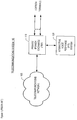
- FIG. 1 depicts telecommunications system 100 in accordance with the prior art.
- Telecommunications system 100 comprises telecommunications network 105, private branch exchange (PBX) 110, and interactive voice response system 120, interconnected as shown.
- PBX private branch exchange
- FIG. 1 depicts telecommunications system 100 in accordance with the prior art.
- Telecommunications system 100 comprises telecommunications network 105, private branch exchange (PBX) 110, and interactive voice response system 120, interconnected as shown.
- PBX private branch exchange
- Telecommunications network 105 is a network such as the Public Switched Telephone Network [PSTN], the Internet, etc. that carries a call from a telecommunications terminal (e.g ., a telephone, a personal digital assistant [PDA], etc. ) to private branch exchange 110.
- PSTN Public Switched Telephone Network
- a call might be a conventional voice telephone call, a text-based instant messaging (IM) session, a Voice over Internet Protocol (VoIP) call, etc.
- IM instant messaging
- VoIP Voice over Internet Protocol
- Private branch exchange (PBX) 110 receives incoming calls from telecommunications network 105 and directs the calls to interactive voice response (IVR) system 120 or to one of a plurality of telecommunications terminals within the enterprise, depending on how private branch exchange 110 is programmed or configured.
- private branch exchange 110 might comprise logic for routing calls to service agents' terminals based on criteria such as how busy various service agents have been in a recent time interval, the telephone number called, and so forth.
- private branch exchange 110 might be programmed or configured so that an incoming call is initially routed to interactive voice response (IVR) system 120, and, based on caller input to IVR system 120, subsequently redirected back to PBX 110 for routing to an appropriate telecommunications terminal within the enterprise.
- IVR interactive voice response
- Private branch exchange (PBX) 110 also receives outbound signals from telecommunications terminals within the enterprise and from interactive voice response (IVR) system 120, and transmits the signals on to telecommunications network 105 for delivery to a caller's terminal.
- Interactive voice response (IVR) system 120 is a data-processing system that presents one or more menus to a caller and receives caller input (e.g ., speech signals, keypad input, etc .), as described above, via private branch exchange 110.
- Interactive voice response system (IVR) 120 is typically programmable and performs its tasks by executing one or more instances of an IVR system application .
- An IVR system application typically comprises one or more scripts that specify what speech is generated by interactive voice response system 120, what input to collect from the caller, and what actions to take in response to caller input.
- an IVR system application might comprise a top-level script that presents a main menu to the caller, and additional scripts that correspond to each of the menu options (e.g ., a script for reviewing bank account balances, a script for making a transfer of funds between accounts, etc. ).
- Voice eXtensible Markup Language A popular language for such scripts is the Voice eXtensible Markup Language (abbreviated VoiceXML or VXML).
- the Voice eXtensible Markup Language is an application of the eXtensible Markup Language, abbreviated XML, which enables the creation of customized tags for defining, transmitting, validating, and interpretation of data between two applications, organizations, etc.
- the Voice eXtensible Markup Language enables dialogs that feature synthesized speech, digitized audio, recognition of spoken and keyed input, recording of spoken input, and telephony.
- a primary objective of VXML is to bring the advantages of web-based development and content delivery to interactive voice response system applications.
- FIG. 2 depicts an exemplary Voice eXtensible Markup Language (VXML) script (also known as a VXML document or page ), in accordance with the prior art.
- VXML Voice eXtensible Markup Language
- the VXML script when executed by interactive voice response system 120, presents a menu with three options; the first option is for transferring the call to the sales department, the second option is for transferring the call to the marketing department, and the third option is for transferring the call to the customer support department.
- Audio content (in particular, synthesized speech) that corresponds to text between the ⁇ prompt > and ⁇ / prompt > tags is generated by interactive voice response system 120 and transmitted to the caller.
- the VXML script of Figure 2 also comprises two event handlers.
- An event can be generated when a caller provides input (e.g ., speech, keypad entry, etc. ) in response to a prompt from the VXML script, or when there is a prompt timeout ( i.e., the caller does not provide any input for a specified time period after a prompt).
- the first event handler of the VXML script catches and processes events of type telephone.disconnected.hangup, which are generated when a caller hangs up, and the second event handler catches and processes events of type nomatch, which are generated when a caller's input does not match any of a menu's choices.
- FIG. 3 depicts an exemplary XML script of the prior art that contains Speech Application Language Tags (SALT) and provides functionality similar to the VXML script of Figure 2 .
- SALT Speech Application Language Tags
- a user of a telecommunications terminal who is ordering apparel via an IVR system might receive a video content stream related to a particular item (e.g ., depicting a model who is wearing the item, depicting the different available colors for the item, etc .).
- a video content stream related to a particular item (e.g ., depicting a model who is wearing the item, depicting the different available colors for the item, etc .).
- an audio content stream e.g., music, news, etc.
- a content stream (whether video, audio, or both) is delivered to a telecommunications terminal during a call with an IVR system
- events related to the content stream can occur, such as: completion of playback of the content stream; user control of the content stream (e.g ., pause, stop, fast forward, etc .); a drop-off in quality of service (QoS) for the content stream ( e.g ., due to network congestion, etc .); and so forth.
- QoS quality of service
- an IVR system script were made aware of when such events occur, and were capable of responding accordingly (e.g. , stopping playback of a content stream, queueing another content stream, etc .) without interfering with the other tasks of the IVR system script (e.g ., collecting input from the caller, etc .).
- the IVR system generates an asynchronous event when there is a content stream-related occurrence during a call, and the asynchronous event is caught by an appropriate event handler within the IVR system script.
- the event handler then spawns a separate thread that handles the event accordingly and executes in parallel with the IVR system script (i.e., the IVR system script continues handling the call while the thread executes).
- the present invention overcomes two disadvantages of the prior art to enable an IVR system script to handle content stream-related events.
- the present invention enables events to be generated and caught by an IVR system script at any time during a call.
- an event can be generated and caught in an IVR system script only when either (i) a caller provides input in response to a prompt from the IVR system script, or (ii) a prompt timeout occurs.
- Second, because the present invention enables events to be handled in parallel with the execution of an IVR system script, appropriate actions can be performed in response to a stream-related event without halting or interfering with other tasks of the script.
- the described example comprises: receiving a signal at an interactive voice response system during a call that involves the interactive voice response system and a telecommunications terminal, wherein the signal is associated with a content stream that is delivered to the telecommunications terminal during the call, and wherein the interactive voice response system executes an application to handle the call; and performing an action at the interactive voice response system in response to the signal; wherein the performing of the action is concurrent with the execution of the application.
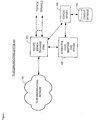
- FIG. 4 depicts telecommunications system 400 in accordance with the illustrative embodiment of the present invention.
- Telecommunications system 400 comprises telecommunications network 105, private branch exchange (PBX) 410, interactive voice response system 420, content server 430, and content database 440, interconnected as shown.
- PBX private branch exchange
- Private branch exchange (PBX) 410 provides all the functionality of private branch exchange (PBX) 110 of the prior art, and is also capable of receiving streamed content (e.g ., audio, video, multimedia, etc. ) from content server 430, of forwarding streamed content on to telecommunications network 105 for delivery to a caller's terminal, and of transmitting signals related to streamed content to content server 430.
- streamed content e.g ., audio, video, multimedia, etc.
- private branch exchange 410 is also capable of transmitting and receiving Internet Protocol (IP) data packets, Session Initiation Protocol (SIP) messages, Voice over IP (VoIP) traffic, and stream-related messages (e.g ., Real Time Streaming Protocol [RTSP] messages, etc .) to and from IVR system 420.
- IP Internet Protocol
- SIP Session Initiation Protocol
- VoIP Voice over IP
- stream-related messages e.g ., Real Time Streaming Protocol [RTSP] messages, etc .
- Interactive voice response system 420 provides all the functionality of interactive voice response system 120 of the prior art, and is also capable of transmitting commands to content server 430 (e.g., starting playback of a content stream, stopping playback of the content stream, queueing another content stream, etc .) and of receiving information from content server 430 ( e.g ., an indication that playback of a content stream has begun, an indication that playback of a content stream has completed, etc. ). It will be clear to those skilled in the art, after reading this specification, how to make and use interactive voice response system 420.
- Content server 430 is capable of retrieving content from content database 440, of buffering and delivering a content stream to a calling terminal via private branch exchange 410, of receiving commands from interactive voice response (IVR) system 410 ( e.g., to start playback of a content stream, to queue another content stream, etc. ), and of transmitting status information to interactive voice response (IVR) system 410, in well-known fashion.
- IVR interactive voice response
- Content database 440 is capable of storing a plurality of multimedia content (e.g ., video content, audio content, etc .) and of retrieving content in response to commands from content server 430, in well-known fashion. It will be clear to those skilled in the art, after reading this specification, how to make and use content database 440.
- multimedia content e.g ., video content, audio content, etc .
- FIG. 5 depicts a flowchart of the salient tasks of interactive voice response (IVR) system 420, in accordance with the illustrative embodiment of the present invention.
- IVR interactive voice response
- an incoming call is received at interactive voice response system 420, in well-known fashion.
- interactive voice response (IVR) system 420 assigns an instance of an appropriate IVR system application to the incoming call, in well-known fashion.
- IVR interactive voice response
- interactive voice response (IVR) system 420 begins executing the IVR application instance, in well-known fashion.
- interactive voice response (IVR) system 420 issues a command to content server 430 to retrieve content from database 440 and deliver the content to the caller in streaming fashion, as is well-known in the art.
- IVR interactive voice response
- interactive voice response (IVR) system 420 receives a signal that indicates some occurrence during the call, in well-known fashion. Note that the term “occurrence” is used to distinguish from a software "event” object.
- interactive voice response (IVR) system 420 checks whether the particular occurrence is of a type that is associated with synchronous handling, as in the prior art. If so, execution proceeds to task 541, otherwise execution proceeds to task 542.
- IVR interactive voice response
- interactive voice response (IVR) system 420 generates an instance of the appropriate event class, in accordance with the prior art.
- the IVR application instance catches the event instance generated at task 541, in accordance with the prior art.
- the IVR application instance jumps to the appropriate event handler for instances of event, in accordance with the prior art.
- the IVR application instance executes the code of the event handler, in accordance with the prior art.
- the IVR application instance resumes execution at the appropriate line of code, in accordance with the prior art.
- interactive voice response (IVR) system 420 generates an instance of an asyncevent class that corresponds to the occurence.
- the asyncevent class is a new class that is defined in the illustrative embodiment and corresponds to events that are associated with asynchronous handling (e . g ., content stream-related events, etc .). All such events are represented by subclasses of asyncevent, such as media.client.video.playdone, media.network.congestion, and so forth.
- the IVR application instance catches the asyncevent instance generated at task 551, in well-known fashion.
- the IVR application instance spawns a thread for handling the asyncevent instance, in well-known fashion.
- the thread is a child thread in that it cannot interfere with the execution of the IVR application instance, and it terminates when the IVR application instance terminates.
- the IVR application instance continues its execution, in well-known fashion.
- Task 590 checks whether execution of the IVR application instance has completed. If so, execution continues back at task 510 for the next incoming call; otherwise, execution continues back at task 530 for handling a subsequent event during the current call.
- FIG. 6 depicts an exemplary Voice Extensible Markup Language (VXML) script, in accordance with the illustrative embodiment of the present invention.
- the script is the same as the script of Figure 2 of the prior art, with the addition of lines of code depicted in boldface.
- the script now contains two additional event handlers for two types of asyncevents: media.network.congestion, and media.client.video.playdone.
- events of the former type the current video content stream is stopped by proceeding to the VXML script at Uniform Resource Locator (URL) "http://videoserver/stopMedia".
- URL Uniform Resource Locator
- the appropriate processing is performed by the script at URL "http://videoserver/stopMedia”.
- Figure 7 depicts an exemplary markup-language script that contains Speech Application Language Tags (SALT), in accordance with the illustrative embodiment of the present invention.
- the script is the same as the script of Figure 3 of the prior art, with the addition of lines of code depicted in boldface.
- the script now contains a command to initiate playback of a video stream associated with Uniform Resource Locator (URL) "http://videoserver/playintro.3gp", and additional event handlers for handling the completion of playback of the current video stream, network congestion, and video prompt errors.
- URL Uniform Resource Locator
Landscapes
- Engineering & Computer Science (AREA)
- Signal Processing (AREA)
- Multimedia (AREA)
- General Engineering & Computer Science (AREA)
- Telephonic Communication Services (AREA)
Claims (10)
- Verfahren für ein interaktives Sprachdialogsystem, umfassend:Empfangen (510) eines Signals an dem interaktiven Sprachdialogsystem während eines Anrufs, der das interaktive Sprachdialogsystem und ein Telekommunikationsendgerät einschließt, wobei ein Inhaltsstrom an das Telekommunikationsendgerät während des Anrufs geliefert wird und wobei das Signal als Reaktion auf eine Benutzersteuerung des Inhaltsstroms während des Anrufs erzeugt wird und wobei das interaktive Sprachdialogsystem eine Anwendung zum Bearbeiten des Anrufs ausführt; undPrüfen, ob das Signal mit einer synchronen Bearbeitung (535) assoziiert ist, und falls nicht, Durchführen (520) einer asynchronen Bearbeitung an dem interaktiven Sprachdialogsystem als Reaktion auf das Signal;wobei die asynchrone Bearbeitung gleichzeitig mit der Ausführung der Anwendung ist, dadurch gekennzeichnet, dass, wenn die asynchrone Bearbeitung durchgeführt wird, ein Ereignis, das mit der asynchronen Bearbeitung assoziiert ist, erzeugt wird (542) und in einem Skript des interaktiven Sprachdialogsystems erfasst wird (552), das eine oder beide von Voice Extensible Markup Language und Speech Application Language Tags enthält, wodurch ein Thread zur Bearbeitung des Ereignisses hervorgebracht wird (562), der die Ausführung der Anwendung nicht stört und der beendet wird, wenn die Anwendung beendet wird.
- Verfahren nach Anspruch 1, wobei die Anwendung zum Sammeln einer Eingabe von dem Telekommunikationsendgerät während des Anrufs ist und wobei das Durchführen der asynchronen Bearbeitung das Sammeln dieser Eingabe nicht anhält.
- Verfahren nach Anspruch 1, wobei das Signal eine Sitzungsinitiierungsprotokoll-Nachricht ist, die von dem Telekommunikationsendgerät gesendet wird.
- Verfahren nach Anspruch 1, wobei die Benutzersteuerung des Inhaltsstroms das Pausieren des Inhaltsstroms ist.
- Verfahren nach Anspruch 1, wobei das Signal von einem Inhalteserver empfangen wird, der den Inhaltsstrom an das Telekommunikationsendgerät liefert.
- Verfahren nach Anspruch 1, wobei die Benutzersteuerung des Inhaltsstroms das Stoppen des Inhaltsstroms ist.
- Verfahren nach Anspruch 1, wobei die Benutzersteuerung des Inhaltsstroms das Vorspulen des Inhaltsstroms ist.
- Verfahren nach Anspruch 1, wobei das Signal die aktuelle Wiedergabeposition des Inhaltsstroms spezifiziert.
- Verfahren nach Anspruch 1, wobei die asynchrone Bearbeitung das Einreihen eines anderen Inhaltsstroms in eine Warteschlange umfasst.
- Verfahren nach Anspruch 1, wobei die asynchrone Bearbeitung das Protokollieren von Zeitinformationen umfasst, die mit der Wiedergabe des Inhaltsstroms assoziiert sind.
Applications Claiming Priority (2)
| Application Number | Priority Date | Filing Date | Title |
|---|---|---|---|
| US66024905P | 2005-03-10 | 2005-03-10 | |
| US11/188,542 US7949106B2 (en) | 2005-03-10 | 2005-07-25 | Asynchronous event handling for video streams in interactive voice response systems |
Publications (3)
| Publication Number | Publication Date |
|---|---|
| EP1701528A2 EP1701528A2 (de) | 2006-09-13 |
| EP1701528A3 EP1701528A3 (de) | 2007-05-23 |
| EP1701528B1 true EP1701528B1 (de) | 2018-02-07 |
Family
ID=36579951
Family Applications (1)
| Application Number | Title | Priority Date | Filing Date |
|---|---|---|---|
| EP06251246.2A Ceased EP1701528B1 (de) | 2005-03-10 | 2006-03-08 | Asynchrone Ereignisbehandlung für Video-Ströme in interaktiven Sprach-Antwort-Systemen |
Country Status (3)
| Country | Link |
|---|---|
| US (1) | US7949106B2 (de) |
| EP (1) | EP1701528B1 (de) |
| CA (1) | CA2537887C (de) |
Families Citing this family (10)
| Publication number | Priority date | Publication date | Assignee | Title |
|---|---|---|---|---|
| US8335760B1 (en) * | 2005-02-07 | 2012-12-18 | Hewlett-Packard Development, L. P. | Grid computing system to manage utility service content |
| US7773731B2 (en) * | 2005-12-14 | 2010-08-10 | At&T Intellectual Property I, L. P. | Methods, systems, and products for dynamically-changing IVR architectures |
| US7577664B2 (en) | 2005-12-16 | 2009-08-18 | At&T Intellectual Property I, L.P. | Methods, systems, and products for searching interactive menu prompting system architectures |
| US20080034396A1 (en) * | 2006-05-30 | 2008-02-07 | Lev Zvi H | System and method for video distribution and billing |
| US8508569B2 (en) | 2006-12-28 | 2013-08-13 | Telecom Italia S.P.A. | Video communication method and system |
| US8218811B2 (en) | 2007-09-28 | 2012-07-10 | Uti Limited Partnership | Method and system for video interaction based on motion swarms |
| US9052796B2 (en) | 2012-01-08 | 2015-06-09 | Microsoft Technology Licensing Llc | Asynchronous handling of an input stream dedicated to multiple targets |
| US9537899B2 (en) | 2012-02-29 | 2017-01-03 | Microsoft Technology Licensing, Llc | Dynamic selection of security protocol |
| US9530409B2 (en) * | 2013-01-23 | 2016-12-27 | Blackberry Limited | Event-triggered hands-free multitasking for media playback |
| US11054970B2 (en) * | 2015-10-15 | 2021-07-06 | Interactive Intelligence Group, Inc. | System and method for multi-language communication sequencing |
Family Cites Families (54)
| Publication number | Priority date | Publication date | Assignee | Title |
|---|---|---|---|---|
| GB2280820A (en) * | 1993-07-29 | 1995-02-08 | Ibm | Distributed system for call processing |
| US5506954A (en) * | 1993-11-24 | 1996-04-09 | Intel Corporation | PC-based conferencing system |
| JPH07312647A (ja) * | 1994-05-17 | 1995-11-28 | Ricoh Co Ltd | テレビ会議通信装置 |
| US7512698B1 (en) * | 1995-07-14 | 2009-03-31 | Broadband Royalty Corporation | Dynamic quality adjustment based on changing streaming constraints |
| US5737393A (en) * | 1995-07-31 | 1998-04-07 | Ast Research, Inc. | Script-based interactive voice mail and voice response system |
| JP2882337B2 (ja) * | 1996-02-15 | 1999-04-12 | 日本電気株式会社 | マルチメディア通信端末装置 |
| US5915001A (en) * | 1996-11-14 | 1999-06-22 | Vois Corporation | System and method for providing and using universally accessible voice and speech data files |
| US6750881B1 (en) * | 1997-02-24 | 2004-06-15 | America Online, Inc. | User definable on-line co-user lists |
| US6038293A (en) * | 1997-09-03 | 2000-03-14 | Mci Communications Corporation | Method and system for efficiently transferring telephone calls |
| US6487277B2 (en) * | 1997-09-19 | 2002-11-26 | Siemens Information And Communication Networks, Inc. | Apparatus and method for improving the user interface of integrated voice response systems |
| US6496567B1 (en) * | 1998-05-07 | 2002-12-17 | Mci Communications Corporation | Interactive voice response service node with advanced resource management |
| US6427002B2 (en) * | 1998-05-07 | 2002-07-30 | Worldcom, Inc. | Advanced interactive voice response service node |
| US6570606B1 (en) * | 1998-05-29 | 2003-05-27 | 3Com Corporation | Method and apparatus for controlling transmission of media signals over a data network in response to triggering events at participating stations |
| US6493433B2 (en) * | 1998-07-07 | 2002-12-10 | Mci Communications Corporation | Multi-threaded database system for an interactive voice response platform |
| US6587822B2 (en) * | 1998-10-06 | 2003-07-01 | Lucent Technologies Inc. | Web-based platform for interactive voice response (IVR) |
| US6263064B1 (en) * | 1999-01-29 | 2001-07-17 | International Thinklink Corporation | Centralized communication control center for visually and audibly updating communication options associated with communication services of a unified messaging system and methods therefor |
| US6631186B1 (en) * | 1999-04-09 | 2003-10-07 | Sbc Technology Resources, Inc. | System and method for implementing and accessing call forwarding services |
| FI990877A0 (fi) * | 1999-04-19 | 1999-04-19 | Nokia Mobile Phones Ltd | Menetelmä multimediaviestien välittämiseksi |
| US6691162B1 (en) * | 1999-09-21 | 2004-02-10 | America Online, Inc. | Monitoring users of a computer network |
| US6567854B1 (en) * | 1999-10-21 | 2003-05-20 | Genuity Inc. | Internet service delivery via server pushed personalized advertising dashboard |
| US6735193B1 (en) * | 1999-10-28 | 2004-05-11 | Avaya Technology Corp. | Method and apparatus for suppression of packets during silence periods in a packet telephony system |
| EP1102498B1 (de) * | 1999-11-09 | 2004-02-25 | Nortel Networks Corporation | Telefondiensten in einem Kommunikationsnetzwerk |
| US6714793B1 (en) * | 2000-03-06 | 2004-03-30 | America Online, Inc. | Method and system for instant messaging across cellular networks and a public data network |
| US7277855B1 (en) * | 2000-06-30 | 2007-10-02 | At&T Corp. | Personalized text-to-speech services |
| US7487440B2 (en) * | 2000-12-04 | 2009-02-03 | International Business Machines Corporation | Reusable voiceXML dialog components, subdialogs and beans |
| US6904143B1 (en) * | 2001-03-05 | 2005-06-07 | Verizon Corporate Services Group Inc. | Apparatus and method for logging events that occur when interacting with an automated call center system |
| US7065201B2 (en) * | 2001-07-31 | 2006-06-20 | Sbc Technology Resources, Inc. | Telephone call processing in an interactive voice response call management system |
| US7349700B1 (en) * | 2001-08-30 | 2008-03-25 | Aol Llc | Communication system and method |
| US7284201B2 (en) * | 2001-09-20 | 2007-10-16 | Koninklijke Philips Electronics N.V. | User attention-based adaptation of quality level to improve the management of real-time multi-media content delivery and distribution |
| US7245716B2 (en) * | 2001-12-12 | 2007-07-17 | International Business Machines Corporation | Controlling hold queue position adjustment |
| US20030212558A1 (en) * | 2002-05-07 | 2003-11-13 | Matula Valentine C. | Method and apparatus for distributed interactive voice processing |
| GB0223549D0 (en) * | 2002-10-10 | 2002-11-20 | Ibm | A telephone call handling solution in an interactive voice response system |
| US7139806B2 (en) * | 2002-10-10 | 2006-11-21 | Motorola, Inc. | Communication system for providing dynamic management of contacts and method therefor |
| US7881658B2 (en) * | 2002-10-10 | 2011-02-01 | Znl Enterprises, Llc | Method and apparatus for entertainment and information services delivered via mobile telecommunication devices |
| GB0229892D0 (en) * | 2002-12-21 | 2003-01-29 | Ibm | Method and apparatus for caching documents |
| EP1774761A1 (de) * | 2003-02-05 | 2007-04-18 | Gerard Anthony Kelly | Verfahren und system zum einführen von ereignissen in eine aktuelle voice-verbindung |
| US20050038876A1 (en) * | 2003-08-15 | 2005-02-17 | Aloke Chaudhuri | System and method for instant match based on location, presence, personalization and communication |
| US20050047556A1 (en) * | 2003-08-25 | 2005-03-03 | Somerville Mark E. | Media platform testing |
| US7164762B2 (en) * | 2003-10-01 | 2007-01-16 | At&T Corp. | Enhanced call feature service |
| US8659636B2 (en) * | 2003-10-08 | 2014-02-25 | Cisco Technology, Inc. | System and method for performing distributed video conferencing |
| JP4443181B2 (ja) * | 2003-10-15 | 2010-03-31 | 株式会社日立製作所 | コミュニケーションシステム及び方法 |
| US20050141694A1 (en) * | 2003-12-26 | 2005-06-30 | Alcatel | Real-time communications call center server |
| US20050254440A1 (en) * | 2004-05-05 | 2005-11-17 | Sorrell John D | Private multimedia network |
| US7471776B2 (en) * | 2004-05-26 | 2008-12-30 | Symbol Technologies, Inc. | System and method for communication with an interactive voice response system |
| US20050276399A1 (en) * | 2004-06-14 | 2005-12-15 | Thompson Tony O | Method for determining sequence of play of a collection of telephone audio advertisements |
| US7142661B2 (en) * | 2004-06-23 | 2006-11-28 | Avaya Technology Corp. | Method and apparatus for interactive voice processing with visual monitoring channel |
| US8640159B2 (en) * | 2004-09-17 | 2014-01-28 | At&T Intellectual Property I, L.P. | Methods, systems, and devices for reducing bandwidth consumption in multimedia distribution systems |
| US7471774B2 (en) * | 2004-12-14 | 2008-12-30 | Cisco Technology, Inc. | Method and system of pausing an IVR session |
| US7702083B2 (en) * | 2005-02-28 | 2010-04-20 | Avaya Inc. | Method and apparatus for providing default media content to a calling party |
| US7847813B2 (en) * | 2005-03-10 | 2010-12-07 | Avaya Inc. | Dynamic multimedia content stream delivery based on quality of service |
| US7711095B2 (en) * | 2005-03-10 | 2010-05-04 | Avaya Inc. | Coordination of content streams in interactive voice response systems |
| US8687016B2 (en) * | 2005-06-10 | 2014-04-01 | Hewlett-Packard Development Company, L.P. | Method and system for enhancing the quality of video prompts in an interactive media response system |
| US7769148B2 (en) * | 2005-08-22 | 2010-08-03 | Avaya Inc. | Filler video streams in interactive voice response systems |
| US8005199B2 (en) * | 2006-08-18 | 2011-08-23 | Avaya Inc. | Intelligent media stream recovery |
-
2005
- 2005-07-25 US US11/188,542 patent/US7949106B2/en active Active
-
2006
- 2006-02-28 CA CA2537887A patent/CA2537887C/en not_active Expired - Lifetime
- 2006-03-08 EP EP06251246.2A patent/EP1701528B1/de not_active Ceased
Non-Patent Citations (1)
| Title |
|---|
| None * |
Also Published As
| Publication number | Publication date |
|---|---|
| US20070036293A1 (en) | 2007-02-15 |
| EP1701528A3 (de) | 2007-05-23 |
| EP1701528A2 (de) | 2006-09-13 |
| CA2537887C (en) | 2011-03-29 |
| US7949106B2 (en) | 2011-05-24 |
| CA2537887A1 (en) | 2006-09-10 |
Similar Documents
| Publication | Publication Date | Title |
|---|---|---|
| US11539840B2 (en) | Methods for managing call traffic at a virtual assistant server | |
| EP1890460A2 (de) | Intelligente Medienstromwiederherstellung | |
| US20020116464A1 (en) | Electronic communications system and method | |
| US7711095B2 (en) | Coordination of content streams in interactive voice response systems | |
| US20080049909A1 (en) | Message durability and retrieval in a geographically distributed voice messaging system | |
| US8233028B2 (en) | Dynamic visual background for call-center agents | |
| US7769148B2 (en) | Filler video streams in interactive voice response systems | |
| US8391320B2 (en) | State-based management of messaging system jitter buffers | |
| US11032420B2 (en) | Telephone call management system | |
| US7471786B2 (en) | Interactive voice response system with partial human monitoring | |
| US20040109541A1 (en) | Telephony voice server | |
| EP1701528B1 (de) | Asynchrone Ereignisbehandlung für Video-Ströme in interaktiven Sprach-Antwort-Systemen | |
| US6785741B1 (en) | Call director system and method | |
| US8085927B2 (en) | Interactive voice response system with prioritized call monitoring | |
| US7847813B2 (en) | Dynamic multimedia content stream delivery based on quality of service | |
| US20090027484A1 (en) | Call Resource Management Based on Calling-Party Disengagement from a Call | |
| CN101577767A (zh) | 用于电信服务的实时语音至文本转换 | |
| US20070140465A1 (en) | Dynamic content stream delivery to a telecommunications terminal based on the excecution state of the terminal | |
| US20060203975A1 (en) | Dynamic content stream delivery to a telecommunications terminal based on the state of the terminal's transducers | |
| US20070135082A1 (en) | Dynamic content stream delivery to a telecommunications terminal based on the state of the terminal's battery | |
| Singh et al. | Integrating VoiceXML with SIP services | |
| US20160149959A1 (en) | Controlling a PBX Phone Call Via a Client Application | |
| US20090034695A1 (en) | Third Party Call Control | |
| Amyot et al. | Combining VoiceXML with CCXML: A Comparative Study |
Legal Events
| Date | Code | Title | Description |
|---|---|---|---|
| PUAI | Public reference made under article 153(3) epc to a published international application that has entered the european phase |
Free format text: ORIGINAL CODE: 0009012 |
|
| 17P | Request for examination filed |
Effective date: 20060308 |
|
| AK | Designated contracting states |
Kind code of ref document: A2 Designated state(s): AT BE BG CH CY CZ DE DK EE ES FI FR GB GR HU IE IS IT LI LT LU LV MC NL PL PT RO SE SI SK TR |
|
| AX | Request for extension of the european patent |
Extension state: AL BA HR MK YU |
|
| PUAL | Search report despatched |
Free format text: ORIGINAL CODE: 0009013 |
|
| RIC1 | Information provided on ipc code assigned before grant |
Ipc: H04M 3/493 20060101AFI20070403BHEP Ipc: G06F 9/445 20060101ALI20070403BHEP |
|
| AK | Designated contracting states |
Kind code of ref document: A3 Designated state(s): AT BE BG CH CY CZ DE DK EE ES FI FR GB GR HU IE IS IT LI LT LU LV MC NL PL PT RO SE SI SK TR |
|
| AX | Request for extension of the european patent |
Extension state: AL BA HR MK YU |
|
| AKX | Designation fees paid | ||
| REG | Reference to a national code |
Ref country code: DE Ref legal event code: 8566 |
|
| RBV | Designated contracting states (corrected) |
Designated state(s): DE FR GB |
|
| RAP1 | Party data changed (applicant data changed or rights of an application transferred) |
Owner name: AVAYA INC. |
|
| GRAP | Despatch of communication of intention to grant a patent |
Free format text: ORIGINAL CODE: EPIDOSNIGR1 |
|
| STAA | Information on the status of an ep patent application or granted ep patent |
Free format text: STATUS: GRANT OF PATENT IS INTENDED |
|
| INTG | Intention to grant announced |
Effective date: 20170821 |
|
| GRAS | Grant fee paid |
Free format text: ORIGINAL CODE: EPIDOSNIGR3 |
|
| GRAA | (expected) grant |
Free format text: ORIGINAL CODE: 0009210 |
|
| STAA | Information on the status of an ep patent application or granted ep patent |
Free format text: STATUS: THE PATENT HAS BEEN GRANTED |
|
| AK | Designated contracting states |
Kind code of ref document: B1 Designated state(s): DE FR GB |
|
| REG | Reference to a national code |
Ref country code: GB Ref legal event code: FG4D |
|
| REG | Reference to a national code |
Ref country code: DE Ref legal event code: R096 Ref document number: 602006054663 Country of ref document: DE |
|
| REG | Reference to a national code |
Ref country code: DE Ref legal event code: R097 Ref document number: 602006054663 Country of ref document: DE |
|
| PLBE | No opposition filed within time limit |
Free format text: ORIGINAL CODE: 0009261 |
|
| STAA | Information on the status of an ep patent application or granted ep patent |
Free format text: STATUS: NO OPPOSITION FILED WITHIN TIME LIMIT |
|
| 26N | No opposition filed |
Effective date: 20181108 |
|
| PG25 | Lapsed in a contracting state [announced via postgrant information from national office to epo] |
Ref country code: FR Free format text: LAPSE BECAUSE OF NON-PAYMENT OF DUE FEES Effective date: 20180407 |
|
| PGFP | Annual fee paid to national office [announced via postgrant information from national office to epo] |
Ref country code: DE Payment date: 20240327 Year of fee payment: 19 Ref country code: GB Payment date: 20240327 Year of fee payment: 19 |
|
| REG | Reference to a national code |
Ref country code: DE Ref legal event code: R119 Ref document number: 602006054663 Country of ref document: DE |
|
| GBPC | Gb: european patent ceased through non-payment of renewal fee |
Effective date: 20250308 |
|
| PG25 | Lapsed in a contracting state [announced via postgrant information from national office to epo] |
Ref country code: DE Free format text: LAPSE BECAUSE OF NON-PAYMENT OF DUE FEES Effective date: 20251001 |
|
| PG25 | Lapsed in a contracting state [announced via postgrant information from national office to epo] |
Ref country code: GB Free format text: LAPSE BECAUSE OF NON-PAYMENT OF DUE FEES Effective date: 20250308 |