EP1692596B1 - Distributed delegated path discovery and validation - Google Patents
Distributed delegated path discovery and validation Download PDFInfo
- Publication number
- EP1692596B1 EP1692596B1 EP04811786.5A EP04811786A EP1692596B1 EP 1692596 B1 EP1692596 B1 EP 1692596B1 EP 04811786 A EP04811786 A EP 04811786A EP 1692596 B1 EP1692596 B1 EP 1692596B1
- Authority
- EP
- European Patent Office
- Prior art keywords
- certificates
- certificate
- trust
- proofs
- path
- Prior art date
- Legal status (The legal status is an assumption and is not a legal conclusion. Google has not performed a legal analysis and makes no representation as to the accuracy of the status listed.)
- Expired - Lifetime
Links
Images



Classifications
-
- G—PHYSICS
- G06—COMPUTING OR CALCULATING; COUNTING
- G06F—ELECTRIC DIGITAL DATA PROCESSING
- G06F17/00—Digital computing or data processing equipment or methods, specially adapted for specific functions
-
- H—ELECTRICITY
- H04—ELECTRIC COMMUNICATION TECHNIQUE
- H04L—TRANSMISSION OF DIGITAL INFORMATION, e.g. TELEGRAPHIC COMMUNICATION
- H04L9/00—Cryptographic mechanisms or cryptographic arrangements for secret or secure communications; Network security protocols
- H04L9/32—Cryptographic mechanisms or cryptographic arrangements for secret or secure communications; Network security protocols including means for verifying the identity or authority of a user of the system or for message authentication, e.g. authorization, entity authentication, data integrity or data verification, non-repudiation, key authentication or verification of credentials
- H04L9/3263—Cryptographic mechanisms or cryptographic arrangements for secret or secure communications; Network security protocols including means for verifying the identity or authority of a user of the system or for message authentication, e.g. authorization, entity authentication, data integrity or data verification, non-repudiation, key authentication or verification of credentials involving certificates, e.g. public key certificate [PKC] or attribute certificate [AC]; Public key infrastructure [PKI] arrangements
- H04L9/3268—Cryptographic mechanisms or cryptographic arrangements for secret or secure communications; Network security protocols including means for verifying the identity or authority of a user of the system or for message authentication, e.g. authorization, entity authentication, data integrity or data verification, non-repudiation, key authentication or verification of credentials involving certificates, e.g. public key certificate [PKC] or attribute certificate [AC]; Public key infrastructure [PKI] arrangements using certificate validation, registration, distribution or revocation, e.g. certificate revocation list [CRL]
-
- H—ELECTRICITY
- H04—ELECTRIC COMMUNICATION TECHNIQUE
- H04L—TRANSMISSION OF DIGITAL INFORMATION, e.g. TELEGRAPHIC COMMUNICATION
- H04L9/00—Cryptographic mechanisms or cryptographic arrangements for secret or secure communications; Network security protocols
- H04L9/32—Cryptographic mechanisms or cryptographic arrangements for secret or secure communications; Network security protocols including means for verifying the identity or authority of a user of the system or for message authentication, e.g. authorization, entity authentication, data integrity or data verification, non-repudiation, key authentication or verification of credentials
- H04L9/3263—Cryptographic mechanisms or cryptographic arrangements for secret or secure communications; Network security protocols including means for verifying the identity or authority of a user of the system or for message authentication, e.g. authorization, entity authentication, data integrity or data verification, non-repudiation, key authentication or verification of credentials involving certificates, e.g. public key certificate [PKC] or attribute certificate [AC]; Public key infrastructure [PKI] arrangements
- H04L9/3265—Cryptographic mechanisms or cryptographic arrangements for secret or secure communications; Network security protocols including means for verifying the identity or authority of a user of the system or for message authentication, e.g. authorization, entity authentication, data integrity or data verification, non-repudiation, key authentication or verification of credentials involving certificates, e.g. public key certificate [PKC] or attribute certificate [AC]; Public key infrastructure [PKI] arrangements using certificate chains, trees or paths; Hierarchical trust model
Definitions
- This application relates to the field of data security and validation, and more particularly to method of providing path validation information for a system in accordance with the preamble of claim 1.
- Verifying a digital certificate may require having to trust the issuer of the digital certificate and/or trust the signer of the revocation information, which may or may not be the same entity.
- "trusting" an issuer and/or a signer of revocation information may refer to the fact that the issuer and/or signer is a known authority having a valid public key corresponding to a secret key that was used to sign the certificate and/or the revocation information.
- a user may receive a digital certificate that is digitally signed by an authority, A, and may also receive an up-to-date CRL (that does not contain the digital certificate) signed by a different authority, A'.
- the user would want to be able to trust both A and A' along with their public keys (corresponding to the secret keys used to sign the certificate and the CRL) in order to be able to honor the certificate.
- a trusted authority digitally sign information (or otherwise validate the information) to verify an otherwise unknown authority.
- the previously-unknown authority may present digitally-signed information (e.g., a digital certificate and/or revocation information) that may be verified using the public key of the previously-unknown authority. For example, if a user does not know or trust the digital signature of authorities A1 and A2, but the user does know and trust authority A3, then the user may obtain (or be presented with) information digitally signed by A3 (and thus vouched for by A3) indicating that A1 and A2 are trustworthy authorities. Thus, if such a user were presented with a digital certificate signed by A1 and a CRL (that does not list the digital certificate) signed by A2, the user would use the information vouched for by A3 to verify the validity of the presented certificate.
- U.S. patent no. 5,717,759 discloses a technique where a first authority, A1, vouches for a second authority, A2, who vouches for a third authority, A3, etc. until the nesting reaches an authority trusted by a potential user.
- vouching may include providing a digital signature of the vouching authority.
- U.S. patent 6,134,550 discloses a method constructing a preferred certificate chain, such as a list of all certificate authorities in a shortest trusted path, based on generated certificate chain data, such as a table of trust relationships among certificate issuing units in a community of interest, to facilitate rapid validity determination of the certificate by a requesting unit.
- the requesting unit performs validity determination on the certificate to be validated based on the certificate chain data using one or more common directory databases or a cached version thereof.
- U.S. patent application US 2002/0046340 A1 discloses a certificate validity authentication center VC that periodically searches for and verifies paths which extend from a bridge certification authority to individual terminal admitting certification authorities, and that registers the paths whose verifications have held good, in a path database in association with the respective terminal admitting certification authorities.
- a user may be presented with a digital certificate and/or revocation information and/or some other information for which there is no straight-forward mechanism for determining whether the signer of the certificate/revocation information/other information may be trusted and thus the user may not be able to determine whether the digital certificate is currently valid. Accordingly, it would be useful to address this.
- providing path validation information for a system includes determining paths between a subset of certificates of the system and at least one trust root, storing each of the paths in a table prior to a request for path validation information, and fetching the validation information stored in the table in response to a request for path validation information.
- Providing path validation information may also include digitally signing the validation information.
- Providing path validation information may also include applying constraints to the validation information and only providing validation information that is consistent with the constraints.
- Determining paths may include constructing a directed graph of trusted roots and the subset of certificates and performing a depth-first acyclic search of the graph. The table may be indexed using the trusted roots or using the certificates.
- Providing path validation information may also include receiving proofs of revocation status for the subset of certificates, storing the proofs prior to a request for path validation information, and fetching the proofs along with the validation information in response to a request for path validation information.
- Providing path validation information may also include digitally signing the validation information and the proofs.
- Providing path validation may also include applying constraints to the validation information and only providing validation information that is consistent with the constraints.
- Determining paths may include constructing a directed graph of trusted roots and the subset of certificates and performing a depth-first acyclic search of the graph.
- the proofs may be stored in the table that contains the validation information.
- the table may be indexed using the trusted roots.
- the table may be indexed using the certificates.
- the proofs may be stored in an other table that is separate from the table that contains the validation information.
- the other table may be indexed using the trusted roots or using the certificates.
- the subset of certificates may include trusted roots, authorities that issue end user certificates, and authorities that vouch for other authorities.
- the subset of certificates may also include end user certificates.
- a computer program product that provides path validation information for a system includes a storage medium that contains executable code for the computer program product, executable code that determines paths between a subset of certificates of the system and at least one trust root, executable code that stores each of the paths in a table prior to a request for path validation information, and executable code that fetches the validation information stored in the table in response to a request for path validation information.
- the computer program product may also include executable code that digitally signs the validation information.
- the computer program product may also include executable code that applies constraints to the validation information and that only provides validation information that is consistent with the constraints.
- Executable code that determines paths may construct a directed graph of trusted roots and the subset of certificates and may perform a depth-first acyclic search of the graph.
- the table may be indexed using the trusted roots.
- the table may be indexed using the certificates.
- the computer program product may also include executable code that receives proofs of revocation status for the subset of certificates, executable code that stores the proofs prior to a request for path validation information, and executable code that fetches the proofs along with the validation information in response to a request for path validation information.
- the computer program product may also include executable code that digitally signs the validation information and the proofs.
- the computer program product may also include executable code that applies constraints to the validation information and only provides validation information that is consistent with the constraints.
- Executable code that determines paths may construct a directed graph of trusted roots and the subset of certificates and may perform a depth-first acyclic search of the graph.
- the proofs may be stored in the table that contains the validation information.
- the table may be indexed using the trusted roots or using the certificates.
- the proofs may be stored in an other table that is separate from the table that contains the validation information.
- the other table may be indexed using the trusted roots or using the certificates.
- the subset of certificates may include trusted roots, authorities that issue end user certificates, and authorities that vouch for other authorities.
- the subset of certificates may also include end user certificates.
- a server includes a processor, internal storage coupled to the processor, executable code, provided on the internal storage, that determines paths between a subset of certificates and at least one trust root, executable code, provided on the internal storage, that stores each of the paths in a table prior to a request for path validation information, and executable code, provided on the internal storage, that fetches the validation information stored in the table in response to a request for path validation information.
- the server may include executable code, provided on the internal storage, that digitally signs the validation information.
- the server may include executable code, provided on the internal storage that applies constraints to the validation information and that only provides validation information that is consistent with the constraints.
- Executable code that determines paths may construct a directed graph of trusted roots and the subset of certificates and performs a depth-first acyclic search of the graph.
- the table may be indexed using the trusted roots or using the certificates.
- the server may include executable code, provided on the internal storage, that receives proofs of revocation status for the subset of certificates, executable code, provided on the internal storage, that stores the proofs prior to a request for path validation information, and executable code, provided on the internal storage, that fetches the proofs along with the validation information in response to a request for path validation information.
- the server may include executable code, provided on the internal storage, that digitally signs the validation information and the proofs.
- the server may include executable code, provided on the internal storage, that applies constraints to the validation information and only provides validation information that is consistent with the constraints.
- Executable code that determines paths may construct a directed graph of trusted roots and the subset of certificates and may perform a depth-first acyclic search of the graph.
- the proofs may be stored in the table that contains the validation information.
- the table may be indexed using the trusted roots or using the certificates.
- the proofs may be stored in an other table that is separate from the table that contains the validation information.
- the other table may be indexed using the trusted roots or using the certificates.
- the subset of certificates may include trusted roots, authorities that issue end user certificates, and authorities that vouch for other authorities.
- the subset of certificates may also include end user certificates.
- Techniques for providing individual certificate status information are known as are techniques for verifying certificates and/or authorities that digitally sign certificates. See, for example, the disclosure provided in U.S. Patents 5,420,927 ; 5,604,804 ; 5,610,982 ; 6,097,811 ; 6,301,659 ; 5,793,868 ; 5,717,758 ; 5,717,757 ; 6,487,658 ; and 5,717,759 .
- the system described herein may use techniques disclosed in one or more of these patents, possibly in combination with one or more other appropriate techniques.
- Techniques that may be used include, alone or in any combination, full CRL's, partitioned CRL's, delta CRL's, OCSP responses (individually and in groups), mini CRL's (bitwise compressed CRL's), VTokens (one-way hash chain), and various Merkle tree or other tree incarnations.
- Path discovery relates to the process of finding a trust path (trust relationship) between an arbitrary certificate and one of a user's trust roots, which are digital certificates corresponding to authorities trusted by a user.
- a trust path is a chain of authorizations from one certificate to another having a target certificate at one end and a trust root at the other. For example, if certificate C1 corresponds to a trusted authority A1, and A1 signs C2 for unknown authority A2 and authority A2 signs certificate C3 for unknown authority A3 that signed the target certificate, then a trust path from C1 (the trust root) to the target certificate is C1 to C2, C2 to C3, and C3 to the target certificate.
- path discovery may be performed locally in a fairly straight-forward manner by the user whenever all of the certificates in a trust path are locally available.
- users may not have all of the information needed to perform local path discovery.
- Path validation refers to confirming the current status of all of the certificates in a trust path, including the validity thereof (revocation status) of the certificates as well as taking into account any and all rules and/or constraints corresponding to use of the certificates (e.g., checking security policies). Assembling the revocation status information for each certificate in the trust path may be relatively difficult for some users in some situations (e.g. those in special firewall settings preventing access to public networks). Accordingly, it is useful to be able to provide a service that can verify a certificate in a single transaction. This may be done by first determining the trust path, receiving revocation information (and/or constraint information) about the certificates in the trust path, and processing the received information to verify the target certificate.
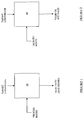
- an untrusted delegated path discovery/validation (UDPDV) server 30 receives, as input, information identifying one or more trust roots (certificates for trusted authorities) and an identifier corresponding to a target certificate (or perhaps some other information/data) that a user desires to validate.
- the UDPDV server 30 may be pre-configured with trust roots in addition to, or instead of, receiving trust roots as input.
- the UDPDV server 30 is useful in instances where a user wants to verify the status of a target certificate for which the user does not trust (know) the authority that issued the target certificate and/or for which the user does not posses reliable revocation information about the target certificate (and possibly the certificate of the authority that issued the target certificate).
- the UDPDV server 30 processes the inputs thereto to determine one or more trust paths between the target certificate and a trust root (either input or preconfigured into the UDPDV server 30, as described above). Note that, in many instances, it may also be useful to confirm that none of the certificates in a trust path have been revoked (indicating, for example, compromise of an authority's secret key). In such a case, it may be useful to have the UDPDV server 30 also provide proofs in the form of authenticated revocation information (e.g., CRL's or OCSP responses). Accordingly, in some embodiments, the UDPDV server 30 may also provide proofs for certificates in a trust path.
- authenticated revocation information e.g., CRL's or OCSP responses
- the UDPDV server 30 assembles the trust path information for the target certificate and, optionally, also assembles revocation information for path elements.
- the output of the UDPDV server 30 to the user may not be independently authenticated (e.g. signed). Instead, the UDPDV server 30 returns all of the individual elements of the trust path (and, optionally, proofs) to the user, who may then independently verify the correctness of the trust path and the validity of the elements (certificates) thereof. Operation of the UDPDV server 30 is described in more detail elsewhere herein.
- a trusted delegated path discovery/validation server 40 receives, as input, a user's trust roots and an identifier corresponding to a target certificate (or perhaps some other information/data) that a user desires to verify.
- the trusted delegated path discovery/validation server 40 may be pre-configured with trust roots in addition to, or instead of, receiving the trust roots as input.
- the trusted delegated path discovery/validation server 40 outputs a result indicating whether or not the target certificate (or other information/data) is valid.
- the server 40 performs its own cryptographic authentication of the information that is provided to the user.
- the server 40 may sign responses provided thereby, which would allow the server 40 to provide a small volume of data to the user (e.g. "Yes, you can trust certificate X").
- the user explicitly trust the integrity and correctness of the internal operations of the trusted delegated path discovery/validation server 40. If the server 40 is compromised, the server 40 could be improperly used to authenticate responses that validate any certificate, regardless of source or current status.
- the servers 30, 40 may be provided by computer workstations having processors and internal storage for storing executable code and data, one or more software modules provided in a general purpose computer, dedicated hardware, or any combination of hardware and software capable of providing the functionality described herein.
- the UDPDV server 30 may be provided by one or more lightweight servers that do not need to have authentication capabilities (e.g. private keys for digital signatures).
- the UDPDV server 30 may be periodically configured with lists of information of two types.
- the first type of list contains a set of certificates which may be used in path validation and, in an embodiment herein, represents all or nearly all certificates accessible (e.g., via a network) to the UDPDV server 30.
- the first type of list contains certificates only for authorities that issue certificates and revocation information and for authorities that vouch for those authorities, without necessarily contain all or even any end user certificates.
- the first type of lists may contain self-signed root certificates (trusted roots) which serve as trust anchors. The trusted roots may be signed by authorities trusted by the user(s) of the system.
- the first type of lists may also contain issuer (aka "certificate authority") certificates for authorities that issue certificates, authorities that issue revocation information, and/or authorities that vouch for other authorities.
- issuer aka "certificate authority”
- the first type of lists may also contain end user certificates while in another embodiment, the first type of lists does not contain end user certificates.
- the first type of lists of certificates may be used to provide path discovery services, as described herein.
- the second type of list provided in the UDPDV server 30 may include pre-generated certificate status proofs.
- Each proof may contain the status of one or more certificates (from the first list) for a fixed interval of time, and the proof may be securely authenticated, e.g. using a digital signature.
- the proofs may be used to provide path validation services, as described elsewhere herein.
- the proofs may be provided by any appropriate means, including CRL's, OCSP responses, VTokens, etc.
- the system described herein is designed to perform path discovery in logarithmic or constant time at the time of a discovery request by first pre-calculating trust paths between each trusted root certificate and all other reachable certificates for authorities that issue certificates and/or vouch for other authorities.
- the server may pre-compute an M by N matrix where M is the number of trusted roots and N is the total number of certificates.
- Each cell in the matrix e.g., at row r1 and column c1
- each cell (or each cell of an analogous table) may also contain appropriate proofs to provide validation.
- the UDPDV server 30 uses the pre-computed matrix to look up the trusted root(s) for the user and to look up the authority that issued the target certificate and, optionally, to an authority that issued revocation information for the target certificate (if different from the issuing authority) to find one or more valid paths therebetween. This may be performed in a constant time look-up since the paths have been pre-calculated and stored in the UDPDV server 30. Note that if there is more than one possible trust path or if there are constraints associated with a trust path (e.g. name or policy constraints) that limit in any way the usage of any of the certificates in the trust path, then the path policies need to be applied against any trust path(s) found. By pre-computing all possible paths, the UDPDV server 30 may offer path discovery for large communities with relatively high performance and scalability.
- constraints associated with a trust path e.g. name or policy constraints
- the UDPDV server 30 may also provide validation information (proofs) for elements (certificates) of a trust path.
- the UDPDV server 30 obtains the proofs (e.g. in the form of a CRL or OCSP response) in real time for each element (certificate) in a trust path which is then provided to the user.
- proofs e.g. in the form of a CRL or OCSP response
- the UDPDV server 30 may be able to quickly access all needed validation information that may be provided to relying parties without requiring any extra processing time to retrieve the certificate status information for validation at real time.
- the UDPDV server 30 may have instant local access to the status of every certificate in a trust path. For some embodiments, the UDPDV server 30 confirms the status of the trust path before returning the trust path for path delegation. The UDPDV server 30 may also optionally return the status proofs to the user to permit local complete validation of the trust path by the user.
- the individualized, pre-generated nature of the proofs may allow an efficient use of networking resources while avoiding any security risks that may be associated with trusted online servers.
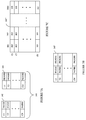
- a diagram 50 shows a first area 52 and a separate second area 54.
- the areas 52, 54 may be interconnected by any appropriate means (e.g., a network or direct connection) to enable an exchange of signals therebetween.
- the first area 52 includes a plurality of certificates 62-64.
- the second area 54 includes a plurality of different certificates 66-68.
- the first area 52 represents a locality that may be managed and accessed locally by a user therein.
- the second area 54 represents a separate locality that may be managed and accessed locally by a different user therein.
- a user in the area 52 may locally access any or all of the certificates 62-64.
- the certificate 62 is a self-certifying root certificate (trusted root) for an authority A1.
- the certificate 62 also certifies the certificate 63 for an authority A2 by, for example, having A1 sign the certificate 63.
- the certificate 63 certifies the certificate 64 for an authority A3. Note that, in this example, if a user trusts A1, then the user should also trust A2 (vouched for by A1) and should also trust A3 (vouched for by A2).
- the certificate 66 is a self-certifying root certificate (trusted root) for an authority A1'.
- the certificate 66 also certifies the certificate 67 for an authority A2' and the certificate 67 certifies the certificate 68 for an authority A3'.
- the certificate 62 is cross-certified with the certificate 66 so that each of the certificates 62, 66 certifies the other one of the certificates 62, 66.
- a user at the area 52 is presented with a target certificate signed by A3', the user may not be able to immediately verify that the target certificate is valid if the user at the area 52 only initially knows about (and trusts) A1, A2, and A3.
- the authority A2' vouches for the authority A3' and that the authority A1' vouches for the authority A2'.
- the authority A1 vouches for the authority A1'.
- the user may accept the target certificate signed by the authority A3' because of the trust path from the target certificate to the certificate 62 that has been signed by the trusted authority A1. Also, as discussed elsewhere herein, it is possible to provide validation information (proof of validity) for each of the certificates along the trust path as well as for any authority that issued revocation information (if different from the issuing authority) so that, in the example the user that receives the trust path may also receive up-to-date revocation information for the certificates 62, 66-68.
- a diagram 80 illustrates a user 82 receiving certificate information (including trust path information and possibly validation information) from one or more of a plurality of data storage devices 84-86 coupled to the user 82 by a network 88.
- the network 88 may be the Internet, although other suitable networks may be used, including networks that provide direct connections between the user and one or more of the data storage devices 84-86.
- the user 82 may locally store some certificate information.
- the user 82 may be presented with one or more certificates that the user desires to determine the validity thereof. In some cases, the user 82 may determine the validity of the certificates using local data.
- certificate information and requests therefor may be communicated between the user and the storage devices 84-86 over the network 88 in a straight-forward manner.
- any appropriate connectivity and information request/transmission techniques may be used to provided the functionality described herein.
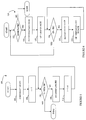
- a flow chart 100 illustrates initializing the UDPDV server 30 to contain all of the paths between the trusted roots (root certificates for trusted authorities) and one or more other certificates that issue certificates and/or vouch for other authorities.
- each of the trust paths may be pre-computed so that when a user presents a target certificate, the UDPDV server may consult a table, look up the authority that issued the target certificate (or look up the target certificate itself), and provided a pre-computed trust path from the target certificate to a trusted root certificate.
- the UDPDV server 30 may optionally provide, for the certificates in the trust path, proofs indicating that the certificates have not been revoked.
- Processing for the flow chart 100 begins at a first step 102 where a directed graph is constructed for all of the certificates for which information is to be stored.
- a directed graph is a mathematical construct that is well-known in the art. For an embodiment herein, all of the certificates in a system, including end user certificates, are used. For another embodiment, end user certificates are not included or, alternatively, only some end user certificates are included.
- the directed graph that is constructed represents a trust relationship between certificates where an edge (connecting line) of the graph indicates that a first authority (corresponding to a certificate connected at one end of the edge) has vouched for a second authority (corresponding to a certificate connected at the other end of the edge).
- step 104 an index variable, I, is set equal to one.
- the index variable, I is used to iterate through each of the trusted root certificates for the UDPDV server 30.
- the trusted root certificates are provided as an input to or are pre-configured in the UDPDV server 30.
- a test step 106 where it is determined if the index variable, I, is greater than the number of trusted root certificates. If so, then processing is complete. Otherwise, control transfers from the test step 106 to a step 108 to determine all of the paths from the trusted root certificate (corresponding to the index variable I) to all of the other certificates in the directed graph. The step 108 is discussed in more detail elsewhere herein. Following the step 108 is a step 112 wherein the index variable, I, is incremented. Following the step 112, control transfers back to the test step 106, discussed above.
- a flow chart 120 illustrates in more detail processing performed in connection with the step 108 of the flow chart 100 of Figure 5 .
- a depth-first acyclic search of the directed graph is performed to find all of the trust paths.
- an entry is made in a table indicating the trusted path from the certificate to the trusted root.
- Processing begins at a first step 122, where it is determined if there are more paths to be examined. Note that, in some instances, it may be possible to have a trusted root with no paths thereto. However, in most cases, it is expected that each of the trusted roots will have at least one path thereto. If it is determined at the test step 122 that there are no more paths to be examined (processed), then processing is complete. Otherwise, control transfers from the test step 122 to a step 124 wherein the next path is determined using the depth-first acyclic search of the directed graph. Following the step 124 is a step 126 where a certificate pointer, CP, is set to point to the end of the path being examined (processed).
- CP certificate pointer
- a test step 128 determines if CP points to the trusted root, thus indicating that the entire path has been traversed. If so, then control transfers from the test step 128 back to the step 122, discussed above, to begin the next iteration. Otherwise, control transfers from the test step 128 to a step 132 where the path from CP to the trusted root is recorded in the table (discussed elsewhere herein) that stores certificates and trusted paths thereto. In one embodiment, at a portion of the table indexed by the certificate pointed to by CP, the path from CP to the trusted root is recorded at the step 132. Following the step 132 is a step 134 where CP is set to point to the previous certificate in the path. Thus, CP initially points to the end of the path and then subsequently points to previous certificates in the path working backwards toward the trusted root. Following the step 134, control transfers back to the test step 128, discussed above.
- a table 140 includes a first portion 142 indexed by certificates in the system and having, as elements, trusted paths to each of the certificates.
- the table 140 may also include a second portion 144 that is also indexed by certificates in the system.
- the second portion has elements that describe proofs (e.g., OCSP responses, CRL's, etc.) indicating the revocation status for each of the corresponding certificates.
- the proofs provided in the second portion 144 correspond to the index certificate so that, for example, the table entry indexed by C2 corresponds to a proof for C2.
- the proofs provided in the second portion 144 correspond to all of the certificates in all of the paths for a particular entry in the first portion 142.
- the proofs provided in the second portion 144 in connection with certificate C2 correspond to all of the certificates in the trust paths provided in the entry for C2 in the first portion 142.
- the UDPDV server 30 provides pre-calculated trust paths, but not proofs.
- users may either forgo proofs altogether, obtain proofs in real time, or some combination thereof (i.e., obtain proofs for some certificates in the paths but not others).
- trust paths may be determined in real time and the pre-calculated proofs from the portion 144 may be provided by the UDPDV server 30.
- FIG. 7B another embodiment uses a single table 140' indexed according to certificates, where both the trust paths and the proofs are provided as elements of the table 140'.
- yet another embodiment illustrates another configuration for the table 140".
- the table 140" may be indexed according to a particular trusted root certificate TR1, TR2, ...TRN and other certificates C1, C2, ...CN.
- the elements at an entry of the table 140" contain trust paths and (optionally) proofs "P/P" so that, for example, an entry for trusted root TRx and certificate Cy contains one or more trust paths (if any exist) from Cy to TRx and, optionally, one or more proofs for just Cy (in one embodiment) or for all of the certificates in the trust path(s) (in another embodiment).
- a flow chart 150 illustrate steps for processing in connection with the UDPDV server 30 servicing a request from a user for a trust path and, optionally, proofs for certificates thereof.
- the UDPDV server 30 may be presented with a particular target certificate for which the UDPDV server 30 provides a trust path and optionally proofs indicating the status out each certificate in the trust path.
- the trust path is provided to a certificate for an authority that issued the target certificate and, optionally, to a certificate for an authority that issued revocation information for the target certificate (if different from the issuing authority).
- the UDPDV server 30 provides a trust path and optional revocation information for the target certificate itself.
- Processing begins at a first step 152 where it is determined if there are any trust paths available at all for the target certificate or the issuer thereof. If not, then control transfers from the step 152 to a step 154 where special processing is performed.
- the special processing performed at the step 154 may include posting an error message and/or indicating to a user in some other way that no trust path has been found for the target certificate. Following the step 154, processing is complete.
- the system may iterate through each of the trust paths (provided by the table 140, the table 140', or the table 140") to find an appropriate trust path between the target certificate (or issuer thereof) and one or more of the trusted root certificates.
- the next trust path chosen at the step 156 may be chosen using any of a number of possible criteria, such as shortest path, path containing particular certificates, etc.
- step 158 determines if there are constraints on the particular trust path (certificates of the trust path) chosen at the step 156. As discussed elsewhere herein, there may be one or more constraints that prevent use of a particular trust path such as, for example, one or more certificates not being acceptable for certain purposes. If it is determined at the test step 158 that there are constraints that make the trust path being examined unacceptable, then control transfers from the test step 158 back to the step 152, discussed above. Otherwise, control transfers from the test step 158 to a step 162 where it is determined if proofs for the certificates in the trust path have been requested. If not, then control transfers from the step 162 to a step 164 where the trust path between the target certificate (or issuer thereof) and the trusted root certificate is returned to the user. Following step 164, processing is complete.
- step 162 If it is determined at the test step 162 that proofs have been requested, then control transfers from the test step 162 to a step 166 where the proofs (from the table 140, the table 140', or the table 140") are obtained. In other embodiments, the proofs may be obtained in real time. Following the step 166 is a step 168 where the trust path and the proofs are returned. Following step 168, processing is complete.
- a user may desire to use the trusted distributed delegated path discovery and validation server 40 that returns a signed (or otherwise authenticated) message indicating whether or not a particular certificate is valid.
- the server 40 may sign a message indicating that a particular certificate is acceptable or not. The user may rely on the signed response from the server 40 without necessarily knowing or examining the path and/or the validation information first hand.
- a flow chart 180 illustrates steps performed by the server 40 in connection with constructing and returning a signed message indicating whether or not a particular target certificate is valid. Processing begins at a first step 182 where the trusted path and proofs are obtained in accordance with the description elsewhere herein. Following the step 182 is a test step 184 wherein the trust path and the proofs are examined to determine if the target certificate is valid. The determination at the step 184 may be made using the trust path and proofs obtained at the step 182. If it is determined at the test step 184 that the target certificate is valid, then control transfers from the test step 184 to a step 186 where a positive message, indicating that the target certificate is valid, is created. Otherwise, if it is determined at the test step 184 that the target certificate is not valid, then control transfers from the test step 184 to a step 188 where a negative message is created.
- step 192 where the message is digitally signed by the server 40.
- step 184 where the signed result is returned to the user.
- step 194 processing is complete.
- the system described herein may be implemented using any appropriate combination of hardware and/or software, including software provided in a storage medium (e.g., disk, tape, CD ROM, removable memory, etc.).
- the software may run on specialized hardware, on a general purpose computer, or an appropriate combination thereof.
Landscapes
- Engineering & Computer Science (AREA)
- Computer Security & Cryptography (AREA)
- Computer Networks & Wireless Communication (AREA)
- Signal Processing (AREA)
- Physics & Mathematics (AREA)
- Theoretical Computer Science (AREA)
- Databases & Information Systems (AREA)
- Mathematical Physics (AREA)
- Software Systems (AREA)
- General Engineering & Computer Science (AREA)
- General Physics & Mathematics (AREA)
- Data Mining & Analysis (AREA)
- Storage Device Security (AREA)
- Mobile Radio Communication Systems (AREA)
- Management, Administration, Business Operations System, And Electronic Commerce (AREA)
Applications Claiming Priority (2)
| Application Number | Priority Date | Filing Date | Title |
|---|---|---|---|
| US52339803P | 2003-11-19 | 2003-11-19 | |
| PCT/US2004/039126 WO2005052752A2 (en) | 2003-11-19 | 2004-11-19 | Distributed delegated path discovery and validation |
Publications (3)
| Publication Number | Publication Date |
|---|---|
| EP1692596A2 EP1692596A2 (en) | 2006-08-23 |
| EP1692596A4 EP1692596A4 (en) | 2013-10-16 |
| EP1692596B1 true EP1692596B1 (en) | 2016-03-09 |
Family
ID=34632777
Family Applications (1)
| Application Number | Title | Priority Date | Filing Date |
|---|---|---|---|
| EP04811786.5A Expired - Lifetime EP1692596B1 (en) | 2003-11-19 | 2004-11-19 | Distributed delegated path discovery and validation |
Country Status (9)
| Country | Link |
|---|---|
| US (1) | US8707030B2 (enExample) |
| EP (1) | EP1692596B1 (enExample) |
| JP (1) | JP2007511983A (enExample) |
| KR (1) | KR20060097131A (enExample) |
| CN (1) | CN101124765B (enExample) |
| AU (1) | AU2004294164B2 (enExample) |
| CA (1) | CA2544273C (enExample) |
| ES (1) | ES2572810T3 (enExample) |
| WO (1) | WO2005052752A2 (enExample) |
Families Citing this family (34)
| Publication number | Priority date | Publication date | Assignee | Title |
|---|---|---|---|---|
| US7600129B2 (en) | 1995-10-02 | 2009-10-06 | Corestreet, Ltd. | Controlling access using additional data |
| US7353396B2 (en) | 1995-10-02 | 2008-04-01 | Corestreet, Ltd. | Physical access control |
| US8732457B2 (en) * | 1995-10-02 | 2014-05-20 | Assa Abloy Ab | Scalable certificate validation and simplified PKI management |
| US8015597B2 (en) | 1995-10-02 | 2011-09-06 | Corestreet, Ltd. | Disseminating additional data used for controlling access |
| US7337315B2 (en) | 1995-10-02 | 2008-02-26 | Corestreet, Ltd. | Efficient certificate revocation |
| US6766450B2 (en) | 1995-10-24 | 2004-07-20 | Corestreet, Ltd. | Certificate revocation system |
| US7822989B2 (en) * | 1995-10-02 | 2010-10-26 | Corestreet, Ltd. | Controlling access to an area |
| US7716486B2 (en) | 1995-10-02 | 2010-05-11 | Corestreet, Ltd. | Controlling group access to doors |
| US8261319B2 (en) | 1995-10-24 | 2012-09-04 | Corestreet, Ltd. | Logging access attempts to an area |
| US7404080B2 (en) | 2001-04-16 | 2008-07-22 | Bjorn Markus Jakobsson | Methods and apparatus for efficient computation of one-way chains in cryptographic applications |
| EP1627488A4 (en) * | 2003-05-13 | 2008-06-04 | Corestreet Ltd | EFFICIENT AND SECURE DATA ACTUALITY SYSTEMS |
| WO2005001653A2 (en) * | 2003-06-24 | 2005-01-06 | Corestreet, Ltd. | Access control |
| US8707030B2 (en) | 2003-11-19 | 2014-04-22 | Corestreet, Ltd. | Distributed delegated path discovery and validation |
| US20050154878A1 (en) * | 2004-01-09 | 2005-07-14 | David Engberg | Signature-efficient real time credentials for OCSP and distributed OCSP |
| WO2005070116A2 (en) * | 2004-01-09 | 2005-08-04 | Corestreet, Ltd. | Communication-efficient real time credentials for ocsp and distributed ocsp |
| EP1757002A4 (en) * | 2004-04-30 | 2010-09-01 | Research In Motion Ltd | SYSTEM AND METHOD FOR HOLDING A CERTIFICATE REVOCATION LIST |
| US7205882B2 (en) * | 2004-11-10 | 2007-04-17 | Corestreet, Ltd. | Actuating a security system using a wireless device |
| GB0428596D0 (en) * | 2004-12-24 | 2005-08-10 | Qinetiq Ltd | Public key infrastructures |
| US8874477B2 (en) | 2005-10-04 | 2014-10-28 | Steven Mark Hoffberg | Multifactorial optimization system and method |
| IL174614A (en) * | 2006-03-29 | 2013-03-24 | Yaakov Levy | Method of enforcing use of certificate revocation lists |
| JP5130722B2 (ja) * | 2007-01-19 | 2013-01-30 | セイコーエプソン株式会社 | 認証装置及び方法 |
| US8321841B2 (en) * | 2008-01-08 | 2012-11-27 | International Business Machines Corporation | Validation framework for service oriented architecture (SOA) application adoption |
| JP5053179B2 (ja) * | 2008-05-30 | 2012-10-17 | 株式会社日立製作所 | 検証サーバ、プログラム及び検証方法 |
| US8595484B2 (en) * | 2008-07-29 | 2013-11-26 | Motorola Solutions, Inc. | Method and device for distributing public key infrastructure (PKI) certificate path data |
| US8130146B2 (en) * | 2008-07-29 | 2012-03-06 | Motorola Solutions, Inc. | Method for measuring the time of arrival of radio signals |
| US20100036981A1 (en) * | 2008-08-08 | 2010-02-11 | Raghavendra Ganesh | Finding Hot Call Paths |
| JP5452099B2 (ja) * | 2009-07-01 | 2014-03-26 | 株式会社日立製作所 | 証明書の有効性確認方法、証明書検証サーバ、プログラム及び記憶媒体 |
| CN102053999B (zh) * | 2009-10-28 | 2013-03-13 | 北京大学 | 一种基于进程的路径收集方法及系统 |
| US9647925B2 (en) | 2014-11-05 | 2017-05-09 | Huawei Technologies Co., Ltd. | System and method for data path validation and verification |
| US10708256B1 (en) * | 2015-10-13 | 2020-07-07 | Amazon Technologies, Inc. | Identification of trusted certificates |
| DE102016207294A1 (de) * | 2016-04-28 | 2017-11-02 | Siemens Aktiengesellschaft | Verfahren und Zertifikatspeicher zur Zertifikatsverwaltung |
| CN108596618B (zh) * | 2018-04-26 | 2022-03-04 | 众安信息技术服务有限公司 | 区块链系统的数据处理方法、装置和计算机可读存储介质 |
| EP3681102B1 (de) * | 2019-01-10 | 2022-03-16 | Siemens Aktiengesellschaft | Verfahren zur validierung eines digitalen nutzerzertifikats |
| US11038699B2 (en) * | 2019-08-29 | 2021-06-15 | Advanced New Technologies Co., Ltd. | Method and apparatus for performing multi-party secure computing based-on issuing certificate |
Family Cites Families (145)
| Publication number | Priority date | Publication date | Assignee | Title |
|---|---|---|---|---|
| US4200770A (en) | 1977-09-06 | 1980-04-29 | Stanford University | Cryptographic apparatus and method |
| US4218582A (en) | 1977-10-06 | 1980-08-19 | The Board Of Trustees Of The Leland Stanford Junior University | Public key cryptographic apparatus and method |
| US4309569A (en) | 1979-09-05 | 1982-01-05 | The Board Of Trustees Of The Leland Stanford Junior University | Method of providing digital signatures |
| US4326098A (en) | 1980-07-02 | 1982-04-20 | International Business Machines Corporation | High security system for electronic signature verification |
| US4926480A (en) | 1983-08-22 | 1990-05-15 | David Chaum | Card-computer moderated systems |
| FR2592510B1 (fr) | 1985-12-31 | 1988-02-12 | Bull Cp8 | Procede et appareil pour certifier des services obtenus a l'aide d'un support portatif tel qu'une carte a memoire |
| FR2596177B1 (fr) | 1986-03-19 | 1992-01-17 | Infoscript | Procede et dispositif de sauvegarde qualitative de donnees numerisees |
| US4943707A (en) | 1987-01-06 | 1990-07-24 | Visa International Service Association | Transaction approval system |
| US4881264A (en) | 1987-07-30 | 1989-11-14 | Merkle Ralph C | Digital signature system and method based on a conventional encryption function |
| US5005200A (en) | 1988-02-12 | 1991-04-02 | Fischer Addison M | Public key/signature cryptosystem with enhanced digital signature certification |
| US5214702A (en) | 1988-02-12 | 1993-05-25 | Fischer Addison M | Public key/signature cryptosystem with enhanced digital signature certification |
| US4944009A (en) | 1988-02-25 | 1990-07-24 | Massachusetts Institute Of Technology | Pseudo-random sequence generator |
| US4879747A (en) | 1988-03-21 | 1989-11-07 | Leighton Frank T | Method and system for personal identification |
| US4995081A (en) | 1988-03-21 | 1991-02-19 | Leighton Frank T | Method and system for personal identification using proofs of legitimacy |
| US4888801A (en) | 1988-05-02 | 1989-12-19 | Motorola, Inc. | Hierarchical key management system |
| US5016274A (en) | 1988-11-08 | 1991-05-14 | Silvio Micali | On-line/off-line digital signing |
| US5003597A (en) | 1989-12-21 | 1991-03-26 | Xerox Corporation | Method and apparatus for data encryption |
| US5136647A (en) | 1990-08-02 | 1992-08-04 | Bell Communications Research, Inc. | Method for secure time-stamping of digital documents |
| US5136646A (en) | 1991-03-08 | 1992-08-04 | Bell Communications Research, Inc. | Digital document time-stamping with catenate certificate |
| US5315657A (en) | 1990-09-28 | 1994-05-24 | Digital Equipment Corporation | Compound principals in access control lists |
| US5396624A (en) | 1990-12-20 | 1995-03-07 | Visa International Service Association | Account file for off-line transaction authorization |
| SE470001B (sv) | 1991-09-12 | 1993-10-18 | Televerket | Förfarande för identifiering och kryptonyckelutbyte mellan två kommunicerande apparater för krypterad trafik |
| US5340969A (en) | 1991-10-01 | 1994-08-23 | Dresser Industries, Inc. | Method and apparatus for approving transaction card based transactions |
| US5157726A (en) | 1991-12-19 | 1992-10-20 | Xerox Corporation | Document copy authentication |
| US5261002A (en) | 1992-03-13 | 1993-11-09 | Digital Equipment Corporation | Method of issuance and revocation of certificates of authenticity used in public key networks and other systems |
| US5276737B1 (en) | 1992-04-20 | 1995-09-12 | Silvio Micali | Fair cryptosystems and methods of use |
| US5315658B1 (en) | 1992-04-20 | 1995-09-12 | Silvio Micali | Fair cryptosystems and methods of use |
| USRE36918E (en) | 1992-04-20 | 2000-10-17 | Certco Llc | Fair cryptosystems and methods of use |
| US5231666A (en) | 1992-04-20 | 1993-07-27 | International Business Machines Corporation | Cryptographic method for updating financial records |
| JP2583010B2 (ja) | 1993-01-07 | 1997-02-19 | インターナショナル・ビジネス・マシーンズ・コーポレイション | 多層インデックス構造におけるローカルインデックステーブル及び大域インデックステーブルの間の一貫性を維持する方法 |
| US5299263A (en) | 1993-03-04 | 1994-03-29 | Bell Communications Research, Inc. | Two-way public key authentication and key agreement for low-cost terminals |
| NL9300566A (nl) | 1993-03-31 | 1994-10-17 | Nedap Nv | Toegangsverleningssysteem met decentrale autorisaties. |
| US5351302A (en) | 1993-05-26 | 1994-09-27 | Leighton Frank T | Method for authenticating objects identified by images or other identifying information |
| WO1995005712A2 (en) | 1993-08-13 | 1995-02-23 | Frank Thomson Leighton | Secret key exchange |
| US5432852A (en) | 1993-09-29 | 1995-07-11 | Leighton; Frank T. | Large provably fast and secure digital signature schemes based on secure hash functions |
| US5497422A (en) | 1993-09-30 | 1996-03-05 | Apple Computer, Inc. | Message protection mechanism and graphical user interface therefor |
| US5371794A (en) | 1993-11-02 | 1994-12-06 | Sun Microsystems, Inc. | Method and apparatus for privacy and authentication in wireless networks |
| US5450493A (en) | 1993-12-29 | 1995-09-12 | At&T Corp. | Secure communication method and apparatus |
| US5434919A (en) | 1994-01-11 | 1995-07-18 | Chaum; David | Compact endorsement signature systems |
| PL176458B1 (pl) | 1994-01-13 | 1999-05-31 | Certc0 Llc | Sposób szyfrowania systemu komunikacyjnego |
| US20020013898A1 (en) | 1997-06-04 | 2002-01-31 | Sudia Frank W. | Method and apparatus for roaming use of cryptographic values |
| US5825880A (en) | 1994-01-13 | 1998-10-20 | Sudia; Frank W. | Multi-step digital signature method and system |
| US5420927B1 (en) | 1994-02-01 | 1997-02-04 | Silvio Micali | Method for certifying public keys in a digital signature scheme |
| US5537475A (en) | 1994-02-01 | 1996-07-16 | Micali; Silvio | Efficient digital signature algorithm and use thereof technical field |
| US5544322A (en) | 1994-05-09 | 1996-08-06 | International Business Machines Corporation | System and method for policy-based inter-realm authentication within a distributed processing system |
| FR2722596A1 (fr) | 1994-07-13 | 1996-01-19 | France Telecom | Systeme de controle d'acces limites a des places horaires autorisees et renouvables au moyen d'un support de memorisation portable |
| WO1996002993A2 (en) | 1994-07-19 | 1996-02-01 | Bankers Trust Company | Method for securely using digital signatures in a commercial cryptographic system |
| US7904722B2 (en) | 1994-07-19 | 2011-03-08 | Certco, Llc | Method for securely using digital signatures in a commercial cryptographic system |
| US5499296A (en) | 1994-08-22 | 1996-03-12 | Micali; Silvio | Natural input encryption and method of use |
| US5659617A (en) | 1994-09-22 | 1997-08-19 | Fischer; Addison M. | Method for providing location certificates |
| US5606617A (en) | 1994-10-14 | 1997-02-25 | Brands; Stefanus A. | Secret-key certificates |
| US5748738A (en) | 1995-01-17 | 1998-05-05 | Document Authentication Systems, Inc. | System and method for electronic transmission, storage and retrieval of authenticated documents |
| US5615268A (en) | 1995-01-17 | 1997-03-25 | Document Authentication Systems, Inc. | System and method for electronic transmission storage and retrieval of authenticated documents |
| CA2167631A1 (en) | 1995-01-20 | 1996-07-21 | W. Dale Hopkins | Method and apparatus for user and security device authentication |
| US6658568B1 (en) | 1995-02-13 | 2003-12-02 | Intertrust Technologies Corporation | Trusted infrastructure support system, methods and techniques for secure electronic commerce transaction and rights management |
| US6141750A (en) | 1995-03-21 | 2000-10-31 | Micali; Silvio | Simultaneous electronic transactions with subscriber verification |
| US6134326A (en) | 1996-11-18 | 2000-10-17 | Bankers Trust Corporation | Simultaneous electronic transactions |
| US5553145A (en) | 1995-03-21 | 1996-09-03 | Micali; Silvia | Simultaneous electronic transactions with visible trusted parties |
| US6137884A (en) | 1995-03-21 | 2000-10-24 | Bankers Trust Corporation | Simultaneous electronic transactions with visible trusted parties |
| US5677955A (en) | 1995-04-07 | 1997-10-14 | Financial Services Technology Consortium | Electronic funds transfer instruments |
| US20030014629A1 (en) * | 2001-07-16 | 2003-01-16 | Zuccherato Robert J. | Root certificate management system and method |
| NZ306846A (en) | 1995-06-05 | 2000-01-28 | Certco Llc | Digital signing method using partial signatures |
| US5666415A (en) | 1995-07-28 | 1997-09-09 | Digital Equipment Corporation | Method and apparatus for cryptographic authentication |
| US7353396B2 (en) | 1995-10-02 | 2008-04-01 | Corestreet, Ltd. | Physical access control |
| US7822989B2 (en) | 1995-10-02 | 2010-10-26 | Corestreet, Ltd. | Controlling access to an area |
| US5717757A (en) | 1996-08-29 | 1998-02-10 | Micali; Silvio | Certificate issue lists |
| US6292893B1 (en) | 1995-10-24 | 2001-09-18 | Silvio Micali | Certificate revocation system |
| US7716486B2 (en) | 1995-10-02 | 2010-05-11 | Corestreet, Ltd. | Controlling group access to doors |
| US7600129B2 (en) | 1995-10-02 | 2009-10-06 | Corestreet, Ltd. | Controlling access using additional data |
| US5793868A (en) | 1996-08-29 | 1998-08-11 | Micali; Silvio | Certificate revocation system |
| US5717758A (en) | 1995-11-02 | 1998-02-10 | Micall; Silvio | Witness-based certificate revocation system |
| US6487658B1 (en) | 1995-10-02 | 2002-11-26 | Corestreet Security, Ltd. | Efficient certificate revocation |
| US7337315B2 (en) | 1995-10-02 | 2008-02-26 | Corestreet, Ltd. | Efficient certificate revocation |
| US5666416A (en) | 1995-10-24 | 1997-09-09 | Micali; Silvio | Certificate revocation system |
| US5604804A (en) | 1996-04-23 | 1997-02-18 | Micali; Silvio | Method for certifying public keys in a digital signature scheme |
| US6097811A (en) | 1995-11-02 | 2000-08-01 | Micali; Silvio | Tree-based certificate revocation system |
| US8015597B2 (en) | 1995-10-02 | 2011-09-06 | Corestreet, Ltd. | Disseminating additional data used for controlling access |
| US6766450B2 (en) | 1995-10-24 | 2004-07-20 | Corestreet, Ltd. | Certificate revocation system |
| US8732457B2 (en) | 1995-10-02 | 2014-05-20 | Assa Abloy Ab | Scalable certificate validation and simplified PKI management |
| US8261319B2 (en) | 1995-10-24 | 2012-09-04 | Corestreet, Ltd. | Logging access attempts to an area |
| US5687235A (en) | 1995-10-26 | 1997-11-11 | Novell, Inc. | Certificate revocation performance optimization |
| US6301659B1 (en) | 1995-11-02 | 2001-10-09 | Silvio Micali | Tree-based certificate revocation system |
| US5699431A (en) | 1995-11-13 | 1997-12-16 | Northern Telecom Limited | Method for efficient management of certificate revocation lists and update information |
| US6026163A (en) | 1995-12-13 | 2000-02-15 | Micali; Silvio | Distributed split-key cryptosystem and applications |
| US5774552A (en) | 1995-12-13 | 1998-06-30 | Ncr Corporation | Method and apparatus for retrieving X.509 certificates from an X.500 directory |
| US5812670A (en) | 1995-12-28 | 1998-09-22 | Micali; Silvio | Traceable anonymous transactions |
| US5615269A (en) | 1996-02-22 | 1997-03-25 | Micali; Silvio | Ideal electronic negotiations |
| US5790665A (en) | 1996-01-17 | 1998-08-04 | Micali; Silvio | Anonymous information retrieval system (ARS) |
| US5666414A (en) | 1996-03-21 | 1997-09-09 | Micali; Silvio | Guaranteed partial key-escrow |
| US5826262A (en) | 1996-03-22 | 1998-10-20 | International Business Machines Corporation | Parallel bottom-up construction of radix trees |
| DE19611632A1 (de) | 1996-03-25 | 1997-10-02 | Deutsche Telekom Ag | Off-Line-Datenstationen mit virtueller On-Line-Fähigkeit |
| US5742035A (en) | 1996-04-19 | 1998-04-21 | Kohut; Michael L. | Memory aiding device for credit card pin numbers |
| US6216231B1 (en) | 1996-04-30 | 2001-04-10 | At & T Corp. | Specifying security protocols and policy constraints in distributed systems |
| US5903651A (en) * | 1996-05-14 | 1999-05-11 | Valicert, Inc. | Apparatus and method for demonstrating and confirming the status of a digital certificates and other data |
| US5638447A (en) | 1996-05-15 | 1997-06-10 | Micali; Silvio | Compact digital signatures |
| US5610982A (en) | 1996-05-15 | 1997-03-11 | Micali; Silvio | Compact certification with threshold signatures |
| CA2261947C (en) | 1996-08-07 | 2008-11-18 | Silvio Micali | Simultaneous electronic transactions with visible trusted parties |
| US6192407B1 (en) | 1996-10-24 | 2001-02-20 | Tumbleweed Communications Corp. | Private, trackable URLs for directed document delivery |
| US6119137A (en) | 1997-01-30 | 2000-09-12 | Tumbleweed Communications Corp. | Distributed dynamic document conversion server |
| US6385655B1 (en) | 1996-10-24 | 2002-05-07 | Tumbleweed Communications Corp. | Method and apparatus for delivering documents over an electronic network |
| US6502191B1 (en) | 1997-02-14 | 2002-12-31 | Tumbleweed Communications Corp. | Method and system for binary data firewall delivery |
| US5790790A (en) | 1996-10-24 | 1998-08-04 | Tumbleweed Software Corporation | Electronic document delivery system in which notification of said electronic document is sent to a recipient thereof |
| US5903882A (en) | 1996-12-13 | 1999-05-11 | Certco, Llc | Reliance server for electronic transaction system |
| US20010050990A1 (en) | 1997-02-19 | 2001-12-13 | Frank Wells Sudia | Method for initiating a stream-oriented encrypted communication |
| US5982898A (en) | 1997-03-07 | 1999-11-09 | At&T Corp. | Certification process |
| US5995625A (en) | 1997-03-24 | 1999-11-30 | Certco, Llc | Electronic cryptographic packing |
| US6061448A (en) | 1997-04-01 | 2000-05-09 | Tumbleweed Communications Corp. | Method and system for dynamic server document encryption |
| US6044462A (en) | 1997-04-02 | 2000-03-28 | Arcanvs | Method and apparatus for managing key revocation |
| JP3932319B2 (ja) | 1997-07-24 | 2007-06-20 | タンブルウィード コミュニケーションズ コーポレイション | 格納された鍵による暗号化/暗号解読を用いた電子メール用ファイアウォール |
| US5875894A (en) | 1997-09-18 | 1999-03-02 | Stromme; Bonnie S. | Combined sandwich holder and place mat |
| US6651166B1 (en) | 1998-04-09 | 2003-11-18 | Tumbleweed Software Corp. | Sender driven certification enrollment system |
| US6397329B1 (en) | 1997-11-21 | 2002-05-28 | Telcordia Technologies, Inc. | Method for efficiently revoking digital identities |
| FR2774833B1 (fr) | 1998-02-09 | 2003-02-21 | France Telecom | Protocole de controle d'acces entre une cle et une serrure electroniques |
| US6134550A (en) | 1998-03-18 | 2000-10-17 | Entrust Technologies Limited | Method and apparatus for use in determining validity of a certificate in a communication system employing trusted paths |
| JP3801782B2 (ja) * | 1998-06-22 | 2006-07-26 | 三菱電機株式会社 | 証明証収集情報生成装置、証明証検証装置および公開鍵暗号運用システム |
| US6189103B1 (en) | 1998-07-21 | 2001-02-13 | Novell, Inc. | Authority delegation with secure operating system queues |
| US6151675A (en) | 1998-07-23 | 2000-11-21 | Tumbleweed Software Corporation | Method and apparatus for effecting secure document format conversion |
| US6397197B1 (en) | 1998-08-26 | 2002-05-28 | E-Lynxx Corporation | Apparatus and method for obtaining lowest bid from information product vendors |
| DE69924349T2 (de) | 1999-01-28 | 2006-02-09 | International Business Machines Corp. | Elektronisches Zugangskontrollsystem und Verfahren |
| US6671805B1 (en) | 1999-06-17 | 2003-12-30 | Ilumin Corporation | System and method for document-driven processing of digitally-signed electronic documents |
| JP2001005793A (ja) * | 1999-06-24 | 2001-01-12 | Mitsubishi Electric Corp | 事象管理システム |
| WO2001006701A1 (en) | 1999-07-15 | 2001-01-25 | Sudia Frank W | Certificate revocation notification systems |
| AU6620000A (en) | 1999-08-06 | 2001-03-05 | Frank W Sudia | Blocked tree authorization and status systems |
| AU6760900A (en) | 1999-08-09 | 2001-03-05 | Frank W Sudia | Distributed rule enforcement systems |
| US6725381B1 (en) | 1999-08-31 | 2004-04-20 | Tumbleweed Communications Corp. | Solicited authentication of a specific user |
| US20020029200A1 (en) | 1999-09-10 | 2002-03-07 | Charles Dulin | System and method for providing certificate validation and other services |
| AU7991800A (en) | 1999-10-04 | 2001-05-10 | Os Crypto, Inc. | System and methods for providing verified network sessions with visual confirmation |
| US6404337B1 (en) | 1999-10-28 | 2002-06-11 | Brivo Systems, Inc. | System and method for providing access to an unattended storage |
| US6826609B1 (en) | 2000-03-31 | 2004-11-30 | Tumbleweed Communications Corp. | Policy enforcement in a secure data file delivery system |
| JP3588042B2 (ja) * | 2000-08-30 | 2004-11-10 | 株式会社日立製作所 | 証明書の有効性確認方法および装置 |
| JP3971890B2 (ja) | 2000-11-01 | 2007-09-05 | 日本電信電話株式会社 | 署名検証支援装置、署名検証支援方法、及び電子署名検証方法 |
| JP3901463B2 (ja) * | 2001-02-21 | 2007-04-04 | 日本電信電話株式会社 | 認証システムアクセス装置及び公開鍵証明証取得方法及び公開鍵証明証無効化確認方法及び、認証システムアクセスプログラム及び公開鍵証明証取得プログラム及び公開鍵証明証無効化確認プログラム及び認証システムアクセスプログラムを格納した記憶媒体及び公開鍵証明証取得プログラムを格納した記憶媒体及び公開鍵証明証無効化確認プログラムを格納した記憶媒体 |
| US6970862B2 (en) | 2001-05-31 | 2005-11-29 | Sun Microsystems, Inc. | Method and system for answering online certificate status protocol (OCSP) requests without certificate revocation lists (CRL) |
| JP2003030145A (ja) | 2001-07-16 | 2003-01-31 | Fujitsu Ltd | 情報処理方法およびプログラム |
| US7328344B2 (en) | 2001-09-28 | 2008-02-05 | Imagitas, Inc. | Authority-neutral certification for multiple-authority PKI environments |
| NL1019722C2 (nl) * | 2002-01-09 | 2003-07-11 | Fountain Tech Bv | Inrichting en werkwijze voor het verpakken van plaatvormige informatiedragers. |
| US8195933B2 (en) * | 2002-01-10 | 2012-06-05 | International Business Machines Corporation | Method and system for computing digital certificate trust paths using transitive closures |
| CA2479869C (en) * | 2002-04-08 | 2013-07-09 | Corestreet, Ltd. | Physical access control |
| US7318155B2 (en) | 2002-12-06 | 2008-01-08 | International Business Machines Corporation | Method and system for configuring highly available online certificate status protocol responders |
| EP1627488A4 (en) | 2003-05-13 | 2008-06-04 | Corestreet Ltd | EFFICIENT AND SECURE DATA ACTUALITY SYSTEMS |
| WO2005001653A2 (en) | 2003-06-24 | 2005-01-06 | Corestreet, Ltd. | Access control |
| JP3894181B2 (ja) | 2003-10-10 | 2007-03-14 | 株式会社日立製作所 | 公開鍵証明書検証の高速化方法、および装置 |
| US8707030B2 (en) | 2003-11-19 | 2014-04-22 | Corestreet, Ltd. | Distributed delegated path discovery and validation |
| WO2005070116A2 (en) | 2004-01-09 | 2005-08-04 | Corestreet, Ltd. | Communication-efficient real time credentials for ocsp and distributed ocsp |
| US20050154878A1 (en) | 2004-01-09 | 2005-07-14 | David Engberg | Signature-efficient real time credentials for OCSP and distributed OCSP |
-
2004
- 2004-11-19 US US10/993,131 patent/US8707030B2/en active Active
- 2004-11-19 ES ES04811786.5T patent/ES2572810T3/es not_active Expired - Lifetime
- 2004-11-19 CA CA2544273A patent/CA2544273C/en not_active Expired - Fee Related
- 2004-11-19 JP JP2006541603A patent/JP2007511983A/ja active Pending
- 2004-11-19 WO PCT/US2004/039126 patent/WO2005052752A2/en not_active Ceased
- 2004-11-19 KR KR1020067009749A patent/KR20060097131A/ko not_active Withdrawn
- 2004-11-19 EP EP04811786.5A patent/EP1692596B1/en not_active Expired - Lifetime
- 2004-11-19 CN CN2004800342963A patent/CN101124765B/zh not_active Expired - Fee Related
- 2004-11-19 AU AU2004294164A patent/AU2004294164B2/en not_active Ceased
Also Published As
| Publication number | Publication date |
|---|---|
| CN101124765B (zh) | 2013-08-07 |
| US8707030B2 (en) | 2014-04-22 |
| AU2004294164B2 (en) | 2010-06-10 |
| EP1692596A2 (en) | 2006-08-23 |
| WO2005052752A2 (en) | 2005-06-09 |
| CA2544273A1 (en) | 2005-06-09 |
| US20050154918A1 (en) | 2005-07-14 |
| CN101124765A (zh) | 2008-02-13 |
| JP2007511983A (ja) | 2007-05-10 |
| CA2544273C (en) | 2015-01-13 |
| WO2005052752A3 (en) | 2006-12-28 |
| EP1692596A4 (en) | 2013-10-16 |
| AU2004294164A1 (en) | 2005-06-09 |
| ES2572810T3 (es) | 2016-06-02 |
| KR20060097131A (ko) | 2006-09-13 |
Similar Documents
| Publication | Publication Date | Title |
|---|---|---|
| CA2544273C (en) | Distributed delegated path discovery and validation | |
| US6134550A (en) | Method and apparatus for use in determining validity of a certificate in a communication system employing trusted paths | |
| US12418396B2 (en) | Hash-based digital signatures for hierarchical internet public key infrastructure | |
| Luecking et al. | Decentralized identity and trust management framework for Internet of Things | |
| US9654298B2 (en) | Signature # efficient real time credentials for OCSP and distributed OCSP | |
| US7966487B2 (en) | Communication-efficient real time credentials for OCSP and distributed OCSP | |
| US7600123B2 (en) | Certificate registration after issuance for secure communication | |
| US7073056B2 (en) | Apparatus and method for demonstrating and confirming the status of digital certificates and other data | |
| US20030130947A1 (en) | Method and system for computing digital certificate trust paths using transitive closures | |
| US20090055916A1 (en) | Secure delegation using public key authentication | |
| US20080010448A1 (en) | Delegated Certificate Authority | |
| US20250392439A1 (en) | Hash-based digital signatures for hierarchical internet public key infrastructure | |
| Berbecaru et al. | On the complexity of public-key certificate validation | |
| US20020152383A1 (en) | Method for measuring the latency of certificate providing computer systems | |
| AU2006202855B2 (en) | Signature-efficient real time credentials for OCSP and distributed OCSP | |
| Zidaric-Sudovacki | Secure WWW Server for Lotus Notes |
Legal Events
| Date | Code | Title | Description |
|---|---|---|---|
| PUAI | Public reference made under article 153(3) epc to a published international application that has entered the european phase |
Free format text: ORIGINAL CODE: 0009012 |
|
| AK | Designated contracting states |
Kind code of ref document: A2 Designated state(s): AT BE BG CH CY CZ DE DK EE ES FI FR GB GR HU IE IS IT LI LU MC NL PL PT RO SE SI SK TR |
|
| AX | Request for extension of the european patent |
Extension state: AL HR LT LV MK YU |
|
| PUAK | Availability of information related to the publication of the international search report |
Free format text: ORIGINAL CODE: 0009015 |
|
| RIC1 | Information provided on ipc code assigned before grant |
Ipc: H04L 9/00 20060101AFI20070118BHEP |
|
| DAX | Request for extension of the european patent (deleted) | ||
| 17P | Request for examination filed |
Effective date: 20070510 |
|
| RBV | Designated contracting states (corrected) |
Designated state(s): AT BE BG CH CY CZ DE DK EE ES FI FR GB GR HU IE IS IT LI LU MC NL PL PT RO SE SI SK TR |
|
| REG | Reference to a national code |
Ref country code: DE Ref legal event code: R079 Ref document number: 602004048792 Country of ref document: DE Free format text: PREVIOUS MAIN CLASS: G06F0001000000 Ipc: H04L0009000000 |
|
| A4 | Supplementary search report drawn up and despatched |
Effective date: 20130913 |
|
| RIC1 | Information provided on ipc code assigned before grant |
Ipc: H04L 9/32 20060101ALI20130909BHEP Ipc: H04L 9/00 20060101AFI20130909BHEP |
|
| 17Q | First examination report despatched |
Effective date: 20140113 |
|
| RAP1 | Party data changed (applicant data changed or rights of an application transferred) |
Owner name: ASSA ABLOY AB |
|
| GRAP | Despatch of communication of intention to grant a patent |
Free format text: ORIGINAL CODE: EPIDOSNIGR1 |
|
| INTG | Intention to grant announced |
Effective date: 20150825 |
|
| GRAS | Grant fee paid |
Free format text: ORIGINAL CODE: EPIDOSNIGR3 |
|
| GRAA | (expected) grant |
Free format text: ORIGINAL CODE: 0009210 |
|
| AK | Designated contracting states |
Kind code of ref document: B1 Designated state(s): AT BE BG CH CY CZ DE DK EE ES FI FR GB GR HU IE IS IT LI LU MC NL PL PT RO SE SI SK TR |
|
| REG | Reference to a national code |
Ref country code: GB Ref legal event code: FG4D |
|
| REG | Reference to a national code |
Ref country code: AT Ref legal event code: REF Ref document number: 780177 Country of ref document: AT Kind code of ref document: T Effective date: 20160315 Ref country code: CH Ref legal event code: EP |
|
| REG | Reference to a national code |
Ref country code: IE Ref legal event code: FG4D |
|
| REG | Reference to a national code |
Ref country code: DE Ref legal event code: R096 Ref document number: 602004048792 Country of ref document: DE |
|
| REG | Reference to a national code |
Ref country code: ES Ref legal event code: FG2A Ref document number: 2572810 Country of ref document: ES Kind code of ref document: T3 Effective date: 20160602 |
|
| REG | Reference to a national code |
Ref country code: NL Ref legal event code: MP Effective date: 20160309 |
|
| PG25 | Lapsed in a contracting state [announced via postgrant information from national office to epo] |
Ref country code: FI Free format text: LAPSE BECAUSE OF FAILURE TO SUBMIT A TRANSLATION OF THE DESCRIPTION OR TO PAY THE FEE WITHIN THE PRESCRIBED TIME-LIMIT Effective date: 20160309 Ref country code: GR Free format text: LAPSE BECAUSE OF FAILURE TO SUBMIT A TRANSLATION OF THE DESCRIPTION OR TO PAY THE FEE WITHIN THE PRESCRIBED TIME-LIMIT Effective date: 20160610 |
|
| REG | Reference to a national code |
Ref country code: AT Ref legal event code: MK05 Ref document number: 780177 Country of ref document: AT Kind code of ref document: T Effective date: 20160309 |
|
| PG25 | Lapsed in a contracting state [announced via postgrant information from national office to epo] |
Ref country code: SE Free format text: LAPSE BECAUSE OF FAILURE TO SUBMIT A TRANSLATION OF THE DESCRIPTION OR TO PAY THE FEE WITHIN THE PRESCRIBED TIME-LIMIT Effective date: 20160309 Ref country code: NL Free format text: LAPSE BECAUSE OF FAILURE TO SUBMIT A TRANSLATION OF THE DESCRIPTION OR TO PAY THE FEE WITHIN THE PRESCRIBED TIME-LIMIT Effective date: 20160309 Ref country code: PL Free format text: LAPSE BECAUSE OF FAILURE TO SUBMIT A TRANSLATION OF THE DESCRIPTION OR TO PAY THE FEE WITHIN THE PRESCRIBED TIME-LIMIT Effective date: 20160309 |
|
| REG | Reference to a national code |
Ref country code: FR Ref legal event code: PLFP Year of fee payment: 13 |
|
| PG25 | Lapsed in a contracting state [announced via postgrant information from national office to epo] |
Ref country code: IS Free format text: LAPSE BECAUSE OF FAILURE TO SUBMIT A TRANSLATION OF THE DESCRIPTION OR TO PAY THE FEE WITHIN THE PRESCRIBED TIME-LIMIT Effective date: 20160709 Ref country code: EE Free format text: LAPSE BECAUSE OF FAILURE TO SUBMIT A TRANSLATION OF THE DESCRIPTION OR TO PAY THE FEE WITHIN THE PRESCRIBED TIME-LIMIT Effective date: 20160309 |
|
| PG25 | Lapsed in a contracting state [announced via postgrant information from national office to epo] |
Ref country code: AT Free format text: LAPSE BECAUSE OF FAILURE TO SUBMIT A TRANSLATION OF THE DESCRIPTION OR TO PAY THE FEE WITHIN THE PRESCRIBED TIME-LIMIT Effective date: 20160309 Ref country code: SK Free format text: LAPSE BECAUSE OF FAILURE TO SUBMIT A TRANSLATION OF THE DESCRIPTION OR TO PAY THE FEE WITHIN THE PRESCRIBED TIME-LIMIT Effective date: 20160309 Ref country code: RO Free format text: LAPSE BECAUSE OF FAILURE TO SUBMIT A TRANSLATION OF THE DESCRIPTION OR TO PAY THE FEE WITHIN THE PRESCRIBED TIME-LIMIT Effective date: 20160309 Ref country code: PT Free format text: LAPSE BECAUSE OF FAILURE TO SUBMIT A TRANSLATION OF THE DESCRIPTION OR TO PAY THE FEE WITHIN THE PRESCRIBED TIME-LIMIT Effective date: 20160711 Ref country code: CZ Free format text: LAPSE BECAUSE OF FAILURE TO SUBMIT A TRANSLATION OF THE DESCRIPTION OR TO PAY THE FEE WITHIN THE PRESCRIBED TIME-LIMIT Effective date: 20160309 |
|
| REG | Reference to a national code |
Ref country code: DE Ref legal event code: R097 Ref document number: 602004048792 Country of ref document: DE |
|
| PG25 | Lapsed in a contracting state [announced via postgrant information from national office to epo] |
Ref country code: BE Free format text: LAPSE BECAUSE OF FAILURE TO SUBMIT A TRANSLATION OF THE DESCRIPTION OR TO PAY THE FEE WITHIN THE PRESCRIBED TIME-LIMIT Effective date: 20160309 Ref country code: IT Free format text: LAPSE BECAUSE OF FAILURE TO SUBMIT A TRANSLATION OF THE DESCRIPTION OR TO PAY THE FEE WITHIN THE PRESCRIBED TIME-LIMIT Effective date: 20160309 |
|
| PLBE | No opposition filed within time limit |
Free format text: ORIGINAL CODE: 0009261 |
|
| STAA | Information on the status of an ep patent application or granted ep patent |
Free format text: STATUS: NO OPPOSITION FILED WITHIN TIME LIMIT |
|
| PG25 | Lapsed in a contracting state [announced via postgrant information from national office to epo] |
Ref country code: DK Free format text: LAPSE BECAUSE OF FAILURE TO SUBMIT A TRANSLATION OF THE DESCRIPTION OR TO PAY THE FEE WITHIN THE PRESCRIBED TIME-LIMIT Effective date: 20160309 |
|
| 26N | No opposition filed |
Effective date: 20161212 |
|
| PG25 | Lapsed in a contracting state [announced via postgrant information from national office to epo] |
Ref country code: BG Free format text: LAPSE BECAUSE OF FAILURE TO SUBMIT A TRANSLATION OF THE DESCRIPTION OR TO PAY THE FEE WITHIN THE PRESCRIBED TIME-LIMIT Effective date: 20160609 |
|
| PGFP | Annual fee paid to national office [announced via postgrant information from national office to epo] |
Ref country code: ES Payment date: 20161011 Year of fee payment: 13 |
|
| PG25 | Lapsed in a contracting state [announced via postgrant information from national office to epo] |
Ref country code: SI Free format text: LAPSE BECAUSE OF FAILURE TO SUBMIT A TRANSLATION OF THE DESCRIPTION OR TO PAY THE FEE WITHIN THE PRESCRIBED TIME-LIMIT Effective date: 20160309 |
|
| REG | Reference to a national code |
Ref country code: CH Ref legal event code: PL |
|
| PG25 | Lapsed in a contracting state [announced via postgrant information from national office to epo] |
Ref country code: LI Free format text: LAPSE BECAUSE OF NON-PAYMENT OF DUE FEES Effective date: 20161130 Ref country code: CH Free format text: LAPSE BECAUSE OF NON-PAYMENT OF DUE FEES Effective date: 20161130 |
|
| REG | Reference to a national code |
Ref country code: IE Ref legal event code: MM4A |
|
| PG25 | Lapsed in a contracting state [announced via postgrant information from national office to epo] |
Ref country code: LU Free format text: LAPSE BECAUSE OF NON-PAYMENT OF DUE FEES Effective date: 20161130 |
|
| REG | Reference to a national code |
Ref country code: FR Ref legal event code: PLFP Year of fee payment: 14 |
|
| PG25 | Lapsed in a contracting state [announced via postgrant information from national office to epo] |
Ref country code: IE Free format text: LAPSE BECAUSE OF NON-PAYMENT OF DUE FEES Effective date: 20161119 |
|
| PG25 | Lapsed in a contracting state [announced via postgrant information from national office to epo] |
Ref country code: HU Free format text: LAPSE BECAUSE OF FAILURE TO SUBMIT A TRANSLATION OF THE DESCRIPTION OR TO PAY THE FEE WITHIN THE PRESCRIBED TIME-LIMIT; INVALID AB INITIO Effective date: 20041119 Ref country code: CY Free format text: LAPSE BECAUSE OF FAILURE TO SUBMIT A TRANSLATION OF THE DESCRIPTION OR TO PAY THE FEE WITHIN THE PRESCRIBED TIME-LIMIT Effective date: 20160309 |
|
| PG25 | Lapsed in a contracting state [announced via postgrant information from national office to epo] |
Ref country code: TR Free format text: LAPSE BECAUSE OF FAILURE TO SUBMIT A TRANSLATION OF THE DESCRIPTION OR TO PAY THE FEE WITHIN THE PRESCRIBED TIME-LIMIT Effective date: 20160309 Ref country code: MC Free format text: LAPSE BECAUSE OF FAILURE TO SUBMIT A TRANSLATION OF THE DESCRIPTION OR TO PAY THE FEE WITHIN THE PRESCRIBED TIME-LIMIT Effective date: 20160309 |
|
| REG | Reference to a national code |
Ref country code: FR Ref legal event code: PLFP Year of fee payment: 15 |
|
| PG25 | Lapsed in a contracting state [announced via postgrant information from national office to epo] |
Ref country code: ES Free format text: LAPSE BECAUSE OF NON-PAYMENT OF DUE FEES Effective date: 20171120 |
|
| PGFP | Annual fee paid to national office [announced via postgrant information from national office to epo] |
Ref country code: GB Payment date: 20211007 Year of fee payment: 18 Ref country code: DE Payment date: 20211012 Year of fee payment: 18 |
|
| PGFP | Annual fee paid to national office [announced via postgrant information from national office to epo] |
Ref country code: FR Payment date: 20211029 Year of fee payment: 18 |
|
| REG | Reference to a national code |
Ref country code: DE Ref legal event code: R119 Ref document number: 602004048792 Country of ref document: DE |
|
| GBPC | Gb: european patent ceased through non-payment of renewal fee |
Effective date: 20221119 |
|
| PG25 | Lapsed in a contracting state [announced via postgrant information from national office to epo] |
Ref country code: GB Free format text: LAPSE BECAUSE OF NON-PAYMENT OF DUE FEES Effective date: 20221119 Ref country code: DE Free format text: LAPSE BECAUSE OF NON-PAYMENT OF DUE FEES Effective date: 20230601 |
|
| PG25 | Lapsed in a contracting state [announced via postgrant information from national office to epo] |
Ref country code: FR Free format text: LAPSE BECAUSE OF NON-PAYMENT OF DUE FEES Effective date: 20221130 |