EP1686472B1 - Verfahren zum Verteilen von Netzwerkverbindungen im user-mode - Google Patents
Verfahren zum Verteilen von Netzwerkverbindungen im user-mode Download PDFInfo
- Publication number
- EP1686472B1 EP1686472B1 EP05112996A EP05112996A EP1686472B1 EP 1686472 B1 EP1686472 B1 EP 1686472B1 EP 05112996 A EP05112996 A EP 05112996A EP 05112996 A EP05112996 A EP 05112996A EP 1686472 B1 EP1686472 B1 EP 1686472B1
- Authority
- EP
- European Patent Office
- Prior art keywords
- network
- component
- connection
- client
- listener
- Prior art date
- Legal status (The legal status is an assumption and is not a legal conclusion. Google has not performed a legal analysis and makes no representation as to the accuracy of the status listed.)
- Expired - Lifetime
Links
Images


Classifications
-
- H—ELECTRICITY
- H04—ELECTRIC COMMUNICATION TECHNIQUE
- H04L—TRANSMISSION OF DIGITAL INFORMATION, e.g. TELEGRAPHIC COMMUNICATION
- H04L67/00—Network arrangements or protocols for supporting network services or applications
- H04L67/14—Session management
-
- H—ELECTRICITY
- H04—ELECTRIC COMMUNICATION TECHNIQUE
- H04L—TRANSMISSION OF DIGITAL INFORMATION, e.g. TELEGRAPHIC COMMUNICATION
- H04L12/00—Data switching networks
- H04L12/02—Details
- H04L12/12—Arrangements for remote connection or disconnection of substations or of equipment thereof
-
- H—ELECTRICITY
- H04—ELECTRIC COMMUNICATION TECHNIQUE
- H04L—TRANSMISSION OF DIGITAL INFORMATION, e.g. TELEGRAPHIC COMMUNICATION
- H04L12/00—Data switching networks
- H04L12/28—Data switching networks characterised by path configuration, e.g. LAN [Local Area Networks] or WAN [Wide Area Networks]
-
- H—ELECTRICITY
- H04—ELECTRIC COMMUNICATION TECHNIQUE
- H04L—TRANSMISSION OF DIGITAL INFORMATION, e.g. TELEGRAPHIC COMMUNICATION
- H04L69/00—Network arrangements, protocols or services independent of the application payload and not provided for in the other groups of this subclass
- H04L69/16—Implementation or adaptation of Internet protocol [IP], of transmission control protocol [TCP] or of user datagram protocol [UDP]
- H04L69/161—Implementation details of TCP/IP or UDP/IP stack architecture; Specification of modified or new header fields
- H04L69/162—Implementation details of TCP/IP or UDP/IP stack architecture; Specification of modified or new header fields involving adaptations of sockets based mechanisms
-
- H—ELECTRICITY
- H04—ELECTRIC COMMUNICATION TECHNIQUE
- H04L—TRANSMISSION OF DIGITAL INFORMATION, e.g. TELEGRAPHIC COMMUNICATION
- H04L9/00—Cryptographic mechanisms or cryptographic arrangements for secret or secure communications; Network security protocols
- H04L9/32—Cryptographic mechanisms or cryptographic arrangements for secret or secure communications; Network security protocols including means for verifying the identity or authority of a user of the system or for message authentication, e.g. authorization, entity authentication, data integrity or data verification, non-repudiation, key authentication or verification of credentials
-
- H—ELECTRICITY
- H04—ELECTRIC COMMUNICATION TECHNIQUE
- H04L—TRANSMISSION OF DIGITAL INFORMATION, e.g. TELEGRAPHIC COMMUNICATION
- H04L69/00—Network arrangements, protocols or services independent of the application payload and not provided for in the other groups of this subclass
- H04L69/16—Implementation or adaptation of Internet protocol [IP], of transmission control protocol [TCP] or of user datagram protocol [UDP]
Definitions
- This invention relates to systems, methods, and computer program products for providing network listeners the ability to hand off control of network connections to a requested process in user-mode.
- One type of sharing environment is a distributed file system, which is generally a client/server-based application that allows clients to access and process data stored on a central server over a network, as if the server were the client's own computer. For example, several workers of a company may be allowed to electronically access certain files at a remotely located network drive from multiple personal computers. In another example, a computing system at one location might need to use the processing resources of another computer at another location to aid with a specific job.
- malwares are computer-executable instructions typically passed electronically from one unwitting recipient to the next that, when executed, alter or erase important systems files, steal personal information, or the like.
- network intruders can be a problem with networks that are open to outside connections, such as an otherwise closed work network that has a connection to the Internet. For example, a malicious person might find a way to gain electronic access to a company's network server beyond what was otherwise intended, and gain access to valuable company or employee documents found inside the network.
- the client component connects to the network computer component through a kernel-mode driver running on the network computer
- the client has much more flexibility.
- the client process may, in some cases, have unlimited access to the system memory, and/or to other services, processes or components at the network computer.
- a kernel-mode driver listening on a network has little or no control over who will send it messages. If the kernel-mode driver is "duped" by the sender of messages, there is little or no limit to the damage the sender of messages can do. By contrast, processes running in user-mode can be limited by operating system security.
- a user-mode listener such as a component implementing HTTP requests over a TCP protocol on a network stack, operates by relaying client process data to a requested network process through any number of communication mechanisms, such as through a shared memory space, a named pipe, Remote Procedure Protocol ("RPC"), Distributed Component Object Model (“DCOM”), or the like.
- the requested process then takes the relayed client process data through the relevant communication mechanism, and likewise responds to the client process only through the relevant communication mechanism.
- the client process and the requested network computer process never communicate directly.
- the listener operating in user-mode since the listener operating in user-mode has only limited access to system memory, and has only limited access to other system processes or components, a malicious client process is significantly hindered from causing damage to the network computer, or accessing sensitive information.
- the user-mode listener acts as an intermediary relay mechanism using a shared memory, named pipe, or the like, the user-mode listener can become a significant bottleneck in network communication speeds, particularly with large numbers of outside client connections, or large data transfers.
- a kernel-mode listener such as a network driver operating in kernel-mode, writes the connection data from the client process directly to system memory, and may even dispatch control of the entire connection to the requested network process, if appropriate.
- the kernel-mode listener allows the network process to communicate with the client process using mechanisms that are much faster than using a shared memory space, named pipe, or the like, as with a user-mode listener.
- a kernel-mode listener has fairly unfettered access to the network computer system and memory, a malicious person or program could overrun the network computer memory and gain access to sensitive system files or other network processes on the network computer.
- a kernel-mode listener is typically avoided in many situations where the speed associated therewith could be helpful.
- an advantage in the art can be realized with systems, methods, and computer program products that allow a user-mode listener to facilitate communication between a client process and a requested network process without incurring the typical speed or bottleneck issues associated therewith. Furthermore, an advantage can be realized with such systems that facilitate communication between a client process and a requested network computer when appropriate, without at the same time exposing system memory or other sensitive system processes at the network computer.
- US 5 721 876 discloses a host data processing system operating under the control of a host operating system that includes an emulator which runs as an application process for executing emulated system (ES) user application programs.
- the emulator includes a number of emulated system executive service components including a socket command handler unit and a socket library component operating in shared memory and an interpreter, an emulator monitor call unit and a number of server components operating in host memory.
- a system is suggested for executing proprietary application programs requiring socket networking services.
- the socket command handler unit contains specific routines which map the ES socket library calls into appropriate input/output requests directed to the emulator monitor call unit, which in turn directs the requests to a main socket server component.
- a socket server obtains the request by reading an assigned MQI socket queue.
- socket server spawns or creates a separate child process to perform the socket operation on the host system. When the operation is completed by the child process, it posts the IORB and returns control back to the user application program via the socket handler.
- the open socket function is initiated in response to an ES monitor call command code.
- the socket function is used by either a client or server application program to create or open a socket for establishing an end point for communicating with a remote computer system.
- the present invention solves one or more of the foregoing problems in the art with systems, methods, and computer program products that allow a user-mode listener to effectively dispatch control of a client connection to a network computer component in a safe manner.
- a user-mode listener in accordance with the present invention, can dispatch control of a client connection to a requested network component without exposing the system memory and/or system services of the network computer.
- a listener such as a network connection process operating in user-mode at a network computer, receives a request from a client component for communicative access to a network component. If appropriate, the user-mode listener then passes a request for socket duplication to a first application service, such as an application program interface ("API"), or other component, or module, which returns a first set of data that includes user-mode contextual information. The user-mode listener then passes the first set of data sent by the first application service to the requested network component using conventional relay mechanisms, such as a shared memory, named pipe, or the like.
- API application program interface
- the requested network component then calls an application service, such as the first or a second application service, to duplicate the socket controlled by the user-mode listener, and passes the first set of data as a parameter.
- the called application service then provides the network component with a response that has parameters of control over a specified socket, and parameters of the first set of data.
- the requested network component is able to communicate directly with the client computer component through the socket for the remainder of the client connection.
- the user-mode listener in accordance with the present invention can dispatch control of the client connection to the network computer component without exposing the system memory or other sensitive system services, components or processes. This allows the client component and the network computer component to communicate in speeds similar to that of operating in kernel-mode with the security typically associated with user-mode.
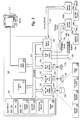
- Figure 1A illustrates a schematic overview in which a listener operating in user-mode begins to hand off a connection between a client component and a network component in accordance with an implementation of the present invention
- Figure 1B illustrates the schematic overview of Figure 1A , in which the network component has control of the connection;
- Figure 2 illustrates a flow chart of acts for passing off a connection by the listener, and for receiving control of a connection by the network component from the listener in accordance with an implementation of the present invention
- Figure 3 illustrates a schematic diagram of a suitable computing environment for implementing the systems and methods in accordance with the present invention.
- the present invention extends to systems, methods, and computer program products that allow a user-mode listener to effectively dispatch control of a client connection to a network computer component in a safe manner.
- a user-mode listener in accordance with the present invention, can dispatch control of a client connection to a requested network component without exposing the system memory and/or system services of the network computer.
- one aspect of the invention comprises dispatching control of a connection with a client component (e.g., a process, interface, or module, etc.) to a requested network component (e.g., a process, interface, or module, etc.).
- a client component e.g., a process, interface, or module, etc.
- a requested network component e.g., a process, interface, or module, etc.
- the connection described herein can be between client components at a client computer system and network component at a different network computer system
- the principles of the invention described herein can also be applied in the context of inter-component connections at the same local computer. That is, there are situations in which client and network components of the same computer system communicate data to one another through an intermediary process, such as a listener.
- the user-mode listener that interfaces with the network stack can implement dispatch logic to ascertain whether to dispatch control of the client connection to the network component.
- another aspect of the invention can include the requested network component implementing a similar calculus to ascertain whether it should accept control of the client connection from the user-mode listener.
- the network component can accept control of the connection, and speak directly with the client component through the network stack. Accordingly, a client component and network component can communicate at speeds that are similar to those of communicating in kernel-mode, without necessarily risking one or more of the disadvantages thereof.
- Figure 1A illustrates a schematic overview for practicing the invention between two computers, in which a user-mode listener 100 controls a connection between a client component 105 from a client computer 140 and a network component 110 at the network computer 150.
- the user-mode listener 100 is a network connection process operating in user-mode, although the user-mode listener 100 will be understood generally as any interface, component, or module that interfaces with a network stack 115, and initially controls a user-mode network connection between a client component and a network component.
- Figure 1A shows that the client component 105 has established a connection with the network computer 150 through the network stack 115.
- Figure 1A shows that the listener 100 controls this connection between the client component 105 and the network component 110 through a socket 130.
- the listener 100 reads at least a portion of one or more of the initial data packets sent in by the client component 105.
- the user-mode listener 100 does so to identify such factors as the requested network component (e.g., 110), and/or some indication as to the length of the requested connection, when or if appropriate.
- the listener 100 can also implement "dispatch logic" when reading the initial one or more data packets from the client component 105 to determine, based on one or more of a client message property or a system property, whether an efficiency gain can be made by transferring control of the connection.
- a client message property can include whether all or most of the data packets sent by the client component 105 are intended for the same requested network component 110, or whether the length of the connection session or size of the messages to be sent are such that dispatch of control is appropriate, and so forth.
- a system property can include consideration of load balancing or security policy concerns, which could be better implemented by dispatching the connection to the requested network component. Accordingly, the dispatch logic can evaluate a number of client or other system factors to indicate to the listener 100 that it is cost-effective to hand off control of the connection.
- the listener 100 can then initiate transfer of control of the established connection. To do so, the listener 100 sends a function call to an application service 120, such as an application program interface ("API"), or other component or module, that administers socket control. In one implementation, the listener 100 also passes, as parameters of the function call, the network component 110 requested by the client component 105, as well as a request for socket duplication. The application service 120 then responds with a first set of data (i.e., "Data 1 ") that is specific for the established connection between the client component 105 and the network component 110. In one implementation, this first set of data includes such data as one or more state variables of the network stack 115 for the established connection, as well as user-mode context information for the connection, and any data sent by the client component 105 when establishing the connection.
- an application service 120 such as an application program interface (“API"), or other component or module, that administers socket control.
- API application program interface
- the listener 100 also passes, as parameters of the function call, the network component
- Figure 1A shows that the listener 100 forwards the first set of data and contextual information to the requested network component 110 using the communication mechanism for the user-mode connection.
- the existing connection path may involve use of a shared memory space, a named pipe, RPC, DCOM, or the like.
- this typically involves the listener 100 placing the first set of data and contextual information into a previously allocated shared memory.
- the listener 100 may also send a separate signal (not shown) to the network component 110 that indicates that there is a first set of data in the shared memory for the network component 110 to extract.
- the network component 110 can initiate steps to accept control of the connection. In one implementation, this involves the network component 110 also performing an additional evaluation similar to the "dispatch logic" used by the listener 100. For example, the network component 110 may try to identify whether the client component 105 is a trusted client, or whether the type of data the client component 105 intends to pass is appropriate to be passed to the network component 110 directly. In any event, if the network component 110 decides to accept control of the connection, the network component 110 initiates steps to duplicate the socket 130. To do so, the network component 100 passes a function call to an application service, with parameters of the first data set, as well as a request to duplicate the socket 130 controlled by the listener 100.
- the network component requests duplication of the socket 130 by calling application service 125, which is a different, second application service, component or module distinct from application service 120.
- application service 125 is a different, second application service, component or module distinct from application service 120.
- application service 125 evaluates the function call and the included data passed from the network component 110. The application service 125 then returns data to the network component 110 that allows the network component 110 to control the socket 130.
- the application service may return the name or address of the socket 130, an initial packet or so of data received from the client component before the connection is dispatched, as well as any other network stack state variables that should be relayed back to the listener 100 and to the network stack 115.
- the application service 125 may also return user-mode context information, as appropriate.
- the network component 110 uses the returned data from the application service 125 to take control of the socket 130, and therefore control of the established connection.
- this step for taking control of the connection can involve additional acts performed by the network component 110 and listener 100.
- the network component 110 sends an indicator to the listener 100 that the network component 110 has taken control of the socket 130.
- the listener 100 sends another indicator to, for example, the transport layer 107 of the network stack, indicating that the listener 100 is unable to receive any more client component 105 data.
- the listener 100 can also send a signal to the network stack 115, which tells the relevant layers to buffer incoming client component 105 data momentarily until the network component 110 has established control of the socket 130 in some way.
- Figure 1B shows the schematic diagram of Figure 1A in which the network component 110 has gained control of the socket 130.
- the listener 100 no longer acts as a relay intermediary between the client component 105 and the network component 110, such that the network component 110 and client component 105 communicate directly through the network stack 115.
- this direct communication is typically much faster than having to communicate with the aid of the listener 100 in user-mode through a shared memory, named pipe, or the like.
- one or more additional advantages can be realized since the switch of socket 130 control can be made transparent to the client component 105, such that the client component 105 is unaware that there has been a switch in control of the socket from the listener 100 to the requested network component 110. That is, the client component 105 may not have been aware initially that its connection was being handled by the listener 100 at all. Even if the client component 105 was aware it was speaking to the listener 100, implementations of the present invention would not require a signal to be sent to the client component 105 that the network component 110 is now in control of the socket 130.
- Figure 2 illustrates two methods in an interrelated flow chart, where one side illustrates acts performed from the perspective of the user-mode listener 100, while another side of the flow chart illustrates acts performed from the perspective of the requested network component 110.
- the acts of Figure 2 will be described below in terms of the schematic diagrams shown in Figures 1A and 1B .
- Figure 2 shows that a method in accordance with the present invention of dispatching control of a connection to a network component in user-mode from the listener 100 side comprises an act 200 of establishing a connection.
- Act 200 includes establishing a connection in user-mode between a client component and a listener through a socket in user-mode.
- a client component 105 such as a process at the same or different remote computer, initiates a connection with listener 100, and requests a specific network component 110, such as another process at the same or different remote network computer, as part of the connection parameters. Since the connection is in user-mode, a listener 100 that interfaces with the network stack 115 will control the connection through a socket, such as through socket 130 shown in Figure 1A .
- a method from the network component 110 side can comprise an act 250 of receiving data from a client component.
- Act 250 includes receiving an initial set of data from a client component 105 through the user-mode listener 100.
- the network component 110 may receive one or more data packets through a shared memory, named pipe, RPC, DCOM, or the like as the listener 100 decides what to do with the established connection.
- the method of dispatching a connection also comprises an act 210 of requesting duplication of the socket.
- Act 210 includes requesting duplication of the socket based on information associated with the connection, wherein a first set of data is received. For example, after reading an initial set of data in the connection initiated by the client component 105, the listener 100 can implement dispatch logic. As described herein, the dispatch logic can include functions that evaluate such factors data for the state variables of the network stack 115, the amount of data to be transferred in the established connection, the length of the connection, whether the client is a trusted client, and so forth.
- the listener 100 can, in some cases, perform any number of additional steps.
- the listener 100 can send a function call to an application service 120 as previously described.
- the parameters of the function call include the network component requested by the client, some initial amount of data sent by the client component 105, a request for socket duplication, and/or any combination of the foregoing.
- the application service 120 could then return a first set of data (e.g., "Data 1 ") that includes user-mode context information as part of its parameters.
- the listener 100 passes any relevant data such as this on to the network component 110.
- the method of Figure 2 from the network component 110 perspective comprises an act 260 of receiving connection information from the listener.
- Act 260 includes receiving connection information from the user-mode listener, wherein the connection information identifies information about the client component and the established connection.
- the network component 110 can receive a first set of data (i.e., "Data 1 "), which is relayed through a relay communication mechanism such as a shared memory, named pipe.
- this first set of data may also include other data in the established client connection that has not yet been received from the client component 105, as well as any data that the network component 110 can use to identify whether accepting control of the socket 130 is appropriate.
- the listener 100 may decide it is appropriate to hand off control of the socket 130 to the network component 110, but the network component 110 may implement its own similar dispatch logic to decide that the network component 110 is not suited to handle control of the connection.
- the network component 110 may determine that the client component 105 is not trusted.
- the network component 110 may be configured simply to accept all dispatched connections from the listener 100.
- Figure 2 shows that the network component 110 performs an act 270 of requesting duplication of the socket.
- Act 270 includes requesting duplication of the socket associated with the connection.
- the network component 110 passes a function call to an application service, whether the same application service 120 as before, or a different application service, such as application service 125.
- the parameters of the function call include the first set of data (e.g., "Data 1 ") passed previously to the listener 100.
- the relevant application service such as application service 125, then processes the function call and returns socket information to the network component 110.
- the socket information may also include one or more state variables of the network stack 115 that are associated with the established connection. In any event, the returned information allows the network component 110 to take control of the socket 130.
- the method from the network component perspective also comprises an act 280 of accepting control of the socket.
- Act 280 includes accepting control of the socket from the listener, wherein the network component communicates directly with the client component through the connection in user-mode.
- the network component 110 sends a signal to the listener 100 indicating that the network component 110 has accepted control of the socket (e.g., Figure 1B ).
- the network component 110 may communicate directly with the network stack 115, and tell the network stack 115 to stop sending information through the listener 100.
- a method for dispatching control can comprise an act 240 of receiving an indicator that the network component has accepted control.
- Act 280 includes receiving an indicator that the network component has accepted control of the socket, such that the listener no longer accepts connection data from the client computer for the connection, and such that the network component and the client component communicate through the connection without the listener.
- the network component 110 is also effectively connected to the client component 105 in user-mode. That is, the client component 105 and the network component 110 are directly connected through the network protocol stack 115, albeit in a mode that is limited in terms of memory usage, or other limited permissions, and thus avoids exploitation of the network computer.
- implementations of the present invention provide a number of advantages in the art.
- relatively secure, or more limited, connections can be made between network and client components between different computers or at the same computer with much faster speeds where necessary, even approaching kernel-mode connection speeds or better.
- implementations of the present invention allow the listener to pass off connections to network components primarily when those connections might pose a bottleneck to the system. As such, the listener can still continue to handle a large amount of connections in user-mode that do not stand to significantly gain with dispatching the connection, and do dispatches in a much more efficient manner.
- FIG. 3 and the following discussion are intended to provide a brief, general description of a suitable computing environment in which the invention may be implemented.
- the invention will be described in the general context of computer-executable instructions, such as program modules, being executed by computers in network environments.
- program modules include routines, programs, objects, components, data structures, etc. that perform particular tasks or implement particular abstract data types.
- Computer-executable instructions, associated data structures, and program modules represent examples of the program code means for executing steps of the methods disclosed herein.
- the particular sequence of such executable instructions or associated data structures represents examples of corresponding acts for implementing the functions described in such steps.
- the invention may be practiced in network computing environments with many types of computer system configurations, including personal computers, hand-held devices, multi-processor systems, microprocessor-based or programmable consumer electronics, network PCs, minicomputers, mainframe computers, and the like.
- the invention may also be practiced in distributed computing environments where local and remote processing devices perform tasks and are linked (either by hardwired links, wireless links, or by a combination of hardwired or wireless links) through a communications network.
- program modules may be located in both local and remote memory storage devices.
- an exemplary system for implementing the invention includes a general-purpose computing device in the form of a conventional computer 320, including a processing unit 321, a system memory 322, and a system bus 323 that couples various system components including the system memory 322 to the processing unit 321.
- the system bus 323 may be any of several types of bus structures including a memory bus or memory controller, a peripheral bus, and a local bus using any of a variety of bus architectures.
- the system memory includes read only memory (ROM) 324 and random access memory (RAM) 325.
- ROM read only memory
- RAM random access memory
- a basic input/output system (BIOS) 326 containing the basic routines that help transfer information between elements within the computer 320, such as during start-up, may be stored in ROM 324.
- the computer 320 may also include a magnetic hard disk drive 327 for reading from and writing to a magnetic hard disk 339, a magnetic disc drive 328 for reading from or writing to a removable magnetic disk 329, and an optical disc drive 330 for reading from or writing to removable optical disc 331 such as a CD ROM or other optical media.
- the magnetic hard disk drive 327, magnetic disk drive 328, and optical disc drive 330 are connected to the system bus 323 by a hard disk drive interface 332, a magnetic disk drive-interface 333, and an optical drive interface 334, respectively.
- the drives and their associated computer-readable media provide nonvolatile storage of computer-executable instructions, data structures, program modules and other data for the computer 320.
- exemplary environment described herein employs a magnetic hard disk 339, a removable magnetic disk 329 and a removable optical disc 331, other types of computer readable media for storing data can be used, including magnetic cassettes, flash memory cards, digital versatile disks, Bernoulli cartridges, RAMs, ROMs, and the like.
- Program code means comprising one or more program modules may be stored on the hard disk 339, magnetic disk 329, optical disc 331, ROM 324 or RAM 325, including an operating system 335, one or more application programs 336, other program modules 337, and program data 338.
- a user may enter commands and information into the computer 320 through keyboard 340, pointing device 342, or other input devices (not shown), such as a microphone, joy stick, game pad, satellite dish, scanner, or the like.
- These and other input devices are often connected to the processing unit 321 through a serial port interface 346 coupled to system bus 323.
- the input devices may be connected by other interfaces, such as a parallel port, a game port or a universal serial bus (USB).
- a monitor 347 or another display device is also connected to system bus 323 via an interface, such as video adapter 348.
- personal computers typically include other peripheral output devices (not shown), such as speakers and printers.
- the computer 320 may operate in a networked environment using logical connections to one or more remote computers, such as remote computers 349a and 349b.
- Remote computers 349a and 349b may each be another personal computer, a server, a router, a network PC, a peer device or other common network node, and typically include many or all of the elements described above relative to the computer 320, although only memory storage devices 350a and 350b and their associated application programs 336a and 336b have been illustrated in Figure 3 .
- the logical connections depicted in Figure 3 include a local area network (LAN) 351 and a wide area network (WAN) 352 that are presented here by way of example and not limitation.
- LAN local area network
- WAN wide area network
- the computer 320 When used in a LAN networking environment, the computer 320 is connected to the local network 351 through a network interface or adapter 353. When used in a WAN networking environment, the computer 320 may include a modem 354, a wireless link, or other means for establishing communications over the wide area network 352, such as the Internet.
- the modem 354, which may be internal or external, is connected to the system bus 323 via the serial port interface 346.
- program modules depicted relative to the computer 320, or portions thereof may be stored in the remote memory storage device. It will be appreciated that the network connections shown are exemplary and other means of establishing communications over wide area network 352 may be used.
Landscapes
- Engineering & Computer Science (AREA)
- Computer Networks & Wireless Communication (AREA)
- Signal Processing (AREA)
- Computer Security & Cryptography (AREA)
- Computer And Data Communications (AREA)
- Information Transfer Between Computers (AREA)
- Exchange Systems With Centralized Control (AREA)
- Two-Way Televisions, Distribution Of Moving Picture Or The Like (AREA)
Claims (20)
- Verfahren, das durch einen User-Mode-Listener (100) eines Netzwerk-Computersystems durchgeführt wird, wobei der User-Mode-Listener so konfiguriert ist, dass er eine Verbindung zwischen einer Client-Komponente (105) und einer Netzwerk-Komponente (110) im User-Mode weiterleitet, und das Verfahren dazu dient, die Steuerung der Verbindung im User-Mode an die Netzwerk-Komponenten abzugeben und das Verfahren umfasst:Einrichten (200) einer Verbindung im User-Mode zwischen der Client-Komponente und dem Listener über einen Socket (130), wobei die Client-Komponente die Netzwerk-Komponente anfordert;Anfordern (210) einer Duplikation des Sockets basierend auf der Verbindung zugehöriger Informationen, wobei ein erster Satz von Daten empfangen wird;Senden (230) des ersten Satzes von Daten und der zugehörigen Verbindungsinformationen zu der angeforderten Netzwerk-Komponente; undEmpfangen (240) einer Information, die anzeigt, dass die Netzwerk-Komponente die Steuerung des Sockets übernommen hat, so dass der Listener keine Verbindungsdaten von dem Client-Computer für die Verbindung mehr annimmt und die Netzwerk-Komponente und die Client-Komponente ohne den Listener über die Verbindung kommunizieren.
- Verfahren nach Anspruch 1, wobei die Client-Komponente (105) ein Client-Prozess in einem Client-Computersystem ist, und die angeforderte Netzwerk-Komponente (110) ein Netzwerk-Prozess in einem anderen Netzwerk-Computersystem ist, und wobei das Client-Computersystem und das Netzwerk-Computersystem über eine Netzwerkverbindung verbunden sind.
- Verfahren nach Anspruch 1, wobei der Listener (100) ein Prozess, eine Schnittstelle, eine Komponente oder ein Modul ist, der/die/das so konfiguriert ist, dass er/sie/es von einem Netzwerk-Protokoll-Stack empfangene Nachrichten zu einer angeforderten Netzwerk-Komponente weiterleitet.
- Verfahren nach Anspruch 1, wobei das Anfordern einer Duplikation des Socket (130) des Weiteren umfasst:Weiterleiten eines Funktionsaufrufs zu einem ersten Anwendungsdienst, wobei der Funktionsaufruf Parameter der angeforderten Netzwerk-Komponente (110) enthält; undEmpfangen der ersten Gruppe von Daten von dem ersten Anwendungsdienst.
- Verfahren nach Anspruch 4, wobei die Parameter des Funktionsaufrufes zu dem ersten Anwendungsdienst des Weiteren eine oder mehrere Zustandsvariablen enthalten, die mit der eingerichteten Verbindung zusammenhängen.
- Verfahren nach Anspruch 1, wobei das Anfordern einer Duplikation des Socket (130) des Weiteren ein Evaluieren eines Anfangsabschnitts der eingerichteten Verbindung mit einer Abgabe-Logik (dispatch logic) umfasst und die Abgabe-Logik eine Eigenschaft einer Client-Nachricht und/oder eine Systemeigenschaft evaluiert, wobei die Eigenschaft einer Client-Nachricht mit der ersten Gruppe von Daten zusammenhängt und die Systemeigenschaft mit dem Netzwerk-Computersystem zusammenhängt.
- Verfahren nach Anspruch 1, wobei das Empfangen einer Information, die anzeigt, dass die Netzwerk-Komponente (110) Steuerung übernommen hat, ein Senden eines Signals zu einem Netzwerk-Stack (115) umfasst, der der Verbindung zugeordnet ist, und das Signal einer Transportschicht des Netzwerk-Stacks anzeigt, dass der Listener (100) nicht mehr in der Lage ist, Daten über die eingerichtete Verbindung zu empfangen.
- Verfahren nach Anspruch 7, wobei das Signal des Weiteren einen Befehl zum Puffern von Daten, die von der Client-Komponente (105) gesendet wurden, bis die Netzwerk-Komponente (110) die Steuerung der eingerichteten Verbindung übernommen hat, umfasst.
- Verfahren nach Anspruch 7, wobei beim Empfangen eines folgenden Satzes von Daten (105) von der Client-Komponente nach dem Senden des Signals zu dem Netzwerk-Stack (115) das Verfahren des Weiteren umfasst, dass der Listener (100) den folgenden Satz von Daten der Client-Komponente zu dem Netzwerk-Stack zurückführt, so dass die folgende Gruppe von Daten der Client-Komponente gepuffert wird, bis die Netzwerk-Komponente die Steuerung der eingerichteten Verbindung übernommen hat.
- Verfahren nach Anspruch 1, das des Weiteren ein Weiterleiten wenigstens eines Anfangsabschnitts von Daten der Client-Komponente über die eingerichtete Verbindung zu der Netzwerk-Komponente (110) vor oder während des Anforderns einer Duplikation des Socket (130) umfasst.
- Verfahren, das durch eine Netzwerk-Komponente (110) eines Netzwerk-Computersystems durchgeführt wird, wobei eine Verbindung zwischen einer Client-Komponente (105) und der Netzwerk-Komponente über einen User-Mode-Listener (100) eingerichtet wird und das Verfahren dazu dient, dass die Netzwerk-Komponente die Steuerung der Verbindung von dem Listener im User-Mode übernimmt, und wobei das Verfahren umfasst:Empfangen (250) eines Anfangssatzes von Daten von der Client-Komponente über den User-Mode-Listener;Empfangen (260) von Verbindungsinformationen von dem User-Mode-Listener, wobei die Verbindungsinformationen Informationen über die Client-Komponente und die eingerichtete Verbindung anzeigen;Anfordern (270) einer Duplikation eines Sockets (130) der Verbindung; undÜbernehmen (280) der Steuerung des Sockets von dem Listener, wobei die Netzwerk-Komponente über die Verbindung im User-Mode direkt mit der Client-Komponente kommuniziert.
- Verfahren nach Anspruch 11, wobei die Netzwerk-Komponente (110) ein Netzwerk-Prozess in einem Netzwerk-Computersystem ist, die Client-Komponente (105) ein Client-Prozess in einem anderen Client-Computersystem ist und das Netzwerk-Computersystem und das Client-Computersystem über eine Netzwerk-Verbindung verbunden sind.
- Verfahren nach Anspruch 11, wobei der Anfangssatz von Daten von der Client-Komponente (105) über einen gemeinsam genutzten Speicher, eine Named Pipe, ein RPC- und/oder DCOM-Protokoll empfangen wird.
- Verfahren nach Anspruch 11, wobei das Anfordern einer Duplikation des Sockets (130) des Weiteren umfasst:Weiterleiten eines Funktionsaufrufes zu einem Anwendungsdienst, wobei der Funktionsaufruf Parameter eines ersten Satzes von Daten enthält, der durch den User-Mode-Listener (100) weitergeleitet wird; undEmpfangen von Informationen von dem Anwendungsdienst zum Steuern des Socket.
- Verfahren nach Anspruch 14, wobei der erste Satz von Daten mittels des Listeners (100) von einem ersten Anwendungsdienst empfangen wurde und der erste Anwendungsdienst sich von dem Anwendungsdienst unterscheidet, zu dem die Netzwerk-Komponente den Funktionsaufruf weiterleitet.
- Verfahren nach Anspruch 14, wobei die Parameter des ersten Datensatzes des Weiteren eine oder mehrere Zustandsvariable/n der eingerichteten Verbindung eine Anforderung zum Duplizieren des Socket (130) und einen Anfangs-Datensatz umfassen, der durch den Client über die eingerichtete Verbindung gesendet wird.
- Verfahren nach Anspruch 11, wobei beim Empfangen der Verbindungs-Informationen die Netzwerk-Komponente (110) eine Abgabe-Logik (dispatch logic) implementiert, die auf Basis der Identität der Client-Komponente, des Typs der Informationen, die durch die Client-Komponente in dem Anfangssatz von Daten gesendet werden, und/oder der Länge der Verbindung evaluiert, ob die Steuerung des Socket (130) übernommen wird.
- Verfahren nach Anspruch 11, wobei das Übernehmen der Steuerung des Sockets (130) ein Senden einer Information zu dem Listener (100) umfasst, die anzeigt, dass die Netzwerk-Komponente (110) die Steuerung des Socket übernommen hat.
- Verfahren nach Anspruch 11, wobei ein direktes Kommunizieren mit der Client-Komponente (105) umfasst, dass ein folgender Datensatz der Client-Komponente von der Transportschicht eines entsprechenden Netzwerk-Protokoll-Stacks (115) für die eingerichtete Verbindung direkt so empfangen wird, dass der User-Mode-Listener (100) umgangen wird.
- Computerprogrammerzeugnis zum Einsatz in einem Computersystem, in dem ein User-Mode-Listener (100) so konfiguriert ist, dass er eine Verbindung zwischen einem Prozess in einem Client-Computersystem und einem Prozess in dem Netzwerk-Computer im User-Mode weiterleitet, wobei auf dem Computerprogrammerzeugnis durch einen Computer ausführbare Befehle gespeichert sind, die, wenn sie ausgeführt werden, das Computersystem veranlassen, ein Verfahren zum Abgeben der Steuerung der Verbindung an den Netzwerk-Prozess im User-Mode durchzuführen, wobei das Verfahren umfasst:Einrichten (200) einer Verbindung im User-Mode zwischen einer Client-Komponente (105) und dem Listener (100) über einen Socket (130), wobei die Client-Komponente eine Netzwerk-Komponente (110) anfordert;Anfordern (210) einer Duplikation des Sockets basierend auf der Verbindung zugehöriger Informationen, wobei ein erster Satz von Daten empfangen wird;Senden (230) des ersten Satzes von Daten und der zugehörigen Verbindungsinformationen zu der angeforderten Netzwerk-Komponente; undEmpfangen (240) einer Information, die anzeigt, dass die Netzwerk-Komponente die Steuerung des Sockets übernommen hat, so dass der Listener keine Verbindungsdaten von dem Client-Computer für die Verbindung mehr annimmt, und so dass die Netzwerk-Komponente und die Client-Komponente ohne den Listener über die Verbindung kommunizieren.
Applications Claiming Priority (1)
| Application Number | Priority Date | Filing Date | Title |
|---|---|---|---|
| US11/049,051 US7640346B2 (en) | 2005-02-01 | 2005-02-01 | Dispatching network connections in user-mode |
Publications (2)
| Publication Number | Publication Date |
|---|---|
| EP1686472A1 EP1686472A1 (de) | 2006-08-02 |
| EP1686472B1 true EP1686472B1 (de) | 2009-04-15 |
Family
ID=36499547
Family Applications (1)
| Application Number | Title | Priority Date | Filing Date |
|---|---|---|---|
| EP05112996A Expired - Lifetime EP1686472B1 (de) | 2005-02-01 | 2005-12-27 | Verfahren zum Verteilen von Netzwerkverbindungen im user-mode |
Country Status (7)
| Country | Link |
|---|---|
| US (1) | US7640346B2 (de) |
| EP (1) | EP1686472B1 (de) |
| JP (1) | JP4866080B2 (de) |
| KR (1) | KR101219822B1 (de) |
| CN (1) | CN1816047B (de) |
| AT (1) | ATE428978T1 (de) |
| DE (1) | DE602005013905D1 (de) |
Families Citing this family (13)
| Publication number | Priority date | Publication date | Assignee | Title |
|---|---|---|---|---|
| US7836494B2 (en) * | 1999-12-29 | 2010-11-16 | Intel Corporation | System and method for regulating the flow of information to or from an application |
| US7991839B2 (en) * | 2006-12-19 | 2011-08-02 | International Business Machines Corporation | Communication between host systems using a socket connection and shared memories |
| US7860930B2 (en) * | 2006-12-19 | 2010-12-28 | International Business Machines Corporation | Communication between host systems using a transaction protocol and shared memories |
| US8955122B2 (en) * | 2007-04-04 | 2015-02-10 | Sri International | Method and apparatus for detecting malware infection |
| EP2165259A1 (de) * | 2007-10-20 | 2010-03-24 | Citrix Systems, Inc. | Verfahren und systeme zur löschung dreidimensionaler graphikdaten |
| KR101603202B1 (ko) * | 2009-09-21 | 2016-03-14 | 삼성전자주식회사 | 이기종 멀티프로세서 시스템 온 칩에서의 rpc 데이터 배치 방법 및 장치 |
| US8495193B2 (en) * | 2010-02-23 | 2013-07-23 | Microsoft Corporation | Centralized management tool for remote presentation session server farms |
| JP2011254442A (ja) | 2010-05-06 | 2011-12-15 | Ricoh Co Ltd | 遠隔通信端末、遠隔通信方法、及び遠隔通信用プログラム |
| US9438638B2 (en) * | 2013-03-15 | 2016-09-06 | Silicon Graphics International Corp. | Method for transparently connecting augmented network socket operations |
| US10701151B2 (en) * | 2014-10-27 | 2020-06-30 | Netapp, Inc. | Methods and systems for accessing virtual storage servers in a clustered environment |
| US9779004B2 (en) * | 2015-03-23 | 2017-10-03 | Netapp, Inc. | Methods and systems for real-time activity tracing in a storage environment |
| US10585689B1 (en) | 2017-12-20 | 2020-03-10 | Cisco Technology, Inc. | Shared memory interface for application processes |
| CN113067849B (zh) * | 2021-02-05 | 2022-05-10 | 湖南国科亿存信息科技有限公司 | 基于Glusterfs的网络通信优化方法及装置 |
Family Cites Families (38)
| Publication number | Priority date | Publication date | Assignee | Title |
|---|---|---|---|---|
| US5784615A (en) * | 1994-12-13 | 1998-07-21 | Microsoft Corporation | Computer system messaging architecture |
| US5721876A (en) | 1995-03-30 | 1998-02-24 | Bull Hn Information Systems Inc. | Sockets application program mechanism for proprietary based application programs running in an emulation environment |
| US6182109B1 (en) * | 1996-03-08 | 2001-01-30 | International Business Machines Corporation | Dynamic execution unit management for high performance user level network server system |
| US6182141B1 (en) * | 1996-12-20 | 2001-01-30 | Intel Corporation | Transparent proxy server |
| AU1587899A (en) * | 1997-11-17 | 1999-06-07 | Mcmz Technology Innovations Llc | A high performance interoperable network communications architecture (inca) |
| US6243753B1 (en) * | 1998-06-12 | 2001-06-05 | Microsoft Corporation | Method, system, and computer program product for creating a raw data channel form an integrating component to a series of kernel mode filters |
| US6826763B1 (en) * | 1998-12-11 | 2004-11-30 | Microsoft Corporation | Accelerating a distributed component architecture over a network using a direct marshaling |
| US6658469B1 (en) * | 1998-12-18 | 2003-12-02 | Microsoft Corporation | Method and system for switching between network transport providers |
| JP3183343B2 (ja) * | 1999-02-26 | 2001-07-09 | 日本電気株式会社 | データ通信方法、端末装置、中継装置、データ通信システム及びその記録媒体 |
| US6212640B1 (en) * | 1999-03-25 | 2001-04-03 | Sun Microsystems, Inc. | Resources sharing on the internet via the HTTP |
| US7836494B2 (en) * | 1999-12-29 | 2010-11-16 | Intel Corporation | System and method for regulating the flow of information to or from an application |
| US6779035B1 (en) * | 2000-03-06 | 2004-08-17 | Microsoft Corporation | Application programming interface and generalized network address translator for translation of transport-layer sessions |
| US6754709B1 (en) * | 2000-03-29 | 2004-06-22 | Microsoft Corporation | Application programming interface and generalized network address translator for intelligent transparent application gateway processes |
| AU2001268674B2 (en) * | 2000-06-22 | 2007-04-26 | Microsoft Technology Licensing, Llc | Distributed computing services platform |
| US6954784B2 (en) * | 2000-08-17 | 2005-10-11 | International Business Machines Corporation | Systems, method and computer program products for cluster workload distribution without preconfigured port identification by utilizing a port of multiple ports associated with a single IP address |
| US6915437B2 (en) | 2000-12-20 | 2005-07-05 | Microsoft Corporation | System and method for improved network security |
| US20060020688A1 (en) * | 2001-05-14 | 2006-01-26 | At&T Corp. | System having generalized client-server computing |
| US7594230B2 (en) | 2001-06-11 | 2009-09-22 | Microsoft Corporation | Web server architecture |
| US7228551B2 (en) * | 2001-06-11 | 2007-06-05 | Microsoft Corporation | Web garden application pools having a plurality of user-mode web applications |
| US7490137B2 (en) * | 2002-03-22 | 2009-02-10 | Microsoft Corporation | Vector-based sending of web content |
| US7007103B2 (en) * | 2002-04-30 | 2006-02-28 | Microsoft Corporation | Method to offload a network stack |
| US20040003085A1 (en) * | 2002-06-26 | 2004-01-01 | Joseph Paul G. | Active application socket management |
| US20040192312A1 (en) * | 2002-07-16 | 2004-09-30 | Jia-Ru Li | Communication system for voice and data with wireless TCP server |
| US7117501B2 (en) * | 2002-11-21 | 2006-10-03 | International Business Machines Corporation | Application-level access to kernel input/output state |
| CA2415043A1 (en) * | 2002-12-23 | 2004-06-23 | Ibm Canada Limited - Ibm Canada Limitee | A communication multiplexor for use with a database system implemented on a data processing system |
| US20040167961A1 (en) * | 2003-02-26 | 2004-08-26 | Microsoft Corporation | Fragment response cache |
| US20040249957A1 (en) * | 2003-05-12 | 2004-12-09 | Pete Ekis | Method for interface of TCP offload engines to operating systems |
| US20050021680A1 (en) * | 2003-05-12 | 2005-01-27 | Pete Ekis | System and method for interfacing TCP offload engines using an interposed socket library |
| US7917751B2 (en) * | 2003-05-22 | 2011-03-29 | International Business Machines Corporation | Distributed filesystem network security extension |
| US7197580B2 (en) * | 2003-05-29 | 2007-03-27 | Microsoft Corporation | Computer system and method for supporting network-enabled devices |
| US7559082B2 (en) * | 2003-06-25 | 2009-07-07 | Microsoft Corporation | Method of assisting an application to traverse a firewall |
| US7606929B2 (en) * | 2003-06-30 | 2009-10-20 | Microsoft Corporation | Network load balancing with connection manipulation |
| US20050165932A1 (en) * | 2004-01-22 | 2005-07-28 | International Business Machines Corporation | Redirecting client connection requests among sockets providing a same service |
| US7334163B1 (en) * | 2004-06-16 | 2008-02-19 | Symantec Corporation | Duplicating handles of target processes without having debug privileges |
| US7613813B2 (en) * | 2004-09-10 | 2009-11-03 | Cavium Networks, Inc. | Method and apparatus for reducing host overhead in a socket server implementation |
| US7403535B2 (en) * | 2004-12-14 | 2008-07-22 | Hewlett-Packard Development Company, L.P. | Aggregation of network resources providing offloaded connections between applications over a network |
| US7848322B2 (en) * | 2007-03-26 | 2010-12-07 | Voltaire Ltd. | Device, system and method of UDP communication |
| US7864787B2 (en) * | 2007-03-26 | 2011-01-04 | Voltaire Ltd. | Device, system and method of multicast communication |
-
2005
- 2005-02-01 US US11/049,051 patent/US7640346B2/en active Active
- 2005-12-22 JP JP2005370933A patent/JP4866080B2/ja not_active Expired - Fee Related
- 2005-12-27 EP EP05112996A patent/EP1686472B1/de not_active Expired - Lifetime
- 2005-12-27 DE DE602005013905T patent/DE602005013905D1/de not_active Expired - Lifetime
- 2005-12-27 AT AT05112996T patent/ATE428978T1/de not_active IP Right Cessation
- 2005-12-29 KR KR1020050133250A patent/KR101219822B1/ko not_active Expired - Fee Related
- 2005-12-30 CN CN2005101381868A patent/CN1816047B/zh not_active Expired - Fee Related
Also Published As
| Publication number | Publication date |
|---|---|
| JP2006216018A (ja) | 2006-08-17 |
| JP4866080B2 (ja) | 2012-02-01 |
| EP1686472A1 (de) | 2006-08-02 |
| KR20060088476A (ko) | 2006-08-04 |
| US7640346B2 (en) | 2009-12-29 |
| CN1816047A (zh) | 2006-08-09 |
| DE602005013905D1 (de) | 2009-05-28 |
| CN1816047B (zh) | 2011-08-03 |
| ATE428978T1 (de) | 2009-05-15 |
| US20060173854A1 (en) | 2006-08-03 |
| KR101219822B1 (ko) | 2013-01-08 |
Similar Documents
| Publication | Publication Date | Title |
|---|---|---|
| US11843683B2 (en) | Methods and apparatus for active queue management in user space networking | |
| US7614059B2 (en) | System and method for the discovery and usage of local resources by a mobile agent object | |
| EP0817445B1 (de) | Vorrichtung und Verfahren zur Bestimmung von Server-Cluster-Topologien | |
| US7743250B2 (en) | Traffic manager for distributed computing environments | |
| US8799479B2 (en) | Establishing and utilizing terminal server dynamic virtual channels | |
| US8099456B2 (en) | Application programming interface for implementing directory service access using directory service markup language | |
| JP5214473B2 (ja) | ハードウェアデバイスなどのリソースを有する仮想マシンの移動システム | |
| WO1998004971A1 (en) | Method and system for generalized protocol implementation on client/server communications connections | |
| US8505029B1 (en) | Virtual machine communication | |
| US7743160B2 (en) | System and method of delaying connection acceptance to support connection request processing at layer-7 | |
| US7640346B2 (en) | Dispatching network connections in user-mode | |
| Fiuczynski et al. | An Extensible Protocol Architecture for Application-Specific Networking. | |
| EP0817043A2 (de) | Verfahren und Vorrichtung zum Betrieb einer Aggregation von Serverrechnern mittels eines Doppelzweck-Proxy-Servers | |
| US20090228970A1 (en) | Gateway device having socket library for monitoring, communication method of gateway device having socket library for monitoring, and communication program of gateway device having socket library for monitoring | |
| US9619272B1 (en) | Virtual machine networking | |
| EP0598534B1 (de) | Datenverarbeitungssystem | |
| KR101558289B1 (ko) | 메시지 처리 파이프라인 구성 | |
| US9762539B2 (en) | System and method for limiting data leakage in an application firewall | |
| US20100100955A1 (en) | System and method for secure os access in an ecma-script virtual machine | |
| JP2002041309A (ja) | 分散コンピューティング環境におけるオブジェクト間のインタラクティブ通信のためのシステム、その方法およびインタラクティブ分散コンポーネントオブジェクトモデル | |
| US20050114442A1 (en) | System and method for secure duplex browser communication over disparate networks | |
| US20140173635A1 (en) | System and method for adding local resources for use by a mobile agent object | |
| CN112470443B (zh) | 将复位向的生物辨识装置隔离到远程会话 | |
| JP4363752B2 (ja) | リバースプロキシーシステム | |
| KR100494827B1 (ko) | 하드웨어 독립적인 통신 인터페이스를 가지는 분산객체모델 기반의 라디오 서버와 이를 이용한 통신제어방법 |
Legal Events
| Date | Code | Title | Description |
|---|---|---|---|
| PUAI | Public reference made under article 153(3) epc to a published international application that has entered the european phase |
Free format text: ORIGINAL CODE: 0009012 |
|
| AK | Designated contracting states |
Kind code of ref document: A1 Designated state(s): AT BE BG CH CY CZ DE DK EE ES FI FR GB GR HU IE IS IT LI LT LU LV MC NL PL PT RO SE SI SK TR |
|
| AX | Request for extension of the european patent |
Extension state: AL BA HR MK YU |
|
| 17P | Request for examination filed |
Effective date: 20070130 |
|
| 17Q | First examination report despatched |
Effective date: 20070301 |
|
| AKX | Designation fees paid |
Designated state(s): AT BE BG CH CY CZ DE DK EE ES FI FR GB GR HU IE IS IT LI LT LU LV MC NL PL PT RO SE SI SK TR |
|
| GRAP | Despatch of communication of intention to grant a patent |
Free format text: ORIGINAL CODE: EPIDOSNIGR1 |
|
| GRAS | Grant fee paid |
Free format text: ORIGINAL CODE: EPIDOSNIGR3 |
|
| GRAA | (expected) grant |
Free format text: ORIGINAL CODE: 0009210 |
|
| AK | Designated contracting states |
Kind code of ref document: B1 Designated state(s): AT BE BG CH CY CZ DE DK EE ES FI FR GB GR HU IE IS IT LI LT LU LV MC NL PL PT RO SE SI SK TR |
|
| REG | Reference to a national code |
Ref country code: CH Ref legal event code: EP Ref country code: GB Ref legal event code: FG4D |
|
| REG | Reference to a national code |
Ref country code: IE Ref legal event code: FG4D |
|
| REF | Corresponds to: |
Ref document number: 602005013905 Country of ref document: DE Date of ref document: 20090528 Kind code of ref document: P |
|
| NLV1 | Nl: lapsed or annulled due to failure to fulfill the requirements of art. 29p and 29m of the patents act | ||
| PG25 | Lapsed in a contracting state [announced via postgrant information from national office to epo] |
Ref country code: AT Free format text: LAPSE BECAUSE OF FAILURE TO SUBMIT A TRANSLATION OF THE DESCRIPTION OR TO PAY THE FEE WITHIN THE PRESCRIBED TIME-LIMIT Effective date: 20090415 Ref country code: PT Free format text: LAPSE BECAUSE OF FAILURE TO SUBMIT A TRANSLATION OF THE DESCRIPTION OR TO PAY THE FEE WITHIN THE PRESCRIBED TIME-LIMIT Effective date: 20090915 Ref country code: ES Free format text: LAPSE BECAUSE OF FAILURE TO SUBMIT A TRANSLATION OF THE DESCRIPTION OR TO PAY THE FEE WITHIN THE PRESCRIBED TIME-LIMIT Effective date: 20090726 Ref country code: FI Free format text: LAPSE BECAUSE OF FAILURE TO SUBMIT A TRANSLATION OF THE DESCRIPTION OR TO PAY THE FEE WITHIN THE PRESCRIBED TIME-LIMIT Effective date: 20090415 Ref country code: LT Free format text: LAPSE BECAUSE OF FAILURE TO SUBMIT A TRANSLATION OF THE DESCRIPTION OR TO PAY THE FEE WITHIN THE PRESCRIBED TIME-LIMIT Effective date: 20090415 |
|
| PG25 | Lapsed in a contracting state [announced via postgrant information from national office to epo] |
Ref country code: SE Free format text: LAPSE BECAUSE OF FAILURE TO SUBMIT A TRANSLATION OF THE DESCRIPTION OR TO PAY THE FEE WITHIN THE PRESCRIBED TIME-LIMIT Effective date: 20090715 Ref country code: IS Free format text: LAPSE BECAUSE OF FAILURE TO SUBMIT A TRANSLATION OF THE DESCRIPTION OR TO PAY THE FEE WITHIN THE PRESCRIBED TIME-LIMIT Effective date: 20090815 Ref country code: SI Free format text: LAPSE BECAUSE OF FAILURE TO SUBMIT A TRANSLATION OF THE DESCRIPTION OR TO PAY THE FEE WITHIN THE PRESCRIBED TIME-LIMIT Effective date: 20090415 Ref country code: LV Free format text: LAPSE BECAUSE OF FAILURE TO SUBMIT A TRANSLATION OF THE DESCRIPTION OR TO PAY THE FEE WITHIN THE PRESCRIBED TIME-LIMIT Effective date: 20090415 Ref country code: PL Free format text: LAPSE BECAUSE OF FAILURE TO SUBMIT A TRANSLATION OF THE DESCRIPTION OR TO PAY THE FEE WITHIN THE PRESCRIBED TIME-LIMIT Effective date: 20090415 Ref country code: NL Free format text: LAPSE BECAUSE OF FAILURE TO SUBMIT A TRANSLATION OF THE DESCRIPTION OR TO PAY THE FEE WITHIN THE PRESCRIBED TIME-LIMIT Effective date: 20090415 |
|
| PG25 | Lapsed in a contracting state [announced via postgrant information from national office to epo] |
Ref country code: DK Free format text: LAPSE BECAUSE OF FAILURE TO SUBMIT A TRANSLATION OF THE DESCRIPTION OR TO PAY THE FEE WITHIN THE PRESCRIBED TIME-LIMIT Effective date: 20090415 Ref country code: CZ Free format text: LAPSE BECAUSE OF FAILURE TO SUBMIT A TRANSLATION OF THE DESCRIPTION OR TO PAY THE FEE WITHIN THE PRESCRIBED TIME-LIMIT Effective date: 20090415 Ref country code: RO Free format text: LAPSE BECAUSE OF FAILURE TO SUBMIT A TRANSLATION OF THE DESCRIPTION OR TO PAY THE FEE WITHIN THE PRESCRIBED TIME-LIMIT Effective date: 20090415 Ref country code: EE Free format text: LAPSE BECAUSE OF FAILURE TO SUBMIT A TRANSLATION OF THE DESCRIPTION OR TO PAY THE FEE WITHIN THE PRESCRIBED TIME-LIMIT Effective date: 20090415 |
|
| PLBE | No opposition filed within time limit |
Free format text: ORIGINAL CODE: 0009261 |
|
| STAA | Information on the status of an ep patent application or granted ep patent |
Free format text: STATUS: NO OPPOSITION FILED WITHIN TIME LIMIT |
|
| PG25 | Lapsed in a contracting state [announced via postgrant information from national office to epo] |
Ref country code: SK Free format text: LAPSE BECAUSE OF FAILURE TO SUBMIT A TRANSLATION OF THE DESCRIPTION OR TO PAY THE FEE WITHIN THE PRESCRIBED TIME-LIMIT Effective date: 20090415 Ref country code: BE Free format text: LAPSE BECAUSE OF FAILURE TO SUBMIT A TRANSLATION OF THE DESCRIPTION OR TO PAY THE FEE WITHIN THE PRESCRIBED TIME-LIMIT Effective date: 20090415 |
|
| 26N | No opposition filed |
Effective date: 20100118 |
|
| PG25 | Lapsed in a contracting state [announced via postgrant information from national office to epo] |
Ref country code: BG Free format text: LAPSE BECAUSE OF FAILURE TO SUBMIT A TRANSLATION OF THE DESCRIPTION OR TO PAY THE FEE WITHIN THE PRESCRIBED TIME-LIMIT Effective date: 20090715 |
|
| PG25 | Lapsed in a contracting state [announced via postgrant information from national office to epo] |
Ref country code: GR Free format text: LAPSE BECAUSE OF FAILURE TO SUBMIT A TRANSLATION OF THE DESCRIPTION OR TO PAY THE FEE WITHIN THE PRESCRIBED TIME-LIMIT Effective date: 20090716 |
|
| PGFP | Annual fee paid to national office [announced via postgrant information from national office to epo] |
Ref country code: IE Payment date: 20101214 Year of fee payment: 6 Ref country code: MC Payment date: 20101129 Year of fee payment: 6 |
|
| PGFP | Annual fee paid to national office [announced via postgrant information from national office to epo] |
Ref country code: CH Payment date: 20101215 Year of fee payment: 6 Ref country code: LU Payment date: 20110110 Year of fee payment: 6 |
|
| PG25 | Lapsed in a contracting state [announced via postgrant information from national office to epo] |
Ref country code: HU Free format text: LAPSE BECAUSE OF FAILURE TO SUBMIT A TRANSLATION OF THE DESCRIPTION OR TO PAY THE FEE WITHIN THE PRESCRIBED TIME-LIMIT Effective date: 20091016 |
|
| PG25 | Lapsed in a contracting state [announced via postgrant information from national office to epo] |
Ref country code: TR Free format text: LAPSE BECAUSE OF FAILURE TO SUBMIT A TRANSLATION OF THE DESCRIPTION OR TO PAY THE FEE WITHIN THE PRESCRIBED TIME-LIMIT Effective date: 20090415 |
|
| PG25 | Lapsed in a contracting state [announced via postgrant information from national office to epo] |
Ref country code: CY Free format text: LAPSE BECAUSE OF FAILURE TO SUBMIT A TRANSLATION OF THE DESCRIPTION OR TO PAY THE FEE WITHIN THE PRESCRIBED TIME-LIMIT Effective date: 20090415 |
|
| PG25 | Lapsed in a contracting state [announced via postgrant information from national office to epo] |
Ref country code: MC Free format text: LAPSE BECAUSE OF NON-PAYMENT OF DUE FEES Effective date: 20111231 |
|
| REG | Reference to a national code |
Ref country code: CH Ref legal event code: PL |
|
| REG | Reference to a national code |
Ref country code: IE Ref legal event code: MM4A |
|
| PG25 | Lapsed in a contracting state [announced via postgrant information from national office to epo] |
Ref country code: LI Free format text: LAPSE BECAUSE OF NON-PAYMENT OF DUE FEES Effective date: 20111231 Ref country code: CH Free format text: LAPSE BECAUSE OF NON-PAYMENT OF DUE FEES Effective date: 20111231 Ref country code: IE Free format text: LAPSE BECAUSE OF NON-PAYMENT OF DUE FEES Effective date: 20111227 |
|
| PG25 | Lapsed in a contracting state [announced via postgrant information from national office to epo] |
Ref country code: LU Free format text: LAPSE BECAUSE OF NON-PAYMENT OF DUE FEES Effective date: 20111227 |
|
| REG | Reference to a national code |
Ref country code: DE Ref legal event code: R082 Ref document number: 602005013905 Country of ref document: DE Representative=s name: GRUENECKER, KINKELDEY, STOCKMAIR & SCHWANHAEUS, DE |
|
| REG | Reference to a national code |
Ref country code: GB Ref legal event code: 732E Free format text: REGISTERED BETWEEN 20150115 AND 20150121 |
|
| REG | Reference to a national code |
Ref country code: DE Ref legal event code: R082 Ref document number: 602005013905 Country of ref document: DE Representative=s name: GRUENECKER PATENT- UND RECHTSANWAELTE PARTG MB, DE Effective date: 20150126 Ref country code: DE Ref legal event code: R081 Ref document number: 602005013905 Country of ref document: DE Owner name: MICROSOFT TECHNOLOGY LICENSING, LLC, REDMOND, US Free format text: FORMER OWNER: MICROSOFT CORP., REDMOND, WASH., US Effective date: 20150126 |
|
| REG | Reference to a national code |
Ref country code: FR Ref legal event code: TP Owner name: MICROSOFT TECHNOLOGY LICENSING, LLC, US Effective date: 20150724 |
|
| REG | Reference to a national code |
Ref country code: FR Ref legal event code: PLFP Year of fee payment: 11 |
|
| REG | Reference to a national code |
Ref country code: FR Ref legal event code: PLFP Year of fee payment: 12 |
|
| REG | Reference to a national code |
Ref country code: FR Ref legal event code: PLFP Year of fee payment: 13 |
|
| PGFP | Annual fee paid to national office [announced via postgrant information from national office to epo] |
Ref country code: FR Payment date: 20211109 Year of fee payment: 17 |
|
| PGFP | Annual fee paid to national office [announced via postgrant information from national office to epo] |
Ref country code: IT Payment date: 20211110 Year of fee payment: 17 |
|
| P01 | Opt-out of the competence of the unified patent court (upc) registered |
Effective date: 20230505 |
|
| PG25 | Lapsed in a contracting state [announced via postgrant information from national office to epo] |
Ref country code: FR Free format text: LAPSE BECAUSE OF NON-PAYMENT OF DUE FEES Effective date: 20221231 |
|
| PGFP | Annual fee paid to national office [announced via postgrant information from national office to epo] |
Ref country code: GB Payment date: 20231124 Year of fee payment: 19 |
|
| PG25 | Lapsed in a contracting state [announced via postgrant information from national office to epo] |
Ref country code: IT Free format text: LAPSE BECAUSE OF NON-PAYMENT OF DUE FEES Effective date: 20221227 |
|
| PGFP | Annual fee paid to national office [announced via postgrant information from national office to epo] |
Ref country code: DE Payment date: 20231121 Year of fee payment: 19 |
|
| REG | Reference to a national code |
Ref country code: DE Ref legal event code: R119 Ref document number: 602005013905 Country of ref document: DE |
|
| GBPC | Gb: european patent ceased through non-payment of renewal fee |
Effective date: 20241227 |
|
| PG25 | Lapsed in a contracting state [announced via postgrant information from national office to epo] |
Ref country code: DE Free format text: LAPSE BECAUSE OF NON-PAYMENT OF DUE FEES Effective date: 20250701 |
|
| PG25 | Lapsed in a contracting state [announced via postgrant information from national office to epo] |
Ref country code: GB Free format text: LAPSE BECAUSE OF NON-PAYMENT OF DUE FEES Effective date: 20241227 |