EP1684794B1 - Änderung der zusammensetzung tierischer exkremente - Google Patents
Änderung der zusammensetzung tierischer exkremente Download PDFInfo
- Publication number
- EP1684794B1 EP1684794B1 EP04793705.7A EP04793705A EP1684794B1 EP 1684794 B1 EP1684794 B1 EP 1684794B1 EP 04793705 A EP04793705 A EP 04793705A EP 1684794 B1 EP1684794 B1 EP 1684794B1
- Authority
- EP
- European Patent Office
- Prior art keywords
- delivery device
- urine
- animal
- dcd
- nitrogen
- Prior art date
- Legal status (The legal status is an assumption and is not a legal conclusion. Google has not performed a legal analysis and makes no representation as to the accuracy of the status listed.)
- Expired - Lifetime
Links
Images




Classifications
-
- A—HUMAN NECESSITIES
- A61—MEDICAL OR VETERINARY SCIENCE; HYGIENE
- A61K—PREPARATIONS FOR MEDICAL, DENTAL OR TOILETRY PURPOSES
- A61K9/00—Medicinal preparations characterised by special physical form
- A61K9/0012—Galenical forms characterised by the site of application
- A61K9/0053—Mouth and digestive tract, i.e. intraoral and peroral administration
- A61K9/0068—Rumen, e.g. rumen bolus
-
- A—HUMAN NECESSITIES
- A01—AGRICULTURE; FORESTRY; ANIMAL HUSBANDRY; HUNTING; TRAPPING; FISHING
- A01K—ANIMAL HUSBANDRY; AVICULTURE; APICULTURE; PISCICULTURE; FISHING; REARING OR BREEDING ANIMALS, NOT OTHERWISE PROVIDED FOR; NEW BREEDS OF ANIMALS
- A01K5/00—Feeding devices for stock or game ; Feeding wagons; Feeding stacks
-
- A—HUMAN NECESSITIES
- A61—MEDICAL OR VETERINARY SCIENCE; HYGIENE
- A61K—PREPARATIONS FOR MEDICAL, DENTAL OR TOILETRY PURPOSES
- A61K9/00—Medicinal preparations characterised by special physical form
- A61K9/0012—Galenical forms characterised by the site of application
- A61K9/0034—Urogenital system, e.g. vagina, uterus, cervix, penis, scrotum, urethra, bladder; Personal lubricants
Definitions
- This invention relates to a method of altering the composition of animal waste.
- Nitrogen is an important component in pastures for the growth and health of plants and soil microorganisms.
- the decay of organic matter such as from plant and animal wastes adds nitrogen to the soil largely in organic forms which plants are unable to use.
- Microorganisms present in the soil have the ability to convert the organic forms of nitrogen to inorganic forms such as nitrate which can then be taken up by plant roots to generate new organic matter. This conversion of nitrogen is termed The Nitrogen Cycle.
- Organic and inorganic forms of nitrogen may also be added to the soil through the addition of fertilisers to pasture.
- Nitrogen containing compounds are a significant component in animal waste, particularly urine. Intensive farming practices such as dairying release a large quantity of urine-derived nitrogen to the soil, largely in the form of urea.
- Such mechanisms include denitrification, whereby soil bacteria convert nitrogen containing compounds in the soil to atmospheric nitrogen including nitrous oxide (a greenhouse gas); volatilisation, wherein ammonium salts can volatilise into ammonia which also joins the atmosphere; runoff, which carries nitrogen from the soil into rivers and streams; and leaching, wherein nitrates move through the soil into groundwater.
- nitrous oxide a greenhouse gas
- volatilisation wherein ammonium salts can volatilise into ammonia which also joins the atmosphere
- runoff which carries nitrogen from the soil into rivers and streams
- leaching wherein nitrates move through the soil into groundwater.
- Urea applied to the soil either as fertiliser or animal waste, is typically transformed rapidly into ammonium salts and then into nitrate by soil bacteria. Nitrate is highly mobile and moves easily with water through the soil, affecting the quality of groundwater, lakes and streams.
- These methods include feeding of low protein forages to animals to decrease the amount of nitrogen cycling, and the use of feed pads to collect and evenly spread excreta.
- Nitrification inhibitors may be applied directly to soil to reduce nitrification reactions. In grazed pastures, when an animal urinates on the treated ground, the inhibitors slow the conversion of ammonium to nitrate in the urine soaked patch.
- inhibitors over large areas of ground is problematic. It is difficult to ensure complete or sufficient contact with nitrogen sources prone to high nitrate production (e.g. surface soil nitrogen after cultivation or urine-affected zones in soil). Further, the inhibitors may break down in the environment before being of use, or leach through to ground water.
- nitrogen sources prone to high nitrate production (e.g. surface soil nitrogen after cultivation or urine-affected zones in soil).
- the inhibitors may break down in the environment before being of use, or leach through to ground water.
- WO 02/19809 describes a dispensing device located about the tail of a dairy cow and configured to release urease and/or nitrification inhibitors as the cow raises its tail whilst urinating.
- WO 02/19809 overcomes some of the practical difficulties in delivering inhibitors into the urine stream and therefore to the zone of soil affected by the urine.
- WO 02/19809 in turn presents practical difficulties of its own as such devices requiring regular checking and maintenance to ensure they contain sufficient inhibitors and have not been knocked or rubbed off, or become fouled or otherwise blocked.
- US 6,306,422 describes the use of urease inhibitors contained within a pH-sensitive polymer matrix which can be coated onto objects such as catheters.
- a common problem with catheterised patients is the infection of the urinary tract with urease-producing bacteria.
- the conversion of urea to ammonium by the bacteria results in an increase in pH of the urine, which in turn causes the pH-sensitive polymer to swell and release antibiotics or urease inhibitors to treat the infection.
- ureases are not present in the bladder of an animal and thus the inhibitors remain trapped within the polymer matrix. Accordingly, this composition is not particularly useful for affecting the conversion of urea to ammonium in the absence of infection.
- compositions that have a lower specific gravity than urine, which when infused into the bladder effectively float and are not expelled along with the urine. Instead, the composition is slowly bio-eroded to provide the sustained release of drugs.
- compositions and devices of the prior art are concerned with the delivery of active substances internally to treat a range of medical conditions, and are not directed to using the urine as a delivery mechanism for active substances to the external environment.
- US 4 517 004 relates primarily to arylphosphorictriamide and acryl phosphorodiamide urease inhibitors, and to urease inhibited urea based fertilizer compositions.
- animal waste should be taken to mean any waste products excreted by the animal such as faeces and urine.
- the animal waste is urine.
- urine the term “animal waste” will be referred to as urine. However, this should not be seen as a limitation on the present invention in any way.
- the animal will be a farm animal, and more preferably a dairy animal such as a cow.
- a dairy animal such as a cow.
- inhibitors that can be used in small amounts, and which are non-toxic to the animal.
- the amount of inhibitor administered will be dependent upon a number of factors, including the choice of inhibitor, as well as the body weight of the animal. It is anticipated effective amounts for each inhibitor would be readily discernable to a skilled addressee.
- Nitrification inhibitors may be used, alone or in combination with urease inhibitors.
- a nitrification inhibitor suitable is 3,4-dimethylpyrazole phosphate (DMPP), which has been shown to inhibit nitrification of fertiliser N when applied at relatively low rates and is non-toxic.
- DMPP 3,4-dimethylpyrazole phosphate
- DCD dicyandiamide
- N-(n-butyl) thiophosphoric triamide (NBPT) is used commercially under the trade name AgrotainTM and has been used with urea fertiliser to reduce ammonia volatilisation.
- Acetohydroxamic acid has been used to control nitrogen metabolism in animals. Further, it should be understood that other substitutes or alternative urease inhibitors might also be used in the present invention.
- the invention may optionally also include delivery of one or more other beneficial compounds which function to improve or condition microorganisms already present in the soil, allowing them to better bind the excess nitrogen in urine excreted by animals.
- tannins or other complex carbon sources can be used to enhance the immobilisation of nitrogen into soil organic nitrogen, for a more sustained release, a greater livelihood of overall plant recovery and reducing the high inorganic component prone to loss.
- nitrification inhibitor will now be referred to simply as a 'nitrogen process modifier'.
- nitrogen containing compound should be taken to mean any compound which contains nitrogen as part of its chemical structure.
- the nitrogen containing compounds include those found in urine, or produced during the conversion of urine such as urea, ammonium, ammonia and nitrate as well as nitrogen gases including nitrous oxides, and soluble organic forms.
- Delivering the nitrogen process modifiers to the environment via animal waste means no or little delay occurs in modifying the conversion of nitrogen containing compounds. Further, this ensures the nitrogen process modifiers are only delivered to the portion of pasture/soil on which the cow urinates, eliminating the need to apply the modifiers over a large area of pasture.
- introducing the nitrogen process modifiers internally to the animal eliminates the need for attaching devices to the exterior of the animal, which require regular maintenance to ensure they contain sufficient modifiers, have not been damaged, or have not become fouled or otherwise blocked.
- the nitrogen process modifiers (modifiers) of the present invention may be introduced to the animal by a number of mechanisms.
- the modifiers may be introduced to the animal through the digestive system of the animal.
- the bolus and/or modifiers may be encapsulated to provide protection against denaturation and subsequent absorption in the rumen or intestine.
- the delivery device may be in the form of a sustained slow release device administered orally to an animal such as a ruminal bolus or a bolus containing a rumen-stable delivery system which preferably includes an encapsulation system to deliver the modifiers post-ruminally.
- Such encapsulation systems are well known in the art, including but not limited to polymeric pH-dependent rumen-stable delivery systems, encapsulation by pH-sensitive polymeric coatings or other rumen-stable delivery systems such as heat or chemical treatment, low solubility analogues or lipid-based formulations.
- Wu S.H.W. and Papas A (1997 - Rumen-stable delivery systems. Advanced Drug Delivery Reviews 28: 323-334 ) describes a number of such delivery systems.
- a bolus is typically in the form of an elongate cylinder designed to slowly dissolve in the rumen of an animal.
- One advantage of having sustained released devices is that the amount of modifiers released can be accurately known. This makes the treatment and the analysis of the effects of the treatment of the animal much more precise than previously.
- the bolus will preferably be comprised of a solid matrix, coated with an impervious material having an opening through which the modifiers can be released, or a bio-erodeable coating which releases the modifiers as they are exposed.
- the modifiers may be introduced to the animal from a slow release device inserted into an animal's bladder by a farmer or veterinarian.
- the delivery device will comprise a solid, preformed stable matrix.
- the delivery device may be made of silicone matrix which is impregnated with the appropriate modifiers.
- the introduction of the modifiers may occur by way of diffusion of those substances from the delivery device over a period of time.
- the modifiers may alternatively be delivered through dissolution processes from the matrix or by the placement of appropriate modifiers within the inner core of the delivery device under various delivery systems. Such delivery systems are well known in the art.
- the delivery device may be bio-erodeable, obviating the necessity for the delivery device to subsequently be removed from the animal after treatment, which would require significant time and effort.
- lipid-based delivery vehicles such as liposome-coated compositions, or other slow release matrices known in the art such as bio-erodeable wax coatings, synthetic polymers, cross-linked cellulosic compounds and so forth.
- weakly acidic or basic co-monomers may be used which slowly release the modifiers during contact with urine.
- the sustained release of the modifiers over time to an animal allows the modifiers to be excreted from the animal as a component of the urine, thus directly or indirectly affecting the conversion of ammonium salts to nitrate by soil bacteria.
- Other delivery mechanisms may also be used for the application of the modifiers to the animal. These may include incorporating the modifiers in animal feed or by other traditional delivery mechanisms such as drenches or injections.
- delivery device may utilise an electronic device as powered by an electrochemical cell, to provide sufficient modifiers over the treatment period.
- Such devices may be inserted into an animal's body cavity and be removed following the treatment period.
- Delivery devices may also be located in the rumen of an animal, which may remain in-situ or may be excreted after a period of time.
- a mechanism which can be anchored to a device for later retrieval after the treatment period may be provided.
- Such a mechanism may be a collapsible slow release membrane balloon.
- the balloon can be inserted into the bladder through a urethral catheter when in a collapsed form.
- the balloon can then be injected or infused via the catheter with modifiers. Once the substances have been delivered to the bladder, the balloon can then be withdrawn in its collapsed form through the urethra.
- the balloon may deliver the substances through for example, dissolution and therefore will collapse naturally.
- the balloon may be punctured to collapse it before it is withdrawn through the urethra.
- the delivery device may be used to act as an anchor for the balloon component of the delivery device, or alternatively the balloon may effectively "float" in the bladder.
- the balloon may effectively "float" in the bladder.
- compositions are known in the art such as those described in US 6,524,608 have a lower specific gravity than urine, and which when infused or inserted into the bladder effectively float and are not expelled along with the urine. Instead, the composition is slowly bio-eroded to provide the sustained release of drugs.
- nitrogen process modifiers will be most effective over a seasonal time period such as from mid-autumn to late-winter, an extended period of approximately three to four months. As such it will be desirable to have a composition or delivery device that slowly released modifiers over this time period.
- modifiers may be delivered over a shorter time period, with a number of treatments administered to the animal as required.
- the nitrification inhibitor may be included in a composition including material in the form of biodegradable and/or bio-erodeable matrices known in the art, such as lipid-based coatings, wax coatings, polymer matrices.
- the modifiers are released and slow or alter the conversion of nitrogen containing compounds in the soil.
- Inhibiting or modifying the conversion of nitrogen containing compounds allows more time for the nitrogen excreted in animal waste to be absorbed by plants, before being lost by soil processes such as leaching from the soil as nitrate. This will not only improve soil fertility, but also reduce the level of nitrates entering groundwater and affecting both water quality and drinking water supplies.
- Having a delivery device which bio-erodes in the bladder allows only a certain amount of modifier to be released at any one time, dependent on the volume of urine excreted by the animal and as such reduces the wastage of modifiers.
- the present invention thus encompasses a range of different mechanisms by which nitrogen process modifiers could be administered to animals to achieve their incorporation and excretion in excreta, particularly urine.
- the present invention is directed to a novel method of altering the composition of animal waste by introducing to an animal a nitrification inhibitor that affects the conversion of nitrogen containing compounds in animal waste, once the waste has been excreted from the animal.
- the invention is based upon the inventor's investigation into the delivery of nitrogen process modifiers and the modification of nitrogen containing compounds in animal waste.
- One preferred embodiment of the present invention consists of a bolus administered orally to grazing animals with targeted delivery to the animal waste, and urine in particular.
- the bolus is in the form of a slow release bolus which is inserted into the rumen and which releases nitrogen transformation modifiers over a sustained period of up to four months.
- the bolus may additionally include a rumen-stable delivery system to deliver the modifiers post-ruminally.
- One preferred embodiment of the bolus may include a nitrogen transformation modifier in the form of nitrification inhibitor such as DMPP or DCD up to 100g with a binding agent such as glycerol monostearate.
- a nitrogen transformation modifier in the form of nitrification inhibitor such as DMPP or DCD up to 100g with a binding agent such as glycerol monostearate.
- the size of the bolus and the amount of modifier required will be dependent on a number of factors, including the identity and concentration of the inhibitor the body weight of the animal and the desired length of treatment. Such factors would be readily discernable to a skilled addressee.
- the nitrogen process modifiers may be delivered from a slow release composition inserted into the bladder of animals.
- a nitrogen inhibitor such as DMPP or DCD is incorporated with a minimal amount of a suitable carrier into a structure such as a flexible filamentous extrusion which is inserted into the bladder using a catheter.
- the composition preferably has a specific gravity less than or equal to that of urine, which is normally about 1.005gm/ml to 1.033gm/ml at 25°C. This allows the delivery device to be neutrally buoyant or float in the urine of the bladder minimising the blockage of the urethra.
- the composition could contain multiple constituents, a nitrification inhibitor such as DMPP, a urease inhibitor such as NBPT and/or an N-transformation modifier such as a tannin.
- a nitrification inhibitor such as DMPP
- a urease inhibitor such as NBPT
- an N-transformation modifier such as a tannin.
- animals Following the infusion period, animals had a 10 day non-treatment clearance/rest period, before being allocated to one of three treatments (4 sheep per treatment): water infusion (Control), DCD at 15 g/day and 4MP at 1 g/day. Infusion of treatments continued for 4 days, after which there was an 11 day non-treatment clearance/rest period before repeating this phase. Sheep allocation to treatments changed over each period in a statistical cross-over design (defined by statisticians) so that 11 sheep had been subjected to each of 3 treatments (control, DCD and 4MP), and so that within- and between-sheep variability could be evaluated.
- Urea hydrolysis i.e. transformation of urea to ammonium
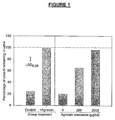
- urea hydrolysis was determined in excreted urine samples from the control and Agrotain treatment sheep. This involved addition of urease, incubation at 20°C for 165 minutes, followed by colourimetric determination of urea concentration. Replicated standard samples with urine, urease and different levels of Agrotain addition were analysed for comparison.
- Results from this evaluation showed significantly less urea hydrolysis in urine samples from Agrotain-treated sheep than from control sheep ( Figure 1 ), indicating effective inhibition of urea hydrolysis by Agrotain. This indicates that NBPT had been absorbed through the abomasum wall and transferred via the blood-stream to the bladder without being metabolised to an ineffective state.
- the standard samples highlighted the effect of increasing rate of Agrotain addition on inhibiting urea hydrolysis ( Figure 1 ) and indicate that a relatively high rate of NBPT from Agrotain was excreted in urine from Agrotain-treated sheep.
- the sheep from the abomasal infusion study had a two week clearance/rest period, and were then used for a second study, where the infusion apparatus was connected to the rumen catheters.
- the 12 sheep were randomly allocated to one of 2 treatments; water infusion (Control) or DCD at 15 g/day (DCD group).
- Experimental methodology was the same as for the abomasal infusion study in that there was a 4 day period of continuous infusion followed by an 11 day non-treatment clearance/rest period.
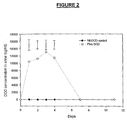
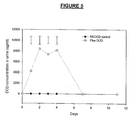
- Presence of DCD in urine samples was determined using high-performance liquid chromotography. This indicated that high levels of DCD were absorbed and excreted in urine in an unaltered form in all sheep and was present at all samplings over the infusion period ( Figure 5 ). However, concentrations of DCD in urine were lower at day 1 of infusion than days 2-4, as expected because of time for rumen processing. Levels declined after ceasing infusion and were negligible within 7 days ( Figure 5 ).
- Undisturbed soil lysimeters (30 cm diameter x 50 cm depth) were collected from a desert site near Lake Taupo which had been under a cutting regime with no grazing animals for over 18 months.
- the soil was a Taupo sandy loam (yellow brown pumice or allophanic soil).
- a gap (c. 1 cm) between the side of the soil cores and the PVC lysimeter housing was filled with Vaseline to stop possible edge-flow of water or urine.
- the lysimeters were transferred to a lysimeter facility (near Hamilton, New Zealand) where they were buried in soil so that the soil surface in the lysimeter was at ground level. However, the lysimeter casing extended about 4 cm above the soil surface to stop any lateral surface loss.
- Lysimeters were left to stabilise for several weeks after installation in the facility. Treatments were applied in May 2004. Pasture on the lysimeters was trimmed prior to treatment application and was regularly cut at heights and intervals similar to that under dairy cow grazing.
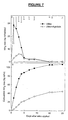
- Ammonia loss measurement involved placement of a clear Perspex cover over each lysimeter which had holes on one side and a hose on the other side connected to a Dreschel bottle containing acid and to a vacuum source. During a sequence of 24 hour periods, air was drawn across the top of each lysimeter and passed through the acid to absorb ammonia for subsequent analysis. Ammonia losses from urine were high during the first 24 hours after application and declined rapidly over the following 4 days ( Figure 7A ). Addition of Agrotain to urine greatly reduced ammonia loss during this period and halved cumulative emissions over 20 days from 13% to 6% of the urine-N applied ( Figure 7B ).
- Nitrous oxide (N 2 O) emission from the main lysimeters was measured using a standard closed chamber method. Chambers were placed on the lysimeters at regular intervals during the study for periods of one hour at around midday. Gas samples were collected at 0, 30 and 60 minutes from the headspace of the chambers for N 2 O analysis by gas chromatography. Emissions of N 2 O varied over time but were significantly reduced in the urine treatment with DCD added during the 14-30 day period after application ( Figure 8 ). Cumulative N 2 O emissions over the measurement period averaged 1.2 and 0.5 kg N/ha for the urine and urine+DCD treatments, giving a 57% reduction from DCD.
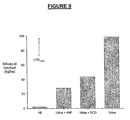
- Nitrate leaching from lysimeters was measured by collection of leachate draining from the base of each lysimeter. This drainage water was collected at regular intervals and analysed for nitrate concentration. Cumulative nitrate leaching was highest from the urine treatment and was reduced by 56 or 71% in treatments where DCD or 4MP was added to urine, respectively ( Figure 9 ).
- the abomasal infusion study showed that three different nitrogen process modifiers were absorbed via the abomasum and excreted in urine, resulting in significant changes in transformations of urine-nitrogen.
- the Agrotain-treated sheep produced urine with slower urea hydrolysis which can reduce ammonia loss when deposited on soil.
- the DCD and 4MP treated sheep produced urine with slower nitrification, which can reduce N losses by leaching and nitrous oxide emission. In the case of the DCD treatment, this was confirmed by analysis of DCD in the urine as well as by large inhibition in rate of nitrification of urine-nitrogen in soil.
- the rumen infusion study confirmed that DCD administered into the rumen resulted in its excretion in urine and inhibition of nitrification of urine-nitrogen.
- Application of urine containing these inhibitors to desert soil in the lysimeter experiment showed reduced nitrogen emissions via ammonia volatilisation (from Agrotain) or from nitrate leaching and nitrous oxide emission (from DCD and 4MP).
Landscapes
- Health & Medical Sciences (AREA)
- Life Sciences & Earth Sciences (AREA)
- Public Health (AREA)
- Environmental Sciences (AREA)
- Medicinal Chemistry (AREA)
- Pharmacology & Pharmacy (AREA)
- Epidemiology (AREA)
- Chemical & Material Sciences (AREA)
- Animal Behavior & Ethology (AREA)
- General Health & Medical Sciences (AREA)
- Veterinary Medicine (AREA)
- Nutrition Science (AREA)
- Birds (AREA)
- Animal Husbandry (AREA)
- Biodiversity & Conservation Biology (AREA)
- Physiology (AREA)
- Gynecology & Obstetrics (AREA)
- Reproductive Health (AREA)
- Urology & Nephrology (AREA)
- Fodder In General (AREA)
- Pharmaceuticals Containing Other Organic And Inorganic Compounds (AREA)
- Housing For Livestock And Birds (AREA)
Claims (20)
- Verfahren zur Änderung der Zusammensetzung tierischer Nebenprodukte,
gekennzeichnet durch den folgenden Schritt:Einführen eines Nitrifikationsinhibitors in ein Tier, der die Umwandlung von stickstoffhaltigen Verbindungen in tierischen Nebenprodukten direkt oder indirekt beeinflussen kann, sobald das tierische Nebenprodukt ausgeschieden wurde. - Abgabevorrichtung zur Änderung der Zusammensetzung tierischer Nebenprodukte,
dadurch gekennzeichnet, dass
die Abgabevorrichtung angepasst ist, um einen Nitrifikationsinhibitor in einem Tier abzugeben, der die Umwandlung von stickstoffhaltigen Verbindungen in tierischen Nebenprodukten direkt oder indirekt beeinflussen kann, sobald das tierische Nebenprodukt ausgeschieden wurde. - Abgabevorrichtung nach Anspruch 2, wobei das tierische Nebenprodukt Urin ist.
- Abgabevorrichtung nach Anspruch 2 oder Anspruch 3, wobei der Nitrifikationsinhibitor 3,4-Dimethylpyrazolphosphat (DMPP) ist.
- Abgabevorrichtung nach einem der Ansprüche 2 bis 4, wobei der Nitrifikationsinhibitor Dicyandiamid (DCD) ist.
- Abgabevorrichtung nach einem der Ansprüche 2 bis 5, wobei die Abgabevorrichtung konfiguriert ist, um einem Tier oral verabreicht zu werden.
- Abgabevorrichtung nach Anspruch 6, wobei die Abgabevorrichtung ein ruminaler Bolus ist.
- Abgabevorrichtung nach einem der Ansprüche 6 oder 7, wobei die Abgabevorrichtung eine pansenstabile Abgabevorrichtung ist.
- Abgabevorrichtung nach Anspruch 8, wobei die Abgabevorrichtung ein Verkapselungssystem einschließt.
- Abgabevorrichtung nach einem der Ansprüche 2 bis 5, wobei die Abgabevorrichtung konfiguriert ist, um in die Blase eines Tiers eingesetzt zu werden.
- Abgabevorrichtung nach Anspruch 10, wobei die Abgabevorrichtung ein niedrigeres spezifisches Gewicht hat als Urin.
- Abgabevorrichtung nach einem der Ansprüche 2 bis 11, wobei der Nitrifikationsinhibitor in einem inneren Kern der Abgabevorrichtung enthalten ist.
- Abgabevorrichtung nach einem der Ansprüche 2 bis 10, wobei die Abgabevorrichtung mit dem Nitrifikationsinhibitor getränkt ist.
- Abgabevorrichtung nach einem der Ansprüche 2 bis 13, wobei der Nitrifikationsinhibitor durch Ausbreitung von der Abgabevorrichtung abgegeben wird.
- Abgabevorrichtung nach einem der Ansprüche 2 bis 13, wobei der Nitrifikationsinhibitor durch Auflösung der Abgabevorrichtung abgegeben wird.
- Abgabevorrichtung nach einem der Ansprüche 2 bis 15, wobei die Abgabevorrichtung eine elektrochemische Zelle einschließt.
- Abgabevorrichtung nach einem der Ansprüche 2 bis 16, die ferner einen Ureaseinhibor einschließt.
- Abgabevorrichtung nach Anspruch 17 wobei der Ureiseinhibitor N-(n-Butyl)-thiophosphortriamid (NBPT) ist.
- Verwendung eines Nitrifikationsinhibitors bei der Herstellung einer Abgabevorrichtung nach einem der Ansprüche 2 bis 18.
- Verfahren nach Anspruch 1, wobei der Nitrifikationsinhibitor durch eine Abgabevorrichtung nach einem der Ansprüche 2 bis 18 eingeführt wird.
Applications Claiming Priority (2)
| Application Number | Priority Date | Filing Date | Title |
|---|---|---|---|
| NZ528648A NZ528648A (en) | 2003-10-02 | 2003-10-02 | Altering animal waste composition |
| PCT/NZ2004/000241 WO2005030247A1 (en) | 2003-10-02 | 2004-10-04 | Altering animal waste composition |
Related Child Applications (1)
| Application Number | Title | Priority Date | Filing Date |
|---|---|---|---|
| EP16152835 Division-Into | 2016-01-26 |
Publications (3)
| Publication Number | Publication Date |
|---|---|
| EP1684794A1 EP1684794A1 (de) | 2006-08-02 |
| EP1684794A4 EP1684794A4 (de) | 2007-12-05 |
| EP1684794B1 true EP1684794B1 (de) | 2016-09-28 |
Family
ID=34386879
Family Applications (1)
| Application Number | Title | Priority Date | Filing Date |
|---|---|---|---|
| EP04793705.7A Expired - Lifetime EP1684794B1 (de) | 2003-10-02 | 2004-10-04 | Änderung der zusammensetzung tierischer exkremente |
Country Status (8)
| Country | Link |
|---|---|
| US (1) | US20070212384A1 (de) |
| EP (1) | EP1684794B1 (de) |
| AU (1) | AU2004275677B2 (de) |
| BR (1) | BRPI0414861A (de) |
| CA (1) | CA2539238A1 (de) |
| NZ (1) | NZ528648A (de) |
| WO (1) | WO2005030247A1 (de) |
| ZA (1) | ZA200603450B (de) |
Families Citing this family (5)
| Publication number | Priority date | Publication date | Assignee | Title |
|---|---|---|---|---|
| NZ549705A (en) * | 2006-09-05 | 2009-04-30 | Agres Ltd | Animal production |
| WO2015137824A1 (en) * | 2014-03-13 | 2015-09-17 | Agresearch Limited | Altering animal waste composition |
| US10609938B2 (en) | 2014-07-21 | 2020-04-07 | Nutes Oy | Feed composition for reducing ammonia produced in animal agriculture and methods for making and using the feed composition |
| DE102019201159A1 (de) | 2019-01-30 | 2020-07-30 | Skw Stickstoffwerke Piesteritz Gmbh | Hochwirksame Konzentrate mit PPDA und deren Verwendung zur Stabilisierung der Wertstoffe in Tierexkrementen |
| CA3141022A1 (en) * | 2019-06-12 | 2020-12-17 | Henrik KARRING | Mitigation of ammonia, odor and greenhouse gases |
Family Cites Families (14)
| Publication number | Priority date | Publication date | Assignee | Title |
|---|---|---|---|---|
| US3285748A (en) * | 1960-12-01 | 1966-11-15 | Swift & Co | Process of preparing and feeding a feed containing b. thuringiensis |
| EP0119494A1 (de) * | 1983-03-16 | 1984-09-26 | Allied Corporation | Phosphorverbindungen enthaltendes Urease inhibiertes Harnstoffdüngemittel |
| US4530714A (en) * | 1983-03-16 | 1985-07-23 | Allied Corporation | N-aliphatic and N,N-aliphatic phosphoric triamide urease inhibitors and urease inhibited urea based fertilizer compositions |
| US4517004A (en) * | 1983-06-08 | 1985-05-14 | Allied Corporation | Aryl phosphoric triamide and aryl phosphorodiamidate urease and nitrification inhibitors and urease and nitrification inhibited urea and reduced nitrogen based fertilizer compositions |
| US4517003A (en) * | 1983-06-08 | 1985-05-14 | Allied Corporation | N-acyl phosphoric triamide urease inhibitors and urease inhibited urea based fertilizer compositions |
| US4872873A (en) * | 1987-12-14 | 1989-10-10 | Merck & Co., Inc. | Controlled release bolus device |
| US5188654A (en) * | 1991-03-28 | 1993-02-23 | Exxon Research And Engineering Company | Coatings with ionically and covalently crosslinked neutralized carboxylated polymers |
| US5505968A (en) * | 1993-07-02 | 1996-04-09 | Her Majesty The Queen In Right Of Canada, As Represented By The Department Of Agriculture | Antemortem nutrient supplement for livestock |
| US5788687A (en) | 1994-02-01 | 1998-08-04 | Caphco, Inc | Compositions and devices for controlled release of active ingredients |
| EP0852498A1 (de) * | 1995-09-26 | 1998-07-15 | Takeda Chemical Industries, Ltd. | Phosphorylamide, ihre herstellung und verwendung |
| US6171298B1 (en) | 1996-05-03 | 2001-01-09 | Situs Corporation | Intravesical infuser |
| AU6422798A (en) * | 1997-03-25 | 1998-10-20 | Takeda Chemical Industries Ltd. | Stabilized urease inhibitor |
| AU6876498A (en) | 1997-04-03 | 1998-10-22 | Point Biomedical Corporation | Intravesical drug delivery system |
| NZ506883A (en) | 2000-09-11 | 2003-03-28 | Bert F Quin | Dispensing of urease inhibitor at position of animal urination using tail mounted dispenser |
-
2003
- 2003-10-02 NZ NZ528648A patent/NZ528648A/en not_active IP Right Cessation
-
2004
- 2004-10-04 AU AU2004275677A patent/AU2004275677B2/en not_active Ceased
- 2004-10-04 EP EP04793705.7A patent/EP1684794B1/de not_active Expired - Lifetime
- 2004-10-04 BR BRPI0414861-4A patent/BRPI0414861A/pt not_active IP Right Cessation
- 2004-10-04 CA CA002539238A patent/CA2539238A1/en not_active Abandoned
- 2004-10-04 WO PCT/NZ2004/000241 patent/WO2005030247A1/en not_active Ceased
- 2004-10-04 US US10/573,941 patent/US20070212384A1/en not_active Abandoned
-
2006
- 2006-05-02 ZA ZA200603450A patent/ZA200603450B/en unknown
Also Published As
| Publication number | Publication date |
|---|---|
| EP1684794A1 (de) | 2006-08-02 |
| AU2004275677B2 (en) | 2011-01-06 |
| EP1684794A4 (de) | 2007-12-05 |
| WO2005030247A1 (en) | 2005-04-07 |
| AU2004275677A1 (en) | 2005-04-07 |
| US20070212384A1 (en) | 2007-09-13 |
| BRPI0414861A (pt) | 2006-11-28 |
| CA2539238A1 (en) | 2005-04-07 |
| NZ528648A (en) | 2005-08-26 |
| ZA200603450B (en) | 2007-04-25 |
Similar Documents
| Publication | Publication Date | Title |
|---|---|---|
| Montforts et al. | The exposure assessment for veterinary medicinal products | |
| Trigg et al. | A review of advances in the use of the GnRH agonist deslorelin in control of reproduction | |
| Ledgard et al. | A novel concept to reduce nitrogen losses from grazed pastures by administering soil nitrogen process inhibitors to ruminant animals: a study with sheep | |
| BRPI0914907B1 (pt) | composição particulada para ração e ração | |
| Minet et al. | Mixing dicyandiamide (DCD) with supplementary feeds for cattle: an effective method to deliver a nitrification inhibitor in urine patches | |
| AU2004275677B2 (en) | Altering animal waste composition | |
| Schwarz et al. | Fate of Barbiturates and Non-steriodal Anti-inflammatory Drugs During Carcass Composting | |
| US20140190225A1 (en) | Altering animal waste composition | |
| JP2005505513A5 (de) | ||
| NZ622419B (en) | Altering animal waste composition | |
| Rathbone et al. | Veterinary pharmaceutical dosage forms | |
| WO2015137824A1 (en) | Altering animal waste composition | |
| Grace et al. | An evaluation of the efficacy of injectable microencapsulated vitamin B12 in increasing and maintaining the serum and liver vitamin B12 concentrations of lambs | |
| Cady et al. | Veterinary long-acting injections and implants | |
| AU2016348215B2 (en) | Nutrient loss reduction method | |
| Haskell et al. | Update on FARAD food animal drug withholding recommendations | |
| Cottle et al. | Sodium pentobarbital residues in compost piles containing carcasses of euthanized equines | |
| Seo et al. | Aeration effect on degradation of veterinary antibiotics in swine slurry | |
| WO2008030108A1 (en) | Animal production | |
| CN108743950A (zh) | 杀虫剂及其制备方法 | |
| Winckler et al. | Transfer of veterinary drugs and pharmacologically-active feed additives into soil with special consideration of tetracyclines–executive summary | |
| Davey et al. | Effect of repeated spinosad treatments on cattle against Boophilus annulatus under south Texas field conditions | |
| Judson et al. | Recent developments in the detection and treatment of vitamin B~ 1~ 2 deficiency in sheep and cattle at pasture | |
| Ramos et al. | Mulberry production with swine lagoon | |
| Boxall | and Transport of Veterinary Medicines in the Soil Environment |
Legal Events
| Date | Code | Title | Description |
|---|---|---|---|
| PUAI | Public reference made under article 153(3) epc to a published international application that has entered the european phase |
Free format text: ORIGINAL CODE: 0009012 |
|
| 17P | Request for examination filed |
Effective date: 20060327 |
|
| AK | Designated contracting states |
Kind code of ref document: A1 Designated state(s): AT BE BG CH CY CZ DE DK EE ES FI FR GB GR HU IE IT LI LU MC NL PL PT RO SE SI SK TR |
|
| AX | Request for extension of the european patent |
Extension state: AL HR LT LV MK |
|
| A4 | Supplementary search report drawn up and despatched |
Effective date: 20071106 |
|
| 17Q | First examination report despatched |
Effective date: 20080228 |
|
| APBK | Appeal reference recorded |
Free format text: ORIGINAL CODE: EPIDOSNREFNE |
|
| APBN | Date of receipt of notice of appeal recorded |
Free format text: ORIGINAL CODE: EPIDOSNNOA2E |
|
| APBR | Date of receipt of statement of grounds of appeal recorded |
Free format text: ORIGINAL CODE: EPIDOSNNOA3E |
|
| APAF | Appeal reference modified |
Free format text: ORIGINAL CODE: EPIDOSCREFNE |
|
| APAF | Appeal reference modified |
Free format text: ORIGINAL CODE: EPIDOSCREFNE |
|
| APBT | Appeal procedure closed |
Free format text: ORIGINAL CODE: EPIDOSNNOA9E |
|
| RIC1 | Information provided on ipc code assigned before grant |
Ipc: A61K 38/43 20060101AFI20160226BHEP Ipc: A61K 9/00 20060101ALI20160226BHEP |
|
| GRAP | Despatch of communication of intention to grant a patent |
Free format text: ORIGINAL CODE: EPIDOSNIGR1 |
|
| INTG | Intention to grant announced |
Effective date: 20160414 |
|
| GRAS | Grant fee paid |
Free format text: ORIGINAL CODE: EPIDOSNIGR3 |
|
| GRAA | (expected) grant |
Free format text: ORIGINAL CODE: 0009210 |
|
| AK | Designated contracting states |
Kind code of ref document: B1 Designated state(s): AT BE BG CH CY CZ DE DK EE ES FI FR GB GR HU IE IT LI LU MC NL PL PT RO SE SI SK TR |
|
| AX | Request for extension of the european patent |
Extension state: AL HR LT LV MK |
|
| REG | Reference to a national code |
Ref country code: GB Ref legal event code: FG4D |
|
| REG | Reference to a national code |
Ref country code: CH Ref legal event code: EP |
|
| REG | Reference to a national code |
Ref country code: AT Ref legal event code: REF Ref document number: 832171 Country of ref document: AT Kind code of ref document: T Effective date: 20161015 |
|
| REG | Reference to a national code |
Ref country code: IE Ref legal event code: FG4D |
|
| REG | Reference to a national code |
Ref country code: DE Ref legal event code: R096 Ref document number: 602004050022 Country of ref document: DE |
|
| REG | Reference to a national code |
Ref country code: LT Ref legal event code: MG9D |
|
| PG25 | Lapsed in a contracting state [announced via postgrant information from national office to epo] |
Ref country code: FI Free format text: LAPSE BECAUSE OF FAILURE TO SUBMIT A TRANSLATION OF THE DESCRIPTION OR TO PAY THE FEE WITHIN THE PRESCRIBED TIME-LIMIT Effective date: 20160928 |
|
| REG | Reference to a national code |
Ref country code: NL Ref legal event code: MP Effective date: 20160928 |
|
| REG | Reference to a national code |
Ref country code: AT Ref legal event code: MK05 Ref document number: 832171 Country of ref document: AT Kind code of ref document: T Effective date: 20160928 |
|
| PG25 | Lapsed in a contracting state [announced via postgrant information from national office to epo] |
Ref country code: SE Free format text: LAPSE BECAUSE OF FAILURE TO SUBMIT A TRANSLATION OF THE DESCRIPTION OR TO PAY THE FEE WITHIN THE PRESCRIBED TIME-LIMIT Effective date: 20160928 Ref country code: NL Free format text: LAPSE BECAUSE OF FAILURE TO SUBMIT A TRANSLATION OF THE DESCRIPTION OR TO PAY THE FEE WITHIN THE PRESCRIBED TIME-LIMIT Effective date: 20160928 Ref country code: BE Free format text: LAPSE BECAUSE OF NON-PAYMENT OF DUE FEES Effective date: 20161031 Ref country code: GR Free format text: LAPSE BECAUSE OF FAILURE TO SUBMIT A TRANSLATION OF THE DESCRIPTION OR TO PAY THE FEE WITHIN THE PRESCRIBED TIME-LIMIT Effective date: 20161229 |
|
| PG25 | Lapsed in a contracting state [announced via postgrant information from national office to epo] |
Ref country code: RO Free format text: LAPSE BECAUSE OF FAILURE TO SUBMIT A TRANSLATION OF THE DESCRIPTION OR TO PAY THE FEE WITHIN THE PRESCRIBED TIME-LIMIT Effective date: 20160928 Ref country code: EE Free format text: LAPSE BECAUSE OF FAILURE TO SUBMIT A TRANSLATION OF THE DESCRIPTION OR TO PAY THE FEE WITHIN THE PRESCRIBED TIME-LIMIT Effective date: 20160928 |
|
| REG | Reference to a national code |
Ref country code: DE Ref legal event code: R119 Ref document number: 602004050022 Country of ref document: DE |
|
| PG25 | Lapsed in a contracting state [announced via postgrant information from national office to epo] |
Ref country code: ES Free format text: LAPSE BECAUSE OF FAILURE TO SUBMIT A TRANSLATION OF THE DESCRIPTION OR TO PAY THE FEE WITHIN THE PRESCRIBED TIME-LIMIT Effective date: 20160928 Ref country code: BE Free format text: LAPSE BECAUSE OF FAILURE TO SUBMIT A TRANSLATION OF THE DESCRIPTION OR TO PAY THE FEE WITHIN THE PRESCRIBED TIME-LIMIT Effective date: 20160928 Ref country code: PL Free format text: LAPSE BECAUSE OF FAILURE TO SUBMIT A TRANSLATION OF THE DESCRIPTION OR TO PAY THE FEE WITHIN THE PRESCRIBED TIME-LIMIT Effective date: 20160928 Ref country code: CZ Free format text: LAPSE BECAUSE OF FAILURE TO SUBMIT A TRANSLATION OF THE DESCRIPTION OR TO PAY THE FEE WITHIN THE PRESCRIBED TIME-LIMIT Effective date: 20160928 Ref country code: PT Free format text: LAPSE BECAUSE OF FAILURE TO SUBMIT A TRANSLATION OF THE DESCRIPTION OR TO PAY THE FEE WITHIN THE PRESCRIBED TIME-LIMIT Effective date: 20170130 Ref country code: AT Free format text: LAPSE BECAUSE OF FAILURE TO SUBMIT A TRANSLATION OF THE DESCRIPTION OR TO PAY THE FEE WITHIN THE PRESCRIBED TIME-LIMIT Effective date: 20160928 Ref country code: SK Free format text: LAPSE BECAUSE OF FAILURE TO SUBMIT A TRANSLATION OF THE DESCRIPTION OR TO PAY THE FEE WITHIN THE PRESCRIBED TIME-LIMIT Effective date: 20160928 Ref country code: BG Free format text: LAPSE BECAUSE OF FAILURE TO SUBMIT A TRANSLATION OF THE DESCRIPTION OR TO PAY THE FEE WITHIN THE PRESCRIBED TIME-LIMIT Effective date: 20161228 |
|
| REG | Reference to a national code |
Ref country code: CH Ref legal event code: PL |
|
| PG25 | Lapsed in a contracting state [announced via postgrant information from national office to epo] |
Ref country code: IT Free format text: LAPSE BECAUSE OF FAILURE TO SUBMIT A TRANSLATION OF THE DESCRIPTION OR TO PAY THE FEE WITHIN THE PRESCRIBED TIME-LIMIT Effective date: 20160928 |
|
| PG25 | Lapsed in a contracting state [announced via postgrant information from national office to epo] |
Ref country code: LI Free format text: LAPSE BECAUSE OF NON-PAYMENT OF DUE FEES Effective date: 20161031 Ref country code: DK Free format text: LAPSE BECAUSE OF FAILURE TO SUBMIT A TRANSLATION OF THE DESCRIPTION OR TO PAY THE FEE WITHIN THE PRESCRIBED TIME-LIMIT Effective date: 20160928 Ref country code: DE Free format text: LAPSE BECAUSE OF NON-PAYMENT OF DUE FEES Effective date: 20170503 Ref country code: CH Free format text: LAPSE BECAUSE OF NON-PAYMENT OF DUE FEES Effective date: 20161031 |
|
| PLBE | No opposition filed within time limit |
Free format text: ORIGINAL CODE: 0009261 |
|
| STAA | Information on the status of an ep patent application or granted ep patent |
Free format text: STATUS: NO OPPOSITION FILED WITHIN TIME LIMIT |
|
| PG25 | Lapsed in a contracting state [announced via postgrant information from national office to epo] |
Ref country code: LU Free format text: LAPSE BECAUSE OF NON-PAYMENT OF DUE FEES Effective date: 20161004 |
|
| REG | Reference to a national code |
Ref country code: FR Ref legal event code: ST Effective date: 20170802 |
|
| 26N | No opposition filed |
Effective date: 20170629 |
|
| PG25 | Lapsed in a contracting state [announced via postgrant information from national office to epo] |
Ref country code: FR Free format text: LAPSE BECAUSE OF NON-PAYMENT OF DUE FEES Effective date: 20161128 |
|
| PG25 | Lapsed in a contracting state [announced via postgrant information from national office to epo] |
Ref country code: SI Free format text: LAPSE BECAUSE OF FAILURE TO SUBMIT A TRANSLATION OF THE DESCRIPTION OR TO PAY THE FEE WITHIN THE PRESCRIBED TIME-LIMIT Effective date: 20160928 |
|
| PG25 | Lapsed in a contracting state [announced via postgrant information from national office to epo] |
Ref country code: HU Free format text: LAPSE BECAUSE OF FAILURE TO SUBMIT A TRANSLATION OF THE DESCRIPTION OR TO PAY THE FEE WITHIN THE PRESCRIBED TIME-LIMIT; INVALID AB INITIO Effective date: 20041004 Ref country code: CY Free format text: LAPSE BECAUSE OF FAILURE TO SUBMIT A TRANSLATION OF THE DESCRIPTION OR TO PAY THE FEE WITHIN THE PRESCRIBED TIME-LIMIT Effective date: 20160928 |
|
| PG25 | Lapsed in a contracting state [announced via postgrant information from national office to epo] |
Ref country code: TR Free format text: LAPSE BECAUSE OF FAILURE TO SUBMIT A TRANSLATION OF THE DESCRIPTION OR TO PAY THE FEE WITHIN THE PRESCRIBED TIME-LIMIT Effective date: 20160928 Ref country code: MC Free format text: LAPSE BECAUSE OF FAILURE TO SUBMIT A TRANSLATION OF THE DESCRIPTION OR TO PAY THE FEE WITHIN THE PRESCRIBED TIME-LIMIT Effective date: 20160928 |
|
| PGFP | Annual fee paid to national office [announced via postgrant information from national office to epo] |
Ref country code: IE Payment date: 20181026 Year of fee payment: 15 |
|
| PGFP | Annual fee paid to national office [announced via postgrant information from national office to epo] |
Ref country code: GB Payment date: 20181031 Year of fee payment: 15 |
|
| GBPC | Gb: european patent ceased through non-payment of renewal fee |
Effective date: 20191004 |
|
| PG25 | Lapsed in a contracting state [announced via postgrant information from national office to epo] |
Ref country code: GB Free format text: LAPSE BECAUSE OF NON-PAYMENT OF DUE FEES Effective date: 20191004 Ref country code: IE Free format text: LAPSE BECAUSE OF NON-PAYMENT OF DUE FEES Effective date: 20191004 |