EP1677206A2 - Verfahren und Systeme zur Erhaltung eines unbekannten Markups in einer stark typisierten Umgebung - Google Patents
Verfahren und Systeme zur Erhaltung eines unbekannten Markups in einer stark typisierten Umgebung Download PDFInfo
- Publication number
- EP1677206A2 EP1677206A2 EP05026120A EP05026120A EP1677206A2 EP 1677206 A2 EP1677206 A2 EP 1677206A2 EP 05026120 A EP05026120 A EP 05026120A EP 05026120 A EP05026120 A EP 05026120A EP 1677206 A2 EP1677206 A2 EP 1677206A2
- Authority
- EP
- European Patent Office
- Prior art keywords
- xml
- tree
- markup
- strongly
- typed tree
- Prior art date
- Legal status (The legal status is an assumption and is not a legal conclusion. Google has not performed a legal analysis and makes no representation as to the accuracy of the status listed.)
- Granted
Links
Images



Classifications
-
- G—PHYSICS
- G06—COMPUTING OR CALCULATING; COUNTING
- G06F—ELECTRIC DIGITAL DATA PROCESSING
- G06F40/00—Handling natural language data
- G06F40/10—Text processing
- G06F40/12—Use of codes for handling textual entities
- G06F40/14—Tree-structured documents
- G06F40/143—Markup, e.g. Standard Generalized Markup Language [SGML] or Document Type Definition [DTD]
Definitions
- This invention pertains to methods and systems that process XML and XML-based markup languages.
- XML and XML-based markup languages are extensible.
- the extensibility mechanism is based on the concept of known namespaces and unknown namespaces which can be implemented by any arbitrary agent that processes the markup.
- Unknown namespaces can contain arbitrary extensions that a particular agent may or may not understand.
- the set of known and unknown namespaces can differ between the individual agents in a pipeline. In such a system, it becomes important for any agent that comes before another to preserve the markup from any unknown namespace because a subsequent agent that understands the namespace may want to process content from the namespace.
- a DOM tree is a weakly typed structure that contains one node for each element tag found in the markup. Because every node is weakly typed, it is a fairly straightforward process for an agent to create nodes of unspecified type that hold markup for unknown namespaces, skip these nodes during processing, and then subsequently serialize them back to markup which is passed to the next agent.
- this invention arose out of concerns associated with providing solutions to the markup preservation problem in strongly typed environments and/or those environments that involve an intermediate translation stage.
- XML-based markup that may contain XML-based elements that are both known and unknown is received.
- a strongly typed tree that is associated with the known XML-based elements is instantiated and a weakly typed tree that is associated with both the XML-based known and unknown elements is instantiated.
- the strongly and the weakly typed trees are then correlated in a manner that preserves the unknown XML-based elements.
- the methods and systems described below provide means that can preserve markup associated with unknown namespace elements in the context of a strongly typed environment. In at least some embodiments, this is accomplished by instantiating a so-called strongly typed tree that is associated with XML-based elements that are known, and a weakly typed tree that is associated with XML-based known and unknown elements. A correlation process is then utilized to correlate the strongly typed and weakly typed trees during deserialization of the XML-based markup. A de-correlation process then reserializes the XML-based markup in a manner that preserves any unknown namespace elements.
- program modules include routines, programs, objects, components, data structures and the like that perform particular tasks or implement particular abstract data types.
- Various embodiments may be implemented in computer system configurations other than a PC.
- various embodiments may be realized in hand-held devices, multi-processor systems, microprocessor-based or programmable consumer electronics, network PCs, minicomputers, mainframe computers and the like.
- various embodiments may also be practiced in distributed computing environments, where tasks are performed by remote processing devices that are linked through a communications network.
- program modules may be located in both local and remote memory storage devices.
- a page of content 100 such as one that might be displayed on a computer display, includes text 102, graphics 104, an image 106, some additional text 108 and a clickable button 110.
- This content can be represented (in memory) as a tree 112 whose root is FixedPage, and whose nodes are Text, Graphics, Image, Text and Button.
- the XML representation of this tree is shown at 114.
- each of the elements is represented by an instance of an object of a class.
- FixedPage is an instance of a class, and the class is defined as having a property called children.
- the children property is strongly typed and it is strongly typed as a collection of some large class.
- Each of the elements of the tree is a class name which is a sub-class of, or derived from some base class which, in this example is UIElement .
- UIElement the FixedPage class instance children properties can only hold things that are derived from the base class UIElement .
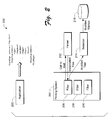
- printing system 204 comprises a collection of filters or agents 206, 208 and 210.
- the filters typically load the markup for a page or a document, modify it somehow, and then provide it for processing by the next filter.
- a filter could add a watermark to a page, re-arrange pages in a different order, scale, rotate, adjust images on the page, and the like.
- WinFX One example of a printing system is Microsoft's WinFX system.
- WinFX there are standard software components such as a parser 212 and a serializer 214 that process XML or, more accurately in the WinFX context, XAML (Extensible Application Markup Language).
- filter 206 calls parser 212 to load the markup. Responsively, parser 212 returns an instantiated tree of elements (such as tree 112 in Fig. 1) to the filter. The filter then processes the tree, modifies it somehow, and provides the modified tree to serializer 214.
- the serializer 214 then serializes the modified tree into a modified markup which is then kept in some manner, as represented by data store 216.
- the next filter in this case filter 208, then calls the parser 212 to load the modified markup and operates on its associated tree as described above, continuing the process.
- the modified tree is serialized by the serializer 214 and can be provided to a consuming device, such as a printer.
- app 200 has inserted, into markup 202, the element "ext:Bar". Perhaps this element is to be used to control, in some manner, the consuming device. For example, if the consuming device is a printer, then this element might be associated with selecting a particular type of ink to use for printing the document. In a strongly typed environment, however, this element or associated namespace is not known, and hence will be lost after the first filter.
- unknown elements in a strongly typed environment are preserved during processing of the XML (or XAML in the implementation example described below) by instantiating a strongly typed tree that is associated with XML-based elements that are known, and a weakly typed tree that is associated with XML-based known and unknown elements.
- the two trees are then correlated with one another so that the weakly typed tree includes the unknown elements and correlates with the strongly typed tree's known elements.
- the weakly typed tree can be re-serialzed into XML (or XAML) in a manner that preserves the unknown markup.
- Fig. 3 which provides an implementation in the context of Microsoft's WinFX platform. It is to be appreciated and understood that the implementation about to be described is not to be used to limit application of the claimed subject matter to a specific implementation or platform. Rather, the implementation example is provided to illustrate how various inventive principles described herein can be implemented in but one particular environment.
- system 300 is a software-based system and includes an application/filter 302, a parser 304 having a binary convertor component and a tree creator component, a serializer 306, a custom deserializer 308 and a designer helper 310.
- parser 304 is a WinFX object which, in connection with other components that are not illustrated, parses XML-based markup, matches known element tags to WinFX classes and instantiates WinFX class objects. Parser 304 returns a strongly typed WinFX tree.
- Serializer 306 is a WinFX object that takes a strongly typed WinFX tree and serializes it into XML markup.
- Custom Deserializer 308 (also considered a Custom XAML Deserializer in this context) is a WinFX object that receives notifications for each markup element parsed by parser 304.
- the Custom Deserializer can perform an arbitrary computation. After processing a markup element, it returns a result code that instructs parser 304 whether it should use the element or skip the element.
- Designer Helper 310 is a WinFX object that is called by Serializer 306 before the markup for a strongly typed WinFX object is created.
- the Designer Helper can emit additional markup.
- system 300 works in the following way. Assume that the XML (or XAML) of Fig. 2 is to be processed by system 300. Note that in the Fig. 2 example, an unknown XML element "ext:Bar” has been injected into an otherwise known collection of XML elements. When the XML is received by the parser 304, two things happen in this particular scenario.
- the XML is processed by the parser's binary converter and converted into a binary representation of the XML which, in this example, is referred to as BAML.
- BAML binary representation of the XML
- the binary representation is then saved.
- all elements that are not known, by virtue of the processing that takes place in the strongly-typed environment, are ignored.
- the "ext:Bar" element is encountered, it would be ignored and effectively lost in the binary conversion.
- the parser's tree creator takes the binary representation that was saved and processes the binary representation to instantiate an object tree that is a strongly typed tree. This is diagrammatically indicated to the right of the tree creator component. This tree can then be handed to the application/filter 302 for processing.
- the binary convertor calls the custom deserializer 308 for each node or element encountered in the XML.
- the custom deserializer inserts the extensibility into the process. More specifically, for each node that is parsed by the parser 304, the customer deserializer is called and it decides how the nodes or elements should be processed. In the case in which nodes are known (i.e. nodes associated with known elements such as Text, Graphics and the like), the custom deserializer 308 returns to the parser and indicates that the parser is to process the node as usual. If, on the other hand, there is an unknown node or element, the custom deserializer returns to the parser and indicates that the parser is to skip the node and not transfer it into the binary representation.
- the custom deserializer builds a weakly typed DOM tree. That is, the deserializer builds the weakly typed DOM tree from within the extensibility point. This weakly typed DOM tree is diagrammatically to the left of the custom deserializer 308.
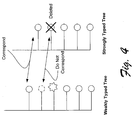
- the deserializer creates a placeholder node in the weakly typed tree, e.g. a null object. In the illustrated example, these place holders are indicated as small black-filled circles.
- the deserializer creates a "preserve” node that contains the original markup, i.e. the text string of markup " ⁇ ext:Bar/>". This is diagrammatically indicated by the star node in the weakly typed tree.
- each tree is walked, node by node, for purposes of correlating the nodes of the weakly typed tree with the nodes of the strongly typed tree. If a node in the weakly typed tree has a place holder for a strongly-typed object, then that node in the weakly typed tree is set to the corresponding object or node in the strongly typed tree. If, on the other hand, the node in the weakly typed tree is not set to a place holder for a strongly-typed object in the strongly typed tree, then the weakly typed tree node is skipped and the process advances to the next node in the weakly typed tree.
- this next node in the weakly typed tree has a placeholder associated with strongly typed object in the strongly typed tree, then the weakly typed tree node is set to the corresponding object or node in the strongly typed tree, and the process continues until both trees have been walked. Accordingly, this process effectively populates the weakly typed tree with the objects or nodes from the strongly typed tree.
- a fully populated weakly typed tree is returned.
- the strongly typed tree can be returned to application 302 and be operated upon by the application. For example, the application may modify or delete a node on the strongly typed tree.
- the modified strongly typed tree is provided to serializer 306 for reserialization into XML (or XAML).
- the serializer finds which nodes in the strongly typed tree correspond to which nodes in the weakly typed tree, and then correlates the weakly typed tree with the strongly typed tree.
- the serializer 306 walks the strongly and weakly typed trees and modifies the nodes on the weakly typed tree to reflect the processing that has taken place on the strongly typed tree.
- the serializer encounters the first node in the strongly typed and weakly typed trees. If these nodes correspond to each other, then the serializer moves to the next node in each tree to check for correspondence. In this particular example, the next node in the strongly typed tree was deleted by the application. In response, the serializer finds the corresponding node in the weakly typed tree and deletes it. This is diagrammatically indicated in the figure by the dashed line.
- the serializer locates the next node in the strongly typed tree ⁇ here the third one down (including the deleted node). The serializer then finds the corresponding node in the weakly typed tree. Here, however, there is an additional node (i.e. the one that corresponds to "ext:Bar") between the weakly typed tree's last processed corresponding node and the current corresponding node. In this case, if the intervening node is not one that corresponds to a strongly typed node, it is serialized as raw XML.
- serializer then continues to process the strongly typed and weakly typed trees, thus serializing the weakly typed tree in conformance to the modified strongly typed tree. Hence, in this manner, serialization can occur and the extended elements which are not those associated with the strongly typed environment can be preserved.
- Fig. 5 is a flow diagram that describes steps in a method in accordance with one embodiment.
- the method can be implemented in any suitable hardware, software, firmware or combination thereof.
- the method can be implemented in connection with a system such as the one described immediately above. It is to be appreciated and understood, however, that other systems can implement this method without departing from the spirit and scope of the claimed subject matter.
- Step 500 instantiates a strongly typed and a weakly typed tree.
- the strongly typed tree contains elements or nodes that are known within the strongly typed environment; and the weakly typed tree contains nodes that are associated with strongly typed elements, as well as nodes that are associated with elements that have been injected into the corresponding XML and which are not necessarily known within the particular strongly typed environment.
- Step 502 correlates the strongly typed and the weakly typed trees so that the weakly typed tree has nodes that correspond to the known nodes on the strongly typed tree.
- the weakly typed tree contains place holders for the nodes that correspond to the strongly typed elements and correlation takes place by walking both trees, in parallel, and inserting or making entries for the weakly typed nodes that correspond to the strongly typed nodes.
- step 504 returns the strongly typed tree an application, collection of filters or some other component so that the strongly typed tree can be operated upon to provide a modified strongly typed tree. Once the strongly typed tree has been operated upon, it is returned for correlation with the weakly typed tree. Accordingly, step 506 correlates the weakly typed tree with the returned modified strongly typed tree and step 508 re-serializes the correlated weakly typed tree in a manner that preserves the injected unknown elements.
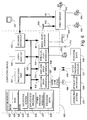
- Computing device 620 includes a processing unit 621, a system memory 622, and a system bus 623 that couples various system components including the system memory to the processing unit 621.
- the system bus 623 may be any of several types of bus structures including a memory bus or memory controller, a peripheral bus, and a local bus using any of a variety of bus architectures.
- the system memory includes read only memory (ROM) 624 and random access memory (RAM) 625.
- ROM read only memory
- RAM random access memory
- a basic input/output system (BIOS) 626 containing the basic routines that help to transfer information between elements within the computing device 620, such as during start-up, is stored in ROM 624.
- the computing device 620 further includes a hard disk drive 627 for reading from and writing to a hard disk 660 and a magnetic disk drive 628 for reading from or writing to a removable magnetic disk 629.
- the hard disk drive 627 and magnetic disk drive 628 are connected to the system bus 623 by a hard disk drive interface 632 and a magnetic disk drive interface 633, respectively.
- the drives and their associated computer-readable media provide nonvolatile storage of computer readable instructions, data structures, program modules and other data for the computing device 620.
- the exemplary environment described herein employs a hard disk 660 and a removable magnetic disk 629, it will be appreciated by those skilled in the art that other types of computer readable media which can store data that is accessible by a computer, such as optical disk drives and disks, magnetic cassettes, flash memory cards, digital video disks, Bernoulli cartridges, random access memories, read only memories, and the like may also be used in the exemplary operating environment.
- a number of program modules may be stored on the hard disk 660, magnetic disk 629, ROM 624 or RAM 625, including an operating system 635, one or more applications programs 636, other program modules 637, and program data 638.
- a user may enter commands and information into the computing device 620 through input devices such as a keyboard 640 and a pointing device 642.
- Other input devices may include a microphone, joystick, game pad, satellite dish, scanner, or the like.
- serial port interface 646 that is coupled to the system bus, but may be connected by other interfaces, such as the parallel port 634, game port or a universal serial bus (USB).
- a monitor 647 or other type of display device is also connected to the system bus 623 via an interface, such as a video adapter 648.
- computing devices typically include other peripheral output devices, such as speakers and a printer 630 connected through the parallel port interface 634 to the system bus 623.
- the computing device 620 may operate in a networked environment using logical connections to one or more remote computers, such as a print server 649.
- the print server 649 may be another computing device, a server, a router, a network computing device, a peer device or other common network node, and typically includes many of the elements described above relative to the computing device 620, although, often a print server 649 is dedicated to routing print requests from the computing device 620 to attached printers 650.
- the logical connections depicted in Fig. 1 include a local area network (LAN) 651 and a wide area network (WAN) 652. Such networking environments are commonplace in offices, enterprise-wide computer networks, intranets and the Internet.
- the computing device 620 When used in a LAN networking environment, the computing device 620 is connected to the local network 651 through a network interface or adapter 653. When used in a WAN networking environment, the computing device 620 typically includes a modem 654 or other means for establishing communications over the WAN 652.
- the modem 654 which may be internal or external, is connected to the system bus 623 via the serial port interface 646.
- program modules depicted relative to the computing device 620, or portions thereof may be stored in the remote memory storage device. It will be appreciated that the network connections shown are exemplary and other means of establishing a communications link between the computers may be used.
- the methods and systems described above can preserve markup associated with unknown namespace elements in the context of a strongly typed environment. In at least some embodiments, this is accomplished by instantiating a so-called strongly typed tree that is associated with XML-based elements that are known, and a weakly typed tree that is associated with XML-based known and unknown elements. A correlation process is then utilized to correlate the strongly typed and weakly typed trees during deserialization of the XML-based markup. A de-correlation process then reserializes the XML-based markup in a manner that preserves any unknown namespace elements.
Landscapes
- Engineering & Computer Science (AREA)
- Theoretical Computer Science (AREA)
- Health & Medical Sciences (AREA)
- Artificial Intelligence (AREA)
- Audiology, Speech & Language Pathology (AREA)
- Computational Linguistics (AREA)
- General Health & Medical Sciences (AREA)
- Physics & Mathematics (AREA)
- General Engineering & Computer Science (AREA)
- General Physics & Mathematics (AREA)
- Document Processing Apparatus (AREA)
- Information Retrieval, Db Structures And Fs Structures Therefor (AREA)
Applications Claiming Priority (1)
| Application Number | Priority Date | Filing Date | Title |
|---|---|---|---|
| US11/026,341 US7559020B2 (en) | 2004-12-30 | 2004-12-30 | Methods and systems for preserving unknown markup in a strongly typed environment |
Publications (3)
| Publication Number | Publication Date |
|---|---|
| EP1677206A2 true EP1677206A2 (de) | 2006-07-05 |
| EP1677206A3 EP1677206A3 (de) | 2008-01-23 |
| EP1677206B1 EP1677206B1 (de) | 2011-09-14 |
Family
ID=36032119
Family Applications (1)
| Application Number | Title | Priority Date | Filing Date |
|---|---|---|---|
| EP05026120A Expired - Lifetime EP1677206B1 (de) | 2004-12-30 | 2005-11-30 | Verfahren und Systeme zur Erhaltung eines unbekannten Markups in einer stark typisierten Umgebung |
Country Status (6)
| Country | Link |
|---|---|
| US (1) | US7559020B2 (de) |
| EP (1) | EP1677206B1 (de) |
| JP (1) | JP4943002B2 (de) |
| KR (1) | KR101169169B1 (de) |
| CN (1) | CN100561472C (de) |
| AT (1) | ATE524780T1 (de) |
Families Citing this family (7)
| Publication number | Priority date | Publication date | Assignee | Title |
|---|---|---|---|---|
| JPWO2006046665A1 (ja) * | 2004-10-27 | 2008-05-22 | 株式会社ジャストシステム | 文書処理装置及び文書処理方法 |
| US20070288893A1 (en) * | 2006-06-08 | 2007-12-13 | Microsoft Corporation | Extending configuration sections in configuration |
| US20080016182A1 (en) * | 2006-07-11 | 2008-01-17 | Nokia Corporation | Dynamic device profile interfaces |
| US8255790B2 (en) * | 2006-09-08 | 2012-08-28 | Microsoft Corporation | XML based form modification with import/export capability |
| US8015483B2 (en) * | 2006-10-20 | 2011-09-06 | Microsoft Corporation | Processing an XML feed with extensible or non-typed elements |
| CN101355437A (zh) * | 2007-07-25 | 2009-01-28 | 华为技术有限公司 | 告警/事件信息的处理方法和装置 |
| GB2492096B (en) * | 2011-06-21 | 2014-02-19 | Canon Kk | Method for processing a structured document to render, and corresponding processor |
Family Cites Families (7)
| Publication number | Priority date | Publication date | Assignee | Title |
|---|---|---|---|---|
| US6085198A (en) * | 1998-06-05 | 2000-07-04 | Sun Microsystems, Inc. | Integrated three-tier application framework with automated class and table generation |
| US6507856B1 (en) * | 1999-01-05 | 2003-01-14 | International Business Machines Corporation | Dynamic business process automation system using XML documents |
| US20010054172A1 (en) * | 1999-12-03 | 2001-12-20 | Tuatini Jeffrey Taihana | Serialization technique |
| US20040015840A1 (en) * | 2001-04-19 | 2004-01-22 | Avaya, Inc. | Mechanism for converting between JAVA classes and XML |
| AU2002334721B2 (en) * | 2001-09-28 | 2008-10-23 | Oracle International Corporation | An index structure to access hierarchical data in a relational database system |
| KR20070064684A (ko) * | 2001-11-23 | 2007-06-21 | 리서치 인 모션 리미티드 | 확장가능 마크업 언어 문서를 처리하는 시스템 및 방법 |
| US7373595B2 (en) * | 2002-06-27 | 2008-05-13 | Microsoft Corporation | System and method for validating an XML document and reporting schema violations |
-
2004
- 2004-12-30 US US11/026,341 patent/US7559020B2/en not_active Expired - Fee Related
-
2005
- 2005-11-25 KR KR1020050113511A patent/KR101169169B1/ko not_active Expired - Fee Related
- 2005-11-30 AT AT05026120T patent/ATE524780T1/de not_active IP Right Cessation
- 2005-11-30 CN CNB2005101287391A patent/CN100561472C/zh not_active Expired - Fee Related
- 2005-11-30 EP EP05026120A patent/EP1677206B1/de not_active Expired - Lifetime
- 2005-12-27 JP JP2005375507A patent/JP4943002B2/ja not_active Expired - Fee Related
Also Published As
| Publication number | Publication date |
|---|---|
| EP1677206A3 (de) | 2008-01-23 |
| KR101169169B1 (ko) | 2012-07-30 |
| CN100561472C (zh) | 2009-11-18 |
| EP1677206B1 (de) | 2011-09-14 |
| CN1797404A (zh) | 2006-07-05 |
| KR20060079086A (ko) | 2006-07-05 |
| JP2006323816A (ja) | 2006-11-30 |
| US20060150083A1 (en) | 2006-07-06 |
| US7559020B2 (en) | 2009-07-07 |
| ATE524780T1 (de) | 2011-09-15 |
| JP4943002B2 (ja) | 2012-05-30 |
Similar Documents
| Publication | Publication Date | Title |
|---|---|---|
| US8639723B2 (en) | Spooling strategies using structured job information | |
| JP4854658B2 (ja) | ドキュメントを処理する方法および装置 | |
| US8024368B2 (en) | Generating XML instances from flat files | |
| CA2448787C (en) | Method and computer-readable medium for importing and exporting hierarchically structured data | |
| US8321839B2 (en) | Abstracting test cases from application program interfaces | |
| US6948120B1 (en) | Computer-implemented system and method for hosting design-time controls | |
| US20030034989A1 (en) | Application editing apparatus and data processing method and program | |
| US7756865B2 (en) | Extendable meta-data support in final form presentation datastream print enterprises | |
| US8918710B2 (en) | Reducing programming complexity in applications interfacing with parsers for data elements represented according to a markup language | |
| US9235559B2 (en) | Progressive page loading | |
| JP2007535749A (ja) | ドキュメントのパーツをインタリーブする方法と装置 | |
| JP2007535750A (ja) | 事前ページ付けされたドキュメントを含むパッケージの構築方法およびシステム | |
| US20130318435A1 (en) | Load-Time Memory Optimization | |
| EP1677206B1 (de) | Verfahren und Systeme zur Erhaltung eines unbekannten Markups in einer stark typisierten Umgebung | |
| US8988692B2 (en) | Information processing apparatus, information processing method, and storage medium | |
| US7584414B2 (en) | Export to excel | |
| US20060170685A1 (en) | System and method for using device dependent fonts in a graphical display interface | |
| US20100011283A1 (en) | Minimizing the copying of an extensible markup language (xml) tree when referencing tree nodes during extensible stylesheet language transformations (xslt) processing | |
| CN115357201A (zh) | 基于打印模板的文档输出方法、装置、计算机设备及介质 | |
| US8335984B2 (en) | Information processing for generating print data for variable-data printing | |
| US20060271850A1 (en) | Method and apparatus for transforming a printer into an XML printer | |
| US7900136B2 (en) | Structured document processing apparatus and structured document processing method, and program | |
| EP0349461A2 (de) | Anwendung einer Dokumentenanordnungstruktur für den Datenaustausch | |
| JP2009048654A (ja) | ドキュメント変換装置、およびプログラム | |
| Guseynov | XML Processing. No Parsing. |
Legal Events
| Date | Code | Title | Description |
|---|---|---|---|
| PUAI | Public reference made under article 153(3) epc to a published international application that has entered the european phase |
Free format text: ORIGINAL CODE: 0009012 |
|
| AK | Designated contracting states |
Kind code of ref document: A2 Designated state(s): AT BE BG CH CY CZ DE DK EE ES FI FR GB GR HU IE IS IT LI LT LU LV MC NL PL PT RO SE SI SK TR |
|
| AX | Request for extension of the european patent |
Extension state: AL BA HR MK YU |
|
| PUAL | Search report despatched |
Free format text: ORIGINAL CODE: 0009013 |
|
| AK | Designated contracting states |
Kind code of ref document: A3 Designated state(s): AT BE BG CH CY CZ DE DK EE ES FI FR GB GR HU IE IS IT LI LT LU LV MC NL PL PT RO SE SI SK TR |
|
| AX | Request for extension of the european patent |
Extension state: AL BA HR MK YU |
|
| 17P | Request for examination filed |
Effective date: 20080701 |
|
| 17Q | First examination report despatched |
Effective date: 20080729 |
|
| AKX | Designation fees paid |
Designated state(s): AT BE BG CH CY CZ DE DK EE ES FI FR GB GR HU IE IS IT LI LT LU LV MC NL PL PT RO SE SI SK TR |
|
| GRAP | Despatch of communication of intention to grant a patent |
Free format text: ORIGINAL CODE: EPIDOSNIGR1 |
|
| GRAS | Grant fee paid |
Free format text: ORIGINAL CODE: EPIDOSNIGR3 |
|
| GRAA | (expected) grant |
Free format text: ORIGINAL CODE: 0009210 |
|
| AK | Designated contracting states |
Kind code of ref document: B1 Designated state(s): AT BE BG CH CY CZ DE DK EE ES FI FR GB GR HU IE IS IT LI LT LU LV MC NL PL PT RO SE SI SK TR |
|
| REG | Reference to a national code |
Ref country code: GB Ref legal event code: FG4D |
|
| REG | Reference to a national code |
Ref country code: CH Ref legal event code: EP |
|
| REG | Reference to a national code |
Ref country code: IE Ref legal event code: FG4D |
|
| REG | Reference to a national code |
Ref country code: DE Ref legal event code: R096 Ref document number: 602005029981 Country of ref document: DE Effective date: 20111110 |
|
| REG | Reference to a national code |
Ref country code: NL Ref legal event code: VDEP Effective date: 20110914 |
|
| PG25 | Lapsed in a contracting state [announced via postgrant information from national office to epo] |
Ref country code: SE Free format text: LAPSE BECAUSE OF FAILURE TO SUBMIT A TRANSLATION OF THE DESCRIPTION OR TO PAY THE FEE WITHIN THE PRESCRIBED TIME-LIMIT Effective date: 20110914 Ref country code: LT Free format text: LAPSE BECAUSE OF FAILURE TO SUBMIT A TRANSLATION OF THE DESCRIPTION OR TO PAY THE FEE WITHIN THE PRESCRIBED TIME-LIMIT Effective date: 20110914 Ref country code: FI Free format text: LAPSE BECAUSE OF FAILURE TO SUBMIT A TRANSLATION OF THE DESCRIPTION OR TO PAY THE FEE WITHIN THE PRESCRIBED TIME-LIMIT Effective date: 20110914 |
|
| LTIE | Lt: invalidation of european patent or patent extension |
Effective date: 20110914 |
|
| PG25 | Lapsed in a contracting state [announced via postgrant information from national office to epo] |
Ref country code: CY Free format text: LAPSE BECAUSE OF FAILURE TO SUBMIT A TRANSLATION OF THE DESCRIPTION OR TO PAY THE FEE WITHIN THE PRESCRIBED TIME-LIMIT Effective date: 20110914 Ref country code: SI Free format text: LAPSE BECAUSE OF FAILURE TO SUBMIT A TRANSLATION OF THE DESCRIPTION OR TO PAY THE FEE WITHIN THE PRESCRIBED TIME-LIMIT Effective date: 20110914 Ref country code: LV Free format text: LAPSE BECAUSE OF FAILURE TO SUBMIT A TRANSLATION OF THE DESCRIPTION OR TO PAY THE FEE WITHIN THE PRESCRIBED TIME-LIMIT Effective date: 20110914 Ref country code: AT Free format text: LAPSE BECAUSE OF FAILURE TO SUBMIT A TRANSLATION OF THE DESCRIPTION OR TO PAY THE FEE WITHIN THE PRESCRIBED TIME-LIMIT Effective date: 20110914 Ref country code: GR Free format text: LAPSE BECAUSE OF FAILURE TO SUBMIT A TRANSLATION OF THE DESCRIPTION OR TO PAY THE FEE WITHIN THE PRESCRIBED TIME-LIMIT Effective date: 20111215 |
|
| REG | Reference to a national code |
Ref country code: AT Ref legal event code: MK05 Ref document number: 524780 Country of ref document: AT Kind code of ref document: T Effective date: 20110914 |
|
| PG25 | Lapsed in a contracting state [announced via postgrant information from national office to epo] |
Ref country code: BE Free format text: LAPSE BECAUSE OF FAILURE TO SUBMIT A TRANSLATION OF THE DESCRIPTION OR TO PAY THE FEE WITHIN THE PRESCRIBED TIME-LIMIT Effective date: 20110914 |
|
| PG25 | Lapsed in a contracting state [announced via postgrant information from national office to epo] |
Ref country code: SK Free format text: LAPSE BECAUSE OF FAILURE TO SUBMIT A TRANSLATION OF THE DESCRIPTION OR TO PAY THE FEE WITHIN THE PRESCRIBED TIME-LIMIT Effective date: 20110914 Ref country code: IS Free format text: LAPSE BECAUSE OF FAILURE TO SUBMIT A TRANSLATION OF THE DESCRIPTION OR TO PAY THE FEE WITHIN THE PRESCRIBED TIME-LIMIT Effective date: 20120114 Ref country code: CZ Free format text: LAPSE BECAUSE OF FAILURE TO SUBMIT A TRANSLATION OF THE DESCRIPTION OR TO PAY THE FEE WITHIN THE PRESCRIBED TIME-LIMIT Effective date: 20110914 |
|
| PG25 | Lapsed in a contracting state [announced via postgrant information from national office to epo] |
Ref country code: PL Free format text: LAPSE BECAUSE OF FAILURE TO SUBMIT A TRANSLATION OF THE DESCRIPTION OR TO PAY THE FEE WITHIN THE PRESCRIBED TIME-LIMIT Effective date: 20110914 Ref country code: NL Free format text: LAPSE BECAUSE OF FAILURE TO SUBMIT A TRANSLATION OF THE DESCRIPTION OR TO PAY THE FEE WITHIN THE PRESCRIBED TIME-LIMIT Effective date: 20110914 Ref country code: RO Free format text: LAPSE BECAUSE OF FAILURE TO SUBMIT A TRANSLATION OF THE DESCRIPTION OR TO PAY THE FEE WITHIN THE PRESCRIBED TIME-LIMIT Effective date: 20110914 Ref country code: PT Free format text: LAPSE BECAUSE OF FAILURE TO SUBMIT A TRANSLATION OF THE DESCRIPTION OR TO PAY THE FEE WITHIN THE PRESCRIBED TIME-LIMIT Effective date: 20120116 Ref country code: EE Free format text: LAPSE BECAUSE OF FAILURE TO SUBMIT A TRANSLATION OF THE DESCRIPTION OR TO PAY THE FEE WITHIN THE PRESCRIBED TIME-LIMIT Effective date: 20110914 |
|
| PG25 | Lapsed in a contracting state [announced via postgrant information from national office to epo] |
Ref country code: MC Free format text: LAPSE BECAUSE OF NON-PAYMENT OF DUE FEES Effective date: 20111130 |
|
| REG | Reference to a national code |
Ref country code: CH Ref legal event code: PL |
|
| PLBE | No opposition filed within time limit |
Free format text: ORIGINAL CODE: 0009261 |
|
| STAA | Information on the status of an ep patent application or granted ep patent |
Free format text: STATUS: NO OPPOSITION FILED WITHIN TIME LIMIT |
|
| PG25 | Lapsed in a contracting state [announced via postgrant information from national office to epo] |
Ref country code: CH Free format text: LAPSE BECAUSE OF NON-PAYMENT OF DUE FEES Effective date: 20111130 Ref country code: DK Free format text: LAPSE BECAUSE OF FAILURE TO SUBMIT A TRANSLATION OF THE DESCRIPTION OR TO PAY THE FEE WITHIN THE PRESCRIBED TIME-LIMIT Effective date: 20110914 Ref country code: LI Free format text: LAPSE BECAUSE OF NON-PAYMENT OF DUE FEES Effective date: 20111130 |
|
| 26N | No opposition filed |
Effective date: 20120615 |
|
| REG | Reference to a national code |
Ref country code: IE Ref legal event code: MM4A |
|
| REG | Reference to a national code |
Ref country code: DE Ref legal event code: R097 Ref document number: 602005029981 Country of ref document: DE Effective date: 20120615 |
|
| PG25 | Lapsed in a contracting state [announced via postgrant information from national office to epo] |
Ref country code: IE Free format text: LAPSE BECAUSE OF NON-PAYMENT OF DUE FEES Effective date: 20111130 |
|
| PG25 | Lapsed in a contracting state [announced via postgrant information from national office to epo] |
Ref country code: ES Free format text: LAPSE BECAUSE OF FAILURE TO SUBMIT A TRANSLATION OF THE DESCRIPTION OR TO PAY THE FEE WITHIN THE PRESCRIBED TIME-LIMIT Effective date: 20111225 |
|
| PG25 | Lapsed in a contracting state [announced via postgrant information from national office to epo] |
Ref country code: LU Free format text: LAPSE BECAUSE OF NON-PAYMENT OF DUE FEES Effective date: 20111130 |
|
| PG25 | Lapsed in a contracting state [announced via postgrant information from national office to epo] |
Ref country code: BG Free format text: LAPSE BECAUSE OF FAILURE TO SUBMIT A TRANSLATION OF THE DESCRIPTION OR TO PAY THE FEE WITHIN THE PRESCRIBED TIME-LIMIT Effective date: 20111214 |
|
| PG25 | Lapsed in a contracting state [announced via postgrant information from national office to epo] |
Ref country code: TR Free format text: LAPSE BECAUSE OF FAILURE TO SUBMIT A TRANSLATION OF THE DESCRIPTION OR TO PAY THE FEE WITHIN THE PRESCRIBED TIME-LIMIT Effective date: 20110914 |
|
| PG25 | Lapsed in a contracting state [announced via postgrant information from national office to epo] |
Ref country code: HU Free format text: LAPSE BECAUSE OF FAILURE TO SUBMIT A TRANSLATION OF THE DESCRIPTION OR TO PAY THE FEE WITHIN THE PRESCRIBED TIME-LIMIT Effective date: 20110914 |
|
| REG | Reference to a national code |
Ref country code: DE Ref legal event code: R082 Ref document number: 602005029981 Country of ref document: DE Representative=s name: BOEHMERT & BOEHMERT ANWALTSPARTNERSCHAFT MBB -, DE |
|
| REG | Reference to a national code |
Ref country code: GB Ref legal event code: 732E Free format text: REGISTERED BETWEEN 20150115 AND 20150121 |
|
| REG | Reference to a national code |
Ref country code: DE Ref legal event code: R081 Ref document number: 602005029981 Country of ref document: DE Owner name: MICROSOFT TECHNOLOGY LICENSING, LLC, REDMOND, US Free format text: FORMER OWNER: MICROSOFT CORP., REDMOND, WASH., US Effective date: 20110920 Ref country code: DE Ref legal event code: R082 Ref document number: 602005029981 Country of ref document: DE Representative=s name: BOEHMERT & BOEHMERT ANWALTSPARTNERSCHAFT MBB -, DE Effective date: 20150126 Ref country code: DE Ref legal event code: R081 Ref document number: 602005029981 Country of ref document: DE Owner name: MICROSOFT TECHNOLOGY LICENSING, LLC, REDMOND, US Free format text: FORMER OWNER: MICROSOFT CORPORATION, REDMOND, WASH., US Effective date: 20150126 |
|
| REG | Reference to a national code |
Ref country code: FR Ref legal event code: TP Owner name: MICROSOFT TECHNOLOGY LICENSING, LLC, US Effective date: 20150724 |
|
| REG | Reference to a national code |
Ref country code: FR Ref legal event code: PLFP Year of fee payment: 11 |
|
| REG | Reference to a national code |
Ref country code: FR Ref legal event code: PLFP Year of fee payment: 12 |
|
| REG | Reference to a national code |
Ref country code: FR Ref legal event code: PLFP Year of fee payment: 13 |
|
| PGFP | Annual fee paid to national office [announced via postgrant information from national office to epo] |
Ref country code: FR Payment date: 20171012 Year of fee payment: 13 |
|
| PGFP | Annual fee paid to national office [announced via postgrant information from national office to epo] |
Ref country code: GB Payment date: 20171129 Year of fee payment: 13 Ref country code: IT Payment date: 20171123 Year of fee payment: 13 |
|
| GBPC | Gb: european patent ceased through non-payment of renewal fee |
Effective date: 20181130 |
|
| PG25 | Lapsed in a contracting state [announced via postgrant information from national office to epo] |
Ref country code: FR Free format text: LAPSE BECAUSE OF NON-PAYMENT OF DUE FEES Effective date: 20181130 Ref country code: IT Free format text: LAPSE BECAUSE OF NON-PAYMENT OF DUE FEES Effective date: 20181130 |
|
| REG | Reference to a national code |
Ref country code: DE Ref legal event code: R079 Ref document number: 602005029981 Country of ref document: DE Free format text: PREVIOUS MAIN CLASS: G06F0017220000 Ipc: G06F0040120000 |
|
| PG25 | Lapsed in a contracting state [announced via postgrant information from national office to epo] |
Ref country code: GB Free format text: LAPSE BECAUSE OF NON-PAYMENT OF DUE FEES Effective date: 20181130 |
|
| P01 | Opt-out of the competence of the unified patent court (upc) registered |
Effective date: 20230512 |
|
| PGFP | Annual fee paid to national office [announced via postgrant information from national office to epo] |
Ref country code: DE Payment date: 20231019 Year of fee payment: 19 |
|
| REG | Reference to a national code |
Ref country code: DE Ref legal event code: R119 Ref document number: 602005029981 Country of ref document: DE |
|
| PG25 | Lapsed in a contracting state [announced via postgrant information from national office to epo] |
Ref country code: DE Free format text: LAPSE BECAUSE OF NON-PAYMENT OF DUE FEES Effective date: 20250603 |