EP1675824B1 - Somatostatin receptor 1 and/or 4 selective agonists and antagonists - Google Patents
Somatostatin receptor 1 and/or 4 selective agonists and antagonists Download PDFInfo
- Publication number
- EP1675824B1 EP1675824B1 EP04767099A EP04767099A EP1675824B1 EP 1675824 B1 EP1675824 B1 EP 1675824B1 EP 04767099 A EP04767099 A EP 04767099A EP 04767099 A EP04767099 A EP 04767099A EP 1675824 B1 EP1675824 B1 EP 1675824B1
- Authority
- EP
- European Patent Office
- Prior art keywords
- amino
- alkyl
- compound
- methyl
- naphthalenesulfonyl
- Prior art date
- Legal status (The legal status is an assumption and is not a legal conclusion. Google has not performed a legal analysis and makes no representation as to the accuracy of the status listed.)
- Expired - Lifetime
Links
- 108010064556 somatostatin receptor subtype-4 Proteins 0.000 title claims abstract description 29
- 239000000556 agonist Substances 0.000 title description 12
- 239000005557 antagonist Substances 0.000 title description 6
- 102000000125 Somatostatin receptor 1 Human genes 0.000 title description 2
- 108050008457 Somatostatin receptor 1 Proteins 0.000 title description 2
- 102000008858 Somatostatin receptor 4 Human genes 0.000 title 1
- 150000001875 compounds Chemical class 0.000 claims abstract description 104
- 102100023801 Somatostatin receptor type 4 Human genes 0.000 claims abstract description 28
- 102100029329 Somatostatin receptor type 1 Human genes 0.000 claims abstract description 26
- 108010082379 somatostatin receptor type 1 Proteins 0.000 claims abstract description 26
- 208000037265 diseases, disorders, signs and symptoms Diseases 0.000 claims abstract description 20
- 108050001286 Somatostatin Receptor Proteins 0.000 claims abstract description 19
- 102000011096 Somatostatin receptor Human genes 0.000 claims abstract description 19
- 201000010099 disease Diseases 0.000 claims abstract description 16
- 150000002148 esters Chemical class 0.000 claims abstract description 13
- 150000003839 salts Chemical class 0.000 claims abstract description 13
- 125000005842 heteroatom Chemical group 0.000 claims abstract description 12
- 230000003993 interaction Effects 0.000 claims abstract description 7
- 125000004169 (C1-C6) alkyl group Chemical group 0.000 claims description 59
- 125000003118 aryl group Chemical group 0.000 claims description 46
- 125000002924 primary amino group Chemical group [H]N([H])* 0.000 claims description 37
- 125000001072 heteroaryl group Chemical group 0.000 claims description 29
- 125000001424 substituent group Chemical group 0.000 claims description 25
- -1 4-alkyl-1-naphthyl Chemical group 0.000 claims description 24
- 125000000882 C2-C6 alkenyl group Chemical group 0.000 claims description 20
- 125000003601 C2-C6 alkynyl group Chemical group 0.000 claims description 20
- 125000006272 (C3-C7) cycloalkyl group Chemical group 0.000 claims description 18
- 125000000217 alkyl group Chemical group 0.000 claims description 16
- 229910052736 halogen Inorganic materials 0.000 claims description 16
- 150000002367 halogens Chemical class 0.000 claims description 16
- 229910052717 sulfur Inorganic materials 0.000 claims description 14
- 206010028980 Neoplasm Diseases 0.000 claims description 13
- 239000001257 hydrogen Substances 0.000 claims description 13
- 229910052739 hydrogen Inorganic materials 0.000 claims description 13
- 239000003814 drug Substances 0.000 claims description 11
- 238000002360 preparation method Methods 0.000 claims description 11
- 125000004429 atom Chemical group 0.000 claims description 10
- 125000000753 cycloalkyl group Chemical group 0.000 claims description 10
- 125000001495 ethyl group Chemical group [H]C([H])([H])C([H])([H])* 0.000 claims description 10
- 229910052757 nitrogen Inorganic materials 0.000 claims description 10
- 229910052760 oxygen Inorganic materials 0.000 claims description 10
- 125000006273 (C1-C3) alkyl group Chemical group 0.000 claims description 9
- 125000003342 alkenyl group Chemical group 0.000 claims description 8
- 125000000304 alkynyl group Chemical group 0.000 claims description 8
- 125000000623 heterocyclic group Chemical group 0.000 claims description 8
- 125000004435 hydrogen atom Chemical class [H]* 0.000 claims description 8
- 125000001449 isopropyl group Chemical group [H]C([H])([H])C([H])(*)C([H])([H])[H] 0.000 claims description 8
- IJGRMHOSHXDMSA-UHFFFAOYSA-N nitrogen Substances N#N IJGRMHOSHXDMSA-UHFFFAOYSA-N 0.000 claims description 8
- 125000001797 benzyl group Chemical group [H]C1=C([H])C([H])=C(C([H])=C1[H])C([H])([H])* 0.000 claims description 7
- 125000001997 phenyl group Chemical group [H]C1=C([H])C([H])=C(*)C([H])=C1[H] 0.000 claims description 7
- 229920006395 saturated elastomer Polymers 0.000 claims description 7
- 208000019901 Anxiety disease Diseases 0.000 claims description 6
- 208000037803 restenosis Diseases 0.000 claims description 6
- 125000002023 trifluoromethyl group Chemical group FC(F)(F)* 0.000 claims description 6
- 150000001413 amino acids Chemical class 0.000 claims description 5
- 230000033115 angiogenesis Effects 0.000 claims description 5
- 230000036506 anxiety Effects 0.000 claims description 5
- 210000004204 blood vessel Anatomy 0.000 claims description 5
- 125000002496 methyl group Chemical group [H]C([H])([H])* 0.000 claims description 5
- 125000006239 protecting group Chemical group 0.000 claims description 5
- GNRWCJWDEGBEDX-NRFANRHFSA-N (2s)-4-amino-n-[2-(3-chlorophenyl)ethyl]-2-[(4-methylnaphthalen-1-yl)sulfonylamino]butanamide Chemical compound O=C([C@H](CCN)NS(=O)(=O)C1=CC=C(C2=CC=CC=C21)C)NCCC1=CC=CC(Cl)=C1 GNRWCJWDEGBEDX-NRFANRHFSA-N 0.000 claims description 4
- 208000020925 Bipolar disease Diseases 0.000 claims description 4
- 241000124008 Mammalia Species 0.000 claims description 4
- 210000004556 brain Anatomy 0.000 claims description 4
- QJGQUHMNIGDVPM-UHFFFAOYSA-N nitrogen group Chemical group [N] QJGQUHMNIGDVPM-UHFFFAOYSA-N 0.000 claims description 4
- 206010003210 Arteriosclerosis Diseases 0.000 claims description 3
- 206010012689 Diabetic retinopathy Diseases 0.000 claims description 3
- 239000002253 acid Substances 0.000 claims description 3
- 206010064930 age-related macular degeneration Diseases 0.000 claims description 3
- 208000011775 arteriosclerosis disease Diseases 0.000 claims description 3
- 208000002780 macular degeneration Diseases 0.000 claims description 3
- 125000001624 naphthyl group Chemical group 0.000 claims description 3
- 210000000056 organ Anatomy 0.000 claims description 3
- 239000008194 pharmaceutical composition Substances 0.000 claims description 3
- 239000000546 pharmaceutical excipient Substances 0.000 claims description 3
- 230000006426 vascular sprouting Effects 0.000 claims description 3
- RDSYTWNUXHXJMZ-FQEVSTJZSA-N (2s)-n-benzyl-4-(diaminomethylideneamino)-2-[(4-methylnaphthalen-1-yl)sulfonylamino]butanamide Chemical compound O=C([C@H](CCNC(N)=N)NS(=O)(=O)C1=CC=C(C2=CC=CC=C21)C)NCC1=CC=CC=C1 RDSYTWNUXHXJMZ-FQEVSTJZSA-N 0.000 claims description 2
- 125000004178 (C1-C4) alkyl group Chemical group 0.000 claims description 2
- 239000004480 active ingredient Substances 0.000 claims description 2
- 125000004196 benzothienyl group Chemical group S1C(=CC2=C1C=CC=C2)* 0.000 claims description 2
- 125000000113 cyclohexyl group Chemical group [H]C1([H])C([H])([H])C([H])([H])C([H])(*)C([H])([H])C1([H])[H] 0.000 claims description 2
- 125000001559 cyclopropyl group Chemical group [H]C1([H])C([H])([H])C1([H])* 0.000 claims description 2
- 238000003384 imaging method Methods 0.000 claims description 2
- 125000001041 indolyl group Chemical group 0.000 claims description 2
- LMBFAGIMSUYTBN-MPZNNTNKSA-N teixobactin Chemical compound C([C@H](C(=O)N[C@@H]([C@@H](C)CC)C(=O)N[C@@H](CO)C(=O)N[C@H](CCC(N)=O)C(=O)N[C@H]([C@@H](C)CC)C(=O)N[C@@H]([C@@H](C)CC)C(=O)N[C@@H](CO)C(=O)N[C@H]1C(N[C@@H](C)C(=O)N[C@@H](C[C@@H]2NC(=N)NC2)C(=O)N[C@H](C(=O)O[C@H]1C)[C@@H](C)CC)=O)NC)C1=CC=CC=C1 LMBFAGIMSUYTBN-MPZNNTNKSA-N 0.000 claims 5
- DNSISZSEWVHGLH-UHFFFAOYSA-N butanamide Chemical compound CCCC(N)=O DNSISZSEWVHGLH-UHFFFAOYSA-N 0.000 claims 4
- IPWFJLQDVFKJDU-UHFFFAOYSA-N pentanamide Chemical compound CCCCC(N)=O IPWFJLQDVFKJDU-UHFFFAOYSA-N 0.000 claims 3
- 206010027476 Metastases Diseases 0.000 claims 2
- 201000009101 diabetic angiopathy Diseases 0.000 claims 2
- 201000002249 diabetic peripheral angiopathy Diseases 0.000 claims 2
- 230000009401 metastasis Effects 0.000 claims 2
- 239000003085 diluting agent Substances 0.000 claims 1
- 238000004519 manufacturing process Methods 0.000 claims 1
- 125000000472 sulfonyl group Chemical group *S(*)(=O)=O 0.000 claims 1
- 238000011282 treatment Methods 0.000 abstract description 33
- 239000000816 peptidomimetic Substances 0.000 abstract description 4
- 125000004657 aryl sulfonyl amino group Chemical group 0.000 abstract description 2
- 238000003745 diagnosis Methods 0.000 abstract description 2
- ZMXDDKWLCZADIW-UHFFFAOYSA-N N,N-Dimethylformamide Chemical compound CN(C)C=O ZMXDDKWLCZADIW-UHFFFAOYSA-N 0.000 description 226
- OKKJLVBELUTLKV-UHFFFAOYSA-N Methanol Chemical compound OC OKKJLVBELUTLKV-UHFFFAOYSA-N 0.000 description 162
- 239000011347 resin Substances 0.000 description 108
- 229920005989 resin Polymers 0.000 description 108
- NQRYJNQNLNOLGT-UHFFFAOYSA-N Piperidine Chemical compound C1CCNCC1 NQRYJNQNLNOLGT-UHFFFAOYSA-N 0.000 description 94
- YMWUJEATGCHHMB-UHFFFAOYSA-N dichloromethane Natural products ClCCl YMWUJEATGCHHMB-UHFFFAOYSA-N 0.000 description 92
- 238000000034 method Methods 0.000 description 69
- OKKJLVBELUTLKV-MZCSYVLQSA-N Deuterated methanol Chemical compound [2H]OC([2H])([2H])[2H] OKKJLVBELUTLKV-MZCSYVLQSA-N 0.000 description 56
- 239000002904 solvent Substances 0.000 description 52
- 230000004224 protection Effects 0.000 description 44
- ZMANZCXQSJIPKH-UHFFFAOYSA-N Triethylamine Chemical compound CCN(CC)CC ZMANZCXQSJIPKH-UHFFFAOYSA-N 0.000 description 43
- WYURNTSHIVDZCO-UHFFFAOYSA-N tetrahydrofuran Substances C1CCOC1 WYURNTSHIVDZCO-UHFFFAOYSA-N 0.000 description 43
- 239000000203 mixture Substances 0.000 description 40
- 239000000243 solution Substances 0.000 description 40
- 239000000047 product Substances 0.000 description 33
- HLEKYJVHEBHTMR-UHFFFAOYSA-N pentanamide Chemical compound CCCCC(N)=O.CCCCC(N)=O HLEKYJVHEBHTMR-UHFFFAOYSA-N 0.000 description 32
- 125000003088 (fluoren-9-ylmethoxy)carbonyl group Chemical group 0.000 description 30
- XZOWIJDBQIHMFC-UHFFFAOYSA-N butanamide Chemical compound CCCC(N)=O.CCCC(N)=O XZOWIJDBQIHMFC-UHFFFAOYSA-N 0.000 description 30
- 238000003786 synthesis reaction Methods 0.000 description 29
- 230000015572 biosynthetic process Effects 0.000 description 28
- 238000005160 1H NMR spectroscopy Methods 0.000 description 27
- VYPSYNLAJGMNEJ-UHFFFAOYSA-N Silicium dioxide Chemical compound O=[Si]=O VYPSYNLAJGMNEJ-UHFFFAOYSA-N 0.000 description 26
- 238000003756 stirring Methods 0.000 description 25
- 125000003277 amino group Chemical group 0.000 description 21
- DTQVDTLACAAQTR-UHFFFAOYSA-N trifluoroacetic acid Substances OC(=O)C(F)(F)F DTQVDTLACAAQTR-UHFFFAOYSA-N 0.000 description 21
- 238000000746 purification Methods 0.000 description 20
- NHXLMOGPVYXJNR-ATOGVRKGSA-N somatostatin Chemical compound C([C@H]1C(=O)N[C@H](C(N[C@@H](CO)C(=O)N[C@@H](CSSC[C@@H](C(=O)N[C@@H](CCCCN)C(=O)N[C@@H](CC(N)=O)C(=O)N[C@@H](CC=2C=CC=CC=2)C(=O)N[C@@H](CC=2C=CC=CC=2)C(=O)N[C@@H](CC=2C3=CC=CC=C3NC=2)C(=O)N[C@@H](CCCCN)C(=O)N[C@H](C(=O)N1)[C@@H](C)O)NC(=O)CNC(=O)[C@H](C)N)C(O)=O)=O)[C@H](O)C)C1=CC=CC=C1 NHXLMOGPVYXJNR-ATOGVRKGSA-N 0.000 description 20
- WFDIJRYMOXRFFG-UHFFFAOYSA-N Acetic anhydride Chemical compound CC(=O)OC(C)=O WFDIJRYMOXRFFG-UHFFFAOYSA-N 0.000 description 18
- JGFZNNIVVJXRND-UHFFFAOYSA-N N,N-Diisopropylethylamine (DIPEA) Chemical compound CCN(C(C)C)C(C)C JGFZNNIVVJXRND-UHFFFAOYSA-N 0.000 description 18
- 238000004007 reversed phase HPLC Methods 0.000 description 18
- XLYOFNOQVPJJNP-UHFFFAOYSA-N water Substances O XLYOFNOQVPJJNP-UHFFFAOYSA-N 0.000 description 18
- 102000005157 Somatostatin Human genes 0.000 description 17
- 108010056088 Somatostatin Proteins 0.000 description 17
- 239000007822 coupling agent Substances 0.000 description 17
- PBAYDYUZOSNJGU-UHFFFAOYSA-N chelidonic acid Natural products OC(=O)C1=CC(=O)C=C(C(O)=O)O1 PBAYDYUZOSNJGU-UHFFFAOYSA-N 0.000 description 16
- 239000012071 phase Substances 0.000 description 16
- 229960000553 somatostatin Drugs 0.000 description 16
- 238000003818 flash chromatography Methods 0.000 description 15
- 238000004440 column chromatography Methods 0.000 description 13
- 239000000377 silicon dioxide Substances 0.000 description 13
- 239000007787 solid Substances 0.000 description 13
- GQHTUMJGOHRCHB-UHFFFAOYSA-N 2,3,4,6,7,8,9,10-octahydropyrimido[1,2-a]azepine Chemical compound C1CCCCN2CCCN=C21 GQHTUMJGOHRCHB-UHFFFAOYSA-N 0.000 description 12
- 239000012074 organic phase Substances 0.000 description 12
- 239000003643 water by type Substances 0.000 description 12
- RBHDFGBPJGEYCK-UHFFFAOYSA-N 2-(5-methyl-1h-indol-3-yl)ethylazanium;chloride Chemical compound Cl.CC1=CC=C2NC=C(CCN)C2=C1 RBHDFGBPJGEYCK-UHFFFAOYSA-N 0.000 description 11
- FZTIWOBQQYPTCJ-UHFFFAOYSA-N 4-[4-(4-carboxyphenyl)phenyl]benzoic acid Chemical compound C1=CC(C(=O)O)=CC=C1C1=CC=C(C=2C=CC(=CC=2)C(O)=O)C=C1 FZTIWOBQQYPTCJ-UHFFFAOYSA-N 0.000 description 10
- 239000007832 Na2SO4 Substances 0.000 description 10
- PMZURENOXWZQFD-UHFFFAOYSA-L Sodium Sulfate Chemical compound [Na+].[Na+].[O-]S([O-])(=O)=O PMZURENOXWZQFD-UHFFFAOYSA-L 0.000 description 10
- 238000013019 agitation Methods 0.000 description 10
- NPZTUJOABDZTLV-UHFFFAOYSA-N hydroxybenzotriazole Substances O=C1C=CC=C2NNN=C12 NPZTUJOABDZTLV-UHFFFAOYSA-N 0.000 description 10
- 108090000765 processed proteins & peptides Proteins 0.000 description 10
- 229910052938 sodium sulfate Inorganic materials 0.000 description 10
- XEKOWRVHYACXOJ-UHFFFAOYSA-N Ethyl acetate Chemical compound CCOC(C)=O XEKOWRVHYACXOJ-UHFFFAOYSA-N 0.000 description 9
- 125000002950 monocyclic group Chemical group 0.000 description 8
- BQJCRHHNABKAKU-KBQPJGBKSA-N morphine Chemical compound O([C@H]1[C@H](C=C[C@H]23)O)C4=C5[C@@]12CCN(C)[C@@H]3CC5=CC=C4O BQJCRHHNABKAKU-KBQPJGBKSA-N 0.000 description 8
- 239000011541 reaction mixture Substances 0.000 description 8
- 238000000935 solvent evaporation Methods 0.000 description 8
- SJVFAHZPLIXNDH-QFIPXVFZSA-N (2s)-2-(9h-fluoren-9-ylmethoxycarbonylamino)-3-phenylpropanoic acid Chemical compound C([C@@H](C(=O)O)NC(=O)OCC1C2=CC=CC=C2C2=CC=CC=C21)C1=CC=CC=C1 SJVFAHZPLIXNDH-QFIPXVFZSA-N 0.000 description 7
- KUNBFIUWYNXGCJ-HNNXBMFYSA-N (3s)-3-(9h-fluoren-9-ylmethoxycarbonylamino)-4-[(2-methylpropan-2-yl)oxycarbonylamino]butanoic acid Chemical compound C1=CC=C2C(COC(=O)N[C@@H](CC(O)=O)CNC(=O)OC(C)(C)C)C3=CC=CC=C3C2=C1 KUNBFIUWYNXGCJ-HNNXBMFYSA-N 0.000 description 7
- BDAGIHXWWSANSR-UHFFFAOYSA-N Formic acid Chemical compound OC=O BDAGIHXWWSANSR-UHFFFAOYSA-N 0.000 description 7
- 238000004458 analytical method Methods 0.000 description 7
- 235000019253 formic acid Nutrition 0.000 description 7
- 239000002244 precipitate Substances 0.000 description 7
- 102000005962 receptors Human genes 0.000 description 7
- 108020003175 receptors Proteins 0.000 description 7
- FUDPYFBVVLVMCT-WNJJXGMVSA-N (2s)-n-[(2s)-1-amino-1-oxo-3,3-diphenylpropan-2-yl]-5-(diaminomethylideneamino)-2-[(4-methylnaphthalen-1-yl)sulfonylamino]pentanamide Chemical compound C=1C=CC=CC=1C([C@H](NC(=O)[C@H](CCCNC(N)=N)NS(=O)(=O)C1=CC=C(C2=CC=CC=C21)C)C(N)=O)C1=CC=CC=C1 FUDPYFBVVLVMCT-WNJJXGMVSA-N 0.000 description 6
- QTBSBXVTEAMEQO-UHFFFAOYSA-N Acetic acid Chemical compound CC(O)=O QTBSBXVTEAMEQO-UHFFFAOYSA-N 0.000 description 6
- CSCPPACGZOOCGX-UHFFFAOYSA-N Acetone Chemical compound CC(C)=O CSCPPACGZOOCGX-UHFFFAOYSA-N 0.000 description 6
- WEVYAHXRMPXWCK-UHFFFAOYSA-N Acetonitrile Chemical compound CC#N WEVYAHXRMPXWCK-UHFFFAOYSA-N 0.000 description 6
- OKTJSMMVPCPJKN-UHFFFAOYSA-N Carbon Chemical group [C] OKTJSMMVPCPJKN-UHFFFAOYSA-N 0.000 description 6
- COLNVLDHVKWLRT-QMMMGPOBSA-N L-phenylalanine Chemical compound OC(=O)[C@@H](N)CC1=CC=CC=C1 COLNVLDHVKWLRT-QMMMGPOBSA-N 0.000 description 6
- TWRXJAOTZQYOKJ-UHFFFAOYSA-L Magnesium chloride Chemical compound [Mg+2].[Cl-].[Cl-] TWRXJAOTZQYOKJ-UHFFFAOYSA-L 0.000 description 6
- 239000012267 brine Substances 0.000 description 6
- 230000000694 effects Effects 0.000 description 6
- DASJFYAPNPUBGG-UHFFFAOYSA-N naphthalene-1-sulfonyl chloride Chemical compound C1=CC=C2C(S(=O)(=O)Cl)=CC=CC2=C1 DASJFYAPNPUBGG-UHFFFAOYSA-N 0.000 description 6
- COLNVLDHVKWLRT-UHFFFAOYSA-N phenylalanine Natural products OC(=O)C(N)CC1=CC=CC=C1 COLNVLDHVKWLRT-UHFFFAOYSA-N 0.000 description 6
- 102000004196 processed proteins & peptides Human genes 0.000 description 6
- HPALAKNZSZLMCH-UHFFFAOYSA-M sodium;chloride;hydrate Chemical compound O.[Na+].[Cl-] HPALAKNZSZLMCH-UHFFFAOYSA-M 0.000 description 6
- 210000001519 tissue Anatomy 0.000 description 6
- KHSYYLCXQKCYQX-SECBINFHSA-N (1r)-1-naphthalen-2-ylethanamine Chemical compound C1=CC=CC2=CC([C@H](N)C)=CC=C21 KHSYYLCXQKCYQX-SECBINFHSA-N 0.000 description 5
- VNQNCEYWVIHLGN-FQEVSTJZSA-N (2s)-4-amino-n-benzyl-2-[(4-methylnaphthalen-1-yl)sulfonylamino]butanamide Chemical compound O=C([C@H](CCN)NS(=O)(=O)C1=CC=C(C2=CC=CC=C21)C)NCC1=CC=CC=C1 VNQNCEYWVIHLGN-FQEVSTJZSA-N 0.000 description 5
- KMHKFNAEOVWGQJ-VXKWHMMOSA-N (2s)-5-amino-n-[(2s)-1-amino-1-oxo-3-phenylpropan-2-yl]-2-[(4-methylnaphthalen-1-yl)sulfonylamino]pentanamide Chemical compound C([C@H](NC(=O)[C@H](CCCN)NS(=O)(=O)C1=CC=C(C2=CC=CC=C21)C)C(N)=O)C1=CC=CC=C1 KMHKFNAEOVWGQJ-VXKWHMMOSA-N 0.000 description 5
- KCXVZYZYPLLWCC-UHFFFAOYSA-N EDTA Chemical compound OC(=O)CN(CC(O)=O)CCN(CC(O)=O)CC(O)=O KCXVZYZYPLLWCC-UHFFFAOYSA-N 0.000 description 5
- 101000829153 Homo sapiens Somatostatin receptor type 5 Proteins 0.000 description 5
- UFHFLCQGNIYNRP-UHFFFAOYSA-N Hydrogen Chemical compound [H][H] UFHFLCQGNIYNRP-UHFFFAOYSA-N 0.000 description 5
- 239000004472 Lysine Substances 0.000 description 5
- KDXKERNSBIXSRK-UHFFFAOYSA-N Lysine Natural products NCCCCC(N)C(O)=O KDXKERNSBIXSRK-UHFFFAOYSA-N 0.000 description 5
- 241000700159 Rattus Species 0.000 description 5
- 102100023806 Somatostatin receptor type 5 Human genes 0.000 description 5
- 239000003446 ligand Substances 0.000 description 5
- 230000001404 mediated effect Effects 0.000 description 5
- 239000000843 powder Substances 0.000 description 5
- 238000012746 preparative thin layer chromatography Methods 0.000 description 5
- 230000001225 therapeutic effect Effects 0.000 description 5
- 230000002792 vascular Effects 0.000 description 5
- UMRUUWFGLGNQLI-QFIPXVFZSA-N (2s)-2-(9h-fluoren-9-ylmethoxycarbonylamino)-6-[(2-methylpropan-2-yl)oxycarbonylamino]hexanoic acid Chemical compound C1=CC=C2C(COC(=O)N[C@@H](CCCCNC(=O)OC(C)(C)C)C(O)=O)C3=CC=CC=C3C2=C1 UMRUUWFGLGNQLI-QFIPXVFZSA-N 0.000 description 4
- JQHSDIOYSGPDLB-LSYYVWMOSA-N (2s)-4-amino-n-[(2s)-1-amino-1-oxo-3,3-diphenylpropan-2-yl]-2-[(4-methylnaphthalen-1-yl)sulfonylamino]butanamide Chemical compound C=1C=CC=CC=1C([C@H](NC(=O)[C@H](CCN)NS(=O)(=O)C1=CC=C(C2=CC=CC=C21)C)C(N)=O)C1=CC=CC=C1 JQHSDIOYSGPDLB-LSYYVWMOSA-N 0.000 description 4
- LEMHWIFLIGSCTG-VXKWHMMOSA-N (2s)-4-amino-n-[(2s)-1-amino-1-oxo-3-phenylpropan-2-yl]-2-[(4-ethylnaphthalen-1-yl)sulfonylamino]butanamide Chemical compound C([C@H](NC(=O)[C@H](CCN)NS(=O)(=O)C1=CC=C(C2=CC=CC=C21)CC)C(N)=O)C1=CC=CC=C1 LEMHWIFLIGSCTG-VXKWHMMOSA-N 0.000 description 4
- FDKXTQMXEQVLRF-ZHACJKMWSA-N (E)-dacarbazine Chemical compound CN(C)\N=N\c1[nH]cnc1C(N)=O FDKXTQMXEQVLRF-ZHACJKMWSA-N 0.000 description 4
- PAYRUJLWNCNPSJ-UHFFFAOYSA-N Aniline Chemical compound NC1=CC=CC=C1 PAYRUJLWNCNPSJ-UHFFFAOYSA-N 0.000 description 4
- XKRFYHLGVUSROY-UHFFFAOYSA-N Argon Chemical compound [Ar] XKRFYHLGVUSROY-UHFFFAOYSA-N 0.000 description 4
- 0 BC(C(C)(C)C(C(*)(C(C)CC(C)C)N(*)S(*)(=O)=O)S)C(C)(C=C)N(C)* Chemical compound BC(C(C)(C)C(C(*)(C(C)CC(C)C)N(*)S(*)(=O)=O)S)C(C)(C=C)N(C)* 0.000 description 4
- FERIUCNNQQJTOY-UHFFFAOYSA-N Butyric acid Chemical compound CCCC(O)=O FERIUCNNQQJTOY-UHFFFAOYSA-N 0.000 description 4
- 101000829127 Homo sapiens Somatostatin receptor type 2 Proteins 0.000 description 4
- 102400001095 Neuropeptide FF Human genes 0.000 description 4
- 206010060862 Prostate cancer Diseases 0.000 description 4
- 102100023802 Somatostatin receptor type 2 Human genes 0.000 description 4
- WGQKYBSKWIADBV-UHFFFAOYSA-N benzylamine Chemical compound NCC1=CC=CC=C1 WGQKYBSKWIADBV-UHFFFAOYSA-N 0.000 description 4
- 229910052799 carbon Inorganic materials 0.000 description 4
- 238000006243 chemical reaction Methods 0.000 description 4
- 238000010511 deprotection reaction Methods 0.000 description 4
- 238000004807 desolvation Methods 0.000 description 4
- 208000035475 disorder Diseases 0.000 description 4
- 238000004128 high performance liquid chromatography Methods 0.000 description 4
- INQOMBQAUSQDDS-UHFFFAOYSA-N iodomethane Chemical compound IC INQOMBQAUSQDDS-UHFFFAOYSA-N 0.000 description 4
- 239000012528 membrane Substances 0.000 description 4
- 229960005181 morphine Drugs 0.000 description 4
- 108010055752 phenylalanyl-leucyl-phenylalanyl-glutaminyl-prolyl-glutaminyl-arginyl-phenylalaninamide Proteins 0.000 description 4
- 230000002265 prevention Effects 0.000 description 4
- 230000035755 proliferation Effects 0.000 description 4
- JOOIZTMAHNLNHE-NRFANRHFSA-N (2s)-2-(9h-fluoren-9-ylmethoxycarbonylamino)-5-[(2-methylpropan-2-yl)oxycarbonylamino]pentanoic acid Chemical compound C1=CC=C2C(COC(=O)N[C@@H](CCCNC(=O)OC(C)(C)C)C(O)=O)C3=CC=CC=C3C2=C1 JOOIZTMAHNLNHE-NRFANRHFSA-N 0.000 description 3
- IJFSPTCVROWTLE-FQEVSTJZSA-N (2s)-5-amino-n-[(3-chlorophenyl)methyl]-2-(naphthalen-1-ylsulfonylamino)pentanamide Chemical compound O=C([C@@H](NS(=O)(=O)C=1C2=CC=CC=C2C=CC=1)CCCN)NCC1=CC=CC(Cl)=C1 IJFSPTCVROWTLE-FQEVSTJZSA-N 0.000 description 3
- SCIJPEKSIODKGC-VXKWHMMOSA-N (2s)-n-[(2s)-1-amino-1-oxo-3-phenylpropan-2-yl]-5-(diaminomethylideneamino)-2-[(4-methylnaphthalen-1-yl)sulfonylamino]pentanamide Chemical compound C([C@H](NC(=O)[C@H](CCCNC(N)=N)NS(=O)(=O)C1=CC=C(C2=CC=CC=C21)C)C(N)=O)C1=CC=CC=C1 SCIJPEKSIODKGC-VXKWHMMOSA-N 0.000 description 3
- 125000006555 (C3-C5) cycloalkyl group Chemical group 0.000 description 3
- JKMHFZQWWAIEOD-UHFFFAOYSA-N 2-[4-(2-hydroxyethyl)piperazin-1-yl]ethanesulfonic acid Chemical compound OCC[NH+]1CCN(CCS([O-])(=O)=O)CC1 JKMHFZQWWAIEOD-UHFFFAOYSA-N 0.000 description 3
- 102000003688 G-Protein-Coupled Receptors Human genes 0.000 description 3
- 108090000045 G-Protein-Coupled Receptors Proteins 0.000 description 3
- 101000632994 Homo sapiens Somatostatin Proteins 0.000 description 3
- 101000829138 Homo sapiens Somatostatin receptor type 3 Proteins 0.000 description 3
- QIVBCDIJIAJPQS-VIFPVBQESA-N L-tryptophane Chemical compound C1=CC=C2C(C[C@H](N)C(O)=O)=CNC2=C1 QIVBCDIJIAJPQS-VIFPVBQESA-N 0.000 description 3
- 208000000236 Prostatic Neoplasms Diseases 0.000 description 3
- UIIMBOGNXHQVGW-UHFFFAOYSA-M Sodium bicarbonate Chemical class [Na+].OC([O-])=O UIIMBOGNXHQVGW-UHFFFAOYSA-M 0.000 description 3
- 102100023803 Somatostatin receptor type 3 Human genes 0.000 description 3
- QIVBCDIJIAJPQS-UHFFFAOYSA-N Tryptophan Natural products C1=CC=C2C(CC(N)C(O)=O)=CNC2=C1 QIVBCDIJIAJPQS-UHFFFAOYSA-N 0.000 description 3
- 230000004913 activation Effects 0.000 description 3
- 238000002399 angioplasty Methods 0.000 description 3
- 125000002619 bicyclic group Chemical group 0.000 description 3
- 239000003795 chemical substances by application Substances 0.000 description 3
- 229940126214 compound 3 Drugs 0.000 description 3
- 229940125898 compound 5 Drugs 0.000 description 3
- 238000001514 detection method Methods 0.000 description 3
- 238000002474 experimental method Methods 0.000 description 3
- 210000001320 hippocampus Anatomy 0.000 description 3
- 102000045305 human SST Human genes 0.000 description 3
- 230000005764 inhibitory process Effects 0.000 description 3
- 230000004410 intraocular pressure Effects 0.000 description 3
- 229910001629 magnesium chloride Inorganic materials 0.000 description 3
- 239000007858 starting material Substances 0.000 description 3
- 238000005556 structure-activity relationship Methods 0.000 description 3
- 238000006467 substitution reaction Methods 0.000 description 3
- 208000024891 symptom Diseases 0.000 description 3
- CZDYPVPMEAXLPK-UHFFFAOYSA-N tetramethylsilane Chemical compound C[Si](C)(C)C CZDYPVPMEAXLPK-UHFFFAOYSA-N 0.000 description 3
- 238000004809 thin layer chromatography Methods 0.000 description 3
- RMVRSNDYEFQCLF-UHFFFAOYSA-N thiophenol Chemical compound SC1=CC=CC=C1 RMVRSNDYEFQCLF-UHFFFAOYSA-N 0.000 description 3
- AOSZTAHDEDLTLQ-AZKQZHLXSA-N (1S,2S,4R,8S,9S,11S,12R,13S,19S)-6-[(3-chlorophenyl)methyl]-12,19-difluoro-11-hydroxy-8-(2-hydroxyacetyl)-9,13-dimethyl-6-azapentacyclo[10.8.0.02,9.04,8.013,18]icosa-14,17-dien-16-one Chemical compound C([C@@H]1C[C@H]2[C@H]3[C@]([C@]4(C=CC(=O)C=C4[C@@H](F)C3)C)(F)[C@@H](O)C[C@@]2([C@@]1(C1)C(=O)CO)C)N1CC1=CC=CC(Cl)=C1 AOSZTAHDEDLTLQ-AZKQZHLXSA-N 0.000 description 2
- GLGNXYJARSMNGJ-VKTIVEEGSA-N (1s,2s,3r,4r)-3-[[5-chloro-2-[(1-ethyl-6-methoxy-2-oxo-4,5-dihydro-3h-1-benzazepin-7-yl)amino]pyrimidin-4-yl]amino]bicyclo[2.2.1]hept-5-ene-2-carboxamide Chemical compound CCN1C(=O)CCCC2=C(OC)C(NC=3N=C(C(=CN=3)Cl)N[C@H]3[C@H]([C@@]4([H])C[C@@]3(C=C4)[H])C(N)=O)=CC=C21 GLGNXYJARSMNGJ-VKTIVEEGSA-N 0.000 description 2
- SZUVGFMDDVSKSI-WIFOCOSTSA-N (1s,2s,3s,5r)-1-(carboxymethyl)-3,5-bis[(4-phenoxyphenyl)methyl-propylcarbamoyl]cyclopentane-1,2-dicarboxylic acid Chemical compound O=C([C@@H]1[C@@H]([C@](CC(O)=O)([C@H](C(=O)N(CCC)CC=2C=CC(OC=3C=CC=CC=3)=CC=2)C1)C(O)=O)C(O)=O)N(CCC)CC(C=C1)=CC=C1OC1=CC=CC=C1 SZUVGFMDDVSKSI-WIFOCOSTSA-N 0.000 description 2
- DMEOGXPJBXLGCY-VWLOTQADSA-N (2S)-2-[(3-aminophenyl)methyl]-N-ethoxy-2-[(4-methylnaphthalen-1-yl)sulfonylamino]pentanamide Chemical compound C([C@](CCC)(NS(=O)(=O)C=1C2=CC=CC=C2C(C)=CC=1)C(=O)NOCC)C1=CC=CC(N)=C1 DMEOGXPJBXLGCY-VWLOTQADSA-N 0.000 description 2
- GHYOCDFICYLMRF-UTIIJYGPSA-N (2S,3R)-N-[(2S)-3-(cyclopenten-1-yl)-1-[(2R)-2-methyloxiran-2-yl]-1-oxopropan-2-yl]-3-hydroxy-3-(4-methoxyphenyl)-2-[[(2S)-2-[(2-morpholin-4-ylacetyl)amino]propanoyl]amino]propanamide Chemical compound C1(=CCCC1)C[C@@H](C(=O)[C@@]1(OC1)C)NC([C@H]([C@@H](C1=CC=C(C=C1)OC)O)NC([C@H](C)NC(CN1CCOCC1)=O)=O)=O GHYOCDFICYLMRF-UTIIJYGPSA-N 0.000 description 2
- BSVHTRRLCAVQCZ-JDEXMCKMSA-N (2s)-1-[(2s)-1-[(2s)-1-[(2s)-1-[(2s)-1-[(2s)-1-[(2s)-2-[[(2s)-1-[(2s)-2-[[(2s)-2-amino-3-(4-hydroxyphenyl)propanoyl]amino]-3-carboxypropanoyl]pyrrolidine-2-carbonyl]amino]propanoyl]pyrrolidine-2-carbonyl]pyrrolidine-2-carbonyl]pyrrolidine-2-carbonyl]pyrro Chemical compound C([C@H](N)C(=O)N[C@@H](CC(O)=O)C(=O)N1CCC[C@H]1C(=O)N[C@@H](C)C(=O)N1[C@@H](CCC1)C(=O)N1[C@@H](CCC1)C(=O)N1[C@@H](CCC1)C(=O)N1[C@@H](CCC1)C(=O)N1[C@@H](CCC1)C(=O)N1[C@@H](CCC1)C(O)=O)C1=CC=C(O)C=C1 BSVHTRRLCAVQCZ-JDEXMCKMSA-N 0.000 description 2
- PENQOTJCVODUQU-NDEPHWFRSA-N (2s)-2-(9h-fluoren-9-ylmethoxycarbonylamino)-3,3-diphenylpropanoic acid Chemical compound C=1C=CC=CC=1C([C@H](NC(=O)OCC1C2=CC=CC=C2C2=CC=CC=C21)C(=O)O)C1=CC=CC=C1 PENQOTJCVODUQU-NDEPHWFRSA-N 0.000 description 2
- ADOHASQZJSJZBT-SANMLTNESA-N (2s)-2-(9h-fluoren-9-ylmethoxycarbonylamino)-3-[1-[(2-methylpropan-2-yl)oxycarbonyl]indol-3-yl]propanoic acid Chemical compound C12=CC=CC=C2N(C(=O)OC(C)(C)C)C=C1C[C@@H](C(O)=O)NC(=O)OCC1C2=CC=CC=C2C2=CC=CC=C21 ADOHASQZJSJZBT-SANMLTNESA-N 0.000 description 2
- HWYCFZUSOBOBIN-AQJXLSMYSA-N (2s)-2-[[(2s)-1-[(2s)-5-amino-2-[[(2s)-2-[[(2s)-2-[[(2s)-2-amino-3-phenylpropanoyl]amino]-4-methylpentanoyl]amino]-3-phenylpropanoyl]amino]-5-oxopentanoyl]pyrrolidine-2-carbonyl]amino]-n-[(2s)-1-[[(2s)-1-amino-1-oxo-3-phenylpropan-2-yl]amino]-5-(diaminome Chemical compound C([C@H](N)C(=O)N[C@@H](CC(C)C)C(=O)N[C@@H](CC=1C=CC=CC=1)C(=O)N[C@@H](CCC(N)=O)C(=O)N1[C@@H](CCC1)C(=O)N[C@@H](CCC(N)=O)C(=O)N[C@@H](CCCN=C(N)N)C(=O)N[C@@H](CC=1C=CC=CC=1)C(N)=O)C1=CC=CC=C1 HWYCFZUSOBOBIN-AQJXLSMYSA-N 0.000 description 2
- WWTBZEKOSBFBEM-SPWPXUSOSA-N (2s)-2-[[2-benzyl-3-[hydroxy-[(1r)-2-phenyl-1-(phenylmethoxycarbonylamino)ethyl]phosphoryl]propanoyl]amino]-3-(1h-indol-3-yl)propanoic acid Chemical compound N([C@@H](CC=1C2=CC=CC=C2NC=1)C(=O)O)C(=O)C(CP(O)(=O)[C@H](CC=1C=CC=CC=1)NC(=O)OCC=1C=CC=CC=1)CC1=CC=CC=C1 WWTBZEKOSBFBEM-SPWPXUSOSA-N 0.000 description 2
- PECGVEGMRUZOML-AWEZNQCLSA-N (2s)-2-amino-3,3-diphenylpropanoic acid Chemical compound C=1C=CC=CC=1C([C@H](N)C(O)=O)C1=CC=CC=C1 PECGVEGMRUZOML-AWEZNQCLSA-N 0.000 description 2
- XSXJKJCRXOIDAR-VXKWHMMOSA-N (2s)-4-amino-n-[(2s)-1-amino-1-oxo-3-phenylpropan-2-yl]-2-[methyl-(4-methylnaphthalen-1-yl)sulfonylamino]butanamide Chemical compound C([C@H](NC(=O)[C@H](CCN)N(C)S(=O)(=O)C=1C2=CC=CC=C2C(C)=CC=1)C(N)=O)C1=CC=CC=C1 XSXJKJCRXOIDAR-VXKWHMMOSA-N 0.000 description 2
- CJTNAXBVUSIIHW-IBGZPJMESA-N (2s)-4-amino-n-cyclohexyl-2-[(4-methylnaphthalen-1-yl)sulfonylamino]butanamide Chemical compound O=C([C@H](CCN)NS(=O)(=O)C1=CC=C(C2=CC=CC=C21)C)NC1CCCCC1 CJTNAXBVUSIIHW-IBGZPJMESA-N 0.000 description 2
- QTWZCODKTSUZJN-LJAQVGFWSA-N (2s)-5-[[amino-[(2,2,5,7,8-pentamethyl-3,4-dihydrochromen-6-yl)sulfonylamino]methylidene]amino]-2-(9h-fluoren-9-ylmethoxycarbonylamino)pentanoic acid Chemical compound C12=CC=CC=C2C2=CC=CC=C2C1COC(=O)N[C@H](C(O)=O)CCCN=C(N)NS(=O)(=O)C(C(C)=C1C)=C(C)C2=C1OC(C)(C)CC2 QTWZCODKTSUZJN-LJAQVGFWSA-N 0.000 description 2
- AOINTAHZVYJVGK-URXFXBBRSA-N (2s)-5-amino-n-[(2s)-4-amino-1-naphthalen-1-yl-4-oxobutan-2-yl]-2-[(4-methylphenyl)sulfonylamino]pentanamide Chemical compound C1=CC(C)=CC=C1S(=O)(=O)N[C@@H](CCCN)C(=O)N[C@H](CC(N)=O)CC1=CC=CC2=CC=CC=C12 AOINTAHZVYJVGK-URXFXBBRSA-N 0.000 description 2
- GXRGGXGEWPQXQG-QFIPXVFZSA-N (2s)-5-amino-n-[2-(3-chlorophenyl)ethyl]-2-[(4-methylnaphthalen-1-yl)sulfonylamino]pentanamide Chemical compound O=C([C@H](CCCN)NS(=O)(=O)C1=CC=C(C2=CC=CC=C21)C)NCCC1=CC=CC(Cl)=C1 GXRGGXGEWPQXQG-QFIPXVFZSA-N 0.000 description 2
- KHVVZJPSPORUKR-NRFANRHFSA-N (2s)-5-amino-n-benzyl-2-[(4-methylnaphthalen-1-yl)sulfonylamino]pentanamide Chemical compound O=C([C@H](CCCN)NS(=O)(=O)C1=CC=C(C2=CC=CC=C21)C)NCC1=CC=CC=C1 KHVVZJPSPORUKR-NRFANRHFSA-N 0.000 description 2
- DILREDKDWNJAGS-SFTDATJTSA-N (2s)-6-amino-n-[(2s)-1-amino-3-(1h-indol-3-yl)-1-oxopropan-2-yl]-2-(benzenesulfonamido)hexanamide Chemical compound N([C@@H](CCCCN)C(=O)N[C@@H](CC=1C2=CC=CC=C2NC=1)C(N)=O)S(=O)(=O)C1=CC=CC=C1 DILREDKDWNJAGS-SFTDATJTSA-N 0.000 description 2
- UJTVXWFBYHCCCO-ZEQRLZLVSA-N (2s)-6-amino-n-[(2s)-1-amino-3-(1h-indol-3-yl)-1-oxopropan-2-yl]-2-(naphthalen-1-ylsulfonylamino)hexanamide Chemical compound C1=CC=C2C(C[C@H](NC(=O)[C@@H](NS(=O)(=O)C=3C4=CC=CC=C4C=CC=3)CCCCN)C(N)=O)=CNC2=C1 UJTVXWFBYHCCCO-ZEQRLZLVSA-N 0.000 description 2
- QXXOOWHZWAUIHG-UIOOFZCWSA-N (2s)-6-amino-n-[(2s)-1-amino-3-naphthalen-1-yl-1-oxopropan-2-yl]-2-(naphthalen-1-ylsulfonylamino)hexanamide Chemical compound C1=CC=C2C(C[C@H](NC(=O)[C@@H](NS(=O)(=O)C=3C4=CC=CC=C4C=CC=3)CCCCN)C(N)=O)=CC=CC2=C1 QXXOOWHZWAUIHG-UIOOFZCWSA-N 0.000 description 2
- QFLWZFQWSBQYPS-AWRAUJHKSA-N (3S)-3-[[(2S)-2-[[(2S)-2-[5-[(3aS,6aR)-2-oxo-1,3,3a,4,6,6a-hexahydrothieno[3,4-d]imidazol-4-yl]pentanoylamino]-3-methylbutanoyl]amino]-3-(4-hydroxyphenyl)propanoyl]amino]-4-[1-bis(4-chlorophenoxy)phosphorylbutylamino]-4-oxobutanoic acid Chemical compound CCCC(NC(=O)[C@H](CC(O)=O)NC(=O)[C@H](Cc1ccc(O)cc1)NC(=O)[C@@H](NC(=O)CCCCC1SC[C@@H]2NC(=O)N[C@H]12)C(C)C)P(=O)(Oc1ccc(Cl)cc1)Oc1ccc(Cl)cc1 QFLWZFQWSBQYPS-AWRAUJHKSA-N 0.000 description 2
- IWZSHWBGHQBIML-ZGGLMWTQSA-N (3S,8S,10R,13S,14S,17S)-17-isoquinolin-7-yl-N,N,10,13-tetramethyl-2,3,4,7,8,9,11,12,14,15,16,17-dodecahydro-1H-cyclopenta[a]phenanthren-3-amine Chemical compound CN(C)[C@H]1CC[C@]2(C)C3CC[C@@]4(C)[C@@H](CC[C@@H]4c4ccc5ccncc5c4)[C@@H]3CC=C2C1 IWZSHWBGHQBIML-ZGGLMWTQSA-N 0.000 description 2
- XOAVVROTCBBRGI-UNMCSNQZSA-N (3s)-n-[(2s)-1-amino-1-oxo-3-phenylpropan-2-yl]-6-(diaminomethylideneamino)-3-(naphthalen-1-ylsulfonylamino)hexanamide Chemical compound C([C@H](NC(=O)C[C@H](CCCNC(=N)N)NS(=O)(=O)C=1C2=CC=CC=C2C=CC=1)C(N)=O)C1=CC=CC=C1 XOAVVROTCBBRGI-UNMCSNQZSA-N 0.000 description 2
- DEQANNDTNATYII-OULOTJBUSA-N (4r,7s,10s,13r,16s,19r)-10-(4-aminobutyl)-19-[[(2r)-2-amino-3-phenylpropanoyl]amino]-16-benzyl-n-[(2r,3r)-1,3-dihydroxybutan-2-yl]-7-[(1r)-1-hydroxyethyl]-13-(1h-indol-3-ylmethyl)-6,9,12,15,18-pentaoxo-1,2-dithia-5,8,11,14,17-pentazacycloicosane-4-carboxa Chemical compound C([C@@H](N)C(=O)N[C@H]1CSSC[C@H](NC(=O)[C@H]([C@@H](C)O)NC(=O)[C@H](CCCCN)NC(=O)[C@@H](CC=2C3=CC=CC=C3NC=2)NC(=O)[C@H](CC=2C=CC=CC=2)NC1=O)C(=O)N[C@H](CO)[C@H](O)C)C1=CC=CC=C1 DEQANNDTNATYII-OULOTJBUSA-N 0.000 description 2
- PUDHBTGHUJUUFI-SCTWWAJVSA-N (4r,7s,10s,13r,16s,19r)-10-(4-aminobutyl)-n-[(2s,3r)-1-amino-3-hydroxy-1-oxobutan-2-yl]-19-[[(2r)-2-amino-3-naphthalen-2-ylpropanoyl]amino]-16-[(4-hydroxyphenyl)methyl]-13-(1h-indol-3-ylmethyl)-6,9,12,15,18-pentaoxo-7-propan-2-yl-1,2-dithia-5,8,11,14,17-p Chemical compound C([C@H]1C(=O)N[C@H](CC=2C3=CC=CC=C3NC=2)C(=O)N[C@@H](CCCCN)C(=O)N[C@H](C(N[C@@H](CSSC[C@@H](C(=O)N1)NC(=O)[C@H](N)CC=1C=C2C=CC=CC2=CC=1)C(=O)N[C@@H]([C@@H](C)O)C(N)=O)=O)C(C)C)C1=CC=C(O)C=C1 PUDHBTGHUJUUFI-SCTWWAJVSA-N 0.000 description 2
- LBUJPTNKIBCYBY-UHFFFAOYSA-N 1,2,3,4-tetrahydroquinoline Chemical compound C1=CC=C2CCCNC2=C1 LBUJPTNKIBCYBY-UHFFFAOYSA-N 0.000 description 2
- ONBQEOIKXPHGMB-VBSBHUPXSA-N 1-[2-[(2s,3r,4s,5r)-3,4-dihydroxy-5-(hydroxymethyl)oxolan-2-yl]oxy-4,6-dihydroxyphenyl]-3-(4-hydroxyphenyl)propan-1-one Chemical compound O[C@@H]1[C@H](O)[C@@H](CO)O[C@H]1OC1=CC(O)=CC(O)=C1C(=O)CCC1=CC=C(O)C=C1 ONBQEOIKXPHGMB-VBSBHUPXSA-N 0.000 description 2
- UNILWMWFPHPYOR-KXEYIPSPSA-M 1-[6-[2-[3-[3-[3-[2-[2-[3-[[2-[2-[[(2r)-1-[[2-[[(2r)-1-[3-[2-[2-[3-[[2-(2-amino-2-oxoethoxy)acetyl]amino]propoxy]ethoxy]ethoxy]propylamino]-3-hydroxy-1-oxopropan-2-yl]amino]-2-oxoethyl]amino]-3-[(2r)-2,3-di(hexadecanoyloxy)propyl]sulfanyl-1-oxopropan-2-yl Chemical compound O=C1C(SCCC(=O)NCCCOCCOCCOCCCNC(=O)COCC(=O)N[C@@H](CSC[C@@H](COC(=O)CCCCCCCCCCCCCCC)OC(=O)CCCCCCCCCCCCCCC)C(=O)NCC(=O)N[C@H](CO)C(=O)NCCCOCCOCCOCCCNC(=O)COCC(N)=O)CC(=O)N1CCNC(=O)CCCCCN\1C2=CC=C(S([O-])(=O)=O)C=C2CC/1=C/C=C/C=C/C1=[N+](CC)C2=CC=C(S([O-])(=O)=O)C=C2C1 UNILWMWFPHPYOR-KXEYIPSPSA-M 0.000 description 2
- NRHVNPYOTNGECT-UHFFFAOYSA-N 2-(3-chlorophenyl)ethanamine Chemical group NCCC1=CC=CC(Cl)=C1 NRHVNPYOTNGECT-UHFFFAOYSA-N 0.000 description 2
- YYROPELSRYBVMQ-UHFFFAOYSA-N 4-toluenesulfonyl chloride Chemical compound CC1=CC=C(S(Cl)(=O)=O)C=C1 YYROPELSRYBVMQ-UHFFFAOYSA-N 0.000 description 2
- HBAQYPYDRFILMT-UHFFFAOYSA-N 8-[3-(1-cyclopropylpyrazol-4-yl)-1H-pyrazolo[4,3-d]pyrimidin-5-yl]-3-methyl-3,8-diazabicyclo[3.2.1]octan-2-one Chemical class C1(CC1)N1N=CC(=C1)C1=NNC2=C1N=C(N=C2)N1C2C(N(CC1CC2)C)=O HBAQYPYDRFILMT-UHFFFAOYSA-N 0.000 description 2
- SJGBJASOHDROCR-SFHVURJKSA-N 9h-fluoren-9-ylmethyl n-[(2s)-1-hydroxy-3-phenylpropan-2-yl]carbamate Chemical compound C([C@@H](CO)NC(=O)OCC1C2=CC=CC=C2C2=CC=CC=C21)C1=CC=CC=C1 SJGBJASOHDROCR-SFHVURJKSA-N 0.000 description 2
- 239000004475 Arginine Substances 0.000 description 2
- KCBAMQOKOLXLOX-BSZYMOERSA-N CC1=C(SC=N1)C2=CC=C(C=C2)[C@H](C)NC(=O)[C@@H]3C[C@H](CN3C(=O)[C@H](C(C)(C)C)NC(=O)CCCCCCCCCCNCCCONC(=O)C4=C(C(=C(C=C4)F)F)NC5=C(C=C(C=C5)I)F)O Chemical compound CC1=C(SC=N1)C2=CC=C(C=C2)[C@H](C)NC(=O)[C@@H]3C[C@H](CN3C(=O)[C@H](C(C)(C)C)NC(=O)CCCCCCCCCCNCCCONC(=O)C4=C(C(=C(C=C4)F)F)NC5=C(C=C(C=C5)I)F)O KCBAMQOKOLXLOX-BSZYMOERSA-N 0.000 description 2
- 108010067225 Cell Adhesion Molecules Proteins 0.000 description 2
- 229940126657 Compound 17 Drugs 0.000 description 2
- 208000020401 Depressive disease Diseases 0.000 description 2
- AHLPHDHHMVZTML-BYPYZUCNSA-N L-Ornithine Chemical compound NCCC[C@H](N)C(O)=O AHLPHDHHMVZTML-BYPYZUCNSA-N 0.000 description 2
- 208000019022 Mood disease Diseases 0.000 description 2
- OPFJDXRVMFKJJO-ZHHKINOHSA-N N-{[3-(2-benzamido-4-methyl-1,3-thiazol-5-yl)-pyrazol-5-yl]carbonyl}-G-dR-G-dD-dD-dD-NH2 Chemical compound S1C(C=2NN=C(C=2)C(=O)NCC(=O)N[C@H](CCCN=C(N)N)C(=O)NCC(=O)N[C@H](CC(O)=O)C(=O)N[C@H](CC(O)=O)C(=O)N[C@H](CC(O)=O)C(N)=O)=C(C)N=C1NC(=O)C1=CC=CC=C1 OPFJDXRVMFKJJO-ZHHKINOHSA-N 0.000 description 2
- 206010029113 Neovascularisation Diseases 0.000 description 2
- 102000011015 Neuropeptide FF receptor Human genes 0.000 description 2
- 108010061550 Neuropeptide FF receptor Proteins 0.000 description 2
- 108090000189 Neuropeptides Proteins 0.000 description 2
- 108010016076 Octreotide Proteins 0.000 description 2
- AHLPHDHHMVZTML-UHFFFAOYSA-N Orn-delta-NH2 Natural products NCCCC(N)C(O)=O AHLPHDHHMVZTML-UHFFFAOYSA-N 0.000 description 2
- UTJLXEIPEHZYQJ-UHFFFAOYSA-N Ornithine Natural products OC(=O)C(C)CCCN UTJLXEIPEHZYQJ-UHFFFAOYSA-N 0.000 description 2
- 108010077495 Peptide oostatic hormone Proteins 0.000 description 2
- LNUFLCYMSVYYNW-ZPJMAFJPSA-N [(2r,3r,4s,5r,6r)-2-[(2r,3r,4s,5r,6r)-6-[(2r,3r,4s,5r,6r)-6-[(2r,3r,4s,5r,6r)-6-[[(3s,5s,8r,9s,10s,13r,14s,17r)-10,13-dimethyl-17-[(2r)-6-methylheptan-2-yl]-2,3,4,5,6,7,8,9,11,12,14,15,16,17-tetradecahydro-1h-cyclopenta[a]phenanthren-3-yl]oxy]-4,5-disulfo Chemical compound O([C@@H]1[C@@H](COS(O)(=O)=O)O[C@@H]([C@@H]([C@H]1OS(O)(=O)=O)OS(O)(=O)=O)O[C@@H]1[C@@H](COS(O)(=O)=O)O[C@@H]([C@@H]([C@H]1OS(O)(=O)=O)OS(O)(=O)=O)O[C@@H]1[C@@H](COS(O)(=O)=O)O[C@H]([C@@H]([C@H]1OS(O)(=O)=O)OS(O)(=O)=O)O[C@@H]1C[C@@H]2CC[C@H]3[C@@H]4CC[C@@H]([C@]4(CC[C@@H]3[C@@]2(C)CC1)C)[C@H](C)CCCC(C)C)[C@H]1O[C@H](COS(O)(=O)=O)[C@@H](OS(O)(=O)=O)[C@H](OS(O)(=O)=O)[C@H]1OS(O)(=O)=O LNUFLCYMSVYYNW-ZPJMAFJPSA-N 0.000 description 2
- 230000036592 analgesia Effects 0.000 description 2
- 230000002491 angiogenic effect Effects 0.000 description 2
- ODKSFYDXXFIFQN-UHFFFAOYSA-N arginine Natural products OC(=O)C(N)CCCNC(N)=N ODKSFYDXXFIFQN-UHFFFAOYSA-N 0.000 description 2
- 229910052786 argon Inorganic materials 0.000 description 2
- 125000003710 aryl alkyl group Chemical group 0.000 description 2
- 230000003542 behavioural effect Effects 0.000 description 2
- CSKNSYBAZOQPLR-UHFFFAOYSA-N benzenesulfonyl chloride Chemical compound ClS(=O)(=O)C1=CC=CC=C1 CSKNSYBAZOQPLR-UHFFFAOYSA-N 0.000 description 2
- 230000027455 binding Effects 0.000 description 2
- 125000000484 butyl group Chemical group [H]C([*])([H])C([H])([H])C([H])([H])C([H])([H])[H] 0.000 description 2
- 210000004899 c-terminal region Anatomy 0.000 description 2
- 125000004432 carbon atom Chemical group C* 0.000 description 2
- 239000011203 carbon fibre reinforced carbon Substances 0.000 description 2
- 150000001732 carboxylic acid derivatives Chemical class 0.000 description 2
- 210000004027 cell Anatomy 0.000 description 2
- 102000008395 cell adhesion mediator activity proteins Human genes 0.000 description 2
- 238000012512 characterization method Methods 0.000 description 2
- 239000003153 chemical reaction reagent Substances 0.000 description 2
- 238000011097 chromatography purification Methods 0.000 description 2
- 210000004240 ciliary body Anatomy 0.000 description 2
- 229940125904 compound 1 Drugs 0.000 description 2
- 229940125773 compound 10 Drugs 0.000 description 2
- 229940125797 compound 12 Drugs 0.000 description 2
- 229940126543 compound 14 Drugs 0.000 description 2
- 229940125758 compound 15 Drugs 0.000 description 2
- 229940126142 compound 16 Drugs 0.000 description 2
- 229940125782 compound 2 Drugs 0.000 description 2
- 229940125810 compound 20 Drugs 0.000 description 2
- 229940126086 compound 21 Drugs 0.000 description 2
- 229940126208 compound 22 Drugs 0.000 description 2
- 229940125833 compound 23 Drugs 0.000 description 2
- 125000001316 cycloalkyl alkyl group Chemical group 0.000 description 2
- PAFZNILMFXTMIY-UHFFFAOYSA-N cyclohexylamine Chemical group NC1CCCCC1 PAFZNILMFXTMIY-UHFFFAOYSA-N 0.000 description 2
- 230000006735 deficit Effects 0.000 description 2
- 210000002889 endothelial cell Anatomy 0.000 description 2
- 239000000706 filtrate Substances 0.000 description 2
- 238000009472 formulation Methods 0.000 description 2
- 230000006870 function Effects 0.000 description 2
- 239000007789 gas Substances 0.000 description 2
- 206010017758 gastric cancer Diseases 0.000 description 2
- JAXFJECJQZDFJS-XHEPKHHKSA-N gtpl8555 Chemical compound OC(=O)C[C@H](N)C(=O)N[C@@H](CCC(O)=O)C(=O)N[C@@H](C(C)C)C(=O)N[C@@H](C(C)C)C(=O)N1CCC[C@@H]1C(=O)N[C@H](B1O[C@@]2(C)[C@H]3C[C@H](C3(C)C)C[C@H]2O1)CCC1=CC=C(F)C=C1 JAXFJECJQZDFJS-XHEPKHHKSA-N 0.000 description 2
- 125000004446 heteroarylalkyl group Chemical group 0.000 description 2
- UCMFXAIFSBSDAQ-UHFFFAOYSA-N hexanamide Chemical compound CCCCCC(N)=O.CCCCCC(N)=O UCMFXAIFSBSDAQ-UHFFFAOYSA-N 0.000 description 2
- 206010020718 hyperplasia Diseases 0.000 description 2
- 125000003392 indanyl group Chemical group C1(CCC2=CC=CC=C12)* 0.000 description 2
- NOESYZHRGYRDHS-UHFFFAOYSA-N insulin Chemical compound N1C(=O)C(NC(=O)C(CCC(N)=O)NC(=O)C(CCC(O)=O)NC(=O)C(C(C)C)NC(=O)C(NC(=O)CN)C(C)CC)CSSCC(C(NC(CO)C(=O)NC(CC(C)C)C(=O)NC(CC=2C=CC(O)=CC=2)C(=O)NC(CCC(N)=O)C(=O)NC(CC(C)C)C(=O)NC(CCC(O)=O)C(=O)NC(CC(N)=O)C(=O)NC(CC=2C=CC(O)=CC=2)C(=O)NC(CSSCC(NC(=O)C(C(C)C)NC(=O)C(CC(C)C)NC(=O)C(CC=2C=CC(O)=CC=2)NC(=O)C(CC(C)C)NC(=O)C(C)NC(=O)C(CCC(O)=O)NC(=O)C(C(C)C)NC(=O)C(CC(C)C)NC(=O)C(CC=2NC=NC=2)NC(=O)C(CO)NC(=O)CNC2=O)C(=O)NCC(=O)NC(CCC(O)=O)C(=O)NC(CCCNC(N)=N)C(=O)NCC(=O)NC(CC=3C=CC=CC=3)C(=O)NC(CC=3C=CC=CC=3)C(=O)NC(CC=3C=CC(O)=CC=3)C(=O)NC(C(C)O)C(=O)N3C(CCC3)C(=O)NC(CCCCN)C(=O)NC(C)C(O)=O)C(=O)NC(CC(N)=O)C(O)=O)=O)NC(=O)C(C(C)CC)NC(=O)C(CO)NC(=O)C(C(C)O)NC(=O)C1CSSCC2NC(=O)C(CC(C)C)NC(=O)C(NC(=O)C(CCC(N)=O)NC(=O)C(CC(N)=O)NC(=O)C(NC(=O)C(N)CC=1C=CC=CC=1)C(C)C)CC1=CN=CN1 NOESYZHRGYRDHS-UHFFFAOYSA-N 0.000 description 2
- 229910052740 iodine Inorganic materials 0.000 description 2
- ZLVXBBHTMQJRSX-VMGNSXQWSA-N jdtic Chemical compound C1([C@]2(C)CCN(C[C@@H]2C)C[C@H](C(C)C)NC(=O)[C@@H]2NCC3=CC(O)=CC=C3C2)=CC=CC(O)=C1 ZLVXBBHTMQJRSX-VMGNSXQWSA-N 0.000 description 2
- 108010021336 lanreotide Proteins 0.000 description 2
- 229960002437 lanreotide Drugs 0.000 description 2
- 208000032839 leukemia Diseases 0.000 description 2
- 230000023404 leukocyte cell-cell adhesion Effects 0.000 description 2
- 239000007788 liquid Substances 0.000 description 2
- 238000004895 liquid chromatography mass spectrometry Methods 0.000 description 2
- HQKMJHAJHXVSDF-UHFFFAOYSA-L magnesium stearate Chemical compound [Mg+2].CCCCCCCCCCCCCCCCCC([O-])=O.CCCCCCCCCCCCCCCCCC([O-])=O HQKMJHAJHXVSDF-UHFFFAOYSA-L 0.000 description 2
- 239000002808 molecular sieve Substances 0.000 description 2
- 229960002700 octreotide Drugs 0.000 description 2
- 230000003287 optical effect Effects 0.000 description 2
- 229960003104 ornithine Drugs 0.000 description 2
- 230000001575 pathological effect Effects 0.000 description 2
- 230000000144 pharmacologic effect Effects 0.000 description 2
- 230000035479 physiological effects, processes and functions Effects 0.000 description 2
- BWHMMNNQKKPAPP-UHFFFAOYSA-L potassium carbonate Chemical compound [K+].[K+].[O-]C([O-])=O BWHMMNNQKKPAPP-UHFFFAOYSA-L 0.000 description 2
- 230000003389 potentiating effect Effects 0.000 description 2
- 230000002062 proliferating effect Effects 0.000 description 2
- 125000001436 propyl group Chemical group [H]C([*])([H])C([H])([H])C([H])([H])[H] 0.000 description 2
- 210000002307 prostate Anatomy 0.000 description 2
- 125000004076 pyridyl group Chemical group 0.000 description 2
- 201000000980 schizophrenia Diseases 0.000 description 2
- 125000002914 sec-butyl group Chemical group [H]C([H])([H])C([H])([H])C([H])(*)C([H])([H])[H] 0.000 description 2
- 238000000926 separation method Methods 0.000 description 2
- URGAHOPLAPQHLN-UHFFFAOYSA-N sodium aluminosilicate Chemical compound [Na+].[Al+3].[O-][Si]([O-])=O.[O-][Si]([O-])=O URGAHOPLAPQHLN-UHFFFAOYSA-N 0.000 description 2
- 125000006296 sulfonyl amino group Chemical group [H]N(*)S(*)(=O)=O 0.000 description 2
- 208000011580 syndromic disease Diseases 0.000 description 2
- 239000003826 tablet Substances 0.000 description 2
- 125000000999 tert-butyl group Chemical group [H]C([H])([H])C(*)(C([H])([H])[H])C([H])([H])[H] 0.000 description 2
- 125000001712 tetrahydronaphthyl group Chemical group C1(CCCC2=CC=CC=C12)* 0.000 description 2
- UMGDCJDMYOKAJW-UHFFFAOYSA-N thiourea Chemical compound NC(N)=S UMGDCJDMYOKAJW-UHFFFAOYSA-N 0.000 description 2
- 230000000699 topical effect Effects 0.000 description 2
- PYOKUURKVVELLB-UHFFFAOYSA-N trimethyl orthoformate Chemical compound COC(OC)OC PYOKUURKVVELLB-UHFFFAOYSA-N 0.000 description 2
- BZMMRNKDONDVIB-UHFFFAOYSA-N (1-ethoxycyclopropyl)oxy-trimethylsilane Chemical compound CCOC1(O[Si](C)(C)C)CC1 BZMMRNKDONDVIB-UHFFFAOYSA-N 0.000 description 1
- LAUPTNYHVCVPFH-UHFFFAOYSA-N (2-ethoxyphenyl)methanamine Chemical group CCOC1=CC=CC=C1CN LAUPTNYHVCVPFH-UHFFFAOYSA-N 0.000 description 1
- IYKLZBIWFXPUCS-VIFPVBQESA-N (2s)-2-(naphthalen-1-ylamino)propanoic acid Chemical compound C1=CC=C2C(N[C@@H](C)C(O)=O)=CC=CC2=C1 IYKLZBIWFXPUCS-VIFPVBQESA-N 0.000 description 1
- PCBXWBAOPVAWKY-WMZOPIPTSA-N (2s)-2-[[(2s)-4-amino-2-[(4-methylnaphthalen-1-yl)sulfonylamino]butanoyl]amino]-3-methylbutanamide Chemical compound C1=CC=C2C(S(=O)(=O)N[C@@H](CCN)C(=O)N[C@@H](C(C)C)C(N)=O)=CC=C(C)C2=C1 PCBXWBAOPVAWKY-WMZOPIPTSA-N 0.000 description 1
- BLLPHDGQRQJUFO-ZDUSSCGKSA-N (2s)-4-amino-2-[(4-methylnaphthalen-1-yl)sulfonylamino]butanamide Chemical compound C1=CC=C2C(C)=CC=C(S(=O)(=O)N[C@@H](CCN)C(N)=O)C2=C1 BLLPHDGQRQJUFO-ZDUSSCGKSA-N 0.000 description 1
- QOWSQCSRXFQXKJ-AWEZNQCLSA-N (2s)-5-[(2-chlorophenyl)methoxycarbonylamino]-2-[(2-methylpropan-2-yl)oxycarbonylamino]pentanoic acid Chemical compound CC(C)(C)OC(=O)N[C@H](C(O)=O)CCCNC(=O)OCC1=CC=CC=C1Cl QOWSQCSRXFQXKJ-AWEZNQCLSA-N 0.000 description 1
- PRADZSLQSXYLIE-MBMZGMDYSA-N (2s)-5-amino-n-(1,2-diphenylethyl)-2-[(4-methylnaphthalen-1-yl)sulfonylamino]pentanamide Chemical compound O=C([C@H](CCCN)NS(=O)(=O)C1=CC=C(C2=CC=CC=C21)C)NC(C=1C=CC=CC=1)CC1=CC=CC=C1 PRADZSLQSXYLIE-MBMZGMDYSA-N 0.000 description 1
- GIKDENXUDWSMFT-HOTGVXAUSA-N (2s)-5-amino-n-[(2s)-1-amino-1-oxo-3-phenylpropan-2-yl]-2-(thiophen-3-ylsulfonylamino)pentanamide Chemical compound N([C@@H](CCCN)C(=O)N[C@@H](CC=1C=CC=CC=1)C(N)=O)S(=O)(=O)C=1C=CSC=1 GIKDENXUDWSMFT-HOTGVXAUSA-N 0.000 description 1
- WFIMQGAXVPZGLE-GOTSBHOMSA-N (2s)-5-amino-n-[(2s)-1-amino-1-oxo-3-phenylpropan-2-yl]-2-[(2-phenylphenyl)sulfonylamino]pentanamide Chemical compound N([C@@H](CCCN)C(=O)N[C@@H](CC=1C=CC=CC=1)C(N)=O)S(=O)(=O)C1=CC=CC=C1C1=CC=CC=C1 WFIMQGAXVPZGLE-GOTSBHOMSA-N 0.000 description 1
- ARLWOKMBZYJLCM-GOTSBHOMSA-N (2s)-5-amino-n-[(2s)-1-amino-1-oxo-3-phenylpropan-2-yl]-n-methyl-2-[(4-methylnaphthalen-1-yl)sulfonylamino]pentanamide Chemical compound C([C@H](N(C)C(=O)[C@H](CCCN)NS(=O)(=O)C=1C2=CC=CC=C2C(C)=CC=1)C(N)=O)C1=CC=CC=C1 ARLWOKMBZYJLCM-GOTSBHOMSA-N 0.000 description 1
- XJHXPTHLVXYJBK-SFTDATJTSA-N (2s)-5-amino-n-[(2s)-1-amino-1-oxo-3-pyridin-3-ylpropan-2-yl]-2-[(4-methylnaphthalen-1-yl)sulfonylamino]pentanamide Chemical compound C([C@H](NC(=O)[C@H](CCCN)NS(=O)(=O)C1=CC=C(C2=CC=CC=C21)C)C(N)=O)C1=CC=CN=C1 XJHXPTHLVXYJBK-SFTDATJTSA-N 0.000 description 1
- RGWCLBURTCAAPD-VXKWHMMOSA-N (2s)-5-amino-n-[(2s)-1-amino-3-(3-chlorophenyl)-1-oxopropan-2-yl]-2-[(4-methylnaphthalen-1-yl)sulfonylamino]pentanamide Chemical compound C([C@H](NC(=O)[C@H](CCCN)NS(=O)(=O)C1=CC=C(C2=CC=CC=C21)C)C(N)=O)C1=CC=CC(Cl)=C1 RGWCLBURTCAAPD-VXKWHMMOSA-N 0.000 description 1
- RQXLNNLAWOHOPC-DEOSSOPVSA-N (2s)-5-amino-n-[2-(1h-indol-3-yl)ethyl]-2-[(4-methylnaphthalen-1-yl)sulfonylamino]pentanamide Chemical compound C1=CC=C2C(CCNC(=O)[C@H](CCCN)NS(=O)(=O)C3=CC=C(C4=CC=CC=C43)C)=CNC2=C1 RQXLNNLAWOHOPC-DEOSSOPVSA-N 0.000 description 1
- LBSRJYNPHRHLQJ-PMCHYTPCSA-N (2s)-n-(1-amino-1-oxo-3-phenylpropan-2-yl)-5-(diaminomethylideneamino)-2-[[2,4,6-tri(propan-2-yl)phenyl]sulfonylamino]pentanamide Chemical compound CC(C)C1=CC(C(C)C)=CC(C(C)C)=C1S(=O)(=O)N[C@@H](CCCN=C(N)N)C(=O)NC(C(N)=O)CC1=CC=CC=C1 LBSRJYNPHRHLQJ-PMCHYTPCSA-N 0.000 description 1
- BCRQLBFECSMPHI-VXKWHMMOSA-N (2s)-n-[(2s)-1-amino-1-oxo-3-phenylpropan-2-yl]-5-(diaminomethylideneamino)-2-(naphthalen-2-ylsulfonylamino)pentanamide Chemical compound C([C@H](NC(=O)[C@@H](NS(=O)(=O)C=1C=C2C=CC=CC2=CC=1)CCCNC(=N)N)C(N)=O)C1=CC=CC=C1 BCRQLBFECSMPHI-VXKWHMMOSA-N 0.000 description 1
- BWGVMGQXFCSZGL-OALUTQOASA-N (2s)-n-[(2s)-1-amino-1-oxo-3-phenylpropan-2-yl]-5-(diaminomethylideneamino)-2-(quinolin-8-ylsulfonylamino)pentanamide Chemical compound C([C@H](NC(=O)[C@@H](NS(=O)(=O)C=1C2=NC=CC=C2C=CC=1)CCCN=C(N)N)C(N)=O)C1=CC=CC=C1 BWGVMGQXFCSZGL-OALUTQOASA-N 0.000 description 1
- XJZYYJDYRSYMDO-ZEQRLZLVSA-N (2s)-n-[(2s)-1-amino-1-oxo-3-phenylpropan-2-yl]-5-(diaminomethylideneamino)-2-[(3-phenylphenyl)sulfonylamino]pentanamide Chemical compound N([C@@H](CCCN=C(N)N)C(=O)N[C@@H](CC=1C=CC=CC=1)C(N)=O)S(=O)(=O)C(C=1)=CC=CC=1C1=CC=CC=C1 XJZYYJDYRSYMDO-ZEQRLZLVSA-N 0.000 description 1
- ZPLIRXHAHQWFFA-ZEQRLZLVSA-N (2s)-n-[(2s)-1-amino-1-oxo-3-phenylpropan-2-yl]-5-(diaminomethylideneamino)-2-[(4-phenylphenyl)sulfonylamino]pentanamide Chemical compound N([C@@H](CCCN=C(N)N)C(=O)N[C@@H](CC=1C=CC=CC=1)C(N)=O)S(=O)(=O)C(C=C1)=CC=C1C1=CC=CC=C1 ZPLIRXHAHQWFFA-ZEQRLZLVSA-N 0.000 description 1
- FIRAIPQYHFPMIJ-VXKWHMMOSA-N (2s)-n-[(2s)-1-amino-1-oxo-3-phenylpropan-2-yl]-5-(diaminomethylideneamino)-2-[[5-(dimethylamino)naphthalen-1-yl]sulfonylamino]pentanamide Chemical compound C([C@H](NC(=O)[C@H](CCCN=C(N)N)NS(=O)(=O)C1=C2C=CC=C(C2=CC=C1)N(C)C)C(N)=O)C1=CC=CC=C1 FIRAIPQYHFPMIJ-VXKWHMMOSA-N 0.000 description 1
- BJFPYGGTDAYECS-UHFFFAOYSA-N (3-chlorophenyl)methanamine Chemical compound NCC1=CC=CC(Cl)=C1 BJFPYGGTDAYECS-UHFFFAOYSA-N 0.000 description 1
- VNWXCGKMEWXYBP-YFKPBYRVSA-N (3s)-3-amino-6-(diaminomethylideneamino)hexanoic acid Chemical compound OC(=O)C[C@@H](N)CCCNC(N)=N VNWXCGKMEWXYBP-YFKPBYRVSA-N 0.000 description 1
- QFIBJUBKROAEDW-REWPJTCUSA-N (3s)-n-[(2s)-1-amino-1-oxo-3-phenylpropan-2-yl]-6-(diaminomethylideneamino)-3-[(4-methylnaphthalen-1-yl)sulfonylamino]hexanamide Chemical compound C([C@H](NC(=O)C[C@H](CCCN=C(N)N)NS(=O)(=O)C1=CC=C(C2=CC=CC=C21)C)C(N)=O)C1=CC=CC=C1 QFIBJUBKROAEDW-REWPJTCUSA-N 0.000 description 1
- SYHQUPOPQRNSKD-SKMHOITNSA-N (4r,7s,10s,13s,16s,19s,22r,25s,28s,31s,34r)-34-amino-31-(4-aminobutyl)-13,25,28-tribenzyl-10,16-bis[(1r)-1-hydroxyethyl]-7-(hydroxymethyl)-22-(1h-indol-3-ylmethyl)-6,9,12,15,18,21,24,27,30,33-decaoxo-19-[[4-[(propan-2-ylamino)methyl]phenyl]methyl]-1,2-dit Chemical compound C1=CC(CNC(C)C)=CC=C1C[C@H]1C(=O)N[C@@H]([C@@H](C)O)C(=O)N[C@@H](CC=2C=CC=CC=2)C(=O)N[C@@H]([C@@H](C)O)C(=O)N[C@@H](CO)C(=O)N[C@H](C(O)=O)CSSC[C@H](N)C(=O)N[C@@H](CCCCN)C(=O)N[C@@H](CC=2C=CC=CC=2)C(=O)N[C@@H](CC=2C=CC=CC=2)C(=O)N[C@H](CC=2C3=CC=CC=C3NC=2)C(=O)N1 SYHQUPOPQRNSKD-SKMHOITNSA-N 0.000 description 1
- 125000006526 (C1-C2) alkyl group Chemical group 0.000 description 1
- 125000006713 (C5-C10) cycloalkyl group Chemical group 0.000 description 1
- DTGGNTMERRTPLR-UHFFFAOYSA-N 1,2-diphenylethanamine Chemical group C=1C=CC=CC=1C(N)CC1=CC=CC=C1 DTGGNTMERRTPLR-UHFFFAOYSA-N 0.000 description 1
- BDNKZNFMNDZQMI-UHFFFAOYSA-N 1,3-diisopropylcarbodiimide Chemical compound CC(C)N=C=NC(C)C BDNKZNFMNDZQMI-UHFFFAOYSA-N 0.000 description 1
- DFPYXQYWILNVAU-UHFFFAOYSA-N 1-hydroxybenzotriazole Chemical compound C1=CC=C2N(O)N=NC2=C1.C1=CC=C2N(O)N=NC2=C1 DFPYXQYWILNVAU-UHFFFAOYSA-N 0.000 description 1
- 125000006023 1-pentenyl group Chemical group 0.000 description 1
- 125000006017 1-propenyl group Chemical group 0.000 description 1
- YBYIRNPNPLQARY-UHFFFAOYSA-N 1H-indene Chemical group C1=CC=C2CC=CC2=C1 YBYIRNPNPLQARY-UHFFFAOYSA-N 0.000 description 1
- IHPYMWDTONKSCO-UHFFFAOYSA-N 2,2'-piperazine-1,4-diylbisethanesulfonic acid Chemical compound OS(=O)(=O)CCN1CCN(CCS(O)(=O)=O)CC1 IHPYMWDTONKSCO-UHFFFAOYSA-N 0.000 description 1
- MLONYBFKXHEPCD-UHFFFAOYSA-N 2-amino-2-(hydroxymethyl)propane-1,3-diol Chemical compound OCC(N)(CO)CO.OCC(N)(CO)CO MLONYBFKXHEPCD-UHFFFAOYSA-N 0.000 description 1
- 125000004974 2-butenyl group Chemical group C(C=CC)* 0.000 description 1
- 125000006029 2-methyl-2-butenyl group Chemical group 0.000 description 1
- WPHUUIODWRNJLO-UHFFFAOYSA-N 2-nitrobenzenesulfonyl chloride Chemical compound [O-][N+](=O)C1=CC=CC=C1S(Cl)(=O)=O WPHUUIODWRNJLO-UHFFFAOYSA-N 0.000 description 1
- 125000006024 2-pentenyl group Chemical group 0.000 description 1
- 125000003903 2-propenyl group Chemical group [H]C([*])([H])C([H])=C([H])[H] 0.000 description 1
- 125000001494 2-propynyl group Chemical group [H]C#CC([H])([H])* 0.000 description 1
- MPOYBFYHRQBZPM-UHFFFAOYSA-N 3h-pyridin-4-one Chemical class O=C1CC=NC=C1 MPOYBFYHRQBZPM-UHFFFAOYSA-N 0.000 description 1
- YAVSXFRYNGAFRN-UHFFFAOYSA-N 4,1-benzoxazepine Chemical group O1C=CN=C2C=CC=CC2=C1 YAVSXFRYNGAFRN-UHFFFAOYSA-N 0.000 description 1
- HGKWMUBXVMFXNC-UHFFFAOYSA-N 4-butoxybenzenesulfonyl chloride Chemical compound CCCCOC1=CC=C(S(Cl)(=O)=O)C=C1 HGKWMUBXVMFXNC-UHFFFAOYSA-N 0.000 description 1
- AWFDCTXCTHGORH-HGHGUNKESA-N 6-[4-[(6ar,9r,10ar)-5-bromo-7-methyl-6,6a,8,9,10,10a-hexahydro-4h-indolo[4,3-fg]quinoline-9-carbonyl]piperazin-1-yl]-1-methylpyridin-2-one Chemical compound O=C([C@H]1CN([C@H]2[C@@H](C=3C=CC=C4NC(Br)=C(C=34)C2)C1)C)N(CC1)CCN1C1=CC=CC(=O)N1C AWFDCTXCTHGORH-HGHGUNKESA-N 0.000 description 1
- ZCYVEMRRCGMTRW-UHFFFAOYSA-N 7553-56-2 Chemical compound [I] ZCYVEMRRCGMTRW-UHFFFAOYSA-N 0.000 description 1
- 208000016557 Acute basophilic leukemia Diseases 0.000 description 1
- 208000003200 Adenoma Diseases 0.000 description 1
- 206010001233 Adenoma benign Diseases 0.000 description 1
- 206010001488 Aggression Diseases 0.000 description 1
- 208000008811 Agoraphobia Diseases 0.000 description 1
- 208000024827 Alzheimer disease Diseases 0.000 description 1
- YZXBAPSDXZZRGB-DOFZRALJSA-M Arachidonate Chemical compound CCCCC\C=C/C\C=C/C\C=C/C\C=C/CCCC([O-])=O YZXBAPSDXZZRGB-DOFZRALJSA-M 0.000 description 1
- 208000010839 B-cell chronic lymphocytic leukemia Diseases 0.000 description 1
- 208000032791 BCR-ABL1 positive chronic myelogenous leukemia Diseases 0.000 description 1
- 108010001478 Bacitracin Proteins 0.000 description 1
- 108091003079 Bovine Serum Albumin Proteins 0.000 description 1
- 208000003174 Brain Neoplasms Diseases 0.000 description 1
- 206010006187 Breast cancer Diseases 0.000 description 1
- 208000026310 Breast neoplasm Diseases 0.000 description 1
- WKBOTKDWSSQWDR-UHFFFAOYSA-N Bromine atom Chemical compound [Br] WKBOTKDWSSQWDR-UHFFFAOYSA-N 0.000 description 1
- 125000004648 C2-C8 alkenyl group Chemical group 0.000 description 1
- 125000004649 C2-C8 alkynyl group Chemical group 0.000 description 1
- JGLMVXWAHNTPRF-CMDGGOBGSA-N CCN1N=C(C)C=C1C(=O)NC1=NC2=CC(=CC(OC)=C2N1C\C=C\CN1C(NC(=O)C2=CC(C)=NN2CC)=NC2=CC(=CC(OCCCN3CCOCC3)=C12)C(N)=O)C(N)=O Chemical compound CCN1N=C(C)C=C1C(=O)NC1=NC2=CC(=CC(OC)=C2N1C\C=C\CN1C(NC(=O)C2=CC(C)=NN2CC)=NC2=CC(=CC(OCCCN3CCOCC3)=C12)C(N)=O)C(N)=O JGLMVXWAHNTPRF-CMDGGOBGSA-N 0.000 description 1
- 108700029808 CH 275 Proteins 0.000 description 1
- 208000002177 Cataract Diseases 0.000 description 1
- ZAMOUSCENKQFHK-UHFFFAOYSA-N Chlorine atom Chemical compound [Cl] ZAMOUSCENKQFHK-UHFFFAOYSA-N 0.000 description 1
- 208000005243 Chondrosarcoma Diseases 0.000 description 1
- 208000010833 Chronic myeloid leukaemia Diseases 0.000 description 1
- 206010010741 Conjunctivitis Diseases 0.000 description 1
- 229920002261 Corn starch Polymers 0.000 description 1
- 206010011017 Corneal graft rejection Diseases 0.000 description 1
- 241000699802 Cricetulus griseus Species 0.000 description 1
- 208000011231 Crohn disease Diseases 0.000 description 1
- 108010069514 Cyclic Peptides Proteins 0.000 description 1
- 102000001189 Cyclic Peptides Human genes 0.000 description 1
- QIVBCDIJIAJPQS-SECBINFHSA-N D-tryptophane Chemical compound C1=CC=C2C(C[C@@H](N)C(O)=O)=CNC2=C1 QIVBCDIJIAJPQS-SECBINFHSA-N 0.000 description 1
- 206010012289 Dementia Diseases 0.000 description 1
- 208000002249 Diabetes Complications Diseases 0.000 description 1
- 208000007342 Diabetic Nephropathies Diseases 0.000 description 1
- 208000032131 Diabetic Neuropathies Diseases 0.000 description 1
- 206010012655 Diabetic complications Diseases 0.000 description 1
- 208000002699 Digestive System Neoplasms Diseases 0.000 description 1
- 206010014967 Ependymoma Diseases 0.000 description 1
- 208000001860 Eye Infections Diseases 0.000 description 1
- 101150025522 FMRFa gene Proteins 0.000 description 1
- PXGOKWXKJXAPGV-UHFFFAOYSA-N Fluorine Chemical compound FF PXGOKWXKJXAPGV-UHFFFAOYSA-N 0.000 description 1
- 201000003741 Gastrointestinal carcinoma Diseases 0.000 description 1
- 208000010412 Glaucoma Diseases 0.000 description 1
- 102400000321 Glucagon Human genes 0.000 description 1
- 108060003199 Glucagon Proteins 0.000 description 1
- 102000018997 Growth Hormone Human genes 0.000 description 1
- 108010051696 Growth Hormone Proteins 0.000 description 1
- 239000007995 HEPES buffer Substances 0.000 description 1
- 206010073069 Hepatic cancer Diseases 0.000 description 1
- NTYJJOPFIAHURM-UHFFFAOYSA-N Histamine Chemical compound NCCC1=CN=CN1 NTYJJOPFIAHURM-UHFFFAOYSA-N 0.000 description 1
- 208000017604 Hodgkin disease Diseases 0.000 description 1
- 208000021519 Hodgkin lymphoma Diseases 0.000 description 1
- 208000010747 Hodgkins lymphoma Diseases 0.000 description 1
- 241000282412 Homo Species 0.000 description 1
- VEXZGXHMUGYJMC-UHFFFAOYSA-N Hydrochloric acid Chemical compound Cl VEXZGXHMUGYJMC-UHFFFAOYSA-N 0.000 description 1
- 206010061216 Infarction Diseases 0.000 description 1
- 102000004877 Insulin Human genes 0.000 description 1
- 108090001061 Insulin Proteins 0.000 description 1
- 208000008839 Kidney Neoplasms Diseases 0.000 description 1
- OBSIQMZKFXFYLV-QMMMGPOBSA-N L-phenylalanine amide Chemical compound NC(=O)[C@@H](N)CC1=CC=CC=C1 OBSIQMZKFXFYLV-QMMMGPOBSA-N 0.000 description 1
- GUBGYTABKSRVRQ-QKKXKWKRSA-N Lactose Natural products OC[C@H]1O[C@@H](O[C@H]2[C@H](O)[C@@H](O)C(O)O[C@@H]2CO)[C@H](O)[C@@H](O)[C@H]1O GUBGYTABKSRVRQ-QKKXKWKRSA-N 0.000 description 1
- 208000031422 Lymphocytic Chronic B-Cell Leukemia Diseases 0.000 description 1
- 102000043136 MAP kinase family Human genes 0.000 description 1
- 108091054455 MAP kinase family Proteins 0.000 description 1
- 235000019759 Maize starch Nutrition 0.000 description 1
- 206010026749 Mania Diseases 0.000 description 1
- 206010027951 Mood swings Diseases 0.000 description 1
- 208000001089 Multiple system atrophy Diseases 0.000 description 1
- 241000699670 Mus sp. Species 0.000 description 1
- 208000033761 Myelogenous Chronic BCR-ABL Positive Leukemia Diseases 0.000 description 1
- 238000005481 NMR spectroscopy Methods 0.000 description 1
- 206010029260 Neuroblastoma Diseases 0.000 description 1
- 102000003797 Neuropeptides Human genes 0.000 description 1
- 208000015914 Non-Hodgkin lymphomas Diseases 0.000 description 1
- 206010031127 Orthostatic hypotension Diseases 0.000 description 1
- 206010033128 Ovarian cancer Diseases 0.000 description 1
- 206010061535 Ovarian neoplasm Diseases 0.000 description 1
- 229910019142 PO4 Inorganic materials 0.000 description 1
- KDLHZDBZIXYQEI-UHFFFAOYSA-N Palladium on carbon Substances [Pd] KDLHZDBZIXYQEI-UHFFFAOYSA-N 0.000 description 1
- 206010061902 Pancreatic neoplasm Diseases 0.000 description 1
- 208000018737 Parkinson disease Diseases 0.000 description 1
- 208000008469 Peptic Ulcer Diseases 0.000 description 1
- 201000004681 Psoriasis Diseases 0.000 description 1
- 208000028017 Psychotic disease Diseases 0.000 description 1
- 206010038910 Retinitis Diseases 0.000 description 1
- 206010038933 Retinopathy of prematurity Diseases 0.000 description 1
- 206010039491 Sarcoma Diseases 0.000 description 1
- 206010041067 Small cell lung cancer Diseases 0.000 description 1
- 206010041243 Social avoidant behaviour Diseases 0.000 description 1
- 208000005718 Stomach Neoplasms Diseases 0.000 description 1
- 208000024770 Thyroid neoplasm Diseases 0.000 description 1
- 239000007983 Tris buffer Substances 0.000 description 1
- XSQUKJJJFZCRTK-UHFFFAOYSA-N Urea Natural products NC(N)=O XSQUKJJJFZCRTK-UHFFFAOYSA-N 0.000 description 1
- 208000027418 Wounds and injury Diseases 0.000 description 1
- 238000010521 absorption reaction Methods 0.000 description 1
- 150000007513 acids Chemical class 0.000 description 1
- 230000009471 action Effects 0.000 description 1
- 102000030621 adenylate cyclase Human genes 0.000 description 1
- 108060000200 adenylate cyclase Proteins 0.000 description 1
- 208000012761 aggressive behavior Diseases 0.000 description 1
- 230000016571 aggressive behavior Effects 0.000 description 1
- 230000008484 agonism Effects 0.000 description 1
- 230000001270 agonistic effect Effects 0.000 description 1
- 125000001931 aliphatic group Chemical group 0.000 description 1
- 125000003545 alkoxy group Chemical group 0.000 description 1
- HSFWRNGVRCDJHI-UHFFFAOYSA-N alpha-acetylene Natural products C#C HSFWRNGVRCDJHI-UHFFFAOYSA-N 0.000 description 1
- 150000001408 amides Chemical class 0.000 description 1
- 125000000539 amino acid group Chemical group 0.000 description 1
- 230000003042 antagnostic effect Effects 0.000 description 1
- 230000008485 antagonism Effects 0.000 description 1
- 230000001028 anti-proliverative effect Effects 0.000 description 1
- 239000000030 antiglaucoma agent Substances 0.000 description 1
- 239000002246 antineoplastic agent Substances 0.000 description 1
- 229940041181 antineoplastic drug Drugs 0.000 description 1
- 229940114078 arachidonate Drugs 0.000 description 1
- 235000010323 ascorbic acid Nutrition 0.000 description 1
- 125000003289 ascorbyl group Chemical class [H]O[C@@]([H])(C([H])([H])O*)[C@@]1([H])OC(=O)C(O*)=C1O* 0.000 description 1
- 238000000376 autoradiography Methods 0.000 description 1
- 229960003071 bacitracin Drugs 0.000 description 1
- 229930184125 bacitracin Natural products 0.000 description 1
- CLKOFPXJLQSYAH-ABRJDSQDSA-N bacitracin A Chemical compound C1SC([C@@H](N)[C@@H](C)CC)=N[C@@H]1C(=O)N[C@@H](CC(C)C)C(=O)N[C@H](CCC(O)=O)C(=O)N[C@@H]([C@@H](C)CC)C(=O)N[C@@H]1C(=O)N[C@H](CCCN)C(=O)N[C@@H]([C@@H](C)CC)C(=O)N[C@H](CC=2C=CC=CC=2)C(=O)N[C@@H](CC=2N=CNC=2)C(=O)N[C@H](CC(O)=O)C(=O)N[C@@H](CC(N)=O)C(=O)NCCCC1 CLKOFPXJLQSYAH-ABRJDSQDSA-N 0.000 description 1
- 125000003785 benzimidazolyl group Chemical group N1=C(NC2=C1C=CC=C2)* 0.000 description 1
- RFQDDXWZZVRLKO-UHFFFAOYSA-N benzo[g]quinoline Chemical compound N1=CC=CC2=CC3=CC=CC=C3C=C21 RFQDDXWZZVRLKO-UHFFFAOYSA-N 0.000 description 1
- 125000000499 benzofuranyl group Chemical group O1C(=CC2=C1C=CC=C2)* 0.000 description 1
- 150000001558 benzoic acid derivatives Chemical class 0.000 description 1
- 125000001164 benzothiazolyl group Chemical group S1C(=NC2=C1C=CC=C2)* 0.000 description 1
- 125000004622 benzoxazinyl group Chemical group O1NC(=CC2=C1C=CC=C2)* 0.000 description 1
- 125000004541 benzoxazolyl group Chemical group O1C(=NC2=C1C=CC=C2)* 0.000 description 1
- 239000011230 binding agent Substances 0.000 description 1
- 230000004071 biological effect Effects 0.000 description 1
- 239000012620 biological material Substances 0.000 description 1
- 230000033228 biological regulation Effects 0.000 description 1
- 230000008499 blood brain barrier function Effects 0.000 description 1
- 210000001218 blood-brain barrier Anatomy 0.000 description 1
- 229940098773 bovine serum albumin Drugs 0.000 description 1
- GDTBXPJZTBHREO-UHFFFAOYSA-N bromine Substances BrBr GDTBXPJZTBHREO-UHFFFAOYSA-N 0.000 description 1
- 229910052794 bromium Inorganic materials 0.000 description 1
- 150000001649 bromium compounds Chemical class 0.000 description 1
- 201000011510 cancer Diseases 0.000 description 1
- 239000002775 capsule Substances 0.000 description 1
- 125000001589 carboacyl group Chemical group 0.000 description 1
- 239000003054 catalyst Substances 0.000 description 1
- 230000004663 cell proliferation Effects 0.000 description 1
- 210000003169 central nervous system Anatomy 0.000 description 1
- 230000002490 cerebral effect Effects 0.000 description 1
- 239000007910 chewable tablet Substances 0.000 description 1
- 229910052801 chlorine Inorganic materials 0.000 description 1
- 239000000460 chlorine Substances 0.000 description 1
- 150000001805 chlorine compounds Chemical class 0.000 description 1
- 125000001309 chloro group Chemical group Cl* 0.000 description 1
- 208000006990 cholangiocarcinoma Diseases 0.000 description 1
- 208000032852 chronic lymphocytic leukemia Diseases 0.000 description 1
- 150000001860 citric acid derivatives Chemical class 0.000 description 1
- 238000001816 cooling Methods 0.000 description 1
- 238000007887 coronary angioplasty Methods 0.000 description 1
- 230000008878 coupling Effects 0.000 description 1
- 238000010168 coupling process Methods 0.000 description 1
- 238000005859 coupling reaction Methods 0.000 description 1
- 125000000582 cycloheptyl group Chemical group [H]C1([H])C([H])([H])C([H])([H])C([H])([H])C([H])(*)C([H])([H])C1([H])[H] 0.000 description 1
- 125000004210 cyclohexylmethyl group Chemical group [H]C([H])(*)C1([H])C([H])([H])C([H])([H])C([H])([H])C([H])([H])C1([H])[H] 0.000 description 1
- 125000001511 cyclopentyl group Chemical group [H]C1([H])C([H])([H])C([H])([H])C([H])(*)C1([H])[H] 0.000 description 1
- 230000006378 damage Effects 0.000 description 1
- 108010046187 dansyl-arginyl-phenylalaninamide Proteins 0.000 description 1
- DEZRYPDIMOWBDS-UHFFFAOYSA-N dcm dichloromethane Chemical compound ClCCl.ClCCl DEZRYPDIMOWBDS-UHFFFAOYSA-N 0.000 description 1
- 208000033679 diabetic kidney disease Diseases 0.000 description 1
- BGRWYRAHAFMIBJ-UHFFFAOYSA-N diisopropylcarbodiimide Natural products CC(C)NC(=O)NC(C)C BGRWYRAHAFMIBJ-UHFFFAOYSA-N 0.000 description 1
- UXGNZZKBCMGWAZ-UHFFFAOYSA-N dimethylformamide dmf Chemical compound CN(C)C=O.CN(C)C=O UXGNZZKBCMGWAZ-UHFFFAOYSA-N 0.000 description 1
- 239000007884 disintegrant Substances 0.000 description 1
- 229940079593 drug Drugs 0.000 description 1
- 239000003937 drug carrier Substances 0.000 description 1
- 238000001035 drying Methods 0.000 description 1
- 229960001484 edetic acid Drugs 0.000 description 1
- 238000000132 electrospray ionisation Methods 0.000 description 1
- 230000008030 elimination Effects 0.000 description 1
- 238000003379 elimination reaction Methods 0.000 description 1
- 239000003480 eluent Substances 0.000 description 1
- 230000002124 endocrine Effects 0.000 description 1
- 238000005516 engineering process Methods 0.000 description 1
- 150000002085 enols Chemical group 0.000 description 1
- 238000006911 enzymatic reaction Methods 0.000 description 1
- 206010015037 epilepsy Diseases 0.000 description 1
- 210000002919 epithelial cell Anatomy 0.000 description 1
- 210000000981 epithelium Anatomy 0.000 description 1
- 125000002534 ethynyl group Chemical group [H]C#C* 0.000 description 1
- 230000029142 excretion Effects 0.000 description 1
- 230000000893 fibroproliferative effect Effects 0.000 description 1
- 239000000945 filler Substances 0.000 description 1
- 238000001914 filtration Methods 0.000 description 1
- 229910052731 fluorine Inorganic materials 0.000 description 1
- 239000011737 fluorine Substances 0.000 description 1
- 239000006260 foam Substances 0.000 description 1
- 150000004675 formic acid derivatives Chemical class 0.000 description 1
- 238000001640 fractional crystallisation Methods 0.000 description 1
- 125000002541 furyl group Chemical group 0.000 description 1
- 210000004211 gastric acid Anatomy 0.000 description 1
- 208000010749 gastric carcinoma Diseases 0.000 description 1
- 201000010231 gastrointestinal system cancer Diseases 0.000 description 1
- 208000037870 generalized anxiety Diseases 0.000 description 1
- 239000003365 glass fiber Substances 0.000 description 1
- MASNOZXLGMXCHN-ZLPAWPGGSA-N glucagon Chemical compound C([C@@H](C(=O)N[C@H](C(=O)N[C@@H](CCC(N)=O)C(=O)N[C@@H](CC=1C2=CC=CC=C2NC=1)C(=O)N[C@@H](CC(C)C)C(=O)N[C@@H](CCSC)C(=O)N[C@@H](CC(N)=O)C(=O)N[C@@H]([C@@H](C)O)C(O)=O)C(C)C)NC(=O)[C@H](CC(O)=O)NC(=O)[C@H](CCC(N)=O)NC(=O)[C@H](C)NC(=O)[C@H](CCCNC(N)=N)NC(=O)[C@H](CCCNC(N)=N)NC(=O)[C@H](CO)NC(=O)[C@H](CC(O)=O)NC(=O)[C@H](CC(C)C)NC(=O)[C@H](CC=1C=CC(O)=CC=1)NC(=O)[C@H](CCCCN)NC(=O)[C@H](CO)NC(=O)[C@H](CC=1C=CC(O)=CC=1)NC(=O)[C@H](CC(O)=O)NC(=O)[C@H](CO)NC(=O)[C@@H](NC(=O)[C@H](CC=1C=CC=CC=1)NC(=O)[C@@H](NC(=O)CNC(=O)[C@H](CCC(N)=O)NC(=O)[C@H](CO)NC(=O)[C@@H](N)CC=1NC=NC=1)[C@@H](C)O)[C@@H](C)O)C1=CC=CC=C1 MASNOZXLGMXCHN-ZLPAWPGGSA-N 0.000 description 1
- 229960004666 glucagon Drugs 0.000 description 1
- 239000003102 growth factor Substances 0.000 description 1
- 239000000122 growth hormone Substances 0.000 description 1
- 125000003187 heptyl group Chemical group [H]C([*])([H])C([H])([H])C([H])([H])C([H])([H])C([H])([H])C([H])([H])C([H])([H])[H] 0.000 description 1
- 125000006038 hexenyl group Chemical group 0.000 description 1
- 125000004051 hexyl group Chemical group [H]C([H])([H])C([H])([H])C([H])([H])C([H])([H])C([H])([H])C([H])([H])* 0.000 description 1
- 230000000971 hippocampal effect Effects 0.000 description 1
- 229940088597 hormone Drugs 0.000 description 1
- 239000005556 hormone Substances 0.000 description 1
- 238000009396 hybridization Methods 0.000 description 1
- 208000013403 hyperactivity Diseases 0.000 description 1
- 206010020871 hypertrophic cardiomyopathy Diseases 0.000 description 1
- 125000002636 imidazolinyl group Chemical group 0.000 description 1
- 125000002883 imidazolyl group Chemical group 0.000 description 1
- 238000011065 in-situ storage Methods 0.000 description 1
- 238000011534 incubation Methods 0.000 description 1
- 125000003454 indenyl group Chemical group C1(C=CC2=CC=CC=C12)* 0.000 description 1
- 230000006698 induction Effects 0.000 description 1
- 230000007574 infarction Effects 0.000 description 1
- 239000003112 inhibitor Substances 0.000 description 1
- 238000002347 injection Methods 0.000 description 1
- 239000007924 injection Substances 0.000 description 1
- 208000014674 injury Diseases 0.000 description 1
- 229940125396 insulin Drugs 0.000 description 1
- 201000002313 intestinal cancer Diseases 0.000 description 1
- 238000007918 intramuscular administration Methods 0.000 description 1
- 238000001990 intravenous administration Methods 0.000 description 1
- 239000011630 iodine Substances 0.000 description 1
- 150000002500 ions Chemical class 0.000 description 1
- 201000004614 iritis Diseases 0.000 description 1
- 230000000302 ischemic effect Effects 0.000 description 1
- 125000000959 isobutyl group Chemical group [H]C([H])([H])C([H])(C([H])([H])[H])C([H])([H])* 0.000 description 1
- 238000002955 isolation Methods 0.000 description 1
- 125000000555 isopropenyl group Chemical group [H]\C([H])=C(\*)C([H])([H])[H] 0.000 description 1
- 125000005956 isoquinolyl group Chemical group 0.000 description 1
- 125000001786 isothiazolyl group Chemical group 0.000 description 1
- 125000000842 isoxazolyl group Chemical group 0.000 description 1
- 150000002576 ketones Chemical class 0.000 description 1
- 239000003041 laboratory chemical Substances 0.000 description 1
- 239000008101 lactose Substances 0.000 description 1
- 238000004811 liquid chromatography Methods 0.000 description 1
- 201000007270 liver cancer Diseases 0.000 description 1
- 208000014018 liver neoplasm Diseases 0.000 description 1
- 230000004807 localization Effects 0.000 description 1
- 239000000314 lubricant Substances 0.000 description 1
- 235000019359 magnesium stearate Nutrition 0.000 description 1
- 150000002688 maleic acid derivatives Chemical class 0.000 description 1
- 208000014432 malignant adrenal gland pheochromocytoma Diseases 0.000 description 1
- 208000015486 malignant pancreatic neoplasm Diseases 0.000 description 1
- 201000006782 malignant pheochromocytoma Diseases 0.000 description 1
- 238000004949 mass spectrometry Methods 0.000 description 1
- 201000001441 melanoma Diseases 0.000 description 1
- 230000005906 menstruation Effects 0.000 description 1
- 230000004060 metabolic process Effects 0.000 description 1
- 150000007522 mineralic acids Chemical class 0.000 description 1
- 238000012986 modification Methods 0.000 description 1
- 230000004048 modification Effects 0.000 description 1
- 125000002911 monocyclic heterocycle group Chemical group 0.000 description 1
- 230000002107 myocardial effect Effects 0.000 description 1
- WOOWBQQQJXZGIE-UHFFFAOYSA-N n-ethyl-n-propan-2-ylpropan-2-amine Chemical compound CCN(C(C)C)C(C)C.CCN(C(C)C)C(C)C WOOWBQQQJXZGIE-UHFFFAOYSA-N 0.000 description 1
- 210000004897 n-terminal region Anatomy 0.000 description 1
- NVSYANRBXPURRQ-UHFFFAOYSA-N naphthalen-1-ylmethanamine Chemical compound C1=CC=C2C(CN)=CC=CC2=C1 NVSYANRBXPURRQ-UHFFFAOYSA-N 0.000 description 1
- 230000017066 negative regulation of growth Effects 0.000 description 1
- 125000001971 neopentyl group Chemical group [H]C([*])([H])C(C([H])([H])[H])(C([H])([H])[H])C([H])([H])[H] 0.000 description 1
- 230000001613 neoplastic effect Effects 0.000 description 1
- 230000004770 neurodegeneration Effects 0.000 description 1
- 208000015122 neurodegenerative disease Diseases 0.000 description 1
- 239000002858 neurotransmitter agent Substances 0.000 description 1
- 150000002823 nitrates Chemical class 0.000 description 1
- 239000002687 nonaqueous vehicle Substances 0.000 description 1
- 230000009871 nonspecific binding Effects 0.000 description 1
- 125000001400 nonyl group Chemical group [H]C([*])([H])C([H])([H])C([H])([H])C([H])([H])C([H])([H])C([H])([H])C([H])([H])C([H])([H])C([H])([H])[H] 0.000 description 1
- 238000000655 nuclear magnetic resonance spectrum Methods 0.000 description 1
- 125000002347 octyl group Chemical group [H]C([*])([H])C([H])([H])C([H])([H])C([H])([H])C([H])([H])C([H])([H])C([H])([H])C([H])([H])[H] 0.000 description 1
- 150000007524 organic acids Chemical class 0.000 description 1
- 201000008968 osteosarcoma Diseases 0.000 description 1
- 210000001672 ovary Anatomy 0.000 description 1
- 230000016087 ovulation Effects 0.000 description 1
- 125000001715 oxadiazolyl group Chemical group 0.000 description 1
- 125000002971 oxazolyl group Chemical group 0.000 description 1
- 201000002528 pancreatic cancer Diseases 0.000 description 1
- 208000008443 pancreatic carcinoma Diseases 0.000 description 1
- 208000007312 paraganglioma Diseases 0.000 description 1
- 230000007170 pathology Effects 0.000 description 1
- 230000007310 pathophysiology Effects 0.000 description 1
- XDRYMKDFEDOLFX-UHFFFAOYSA-N pentamidine Chemical compound C1=CC(C(=N)N)=CC=C1OCCCCCOC1=CC=C(C(N)=N)C=C1 XDRYMKDFEDOLFX-UHFFFAOYSA-N 0.000 description 1
- 125000001147 pentyl group Chemical group C(CCCC)* 0.000 description 1
- 230000002093 peripheral effect Effects 0.000 description 1
- 208000028591 pheochromocytoma Diseases 0.000 description 1
- 235000021317 phosphate Nutrition 0.000 description 1
- 150000003013 phosphoric acid derivatives Chemical class 0.000 description 1
- 230000006461 physiological response Effects 0.000 description 1
- 125000004193 piperazinyl group Chemical group 0.000 description 1
- 125000003386 piperidinyl group Chemical group 0.000 description 1
- 239000000902 placebo Substances 0.000 description 1
- 229940068196 placebo Drugs 0.000 description 1
- 230000028742 placenta development Effects 0.000 description 1
- 230000004983 pleiotropic effect Effects 0.000 description 1
- 229910000027 potassium carbonate Inorganic materials 0.000 description 1
- 229920001592 potato starch Polymers 0.000 description 1
- 239000003755 preservative agent Substances 0.000 description 1
- 230000000069 prophylactic effect Effects 0.000 description 1
- 201000001514 prostate carcinoma Diseases 0.000 description 1
- 208000023958 prostate neoplasm Diseases 0.000 description 1
- 238000000159 protein binding assay Methods 0.000 description 1
- 102000004169 proteins and genes Human genes 0.000 description 1
- 108090000623 proteins and genes Proteins 0.000 description 1
- 208000020016 psychiatric disease Diseases 0.000 description 1
- 125000003373 pyrazinyl group Chemical group 0.000 description 1
- 125000003226 pyrazolyl group Chemical group 0.000 description 1
- 125000002098 pyridazinyl group Chemical group 0.000 description 1
- 125000000714 pyrimidinyl group Chemical group 0.000 description 1
- 125000000719 pyrrolidinyl group Chemical group 0.000 description 1
- 125000000168 pyrrolyl group Chemical group 0.000 description 1
- 125000005493 quinolyl group Chemical group 0.000 description 1
- 210000001525 retina Anatomy 0.000 description 1
- 238000012552 review Methods 0.000 description 1
- 206010039073 rheumatoid arthritis Diseases 0.000 description 1
- 150000003873 salicylate salts Chemical class 0.000 description 1
- 238000003345 scintillation counting Methods 0.000 description 1
- 230000028327 secretion Effects 0.000 description 1
- 238000012163 sequencing technique Methods 0.000 description 1
- 230000019491 signal transduction Effects 0.000 description 1
- 208000000649 small cell carcinoma Diseases 0.000 description 1
- 208000000587 small cell lung carcinoma Diseases 0.000 description 1
- 210000002460 smooth muscle Anatomy 0.000 description 1
- BEOOHQFXGBMRKU-UHFFFAOYSA-N sodium cyanoborohydride Chemical compound [Na+].[B-]C#N BEOOHQFXGBMRKU-UHFFFAOYSA-N 0.000 description 1
- 239000012321 sodium triacetoxyborohydride Substances 0.000 description 1
- 125000006850 spacer group Chemical group 0.000 description 1
- 230000006641 stabilisation Effects 0.000 description 1
- 238000011105 stabilization Methods 0.000 description 1
- 201000011549 stomach cancer Diseases 0.000 description 1
- 201000000498 stomach carcinoma Diseases 0.000 description 1
- 208000025889 stromal keratitis Diseases 0.000 description 1
- 238000007920 subcutaneous administration Methods 0.000 description 1
- 229940124530 sulfonamide Drugs 0.000 description 1
- 150000003871 sulfonates Chemical class 0.000 description 1
- 150000003467 sulfuric acid derivatives Chemical class 0.000 description 1
- 238000001356 surgical procedure Methods 0.000 description 1
- 239000000375 suspending agent Substances 0.000 description 1
- 239000000725 suspension Substances 0.000 description 1
- 230000002459 sustained effect Effects 0.000 description 1
- 239000006188 syrup Substances 0.000 description 1
- 235000020357 syrup Nutrition 0.000 description 1
- 230000008685 targeting Effects 0.000 description 1
- 150000003892 tartrate salts Chemical class 0.000 description 1
- 238000003419 tautomerization reaction Methods 0.000 description 1
- PAXTYUSWOAVZKH-ZDUSSCGKSA-N tert-butyl n-[(3s)-3-amino-4-(benzylamino)-4-oxobutyl]carbamate Chemical compound CC(C)(C)OC(=O)NCC[C@H](N)C(=O)NCC1=CC=CC=C1 PAXTYUSWOAVZKH-ZDUSSCGKSA-N 0.000 description 1
- CAZJIVGVPNEVRC-AWEZNQCLSA-N tert-butyl n-[(4s)-4-amino-5-(benzylamino)-5-oxopentyl]carbamate Chemical compound CC(C)(C)OC(=O)NCCC[C@H](N)C(=O)NCC1=CC=CC=C1 CAZJIVGVPNEVRC-AWEZNQCLSA-N 0.000 description 1
- GOQZIPJCBUYLIR-UHFFFAOYSA-N tert-butyl n-[n-[(2-methylpropan-2-yl)oxycarbonyl]-n'-(trifluoromethylsulfonyl)carbamimidoyl]carbamate Chemical compound CC(C)(C)OC(=O)NC(=NS(=O)(=O)C(F)(F)F)NC(=O)OC(C)(C)C GOQZIPJCBUYLIR-UHFFFAOYSA-N 0.000 description 1
- 125000005931 tert-butyloxycarbonyl group Chemical group [H]C([H])([H])C(OC(*)=O)(C([H])([H])[H])C([H])([H])[H] 0.000 description 1
- 238000012360 testing method Methods 0.000 description 1
- WHRNULOCNSKMGB-UHFFFAOYSA-N tetrahydrofuran thf Chemical compound C1CCOC1.C1CCOC1 WHRNULOCNSKMGB-UHFFFAOYSA-N 0.000 description 1
- 125000003039 tetrahydroisoquinolinyl group Chemical group C1(NCCC2=CC=CC=C12)* 0.000 description 1
- 125000000147 tetrahydroquinolinyl group Chemical group N1(CCCC2=CC=CC=C12)* 0.000 description 1
- 125000003831 tetrazolyl group Chemical group 0.000 description 1
- WROMPOXWARCANT-UHFFFAOYSA-N tfa trifluoroacetic acid Chemical compound OC(=O)C(F)(F)F.OC(=O)C(F)(F)F WROMPOXWARCANT-UHFFFAOYSA-N 0.000 description 1
- 238000002560 therapeutic procedure Methods 0.000 description 1
- 125000001113 thiadiazolyl group Chemical group 0.000 description 1
- 125000000335 thiazolyl group Chemical group 0.000 description 1
- 125000001544 thienyl group Chemical group 0.000 description 1
- 208000008732 thymoma Diseases 0.000 description 1
- 201000002510 thyroid cancer Diseases 0.000 description 1
- 125000004306 triazinyl group Chemical group 0.000 description 1
- 125000001425 triazolyl group Chemical group 0.000 description 1
- 125000002221 trityl group Chemical group [H]C1=C([H])C([H])=C([H])C([H])=C1C([*])(C1=C(C(=C(C(=C1[H])[H])[H])[H])[H])C1=C([H])C([H])=C([H])C([H])=C1[H] 0.000 description 1
- 238000003828 vacuum filtration Methods 0.000 description 1
- 239000003981 vehicle Substances 0.000 description 1
- 238000012795 verification Methods 0.000 description 1
- 125000000391 vinyl group Chemical group [H]C([*])=C([H])[H] 0.000 description 1
- 229920002554 vinyl polymer Polymers 0.000 description 1
- 239000011534 wash buffer Substances 0.000 description 1
- 230000029663 wound healing Effects 0.000 description 1
Classifications
-
- A—HUMAN NECESSITIES
- A61—MEDICAL OR VETERINARY SCIENCE; HYGIENE
- A61K—PREPARATIONS FOR MEDICAL, DENTAL OR TOILETRY PURPOSES
- A61K31/00—Medicinal preparations containing organic active ingredients
- A61K31/16—Amides, e.g. hydroxamic acids
- A61K31/18—Sulfonamides
-
- A—HUMAN NECESSITIES
- A61—MEDICAL OR VETERINARY SCIENCE; HYGIENE
- A61K—PREPARATIONS FOR MEDICAL, DENTAL OR TOILETRY PURPOSES
- A61K31/00—Medicinal preparations containing organic active ingredients
- A61K31/33—Heterocyclic compounds
- A61K31/38—Heterocyclic compounds having sulfur as a ring hetero atom
- A61K31/381—Heterocyclic compounds having sulfur as a ring hetero atom having five-membered rings
-
- A—HUMAN NECESSITIES
- A61—MEDICAL OR VETERINARY SCIENCE; HYGIENE
- A61K—PREPARATIONS FOR MEDICAL, DENTAL OR TOILETRY PURPOSES
- A61K31/00—Medicinal preparations containing organic active ingredients
- A61K31/33—Heterocyclic compounds
- A61K31/395—Heterocyclic compounds having nitrogen as a ring hetero atom, e.g. guanethidine or rifamycins
- A61K31/40—Heterocyclic compounds having nitrogen as a ring hetero atom, e.g. guanethidine or rifamycins having five-membered rings with one nitrogen as the only ring hetero atom, e.g. sulpiride, succinimide, tolmetin, buflomedil
- A61K31/403—Heterocyclic compounds having nitrogen as a ring hetero atom, e.g. guanethidine or rifamycins having five-membered rings with one nitrogen as the only ring hetero atom, e.g. sulpiride, succinimide, tolmetin, buflomedil condensed with carbocyclic rings, e.g. carbazole
- A61K31/404—Indoles, e.g. pindolol
-
- A—HUMAN NECESSITIES
- A61—MEDICAL OR VETERINARY SCIENCE; HYGIENE
- A61K—PREPARATIONS FOR MEDICAL, DENTAL OR TOILETRY PURPOSES
- A61K31/00—Medicinal preparations containing organic active ingredients
- A61K31/33—Heterocyclic compounds
- A61K31/395—Heterocyclic compounds having nitrogen as a ring hetero atom, e.g. guanethidine or rifamycins
- A61K31/435—Heterocyclic compounds having nitrogen as a ring hetero atom, e.g. guanethidine or rifamycins having six-membered rings with one nitrogen as the only ring hetero atom
- A61K31/44—Non condensed pyridines; Hydrogenated derivatives thereof
- A61K31/445—Non condensed piperidines, e.g. piperocaine
-
- A—HUMAN NECESSITIES
- A61—MEDICAL OR VETERINARY SCIENCE; HYGIENE
- A61P—SPECIFIC THERAPEUTIC ACTIVITY OF CHEMICAL COMPOUNDS OR MEDICINAL PREPARATIONS
- A61P1/00—Drugs for disorders of the alimentary tract or the digestive system
- A61P1/04—Drugs for disorders of the alimentary tract or the digestive system for ulcers, gastritis or reflux esophagitis, e.g. antacids, inhibitors of acid secretion, mucosal protectants
-
- A—HUMAN NECESSITIES
- A61—MEDICAL OR VETERINARY SCIENCE; HYGIENE
- A61P—SPECIFIC THERAPEUTIC ACTIVITY OF CHEMICAL COMPOUNDS OR MEDICINAL PREPARATIONS
- A61P13/00—Drugs for disorders of the urinary system
- A61P13/12—Drugs for disorders of the urinary system of the kidneys
-
- A—HUMAN NECESSITIES
- A61—MEDICAL OR VETERINARY SCIENCE; HYGIENE
- A61P—SPECIFIC THERAPEUTIC ACTIVITY OF CHEMICAL COMPOUNDS OR MEDICINAL PREPARATIONS
- A61P15/00—Drugs for genital or sexual disorders; Contraceptives
- A61P15/08—Drugs for genital or sexual disorders; Contraceptives for gonadal disorders or for enhancing fertility, e.g. inducers of ovulation or of spermatogenesis
-
- A—HUMAN NECESSITIES
- A61—MEDICAL OR VETERINARY SCIENCE; HYGIENE
- A61P—SPECIFIC THERAPEUTIC ACTIVITY OF CHEMICAL COMPOUNDS OR MEDICINAL PREPARATIONS
- A61P17/00—Drugs for dermatological disorders
-
- A—HUMAN NECESSITIES
- A61—MEDICAL OR VETERINARY SCIENCE; HYGIENE
- A61P—SPECIFIC THERAPEUTIC ACTIVITY OF CHEMICAL COMPOUNDS OR MEDICINAL PREPARATIONS
- A61P17/00—Drugs for dermatological disorders
- A61P17/06—Antipsoriatics
-
- A—HUMAN NECESSITIES
- A61—MEDICAL OR VETERINARY SCIENCE; HYGIENE
- A61P—SPECIFIC THERAPEUTIC ACTIVITY OF CHEMICAL COMPOUNDS OR MEDICINAL PREPARATIONS
- A61P19/00—Drugs for skeletal disorders
- A61P19/02—Drugs for skeletal disorders for joint disorders, e.g. arthritis, arthrosis
-
- A—HUMAN NECESSITIES
- A61—MEDICAL OR VETERINARY SCIENCE; HYGIENE
- A61P—SPECIFIC THERAPEUTIC ACTIVITY OF CHEMICAL COMPOUNDS OR MEDICINAL PREPARATIONS
- A61P25/00—Drugs for disorders of the nervous system
- A61P25/08—Antiepileptics; Anticonvulsants
-
- A—HUMAN NECESSITIES
- A61—MEDICAL OR VETERINARY SCIENCE; HYGIENE
- A61P—SPECIFIC THERAPEUTIC ACTIVITY OF CHEMICAL COMPOUNDS OR MEDICINAL PREPARATIONS
- A61P25/00—Drugs for disorders of the nervous system
- A61P25/14—Drugs for disorders of the nervous system for treating abnormal movements, e.g. chorea, dyskinesia
- A61P25/16—Anti-Parkinson drugs
-
- A—HUMAN NECESSITIES
- A61—MEDICAL OR VETERINARY SCIENCE; HYGIENE
- A61P—SPECIFIC THERAPEUTIC ACTIVITY OF CHEMICAL COMPOUNDS OR MEDICINAL PREPARATIONS
- A61P25/00—Drugs for disorders of the nervous system
- A61P25/22—Anxiolytics
-
- A—HUMAN NECESSITIES
- A61—MEDICAL OR VETERINARY SCIENCE; HYGIENE
- A61P—SPECIFIC THERAPEUTIC ACTIVITY OF CHEMICAL COMPOUNDS OR MEDICINAL PREPARATIONS
- A61P25/00—Drugs for disorders of the nervous system
- A61P25/24—Antidepressants
-
- A—HUMAN NECESSITIES
- A61—MEDICAL OR VETERINARY SCIENCE; HYGIENE
- A61P—SPECIFIC THERAPEUTIC ACTIVITY OF CHEMICAL COMPOUNDS OR MEDICINAL PREPARATIONS
- A61P25/00—Drugs for disorders of the nervous system
- A61P25/28—Drugs for disorders of the nervous system for treating neurodegenerative disorders of the central nervous system, e.g. nootropic agents, cognition enhancers, drugs for treating Alzheimer's disease or other forms of dementia
-
- A—HUMAN NECESSITIES
- A61—MEDICAL OR VETERINARY SCIENCE; HYGIENE
- A61P—SPECIFIC THERAPEUTIC ACTIVITY OF CHEMICAL COMPOUNDS OR MEDICINAL PREPARATIONS
- A61P27/00—Drugs for disorders of the senses
- A61P27/02—Ophthalmic agents
-
- A—HUMAN NECESSITIES
- A61—MEDICAL OR VETERINARY SCIENCE; HYGIENE
- A61P—SPECIFIC THERAPEUTIC ACTIVITY OF CHEMICAL COMPOUNDS OR MEDICINAL PREPARATIONS
- A61P27/00—Drugs for disorders of the senses
- A61P27/02—Ophthalmic agents
- A61P27/06—Antiglaucoma agents or miotics
-
- A—HUMAN NECESSITIES
- A61—MEDICAL OR VETERINARY SCIENCE; HYGIENE
- A61P—SPECIFIC THERAPEUTIC ACTIVITY OF CHEMICAL COMPOUNDS OR MEDICINAL PREPARATIONS
- A61P27/00—Drugs for disorders of the senses
- A61P27/02—Ophthalmic agents
- A61P27/12—Ophthalmic agents for cataracts
-
- A—HUMAN NECESSITIES
- A61—MEDICAL OR VETERINARY SCIENCE; HYGIENE
- A61P—SPECIFIC THERAPEUTIC ACTIVITY OF CHEMICAL COMPOUNDS OR MEDICINAL PREPARATIONS
- A61P29/00—Non-central analgesic, antipyretic or antiinflammatory agents, e.g. antirheumatic agents; Non-steroidal antiinflammatory drugs [NSAID]
-
- A—HUMAN NECESSITIES
- A61—MEDICAL OR VETERINARY SCIENCE; HYGIENE
- A61P—SPECIFIC THERAPEUTIC ACTIVITY OF CHEMICAL COMPOUNDS OR MEDICINAL PREPARATIONS
- A61P3/00—Drugs for disorders of the metabolism
- A61P3/08—Drugs for disorders of the metabolism for glucose homeostasis
- A61P3/10—Drugs for disorders of the metabolism for glucose homeostasis for hyperglycaemia, e.g. antidiabetics
-
- A—HUMAN NECESSITIES
- A61—MEDICAL OR VETERINARY SCIENCE; HYGIENE
- A61P—SPECIFIC THERAPEUTIC ACTIVITY OF CHEMICAL COMPOUNDS OR MEDICINAL PREPARATIONS
- A61P35/00—Antineoplastic agents
-
- A—HUMAN NECESSITIES
- A61—MEDICAL OR VETERINARY SCIENCE; HYGIENE
- A61P—SPECIFIC THERAPEUTIC ACTIVITY OF CHEMICAL COMPOUNDS OR MEDICINAL PREPARATIONS
- A61P35/00—Antineoplastic agents
- A61P35/02—Antineoplastic agents specific for leukemia
-
- A—HUMAN NECESSITIES
- A61—MEDICAL OR VETERINARY SCIENCE; HYGIENE
- A61P—SPECIFIC THERAPEUTIC ACTIVITY OF CHEMICAL COMPOUNDS OR MEDICINAL PREPARATIONS
- A61P35/00—Antineoplastic agents
- A61P35/04—Antineoplastic agents specific for metastasis
-
- A—HUMAN NECESSITIES
- A61—MEDICAL OR VETERINARY SCIENCE; HYGIENE
- A61P—SPECIFIC THERAPEUTIC ACTIVITY OF CHEMICAL COMPOUNDS OR MEDICINAL PREPARATIONS
- A61P43/00—Drugs for specific purposes, not provided for in groups A61P1/00-A61P41/00
-
- A—HUMAN NECESSITIES
- A61—MEDICAL OR VETERINARY SCIENCE; HYGIENE
- A61P—SPECIFIC THERAPEUTIC ACTIVITY OF CHEMICAL COMPOUNDS OR MEDICINAL PREPARATIONS
- A61P9/00—Drugs for disorders of the cardiovascular system
- A61P9/04—Inotropic agents, i.e. stimulants of cardiac contraction; Drugs for heart failure
-
- A—HUMAN NECESSITIES
- A61—MEDICAL OR VETERINARY SCIENCE; HYGIENE
- A61P—SPECIFIC THERAPEUTIC ACTIVITY OF CHEMICAL COMPOUNDS OR MEDICINAL PREPARATIONS
- A61P9/00—Drugs for disorders of the cardiovascular system
- A61P9/10—Drugs for disorders of the cardiovascular system for treating ischaemic or atherosclerotic diseases, e.g. antianginal drugs, coronary vasodilators, drugs for myocardial infarction, retinopathy, cerebrovascula insufficiency, renal arteriosclerosis
-
- C—CHEMISTRY; METALLURGY
- C07—ORGANIC CHEMISTRY
- C07C—ACYCLIC OR CARBOCYCLIC COMPOUNDS
- C07C311/00—Amides of sulfonic acids, i.e. compounds having singly-bound oxygen atoms of sulfo groups replaced by nitrogen atoms, not being part of nitro or nitroso groups
- C07C311/15—Sulfonamides having sulfur atoms of sulfonamide groups bound to carbon atoms of six-membered aromatic rings
- C07C311/16—Sulfonamides having sulfur atoms of sulfonamide groups bound to carbon atoms of six-membered aromatic rings having the nitrogen atom of at least one of the sulfonamide groups bound to hydrogen atoms or to an acyclic carbon atom
- C07C311/19—Sulfonamides having sulfur atoms of sulfonamide groups bound to carbon atoms of six-membered aromatic rings having the nitrogen atom of at least one of the sulfonamide groups bound to hydrogen atoms or to an acyclic carbon atom to an acyclic carbon atom of a hydrocarbon radical substituted by carboxyl groups
-
- C—CHEMISTRY; METALLURGY
- C07—ORGANIC CHEMISTRY
- C07D—HETEROCYCLIC COMPOUNDS
- C07D209/00—Heterocyclic compounds containing five-membered rings, condensed with other rings, with one nitrogen atom as the only ring hetero atom
- C07D209/02—Heterocyclic compounds containing five-membered rings, condensed with other rings, with one nitrogen atom as the only ring hetero atom condensed with one carbocyclic ring
- C07D209/04—Indoles; Hydrogenated indoles
- C07D209/10—Indoles; Hydrogenated indoles with substituted hydrocarbon radicals attached to carbon atoms of the hetero ring
- C07D209/14—Radicals substituted by nitrogen atoms, not forming part of a nitro radical
-
- C—CHEMISTRY; METALLURGY
- C07—ORGANIC CHEMISTRY
- C07D—HETEROCYCLIC COMPOUNDS
- C07D209/00—Heterocyclic compounds containing five-membered rings, condensed with other rings, with one nitrogen atom as the only ring hetero atom
- C07D209/02—Heterocyclic compounds containing five-membered rings, condensed with other rings, with one nitrogen atom as the only ring hetero atom condensed with one carbocyclic ring
- C07D209/04—Indoles; Hydrogenated indoles
- C07D209/10—Indoles; Hydrogenated indoles with substituted hydrocarbon radicals attached to carbon atoms of the hetero ring
- C07D209/14—Radicals substituted by nitrogen atoms, not forming part of a nitro radical
- C07D209/16—Tryptamines
-
- C—CHEMISTRY; METALLURGY
- C07—ORGANIC CHEMISTRY
- C07D—HETEROCYCLIC COMPOUNDS
- C07D333/00—Heterocyclic compounds containing five-membered rings having one sulfur atom as the only ring hetero atom
- C07D333/50—Heterocyclic compounds containing five-membered rings having one sulfur atom as the only ring hetero atom condensed with carbocyclic rings or ring systems
- C07D333/52—Benzo[b]thiophenes; Hydrogenated benzo[b]thiophenes
- C07D333/62—Benzo[b]thiophenes; Hydrogenated benzo[b]thiophenes with hetero atoms or with carbon atoms having three bonds to hetero atoms with at the most one bond to halogen, e.g. ester or nitrile radicals, directly attached to carbon atoms of the hetero ring
-
- C—CHEMISTRY; METALLURGY
- C07—ORGANIC CHEMISTRY
- C07C—ACYCLIC OR CARBOCYCLIC COMPOUNDS
- C07C2601/00—Systems containing only non-condensed rings
- C07C2601/02—Systems containing only non-condensed rings with a three-membered ring
-
- C—CHEMISTRY; METALLURGY
- C07—ORGANIC CHEMISTRY
- C07C—ACYCLIC OR CARBOCYCLIC COMPOUNDS
- C07C2601/00—Systems containing only non-condensed rings
- C07C2601/12—Systems containing only non-condensed rings with a six-membered ring
- C07C2601/14—The ring being saturated
-
- C—CHEMISTRY; METALLURGY
- C07—ORGANIC CHEMISTRY
- C07C—ACYCLIC OR CARBOCYCLIC COMPOUNDS
- C07C2602/00—Systems containing two condensed rings
- C07C2602/02—Systems containing two condensed rings the rings having only two atoms in common
- C07C2602/04—One of the condensed rings being a six-membered aromatic ring
- C07C2602/08—One of the condensed rings being a six-membered aromatic ring the other ring being five-membered, e.g. indane
-
- C—CHEMISTRY; METALLURGY
- C07—ORGANIC CHEMISTRY
- C07C—ACYCLIC OR CARBOCYCLIC COMPOUNDS
- C07C2602/00—Systems containing two condensed rings
- C07C2602/02—Systems containing two condensed rings the rings having only two atoms in common
- C07C2602/04—One of the condensed rings being a six-membered aromatic ring
- C07C2602/10—One of the condensed rings being a six-membered aromatic ring the other ring being six-membered, e.g. tetraline
Definitions
- the present invention relates to (hetero)arylsulfonylamino based peptidomimetics, which are useful for the preparation of a medicament for treating or diagnosing medical disorders related to somatostatin receptor subtypes 1 and/or 4.
- Somatostatin is a cyclic peptide found endogenously in two major forms made up of 14 (sst-14) or 28 (sst-28) amino acids.
- the shorter sst-14 is identical in sequence to the C-terminal half of sst-28.
- Somatostatin is produced widely in the body and acts both systemically and locally to inhibit the secretion of various hormones, growth factors and neurotransmitters.
- the biological effects of somatostatin are mediated by a family of G protein-coupled receptors, of which five subtypes (SSTR1-5) have been cloned in humans (Reisine and Bell 1995; Patel 1999).
- the family of five somatostatin receptor subtypes can be divided into two subfamilies: one subfamily made up of SSTR2, SSTR3 and SSTR5 and another subfamily made up of SSTR1 and SSTR4.
- the former possesses high and the latter rather low affinity towards the aforementioned hexapeptide and octapeptide analogs (Hoyer et al. 1995).
- SSTR1 and SSTR4 represent the predominant subtypes expressed in human blood vessels and have proposed the use of SSTR1- or SSTR4-selective agonists for the treatment of endothelial cell-mediated proliferative diseases.
- Aavik et al. (2002) have demonstrated that a purportedly SSTR1- and SSTR4-selective peptide analogue of somatostatin (CH-275) is able to prevent intimal hyperplasia after rat carotid denudation injury.
- SSTR1-selective agonist may be useful for the treatment of SSTR1 bearing tumors.
- SSTR1 receptors are expressed in prostate cancer (Sinisi et al. 1997; Reubi et al. 1997; Reubi et al. 2001) but not in normal prostate tissue.
- any SSTR1 selective ligand may be useful for the diagnosis of prostate tumors or tumors in other tissues expressing the SSTR1 subtype.
- WO97/03054 and US6,221,870 describe benzo[g]quinoline-derived ( WO097/03054 ) or ergoline-derived ( US6,221,870 ) SSTR1-selective antagonist as lowering aggressive behavior in mice and, based on this observation, suggest such compounds to be useful for the treatment of depression, anxiety, affective disorders and attention deficit and hyperactivity disorders.
- the SSTR4 subtype is expressed at high levels in the rat hippocampus where somatostatin has been reported to play a significant role in the regulation of membrane conductance. Since the hippocampus is a brain structure closely linked to learning and memory, as well as mental disorders such as depression and schizophrenia, the prominent role of the SSTR4 subtype in the hippocampus suggests that SSTR4 selective agonists or antagonists with the ability to pass the blood-brain-barrier may have therapeutic potential.
- Somatostatin has a very short biological half-life and is therefore unsuitable for therapeutic use.
- a number of shorter hexa- and octapeptide analogs of somatostatin with improved biological stability have been identified (e.g. patents US4,485,101 , US5,409,894 or WO97/47317 ).
- these abbreviated peptide analogs are heavily biased in favour of the SSTR2,3,5 subfamily and do not show any significant interaction with the subtypes SSTR1 or SSTR4.
- WO97/14715 and Rivier et al. (2001) describe a group of SSTR1 preferring undecapeptide agonists.
- peptides also possess other problematic properties, which make them unsatisfactory as medicines. For example, peptides have a very limited ability to penetrate membranes. This is one of the reasons, why it is in most cases impossible to apply peptides via an oral route and why peptides generally do not reach the central nervous system.
- WO97/43278 describes a number of thiourea-based compounds that preferentially interact with the somatostatin SSTR4 and the histamin H 3 subtype.
- US6,329,389 and US6,352,982 provide SSTR4-selective compounds centred around tetrahydroquinoline or 4,1-benzoxazepine scaffolds.
- the current invention describes a new class of somatostatin receptor ligands in the form of sulfonamido-peptidomimetics. These compounds are in part related to sulfonamido-peptidomimetics, which have been presented in Brussaard et al. (1989), WO02/24192 and WO03/026575 in the context of another G-protein coupled receptor family, namely neuropeptide FF receptor. Sulfonamide derivatives of monocyclic or bicyclic amino acids have also been described in US6,271,252 and US6,221,888 as cell adhesion molecule (CAM) antagonists which inhibit leukocyte adhesion and leukocyte adhesion-mediated pathologies.
- CAM cell adhesion molecule
- the present invention relates to non-peptide compounds possessing a high degree of selectivity towards the two receptor subtypes in the SSTR1/SSTR4 somatostatin receptor subfamily. It will be appreciated by those skilled in the art that, based on their agonism or antagonism at SSTR1 or SSTR4 receptor, a wide variety of therapeutic, prophylactic and diagnostic applications may be prepared from the compounds of this invention:
- the invention relates to the use of compounds having general formula (I) and pharmaceutically acceptable salts and esters thereof for the preparation of a medicament for treating a disease or condition in mammals where an interaction with the somatostatin receptor subtypes 1 and/or 4 is indicated to be useful, wherein
- Alkyl as well as other groups having the prefix “alk”, such as alkoxy, alkanoyl, means carbon chains which may be linear or branched or combinations thereof. Size of the alkyl can further be specified by adding the number of carbons in front of the group, e.g. (C 1 -C 6 )alkyl, (C 1 -C 3 )alkyl.
- alkyl groups include methyl, ethyl, propyl, isopropyl, butyl, sec -butyl, tert -butyl, pentyl, neo -pentyl, hexyl, heptyl, octyl, nonyl.
- Alkenyl means carbon chains which contain at least one carbon-carbon double bond, and which may be linear or branched or combinations thereof. Size of the alkenyl can further be specified by adding the number of carbons in front of the group, e.g. (C 2 -C 6 )alkenyl, (C 2 -C 8 )alkenyl. Examples of alkenyl groups include vinyl, allyl, isopropenyl, 1-pentenyl, 2-pentenyl, hexenyl, heptenyl, 1-propenyl, 2-butenyl, 2-methyl-2-butenyl.
- Cycloalkyl means mono- or bicyclic saturated carbocyclic rings, each of which having from 3 to 8 carbon atoms. The term also includes monocyclic rings fused to an aryl group in which the point of attachment is on the non-aromatic portion. Size of the cycloalkyl can further be specified by adding the number of carbons in front of the group, e.g. (C 3 -C 7 )cycloalkyl, (C 5 -C 10 )-cycloalkyl.
- cycloalkyl groups include cyclopropyl, cyclopentyl, cyclohexyl, cycloheptyl, tetrahydronaphthyl, decahydronaphthyl, indanyl.
- Aryl means mono- or bicyclic aromatic rings containing only carbon atoms.
- the term also include aryl group fused to a monocyclic cycloalkyl or monocyclic heterocyclyl group in which the point of attachment is on the aromatic portion. Size of the aryl can further be specified by adding the number of carbons in front of the group, e.g. (C 6 -C 12 )aryl.
- aryl groups include phenyl, naphthyl, indanyl, indenyl, tetrahydronaphthyl.
- Heteroaryl means a mono- or bicyclic aromatic ring containing at least one heteroatom selected from N, O and S, with each ring containing 5 to 6 atoms.
- the term also include heteroaryl group fused to a monocyclic cycloalkyl or monocyclic heterocyclyl group in which the point of attachment is on the aromatic portion.
- Heterocyclyl means mono- or bicyclic saturated rings containing at least one heteroatom selected from N, O, S, each of said ring having from 5 to 8 atoms in which the point of attachment may be carbon or nitrogen.
- the term also includes monocyclic heterocycle fused to an aryl or a heteroaryl group in which the point of attachment is on the non-aromatic portion.
- the term also includes partially unsaturated monocyclic rings that are not aromatic, such as 2- and 4-pyridones attached through the nitrogen.
- heterocyclyl groups include pyrrolidinyl, piperidinyl, piperazinyl, imidazolinyl, 2,3-dihydrofuro(2,3-b)pyridyl, benzoxazinyl, tetrahydroquinolinyl, tetrahydroisoquinolinyl, dihydroindonyl.
- cycloalkyl-alkyl refers to a "cycloalkyl", as defined above, appended to the parent molecular moiety through an alkyl group, as defined above. Size of the cycloalkyl and the alkyl can further be specified by adding the number of carbons in front of the group, e..g. (C 3 -C 7 )cycloalkyl(C 1 -C 6 )alkyl, (C 3 -C 5 )cycloalkyl(C 1 -C 2 )alkyl.
- Representative examples of cycloalkyl-alkyl include, but are not limited to, cyclohexylmethyl, 1-cyclohexylethyl, 2-cyclopentylethyl.
- aryl-alkyl refers to a "aryl”, as defined above, appended to the parent molecular moiety through an (C 1 -C 6 )alkyl group, as defined above. Size of the aryl or alkyl can further be specified by adding the number of carbons in front of the group, e.g. aryl-(C 1 -C 6 )alkyl, (C 6 -C 12 )aryl-(C 1 -C 3 )alkyl.
- Representative examples of aryl-alkyl include, but are not limited to, 2-naphthylmethyl, 1-(2- indanyl)ethyl, 2- tetrahydronaphthylethyl.
- heteroaryl-alkyl refers to a “heteroaryl”, as defined above, appended to the parent molecular moiety through an alkyl group, as defined above. Size of the alkyl can further be specified by adding the number of carbons in front of the group, e.g. heteroaryl-(C 1 -C 6 )-alkyl, heteroaryl-(C 1 -C 2 )alkyl.
- Representative examples of heteroaryl-alkyl include, but are not limited to, 2-(2-pyridyl)propyl, 2-benzothiophenylmethyl, 4-(2-quinolyl)butyl.
- Cy-alkyl refers to a “Cy”, as defined above, appended to the parent molecular moiety through an alkyl group, as defined above. Size of the alkyl can further be specified by adding the number of carbons in front of the group, e.g. Cy-(C 1 -C 6 )alkyl, Cy-(C 1 -C 3 )alkyl.
- Representative examples of Cy-alkyl include, but are not limited to, benzyl, 1-(2-naphthyl)ethyl, 2-cyclohexylethyl.
- halogen refers to chlorine, bromine, fluorine or iodine.
- the invention includes within its scope all the possible stereoisomers of the compounds, including geometric isomers, e.g. Z and E isomers (cis and trans isomers), and optical isomers, e.g. diastereomers and enantiomers. Furthermore, the invention includes in its scope both the individual isomers and any mixtures thereof, e.g. racemic mixtures.
- the individual isomers may be obtained using the corresponding isomeric forms of the starting material or they may be separated after the preparation of the end compound according to conventional separation methods.
- optical isomers e.g. enantiomers
- the conventional resolution methods e.g. fractional crystallisation
- ketones can exist also in their enol form (keto-enol tautomerism).
- the individual tautomers as well as mixtures thereof are encompassed with compounds of invention.
- Pharmaceutically acceptable salts e.g. acid addition salts with both organic and inorganic acids are well known in the field of pharmaceuticals.
- Non-limiting examples of these salts include chlorides, bromides, sulfates, nitrates, phosphates, sulfonates, formates, tartrates, maleates, citrates, benzoates, salicylates and ascorbates.
- Pharmaceutically acceptable esters when applicable, may be prepared by known methods using pharmaceutically acceptable acids that are conventional in the field of pharmaceuticals and that retain the pharmacological properties of the free form.
- Non-limiting examples of these esters include esters of aliphatic or aromatic alcohols, e.g. methyl, ethyl, propyl, isopropyl, butyl, isobutyl, sec -butyl and tert -butyl esters.
- compositions of the compounds of the invention may be formulated in a conventional manner using one or more pharmaceutically acceptable carriers or excipients.
- Formulations can for instance enable for oral, buccal, topical, intranasal, parenteral (e.g. intravenous, intramuscular or subcutaneous) or rectal administration or administration by inhalation or insufflation.
- Compounds of the invention may also be formulated for sustained delivery.
- compositions include but are not limited to tablets, chewable tablets and capsules. These may be prepared by conventional means with pharmaceutically acceptable excipients, such as binding agents (e.g. pregelatinized maize starch), disintegrants (e.g. potato starch), fillers (e.g. lactose) or lubricants (e.g. magnesium stearate). Tablets may be coated by methods well known in the art.
- pharmaceutically acceptable excipients such as binding agents (e.g. pregelatinized maize starch), disintegrants (e.g. potato starch), fillers (e.g. lactose) or lubricants (e.g. magnesium stearate). Tablets may be coated by methods well known in the art.
- possible liquid preparations include but are not limited to solutions, syrups or suspensions, or they may exist as dry powder for constitution with water or other suitable vehicle prior use. These liquid preparations may be prepared by conventional means with pharmaceutically acceptable agents, such as suspending agents, non-aqueous vehicles, preservative
- a possible dose of the active compounds of the invention for oral, parenteral, buccal or topical dose to the adult human is between 0.1 and 500 mg of the active compound per unit dose, which may administered, for instance, 1 to 4 times in a day.
- the precise dose, the route of administration and the dosing interval can be determined by those skilled in the art. It is also well recognized that these variables depend on multiple factors including but not restricted to activity of the therapeutic compound, the formulation thereof, pharmacokinetic properties (such as absorption, distribution, metabolism and excretion) of the therapeutic compound, the nature and location of the target tissue or organ and the issues connected to the state of a disease or disorder in a patient in need of treatment. Additionally, when the compounds of the invention are administered with additional pharmaceutically active ingredients, one or more pharmaceutical compositions may be used for the delivery of all the agents, which may be administered together, or at different times, as determined by those skilled in the art.
- Naming is exemplified with the following structures: N -(( S )-1-carhamoyl-2-phenylethyl)-5-guanidino-( S )-2-( N '-(4-methyl-1-naphthalenesulfonyl)amino)pentanamide N -benzyl-4-( N '-isopropyl)amino-( S )-2-( N "-(4-methyl-1-naphthalenesulfonyl)-amino)butanamide.
- R4 is preferably Cy or Cy-(C 1 -C 3 )alkyl where Cy is optionally substituted with one to three substituents selected from R d ; even more preferred Cy is phenyl.
- Preferred substitutients are selected from halogen, (C 1 -C 3 )alkyl and -O(C 1 -C 3 )alkyl.
- R4 is preferably benzyl where the benzylic carbon is substituted with an additional phenyl.
- Another preferred embodiment of the compounds of formula I are those wherein Q is and R5 is hydrogen or (C 1 -C 3 )alkyl and R4 is phenyl or benzyl, optionally substituted at positions 2 or 3 with one to two substituents selected from R d . More preferred substituents are selected from halogen and (C 1 -C 3 )aikyl.
- R1 is hydrogen or (C 1 -C 3 )alkyl and more preferably hydrogen.
- Yet another preferred embodiment of the compounds of formula I are those where R3 is hydrogen or (C 1 -C 6 )alkyl.
- Yet another preferred embodiment of the compounds of formula I are those where A is hydrogen.
- Yet another preferred embodiment of the compounds of formula I are those where B is hydrogen.
- D is aryl, which is optionally substituted with one to three substituents selected from R d .
- D is naphthyl, which is optionally substituted with one to two groups selected from R d and preferred substitutions are selected from halogen, (C 1 -C 6 )alkyl, -NR b R b and -OR b .
- preferred substitutions are halogen and (C 1 -C 3 )alkyl.
- Yet another preferred embodiment of the compounds of formula I are those where n is an integer 1 or 2.
- Yet another preferred embodiment of the compounds of formula I are those where k is 0.
- Yet another preferred embodiment of the compounds of formula I are those where the absolute configuration of the carbon containing the group A substitution is S .
- the invention provides novel compounds of formula II, and pharmaceutically acceptable salts and esters thereof, wherein R1, R3, A, B and Q are as defined above under formula I, and each of R2 is independently selected from
- Yet another preferred embodiment of the compounds of formula II are those where the carbon containing the group A has the absolute configuration S .
- Flash Chromatographic purification were conducted with Argonaut FlashMaster II Automated Purification System (Argonaut Technologies, UK) using normal phase columns (Supelco DSC-Si 20 g). Flow rate was 7 ml/min and detection wavelength 230 nm. Standard elution program was 25 minutes with the following gradient: 100% DCM for 3 minutes followed by gradual increase up to 25% MeOH during 17 minutes and a gradual increase up to 100% of MeOH during the final 5 minutes. After MS verification, fractions containing the product were combined and evaporated.
- HPLC purity of the compounds was determined using Waters 616 pump, controlled by Waters 600 controller unit. Instrument was further equipped with Waters 2487 UV detector (detection wavelengths 254 nm and 220 nm). Waters Symmetry Shield 2.1 X 50 mm C 18 column with corresponding precolumn and a flow rate of 0.4 ml/min was used. Linear gradient starting from water (containing 0.01% HCOOH) (A) to acetonitrile (containing 0.01% HCOOH) (B) over 17 minutes and then 100% B for 1 minute was applied.
- Fmoc protection was removed by dissolving the 5-( N -Boc-amino)- N '-(3-chlorobenzyl)-( S )-2-( N "-Fmoc-amino)pentanamide in 5 ml of 20 vol-% piperidine in DMF. After 30 minutes stirring, solvent and excess of piperidine were evaporated. Product was used without purification for step III.
- Fmoc-Orn(Boc)-OH (50.0 mg, 454.52 g/mol, 0.11 mmol, 1 eq), DIC (17.2 ⁇ l, 126.20 g/mol, 0.806 g/cm 3 , 0.11 mmol, 1 eq) and HOBt (15.0 mg, 135.12 g/mol, 0.12 mmol, 1 eq) were dissolved in dry DMF/DCM (1/1, 4 ml). After 10 minutes aniline (10.0 ⁇ l, 93.13 g/mol, 1.022 g/cm 3 , 0.11 mmol, 1 eq, Acros) was added to the reaction mixture. After overnight stirring, temperature was raised to 40°C and kept there for 2 hours.
- Fmoc protection was removed by dissolving the 5-( N -Boc-amino)-( S )-2-( N '-Fmoc-amino)- N "-(phenyl)pentanamide in 5 ml of 20 vol-% piperidine in DMF. After 45 minutes stirring, solvent and excess of piperidine were evaporated. Product was used without purification for step III.
- Fmoc protection was removed by dissolving the 5-( N -Boc-amino)-( S )-2-( N '-Fmoc-amino)- N "-(( R )-1-(2-naphthyl)ethyl)pentanamide in 5 ml of 20 vol-% piperidine in DMF. After 45 minutes stirring, solvent and excess of piperidine were evaporated. Product was used without purification for step III.
- Step I gave 4-( N -Boc-amino)- N '-cyclohexyl-( S )-2-( N "-Fmoc-amino)butanamide with quantitative yield.
- 34 mg of 4-amino- N -cyclohexyl-( S )-2-( N '-(4-methyl-1-naphthalenesulfonyl)amino)butanamlde was obtained; overall yield 37%.
- Fmoc protection was removed by dissolving the 4-( N -Boc-amino)- N '-2-(3-chlorophenyl)ethyl-(S)-2-( N "-Fmoc-amino)butanamide in 5 ml of 20 vol-% piperidine in DMF. After 30 minutes stirring, solvent and excess of piperidine were evaporated. Product was used without purification for step III.
- N -Benzyl-5-( N '-Boc-amino)-( S )-2-( N "-(4-methyl-1-naphthalenesulfonyl)amino)pentanamide (289 mg, 525.67 g/mol, 0.55 mmol) was dissolved in 25% TFA in DCM (10 ml) and mixture was stirred for 1 hour. After solvent evaporation and RP-HPLC purification, 96.6 mg of 5-amino- N -benzyl-( S )-2-( N '-(4-methyl-1-naphthalenesulfonyl)amino)pentanamide was obtained; yield 41 %.
- H-Phe-NH 2 hydrochloride (114.2 mg, 200.7 g/mol, 0.57 mmol, 1 eq, Advanced ChemTech) was dissolved in 2 ml of dry DMF/DCM (1/1) and TEA (95 ⁇ l, 101.19 g/mol, 0.73 g/cm 3 , 0.68 mmol, 1.2 eq) was added.
- Fmoc protection was removed by treating the 4-( N -Boc-amino)- N '-(( S )-1-carbamoyl-2-phenylethyl)-( S )-2-( N "-Fmoc-amino)butanamide with 4.5 ml of 20 vol-% piperidine in DMF for 45 minutes. Solvent was then evaporated to give ( S )-2-amino- 4-( N -Boc-amino)- N '-(( S )-1-carbamoyl-2-phenylethyl)butanamide as a white solid.
- Boc protection was remove by dissolving the product from step III in 2.5 ml of 25 vol-% TFA in DCM and stirring for 1 h. Solvent was then evaporated and residue purified with RP-HPLC to give 52.5 mg of 4-amino- N -( S )-1-carbamoyl-2-phenylethyl-( S )-2-( N '-(4-methyl-1-naphthalenesulfonyl)amino)-butanamide; yield 26.8%.
- N -Benzyl-4-( N '-Boc-amino)-( S )-2-((4-methyl-1-naphthalene)amino)-butanamide 850 mg, 511.64 g/mol, 1.66 mmol
- DCM dimethyl sulfoxide
- 4-amino- N -benzyl-( S )-2-( N '-(4-methyl-1-naphthalenesulfonyl)amino)butanamide was obtained with quantitative yield.
- Residue was purified with preparative TLC (10% MeOH in DCM as mobile phase) and 7 mg of N -benzyl-4-( N ', N '-dicyclopropyl)amino-( S )-2-( N "-(4-methyl-1-naphthalenesulfonyl)amino)butanamide was obtained; yield 13%.
- N , N '-Bis( tert- butoxycarbonyl)- N "-triflylguanidine (273 mg, 391.4 g/mol, 0.41 mmol, 1.5 eq) was dissolved in DCM (1 ml) and added dropwise to the reaction mixture. After 18 h stirring, solvent was evaporated and purified with silica column chromatography (mobile phase from DCM up to 2.5% MeOH in DCM) to give 250 mg of N -benzyl-4-( N ', N "-diBoc-guanidino)-( S )-2-( N "'-(4-methyl-1-naphthalenesulfonyl)amino)butanamide, yield 83%.
- Boc protections were removed by dissolving the product after step I in 25 vol-% TFA in DCM (10 ml) and the mixture was stirred for 1 hour. Subsequent solvent evaporation and flash chromatographic purification gave 172 mg of N -benzyl-4-guanidino-( S )-2-( N '-(4-methyl-1-naphthalenesulfonyl)amino)-butanamide with quantitative yield.
- Boc-Orn(2-Cl-Z)-OH (1.0 g, 400.86 g/mol, 2.5 mmol, 1 eq), DIC (390 ⁇ l, 126.20 g/mol, 0.806 g/cm 3 , 2.5 mmol, 1 eq) and HOBt (339.7 mg, 135.12 g/mol, 2.5 mmol, 1 eq) were dissolved in dry DMF (5 ml). After 5 minutes, aniline (228 ⁇ l, 93.13 g/mol, 1.022 g/cm 3 , 2.5 mmol, 1 eq) in dry DCM (5 ml) was added. Temperature was raised to 35°C and solution stirred overnight.
- Rink amide resin (1 g, 0.7 mmol/g, 0.7 mmol) was washed twice with DMF prior use. Washed resin was dissolved in 12.5 ml of 20 vol-% piperidine in DMF and mixture was agitated for 35 minutes. Resin was then washed thrice with DMF, thrice with MeOH, twice with DCM and finally twice with THF. Resin was used immediately for step II.
- Fmoc-Phe-OH (813.6 mg, 387.44 g/mol, 2.1 mmol, 3 eq) and DIC (328.8 ⁇ l, 126.20 g/mol, 0.806 g/cm 3 , 2.1 mmol, 3 eq) were dissolved in dry DMF (12.5 ml) and after 10 minutes mixed with the resin. After 18 hours agitation, solvent was filtered out and fresh solution with half of the original amounts of Fmoc-Phe-OH and DIC in dry DMF was introduced. After additional 5.5 hours, solvent was again filtered out and resin washed thrice with DMF, thrice with MeOH, thrice with DCM and thrice with THF.
- Fmoc protection of the attached phenylalanine was removed according to procedure described in step I but without any washes prior treatment with piperidine/DMF.
- Fmoc-Arg(Pmc)-OH (928.0 mg, 662.8 g/mol, 1.4 mmol, 2 eq) was coupled to resin bound compound using the same coupling agent and procedure as described in step II.
- Fmoc protection of the arginine attached in step V was removed according to procedure described in step I but again without any washes prior treatment with piperidine/DMF.
- Rink amide resin (200.2 mg, 0.7 mmol/g, 0.14 mmol) was washed twice with DMF prior use. Washed resin was dissolved in 2.5 ml of 20 vol-% piperidine in DMF and mixture was agitated for 30 minutes. Resin was then washed thrice with DMF, twice with MeOH, twice with DCM and finally twice with THF. Resin was used immediately for step II.
- Fmoc-(S)-3-amino-4-(naphthyl)butyric acid 124 mg, 451.52 g/mol, 0.28 mmol, 2 eq, PepTech
- DIC 44 ⁇ l, 126.20 g/mol, 0.806 g/cm 3 , 0.28 mmol, 2 eq
- solvent was filtered out and fresh solution with same amounts of Fmoc-(S)-3-amino-4-(naphthyl)butyric acid and DIC in dry DMF were introduced.
- solvent was again filtered out and resin washed twice with DMF, twice with MeOH, once with DCM and once with THF.
- Fmoc protection of the attached Fmoc-(S)-3-amino-4-(naphthyl)-butyric acid was removed according to procedure described in step I but without any washes prior treatment with piperidine/DMF.
- Fmoc protection of the ornithine attached in step V was removed according to procedure described in step I but without any washes prior treatment with piperidine/DMF.
- Resin bound product was cleaved and Boc protection removed by treating the resin with 25 vol-% TFA in DCM (2.5 ml) for 45 minutes. Resulting red solution was collected and evaporated. Residue was purified with RP-HPLC to give 12 mg of 5-amino- N -(( S )-1-carbamoylmethyl-2-(1-naphthyl)ethyl)-( S )-2-( N '-(4-methyl-1-benzenesulfonyl)amino)pentanamide as white solid, overall yield 17%.
- Rink amide resin (208.6 mg, 0.7 mmol/g, 0.15 mmol) was washed twice with DMF prior use. Washed resin was dissolved in 2.5 ml of 20 vol-% piperidine in DMF and mixture was agitated for 30 minutes. Resin was then washed thrice with DMF, twice with MeOH, twice with DCM and finally twice with THF. Resin was used immediately for step II.
- Fmoc-Phe-OH (114.9 mg, 387.44 g/mol, 0.30 mmol, 2 eq) was coupled to the resin using the same procedure and coupling agent as described in step II of example 18.
- Fmoc protection of the attached phenylalanine was removed according to procedure described in step I but without any washes prior treatment with piperidine/DMF.
- Resin bound product was cleaved and Pbf protection removed by treating the resin with 40 vol-% TFA in DCM (2.5 ml) for 45 minutes. Resulting red solution was collected and evaporated. Residue was purified with RP-HPLC to give 14.9 mg of N -(( S )-1-carbamoyl-2-phenylethyl)-6-guanidino-( S )-3-(N'-(1-naphthalenesulfonyl)amino)hexanamide as white solid, overall yield 19%.
- Rink amide resin (205.8 mg, 0.7 mmol/g, 0.14 mmol) was washed twice with DMF prior use. Washed resin was dissolved in 2.5 ml of 20 vol-% piperidine in DMF and mixture was agitated for 30 minutes. Resin was then washed thrice with DMF, twice with MeOH, twice with DCM and finally twice with THF. Resin was used immediately for step II.
- Fmoc protection of the attached tryptophan was removed according to procedure described in step I but without any washes prior treatment with piperidine/DMF.
- Fmoc-Lys(Boc)-OH (205.8 mg, 468.54 g/mol, 0.44 mmol, 3 eq) was coupled to resin bound compound using the same coupling agent and procedure as described in step II of example 18.
- Benzenesulfonyl chloride (76.3 mg, 176.6 g/mol, 0.43 mmol, 3 eq) was introduced according to the procedure described in step VIII of example 18.
- Fmoc protection of the attached phenylalanine was removed according to procedure described in step I but without any washes prior treatment with piperidine/DMF.
- Fmoc-Orn(Boc)-OH 140.2 mg, 454.5 g/mol, 0.31 mmol, 2 eq was coupled to resin bound compound using the same coupling agent and procedure as described in step II of example 18.
- Fmoc protection of the attached ornithine was removed according to procedure described in step I but without any washes prior to treatment with piperidine/DMF.
- Benzenesulfonyl chloride (81.3 mg, 176.62 g/mol, 0.46 mmol, 3 eq) was introduced according to the procedure described in step VIII of example 18.
- Rink amide resin (218.3 mg, 0.7 mmol/g, 0.15 mmol) was washed twice with DMF prior use. Washed resin was dissolved in 2.5 ml of 20 vol-% piperidine in DMF and mixture was agitated for 30 minutes. Resin was then washed thrice with DMF, twice with MeOH, twice with DCM and finally twice with THF. Resin was used immediately for step II.
- Fmoc-1-Naphthylalanine 134.4 mg, 437.49 g/mol, 0.31 mmol, 2 eq, PepTech
- Fmoc protection of the attached naphthylalanine was removed according to procedure described in step I but without any washes prior treatment with piperidine/DMF.
- Resin bound product was cleaved and Boc protection removed by treating the resin with 20 vol-% TFA in DCM (2.5 ml) for 45 minutes. Resulting red solution was collected and evaporated. The product was purified with RP-HPLC to give 10.5 mg of 6-amino- N -(( S )-1-carbamoyl-2-(1-naphthyl)ethyl)-( S )-2-( N '-(1-naphthalenesulfonyl)amino)hexanamide as white solid; overall yield 25%.
- Rink amide resin (201.0 mg, 0.7 mmol/g, 0.14 mmol) was washed twice with DMF prior use. Washed resin was dissolved in 2.5 ml of 20 vol-% piperidine in DMF and mixture was agitated for 30 minutes. Resin was then washed thrice with DMF, twice with MeOH, twice with DCM and finally twice with THF. Resin was used immediately for step II.
- Fmoc protection of the attached tryptophan was removed according to procedure described in step I but without any washes prior treatment with piperidine/DMF.
- Fmoc protection of the attached lysine was removed according to procedure described in step I but without any washes prior treatment with piperidine/DMF.
- Resin bound product was cleaved and Boc protection removed by treating the resin with 20 vol-% TFA in DCM (2.5 ml) for 45 minutes. Resulting red solution was collected and evaporated. The product was purified with RP-HPLC to give 7.3 mg of 6-amino- N -(( S )-1-carbamoyl-2-(1 H -indol-3-yl)ethyl)-( S )-2-( N '-(1-naphthalenesulfonyl)amino)hexanamide as white solid; overall yield 10%.
- Rink amide resin (195.3 mg, 0.7 mmol/g, 0.14 mmol) was washed twice with DMF prior use. Washed resin was dissolved in 2.5 ml of 20 vol-% piperidine in DMF and mixture was agitated for 30 minutes. Resin was then washed thrice with DMF, twice with MeOH, twice with DCM and finally twice with THF. Resin was used immediately for step II.
- Fmoc-Phe-OH (105.3 mg, 387.4 g/mol, 0.27 mmol, 2 eq) was coupled to the resin using the same procedure and coupling agent as described in step II of example 18.
- Fmoc protection of the attached phenylalanine was removed according to procedure described in step I but without any washes prior treatment with piperidine/DMF.
- Fmoc protection of the attached lysine was removed according to procedure described in step I but without any washes prior treatment with piperidine/DMF.
- Resin bound product was cleaved and Boc protection removed by treating the resin with 20 vol-% TFA in DCM (2.5 ml) for 45 minutes. Resulting red solution was collected and evaporated. The product was purified with RP-HPLC to give 18.3 mg of 6-amino-( S )-2-( N -(4-butoxy-1-benzenesulfonyl)-amino)- N '-(( S )-1-carbamoyl-2-phenylethyl)hexanamide as white solid, overall yield 35%.
- Rink amide resin (1.5 g, 0.7 mmol/g, 1.02 mmol) was washed twice with DMF prior use. Washed resin was dissolved in 21 ml of 20 vol-% piperidine in DMF and mixture was agitated for 50 minutes. Resin was then washed thrice with DMF, thrice with MeOH, twice with DCM and finally twice with THF. Resin was used immediately for step II.
- Fmoc-L-3,3-diphenylalanine (1.41 g, 463.53 g/mol, 3.05 mmol, 3 eq, PepTech) and DIC (477.3 ⁇ l, 126.20 g/mol, 0.806 g/cm 3 , 3.05 mmol, 3 eq) were dissolved in dry DMF (21 ml) and after 10 minutes mixed with the resin. After 22 hours agitation, solvent was filtered out and fresh solution with similar amounts of Fmoc-L-3,3-diphenylalanine and DIC in dry DMF was introduced. After additional 5 hours, solvent was again filtered out and resin washed thrice with DMF, thrice with MeOH, thrice with DCM and thrice with THF.
- Fmoc-Arg(Pmc)-OH (1.34 g, 662.8 g/mol, 2.03 mmol, 2 eq) was coupled to resin bound compound using the same coupling agent and procedure as described in step II.
- Fmoc protection of the arginine attached in step V was removed according to procedure described in step I but again without any washes prior treatment with piperidine/DMF.
- Resin bound product was cleaved and Pmc protection removed by treating the resin with 50 vol-% TFA in DCM (21 ml) for 1 hour. Resulting red solution was collected and evaporated. Product was purified with RP-HPLC to give 108.4 mg of N -((S)-1-carbamoyl-2,2-diphenylethyl)-5-guanidino-( S )-2-( N '-(4-methyl-1-naphthalenesulfonyl)amino)pentanamide as white solid, overall yield 16.4%.
- Rink amide resin (223.6 mg, 0.7 mmol/g, 0.16 mmol) was washed twice with dry DMF prior use. Washed resin was dissolved in 2.5 ml of 20 vol-% piperidine in DMF and mixture was agitated for 30 minutes. Resin was then washed thrice with DMF, twice with MeOH, twice with DCM and finally twice with THF. Resin was used immediately for step II.
- Fmoc-Phe-OH (184 mg, 387.44 g/mol, 0.47 mmol, 3 eq) and DIC (74 ⁇ l, 126.20 g/mol, 0.806 g/cm 3 , 0.47 mmol, 3 eq) were dissolved in dry DMF and after 5 minutes mixed with the resin. After 6 hours agitation, solvent was filtered out and fresh solution with same amounts of Fmoc-Phe-OH and DIC in dry DMF was introduced. After additional 6 hours solvent was again filtered out and resin washed twice with DMF, twice with MeOH, once with DCM and once with THF.
- Fmoc protection of the phenylalanine was removed according to procedure described in step I but without any washes prior treatment with piperidine/DMF.
- Fmoc-Dbu(Boc)-OH (211.3 mg, 440.5 g/mol, 0.47 mmol, 3 eq) was coupled to resin bound compound using same coupling agents and procedure as described in step II.
- Fmoc protection of the amino acid attached in step V was removed according to procedure described in step I but without any washes prior treatment with piperidine/DMF.
- Resin (0.16 mmol) was swollen with dry DMF (2.5 ml) and DBU (240 ⁇ l, 152.24 g/mol, 1.018 g/cm 3 , 1.6 mmol, 10 eq, Acros) was added to the mixture.
- Methyl iodide (1.6 mmol, 141.94 g/mol, 2.28 g/cm 3 , 1.6 mmol, 10 eq, Acros) was then added dropwise to the mixture. After overnight agitation solvent was filtered and resin washed twice with DMF, twice with MeOH, twice with DCM and twice with THF.
- Resin bound product was cleaved and Boc protection removed by treating the resin with 25 vol-% TFA in DCM (2.5 ml) for 45 minutes. Resulting red solution was collected and evaporated. Residue was purified with RP-HPLC to give 10.2 mg of 4-amino- N -(( S )-1-carbamoyl-2-phenylethyl)-( S )-2-( N '-methyl- N '-(4-methyl-1-naphthalenesulfonyl)amino)butanamide as white solid, overall yield 13%.
- Trityl resin (129.0 mg, 1.5 mmol/g, 0.19 mmol) was washed twice with dry DMF prior use.
- Fmoc-phenylalaninol (220.8 mg, 373.45 g/mol, 0.58 mmol, 3 eq, Advanced ChemTech) and DIPEA (106 ⁇ l, 129.25 g/mol, 0.755 g/cm 3 , 0.58 mmol, 3 eq) were dissolved in dry DMF and after 5 minutes mixed with the resin. After 4 hours, solvent was filtered out and fresh solution with same amounts of Fmoc-phenylalaninol and DIPEA in dry DMF was introduced. After overnight agitation solvent was again filtered out and resin washed twice with DMF, twice with MeOH, once with DCM and once with THF.
- Fmoc-Dbu(Boc)-OH 254.7 mg, 440.48 g/mol, 0.57 mmol, 3 eq was coupled to resin bound compound using same coupling agent and procedure as described in step II of example 26.
- Fmoc protection of the amino acid attached in step IV was removed according to procedure described in step III.
- Resin bound product was cleaved and Boc protection removed by treating the resin with 5 vol-% TFA in DCM (2.5 ml) for 45 minutes. Resulting red solution was collected and evaporated. 14 mg of 4-amino- N -(( S )-1-hydroxymethyl-2-phenylethyl)-( S )-2-( N '-4-methyl-1-naphthalenesulfonylamino)-butanamide as a yellow oil was obtained.
- the affinity of the compounds of the invention for the five human somatostatin receptor subtypes was determined in competition binding assays with ( 125 I-Tyr)-[Leu 8 ,DTrp 22 ]-somatostatin-28 ( 125 I-LTT-sst-28).
- the biological material for these experiments consisted of membranes from Chinese hamster ovary (CHO) cells stably transfected with one of the five human somatostatin receptor subtypes.
- Membranes (3-20 ⁇ g of total protein per sample) and trace amount of 125 I-LTT-sst-28 were incubated in 10 mM Hepes, 1 mM EDTA, 5 mM MgCl 2 , 5 mg/ml of BSA and 30 ⁇ g/ml bacitracin, pH 7.6 with six concentrations of the compounds. Each concentration was run in duplicate. Nonspecific binding was defined by 1 ⁇ M somatostatin-14 (sst-14) and corresponded to 5-25% of total binding.
- sst-14 somatostatin-14
Landscapes
- Health & Medical Sciences (AREA)
- Chemical & Material Sciences (AREA)
- Organic Chemistry (AREA)
- Animal Behavior & Ethology (AREA)
- Public Health (AREA)
- Medicinal Chemistry (AREA)
- Veterinary Medicine (AREA)
- General Health & Medical Sciences (AREA)
- Pharmacology & Pharmacy (AREA)
- Life Sciences & Earth Sciences (AREA)
- Chemical Kinetics & Catalysis (AREA)
- General Chemical & Material Sciences (AREA)
- Nuclear Medicine, Radiotherapy & Molecular Imaging (AREA)
- Engineering & Computer Science (AREA)
- Bioinformatics & Cheminformatics (AREA)
- Epidemiology (AREA)
- Neurosurgery (AREA)
- Neurology (AREA)
- Biomedical Technology (AREA)
- Ophthalmology & Optometry (AREA)
- Pain & Pain Management (AREA)
- Diabetes (AREA)
- Cardiology (AREA)
- Psychiatry (AREA)
- Reproductive Health (AREA)
- Urology & Nephrology (AREA)
- Heart & Thoracic Surgery (AREA)
- Dermatology (AREA)
- Hematology (AREA)
- Rheumatology (AREA)
- Hospice & Palliative Care (AREA)
- Oncology (AREA)
- Endocrinology (AREA)
- Immunology (AREA)
- Orthopedic Medicine & Surgery (AREA)
- Pregnancy & Childbirth (AREA)
- Vascular Medicine (AREA)
- Emergency Medicine (AREA)
- Psychology (AREA)
- Gynecology & Obstetrics (AREA)
Abstract
Description
- The present invention relates to (hetero)arylsulfonylamino based peptidomimetics, which are useful for the preparation of a medicament for treating or diagnosing medical disorders related to somatostatin receptor subtypes 1 and/or 4.
- Somatostatin is a cyclic peptide found endogenously in two major forms made up of 14 (sst-14) or 28 (sst-28) amino acids. The shorter sst-14 is identical in sequence to the C-terminal half of sst-28. Somatostatin is produced widely in the body and acts both systemically and locally to inhibit the secretion of various hormones, growth factors and neurotransmitters. The biological effects of somatostatin are mediated by a family of G protein-coupled receptors, of which five subtypes (SSTR1-5) have been cloned in humans (Reisine and Bell 1995; Patel 1999). The affinities of the two endogenous forms of somatostatin on the five subtypes are relatively similar (sst-28 has been reported to have a moderate preference for the SSTR5). However, the five subtypes are differentially expressed in different tissues and do also show some differences in their interaction with a number of signalling pathways. Thus, the pleiotropic physiological responses mediated by somatostatin are a reflection of its widespread distribution and the existence of multiple receptor subtypes.
- Based on their sequence similarity and their affinity towards a number of octapeptide and hexapeptide analogs to somatostatin, the family of five somatostatin receptor subtypes can be divided into two subfamilies: one subfamily made up of SSTR2, SSTR3 and SSTR5 and another subfamily made up of SSTR1 and SSTR4. The former possesses high and the latter rather low affinity towards the aforementioned hexapeptide and octapeptide analogs (Hoyer et al. 1995). Due to the availability of high affinity and selective ligands, the physiology of the SSTR2,3,5 subfamily has been more thoroughly characterized and it appears that the 'classical' effects of somatostatin, such as very potent inhibition of growth hormone, insulin, glucagon and gastric acid release, are mediated either primarily or exclusively via members of this subfamily.
- Even though the physiology and pathophysiology of the subtypes SSTR1 and SSTR4 are less well understood, there have been a number of findings about the role of these subtypes described in scientific publications and the patenting literature.
US6,124,256 reported that, given their localisation in the vascular wall and their time-related induction during the proliferative stage, SSTR1 and/or SSTR4 may be the optimal subtypes to prevent fibroproliferative vasculopathy via a somatostatin receptor based therapy. In agreement with this, Curtis et al. (2000) have described SSTR1 and SSTR4 to represent the predominant subtypes expressed in human blood vessels and have proposed the use of SSTR1- or SSTR4-selective agonists for the treatment of endothelial cell-mediated proliferative diseases. Aavik et al. (2002) have demonstrated that a purportedly SSTR1- and SSTR4-selective peptide analogue of somatostatin (CH-275) is able to prevent intimal hyperplasia after rat carotid denudation injury. Taken together, these findings may explain why two peptide analogues of somatostatin, octreotide and lanreotide, which possess very high preferences for the subtypes SSTR2 and SSTR5 but have rather low affinities for the subtypes SSTR1 or SSTR4, failed to show efficacy in clinical trials aiming at the prevention of restenosis after percutaneous transluminal angioplasty (Eriksen et al. 1995; van Essen et al. 1995). - Due to the fact that SSTR1 activation causes antiproliferative effects, SSTR1-selective agonist may be useful for the treatment of SSTR1 bearing tumors. For example, it has been described that SSTR1 receptors are expressed in prostate cancer (Sinisi et al. 1997; Reubi et al. 1997; Reubi et al. 2001) but not in normal prostate tissue. Independent of its functional properties as an agonists or an antagonist, any SSTR1 selective ligand may be useful for the diagnosis of prostate tumors or tumors in other tissues expressing the SSTR1 subtype.
-
WO97/03054 US6,221,870 describe benzo[g]quinoline-derived (WO097/03054 US6,221,870 ) SSTR1-selective antagonist as lowering aggressive behavior in mice and, based on this observation, suggest such compounds to be useful for the treatment of depression, anxiety, affective disorders and attention deficit and hyperactivity disorders. - According to Bito et al. (1994) the SSTR4 subtype is expressed at high levels in the rat hippocampus where somatostatin has been reported to play a significant role in the regulation of membrane conductance. Since the hippocampus is a brain structure closely linked to learning and memory, as well as mental disorders such as depression and schizophrenia, the prominent role of the SSTR4 subtype in the hippocampus suggests that SSTR4 selective agonists or antagonists with the ability to pass the blood-brain-barrier may have therapeutic potential.
- Employing in situ hybridisation, Mori et al. (1997) have shown that in the rat eye SSTR4 expression predominates in the posterior iris epithelium and ciliary body. In addition, the authors have observed that somatostatin lowers intraocular pressure (iop) and, based on these observations, they have suggested that SSTR4-selective ligands may be useful as anti-glaucoma agents.
- Somatostatin has a very short biological half-life and is therefore unsuitable for therapeutic use. A number of shorter hexa- and octapeptide analogs of somatostatin with improved biological stability have been identified (e.g. patents
US4,485,101 ,US5,409,894 orWO97/47317 WO97/14715 - In recent years, a number of nonpeptide somatostatin agonists have been identified. Besides the already mentioned SSTR1-selective antagonists reported in
WO97/03054 US6,221,870 ,WO97/43278 US6,329,389 andUS6,352,982 provide SSTR4-selective compounds centred around tetrahydroquinoline or 4,1-benzoxazepine scaffolds. Rohrer et al. (1998) have been able to identify subtype-selective agonists for each of the five somatostatin receptor subtypes by employing a combinatorial chemistry strategy which incorporated the generally accepted hypothesis on the structure-activity-relationship of somatostatin receptor active compounds that the amino acid residues 8 and 9 in sst-14 (which consist of a tryptophan and a lysine) are essential for proper ligand-receptor interaction. - The current invention describes a new class of somatostatin receptor ligands in the form of sulfonamido-peptidomimetics. These compounds are in part related to sulfonamido-peptidomimetics, which have been presented in
Brussaard et al. (1989), WO02/24192 WO03/026575 US6,271,252 andUS6,221,888 as cell adhesion molecule (CAM) antagonists which inhibit leukocyte adhesion and leukocyte adhesion-mediated pathologies. - The present invention relates to non-peptide compounds possessing a high degree of selectivity towards the two receptor subtypes in the SSTR1/SSTR4 somatostatin receptor subfamily. It will be appreciated by those skilled in the art that, based on their agonism or antagonism at SSTR1 or SSTR4 receptor, a wide variety of therapeutic, prophylactic and diagnostic applications may be prepared from the compounds of this invention:
- 1. Compounds of the invention are useful for the preparation of a medicament for the prevention or treatment of diseases or symptoms of anxiety, depression, schizophrenia, epilepsy, attention deficit and hyperactive disorders and neurodegenerative diseases such as dementia, Alzheimer's disease and Parkinson's disease. The treatment of affective disorders includes bipolar disorders, e.g. manic-depressive psychoses, extreme psychotic states e.g. mania and excessive mood swings for which a behavioural stabilization is being sought. The treatment of anxiety states includes generalized anxiety as well as social anxiety, agoraphobia and those behavioural states characterized by social withdrawal, e.g. negative symptoms.
- 2. Compounds of the invention, depending on their agonistic or antagonistic character on the SSTR1 or SSTR4, are advantageous in diseases involving pathological vascular proliferation, e.g. angiogenesis, restenosis, smooth muscle proliferation, endothelial cell proliferation and new blood vessel sprouting or conditions requiring the activation of neovascularization. The angiogenic disease may for example be age-related macular degeneration or vascular proliferation associated with surgical procedures, e.g. angioplasty and AV shunts. Other possible uses are the treatments of arteriosclerosis, plaque neovascularization, hypertrophic cardiomyopathy, myocardial angiogenesis, valvular disease, myocardiac infarction, coronary collaterals, cerebral collaterals and ischemic limb angiogenesis.
- 3. Compounds of the invention are also indicated for the preparation of a medicament for the treatment of diseases connected to pathological condition in the retina and/or iris-ciliary body of mammals. Such conditions may be high intraocular pressure (IOP) and/or deep ocular infections. Treatable diseases may e.g. be glaucoma, stromal keratitis, iritis, retinitis, cataract and conjunctivitis. Other diseases connected to the eye may be ocular and corneal angiogenic conditions, for example, corneal graft rejection, retrolental fibroplasia, Osler-Webber Syndrome or rubeosis.
- 4. Compounds of the invention are also useful for the preparation of a medicament for the prevention or treatment of diseases or symptoms connected to diabetic complications such as diabetic retinopathy, diabetic nephropathy, diabetic neuropathy, Doan syndrome and orthostatic hypotension.
- 5. Compounds of the invention are useful for the preparation of a medicament for the treatment of a number of tumors such as e.g. the proliferation of adenoma cells, thyroid cancer, large bowel cancer, breast cancer, prostatic cancer, small cell lung cancer, non-small cell cancer, pancreatic cancer, stomach cancer, GI tumors, cholangiocarcinoma, hepatic cancer, vesical cancer, ovarian cancer, melanoma, osteosarcoma, chondrosarcoma, malignant pheochromocytoma, neuroblastoma, brain tumors, thymoma, paragangliomas, prostate carcinomas, sarcomas, gastroenteropancreatic tumors, gastric carcinomas, phaeochromocytomas, ependymomas, renal cancers, leukemia e.g., leukemia of basophilic leukemia, chronic lymphocytic leukemia, chronic myeloid leukemia, Hodgkin disease and non-Hodgkin lymphoma.
- 6. Compounds of the invention can also be used for the imaging of healthy or diseased tissues and/or organs, such as brain, vessels or tumors, possessing SSTR1 and/or SSTR4 receptors.
- 7. Compounds of the invention are useful for targeting tumors with SSTR1 and/or SSTR4 receptors using a compound of the invention conjugated with anti-cancer drugs directly or using a suitable spacer.
- 8. Finally, compounds of the invention are useful for wound healing, ovulation, menstruation, placentation, peptic ulcers, psoriasis, rheumatoid arthritis and Crohn's disease.
- The invention relates to the use of compounds having general formula (I) and pharmaceutically acceptable salts and esters thereof for the preparation of a medicament for treating a disease or condition in mammals where an interaction with the somatostatin receptor subtypes 1 and/or 4 is indicated to be useful,

- Q is
- 1) H,
- 2) aryl,
- 3) heteroaryl or
- 4) a group of formula

- A is
- 1) H,
- 2) (C1-C6)alkyl or
- 3) (C3-C5)cycloalkyl;
- B is independently selected from
- 1) H,
- 2) halogen or
- 3) (C1-C6)alkyl;
- or B and B together can form a double or a triple bond between the atoms to which they are attached;
- D is aryl or heteroaryl, which can be unsubstituted or substituted with one to four groups selected from Rd;
- R1 is
- 1) H,
- 2) (C1-C6)alkyl or
- 3) (C3-C7)cycloalkyl;
- each of R2 is independently selected from
- 1) H,
- 2) (C1-C6)alkyl,
- 3) (C2-C6)alkenyl,
- 4) (C2-C6)alkynyl,
- 5) (C3-C7)cycloalkyl,
- 6) (C3-C7)cycloalkyl(C1-C6)alkyl,
- 7) -NH2 or
- 8) -C(=NRb)NRbRb;
- wherein Rb and Rb together with the atoms to which they are attached can also form a 5 to 6 membered unsaturated or saturated ring; or
- R2 and R2 together with the nitrogen to which they are attached form a 5 to 7 membered ring containing 1 to 3 heteroatoms selected from N, O and S, wherein the formed ring can be saturated or unsaturated;
- R3 is
- 1) H,
- 2) (C1-C6)alkyl,
- 3) (C2-C6)alkenyl,
- 4) (C2-C6)alkynyl or
- 5) (C3-C7)cycloalkyl;
- R4 is
- 1) H,
- 2) (C1-C6)alkyl,
- 3) (C2-C6)alkenyl,
- 4) (C2-C6)alkynyl,
- 5) Cy,
- 6) Cy-(C1-C6)alkyl,
- 7) Cy-(C2-C6)alkenyl or
- 8) Cy-(C2-C6)alkynyl;
- wherein alkyl, alkenyl, alkynyl and Cy are each optionally substituted with one to two substituents selected from Rd;
- R5 is
- 1) H,
- 2) (C1-C6)alkyl,
- 3) (C2-C6)alkenyl,
- 4) (C2-C6)alkynyl,
- 5) aryl,
- 6) aryl-(C1-C6)alkyl,
- 7) heteroaryl,
- 8) heteroaryl(C1-C6)alkyl or
- 9) -(CH2)kC(O)NHRb;
- wherein aryl and heteroaryl are each optionally substituted with one to two substituents selected from Rd; or
- R4 and R5 together with the atom to which they are attached form a 3 to 7 membered ring containing 0 to 2 heteroatoms selected from N, O and S, wherein the said ring can be substituted with one to three substituents selected from Rd; or the said ring can be fused to aryl or heteroaryl which can be substituted with one to three substituents selected from Rd;
- Ra is independently
- 1) H,
- 2) halogen,
- 3) -ORb,
- 4) (C1-C6)alkyl or
- 5) -CF3;
- Rb is independently
- 1) hydrogen,
- 2) (C1-C6)alkyl,
- 3) (C2-C6)alkenyl,
- 4) (C2-C6)alkynyl,
- 5) Cy or
- 6) Cy-(C1-C4)alkyl;
- Rd is independently
- 1) a group selected from Rc,
- 2) (C1-C6)alkyl,
- 3) (C2-C6)alkenyl,
- 4) (C2-C6)alkynyl,
- 5) aryl,
- 6) aryl-(C1-C6)alkyl,
- 7) heteroaryl-(C1-C6)alkyl,
- 8) (C3-C7)cycloalkyl or
- 9) heterocyclyl;
- wherein alkyl, alkenyl, alkynyl, aryl and heteroaryl are each optionally substituted with one to four substituents independently selected from Rc;
- Rc is independently
- 1) a group selected from Ra,
- 2) -NO2,
- 3) -SRb,
- 4) -NRbRb,
- 5) -CN or
- 6) -NRbC(O)Rb;
- k is an integer 0 or 1;
- n is an integer from 0 to 3; and
- Cy is cycloalkyl, heterocyclyl, aryl or heteroaryl.
- "Alkyl", as well as other groups having the prefix "alk", such as alkoxy, alkanoyl, means carbon chains which may be linear or branched or combinations thereof. Size of the alkyl can further be specified by adding the number of carbons in front of the group, e.g. (C1-C6)alkyl, (C1-C3)alkyl. Examples of alkyl groups include methyl, ethyl, propyl, isopropyl, butyl, sec-butyl, tert-butyl, pentyl, neo-pentyl, hexyl, heptyl, octyl, nonyl.
- "Alkenyl" means carbon chains which contain at least one carbon-carbon double bond, and which may be linear or branched or combinations thereof. Size of the alkenyl can further be specified by adding the number of carbons in front of the group, e.g. (C2-C6)alkenyl, (C2-C8)alkenyl. Examples of alkenyl groups include vinyl, allyl, isopropenyl, 1-pentenyl, 2-pentenyl, hexenyl, heptenyl, 1-propenyl, 2-butenyl, 2-methyl-2-butenyl.
- "Alkynyl" means carbon chains which contain at least one carbon-carbon triple bond, and which may be linear or branched or combinations thereof. Size of the alkynyl can further be specified by adding the number of carbons in front of the group, e.g. (C2-C6)alkynyl, (C2-C8)alkynyl. Examples of alkynyl groups include ethynyl, propargyl, 3-methyl-1-pentynyl, 2-heptenyl.
- "Cycloalkyl" means mono- or bicyclic saturated carbocyclic rings, each of which having from 3 to 8 carbon atoms. The term also includes monocyclic rings fused to an aryl group in which the point of attachment is on the non-aromatic portion. Size of the cycloalkyl can further be specified by adding the number of carbons in front of the group, e.g. (C3-C7)cycloalkyl, (C5-C10)-cycloalkyl. Examples of cycloalkyl groups include cyclopropyl, cyclopentyl, cyclohexyl, cycloheptyl, tetrahydronaphthyl, decahydronaphthyl, indanyl.
- "Aryl" means mono- or bicyclic aromatic rings containing only carbon atoms. The term also include aryl group fused to a monocyclic cycloalkyl or monocyclic heterocyclyl group in which the point of attachment is on the aromatic portion. Size of the aryl can further be specified by adding the number of carbons in front of the group, e.g. (C6-C12)aryl. Examples of aryl groups include phenyl, naphthyl, indanyl, indenyl, tetrahydronaphthyl.
- "Heteroaryl" means a mono- or bicyclic aromatic ring containing at least one heteroatom selected from N, O and S, with each ring containing 5 to 6 atoms. The term also include heteroaryl group fused to a monocyclic cycloalkyl or monocyclic heterocyclyl group in which the point of attachment is on the aromatic portion. Examples of heteroaryl groups include pyrrolyl, isoxazolyl, isothiazolyl, pyrazolyl, pyridyl, oxazolyl, oxadiazolyl, thiadiazolyl, thiazolyl, imidazolyl, triazolyl, tetrazolyl, furanyl, triazinyl, thienyl, pyrimidyl, pyridazinyl, pyrazinyl, benzoxazolyl, benzothiazolyl, benzimidazolyl, benzofuranyl, benzothiophenyl, furo(2,3b)pyridyl, quinolyl, indolyl, isoquinolyl.
- "Heterocyclyl" means mono- or bicyclic saturated rings containing at least one heteroatom selected from N, O, S, each of said ring having from 5 to 8 atoms in which the point of attachment may be carbon or nitrogen. The term also includes monocyclic heterocycle fused to an aryl or a heteroaryl group in which the point of attachment is on the non-aromatic portion. Furthermore, the term also includes partially unsaturated monocyclic rings that are not aromatic, such as 2- and 4-pyridones attached through the nitrogen. Other examples of heterocyclyl groups include pyrrolidinyl, piperidinyl, piperazinyl, imidazolinyl, 2,3-dihydrofuro(2,3-b)pyridyl, benzoxazinyl, tetrahydroquinolinyl, tetrahydroisoquinolinyl, dihydroindonyl.
- The term "cycloalkyl-alkyl", as employed herein, refers to a "cycloalkyl", as defined above, appended to the parent molecular moiety through an alkyl group, as defined above. Size of the cycloalkyl and the alkyl can further be specified by adding the number of carbons in front of the group, e..g. (C3-C7)cycloalkyl(C1-C6)alkyl, (C3-C5)cycloalkyl(C1-C2)alkyl. Representative examples of cycloalkyl-alkyl include, but are not limited to, cyclohexylmethyl, 1-cyclohexylethyl, 2-cyclopentylethyl.
- The term "aryl-alkyl", as employed herein, refers to a "aryl", as defined above, appended to the parent molecular moiety through an (C1-C6)alkyl group, as defined above. Size of the aryl or alkyl can further be specified by adding the number of carbons in front of the group, e.g. aryl-(C1-C6)alkyl, (C6-C12)aryl-(C1-C3)alkyl. Representative examples of aryl-alkyl include, but are not limited to, 2-naphthylmethyl, 1-(2- indanyl)ethyl, 2- tetrahydronaphthylethyl.
- The term "heteroaryl-alkyl", as employed herein, refers to a "heteroaryl", as defined above, appended to the parent molecular moiety through an alkyl group, as defined above. Size of the alkyl can further be specified by adding the number of carbons in front of the group, e.g. heteroaryl-(C1-C6)-alkyl, heteroaryl-(C1-C2)alkyl. Representative examples of heteroaryl-alkyl include, but are not limited to, 2-(2-pyridyl)propyl, 2-benzothiophenylmethyl, 4-(2-quinolyl)butyl.
- The term "Cy-alkyl", as employed herein, refers to a "Cy", as defined above, appended to the parent molecular moiety through an alkyl group, as defined above. Size of the alkyl can further be specified by adding the number of carbons in front of the group, e.g. Cy-(C1-C6)alkyl, Cy-(C1-C3)alkyl. Representative examples of Cy-alkyl include, but are not limited to, benzyl, 1-(2-naphthyl)ethyl, 2-cyclohexylethyl.
- The term "halogen", as employed herein, refers to chlorine, bromine, fluorine or iodine.
- The compounds of formula I, as well as the pharmaceutically acceptable salts and esters thereof, are referred to below as the compounds of the invention, unless otherwise indicated.
- The invention includes within its scope all the possible stereoisomers of the compounds, including geometric isomers, e.g. Z and E isomers (cis and trans isomers), and optical isomers, e.g. diastereomers and enantiomers. Furthermore, the invention includes in its scope both the individual isomers and any mixtures thereof, e.g. racemic mixtures. The individual isomers may be obtained using the corresponding isomeric forms of the starting material or they may be separated after the preparation of the end compound according to conventional separation methods. For the separation of optical isomers, e.g. enantiomers, from the mixture thereof the conventional resolution methods, e.g. fractional crystallisation, may be used.
- Some of the compounds of the invention may also exist as tautomers, namely having different points of attachment of hydrogen. For instance, ketones can exist also in their enol form (keto-enol tautomerism). The individual tautomers as well as mixtures thereof are encompassed with compounds of invention.
- Pharmaceutically acceptable salts, e.g. acid addition salts with both organic and inorganic acids are well known in the field of pharmaceuticals. Non-limiting examples of these salts include chlorides, bromides, sulfates, nitrates, phosphates, sulfonates, formates, tartrates, maleates, citrates, benzoates, salicylates and ascorbates. Pharmaceutically acceptable esters, when applicable, may be prepared by known methods using pharmaceutically acceptable acids that are conventional in the field of pharmaceuticals and that retain the pharmacological properties of the free form. Non-limiting examples of these esters include esters of aliphatic or aromatic alcohols, e.g. methyl, ethyl, propyl, isopropyl, butyl, isobutyl, sec-butyl and tert-butyl esters.
- The pharmaceutical compositions of the compounds of the invention may be formulated in a conventional manner using one or more pharmaceutically acceptable carriers or excipients. Formulations can for instance enable for oral, buccal, topical, intranasal, parenteral (e.g. intravenous, intramuscular or subcutaneous) or rectal administration or administration by inhalation or insufflation. Compounds of the invention may also be formulated for sustained delivery.
- For oral administration, forms of suitable compositions include but are not limited to tablets, chewable tablets and capsules. These may be prepared by conventional means with pharmaceutically acceptable excipients, such as binding agents (e.g. pregelatinized maize starch), disintegrants (e.g. potato starch), fillers (e.g. lactose) or lubricants (e.g. magnesium stearate). Tablets may be coated by methods well known in the art. For oral administration, possible liquid preparations include but are not limited to solutions, syrups or suspensions, or they may exist as dry powder for constitution with water or other suitable vehicle prior use. These liquid preparations may be prepared by conventional means with pharmaceutically acceptable agents, such as suspending agents, non-aqueous vehicles, preservatives and emulsifyiers.
- A possible dose of the active compounds of the invention for oral, parenteral, buccal or topical dose to the adult human is between 0.1 and 500 mg of the active compound per unit dose, which may administered, for instance, 1 to 4 times in a day.
- It is well recognized that the precise dose, the route of administration and the dosing interval can be determined by those skilled in the art. It is also well recognized that these variables depend on multiple factors including but not restricted to activity of the therapeutic compound, the formulation thereof, pharmacokinetic properties (such as absorption, distribution, metabolism and excretion) of the therapeutic compound, the nature and location of the target tissue or organ and the issues connected to the state of a disease or disorder in a patient in need of treatment. Additionally, when the compounds of the invention are administered with additional pharmaceutically active ingredients, one or more pharmaceutical compositions may be used for the delivery of all the agents, which may be administered together, or at different times, as determined by those skilled in the art.
- The compounds of the current invention can be viewed as consisting of three different motifs: an 'aromatic part', a 'carboxylic acid' and a 'sulfonylamino' part. Thus, the compounds of the invention are named as amides wherein the 'carboxylic acid' forms the parent structure that is amidated by the 'aromatic part' and further substituted by the 'sulfonylamino' and an additional basic function. Naming is exemplified with the following structures:


- One preferred embodiment of the compounds of formula I are those wherein Q is

- Another preferred embodiment of the compounds of formula I are those wherein Q is

- Another preferred embodiment of the compounds of formula I are those wherein Q is

- Another preferred embodiment of the compounds of formula I are those where R1 is hydrogen or (C1-C3)alkyl and more preferably hydrogen.
- Yet another preferred embodiment of the compounds of formula I are those where R2 is hydrogen, (C1-C3)alkyl, (C3-C5)cycloalkyl or -C(=NH)NH2.
- Yet another preferred embodiment of the compounds of formula I are those where R3 is hydrogen or (C1-C6)alkyl.
- Yet another preferred embodiment of the compounds of formula I are those where A is hydrogen.
- Yet another preferred embodiment of the compounds of formula I are those where B is hydrogen.
- Yet another preferred embodiment of the compounds of formula I are those where D is aryl, which is optionally substituted with one to three substituents selected from Rd. In a more preferred embodiment D is naphthyl, which is optionally substituted with one to two groups selected from Rd and preferred substitutions are selected from halogen, (C1-C6)alkyl, -NRbRb and -ORb. Even more preferred substitutions are halogen and (C1-C3)alkyl.
- Yet another preferred embodiment of the compounds of formula I are those where n is an integer 1 or 2.
- Yet another preferred embodiment of the compounds of formula I are those where k is 0.
- Yet another preferred embodiment of the compounds of formula I are those where the absolute configuration of the carbon containing the group A substitution is S.
- In another aspect the invention provides novel compounds of formula II,

- 1) H,
- 2) (C1-C6)alkyl,
- 3) (C2-C6)alkenyl,
- 4) (C2-C6)alkynyl,
- 5) (C3-C7)cycloalkyl or
- 6) (C3-C7)cycloalkyl(C1-C6)alkyl;
or symbols R2 together with the nitrogen to which they are attached form a saturated 5 to 7 membered ring containing 1 to 2 heteroatoms selected from N, O and S; - R5 is
- 1) H,
- 2) (C1-C6)alkyl,
- 3) (C2-C6)alkenyl,
- 4) (C2-C6)alkynyl,
- 5) aryl,
- 6) aryl-(C1-C6)alkyl,
- 7) heteroaryl or
- 8) heteroaryl-(C1-C6)alkyl;
- wherein aryl and heteroaryl are each optionally substituted with one to four substituents selected from Rd; or
- R4 and R5 together with the atom to which they are attached form a 3 to 8 membered ring containing 0 to 2 heteroatoms selected from N, O and S, wherein the said ring may be substituted with one to three substituents selected from Rd; or the said ring may be fused to aryl or heteroaryl which may be substituted with one to three substituents selected from Rd;
- R6 is independently selected from
- 1) H,
- 2) halogen,
- 3) -NO2,
- 4) -NRbRb,
- 5) -CN,
- 6) -ORb,
- 7) -SRb,
- 8) -C(O)Rb,
- 9) (C1-C6)alkyl,
- 10) (C2-C6)alkenyl,
- 11) (C2-C6)alkynyl,
- 12) (C3-C7)cycloalkyl or
- 13) -CF3;
- t is an integer from 0 to 3;
- n is an integer from 1 to 2;
- X is a bond or C(R6);
- L is C(R6), S or N; whereby the combination of L and X is chosen in such manner as to maintain the aromatic nature of the bicyclic ring system to which L and X belong; and
- Rb and Rd are as defined above under formula I.
- In a more preferred embodiment of Formula II, Q is

- R1 is H; R2 is independently H or (C1-C6)alkyl; R3 is H or (C1-C3)alkyl; R4 is phenyl or benzyl optionally substituted by a group selected from Ra as defined above under formula I; R6 is independently selected from H, halogen, (C1-C6)alkyl or -CF3; t is an integer 0 to 1; A is H; B is H; L is C(R6), X is C(R6); and R5 and n are as defined above under formula II.
- Yet another preferred embodiment of the compounds of formula II are those where the carbon containing the group A has the absolute configuration S.
-
- ACN
- acetonitrile
- Boc
- tert-butyloxycarbonyl
- BSA
- bovine serum albumin
- 2-Cl-Z
- 2-chloro-benzyloxycarbonyl
- DBU
- 1,8-diazabicyclo[5.4.0]undec-7-ene
- DCM
- dichloromethane
- DIC
- diisopropylcarbodiimide
- DIPEA
- N,N-diisopropylethylamine
- DMF
- N,N-dimethylformamide
- EDTA
- ethylenediamine-tetraacetic acid
- ESI
- electrospray ionization
- Fmoc
- 9-fluorenylmethoxycarbonyl
- HEPES
- N-(2-hydroxyethyl)piperazine-N'-2-ethanesulfonic acid
- HOBt
- 1-hydroxybenzotriazole
- HPLC
- high performance liquid chromatography
- LC
- liquid chromatography
- MS
- mass spectrometry
- Pbf
- 2,2,4,6,7-pentamethyldihydrobenzofuran-5-sulfonyl
- PG
- protecting group
- Pmc
- 2,2,5,7,8-pentamethylchroman-6-sulfonyl
- RP-HPLC
- reversed-phase high performance liquid chromatography
- TEA
- triethylamine
- TFA
- trifluoroacetic acid
- THF
- tetrahydrofuran
- TLC
- thin layer chromatography
- TMOF
- trimethyl orthoformate
- TMS
- tetramethylsilane
- TRIS
- tris(hydroxymethyl)aminomethane
- Compounds of the invention can be prepared using the following general synthetic schemes.


- It's evident for a person skilled in the art that these general schemes can be further modified for example by using different protecting groups (e.g. those described in T.W. Greene and P.G.M. Wuts, "Protective Groups in Organic Synthesis", 2nd ed. Wiley, 1991, New York, US), or adding or removing steps in between or after the described steps, which enables additional synthetic modifications including.
- The Rink resin was obtained from Advanced ChemTech, UK. Amino acids were purchased from either from Advanced ChemTech, UK or Novabiochem, Switzerland unless otherwise specified. DIC, HOBt, acetic anhydride and piperidine were products of Acros Organics, Belgium. DIPEA was from Fluka AG, Germany. All the other reagents or solvents were purchased from Aldrich or Merck, Germany, if not otherwise specified. The reagents were used as such and solvents were purified and dried according the methods described in W.L.F. Armareggo and D.D. Perrin, "Purification of Laboratory Chemicals", 4th ed. Butterworth-Heinemann, 1996, Bath, Great Britain.
- Molecular weight of the compound was determined with Micromass Micro triple quadrupole mass spectrometer. Essential MS parameters were: cone voltage 30 V, capillary voltage 3.5 kV, low mass resolution on MS1 15, high mass resolution on MS1 15, ion energy on MS1 1.0, source temperature 110°C, desolvation temperature 250°C and desolvation gas flow 700 l/h. Samples were introduced by Waters Alliance 2695 HPLC. Flow rate of 0.3 ml/min was formed of 10% water and 90% MeOH eluent (containing 0.01% HCOOH). Sample volume of 10 µl was injected through a Waters Symmetry Shield 2.1 X 10 mm C18 precolumn.
- For LC-MS analysis the gradient started from 100% water (containing 0.01% HCOOH) (A) which changed linearly in ten minutes to 100% ACN (containing 0.01% HCOOH) (B). In addition, a Waters Symmetry Shield 2.1 X 50 mm C18 column with a corresponding precolumn was flushed for two minutes with B. Flow rate was 0.4 ml/min and 10 µl of sample was injected. Some essential MS parameters were increased compared to standard MS analysis: desolvation temperature to 350°C and desolvation gas flow to 900 l/h. UV chromatogram was recorded with Waters 996 diode array detector.
- NMR spectra were recorded on Bruker DMX 500 spectrometer operating at 500.13 MHz for 1H. CD3OD was used as the solvent and TMS as internal standard.
- Flash Chromatographic purification were conducted with Argonaut FlashMaster II Automated Purification System (Argonaut Technologies, UK) using normal phase columns (Supelco DSC-Si 20 g). Flow rate was 7 ml/min and detection wavelength 230 nm. Standard elution program was 25 minutes with the following gradient: 100% DCM for 3 minutes followed by gradual increase up to 25% MeOH during 17 minutes and a gradual increase up to 100% of MeOH during the final 5 minutes. After MS verification, fractions containing the product were combined and evaporated.
- Semi-preparative RP-HPLC purifications were done with Waters 616 pump, controlled by Waters 600 controller unit. Instrument was equipped with Waters 2487 UV detector and Waters fraction collector. Xterra Prep C18 RP 10 X 150 mm column with 7.8 X 20 mm precolumn was used for purifications. Flow rate was 6.6 ml/min and the detection wavelength 254 nm. Gradient started with water (containing 0.3% HCOOH) (A) which changed linearly to ACN (containing 0.3% HCOOH) (B) within ten minutes. In addition column was flushed with B for two minutes. Fraction collector was programmed to collect 30 s fractions. The fractions were analysed by MS.
- HPLC purity of the compounds was determined using Waters 616 pump, controlled by Waters 600 controller unit. Instrument was further equipped with Waters 2487 UV detector (detection wavelengths 254 nm and 220 nm). Waters Symmetry Shield 2.1 X 50 mm C18 column with corresponding precolumn and a flow rate of 0.4 ml/min was used. Linear gradient starting from water (containing 0.01% HCOOH) (A) to acetonitrile (containing 0.01% HCOOH) (B) over 17 minutes and then 100% B for 1 minute was applied.
- Fmoc-Om(Boc)-OH (70.0 mg, 454.52 g/mol, 0.15 mmol, 1 eq), DIC (24.1 µl, 126.20 g/mol, 0.806 g/cm3, 0.15 mmol, 1 eq) and HOBt (20.8 mg, 135.12 g/mol, 0.15 mmol, 1 eq) were dissolved in dry DMF/DCM (1/1, 5 ml). After 5 minutes 3-chlorobenzylamine (18.8 µl, 141.60 g/mol, 1.159 g/cm3, 0.15 mmol, 1 eq, Acros) was added to the reaction mixture. According to TLC analysis, reaction was complete after overnight stirring. Solvent was then evaporated and the yellow residue was purified with flash chromatography. 5-(N-Boc-amino)-N'-(3-chlorobenzyl)-(S)-2-(N"-Fmoc-amino)pentanamide as white foam was obtained with quantitative yield.
- Fmoc protection was removed by dissolving the 5-(N-Boc-amino)-N'-(3-chlorobenzyl)-(S)-2-(N"-Fmoc-amino)pentanamide in 5 ml of 20 vol-% piperidine in DMF. After 30 minutes stirring, solvent and excess of piperidine were evaporated. Product was used without purification for step III.
- (S)-2-Amino-5-(N-Boc-amino)-N'-(3-chlorobenzyl)pentanamide (0.15 mmol) was dissolved in DMF (2.5 ml, dry) and 1-naphthalenesulfonyl chloride (45.4 mg, 226.68 g/mol, 0.2 mmol, 1.3 eq, Acros) in THF (2.5 ml, dry) was added. TEA (27.8 µl, 101.19 g/mol, 0.73 g/cm3, 0.2 mmol, 1.3 eq, Baker) was then added to the solution. After 15 minutes, some precipitate was observed. After overnight stirring, solvent was evaporated and residue purified with flash chromatography to give 5-(N-Boc-amino)-N'-(3-chlorobenzyl)-(S)-2-(N"-(1-naphthalenesulfonyl)amino)pentanamide.
- 5-(N-Boc-amino)-N'-(3-chlorobenzyl)-(S)-2-(N"-(1-naphthalenesulfonyl)amino)pentanamide was dissolved in 25% TFA in DCM (2 ml) and mixture was stirred for 30 minutes. Solvent evaporation gave 75.8 mg of 5-amino-N-(3-chlorobenzyl)(S)-2-(N'-(1-naphthalenesulfonyl)amino)pentanamide as brown oil. Part of the product was further purified with RP-HPLC to give 11.5 mg of 5-amino-N-(3-chlorobenzyl)-(S)-2-(N'-(l-naphthalenesulfonyl)amino)-pentanamide as a white powder, overall yield 13%.
MS-ESI+ (m/z): 446
1H NMR (500 MHz, CD3OD; δ, ppm): 8.70 (m, 1H), 8.21 (m, 1H), 8.13 (d, 1H), 8.01 (m, 1H), 7.66-7.60 (m, 2H), 7.53 (m, 1H), 7.24-7.17 (m, 2H), 7.02 (m, 1H), 6.84 (m, 1H), 3.87 (d, 2H), 3.80 (m, 1H), 2.82 (m, 2H), 1.76-1.57 (m, 4H). - Fmoc-Orn(Boc)-OH (50.0 mg, 454.52 g/mol, 0.11 mmol, 1 eq), DIC (17.2 µl, 126.20 g/mol, 0.806 g/cm3, 0.11 mmol, 1 eq) and HOBt (15.0 mg, 135.12 g/mol, 0.12 mmol, 1 eq) were dissolved in dry DMF/DCM (1/1, 4 ml). After 10 minutes aniline (10.0 µl, 93.13 g/mol, 1.022 g/cm3, 0.11 mmol, 1 eq, Acros) was added to the reaction mixture. After overnight stirring, temperature was raised to 40°C and kept there for 2 hours. Solvent was then evaporated and residue purified with flash chromatography. 5-(N-Boc-amino)-(S)-2-(N'-Fmoc-amino)-N"-(phenyl)pentanamide as white powder was obtained with quantitative yield.
- Fmoc protection was removed by dissolving the 5-(N-Boc-amino)-(S)-2-(N'-Fmoc-amino)-N"-(phenyl)pentanamide in 5 ml of 20 vol-% piperidine in DMF. After 45 minutes stirring, solvent and excess of piperidine were evaporated. Product was used without purification for step III.
- (S)-2-Amino-5-(N-Boc-amino)-N'-(phenyl)pentanamide (0.11 mmol) was dissolved in DMF (1 ml, dry) and 4-methyl-1-naphthalenesulfonyl chloride (26.5 mg, 240.71 g/mol, 0.11 mmol, 1 eq, Maybridge) in THF (1 ml, dry) was added. Finally, TEA (15.3 µl, 101.19 g/mol, 0.73 g/cm3, 0.11 mmol, 1 eq, Baker) was added to the solution. After 15 minutes, some precipitate was observed. After overnight stirring, solvent was evaporated and residue purified with flash chromatography to give 5-(N-Boc-amino)-(S)-2-(N'-(4-methyl-1-naphthalenesulfonyl)amino)-N"-(phenyl)pentanamide.
- 5-(N-Boc-amino)-(S)-2-(N'-(4-methyl-1-naphthalenesulfonyl)amino)-N"-(phenyl)pentanamide was dissolved in 30% TFA in DCM (3 ml) and mixture was stirred for 45 minutes. After solvent evaporation and flash chromatography 21.8 mg of 5-amino-(S)-2-(N-(4-methyl-1-naphthalenesulfonyl)amino)-N'-(phenyl)pentanamide was obtained; yield 48%.
MS-ESI+ (m/z): 412
1H NMR (500 MHz, CD3OD; δ, ppm): 8.73 (m, 1H), 8.15 (d, 1H), 7.99 (m, 1H), 7.75-7.60 (m, 2H), 7.32 (m, 1H), 7.15-7.09 (m, 2H), 7.00 (m, 1H), 6.80 (m, 2H), 3.79 (m, 1H), 2.92 (m, 2H), 2.50 (d, 3H), 1.90-1.60 (m, 4H). - Fmoc-Om(Boc)-OH (100.2 mg, 454.52 g/mol, 0.22 mmol, 1 eq), DIC (34.4 µl, 126.20 g/mol, 0.806 g/cm3, 0.22 mmol, 1 eq) and HOBt (29.7 mg, 135.12 g/mol, 0.22 mmol, 1 eq) were dissolved in dry DMF/DCM (1/1, 4 ml). After 10 minutes (R)-1-(2-naphthyl)ethylamine (37.7 mg, 171.24 g/mol, 0.22 mmol, 1 eq, Acros) was added to the reaction mixture. After overnight stirring, temperature was raised to 40°C and kept there for 2 hours. Solvent was then evaporated and residue purified with flash chromatography. 5-(N-Boc-amino)-(S)-2-(N'-Fmoc-amino)-N"-((R)-1-(2-naphthyl)ethyl)pentanamide was obtained with quantitative yield.
- Fmoc protection was removed by dissolving the 5-(N-Boc-amino)-(S)-2-(N'-Fmoc-amino)-N"-((R)-1-(2-naphthyl)ethyl)pentanamide in 5 ml of 20 vol-% piperidine in DMF. After 45 minutes stirring, solvent and excess of piperidine were evaporated. Product was used without purification for step III.
- (S)-2-Amino-5-(N-Boc-amino)-N'-((R)-1-(2-naphthyl)ethyl)pentanamide (0.22 mmol) was dissolved in DMF (1 ml, dry) and 4-methyl-1-naphthalenesulfonyl chloride (53.1 mg, 240.71 g/mol, 0.22 mmol, 1 eq, Maybridge) in THF (1 ml, dry) was added. Finally, TEA (30.5 µl, 101.19 g/mol, 0.73 g/cm3, 0.22 mmol, 1 eq, Baker) was added to the solution. After 15 minutes, some precipitate was observed. After overnight stirring, solvent was evaporated and residue purified with flash chromatography to give 5-(N-Boc-amino)-(S)-2-(N'-(4-methyl-1-naphthalenesulfonyl)amino)-N"-((R)-1-(2-naphthyl)ethyl)pentanamide.
- 5-(N-Boc-amino)-(S)-2-(N'-(4-methyl-1-naphthalenesulfonyl)amino)-N"-((R)-1-(2-naphthyl)ethyl)pentanamide was dissolved in 30% TFA in DCM (3 ml) and mixture was stirred for 45 minutes. After solvent evaporation and flash chromatography 11.4 mg of 5-amino-(S)-2-(N-(4-methyl-1-naphthalenesulfonyl)amino)-N'-((R)-1-(2-naphthyl)ethyl)pentanamide was obtained; overall yield 11%.
MS-ESI+ (m/z): 490
1H NMR (500 MHz, CD3OD; δ, ppm): 8.68 (m, 1H), 8.05-7.94 (m, 2H), 7.84 (m, 1H), 7.77-7.68 (m, 2H), 7.61 (m, 2H), 7.48 (m, 3H), 7.04 (m, 2H), 4.75 (m, 1H), 3.90 (m, 1H), 2.97-2.83 (m, 2H), 2.47 (s, 3H), 1.85-1.62 (m, 4H), 1.15 (d, 3H). - Compound was synthesised according the procedure described in example 3 but (R)-1-(2-naphthyl)ethylamine was substituted with 2-(3-chlorophenyl)ethylamine (30.6 µl, 155.63 g/mol, 1.119 g/cm3, 0.22 mmol, 1 eq). Final Boc deprotection and subsequent flash chromatography gave 73.3 mg of 5-amino-N-(2-(3-chlorophenyl)ethyl)-(S)-2-(N'-(4-methyl-1-naphthalenesulfonyl)-amino)pentanamide; yield 68%
MS-ESI+ (m/z): 474
1H NMR (500 MHz, CD3OD; δ, ppm): 8.72 (m, 1H), 8.17 (m, 1H), 8.13 (d, 1H), 7.70 (m, 2H), 7.45 (m, 1H), 7.23-7.15 (m, 2H), 7.03 (m, 1H), 6.92 (m, 1H), 3.68 (m, 1H), 2.93-2.75 (m, 4H), 2.74 (d; 3H), 2.28-2.15 (m, 2H), 1.75-1.52 (m, 4H). - Compound was synthesised according the procedure described in example 3 but (R)-1-(2-naphthyl)ethylamine was substituted with 1,2-diphenylethylamine (42.6 µl, 197.28 g/mol, 1.020 g/cm3, 0.22 mmol, 1 eq). Step I gave 118.1 mg of 5-(N-Boc-amino)-N'-(1,2-diphenylethyl)-(S)2-(N"-Fmoc-amino)pentanamide; yield 85%. After final Boc deprotection and subsequent flash chromatography, 27.1 mg of 5-amino-N-(1,2-diphenylethyl)-(S)-2-(N'-(4-methyl-1-naphthalenesulfonyl)amino)pentanamide was obtained; yield 28%.
MS-ESI+ (m/z): 516
1H NMR (500 MHz, CD3OD; δ, ppm): 8.75 (m, 1H), 8.67 (m, 1H), 8.21-8.08 (m, 3H), 7.97 (d, 1H), 7.77-7.61 (m, 4H), 7.47 (m, 2H), 7.25-7.05 (m, 12H), 7.00-6.76 (m, 8H), 4.54 (m, 2H), 3.81 (m, 2H), 2.87-2.69 (m, 8H), 2.64 (d, 3H), 2.58 (m, 1H), 2.44 (m, 1H), 2.31 (m, 1H), 1.75-1.31 (m, 8H). - Compound was synthesised according the procedure described in example 3 but (R)-1-(2-naphthyl)ethylamine was substituted with 2-ethoxy-benzylamine (34.1 µl, 151.21 g/mol, 1.015 g/cm3, 0.23 mmol, 1 eq). Step I gave 5-(N-Boc-amino)-N'-2-ethoxybenzyl-(S)-2-(N"-Fmoc-amino)pentanamide with quantitative yield. After final Boc deprotection and subsequent preparative TLC purification, 24 mg of 5-amino-N-2-ethoxybenzyl-(S)-2-(N'-(4-methyl-1-naphthalenesulfonyl)amino)pentanamide was obtained; yield 23%.
MS-ESI+ (m/z): 470
1H NMR (500 MHz, CD3OD; δ, ppm): 8.71 (m, 1H), 8.17 (m, 1H), 8.11 (d, 1H), 7.67 (m, 2H), 7.40 (m, 1H), 7.17 (m, 1H), 6.84 (d, 1H), 6.80-6.73 (m, 2H), 3.98 (m, 2H), 3.89 (m, 2H), 3.80 (m, 1H), 2.85-2.72 (m, 5H), 1.70 (m, 2H), 1.60 (m, 2H), 1.35 (t, 3H). - Compound was synthesised according the procedure described in example 3 but in step I (R)-1-(2-naphthyl)ethylamine was substituted with cyclohexylamine (26 µl, 99.18 g/mol, 0.867 g/cm3, 0.23 mmol, 1 eq) and Fmoc-Orn(Boc)-OH with Fmoc-Dbu(Boc)-OH (100.6 mg, 440.5 g/mol, 0.23 mmol, 1 eq). Step I gave 4-(N-Boc-amino)-N'-cyclohexyl-(S)-2-(N"-Fmoc-amino)butanamide with quantitative yield. After final Boc deprotection and subsequent preparative TLC purification, 34 mg of 4-amino-N-cyclohexyl-(S)-2-(N'-(4-methyl-1-naphthalenesulfonyl)amino)butanamlde was obtained; overall yield 37%.
MS-ESI+ (m/z): 404
1H NMR (500 MHz, CD3OD; δ, ppm): 8.71 (m, 1H), 8.20 (m, 1H), 8.14 (d, 1H), 7.72 (m, 2H), 7.46 (m, 1H), 3.81 (m, 1H), 3.04 (m, 2H), 2.94 (m, 1H), 2.77 (d, 3H), 1.99 (m, 1H), 1.86 (m, 1H), 1.49 (m, 3H), 1.37 (m, 1H), 1.17-0.94 (m, 4H), 0.58 (m, 1H), 0.45 (m, 1H). - Fmoc-Dbu(Boc)-OH (100 mg, 440.5 g/mol, 0.23 mmol, 1 eq), DIC (36 µl, 126.20 g/mol, 0.806 g/cm3, 0.23 mmol, 1 eq) and HOBt (31 mg, 135.12 g/mol, 0.23 mmol, 1 eq) were dissolved in dry DMF/DCM (1/1, 3 ml). After 5 minutes 1-naphthylmethylamine (33 µl, 157.22 g/mol, 1.092 g/cm3, 0.23 mmol, 1 eq, Fluka) was added to the reaction mixture. After overnight stirring at 50°C, solvent was evaporated and the residue was dissolved in 30 ml ethyl acetate and washed three times with 20 ml water. Organic phase was dried with Na2SO4 and evaporated. Residue was purified with flash chromatography. 78.5 mg of 4-N-Boc-amino-(S)-2-N'-Fmoc-amino-N"-1-naphthylmethylbutanamide was obtained, yield 60%.
- 4-N-Boc-amino-(S)-2-N'-Fmoc-amino-N"-1-naphthylmethylbutanamide was dissolved in 8 ml of 20 vol% piperidine in DMF. After 45 minutes stirring, solvent and excess of piperidine were evaporated. Residue was used without purification for step III.
- (S)-2-Amino-4-N-Boc-amino-N'-(1-naphthylmethyl)butanamide (50.0 mg, 357.46 g/mol, 0.14 mmol, 1 eq) was dissolved in THF (4 ml, dry) and both 4-methyl-1-naphthalenesulfonyl chloride (49 mg, 240.71 g/mol, 0.20 mmol, 1.5 eq, Maybridge) in THF (4 ml, dry) was added. TEA (28 µl, 101.19 g/mol, 0.73 g/cm3, 1.5 eq, Baker) was then added to the solution. After 15 minutes, some precipitate was observed. After overnight stirring, solvent was evaporated and residue purified with flash chromatography.
- 4-N-Boc-amino-(S)-2-N'-(4-methyl-1-naphthalenesulfonyl)amino-N"-(1-naphthylmethyl)butanamide was dissolved in 25% TFA in DCM (5 ml) and mixture was stirred for 30 minutes. Solvent evaporation and subsequent RP-HPLC purification gave 26 mg of 4-Amino-(S)-2-N-(4-methyl-1-naphthalenesulfonyl)amino-N"-(1-naphthylmethyl)butanamide as a white solid, yield 42%.
MS-ESI+ (m/z): 462
1H NMR (500 MHz, CD3OD; δ, ppm): 8.67 (m, 1H), 8.13 (m, 1H), 8.08 (d, 1H), 7.86 (d, 1H), 7.78 (d, 1H), 7.72 (d, 1H), 7.63 (m, 2H), 7.48 (m, 1H), 7.42 (m, 1H), 7.32 (m, 2H), 7.06 (d, 1H), 4.44 (d, 1H), 4.27 (d, 1H), 3.90 (m, 1H), 2.97 (m, 1H), 2.87 (m, 1H), 2.73 (s, 3H), 2.01 (m, 1H), 1.89 (m, 1H). - Fmoc-Dbu(Boc)-OH (250.8 mg, 440.5 g/mol, 0.57 mmol, 1 eq), DIC (89 µl, 126.20 g/mol, 0.806 g/cm3, 0.57 mmol, 1 eq) and HOBt (77.6 mg, 135.12 g/mol, 0.57 mmol, 1 eq) were dissolved in dry DMF/DCM (1/1, 6 ml). After 5 minutes 2-(3-chlorophenyl)ethylamine (79 µl , 155.63 g/mol, 1.119 g/cm3, 0.57 mmol, 1 eq) was added to the reaction mixture. Temperature was raised to 35°C and mixture stirred overnight. Solvent was then evaporated and residue dissolved in DCM, which was washed twice with water and once with brine. Organic phase was subsequently dried with Na2SO4 and evaporated. Residue was purified with silica column chromatography (mobile phase starting from DCM up to 5% MeOH in DCM). 4-(N-Boc-amino)-N'-2-(3-chlorophenyl)ethyl-(S)2-(N"-Fmoc-amino)butanamide was obtained with quantitative yield.
- Fmoc protection was removed by dissolving the 4-(N-Boc-amino)-N'-2-(3-chlorophenyl)ethyl-(S)-2-(N"-Fmoc-amino)butanamide in 5 ml of 20 vol-% piperidine in DMF. After 30 minutes stirring, solvent and excess of piperidine were evaporated. Product was used without purification for step III.
- (S)-2-Amino-4-(N-Boc-amino)-N'-(2-(3-chlorophenyl)ethyl)butanamide (0.57 mmol) was dissolved in DMF (3 ml, dry) and 4-methyl-1-naphthalenesulfonyl chloride (206 mg, 240.71 g/mol, 0.86 mmol, 1.5 eq, Maybridge) in THF (3 ml, dry) was added. Finally, TEA (119 µl, 101.19 g/mol, 0.73 g/cm3, 0.86 mmol, 1.5 eq, Baker) was added to the solution. After 15 minutes, some precipitate was observed. After overnight stirring, solvent was evaporated and residue purified with silica column chromatography (mobile phase 5% MeOH in DCM) to give 220 mg of 4-(N-Boc-amino)-N'-(2-(3-chlorophenyl)ethyl)-(S)-2-(N"-(4-methyl-1-naphthalenesulfonyl)amino)butanamide, yield 67%.
- 4-(N-Boc-amino)-N'-(2-(3-chlorophenyl)ethyl)-(S)-2-(N"-(4-methyl-1-naphthalenesulfonyl)amino)butanamide (220 mg, 560.11 g/mol, 0.39 mmol) was dissolved in 25% TFA in DCM (10 ml) and mixture was stirred for 45 minutes. After solvent evaporation and silica column chromatography (mobile phase from DCM up to 10% MeOH in DCM) 163 mg of 4-amino-N-2-(3-chlorophenyl)ethyl-(S)-2-(N'-(4-methyl-1-naphthalenesulfonyl)amino)butanamide was obtained; yield 91 %.
MS-ESI+ (m/z): 460
1H NMR (500 MHz, CD3OD; δ, ppm): 8.72 (m, 1H), 8.18 (m, 1H), 8.14 (d, 1H), 7.76-7.67 (m, 2H), 7.46 (m, 1H), 7.22-7.15 (m, 2H), 7.03 (t, 1H), 6.91 (m, 1H), 3.76 (m, 1H), 2.99-2.84 (m, 3H), 2.83-2.73 (m, 4H), 2.22 (m, 2H), 1.89 (m, 1H), 1.79 (m, 1H). - Fmoc-Om(Boc)-OH (250.9 mg, 454.5 g/mol, 0.55 mmol, 1 eq), DIC (86 µl, 126.20 g/mol, 0.806 g/cm3, 0.55 mmol, 1 eq) and HOBt (74.2 mg, 135.12 g/mol, 0.55 mmol, 1 eq) were dissolved in dry DMF/DCM (1/1, 6 ml). After 5 minutes benzylamine (60 µl, 107.16 g/mol, 0.981 g/cm3, 0.55 mmol, 1 eq) was added to the reaction mixture. Temperature was raised to 35°C and mixture stirred overnight. Solvent was then evaporated and residue dissolved in DCM, which was washed twice with water and once with brine. Organic phase was subsequently dried (Na2SO4) and evaporated. Residue was purified with silica column chromatography (mobile phase from DCM up to 10% MeOH in DCM). N-Benzyl-5-N'-Boc-amino-(S)2-(N"-Fmoc-amino)pentanamide was obtained with quantitative yield.
- Fmoc protection was removed by dissolving the N-benzyl-5-N'-Boc-amino-(S)-2-(N"-Fmoc-amino)pentanamide in 5 ml 20 vol-% piperidine in DMF. After 1.5 hours stirring, solvent and excess of piperidine were evaporated. Product was used without purification for step III.
- (S)-2-Amino-N-benzyl-5-(N'-Boc-amino)pentanamide (0.55 mmol) was dissolved in DMF (2.5 ml, dry) and 4-methyl-1-naphthalenesulfonyl chloride (200 mg, 240.71 g/mol, 0.83 mmol, 1.5 eq, Maybridge) in THF (2.5 ml, dry) was added. Finally, TEA (115 µl, 101.19 g/mol, 0.73 g/cm3, 0.83 mmol, 1.5 eq, Baker) was added to the solution. After 15 minutes, some precipitate was observed. After overnight stirring, solvent was evaporated and residue purified with silica column chromatography (mobile phase 10% MeOH in DCM) to give N-benzyl-5-(N'-Boc-amino)-(S)-2-(N"-(4-methyl-1-naphthalenesulfonyl)amino)-pentanamide with quantitative yield.
- N-Benzyl-5-(N'-Boc-amino)-(S)-2-(N"-(4-methyl-1-naphthalenesulfonyl)amino)pentanamide (289 mg, 525.67 g/mol, 0.55 mmol) was dissolved in 25% TFA in DCM (10 ml) and mixture was stirred for 1 hour. After solvent evaporation and RP-HPLC purification, 96.6 mg of 5-amino-N-benzyl-(S)-2-(N'-(4-methyl-1-naphthalenesulfonyl)amino)pentanamide was obtained; yield 41 %.
MS-ESI+ (m/z): 426
1H NMR (500 MHz, CD3OD; δ, ppm): 8.81 (m, 1H), 8.27 (m, 1H), 8.19 (d, 1H), 7.77 (m, 2H), 7.49 (d, 1H), 7.28 (m, 3H), 6.99 (m, 2H), 3.94 (d, 2H), 3.87 (m, 1H), 2.91 (m, 2H), 2.85 (s, 3H), 1.80 (m, 2H), 1.71 (m, 2H). - H-Phe-NH2 hydrochloride (114.2 mg, 200.7 g/mol, 0.57 mmol, 1 eq, Advanced ChemTech) was dissolved in 2 ml of dry DMF/DCM (1/1) and TEA (95 µl, 101.19 g/mol, 0.73 g/cm3, 0.68 mmol, 1.2 eq) was added. After 30 minutes, a DMF/DCM (1/1, 4 ml) solution containing Fmoc-Dbu(Boc)-OH (250.2 mg, 440.5 g/mol, 0.57 mmol, 1 eq), DIC (89 µl, 126.20 g/mol, 0.805 g/cm3, 0.57 mmol, 1 eq) and HOBt (77.6 mg, 135.12 g/mol, 0.57 mmol, 1eq) was added. After overnight stirring, solvent was evaporated and DCM (30 ml) was added. Organic phase was washed three times with water (10 ml) and once with brine (10 ml). Part of the product precipitated from the water phase and after filtration it was combined with the evaporated organic phase. 333 mg of 4-(N-Boc-amino)-N'-((S)-1-carbamoyl-2-phenylethyl)-(S)-2-(N"-Fmoc-amino)butanamide was obtained as a white powder with quantitative yield.
- Fmoc protection was removed by treating the 4-(N-Boc-amino)-N'-((S)-1-carbamoyl-2-phenylethyl)-(S)-2-(N"-Fmoc-amino)butanamide with 4.5 ml of 20 vol-% piperidine in DMF for 45 minutes. Solvent was then evaporated to give (S)-2-amino- 4-(N-Boc-amino)-N'-((S)-1-carbamoyl-2-phenylethyl)butanamide as a white solid.
- Residue from step II was dissolved in 9 ml of dry THF/DMF (1/1) solution and 4-methyl-1-naphthalenesulfonylchloride (205.3 mg, 240.71 g/mol, 0.85 mmol, 1.5 eq, Maybridge) and finally TEA (120 µl, 101.19 g/mol, 0.73 g/cm3, 0.85 mmol, 1.5 eq, Baker) were added. After overnight reaction, solvent was evaporated and the residue purified with silica column chromatography (mobile phase from 5% MeOH in DCM up to 20% MeOH in DCM). 238 mg of 4-(N-Boc-amino)-N'-((S)-1-carbamoyl-2-phenylethyl)-(S)-2-(N"-(4-methyl-1-naphthalenesulfonyl)amino)butanamide as a white powder was obtained; yield 75%.
- Boc protection was remove by dissolving the product from step III in 2.5 ml of 25 vol-% TFA in DCM and stirring for 1 h. Solvent was then evaporated and residue purified with RP-HPLC to give 52.5 mg of 4-amino-N-(S)-1-carbamoyl-2-phenylethyl-(S)-2-(N'-(4-methyl-1-naphthalenesulfonyl)amino)-butanamide; yield 26.8%.
MS-ESI+ (m/z): 469
1H NMR (500 MHz, CD3OD; δ, ppm): 8.69 (m, 1H), 8.16 (m, 1H), 8.07 (m, 1H), 7.69 (m, 2H), 7.39 (d, 1H), 7.25-7.16 (m, 3H), 7.06 (m, 2H), 4.21 (t, 1H), 3.84 (m, 1H), 2.84-2.69 (m, 6H), 2.49 (m, 1H), 1.94-1.74 (m, 2H). - Fmoc-Dbu(Boc)-OH (1.00 g, 440.5 g/mol, 2.27 mmol, 1 eq), DIC (355 µl, 126.20 g/mol, 0.806 g/cm3, 2.27 mmol, 1 eq) and HOBt (308.2 mg, 135.12 g/mol, 2.27 mmol, 1 eq) were dissolved in dry DMF/DCM (1/1, 10 ml). After 5 minutes, benzylamine (248 µl, 107.16 g/mol, 2.27 mmol, 1 eq, Acros) was added to the reaction mixture and temperature raised to 35°C. After overnight stirring, solvent was evaporated and residue dissolved in DCM and washed twice with water and once with brine. Organic phase was dried with Na2SO4 and solvent evaporated. Residue was purified with silica column chromatography (mobile phase from DCM up to 5% MeOH in DCM). N-Benzyl-4-(N'-Boc-amino)-(S)-2-(N"-Fmoc-amino)butanamide was obtained with quantitative yield.
- Fmoc protection was removed by dissolving the N-benzyl-4-(N'-Boc-amino)-(S)-2-(N"-Fmoc-amino)butanamide (1.12 g, 529.64 g/mol, 2.1 mmol, 1 eq) in 10 ml 20 vol% piperidine in DMF. After 1.5 hours stirring, solvent and excess of piperidine were evaporated. Product was used without purification for step III.
- (S)-2-Amino-N-benzyl-4-(N'-Boc-amino)butanamide (2.1 mmol) was dissolved in THF (7 ml, dry) and 4-methyl-1-naphthalenesulfonyl chloride (761 mg, 240.71 g/mol, 3.15 mmol, 1.5 eq, Maybridge) was added. Finally, TEA (440 µl, 101.19 g/mol, 0.73 g/cm3, 3.15 mmol, 1.5 eq, Baker) was added to the solution. After 15 minutes, some precipitate was observed. After overnight stirring, solvent was evaporated and residue purified with silica column chromatography (mobile phase 5% MeOH in DCM) to give 860 mg of N-benzyl-4-(N'-Boc-amino)-(S)-2-((4-methyl-1-naphthalene)amino)butanamide; yield 80%.
- N-Benzyl-4-(N'-Boc-amino)-(S)-2-((4-methyl-1-naphthalene)amino)-butanamide (850 mg, 511.64 g/mol, 1.66 mmol) was dissolved in 25% TFA in DCM (10 ml) and mixture was stirred for 1 hour. After solvent evaporation and silica column chromatography 4-amino-N-benzyl-(S)-2-(N'-(4-methyl-1-naphthalenesulfonyl)amino)butanamide was obtained with quantitative yield.
MS-ESI+ (m/z): 412
1H NMR (500 MHz, CD3OD; δ, ppm): 8.69 (m, 1H), 8.16 (m, 1H), 8.10 (d, 1H), 7.66 (m, 2H), 7.39 (d, 1H), 7.17 (m, 3H), 6.88 (m, 2H), 3.88 (d, 2H), 3.84 (m, 1H), 2.91 (m, 1H), 2.82 (m, 1H), 2.74 (s, 3H), 1.96 (m, 1H), 1.83 (m, 1H). - 4-Amino-N-benzyl-(S)-2-(N'-(4-methyl-1-naphthalenesulfonyl)amino)-butanamide (45.9 mg, 411.52 g/mol, 0.11 mmol) prepared in example 12 was dissolved in dry MeOH and acetic acid (32 µl, 60.05 g/mol, 1.05 g/cm3, 0.55 mmol, 5 eq, Acros) and molecular sieves (3 Å) were added. Finally, (1-ethoxycyclopropoxy)trimethylsilane (66 µl, 173.42 g/mol, 0.867 g/cm3, 0.33 mmol, 3 eq, Acros) and sodium cyanoborohydride (18 mg, 62.84 g/mol, 0.28 mmol, 2.5 eq, Acros) were added. Mixture was refluxed overnight, molecular sieves filtered and the filtrate evaporated. Residue was dissolved in ethyl acetate and washed with saturated NaHCO3 and water. Organic phase was then dried with Na2SO4 and evaporated. Residue was purified with preparative TLC (10% MeOH in DCM as mobile phase) and 7 mg of N-benzyl-4-(N',N'-dicyclopropyl)amino-(S)-2-(N"-(4-methyl-1-naphthalenesulfonyl)amino)butanamide was obtained; yield 13%.
MS-ESI+ (m/z): 492
1H NMR (500 MHz, CD3OD; δ, ppm): 8.75 (m, 1H), 8.18 (m, 1H), 8.13 (d, 1H), 7.69 (m, 2H), 7.43 (m, 1H), 7.28-7.18 (m, 3H), 7.10 (m, 2H), 4.07 (d, 2H), 3.70 (m, 1H), 2.76 (d, 3H), 2.40 (m, 1H), 2.30 (m, 1H), 1.90 (m, 1H), 1.73 (m, 1H), 1.55 (m, 2H), 0.30-0.13 (m, 8H). - 4-Amino-N-benzyl-(S)-2-(N'-(4-methyl-1-naphthalenesulfonyl)amino)-butanamide (50.0 mg, 411.52 g/mol, 0.12 mmol) prepared in example 12 was dissolved in TMOF and acetone (8.8 µl, 58.08 g/mol, 0.79 g/cm3, 0.12 mmol, 1 eq, Prolabo), acetic acid (10.3 µl, 60.05 g/mol, 1.05 g/cm3, 0.18 mmol, 1.5 eq, Acros) and finally sodium triacetoxyborohydride (39 mg, 211.94 g/mol, 0.18 mmol, 1.5 eq, Acros) were added. Mixture was stirred for 2 hours and additional 0.5 eq of acetone was added. After overnight stirring, solvent was evaporated. The residue was dissolved in ethyl acetate and washed with water. After drying with Na2SO4, the organic phase was evaporated. Product was purified with preparative TLC (10% MeOH in DCM as mobile phase) and 18 mg of N-benzyl-4-(N'-isopropyl)amino-(S)-2-(N"-(4-methyl-1-naphthalenesulfonyl)amino)butanamide was obtained, yield 33%.
MS-ESI+ (m/z): 454
1H NMR (500 MHz, CD3OD; δ, ppm): 8.72 (m, 1H), 8.20 (m, 1H), 8.14 (d, 1H), 7.70 (m, 2H), 7.44 (m, 1H), 7.24-7.19 (m, 3H), 6.97 (m, 2H), 4.00 (m, 2H), 3.87 (m, 1H), 3.11 (m, 1H), 2.83 (m, 1H), 2.77 (s, 3H), 2.73 (m, 1H), 1.98 (m, 1H), 1.85 (m, 1H), 1.16 (m, 6H). - 4-Amino-N-benzyl-(S)-2-(N'-(4-methyl-1-naphthalenesulfonyl)amino)-butanamide (123 mg, 451.59g/mol , 0.27 mmol, 1 eq) prepared in example 12 was dissolved in 4 ml of dry DCM under argon and TEA (190 µl, 101.19 g/mol, 0.73 g/cm3, 0.82 mmol, 3 eq, Baker) was added to the solution. N,N'-Bis(tert-butoxycarbonyl)-N"-triflylguanidine (273 mg, 391.4 g/mol, 0.41 mmol, 1.5 eq) was dissolved in DCM (1 ml) and added dropwise to the reaction mixture. After 18 h stirring, solvent was evaporated and purified with silica column chromatography (mobile phase from DCM up to 2.5% MeOH in DCM) to give 250 mg of N-benzyl-4-(N',N"-diBoc-guanidino)-(S)-2-(N"'-(4-methyl-1-naphthalenesulfonyl)amino)butanamide, yield 83%.
- Boc protections were removed by dissolving the product after step I in 25 vol-% TFA in DCM (10 ml) and the mixture was stirred for 1 hour. Subsequent solvent evaporation and flash chromatographic purification gave 172 mg of N-benzyl-4-guanidino-(S)-2-(N'-(4-methyl-1-naphthalenesulfonyl)amino)-butanamide with quantitative yield.
MS-ESI+ (m/z): 454
1H NMR (500 MHz, CD3OD; δ, ppm): 8.73-8.71 (m, 1H), 8.20-8.18 (m, 1H), 8.13-8.11 (m, 1H), 7.76-7.71 (m, 2H), 7.41-7.39 (m, 1H), 7.22-7.20 (m, 3H), 6.93-6.70 (m, 2H), 4.00-3.95 (m, 2H), 3.85-3.82 (m, 1H), 3.19-3.07 (m, 2H), 2.76 (s, 3H), 1.93-1.87 (m, 1H) 1.77-1.70 (m, 1H). - Boc-Orn(2-Cl-Z)-OH (1.0 g, 400.86 g/mol, 2.5 mmol, 1 eq), DIC (390 µl, 126.20 g/mol, 0.806 g/cm3, 2.5 mmol, 1 eq) and HOBt (339.7 mg, 135.12 g/mol, 2.5 mmol, 1 eq) were dissolved in dry DMF (5 ml). After 5 minutes, aniline (228 µl, 93.13 g/mol, 1.022 g/cm3, 2.5 mmol, 1 eq) in dry DCM (5 ml) was added. Temperature was raised to 35°C and solution stirred overnight. Solution was then evaporated, DCM added and solution washed twice with water and once with brine. Organic phase was dried with Na2SO4 and evaporated. Subsequent silica column chromatography (2% MeOH in DCM as mobile phase) gave 1.12 g of 5-N-(2-Cl-Z)amino-(S)-2-(N'-Boc-amino)-N"-phenyl-pentanamide, yield 94%.
- 2-Cl-Z protection was removed by dissolving the product from step I in MeOH (60 ml) and 10% Pd/C (200 mg) was added. Reaction vessel was flushed thrice with argon before introduction of hydrogen (atmospheric pressure). Mixture was stirred for 4 h, catalyst filtered and finally filtrate evaporated. 5-Amino-(S)-2-(N-Boc-amino)-N'-phenylpentanamide was used without purification for step III.
- 5-Amino-(S)-2-(N-Boc-amino)-N'-phenylpentanamide (720 mg, 307.39 g/mol, 2.34 mmol, 1 eq) was dissolved in dry DMF (5 ml), TEA (324 µl, 101.19 g/mol, 0.73 g/cm3, 2.34 mmol, 1 eq, Baker) added and the mixture cooled in an ice bath. 2-Nitrobenzenesulfonyl chloride (520.7 mg, 221.62 g/mol, 2.34 mmol, 1 eq) in dry DCM (1 ml) was added, ice bath removed and solution stirred overnight. Solvent was then evaporated, DCM added and solution washed twice with saturated NaHCO3 and once with water. Organic phase was dried (Na2SO4), evaporated and finally the residue was purified with silica column chromatography (mobile phase 2.5% MeOH in DCM). 440 mg of (S)-2-(N-Boc-amino)-5-N'-(2-nitrobenzenesulfonyl)amino)-N"-phenylpentanamide was obtained, yield 38%.
- (S)-2-(N-Boc-amino)-5-N'-(2-nitrobenzenesulfonyl)amino)-N"-phenyl-pentanamide (200.8 mg, 492.55 g/mol, 0.41 mmol, 1 eq) was dissolved in dry DMF (0.5 ml) and DBU (61 µl, 152.24 g/mol, 1.018 g/cm3, 0.41 mmol, 1 eq, Acros) was added. Solution was then cooled in an ice bath and methyl iodide (25 µl, 141.94 g/mol, 2.28 g/cm3, 0.41 mmol, 1 eq) added dropwise. Cooling was removed and mixture stirred overnight. Additional 0.5 eq of methyl iodide and DBU was added and after 2 hours yet another 0.5 eq of methyl iodide and DBU. After 2 hours, solvent was evaporated, DCM added and solution washed twice with saturated NaHCO3 and once with water. Organic phase was dried (Na2SO4) and evaporated. After preparative TLC purification 135 mg of (S)-2-(N-Boc-amino)-5-(N'-2-nitrobenzenesulfonyl-N'-methylamino)-N"-phenylpentanamide was obtained, yield 65%.
- Boc protection was removed by dissolving the product after step IV in 3 ml of 25 vol-% TFA in DCM and stirring the solution for 45 minutes. Solvent was then evaporated and product used without purification for step VI.
- (S)-2-Amino-5-(N-2-nitrobenzenesulfonyl-N-methylamino)-N'-phenylpentanamide (100 mg, 406.46 g/mol, 0.25 mmol, 1 eq) was dissolved in dry THF (3 ml), 1-naphthalenesulfonyl chloride (67.4 mg, 226.68 g/mol, 0.30 mml, 1.2 eq) and finally TEA (87 µl. 101.19 g/mol, 0.73 g/cm3, 0.63 mmol, 2.5 eq, Baker) were added. After overnight stirring, 0.2 eq of 1-naphthalenesulfonyl chloride and 1 eq of TEA were added and reaction temperature raised to 50 °C. After additional 1.5 hours, solvent was evaporated and residue purified with silica column chromatography (mobile phase 2% MeOH in DCM). 138 mg of (S)-2-(N-1-naphthalenesulfonylamino)-5-(N'-2-nitrobenzenesulfonyl-N'-methylamino)- N"-phenylpentanamide was obtained, yield 93%.
- (S)-2-(N-1-Naphthalenesulfonylamino)-5-(N'-2-nitrobenzenesulfonyl-N'-methylamino)- N"-phenylpentanamide (67 mg, 596.69 g/mol, 0.11 mmol, 1 eq) was dissolved in dry DMF (0.5 ml) and a solution containing thiophenol (115 µl. 110.18 g/mol, 1.078 g/cm3, 1.1 mmol, 10 eq), K2CO3 (40.4 mg, 138.21 g/mol, 0.28 mmol, 2.5 eq, Baker) and water (200 µl) was added. Finally, TEA (155 µl, 101.19 g/mol, 0.73 g/cm3, 1.1 mmol, 10 eq, Baker) was added and temperature raised to 50 °C. After 1.5 hours, solvent was evaporated, DCM added and solution washed twice with water and once with brine. Organic phase was dried (Na2SO4) and evaporated. Flash chromatography gave 18.4 mg of 5-N-methylamino-(S)-2-N'-(1-naphthalenesulfonyl)amino-N"-phenylpentanamide; yield 41 %.
MS-ESI+ (m/z): 412
1H NMR (500 MHz, CD3OD; δ, ppm): 8.78 (m, 1H), 8.22 (m, 1H), 7.98 (d, 1H), 7.90 (d, 1H), 7.68 (m, 1H), 7.57 (m, 1H), 7.46 (m, 1H), 7.13 (m, 2H), 7.03-6.96 (m, 3H), 3.82 (m, 1H), 2.42 (m, 2H), 2.28 (s, 3H), 1.64 (m, 2H), 1.52 (m, 1H), 1.40 (m, 1H). - Rink amide resin (1 g, 0.7 mmol/g, 0.7 mmol) was washed twice with DMF prior use. Washed resin was dissolved in 12.5 ml of 20 vol-% piperidine in DMF and mixture was agitated for 35 minutes. Resin was then washed thrice with DMF, thrice with MeOH, twice with DCM and finally twice with THF. Resin was used immediately for step II.
- Fmoc-Phe-OH (813.6 mg, 387.44 g/mol, 2.1 mmol, 3 eq) and DIC (328.8 µl, 126.20 g/mol, 0.806 g/cm3, 2.1 mmol, 3 eq) were dissolved in dry DMF (12.5 ml) and after 10 minutes mixed with the resin. After 18 hours agitation, solvent was filtered out and fresh solution with half of the original amounts of Fmoc-Phe-OH and DIC in dry DMF was introduced. After additional 5.5 hours, solvent was again filtered out and resin washed thrice with DMF, thrice with MeOH, thrice with DCM and thrice with THF.
- Possibly unreacted amino groups of the resin were acetylated with a solution consisting of acetic anhydride (1 ml, 102.09 g/mol, 1.087 g/cm3, 10.6 mmol) and DIPEA (250 µl, 129.25 g/mol, 0.755 g/cm3, 1.46 mmol) in dry DMF (12 ml) for 45 minutes. Resin was then filtered and washed thrice with DMF, thrice with MeOH, twice with DCM and twice with THF.
- Fmoc protection of the attached phenylalanine was removed according to procedure described in step I but without any washes prior treatment with piperidine/DMF.
- Fmoc-Arg(Pmc)-OH (928.0 mg, 662.8 g/mol, 1.4 mmol, 2 eq) was coupled to resin bound compound using the same coupling agent and procedure as described in step II.
- Possibly unreacted amino groups of phenylalanine were acetylated using the procedure described in step III.
- Fmoc protection of the arginine attached in step V was removed according to procedure described in step I but again without any washes prior treatment with piperidine/DMF.
- 4-Methyl-1-naphthalenesulfonyl chloride (337.0 mg, 240.71 g/mol, 1.4 mmol, 2 eq, Maybridge) was dissolved in dry THF (12.5 ml) and mixed with the resin. TEA (194.1 µl, 101.19 g/mol, 0.73 g/cm3, 1.4 mmol, 2 eq, Baker) was then added to the mixture. After overnight agitation, solvent was filtered and resin washed thrice with THF, thrice with MeOH, thrice with DMF, once with MeOH and finally thrice with DCM.
- Resin bound product was cleaved and Pmc protection removed by treating the resin with 50 vol-% TFA in DCM (12.5 ml) for 1 hour. Resulting red solution was collected and evaporated. 116.5 mg of N-((S)-1-carbamoyl-2-phenylethyl)-5-guanidino-(S)-2-(N'-(4-methylnaphthalene-1-sulfonyl)amino)-pentanamide as a dark oil was obtained. Product was purified using flash chromatography to give 50.8 mg of N-((S)-1-carbamoyl-2-phenylethyl)-5-guanidino-(S)-2-(N'-(4-methyl-1-naphthalenesulfonyl)amino)pentanamide as white solid, overall yield 14%.
MS-ESI+ (m/z): 525
1H NMR (500 MHz, CD3OD; δ, ppm): 8.79 (m, 1H), 8.23 (m, 1H), 8.14 (d, 1H), 7.76 (m, 2H), 7.47 (m, 1H), 7.33-7.18 (m, 5H), 4.39 (m, 1H), 3.62 (m, 1H), 3.03 (m, 1H), 2.94-2.78 (m, 5H), 2.68 (m, 1H), 1.50 (m, 2H), 1.35 (m, 1H), 1.21 (m, 1H). - Rink amide resin (200.2 mg, 0.7 mmol/g, 0.14 mmol) was washed twice with DMF prior use. Washed resin was dissolved in 2.5 ml of 20 vol-% piperidine in DMF and mixture was agitated for 30 minutes. Resin was then washed thrice with DMF, twice with MeOH, twice with DCM and finally twice with THF. Resin was used immediately for step II.
- Fmoc-(S)-3-amino-4-(naphthyl)butyric acid (124 mg, 451.52 g/mol, 0.28 mmol, 2 eq, PepTech) and DIC (44 µl, 126.20 g/mol, 0.806 g/cm3, 0.28 mmol, 2 eq) were dissolved in dry DMF and after 5 minutes mixed with the resin. After 6 hours, solvent was filtered out and fresh solution with same amounts of Fmoc-(S)-3-amino-4-(naphthyl)butyric acid and DIC in dry DMF were introduced. After additional 6 hours, solvent was again filtered out and resin washed twice with DMF, twice with MeOH, once with DCM and once with THF.
- Possibly unreacted amino groups were acetylated by treating the resin with a solution consisting of acetic anhydride (100 µl, 102.09 g/mol, 1.087 g/cm3, 1.06 mmol) and DIPEA (17 µl, 129.25 g/mol, 0.755 g/cm3, 0.1 mmol) in dry DMF (2.1 ml) for 30 minutes. Resin was then filtered and washed twice with DMF, twice with MeOH, once with DCM and once with THF.
- Fmoc protection of the attached Fmoc-(S)-3-amino-4-(naphthyl)-butyric acid was removed according to procedure described in step I but without any washes prior treatment with piperidine/DMF.
- Fmoc-Om(Boc)-OH (197.5 mg, 454.5 g/mol, 0.44 mmol, 3 eq) was coupled to resin bound compound using the same coupling agent and procedure as described in step II.
- Possibly unreacted amino groups were acetylated using the procedure described in step III.
- Fmoc protection of the ornithine attached in step V was removed according to procedure described in step I but without any washes prior treatment with piperidine/DMF.
- 4-Toluenesulfonyl chloride (80 mg, 190.65 g/mol, 0.42 mmol, 3 eq) was dissolved in dry THF (2.5 ml), mixed with the resin and TEA (58 µl, 101.19 g/mol, 0.73 g/cm3, 0.42 mmol, 3 eq, Baker) was added to the mixture. After overnight agitation, solvent was filtered and resin washed thrice with THF, twice with MeOH, twice with DMF, once with MeOH and finally thrice with DCM.
- Resin bound product was cleaved and Boc protection removed by treating the resin with 25 vol-% TFA in DCM (2.5 ml) for 45 minutes. Resulting red solution was collected and evaporated. Residue was purified with RP-HPLC to give 12 mg of 5-amino-N-((S)-1-carbamoylmethyl-2-(1-naphthyl)ethyl)-(S)-2-(N'-(4-methyl-1-benzenesulfonyl)amino)pentanamide as white solid, overall yield 17%.
MS-ESI+ (m/z): 497
1H NMR (500 MHz, CD3OD; δ, ppm): 8.15-8.07 (m, 1H), 7.90-7.86 (m, 1H), 7.77-7.76 (m, 1H), 7.71-7.69 (m, 1H), 7.55-7.48 (m, 2H), 7.40-7.37 (m, 1H), 7.29-7.21 (m, 3H), 4.37-4.31 (m, 1H), 3.79-3.77 (m, 1H), 3.35-3.34 (m, 2H), 2.97-2.80 (m, 4H), 2.28-2.19 (m, 1H), 2.15 (m, 3H), 1.69-1.54 (m, 3H). - Rink amide resin (208.6 mg, 0.7 mmol/g, 0.15 mmol) was washed twice with DMF prior use. Washed resin was dissolved in 2.5 ml of 20 vol-% piperidine in DMF and mixture was agitated for 30 minutes. Resin was then washed thrice with DMF, twice with MeOH, twice with DCM and finally twice with THF. Resin was used immediately for step II.
- Fmoc-Phe-OH (114.9 mg, 387.44 g/mol, 0.30 mmol, 2 eq) was coupled to the resin using the same procedure and coupling agent as described in step II of example 18.
- Possibly unreacted amino groups were acetylated using the procedure described in step III in example 18.
- Fmoc protection of the attached phenylalanine was removed according to procedure described in step I but without any washes prior treatment with piperidine/DMF.
- N-Fmoc-L-beta-homo-arginine(Pbf)-OH (281.0 mg, 662.8 g/mol, 0.42 mmol, 3 eq) was coupled to resin bound compound using the same coupling agent and procedure as described in step II in example 18.
- Possibly unreacted amino groups were acetylated using the procedure described in step III in example 18.
- Fmoc protection of the attached beta-homo-arginine was removed according to procedure described in step I but without any washes prior treatment with piperidine/DMF.
- 1-Naphthalenesulfonyl chloride (78.5 mg, 226.7 g/mol, 0.34 mmol, 2.5 eq, Acros) was introduced according to the procedure described in step VIII of example 18.
- Resin bound product was cleaved and Pbf protection removed by treating the resin with 40 vol-% TFA in DCM (2.5 ml) for 45 minutes. Resulting red solution was collected and evaporated. Residue was purified with RP-HPLC to give 14.9 mg of N-((S)-1-carbamoyl-2-phenylethyl)-6-guanidino-(S)-3-(N'-(1-naphthalenesulfonyl)amino)hexanamide as white solid, overall yield 19%.
MS-ESI+ (m/z): 525
1H NMR (500 MHz, CD3OD; δ, ppm): 8.65-8.63 (m, 1H), 8.25-8.23 (m, 1H), 8.15-8.13 (m, 1H), 7.93-7.92 (m, 1H), 7.69-7.56 (m, 3H), 7.24-7.14 (m, 5H), 4.53-4.48 (m, 1H), 3.45-3.41 (m, 1H), 3.12-3.08 (m, 1H), 2.78-2.67 (m, 3H), 2.19-2.15 (m, 1H), 2.03-1.98 (m, 1H), 1.26-0.95 (m, 4H). - Rink amide resin (205.8 mg, 0.7 mmol/g, 0.14 mmol) was washed twice with DMF prior use. Washed resin was dissolved in 2.5 ml of 20 vol-% piperidine in DMF and mixture was agitated for 30 minutes. Resin was then washed thrice with DMF, twice with MeOH, twice with DCM and finally twice with THF. Resin was used immediately for step II.
- Fmoc-Trp(Boc)-OH (161.4 mg, 526.6 g/mol, 0.31 mmol, 2 eq) was coupled to the resin using the same procedure and coupling agent as described in step II of example 18.
- Possibly unreacted amino groups were acetylated using the procedure described in step III of example 18.
- Fmoc protection of the attached tryptophan was removed according to procedure described in step I but without any washes prior treatment with piperidine/DMF.
- Fmoc-Lys(Boc)-OH (205.8 mg, 468.54 g/mol, 0.44 mmol, 3 eq) was coupled to resin bound compound using the same coupling agent and procedure as described in step II of example 18.
- Possibly unreacted amino groups were acetylated using the procedure described in step III.
- Fmoc protection of the attached lysine was removed according to procedure described in step I but without any washes prior to treatment with piperidine/DMF.
- Benzenesulfonyl chloride (76.3 mg, 176.6 g/mol, 0.43 mmol, 3 eq) was introduced according to the procedure described in step VIII of example 18.
- Resin bound product was cleaved and Boc protection removed by treating the resin with 20 vol-% TFA in DCM (2.5 ml) for 45 minutes. Resulting red solution was collected and evaporated. Residue was purified with RP-HPLC to give 17.2 mg of 6-amino-(S)-2-(N-benzenesulfonylamino)-N-((S)-1-carbamoyl-2-(1H-indol-3-yl)ethyl)hexanamide as white solid; overall yield 25%.
MS-ESI+ (m/z): 472
1H NMR (500 MHz, CD3OD; δ, ppm): 7.74-7.72 (m, 2H), 7.61-7.59 (m, 1H), 7.49-7.46 (m, 1H), 7.37-7.34 (m, 3H), 7.14-7.10 (m, 2H), 7.06-7.03 (m, 1H), 4.45-4.43 (m, 1H), 3.67-3.64 (m, 1H), 3.35 (s, 2H), 3.24-3.20 (m, 1H), 3.02-2.97 (m, 1H), 2.74-2.70 (m, 2H); 1.54-1.42 (m, 4H), 1.21-1.09 (m, 2H). - Rink amide resin (219.3 mg, 0.7 mmol/g, 0.15 mmol) was washed twice with DMF prior use. Washed resin was dissolved in 2.5 ml of 20 vol-% piperidine in DMF and mixture was agitated for 30 minutes. Resin was then washed thrice with DMF, twice with MeOH, twice with DCM and finally twice with THF. Resin was used immediately for step II.
- Fmoc-Phe-OH (119.3 mg, 387.44 g/mol, 0.30 mmol, 2 eq) was coupled to the resin using the same procedure and coupling agent as described in step II of example 18.
- Possibly unreacted amino groups were acetylated using the procedure described in step III in example 18.
- Fmoc protection of the attached phenylalanine was removed according to procedure described in step I but without any washes prior treatment with piperidine/DMF.
- Fmoc-Orn(Boc)-OH (140.2 mg, 454.5 g/mol, 0.31 mmol, 2 eq) was coupled to resin bound compound using the same coupling agent and procedure as described in step II of example 18.
- Possibly unreacted amino groups were acetylated using the procedure described in step III.
- Fmoc protection of the attached ornithine was removed according to procedure described in step I but without any washes prior to treatment with piperidine/DMF.
- Benzenesulfonyl chloride (81.3 mg, 176.62 g/mol, 0.46 mmol, 3 eq) was introduced according to the procedure described in step VIII of example 18.
- Resin bound product was cleaved and Boc protection removed by treating the resin with 20 vol-% TFA in DCM (2.5 ml) for 45 minutes. Resulting red solution was collected and evaporated. Residue was purified with RP-HPLC to give 16.1 mg of 5-amino-(S)-2-(N-benzenesulfonylamino)-N'-((S)-1-carbamoyl-2-phenylethyl)pentanamide as white solid, overall yield 25%.
MS-ESI+ (m/z): 419
1H NMR (500 MHz, CD3OD; δ, ppm): 7.77 (m, 2H), 7.58 (m, 1H), 7.47-7.44 (m, 2H), 7.30-7.18 (m, 5H), 4.31 (m, 1H), 3.76(m, 1H), 2.98 1H), 2.81-2.48 (m, 2H), 2.75 (m, 1H), 1.66-1.51 (m, 4H). - Rink amide resin (218.3 mg, 0.7 mmol/g, 0.15 mmol) was washed twice with DMF prior use. Washed resin was dissolved in 2.5 ml of 20 vol-% piperidine in DMF and mixture was agitated for 30 minutes. Resin was then washed thrice with DMF, twice with MeOH, twice with DCM and finally twice with THF. Resin was used immediately for step II.
- Fmoc-1-Naphthylalanine (134.4 mg, 437.49 g/mol, 0.31 mmol, 2 eq, PepTech) was coupled to the resin using the same procedure and coupling agent as described in step II of example 18.
- Possibly unreacted amino groups were acetylated using the procedure described in step III in example 18.
- Fmoc protection of the attached naphthylalanine was removed according to procedure described in step I but without any washes prior treatment with piperidine/DMF.
- Fmoc-Lys(Boc)-OH (218.0 mg, 468.54 g/mol, 0.46 mmol, 3 eq) was coupled to resin bound compound using the same coupling agent and procedure as described in step II of example 18.
- Possibly unreacted amino groups were acetylated using the procedure described in step III.
- Fmoc protection of the attached lysine was removed according to procedure described in step I but without any washes prior treatment with piperidine/DMF.
- 1-Naphthalenesulfonyl chloride (107.9 mg, 226.68 g/mol, 0.48 mmol, 3 eq) was introduced according to the procedure described in step VIII of example 18.
- Resin bound product was cleaved and Boc protection removed by treating the resin with 20 vol-% TFA in DCM (2.5 ml) for 45 minutes. Resulting red solution was collected and evaporated. The product was purified with RP-HPLC to give 10.5 mg of 6-amino-N-((S)-1-carbamoyl-2-(1-naphthyl)ethyl)-(S)-2-(N'-(1-naphthalenesulfonyl)amino)hexanamide as white solid; overall yield 25%.
MS-ESI+ (m/z): 533
1H NMR (500 MHz, CD3OD; δ, ppm): 8.71 (d, 1H), 8.17 (m, 1H), 8.09 (d, 1H), 8.00-7.95 (m, 2H), 7.85 (m 1H), 7.75-7.69 (m, 2H), 7.62-7.59 (m, 1H), 7.55-7.47 (m, 3H), 7.36-7.33 (m, 1H), 7.30-7.28 (m, 1H), 4.49 (m, 1H), 3.56 (m, 1H), 3.41 (m, 1H), 3.01 (m, 1H), 2.56-2.52 (m, 2H), 1.39-1.21 (m, 4H), 1.04 (m, 1H), 0.87 (m, 1H). - Rink amide resin (201.0 mg, 0.7 mmol/g, 0.14 mmol) was washed twice with DMF prior use. Washed resin was dissolved in 2.5 ml of 20 vol-% piperidine in DMF and mixture was agitated for 30 minutes. Resin was then washed thrice with DMF, twice with MeOH, twice with DCM and finally twice with THF. Resin was used immediately for step II.
- Fmoc-Trp(Boc)-OH (147.2 mg, 526.6 g/mol, 0.28 mmol, 2 eq) was coupled to the resin using the same procedure and coupling agent as described in step II of example 18.
- Possibly unreacted amino groups were acetylated using the procedure described in step III in example 18.
- Fmoc protection of the attached tryptophan was removed according to procedure described in step I but without any washes prior treatment with piperidine/DMF.
- Fmoc-Lys(Boc)-OH (199.7 mg, 468.54 g/mol, 0.43 mmol, 3 eq) was coupled to resin bound compound using the same coupling agent and procedure as described in step II of example 18.
- Possibly unreacted amino groups were acetylated using the procedure described in step III.
- Fmoc protection of the attached lysine was removed according to procedure described in step I but without any washes prior treatment with piperidine/DMF.
- 1-Naphthalenesulfonyl chloride (97.9 mg, 226.68 g/mol, 0.43 mmol, 3 eq, Acros) was introduced according to the procedure described in step VIII of example 18.
- Resin bound product was cleaved and Boc protection removed by treating the resin with 20 vol-% TFA in DCM (2.5 ml) for 45 minutes. Resulting red solution was collected and evaporated. The product was purified with RP-HPLC to give 7.3 mg of 6-amino-N-((S)-1-carbamoyl-2-(1H-indol-3-yl)ethyl)-(S)-2-(N'-(1-naphthalenesulfonyl)amino)hexanamide as white solid; overall yield 10%.
MS-ESI+ (m/z): 522
1H NMR (500 MHz, CD3OD; δ, ppm): 8.68 (d, 1H), 8.14 (m, 1H), 8.06 (m, 1H), 7.96 (m, 1H), 7.69-7.59 (m, 2H), 7.52-7.34 (m, 3H), 7.12-7.00 (m, 3H), 4.36 (m, 1H), 3.60 (m, 1H), 3.12 (m, 1H), 2.86 (m, 1H), 2.55-2.51 (m, 2H), 1.49-1.23 (m, 4H), 1.11-0.90 (m, 2H). - Rink amide resin (195.3 mg, 0.7 mmol/g, 0.14 mmol) was washed twice with DMF prior use. Washed resin was dissolved in 2.5 ml of 20 vol-% piperidine in DMF and mixture was agitated for 30 minutes. Resin was then washed thrice with DMF, twice with MeOH, twice with DCM and finally twice with THF. Resin was used immediately for step II.
- Fmoc-Phe-OH (105.3 mg, 387.4 g/mol, 0.27 mmol, 2 eq) was coupled to the resin using the same procedure and coupling agent as described in step II of example 18.
- Possibly unreacted amino groups were acetylated using the procedure described in step III of example 18.
- Fmoc protection of the attached phenylalanine was removed according to procedure described in step I but without any washes prior treatment with piperidine/DMF.
- Fmoc-Lys(Boc)-OH (196.1 mg, 468.54 g/mol, 0.42 mmol, 3 eq) was coupled to resin bound compound using the same coupling agent and procedure as described in step II of example 18.
- Possibly unreacted amino groups were acetylated using the procedure described in step III.
- Fmoc protection of the attached lysine was removed according to procedure described in step I but without any washes prior treatment with piperidine/DMF.
- 4-(n-Butoxy)benzenesulfonyl chloride (106.6 mg, 248.73 g/mol, 0.43 mmol, 3 eq) was introduced according to the procedure described in step VIII of example 18.
- Resin bound product was cleaved and Boc protection removed by treating the resin with 20 vol-% TFA in DCM (2.5 ml) for 45 minutes. Resulting red solution was collected and evaporated. The product was purified with RP-HPLC to give 18.3 mg of 6-amino-(S)-2-(N-(4-butoxy-1-benzenesulfonyl)-amino)-N'-((S)-1-carbamoyl-2-phenylethyl)hexanamide as white solid, overall yield 35%.
MS-ESI+ (m/z): 505
1H NMR (500 MHz, CD3OD; δ, ppm): 7.71 (m, 2H), 7.29-7.19 (m, 5H), 6.98 (m, 2H), 4.41 (m, 1H), 4.00 (m, 2H), 3.62 (m, 1H), 3.05 (m, 1H), 2.82-2.73 (m, 3H), 1.77-1.71 (m, 2H), 1.57-1.43 (m, 6H), 1.31-1.09 (m, 2H), 0.98-0.95 (m 3H). - Rink amide resin (1.5 g, 0.7 mmol/g, 1.02 mmol) was washed twice with DMF prior use. Washed resin was dissolved in 21 ml of 20 vol-% piperidine in DMF and mixture was agitated for 50 minutes. Resin was then washed thrice with DMF, thrice with MeOH, twice with DCM and finally twice with THF. Resin was used immediately for step II.
- Fmoc-L-3,3-diphenylalanine (1.41 g, 463.53 g/mol, 3.05 mmol, 3 eq, PepTech) and DIC (477.3 µl, 126.20 g/mol, 0.806 g/cm3, 3.05 mmol, 3 eq) were dissolved in dry DMF (21 ml) and after 10 minutes mixed with the resin. After 22 hours agitation, solvent was filtered out and fresh solution with similar amounts of Fmoc-L-3,3-diphenylalanine and DIC in dry DMF was introduced. After additional 5 hours, solvent was again filtered out and resin washed thrice with DMF, thrice with MeOH, thrice with DCM and thrice with THF.
- Possibly unreacted amino groups of the resin were acetylated with a solution consisting of acetic anhydride (700 µl, 102.09 g/mol, 1.087 g/cm3, 7.5 mmol) and DIPEA (119 µl, 129.25 g/mol, 0.755 g/cm3, 0.7 mmol) in dry DMF (16.1 ml) for 45 minutes. Resin was then filtered and washed thrice with DMF, thrice with MeOH, twice with DCM and twice with THF.
- Fmoc protection of the attached 3,3-diphenylalanine was removed according to procedure described in step I but without any washes prior treatment with piperidine/DMF.
- Fmoc-Arg(Pmc)-OH (1.34 g, 662.8 g/mol, 2.03 mmol, 2 eq) was coupled to resin bound compound using the same coupling agent and procedure as described in step II.
- Possibly unreacted amino groups of 3,3-diphenylalanine were acetylated using the procedure described in step III.
- Fmoc protection of the arginine attached in step V was removed according to procedure described in step I but again without any washes prior treatment with piperidine/DMF.
- 4-Methyl-1-naphthalenesulfonyl chloride (733.7 mg, 240.71 g/mol, 3.0 mmol, 3 eq, Maybridge) was dissolved in dry THF (21 ml) and mixed with the resin. TEA (422.5 µl, 101.19 g/mol, 0.73 g/cm3, 3.0 mmol, 3 eq, Baker) was then added to the mixture. After overnight agitation, solvent was filtered and resin washed thrice with THF, thrice with MeOH, thrice with DMF, once with MeOH and finally thrice with DCM.
- Resin bound product was cleaved and Pmc protection removed by treating the resin with 50 vol-% TFA in DCM (21 ml) for 1 hour. Resulting red solution was collected and evaporated. Product was purified with RP-HPLC to give 108.4 mg of N-((S)-1-carbamoyl-2,2-diphenylethyl)-5-guanidino-(S)-2-(N'-(4-methyl-1-naphthalenesulfonyl)amino)pentanamide as white solid, overall yield 16.4%.
MS-ESI+ (m/z): 601
1H NMR (500 MHz, CD3OD; δ, ppm): 8.71 (m, 1H), 8.17 (m, 1H), 7.94 (m, 1H), 7.69-7.65 (m, 2H), 7.35 (m, 1H), 7.27-7.19 (m, 9H), 7.17-7.13 (m, 2H), 5.11 (m, 1H), 4.38 (d, 1H), 3.46 (m, 1H), 2.77 (s, 3H), 2.76-2.65 (m, 2H), 1.44-1.02 (m, 4H). - Rink amide resin (223.6 mg, 0.7 mmol/g, 0.16 mmol) was washed twice with dry DMF prior use. Washed resin was dissolved in 2.5 ml of 20 vol-% piperidine in DMF and mixture was agitated for 30 minutes. Resin was then washed thrice with DMF, twice with MeOH, twice with DCM and finally twice with THF. Resin was used immediately for step II.
- Fmoc-Phe-OH (184 mg, 387.44 g/mol, 0.47 mmol, 3 eq) and DIC (74 µl, 126.20 g/mol, 0.806 g/cm3, 0.47 mmol, 3 eq) were dissolved in dry DMF and after 5 minutes mixed with the resin. After 6 hours agitation, solvent was filtered out and fresh solution with same amounts of Fmoc-Phe-OH and DIC in dry DMF was introduced. After additional 6 hours solvent was again filtered out and resin washed twice with DMF, twice with MeOH, once with DCM and once with THF.
- Possibly unreacted amino groups were acetylated by treating the resin with acetic anhydride (100 µl, 102.09 g/mol, 1.087 g/cm3, 1.06 mmol), DIPEA (17 µl, 129.25 g/mol, 0.755 g/cm3, 0.1 mmol) and dry DMF (2.1 ml) for 30 minutes. Resin was then filtered and washed twice with DMF, twice with MeOH, once with DCM and once with THF.
- Fmoc protection of the phenylalanine was removed according to procedure described in step I but without any washes prior treatment with piperidine/DMF.
- Fmoc-Dbu(Boc)-OH (211.3 mg, 440.5 g/mol, 0.47 mmol, 3 eq) was coupled to resin bound compound using same coupling agents and procedure as described in step II.
- Possibly unreacted amino groups were acetylated using the procedure described in step III.
- Fmoc protection of the amino acid attached in step V was removed according to procedure described in step I but without any washes prior treatment with piperidine/DMF.
- 4-Methyl-1-naphthalenesulfonyl chloride (115 mg, 240.71 g/mol, 0.47 mmol, 3 eq, Maybridge) was dissolved in dry THF (2.5 ml), mixed with the resin and TEA (65 µl, 101.19 g/mol, 0.73 g/cm3, 0.47 mmol, 3 eq, Baker) was added to the mixture. After overnight agitation, solvent was filtered and resin washed thrice with THF, twice with MeOH, twice with DMF, once with MeOH and finally thrice with DCM.
- Resin (0.16 mmol) was swollen with dry DMF (2.5 ml) and DBU (240 µl, 152.24 g/mol, 1.018 g/cm3, 1.6 mmol, 10 eq, Acros) was added to the mixture. Methyl iodide (1.6 mmol, 141.94 g/mol, 2.28 g/cm3, 1.6 mmol, 10 eq, Acros) was then added dropwise to the mixture. After overnight agitation solvent was filtered and resin washed twice with DMF, twice with MeOH, twice with DCM and twice with THF.
- Resin bound product was cleaved and Boc protection removed by treating the resin with 25 vol-% TFA in DCM (2.5 ml) for 45 minutes. Resulting red solution was collected and evaporated. Residue was purified with RP-HPLC to give 10.2 mg of 4-amino-N-((S)-1-carbamoyl-2-phenylethyl)-(S)-2-(N'-methyl-N'-(4-methyl-1-naphthalenesulfonyl)amino)butanamide as white solid, overall yield 13%.
MS-ESI+ (m/z): 483
1H NMR (500 MHz, CD3OD; δ, ppm): 8.64 (m, 1H), 8.28 (m, 1H), 8.16 (d, 1H), 7.75 (m, 2H), 7.52 (d, 1H), 7.05 (m, 1H), 6.98 (t, 2H), 6.69 (d, 2H), 4.78 (m, 1H, shielded), 4.42 (m, 1H), 3.00 (m, 1H), 2.82 (s, 3H), 2.79 (t, 2H), 2.34 (m, 1H), 2.23 (s, 3H), 2.12 (m, 1H), 1.75 (m, 1H). - Trityl resin (129.0 mg, 1.5 mmol/g, 0.19 mmol) was washed twice with dry DMF prior use. Fmoc-phenylalaninol (220.8 mg, 373.45 g/mol, 0.58 mmol, 3 eq, Advanced ChemTech) and DIPEA (106 µl, 129.25 g/mol, 0.755 g/cm3, 0.58 mmol, 3 eq) were dissolved in dry DMF and after 5 minutes mixed with the resin. After 4 hours, solvent was filtered out and fresh solution with same amounts of Fmoc-phenylalaninol and DIPEA in dry DMF was introduced. After overnight agitation solvent was again filtered out and resin washed twice with DMF, twice with MeOH, once with DCM and once with THF.
- Possibly unreacted chloro groups were capped by treating the resin with methanol (300 µl, 32.04 g/mol, 0.79 g/cm3, 7.4 mmol) and DIPEA (100 µl, 129.25 g/mol, 0.755 g/cm3, 0.1 mmol) in dry DCM (1.7 ml) for 30 minutes. Resin was then filtered and washed twice with DCM, twice with MeOH, once with DMF and once with THF.
- Dissolving the resin in 2.5 ml of 20 vol-% piperidine in DMF and agitating the mixture for 30 minutes removed the Fmoc protection. Resin was then washed thrice with DMF, twice with MeOH, twice with DCM and finally twice with THF. Resin was used immediately for step IV.
- Fmoc-Dbu(Boc)-OH (254.7 mg, 440.48 g/mol, 0.57 mmol, 3 eq) was coupled to resin bound compound using same coupling agent and procedure as described in step II of example 26.
- Possibly unreacted amino groups were acetylated by treating the resin with acetic anhydride (100 µl, 102.09 g/mol, 1.087 g/cm3, 1.06 mmol) and DIPEA (17 µl, 129.25 g/mol, 0.755 g/cm3, 0.1 mmol) in dry DMF (2.1 ml) for 30 minutes. Resin was then filtered and washed twice with DMF, twice with MeOH, once with DCM and once with THF.
- Fmoc protection of the amino acid attached in step IV was removed according to procedure described in step III.
- 4-Methyl-1-naphthalenesulfonyl chloride (115.4 mg, 240.71 g/mol, 0.47 mmol, 3 eq, Maybridge) dissolved in dry THF (2.5 ml) was mixed with the resin and TEA (65 µl, 101.19 g/mol, 0.73 g/cm3, 0.47 mmol, 3 eq, Baker) was added to the mixture. After overnight agitation, solvent was filtered and resin washed thrice with THF, twice with MeOH, twice with DMF, once with MeOH and finally thrice with DCM.
- Resin bound product was cleaved and Boc protection removed by treating the resin with 5 vol-% TFA in DCM (2.5 ml) for 45 minutes. Resulting red solution was collected and evaporated. 14 mg of 4-amino-N-((S)-1-hydroxymethyl-2-phenylethyl)-(S)-2-(N'-4-methyl-1-naphthalenesulfonylamino)-butanamide as a yellow oil was obtained. The product was further purified with RP-HPLC to give 2.3 mg of 4-amino-N-((S)-1-hydroxymethyl-2-phenylethyl)-(S)-2-(N'-4-methyl-1-naphthalenesulfonylamino)butanamide as white solid, overall yield 3%.
MS-ESI+ (m/z): 456
1H NMR (500 MHz, CD3OD; δ, ppm): 8.70 (d, 1H), 8.13 (d, 1H), 8.11 (d, 1H), 7.73-7.63 (m, 2H), 7.42 (d, 1H), 7.20-7.10 (m, 3H), 6.95 (d, 2H), 3.83 (m, 1H), 3.63 (m, 1H), 3.16 (m, 1H), 3.05 (m, 1H), 2.94-2.81 (m, 2H), 2.70 (s, 3H), 2.29 (m, 1H), 2.00-1.89 (m, 2H), 1.81 (m, 1H). - Additional compounds were prepared according to methods described in examples 1-27 but using the corresponding starting materials.
Name MS-ESI+ (m/z) Example 5-amino-N-((S)-1-carbamoyl-2-phenylethyl)-(S)-2-(N'-(4-methyl-1-naphthalenesulfonyl)amino)pentanamide (Compound 7) 483 18 4-amino-N-((S)-1-carbamoyl-2-phenylethyl)-(S)-2-(N'-(4-ethyl-1-naphthalenesulfonyl)amino)butanamide (Compound 8) 483 18 4-amino-N-((S)-1-carbamoyl-2,2-diphenylethyl)-(S)-2-(N'-(4-methyl-1-naphthalenesulfonyl)amino)butanamide (Compound 9) 545 18 4-amino-N-((S)-1-carbamoyl-2-phenylethyl)-(S)-2-(N*-(1-naphthalenesulfonyl)amino)butanamide (Compound 10) 455 18 N-benzyl-4-N'-cyclohexylamino-(S)-2-(N"-(4-methyl-1-naphthalenesulfonyl)amino)butanamlde (Compound 11) 494 1, 14 (S)-2-N-(4-butoxybenzenesulfonyl)amino-N'-((S)-1-carbamoyl-2-phenylethyl)-5-guanidinopentanamide (Compound 12) 533 17 4-amino-N-((S)-1-carbamoyl-2-methylpropyl)-(S)-2-(N'-(4-methyl-1-naphthalenesulfonyl)amino)butanamide (Compound 13) 421 18 4-amino-(S)-2-N-(4-bromo-2-ethylbenzenesulfonyl)-amino-N'-((S)-1-carbamoyl-2-phenylethyl)butanamide (Compound 14) 511,513 18 N-1-carbamoyl-2-phenylethyl-(S)-2-N'-(4-chloro-3-nitrobenzenesulfonyl)amino-5-guanidinopentanamide 540 17 N-(1-carbamoyl-2-phenylethyl)-5-guanidino-(S)-2-(N'-(2,4,6-triisopropylbenzenesulfonyl)amino)pentanamide 587 17 N-((S)-1-carbamoyl-2-phenylethyl)-5-guanidino-(S)-2-(N'-(2-naphthalenesulfonyl)amino)pentanamide (Compound 15) 511 17 N-((S)-1-carbamoyl-2-phenylethyl)-5-guanidino-(S)-2-(N'-(3-phenylbenzenesulfonyl)amino)pentanamide (Compound 16) 537 17 5-N-isopropylamino-(S)-2-N'-(4-methyl-1-naphthalene-sulfonyl)amino-N"-(1,2,3,4-tetrahydro-1-naphthyl)-pentanamide (Compound 17) 508 1,14 N-((S)-1-carbamoyl-2-phenylethyl)-6-guanidino-(S)-3-(N'-(4-methyl-1-naphthalenesulfonyl)amino)hexanamide 539 17 4-amino-(S)-2-N-(4-methyl-1-naphthalenesulfonyl)-amino-N'-(1,2,3,4-tetrahydro-1-naphthyl)butanamide (Compound 18) 452 1 N-((S)-1-carbamoyl-2-phenylethyl)-5-guanidino-(S)-2-(N'-(4-phenylbenzenesulfonyl)amino)pentanamide 537 17 5-amino-N-(2-(2-carbamoyl)indanyl)-(S)-2-(N'-(4-methyl-1-naphthalenesulfonyl)amino)pentanamide (Compound 19) 495 18 5-amino-N-(2-(1H-indol-3-yl)ethyl)-(S)2-(N'-(4-methyl-1-naphthalenesulfonyl)amino)pentanamide (Compound 20) 479 1 5-amino-N-((S)-1-carbamoyl-2-phenylethyl)-(S)-2-(N'-(2-phenylbenzenesulfonyl)amino)pentanamide 495 18 5-amino-N-((S)-1-carbamoyl-2-(3-chlorophenyl)ethyl)-(S)-2-(N'-(4-methyl-1-naphthalenesulfonyl)amino)-pentanamide (Compound 21) 517 18 5-amino-N-(2-(2-carbamoyl)-1,2,3,4-tetrahydronaphthyl)-(S)-2-(N'-(4-methyl-1-naphthalenesulfonyl)amino)-pentanamide
(Compound 22)509 18 N-(2-(3-chlorophenyl)ethyl)-4-N'-methylamino-(S)-2-(N"-(4-methyl-1-naphthalenesulfonyl)amino)-butanamide (Compound 23) 474 1,14 N-((S)-1-carbamoyl-2-phenylethyl)-5-guanidino-(S)-2-(N'-(8-quinolinesulfonyl)amino)pentanamide 512 17 (S)-2-N-(4-acetylbenzenesulfonyl)amino-N'-((S)-1-carbamoyl-2-phenylethyl)-5-guanidinopentanamide 503 17 N-benzyl-5-N',N'-dimethylamino-(S)-2-(N"-(4-methyl-1-naphthalenesulfonyl)amino)pentanamide 454 1,14 5-amino-N-((S)-1-carbamoyl-2-phenylethyl)-(S)-2-(N'-(3-thiophenesulfonyl)amino)pentanamide 425 18 5-amino-(S)-2-N-(3-benzo[b]thiophenesuifonyl)amino-N'-((S)-1-carbamoyl-2-phenylethyl)pentanamide 475 18 5-amino-N-((S)-1-carbamoyl-2-phenylethyl)-(S)-2-(N'-(5-(1,3-oxazol-5-yl)-2-thiophenenesulfonyl)amino)-pentanamide 492 18 5-amino-N-((S)-1-carbamoyl-2-phenylethyl-(S)-2-(N'-(5-chloro-1-naphthalenesulfonyl)amino)pentanarnide 503 18 N-((S)-1-carbamoyl-2-(4-biphenyl)ethyl)-5-guanidino-(S)-2-(N'-(1-naphthalenesulfonyl)amino)pentanamide 587 17 5-amino-N-((S)-1-carbamoyl-2-(3-pyridinyl)ethyl)-(S)-2-(N'-(4-methyl-1-naphthalenesulfonyl)amino)pentanamide 484 18 5-amino-N-((S)-1-carbamoyl-2-phenylethyl)-N-methyl-(S)-2-(N'-(4-methyl-1-naphthalenesulfonyl)amino)-pentanamide 497 18 5-amino-N-(2-benzyloxy-(S)-1-carbamoylethyl)-(S)-2-(N'-(4-methyl-1-naphthalenesulfonyl)amlno)pentamide 513 18 4-amino-(S)2-N-(4-methyl-1-naphthalenesulfonyl)-amino-N'-1-naphthylbutanamide 448 1 4-amino-N-cyclohexyl-(S)-2-(N'-(4-methyl-1-naphthalene-sulfonyl)amino)butanamide 404 1 4-amino-(S)-2-(N-(4-methyl-1-naphthalenesulfonyl)-amino)butanamide 322 18 5-amino-(S)-2-N-(4-methyl-1-naphthalenesulfonyl)-amino-N'-(1,2,3,4-tetrahydro-1-naphthyl)pentanamide 466 1 5-N-methylamino-(S)-2-N'-(4-methyl-1-naphthalene-sulfonyl)amino-N"-(1,2,3,4-tetrahydro-1-naphthyl)-pentanamide 480 1,14 - The affinity of the compounds of the invention for the five human somatostatin receptor subtypes (SSTR1, SSTR2, SSTR3, SSTR4, and SSTR5) was determined in competition binding assays with (125I-Tyr)-[Leu8,DTrp22]-somatostatin-28 (125I-LTT-sst-28). The biological material for these experiments consisted of membranes from Chinese hamster ovary (CHO) cells stably transfected with one of the five human somatostatin receptor subtypes. Membranes (3-20 µg of total protein per sample) and trace amount of 125I-LTT-sst-28 were incubated in 10 mM Hepes, 1 mM EDTA, 5 mM MgCl2, 5 mg/ml of BSA and 30 µg/ml bacitracin, pH 7.6 with six concentrations of the compounds. Each concentration was run in duplicate. Nonspecific binding was defined by 1 µM somatostatin-14 (sst-14) and corresponded to 5-25% of total binding. After 60 min at room temperature, incubations were terminated by rapid vacuum filtration through GF/B glass fiber filter mats (presoaked at 4°C in 200 ml of 10 mM Hepes, 1 mM EDTA, 5 mM MgCl2, pH 7.6) and three 5 ml washes with ice-cold wash buffer (20 mM TRIS, 1 mM EDTA, 5 mM MgCl2, pH 7.4). The filters were then dried, impregnated with scintillate and their radioactivity was measured by scintillation counting. The analysis of the experiments was carried out by nonlinear least square curve fitting. Affinity constants (Ki) were calculated from the IC50 values according to the Cheng-Prusoffs equation (Cheng and Prusoff, 1973). Experiments were repeated a minimum of three timers.
- Using the aforementioned protocol, the following test results were obtained.
Compound Ki (SSTR1) / nM Ki (SSTR2) / nM Ki (SSTR3) / nM Ki (SSTR4) / nM Ki (SSTR5) / nM Compound 17 1.0 ± 0.4 > 10 000 > 2 000 84 ± 23 > 10 000 Compound 2 500 ± 150 > 5 000 1400 ± 100 1.2 ± 0.4 540 ± 80 - Besides these, a large set of compounds had Ki less than 300 nM for SSTR1. Among this set were for example:
- Compound 3
- Compound 5
- Compound 6
- Compound 7
- Compound 11
- Compound 12
- Compound 15
- Compound 18
- Compound 21
- Compound 22
- Compound 23
- Furthermore, another subset of the compounds of the invention had Ki less than 300 nM for SSTR4. Among this set were for example:
- Compound 1
- Compound 3
- Compound 4
- Compound 5
- Compound 6
- Compound 7
- Compound 8
- Compound 9
- Compound 10
- Compound 13
- Compound 14
- Compound 16
- Compound 19
- Compound 20
-
- ■ Aavik et al. (2002), Elimination of vascular fibrointimal hyperplasia by somatostatin receptor 1,4-selective agonist. FASEB J 16:724-6
- ■ Bito et al. (1994), Functional coupling of SSTR4, a major hippocampal somatostatin receptor, to adenylate cyclase inhibition, arachidonate release and activation of the mitogen-activated protein kinase cascade. J Biol Chem 269:12722-12730
- ■ Bonini et al. (2000), Identification and characterization of two G protein-coupled receptors for NPFF. J Biol Chem. 275: 39324-39331
- ■ Bourguignon et al. (1997), Analogs of NPFF, a neuropeptide which modulates morphine analgesia. Proceedings of the XIVth International Symposium on Medicinal Chemistry, Awouters F (ed.), Elsevier Science B.V., pp. 35-44.
- ■ Brussaard et al. (1989), Peripheral injection of DNS-RFa, a FMRFa agonist, suppresses morphine-induced analgesia in rats. Peptides 10:735-739
- ■ Cheng and. Prusoff (1973), Relationship between the inhibition constant (KI) and the concentration of inhibitor which causes 50 per cent inhibition (150) of an enzymatic reaction, Biochem. Pharmacol. 22:3099-3108
- ■ Curtis et al. (2000), Somatostatin receptor subtype expression and function in human vascular tissue. Am J Physiol Heart Circ Physiol 278:H1815-1822
- Eriksen et al. (1995), Randomized double-blind Scandinavian trial of angiopeptin versus placebo for the prevention of clinical events and restenosis after coronary balloon angioplasty. Am Heart J 130:1-8
- ■ Gicquel et al. (1994), Structure-activity study of neuropeptide FF: contribution of N-terminal regions to affinity and activity. J Med Chem. 37:3477-3481
- ■ Hoyer et al. (1995), Classification and nomenclature of somatostatin receptors.TIPS 16:86-88
- ■ Mazarguil et al. (2001), Structure-activity relationships of neuropeptide FF: role of C-terminal regions. Peptides 22:1471-1478
- ■ Mori et al. (1997), Differential expression of somatostatin receptors in the rat eye: SSTR4 is intensely expressed in the iris/ciliary body. Neurosci Lett 223:185-188
- ■ Patel (1999), Somatostatin and its receptor family. Front Neuro-endocrinol 20:157-198
- ■ Payza et al. (1993), Neuropeptide FF receptors: structure-activity relationship and effect of morphine. J Pharmacol Exp Ther 267:88-94
- ■ Reisine and Bell (1995), Molecular biology of somatostatin receptors. Endocrinological Reviews 16:427-442
- ■ Reubi et al (1997), A selective analog for the somatostatin sst1-receptor subtype expressed by human tumors. Eur J Pharmacol 345:103-110
- ■ Reubi et al. (2001), Somatostatin receptor sst1-sst5 expression in normal and neoplastic human tissues using receptor autoradiography with subtype-selective ligands. Eur J Nucl Med 28:836-846
- ■ Rivier et al. (2001), Potent somatostatin undecapeptide agonists selective for somatostatin receptor 1 (sst1). J Med Chem 44:2238-2246
- ■ Rohrer et al. (1998), Rapid identification of subtype-selective agonists of the somatostatin receptor through combinatorial chemistry. Science 282:737-740
- ■ Sinisi et al. (1997), Different expression patterns of somatostatin receptor subtypes in cultured epithelial cells from human normal prostate and prostate cancer. J Clin Endocrinol Metab 82:2566-2569
- ■ van Essen et al. (1997), Effects of octreotide treatment on restenosis after coronary angioplasty: results of the VERAS study. Circulation 96:1482-1487
- ■ Yang et al. (1985), Isolation, sequencing, synthesis and pharmacological characterisation of two brain neuropeptides that modulate the action of morphine. Proc Natl Acad Sci 82:7757-7781

Claims (22)
- The use of a compound of Formula I,
 Q is1) H,2) aryl,3) heteroaryl or4) a group of formulawherein aryl and heteroaryl is unsubstituted or substituted with 1 to 4 substituents selected from Ra;
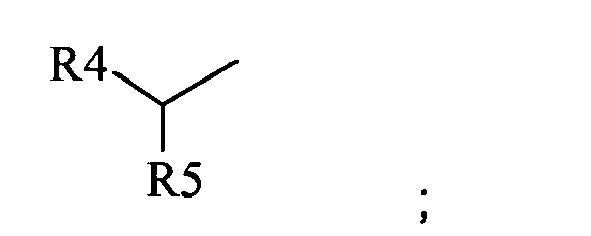 A is1) H,2) (C1-C6)alkyl or3) (C3-C5)cydoalkyl;B is independently selected from1) H,2) halogen or3) (C1-C6)alkyl;or symbols B together may form a double or triple bond between the atoms to which they are attached;D is aryl or heteroaryl, which may be unsubstituted or substituted with one to four groups selected from Rd;R1 is1) H,2) (C1-C6)alkyl or3) (C3-C7)cycloalkyl;each of R2 is independently selected from1) H,2) (C1-C6)alkyl,3) (C2-C6)alkenyl,4) (C2-C6)alkynyl,5) (C3-C7)cycloalkyl,6) (C3-C7)cydoalkyl(C1-C6)alkyl,7) -NH2 or8) -C(=NRb)NRbRb;wherein symbols Rb together with the atoms to which they are attached may also form a 5 to 6 membered unsaturated or saturated ring; or R2 and R2 together with the nitrogen to which they are attached may form a 5 to 7 membered ring containing 1 to 3 heteroatoms selected from N, O and S, wherein the formed ring may be saturated or unsaturated;R3 is1) H,2) (C1-C6)alkyl,3) (C2-C6)alkenyl,4) (C2-C6)alkynyl or5) (C3-C7)cycloalkyl;R4 is1) H,2) (C1-C6)alkyl,3) (C2-C6)alkenyl,4) (C2-C6)alkynyl,5) Cy,6) Cy-(C1-C6)alkyl,7) Cy-(C2-C6)alkenyl or8) Cy-(C2-C6)alkynyl;wherein alkyl, alkenyl, alkynyl and Cy are each optionally substituted with one to two substituents selected from Rd;R5 is1) H,2) (C1-C6)alkyl,3) (C2-C6)alkenyl,4) (C2-C6)alkynyl,5) aryl,6) aryl-(C1-C6)alkyl,7) heteroaryl,8) heteroaryl(C1-C6)alkyl or9) -(CH2)kC(O)NHRb;wherein aryl and heteroaryl are each optionally substituted with one to two substituents selected from Rd; orR4 and R5 together with the atom to which they are attached form a 3 to 7 membered ring containing 0 to 2 heteroatoms selected from N, O and S, wherein the said ring can be substituted with one to three substituents selected from Rd; or the said ring can be fused to aryl or heteroaryl which may be substituted with one to three substituents selected from Rd;Ra is independently1) H,2) Halogen,3) -ORb,4) (C1-C6)alkyl or5) -CF3;Rb is independently1) hydrogen,2) (C1-C6)alkyl,3) (C2-C6)alkenyl,4) (C2-C6)alkynyl,5) Cy or6) Cy-(C1-C4)alkyl;Rd is independently1) a group selected from Rc,2) (C1-C6)alkyl,3) (C2-C6)alkenyl,4) (C2-C6)alkynyl,5) aryl,6) aryl-(C1-C6)alkyl,7) heteroaryl-(C1-C6)alkyl,8) (C3-C7)cycloalkyl or9) heterocyclyl;wherein alkyl, alkenyl, alkynyl, aryl and heteroaryl are each optionally substituted with one to four substituents independently selected from Rc;Rc is independently1) a group selected from Ra,2) -NO2,3) -SRb,4) -NRbRb,5) -CN or6) -NRbC(O)Rb ;k is an integer 0 or 1;n is an integer from 0 to 3; andCy is cycloalkyl, heterocyclyl, aryl or heteroaryl;or of a pharmaceutically acceptable salt or ester thereof, for the preparation of a medicament for treating a disease or condition in mammals where an interaction with somatostatin receptor subtypes 1 and/or 4 is indicated to be useful.
 - The use according to claim 1, wherein the compound of Formula I is a compound of Formula IA
 or pharmaceutically acceptable salt or ester thereof,wherein R2, R3, B and D are as defined in claim 1; R4 is benzyl which can be optionally substituted with one to two substituents selected from Ra as defined in claim 1; andn is an integer 1 or 2.
 - The use according to claim 1, wherein the compound of Formula I is a compound of Formula IB
 or pharmaceutically acceptable salt or ester thereof,wherein R2, R3, B and D are as defined in claim 1;R4 is phenyl or benzyl, which is unsubstituted or substituted with 1 to 2 substituents selected from Ra as defined in claim 1;R5 is hydrogen or (C1-C6)alkyl; andn is an integer 1 or 2.
 - The use according to claim 1, wherein the compound of Formula I is a compound of Formula IC
 or pharmaceutically acceptable salt or ester thereof, wherein R3, Q and D are as defined in claim 1;each of R2 is independently selected from1) H,2) (C1-C3)alkyl,3) (C1-C3)cycloalkyl or4) -C(=NH)NH2; andn is an integer 1 or 2.
 - The use according to claim 1, wherein the compound of Formula I is a compound of Formula ID
 wherein R2, R3, B and Q are as defined in claim 1; andR6 is independently1) H,2) halogen,3) -NO2,4) -NRbRb,5) -CN,6) -ORb,7) -SRb,8) -C(O)Rb,9) (C1-C6)alkyl,10) (C2-C6)alkenyl,11) (C2-C6)alkynyl,12) (C3-C7)cycloalkyl or13) -CF3;Rb is as defined in claim 1;L is C(R6), S or N;n is an integer 1 or 2;t is an integer from 0 to 3; andX is a bond or C(R6), whereby the combination of L and X is chosen in such a manner as to maintain the aromatic nature of the bicyclic ring system to which L and X belong.
 - The use according to any of claims 1, 2, 3, 4 or 5, wherein R3 is H or methyl.
- The use according to any of claims 1, 2, 3, 4 or 5, wherein D is naphthyl, 4-alkyl-1-naphthyl, benzothiophenyl or indolyl.
- The use according to any of claims 1-7, wherein the compound is 4-amino-(S)-2-N-(4-methyl-1-naphthalenesulfonyl)amino-N'-(1,2,3,4-tetra-hydro-1-naphthyl)butanamide, 5-amino-(S)-2-N-(4-methyl-1-naphthalenesulfonyl)-amino-N'-(1,2,3,4-tetrahydro-1-naphthyl)pentanamide, N-benzyl-4-guanidino-(S)-2-(N'-(4-methyl-1-naphthalenesulfonyl)amino)butanamide, 4-amino-N-2-(3-chlorophenyl)ethyl-(S)-2-(N'-(4-methyl-1-naphthalenesulfonyl)-amino)butanamide, 5-N-methylamino-(S)-2-N'-(4-methyl-1-naphthalenesulfonyl)amino-N"-(1,2,3,4-tetrahydro-1-naphthyl)pentanamide or N-benzyl-4-(N'-isopropyl)amino-(S)-2-(N"-(4-methyl-1-naphthalenesulfonyl)amino)butanamide.
- The use according to claim 1 where the disease or condition is depression, anxiety, bipolar disorders, AHDH, angiogenesis, restenosis, new blood vessel sprouting, arteriosclerosis, diabetic angiopathy, diabetic retinopathy, cancerous tumors and tumor metastasis, high introcular pressure or age-related macular degeneration.
- A compound of Formula II
 wherein R1, R3, A, B and Q are as defined in claim 1; andeach of R2 is independently selected from1) H,2) (C1-C6)alkyl,3) (C2-C6)alkenyl,4) (C2-C6)alkynyl,5) (C3-C7)cycloalkyl or6) (C3-C7)cycloalkyl(C1-C6)alkyl;or symbols R2 together with the nitrogen to which they are attached form a saturated 5 to 7 membered ring containing 1 to 2 heteroatoms selected from N, O and S;and when Q is a group of formula
 then R4 is as defined in claim 1;R5 is1) H,2) (C1-C6)alkyl,3) (C2-C6)alkenyl,4) (C2-C6)alkynyl,5) aryl,6) aryl-(C1-C6)alkyl,7) heteroaryl or8) heteroaryl-(C1-C6)alkyl;wherein aryl and heteroaryl are each optionally substituted with one to four substituents selected from Rd as defined in claim 1; orR4 and R5 together with the atom to which they are attached form a 3 to 8 membered ring containing 0 to 2 heteroatoms selected from N, O and S, wherein the said ring may be substituted with one to three substituents selected from Rd; or the said ring may be fused to aryl or heteroaryl which can be substituted with one to three substituents selected from Rd;R6 is independently1) H,2) halogen,3) -NO2,4) -NRbRb,5) -CN,6) -ORb,7) -SRb,8) -C(O)Rb,9) (C1-C6)alkyl,10) (C2-C6)alkenyl,11) (C2-C6)alkynyl,12) (C3-C7)cycloalkyl or13) -CF3;t is an integer from 0 to 3;n is an integer 1 or 2;X is a bond or C(R6);L is C(R6), S or N, whereby the combination of L and X is chosen in such a manner as to maintain the aromatic nature of the bicyclic ring system to which L and X belong.
 - A compound according to claim 10, which is a compound of Formula IIA,
 wherein R2, R3, B, L, X, n and t are as defined in claim 10;R4 is phenyl or benzyl;which is unsubstituted or substituted with 1 to 2 substituents selected from Ra as defined in claim 1;R5 is H or (C1-C6)alkyl ; andR6 is independently selected from H, halogen or (C1-C6)alkyl.
 - A compound according to claim 10, which is a compound of Formula IIB,

- A compound according to any of claims 10 to 12, wherein R3 is H or methyl.
- A compound according to any of claims 10 to 12, wherein L is C(R6), X is a bond or C(R6) and R6 is H.
- A compound according to any of claims 10 to 13, wherein L and X is C(R6) and R6 is independently selected from H, (C1-C6)alkyl or halogen.
- A compound according to any of claims 10 to 12, wherein L is N or S and X is a bond.
- A compound of Formula II according to any of claims 10 to 13 and 15, wherein the compound is 4-amino-(S)-2-N-(4-methyl-1-naphthalenesulfonyl)amino-N'-(1,2,3,4-tetrahydro-1-naphthyl)butanamide, 5-amino-(S)-2-N-(4-methyl-1-naphthalenesulfonyl)amino-N'-(1,2,3,4-tetrahydro-1-naphthyl)pentanamide, 4-amino-N-2-(3-chlorophenyl)ethyl-(S)-2-(N'-(4-methyl-1-naphthalenesulfonyl)amino)butanamide, 5-N-methylamino-(S)-2-N'-(4-methyl-1-naphthalenesulfonyl)amino-N"-(1,2,3,4-tetrahydro-1-naphthyl)-pentanamide or N-benzyl-4-(N'-isopropyl)amino-(S)-2-(N"-(4-methyl-1-naphthalenesulfonyl)amino)butanamide.
- A process for preparing a compound as claimed in any of claims 10 to 17, comprising reacting an amidated amino acid of Formula III,


- A pharmaceutical composition compromising a compound of Formula II according to claim 10 as an active ingredient together with a pharmaceutically acceptable diluent, carrier and/or excipient.
- A compound of Formula II according to claim 10 for use in the imaging of healthy or diseased tissues and/or organs, such as brain, blood vessels or tumors, possessing SSTR1 and/or SSTR4 receptors.
- The use of a compound of Formula II according to claim 10 for the preparation of a medicament for treating a disease or condition in mammals where an interaction with somatostatin receptor subtypes 1 and/or 4 is indicated to be useful.
- The use according to claim 21, where the disease or condition is depression, anxiety, bipolar disorders, AHDH, angiogenesis, restenosis, new blood vessel sprouting, arteriosclerosis, diabetic angiopathy, diabetic retinopathy, cancerous tumors and tumor metastasis, high introcular pressure or age-related macular degeneration.
Applications Claiming Priority (3)
| Application Number | Priority Date | Filing Date | Title |
|---|---|---|---|
| US50826803P | 2003-10-06 | 2003-10-06 | |
| FI20031454A FI20031454A0 (en) | 2003-10-06 | 2003-10-06 | Selective somatostatin receptor 1 and / or 4 agonists and antagonists |
| PCT/FI2004/000585 WO2005033069A1 (en) | 2003-10-06 | 2004-10-05 | Somatostatin receptor 1 and/or 4 selective agonists and antagonists |
Publications (2)
| Publication Number | Publication Date |
|---|---|
| EP1675824A1 EP1675824A1 (en) | 2006-07-05 |
| EP1675824B1 true EP1675824B1 (en) | 2010-09-29 |
Family
ID=29225903
Family Applications (1)
| Application Number | Title | Priority Date | Filing Date |
|---|---|---|---|
| EP04767099A Expired - Lifetime EP1675824B1 (en) | 2003-10-06 | 2004-10-05 | Somatostatin receptor 1 and/or 4 selective agonists and antagonists |
Country Status (8)
| Country | Link |
|---|---|
| US (1) | US7741362B2 (en) |
| EP (1) | EP1675824B1 (en) |
| JP (1) | JP5103563B2 (en) |
| AT (1) | ATE482931T1 (en) |
| CA (1) | CA2541530A1 (en) |
| DE (1) | DE602004029383D1 (en) |
| FI (1) | FI20031454A0 (en) |
| WO (1) | WO2005033069A1 (en) |
Families Citing this family (9)
| Publication number | Priority date | Publication date | Assignee | Title |
|---|---|---|---|---|
| FI20031455A0 (en) * | 2003-10-06 | 2003-10-06 | Juvantia Pharma Ltd Oy | Sulfonylamino peptidomimetics active against somatostatin receptor subtypes 4 (SSTR4) and 1 (SSTR1) |
| WO2005082844A1 (en) * | 2004-02-27 | 2005-09-09 | Oy Juvantia Pharma Ltd | Treatment of diseases by using a somatostatin receptor agonist |
| WO2005082845A1 (en) * | 2004-02-27 | 2005-09-09 | Oy Juvantia Pharma Ltd | Novel therapies with somatostatin receptor agonists |
| WO2006123020A1 (en) * | 2005-05-18 | 2006-11-23 | Juvantia Pharma Ltd Oy | Peptidomimetics selective for the somatostatin receptor subtypes 1 and/or 4 |
| US9359363B2 (en) | 2011-05-20 | 2016-06-07 | Aquinnah Pharmaceuticals, Inc. | Identification of compounds that disperse TDP-43 inclusions |
| US9371282B2 (en) | 2013-05-17 | 2016-06-21 | Centrexion Therapeutics Corporation | Somatostatin receptor subtype 4 (SSTR4) agonists |
| WO2022000071A1 (en) * | 2020-06-29 | 2022-01-06 | Brandon University | Matrix metalloproteinase inhibitors (mmpis) |
| AR127055A1 (en) | 2021-09-14 | 2023-12-13 | Lilly Co Eli | SSTR4 AGONIST SALTS |
| WO2025247982A1 (en) | 2024-05-29 | 2025-12-04 | Grünenthal GmbH | Piperazines which act as sstr4 modulators |
Family Cites Families (25)
| Publication number | Priority date | Publication date | Assignee | Title |
|---|---|---|---|---|
| NZ182812A (en) * | 1975-12-09 | 1984-08-24 | Mitsubishi Chem Ind | N2-aryl(or aralkyl)sulphonyl-l-argininamides and pharmaceutical compositions |
| US4485101A (en) | 1983-10-11 | 1984-11-27 | Administrators Of The Tulane Educational Fund | Peptides |
| DE3577700D1 (en) | 1984-11-30 | 1990-06-21 | Shosuke Okamoto | LYSINE DERIVATIVE AND PROTEINASE INHIBITOR. |
| JPS61130268A (en) * | 1984-11-30 | 1986-06-18 | Showa Denko Kk | Lysine derivative and antiplasminic agent |
| US5409894A (en) | 1991-03-14 | 1995-04-25 | Sandoz Ltd. | Method of preventing balloon catheterization blood vessel damage |
| TW357143B (en) | 1995-07-07 | 1999-05-01 | Novartis Ag | Benzo[g]quinoline derivatives |
| US5750499A (en) | 1995-10-18 | 1998-05-12 | The Salk Institute For Biological Studies | Receptor-selective somatostatin analogs |
| ZA974147B (en) | 1996-05-14 | 1997-11-14 | Novo Nordisk As | Somatostatin agonists and antagonists. |
| DE69719320T2 (en) | 1996-06-11 | 2003-12-11 | Novartis Ag, Basel | COMBINATION OF A SOMATOSTATIN ANALOG AND A RAPAMYCIN |
| JPH11209356A (en) * | 1997-04-21 | 1999-08-03 | Takeda Chem Ind Ltd | Condensed cyclic compound, its production and agent |
| DE69832376T2 (en) | 1997-04-21 | 2006-08-03 | Takeda Pharmaceutical Co. Ltd. | 4,1-BENZOXAZEPINE, THEIR ANALOG, AND THEIR USE AS SOMATOSTATIN AGONISTS |
| GB9711043D0 (en) | 1997-05-29 | 1997-07-23 | Ciba Geigy Ag | Organic compounds |
| AU728435B2 (en) | 1997-05-29 | 2001-01-11 | Merck & Co., Inc. | Sulfonamides as cell adhesion inhibitors |
| US6221888B1 (en) | 1997-05-29 | 2001-04-24 | Merck & Co., Inc. | Sulfonamides as cell adhesion inhibitors |
| US6271252B1 (en) | 1997-11-24 | 2001-08-07 | Merck & Co., Inc. | Cyclic amino acid derivatives as cell adhesion inhibitors |
| US6124256A (en) | 1998-03-27 | 2000-09-26 | Haeyry; Pekka | Method for the prevention of a patient's fibroproliferative vasculopathy |
| AU5265599A (en) | 1998-04-08 | 1999-11-01 | Takeda Chemical Industries Ltd. | Amine compounds, their production and their use as somatostatin receptor antagonists or agonists |
| WO1999064401A2 (en) * | 1998-06-12 | 1999-12-16 | Societe De Conseils De Recherches Et D'applications Scientifiques Sas | Imidazolyl derivatives and their use as somatostatin receptor ligands |
| CA2348159A1 (en) * | 1998-10-20 | 2000-04-27 | Satoru Oi | Aromatic amine derivatives, their production and use |
| FR2814367B1 (en) | 2000-09-25 | 2008-12-26 | Inst Nat Sante Rech Med | NPFF RECEPTOR LIGANDS FOR THE TREATMENT OF PAIN AND HYPERALGIA |
| KR20040007565A (en) * | 2001-05-15 | 2004-01-24 | 다이쇼 세이야꾸 가부시끼가이샤 | Arginine Derivatives |
| WO2003026575A2 (en) * | 2001-09-24 | 2003-04-03 | Synaptic Pharmaceutical Corporation | Molecules specific for npff receptors and uses thereof |
| US20030176314A1 (en) * | 2001-09-24 | 2003-09-18 | Forray Carlos C. | Compounds for the treatment of pain |
| JP2004300133A (en) * | 2002-11-19 | 2004-10-28 | Takeda Chem Ind Ltd | Amine derivative |
| FI20031455A0 (en) * | 2003-10-06 | 2003-10-06 | Juvantia Pharma Ltd Oy | Sulfonylamino peptidomimetics active against somatostatin receptor subtypes 4 (SSTR4) and 1 (SSTR1) |
-
2003
- 2003-10-06 FI FI20031454A patent/FI20031454A0/en not_active Application Discontinuation
-
2004
- 2004-10-05 CA CA002541530A patent/CA2541530A1/en not_active Abandoned
- 2004-10-05 AT AT04767099T patent/ATE482931T1/en not_active IP Right Cessation
- 2004-10-05 JP JP2006530317A patent/JP5103563B2/en not_active Expired - Fee Related
- 2004-10-05 US US10/574,584 patent/US7741362B2/en not_active Expired - Fee Related
- 2004-10-05 DE DE602004029383T patent/DE602004029383D1/en not_active Expired - Lifetime
- 2004-10-05 WO PCT/FI2004/000585 patent/WO2005033069A1/en not_active Ceased
- 2004-10-05 EP EP04767099A patent/EP1675824B1/en not_active Expired - Lifetime
Also Published As
| Publication number | Publication date |
|---|---|
| US7741362B2 (en) | 2010-06-22 |
| WO2005033069A1 (en) | 2005-04-14 |
| US20070129422A1 (en) | 2007-06-07 |
| DE602004029383D1 (en) | 2010-11-11 |
| EP1675824A1 (en) | 2006-07-05 |
| ATE482931T1 (en) | 2010-10-15 |
| FI20031454A0 (en) | 2003-10-06 |
| JP5103563B2 (en) | 2012-12-19 |
| CA2541530A1 (en) | 2005-04-14 |
| JP2007507473A (en) | 2007-03-29 |
Similar Documents
| Publication | Publication Date | Title |
|---|---|---|
| EP3330259B1 (en) | 1,3,4-oxadiazole amide derivative compound as histone deacetylase 6 inhibitor, and pharmaceutical composition containing same | |
| US6333337B1 (en) | Potassium channel inhibitors | |
| US5565568A (en) | 2-acylaminopropanamides as tachykinin receptor antagonists | |
| RU2696581C2 (en) | Derivatives of n-urea-substituted aminoacids as modulators of formyl-peptide receptor | |
| JP2002513385A (en) | Potassium channel inhibitor | |
| EP0686629A2 (en) | Cyclohexyl tachykinine receptor antagonists | |
| WO2008110008A1 (en) | Amide derivatives as calcium channel blockers | |
| EP1089980A1 (en) | Compounds for inhibiting beta-amyloid peptide release and/or its synthesis | |
| NZ336134A (en) | Bicyclic inhibitors of protein farnesyl transferase for treatment of cancer, restenosis and atherosclerosis | |
| JP2007509140A (en) | Novel tetrahydrospiro {piperidine-2,7'-pyrrolo [3,2-b] pyridine derivatives and novel indole derivatives useful in the treatment of diseases associated with 5-HT6 receptors | |
| CA2841983A1 (en) | Polycyclic pyrrolidine-2,5-dione derivatives as -formyl peptide receptor like-1 (fprl-1) receptor modulators | |
| US7741362B2 (en) | Somatostatin receptor 1 and/or 4 selective agonists and antagonists | |
| AU2018318075A1 (en) | 3,4-disubstituted 3-cyclobutene-1,2-diones and use thereof | |
| EP1678196B1 (en) | Sulfonylamino-peptidomimetics active on the somatostatin receptor subtypes 4 (sstr4) and 1 (sstr1) | |
| EP1549655B1 (en) | Substituted bicyclic thiophene derivatives, compostions containing such compounds and methods of use | |
| US20100004339A1 (en) | Somatostatin Receptor 1 and/or 4 Selective Agonists and Antagonists | |
| US20100048549A1 (en) | Peptidomimetics selective for the somatostatin receptor subtypes 1 and/or 4 | |
| CA2547863A1 (en) | Somatostatin receptor subtype 1 (sstr1) active compounds and their use in therapy | |
| EP3388419A1 (en) | Gli1 inhibitors and uses thereof | |
| WO2005033068A1 (en) | Somatostatin receptor 1 and/or 4 selective agonists and antagonists | |
| ES2352736T3 (en) | SELECTIVE AGONISTS AND ANTAGONISTS OF THE SOMATOSTATIN 1 AND / OR 4 RECEIVER. | |
| RU2322445C2 (en) | Novel derivatives of cycloalkanedione, method for their preparing and their using in pharmaceutics | |
| WO1999006376A1 (en) | Novel sulphonamide derived from substituted anilines useful as medicines | |
| CN101007794B (en) | N,N'-disubstituted piperazine derivatives and preparation method, pharmaceutical composition and use thereof | |
| WO2001089510A2 (en) | Use of an ampa receptor potentiator for the treatment of obesity |
Legal Events
| Date | Code | Title | Description |
|---|---|---|---|
| PUAI | Public reference made under article 153(3) epc to a published international application that has entered the european phase |
Free format text: ORIGINAL CODE: 0009012 |
|
| 17P | Request for examination filed |
Effective date: 20060428 |
|
| AK | Designated contracting states |
Kind code of ref document: A1 Designated state(s): AT BE BG CH CY CZ DE DK EE ES FI FR GB GR HU IE IT LI LU MC NL PL PT RO SE SI SK TR |
|
| AX | Request for extension of the european patent |
Extension state: AL HR LT LV MK |
|
| 17Q | First examination report despatched |
Effective date: 20070601 |
|
| GRAP | Despatch of communication of intention to grant a patent |
Free format text: ORIGINAL CODE: EPIDOSNIGR1 |
|
| GRAS | Grant fee paid |
Free format text: ORIGINAL CODE: EPIDOSNIGR3 |
|
| RAP1 | Party data changed (applicant data changed or rights of an application transferred) |
Owner name: WURSTER, SIEGFRIED |
|
| GRAA | (expected) grant |
Free format text: ORIGINAL CODE: 0009210 |
|
| AK | Designated contracting states |
Kind code of ref document: B1 Designated state(s): AT BE BG CH CY CZ DE DK EE ES FI FR GB GR HU IE IT LI LU MC NL PL PT RO SE SI SK TR |
|
| AX | Request for extension of the european patent |
Extension state: AL HR LT LV MK |
|
| REG | Reference to a national code |
Ref country code: GB Ref legal event code: FG4D |
|
| REG | Reference to a national code |
Ref country code: CH Ref legal event code: EP |
|
| REG | Reference to a national code |
Ref country code: IE Ref legal event code: FG4D |
|
| REF | Corresponds to: |
Ref document number: 602004029383 Country of ref document: DE Date of ref document: 20101111 Kind code of ref document: P |
|
| REG | Reference to a national code |
Ref country code: SE Ref legal event code: TRGR |
|
| REG | Reference to a national code |
Ref country code: NL Ref legal event code: T3 |
|
| PG25 | Lapsed in a contracting state [announced via postgrant information from national office to epo] |
Ref country code: FI Free format text: LAPSE BECAUSE OF FAILURE TO SUBMIT A TRANSLATION OF THE DESCRIPTION OR TO PAY THE FEE WITHIN THE PRESCRIBED TIME-LIMIT Effective date: 20100929 Ref country code: AT Free format text: LAPSE BECAUSE OF FAILURE TO SUBMIT A TRANSLATION OF THE DESCRIPTION OR TO PAY THE FEE WITHIN THE PRESCRIBED TIME-LIMIT Effective date: 20100929 |
|
| REG | Reference to a national code |
Ref country code: ES Ref legal event code: FG2A Effective date: 20110210 |
|
| LTIE | Lt: invalidation of european patent or patent extension |
Effective date: 20100929 |
|
| PG25 | Lapsed in a contracting state [announced via postgrant information from national office to epo] |
Ref country code: SI Free format text: LAPSE BECAUSE OF FAILURE TO SUBMIT A TRANSLATION OF THE DESCRIPTION OR TO PAY THE FEE WITHIN THE PRESCRIBED TIME-LIMIT Effective date: 20100929 |
|
| PG25 | Lapsed in a contracting state [announced via postgrant information from national office to epo] |
Ref country code: GR Free format text: LAPSE BECAUSE OF FAILURE TO SUBMIT A TRANSLATION OF THE DESCRIPTION OR TO PAY THE FEE WITHIN THE PRESCRIBED TIME-LIMIT Effective date: 20101230 |
|
| PGFP | Annual fee paid to national office [announced via postgrant information from national office to epo] |
Ref country code: IT Payment date: 20101130 Year of fee payment: 7 Ref country code: GB Payment date: 20101129 Year of fee payment: 7 |
|
| PG25 | Lapsed in a contracting state [announced via postgrant information from national office to epo] |
Ref country code: RO Free format text: LAPSE BECAUSE OF FAILURE TO SUBMIT A TRANSLATION OF THE DESCRIPTION OR TO PAY THE FEE WITHIN THE PRESCRIBED TIME-LIMIT Effective date: 20100929 Ref country code: PT Free format text: LAPSE BECAUSE OF FAILURE TO SUBMIT A TRANSLATION OF THE DESCRIPTION OR TO PAY THE FEE WITHIN THE PRESCRIBED TIME-LIMIT Effective date: 20110131 Ref country code: SK Free format text: LAPSE BECAUSE OF FAILURE TO SUBMIT A TRANSLATION OF THE DESCRIPTION OR TO PAY THE FEE WITHIN THE PRESCRIBED TIME-LIMIT Effective date: 20100929 Ref country code: MC Free format text: LAPSE BECAUSE OF NON-PAYMENT OF DUE FEES Effective date: 20101031 Ref country code: EE Free format text: LAPSE BECAUSE OF FAILURE TO SUBMIT A TRANSLATION OF THE DESCRIPTION OR TO PAY THE FEE WITHIN THE PRESCRIBED TIME-LIMIT Effective date: 20100929 Ref country code: CZ Free format text: LAPSE BECAUSE OF FAILURE TO SUBMIT A TRANSLATION OF THE DESCRIPTION OR TO PAY THE FEE WITHIN THE PRESCRIBED TIME-LIMIT Effective date: 20100929 |
|
| PGFP | Annual fee paid to national office [announced via postgrant information from national office to epo] |
Ref country code: DE Payment date: 20101210 Year of fee payment: 7 |
|
| PLBE | No opposition filed within time limit |
Free format text: ORIGINAL CODE: 0009261 |
|
| STAA | Information on the status of an ep patent application or granted ep patent |
Free format text: STATUS: NO OPPOSITION FILED WITHIN TIME LIMIT |
|
| PG25 | Lapsed in a contracting state [announced via postgrant information from national office to epo] |
Ref country code: DK Free format text: LAPSE BECAUSE OF FAILURE TO SUBMIT A TRANSLATION OF THE DESCRIPTION OR TO PAY THE FEE WITHIN THE PRESCRIBED TIME-LIMIT Effective date: 20100929 Ref country code: PL Free format text: LAPSE BECAUSE OF FAILURE TO SUBMIT A TRANSLATION OF THE DESCRIPTION OR TO PAY THE FEE WITHIN THE PRESCRIBED TIME-LIMIT Effective date: 20100929 |
|
| 26N | No opposition filed |
Effective date: 20110630 |
|
| REG | Reference to a national code |
Ref country code: DE Ref legal event code: R097 Ref document number: 602004029383 Country of ref document: DE Effective date: 20110630 |
|
| PGFP | Annual fee paid to national office [announced via postgrant information from national office to epo] |
Ref country code: SE Payment date: 20111021 Year of fee payment: 8 Ref country code: NL Payment date: 20111024 Year of fee payment: 8 Ref country code: ES Payment date: 20111025 Year of fee payment: 8 Ref country code: IE Payment date: 20111020 Year of fee payment: 8 Ref country code: FR Payment date: 20111118 Year of fee payment: 8 Ref country code: BE Payment date: 20111020 Year of fee payment: 8 Ref country code: CH Payment date: 20111014 Year of fee payment: 8 |
|
| PG25 | Lapsed in a contracting state [announced via postgrant information from national office to epo] |
Ref country code: CY Free format text: LAPSE BECAUSE OF FAILURE TO SUBMIT A TRANSLATION OF THE DESCRIPTION OR TO PAY THE FEE WITHIN THE PRESCRIBED TIME-LIMIT Effective date: 20100929 |
|
| PG25 | Lapsed in a contracting state [announced via postgrant information from national office to epo] |
Ref country code: BG Free format text: LAPSE BECAUSE OF FAILURE TO SUBMIT A TRANSLATION OF THE DESCRIPTION OR TO PAY THE FEE WITHIN THE PRESCRIBED TIME-LIMIT Effective date: 20100929 Ref country code: LU Free format text: LAPSE BECAUSE OF NON-PAYMENT OF DUE FEES Effective date: 20101005 Ref country code: HU Free format text: LAPSE BECAUSE OF FAILURE TO SUBMIT A TRANSLATION OF THE DESCRIPTION OR TO PAY THE FEE WITHIN THE PRESCRIBED TIME-LIMIT Effective date: 20110330 |
|
| PG25 | Lapsed in a contracting state [announced via postgrant information from national office to epo] |
Ref country code: TR Free format text: LAPSE BECAUSE OF FAILURE TO SUBMIT A TRANSLATION OF THE DESCRIPTION OR TO PAY THE FEE WITHIN THE PRESCRIBED TIME-LIMIT Effective date: 20100929 |
|
| BERE | Be: lapsed |
Owner name: WURSTER, SIEGFRIED Effective date: 20121031 |
|
| REG | Reference to a national code |
Ref country code: NL Ref legal event code: V1 Effective date: 20130501 |
|
| REG | Reference to a national code |
Ref country code: CH Ref legal event code: PL |
|
| GBPC | Gb: european patent ceased through non-payment of renewal fee |
Effective date: 20121005 |
|
| REG | Reference to a national code |
Ref country code: IE Ref legal event code: MM4A |
|
| REG | Reference to a national code |
Ref country code: FR Ref legal event code: ST Effective date: 20130628 |
|
| PG25 | Lapsed in a contracting state [announced via postgrant information from national office to epo] |
Ref country code: LI Free format text: LAPSE BECAUSE OF NON-PAYMENT OF DUE FEES Effective date: 20121031 Ref country code: IE Free format text: LAPSE BECAUSE OF NON-PAYMENT OF DUE FEES Effective date: 20121005 Ref country code: DE Free format text: LAPSE BECAUSE OF NON-PAYMENT OF DUE FEES Effective date: 20130501 Ref country code: SE Free format text: LAPSE BECAUSE OF NON-PAYMENT OF DUE FEES Effective date: 20121006 Ref country code: BE Free format text: LAPSE BECAUSE OF NON-PAYMENT OF DUE FEES Effective date: 20121031 Ref country code: CH Free format text: LAPSE BECAUSE OF NON-PAYMENT OF DUE FEES Effective date: 20121031 Ref country code: GB Free format text: LAPSE BECAUSE OF NON-PAYMENT OF DUE FEES Effective date: 20121005 |
|
| REG | Reference to a national code |
Ref country code: DE Ref legal event code: R119 Ref document number: 602004029383 Country of ref document: DE Effective date: 20130501 |
|
| PG25 | Lapsed in a contracting state [announced via postgrant information from national office to epo] |
Ref country code: NL Free format text: LAPSE BECAUSE OF NON-PAYMENT OF DUE FEES Effective date: 20130501 Ref country code: IT Free format text: LAPSE BECAUSE OF NON-PAYMENT OF DUE FEES Effective date: 20121005 Ref country code: FR Free format text: LAPSE BECAUSE OF NON-PAYMENT OF DUE FEES Effective date: 20121031 |
|
| PG25 | Lapsed in a contracting state [announced via postgrant information from national office to epo] |
Ref country code: BG Free format text: LAPSE BECAUSE OF FAILURE TO SUBMIT A TRANSLATION OF THE DESCRIPTION OR TO PAY THE FEE WITHIN THE PRESCRIBED TIME-LIMIT Effective date: 20101229 |
|
| REG | Reference to a national code |
Ref country code: ES Ref legal event code: FD2A Effective date: 20140116 |
|
| PG25 | Lapsed in a contracting state [announced via postgrant information from national office to epo] |
Ref country code: ES Free format text: LAPSE BECAUSE OF NON-PAYMENT OF DUE FEES Effective date: 20121006 |