EP1669904A1 - Überprüfung von dynamisch erzeugten Operationen in einem Datenspeicher - Google Patents
Überprüfung von dynamisch erzeugten Operationen in einem Datenspeicher Download PDFInfo
- Publication number
- EP1669904A1 EP1669904A1 EP05107793A EP05107793A EP1669904A1 EP 1669904 A1 EP1669904 A1 EP 1669904A1 EP 05107793 A EP05107793 A EP 05107793A EP 05107793 A EP05107793 A EP 05107793A EP 1669904 A1 EP1669904 A1 EP 1669904A1
- Authority
- EP
- European Patent Office
- Prior art keywords
- data store
- operations
- snapshot
- dynamically generated
- request
- Prior art date
- Legal status (The legal status is an assumption and is not a legal conclusion. Google has not performed a legal analysis and makes no representation as to the accuracy of the status listed.)
- Granted
Links
Images



Classifications
-
- G—PHYSICS
- G06—COMPUTING OR CALCULATING; COUNTING
- G06F—ELECTRIC DIGITAL DATA PROCESSING
- G06F3/00—Input arrangements for transferring data to be processed into a form capable of being handled by the computer; Output arrangements for transferring data from processing unit to output unit, e.g. interface arrangements
- G06F3/06—Digital input from, or digital output to, record carriers, e.g. RAID, emulated record carriers or networked record carriers
-
- G—PHYSICS
- G06—COMPUTING OR CALCULATING; COUNTING
- G06F—ELECTRIC DIGITAL DATA PROCESSING
- G06F21/00—Security arrangements for protecting computers, components thereof, programs or data against unauthorised activity
- G06F21/60—Protecting data
- G06F21/62—Protecting access to data via a platform, e.g. using keys or access control rules
-
- G—PHYSICS
- G06—COMPUTING OR CALCULATING; COUNTING
- G06F—ELECTRIC DIGITAL DATA PROCESSING
- G06F21/00—Security arrangements for protecting computers, components thereof, programs or data against unauthorised activity
- G06F21/50—Monitoring users, programs or devices to maintain the integrity of platforms, e.g. of processors, firmware or operating systems
- G06F21/55—Detecting local intrusion or implementing counter-measures
- G06F21/56—Computer malware detection or handling, e.g. anti-virus arrangements
- G06F21/566—Dynamic detection, i.e. detection performed at run-time, e.g. emulation, suspicious activities
-
- Y—GENERAL TAGGING OF NEW TECHNOLOGICAL DEVELOPMENTS; GENERAL TAGGING OF CROSS-SECTIONAL TECHNOLOGIES SPANNING OVER SEVERAL SECTIONS OF THE IPC; TECHNICAL SUBJECTS COVERED BY FORMER USPC CROSS-REFERENCE ART COLLECTIONS [XRACs] AND DIGESTS
- Y10—TECHNICAL SUBJECTS COVERED BY FORMER USPC
- Y10S—TECHNICAL SUBJECTS COVERED BY FORMER USPC CROSS-REFERENCE ART COLLECTIONS [XRACs] AND DIGESTS
- Y10S707/00—Data processing: database and file management or data structures
- Y10S707/99951—File or database maintenance
- Y10S707/99952—Coherency, e.g. same view to multiple users
- Y10S707/99954—Version management
Definitions
- This invention relates to testing and verification, and particularly to verifying dynamically generated operations on a data store.
- One or more such storage devices can be viewed as a data store, and different techniques have been developed to maintain and access the large amounts of data that can be included in a data store. As the techniques used to access the data can be rather detailed and can vary over time, products are being developed that abstract the details of accessing the data. Such abstraction products can then be leveraged by an application developer in order to access the stored data. Thus, the application developer can interact with an easier-to-use interface of the abstraction product, and rely on the abstraction product to understand the details of accessing the storage device.
- these abstraction products convert requests or instructions received from an application in one format to another format that is understood by the data store. For example, a request from the application (e.g., in a programming language) to change a particular data value may be converted by the abstraction product into a series of operations (e.g., a series of SQL statements) that locate a part of the data store, and then write new data over that part of the data store.
- a series of operations e.g., a series of SQL statements
- One problem that can be encountered with such abstraction products is that care must be taken to ensure that the conversion is done correctly. If the conversion is done incorrectly, then the result of the application's request may not be accurate, and the abstraction product cannot be relied on for accurate operation.
- One way in which this problem could be solved is to test the abstraction product by analyzing the operations or instructions that are generated by the abstraction product and determining whether those operations or instructions are accurate given the request received by the abstraction product.
- Such analysis and determination can be very difficult, especially in light of the fact that the format of the operations or instructions that are generated by the abstraction product, as well as the particular operations and instructions themselves, can be continually changing.
- Verifying dynamically generated operations on a data store is described herein.
- permissions are set on a data store to allow access to only an unrestricted portion of the data store.
- the unrestricted portion of the data store excludes a first portion of the data store that should not be accessed by one or more operations on the data store that are dynamically generated for a request. After the one or more operations on the data store are performed, a check is made as to whether any unexpected changes were made to the unrestricted portion.
- permissions are set on a data store to allow access to only an unrestricted portion of the data store.
- the unrestricted portion of the data store excludes a first portion of the data store that should not be accessed by one or more operations on the data store that are dynamically generated for a request. Additionally, access to a part of the data store that should not be accessed by the one or more operations is locked, the part of the data store being included in the unrestricted portion.
- Fig. 1 is a block diagram illustrating an example environment in which the verifying dynamically generated operations on a data store can be performed.
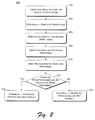
- Fig. 2 is a flowchart illustrating an example process for verifying dynamically generated operations on a data store.
- Fig. 3 illustrates an example data integrity manager in additional detail.
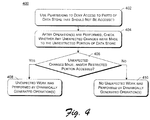
- Fig. 4 is a flowchart illustrating an example process for verifying that no unexpected work was performed by dynamically generated operations.
- Fig. 5 is a flowchart illustrating another example process for verifying that no unexpected work was performed by dynamically generated operations.
- Fig. 6 is a flowchart illustrating an example process for verifying that parts of the data store that should not be accessed by the dynamically generated operations are not accessed by the dynamically generated operations.
- Verifying dynamically generated operations on a data store is described herein.
- a request is made that involves access to a data store, one or more operations are dynamically generated on behalf of the requestor, and these one or more operations are sent to the data store which carries out the operations.
- a check is made as to whether the work that was expected to be performed on the data store in light of the request has been performed, and further that no work that was not expected to be performed on the data store in light of the request has been performed. If these checks indicate that the expected work was performed and that no unexpected work was performed, then the dynamically generated operations are verified as being accurate for the request.
- a variety of different techniques can be used to verify that no unexpected work was performed on the data store.
- FIG. 1 is a block diagram illustrating an example environment 100 in which the verifying dynamically generated operations on a data store can be performed.
- Environment 100 includes a data integrity manager 102, an operation generator 104, a data store 106, and an application 108.
- Data store 106 can be any system that stores data.
- data store 106 can be a database (e.g., a relational database or non-relational database), such as a Microsoft® SQL server database.
- Data store 106 could alternatively be any other type of structured and persisted memory by which an application could use that memory to query, insert, update, or delete its data contents, such as an extensible Markup Language (XML) document, a file system, etc.
- XML extensible Markup Language
- Operation generator 104 is an abstraction component that operates as an intermediary between application 108 and data store 106. Requests to access data store 106 are made by application 108 to operation generator 104, which in turn dynamically generates one or more operations to be performed on data store 106. Because these operations are generated by operation generator 104 based on the particular requests received from application 108, the operations are viewed as being generated dynamically.
- the requests made by application 108 can include, for example, requests to retrieve data from data store 106, requests to modify data in data store 106, requests to add data to data store 106, and requests to delete data from data store 106.
- the operations dynamically generated by operation generator 108 can be generated in any of a variety of conventional manners and will depend at least in part on the particular request received from application 108 and the nature or type of storage provided by data store 106.
- the operations dynamically generated by operation generator 108 can be queries, data manipulation statements, requests, commands, instructions, etc.
- the operations dynamically generated by operation generator 108 can include operations to read data from data store 106, operations to write data to data store 106, operations to create new entries for data in data store 106 (e.g., create new rows in a table of a database), and operations to delete entries for data in data store 106 (e.g., delete rows from a table of a database).
- Application 108 can be any of a variety of different applications (e.g., computer programs) that access data store 106. Additionally, although only a single application 108 is illustrated in Fig. 1, it should be noted that multiple applications may access data store 106 by way of operation generator 104. In certain embodiments, application 108 is a test application that is designed to test operation generator 104, submitting various requests to operation generator 104 so that the behavior of generator 104 in dynamically generating operations can be verified. In other embodiments, application 108 may be a non-test application, but use data integrity manager 102 to verify that operation generator 104 is functioning properly.
- applications e.g., computer programs
- each component or module such as operation generator 104 or data integrity manager 102, that accesses data store 106 does so by way of a connection.
- the component or module logs in to data store 106 over this connection.
- An operation generator 104 logs in to data store 106 as a particular user (this may refer to a human user, or simply some identifier), and may log in to data store 106 multiple times concurrently.
- the connection has a set of rights or permissions associated with it that identify what the component using that connection is permitted to do at data store 106. For example, a component may be permitted to access only certain portions of data store 106, or may be permitted to read from but not write to data store 106.
- the component or module communicates with data store 106 over this connection, but only operations which satisfy the restrictions of the connection will be carried out by data store 106.
- Data integrity manager 102 uses an unrestricted connection 110 to data store 106. Data integrity manager 102 is not prohibited from performing any operation on data store 106. Operation generator 104, on the other hand, uses a restricted connection 112 to data store 106. Based on the particular request that has been submitted by application 108, operation generator 104 is prohibited from performing certain operations on data store 106. Data integrity manager 102 sets these restrictions on restricted connection 112, as discussed in more detail below.
- Fig. 2 is a flowchart illustrating an example process 200 for verifying dynamically generated operations on a data store.
- Process 200 may be performed in software, firmware, hardware, or combinations thereof.
- Fig. 2 is discussed with reference to the components of environment 100 of Fig. 1.
- Process 200 is repeated for each of multiple requests (e.g., all requests) to be submitted to operation generator 104 by application 108.
- setup actions for access to data store 106 are carried out (act 202). If restricted connection 112 does not already exist, then it is created in act 202. As discussed in more detail below, these setup actions can include, for example, granting or denying of particular permissions and setting such permissions on restricted connection 112, allowing subsequent checks for unexpected changes to the data store (e.g., by taking snapshots of parts of data store 106), locking parts of data store 106, and so forth.
- the particular setup actions to be carried out are identified to data integrity manager 102 by application 108. Application 108 is aware of the particular request that is going to be submitted to operation generator 104, and thus is able to identify particular setup actions to be carried out by generator 104 when accessing data store 106 to carry out the request.
- application 108 is a test program to verify the behavior of data integrity manager 102
- application 108 will typically be designed to have the knowledge of what setup actions should be carried out by generator 104.
- application 108 may still have some knowledge of what setup actions should be carried out by generator 104 (e.g., if application 108 includes one part where a user can add items to his or her shopping cart and another where the user can pay for the items in the shopping cart, application 108 can know that any billing information such as credit card numbers in data store 106 should not be accessed by requests involving adding items to or deleting items from the shopping cart).
- data integrity manager 102 can return an indication to application 108 that the setup actions have been carried out, thereby notifying application 108 that it can submit its request to operation generator 104.
- the operation generator 104 dynamically generates the appropriate operations(s) based on the request received from application 108 (act 204), and performs the dynamically generated operation(s) on data store 106 (act 206).
- Application 108 then verifies that the expected work was performed (act 208). This verification in act 208 can be performed in any of a variety of conventional manners. Application 108 knows what the request was, and thus what should have been changed in data store 106 (if anything), so it can submit an additional request(s) to verify that the desired change has been made. For example, if the request was to add data to data store 106, then application 108 can attempt to retrieve the data that should have been added, and if it retrieves that data then application 108 knows that the expected work was performed.
- Data integrity manager 102 also verifies that no unexpected work was performed (act 210). This verification, as discussed in more detail below, can be based on an analysis of what changes were made to data store 106, whether an attempt was made to access locked data, whether an attempt was made to access data to which permission was denied, and so forth. The results of this verification can optionally be returned to application 108. Alternatively, the information gathered by data integrity manager 102 (e.g., the snapshots discussed in more detail below) may be returned to application 108 for application 108 to verify that no unexpected work was performed.
- Whether the dynamically generated operation(s) are verified as being correct depends on the verifications in acts 208 and 210 (act 212). If it is verified that the expected work was performed, and it is verified that no unexpected work was performed, then the dynamically generated operation(s) are verified as being correct (act 214). However, if it is not verified that the expected work was performed, and/or it is not verified that no unexpected work was performed, then the dynamically generated operation(s) are not verified as being correct (act 216).
- Fig. 3 illustrates an example data integrity manager 102 in additional detail.
- Data integrity manager 102 includes a snapshot module 302, a permissions module 304, and a lockset module 306.
- Permissions module 304 sets permissions so that only certain portions of data store 106 can be accessed. Based on these permissions, those portions of data store 106 that can be accessed are referred to as the unrestricted portion of data store 106, and those portions of data store that cannot be accessed are referred to as the restricted portion of data store 106.
- Snapshot module 302 checks whether any unexpected changes are made to the unrestricted portion of data store 106.
- Lockset module 306 locks parts of the unrestricted portion of data store 106 so that those locked parts cannot be accessed by operation generator 104. The behavior of modules 302, 304, and 306 is discussed in more detail below.
- certain embodiments may not include each of snapshot module 302, permissions module 304, and lockset module 306. Which of these modules are included in a particular data integrity manager 102 can vary based on the desires of the designer of manager 102, as well as the functionality supported by data store 106. For example, if data store 106 supports no mechanism to allow parts of data store 106 to be locked or otherwise made temporarily inaccessible, then lockset module 306 may not be included in data integrity manager 102. By way of another example, if the designer of manager 102 does not desire to make use of any permissions supported by data store 106 (or if data store 106 does not support permissions), then permissions module 304 need not be included in data integrity manager 102.
- Permissions module 304 sets permissions for access to data store 106.
- Data store 106 allows permission to different portions of data store 106 to be granted and/or denied, and these permissions are associated with a particular connection. So, data integrity manager 102 can set permissions for restricted connection 112 to restrict which portions of data store 106 can be accessed by operation generator 104 over restricted connection 112. Operation generator 104 can access the unrestricted portion, but cannot access the restricted portion.
- Different permissions can be set for different connections to data store 106 (e.g., multiple restricted connections 112 may be used by operation generator 104 to communicate with data store 106, and each of these multiple restricted connections can have different permission settings).
- the granularity at which permissions can be used to define the restricted and unrestricted portions of data store 106 can vary based on the particular data store.
- the permissions may be set, for example, on a table level, column level, row level, page level, line level, and so forth.
- data store 106 is a Microsoft® SQL server database
- data store 106 allows permissions to be set on either a column level or a table level.
- a Microsoft® SQL server database is typically made up of multiple tables, each of which can have multiple rows and multiple columns. If the permissions are set at a table level, then data store 106 allows permission to access a particular table to be granted or denied.
- data store 106 allows permission to access a particular column of a particular table to be granted or denied.
- operations to create rows in a table and operations to delete rows from a table are set at the table level, and operations to update data in a table and operations to read data from a table are set at the column level.
- data store 106 can return an indication to operation generator 104 (or alternatively data integrity manager 102) that an attempt was made to access the restricted portion.
- data store 106 may simply not perform the operation and after a particular amount of time (referred to as a timeout period), operation generator 104 will assume that a problem occurred with the operation. Based on the indication received from data store 106, or the timeout period elapsing, an indication that an attempt to access the restricted portion was made can be reported back to application 108, thereby informing application 108 that there is a problem with one or more of the operations dynamically generated by operation generator 104.
- the behavior of permission module 304 can be seen from the following example. Assume that data store 106 includes three tables: a customer table storing information regarding customers, an order table storing information regarding orders that have been placed, and a payment table storing payment information (e.g., credit card numbers). Further assume that application 108 is going to send a request to operation generator 104 to add a customer (e.g., name, address, telephone number, etc.) in the customer table, and that application 108 informs data integrity manager 102 (e.g., as part of the establishing act 202 of Fig. 2) that this request to add the customer to the customer table will not need access to the order table or the payment table.
- a customer e.g., name, address, telephone number, etc.
- data integrity manager 102 e.g., as part of the establishing act 202 of Fig. 2
- Data integrity manager 102 can thus set permissions on restricted connection 112 so that access to the order table and the payment table is denied, but access to the customer table is granted.
- operation generator 104 dynamically generates operation(s) to add the customer as indicated in the request to change the name by application 108, if any of the operations generated by generator 104 attempt to access either the order table or the payment table, data store 106 will not allow the access to be performed.
- Data store 106 can return an indication to operation generator 104 (or alternatively data integrity manager 102) that an attempt was made to access a table for which permission was denied, or data store 106 may simply not perform the operation and after a timeout period elapses operation generator 104 will assume that a problem occurred with the operation.
- the granting and denying of permissions cannot always detect improper operations. For example, continuing with the previous example, assume that the operations dynamically generated by operation generator 104 also delete a customer from the customer table. Because operation generator 104 has permission to access the customer table, the permissions will not prohibit this incorrect deletion from occurring.
- Snapshot module 302 checks whether any unexpected changes are made to the unrestricted portion of data store 106. Snapshot module 302 does not need to check whether any unexpected changes are made to the restricted portion of data store 106 because it can rely on permissions having already been set to prevent any changes from being made to the restricted portion of data store 106. Alternatively, snapshot module 302 may check whether any unexpected changes are made to additional areas of data store 106 rather than just the unrestricted portion. In addition, it should be noted that the unrestricted portion of data store 106 may be all of data store 106 (e.g., in embodiments where there is no permission module 304, the entire data store 106 can be viewed as the unrestricted portion).
- Application 108 informs data integrity manager 102 of what changes to data store 106 are expected, allowing snapshot module 302 to check whether any unexpected changes are made to the unrestricted portion.
- an indication of what changes are made to the unrestricted portion may be returned by snapshot module 302 to application 108 so that application 108 can determine whether any unexpected changes are made to the unrestricted portion.
- Snapshot module 302 can check whether any unexpected changes are made to the unrestricted portion of data store 106 in a variety of different ways.
- snapshot module 302 takes a snapshot of all parts of the unrestricted portion of data store 106 that are not expected to be changed by the dynamically generated operations. This snapshot is taken, for example, as part of the establishing in act 202 of Fig. 2. This snapshot can also be referred to as a "pre-performance" or "before” snapshot because it is taken before the dynamically generated operations are performed. Those parts of the unrestricted portion of data store 106 that are not expected to be changed by the dynamically generated operations are identified, for example, by application 108.
- application 108 Because application 108 knows what the request is that will be submitted, application 108 also has knowledge about what should and should not happen in data store 106, and this knowledge can be passed to data integrity manager 102. For example, if a new row in a table is to be created (e.g., for a new customer in a customer table), then no existing row in that table should be changed by the dynamically generated operations. By way of another example, if a row in a table is to be deleted (e.g., removing a customer from a customer table), then no row except for that row to be deleted should be changed by the dynamically generated operations.
- the knowledge application 108 has about what should and should not happen in data store 106 is typically characterized in terms of what is not needed for a particular request. For example, if application 108 knows that the request should only affect two rows in a table, then application 108 can recite those two rows and indicate that no other rows should be changed, rather than reciting the potentially thousands of rows that should not be changed.
- the snapshot of the parts of the unrestricted portion of data store 106 that are not expected to be changed by the dynamically generated operations can be taken in different manners.
- the snapshot is taken by copying or otherwise capturing all of the data in parts of the unrestricted portion of data store 106 that are not expected to be changed by the dynamically generated operations.
- the snapshot is taken by calculating a hash value (using a conventional hash function) over the parts of the unrestricted portion of data store 106 that are not expected to be changed by the dynamically generated operations.
- the snapshot is taken by copying or otherwise capturing a version number for different parts of the unrestricted portion of data store 106.
- data store 106 is a database having one or more tables
- a column of version values may be included in the table.
- the version value for a particular row of the database is changed by the database each time data in that particular row is changed.
- the version value may be, for example, a value that is expected to be unique in the database, such as a Globally Unique Identifier (GUID), a date and time stamp (e.g., measuring time in nanoseconds), a hash value resulting from applying a hash function to the data in the row, and so forth.
- GUID Globally Unique Identifier
- data integrity manager 102 can create that column in the table (e.g., as part of establishing act 202 of Fig. 2.).
- an indicator of which part that version number is for may also be copied or otherwise captured.
- another column may include identifiers (e.g., primary key values) that uniquely identify rows of the table.
- the snapshot can thus maintain an association between version numbers and particular rows of the table.
- the dynamically generated operations can be performed.
- another snapshot of the parts of the unrestricted portion of data store 106 that are not expected to be changed by the dynamically generated operations is taken.
- This second snapshot is taken in the same manner as the pre-performance snapshot as discussed above. This second snapshot is taken, for example, as part of the verification in act 210 of Fig. 2.
- This second snapshot can also be referred to as a "post-performance" or "after” snapshot because it is taken after the dynamically generated operations are performed.
- this second snapshot is taken of the parts of the unrestricted portion of data store 106 that are not expected to be changed by the dynamically generated operations, and not necessarily the same parts as the pre-performance snapshot was taken of. Thus, for example, if any new rows were added to a table in the unrestricted portion other than rows that were expected to be added by the dynamically generated operations, then the post-performance snapshot taken would include these new rows.
- any changes to the parts of the unrestricted portion of data store 106 that are not expected to be changed by the dynamically generated operations then those changes should be reflected in the snapshots. For example, any data (e.g., rows of a table) that was added to the unrestricted portion of the data store not expected to be changed, any data that was deleted from the unrestricted portion of the data store not expected to be changed, and any data that was modified in the unrestricted portion of the data store not expected to be changed, would be reflected in the snapshots.
- the particular part of the unrestricted portion of data store 106 that is not expected to be changed by the dynamically generated operations but that is changed may be identified. For example, if identifiers such as primary key values are copied or otherwise captured as part of the snapshot, then if a particular version number is different in the pre-performance and post-performance snapshot, then snapshot module 302 knows which row (based on the identifiers) of the table was changed.
- the additional identifiers that allow an association between version numbers and particular rows of the table e.g., primary key values
- the row identified by that new row identifier is a new row that was added to the table.
- the row identified by that row identifier is a row that was deleted from the table.
- snapshot module 302 uses triggers to determine if any unexpected changes are made to the unrestricted portion of data store 106. Triggers are a mechanism supported by some data stores 106 that allow snapshot module 302 to request that it be notified by data store 106 of each change made to a particular table (or other unit) of data store 106. Such changes can include, for example, data being added to a particular table, data being deleted from a particular table, and data being updated in a particular table.
- snapshot module 302 knows that an unexpected change(s) was made to the unrestricted portion of data store 106 by the dynamically generated operations. If the only changes included in that record are those that application 108 informed data integrity manager 102 were expected, then snapshot module 302 knows that no unexpected changes were made to the unrestricted portion of data store 106 by the dynamically generated operations.
- permissions module 304 and snapshot module 302 are used to verify that no unexpected work was performed for requests from application 108 that involve modifying data store 106, such as creating entries (e.g., rows, columns, tables, pages, lines, blocks, etc.) in data store 106, updating entries in data store 106, and/or deleting entries in data store 106.
- Permissions module 304 and lockset module 306 are used to verify that no unexpected work was performed for requests from application 108 that involve reading entries from data store 106, as discussed in more detail below.
- Fig. 4 is a flowchart illustrating an example process 400 for verifying that no unexpected work was performed by dynamically generated operations.
- Process 400 is an example of a process that can be performed as the carrying out of setup actions act 202 and/or verification act 210 of Fig. 2.
- Process 400 may be performed in software, firmware, hardware, or combinations thereof.
- permissions are used to deny access to parts of the data store that should not be accessed (act 402). These permissions are set, for example, by permissions module 304 of Fig. 3 as discussed above.
- a check is made as to whether any unexpected changes were made by the dynamically generated operation(s) to unrestricted parts of the data store (act 404). This check is made, for example, by snapshot module 302 of Fig. 3 as discussed above. The results of this check can be returned, for example, to application 108.
- Process 400 then proceeds based on whether the dynamically generated operation(s) made any unexpected changes to the unrestricted portions of the data store or accessed a restricted portion of the data store (act 406). Whether any unexpected changes to the unrestricted portions of the data store were made is determined from the results of the check in act 404. Whether any access to a restricted portion of the data store was attempted is performed based on the permissions set by permissions module 304 as discussed above.
- the dynamically generated operation(s) made any unexpected changes to the unrestricted portions of the data store and/or accessed a restricted portion of the data store, then unexpected work was performed by the dynamically generated operation(s) (act 408).
- an indication of what work was performed may be returned to application 108 of Fig. 1, or alternatively simply an indication that some unexpected work was performed may be returned to application 108.
- the dynamically generated operation(s) did not make any unexpected changes to the unrestricted portions of the data store and did not access a restricted portion of the data store, then it is verified that no unexpected work was performed by the dynamically generated operation(s) (act 410). This verification can optionally be returned to application 108.
- Fig. 5 is a flowchart illustrating another example process 500 for verifying that no unexpected work was performed by dynamically generated operations.
- Process 500 is an example of a process that can be performed as the carrying out of setup actions act 202 and/or verification act 210 of Fig. 2.
- Process 500 may be performed in software, firmware, hardware, or combinations thereof.
- permissions are used to deny access to parts of the data store that should not be accessed (act 502). These permissions are set, for example, by permissions module 304 of Fig. 3 as discussed above.
- a first snapshot of the unrestricted portion of the data store is then taken (act 504). This snapshot can be taken in any of a variety of manners, as discussed above with respect to snapshot module 302.
- a second snapshot of the unrestricted portion of the data store is taken (act 506). This second snapshot is taken in the same manner as the first snapshot was taken in act 504.
- the first and second snapshots are then compared (act 508), and process 500 proceeds based on whether the two snapshots are the same (act 510). If the two snapshots are the same (e.g., identical values, whether the values are all of the data in parts of the unrestricted portion of data store that are not expected to be changed by the dynamically generated operations, or hash values, or version values, etc.), then it is verified that no unexpected work was performed by the dynamically generated operation(s) (act 512). This verification can optionally be returned to application 108. However, if the two snapshots are not the same, then unexpected work was performed by the dynamically generated operation(s) (act 514). Optionally, an indication of what work was performed (e.g., based on which values in the snapshot changed) may be returned to application 108 of Fig. 1, or alternatively simply an indication that some unexpected work was performed may be returned to application 108.
- an indication of what work was performed e.g., based on which values in the snapshot changed
- the parts of the unrestricted portion of data store 106 that should not be accessed by the dynamically generated operations can be identified in different manners, depending at least in part on the nature of data store 106.
- data store 106 is a Microsoft® SQL server
- the parts of the unrestricted portion of data store 106 that should not be accessed by the dynamically generated operations are identified by lockset module 106 selecting each row (e.g., by an identifier, such as a primary key) of the table(s) in the unrestricted portion of data store 106 that does not satisfy the request from application 108.
- rows can be determined by, for example, lockset module 306 submitting operations to data store 106 to identify which rows will not satisfy the request from application 108. For each of these rows, lockset module 306 begins an update transaction on the row, but does not complete the update transaction yet.
- a transaction refers to a collection of operations that are guaranteed to be either all performed or none performed.
- a transaction is typically completed by an operation to either commit the results of all the operations in the collection, or rollback the transaction so that none of the results of the operations in the collection are committed.
- An update transaction is a transaction to update or modify a particular part of data store 106 (e.g. a particular row(s)). After an update transaction is begun for each row, lockset module 306 notifies application 108 that its locking process is done and that the request can be submitted to operation generator 104 so that they generator 104 can dynamically generate the operations.
- lockset module 306 is in the process of making a change to those rows.
- data store 106 knows that another component (lockset module 306) is in the process of updating that part of data store 106, so data store 106 will not perform that operation because it cannot be certain what the proper value(s) is for that operation until the outstanding update transaction(s) has been completed.
- Data store 106 will typically timeout after a particular amount of time, and return an indication to operation generator 104 that the operation timed out and could not be performed. Operation generator 104 then returns a response to application 108 indicating that the request could not be carried out, and application 108 can infer that there was a problem with the dynamically generated operation(s).
- Application 108 informs data integrity manager 102 when the dynamically generated operations have been performed, at which point lockset module 306 can release the locks it established on the rows.
- This release of locks can be performed, for example, by lockset module 306 informing data store 106 to release the locks and rollback the update transactions. By rolling back the transactions, no update of data is actually performed by data store 106 in response to these update transactions. This release of the locks and rolling back of the update transactions serves as the completion of the update transactions (even though none of these update transactions were committed to data store 106).
- multiple different sets of locks may be established by lockset module 306 concurrently. These different sets of locks can be established and released separately, and the update transactions that establish those locks would typically be performed over different connections to data store 106 (e.g., different unrestricted connections analogous to unrestricted connection 110 of Fig. 1).
- Fig. 6 is a flowchart illustrating an example process 600 for verifying that parts of the data store that should not be accessed by the dynamically generated operations are not accessed by the dynamically generated operations.
- Process 600 is an example of a process that can be performed as the carrying out of setup actions act 202 and/or verification act 210 of Fig. 2.
- Process 600 may be performed in software, firmware, hardware, or combinations thereof.
- permissions are used to deny access to parts of the data store that should not be accessed (act 602). These permissions are set, for example, by permissions module 304 of Fig. 3 as discussed above. Parts of the unrestricted portion of the data store that should not be read are then locked (act 604). This locking can be performed, for example, as discussed above with reference to lockset module 306 of Fig. 3.
- process 600 proceeds based on whether any locked part of the data store was accessed by the dynamically generated operation(s) (act 606). If any locked part of the data store was accessed by the dynamically generated operation(s), then the dynamically generated operation(s) attempted to access part of the data store that should not have been accessed (act 608). Optionally, an indication the dynamically generated operation(s) attempted to access part of the data store that should not have been accessed may be returned to application 108 of Fig. 1.
- Fig. 7 illustrates a general computer environment 700, which can be used to implement the techniques described herein.
- the computer environment 700 is only one example of a computing environment and is not intended to suggest any limitation as to the scope of use or functionality of the computer and network architectures. Neither should the computer environment 700 be interpreted as having any dependency or requirement relating to any one or combination of components illustrated in the exemplary computer environment 700.
- Computer environment 700 includes a general-purpose computing device in the form of a computer 702.
- Computer 702 can be, for example, a device on which application 108, operation generator 104, data integrity manager 102, and/or data store 106 of Fig. 1 can be implemented.
- the components of computer 702 can include, but are not limited to, one or more processors or processing units 704, a system memory 706, and a system bus 708 that couples various system components including the processor 704 to the system memory 706.
- the system bus 708 represents one or more of any of several types of bus structures, including a memory bus or memory controller, a peripheral bus, an accelerated graphics port, and a processor or local bus using any of a variety of bus architectures.
- bus architectures can include an Industry Standard Architecture (ISA) bus, a Micro Channel Architecture (MCA) bus, an Enhanced ISA (EISA) bus, a Video Electronics Standards Association (VESA) local bus, and a Peripheral Component Interconnects (PCI) bus also known as a Mezzanine bus.
- Computer 702 typically includes a variety of computer readable media. Such media can be any available media that is accessible by computer 702 and includes both volatile and non-volatile media, removable and non-removable media.
- the system memory 706 includes computer readable media in the form of volatile memory, such as random access memory (RAM) 710, and/or non-volatile memory, such as read only memory (ROM) 712.
- RAM random access memory
- ROM read only memory
- BIOS basic input/output system
- RAM 710 typically contains data and/or program modules that are immediately accessible to and/or presently operated on by the processing unit 704.
- Computer 702 may also include other removable/non-removable, volatile/non-volatile computer storage media.
- Fig. 7 illustrates a hard disk drive 716 for reading from and writing to a non-removable, non-volatile magnetic media (not shown), a magnetic disk drive 732 for reading from and writing to a removable, non-volatile magnetic disk 720 (e.g., a "floppy disk"), and an optical disk drive 722 for reading from and/or writing to a removable, non-volatile optical disk 724 such as a CD-ROM, DVD-ROM, or other optical media.
- a hard disk drive 716 for reading from and writing to a non-removable, non-volatile magnetic media (not shown)
- a magnetic disk drive 732 for reading from and writing to a removable, non-volatile magnetic disk 720 (e.g., a "floppy disk")
- an optical disk drive 722 for reading from and/or writing to a removable, non-volatile optical
- the hard disk drive 716, magnetic disk drive 732, and optical disk drive 722 are each connected to the system bus 708 by one or more data media interfaces 726.
- the hard disk drive 716, magnetic disk drive 732, and optical disk drive 722 can be connected to the system bus 708 by one or more interfaces (not shown).
- the disk drives and their associated computer-readable media provide non-volatile storage of computer readable instructions, data structures, program modules, and other data for computer 702.
- a hard disk 716 a removable magnetic disk 720, and a removable optical disk 724
- other types of computer readable media which can store data that is accessible by a computer, such as magnetic cassettes or other magnetic storage devices, flash memory cards, CD-ROM, digital versatile disks (DVD) or other optical storage, random access memories (RAM), read only memories (ROM), electrically erasable programmable read-only memory (EEPROM), and the like, can also be utilized to implement the exemplary computing system and environment.
- RAM random access memories
- ROM read only memories
- EEPROM electrically erasable programmable read-only memory
- Any number of program modules can be stored on the hard disk 716, magnetic disk 720, optical disk 724, ROM 712, and/or RAM 710, including by way of example, an operating system 726, one or more application programs 728, other program modules 730, and program data 732.
- an operating system 726 one or more application programs 728, other program modules 730, and program data 732.
- Each of such operating system 726, one or more application programs 728, other program modules 730, and program data 732 may implement all or part of the resident components that support the distributed file system.
- a user can enter commands and information into computer 702 via input devices such as a keyboard 734 and a pointing device 736 (e.g., a "mouse").
- Other input devices 738 may include a microphone, joystick, game pad, satellite dish, serial port, scanner, and/or the like.
- input/output interfaces 740 are coupled to the system bus 708, but may be connected by other interface and bus structures, such as a parallel port, game port, or a universal serial bus (USB).
- a monitor 742 or other type of display device can also be connected to the system bus 708 via an interface, such as a video adapter 744.
- other output peripheral devices can include components such as speakers (not shown) and a printer 746 which can be connected to computer 702 via the input/output interfaces 740.
- Computer 702 can operate in a networked environment using logical connections to one or more remote computers, such as a remote computing device 748.
- the remote computing device 748 can be a personal computer, portable computer, a server, a router, a network computer, a peer device or other common network node, and the like.
- the remote computing device 748 is illustrated as a portable computer that can include many or all of the elements and features described herein relative to computer 702.
- Logical connections between computer 702 and the remote computer 748 are depicted as a local area network (LAN) 750 and a general wide area network (WAN) 752.
- LAN local area network
- WAN wide area network
- the computer 702 When implemented in a LAN networking environment, the computer 702 is connected to a local network 750 via a network interface or adapter 754. When implemented in a WAN networking environment, the computer 702 typically includes a modem 756 or other means for establishing communications over the wide network 752.
- the modem 756, which can be internal or external to computer 702, can be connected to the system bus 708 via the input/output interfaces 740 or other appropriate mechanisms. It is to be appreciated that the illustrated network connections are exemplary and that other means of establishing communication link(s) between the computers 702 and 748 can be employed.
- remote application programs 758 reside on a memory device of remote computer 748.
- application programs and other executable program components such as the operating system are illustrated herein as discrete blocks, although it is recognized that such programs and components reside at various times in different storage components of the computing device 702, and are executed by the data processor(s) of the computer.
- program modules include routines, programs, objects, components, data structures, etc. that perform particular tasks or implement particular abstract data types.
- functionality of the program modules may be combined or distributed as desired in various embodiments.
- Computer readable media can be any available media that can be accessed by a computer.
- Computer readable media may comprise "computer storage media” and "communications media.”
- Computer storage media includes volatile and non-volatile, removable and non-removable media implemented in any method or technology for storage of information such as computer readable instructions, data structures, program modules, or other data.
- Computer storage media includes, but is not limited to, RAM, ROM, EEPROM, flash memory or other memory technology, CD-ROM, digital versatile disks (DVD) or other optical storage, magnetic cassettes, magnetic tape, magnetic disk storage or other magnetic storage devices, or any other medium which can be used to store the desired information and which can be accessed by a computer.
- Communication media typically embodies computer readable instructions, data structures, program modules, or other data in a modulated data signal, such as carrier wave or other transport mechanism.
- Communication media also includes any information delivery media.
- modulated data signal means a signal that has one or more of its characteristics set or changed in such a manner as to encode information in the signal.
- communication media includes wired media such as a wired network or direct-wired connection, and wireless media such as acoustic, RF, infrared, and other wireless media. Combinations of any of the above are also included within the scope of computer readable media.
Landscapes
- Engineering & Computer Science (AREA)
- Theoretical Computer Science (AREA)
- Computer Security & Cryptography (AREA)
- General Engineering & Computer Science (AREA)
- Software Systems (AREA)
- Computer Hardware Design (AREA)
- General Physics & Mathematics (AREA)
- Physics & Mathematics (AREA)
- Health & Medical Sciences (AREA)
- General Health & Medical Sciences (AREA)
- Virology (AREA)
- Bioethics (AREA)
- Human Computer Interaction (AREA)
- Information Retrieval, Db Structures And Fs Structures Therefor (AREA)
Applications Claiming Priority (1)
| Application Number | Priority Date | Filing Date | Title |
|---|---|---|---|
| US10/931,075 US7457832B2 (en) | 2004-08-31 | 2004-08-31 | Verifying dynamically generated operations on a data store |
Publications (2)
| Publication Number | Publication Date |
|---|---|
| EP1669904A1 true EP1669904A1 (de) | 2006-06-14 |
| EP1669904B1 EP1669904B1 (de) | 2017-09-27 |
Family
ID=35355001
Family Applications (1)
| Application Number | Title | Priority Date | Filing Date |
|---|---|---|---|
| EP05107793.1A Expired - Lifetime EP1669904B1 (de) | 2004-08-31 | 2005-08-25 | Überprüfung von dynamisch erzeugten Operationen in einem Datenspeicher |
Country Status (5)
| Country | Link |
|---|---|
| US (1) | US7457832B2 (de) |
| EP (1) | EP1669904B1 (de) |
| JP (1) | JP4890811B2 (de) |
| KR (1) | KR101143121B1 (de) |
| CN (1) | CN1744061B (de) |
Families Citing this family (23)
| Publication number | Priority date | Publication date | Assignee | Title |
|---|---|---|---|---|
| US7299239B1 (en) | 2002-12-02 | 2007-11-20 | Oracle International Corporation | Methods for partitioning an object |
| JP2007264814A (ja) * | 2006-03-27 | 2007-10-11 | Fujitsu Ltd | レプリケーションデータ作成プログラム、レプリケーションデータ反映プログラムおよびデータベース装置 |
| US8065666B2 (en) | 2006-06-02 | 2011-11-22 | Rockwell Automation Technologies, Inc. | Change management methodologies for industrial automation and information systems |
| GB0624577D0 (en) * | 2006-12-08 | 2007-01-17 | Skype Ltd | Communication Systems |
| US7945946B2 (en) * | 2007-02-06 | 2011-05-17 | Red Hat, Inc. | Attribute level access control |
| US8209294B2 (en) * | 2007-06-15 | 2012-06-26 | Oracle International Corporation | Dynamic creation of database partitions |
| US8140493B2 (en) * | 2007-06-15 | 2012-03-20 | Oracle International Corporation | Changing metadata without invalidating cursors |
| US8356014B2 (en) * | 2007-06-15 | 2013-01-15 | Oracle International Corporation | Referring to partitions with for (values) clause |
| US8135688B2 (en) * | 2007-06-15 | 2012-03-13 | Oracle International Corporation | Partition/table allocation on demand |
| US8676808B2 (en) * | 2009-07-09 | 2014-03-18 | Dillon Software Services, Llc | Data store interface that facilitates distribution of application functionality across a multi-tier client-server architecture |
| US8510344B1 (en) | 2010-08-27 | 2013-08-13 | Amazon Technologies, Inc. | Optimistically consistent arbitrary data blob transactions |
| US8856089B1 (en) * | 2010-08-27 | 2014-10-07 | Amazon Technologies, Inc. | Sub-containment concurrency for hierarchical data containers |
| US8510304B1 (en) | 2010-08-27 | 2013-08-13 | Amazon Technologies, Inc. | Transactionally consistent indexing for data blobs |
| US8688666B1 (en) | 2010-08-27 | 2014-04-01 | Amazon Technologies, Inc. | Multi-blob consistency for atomic data transactions |
| US8402061B1 (en) | 2010-08-27 | 2013-03-19 | Amazon Technologies, Inc. | Tiered middleware framework for data storage |
| US8621161B1 (en) | 2010-09-23 | 2013-12-31 | Amazon Technologies, Inc. | Moving data between data stores |
| US20120209823A1 (en) * | 2011-02-14 | 2012-08-16 | Nokia Corporation | Method and system for managing database access contention |
| US8700567B2 (en) * | 2011-02-28 | 2014-04-15 | Hitachi, Ltd. | Information apparatus |
| US10409835B2 (en) * | 2014-11-28 | 2019-09-10 | Microsoft Technology Licensing, Llc | Efficient data manipulation support |
| CN107291710B (zh) * | 2016-03-30 | 2020-07-03 | 杭州海康威视数字技术股份有限公司 | 一种用于分布式数据库系统的更新数据的方法及装置 |
| KR101697301B1 (ko) * | 2016-08-29 | 2017-01-17 | 주식회사 넷앤드 | Dbms에 대한 보안을 강화하는 방법 및 시스템 |
| CN110362534B (zh) * | 2019-07-22 | 2023-05-12 | 深信服科技股份有限公司 | 一种快照验证方法、系统及电子设备和存储介质 |
| US11860835B1 (en) * | 2020-06-29 | 2024-01-02 | Amazon Technologies, Inc. | Efficient drop column requests in a non-relational data store |
Citations (5)
| Publication number | Priority date | Publication date | Assignee | Title |
|---|---|---|---|---|
| EP0550368A2 (de) * | 1991-12-31 | 1993-07-07 | International Business Machines Corporation | Verfahren und System für die Schnittstelle zu einer Datenbankverwaltung |
| US5440723A (en) * | 1993-01-19 | 1995-08-08 | International Business Machines Corporation | Automatic immune system for computers and computer networks |
| US5987557A (en) * | 1997-06-19 | 1999-11-16 | Sun Microsystems, Inc. | Method and apparatus for implementing hardware protection domains in a system with no memory management unit (MMU) |
| WO2002065285A1 (en) * | 2001-02-14 | 2002-08-22 | Invicta Networks, Inc. | Systems and methods for creating a code inspection system |
| US20030188184A1 (en) * | 2002-03-27 | 2003-10-02 | Strongin Geoffrey S. | Method and apparatus for improved security in a data processor |
Family Cites Families (34)
| Publication number | Priority date | Publication date | Assignee | Title |
|---|---|---|---|---|
| US5404499A (en) * | 1990-01-24 | 1995-04-04 | Logical Services Incorporated | Semi-automatic program execution error detection |
| JPH06342396A (ja) | 1990-07-02 | 1994-12-13 | Internatl Business Mach Corp <Ibm> | 共有データのアクセスを直列化する方法及び装置 |
| US5408642A (en) * | 1991-05-24 | 1995-04-18 | Symantec Corporation | Method for recovery of a computer program infected by a computer virus |
| US5193180A (en) * | 1991-06-21 | 1993-03-09 | Pure Software Inc. | System for modifying relocatable object code files to monitor accesses to dynamically allocated memory |
| US5440735A (en) * | 1993-10-08 | 1995-08-08 | International Business Machines Corporation | Simplified relational data base snapshot copying |
| US5537540A (en) * | 1994-09-30 | 1996-07-16 | Compaq Computer Corporation | Transparent, secure computer virus detection method and apparatus |
| US5668999A (en) * | 1994-12-20 | 1997-09-16 | Sun Microsystems, Inc. | System and method for pre-verification of stack usage in bytecode program loops |
| US5717911A (en) * | 1995-01-23 | 1998-02-10 | Tandem Computers, Inc. | Relational database system and method with high availability compliation of SQL programs |
| US5812828A (en) * | 1995-06-01 | 1998-09-22 | Centerline Software, Inc. | Function simulation |
| US5907709A (en) * | 1996-02-08 | 1999-05-25 | Inprise Corporation | Development system with methods for detecting invalid use and management of resources and memory at runtime |
| US6721941B1 (en) * | 1996-08-27 | 2004-04-13 | Compuware Corporation | Collection of timing and coverage data through a debugging interface |
| US6760903B1 (en) * | 1996-08-27 | 2004-07-06 | Compuware Corporation | Coordinated application monitoring in a distributed computing environment |
| US5930795A (en) | 1997-01-21 | 1999-07-27 | International Business Machines Corporation | Supporting dynamic tables in SQL query compilers |
| JP3685651B2 (ja) * | 1999-06-04 | 2005-08-24 | 沖電気工業株式会社 | 相互接続装置及びアクティブQoSマッピング方法 |
| US6560774B1 (en) * | 1999-09-01 | 2003-05-06 | Microsoft Corporation | Verifier to check intermediate language |
| US7111307B1 (en) * | 1999-11-23 | 2006-09-19 | Microsoft Corporation | Method and system for monitoring and verifying software drivers using system resources including memory allocation and access |
| US7032110B1 (en) * | 2000-06-30 | 2006-04-18 | Landesk Software Limited | PKI-based client/server authentication |
| US6725240B1 (en) | 2000-08-08 | 2004-04-20 | International Business Machines Corporation | Apparatus and method for protecting against data tampering in an audit subsystem |
| US6981245B1 (en) * | 2000-09-14 | 2005-12-27 | Sun Microsystems, Inc. | Populating binary compatible resource-constrained devices with content verified using API definitions |
| US6704745B2 (en) * | 2000-12-11 | 2004-03-09 | Microsoft Corporation | Transforming data between first organization in a data store and hierarchical organization in a dataset |
| US7058663B2 (en) | 2001-03-13 | 2006-06-06 | Koninklijke Philips Electronics, N.V. | Automatic data update |
| IL157854A0 (en) * | 2001-03-28 | 2004-03-28 | Digital rights management system and method | |
| US7287227B2 (en) * | 2001-06-29 | 2007-10-23 | Ve Enterprises Llc | System and method for editing web pages in a client/server architecture |
| US7035859B2 (en) * | 2001-08-08 | 2006-04-25 | International Business Machines Corporation | Method and system for intra-table referential integrity for relational database systems |
| US7194475B2 (en) * | 2001-10-30 | 2007-03-20 | International Business Machines Corporation | Method, system, and program for performing an impact analysis of program statements in at least one source code file |
| US7249133B2 (en) * | 2002-02-19 | 2007-07-24 | Sun Microsystems, Inc. | Method and apparatus for a real time XML reporter |
| JP2003303125A (ja) * | 2002-04-10 | 2003-10-24 | Ricoh Co Ltd | データ管理装置、データ管理プログラム及び記録媒体 |
| US7752197B2 (en) | 2002-10-03 | 2010-07-06 | International Business Machines Corporation | SQL query construction using durable query components |
| US20040225459A1 (en) * | 2003-02-14 | 2004-11-11 | Advantest Corporation | Method and structure to develop a test program for semiconductor integrated circuits |
| JP4292882B2 (ja) * | 2003-03-18 | 2009-07-08 | 株式会社日立製作所 | 複数のスナップショット維持方法及びサーバ装置及びストレージ装置 |
| US7305393B2 (en) * | 2003-04-29 | 2007-12-04 | International Business Machines Corporation | Mounted filesystem integrity checking and salvage |
| US7171413B2 (en) * | 2003-08-29 | 2007-01-30 | International Business Machines Corporation | Two phase intermediate query security using access control |
| US7457817B2 (en) * | 2003-12-12 | 2008-11-25 | Oracle International Corporation | Versioning in an integration platform |
| US20060206507A1 (en) * | 2005-02-16 | 2006-09-14 | Dahbour Ziyad M | Hierarchal data management |
-
2004
- 2004-08-31 US US10/931,075 patent/US7457832B2/en not_active Expired - Fee Related
-
2005
- 2005-07-15 KR KR1020050064244A patent/KR101143121B1/ko not_active Expired - Lifetime
- 2005-07-29 JP JP2005221803A patent/JP4890811B2/ja not_active Expired - Fee Related
- 2005-07-29 CN CN2005100885307A patent/CN1744061B/zh not_active Expired - Lifetime
- 2005-08-25 EP EP05107793.1A patent/EP1669904B1/de not_active Expired - Lifetime
Patent Citations (5)
| Publication number | Priority date | Publication date | Assignee | Title |
|---|---|---|---|---|
| EP0550368A2 (de) * | 1991-12-31 | 1993-07-07 | International Business Machines Corporation | Verfahren und System für die Schnittstelle zu einer Datenbankverwaltung |
| US5440723A (en) * | 1993-01-19 | 1995-08-08 | International Business Machines Corporation | Automatic immune system for computers and computer networks |
| US5987557A (en) * | 1997-06-19 | 1999-11-16 | Sun Microsystems, Inc. | Method and apparatus for implementing hardware protection domains in a system with no memory management unit (MMU) |
| WO2002065285A1 (en) * | 2001-02-14 | 2002-08-22 | Invicta Networks, Inc. | Systems and methods for creating a code inspection system |
| US20030188184A1 (en) * | 2002-03-27 | 2003-10-02 | Strongin Geoffrey S. | Method and apparatus for improved security in a data processor |
Non-Patent Citations (4)
| Title |
|---|
| CARNEGIE MELLON UNIVERSITY: "Selecting audit events for Windows NT 4.0 registry keys", CERT, 17 March 1999 (1999-03-17), XP002185674 * |
| GAVRILA MARTAU: "Total Uninstall 2.30", 25 December 2003 (2003-12-25), pages 1 - 1, XP002357115, Retrieved from the Internet <URL:http://web.archive.org/web/20031225091432/http://www.soft32.com/download_102.html> [retrieved on 20051201] * |
| HECTOR GARCIA-MOLINA, JEFFREY D. ULLMAN, JENNIFER WIDOM: "Database System Implementation", 2000, PRENTICE HALL, USA, ISBN: 0-13-040264-8, XP002357126 * |
| RUIZ J C ET AL: "A STRATEGY FOR TESTING METAOBJECT PROTOCOLS IN REFLECTIVE ARCHITECTURE", 1 July 2001, PROCEEDINGS INTERNATIONAL CONFERENCE ON DEPENDABLE SYSTEMS AND NETWORKS. DSN 2001. GTEBORG, SWEDEN, JULY 1 - 4, 2001, INTERNATIONAL CONFERENCE ON DEPENDABLE SYSTEMS AND NETWORKS, LOS ALAMITOS, CA : IEEE COMP. SOC, US, PAGE(S) 327-336, ISBN: 0-7695-1101-5, XP001042422 * |
Also Published As
| Publication number | Publication date |
|---|---|
| KR101143121B1 (ko) | 2012-05-24 |
| US20060047658A1 (en) | 2006-03-02 |
| CN1744061A (zh) | 2006-03-08 |
| US7457832B2 (en) | 2008-11-25 |
| JP2006072986A (ja) | 2006-03-16 |
| JP4890811B2 (ja) | 2012-03-07 |
| KR20060050223A (ko) | 2006-05-19 |
| CN1744061B (zh) | 2010-10-06 |
| EP1669904B1 (de) | 2017-09-27 |
Similar Documents
| Publication | Publication Date | Title |
|---|---|---|
| EP1669904B1 (de) | Überprüfung von dynamisch erzeugten Operationen in einem Datenspeicher | |
| US7650512B2 (en) | Method of and system for searching unstructured data stored in a database | |
| US7966493B2 (en) | Method of and system for determining if an electronic signature is necessary in order to commit a transaction to a database | |
| US7743071B2 (en) | Efficient data handling representations | |
| US7849179B2 (en) | System and program for managing devices in a network | |
| CN1906613B (zh) | 产生可扩展的文件系统元数据和文件系统内容处理的系统和方法 | |
| US7694143B2 (en) | Method of and system for collecting an electronic signature for an electronic record stored in a database | |
| US8156124B2 (en) | Systems and methods for performing authorization | |
| US7600124B2 (en) | Method of and system for associating an electronic signature with an electronic record | |
| US8645907B2 (en) | Capturing effort level by task upon check-in to source control management system | |
| US8782020B2 (en) | Method of and system for committing a transaction to database | |
| KR20130115995A (ko) | 파일 시스템에 대한 체크포인트 | |
| US20090300013A1 (en) | Optimized Reverse Key Indexes | |
| US10943027B2 (en) | Determination and visualization of effective mask expressions | |
| US20080208874A1 (en) | Handling multi-dimensional data including writeback data | |
| US20050108211A1 (en) | Method of and system for creating queries that operate on unstructured data stored in a database | |
| WO2020192663A1 (zh) | 一种数据管理方法及相关设备 | |
| US11188228B1 (en) | Graphing transaction operations for transaction compliance analysis | |
| US11567908B1 (en) | Virtual storage interface | |
| CN116303510A (zh) | 资源转移事务处理方法、装置、计算机设备和存储介质 | |
| US7424495B2 (en) | Handling uniqueness constraints in a database system with versioned data | |
| US20080307433A1 (en) | Locking or Loading an Object Node | |
| US7672929B2 (en) | Database modification history | |
| US20230410212A1 (en) | Matching validation | |
| CN119201943A (zh) | 业务参数处理方法、装置、计算机设备和可读存储介质 |
Legal Events
| Date | Code | Title | Description |
|---|---|---|---|
| PUAI | Public reference made under article 153(3) epc to a published international application that has entered the european phase |
Free format text: ORIGINAL CODE: 0009012 |
|
| AK | Designated contracting states |
Kind code of ref document: A1 Designated state(s): AT BE BG CH CY CZ DE DK EE ES FI FR GB GR HU IE IS IT LI LT LU LV MC NL PL PT RO SE SI SK TR |
|
| AX | Request for extension of the european patent |
Extension state: AL BA HR MK YU |
|
| 17P | Request for examination filed |
Effective date: 20061212 |
|
| 17Q | First examination report despatched |
Effective date: 20070115 |
|
| AKX | Designation fees paid |
Designated state(s): AT BE BG CH CY CZ DE DK EE ES FI FR GB GR HU IE IS IT LI LT LU LV MC NL PL PT RO SE SI SK TR |
|
| RAP1 | Party data changed (applicant data changed or rights of an application transferred) |
Owner name: MICROSOFT TECHNOLOGY LICENSING, LLC |
|
| REG | Reference to a national code |
Ref country code: DE Ref legal event code: R079 Ref document number: 602005052791 Country of ref document: DE Free format text: PREVIOUS MAIN CLASS: G06F0021000000 Ipc: G06F0021560000 |
|
| GRAP | Despatch of communication of intention to grant a patent |
Free format text: ORIGINAL CODE: EPIDOSNIGR1 |
|
| RIC1 | Information provided on ipc code assigned before grant |
Ipc: G06Q 20/40 20120101ALI20170302BHEP Ipc: G06F 21/56 20130101AFI20170302BHEP Ipc: G06F 21/62 20130101ALI20170302BHEP |
|
| INTG | Intention to grant announced |
Effective date: 20170317 |
|
| GRAS | Grant fee paid |
Free format text: ORIGINAL CODE: EPIDOSNIGR3 |
|
| GRAA | (expected) grant |
Free format text: ORIGINAL CODE: 0009210 |
|
| AK | Designated contracting states |
Kind code of ref document: B1 Designated state(s): AT BE BG CH CY CZ DE DK EE ES FI FR GB GR HU IE IS IT LI LT LU LV MC NL PL PT RO SE SI SK TR |
|
| REG | Reference to a national code |
Ref country code: GB Ref legal event code: FG4D |
|
| REG | Reference to a national code |
Ref country code: CH Ref legal event code: EP |
|
| REG | Reference to a national code |
Ref country code: AT Ref legal event code: REF Ref document number: 932615 Country of ref document: AT Kind code of ref document: T Effective date: 20171015 |
|
| REG | Reference to a national code |
Ref country code: IE Ref legal event code: FG4D |
|
| REG | Reference to a national code |
Ref country code: DE Ref legal event code: R096 Ref document number: 602005052791 Country of ref document: DE |
|
| REG | Reference to a national code |
Ref country code: NL Ref legal event code: FP |
|
| PG25 | Lapsed in a contracting state [announced via postgrant information from national office to epo] |
Ref country code: FI Free format text: LAPSE BECAUSE OF FAILURE TO SUBMIT A TRANSLATION OF THE DESCRIPTION OR TO PAY THE FEE WITHIN THE PRESCRIBED TIME-LIMIT Effective date: 20170927 Ref country code: LT Free format text: LAPSE BECAUSE OF FAILURE TO SUBMIT A TRANSLATION OF THE DESCRIPTION OR TO PAY THE FEE WITHIN THE PRESCRIBED TIME-LIMIT Effective date: 20170927 Ref country code: SE Free format text: LAPSE BECAUSE OF FAILURE TO SUBMIT A TRANSLATION OF THE DESCRIPTION OR TO PAY THE FEE WITHIN THE PRESCRIBED TIME-LIMIT Effective date: 20170927 |
|
| REG | Reference to a national code |
Ref country code: LT Ref legal event code: MG4D |
|
| REG | Reference to a national code |
Ref country code: AT Ref legal event code: MK05 Ref document number: 932615 Country of ref document: AT Kind code of ref document: T Effective date: 20170927 |
|
| PG25 | Lapsed in a contracting state [announced via postgrant information from national office to epo] |
Ref country code: GR Free format text: LAPSE BECAUSE OF FAILURE TO SUBMIT A TRANSLATION OF THE DESCRIPTION OR TO PAY THE FEE WITHIN THE PRESCRIBED TIME-LIMIT Effective date: 20171228 Ref country code: LV Free format text: LAPSE BECAUSE OF FAILURE TO SUBMIT A TRANSLATION OF THE DESCRIPTION OR TO PAY THE FEE WITHIN THE PRESCRIBED TIME-LIMIT Effective date: 20170927 Ref country code: BG Free format text: LAPSE BECAUSE OF FAILURE TO SUBMIT A TRANSLATION OF THE DESCRIPTION OR TO PAY THE FEE WITHIN THE PRESCRIBED TIME-LIMIT Effective date: 20171227 |
|
| PG25 | Lapsed in a contracting state [announced via postgrant information from national office to epo] |
Ref country code: CZ Free format text: LAPSE BECAUSE OF FAILURE TO SUBMIT A TRANSLATION OF THE DESCRIPTION OR TO PAY THE FEE WITHIN THE PRESCRIBED TIME-LIMIT Effective date: 20170927 Ref country code: RO Free format text: LAPSE BECAUSE OF FAILURE TO SUBMIT A TRANSLATION OF THE DESCRIPTION OR TO PAY THE FEE WITHIN THE PRESCRIBED TIME-LIMIT Effective date: 20170927 Ref country code: ES Free format text: LAPSE BECAUSE OF FAILURE TO SUBMIT A TRANSLATION OF THE DESCRIPTION OR TO PAY THE FEE WITHIN THE PRESCRIBED TIME-LIMIT Effective date: 20170927 |
|
| PG25 | Lapsed in a contracting state [announced via postgrant information from national office to epo] |
Ref country code: SK Free format text: LAPSE BECAUSE OF FAILURE TO SUBMIT A TRANSLATION OF THE DESCRIPTION OR TO PAY THE FEE WITHIN THE PRESCRIBED TIME-LIMIT Effective date: 20170927 Ref country code: IT Free format text: LAPSE BECAUSE OF FAILURE TO SUBMIT A TRANSLATION OF THE DESCRIPTION OR TO PAY THE FEE WITHIN THE PRESCRIBED TIME-LIMIT Effective date: 20170927 Ref country code: AT Free format text: LAPSE BECAUSE OF FAILURE TO SUBMIT A TRANSLATION OF THE DESCRIPTION OR TO PAY THE FEE WITHIN THE PRESCRIBED TIME-LIMIT Effective date: 20170927 Ref country code: IS Free format text: LAPSE BECAUSE OF FAILURE TO SUBMIT A TRANSLATION OF THE DESCRIPTION OR TO PAY THE FEE WITHIN THE PRESCRIBED TIME-LIMIT Effective date: 20180127 Ref country code: EE Free format text: LAPSE BECAUSE OF FAILURE TO SUBMIT A TRANSLATION OF THE DESCRIPTION OR TO PAY THE FEE WITHIN THE PRESCRIBED TIME-LIMIT Effective date: 20170927 |
|
| REG | Reference to a national code |
Ref country code: DE Ref legal event code: R097 Ref document number: 602005052791 Country of ref document: DE |
|
| REG | Reference to a national code |
Ref country code: FR Ref legal event code: PLFP Year of fee payment: 14 |
|
| PG25 | Lapsed in a contracting state [announced via postgrant information from national office to epo] |
Ref country code: DK Free format text: LAPSE BECAUSE OF FAILURE TO SUBMIT A TRANSLATION OF THE DESCRIPTION OR TO PAY THE FEE WITHIN THE PRESCRIBED TIME-LIMIT Effective date: 20170927 |
|
| PLBE | No opposition filed within time limit |
Free format text: ORIGINAL CODE: 0009261 |
|
| STAA | Information on the status of an ep patent application or granted ep patent |
Free format text: STATUS: NO OPPOSITION FILED WITHIN TIME LIMIT |
|
| PG25 | Lapsed in a contracting state [announced via postgrant information from national office to epo] |
Ref country code: PL Free format text: LAPSE BECAUSE OF FAILURE TO SUBMIT A TRANSLATION OF THE DESCRIPTION OR TO PAY THE FEE WITHIN THE PRESCRIBED TIME-LIMIT Effective date: 20170927 |
|
| 26N | No opposition filed |
Effective date: 20180628 |
|
| PG25 | Lapsed in a contracting state [announced via postgrant information from national office to epo] |
Ref country code: SI Free format text: LAPSE BECAUSE OF FAILURE TO SUBMIT A TRANSLATION OF THE DESCRIPTION OR TO PAY THE FEE WITHIN THE PRESCRIBED TIME-LIMIT Effective date: 20170927 |
|
| PG25 | Lapsed in a contracting state [announced via postgrant information from national office to epo] |
Ref country code: MC Free format text: LAPSE BECAUSE OF FAILURE TO SUBMIT A TRANSLATION OF THE DESCRIPTION OR TO PAY THE FEE WITHIN THE PRESCRIBED TIME-LIMIT Effective date: 20170927 |
|
| REG | Reference to a national code |
Ref country code: CH Ref legal event code: PL |
|
| PG25 | Lapsed in a contracting state [announced via postgrant information from national office to epo] |
Ref country code: LI Free format text: LAPSE BECAUSE OF NON-PAYMENT OF DUE FEES Effective date: 20180831 Ref country code: CH Free format text: LAPSE BECAUSE OF NON-PAYMENT OF DUE FEES Effective date: 20180831 Ref country code: LU Free format text: LAPSE BECAUSE OF NON-PAYMENT OF DUE FEES Effective date: 20180825 |
|
| REG | Reference to a national code |
Ref country code: BE Ref legal event code: MM Effective date: 20180831 |
|
| PG25 | Lapsed in a contracting state [announced via postgrant information from national office to epo] |
Ref country code: BE Free format text: LAPSE BECAUSE OF NON-PAYMENT OF DUE FEES Effective date: 20180831 |
|
| PGFP | Annual fee paid to national office [announced via postgrant information from national office to epo] |
Ref country code: NL Payment date: 20190814 Year of fee payment: 15 |
|
| PGFP | Annual fee paid to national office [announced via postgrant information from national office to epo] |
Ref country code: FR Payment date: 20190711 Year of fee payment: 15 Ref country code: DE Payment date: 20190813 Year of fee payment: 15 |
|
| PGFP | Annual fee paid to national office [announced via postgrant information from national office to epo] |
Ref country code: GB Payment date: 20190822 Year of fee payment: 15 |
|
| PG25 | Lapsed in a contracting state [announced via postgrant information from national office to epo] |
Ref country code: TR Free format text: LAPSE BECAUSE OF FAILURE TO SUBMIT A TRANSLATION OF THE DESCRIPTION OR TO PAY THE FEE WITHIN THE PRESCRIBED TIME-LIMIT Effective date: 20170927 |
|
| PG25 | Lapsed in a contracting state [announced via postgrant information from national office to epo] |
Ref country code: PT Free format text: LAPSE BECAUSE OF FAILURE TO SUBMIT A TRANSLATION OF THE DESCRIPTION OR TO PAY THE FEE WITHIN THE PRESCRIBED TIME-LIMIT Effective date: 20170927 Ref country code: HU Free format text: LAPSE BECAUSE OF FAILURE TO SUBMIT A TRANSLATION OF THE DESCRIPTION OR TO PAY THE FEE WITHIN THE PRESCRIBED TIME-LIMIT; INVALID AB INITIO Effective date: 20050825 |
|
| PG25 | Lapsed in a contracting state [announced via postgrant information from national office to epo] |
Ref country code: CY Free format text: LAPSE BECAUSE OF FAILURE TO SUBMIT A TRANSLATION OF THE DESCRIPTION OR TO PAY THE FEE WITHIN THE PRESCRIBED TIME-LIMIT Effective date: 20170927 Ref country code: IE Free format text: LAPSE BECAUSE OF NON-PAYMENT OF DUE FEES Effective date: 20180825 |
|
| REG | Reference to a national code |
Ref country code: DE Ref legal event code: R119 Ref document number: 602005052791 Country of ref document: DE |
|
| REG | Reference to a national code |
Ref country code: NL Ref legal event code: MM Effective date: 20200901 |
|
| GBPC | Gb: european patent ceased through non-payment of renewal fee |
Effective date: 20200825 |
|
| PG25 | Lapsed in a contracting state [announced via postgrant information from national office to epo] |
Ref country code: DE Free format text: LAPSE BECAUSE OF NON-PAYMENT OF DUE FEES Effective date: 20210302 Ref country code: FR Free format text: LAPSE BECAUSE OF NON-PAYMENT OF DUE FEES Effective date: 20200831 |
|
| PG25 | Lapsed in a contracting state [announced via postgrant information from national office to epo] |
Ref country code: GB Free format text: LAPSE BECAUSE OF NON-PAYMENT OF DUE FEES Effective date: 20200825 |
|
| PG25 | Lapsed in a contracting state [announced via postgrant information from national office to epo] |
Ref country code: NL Free format text: LAPSE BECAUSE OF NON-PAYMENT OF DUE FEES Effective date: 20200901 |