EP1669798A1 - Liquid for electrophoretic display and display medium and display employing it - Google Patents
Liquid for electrophoretic display and display medium and display employing it Download PDFInfo
- Publication number
- EP1669798A1 EP1669798A1 EP04772513A EP04772513A EP1669798A1 EP 1669798 A1 EP1669798 A1 EP 1669798A1 EP 04772513 A EP04772513 A EP 04772513A EP 04772513 A EP04772513 A EP 04772513A EP 1669798 A1 EP1669798 A1 EP 1669798A1
- Authority
- EP
- European Patent Office
- Prior art keywords
- electrophoretic display
- liquid
- display
- fine particles
- medium
- Prior art date
- Legal status (The legal status is an assumption and is not a legal conclusion. Google has not performed a legal analysis and makes no representation as to the accuracy of the status listed.)
- Withdrawn
Links
- 239000007788 liquid Substances 0.000 title claims abstract description 220
- 239000010419 fine particle Substances 0.000 claims abstract description 167
- 239000006185 dispersion Substances 0.000 claims abstract description 84
- 239000003094 microcapsule Substances 0.000 claims abstract description 72
- 239000000758 substrate Substances 0.000 claims abstract description 43
- 239000002270 dispersing agent Substances 0.000 claims abstract description 35
- 238000004381 surface treatment Methods 0.000 claims abstract description 33
- -1 polyoxyethylene Polymers 0.000 claims description 148
- 239000002245 particle Substances 0.000 claims description 111
- 229920000642 polymer Polymers 0.000 claims description 61
- 238000011282 treatment Methods 0.000 claims description 57
- 239000007822 coupling agent Substances 0.000 claims description 56
- 229920003171 Poly (ethylene oxide) Polymers 0.000 claims description 46
- RTAQQCXQSZGOHL-UHFFFAOYSA-N Titanium Chemical compound [Ti] RTAQQCXQSZGOHL-UHFFFAOYSA-N 0.000 claims description 41
- GOOHAUXETOMSMM-UHFFFAOYSA-N Propylene oxide Chemical group CC1CO1 GOOHAUXETOMSMM-UHFFFAOYSA-N 0.000 claims description 32
- IAYPIBMASNFSPL-UHFFFAOYSA-N Ethylene oxide Chemical compound C1CO1 IAYPIBMASNFSPL-UHFFFAOYSA-N 0.000 claims description 29
- 150000000475 acetylene derivatives Chemical class 0.000 claims description 19
- CBENFWSGALASAD-UHFFFAOYSA-N Ozone Chemical compound [O-][O+]=O CBENFWSGALASAD-UHFFFAOYSA-N 0.000 claims description 14
- 239000003086 colorant Substances 0.000 claims description 14
- 229920005989 resin Polymers 0.000 claims description 10
- 239000011347 resin Substances 0.000 claims description 10
- 229930195734 saturated hydrocarbon Natural products 0.000 claims description 9
- 229930195735 unsaturated hydrocarbon Natural products 0.000 claims description 9
- XAGFODPZIPBFFR-UHFFFAOYSA-N aluminium Chemical compound [Al] XAGFODPZIPBFFR-UHFFFAOYSA-N 0.000 claims description 8
- 239000001023 inorganic pigment Substances 0.000 claims description 8
- BLRPTPMANUNPDV-UHFFFAOYSA-N Silane Chemical compound [SiH4] BLRPTPMANUNPDV-UHFFFAOYSA-N 0.000 claims description 7
- 229910052782 aluminium Inorganic materials 0.000 claims description 7
- 239000003945 anionic surfactant Substances 0.000 claims description 7
- 125000000524 functional group Chemical group 0.000 claims description 7
- 239000012860 organic pigment Substances 0.000 claims description 7
- 229910000077 silane Inorganic materials 0.000 claims description 7
- 238000009832 plasma treatment Methods 0.000 claims description 6
- 239000002736 nonionic surfactant Substances 0.000 claims description 5
- 125000004453 alkoxycarbonyl group Chemical group 0.000 claims description 4
- 238000003851 corona treatment Methods 0.000 claims description 4
- 238000004544 sputter deposition Methods 0.000 claims description 4
- 125000001183 hydrocarbyl group Chemical group 0.000 claims 6
- 230000004044 response Effects 0.000 abstract description 44
- 230000003252 repetitive effect Effects 0.000 abstract description 22
- 230000008859 change Effects 0.000 abstract description 8
- 230000005684 electric field Effects 0.000 abstract description 7
- 230000009471 action Effects 0.000 abstract description 2
- 239000002585 base Substances 0.000 description 91
- 238000011156 evaluation Methods 0.000 description 86
- 239000002609 medium Substances 0.000 description 56
- 238000000034 method Methods 0.000 description 51
- 238000005345 coagulation Methods 0.000 description 48
- 230000015271 coagulation Effects 0.000 description 48
- GWEVSGVZZGPLCZ-UHFFFAOYSA-N Titan oxide Chemical compound O=[Ti]=O GWEVSGVZZGPLCZ-UHFFFAOYSA-N 0.000 description 46
- 239000000203 mixture Substances 0.000 description 42
- 230000000052 comparative effect Effects 0.000 description 34
- 239000000975 dye Substances 0.000 description 29
- 239000000463 material Substances 0.000 description 29
- 239000007864 aqueous solution Substances 0.000 description 26
- 230000000694 effects Effects 0.000 description 24
- 239000004094 surface-active agent Substances 0.000 description 24
- OGIDPMRJRNCKJF-UHFFFAOYSA-N titanium oxide Inorganic materials [Ti]=O OGIDPMRJRNCKJF-UHFFFAOYSA-N 0.000 description 24
- 239000000243 solution Substances 0.000 description 22
- 230000000007 visual effect Effects 0.000 description 22
- HEMHJVSKTPXQMS-UHFFFAOYSA-M Sodium hydroxide Chemical compound [OH-].[Na+] HEMHJVSKTPXQMS-UHFFFAOYSA-M 0.000 description 21
- 238000003756 stirring Methods 0.000 description 20
- 159000000000 sodium salts Chemical class 0.000 description 19
- 239000002612 dispersion medium Substances 0.000 description 16
- 238000009472 formulation Methods 0.000 description 16
- 238000002360 preparation method Methods 0.000 description 16
- 239000002202 Polyethylene glycol Substances 0.000 description 15
- 229920001223 polyethylene glycol Polymers 0.000 description 15
- QAOWNCQODCNURD-UHFFFAOYSA-N sulfuric acid Substances OS(O)(=O)=O QAOWNCQODCNURD-UHFFFAOYSA-N 0.000 description 15
- 150000002430 hydrocarbons Chemical group 0.000 description 14
- 125000006850 spacer group Chemical group 0.000 description 14
- 239000003760 tallow Substances 0.000 description 14
- 235000014113 dietary fatty acids Nutrition 0.000 description 13
- 239000000194 fatty acid Substances 0.000 description 13
- 229930195729 fatty acid Natural products 0.000 description 13
- 239000003921 oil Substances 0.000 description 13
- 235000015278 beef Nutrition 0.000 description 12
- 239000011230 binding agent Substances 0.000 description 12
- 238000000576 coating method Methods 0.000 description 12
- 239000002904 solvent Substances 0.000 description 12
- RTZKZFJDLAIYFH-UHFFFAOYSA-N Diethyl ether Chemical compound CCOCC RTZKZFJDLAIYFH-UHFFFAOYSA-N 0.000 description 11
- RVGRUAULSDPKGF-UHFFFAOYSA-N Poloxamer Chemical compound C1CO1.CC1CO1 RVGRUAULSDPKGF-UHFFFAOYSA-N 0.000 description 11
- 239000011248 coating agent Substances 0.000 description 11
- 239000011521 glass Substances 0.000 description 11
- 244000060011 Cocos nucifera Species 0.000 description 10
- 235000013162 Cocos nucifera Nutrition 0.000 description 10
- 125000000217 alkyl group Chemical group 0.000 description 10
- 238000006243 chemical reaction Methods 0.000 description 10
- 125000003438 dodecyl group Chemical group [H]C([H])([H])C([H])([H])C([H])([H])C([H])([H])C([H])([H])C([H])([H])C([H])([H])C([H])([H])C([H])([H])C([H])([H])C([H])([H])C([H])([H])* 0.000 description 10
- 150000004665 fatty acids Chemical class 0.000 description 10
- 239000000049 pigment Substances 0.000 description 10
- 239000002002 slurry Substances 0.000 description 10
- 239000000126 substance Substances 0.000 description 10
- QTBSBXVTEAMEQO-UHFFFAOYSA-N Acetic acid Chemical compound CC(O)=O QTBSBXVTEAMEQO-UHFFFAOYSA-N 0.000 description 9
- 108010010803 Gelatin Proteins 0.000 description 9
- 239000002253 acid Substances 0.000 description 9
- 239000011324 bead Substances 0.000 description 9
- 239000003795 chemical substances by application Substances 0.000 description 9
- 229920000159 gelatin Polymers 0.000 description 9
- 239000008273 gelatin Substances 0.000 description 9
- 235000019322 gelatine Nutrition 0.000 description 9
- 235000011852 gelatine desserts Nutrition 0.000 description 9
- WSFSSNUMVMOOMR-UHFFFAOYSA-N Formaldehyde Chemical compound O=C WSFSSNUMVMOOMR-UHFFFAOYSA-N 0.000 description 8
- 150000001875 compounds Chemical class 0.000 description 8
- 239000000839 emulsion Substances 0.000 description 8
- 239000010408 film Substances 0.000 description 8
- SNRUBQQJIBEYMU-UHFFFAOYSA-N Dodecane Chemical group CCCCCCCCCCCC SNRUBQQJIBEYMU-UHFFFAOYSA-N 0.000 description 7
- 244000068988 Glycine max Species 0.000 description 7
- 235000010469 Glycine max Nutrition 0.000 description 7
- 150000001412 amines Chemical class 0.000 description 7
- 235000019646 color tone Nutrition 0.000 description 7
- 150000002334 glycols Chemical class 0.000 description 7
- 125000001117 oleyl group Chemical group [H]C([*])([H])C([H])([H])C([H])([H])C([H])([H])C([H])([H])C([H])([H])C([H])([H])C([H])([H])/C([H])=C([H])\C([H])([H])C([H])([H])C([H])([H])C([H])([H])C([H])([H])C([H])([H])C([H])([H])C([H])([H])[H] 0.000 description 7
- 125000000913 palmityl group Chemical group [H]C([*])([H])C([H])([H])C([H])([H])C([H])([H])C([H])([H])C([H])([H])C([H])([H])C([H])([H])C([H])([H])C([H])([H])C([H])([H])C([H])([H])C([H])([H])C([H])([H])C([H])([H])C([H])([H])[H] 0.000 description 7
- 230000000704 physical effect Effects 0.000 description 7
- 150000003839 salts Chemical class 0.000 description 7
- 125000004079 stearyl group Chemical group [H]C([*])([H])C([H])([H])C([H])([H])C([H])([H])C([H])([H])C([H])([H])C([H])([H])C([H])([H])C([H])([H])C([H])([H])C([H])([H])C([H])([H])C([H])([H])C([H])([H])C([H])([H])C([H])([H])C([H])([H])C([H])([H])[H] 0.000 description 7
- 244000215068 Acacia senegal Species 0.000 description 6
- LFQSCWFLJHTTHZ-UHFFFAOYSA-N Ethanol Chemical compound CCO LFQSCWFLJHTTHZ-UHFFFAOYSA-N 0.000 description 6
- LYCAIKOWRPUZTN-UHFFFAOYSA-N Ethylene glycol Chemical compound OCCO LYCAIKOWRPUZTN-UHFFFAOYSA-N 0.000 description 6
- 229920000084 Gum arabic Polymers 0.000 description 6
- 239000005057 Hexamethylene diisocyanate Substances 0.000 description 6
- 229920001214 Polysorbate 60 Polymers 0.000 description 6
- 235000010489 acacia gum Nutrition 0.000 description 6
- 239000000205 acacia gum Substances 0.000 description 6
- 229920001577 copolymer Polymers 0.000 description 6
- RRAMGCGOFNQTLD-UHFFFAOYSA-N hexamethylene diisocyanate Chemical compound O=C=NCCCCCCN=C=O RRAMGCGOFNQTLD-UHFFFAOYSA-N 0.000 description 6
- 239000002861 polymer material Substances 0.000 description 6
- 239000010936 titanium Substances 0.000 description 6
- 229910052719 titanium Inorganic materials 0.000 description 6
- XLYOFNOQVPJJNP-UHFFFAOYSA-N water Substances O XLYOFNOQVPJJNP-UHFFFAOYSA-N 0.000 description 6
- LXOFYPKXCSULTL-UHFFFAOYSA-N 2,4,7,9-tetramethyldec-5-yne-4,7-diol Chemical compound CC(C)CC(C)(O)C#CC(C)(O)CC(C)C LXOFYPKXCSULTL-UHFFFAOYSA-N 0.000 description 5
- NECRQCBKTGZNMH-UHFFFAOYSA-N 3,5-dimethylhex-1-yn-3-ol Chemical compound CC(C)CC(C)(O)C#C NECRQCBKTGZNMH-UHFFFAOYSA-N 0.000 description 5
- CTQNGGLPUBDAKN-UHFFFAOYSA-N O-Xylene Chemical compound CC1=CC=CC=C1C CTQNGGLPUBDAKN-UHFFFAOYSA-N 0.000 description 5
- 239000004372 Polyvinyl alcohol Substances 0.000 description 5
- ULUAUXLGCMPNKK-UHFFFAOYSA-N Sulfobutanedioic acid Chemical class OC(=O)CC(C(O)=O)S(O)(=O)=O ULUAUXLGCMPNKK-UHFFFAOYSA-N 0.000 description 5
- 230000002411 adverse Effects 0.000 description 5
- HSFWRNGVRCDJHI-UHFFFAOYSA-N alpha-acetylene Natural products C#C HSFWRNGVRCDJHI-UHFFFAOYSA-N 0.000 description 5
- 150000002148 esters Chemical class 0.000 description 5
- 229910052736 halogen Inorganic materials 0.000 description 5
- 150000002367 halogens Chemical group 0.000 description 5
- 238000002156 mixing Methods 0.000 description 5
- 238000006116 polymerization reaction Methods 0.000 description 5
- 229920002451 polyvinyl alcohol Polymers 0.000 description 5
- 239000000047 product Substances 0.000 description 5
- 239000008096 xylene Substances 0.000 description 5
- IJGRMHOSHXDMSA-UHFFFAOYSA-N Atomic nitrogen Chemical compound N#N IJGRMHOSHXDMSA-UHFFFAOYSA-N 0.000 description 4
- VYZAMTAEIAYCRO-UHFFFAOYSA-N Chromium Chemical compound [Cr] VYZAMTAEIAYCRO-UHFFFAOYSA-N 0.000 description 4
- JOYRKODLDBILNP-UHFFFAOYSA-N Ethyl urethane Chemical compound CCOC(N)=O JOYRKODLDBILNP-UHFFFAOYSA-N 0.000 description 4
- SXRSQZLOMIGNAQ-UHFFFAOYSA-N Glutaraldehyde Chemical compound O=CCCCC=O SXRSQZLOMIGNAQ-UHFFFAOYSA-N 0.000 description 4
- ISWSIDIOOBJBQZ-UHFFFAOYSA-N Phenol Chemical compound OC1=CC=CC=C1 ISWSIDIOOBJBQZ-UHFFFAOYSA-N 0.000 description 4
- NRCMAYZCPIVABH-UHFFFAOYSA-N Quinacridone Chemical compound N1C2=CC=CC=C2C(=O)C2=C1C=C1C(=O)C3=CC=CC=C3NC1=C2 NRCMAYZCPIVABH-UHFFFAOYSA-N 0.000 description 4
- 239000004147 Sorbitan trioleate Substances 0.000 description 4
- PRXRUNOAOLTIEF-ADSICKODSA-N Sorbitan trioleate Chemical compound CCCCCCCC\C=C/CCCCCCCC(=O)OC[C@@H](OC(=O)CCCCCCC\C=C/CCCCCCCC)[C@H]1OC[C@H](O)[C@H]1OC(=O)CCCCCCC\C=C/CCCCCCCC PRXRUNOAOLTIEF-ADSICKODSA-N 0.000 description 4
- 229910052793 cadmium Inorganic materials 0.000 description 4
- BDOSMKKIYDKNTQ-UHFFFAOYSA-N cadmium atom Chemical compound [Cd] BDOSMKKIYDKNTQ-UHFFFAOYSA-N 0.000 description 4
- 229910052804 chromium Inorganic materials 0.000 description 4
- 239000011651 chromium Substances 0.000 description 4
- 239000010941 cobalt Substances 0.000 description 4
- 229910017052 cobalt Inorganic materials 0.000 description 4
- GUTLYIVDDKVIGB-UHFFFAOYSA-N cobalt atom Chemical compound [Co] GUTLYIVDDKVIGB-UHFFFAOYSA-N 0.000 description 4
- FFUAGWLWBBFQJT-UHFFFAOYSA-N hexamethyldisilazane Chemical compound C[Si](C)(C)N[Si](C)(C)C FFUAGWLWBBFQJT-UHFFFAOYSA-N 0.000 description 4
- 125000000959 isobutyl group Chemical group [H]C([H])([H])C([H])(C([H])([H])[H])C([H])([H])* 0.000 description 4
- 239000011159 matrix material Substances 0.000 description 4
- 125000001421 myristyl group Chemical group [H]C([*])([H])C([H])([H])C([H])([H])C([H])([H])C([H])([H])C([H])([H])C([H])([H])C([H])([H])C([H])([H])C([H])([H])C([H])([H])C([H])([H])C([H])([H])C([H])([H])[H] 0.000 description 4
- 125000002347 octyl group Chemical group [H]C([*])([H])C([H])([H])C([H])([H])C([H])([H])C([H])([H])C([H])([H])C([H])([H])C([H])([H])[H] 0.000 description 4
- 239000012188 paraffin wax Substances 0.000 description 4
- 150000003242 quaternary ammonium salts Chemical class 0.000 description 4
- 230000009467 reduction Effects 0.000 description 4
- 235000019337 sorbitan trioleate Nutrition 0.000 description 4
- 229960000391 sorbitan trioleate Drugs 0.000 description 4
- 235000021122 unsaturated fatty acids Nutrition 0.000 description 4
- JNYAEWCLZODPBN-JGWLITMVSA-N (2r,3r,4s)-2-[(1r)-1,2-dihydroxyethyl]oxolane-3,4-diol Chemical compound OC[C@@H](O)[C@H]1OC[C@H](O)[C@H]1O JNYAEWCLZODPBN-JGWLITMVSA-N 0.000 description 3
- WRIDQFICGBMAFQ-UHFFFAOYSA-N (E)-8-Octadecenoic acid Natural products CCCCCCCCCC=CCCCCCCC(O)=O WRIDQFICGBMAFQ-UHFFFAOYSA-N 0.000 description 3
- LQJBNNIYVWPHFW-UHFFFAOYSA-N 20:1omega9c fatty acid Natural products CCCCCCCCCCC=CCCCCCCCC(O)=O LQJBNNIYVWPHFW-UHFFFAOYSA-N 0.000 description 3
- XDLMVUHYZWKMMD-UHFFFAOYSA-N 3-trimethoxysilylpropyl 2-methylprop-2-enoate Chemical compound CO[Si](OC)(OC)CCCOC(=O)C(C)=C XDLMVUHYZWKMMD-UHFFFAOYSA-N 0.000 description 3
- QSBYPNXLFMSGKH-UHFFFAOYSA-N 9-Heptadecensaeure Natural products CCCCCCCC=CCCCCCCCC(O)=O QSBYPNXLFMSGKH-UHFFFAOYSA-N 0.000 description 3
- RSWGJHLUYNHPMX-UHFFFAOYSA-N Abietic-Saeure Natural products C12CCC(C(C)C)=CC2=CCC2C1(C)CCCC2(C)C(O)=O RSWGJHLUYNHPMX-UHFFFAOYSA-N 0.000 description 3
- UHOVQNZJYSORNB-UHFFFAOYSA-N Benzene Chemical compound C1=CC=CC=C1 UHOVQNZJYSORNB-UHFFFAOYSA-N 0.000 description 3
- XEKOWRVHYACXOJ-UHFFFAOYSA-N Ethyl acetate Chemical compound CCOC(C)=O XEKOWRVHYACXOJ-UHFFFAOYSA-N 0.000 description 3
- YCKRFDGAMUMZLT-UHFFFAOYSA-N Fluorine atom Chemical compound [F] YCKRFDGAMUMZLT-UHFFFAOYSA-N 0.000 description 3
- REYJJPSVUYRZGE-UHFFFAOYSA-N Octadecylamine Chemical compound CCCCCCCCCCCCCCCCCCN REYJJPSVUYRZGE-UHFFFAOYSA-N 0.000 description 3
- 239000005642 Oleic acid Substances 0.000 description 3
- ZQPPMHVWECSIRJ-UHFFFAOYSA-N Oleic acid Natural products CCCCCCCCC=CCCCCCCCC(O)=O ZQPPMHVWECSIRJ-UHFFFAOYSA-N 0.000 description 3
- KHPCPRHQVVSZAH-HUOMCSJISA-N Rosin Natural products O(C/C=C/c1ccccc1)[C@H]1[C@H](O)[C@@H](O)[C@@H](O)[C@@H](CO)O1 KHPCPRHQVVSZAH-HUOMCSJISA-N 0.000 description 3
- YXFVVABEGXRONW-UHFFFAOYSA-N Toluene Chemical compound CC1=CC=CC=C1 YXFVVABEGXRONW-UHFFFAOYSA-N 0.000 description 3
- 229920001807 Urea-formaldehyde Polymers 0.000 description 3
- 239000006096 absorbing agent Substances 0.000 description 3
- 150000007513 acids Chemical class 0.000 description 3
- 125000000129 anionic group Chemical group 0.000 description 3
- 239000003963 antioxidant agent Substances 0.000 description 3
- QVGXLLKOCUKJST-UHFFFAOYSA-N atomic oxygen Chemical compound [O] QVGXLLKOCUKJST-UHFFFAOYSA-N 0.000 description 3
- MYONAGGJKCJOBT-UHFFFAOYSA-N benzimidazol-2-one Chemical compound C1=CC=CC2=NC(=O)N=C21 MYONAGGJKCJOBT-UHFFFAOYSA-N 0.000 description 3
- 238000009835 boiling Methods 0.000 description 3
- FPCJKVGGYOAWIZ-UHFFFAOYSA-N butan-1-ol;titanium Chemical compound [Ti].CCCCO.CCCCO.CCCCO.CCCCO FPCJKVGGYOAWIZ-UHFFFAOYSA-N 0.000 description 3
- 239000002775 capsule Substances 0.000 description 3
- 239000006229 carbon black Substances 0.000 description 3
- 235000012730 carminic acid Nutrition 0.000 description 3
- 239000007859 condensation product Substances 0.000 description 3
- 238000001723 curing Methods 0.000 description 3
- 230000007547 defect Effects 0.000 description 3
- 238000009826 distribution Methods 0.000 description 3
- 238000001035 drying Methods 0.000 description 3
- WOXXJEVNDJOOLV-UHFFFAOYSA-N ethenyl-tris(2-methoxyethoxy)silane Chemical compound COCCO[Si](OCCOC)(OCCOC)C=C WOXXJEVNDJOOLV-UHFFFAOYSA-N 0.000 description 3
- 238000001914 filtration Methods 0.000 description 3
- 239000011737 fluorine Substances 0.000 description 3
- 229910052731 fluorine Inorganic materials 0.000 description 3
- 239000002737 fuel gas Substances 0.000 description 3
- 239000000417 fungicide Substances 0.000 description 3
- 239000012760 heat stabilizer Substances 0.000 description 3
- 125000002887 hydroxy group Chemical group [H]O* 0.000 description 3
- QXJSBBXBKPUZAA-UHFFFAOYSA-N isooleic acid Natural products CCCCCCCC=CCCCCCCCCC(O)=O QXJSBBXBKPUZAA-UHFFFAOYSA-N 0.000 description 3
- 239000004611 light stabiliser Substances 0.000 description 3
- VLKZOEOYAKHREP-UHFFFAOYSA-N n-Hexane Chemical compound CCCCCC VLKZOEOYAKHREP-UHFFFAOYSA-N 0.000 description 3
- PSZYNBSKGUBXEH-UHFFFAOYSA-N naphthalene-1-sulfonic acid Chemical compound C1=CC=C2C(S(=O)(=O)O)=CC=CC2=C1 PSZYNBSKGUBXEH-UHFFFAOYSA-N 0.000 description 3
- QIQXTHQIDYTFRH-UHFFFAOYSA-N octadecanoic acid Chemical compound CCCCCCCCCCCCCCCCCC(O)=O QIQXTHQIDYTFRH-UHFFFAOYSA-N 0.000 description 3
- ZQPPMHVWECSIRJ-KTKRTIGZSA-N oleic acid Chemical compound CCCCCCCC\C=C/CCCCCCCC(O)=O ZQPPMHVWECSIRJ-KTKRTIGZSA-N 0.000 description 3
- 239000001301 oxygen Substances 0.000 description 3
- 229910052760 oxygen Inorganic materials 0.000 description 3
- 239000003973 paint Substances 0.000 description 3
- 150000003014 phosphoric acid esters Chemical class 0.000 description 3
- 229920001515 polyalkylene glycol Polymers 0.000 description 3
- AOHJOMMDDJHIJH-UHFFFAOYSA-N propylenediamine Chemical compound CC(N)CN AOHJOMMDDJHIJH-UHFFFAOYSA-N 0.000 description 3
- 238000000926 separation method Methods 0.000 description 3
- 239000000344 soap Substances 0.000 description 3
- 150000003460 sulfonic acids Chemical class 0.000 description 3
- LFQCEHFDDXELDD-UHFFFAOYSA-N tetramethyl orthosilicate Chemical compound CO[Si](OC)(OC)OC LFQCEHFDDXELDD-UHFFFAOYSA-N 0.000 description 3
- KHPCPRHQVVSZAH-UHFFFAOYSA-N trans-cinnamyl beta-D-glucopyranoside Natural products OC1C(O)C(O)C(CO)OC1OCC=CC1=CC=CC=C1 KHPCPRHQVVSZAH-UHFFFAOYSA-N 0.000 description 3
- WYTZZXDRDKSJID-UHFFFAOYSA-N (3-aminopropyl)triethoxysilane Chemical compound CCO[Si](OCC)(OCC)CCCN WYTZZXDRDKSJID-UHFFFAOYSA-N 0.000 description 2
- PAFJZWHXMSQJKV-UQZRNVAESA-N (3r,4s)-2-[(1r)-1,2-dihydroxyethyl]oxolane-3,4-diol;octadecanoic acid Chemical compound OC[C@@H](O)C1OC[C@H](O)[C@H]1O.OC[C@@H](O)C1OC[C@H](O)[C@H]1O.OC[C@@H](O)C1OC[C@H](O)[C@H]1O.CCCCCCCCCCCCCCCCCC(O)=O.CCCCCCCCCCCCCCCCCC(O)=O PAFJZWHXMSQJKV-UQZRNVAESA-N 0.000 description 2
- RYSXWUYLAWPLES-MTOQALJVSA-N (Z)-4-hydroxypent-3-en-2-one titanium Chemical compound [Ti].C\C(O)=C\C(C)=O.C\C(O)=C\C(C)=O.C\C(O)=C\C(C)=O.C\C(O)=C\C(C)=O RYSXWUYLAWPLES-MTOQALJVSA-N 0.000 description 2
- ZORQXIQZAOLNGE-UHFFFAOYSA-N 1,1-difluorocyclohexane Chemical compound FC1(F)CCCCC1 ZORQXIQZAOLNGE-UHFFFAOYSA-N 0.000 description 2
- MYRTYDVEIRVNKP-UHFFFAOYSA-N 1,2-Divinylbenzene Chemical compound C=CC1=CC=CC=C1C=C MYRTYDVEIRVNKP-UHFFFAOYSA-N 0.000 description 2
- KJCVRFUGPWSIIH-UHFFFAOYSA-N 1-naphthol Chemical compound C1=CC=C2C(O)=CC=CC2=C1 KJCVRFUGPWSIIH-UHFFFAOYSA-N 0.000 description 2
- NXQMCAOPTPLPRL-UHFFFAOYSA-N 2-(2-benzoyloxyethoxy)ethyl benzoate Chemical compound C=1C=CC=CC=1C(=O)OCCOCCOC(=O)C1=CC=CC=C1 NXQMCAOPTPLPRL-UHFFFAOYSA-N 0.000 description 2
- IEXQFYPEUSYMHN-UHFFFAOYSA-N 2-[2-[2-(2-hydroxyethoxy)ethyl-octadecylamino]ethoxy]ethanol Chemical compound CCCCCCCCCCCCCCCCCCN(CCOCCO)CCOCCO IEXQFYPEUSYMHN-UHFFFAOYSA-N 0.000 description 2
- QCAHUFWKIQLBNB-UHFFFAOYSA-N 3-(3-methoxypropoxy)propan-1-ol Chemical compound COCCCOCCCO QCAHUFWKIQLBNB-UHFFFAOYSA-N 0.000 description 2
- NLXLAEXVIDQMFP-UHFFFAOYSA-N Ammonia chloride Chemical compound [NH4+].[Cl-] NLXLAEXVIDQMFP-UHFFFAOYSA-N 0.000 description 2
- XKRFYHLGVUSROY-UHFFFAOYSA-N Argon Chemical compound [Ar] XKRFYHLGVUSROY-UHFFFAOYSA-N 0.000 description 2
- VTYYLEPIZMXCLO-UHFFFAOYSA-L Calcium carbonate Chemical compound [Ca+2].[O-]C([O-])=O VTYYLEPIZMXCLO-UHFFFAOYSA-L 0.000 description 2
- CURLTUGMZLYLDI-UHFFFAOYSA-N Carbon dioxide Chemical compound O=C=O CURLTUGMZLYLDI-UHFFFAOYSA-N 0.000 description 2
- 229920001661 Chitosan Polymers 0.000 description 2
- HEDRZPFGACZZDS-UHFFFAOYSA-N Chloroform Chemical compound ClC(Cl)Cl HEDRZPFGACZZDS-UHFFFAOYSA-N 0.000 description 2
- RYGMFSIKBFXOCR-UHFFFAOYSA-N Copper Chemical compound [Cu] RYGMFSIKBFXOCR-UHFFFAOYSA-N 0.000 description 2
- VGGSQFUCUMXWEO-UHFFFAOYSA-N Ethene Chemical compound C=C VGGSQFUCUMXWEO-UHFFFAOYSA-N 0.000 description 2
- YNQLUTRBYVCPMQ-UHFFFAOYSA-N Ethylbenzene Chemical compound CCC1=CC=CC=C1 YNQLUTRBYVCPMQ-UHFFFAOYSA-N 0.000 description 2
- 239000005977 Ethylene Substances 0.000 description 2
- VEXZGXHMUGYJMC-UHFFFAOYSA-N Hydrochloric acid Chemical compound Cl VEXZGXHMUGYJMC-UHFFFAOYSA-N 0.000 description 2
- UQSXHKLRYXJYBZ-UHFFFAOYSA-N Iron oxide Chemical compound [Fe]=O UQSXHKLRYXJYBZ-UHFFFAOYSA-N 0.000 description 2
- ZQISRDCJNBUVMM-YFKPBYRVSA-N L-histidinol Chemical compound OC[C@@H](N)CC1=CNC=N1 ZQISRDCJNBUVMM-YFKPBYRVSA-N 0.000 description 2
- 229920000877 Melamine resin Polymers 0.000 description 2
- PXHVJJICTQNCMI-UHFFFAOYSA-N Nickel Chemical compound [Ni] PXHVJJICTQNCMI-UHFFFAOYSA-N 0.000 description 2
- CYTYCFOTNPOANT-UHFFFAOYSA-N Perchloroethylene Chemical group ClC(Cl)=C(Cl)Cl CYTYCFOTNPOANT-UHFFFAOYSA-N 0.000 description 2
- 239000004721 Polyphenylene oxide Substances 0.000 description 2
- VYPSYNLAJGMNEJ-UHFFFAOYSA-N Silicium dioxide Chemical compound O=[Si]=O VYPSYNLAJGMNEJ-UHFFFAOYSA-N 0.000 description 2
- XUIMIQQOPSSXEZ-UHFFFAOYSA-N Silicon Chemical compound [Si] XUIMIQQOPSSXEZ-UHFFFAOYSA-N 0.000 description 2
- 235000021355 Stearic acid Nutrition 0.000 description 2
- PPBRXRYQALVLMV-UHFFFAOYSA-N Styrene Chemical compound C=CC1=CC=CC=C1 PPBRXRYQALVLMV-UHFFFAOYSA-N 0.000 description 2
- BOTDANWDWHJENH-UHFFFAOYSA-N Tetraethyl orthosilicate Chemical compound CCO[Si](OCC)(OCC)OCC BOTDANWDWHJENH-UHFFFAOYSA-N 0.000 description 2
- 238000003848 UV Light-Curing Methods 0.000 description 2
- XLOMVQKBTHCTTD-UHFFFAOYSA-N Zinc monoxide Chemical compound [Zn]=O XLOMVQKBTHCTTD-UHFFFAOYSA-N 0.000 description 2
- QCWXUUIWCKQGHC-UHFFFAOYSA-N Zirconium Chemical compound [Zr] QCWXUUIWCKQGHC-UHFFFAOYSA-N 0.000 description 2
- PZQBWGFCGIRLBB-NJYHNNHUSA-N [(2r)-2-[(2s,3r,4s)-3,4-dihydroxyoxolan-2-yl]-2-octadecanoyloxyethyl] octadecanoate Chemical compound CCCCCCCCCCCCCCCCCC(=O)OC[C@@H](OC(=O)CCCCCCCCCCCCCCCCC)[C@H]1OC[C@H](O)[C@H]1O PZQBWGFCGIRLBB-NJYHNNHUSA-N 0.000 description 2
- DNTMJTROKXRBDM-UUWWDYFTSA-N [(2r,3r,4s)-2-[(1r)-1-hexadecanoyloxy-2-hydroxyethyl]-4-hydroxyoxolan-3-yl] hexadecanoate Chemical compound CCCCCCCCCCCCCCCC(=O)O[C@H](CO)[C@H]1OC[C@H](O)[C@H]1OC(=O)CCCCCCCCCCCCCCC DNTMJTROKXRBDM-UUWWDYFTSA-N 0.000 description 2
- 239000000853 adhesive Substances 0.000 description 2
- 230000001070 adhesive effect Effects 0.000 description 2
- 230000032683 aging Effects 0.000 description 2
- 150000001298 alcohols Chemical class 0.000 description 2
- GZCGUPFRVQAUEE-SLPGGIOYSA-N aldehydo-D-glucose Chemical compound OC[C@@H](O)[C@@H](O)[C@H](O)[C@@H](O)C=O GZCGUPFRVQAUEE-SLPGGIOYSA-N 0.000 description 2
- 150000005215 alkyl ethers Chemical class 0.000 description 2
- 239000002280 amphoteric surfactant Substances 0.000 description 2
- TZCXTZWJZNENPQ-UHFFFAOYSA-L barium sulfate Chemical compound [Ba+2].[O-]S([O-])(=O)=O TZCXTZWJZNENPQ-UHFFFAOYSA-L 0.000 description 2
- 229920005601 base polymer Polymers 0.000 description 2
- CYDRXTMLKJDRQH-UHFFFAOYSA-N benzododecinium Chemical class CCCCCCCCCCCC[N+](C)(C)CC1=CC=CC=C1 CYDRXTMLKJDRQH-UHFFFAOYSA-N 0.000 description 2
- WGQKYBSKWIADBV-UHFFFAOYSA-N benzylamine Chemical compound NCC1=CC=CC=C1 WGQKYBSKWIADBV-UHFFFAOYSA-N 0.000 description 2
- UCMIRNVEIXFBKS-UHFFFAOYSA-N beta-alanine Chemical compound NCCC(O)=O UCMIRNVEIXFBKS-UHFFFAOYSA-N 0.000 description 2
- IISBACLAFKSPIT-UHFFFAOYSA-N bisphenol A Chemical compound C=1C=C(O)C=CC=1C(C)(C)C1=CC=C(O)C=C1 IISBACLAFKSPIT-UHFFFAOYSA-N 0.000 description 2
- CJOBVZJTOIVNNF-UHFFFAOYSA-N cadmium sulfide Chemical compound [Cd]=S CJOBVZJTOIVNNF-UHFFFAOYSA-N 0.000 description 2
- 125000002915 carbonyl group Chemical group [*:2]C([*:1])=O 0.000 description 2
- 239000004359 castor oil Substances 0.000 description 2
- 235000019438 castor oil Nutrition 0.000 description 2
- 125000002091 cationic group Chemical group 0.000 description 2
- 239000003093 cationic surfactant Substances 0.000 description 2
- IJOOHPMOJXWVHK-UHFFFAOYSA-N chlorotrimethylsilane Chemical compound C[Si](C)(C)Cl IJOOHPMOJXWVHK-UHFFFAOYSA-N 0.000 description 2
- 238000005859 coupling reaction Methods 0.000 description 2
- 230000003111 delayed effect Effects 0.000 description 2
- 230000006866 deterioration Effects 0.000 description 2
- 238000011161 development Methods 0.000 description 2
- DOIRQSBPFJWKBE-UHFFFAOYSA-N dibutyl phthalate Chemical compound CCCCOC(=O)C1=CC=CC=C1C(=O)OCCCC DOIRQSBPFJWKBE-UHFFFAOYSA-N 0.000 description 2
- 150000002009 diols Chemical class 0.000 description 2
- POULHZVOKOAJMA-UHFFFAOYSA-N dodecanoic acid Chemical compound CCCCCCCCCCCC(O)=O POULHZVOKOAJMA-UHFFFAOYSA-N 0.000 description 2
- JRBPAEWTRLWTQC-UHFFFAOYSA-N dodecylamine Chemical compound CCCCCCCCCCCCN JRBPAEWTRLWTQC-UHFFFAOYSA-N 0.000 description 2
- 230000002708 enhancing effect Effects 0.000 description 2
- 150000002170 ethers Chemical class 0.000 description 2
- 230000001747 exhibiting effect Effects 0.000 description 2
- 238000011049 filling Methods 0.000 description 2
- ZEMPKEQAKRGZGQ-XOQCFJPHSA-N glycerol triricinoleate Natural products CCCCCC[C@@H](O)CC=CCCCCCCCC(=O)OC[C@@H](COC(=O)CCCCCCCC=CC[C@@H](O)CCCCCC)OC(=O)CCCCCCCC=CC[C@H](O)CCCCCC ZEMPKEQAKRGZGQ-XOQCFJPHSA-N 0.000 description 2
- KWIUHFFTVRNATP-UHFFFAOYSA-N glycine betaine Chemical compound C[N+](C)(C)CC([O-])=O KWIUHFFTVRNATP-UHFFFAOYSA-N 0.000 description 2
- IPCSVZSSVZVIGE-UHFFFAOYSA-N hexadecanoic acid Chemical compound CCCCCCCCCCCCCCCC(O)=O IPCSVZSSVZVIGE-UHFFFAOYSA-N 0.000 description 2
- 229930195733 hydrocarbon Natural products 0.000 description 2
- 230000005660 hydrophilic surface Effects 0.000 description 2
- WTFXARWRTYJXII-UHFFFAOYSA-N iron(2+);iron(3+);oxygen(2-) Chemical compound [O-2].[O-2].[O-2].[O-2].[Fe+2].[Fe+3].[Fe+3] WTFXARWRTYJXII-UHFFFAOYSA-N 0.000 description 2
- SZVJSHCCFOBDDC-UHFFFAOYSA-N iron(II,III) oxide Inorganic materials O=[Fe]O[Fe]O[Fe]=O SZVJSHCCFOBDDC-UHFFFAOYSA-N 0.000 description 2
- JEIPFZHSYJVQDO-UHFFFAOYSA-N iron(III) oxide Inorganic materials O=[Fe]O[Fe]=O JEIPFZHSYJVQDO-UHFFFAOYSA-N 0.000 description 2
- 125000001449 isopropyl group Chemical group [H]C([H])([H])C([H])(*)C([H])([H])[H] 0.000 description 2
- 239000003607 modifier Substances 0.000 description 2
- 239000000178 monomer Substances 0.000 description 2
- MQWFLKHKWJMCEN-UHFFFAOYSA-N n'-[3-[dimethoxy(methyl)silyl]propyl]ethane-1,2-diamine Chemical compound CO[Si](C)(OC)CCCNCCN MQWFLKHKWJMCEN-UHFFFAOYSA-N 0.000 description 2
- XTAZYLNFDRKIHJ-UHFFFAOYSA-N n,n-dioctyloctan-1-amine Chemical compound CCCCCCCCN(CCCCCCCC)CCCCCCCC XTAZYLNFDRKIHJ-UHFFFAOYSA-N 0.000 description 2
- KBJFYLLAMSZSOG-UHFFFAOYSA-N n-(3-trimethoxysilylpropyl)aniline Chemical compound CO[Si](OC)(OC)CCCNC1=CC=CC=C1 KBJFYLLAMSZSOG-UHFFFAOYSA-N 0.000 description 2
- PYUYQYBDJFMFTH-WMMMYUQOSA-N naphthol red Chemical compound CCOC1=CC=CC=C1NC(=O)C(C1=O)=CC2=CC=CC=C2\C1=N\NC1=CC=C(C(N)=O)C=C1 PYUYQYBDJFMFTH-WMMMYUQOSA-N 0.000 description 2
- 229910052757 nitrogen Inorganic materials 0.000 description 2
- OQCDKBAXFALNLD-UHFFFAOYSA-N octadecanoic acid Natural products CCCCCCCC(C)CCCCCCCCC(O)=O OQCDKBAXFALNLD-UHFFFAOYSA-N 0.000 description 2
- 229920000620 organic polymer Polymers 0.000 description 2
- 230000003647 oxidation Effects 0.000 description 2
- 238000007254 oxidation reaction Methods 0.000 description 2
- 238000001259 photo etching Methods 0.000 description 2
- 229920003023 plastic Polymers 0.000 description 2
- 229920000570 polyether Polymers 0.000 description 2
- 239000004814 polyurethane Substances 0.000 description 2
- 229920002635 polyurethane Polymers 0.000 description 2
- 230000002441 reversible effect Effects 0.000 description 2
- 150000004671 saturated fatty acids Chemical class 0.000 description 2
- DCKVNWZUADLDEH-UHFFFAOYSA-N sec-butyl acetate Chemical compound CCC(C)OC(C)=O DCKVNWZUADLDEH-UHFFFAOYSA-N 0.000 description 2
- 229910052710 silicon Inorganic materials 0.000 description 2
- 239000010703 silicon Substances 0.000 description 2
- 235000011069 sorbitan monooleate Nutrition 0.000 description 2
- 239000001593 sorbitan monooleate Substances 0.000 description 2
- 229940035049 sorbitan monooleate Drugs 0.000 description 2
- 239000008117 stearic acid Substances 0.000 description 2
- 230000002194 synthesizing effect Effects 0.000 description 2
- 238000012360 testing method Methods 0.000 description 2
- 229950011008 tetrachloroethylene Drugs 0.000 description 2
- 239000010409 thin film Substances 0.000 description 2
- 239000004408 titanium dioxide Substances 0.000 description 2
- 238000012546 transfer Methods 0.000 description 2
- 229910052726 zirconium Inorganic materials 0.000 description 2
- 229910000859 α-Fe Inorganic materials 0.000 description 2
- CUNWUEBNSZSNRX-RKGWDQTMSA-N (2r,3r,4r,5s)-hexane-1,2,3,4,5,6-hexol;(z)-octadec-9-enoic acid Chemical compound OC[C@H](O)[C@@H](O)[C@H](O)[C@H](O)CO.OC[C@H](O)[C@@H](O)[C@H](O)[C@H](O)CO.CCCCCCCC\C=C/CCCCCCCC(O)=O.CCCCCCCC\C=C/CCCCCCCC(O)=O.CCCCCCCC\C=C/CCCCCCCC(O)=O CUNWUEBNSZSNRX-RKGWDQTMSA-N 0.000 description 1
- ALSTYHKOOCGGFT-KTKRTIGZSA-N (9Z)-octadecen-1-ol Chemical compound CCCCCCCC\C=C/CCCCCCCCO ALSTYHKOOCGGFT-KTKRTIGZSA-N 0.000 description 1
- FFJCNSLCJOQHKM-CLFAGFIQSA-N (z)-1-[(z)-octadec-9-enoxy]octadec-9-ene Chemical compound CCCCCCCC\C=C/CCCCCCCCOCCCCCCCC\C=C/CCCCCCCC FFJCNSLCJOQHKM-CLFAGFIQSA-N 0.000 description 1
- YOBOXHGSEJBUPB-MTOQALJVSA-N (z)-4-hydroxypent-3-en-2-one;zirconium Chemical compound [Zr].C\C(O)=C\C(C)=O.C\C(O)=C\C(C)=O.C\C(O)=C\C(C)=O.C\C(O)=C\C(C)=O YOBOXHGSEJBUPB-MTOQALJVSA-N 0.000 description 1
- VTWGIDKXXZRLGH-HJWRWDBZSA-N (z)-4-octoxy-4-oxobut-2-enoic acid Chemical compound CCCCCCCCOC(=O)\C=C/C(O)=O VTWGIDKXXZRLGH-HJWRWDBZSA-N 0.000 description 1
- OVSGBKZKXUMMHS-VGKOASNMSA-L (z)-4-oxopent-2-en-2-olate;propan-2-olate;titanium(4+) Chemical compound [Ti+4].CC(C)[O-].CC(C)[O-].C\C([O-])=C\C(C)=O.C\C([O-])=C\C(C)=O OVSGBKZKXUMMHS-VGKOASNMSA-L 0.000 description 1
- JTQQDDNCCLCMER-CLFAGFIQSA-N (z)-n-[(z)-octadec-9-enyl]octadec-9-en-1-amine Chemical compound CCCCCCCC\C=C/CCCCCCCCNCCCCCCCC\C=C/CCCCCCCC JTQQDDNCCLCMER-CLFAGFIQSA-N 0.000 description 1
- QTKIQLNGOKOPOE-UHFFFAOYSA-N 1,1'-biphenyl;propane Chemical group CCC.C1=CC=CC=C1C1=CC=CC=C1 QTKIQLNGOKOPOE-UHFFFAOYSA-N 0.000 description 1
- JYOQNYLFMVKQHO-UHFFFAOYSA-N 1,1-bis(trimethylsilyl)urea Chemical compound C[Si](C)(C)N(C(N)=O)[Si](C)(C)C JYOQNYLFMVKQHO-UHFFFAOYSA-N 0.000 description 1
- PKQYSCBUFZOAPE-UHFFFAOYSA-N 1,2-dibenzyl-3-methylbenzene Chemical compound C=1C=CC=CC=1CC=1C(C)=CC=CC=1CC1=CC=CC=C1 PKQYSCBUFZOAPE-UHFFFAOYSA-N 0.000 description 1
- GNPWYHFXSMINJQ-UHFFFAOYSA-N 1,2-dimethyl-3-(1-phenylethyl)benzene Chemical compound C=1C=CC(C)=C(C)C=1C(C)C1=CC=CC=C1 GNPWYHFXSMINJQ-UHFFFAOYSA-N 0.000 description 1
- YJTKZCDBKVTVBY-UHFFFAOYSA-N 1,3-Diphenylbenzene Chemical group C1=CC=CC=C1C1=CC=CC(C=2C=CC=CC=2)=C1 YJTKZCDBKVTVBY-UHFFFAOYSA-N 0.000 description 1
- VYOWNYLBHHBVDR-UHFFFAOYSA-N 1-(3-methylbutyl)-2-phenylbenzene Chemical group CC(C)CCC1=CC=CC=C1C1=CC=CC=C1 VYOWNYLBHHBVDR-UHFFFAOYSA-N 0.000 description 1
- KTHUKEZOIFYPEH-UHFFFAOYSA-N 1-benzylnaphthalene Chemical class C=1C=CC2=CC=CC=C2C=1CC1=CC=CC=C1 KTHUKEZOIFYPEH-UHFFFAOYSA-N 0.000 description 1
- IXPNQXFRVYWDDI-UHFFFAOYSA-N 1-methyl-2,4-dioxo-1,3-diazinane-5-carboximidamide Chemical compound CN1CC(C(N)=N)C(=O)NC1=O IXPNQXFRVYWDDI-UHFFFAOYSA-N 0.000 description 1
- QODLNWFFLYSPEP-UHFFFAOYSA-N 1-methyl-2-[1-(2-methylphenyl)ethyl]benzene Chemical compound C=1C=CC=C(C)C=1C(C)C1=CC=CC=C1C QODLNWFFLYSPEP-UHFFFAOYSA-N 0.000 description 1
- QFEPNMCDSBNJDB-UHFFFAOYSA-N 1-methyl-2-[2-(2-methylphenyl)ethyl]benzene Chemical compound CC1=CC=CC=C1CCC1=CC=CC=C1C QFEPNMCDSBNJDB-UHFFFAOYSA-N 0.000 description 1
- KWKAKUADMBZCLK-UHFFFAOYSA-N 1-octene Chemical group CCCCCCC=C KWKAKUADMBZCLK-UHFFFAOYSA-N 0.000 description 1
- HKQYAHHRYZOXLI-UHFFFAOYSA-N 1-phenyl-1-trimethylsilylurea Chemical compound C[Si](C)(C)N(C(N)=O)C1=CC=CC=C1 HKQYAHHRYZOXLI-UHFFFAOYSA-N 0.000 description 1
- HKTCLPBBJDIBGF-UHFFFAOYSA-N 1-phenyl-2-propan-2-ylbenzene Chemical group CC(C)C1=CC=CC=C1C1=CC=CC=C1 HKTCLPBBJDIBGF-UHFFFAOYSA-N 0.000 description 1
- HIQAWCBKWSQMRQ-UHFFFAOYSA-N 16-methylheptadecanoic acid;2-methylprop-2-enoic acid;propan-2-ol;titanium Chemical compound [Ti].CC(C)O.CC(=C)C(O)=O.CC(=C)C(O)=O.CC(C)CCCCCCCCCCCCCCC(O)=O HIQAWCBKWSQMRQ-UHFFFAOYSA-N 0.000 description 1
- IEKHISJGRIEHRE-UHFFFAOYSA-N 16-methylheptadecanoic acid;propan-2-ol;titanium Chemical compound [Ti].CC(C)O.CC(C)CCCCCCCCCCCCCCC(O)=O.CC(C)CCCCCCCCCCCCCCC(O)=O.CC(C)CCCCCCCCCCCCCCC(O)=O IEKHISJGRIEHRE-UHFFFAOYSA-N 0.000 description 1
- BYLSIPUARIZAHZ-UHFFFAOYSA-N 2,4,6-tris(1-phenylethyl)phenol Chemical compound C=1C(C(C)C=2C=CC=CC=2)=C(O)C(C(C)C=2C=CC=CC=2)=CC=1C(C)C1=CC=CC=C1 BYLSIPUARIZAHZ-UHFFFAOYSA-N 0.000 description 1
- SMZOUWXMTYCWNB-UHFFFAOYSA-N 2-(2-methoxy-5-methylphenyl)ethanamine Chemical compound COC1=CC=C(C)C=C1CCN SMZOUWXMTYCWNB-UHFFFAOYSA-N 0.000 description 1
- IEORSVTYLWZQJQ-UHFFFAOYSA-N 2-(2-nonylphenoxy)ethanol Chemical compound CCCCCCCCCC1=CC=CC=C1OCCO IEORSVTYLWZQJQ-UHFFFAOYSA-N 0.000 description 1
- OEPOKWHJYJXUGD-UHFFFAOYSA-N 2-(3-phenylmethoxyphenyl)-1,3-thiazole-4-carbaldehyde Chemical compound O=CC1=CSC(C=2C=C(OCC=3C=CC=CC=3)C=CC=2)=N1 OEPOKWHJYJXUGD-UHFFFAOYSA-N 0.000 description 1
- YEVQZPWSVWZAOB-UHFFFAOYSA-N 2-(bromomethyl)-1-iodo-4-(trifluoromethyl)benzene Chemical compound FC(F)(F)C1=CC=C(I)C(CBr)=C1 YEVQZPWSVWZAOB-UHFFFAOYSA-N 0.000 description 1
- RWLALWYNXFYRGW-UHFFFAOYSA-N 2-Ethyl-1,3-hexanediol Chemical compound CCCC(O)C(CC)CO RWLALWYNXFYRGW-UHFFFAOYSA-N 0.000 description 1
- NIXOWILDQLNWCW-UHFFFAOYSA-N 2-Propenoic acid Natural products OC(=O)C=C NIXOWILDQLNWCW-UHFFFAOYSA-N 0.000 description 1
- VPSXHKGJZJCWLV-UHFFFAOYSA-N 2-[4-[2-(2,3-dihydro-1H-inden-2-ylamino)pyrimidin-5-yl]-3-(1-ethylpiperidin-4-yl)oxypyrazol-1-yl]-1-(2,4,6,7-tetrahydrotriazolo[4,5-c]pyridin-5-yl)ethanone Chemical compound C1C(CC2=CC=CC=C12)NC1=NC=C(C=N1)C=1C(=NN(C=1)CC(=O)N1CC2=C(CC1)NN=N2)OC1CCN(CC1)CC VPSXHKGJZJCWLV-UHFFFAOYSA-N 0.000 description 1
- IHEDBVUTTQXGSJ-UHFFFAOYSA-M 2-[bis(2-oxidoethyl)amino]ethanolate;titanium(4+);hydroxide Chemical compound [OH-].[Ti+4].[O-]CCN(CC[O-])CC[O-] IHEDBVUTTQXGSJ-UHFFFAOYSA-M 0.000 description 1
- CLYUOMVYYFJUBR-UHFFFAOYSA-N 2-[methyl-bis[2-(2-methylprop-2-enoyloxy)ethoxy]silyl]oxyethyl 2-methylprop-2-enoate Chemical compound CC(=C)C(=O)OCCO[Si](C)(OCCOC(=O)C(C)=C)OCCOC(=O)C(C)=C CLYUOMVYYFJUBR-UHFFFAOYSA-N 0.000 description 1
- BJCIHMAOTRVTJI-UHFFFAOYSA-N 2-butoxy-n,n-dibutyl-5-(2,4,4-trimethylpentan-2-yl)aniline Chemical compound CCCCOC1=CC=C(C(C)(C)CC(C)(C)C)C=C1N(CCCC)CCCC BJCIHMAOTRVTJI-UHFFFAOYSA-N 0.000 description 1
- TWJNQYPJQDRXPH-UHFFFAOYSA-N 2-cyanobenzohydrazide Chemical compound NNC(=O)C1=CC=CC=C1C#N TWJNQYPJQDRXPH-UHFFFAOYSA-N 0.000 description 1
- KKOHCQAVIJDYAF-UHFFFAOYSA-N 2-dodecylbenzenesulfonic acid;propan-2-ol;titanium Chemical compound [Ti].CC(C)O.CCCCCCCCCCCCC1=CC=CC=C1S(O)(=O)=O.CCCCCCCCCCCCC1=CC=CC=C1S(O)(=O)=O.CCCCCCCCCCCCC1=CC=CC=C1S(O)(=O)=O KKOHCQAVIJDYAF-UHFFFAOYSA-N 0.000 description 1
- UJMZZAZBRIPOHZ-UHFFFAOYSA-N 2-ethylhexan-1-ol;titanium Chemical compound [Ti].CCCCC(CC)CO UJMZZAZBRIPOHZ-UHFFFAOYSA-N 0.000 description 1
- WZLRYEIJALOESF-UHFFFAOYSA-R 2-ethylhexane-1,3-diolate;hydron;titanium(4+) Chemical compound [H+].[H+].[H+].[H+].[Ti+4].CCCC([O-])C(CC)C[O-].CCCC([O-])C(CC)C[O-].CCCC([O-])C(CC)C[O-].CCCC([O-])C(CC)C[O-] WZLRYEIJALOESF-UHFFFAOYSA-R 0.000 description 1
- KIHBGTRZFAVZRV-UHFFFAOYSA-N 2-hydroxyoctadecanoic acid Chemical compound CCCCCCCCCCCCCCCCC(O)C(O)=O KIHBGTRZFAVZRV-UHFFFAOYSA-N 0.000 description 1
- AIFLGMNWQFPTAJ-UHFFFAOYSA-J 2-hydroxypropanoate;titanium(4+) Chemical compound [Ti+4].CC(O)C([O-])=O.CC(O)C([O-])=O.CC(O)C([O-])=O.CC(O)C([O-])=O AIFLGMNWQFPTAJ-UHFFFAOYSA-J 0.000 description 1
- LYPJRFIBDHNQLY-UHFFFAOYSA-J 2-hydroxypropanoate;zirconium(4+) Chemical compound [Zr+4].CC(O)C([O-])=O.CC(O)C([O-])=O.CC(O)C([O-])=O.CC(O)C([O-])=O LYPJRFIBDHNQLY-UHFFFAOYSA-J 0.000 description 1
- AWQFNUMHFNEWGS-UHFFFAOYSA-N 2-methylprop-1-ene;styrene Chemical group CC(C)=C.C=CC1=CC=CC=C1 AWQFNUMHFNEWGS-UHFFFAOYSA-N 0.000 description 1
- SNOJPWLNAMAYSX-UHFFFAOYSA-N 2-methylpropan-1-ol;titanium Chemical compound [Ti].CC(C)CO.CC(C)CO.CC(C)CO.CC(C)CO SNOJPWLNAMAYSX-UHFFFAOYSA-N 0.000 description 1
- PYSRRFNXTXNWCD-UHFFFAOYSA-N 3-(2-phenylethenyl)furan-2,5-dione Chemical compound O=C1OC(=O)C(C=CC=2C=CC=CC=2)=C1 PYSRRFNXTXNWCD-UHFFFAOYSA-N 0.000 description 1
- HXLAEGYMDGUSBD-UHFFFAOYSA-N 3-[diethoxy(methyl)silyl]propan-1-amine Chemical compound CCO[Si](C)(OCC)CCCN HXLAEGYMDGUSBD-UHFFFAOYSA-N 0.000 description 1
- IKYAJDOSWUATPI-UHFFFAOYSA-N 3-[dimethoxy(methyl)silyl]propane-1-thiol Chemical compound CO[Si](C)(OC)CCCS IKYAJDOSWUATPI-UHFFFAOYSA-N 0.000 description 1
- LZMNXXQIQIHFGC-UHFFFAOYSA-N 3-[dimethoxy(methyl)silyl]propyl 2-methylprop-2-enoate Chemical compound CO[Si](C)(OC)CCCOC(=O)C(C)=C LZMNXXQIQIHFGC-UHFFFAOYSA-N 0.000 description 1
- PJURIXUDYDHOMA-UHFFFAOYSA-N 3-[tris[2-(2-methoxyethoxy)ethoxy]silyl]propan-1-amine Chemical compound COCCOCCO[Si](CCCN)(OCCOCCOC)OCCOCCOC PJURIXUDYDHOMA-UHFFFAOYSA-N 0.000 description 1
- KSCAZPYHLGGNPZ-UHFFFAOYSA-N 3-chloropropyl(triethoxy)silane Chemical compound CCO[Si](OCC)(OCC)CCCCl KSCAZPYHLGGNPZ-UHFFFAOYSA-N 0.000 description 1
- OXYZDRAJMHGSMW-UHFFFAOYSA-N 3-chloropropyl(trimethoxy)silane Chemical compound CO[Si](OC)(OC)CCCCl OXYZDRAJMHGSMW-UHFFFAOYSA-N 0.000 description 1
- KNTKCYKJRSMRMZ-UHFFFAOYSA-N 3-chloropropyl-dimethoxy-methylsilane Chemical compound CO[Si](C)(OC)CCCCl KNTKCYKJRSMRMZ-UHFFFAOYSA-N 0.000 description 1
- DCQBZYNUSLHVJC-UHFFFAOYSA-N 3-triethoxysilylpropane-1-thiol Chemical compound CCO[Si](OCC)(OCC)CCCS DCQBZYNUSLHVJC-UHFFFAOYSA-N 0.000 description 1
- LVNLBBGBASVLLI-UHFFFAOYSA-N 3-triethoxysilylpropylurea Chemical compound CCO[Si](OCC)(OCC)CCCNC(N)=O LVNLBBGBASVLLI-UHFFFAOYSA-N 0.000 description 1
- SJECZPVISLOESU-UHFFFAOYSA-N 3-trimethoxysilylpropan-1-amine Chemical compound CO[Si](OC)(OC)CCCN SJECZPVISLOESU-UHFFFAOYSA-N 0.000 description 1
- UUEWCQRISZBELL-UHFFFAOYSA-N 3-trimethoxysilylpropane-1-thiol Chemical compound CO[Si](OC)(OC)CCCS UUEWCQRISZBELL-UHFFFAOYSA-N 0.000 description 1
- LVACOMKKELLCHJ-UHFFFAOYSA-N 3-trimethoxysilylpropylurea Chemical compound CO[Si](OC)(OC)CCCNC(N)=O LVACOMKKELLCHJ-UHFFFAOYSA-N 0.000 description 1
- ZEHOVWPIGREOPO-UHFFFAOYSA-N 4,5,6,7-tetrachloro-2-[2-(4,5,6,7-tetrachloro-1,3-dioxoinden-2-yl)quinolin-8-yl]isoindole-1,3-dione Chemical compound O=C1C(C(=C(Cl)C(Cl)=C2Cl)Cl)=C2C(=O)N1C(C1=N2)=CC=CC1=CC=C2C1C(=O)C2=C(Cl)C(Cl)=C(Cl)C(Cl)=C2C1=O ZEHOVWPIGREOPO-UHFFFAOYSA-N 0.000 description 1
- SBUYFICWQNHBCM-UHFFFAOYSA-N 4-Ethyl-o-xylene Chemical compound CCC1=CC=C(C)C(C)=C1 SBUYFICWQNHBCM-UHFFFAOYSA-N 0.000 description 1
- DWDURZSYQTXVIN-UHFFFAOYSA-N 4-[(4-aminophenyl)-(4-methyliminocyclohexa-2,5-dien-1-ylidene)methyl]aniline Chemical compound C1=CC(=NC)C=CC1=C(C=1C=CC(N)=CC=1)C1=CC=C(N)C=C1 DWDURZSYQTXVIN-UHFFFAOYSA-N 0.000 description 1
- ZBSKZKPSSKTLNE-UHFFFAOYSA-N 4-methylpent-3-enoxysilane Chemical compound CC(=CCCO[SiH3])C ZBSKZKPSSKTLNE-UHFFFAOYSA-N 0.000 description 1
- JYCQQPHGFMYQCF-UHFFFAOYSA-N 4-tert-Octylphenol monoethoxylate Chemical compound CC(C)(C)CC(C)(C)C1=CC=C(OCCO)C=C1 JYCQQPHGFMYQCF-UHFFFAOYSA-N 0.000 description 1
- VGIURMCNTDVGJM-UHFFFAOYSA-N 4-triethoxysilylbutanenitrile Chemical compound CCO[Si](OCC)(OCC)CCCC#N VGIURMCNTDVGJM-UHFFFAOYSA-N 0.000 description 1
- RNMDNPCBIKJCQP-UHFFFAOYSA-N 5-nonyl-7-oxabicyclo[4.1.0]hepta-1,3,5-trien-2-ol Chemical compound C(CCCCCCCC)C1=C2C(=C(C=C1)O)O2 RNMDNPCBIKJCQP-UHFFFAOYSA-N 0.000 description 1
- XZIIFPSPUDAGJM-UHFFFAOYSA-N 6-chloro-2-n,2-n-diethylpyrimidine-2,4-diamine Chemical compound CCN(CC)C1=NC(N)=CC(Cl)=N1 XZIIFPSPUDAGJM-UHFFFAOYSA-N 0.000 description 1
- GZVHEAJQGPRDLQ-UHFFFAOYSA-N 6-phenyl-1,3,5-triazine-2,4-diamine Chemical compound NC1=NC(N)=NC(C=2C=CC=CC=2)=N1 GZVHEAJQGPRDLQ-UHFFFAOYSA-N 0.000 description 1
- OMIHGPLIXGGMJB-UHFFFAOYSA-N 7-oxabicyclo[4.1.0]hepta-1,3,5-triene Chemical class C1=CC=C2OC2=C1 OMIHGPLIXGGMJB-UHFFFAOYSA-N 0.000 description 1
- CGLVZFOCZLHKOH-UHFFFAOYSA-N 8,18-dichloro-5,15-diethyl-5,15-dihydrodiindolo(3,2-b:3',2'-m)triphenodioxazine Chemical compound CCN1C2=CC=CC=C2C2=C1C=C1OC3=C(Cl)C4=NC(C=C5C6=CC=CC=C6N(C5=C5)CC)=C5OC4=C(Cl)C3=NC1=C2 CGLVZFOCZLHKOH-UHFFFAOYSA-N 0.000 description 1
- HRPVXLWXLXDGHG-UHFFFAOYSA-N Acrylamide Chemical compound NC(=O)C=C HRPVXLWXLXDGHG-UHFFFAOYSA-N 0.000 description 1
- NLHHRLWOUZZQLW-UHFFFAOYSA-N Acrylonitrile Chemical compound C=CC#N NLHHRLWOUZZQLW-UHFFFAOYSA-N 0.000 description 1
- 230000005653 Brownian motion process Effects 0.000 description 1
- KLQSRTKDOLFPQJ-UHFFFAOYSA-M CCCCO[Ti+](OCCCC)OCCCC.CCCCCCCCCCCCCCCCCC([O-])=O Chemical compound CCCCO[Ti+](OCCCC)OCCCC.CCCCCCCCCCCCCCCCCC([O-])=O KLQSRTKDOLFPQJ-UHFFFAOYSA-M 0.000 description 1
- 108091005944 Cerulean Proteins 0.000 description 1
- 241000282994 Cervidae Species 0.000 description 1
- REEFSLKDEDEWAO-UHFFFAOYSA-N Chloraniformethan Chemical compound ClC1=CC=C(NC(NC=O)C(Cl)(Cl)Cl)C=C1Cl REEFSLKDEDEWAO-UHFFFAOYSA-N 0.000 description 1
- 229910021555 Chromium Chloride Inorganic materials 0.000 description 1
- 229910000684 Cobalt-chrome Inorganic materials 0.000 description 1
- XDTMQSROBMDMFD-UHFFFAOYSA-N Cyclohexane Chemical compound C1CCCCC1 XDTMQSROBMDMFD-UHFFFAOYSA-N 0.000 description 1
- MQIUGAXCHLFZKX-UHFFFAOYSA-N Di-n-octyl phthalate Natural products CCCCCCCCOC(=O)C1=CC=CC=C1C(=O)OCCCCCCCC MQIUGAXCHLFZKX-UHFFFAOYSA-N 0.000 description 1
- XTJFFFGAUHQWII-UHFFFAOYSA-N Dibutyl adipate Chemical compound CCCCOC(=O)CCCCC(=O)OCCCC XTJFFFGAUHQWII-UHFFFAOYSA-N 0.000 description 1
- PYGXAGIECVVIOZ-UHFFFAOYSA-N Dibutyl decanedioate Chemical compound CCCCOC(=O)CCCCCCCCC(=O)OCCCC PYGXAGIECVVIOZ-UHFFFAOYSA-N 0.000 description 1
- VOWAEIGWURALJQ-UHFFFAOYSA-N Dicyclohexyl phthalate Chemical compound C=1C=CC=C(C(=O)OC2CCCCC2)C=1C(=O)OC1CCCCC1 VOWAEIGWURALJQ-UHFFFAOYSA-N 0.000 description 1
- JIGUQPWFLRLWPJ-UHFFFAOYSA-N Ethyl acrylate Chemical compound CCOC(=O)C=C JIGUQPWFLRLWPJ-UHFFFAOYSA-N 0.000 description 1
- AEMRFAOFKBGASW-UHFFFAOYSA-M Glycolate Chemical compound OCC([O-])=O AEMRFAOFKBGASW-UHFFFAOYSA-M 0.000 description 1
- 101000991410 Homo sapiens Nucleolar and spindle-associated protein 1 Proteins 0.000 description 1
- 101001095380 Homo sapiens Serine/threonine-protein phosphatase 6 regulatory subunit 3 Proteins 0.000 description 1
- 238000012695 Interfacial polymerization Methods 0.000 description 1
- 239000005639 Lauric acid Substances 0.000 description 1
- PWHULOQIROXLJO-UHFFFAOYSA-N Manganese Chemical compound [Mn] PWHULOQIROXLJO-UHFFFAOYSA-N 0.000 description 1
- CERQOIWHTDAKMF-UHFFFAOYSA-M Methacrylate Chemical compound CC(=C)C([O-])=O CERQOIWHTDAKMF-UHFFFAOYSA-M 0.000 description 1
- VVQNEPGJFQJSBK-UHFFFAOYSA-N Methyl methacrylate Chemical compound COC(=O)C(C)=C VVQNEPGJFQJSBK-UHFFFAOYSA-N 0.000 description 1
- 235000021360 Myristic acid Nutrition 0.000 description 1
- TUNFSRHWOTWDNC-UHFFFAOYSA-N Myristic acid Natural products CCCCCCCCCCCCCC(O)=O TUNFSRHWOTWDNC-UHFFFAOYSA-N 0.000 description 1
- KWORKYDIARWARF-UHFFFAOYSA-N N-(4-chloro-2-methylphenyl)-4-[(4-chloro-2-methylphenyl)diazenyl]-3-hydroxynaphthalene-2-carboxamide Chemical compound Cc1cc(Cl)ccc1NC(=O)c1cc2ccccc2c(N=Nc2ccc(Cl)cc2C)c1O KWORKYDIARWARF-UHFFFAOYSA-N 0.000 description 1
- QZXSMBBFBXPQHI-UHFFFAOYSA-N N-(dodecanoyl)ethanolamine Chemical compound CCCCCCCCCCCC(=O)NCCO QZXSMBBFBXPQHI-UHFFFAOYSA-N 0.000 description 1
- JOOMLFKONHCLCJ-UHFFFAOYSA-N N-(trimethylsilyl)diethylamine Chemical compound CCN(CC)[Si](C)(C)C JOOMLFKONHCLCJ-UHFFFAOYSA-N 0.000 description 1
- YKFRUJSEPGHZFJ-UHFFFAOYSA-N N-trimethylsilylimidazole Chemical compound C[Si](C)(C)N1C=CN=C1 YKFRUJSEPGHZFJ-UHFFFAOYSA-N 0.000 description 1
- UFWIBTONFRDIAS-UHFFFAOYSA-N Naphthalene Chemical compound C1=CC=CC2=CC=CC=C21 UFWIBTONFRDIAS-UHFFFAOYSA-N 0.000 description 1
- 102100030991 Nucleolar and spindle-associated protein 1 Human genes 0.000 description 1
- 239000004677 Nylon Substances 0.000 description 1
- 235000021314 Palmitic acid Nutrition 0.000 description 1
- 241001494479 Pecora Species 0.000 description 1
- ABLZXFCXXLZCGV-UHFFFAOYSA-N Phosphorous acid Chemical compound OP(O)=O ABLZXFCXXLZCGV-UHFFFAOYSA-N 0.000 description 1
- 239000004952 Polyamide Substances 0.000 description 1
- 239000004698 Polyethylene Substances 0.000 description 1
- 229920002873 Polyethylenimine Polymers 0.000 description 1
- 229920001213 Polysorbate 20 Polymers 0.000 description 1
- 229920002396 Polyurea Polymers 0.000 description 1
- JUJWROOIHBZHMG-UHFFFAOYSA-N Pyridine Chemical group C1=CC=NC=C1 JUJWROOIHBZHMG-UHFFFAOYSA-N 0.000 description 1
- 241000872198 Serjania polyphylla Species 0.000 description 1
- IYFATESGLOUGBX-YVNJGZBMSA-N Sorbitan monopalmitate Chemical compound CCCCCCCCCCCCCCCC(=O)OC[C@@H](O)[C@H]1OC[C@H](O)[C@H]1O IYFATESGLOUGBX-YVNJGZBMSA-N 0.000 description 1
- HVUMOYIDDBPOLL-XWVZOOPGSA-N Sorbitan monostearate Chemical compound CCCCCCCCCCCCCCCCCC(=O)OC[C@@H](O)[C@H]1OC[C@H](O)[C@H]1O HVUMOYIDDBPOLL-XWVZOOPGSA-N 0.000 description 1
- 229920002472 Starch Polymers 0.000 description 1
- 229920000147 Styrene maleic anhydride Polymers 0.000 description 1
- MRQIXHXHHPWVIL-ISLYRVAYSA-N Sudan I Chemical compound OC1=CC=C2C=CC=CC2=C1\N=N\C1=CC=CC=C1 MRQIXHXHHPWVIL-ISLYRVAYSA-N 0.000 description 1
- YCUVUDODLRLVIC-UHFFFAOYSA-N Sudan black B Chemical compound C1=CC(=C23)NC(C)(C)NC2=CC=CC3=C1N=NC(C1=CC=CC=C11)=CC=C1N=NC1=CC=CC=C1 YCUVUDODLRLVIC-UHFFFAOYSA-N 0.000 description 1
- YSMRWXYRXBRSND-UHFFFAOYSA-N TOTP Chemical compound CC1=CC=CC=C1OP(=O)(OC=1C(=CC=CC=1)C)OC1=CC=CC=C1C YSMRWXYRXBRSND-UHFFFAOYSA-N 0.000 description 1
- ATJFFYVFTNAWJD-UHFFFAOYSA-N Tin Chemical compound [Sn] ATJFFYVFTNAWJD-UHFFFAOYSA-N 0.000 description 1
- LCKIEQZJEYYRIY-UHFFFAOYSA-N Titanium ion Chemical compound [Ti+4] LCKIEQZJEYYRIY-UHFFFAOYSA-N 0.000 description 1
- XSTXAVWGXDQKEL-UHFFFAOYSA-N Trichloroethylene Chemical compound ClC=C(Cl)Cl XSTXAVWGXDQKEL-UHFFFAOYSA-N 0.000 description 1
- GSEJCLTVZPLZKY-UHFFFAOYSA-N Triethanolamine Chemical compound OCCN(CCO)CCO GSEJCLTVZPLZKY-UHFFFAOYSA-N 0.000 description 1
- WGLPBDUCMAPZCE-UHFFFAOYSA-N Trioxochromium Chemical compound O=[Cr](=O)=O WGLPBDUCMAPZCE-UHFFFAOYSA-N 0.000 description 1
- XTXRWKRVRITETP-UHFFFAOYSA-N Vinyl acetate Chemical compound CC(=O)OC=C XTXRWKRVRITETP-UHFFFAOYSA-N 0.000 description 1
- HCHKCACWOHOZIP-UHFFFAOYSA-N Zinc Chemical compound [Zn] HCHKCACWOHOZIP-UHFFFAOYSA-N 0.000 description 1
- 239000005083 Zinc sulfide Substances 0.000 description 1
- TTZKGYULRVDFJJ-GIVMLJSASA-N [(2r)-2-[(2s,3r,4s)-3,4-dihydroxyoxolan-2-yl]-2-[(z)-octadec-9-enoyl]oxyethyl] (z)-octadec-9-enoate Chemical compound CCCCCCCC\C=C/CCCCCCCC(=O)OC[C@@H](OC(=O)CCCCCCC\C=C/CCCCCCCC)[C@H]1OC[C@H](O)[C@H]1O TTZKGYULRVDFJJ-GIVMLJSASA-N 0.000 description 1
- WAIPAZQMEIHHTJ-UHFFFAOYSA-N [Cr].[Co] Chemical compound [Cr].[Co] WAIPAZQMEIHHTJ-UHFFFAOYSA-N 0.000 description 1
- GXDVEXJTVGRLNW-UHFFFAOYSA-N [Cr].[Cu] Chemical compound [Cr].[Cu] GXDVEXJTVGRLNW-UHFFFAOYSA-N 0.000 description 1
- AUNAPVYQLLNFOI-UHFFFAOYSA-L [Pb++].[Pb++].[Pb++].[O-]S([O-])(=O)=O.[O-][Cr]([O-])(=O)=O.[O-][Mo]([O-])(=O)=O Chemical compound [Pb++].[Pb++].[Pb++].[O-]S([O-])(=O)=O.[O-][Cr]([O-])(=O)=O.[O-][Mo]([O-])(=O)=O AUNAPVYQLLNFOI-UHFFFAOYSA-L 0.000 description 1
- NOZAQBYNLKNDRT-UHFFFAOYSA-N [diacetyloxy(ethenyl)silyl] acetate Chemical compound CC(=O)O[Si](OC(C)=O)(OC(C)=O)C=C NOZAQBYNLKNDRT-UHFFFAOYSA-N 0.000 description 1
- 150000001242 acetic acid derivatives Chemical class 0.000 description 1
- ZUQAPLKKNAQJAU-UHFFFAOYSA-N acetylenediol Chemical compound OC#CO ZUQAPLKKNAQJAU-UHFFFAOYSA-N 0.000 description 1
- 229920006322 acrylamide copolymer Polymers 0.000 description 1
- 125000005396 acrylic acid ester group Chemical group 0.000 description 1
- 239000000654 additive Substances 0.000 description 1
- 230000000274 adsorptive effect Effects 0.000 description 1
- 239000003570 air Substances 0.000 description 1
- 150000001338 aliphatic hydrocarbons Chemical class 0.000 description 1
- AOADSHDCARXSGL-ZMIIQOOPSA-M alkali blue 4B Chemical compound CC1=CC(/C(\C(C=C2)=CC=C2NC2=CC=CC=C2S([O-])(=O)=O)=C(\C=C2)/C=C/C\2=N\C2=CC=CC=C2)=CC=C1N.[Na+] AOADSHDCARXSGL-ZMIIQOOPSA-M 0.000 description 1
- 125000005234 alkyl aluminium group Chemical group 0.000 description 1
- 150000004997 alkyl benzene derivatives Chemical class 0.000 description 1
- 125000005907 alkyl ester group Chemical group 0.000 description 1
- PNEYBMLMFCGWSK-UHFFFAOYSA-N aluminium oxide Inorganic materials [O-2].[O-2].[O-2].[Al+3].[Al+3] PNEYBMLMFCGWSK-UHFFFAOYSA-N 0.000 description 1
- 125000003277 amino group Chemical group 0.000 description 1
- 125000004103 aminoalkyl group Chemical group 0.000 description 1
- 235000019270 ammonium chloride Nutrition 0.000 description 1
- 229910000410 antimony oxide Inorganic materials 0.000 description 1
- 229910052786 argon Inorganic materials 0.000 description 1
- 150000004945 aromatic hydrocarbons Chemical class 0.000 description 1
- 239000012298 atmosphere Substances 0.000 description 1
- XRASGLNHKOPXQL-UHFFFAOYSA-L azane 2-oxidopropanoate titanium(4+) dihydrate Chemical compound N.N.O.O.[Ti+4].CC([O-])C([O-])=O.CC([O-])C([O-])=O XRASGLNHKOPXQL-UHFFFAOYSA-L 0.000 description 1
- UHHXUPJJDHEMGX-UHFFFAOYSA-K azanium;manganese(3+);phosphonato phosphate Chemical compound [NH4+].[Mn+3].[O-]P([O-])(=O)OP([O-])([O-])=O UHHXUPJJDHEMGX-UHFFFAOYSA-K 0.000 description 1
- IRERQBUNZFJFGC-UHFFFAOYSA-L azure blue Chemical compound [Na+].[Na+].[Na+].[Na+].[Na+].[Na+].[Na+].[Na+].[Al+3].[Al+3].[Al+3].[Al+3].[Al+3].[Al+3].[S-]S[S-].[O-][Si]([O-])([O-])[O-].[O-][Si]([O-])([O-])[O-].[O-][Si]([O-])([O-])[O-].[O-][Si]([O-])([O-])[O-].[O-][Si]([O-])([O-])[O-].[O-][Si]([O-])([O-])[O-] IRERQBUNZFJFGC-UHFFFAOYSA-L 0.000 description 1
- 229910052788 barium Inorganic materials 0.000 description 1
- DSAJWYNOEDNPEQ-UHFFFAOYSA-N barium atom Chemical compound [Ba] DSAJWYNOEDNPEQ-UHFFFAOYSA-N 0.000 description 1
- FWLORMQUOWCQPO-UHFFFAOYSA-N benzyl-dimethyl-octadecylazanium Chemical class CCCCCCCCCCCCCCCCCC[N+](C)(C)CC1=CC=CC=C1 FWLORMQUOWCQPO-UHFFFAOYSA-N 0.000 description 1
- 229940000635 beta-alanine Drugs 0.000 description 1
- 229960003237 betaine Drugs 0.000 description 1
- BJQHLKABXJIVAM-UHFFFAOYSA-N bis(2-ethylhexyl) phthalate Chemical compound CCCCC(CC)COC(=O)C1=CC=CC=C1C(=O)OCC(CC)CCCC BJQHLKABXJIVAM-UHFFFAOYSA-N 0.000 description 1
- 238000007664 blowing Methods 0.000 description 1
- RDHPKYGYEGBMSE-UHFFFAOYSA-N bromoethane Chemical compound CCBr RDHPKYGYEGBMSE-UHFFFAOYSA-N 0.000 description 1
- 229940067573 brown iron oxide Drugs 0.000 description 1
- 238000005537 brownian motion Methods 0.000 description 1
- BSDOQSMQCZQLDV-UHFFFAOYSA-N butan-1-olate;zirconium(4+) Chemical compound [Zr+4].CCCC[O-].CCCC[O-].CCCC[O-].CCCC[O-] BSDOQSMQCZQLDV-UHFFFAOYSA-N 0.000 description 1
- CQEYYJKEWSMYFG-UHFFFAOYSA-N butyl acrylate Chemical compound CCCCOC(=O)C=C CQEYYJKEWSMYFG-UHFFFAOYSA-N 0.000 description 1
- 125000000484 butyl group Chemical group [H]C([*])([H])C([H])([H])C([H])([H])C([H])([H])[H] 0.000 description 1
- 235000010410 calcium alginate Nutrition 0.000 description 1
- 239000000648 calcium alginate Substances 0.000 description 1
- 229960002681 calcium alginate Drugs 0.000 description 1
- 229910000019 calcium carbonate Inorganic materials 0.000 description 1
- 239000000378 calcium silicate Substances 0.000 description 1
- 229910052918 calcium silicate Inorganic materials 0.000 description 1
- OKHHGHGGPDJQHR-YMOPUZKJSA-L calcium;(2s,3s,4s,5s,6r)-6-[(2r,3s,4r,5s,6r)-2-carboxy-6-[(2r,3s,4r,5s,6r)-2-carboxylato-4,5,6-trihydroxyoxan-3-yl]oxy-4,5-dihydroxyoxan-3-yl]oxy-3,4,5-trihydroxyoxane-2-carboxylate Chemical compound [Ca+2].O[C@@H]1[C@H](O)[C@H](O)O[C@@H](C([O-])=O)[C@H]1O[C@H]1[C@@H](O)[C@@H](O)[C@H](O[C@H]2[C@H]([C@@H](O)[C@H](O)[C@H](O2)C([O-])=O)O)[C@H](C(O)=O)O1 OKHHGHGGPDJQHR-YMOPUZKJSA-L 0.000 description 1
- OYACROKNLOSFPA-UHFFFAOYSA-N calcium;dioxido(oxo)silane Chemical compound [Ca+2].[O-][Si]([O-])=O OYACROKNLOSFPA-UHFFFAOYSA-N 0.000 description 1
- 229910052799 carbon Inorganic materials 0.000 description 1
- 239000001569 carbon dioxide Substances 0.000 description 1
- 229910002092 carbon dioxide Inorganic materials 0.000 description 1
- 150000001733 carboxylic acid esters Chemical class 0.000 description 1
- 125000002843 carboxylic acid group Chemical group 0.000 description 1
- 150000001734 carboxylic acid salts Chemical class 0.000 description 1
- 235000010980 cellulose Nutrition 0.000 description 1
- 229920002678 cellulose Polymers 0.000 description 1
- 229920002301 cellulose acetate Polymers 0.000 description 1
- ZLFVRXUOSPRRKQ-UHFFFAOYSA-N chembl2138372 Chemical compound [O-][N+](=O)C1=CC(C)=CC=C1N=NC1=C(O)C=CC2=CC=CC=C12 ZLFVRXUOSPRRKQ-UHFFFAOYSA-N 0.000 description 1
- QABCGOSYZHCPGN-UHFFFAOYSA-N chloro(dimethyl)silicon Chemical compound C[Si](C)Cl QABCGOSYZHCPGN-UHFFFAOYSA-N 0.000 description 1
- MNKYQPOFRKPUAE-UHFFFAOYSA-N chloro(triphenyl)silane Chemical compound C=1C=CC=CC=1[Si](C=1C=CC=CC=1)(Cl)C1=CC=CC=C1 MNKYQPOFRKPUAE-UHFFFAOYSA-N 0.000 description 1
- ITKVLPYNJQOCPW-UHFFFAOYSA-N chloro-(chloromethyl)-dimethylsilane Chemical compound C[Si](C)(Cl)CCl ITKVLPYNJQOCPW-UHFFFAOYSA-N 0.000 description 1
- XSDCTSITJJJDPY-UHFFFAOYSA-N chloro-ethenyl-dimethylsilane Chemical compound C[Si](C)(Cl)C=C XSDCTSITJJJDPY-UHFFFAOYSA-N 0.000 description 1
- OJZNZOXALZKPEA-UHFFFAOYSA-N chloro-methyl-diphenylsilane Chemical compound C=1C=CC=CC=1[Si](Cl)(C)C1=CC=CC=C1 OJZNZOXALZKPEA-UHFFFAOYSA-N 0.000 description 1
- KQHIGRPLCKIXNJ-UHFFFAOYSA-N chloro-methyl-silylsilane Chemical compound C[SiH]([SiH3])Cl KQHIGRPLCKIXNJ-UHFFFAOYSA-N 0.000 description 1
- SXKJCXWNWBRZGB-UHFFFAOYSA-N chromium copper manganese Chemical compound [Mn][Cr][Cu] SXKJCXWNWBRZGB-UHFFFAOYSA-N 0.000 description 1
- 229910000423 chromium oxide Inorganic materials 0.000 description 1
- QSWDMMVNRMROPK-UHFFFAOYSA-K chromium(3+) trichloride Chemical compound [Cl-].[Cl-].[Cl-].[Cr+3] QSWDMMVNRMROPK-UHFFFAOYSA-K 0.000 description 1
- FYDNFZPPZJDFRY-UHFFFAOYSA-K chromium(3+);2-methylprop-2-enoate Chemical compound [Cr+3].CC(=C)C([O-])=O.CC(=C)C([O-])=O.CC(=C)C([O-])=O FYDNFZPPZJDFRY-UHFFFAOYSA-K 0.000 description 1
- 238000005354 coacervation Methods 0.000 description 1
- 229910000152 cobalt phosphate Inorganic materials 0.000 description 1
- 239000010952 cobalt-chrome Substances 0.000 description 1
- 238000004040 coloring Methods 0.000 description 1
- 239000000470 constituent Substances 0.000 description 1
- 230000008602 contraction Effects 0.000 description 1
- 229910052802 copper Inorganic materials 0.000 description 1
- 239000010949 copper Substances 0.000 description 1
- XCJYREBRNVKWGJ-UHFFFAOYSA-N copper(II) phthalocyanine Chemical compound [Cu+2].C12=CC=CC=C2C(N=C2[N-]C(C3=CC=CC=C32)=N2)=NC1=NC([C]1C=CC=CC1=1)=NC=1N=C1[C]3C=CC=CC3=C2[N-]1 XCJYREBRNVKWGJ-UHFFFAOYSA-N 0.000 description 1
- 230000008878 coupling Effects 0.000 description 1
- 238000010168 coupling process Methods 0.000 description 1
- 238000004132 cross linking Methods 0.000 description 1
- 125000004122 cyclic group Chemical group 0.000 description 1
- 230000002542 deteriorative effect Effects 0.000 description 1
- 230000018109 developmental process Effects 0.000 description 1
- KSFBTBXTZDJOHO-UHFFFAOYSA-N diaminosilicon Chemical compound N[Si]N KSFBTBXTZDJOHO-UHFFFAOYSA-N 0.000 description 1
- 125000000664 diazo group Chemical group [N-]=[N+]=[*] 0.000 description 1
- JBSLOWBPDRZSMB-FPLPWBNLSA-N dibutyl (z)-but-2-enedioate Chemical compound CCCCOC(=O)\C=C/C(=O)OCCCC JBSLOWBPDRZSMB-FPLPWBNLSA-N 0.000 description 1
- 229940100539 dibutyl adipate Drugs 0.000 description 1
- 229940031954 dibutyl sebacate Drugs 0.000 description 1
- OSXYHAQZDCICNX-UHFFFAOYSA-N dichloro(diphenyl)silane Chemical compound C=1C=CC=CC=1[Si](Cl)(Cl)C1=CC=CC=C1 OSXYHAQZDCICNX-UHFFFAOYSA-N 0.000 description 1
- KTQYJQFGNYHXMB-UHFFFAOYSA-N dichloro(methyl)silicon Chemical compound C[Si](Cl)Cl KTQYJQFGNYHXMB-UHFFFAOYSA-N 0.000 description 1
- UCJHMXXKIKBHQP-UHFFFAOYSA-N dichloro-(3-chloropropyl)-methylsilane Chemical compound C[Si](Cl)(Cl)CCCCl UCJHMXXKIKBHQP-UHFFFAOYSA-N 0.000 description 1
- YLJJAVFOBDSYAN-UHFFFAOYSA-N dichloro-ethenyl-methylsilane Chemical compound C[Si](Cl)(Cl)C=C YLJJAVFOBDSYAN-UHFFFAOYSA-N 0.000 description 1
- GNEPOXWQWFSSOU-UHFFFAOYSA-N dichloro-methyl-phenylsilane Chemical compound C[Si](Cl)(Cl)C1=CC=CC=C1 GNEPOXWQWFSSOU-UHFFFAOYSA-N 0.000 description 1
- PUFGCEQWYLJYNJ-UHFFFAOYSA-N didodecyl benzene-1,2-dicarboxylate Chemical compound CCCCCCCCCCCCOC(=O)C1=CC=CC=C1C(=O)OCCCCCCCCCCCC PUFGCEQWYLJYNJ-UHFFFAOYSA-N 0.000 description 1
- ZZNQQQWFKKTOSD-UHFFFAOYSA-N diethoxy(diphenyl)silane Chemical compound C=1C=CC=CC=1[Si](OCC)(OCC)C1=CC=CC=C1 ZZNQQQWFKKTOSD-UHFFFAOYSA-N 0.000 description 1
- GAURFLBIDLSLQU-UHFFFAOYSA-N diethoxy(methyl)silicon Chemical compound CCO[Si](C)OCC GAURFLBIDLSLQU-UHFFFAOYSA-N 0.000 description 1
- 238000009792 diffusion process Methods 0.000 description 1
- JJQZDUKDJDQPMQ-UHFFFAOYSA-N dimethoxy(dimethyl)silane Chemical compound CO[Si](C)(C)OC JJQZDUKDJDQPMQ-UHFFFAOYSA-N 0.000 description 1
- AHUXYBVKTIBBJW-UHFFFAOYSA-N dimethoxy(diphenyl)silane Chemical compound C=1C=CC=CC=1[Si](OC)(OC)C1=CC=CC=C1 AHUXYBVKTIBBJW-UHFFFAOYSA-N 0.000 description 1
- PKTOVQRKCNPVKY-UHFFFAOYSA-N dimethoxy(methyl)silicon Chemical compound CO[Si](C)OC PKTOVQRKCNPVKY-UHFFFAOYSA-N 0.000 description 1
- WHGNXNCOTZPEEK-UHFFFAOYSA-N dimethoxy-methyl-[3-(oxiran-2-ylmethoxy)propyl]silane Chemical compound CO[Si](C)(OC)CCCOCC1CO1 WHGNXNCOTZPEEK-UHFFFAOYSA-N 0.000 description 1
- LIKFHECYJZWXFJ-UHFFFAOYSA-N dimethyldichlorosilane Chemical compound C[Si](C)(Cl)Cl LIKFHECYJZWXFJ-UHFFFAOYSA-N 0.000 description 1
- YYLGKUPAFFKGRQ-UHFFFAOYSA-N dimethyldiethoxysilane Chemical compound CCO[Si](C)(C)OCC YYLGKUPAFFKGRQ-UHFFFAOYSA-N 0.000 description 1
- MIMDHDXOBDPUQW-UHFFFAOYSA-N dioctyl decanedioate Chemical compound CCCCCCCCOC(=O)CCCCCCCCC(=O)OCCCCCCCC MIMDHDXOBDPUQW-UHFFFAOYSA-N 0.000 description 1
- SUXCALIDMIIJCK-UHFFFAOYSA-L disodium;4-amino-3-[[4-[4-[(1-amino-4-sulfonatonaphthalen-2-yl)diazenyl]-3-methylphenyl]-2-methylphenyl]diazenyl]naphthalene-1-sulfonate Chemical compound [Na+].[Na+].C1=CC=CC2=C(N)C(N=NC3=CC=C(C=C3C)C=3C=C(C(=CC=3)N=NC=3C(=C4C=CC=CC4=C(C=3)S([O-])(=O)=O)N)C)=CC(S([O-])(=O)=O)=C21 SUXCALIDMIIJCK-UHFFFAOYSA-L 0.000 description 1
- 238000012674 dispersion polymerization Methods 0.000 description 1
- XHWQYYPUYFYELO-UHFFFAOYSA-N ditridecyl phosphite Chemical compound CCCCCCCCCCCCCOP([O-])OCCCCCCCCCCCCC XHWQYYPUYFYELO-UHFFFAOYSA-N 0.000 description 1
- LQZZUXJYWNFBMV-UHFFFAOYSA-N dodecan-1-ol Chemical compound CCCCCCCCCCCCO LQZZUXJYWNFBMV-UHFFFAOYSA-N 0.000 description 1
- KWKXNDCHNDYVRT-UHFFFAOYSA-N dodecylbenzene Chemical compound CCCCCCCCCCCCC1=CC=CC=C1 KWKXNDCHNDYVRT-UHFFFAOYSA-N 0.000 description 1
- 238000005868 electrolysis reaction Methods 0.000 description 1
- 238000010556 emulsion polymerization method Methods 0.000 description 1
- 238000007720 emulsion polymerization reaction Methods 0.000 description 1
- 239000003822 epoxy resin Substances 0.000 description 1
- NCXTWAVJIHJVRV-UHFFFAOYSA-N ethane-1,2-diol;16-methylheptadecanoic acid;titanium Chemical compound [Ti].OCCO.CC(C)CCCCCCCCCCCCCCC(O)=O.CC(C)CCCCCCCCCCCCCCC(O)=O NCXTWAVJIHJVRV-UHFFFAOYSA-N 0.000 description 1
- XGZNHFPFJRZBBT-UHFFFAOYSA-N ethanol;titanium Chemical compound [Ti].CCO.CCO.CCO.CCO XGZNHFPFJRZBBT-UHFFFAOYSA-N 0.000 description 1
- FWDBOZPQNFPOLF-UHFFFAOYSA-N ethenyl(triethoxy)silane Chemical compound CCO[Si](OCC)(OCC)C=C FWDBOZPQNFPOLF-UHFFFAOYSA-N 0.000 description 1
- NKSJNEHGWDZZQF-UHFFFAOYSA-N ethenyl(trimethoxy)silane Chemical compound CO[Si](OC)(OC)C=C NKSJNEHGWDZZQF-UHFFFAOYSA-N 0.000 description 1
- MBGQQKKTDDNCSG-UHFFFAOYSA-N ethenyl-diethoxy-methylsilane Chemical compound CCO[Si](C)(C=C)OCC MBGQQKKTDDNCSG-UHFFFAOYSA-N 0.000 description 1
- ZLNAFSPCNATQPQ-UHFFFAOYSA-N ethenyl-dimethoxy-methylsilane Chemical compound CO[Si](C)(OC)C=C ZLNAFSPCNATQPQ-UHFFFAOYSA-N 0.000 description 1
- NUFVQEIPPHHQCK-UHFFFAOYSA-N ethenyl-methoxy-dimethylsilane Chemical compound CO[Si](C)(C)C=C NUFVQEIPPHHQCK-UHFFFAOYSA-N 0.000 description 1
- DRUOQOFQRYFQGB-UHFFFAOYSA-N ethoxy(dimethyl)silicon Chemical compound CCO[Si](C)C DRUOQOFQRYFQGB-UHFFFAOYSA-N 0.000 description 1
- RSIHJDGMBDPTIM-UHFFFAOYSA-N ethoxy(trimethyl)silane Chemical compound CCO[Si](C)(C)C RSIHJDGMBDPTIM-UHFFFAOYSA-N 0.000 description 1
- VYXSBFYARXAAKO-UHFFFAOYSA-N ethyl 2-[3-(ethylamino)-6-ethylimino-2,7-dimethylxanthen-9-yl]benzoate;hydron;chloride Chemical compound [Cl-].C1=2C=C(C)C(NCC)=CC=2OC2=CC(=[NH+]CC)C(C)=CC2=C1C1=CC=CC=C1C(=O)OCC VYXSBFYARXAAKO-UHFFFAOYSA-N 0.000 description 1
- BEGAGPQQLCVASI-UHFFFAOYSA-N ethyl 2-hydroxypropanoate;titanium Chemical compound [Ti].CCOC(=O)C(C)O BEGAGPQQLCVASI-UHFFFAOYSA-N 0.000 description 1
- SUPCQIBBMFXVTL-UHFFFAOYSA-N ethyl 2-methylprop-2-enoate Chemical compound CCOC(=O)C(C)=C SUPCQIBBMFXVTL-UHFFFAOYSA-N 0.000 description 1
- PLYDMIIYRWUYBP-UHFFFAOYSA-N ethyl 4-[[2-chloro-4-[3-chloro-4-[(3-ethoxycarbonyl-5-oxo-1-phenyl-4h-pyrazol-4-yl)diazenyl]phenyl]phenyl]diazenyl]-5-oxo-1-phenyl-4h-pyrazole-3-carboxylate Chemical compound CCOC(=O)C1=NN(C=2C=CC=CC=2)C(=O)C1N=NC(C(=C1)Cl)=CC=C1C(C=C1Cl)=CC=C1N=NC(C(=N1)C(=O)OCC)C(=O)N1C1=CC=CC=C1 PLYDMIIYRWUYBP-UHFFFAOYSA-N 0.000 description 1
- XYIBRDXRRQCHLP-UHFFFAOYSA-N ethyl acetoacetate Chemical compound CCOC(=O)CC(C)=O XYIBRDXRRQCHLP-UHFFFAOYSA-N 0.000 description 1
- 229920006226 ethylene-acrylic acid Polymers 0.000 description 1
- 229960005082 etohexadiol Drugs 0.000 description 1
- FPVGTPBMTFTMRT-NSKUCRDLSA-L fast yellow Chemical compound [Na+].[Na+].C1=C(S([O-])(=O)=O)C(N)=CC=C1\N=N\C1=CC=C(S([O-])(=O)=O)C=C1 FPVGTPBMTFTMRT-NSKUCRDLSA-L 0.000 description 1
- 235000019233 fast yellow AB Nutrition 0.000 description 1
- 235000019387 fatty acid methyl ester Nutrition 0.000 description 1
- 230000006870 function Effects 0.000 description 1
- 230000005484 gravity Effects 0.000 description 1
- 150000008282 halocarbons Chemical class 0.000 description 1
- LNEPOXFFQSENCJ-UHFFFAOYSA-N haloperidol Chemical compound C1CC(O)(C=2C=CC(Cl)=CC=2)CCN1CCCC(=O)C1=CC=C(F)C=C1 LNEPOXFFQSENCJ-UHFFFAOYSA-N 0.000 description 1
- 230000002209 hydrophobic effect Effects 0.000 description 1
- MTNDZQHUAFNZQY-UHFFFAOYSA-N imidazoline Chemical compound C1CN=CN1 MTNDZQHUAFNZQY-UHFFFAOYSA-N 0.000 description 1
- 238000011065 in-situ storage Methods 0.000 description 1
- 235000019239 indanthrene blue RS Nutrition 0.000 description 1
- UHOKSCJSTAHBSO-UHFFFAOYSA-N indanthrone blue Chemical compound C1=CC=C2C(=O)C3=CC=C4NC5=C6C(=O)C7=CC=CC=C7C(=O)C6=CC=C5NC4=C3C(=O)C2=C1 UHOKSCJSTAHBSO-UHFFFAOYSA-N 0.000 description 1
- 238000011835 investigation Methods 0.000 description 1
- KFZAUHNPPZCSCR-UHFFFAOYSA-N iron zinc Chemical compound [Fe].[Zn] KFZAUHNPPZCSCR-UHFFFAOYSA-N 0.000 description 1
- DCYOBGZUOMKFPA-UHFFFAOYSA-N iron(2+);iron(3+);octadecacyanide Chemical compound [Fe+2].[Fe+2].[Fe+2].[Fe+3].[Fe+3].[Fe+3].[Fe+3].N#[C-].N#[C-].N#[C-].N#[C-].N#[C-].N#[C-].N#[C-].N#[C-].N#[C-].N#[C-].N#[C-].N#[C-].N#[C-].N#[C-].N#[C-].N#[C-].N#[C-].N#[C-] DCYOBGZUOMKFPA-UHFFFAOYSA-N 0.000 description 1
- GWVMLCQWXVFZCN-UHFFFAOYSA-N isoindoline Chemical compound C1=CC=C2CNCC2=C1 GWVMLCQWXVFZCN-UHFFFAOYSA-N 0.000 description 1
- 229940053080 isosol Drugs 0.000 description 1
- 239000003350 kerosene Substances 0.000 description 1
- 239000011133 lead Substances 0.000 description 1
- WABPQHHGFIMREM-UHFFFAOYSA-N lead(0) Chemical compound [Pb] WABPQHHGFIMREM-UHFFFAOYSA-N 0.000 description 1
- 238000003754 machining Methods 0.000 description 1
- 229920002521 macromolecule Polymers 0.000 description 1
- 229910052748 manganese Inorganic materials 0.000 description 1
- 239000011572 manganese Substances 0.000 description 1
- JDSHMPZPIAZGSV-UHFFFAOYSA-N melamine Chemical compound NC1=NC(N)=NC(N)=N1 JDSHMPZPIAZGSV-UHFFFAOYSA-N 0.000 description 1
- NYGZLYXAPMMJTE-UHFFFAOYSA-M metanil yellow Chemical group [Na+].[O-]S(=O)(=O)C1=CC=CC(N=NC=2C=CC(NC=3C=CC=CC=3)=CC=2)=C1 NYGZLYXAPMMJTE-UHFFFAOYSA-M 0.000 description 1
- 125000005397 methacrylic acid ester group Chemical group 0.000 description 1
- POPACFLNWGUDSR-UHFFFAOYSA-N methoxy(trimethyl)silane Chemical compound CO[Si](C)(C)C POPACFLNWGUDSR-UHFFFAOYSA-N 0.000 description 1
- 239000005055 methyl trichlorosilane Substances 0.000 description 1
- KOXQZISAMDUXGH-UHFFFAOYSA-N methyl-tris(oxiran-2-ylmethoxy)silane Chemical compound C1OC1CO[Si](OCC1OC1)(C)OCC1CO1 KOXQZISAMDUXGH-UHFFFAOYSA-N 0.000 description 1
- 239000005048 methyldichlorosilane Substances 0.000 description 1
- JLUFWMXJHAVVNN-UHFFFAOYSA-N methyltrichlorosilane Chemical compound C[Si](Cl)(Cl)Cl JLUFWMXJHAVVNN-UHFFFAOYSA-N 0.000 description 1
- BFXIKLCIZHOAAZ-UHFFFAOYSA-N methyltrimethoxysilane Chemical compound CO[Si](C)(OC)OC BFXIKLCIZHOAAZ-UHFFFAOYSA-N 0.000 description 1
- 239000010445 mica Substances 0.000 description 1
- 229910052618 mica group Inorganic materials 0.000 description 1
- PHQOGHDTIVQXHL-UHFFFAOYSA-N n'-(3-trimethoxysilylpropyl)ethane-1,2-diamine Chemical compound CO[Si](OC)(OC)CCCNCCN PHQOGHDTIVQXHL-UHFFFAOYSA-N 0.000 description 1
- WQEPLUUGTLDZJY-UHFFFAOYSA-N n-Pentadecanoic acid Natural products CCCCCCCCCCCCCCC(O)=O WQEPLUUGTLDZJY-UHFFFAOYSA-N 0.000 description 1
- WIBFFTLQMKKBLZ-SEYXRHQNSA-N n-butyl oleate Chemical compound CCCCCCCC\C=C/CCCCCCCC(=O)OCCCC WIBFFTLQMKKBLZ-SEYXRHQNSA-N 0.000 description 1
- DVYVMJLSUSGYMH-UHFFFAOYSA-N n-methyl-3-trimethoxysilylpropan-1-amine Chemical compound CNCCC[Si](OC)(OC)OC DVYVMJLSUSGYMH-UHFFFAOYSA-N 0.000 description 1
- KAHVZNKZQFSBFW-UHFFFAOYSA-N n-methyl-n-trimethylsilylmethanamine Chemical compound CN(C)[Si](C)(C)C KAHVZNKZQFSBFW-UHFFFAOYSA-N 0.000 description 1
- LWFWUJCJKPUZLV-UHFFFAOYSA-N n-trimethylsilylacetamide Chemical compound CC(=O)N[Si](C)(C)C LWFWUJCJKPUZLV-UHFFFAOYSA-N 0.000 description 1
- OBJNZHVOCNPSCS-UHFFFAOYSA-N naphtho[2,3-f]quinazoline Chemical compound C1=NC=C2C3=CC4=CC=CC=C4C=C3C=CC2=N1 OBJNZHVOCNPSCS-UHFFFAOYSA-N 0.000 description 1
- 229910052754 neon Inorganic materials 0.000 description 1
- GKAOGPIIYCISHV-UHFFFAOYSA-N neon atom Chemical compound [Ne] GKAOGPIIYCISHV-UHFFFAOYSA-N 0.000 description 1
- 229910052759 nickel Inorganic materials 0.000 description 1
- 229920000847 nonoxynol Polymers 0.000 description 1
- 229920001778 nylon Polymers 0.000 description 1
- KQJBQMSCFSJABN-UHFFFAOYSA-N octadecan-1-olate;titanium(4+) Chemical compound [Ti+4].CCCCCCCCCCCCCCCCCC[O-].CCCCCCCCCCCCCCCCCC[O-].CCCCCCCCCCCCCCCCCC[O-].CCCCCCCCCCCCCCCCCC[O-] KQJBQMSCFSJABN-UHFFFAOYSA-N 0.000 description 1
- CAQIWIAAHXOQOS-UHFFFAOYSA-N octadecanoic acid;propan-2-ol;titanium Chemical compound [Ti].CC(C)O.CCCCCCCCCCCCCCCCCC(O)=O.CCCCCCCCCCCCCCCCCC(O)=O.CCCCCCCCCCCCCCCCCC(O)=O CAQIWIAAHXOQOS-UHFFFAOYSA-N 0.000 description 1
- XOVDLUSZVPYUOY-UHFFFAOYSA-N octadecanoic acid;zirconium Chemical compound [Zr].CCCCCCCCCCCCCCCCCC(O)=O XOVDLUSZVPYUOY-UHFFFAOYSA-N 0.000 description 1
- 229920002113 octoxynol Polymers 0.000 description 1
- 229920002114 octoxynol-9 Polymers 0.000 description 1
- YAFOVCNAQTZDQB-UHFFFAOYSA-N octyl diphenyl phosphate Chemical compound C=1C=CC=CC=1OP(=O)(OCCCCCCCC)OC1=CC=CC=C1 YAFOVCNAQTZDQB-UHFFFAOYSA-N 0.000 description 1
- MSRJTTSHWYDFIU-UHFFFAOYSA-N octyltriethoxysilane Chemical compound CCCCCCCC[Si](OCC)(OCC)OCC MSRJTTSHWYDFIU-UHFFFAOYSA-N 0.000 description 1
- 229960003493 octyltriethoxysilane Drugs 0.000 description 1
- 235000021313 oleic acid Nutrition 0.000 description 1
- 229940055577 oleyl alcohol Drugs 0.000 description 1
- XMLQWXUVTXCDDL-UHFFFAOYSA-N oleyl alcohol Natural products CCCCCCC=CCCCCCCCCCCO XMLQWXUVTXCDDL-UHFFFAOYSA-N 0.000 description 1
- 239000011368 organic material Substances 0.000 description 1
- 239000003960 organic solvent Substances 0.000 description 1
- VTRUBDSFZJNXHI-UHFFFAOYSA-N oxoantimony Chemical compound [Sb]=O VTRUBDSFZJNXHI-UHFFFAOYSA-N 0.000 description 1
- 125000004430 oxygen atom Chemical group O* 0.000 description 1
- 235000012736 patent blue V Nutrition 0.000 description 1
- SGNLDVYVSFANHW-UHFFFAOYSA-N pentane-2,4-dione;zirconium Chemical compound [Zr].CC(=O)CC(C)=O SGNLDVYVSFANHW-UHFFFAOYSA-N 0.000 description 1
- PNJWIWWMYCMZRO-UHFFFAOYSA-N pent‐4‐en‐2‐one Natural products CC(=O)CC=C PNJWIWWMYCMZRO-UHFFFAOYSA-N 0.000 description 1
- DGBWPZSGHAXYGK-UHFFFAOYSA-N perinone Chemical compound C12=NC3=CC=CC=C3N2C(=O)C2=CC=C3C4=C2C1=CC=C4C(=O)N1C2=CC=CC=C2N=C13 DGBWPZSGHAXYGK-UHFFFAOYSA-N 0.000 description 1
- PJQYNUFEEZFYIS-UHFFFAOYSA-N perylene maroon Chemical compound C=12C3=CC=C(C(N(C)C4=O)=O)C2=C4C=CC=1C1=CC=C2C(=O)N(C)C(=O)C4=CC=C3C1=C42 PJQYNUFEEZFYIS-UHFFFAOYSA-N 0.000 description 1
- ZZSIDSMUTXFKNS-UHFFFAOYSA-N perylene red Chemical compound CC(C)C1=CC=CC(C(C)C)=C1N(C(=O)C=1C2=C3C4=C(OC=5C=CC=CC=5)C=1)C(=O)C2=CC(OC=1C=CC=CC=1)=C3C(C(OC=1C=CC=CC=1)=CC1=C2C(C(N(C=3C(=CC=CC=3C(C)C)C(C)C)C1=O)=O)=C1)=C2C4=C1OC1=CC=CC=C1 ZZSIDSMUTXFKNS-UHFFFAOYSA-N 0.000 description 1
- 125000002080 perylenyl group Chemical group C1(=CC=C2C=CC=C3C4=CC=CC5=CC=CC(C1=C23)=C45)* 0.000 description 1
- CSHWQDPOILHKBI-UHFFFAOYSA-N peryrene Natural products C1=CC(C2=CC=CC=3C2=C2C=CC=3)=C3C2=CC=CC3=C1 CSHWQDPOILHKBI-UHFFFAOYSA-N 0.000 description 1
- 239000005054 phenyltrichlorosilane Substances 0.000 description 1
- 150000003016 phosphoric acids Chemical class 0.000 description 1
- 150000003021 phthalic acid derivatives Chemical class 0.000 description 1
- IEQIEDJGQAUEQZ-UHFFFAOYSA-N phthalocyanine Chemical compound N1C(N=C2C3=CC=CC=C3C(N=C3C4=CC=CC=C4C(=N4)N3)=N2)=C(C=CC=C2)C2=C1N=C1C2=CC=CC=C2C4=N1 IEQIEDJGQAUEQZ-UHFFFAOYSA-N 0.000 description 1
- 229920003229 poly(methyl methacrylate) Polymers 0.000 description 1
- 229920001495 poly(sodium acrylate) polymer Polymers 0.000 description 1
- 229920002401 polyacrylamide Polymers 0.000 description 1
- 229920002647 polyamide Polymers 0.000 description 1
- 239000004417 polycarbonate Substances 0.000 description 1
- 229920000515 polycarbonate Polymers 0.000 description 1
- 150000003071 polychlorinated biphenyls Chemical class 0.000 description 1
- 229920000647 polyepoxide Polymers 0.000 description 1
- 229920000728 polyester Polymers 0.000 description 1
- 229920000573 polyethylene Polymers 0.000 description 1
- 239000004926 polymethyl methacrylate Substances 0.000 description 1
- 229920000259 polyoxyethylene lauryl ether Polymers 0.000 description 1
- 235000010486 polyoxyethylene sorbitan monolaurate Nutrition 0.000 description 1
- 239000000256 polyoxyethylene sorbitan monolaurate Substances 0.000 description 1
- 235000010483 polyoxyethylene sorbitan monopalmitate Nutrition 0.000 description 1
- 239000000249 polyoxyethylene sorbitan monopalmitate Substances 0.000 description 1
- 235000010989 polyoxyethylene sorbitan monostearate Nutrition 0.000 description 1
- 239000001818 polyoxyethylene sorbitan monostearate Substances 0.000 description 1
- 229920001451 polypropylene glycol Polymers 0.000 description 1
- 229920001296 polysiloxane Polymers 0.000 description 1
- 229920000136 polysorbate Polymers 0.000 description 1
- 150000003141 primary amines Chemical class 0.000 description 1
- 238000007639 printing Methods 0.000 description 1
- 238000012545 processing Methods 0.000 description 1
- HKJYVRJHDIPMQB-UHFFFAOYSA-N propan-1-olate;titanium(4+) Chemical compound CCCO[Ti](OCCC)(OCCC)OCCC HKJYVRJHDIPMQB-UHFFFAOYSA-N 0.000 description 1
- BCWYYHBWCZYDNB-UHFFFAOYSA-N propan-2-ol;zirconium Chemical compound [Zr].CC(C)O.CC(C)O.CC(C)O.CC(C)O BCWYYHBWCZYDNB-UHFFFAOYSA-N 0.000 description 1
- 125000001436 propyl group Chemical group [H]C([*])([H])C([H])([H])C([H])([H])[H] 0.000 description 1
- 229960003351 prussian blue Drugs 0.000 description 1
- 239000013225 prussian blue Substances 0.000 description 1
- FYNROBRQIVCIQF-UHFFFAOYSA-N pyrrolo[3,2-b]pyrrole-5,6-dione Chemical compound C1=CN=C2C(=O)C(=O)N=C21 FYNROBRQIVCIQF-UHFFFAOYSA-N 0.000 description 1
- 238000012827 research and development Methods 0.000 description 1
- PYWVYCXTNDRMGF-UHFFFAOYSA-N rhodamine B Chemical compound [Cl-].C=12C=CC(=[N+](CC)CC)C=C2OC2=CC(N(CC)CC)=CC=C2C=1C1=CC=CC=C1C(O)=O PYWVYCXTNDRMGF-UHFFFAOYSA-N 0.000 description 1
- 229940043267 rhodamine b Drugs 0.000 description 1
- 150000003335 secondary amines Chemical class 0.000 description 1
- 239000000377 silicon dioxide Substances 0.000 description 1
- 229920002545 silicone oil Polymers 0.000 description 1
- VVNRQZDDMYBBJY-UHFFFAOYSA-M sodium 1-[(1-sulfonaphthalen-2-yl)diazenyl]naphthalen-2-olate Chemical compound [Na+].C1=CC=CC2=C(S([O-])(=O)=O)C(N=NC3=C4C=CC=CC4=CC=C3O)=CC=C21 VVNRQZDDMYBBJY-UHFFFAOYSA-M 0.000 description 1
- 235000010413 sodium alginate Nutrition 0.000 description 1
- 239000000661 sodium alginate Substances 0.000 description 1
- 229940005550 sodium alginate Drugs 0.000 description 1
- HIEHAIZHJZLEPQ-UHFFFAOYSA-M sodium;naphthalene-1-sulfonate Chemical class [Na+].C1=CC=C2C(S(=O)(=O)[O-])=CC=CC2=C1 HIEHAIZHJZLEPQ-UHFFFAOYSA-M 0.000 description 1
- 239000007787 solid Substances 0.000 description 1
- 229940100515 sorbitan Drugs 0.000 description 1
- 229940035044 sorbitan monolaurate Drugs 0.000 description 1
- 235000011071 sorbitan monopalmitate Nutrition 0.000 description 1
- 239000001570 sorbitan monopalmitate Substances 0.000 description 1
- 229940031953 sorbitan monopalmitate Drugs 0.000 description 1
- 235000011076 sorbitan monostearate Nutrition 0.000 description 1
- 239000001587 sorbitan monostearate Substances 0.000 description 1
- 229940035048 sorbitan monostearate Drugs 0.000 description 1
- 229960005078 sorbitan sesquioleate Drugs 0.000 description 1
- 238000001179 sorption measurement Methods 0.000 description 1
- 238000001694 spray drying Methods 0.000 description 1
- 230000006641 stabilisation Effects 0.000 description 1
- 238000011105 stabilization Methods 0.000 description 1
- 230000000087 stabilizing effect Effects 0.000 description 1
- 239000008107 starch Substances 0.000 description 1
- 235000019698 starch Nutrition 0.000 description 1
- 238000010558 suspension polymerization method Methods 0.000 description 1
- 238000010557 suspension polymerization reaction Methods 0.000 description 1
- 229920003051 synthetic elastomer Polymers 0.000 description 1
- 239000005061 synthetic rubber Substances 0.000 description 1
- 239000000454 talc Substances 0.000 description 1
- 229910052623 talc Inorganic materials 0.000 description 1
- 150000003512 tertiary amines Chemical class 0.000 description 1
- 125000003698 tetramethyl group Chemical group [H]C([H])([H])* 0.000 description 1
- CZDYPVPMEAXLPK-UHFFFAOYSA-N tetramethylsilane Chemical compound C[Si](C)(C)C CZDYPVPMEAXLPK-UHFFFAOYSA-N 0.000 description 1
- CZIRZNRQHFVCDZ-UHFFFAOYSA-L titan yellow Chemical compound [Na+].[Na+].C1=C(C)C(S([O-])(=O)=O)=C2SC(C3=CC=C(C=C3)/N=N/NC3=CC=C(C=C3)C3=NC4=CC=C(C(=C4S3)S([O-])(=O)=O)C)=NC2=C1 CZIRZNRQHFVCDZ-UHFFFAOYSA-L 0.000 description 1
- JMXKSZRRTHPKDL-UHFFFAOYSA-N titanium(IV) ethoxide Substances [Ti+4].CC[O-].CC[O-].CC[O-].CC[O-] JMXKSZRRTHPKDL-UHFFFAOYSA-N 0.000 description 1
- 238000013519 translation Methods 0.000 description 1
- GQIUQDDJKHLHTB-UHFFFAOYSA-N trichloro(ethenyl)silane Chemical compound Cl[Si](Cl)(Cl)C=C GQIUQDDJKHLHTB-UHFFFAOYSA-N 0.000 description 1
- ZOYFEXPFPVDYIS-UHFFFAOYSA-N trichloro(ethyl)silane Chemical compound CC[Si](Cl)(Cl)Cl ZOYFEXPFPVDYIS-UHFFFAOYSA-N 0.000 description 1
- KWDQAHIRKOXFAV-UHFFFAOYSA-N trichloro(pentyl)silane Chemical compound CCCCC[Si](Cl)(Cl)Cl KWDQAHIRKOXFAV-UHFFFAOYSA-N 0.000 description 1
- ORVMIVQULIKXCP-UHFFFAOYSA-N trichloro(phenyl)silane Chemical compound Cl[Si](Cl)(Cl)C1=CC=CC=C1 ORVMIVQULIKXCP-UHFFFAOYSA-N 0.000 description 1
- IELLVVGAXDLVSW-UHFFFAOYSA-N tricyclohexyl phosphate Chemical compound C1CCCCC1OP(OC1CCCCC1)(=O)OC1CCCCC1 IELLVVGAXDLVSW-UHFFFAOYSA-N 0.000 description 1
- CPUDPFPXCZDNGI-UHFFFAOYSA-N triethoxy(methyl)silane Chemical compound CCO[Si](C)(OCC)OCC CPUDPFPXCZDNGI-UHFFFAOYSA-N 0.000 description 1
- JCVQKRGIASEUKR-UHFFFAOYSA-N triethoxy(phenyl)silane Chemical compound CCO[Si](OCC)(OCC)C1=CC=CC=C1 JCVQKRGIASEUKR-UHFFFAOYSA-N 0.000 description 1
- WEAPVABOECTMGR-UHFFFAOYSA-N triethyl 2-acetyloxypropane-1,2,3-tricarboxylate Chemical compound CCOC(=O)CC(C(=O)OCC)(OC(C)=O)CC(=O)OCC WEAPVABOECTMGR-UHFFFAOYSA-N 0.000 description 1
- XYJRNCYWTVGEEG-UHFFFAOYSA-N trimethoxy(2-methylpropyl)silane Chemical compound CO[Si](OC)(OC)CC(C)C XYJRNCYWTVGEEG-UHFFFAOYSA-N 0.000 description 1
- JLGNHOJUQFHYEZ-UHFFFAOYSA-N trimethoxy(3,3,3-trifluoropropyl)silane Chemical compound CO[Si](OC)(OC)CCC(F)(F)F JLGNHOJUQFHYEZ-UHFFFAOYSA-N 0.000 description 1
- ZNOCGWVLWPVKAO-UHFFFAOYSA-N trimethoxy(phenyl)silane Chemical compound CO[Si](OC)(OC)C1=CC=CC=C1 ZNOCGWVLWPVKAO-UHFFFAOYSA-N 0.000 description 1
- HQYALQRYBUJWDH-UHFFFAOYSA-N trimethoxy(propyl)silane Chemical compound CCC[Si](OC)(OC)OC HQYALQRYBUJWDH-UHFFFAOYSA-N 0.000 description 1
- DQZNLOXENNXVAD-UHFFFAOYSA-N trimethoxy-[2-(7-oxabicyclo[4.1.0]heptan-4-yl)ethyl]silane Chemical compound C1C(CC[Si](OC)(OC)OC)CCC2OC21 DQZNLOXENNXVAD-UHFFFAOYSA-N 0.000 description 1
- BPSIOYPQMFLKFR-UHFFFAOYSA-N trimethoxy-[3-(oxiran-2-ylmethoxy)propyl]silane Chemical compound CO[Si](OC)(OC)CCCOCC1CO1 BPSIOYPQMFLKFR-UHFFFAOYSA-N 0.000 description 1
- 239000005051 trimethylchlorosilane Substances 0.000 description 1
- SIOVKLKJSOKLIF-HJWRWDBZSA-N trimethylsilyl (1z)-n-trimethylsilylethanimidate Chemical compound C[Si](C)(C)OC(/C)=N\[Si](C)(C)C SIOVKLKJSOKLIF-HJWRWDBZSA-N 0.000 description 1
- JNXDCMUUZNIWPQ-UHFFFAOYSA-N trioctyl benzene-1,2,4-tricarboxylate Chemical compound CCCCCCCCOC(=O)C1=CC=C(C(=O)OCCCCCCCC)C(C(=O)OCCCCCCCC)=C1 JNXDCMUUZNIWPQ-UHFFFAOYSA-N 0.000 description 1
- 235000013799 ultramarine blue Nutrition 0.000 description 1
- 150000004670 unsaturated fatty acids Chemical class 0.000 description 1
- JEVGKYBUANQAKG-UHFFFAOYSA-N victoria blue R Chemical compound [Cl-].C12=CC=CC=C2C(=[NH+]CC)C=CC1=C(C=1C=CC(=CC=1)N(C)C)C1=CC=C(N(C)C)C=C1 JEVGKYBUANQAKG-UHFFFAOYSA-N 0.000 description 1
- 239000005050 vinyl trichlorosilane Substances 0.000 description 1
- 239000008307 w/o/w-emulsion Substances 0.000 description 1
- 239000011787 zinc oxide Substances 0.000 description 1
- 229910052984 zinc sulfide Inorganic materials 0.000 description 1
- DRDVZXDWVBGGMH-UHFFFAOYSA-N zinc;sulfide Chemical compound [S-2].[Zn+2] DRDVZXDWVBGGMH-UHFFFAOYSA-N 0.000 description 1
Images
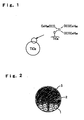

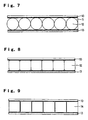
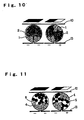

Classifications
-
- G—PHYSICS
- G02—OPTICS
- G02F—OPTICAL DEVICES OR ARRANGEMENTS FOR THE CONTROL OF LIGHT BY MODIFICATION OF THE OPTICAL PROPERTIES OF THE MEDIA OF THE ELEMENTS INVOLVED THEREIN; NON-LINEAR OPTICS; FREQUENCY-CHANGING OF LIGHT; OPTICAL LOGIC ELEMENTS; OPTICAL ANALOGUE/DIGITAL CONVERTERS
- G02F1/00—Devices or arrangements for the control of the intensity, colour, phase, polarisation or direction of light arriving from an independent light source, e.g. switching, gating or modulating; Non-linear optics
- G02F1/01—Devices or arrangements for the control of the intensity, colour, phase, polarisation or direction of light arriving from an independent light source, e.g. switching, gating or modulating; Non-linear optics for the control of the intensity, phase, polarisation or colour
- G02F1/165—Devices or arrangements for the control of the intensity, colour, phase, polarisation or direction of light arriving from an independent light source, e.g. switching, gating or modulating; Non-linear optics for the control of the intensity, phase, polarisation or colour based on translational movement of particles in a fluid under the influence of an applied field
- G02F1/166—Devices or arrangements for the control of the intensity, colour, phase, polarisation or direction of light arriving from an independent light source, e.g. switching, gating or modulating; Non-linear optics for the control of the intensity, phase, polarisation or colour based on translational movement of particles in a fluid under the influence of an applied field characterised by the electro-optical or magneto-optical effect
- G02F1/167—Devices or arrangements for the control of the intensity, colour, phase, polarisation or direction of light arriving from an independent light source, e.g. switching, gating or modulating; Non-linear optics for the control of the intensity, phase, polarisation or colour based on translational movement of particles in a fluid under the influence of an applied field characterised by the electro-optical or magneto-optical effect by electrophoresis
-
- G—PHYSICS
- G02—OPTICS
- G02F—OPTICAL DEVICES OR ARRANGEMENTS FOR THE CONTROL OF LIGHT BY MODIFICATION OF THE OPTICAL PROPERTIES OF THE MEDIA OF THE ELEMENTS INVOLVED THEREIN; NON-LINEAR OPTICS; FREQUENCY-CHANGING OF LIGHT; OPTICAL LOGIC ELEMENTS; OPTICAL ANALOGUE/DIGITAL CONVERTERS
- G02F1/00—Devices or arrangements for the control of the intensity, colour, phase, polarisation or direction of light arriving from an independent light source, e.g. switching, gating or modulating; Non-linear optics
- G02F1/01—Devices or arrangements for the control of the intensity, colour, phase, polarisation or direction of light arriving from an independent light source, e.g. switching, gating or modulating; Non-linear optics for the control of the intensity, phase, polarisation or colour
- G02F1/165—Devices or arrangements for the control of the intensity, colour, phase, polarisation or direction of light arriving from an independent light source, e.g. switching, gating or modulating; Non-linear optics for the control of the intensity, phase, polarisation or colour based on translational movement of particles in a fluid under the influence of an applied field
- G02F1/1675—Constructional details
- G02F2001/1678—Constructional details characterised by the composition or particle type
Definitions
- the present invention relates to a display liquid for electrophoretic display which can reversibly change a visible state by action of an electrical field and a display medium and a display device each using the same.
- An electrophoretic display device invented by Harold D. Lees et al. is known as one of such display devices.
- This electrophoretic display device has a structure in which two electrode substrates at least one of which is transparent are oppositely disposed via suitable spacers and in which a display liquid prepared by dispersing fine particles (pigment particles) in a dispersion medium that is colored differently from the color of the particles is filled into the space between the electrode substrates to form a display panel, and display is shown on the transparent electrode surface by applying an electric field to the display panel (refer to, for example, patent document 1).
- a liquid for electrophoretic display filled into the space between the electrode substrates is constituted from fine particles of titanium oxide and the like (pigment particles), a dispersion medium having a low dielectric constant such as xylene, tetrachloroethylene, paraffin and silicone oil in which a dye for giving a contrast of a color to the fine particles is dissolved, a dispersant such as a surfactant and the like and additives such as a charge-providing agent and the like.
- the fine particles in the display liquid transfer to a transparent electrode side by applying an electric field to the liquid for electrophoretic display to allow the color of the fine particles to appear on the display face. Further, the fine particles transfer to an opposite side by applying an electric field of a direction which is reverse to the above to allow the color of the dispersion medium colored by the dye to appear on the display face.
- Such an electrophoretic display device is a display device in which desired display can be obtained by controlling a direction of an electric field, and it has the advantages that it costs low and has as a broad visibility angle as those of printed matters and that it is small in electric power consumption and has a memory property of display, so that it is paid attentions as an inexpensive display device.
- a display liquid for the above electrophoretic display device described in the patent document 1 is prepared usually by dispersing an inorganic pigment having a high refractive index such as titanium dioxide and the like in a hydrophobic dispersion medium having a low dielectric constant which is colored by dissolving a dye, it is difficult to control dispersion stability, and it has the defects that coagulation brings about reduction in the contrast and the repetitive display characteristics and reduction in the display quality. Further, since the dye solution is used, it has the defect that the contrast is weakened by adsorption of the dye onto the pigment surfaces.
- a dye which is non-adsorptive to a pigment surface is used as a dye used for coloring a dispersion medium (refer to, for example, non-patent document 1) and that a dye concentration in a dispersion medium is to be low (refer to, for example, non-patent document 2).
- a method in which microcapsules encapsulated a display liquid for electrophoretic display are used as display particles is known as a method for preventing unequal display caused by uneven distribution of electrophoretic fine particles on a display face.
- an electrophoretic display device in which a dye solution is not used is known as a means for solving the problems involved in the systems in which a dispersion medium colored by dyes is used.
- a dispersion medium colored by dyes is used.
- an electrophoretic display element in which a liquid prepared by dispersing at least two kinds of electrophoretic fine particles which are different from each other in a color tone and an electrophoretic property in a colorless dispersion medium is filled in a cell formed between two counter electrodes at least one of which is transparent via spacers (refer to, for example, patent document 5).
- an electrophoretic display element using a liquid prepared by dispersing at least two kinds of electrophoretic fine particles which have the same electrophoretic property and which are different from each other in an electrophoretic speed in a colorless dispersion medium (refer to, for example, patent document 7).
- a display liquid for electrophoretic device containing particles which are subjected to surface treatment and have voids in the inside and pigment particles having a color tone which is different from that of the above particles in a dispersion medium (refer to, for example, patent document 8).
- an electrified charge of the different electrophoretic fine particles is combination of a positive charge and a negative charge, and therefore involved therein is the problem that electric attracting force is produced between the fine particles to cause coagulation of the fine particles, whereby the dispersion stability is reduced to bring about deterioration in the contrast by mixed color.
- the dispersion liquid medium gets into the voids, and therefore particularly the white particles are reduced in a refractive index, which makes it difficult to obtain the satisfactory contrast.
- the present invention intends to solve them, and an object thereof is to provide a liquid for electrophoretic display which can realize display having a high contrast by improving dispersion stability of the liquid for electrophoretic display and can display a contrast with high reliability even in repetitive display and which is excellent in a response, a display medium and a display device each using the same.
- the present invention comprises the following items (1) to (24).
- liquid for electrophoretic display which provides a high contrast on a display face and can display a contrast with high reliability even in repetitive display and which is excellent in a response, a display medium and a display device each using the same.
- the liquid for electrophoretic display according to the present invention is constituted from the respective liquids for electrophoretic display which are the first invention to the third invention.
- the liquid for electrophoretic display according to the first invention is characterized by comprising at least alkylpolyetheramine having a structural unit represented by the following Formula (I), one or more kinds of fine particles, a dispersant and a dispersion liquid medium, wherein the fine particles contain fine particles subjected to surface treatment for making lipophilic: in Formula (I) described above, R 1 is a saturated hydrocarbon group or an unsaturated hydrocarbon group; R 2 is (CH 2 CH 2 O)x-H; R 3 is (CH 2 CH 2 O)y-H; and x and y are positive numbers.
- the liquid for electrophoretic display according to the second invention is characterized by comprising at least alkylpolyetheramine having a structural unit represented by Formula (I) described above, a polyoxyethylene oxypropylene block polymer having a structural unit represented by the following Formula (II), one or more kinds of fine particles and a dispersion liquid medium
- the liquid for electrophoretic display according to the third invention is characterized by further comprising an acetylene derivative having a structural unit represented by the following Formula (III) in addition to the liquid for electrophoretic display described above according to the second invention: OH(C 2 H 4 O)p(C 3 H 6 O)qH (II) in Formula (II) described above, p and q are positive numbers; in Formula (III) described above, R 4 and R 5 are a saturated hydrocarbon group or an unsaturated hydrocarbon group; R 6 is OCH 2 CH(CH 3 )- or (OCH 2 CH 2 )m-OH; R 7 is OCH 2 CH(CH 3 )- or (I
- the alkylpolyetheramine used in the first invention to the third invention is used primarily as a charge-controlling agent and may have the structural unit represented by Formula (I) described above.
- Formula (I) a charge-controlling agent
- polyethylene glycol laurylamine polyethylene glycol alkyl(coconut)amine, polyethylene glycol stearylamine, polyethylene glycol alkyl(beef tallow)amine, hydroxyethyllaurylamine, polyethylene glycol alkyl(deer tallow)amine, polyethylene glycol alkyl(sheep tallow)amine, polyethylene glycol alkyl(beef tallow)propylenediamine and polyethylene glycol dioleylamine. It shall not be restricted to them as long as they are dissolved at least in the dispersion liquid medium used.
- the alkylpolyetheramine can be used alone (one kind) or in combination of two or more kinds thereof.
- a content thereof is suitably determined according to the kind thereof, and it is added in a range of preferably 1.0 to 200 % by weight (hereinafter referred to merely as "%"), more preferably 10 to 150 % based on the fine particles subjected to the surface treatment for making lipophilic in the first invention described later or the fine particles of the second and third inventions.
- the above content of the alkylpolyetheramine is less than 1.0 % based on the fine particles subjected to the surface treatment for making lipophilic in the first invention or the fine particles of the second and third inventions, the effect of the alkylpolyetheramine is not exhibited, and the contrast on the display face is weak. The reliability in repetitive display is reduced as well, and the response is deteriorated as well.
- it exceeds 200 % based on the fine particles subjected to the surface treatment for making lipophilic or the fine particles an electroconductivity of the solvent is raised, and therefore moving of the fine particles and the contrast display are reduced. Further, that shall become a factor in which the liquid itself for electrophoretic display is broken by electrolysis, and therefore it is not preferred.
- colored or colorless (white) inorganic pigment particles, organic pigment particles and polymer fine particles can be used as the fine particles used in the first invention to the third invention, and they can be used alone (one kind) or in a mixture of two or more kinds thereof.
- At least the fine particles subjected to the surface treatment for making lipophilic have to be involved in the fine particles used described above from the viewpoint of exhibiting the effects of the present invention, and if at least one kind of the fine particles subjected to the surface treatment for making lipophilic is involved therein, fine particles which are not subjected to the surface treatment for making lipophilic (colored or colorless (white) inorganic pigment particles, organic pigment particles and polymer fine particles) may be involved therein in addition to the above fine particles subjected to the surface treatment for making lipophilic.
- the repetitive display and the response are inferior, and stability of the liquid is deteriorated as well, so that the effects of the present invention are not exhibited.
- the "pigment particles” described above mean particles which have low solubility in the solvent used as the dispersion liquid medium and which can be present in a dispersed particle state in the solvent.
- the inorganic pigment particles which can be used include, for example, titanium dioxide, zinc sulfide, calcium carbonate, silica, calcium silicate, lead white, zinc oxide, lithopone, antimony oxide, kaoline, mica, barium sulfate, gloss white, alumina white, talc, cadmium yellow, cadmium lithopone yellow, yellow iron oxide, titan yellow, titan barium yellow, cadmium orange, cadmium lithopone orange, molybdate orange, red iron oxide, red lead, vermilion, cadmium red, cadmium lithopone red, umber, brown iron oxide, zinc iron, chromium brown, chromium green, chromium oxide, viridian, cobalt green, cobalt chromium green, titan cobalt green, Prussian blue, cobalt blue, ultramarine blue, cerulean blue, cobalt aluminum chromium blue, cobalt violet, mineral violet, carbon black, black iron oxide, manganese
- the organic pigment particles which can be used include, for example, fast yellow, diazo yellow, condensed azo yellow, anthrapyrimidine yellow, isoindoline yellow, copper azomethine yellow, quinophthalone yellow, benzimidazolone yellow, nickel dioxime yellow, monoazo yellow lake, dinitoroaniline orange, pyrazolone orange, perinone orange, naphthol red, toluidine red, permanent carmine, brilliant fast scarlet, pyrazolone red, Rhodamine 6G lake, permanent red, lithol red, bon lake red, brilliant carmine, Bordeaux 10B, naphthol red, quinacridone magenta, condensed azo red, naphthol carmine, perylene scarlet, condensed azo scarlet, benzimidazolone carmine, anthraquinonyl red, perylene red, perylene maroon, quinacridone maroon, quinacridone scarlet, quinacridone red, diketopyrrolo
- Polymer fine particles comprising organic polymers produced by known methods can be used as the polymer fine particles and such methods include, for example, a method making use of emulsion polymerization, a seed emulsion polymerization method, a soap free polymerization method, a dispersion polymerization method, a suspension polymerization method, a seed polymerization method, a method making use of seed polymerization & polymerization contraction, a method carrying out suspension polymerization of a W/O/W emulsion, a method making use of drying surfaces of droplets in spray drying and a seed coagulation method in which a polymer emulsion is coagulated by adding electrolytic solid particles.
- a method making use of emulsion polymerization emulsion polymerization method
- a seed emulsion polymerization method emulsion polymerization method
- soap free polymerization method emulsion polymerization method
- a dispersion polymerization method emulsion polymerization method
- polymer materials which have so far been publicly known and which are not dissolved in a transparent dispersion medium used for electrophoretic display can be used as materials for the polymer fine particles.
- polymer materials such as styrene bases, styrene-acryl bases, styrene-isobutylene bases, divinylbenzene bases, methyl methacrylate bases, methacrylate bases, ethyl methacrylate bases, ethyl acrylate bases, n-butyl acrylate bases, acrylic acid bases, acrylonitrile bases, acryl rubber-methacrylate bases, ethylene bases, ethylene-acrylic acid bases, nylon bases, silicone bases, urethane bases, melamine bases, benzoguanamine bases, phenol bases, fluorine (tetrachloroethylene) bases, vinylidene chloride bases, quaternary pyridinium salt bases, synthetic rubbers, celluloses, cellulose acetate
- the above polymer fine particles may be colored with dyes and pigments by publicly known methods, such methods include, for example, a method in which monomers are colored before synthesizing to produce the polymer fine particles using the methods described above, a method in which the polymer fine particles are colored in the middle of producing them and a method in which the polymer fine particles are colored after producing them.
- dyes or pigments are physically dispersed in the polymer materials described above which are obtained by synthesizing in advance, and then they are crushed to the desired particle sizes, whereby the fine particles can be obtained.
- the colored polymer fine particles shall not be restricted to those obtained by the above methods.
- the fine particles subjected to surface treatment for making lipophilic are those obtained by treating the surface parts of the various fine particles described above (colored or colorless (white) inorganic pigment particles, organic pigment particles and polymer fine particles) with lipophilic surface treating agents.
- the lipophilic surface treating agents include, for example, coupling agents, pigment derivatives and lipophilic surfactants, and the coupling agents are particularly preferably used from the viewpoints of dispersibility and fluidity.
- the coupling agents which can be used include, for example, silane base coupling agents, titanate base coupling agents, aluminum base coupling agents, zirconium base coupling agents, zircoaluminate base coupling agents, a chromium base coupling agents and fluorine base coupling agents.
- the titanate base coupling agents include, for example, isopropyltriisostearoyl titanate, isopropyltristearoyl titanate, isopropyltrioctanoyl titanate, isopropyldimethacrylisostearoyl titanate, isopropyltridodecylbenzenesulfonyl titanate, isopropylisostearoyldiacryl titanate, isopropyltri(dioctcylphosphate) titanate, isopropyltricumylphenyl titanate, isopropyltris(dioctcylpyrophosphate) titanate, isopropyltri(n-aminoethyl-aminoethyl) titanate, tetraisopropylbis(dioctcylphosphite) titanate, tetraoctcylbis(ditridecylphosphit
- the aluminum base coupling agents include, for example, acetalkoxyaluminum diisopropylate.
- the silane base coupling agents include, for example, 3-aminopropyltriethoxysilane, 3-aminopropylmethyldiethoxysilane, 3-ureidopropyltriethoxysilane, 3-ureidopropyltrimethoxysilane, 3-aminopropyltrimethoxysilane, 3-aminopropyl-trimethoxysilane, 3-aminopropyl-tris(2-methoxy-ethoxy-ethoxy)silane, N-methyl-3-aminopropyltrimethoxysilane, N-aminoethyl-3-aminopropyl-trimethoxysilane, diaminosilane, N-aminoethyl-3-aminopropylmethyldimethoxysilane, triaminopropyl-trimethoxysilane, 3-amino-4,5-dihydroimidazolepropyltriethoxysilane, 3-me
- N- ⁇ -(N-vinylbenzylaminoethyl)- ⁇ -aminopropyltrimethoxysilane hydrochloride vinyltriacetoxysilane, ⁇ -anilinopropyltrimethoxysilane, octadecyldimethyl [3-(trimethyoxysilyl)propyl]ammonium chloride, ⁇ -chloropropylmethyldichlorosilane, ⁇ -methacryloxypropylmethyldimethoxysilane, trimethylmethoxysilane, trimethylethoxysilane, dimethyldimethoxysilane, dimethyldiethoxysilane, tetramethoxysilane, tetraethoxysilane, methyldimethoxysilane, methyldiethoxysilane, dimethylethoxysilane, dimethylvinylmethoxysilane, dimethylvinylethoxysilane,
- the zirconium base coupling agents include zirconium butylate, zirconium acetylacetonate, acetylacetone zirconium butylate, zirconium lactate, stearic acid zirconium butylate, tetra(triethanolamine) zirconate and tetraisopropyl zirconate.
- the zircoaluminate base coupling agents include product names A, C, C-1, F, M, M-1, S, APG, CPG, CPM, FPM, MPG and MPM each manufactured by Kusumoto Chemicals, Ltd. and tetrapropyl zircoaluminate.
- the chromium base coupling agents include complexes of chromium methacrylate and chromium chloride.
- the fluorine base coupling agents include trifluoropropyltrimethoxysilane and heptadecatrifluorodecyltrimethoxysilane.
- the respective coupling agents described above can be used alone (one kind), and in addition thereto, they can be used in a mixture of plural (two or more kinds) coupling agents. Further, treatments using plural coupling agents can be carried out by stages.
- the titanate base coupling agents, the aluminum base coupling agents and the silane base coupling agents are particularly preferred from the viewpoint that excellent effects are shown when using them.
- the objects of the surface treatment by the coupling agents in the first invention are not only inorganic pigments but also organic materials, for example, polymer fine particles of an organic polymer base and organic pigment particles.
- Materials in which the presence of active reaction sites (for example, a hydroxyl group) capable of carrying out coupling reaction with the coupling agents is indistinct are included as well in the above matrix particles.
- active reaction sites for example, a hydroxyl group
- the surface characteristics of the matrix particles can be changed by the coupling agents.
- the coupling agents are physically adhered to the surface of the matrix particles or impregnated into the surface, whereby a change in the surface characteristics is realized.
- the treatment with the coupling agents referred to in the present invention includes a change in the surface characteristics described above.
- the fine particles subjected to surface treatment for making lipophilic include, to be specific, particles obtained by treating ITT-2 TiO 2 CR-50 (titanium oxide treated a surface with a titan coupling agent, mean particle size: about 0.4 ⁇ m, manufactured by Nikko Chemicals Co., Ltd.), ITT-7 TiO 2 TTO-S-3 (fine particle titanium oxide treated a surface with a titan coupling agent, mean particle size: 0.05 to 0.1 ⁇ m, manufactured by Nikko Chemicals Co., Ltd.), KR-380 (titanium oxide treated a surface with a lipophilic surface treating agent, mean particle size: about 0.5 ⁇ m, manufactured by Titan Kogyo Co., Ltd.), KR-270 (titanium oxide treated a surface with a lipophilic surface treating agent, mean particle size: about 0.4 ⁇ m, manufactured by Titan Kogyo Co., Ltd.) and Tipaque CR-50 (titanium oxide having a hydrophilic surface, mean particle size
- Fig. 1 shows titanium oxide fine particle (ITT-2 TiO 2 CR-50) in which a titanium oxide surface is treated with a titan coupling agent.
- the fine particles subjected to the surface treatment for making lipophilic described above are particularly preferably particles in which a surface functional group is an alkoxycarbonyl group from the viewpoints of enhancing dispersibility in the dispersion medium and fluidity.
- the particles in which a surface functional group is an alkoxycarbonyl group can be formed, for example, by eliminating an isopropyl group from isopropyl triisostearate titanium which is a titan coupling agent and allowing titanium to be bonded to a hydroxyl group on a particle surface.
- fine particles described above having the structures described above are used as the fine particles of the first invention to the third invention, and fine particles having various particle sizes can be used in relation to a constituent display medium.
- the fine particles having a mean particle size of preferably 0.05 to 20 ⁇ m, particularly preferably 0.1 to 10 ⁇ m are used from the viewpoint of further enhancing the display characteristic, the memory property and the dispersion stability.
- the mean particle size of the fine particles is less than 0.05 ⁇ m, an effect of diffusion caused by a Brownian motion of the fine particles is exerted to deteriorate the display characteristic, and coagulation tends to be strengthened, so that the dispersion system becomes instable.
- the mean particle size exceeds 20 ⁇ m, the fine particles are liable to settle down, and it becomes a factor for deteriorating the display memory property and the dispersion stability.
- the fine particles subjected to surface treatment for making lipophilic are contained in a proportion of preferably 10 % or more, more preferably 20 to 100 % based on the total amount of the fine particles from the viewpoint of exhibiting the effects of the present invention.
- the total content of the fine particles is preferably 3 to 50 %, more preferably 5 to 35 % based on the total amount of the liquid for electrophoretic display.
- those particles can be used with changing a proportion of the black and white fine particles in a range in which the total amount of both particles is 3 to 50 % so that a black and white contrast can sufficiently be displayed.
- dispersant Various dispersants, surfactants and high molecular surfactants which are conventionally used can be used as the dispersant in the first invention.
- the specific examples of the surfactants used as the dispersant include the following nonionic surfactants, anionic surfactants, cationic surfactants, amphoteric surfactants and high molecular type surfactants, but they shall not be restricted to them.
- the nonionic surfactants include, for example, polyoxyalkylene alkylphenol ethers such as polyoxyethylene nonylphenol ether, polyoxyethylene dinonylphenol ether, polyoxyethylene octylphenol ether, polyoxyethylene styrenated phenol, polyoxyethylene bisphenol A, polyoxyethylene nonylphenyl ether, polyoxyethylene octylphenyl ether and nonylphenol ethoxylate, polyoxyalkylene ethers such as polyoxyethylene castor oil, polyoxyalkylene block polymers, polyoxyethylene cetyl ether, polyoxyethylene lauryl ether, polyoxyethylene oleyl ether, polyoxyethylene stearyl ether and polyoxypropylene ether, glycols such as polyoxyalkylene glycols of a monool type, polyoxyalkylene glycols of a diol type, polyoxyalkylene glycols of a triol type, polyalkylene glycols of a monool base
- alkanolamines represented by R-(CH 2 CH 2 O)mH(CH 2 CH 2 O)nH and R-NH-C 3 H 6 -NH 2
- R is oleyl, octyl, dodecyl, tetradecyl, hexadecyl, octadecyl or the like or higher fatty acid obtained from coconut, beef tallow and soybean
- primary amines represented by R-NH 2 R is oleyl, octyl, dodecyl, tetradecyl, hexadecyl, octadecyl or the like or higher fatty acid obtained from coconut, beef tallow and soybean
- secondary amines represented by R1R2-NH R1 and R2 are oleyl, octyl, dodecyl, tetradecyl, hexadecyl, octadecyl or the like or higher
- the anionic surfactants include, for example, carboxylic acid salts such as specific fatty acid soaps and rosin soaps, salts of castor oil sulfuric acid ester, salts of alcohol sulfuric acid ester such as sodium salts of lauryl alcohol sulfuric acid ester, amine salts of lauryl alcohol sulfuric acid ester, sodium salts of natural alcohol sulfuric acid esters and sodium salts of higher alcohol sulfuric acid esters, salts of sulfuric acid esters such as amine salts of lauryl alcohol ether sulfuric acid ester, sodium salts of lauryl alcohol ether sulfuric acid ester, amine salts of synthetic higher alcohol ether sulfuric acid esters, sodium salts of synthetic higher alcohol ether sulfuric acid esters, amine salts of alkyl polyether sulfuric acid esters, sodium salts of alkyl polyether sulfuric acid esters, amine salts of natural alcohol EO (ethylene oxide) adduct sulfuric acid esters, sodium salts of natural alcohol EO (ethylene oxide) adduct sulfuric
- the cationic surfactants include, for example, alkyltrimethylamine base quaternary ammonium salts represented by R-N(CH 3 ) 3 X (R is stearyl, cetyl, lauryl, oleyl, dodecyl, coconut, soybean, beef tallow or the like, and X is halogen, amine or the like), quaternary ammonium salts such as tetramethylamine base salts and tetrabutylamine base salts, acetic acid salts represented by (RNH 3 )(CH 3 COO) (R is stearyl, cetyl, lauryl, oleyl, dodecyl, coconut, soybean, beef tallow or the like), benzylamine base quaternary ammonium salts such as lauryldimethylbenzylammonium salts (halogen, amine salts and the like), stearyldimethylbenzylammonium salts (halogen, amine salts and the
- amphoteric surfactants include, for example, various betaine type surfactants, various imidazoline type surfactants, ⁇ -alanine type surfactants and polyoctylpolyaminoethylglycine hydrochloride.
- the high molecular type surfactants which can be used are polymers having a large molecular weight (number average molecular weight, hereinafter the same shall apply) instead of those having a small molecular weight of several hundred, and they include compounds including low molecular weight polymers having a molecular weight of 10000 or less which are usually called oligomers in addition to polymers having a molecular weight of about 10000 or more which are usually called macromolecules (polymers).
- anionic high molecular type surfactants cationic high molecular type surfactants and nonionic high molecular type surfactants can be given as the high molecular type surfactants.
- the anionic high molecular type surfactants include, for example, styrene-maleic anhydride copolymers, olefin-maleic anhydride copolymers, naphthalenesulfonic acid salt condensation products, formalin condensation products of naphthalenesulfonic acid salts, poly(sodium acrylate), polycarboxylic acid type anionic surfactants, polyacrylamide-partially hydrolyzed products, acrylamide-sodium acrylate copolymers and sodium alginate.
- the cationic high molecular type surfactants include, for example, polyethyleneimine, polyvinylimidazolidone, aminoalkyl (meth)acrylate-acrylamide copolymers, acrylamide Mannich denatured products and chitosan.
- the nonionic high molecular type surfactants include, for example, polyvinyl alcohol, copolymers of polyethylene ether ester, polyacrylamide, polycarboxylic acid base compounds, oligomers of hydroxyfatty acids, denatured products of oligomer of hydroxyfatty acids, polyhydroxyfatty acids, polyhydroxyfatty acid-denatured products, poly-1,2-hydroxystearic acid, N-polyoxyalkylenepolyalkylenepolyamine and starch.
- nonionic or anionic surfactants and nonionic or anionic high molecular type surfactants which are less liable to exert an adverse effect on positive or negative electrification of the particle surface and which are less liable to exert an adverse effect when encapsulating the liquid for electrophoretic display into microcapsules.
- the above dispersants can be used alone or in combination of two or more kinds thereof.
- a content thereof is suitably determined according to the fine particles used and the kind of the solvent, and it is preferably 0.01 to 50.0 %, more preferably 1 to 30 % based on the total amount of the liquid for electrophoretic display.
- a content of the dispersant is less than 0.01 %, it becomes difficult to secure satisfactory dispersion stability of the dispersion system.
- conductivity of the dispersion liquid medium grows high, and a viscosity of the dispersion system is raised, so that an adverse effect is exerted on the display characteristics. Accordingly, both ranges are not preferred.
- the dispersion liquid medium those of various types which have so far been used for electrophoretic display can be used as the dispersion liquid medium.
- aromatic hydrocarbons such as benzene, alkylbenzene derivatives such as toluene, xylene, ethylbenzene and dodecylbenzene, diarylalkane derivatives such as phenylxylylethane, 1,1-ditolylethane, 1,2-ditolylethane and 1,2-bis(3,4-dimethylphenylethane) (BDMF), alkylnaphthalene derivatives such as diisopropylnaphthane, alkylbiphenyl derivatives such as monoisopropylbiphenyl, isopropylbiphenyl and isoamylbiphenyl, terphenyl derivatives which are hydrogenated in various proportions, triaryldimethane derivatives such as dibenzyltoluene, benzylnaphthalene derivatives, phenylene oxide derivatives, diarylalkylene derivatives, ary
- aliphatic hydrocarbons such as hexane, cyclohexane, kerosene, isoper and paraffin base hydrocarbons, halogenated hydrocarbons such as chloroform, trichloroethylene, tetrachloroethylene, trifluoroethylene, tetrafluoroethylene, dichloromethane and ethyl bromide, phosphoric acid esters such as tricresyl phosphate, trioctyl phosphate, octyldiphenyl phosphate and tricyclohexyl phosphate, phthalic acid esters such as dibutyl phthalate, dioctyl phthalate, dilauryl phthalate and dicyclohexyl phthalate, carboxylic acid esters such as butyl oleate, diethylene glycol dibenzoate, dioctyl sebacate, dibutyl sebacate, dibutyl adipate, trioc
- the dispersion liquid media can be used alone or in a mixture of two or more kinds thereof.
- a solvent having a low dielectric constant (5.0 or lower) is preferably used as the dispersion liquid medium, and it is preferably selected so that it has the same specific gravity as those of the fine particles.
- a content of the dispersion liquid media is suitably determined according to the fine particles used and the kind of the dispersant, and it is preferably 25 to 85 %, more preferably 30 to 60 % based on the total amount of the liquid for electrophoretic display.
- a content of the dispersion liquid medium is less than 25 %, a viscosity of the liquid grows high, and the response speed is lowered. On the other hand, if it exceeds 85 %, the satisfactory contrast can not be displayed. Accordingly, both ranges are not preferred.
- the dispersion liquid media described above which are colored by dissolving therein various oil-soluble dyes can be used.
- the following ones can be given as the dyes which can be used, but the present invention shall not be restricted to them.
- the dyes which can be used include, for example, spirit black (SS, SSBB, AB), nigrosine bases (SA, SAP, SAPL, EE, EEL, EX, EXBP, EB), oil yellow (105, 107, 129, 3G, GGS), oil orange (201, PS, PR), fast orange, oil red (5B, PR, OG), oil scarlet, oil pink 312, oil violet #730, macrorex blue RR, Sumiplast Green G, oil brown (GR, 416), Sudan Black X60, oil green (502, BG), oil blue (613, 2N, BOS), oil black (HBE, 860, BS), Valifast Yellow (1101, 1105, 3108, 4120), Valifast Orange (3209, 3210), Valifast Red (1306, 1355, 2303, 3304, 3306, 3320), Valifast Pink 2310N, Valifast Brown (2402, 3405), Valifast Blue (3405, 1501, 1603, 1605, 1607, 2606, 2610),
- the above dyes are preferably used by selecting the colors which can display the contrast against the fine particles used, and two or more kinds thereof can be used to control the color.
- the liquid for electrophoretic display according to the first invention comprises at least the alkylpolyetheramine having the structural unit represented by Formula (I) described above, one or more kinds of the fine particles described above, the dispersant and the dispersion liquid medium, wherein the fine particles contain fine particles subjected to surface treatment for making lipophilic, and it can contain the suitable amounts of optional components used for a liquid for electrophoretic display as long as the effects of the present invention are not damaged.
- the optional components which can be used include UV absorbers, antioxidants, light stabilizers, heat stabilizers and fungicides.
- the liquid for electrophoretic display according to the first invention can be prepared by mixing and stirring at least the alkylpolyetheramine having the structural unit represented by Formula (I) described above, one or more kinds of the fine particles described above containing the fine particles subjected to surface treatment for making lipophilic, the dispersant and the dispersion liquid medium and then subjecting the mixture to various dispersion treatment by a medialess dispersion method such as supersonic dispersion and a dispersion method using media of a wet bead mill. Further, classification treatment making use of a principle of centrifugal separation and a particle size-controlling by a filtration method can be carried out, if necessary, in order to control a particle size of the fine particles.
- a medialess dispersion method such as supersonic dispersion and a dispersion method using media of a wet bead mill.
- the liquid for electrophoretic display thus constituted according to the first invention, used is the liquid which comprises at least the alkylpolyetheramine having the structural unit represented by Formula (I) described above, one or more kinds of the fine particles, the dispersant and the dispersion liquid medium and in which the particles containing the fine particles subjected to surface treatment for making lipophilic are used for the fine particles described above, whereby the liquid which has a high contrast on a display face and can display a contrast with a high reliability even in repetitive display and which is excellent in a response can be provided.
- the liquid which has a high contrast on a display face and can display a contrast with a high reliability even in repetitive display and which is excellent in a response can be provided.
- the liquid for electrophoretic display according to the second invention comprises at least the alkylpolyetheramine having the structural unit represented by Formula (I) described above, the polyoxyethylene oxypropylene block polymer having the structural unit represented by Formula (II) described above, one or more kinds of the fine particles and the dispersion liquid medium: OH(C 2 H 4 O)p(C 3 H 6 O)qH (II) in Formula (II) described above, p and q are positive numbers.
- the polyoxyethylene oxypropylene block polymer used in the second invention improves dispersibility of the fine particles and aging stability of the liquid for electrophoretic display, and it may be any one as long as it has the structure represented by Formula (II) described above.
- the polyoxyethylene oxypropylene block polymer having an average molecular weight of 1000 to 4000 is preferred from the viewpoint of solubility in a solvent having a low dielectric constant.
- the polyoxyethylene oxypropylene block polymer having an ethylene oxide amount of 50 % by weight or less is more preferred, and the polyoxyethylene oxypropylene block polymer having an ethylene oxide amount of 5 to 30 % by weight is particularly preferred.
- the polyoxyethylene oxypropylene block polymer which can specifically be used includes at least one kind (one kind or two or more kinds) of Pronon 102 (average molecular weight: 1250, ethylene oxide amount: 20 % by weight), Pronon 104 (average molecular weight: 1670, ethylene oxide amount: 40 % by weight), Pronon 201 (average molecular weight: 2220, ethylene oxide amount: 10 % by weight), Pronon 204 (average molecular weight: 3300, ethylene oxide amount: 40 % by weight) and Pronon 208 (average molecular weight: 10000, ethylene oxide amount: 80 % by weight) each manufactured by NOF Corporation. However, it shall not be restricted to them as long as it is dissolved in the dispersion medium.
- a content of the polyoxyethylene oxypropylene block polymers is preferably 0.01 to 30 %, more preferably 0.01 to 10 % based on the total amount of the display liquid.
- a content of the polyoxyethylene oxypropylene block polymers is less than 0.01 %, the fine particles are reduced in dispersibility, and the liquid for electrophoretic display is deteriorated in aging stability. On the other hand, if it exceeds 30 %, an adverse effect is exerted on the display performances such as the contrast. Accordingly, both ranges are not preferred.
- the polyoxyethylene oxypropylene block polymer having the characteristics described above is used in comparison with the liquid for electrophoretic display according to the first invention described above, so that one or more kinds of the fine particles which are not subjected to the surface treatment for making lipophilic can be used as well. Further, the effects of the present invention can be exhibited without using the dispersant.
- the respective components such as the alkylpolyetheramine having the structural unit represented by Formula (I) described above, one or more kinds of the fine particles, the dispersion liquid medium, the dispersant, the surfactant, the high molecular type surfactant and the colorant (dye) excluding the polyoxyethylene oxypropylene block polymer having the characteristics described above which is used for the liquid for electrophoretic display according to the second invention and the respective contents thereof are the same as the respective components and the contents thereof used for the liquid for electrophoretic display according to the first invention described above, and therefore the explanations thereof shall be omitted.
- the fine particles subjected to the surface treatment for making lipophilic may be used as the preferred embodiment, and the dispersant may be added.
- the liquid for electrophoretic display according to the second invention comprises at least the alkylpolyetheramine having the structural unit represented by Formula (I) described above, the polyoxyethylene oxypropylene block polymer having the structural unit represented by Formula (II) described above, one or more kinds of the fine particles and the dispersion liquid medium, and it may contain the suitable amounts of optional components used for a liquid for electrophoretic display as long as the effects of the present invention are not damaged.
- the optional components which can be used include UV absorbers, antioxidants, light stabilizers, heat stabilizers and fungicides.
- the liquid for electrophoretic display according to the second invention can be prepared by mixing and stirring at least the alkylpolyetheramine having the structural unit represented by Formula (I) described above, the polyoxyethylene oxypropylene block polymer having the structural unit represented by Formula (II) described above, one or more kinds of the fine particles and the dispersion liquid medium and then subjecting the mixture to various dispersion treatment by a medialess dispersion method such as supersonic dispersion and a dispersion method using a media of a wet bead mill. Further, classification treatment making use of a principle of centrifugal separation and particle size-controlling by a filtration method may be carried out, if necessary, in order to control a particle size of the fine particles.
- a medialess dispersion method such as supersonic dispersion and a dispersion method using a media of a wet bead mill.
- classification treatment making use of a principle of centrifugal separation and particle size-controlling by a filtration method may be carried out
- liquid for electrophoretic display thus constituted according to the second invention, used is the liquid comprising at least the alkylpolyetheramine having the structural unit represented by Formula (I) described above, the polyoxyethylene oxypropylene block polymer having the structural unit represented by Formula (II) described above, one or more kinds of the fine particles and the dispersion liquid medium, whereby the liquid which displays a high contrast on a display face and can display the contrast with high reliability even in repetitive display and which is excellent in a response can be provided.
- the liquid comprising at least the alkylpolyetheramine having the structural unit represented by Formula (I) described above, the polyoxyethylene oxypropylene block polymer having the structural unit represented by Formula (II) described above, one or more kinds of the fine particles and the dispersion liquid medium, whereby the liquid which displays a high contrast on a display face and can display the contrast with high reliability even in repetitive display and which is excellent in a response can be provided.
- the liquid for electrophoretic display according to the third invention is characterized by comprising at least the alkylpolyetheramine having the structural unit represented by Formula (I) described above, the polyoxyethylene oxypropylene block polymer having the structural unit represented by Formula (II) described above, the acetylene derivative having the structural unit represented by the following Formula (III), one or more kinds of the fine particles and the dispersion liquid medium: in Formula (III) described above, R 4 and R 5 are a saturated hydrocarbon group or an unsaturated hydrocarbon group; R 6 is OCH 2 CH(CH 3 )- or (OCH 2 CH 2 )m-OH; R 7 is OCH 2 CH(CH 3 )- or (OCH 2 CH 2 )n-OH; m and n are positive numbers; m and n are 0 or a positive number; and R 6 and R 7 may be the same or different.
- the acetylene derivative used in the third invention improves durability and reliability of the liquid for electrophoretic display, and it may be any one as long as it has the structure represented by Formula (III) described above. It includes, for example, acetylene glycol derivatives (R 4 and R 5 are an isobutyl group, and R 6 and R 7 are a -OH group (m and n are 0)), ethylene oxide adducts of acetylene glycol derivatives (R 4 and R 5 are an isobutyl group; R 6 is (OCH 2 CH 2 )m-OH; R 7 is (OCH 2 CH 2 )n-OH; m and n are positive numbers), propylene oxide adducts of acetylene glycol derivatives (R 4 and R 5 are an isobutyl group, and R 6 and R 7 are OCH 2 CH(CH 3 )-) and mixtures of the derivatives and organic solvents (ethylene glycol, dipropylene glycol monomethyl ether and the like
- Surfynol 104 acetylene glycol derivative; R 4 and R 5 are an isobutyl group; R 6 and R 7 are a -OH group (m and n are 0); and HLB is 4
- Surfynol 104E mixture of Surfynol 104 (50 % by weight) and ethylene glycol (50 % by weight), HLB: 4
- Surfynol 104DPM mixture of Surfynol 104 (50 % by weight) and dipropylene glycol monomethyl ether (50 % by weight), HLB: 4
- Surfynol 420 ethylene oxide (20 % by weight) adduct of Surfynol 104, HLB: 4
- Surfynol DF-110D acetylene diol, HLB: 4
- Olfin B acetylene alcohol, HLB: 10 or less
- HLB is preferably 10 or less, more preferably 2 to 5.
- HLB is preferably 10 or less, more preferably 2 to 5.
- a content of the above acetylene derivatives is preferably 0.01 to 10 %, more preferably 0.05 to 5.0 % based on the total amount of the display liquid.
- a content of the acetylene derivatives is less than 0.01 %, the satisfactory effect of improving the repetitive display characteristics is not exhibited. On the other hand, if it exceeds 10 %, a rise in a viscosity of the liquid for electrophoretic display is brought about, and an adverse effect is exerted on the electrophoretic characteristics in a certain case.
- the liquid for electrophoretic display according to the third invention further comprises the acetylene derivative having the characteristics described above in comparison with the liquid for electrophoretic display according to the second invention.
- the respective components such as the alkylpolyetheramine having the structural unit represented by Formula (I) described above, the polyoxyethylene oxypropylene block polymer having the structural unit represented by Formula (II) described above, one or more kinds of the fine particles, the dispersion liquid medium, the dispersant, the surfactant, the high molecular type surfactant and the colorant (dye) excluding the acetylene derivative having the characteristics described above which is used for the liquid for electrophoretic display according to the third invention and the respective contents thereof are the same as the respective components and the contents thereof used for the liquids for electrophoretic display according to the first invention and the second invention each described above, and therefore the explanations thereof shall be omitted.
- the fine particles which are subjected to the surface treatment for making lipophilic may be used as the preferred embodiment, and the dispersant may be added.
- the liquid for electrophoretic display according to the third invention comprises at least the alkylpolyetheramine having the structural unit represented by Formula (I) described above, the polyoxyethylene oxypropylene block polymer having the structural unit represented by Formula (II) described above, the acetylene derivative having the structural unit represented by Formula (III) described above, one or more kinds of the fine particles and the dispersion liquid medium, and it may contain the suitable amounts of optional components used for a liquid for electrophoretic display as long as the effects of the present invention are not damaged.
- the optional components which can be used include UV absorbers, antioxidants, light stabilizers, heat stabilizers and fungicides.
- the liquid for electrophoretic display according to the third invention can be prepared by mixing and stirring at least the alkylpolyetheramine having the structural unit represented by Formula (I) described above, the polyoxyethylene oxypropylene block polymer having the structural unit represented by Formula (II) described above, the acetylene derivative having the structural unit represented by Formula (III) described above, one or more kinds of the fine particles and the dispersion liquid medium and then subjecting the mixture to various dispersion treatment by a medialess dispersion method such as supersonic dispersion and a dispersion method using a media of a wet bead mill. Further, classification treatment making use of a principle of centrifugal separation and particle size-controlling by a filtration method can be carried out, if necessary, in order to control a particle size of the fine particles.
- a medialess dispersion method such as supersonic dispersion and a dispersion method using a media of a wet bead mill.
- liquid for electrophoretic display thus constituted according to the third invention, used is the liquid comprising at least the alkylpolyetheramine having the structural unit represented by Formula (I) described above, the polyoxyethylene oxypropylene block polymer having the structural unit represented by Formula (II) described above, the acetylene derivative having the structural unit represented by Formula (III) described above, one or more kinds of the fine particles and the dispersion liquid medium, whereby the liquid which displays a high contrast on a display face and can display the contrast with high reliability even in repetitive display and which is excellent in a response can be provided.
- the liquid comprising at least the alkylpolyetheramine having the structural unit represented by Formula (I) described above, the polyoxyethylene oxypropylene block polymer having the structural unit represented by Formula (II) described above, the acetylene derivative having the structural unit represented by Formula (III) described above, one or more kinds of the fine particles and the dispersion liquid medium, whereby the liquid which displays a high contrast on a display face and can display
- the medium for electrophoretic display according to the present invention is characterized by that any one of the liquids for electrophoretic display prepared in the first invention to the third invention is encapsulated into each independent structures of microcapsules or cells.
- Fig. 2 and Fig. 3 are the embodiments of using a liquid of a single particle type or a double particle type in which the liquid for electrophoretic display is encapsulated into a structure comprising microcapsules.
- a liquid for electrophoretic display prepared by dispersing a prescribed amount of titanium oxide particles or titanium oxide particles subjected to treatment for making lipophilic in a solution colored to black with an oil-soluble dye is micro-encapsulated by a urea-formaldehyde resin, wherein an illustrated symbol 1 is a positively electrified (titanium oxide) white particle; 2 is a black solvent; and 3 is a capsule wall.
- a liquid for electrophoretic display prepared by dispersing the prescribed amounts of titanium oxide particles or titanium oxide particles subjected to treatment for making lipophilic and cross-linked acryl base polymer particles including carbon black in a dispersion medium is micro-encapsulated by a urea-formaldehyde resin, wherein an illustrated symbol 4 is a positively electrified (titanium oxide) white particle; 5 is a non-electrified black particle (cross-linked acryl base polymer particle including carbon black); 6 is a non-colored solvent; and 7 is a capsule wall.
- an illustrated symbol 4 is a positively electrified (titanium oxide) white particle
- 5 is a non-electrified black particle (cross-linked acryl base polymer particle including carbon black)
- 6 is a non-colored solvent
- 7 is a capsule wall.
- Fig. 4 to Fig. 6 are the respective embodiments in which the liquid for electrophoretic display is filled into a structure comprising a cell, and the respective patterns of the cells are schematically shown.
- Fig. 7 to Fig. 9 each schematically show cross-sectional drawings in a case where a microcapsule and a cell structure sheet are arranged between counter electrodes, wherein in Fig. 7 to Fig. 9, an illustrated symbol 10 is a transparent electrode; 11 is a binder resin layer; 12 is a microcapsule; 13 is a counter substrate; and 14 is a cell-forming sheet (the same shall apply to Fig. 10 and Fig. 11).
- the microcapsule used for the medium for electrophoretic display according to the present invention can be prepared by an in-situ polymerization method, an interfacial polymerization method and a coacervation method which are usually used.
- a wall material for the microcapsule includes polyurethanes, polyureas, polyurea-polyurethanes, urea-formaldehyde resins, melamine-formaldehyde resins, polyamides, polyesters, polysulfoneamides, polycarbonates, polysulfinates, epoxy resins, acrylic acid ester resins, methacrylic acid ester resins, vinyl acetate resins and gelatin.
- microcapsules used for the display particles for electrophoretic display according to the present invention have preferably a particle size of 10 to 200 ⁇ m.
- a particle size of the microcapsules is less than 10 ⁇ m, the inconvenience that the contrast is not sufficiently obtained is involved therein. On the other hand, if it exceeds 200 ⁇ m, the inconvenience that the satisfactory response speed is not obtained without raising the applied voltage. Accordingly, both ranges are not preferred.
- a particle size of the microcapsules falls preferably in certain distribution as much as possible. If it is not uniform, uneven display is caused, and the display characteristics are lowered.
- microcapsules used for the medium for electrophoretic display according to the present invention have preferably flexibility so that the microcapsules are arranged in a high density in order to prevent gaps from being generated therebetween when installing them between the counter electrodes disposed in the display device.
- the microcapsules are brought into face contact with the counter electrode, and the uneven display is less liable to be generated, so that the electrophoretic display device having a display characteristic of high quality is obtained.
- microcapsule having flexibility results in being increased in mechanical strength and improved as well in characteristics when arranging the microcapsules on the electrodes for display by a coating method.
- a water dispersion type resin base binder and a solvent dissolving type resin base binder can be used for a coating liquid for coating the microcapsules used for the medium for electrophoretic display according to the present invention on the substrate electrode. It is preferable that dispersibility of the microcapsules in the coating liquid is good in order to evenly arrange the microcapsules when coating them on the substrate.
- microcapsules are preferably brought into even contact with each other at a drying step, and the microcapsules are preferably not inhibited from being brought into face contact with each other at a final drying step.
- an electrode part and a cell part which are brought into contact with the liquid for electrophoretic display in the structure of the cell filled with the liquid for electrophoretic display are preferably subjected to hydrophilization treatment selected from ozone treatment, plasma treatment, corona treatment, UV itoro treatment, sputtering treatment, polymer layer-forming treatment, inorganic layer-forming treatment and organic or inorganic hybrid layer-forming treatment from the viewpoint of controlling an affinity with the electrophoretic particles in the liquid.
- the surface of a cell sheet is exposed to ozone to be brought into contact with ozone molecules for the purpose of introducing a functional group (hydrophilic group) such as a hydroxyperoxy group, a hydroxyl group and a carbonyl group, whereby the hydrophilization treatment is carried out.
- a functional group hydrophilic group
- the exposing method includes a method in which it is held in atmosphere in which ozone is present for prescribed time and a method in which it is exposed in ozone flow for prescribed time, but it shall not specifically be restricted.
- the plasma treatment is carried out by putting the cell sheet described above in a vessel containing air, oxygen, nitrogen, carbon dioxide, argon and neon to expose to plasma produced by glow discharge, and it has the purpose of introducing a functional group (hydrophilic group) such as a carboxylic acid group, a carbonyl group and an amino group each containing oxygen or nitrogen into a cell sheet surface part.
- a discharge system for generating plasma includes direct current discharge, low frequency discharge, radiofrequency wave discharge and microwave discharge, but it shall not specifically be restricted to them.
- Air plasma treatment and oxygen plasma treatment are preferred from the viewpoint of introducing a hydrophilic functional group containing an oxygen atom.
- the cell sheet described above is allowed to pass in an electric field in which corona discharge is generated, whereby an inside surface part of the cell sheet can be subjected to hydrophilization treatment.
- treatment sicification flame treatment, titanium oxidation flame treatment and aluminum oxidation flame treatment
- blown onto the cell sheet described above is flame of fuel gas containing at least one modifier compound selected from the group consisting of alkylsilane compounds, alkoxysilane compounds, alkyltitanium compounds, alkoxytitanium compounds, alkylaluminum compounds and alkoxyaluminum compounds, preferably at least one of modifier compounds having a boiling point of 10 to 100°C, whereby an inside surface part of the cell sheet can be subjected to hydrophilization treatment.
- a flame temperature in carrying out the blowing treatment is 500 to 1500°C, and the treating time is 0.1 to 100 seconds.
- the electrode part and the cell part which are brought into contact with the liquid for electrophoretic display can be subjected as well to hydrophilization treatment by sputtering treatment, polymer layer-forming treatment, inorganic layer-forming treatment and organic or inorganic hybrid layer-forming treatment.
- a volume of the independent and divided cell is preferably 1 X 10 -9 to 1 X 10 -3 ml in the medium in which the structure comprising the independent and divided cell is filled, as shown in Fig. 4 to Fig. 6, with the liquid for electrophoretic display.
- this volume is less than 1 ⁇ 10 -9 ml, deterioration in the display contrast is liable to be brought about. On the other hand, if it exceeds 1 ⁇ 10 -3 ml, coagulation is liable to be caused in an inside of the cells to bring about failures such as uneven display.
- the contrast on the display face is sharp, and the contrast can be displayed with high reliability even in repetitive display.
- the characteristics in which a response is excellent are realized.
- the electrophoretic device of the present invention is characterized by having a pair of substrates on at least one of which electrodes having a light transmitting property are formed and the medium for electrophoretic display having the structure described above between the substrates.
- the electrophoretic display device of the present invention includes, for example, devices having the following forms of a) to f), but it shall not be restricted to them.
- the independent and divided cell has preferably a volume of 1 ⁇ 10 -9 to 1 ⁇ 10 -3 ml.
- Fig. 10 is an electrophoretic display device using a display medium in which the liquid for electrophoretic display of the single particle type shown in Fig. 2 is encapsulated into a structure comprising microcapsules
- Fig. 11 is an electrophoretic display device using a display medium in which the liquid for electrophoretic display of the double particle type shown in Fig. 3 is encapsulated into a structure comprising microcapsules.
- Fig. 12 shown is a schematic drawing of an electrophoretic display device in a case in which ITO glass electrodes having a thickness (D1, D3) of 1100 ⁇ m are used as counter electrodes and a sheet of a spacer having a thickness (D2) of 500 ⁇ m is used to apply voltage, and d1 and d2 are a thickness (0.15 ⁇ m) of an ITO thin film.
- a film-shaped sheet having a lot of cells filled with the liquid for electrophoretic display may be interposed between counter electrodes in the electrophoretic display device in the present invention.
- the sheet for receiving the liquid for electrophoretic display it can be prepared by forming fine cells on a thin film sheet by applying various UV laser processing techniques or by a photoetching method and various printing methods.
- the electrophoretic display device thus constituted according to the present invention has a high contrast and can display the contrast with high reliability even in repetitive display, and the characteristics in which a response is excellent are realized.
- Blend compositions of the respective examples and comparative examples shown in the following Table 1 were dispersed for 60 minutes by means of a paint shaker using glass beads to prepare liquids for electrophoretic display.
- A-1 to A-8 and B-1 to B-2 used were fine particles (A-1 to A-8 and B-1 to B-2), dyes, dispersion liquid media (C-1 to C-3), dispersants (D-1 to D-4) and alkylpolyetheramines (E-1 to E-6) each shown below.
- Fine particles A A:
- Fine particles B are Fine particles B:
- Dispersion liquid medium C is a liquid medium
- the respective liquids for electrophoretic display obtained according to the formulations shown in Table 1 described above were used to prepare media for electrophoretic display by methods described below, and evaluation of a reflectance on the white display face, visual evaluation of the white display face, evaluation of a reflectance on the colored display face, visual evaluation of the colored display face, evaluation of coagulation and adhesion of the fine particles and evaluation of the response and the contrast were carried out by the following respective evaluation methods.
- Glass substrates (thickness: 1.1 mm) in which a transparent conductive film (ITO film) was formed in a thickness of 0.15 ⁇ m on one surface were used as a substrate in which an electrode was provided on one surface, and a pair of the glass substrates were oppositely disposed via spacers of about 500 ⁇ m to form a cell.
- ITO film transparent conductive film
- liquids for electrophoretic display prepared according to the formulations shown in Table 1 described above were filled into the above space to thereby prepare media for electrophoretic display.
- the respective media for electrophoretic display prepared in the examples and the comparative examples by the method described above were electrophoresed by applying a voltage of +200 V or -200 V to the electrodes of the medium to measure a reflectance on a white or colored display face formed by means of MSC-5N (manufactured by Suga Test Instruments Co., Ltd., hereinafter the same shall apply).
- Whiteness of the white display face and a color density of the colored display face which were displayed by applying voltage were sensorily evaluated according to the following evaluation criteria.
- Coagulation of the particles and an adhesion state thereof onto the electrode surface were evaluated according to the following evaluation criteria by visually observing a change and a state of a color tone of the displayed part when applying hundred times a voltage of +200 V or -200 V alternately at an interval of one second to switch over the display.
- a voltage of +200 V or -200 V was applied to set one visible display part to white display, and a focus was concentrated onto an outermost side display face thereof to measure white color reflection by 45° irradiation - vertical light reception. Then, a voltage of -200 V or +200 V which was reverse to the first polarity was applied to change the visible display part to colored display, and a reflectance on the colored display face was measured in the same manner. The contrast ratio was calculated from a ratio thereof (reflectance of the white display face/reflectance of the colored display face).
- Example 1 35 ⁇ to ⁇ 8 ⁇ to ⁇ ⁇ ⁇ 4.4
- Example 2 53 ⁇ 5 ⁇ ⁇ ⁇ 8.8
- Example 3 53 ⁇ 6 ⁇ ⁇ ⁇ 8.8
- Example 4 51 ⁇ 5 ⁇ ⁇ ⁇ 10.2
- Example 5 50 ⁇ 6 ⁇ ⁇ ⁇ 8.3
- Example 6 51 ⁇ 7 ⁇ ⁇ ⁇ to ⁇ 7.3
- Example 7 54 ⁇ 7 ⁇ ⁇ ⁇ to ⁇ 7.7
- Example 8 53 ⁇ 6 ⁇ ⁇ ⁇ to ⁇ 8.8
- Example 9 54 ⁇ 7 ⁇ ⁇ ⁇ 7.7
- Example 10 53 ⁇ 6 ⁇ ⁇ ⁇ 8.8
- Example 11 47 ⁇ 7 ⁇ ⁇ ⁇ to ⁇ 8.7
- Example 12 52 ⁇ 7 ⁇ ⁇ ⁇ 7.4
- Example 13 52 ⁇ 6 ⁇ ⁇ ⁇ 8.7
- Example 14 50 ⁇ 6 ⁇ ⁇ ⁇ ⁇ ⁇ ⁇ ⁇ ⁇ ⁇ ⁇ ⁇
- the media for electrophoretic display prepared in Examples 1 to 19 falling in the scope of the present invention are excellent, as compared with the media for electrophoretic display prepared in Comparative Examples 1 to 6 falling outside the scope of the present invention, in a reflectance on the white display face and the colored display face and excellent as well in a hue of white display and colored display which are visually observed and that they are free of coagulation and adhesion of the fine particles and excellent in a response and a contrast.
- the devices of a microcapsule type (MC) and a sheet type (S) for electrophoretic display were prepared by methods described below, and evaluation of a reflectance on the white display face, visual evaluation of the white display face, evaluation of a reflectance on the colored display face, visual evaluation of the colored display face, evaluation of coagulation and adhesion of the fine particles and evaluation of the response and the contrast were carried out by the respective evaluation methods described above.
- a dispersion of 100 g was prepared according to the formulation described in Example 2 described above.
- a 5 % by weight gelatin aqueous solution of 200 g and a 5 % by weight gum arabic aqueous solution of 200 g were mixed while stirring and heated to 50°C, and a pH of the solution was controlled to 9.0 by a sodium hydroxide aqueous solution.
- the dispersion for electrophoretic display prepared in (1) described above was added to the aqueous solution while slowly stirring to prepare an emulsion.
- the pH was reduced to 4.0 by using an acetic acid aqueous solution under a prescribed stirring condition to form a gelatin/gum arabic coacervate, and then it was cooled down to about 5°C in about 30 minutes.
- microcapsules thus obtained had a mean particle size of 80 ⁇ m.
- a water-based urethane base binder solution of 1.5 part was mixed with the microcapsule slurry of 1 part obtained in (2) described above, and the mixture was coated on an ITO transparent electrode on a PET base material by means of an applicator coating machine and sufficiently dried under the condition of 50°C.
- the cell for display was adhered on a counter electrode substrate and vacuum-pressed so that a gap between the counter electrodes was 60 ⁇ m to prepare a display device and evaluate it.
- a dispersion of 100 g was prepared according to the formulation described in Example 9 described above.
- Hexamethylenediisocyanate (HDI) of 10 g was dissolved in the dispersion (1) described above, and then the solution was immediately added to a 5 % by weight gelatin aqueous solution of 300 g under a prescribed stirring condition to prepare an emulsion. The temperature was held at 35°C to continue stirring for 2 hours, and then the temperature of the system was cooled down to 5°C.
- HDI Hexamethylenediisocyanate
- the pH was controlled to 9.0 by sodium hydroxide, and then a 25 % glutaraldehyde aqueous solution of 10 g was added thereto.
- the temperature of the system was elevated up to 50°C, and capsulation reaction was finished in about 2 hours.
- the microcapsules thus obtained had a mean particle size of 90 ⁇ m.
- a water-based silicon base binder solution of 2 parts containing a prescribed amount of a dielectric constant-controlling material was mixed with the microcapsule slurry of 1 part obtained in (2) described above, and the mixture was coated on an ITO transparent electrode on a PET base material by means of an applicator coating machine and sufficiently dried under the condition of 50°C.
- the cell for display was adhered on a counter electrode substrate and vacuum-pressed so that a gap between the counter electrodes was 60 ⁇ m to prepare a display device and evaluate it.
- a dispersion of 100 g was prepared according to the formulation described in Example 10 described above.
- a buret body 10 g of HDI was dissolved in the dispersion (1) described above, and then the solution was immediately added to a 5 % by weight PVA aqueous solution of 300 g under a prescribed stirring condition to prepare an emulsion.
- the temperature was held at 60°C to continue stirring for 3 hours, and then the pH was controlled to 9.0 by sodium hydroxide.
- a 25 % glutaraldehyde aqueous solution of 10 g was added thereto.
- the temperature of the system was elevated up to 50°C, and capsulation reaction was finished in about 2 hours.
- the microcapsules thus obtained had a mean particle size of 75 ⁇ m.
- a PVA base binder solution of 2 parts containing a prescribed amount of a dielectric constant-controlling material was mixed with the microcapsule slurry of 1 part obtained in (2) described above, and the mixture was coated on an ITO transparent electrode on a PET base material by means of an applicator coating machine and sufficiently dried under the condition of 50°C.
- the cell for display was adhered on a counter electrode substrate and vacuum-pressed so that a gap between the counter electrodes was 60 ⁇ m to prepare a display device and evaluate it.
- a dispersion of 100 g was prepared according to the formulation described in Example 2 described above.
- the devices of the microcapsule type (MC) and the sheet type (S) for electrophoretic display are excellent in a reflectance on the white display face and the colored display face and excellent as well in a hue of white display and colored display which are visually observed and that they are free of coagulation and adhesion of the fine particles and excellent in a response and a contrast.
- Blend compositions of the respective examples and comparative examples shown in the following Table 4 were dispersed for 60 minutes by means of a paint shaker using glass beads to prepare liquids for electrophoretic display.
- A-1 and B-1 used were fine particles (A-1 and B-1), a colorant (dye), dispersion liquid media (C-1 and C-4), polyoxyethylene oxypropylene (POEOP) block polymers, a dispersant (D-2) and alkylpolyetheramines (E) each shown below.
- Fine particles A A:
- Dispersion liquid medium C is a liquid medium
- Polyoxyethylene oxypropylene (POEOP) block polymer F Polyoxyethylene oxypropylene (POEOP) block polymer F:
- the respective liquids for electrophoretic display obtained according to the formulation shown in Table 4 described above were used to prepare media for electrophoretic display by the same method as in Example 1 described above, and evaluation of a reflectance on the white display face, visual evaluation of the white display face, evaluation of a reflectance on the colored display face, visual evaluation of the colored display face, evaluation of coagulation and adhesion of the fine particles and evaluation of the response and the contrast were carried out by the respective evaluation methods described above. In addition thereto, coagulation and adhesion of the fine particles, the response and the contrast after stored at 50°C for 1M (one month) were evaluated by the following evaluation methods.
- the media for electrophoretic display prepared in Examples 20 to 25 falling in the scope of the present invention are excellent, as compared with the media for electrophoretic display prepared in Comparative Examples 7 to 11 falling outside the scope of the present invention, in a reflectance on the white display face and the colored display face and excellent as well in a hue of white display and colored display which are visually observed and that they are free of coagulation and adhesion of the fine particles and excellent in a response and a contrast and in addition thereto, they are free of coagulation and adhesion of the fine particles and excellent in a response and a contrast even after stored at 50°C for 1M (one month).
- the devices of a microcapsule type (MC) and a sheet type (S) for electrophoretic display were prepared by methods described below, and evaluation of a reflectance on the white display face, visual evaluation of the white display face, evaluation of a reflectance on the colored display face, visual evaluation of the colored display face, evaluation of coagulation and adhesion of the fine particles and evaluation of the response and the contrast and evaluation of coagulation and adhesion of the fine particles, the response and the contrast after stored at 50°C for 1M (one month) were carried out by the respective evaluation methods described above.
- a dispersion of 100 g was prepared according to the formulation described in Example 20 described above.
- a 5 % by weight gelatin aqueous solution of 200 g and a 5 % by weight gum arabic aqueous solution of 200 g were mixed while stirring and heated to 50°C, and a pH of the solution was controlled to 9.0 by a sodium hydroxide aqueous solution.
- the dispersion for electrophoretic display prepared in (1) described above was added to the aqueous solution while slowly stirring to prepare an emulsion.
- the pH was reduced to 4.0 by using an acetic acid aqueous solution under a prescribed stirring condition to form a gelatin/gum arabic coacervate, and then it was cooled down to about 5°C in about 30 minutes.
- microcapsules thus obtained had a mean particle size of 80 ⁇ m.
- a water-based urethane base binder solution of 1.5 part was mixed with the microcapsule slurry of 1 part obtained in (2) described above, and the mixture was coated on an ITO transparent electrode on a PET base material by means of an applicator coating machine and sufficiently dried under the condition of 50°C.
- the above cell for display was adhered on a counter electrode substrate and vacuum-pressed so that a gap between the counter electrodes was 60 ⁇ m to prepare a display device and evaluate it.
- a dispersion of 100 g was prepared according to the formulation described in Example 21 described above.
- Hexamethylenediisocyanate (HDI) of 10 g was dissolved in the dispersion (1) described above, and then the solution was immediately added to a 5 % by weight gelatin aqueous solution of 300 g under a prescribed stirring condition to prepare an emulsion. The temperature was held at 35°C to continue stirring for 2 hours, and then the temperature of the system was cooled down to 5°C.
- HDI Hexamethylenediisocyanate
- the pH was controlled to 9.0 by sodium hydroxide, and then a 25 % glutaraldehyde aqueous solution of 10 g was added thereto.
- the temperature of the system was elevated up to 50°C, and capsulation reaction was finished in about 2 hours.
- the microcapsules thus obtained had a mean particle size of 90 ⁇ m.
- a water-based silicon base binder solution of 2 parts containing a prescribed amount of a dielectric constant-controlling material was mixed with the microcapsule slurry of 1 part obtained in (2) described above, and the mixture was coated on an ITO transparent electrode on a PET base material by means of an applicator coating machine and sufficiently dried under the condition of 50°C.
- the cell for display was adhered on a counter electrode substrate and vacuum-pressed so that a gap between the counter electrodes was 60 ⁇ m to prepare a display device and evaluate it.
- a dispersion of 100 g was prepared according to the formulation described in Example 22 described above.
- a buret form of HDI of 10 g was dissolved in the dispersion (1) described above, and then the solution was immediately added to a 5 % by weight PVA aqueous solution of 300 g under a prescribed stirring condition to prepare an emulsion.
- the temperature was held at 60°C to continue stirring for 3 hours, and then the pH was controlled to 9.0 by sodium hydroxide.
- a 25 % glutaraldehyde aqueous solution of 10 g was added thereto.
- the temperature of the system was elevated up to 50°C, and capsulation reaction was finished in about 2 hours.
- the microcapsules thus obtained had a mean particle size of 75 ⁇ m.
- a PVA base binder solution of 2 parts containing a prescribed amount of a dielectric constant-controlling material was mixed with the microcapsule slurry of 1 part obtained in (2) described above, and the mixture was coated on an ITO transparent electrode on a PET base material by means of an applicator coating machine and sufficiently dried under the condition of 50°C.
- the cell for display was adhered on a counter electrode substrate and vacuum-pressed so that a gap between the counter electrodes was 60 ⁇ m to prepare a display device and evaluate it.
- a dispersion of 100 g was prepared according to the formulation described in Example 23 described above.
- An electrophoretic ink was filled in a sheet patterned on a size pattern shown in Fig. 9, and this sheet was arranged on a counter electrode to an ITO transparent electrode on a PET base material to prepare a display device and evaluate it.
- the devices of the microcapsule type (MC) and the sheet type (S) for electrophoretic display are excellent in a reflectance on a white display face and a colored display face and excellent as well in a hue of white display and colored display which are visually observed; they are free of coagulation and adhesion of the fine particles and excellent in a response and a contrast; and in addition thereto, they are free of coagulation and adhesion of the fine particles and excellent in a response and a contrast even after stored at 50°C for 1M (one month).
- Blend compositions of the respective examples and comparative examples shown in the following Table 7 were dispersed for 60 minutes by means of a paint shaker using glass beads to prepare liquids for electrophoretic display.
- A-1 and B-1 used were fine particles (A-1 and B-1), a colorant (dye), dispersion liquid media (C-1 and C-4), acetylene derivatives (G-1 to G-2), a polyoxyethylene oxypropylene (POEOP) block polymer F, a dispersant D and alkylpolyetheramine E each shown below.
- A-1 and B-1 used were fine particles (A-1 and B-1), a colorant (dye), dispersion liquid media (C-1 and C-4), acetylene derivatives (G-1 to G-2), a polyoxyethylene oxypropylene (POEOP) block polymer F, a dispersant D and alkylpolyetheramine E each shown below.
- PEOOP polyoxyethylene oxypropylene
- Fine particles A A:
- Dispersion liquid medium C is a liquid medium
- Polyoxyethylene oxypropylene (POEOP) block polymer F Polyoxyethylene oxypropylene (POEOP) block polymer F:
- Dispersant D sorbitan trioleate
- Alkylpolyetheramine E Nymeen L-201 (manufactured by NOF Corporation), hydroxyethyllaurylamine
- the respective liquids for electrophoretic display obtained according to the formulation shown in Table 7 described above were used to prepare media for electrophoretic display by methods described below, and evaluation of a reflectance on the white display face, visual evaluation of the white display face, evaluation of a reflectance on the colored display face, visual evaluation of the colored display face, evaluation of coagulation and adhesion of the fine particles and evaluation of the response and the contrast were carried out by the respective evaluation methods described above. Further, the display characteristics (coagulation and adhesion, contrast) after repetitive display (frequency: 1000 times, 5000 times and 10000 times) were evaluated by the following evaluation methods, and coagulation and adhesion of the fine particles and the response and the contrast after stored at 50°C for 1M (one month) were evaluated by the evaluation methods described above.
- Glass substrates (thickness: 1.1 mm) in which a transparent conductive film (ITO film) was formed in a thickness of 0.15 ⁇ m on one surface were used as a substrate in which an electrode was provided on one surface, and a pair of the above glass substrates were oppositely disposed via spacers of about 100 ⁇ m to form a cell. Also, cells were formed in some of the tests using glass substrate subjected to ozone treatment and UV itoro treatment in order to observe the effect of hydrophilization treatment of the substrate electrode. In the ozone treatment, the glass substrates obtained above were subjected to ozone treatment (Mitsubishi Ozonizer OS-IN, manufactured by Mitsubishi Electric Corporation) at an ozone concentration of 20 g/m 3 for 60 minutes.
- ozone treatment Mitsubishi Ozonizer OS-IN, manufactured by Mitsubishi Electric Corporation
- a fuel gas containing 0.0001 mole % of tetramethylsilane having a boiling point of 27°C and 0.00001 mole % of tetramethoxysilane having a boiling point of 122°C was used as a fuel gas to subject the glass substrate to silicification flame treatment for 0.5 second.
- liquids for electrophoretic display prepared according to the formulations shown in Table 7 described above were filled into the above space to thereby prepare media for electrophoretic display.
- the repetitive display characteristics were evaluated for coagulation and the contrast, and the display states in carrying out display 1000 times, 5000 times and 10000 times were evaluated according to the following evaluation criteria.
- the media for electrophoretic display prepared in Examples 26 to 30 falling in the scope of the present invention are excellent, as compared with the media for electrophoretic display prepared in Comparative Examples 12 to 16 falling outside the scope of the present invention, in a reflectance on a white display face and a colored display face and excellent as well in a hue of white display and colored display which are visually observed; they are free of coagulation and adhesion of the fine particles and excellent in a response and a contrast; in the repetitive display characteristics of 1000 times, 5000 times and 10000 times, they are free of coagulation and adhesion and excellent in a contrast; and in addition thereto, they are free of coagulation and adhesion of the fine particles and excellent in a response and a contrast even after stored at 50°C for 1M (one month).
- the devices of a microcapsule type (MC) and a sheet type (S) for electrophoretic display were prepared by methods described below, and evaluation of a reflectance on the white display face, visual evaluation of the white display face, evaluation of a reflectance on the colored display face, visual evaluation of the colored display face, evaluation of coagulation and adhesion of the fine particles and evaluation of the response and the contrast, evaluation of the display characteristics (coagulation and adhesion, contrast) after repetitive display (frequency: 1000 times, 5000 times and 10000 times) and evaluation of coagulation and adhesion of the fine particles, the response and the contrast after stored at 50°C for 1M (one month) were carried out by the respective evaluation methods described above.
- a dispersion of 100 g was prepared according to the formulation described in Example 27 described above.
- a 5 % by weight gelatin aqueous solution of 200 g and a 5 % by weight gum arabic aqueous solution of 200 g were mixed while stirring and heated to 50°C, and a pH of the solution was controlled to 9.0 by a sodium hydroxide aqueous solution.
- the dispersion for electrophoretic display prepared in (1) described above was added to the aqueous solution while slowly stirring to prepare an emulsion.
- the pH was reduced to 4.0 by using an acetic acid aqueous solution under a prescribed stirring condition to form a gelatin/gum arabic coacervate, and then it was cooled down to about 5°C in about 30 minutes.
- microcapsules thus obtained had a mean particle size of 80 ⁇ m.
- a water-based urethane base binder solution of 1.5 part was mixed with the microcapsule slurry of 1 part obtained in (2) described above, and the mixture was coated on an ITO transparent electrode on a PET base material by means of an applicator coating machine and sufficiently dried under the condition of 50°C.
- the cell for display was adhered on a counter electrode substrate and vacuum-pressed so that a gap between the counter electrodes was 60 ⁇ m to prepare a display device and evaluate it.
- a liquid for electrophoretic display of 100 g was prepared according to the formulation described in Example 2 described above.
- the liquid for electrophoretic display was filled in a cell sheet having a cell gap of 80 ⁇ m in which patterns were formed on an ITO transparent electrode on a PET base material on a size pattern shown in Fig. 9 by a photoetching method, and a counter electrode was arranged thereon and sealed by a UV curing adhesive (UV3400, manufactured by Toagosei Co., Ltd., hereinafter the same shall apply) to prepare a display device and evaluate it.
- UV curing adhesive UV3400, manufactured by Toagosei Co., Ltd., hereinafter the same shall apply
- a liquid for electrophoretic display of 100 g was prepared according to the formulation described in Example 28 described above.
- the liquid for electrophoretic display was filled in a polyimide-made cell sheet having a thickness of 50 ⁇ m which was patterned on a size pattern shown in Fig. 9 by a laser beam machining method, and a counter electrode were arranged thereon and sealed by the UV curing adhesive to prepare a display device and evaluate it.
- the ITO transparent electrode on which the cell patterns were formed and the counter electrode were subjected to ozone treatment (Mitsubishi Ozonizer OS-IN, manufactured by Mitsubishi Electric Corporation) at an ozone concentration of 20 g/m 3 for 60 minutes, and then the liquid for electrophoretic display was filled therein to prepare a display device.
- ozone treatment Mitsubishi Ozonizer OS-IN, manufactured by Mitsubishi Electric Corporation
- the ITO transparent electrode, the cell sheet and the counter electrode were subjected to UV itoro treatment, and then the liquid for electrophoretic display was filled therein to prepare a display device.
- the devices of the microcapsule type (MC) and the sheet type (S) for electrophoretic display are excellent in a reflectance on a white display face and a colored display face and excellent as well in a hue of white display and colored display which are visually observed; they are free of coagulation and adhesion of the fine particles and excellent in a response and a contrast; in the repetitive display characteristics of 1000 times, 5000 times and 10000 times, they are free of coagulation and adhesion and excellent in a contrast; and in addition thereto, they are free of coagulation and adhesion of the fine particles and excellent in a response and a contrast even after stored at 50°C for 1M (one month).
- the display liquid for electrophoretic display thus constituted according to the present invention and the display medium and the display device each using the same can realize display having a high contrast and can display the contrast with high reliability even in repetitive display because of excellent dispersion stability of the display liquid for electrophoretic display, and they are excellent as well in a response, so that they can suitably be applied as portable type display devices for information terminal equipment, electronic price tags and electronic books.
Landscapes
- Physics & Mathematics (AREA)
- Nonlinear Science (AREA)
- Health & Medical Sciences (AREA)
- Life Sciences & Earth Sciences (AREA)
- Chemical & Material Sciences (AREA)
- Chemical Kinetics & Catalysis (AREA)
- Electrochemistry (AREA)
- Molecular Biology (AREA)
- General Physics & Mathematics (AREA)
- Optics & Photonics (AREA)
- Electrochromic Elements, Electrophoresis, Or Variable Reflection Or Absorption Elements (AREA)
Abstract
A medium for electrophoretic display using a liquid for electrophoretic display which can reversibly change a visible state by action of an electric field includes a medium comprising each independent structures of microcapsules or cells filled with a liquid for electrophoretic display comprising at least alkylpolyetheramine having a structural unit represented by a specific structural formula, one or more kinds of fine particles, a dispersant and a dispersion liquid medium, wherein the fine particles contain fine particles subjected to surface treatment for making lipophilic. Also, an electrophoretic display device includes a display device comprising a pair of substrates in which a light-transmitting electrode is formed on at least one substrate and the medium for electrophoretic display described above between the substrates.
The electrophoretic display medium and the electrophoretic display device each using the above display liquid for electrophoretic display have a high contrast on a display face and can display the contrast with high reliability even in repetitive display, and they are excellent as well in a response.
Description
- The present invention relates to a display liquid for electrophoretic display which can reversibly change a visible state by action of an electrical field and a display medium and a display device each using the same.
- In recent years, demands for reduction in electric power consumption, reduction in a thickness and flexibility of display devices are increased as information devices develop, and research and development of display devices which meet the above demands are actively carried out.
- An electrophoretic display device invented by Harold D. Lees et al. is known as one of such display devices. This electrophoretic display device has a structure in which two electrode substrates at least one of which is transparent are oppositely disposed via suitable spacers and in which a display liquid prepared by dispersing fine particles (pigment particles) in a dispersion medium that is colored differently from the color of the particles is filled into the space between the electrode substrates to form a display panel, and display is shown on the transparent electrode surface by applying an electric field to the display panel (refer to, for example, patent document 1).
- A liquid for electrophoretic display filled into the space between the electrode substrates is constituted from fine particles of titanium oxide and the like (pigment particles), a dispersion medium having a low dielectric constant such as xylene, tetrachloroethylene, paraffin and silicone oil in which a dye for giving a contrast of a color to the fine particles is dissolved, a dispersant such as a surfactant and the like and additives such as a charge-providing agent and the like. The fine particles in the display liquid transfer to a transparent electrode side by applying an electric field to the liquid for electrophoretic display to allow the color of the fine particles to appear on the display face. Further, the fine particles transfer to an opposite side by applying an electric field of a direction which is reverse to the above to allow the color of the dispersion medium colored by the dye to appear on the display face.
- Such an electrophoretic display device is a display device in which desired display can be obtained by controlling a direction of an electric field, and it has the advantages that it costs low and has as a broad visibility angle as those of printed matters and that it is small in electric power consumption and has a memory property of display, so that it is paid attentions as an inexpensive display device.
- However, since a display liquid for the above electrophoretic display device described in the
patent document 1 is prepared usually by dispersing an inorganic pigment having a high refractive index such as titanium dioxide and the like in a hydrophobic dispersion medium having a low dielectric constant which is colored by dissolving a dye, it is difficult to control dispersion stability, and it has the defects that coagulation brings about reduction in the contrast and the repetitive display characteristics and reduction in the display quality. Further, since the dye solution is used, it has the defect that the contrast is weakened by adsorption of the dye onto the pigment surfaces. - Accordingly, a lot of developments for stabilizing the dispersion systems and improving the display characteristics has so far been made in order to solve the above problems.
- For example, an art in which sorbitan fatty acid ester surfactants are added in a system using electrophoretic particles subjected to surface treatment with a coupling agent of titanate in a dispersion medium colored by a dye is known as a means for raising the dispersion stability (refer to, for example, patent document 2).
- Further, it is known that one of two kinds of electrophoretic particles having different charging states is treated with a quaternary ammonium salt compound and a surfactant is further added thereto (refer to, for example, patent document 3).
- On the other hand, it is known as a means for improving the contrast that a dye which is non-adsorptive to a pigment surface is used as a dye used for coloring a dispersion medium (refer to, for example, non-patent document 1) and that a dye concentration in a dispersion medium is to be low (refer to, for example, non-patent document 2).
- Further, a method in which microcapsules encapsulated a display liquid for electrophoretic display are used as display particles (refer to, for example, patent document 4) is known as a method for preventing unequal display caused by uneven distribution of electrophoretic fine particles on a display face.
- However, the art described in the
patent document 2 is unsatisfactory in an effect of dispersion stabilization and still has a problem in that a satisfactory effect is not obtained as well in a contrast of display. - Also, a satisfactory dispersion stability is not obtained as well in the art described in the
above patent document 3, and the effect is unsatisfactory. - Further, the methods described in the
non-patent documents - In the method of the
patent document 4 described above, a colored dye solution and a dispersion liquid of pigment particles are used for an encapsulated display liquid, and therefore it is not satisfactory in terms of a contrast as is the case with the phenomenon described above. - Then, an electrophoretic display device in which a dye solution is not used is known as a means for solving the problems involved in the systems in which a dispersion medium colored by dyes is used. Known is, for example, an electrophoretic display element in which a liquid prepared by dispersing at least two kinds of electrophoretic fine particles which are different from each other in a color tone and an electrophoretic property in a colorless dispersion medium is filled in a cell formed between two counter electrodes at least one of which is transparent via spacers (refer to, for example, patent document 5).
- Also, use of a steric repulsion effect brought about by addition of a charge-controlling agent and surface treatment of particles is known as a means for preventing coagulation between particles which is a problem in a system using, as a display liquid for electrophoretic display, the above liquid prepared by dispersing two kinds of the electrophoretic fine particles which are different from each other in a color tone and an electrophoretic property (electrified charge) (refer to, for example, patent document 6).
- Further, known is an electrophoretic display element using a liquid prepared by dispersing at least two kinds of electrophoretic fine particles which have the same electrophoretic property and which are different from each other in an electrophoretic speed in a colorless dispersion medium (refer to, for example, patent document 7).
- Also, known is a display liquid for electrophoretic device containing particles which are subjected to surface treatment and have voids in the inside and pigment particles having a color tone which is different from that of the above particles in a dispersion medium (refer to, for example, patent document 8).
- Further, known as well is an art in which a liquid prepared by dispersing at least two kinds of electrophoretic fine particles which are different from each other in a color tone and an electrophoretic property in a colorless dispersion medium is encapsulated in microcapsules (refer to, for example, patent document 9) .
- However, in the art described in the
patent document 5 described above, an electrified charge of the different electrophoretic fine particles is combination of a positive charge and a negative charge, and therefore involved therein is the problem that electric attracting force is produced between the fine particles to cause coagulation of the fine particles, whereby the dispersion stability is reduced to bring about deterioration in the contrast by mixed color. - Also, in the art described in the
patent document 6 described above, involved therein is the problem that it is difficult to completely prevent two kinds of the electrophoretic fine particles from being coagulated, so that the good contrast can not be realized. - Further, even the fine particles having a slow moving speed described in the above patent document 7 are in a shorter moving distance when present close to the electrode on the display face and therefore appear on the display face in a certain case. Also, an electrified charge is usually different even between particles having the same color tone, and the moving speeds have distribution. Accordingly, a problem is involved in that it is difficult to obtain the satisfactory contrast without controlling so that the particles are not superposed among those having different color tones.
- Further, in the particles having voids in the inside described in the above patent document 8, the dispersion liquid medium gets into the voids, and therefore particularly the white particles are reduced in a refractive index, which makes it difficult to obtain the satisfactory contrast.
- Also in the case described in the above patent document 9, stability of the dispersion liquid is not maintained, and there still remains the problem that color mixing caused by coagulation due to electric attracting force between the electrophoretic fine particles is generated in the microcapsule to bring about color mixing of display.
- Patent document 1: U.S. Patent No. 3612758 (claims, examples and others)
- Patent document 2: U.S. Patent No. 2733687 (claims, examples and others)
- Patent document 3: Japanese Patent Application Laid-Open No. 119704/1999 (claims, examples and others)
- Non-patent document 1: Philips Lab: Conference Record of 1980 Biennial Disp. Res. Conf.
- Non-patent document 2: Xerox Palo Alto: Proc. SID, Vol. 18 3/4, 1977
- Patent document 4: Japanese Patent No. 2551783 (claims, examples and others)
- Patent document 5: Japanese Patent Application Laid-Open No. 269124/1987 (claims, examples and others)
- Patent document 6: Published Japanese translation of PCT International Publication for Patent Application No. 5101190/1996 (claims, examples and others)
- Patent document 7: Japanese Patent Application Laid-Open No. 50886/1988 (claims, examples and others)
- Patent document 8: U.S. Patent Application No. 2002-277903 (claims, examples and others)
- Patent document 9: U.S. WO98/03896 (claims, examples and others)
- In light of the problems of the conventional art described above and the existing situation, the present invention intends to solve them, and an object thereof is to provide a liquid for electrophoretic display which can realize display having a high contrast by improving dispersion stability of the liquid for electrophoretic display and can display a contrast with high reliability even in repetitive display and which is excellent in a response, a display medium and a display device each using the same.
- Intensive investigations on the problems of the conventional art described above repeated by the present inventors have resulted in finding that a liquid for electrophoretic display which meets the object described above, and a display medium and a display device each using the same are obtained by adding a specific component to a liquid comprising one or more kinds of fine particles, a dispersant and a dispersion liquid medium, and thus the present invention has come to be completed.
- That is, the present invention comprises the following items (1) to (24).
- (1) A liquid for electrophoretic display comprising at least alkylpolyetheramine having a structural unit represented by the following Formula (I), one or more kinds of fine particles, a dispersant and a dispersion liquid medium, wherein the fine particles described above contain fine particles subjected to surface treatment for making lipophilic:

- (2) A liquid for electrophoretic display comprising at least alkylpolyetheramine having a structural unit represented by the following Formula (I), a polyoxyethylene oxypropylene block polymer having a structural unit represented by the following Formula (II), one or more kinds of fine particles and a dispersion liquid medium:

OH(C2H4O)p(C3H6O)qH (II)
in Formula (II) described above, p and q are positive numbers. - (3) The liquid for electrophoretic display as described in the above item (2), further comprising an acetylene derivative having a structural unit represented by the following Formula (III):

- (4) The liquid for electrophoretic display as described in the above item (2) or (3), wherein the polyoxyethylene oxypropylene block polymer has an average molecular weight of 1000 to 4000.
- (5) The liquid for electrophoretic display as described in any one of the above items (2) to (4), wherein an amount of ethylene oxide in the polyoxyethylene oxypropylene block polymer is 50 % by weight or less.
- (6) The liquid for electrophoretic display as described in any one of the above items (2) to (5), wherein a content of the polyoxyethylene oxypropylene block polymer is 0.01 to 30 % by weight based on the total amount of the display liquid.
- (7) The liquid for electrophoretic display as described in any one of the above items (3) to (6), wherein an HLB of the acetylene derivative is 10 or less.
- (8) The liquid for electrophoretic display as described in any one of the above items (2) to (7), wherein the fine particles are subjected to surface treatment for making lipophilic.
- (9) The liquid for electrophoretic display as described in any one of the above items (1) to (8), wherein the surface treatment for making lipophilic is carried out with a coupling agent.
- (10) The liquid for electrophoretic display as described in the above item (9), wherein the coupling agent is at least one selected from the group consisting of titanate base coupling agents, aluminum base coupling agents and silane base coupling agents.
- (11) The liquid for electrophoretic display as described in any one of the above items (1) to (10), wherein a surface functional group of the fine particles subjected to the surface treatment for making lipophilic is an alkoxycarbonyl group.
- (12) The liquid for electrophoretic display as described in any one of the above items (1) to (11), wherein a content of the alkylpolyetheramine is 1.0 to 200 % by weight based on a content of the fine particles.
- (13) The liquid for electrophoretic display as described in any one of the above items (1) to (12), wherein at least one kind of the fine particles is polymer fine particles containing a colorant, an organic pigment or an inorganic pigment.
- (14) The liquid for electrophoretic display as described in the above item (13), wherein a structural component of the polymer fine particles containing a colorant is a cross-linked acryl base resin.
- (15) The liquid for electrophoretic display as described in any one of the above items (1) to (14), wherein the fine particles have a mean particle size of 0.05 to 20 µ m.
- (16) The liquid for electrophoretic display as described in any one of the above items (2) to (15), further comprising a dispersant.
- (17) The liquid for electrophoretic display as described in any one of the above items (1) to (16), wherein the dispersant is a nonionic or anionic surfactant.
- (18) The liquid for electrophoretic display as described in any one of the above items (1) to (17), wherein a content of the dispersant is 0.01 to 50 % by weight based on the total amount of the display liquid.
- (19) A medium for electrophoretic display characterized by that the liquid for electrophoretic display as described in any one of the above items (1) to (18) is filled into each independent structures of microcapsules or cells.
- (20) The medium for electrophoretic display as described in the above item (19), wherein in the structure of the cell filled with the liquid for electrophoretic display, an electrode part and a cell part with which the liquid for electrophoretic display is brought into contact are subjected to hydrophilization treatment selected from the group consisting of ozone treatment, plasma treatment, corona treatment, UV itoro treatment, sputtering treatment, polymer layer-forming treatment, inorganic layer-forming treatment and organic or inorganic hybrid layer-forming treatment.
- (21) The medium for electrophoretic display as described in the above item (19), wherein the microcapsule has a size of 10 to 200 µm.
- (22) The medium for electrophoretic display as described in the above item (19) or (21), wherein the microcapsule has flexibility and is less liable to produce a gap in arranging the microcapsules.
- (23) The medium for electrophoretic display as described in any one of the above items (19) to (22), wherein the independent cells have a volume of 1 × 10⁻⁹ to 1 X 10⁻³ ml.
- (24) An electrophoretic display device comprising a pair of substrates in which a light-transmitting electrode is formed on at least one substrate and the medium for electrophoretic display as described in any one of the above items (19) to (23) interposed between the above substrates.
- According to the present invention, provided are a liquid for electrophoretic display which provides a high contrast on a display face and can display a contrast with high reliability even in repetitive display and which is excellent in a response, a display medium and a display device each using the same.
-
- Fig. 1 is an explanatory drawing of a titanium oxide fine particle a surface of which is treated with a titanate coupling agent.
- Fig. 2 is a drawing schematically showing an embodiment in which the liquid for electrophoretic display of a single particle type is filled into a structure comprising a microcapsule.
- Fig. 3 is a drawing schematically showing an embodiment in which the liquid for electrophoretic display of a double particle type is filled into a structure comprising a microcapsule.
- Fig. 4 is a drawing schematically showing one example of an embodiment in which the liquid for electrophoretic display is filled into a structure comprising a cell.
- Fig. 5 is a drawing schematically showing another example of the embodiment in which the liquid for electrophoretic display is filled into a structure comprising a cell.
- Fig. 6 is a drawing schematically showing the other example of the embodiment in which the liquid for electrophoretic display is filled into a structure comprising a cell.
- Fig. 7 is a cross-sectional drawing schematically showing one example of an embodiment in which microcapsules are disposed between counter electrodes.
- Fig. 8 is a cross-sectional drawing schematically showing one example of an embodiment in which a cell structure sheet is disposed between counter electrodes.
- Fig. 9 is a cross-sectional drawing schematically showing another example of the embodiment in which a cell structure sheet is disposed between counter electrodes.
- Fig. 10 is a schematic drawing of an electrophoretic display device using a display medium prepared by filling a structure comprising microcapsules with the liquid for electrophoretic display of a single particle type.
- Fig. 11 is a schematic drawing of an electrophoretic display device using a display medium prepared by filling a structure comprising microcapsules with the liquid for electrophoretic display of a double particle type.
- Fig. 12 is a cross-sectional drawing showing one example of use state of an electrophoretic display device.
-
- 1 Titanium oxide fine particles subjected to treatment for making lipophilic
- 2 Black solvent
- 3 Capsule wall
- 10 Transparent electrode
- 11 Binder resin layer
- 12 Microcapsule
- 13 Counter electrode
- 14 Cell-forming sheet
- The embodiments of the present invention shall be explained below in details invention by invention.
- The liquid for electrophoretic display according to the present invention is constituted from the respective liquids for electrophoretic display which are the first invention to the third invention. To be specific, the liquid for electrophoretic display according to the first invention is characterized by comprising at least alkylpolyetheramine having a structural unit represented by the following Formula (I), one or more kinds of fine particles, a dispersant and a dispersion liquid medium, wherein the fine particles contain fine particles subjected to surface treatment for making lipophilic:

- Further, the liquid for electrophoretic display according to the second invention is characterized by comprising at least alkylpolyetheramine having a structural unit represented by Formula (I) described above, a polyoxyethylene oxypropylene block polymer having a structural unit represented by the following Formula (II), one or more kinds of fine particles and a dispersion liquid medium, and the liquid for electrophoretic display according to the third invention is characterized by further comprising an acetylene derivative having a structural unit represented by the following Formula (III) in addition to the liquid for electrophoretic display described above according to the second invention:
OH(C2H4O)p(C3H6O)qH (II)
in Formula (II) described above, p and q are positive numbers;
- The alkylpolyetheramine used in the first invention to the third invention is used primarily as a charge-controlling agent and may have the structural unit represented by Formula (I) described above. Capable of being given are, for example, polyethylene glycol laurylamine, polyethylene glycol alkyl(coconut)amine, polyethylene glycol stearylamine, polyethylene glycol alkyl(beef tallow)amine, hydroxyethyllaurylamine, polyethylene glycol alkyl(deer tallow)amine, polyethylene glycol alkyl(sheep tallow)amine, polyethylene glycol alkyl(beef tallow)propylenediamine and polyethylene glycol dioleylamine. It shall not be restricted to them as long as they are dissolved at least in the dispersion liquid medium used.
- When using alkylpolyetheramine which is not included in Formula (I) described above, the contrast on the display face is weak, and the reliability in repetitive display is reduced as well. In addition, the response is deteriorated as well, and therefore it is not preferred.
- The alkylpolyetheramine can be used alone (one kind) or in combination of two or more kinds thereof. A content thereof is suitably determined according to the kind thereof, and it is added in a range of preferably 1.0 to 200 % by weight (hereinafter referred to merely as "%"), more preferably 10 to 150 % based on the fine particles subjected to the surface treatment for making lipophilic in the first invention described later or the fine particles of the second and third inventions.
- If the above content of the alkylpolyetheramine is less than 1.0 % based on the fine particles subjected to the surface treatment for making lipophilic in the first invention or the fine particles of the second and third inventions, the effect of the alkylpolyetheramine is not exhibited, and the contrast on the display face is weak. The reliability in repetitive display is reduced as well, and the response is deteriorated as well. On the other hand, if it exceeds 200 % based on the fine particles subjected to the surface treatment for making lipophilic or the fine particles, an electroconductivity of the solvent is raised, and therefore moving of the fine particles and the contrast display are reduced. Further, that shall become a factor in which the liquid itself for electrophoretic display is broken by electrolysis, and therefore it is not preferred.
- For example, colored or colorless (white) inorganic pigment particles, organic pigment particles and polymer fine particles can be used as the fine particles used in the first invention to the third invention, and they can be used alone (one kind) or in a mixture of two or more kinds thereof.
- In the first invention, at least the fine particles subjected to the surface treatment for making lipophilic have to be involved in the fine particles used described above from the viewpoint of exhibiting the effects of the present invention, and if at least one kind of the fine particles subjected to the surface treatment for making lipophilic is involved therein, fine particles which are not subjected to the surface treatment for making lipophilic (colored or colorless (white) inorganic pigment particles, organic pigment particles and polymer fine particles) may be involved therein in addition to the above fine particles subjected to the surface treatment for making lipophilic.
- In the first invention, if the fine particles subjected to the surface treatment for making lipophilic are not used, the repetitive display and the response are inferior, and stability of the liquid is deteriorated as well, so that the effects of the present invention are not exhibited.
- In the second invention and the third invention, even if the fine particles subjected to the surface treatment for making lipophilic are not used, the effects of the present invention can be exhibited as described later.
- In the first invention to the third invention, the "pigment particles" described above mean particles which have low solubility in the solvent used as the dispersion liquid medium and which can be present in a dispersed particle state in the solvent.
- The inorganic pigment particles which can be used include, for example, titanium dioxide, zinc sulfide, calcium carbonate, silica, calcium silicate, lead white, zinc oxide, lithopone, antimony oxide, kaoline, mica, barium sulfate, gloss white, alumina white, talc, cadmium yellow, cadmium lithopone yellow, yellow iron oxide, titan yellow, titan barium yellow, cadmium orange, cadmium lithopone orange, molybdate orange, red iron oxide, red lead, vermilion, cadmium red, cadmium lithopone red, umber, brown iron oxide, zinc iron, chromium brown, chromium green, chromium oxide, viridian, cobalt green, cobalt chromium green, titan cobalt green, Prussian blue, cobalt blue, ultramarine blue, cerulean blue, cobalt aluminum chromium blue, cobalt violet, mineral violet, carbon black, black iron oxide, manganese ferrite black, cobalt ferrite black, copper chromium black, copper chromium manganese black, black low-level titanium oxide, aluminum powder, copper powder, lead powder, tin powder and zinc powder.
- The organic pigment particles which can be used include, for example, fast yellow, diazo yellow, condensed azo yellow, anthrapyrimidine yellow, isoindoline yellow, copper azomethine yellow, quinophthalone yellow, benzimidazolone yellow, nickel dioxime yellow, monoazo yellow lake, dinitoroaniline orange, pyrazolone orange, perinone orange, naphthol red, toluidine red, permanent carmine, brilliant fast scarlet, pyrazolone red, Rhodamine 6G lake, permanent red, lithol red, bon lake red, brilliant carmine, Bordeaux 10B, naphthol red, quinacridone magenta, condensed azo red, naphthol carmine, perylene scarlet, condensed azo scarlet, benzimidazolone carmine, anthraquinonyl red, perylene red, perylene maroon, quinacridone maroon, quinacridone scarlet, quinacridone red, diketopyrrolopyrrole red, benzimidazolone brown, phthalocyanine green, Victoria blue lake, phthalocyanine blue, fast sky blue, alkali blue toner, indanthrone blue, Rhodamine B lake, methyl violet lake, dioxazine violet and naphthol violet.
- Polymer fine particles comprising organic polymers produced by known methods can be used as the polymer fine particles and such methods include, for example, a method making use of emulsion polymerization, a seed emulsion polymerization method, a soap free polymerization method, a dispersion polymerization method, a suspension polymerization method, a seed polymerization method, a method making use of seed polymerization & polymerization contraction, a method carrying out suspension polymerization of a W/O/W emulsion, a method making use of drying surfaces of droplets in spray drying and a seed coagulation method in which a polymer emulsion is coagulated by adding electrolytic solid particles. However, they shall not be restricted to those produced by the above methods.
- Those selected from polymer materials which have so far been publicly known and which are not dissolved in a transparent dispersion medium used for electrophoretic display can be used as materials for the polymer fine particles. Capable of being given as the examples thereof are polymer materials such as styrene bases, styrene-acryl bases, styrene-isobutylene bases, divinylbenzene bases, methyl methacrylate bases, methacrylate bases, ethyl methacrylate bases, ethyl acrylate bases, n-butyl acrylate bases, acrylic acid bases, acrylonitrile bases, acryl rubber-methacrylate bases, ethylene bases, ethylene-acrylic acid bases, nylon bases, silicone bases, urethane bases, melamine bases, benzoguanamine bases, phenol bases, fluorine (tetrachloroethylene) bases, vinylidene chloride bases, quaternary pyridinium salt bases, synthetic rubbers, celluloses, cellulose acetate, chitosan and calcium alginate and polymer materials which are improved in a solvent resistant function by cross-linking the above polymer materials. In particular, materials containing cross-linked acryl base resins as a component are preferred from the viewpoint of a solvent resistance, but they shall not be restricted to the above polymer materials.
- Also, the above polymer fine particles may be colored with dyes and pigments by publicly known methods, such methods include, for example, a method in which monomers are colored before synthesizing to produce the polymer fine particles using the methods described above, a method in which the polymer fine particles are colored in the middle of producing them and a method in which the polymer fine particles are colored after producing them.
- Further, in respect to another method, dyes or pigments are physically dispersed in the polymer materials described above which are obtained by synthesizing in advance, and then they are crushed to the desired particle sizes, whereby the fine particles can be obtained. However, the colored polymer fine particles shall not be restricted to those obtained by the above methods.
- In the present invention, the fine particles subjected to surface treatment for making lipophilic are those obtained by treating the surface parts of the various fine particles described above (colored or colorless (white) inorganic pigment particles, organic pigment particles and polymer fine particles) with lipophilic surface treating agents.
- The lipophilic surface treating agents include, for example, coupling agents, pigment derivatives and lipophilic surfactants, and the coupling agents are particularly preferably used from the viewpoints of dispersibility and fluidity.
- The coupling agents which can be used include, for example, silane base coupling agents, titanate base coupling agents, aluminum base coupling agents, zirconium base coupling agents, zircoaluminate base coupling agents, a chromium base coupling agents and fluorine base coupling agents.
- The above various coupling agents include, for example, the following ones but shall not be restricted to them.
- The titanate base coupling agents include, for example, isopropyltriisostearoyl titanate, isopropyltristearoyl titanate, isopropyltrioctanoyl titanate, isopropyldimethacrylisostearoyl titanate, isopropyltridodecylbenzenesulfonyl titanate, isopropylisostearoyldiacryl titanate, isopropyltri(dioctcylphosphate) titanate, isopropyltricumylphenyl titanate, isopropyltris(dioctcylpyrophosphate) titanate, isopropyltri(n-aminoethyl-aminoethyl) titanate, tetraisopropylbis(dioctcylphosphite) titanate, tetraoctcylbis(ditridecylphosphite) titanate, tetra(2,2-diallyloxymethyl-1-butyl)bis(ditridecyl)phosphite titanate, dicumylphenyloxyacetate titanate, bis(dioctcylpyrophosphate)oxyacetate titanate, diisostearoylethylene titanate, bis(dioctcylpyrophosphate)ethylene titanate, bis(dioctcylpyrophosphate)diisopropyl titanate, tetramethyl orthotitanate, tetraethyl orthotitanate, tetrapropyl orthotitanate, tetraisopropyltetraethyl orthotitanate, tetrabutyl orthotitanate, butyl polytitanate, tetraisobutyl orthotitanate, 2-ethylhexyl titanate, stearyl titanate, cresyl titanate monomers, cresyl titanate polymers, diisopropoxy-bis-(2,4-pentadionate)titanium (IV), diisopropoxy-bis-triethanolamino titanate, octylene glycol titanate, titanium lactate, acetoacetic ester titanate, diisopropoxybis(acetylacetonato)titanium, di-n-butoxybis(triethanolaluminato)titanium, dihydroxybis(lactato)titanium, titanium-isopropoxyoctylene glycolate, tetra-n-butoxytitanium polymers, tri-n-butoxytitanium monostearate polymers, butyl titanate dimers, titanium acetylacetonate, polytitanium titanium acetylacetonate, titanium octylene glycolate, titanium lactate ammonium salt, titanium lactate ethyl ester, titanium triethanolaminate and polyhydroxytitanium stearate.
- The aluminum base coupling agents include, for example, acetalkoxyaluminum diisopropylate.
- The silane base coupling agents include, for example, 3-aminopropyltriethoxysilane, 3-aminopropylmethyldiethoxysilane, 3-ureidopropyltriethoxysilane, 3-ureidopropyltrimethoxysilane, 3-aminopropyltrimethoxysilane, 3-aminopropyl-tris(2-methoxy-ethoxy-ethoxy)silane, N-methyl-3-aminopropyltrimethoxysilane, N-aminoethyl-3-aminopropyl-trimethoxysilane, diaminosilane, N-aminoethyl-3-aminopropylmethyldimethoxysilane, triaminopropyl-trimethoxysilane, 3-amino-4,5-dihydroimidazolepropyltriethoxysilane, 3-methacryloxypropyltrimethoxysilane, 3-glycidoxypropyltrimethoxysilane, 3-mercaptopropyltriethoxysilane, 3-mercaptopropyltrimethoxysilane, 3-mercaptopropylmethyldimethoxysilane, 3-chloropropyltriethoxysilane, 3-chloropropyltrimethoxysilane, 3-chloropropylmethyldimethoxysilane, 3-cyanopropyltriethoxysilane, vinyltrichlorosilane, vinyltriethoxysilane, vinyltrimethoxysilane, vinyltri(2-methoxyethoxy)silane, hexamethyldisilazane, N,O-bis(trimethylsilyl)acetamide, methyltrimethoxysilane, methyltriethoxysilane, ethyltrichlorosilane, n-propyltrimethoxysilane, isobutyltrimethoxysilane, amyltrichlorosilane, octyltriethoxysilane, vinyltris(β-methoxyethoxy) silane, γ-methacryloxypropyltrimethoxysilane, N-β-(aminoethyl)-γ-aminopropyltrimethoxysilane, γ-aminopropyltriethoxysilane, N-phenyl-γ-aminopropyltrimethoxysilane, phenyltrimethoxysilane, phenyltriethoxysilane, methyltri(methacryloyloxyethoxy)-silane, methyltri(glycidyloxy)silane, long chain alkyltriethoxysilane, tetramethyl silicate, tetraethyl silicate, vinyltris(2-methoxyethoxy)silane, 3-glycidoxypropylmethyldimethoxysilane, 2-(3,4-epoxycyclohexyl)ethyltrimethoxysilane, 3-methacryloxypropyltrimethoxysilane and γ-(2-aminoethyl)aminopropylmethyldimethoxysilane.
- Further, they include N-β-(N-vinylbenzylaminoethyl)-γ-aminopropyltrimethoxysilane hydrochloride, vinyltriacetoxysilane, γ-anilinopropyltrimethoxysilane, octadecyldimethyl [3-(trimethyoxysilyl)propyl]ammonium chloride, γ-chloropropylmethyldichlorosilane, γ-methacryloxypropylmethyldimethoxysilane, trimethylmethoxysilane, trimethylethoxysilane, dimethyldimethoxysilane, dimethyldiethoxysilane, tetramethoxysilane, tetraethoxysilane, methyldimethoxysilane, methyldiethoxysilane, dimethylethoxysilane, dimethylvinylmethoxysilane, dimethylvinylethoxysilane, methylvinyldimethoxysilane, methylvinyldiethoxysilane, diphenyldimethoxysilane, diphenyldiethoxysilane, trimethylchlorosilane, dimethyldichlorosilane, methyltrichlorosilane, methyldichlorosilane, dimethylchlorosilane, dimethylvinylchlorosilane, methylvinyldichlorosilane, methylchlorodisilane, triphenylchlorosilane, methyldiphenylchlorosilane, diphenyldichlorosilane, methylphenyldichlorosilane, phenyltrichlorosilane, chloromethyldimethylchlorosilane, hexamethyldisilazane, cyclic silazane mixtures, N,N-bis(trimethylsilyl)urea, N-trimethylsilylacetamide, dimethyltrimethylsilylamine, diethyltrimethylsilylamine, trimethylsilylimidazole and N-trimethylsilylphenylurea.
- The zirconium base coupling agents include zirconium butylate, zirconium acetylacetonate, acetylacetone zirconium butylate, zirconium lactate, stearic acid zirconium butylate, tetra(triethanolamine) zirconate and tetraisopropyl zirconate.
- The zircoaluminate base coupling agents include product names A, C, C-1, F, M, M-1, S, APG, CPG, CPM, FPM, MPG and MPM each manufactured by Kusumoto Chemicals, Ltd. and tetrapropyl zircoaluminate.
- The chromium base coupling agents include complexes of chromium methacrylate and chromium chloride.
- The fluorine base coupling agents include trifluoropropyltrimethoxysilane and heptadecatrifluorodecyltrimethoxysilane.
- The respective coupling agents described above can be used alone (one kind), and in addition thereto, they can be used in a mixture of plural (two or more kinds) coupling agents. Further, treatments using plural coupling agents can be carried out by stages.
- Among the respective coupling agents described above, the titanate base coupling agents, the aluminum base coupling agents and the silane base coupling agents are particularly preferred from the viewpoint that excellent effects are shown when using them.
- The objects of the surface treatment by the coupling agents in the first invention are not only inorganic pigments but also organic materials, for example, polymer fine particles of an organic polymer base and organic pigment particles. Materials in which the presence of active reaction sites (for example, a hydroxyl group) capable of carrying out coupling reaction with the coupling agents is indistinct are included as well in the above matrix particles. However, also when such matrix particles are subjected to coupling treatment with various coupling agents, the surface characteristics of the matrix particles can be changed by the coupling agents.
- In respect to the reasons thereof, it is considered that even when a reaction-active group is not present, the coupling agents are physically adhered to the surface of the matrix particles or impregnated into the surface, whereby a change in the surface characteristics is realized. The treatment with the coupling agents referred to in the present invention includes a change in the surface characteristics described above.
- In the present invention, the fine particles subjected to surface treatment for making lipophilic include, to be specific, particles obtained by treating ITT-2 TiO2 CR-50 (titanium oxide treated a surface with a titan coupling agent, mean particle size: about 0.4 µm, manufactured by Nikko Chemicals Co., Ltd.), ITT-7 TiO2 TTO-S-3 (fine particle titanium oxide treated a surface with a titan coupling agent, mean particle size: 0.05 to 0.1 µm, manufactured by Nikko Chemicals Co., Ltd.), KR-380 (titanium oxide treated a surface with a lipophilic surface treating agent, mean particle size: about 0.5 µm, manufactured by Titan Kogyo Co., Ltd.), KR-270 (titanium oxide treated a surface with a lipophilic surface treating agent, mean particle size: about 0.4 µm, manufactured by Titan Kogyo Co., Ltd.) and Tipaque CR-50 (titanium oxide having a hydrophilic surface, mean particle size: about 0.4 µm, manufactured by Ishihara Sangyo Kaisha, Ltd.) with coupling agents (for example, aluminum base coupling agents and silane base coupling agents).
- Fig. 1 shows titanium oxide fine particle (ITT-2 TiO2 CR-50) in which a titanium oxide surface is treated with a titan coupling agent.
- In the first invention, the fine particles subjected to the surface treatment for making lipophilic described above are particularly preferably particles in which a surface functional group is an alkoxycarbonyl group from the viewpoints of enhancing dispersibility in the dispersion medium and fluidity. The particles in which a surface functional group is an alkoxycarbonyl group can be formed, for example, by eliminating an isopropyl group from isopropyl triisostearate titanium which is a titan coupling agent and allowing titanium to be bonded to a hydroxyl group on a particle surface.
- Various fine particles described above having the structures described above are used as the fine particles of the first invention to the third invention, and fine particles having various particle sizes can be used in relation to a constituent display medium. Among them, the fine particles having a mean particle size of preferably 0.05 to 20 µm, particularly preferably 0.1 to 10 µm are used from the viewpoint of further enhancing the display characteristic, the memory property and the dispersion stability.
- If the above mean particle size of the fine particles is less than 0.05 µm, an effect of diffusion caused by a Brownian motion of the fine particles is exerted to deteriorate the display characteristic, and coagulation tends to be strengthened, so that the dispersion system becomes instable. On the other hand, if the mean particle size exceeds 20 µm, the fine particles are liable to settle down, and it becomes a factor for deteriorating the display memory property and the dispersion stability.
- In the present invention, the fine particles subjected to surface treatment for making lipophilic are contained in a proportion of preferably 10 % or more, more preferably 20 to 100 % based on the total amount of the fine particles from the viewpoint of exhibiting the effects of the present invention.
- The total content of the fine particles is preferably 3 to 50 %, more preferably 5 to 35 % based on the total amount of the liquid for electrophoretic display.
- If the above content of the fine particles is less than 3 %, it is difficult to display the satisfactory contrast. On the other hand, if it exceeds 50 %, interference between the fine particles is caused to reduce a moving speed and a response speed. Accordingly, both the ranges are not preferred.
- When two kinds of black and white fine particles are used, those particles can be used with changing a proportion of the black and white fine particles in a range in which the total amount of both particles is 3 to 50 % so that a black and white contrast can sufficiently be displayed.
- Various dispersants, surfactants and high molecular surfactants which are conventionally used can be used as the dispersant in the first invention.
- The specific examples of the surfactants used as the dispersant include the following nonionic surfactants, anionic surfactants, cationic surfactants, amphoteric surfactants and high molecular type surfactants, but they shall not be restricted to them.
- The nonionic surfactants include, for example, polyoxyalkylene alkylphenol ethers such as polyoxyethylene nonylphenol ether, polyoxyethylene dinonylphenol ether, polyoxyethylene octylphenol ether, polyoxyethylene styrenated phenol, polyoxyethylene bisphenol A, polyoxyethylene nonylphenyl ether, polyoxyethylene octylphenyl ether and nonylphenol ethoxylate, polyoxyalkylene ethers such as polyoxyethylene castor oil, polyoxyalkylene block polymers, polyoxyethylene cetyl ether, polyoxyethylene lauryl ether, polyoxyethylene oleyl ether, polyoxyethylene stearyl ether and polyoxypropylene ether, glycols such as polyoxyalkylene glycols of a monool type, polyoxyalkylene glycols of a diol type, polyoxyalkylene glycols of a triol type, polyalkylene glycols of a monool base block type, polyalkylene glycols of a diol base block type and polyalkylene glycols of a random type, primary linear alcohol ethoxylate and secondary linear alcohol ethoxylate such as octylphenol ethoxylate, oleyl alcohol ethoxylate and lauryl alcohol ethoxylate, alkyl alcohol ethers such as polynuclear phenol ethoxylate, polyoxyalkylene alkyl esters such as polyoxyethylene rosin ester, polyoxyethylene lauryl ester, polyoxyethylene oleyl ester and polyoxyethylene stearyl ester, sorbitan fatty acid esters such as sorbitan monolaurate, sorbitan monopalmitate, sorbitan monostearate, sorbitan dilaurate, sorbitan dipalmitate, sorbitan distearate, sorbitan sesquilaurate, sorbitan sesquipalmitate, sorbitan sesquistearate, sorbitan monooleate, sorbitan dioleate, sorbitan sesquioleate and sorbitan trioleate, polyoxyethylene sorbitan esters such as polyoxyethylene sorbitan monolaurate, polyoxyethylene sorbitan monopalmitate, polyoxyethylene sorbitan monostearate, polyoxyethylene sorbitan dilaurate, polyoxyethylene sorbitan dipalmitate, polyoxyethylene sorbitan distearate, polyoxyethylene sorbitan sesquilaurate, polyoxyethylene sorbitan sesquipalmitate and polyoxyethylene sorbitan sesquistearate, fatty acid esters such as saturated fatty acid methyl ester, unsaturated fatty acid methyl ester, saturated fatty acid butyl ester, unsaturated fatty acid butyl ester, saturated fatty acid stearyl esters, unsaturated fatty acid stearyl esters, saturated fatty acid octyl esters, unsaturated fatty acid octyl esters, stearic acid polyethylene glycol esters, oleic acid polyethylene glycol esters and rosin polyethylene glycol esters, fatty acids such as stearic acid, oleic acid, palmitic acid, lauric acid and myristic acid and amide compounds of those fatty acids, higher fatty acid monoethanolamides and higher fatty acid diethanolamides such as lauric acid monoethanolamide and coconut fatty acid diethanolamide, amide compounds such as polyoxyethylene stearic amide, coconut diethanolamide (1-2 type/1-1 type) and alkylalkylolamide and alkanolamides.
- Further, they include alkanolamines represented by R-(CH2CH2O)mH(CH2CH2O)nH and R-NH-C3H6-NH2 (R is oleyl, octyl, dodecyl, tetradecyl, hexadecyl, octadecyl or the like or higher fatty acid obtained from coconut, beef tallow and soybean), primary amines represented by R-NH2 (R is oleyl, octyl, dodecyl, tetradecyl, hexadecyl, octadecyl or the like or higher fatty acid obtained from coconut, beef tallow and soybean), secondary amines represented by R1R2-NH (R1 and R2 are oleyl, octyl, dodecyl, tetradecyl, hexadecyl, octadecyl or the like or higher fatty acid obtained from coconut, beef tallow and soybean), tertiary amines represented by R1R2R3-N (R1, R2 and R3 are oleyl, octyl, dodecyl, tetradecyl, hexadecyl, octadecyl or the like or higher fatty acid obtained from coconut, beef tallow and soybean), various synthetic higher alcohols and various natural higher alcohols.
- The anionic surfactants include, for example, carboxylic acid salts such as specific fatty acid soaps and rosin soaps, salts of castor oil sulfuric acid ester, salts of alcohol sulfuric acid ester such as sodium salts of lauryl alcohol sulfuric acid ester, amine salts of lauryl alcohol sulfuric acid ester, sodium salts of natural alcohol sulfuric acid esters and sodium salts of higher alcohol sulfuric acid esters, salts of sulfuric acid esters such as amine salts of lauryl alcohol ether sulfuric acid ester, sodium salts of lauryl alcohol ether sulfuric acid ester, amine salts of synthetic higher alcohol ether sulfuric acid esters, sodium salts of synthetic higher alcohol ether sulfuric acid esters, amine salts of alkyl polyether sulfuric acid esters, sodium salts of alkyl polyether sulfuric acid esters, amine salts of natural alcohol EO (ethylene oxide) adduct sulfuric acid esters, sodium salts of natural alcohol EO (ethylene oxide) adduct sulfuric acid esters, amine salts of synthetic alcohol EO (ethylene oxide) adduct sulfuric acid esters, sodium salts of synthetic alcohol EO (ethylene oxide) adduct sulfuric acid esters, amine salts of alkylphenol EO (ethylene oxide) adduct sulfuric acid esters, sodium salts of alkylphenol EO (ethylene oxide) adduct sulfuric acid esters, amine salts of polyoxyethylene nonylphenyl ether sulfuric acid esters, sodium salts of polyoxyethylene nonylphenyl ether sulfuric acid esters, amine salts of polyoxyethylene polycyclic phenyl ether sulfuric acid esters and sodium salts of polyoxyethylene polycyclic phenyl ether sulfuric acid esters, sulfonic acid salts such as various alkylaryl sulfonic acid amine salts, various alkylaryl sulfonic acid sodium salts, naphthalenesulfonic acid amine salts, naphthalenesulfonic acid sodium salts, various alkylbenzenesulfonic acid amine salts, various alkylbenzenesulfonic acid sodium salts and naphthalenesulfonic acid condensation products, salts of polyoxyalkylene base compound sulfonic acids such as amine salts of polyoxyalkylene nonylphenyl ether sulfonic acids, sodium salts of polyoxyethylene nonylphenyl ether sulfonic acids, amine salts of polyoxyethylene specific aryl ether sulfonic acids, sodium salts of polyoxyethylene specific aryl ether sulfonic acids, amine salts of polyoxyalkylene tridecylphenyl ether sulfonic acids, sodium salts of polyoxyethylene tridecylphenyl ether sulfonic acids, amine salts of polyoxyethylene alkyl ether sulfonic acids and sodium salts of polyoxyethylene alkyl ether sulfonic acids, salts of sulfosuccinic acid esters such as amine salts of dialkyl sulfosuccinates, sodium salts of dialkyl sulfosuccinates, amine salts of polycyclic phenyl polyethoxysulfosuccinates, sodium salts of polycyclic phenyl polyethoxysulfosuccinates, amine salts of polyoxyalkylene alkyl ether sulfosuccinic acid monoesters and sodium salts of polyoxyalkylene alkyl ether sulfosuccinic acid monoesters, phosphoric acid esters such as alkylphosphoric acid esters, alkoxyalkylphosphoric acid esters, higher alcohol phosphoric acid esters, alkylphenol type phosphoric acid esters, aromatic phosphoric acid esters, polyoxyalkylene alkyl ether phosphoric acid esters and polyoxyalkylene alkylaryl ether phosphoric acid esters, and phosphoric acid salts.
- The cationic surfactants include, for example, alkyltrimethylamine base quaternary ammonium salts represented by R-N(CH3)3X (R is stearyl, cetyl, lauryl, oleyl, dodecyl, coconut, soybean, beef tallow or the like, and X is halogen, amine or the like), quaternary ammonium salts such as tetramethylamine base salts and tetrabutylamine base salts, acetic acid salts represented by (RNH3)(CH3COO) (R is stearyl, cetyl, lauryl, oleyl, dodecyl, coconut, soybean, beef tallow or the like), benzylamine base quaternary ammonium salts such as lauryldimethylbenzylammonium salts (halogen, amine salts and the like), stearyldimethylbenzylammonium salts (halogen, amine salts and the like) and dodecyldimethylbenzylammonium salts (halogen, amine salts and the like) and polyoxyalkylene base quaternary ammonium salts represented by R(CH3)N(C2H4O)nH(C2H4O)nH·X (R is stearyl, cetyl, lauryl, oleyl, dodecyl, coconut, soybean, beef tallow or the like, and X is halogen, amine or the like).
- The amphoteric surfactants include, for example, various betaine type surfactants, various imidazoline type surfactants, β-alanine type surfactants and polyoctylpolyaminoethylglycine hydrochloride.
- In the present invention, the high molecular type surfactants which can be used are polymers having a large molecular weight (number average molecular weight, hereinafter the same shall apply) instead of those having a small molecular weight of several hundred, and they include compounds including low molecular weight polymers having a molecular weight of 10000 or less which are usually called oligomers in addition to polymers having a molecular weight of about 10000 or more which are usually called macromolecules (polymers).
- The following anionic high molecular type surfactants, cationic high molecular type surfactants and nonionic high molecular type surfactants can be given as the high molecular type surfactants.
- The anionic high molecular type surfactants include, for example, styrene-maleic anhydride copolymers, olefin-maleic anhydride copolymers, naphthalenesulfonic acid salt condensation products, formalin condensation products of naphthalenesulfonic acid salts, poly(sodium acrylate), polycarboxylic acid type anionic surfactants, polyacrylamide-partially hydrolyzed products, acrylamide-sodium acrylate copolymers and sodium alginate.
- The cationic high molecular type surfactants include, for example, polyethyleneimine, polyvinylimidazolidone, aminoalkyl (meth)acrylate-acrylamide copolymers, acrylamide Mannich denatured products and chitosan.
- The nonionic high molecular type surfactants include, for example, polyvinyl alcohol, copolymers of polyethylene ether ester, polyacrylamide, polycarboxylic acid base compounds, oligomers of hydroxyfatty acids, denatured products of oligomer of hydroxyfatty acids, polyhydroxyfatty acids, polyhydroxyfatty acid-denatured products, poly-1,2-hydroxystearic acid, N-polyoxyalkylenepolyalkylenepolyamine and starch.
- In the dispersant of the present invention, particularly preferably used are nonionic or anionic surfactants and nonionic or anionic high molecular type surfactants which are less liable to exert an adverse effect on positive or negative electrification of the particle surface and which are less liable to exert an adverse effect when encapsulating the liquid for electrophoretic display into microcapsules.
- The above dispersants can be used alone or in combination of two or more kinds thereof. A content thereof is suitably determined according to the fine particles used and the kind of the solvent, and it is preferably 0.01 to 50.0 %, more preferably 1 to 30 % based on the total amount of the liquid for electrophoretic display.
- If a content of the dispersant is less than 0.01 %, it becomes difficult to secure satisfactory dispersion stability of the dispersion system. On the other hand, if it exceeds 50.0 %, conductivity of the dispersion liquid medium grows high, and a viscosity of the dispersion system is raised, so that an adverse effect is exerted on the display characteristics. Accordingly, both ranges are not preferred.
- In the present invention, those of various types which have so far been used for electrophoretic display can be used as the dispersion liquid medium.
- To be specific, they include aromatic hydrocarbons such as benzene, alkylbenzene derivatives such as toluene, xylene, ethylbenzene and dodecylbenzene, diarylalkane derivatives such as phenylxylylethane, 1,1-ditolylethane, 1,2-ditolylethane and 1,2-bis(3,4-dimethylphenylethane) (BDMF), alkylnaphthalene derivatives such as diisopropylnaphthane, alkylbiphenyl derivatives such as monoisopropylbiphenyl, isopropylbiphenyl and isoamylbiphenyl, terphenyl derivatives which are hydrogenated in various proportions, triaryldimethane derivatives such as dibenzyltoluene, benzylnaphthalene derivatives, phenylene oxide derivatives, diarylalkylene derivatives, arylindane derivatives, polychlorinated biphenyl derivatives and naphthene base hydrocarbons.
- Further, they include aliphatic hydrocarbons such as hexane, cyclohexane, kerosene, isoper and paraffin base hydrocarbons, halogenated hydrocarbons such as chloroform, trichloroethylene, tetrachloroethylene, trifluoroethylene, tetrafluoroethylene, dichloromethane and ethyl bromide, phosphoric acid esters such as tricresyl phosphate, trioctyl phosphate, octyldiphenyl phosphate and tricyclohexyl phosphate, phthalic acid esters such as dibutyl phthalate, dioctyl phthalate, dilauryl phthalate and dicyclohexyl phthalate, carboxylic acid esters such as butyl oleate, diethylene glycol dibenzoate, dioctyl sebacate, dibutyl sebacate, dibutyl adipate, trioctyl trimellitate, acetyltriethyl citrate, octyl maleate, dibutyl maleate and ethyl acetate, chlorinated paraffin and N,N-dibutyl-2-butoxy-5-tertiary octylaniline, but they shall not be restricted thereto.
- Further, in the present invention, the dispersion liquid media can be used alone or in a mixture of two or more kinds thereof. Particularly, a solvent having a low dielectric constant (5.0 or lower) is preferably used as the dispersion liquid medium, and it is preferably selected so that it has the same specific gravity as those of the fine particles.
- A content of the dispersion liquid media is suitably determined according to the fine particles used and the kind of the dispersant, and it is preferably 25 to 85 %, more preferably 30 to 60 % based on the total amount of the liquid for electrophoretic display.
- If a content of the dispersion liquid medium is less than 25 %, a viscosity of the liquid grows high, and the response speed is lowered. On the other hand, if it exceeds 85 %, the satisfactory contrast can not be displayed. Accordingly, both ranges are not preferred.
- Further, in the present invention, the dispersion liquid media described above which are colored by dissolving therein various oil-soluble dyes can be used. In this case, the following ones can be given as the dyes which can be used, but the present invention shall not be restricted to them.
- The dyes which can be used include, for example, spirit black (SS, SSBB, AB), nigrosine bases (SA, SAP, SAPL, EE, EEL, EX, EXBP, EB), oil yellow (105, 107, 129, 3G, GGS), oil orange (201, PS, PR), fast orange, oil red (5B, PR, OG), oil scarlet, oil pink 312, oil violet #730, macrorex blue RR, Sumiplast Green G, oil brown (GR, 416), Sudan Black X60, oil green (502, BG), oil blue (613, 2N, BOS), oil black (HBE, 860, BS), Valifast Yellow (1101, 1105, 3108, 4120), Valifast Orange (3209, 3210), Valifast Red (1306, 1355, 2303, 3304, 3306, 3320), Valifast Pink 2310N, Valifast Brown (2402, 3405), Valifast Blue (3405, 1501, 1603, 1605, 1607, 2606, 2610), Valifast Violet (1701, 1702) and Valifast Black (1802, 1807, 3804, 3810, 3820, 3830) as representative ones.
- The above dyes are preferably used by selecting the colors which can display the contrast against the fine particles used, and two or more kinds thereof can be used to control the color.
- The liquid for electrophoretic display according to the first invention comprises at least the alkylpolyetheramine having the structural unit represented by Formula (I) described above, one or more kinds of the fine particles described above, the dispersant and the dispersion liquid medium, wherein the fine particles contain fine particles subjected to surface treatment for making lipophilic, and it can contain the suitable amounts of optional components used for a liquid for electrophoretic display as long as the effects of the present invention are not damaged.
- The optional components which can be used include UV absorbers, antioxidants, light stabilizers, heat stabilizers and fungicides.
- The liquid for electrophoretic display according to the first invention can be prepared by mixing and stirring at least the alkylpolyetheramine having the structural unit represented by Formula (I) described above, one or more kinds of the fine particles described above containing the fine particles subjected to surface treatment for making lipophilic, the dispersant and the dispersion liquid medium and then subjecting the mixture to various dispersion treatment by a medialess dispersion method such as supersonic dispersion and a dispersion method using media of a wet bead mill. Further, classification treatment making use of a principle of centrifugal separation and a particle size-controlling by a filtration method can be carried out, if necessary, in order to control a particle size of the fine particles.
- In the liquid for electrophoretic display thus constituted according to the first invention, used is the liquid which comprises at least the alkylpolyetheramine having the structural unit represented by Formula (I) described above, one or more kinds of the fine particles, the dispersant and the dispersion liquid medium and in which the particles containing the fine particles subjected to surface treatment for making lipophilic are used for the fine particles described above, whereby the liquid which has a high contrast on a display face and can display a contrast with a high reliability even in repetitive display and which is excellent in a response can be provided.
- The liquid for electrophoretic display according to the second invention comprises at least the alkylpolyetheramine having the structural unit represented by Formula (I) described above, the polyoxyethylene oxypropylene block polymer having the structural unit represented by Formula (II) described above, one or more kinds of the fine particles and the dispersion liquid medium:
OH(C2H4O)p(C3H6O)qH (II)
in Formula (II) described above, p and q are positive numbers. - The polyoxyethylene oxypropylene block polymer used in the second invention improves dispersibility of the fine particles and aging stability of the liquid for electrophoretic display, and it may be any one as long as it has the structure represented by Formula (II) described above. The polyoxyethylene oxypropylene block polymer having an average molecular weight of 1000 to 4000 is preferred from the viewpoint of solubility in a solvent having a low dielectric constant. The polyoxyethylene oxypropylene block polymer having an ethylene oxide amount of 50 % by weight or less is more preferred, and the polyoxyethylene oxypropylene block polymer having an ethylene oxide amount of 5 to 30 % by weight is particularly preferred.
- The polyoxyethylene oxypropylene block polymer which can specifically be used includes at least one kind (one kind or two or more kinds) of Pronon 102 (average molecular weight: 1250, ethylene oxide amount: 20 % by weight), Pronon 104 (average molecular weight: 1670, ethylene oxide amount: 40 % by weight), Pronon 201 (average molecular weight: 2220, ethylene oxide amount: 10 % by weight), Pronon 204 (average molecular weight: 3300, ethylene oxide amount: 40 % by weight) and Pronon 208 (average molecular weight: 10000, ethylene oxide amount: 80 % by weight) each manufactured by NOF Corporation. However, it shall not be restricted to them as long as it is dissolved in the dispersion medium.
- A content of the polyoxyethylene oxypropylene block polymers is preferably 0.01 to 30 %, more preferably 0.01 to 10 % based on the total amount of the display liquid.
- If a content of the polyoxyethylene oxypropylene block polymers is less than 0.01 %, the fine particles are reduced in dispersibility, and the liquid for electrophoretic display is deteriorated in aging stability. On the other hand, if it exceeds 30 %, an adverse effect is exerted on the display performances such as the contrast. Accordingly, both ranges are not preferred.
- In the liquid for electrophoretic display according to the second invention, the polyoxyethylene oxypropylene block polymer having the characteristics described above is used in comparison with the liquid for electrophoretic display according to the first invention described above, so that one or more kinds of the fine particles which are not subjected to the surface treatment for making lipophilic can be used as well. Further, the effects of the present invention can be exhibited without using the dispersant.
- The respective components such as the alkylpolyetheramine having the structural unit represented by Formula (I) described above, one or more kinds of the fine particles, the dispersion liquid medium, the dispersant, the surfactant, the high molecular type surfactant and the colorant (dye) excluding the polyoxyethylene oxypropylene block polymer having the characteristics described above which is used for the liquid for electrophoretic display according to the second invention and the respective contents thereof are the same as the respective components and the contents thereof used for the liquid for electrophoretic display according to the first invention described above, and therefore the explanations thereof shall be omitted. In the second invention, the fine particles subjected to the surface treatment for making lipophilic may be used as the preferred embodiment, and the dispersant may be added.
- The liquid for electrophoretic display according to the second invention comprises at least the alkylpolyetheramine having the structural unit represented by Formula (I) described above, the polyoxyethylene oxypropylene block polymer having the structural unit represented by Formula (II) described above, one or more kinds of the fine particles and the dispersion liquid medium, and it may contain the suitable amounts of optional components used for a liquid for electrophoretic display as long as the effects of the present invention are not damaged.
- The optional components which can be used include UV absorbers, antioxidants, light stabilizers, heat stabilizers and fungicides.
- The liquid for electrophoretic display according to the second invention can be prepared by mixing and stirring at least the alkylpolyetheramine having the structural unit represented by Formula (I) described above, the polyoxyethylene oxypropylene block polymer having the structural unit represented by Formula (II) described above, one or more kinds of the fine particles and the dispersion liquid medium and then subjecting the mixture to various dispersion treatment by a medialess dispersion method such as supersonic dispersion and a dispersion method using a media of a wet bead mill. Further, classification treatment making use of a principle of centrifugal separation and particle size-controlling by a filtration method may be carried out, if necessary, in order to control a particle size of the fine particles.
- In the liquid for electrophoretic display thus constituted according to the second invention, used is the liquid comprising at least the alkylpolyetheramine having the structural unit represented by Formula (I) described above, the polyoxyethylene oxypropylene block polymer having the structural unit represented by Formula (II) described above, one or more kinds of the fine particles and the dispersion liquid medium, whereby the liquid which displays a high contrast on a display face and can display the contrast with high reliability even in repetitive display and which is excellent in a response can be provided.
- The liquid for electrophoretic display according to the third invention is characterized by comprising at least the alkylpolyetheramine having the structural unit represented by Formula (I) described above, the polyoxyethylene oxypropylene block polymer having the structural unit represented by Formula (II) described above, the acetylene derivative having the structural unit represented by the following Formula (III), one or more kinds of the fine particles and the dispersion liquid medium:

- The acetylene derivative used in the third invention improves durability and reliability of the liquid for electrophoretic display, and it may be any one as long as it has the structure represented by Formula (III) described above. It includes, for example, acetylene glycol derivatives (R4 and R5 are an isobutyl group, and R6 and R7 are a -OH group (m and n are 0)), ethylene oxide adducts of acetylene glycol derivatives (R4 and R5 are an isobutyl group; R6 is (OCH2CH2)m-OH; R7 is (OCH2CH2)n-OH; m and n are positive numbers), propylene oxide adducts of acetylene glycol derivatives (R4 and R5 are an isobutyl group, and R6 and R7 are OCH2CH(CH3)-) and mixtures of the derivatives and organic solvents (ethylene glycol, dipropylene glycol monomethyl ether and the like). They can be used alone (one kind) or in a mixture of two or more kinds thereof.
- To be specific (including cases in which they are used in examples described later), capable of being given are commercially available Surfynol 104 (acetylene glycol derivative; R4 and R5 are an isobutyl group; R6 and R7 are a -OH group (m and n are 0); and HLB is 4), Surfynol 104E (mixture of Surfynol 104 (50 % by weight) and ethylene glycol (50 % by weight), HLB: 4), Surfynol 104DPM (mixture of Surfynol 104 (50 % by weight) and dipropylene glycol monomethyl ether (50 % by weight), HLB: 4), Surfynol 420 (ethylene oxide (20 % by weight) adduct of Surfynol 104, HLB: 4), Surfynol DF-110D (acetylene diol, HLB: 4) and Olfin B (acetylene alcohol, HLB: 10 or less) (all manufactured by Nissin Chemical Industry Co., Ltd.).
- Preferred is the acetylene derivative represented by Formula (III) described above in which HLB is preferably 10 or less, more preferably 2 to 5. Use of the acetylene derivative having HLB of 10 or less further enhances the affinity of the fine particles to the liquid for electrophoretic display and makes the repetitive display characteristics better.
- When using acetylene derivatives which are not included in those represented by Formula (III) described above, the affinity to the liquid for electrophoretic display runs short, and the satisfactory effect of improving the repetitive display characteristics is not exhibited. Accordingly, they are not preferred.
- A content of the above acetylene derivatives is preferably 0.01 to 10 %, more preferably 0.05 to 5.0 % based on the total amount of the display liquid.
- If a content of the acetylene derivatives is less than 0.01 %, the satisfactory effect of improving the repetitive display characteristics is not exhibited. On the other hand, if it exceeds 10 %, a rise in a viscosity of the liquid for electrophoretic display is brought about, and an adverse effect is exerted on the electrophoretic characteristics in a certain case.
- The liquid for electrophoretic display according to the third invention further comprises the acetylene derivative having the characteristics described above in comparison with the liquid for electrophoretic display according to the second invention.
- The respective components such as the alkylpolyetheramine having the structural unit represented by Formula (I) described above, the polyoxyethylene oxypropylene block polymer having the structural unit represented by Formula (II) described above, one or more kinds of the fine particles, the dispersion liquid medium, the dispersant, the surfactant, the high molecular type surfactant and the colorant (dye) excluding the acetylene derivative having the characteristics described above which is used for the liquid for electrophoretic display according to the third invention and the respective contents thereof are the same as the respective components and the contents thereof used for the liquids for electrophoretic display according to the first invention and the second invention each described above, and therefore the explanations thereof shall be omitted. Also in the third invention, the fine particles which are subjected to the surface treatment for making lipophilic may be used as the preferred embodiment, and the dispersant may be added.
- The liquid for electrophoretic display according to the third invention comprises at least the alkylpolyetheramine having the structural unit represented by Formula (I) described above, the polyoxyethylene oxypropylene block polymer having the structural unit represented by Formula (II) described above, the acetylene derivative having the structural unit represented by Formula (III) described above, one or more kinds of the fine particles and the dispersion liquid medium, and it may contain the suitable amounts of optional components used for a liquid for electrophoretic display as long as the effects of the present invention are not damaged.
- The optional components which can be used include UV absorbers, antioxidants, light stabilizers, heat stabilizers and fungicides.
- The liquid for electrophoretic display according to the third invention can be prepared by mixing and stirring at least the alkylpolyetheramine having the structural unit represented by Formula (I) described above, the polyoxyethylene oxypropylene block polymer having the structural unit represented by Formula (II) described above, the acetylene derivative having the structural unit represented by Formula (III) described above, one or more kinds of the fine particles and the dispersion liquid medium and then subjecting the mixture to various dispersion treatment by a medialess dispersion method such as supersonic dispersion and a dispersion method using a media of a wet bead mill. Further, classification treatment making use of a principle of centrifugal separation and particle size-controlling by a filtration method can be carried out, if necessary, in order to control a particle size of the fine particles.
- In the liquid for electrophoretic display thus constituted according to the third invention, used is the liquid comprising at least the alkylpolyetheramine having the structural unit represented by Formula (I) described above, the polyoxyethylene oxypropylene block polymer having the structural unit represented by Formula (II) described above, the acetylene derivative having the structural unit represented by Formula (III) described above, one or more kinds of the fine particles and the dispersion liquid medium, whereby the liquid which displays a high contrast on a display face and can display the contrast with high reliability even in repetitive display and which is excellent in a response can be provided.
- Next, the medium for electrophoretic display according to the present invention is characterized by that any one of the liquids for electrophoretic display prepared in the first invention to the third invention is encapsulated into each independent structures of microcapsules or cells.
- Fig. 2 and Fig. 3 are the embodiments of using a liquid of a single particle type or a double particle type in which the liquid for electrophoretic display is encapsulated into a structure comprising microcapsules.
- In Fig. 2, a liquid for electrophoretic display prepared by dispersing a prescribed amount of titanium oxide particles or titanium oxide particles subjected to treatment for making lipophilic in a solution colored to black with an oil-soluble dye is micro-encapsulated by a urea-formaldehyde resin, wherein an illustrated
symbol 1 is a positively electrified (titanium oxide) white particle; 2 is a black solvent; and 3 is a capsule wall. - In Fig. 3, a liquid for electrophoretic display prepared by dispersing the prescribed amounts of titanium oxide particles or titanium oxide particles subjected to treatment for making lipophilic and cross-linked acryl base polymer particles including carbon black in a dispersion medium is micro-encapsulated by a urea-formaldehyde resin, wherein an illustrated
symbol 4 is a positively electrified (titanium oxide) white particle; 5 is a non-electrified black particle (cross-linked acryl base polymer particle including carbon black); 6 is a non-colored solvent; and 7 is a capsule wall. - Fig. 4 to Fig. 6 are the respective embodiments in which the liquid for electrophoretic display is filled into a structure comprising a cell, and the respective patterns of the cells are schematically shown. Further, Fig. 7 to Fig. 9 each schematically show cross-sectional drawings in a case where a microcapsule and a cell structure sheet are arranged between counter electrodes, wherein in Fig. 7 to Fig. 9, an illustrated
symbol 10 is a transparent electrode; 11 is a binder resin layer; 12 is a microcapsule; 13 is a counter substrate; and 14 is a cell-forming sheet (the same shall apply to Fig. 10 and Fig. 11). - The microcapsule used for the medium for electrophoretic display according to the present invention can be prepared by an in-situ polymerization method, an interfacial polymerization method and a coacervation method which are usually used. In this case, a wall material for the microcapsule includes polyurethanes, polyureas, polyurea-polyurethanes, urea-formaldehyde resins, melamine-formaldehyde resins, polyamides, polyesters, polysulfoneamides, polycarbonates, polysulfinates, epoxy resins, acrylic acid ester resins, methacrylic acid ester resins, vinyl acetate resins and gelatin.
- Further, the microcapsules used for the display particles for electrophoretic display according to the present invention have preferably a particle size of 10 to 200 µm.
- If a particle size of the microcapsules is less than 10 µm, the inconvenience that the contrast is not sufficiently obtained is involved therein. On the other hand, if it exceeds 200 µm, the inconvenience that the satisfactory response speed is not obtained without raising the applied voltage. Accordingly, both ranges are not preferred.
- A particle size of the microcapsules falls preferably in certain distribution as much as possible. If it is not uniform, uneven display is caused, and the display characteristics are lowered.
- The microcapsules used for the medium for electrophoretic display according to the present invention have preferably flexibility so that the microcapsules are arranged in a high density in order to prevent gaps from being generated therebetween when installing them between the counter electrodes disposed in the display device.
- This reduces very much a proportion of a region which does not contribute to display, and the contrast grows sharp. Further, the microcapsules are brought into face contact with the counter electrode, and the uneven display is less liable to be generated, so that the electrophoretic display device having a display characteristic of high quality is obtained.
- The microcapsule having flexibility results in being increased in mechanical strength and improved as well in characteristics when arranging the microcapsules on the electrodes for display by a coating method.
- A water dispersion type resin base binder and a solvent dissolving type resin base binder can be used for a coating liquid for coating the microcapsules used for the medium for electrophoretic display according to the present invention on the substrate electrode. It is preferable that dispersibility of the microcapsules in the coating liquid is good in order to evenly arrange the microcapsules when coating them on the substrate.
- Further, the microcapsules are preferably brought into even contact with each other at a drying step, and the microcapsules are preferably not inhibited from being brought into face contact with each other at a final drying step.
- In the medium for electrophoretic display according to the present invention in which the liquid for electrophoretic display is filled into the structure comprising the independent and divided cell as shown in Fig. 4 to Fig. 6, an electrode part and a cell part which are brought into contact with the liquid for electrophoretic display in the structure of the cell filled with the liquid for electrophoretic display are preferably subjected to hydrophilization treatment selected from ozone treatment, plasma treatment, corona treatment, UV itoro treatment, sputtering treatment, polymer layer-forming treatment, inorganic layer-forming treatment and organic or inorganic hybrid layer-forming treatment from the viewpoint of controlling an affinity with the electrophoretic particles in the liquid.
- In the ozone treatment, the surface of a cell sheet is exposed to ozone to be brought into contact with ozone molecules for the purpose of introducing a functional group (hydrophilic group) such as a hydroxyperoxy group, a hydroxyl group and a carbonyl group, whereby the hydrophilization treatment is carried out. The exposing method includes a method in which it is held in atmosphere in which ozone is present for prescribed time and a method in which it is exposed in ozone flow for prescribed time, but it shall not specifically be restricted.
- The plasma treatment is carried out by putting the cell sheet described above in a vessel containing air, oxygen, nitrogen, carbon dioxide, argon and neon to expose to plasma produced by glow discharge, and it has the purpose of introducing a functional group (hydrophilic group) such as a carboxylic acid group, a carbonyl group and an amino group each containing oxygen or nitrogen into a cell sheet surface part. A discharge system for generating plasma includes direct current discharge, low frequency discharge, radiofrequency wave discharge and microwave discharge, but it shall not specifically be restricted to them. Air plasma treatment and oxygen plasma treatment are preferred from the viewpoint of introducing a hydrophilic functional group containing an oxygen atom.
- In the corona treatment, the cell sheet described above is allowed to pass in an electric field in which corona discharge is generated, whereby an inside surface part of the cell sheet can be subjected to hydrophilization treatment.
- In the UV itoro treatment, carried out is treatment (silicification flame treatment, titanium oxidation flame treatment and aluminum oxidation flame treatment) in which blown onto the cell sheet described above is flame of fuel gas containing at least one modifier compound selected from the group consisting of alkylsilane compounds, alkoxysilane compounds, alkyltitanium compounds, alkoxytitanium compounds, alkylaluminum compounds and alkoxyaluminum compounds, preferably at least one of modifier compounds having a boiling point of 10 to 100°C, whereby an inside surface part of the cell sheet can be subjected to hydrophilization treatment. A flame temperature in carrying out the blowing treatment is 500 to 1500°C, and the treating time is 0.1 to 100 seconds.
- Further, the electrode part and the cell part which are brought into contact with the liquid for electrophoretic display can be subjected as well to hydrophilization treatment by sputtering treatment, polymer layer-forming treatment, inorganic layer-forming treatment and organic or inorganic hybrid layer-forming treatment.
- In the medium for electrophoretic display according to the present invention, a volume of the independent and divided cell is preferably 1
X 10-9 to 1 X 10⁻³ ml in the medium in which the structure comprising the independent and divided cell is filled, as shown in Fig. 4 to Fig. 6, with the liquid for electrophoretic display. - If this volume is less than 1 × 10⁻⁹ ml, deterioration in the display contrast is liable to be brought about. On the other hand, if it exceeds 1 × 10⁻³ ml, coagulation is liable to be caused in an inside of the cells to bring about failures such as uneven display.
- Also, in the medium for electrophoretic display in which the liquid for electrophoretic display thus constituted according to the present invention is encapsulated into microcapsules or cells, the contrast on the display face is sharp, and the contrast can be displayed with high reliability even in repetitive display. In addition, the characteristics in which a response is excellent are realized.
- Further, the electrophoretic device of the present invention is characterized by having a pair of substrates on at least one of which electrodes having a light transmitting property are formed and the medium for electrophoretic display having the structure described above between the substrates.
- The electrophoretic display device of the present invention includes, for example, devices having the following forms of a) to f), but it shall not be restricted to them.
- a) An electrophoretic display device in which a pair of base materials for display equipped with an electrode on one face of a substrate are arranged via spacers so that the electrode faces are oppositely disposed to form a space and in which the liquid for electrophoretic display according to the present invention is filled into the space and at least one of the base materials for display is a transparent substrate provided on one face thereof with a transparent electrode.
- b) An electrophoretic display device in which an insulating film and a base material for display equipped with an electrode on one face of a substrate are oppositely disposed to via spacers to form a space and in which the liquid for electrophoretic display according to the present invention is filled into the space and at least one of the base material for display and the insulating film is transparent.
- c) An electrophoretic display device in which a pair of base materials for display equipped with an electrode on one face of a substrate are arranged via spacers so that the electrode faces are oppositely disposed to form a space and in which the display particles for electrophoretic display according to the present invention are filled into the space and at least one of the base materials for display is a transparent substrate provided on one face thereof with a transparent electrode. d) An electrophoretic display device in which an insulating film and a base material for display equipped with an electrode on one face of a substrate are oppositely disposed via spacers to form a space and in which the display particles for electrophoretic display according to the present invention are filled into the space and at least one of the base material for display and the insulating film is transparent.
- e) An electrophoretic display device in which the medium for electrophoretic display according to the present invention is coated together with a binder on a base material for display equipped with a transparent or opaque electrode on one face of a transparent or opaque substrate.
- f) An electrophoretic display device in which a pair of base materials for display equipped with an electrode on one face of a substrate are arranged via spacers so that the electrode faces are oppositely disposed to form a space and in which the liquid for electrophoretic display according to the present invention is filled into the space divided into independent cells by lattice-shaped walls and at least one of the base materials for display is a transparent substrate provided on one face thereof with a transparent electrode.
- In this display device, the independent and divided cell has preferably a volume of 1 × 10⁻⁹ to 1 × 10⁻³ ml.
- Fig. 10 is an electrophoretic display device using a display medium in which the liquid for electrophoretic display of the single particle type shown in Fig. 2 is encapsulated into a structure comprising microcapsules, and Fig. 11 is an electrophoretic display device using a display medium in which the liquid for electrophoretic display of the double particle type shown in Fig. 3 is encapsulated into a structure comprising microcapsules.
- In Fig. 12, shown is a schematic drawing of an electrophoretic display device in a case in which ITO glass electrodes having a thickness (D1, D3) of 1100 µm are used as counter electrodes and a sheet of a spacer having a thickness (D2) of 500 µm is used to apply voltage, and d1 and d2 are a thickness (0.15 µm) of an ITO thin film.
- Also, in addition to the microcapsule type described above, a film-shaped sheet having a lot of cells filled with the liquid for electrophoretic display may be interposed between counter electrodes in the electrophoretic display device in the present invention.
- In respect to a forming method of the sheet for receiving the liquid for electrophoretic display, it can be prepared by forming fine cells on a thin film sheet by applying various UV laser processing techniques or by a photoetching method and various printing methods.
- The electrophoretic display device thus constituted according to the present invention has a high contrast and can display the contrast with high reliability even in repetitive display, and the characteristics in which a response is excellent are realized.
- Next, the present invention shall be explained in detail with reference to examples and comparative examples, but the present invention shall not be restricted to the following.
- Blend compositions of the respective examples and comparative examples shown in the following Table 1 were dispersed for 60 minutes by means of a paint shaker using glass beads to prepare liquids for electrophoretic display.
- Used were fine particles (A-1 to A-8 and B-1 to B-2), dyes, dispersion liquid media (C-1 to C-3), dispersants (D-1 to D-4) and alkylpolyetheramines (E-1 to E-6) each shown below.
-
- A-1: ITT-2 TiO2 CR-50 (manufactured by Nikko Chemicals Co., Ltd.), titanium oxide treated the surface with a titan coupling agent, mean particle size: about 0.4 µm
- A-2: ITT-7 TiO2 TTO-S-3 (manufactured by Nikko Chemicals Co., Ltd.), fine particle titanium oxide treated the surface with a titan coupling agent, mean particle size: 0.05 to 0.1 µm
- A-3: KR-380 (manufactured by Titan Kogyo Co., Ltd.), titanium oxide treated the surface with a lipophilic surface treating agent, mean particle size: about 0.5 µm
- A-4: KR-270 (manufactured by Titan Kogyo Co., Ltd.), titanium oxide treated the surface with a lipophilic surface treating agent, mean particle size: about 0.4 µm
- A-5: Technopolymer MBX-20 White (manufactured by Sekisui Plastics Co., Ltd.), PMMA colored fine particles, mean particle size: about 20 µm
- A-6: Tipaque CR-50 (manufactured by Ishihara Sangyo Kaisha, Ltd.), titanium oxide having a hydrophilic surface, mean particle size: about 0.4 µ m
- A-7: particles (mean particle size: about 0.4 µm) prepared by treating Tipaque CR-50 (manufactured by Ishihara Sangyo Kaisha, Ltd.) with Plenact AL-M (manufactured by Ajinomoto Co., Inc.)
- A-8: particles (mean particle size: about 0.4 µm) prepared by treating Tipaque CR-50 (manufactured by Ishihara Sangyo Kaisha, Ltd.) with KBE-503 (silane base coupling agent, manufactured by Shin-Etsu Chemical Co., Ltd.)
-
- B-1: Rubcouleur 220(MD) Black (acryl copolymer colored beads, manufactured by Dainichiseika Color & Chemicals MFG. Co., Ltd.), mean particle size: about 10 µm
- B-2: ITT-2 BLACK BL-100 (manufactured by Nikko Chemicals Co., Ltd.), black iron oxide treated the surface with a titan coupling agent, mean particle size: about 0.25 µm Colorant (dye):
- Oil Blue N (dye, manufactured by Wako Pure Chemical Industries, Ltd.)
-
- C-1: xylene
- C-2: normal paraffin H (manufactured by Nippon Petrochemicals Co., Ltd.)
- C-3: Nisseki Isosol H (manufactured by Nippon Petrochemicals Co., Ltd.)
-
- D-1: sorbitan monooleate
- D-2: sorbitan trioleate
- D-3: NIKKOL DDP-2 (manufactured by Nikko Chemicals Co., Ltd., anionic surfactant)
- D-4: oleic acid
-
- E-1: Nymeen L-201 (manufactured by NOF Corporation), hydroxyethyllaurylamine
- E-2: Nymeen L-202 (manufactured by NOF Corporation), polyethylene glycol laurylamine
- E-3: Nymeen S-202 (manufactured by NOF Corporation), polyethylene glycol stearylamine
- E-4: Nymeen T2-202 (manufactured by NOF Corporation), polyethylene glycol alkyl(beef tallow)amine
- E-5: Nymeen DT-203 (manufactured by NOF Corporation), polyoxyethylene alkyl(beef tallow)propylenediamine
- E-6: trioctylamine
- The respective liquids for electrophoretic display obtained according to the formulations shown in Table 1 described above were used to prepare media for electrophoretic display by methods described below, and evaluation of a reflectance on the white display face, visual evaluation of the white display face, evaluation of a reflectance on the colored display face, visual evaluation of the colored display face, evaluation of coagulation and adhesion of the fine particles and evaluation of the response and the contrast were carried out by the following respective evaluation methods.
- The results obtained by evaluating the physical properties of the above media for electrophoretic display are shown in the following Table 2.
- Glass substrates (thickness: 1.1 mm) in which a transparent conductive film (ITO film) was formed in a thickness of 0.15 µm on one surface were used as a substrate in which an electrode was provided on one surface, and a pair of the glass substrates were oppositely disposed via spacers of about 500 µm to form a cell.
- The liquids for electrophoretic display prepared according to the formulations shown in Table 1 described above were filled into the above space to thereby prepare media for electrophoretic display.
- The respective media for electrophoretic display prepared in the examples and the comparative examples by the method described above were electrophoresed by applying a voltage of +200 V or -200 V to the electrodes of the medium to measure a reflectance on a white or colored display face formed by means of MSC-5N (manufactured by Suga Test Instruments Co., Ltd., hereinafter the same shall apply).
- Further, visual evaluation of white display and colored display, evaluation of coagulation and adhesion state of the particles and evaluation of a contrast ratio were carried out by the following methods.
- Whiteness of the white display face and a color density of the colored display face which were displayed by applying voltage were sensorily evaluated according to the following evaluation criteria.
- Visual evaluation criteria of the white display face:
- ○: white
- A: a little colored
- ×: strongly colored
- Visual evaluation criteria of the colored display face:
- ○: fine and strongly colored
- Δ: a little whitish
- X: whitish
- Coagulation of the particles and an adhesion state thereof onto the electrode surface were evaluated according to the following evaluation criteria by visually observing a change and a state of a color tone of the displayed part when applying hundred times a voltage of +200 V or -200 V alternately at an interval of one second to switch over the display.
- Further, a response of a display change corresponding to switching over of the voltage was evaluated according to the following evaluation criteria.
-
- ○: little coagulation and adhesion
- △: coagulation and adhesion are a little observed
- ×: coagulation and adhesion are caused
-
- ○:quickly changed
- Δ: reaction is a little delayed
- ×: reaction is delayed
- A voltage of +200 V or -200 V was applied to set one visible display part to white display, and a focus was concentrated onto an outermost side display face thereof to measure white color reflection by 45° irradiation - vertical light reception. Then, a voltage of -200 V or +200 V which was reverse to the first polarity was applied to change the visible display part to colored display, and a reflectance on the colored display face was measured in the same manner. The contrast ratio was calculated from a ratio thereof (reflectance of the white display face/reflectance of the colored display face).
Table 2 Total evaluation Reflectance on white display face Visual evaluation of white display face Reflectance on colored display face Visual evaluation of colored display face Coagulation and adhesion of fine particles Response Contrast Example 1 35 ○ to △ 8 ○ to △ ○ ○ 4.4 Example 2 53 ○ 5 ○ ○ ○ 8.8 Example 3 53 ○ 6 ○ ○ ○ 8.8 Example 4 51 ○ 5 ○ ○ ○ 10.2 Example 5 50 ○ 6 ○ ○ ○ 8.3 Example 6 51 ○ 7 ○ ○ ○ to Δ 7.3 Example 7 54 ○ 7 ○ ○ ○ to Δ 7.7 Example 8 53 ○ 6 ○ ○ ○ to Δ 8.8 Example 9 54 ○ 7 ○ ○ ○ 7.7 Example 10 53 ○ 6 ○ ○ ○ 8.8 Example 11 47 ○ 7 ○ ○ ○ to Δ 8.7 Example 12 52 ○ 7 ○ ○ ○ 7.4 Example 13 52 ○ 6 ○ ○ ○ 8.7 Example 14 50 ○ 6 ○ ○ ○ 8.3 Example 15 51 ○ 7 ○ ○ ○ 7.3 Example 16 52 ○ 7 ○ ○ ○ 7.4 Example 17 42 ○ 7 ○ ○ ○ 6.0 Example 18 35 ○ 8 ○ ○ ○ 4.4 Example 19 35 O 11 ○ O O 3.8 Comparative Example 1 35 Δ 8 X Δ Δ 4.4 Comparative Example 2 30 Δ 13 Δ Δ Δ 2.3 Comparative Example 3 32 Δ 8 Δ Δ Δ 0.6 Comparative Example 4 the particles were dispersed but immediately coagulated, so that evaluation was impossible Comparative Example 5 20 Δ 16 Δ Δ × 1.3 Comparative Example 6 24 Δ 15 Δ Δ Δ 1.6 - As apparent from the results shown in Table 2 described above, it has been found that the media for electrophoretic display prepared in Examples 1 to 19 falling in the scope of the present invention are excellent, as compared with the media for electrophoretic display prepared in Comparative Examples 1 to 6 falling outside the scope of the present invention, in a reflectance on the white display face and the colored display face and excellent as well in a hue of white display and colored display which are visually observed and that they are free of coagulation and adhesion of the fine particles and excellent in a response and a contrast.
- Next, the devices of a microcapsule type (MC) and a sheet type (S) for electrophoretic display were prepared by methods described below, and evaluation of a reflectance on the white display face, visual evaluation of the white display face, evaluation of a reflectance on the colored display face, visual evaluation of the colored display face, evaluation of coagulation and adhesion of the fine particles and evaluation of the response and the contrast were carried out by the respective evaluation methods described above.
- The results obtained by evaluating the physical properties of the devices for electrophoretic display are shown in the following Table 3.
- A dispersion of 100 g was prepared according to the formulation described in Example 2 described above.
- A 5 % by weight gelatin aqueous solution of 200 g and a 5 % by weight gum arabic aqueous solution of 200 g were mixed while stirring and heated to 50°C, and a pH of the solution was controlled to 9.0 by a sodium hydroxide aqueous solution. The dispersion for electrophoretic display prepared in (1) described above was added to the aqueous solution while slowly stirring to prepare an emulsion.
- Next, the pH was reduced to 4.0 by using an acetic acid aqueous solution under a prescribed stirring condition to form a gelatin/gum arabic coacervate, and then it was cooled down to about 5°C in about 30 minutes.
- Next, a 35 % formalin aqueous solution of 10 g was added thereto, and the solution was heated up to 50°C to carry out curing reaction for about 2 hours, whereby a slurry of microcapsules was prepared. The microcapsules thus obtained had a mean particle size of 80 µm.
- A water-based urethane base binder solution of 1.5 part was mixed with the microcapsule slurry of 1 part obtained in (2) described above, and the mixture was coated on an ITO transparent electrode on a PET base material by means of an applicator coating machine and sufficiently dried under the condition of 50°C.
- The cell for display was adhered on a counter electrode substrate and vacuum-pressed so that a gap between the counter electrodes was 60 µm to prepare a display device and evaluate it.
- A dispersion of 100 g was prepared according to the formulation described in Example 9 described above.
- Hexamethylenediisocyanate (HDI) of 10 g was dissolved in the dispersion (1) described above, and then the solution was immediately added to a 5 % by weight gelatin aqueous solution of 300 g under a prescribed stirring condition to prepare an emulsion. The temperature was held at 35°C to continue stirring for 2 hours, and then the temperature of the system was cooled down to 5°C.
- Next, the pH was controlled to 9.0 by sodium hydroxide, and then a 25 % glutaraldehyde aqueous solution of 10 g was added thereto. The temperature of the system was elevated up to 50°C, and capsulation reaction was finished in about 2 hours. The microcapsules thus obtained had a mean particle size of 90 µm.
- A water-based silicon base binder solution of 2 parts containing a prescribed amount of a dielectric constant-controlling material was mixed with the microcapsule slurry of 1 part obtained in (2) described above, and the mixture was coated on an ITO transparent electrode on a PET base material by means of an applicator coating machine and sufficiently dried under the condition of 50°C.
- The cell for display was adhered on a counter electrode substrate and vacuum-pressed so that a gap between the counter electrodes was 60 µm to prepare a display device and evaluate it.
- A dispersion of 100 g was prepared according to the formulation described in Example 10 described above.
- A buret body 10 g of HDI was dissolved in the dispersion (1) described above, and then the solution was immediately added to a 5 % by weight PVA aqueous solution of 300 g under a prescribed stirring condition to prepare an emulsion. The temperature was held at 60°C to continue stirring for 3 hours, and then the pH was controlled to 9.0 by sodium hydroxide. Then, a 25 % glutaraldehyde aqueous solution of 10 g was added thereto. The temperature of the system was elevated up to 50°C, and capsulation reaction was finished in about 2 hours. The microcapsules thus obtained had a mean particle size of 75 µm.
- A PVA base binder solution of 2 parts containing a prescribed amount of a dielectric constant-controlling material was mixed with the microcapsule slurry of 1 part obtained in (2) described above, and the mixture was coated on an ITO transparent electrode on a PET base material by means of an applicator coating machine and sufficiently dried under the condition of 50°C.
- The cell for display was adhered on a counter electrode substrate and vacuum-pressed so that a gap between the counter electrodes was 60 µm to prepare a display device and evaluate it.
- A dispersion of 100 g was prepared according to the formulation described in Example 2 described above.
- An electrophoretic ink was filled in a sheet patterned on a size pattern shown in Fig. 9, and this sheet was arranged on a counter electrode to an ITO transparent electrode on a PET base material to prepare a display device and evaluate it.
Table 3 Total evaluation Reflectance on white display face Visual evaluation of white display face Reflectance on colored display face Visual evaluation of colored display face Coagulation and adhesion of fine particles Response Contrast MC Example 1 35 ○ 6 ○ ○ ○ 6.6 MC Example 2 30 ○ to Δ 7 ○ ○ ○ 6.6 MC Example 3 28 ○ to Δ 6 ○ ○ ○ 7.1 S Example 1 30 ○ to Δ 6 ○ ○ ○ 7.0 - As apparent from the results shown in Table 3 described above, it has been found that the devices of the microcapsule type (MC) and the sheet type (S) for electrophoretic display are excellent in a reflectance on the white display face and the colored display face and excellent as well in a hue of white display and colored display which are visually observed and that they are free of coagulation and adhesion of the fine particles and excellent in a response and a contrast.
- Blend compositions of the respective examples and comparative examples shown in the following Table 4 were dispersed for 60 minutes by means of a paint shaker using glass beads to prepare liquids for electrophoretic display.
- Used were fine particles (A-1 and B-1), a colorant (dye), dispersion liquid media (C-1 and C-4), polyoxyethylene oxypropylene (POEOP) block polymers, a dispersant (D-2) and alkylpolyetheramines (E) each shown below.
-
- A-1: ITT-2 TiO2 CR-50 (manufactured by Nikko Chemicals Co., Ltd.), titanium oxide treated the surface with a titan coupling agent, mean particle size: about 0.4 µ m
- B-1: Rubcouleur 220(MD) Black (acryl copolymer colored beads, manufactured by Dainichiseika Color & Chemicals MFG. Co., Ltd.), mean particle size: about 10 µm
- Colorant (dye): Oil Blue N (manufactured by Wako Pure Chemical Industries, Ltd.)
-
- C-1: xylene
- C-4: Nisseki Hisol SAS296 (diallylalkane, manufactured by Nippon Petrochemicals Co., Ltd.)
-
- F-1: Pronon 102 (average molecular weight: 1250, ethylene oxide amount: 20 % by weight, manufactured by NOF Corporation)
- F-2: Pronon 104 (average molecular weight: 1670, ethylene oxide amount: 40 % by weight, manufactured by NOF Corporation)
- F-3: Pronon 201 (average molecular weight: 2220, ethylene oxide amount: 10 % by weight, manufactured by NOF Corporation)
- F-4: Pronon 204 (average molecular weight: 3300, ethylene oxide amount: 40 % by weight, manufactured by NOF Corporation)
- F-5: Pronon 208 (average molecular weight: 10000, ethylene oxide amount: 80 % by weight, manufactured by NOF Corporation)
-
- D-2: sorbitan trioleate
-
- E-1: Nymeen L-201 (manufactured by NOF Corporation), hydroxyethyllaurylamine
- E-3: Nymeen S-202 (manufactured by NOF Corporation), polyethylene glycol stearylamine
- E-5: Nymeen DT-203 (manufactured by NOF Corporation), polyoxyethylene alkyl(beef tallow)propylenediamine
- E-6: trioctylamine
- The respective liquids for electrophoretic display obtained according to the formulation shown in Table 4 described above were used to prepare media for electrophoretic display by the same method as in Example 1 described above, and evaluation of a reflectance on the white display face, visual evaluation of the white display face, evaluation of a reflectance on the colored display face, visual evaluation of the colored display face, evaluation of coagulation and adhesion of the fine particles and evaluation of the response and the contrast were carried out by the respective evaluation methods described above. In addition thereto, coagulation and adhesion of the fine particles, the response and the contrast after stored at 50°C for 1M (one month) were evaluated by the following evaluation methods.
- The results obtained by evaluating the physical properties of the media for electrophoretic display are shown in the following Table 5.
- The respective media for electrophoretic display prepared in Examples 20 to 25 and Comparative Examples 7 to 11 by the method described above were evaluated for coagulation and adhesion of the fine particles, a response and a contrast after stored at 50°C for 1M (one month) by the respective evaluation methods described above.
Table 5 Reflectance on white display face Visual evaluation of white display face Reflectance on colored display face Visual evaluation of colored display face Coagulation and adhesion of fine particles Response Contrast Coagulation of fine particles after stored 50°C, 1M Response after stored 50°C, 1M Contrast after stored 50°C, 1M Example 20 34 ○ to Δ 8 ○ to Δ ○ ○ 4.3 ○ ○ 4.3 Example 21 52 ○ 6 ○ ○ ○ to Δ 8.7 ○ ○ to Δ 8.6 Example 22 53 ○ 7 ○ ○ ○ 7.6 ○ ○ 7.7 Example 23 55 ○ 7 ○ ○ ○ 7.9 ○ ○ 7.9 Example 24 50 ○ 6 ○ ○ ○ 8.3 ○ ○ 8.3 Example 25 55 ○ 6 ○ ○ ○ 9.2 ○ ○ 9.1 Comparative Example 7 32 ○ to Δ 8 ○ to Δ ○ ○ 4.0 Δ Δ 3.1 Comparative Example 8 30 ○ to Δ 8 Δ ○ ○ 3.8 Δ Δ 3.0 Comparative Example 9 40 ○ 7 Δ ○ to Δ ○ to Δ 5.7 Δ Δ 4.5 Comparative Example 10 42 ○ 7 Δ O to Δ O to Δ 6.0 Δ Δ 4.3 Comparative Example 11 30 Δ 6 Δ ○ to Δ Δ 5.0 × × 3.8 - As apparent from the results shown in Table 5 described above, it has been found that the media for electrophoretic display prepared in Examples 20 to 25 falling in the scope of the present invention are excellent, as compared with the media for electrophoretic display prepared in Comparative Examples 7 to 11 falling outside the scope of the present invention, in a reflectance on the white display face and the colored display face and excellent as well in a hue of white display and colored display which are visually observed and that they are free of coagulation and adhesion of the fine particles and excellent in a response and a contrast and in addition thereto, they are free of coagulation and adhesion of the fine particles and excellent in a response and a contrast even after stored at 50°C for 1M (one month).
- Next, the devices of a microcapsule type (MC) and a sheet type (S) for electrophoretic display were prepared by methods described below, and evaluation of a reflectance on the white display face, visual evaluation of the white display face, evaluation of a reflectance on the colored display face, visual evaluation of the colored display face, evaluation of coagulation and adhesion of the fine particles and evaluation of the response and the contrast and evaluation of coagulation and adhesion of the fine particles, the response and the contrast after stored at 50°C for 1M (one month) were carried out by the respective evaluation methods described above.
- The results obtained by evaluating the physical properties of the above devices for electrophoretic display are shown in the following Table 6.
- A dispersion of 100 g was prepared according to the formulation described in Example 20 described above.
- A 5 % by weight gelatin aqueous solution of 200 g and a 5 % by weight gum arabic aqueous solution of 200 g were mixed while stirring and heated to 50°C, and a pH of the solution was controlled to 9.0 by a sodium hydroxide aqueous solution. The dispersion for electrophoretic display prepared in (1) described above was added to the aqueous solution while slowly stirring to prepare an emulsion.
- Then, the pH was reduced to 4.0 by using an acetic acid aqueous solution under a prescribed stirring condition to form a gelatin/gum arabic coacervate, and then it was cooled down to about 5°C in about 30 minutes.
- Next, a 35 % formalin aqueous solution of 10 g was added thereto, and the solution was heated up to 50°C to carry out curing reaction for about 2 hours, whereby a slurry of microcapsules was prepared. The microcapsules thus obtained had a mean particle size of 80 µ m.
- A water-based urethane base binder solution of 1.5 part was mixed with the microcapsule slurry of 1 part obtained in (2) described above, and the mixture was coated on an ITO transparent electrode on a PET base material by means of an applicator coating machine and sufficiently dried under the condition of 50°C.
- The above cell for display was adhered on a counter electrode substrate and vacuum-pressed so that a gap between the counter electrodes was 60 µm to prepare a display device and evaluate it.
- A dispersion of 100 g was prepared according to the formulation described in Example 21 described above.
- Hexamethylenediisocyanate (HDI) of 10 g was dissolved in the dispersion (1) described above, and then the solution was immediately added to a 5 % by weight gelatin aqueous solution of 300 g under a prescribed stirring condition to prepare an emulsion. The temperature was held at 35°C to continue stirring for 2 hours, and then the temperature of the system was cooled down to 5°C.
- Next, the pH was controlled to 9.0 by sodium hydroxide, and then a 25 % glutaraldehyde aqueous solution of 10 g was added thereto. The temperature of the system was elevated up to 50°C, and capsulation reaction was finished in about 2 hours. The microcapsules thus obtained had a mean particle size of 90 µm.
- A water-based silicon base binder solution of 2 parts containing a prescribed amount of a dielectric constant-controlling material was mixed with the microcapsule slurry of 1 part obtained in (2) described above, and the mixture was coated on an ITO transparent electrode on a PET base material by means of an applicator coating machine and sufficiently dried under the condition of 50°C.
- The cell for display was adhered on a counter electrode substrate and vacuum-pressed so that a gap between the counter electrodes was 60 µm to prepare a display device and evaluate it.
- A dispersion of 100 g was prepared according to the formulation described in Example 22 described above.
- A buret form of HDI of 10 g was dissolved in the dispersion (1) described above, and then the solution was immediately added to a 5 % by weight PVA aqueous solution of 300 g under a prescribed stirring condition to prepare an emulsion. The temperature was held at 60°C to continue stirring for 3 hours, and then the pH was controlled to 9.0 by sodium hydroxide. Then, a 25 % glutaraldehyde aqueous solution of 10 g was added thereto. The temperature of the system was elevated up to 50°C, and capsulation reaction was finished in about 2 hours. The microcapsules thus obtained had a mean particle size of 75 µm.
- A PVA base binder solution of 2 parts containing a prescribed amount of a dielectric constant-controlling material was mixed with the microcapsule slurry of 1 part obtained in (2) described above, and the mixture was coated on an ITO transparent electrode on a PET base material by means of an applicator coating machine and sufficiently dried under the condition of 50°C.
- The cell for display was adhered on a counter electrode substrate and vacuum-pressed so that a gap between the counter electrodes was 60 µm to prepare a display device and evaluate it.
- A dispersion of 100 g was prepared according to the formulation described in Example 23 described above.
- An electrophoretic ink was filled in a sheet patterned on a size pattern shown in Fig. 9, and this sheet was arranged on a counter electrode to an ITO transparent electrode on a PET base material to prepare a display device and evaluate it.

- As apparent from the results shown in Table 6 described above, it has been found that the devices of the microcapsule type (MC) and the sheet type (S) for electrophoretic display are excellent in a reflectance on a white display face and a colored display face and excellent as well in a hue of white display and colored display which are visually observed; they are free of coagulation and adhesion of the fine particles and excellent in a response and a contrast; and in addition thereto, they are free of coagulation and adhesion of the fine particles and excellent in a response and a contrast even after stored at 50°C for 1M (one month).
- Blend compositions of the respective examples and comparative examples shown in the following Table 7 were dispersed for 60 minutes by means of a paint shaker using glass beads to prepare liquids for electrophoretic display.
- Used were fine particles (A-1 and B-1), a colorant (dye), dispersion liquid media (C-1 and C-4), acetylene derivatives (G-1 to G-2), a polyoxyethylene oxypropylene (POEOP) block polymer F, a dispersant D and alkylpolyetheramine E each shown below.
-
- A-1: ITT-2 TiO2 CR-50 (manufactured by Nikko Chemicals Co., Ltd.), titanium oxide treated the surface with a titan coupling agent, mean particle size: about 0.4 µm
- B-1: Rubcouleur 220(MD) Black (acryl copolymer colored beads, manufactured by Dainichiseika Color & Chemicals MFG. Co., Ltd.), mean particle size: about 10 µm Colorant (dye): Oil Blue N (manufactured by Wako Pure Chemical Industries, Ltd.)
-
- C-1: xylene
- C-4: Nisseki Hisol SAS296 (diarylalkane, manufactured by Nippon Petrochemicals Co., Ltd.)
-
- G-1: Surfynol 104DPM (HLB: 4, manufactured by Nissin Chemical Industry Co., Ltd.)
- G-2: Surfynol DF110D (HLB: 3, manufactured by Nissin Chemical Industry Co., Ltd.)
-
- Pronon 102 (average molecular weight: 1250, ethylene oxide amount: 20 % by weight, manufactured by NOF Corporation)
-

- The respective liquids for electrophoretic display obtained according to the formulation shown in Table 7 described above were used to prepare media for electrophoretic display by methods described below, and evaluation of a reflectance on the white display face, visual evaluation of the white display face, evaluation of a reflectance on the colored display face, visual evaluation of the colored display face, evaluation of coagulation and adhesion of the fine particles and evaluation of the response and the contrast were carried out by the respective evaluation methods described above. Further, the display characteristics (coagulation and adhesion, contrast) after repetitive display (frequency: 1000 times, 5000 times and 10000 times) were evaluated by the following evaluation methods, and coagulation and adhesion of the fine particles and the response and the contrast after stored at 50°C for 1M (one month) were evaluated by the evaluation methods described above.
- The results obtained by evaluating the physical properties of the media for electrophoretic display are shown in the following Table 8.
- Glass substrates (thickness: 1.1 mm) in which a transparent conductive film (ITO film) was formed in a thickness of 0.15 µm on one surface were used as a substrate in which an electrode was provided on one surface, and a pair of the above glass substrates were oppositely disposed via spacers of about 100 µm to form a cell. Also, cells were formed in some of the tests using glass substrate subjected to ozone treatment and UV itoro treatment in order to observe the effect of hydrophilization treatment of the substrate electrode. In the ozone treatment, the glass substrates obtained above were subjected to ozone treatment (Mitsubishi Ozonizer OS-IN, manufactured by Mitsubishi Electric Corporation) at an ozone concentration of 20 g/m3 for 60 minutes. In the UV itoro treatment, a fuel gas containing 0.0001 mole % of tetramethylsilane having a boiling point of 27°C and 0.00001 mole % of tetramethoxysilane having a boiling point of 122°C was used as a fuel gas to subject the glass substrate to silicification flame treatment for 0.5 second.
- The liquids for electrophoretic display prepared according to the formulations shown in Table 7 described above were filled into the above space to thereby prepare media for electrophoretic display.
- The repetitive display characteristics were evaluated for coagulation and the contrast, and the display states in carrying out display 1000 times, 5000 times and 10000 times were evaluated according to the following evaluation criteria.
-
- ○: no change from the initial state
- △: coagulation and adhesion are partially observed on the electrode, and the contrast is a little deteriorated
- ×: coagulation and adhesion are heavily observed, and the contrast is notably deteriorated
- As apparent from the results shown in Table 8 described above, it has been found that the media for electrophoretic display prepared in Examples 26 to 30 falling in the scope of the present invention are excellent, as compared with the media for electrophoretic display prepared in Comparative Examples 12 to 16 falling outside the scope of the present invention, in a reflectance on a white display face and a colored display face and excellent as well in a hue of white display and colored display which are visually observed; they are free of coagulation and adhesion of the fine particles and excellent in a response and a contrast; in the repetitive display characteristics of 1000 times, 5000 times and 10000 times, they are free of coagulation and adhesion and excellent in a contrast; and in addition thereto, they are free of coagulation and adhesion of the fine particles and excellent in a response and a contrast even after stored at 50°C for 1M (one month).
- Next, the devices of a microcapsule type (MC) and a sheet type (S) for electrophoretic display were prepared by methods described below, and evaluation of a reflectance on the white display face, visual evaluation of the white display face, evaluation of a reflectance on the colored display face, visual evaluation of the colored display face, evaluation of coagulation and adhesion of the fine particles and evaluation of the response and the contrast, evaluation of the display characteristics (coagulation and adhesion, contrast) after repetitive display (frequency: 1000 times, 5000 times and 10000 times) and evaluation of coagulation and adhesion of the fine particles, the response and the contrast after stored at 50°C for 1M (one month) were carried out by the respective evaluation methods described above.
- The results obtained by evaluating the physical properties of the above devices for electrophoretic display are shown in the following Table 9.
- A dispersion of 100 g was prepared according to the formulation described in Example 27 described above.
- A 5 % by weight gelatin aqueous solution of 200 g and a 5 % by weight gum arabic aqueous solution of 200 g were mixed while stirring and heated to 50°C, and a pH of the solution was controlled to 9.0 by a sodium hydroxide aqueous solution. The dispersion for electrophoretic display prepared in (1) described above was added to the aqueous solution while slowly stirring to prepare an emulsion.
- Then, the pH was reduced to 4.0 by using an acetic acid aqueous solution under a prescribed stirring condition to form a gelatin/gum arabic coacervate, and then it was cooled down to about 5°C in about 30 minutes.
- Next, a 35 % formalin aqueous solution of 10 g was added thereto, and the solution was heated up to 50°C to carry out curing reaction for about 2 hours, whereby a slurry of a microcapsule was prepared. The microcapsules thus obtained had a mean particle size of 80 µm.
- A water-based urethane base binder solution of 1.5 part was mixed with the microcapsule slurry of 1 part obtained in (2) described above, and the mixture was coated on an ITO transparent electrode on a PET base material by means of an applicator coating machine and sufficiently dried under the condition of 50°C.
- The cell for display was adhered on a counter electrode substrate and vacuum-pressed so that a gap between the counter electrodes was 60 µ m to prepare a display device and evaluate it.
- A liquid for electrophoretic display of 100 g was prepared according to the formulation described in Example 2 described above.
- The liquid for electrophoretic display was filled in a cell sheet having a cell gap of 80 µm in which patterns were formed on an ITO transparent electrode on a PET base material on a size pattern shown in Fig. 9 by a photoetching method, and a counter electrode was arranged thereon and sealed by a UV curing adhesive (UV3400, manufactured by Toagosei Co., Ltd., hereinafter the same shall apply) to prepare a display device and evaluate it.
- A liquid for electrophoretic display of 100 g was prepared according to the formulation described in Example 28 described above.
- The liquid for electrophoretic display was filled in a polyimide-made cell sheet having a thickness of 50 µm which was patterned on a size pattern shown in Fig. 9 by a laser beam machining method, and a counter electrode were arranged thereon and sealed by the UV curing adhesive to prepare a display device and evaluate it.
- In the sheet type Example 13 described above, the ITO transparent electrode on which the cell patterns were formed and the counter electrode were subjected to ozone treatment (Mitsubishi Ozonizer OS-IN, manufactured by Mitsubishi Electric Corporation) at an ozone concentration of 20 g/m3 for 60 minutes, and then the liquid for electrophoretic display was filled therein to prepare a display device.
- In the sheet type Example 14 described above, the ITO transparent electrode, the cell sheet and the counter electrode were subjected to UV itoro treatment, and then the liquid for electrophoretic display was filled therein to prepare a display device.
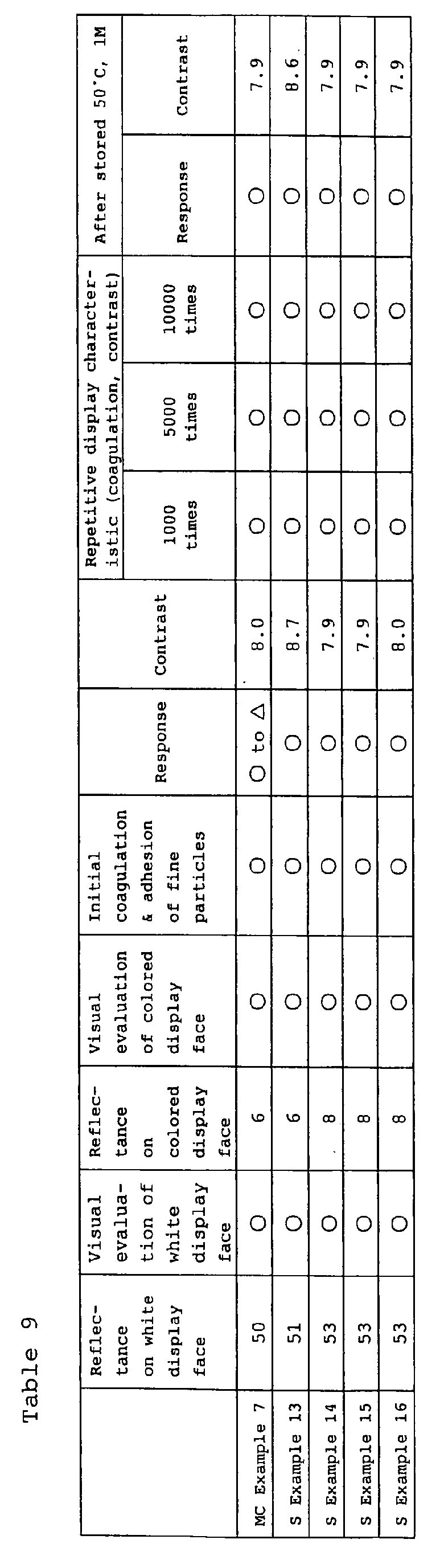
- As apparent from the results shown in Table 9 described above, it has been found that the devices of the microcapsule type (MC) and the sheet type (S) for electrophoretic display are excellent in a reflectance on a white display face and a colored display face and excellent as well in a hue of white display and colored display which are visually observed; they are free of coagulation and adhesion of the fine particles and excellent in a response and a contrast; in the repetitive display characteristics of 1000 times, 5000 times and 10000 times, they are free of coagulation and adhesion and excellent in a contrast; and in addition thereto, they are free of coagulation and adhesion of the fine particles and excellent in a response and a contrast even after stored at 50°C for 1M (one month).
- The display liquid for electrophoretic display thus constituted according to the present invention and the display medium and the display device each using the same can realize display having a high contrast and can display the contrast with high reliability even in repetitive display because of excellent dispersion stability of the display liquid for electrophoretic display, and they are excellent as well in a response, so that they can suitably be applied as portable type display devices for information terminal equipment, electronic price tags and electronic books.
| Fine particle | Colorant | Dispersion liquid medium C | Dispersant D | Alkylpolyetheramine E | |||
| Fine particle A | Fine particle B | ||||||
| Example 1 | A-1 10 | - | 0.1 | C-1 81.9 | - | D-1 4 | E-1 4 |
| Example 2 | A-1 10 | B-1 5 | - | C-3 77.0 | - | D-2 3 | E-3 5 |
| Example 3 | A-1 10 | B-1 5 | - | C-3 77.0 | - | D-2 3 | E-1 5 |
| Example 4 | A-1 10 | B-1 5 | - | C-3 78.0 | - | D-2 3 | E-2 4 |
| Example 5 | A-1 10 | B-1 5 | - | C-3 78.0 | - | D-2 3 | E-4 4 |
| Example 6 | A-1 10 | B-1 5 | - | C-1 34.85 | - | D-4 50 | E-4 0.15 |
| Example 7 | A-1 7 | B-1 5 | - | C-1 54.7 | - | D-4 30 | E-4 0.3 |
| Example 8 | A-1 10 | B-1 5 | - | C-1 73.0 | - | D-1 10 | E-3 2 |
| Example 9 | A-1 10 | B-1 5 | - | C-1 37.5 | C-3 37.5 | D-2 5 | E-3 5 |
| Example 10 | A-1 10 | B-1 5 | - | C-1 36.0 | C-3 36.0 | D-2 3 | E-1 10 |
| Example 11 | A-1 10 | B-1 5 | - | C-1 69.99 | - | D-2 0.01 | E-1 20 |
| Example 12 | A-1 10 | B-1 5 | - | C-3 76.0 | - | D-3 5 | E-3 4 |
| Example 13 | A-3 10 | B-1 5 | - | C-3 77.0 | - | D-2 3 | E-3 5 |
| Example 14 | A-4 10 | B-1 5 | - | C-3 77.0 | - | D-2 3 | E-3 5 |
| Example 15 | A-7 10 | B-1 5 | - | C-3 77.0 | - | D-2 3 | E-3 5 |
| Example 16 | A-8 10 | B-1 5 | - | C-3 77.0 | - | D-2 3 | E-3 5 |
| Example 17 | A-5 10 | B-1 4 | - | C-3 78.0 | - | D-2 3 | E-3 5 |
| Example 18 | A-2 10 | B-1 2 | - | C-3 78.0 | - | D-2 3 | E-3 5 |
| Example 19 | A-5 10 | B-2 2 | - | C-3 78.0 | - | D-2 3 | E-3 5 |
| Comparative Example 1 | A-1 10 | - | 0.1 | C-1 84.9 | - | D-1 5 | - |
| Comparative Example 2 | A-1 10 | B-1 5 | - | C-3 84.9 | - | - | E-3 0.1 |
| Comparative Example 3 | A-1 10 | B-1 5 | - | C-1 40.0 | C-3 40.0 | D-2 5 | - |
| Comparative Example 4 | A-6 10 | B-1 5 | - | C-3 77.0 | - | D-2 3 | E-1 5 |
| Comparative Example 5 | A-1 10 | B-1 5 | - | C-3 75.0 | - | D-2 3 | E-5 5 |
| Comparative Example 6 | A-1 10 | B-1 5 | - | C-3 77.0 | - | D-2 3 | E-6 5 |
| Fine particle | Colorant | Dispersion liquid media | POEOP block polymer F | Dispersant D-2 | Alkylpolyetheramine E | |||
| A-1 | B-1 | C-1 | C-4 | |||||
| Example 20 | 10 | - | 0.1 | 16.0 | 63.9 | F-3 5 | - | |
| Example 21 | 10 | 5 | - | 15.4 | 61.6 | F-1 3 | - | |
| Example 22 | 10 | 5 | - | 23.1 | 53.9 | F-2 3 | - | |
| Example 23 | 10 | 5 | - | 15.4 | 61.6 | F-3 3 | - | |
| Example 24 | 10 | 5 | - | 18.4 | 56.6 | F-4 5 | - | |
| Example 25 | 10 | 5 | - | 19.4 | 56.6 | F-3 3 | 1 | |
| Comparative Example 7 | 10 | - | 0.1 | 24.6 | 57.3 | - | 5 | |
| Comparative Example 8 | 10 | - | 0.1 | 16.4 | 65.5 | F-3 5 | - | |
| Comparative Example 9 | 10 | 5 | - | 15.4 | 61.6 | F-5 3 | - | |
| Comparative Example 10 | 10 | 5 | - | 22.5 | 52.5 | F-3 5 | - | |
| Comparative Example 11 | 10 | 5 | - | 15.4 | 61.6 | - | 5 | |

Claims (24)
- A liquid for electrophoretic display comprising at least alkylpolyetheramine having a structural unit represented by the following Formula (I), one or more kinds of fine particles, a dispersant and a dispersion liquid medium, wherein the fine particles described above contain fine particles subjected to surface treatment for making lipophilic:

- A liquid for electrophoretic display comprising at least alkylpolyetheramine having a structural unit represented by the following Formula (I), a polyoxyethylene oxypropylene block polymer having a structural unit represented by the following Formula (II), one or more kinds of fine particles and a dispersion liquid medium:

OH(C2H4O)p(C3H6O)qH (II)
in Formula (II) described above, p and q are positive numbers. - The liquid for electrophoretic display as described in claim 2, further comprising an acetylene derivative having a structural unit represented by the following Formula (III):

- The liquid for electrophoretic display as described in claim 2 or 3, wherein the polyoxyethylene oxypropylene block polymer has an average molecular weight of 1000 to 4000.
- The liquid for electrophoretic display as described in any one of claims 2 to 4, wherein an amount of ethylene oxide in the polyoxyethylene oxypropylene block polymer is 50 % by weight or less.
- The liquid for electrophoretic display as described in any one of claims 2 to 5, wherein a content of the polyoxyethylene oxypropylene block polymer is 0.01 to 30 % by weight based on the total amount of the display liquid.
- The liquid for electrophoretic display as described in any one of claims 3 to 6, wherein an HLB of the acetylene derivative is 10 or less.
- The liquid for electrophoretic display as described in any one of claims 2 to 7, wherein the fine particles are subjected to surface treatment for making lipophilic.
- The liquid for electrophoretic display as described in any one of claims 1 to 8, wherein the surface treatment for making lipophilic is carried out with a coupling agent.
- The liquid for electrophoretic display as described in claim 9, wherein the coupling agent is at least one selected from the group consisting of titanate base coupling agents, aluminum base coupling agents and silane base coupling agents.
- The liquid for electrophoretic display as described in any one of claims 1 to 10, wherein a surface functional group of the fine particles subjected to the surface treatment for making lipophilic is an alkoxycarbonyl group.
- The liquid for electrophoretic display as described in any one of claims 1 to 11, wherein a content of the alkylpolyetheramine is 1.0 to 200 % by weight based on a content of the fine particles.
- The liquid for electrophoretic display as described in any one of claims 1 to 12, wherein at least one kind of the fine particles is polymer fine particles containing a colorant, an organic pigment or an inorganic pigment.
- The liquid for electrophoretic display as described in claim 13, wherein a structural component of the polymer fine particles containing a colorant is a cross-linked acryl base resin.
- The liquid for electrophoretic display as described in any one of claims 1 to 14, wherein the fine particles have a mean particle size of 0.05 to 20 µm.
- The liquid for electrophoretic display as described in any of claims 2 to 15, further comprising a dispersant.
- The liquid for electrophoretic display as described in any one of claims 1 to 16, wherein the dispersant is a nonionic or anionic surfactant.
- The liquid for electrophoretic display as described in any one of claims 1 to 17, wherein a content of the dispersant is 0.01 to 50 % by weight based on the total amount of the display liquid.
- A medium for electrophoretic display characterized by that the liquid for electrophoretic display as described in any one of claims 1 to 18 is filled into each independent structures of microcapsules or cells.
- The medium for electrophoretic display as described in claim 19, wherein in the structure of the cell filled with the liquid for electrophoretic display, an electrode part and a cell part that the liquid for electrophoretic display touches are subjected to hydrophilization treatment selected from the group consisting of ozone treatment, plasma treatment, corona treatment, UV itoro treatment, sputtering treatment, polymer layer-forming treatment, inorganic layer-forming treatment and organic or inorganic hybrid layer-forming treatment.
- The medium for electrophoretic display as described in claim 19, wherein the microcapsule has a size of 10 to 200 µm.
- The medium for electrophoretic display as described in claim 19 or 21, wherein the microcapsule has flexibility and is less liable to generate a space in arranging the microcapsules.
- The medium for electrophoretic display as described in any one of claims 19 to 22, wherein the independent cells have a volume of 1 X 10⁻⁹ to 1 × 10⁻³ ml.
- An electrophoretic display device comprising a pair of substrates in which a light-transmitting electrode is formed on at least one substrate and the medium for electrophoretic display as described in any one of claims 19 to 23 interposed between the above substrates.
Applications Claiming Priority (4)
| Application Number | Priority Date | Filing Date | Title |
|---|---|---|---|
| JP2003311782 | 2003-09-03 | ||
| JP2004048084 | 2004-02-24 | ||
| JP2004074664 | 2004-03-16 | ||
| PCT/JP2004/012557 WO2005024505A1 (en) | 2003-09-03 | 2004-08-31 | Liquid for electrophoretic display and display medium and display employing it |
Publications (2)
| Publication Number | Publication Date |
|---|---|
| EP1669798A1 true EP1669798A1 (en) | 2006-06-14 |
| EP1669798A4 EP1669798A4 (en) | 2008-07-09 |
Family
ID=34279560
Family Applications (1)
| Application Number | Title | Priority Date | Filing Date |
|---|---|---|---|
| EP04772513A Withdrawn EP1669798A4 (en) | 2003-09-03 | 2004-08-31 | Liquid for electrophoretic display and display medium and display employing it |
Country Status (4)
| Country | Link |
|---|---|
| US (1) | US7405865B2 (en) |
| EP (1) | EP1669798A4 (en) |
| JP (1) | JP3966890B2 (en) |
| WO (1) | WO2005024505A1 (en) |
Cited By (1)
| Publication number | Priority date | Publication date | Assignee | Title |
|---|---|---|---|---|
| WO2017153666A1 (en) * | 2016-03-11 | 2017-09-14 | Arkema France | Electrophoretic ink |
Families Citing this family (14)
| Publication number | Priority date | Publication date | Assignee | Title |
|---|---|---|---|---|
| JP4592324B2 (en) * | 2004-04-27 | 2010-12-01 | 三菱鉛筆株式会社 | Method for manufacturing electrophoretic display device |
| KR100619710B1 (en) * | 2004-12-27 | 2006-09-08 | 엘지전자 주식회사 | Bi-Paper Panels with Improved Electrodes |
| JP2007322857A (en) * | 2006-06-02 | 2007-12-13 | Mitsubishi Pencil Co Ltd | Electrophoretic display liquid, electrophoretic display medium and electrophoretic display device using the same |
| JP2008051931A (en) * | 2006-08-23 | 2008-03-06 | Brother Ind Ltd | Electrophoretic display medium |
| JP5439967B2 (en) * | 2009-06-18 | 2014-03-12 | コニカミノルタ株式会社 | Display particles for image display device and image display device |
| TWI410699B (en) * | 2010-02-11 | 2013-10-01 | Univ Nat Chiao Tung | Unit for disposing a volatile liquid of a device containing the liquid and the preparation thereof |
| CN103120911B (en) * | 2012-11-30 | 2014-08-13 | 中国林业科学研究院林产化学工业研究所 | Colophony/fatty acid sealing end non-ionic surface active agent and preparation method thereof |
| US10324353B2 (en) | 2013-10-22 | 2019-06-18 | Vlyte Innovations Limited | Wide operating temperature range electrophoretic device |
| CN108473799B (en) | 2016-01-17 | 2020-10-27 | 伊英克加利福尼亚有限责任公司 | Branched polyol additives for electrophoretic media |
| WO2017123570A1 (en) | 2016-01-17 | 2017-07-20 | E Ink California, Llc | Surfactants for improving electrophoretic media performance |
| ES2963164T3 (en) | 2017-06-16 | 2024-03-25 | E Ink Corp | Electro-optical media including pigments encapsulated in gelatin binder |
| KR102329012B1 (en) * | 2017-06-16 | 2021-11-18 | 이 잉크 코포레이션 | Tunable Transmission Electrophoresis Devices |
| US10921676B2 (en) * | 2017-08-30 | 2021-02-16 | E Ink Corporation | Electrophoretic medium |
| GB201914105D0 (en) | 2019-09-30 | 2019-11-13 | Vlyte Innovations Ltd | A see-through electrophoretic device having a visible grid |
Family Cites Families (26)
| Publication number | Priority date | Publication date | Assignee | Title |
|---|---|---|---|---|
| US3612758A (en) * | 1969-10-03 | 1971-10-12 | Xerox Corp | Color display device |
| JPS51107332A (en) | 1975-03-18 | 1976-09-22 | Nitto Electric Ind Co | HYOMENHOGOZAIRYOYOSETSUCHAKUSOSEIBUTSU |
| JPS62269124A (en) | 1986-05-17 | 1987-11-21 | Ricoh Co Ltd | Electrophoretic display element |
| JPS6350886A (en) | 1986-08-21 | 1988-03-03 | 株式会社リコー | Electrophoretic display element |
| JP2551783B2 (en) | 1987-09-29 | 1996-11-06 | エヌオーケー株式会社 | Electrophoretic display device |
| JP2733687B2 (en) | 1989-04-26 | 1998-03-30 | エヌオーケー株式会社 | Electrophoretic display device and dispersion system for display |
| JPH03266818A (en) | 1990-03-16 | 1991-11-27 | Hitachi Chem Co Ltd | Production of display liquid for electrophoretic display device |
| JPH05173193A (en) | 1991-12-25 | 1993-07-13 | Dainippon Printing Co Ltd | Dispersed system for electrophoretic display and electrophoretic display element using the dispersed system |
| CA2162874A1 (en) | 1993-05-21 | 1994-12-08 | Wei-Hsin Hou | Methods of preparing electrophoretic dispersions containing two types of particles with different colors and opposite charges |
| JPH07216256A (en) | 1994-01-28 | 1995-08-15 | Suzuki Yushi Kogyo Kk | Colored fine particle and its production |
| ATE356369T1 (en) | 1996-07-19 | 2007-03-15 | E Ink Corp | ELECTRONICALLY ADDRESSABLE MICRO-ENCAPSULED INK |
| JPH11119704A (en) | 1997-10-13 | 1999-04-30 | Brother Ind Ltd | Display device |
| JP2001056653A (en) * | 1999-06-11 | 2001-02-27 | Ricoh Co Ltd | Display liquid for electrophoretic display, display particles, and display medium, display device, display method, display card, recording sheet, display, reversible display signboard using them |
| JP2001188269A (en) | 1999-10-22 | 2001-07-10 | Ricoh Co Ltd | Electrophoretic display method, display liquid, display particles, display medium, display device, and reversible display |
| US6816146B2 (en) * | 1999-12-21 | 2004-11-09 | Ricoh Company Limited | Electrophoretic display liquid and electrophoretic display medium and device using the liquid having predetermined different volume medium particle diameters |
| US6776829B2 (en) * | 2000-06-01 | 2004-08-17 | Mitsubishi Pencil Kabushiki Kaisha | Water-based ink composition for writing utensil |
| JP2001342411A (en) | 2000-06-01 | 2001-12-14 | Mitsubishi Pencil Co Ltd | Aqueous ink composition for writing implements |
| JP2002277903A (en) | 2001-03-19 | 2002-09-25 | Ricoh Co Ltd | Display liquid, display particles and display device for electrophoretic display |
| JP2002283715A (en) | 2001-03-22 | 2002-10-03 | Mitsubishi Paper Mills Ltd | Image recording method, image erasing method, and image display device using the same |
| JP4377554B2 (en) | 2001-05-29 | 2009-12-02 | Tdk株式会社 | Display device |
| US6967640B2 (en) | 2001-07-27 | 2005-11-22 | E Ink Corporation | Microencapsulated electrophoretic display with integrated driver |
| JP3972637B2 (en) | 2001-11-13 | 2007-09-05 | コニカミノルタホールディングス株式会社 | Inkjet pigment ink, inkjet cartridge using the same, and inkjet image recording method |
| JP2003149691A (en) | 2001-11-14 | 2003-05-21 | Ricoh Co Ltd | Display gel for electrophoretic display, display medium, display device and display body |
| JP2003183582A (en) | 2001-12-19 | 2003-07-03 | Shin Etsu Chem Co Ltd | Aqueous coating composition |
| JP3988460B2 (en) | 2001-12-27 | 2007-10-10 | セイコーエプソン株式会社 | Ink composition |
| DE60220829T2 (en) * | 2001-12-27 | 2007-10-11 | Seiko Epson Corp. | Ink Composition |
-
2004
- 2004-08-31 EP EP04772513A patent/EP1669798A4/en not_active Withdrawn
- 2004-08-31 JP JP2005513637A patent/JP3966890B2/en not_active Expired - Fee Related
- 2004-08-31 WO PCT/JP2004/012557 patent/WO2005024505A1/en not_active Ceased
- 2004-08-31 US US10/570,343 patent/US7405865B2/en not_active Expired - Fee Related
Non-Patent Citations (2)
| Title |
|---|
| No further relevant documents disclosed * |
| See also references of WO2005024505A1 * |
Cited By (2)
| Publication number | Priority date | Publication date | Assignee | Title |
|---|---|---|---|---|
| WO2017153666A1 (en) * | 2016-03-11 | 2017-09-14 | Arkema France | Electrophoretic ink |
| FR3048701A1 (en) * | 2016-03-11 | 2017-09-15 | Arkema France | ELECTROPHORETIC INK |
Also Published As
| Publication number | Publication date |
|---|---|
| JP3966890B2 (en) | 2007-08-29 |
| US20070002427A1 (en) | 2007-01-04 |
| EP1669798A4 (en) | 2008-07-09 |
| US7405865B2 (en) | 2008-07-29 |
| WO2005024505A1 (en) | 2005-03-17 |
| JPWO2005024505A1 (en) | 2006-11-02 |
Similar Documents
| Publication | Publication Date | Title |
|---|---|---|
| US7405865B2 (en) | Liquid for electrophoretic display, display medium and display device using the same | |
| US6693621B1 (en) | Electrophoretic display method, display medium, liquid and particle for display medium, display apparatus, and reversible display material | |
| JP5388028B2 (en) | Image display medium and image display device | |
| US7375875B2 (en) | Electrophoretic media and processes for the production thereof | |
| US7247379B2 (en) | Electrophoretic particles, and processes for the production thereof | |
| EP3191892B1 (en) | Colored electrophoretic displays | |
| US6400492B1 (en) | Electrophoretic display liquid, and electrophoretic display medium, method and device using the liquid | |
| JP4160266B2 (en) | Display materials | |
| US20100148385A1 (en) | Electrophoretic media and processes for the production thereof | |
| US7319554B1 (en) | Display medium, display device and display method | |
| US20050000813A1 (en) | Electrophoretic particles, and processes for the production thereof | |
| KR20090056967A (en) | Electrophoretic solution, electrophoretic display media, electrophoretic display elements and electrophoretic display devices | |
| CN114868078B (en) | Color electrophoretic layer comprising microcapsules with nonionic polymer walls | |
| US6876486B2 (en) | Particles for display device, image display medium using the same, and image forming device | |
| JP4160246B2 (en) | Display liquid for electrophoretic display, display particles, display medium, display device and display body | |
| CN100444015C (en) | Liquid for electrophoretic display, display medium using the same, and display device | |
| JP2002277903A (en) | Display liquid, display particles and display device for electrophoretic display | |
| JP4675059B2 (en) | Electrophoretic display liquid, display medium using the same, and display device | |
| JP4393639B2 (en) | Display liquid for electrophoretic display, display particles, and display device | |
| JP4578270B2 (en) | Electrophoretic display liquid, display medium using the same, and display device | |
| JP4798978B2 (en) | Electrophoretic display liquid, display medium using the same, and display device | |
| JP4549130B2 (en) | Electrophoretic display liquid, display medium using the same, and display device | |
| JP3635989B2 (en) | Display liquid for electrophoretic display, display particles and display device using the same | |
| JP4450742B2 (en) | Electrophoretic display liquid, display medium using the same, and display device | |
| JP4377554B2 (en) | Display device |
Legal Events
| Date | Code | Title | Description |
|---|---|---|---|
| PUAI | Public reference made under article 153(3) epc to a published international application that has entered the european phase |
Free format text: ORIGINAL CODE: 0009012 |
|
| 17P | Request for examination filed |
Effective date: 20060325 |
|
| AK | Designated contracting states |
Kind code of ref document: A1 Designated state(s): DE GB NL |
|
| DAX | Request for extension of the european patent (deleted) | ||
| RBV | Designated contracting states (corrected) |
Designated state(s): DE GB NL |
|
| A4 | Supplementary search report drawn up and despatched |
Effective date: 20080609 |
|
| 17Q | First examination report despatched |
Effective date: 20120319 |
|
| STAA | Information on the status of an ep patent application or granted ep patent |
Free format text: STATUS: THE APPLICATION IS DEEMED TO BE WITHDRAWN |
|
| 18D | Application deemed to be withdrawn |
Effective date: 20160408 |