EP1665006B1 - Wechselseitige nutzung eines drahtlosen kommunikationsmoduls durch zwei datenverarbeitungs-einrichtungen - Google Patents
Wechselseitige nutzung eines drahtlosen kommunikationsmoduls durch zwei datenverarbeitungs-einrichtungen Download PDFInfo
- Publication number
- EP1665006B1 EP1665006B1 EP04784290A EP04784290A EP1665006B1 EP 1665006 B1 EP1665006 B1 EP 1665006B1 EP 04784290 A EP04784290 A EP 04784290A EP 04784290 A EP04784290 A EP 04784290A EP 1665006 B1 EP1665006 B1 EP 1665006B1
- Authority
- EP
- European Patent Office
- Prior art keywords
- processor system
- module
- wireless communications
- sharing
- gprs
- Prior art date
- Legal status (The legal status is an assumption and is not a legal conclusion. Google has not performed a legal analysis and makes no representation as to the accuracy of the status listed.)
- Expired - Lifetime
Links
Images




Classifications
-
- G—PHYSICS
- G06—COMPUTING OR CALCULATING; COUNTING
- G06F—ELECTRIC DIGITAL DATA PROCESSING
- G06F1/00—Details not covered by groups G06F3/00 - G06F13/00 and G06F21/00
- G06F1/26—Power supply means, e.g. regulation thereof
- G06F1/32—Means for saving power
- G06F1/3203—Power management, i.e. event-based initiation of a power-saving mode
- G06F1/3234—Power saving characterised by the action undertaken
- G06F1/3293—Power saving characterised by the action undertaken by switching to a less power-consuming processor, e.g. sub-CPU
-
- H—ELECTRICITY
- H04—ELECTRIC COMMUNICATION TECHNIQUE
- H04W—WIRELESS COMMUNICATION NETWORKS
- H04W84/00—Network topologies
- H04W84/02—Hierarchically pre-organised networks, e.g. paging networks, cellular networks, WLAN [Wireless Local Area Network] or WLL [Wireless Local Loop]
- H04W84/10—Small scale networks; Flat hierarchical networks
-
- Y—GENERAL TAGGING OF NEW TECHNOLOGICAL DEVELOPMENTS; GENERAL TAGGING OF CROSS-SECTIONAL TECHNOLOGIES SPANNING OVER SEVERAL SECTIONS OF THE IPC; TECHNICAL SUBJECTS COVERED BY FORMER USPC CROSS-REFERENCE ART COLLECTIONS [XRACs] AND DIGESTS
- Y02—TECHNOLOGIES OR APPLICATIONS FOR MITIGATION OR ADAPTATION AGAINST CLIMATE CHANGE
- Y02D—CLIMATE CHANGE MITIGATION TECHNOLOGIES IN INFORMATION AND COMMUNICATION TECHNOLOGIES [ICT], I.E. INFORMATION AND COMMUNICATION TECHNOLOGIES AIMING AT THE REDUCTION OF THEIR OWN ENERGY USE
- Y02D10/00—Energy efficient computing, e.g. low power processors, power management or thermal management
-
- Y—GENERAL TAGGING OF NEW TECHNOLOGICAL DEVELOPMENTS; GENERAL TAGGING OF CROSS-SECTIONAL TECHNOLOGIES SPANNING OVER SEVERAL SECTIONS OF THE IPC; TECHNICAL SUBJECTS COVERED BY FORMER USPC CROSS-REFERENCE ART COLLECTIONS [XRACs] AND DIGESTS
- Y02—TECHNOLOGIES OR APPLICATIONS FOR MITIGATION OR ADAPTATION AGAINST CLIMATE CHANGE
- Y02D—CLIMATE CHANGE MITIGATION TECHNOLOGIES IN INFORMATION AND COMMUNICATION TECHNOLOGIES [ICT], I.E. INFORMATION AND COMMUNICATION TECHNOLOGIES AIMING AT THE REDUCTION OF THEIR OWN ENERGY USE
- Y02D30/00—Reducing energy consumption in communication networks
- Y02D30/50—Reducing energy consumption in communication networks in wire-line communication networks, e.g. low power modes or reduced link rate
Definitions
- This invention relates to computer software and hardware, and more specifically to a method and apparatus for sharing a wireless communications module between a primary processor system and a secondary process system of a computer system architecture.
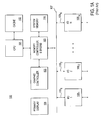
- FIG 1A shows an embodiment of a mobile computing system 100.
- the computing system includes a Central Processing Unit (CPU) 101, a cache 102, a memory controller and bridge 103 and a system memory 104.
- Software instructions performed by the computing system are stored in the system memory 104 and cache 102 (where frequently used instructions and data are stored in cache 102).
- the software instructions (together with corresponding data) are executed by the CPU 101.
- the memory controller portion of the memory controller and bridge function 103 is responsible for managing access to the system memory 104 (which may be used by functional elements other than the CPU 101 such as the graphics controller 105 and various I/O units).
- the graphics controller 105 and display 106 provide the computer generated images observed by the user of the computing system 100.
- the bridge portion of the memory controller and bridge function 103 provides a system bus 107 that multiple Input/Output (I/O) units 108 1 through 108 N may use to communicate with one another, the CPU 101, the system memory 104, etc..
- I/O buses 109 1 through 109 N also interconnects I/O units 108 1 through 108 N to the system bus 107.
- I/O units are typically viewed as functional units that send/receive information to/from the computing system (e.g., a networking adapter, a MODEM, a wireless interface, a keyboard, a mouse, etc.) and/or function units used for storing information within the computing system 100 (e.g., a hard disk drive unit).
- the depiction of Figure 1A is exemplary and other computing system architectures are possible (e.g., multiprocessor computing systems, for example).
- Buses 107 and 109 1 through 109 N may be bus structures, such as a Universal Serial Bus (USB) bus, in order to couple a keyboard, mouse and other lower performance peripherals. Also, "parallel” and/or “serial” ports (not shown in Figure 1A for simplicity) may also be viewed as additional I/O units.
- USB Universal Serial Bus
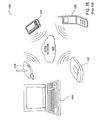
- FIG. 1B illustrates a prior art wireless network 1000.
- Network 1000 includes a mobile computing system 1100, such as described illustrated in Figure 1A .
- Computing system 1100 communicates with multiple GPRS enabled devices, such as mobile phone 1300, personal digital assistant (PDA) 1200, or similar multifunction GPRS enabled device via a GPRS network 1400.
- Mobile computing system 1100 communicates with GPRS network 1400 using Universal Serial Bus (USB) GPRS Adapter 1140, Personal Computer Memory Card International Association (PCMCIA) GPRS card 1120, or an internal GPRS adapter.
- USB Universal Serial Bus
- PCMCIA Personal Computer Memory Card International Association
- GPRS is a computing and telecommunications industry specification that describes how mobile phones, computers, and PDAs can easily interconnect with each other and with home and business phones and computers using a short-range wireless connection.
- users of cellular phones, pagers, and personal digital assistants such as the PalmPilot will be able to buy a three-in-one phone that can double as a portable phone at home or in the office, get quickly synchronized with information in a desktop or notebook computer, initiate the sending or receiving of a fax, initiate a print-out, and, in general, have all mobile and fixed computer devices be totally coordinated.
- GPRS General Packet Radio Services
- US 2002/0124196 is concerned with reducing power consumption with a view to increasing battery life within a system comprising a powerful processor and a less powerful processor having respective power consumptions.
- the solution to this technical problem in US 2002/0124196 is to direct tasks to one of the processors according to the anticipated processing requirements of the tasks. For example, a processor intensive task such as, for example, performing an FFT, would be directed to the more powerful processor while a less processor intensive task would be directed to the less powerful processor.
- the invention relates to a method for sharing a wireless communications module between a primary processor system and a secondary processor system of a computer system architecture according to claim 1, an apparatus according to independent claim 14, a machine-executable program according to independent claim 28 and a machine-readable storage according to independent claim 29. Further embodiments are defined in the dependent claims.
- Figure 1A illustrates an embodiment, of a mobile computing system.
- Figure 1B illustrates a prior art wireless network.
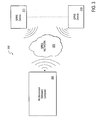
- Figure 2 illustrates an exemplary diagram of a GPRS system according to one embodiment of the present invention.
- Figure 3 illustrates an exemplary diagram of a GPRS system, according to another embodiment of the present invention.
- Figure 4 illustrates an exemplary multi processor computer system architecture, according to one embodiment of the present invention.
- Figure 5 illustrates an exemplary multi-processor computer system architecture, according to another embodiment of the present invention.
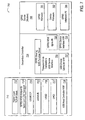
- Figure 6 illustrates an exemplary detailed diagram of a multiprocessor system for sharing GPRS. peripherals according to one embodiment of the present invention.
- Figure 7 illustrates an exemplary detailed diagram of a multiprocessor system, for sharing a GPRS peripheral according to another embodiment of the present invention.
- Figure 8 illustrates an exemplary flow diagram of a method performed for sharing a GPRS peripheral, according to one embodiment of the present invention.
- the present invention also relates to apparatus for performing the operations herein.
- This apparatus may be specially constructed for the required purposes, or it may comprise a general-purpose computer selectively activated or reconfigured by a computer program stored in the computer.
- a computer program may be stored in a computer readable storage medium, such as, but is not limited to, any type of disk including floppy disks, optical disks, CD-ROMs, and magnetic-optical disks, read-only memories (ROMs), random access memories (RAMs), EPROMs, EEPROMs, magnetic or optical cards, or any type of media suitable for storing electronic instructions, and each coupled to a computer system bus.
- FIG. 2 illustrates an exemplary diagram of a GPRS system 200 according to one embodiment of the present invention.
- System 200 includes a computer system 230 connected to a host GPRS computing device 250 via USB cable 240.
- Computer system 230 is not GPRS enabled.
- Device 250 can be any multi-function GPRS enabled device such as a mobile phone or PDA.
- Computer 230 includes a GPRS sharing module 232 that allows the computer 230 to control the GPRS functionality of host device 250.
- the non-GPRS enabled computer 230 becomes a GPRS enabled computer 260 that communicates with GPRS devices 211-219 via GPRS network 270.
- Sharing module 232 includes software drivers that allow both the processor in computer 230 and in the processor in host device 250 to control the GPRS functionality of host device 250.
- USB cable 240 is shown in Figure 2 , the link can also be an RS-232 cable, firewire or similar high-speed link.
- sharing module 232 is included in host device 250. Additionally, sharing module 232 can stand-alone with interfaces to both computer 230 and host device 250.
- FIG. 3 illustrates an exemplary diagram of a GPRS system 300, according to another embodiment of the present invention.
- GPRS system 300 includes a multiprocessor computer 360 that communicates with GPRS devices 311-319 via GPRS network 370.
- Multiprocessor computer 360 can operate in various states.
- Computing system 360 has three primary states where useful tasks can be performed: 1) a high power, "normal on” state; 2) a "main CPU/OS based low power” state; and, 3) a "non main CPU/OS based low power” state.
- the "normal on” state corresponds to a standard “normal on” state in which the computing system is operational and all of its primary architectural components are powered on. As a consequence, the computing system can be viewed as being within a "high power” state because its primary architectural components are consuming power.
- the "main CPU/OS based low power" state corresponds to a state in which the main CPU is powered on and can execute software; yet, primary architectural components (notably, the graphics controller, the display, and various I/O units are powered down so that power consumption is reduced.
- the main CPU itself although functional, may be configured so as to have reduced performance and reduced power consumption as compared to the normal on state. In an embodiment, this is achieved at least by lowering the frequency of the main CPU's clock speed as compared to the formal on" state, As a consequence, the main CPU has reduced processing speed, but, consumes less power.
- the "non main CPU/OS based lower power" state corresponds to a state in which the main CPU is powered down so that it cannot execute software based upon the computing system's main OS.
- the cache, the system memory, and at least the memory controller portion of the memory controller and bridge unit may also be powered down (because they largely support the main CPU's effort to execute software).
- GPRS General Packet Radio Services
- GSM Global System for Mobile
- SMS Short Message Service
- GPRS packet-based service should cost users less than circuit-switched services since communication channels are being used on a shared-use, as-packets-are-needed basis rather than dedicated only to one user at a time. It should also be easier to make applications available to mobile users because the faster data rate means that middleware currently needed to adapt applications to the slower speed of wireless systems will no longer be needed, As GPRS becomes available, mobile users of a virtual private network (VPN) will be able to access the private network continuously rather than trough a dial-up connection.
- VPN virtual private network
- GPRS will also complement Bluetooth, a standard for replacing wired connections between devices with wireless radio connections, in addition to the Internet Protocol (IP), GPRS. supports X.25, a packet-based protocol that is used mainly in Europe. GPRS is an evolutionary step toward Enhanced Data. GSM Environment (EDGE) and Universal Mobile Telephone Service (UMTS).
- IP Internet Protocol
- GPRS is an evolutionary step toward Enhanced Data. GSM Environment (EDGE) and Universal Mobile Telephone Service (UMTS).
- Multiprocessor system 400 includes main processing module 410 that includes USB host controller 414 and main CPU system 412.
- Main CPU subsystem 412 can include Pentium, TM Celleron TM or similar a multi-function IA32 microprocessors.
- Main CPU subsystem 412 can use the Windows TM operating system.
- Main processing module 410 is connected to sharing module 450 via USB link 430 according to one embodiment. Additionally, main processing module functions in a high power state and a main CPU/OS based low power state described above.
- Multi-processor system 400 also includes a secondary processing module 420 that includes a secondly controller 424 and low power CPU subsystem 422.
- Low power CPU Subsystem. 422 can include Xscale TM or similar low power microprocessors, Low power CPU subsystem 422 can use the Windows CE TM operating system PALM TM operating system, or similar operating system.
- Secondary controller 424 is connected to sharing module 450 via a Universal Asynchronous Receiver/Transmitter (UART) interface 480, according to one embodiment. Additionally, subsystem 422 can operate in all three states above, but would only be a master of the GPRS module 460, while multi-processor system 400 is in a lower power state, as described above.
- UART Universal Asynchronous Receiver/Transmitter
- Multi-processor system includes sharing module 450, as described above, that allows for main processing module 410 and secondary system 420 to share GPRS module 460.
- Sharing module translater packets in formats of main processing system 420 and secondary system 420, into modes used by GPRS module 460.
- sharing module 450 presents GPRS module 460 as a peripheral slave device to both main system 410 and secondary system 420. Sharing module 450 also functions as a switch to determine whether main system 410 or secondary system 420 should control the GPRS. module 460 based on the overall power state of multiprocessor computer system 400. The switching decisions are made by sharing module 450 for numerous reasons.
- GPRS. module 460 includes a GPRS interface module 464 and a GPRS subsystem 462.
- the GPRS module 460 is a standard GPRS radio module.
- FIG. 5 illustrates an exemplary multiprocessor computer systems architecture 500, according to another embodiment of the present invention.
- Main processor system 510 includes main CPU system 512 and USB host controller 514.
- Multiprocessor system 500 integrates sharing module 550 into secondary controller 524 of secondary processing system 520.
- GPRS module 560 includes both a GPRS. interface module 564 and subsystem 562.
- Secondary controller 524 interfaces with both GPRS module 560 and main processor system 510.
- the interface with main processor system 510 is USB 530 and the interface with GPRS module is UART 570.
- Secondary controller 524 can be active in all power states of multiprocessor system 500. While in high power state, and low power main CPU/OS on states, secondary controller acts power state is entered, low power subsystem 522 acts as a master, to control GPRS module 560.
- FIG. 6 illustrates an exemplary detailed diagram of a multiprocessor system 600 for sharing GPRS peripherals, according to one embodiment of the present invention.
- Main processor system 610 includes USB host controller hardware 618, which communicates with secondary system's USB device controller hardware 627.
- Main system 610 also includes standard USB host controller interface (UHCI) 617, USB driver (USBD) 616, and USB hub 615.
- System 610 also includes a miniport driver for the remote network driver interface software (RNDIS) 613, and a miniport driver for the Remote NDIS using the USB bus.
- the operating system can be Windows TM , Linux or similar operating system.
- Secondary controller 624 includes USB device controller hardware 627 to interface with USB host controller 618, as well as GPRS device interface hardware 626 to interface with GPRS interface hardware 664. Secondary controller 624 provides a GPRS NDIS driver 625 and a sharing USB Function driver 650. The sharing driver 650 translates RNDIS descriptors to NDIS descriptors, as well as provides a USB driver, for use by hardware 627. Driver 650 extends USB descriptor configuration to support proprietary data communication applications.
- GPRS interface module 660 includes GPRS firmware 661, GPRS device firmware 662 and a GPRS interface hardware controller 664. There is more than just transport mode conversion here.
- the main processor system 610 treats GPRS device 660 as a Remote NDIS (network) type device while the secondary processor system treats it like a wireless network device.
- the conversion is from a generic remote network type device to a wireless network type device.
- Translation state management is performed by driver 750.
- the transport mode conversion (if appropriate) is in addition to the network device type conversion, mapping, and/or translation.
- FIG. 7 illustrates an exemplary detailed diagram of a multiprocessor system 700 for sharing GPRS peripherals, according to another embodiment of the present invention.
- Main processor system 710 includes USB host controller hardware 718, which communicates with secondary system's USB device controller hardware 727.
- Main system 710 also includes standard USB host controller interface (UHCI) 717, USB driver (USBD) 716, USB hub (USBH) 715, and USB composite class protocol driver (USBCCP) 714 that enumerates other USB device classes in a composite device.
- System 710 also includes a miniport driver for the remote network driver interface software (RNDIS) and a serial over USB driver 713.
- the operating system can be Windows TM Linux or similar operating system.
- Secondary controller 724 includes USB device controller hardware 727 to interface with USB host controller 718, as well as GPRS device interface hardware 726 to interlace with GPRS interface hardware 764. Secondary controller 724 provides a GPRS. NDIS driver 725 and a sharing USB Function driver 750. The sharing driver 750 provides transport mode translations, as well as provides a USB driver, for use by hardware 727. Driver 750 extends USB descriptor configuration to support proprietary data communication applications.
- GPRS interface module 760 includes GPRS firmware 761, GPRS device firmware 762 and a GPRS interface hardware controller 764. There is more than just transport mode conversion here.
- the main processor system 710 treats GPRS device 760 as a Remote NDIS (network) type device while the secondary processor system treats it like a wireless network device.
- the wireless GPRS NDIS level packet is passed from main processor system 710 to secondary system's controller 724 without translation.
- transport mode conversion can be performed in addition to the network device type conversion, mapping, and/or translation. Thus, there is no translation state management required by driver 750.
- FIG. 8 illustrates an exemplary flow diagram 800 of a method performed for sharing a GPRS. peripheral, according to one embodiment, of the present invention,
- the process commences at block 801.
- the sharing module routes communications between a primary processor system and a GPRS communication module.
- the sharing module routes communications between a secondary processor system and the GPRS. module.
- the communications packets are processed to properly translate transport modes and between RNDIS and NDIS; at processing block 815, if necessary.
- the GPRS module is presented to the main processing system as a USB peripheral device.
- the sharing module also selects and switches control of the GPRS module between the main processor system and secondary system based on the overall power state of the multiprocessor computer system.
Landscapes
- Engineering & Computer Science (AREA)
- Theoretical Computer Science (AREA)
- Physics & Mathematics (AREA)
- General Engineering & Computer Science (AREA)
- General Physics & Mathematics (AREA)
- Signal Processing (AREA)
- Computer Networks & Wireless Communication (AREA)
- Multi Processors (AREA)
- Computer And Data Communications (AREA)
- Small-Scale Networks (AREA)
- Power Sources (AREA)
- Exchange Systems With Centralized Control (AREA)
- Electrotherapy Devices (AREA)
- Management, Administration, Business Operations System, And Electronic Commerce (AREA)
- Mobile Radio Communication Systems (AREA)
Claims (29)
- Verfahren für die gemeinsame Nutzung eines drahtlosen Kommunikationsmoduls (460) durch ein primäres Prozessorsystem (410) und ein sekundäres Prozessorsystem (420) einer Computersystemarchitektur; wobei das primäre Prozessorsystem (410) eine höhere Leistung aufweist als das sekundäre Prozessorsystem (420), und wobei die Computersystemarchitektur eine Mehrzahl von Leistungszuständen insgesamt gemäß den Leistungszuständen der primären und sekundären Prozessorsysteme umfasst; wobei die genannten Leistungszustände insgesamt einen Einschaltzustand umfassen, in dem das primäre Prozessorsystem eingeschaltet ist, und einen niedrigen Leistungszustand, in dem das primäre Prozessorsystem ausgeschaltet ist; wobei das Verfahren gekennzeichnet ist durch:das gemeinsame Nutzen des genannten drahtlosen Kommunikationsmoduls; wobei das genannte gemeinsame Nutzen das Auswählen des primären Prozessorsystems als Master des drahtlosen Kommunikationsmoduls in dem Einschaltzustand umfasst, und das Auswählen des sekundären Prozessorsystems als Master des drahtlosen Kommunikationssystems in dem niedrigen Einschaltzustand.
- Verfahren nach Anspruch 1, wobei das gemeinsame Nutzen folgendes umfasst:das Weiterleiten drahtloser Kommunikationen zwischen dem primären Prozessorsystem (410) und dem drahtlosen Kommunikationsmodul (460) über ein Sharing-Modul (450); unddas Weiterleiten drahtloser Kommunikationen zwischen dem sekundären Prozessorsystem (420) und dem drahtlosen Kommunikationsmodul (460) über das Sharing-Modul (450).
- Verfahren nach Anspruch 2, wobei das gemeinsame Nutzen ferner folgendes umfasst:das Präsentieren des drahtlosen Kommunikationsmoduls (460) als eine Slave-Vorrichtung; unddas Präsentieren des primären Prozessorsystems (410) und des sekundären Prozessorsystems (420) als Master-Vorrichtungen für das drahtlose Kommunikationsmodul (460).
- Verfahren nach Anspruch 2, wobei das gemeinsame Nutzen ferner folgendes umfasst:das Übersetzen aller Funkpakete zwischen einem ersten Transportmodus und einem zweiten Transportmodus.
- Verfahren nach Anspruch 4, wobei der erste Transportmodus einen Universal Serial Bus (USB), eine RS-232-Verbindung, Firewire und mPCI umfasst; und
wobei der zweite Transportmodus einen Universal Serial Bus (USB), eine RS-232-Verbindung, Firewire und mPCI umfasst. - Verfahren nach Anspruch 2, wobei das Sharing-Modul (450), das primäre Prozessorsystem (410) und das sekundäre Prozessorsystem (420) in einem Notebook-Computer enthalten sind, und wobei es sich bei dem drahtlosen Kommunikationsmodul (460) um ein GPRS-Kommunikationsmodul handelt.
- Verfahren nach Anspruch 5, wobei das Sharing-Modul (450) in das sekundäre Prozessorsystem (420) integriert ist; und
wobei es sich bei dem sekundären Prozessorsystem (420) um ein leistungsarmes Computersystem handelt, und wobei es sich bei dem primären Computersystem (410) um ein Haupt-CPU/OS-Computersystem handelt. - Verfahren nach Anspruch 5, wobei das Sharing-Modul (450) in das sekundäre Prozessorsystem (420) integriert ist, und wobei das sekundäre Prozessorsystem (420) in einer multifunktionalen GPRS-fähigen Vorrichtung enthalten ist; und
wobei das primäre Prozessorsystem (410) in einem Notebook-, einem Tablet-, einem Laptop- und einem Desktop-Computersystem enthalten ist. - Verfahren nach Anspruch 8, wobei das Sharing-Modul (450) integriert mit einer sekundären Steuereinheit des sekundären Prozessorsystems (420) vorgesehen ist.
- Verfahren nach Anspruch 5, wobei das Sharing-Modul (450) in dem primären Prozessorsystem (410) enthalten ist.
- Verfahren nach Anspruch 2, wobei das GPRS-Modul über ein GPRS-Netzwerk mit einer oder mehreren sekundären GPRS-Vorrichtungen kommuniziert.
- Verfahren nach Anspruch 2, wobei das Sharing-Modul (450) mit einem USB-Host-Controller und einem GPRS-Modul kommuniziert.
- Verfahren nach Anspruch 2, wobei das Verfahren ferner beim Eintreten eines Ereignisses eine wechselnde Steuerung zwischen dem primären Prozessorsystem (410) und dem sekundären Prozessorsystem (420) umfasst, wobei das Ereignis das Öffnen einer Computerabdeckung, das Empfangen einer Datennachricht durch das primäre Prozessorsystem (410), das Empfangen einer Datennachricht durch das sekundäre Prozessorsystem (420), das Schließen einer Computerabdeckung und das Empfangen eines Umschaltbefehls umfasst.
- Vorrichtung, die folgendes umfasst:ein Sharing-Modul (450);ein drahtloses Kommunikationsmodul, das mit dem Sharing-Modul (450) verbunden ist;ein primäres Prozessorsystem (410), das mit dem Sharing-Modul (450) verbunden ist;und ein sekundäres Prozessorsystem (420), das mit dem Sharing-Modul (450) verbunden ist,wobei das Sharing-Modul (450) eine Einrichtung umfasst, die so konfiguriert ist, dass sie es ermöglicht, dass das primäre Prozessorsystem (410) und das sekundäre Prozessorsystem (420) einen Host-Controller des drahtlosen Kommunikationsmoduls gemeinsam nutzen, wobei die genannte Einrichtung eine Einrichtung zur Auswahl des primären Prozessorsystems als Master des drahtlosen Kommunikationsmoduls aufweist, wenn es sich bei einem Leistungszustand der Vorrichtung um einen Einschaltzustand handelt, in dem das primäre Prozessorsystem eingeschaltet ist, und zur Auswahl des sekundären Prozessorsystems als Master des drahtlosen Kommunikationsmoduls, wenn es sich bei dem Leistungszustand um einen niedrigen Leistungszustand handelt, in dem das primäre Prozessorsystem ausgeschaltet ist.
- Vorrichtung nach Anspruch 14, wobei das Sharing-Modul (450) in der Lage ist, drahtlose Kommunikationen zwischen dem primären Prozessorsystem (410) und dem drahtlosen Kommunikationsmodul (450) weiterzuleiten; und
drahtlose Kommunikationen zwischen dem sekundären Prozessorsystem (420) und dem drahtlosen Kommunikationsmodul (450) weiterzuleiten. - Vorrichtung nach Anspruch 15, wobei das Sharing-Modul (450) in der Lage ist, das drahtlose Kommunikationsmodul als Slave-Vorrichtung zu präsentieren; und
das primäre Prozessorsystem (410) und das sekundäre Prozessorsystem (420) als Master-Vorrichtungen für das drahtlose Kommunikationsmodul zu präsentieren. - Vorrichtung nach Anspruch 15, wobei das Sharing-Modul (450) in der Lage ist, auszuwählen, ob drahtlose Kommunikationen des primären Prozessorsystems (410) oder des sekundären Prozessorsystems (420) bedient werden sollen.
- Vorrichtung nach Anspruch 15, wobei das Sharing-Modul (450) in der Lage ist, alle Pakete zwischen einem ersten Transportmodus und einem zweiten Transportmodus zu übersetzen.
- Vorrichtung nach Anspruch 18, wobei der erste Transportmodus einen Universal Serial Bus (USB), eine RS-232-Verbindung, Firewire und mPCI umfasst; und
wobei der zweite Transportmodus einen Universal Serial Bus (USB), eine RS-232-Verbindung, Firewire und mPCI umfasst. - Vorrichtung nach Anspruch 14, wobei die Vorrichtung einen Notebook-Computer umfasst.
- Vorrichtung nach Anspruch 14, wobei das Sharing-Modul (450) in das zweite Prozessorsystem (420) integriert ist; und
wobei es sich bei dem sekundären Prozessorsystem (420) um ein leistungsarmes Computersystem handelt, und wobei es sich bei dem primären Computersystem (410) um ein Haupt-CPU/OS-Computersystem handelt. - Vorrichtung nach Anspruch 14, wobei das Sharing-Modul (450) in das sekundäre Prozessorsystem (420) integriert ist, und wobei das sekundäre Prozessorsystem (420) in einer multifunktionalen GPRS-fähigen Vorrichtung enthalten ist; und
wobei das primäre Prozessorsystem (410) in einem Notebook-, einem Tablet-, einem Laptop- und einem Desktop-Computersystem enthalten ist. - Vorrichtung nach Anspruch 22, wobei das Sharing-Modul (450) integriert mit einer sekundären Steuereinheit des sekundären Prozessorsystems (420) vorgesehen ist.
- Vorrichtung nach Anspruch 22, wobei das Sharing-Modul (450) in dem primären Prozessorsystem (410) enthalten ist.
- Vorrichtung nach Anspruch 14, wobei das drahtlose Kommunikationsmodul über ein GPRS-Netzwerk mit einer oder mehreren sekundären GPRS-Vorrichtungen kommunizieren kann.
- Vorrichtung nach Anspruch 14, wobei das Sharing-Modul (450) mit einem USB-Host-Controller und einem GPRS-Modul kommunizieren kann.
- Vorrichtung nach Anspruch 14, wobei das Sharing-Modul (450) in der Lage ist, beim Eintreten eines Ereignisses die Steuerung des drahtlosen Kommunikationsmoduls zwischen dem primären Prozessorsystem (410) und dem sekundären Prozessorsystem (420) zu wechseln, wobei das Ereignis das Öffnen einer Computerabdeckung, das Empfangen einer Datennachricht durch das primäre Prozessorsystem (410), das Empfangen einer Datennachricht durch das sekundäre Prozessorsystem (420), das Schließen einer Computerabdeckung und das Empfangen eines Umschaltbefehls umfasst.
- Maschinenausführbares Programm, das Befehle umfasst, die, wenn sie ausgeführt werden, in der Lage sind, das Verfahren in einem der Ansprüche 1 bis 13 beanspruchte Verfahren auszuführen.
- Maschinenlesbarer Speicher, der ein Programm nach Anspruch 28 speichert.
Applications Claiming Priority (2)
| Application Number | Priority Date | Filing Date | Title |
|---|---|---|---|
| US10/663,221 US20050060385A1 (en) | 2003-09-15 | 2003-09-15 | Method and apparatus for sharing a GPRS module with two computing devices |
| PCT/US2004/030384 WO2005029792A2 (en) | 2003-09-15 | 2004-09-15 | Method and apparatus for sharing a gprs module with two computing devices |
Publications (2)
| Publication Number | Publication Date |
|---|---|
| EP1665006A2 EP1665006A2 (de) | 2006-06-07 |
| EP1665006B1 true EP1665006B1 (de) | 2009-07-01 |
Family
ID=34274318
Family Applications (1)
| Application Number | Title | Priority Date | Filing Date |
|---|---|---|---|
| EP04784290A Expired - Lifetime EP1665006B1 (de) | 2003-09-15 | 2004-09-15 | Wechselseitige nutzung eines drahtlosen kommunikationsmoduls durch zwei datenverarbeitungs-einrichtungen |
Country Status (8)
| Country | Link |
|---|---|
| US (1) | US20050060385A1 (de) |
| EP (1) | EP1665006B1 (de) |
| JP (1) | JP4294055B2 (de) |
| KR (1) | KR100821404B1 (de) |
| CN (1) | CN1849572B (de) |
| AT (1) | ATE435450T1 (de) |
| DE (1) | DE602004021822D1 (de) |
| WO (1) | WO2005029792A2 (de) |
Families Citing this family (3)
| Publication number | Priority date | Publication date | Assignee | Title |
|---|---|---|---|---|
| KR100647906B1 (ko) | 2005-09-15 | 2006-11-23 | 한국전자통신연구원 | 초광대역방식의 무선 usb 호스트 장치 |
| US20100017874A1 (en) * | 2008-07-16 | 2010-01-21 | International Business Machines Corporation | Method and system for location-aware authorization |
| US9195473B2 (en) * | 2012-04-05 | 2015-11-24 | Blackberry Limited | Method for sharing an internal storage of a portable electronic device on a host electronic device and an electronic device configured for same |
Family Cites Families (18)
| Publication number | Priority date | Publication date | Assignee | Title |
|---|---|---|---|---|
| US5657317A (en) * | 1990-01-18 | 1997-08-12 | Norand Corporation | Hierarchical communication system using premises, peripheral and vehicular local area networking |
| US6131167A (en) * | 1997-12-31 | 2000-10-10 | Intel Corporation | Method and apparatus to reduce power consumption on a bus |
| FI105978B (fi) * | 1998-05-12 | 2000-10-31 | Nokia Mobile Phones Ltd | Menetelmä langattoman päätelaitteen kytkemiseksi tiedonsiirtoverkkoon ja langaton päätelaite |
| US6907265B1 (en) * | 1998-08-31 | 2005-06-14 | Telefonaktiebolaget Lm Ericsson | Supply of instant GPRS to mobile phone manufacturers |
| SE517734C2 (sv) * | 1998-10-16 | 2002-07-09 | Ericsson Telefon Ab L M | Förfarande och anordning för ökning av cellkapaciteten vid datapaketförmedling i ett GSM-system |
| US6922548B1 (en) * | 2000-04-24 | 2005-07-26 | Microsoft Corporation | Providing remote network driver interface specification services over a wireless radio-frequency medium |
| US6986066B2 (en) * | 2001-01-05 | 2006-01-10 | International Business Machines Corporation | Computer system having low energy consumption |
| US20020137472A1 (en) * | 2001-01-23 | 2002-09-26 | Quinn Liam B. | Wireless antenna switching system |
| US7231531B2 (en) * | 2001-03-16 | 2007-06-12 | Dualcor Technologies, Inc. | Personal electronics device with a dual core processor |
| FR2823337B1 (fr) * | 2001-04-05 | 2004-10-15 | Netseniors | Procede de lecture, traitement, transmission et exploitation d'un code a barres |
| US6898721B2 (en) * | 2001-06-22 | 2005-05-24 | Gallitzin Allegheny Llc | Clock generation systems and methods |
| US7245627B2 (en) * | 2002-04-23 | 2007-07-17 | Mellanox Technologies Ltd. | Sharing a network interface card among multiple hosts |
| US20040203296A1 (en) * | 2002-11-15 | 2004-10-14 | Globespan Virata Inc. | Method and system for attaching a USB network adapter supporting both RNDIS and non-RNDIS capable operating systems |
| TW572502U (en) * | 2002-12-18 | 2004-01-11 | C One Technology Corp | Small electronic card capable of changing the communication device |
| US7114090B2 (en) * | 2003-02-14 | 2006-09-26 | Intel Corporation | Computing system with operational low power states |
| US7080271B2 (en) * | 2003-02-14 | 2006-07-18 | Intel Corporation | Non main CPU/OS based operational environment |
| US6973538B2 (en) * | 2003-04-02 | 2005-12-06 | Motorola, Inc. | Adaptive segmentation of shared cache |
| US7149836B2 (en) * | 2004-03-12 | 2006-12-12 | C-One Technology Corporation | GPRS replaceable module communication device |
-
2003
- 2003-09-15 US US10/663,221 patent/US20050060385A1/en not_active Abandoned
-
2004
- 2004-09-15 DE DE602004021822T patent/DE602004021822D1/de not_active Expired - Lifetime
- 2004-09-15 EP EP04784290A patent/EP1665006B1/de not_active Expired - Lifetime
- 2004-09-15 KR KR1020067006218A patent/KR100821404B1/ko not_active Expired - Fee Related
- 2004-09-15 AT AT04784290T patent/ATE435450T1/de not_active IP Right Cessation
- 2004-09-15 JP JP2006526435A patent/JP4294055B2/ja not_active Expired - Fee Related
- 2004-09-15 CN CN2004800262494A patent/CN1849572B/zh not_active Expired - Fee Related
- 2004-09-15 WO PCT/US2004/030384 patent/WO2005029792A2/en not_active Ceased
Also Published As
| Publication number | Publication date |
|---|---|
| KR100821404B1 (ko) | 2008-04-11 |
| US20050060385A1 (en) | 2005-03-17 |
| WO2005029792A2 (en) | 2005-03-31 |
| WO2005029792A3 (en) | 2005-05-12 |
| JP4294055B2 (ja) | 2009-07-08 |
| EP1665006A2 (de) | 2006-06-07 |
| DE602004021822D1 (de) | 2009-08-13 |
| JP2007507920A (ja) | 2007-03-29 |
| CN1849572B (zh) | 2010-11-03 |
| KR20060073632A (ko) | 2006-06-28 |
| ATE435450T1 (de) | 2009-07-15 |
| CN1849572A (zh) | 2006-10-18 |
Similar Documents
| Publication | Publication Date | Title |
|---|---|---|
| US7263331B2 (en) | Method and apparatus for sharing a bluetooth module with two computing devices | |
| US6816925B2 (en) | Combination personal data assistant and personal computing device with master slave input output | |
| US7254730B2 (en) | Method and apparatus for a user to interface with a mobile computing device | |
| US8893154B2 (en) | Mobile device with two operating systems and method for sharing hardware device between two operating systems thereof | |
| US7076270B2 (en) | Docking station for wireless communication device | |
| US7162279B2 (en) | Portable communication device having dynamic power management control and method therefor | |
| US20030112585A1 (en) | Multiprocessor notebook computer with a tablet PC conversion capability | |
| US7974661B1 (en) | Remotely accessing a computing device in a low-power state | |
| US20040128382A1 (en) | Method and apparatus for adjusting resource availability based on power availability | |
| US20090077347A1 (en) | Systems and methods for wake on event in a network | |
| KR20050085040A (ko) | 데이터 처리 시스템, 정보 전송 방법, 기록매체 및 컴퓨터 네트워크 | |
| US20090048004A1 (en) | Information processing apparatus | |
| US20090115788A1 (en) | Mobile computer with auxiliary display on a secondary device | |
| EP1665006B1 (de) | Wechselseitige nutzung eines drahtlosen kommunikationsmoduls durch zwei datenverarbeitungs-einrichtungen | |
| KR20060056070A (ko) | 휴대 단말기에서 운용되는 애플리케이션 플랫폼과 휴대단말기 운영 체제 간의 인터페이스 방법 및 장치 | |
| JP2002278958A (ja) | 携帯端末装置および入力文字処理装置 | |
| KR20030026521A (ko) | 개인 정보 단말기 | |
| CN1540535A (zh) | 电子外围装置及网络卡 | |
| SE523033C2 (sv) | Bärbar kommunikationsanordning som kan tillåta etttrådlöst nätverk att kommunicera med ett annat trådlöst nätverk samt en metod för detta | |
| JP2003216292A (ja) | パーソナルコンピュータのリモートアクセスシステム |
Legal Events
| Date | Code | Title | Description |
|---|---|---|---|
| PUAI | Public reference made under article 153(3) epc to a published international application that has entered the european phase |
Free format text: ORIGINAL CODE: 0009012 |
|
| 17P | Request for examination filed |
Effective date: 20060217 |
|
| AK | Designated contracting states |
Kind code of ref document: A2 Designated state(s): AT BE BG CH CY CZ DE DK EE ES FI FR GB GR HU IE IT LI LU MC NL PL PT RO SE SI SK TR |
|
| 17Q | First examination report despatched |
Effective date: 20060713 |
|
| DAX | Request for extension of the european patent (deleted) | ||
| 17Q | First examination report despatched |
Effective date: 20060713 |
|
| GRAP | Despatch of communication of intention to grant a patent |
Free format text: ORIGINAL CODE: EPIDOSNIGR1 |
|
| RTI1 | Title (correction) |
Free format text: SHARING A WIRELESS COMMUNICATIONS MODULE BETWEEN TWO COMPUTING DEVICES |
|
| GRAS | Grant fee paid |
Free format text: ORIGINAL CODE: EPIDOSNIGR3 |
|
| GRAA | (expected) grant |
Free format text: ORIGINAL CODE: 0009210 |
|
| AK | Designated contracting states |
Kind code of ref document: B1 Designated state(s): AT BE BG CH CY CZ DE DK EE ES FI FR GB GR HU IE IT LI LU MC NL PL PT RO SE SI SK TR |
|
| REG | Reference to a national code |
Ref country code: GB Ref legal event code: FG4D |
|
| REG | Reference to a national code |
Ref country code: CH Ref legal event code: EP |
|
| REG | Reference to a national code |
Ref country code: IE Ref legal event code: FG4D |
|
| REF | Corresponds to: |
Ref document number: 602004021822 Country of ref document: DE Date of ref document: 20090813 Kind code of ref document: P |
|
| PG25 | Lapsed in a contracting state [announced via postgrant information from national office to epo] |
Ref country code: SI Free format text: LAPSE BECAUSE OF FAILURE TO SUBMIT A TRANSLATION OF THE DESCRIPTION OR TO PAY THE FEE WITHIN THE PRESCRIBED TIME-LIMIT Effective date: 20090701 |
|
| PGFP | Annual fee paid to national office [announced via postgrant information from national office to epo] |
Ref country code: GB Payment date: 20090902 Year of fee payment: 6 |
|
| NLV1 | Nl: lapsed or annulled due to failure to fulfill the requirements of art. 29p and 29m of the patents act | ||
| PG25 | Lapsed in a contracting state [announced via postgrant information from national office to epo] |
Ref country code: EE Free format text: LAPSE BECAUSE OF FAILURE TO SUBMIT A TRANSLATION OF THE DESCRIPTION OR TO PAY THE FEE WITHIN THE PRESCRIBED TIME-LIMIT Effective date: 20090701 Ref country code: SE Free format text: LAPSE BECAUSE OF FAILURE TO SUBMIT A TRANSLATION OF THE DESCRIPTION OR TO PAY THE FEE WITHIN THE PRESCRIBED TIME-LIMIT Effective date: 20090701 Ref country code: AT Free format text: LAPSE BECAUSE OF FAILURE TO SUBMIT A TRANSLATION OF THE DESCRIPTION OR TO PAY THE FEE WITHIN THE PRESCRIBED TIME-LIMIT Effective date: 20090701 Ref country code: FI Free format text: LAPSE BECAUSE OF FAILURE TO SUBMIT A TRANSLATION OF THE DESCRIPTION OR TO PAY THE FEE WITHIN THE PRESCRIBED TIME-LIMIT Effective date: 20090701 Ref country code: ES Free format text: LAPSE BECAUSE OF FAILURE TO SUBMIT A TRANSLATION OF THE DESCRIPTION OR TO PAY THE FEE WITHIN THE PRESCRIBED TIME-LIMIT Effective date: 20091012 |
|
| PGFP | Annual fee paid to national office [announced via postgrant information from national office to epo] |
Ref country code: DE Payment date: 20090930 Year of fee payment: 6 |
|
| PG25 | Lapsed in a contracting state [announced via postgrant information from national office to epo] |
Ref country code: NL Free format text: LAPSE BECAUSE OF FAILURE TO SUBMIT A TRANSLATION OF THE DESCRIPTION OR TO PAY THE FEE WITHIN THE PRESCRIBED TIME-LIMIT Effective date: 20090701 Ref country code: PL Free format text: LAPSE BECAUSE OF FAILURE TO SUBMIT A TRANSLATION OF THE DESCRIPTION OR TO PAY THE FEE WITHIN THE PRESCRIBED TIME-LIMIT Effective date: 20090701 |
|
| PG25 | Lapsed in a contracting state [announced via postgrant information from national office to epo] |
Ref country code: PT Free format text: LAPSE BECAUSE OF FAILURE TO SUBMIT A TRANSLATION OF THE DESCRIPTION OR TO PAY THE FEE WITHIN THE PRESCRIBED TIME-LIMIT Effective date: 20091102 Ref country code: BG Free format text: LAPSE BECAUSE OF FAILURE TO SUBMIT A TRANSLATION OF THE DESCRIPTION OR TO PAY THE FEE WITHIN THE PRESCRIBED TIME-LIMIT Effective date: 20091001 |
|
| PG25 | Lapsed in a contracting state [announced via postgrant information from national office to epo] |
Ref country code: CZ Free format text: LAPSE BECAUSE OF FAILURE TO SUBMIT A TRANSLATION OF THE DESCRIPTION OR TO PAY THE FEE WITHIN THE PRESCRIBED TIME-LIMIT Effective date: 20090701 Ref country code: RO Free format text: LAPSE BECAUSE OF FAILURE TO SUBMIT A TRANSLATION OF THE DESCRIPTION OR TO PAY THE FEE WITHIN THE PRESCRIBED TIME-LIMIT Effective date: 20090701 Ref country code: MC Free format text: LAPSE BECAUSE OF NON-PAYMENT OF DUE FEES Effective date: 20090930 Ref country code: DK Free format text: LAPSE BECAUSE OF FAILURE TO SUBMIT A TRANSLATION OF THE DESCRIPTION OR TO PAY THE FEE WITHIN THE PRESCRIBED TIME-LIMIT Effective date: 20090701 |
|
| REG | Reference to a national code |
Ref country code: CH Ref legal event code: PL |
|
| PLBE | No opposition filed within time limit |
Free format text: ORIGINAL CODE: 0009261 |
|
| STAA | Information on the status of an ep patent application or granted ep patent |
Free format text: STATUS: NO OPPOSITION FILED WITHIN TIME LIMIT |
|
| PG25 | Lapsed in a contracting state [announced via postgrant information from national office to epo] |
Ref country code: BE Free format text: LAPSE BECAUSE OF FAILURE TO SUBMIT A TRANSLATION OF THE DESCRIPTION OR TO PAY THE FEE WITHIN THE PRESCRIBED TIME-LIMIT Effective date: 20090701 Ref country code: SK Free format text: LAPSE BECAUSE OF FAILURE TO SUBMIT A TRANSLATION OF THE DESCRIPTION OR TO PAY THE FEE WITHIN THE PRESCRIBED TIME-LIMIT Effective date: 20090701 |
|
| 26N | No opposition filed |
Effective date: 20100406 |
|
| REG | Reference to a national code |
Ref country code: FR Ref legal event code: ST Effective date: 20100531 |
|
| PG25 | Lapsed in a contracting state [announced via postgrant information from national office to epo] |
Ref country code: FR Free format text: LAPSE BECAUSE OF NON-PAYMENT OF DUE FEES Effective date: 20090930 Ref country code: IE Free format text: LAPSE BECAUSE OF NON-PAYMENT OF DUE FEES Effective date: 20090915 |
|
| PG25 | Lapsed in a contracting state [announced via postgrant information from national office to epo] |
Ref country code: CH Free format text: LAPSE BECAUSE OF NON-PAYMENT OF DUE FEES Effective date: 20090930 Ref country code: LI Free format text: LAPSE BECAUSE OF NON-PAYMENT OF DUE FEES Effective date: 20090930 Ref country code: GR Free format text: LAPSE BECAUSE OF FAILURE TO SUBMIT A TRANSLATION OF THE DESCRIPTION OR TO PAY THE FEE WITHIN THE PRESCRIBED TIME-LIMIT Effective date: 20091002 |
|
| PG25 | Lapsed in a contracting state [announced via postgrant information from national office to epo] |
Ref country code: IT Free format text: LAPSE BECAUSE OF FAILURE TO SUBMIT A TRANSLATION OF THE DESCRIPTION OR TO PAY THE FEE WITHIN THE PRESCRIBED TIME-LIMIT Effective date: 20090701 |
|
| PG25 | Lapsed in a contracting state [announced via postgrant information from national office to epo] |
Ref country code: LU Free format text: LAPSE BECAUSE OF NON-PAYMENT OF DUE FEES Effective date: 20090915 |
|
| GBPC | Gb: european patent ceased through non-payment of renewal fee |
Effective date: 20100915 |
|
| PG25 | Lapsed in a contracting state [announced via postgrant information from national office to epo] |
Ref country code: HU Free format text: LAPSE BECAUSE OF FAILURE TO SUBMIT A TRANSLATION OF THE DESCRIPTION OR TO PAY THE FEE WITHIN THE PRESCRIBED TIME-LIMIT Effective date: 20100102 |
|
| REG | Reference to a national code |
Ref country code: DE Ref legal event code: R119 Ref document number: 602004021822 Country of ref document: DE Effective date: 20110401 |
|
| PG25 | Lapsed in a contracting state [announced via postgrant information from national office to epo] |
Ref country code: DE Free format text: LAPSE BECAUSE OF NON-PAYMENT OF DUE FEES Effective date: 20110401 |
|
| PG25 | Lapsed in a contracting state [announced via postgrant information from national office to epo] |
Ref country code: TR Free format text: LAPSE BECAUSE OF FAILURE TO SUBMIT A TRANSLATION OF THE DESCRIPTION OR TO PAY THE FEE WITHIN THE PRESCRIBED TIME-LIMIT Effective date: 20090701 Ref country code: GB Free format text: LAPSE BECAUSE OF NON-PAYMENT OF DUE FEES Effective date: 20100915 |
|
| PG25 | Lapsed in a contracting state [announced via postgrant information from national office to epo] |
Ref country code: CY Free format text: LAPSE BECAUSE OF FAILURE TO SUBMIT A TRANSLATION OF THE DESCRIPTION OR TO PAY THE FEE WITHIN THE PRESCRIBED TIME-LIMIT Effective date: 20090701 |