EP1663223B1 - Thalidomide analogs as tnf-alpha modulators - Google Patents
Thalidomide analogs as tnf-alpha modulators Download PDFInfo
- Publication number
- EP1663223B1 EP1663223B1 EP04784385.9A EP04784385A EP1663223B1 EP 1663223 B1 EP1663223 B1 EP 1663223B1 EP 04784385 A EP04784385 A EP 04784385A EP 1663223 B1 EP1663223 B1 EP 1663223B1
- Authority
- EP
- European Patent Office
- Prior art keywords
- compound
- tnf
- angiogenesis
- compounds
- thalidomide
- Prior art date
- Legal status (The legal status is an assumption and is not a legal conclusion. Google has not performed a legal analysis and makes no representation as to the accuracy of the status listed.)
- Expired - Lifetime
Links
- 0 *=C(*(C1)C2C=CCCC2)c(cccc2)c2C1=N Chemical compound *=C(*(C1)C2C=CCCC2)c(cccc2)c2C1=N 0.000 description 2
Images

Classifications
-
- C—CHEMISTRY; METALLURGY
- C07—ORGANIC CHEMISTRY
- C07D—HETEROCYCLIC COMPOUNDS
- C07D209/00—Heterocyclic compounds containing five-membered rings, condensed with other rings, with one nitrogen atom as the only ring hetero atom
- C07D209/02—Heterocyclic compounds containing five-membered rings, condensed with other rings, with one nitrogen atom as the only ring hetero atom condensed with one carbocyclic ring
- C07D209/44—Iso-indoles; Hydrogenated iso-indoles
-
- A—HUMAN NECESSITIES
- A61—MEDICAL OR VETERINARY SCIENCE; HYGIENE
- A61P—SPECIFIC THERAPEUTIC ACTIVITY OF CHEMICAL COMPOUNDS OR MEDICINAL PREPARATIONS
- A61P25/00—Drugs for disorders of the nervous system
-
- A—HUMAN NECESSITIES
- A61—MEDICAL OR VETERINARY SCIENCE; HYGIENE
- A61P—SPECIFIC THERAPEUTIC ACTIVITY OF CHEMICAL COMPOUNDS OR MEDICINAL PREPARATIONS
- A61P35/00—Antineoplastic agents
-
- A—HUMAN NECESSITIES
- A61—MEDICAL OR VETERINARY SCIENCE; HYGIENE
- A61P—SPECIFIC THERAPEUTIC ACTIVITY OF CHEMICAL COMPOUNDS OR MEDICINAL PREPARATIONS
- A61P35/00—Antineoplastic agents
- A61P35/04—Antineoplastic agents specific for metastasis
-
- A—HUMAN NECESSITIES
- A61—MEDICAL OR VETERINARY SCIENCE; HYGIENE
- A61P—SPECIFIC THERAPEUTIC ACTIVITY OF CHEMICAL COMPOUNDS OR MEDICINAL PREPARATIONS
- A61P37/00—Drugs for immunological or allergic disorders
- A61P37/02—Immunomodulators
- A61P37/06—Immunosuppressants, e.g. drugs for graft rejection
-
- C—CHEMISTRY; METALLURGY
- C07—ORGANIC CHEMISTRY
- C07D—HETEROCYCLIC COMPOUNDS
- C07D209/00—Heterocyclic compounds containing five-membered rings, condensed with other rings, with one nitrogen atom as the only ring hetero atom
- C07D209/02—Heterocyclic compounds containing five-membered rings, condensed with other rings, with one nitrogen atom as the only ring hetero atom condensed with one carbocyclic ring
- C07D209/44—Iso-indoles; Hydrogenated iso-indoles
- C07D209/46—Iso-indoles; Hydrogenated iso-indoles with an oxygen atom in position 1
-
- C—CHEMISTRY; METALLURGY
- C07—ORGANIC CHEMISTRY
- C07D—HETEROCYCLIC COMPOUNDS
- C07D211/00—Heterocyclic compounds containing hydrogenated pyridine rings, not condensed with other rings
- C07D211/04—Heterocyclic compounds containing hydrogenated pyridine rings, not condensed with other rings with only hydrogen or carbon atoms directly attached to the ring nitrogen atom
- C07D211/80—Heterocyclic compounds containing hydrogenated pyridine rings, not condensed with other rings with only hydrogen or carbon atoms directly attached to the ring nitrogen atom having two double bonds between ring members or between ring members and non-ring members
- C07D211/84—Heterocyclic compounds containing hydrogenated pyridine rings, not condensed with other rings with only hydrogen or carbon atoms directly attached to the ring nitrogen atom having two double bonds between ring members or between ring members and non-ring members with hetero atoms or with carbon atoms having three bonds to hetero atoms, with at the most one bond to halogen directly attached to ring carbon atoms
-
- C—CHEMISTRY; METALLURGY
- C07—ORGANIC CHEMISTRY
- C07D—HETEROCYCLIC COMPOUNDS
- C07D211/00—Heterocyclic compounds containing hydrogenated pyridine rings, not condensed with other rings
- C07D211/04—Heterocyclic compounds containing hydrogenated pyridine rings, not condensed with other rings with only hydrogen or carbon atoms directly attached to the ring nitrogen atom
- C07D211/80—Heterocyclic compounds containing hydrogenated pyridine rings, not condensed with other rings with only hydrogen or carbon atoms directly attached to the ring nitrogen atom having two double bonds between ring members or between ring members and non-ring members
- C07D211/84—Heterocyclic compounds containing hydrogenated pyridine rings, not condensed with other rings with only hydrogen or carbon atoms directly attached to the ring nitrogen atom having two double bonds between ring members or between ring members and non-ring members with hetero atoms or with carbon atoms having three bonds to hetero atoms, with at the most one bond to halogen directly attached to ring carbon atoms
- C07D211/86—Oxygen atoms
-
- C—CHEMISTRY; METALLURGY
- C07—ORGANIC CHEMISTRY
- C07D—HETEROCYCLIC COMPOUNDS
- C07D211/00—Heterocyclic compounds containing hydrogenated pyridine rings, not condensed with other rings
- C07D211/04—Heterocyclic compounds containing hydrogenated pyridine rings, not condensed with other rings with only hydrogen or carbon atoms directly attached to the ring nitrogen atom
- C07D211/80—Heterocyclic compounds containing hydrogenated pyridine rings, not condensed with other rings with only hydrogen or carbon atoms directly attached to the ring nitrogen atom having two double bonds between ring members or between ring members and non-ring members
- C07D211/84—Heterocyclic compounds containing hydrogenated pyridine rings, not condensed with other rings with only hydrogen or carbon atoms directly attached to the ring nitrogen atom having two double bonds between ring members or between ring members and non-ring members with hetero atoms or with carbon atoms having three bonds to hetero atoms, with at the most one bond to halogen directly attached to ring carbon atoms
- C07D211/86—Oxygen atoms
- C07D211/88—Oxygen atoms attached in positions 2 and 6, e.g. glutarimide
-
- C—CHEMISTRY; METALLURGY
- C07—ORGANIC CHEMISTRY
- C07D—HETEROCYCLIC COMPOUNDS
- C07D401/00—Heterocyclic compounds containing two or more hetero rings, having nitrogen atoms as the only ring hetero atoms, at least one ring being a six-membered ring with only one nitrogen atom
- C07D401/02—Heterocyclic compounds containing two or more hetero rings, having nitrogen atoms as the only ring hetero atoms, at least one ring being a six-membered ring with only one nitrogen atom containing two hetero rings
- C07D401/04—Heterocyclic compounds containing two or more hetero rings, having nitrogen atoms as the only ring hetero atoms, at least one ring being a six-membered ring with only one nitrogen atom containing two hetero rings directly linked by a ring-member-to-ring-member bond
-
- C—CHEMISTRY; METALLURGY
- C07—ORGANIC CHEMISTRY
- C07D—HETEROCYCLIC COMPOUNDS
- C07D413/00—Heterocyclic compounds containing two or more hetero rings, at least one ring having nitrogen and oxygen atoms as the only ring hetero atoms
- C07D413/02—Heterocyclic compounds containing two or more hetero rings, at least one ring having nitrogen and oxygen atoms as the only ring hetero atoms containing two hetero rings
- C07D413/04—Heterocyclic compounds containing two or more hetero rings, at least one ring having nitrogen and oxygen atoms as the only ring hetero atoms containing two hetero rings directly linked by a ring-member-to-ring-member bond
-
- C—CHEMISTRY; METALLURGY
- C07—ORGANIC CHEMISTRY
- C07D—HETEROCYCLIC COMPOUNDS
- C07D471/00—Heterocyclic compounds containing nitrogen atoms as the only ring hetero atoms in the condensed system, at least one ring being a six-membered ring with one nitrogen atom, not provided for by groups C07D451/00 - C07D463/00
- C07D471/02—Heterocyclic compounds containing nitrogen atoms as the only ring hetero atoms in the condensed system, at least one ring being a six-membered ring with one nitrogen atom, not provided for by groups C07D451/00 - C07D463/00 in which the condensed system contains two hetero rings
- C07D471/04—Ortho-condensed systems
Definitions
- the present invention relates to thalidomide analogs, methods of synthesizing the analogs, and methods for using the analogs to modulate angiogenesis and tumor necrosis factor alpha activities in a subject. More particularly, the invention relates to sulfur-containing thalidomide analogs and methods of making and using the same.
- Thalidomide N - ⁇ -phthalimidoglutarimide
- Thalidomide is a glutamic acid derivative that was introduced onto the market as a sedative hypnotic in 1956, but was withdrawn in 1961 due to the development of severe congenital abnormalities in babies born to mothers using it for morning sickness.
- Interest in the agent was reawakened after thalidomide was found clinically effective in the treatment of erythema nodosum leprosum (ENL) and in the treatment of HIV wasting syndrome and various cancers.
- ENL erythema nodosum leprosum
- Mechanistic studies of its ENL activity demonstrated an anti-tumor necrosis factor alpha (anti-TNF- ⁇ ) action.
- thalidomide enhances the degradation of TNF- ⁇ RNA, and thereby lowers its synthesis and secretion ( Moreira et al., J. Exp. Med., 1993, 177, 1675-1680 ). Further studies have defined it to be a co-stimulator of both CD8+ and CD4+ T cells, an inhibitor of angiogenesis via its inhibitory actions on basic fibroblast growth factor (bFGF) and vascular endothelial growth factor (VEGF), and an inhibitor of the transcription factor, NF ⁇ B.
- bFGF basic fibroblast growth factor
- VEGF vascular endothelial growth factor
- TNF- ⁇ and family members play pivotal roles in a variety of physiological and pathological processes, which include cell proliferation and differentiation, apoptosis, the modulation of immune responses and induction of inflammation.
- TNF- ⁇ acts via two receptors, TNFR1 and 2.
- the former is expressed in all tissues and is the predominant signaling receptor for TNF- ⁇ .
- the latter is primarily expressed on immune cells and mediates more limited biological responses.
- the exposure of cells to TNF- ⁇ can result in activation of a caspase cascade leading to cell death via apoptosis.
- major cell surface molecules capable of initiating apoptosis are members of the TNF family of ligands and receptors.
- death-inducing members of the TNF receptor family each contain a cytoplasmic 'death domain' (DD), which is a protein-protein interaction motif critical for engaging downstream components of the signal transduction machinery.
- DD cytoplasmic 'death domain'
- TRAIL the tumor necrosis factor-related apoptosis-inducing ligand
- TRAIL mediates thymocyte apoptosis and is important in the induction of autoimmune diseases. More often, however, TNF- ⁇ receptor binding induces the activation of transcription factors, AP-1 and NF ⁇ B, that thereafter induce genes involved in acute and chronic inflammatory responses.
- TNF- ⁇ has thus been implicated in many inflammatory diseases, such as rheumatoid arthritis, graft-versus-host disease and Crohn's disease, and it additionally exacerbates ENL, septic shock, AIDS and dementia associated with Alzheimer's disease (AD).
- rheumatoid arthritis graft-versus-host disease and Crohn's disease
- AD Alzheimer's disease
- thalidomide analogs optimized to reduce TNF- ⁇ synthesis have been designed and synthesized. Primarily, these analogs include structural modifications of the phthaloyl ring or glutarimide ring of thalidomide.
- syntheses of the hydroxylated and hydrolysis metabolites as inhibitors of angiogenesis or tumor metastasis have been reported.
- extensive studies exist regarding the structure-activity relationships between thalidomide and TNF- ⁇ very little is known about the contribution of the four amide carbonyl groups of thalidomide to its biological activity.
- Thalidomide analogs having angiogenesis modulating activity and TNF- ⁇ modulating activity are disclosed.
- successive replacement of the carbonyl groups in thalidomide with thiocarbonyl groups provides thiothalidomide analogs having increased TNF- ⁇ inhibitory activity.
- the increase in TNF- ⁇ inhibition due to replacement of the carbonyl groups of thalidomide with thiocarbonyl groups is not associated with toxicity.
- the disclosed thiothalidomides can be used to treat a subject having a disease or condition related to angiogenesis or TNF- ⁇ activity, such as a tumor or unwanted neovascularization. Furthermore, the physical and toxicological properties of the disclosed thiothalidomide analogs make them suitable for potently and safely modulating angiogenesis and TNF- ⁇ activity without injection, for example, by oral administration. This is in contrast to many currently available agents used for such purposes.
- subject refers to animals, including mammals (for example, humans and veterinary animals such as dogs, cats, pigs, horses, sheep, and cattle).
- “Pharmaceutical compositions” are compositions that include an amount (for example, a unit dosage) of one or more of the disclosed compounds together with one or more non-toxic pharmaceutically acceptable excipients, including carriers, diluents, and/or adjuvants, and optionally other biologically active ingredients.
- Such pharmaceutical compositions can be prepared by standard pharmaceutical formulation techniques such as those disclosed in Remington's Pharmaceutical Sciences, Mack Publishing Co., Easton, PA (19th Editi on).
- a “therapeutically effective amount” of the disclosed compounds is a dosage of the compound that is sufficient to achieve a desired therapeutic effect, such as inhibition of angiogenesis or an anti-tumor or anti-metastatic effect, or inhibition of TNF- ⁇ activity.
- a therapeutically effective amount is an amount sufficient to achieve tissue concentrations at the site of action that are similar to those that are shown to modulate angiogenesis or TNF- ⁇ activity in tissue culture, in vitro, or in vivo.
- a therapeutically effective amount of a compound may be such that the subject receives a dosage of about 0.1 ⁇ g/kg body weight/day to about 1000 mg/kg body weight/day, for example, a dosage of about 1 ⁇ g/kg body weight/day to about 1000 ⁇ g/kg body weight/day, such as a dosage of about 5 ⁇ g/kg body weight/day to about 500 ⁇ g/kg body weight/day.
- modulate refers to the ability of a disclosed compound to alter the amount, degree, or rate of a biological function, the progression of a disease, or amelioration of a condition.
- modulating can refer to the ability of a compound to elicit an increase or decrease in angiogenesis, to inhibit TNF- ⁇ activity, or to inhibit tumor metastasis or tumorigenesis.
- angiogenic activity refers to the ability of a disclosed compound or a particular concentration of a disclosed compound to stimulate angiogenesis. Angiogenic activity may be detected in vivo or in vitro. Angiogenic compounds or angiogenic concentrations of disclosed compounds stimulate angiogenesis, and such compounds and/or concentrations may be readily identified by those of ordinary skill in the art, using, for example, the methods described in the Examples that follow.
- anti-angiogenic activity refers to the ability of a compound or a particular concentration of a disclosed compound to inhibit angiogenesis. Anti-angiogenic activity may be detected in vivo or in vitro. Anti-angiogenic or anti-angiogenic concentrations of disclosed compounds inhibit angiogenesis, and such compounds and/or concentrations may be readily identified by those of ordinary skill in the art, using, for example, the methods described in the Examples that follow.
- thalidomide analogs that modulate TNF- ⁇ activity and/or angiogenesis, and as such can be used to treat a wide variety of pathological conditions that are linked to angiogenesis and/or TNF- ⁇ activity.
- Pharmaceutically acceptable salts, stereoisomers, and metabolites of all of the disclosed compounds also are contemplated.
- the thalidomide analogs are thiothalidomide derivatives in which carbonyl groups in corresponding non-sulfur-containing thalidomide derivatives are replaced by one or more thiocarbonyl groups.
- the invention provides compounds 213, 215, 216, 209 and 222 as previously described.
- a method for modulating angiogenesis in a subject includes administering to the subject a therapeutically effective amount of one or more of any of the disclosed compounds.
- the therapeutically effective amount of the compound can be administered to a subject with a tumor to achieve an anti-tumor effect, such as inhibition of tumorigenesis or tumor metastasis.
- the therapeutically effective amount of the compound is administered to a subject with a pathological angiogenesis.
- stimulation of angiogenesis is desired an angiogenic compound or an angiogenic concentration of a compound is administered to a subject to stimulate angiogenesis.
- the disclosed compounds are useful in the treatment of both primary and metastatic solid tumors, including carcinomas of breast, colon, rectum, lung, oropharynx, hypopharynx, esophagus, stomach, pancreas, liver, gallbladder and bile ducts, small intestine, urinary tract (including kidney, bladder and urothelium), female genital tract, (including cervix, uterus, and ovaries as well as choriocarcinoma and gestational trophoblastic disease), male genital tract (including prostate, seminal vesicles, testes and germ cell tumors), endocrine glands (including the thyroid, adrenal, and pituitary glands), and skin, as well as hemangiomas, melanomas, sarcomas (including those arising from bone and soft tissues as well as Kaposi's sarcoma) and tumors of the brain, nerves, eyes, and meninges (including
- Such compounds may also be useful in treating solid tumors arising from hematopoietic malignancies such as leukemias (i.e. chloromas, plasmacytomas and the plaques and tumors of mycosis fungoides and cutaneous T-cell lymphoma/leukemia) as well as in the treatment of lymphomas (both Hodgkin's and non-Hodgkin's lymphomas).
- leukemias i.e. chloromas, plasmacytomas and the plaques and tumors of mycosis fungoides and cutaneous T-cell lymphoma/leukemia
- lymphomas both Hodgkin's and non-Hodgkin's lymphomas.
- these compounds may be useful in the prevention of metastases from the tumors described above either when used alone or in combination with radiotherapy and/or other chemotherapeutic agents.
- anti-angiogenic compounds/concentrations include the treatment and prophylaxis of autoimmune diseases such as rheumatoid, immune and degenerative arthritis.
- Such compounds can also be used to treat a pathological (i.e. abnormal, harmful or undesired) angiogenesis, for example, various ocular diseases such as diabetic retinopathy, retinopathy of prematurity, corneal graft rejection, retrolental fibroplasia, neovascular glaucoma, rubeosis, retinal neovascularization due to macular degeneration, hypoxia, angiogenesis in the eye associated with infection or surgical intervention, and other abnormal neovascularization conditions of the eye; skin diseases such as psoriasis; blood vessel diseases such as hemagiomas, and capillary proliferation within atherosclerotic plaques; Osler-Webber Syndrome; myocardial angiogenesis; plaque neovascularization; telangiectasia; hemophiliac joints;
- Other uses include the treatment of diseases characterized by excessive or abnormal stimulation of endothelial cells, including but not limited to intestinal adhesions, Crohn's disease, atherosclerosis, scleroderma, and hypertrophic scars, such as keloids.
- Another use is as a birth control agent, by inhibiting ovulation and establishment of the placenta.
- the disclosed compounds are also useful in the treatment of diseases that have angiogenesis as a pathologic consequence such as cat scratch disease (Rochele minalia quintosa) and ulcers (Helicobacter pylori).
- the disclosed compounds are also useful to reduce bleeding by administration prior to surgery, especially for the treatment of resectable tumors.
- Angiogenic compounds or angiogenic concentrations of disclosed compound can be used can be used to treat a variety of conditions that would benefit from stimulation of angiogenesis, stimulation of vasculogenesis, increased blood flow, and/or increased vascularity.
- conditions and diseases amenable to treatment using disclosed angiogenic compounds, or angiogenic concentrations of disclosed compounds include any condition associated with an obstruction of a blood vessel, such as obstruction of an artery, vein, or of a capillary system.
- conditions or disease include, but are not necessarily limited to, coronary occlusive disease, carotid occlusive disease, arterial occlusive disease, peripheral arterial disease, atherosclerosis, myointimal hyperplasia (such as due to vascular surgery or balloon angioplasty or vascular stenting), thromboangiitis obliterans, thrombotic disorders, vasculitis, and the like.
- coronary occlusive disease carotid occlusive disease
- arterial occlusive disease e.g., arterial occlusive disease
- peripheral arterial disease e.g., atherosclerosis
- myointimal hyperplasia such as due to vascular surgery or balloon angioplasty or vascular stenting
- thromboangiitis obliterans thrombotic disorders
- vasculitis e.g., vasculitis
- angiogenesis stimulation includes, but are not necessarily limited to accelerating healing of wounds or ulcers; improving the vascularization of skin grafts or reattached limbs so as to preserve their function and viability; improving the healing of surgical anastomoses(such as in re-connecting portions of the bowel after gastrointestinal surgery); and improving the growth of skin or hair.
- the disclosed compounds may be used in a method for inhibiting TNF- ⁇ activity in a subject.
- the method includes administering a therapeutically effective amount of a disclosed compound to a subject to achieve a TNF- ⁇ inhibitory effect.
- the disclosed compounds having TNF- ⁇ inhibitory effects are useful for treating many inflammatory, infectious, immunological, and malignant diseases.
- septic shock include but are not limited to septic shock, sepsis, endotoxic shock, hemodynamic shock and sepsis syndrome, post ischemic reperfusion injury, malaria, mycobacterial infection, meningitis, psoriasis and other dermal diseases, congestive heart failure, fibrotic disease, cachexia, graft rejection, cancer, tumor growth, undesirable angiogenesis, autoimmune disease, opportunistic infections in AIDS, rheumatoid arthritis, rheumatoid spondylitis, osteoarthritis, other arthritic conditions, inflammatory bowel disease, Crohn's disease, ulcerative colitis, multiple sclerosis, systemic lupus erythrematosis, ENL in leprosy, radiation damage, and hyperoxic alveolar injury.
- the compounds can be used to treat other neurodegenerative diseases as exemplified by Alzheimer's disease, Parkinson's disease, head trauma, stroke and ALS.
- the disclosed compounds can be used in combination with other compositions and procedures for the treatment of diseases.
- a tumor can be treated conventionally with surgery, radiation or chemotherapy in combination with an anti-angiogenic compound/concentration and then, optionally the compound/concentration can be further administered to the subject to extend the dormancy of micrometastases and to stabilize and inhibit the growth of any residual primary tumor.
- an angiogenic compound or angiogenic concentration of a compound can be used in combination with other angiogenesis stimulating agents.
- thermal energy in the form of resistive heating, laser energy or both
- thermally treated stimulation zones or pockets (optionally interconnected, at least initially, by small channels) in the tissue for the introduction of blood born growth and healing factors, along with stimulated capillary growth surrounding the thermally treated zones.
- stimulation zones allow increased blood flow to previously ischemic and/or nonfunctional tissue (such as cardiac tissue) with a concomitant increased supply of oxygen and nutrients ultimately resulting in a revitalization of the treated sections the tissue when used in combination with the angiogenic compositions/concentrations.
- disclosed compounds exhibiting TNF- ⁇ inhibitory activity can be combined with other TNF- ⁇ inhibitory agents, for example, steroids such as dexamethasone and prednisolone.
- the compounds can be used in combination with chemotherapeutic agents and/or radiation and/or surgery.
- Examples of other chemotherapeutic agents that can be used in combination with the disclosed compounds include alkylating agents, antimetabolites, natural products, kinase inhibitors, hormones and their antagonists, and miscellaneous other agents.
- alkylating agents include nitrogen mustards (such as mechlorethamine, cyclophosphamide, melphalan, uracil mustard or chlorambucil), alkyl sulfonates (such as busulfan), and nitrosoureas (such as carmustine, lomustine, semustine, streptozocin, or dacarbazine).
- antimetabolites include folic acid analogs (such as methotrexate), pyrimidine analogs (such as 5-FU or cytarabine), and purine analogs, such as mercaptopurine or thioguanine.
- natural products include vinca alkaloids (such as vinblastine, vincristine, or vindesine), epipodophyllotoxins (such as etoposide or teniposide), antibiotics (such as dactinomycin, daunorubicin, doxorubicin, bleomycin, plicamycin, or mitocycin C), and enzymes (such as L-asparaginase).
- kinase inhibitors examples include small molecule inhibitors (such as Iressa, Tarceva, PKI-166, CI-1033, CGP-5923A, EKB-569, TAK165, GE-572016, CI-1033, SU5416, ZD4190, PTK787/ZK222584, CGP41251, CEP-5214, ZD6474, BIBF1000, VGA1102, SU6668, SU11248, CGP-57148, tricyclic quinoxalines, SU4984, SU5406, Gleevec, NSC680410, PD 166326, PD1173952, CT53518, GTP14564, PKC412, PP1, PD116285, CGP77675, CGP76030, CEP-701, and CEP2583), ligand modulators (such as Bevacizumanb, MV833, Soluble Flt-1 and Flk-1, VEGF Trap, GFB 116, NM3, VEGF
- hormones and antagonists include adrenocorticosteroids (such as prednisone), progestins (such as hydroxyprogesterone caproate, medroxyprogesterone acdtate, and magestrol acetate), estrogens (such as diethylstilbestrol and ethinyl estradiol), antiestrogens (such as tamoxifen), and androgens (such as testerone proprionate and fluoxymesterone).
- adrenocorticosteroids such as prednisone
- progestins such as hydroxyprogesterone caproate, medroxyprogesterone acdtate, and magestrol acetate
- estrogens such as diethylstilbestrol and ethinyl estradiol
- antiestrogens such as tamoxifen
- androgens such as testerone proprionate and fluoxymesterone
- miscellaneous agents include platinum coordination complexes (such as cis-diamine-dichloroplatinum II, which is also known as cisplatin), substituted ureas (such as hydroxyurea), methyl hydrazine derivatives (such as procarbazine), vaccines (such as APC8024), AP22408, B43-genistein conjugate, paclitaxel, AG538, and adrenocrotical suppressants (such as mitotane and aminoglutethimide).
- platinum coordination complexes such as cis-diamine-dichloroplatinum II, which is also known as cisplatin
- substituted ureas such as hydroxyurea
- methyl hydrazine derivatives such as procarbazine
- vaccines such as APC8024
- AP22408 B43-genistein conjugate
- paclitaxel paclitaxel
- AG538 adrenocrotical suppressants
- the disclosed compounds can be combined with gene therapy approaches, such as those targeting VEGF/VEGFR (including antisense oligonucleotide therapy, Adenovirus-based Flt-1 gene therapy, Retrovirus-base Flk-1 gene therapy, Retrovirus-based VHL gene therapy, and angiozyme) and IGF-1R (including INX-4437).
- gene therapy approaches such as those targeting VEGF/VEGFR (including antisense oligonucleotide therapy, Adenovirus-based Flt-1 gene therapy, Retrovirus-base Flk-1 gene therapy, Retrovirus-based VHL gene therapy, and angiozyme) and IGF-1R (including INX-4437).
- Examples of the most commonly used chemotherapy drugs that can be used in combination with the disclosed tricyclic compounds agent include Adriamycin, Alkeran, Ara-C, BiCNU, Busulfan, CCNU, Carboplatinum, Cisplatinum, Cytoxan, Daunorubicin, DTIC, 5-FU, Fludarabine, Hydrea, Idarubicin, Ifosfamide, Methotrexate, Mithramycin, Mitomycin, Mitoxantrone, Nitrogen Mustard, Taxol, Velban, Vincristine, VP-16, Gemcitabine (Gemzar), Herceptin, Irinotecan (Camptosar, CPT-11), Leustatin, Navelbine, Rituxan STI-571, Taxotere, Topotecan (Hycamtin), Xeloda (Capecitabine), Zevelin and calcitriol.
- the disclosed compounds also can be combined with radiotherapy employing radioisotopes (such as 32 P, 90 Y, 125 I, 131 I, and 177 Lu), particle beams (such as proton, neutron and electron beams) and electromagnetic radiation (such as gamma rays, x-rays and photodynamic therapy using photosensitizers and visible or ultraviolet rays).
- radioisotopes such as 32 P, 90 Y, 125 I, 131 I, and 177 Lu
- particle beams such as proton, neutron and electron beams
- electromagnetic radiation such as gamma rays, x-rays and photodynamic therapy using photosensitizers and visible or ultraviolet rays.
- compositions including one or more of any of the compounds disclosed above and a pharmaceutically acceptable carrier.
- the composition may comprise a unit dosage form of the composition, and may further comprise instructions for administering the composition to a subject to inhibit angiogenesis, for example, instructions for administering the composition to achieve an anti-tumor effect or to inhibit a pathological angiogenesis.
- the disclosed compositions are compounded for oral administration, and such oral dosage forms can include one or more of any of the disclosed compounds.
- Such pharmaceutical compositions may be used in methods for modulating angiogenesis or TNF- ⁇ activity in a subject by administering to the subject a therapeutically effective amount of the composition.
- thionation of thalidomide analogs to replace carbonyl groups with thiocarbonyl groups can provide thalidomide analogs with increased TNF- ⁇ activity, increased angiogenic activity or increased anti-angiogenic activity.
- the compounds are shown with carbonyl groups, it is to be understood that thionated derivatives of such compounds are also part of the disclosure.
- 2,6-Dioxo-3-(t-butoxycarbonylamino)piperidine (3) was prepared and isolated as follows. A solution of N -( t -butoxycarbonyl)-L-glutamine (4.92 g) and carbonyl diimidazole (1.70 g) in THF (100 mL) was refluxed for 9 h.
- reaction of thalidomide 1 with Lawesson's reagent when stirred in benzene at 80°C for 48 h, yielded thionamide 15 in a yield of 38%.
- thionamide 15 in a yield of 38%.
- a trace of dithionimide 16 (1.6%) was also obtained.
- the yield proved to be very low (less than 2%) when the reaction of monothiothalidomide with Lawesson's reagent was performed between 80°C to 120°C. The situation changed greatly when organic base was added to the reaction mixture.
- Dithionimide 16 is compound 213 of claim 1.
- Dithionimide 17 is compound 215 of claim 1.
- Trithionimide 18 is compound 216 of claim 1.
- 1,3-Dioxo-2-(2-oxo-6-thioxopiperidin-3-yl)isoindoline (15) was synthesized and isolated as follows. A mixture of thalidomide (170 mg, 0.658 mmol) and Lawesson's reagent (293 mg, 0.724 mmol) in benzene (50 ml) was stirred in a 80°C oil bath for 2 days. The solvent was removed under vacuum.
- Imide 203 then was treated with trifluoroacetic acid in CH 2 Cl 2 to remove the protective group to generate aminoglutarimide trifluoroacetate 204. Without further purification, compound 204 was reacted with phthalic anhydride in refluxing THF in the presence of triethylamine to produce thalidomide 201 (same as compound 1 in Example 2) in the total yield of 31 % from compound 202.
- Thalidomide 201 was thionated with Lawesson's reagent ( LR, Cava et al., "Thionation reaction of Lawesson's Reagents," Tetrahedron, 41, 5061-5087, 1985 , the entirety of which is incorporated herein by reference) to generate a single new product that had a structure identified as 6'-thiothalidomide 205 by mass spectrometry and 1D & 2D nuclear magnetic resonance spectroscopy.
- the position of the thiocarbonyl group was established from the heteronuclear multiple bond correlation (HMBC) cross peak of H-5'/C-6'.
- HMBC heteronuclear multiple bond correlation
- 3-thiothalidomide, 212 could not be prepared through the cyclization of compound 208 with ammonia or amine as ammonia reacts with the thioamide; reaction of compound 208 with benzylamine produced the unexpected compound 210.
- compound 208 was hydrolyzed under acidic conditions to give diacid 211.
- monothiothalidomide 205 was thionated with LR to produce two dithiothalidomides, 213 (same as compound 16 in Example 2) and 215 (same as compound 17 in Example 2), in yields of 45% and 31%, respectively (Scheme 5 b,c).
- Dithiothalidomide 213 was further thionated with LR in the presence of the stronger base, morpholine, to give trithiothalidomide 216 (same as compound 18 in Example 2) in a yield of 65%.
- Glutarimide 217 was thionated with LR in THF at room temperature to afford compound 218 as a major product. Glutarimide 217 also was refluxed with LR in toluene to produce dithioglutarimide 219 (Scheme 7). Reaction of potassium phthalimide with 3-bromocyclohexene in a Gabriel reaction gave compound 221 . Thereafter, thionation of compound 221 with LR afforded compounds 222 and 223 (Scheme 8). Compounds 224 and 225 were prepared in a similar procedure to that used in the preparation of compounds 222 and 223 . The structures of the thiothalidomide compounds of this Example are summarized below.
- PBMC peripheral blood mononuclear cells
- the Ficoll/serum interface containing PBMCs, was collected, diluted to 200 ml with PBS, and then was centrifuged (800g, 15 min) to pellet the cells. Thereafter, the recovered pellet was re-suspended in 37°C tissue culture medium (RPMI/1 mM Sodium pyruvate/10% heat inactivated FBS/ 2mM Glutamax) and placed on ice. Recovered cells were counted, pipetted (200 ul of 5 x 10 5 /ml) into 96 well plates, and incubated for an hour (37°C, 5% CO 2 ). Thereafter, appropriate concentrations of test compounds or vehicle (10 ul DMSO) were added to duplicate wells.
- 37°C tissue culture medium RPMI/1 mM Sodium pyruvate/10% heat inactivated FBS/ 2mM Glutamax
- LPS lipopolysaccharide
- M303E and M302B specific capture and detection monoclonal antibodies
- test drug concentrations on the cellular viability of PBMCs was assessed by MTS assay (Promega, Madison, WI) of the cells that provided the supernatant samples assayed for TNF- ⁇ levels, described above. It should be understood that this method can be used to test any of the disclosed compounds as a screening assay for readily determining their TNF- ⁇ modulating activity, and for selecting them for use in the disclosed method of treating a subject. Table 1.
- Thalidomide, 201 entirely lacked activity at 30 ⁇ M. A concentration of 100 ⁇ M was required for significant activity (IC 50 ⁇ 200 ⁇ M).
- the monothiothalidomides, 6'-thiothalidomide 205 and 3-thiothalidomide 212 showed only marginal activity at 30 ⁇ M with 31% and 23% inhibition of TNF- ⁇ secretion, respectively.
- Trithiothalidomide 216 inhibited TNF- ⁇ production with an IC 50 of 6 ⁇ M, without accompanying toxicity. Compared with thalidomide, 201, with an IC 50 of ⁇ 200 ⁇ M for the inhibition of TNF- ⁇ synthesis, trithiothalidomide 216 is over 30-fold more active. Hence, successive replacement of a carbonyl with a thiocarbonyl group led to improved inhibitory activity compared to 201, unassociated with toxicity.
- the synthesized thiothalidomides possessed TNF- ⁇ lowering potency in the following decreasing order: trithiothalidomide 216 > dithiothalidomide 215 and 213 > monothiothalidomides 205 and 212 > thalidomide, 201.
- the dithio analog, 209 proved 2-fold more potent still than 208, but induced cellular toxicity at lower concentrations.
- thio analogs 222 and 223, with a simplified glutarimide ring were found to be active TNF- ⁇ inhibitors, albeit with some toxicity at 30 ⁇ M, with IC 50 values (15 ⁇ M and 16 ⁇ M respectively) that were greater than 212 (>30 ⁇ M) possessing a normal glutarimide ring.
- thalidomide is composed of two distinct moieties: the glutarimide and phthalimide rings.
- Thioglutarimides and thiophthalimides were thus synthesized and evaluated to assess the effect of thio-analogs of these two moieties on TNF- ⁇ levels.
- Monothioglutarimide 218 minimally inhibited TNF- ⁇ secretion at a concentration of 30 ⁇ M, however dithioglutarimide 219 exerted a potent inhibitory effect with an IC 50 of 8 ⁇ M and a lack of toxicity.
- dithioglutarimide 219 proved to be 25-fold more active than thalidomide 201.
- 2',6'-dithiothalidomide 213, a phthalimido substituted dithioglutarimide is less active than dithioglutarimide 219, and induces toxicity at high concentration.
- Monothiophthalimide 225 showed marginal TNF- ⁇ , activity at a concentration of 30 ⁇ M without toxicity.
- dithiophthalimide 224 was found to possess potent activity with an IC 50 of 3 ⁇ M. Although it was associated with toxicity at 30 ⁇ M, its inhibition of TNF- ⁇ occurred at an order of magnitude lower concentration that was well tolerated.
- AREs adenylate/uridylate
- UTR 3'-untranslated region
- AREs adenylate/uridylate
- the stability of TNF- ⁇ mRNA is largely regulated at its 3'-UTR, which contains a well characterized ARE.
- AREs are found in a number of different cytokine and protooncogene RNAs, the pathways by which they induce degradation are highly specific for a given ARE indicating some cellular specificity.
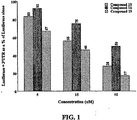
- FIG. 1 This cell-based assay utilized two stably transfected cell lines derived from the mouse macrophage line, RAW264.7. One line, designated “luciferase only” expressed a luciferase reporter construct without any UTR sequences. The other line, designated “luciferase + TNF- ⁇ UTR” expressed a luciferase reporter construct with the entire 3'-UTR of human TNF- ⁇ inserted directly downstream of the luciferase coding region.
- compounds 215, 216 and 219 in cells possessing a luciferase reporter element plus the 3'-UTR of human TNF- ⁇ compared to cells lacking the 3'-UTR are shown in FIG. 1 .
- Compounds 215, 216 and 219 exerted differential effect on the two cell lines in a dose-dependent manner, consistent with their ability to inhibit TNF- ⁇ production via the 3'-UTR. All agents lowered luciferase reporter activity in cells stably expressing the 3'-UTR. Thalidomide lacked activity at 50 ⁇ M.
- cytokines including TNF- ⁇ , and iron can up regulate APP protein synthesis at the level of its 5'-UTR; where, interestingly, the anticholinesterase, phenserine, that is currently in clinical trials for AD, lowers APP protein levels with concurrent maintenance of mRNA steady-state levels through translational modification within the same 5'-UTR element.
- HAV-1 human immunodeficiency virus 1
- tat Trans-activating transduction
- TAR trans-activation-responsive region
- Tat is brought into contact with the transcription machinery after binding the TAR element, which is a 59-residue stem-loop RNA found at the 5' end of all HIV-1 transcripts.
- thalidomide (201) has been reported to lower cyclooxygenase-2 (Cox-2) biosynthesis via its 3'-UTR that appears to likewise contain an ARE that can regulate Cox-2 mRNA stability.
- the studies of analogs 215, 216 and 219 confirm regulation of TNF- ⁇ protein levels by thalidomide (201) via its 3'-UTR, but whether or not the 5'-UTR contains a similar element that is accessible to pharmacological manipulation remains to be determined, as does action against Cox-2.
- thiothalidomide analogs include analogs that are more potent inhibitors of TNF- ⁇ production in LPS-induced human PBMCs than thalidomide 201.
- the isosteric replacement of successive carbonyl groups by a thiocarbonyl leads to an increasing inhibition with the number of moieties replaced (trithiothalidomide 216 > dithiothalidomide 215 and 213 > monothiothalidomides 205 and 212 > thalidomide 201 ).
- TNF- ⁇ has been validated as a drug target for two drugs on the market; Remicade (Cetocor, Malvern, PA; Schering-Plough, Orange, NJ) and Enbrel (Amgen, Thousand Oaks, CA; Wyeth-Ayerst, Princeton, NJ).
- Remicade Chemocor, Malvern, PA; Schering-Plough, Orange, NJ
- Enbrel Amgen, Thousand Oaks, CA; Wyeth-Ayerst, Princeton, NJ
- both of these drugs are large macromolecules and hence require injection.
- the small molecule drugs disclosed herein offer a means to potently and safely inhibit TNF- ⁇ without injection, for example, by oral administration.
- 6-Thioxo-2-piperidinone (218).
- Dithiophthalimide (225). A mixture of phthalimide (436 mg, 3.40 mmol) and Lawesson's reagent (1.199 g, 3.40 mmol) in toluene (50 ml) was refluxed (oil bath 120°C) under nitrogen for 5 hours.
- Angiogenesis is the formation of new blood vessels from pre-existing vessels. Angiogenesis is prominent in solid tumor formation and metastasis, and is part of the wound healing process. Pathological angiogenesis sometimes occurs in inappropriate anatomic locations, such as the retina or cornea, in response to disease and injury. Inhibition of angiogenesis could avoid the progression of conditions of inappropriate angiogenesis.
- Tumor formation requires a network of blood vessels to sustain the nutrient and oxygen supply for continued growth.
- Tumors in which angiogenesis is important include most solid tumors and benign tumors, such as acoustic neuroma, neurofibroma, trachoma, and pyogenic granulomas. Inhibition of angiogenesis could halt the growth of these tumors and the resultant damage due to the presence of the tumor.
- tumor microvessel density There is a direct correlation between tumor microvessel density and the incidence of metastasis.
- Tumor cells themselves can produce factors that stimulate the proliferation of endothelial cells and new capillary growth.
- Angiogenesis is important in two stages of tumor metastasis. The first stage where angiogenesis stimulation is important is in the vascularization of the primary tumor, which allows tumor cells to enter the blood stream and to circulate throughout the body. After the tumor cells have left the primary site, and have settled into the secondary, metastatic site, angiogenesis must occur before the metastasis can grow and expand. Therefore, inhibiting angiogenesis could lead to the reduction or elimination of metastasis of tumors and possibly contain the neoplastic growth at the primary site.
- the angiogenesis modulating activity of representative compounds was assessed in a rat aortic ring microvessel growth assay. Briefly, twelve-well tissue culture plates were coated with 250 ⁇ l of Matrigel (Becton-Dickinson, Bedford, MA) and allowed to gel for 30 min at 37°C and 5% CO 2 . Thoracic aortas were excised from 8- to 10-week-old male Sprague Dawley rats. After careful removal of fibroadipose tissues, the aortas were cut into 1-mm-long cross-sections, placed on Matrigel-coated wells, and covered with an additional 250 ⁇ l of Matrigel.
- Matrigel Becton-Dickinson, Bedford, MA
- EGM-II consists of endothelial cell basal medium (EBM-II; Clonetics, San Diego, CA) plus endothelial cell growth factors provided as the EGM-II Bulletkit (Clonetics).
- EBM-II endothelial cell basal medium
- EGM-II Bulletkit Clonetics
- the culture medium was subsequently changed to EBM-II supplemented with 2% fetal bovine serum, 0.25 ⁇ g/ml amphotericin B, and 10 ⁇ g/ml gentamicin.
- Aortic rings were treated daily with either the vehicle (0.5% DMSO), carboxyamidotriazole (CAI, 12 ⁇ g/ml), thalidomide or thalidomide analogs (0.1-20 ⁇ g/ml) for 4 days and photographed on the 5th day using a x2.5 objective.
- CAI carboxyamidotriazole
- thalidomide or thalidomide analogs 0.1-20 ⁇ g/ml
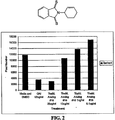
- FIGS. 2 and 3 Bar graphs showing the results of the angiogenesis assay for several compounds are shown in FIGS. 2 and 3 For convenience, the structures of the assayed compounds also are presented in these figures.
- FIG. 2 shows the angiogenic modulating activity of 2-(3-cyclohexenyl)- H- isoindol-1,3(2 H )-dithione at several concentrations. This compound exhibited anti-angiogenic activity at higher concentrations and angiogenic activity at lower concentrations.
- FIG. 3 shows the angiogenic modulating activity of 2,3-Dihydro-3-thioxo-2-(2,6-dithioxo-3-piperidinyl)-1 H -isoindol-1-one at several concentrations. This compound exhibited potent anti-antigiogenic activity at higher concentrations and angiogenic activity at lower concentrations.
- the disclosed compounds exhibit a range of angiogenic modulating activities ranging from potent inhibition of angiogenesis (anti-angiogenic activity) to potent stimulation of angiogenesis (angiogenic activity).
- the compounds reported in Figs. 2 and 3 exhibit both angiogenic and anti-angiogenic activity in a dose-dependent manner.
- Those compounds (or particular concentrations thereof) having angiogenic activity are useful for treating conditions or diseases where increasing angiogenesis is desirable (for example, wound healing) and those compounds (or particular concentrations thereof) having anti-angiogenic activity are useful for treating conditions or diseases where decreasing angiongenesis is desirable (for example, cancers, diabetic retinopathy or corneal neovascularization).
- thionyl groups any of the carbonyl groups shown in the structures of the disclosed compounds may be converted into thiocarbonyl groups, and that such thio-derivatives are part of this disclosure.
- Thionation may be accomplished by any known method. Particular methods of thionation include use of phosphorus pentasulfide, hydrogen sulfide, O , O -diethyldithiophosphonic acid, boron sulfide, silicon disulfide and elemental sulfur in HMPA.
- compositions can be in the form of tablets, capsules, powders, granules, lozenges, liquid or gel preparations, such as oral, topical, or sterile parenteral solutions or suspensions (e.g., eye or ear drops, throat or nasal sprays, etc.), transdermal patches, and other forms known in the art.
- parenteral solutions or suspensions e.g., eye or ear drops, throat or nasal sprays, etc.
- transdermal patches and other forms known in the art.
- compositions can be administered systemically or locally in any manner appropriate to the treatment of a given condition, including orally, parenterally, rectally, nasally, buccally, vaginally, topically, optically, by inhalation spray, or via an implanted reservoir.
- parenterally as used herein includes, but is not limited to subcutaneous, intravenous, intramuscular, intrasternal, intrasynovial, intrathecal, intrahepatic, intralesional, and intracranial administration, for example, by injection or infusion.
- the pharmaceutical compositions may readily penetrate the blood-brain barrier when peripherally or intraventricularly administered.
- Pharmaceutically acceptable carriers include, but are not limited to, ion exchangers, alumina, aluminum stearate, lecithin, serum proteins (such as human serum albumin), buffers (such as phosphates), glycine, sorbic acid, potassium sorbate, partial glyceride mixtures of saturated vegetable fatty acids, water, salts or electrolytes such as protamine sulfate, disodium hydrogen phosphate, potassium hydrogen phosphate, sodium chloride, zinc salts, colloidal silica, magnesium trisilicate, polyvinyl pyrrolidone, cellulose-based substances, polyethylene glycol, sodium carboxymethylcellulose, polyacrylates, waxes, polyethylene-polyoxypropylene-block polymers, polyethylene glycol, and wool fat.
- ion exchangers alumina, aluminum stearate, lecithin
- serum proteins such as human serum albumin
- buffers such as phosphates
- glycine glycine
- sorbic acid
- Tablets and capsules for oral administration can be in a form suitable for unit dose presentation and can contain conventional pharmaceutically acceptable excipients.
- binding agents such as syrup, acacia, gelatin, sorbitol, tragacanth, and polyvinylpyrrolidone
- fillers such as lactose, sugar, corn starch, calcium phosphate, sorbitol, or glycine
- tableting lubricants such as magnesium stearate, talc, polyethylene glycol, or silica
- disintegrants such as potato starch
- dispersing or wetting agents such as sodium lauryl sulfate.
- Oral liquid preparations can be in the form of, for example, aqueous or oily suspensions, solutions, emulsions, syrups or elixirs, or can be presented as a dry product for reconstitution with water or other suitable vehicle before use.
- compositions can also be administered parenterally in a sterile aqueous or oleaginous medium.
- the composition can be dissolved or suspended in a non-toxic parenterally-acceptable diluent or solvent, e.g., as a solution in 1,3-butanediol.
- a non-toxic parenterally-acceptable diluent or solvent e.g., as a solution in 1,3-butanediol.
- Commonly used vehicles and solvents include water, physiological saline, Hank's solution, Ringer's solution, and sterile, fixed oils, including synthetic mono- or di-glycerides, etc.
- the drug may be made up into a solution, suspension, cream, lotion, or ointment in a suitable aqueous or non-aqueous vehicle.
- Additives may also be included, for example, buffers such as sodium metabisulphite or disodium edeate; preservatives such as bactericidal and fungicidal agents, including phenyl mercuric acetate or nitrate, benzalkonium chloride or chlorhexidine, and thickening agents, such as hypromellose.
- buffers such as sodium metabisulphite or disodium edeate
- preservatives such as bactericidal and fungicidal agents, including phenyl mercuric acetate or nitrate, benzalkonium chloride or chlorhexidine, and thickening agents, such as hypromellose.
- the dosage unit involved depends, for example, on the condition treated, nature of the formulation, nature of the condition, embodiment of the claimed pharmaceutical compositions, mode of administration, and condition and weight of the patient. Dosage levels are typically sufficient to achieve a tissue concentration at the site of action that is at least the same as a concentration that has been shown to be active in vitro , in vivo , or in tissue culture.
- a dosage of about 0.1 ⁇ g/kg body weight/day to about 1000 mg/kg body weight/day for example, a dosage of about 1 ⁇ g/kg body weight/day to about 1000 ⁇ g/kg body weight/day, such as a dosage of about 5 ⁇ g/kg body weight/day to about 500 ⁇ g/kg body weight/day can be useful for treatment of a particular condition.
- the compounds can be used in the form of pharmaceutically acceptable salts derived from inorganic or organic acids and bases, including, but not limited to: acetate, adipate, alginate, aspartate, benzoate, benzenesulfonate, bisulfate, butyrate, citrate, camphorate, camphorsulfonate, cyclopentanepropionate, digluconate, dodecylsulfate, ethanesulfonate, fumarate, glucoheptanoate, glycerophosphate, hemisulfate, heptanoate, hexanoate, hydrochloride, hydrobromide, hydroiodide, 2-hydroxyethanesulfonate, lactate, maleate, methanesulfonate, 2-naphthalenesulfonate, nicotinate, oxalate, pamoate, pectinate, persulfate, 3-phenylpropionate
- Base salts include, but are not limited to, ammonium salts, alkali metal salts (such as sodium and potassium salts), alkaline earth metal salts (such as calcium and magnesium salts), salts with organic bases (such as dicyclohexylamine salts), N-methyl-D-glucamine, and salts with amino acids (such as arginine, lysine, etc.).
- Basic nitrogen-containing groups can be quaternized, for example, with such agents as C1-8 alkyl halides (such as methyl, ethyl, propyl, and butyl chlorides, bromides, and iodides), dialkyl sulfates (such as dimethyl, diethyl, dibutyl, an diamyl sulfates), long-chain halides (such as decyl, lauryl, myristyl, and stearyl chlorides, bromides, and iodides), aralkyl halides (such as benzyl and phenethyl bromides), etc. Water or oil-soluble or dispersible products are produced thereby.
- C1-8 alkyl halides such as methyl, ethyl, propyl, and butyl chlorides, bromides, and iodides
- dialkyl sulfates such as dimethyl, diethyl, dibutyl, an dia
- compositions can be included in a kit accompanied by instructions for intended use, for example instructions required by a pharmaceutical regulatory agency, such as the Food and Drug Administration in the United States.
Landscapes
- Organic Chemistry (AREA)
- Chemical & Material Sciences (AREA)
- Health & Medical Sciences (AREA)
- Public Health (AREA)
- Veterinary Medicine (AREA)
- Medicinal Chemistry (AREA)
- Nuclear Medicine, Radiotherapy & Molecular Imaging (AREA)
- Chemical Kinetics & Catalysis (AREA)
- Pharmacology & Pharmacy (AREA)
- Life Sciences & Earth Sciences (AREA)
- Animal Behavior & Ethology (AREA)
- General Health & Medical Sciences (AREA)
- General Chemical & Material Sciences (AREA)
- Engineering & Computer Science (AREA)
- Bioinformatics & Cheminformatics (AREA)
- Immunology (AREA)
- Oncology (AREA)
- Transplantation (AREA)
- Biomedical Technology (AREA)
- Neurology (AREA)
- Neurosurgery (AREA)
- Pharmaceuticals Containing Other Organic And Inorganic Compounds (AREA)
- Plural Heterocyclic Compounds (AREA)
- Indole Compounds (AREA)
Description
- The present invention relates to thalidomide analogs, methods of synthesizing the analogs, and methods for using the analogs to modulate angiogenesis and tumor necrosis factor alpha activities in a subject. More particularly, the invention relates to sulfur-containing thalidomide analogs and methods of making and using the same.
- Thalidomide (N-α-phthalimidoglutarimide) is a glutamic acid derivative that was introduced onto the market as a sedative hypnotic in 1956, but was withdrawn in 1961 due to the development of severe congenital abnormalities in babies born to mothers using it for morning sickness. Interest in the agent was reawakened after thalidomide was found clinically effective in the treatment of erythema nodosum leprosum (ENL) and in the treatment of HIV wasting syndrome and various cancers. Mechanistic studies of its ENL activity demonstrated an anti-tumor necrosis factor alpha (anti-TNF-α) action. Specifically, thalidomide enhances the degradation of TNF-α RNA, and thereby lowers its synthesis and secretion (Moreira et al., J. Exp. Med., 1993, 177, 1675-1680). Further studies have defined it to be a co-stimulator of both CD8+ and CD4+ T cells, an inhibitor of angiogenesis via its inhibitory actions on basic fibroblast growth factor (bFGF) and vascular endothelial growth factor (VEGF), and an inhibitor of the transcription factor, NFκB.
- TNF-α and family members play pivotal roles in a variety of physiological and pathological processes, which include cell proliferation and differentiation, apoptosis, the modulation of immune responses and induction of inflammation. TNF-α acts via two receptors, TNFR1 and 2. The former is expressed in all tissues and is the predominant signaling receptor for TNF-α. The latter is primarily expressed on immune cells and mediates more limited biological responses. The exposure of cells to TNF-α can result in activation of a caspase cascade leading to cell death via apoptosis. Indeed, major cell surface molecules capable of initiating apoptosis are members of the TNF family of ligands and receptors. For example, death-inducing members of the TNF receptor family each contain a cytoplasmic 'death domain' (DD), which is a protein-protein interaction motif critical for engaging downstream components of the signal transduction machinery.
- Recently, TRAIL, the tumor necrosis factor-related apoptosis-inducing ligand, has been shown to selectively induce apoptosis of tumor cells, but not most normal cells. It is indicated that TRAIL mediates thymocyte apoptosis and is important in the induction of autoimmune diseases. More often, however, TNF-α receptor binding induces the activation of transcription factors, AP-1 and NFκB, that thereafter induce genes involved in acute and chronic inflammatory responses. Overproduction of TNF-α has thus been implicated in many inflammatory diseases, such as rheumatoid arthritis, graft-versus-host disease and Crohn's disease, and it additionally exacerbates ENL, septic shock, AIDS and dementia associated with Alzheimer's disease (AD).
- A number of thalidomide analogs optimized to reduce TNF-α synthesis have been designed and synthesized. Primarily, these analogs include structural modifications of the phthaloyl ring or glutarimide ring of thalidomide. In addition, following the demonstration that the anti-angiogenic property of thalidomide is associated with its hydroxylated, open-ring metabolites, syntheses of the hydroxylated and hydrolysis metabolites as inhibitors of angiogenesis or tumor metastasis have been reported. Although extensive studies exist regarding the structure-activity relationships between thalidomide and TNF-α, very little is known about the contribution of the four amide carbonyl groups of thalidomide to its biological activity.
- Thalidomide analogs having angiogenesis modulating activity and TNF-α modulating activity are disclosed. In particular, successive replacement of the carbonyl groups in thalidomide with thiocarbonyl groups provides thiothalidomide analogs having increased TNF-α inhibitory activity. Surprisingly, the increase in TNF-α inhibition due to replacement of the carbonyl groups of thalidomide with thiocarbonyl groups is not associated with toxicity.
- Due to their angiogenesis and TNF-α modulating activity, the disclosed thiothalidomides can be used to treat a subject having a disease or condition related to angiogenesis or TNF-α activity, such as a tumor or unwanted neovascularization. Furthermore, the physical and toxicological properties of the disclosed thiothalidomide analogs make them suitable for potently and safely modulating angiogenesis and TNF-α activity without injection, for example, by oral administration. This is in contrast to many currently available agents used for such purposes.
The invention provides a compound, selected from the following compounds 213, 215, 216, 209 and 222: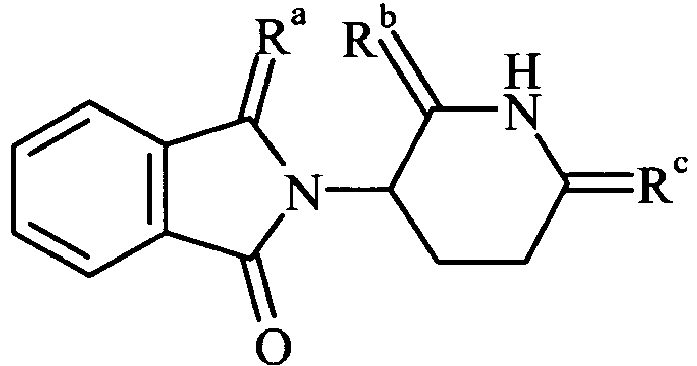

209 213: Ra = O, Rb = S, Rc = S 215: Ra = S, Rb = O, Rc = S 216: Ra = S, Rb = S, Rc = S 
222 -
-
FIG. 1 is a bar graph showing the TNF-α inhibitory action of several disclosed thalidomide analogs in murine cells having a luciferase reporter element plus the 3'-UTR of human TNF-α relative to their action in cells lacking the 3'-UTR. -
FIG. 2 is a bar graph showing the relative angiogenic modulating activity of 2-(3-cyclohexenyl)-H-isoindol-1,3(2H)-dithione at several concentrations. -
FIG. 3 is a bar graph showing the relative angiogenic modulating activity of 2,3-Dihydro-3-thioxo-2-(2,6-dithioxo-3-piperidinyl)-1H-isoindol-1-one at several concentrations. -
- TNF-α -tumor necrosis factor alpha
- CDI - carboxyamidotriazole
- ARE - adenylate/uridylate (AU)-rich element
- UTR - untranslated region
- THF - tetrahydrofuran
- NMR - nuclear magnetic resonance
- LR - Lawesson's Reagent
- In order to facilitate an understanding of the embodiments presented, the following explanations are provided.
- The singular terms "a," "an," and "the" include plural referents unless context clearly indicates otherwise. Similarly, the word "or" is intended to include "and" unless the context clearly indicates otherwise. The term "comprises" means "includes." Also, "comprising A or B" means including A or B, or A and B, unless the context clearly indicates otherwise. It is to be further understood that all molecular weight or molecular mass values given for compounds are approximate, and are provided for description. Although methods and materials similar or equivalent to those described herein can be used in the practice or testing of this disclosure, suitable methods and materials are described below. In addition, the materials, methods, and examples are illustrative only and not intended to be limiting.
- The term "subject" refers to animals, including mammals (for example, humans and veterinary animals such as dogs, cats, pigs, horses, sheep, and cattle).
- "Pharmaceutical compositions" are compositions that include an amount (for example, a unit dosage) of one or more of the disclosed compounds together with one or more non-toxic pharmaceutically acceptable excipients, including carriers, diluents, and/or adjuvants, and optionally other biologically active ingredients. Such pharmaceutical compositions can be prepared by standard pharmaceutical formulation techniques such as those disclosed in Remington's Pharmaceutical Sciences, Mack Publishing Co., Easton, PA (19th Edition).
- A "therapeutically effective amount" of the disclosed compounds is a dosage of the compound that is sufficient to achieve a desired therapeutic effect, such as inhibition of angiogenesis or an anti-tumor or anti-metastatic effect, or inhibition of TNF-α activity. In some examples, a therapeutically effective amount is an amount sufficient to achieve tissue concentrations at the site of action that are similar to those that are shown to modulate angiogenesis or TNF-α activity in tissue culture, in vitro, or in vivo. For example, a therapeutically effective amount of a compound may be such that the subject receives a dosage of about 0.1 µg/kg body weight/day to about 1000 mg/kg body weight/day, for example, a dosage of about 1 µg/kg body weight/day to about 1000 µg/kg body weight/day, such as a dosage of about 5 µg/kg body weight/day to about 500 µg/kg body weight/day.
- The term "modulate" refers to the ability of a disclosed compound to alter the amount, degree, or rate of a biological function, the progression of a disease, or amelioration of a condition. For example, modulating can refer to the ability of a compound to elicit an increase or decrease in angiogenesis, to inhibit TNF-α activity, or to inhibit tumor metastasis or tumorigenesis.
- The term "angiogenic activity" refers to the ability of a disclosed compound or a particular concentration of a disclosed compound to stimulate angiogenesis. Angiogenic activity may be detected in vivo or in vitro. Angiogenic compounds or angiogenic concentrations of disclosed compounds stimulate angiogenesis, and such compounds and/or concentrations may be readily identified by those of ordinary skill in the art, using, for example, the methods described in the Examples that follow.
- The term "anti-angiogenic activity" refers to the ability of a compound or a particular concentration of a disclosed compound to inhibit angiogenesis. Anti-angiogenic activity may be detected in vivo or in vitro. Anti-angiogenic or anti-angiogenic concentrations of disclosed compounds inhibit angiogenesis, and such compounds and/or concentrations may be readily identified by those of ordinary skill in the art, using, for example, the methods described in the Examples that follow.
- Disclosed are thalidomide analogs that modulate TNF-α activity and/or angiogenesis, and as such can be used to treat a wide variety of pathological conditions that are linked to angiogenesis and/or TNF-α activity. Pharmaceutically acceptable salts, stereoisomers, and metabolites of all of the disclosed compounds also are contemplated. In some embodiments, the thalidomide analogs are thiothalidomide derivatives in which carbonyl groups in corresponding non-sulfur-containing thalidomide derivatives are replaced by one or more thiocarbonyl groups.
- More particularly, the invention provides compounds 213, 215, 216, 209 and 222 as previously described.
- Still further, a method for modulating angiogenesis in a subject is disclosed. The method includes administering to the subject a therapeutically effective amount of one or more of any of the disclosed compounds. In some embodiments, where an anti-angiogenic compound or an anti-angiogenic concentration of a compound is utilized, the therapeutically effective amount of the compound can be administered to a subject with a tumor to achieve an anti-tumor effect, such as inhibition of tumorigenesis or tumor metastasis. In other embodiments, the therapeutically effective amount of the compound is administered to a subject with a pathological angiogenesis. Alternatively, where stimulation of angiogenesis is desired an angiogenic compound or an angiogenic concentration of a compound is administered to a subject to stimulate angiogenesis.
- As angiogenesis inhibitors, the disclosed compounds are useful in the treatment of both primary and metastatic solid tumors, including carcinomas of breast, colon, rectum, lung, oropharynx, hypopharynx, esophagus, stomach, pancreas, liver, gallbladder and bile ducts, small intestine, urinary tract (including kidney, bladder and urothelium), female genital tract, (including cervix, uterus, and ovaries as well as choriocarcinoma and gestational trophoblastic disease), male genital tract (including prostate, seminal vesicles, testes and germ cell tumors), endocrine glands (including the thyroid, adrenal, and pituitary glands), and skin, as well as hemangiomas, melanomas, sarcomas (including those arising from bone and soft tissues as well as Kaposi's sarcoma) and tumors of the brain, nerves, eyes, and meninges (including astrocytomas, gliomas, glioblastomas, retinoblastomas, neuromas, neuroblastomas, Schwannomas, and meningiomas). Such compounds may also be useful in treating solid tumors arising from hematopoietic malignancies such as leukemias (i.e. chloromas, plasmacytomas and the plaques and tumors of mycosis fungoides and cutaneous T-cell lymphoma/leukemia) as well as in the treatment of lymphomas (both Hodgkin's and non-Hodgkin's lymphomas). In addition, these compounds may be useful in the prevention of metastases from the tumors described above either when used alone or in combination with radiotherapy and/or other chemotherapeutic agents.
- Further uses of disclosed anti-angiogenic compounds/concentrations include the treatment and prophylaxis of autoimmune diseases such as rheumatoid, immune and degenerative arthritis. Such compounds can also be used to treat a pathological (i.e. abnormal, harmful or undesired) angiogenesis, for example, various ocular diseases such as diabetic retinopathy, retinopathy of prematurity, corneal graft rejection, retrolental fibroplasia, neovascular glaucoma, rubeosis, retinal neovascularization due to macular degeneration, hypoxia, angiogenesis in the eye associated with infection or surgical intervention, and other abnormal neovascularization conditions of the eye; skin diseases such as psoriasis; blood vessel diseases such as hemagiomas, and capillary proliferation within atherosclerotic plaques; Osler-Webber Syndrome; myocardial angiogenesis; plaque neovascularization; telangiectasia; hemophiliac joints; angiofibroma; and wound granulation. Other uses include the treatment of diseases characterized by excessive or abnormal stimulation of endothelial cells, including but not limited to intestinal adhesions, Crohn's disease, atherosclerosis, scleroderma, and hypertrophic scars, such as keloids. Another use is as a birth control agent, by inhibiting ovulation and establishment of the placenta. The disclosed compounds are also useful in the treatment of diseases that have angiogenesis as a pathologic consequence such as cat scratch disease (Rochele minalia quintosa) and ulcers (Helicobacter pylori). The disclosed compounds are also useful to reduce bleeding by administration prior to surgery, especially for the treatment of resectable tumors.
- Angiogenic compounds or angiogenic concentrations of disclosed compound can be used can be used to treat a variety of conditions that would benefit from stimulation of angiogenesis, stimulation of vasculogenesis, increased blood flow, and/or increased vascularity. Particular examples of conditions and diseases amenable to treatment using disclosed angiogenic compounds, or angiogenic concentrations of disclosed compounds, include any condition associated with an obstruction of a blood vessel, such as obstruction of an artery, vein, or of a capillary system. Specific examples of such conditions or disease include, but are not necessarily limited to, coronary occlusive disease, carotid occlusive disease, arterial occlusive disease, peripheral arterial disease, atherosclerosis, myointimal hyperplasia (such as due to vascular surgery or balloon angioplasty or vascular stenting), thromboangiitis obliterans, thrombotic disorders, vasculitis, and the like. Examples of conditions or diseases that may be prevented using the disclosed angiogenic compounds/concentrations include, but are not limited to, heart attack (myocardial infarction) or other vascular death, stroke, death or loss of limbs associated with decreased blood flow, and the like. Other therapeutic uses for angiogenesis stimulation according to the disclosure include, but are not necessarily limited to accelerating healing of wounds or ulcers; improving the vascularization of skin grafts or reattached limbs so as to preserve their function and viability; improving the healing of surgical anastomoses(such as in re-connecting portions of the bowel after gastrointestinal surgery); and improving the growth of skin or hair.
- Yet further, the disclosed compounds may be used in a method for inhibiting TNF-α activity in a subject. The method includes administering a therapeutically effective amount of a disclosed compound to a subject to achieve a TNF-α inhibitory effect. The disclosed compounds having TNF-α inhibitory effects are useful for treating many inflammatory, infectious, immunological, and malignant diseases. These include but are not limited to septic shock, sepsis, endotoxic shock, hemodynamic shock and sepsis syndrome, post ischemic reperfusion injury, malaria, mycobacterial infection, meningitis, psoriasis and other dermal diseases, congestive heart failure, fibrotic disease, cachexia, graft rejection, cancer, tumor growth, undesirable angiogenesis, autoimmune disease, opportunistic infections in AIDS, rheumatoid arthritis, rheumatoid spondylitis, osteoarthritis, other arthritic conditions, inflammatory bowel disease, Crohn's disease, ulcerative colitis, multiple sclerosis, systemic lupus erythrematosis, ENL in leprosy, radiation damage, and hyperoxic alveolar injury. In addition, the compounds can be used to treat other neurodegenerative diseases as exemplified by Alzheimer's disease, Parkinson's disease, head trauma, stroke and ALS.
- The disclosed compounds can be used in combination with other compositions and procedures for the treatment of diseases. For example, a tumor can be treated conventionally with surgery, radiation or chemotherapy in combination with an anti-angiogenic compound/concentration and then, optionally the compound/concentration can be further administered to the subject to extend the dormancy of micrometastases and to stabilize and inhibit the growth of any residual primary tumor. Alternatively, an angiogenic compound or angiogenic concentration of a compound can be used in combination with other angiogenesis stimulating agents. For example, thermal energy (in the form of resistive heating, laser energy or both) to create thermally treated stimulation zones or pockets (optionally interconnected, at least initially, by small channels) in the tissue for the introduction of blood born growth and healing factors, along with stimulated capillary growth surrounding the thermally treated zones. Such stimulation zones allow increased blood flow to previously ischemic and/or nonfunctional tissue (such as cardiac tissue) with a concomitant increased supply of oxygen and nutrients ultimately resulting in a revitalization of the treated sections the tissue when used in combination with the angiogenic compositions/concentrations. In other embodiments, disclosed compounds exhibiting TNF-α inhibitory activity can be combined with other TNF-α inhibitory agents, for example, steroids such as dexamethasone and prednisolone. When used for treatment of a cancer, the compounds can be used in combination with chemotherapeutic agents and/or radiation and/or surgery.
- Examples of other chemotherapeutic agents that can be used in combination with the disclosed compounds include alkylating agents, antimetabolites, natural products, kinase inhibitors, hormones and their antagonists, and miscellaneous other agents. Examples of alkylating agents include nitrogen mustards (such as mechlorethamine, cyclophosphamide, melphalan, uracil mustard or chlorambucil), alkyl sulfonates (such as busulfan), and nitrosoureas (such as carmustine, lomustine, semustine, streptozocin, or dacarbazine). Examples of antimetabolites include folic acid analogs (such as methotrexate), pyrimidine analogs (such as 5-FU or cytarabine), and purine analogs, such as mercaptopurine or thioguanine. Examples of natural products include vinca alkaloids (such as vinblastine, vincristine, or vindesine), epipodophyllotoxins (such as etoposide or teniposide), antibiotics (such as dactinomycin, daunorubicin, doxorubicin, bleomycin, plicamycin, or mitocycin C), and enzymes (such as L-asparaginase). Examples of kinase inhibitors include small molecule inhibitors (such as Iressa, Tarceva, PKI-166, CI-1033, CGP-5923A, EKB-569, TAK165, GE-572016, CI-1033, SU5416, ZD4190, PTK787/ZK222584, CGP41251, CEP-5214, ZD6474, BIBF1000, VGA1102, SU6668, SU11248, CGP-57148, tricyclic quinoxalines, SU4984, SU5406, Gleevec, NSC680410, PD 166326, PD1173952, CT53518, GTP14564, PKC412, PP1, PD116285, CGP77675, CGP76030, CEP-701, and CEP2583), ligand modulators (such as Bevacizumanb, MV833, Soluble Flt-1 and Flk-1, VEGF Trap, GFB 116, NM3, VEGF 121-diptheria toxin conjugate and Interfereon-α), and monoclonal antibodies against receptors (such as Cetuximab, ABX-EGF, Y10, MDX-447, h-R3, EMD 72000, herceptin, MDX-H210, pertuzumab, IMC-1C11, and MF1). Examples of hormones and antagonists include adrenocorticosteroids (such as prednisone), progestins (such as hydroxyprogesterone caproate, medroxyprogesterone acdtate, and magestrol acetate), estrogens (such as diethylstilbestrol and ethinyl estradiol), antiestrogens (such as tamoxifen), and androgens (such as testerone proprionate and fluoxymesterone). Examples of miscellaneous agents include platinum coordination complexes (such as cis-diamine-dichloroplatinum II, which is also known as cisplatin), substituted ureas (such as hydroxyurea), methyl hydrazine derivatives (such as procarbazine), vaccines (such as APC8024), AP22408, B43-genistein conjugate, paclitaxel, AG538, and adrenocrotical suppressants (such as mitotane and aminoglutethimide). In addition, the disclosed compounds can be combined with gene therapy approaches, such as those targeting VEGF/VEGFR (including antisense oligonucleotide therapy, Adenovirus-based Flt-1 gene therapy, Retrovirus-base Flk-1 gene therapy, Retrovirus-based VHL gene therapy, and angiozyme) and IGF-1R (including INX-4437). Examples of the most commonly used chemotherapy drugs that can be used in combination with the disclosed tricyclic compounds agent include Adriamycin, Alkeran, Ara-C, BiCNU, Busulfan, CCNU, Carboplatinum, Cisplatinum, Cytoxan, Daunorubicin, DTIC, 5-FU, Fludarabine, Hydrea, Idarubicin, Ifosfamide, Methotrexate, Mithramycin, Mitomycin, Mitoxantrone, Nitrogen Mustard, Taxol, Velban, Vincristine, VP-16, Gemcitabine (Gemzar), Herceptin, Irinotecan (Camptosar, CPT-11), Leustatin, Navelbine, Rituxan STI-571, Taxotere, Topotecan (Hycamtin), Xeloda (Capecitabine), Zevelin and calcitriol.
- The disclosed compounds also can be combined with radiotherapy employing radioisotopes (such as 32P, 90Y, 125I, 131I, and 177Lu), particle beams (such as proton, neutron and electron beams) and electromagnetic radiation (such as gamma rays, x-rays and photodynamic therapy using photosensitizers and visible or ultraviolet rays).
- Additionally, the disclosed compounds can be combined with pharmaceutically acceptable excipients, and optionally sustained-release matrices, such as biodegradable polymers, to form therapeutic compositions. Therefore, also disclosed are pharmaceutical compositions including one or more of any of the compounds disclosed above and a pharmaceutically acceptable carrier. The composition may comprise a unit dosage form of the composition, and may further comprise instructions for administering the composition to a subject to inhibit angiogenesis, for example, instructions for administering the composition to achieve an anti-tumor effect or to inhibit a pathological angiogenesis. In more particular embodiments, the disclosed compositions are compounded for oral administration, and such oral dosage forms can include one or more of any of the disclosed compounds. Such pharmaceutical compositions may be used in methods for modulating angiogenesis or TNF-α activity in a subject by administering to the subject a therapeutically effective amount of the composition.
- As is demonstrated in the Examples that follow, thionation of thalidomide analogs to replace carbonyl groups with thiocarbonyl groups can provide thalidomide analogs with increased TNF-α activity, increased angiogenic activity or increased anti-angiogenic activity. Thus, although in certain structures the compounds are shown with carbonyl groups, it is to be understood that thionated derivatives of such compounds are also part of the disclosure.
- With reference to
Scheme 1 below, t-Butoxycarbamate 2, on reaction with carbodiimide in THF, gave imide 3. Imide 3 was deprotected with trifluoroacetic acid in CH2Cl2 at room temperature to yield aminoglutarimide trifluoroacetate 4. Without further purification, compound 4 was reacted with phthalic anhydride in refluxing THF in the presence of triethylamine to affordthalidomide 1 in the total yield of 24% from 2. This procedure is much more practical and efficient than several prior reported synthetic routes for the preparation of thalidomide.
- 2,6-Dioxo-3-(t-butoxycarbonylamino)piperidine (3) was prepared and isolated as follows. A solution of N-(t-butoxycarbonyl)-L-glutamine (4.92 g) and carbonyl diimidazole (1.70 g) in THF (100 mL) was refluxed for 9 h. The solvent was removed and the crude product was recrystallized from hot EtOAc to give compound 3 (2.04 g, 45%) as white crystals: mp 214-215°C; 1H NMR (DMSO-d6) δ 4.22 (dd, J = 6.2 Hz, J = 11.0 Hz, 1H), 2.77-2.65 (m, 1H), 2,45 (m, 1 H), 1.96-1.87 (m, 2H), 1.40 (s, 9H); MS (CI/CH4) 227 [M-1]+.
- 2,6-Dioxo-3-aminopiperidine trifluoroacetate (4) was prepared and isolated as follows. Compound 3 (59 mg) was suspended in CH2Cl2 (5 mL). CF3COOH (0.5 mL) was added. The reaction solution was stirred at room temperature for 4 h. The solvent was removed to give 4 (62 mg, 99%): 1H NMR (DMSO-d6) δ 11.42 (s, 1H), 8.70 (br, 2H), 4.31 (dd, J =5.4 Hz, J = 13 Hz), 2.88-2.72 (m, 2H), 2.25-2.09 (m, 2H).
- Thalidomide (1) was prepared and isolated as follows. A mixture of 4, phthalic anhydride and Et3N in THF was refluxed for two days. The reaction mixture was concentrated and purification by column chromatography (eluent CH2Cl2/EtOAc=6:1) gave thalidomide (104 mg, 54%) as white crystals.
- With reference to Scheme 2 below, reaction of
thalidomide 1 with Lawesson's reagent, when stirred in benzene at 80°C for 48 h, yieldedthionamide 15 in a yield of 38%. In addition to monothiothalidomide, a trace of dithionimide 16 (1.6%) was also obtained. However, for the preparation of dithionimide, the yield proved to be very low (less than 2%) when the reaction of monothiothalidomide with Lawesson's reagent was performed between 80°C to 120°C. The situation changed greatly when organic base was added to the reaction mixture. Thus, thionation ofmonothiothalidomide 15 with Lawesson's reagent in toluene was carried out at 110°C in the presence of pyridine to give dithionimide 16 (45%) and dithionimide 17 (31%). The structures of these sulfur-substituted thalidomides were identified by mass spectra, 1DNMR and 2DNMR. Thalidomide was heated with Lawesson's reagent at 110°C in the presence of morpholine to afford dithionimide 16 and trithionimide 18. -
Dithionimide 16 is compound 213 ofclaim 1. - Dithionimide 17 is compound 215 of
claim 1. - Trithionimide 18 is compound 216 of
claim 1.
- 1,3-Dioxo-2-(2-oxo-6-thioxopiperidin-3-yl)isoindoline (15) was synthesized and isolated as follows. A mixture of thalidomide (170 mg, 0.658 mmol) and Lawesson's reagent (293 mg, 0.724 mmol) in benzene (50 ml) was stirred in a 80°C oil bath for 2 days. The solvent was removed under vacuum. The residue was purified by column chromatography using CH2Cl2/petroluem ether (5:1) as eluent to afford compound 16 (3 mg, 1.6%) as a red solid and then, using CH2Cl2 as eluent, to afford compound 15 (68 mg, 38%) as a yellow solid: mp 225-226°C; 1H NMR (DMSO-d6) δ 12.83 (s, 1H), 8.00-7.92 (m, 4H), 5.32 (dd, J = 5.6 Hz, J = 12.9 Hz, 1H), 3.28-3.25 (m, 1H), 2.60-2.54 (m, 2H), 2.17-2.10 (m, 1H); 13C NMR (DMSO-d6) δ 208.7(C-6'), 165.3(C-2'), 165.2(C-1 & C-3), 133.1(C-5 & C-6), 129.3 (C-3a, C-7a), 121.7 (C-4 & C-7), 46.9 (C-3'), 38.9 (C-5'), 21.79 (C-4'); MS (CI/CH4) m/z 274 [M]+; Anal. Calcd for C13H10N2O3S: C, 56.92; H, 3.67; N, 10.21 Found: C, 56.89; H, 3.78; N, 10.15.
- 1-Thioxo-3-oxo-2-(2-oxo-6-thioxopiperidin-3-yl)isoindoline (16) and 1,3-dioxo-2-(2,6-dithioxopiperidin-3-yl)isoindoline (17) were synthesized as follows. A mixture of 15 (146 mg, 0.533 mmol), Lawesson's reagent (108 mg, 0.267 mmol) and pyridine (21 µl) in toluene was stirred at 110°C under an atmosphere of N2 for 12 h. Thereafter, more Lawesson's Reagent (108 mg, 0.267 mmol) and pyridine (21 µl) were added. The reaction mixture was stirred for a further 12 h. The solvent was removed under vacuum and the residue was purified by column chromatography (eluent CH2Cl2/petroleum ether = 2:1, 10:1, then CH2Cl2/EtOAc = 10:1) to afford 16 (30 mg, 45%) and 17 (21 mg, 31.5%). Starting material 15 (83 mg) was also recovered.
- Compound 16: (yellow solid): mp 263-265°C; 1H NMR (CDCl3) δ 7.78-7.74 (m, 2 H), 7.66-7.63 (m, 2 H), 5.00 (dd, J = 4.9 Hz, 11.9 Hz, 1 H), 3.43-3.35 (m, 1 H), 2.95-2.84 (m, 2 H), 2.08-2.06 (m, 1 H); MS (DEI) m/z 290 [M]+; HRMS (DEI) m/z calcd for C13H10N2O2S2 290.0184, found 290.0185; Anal. Calcd for C13H10N2O2S2: C, 53.77; H, 3.47; N, 9.65 Found: C, 53.38; H, 3.29; N, 9.50.
- Compound 17: (red solid): mp 240-242°C; 1H NMR (CDCl3) δ 9.44 (s, 1 H), 8.05-8.02 (m, 1 H), 7.86-7.76 (m, 3 H), 5.75-5.64 (m, 1 H), 3.57-3.52 (m, 1 H), 3.09-2.99 (m, 2 H), 2.19- 2.12 (m, 1 H). 13C NMR (DMSO): 208.16, 207.98, 166.10, 165.39, 134.32, 133.11, 132.42, 124.30, 122.15, 121.11, 49.64, 21.29; MS(DEI) m/z 291 [M+1]+; HRMS (DEI) m/z calcd for C13H11N2O2S2 291.0262, found 291.0264; Anal. Calcd for C13H10N2O2S2·0.5H2O: C, 52.15; H, 3.70; N, 9.36 Found: C, 52.25; H, 3.44; N, 9.07.
- 1-Thioxo-3-oxo-2-(2,6-dithioxopiperidin-3-yl)isoindoline (18) was prepared and isolated as follows. A mixture of thalidomide (100 mg), Lawesson's reagent (157 mg) and morpholine (35 µl) in toluene (10 mL) was stirred at 105°C under the atmosphere of N2 for 24 h. The solvent was removed under vacuum and the residue was purified by column chromatography, using CH2Cl2:petroleum ether (1:1) as eluent, to afford compound 18 (13 mg, 11%) as red crystals: mp 244°C; 1H NMR (CDCl3) δ 10.81 (s, 1H), 8.05-8.01 (m, 1H), 7.91-7.75 (m, 3H), 5.92 (m, 1H), 3.57-3.52 (m, 1H), 3.13-2.97 (m, 2H), 2.18-2.15 (m, 1H); MS(DEI) m/z 306 [M]+; HRMS (DEI) m/z calcd for C13H10N2OS3 305.9955, found 305.9951; Anal. Calcd for C13H10N2OS2·0.5H2O: C, 49.49; H, 3.51; N, 8.88 Found: C, 49.85; H, 3.24; N, 8.88. Then, CH2Cl2 was used as eluent to provide compound 16 (31 mg, 28%) as yellow crystals.
- A series of thiothalidomides and analogs were designed to explore their action on inhibition of TNF-α. Of the compounds mentioned in this example, compounds 209, 213, 215, 216 and 222 fall within
claim 1. Monothiothalidomide 205 (same ascompound 15 in Example 2) was prepared as shown in Scheme 3. tert-Butoxycarbonyl-L-glutamine 202 was refluxed with carbonyl diimidazole (CDI) in THF, and cyclized to afford imide 203 (Muller et al., "Amino-substituted thalidomide analogs: potent inhibitors of TNF-α production," Bioorg. Med. Chem, Lett. 9, 1625-1630, 1999). - Imide 203 then was treated with trifluoroacetic acid in CH2Cl2 to remove the protective group to generate aminoglutarimide trifluoroacetate 204. Without further purification, compound 204 was reacted with phthalic anhydride in refluxing THF in the presence of triethylamine to produce thalidomide 201 (same as
compound 1 in Example 2) in the total yield of 31 % from compound 202. Thalidomide 201 was thionated with Lawesson's reagent (LR, Cava et al., "Thionation reaction of Lawesson's Reagents," Tetrahedron, 41, 5061-5087, 1985, the entirety of which is incorporated herein by reference) to generate a single new product that had a structure identified as 6'-thiothalidomide 205 by mass spectrometry and 1D & 2D nuclear magnetic resonance spectroscopy. The position of the thiocarbonyl group was established from the heteronuclear multiple bond correlation (HMBC) cross peak of H-5'/C-6'.
- The synthesis of 3-thiothalidomide 212 is shown in Scheme 4 below. N-Phthaloyl-L-glutamic acid 206 was esterified to afford diester 207. Compound 207 was thionated with LR at 110°C to give compound 208 as a major product. Concurrently, compound 209 was separated as a minor product by chromatography.
- 3-thiothalidomide, 212, could not be prepared through the cyclization of compound 208 with ammonia or amine as ammonia reacts with the thioamide; reaction of compound 208 with benzylamine produced the unexpected compound 210. In an alternative approach, compound 208 was hydrolyzed under acidic conditions to give diacid 211. Compound 211 was then reacted with trifluoroacetamide to generate 3-thiothalidomide 212 in the presence of 1-hydroxybenzotriazole (HOBt) and 1-[3-(dimethylamino)propyl]-3-ethylcarbodiimide hydrochloride (EDCI, Flaih et al., "An expeditious synthesis of cyclic imides," Tetrahedron Lett. 40, 3697-3698, 1999).

- In the synthesis of dithiothalidomide, one method involved the reaction of monothiothalidomide with LR at reflux in toluene. Under such conditions, 2',6'-dithiothalidomide was obtained in a yield of less than 2% (Scheme 5a). The yield was so low that improvement was desirable, and was undertaken by modifying the reaction conditions. It is believed that the mechanism underlying the reaction between LR and a carbonyl moiety is that a highly reactive dithiophosphine ylide 214, rather than LR itself, likely is the active thionating agent (Scheme 4, Cava et al., "Thionation reaction of Lawesson's Reagents," Tetrahedron, 41, 5061-5087, 1985, the entirety of which is incorporated herein by reference). The Lewis base may be able to increase the reactivity of LR as the base may drive the unfavorable equilibrium and elevate the concentration of the ylide 214. When pyridine was used as a catalyst for thionation, monothiothalidomide 205 was thionated with LR to produce two dithiothalidomides, 213 (same as
compound 16 in Example 2) and 215 (same as compound 17 in Example 2), in yields of 45% and 31%, respectively (Scheme 5 b,c). Dithiothalidomide 213 was further thionated with LR in the presence of the stronger base, morpholine, to give trithiothalidomide 216 (same as compound 18 in Example 2) in a yield of 65%.

- Glutarimide 217 was thionated with LR in THF at room temperature to afford compound 218 as a major product. Glutarimide 217 also was refluxed with LR in toluene to produce dithioglutarimide 219 (Scheme 7). Reaction of potassium phthalimide with 3-bromocyclohexene in a Gabriel reaction gave compound 221. Thereafter, thionation of compound 221 with LR afforded compounds 222 and 223 (Scheme 8). Compounds 224 and 225 were prepared in a similar procedure to that used in the preparation of compounds 222 and 223.


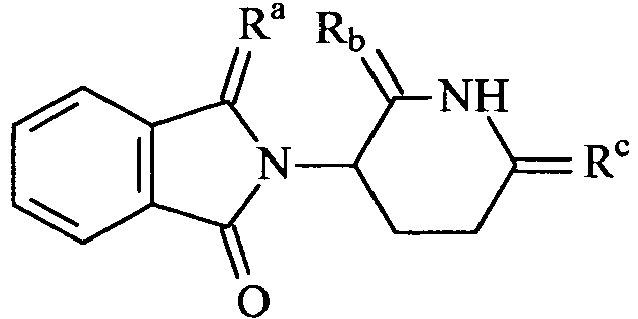

205: Ra = O, Rb = O, Rc= S 208: Ra = S, Rb = O, Rd= Me 212: Ra = S, Rb = O, Rc= O 209: Ra = S, Rb = S, Rd= Me 213: Ra = O, Rb = S, Rc= S 211: Ra = S, Rb = O, Rd= H 215: Ra = S, Rb = O, Rc= S 216: Ra = S, Rb = S, Rc = S 


218: Ra = S, Rb = O 222: Ra = S, Rb = S 224: Ra = S, Rb = S 219: Ra = S, Rb = S 223: Ra = S, Rb = O 225: Ra = S, Rb = O - The action of the these thiothalidomide analogs in inhibiting TNF-α secretion was assessed in human peripheral blood mononuclear cells (PBMC) and the results are shown in Table 1. Freshly prepared PBMCs were utilized in all studies. Blood, 40 ml, was drawn from a volunteer, immediately mixed with 50 U/ml Na heparin and was diluted to 50 ml total volume with sterile PBS. Samples, 20 ml, of this preparation then were layered on 20 ml Ficoll-Paque and were centrifuged (800g, 20 min). The Ficoll/serum interface, containing PBMCs, was collected, diluted to 200 ml with PBS, and then was centrifuged (800g, 15 min) to pellet the cells. Thereafter, the recovered pellet was re-suspended in 37°C tissue culture medium (RPMI/1 mM Sodium pyruvate/10% heat inactivated FBS/ 2mM Glutamax) and placed on ice. Recovered cells were counted, pipetted (200 ul of 5 x 10⁵/ml) into 96 well plates, and incubated for an hour (37°C, 5% CO2). Thereafter, appropriate concentrations of test compounds or vehicle (10 ul DMSO) were added to duplicate wells. Following a further hour of incubation, a 10 ul sample of lipopolysaccharide (LPS)(100 ng/ml in supplemented medium) or vehicle was added to induce stimulated and unstimulated cells, respectively, and the cells were incubated overnight. Sixteen hours later, supernatants were collected for quantification of TNF-α levels by ELISA assay (Pierce-Endogen human TNF-α mini kit, Rockford, IL) and the use of specific capture and detection monoclonal antibodies, M303E and M302B (Pierce-Endogen), respectively. ELISA plates were read at λ=450 nm and TNF-α levels were determined from a six-point calibration curve that was run concurrently with the test samples. The effect of test drug concentrations on the cellular viability of PBMCs was assessed by MTS assay (Promega, Madison, WI) of the cells that provided the supernatant samples assayed for TNF-α levels, described above. It should be understood that this method can be used to test any of the disclosed compounds as a screening assay for readily determining their TNF-α modulating activity, and for selecting them for use in the disclosed method of treating a subject.
Table 1. Inhibition of LPS-induced TNF-α production in PBMC and cell viability % Inhibition at 30 µM IC50 (µM) Cell viability Compound at 30 µM at 3 µM at 0.3 µM 205 31 > 30 > 100 90 96 208 56 20 93 99 96 209 85 10 57 86 89 211 20 > 30 86 93 93 212 23 > 30 94 100 94 213 52 20 69 87 94 215 61 11 > 100 87 94 216 79 6 94 86 90 218 15 > 30 > 100 84 86 219 75 8 > 100 98 99 222 86 15 50 94 96 223 85 16 57 89 99 224 95 3 54 83 83 225 34 > 30 > 100 94 94 - Thalidomide, 201, entirely lacked activity at 30 µM. A concentration of 100 µM was required for significant activity (IC50 ∼200 µM). The monothiothalidomides, 6'-thiothalidomide 205 and 3-thiothalidomide 212 showed only marginal activity at 30 µM with 31% and 23% inhibition of TNF-α secretion, respectively. In contrast, the dithiothalidomides, including 2', 6'-dithiothalidomide 213 and 3, 6'-dithiothalidomide 215, exhibited more potent inhibitory activities with IC50 values of 20 µM and 11 µM, respectively. However, assessment of cell viability by MTS assay showed that 213 induced increasing cytotoxicity at higher concentrations. Trithiothalidomide 216 inhibited TNF-α production with an IC50 of 6 µM, without accompanying toxicity. Compared with thalidomide, 201, with an IC50 of ∼200 µM for the inhibition of TNF-α synthesis, trithiothalidomide 216 is over 30-fold more active. Hence, successive replacement of a carbonyl with a thiocarbonyl group led to improved inhibitory activity compared to 201, unassociated with toxicity. In this regard, the synthesized thiothalidomides possessed TNF-α lowering potency in the following decreasing order: trithiothalidomide 216 > dithiothalidomide 215 and 213 > monothiothalidomides 205 and 212 > thalidomide, 201.
- A comparison of the physical properties of thalidomide, 201, and thiothalidomides shows that they have similar Van der Waals radii and bond angles, although the C=S bond is slightly longer than the C=O bond. Although not wishing to be bound by any particular theory, a possible explanation accounting for the elevated potency of the thiothalidomides is that their enhanced lipophilicity and loss of hydrogen bond acceptor capability potentially allows the attainment of higher intracellular drug levels. Interestingly, compounds 208, 209 and 211 are thio analogs of hydrolysis metabolites of thalidomide. Assessment of their TNF-α inhibitory action determined that the monothio analog, 208, has an IC50 of 20 µM without toxicity; demethylation (211) lowered potency. The dithio analog, 209, proved 2-fold more potent still than 208, but induced cellular toxicity at lower concentrations. Intriguingly, thio analogs 222 and 223, with a simplified glutarimide ring, were found to be active TNF-α inhibitors, albeit with some toxicity at 30 µM, with IC50 values (15 µM and 16 µM respectively) that were greater than 212 (>30 µM) possessing a normal glutarimide ring.
- In this regard, thalidomide is composed of two distinct moieties: the glutarimide and phthalimide rings. Thioglutarimides and thiophthalimides were thus synthesized and evaluated to assess the effect of thio-analogs of these two moieties on TNF-α levels. Monothioglutarimide 218 minimally inhibited TNF-α secretion at a concentration of 30 µM, however dithioglutarimide 219 exerted a potent inhibitory effect with an IC50 of 8 µM and a lack of toxicity. Surprisingly, such a simple structure, dithioglutarimide 219, proved to be 25-fold more active than thalidomide 201. In contrast, 2',6'-dithiothalidomide 213, a phthalimido substituted dithioglutarimide, is less active than dithioglutarimide 219, and induces toxicity at high concentration. Monothiophthalimide 225 showed marginal TNF-α, activity at a concentration of 30 µM without toxicity. Interestingly, however, dithiophthalimide 224 was found to possess potent activity with an IC50 of 3 µM. Although it was associated with toxicity at 30 µM, its inhibition of TNF-α occurred at an order of magnitude lower concentration that was well tolerated.
- As described, compounds 215, 216 and 219 potently inhibited TNF-α secretion without toxicity. As a consequence, additional studies were undertaken to elucidate the mechanism underpinning this action. Gene and protein expressions are controlled at the level of transcription, post-transcription, RNA stability, and translation under different physiological stimuli. Recently, post-transcriptional pathways have been recognized to provide a major means of regulating eukaryotic gene expression. In this regard, TNF-α and other cytokines and protooncogenes are known to be regulated at the post-transcriptional level. Multiple proteins, including the four cloned proteins AUF1, HuR, TTP and HuD have been shown to bind to a region of the mRNA that contains adenylate/uridylate (AU)-rich elements (AREs) in the 3'-untranslated region (UTR). These proteins mediate RNA turnover and decay, and hence translational efficiency. The stability of TNF-α mRNA is largely regulated at its 3'-UTR, which contains a well characterized ARE. Although AREs are found in a number of different cytokine and protooncogene RNAs, the pathways by which they induce degradation are highly specific for a given ARE indicating some cellular specificity. When the AREs from different cytokines are complexed with AUF1, different binding affinities are observed. Notably, however, the highest affinity for AUF1 is to human and then mouse TNF-α.
- To determine the involvement of the 3'-UTR in the action of the thalidomide analogs, their ability to inhibit reporter gene activity in cells containing the TNF-α 3'-UTR versus a control vector was assessed. The results are shown in
FIG. 1 . This cell-based assay utilized two stably transfected cell lines derived from the mouse macrophage line, RAW264.7. One line, designated "luciferase only" expressed a luciferase reporter construct without any UTR sequences. The other line, designated "luciferase + TNF-α UTR" expressed a luciferase reporter construct with the entire 3'-UTR of human TNF-α inserted directly downstream of the luciferase coding region. Compounds were added in a concentration-dependent manner, and at the end of the incubation period (16 h, 37°C, 5% CO2) the media was removed, cells were lysed and luciferase activity was assayed with Steady-glo luciferase assay reagent (Promega) according to the supplier's directions. Background was subtracted and data from this assay was expressed as a ratio of the +3'-UTR to -3'-UTR (control) values, and was expressed as a percent as shown inFIG. 1 . In this manner, compounds that show a differential effect on the two cell lines, with and without a 3'-UTR, are highlighted. The action of compounds 215, 216 and 219 in cells (mouse macrophage cell line, RAW264.7) possessing a luciferase reporter element plus the 3'-UTR of human TNF-α compared to cells lacking the 3'-UTR are shown inFIG. 1 . Compounds 215, 216 and 219 exerted differential effect on the two cell lines in a dose-dependent manner, consistent with their ability to inhibit TNF-α production via the 3'-UTR. All agents lowered luciferase reporter activity in cells stably expressing the 3'-UTR. Thalidomide lacked activity at 50 µM. - As TNF-α protein levels changed without significant alterations in mRNA levels (data not shown), protein expression is presumably regulated via translational control (at the post-transcriptional level). There is precedence for translational (protein) control through either the 3'- or 5'-UTR regions of a number of critical proteins that are current drug targets. For example, levels of the beta-amyloid precursor protein (APP) that is central to the development of AD can be regulated by either UTR. Turnover and translation of APP mRNA is regulated by a 29-nucleotide instability element within the 3'-UTR, located 200 nucleotides downstream from the stop codon. This 3'-UTR element acts as an mRNA destabilizer whose function can be inhibited by the presence of growth factors. In contrast, different cytokines, including TNF-α, and iron can up regulate APP protein synthesis at the level of its 5'-UTR; where, interestingly, the anticholinesterase, phenserine, that is currently in clinical trials for AD, lowers APP protein levels with concurrent maintenance of mRNA steady-state levels through translational modification within the same 5'-UTR element. A further example is that of the human immunodeficiency virus 1 (HIV-1) Trans-activating transduction (tat) protein, which binds trans-activation-responsive region (TAR) RNA. Tat is brought into contact with the transcription machinery after binding the TAR element, which is a 59-residue stem-loop RNA found at the 5' end of all HIV-1 transcripts. Finally, thalidomide (201) has been reported to lower cyclooxygenase-2 (Cox-2) biosynthesis via its 3'-UTR that appears to likewise contain an ARE that can regulate Cox-2 mRNA stability. The studies of analogs 215, 216 and 219 confirm regulation of TNF-α protein levels by thalidomide (201) via its 3'-UTR, but whether or not the 5'-UTR contains a similar element that is accessible to pharmacological manipulation remains to be determined, as does action against Cox-2.
- In summary, disclosed thiothalidomide analogs include analogs that are more potent inhibitors of TNF-α production in LPS-induced human PBMCs than thalidomide 201. The isosteric replacement of successive carbonyl groups by a thiocarbonyl leads to an increasing inhibition with the number of moieties replaced (trithiothalidomide 216 > dithiothalidomide 215 and 213 > monothiothalidomides 205 and 212 > thalidomide 201).
- TNF-α has been validated as a drug target for two drugs on the market; Remicade (Cetocor, Malvern, PA; Schering-Plough, Orange, NJ) and Enbrel (Amgen, Thousand Oaks, CA; Wyeth-Ayerst, Princeton, NJ). However, both of these drugs are large macromolecules and hence require injection. In contrast, the small molecule drugs disclosed herein offer a means to potently and safely inhibit TNF-α without injection, for example, by oral administration.
- General. Melting points were determined with a Fisher-Johns apparatus and are uncorrected. 1H NMR, 13C NMR and 2D NMR were recorded on a Bruker AC-300 spectrometer. Mass spectra and high resolution mass spectra (HRMS) were recorded on a VG 7070 mass spectrometer and a Agilent Technologies 5973N GC-MS (CI). All exact mass measurements show an error of less than 5 ppm. Elemental analyses were performed by Atlantic Microlab, Inc., Norcross, GA.
- 3-(tert-Butoxycarbonylamino)-2,6-piperidinedione (203). A mixture of N-(tert-butoxycarbonyl)-L-glutamine (4.92 g, 20 mmol) and carbonyl diimidazole (3.24 g, 20 mmol) in THF (100 mL) was refluxed for 16 h. Thereafter, solvent was removed and the crude product was recrystallized from hot EtOAc to give compound 203 (2.04 g, 45%) as white crystals: mp 214-215°C; 1H NMR (DMSO-d 6) δ 4.22 (dd, J = 6.2 Hz, J = 11.0 Hz, 1H), 2.77-2.65 (m, 1H), 2,45 (m, 1 H), 1.96-1.87 (m, 2H), 1.40 (s, 9H); MS (CI/CH4) m/z 227 [M-1]+.
- 2-(2-Oxo-6-thioxo-3-piperidinyl)-1H-isoindole-1,3(2H)-dione (205). Compound 203 (1.14 g, 5 mmol) was suspended in CH2Cl2 (100 mL). To the mixture was added CF3COOH (10 mL) and this then was stirred at room temperature for 4 h. The solvent was evaporated to give crude 204 (1.25 g): 1H NMR (DMSO-d 6) δ 11.42 (s, 1H), 8.70 (br, 2H), 4.31 (dd, J =5.4 Hz, J = 13 Hz), 2.88-2.72 (m, 2H), 2.25-2.09 (m, 2H). A mixture of crude 204 (1.25g) and phthalic anhydride (0.89 g, 6 mmol) and Et3N (1.39 ml, 10 mmol) in THF (150 mL) was refluxed for two days. The reaction mixture was concentrated and the residue was crystallized from ethyl acetate to give thalidomide (201) (0.89 g, 69%) as white crystals; mp 276°C (lit.276-279°C). A mixture of thalidomide 201 (258 mg, 1 mmol) and Lawesson's reagent (222 mg, 0.55 mmol) in toluene (50 ml) was stirred at reflux for 12 h; thereafter, solvent was removed under vacuum. The resulting residue was purified by column chromatography using CH2Cl2 as the eluent to afford compound 205 (200 mg, 73%) as a yellow solid: mp 225-226°C; 1H NMR (DMSO-d 6) δ 12.83 (s, 1H, NH), 8.00-7.92 (m, 4H, Ph), 5.32 (dd, J = 5.6 Hz, J = 12.9 Hz, 1H, H-3'), 3.28-3.25 (m, 2H, H-5'), 2.60-2.54 (m, 1H, H-4'), 2.17-2.10 (m, 1H, H-4'); 13C NMR (DMSO-d 6) δ 208.7(C-6'), 165.3(C-2'), 165.2(C-1 & C-3), 133.1(C-5 & C-6), 129.3 (C-3a, C-7a), 121.7 (C-4 & C-7), 46.9 (C-3'), 38.9 (C-5'), 21.79 (C-4'); MS (CI/CH4) m/z 274 (M+); Anal. (C13H10N2O3S) C, H, N.
- Dimethyl 2-(1,3-dihydro-1,3-dioxo-2H-isoindol-2-yl)-pentanedioate (207). To a solution of N-phthaloyl-L-glutamic acid (200 mg, 0.72 mmol) in methanol (10 mL) was added, dropwise, thionyl chloride (1 mL). The reaction mixture was refluxed for 6 h. The solvent was removed under reduced pressure, dissolved in ethyl acetate (100 mL), and then washed with saturated aqueous Na2CO3 solution (2x30 mL) and water (2x30 mL). The ethyl acetate layer was dried over Na2SO4 and then evaporated, leaving an oil, which upon purification by silica gel chromatography, using CH2Cl2:EtOAc (1:1) as the eluent, gave compound 7 (161 mg, 73%) as an oil; 1H NMR (CDCl3) δ 7.87-7.84 (m, 2H), 7.75-7.72 (m 2H), 4.91 (dd, J = 5 Hz, J = 9 Hz, 1H), 3.73 (s, 3H), 3.62 (s, 3H), 2.67-2.56 (m, 1H), 2.51-2.44 (m, 1H), 2.41-2.35 (m, 2H).
- Dimethyl 2-(1,3-dihydro-1-oxo-3-thioxo-2H-isoindol-2-yl)-pentanedioate (208) and Dimethyl 2-(1,3-dihydro-1,3-dithioxo-2H-isoindol-2-yl)-pentanedioate (209). A mixture of compound 207 (144 mg, 0.47 mmol) and LR (191 mg, 0.47 mmol) in toluene was stirred in a 110°C oil bath for 10 h. The solvent was then evaporated and the residue was purified by column chromatography, (silica gel) using CH2Cl2 as the eluent, to obtain compound 209 (17 mg, 11 %) as a dark red oil. Thereafter, using CH2Cl2:EtOAc (10:1) as the eluent the more polar component 208 (105 mg, 70%) was obtained as a red oil.
- Compound 208: 1H NMR (CDCl3) δ 7.98-7.96 (m, 1H), 7.81-7.70 (m, 3H), 5.53 (dd, J = 5.1 Hz, J = 10 Hz, 1H), 3.70 (s, 3H), 3.59 (s, 3H), 2.76-2.56 (m, 2H), 2.40-2.33 (m, 2H); MS (CI/CH4) m/z 321 (M+).
- Compound 209: 1H NMR (CDCl3) δ 7.87-7.84 (m, 2H), 7.73-7.68 (m. 2H), 6.09 (dd, J = 5 Hz, J = 10 Hz, 1H), 3.70 (s, 3H), 3.58 (s, 3H), 2.81-2.63 (m, 2H), 2.40-2.24 (m, 2H); MS (DEI) m/z 337 (M+); HRMS (DEI) calcd for C15H15NO4S2 337.0442 (M+), found 337.0449.
- 2-(1,3-Dihydro-1-oxo-3-thioxo-2H-isoindol-2-yl)-pentanedioic acid (211). Compound 208 (350 mg, 1.09 mmol) was stirred with a 1:1 mixture of acetic acid glacial and conc. HCl in a 100°C oil bath for 2.5 h. Ethyl acetate (100 mL) and ice water (30 mL) were added. The ethyl acetate layer was separated, washed with ice water, dried over Na2SO4 and concentrated. The resulting syrup was crystallized with ether to afford compound 211 as red crystals (253 mg, 79%); mp 157°C; 1H NMR (DMSO-d 6) δ 8.04-7.96 (m, 1H), 7.91-7.74 (m, 3H), 5.43 (dd, J = 5.1 Hz, J = 9.6 Hz, 1H), 2.42-2.33 (m, 2H), 2.30-2.26 (m, 2H); MS (DEI) m/z 293 (M+); HRMS (DEI) calcd. for C13H11NO5S 293.0358 (M+), found 293.0363; Anal. (C13H11NO5S) H, N; C: calcd, 53.24; found, 53.88.
- 2,3-Dihydro-3-thioxo-2-(2,6-dioxo-3-piperidinyl)-1H-isoindol-1-one (212). A mixture of compound 208 (81 mg, 0.276 mmol), trifluoroacetamide (57 mg, 0.50 mmol), 1-hydroxybenzotriazole (145 mg, 1.07 mmol), 1-[3-(dimethylamino)propyl]-3-ethylcarbodiimide hydrochloride (200 mg, 1.04 mmol) and triethylamine (0.21 mL, 1.51 mmol) in CH2Cl2 (1.5 mL) was stirred at ambient temperature for 3 days. Water (10 mL) and CH2Cl2 (10 mL) were added. The dichloromethane layer was separated, washed with water, dried over Na2SO4 and evaporated under reduced pressure. Purification by chromatography, with EtOAc:CH2Cl2 (1:10) as the eluent, gave compound 212 (48 mg, 63%) as a red solid: mp 255°C; 1H NMR (CDCl3) δ 8.00-7.98 (m, 1H), 7.80-7.71 (m, 3H), 5.63 (br, 1H), 2.98-2.70 (m, 3H), 2.18-2.15 (m, 1H); MS (CI/CH4) m/z 274 (M+); Anal. (C13H10N2O3S) C, H, N.
- 2-(2, 6-Dithioxo-3-piperidinyl)-1H-isoindole-1,3(2H)-dione (213) and 2,3-dihydro-3-thioxo-2-(2-oxo-6-thioxo-3-piperidinyl)-1H-isoindol-1-one (215). The mixture of 205 (146 mg, 0.533 mmol), LR (108 mg, 0.267 mmol) and pyridine (21 µl) in toluene was stirred at 110°C under an atmosphere of N2 for 12 h. Thereafter, additional LR (108 mg, 0.267 mmol) and pyridine (21 µl) were added, and the reaction mixture was stirred for a further 12 h.. The solvent was removed under vacuum and the residue was purified by column chromatography with CH2Cl2:petroleum ether (2:1, 10:1) and then CH2Cl2:EtOAc (10:1) as eluents to afford 213 (30 mg, 45%), 215 (21 mg, 31.5%) and starting material 205 (83 mg).
- Compound 213 (yellow solid): mp 263-265°C; 1H NMR (CDCl3) δ 7.78-7.74 (m, 2 H), 7.66-7.63 (m, 2 H), 5.00 (dd, J = 4.9 Hz, 11.9 Hz, 1 H), 3.43-3.35 (m, 1 H), 2.95-2.84 (m, 2 H), 2.08-2.06 (m, 1 H); MS (DEI) m/z 290 (M+); HRMS (DEI) calcd for C13H10N2O2S2 290.0184 (M+), found 290.0185; Anal. (C13H10N2O2S2) C, H, N.
- Compound 215 (red solid): mp 240-242°C; 1H NMR (CDCl3) δ 9.44 (s, 1 H), 8.05-8.02 (m, 1 H), 7.86-7.76 (m, 3 H), 5.75-5.64 (m, 1 H), 3.57-3.52 (m, 1 H), 3.09-2.99 (m, 2 H), 2.19- 2.12 (m, 1 H). 13C NMR (DMSO): 208.16, 207.98, 166.10, 165.39, 134.32, 133.11, 132.42, 124.30, 122.15, 121.11, 49.64, 21.29; MS (DEI) m/z 291 (MH+); HRMS (DEI) calcd for C13H11N2O2S2 291.0262 (M+), found 291.0264; Anal. (C13H10N2O2S2·0.5H2O) C, H, N.
- 2,3-Dihydro-3-thioxo-2-(2,6-dithioxo-3-piperidinyl)-1H-isoindol-1-one (216). A mixture of compound 213 (29 mg, 0.1 mmol), LR (22 mg, 0.054 mmol) and morpholine (9 µl, 0.1 mmol) in toluene (10 mL) was stirred at reflux under an atmosphere of N2 for 16 h. The solvent was removed under vacuum and the residue was purified by column chromatography using CH2Cl2:petroleum ether (1:1) as the eluent to afford compound 216 (20 mg, 65%) as a red solid: mp 244°C; 1H NMR (CDCl3) δ 10.81 (s, 1H), 8.05-8.01 (m, 1H), 7.91-7.75 (m, 3H), 5.92 (m, 1H), 3.57-3.52 (m, 1H), 3.13-2.97 (m, 2H), 2.18-2.15 (m, 1H); MS(DEI) m/z 306 (M+); HRMS (DEI) calcd for C13H10N2OS3 305.9955 (M+), found 305.9951; Anal. (C13H10N2OS3·0.5H2O) C, H, N.
- 6-Thioxo-2-piperidinone (218). The mixture of glutarimide (0.45 g, 4 mmol) and LR (0.809 g, 2 mmol) in THF (30 mL) was stirred at room temperature for 2 days. The solvent was evaporated under vacuum and the residue was purified by column chromatography using petroleum ether:EtOAc (1:1) as the eluent to give compound 218 as a yellow solid (0.361g, 70%): mp 135°C; 1H NMR (CDCl3) δ 2.96 (t, J = 5.7 Hz, 2 H), 2.58 (t, J = 5.8 Hz, 2 H), 1.96 (m, 2 H); MS (CI/CH4) m/z 129 (M+); Anal. (C5H7NOS) C, H, N.
- 2,6-Piperidinedithione (219). A mixture of glutarimide (0.34 g, 3 mmol) and LR (1.22 g, 3 mmol) in toluene (30 mL) was stirred at reflux for 3 h. The solvent was evaporated under vacuum and the residue was purified by column chromatography using petroleum ether:EtOAc (20:1) as the eluent to give compound 219 as a yellow solid (0.286 g, 66%): mp 103°C; 1H NMR (CDCl3) δ 3.02 (t, J = 6.3 Hz, 4H), 1.98 (t, J = 6.3 Hz, 2H); MS (CI/CH4) m/z 145 (M+); Anal. (C5H7NS2) C, H, N.
- 2-(3-Cyclohexenyl)-1H-isoindole-1,3(2H)-dione (221). A mixture of potassium phthalimide (1.85 g, 3 mmol) and 3-bromocyclohexene (1.79 g, 3 mmol) in DMF (15 mL) was stirred in a 100°C oil bath for 12 h. The cooled reaction mixture was poured into ice water. The solid was collected by filtration and purified by flash chromatography with CH2Cl2 as the eluent to afford compound 221 (1.6 g, 72%) as pink crystals; mp 114°C; 1H NMR (CDCl3) δ 7.73-7.69 (m, 2H), 7.62-7.58 (m, 2H), 5.85-5.82 (m, 1H), 5.47-5.44 (m, 1H), 4.80-4.78 (m, 1H), 2.14-2.00 (m, 3H), 1.86-1.78 (m, 2H), 1.64-1.58 (m, 1H).
- 2-(3-Cyclohexenyl)-1H-isoindol-1,3(2H)-dithione (222) and 2,3-dihydro-3-thioxo-2-(3-cyclohexenyl)-1H-isoindol-1-one (223). A mixture of compound 221 (68 mg, 0.3 mmol) and LR (121 mg, 0.3 mmol) in toluene was refluxed under N2 for 10 h. The solvent was removed under vacuum and the residue was purified by column chromatography using petroleum ether as the eluent to obtain compound 222 (37 mg, 48%) as a dark green solid. Then, using CH2Cl2:petroleum ether (1:1) as the eluent, the more polar component 223 (23 mg, 32%) was obtained as a red solid.
- Compound 222: mp 93°C; 1H NMR (CDCl3) δ 7.65-7.60 (m, 2H), 7.49-7.42 (m, 2H), 5.92-5.88 (m, 1H), 5.66-5.63 (m, 1H), 5.47-5.43 (m, 1H), 2.40-2.35 (m, 1H), 1.99-1.95 (m, 2H), 1.75-1.59 (m, 3H); MS (CI/CH4) m/z 259 (M+); Anal. (C14H13NS2) C, H, N.
- Compound 223: mp 67-68°C; 1H NMR (CDCl3) δ 7.94- 7.91 (m, 1H), 7.73-7.64 (m, 3H), 5.92-5.88 (m, 1H), 5.60-5.51 (m, 2H), 2.27-2.10 (m, 3H), 1.96-1.76 (m, 2H), 1.81-1.70 (m, 1H); MS (CI/CH4) m/z 243 (M+); Anal. (C14H13NOS) C, H, N.
- Dithiophthalimide (225). A mixture of phthalimide (436 mg, 3.40 mmol) and Lawesson's reagent (1.199 g, 3.40 mmol) in toluene (50 ml) was refluxed (oil bath 120°C) under nitrogen for 5 hours. The solvent was removed under vacuum and the residue was directly chromatographed (silica gel, petroleum ether: methylenedichloride / 2: 3) to give dithiophthalimide as black red needle crystals (240 mg, 39.4%):1HNMR(CDCl3) δ 9.80 (br, 1H), 7.95 (d, 2H), 7.80 (d, 2H); MS (CI / CH4) m/z 179 (M+).
- Angiogenesis is the formation of new blood vessels from pre-existing vessels. Angiogenesis is prominent in solid tumor formation and metastasis, and is part of the wound healing process. Pathological angiogenesis sometimes occurs in inappropriate anatomic locations, such as the retina or cornea, in response to disease and injury. Inhibition of angiogenesis could avoid the progression of conditions of inappropriate angiogenesis.
- Tumor formation, for example, requires a network of blood vessels to sustain the nutrient and oxygen supply for continued growth. Tumors in which angiogenesis is important include most solid tumors and benign tumors, such as acoustic neuroma, neurofibroma, trachoma, and pyogenic granulomas. Inhibition of angiogenesis could halt the growth of these tumors and the resultant damage due to the presence of the tumor.
- There is a direct correlation between tumor microvessel density and the incidence of metastasis. Tumor cells themselves can produce factors that stimulate the proliferation of endothelial cells and new capillary growth. Angiogenesis is important in two stages of tumor metastasis. The first stage where angiogenesis stimulation is important is in the vascularization of the primary tumor, which allows tumor cells to enter the blood stream and to circulate throughout the body. After the tumor cells have left the primary site, and have settled into the secondary, metastatic site, angiogenesis must occur before the metastasis can grow and expand. Therefore, inhibiting angiogenesis could lead to the reduction or elimination of metastasis of tumors and possibly contain the neoplastic growth at the primary site. These observations have led to the investigation of anti-angiogenic agents as possible therapeutic options for various cancers.
- The angiogenesis modulating activity of representative compounds was assessed in a rat aortic ring microvessel growth assay. Briefly, twelve-well tissue culture plates were coated with 250 µl of Matrigel (Becton-Dickinson, Bedford, MA) and allowed to gel for 30 min at 37°C and 5% CO2. Thoracic aortas were excised from 8- to 10-week-old male Sprague Dawley rats. After careful removal of fibroadipose tissues, the aortas were cut into 1-mm-long cross-sections, placed on Matrigel-coated wells, and covered with an additional 250 µl of Matrigel. After the second layer of Matrigel had set, the rings were covered with EGM-II and incubated overnight at 37°C and 5% CO2. EGM-II consists of endothelial cell basal medium (EBM-II; Clonetics, San Diego, CA) plus endothelial cell growth factors provided as the EGM-II Bulletkit (Clonetics). The culture medium was subsequently changed to EBM-II supplemented with 2% fetal bovine serum, 0.25 µg/ml amphotericin B, and 10 µg/ml gentamicin. Aortic rings were treated daily with either the vehicle (0.5% DMSO), carboxyamidotriazole (CAI, 12 µg/ml), thalidomide or thalidomide analogs (0.1-20 µg/ml) for 4 days and photographed on the 5th day using a x2.5 objective. CAI, a known antiangiogenic agent, was used at higher than clinically achievable concentration as a positive control. Experiments were repeated four times using aortas from four different rats. The area of angiogenic sprouting, reported in square pixels, was quantified using Adobe PhotoShop. Further details of the method are provided in Luzzio et al., J Med Chem.; 46:3793-9, 2003, which is incorporated by reference herein. It should be understood that this method can be used as an assay to rapidly select compounds having a desired angiogenic or anti-angiogenic effect, for example, for use in the disclosed methods of treating a subject.
- Bar graphs showing the results of the angiogenesis assay for several compounds are shown in
FIGS. 2 and3 For convenience, the structures of the assayed compounds also are presented in these figures. -
FIG. 2 shows the angiogenic modulating activity of 2-(3-cyclohexenyl)-H-isoindol-1,3(2H)-dithione at several concentrations. This compound exhibited anti-angiogenic activity at higher concentrations and angiogenic activity at lower concentrations. -
FIG. 3 shows the angiogenic modulating activity of 2,3-Dihydro-3-thioxo-2-(2,6-dithioxo-3-piperidinyl)-1H-isoindol-1-one at several concentrations. This compound exhibited potent anti-antigiogenic activity at higher concentrations and angiogenic activity at lower concentrations. - In summary, the disclosed compounds exhibit a range of angiogenic modulating activities ranging from potent inhibition of angiogenesis (anti-angiogenic activity) to potent stimulation of angiogenesis (angiogenic activity). The compounds reported in
Figs. 2 and3 exhibit both angiogenic and anti-angiogenic activity in a dose-dependent manner. Those compounds (or particular concentrations thereof) having angiogenic activity are useful for treating conditions or diseases where increasing angiogenesis is desirable (for example, wound healing) and those compounds (or particular concentrations thereof) having anti-angiogenic activity are useful for treating conditions or diseases where decreasing angiongenesis is desirable (for example, cancers, diabetic retinopathy or corneal neovascularization). Persons of ordinary skill in the art can use the assay described above (or other known angiogenic/anti-angiogenic activity assays) to readily determine amounts of the disclosed compounds that therapeutically effective for stimulating or inhibiting angiogenesis as appropriate for a given subject's condition. - Although many of the disclosed compounds are illustrated without thionyl groups in their structures, it is to be understood that any of the carbonyl groups shown in the structures of the disclosed compounds may be converted into thiocarbonyl groups, and that such thio-derivatives are part of this disclosure. Thionation may be accomplished by any known method. Particular methods of thionation include use of phosphorus pentasulfide, hydrogen sulfide, O,O-diethyldithiophosphonic acid, boron sulfide, silicon disulfide and elemental sulfur in HMPA. However, a particularly convenient method of thionation is the use of 2,4-bis(p-methoxyphenyl)-1,3-dithiadiphosphetane-2,4-disulfide and its derivatives (generically "Lawesson's Reagents"). These reagents are described in Cava and Levinson, "Thionation Reactions of Lawesson's Reagents," Tetrahedron, 41: 5061-5087, 1985, which is incorporated by reference herein.
- The disclosed pharmaceutical compositions can be in the form of tablets, capsules, powders, granules, lozenges, liquid or gel preparations, such as oral, topical, or sterile parenteral solutions or suspensions (e.g., eye or ear drops, throat or nasal sprays, etc.), transdermal patches, and other forms known in the art.
- Pharmaceutical compositions can be administered systemically or locally in any manner appropriate to the treatment of a given condition, including orally, parenterally, rectally, nasally, buccally, vaginally, topically, optically, by inhalation spray, or via an implanted reservoir. The term "parenterally" as used herein includes, but is not limited to subcutaneous, intravenous, intramuscular, intrasternal, intrasynovial, intrathecal, intrahepatic, intralesional, and intracranial administration, for example, by injection or infusion. For treatment of the central nervous system, the pharmaceutical compositions may readily penetrate the blood-brain barrier when peripherally or intraventricularly administered.
- Pharmaceutically acceptable carriers include, but are not limited to, ion exchangers, alumina, aluminum stearate, lecithin, serum proteins (such as human serum albumin), buffers (such as phosphates), glycine, sorbic acid, potassium sorbate, partial glyceride mixtures of saturated vegetable fatty acids, water, salts or electrolytes such as protamine sulfate, disodium hydrogen phosphate, potassium hydrogen phosphate, sodium chloride, zinc salts, colloidal silica, magnesium trisilicate, polyvinyl pyrrolidone, cellulose-based substances, polyethylene glycol, sodium carboxymethylcellulose, polyacrylates, waxes, polyethylene-polyoxypropylene-block polymers, polyethylene glycol, and wool fat.
- Tablets and capsules for oral administration can be in a form suitable for unit dose presentation and can contain conventional pharmaceutically acceptable excipients. Examples of these include binding agents such as syrup, acacia, gelatin, sorbitol, tragacanth, and polyvinylpyrrolidone; fillers such as lactose, sugar, corn starch, calcium phosphate, sorbitol, or glycine; tableting lubricants, such as magnesium stearate, talc, polyethylene glycol, or silica; disintegrants, such as potato starch; and dispersing or wetting agents, such as sodium lauryl sulfate. Oral liquid preparations can be in the form of, for example, aqueous or oily suspensions, solutions, emulsions, syrups or elixirs, or can be presented as a dry product for reconstitution with water or other suitable vehicle before use.
- The pharmaceutical compositions can also be administered parenterally in a sterile aqueous or oleaginous medium. The composition can be dissolved or suspended in a non-toxic parenterally-acceptable diluent or solvent, e.g., as a solution in 1,3-butanediol. Commonly used vehicles and solvents include water, physiological saline, Hank's solution, Ringer's solution, and sterile, fixed oils, including synthetic mono- or di-glycerides, etc. For topical application, the drug may be made up into a solution, suspension, cream, lotion, or ointment in a suitable aqueous or non-aqueous vehicle. Additives may also be included, for example, buffers such as sodium metabisulphite or disodium edeate; preservatives such as bactericidal and fungicidal agents, including phenyl mercuric acetate or nitrate, benzalkonium chloride or chlorhexidine, and thickening agents, such as hypromellose.
- The dosage unit involved depends, for example, on the condition treated, nature of the formulation, nature of the condition, embodiment of the claimed pharmaceutical compositions, mode of administration, and condition and weight of the patient. Dosage levels are typically sufficient to achieve a tissue concentration at the site of action that is at least the same as a concentration that has been shown to be active in vitro, in vivo, or in tissue culture. For example, a dosage of about 0.1 µg/kg body weight/day to about 1000 mg/kg body weight/day, for example, a dosage of about 1 µg/kg body weight/day to about 1000 µg/kg body weight/day, such as a dosage of about 5 µg/kg body weight/day to about 500 µg/kg body weight/day can be useful for treatment of a particular condition.
- The compounds can be used in the form of pharmaceutically acceptable salts derived from inorganic or organic acids and bases, including, but not limited to: acetate, adipate, alginate, aspartate, benzoate, benzenesulfonate, bisulfate, butyrate, citrate, camphorate, camphorsulfonate, cyclopentanepropionate, digluconate, dodecylsulfate, ethanesulfonate, fumarate, glucoheptanoate, glycerophosphate, hemisulfate, heptanoate, hexanoate, hydrochloride, hydrobromide, hydroiodide, 2-hydroxyethanesulfonate, lactate, maleate, methanesulfonate, 2-naphthalenesulfonate, nicotinate, oxalate, pamoate, pectinate, persulfate, 3-phenylpropionate, picrate, pivalate, propionate, succinate, tartrate, thiocyanate, tosylate, and undecanoate. Base salts include, but are not limited to, ammonium salts, alkali metal salts (such as sodium and potassium salts), alkaline earth metal salts (such as calcium and magnesium salts), salts with organic bases (such as dicyclohexylamine salts), N-methyl-D-glucamine, and salts with amino acids (such as arginine, lysine, etc.). Basic nitrogen-containing groups can be quaternized, for example, with such agents as C1-8 alkyl halides (such as methyl, ethyl, propyl, and butyl chlorides, bromides, and iodides), dialkyl sulfates (such as dimethyl, diethyl, dibutyl, an diamyl sulfates), long-chain halides (such as decyl, lauryl, myristyl, and stearyl chlorides, bromides, and iodides), aralkyl halides (such as benzyl and phenethyl bromides), etc. Water or oil-soluble or dispersible products are produced thereby.
- Pharmaceutical compositions can be included in a kit accompanied by instructions for intended use, for example instructions required by a pharmaceutical regulatory agency, such as the Food and Drug Administration in the United States.
Claims (17)
- A compound selected from the following compounds 213, 215, 216, 209 and 222:


209 213: Ra = O, Rb = S, Rc = S 215: Ra = S, Rb = O, Rc = S 216: Ra = S, Rb = S, Rc = S 
222 - The compound of claim 1 which is compound 213.
- The compound of claim 1 which is compound 215.
- The compound of claim 1 which is compound 216.
- The compound of claim 1, which is compound 209.
- The compound of claim 1, which is compound 222.
- A compound of any of claims 1 to 6 for pharmaceutical use.
- A pharmaceutical composition comprising: a compound as defined in any of claims 1 to 6 and a pharmaceutically acceptable carrier.
- The composition of claim 8 for oral administration.
- A compound of any of claims 1 to 6 for use in treating a disease treatable by modulation of TNF-α activity.
- A compound of any of claims 1 to 6 for use in treating a disease treatable by modulation of angiogenesis.
- A compound of any of claims 1 to 6 for use in achieving an anti-tumor effect.
- A compound of any of claims 1 to 6 for use in inhibiting tumor metastasis.
- A compound of any of claims 1 to 6 for use in treating a pathological angiogenesis.
- A compound of any of claims 1 to 6 four use in treating a neurodegenerative diseases.
- A compound of any of claims 1 to 6 for use in the treatment of cancer in combination with another chemotherapeutic agent.
- A compound of claim 16 wherein the other chemotherapeutic agent is selected from the group comprising: nitrogen mustards (such as mechlorethamine, cyclophosphamide, melphalan, uracil mustard or chlorambucil), alkyl sulfonates (such as busulfan), nitrosoureas (such as carmustine, lomustine, semustine, streptozocin, or dacarbazine; folic acid analogs (such as methotrexate), pyrimidine analogs (such as 5-FU or cytarabine), purine analogs (such as mercaptopurine or thioguanine); vinca alkaloids (such as vinblastine, vincristine, or vindesine), epipodophyllotoxins (such as etoposide or teniposide), antibiotics (such as dactinomycin, daunorubicin, doxorubicin, bleomycin, plicamycin, or mitocycin C), enzymes (such as L-asparaginase); small molecule inhibitors (such as Iressa, Tarceva, PKI-166, CI-1033, CGP-5923A, EKB-569, TAK165, GE-572016, CI-1033, SU5416, ZD4190, PTK787/ZK222584, CGP41251, CEP-5214, ZD6474, BIBF1000, VGA1102, SU6668, SU11248, CGP-57148, tricyclic quinoxalines, SU4984, SU5406, Gleevec, NSC680410, PD166326, PD1173952, CT53518, GTP14564, PKC412, PP1, PD116285, CGP77675, CGP76030, CEP-701, and CEP2583), ligand modulators (such as Bevacizumanb, MV833, Soluble Flt-1 and Flk-1, VEGF Trap, GFB 116, NM3, VEGF 121-diptheria toxin conjugate and Interfereon-α), monoclonal antibodies against receptors (such as Cetuximab, ABX-EGF, Y 10, MDX-447, h-R3, EMD 72000, herceptin, MDX-H210, pertuzumab, IMC-1C11, and MF1); adrenocorticosteroids (such as prednisone), progestins (such as hydroxyprogesterone caproate, medroxyprogesterone acetate, and magestrol acetate), estrogens (such as diethylstilbestrol and ethinyl estradiol), antiestrogens (such as tamoxifen), androgens (such as testerone proprionate and fluoxymesterone); platinum coordination complexes (such as cis-diamine-dichloroplatinum II, which is also known as cisplatin), substituted ureas (such as hydroxyurea), methyl hydrazine derivatives (such as procarbazine), vaccines (such as APC8024), AP22408, B43-genistein conjugate, paclitaxel, AG538, adrenocrotical suppressants (such as mitotane and aminoglutethimide); gene therapy approaches, such as those targeting VEGF/VEGFR (including antisense oligonucleotide therapy, Adenovirus-based Flt-1 gene therapy, Retrovirus-base Flk-1 gene therapy, Retrovirus-based VHL gene therapy, and angiozyme) and IGF-1R (including INX-4437); Adriamycin, Alkeran, Ara-C, BiCNU, Busulfan, CCNU, Carboplatinum, Cisplatinum, Cytoxan, Daunorubicin, DTIC, 5-FU, Fludarabine, Hydrea, Idarubicin, Ifosfamide, Methotrexate, Mithramycin, Mitomycin, Mitoxantrone, Nitrogen Mustard, Taxol, Velban, Vincristine, VP-16, Gemcitabine (Gemzar), Herceptin, Irinotecan (Camptosar, CPT-11), Leustatin, Navelbine, Rituxan STI-571, Taxotere, Topotecan (Hycamtin), Xeloda (Capecitabine), Zevelin and calcitriol.
Applications Claiming Priority (2)
| Application Number | Priority Date | Filing Date | Title |
|---|---|---|---|
| US50472403P | 2003-09-17 | 2003-09-17 | |
| PCT/US2004/030506 WO2005028436A2 (en) | 2003-09-17 | 2004-09-17 | Thalidomide analogs as tnf-alpha modulators |
Publications (2)
| Publication Number | Publication Date |
|---|---|
| EP1663223A2 EP1663223A2 (en) | 2006-06-07 |
| EP1663223B1 true EP1663223B1 (en) | 2014-01-01 |
Family
ID=34375538
Family Applications (1)
| Application Number | Title | Priority Date | Filing Date |
|---|---|---|---|
| EP04784385.9A Expired - Lifetime EP1663223B1 (en) | 2003-09-17 | 2004-09-17 | Thalidomide analogs as tnf-alpha modulators |
Country Status (9)
| Country | Link |
|---|---|
| US (2) | US7973057B2 (en) |
| EP (1) | EP1663223B1 (en) |
| JP (1) | JP4943845B2 (en) |
| CN (1) | CN1867331B (en) |
| AU (1) | AU2004274474B2 (en) |
| BR (1) | BRPI0414497A (en) |
| CA (2) | CA2808646C (en) |
| SG (1) | SG133603A1 (en) |
| WO (1) | WO2005028436A2 (en) |
Cited By (1)
| Publication number | Priority date | Publication date | Assignee | Title |
|---|---|---|---|---|
| US9477150B2 (en) | 2015-03-13 | 2016-10-25 | Heraeus Precious Metals North America Daychem LLC | Sulfonic acid derivative compounds as photoacid generators in resist applications |
Families Citing this family (43)
| Publication number | Priority date | Publication date | Assignee | Title |
|---|---|---|---|---|
| JP2929331B2 (en) * | 1990-07-18 | 1999-08-03 | 丸善石油化学株式会社 | Fluid for traction drive |
| UA91341C2 (en) | 2004-07-15 | 2010-07-26 | Амр Текнолоджи, Інк. | Aryl-and heteroaryl-substituted tetrahydroisoquinolines and use thereof to block reuptake of norepinephrine, dopamine, and serotonin |
| CN100383139C (en) * | 2005-04-07 | 2008-04-23 | 天津和美生物技术有限公司 | Piperidine-2,6-dione derivatives that can inhibit the release of tumor necrosis factor from cells |
| CN1939922B (en) * | 2005-09-27 | 2010-10-13 | 天津和美生物技术有限公司 | 5H-thiophene[3,4-c]pyrrole-4,6-dione derivatives that can inhibit the release of tumor necrosis factor from cells |
| WO2007136640A2 (en) * | 2006-05-16 | 2007-11-29 | Celgene Corporation | Processes for the preparation of substituted 2-(2,6-dioxopiperidin-3-yl)isoindole-1,3-dione |
| US8877780B2 (en) | 2006-08-30 | 2014-11-04 | Celgene Corporation | 5-substituted isoindoline compounds |
| AU2007290407A1 (en) * | 2006-08-30 | 2008-03-06 | Celgene Corporation | 5-substituted isoindoline compounds |
| CA2681633C (en) * | 2007-03-20 | 2018-01-09 | Celgene Corporation | 4'-o-substituted isoindoline derivatives and compositions comprising and methods of using the same |
| AU2013260742B2 (en) * | 2007-03-20 | 2016-06-16 | Celgene Corporation | 4'-o-substituted isoindoline derivatives and compositions comprising and methods of using the same |
| US7723301B2 (en) * | 2007-08-29 | 2010-05-25 | The Board Of Trustees Of The University Of Arkansas | Pharmaceutical compositions comprising an anti-teratogenic compound and applications of the same |
| US20090298882A1 (en) * | 2008-05-13 | 2009-12-03 | Muller George W | Thioxoisoindoline compounds and compositions comprising and methods of using the same |
| US9156812B2 (en) | 2008-06-04 | 2015-10-13 | Bristol-Myers Squibb Company | Crystalline form of 6-[(4S)-2-methyl-4-(2-naphthyl)-1,2,3,4-tetrahydroisoquinolin-7-yl]pyridazin-3-amine |
| JP5739415B2 (en) | 2009-05-12 | 2015-06-24 | ブリストル−マイヤーズ スクウィブ カンパニー | (S) -7-([1,2,4] triazolo [1,5-a] pyridin-6-yl) -4- (3,4-dichlorophenyl) -1,2,3,4-tetrahydroisoquinoline Crystal forms and uses thereof |
| CN102595902B (en) * | 2009-05-12 | 2015-04-29 | 阿尔巴尼分子研究公司 | 7-([1,2,4]triazolo[1,5-a]pyridin-6-yl)-4-(3,4-dichlorophenyl)-1,2,3,4-tetrahydro Isoquinolines and their uses |
| ES2446971T3 (en) | 2009-05-12 | 2014-03-11 | Albany Molecular Research, Inc. | Tetrahydroisoquinolines substituted with aryl, heteroaryl, and heterocycle and their use |
| SG183257A1 (en) | 2010-02-11 | 2012-09-27 | Celgene Corp | Arylmethoxy isoindoline derivatives and compositions comprising and methods of using the same |
| ES2664872T3 (en) * | 2010-06-18 | 2018-04-23 | Taiho Pharmaceutical Co., Ltd | PRPK-TPRKB modulators and their uses |
| US8927725B2 (en) | 2011-12-02 | 2015-01-06 | The United States Of America, As Represented By The Secretary, Department Of Health And Human Services | Thio compounds |
| JP2015500001A (en) | 2011-12-14 | 2015-01-05 | 大鵬薬品工業株式会社 | Recombinant PRPK-TPRKB and use thereof |
| US9383644B2 (en) | 2014-09-18 | 2016-07-05 | Heraeus Precious Metals North America Daychem LLC | Sulfonic acid derivative compounds as photoacid generators in resist applications |
| NZ731789A (en) | 2014-10-30 | 2019-04-26 | Kangpu Biopharmaceuticals Ltd | Isoindoline derivative, intermediate, preparation method, pharmaceutical composition and use thereof |
| EP3319603B1 (en) * | 2015-07-08 | 2021-11-17 | Gilrose Pharmaceuticals, LLC | Use of methylphenidate for the treatment of gait and limb impairment secondary to pre-frontal cortex processing disorder |
| CA3000661C (en) | 2015-09-30 | 2024-04-02 | Nigel H. Greig | Thalidomide analogs and methods of use |
| CN109153644B (en) | 2016-03-16 | 2022-10-21 | H·李·莫菲特癌症中心研究有限公司 | Small molecules against CEREBLON to enhance effector T cell function |
| WO2018095377A1 (en) * | 2016-11-24 | 2018-05-31 | 天津和美生物技术有限公司 | Piperidine-2,6-dione derivative and treatment for ulcerative colitis |
| SG11202003415XA (en) | 2017-10-18 | 2020-05-28 | Novartis Ag | Compositions and methods for selective protein degradation |
| EP3820532A4 (en) | 2018-07-11 | 2022-04-06 | H. Lee Moffitt Cancer Center & Research Institute, Inc. | DIMER IMMUNOMODULATING COMPOUNDS TARGETING CEREBLON-BASED MECHANISMS |
| US11324731B2 (en) | 2018-09-13 | 2022-05-10 | City Of Hope | TXNIP-TRX complex inhibitors and methods of using the same |
| JP2022507267A (en) | 2018-11-13 | 2022-01-18 | バイオセリックス, インコーポレイテッド | Substituted isoindolinone |
| WO2020124500A1 (en) * | 2018-12-20 | 2020-06-25 | 江苏凯迪恩医药科技有限公司 | Nitrogen-containing heterocyclic compound, preparation method therefor, and application thereof |
| EP3932922A4 (en) | 2019-02-25 | 2022-05-11 | ShanghaiTech University | GLUTARIMIDE SKELETON SULFUR-CONTAINING COMPOUND AND USE THEREOF |
| WO2020219742A1 (en) | 2019-04-24 | 2020-10-29 | Novartis Ag | Compositions and methods for selective protein degradation |
| WO2021023233A1 (en) | 2019-08-05 | 2021-02-11 | 上海科技大学 | Egfr protein degradant and anti-tumor application thereof |
| AU2020336381A1 (en) * | 2019-08-27 | 2022-03-03 | The Regents Of The University Of Michigan | Cereblon E3 ligase inhibitors |
| KR102783667B1 (en) | 2019-10-24 | 2025-03-21 | 삼성전자 주식회사 | Electronic device and method of controlling display operation of electronic device |
| WO2021138391A1 (en) | 2019-12-30 | 2021-07-08 | Tyra Biosciences, Inc. | Indazole compounds |
| WO2021143822A1 (en) * | 2020-01-16 | 2021-07-22 | 江苏恒瑞医药股份有限公司 | Bicyclic imide derivative, preparation method thereof, and application thereof in medicine |
| AU2021226514B2 (en) * | 2020-02-25 | 2023-10-19 | Shanghaitech University | Glutarimide skeleton-based compounds and application thereof |
| KR102943446B1 (en) * | 2020-10-26 | 2026-04-01 | 주식회사 아이비스바이오 | Processes for selective synthesis of 3,6'-ditiopomalidomide from pomalidomide |
| WO2022187423A1 (en) * | 2021-03-03 | 2022-09-09 | The Regents Of The University Of Michigan | Cereblon ligands |
| EP4484417A4 (en) * | 2022-02-25 | 2026-01-14 | Aevis Bio Inc | NEW POMALIDOMIDE DERIVATIVE, MANUFACTURING METHOD FOR IT AND USES THEREOF |
| CN120129677A (en) | 2022-11-04 | 2025-06-10 | 百时美施贵宝公司 | Compounds and their use in treating hemoglobin diseases |
| WO2025016351A1 (en) * | 2023-07-14 | 2025-01-23 | 标新生物医药科技(上海)有限公司 | Compound based on thio-glutarimido isoindolinone skeleton and use thereof |
Family Cites Families (51)
| Publication number | Priority date | Publication date | Assignee | Title |
|---|---|---|---|---|
| US2830991A (en) | 1954-05-17 | 1958-04-15 | Gruenenthal Chemie | Products of the amino-piperidine-2-6-dione series |
| GB962857A (en) | 1961-12-04 | 1964-07-08 | Distillers Co Yeast Ltd | Process for the production of imides |
| GB1049283A (en) * | 1962-04-14 | 1966-11-23 | Distillers Co Yeast Ltd | Substituted butyro-lactones and -thiolactones |
| US3320270A (en) * | 1963-10-08 | 1967-05-16 | Tri Kem Corp | Certain 2-acylimidothiazole compounds |
| US3314953A (en) | 1964-03-16 | 1967-04-18 | Richardson Merrell Inc | 1-substituted-3-phthalimido-2, 5-dioxopyrrolidines |
| IL25595A (en) | 1965-05-08 | 1971-01-28 | Gruenenthal Chemie | New derivatives of cyclic imide compounds and process for the manufacture of these compounds |
| US3560495A (en) | 1965-05-08 | 1971-02-02 | Ernst Frankus | 1-heterocyclic amino methyl or 1-heterocyclic hydrazino methyl-3-phthalimido or (3',6'-dithia-3',4',5',6'-tetrahydrophthalimido)-pyrrolidinediones-2,5 or piperidinediones-2,6 |
| GB1324718A (en) * | 1970-11-10 | 1973-07-25 | Nehezvegyipari Kutato Intezet | Phthalimido triazines |
| US4067718A (en) | 1975-11-12 | 1978-01-10 | American Cyanamid Company | Method for controlling the relative stem growth of plants |
| US4291048A (en) | 1978-07-06 | 1981-09-22 | Joseph Gold | Method of treating tumors and cancerous cachexia with L-tryptophan |
| US5354690A (en) | 1989-07-07 | 1994-10-11 | Karl Tryggvason | Immunological methods for the detection of the human type IV collagen α5 chain |
| US5902790A (en) | 1995-10-03 | 1999-05-11 | Cytran, Inc. | Pharmaceutical angiostatic dipeptide compositions and method of use thereof |
| GB9311281D0 (en) | 1993-06-01 | 1993-07-21 | Rhone Poulenc Rorer Ltd | Novel composition of matter |
| EP0580641B1 (en) | 1991-04-17 | 1996-12-27 | Grünenthal GmbH | New thalidomide derivatives, method of manufacture and use thereof in medicaments |
| US6096768A (en) | 1992-01-28 | 2000-08-01 | Rhone-Poulenc Rorer Limited | Compounds containing phenyl linked to aryl or heteroaryl by an aliphatic- or heteroatom-containing linking group |
| US20010056114A1 (en) | 2000-11-01 | 2001-12-27 | D'amato Robert | Methods for the inhibition of angiogenesis with 3-amino thalidomide |
| US5629327A (en) | 1993-03-01 | 1997-05-13 | Childrens Hospital Medical Center Corp. | Methods and compositions for inhibition of angiogenesis |
| US6228879B1 (en) | 1997-10-16 | 2001-05-08 | The Children's Medical Center | Methods and compositions for inhibition of angiogenesis |
| US5434170A (en) | 1993-12-23 | 1995-07-18 | Andrulis Pharmaceuticals Corp. | Method for treating neurocognitive disorders |
| US5443824A (en) | 1994-03-14 | 1995-08-22 | Piacquadio; Daniel J. | Topical thalidomide compositions for surface or mucosal wounds, ulcerations, and lesions |
| DE4422237A1 (en) | 1994-06-24 | 1996-01-04 | Gruenenthal Gmbh | Use of lactam compounds as active pharmaceutical ingredients |
| US5789434A (en) | 1994-11-15 | 1998-08-04 | Bayer Corporation | Derivatives of substituted 4-biarylbutyric acid as matrix metalloprotease inhibitors |
| WO1996020705A1 (en) | 1994-12-30 | 1996-07-11 | Celgene Corporation | IMMUNOTHERAPEUTIC IMIDES/AMIDES AND THEIR USE FOR REDUCING LEVELS OF TNF$g(a) |
| US6429221B1 (en) | 1994-12-30 | 2002-08-06 | Celgene Corporation | Substituted imides |
| US5783605A (en) | 1995-02-27 | 1998-07-21 | Kuo; Sheng-Chu | Helper inducers for differentiation therapy and chemoprevention of cancer |
| US5728844A (en) | 1995-08-29 | 1998-03-17 | Celgene Corporation | Immunotherapeutic agents |
| DE19613976C1 (en) | 1996-04-09 | 1997-11-20 | Gruenenthal Gmbh | Thalidomide prodrugs with immunomodulatory effects |
| CA2251060C (en) | 1996-04-09 | 2006-09-12 | Grunenthal Gmbh | Acylated n-hydroxy methyl thalidomide prodrugs with immunomodulator action |
| WO1997045117A1 (en) | 1996-05-29 | 1997-12-04 | Prototek, Inc. | Prodrugs of thalidomide and methods for using same as modulators of t-cell function |
| US5635517B1 (en) | 1996-07-24 | 1999-06-29 | Celgene Corp | Method of reducing TNFalpha levels with amino substituted 2-(2,6-dioxopiperidin-3-YL)-1-oxo-and 1,3-dioxoisoindolines |
| DE69740140D1 (en) | 1996-07-24 | 2011-04-14 | Celgene Corp | Substituted 2- (2,6-dioxopiperidin-3-yl) -phthalimides and oxoisoindolines and methods for reducing TNF-alpha levels |
| EP1920773B1 (en) | 1996-11-05 | 2011-01-05 | The Children's Medical Center Corporation | Thalidomide and dexamethasone for the treatment of tumors |
| KR20000069431A (en) | 1996-12-13 | 2000-11-25 | 피터 지. 스트링거 | Inhibitors of the Enzymatic Activity of PSA |
| DE19703763C1 (en) | 1997-02-01 | 1998-10-01 | Gruenenthal Gmbh | Thalidomide-analogous compounds from the class of the piperidine-2,6-diones |
| RU2108786C1 (en) | 1997-09-15 | 1998-04-20 | Клавдия Степановна Евланенкова | Agent for treatment of oncological patients |
| DE19743968C2 (en) | 1997-10-06 | 2002-07-11 | Gruenenthal Gmbh | Intravenous application form of thalidomide for the therapy of immunological diseases |
| WO1999058096A2 (en) | 1998-05-11 | 1999-11-18 | Entremed, Inc. | Analogs of 2-phthalimidinoglutaric acid and their use as inhibitors of angiogenesis |
| IL139710A (en) | 1998-05-15 | 2005-07-25 | Astazeneca Ab | Benzamide derivatives for the treatment of diseases mediated by cytokines |
| DE19843793C2 (en) | 1998-09-24 | 2000-08-03 | Gruenenthal Gmbh | Substituted benzamides |
| US20030013739A1 (en) | 1998-12-23 | 2003-01-16 | Pharmacia Corporation | Methods of using a combination of cyclooxygenase-2 selective inhibitors and thalidomide for the treatment of neoplasia |
| DK1040838T3 (en) | 1999-03-31 | 2003-05-26 | Gruenenthal Gmbh | Stable aqueous solution of 3- (1-oxo-1,3-dihydroisoindol-2-yl) piperidine-2,6-dione |
| WO2001041755A2 (en) | 1999-12-02 | 2001-06-14 | The Regents Of The University Of Michigan | Topical compositions comprising thalidomide for the treatment of inflammatory diseases |
| US6458810B1 (en) | 2000-11-14 | 2002-10-01 | George Muller | Pharmaceutically active isoindoline derivatives |
| CA2430669C (en) | 2000-11-30 | 2011-06-14 | The Children's Medical Center Corporation | Synthesis of 3-amino-thalidomide and its enantiomers |
| US20030045552A1 (en) | 2000-12-27 | 2003-03-06 | Robarge Michael J. | Isoindole-imide compounds, compositions, and uses thereof |
| JP4361273B2 (en) * | 2001-02-27 | 2009-11-11 | アメリカ合衆国 | Thalidomide analogs as potential angiogenesis inhibitors |
| DE60231989D1 (en) | 2001-08-06 | 2009-05-28 | Childrens Medical Center | ANTIANGIOGENIC EFFECT OF NITROGEN SUBSTITUTED THALIDOMIDE ANALOGUE |
| EP1336602A1 (en) * | 2002-02-13 | 2003-08-20 | Giovanni Scaramuzzino | Nitrate prodrugs able to release nitric oxide in a controlled and selective way and their use for prevention and treatment of inflammatory, ischemic and proliferative diseases |
| DK1505973T3 (en) | 2002-05-17 | 2010-05-31 | Celgene Corp | Multiple myeloma treatment combinations |
| CN100488959C (en) | 2003-03-27 | 2009-05-20 | 天津和美生物技术有限公司 | Water soluble thalidomide derivative |
| WO2005016326A2 (en) | 2003-07-11 | 2005-02-24 | The Government Of The United States Of America As Represented By The Secretary Of The Department Of Health And Human Services | Analogs of thalidomide as potential angiogenesis inhibitors |
-
2004
- 2004-09-17 CA CA2808646A patent/CA2808646C/en not_active Expired - Fee Related
- 2004-09-17 US US10/572,485 patent/US7973057B2/en not_active Expired - Fee Related
- 2004-09-17 AU AU2004274474A patent/AU2004274474B2/en not_active Ceased
- 2004-09-17 SG SG200704530-5A patent/SG133603A1/en unknown
- 2004-09-17 WO PCT/US2004/030506 patent/WO2005028436A2/en not_active Ceased
- 2004-09-17 EP EP04784385.9A patent/EP1663223B1/en not_active Expired - Lifetime
- 2004-09-17 CA CA2538864A patent/CA2538864C/en not_active Expired - Fee Related
- 2004-09-17 CN CN2004800268113A patent/CN1867331B/en not_active Expired - Fee Related
- 2004-09-17 JP JP2006527059A patent/JP4943845B2/en not_active Expired - Fee Related
- 2004-09-17 BR BRPI0414497-0A patent/BRPI0414497A/en not_active IP Right Cessation
-
2011
- 2011-06-03 US US13/153,355 patent/US8546430B2/en not_active Expired - Fee Related
Cited By (2)
| Publication number | Priority date | Publication date | Assignee | Title |
|---|---|---|---|---|
| US9477150B2 (en) | 2015-03-13 | 2016-10-25 | Heraeus Precious Metals North America Daychem LLC | Sulfonic acid derivative compounds as photoacid generators in resist applications |
| US9709886B2 (en) | 2015-03-13 | 2017-07-18 | Heraeus Precious Metals North America Daychem LLC | Sulfonic acid derivative compounds as photoacid generators in resist applications |
Also Published As
| Publication number | Publication date |
|---|---|
| JP2007505922A (en) | 2007-03-15 |
| CA2808646C (en) | 2016-08-23 |
| US20060211728A1 (en) | 2006-09-21 |
| SG133603A1 (en) | 2007-07-30 |
| CN1867331B (en) | 2010-05-26 |
| US20110245210A1 (en) | 2011-10-06 |
| CA2538864A1 (en) | 2005-03-31 |
| US8546430B2 (en) | 2013-10-01 |
| CN1867331A (en) | 2006-11-22 |
| AU2004274474A1 (en) | 2005-03-31 |
| WO2005028436A3 (en) | 2005-05-19 |
| EP1663223A2 (en) | 2006-06-07 |
| AU2004274474B2 (en) | 2011-03-10 |
| CA2538864C (en) | 2013-05-07 |
| CA2808646A1 (en) | 2005-03-31 |
| US7973057B2 (en) | 2011-07-05 |
| WO2005028436A2 (en) | 2005-03-31 |
| BRPI0414497A (en) | 2006-11-14 |
| JP4943845B2 (en) | 2012-05-30 |
Similar Documents
| Publication | Publication Date | Title |
|---|---|---|
| US8853253B2 (en) | Thalidomide analogs | |
| US7973057B2 (en) | Thalidomide analogs | |
| US10220028B2 (en) | Thio compounds | |
| JP5156378B2 (en) | Inhibitors of the interaction between MDM2 and p53 | |
| CA2433021C (en) | Isoindole-imide compounds, compositions, and uses thereof | |
| TWI295925B (en) | Substituted acylhydroxamic acids and method of reducing tnf-alpha levels | |
| US20240239785A1 (en) | Substituted 2-(2,6-dioxopiperidin-3-yl)-5-(1-piperidin-4-yl)isoindoline-1,3-dione derivatives and uses thereof | |
| CN105793242B (en) | Phenoxyethyl cyclic amine derivatives and their activity as EP4 receptor modulators | |
| KR20110098827A (en) | Carbazole Carboxamide Compounds Useful as Kinase Inhibitors | |
| CN1342162A (en) | Substituted 2-acyl-3-(heteroaryl)-imidazo [1,2-a] pyrimidines, and related pharmaceutical compoistions and methods | |
| MX2015002807A (en) | Alkoxy pyrazoles as soluble guanylate cyclase activators. | |
| TW200916458A (en) | Heterocyclic compounds and methods of use thereof | |
| CA3177022A1 (en) | Compounds and methods for yap/tead modulation and indications therefor | |
| US8871786B2 (en) | Azaindazole amide compounds as CCR1 receptor antagonists | |
| Basak et al. | Potassium Tert-Butoxide-Mediated Cascade Synthesis of Rutaecarpine Alkaloid Analogues: Access to Molecular Complexity on Multigram Scales | |
| JP2024532119A (en) | Arylsulfonyl Compounds as CCR6 Inhibitors | |
| KR20240066906A (en) | Isoindolinone compounds with substituted quinoline amide and use thereof | |
| JP2007022998A (en) | Rapamycin targeted protein inhibitor |
Legal Events
| Date | Code | Title | Description |
|---|---|---|---|
| PUAI | Public reference made under article 153(3) epc to a published international application that has entered the european phase |
Free format text: ORIGINAL CODE: 0009012 |
|
| 17P | Request for examination filed |
Effective date: 20060330 |
|
| AK | Designated contracting states |
Kind code of ref document: A2 Designated state(s): AT BE BG CH CY CZ DE DK EE ES FI FR GB GR HU IE IT LI LU MC NL PL PT RO SE SI SK TR |
|
| R17D | Deferred search report published (corrected) |
Effective date: 20060420 |
|
| DAX | Request for extension of the european patent (deleted) | ||
| 17Q | First examination report despatched |
Effective date: 20081202 |
|
| GRAP | Despatch of communication of intention to grant a patent |
Free format text: ORIGINAL CODE: EPIDOSNIGR1 |
|
| INTG | Intention to grant announced |
Effective date: 20130722 |
|
| GRAS | Grant fee paid |
Free format text: ORIGINAL CODE: EPIDOSNIGR3 |
|
| GRAA | (expected) grant |
Free format text: ORIGINAL CODE: 0009210 |
|
| RAP1 | Party data changed (applicant data changed or rights of an application transferred) |
Owner name: P2D, INC. Owner name: THE GOVERNMENT OF UNITED STATES OF AMERICA, AS REP |
|
| AK | Designated contracting states |
Kind code of ref document: B1 Designated state(s): AT BE BG CH CY CZ DE DK EE ES FI FR GB GR HU IE IT LI LU MC NL PL PT RO SE SI SK TR |
|
| RAP1 | Party data changed (applicant data changed or rights of an application transferred) |
Owner name: P2D, INC. Owner name: THE GOVERNMENT OF THE UNITED STATES OF AMERICA, AS |
|
| REG | Reference to a national code |
Ref country code: GB Ref legal event code: FG4D |
|
| REG | Reference to a national code |
Ref country code: CH Ref legal event code: EP |
|
| REG | Reference to a national code |
Ref country code: NL Ref legal event code: T3 |
|
| REG | Reference to a national code |
Ref country code: IE Ref legal event code: FG4D |
|
| REG | Reference to a national code |
Ref country code: DE Ref legal event code: R096 Ref document number: 602004044153 Country of ref document: DE Effective date: 20140213 |
|
| REG | Reference to a national code |
Ref country code: AT Ref legal event code: REF Ref document number: 647278 Country of ref document: AT Kind code of ref document: T Effective date: 20140215 |
|
| REG | Reference to a national code |
Ref country code: AT Ref legal event code: MK05 Ref document number: 647278 Country of ref document: AT Kind code of ref document: T Effective date: 20140101 |
|
| PG25 | Lapsed in a contracting state [announced via postgrant information from national office to epo] |
Ref country code: ES Free format text: LAPSE BECAUSE OF FAILURE TO SUBMIT A TRANSLATION OF THE DESCRIPTION OR TO PAY THE FEE WITHIN THE PRESCRIBED TIME-LIMIT Effective date: 20140101 Ref country code: SE Free format text: LAPSE BECAUSE OF FAILURE TO SUBMIT A TRANSLATION OF THE DESCRIPTION OR TO PAY THE FEE WITHIN THE PRESCRIBED TIME-LIMIT Effective date: 20140101 Ref country code: FI Free format text: LAPSE BECAUSE OF FAILURE TO SUBMIT A TRANSLATION OF THE DESCRIPTION OR TO PAY THE FEE WITHIN THE PRESCRIBED TIME-LIMIT Effective date: 20140101 Ref country code: PT Free format text: LAPSE BECAUSE OF FAILURE TO SUBMIT A TRANSLATION OF THE DESCRIPTION OR TO PAY THE FEE WITHIN THE PRESCRIBED TIME-LIMIT Effective date: 20140502 Ref country code: CY Free format text: LAPSE BECAUSE OF FAILURE TO SUBMIT A TRANSLATION OF THE DESCRIPTION OR TO PAY THE FEE WITHIN THE PRESCRIBED TIME-LIMIT Effective date: 20140101 Ref country code: AT Free format text: LAPSE BECAUSE OF FAILURE TO SUBMIT A TRANSLATION OF THE DESCRIPTION OR TO PAY THE FEE WITHIN THE PRESCRIBED TIME-LIMIT Effective date: 20140101 |
|
| PG25 | Lapsed in a contracting state [announced via postgrant information from national office to epo] |
Ref country code: BE Free format text: LAPSE BECAUSE OF FAILURE TO SUBMIT A TRANSLATION OF THE DESCRIPTION OR TO PAY THE FEE WITHIN THE PRESCRIBED TIME-LIMIT Effective date: 20140101 |
|
| REG | Reference to a national code |
Ref country code: DE Ref legal event code: R097 Ref document number: 602004044153 Country of ref document: DE |
|
| PG25 | Lapsed in a contracting state [announced via postgrant information from national office to epo] |
Ref country code: RO Free format text: LAPSE BECAUSE OF FAILURE TO SUBMIT A TRANSLATION OF THE DESCRIPTION OR TO PAY THE FEE WITHIN THE PRESCRIBED TIME-LIMIT Effective date: 20140101 Ref country code: CZ Free format text: LAPSE BECAUSE OF FAILURE TO SUBMIT A TRANSLATION OF THE DESCRIPTION OR TO PAY THE FEE WITHIN THE PRESCRIBED TIME-LIMIT Effective date: 20140101 Ref country code: EE Free format text: LAPSE BECAUSE OF FAILURE TO SUBMIT A TRANSLATION OF THE DESCRIPTION OR TO PAY THE FEE WITHIN THE PRESCRIBED TIME-LIMIT Effective date: 20140101 Ref country code: DK Free format text: LAPSE BECAUSE OF FAILURE TO SUBMIT A TRANSLATION OF THE DESCRIPTION OR TO PAY THE FEE WITHIN THE PRESCRIBED TIME-LIMIT Effective date: 20140101 |
|
| PLBE | No opposition filed within time limit |
Free format text: ORIGINAL CODE: 0009261 |
|
| STAA | Information on the status of an ep patent application or granted ep patent |
Free format text: STATUS: NO OPPOSITION FILED WITHIN TIME LIMIT |
|
| PG25 | Lapsed in a contracting state [announced via postgrant information from national office to epo] |
Ref country code: SK Free format text: LAPSE BECAUSE OF FAILURE TO SUBMIT A TRANSLATION OF THE DESCRIPTION OR TO PAY THE FEE WITHIN THE PRESCRIBED TIME-LIMIT Effective date: 20140101 Ref country code: PL Free format text: LAPSE BECAUSE OF FAILURE TO SUBMIT A TRANSLATION OF THE DESCRIPTION OR TO PAY THE FEE WITHIN THE PRESCRIBED TIME-LIMIT Effective date: 20140101 |
|
| 26N | No opposition filed |
Effective date: 20141002 |
|
| REG | Reference to a national code |
Ref country code: DE Ref legal event code: R097 Ref document number: 602004044153 Country of ref document: DE Effective date: 20141002 |
|
| PG25 | Lapsed in a contracting state [announced via postgrant information from national office to epo] |
Ref country code: LU Free format text: LAPSE BECAUSE OF FAILURE TO SUBMIT A TRANSLATION OF THE DESCRIPTION OR TO PAY THE FEE WITHIN THE PRESCRIBED TIME-LIMIT Effective date: 20140917 Ref country code: MC Free format text: LAPSE BECAUSE OF FAILURE TO SUBMIT A TRANSLATION OF THE DESCRIPTION OR TO PAY THE FEE WITHIN THE PRESCRIBED TIME-LIMIT Effective date: 20140101 |
|
| REG | Reference to a national code |
Ref country code: CH Ref legal event code: PL |
|
| PG25 | Lapsed in a contracting state [announced via postgrant information from national office to epo] |
Ref country code: SI Free format text: LAPSE BECAUSE OF FAILURE TO SUBMIT A TRANSLATION OF THE DESCRIPTION OR TO PAY THE FEE WITHIN THE PRESCRIBED TIME-LIMIT Effective date: 20140101 |
|
| REG | Reference to a national code |
Ref country code: IE Ref legal event code: MM4A |
|
| PG25 | Lapsed in a contracting state [announced via postgrant information from national office to epo] |
Ref country code: LI Free format text: LAPSE BECAUSE OF NON-PAYMENT OF DUE FEES Effective date: 20140930 Ref country code: CH Free format text: LAPSE BECAUSE OF NON-PAYMENT OF DUE FEES Effective date: 20140930 |
|
| PG25 | Lapsed in a contracting state [announced via postgrant information from national office to epo] |
Ref country code: IE Free format text: LAPSE BECAUSE OF NON-PAYMENT OF DUE FEES Effective date: 20140917 |
|
| PG25 | Lapsed in a contracting state [announced via postgrant information from national office to epo] |
Ref country code: BG Free format text: LAPSE BECAUSE OF FAILURE TO SUBMIT A TRANSLATION OF THE DESCRIPTION OR TO PAY THE FEE WITHIN THE PRESCRIBED TIME-LIMIT Effective date: 20140101 |
|
| PG25 | Lapsed in a contracting state [announced via postgrant information from national office to epo] |
Ref country code: GR Free format text: LAPSE BECAUSE OF FAILURE TO SUBMIT A TRANSLATION OF THE DESCRIPTION OR TO PAY THE FEE WITHIN THE PRESCRIBED TIME-LIMIT Effective date: 20140402 Ref country code: IT Free format text: LAPSE BECAUSE OF FAILURE TO SUBMIT A TRANSLATION OF THE DESCRIPTION OR TO PAY THE FEE WITHIN THE PRESCRIBED TIME-LIMIT Effective date: 20140101 |
|
| PG25 | Lapsed in a contracting state [announced via postgrant information from national office to epo] |
Ref country code: TR Free format text: LAPSE BECAUSE OF FAILURE TO SUBMIT A TRANSLATION OF THE DESCRIPTION OR TO PAY THE FEE WITHIN THE PRESCRIBED TIME-LIMIT Effective date: 20140101 Ref country code: HU Free format text: LAPSE BECAUSE OF FAILURE TO SUBMIT A TRANSLATION OF THE DESCRIPTION OR TO PAY THE FEE WITHIN THE PRESCRIBED TIME-LIMIT; INVALID AB INITIO Effective date: 20040917 |
|
| REG | Reference to a national code |
Ref country code: FR Ref legal event code: PLFP Year of fee payment: 13 |
|
| REG | Reference to a national code |
Ref country code: FR Ref legal event code: PLFP Year of fee payment: 14 |
|
| REG | Reference to a national code |
Ref country code: FR Ref legal event code: PLFP Year of fee payment: 15 |
|
| PGFP | Annual fee paid to national office [announced via postgrant information from national office to epo] |
Ref country code: FR Payment date: 20180925 Year of fee payment: 15 Ref country code: DE Payment date: 20180927 Year of fee payment: 15 |
|
| PGFP | Annual fee paid to national office [announced via postgrant information from national office to epo] |
Ref country code: NL Payment date: 20180926 Year of fee payment: 15 Ref country code: GB Payment date: 20180927 Year of fee payment: 15 |
|
| REG | Reference to a national code |
Ref country code: DE Ref legal event code: R119 Ref document number: 602004044153 Country of ref document: DE |
|
| REG | Reference to a national code |
Ref country code: NL Ref legal event code: MM Effective date: 20191001 |
|
| PG25 | Lapsed in a contracting state [announced via postgrant information from national office to epo] |
Ref country code: NL Free format text: LAPSE BECAUSE OF NON-PAYMENT OF DUE FEES Effective date: 20191001 Ref country code: DE Free format text: LAPSE BECAUSE OF NON-PAYMENT OF DUE FEES Effective date: 20200401 |
|
| GBPC | Gb: european patent ceased through non-payment of renewal fee |
Effective date: 20190917 |
|
| PG25 | Lapsed in a contracting state [announced via postgrant information from national office to epo] |
Ref country code: FR Free format text: LAPSE BECAUSE OF NON-PAYMENT OF DUE FEES Effective date: 20190930 Ref country code: GB Free format text: LAPSE BECAUSE OF NON-PAYMENT OF DUE FEES Effective date: 20190917 |