EP1661981A1 - Hefestamm und Screening-Verfahren zur Identifizierung von Inhibitoren der Expression der Hexosetransportergenen mittels eines positiven Phänotypes - Google Patents
Hefestamm und Screening-Verfahren zur Identifizierung von Inhibitoren der Expression der Hexosetransportergenen mittels eines positiven Phänotypes Download PDFInfo
- Publication number
- EP1661981A1 EP1661981A1 EP20040106160 EP04106160A EP1661981A1 EP 1661981 A1 EP1661981 A1 EP 1661981A1 EP 20040106160 EP20040106160 EP 20040106160 EP 04106160 A EP04106160 A EP 04106160A EP 1661981 A1 EP1661981 A1 EP 1661981A1
- Authority
- EP
- European Patent Office
- Prior art keywords
- hxt7
- re700a
- pdr5
- strain
- his3
- Prior art date
- Legal status (The legal status is an assumption and is not a legal conclusion. Google has not performed a legal analysis and makes no representation as to the accuracy of the status listed.)
- Withdrawn
Links
- 230000014509 gene expression Effects 0.000 title claims abstract description 47
- 239000003112 inhibitor Substances 0.000 title claims abstract description 43
- 238000000034 method Methods 0.000 title claims abstract description 31
- 108010006769 Monosaccharide Transport Proteins Proteins 0.000 title claims abstract description 6
- 240000004808 Saccharomyces cerevisiae Species 0.000 title claims description 70
- 238000012216 screening Methods 0.000 title abstract description 26
- 108090000623 proteins and genes Proteins 0.000 claims abstract description 87
- 210000004027 cell Anatomy 0.000 claims abstract description 58
- 210000004881 tumor cell Anatomy 0.000 claims abstract description 11
- 210000005253 yeast cell Anatomy 0.000 claims abstract description 5
- VRYALKFFQXWPIH-PBXRRBTRSA-N (3r,4s,5r)-3,4,5,6-tetrahydroxyhexanal Chemical compound OC[C@@H](O)[C@@H](O)[C@H](O)CC=O VRYALKFFQXWPIH-PBXRRBTRSA-N 0.000 claims description 120
- PMMURAAUARKVCB-UHFFFAOYSA-N alpha-D-ara-dHexp Natural products OCC1OC(O)CC(O)C1O PMMURAAUARKVCB-UHFFFAOYSA-N 0.000 claims description 120
- 238000012360 testing method Methods 0.000 claims description 85
- 230000012010 growth Effects 0.000 claims description 79
- 101150009006 HIS3 gene Proteins 0.000 claims description 75
- 101100394989 Rhodopseudomonas palustris (strain ATCC BAA-98 / CGA009) hisI gene Proteins 0.000 claims description 75
- 150000001875 compounds Chemical class 0.000 claims description 63
- 230000001105 regulatory effect Effects 0.000 claims description 53
- 101100507956 Saccharomyces cerevisiae (strain ATCC 204508 / S288c) HXT7 gene Proteins 0.000 claims description 50
- 108700008625 Reporter Genes Proteins 0.000 claims description 47
- 239000002609 medium Substances 0.000 claims description 39
- 108091023040 Transcription factor Proteins 0.000 claims description 37
- 102000040945 Transcription factor Human genes 0.000 claims description 35
- 230000010354 integration Effects 0.000 claims description 30
- 230000005764 inhibitory process Effects 0.000 claims description 27
- 101000962438 Homo sapiens Protein MAL2 Proteins 0.000 claims description 26
- 102100039191 Protein MAL2 Human genes 0.000 claims description 26
- 101150014136 SUC2 gene Proteins 0.000 claims description 26
- 241000222122 Candida albicans Species 0.000 claims description 22
- 238000005259 measurement Methods 0.000 claims description 22
- 150000007523 nucleic acids Chemical class 0.000 claims description 22
- 231100000518 lethal Toxicity 0.000 claims description 20
- 230000001665 lethal effect Effects 0.000 claims description 20
- 102000039446 nucleic acids Human genes 0.000 claims description 20
- 108020004707 nucleic acids Proteins 0.000 claims description 20
- 101100433759 Arabidopsis thaliana ABCG33 gene Proteins 0.000 claims description 19
- 101100433758 Oryza sativa subsp. japonica ABCG32 gene Proteins 0.000 claims description 19
- 101100107599 Oryza sativa subsp. japonica ABCG43 gene Proteins 0.000 claims description 19
- 101100028967 Saccharomyces cerevisiae (strain ATCC 204508 / S288c) PDR5 gene Proteins 0.000 claims description 19
- 239000007788 liquid Substances 0.000 claims description 19
- 230000010261 cell growth Effects 0.000 claims description 17
- 102000004169 proteins and genes Human genes 0.000 claims description 17
- 108010078791 Carrier Proteins Proteins 0.000 claims description 13
- 230000001276 controlling effect Effects 0.000 claims description 11
- 239000003550 marker Substances 0.000 claims description 11
- 230000003287 optical effect Effects 0.000 claims description 11
- 241000222120 Candida <Saccharomycetales> Species 0.000 claims description 9
- 108091052347 Glucose transporter family Proteins 0.000 claims description 8
- 244000052769 pathogen Species 0.000 claims description 8
- 239000000758 substrate Substances 0.000 claims description 7
- 238000011282 treatment Methods 0.000 claims description 7
- 206010059866 Drug resistance Diseases 0.000 claims description 6
- 230000007717 exclusion Effects 0.000 claims description 6
- 239000001963 growth medium Substances 0.000 claims description 6
- 230000002759 chromosomal effect Effects 0.000 claims description 5
- 231100000331 toxic Toxicity 0.000 claims description 5
- 230000002588 toxic effect Effects 0.000 claims description 5
- 102000042092 Glucose transporter family Human genes 0.000 claims description 4
- 108091028043 Nucleic acid sequence Proteins 0.000 claims description 4
- 241000235070 Saccharomyces Species 0.000 claims description 4
- 241000235343 Saccharomycetales Species 0.000 claims description 4
- 150000002401 hexose derivatives Chemical class 0.000 claims description 4
- 239000012528 membrane Substances 0.000 claims description 4
- 239000000203 mixture Substances 0.000 claims description 4
- 230000001717 pathogenic effect Effects 0.000 claims description 4
- 241000124008 Mammalia Species 0.000 claims description 3
- 241000235344 Saccharomycetaceae Species 0.000 claims description 3
- 239000007787 solid Substances 0.000 claims description 3
- 241000235349 Ascomycota Species 0.000 claims description 2
- 108091005973 GFP derivatives Proteins 0.000 claims description 2
- 241000282414 Homo sapiens Species 0.000 claims description 2
- 241000235649 Kluyveromyces Species 0.000 claims description 2
- 102000005455 Monosaccharide Transport Proteins Human genes 0.000 claims description 2
- 241000582914 Saccharomyces uvarum Species 0.000 claims description 2
- 230000003213 activating effect Effects 0.000 claims description 2
- 150000002402 hexoses Chemical class 0.000 claims description 2
- 238000002360 preparation method Methods 0.000 claims description 2
- 241000894007 species Species 0.000 claims description 2
- 230000002103 transcriptional effect Effects 0.000 claims description 2
- 239000000126 substance Substances 0.000 abstract description 9
- 244000000010 microbial pathogen Species 0.000 abstract description 2
- 239000005090 green fluorescent protein Substances 0.000 description 63
- 239000012634 fragment Substances 0.000 description 62
- 101100400877 Trichophyton rubrum (strain ATCC MYA-4607 / CBS 118892) MDR1 gene Proteins 0.000 description 57
- 239000013612 plasmid Substances 0.000 description 48
- 235000014680 Saccharomyces cerevisiae Nutrition 0.000 description 46
- OWEGMIWEEQEYGQ-UHFFFAOYSA-N 100676-05-9 Natural products OC1C(O)C(O)C(CO)OC1OCC1C(O)C(O)C(O)C(OC2C(OC(O)C(O)C2O)CO)O1 OWEGMIWEEQEYGQ-UHFFFAOYSA-N 0.000 description 37
- GUBGYTABKSRVRQ-PICCSMPSSA-N Maltose Natural products O[C@@H]1[C@@H](O)[C@H](O)[C@@H](CO)O[C@@H]1O[C@@H]1[C@@H](CO)OC(O)[C@H](O)[C@H]1O GUBGYTABKSRVRQ-PICCSMPSSA-N 0.000 description 37
- OKTJSMMVPCPJKN-UHFFFAOYSA-N Carbon Chemical compound [C] OKTJSMMVPCPJKN-UHFFFAOYSA-N 0.000 description 30
- 229910052799 carbon Inorganic materials 0.000 description 30
- 230000029087 digestion Effects 0.000 description 30
- 206010048723 Multiple-drug resistance Diseases 0.000 description 27
- 239000002904 solvent Substances 0.000 description 27
- 108020004414 DNA Proteins 0.000 description 26
- 102100028501 Galanin peptides Human genes 0.000 description 25
- 101150078988 PDR3 gene Proteins 0.000 description 24
- 101100433755 Arabidopsis thaliana ABCG31 gene Proteins 0.000 description 23
- 101100054294 Oryza sativa subsp. japonica ABCG36 gene Proteins 0.000 description 23
- 101100107604 Oryza sativa subsp. japonica ABCG48 gene Proteins 0.000 description 23
- 101100433746 Arabidopsis thaliana ABCG29 gene Proteins 0.000 description 20
- 108010043121 Green Fluorescent Proteins Proteins 0.000 description 20
- 102000004144 Green Fluorescent Proteins Human genes 0.000 description 20
- 101100054289 Oryza sativa subsp. japonica ABCG34 gene Proteins 0.000 description 20
- 101100107601 Oryza sativa subsp. japonica ABCG45 gene Proteins 0.000 description 20
- 101150088582 PDR1 gene Proteins 0.000 description 20
- 238000003752 polymerase chain reaction Methods 0.000 description 20
- 108091026890 Coding region Proteins 0.000 description 19
- 230000000692 anti-sense effect Effects 0.000 description 13
- 230000000694 effects Effects 0.000 description 13
- 210000000349 chromosome Anatomy 0.000 description 12
- 101150099670 HXT7 gene Proteins 0.000 description 11
- 108091034117 Oligonucleotide Proteins 0.000 description 11
- JLCPHMBAVCMARE-UHFFFAOYSA-N [3-[[3-[[3-[[3-[[3-[[3-[[3-[[3-[[3-[[3-[[3-[[5-(2-amino-6-oxo-1H-purin-9-yl)-3-[[3-[[3-[[3-[[3-[[3-[[5-(2-amino-6-oxo-1H-purin-9-yl)-3-[[5-(2-amino-6-oxo-1H-purin-9-yl)-3-hydroxyoxolan-2-yl]methoxy-hydroxyphosphoryl]oxyoxolan-2-yl]methoxy-hydroxyphosphoryl]oxy-5-(5-methyl-2,4-dioxopyrimidin-1-yl)oxolan-2-yl]methoxy-hydroxyphosphoryl]oxy-5-(6-aminopurin-9-yl)oxolan-2-yl]methoxy-hydroxyphosphoryl]oxy-5-(6-aminopurin-9-yl)oxolan-2-yl]methoxy-hydroxyphosphoryl]oxy-5-(6-aminopurin-9-yl)oxolan-2-yl]methoxy-hydroxyphosphoryl]oxy-5-(6-aminopurin-9-yl)oxolan-2-yl]methoxy-hydroxyphosphoryl]oxyoxolan-2-yl]methoxy-hydroxyphosphoryl]oxy-5-(5-methyl-2,4-dioxopyrimidin-1-yl)oxolan-2-yl]methoxy-hydroxyphosphoryl]oxy-5-(4-amino-2-oxopyrimidin-1-yl)oxolan-2-yl]methoxy-hydroxyphosphoryl]oxy-5-(5-methyl-2,4-dioxopyrimidin-1-yl)oxolan-2-yl]methoxy-hydroxyphosphoryl]oxy-5-(5-methyl-2,4-dioxopyrimidin-1-yl)oxolan-2-yl]methoxy-hydroxyphosphoryl]oxy-5-(6-aminopurin-9-yl)oxolan-2-yl]methoxy-hydroxyphosphoryl]oxy-5-(6-aminopurin-9-yl)oxolan-2-yl]methoxy-hydroxyphosphoryl]oxy-5-(4-amino-2-oxopyrimidin-1-yl)oxolan-2-yl]methoxy-hydroxyphosphoryl]oxy-5-(4-amino-2-oxopyrimidin-1-yl)oxolan-2-yl]methoxy-hydroxyphosphoryl]oxy-5-(4-amino-2-oxopyrimidin-1-yl)oxolan-2-yl]methoxy-hydroxyphosphoryl]oxy-5-(6-aminopurin-9-yl)oxolan-2-yl]methoxy-hydroxyphosphoryl]oxy-5-(4-amino-2-oxopyrimidin-1-yl)oxolan-2-yl]methyl [5-(6-aminopurin-9-yl)-2-(hydroxymethyl)oxolan-3-yl] hydrogen phosphate Polymers Cc1cn(C2CC(OP(O)(=O)OCC3OC(CC3OP(O)(=O)OCC3OC(CC3O)n3cnc4c3nc(N)[nH]c4=O)n3cnc4c3nc(N)[nH]c4=O)C(COP(O)(=O)OC3CC(OC3COP(O)(=O)OC3CC(OC3COP(O)(=O)OC3CC(OC3COP(O)(=O)OC3CC(OC3COP(O)(=O)OC3CC(OC3COP(O)(=O)OC3CC(OC3COP(O)(=O)OC3CC(OC3COP(O)(=O)OC3CC(OC3COP(O)(=O)OC3CC(OC3COP(O)(=O)OC3CC(OC3COP(O)(=O)OC3CC(OC3COP(O)(=O)OC3CC(OC3COP(O)(=O)OC3CC(OC3COP(O)(=O)OC3CC(OC3COP(O)(=O)OC3CC(OC3COP(O)(=O)OC3CC(OC3COP(O)(=O)OC3CC(OC3CO)n3cnc4c(N)ncnc34)n3ccc(N)nc3=O)n3cnc4c(N)ncnc34)n3ccc(N)nc3=O)n3ccc(N)nc3=O)n3ccc(N)nc3=O)n3cnc4c(N)ncnc34)n3cnc4c(N)ncnc34)n3cc(C)c(=O)[nH]c3=O)n3cc(C)c(=O)[nH]c3=O)n3ccc(N)nc3=O)n3cc(C)c(=O)[nH]c3=O)n3cnc4c3nc(N)[nH]c4=O)n3cnc4c(N)ncnc34)n3cnc4c(N)ncnc34)n3cnc4c(N)ncnc34)n3cnc4c(N)ncnc34)O2)c(=O)[nH]c1=O JLCPHMBAVCMARE-UHFFFAOYSA-N 0.000 description 11
- 230000002503 metabolic effect Effects 0.000 description 11
- 230000017066 negative regulation of growth Effects 0.000 description 11
- 235000018102 proteins Nutrition 0.000 description 11
- 101150050575 URA3 gene Proteins 0.000 description 10
- SBUJHOSQTJFQJX-NOAMYHISSA-N kanamycin Chemical compound O[C@@H]1[C@@H](O)[C@H](O)[C@@H](CN)O[C@@H]1O[C@H]1[C@H](O)[C@@H](O[C@@H]2[C@@H]([C@@H](N)[C@H](O)[C@@H](CO)O2)O)[C@H](N)C[C@@H]1N SBUJHOSQTJFQJX-NOAMYHISSA-N 0.000 description 10
- 238000010367 cloning Methods 0.000 description 9
- 230000009036 growth inhibition Effects 0.000 description 9
- 230000001965 increasing effect Effects 0.000 description 9
- 239000002773 nucleotide Substances 0.000 description 9
- 125000003729 nucleotide group Chemical group 0.000 description 9
- 238000011160 research Methods 0.000 description 9
- 239000000523 sample Substances 0.000 description 9
- 238000012217 deletion Methods 0.000 description 8
- 230000037430 deletion Effects 0.000 description 8
- 238000011534 incubation Methods 0.000 description 8
- 238000004458 analytical method Methods 0.000 description 7
- 230000002401 inhibitory effect Effects 0.000 description 7
- 238000012795 verification Methods 0.000 description 7
- WQZGKKKJIJFFOK-GASJEMHNSA-N Glucose Natural products OC[C@H]1OC(O)[C@H](O)[C@@H](O)[C@@H]1O WQZGKKKJIJFFOK-GASJEMHNSA-N 0.000 description 6
- 101100246753 Halobacterium salinarum (strain ATCC 700922 / JCM 11081 / NRC-1) pyrF gene Proteins 0.000 description 6
- 101100058159 Homo sapiens BCCIP gene Proteins 0.000 description 6
- 101100153552 Saccharomyces cerevisiae (strain ATCC 204508 / S288c) TOK1 gene Proteins 0.000 description 6
- 238000010276 construction Methods 0.000 description 6
- 239000003814 drug Substances 0.000 description 6
- 239000008103 glucose Substances 0.000 description 6
- 238000009396 hybridization Methods 0.000 description 6
- 102100035584 BRCA2 and CDKN1A-interacting protein Human genes 0.000 description 5
- 101150036876 cre gene Proteins 0.000 description 5
- 229940079593 drug Drugs 0.000 description 5
- 238000002105 Southern blotting Methods 0.000 description 4
- 239000003242 anti bacterial agent Substances 0.000 description 4
- 229940088710 antibiotic agent Drugs 0.000 description 4
- 239000013613 expression plasmid Substances 0.000 description 4
- XIXADJRWDQXREU-UHFFFAOYSA-M lithium acetate Chemical compound [Li+].CC([O-])=O XIXADJRWDQXREU-UHFFFAOYSA-M 0.000 description 4
- 241000894006 Bacteria Species 0.000 description 3
- 108010051219 Cre recombinase Proteins 0.000 description 3
- 241000588724 Escherichia coli Species 0.000 description 3
- 102000018711 Facilitative Glucose Transport Proteins Human genes 0.000 description 3
- 238000000246 agarose gel electrophoresis Methods 0.000 description 3
- 229960000723 ampicillin Drugs 0.000 description 3
- AVKUERGKIZMTKX-NJBDSQKTSA-N ampicillin Chemical compound C1([C@@H](N)C(=O)N[C@H]2[C@H]3SC([C@@H](N3C2=O)C(O)=O)(C)C)=CC=CC=C1 AVKUERGKIZMTKX-NJBDSQKTSA-N 0.000 description 3
- 229940095731 candida albicans Drugs 0.000 description 3
- 230000003247 decreasing effect Effects 0.000 description 3
- 238000011161 development Methods 0.000 description 3
- 230000004983 pleiotropic effect Effects 0.000 description 3
- 230000009466 transformation Effects 0.000 description 3
- 238000011144 upstream manufacturing Methods 0.000 description 3
- SEHFUALWMUWDKS-UHFFFAOYSA-N 5-fluoroorotic acid Chemical compound OC(=O)C=1NC(=O)NC(=O)C=1F SEHFUALWMUWDKS-UHFFFAOYSA-N 0.000 description 2
- IJGRMHOSHXDMSA-UHFFFAOYSA-N Atomic nitrogen Chemical compound N#N IJGRMHOSHXDMSA-UHFFFAOYSA-N 0.000 description 2
- 108700040677 Candida albicans CDR1 Proteins 0.000 description 2
- 101100112910 Candida albicans CDR1 gene Proteins 0.000 description 2
- 208000003322 Coinfection Diseases 0.000 description 2
- 108090000204 Dipeptidase 1 Proteins 0.000 description 2
- 108700005090 Lethal Genes Proteins 0.000 description 2
- 108020004511 Recombinant DNA Proteins 0.000 description 2
- ISAKRJDGNUQOIC-UHFFFAOYSA-N Uracil Chemical compound O=C1C=CNC(=O)N1 ISAKRJDGNUQOIC-UHFFFAOYSA-N 0.000 description 2
- 235000001014 amino acid Nutrition 0.000 description 2
- 229940024606 amino acid Drugs 0.000 description 2
- 150000001413 amino acids Chemical class 0.000 description 2
- BFNBIHQBYMNNAN-UHFFFAOYSA-N ammonium sulfate Chemical compound N.N.OS(O)(=O)=O BFNBIHQBYMNNAN-UHFFFAOYSA-N 0.000 description 2
- 229910052921 ammonium sulfate Inorganic materials 0.000 description 2
- 235000011130 ammonium sulphate Nutrition 0.000 description 2
- 230000000295 complement effect Effects 0.000 description 2
- 238000004925 denaturation Methods 0.000 description 2
- 230000036425 denaturation Effects 0.000 description 2
- 238000001514 detection method Methods 0.000 description 2
- 230000002349 favourable effect Effects 0.000 description 2
- 229930182830 galactose Natural products 0.000 description 2
- 150000002303 glucose derivatives Chemical class 0.000 description 2
- 230000006801 homologous recombination Effects 0.000 description 2
- 238000002744 homologous recombination Methods 0.000 description 2
- 230000001939 inductive effect Effects 0.000 description 2
- 229930027917 kanamycin Natural products 0.000 description 2
- 229960000318 kanamycin Drugs 0.000 description 2
- 229930182823 kanamycin A Natural products 0.000 description 2
- 239000000463 material Substances 0.000 description 2
- 230000001404 mediated effect Effects 0.000 description 2
- 230000036457 multidrug resistance Effects 0.000 description 2
- 230000022532 regulation of transcription, DNA-dependent Effects 0.000 description 2
- 230000003362 replicative effect Effects 0.000 description 2
- 108091008146 restriction endonucleases Proteins 0.000 description 2
- 230000035945 sensitivity Effects 0.000 description 2
- 238000010561 standard procedure Methods 0.000 description 2
- 238000013518 transcription Methods 0.000 description 2
- 230000035897 transcription Effects 0.000 description 2
- 108010006533 ATP-Binding Cassette Transporters Proteins 0.000 description 1
- 102000005416 ATP-Binding Cassette Transporters Human genes 0.000 description 1
- 229930024421 Adenine Natural products 0.000 description 1
- GFFGJBXGBJISGV-UHFFFAOYSA-N Adenine Chemical compound NC1=NC=NC2=C1N=CN2 GFFGJBXGBJISGV-UHFFFAOYSA-N 0.000 description 1
- 101100496169 Arabidopsis thaliana CLH1 gene Proteins 0.000 description 1
- 239000004475 Arginine Substances 0.000 description 1
- DCXYFEDJOCDNAF-UHFFFAOYSA-N Asparagine Natural products OC(=O)C(N)CC(N)=O DCXYFEDJOCDNAF-UHFFFAOYSA-N 0.000 description 1
- 108020004256 Beta-lactamase Proteins 0.000 description 1
- VYZAMTAEIAYCRO-UHFFFAOYSA-N Chromium Chemical compound [Cr] VYZAMTAEIAYCRO-UHFFFAOYSA-N 0.000 description 1
- 108010014303 DNA-directed DNA polymerase Proteins 0.000 description 1
- 102000016928 DNA-directed DNA polymerase Human genes 0.000 description 1
- 206010012289 Dementia Diseases 0.000 description 1
- 108700039887 Essential Genes Proteins 0.000 description 1
- 101150094690 GAL1 gene Proteins 0.000 description 1
- WHUUTDBJXJRKMK-UHFFFAOYSA-N Glutamic acid Natural products OC(=O)C(N)CCC(O)=O WHUUTDBJXJRKMK-UHFFFAOYSA-N 0.000 description 1
- 241000282412 Homo Species 0.000 description 1
- 101001017818 Homo sapiens ATP-dependent translocase ABCB1 Proteins 0.000 description 1
- 101100121078 Homo sapiens GAL gene Proteins 0.000 description 1
- 206010061598 Immunodeficiency Diseases 0.000 description 1
- DCXYFEDJOCDNAF-REOHCLBHSA-N L-asparagine Chemical compound OC(=O)[C@@H](N)CC(N)=O DCXYFEDJOCDNAF-REOHCLBHSA-N 0.000 description 1
- FFEARJCKVFRZRR-BYPYZUCNSA-N L-methionine Chemical compound CSCC[C@H](N)C(O)=O FFEARJCKVFRZRR-BYPYZUCNSA-N 0.000 description 1
- COLNVLDHVKWLRT-QMMMGPOBSA-N L-phenylalanine Chemical compound OC(=O)[C@@H](N)CC1=CC=CC=C1 COLNVLDHVKWLRT-QMMMGPOBSA-N 0.000 description 1
- QIVBCDIJIAJPQS-VIFPVBQESA-N L-tryptophane Chemical compound C1=CC=C2C(C[C@H](N)C(O)=O)=CNC2=C1 QIVBCDIJIAJPQS-VIFPVBQESA-N 0.000 description 1
- OUYCCCASQSFEME-QMMMGPOBSA-N L-tyrosine Chemical compound OC(=O)[C@@H](N)CC1=CC=C(O)C=C1 OUYCCCASQSFEME-QMMMGPOBSA-N 0.000 description 1
- KZSNJWFQEVHDMF-BYPYZUCNSA-N L-valine Chemical compound CC(C)[C@H](N)C(O)=O KZSNJWFQEVHDMF-BYPYZUCNSA-N 0.000 description 1
- 108060001084 Luciferase Proteins 0.000 description 1
- 239000005089 Luciferase Substances 0.000 description 1
- 239000004472 Lysine Substances 0.000 description 1
- KDXKERNSBIXSRK-UHFFFAOYSA-N Lysine Natural products NCCCCC(N)C(O)=O KDXKERNSBIXSRK-UHFFFAOYSA-N 0.000 description 1
- 108700041567 MDR Genes Proteins 0.000 description 1
- 108010052285 Membrane Proteins Proteins 0.000 description 1
- 101100044057 Mesocricetus auratus SYCP3 gene Proteins 0.000 description 1
- 101100400865 Mus musculus Abcb1b gene Proteins 0.000 description 1
- 206010028980 Neoplasm Diseases 0.000 description 1
- 239000004677 Nylon Substances 0.000 description 1
- 102100037214 Orotidine 5'-phosphate decarboxylase Human genes 0.000 description 1
- 108010055012 Orotidine-5'-phosphate decarboxylase Proteins 0.000 description 1
- 238000010222 PCR analysis Methods 0.000 description 1
- 108091000080 Phosphotransferase Proteins 0.000 description 1
- 101710118447 Plasma membrane ATPase Proteins 0.000 description 1
- 102000004257 Potassium Channel Human genes 0.000 description 1
- 108010019653 Pwo polymerase Proteins 0.000 description 1
- 101100451954 Saccharomyces cerevisiae (strain ATCC 204508 / S288c) HXT1 gene Proteins 0.000 description 1
- 241000235347 Schizosaccharomyces pombe Species 0.000 description 1
- 101100080600 Schizosaccharomyces pombe (strain 972 / ATCC 24843) nse6 gene Proteins 0.000 description 1
- MTCFGRXMJLQNBG-UHFFFAOYSA-N Serine Natural products OCC(N)C(O)=O MTCFGRXMJLQNBG-UHFFFAOYSA-N 0.000 description 1
- 101150054060 TOK1 gene Proteins 0.000 description 1
- AYFVYJQAPQTCCC-UHFFFAOYSA-N Threonine Natural products CC(O)C(N)C(O)=O AYFVYJQAPQTCCC-UHFFFAOYSA-N 0.000 description 1
- 239000004473 Threonine Substances 0.000 description 1
- QIVBCDIJIAJPQS-UHFFFAOYSA-N Tryptophan Natural products C1=CC=C2C(CC(N)C(O)=O)=CNC2=C1 QIVBCDIJIAJPQS-UHFFFAOYSA-N 0.000 description 1
- 239000006035 Tryptophane Substances 0.000 description 1
- KZSNJWFQEVHDMF-UHFFFAOYSA-N Valine Natural products CC(C)C(N)C(O)=O KZSNJWFQEVHDMF-UHFFFAOYSA-N 0.000 description 1
- 238000010521 absorption reaction Methods 0.000 description 1
- 229960000643 adenine Drugs 0.000 description 1
- XSDQTOBWRPYKKA-UHFFFAOYSA-N amiloride Chemical compound NC(=N)NC(=O)C1=NC(Cl)=C(N)N=C1N XSDQTOBWRPYKKA-UHFFFAOYSA-N 0.000 description 1
- 229960002576 amiloride Drugs 0.000 description 1
- 238000000137 annealing Methods 0.000 description 1
- 239000004599 antimicrobial Substances 0.000 description 1
- 239000002246 antineoplastic agent Substances 0.000 description 1
- 238000013459 approach Methods 0.000 description 1
- ODKSFYDXXFIFQN-UHFFFAOYSA-N arginine Natural products OC(=O)C(N)CCCNC(N)=N ODKSFYDXXFIFQN-UHFFFAOYSA-N 0.000 description 1
- 229960001230 asparagine Drugs 0.000 description 1
- 235000009582 asparagine Nutrition 0.000 description 1
- 102000005936 beta-Galactosidase Human genes 0.000 description 1
- 108010005774 beta-Galactosidase Proteins 0.000 description 1
- 230000003115 biocidal effect Effects 0.000 description 1
- 230000033228 biological regulation Effects 0.000 description 1
- 230000001851 biosynthetic effect Effects 0.000 description 1
- 229910001417 caesium ion Inorganic materials 0.000 description 1
- 201000011510 cancer Diseases 0.000 description 1
- 101150014721 cdr gene Proteins 0.000 description 1
- 230000001413 cellular effect Effects 0.000 description 1
- 239000003153 chemical reaction reagent Substances 0.000 description 1
- 230000000973 chemotherapeutic effect Effects 0.000 description 1
- 238000002512 chemotherapy Methods 0.000 description 1
- 239000013611 chromosomal DNA Substances 0.000 description 1
- 238000011281 clinical therapy Methods 0.000 description 1
- 101150111293 cor-1 gene Proteins 0.000 description 1
- 229940127089 cytotoxic agent Drugs 0.000 description 1
- 239000012636 effector Substances 0.000 description 1
- 238000005516 engineering process Methods 0.000 description 1
- 239000000499 gel Substances 0.000 description 1
- 238000007429 general method Methods 0.000 description 1
- 230000002068 genetic effect Effects 0.000 description 1
- 235000013922 glutamic acid Nutrition 0.000 description 1
- 239000004220 glutamic acid Substances 0.000 description 1
- 230000013595 glycosylation Effects 0.000 description 1
- 238000006206 glycosylation reaction Methods 0.000 description 1
- 238000013537 high throughput screening Methods 0.000 description 1
- 238000000338 in vitro Methods 0.000 description 1
- 208000015181 infectious disease Diseases 0.000 description 1
- 239000002054 inoculum Substances 0.000 description 1
- 239000011159 matrix material Substances 0.000 description 1
- 230000007246 mechanism Effects 0.000 description 1
- 229930182817 methionine Natural products 0.000 description 1
- 238000002493 microarray Methods 0.000 description 1
- 239000002547 new drug Substances 0.000 description 1
- 229910052757 nitrogen Inorganic materials 0.000 description 1
- 229920001778 nylon Polymers 0.000 description 1
- 238000010915 one-step procedure Methods 0.000 description 1
- COLNVLDHVKWLRT-UHFFFAOYSA-N phenylalanine Natural products OC(=O)C(N)CC1=CC=CC=C1 COLNVLDHVKWLRT-UHFFFAOYSA-N 0.000 description 1
- 101150053681 pmt gene Proteins 0.000 description 1
- 231100000614 poison Toxicity 0.000 description 1
- 108020001213 potassium channel Proteins 0.000 description 1
- 238000011002 quantification Methods 0.000 description 1
- 230000006798 recombination Effects 0.000 description 1
- 238000005215 recombination Methods 0.000 description 1
- 230000001235 sensitizing effect Effects 0.000 description 1
- 230000007480 spreading Effects 0.000 description 1
- 230000008685 targeting Effects 0.000 description 1
- 238000002560 therapeutic procedure Methods 0.000 description 1
- 239000003440 toxic substance Substances 0.000 description 1
- 231100000027 toxicology Toxicity 0.000 description 1
- 229960004799 tryptophan Drugs 0.000 description 1
- OUYCCCASQSFEME-UHFFFAOYSA-N tyrosine Natural products OC(=O)C(N)CC1=CC=C(O)C=C1 OUYCCCASQSFEME-UHFFFAOYSA-N 0.000 description 1
- 238000009281 ultraviolet germicidal irradiation Methods 0.000 description 1
- 229940035893 uracil Drugs 0.000 description 1
- 239000004474 valine Substances 0.000 description 1
- 238000012800 visualization Methods 0.000 description 1
Images








Classifications
-
- C—CHEMISTRY; METALLURGY
- C12—BIOCHEMISTRY; BEER; SPIRITS; WINE; VINEGAR; MICROBIOLOGY; ENZYMOLOGY; MUTATION OR GENETIC ENGINEERING
- C12N—MICROORGANISMS OR ENZYMES; COMPOSITIONS THEREOF; PROPAGATING, PRESERVING, OR MAINTAINING MICROORGANISMS; MUTATION OR GENETIC ENGINEERING; CULTURE MEDIA
- C12N15/00—Mutation or genetic engineering; DNA or RNA concerning genetic engineering, vectors, e.g. plasmids, or their isolation, preparation or purification; Use of hosts therefor
- C12N15/09—Recombinant DNA-technology
- C12N15/63—Introduction of foreign genetic material using vectors; Vectors; Use of hosts therefor; Regulation of expression
- C12N15/79—Vectors or expression systems specially adapted for eukaryotic hosts
- C12N15/80—Vectors or expression systems specially adapted for eukaryotic hosts for fungi
- C12N15/81—Vectors or expression systems specially adapted for eukaryotic hosts for fungi for yeasts
-
- C—CHEMISTRY; METALLURGY
- C07—ORGANIC CHEMISTRY
- C07K—PEPTIDES
- C07K14/00—Peptides having more than 20 amino acids; Gastrins; Somatostatins; Melanotropins; Derivatives thereof
- C07K14/37—Peptides having more than 20 amino acids; Gastrins; Somatostatins; Melanotropins; Derivatives thereof from fungi
- C07K14/39—Peptides having more than 20 amino acids; Gastrins; Somatostatins; Melanotropins; Derivatives thereof from fungi from yeasts
Definitions
- the present invention provides modified yeast cell lines and their use in screening procedures for identifying inhibitors of components of regulatory networks by a positive phenotype. It is especially suited to screen for substances that re-sensitize resistant pathogenic microorganisms or tumor cells by suspending the expression of resistance-relevant genes.
- the invention further provides methods for constructing said cell lines and their use in screening systems.
- MDR Multiple drug resistance
- Pdr5p is part of the well known pleiotropic drug resistance (PDR) network of S. cerevisiae.
- PDR pleiotropic drug resistance
- Pgp provides one mechanism of possibly inhibiting resistance in tumor cells to chemotherapeutic agents (Senior, A.E. et al., FEBS Letters, 377:285-289 (1995); Abraham, E.H. et al., Proc. Natl. Acad. Sci. USA 90:312-316 (1993)).
- GFP green fluorescent protein
- Most of the known screening systems for regulatory effectors have been based on measuring the activity of the respective promoters by using appropriate reporter genes, e.g. coding for the green fluorescent protein (GFP) (Chalfie, M. et al., Science 263:802-805 (1994); Cormack, B.P. et al., Microbiology 143:303-311 (1997); Wiesner, C. et al., Nucleic Acids Research 80:e80 (2002); Barelle, C.J. et al., Yeast 21:333-340 (2004)), for the ⁇ -galactosidase (Leuker, C.E.
- GFP green fluorescent protein
- a common characteristic of all of these systems and methods is that the inhibition of the transcription results in a negative phenotype and that the quantification of the phenotype requires individual measurements.
- a negative phenotype does not necessarily result from inhibition of the expression of the reporter gene but can also result from an unspecific metabolic inhibition within the cell. The above mentioned screening systems can not distinguish between specific inhibition of the regulatory network or unspecific metabolic inhibition.
- One screening system (Kozovská, Z. et al., Antimicrobial Agents 22:284-290 (2003)) is based on a reporter gene that allows to distinguish between a specific and an unspecific inhibition.
- the expression of the reporter gene is lethal for the cell.
- the reporter gene is expressed under the control of the promoter of a MDR conferring gene. Only the inhibition of the promoter (or the gene product itself) allows for growth of the cell. In this respect, unspecific metabolic inhibition is not detected by the system as it would also not allow cell growth. Unfortunately, cloning of the test strain is very difficult. It is only possible if the reporter gene is not expressed and thus, the lethal gene product not present in the cell.
- promoters to be screened are limited to those that have no (or very low) basal activity and are controlled by transcription factors. Moreover, also promoters of the transcription factors cannot be involved into the screening system as transcription factors can be introduced into the system only under the control of an inducible promoter. Otherwise, growth of the test strain is not possible. However, the upstream elements of a regulatory network are especially interesting as target for inhibition since they control the expression of several different MDR-genes. Consequently, such a screening system is not suitable to combat multidrug resistance in pathogenic organisms or cancerous cells.
- the present invention provides the first easy to handle and reliable high throughput system to identify substances that specifically inhibit target promoters or their transcription factors or even the promoters of the transcription factors.
- This system is able to identify specific inhibitors for the whole regulatory network of the expression of the target gene. I n particular, the system enables the analysis of substances in an one-step high throughput procedure, based on an easily detectable positive growth phenotype.
- This novel screening system is based on a facultative lethal reporter gene product.
- the gene product is only lethal for the cells under appropriate non-permissive conditions but under permissive conditions it does not hamper the cell growth. Therefore, test strains can be constructed under permissive conditions by transformation of a basal strain (expressing the reporter gene under the control of the particular target gene promoter) with corresponding transcription factor gene(s) including its/their promoter(s).
- the choice of potential target gene promoters is not limited, i.e., all promoters and their regulatory network, irrespective of their activity, can be included into the screening system. In this respect, the whole regulatory network that is present in the pathogenic/tumor cell is covered by the screen. Thus, the chance to find an inhibitor is significantly increased.
- the inhibition of the expression can occur at different steps in the regulatory network, e.g. at the promoter level of the transporter genes, at the level of transcription factor(s) of the promoters or even at the promoter level of the transcription factor(s).
- the inhibition of an upstream element of the regulatory network is more effective than inhibition of the promoter of the target gene since in the first case several drug pumps (all those under the control of the inhibited upstream regulatory dement) would be inactivated concurrently.
- the present invention combines all advantages of the latest state of engineering: I) consideration of the whole regulatory network, II) exclusion of the detection of metabolic inhibitors, III) easy detection of specific effects in IV) a one-step-high-throughput system.
- PCR-pre-PDR1 9 primer pre PDR1 sense 10 PDR1 11 primer pre_PDR1_antisense 12 PCR-post-PDR1 13 primer post PDR1 sense 14 primer post PDR1 antisense 15 PCR-pre-PDR3 16 primer pre PDR3 sense 17 PDR3 18 primer pre PDR3 antisense 19 PCR-post-PDR3 20 primer post_PDR3_sense 21 primer post PDR3 antisense 22 pYEXTM-BX 23 PCR-URA3 24 primer ura3 sense 25 primer ura3 antisense 26 PCR-P CDR1 27 primer P CDR1 sense 28 CDR1 29 primer P CDR1 _antisense 30 PCR-P CDR2 31 primer P CDR2 sense 32 CDR2 33 primer P CDR2 antisense 34 pY-P PDR5 -GFP 35 pYEX-BX-
- the modified yeast strain according to embodiments (1) and (2) of the invention is preferably of the phylum Ascomycota, more preferably of the order Saccharomycetales, the family Candidaceae or the genus Kluyveromyces. Of these, the yeasts of the order Saccharomycetales, especially those of the family Saccharomycetaceae, are preferred.
- the most suitable Saccharomycetaceae are the species Saccharomyces cerevisiae and Saccharomyces uvarum, S. cerevisiae being preferred.
- One aspect of embodiment (1) is the fact that any promoter can be used to control the expression of the reporter gene. Also transcription factors of the respective promoters can be cloned under the control of their own promoters. Thus the complete regulatory network can be introduced into the test strain and included in the screen for inhibitors.
- the transcription factors controlling the promoter of embodiment (2) of the invention are preferably
- the most preferred yeast host strain of embodiment (3) is based on the strain S. cerevisiae RE700A (see Tab.1), deprived of the seven most important glucose transporters (HXT1-7) (Reifenberger, E. et al., Molecular Microbiology 16:157-167 (1995)).
- the strain is not able to grow on glucose as the sole carbon source. It grows on maltose (2% (w/v)) as the sole carbon source.
- the strain grows well on maltose also in the presence of up to 0.5% (w/v) 2-deoxy-glucose (2-DG), a toxic glucose analogue, in the medium (Fig. 1). Growth is inhibited by 50% at a 2-DG concentration in liquid media of ⁇ 1% (w/v) (Fig. 1).
- the reporter gene of embodiment (3) is a gene whose expression is facultatively lethal to the cell. "Facultatively lethal” means that the expression of the gene is lethal for the cell only under certain metabolic conditions such as incubation of the cells in the presence of certain toxic substances. Under permissive conditions the expression of the gene does not ham per the growth of the cells.
- Particularly preferred are genes encoding membrane integral proteins, particlularly transporter protein genes including hexose transporter genes such as HXT1-7, Ght1-6 and the like.
- HXT7 encoding Hxt7p, a glucose transporter of S. cerevisiae, serves as reporter gene.
- HXT7 is (either episomally or chromosomally) introduced into S. cerevisiae RE700A under the transcriptional control of a promoter that is either the putative target for inhibitors itself or regulated by the target transcription factor and/or its respective gene promoter that is/are to be tested.
- a promoter that is either the putative target for inhibitors itself or regulated by the target transcription factor and/or its respective gene promoter that is/are to be tested.
- permissive conditions i.e. with maltose as carbon source and without 2-DG, growth of this strain is unaffected by the expression of the reporter gene HXT7.
- test strain Only in the presence of a suitable 2-DG concentration in the growth medium (non-permissive conditions) the expression of HXT7 and the Hxt7p mediated 2-DG uptake inhibits cell growth.
- the test strain is thus easy to clone and cultivate under permissive conditions.
- facultatively lethal genes apt for embodiment (3) comprise the glucose transporter genes HXT1-7, Ght1-6 (such as Ght1, 2, 5), Glut1-2 which are lethal only if 2-deoxy-glucose is present in the medium.
- the Schizosaccharomyces pombe gene car1 + is facultatively lethal if expressed in S. cerevisiae cells grown in the presence of Amiloride (Jia, Z.P. et al., Mol. Gen. Genet. 241:298-304 (1993); Niederberger, C. et al., Gene 171:119-122 (1996)).
- S. cerevisiae gene TOK1 is facultatively lethal if S.
- the lethal phenotype of the yeast strain according to embodiments (1) to (4) can be induced by the presence of a defined concentration of a toxic substrate of the reporter gene product in the culture/growth medium, preferably a hexose or a hexose derivative, most preferably a hexose derivative, especially 2-deoxyglucose (2-DG).
- the promoter according to embodiment (3) includes procaryatic and eucaryotic promoters. It is preferably a promoter which is part of the regulation network for CDR, MDR or PDR, most preferably a promoter which controls the expression of genes conferring drug resistance to pathogens or tumor cells. This includes promoters controlling the CDR, PDR and MDR in yeast and mammals, preferably promoters of the PDR and CDR gene families. It preferably includes promoters from Saccharomyces spp., most preferably from S. cerevisiae, especially the S. cerevisiae PDRS-promoter (P PDR5 ). It furthermore preferably includes promoters from Candida spp., most preferably from C. albicans, especially the C.
- albicans CDR1-promoter P CDR1 and the C. albicans CDR2-promoter P CDR2 It further includes P CaMDR of C. albicans as well as the promoters of PMT gene encoding C. albicans glycosylation proteins relevant to CDR, especially R PMT1 , P PMT2 and P PMT4 , and promoters from mammalian tumor cells such as P MDR1 , P MRP1-7 .
- the promoter according to embodiment (3) may also be a constitutively active yeast promoter, preferably a promoter driving the expression of a housekeeping gene like P PMA1 , P cyc1 and P pyk1 , most preferably the S. cerevisiae PMA1 -promoter (P PMA1 ).
- One aspect of embodiment (3) is the use of transcription factor genes selected from transcription factors regulating the expression of CDR and PDR elements in Candida ssp. and Saccharomyces ssp., most preferably the S. cerevisiae Pdr1 protein Pdr1 p and/or the S. cerevisiae Pdr3 protein Pdr3p. Since no specific inhibitors of the PDR network in S. cerevisiae are known so far, the inhibition of two relevant transcription factors, Pdr1p and Pdr3p, that are known to activate P P PDR5 can be mimicked by their disruption in RE700A (Example 3). This results in considerable loss of activity of P PDR5 . Thus, if an inhibitor of transcription factors or of the expression of those transcription factors needed to activate the promotor controlling the reporter gene is applied to the modified yeast cell according to embodiment (2) it can be identified as potential MDR inhibitor using the method of embodiment (7).
- the functional nucleic acid segment may further carry functional sequences selected from marker genes, including fluorescence markers such as GFP and GFP derivatives, resistance markers, splice donor and acceptor sequences, etc.
- Yeast strains according to embodiment (1) in its most preferred aspect are S. cerevisiae RE700A strains com prising HXT7 as reporter gene as listed in Table 1, especially the ones selected from the group consisting of RE700A e F PDR5 -HXT7 (ET[PDR]), RE700A e P CDR1 -HXT7 (ET[CDR1]), RE700A e P CDR2 -HXT7 (ET[CDR2]), RE700A e P CUP -HXT7 (ECFP), RE700A i P P PDR5 -HXT7 (IT[PDR]), RE700A i P CDR1- HXT7 (IT[CDR1]), RE700A i P CDR2 -HXT7 (IT[CDR2]), RE700A i P PMA1 -HXT7 (ICFP), RE700A ⁇ pdr1 tok1: : P PPR5 -HXT7, RE700
- Table 1 Constructed strains The parental strains and the plasmids that were used for transformation are listed. The names and abbreviations of the newly generated strains are given in the third column. In addition the respective genotypes are shown in the utmost right column.
- the integration vector of embodiment (5) of the invention comprises the functional nucleic acid segment as defined in connection with embodiments (1) to (4).
- the integration vector is suitable for chromosomal integration and the functional nucleic acid segment is preferably flanked by sequences homologous to the target site DNA sequences in the host strain.
- the method according to embodiment (6) of the invention comprises the inserting of a gene cassette into the yeast genome using an integration vector according to embodiment (5).
- the yeast transformation can be effected in accordance with the lithium acetate method as described by R. Rothstein in Methods in Enzymology 194:281-302 (1991).
- Yeast genetic methods, especially for S. cerevisiae are in accordance with the methods described in F. Sherman et al., Cold Spring Harbor Laboratory, Cold Spring Harbor, NY (1981).
- the integration is preferably followed by means of selection, in one preferred aspect by growth on media lacking uracil. Correct integration is proved by means of diagnostic PCR and Southern blotting.
- One aspect of embodiment (6) is the introduction of the gene cassette comprising the reporter gene and the promoter into a chromosomal gene locus of the host cell.
- This can be done by recombinant DNA methods introducing selectable marker genes at the same time.
- Preferred marker genes are coding for proteins conferring resistances and/or auxotrophic needs, especially the auxotrophy markers URA3 and LEU2 or genes conferring resistance to G418 (aminoglycosid phosphotransferase gene).
- Constructs comprising those marker genes together with the gene cassette to be transferred can be linearized and introduced into the yeast host cell. There they will replace the wild type loci by homologous recombination. The strains bearing the modified loci can then be found by selection on the marker gene.
- Preferred yeast loci for introduction of those genes are single copy genes, the most preferred locus is the tok1 locus.
- TOK1 gene is a single copy gene coding for potassium channels in yeast. Its replacement by homologous recombination was first described in WO 03/031600.
- the regulatory element used is preferably a regulatory element of MDR conferring genes.
- One variant of this preferred aspect of embodiment (7) is its application in a way which allows the exclusion of false positive results by the parallel treatment of a modified yeast strain in which the regulatory element is a constitutively active promoter, preferably the yeast PMA1-promoter (P PMA1 ).
- the regulatory element is a constitutively active promoter, preferably the yeast PMA1-promoter (P PMA1 ).
- P PMA1 yeast PMA1-promoter
- test system of embodiment (7) is the use of a S. cerevisiae cell line with an episomally introduced reporter gene.
- a cell line comprising a reporter gene under control of one of the PDR regulatory network promoters is used, most preferably a strain comprising the HXT7 gene.
- the test strain ET[ PDR] (see Table 1).
- the test strain ET[PDR] can be incubated in selective YNB medium with 2% (w/v) maltose as the carbon source and 0.03% (w/v) 2-DG. Under these non-permissive conditions the growth of the test strain ET[PDR] was inhibited when P PDR5 was active (Fig. 3).
- Test compounds dissolved in solvent or solvent alone are added and growth is analysed.
- ET[PDR] will grow under non-permissive conditions (primary positive result) only when the test compound inhibits one (or more) crucial component(s) of the PDR network (true positive result), or if the activity of the reporter gene product Hxt7p is directly inhibited by this compound (false positive result).
- RE700A can also be grown under the conditions described above (i.e. YNB medium + 2% (w/v) maltose + 0.03% (w/v) 2-DG, without compound but with solvent) to determine maximal growth, corresponding to a complete inhibition of Hxt7p function.
- test system of embodiment (7) is the use of a S. cerevisiae cell line with an chromosomally introduced reporter gene.
- a cell line comprising a reporter gene under control of one of the PDR regulatory network promoters is used, most preferably a strain comprising the HXT7 gene.
- test strain IT[PDR] (see Table 1).
- the test strain IT[PDR] can be incubated in YNB medium with 2% (w/v) maltose as the carbon source and 0.05% (w/v) 2-DG. Under these non-permissive conditions the growth of the test strain IT[PDR] was inhibited when P PDR5 was active (Fig.
- Test compounds dissolved in solvent or solvent alone are added and growth is analysed.
- IT[PDR] will grow under non-permissive conditions (primary positive result) only when the test compound inhibits one (or more) crucial component(s) of the PDR network (true positive result), or if the activity of the reporter gene product Hxt7p is directly inhibited by this compound (false positive result).
- RE700A can also be grown under the conditions described above (i.e. YNB medium + 2% (w/v) maltose + 0.05% (w/v) 2-DG, without compound but with solvent) to determine maximal growth, corresponding to a complete inhibition of Hxt7p function. Since unspecific metabolic inhibitors do not allow cell growth and will thus not be detected, the number of false positive results is expected to be very low.
- CQ[PDR] Strain CQ[PDR] is incubated in selective YNB medium with 2% (w/v) maltose as the carbon source and 0.05% (w/v) 2-DG. The test compound dissolved in solvent or solvent alone are added and the decrease of GFP fluorescence induced by the compound is quantified.
- a S. cerevisiae cell line with an episomally introduced reporter gene in the test system of embodiment (7) is the use of a cell line comprising a reporter gene under control of one of the C. albicans MDR regulatory network promoters, most preferably a strain comprising the HXT7 gene.
- a test strain ET[CDR1] (see Table 1).
- the test strain ET[CDR1] can be incubated in selective YNB medium with 2% (w/v) maltose as the carbon source and 0.05% (w/v) 2-DG.
- ET[CDR1] Under these non-permissive conditions the growth of the test strain ET[CDR1] was inhibited when P CDR1 was active (Fig. 6). Test compounds dissolved in solvent or solvent alone are added and growth is analysed. ET[CDR1] will grow under non-permissive conditions (primary positive result) only when the test compound inhibits P CDR1 (true positive result), or if the activity of the reporter gene product Hxt7p is directly inhibited by this compound (false positive result). If desired, RE700A can also be grown under the conditions described above (i.e.
- YNB medium + 2% (w/v) maltose + 0.05% (w/v) 2-DG, without the test compound but with solvent) to determine maximal growth, corresponding to a complete inhibition of Hxt7p function. Since unspecific metabolic inhibitors do not allow cell growth and thus, will not be detected, the number of false positive results is expected to be very low. To exclude false positive results, compounds that lead to primary positive results are re-checked using the protocol described above, but with strain ECFP instead of ET[CDR1]. In the case that ECFP cells grow in the presence of test compound under non-permissive conditions, this compound gave a false positive result.
- the inhibitory efficacy of the test compound is determined by using CQ[CDR1] : Strain CQ[CDR1] is incubated in selective YNB medium with 2% (w/v) maltose as the carbon source and 0.05% (w/v) 2-DG. The test compound dissolved in solvent or solvent alone are added and the decrease of GFP fluorescence induced by the compound is quantified.
- a S. cerevisiae cell line with an episomally introduced reporter gene in the test system of embodiment (7) is the use of a cell line comprising a reporter gene under control of one of the C. albicans MDR regulatory network promoters, most preferably a strain comprising the HXT7 gene.
- a test strain ET[CDR2] (see Table 1).
- the test strain ET[CDR2] can be incubated in selective YNB medium with 2% (w/v) maltose as the carbon source and 0.2% (w/v) 2-DG.
- ET[CDR2] Under these non-permissive conditions the growth of the test strain ET[CDR2] was inhibited when P CDR1 was active (Fig. 6). Test compounds dissolved in solvent or solvent alone are added and growth is analysed. ET[CDR2] will grow under non-permissive conditions (primary positive result) only when the test compound inhibits P CDR1 (true positive result), or if the activity of the reporter gene product Hxt7p is directly inhibited by this compound (false positive result). If desired, RE700A can also be grown under the conditions described above (i.e.
- the inhibitory efficacy of the test compound is determined by using CQ[CDR2]: Strain CQ[CDR2] is incubated in selective YNB medium with 2% (w/v) maltose as the carbon source and 0.2% (w/v) 2-DG. The test compound dissolved in solvent or solvent alone are added and the decrease of GFP fluorescence induced by the compound is quantified.
- a S. cerevisiae cell line with a chromosomally introduced reporter gene in the test system of embodiment (7) is the use of a cell line comprising a reporter gene under control of one of the C . albicans MDR regulatory network promoters, most preferably a strain comprising the HXT7 gene.
- a test strain IT[CDR1] (see Table 1).
- the test strain IT[CDR1] is incubated in YNB medium with 2% (w/v) maltose as the carbon source and 0.03% (w/v) 2-DG.
- IT[CDR1] Under these non-permissive conditions the growth of the test strain IT[CDR1] is inhibited when P CDR1 is active. Test compounds dissolved in solvent or solvent alone are added and growth is analysed. IT[CDR1] will grow under non-permissive conditions (primary positive result) only when the test compound inhibits P CDR1 (true positive result), or if the activity of the reporter gene product Hxt7p is directly inhibited by this compound (false positive result). If desired, RE700A can also be grown under the conditions described above (i.e. YNB medium + 2% (w/v) maltose + 0.03% (w/v) 2-DG, without test compound but with solvent) to determine maximal growth, corresponding to a complete inhibition of Hxt7p function.
- a S. cerevisiae cell line with a chromosomally introduced reporter gene in the test system of embodiment (7) is the use of a cell line comprising a reporter gene under control of one of the C . albicans MDR regulatory network promoters, most preferably a strain comprising the HXT7 gene.
- a test strain IT[CDR2] (see Table 1).
- the test strain IT[CDR2] is incubated in selective YNB medium with 2% (w/v) maltose as the carbon source and 2% (w/v) 2-DG.
- IT[CDR2] Under these non-permissive conditions the growth of the test strain IT[CDR2] is inhibited when P CDR2 is active (Fig. 8). Test compounds dissolved in solvent or solvent alone are added and growth is analysed. IT[CDR2] will grow under non-permissive conditions (primary positive result) only when the test compound inhibits P CDR2 (true positive result), or if the activity of the reporter gene product Hxt7p is directly inhibited by this compound (false positive result). If desired, RE700A can also be grown under the conditions described above (i.e.
- YNB medium + 2% (w/v) maltose + 1-2% (w/v) 2-DG, without compound but with solvent) to determine maximal growth, corresponding to a complete inhibition of Hxt7p function. Since unspecific metabolic inhibitors do not allow cell growth and thus, will not be detected, the number of false positive results is expected to be very low. To exclude false positive results, compounds that lead to primary positive results are re-checked using the protocol described above, but with strain ECFP instead of IT[CDR2]. In the case that ECFP cells grow in the presence of test compound under non-permissive conditions, this compound gave a false positive result.
- One preferred aspect of embodiment (7) is a performance wherein the growth measurement and the identification of positives and the exclusion of false positives are carried out automatically in micro-plates using a micro-plate reader and a personal computer.
- the growth measurements may be carried out via measurement of the optical density at 570-600 nm of cultures grown in liquid medium and/or via comparison of colony sizes grown on solid medium.
- Said above performance of embodiment (7) is especially favourable if it is designed as high throughput screening.
- This screening is preferably performed in micro-titre plates (96-1586 wells), which are filled with the culture medium containing the appropriate 2-DG concentration, a defined test strain inoculum and the test compound or solvent. All measurements are carried out in quadruplicates. To determine maximal growth, in a certain number of wells cells are incubated without 2-DG. To correct for media absorption, a certain number of wells is incubated with culture medium without cells. Depending on the number of repetitions per test substrate, this screening system can be up-scaled to a high throughput system testing substrate libraries in one step.
- the optical density of the single wells is determined with a micro-titre plate reader.
- measurements are performed every 15 min.
- the threshold for growth inhibition can be chosen individually between maximum and minimum growth according to the requirements of the test.
- the growth measurement and the identification of positives and the exclusion of false positives can be carried out manually or automatically, but preferably they are done automatically in micro-titre plates using a microtiterplate reader and a personal computer.
- the S. cerevisiae mutant strain RE700A i P PDR5 -HXT7 (MATa ura3-52 his3-11,15 lue2-3,112 MAL2 SUC2 GAL MEL hxt1 ⁇ .: : HIS3: : ⁇ hxt4 hxt5: :LEU2 hxt2 ⁇ : :HIS3 hxt3 ⁇ : :LEU2: : ⁇ hxt6 hxt7: :HIS3 tok1 : : P PDR5 HXT7; also referred to as RE700A i PPDR5-HXT7) was deposited at the DSMZ, Deutsche Sammlung von Mikroorganismen und Zellkulturen GmbH, Mascheroder Weg 1b, 38124 Braunschweig, Germany, as DSM 16852 on November 3, 2004.
- YNB-medium 1.7 g/l Yeast Nitrogen Base without amino acids and ammonium sulfate, 5 g/I ammonium sulfate, 0.5 g/I amino acid drop out mix (composition: 150 mg lysine, 300 mg valine, 150 mg tyrosine, 500 mg threonine, 500 mg serine, 250 mg phenylalanine, 100 mg arginine, 100 mg methionine, 500 mg tryptophane, 250 mg adenine, 100 mg asparagine, 100 mg glutamic acid). + glucose/maltose: 20 g/l.
- strain growth The growth of the strains in liquid medium was determined by measuring the optical density at 600 nm. To obtain growth curves, measurements were performed every 15 min. Alternatively, start and endpoint (after 12-16h) measurements were carried out.
- S. cerevisiae HXT7 gene in the S. cerevisiae mutant strain RE700A under the control of different promoters, multicopy plasmids and integration cassettes were constructed.
- deletion cassettes were constructed.
- control plasmids and control integration cassettes were constructed.
- Genomic DNA from S. cerevisiae strain PLY 232 (Bertl, A. et al. Molecular Microbiology 47:767-780 (2003)) was isolated using standard protocols (Sambrook, J. et al., Cold Spring Harbour Laboratory Press (1989)). 500 ng of chromosomal DNA were used in polymerase chain reactions (PCR) to obtain the desired DNA fragments. PCR conditions were as follows:
- PCR-HXT7 To amplify the HXT7 gene (NCBI genelD: 851943, NC_001136 chromosome IV, 1154208-1155920, complementary) (PCR-HXT7; SEQ ID NO:1) the oligonucleotides 5 'GAGA GCATGCGGATCC ACC ATGTCACAAGACGCTGCTATTGC (SEQ ID NO:2), position 1-23 referring to the coding sequence of HXT7 and 5' GAGA CTGCAG TTATTTGGTGCTGAACATCTC (SEQ ID NO:3), position 1692-1713 referring to the HXT7 coding sequence, were used as primers in a PCR.
- P PDR5 PDR5
- NC_001147 S. cerevisiae chromosome XV, 619480-619839
- PCR-P PDR5 SEQ ID NO:4
- the oligo-nucleotides 5'GAGA CTCGAG GATCTGTATTCCTACTTATG SEQ ID NO:5
- position -360--341 referring to the coding sequence of PDR5 (SEQ I D NO:6)
- NC_001139 S. cerevisiae chromosome VII, 472304-472719
- PCR-pre-PDR1 SEQ ID NO:8
- the oligo-nucleotides 5' GAGA CGTACGCG ATCGCGTAATACCGGCAATTACGG SEQ ID NO:9
- position - 416--390 referring to the coding sequence of PDR1 (SEQ ID NO:10)
- NCBI geneID 852871, NC_001139, S.
- NC_001134 S. cerevisiae chromosome II, 217153-217472
- PCR-pre-PDR3 SEQ ID NO:15
- the oligo-nucleotides 5' GAGA CGTACG CACCGTGCTCTGCTGCTTTCAGG SEQ ID NO:16
- position -320-297 referring to the coding sequence of PDR3 (SEQ ID NO:17)
- PDR3 is the 5' -noncoding region of the PDR3 gene.
- URA3 cerevisiae chromosome V, 116167-116970
- PCR-URA3 SEQ ID NO:23
- oligo-nucleotides 5'GAGAGCCGGCCAAGAATTAGCTTTTCAATTCAATCC SEQ ID NO:24
- binding at position 2473-2498 of pYEX-BX and 5'GAGAGACGTCGGGTAATAACTGATATAATTAAATTG (SEQ ID NO:25)
- binding at position 1383-1408 of pYEX-BX binding at position 1383-1408 of pYEX-BX.
- the coding sequence of URA3 is located at position 1464-2264 of pYEX-BX.
- URA3 is a biosynthetic S. cerevisiae gene coding for the orotidine-5' -phosphate decarboxylase.
- Candida albicans genomic DNA 500 ng was used in a PCR to amplify the promoters of CDR1 (P CDR1 ) and CDR2 (P CDR2 ).
- NCBI U63812, 1-900 PCR-P CDR2 ; SEQ ID NO:30
- the oligonucleotides 5' GAGAC TCGAG GGTTCCTCTAAATAAAAACTAG SEQ ID NO:31
- position -901--879 referring to the coding sequence of CDR2
- SEQ ID NO:32 NCBI U63812, 902-5401
- 5' GAGA GGATCC ATGTTTTTATTGTATGTGTTAATTAG SEQ ID NO:33
- Additional nucleotides are typed in italics, restriction sites that were introduced to facilitate cloning (Xhol and BamH I , respectively) are underlined.
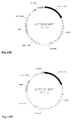
- the multicopy plasm id pY-P PDR5 -HXT7 (SEQ ID NO:36) (Fig. 10) was used.
- the PCR-product PCR-HXT7 (SEQ ID NO:1) was digested with BamH I and Pst I .
- the 1.726 kb fragment was ligated to a 7.253 kb fragment, that was obtained from PY-P PDR5 -GFP (SEQ ID NO:34) after digestion with BamH I and Pst I .
- the multicopy plasmid pY-P CDR1 -HXT7 (SEQ ID NO:37) (Fig. 10) was used.
- the PCR-product PCR-HXT7 (see above) was digested with Sph I and Pst I , the resulting 1.728 kb fragment was ligated to the 8.044 kb fragment obtained from pY-P CDR1 -GFP(SEQ ID NO:38) (Fig. 9) after digestion with Sph I and Pst I .
- the plasmid pY- P CDR1 -GFP was constructed by ligation of the 1 .159 kb fragment of the PCR-product PCR-P CDR1 (SEQ ID NO:26), obtained after digestion with Bc l I and Xhol to the 7.844 kb BamH I / Xhol fragment from pY-P PDR5 -GFP (SEQ ID NO: 34).
- plasmid pY-P CDR2- HXT7 (SEQ ID NO:39) (Fig. 10) was used.
- the PCR-product PCR-HXT7 (SEQ ID NO:1) was digested with BamH I and Pst I to get a 1.726 kb fragment that was ligated to the 7.794 kb fragment of pY-P CDR2 -GFP (SEQ ID NO: 40), obtained after digestion of this plasmid with BamH and Pst I .
- the plasmid pY-P CDR2 -GFP (Fig.
- plasmid pY-P CUP1- HXT7 (SEQ ID NO:41) (Fig. 10) was used.
- the PCR-product PCR-HXT7 (SEQ ID NO:1) was digested with BamH I and Pst I to get a 1.726 kb fragment that subsequently was ligated to the 7.112 kb fragment obtained from pYEX-BX-GFP (SEQ I D NO:42), after digestion with BamH I and Pst I .
- p77t-(ura) SEQ ID NO:45: The plasmid p77x (identical with p77-tok-pma1, H. Lichtenberg, J. Ludwig, PCT WO 03/031600 A1) (SEQ ID NO:44) was digested with Nael and Aat II . The resulting 4.568 kb fragment was ligated to the 1.124 kb fragment obtained by digestion of the PCR product PCR- URA3 (SEQ ID NO:23) with Nael and Aat II .
- p77t-(ura)-w/o-prom (SEQ ID NO:47): p77x (SEQ ID NO:44) was digested with Sal I , and Apal. The sticky ends of the resulting 6.506 kb fragment were blunted by treatment with T4-DNA polymerase followed by self ligation resulting in p77tw/o-prom (SEQ ID NO:46). The 2.832 kb fragment obtained from p77t-w/o- prom after digestion with Not I and Aat II was ligated to the 1.928 kb fragment obtained from of p77t-(ura) (SEQ I D NO:45), digested with Not I and Aat II .
- p77t-(ura)-P PDR5 -HXT7 SEQ ID NO:48
- Fig. 11 The 4.723 kb fragment obtained from p77t-(ura)-w/o-prom, by digestion with Pst I and Sal I , was ligated to the 2.092 kb fragment obtained from pY-P PDR5 -HXT7 by digestion with Xhol and Pst I .
- p77t-(ura)-P CDR1 -HXT7 SEQ ID NO:49
- Fig. 11 The 4.723 kb fragment obtained from p77t-(ura)-w/o-prom, by digestion with Pst I and Sal I , was ligated to the 2.885 kb fragment obtained from pY-P CDR1 -HXT7, by digestion with Xhol and Pst I .
- p77t-(ura)-P CDR2 -HXT7 SEQ ID NO:50
- Fig. 11 The 4.723 kb fragment obtained from p77t-(ura)-w/o-prom, by digestion with Pst I and Sal I , was ligated to the 2.633 kb fragment obtained from pY-P CDR2 -HXT7, by digestion with Xhol and Pst I .
- p77t-(ura)-P PMA1 -HXT7 SEQ ID NO:51
- Fig. 11 The 2.127 kb fragment obtained from pYEX-P PMA1 -HXT7 (SEQ ID NO:52), by digestion with Agel and Pst I , was ligated to the 5.259 kb fragment obtained from p77t-(ura) (SEQ ID NO:45), by digestion with Age l and Pst I .
- P PMA1 is the yeast promoter of the plasma membrane ATPase PMA1. This promoter is constitutively active in S. cerevisiae.
- pYEX-P PMA1 -HXT7 (SEQ ID NO:52): The PCR product PCR-HXT7 (SEQ ID NO:1) was digested with Bam H I and Pst I to get a 1.726 kb fragment that subsequently was ligated to the 7.840 kb fragment obtained from pY- P PMA1 -GFP (SEQ ID NO: 78) after digestion with Bam H I and Pst I .
- pY- P PMA1 -GFP pYEX-BX-GFP (SEQ ID NO:42) was digested with BamH I and Xbal (completely filled in) to get a 7.831 kb fragment that subsequently was ligated to the 966 bp fragment obtained from pUC18-PMA1 (SEQ ID NO: 79) after digestion with BamH I and EcoR I .
- P PMA1 was amplified using the oligonucleotides 5' GAGA GAGCTC CACCGCGGTGGCGGCC AGCTTCCTGAAACGGAGAAACATAAAC (SEQ ID NO:80), positions -908--935 referring to the coding sequence of PMA1 (NC 001139 Pos. 479915-482671) (SEQ ID NO: 83), and 5 ' TCTCG GATCCT CTAGC GATATTGTTTGATAATTAAATCTTTC (SEQ ID NO: 81), positions -4--30 referring to the coding sequence of PMA1.
- Additional nucleotides are typed in italics, restriction sites that were introduced to facilitate cloning ( Sac I and BamH I , respectively) are underlined, and digested with Sac I and BamH I .
- the resulting 959 bp fragment was subsequently ligated to the 2.672 kb fragment obtained from pUC18 (Fermentas; SEQ ID NO:82) after digestion with Sac I and Bam H I .
- pUG6-pre-pdr1 SEQ ID NO:55: The 3.997 kb fragment obtained from pUG6 (SEQ ID NO:54) (Güldener, U. et al, Nucleic Acids Research 24:2519-2524 (1996)), by digestion with BsiW I and Sal I , was ligated to the 0.422 kb fragment obtained from the PCR-product PCR-pre-PDR1 (SEQ ID NO:8), by digestion with BsiW I and Sal I .
- pUG6- ⁇ pdr1 SEQ ID NO:53
- Fig. 12 The 4.399 kb fragment obtained from pUG6-pre-pdr1, by digestion with Sacl l and Spe I , was ligated to the 0.369 kb fragment obtained from the PCR-product PCR-post-PDR1 (SEQ ID NO:12), by digestion with Spe I and Sac II.
- pUG6-pre-pdr3 (SEQ ID NO:57): The 3.997 kb fragment obtained from pUG6 (SEQ ID NO:54) (Guldener, U. et al, Nucleic Acids Research 24:2519-2524 (1996)), by digestion with BsiW I and Sa II was ligated to the 0.326 kb fragment obtained from the PCR-product PCR-pre-PDR3 (SEQ ID NO: 15), by digestion with BsiW I and Sal I .
- pUG6- ⁇ pdr3 (SEQ ID NO:56) (Fig. 12): The 4.251 kb fragment obtained from pUG6-pre-pdr3 (SEQ ID NO:57), by digestion with HpaI and Spe I , was ligated to the 0.404 kb fragment obtained from the PCR-product PCR-post-PDR3 (SEQ ID N0:19), by digestion with Hpa I and Spe I .
- the disruption cassettes ⁇ pdr1 and ⁇ pdr3 were generated by PCR using the oligo-nucleotides 5'GATCGCGTAATACCGGCAATTACGG (SEQ ID NO:58) and 5'GTTTAGCTTTTTTTACGTTAGCCTCATAT (SEQ ID NO:59) with pUG6- ⁇ pdr1 as template and 5'ACCGTGCTCTGCTGCTTTCAGG (SEQ ID N0:60) and 5'CGCAACGGCAGCAGAATAGAGAAAGC (SEQ ID NO:61) with pUG6- ⁇ pdr3 as template, respectively.
- the disruption cassettes ⁇ pdr1 and ⁇ pdr3 were used to transform S.
- RE700A cells yielding RE700A ⁇ pdr1: : KAN r and RE700A ⁇ pdr3: : KAN r .
- the presence of the KAN r -Marker gene flanked by IoxP sites conferred resistance to G418 (250 ⁇ g/ml) to RE700A ⁇ pdr1 and RE700A ⁇ pdr3.
- the KAN r gene was subsequently removed by cre-recombinase mediated recombination (Güldener, U. et al, Nucleic Acids Research 24:2519-2524 (1996)).
- RE700A ⁇ pdr1: : KAN r and RE700A ⁇ pdr3: : KAN r were transformed with the cre expression plasmid pSH47 (Güldener, U. et al, Nucleic Acids Research 24:2519-2524 (1996)), which carries the URA3 marker gene and the cre gene under the control of the inducible GAL1 promoter. Expression of the cre recombinase was induced by shifting cells from maltose medium to galactose medium. The cre expression plasmid was removed by streaking cells on plates containing 5-fluoroorotic acid to select_for the loss of pSH47, yielding strains RE700A ⁇ pdr1 and RE700A ⁇ pdr3.
- RE700A cells (Reifenberger, E. et al., Molecular Microbiology 16:157-167 (1995)) were transformed using the lithium acetate method (Sambrook, J. et al., Cold Spring Harbour Laboratory Press (1989)) with plasm ids pY- P PDR5 - HXT7, pY- P CDR1 - HXT7, pY- P CDR2 - HXT7, pY- P CUP1 - HXT7, pY- P PDR5- GFP, pY-P CDR1 -GFP, pY-P CDR2 -GFP yielding strains RE700A e P PDR5 -HXT7 (ET[PDR]), RE700A e P CDR1 -HXT7 (ET[CDR1]), RE700A e F CDR2 -HXT7 (ET[CDR2]), RE700A e P CUP
- RE700A cells were transformed using the lithium acetate method (Sambrook, J. et al., Cold Spring Harbour Laboratory Press (1989)) with linearised (digestion with Not I) plasmids p77t-(ura)-P PDR5 -HXT7, p77t-(ura)-P CDR1 -HXT7, p77t-(ura)-P CDR2 -HXT7 and p77t-(ura)-P PMA1 -HXT7) yielding the strains RE700A i P P PDR5 -HXT7 (IT[PDR]), RE700A i P CDR1 -HXT7 (IT[CDR1]), RE700A i P CDR2 -HXT7 (IT[CDR2]), RE700A i P PMA1 -HXT7 (ICFP), RE700A ⁇ pdr1 tok1 : :P PDR5- HXT7,
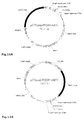
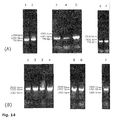
- Plasmid DNA was isolated from the resulting E . coli transformants and analysed by restriction digestion (Fig. 13). The correct integrations of the replacement cassettes (p77t-(ura)-P PDR5 -HXT7, p77t-(ura)-P CDR1 -HXT7, p77t-(ura)-P CDR2 -HXT7 and p77t-(ura)-P PMA1 -HXT7) into the tok1 locus were verified by diagnostic PCR.
- the primer 5'AAGAGGGCCGCTGCTCTCTG (SEQ ID NO:62) and 5'AGTTGGGTAACGCCAGGG TTTTCC (SEQ ID NO:63) were used in PCR to amplify a DNA fragment of 770 bp with genomic DNA from generated strains as template.
- the primer 5'GAGGCAGAGAAATTAGCTGG (SEQ ID NO:64) and 5'ACTATACCTATCACGAGTGC (SEQ ID NO:65) were used in PCR to amplify a 1.402 kb fragment with genomic DNA of generated strains as template (Fig. 14).
- RE700A i P PDR5 -HXT7 (IT[PDR]), RE700A i P CDR1 -HXT7 (IT[CDR1]), RE700A i P CDR2 -HXT7 (IT[CDR2]), RE700A i P PMA1 -HXT7 (ICFP), RE700A ⁇ pdr1 tok1: : P DR5 -HXT7 , RE700A ⁇ pdr3 tok1: : P PDR5 - HXT7 and RE700A ⁇ pdr1 ⁇ pdr3 tok1: :P PDR5 -HXT7 (Table 1, Fig. 14).
- PUG6- ⁇ pdr1 DNA was used as template.
- two digoxigenin-labelled hybridisation probes pre-pdr3 (SEQ ID NO:72) and post-pdr3 (SEQ ID NO:73) were generated by PCR in the presence of digoxigenin-dUTP using the primer pairs 5'ACCGTGCTCTGCTGCTTTCAGG (SEQ ID NO:74); 5'GAGAGTCGACTGCGGTCACGCAATAAGAAAAAATTAATAAAAC (SEQ I D NO:75) and 5'GAGAACTAGTAAACGCAAAAGAAATAGGGAAGCAGAGCATAACC (SEQ ID NO:76), 5'CGCAACGGCAGCAGAATAGAAAGC (SEQ ID NO:77) respectively.
- PUG6- ⁇ pdr3 DNA was used as template.
- Genomic DNA was isolated from RE700A ⁇ pdr1, RE700A ⁇ pdr3 and RE700A ⁇ pdr1,pdr3 was isolated and 1 ⁇ g of each DNA was digested with Pst I . Another 1 ⁇ g of each DNA was digested with Bgl II . Digested DNAs were separated by agarose gel electrophoresis, blotted on a nylon membrane and cross linked by UV irradiation. The blots were hybridised with the different labelled probes as detailed in Table 2. Table 2: Verification of deletion of pdr1 and pdr3 by Southern blot analysis. Probes and expected length of labelled fragments.
- Probe genom ic DNA digested with RE700A expected length of labelled fragment [kb]
- Strains with disrupted gene(s) expected length of labelled fragment [kb]
- 10.862 RE700A ?pdr1 (7.821) pre-pdr3 Pst I 6.252 RE700A ?pdr3 (3.394) post-pdr3 Bgl II
- Example 3 HXT7 Screening system for S. cerevisiae PDR inhibition
- the screening system used Saccharomyces cerevisiae RE700A, a yeast strain deprived of the seven most important glucose transporters (HXT1 -7) (Reifenberger, E. et al., Molecular Microbiology 16:157-167 (1995)).
- the strain is not able to grow on glucose as the sole carbon source. It grows on maltose (2% (w/v)) as the sole carbon source.
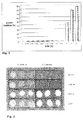
- the strain grows well on maltose also in the presence of up to 0.5% (w/v) 2-deoxy-glucose (2-DG), a toxic glucose analogue, in the medium (Fig. 1). Growth is inhibited by 50% at a 2-DG concentration in liquid media of ⁇ 1% (w/v) (Fig. 1).
- HXT7 encoding Hxt7p, a glucose transporter of S. cerevisiae, served as reporter gene.
- HXT7 was introduced into S. cerevisiae RE700A under the transcriptional control of a promoter and/or transcription factor that was to be tested.
- PDR5 pleiotropic drug resistance
- the strain RE700A was genetically modified, as described in Example 2, expressing episomally (e) or chromosomally (i) the HXT7 gene, encoding the glucose transporter Hxt7p, under the control of the promoter of PDR5, a PDR mediating gene of S. cerevisiae, leading to the strains RE700A e P PDR5 -HXT7 (strain ET[PDR]) and RE700A i P PDR5 -HXT7 (strain IT[PDR]), respectively.
- RE700A e P PDR5 -GFP (strain CQ[PDR]), expressing GFP under control of P PDR5
- RE700A e P CUP1 -HXT7 (strain ECFP)
- expressing the HXT7 gene under the control of the promoter P CUP1
- RE700A i P PMA1 -HXT7 (strain ICFP)
- expressing the HXT7 gene under the control of the promoter P PMA1 For complete genotypes of all constructed strains refer to Table 1.
- strains ECFP, ICFP, ET[PDR] and IT[PDR] in liquid media containing maltose as the only carbon source was inhibited by 2-DG at concentrations that did not affect the growth of RE700A and strain CQ[PDR].
- growth of ECFP was inhibited by 78% at 0.01 % (w/v) 2-DG, by 91% at 0.03% (w/v) 2-DG and by 93% at 0.05% (w/v) 2-DG in liquid medium; growth of ICFP was inhibited by 15% at 0.01% (w/v) 2-DG, for 74% at 0.03% (w/v) 2-DG and by 80% at 0.05% (w/v) 2-DG in liquid medium.
- test strain ET[PDR] can be incubated in selective YNB medium with 2% (w/v) maltose as the carbon source and 0.03% (w/v) 2-DG. Under these non-permissive conditions the growth of the test strain ET[PDR] was inhibited when P PDR5 was active (Fig. 3).
- test strain IT[PDR] can be incubated in YNB medium with 2% (w/v) maltose as the carbon source and 0.05% (w/v) 2-DG. Under these non-permissive conditions the growth of the test strain IT[PDR] was inhibited when P PDR5 was active (Fig. 3).
- strains were subsequently modified to express HXT7 or GFP under the control of P PDR5 , yielding strains RE700A ⁇ pdr1 tok1: : P PDR5 -HXT7, RE700A ⁇ pdr3 tok1: : P PDR5- HXT7, RE700A ⁇ pdr1,pdr3 tok1: :P PDR5 -HXT7, RE700A ⁇ pdr1 [pY-P PDR5 -GFP], RE700A ⁇ pdr3 [pY-P PDR5 -GFP], RE700A ⁇ pdr1,pdr3 [pY-P PDR5 -GFP] (Table 1).
- strains expressing HXT7 were tested for sensitivity to 2-DG.
- the strains expressing GFP under the control of P PDR5 were additionally analysed for GFP fluorescence in com parison to RE700A e P PDR5 -GFP (strain CQ[PDR]).
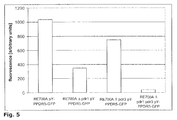
- the strain RE700A tok1 P PDR5 -HXT7 (IT[PDR]) showed 50% growth inhibition at a 2-DG concentration in liquid media of 0.021 % (w/v) whereas the strains RE700A ⁇ pdr1 tok1: : P PDR5 - HXT7 and RE700A ⁇ pdr3 tok1: : P PDR5 - HXT7 exhibited 50% growth inhibition at 2-DG concentration of 0.026% (w/v).
- the strain RE700A ⁇ .pdr1,pdr3 tok1: : P PDR5 -HXT7 did not show significant 2-DG sensitivity up to concentrations of 0.03% (w/v) (Fig. 4).
- Example 3 The screening system described in Example 3 was adapted to search for inhibitors of the regulatory elements of Candida albicans MDR conferring gene expression, namely the promoters of the C. albicans MDR pump genes CDR1 and CDR2 (P CDR1 and P CDR2 ).
- S. cerevisiae strain RE700A was transformed with plasmids pY-P CDR1 -HXT7 and pY-P CDR1 -GFP yielding strains ET[CDR1] and CQ[CDR1] (for details see Examples 1 and 2, for the complete genotype refer to Table 1).
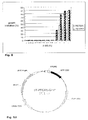
- the inhibition of growth of ET[CDR1] by 2-DG was tested. The growth of this strain was inhibited to more than 90% at a 2-DG concentration of 0.05% (w/v) (Fig. 6).
- test strain ET[CDR1] can be incubated in selective YNB medium with 2% (w/v) maltose as the carbon source and 0.05% (w/v) 2-DG. Under these non-permissive conditions the growth of the test strain ET[CDR1] was inhibited when P CDR1 was active (Fig. 6).
- S. cerevisiae strain RE700A was transformed with plasmids pY-P CDR2 -HXT7 and pY-P CDR2 -GFP yielding strains ET[CDR2] and CQ[CDR2] (for details see construction of strains and plasm ids, for the complete genotype refer to Table 1).
- the inhibition of growth of ET[CDR2] by 2-DG was tested. The growth of this strain was inhibited to more than 80% at a 2-DG concentration of 0.2% (w/v) (Fig. 6).
- test strain ET[CDR2] can be incubated in selective YNB medium with 2% (w/v) maltose as the carbon source and 0.2% (w/v) 2-DG. Under these non-permissive conditions the growth of the test strain ET[CDR2] was inhibited when P CDR2 was active (Fig. 6).
- S. cerevisiae strain RE700A was genetically modified as described in Example 1 and 2 to yield strain IT[CDR1], chromosomally expressing HXT7 under the control of the promoter of CDR1 (P CDR1 ) (for the complete genotype see Table 1).
- the inhibition of growth of IT[CDR1] by 2-DG was tested. The growth of this strain was inhibited by more than 90% at a 2-DG concentration of 0.03% (w/v) (Fig. 7)
- S. cerevisiae strain RE700A was genetically modified as described in Examples 1 and 2 to yield strain IT[CDR2], chromosomally expressing HXT7 under the control of the promoter of CDR2 (P CDR2 ) (for the complete genotype see Table 1).
- the inhibition of growth of IT[CDR2] by 2-DG was tested. The growth of this strain was inhibited by 50% at a 2-DG concentration of 1% (w/v) and by 80% at a 2-DG concentration of 2% (w/v) (Fig. 8).
Landscapes
- Life Sciences & Earth Sciences (AREA)
- Health & Medical Sciences (AREA)
- Genetics & Genomics (AREA)
- Chemical & Material Sciences (AREA)
- Mycology (AREA)
- Organic Chemistry (AREA)
- Engineering & Computer Science (AREA)
- General Engineering & Computer Science (AREA)
- Bioinformatics & Cheminformatics (AREA)
- Biophysics (AREA)
- Zoology (AREA)
- Molecular Biology (AREA)
- Wood Science & Technology (AREA)
- Biochemistry (AREA)
- General Health & Medical Sciences (AREA)
- Microbiology (AREA)
- Biomedical Technology (AREA)
- Biotechnology (AREA)
- Gastroenterology & Hepatology (AREA)
- Plant Pathology (AREA)
- Physics & Mathematics (AREA)
- Proteomics, Peptides & Aminoacids (AREA)
- Medicinal Chemistry (AREA)
- Micro-Organisms Or Cultivation Processes Thereof (AREA)
- Measuring Or Testing Involving Enzymes Or Micro-Organisms (AREA)
Priority Applications (6)
| Application Number | Priority Date | Filing Date | Title |
|---|---|---|---|
| EP20040106160 EP1661981A1 (de) | 2004-11-29 | 2004-11-29 | Hefestamm und Screening-Verfahren zur Identifizierung von Inhibitoren der Expression der Hexosetransportergenen mittels eines positiven Phänotypes |
| EP20050813655 EP1817407B1 (de) | 2004-11-29 | 2005-11-25 | Hefestamm und screening-verfahren zur identifizierung von inhibitoren der expression der hexosetransportergenen mittels eines positiven phänotypes |
| AU2005308775A AU2005308775B2 (en) | 2004-11-29 | 2005-11-25 | Yeast strain and screening method for identifying inhibitors of the expression of the hexose transporter genes by a positive phenotype |
| PCT/EP2005/056216 WO2006056597A1 (en) | 2004-11-29 | 2005-11-25 | Yeast strain and screening method for identifying inhibitors of the expression of the hexose transporter genes by a positive phenotype |
| US11/791,704 US9121026B2 (en) | 2004-11-29 | 2005-11-25 | Yeast strain and screening method for identifying inhibitors of the expression of the hexose transporter genes by a positive phenotype |
| CA 2589754 CA2589754A1 (en) | 2004-11-29 | 2005-11-25 | Yeast strain and screening method for identifying inhibitors of the expression of the hexose transporter genes by a positive phenotype |
Applications Claiming Priority (1)
| Application Number | Priority Date | Filing Date | Title |
|---|---|---|---|
| EP20040106160 EP1661981A1 (de) | 2004-11-29 | 2004-11-29 | Hefestamm und Screening-Verfahren zur Identifizierung von Inhibitoren der Expression der Hexosetransportergenen mittels eines positiven Phänotypes |
Publications (1)
| Publication Number | Publication Date |
|---|---|
| EP1661981A1 true EP1661981A1 (de) | 2006-05-31 |
Family
ID=34929961
Family Applications (2)
| Application Number | Title | Priority Date | Filing Date |
|---|---|---|---|
| EP20040106160 Withdrawn EP1661981A1 (de) | 2004-11-29 | 2004-11-29 | Hefestamm und Screening-Verfahren zur Identifizierung von Inhibitoren der Expression der Hexosetransportergenen mittels eines positiven Phänotypes |
| EP20050813655 Expired - Lifetime EP1817407B1 (de) | 2004-11-29 | 2005-11-25 | Hefestamm und screening-verfahren zur identifizierung von inhibitoren der expression der hexosetransportergenen mittels eines positiven phänotypes |
Family Applications After (1)
| Application Number | Title | Priority Date | Filing Date |
|---|---|---|---|
| EP20050813655 Expired - Lifetime EP1817407B1 (de) | 2004-11-29 | 2005-11-25 | Hefestamm und screening-verfahren zur identifizierung von inhibitoren der expression der hexosetransportergenen mittels eines positiven phänotypes |
Country Status (5)
| Country | Link |
|---|---|
| US (1) | US9121026B2 (de) |
| EP (2) | EP1661981A1 (de) |
| AU (1) | AU2005308775B2 (de) |
| CA (1) | CA2589754A1 (de) |
| WO (1) | WO2006056597A1 (de) |
Families Citing this family (1)
| Publication number | Priority date | Publication date | Assignee | Title |
|---|---|---|---|---|
| CN103103193B (zh) * | 2013-02-05 | 2014-12-03 | 中南大学 | 一种人参pdr跨膜转运蛋白基因启动子及其应用 |
Citations (2)
| Publication number | Priority date | Publication date | Assignee | Title |
|---|---|---|---|---|
| WO2002064784A2 (de) * | 2001-02-14 | 2002-08-22 | Aventis Pharma Deutschland Gmbh | Hefestamm von saccharomyces cerevisiae mit funktioneller expression eines glut-transporters |
| US6589773B1 (en) * | 2000-02-17 | 2003-07-08 | Morphochem, Inc. | Methods and compositions for a modified yeast strain with increased permeability and uses thereof |
-
2004
- 2004-11-29 EP EP20040106160 patent/EP1661981A1/de not_active Withdrawn
-
2005
- 2005-11-25 EP EP20050813655 patent/EP1817407B1/de not_active Expired - Lifetime
- 2005-11-25 US US11/791,704 patent/US9121026B2/en not_active Expired - Fee Related
- 2005-11-25 WO PCT/EP2005/056216 patent/WO2006056597A1/en not_active Ceased
- 2005-11-25 CA CA 2589754 patent/CA2589754A1/en not_active Abandoned
- 2005-11-25 AU AU2005308775A patent/AU2005308775B2/en not_active Ceased
Patent Citations (2)
| Publication number | Priority date | Publication date | Assignee | Title |
|---|---|---|---|---|
| US6589773B1 (en) * | 2000-02-17 | 2003-07-08 | Morphochem, Inc. | Methods and compositions for a modified yeast strain with increased permeability and uses thereof |
| WO2002064784A2 (de) * | 2001-02-14 | 2002-08-22 | Aventis Pharma Deutschland Gmbh | Hefestamm von saccharomyces cerevisiae mit funktioneller expression eines glut-transporters |
Non-Patent Citations (6)
| Title |
|---|
| BITOUN R ET AL: "SELECTION OF IN-VIVO DELETIONS IN SACCHAROMYCES-CEREVISIAE", JOURNAL OF BACTERIOLOGY, vol. 170, no. 9, 1988, pages 3870 - 3875, XP002327412, ISSN: 0021-9193 * |
| GAILLARDIN C ET AL: "INTEGRATIVE TRANSFORMATION OF THE YEAST YARROWIA-LIPOLYTICA", CURRENT GENETICS, vol. 10, no. 1, 1985, pages 49 - 58, XP009047383, ISSN: 0172-8083 * |
| KOZOVSKA Z ET AL: "Yeast strains designed for screening of reversal agents and genetic suppressors of multidrug resistance", INTERNATIONAL JOURNAL OF ANTIMICROBIAL AGENTS 2004 NETHERLANDS, vol. 24, no. 4, 2004, pages 386 - 392, XP002327409, ISSN: 0924-8579 * |
| KOZOVSKA ZUZANA ET AL: "Screening for effectors that modify multidrug resistance in yeast.", INTERNATIONAL JOURNAL OF ANTIMICROBIAL AGENTS, vol. 22, no. 3, September 2003 (2003-09-01), pages 284 - 290, XP002327410, ISSN: 0924-8579 * |
| SEDLAK MIROSLAV ET AL: "Characterization of the effectiveness of hexose transporters for transporting xylose during glucose and xylose co-fermentation by a recombinant Saccharomyces yeast", YEAST, vol. 21, no. 8, June 2004 (2004-06-01), pages 671 - 684, XP002327413, ISSN: 0749-503X * |
| TAKAHASHI SHOUJI ET AL: "Isolation of the Cryptococcus humicolus URA3 gene encoding orotidine-5'-phosphate decarboxylase and its use as a selective marker for transformation.", JOURNAL OF BIOSCIENCE AND BIOENGINEERING, vol. 96, no. 1, July 2003 (2003-07-01), pages 23 - 31, XP002327411, ISSN: 1389-1723 * |
Also Published As
| Publication number | Publication date |
|---|---|
| CA2589754A1 (en) | 2006-06-01 |
| AU2005308775A1 (en) | 2006-06-01 |
| WO2006056597A1 (en) | 2006-06-01 |
| EP1817407A1 (de) | 2007-08-15 |
| EP1817407B1 (de) | 2013-04-10 |
| US20090035755A1 (en) | 2009-02-05 |
| US9121026B2 (en) | 2015-09-01 |
| AU2005308775B2 (en) | 2012-02-16 |
Similar Documents
| Publication | Publication Date | Title |
|---|---|---|
| Andrianopoulos et al. | Cloning and analysis of the positively acting regulatory gene amdR from Aspergillus nidulans | |
| Schneider et al. | Use of polymerase chain reaction epitope tagging for protein tagging in Saccharomyces cerevisiae | |
| Luke et al. | The SAPs, a new family of proteins, associate and function positively with the SIT4 phosphatase | |
| Camonis et al. | Characterization, cloning and sequence analysis of the CDC25 gene which controls the cyclic AMP level of Saccharomyces cerevisiae. | |
| Clark-Adams et al. | Changes in histone gene dosage alter transcription in yeast. | |
| Aboussekhra et al. | Semidominant suppressors of Srs2 helicase mutations of Saccharomyces cerevisiae map in the RAD51 gene, whose sequence predicts a protein with similarities to procaryotic RecA proteins | |
| McDonald et al. | The Saccharomyces cerevisiae RAD30 gene, a homologue of Escherichia coli dinB and umuC, is DNA damage inducible and functions in a novel error-free postreplication repair mechanism | |
| Brôco et al. | FLR1 gene (ORF YBR008c) is required for benomyl and methotrexate resistance in Saccharomyces cerevisiae and its benomyl‐induced expression is dependent on Pdr3 transcriptional regulator | |
| Xu et al. | Host genes that influence transposition in yeast: the abundance of a rare tRNA regulates Ty1 transposition frequency. | |
| US20090143308A1 (en) | Yeast membrane protein expression system and its application in drug screening | |
| Baruffini et al. | In vivo analysis of mtDNA replication defects in yeast | |
| Xu et al. | Inhibition of Ty1 transposition by mating pheromones in Saccharomyces cerevisiae | |
| Boy-Marcotte et al. | SDC25, a dispensable Ras guanine nucleotide exchange factor of Saccharomyces cerevisiae differs from CDC25 by its regulation. | |
| Tsalik et al. | Curing Saccharomyces cerevisiae of the 2 micron plasmid by targeted DNA damage | |
| Fabian et al. | RRP1, a Saccharomyces cerevisiae gene affecting rRNA processing and production of mature ribosomal subunits | |
| US20040033494A1 (en) | Methods for inducing targeted stimulation of meiotic recombination and kits for performing said methods | |
| Fassler et al. | The Saccharomyces cerevisiae SPT14 gene is essential for normal expression of the yeast transposon, Ty, as well as for expression of the HIS4 gene and several genes in the mating pathway | |
| Maddock et al. | Extragenic suppressors of Saccharomyces cerevisiae prp4 mutations identify a negative regulator of PRP genes. | |
| Byström et al. | A functional analysis of the repeated methionine initiator tRNA genes (IMT) in yeast | |
| Gatherar et al. | Identification of a novel gene hbrB required for polarised growth in Aspergillus nidulans | |
| EP1817407B1 (de) | Hefestamm und screening-verfahren zur identifizierung von inhibitoren der expression der hexosetransportergenen mittels eines positiven phänotypes | |
| Lebel et al. | New tools for phenotypic analysis in Candida albicans: the WAR1 gene confers resistance to sorbate | |
| Cooper et al. | Allantoin transport in Saccharomyces cerevisiae is regulated by two induction systems | |
| Happel et al. | A mutant tRNA affects δ-mediated transcription in Saccharomyces cerevisiae | |
| Maftahi et al. | Generation of Saccharomyces cerevisiae deletants and basic phenotypic analysis of eight novel genes from the left arm of chromosome XIV |
Legal Events
| Date | Code | Title | Description |
|---|---|---|---|
| PUAI | Public reference made under article 153(3) epc to a published international application that has entered the european phase |
Free format text: ORIGINAL CODE: 0009012 |
|
| AK | Designated contracting states |
Kind code of ref document: A1 Designated state(s): AT BE BG CH CY CZ DE DK EE ES FI FR GB GR HU IE IS IT LI LU MC NL PL PT RO SE SI SK TR |
|
| AX | Request for extension of the european patent |
Extension state: AL HR LT LV MK YU |
|
| AKX | Designation fees paid | ||
| STAA | Information on the status of an ep patent application or granted ep patent |
Free format text: STATUS: THE APPLICATION IS DEEMED TO BE WITHDRAWN |
|
| 18D | Application deemed to be withdrawn |
Effective date: 20061201 |
|
| REG | Reference to a national code |
Ref country code: DE Ref legal event code: 8566 |