EP1661908A1 - Reactif amplifiant la fibrose amyloide de la proteine beta amyloide - Google Patents
Reactif amplifiant la fibrose amyloide de la proteine beta amyloide Download PDFInfo
- Publication number
- EP1661908A1 EP1661908A1 EP04746176A EP04746176A EP1661908A1 EP 1661908 A1 EP1661908 A1 EP 1661908A1 EP 04746176 A EP04746176 A EP 04746176A EP 04746176 A EP04746176 A EP 04746176A EP 1661908 A1 EP1661908 A1 EP 1661908A1
- Authority
- EP
- European Patent Office
- Prior art keywords
- peptide
- leu
- amino acids
- glu
- lys
- Prior art date
- Legal status (The legal status is an assumption and is not a legal conclusion. Google has not performed a legal analysis and makes no representation as to the accuracy of the status listed.)
- Withdrawn
Links
Images
Classifications
-
- C—CHEMISTRY; METALLURGY
- C07—ORGANIC CHEMISTRY
- C07K—PEPTIDES
- C07K14/00—Peptides having more than 20 amino acids; Gastrins; Somatostatins; Melanotropins; Derivatives thereof
- C07K14/435—Peptides having more than 20 amino acids; Gastrins; Somatostatins; Melanotropins; Derivatives thereof from animals; from humans
- C07K14/46—Peptides having more than 20 amino acids; Gastrins; Somatostatins; Melanotropins; Derivatives thereof from animals; from humans from vertebrates
- C07K14/47—Peptides having more than 20 amino acids; Gastrins; Somatostatins; Melanotropins; Derivatives thereof from animals; from humans from vertebrates from mammals
- C07K14/4701—Peptides having more than 20 amino acids; Gastrins; Somatostatins; Melanotropins; Derivatives thereof from animals; from humans from vertebrates from mammals not used
- C07K14/4711—Alzheimer's disease; Amyloid plaque core protein
Definitions
- the present invention relates to a method of amplifying amyloid ⁇ -protein (hereinafter, abbreviated as A ⁇ ) having undergone amyloid fibrosis and a reagent therefor, which can be a basis for a method of diagnosis of signs of amyloidosis such as Alzheimer's disease and prion disease.
- a ⁇ amyloid ⁇ -protein
- Alzheimer's disease is a disease reported in 1907 by a German neuropathologist Alois Alzheimer. This disease occurs in humans past middle age, and shows progressive dementia as a maj or symptom. Dementia is a state where originally normal intellectual functions are gradually degraded, thus resulting in obstacles in daily life. The first symptom of Alzheimer's disease is an obstacle in memory represented by failure of memory. Alzheimer's disease is further accompanied by obstacles in various intellectual functions including aphasia, agnosia and apraxia and is gradually developed to lead finally to severe states of dementia, such as bedridden state and incontinence. Pathologically, a large number of characteristic structures called senile plaques and changes in neurofibrils are observed in addition to diffuse cerebral shrinkage and loss of neurons. These changes tend to occur significantly in the hippocampus.
- PHF paired helical filaments
- amyloid fibrils are insoluble in various solvents, and by using this property, the fibrils are purified from meningeal blood vessels and cerebral parenchyma of Alzheimer's disease brain, and their constituent component was defined as a new peptide, amyloid ⁇ -protein (A ⁇ ), having a molecular weight of about 4 kD. Because the molecular weight was low, the presence of its precursor was predicted, and APP ( ⁇ -amyloid protein precursor) was identified by cDNA cloning. This precursor was once-transmembrane-type membrane protein, and A ⁇ was found to be a protein ranging from the extracellular domain of APP to two residues inside of the membrane domain.
- a ⁇ amyloid ⁇ -protein
- an anti-A ⁇ antibody was prepared from the isolated A ⁇ , and when the brain of a patient with Alzheimer's disease was stained with the antibody, the presence of A ⁇ in many forms, besides the previously known globular senile plaques, was observed, and amyloid deposition was revealed to spread more widely than previously believed. Some amyloid deposits occur at light degrees and are not accompanied by degenerative nerve axons. This is named chronic senile plaque, considered as an initial pathological image of Alzheimer' s disease, and supported widely as being specific to Alzheimer's disease.
- amyloid fibrosis are important stages in lethal amyloidosis (disease where amyloid is deposited around cells or in gaps among tissues to cause functional obstacles) in Alzheimer' s disease and prion disease, and detection of amyloid fibrils is becoming very important in diagnosis of amyloidosis.
- a ⁇ refers to peptides composed of 40 amino acid residues and 42 amino acid residues, which are called A ⁇ (1-40) and A ⁇ (1-42) respectively, and is considered to play an important role in the process of onset of Alzheimer's disease.
- a ⁇ is formed from once-transmembrane protein consisting of 695 to 770 residues by cleavage with enzymes ( ⁇ -secretase, ⁇ -secretase), and in the healthy human brain, the monomer A ⁇ (1-40) is estimated to occur at a concentration of about 0.1 nM to 10 nM, and is decomposed by ⁇ -secretase and metabolized.
- a ⁇ (1-40) occurs in the form of a random coil under physiological conditions, and when A ⁇ (1-40) is formed, it is decomposed by ⁇ -secretase and metabolized without deposition in the brain.
- a ⁇ (1-42) is assembled under physiological conditions and converted from a random coil via an ⁇ -helix structure into a ⁇ -sheet structure. Thereafter, A ⁇ in the form of ⁇ -sheet structure is further polymerized to form amyloid fibrils to acquire protease resistance. Then, A ⁇ is insolublized and deposited in the brain to form senile plaques. This is considered to be important in the process of onset of Alzheimer's disease.
- a ⁇ (1-42) is scarcely formed, and the mechanism of forming A ⁇ (1-42) and the mechanism of forming amyloid fibrils therefrom has not been well elucidated.
- psychiatric techniques using DSM-4 diagnosis criteria for Alzheimer's disease published by American Psychiatric Association
- DSM-4 diagnosis criteria for Alzheimer's disease published by American Psychiatric Association
- the definite diagnosis of Alzheimer's disease in an early stage is difficult, and when a patient with Alzheimer's disease or his family comes to be aware of the disease, the morbidity has already proceeded considerably in many cases.
- the shrinkage of the brain in the middle stage or thereafter can be judged by MRI, but in a very early stage, the shrinkage of the brain is not initiated, thus making diagnosis of the disease difficult.
- a ⁇ amyloid fibrils is specific to Alzheimer's disease, and occurs prior to other symptoms of Alzheimer's disease, so if A ⁇ formed into amyloid fibrils could be diagnosed in a very early stage of Alzheimer's disease, the definite diagnosis of Alzheimer' s disease would be feasible in the early stage.
- a ⁇ formed into amyloid fibrils in an early stage of Alzheimer' s disease occurs in a very small amount and is thus hardly detectable at present. Accordingly, if a very small amount of A ⁇ formed into amyloid fibrils could be amplified, such amplification would be promising in application to detection of Alzheimer's disease in an early stage.
- the present invention has been made under these circumstances, and the object of the invention is to provide a natural peptide search in which a template reaction with the nucleus of a minute amount of A ⁇ having undergone amyloid fibrosis is caused to form amyloid fibrils, followed by fibril amount increase and amplification; design and development of a novel artificial peptide which can be a substitute therefor; a method of amplifying the amyloid fibrosis of amyloid ⁇ -protein by the use thereof and a reagent used therein; and a method of detecting disease attributable to amyloidosis and a reagent used therein.
- the present invention relates to a reagent for amplifying the amyloid fibrosis of amyloid ⁇ -protein, which includes a peptide consisting of 14 to 23 residues of amyloid ⁇ -peptide [hereinafter, abbreviated as A ⁇ (14-23)] or a peptide derived from the peptide by substituting all positively charged side-chain amino acids thereof with Lys and simultaneously substituting all negatively charged side-chain amino acids thereof with Glu.
- the present invention also relates to a method of amplifying the amyloid fibrosis of amyloid ⁇ -protein, which includes using a reagent containing a peptide [A ⁇ (14-23)] consisting of 14 to 23 residues of amyloid ⁇ -peptide or a peptide derived from the peptide by substituting all positively charged side-chain amino acids thereof with Lys and simultaneously substituting all negatively charged side-chain amino acids thereof with Glu.
- the present invention relates to a reagent for detection of disease attributable to amyloidosis, which includes a peptide [A ⁇ (14-23) consisting of 14 to 23 residues of amyloid ⁇ -peptide or a peptide derived from the peptide by substituting all positively charged side-chain amino acids thereof with Lys and simultaneously substituting all negatively charged side-chain amino acids thereof with Glu.
- a reagent for detection of disease attributable to amyloidosis which includes a peptide [A ⁇ (14-23) consisting of 14 to 23 residues of amyloid ⁇ -peptide or a peptide derived from the peptide by substituting all positively charged side-chain amino acids thereof with Lys and simultaneously substituting all negatively charged side-chain amino acids thereof with Glu.
- the present invention relates to a method of detecting disease attributable to amyloidosis, which includes using a reagent containing a peptide [A ⁇ (14-23)] consisting of 14 to 23 residues of amyloid ⁇ -peptide or a peptide derived from the peptide by substituting all positively charged side-chain amino acids thereof with Lys and simultaneously substituting all negatively charged side-chain amino acids thereof with Glu.
- the present invention relates to a peptide represented by the following general formula [1]: R-Lys-Gln-Lys-Leu-Leu-X-Y-Leu-Glu-Glu-R' [1] wherein R represents a hydrogen atom or an amino-protecting group, X represents Leu, Phe or Ala, Y represents Leu or Phe, and R' represents OH or NH 2 .
- the nucleus of amyloid fibrils occurring in the living body is amplified with a safe artificial peptide, whereby the undetectable causative protein can be amplified to a detectable level in a stage of omen, so diseases attributable to amyloidosis, such as Alzheimer's disease and prion disease (e.g. mad cow disease and human Creutzfeldt-Jakob disease) can be detected in an early stage.
- Alzheimer's disease and prion disease e.g. mad cow disease and human Creutzfeldt-Jakob disease
- a ⁇ (14-23) used in the present invention may be a naturally occurring peptide or a peptide synthesized by a conventional method.
- Preferable examples of the A ⁇ (14-23) peptide used in the present invention wherein all positively charged side-chain amino acids are substituted with Lys and simultaneously all negatively charged side-chain amino acids are substituted with Glu include, for example, peptides of A ⁇ (14-23) wherein all positively charged side-chain amino acids are substituted with Lys, all negatively charged side-chain amino acids are substituted with Glu, and one or more hydrophobic residues in a peptide chain are substituted with other hydrophobic amino acid residues.
- the other hydrophobic amino acid residues capable of substitution include, for example, amino acid residues such as leucine (Leu), isoleucine (Ile), phenylalanine (Phe) and valine (Val).
- peptides include, but are not limited to, peptides derived from A ⁇ (14-23) by substituting all positively charged side-chain amino acids thereof with Lys and simultaneously substituting all negatively charged side-chain amino acids thereof with Glu, and further by i) substituting all hydrophobic residues in the peptide chain with Leu, ii) substituting all hydrophobic residues (excluding Phe at the position 3 or 4 from the N-terminal side of the hydrophobic site) in the peptide chain with Leu, or iii) substituting Ala at the position 3 from the N-terminal side of the hydrophobic site with an Ala and simultaneously substituting the remaining hydrophobic residues with Leu.
- the reagent for amplifying the amyloid fibrosis of amyloid ⁇ -protein according to the present invention, and the reagent for detection of disease attributable to amyloidosis according to the present invention, are characterized by including the above-mentioned A ⁇ (14-23) or a peptide derived therefrom by substituting all positively charged side-chain amino acids thereof with Lys and simultaneously substituting all negatively charged side-chain amino acids thereof with Glu.
- the method of amplifying the amyloid fibrosis of amyloid ⁇ -protein according to the present invention, and the method of detecting disease attributable to amyloidosis are characterized by using a reagent including the A ⁇ (14-23) or a peptide derived therefrom by substituting all positively charged side-chain amino acids thereof with Lys and simultaneously substituting all negatively charged side-chain amino acids thereof with Glu.
- a ⁇ (14-23) wherein all positively charged side-chain amino acids are substituted with Lys and simultaneously all negatively charged side-chain amino acids are substituted with Glu are represented by, for example, the following general formula: R-Lys-Gln-Lys-Leu-Leu-X-Y-Leu-Glu-Glu-R' [1] wherein R represents a hydrogen atom or an amino-protecting group, X represents Leu, Phe or Ala, Y represents Leu or Phe, and R' represents OH or NH 2 .
- peptides represented by the general formula [1] above include, for example:
- the amino-protecting group represented by R in the general formula [1] includes, for example, an acyl group such as an acetyl group, t-butoxycarbonyl group, benzyloxycarbonyl group, fluorenyl methoxy carbonyl group, benzoyl group etc., and a fluorescent acyl group such as a fluorescein group, Oregon green group etc., among which an easier acetyl group is preferable.
- R has the same meaning as defined above.
- Preferable examples of the A ⁇ (14-23) peptide used in the present invention, wherein all positively charged side-chain amino acids are substituted with Lys and simultaneously all negatively charged side-chain amino acids are substituted with Glu include not only the peptides represented by the general formula [1] above, but also peptides of the general formula [1] wherein X is present at the first, second or fifth position from the N-terminal side of the hydrophobic site in the peptide chain, or peptides of the general formula [1] wherein Leu is substituted by Ile, or peptides of the general formula [1] wherein X and Y are substituted with Ile respectively.
- Any of these peptides according to the present invention can be easily synthesized by conventional methods such as a Boc solid phase synthesis method or Fmoc solid phase method using a peptide synthesizer.
- the disease which can be detected by the reagent for detection of disease attributable to amyloidosis or by the method for detection of disease attributable to amyloidosis, according to the present invention is firstlyAlzheimer' s disease.
- Prion disease such as mad cow disease or Creutzfeldt-Jakob disease can also be similarly detected.
- various diseases attributable to amyloidosis can also be similarly detected.
- Fmoc amino acid derivatives and resin as solid-phase carriers, were purchased from Novabiochem and used as they were. As other reagents, commercial products were used as they were.
- the peptide was synthesized manually by an Fmoc (9-fluorenyl methoxycarbonyl) solid phase method.
- a container for manual synthesis of the peptide chain a polypropylene empty column (manufactured by Pharmacia Biotech) was used.
- An absorption spectrum was measured by using SHIMADZU BioSpc-1600 Spectrometer.
- HPLC high-performance liquid chromatography
- HPLC high-performance liquid chromatography
- a mixed solvent of 0.1% TFA/H 2 O as solution A and 0.08% TFA/CH 3 CN as solution B was used as HPLC solvent, and eluted with a linear gradient of solutions A and B for 30 minutes.
- Fmoc-AA-OH As Fmoc-AA-OH in the present example, Fmoc-Gln(Trt)-OH, Fmoc-Glu(Ot-Bu)-OH, Fmoc-Leu-OH, Fmoc-Lys (Boc)-OH, and Fmoc-Phe-OH (t-Bu, tert-butyl; Trt, trityl; Boc, tert-butoxycarboxyl) were used.
- the reaction mixture was stirred suitably with a vortex, and the conclusion of the coupling was confirmed by a Kaiser Test (KT) .
- KT Kaiser Test
- the Fmoc group of the amino acid in the amino terminus of the peptide was removed, and acetic anhydride (10 equivalents) in NMP was used in acetylation of the N-terminal amino acid of the peptide. Thereafter, the resin was washed successively with NMP and chloroform and then dried under reduced pressure for 4 hours.
- the resin dried under reduced pressure was placed in a 50-ml Kjeldahl flask (eggplant type flask), and m-cresol (0.13 ml), thioanisole (0.38 ml) and trifluoroacetic acid (TFA) (5 ml) were added successively and reacted under stirring at roomtemperature for 1 hour. After TFA was removed by an evaporator, about 30 ml diethyl ether was added to precipitate the peptide (10-4F). The sample was subjected 5 times to centrifugation (3000 rpm, 5 minutes) and subsequent decantation, and then the diethyl ether was gasified in a nitrogen stream.
- TFA trifluoroacetic acid
- the precipitates were dried under reduced pressure to give crude peptide (10-4F).
- the resulting crude peptide (10-4F) was purified by reverse phase HPLC, and after CH 3 CN was removed by an evaporator, the product was lyophilized and recovered. The yield was 35%.
- the resulting peptide (10-4F) was identified by MALDI-TOFMS.
- peptide synthesis and purification by reverse phase HPLC were carried out in the same manner as in (1) above, to synthesize the peptides (10-3L), (10-3F) and (10-3A) respectively.
- peptide [A ⁇ (14-23)] consisting of 14 to 23 residues of amyloid ⁇ peptide
- peptide [A ⁇ (10-35)] consisting of 10 to 35 residues of amyloid ⁇ peptide, which as the nucleus of amyloid fibril, is known to be rich in hydrophobic residues and to have a high ability to form fibrils, were synthesized in the same manner as in (1) above.
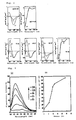
- Fig. 1 Each peptide synthesized in the present examples was measured for its CD spectrum at 25°C, and the result is shown in Fig. 1.
- ThiT dye thioflavin T
- 10-4F, 10-3L, 10-3F and A ⁇ (10-35) had spectra unique to ⁇ -sheet structure and showing the negative maximum in the vicinity of 218 nm and the positive maximum in the vicinity of 205 nm from the start, and increased signals with time to increase ⁇ -sheet properties, thus suggesting the progress of amyloid fibrosis.
- Both 10-3A and A ⁇ (14-23) had spectra unique to random coil state and showing no spectral change with time.
- the peptides into which Ala poor in hydrophobicity had been introduced were in the form of a random coil, while the other peptides had a ⁇ -sheet structure, thus suggesting that the hydrophobicity in the peptide chain was important for formation of amyloid fibrils.
- a ⁇ (10-35) increased fluorescent intensity in the vicinity of 482 nm in the presence of ThT with time, and showed a sigmoid change when the fluorescent intensity was plotted on a graph. This suggests autonomous replication and autonomous catalytic reaction characteristic of amyloid protein.
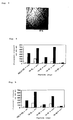
- fibrils were observed (Fig. 3).
- the change was finished in about 24 to 30 hours, and the fluorescent intensity upon completion of formation of amyloid fibrils and the time having elapsed until the completion of the change were excellent in reproducibility, and thus a sample which is incubated as a nucleus under this condition for 30 hours or more, showed a fluorescent intensity of about 700 to 1000 in the presence of ThT, was used as the nucleus of A ⁇ .
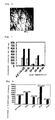
- the artificial peptides 10-3L, 10-3F and 10-4F showed a significant increase in fluorescent intensity with time, thus suggesting that each artificial peptide used alone had an ability to form amyloid fibrils.
- the peptide 10-3A did not show an increase in fluorescent intensity.
- 10-3L and 10-4F showed similar fluorescent intensity, while 10-3F showed fluorescent intensity which was half or less that of 10-3L or 10-4F, thus revealing that 10-3L or 10-4F used alone has a high ability to form amyloid fibrils, and 10-3F used alone has a low ability.
- Amplification of formation of fibrils of A ⁇ (10-35) formed into amyloid fibrils was attempted by using each of the artificial peptides synthesized in Example 1.
- a small amount of A ⁇ (10-35) previously formed into fibrils under the condition in (1-2) above was added to a solution of the artificial peptide, and the amplification of formation of fibrils was monitored with ThT.
- the peptide 10-3L or 10-4F which when used alone, had a high ability to form amyloid fibrils showed a significant increase in fluorescent intensity in the presence of the nucleus.
- 10-3L showed fluorescent intensity which was twice as high as that in the absence of the nucleus, thus suggesting its high ability to amplify the nucleus.
- the peptide 10-3F or 10-3A which when used alone, had a low ability to form amyloid fibrils showed no increase in fluorescent intensity in the presence or absence of the nucleus, and it was thus suggested that its ability to amplify the fibrils, as well as its ability to form fibrils, are low.
- a test for the amplification of fibrils of A ⁇ (10-35) formed into amyloid fibrils by using the artificial peptide of the present invention in Example 2 was attempted using a plate reader.
- Any artificial peptide of the present invention increased fluorescent intensity in the presence of the nucleus, and the increase in fluorescent intensity by any peptide was finished in about 30 hours. In the absence of the nucleus, only 10-4F exhibited an increase in fluorescent intensity, and the other peptides did not show an increase in fluorescent intensity. From this result, it was revealed that all of the artificial peptides according to the present invention have an ability to amplify fibrils, and succeeded in amplification of A ⁇ (10-35) formed into amyloid fibrils.
- the difference in fluorescence intensity after completion of fluorescent intensity change between the peptide to which the nucleus was added and the same peptide to which the nucleus was not added was highest in the case of 10-3L, and the high to low difference therebetween was shown in the order of 10-3L, 10-4F, 10-3F, and 10-3A.
- the peptide which shows a greater difference in fluorescent intensity, depending on the presence or absence of the nucleus, can be considered more easily applicable to the detection system, and the high to low ability to amplify fibrils in such application is in the order of 10-3L, 10-4F, 10-3F and 10-3A.
- the artificial peptide of the present invention is useful as a reagent for amplifying the nucleus of amyloid fibrils occurring in the living body, whereby the undetectable causative protein can be amplified to a detectable level in a stage of omen.
- diseases attributable to amyloidosis such as Alzheimer's disease and prion disease (e. g. mad cow disease and human Creutzfeldt-Jakob disease) can be detected in an early stage (or in a stage of omen), and thus the present invention can contribute significantly to this technical field.
Landscapes
- Health & Medical Sciences (AREA)
- Chemical & Material Sciences (AREA)
- Life Sciences & Earth Sciences (AREA)
- Organic Chemistry (AREA)
- General Health & Medical Sciences (AREA)
- Molecular Biology (AREA)
- Zoology (AREA)
- Gastroenterology & Hepatology (AREA)
- Engineering & Computer Science (AREA)
- Biochemistry (AREA)
- Toxicology (AREA)
- Genetics & Genomics (AREA)
- Biophysics (AREA)
- Medicinal Chemistry (AREA)
- Neurology (AREA)
- Proteomics, Peptides & Aminoacids (AREA)
- Biomedical Technology (AREA)
- Peptides Or Proteins (AREA)
- Investigating Or Analysing Biological Materials (AREA)
Applications Claiming Priority (2)
| Application Number | Priority Date | Filing Date | Title |
|---|---|---|---|
| JP2003295153A JP3910569B2 (ja) | 2003-08-19 | 2003-08-19 | アミロイドβ蛋白質のアミロイド線維化を増幅するための試薬 |
| PCT/JP2004/008707 WO2005016957A1 (fr) | 2003-08-19 | 2004-06-21 | Reactif amplifiant la fibrose amyloide de la proteine b amyloide |
Publications (2)
| Publication Number | Publication Date |
|---|---|
| EP1661908A1 true EP1661908A1 (fr) | 2006-05-31 |
| EP1661908A4 EP1661908A4 (fr) | 2006-12-13 |
Family
ID=34191084
Family Applications (1)
| Application Number | Title | Priority Date | Filing Date |
|---|---|---|---|
| EP04746176A Withdrawn EP1661908A4 (fr) | 2003-08-19 | 2004-06-21 | Reactif amplifiant la fibrose amyloide de la proteine beta amyloide |
Country Status (4)
| Country | Link |
|---|---|
| US (1) | US20060235199A1 (fr) |
| EP (1) | EP1661908A4 (fr) |
| JP (1) | JP3910569B2 (fr) |
| WO (1) | WO2005016957A1 (fr) |
Families Citing this family (12)
| Publication number | Priority date | Publication date | Assignee | Title |
|---|---|---|---|---|
| US20020178051A1 (en) | 1995-07-25 | 2002-11-28 | Thomas G. Scavone | Interactive marketing network and process using electronic certificates |
| US20050026165A1 (en) * | 2001-05-31 | 2005-02-03 | Cindy Orser | Detection of conformationally altered proteins and prions |
| AU2002320045B2 (en) * | 2001-05-31 | 2008-05-08 | Adlyfe, Inc. | Misfolded protein sensor method |
| US20060035242A1 (en) * | 2004-08-13 | 2006-02-16 | Michelitsch Melissa D | Prion-specific peptide reagents |
| US20060057671A1 (en) * | 2004-09-10 | 2006-03-16 | Orser Cindy S | Immobilized probes and methods of detecting conformationally altered prion proteins |
| WO2006076683A2 (fr) * | 2005-01-13 | 2006-07-20 | Novartis Vaccines And Diagnostics Inc. | Isolement et detection de prions pathogenes |
| EP1853915B1 (fr) * | 2005-02-15 | 2011-10-12 | Adlyfe, Inc. | Procede de detection de proteines et de prions a repliement incorrect |
| WO2007030804A1 (fr) * | 2005-09-09 | 2007-03-15 | Novartis Ag | Reactifs peptoides specifiques des prions |
| JP5097206B2 (ja) * | 2006-07-28 | 2012-12-12 | エイディーライフ インコーポレイティッド | 診断および治療のためのペプチドプローブ |
| JP2011520108A (ja) * | 2008-04-30 | 2011-07-14 | ノバルティス アーゲー | 病原性配座異性体についてのアッセイ |
| JP5554528B2 (ja) * | 2009-09-08 | 2014-07-23 | 国立大学法人 岡山大学 | 新規アミロイドβ凝集体結合性ペプチドおよび新規アミロイドβ凝集体結合性ペプチドを用いたアミロイド病の検査方法 |
| WO2012017739A1 (fr) * | 2010-07-31 | 2012-02-09 | エレコン科学株式会社 | Dispositif et procédé de dosage d'amyloïde |
Family Cites Families (1)
| Publication number | Priority date | Publication date | Assignee | Title |
|---|---|---|---|---|
| CA2467922A1 (fr) * | 2001-08-10 | 2003-02-20 | Roskamp Research, Llc | Modulation de l'angiogenese par des peptides a-beta |
-
2003
- 2003-08-19 JP JP2003295153A patent/JP3910569B2/ja not_active Expired - Fee Related
-
2004
- 2004-06-21 EP EP04746176A patent/EP1661908A4/fr not_active Withdrawn
- 2004-06-21 US US10/568,392 patent/US20060235199A1/en not_active Abandoned
- 2004-06-21 WO PCT/JP2004/008707 patent/WO2005016957A1/fr not_active Ceased
Non-Patent Citations (7)
| Title |
|---|
| HAAS C ET AL: "Apolipoprotein E forms stable complexes with recombinant Alzheimer's disease beta-amyloid precursor protein" BIOCHEMICAL JOURNAL, PORTLAND PRESS, LONDON, GB, vol. 325, 1997, pages 169-175, XP002995916 ISSN: 0264-6021 * |
| KALLBERG Y ET AL: "Prediction of amyloid fibril-forming proteins" JOURNAL OF BIOLOGICAL CHEMISTRY, AMERICAN SOCIETY OF BIOLOCHEMICAL BIOLOGISTS, BIRMINGHAM,, US, vol. 276, no. 16, 20 April 2001 (2001-04-20), pages 12945-12950, XP002222712 ISSN: 0021-9258 * |
| ORPISZEWSKI J ET AL: "Induction of beta-sheet structure in amyloidogenic peptides by neutralization of aspartate: a model for amyloid nucleation" JOURNAL OF MOLECULAR BIOLOGY, LONDON, GB, vol. 289, no. 2, 4 June 1999 (1999-06-04), pages 413-428, XP004462061 ISSN: 0022-2836 * |
| SCHNEIDER, JOEL P. ET AL: "Templates that induce .alpha.-Helical, .beta.-Sheet, and Loop Conformations" CHEMICAL REVIEWS (WASHINGTON, D. C.) , VOL. 95(6), 2169-87 CODEN: CHREAY; ISSN: 0009-2665, 1995, XP002404108 * |
| See also references of WO2005016957A1 * |
| TJERNBERG LARS O ET AL: "A molecular model of Alzheimer amyloid beta-peptide fibril formation" JOURNAL OF BIOLOGICAL CHEMISTRY, vol. 274, no. 18, 30 April 1999 (1999-04-30), pages 12619-12625, XP002404106 ISSN: 0021-9258 * |
| TJERNBERG LARS O ET AL: "Assembling amyloid fibrils from designed structures containing a significant amyloid beta-peptide fragment" BIOCHEMICAL JOURNAL, vol. 366, no. 1, 15 August 2002 (2002-08-15), pages 343-351, XP002404107 ISSN: 0264-6021 * |
Also Published As
| Publication number | Publication date |
|---|---|
| EP1661908A4 (fr) | 2006-12-13 |
| JP2005060336A (ja) | 2005-03-10 |
| JP3910569B2 (ja) | 2007-04-25 |
| US20060235199A1 (en) | 2006-10-19 |
| WO2005016957A1 (fr) | 2005-02-24 |
Similar Documents
| Publication | Publication Date | Title |
|---|---|---|
| Otvos Jr et al. | Human and rodent Alzheimer β‐amyloid peptides acquire distinct conformations in membrane‐mimicking solvents | |
| Tenidis et al. | Identification of a penta-and hexapeptide of islet amyloid polypeptide (IAPP) with amyloidogenic and cytotoxic properties | |
| Klein et al. | Small assemblies of unmodified amyloid β-protein are the proximate neurotoxin in Alzheimer’s disease | |
| US9638702B2 (en) | Detection of conformationally altered proteins | |
| Hubin et al. | Transient dynamics of Aβ contribute to toxicity in Alzheimer’s disease | |
| El‐Agnaf et al. | The N‐terminal region of non‐Aβ component of Alzheimer's disease amyloid is responsible for its tendency to assume β‐sheet and aggregate to form fibrils | |
| Maggie et al. | Brain amyloid—a physicochemical perspective | |
| US20060235199A1 (en) | Reagent for amplifying amyloid fibrosis of amyloid ss-protein | |
| Sian et al. | Oligomerization of β-amyloid of the Alzheimer’s and the Dutch-cerebral-haemorrhage types | |
| JP2006265189A (ja) | βアミロイドペプチド、及びそれを用いたアルツハイマー病治療薬又は予防薬のスクリーニング方法 | |
| CN109942714A (zh) | 一种功能多肽及应用 | |
| CA2579848A1 (fr) | Sondes immobilisees et methodes de detection de proteines prions modifiees de maniere conformationnelle | |
| Liao et al. | A novel method for expression and purification of authentic amyloid-β with and without 15N labels | |
| Kiuchi et al. | Disassembly of amyloid β-protein fibril by basement membrane components | |
| CN106866792B (zh) | 一类环十肽分子及其应用 | |
| WO1997007402A1 (fr) | Methode de controle de l'assemblage des fibrilles de proteine | |
| US8647879B2 (en) | Peptide probe for rapid and specific detection of β-amyloid aggregation | |
| WO2003018609A2 (fr) | Application de conjugues peptides a la maladie d'alzheimer | |
| Miller | Infrared spectroscopy and imaging for understanding neurodegenerative protein-misfolding diseases | |
| US20060234385A1 (en) | Polyglutamine repeat sequences | |
| Liang et al. | Cross-seeding of WT amyloid-β with Arctic but not Italian familial mutants accelerates fibril formation in Alzheimer’s | |
| Weinreb | Mechanistic studies of beta protein and NAC amyloid formation in Alzheimer's disease and biochemical probes of NACP function | |
| Tjernberg | Amyloid, The Amyloid β-Peptide and Alzheimer's Disease: Structural Considerations | |
| Dao | Design, Synthesis, and Evaluation of a Novel Class of Amphiphilic Peptides as Inhibitors of Beta-Amyloid Fibrils and Oligomers | |
| Tjernberg | Amyloid, The Amyloid B-Peptide |
Legal Events
| Date | Code | Title | Description |
|---|---|---|---|
| PUAI | Public reference made under article 153(3) epc to a published international application that has entered the european phase |
Free format text: ORIGINAL CODE: 0009012 |
|
| 17P | Request for examination filed |
Effective date: 20060303 |
|
| AK | Designated contracting states |
Kind code of ref document: A1 Designated state(s): CH DE FR GB LI |
|
| DAX | Request for extension of the european patent (deleted) | ||
| RBV | Designated contracting states (corrected) |
Designated state(s): CH DE FR GB LI |
|
| A4 | Supplementary search report drawn up and despatched |
Effective date: 20061114 |
|
| 17Q | First examination report despatched |
Effective date: 20081218 |
|
| STAA | Information on the status of an ep patent application or granted ep patent |
Free format text: STATUS: THE APPLICATION IS DEEMED TO BE WITHDRAWN |
|
| 18D | Application deemed to be withdrawn |
Effective date: 20090429 |