EP1640383A1 - Disialoundecasaccharide chain asparagine/fatty acid amide and medical drug containing the same - Google Patents
Disialoundecasaccharide chain asparagine/fatty acid amide and medical drug containing the same Download PDFInfo
- Publication number
- EP1640383A1 EP1640383A1 EP04746990A EP04746990A EP1640383A1 EP 1640383 A1 EP1640383 A1 EP 1640383A1 EP 04746990 A EP04746990 A EP 04746990A EP 04746990 A EP04746990 A EP 04746990A EP 1640383 A1 EP1640383 A1 EP 1640383A1
- Authority
- EP
- European Patent Office
- Prior art keywords
- acid
- asparagine
- linked
- disialoundecaoligosaccharide
- fatty acid
- Prior art date
- Legal status (The legal status is an assumption and is not a legal conclusion. Google has not performed a legal analysis and makes no representation as to the accuracy of the status listed.)
- Granted
Links
- DCXYFEDJOCDNAF-UHFFFAOYSA-N Asparagine Chemical compound OC(=O)C(N)CC(N)=O DCXYFEDJOCDNAF-UHFFFAOYSA-N 0.000 title claims abstract description 59
- 229960001230 asparagine Drugs 0.000 title claims abstract description 58
- 235000009582 asparagine Nutrition 0.000 title claims abstract description 58
- 239000000194 fatty acid Substances 0.000 title claims abstract description 36
- 229940079593 drug Drugs 0.000 title claims abstract description 31
- 239000003814 drug Substances 0.000 title claims abstract description 31
- 235000014113 dietary fatty acids Nutrition 0.000 title claims description 13
- 229930195729 fatty acid Natural products 0.000 title claims description 13
- 150000004665 fatty acids Chemical class 0.000 title claims description 13
- DCXYFEDJOCDNAF-REOHCLBHSA-N L-asparagine Chemical compound OC(=O)[C@@H](N)CC(N)=O DCXYFEDJOCDNAF-REOHCLBHSA-N 0.000 claims abstract description 54
- 239000000203 mixture Substances 0.000 claims description 21
- 241000700605 Viruses Species 0.000 claims description 18
- 241000712461 unidentified influenza virus Species 0.000 claims description 16
- UKMSUNONTOPOIO-UHFFFAOYSA-N docosanoic acid Chemical compound CCCCCCCCCCCCCCCCCCCCCC(O)=O UKMSUNONTOPOIO-UHFFFAOYSA-N 0.000 claims description 14
- POULHZVOKOAJMA-UHFFFAOYSA-N dodecanoic acid Chemical compound CCCCCCCCCCCC(O)=O POULHZVOKOAJMA-UHFFFAOYSA-N 0.000 claims description 12
- GHVNFZFCNZKVNT-UHFFFAOYSA-N decanoic acid Chemical compound CCCCCCCCCC(O)=O GHVNFZFCNZKVNT-UHFFFAOYSA-N 0.000 claims description 11
- IPCSVZSSVZVIGE-UHFFFAOYSA-N hexadecanoic acid Chemical compound CCCCCCCCCCCCCCCC(O)=O IPCSVZSSVZVIGE-UHFFFAOYSA-N 0.000 claims description 10
- 235000021357 Behenic acid Nutrition 0.000 claims description 7
- 235000021355 Stearic acid Nutrition 0.000 claims description 7
- 229940116226 behenic acid Drugs 0.000 claims description 7
- QIQXTHQIDYTFRH-UHFFFAOYSA-N octadecanoic acid Chemical compound CCCCCCCCCCCCCCCCCC(O)=O QIQXTHQIDYTFRH-UHFFFAOYSA-N 0.000 claims description 7
- OQCDKBAXFALNLD-UHFFFAOYSA-N octadecanoic acid Natural products CCCCCCCC(C)CCCCCCCCC(O)=O OQCDKBAXFALNLD-UHFFFAOYSA-N 0.000 claims description 7
- 239000000546 pharmaceutical excipient Substances 0.000 claims description 7
- 235000021314 Palmitic acid Nutrition 0.000 claims description 5
- 125000004432 carbon atom Chemical group C* 0.000 claims description 5
- 239000008117 stearic acid Substances 0.000 claims description 5
- 208000035473 Communicable disease Diseases 0.000 claims description 4
- PEDCQBHIVMGVHV-UHFFFAOYSA-N Glycerine Chemical compound OCC(O)CO PEDCQBHIVMGVHV-UHFFFAOYSA-N 0.000 claims description 4
- 201000010099 disease Diseases 0.000 claims description 4
- 208000037265 diseases, disorders, signs and symptoms Diseases 0.000 claims description 4
- WRIDQFICGBMAFQ-UHFFFAOYSA-N (E)-8-Octadecenoic acid Natural products CCCCCCCCCC=CCCCCCCC(O)=O WRIDQFICGBMAFQ-UHFFFAOYSA-N 0.000 claims description 3
- LQJBNNIYVWPHFW-UHFFFAOYSA-N 20:1omega9c fatty acid Natural products CCCCCCCCCCC=CCCCCCCCC(O)=O LQJBNNIYVWPHFW-UHFFFAOYSA-N 0.000 claims description 3
- QSBYPNXLFMSGKH-UHFFFAOYSA-N 9-Heptadecensaeure Natural products CCCCCCCC=CCCCCCCCC(O)=O QSBYPNXLFMSGKH-UHFFFAOYSA-N 0.000 claims description 3
- GUBGYTABKSRVRQ-XLOQQCSPSA-N Alpha-Lactose Chemical compound O[C@@H]1[C@@H](O)[C@@H](O)[C@@H](CO)O[C@H]1O[C@@H]1[C@@H](CO)O[C@H](O)[C@H](O)[C@H]1O GUBGYTABKSRVRQ-XLOQQCSPSA-N 0.000 claims description 3
- 239000005632 Capric acid (CAS 334-48-5) Substances 0.000 claims description 3
- GUBGYTABKSRVRQ-QKKXKWKRSA-N Lactose Natural products OC[C@H]1O[C@@H](O[C@H]2[C@H](O)[C@@H](O)C(O)O[C@@H]2CO)[C@H](O)[C@@H](O)[C@H]1O GUBGYTABKSRVRQ-QKKXKWKRSA-N 0.000 claims description 3
- 239000005639 Lauric acid Substances 0.000 claims description 3
- 239000005642 Oleic acid Substances 0.000 claims description 3
- ZQPPMHVWECSIRJ-UHFFFAOYSA-N Oleic acid Natural products CCCCCCCCC=CCCCCCCCC(O)=O ZQPPMHVWECSIRJ-UHFFFAOYSA-N 0.000 claims description 3
- VKOBVWXKNCXXDE-UHFFFAOYSA-N icosanoic acid Chemical compound CCCCCCCCCCCCCCCCCCCC(O)=O VKOBVWXKNCXXDE-UHFFFAOYSA-N 0.000 claims description 3
- QXJSBBXBKPUZAA-UHFFFAOYSA-N isooleic acid Natural products CCCCCCCC=CCCCCCCCCC(O)=O QXJSBBXBKPUZAA-UHFFFAOYSA-N 0.000 claims description 3
- 239000008101 lactose Substances 0.000 claims description 3
- WQEPLUUGTLDZJY-UHFFFAOYSA-N n-Pentadecanoic acid Natural products CCCCCCCCCCCCCCC(O)=O WQEPLUUGTLDZJY-UHFFFAOYSA-N 0.000 claims description 3
- ZQPPMHVWECSIRJ-KTKRTIGZSA-N oleic acid Chemical compound CCCCCCCC\C=C/CCCCCCCC(O)=O ZQPPMHVWECSIRJ-KTKRTIGZSA-N 0.000 claims description 3
- FBPFZTCFMRRESA-KVTDHHQDSA-N D-Mannitol Chemical compound OC[C@@H](O)[C@@H](O)[C@H](O)[C@H](O)CO FBPFZTCFMRRESA-KVTDHHQDSA-N 0.000 claims description 2
- WQZGKKKJIJFFOK-GASJEMHNSA-N Glucose Natural products OC[C@H]1OC(O)[C@H](O)[C@@H](O)[C@@H]1O WQZGKKKJIJFFOK-GASJEMHNSA-N 0.000 claims description 2
- 229930195725 Mannitol Natural products 0.000 claims description 2
- 229930006000 Sucrose Natural products 0.000 claims description 2
- CZMRCDWAGMRECN-UGDNZRGBSA-N Sucrose Chemical compound O[C@H]1[C@H](O)[C@@H](CO)O[C@@]1(CO)O[C@@H]1[C@H](O)[C@@H](O)[C@H](O)[C@@H](CO)O1 CZMRCDWAGMRECN-UGDNZRGBSA-N 0.000 claims description 2
- WQZGKKKJIJFFOK-VFUOTHLCSA-N beta-D-glucose Chemical compound OC[C@H]1O[C@@H](O)[C@H](O)[C@@H](O)[C@@H]1O WQZGKKKJIJFFOK-VFUOTHLCSA-N 0.000 claims description 2
- 239000008103 glucose Substances 0.000 claims description 2
- 235000011187 glycerol Nutrition 0.000 claims description 2
- 239000000594 mannitol Substances 0.000 claims description 2
- 235000010355 mannitol Nutrition 0.000 claims description 2
- 239000005720 sucrose Substances 0.000 claims description 2
- TUNFSRHWOTWDNC-HKGQFRNVSA-N tetradecanoic acid Chemical compound CCCCCCCCCCCCC[14C](O)=O TUNFSRHWOTWDNC-HKGQFRNVSA-N 0.000 claims description 2
- -1 sialyl oligosaccharide Chemical group 0.000 description 20
- 230000000694 effects Effects 0.000 description 18
- 229920001542 oligosaccharide Polymers 0.000 description 16
- 239000000243 solution Substances 0.000 description 15
- 238000006243 chemical reaction Methods 0.000 description 14
- 230000002401 inhibitory effect Effects 0.000 description 13
- CSCPPACGZOOCGX-UHFFFAOYSA-N Acetone Chemical compound CC(C)=O CSCPPACGZOOCGX-UHFFFAOYSA-N 0.000 description 12
- WEVYAHXRMPXWCK-UHFFFAOYSA-N Acetonitrile Chemical compound CC#N WEVYAHXRMPXWCK-UHFFFAOYSA-N 0.000 description 12
- ZMXDDKWLCZADIW-UHFFFAOYSA-N N,N-Dimethylformamide Chemical compound CN(C)C=O ZMXDDKWLCZADIW-UHFFFAOYSA-N 0.000 description 12
- 102000005348 Neuraminidase Human genes 0.000 description 12
- 108010006232 Neuraminidase Proteins 0.000 description 12
- 150000001875 compounds Chemical class 0.000 description 12
- 239000003112 inhibitor Substances 0.000 description 12
- SQVRNKJHWKZAKO-UHFFFAOYSA-N beta-N-Acetyl-D-neuraminic acid Natural products CC(=O)NC1C(O)CC(O)(C(O)=O)OC1C(O)C(O)CO SQVRNKJHWKZAKO-UHFFFAOYSA-N 0.000 description 11
- 230000005764 inhibitory process Effects 0.000 description 11
- 229920000642 polymer Polymers 0.000 description 11
- SQVRNKJHWKZAKO-OQPLDHBCSA-N sialic acid Chemical compound CC(=O)N[C@@H]1[C@@H](O)C[C@@](O)(C(O)=O)OC1[C@H](O)[C@H](O)CO SQVRNKJHWKZAKO-OQPLDHBCSA-N 0.000 description 11
- 238000004128 high performance liquid chromatography Methods 0.000 description 9
- 238000005160 1H NMR spectroscopy Methods 0.000 description 8
- UIIMBOGNXHQVGW-UHFFFAOYSA-M Sodium bicarbonate Chemical compound [Na+].OC([O-])=O UIIMBOGNXHQVGW-UHFFFAOYSA-M 0.000 description 8
- 239000000185 hemagglutinin Substances 0.000 description 8
- XLYOFNOQVPJJNP-UHFFFAOYSA-N water Substances O XLYOFNOQVPJJNP-UHFFFAOYSA-N 0.000 description 8
- 101710154606 Hemagglutinin Proteins 0.000 description 7
- 101710093908 Outer capsid protein VP4 Proteins 0.000 description 7
- 101710135467 Outer capsid protein sigma-1 Proteins 0.000 description 7
- 101710176177 Protein A56 Proteins 0.000 description 7
- 208000015181 infectious disease Diseases 0.000 description 7
- 150000002482 oligosaccharides Chemical class 0.000 description 7
- OKTJSMMVPCPJKN-UHFFFAOYSA-N Carbon Chemical group [C] OKTJSMMVPCPJKN-UHFFFAOYSA-N 0.000 description 6
- 210000004027 cell Anatomy 0.000 description 6
- 125000001165 hydrophobic group Chemical group 0.000 description 6
- 206010022000 influenza Diseases 0.000 description 6
- TUNFSRHWOTWDNC-UHFFFAOYSA-N tetradecanoic acid Chemical compound CCCCCCCCCCCCCC(O)=O TUNFSRHWOTWDNC-UHFFFAOYSA-N 0.000 description 6
- GYSCBCSGKXNZRH-UHFFFAOYSA-N 1-benzothiophene-2-carboxamide Chemical compound C1=CC=C2SC(C(=O)N)=CC2=C1 GYSCBCSGKXNZRH-UHFFFAOYSA-N 0.000 description 5
- WWZKQHOCKIZLMA-UHFFFAOYSA-N Caprylic acid Natural products CCCCCCCC(O)=O WWZKQHOCKIZLMA-UHFFFAOYSA-N 0.000 description 5
- 229920005654 Sephadex Polymers 0.000 description 5
- 239000012507 Sephadex™ Substances 0.000 description 5
- 239000002253 acid Substances 0.000 description 5
- 150000001408 amides Chemical class 0.000 description 5
- 238000004440 column chromatography Methods 0.000 description 5
- 239000000706 filtrate Substances 0.000 description 5
- 238000002523 gelfiltration Methods 0.000 description 5
- NPZTUJOABDZTLV-UHFFFAOYSA-N hydroxybenzotriazole Substances O=C1C=CC=C2NNN=C12 NPZTUJOABDZTLV-UHFFFAOYSA-N 0.000 description 5
- 238000002360 preparation method Methods 0.000 description 5
- 239000011541 reaction mixture Substances 0.000 description 5
- 229960005486 vaccine Drugs 0.000 description 5
- 230000009385 viral infection Effects 0.000 description 5
- ASOKPJOREAFHNY-UHFFFAOYSA-N 1-Hydroxybenzotriazole Chemical compound C1=CC=C2N(O)N=NC2=C1 ASOKPJOREAFHNY-UHFFFAOYSA-N 0.000 description 4
- QOSSAOTZNIDXMA-UHFFFAOYSA-N Dicylcohexylcarbodiimide Chemical compound C1CCCCC1N=C=NC1CCCCC1 QOSSAOTZNIDXMA-UHFFFAOYSA-N 0.000 description 4
- 125000006355 carbonyl methylene group Chemical group [H]C([H])([*:2])C([*:1])=O 0.000 description 4
- 239000003480 eluent Substances 0.000 description 4
- MNWFXJYAOYHMED-UHFFFAOYSA-N heptanoic acid Chemical compound CCCCCCC(O)=O MNWFXJYAOYHMED-UHFFFAOYSA-N 0.000 description 4
- 238000005259 measurement Methods 0.000 description 4
- 108090000623 proteins and genes Proteins 0.000 description 4
- 239000002994 raw material Substances 0.000 description 4
- 229910000030 sodium bicarbonate Inorganic materials 0.000 description 4
- 235000017557 sodium bicarbonate Nutrition 0.000 description 4
- SZHOJFHSIKHZHA-UHFFFAOYSA-N tridecanoic acid Chemical compound CCCCCCCCCCCCC(O)=O SZHOJFHSIKHZHA-UHFFFAOYSA-N 0.000 description 4
- ZDPHROOEEOARMN-UHFFFAOYSA-N undecanoic acid Chemical compound CCCCCCCCCCC(O)=O ZDPHROOEEOARMN-UHFFFAOYSA-N 0.000 description 4
- TWJNQYPJQDRXPH-UHFFFAOYSA-N 2-cyanobenzohydrazide Chemical compound NNC(=O)C1=CC=CC=C1C#N TWJNQYPJQDRXPH-UHFFFAOYSA-N 0.000 description 3
- OIZGSVFYNBZVIK-FHHHURIISA-N 3'-sialyllactose Chemical group O1[C@@H]([C@H](O)[C@H](O)CO)[C@H](NC(=O)C)[C@@H](O)C[C@@]1(C(O)=O)O[C@@H]1[C@@H](O)[C@H](O[C@H]([C@H](O)CO)[C@H](O)[C@@H](O)C=O)O[C@H](CO)[C@@H]1O OIZGSVFYNBZVIK-FHHHURIISA-N 0.000 description 3
- 235000021360 Myristic acid Nutrition 0.000 description 3
- 239000012190 activator Substances 0.000 description 3
- 229930182830 galactose Natural products 0.000 description 3
- FUZZWVXGSFPDMH-UHFFFAOYSA-N n-hexanoic acid Natural products CCCCCC(O)=O FUZZWVXGSFPDMH-UHFFFAOYSA-N 0.000 description 3
- 239000002904 solvent Substances 0.000 description 3
- 239000000126 substance Substances 0.000 description 3
- FRPZMMHWLSIFAZ-UHFFFAOYSA-N 10-undecenoic acid Chemical compound OC(=O)CCCCCCCCC=C FRPZMMHWLSIFAZ-UHFFFAOYSA-N 0.000 description 2
- OXQGTIUCKGYOAA-UHFFFAOYSA-N 2-Ethylbutanoic acid Chemical compound CCC(CC)C(O)=O OXQGTIUCKGYOAA-UHFFFAOYSA-N 0.000 description 2
- WETOBWDCQJFFMG-UHFFFAOYSA-N 2h-benzotriazole;docosanoic acid Chemical compound C1=CC=CC2=NNN=C21.CCCCCCCCCCCCCCCCCCCCCC(O)=O WETOBWDCQJFFMG-UHFFFAOYSA-N 0.000 description 2
- FMWMAFKTQQAOLC-UHFFFAOYSA-N 2h-benzotriazole;octadecanoic acid Chemical compound C1=CC=CC2=NNN=C21.CCCCCCCCCCCCCCCCCC(O)=O FMWMAFKTQQAOLC-UHFFFAOYSA-N 0.000 description 2
- YIZRAKKZXAFQPK-UHFFFAOYSA-N 2h-benzotriazole;tetradecanoic acid Chemical compound C1=CC=CC2=NNN=C21.CCCCCCCCCCCCCC(O)=O YIZRAKKZXAFQPK-UHFFFAOYSA-N 0.000 description 2
- RTZKZFJDLAIYFH-UHFFFAOYSA-N Diethyl ether Chemical compound CCOCC RTZKZFJDLAIYFH-UHFFFAOYSA-N 0.000 description 2
- WSFSSNUMVMOOMR-UHFFFAOYSA-N Formaldehyde Chemical compound O=C WSFSSNUMVMOOMR-UHFFFAOYSA-N 0.000 description 2
- 101000887167 Gallus gallus Gallinacin-6 Proteins 0.000 description 2
- 101000887235 Gallus gallus Gallinacin-9 Proteins 0.000 description 2
- 235000021353 Lignoceric acid Nutrition 0.000 description 2
- CQXMAMUUWHYSIY-UHFFFAOYSA-N Lignoceric acid Natural products CCCCCCCCCCCCCCCCCCCCCCCC(=O)OCCC1=CC=C(O)C=C1 CQXMAMUUWHYSIY-UHFFFAOYSA-N 0.000 description 2
- 101000608766 Mus musculus Galectin-6 Proteins 0.000 description 2
- NQTADLQHYWFPDB-UHFFFAOYSA-N N-Hydroxysuccinimide Chemical compound ON1C(=O)CCC1=O NQTADLQHYWFPDB-UHFFFAOYSA-N 0.000 description 2
- KFEUJDWYNGMDBV-LODBTCKLSA-N N-acetyllactosamine Chemical class O[C@@H]1[C@@H](NC(=O)C)[C@H](O)O[C@H](CO)[C@H]1O[C@H]1[C@H](O)[C@@H](O)[C@@H](O)[C@@H](CO)O1 KFEUJDWYNGMDBV-LODBTCKLSA-N 0.000 description 2
- 102000003838 Sialyltransferases Human genes 0.000 description 2
- 108090000141 Sialyltransferases Proteins 0.000 description 2
- PXIPVTKHYLBLMZ-UHFFFAOYSA-N Sodium azide Chemical compound [Na+].[N-]=[N+]=[N-] PXIPVTKHYLBLMZ-UHFFFAOYSA-N 0.000 description 2
- PPBRXRYQALVLMV-UHFFFAOYSA-N Styrene Chemical compound C=CC1=CC=CC=C1 PPBRXRYQALVLMV-UHFFFAOYSA-N 0.000 description 2
- 239000002250 absorbent Substances 0.000 description 2
- 230000002745 absorbent Effects 0.000 description 2
- OBETXYAYXDNJHR-UHFFFAOYSA-N alpha-ethylcaproic acid Natural products CCCCC(CC)C(O)=O OBETXYAYXDNJHR-UHFFFAOYSA-N 0.000 description 2
- 239000000427 antigen Substances 0.000 description 2
- 102000036639 antigens Human genes 0.000 description 2
- 108091007433 antigens Proteins 0.000 description 2
- 239000007864 aqueous solution Substances 0.000 description 2
- 125000000613 asparagine group Chemical group N[C@@H](CC(N)=O)C(=O)* 0.000 description 2
- 239000002775 capsule Substances 0.000 description 2
- 239000000969 carrier Substances 0.000 description 2
- 125000001295 dansyl group Chemical group [H]C1=C([H])C(N(C([H])([H])[H])C([H])([H])[H])=C2C([H])=C([H])C([H])=C(C2=C1[H])S(*)(=O)=O 0.000 description 2
- ORRQSMXKSLFEQI-UHFFFAOYSA-N decanoic acid;pyrrolidine-2,5-dione Chemical compound O=C1CCC(=O)N1.CCCCCCCCCC(O)=O ORRQSMXKSLFEQI-UHFFFAOYSA-N 0.000 description 2
- 238000001514 detection method Methods 0.000 description 2
- 238000011161 development Methods 0.000 description 2
- 230000018109 developmental process Effects 0.000 description 2
- OGGXGZAMXPVRFZ-UHFFFAOYSA-N dimethylarsinic acid Chemical compound C[As](C)(O)=O OGGXGZAMXPVRFZ-UHFFFAOYSA-N 0.000 description 2
- KMJYGLJORYOCJF-OABTZWTBSA-L disodium;5-acetamido-2-[[6-[5-acetamido-6-[2-[[6-[5-acetamido-6-[5-acetamido-6-[[(3s)-4-[[(2s)-6-amino-1-[[(1s,2r)-1-carboxy-2-hydroxypropyl]amino]-1-oxohexan-2-yl]amino]-3-[[(2s)-2-[[(2s)-2-[[(2s)-2,6-diaminohexanoyl]amino]-3-methylbutanoyl]amino]propano Chemical compound [Na+].[Na+].OC1C(NC(C)=O)C(NC(=O)C[C@H](NC(=O)[C@H](C)NC(=O)[C@@H](NC(=O)[C@@H](N)CCCCN)C(C)C)C(=O)N[C@@H](CCCCN)C(=O)N[C@@H]([C@@H](C)O)C(O)=O)OC(CO)C1OC1C(NC(C)=O)C(O)C(OC2C(C(OC3C(C(O)C(O)C(CO)O3)OC3C(C(O)C(OC4C(C(O)C(O)C(COC5(OC(C(NC(C)=O)C(O)C5)[C@H](O)[C@H](O)CO)C([O-])=O)O4)O)C(CO)O3)NC(C)=O)C(O)C(COC3C(C(O)C(O)C(CO)O3)OC3C(C(O)C(OC4C(C(O)C(O)C(COC5(OC(C(NC(C)=O)C(O)C5)[C@H](O)[C@H](O)CO)C([O-])=O)O4)O)C(CO)O3)NC(C)=O)O2)O)C(CO)O1 KMJYGLJORYOCJF-OABTZWTBSA-L 0.000 description 2
- KFEVDPWXEVUUMW-UHFFFAOYSA-N docosanoic acid Natural products CCCCCCCCCCCCCCCCCCCCCC(=O)OCCC1=CC=C(O)C=C1 KFEVDPWXEVUUMW-UHFFFAOYSA-N 0.000 description 2
- 230000035784 germination Effects 0.000 description 2
- 238000004519 manufacturing process Methods 0.000 description 2
- FBUKVWPVBMHYJY-UHFFFAOYSA-N nonanoic acid Chemical compound CCCCCCCCC(O)=O FBUKVWPVBMHYJY-UHFFFAOYSA-N 0.000 description 2
- 229960002446 octanoic acid Drugs 0.000 description 2
- 238000007911 parenteral administration Methods 0.000 description 2
- 235000018102 proteins Nutrition 0.000 description 2
- 102000004169 proteins and genes Human genes 0.000 description 2
- 125000005629 sialic acid group Chemical group 0.000 description 2
- 239000000758 substrate Substances 0.000 description 2
- 238000012360 testing method Methods 0.000 description 2
- LKOVPWSSZFDYPG-WUKNDPDISA-N trans-octadec-2-enoic acid Chemical compound CCCCCCCCCCCCCCC\C=C\C(O)=O LKOVPWSSZFDYPG-WUKNDPDISA-N 0.000 description 2
- 235000021122 unsaturated fatty acids Nutrition 0.000 description 2
- ARAIBEBZBOPLMB-UFGQHTETSA-N zanamivir Chemical compound CC(=O)N[C@@H]1[C@@H](N=C(N)N)C=C(C(O)=O)O[C@H]1[C@H](O)[C@H](O)CO ARAIBEBZBOPLMB-UFGQHTETSA-N 0.000 description 2
- OBETXYAYXDNJHR-SSDOTTSWSA-M (2r)-2-ethylhexanoate Chemical compound CCCC[C@@H](CC)C([O-])=O OBETXYAYXDNJHR-SSDOTTSWSA-M 0.000 description 1
- JRKKGOPNFQNHQB-WNQIDUERSA-N (2s)-2,4-diamino-4-oxobutanoic acid;docosanoic acid Chemical compound OC(=O)[C@@H](N)CC(N)=O.CCCCCCCCCCCCCCCCCCCCCC(O)=O JRKKGOPNFQNHQB-WNQIDUERSA-N 0.000 description 1
- FYLDTGQJSQNEMI-WNQIDUERSA-N (2s)-2,4-diamino-4-oxobutanoic acid;octadecanoic acid Chemical compound OC(=O)[C@@H](N)CC(N)=O.CCCCCCCCCCCCCCCCCC(O)=O FYLDTGQJSQNEMI-WNQIDUERSA-N 0.000 description 1
- IMVWMKCKMGHOGS-WNQIDUERSA-N (2s)-2,4-diamino-4-oxobutanoic acid;tetradecanoic acid Chemical compound OC(=O)[C@@H](N)CC(N)=O.CCCCCCCCCCCCCC(O)=O IMVWMKCKMGHOGS-WNQIDUERSA-N 0.000 description 1
- OYHQOLUKZRVURQ-NTGFUMLPSA-N (9Z,12Z)-9,10,12,13-tetratritiooctadeca-9,12-dienoic acid Chemical compound C(CCCCCCC\C(=C(/C\C(=C(/CCCCC)\[3H])\[3H])\[3H])\[3H])(=O)O OYHQOLUKZRVURQ-NTGFUMLPSA-N 0.000 description 1
- JKMHFZQWWAIEOD-UHFFFAOYSA-N 2-[4-(2-hydroxyethyl)piperazin-1-yl]ethanesulfonic acid Chemical compound OCC[NH+]1CCN(CCS([O-])(=O)=O)CC1 JKMHFZQWWAIEOD-UHFFFAOYSA-N 0.000 description 1
- WJZIPMQUKSTHLV-UHFFFAOYSA-N 2-ethyldecanoic acid Chemical compound CCCCCCCCC(CC)C(O)=O WJZIPMQUKSTHLV-UHFFFAOYSA-N 0.000 description 1
- WXBXVVIUZANZAU-UHFFFAOYSA-N 2E-decenoic acid Natural products CCCCCCCC=CC(O)=O WXBXVVIUZANZAU-UHFFFAOYSA-N 0.000 description 1
- HVCOBJNICQPDBP-UHFFFAOYSA-N 3-[3-[3,5-dihydroxy-6-methyl-4-(3,4,5-trihydroxy-6-methyloxan-2-yl)oxyoxan-2-yl]oxydecanoyloxy]decanoic acid;hydrate Chemical class O.OC1C(OC(CC(=O)OC(CCCCCCC)CC(O)=O)CCCCCCC)OC(C)C(O)C1OC1C(O)C(O)C(O)C(C)O1 HVCOBJNICQPDBP-UHFFFAOYSA-N 0.000 description 1
- 102000002260 Alkaline Phosphatase Human genes 0.000 description 1
- 108020004774 Alkaline Phosphatase Proteins 0.000 description 1
- 208000006820 Arthralgia Diseases 0.000 description 1
- 108091003079 Bovine Serum Albumin Proteins 0.000 description 1
- 208000014644 Brain disease Diseases 0.000 description 1
- JCQWUKKTKZVSHF-KOEQRZSOSA-N CCC(CC(C)c(cc1)ccc1C(NO)=O)c(cc1)ccc1C(NOC(CO)C(C)OC(/C(/O)=C\OCC)O)=O Chemical compound CCC(CC(C)c(cc1)ccc1C(NO)=O)c(cc1)ccc1C(NOC(CO)C(C)OC(/C(/O)=C\OCC)O)=O JCQWUKKTKZVSHF-KOEQRZSOSA-N 0.000 description 1
- TXCIAUNLDRJGJZ-UHFFFAOYSA-N CMP-N-acetyl neuraminic acid Natural products O1C(C(O)C(O)CO)C(NC(=O)C)C(O)CC1(C(O)=O)OP(O)(=O)OCC1C(O)C(O)C(N2C(N=C(N)C=C2)=O)O1 TXCIAUNLDRJGJZ-UHFFFAOYSA-N 0.000 description 1
- TXCIAUNLDRJGJZ-BILDWYJOSA-N CMP-N-acetyl-beta-neuraminic acid Chemical compound O1[C@@H]([C@H](O)[C@H](O)CO)[C@H](NC(=O)C)[C@@H](O)C[C@]1(C(O)=O)OP(O)(=O)OC[C@@H]1[C@@H](O)[C@@H](O)[C@H](N2C(N=C(N)C=C2)=O)O1 TXCIAUNLDRJGJZ-BILDWYJOSA-N 0.000 description 1
- UXVMQQNJUSDDNG-UHFFFAOYSA-L Calcium chloride Chemical compound [Cl-].[Cl-].[Ca+2] UXVMQQNJUSDDNG-UHFFFAOYSA-L 0.000 description 1
- 239000005635 Caprylic acid (CAS 124-07-2) Substances 0.000 description 1
- GZZPOFFXKUVNSW-UHFFFAOYSA-N Dodecenoic acid Natural products OC(=O)CCCCCCCCCC=C GZZPOFFXKUVNSW-UHFFFAOYSA-N 0.000 description 1
- 102000002322 Egg Proteins Human genes 0.000 description 1
- 108010000912 Egg Proteins Proteins 0.000 description 1
- 208000032274 Encephalopathy Diseases 0.000 description 1
- 102000004190 Enzymes Human genes 0.000 description 1
- 108090000790 Enzymes Proteins 0.000 description 1
- 206010064571 Gene mutation Diseases 0.000 description 1
- 239000007995 HEPES buffer Substances 0.000 description 1
- 206010019233 Headaches Diseases 0.000 description 1
- BZBKTWJIYTYFBH-YSJWDAEMSA-N N-I,N-II,N-III,N-IV,N-V-Pentaacetylchito-pentaose Chemical compound O[C@@H]1[C@@H](NC(=O)C)C(O)O[C@H](CO)[C@H]1O[C@H]1[C@H](NC(C)=O)[C@@H](O)[C@H](O[C@H]2[C@@H]([C@@H](O)[C@H](O[C@H]3[C@@H]([C@@H](O)[C@H](O[C@H]4[C@@H]([C@@H](O)[C@H](O)[C@@H](CO)O4)NC(C)=O)[C@@H](CO)O3)NC(C)=O)[C@@H](CO)O2)NC(C)=O)[C@@H](CO)O1 BZBKTWJIYTYFBH-YSJWDAEMSA-N 0.000 description 1
- 238000005481 NMR spectroscopy Methods 0.000 description 1
- 229910019142 PO4 Inorganic materials 0.000 description 1
- 206010037660 Pyrexia Diseases 0.000 description 1
- 125000001931 aliphatic group Chemical group 0.000 description 1
- DTOSIQBPPRVQHS-PDBXOOCHSA-N alpha-linolenic acid Chemical compound CC\C=C/C\C=C/C\C=C/CCCCCCCC(O)=O DTOSIQBPPRVQHS-PDBXOOCHSA-N 0.000 description 1
- 235000020661 alpha-linolenic acid Nutrition 0.000 description 1
- 150000001508 asparagines Chemical class 0.000 description 1
- GONOPSZTUGRENK-UHFFFAOYSA-N benzyl(trichloro)silane Chemical compound Cl[Si](Cl)(Cl)CC1=CC=CC=C1 GONOPSZTUGRENK-UHFFFAOYSA-N 0.000 description 1
- 210000000601 blood cell Anatomy 0.000 description 1
- 239000012888 bovine serum Substances 0.000 description 1
- 229940098773 bovine serum albumin Drugs 0.000 description 1
- 208000025698 brain inflammatory disease Diseases 0.000 description 1
- 239000000872 buffer Substances 0.000 description 1
- 239000007853 buffer solution Substances 0.000 description 1
- 229950004243 cacodylic acid Drugs 0.000 description 1
- 239000001110 calcium chloride Substances 0.000 description 1
- 229910001628 calcium chloride Inorganic materials 0.000 description 1
- OYCCTUHCLNFLJS-UHFFFAOYSA-L calcium dichloride trihydrochloride Chemical compound Cl.Cl.Cl.[Cl-].[Cl-].[Ca+2] OYCCTUHCLNFLJS-UHFFFAOYSA-L 0.000 description 1
- KHAVLLBUVKBTBG-UHFFFAOYSA-N caproleic acid Natural products OC(=O)CCCCCCCC=C KHAVLLBUVKBTBG-UHFFFAOYSA-N 0.000 description 1
- 150000001732 carboxylic acid derivatives Chemical class 0.000 description 1
- 239000006285 cell suspension Substances 0.000 description 1
- 210000003711 chorioallantoic membrane Anatomy 0.000 description 1
- 230000006378 damage Effects 0.000 description 1
- IEQFVCRGGBKTHG-WNQIDUERSA-N decanoic acid;(2s)-2,4-diamino-4-oxobutanoic acid Chemical compound OC(=O)[C@@H](N)CC(N)=O.CCCCCCCCCC(O)=O IEQFVCRGGBKTHG-WNQIDUERSA-N 0.000 description 1
- 238000000354 decomposition reaction Methods 0.000 description 1
- 230000007547 defect Effects 0.000 description 1
- 238000010790 dilution Methods 0.000 description 1
- 239000012895 dilution Substances 0.000 description 1
- 239000006196 drop Substances 0.000 description 1
- 238000001647 drug administration Methods 0.000 description 1
- 239000003221 ear drop Substances 0.000 description 1
- 229940047652 ear drops Drugs 0.000 description 1
- 206010014599 encephalitis Diseases 0.000 description 1
- 238000006911 enzymatic reaction Methods 0.000 description 1
- FARYTWBWLZAXNK-WAYWQWQTSA-N ethyl (z)-3-(methylamino)but-2-enoate Chemical compound CCOC(=O)\C=C(\C)NC FARYTWBWLZAXNK-WAYWQWQTSA-N 0.000 description 1
- 238000002474 experimental method Methods 0.000 description 1
- 102000013361 fetuin Human genes 0.000 description 1
- 108060002885 fetuin Proteins 0.000 description 1
- 238000001914 filtration Methods 0.000 description 1
- 239000012530 fluid Substances 0.000 description 1
- 239000007850 fluorescent dye Substances 0.000 description 1
- 238000001215 fluorescent labelling Methods 0.000 description 1
- 235000013305 food Nutrition 0.000 description 1
- 238000009472 formulation Methods 0.000 description 1
- 239000008187 granular material Substances 0.000 description 1
- 231100000869 headache Toxicity 0.000 description 1
- 230000007062 hydrolysis Effects 0.000 description 1
- 238000006460 hydrolysis reaction Methods 0.000 description 1
- 230000002779 inactivation Effects 0.000 description 1
- 239000007924 injection Substances 0.000 description 1
- 238000002347 injection Methods 0.000 description 1
- 238000007912 intraperitoneal administration Methods 0.000 description 1
- 238000001990 intravenous administration Methods 0.000 description 1
- 210000003734 kidney Anatomy 0.000 description 1
- 150000002605 large molecules Chemical class 0.000 description 1
- 239000003446 ligand Substances 0.000 description 1
- 229960004488 linolenic acid Drugs 0.000 description 1
- KQQKGWQCNNTQJW-UHFFFAOYSA-N linolenic acid Natural products CC=CCCC=CCC=CCCCCCCCC(O)=O KQQKGWQCNNTQJW-UHFFFAOYSA-N 0.000 description 1
- 210000004185 liver Anatomy 0.000 description 1
- 230000034217 membrane fusion Effects 0.000 description 1
- 230000004060 metabolic process Effects 0.000 description 1
- 238000000034 method Methods 0.000 description 1
- 210000004400 mucous membrane Anatomy 0.000 description 1
- 210000003928 nasal cavity Anatomy 0.000 description 1
- 229940100662 nasal drops Drugs 0.000 description 1
- PGZUMBJQJWIWGJ-ONAKXNSWSA-N oseltamivir phosphate Chemical compound OP(O)(O)=O.CCOC(=O)C1=C[C@@H](OC(CC)CC)[C@H](NC(C)=O)[C@@H](N)C1 PGZUMBJQJWIWGJ-ONAKXNSWSA-N 0.000 description 1
- 210000004681 ovum Anatomy 0.000 description 1
- 239000008194 pharmaceutical composition Substances 0.000 description 1
- NBIIXXVUZAFLBC-UHFFFAOYSA-K phosphate Chemical compound [O-]P([O-])([O-])=O NBIIXXVUZAFLBC-UHFFFAOYSA-K 0.000 description 1
- 239000010452 phosphate Substances 0.000 description 1
- 229920002401 polyacrylamide Polymers 0.000 description 1
- 239000000843 powder Substances 0.000 description 1
- 230000002265 prevention Effects 0.000 description 1
- 125000002924 primary amino group Chemical group [H]N([H])* 0.000 description 1
- 238000000746 purification Methods 0.000 description 1
- 229940061374 relenza Drugs 0.000 description 1
- 229920006395 saturated elastomer Polymers 0.000 description 1
- 235000003441 saturated fatty acids Nutrition 0.000 description 1
- 239000002911 sialidase inhibitor Substances 0.000 description 1
- 230000009450 sialylation Effects 0.000 description 1
- 125000005480 straight-chain fatty acid group Chemical group 0.000 description 1
- 238000007920 subcutaneous administration Methods 0.000 description 1
- 239000000829 suppository Substances 0.000 description 1
- 239000006188 syrup Substances 0.000 description 1
- 235000020357 syrup Nutrition 0.000 description 1
- 229940061367 tamiflu Drugs 0.000 description 1
- QZZGJDVWLFXDLK-UHFFFAOYSA-N tetracosanoic acid Chemical compound CCCCCCCCCCCCCCCCCCCCCCCC(O)=O QZZGJDVWLFXDLK-UHFFFAOYSA-N 0.000 description 1
- 238000002560 therapeutic procedure Methods 0.000 description 1
- WXBXVVIUZANZAU-CMDGGOBGSA-N trans-2-decenoic acid Chemical compound CCCCCCC\C=C\C(O)=O WXBXVVIUZANZAU-CMDGGOBGSA-N 0.000 description 1
- 239000013638 trimer Substances 0.000 description 1
- 229960002703 undecylenic acid Drugs 0.000 description 1
- 229960001028 zanamivir Drugs 0.000 description 1
Images


Classifications
-
- C—CHEMISTRY; METALLURGY
- C08—ORGANIC MACROMOLECULAR COMPOUNDS; THEIR PREPARATION OR CHEMICAL WORKING-UP; COMPOSITIONS BASED THEREON
- C08B—POLYSACCHARIDES; DERIVATIVES THEREOF
- C08B37/00—Preparation of polysaccharides not provided for in groups C08B1/00 - C08B35/00; Derivatives thereof
-
- A—HUMAN NECESSITIES
- A61—MEDICAL OR VETERINARY SCIENCE; HYGIENE
- A61K—PREPARATIONS FOR MEDICAL, DENTAL OR TOILETRY PURPOSES
- A61K31/00—Medicinal preparations containing organic active ingredients
- A61K31/70—Carbohydrates; Sugars; Derivatives thereof
- A61K31/715—Polysaccharides, i.e. having more than five saccharide radicals attached to each other by glycosidic linkages; Derivatives thereof, e.g. ethers, esters
- A61K31/738—Cross-linked polysaccharides
-
- A—HUMAN NECESSITIES
- A61—MEDICAL OR VETERINARY SCIENCE; HYGIENE
- A61P—SPECIFIC THERAPEUTIC ACTIVITY OF CHEMICAL COMPOUNDS OR MEDICINAL PREPARATIONS
- A61P31/00—Antiinfectives, i.e. antibiotics, antiseptics, chemotherapeutics
- A61P31/12—Antivirals
-
- A—HUMAN NECESSITIES
- A61—MEDICAL OR VETERINARY SCIENCE; HYGIENE
- A61P—SPECIFIC THERAPEUTIC ACTIVITY OF CHEMICAL COMPOUNDS OR MEDICINAL PREPARATIONS
- A61P31/00—Antiinfectives, i.e. antibiotics, antiseptics, chemotherapeutics
- A61P31/12—Antivirals
- A61P31/14—Antivirals for RNA viruses
- A61P31/16—Antivirals for RNA viruses for influenza or rhinoviruses
Definitions
- the present invention relates to asparagine-linked disialoundecaoligosaccharide-fatty acid amide, and a composition or a drug containing the same.
- Influenza is an infectious disease which is prevalent in the world almost every year. Many people are infected with influenza every year despite the existence of vaccine and suffer from fever, headache, musculus arthralgia and the like. Further they are inflicted with complications, i.e. influenza brain inflammation and encephalopathy and may die of the complication in the worst case.
- the influenza virus is so feared despite the existence of vaccine because influenza virus tends to cause gene mutation, leading to change of antigen form so that the antibody increased in the body by vaccine fails to recognize it, and the effect of vaccine is lowered. As described above, even if it is predictable what type of influenza will prevail every year, a problem is raised in that a proper vaccine can not be rapidly supplied since a new type of virus will be generated all at once.
- influenza virus infection inhibitors In this situation, it is necessary to develop a highly effective drug which can show high effects on various kinds of influenza viruses.
- the infection mechanism of influenza viruses have been clarified in terms of molecule levels and gene levels due to marked progress of scientific technology. It is now under way to prepare various kinds of influenza virus infection inhibitors.
- the infection of influenza viruses and the mechanism of growth are as follows. First, a virus is made to invade the living body. On approaching the host cell, a trimer of protein called hemagglutinin on the outer layer of the virus, becomes specifically bonded to a sialyl oligosaccharide, i.e. a receptor on the host cell.
- the sialyl oligosaccharide contains sialic acid at the end. The sialic acid is chiefly involved in bonding to hemagglutinin. Then a membrane fusion occurs between the virus and the host cell so that the virus makes RNA infected with the host cell. Then, the virus gene is replicated therein for the advent of virus offspring.
- a virus is germinated outside the host cell to complete the propagation.
- hemagglutinin becomes bonded to sialyl oligosaccharide again.
- the sialic acid is separated from the sialyl oligosaccharide by sialidase, namely an enzyme, on the outer layer of the same virus, whereby germination can be achieved.
- Kanie et al prepared a styrene polymer (1) having sialyl lactose bonded thereto and researched the relation of the polymer with influenza. It was found that the polymer exhibits inhibition activity 1,000 times as high as fetuin which is a sialyl oligosaccharide protein.
- the polymer i.e. high molecular weight compound
- the polymer is a mixture of polymers having different molecular weights and thus has a structure which is not clear. If the compound contains a polymer having a molecular weight of 60 KDa or higher, the polymer remains in the body since it has too high a molecular weight to be removed from the body. Specifically it can not be passed through Bowman s capsules in Malpighian corpuscles of the kidney, so that the balance of metabolism in the liver is thrown. Thus, the defect is likely to do harm to the human body. For this possibility, FDA (The Food Drug Administration) does not approve the compounds like such polymer type for the safety problem even if the compound is an effective influenza infection inhibitor.
- An object of the invention is to provide a novel asparagine-linked disialoundecaoligosaccharide-fatty acid amide, and a composition or a drug containing the same.
- Another object of the invention is to provide a drug for preventing and/or curing virus diseases such as influenza virus infectious diseases, the drug having a high activity of inhibiting the virus infection and/or the growth.
- virus diseases such as influenza virus infectious diseases
- the invention provides an asparagine-linked disialoundecaoligosaccharide-fatty acid amide.
- the invention provides a composition or a drug containing the asparagine-linked disialoundecaoligosaccharide-fatty acid amide.
- the invention also provides a drug containing an asparagine-linked disialoundecaoligosaccharide.
- the asparagine-linked disialoundecaoligosaccharide-fatty acid amide of the invention is a compound which can be prepared by reacting an asparagine-linked disialoundecaoligosaccharide with a fatty acid.
- the asparagine-linked disialoundecaoligosaccharide is an asparagine-linked oligosaccharide (3) shown below.
- This asparagine-linked disialoundecaoligosaccharide can be prepared, e.g., according to Reference Example 1 of Japanese Patent Application No.2002-196821.
- Examples of the fatty acid constituting the fatty acid amide in the invention are aliphatic saturated or aliphatic unsaturated fatty acids having 6 to 32 carbon atoms and combinations of at least two kinds thereof.
- Examples of the aliphatic saturated fatty acids include straight chain or branched chain hexanoic acid (caproic acid, 2-ethyl butanoic acid and so on), heptanoic acid (enanthic acid and so on), octanoic acid (caprylic acid, 2-ethylhexanoic acid and so on), nonanoic acid (peralgonic acid and so on), decanoic acid (capric acid and so on), undecanoic acid, (undecylic acid and so on), dodecanoic acid (lauric acid, 2-ethyldecanoic acid and so on), tridecanoic acid (tridecylic acid and so on), tetradecanoic acid (myristic acid and so on), hexa
- aliphatic unsaturated fatty acids examples include straight chain or branched chain octenoic acid, decenoic acid, undecenoic acid, (undecylenic acid and so on), dodecenoic acid, octadecenoic acid (oleic acid, eraidic acid and so on), linoleic acid, linolenic acid and so on.
- fatty acids having 8 to 24 carbon atoms, and more preferred are those having 10 to 22 carbon atoms, especially preferred are decanoic acid, dodecanoic acid, tetradecanoic acid, hexadecanoic acid, octadecanoic acid, eicosanic acid, docosanoic acid and octadecenoic acid.
- decanoic acid dodecanoic acid
- tetradecanoic acid hexadecanoic acid
- octadecanoic acid eicosanic acid
- docosanoic acid and octadecenoic acid Among them, most preferred are straight chain fatty acids such as capric acid, lauric acid, myristic acid, palmitic acid, stearic acid, arachic acid, behenic acid and oleic acid.
- the asparagine-linked disialoundecaoligosaccharide is reacted with the fatty acid preferably in the presence of a reaction activator.
- reaction activators are N-hydroxysuccinimide, N-hydroxybenzotriazole (HOBT) and so on.
- the asparagine-linked disialoundecaoligosaccharide is reacted with the fatty acid in a ratio of 1 mole of asparagine-linked disialoundecaoligosaccharide and preferabyl about 0.1 to about 10 moles of the fatty acid.
- the reaction activator is preferably used in an amount of about 0.1 mole to about 10 moles per mole of asparagine-linked disialoundecaoligosaccharide.
- the reaction is usually conducted at 0 to 80 C, preferably 10 to 60 C, and is usually completed in about 10 minutes to about 5 hours.
- the asparagine-linked disialoundecaoligosaccharide-fatty acid amide thus obtained can be purified, e.g., by filtration, high performance liquid chromatography (HPLC) or the like. These compounds can be identified by NMR, HPLC (ODS column), etc. in which the detection time in UV is determined.
- HPLC high performance liquid chromatography
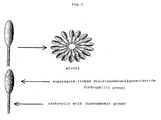
- the asparagine-linked disialoundecaoligosaccharide-fatty acid amide of the invention has both a hydrophilic group of asparagine-linked disialoundecaoligosaccharide and a hydrophobic group of fatty acid having a long carbon chain, so that a micell can be easily created in an aqueous solution as shown in Fig.1, and a polyvalent asparagine-linked oligosaccharide derivative can be obtained which is of a low molecular weight type and which is clear in terms of molecular weight and structure.
- a compound limited to a low molecular weight range can be produced more relatively easily than a polymer without difference in molecular weight by utilizing the production of a micell of monovalent molecules.
- the obtained compound can exhibit a high inhibiting activity against an influenza virus by the creation of a micell and forming polyvalent molecules.
- the drug of the invention contains as an effective component the forgoing asparagine-linked disialoundecaoligosaccharide-fatty acid amide. Further, the drug of the invention contains as an effective component the asparagine-linked disialoundecaoligosaccharide.
- the drug of the invention is provided in the form of a pharmaceutical composition
- a pharmaceutical composition comprising the foregoing effective component and pharmaceutical additives (carriers, excipients and so on).
- Useful carriers include, for example, lactose, glycerin and so on.
- Useful excipients are, for example, lactose, glucose, sucrose, mannitol and so on.
- the amount of the effective component to be used in the drug is about 0.01 to about 95 wt%, preferably about 1 to about 80 wt%.
- the administration route of the drug of the invention is not limited.
- An oral route or a parenteral route is employed.
- Parenteral administrations are, for example, intramascular, intravenous, subcutaneous and intraperitoneal administrations, applications of mucous membranes to nasal cavity, inhalation administration and so on.
- the form of the drug according to the invention is not limited.
- the form of the drug for oral administration is, for example, tablets, capsules, fine grains, powders, granules, solutions, syrups, etc.
- Examples of the formulations for parenteral administration are injections, drops, suppositories, inhalants, transmucosal absorbents, percutaneous absorbents, nose drops, ear drops, etc.
- the form of the drug according to the invention, pharmaceutical additives to be used in the drug, the process for manufacturing the drug and the like are all within the skill of the art.
- the dosage of the drug according to the invention can be suitably selected in consideration of all of patients sex, age, weight, severity of disease, purpose of administration such as prevention or therapies, other complications, etc.
- the dosage is generally in the range from 0.001 ⁇ g per kg of weight per day to 1000 ⁇ g per kg of weight per day, preferably from 0.01 ⁇ g per kg of weight per day to 100 ⁇ g per kg of weight per day.
- Decanoic acid (22 mg, 127.6 ⁇ mol) was dissolved in 1 ml of dimethylformamide. To the solution were added dicyclohexyl carbodiimide (23.9 mg, 115.8 ⁇ mol) and N-hydroxysuccinimide (13.4 mg, 116.4 ⁇ mol). The mixture was reacted at room temperature. After 6 hours, the reaction mixture was filtered, and the filtrate was concentrated. Then the residue (decanoic acid succinimide) was taken out. Then asparagine-linked disialoundecaoligosaccharide 1 (10.0 mg, 4.27 ⁇ mol) was dissolved in water (0.8 ml). Thereto added was sodium hydrogencarbonate (1.4 mg, 16.7 ⁇ mol).
- decanoic acid succinimide (3.2 mg, 11.8 ⁇ mol) dissolved in 1.2 ml of acetone was added thereto. The mixture was stirred at room temperature. After 180 minutes, it was confirmed by TLC that the raw material disappeared. Then the solution was freeze-dried. After it was freeze-dried, the residue was purified by gel filtration column chromatography (Sephadex G-25, 1.0 cm ⁇ 20 cm), and freeze-dried.
- Myristic acid (22 mg, 96.3 ⁇ mol) was dissolved in 1 ml of dimethylformamide. To the solution were added dicyclohexyl carbodiimide (18.2 mg, 88.2 ⁇ mol) and N-hydroxybenzotriazole (11.9 mg, 96.7 ⁇ mol). The mixture was reacted at room temperature. After 6 hours, the reaction mixture was filtered, and the filtrate was concentrated. Then the residue (myristic acid benzotriazole) was taken out. Then asparagine-linked disialoundecaoligosaccharide 1 (6 mg, 2.57 ⁇ mol) was dissolved in water (0.8 ml). Thereto added was sodium hydrogencarbonate (0.86 mg, 10.3 ⁇ mol).
- Stearic acid (22.0 mg, 77.3 ⁇ mol) was dissolved in 1 ml of dimethylformamide. To the solution were added dicyclohexyl carbodiimide (14.4 mg, 69.8 ⁇ mol) and N-hydroxybenzotriazole (9.5 mg, 77.2 ⁇ mol). The mixture was reacted at room temperature. After 6 hours, the reaction mixture was filtered, and the filtrate was concentrated. Then the residue (stearic acid benzotriazole) was taken out. Then asparagine-linked disialoundecaoligosaccharide 1 (8.0 mg, 3.36 ⁇ mol) was dissolved in water (1.2 ml). Thereto added was sodium hydrogencarbonate (3.2 mg, 38.1 ⁇ mol).
- stearic acid benzotriazole (8.8 mg, 20.2 ⁇ mol) dissolved in 1.8 ml of acetone was added thereto. The mixture was stirred at 37°C. After 195 minutes, it was confirmed by TLC that the reaction has completed. Then the solution was freeze-dried. After it was freeze-dried, the residue was purified by gel filtration column chromatography (Sephadex G-25, ⁇ 1.0 cm ⁇ 20 cm), and freeze-dried.
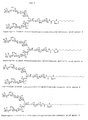
- Fig.2 shows chemical formula of each asparagine-linked disialoundecaoligosaccharide-fatty acid amide of Examples 1 to 4.
- Dansyl group was used for fluorescent-labelling.
- 6-[(N-Dansyl)amino]-hexyl-O- ⁇ -D-galactopylanosyl-(1 ⁇ 4)-2-acetoamido-2-deoxy- ⁇ -D-glucopyranoside hereinafter referred to as Dansyl-LacNac
- N-acetyllactosamine derivative was labelled with dansyl.
- Sialic acid was transferred to galactose using ⁇ (2,6) sialyltransferase to give Dansyl-labelled sialyl oligosaccharide (hereinafter referred to as NeuAc-LacNAc-Dansyl ).
- the decomposition ratio of fluorescent-labelled NeuAc-LacNAc-Dansyl was determined by high performance liquid chromatography and IC 50 was calculated from the resulting values. The results were summarized with substrate by substrate. The concentration of the inhibitor required for inhibiting the enzyme reaction by 50% (IC 50 ) is plotted as ordinates.
- the graph of Fig.4 indicates the results of determining the IC 50 with the amount of sialic acid in the reaction system. Since asparagine-linked disialoundecaoligosaccharide contains two sialic acids in a molecule, the measured values in determining IC 50 are twice the amount of sialic acid. It is as shown in Fig.4.
- the measured IC 50 with respect to mole concentrations of these inhibitors were determined.
- the IC 50 of inhibitors other than sialyl lactose is half the value of Fig.4 (Fig.5). It was understood from the graph of Fig.4 that only when decanoic acid having the shortest carbon chain is bonded to asparagine-linked disialoundecaoligosaccharide 1 as a hydrophobic group, the value of IC 50 is 3/4 the value of asparagine-linked disialoundecaoligosaccharide 1 to which no hydrophobic group is bonded. This is presumably for the following reason.
- Carboxylic acid as a hydrophobic group is bonded to asparagine-linked disialoundecaoligosaccharide as a hydrophilic group, whereby the compound is made into a micell and numerous asparagine-linked disialoundecaoligosaccharide are contained in one molecule.
- the longer the carbon chain of hydrophobic group becomes decanoic acid ⁇ myristic acid ⁇ stearic acid ⁇ behenic acid), the systematically lower the value of IC 50 becomes.
- the reason may be that the longer the carbon chain of hydrophobic group becomes, the larger the surface area of the micell bodies become and the more the number of asparagine-linked disialoundecaoligosaccharide in the surface of the molecule becomes, and the higher the capability of inhibiting the hydrolysis of sialic acid by NeuAc-LacNAc-Dansyl presumably is. It was also found from Fig.5 that only when the number of sialyl lactone is increased in the molecule only by one, the sialidase inhibition activity is enhanced, and the longer the carbon chain is, the higher the effect is.
- influenza virus (hemagglutinin) inhibiting activity was determined.
- the reaction conditions are as follows.
- influenza virus used was A/New Caledonia/20/99 (H1N1).
- the sample was inoculated with fertilized fowl ovum and the chorioallantois fluid was collected. After ultracentifuge purification and formalin inactivation, the obtained sample was used as as a purified virus antigen. Then after treatment with ether, HA (hemagglutinin) fractions were collected to give HA split fractions.
- the asparagine-linked disialoundecaoligosaccharide-fatty acid amide and asparagine-linked disialoundecaoligosaccharide according to the invention have a high virus infection inhibiting activity and/or growth inhibiting activity and, for example, exhibit an excellent effect as a drug for preventing and/or curing virus diseases such as influenza virus infectious diseases.
Landscapes
- Health & Medical Sciences (AREA)
- Life Sciences & Earth Sciences (AREA)
- Chemical & Material Sciences (AREA)
- Medicinal Chemistry (AREA)
- General Health & Medical Sciences (AREA)
- Molecular Biology (AREA)
- Animal Behavior & Ethology (AREA)
- Public Health (AREA)
- Chemical Kinetics & Catalysis (AREA)
- Organic Chemistry (AREA)
- Pharmacology & Pharmacy (AREA)
- Veterinary Medicine (AREA)
- Virology (AREA)
- Epidemiology (AREA)
- Polymers & Plastics (AREA)
- Materials Engineering (AREA)
- Biochemistry (AREA)
- Engineering & Computer Science (AREA)
- Nuclear Medicine, Radiotherapy & Molecular Imaging (AREA)
- Oncology (AREA)
- Communicable Diseases (AREA)
- General Chemical & Material Sciences (AREA)
- Pulmonology (AREA)
- Pharmaceuticals Containing Other Organic And Inorganic Compounds (AREA)
- Polysaccharides And Polysaccharide Derivatives (AREA)
- Medicinal Preparation (AREA)
- Medicines That Contain Protein Lipid Enzymes And Other Medicines (AREA)
Abstract
Description
- The present invention relates to asparagine-linked disialoundecaoligosaccharide-fatty acid amide, and a composition or a drug containing the same.
- Influenza is an infectious disease which is prevalent in the world almost every year. Many people are infected with influenza every year despite the existence of vaccine and suffer from fever, headache, musculus arthralgia and the like. Further they are inflicted with complications, i.e. influenza brain inflammation and encephalopathy and may die of the complication in the worst case. The influenza virus is so feared despite the existence of vaccine because influenza virus tends to cause gene mutation, leading to change of antigen form so that the antibody increased in the body by vaccine fails to recognize it, and the effect of vaccine is lowered. As described above, even if it is predictable what type of influenza will prevail every year, a problem is raised in that a proper vaccine can not be rapidly supplied since a new type of virus will be generated all at once. In this situation, it is necessary to develop a highly effective drug which can show high effects on various kinds of influenza viruses. In recent years, the infection mechanism of influenza viruses have been clarified in terms of molecule levels and gene levels due to marked progress of scientific technology. It is now under way to prepare various kinds of influenza virus infection inhibitors.
- The infection of influenza viruses and the mechanism of growth are as follows. First, a virus is made to invade the living body. On approaching the host cell, a trimer of protein called hemagglutinin on the outer layer of the virus, becomes specifically bonded to a sialyl oligosaccharide, i.e. a receptor on the host cell. The sialyl oligosaccharide contains sialic acid at the end. The sialic acid is chiefly involved in bonding to hemagglutinin. Then a membrane fusion occurs between the virus and the host cell so that the virus makes RNA infected with the host cell. Then, the virus gene is replicated therein for the advent of virus offspring. Then, a virus is germinated outside the host cell to complete the propagation. In germination of a virus, hemagglutinin becomes bonded to sialyl oligosaccharide again. The sialic acid is separated from the sialyl oligosaccharide by sialidase, namely an enzyme, on the outer layer of the same virus, whereby germination can be achieved.
- Recently new remedies have been developed for inhibiting the activity of sialidase reaction occurring at the last stage of virus infection. These two drugs are available under the names Zanamivir (trade name, Relenza, Glaxo Wellcome) and Oceltamivir phosphate (trade name, Tamiflu, Japanese Roche Corp.). However, these two sialidase inhibitors are able to inhibit the infection at the last stage of infection and are less effective in inhibition because it acts after the growth of a virus has reached the peak. It is desirable to administer the drug within 48 hours after development of infection. Therefore, a compound useful as an effective drug is demanded which inhibits the infection at the first stage at which the virus is bonded to the host cell.
- It is already known that in the development of hemagglutinin inhibitors, when a polyvalent sialyl oligosaccharide derivative having a number of sialyl oligosaccharides in a molecule shows a higher inhibiting activity against an influenza virus than a monovalent sialyl oligosaccharide derivative. This is because an affinity between a ligand and a receptor is more increased when polyvalent molecules having a plurality of sialyl oligosaccharide derivatives are bonded thereto than when plural monovalent sialyl oligosaccharide derivatives are bonded to numerous hemagglutinins existing on the surface of the virus.
- Up to date, a multiplicity of polyvalent sialyl oligosaccharide derivatives have been developed with the expectation of such effect. Kanie et al prepared a styrene polymer (1) having sialyl lactose bonded thereto and researched the relation of the polymer with influenza. It was found that the polymer exhibits inhibition activity 1,000 times as high as fetuin which is a sialyl oligosaccharide protein.

- Whitesides et al synthesized a polyacrylamide polymer (2) having a sialic acid derivative bonded and showed that the higher the molecular weight of the polymer is, the higher the inhibition activity is.

- However, the polymer, i.e. high molecular weight compound, is a mixture of polymers having different molecular weights and thus has a structure which is not clear. If the compound contains a polymer having a molecular weight of 60 KDa or higher, the polymer remains in the body since it has too high a molecular weight to be removed from the body. Specifically it can not be passed through Bowman s capsules in Malpighian corpuscles of the kidney, so that the balance of metabolism in the liver is thrown. Thus, the defect is likely to do harm to the human body. For this possibility, FDA (The Food Drug Administration) does not approve the compounds like such polymer type for the safety problem even if the compound is an effective influenza infection inhibitor. An object of the invention is to provide a novel asparagine-linked disialoundecaoligosaccharide-fatty acid amide, and a composition or a drug containing the same.
- Another object of the invention is to provide a drug for preventing and/or curing virus diseases such as influenza virus infectious diseases, the drug having a high activity of inhibiting the virus infection and/or the growth.
- The invention provides an asparagine-linked disialoundecaoligosaccharide-fatty acid amide.
- The invention provides a composition or a drug containing the asparagine-linked disialoundecaoligosaccharide-fatty acid amide.
- The invention also provides a drug containing an asparagine-linked disialoundecaoligosaccharide.
- The asparagine-linked disialoundecaoligosaccharide-fatty acid amide of the invention is a compound which can be prepared by reacting an asparagine-linked disialoundecaoligosaccharide with a fatty acid.
- The asparagine-linked disialoundecaoligosaccharide is an asparagine-linked oligosaccharide (3) shown below.

- This asparagine-linked disialoundecaoligosaccharide can be prepared, e.g., according to Reference Example 1 of Japanese Patent Application No.2002-196821.
- Examples of the fatty acid constituting the fatty acid amide in the invention are aliphatic saturated or aliphatic unsaturated fatty acids having 6 to 32 carbon atoms and combinations of at least two kinds thereof. Examples of the aliphatic saturated fatty acids include straight chain or branched chain hexanoic acid (caproic acid, 2-ethyl butanoic acid and so on), heptanoic acid (enanthic acid and so on), octanoic acid (caprylic acid, 2-ethylhexanoic acid and so on), nonanoic acid (peralgonic acid and so on), decanoic acid (capric acid and so on), undecanoic acid, (undecylic acid and so on), dodecanoic acid (lauric acid, 2-ethyldecanoic acid and so on), tridecanoic acid (tridecylic acid and so on), tetradecanoic acid (myristic acid and so on), hexadecanoic acid (palmitic acid and so on), octadecanoic acid (stearic acid and so on), eicosanic acid (arachic acid and so on), docosanoic acid (behenic acid and so on), and tetracosanoic acid (lignoceric acid and so on).
- Examples of the aliphatic unsaturated fatty acids include straight chain or branched chain octenoic acid, decenoic acid, undecenoic acid, (undecylenic acid and so on), dodecenoic acid, octadecenoic acid (oleic acid, eraidic acid and so on), linoleic acid, linolenic acid and so on. Among these fatty acids, preferred are fatty acids having 8 to 24 carbon atoms, and more preferred are those having 10 to 22 carbon atoms, especially preferred are decanoic acid, dodecanoic acid, tetradecanoic acid, hexadecanoic acid, octadecanoic acid, eicosanic acid, docosanoic acid and octadecenoic acid. Among them, most preferred are straight chain fatty acids such as capric acid, lauric acid, myristic acid, palmitic acid, stearic acid, arachic acid, behenic acid and oleic acid.
- The asparagine-linked disialoundecaoligosaccharide is reacted with the fatty acid preferably in the presence of a reaction activator. Useful reaction activators are N-hydroxysuccinimide, N-hydroxybenzotriazole (HOBT) and so on.
- The asparagine-linked disialoundecaoligosaccharide is reacted with the fatty acid in a ratio of 1 mole of asparagine-linked disialoundecaoligosaccharide and preferabyl about 0.1 to about 10 moles of the fatty acid. The reaction activator is preferably used in an amount of about 0.1 mole to about 10 moles per mole of asparagine-linked disialoundecaoligosaccharide. The reaction is usually conducted at 0 to 80 C, preferably 10 to 60 C, and is usually completed in about 10 minutes to about 5 hours.
- The asparagine-linked disialoundecaoligosaccharide-fatty acid amide thus obtained can be purified, e.g., by filtration, high performance liquid chromatography (HPLC) or the like. These compounds can be identified by NMR, HPLC (ODS column), etc. in which the detection time in UV is determined.
- The asparagine-linked disialoundecaoligosaccharide-fatty acid amide of the invention has both a hydrophilic group of asparagine-linked disialoundecaoligosaccharide and a hydrophobic group of fatty acid having a long carbon chain, so that a micell can be easily created in an aqueous solution as shown in Fig.1, and a polyvalent asparagine-linked oligosaccharide derivative can be obtained which is of a low molecular weight type and which is clear in terms of molecular weight and structure.
- In this way, a compound limited to a low molecular weight range can be produced more relatively easily than a polymer without difference in molecular weight by utilizing the production of a micell of monovalent molecules. Thus, for example, the obtained compound can exhibit a high inhibiting activity against an influenza virus by the creation of a micell and forming polyvalent molecules.
- The drug of the invention contains as an effective component the forgoing asparagine-linked disialoundecaoligosaccharide-fatty acid amide. Further, the drug of the invention contains as an effective component the asparagine-linked disialoundecaoligosaccharide.
- The drug of the invention is provided in the form of a pharmaceutical composition comprising the foregoing effective component and pharmaceutical additives (carriers, excipients and so on). Useful carriers include, for example, lactose, glycerin and so on. Useful excipients are, for example, lactose, glucose, sucrose, mannitol and so on. The amount of the effective component to be used in the drug is about 0.01 to about 95 wt%, preferably about 1 to about 80 wt%.
- The administration route of the drug of the invention is not limited. An oral route or a parenteral route is employed. Parenteral administrations are, for example, intramascular, intravenous, subcutaneous and intraperitoneal administrations, applications of mucous membranes to nasal cavity, inhalation administration and so on. The form of the drug according to the invention is not limited. The form of the drug for oral administration is, for example, tablets, capsules, fine grains, powders, granules, solutions, syrups, etc. Examples of the formulations for parenteral administration are injections, drops, suppositories, inhalants, transmucosal absorbents, percutaneous absorbents, nose drops, ear drops, etc.
- The form of the drug according to the invention, pharmaceutical additives to be used in the drug, the process for manufacturing the drug and the like are all within the skill of the art. The dosage of the drug according to the invention can be suitably selected in consideration of all of patients sex, age, weight, severity of disease, purpose of administration such as prevention or therapies, other complications, etc. The dosage is generally in the range from 0.001 µ g per kg of weight per day to 1000 µg per kg of weight per day, preferably from 0.01 µ g per kg of weight per day to 100 µ g per kg of weight per day.
-
- Fig.1 shows a micell of asparagine-linked disialoundecaoligosaccharide-fatty acid amide.
- Fig.2 shows the chemical formula of each of asparagine-linked disialoundecaoligosaccharide-fatty acid amides prepared in Examples 1 to 4.
- Fig.3 shows a reaction scheme for producing sialylated Dansyl-LacNAc.
- Fig.4 shows the sialidase inhibition activity, based on the amount of sialic acid in each inhibitor.
- Fig.5 shows the sialidase inhibition activity, based on the mole concentration of each inhibitor.
- The invention will be described in greater detail with reference to Reference Example, Example and Test Example to which, however, the invention is not limited.
- 1HNMR was determined by AVANCE 400(indicated as 400 MHz) of Bruker. When a heavy solvent was used, the solvent peak was taken as the standard. The chemical shift was indicated as 6 (ppm) and the binding constant was referred to as J(Hz). DC-Platten Kiesegel 60 F254 (
Art 1,05715) manufactured by E. Merck was used for a reaction detection (hereinafter referred to as TLC ). Used as a column for high performance liquid chromatography (HPLC) was COSMOSIL PACKED ODS COLUMN ( 4.6 × 150 mm) manufactured by Nacalai Tesque, Inc., Shodex C18-5B manufactured by Showa Denko K.K. Used as a fluorescence spectrophotometer was FP 210 Spectrofluorometer manufactured by JASCO, Inc. - In 7.15 ml of a tris-hydrochloric acid-calcium chloride buffer (TRIZUMA BASE 0.05 mol/l, calcium chloride 0.01 mol/l, pH 7.5) were dissolved a crude SGP (sialyl glycopeptide) (238.3 mg, 80.6 µmol), and sodium azide (4.77 mg, 80.8 µmol). Then Actinase-E (53.8 mg) was added to the solution, and the mixture was allowed to react at 37 C. After 165 hours, the completion of reaction was confirmed by TLC and the reaction mixture was filtered. Then the filtrate was freeze-dried. Thereafter the residue was purified by gel filtration column chromatography (Sephadex G-25, 2.5 cm × 100 cm) to give a desired asparagine-linked disialoundecaoligosaccharide 1 (yield 100.5 mg, 53%).
1H-NMR(400MHz, D2O)
δ 5.22(1H, s, Man4-H1), 5.16(1H, d, J=9.6Hz, GlcNAc-H1), 5.04(1H, s, Man4'-H1), 4.86(1H, s, Man3-H1), 4.70-4.68(3H, m, GlcNAc2-H1 GlcNAc5,5'-H1), 4.53(2H, d, J=6.7Hz, Gal6,6'-H1), 4.34(1H, bd, Man3-H2), 4.28(1H, bd, Man4'-H2), 4.20(1H, bd, Man4-H2) , 3.03(2H, dd, J=4.2Hz, 17.2Hz, Asn-βCH), 2.95(2H, dd, J=6.9Hz, 17.1Hz, Asn-βCH), 2.76(2H, dd, J=4.6Hz, 12.4Hz, NeuAc7,7'-H3eq), 2.14(18H, s×6, -Ac), 1.80(2H, dd, J=12.2Hz, 12.1Hz, NeuAc7,7'-H3ax) - Decanoic acid (22 mg, 127.6 µmol) was dissolved in 1 ml of dimethylformamide. To the solution were added dicyclohexyl carbodiimide (23.9 mg, 115.8 µmol) and N-hydroxysuccinimide (13.4 mg, 116.4 µmol). The mixture was reacted at room temperature. After 6 hours, the reaction mixture was filtered, and the filtrate was concentrated. Then the residue (decanoic acid succinimide) was taken out. Then asparagine-linked disialoundecaoligosaccharide 1 (10.0 mg, 4.27 µmol) was dissolved in water (0.8 ml). Thereto added was sodium hydrogencarbonate (1.4 mg, 16.7 µmol). Then decanoic acid succinimide (3.2 mg, 11.8 µmol) dissolved in 1.2 ml of acetone was added thereto. The mixture was stirred at room temperature. After 180 minutes, it was confirmed by TLC that the raw material disappeared. Then the solution was freeze-dried. After it was freeze-dried, the residue was purified by gel filtration column chromatography (Sephadex G-25, 1.0 cm × 20 cm), and freeze-dried. Thereafter it was purified by high performance liquid chromatography (ODS column, 4.6 × 150 mm, eluent: gradient (60 minutes)
water 100%→acetonitrile 100%, flow rate 1.0 ml/min) to give the contemplated decanoic acid-asparagine-linked disialoundecaoligosaccharide 3 (yield 7.7 mg, 72%). 1H-NMR(400MHz, D2O)
δ 5.23(1H, s, Man4-H1), 5.12(1H, d, J=9.6Hz, GlcNAc-H1), 5.04(1H, s, Man4'-H1), 4.87(1H, s, Man3-H1), 4.71-4.69(3H, m, GlcNAc2-H1 GlcNAc5,5'-H1), 4.59(1H, dd, J=4.5Hz, 8.0Hz, Asn-αCH), 4.53(2H, d, J=7.9Hz, Gal6,6'-H1), 4.34(1H, bd, Man3-H2), 4.29(1H, bd, Man4'-H2), 4.21(1H, bd, Man4-H2), 2.88(2H, dd, J=4.4Hz, 15.5Hz, Asn-βCH), 2.78-2.70(3H, m, NeuAc7,7'-H3eq, Asn-βCH), 2.34 (2H, t, J=7.4Hz, COCH2), 2.14 (18H, s× 6, -Ac), 1.80(2H, dd, J=12.2Hz, 12.0Hz, NeuAc7,7'-H3ax), 1.71-1.60(2H, m, CH2), 1.42-1.30(12H, m, CH2), 0.95(3H, t, J=6.5Hz, CH3) - Myristic acid (22 mg, 96.3 µmol) was dissolved in 1 ml of dimethylformamide. To the solution were added dicyclohexyl carbodiimide (18.2 mg, 88.2 µ mol) and N-hydroxybenzotriazole (11.9 mg, 96.7 µ mol). The mixture was reacted at room temperature. After 6 hours, the reaction mixture was filtered, and the filtrate was concentrated. Then the residue (myristic acid benzotriazole) was taken out. Then asparagine-linked disialoundecaoligosaccharide 1 (6 mg, 2.57 µmol) was dissolved in water (0.8 ml). Thereto added was sodium hydrogencarbonate (0.86 mg, 10.3 µmol). Then myristic acid benzotriazole (2.8 mg, 7.70 µmol) dissolved in 1.2 ml of acetone was added thereto. The mixture was stirred at room temperature. After 180 minutes, it was confirmed by TLC that the raw material disappeared. Then the solution was freeze-dried. After it was freeze-dried, the residue was purified by gel filtration column chromatography (Sephadex G-25, Ø 1.0 cm × 20 cm), and freeze-dried. Thereafter it was purified by high performance liquid chromatography (ODS column, Ø4.6 × 150 mm, eluent: gradient (60 minutes)
water 100%→acetonitrile 100%, flow rate 1.0 ml/min) to give the contemplated myristic acid-asparagine-linked disialoundecaoligosaccharide 4 (yield 5.3 mg, 81%).
1H-NMR(400MHz, D2O)
δ 5.23 (1H, s, Man4-H1), 5.12(1H, d, J=9.6Hz, GlcNAc-H1), 5.04(1H, s, Man4'-H1), 4.87(1H, s, Man3-H1), 4.70-4. 69 (3H, m, GlcNAc2-H1 GlcNAc5, 5'-H1), 4.59(1H, dd, J=4.6Hz, 8.1Hz, Asn-αCH), 4.54(2H, d, J=7.8Hz, Gal6, 6'-H1), 4.34 (1H, bd, Man3-H2), 4.29(1H, bd, Man4'-H2), 4.20(1H, bd, Man4-H2), 2.88(2H, dd, J=4.6Hz, 15.6Hz, Asn-βCH), 2.83-2.70(3H, m, NeuAc7,7'-H3eq, Asn-βCH), 2.34(2H, t, J=7.4Hz, COCH2), 2.14(18H, s×6, -Ac), 1.80(2H, dd, J=12.1Hz, 12.1Hz, NeuAc7,7'-H3ax), 1.71-1.60 (2H, m, CH2), 1.42-1.30 (20H, m, CH2), 0.95(3H, t, J=6.5Hz, CH3) - Stearic acid (22.0 mg, 77.3 µmol) was dissolved in 1 ml of dimethylformamide. To the solution were added dicyclohexyl carbodiimide (14.4 mg, 69.8 µmol) and N-hydroxybenzotriazole (9.5 mg, 77.2 µmol). The mixture was reacted at room temperature. After 6 hours, the reaction mixture was filtered, and the filtrate was concentrated. Then the residue (stearic acid benzotriazole) was taken out. Then asparagine-linked disialoundecaoligosaccharide 1 (8.0 mg, 3.36 µmol) was dissolved in water (1.2 ml). Thereto added was sodium hydrogencarbonate (3.2 mg, 38.1 µmol). Then stearic acid benzotriazole (8.8 mg, 20.2 µmol) dissolved in 1.8 ml of acetone was added thereto. The mixture was stirred at 37°C. After 195 minutes, it was confirmed by TLC that the reaction has completed. Then the solution was freeze-dried. After it was freeze-dried, the residue was purified by gel filtration column chromatography (Sephadex G-25, ∅ 1.0 cm × 20 cm), and freeze-dried. Thereafter it was purified by high performance liquid chromatography (ODS column, Ø4.6 × 150 mm, eluent: gradient (60 minutes)
water 100%→acetonitrile 100%, flow rate 1.0 ml/min) to give the contemplated stearic acid-asparagine-linked disialoundecaoligosaccharide 5 (yield 6.2 mg, 69%). 1H-NMR(400MHz, D2O)
δ 5.23 (1H, s, Man4-H1), 5.12 (1H, d, J=9.5Hz, GlcNAc-H1), 5.04(1H, s, Man4'-H1), 4.86(1H, s, Man3-H1), 4.71-4.69(3H, m, GlcNAc2-H1 GlcNAc5,5'-H1), 4.59 (1H, dd, J=4.6Hz, 8.2Hz, Asn-αCH), 4.54(2H, d, J=7.8Hz, Gal6,6'-H1), 4.34(1H, bd, Man3-H2), 4.29 (1H, bd, Man4'-H2), 4.20(1H, bd, Man4-H2), 2.88(2H, dd, J=4.7Hz, 15.5Hz, Asn-βCH), 2.78-2.70(3H, m, NeuAc7,7' -H3eq, Asn-βCH), 2. 34 (2H, t, J=7.3Hz, COCH2), 2.16(18H, s × 6, -Ac), 1.80(2H, dd, J=12.1Hz, 12.1Hz, NeuAc7,7'-H3ax), 1.71-1.60(2H, m, CH2), 1.42-1.30(28H, m, CH2), 0.96(3H, t, J=6.7Hz, CH3) - Behenic acid (20.0 mg, 58.7 µ mol) was dissolved in 3 ml of dimethylformamide. To the solution were added dicyclohexyl carbodiimide (10.3 mg, 50.0 µmol) and N-hydroxybenzotriazole (6.8 mg, 50.3 µmol). The mixture was reacted at room temperature. After 19 hours, the reaction mixture was filtered, and the filtrate was concentrated. Then the residue (behenic acid benzotriazole) was taken out. Then asparagine-linked disialoundecaoligosaccharide 1 (5 mg, 2.1 µmol) was dissolved in water (1.2 ml). Thereto added was sodium hydrogencarbonate (2.0 mg, 21.0 µmol). Then behenic acid benzotriazole (8.8 mg, 18.9 µmol) dissolved in 1.8 ml of acetone was added thereto. The mixture was stirred at 37°C. After 20 hours, it was confirmed by TLC that the reaction has completed. Then the solution was freeze-dried. After it was freeze-dried, the residue was purified by gel filtration column chromatography (Sephadex G-25, Ø 1.0 cm × 20 cm), and freeze-dried. Thereafter it was purified by high performance liquid chromatography (ODS column, Ø4.6 × 150 mm, eluent: gradient (60 minutes)
water 100%→acetonitrile 100%, flow rate 1.0 ml/min) to give the contemplated behenic acid-asparagine-linked disialoundecaoligosaccharide 6 (yield 3.24 mg, 57%). 1H-NMR(400MHz, D2O)
δ 5.23 (1H, s, Man4-H1), 5.12(1H, d, J=9.2Hz, GlcNAc-H1), 5.04 (1H, s, Man4'-H1), 4.86(1H, s, Man3-H1), 4.70-4.69(3H, m, GlcNAc2-H1 GlcNAc5,5'-H1), 4.59(1H, dd, J=4.5Hz, 8.0Hz, Asn-αCH), 4.54(2H, d, J=7.4Hz, Gal6, 6'-H1), 4.34 (1H, bd, Man3-H2), 4.29 (1H, bd, Man4'-H2), 4.21 (1H, bd, Man4-H2), 2.88(2H, dd, J=4.4Hz, 16.4Hz, Asn-βCH), 2.78-2.70 (3H, m, NeuAc7, 7'-H3eq, Asn-βCH), 2.35(2H, t, J=7.3Hz, COCH2), 2.13(18H, s×6, -Ac), 1.80(2H, dd, J=12.1Hz, 12.0Hz, NeuAc7,7'-H3ax), 1.71-1.60(2H, m, CH2), 1.42-1.30 (36H, m, CH2), 0.95(3H, t, J=6.6Hz, CH3) - Fig.2 shows chemical formula of each asparagine-linked disialoundecaoligosaccharide-fatty acid amide of Examples 1 to 4.
- It was investigated whether asparagine-linked disialoundecaoligosaccharide-fatty acid amide is really made into a micell in an aqueous solution. For this purpose, the sialidase inhibition activity was measured with respect to fluorescent-labelled sialyl oligosaccharide to determine the IC50. If the asparagine-linked
disialoundecaoligosaccharide 1, and four synthesized glicolipid derivatives, respectively were made to coexist with fluorescent-labelledsialyl saccharide 7 to determine the sialidase inhibition activity and if the inhibition activity is increased depending on the length of carbon chain, it is presumably the effect of micell creation. First, fluorescent-labelled sialyl oligosaccharide was produced. Dansyl group was used for fluorescent-labelling. There was synthesized 6-[(N-Dansyl)amino]-hexyl-O-β-D-galactopylanosyl-(1→ 4)-2-acetoamido-2-deoxy-β-D-glucopyranoside (hereinafter referred to as Dansyl-LacNac ) in which N-acetyllactosamine derivative was labelled with Dansyl. Sialic acid was transferred to galactose using α (2,6) sialyltransferase to give Dansyl-labelled sialyl oligosaccharide (hereinafter referred to as NeuAc-LacNAc-Dansyl ). - Dissolved in cacodylic acid buffer (pH 6.0, 50 mM) were Dansyl-LacNAc, CMP-sialic acid, α (2,6) sialyltransferase, alkaline phosphatase and bovine serum alubmin. Then the solution was reacted at 37 C for 65 hours and purified by high performance liquid chromatography, giving NeuAc-LacNAc-
Dansyl 7 in a yield of 69%. 1HNMR of thecompound 7 was measured. It was confirmed that 3-position equatorial peak and axial proton peak (peaks specific to sialic acid) existed in 2.74 ppm and 1.80 ppm. When it was compared with 1HNMR of raw material Dansyl-LacNAc, the 1-position proton peak of galactose ofcompound 7 was shifted, as compared with the peak of the raw material, to the higher magnetic field, so that it was found that sialic acid was bonded to 6-position of galactose. In this way, thecompound 7 was identified. The foregoing reaction is shown in Fig.3. - In an experiment wherein NeuAc-LacNAc-Dansyl is hydrolyzed with sialidase, the synthesized
glycolipid derivatives disialoundecaoligosaccharide 1 were added as the inhibitor, and each of the IC50 values was determined. The reaction conditions are as follows. Added to 100 µ M of NeuAc-LacNAc-Dansyl was each of inhibitors in an amount of each of 10 µM, 100 µM and 300 µM (the solvent was a solution of HEPES buffer having bovine serum albumin dissolved therein). Then sialidase was added and the mixture was incubated at 37 C for 30 minutes. The decomposition ratio of fluorescent-labelled NeuAc-LacNAc-Dansyl was determined by high performance liquid chromatography and IC50 was calculated from the resulting values. The results were summarized with substrate by substrate. The concentration of the inhibitor required for inhibiting the enzyme reaction by 50% (IC50) is plotted as ordinates. The graph of Fig.4 indicates the results of determining the IC50 with the amount of sialic acid in the reaction system. Since asparagine-linked disialoundecaoligosaccharide contains two sialic acids in a molecule, the measured values in determining IC50 are twice the amount of sialic acid. It is as shown in Fig.4. - The measured IC50 with respect to mole concentrations of these inhibitors were determined. The IC50 of inhibitors other than sialyl lactose is half the value of Fig.4 (Fig.5). It was understood from the graph of Fig.4 that only when decanoic acid having the shortest carbon chain is bonded to asparagine-linked
disialoundecaoligosaccharide 1 as a hydrophobic group, the value of IC50 is 3/4 the value of asparagine-linkeddisialoundecaoligosaccharide 1 to which no hydrophobic group is bonded. This is presumably for the following reason. Carboxylic acid as a hydrophobic group is bonded to asparagine-linked disialoundecaoligosaccharide as a hydrophilic group, whereby the compound is made into a micell and numerous asparagine-linked disialoundecaoligosaccharide are contained in one molecule. This means that the frequency of being caught by sialidase is increased, and the capability of inhibiting the removal of sialic acid by NeuAc-LacNAc-Dansyl is presumably enhanced. It was also found that the longer the carbon chain of hydrophobic group becomes (decanoic acid → myristic acid → stearic acid → behenic acid), the systematically lower the value of IC50 becomes. The reason may be that the longer the carbon chain of hydrophobic group becomes, the larger the surface area of the micell bodies become and the more the number of asparagine-linked disialoundecaoligosaccharide in the surface of the molecule becomes, and the higher the capability of inhibiting the hydrolysis of sialic acid by NeuAc-LacNAc-Dansyl presumably is. It was also found from Fig.5 that only when the number of sialyl lactone is increased in the molecule only by one, the sialidase inhibition activity is enhanced, and the longer the carbon chain is, the higher the effect is. - With addition of each of asparagine-linked disialoundecaoligosaccharide-fatty acid amides of Examples 1 to 4 (
derivatives - The influenza virus used was A/New Caledonia/20/99 (H1N1).
- The sample was inoculated with fertilized fowl ovum and the chorioallantois fluid was collected. After ultracentifuge purification and formalin inactivation, the obtained sample was used as as a purified virus antigen. Then after treatment with ether, HA (hemagglutinin) fractions were collected to give HA split fractions.
- 1) Two mg of each of
derivatives - 2) The sample was used as it was or as diluted 2-fold, 4-fold, or 8-fold with PBS.
- 3) 10 µl of each sample and 40 µl of virus diluted solution were placed and mixed in a 96-well U plate (Sanko Junyaku Co., Ltd.).
- 4) The mixture was allowed to stand at 4 C for 60 minutes.
- 5) 50 µl of PBS was added to the mixture to give 50 µl of 2-fold dilution solution.
- 6) The solution was adjusted to 0.5% of fowl hematid (Nippon Biotest Laboratories Inc.).
- 7) 50 µl of blood cell suspension was applied to each well to give a mixture. The mixture was allowed to stand at 4 C for 60 minutes.
- 8) The measurement of influenza virus (hemagglutinin) inhibiting activity shows that the inhibiting activity was exhibited when each derivative was used in the following amount: 190.0 µmol of
derivative 3; 95.0 µ mol ofderivative 4; 47.5 µ mol ofderivative 5; and 37.5 µ mol ofderivative 6. - The asparagine-linked disialoundecaoligosaccharide-fatty acid amide and asparagine-linked disialoundecaoligosaccharide according to the invention have a high virus infection inhibiting activity and/or growth inhibiting activity and, for example, exhibit an excellent effect as a drug for preventing and/or curing virus diseases such as influenza virus infectious diseases.
Claims (10)
- An asparagine-linked disialoundecaoligosaccharide-fatty acid amide.
- An asparagine-linked disialoundecaoligosaccharide-fatty acid amide according to claim 1 wherein the fatty acid is one having 8 to 24 carbon atoms.
- An asparagine-linked disialoundecaoligosaccharide-fatty acid amide according to claim 2 wherein the fatty acid is one having 10 to 22 carbon atoms.
- An asparagine-linked disialoundecaoligosaccharide-fatty acid amide according to claim 3 wherein the fatty acid is at least one selected from the group consisting of capric acid, lauric acid, myristic acid, palmitic acid, stearic acid, arachic acid, behenic acid and oleic acid.
- A composition comprising asparagine-linked disialoundecaoligosaccharide-fatty acid amide of any one of claims 1 to 4, and a pharmaceutical additive.
- A composition according to claim 5 wherein the pharmaceutical additive is at least one selected from the group consisting of lactose, glycerin, glucose, sucrose and mannitol.
- A drug containing the asparagine-linked disialoundecaoligosaccharide-fatty acid amide.
- A drug comprising at least one selected from asparagine-linked disialoundecaoligosaccharide-fatty acid amide and asparagine-linked disialoundecaoligosaccharide, and a pharmaceutical additive.
- A drug according to claim 7 or 8 which is a drug for preventing and/or curing virus diseases.
- A drug according to any one of claims 7 to 9 which is a drug for preventing and/or curing influenza virus infectious diseases.
Applications Claiming Priority (2)
| Application Number | Priority Date | Filing Date | Title |
|---|---|---|---|
| JP2003187931 | 2003-06-30 | ||
| PCT/JP2004/009521 WO2005000906A1 (en) | 2003-06-30 | 2004-06-29 | Disialoundecasaccharide chain asparagine/fatty acid amide and medical drug containing the same |
Publications (3)
| Publication Number | Publication Date |
|---|---|
| EP1640383A1 true EP1640383A1 (en) | 2006-03-29 |
| EP1640383A4 EP1640383A4 (en) | 2008-08-06 |
| EP1640383B1 EP1640383B1 (en) | 2014-02-19 |
Family
ID=33549738
Family Applications (1)
| Application Number | Title | Priority Date | Filing Date |
|---|---|---|---|
| EP04746990.3A Expired - Lifetime EP1640383B1 (en) | 2003-06-30 | 2004-06-29 | Disialoundecasaccharide chain asparagine/fatty acid amide and medical drug containing the same |
Country Status (9)
| Country | Link |
|---|---|
| US (1) | US7687478B2 (en) |
| EP (1) | EP1640383B1 (en) |
| JP (1) | JP4707107B2 (en) |
| KR (1) | KR100731869B1 (en) |
| CN (1) | CN100500694C (en) |
| AU (1) | AU2004252028B2 (en) |
| CA (1) | CA2529162C (en) |
| TW (1) | TWI293956B (en) |
| WO (1) | WO2005000906A1 (en) |
Cited By (2)
| Publication number | Priority date | Publication date | Assignee | Title |
|---|---|---|---|---|
| WO2014055988A1 (en) * | 2012-10-05 | 2014-04-10 | Velico Medical, Inc. | Platelet additive solution having a beta-galactosidase inhibitor |
| US9788539B2 (en) | 2011-05-17 | 2017-10-17 | Velico Medical, Inc. | Platelet protection solution having beta-galactosidase and sialidase inhibitors |
Families Citing this family (1)
| Publication number | Priority date | Publication date | Assignee | Title |
|---|---|---|---|---|
| JP2011153096A (en) * | 2010-01-27 | 2011-08-11 | Kaneka Corp | Fluorescent sugar-chain probe |
Family Cites Families (3)
| Publication number | Priority date | Publication date | Assignee | Title |
|---|---|---|---|---|
| BR0114373A (en) * | 2000-10-02 | 2004-02-17 | Novo Nordisk As | Eukaryotic host cell, methods for the production of fvii and fviia or variants thereof, a vitamin ke-dependent protein of a fvii-producing eukaryotic host cell or analog, recombinant vector, fvii and fviia or variants thereof, and , recombinant vitamin K dependent protein |
| CA2451971C (en) | 2001-06-19 | 2010-09-07 | Otsuka Chemical Co., Ltd. | Process for producing sugar chain asparagine derivative |
| AU2003292641B2 (en) * | 2002-12-26 | 2007-11-29 | Glytech, Inc. | Three-branched sugar-chain asparagine derivatives, the sugar-chain asparagines, the sugar chains, and processes for producing these |
-
2004
- 2004-06-29 CA CA2529162A patent/CA2529162C/en not_active Expired - Fee Related
- 2004-06-29 AU AU2004252028A patent/AU2004252028B2/en not_active Ceased
- 2004-06-29 JP JP2005511150A patent/JP4707107B2/en not_active Expired - Lifetime
- 2004-06-29 US US10/562,059 patent/US7687478B2/en not_active Expired - Fee Related
- 2004-06-29 KR KR1020057024437A patent/KR100731869B1/en not_active Expired - Fee Related
- 2004-06-29 EP EP04746990.3A patent/EP1640383B1/en not_active Expired - Lifetime
- 2004-06-29 CN CNB2004800174474A patent/CN100500694C/en not_active Expired - Fee Related
- 2004-06-29 WO PCT/JP2004/009521 patent/WO2005000906A1/en not_active Ceased
- 2004-06-30 TW TW093119396A patent/TWI293956B/en not_active IP Right Cessation
Non-Patent Citations (2)
| Title |
|---|
| No further relevant documents disclosed * |
| See also references of WO2005000906A1 * |
Cited By (4)
| Publication number | Priority date | Publication date | Assignee | Title |
|---|---|---|---|---|
| US9609861B2 (en) | 2011-05-17 | 2017-04-04 | Velico Medical Inc. | Platelet additive solution having a β-galactosidase inhibitor |
| US9788539B2 (en) | 2011-05-17 | 2017-10-17 | Velico Medical, Inc. | Platelet protection solution having beta-galactosidase and sialidase inhibitors |
| US10271541B2 (en) | 2011-05-17 | 2019-04-30 | Velico Medical, Inc | Platelet additive solution having a beta-galactosidase inhibitor |
| WO2014055988A1 (en) * | 2012-10-05 | 2014-04-10 | Velico Medical, Inc. | Platelet additive solution having a beta-galactosidase inhibitor |
Also Published As
| Publication number | Publication date |
|---|---|
| KR100731869B1 (en) | 2007-06-25 |
| TW200510461A (en) | 2005-03-16 |
| EP1640383A4 (en) | 2008-08-06 |
| CN1809594A (en) | 2006-07-26 |
| CN100500694C (en) | 2009-06-17 |
| TWI293956B (en) | 2008-03-01 |
| AU2004252028A1 (en) | 2005-01-06 |
| CA2529162A1 (en) | 2005-01-06 |
| WO2005000906A1 (en) | 2005-01-06 |
| US20070105813A1 (en) | 2007-05-10 |
| CA2529162C (en) | 2011-03-08 |
| US7687478B2 (en) | 2010-03-30 |
| AU2004252028B2 (en) | 2008-05-08 |
| JP4707107B2 (en) | 2011-06-22 |
| EP1640383B1 (en) | 2014-02-19 |
| JPWO2005000906A1 (en) | 2006-10-12 |
| KR20060022707A (en) | 2006-03-10 |
Similar Documents
| Publication | Publication Date | Title |
|---|---|---|
| CN1191093C (en) | DDS compound and its determination method | |
| JP5349318B2 (en) | Steroids polymer conjugates | |
| CN1335749A (en) | Method and compositions for treatment of cell proliferative disorders | |
| PH25964A (en) | Treatment of diseases caused by retro viruses | |
| JP3390965B2 (en) | Polymer compound containing sugar-linked sphingosine | |
| AU2006285678B2 (en) | Anticancer agent | |
| JPS62294432A (en) | Phospholipid-based liposomes and pharmaceutical compositions | |
| JP2000502565A (en) | Galactopyranosides and their use | |
| EP1640383B1 (en) | Disialoundecasaccharide chain asparagine/fatty acid amide and medical drug containing the same | |
| TW202002986A (en) | Method for improving the oral bioavailability of a drug | |
| JP2021500436A (en) | Functionalized hyaluronic acid or its derivatives in the treatment of inflammatory symptoms | |
| JPWO2010058669A1 (en) | Novel prostaglandin E1 derivative and nanoparticles encapsulating it | |
| JP5360497B2 (en) | Novel N-linked artificial sialo-sugar chain-containing polymer and production method thereof | |
| EP0267297A1 (en) | Sialosylcholesterol, process for its preparation, and drug for treating diseases of nervous system | |
| JPH1025305A (en) | Branched cyclodextrin and method for producing the same | |
| KR890004136B1 (en) | Sialoxyl cholesterol, a method for producing the same, and a therapeutic agent for neurological diseases consisting of sialosil cholesterol | |
| JP5522640B2 (en) | Sialyl lactosamine-based and sialyl Lewis X-based sialic acid and fucose-containing novel sugar chain compounds | |
| US20170079928A1 (en) | Copolymers of formula (i) and uses | |
| JP5481731B2 (en) | Method for producing sugar chain dendrimer containing thiasialoside type oligosaccharide and use thereof | |
| RU2662086C1 (en) | Lipid derivative of sarcolysin in the composition of phospholipid nanoparticles | |
| JPH03115223A (en) | Cancer metastasis-inhibitor | |
| JPH0733667A (en) | Aqueous solution of 4,6-o-hydroxyphosphorylglucosamine derivative and method of making the same derivative water-soluble | |
| JPH05139967A (en) | Carcinostatic agent | |
| JP2003301002A (en) | Complex sugar chain polyvalent conjugate based on chitosan | |
| JPH0696535B2 (en) | Sialosyl cholesterol therapeutic agent for neurological disorders |
Legal Events
| Date | Code | Title | Description |
|---|---|---|---|
| PUAI | Public reference made under article 153(3) epc to a published international application that has entered the european phase |
Free format text: ORIGINAL CODE: 0009012 |
|
| 17P | Request for examination filed |
Effective date: 20051213 |
|
| AK | Designated contracting states |
Kind code of ref document: A1 Designated state(s): AT BE BG CH CY CZ DE DK EE ES FI FR GB GR HU IE IT LI LU MC NL PL PT RO SE SI SK TR |
|
| DAX | Request for extension of the european patent (deleted) | ||
| A4 | Supplementary search report drawn up and despatched |
Effective date: 20080703 |
|
| 17Q | First examination report despatched |
Effective date: 20090326 |
|
| RAP1 | Party data changed (applicant data changed or rights of an application transferred) |
Owner name: KAJIHARA, YASUHIRO Owner name: OTSUKA CHEMICAL CO., LTD. |
|
| RAP1 | Party data changed (applicant data changed or rights of an application transferred) |
Owner name: KAJIHARA, YASUHIRO Owner name: GLYTECH, INC. |
|
| GRAJ | Information related to disapproval of communication of intention to grant by the applicant or resumption of examination proceedings by the epo deleted |
Free format text: ORIGINAL CODE: EPIDOSDIGR1 |
|
| GRAP | Despatch of communication of intention to grant a patent |
Free format text: ORIGINAL CODE: EPIDOSNIGR1 |
|
| GRAP | Despatch of communication of intention to grant a patent |
Free format text: ORIGINAL CODE: EPIDOSNIGR1 |
|
| INTG | Intention to grant announced |
Effective date: 20130830 |
|
| INTC | Intention to grant announced (deleted) | ||
| INTG | Intention to grant announced |
Effective date: 20130919 |
|
| GRAS | Grant fee paid |
Free format text: ORIGINAL CODE: EPIDOSNIGR3 |
|
| GRAA | (expected) grant |
Free format text: ORIGINAL CODE: 0009210 |
|
| AK | Designated contracting states |
Kind code of ref document: B1 Designated state(s): AT BE BG CH CY CZ DE DK EE ES FI FR GB GR HU IE IT LI LU MC NL PL PT RO SE SI SK TR |
|
| REG | Reference to a national code |
Ref country code: GB Ref legal event code: FG4D |
|
| REG | Reference to a national code |
Ref country code: CH Ref legal event code: EP |
|
| REG | Reference to a national code |
Ref country code: AT Ref legal event code: REF Ref document number: 652802 Country of ref document: AT Kind code of ref document: T Effective date: 20140315 |
|
| REG | Reference to a national code |
Ref country code: DE Ref legal event code: R096 Ref document number: 602004044411 Country of ref document: DE Effective date: 20140403 |
|
| REG | Reference to a national code |
Ref country code: IE Ref legal event code: FG4D |
|
| REG | Reference to a national code |
Ref country code: CH Ref legal event code: NV Representative=s name: FELBER AND PARTNER AG PATENTANWAELTE, CH |
|
| REG | Reference to a national code |
Ref country code: NL Ref legal event code: VDEP Effective date: 20140219 |
|
| REG | Reference to a national code |
Ref country code: AT Ref legal event code: MK05 Ref document number: 652802 Country of ref document: AT Kind code of ref document: T Effective date: 20140219 |
|
| PG25 | Lapsed in a contracting state [announced via postgrant information from national office to epo] |
Ref country code: AT Free format text: LAPSE BECAUSE OF FAILURE TO SUBMIT A TRANSLATION OF THE DESCRIPTION OR TO PAY THE FEE WITHIN THE PRESCRIBED TIME-LIMIT Effective date: 20140219 Ref country code: CY Free format text: LAPSE BECAUSE OF FAILURE TO SUBMIT A TRANSLATION OF THE DESCRIPTION OR TO PAY THE FEE WITHIN THE PRESCRIBED TIME-LIMIT Effective date: 20140219 Ref country code: NL Free format text: LAPSE BECAUSE OF FAILURE TO SUBMIT A TRANSLATION OF THE DESCRIPTION OR TO PAY THE FEE WITHIN THE PRESCRIBED TIME-LIMIT Effective date: 20140219 Ref country code: FI Free format text: LAPSE BECAUSE OF FAILURE TO SUBMIT A TRANSLATION OF THE DESCRIPTION OR TO PAY THE FEE WITHIN THE PRESCRIBED TIME-LIMIT Effective date: 20140219 Ref country code: PT Free format text: LAPSE BECAUSE OF FAILURE TO SUBMIT A TRANSLATION OF THE DESCRIPTION OR TO PAY THE FEE WITHIN THE PRESCRIBED TIME-LIMIT Effective date: 20140619 Ref country code: SE Free format text: LAPSE BECAUSE OF FAILURE TO SUBMIT A TRANSLATION OF THE DESCRIPTION OR TO PAY THE FEE WITHIN THE PRESCRIBED TIME-LIMIT Effective date: 20140219 Ref country code: ES Free format text: LAPSE BECAUSE OF FAILURE TO SUBMIT A TRANSLATION OF THE DESCRIPTION OR TO PAY THE FEE WITHIN THE PRESCRIBED TIME-LIMIT Effective date: 20140219 |
|
| PG25 | Lapsed in a contracting state [announced via postgrant information from national office to epo] |
Ref country code: BE Free format text: LAPSE BECAUSE OF FAILURE TO SUBMIT A TRANSLATION OF THE DESCRIPTION OR TO PAY THE FEE WITHIN THE PRESCRIBED TIME-LIMIT Effective date: 20140219 |
|
| PG25 | Lapsed in a contracting state [announced via postgrant information from national office to epo] |
Ref country code: RO Free format text: LAPSE BECAUSE OF FAILURE TO SUBMIT A TRANSLATION OF THE DESCRIPTION OR TO PAY THE FEE WITHIN THE PRESCRIBED TIME-LIMIT Effective date: 20140219 Ref country code: CZ Free format text: LAPSE BECAUSE OF FAILURE TO SUBMIT A TRANSLATION OF THE DESCRIPTION OR TO PAY THE FEE WITHIN THE PRESCRIBED TIME-LIMIT Effective date: 20140219 Ref country code: EE Free format text: LAPSE BECAUSE OF FAILURE TO SUBMIT A TRANSLATION OF THE DESCRIPTION OR TO PAY THE FEE WITHIN THE PRESCRIBED TIME-LIMIT Effective date: 20140219 Ref country code: DK Free format text: LAPSE BECAUSE OF FAILURE TO SUBMIT A TRANSLATION OF THE DESCRIPTION OR TO PAY THE FEE WITHIN THE PRESCRIBED TIME-LIMIT Effective date: 20140219 |
|
| REG | Reference to a national code |
Ref country code: DE Ref legal event code: R097 Ref document number: 602004044411 Country of ref document: DE |
|
| PG25 | Lapsed in a contracting state [announced via postgrant information from national office to epo] |
Ref country code: PL Free format text: LAPSE BECAUSE OF FAILURE TO SUBMIT A TRANSLATION OF THE DESCRIPTION OR TO PAY THE FEE WITHIN THE PRESCRIBED TIME-LIMIT Effective date: 20140219 Ref country code: SK Free format text: LAPSE BECAUSE OF FAILURE TO SUBMIT A TRANSLATION OF THE DESCRIPTION OR TO PAY THE FEE WITHIN THE PRESCRIBED TIME-LIMIT Effective date: 20140219 |
|
| PLBE | No opposition filed within time limit |
Free format text: ORIGINAL CODE: 0009261 |
|
| STAA | Information on the status of an ep patent application or granted ep patent |
Free format text: STATUS: NO OPPOSITION FILED WITHIN TIME LIMIT |
|
| 26N | No opposition filed |
Effective date: 20141120 |
|
| PG25 | Lapsed in a contracting state [announced via postgrant information from national office to epo] |
Ref country code: MC Free format text: LAPSE BECAUSE OF FAILURE TO SUBMIT A TRANSLATION OF THE DESCRIPTION OR TO PAY THE FEE WITHIN THE PRESCRIBED TIME-LIMIT Effective date: 20140219 Ref country code: LU Free format text: LAPSE BECAUSE OF FAILURE TO SUBMIT A TRANSLATION OF THE DESCRIPTION OR TO PAY THE FEE WITHIN THE PRESCRIBED TIME-LIMIT Effective date: 20140629 |
|
| REG | Reference to a national code |
Ref country code: DE Ref legal event code: R097 Ref document number: 602004044411 Country of ref document: DE Effective date: 20141120 |
|
| REG | Reference to a national code |
Ref country code: IE Ref legal event code: MM4A |
|
| PG25 | Lapsed in a contracting state [announced via postgrant information from national office to epo] |
Ref country code: IT Free format text: LAPSE BECAUSE OF FAILURE TO SUBMIT A TRANSLATION OF THE DESCRIPTION OR TO PAY THE FEE WITHIN THE PRESCRIBED TIME-LIMIT Effective date: 20140219 |
|
| PG25 | Lapsed in a contracting state [announced via postgrant information from national office to epo] |
Ref country code: IE Free format text: LAPSE BECAUSE OF NON-PAYMENT OF DUE FEES Effective date: 20140629 |
|
| PG25 | Lapsed in a contracting state [announced via postgrant information from national office to epo] |
Ref country code: SI Free format text: LAPSE BECAUSE OF FAILURE TO SUBMIT A TRANSLATION OF THE DESCRIPTION OR TO PAY THE FEE WITHIN THE PRESCRIBED TIME-LIMIT Effective date: 20140219 |
|
| PG25 | Lapsed in a contracting state [announced via postgrant information from national office to epo] |
Ref country code: BG Free format text: LAPSE BECAUSE OF FAILURE TO SUBMIT A TRANSLATION OF THE DESCRIPTION OR TO PAY THE FEE WITHIN THE PRESCRIBED TIME-LIMIT Effective date: 20140219 |
|
| PG25 | Lapsed in a contracting state [announced via postgrant information from national office to epo] |
Ref country code: GR Free format text: LAPSE BECAUSE OF FAILURE TO SUBMIT A TRANSLATION OF THE DESCRIPTION OR TO PAY THE FEE WITHIN THE PRESCRIBED TIME-LIMIT Effective date: 20140520 |
|
| REG | Reference to a national code |
Ref country code: FR Ref legal event code: PLFP Year of fee payment: 13 |
|
| PG25 | Lapsed in a contracting state [announced via postgrant information from national office to epo] |
Ref country code: HU Free format text: LAPSE BECAUSE OF FAILURE TO SUBMIT A TRANSLATION OF THE DESCRIPTION OR TO PAY THE FEE WITHIN THE PRESCRIBED TIME-LIMIT; INVALID AB INITIO Effective date: 20040629 Ref country code: TR Free format text: LAPSE BECAUSE OF FAILURE TO SUBMIT A TRANSLATION OF THE DESCRIPTION OR TO PAY THE FEE WITHIN THE PRESCRIBED TIME-LIMIT Effective date: 20140219 |
|
| REG | Reference to a national code |
Ref country code: CH Ref legal event code: PCAR Free format text: NEW ADDRESS: DUFOURSTRASSE 116, 8008 ZUERICH (CH) |
|
| REG | Reference to a national code |
Ref country code: FR Ref legal event code: PLFP Year of fee payment: 14 |
|
| REG | Reference to a national code |
Ref country code: FR Ref legal event code: PLFP Year of fee payment: 15 |
|
| PGFP | Annual fee paid to national office [announced via postgrant information from national office to epo] |
Ref country code: FR Payment date: 20190625 Year of fee payment: 16 |
|
| PGFP | Annual fee paid to national office [announced via postgrant information from national office to epo] |
Ref country code: CH Payment date: 20190625 Year of fee payment: 16 |
|
| PGFP | Annual fee paid to national office [announced via postgrant information from national office to epo] |
Ref country code: GB Payment date: 20190627 Year of fee payment: 16 Ref country code: DE Payment date: 20190628 Year of fee payment: 16 |
|
| REG | Reference to a national code |
Ref country code: DE Ref legal event code: R119 Ref document number: 602004044411 Country of ref document: DE |
|
| REG | Reference to a national code |
Ref country code: CH Ref legal event code: PL |
|
| GBPC | Gb: european patent ceased through non-payment of renewal fee |
Effective date: 20200629 |
|
| PG25 | Lapsed in a contracting state [announced via postgrant information from national office to epo] |
Ref country code: CH Free format text: LAPSE BECAUSE OF NON-PAYMENT OF DUE FEES Effective date: 20200630 Ref country code: LI Free format text: LAPSE BECAUSE OF NON-PAYMENT OF DUE FEES Effective date: 20200630 Ref country code: FR Free format text: LAPSE BECAUSE OF NON-PAYMENT OF DUE FEES Effective date: 20200630 Ref country code: GB Free format text: LAPSE BECAUSE OF NON-PAYMENT OF DUE FEES Effective date: 20200629 |
|
| PG25 | Lapsed in a contracting state [announced via postgrant information from national office to epo] |
Ref country code: DE Free format text: LAPSE BECAUSE OF NON-PAYMENT OF DUE FEES Effective date: 20210101 |