EP1635591B1 - Konfiguration von Signalisierungsfunkträgers-Information in einem Protokollstapel eines Teilnehmergerätes - Google Patents
Konfiguration von Signalisierungsfunkträgers-Information in einem Protokollstapel eines Teilnehmergerätes Download PDFInfo
- Publication number
- EP1635591B1 EP1635591B1 EP04021719A EP04021719A EP1635591B1 EP 1635591 B1 EP1635591 B1 EP 1635591B1 EP 04021719 A EP04021719 A EP 04021719A EP 04021719 A EP04021719 A EP 04021719A EP 1635591 B1 EP1635591 B1 EP 1635591B1
- Authority
- EP
- European Patent Office
- Prior art keywords
- signaling radio
- radio bearer
- configuration
- signaling
- information element
- Prior art date
- Legal status (The legal status is an assumption and is not a legal conclusion. Google has not performed a legal analysis and makes no representation as to the accuracy of the status listed.)
- Expired - Lifetime
Links
- 230000011664 signaling Effects 0.000 title claims abstract description 190
- 238000000034 method Methods 0.000 claims abstract description 64
- 230000002547 anomalous effect Effects 0.000 claims description 21
- 101100150275 Caenorhabditis elegans srb-3 gene Proteins 0.000 claims description 5
- 238000013507 mapping Methods 0.000 claims description 5
- 101001055444 Homo sapiens Mediator of RNA polymerase II transcription subunit 20 Proteins 0.000 claims description 3
- 102100026165 Mediator of RNA polymerase II transcription subunit 20 Human genes 0.000 claims description 3
- 108091005487 SCARB1 Proteins 0.000 claims 2
- 102100037118 Scavenger receptor class B member 1 Human genes 0.000 claims 2
- 238000004891 communication Methods 0.000 description 33
- 238000010586 diagram Methods 0.000 description 10
- 238000012545 processing Methods 0.000 description 9
- 238000010295 mobile communication Methods 0.000 description 6
- 238000006243 chemical reaction Methods 0.000 description 5
- 230000006870 function Effects 0.000 description 5
- 230000003321 amplification Effects 0.000 description 2
- 230000005540 biological transmission Effects 0.000 description 2
- 238000001914 filtration Methods 0.000 description 2
- 238000003199 nucleic acid amplification method Methods 0.000 description 2
- 101100150273 Caenorhabditis elegans srb-1 gene Proteins 0.000 description 1
- 101100150274 Caenorhabditis elegans srb-2 gene Proteins 0.000 description 1
- 230000004913 activation Effects 0.000 description 1
- 230000001419 dependent effect Effects 0.000 description 1
- 238000013461 design Methods 0.000 description 1
- 238000005516 engineering process Methods 0.000 description 1
- 238000004519 manufacturing process Methods 0.000 description 1
- 230000002085 persistent effect Effects 0.000 description 1
- 238000012546 transfer Methods 0.000 description 1
Images


Classifications
-
- H—ELECTRICITY
- H04—ELECTRIC COMMUNICATION TECHNIQUE
- H04W—WIRELESS COMMUNICATION NETWORKS
- H04W28/00—Network traffic management; Network resource management
- H04W28/16—Central resource management; Negotiation of resources or communication parameters, e.g. negotiating bandwidth or QoS [Quality of Service]
- H04W28/18—Negotiating wireless communication parameters
-
- H—ELECTRICITY
- H04—ELECTRIC COMMUNICATION TECHNIQUE
- H04W—WIRELESS COMMUNICATION NETWORKS
- H04W76/00—Connection management
- H04W76/10—Connection setup
- H04W76/11—Allocation or use of connection identifiers
-
- H—ELECTRICITY
- H04—ELECTRIC COMMUNICATION TECHNIQUE
- H04W—WIRELESS COMMUNICATION NETWORKS
- H04W80/00—Wireless network protocols or protocol adaptations to wireless operation
Definitions
- the technology described in this patent document relates generally to the field of mobile communication systems. More particularly, the patent document describes a system and method for configuring signaling radio bearer information in a user equipment protocol stack.
- UMTS Universal Mobile Telecommunications System
- 3GPP Third Generation Partnership Project
- W-CDMA Wideband Code Division Multiple Access
- 3GPP2 Third Generation Partnership Project 2
- CDMA2000 Code Division Multiple Access
- Standard document 3GPP TS 25.331 addresses the Radio Resource Control (RRC) protocol specification.
- EP 1420551 A2 relating to multimedia broadcast/multicast service MBMS, discloses the setup of a plurality of SRBs between the UE and the RNC. For example 4 SRBs are formed between the UE and the RNC. A message format determining a format of the SRBs between the UE and the RNC is notified to all UEs.
- J.J. Brown et alia "A subset of the ISDN network layer protocol suitable for implementation in hardware", IEEE, 1988 , relates to the handling of ISDN signalling messages. Checks for missing mandatory elements or for illegal information within legal messages are performed based on the information element types.
- a wireless network may be used that includes a radio access network for transmitting information between a user equipment device and a core network.
- An instruction may be received to generate a signaling radio bearer configuration information element (IE) that includes configuration information for a pre-selected number of signaling radio bearers.
- the signaling radio bearer configuration IE may then be generated, while ensuring that the signaling radio bearer configuration IE includes configuration information for a required minimum number of signaling radio bearers.
- the signaling radio bearer configuration information element may be transmitted from the radio access network to the user equipment device for use in configuring signaling radio bearers in the user equipment device.
- a signaling radio bearer configuration information element may be received by the user equipment device and include configuration information for a pre-selected number of signaling radio bearers.
- the user equipment device may determine whether the received signaling radio bearer configuration IE includes configuration information for a required minimum number of signaling radio bearers. If the received signaling radio bearer configuration IE does not include configuration information for the required minimum number of signaling radio bearers, then the user equipment device may identify the received signaling radio bearer configuration IE as an anomalous information element.
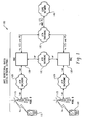
- Fig. 1 is a block diagram illustrating a typical third generation (3G) wireless network.
- the wireless network includes a Universal Mobile Telecommunications System (UMTS) Terrestrial Radio Access Network (UTRAN) 100 coupled via an ATM backbone 120 to a core network 140. Also illustrated are a plurality of user equipment devices 110 that may communicate wirelessly using the wireless network.
- UMTS Universal Mobile Telecommunications System
- UTRAN Universal Mobile Telecommunications System
- UTRAN Universal Mobile Telecommunications System
- the UTRAN 100 includes multiple base stations 115 (referred to as Node B's), of which only two are illustrated, to communicate wirelessly using radio waves over the Uu interface with the user equipment devices 110.
- an RNC 130 may support multiple Node B's 115 of the same mode or multiple Node B's operating in diverse modes.
- the ATM (Asynchronous Transfer Mode) backbone 120 couples the various UTRAN components together, and couples the UTRAN 100 to the core network 140.
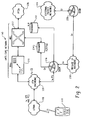
- Fig. 2 is a block diagram of a typical core network 140. Also illustrated is a user equipment device 110, which co-operates with the UTRAN 100 to communicate with the core network 140 via an ATM backbone 120. In operation, circuit switched (CS) packets may be sent and received via a transcoder/rate adapter unit (TRAU) 210, which converts UMTS speech packets to standard packets for a mobile switching center (MSC) 212 in order to communicate speech over a public switched telephone network (PSTN) 226.
- CS circuit switched
- PS packet switched (PS) packets may be sent and received via a serving GPRS (General Packet Radio Service) support node (SGSN) 216, private IP backbone 218, Gateway GPRS Support Node (GGSN) 220, and external packet network 224.
- GPRS General Packet Radio Service
- VLR visitor location register
- HLR/AuC home location register/authentication center
- the VLR 222 stores the user equipment 110 information required for call handling and other functions within an associated service area.
- the HLR/AuC 214 stores permanent records used to identify the user equipment 110, and may also store temporary records, such as SGSN and VLR addresses.
- three sets of protocols are used for transmitting data between the UTRAN and a user equipment device -- the control plane protocols, the user plane protocols and the transport network user plane protocols.
- the user plane protocols implement radio bearer service by carrying user data through the access stratum.
- the control plane protocols are used to control the radio access bearers and the connection between UTRAN and user equipment.
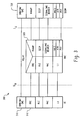
- Fig. 3 is a diagram illustrating a typical UMTS control plane architecture 300 between a user equipment device and an SGSN.
- the control plane architecture 300 includes a user equipment control plane protocol stack 310, an RNC control plane protocol stack 320 and an SGSN control plane protocol stack 330.
- the RRC layer 312 is responsible for the overall control of radio resources for the user equipment device.
- the RRC layer 312 is responsible for the establishment, reconfiguration and release of radio bearers (i.e., services provided for transferring data between the user equipment and the UTRAN).
- Radio bearers available for transmitting RRC messages are referred to as “signaling radio bearers" and are configured by the UTRAN in a Signaling Radio Bearer (RB) Information To Setup List information element (IE) that is transmitted from the UTRAN to the RRC in the user equipment device.
- RB Signaling Radio Bearer
- IE Information To Setup List information element
- FIG. 1-3 A more detailed description of a typical 3G wireless network, as illustrated in Figs. 1-3, is provided in the International Mobile Telecommunications-2000 (IMT-2000) standard published by the International Telecommunications Union (ITU) and in the 3GPP standards documents published by the Third Generation Partnership Project (3GPPTM), including standards documents 3GPP TS 23.101, 3GPP TS 25.301, 3GPP TS 25.331, and 3GPP TS 25.401.
- IMT-2000 International Mobile Telecommunications-2000
- 3GPPTM Third Generation Partnership Project
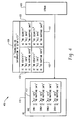
- Fig. 4 is a block diagram 400 illustrating an example Signaling RB Information To Setup List IE 430 for configuring signaling radio bearers in the RRC layer 412 of a user equipment device 410.
- the Signaling RB Information To Setup List 430 is transmitted from the UTRAN 420 and includes a set of information elements 432 for each signaling radio bearer (SRB) to be configured.
- the Signaling RB Information To Setup List IE 430 may, for example, be a list where each element has the following ASN.1 structure.
- SRB1-SRB3 need to be configured for use with messages sent on a Dedicated Control Channel (DCCH), and one signaling radio bearer (SRB4) is optional.
- SRB 1 is to be used for all messages sent on the DCCH when using RLC unacknowledged mode (RLC-UM).
- SRB 2 is to used for all messages sent on the DCCH when using RLC acknowledged mode, except for RRC messages carrying higher layer (NAS) signaling.
- SRB 3 and optionally SRB4 is to be used for RRC messages carrying higher layer (NAS) signaling and sent on the DCCH in RLC acknowledged mode.
- the sets of information elements 432 transmitted in the Signaling RB Information To Setup List 430 from the UTRAN 420 are used by the RRC 412 to configure the signaling radio bearers.
- Information elements within the sets 432 may include an RB Identity information element, an RLC Info information element and an RB Mapping Info information element.
- the RB Identity information element is used to identify which signaling radio bearer (SRB1-SRB4) is to be configured by each set of information elements 432.
- the RB Mapping Info and RLC Info information elements are used to configure the signaling radio bearer identified by the RB Identity information element. More specifically, the RB Mapping Info information element is used to configure the multiplexing options for the identified signaling radio bearer, and the RLC Info information element is used to configure the transmitting and receiving RLC entities for the identified signaling radio bearer.
- the standards require that the IE 430 configures each of SRB1-SRB3 and optionally SRB4. That is each of SRB1-SRB3 and optionally SRB4 should be identified and configured by the Signaling RB Information To Setup List IE 430.
- Figs. 5 and 6 illustrate two examples of non-compliant Signaling RB Information To Setup List IEs 510, 610 that do not include the proper configuration information.
- Fig. 5 illustrates an example of a non-compliant Signaling RB Information To Setup List IE 510 that improperly specifies the same signaling radio bearer (SRB1) twice.
- the non-compliant Signaling RB Information To Setup IE 510 includes four sets of information elements 512, 514, 516, 518. Two of the sets 512, 514 include RB Identity information elements that specify the same signaling radio bearer - SRB1. The other two information element sets 516, 518 specify SRB2 and SRB 3, respectively.
- Fig. 6 illustrates another example of a non-compliant Signaling RB Information To Setup List IE 600 that does not include configuration information for a necessary signaling radio bearer.
- the standards documents require that signaling radio bearers SRB1-SRB3 be configured if the SRB list 610 is sent in an RRC Connection Setup Message.
- the illustrated Signaling RB Information To Setup List IE 600 only includes configuration information 612, 614, and 615 for SRB1, SRB3 and SRB4. It should be noted that if the Signaling RB Information To Setup List 610 is included in a message other than an RRC Connection Setup Message, then the standards do not require that any SRBs be configured.
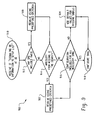
- Figs. 7-9 illustrate three example methods 700, 800, 900 for configuring signaling radio bearer information in a user equipment protocol stack. These example methods help to ensure that the signaling radio bearers (SRB1-SRB4) are properly configured in accordance with the standards documents.
- Fig. 7 is a method 700 that may be performed at the UTRAN 420 and Figs. 8 and 9 are methods 800, 900 that may be performed by a user equipment device 410.
- the method begins at step 710 when the UTRAN receives an instruction to initiate a Signaling RB Information Setup List to configure a user equipment device 410.
- the UTRAN 420 processes the configuration information to ensure that the sets of information elements to be included in the Signaling RB Information Setup List do not specify the same signaling radio bearer twice, as shown in Fig. 5.
- the UTRAN 420 ensures that there are no radio bearer identity IEs missing from the Signaling RB Information Setup List that would result in an ambiguity under the 3G standard documents.
- Standard document 3GPP TS 25.331, version 3.10.0 includes two sections, 8.6.4.1 and 11.3, that both address the situation in which radio bearer identity IEs are missing from the Signaling RB Information Setup List.
- Section 8.6.4.1 requires that in the event of a missing radio bearer identity IE (i.e., an unnumbered SRB), the UE "apply a default value of the IE 'RB identity' equal to 1 for the first IE 'Signaling RB information to setup,' and increase the default value by 1 for each occurrence.”
- section 11.3 of the standard document requires that if the IE "RB identity" is missing from a Signaling RB Information Setup List, then the smallest unused value is to be used. In some cases, the application of sections 8.6.4.1 and 11.3 may achieve different results.
- Step 730 prevents the UTRAN from creating a Signaling RB Information Setup List that would result in an ambiguity between sections 8.6.4.1 and 11.3 of the standard document 3GPP TS 25.331, version 3.10.0. This may be achieved by either ensuring that radio bearer identity IEs (i.e., IE "RB identity") are included for each signaling radio bearer configuration in the Signaling RB Information Setup List or by ensuring that no radio bearer identity IEs are included in the Signaling RB Information Setup List.
- radio bearer identity IEs i.e., IE "RB identity”
- the UTRAN 420 ensures that configurations are included in the Signaling RB Information To Setup List for necessary signaling radio bearers (i.e., SRBs required by the applicable 3G standard).
- the UTRAN 420 may, for example, ensure that each of SRB1-SRB3 have either already been configured on the user equipment device 410 or that necessary configurations are included in the Signaling RB Information To Setup List IE.
- the Signaling RB Information To Setup List IE is then transmitted from the UTRAN 420 to the user equipment device 410 at step 750.
- the method 800 begins at step 810 when the user equipment device 410 receives a Signaling RB Information To Setup List IE from the UTRAN 420.
- the user equipment device 410 determines if the received Signaling RB Information To Setup List IE specifies the same signaling radio bearer (SRB) twice, as shown in Fig. 5. If so, then the method identifies the received IE as an invalid or anomalous Signaling RB Information To Setup List at step 818. Otherwise, if no two SRBs are identified more than once in the Signaling RB Information To Setup List, then the method proceeds to step 814.
- SRB signaling radio bearer
- the method 800 determines if any signaling radio bearer identity IEs are missing from the Signaling RB Information Setup List that would result in an ambiguity under sections 8.6.4.1 and 11.3 of standard document 3GPP TS 25.331, version 3.10.0, as described above with reference to Fig. 7. If so, then the method 800 identifies the received IE as an invalid or anomalous Signaling RB Information To Setup List at step 818. Otherwise, if no signaling radio bearer identity IEs are omitted that would result in an ambiguity under the 3G standard documents, then the method proceeds to step 816.
- the method 800 determines if the Signaling RB Information To Setup List includes configuration information for all of the necessary signaling radio bearers (i.e., SRBs required by the applicable 3G standard) that have not already been configured on the user equipment device 410. If all of the necessary SRB configuration information is not included, then the method 800 identifies the received IE as an invalid or anomalous Signaling RB Information To Setup List at step 818. Otherwise, if all of the necessary SRB configuration information is included in the received Signaling RB Information To Setup List, then the configuration information is used to configure the signaling radio bearers at step 820.
- the necessary signaling radio bearers i.e., SRBs required by the applicable 3G standard
- the method 800 processes the IE in accordance with a pre-determined procedure at step 822.
- the user equipment device may report an invalid or anomalous IE to the UTRAN and receive a new RRC Connection Setup Message or may return to an idle state without notifying the UTRAN of the invalid or anomalous IE.
- another example method 900 begins at step 910 when a Signaling RB Information To Setup List is received by a user equipment device 410.
- the user equipment device 410 determines if the received Signaling RB Information To Setup List IE specifies the same signaling radio bearer (SRB) twice, as shown in Fig. 5. If no two SRBs are identified more than once in the Signaling RB Information To Setup List, then the method proceeds to step 914. Otherwise, if multiple occurrences of an SRB are identified in step 912, then the method resolves the anomalous IE using a pre-defined criteria at step 920.
- SRB signaling radio bearer
- the user equipment device 410 may define one of the occurrences (e.g., the first or last occurrence) as the configuration to be used, with all other occurrences being ignored.
- the method proceeds to step 914.
- the method 900 determines if any signaling radio bearer identity IEs are missing from the Signaling RB Information Setup List that would result in an ambiguity under sections 8.6.4.1 and 11.3 of standard document 3GPP TS 25.331, version 3.10.0, as described above with reference to Fig. 7. If not, then the method proceeds to step 916. If one or more signaling radio bearer identity IEs are omitted that would result in an ambiguity under the 3G standard documents, however, then the method 900 resolves the anomalous IE using a pre-determined criteria at step 922. For example, the pre-determined criteria 922 may instruct the UE to resolve the one or more missing SRB identity IEs using the defaults set forth in one of section 8.6.4.1 or section 11.3 of standard document 3GPP TS 25.331, version 3.10.0.
- the method 900 determines if the Signaling RB Information To Setup List includes configuration information for all of the necessary signaling radio bearers (i.e., SRBs required by the applicable 3G standard) that have not already been configured on the user equipment device 410. If all of the necessary SRB configuration information is included, then the method 900 proceeds to configure the signaling radio bearers at step 918. Otherwise, if configuration information for one or more necessary SRBs is not included, then the method resolves the anomalous IE by selecting default configuration values for the one or more SRBs at step 924. Upon resolving the missing configuration error at step 924, the method 900 proceeds to step 918 to configure the signaling radio bearers.
- the necessary signaling radio bearers i.e., SRBs required by the applicable 3G standard
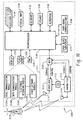
- Fig. 10 is a block diagram illustrating an example mobile communication device 2100 that may be used as the user equipment device described above.
- the mobile device 2100 includes a processing subsystem 2138, a communications subsystem 2111, a short-range communications subsystem 2140, a memory subsystem 2124, 2126, and various other device subsystems and/or software modules 2142.
- the mobile device 2100 also includes a user interface, which may include a display 2122, a serial port 2130, keyboard 2132, a speaker 2134, a microphone 2136, one or more auxiliary input/output devices 2128, and/or other user interface devices.
- the processing subsystem 2138 controls the overall operation of the mobile device 2100.
- Operating system software executed by the processing subsystem 2138 may be stored in a persistent store, such as a flash memory 2124, but may also be stored in other types of memory devices in the memory subsystem, such as a read only memory (ROM) or similar storage element.
- system software, specific device applications, or parts thereof may be temporarily loaded into a volatile store, such as a random access memory (RAM) 2126.
- Communication signals received by the mobile device 2100 may also be stored to RAM 2126.
- the processing subsystem 2138 in addition to its operating system functions, enables execution of software applications 2124 on the device 2100.
- a predetermined set of applications that control basic device operations, such as data and voice communications, may be installed on the device 2100 during manufacture.
- a personal information manager (PIM) application including an electronic messaging application, may be installed on the device.
- the PIM may, for example, be operable to organize and manage data items, such as e-mail, calendar events, voice mails, appointments, and task items.
- the PIM application may also be operable to send and receive data items via the wireless network 2119.
- the communication subsystem 2111 includes a receiver 2112, a transmitter 2114 and one or more antennas 2116, 2118.
- the communication subsystem 2111 also includes a processing module, such as a digital signal processor (DSP) 2120 or other processing device(s), and local oscillators (LOs) 2113.
- DSP digital signal processor
- LOs local oscillators
- a mobile device 2100 may include a communication subsystem 2111 designed to operate within the Mobitex TM mobile communication system, the DataTAC TM mobile communication system, a GSM network, a GPRS network, a UMTS network, and/or an EDGE network.
- a communication subsystem 2111 designed to operate within the Mobitex TM mobile communication system, the DataTAC TM mobile communication system, a GSM network, a GPRS network, a UMTS network, and/or an EDGE network.
- Network access requirements vary depending upon the type of communication system. For example, in the Mobitex and DataTAC networks, mobile devices are registered on the network using a unique personal identification number or PIN associated with each device. In UMTS and GSM/GPRS networks, however, network access is associated with a subscriber or user of a device. A GPRS device therefore requires a subscriber identity module, commonly referred to as a SIM card, in order to operate on a GSM/GPRS network.
- SIM card subscriber identity module
- the mobile device 2100 may send and receive communication signals over the communication network 2119.
- Signals received by the antenna 2116 from the communication network 2119 are routed to the receiver 2112, which provides signal amplification, frequency down conversion, filtering, channel selection, etc., and may also provide analog to digital conversion. Analog-to-digital conversion of the received signal allows the DSP to perform more complex communication functions, such as demodulation and decoding.
- signals to be transmitted to the network 2119 are processed (e.g., modulated and encoded) by the DSP 2120 and are then provided to the transmitter 2114 for digital to analog conversion, frequency up conversion, filtering, amplification and transmission to the communication network 2119 (or networks) via the antenna 2118.
- the DSP 2120 provides for receiver 2112 and transmitter 2114 control. For example, gains applied to communication signals in the receiver 2112 and transmitter 2114 may be adaptively controlled through automatic gain control algorithms implemented in the DSP 2120.
- a received signal such as a text message or web page download
- the communication subsystem 2111 input to the processing device 2138.
- the received signal is then further processed by the processing device 2138 for output to a display 2122, or alternatively to some other auxiliary I/O device 2128.
- a device user may also compose data items, such as e-mail messages, using a keyboard 2132 and/or some other auxiliary I/O device 2128, such as a touchpad, a rocker switch, a thumb-wheel, or some other type of input device.
- the composed data items may then be transmitted over the communication network 2119 via the communication subsystem 2111.
- a voice communication mode In a voice communication mode, overall operation of the device is substantially similar to the data communication mode, except that received signals are output to a speaker 2134, and signals for transmission are generated by a microphone 2136.
- Alternative voice or audio I/O subsystems such as a voice message recording subsystem, may also be implemented on the device 2100.
- the display 2122 may also be utilized in voice communication mode, for example, to display the identity of a calling party, the duration of a voice call, or other voice call related information.
- the short-range communications subsystem 2140 enables communication between the mobile device 2100 and other proximate systems or devices, which need not necessarily be similar devices.
- the short-range communications subsystem 2140 may include an infrared device and associated circuits and components, or a Bluetooth TM communication module to provide for communication with similarly-enabled systems and devices.
Landscapes
- Engineering & Computer Science (AREA)
- Computer Networks & Wireless Communication (AREA)
- Signal Processing (AREA)
- Quality & Reliability (AREA)
- Mobile Radio Communication Systems (AREA)
- Communication Control (AREA)
- Measuring Pulse, Heart Rate, Blood Pressure Or Blood Flow (AREA)
Claims (29)
- Verfahren in einem drahtlosen Netzwerk, einschließlich ein Funkzugriffsnetzwerk (100) zum Übertragen von Information zwischen einer Benutzervorrichtung (110) und einem Kernnetzwerk (140), zum Konfigurieren von Signalisierungsfunkträgern in der Benutzervorrichtung, wobei das Verfahren aufweist:Empfangen einer Anweisung, ein Signalisierungsfunkträger - Konfigurations-Informationselement IE (510) zu erzeugen, das eine Konfigurationsinformation für eine vorgewählte Anzahl von Signalisierungsfunkträgern umfasst;Erzeugen des Signalisierungsfunkträger -Konfigurations-IE, um sicher zu stellen, dass das Signalisierungsfunkträger -Konfigurations-IE eine Konfigurationsinformation für eine erforderliche minimale Anzahl von Signalisierungsfunkträgern umfasst(740); undÜbertragen (750) des Signalisierungsfunkträger-Konfigurations-Informationselements von dem Funkzugriffsnetzwerk (100) an die Benutzervorrichtung (110) zur Verwendung bei der Konfiguration der Signalisierungsfunkträger in der Benutzervorrichtung (110).
- Verfahren gemäß Anspruch 1, das weiter aufweist:Sicherstellen, dass jeder Signalisierungsfunkträgernicht mehr als einmal konfiguriert wird.
- Verfahren gemäß Anspruch 2, wobei die Konfigurationsinformation für jeden Signalisierungsfunkträger durch ein Signalisierungsfunkträger Informationselement IE identifiziert wird.
- Verfahren gemäß einem der Ansprüche 1 bis 3, wobei der erzeugende Schritt weiter aufweist:Sicherstellen, dass die Konfigurationsinformation für jeden Signalisierungsfunkträger durch ein Funkträger-Informationselement IE identifiziert wird oder dass die Konfigurationsinformation keine Funkträgeridentitäts-IEs umfasst.
- Verfahren gemäß einem der Ansprüche 1 bis 4, wobei das Signalisierungsfunkträger-Konfigurations-IE eine Aufbau-Signalisierungsfunkträger-Informations-Liste ist, die an die Benutzervorrichtung in einer RRC-Verbindungs-Aufbau-Nachricht übertragen wird.
- Verfahren gemäß einem der Ansprüche 1 bis 5, wobei das drahtlose Netzwerk ein drahtloses Netzwerk der dritten Generation 3G ist.
- Verfahren gemäß Anspruch 6, wobei das drahtlose Netzwerk ein terrestrisches UMTS(Universal Mobile Telecommunications System)-Funkzugriffsnetzwerk UTRAN umfasst.
- Verfahren gemäß Anspruch 7, wobei das Signalisierungsfunkträger-Konfigurations-IE durch das UTRAN erzeugt wird und von dem UTRAN an die Benutzervorrichtung übertragen wird.
- Verfahren gemäß einem der Ansprüche 1 bis 8, wobei die erforderliche minimale Anzahl von Signalisierungsfunkträgern einen ersten Signalisierungsfunkträger SRB 1 umfasst, der verwendet wird für alle Nachrichten, die auf einem zugewiesenen Steuerkanal DCCH (dedicated control channel) übertragen werden, wenn ein unbestätigter Funkverbindungssteuerungs-RLC(radio link control)-Modus RLC-UM (radio link control unacknowledged mode) verwendet wird, einen zweiten Signalisierungsfunkträger SRB2, der verwendet wird für alle Nachrichten, die auf dem DCCH übertragen werden bei der Verwendung des bestätigten RLC-Modus, außer für Funkressourcensteuerungs-RRC(radio resource control)-Nachrichten, die eine höherschichtige Signalisierung tragen, und einen dritten Signalisierungsfunkträger SRB3, der für RRC-Nachrichten verwendet wird, die eine höherschichtige Signalisierung tragen und auf dem DCCH in einem bestätigten RLC-Modus gesendet werden.
- Verfahren gemäß einem der Ansprüche 8 bis 9, wobei die Konfigurationsinformation ein RLC-Info-Informationselement und ein RB-Abbildungs-Informationselement umfasst.
- Verfahren in einem drahtlosen Netzwerk, einschließlich ein Funkzugriffsnetzwerk (100) zum Übertragen von Information zwischen einer Benutzervorrichtung (110) und einem Kernnetzwerk (140), zum Konfigurieren von Signalisierungsfunkträgern in der Benutzervorrichtung, wobei das Verfahren aufweist:Empfangen (810) eines Signalisierungsfunkträger-Konfigurations-Informationselements IE (510) an der Benutzervorrichtung, wobei das Signalisierungsfunkträger-Konfigurations-IE eine Konfigurationsinformation für eine vorgewählte Anzahl von Signalisierungsfunkträgern umfasst;Bestimmen (812), ob die Konfigurationsinformation für mehr als einen Signalisierungsfunkträger durch dasselbe Signalisierungsfunkträger-Identitäts-Informationselement IE identifiziert wird; und,wenn die Konfigurationsinformation für mehr als einen Signalisierungsfunkträger durch dasselbe Signalisierungsfunkträger-Identitäts-Informationselement IE identifiziert wird, dann Identifizieren (818) des empfangenen Signalisierungsfunkträger-Konfigurations-IE als ein abnormes Informationselement.
- Verfahren gemäß Anspruch 11, das weiter aufweist:wenn die Konfigurationsinformation für mehr als einen Signalisierungsfunkträger durch dasselbe Signalisierungsfunkträger-Identitäts-Informationselement IE identifiziert wird, dann Wählen einer Instanz einer Signalisierungsfunkträger-Identität ID basierend auf vorgewählten Kriterien.
- Verfahren gemäß Anspruch 11, das weiter aufweist:wenn die Konfigurationsinformation für mehr als einen Signalisierungsfunkträger durch dasselbe Signalisierungsfunkträger-Identitäts-Informationselement IE identifiziert wird, dann Zurückweisen des empfangenen Signalisierungsfunkträger-IEs, Übertragen eines Berichts von der Benutzervorrichtung, der das abnormale Informationselement identifiziert und ein neues Signalisierungsfunkträger-Konfigurations-IE anfordert.
- Verfahren gemäß einem der Ansprüche 11 bis 13, das weiter aufweist:wenn das empfangene Signalisierungsfunkträger-Konfigurations-IE als ein abnormales Informationselement identifiziert wird, da es dasselbe Identitäts-Informationselement für mehr als einen Signalisierungsfunkträger umfasst, dann Zurückweisen des empfangenen Signalisierungsfunkträger-Konfigurations-IEs und Eintritt in einen Idle-Zustand.
- Verfahren gemäß einem der Ansprüche 11 bis 14, wobei die Konfigurationsinformation für jeden Signalisierungsfunkträger durch ein Signalisierungsfunkträger-Identitäts-Informationselement IE identifiziert wird, wobei das Verfahren weiter aufweist:Bestimmen, ob das empfangene Signalisierungsfunkträger-Konfigurations-IE eine Konfigurationsinformation für eine erforderliche minimale Anzahl von Signalisierungsfunkträgern umfasst; undwenn das empfangene Signalisierungsfunkträger-Konfigurations-IE keine Konfigurationsinformation für eine erforderliche minimale Anzahl von Signalisierungsfunkträgern umfasst, dann Identifizieren des empfangenen Signalisierungsfunkträger-Konfigurations-IEs als abnormales Informationselement.
- Verfahren gemäß Anspruch 15, das weiter aufweist:wenn das empfangene Signalisierungsfunkträger-Konfigurations-IE als ein abnormales Informationselement identifiziert wird, da es keine Konfigurationsinformation für die erforderliche minimale Anzahl von Signalisierungsfunkträgern umfasst, dann Konfigurieren von Signalisierungsfunkträgern, die nicht enthalten sind, unter Verwendung von standardmäßigen Konfigurationswerten.
- Verfahren gemäß Anspruch 15, das weiter aufweist:wenn das empfangene Signalisierungsfunkträger-Konfigurations-IE als ein abnormales Informationselement identifiziert wird, da es keine Konfigurationsinformation für die erforderliche minimale Anzahl von Signalisierungsfunkträgern umfasst, Übertragen eines Berichts von der Benutzervorrichtung, der ein neues Signalisierungsfunkträger-Konfigurations-IE anfordert.
- Verfahren gemäß Anspruch 15, das weiter aufweist:wenn das empfangene Signalisierungsfunkträger-Konfigurations-IE als ein abnormales Informationselement identifiziert wird, da es keine Konfigurationsinformation für die erforderliche minimale Anzahl von Signalisierungsfunkträgern umfasst, dann Ignorieren des empfangenen Signalisierungsfunkträger-Konfigurations-IEs und Eintritt in einen Idle-Zustand.
- Verfahren gemäß einem der Ansprüche 11 bis 18, wobei die Konfigurationsinformation für jeden Signalisierungsfunkträger durch ein Signalisierungsfunkträger-Identitäts-Informationselement IE identifiziert wird, wobei das Verfahren weiter aufweist:Bestimmen, ob die empfangene Signalisierungsfunkträger-Konfiguration ein Signalisierungsfunkträger-Identitäts-Informationselement IE für jeden Signalisierungsfunkträger umfasst; undwenn das empfangene Signalisierungsfunkträger-Konfigurations-IE kein Signalisierungsfunkträger-Identitäts-Informationselement IE für jeden Signalisierungsfunkträger umfasst, dann Identifizieren des empfangenen Signalisierungsfunkträger-Konfigurations-IEs als abnormales Informationselement.
- Verfahren gemäß Anspruch 19, das weiter aufweist:wenn das empfangene Signalisierungsfunkträger-Konfigurations-IE als ein abnormales Informationselement identifiziert wird, da es kein Signalisierungsfunkträger-Identitäts-IE für jeden Signalisierungsfunkträger umfasst, dann Übertragen eines Berichts von der Benutzervorrichtung, der ein neues Signalisierungsfunkträger-Konfigurations-IE anfordert.
- Verfahren gemäß Anspruch 19, das weiter aufweist:wenn das empfangene Signalisierungsfunkträger-Konfigurations-IE als ein abnormales Informationselement identifiziert wird, da es kein Signalisierungsfunkträger-Identitäts-IE für jeden Signalisierungsfunkträger umfasst, dann Ignorieren des empfangenen Signalisierungsfunkträger-Konfigurations-IEs und Eintritt in einen Idle-Zustand.
- Verfahren gemäß Anspruch 19, das weiter aufweist:wenn das empfangene Signalisierungsfunkträger-Konfigurations-IE als ein abnormales Informationselement identifiziert wird, da es kein Signalisierungsfunkträger-Identitäts-IE für jeden Signalisierungsfunkträger umfasst, dann Zuweisen von Standard-Werten für jedes der fehlenden Signalisierungsfunkträger-Identitäts-IEs.
- Verfahren gemäß Anspruch 22, wobei die Standard-Werte aus einem Satz von Signalisierungsfunkträger-Identitäts-IEs ausgewählt werden, beginnend mit dem ersten unbenutzten Wert.
- Verfahren gemäß Anspruch 22, wobei die Standard-Werte ausgewählt werden basierend auf der Reihenfolge, in welcher der Signalisierungsfunkträger in dem empfangenen Signalisierungsfunkträger-Konfigurations-IE verzeichnet ist.
- Verfahren gemäß einem der Ansprüche 11 bis 24, wobei das Signalisierungsfunkträger-Konfigurations-IE eine Aufbau-Signalisierungsfunkträger-Informations-Liste ist, die an die Benutzervorrichtung in einer RRC-Verbindungs-Aufbau-Nachricht übertragen wird.
- Verfahren gemäß Anspruch 25, wobei das drahtlose Netzwerk ein terrestrisches UMTS(Universal Mobile Telecommunications System)-Funkzugriffsnetzwerk UTRAN umfasst.
- Verfahren gemäß Anspruch 26, wobei das Signalisierungsfunkträger-Konfigurations-IE durch das UTRAN erzeugt wird und von dem UTRAN an die Benutzervorrichtung übertragen wird.
- Verfahren gemäß einem der Ansprüche 11 bis 27, wobei die erforderliche minimale Anzahl von Signalisierungsfunkträgern einen ersten Signalisierungsfunkträger SRB 1 umfasst, der verwendet wird für alle Nachrichten, die auf einem zugewiesenen Steuerkanal DCCH (dedicated control channel) übertragen werden, wenn ein unbestätigter Funkverbindungssteuerungs-RLC(radio link control)-Modus RLC-UM (radio link control unacknowledged mode) verwendet wird, einen zweiten Signalisierungsfunkträger SRB2, der verwendet wird für alle Nachrichten, die auf dem DCCH übertragen werden bei der Verwendung des bestätigten RLC-Modus, außer für Funkressourcensteuerungs-RRC(radio resource control)-Nachrichten, die eine höherschichtige Signalisierung tragen, und einen dritten Signalisierungsfunkträger SRB3, der für RRC-Nachrichten verwendet wird, die eine höherschichtige Signalisierung tragen und auf dem DCCH in einem bestätigten RLC-Modus gesendet werden.
- Verfahren gemäß Anspruch 28, wobei die Konfigurationsinformation ein RLC-Info-Informationselement und ein RB-Abbildungs-Informationselement umfasst.
Priority Applications (9)
| Application Number | Priority Date | Filing Date | Title |
|---|---|---|---|
| ES04021719T ES2295748T3 (es) | 2004-09-13 | 2004-09-13 | Configuracion de informacion de portadora de radio de señalizacion en una pila de protocolo de un equipo de usuario. |
| EP04021719A EP1635591B1 (de) | 2004-09-13 | 2004-09-13 | Konfiguration von Signalisierungsfunkträgers-Information in einem Protokollstapel eines Teilnehmergerätes |
| DE602004009795T DE602004009795T2 (de) | 2004-09-13 | 2004-09-13 | Konfiguration von Signalisierungsfunkträgers-Information in einem Protokollstapel eines Teilnehmergerätes |
| AT04021719T ATE377337T1 (de) | 2004-09-13 | 2004-09-13 | Konfiguration von signalisierungsfunkträgers- information in einem protokollstapel eines teilnehmergerätes |
| SG200505896A SG121130A1 (en) | 2004-09-13 | 2005-09-12 | Configuring signaling radio bearer information in a user equipment protocol stack |
| JP2005264498A JP4154533B2 (ja) | 2004-09-13 | 2005-09-12 | ユーザー機器プロトコルスタックにおけるシグナリング無線ベアラ情報の設定 |
| CA2519091A CA2519091C (en) | 2004-09-13 | 2005-09-13 | Configuring signaling radio bearer information in a user equipment protocol stack |
| CNB2005101132507A CN100512493C (zh) | 2004-09-13 | 2005-09-13 | 用户设备协议栈中配置信令无线电承载信息 |
| HK06108043.4A HK1091682B (en) | 2006-07-18 | Configuring signaling radio bearer information in a user equipment protocol stack |
Applications Claiming Priority (1)
| Application Number | Priority Date | Filing Date | Title |
|---|---|---|---|
| EP04021719A EP1635591B1 (de) | 2004-09-13 | 2004-09-13 | Konfiguration von Signalisierungsfunkträgers-Information in einem Protokollstapel eines Teilnehmergerätes |
Publications (2)
| Publication Number | Publication Date |
|---|---|
| EP1635591A1 EP1635591A1 (de) | 2006-03-15 |
| EP1635591B1 true EP1635591B1 (de) | 2007-10-31 |
Family
ID=34926520
Family Applications (1)
| Application Number | Title | Priority Date | Filing Date |
|---|---|---|---|
| EP04021719A Expired - Lifetime EP1635591B1 (de) | 2004-09-13 | 2004-09-13 | Konfiguration von Signalisierungsfunkträgers-Information in einem Protokollstapel eines Teilnehmergerätes |
Country Status (8)
| Country | Link |
|---|---|
| EP (1) | EP1635591B1 (de) |
| JP (1) | JP4154533B2 (de) |
| CN (1) | CN100512493C (de) |
| AT (1) | ATE377337T1 (de) |
| CA (1) | CA2519091C (de) |
| DE (1) | DE602004009795T2 (de) |
| ES (1) | ES2295748T3 (de) |
| SG (1) | SG121130A1 (de) |
Families Citing this family (3)
| Publication number | Priority date | Publication date | Assignee | Title |
|---|---|---|---|---|
| WO2007107032A1 (fr) * | 2006-03-15 | 2007-09-27 | Zte Corporation | Procédé de gestion de ressources de support radio de terminal |
| KR20200100731A (ko) * | 2017-12-27 | 2020-08-26 | 광동 오포 모바일 텔레커뮤니케이션즈 코포레이션 리미티드 | Srb 전송 방법 및 장치 |
| CN111309827A (zh) * | 2020-03-23 | 2020-06-19 | 平安医疗健康管理股份有限公司 | 知识图谱构建方法、装置、计算机系统及可读存储介质 |
Family Cites Families (2)
| Publication number | Priority date | Publication date | Assignee | Title |
|---|---|---|---|---|
| DE4321776C1 (de) * | 1993-06-30 | 1994-12-08 | Siemens Ag | Verfahren zum Bilden und Analysieren von informationselementeorientierten Signalisierungsmeldungen in Kommunikationseinrichtungen |
| US20040180675A1 (en) * | 2002-11-06 | 2004-09-16 | Samsung Electronics Co., Ltd. | Method for transmitting and receiving control messages in a mobile communication system providing MBMS service |
-
2004
- 2004-09-13 DE DE602004009795T patent/DE602004009795T2/de not_active Expired - Lifetime
- 2004-09-13 ES ES04021719T patent/ES2295748T3/es not_active Expired - Lifetime
- 2004-09-13 EP EP04021719A patent/EP1635591B1/de not_active Expired - Lifetime
- 2004-09-13 AT AT04021719T patent/ATE377337T1/de not_active IP Right Cessation
-
2005
- 2005-09-12 JP JP2005264498A patent/JP4154533B2/ja not_active Expired - Lifetime
- 2005-09-12 SG SG200505896A patent/SG121130A1/en unknown
- 2005-09-13 CN CNB2005101132507A patent/CN100512493C/zh not_active Expired - Lifetime
- 2005-09-13 CA CA2519091A patent/CA2519091C/en not_active Expired - Lifetime
Non-Patent Citations (1)
| Title |
|---|
| None * |
Also Published As
| Publication number | Publication date |
|---|---|
| ATE377337T1 (de) | 2007-11-15 |
| CA2519091A1 (en) | 2006-03-13 |
| ES2295748T3 (es) | 2008-04-16 |
| CA2519091C (en) | 2010-03-30 |
| CN100512493C (zh) | 2009-07-08 |
| DE602004009795T2 (de) | 2008-08-28 |
| CN1802023A (zh) | 2006-07-12 |
| HK1091682A1 (en) | 2007-01-26 |
| JP4154533B2 (ja) | 2008-09-24 |
| EP1635591A1 (de) | 2006-03-15 |
| DE602004009795D1 (de) | 2007-12-13 |
| SG121130A1 (en) | 2006-04-26 |
| JP2006121668A (ja) | 2006-05-11 |
Similar Documents
| Publication | Publication Date | Title |
|---|---|---|
| US8340042B2 (en) | Configuring signaling radio bearer information in a user equipment protocol stack | |
| US7463891B2 (en) | RRC connection request method and apparatus for mobile communications | |
| US7363047B2 (en) | Apparatus and method for establishing feedback in a broadcast or multicast service | |
| JP4334802B2 (ja) | インターネット・プロトコル移動通信ネットワークの技術分野で呼設定を行うための手法 | |
| US8078144B2 (en) | Apparatus and method for applying ciphering in universal mobile telecommunications system | |
| US8862135B2 (en) | Method and apparatus to restore always-on connectivity during network handover | |
| EP2244523A1 (de) | Verfahren und Vorrichtung zur Suspendierung von paketgeschalteten Diensten | |
| US20080117870A1 (en) | Setting a communication channel | |
| US20130010758A1 (en) | System and method for determining that a maximum number of ip sessions have been established | |
| US7277706B2 (en) | Provision of service contexts in a communication system | |
| US8422423B2 (en) | Packet communication method and mobile station | |
| EP1925112B1 (de) | Verfahren und vorrichtung für cross-paging in einem kommunikationssystem mit mehreren netzen | |
| EP2403281B1 (de) | Vorrichtungen und verfahren zur pakethandhabung für notfallträgerdienste | |
| EP1635591B1 (de) | Konfiguration von Signalisierungsfunkträgers-Information in einem Protokollstapel eines Teilnehmergerätes | |
| KR101099433B1 (ko) | 낮은 대기 시간 서비스들을 위한 베어러 네트워크에 의한시그널링 전송 | |
| HK1091682B (en) | Configuring signaling radio bearer information in a user equipment protocol stack | |
| KR100708363B1 (ko) | 패킷서비스통지기능이 구비된 더불유씨디엠에이 시스템 및 그 제어방법 | |
| EP1622331A1 (de) | Vorrichtung und Verfahren zur Anwendung von Verschlüsselung in einem UMTS-System | |
| Das | Feasibility study of IP Multimedia Subsystem (IMS) based Push-to-Talk over Cellular (PoC) for public safety and security communications | |
| WO2007029593A1 (ja) | 携帯電話装置およびその制御方法 |
Legal Events
| Date | Code | Title | Description |
|---|---|---|---|
| REG | Reference to a national code |
Ref country code: SE Ref legal event code: TRGR |
|
| PUAI | Public reference made under article 153(3) epc to a published international application that has entered the european phase |
Free format text: ORIGINAL CODE: 0009012 |
|
| AK | Designated contracting states |
Kind code of ref document: A1 Designated state(s): AT BE BG CH CY CZ DE DK EE ES FI FR GB GR HU IE IT LI LU MC NL PL PT RO SE SI SK TR |
|
| AX | Request for extension of the european patent |
Extension state: AL HR LT LV MK |
|
| 17P | Request for examination filed |
Effective date: 20060724 |
|
| 17Q | First examination report despatched |
Effective date: 20060825 |
|
| AKX | Designation fees paid |
Designated state(s): AT BE BG CH CY CZ DE DK EE ES FI FR GB GR HU IE IT LI LU MC NL PL PT RO SE SI SK TR |
|
| AXX | Extension fees paid |
Extension state: LT Payment date: 20060724 Extension state: MK Payment date: 20060724 Extension state: AL Payment date: 20060724 Extension state: LV Payment date: 20060724 Extension state: HR Payment date: 20060724 |
|
| REG | Reference to a national code |
Ref country code: HK Ref legal event code: DE Ref document number: 1091682 Country of ref document: HK |
|
| GRAP | Despatch of communication of intention to grant a patent |
Free format text: ORIGINAL CODE: EPIDOSNIGR1 |
|
| GRAS | Grant fee paid |
Free format text: ORIGINAL CODE: EPIDOSNIGR3 |
|
| GRAA | (expected) grant |
Free format text: ORIGINAL CODE: 0009210 |
|
| AK | Designated contracting states |
Kind code of ref document: B1 Designated state(s): AT BE BG CH CY CZ DE DK EE ES FI FR GB GR HU IE IT LI LU MC NL PL PT RO SE SI SK TR |
|
| AX | Request for extension of the european patent |
Extension state: AL HR LT LV MK |
|
| REG | Reference to a national code |
Ref country code: GB Ref legal event code: FG4D |
|
| REG | Reference to a national code |
Ref country code: IE Ref legal event code: FG4D |
|
| REG | Reference to a national code |
Ref country code: CH Ref legal event code: EP |
|
| REF | Corresponds to: |
Ref document number: 602004009795 Country of ref document: DE Date of ref document: 20071213 Kind code of ref document: P |
|
| NLV1 | Nl: lapsed or annulled due to failure to fulfill the requirements of art. 29p and 29m of the patents act | ||
| REG | Reference to a national code |
Ref country code: HK Ref legal event code: GR Ref document number: 1091682 Country of ref document: HK |
|
| REG | Reference to a national code |
Ref country code: ES Ref legal event code: FG2A Ref document number: 2295748 Country of ref document: ES Kind code of ref document: T3 |
|
| RAP2 | Party data changed (patent owner data changed or rights of a patent transferred) |
Owner name: RESEARCH IN MOTION LIMITED |
|
| PG25 | Lapsed in a contracting state [announced via postgrant information from national office to epo] |
Ref country code: NL Free format text: LAPSE BECAUSE OF FAILURE TO SUBMIT A TRANSLATION OF THE DESCRIPTION OR TO PAY THE FEE WITHIN THE PRESCRIBED TIME-LIMIT Effective date: 20071031 Ref country code: LI Free format text: LAPSE BECAUSE OF FAILURE TO SUBMIT A TRANSLATION OF THE DESCRIPTION OR TO PAY THE FEE WITHIN THE PRESCRIBED TIME-LIMIT Effective date: 20071031 Ref country code: CH Free format text: LAPSE BECAUSE OF FAILURE TO SUBMIT A TRANSLATION OF THE DESCRIPTION OR TO PAY THE FEE WITHIN THE PRESCRIBED TIME-LIMIT Effective date: 20071031 |
|
| REG | Reference to a national code |
Ref country code: CH Ref legal event code: PL |
|
| PG25 | Lapsed in a contracting state [announced via postgrant information from national office to epo] |
Ref country code: SI Free format text: LAPSE BECAUSE OF FAILURE TO SUBMIT A TRANSLATION OF THE DESCRIPTION OR TO PAY THE FEE WITHIN THE PRESCRIBED TIME-LIMIT Effective date: 20071031 Ref country code: PL Free format text: LAPSE BECAUSE OF FAILURE TO SUBMIT A TRANSLATION OF THE DESCRIPTION OR TO PAY THE FEE WITHIN THE PRESCRIBED TIME-LIMIT Effective date: 20071031 Ref country code: BG Free format text: LAPSE BECAUSE OF FAILURE TO SUBMIT A TRANSLATION OF THE DESCRIPTION OR TO PAY THE FEE WITHIN THE PRESCRIBED TIME-LIMIT Effective date: 20080131 Ref country code: PT Free format text: LAPSE BECAUSE OF FAILURE TO SUBMIT A TRANSLATION OF THE DESCRIPTION OR TO PAY THE FEE WITHIN THE PRESCRIBED TIME-LIMIT Effective date: 20080331 |
|
| PG25 | Lapsed in a contracting state [announced via postgrant information from national office to epo] |
Ref country code: AT Free format text: LAPSE BECAUSE OF FAILURE TO SUBMIT A TRANSLATION OF THE DESCRIPTION OR TO PAY THE FEE WITHIN THE PRESCRIBED TIME-LIMIT Effective date: 20071031 |
|
| ET | Fr: translation filed | ||
| PG25 | Lapsed in a contracting state [announced via postgrant information from national office to epo] |
Ref country code: CZ Free format text: LAPSE BECAUSE OF FAILURE TO SUBMIT A TRANSLATION OF THE DESCRIPTION OR TO PAY THE FEE WITHIN THE PRESCRIBED TIME-LIMIT Effective date: 20071031 Ref country code: DK Free format text: LAPSE BECAUSE OF FAILURE TO SUBMIT A TRANSLATION OF THE DESCRIPTION OR TO PAY THE FEE WITHIN THE PRESCRIBED TIME-LIMIT Effective date: 20071031 |
|
| PG25 | Lapsed in a contracting state [announced via postgrant information from national office to epo] |
Ref country code: SK Free format text: LAPSE BECAUSE OF FAILURE TO SUBMIT A TRANSLATION OF THE DESCRIPTION OR TO PAY THE FEE WITHIN THE PRESCRIBED TIME-LIMIT Effective date: 20071031 Ref country code: RO Free format text: LAPSE BECAUSE OF FAILURE TO SUBMIT A TRANSLATION OF THE DESCRIPTION OR TO PAY THE FEE WITHIN THE PRESCRIBED TIME-LIMIT Effective date: 20071031 Ref country code: BE Free format text: LAPSE BECAUSE OF FAILURE TO SUBMIT A TRANSLATION OF THE DESCRIPTION OR TO PAY THE FEE WITHIN THE PRESCRIBED TIME-LIMIT Effective date: 20071031 |
|
| PLBE | No opposition filed within time limit |
Free format text: ORIGINAL CODE: 0009261 |
|
| STAA | Information on the status of an ep patent application or granted ep patent |
Free format text: STATUS: NO OPPOSITION FILED WITHIN TIME LIMIT |
|
| 26N | No opposition filed |
Effective date: 20080801 |
|
| PG25 | Lapsed in a contracting state [announced via postgrant information from national office to epo] |
Ref country code: GR Free format text: LAPSE BECAUSE OF FAILURE TO SUBMIT A TRANSLATION OF THE DESCRIPTION OR TO PAY THE FEE WITHIN THE PRESCRIBED TIME-LIMIT Effective date: 20080201 |
|
| PG25 | Lapsed in a contracting state [announced via postgrant information from national office to epo] |
Ref country code: EE Free format text: LAPSE BECAUSE OF FAILURE TO SUBMIT A TRANSLATION OF THE DESCRIPTION OR TO PAY THE FEE WITHIN THE PRESCRIBED TIME-LIMIT Effective date: 20071031 Ref country code: MC Free format text: LAPSE BECAUSE OF NON-PAYMENT OF DUE FEES Effective date: 20080930 |
|
| REG | Reference to a national code |
Ref country code: FR Ref legal event code: TP |
|
| PG25 | Lapsed in a contracting state [announced via postgrant information from national office to epo] |
Ref country code: IE Free format text: LAPSE BECAUSE OF NON-PAYMENT OF DUE FEES Effective date: 20080915 Ref country code: CY Free format text: LAPSE BECAUSE OF FAILURE TO SUBMIT A TRANSLATION OF THE DESCRIPTION OR TO PAY THE FEE WITHIN THE PRESCRIBED TIME-LIMIT Effective date: 20071031 |
|
| PG25 | Lapsed in a contracting state [announced via postgrant information from national office to epo] |
Ref country code: HU Free format text: LAPSE BECAUSE OF FAILURE TO SUBMIT A TRANSLATION OF THE DESCRIPTION OR TO PAY THE FEE WITHIN THE PRESCRIBED TIME-LIMIT Effective date: 20080501 Ref country code: LU Free format text: LAPSE BECAUSE OF NON-PAYMENT OF DUE FEES Effective date: 20080913 |
|
| PG25 | Lapsed in a contracting state [announced via postgrant information from national office to epo] |
Ref country code: TR Free format text: LAPSE BECAUSE OF FAILURE TO SUBMIT A TRANSLATION OF THE DESCRIPTION OR TO PAY THE FEE WITHIN THE PRESCRIBED TIME-LIMIT Effective date: 20071031 |
|
| REG | Reference to a national code |
Ref country code: DE Ref legal event code: R082 Ref document number: 602004009795 Country of ref document: DE Representative=s name: MERH-IP MATIAS ERNY REICHL HOFFMANN, DE |
|
| REG | Reference to a national code |
Ref country code: DE Ref legal event code: R079 Ref document number: 602004009795 Country of ref document: DE Free format text: PREVIOUS MAIN CLASS: H04Q0007380000 Ipc: H04W0004000000 |
|
| REG | Reference to a national code |
Ref country code: ES Ref legal event code: PC2A Owner name: BLACKBERRY LIMITED Effective date: 20141016 |
|
| REG | Reference to a national code |
Ref country code: DE Ref legal event code: R082 Ref document number: 602004009795 Country of ref document: DE Representative=s name: MERH-IP MATIAS ERNY REICHL HOFFMANN, DE Effective date: 20140925 Ref country code: DE Ref legal event code: R081 Ref document number: 602004009795 Country of ref document: DE Owner name: BLACKBERRY LIMITED, WATERLOO, CA Free format text: FORMER OWNER: RESEARCH IN MOTION LTD., WATERLOO, ONTARIO, CA Effective date: 20140925 Ref country code: DE Ref legal event code: R079 Ref document number: 602004009795 Country of ref document: DE Free format text: PREVIOUS MAIN CLASS: H04Q0007380000 Ipc: H04W0004000000 Effective date: 20141001 Ref country code: DE Ref legal event code: R082 Ref document number: 602004009795 Country of ref document: DE Representative=s name: MERH-IP MATIAS ERNY REICHL HOFFMANN PATENTANWA, DE Effective date: 20140925 |
|
| REG | Reference to a national code |
Ref country code: FR Ref legal event code: PLFP Year of fee payment: 13 |
|
| REG | Reference to a national code |
Ref country code: FR Ref legal event code: PLFP Year of fee payment: 14 |
|
| REG | Reference to a national code |
Ref country code: FR Ref legal event code: PLFP Year of fee payment: 15 |
|
| PGFP | Annual fee paid to national office [announced via postgrant information from national office to epo] |
Ref country code: IT Payment date: 20230921 Year of fee payment: 20 Ref country code: GB Payment date: 20230927 Year of fee payment: 20 Ref country code: FI Payment date: 20230925 Year of fee payment: 20 |
|
| PGFP | Annual fee paid to national office [announced via postgrant information from national office to epo] |
Ref country code: SE Payment date: 20230927 Year of fee payment: 20 Ref country code: FR Payment date: 20230925 Year of fee payment: 20 Ref country code: DE Payment date: 20230927 Year of fee payment: 20 |
|
| PGFP | Annual fee paid to national office [announced via postgrant information from national office to epo] |
Ref country code: ES Payment date: 20231002 Year of fee payment: 20 |
|
| REG | Reference to a national code |
Ref country code: DE Ref legal event code: R082 Ref document number: 602004009795 Country of ref document: DE Ref country code: DE Ref legal event code: R081 Ref document number: 602004009795 Country of ref document: DE Owner name: MALIKIE INNOVATIONS LTD., IE Free format text: FORMER OWNER: BLACKBERRY LIMITED, WATERLOO, ONTARIO, CA |
|
| REG | Reference to a national code |
Ref country code: DE Ref legal event code: R071 Ref document number: 602004009795 Country of ref document: DE |
|
| REG | Reference to a national code |
Ref country code: ES Ref legal event code: FD2A Effective date: 20240927 |
|
| REG | Reference to a national code |
Ref country code: GB Ref legal event code: PE20 Expiry date: 20240912 |
|
| PG25 | Lapsed in a contracting state [announced via postgrant information from national office to epo] |
Ref country code: GB Free format text: LAPSE BECAUSE OF EXPIRATION OF PROTECTION Effective date: 20240912 |
|
| PG25 | Lapsed in a contracting state [announced via postgrant information from national office to epo] |
Ref country code: ES Free format text: LAPSE BECAUSE OF EXPIRATION OF PROTECTION Effective date: 20240914 |
|
| REG | Reference to a national code |
Ref country code: SE Ref legal event code: EUG |
|
| PG25 | Lapsed in a contracting state [announced via postgrant information from national office to epo] |
Ref country code: GB Free format text: LAPSE BECAUSE OF EXPIRATION OF PROTECTION Effective date: 20240912 Ref country code: ES Free format text: LAPSE BECAUSE OF EXPIRATION OF PROTECTION Effective date: 20240914 |