EP1633110A1 - Electronic music apparatus capable of connecting to network - Google Patents
Electronic music apparatus capable of connecting to network Download PDFInfo
- Publication number
- EP1633110A1 EP1633110A1 EP05107836A EP05107836A EP1633110A1 EP 1633110 A1 EP1633110 A1 EP 1633110A1 EP 05107836 A EP05107836 A EP 05107836A EP 05107836 A EP05107836 A EP 05107836A EP 1633110 A1 EP1633110 A1 EP 1633110A1
- Authority
- EP
- European Patent Office
- Prior art keywords
- time information
- network
- time
- server
- electronic musical
- Prior art date
- Legal status (The legal status is an assumption and is not a legal conclusion. Google has not performed a legal analysis and makes no representation as to the accuracy of the status listed.)
- Granted
Links
- 238000004891 communication Methods 0.000 claims abstract description 23
- 238000000034 method Methods 0.000 claims description 69
- 235000014510 cooky Nutrition 0.000 claims description 10
- 101100088247 Picea mariana RPL13A gene Proteins 0.000 description 6
- 230000006870 function Effects 0.000 description 4
- 238000010586 diagram Methods 0.000 description 3
- 230000000694 effects Effects 0.000 description 3
- 239000000872 buffer Substances 0.000 description 2
- 238000010200 validation analysis Methods 0.000 description 2
- 230000005540 biological transmission Effects 0.000 description 1
- 238000004364 calculation method Methods 0.000 description 1
- 238000013500 data storage Methods 0.000 description 1
- 230000002708 enhancing effect Effects 0.000 description 1
- 238000009434 installation Methods 0.000 description 1
- 238000004519 manufacturing process Methods 0.000 description 1
- 238000012986 modification Methods 0.000 description 1
- 230000004048 modification Effects 0.000 description 1
- 230000003287 optical effect Effects 0.000 description 1
- 238000009527 percussion Methods 0.000 description 1
- 238000010079 rubber tapping Methods 0.000 description 1
- 239000004065 semiconductor Substances 0.000 description 1
Images


Classifications
-
- G—PHYSICS
- G10—MUSICAL INSTRUMENTS; ACOUSTICS
- G10H—ELECTROPHONIC MUSICAL INSTRUMENTS; INSTRUMENTS IN WHICH THE TONES ARE GENERATED BY ELECTROMECHANICAL MEANS OR ELECTRONIC GENERATORS, OR IN WHICH THE TONES ARE SYNTHESISED FROM A DATA STORE
- G10H1/00—Details of electrophonic musical instruments
- G10H1/0033—Recording/reproducing or transmission of music for electrophonic musical instruments
- G10H1/0041—Recording/reproducing or transmission of music for electrophonic musical instruments in coded form
- G10H1/0058—Transmission between separate instruments or between individual components of a musical system
-
- H—ELECTRICITY
- H04—ELECTRIC COMMUNICATION TECHNIQUE
- H04L—TRANSMISSION OF DIGITAL INFORMATION, e.g. TELEGRAPHIC COMMUNICATION
- H04L69/00—Network arrangements, protocols or services independent of the application payload and not provided for in the other groups of this subclass
- H04L69/28—Timers or timing mechanisms used in protocols
Definitions
- This invention relates to an electronic musical apparatus, more in detail, relates to an electronic musical instrument that can connect to the networks.
- the Cookie is a format wherein a Web site provider temporally stores data in a visitor's (the user) apparatus via the Web browser, and in which information relating to the user, time and date of visiting the site for the last time, the number of visiting times can be stored.
- the SSL protocol that transmits and receives encrypted information on the Internet is known as what prevents data tapping, data falsification and pretending by combining security techniques such as a public key encryption and a secret key encryption, a digital certificate (SSL certificate) and a hash function.
- the above-described Cookie and SSL certificate have validation date, and it is necessary to always keep a current time on the apparatus side to use the Cookie and the SSL certificate.
- the electronic musical apparatus such as an electronic musical instrument cannot keep the current time inside the apparatus as different from a personal computer, it is difficult to receive an internet service requiring a current time.
- NTP network time protocol
- an electronic musical apparatus comprising: an instructing device that instructs establishment of connection to a network via a communication interface; a first time information obtaining device that obtains time information from a first time information provider connected to the network; a second time information obtaining device that obtains time information from a second time information provider connected to the network when the first time information obtaining device cannot obtain the time information; and an executing device that executes a service via the network by using the time information obtained from either one of the first and the second time information providers.
- an electronic musical apparatus that can use the network service requiring a current time can be provided.
- an electronic musical apparatus that can obtain time information from a network under a circumstance of prohibiting a usage of NTP can be provided.
- FIG. 1 is a block diagram showing a structure of a network system 100 according to an embodiment of the present invention.
- the network system 100 is consisted of an electronic musical apparatus 1 and a communication network (the Internet and the like) 3 connected with various servers such as a network time protocol (NTP) server A52, an NTP server B53, a hyper text transfer protocol (HTTP) server A54, an HTTP server B55, a contents server 55 and the like.
- NTP network time protocol
- HTTP hyper text transfer protocol
- the musical apparatus 1 can connect with the communication network 3 via a provider 51.
- the NTP server A52 and the NTP server B53 are servers (time information providing means) for providing time data (NTP message) including time information (GMT standard time) by using the Network Time Protocol (NTP) that is a protocol for exactly adjusting an inner (built-in) clock of the electronic apparatus such as a computer by communicating with a client.
- NTP Network Time Protocol
- the HTTP server A54 and the HTTP server B55 are servers (time information providing means) for transmitting time information (GMT standard time) buried in a HTTP header based on time data request (GET request) from the electronic musical apparatus 1.
- the hyper text transfer protocol (HTTP) server in this specification does not indicate a normal HTTP server, but indicates a server to transmit the time information (GMT) buried in the HTTP header.
- the contents server 56 is a server for providing listening trials or downloading service of musical contents to a client such as the electronic musical apparatus 1 by using the Secure Sockets Layer protocol (hereinafter, called SSL) and the Cookie.
- SSL Secure Sockets Layer protocol
- the electronic musical apparatus 1 is an electronic musical instrument or the like that cannot keep an inner clock when the power is turned off. Since the Cookie and the SSL certificate has validation date in order to use the service provided by the contents server 56, the real (current) time is needed to be kept in the electronic musical apparatus 1 when connecting with the contents server 56. In the embodiment of the present invention, the electronic musical apparatus 1 obtains time information by connecting with the NTP server A52 and keeps the real time in the electronic musical instrument 1 while the power is turned on. Moreover, when the electronic musical apparatus 1 cannot connect with the NTP server 52 for a certain reason on the server side, it will connect with the NTP server B53 to obtain time information.
- the electronic musical apparatus 1 obtains the time information by connecting with the HTTP server A54. If the electronic musical apparatus 1 cannot connect with the HTTP server A54 for a certain reason ont the server side, it connects with the HTTP server B55 to obtain the time information.
- the electronic musical apparatus 1 is, for example, an electronic musical instrument such as a musical keyboard, a musical tone generator, a mixer, a PA apparatus such as a recorder, and an audio-visual device such as a stereo component system.
- the electronic musical apparatus is an electronic apparatus for executing processes related to music.
- the electronic musical apparatus 1 is consisted of a bus 6, a RAM 7, a ROM8, a CPU 9, a timer 10, a detector 11, a panel switch 12, a performance switch 22, a displaying circuit 13, a display 14 an external storage device 15, a MIDI interface 16, a musical tone generator 18, an effecter 19, a sound system 20 and a communication interface (I/F) 21.
- the RAM 7, the ROM 8, the CPU 9, the external storage device 15, the detector 11, the displaying circuit 13, the MIDI interface 16, the musical tone generator 18, the effecter 19 and the communication interface (I/F) 21 are directly connected to the bus 6.
- the RAM 7 has a working area of the CPU 9 and a buffer region and stores a flag, a register, various parameters and the like.
- ROM 8 Various parameters and a control program or a program for realizing the embodiment of the present invention can be stored in the ROM 8. In this case, it is not necessary to store duplicated programs in the external storage device 15. Moreover, a rewritable flash memory other than normal read-only-memory is included as the ROM 8. Also, the URL of the plurality of the NTP servers (for example, the NTP server A52 and the NTP server B53), the URL of plurality of the NTP servers (for example, the HTTP server A54 and the HTTP server B55) and the URL of the contents server 56 are stored in the ROM8.
- the CPU 9 executes calculation or control in accordance with the control program stored in the ROM 8 or in the external storage device 15.
- the timer 10 is connected with the CPU and provides a standard clock signal and interrupting timing to the CPU 9.
- the panel switch 12 may be any type of an input device that can output signal corresponding to user's input, such as a switch, a pad, a fader, a slider, an alphanumerical keyboard, a mouse, a rotary encoder, a joy-stick, a jog-shuttle and the like.
- the performance switch 22 is connected with the detector 11 and provides musical performance information in accordance with musical performance by the user.
- a musical keyboard, the pad and the like can be used as the performance switch 22.
- the performance switch 22 is not limited to those, but may be any type of an input device that can be input musical performance information based on musical performance by the user.
- the displaying circuit 13 is connected with the display 14 and displays various types of information on the display 14.
- the display 14 can display various data (for example, HTML contents and the like) received from the contents server, other than displaying various parameters.
- the display 14 can display the current (real) time based on the time information providing means (the server). The user executes various inputs and settings referring to the information displayed on the display 14.
- the display 14 may be consisted by connecting an external display device.
- the external storage device 15 includes an interface for the external storage device and is connected to the bus 6 via the interface.
- the external storage device 15 is, for example, a flexible disc or the floppy (trademark) disc drive (FDD), a hard disc drive (HDD), magneto optical disc (MO) device, the CD-ROM (compact disc read only memory) device, the DVD (Digital Versatile Disc) device, a semiconductor memory and the like.
- the control program or the program for realizing the embodiment of the present invention can be stored in the hard disc (HDD) in the external storage device 15.
- the CPU 9 can execute the same process as in the case the control program and the like being stored in the ROM 8 by reading out the control program from the hard disc to the RAM 7. By doing this, addition and version-up of the control program can be easily executed.
- control program or the program for realizing the embodiment can be stored also in the CD-ROM.
- the control program and the program for realizing the embodiment of the present invention can be installed from the CD-ROM to the hard disc. New installation and version-up of the control program can be easily performed.
- the MIDI interface can connect with a MIDI device 17, other musical instrument, an audio-visual device, a computer and the like, and can receive and transmit at least a MIDI signal.
- the MIDI interface 16 is not limited to an exclusive MIDI interface, but may be consisted by using a widely used interface such as the RS-232C, the USB (Universal Serial Bus), the IEEE1394 and the like. In this case, data other than MIDI message (signals) can be received and transmitted.
- the MIDI device is an audio device or a musical instrument to be connected to the MIDI interface 16.
- the type of the MIDI device is not limited to a keyboard-type musical instrument, but may be a percussion instrument type, a wind instrument type, a stringed instrument type and the like.
- a musical tone generator or an automatic musical performance device, etc. is not limited to one built in a main body of the electronic musical instrument but also can be a combination of independent devices connected via communication means such as MIDI or various networks.
- the musical tone generator 18 generates musical tone signal in accordance with the musical contents stored in the external storage device 15, the ROM 8 or the RAM 7 or performance signal and MIDI signal provided from the performance switch 22 or from the MIDI device 17 connected with the MIDI interface 16, and provides the musical tone signal to the sound system 20 via the effecter (effect circuit) 19.
- the effect circuit 19 adds various musical effects to the musical tone signal provided from the musical tone generator 18.
- the sound system 20 includes a D/A converter and a speaker, and converts the provided digital musical tone signal to the analogue type to pronounce.
- the communication interface 21 can connect with a Local Area Network (LAN). Further, the communication interface 21 can connect with the communication network 3 such as the Internet via the provider 51, and can mutually connect with various types of the servers such as the NTP server A52, the NTP server B53, the HTTP server B55, the contents server 55 and the like.
- LAN Local Area Network
- the communication interface 21 can connect with the communication network 3 such as the Internet via the provider 51, and can mutually connect with various types of the servers such as the NTP server A52, the NTP server B53, the HTTP server B55, the contents server 55 and the like.
- the communication interface 21 and the communication network 3 are not limited to be wired communication interface, but may be wireless communication interface.
- the communication interface 21 may be a built-in type, or removable type such as one provided as a PC card.
- FIG. 2 is flow chart showing a main process according to the embodiment of the present invention. This main process is started upon turning the main power of the electronic musical apparatus 1 on.
- Step SA1 the main process is started, and at Step SA2, initialization is executed.
- initialization is executed.
- various flags, buffers, registers and the like are initialized.
- Step SA3 it is judged whether a network connection process is instructed or not.
- it is defined to be the network connection instruction when the user inputs an instruction to execute a browser function equipped with the electronic musical apparatus 1.
- Step SA4 the process advances to Step SA4 as indicated with an arrow "YES" to execute the network connection process shown in FIG. 3.
- Step SA8 the process advances to Step SA8. If the network connection process is not instructed, the process advances to Step SA5 as indicated with an arrow "NO".
- Step SA5 it is judged whether there is a performance operation or not, that is, whether a performance signal is input by the performance switch 22 in FIG. 1 or not. If there is a performance operation, the process advances to Step SA6 as indicated with an arrow "YES" to execute a pronunciation process based on the performance operation. If there is no performance operation, the process advances to Step SA7 as indicated with an arrow "NO".
- miscellaneous process is a process other than the network connection process and the pronunciation process by the performance operation.
- miscellaneous process is a process relating to reproduction, editing and file operation of automatic musical performance data stored in the external storage device 15 or the ROM 8 in FIG. 1 and various settings of the electronic musical apparatus 1.
- Step SA8 it is judged whether the main process is finished or not. Since this main process is continued from the turning on to the turning off of the electronic musical apparatus 1, it is defined to be the finishing instruction when the turning off operation is executed by the user.
- the process advances to Step SA9 as indicated with an arrow "YES” to finish the main process. If finishing the process is not instructed, the process returns to Step SA3 as indicated with an arrow "NO" to repeat the process thereafter.
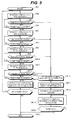
- FIG. 3 is a flow chart showing the network connection process executed at Step SA4 in FIG. 2.
- Step SB1 the network connection process is started.
- a connection with the communication network 3 such as the Internet is established by connecting with the provider 51 via the communication interface 21 in FIG. 1.
- Step SB2 time data is requested by connecting to an NTP server A that is a first time-providing server.
- Step SB3 it is judged whether the time data (NTP message) requested at Step SB2 is received from the NTP server A or not. If the time data is received, the process advances to Step SB16 as indicated with an arrow "YES”. If the time data is not received, the process advances to Step SB4 as indicated with an arrow "NO”.
- Step SB4 it is judged whether a fixed time (for example, 3 seconds) has elapsed from requesting the time data at Step SB2. If the fixed time has already elapsed, it is judged that there is no answer from the NTP server A, and the process advances to Step SB5 as indicated with an arrow "YES”. If the fixed time has not elapsed yet, the process returns to Step SB3 as indicated with an arrow "NO".
- a fixed time for example, 3 seconds
- Step SB5 the time data is requested by connecting to an NTP server B that is a second time-providing server.
- Step SB6 it is judged whether the time data (the NTP message) requested at Step SB5 is received from the NTP server B or not. If the time data is received, the process advances to Step SB16 as indicated with an arrow "YES”. If the time data is not received, the process advances to Step SB7 as indicated with an arrow "NO".
- Step SB7 it is judged whether a fixed time (for example, 3 seconds) has elapsed from requesting the time data at Step SB5. If the fixed time has already elapsed, it is judged that there is no answer from the NTP server B, and the process advances to Step SB8 as indicated with an arrow "YES”. If the fixed time has not elapsed yet, the process returns to Step SB6 as indicated with an arrow "NO".
- a fixed time for example, 3 seconds
- Step SB8 the time data is requested ("GET" request is transmitted) by connecting to an HTTP server A that is a third time-providing server.
- Step SB9 it is judged whether the time data (to which the time information is inserted in its HTTP header) requested at Step SB8 is received from the HTTP server A or not. If the time data is received, the process advances to Step SB16 as indicated with an arrow "YES”. If the time data is not received, the process advances to Step SB10 as indicated with an arrow "NO”.
- Step SB10 it is judged whether a fixed time (for example, 3 seconds) has elapsed from the time data request at Step SB8 or not.
- Step SB11 If the fixed time has already elapsed, it is judged that there is no answer from the HTTP server A, and the process advances to Step SB11 as indicated with an arrow "YES”. If the fixed time has not elapsed yet, the process returns to Step SB9 as indicated with an arrow "NO".
- Step SB11 the time data is requested ("GET" request is transmitted) by connecting to an HTTP server B that is a fourth time-providing server.
- Step SB12 it is judged whether the time data (to which the time information is inserted in its HTTP header) requested at Step SB11 is received from the HTTP server B or not. If the time data is received, the process advances to Step SB16 as indicated with an arrow "YES”. If the time data is not received, the process advances to Step SB13 as indicated with an arrow "NO”.
- Step SB13 it is judged whether a fixed time (for example, 3 seconds) has elapsed from the time data request at Step SB11 or not.
- Step SB14 If the fixed time has already elapsed, it is judged that there is no answer from the HTTP server B, and the process advances to Step SB14 as indicated with an arrow "YES”. If the fixed time has not elapsed yet, the process returns to Step SB12 as indicated with an arrow "NO".
- Step SB14 it is displayed that the network connection cannot be established (cannot obtain the time data) on the display 14 in FIG. 1 to ask whether reconnection (obtaining the time data again) should be tried or not.
- Step SB15 it is judged whether the user instructs the reconnection or not. If reconnection is instructed, the process returns to Step SB2 as indicated with an arrow "YES" to repeat the process after that. If the reconnection is not instructed, the process advances to Step SB21 as indicated with an arrow "NO" to terminate the network connection process.
- Step SB16 the time data (NTP message) received at Step SB3 or Step SB6, or the time data (the time information inserted in the HTTP header) received at Step SB9 or Step SB12 is analyzed to obtain current time (real time).
- Step SB17 a clock function having executed the present time setting with the obtained time at Step SB16 is driven until the power of the electronic musical apparatus is turned off.
- the electronic musical apparatus is connected with a predetermined server such as a contents server providing musical contents.
- the electronic musical apparatus receives and transmits data by the communication requiring the real time such as the SSL certificate, the Cookie and the like, and executes a service via the network by executing necessary processes such as screen display, reproduction of music and data storage. etc. based on the data received and transmitted.
- Step SB20 it is judged whether the network connection is instructed to be terminated or not. If the network connection is terminated, the process advances to Step SB21 as indicated with an arrow "YES”. If the network connection is not terminated, the process returns to Step SB19 as indicated with an arrow "NO".
- the network connection is terminated.
- the browser is terminated, or the browser is terminated by the termination instruction by the user being browsing only the information stored in the apparatus without terminating the browser (i.e., so-called off-line mode).
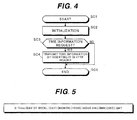
- FIG. 4 is a flow chart showing the time information transmitting process by a HTTP server according to the embodiment of the present invention. This process is repeated during driving the HTTP server.
- Step SC1 time information transmitting process is started.
- Step SC2 an initialization is executed.
- Step SC3 it is judged whether the time data request ("GET" request) is received from the electronic musical apparatus 1 that is a client or not. If the time data is requested, the process proceeds to Step SC4 indicated with an arrow "YES”. If the time data is not requested, the process proceeds to Step SC5 indicated with an arrow "NO" to finish the process at this time.
- GET time data request
- Step SC4 the time data request received at Step SC3 is replied, and the data inserted the time information (the GMT world standard time) in the HTTP header is transmitted to the electronic musical apparatus 1.
- the form of an enhanced part of the HTTP header to be transmitted is "X-Time: Day, Date Month Year Time (in 24hours): minute: second GMT” as shown in FIG. 5.
- the name of the enhanced field is "X-Time”
- the form of the part writing data and time is based on a writing method of RFC822:Date header. For example, a case of "17:23:51, Friday, July 30, 2004" will be "X-Time: Fri, 30 Jul 2004 17:23:51 GMT”.
- Step SC5 terminate the time information transmitting process.
- the network service requiring the real time such as the SSL and the Cookie can be used.
- the electronic musical apparatus 1 since the time information is obtained from the NTP server or the HTTP server at every network connection, the electronic musical apparatus 1 does not need to keep the real time other than at a time of the network connection. Therefore, the electronic musical apparatus does not need to be equipped with a power source (for example, battery) for keeping the real time with the inner clock. Therefore, manufacturing cost can be lowered.
- a power source for example, battery
- the time setting of the electronic musical apparatus 1 is executed by obtaining the time information on the network, and the clock function can be driven based on the obtained time information. Therefore, the service requiring time on the network can be used.
- the electronic musical apparatus 1 since the electronic musical apparatus 1 tries to connect with plurality of the servers for both of the NTP server and the HTTP server, the time information can certainly be obtained although when one server cannot be used for a certain reason.
- the NTP server and the HTTP server are explained as the different servers; however, one server that can provide service in both protocols may be used. Also, the same server as the NTP server and the HTTP server may be used as the contents server.
- the time data is requested to each of the NTP server and the HTTP server; however, the number of the servers to be tried to obtain the time data is not limited to those, for example, the time data may be requested to three servers for each of the NTP server and the HTTP server. Also, the contents server 56 may be plural numbers of servers.
- the network connection cannot be established; however, the network connection may be established by making limitation to use only the service that does not need the real time. Also, in that case, the user may manually input the time information.
Landscapes
- Engineering & Computer Science (AREA)
- Multimedia (AREA)
- Computer Networks & Wireless Communication (AREA)
- Signal Processing (AREA)
- Physics & Mathematics (AREA)
- Acoustics & Sound (AREA)
- Computer Security & Cryptography (AREA)
- Electrophonic Musical Instruments (AREA)
- Computer And Data Communications (AREA)
- Reverberation, Karaoke And Other Acoustics (AREA)
- Communication Cables (AREA)
- Input Circuits Of Receivers And Coupling Of Receivers And Audio Equipment (AREA)
- Machine Translation (AREA)
Abstract
Description
- This application is based on Japanese Patent Application 2004-251829, filed on August 31, 2004, the entire contents of which are incorporated herein by reference.
- This invention relates to an electronic musical apparatus, more in detail, relates to an electronic musical instrument that can connect to the networks.
- There is an electronic musical instrument that can connect to a musical contents providing server on a communication network such as the Internet and download and purchase musical contents (for example, refer to Japanese Laid-Open Patent 2003-076364).
- Normally, when musical contents are purchased on the communication network, it is necessary to input personal information such as a user ID, a password and the likes. It is known that the Cookie by which the personal information can be stored in the user's apparatus for omitting the inputting the personal information from the next time and which can be used for user identification.
- The Cookie is a format wherein a Web site provider temporally stores data in a visitor's (the user) apparatus via the Web browser, and in which information relating to the user, time and date of visiting the site for the last time, the number of visiting times can be stored.
- In transmission of the user ID and the password when purchasing the musical contents, security is necessary. The SSL protocol that transmits and receives encrypted information on the Internet is known as what prevents data tapping, data falsification and pretending by combining security techniques such as a public key encryption and a secret key encryption, a digital certificate (SSL certificate) and a hash function.
- The above-described Cookie and SSL certificate have validation date, and it is necessary to always keep a current time on the apparatus side to use the Cookie and the SSL certificate. Generally, since the electronic musical apparatus such as an electronic musical instrument cannot keep the current time inside the apparatus as different from a personal computer, it is difficult to receive an internet service requiring a current time.
- Moreover, an network time protocol (NTP) sever is used as a server to be connected for obtaining time information on the Internet; however, some types of the Internet connection prohibits NTP usage, and the time information cannot be obtained by the NTP.
- It is an object of the present invention to provide an electronic musical apparatus that can use the network service requiring a current time.
- It is another object of the present invention to provide an electronic musical apparatus that can obtain time information from a network under a circumstance of prohibiting a usage of NTP.
- According to one aspect of the present invention, there is provided an electronic musical apparatus, comprising: an instructing device that instructs establishment of connection to a network via a communication interface; a first time information obtaining device that obtains time information from a first time information provider connected to the network; a second time information obtaining device that obtains time information from a second time information provider connected to the network when the first time information obtaining device cannot obtain the time information; and an executing device that executes a service via the network by using the time information obtained from either one of the first and the second time information providers.
- According to the present invention, an electronic musical apparatus that can use the network service requiring a current time can be provided.
- Further, according to the present invention, an electronic musical apparatus that can obtain time information from a network under a circumstance of prohibiting a usage of NTP can be provided.
-
- FIG. 1 is a block diagram showing a structure of a
network system 100 according to an embodiment of the present invention. - FIG. 2 is a flow chart showing a main process according to the embodiment of the present invention.
- FIG. 3 is a flow chart showing a network connection process executed at Step SA4 in FIG. 2.
- FIG. 4 is a flow chart showing a time information transmitting process by an HTTP server according to the embodiment of the present invention.
- FIG. 5 is a diagram showing a form of an enhancing part of an HTTP header according to the embodiment of the present invention.
- FIG. 1 is a block diagram showing a structure of a
network system 100 according to an embodiment of the present invention. - The
network system 100 is consisted of an electronicmusical apparatus 1 and a communication network (the Internet and the like) 3 connected with various servers such as a network time protocol (NTP) server A52, an NTP server B53, a hyper text transfer protocol (HTTP) server A54, an HTTP server B55, acontents server 55 and the like. Themusical apparatus 1 can connect with thecommunication network 3 via aprovider 51. - The NTP server A52 and the NTP server B53 are servers (time information providing means) for providing time data (NTP message) including time information (GMT standard time) by using the Network Time Protocol (NTP) that is a protocol for exactly adjusting an inner (built-in) clock of the electronic apparatus such as a computer by communicating with a client.
- The HTTP server A54 and the HTTP server B55 are servers (time information providing means) for transmitting time information (GMT standard time) buried in a HTTP header based on time data request (GET request) from the electronic
musical apparatus 1. Moreover, the hyper text transfer protocol (HTTP) server in this specification does not indicate a normal HTTP server, but indicates a server to transmit the time information (GMT) buried in the HTTP header. - The
contents server 56 is a server for providing listening trials or downloading service of musical contents to a client such as the electronicmusical apparatus 1 by using the Secure Sockets Layer protocol (hereinafter, called SSL) and the Cookie. - The electronic
musical apparatus 1 is an electronic musical instrument or the like that cannot keep an inner clock when the power is turned off. Since the Cookie and the SSL certificate has validation date in order to use the service provided by thecontents server 56, the real (current) time is needed to be kept in the electronicmusical apparatus 1 when connecting with thecontents server 56. In the embodiment of the present invention, the electronicmusical apparatus 1 obtains time information by connecting with the NTP server A52 and keeps the real time in the electronicmusical instrument 1 while the power is turned on. Moreover, when the electronicmusical apparatus 1 cannot connect with theNTP server 52 for a certain reason on the server side, it will connect with the NTP server B53 to obtain time information. - For example, if the usage of the NTP protocol is prohibited by a part of CATV connection and firewall setting in the
provider 51, the time information from the NTP server A52 and the NTP server B53 cannot be obtained. In that case, the electronicmusical apparatus 1 obtains the time information by connecting with the HTTP server A54. If the electronicmusical apparatus 1 cannot connect with the HTTP server A54 for a certain reason ont the server side, it connects with the HTTP server B55 to obtain the time information. - As described in the above, by obtaining the time information by using the HTTP, exact time information can be obtained in the network connection that is prohibiting the usage of the NTP. Therefore, the network service that needs real time such as the SSL and the Cookie can be used.
- An example of a hardware structure of the electronic
musical apparatus 1 is explained in the below. The electronicmusical apparatus 1 is, for example, an electronic musical instrument such as a musical keyboard, a musical tone generator, a mixer, a PA apparatus such as a recorder, and an audio-visual device such as a stereo component system. The electronic musical apparatus is an electronic apparatus for executing processes related to music. - The electronic
musical apparatus 1 is consisted of abus 6, aRAM 7, a ROM8, aCPU 9, atimer 10, a detector 11, apanel switch 12, aperformance switch 22, a displayingcircuit 13, adisplay 14 anexternal storage device 15, aMIDI interface 16, amusical tone generator 18, aneffecter 19, asound system 20 and a communication interface (I/F) 21. - The
RAM 7, theROM 8, theCPU 9, theexternal storage device 15, the detector 11, the displayingcircuit 13, theMIDI interface 16, themusical tone generator 18, theeffecter 19 and the communication interface (I/F) 21 are directly connected to thebus 6. - The
RAM 7 has a working area of theCPU 9 and a buffer region and stores a flag, a register, various parameters and the like. - Various parameters and a control program or a program for realizing the embodiment of the present invention can be stored in the
ROM 8. In this case, it is not necessary to store duplicated programs in theexternal storage device 15. Moreover, a rewritable flash memory other than normal read-only-memory is included as theROM 8. Also, the URL of the plurality of the NTP servers (for example, the NTP server A52 and the NTP server B53), the URL of plurality of the NTP servers (for example, the HTTP server A54 and the HTTP server B55) and the URL of thecontents server 56 are stored in the ROM8. - The
CPU 9 executes calculation or control in accordance with the control program stored in theROM 8 or in theexternal storage device 15. Thetimer 10 is connected with the CPU and provides a standard clock signal and interrupting timing to theCPU 9. - A user can make various inputs and settings by using the
panel switch 12 connected with the detector 11. Thepanel switch 12 may be any type of an input device that can output signal corresponding to user's input, such as a switch, a pad, a fader, a slider, an alphanumerical keyboard, a mouse, a rotary encoder, a joy-stick, a jog-shuttle and the like. - The
performance switch 22 is connected with the detector 11 and provides musical performance information in accordance with musical performance by the user. A musical keyboard, the pad and the like can be used as theperformance switch 22. Moreover, theperformance switch 22 is not limited to those, but may be any type of an input device that can be input musical performance information based on musical performance by the user. - The displaying
circuit 13 is connected with thedisplay 14 and displays various types of information on thedisplay 14. Thedisplay 14 can display various data (for example, HTML contents and the like) received from the contents server, other than displaying various parameters. Also, thedisplay 14 can display the current (real) time based on the time information providing means (the server). The user executes various inputs and settings referring to the information displayed on thedisplay 14. Also, thedisplay 14 may be consisted by connecting an external display device. - The
external storage device 15 includes an interface for the external storage device and is connected to thebus 6 via the interface. Theexternal storage device 15 is, for example, a flexible disc or the floppy (trademark) disc drive (FDD), a hard disc drive (HDD), magneto optical disc (MO) device, the CD-ROM (compact disc read only memory) device, the DVD (Digital Versatile Disc) device, a semiconductor memory and the like. - When the hard disc drive (HDD) is connected as the
external storage device 15, the control program or the program for realizing the embodiment of the present invention can be stored in the hard disc (HDD) in theexternal storage device 15. TheCPU 9 can execute the same process as in the case the control program and the like being stored in theROM 8 by reading out the control program from the hard disc to theRAM 7. By doing this, addition and version-up of the control program can be easily executed. - Moreover, when the CD-ROM is connected in addition to the hard disc drive, the control program or the program for realizing the embodiment can be stored also in the CD-ROM. The control program and the program for realizing the embodiment of the present invention can be installed from the CD-ROM to the hard disc. New installation and version-up of the control program can be easily performed.
- The MIDI interface (MIDI I/F) can connect with a
MIDI device 17, other musical instrument, an audio-visual device, a computer and the like, and can receive and transmit at least a MIDI signal. TheMIDI interface 16 is not limited to an exclusive MIDI interface, but may be consisted by using a widely used interface such as the RS-232C, the USB (Universal Serial Bus), the IEEE1394 and the like. In this case, data other than MIDI message (signals) can be received and transmitted. - The MIDI device is an audio device or a musical instrument to be connected to the
MIDI interface 16. The type of the MIDI device is not limited to a keyboard-type musical instrument, but may be a percussion instrument type, a wind instrument type, a stringed instrument type and the like. Moreover, a musical tone generator or an automatic musical performance device, etc. is not limited to one built in a main body of the electronic musical instrument but also can be a combination of independent devices connected via communication means such as MIDI or various networks. - The
musical tone generator 18 generates musical tone signal in accordance with the musical contents stored in theexternal storage device 15, theROM 8 or theRAM 7 or performance signal and MIDI signal provided from theperformance switch 22 or from theMIDI device 17 connected with theMIDI interface 16, and provides the musical tone signal to thesound system 20 via the effecter (effect circuit) 19. - The
effect circuit 19 adds various musical effects to the musical tone signal provided from themusical tone generator 18. Thesound system 20 includes a D/A converter and a speaker, and converts the provided digital musical tone signal to the analogue type to pronounce. - The
communication interface 21 can connect with a Local Area Network (LAN). Further, thecommunication interface 21 can connect with thecommunication network 3 such as the Internet via theprovider 51, and can mutually connect with various types of the servers such as the NTP server A52, the NTP server B53, the HTTP server B55, thecontents server 55 and the like. - Moreover, the
communication interface 21 and thecommunication network 3 are not limited to be wired communication interface, but may be wireless communication interface. Moreover, thecommunication interface 21 may be a built-in type, or removable type such as one provided as a PC card. - FIG. 2 is flow chart showing a main process according to the embodiment of the present invention. This main process is started upon turning the main power of the electronic
musical apparatus 1 on. - At Step SA1, the main process is started, and at Step SA2, initialization is executed. Here, for example, various flags, buffers, registers and the like are initialized.
- At Step SA3, it is judged whether a network connection process is instructed or not. In detail, in the embodiment of the present invention, it is defined to be the network connection instruction when the user inputs an instruction to execute a browser function equipped with the electronic
musical apparatus 1. When the connection process is instructed, the process advances to Step SA4 as indicated with an arrow "YES" to execute the network connection process shown in FIG. 3. Thereafter the process advances to Step SA8. If the network connection process is not instructed, the process advances to Step SA5 as indicated with an arrow "NO". - At Step SA5, it is judged whether there is a performance operation or not, that is, whether a performance signal is input by the
performance switch 22 in FIG. 1 or not. If there is a performance operation, the process advances to Step SA6 as indicated with an arrow "YES" to execute a pronunciation process based on the performance operation. If there is no performance operation, the process advances to Step SA7 as indicated with an arrow "NO". - At Step SA7, a miscellaneous process is executed. Here, miscellaneous process is a process other than the network connection process and the pronunciation process by the performance operation. For example, it is a process relating to reproduction, editing and file operation of automatic musical performance data stored in the
external storage device 15 or theROM 8 in FIG. 1 and various settings of the electronicmusical apparatus 1. - At Step SA8, it is judged whether the main process is finished or not. Since this main process is continued from the turning on to the turning off of the electronic
musical apparatus 1, it is defined to be the finishing instruction when the turning off operation is executed by the user. When finishing the process is instructed, the process advances to Step SA9 as indicated with an arrow "YES" to finish the main process. If finishing the process is not instructed, the process returns to Step SA3 as indicated with an arrow "NO" to repeat the process thereafter. - FIG. 3 is a flow chart showing the network connection process executed at Step SA4 in FIG. 2.
- At Step SB1, the network connection process is started. For example, a connection with the
communication network 3 such as the Internet is established by connecting with theprovider 51 via thecommunication interface 21 in FIG. 1. - At Step SB2, time data is requested by connecting to an NTP server A that is a first time-providing server. At Step SB3, it is judged whether the time data (NTP message) requested at Step SB2 is received from the NTP server A or not. If the time data is received, the process advances to Step SB16 as indicated with an arrow "YES". If the time data is not received, the process advances to Step SB4 as indicated with an arrow "NO". At Step SB4, it is judged whether a fixed time (for example, 3 seconds) has elapsed from requesting the time data at Step SB2. If the fixed time has already elapsed, it is judged that there is no answer from the NTP server A, and the process advances to Step SB5 as indicated with an arrow "YES". If the fixed time has not elapsed yet, the process returns to Step SB3 as indicated with an arrow "NO".
- At Step SB5, the time data is requested by connecting to an NTP server B that is a second time-providing server. At Step SB6, it is judged whether the time data (the NTP message) requested at Step SB5 is received from the NTP server B or not. If the time data is received, the process advances to Step SB16 as indicated with an arrow "YES". If the time data is not received, the process advances to Step SB7 as indicated with an arrow "NO". At Step SB7, it is judged whether a fixed time (for example, 3 seconds) has elapsed from requesting the time data at Step SB5. If the fixed time has already elapsed, it is judged that there is no answer from the NTP server B, and the process advances to Step SB8 as indicated with an arrow "YES". If the fixed time has not elapsed yet, the process returns to Step SB6 as indicated with an arrow "NO".
- At Step SB8, the time data is requested ("GET" request is transmitted) by connecting to an HTTP server A that is a third time-providing server. At Step SB9, it is judged whether the time data (to which the time information is inserted in its HTTP header) requested at Step SB8 is received from the HTTP server A or not. If the time data is received, the process advances to Step SB16 as indicated with an arrow "YES". If the time data is not received, the process advances to Step SB10 as indicated with an arrow "NO". At Step SB10, it is judged whether a fixed time (for example, 3 seconds) has elapsed from the time data request at Step SB8 or not. If the fixed time has already elapsed, it is judged that there is no answer from the HTTP server A, and the process advances to Step SB11 as indicated with an arrow "YES". If the fixed time has not elapsed yet, the process returns to Step SB9 as indicated with an arrow "NO".
- At Step SB11, the time data is requested ("GET" request is transmitted) by connecting to an HTTP server B that is a fourth time-providing server. At Step SB12, it is judged whether the time data (to which the time information is inserted in its HTTP header) requested at Step SB11 is received from the HTTP server B or not. If the time data is received, the process advances to Step SB16 as indicated with an arrow "YES". If the time data is not received, the process advances to Step SB13 as indicated with an arrow "NO". At Step SB13, it is judged whether a fixed time (for example, 3 seconds) has elapsed from the time data request at Step SB11 or not. If the fixed time has already elapsed, it is judged that there is no answer from the HTTP server B, and the process advances to Step SB14 as indicated with an arrow "YES". If the fixed time has not elapsed yet, the process returns to Step SB12 as indicated with an arrow "NO".
- At Step SB14, it is displayed that the network connection cannot be established (cannot obtain the time data) on the
display 14 in FIG. 1 to ask whether reconnection (obtaining the time data again) should be tried or not. At Step SB15, it is judged whether the user instructs the reconnection or not. If reconnection is instructed, the process returns to Step SB2 as indicated with an arrow "YES" to repeat the process after that. If the reconnection is not instructed, the process advances to Step SB21 as indicated with an arrow "NO" to terminate the network connection process. - At Step SB16, the time data (NTP message) received at Step SB3 or Step SB6, or the time data (the time information inserted in the HTTP header) received at Step SB9 or Step SB12 is analyzed to obtain current time (real time). At Step SB17, a clock function having executed the present time setting with the obtained time at Step SB16 is driven until the power of the electronic musical apparatus is turned off.
- At Step SB18, the electronic musical apparatus is connected with a predetermined server such as a contents server providing musical contents. At Step SB19, the electronic musical apparatus receives and transmits data by the communication requiring the real time such as the SSL certificate, the Cookie and the like, and executes a service via the network by executing necessary processes such as screen display, reproduction of music and data storage. etc. based on the data received and transmitted.
- At Step SB20, it is judged whether the network connection is instructed to be terminated or not. If the network connection is terminated, the process advances to Step SB21 as indicated with an arrow "YES". If the network connection is not terminated, the process returns to Step SB19 as indicated with an arrow "NO".
- At Step SB21, the network connection is terminated. In order to terminate the network connection, the browser is terminated, or the browser is terminated by the termination instruction by the user being browsing only the information stored in the apparatus without terminating the browser (i.e., so-called off-line mode).
- FIG. 4 is a flow chart showing the time information transmitting process by a HTTP server according to the embodiment of the present invention. This process is repeated during driving the HTTP server.
- At Step SC1, time information transmitting process is started. At Step SC2, an initialization is executed.
- At Step SC3, it is judged whether the time data request ("GET" request) is received from the electronic
musical apparatus 1 that is a client or not. If the time data is requested, the process proceeds to Step SC4 indicated with an arrow "YES". If the time data is not requested, the process proceeds to Step SC5 indicated with an arrow "NO" to finish the process at this time. - At Step SC4, the time data request received at Step SC3 is replied, and the data inserted the time information (the GMT world standard time) in the HTTP header is transmitted to the electronic
musical apparatus 1. The form of an enhanced part of the HTTP header to be transmitted is "X-Time: Day, Date Month Year Time (in 24hours): minute: second GMT" as shown in FIG. 5. The name of the enhanced field is "X-Time", and the form of the part writing data and time is based on a writing method of RFC822:Date header. For example, a case of "17:23:51, Friday, July 30, 2004" will be "X-Time: Fri, 30 Jul 2004 17:23:51 GMT". Then the process advances to Step SC5 to terminate the time information transmitting process. - As described in the above, according to the embodiments of the present invention, for example, if the usage of the NTP protocol is prohibited by a part of the CATV connection and the firewall setting, exact time information can be obtained by obtaining the time information by using the HTTP. Therefore, the network service requiring the real time such as the SSL and the Cookie can be used.
- Moreover, according to the embodiments of the present invention, since the time information is obtained from the NTP server or the HTTP server at every network connection, the electronic
musical apparatus 1 does not need to keep the real time other than at a time of the network connection. Therefore, the electronic musical apparatus does not need to be equipped with a power source (for example, battery) for keeping the real time with the inner clock. Therefore, manufacturing cost can be lowered. - Further, when the electronic
musical apparatus 1 is driven to execute the network connection, the time setting of the electronicmusical apparatus 1 is executed by obtaining the time information on the network, and the clock function can be driven based on the obtained time information. Therefore, the service requiring time on the network can be used. - Moreover, according to the embodiments of the present invention, since the electronic
musical apparatus 1 tries to connect with plurality of the servers for both of the NTP server and the HTTP server, the time information can certainly be obtained although when one server cannot be used for a certain reason. - Furthermore, in the embodiments of the present invention, the NTP server and the HTTP server are explained as the different servers; however, one server that can provide service in both protocols may be used. Also, the same server as the NTP server and the HTTP server may be used as the contents server.
- In addition to that, in the embodiments of the present invention, the time data is requested to each of the NTP server and the HTTP server; however, the number of the servers to be tried to obtain the time data is not limited to those, for example, the time data may be requested to three servers for each of the NTP server and the HTTP server. Also, the
contents server 56 may be plural numbers of servers. - Moreover, in the embodiment of the present invention, if the time information cannot be obtained, the network connection cannot be established; however, the network connection may be established by making limitation to use only the service that does not need the real time. Also, in that case, the user may manually input the time information.
- The present invention has been described in connection with the preferred embodiments. The invention is not limited only to the above embodiments. It is apparent that various modifications, improvements, combinations, and the like can be made by those skilled in the art.
Claims (6)
- An electronic musical apparatus, comprising:an instructing device that instructs establishment of connection to a network via a communication interface;a first time information obtaining device that obtains time information from a first time information provider connected to the network;a second time information obtaining device that obtains time information from a second time information provider connected to the network when the first time information obtaining device cannot obtain the time information; andan executing device that executes a service via the network by using the time information obtained from either one of the first and the second time information providers.
- The electronic musical apparatus according to claim 1, wherein the connection to the network is terminated when the time information cannot be obtained from both of the first and the second time information providers.
- The electronic musical apparatus according to claim 1, wherein the first and the second time information providers are either one of a hyper text transfer protocol server or a network time protocol server.
- The electronic musical apparatus according to claim 1, wherein the service executed by the executing device is a service using an SSL certificate or Cookie.
- A method for an electronic music apparatus to execute a service via a network, comprising the steps of:(a) instructing establishment of connection to a network via a communication interface;(b) obtaining time information from a first time information provider connected to the network;(c) obtaining device time information from a second time information provider connected to the network when the time information cannot be obtained at the step (b); and(d) executing a service via the network by using the time information obtained from either one of the first and the second time information providers.
- A storage medium storing a program, which a computer executes to realize a process for an electronic music apparatus to execute a service via a network, comprising the instructions for:(a) instructing establishment of connection to a network via a communication interface;(b) obtaining time information from a first time information provider connected to the network;(c) obtaining device time information from a second time information provider connected to the network when the time information cannot be obtained by the instruction (b); and(d) executing a service via the network by using the time information obtained from either one of the first and the second time information providers.
Applications Claiming Priority (1)
| Application Number | Priority Date | Filing Date | Title |
|---|---|---|---|
| JP2004251829A JP4584653B2 (en) | 2004-08-31 | 2004-08-31 | Electronic music apparatus and program |
Publications (2)
| Publication Number | Publication Date |
|---|---|
| EP1633110A1 true EP1633110A1 (en) | 2006-03-08 |
| EP1633110B1 EP1633110B1 (en) | 2007-10-10 |
Family
ID=35511591
Family Applications (1)
| Application Number | Title | Priority Date | Filing Date |
|---|---|---|---|
| EP05107836A Expired - Lifetime EP1633110B1 (en) | 2004-08-31 | 2005-08-26 | Electronic music apparatus capable of connecting to network |
Country Status (6)
| Country | Link |
|---|---|
| US (1) | US7498503B2 (en) |
| EP (1) | EP1633110B1 (en) |
| JP (1) | JP4584653B2 (en) |
| CN (2) | CN100423485C (en) |
| AT (1) | ATE375676T1 (en) |
| DE (1) | DE602005002806T2 (en) |
Families Citing this family (5)
| Publication number | Priority date | Publication date | Assignee | Title |
|---|---|---|---|---|
| JP4584653B2 (en) * | 2004-08-31 | 2010-11-24 | ヤマハ株式会社 | Electronic music apparatus and program |
| JP4775558B2 (en) * | 2006-03-17 | 2011-09-21 | ヤマハ株式会社 | Electronic musical instrument, program for realizing control method thereof, and server |
| JP7318348B2 (en) * | 2019-06-21 | 2023-08-01 | 株式会社デンソー | Wireless communication device and time acquisition method |
| CN110392276B (en) * | 2019-07-29 | 2021-06-22 | 湖南卡罗德音乐集团有限公司 | Live broadcast recording and broadcasting method based on Real Time Messaging Protocol (RTMP) synchronous transmission MIDI |
| US11522626B2 (en) * | 2020-04-02 | 2022-12-06 | Hitachi Energy Switzerland Ag | Acquiring current time in a network |
Citations (2)
| Publication number | Priority date | Publication date | Assignee | Title |
|---|---|---|---|---|
| US6175872B1 (en) * | 1997-12-12 | 2001-01-16 | Gte Internetworking Incorporated | Collaborative environment for syncronizing audio from remote devices |
| US6421768B1 (en) * | 1999-05-04 | 2002-07-16 | First Data Corporation | Method and system for authentication and single sign on using cryptographically assured cookies in a distributed computer environment |
Family Cites Families (10)
| Publication number | Priority date | Publication date | Assignee | Title |
|---|---|---|---|---|
| JP2001027682A (en) | 1999-07-14 | 2001-01-30 | Matsushita Electric Works Ltd | Apparatus and method for controlling monitoring, and recording medium |
| US6462264B1 (en) * | 1999-07-26 | 2002-10-08 | Carl Elam | Method and apparatus for audio broadcast of enhanced musical instrument digital interface (MIDI) data formats for control of a sound generator to create music, lyrics, and speech |
| JP2001148712A (en) | 1999-11-18 | 2001-05-29 | Seiko Epson Corp | Time setting device |
| KR100803163B1 (en) | 2001-09-03 | 2008-02-14 | 삼성전자주식회사 | LCD Display |
| JP4423584B2 (en) * | 2001-09-04 | 2010-03-03 | ヤマハ株式会社 | Electronic music equipment |
| US20030084190A1 (en) * | 2001-10-25 | 2003-05-01 | Kimball Robert H. | Apparatus and system for maintaining accurate time in a wireless environment |
| JP3970235B2 (en) * | 2003-01-10 | 2007-09-05 | キヤノン株式会社 | Monitoring device, counter information management method, storage medium and program in the device |
| JP4148118B2 (en) * | 2003-12-05 | 2008-09-10 | ヤマハ株式会社 | Electronic music apparatus and program |
| JP4584653B2 (en) * | 2004-08-31 | 2010-11-24 | ヤマハ株式会社 | Electronic music apparatus and program |
| JP2006195752A (en) * | 2005-01-13 | 2006-07-27 | Fuji Xerox Co Ltd | Network device with time correcting function |
-
2004
- 2004-08-31 JP JP2004251829A patent/JP4584653B2/en not_active Expired - Fee Related
-
2005
- 2005-08-26 EP EP05107836A patent/EP1633110B1/en not_active Expired - Lifetime
- 2005-08-26 AT AT05107836T patent/ATE375676T1/en not_active IP Right Cessation
- 2005-08-26 DE DE602005002806T patent/DE602005002806T2/en not_active Expired - Lifetime
- 2005-08-30 US US11/215,891 patent/US7498503B2/en not_active Expired - Lifetime
- 2005-08-31 CN CNB2005100996475A patent/CN100423485C/en not_active Expired - Fee Related
- 2005-08-31 CN CNU2005201052692U patent/CN2862250Y/en not_active Expired - Fee Related
Patent Citations (2)
| Publication number | Priority date | Publication date | Assignee | Title |
|---|---|---|---|---|
| US6175872B1 (en) * | 1997-12-12 | 2001-01-16 | Gte Internetworking Incorporated | Collaborative environment for syncronizing audio from remote devices |
| US6421768B1 (en) * | 1999-05-04 | 2002-07-16 | First Data Corporation | Method and system for authentication and single sign on using cryptographically assured cookies in a distributed computer environment |
Non-Patent Citations (2)
| Title |
|---|
| BAYNETWORKS: "NTP SYSTEM IMPLEMENTATION MODEL", BAYNETWORKS, 29 September 1997 (1997-09-29), baynetworks, XP002902019 * |
| ENDRES J: "ZEITIGE BEDIENUNG NTP-SERVER UND -CLIENT UNTER LINUX", CT MAGAZIN FUER COMPUTER TECHNIK, HEISE ZEITSCHRIFTEN VERLAG, HANNOVER, DE, no. 19, 9 September 2002 (2002-09-09), pages 210,213, XP001125619, ISSN: 0724-8679 * |
Also Published As
| Publication number | Publication date |
|---|---|
| EP1633110B1 (en) | 2007-10-10 |
| US20060042453A1 (en) | 2006-03-02 |
| DE602005002806D1 (en) | 2007-11-22 |
| CN1744505A (en) | 2006-03-08 |
| DE602005002806T2 (en) | 2008-07-10 |
| US7498503B2 (en) | 2009-03-03 |
| JP4584653B2 (en) | 2010-11-24 |
| CN100423485C (en) | 2008-10-01 |
| JP2006072448A (en) | 2006-03-16 |
| CN2862250Y (en) | 2007-01-24 |
| ATE375676T1 (en) | 2007-10-15 |
Similar Documents
| Publication | Publication Date | Title |
|---|---|---|
| EP1221688B1 (en) | Music data distribution system and method | |
| JP3587113B2 (en) | Connection setting device and medium | |
| JP2005156982A (en) | Electronic music device and program | |
| JP2009003966A (en) | Method for accessing information and / or data available on a wide area computer network | |
| JP5040736B2 (en) | Content utilization apparatus and program | |
| EP1291843A1 (en) | Electronic music apparatus that enables user to purchase music related product from server | |
| JP3867529B2 (en) | Electronic music apparatus and program | |
| EP1633110B1 (en) | Electronic music apparatus capable of connecting to network | |
| US6803511B2 (en) | Electronic music apparatus capable of connecting to communication network | |
| JP4609682B2 (en) | Communication system and information processing method | |
| JP2011123462A (en) | Sound processing apparatus | |
| JP5772705B2 (en) | Electronic device and program | |
| US20060015815A1 (en) | Contents managing apparatus and program for the same | |
| JP4179275B2 (en) | Technology for assigning a unique ID to an electronic music device | |
| US20070005723A1 (en) | Communication apparatus and communication method | |
| JP4853330B2 (en) | Karaoke system and karaoke device | |
| JP3846428B2 (en) | Music information providing server and electronic music apparatus | |
| JP4655538B2 (en) | Electronic music apparatus and program | |
| JP5066975B2 (en) | NETWORK CONNECTION ENVIRONMENT SETTING CLIENT DEVICE, NETWORK CONNECTION ENVIRONMENT SETTING SYSTEM, AND PROGRAM | |
| JP2008269043A (en) | Content protection system and display device | |
| JP2003271137A (en) | Electronic musical device | |
| JP5573525B2 (en) | Communication device, electronic certificate validity determination method, electronic certificate validity determination program, and recording medium | |
| JP4819589B2 (en) | Authentication system and authentication method | |
| JP4120644B2 (en) | Music LAN setting device and program | |
| JP2006139589A (en) | System and device for information processing, and portable terminal |
Legal Events
| Date | Code | Title | Description |
|---|---|---|---|
| PUAI | Public reference made under article 153(3) epc to a published international application that has entered the european phase |
Free format text: ORIGINAL CODE: 0009012 |
|
| 17P | Request for examination filed |
Effective date: 20050829 |
|
| AK | Designated contracting states |
Kind code of ref document: A1 Designated state(s): AT BE BG CH CY CZ DE DK EE ES FI FR GB GR HU IE IS IT LI LT LU LV MC NL PL PT RO SE SI SK TR |
|
| AX | Request for extension of the european patent |
Extension state: AL BA HR MK YU |
|
| AKX | Designation fees paid |
Designated state(s): AT BE BG CH CY CZ DE DK EE ES FI FR GB GR HU IE IS IT LI LT LU LV MC NL PL PT RO SE SI SK TR |
|
| GRAP | Despatch of communication of intention to grant a patent |
Free format text: ORIGINAL CODE: EPIDOSNIGR1 |
|
| RAP1 | Party data changed (applicant data changed or rights of an application transferred) |
Owner name: YAMAHA CORPORATION |
|
| GRAS | Grant fee paid |
Free format text: ORIGINAL CODE: EPIDOSNIGR3 |
|
| GRAA | (expected) grant |
Free format text: ORIGINAL CODE: 0009210 |
|
| AK | Designated contracting states |
Kind code of ref document: B1 Designated state(s): AT BE BG CH CY CZ DE DK EE ES FI FR GB GR HU IE IS IT LI LT LU LV MC NL PL PT RO SE SI SK TR |
|
| REG | Reference to a national code |
Ref country code: GB Ref legal event code: FG4D |
|
| RIN1 | Information on inventor provided before grant (corrected) |
Inventor name: OSHIMA, IKURO Inventor name: SHIBUKAWA, TAKEO Inventor name: YANASE, TSUTOMU |
|
| REG | Reference to a national code |
Ref country code: CH Ref legal event code: EP |
|
| REG | Reference to a national code |
Ref country code: IE Ref legal event code: FG4D |
|
| REF | Corresponds to: |
Ref document number: 602005002806 Country of ref document: DE Date of ref document: 20071122 Kind code of ref document: P |
|
| NLV1 | Nl: lapsed or annulled due to failure to fulfill the requirements of art. 29p and 29m of the patents act | ||
| PG25 | Lapsed in a contracting state [announced via postgrant information from national office to epo] |
Ref country code: NL Free format text: LAPSE BECAUSE OF FAILURE TO SUBMIT A TRANSLATION OF THE DESCRIPTION OR TO PAY THE FEE WITHIN THE PRESCRIBED TIME-LIMIT Effective date: 20071010 Ref country code: SE Free format text: LAPSE BECAUSE OF FAILURE TO SUBMIT A TRANSLATION OF THE DESCRIPTION OR TO PAY THE FEE WITHIN THE PRESCRIBED TIME-LIMIT Effective date: 20080110 Ref country code: CH Free format text: LAPSE BECAUSE OF FAILURE TO SUBMIT A TRANSLATION OF THE DESCRIPTION OR TO PAY THE FEE WITHIN THE PRESCRIBED TIME-LIMIT Effective date: 20071010 Ref country code: LI Free format text: LAPSE BECAUSE OF FAILURE TO SUBMIT A TRANSLATION OF THE DESCRIPTION OR TO PAY THE FEE WITHIN THE PRESCRIBED TIME-LIMIT Effective date: 20071010 Ref country code: ES Free format text: LAPSE BECAUSE OF FAILURE TO SUBMIT A TRANSLATION OF THE DESCRIPTION OR TO PAY THE FEE WITHIN THE PRESCRIBED TIME-LIMIT Effective date: 20080121 |
|
| REG | Reference to a national code |
Ref country code: CH Ref legal event code: PL |
|
| PG25 | Lapsed in a contracting state [announced via postgrant information from national office to epo] |
Ref country code: IS Free format text: LAPSE BECAUSE OF FAILURE TO SUBMIT A TRANSLATION OF THE DESCRIPTION OR TO PAY THE FEE WITHIN THE PRESCRIBED TIME-LIMIT Effective date: 20080210 Ref country code: BG Free format text: LAPSE BECAUSE OF FAILURE TO SUBMIT A TRANSLATION OF THE DESCRIPTION OR TO PAY THE FEE WITHIN THE PRESCRIBED TIME-LIMIT Effective date: 20080110 Ref country code: PL Free format text: LAPSE BECAUSE OF FAILURE TO SUBMIT A TRANSLATION OF THE DESCRIPTION OR TO PAY THE FEE WITHIN THE PRESCRIBED TIME-LIMIT Effective date: 20071010 Ref country code: PT Free format text: LAPSE BECAUSE OF FAILURE TO SUBMIT A TRANSLATION OF THE DESCRIPTION OR TO PAY THE FEE WITHIN THE PRESCRIBED TIME-LIMIT Effective date: 20080310 Ref country code: LV Free format text: LAPSE BECAUSE OF FAILURE TO SUBMIT A TRANSLATION OF THE DESCRIPTION OR TO PAY THE FEE WITHIN THE PRESCRIBED TIME-LIMIT Effective date: 20071010 Ref country code: LT Free format text: LAPSE BECAUSE OF FAILURE TO SUBMIT A TRANSLATION OF THE DESCRIPTION OR TO PAY THE FEE WITHIN THE PRESCRIBED TIME-LIMIT Effective date: 20071010 |
|
| PG25 | Lapsed in a contracting state [announced via postgrant information from national office to epo] |
Ref country code: AT Free format text: LAPSE BECAUSE OF FAILURE TO SUBMIT A TRANSLATION OF THE DESCRIPTION OR TO PAY THE FEE WITHIN THE PRESCRIBED TIME-LIMIT Effective date: 20071010 |
|
| EN | Fr: translation not filed | ||
| PG25 | Lapsed in a contracting state [announced via postgrant information from national office to epo] |
Ref country code: CZ Free format text: LAPSE BECAUSE OF FAILURE TO SUBMIT A TRANSLATION OF THE DESCRIPTION OR TO PAY THE FEE WITHIN THE PRESCRIBED TIME-LIMIT Effective date: 20071010 Ref country code: DK Free format text: LAPSE BECAUSE OF FAILURE TO SUBMIT A TRANSLATION OF THE DESCRIPTION OR TO PAY THE FEE WITHIN THE PRESCRIBED TIME-LIMIT Effective date: 20071010 |
|
| PLBE | No opposition filed within time limit |
Free format text: ORIGINAL CODE: 0009261 |
|
| STAA | Information on the status of an ep patent application or granted ep patent |
Free format text: STATUS: NO OPPOSITION FILED WITHIN TIME LIMIT |
|
| PG25 | Lapsed in a contracting state [announced via postgrant information from national office to epo] |
Ref country code: RO Free format text: LAPSE BECAUSE OF FAILURE TO SUBMIT A TRANSLATION OF THE DESCRIPTION OR TO PAY THE FEE WITHIN THE PRESCRIBED TIME-LIMIT Effective date: 20071010 Ref country code: SK Free format text: LAPSE BECAUSE OF FAILURE TO SUBMIT A TRANSLATION OF THE DESCRIPTION OR TO PAY THE FEE WITHIN THE PRESCRIBED TIME-LIMIT Effective date: 20071010 Ref country code: BE Free format text: LAPSE BECAUSE OF FAILURE TO SUBMIT A TRANSLATION OF THE DESCRIPTION OR TO PAY THE FEE WITHIN THE PRESCRIBED TIME-LIMIT Effective date: 20071010 |
|
| 26N | No opposition filed |
Effective date: 20080711 |
|
| PG25 | Lapsed in a contracting state [announced via postgrant information from national office to epo] |
Ref country code: FR Free format text: LAPSE BECAUSE OF FAILURE TO SUBMIT A TRANSLATION OF THE DESCRIPTION OR TO PAY THE FEE WITHIN THE PRESCRIBED TIME-LIMIT Effective date: 20080725 |
|
| PG25 | Lapsed in a contracting state [announced via postgrant information from national office to epo] |
Ref country code: GR Free format text: LAPSE BECAUSE OF FAILURE TO SUBMIT A TRANSLATION OF THE DESCRIPTION OR TO PAY THE FEE WITHIN THE PRESCRIBED TIME-LIMIT Effective date: 20080111 |
|
| PG25 | Lapsed in a contracting state [announced via postgrant information from national office to epo] |
Ref country code: FI Free format text: LAPSE BECAUSE OF FAILURE TO SUBMIT A TRANSLATION OF THE DESCRIPTION OR TO PAY THE FEE WITHIN THE PRESCRIBED TIME-LIMIT Effective date: 20071010 |
|
| PG25 | Lapsed in a contracting state [announced via postgrant information from national office to epo] |
Ref country code: MC Free format text: LAPSE BECAUSE OF NON-PAYMENT OF DUE FEES Effective date: 20080831 |
|
| PG25 | Lapsed in a contracting state [announced via postgrant information from national office to epo] |
Ref country code: EE Free format text: LAPSE BECAUSE OF FAILURE TO SUBMIT A TRANSLATION OF THE DESCRIPTION OR TO PAY THE FEE WITHIN THE PRESCRIBED TIME-LIMIT Effective date: 20071010 |
|
| PG25 | Lapsed in a contracting state [announced via postgrant information from national office to epo] |
Ref country code: SI Free format text: LAPSE BECAUSE OF FAILURE TO SUBMIT A TRANSLATION OF THE DESCRIPTION OR TO PAY THE FEE WITHIN THE PRESCRIBED TIME-LIMIT Effective date: 20071010 |
|
| PG25 | Lapsed in a contracting state [announced via postgrant information from national office to epo] |
Ref country code: CY Free format text: LAPSE BECAUSE OF FAILURE TO SUBMIT A TRANSLATION OF THE DESCRIPTION OR TO PAY THE FEE WITHIN THE PRESCRIBED TIME-LIMIT Effective date: 20071010 Ref country code: IE Free format text: LAPSE BECAUSE OF NON-PAYMENT OF DUE FEES Effective date: 20080826 |
|
| PG25 | Lapsed in a contracting state [announced via postgrant information from national office to epo] |
Ref country code: HU Free format text: LAPSE BECAUSE OF FAILURE TO SUBMIT A TRANSLATION OF THE DESCRIPTION OR TO PAY THE FEE WITHIN THE PRESCRIBED TIME-LIMIT Effective date: 20080411 Ref country code: LU Free format text: LAPSE BECAUSE OF NON-PAYMENT OF DUE FEES Effective date: 20080826 |
|
| PG25 | Lapsed in a contracting state [announced via postgrant information from national office to epo] |
Ref country code: TR Free format text: LAPSE BECAUSE OF FAILURE TO SUBMIT A TRANSLATION OF THE DESCRIPTION OR TO PAY THE FEE WITHIN THE PRESCRIBED TIME-LIMIT Effective date: 20071010 |
|
| PGFP | Annual fee paid to national office [announced via postgrant information from national office to epo] |
Ref country code: GB Payment date: 20170726 Year of fee payment: 13 Ref country code: GB Payment date: 20170823 Year of fee payment: 13 |
|
| GBPC | Gb: european patent ceased through non-payment of renewal fee |
Effective date: 20180826 |
|
| PG25 | Lapsed in a contracting state [announced via postgrant information from national office to epo] |
Ref country code: IT Free format text: LAPSE BECAUSE OF NON-PAYMENT OF DUE FEES Effective date: 20180826 |
|
| PG25 | Lapsed in a contracting state [announced via postgrant information from national office to epo] |
Ref country code: GB Free format text: LAPSE BECAUSE OF NON-PAYMENT OF DUE FEES Effective date: 20180826 |
|
| REG | Reference to a national code |
Ref country code: DE Ref legal event code: R079 Ref document number: 602005002806 Country of ref document: DE Free format text: PREVIOUS MAIN CLASS: H04L0029060000 Ipc: H04L0065000000 |
|
| PGFP | Annual fee paid to national office [announced via postgrant information from national office to epo] |
Ref country code: DE Payment date: 20210819 Year of fee payment: 17 |
|
| REG | Reference to a national code |
Ref country code: DE Ref legal event code: R119 Ref document number: 602005002806 Country of ref document: DE |
|
| PG25 | Lapsed in a contracting state [announced via postgrant information from national office to epo] |
Ref country code: DE Free format text: LAPSE BECAUSE OF NON-PAYMENT OF DUE FEES Effective date: 20230301 |