EP1632893A2 - Dienstanbieter-Schnittstelle für ein Gerät - Google Patents
Dienstanbieter-Schnittstelle für ein Gerät Download PDFInfo
- Publication number
- EP1632893A2 EP1632893A2 EP05107826A EP05107826A EP1632893A2 EP 1632893 A2 EP1632893 A2 EP 1632893A2 EP 05107826 A EP05107826 A EP 05107826A EP 05107826 A EP05107826 A EP 05107826A EP 1632893 A2 EP1632893 A2 EP 1632893A2
- Authority
- EP
- European Patent Office
- Prior art keywords
- component
- rfid
- provider
- interface
- dspi
- Prior art date
- Legal status (The legal status is an assumption and is not a legal conclusion. Google has not performed a legal analysis and makes no representation as to the accuracy of the status listed.)
- Withdrawn
Links
Images




Classifications
-
- G—PHYSICS
- G06—COMPUTING OR CALCULATING; COUNTING
- G06Q—INFORMATION AND COMMUNICATION TECHNOLOGY [ICT] SPECIALLY ADAPTED FOR ADMINISTRATIVE, COMMERCIAL, FINANCIAL, MANAGERIAL OR SUPERVISORY PURPOSES; SYSTEMS OR METHODS SPECIALLY ADAPTED FOR ADMINISTRATIVE, COMMERCIAL, FINANCIAL, MANAGERIAL OR SUPERVISORY PURPOSES, NOT OTHERWISE PROVIDED FOR
- G06Q10/00—Administration; Management
- G06Q10/08—Logistics, e.g. warehousing, loading or distribution; Inventory or stock management
-
- G—PHYSICS
- G06—COMPUTING OR CALCULATING; COUNTING
- G06K—GRAPHICAL DATA READING; PRESENTATION OF DATA; RECORD CARRIERS; HANDLING RECORD CARRIERS
- G06K17/00—Methods or arrangements for effecting co-operative working between equipments covered by two or more of main groups G06K1/00 - G06K15/00, e.g. automatic card files incorporating conveying and reading operations
Definitions
- the subject invention generally relates to radio frequency identification (RFID), and more particularly to a system and/or a method that facilitates providing uniform RFID communication and management.
- RFID radio frequency identification
- One type of monitoring system relating to products is a portable image collection device (e.g ., barcode reader), which is widely used in manufacturing, service and/or package delivery industries. Such devices can perform a variety of on-site data collection activities.
- Portable data collection devices often include integrated bar code dataform readers adapted to read bar code dataforms affixed to products, product packaging and/or containers in warehouses, retail stores, shipping terminals, for inventory control, tracking, production control and expediting, quality assurance and/or other purposes.
- a unique bar code can be placed on a product, wherein the bar code can be associated with information relating to that product.
- a bar-code scanner can be utilized to scan the barcode on the product, and product related information can be retrieved threrefrom. Such identifying information, however, is aesthetically displeasing as such information can clutter the product. Moreover, tears, smudges, annotation or other physical damage/alteration to a barcode can render such conventional systems and/or methodologies substantially useless. If a portion of a bar code is torn from the product, a bar code scanner may not be able to correctly read the bar code. Similarly, a smudge on a product can render such barcode unreadable.
- Barcode readers require a line of sight in order to properly monitor products.
- a typical barcode system requires a scanner to be within 4-8 inches of a barcode and/or UPC to achieve a proper read.
- manual scans are necessary on each individual product in order to identify the product.
- a single barcode and/or UPC must represent all instances of a product (e.g ., a bottle of ketchup of brand Tomato is designated a single UPC and/or barcode for representation of the product).
- the amount of information associated to the single barcode and/or UPC is limited.
- a scanning of brand Tomato ketchup can give the product identification and a price.
- the information is not conducive to real-time product monitoring.
- RFID Radio Frequency Identification
- RFID is a technique of remotely storing and retrieving data utilizing RFID tags. Since RFID systems are based upon radio frequency and associated signals, numerous benefits and/or advantages precede traditional techniques in monitoring products. RFID technology does not require a line of sight in order to monitor products and/or receive signals from RFID tags. Thus, no manual scan is necessary wherein the scanner is required to be in close proximity of the target (e.g., product). Yet, range is limited in RFID based upon radio frequency, RFID tag size, and associated power source.
- RFID systems allow multiple reads within seconds providing quick scans and identification.
- an RFID system allows a plurality of tags to be read and/or identified when the tags are within a range of an RFID reader.
- the capability of multiple reads in an RFID system is complimented with the ability of providing informational tags that contain a unique identification code to each individual product. Therefore, in contrast to a barcode system, each bottle of ketchup made by brand Tomato would have an associated identification code.
- two bottles of ketchup made by brand Tomato have two distinct identification codes associated thereto within an RFID system; whereas in barcode systems, the two bottles of ketchup made by brand Tomato would have the same barcode and/or UPC.
- RFID systems and/or methods can be implemented in water such as tracking and/or monitoring underwater pipe, whereas a barcode monitoring system presents numerous complications under such conditions.
- RFID systems and/or methodologies provide real-time data associated to a tagged item.
- Real-time data streams allow a retailer, distributor, and/or manufacturer the ability to monitor inventory and/or products with precision.
- Utilizing RFID can further facilitate supplying products on a front-end distribution (e.g ., retailer to consumer) and a back-end distribution ( e.g. , distributor/manufacturer to retailer).
- Distributors and/or manufacturers can monitor shipments of goods, quality, amount, shipping time, etc.
- retailers can track the amount of inventory received, location of such inventory, quality, shelf life, etc.
- the described benefits demonstrate the flexibility of RFID technology to function across multiple domains such as, front-end supply, back-end supply, distribution chains, manufacturing, retail, automation, etc.
- An RFID system consists of at least an RFID tag and a RFID transceiver.
- the RFID tag can contain an antenna that provides reception and/or transmission to radio frequency queries from the RFID transceiver.
- the RFID tag can be a small object, such as, for example, an adhesive sticker, a flexible label and integrated chip, etc.
- RFID tags can be either passive or active.
- a passive RFID tag does not include a power supply. When electrical current is induced in the antenna by the received radio frequency from an RFID transceiver, sufficient power is provided for the tag to respond.
- the passive RFID tag response is brief, consisting of an ID number (e.g ., Globally Unique Identifier (GUID)).
- GUID Globally Unique Identifier
- UUID Universally Unique Identifier
- RFID systems and/or methods have converged on storing information in, for instance, multi-bit format (e.g ., 64 bit or 96 bit) called a electronic product code (EPC).
- EPC electronic product code
- the lack of power supply in the passive RFID tag allows the device to be small and cost-efficient.
- Some passive RFID tags are measured to be .4 mm x .4 mm, with a thickness thinner than a sheet of paper. Yet, the absence of the power supply limits the practical read range of the passive RFID tag from 10 mm to about 5 meters.
- An active RFID tag contains a power source providing longer read ranges.
- a typical active RFID tags are about the size of a U.S. currency coin, and provides providing read ranges of about tens of meters, while maintaining a battery life of up to several years.
- active RFID tags can be read and/or written.
- RFID tags can provide an additional security layer to deter theft by writing to an active RFID tag.
- a security bit can determine a security status based at least upon a RFID transceiver.
- an active RFID tag can have a security bit set/written to one, which can indicate the product is not cleared to leave a secure area without triggering an alarm/warning. Once the appropriate conditions exist, the RFID system and/or method can write the bit on the tag to a zero, which can indicate the tagged product is cleared to leave the secure area.
- an RFID system can include multiple components: tags, tag readers (e.g ., tag transceivers), tag-programming stations, circulation readers, sorting equipment, tag inventory wands, etc.
- tags tags
- tag readers e.g ., tag transceivers
- tag-programming stations e.g., tag-programming stations
- circulation readers sorting equipment
- tag inventory wands etc.
- various makes, models, types, and/or applications can be associated with respective components (e.g ., tag, tag readers, tag programming stations, circulation readers, sorting equipment, tag inventory wands, ...), which can complicate discovery, configuration, setup, communication, maintenance, security, and/or compatibility within the RFID system and with other RFID systems.
- the subject invention relates to systems and/or methods that facilitate interacting with a radio frequency identification (RFID) device and/or other real-time event generation systems (e.g ., a sensor, a web service, ).
- a device service provider interface (DSPI) component can provide an abstraction layer to communicate and manage device(s) in a uniform manner regardless of the device's type and/or brand.
- the DSPI component defines at least one interface for a device vendor (e.g ., reader vendor) to provide a service to an RFID server uniformly.
- the DSPI component is a layer between the server and at least one device.
- the DSPI component can define an interface to handle: discovery, configuration, communication, and connection management.
- the DSPI component can include a receiver component that receives one or more of a protocol translation that relates to a device, RFID server data, RFID device data, etc.
- the DSPI component facilitates communicating uniformly to the device and exposing functionality of the device regardless of a device vendor and the protocol standard.
- the receiver component can be either external and/or internal in relation to the DSPI component.
- a device can be, but is not limited to, an RFID reader, an RFID writer, an RFID transmitter, an RFID device, a sensor, a real-time generation system, a real-time sensor, a device extensible to a web service, and a real-time event generation system, ...
- the DSPI component can include a request response component that defines a message exchange in the device layer.
- the message exchange can be asynchronous.
- the message exchange can be a request response pair, a notification, a command, and/or a property.
- the message exchange is utilized by the request response component, wherein the message exchange is markup language syntax between the RFID server and at least one RFID device.
- the markup language can be, but is not limited to, an extensible markup language (XML), a hypertext markup language (HTML), a standard generalized markup language (SGML), and an extensible hypertext markup language (XHTML).
- the DSPI component can include a device interface component that defines a message layer and/or a transport layer.
- the device interface component provides the messaging and connecting management between the RFID server and at least one RFID device.
- the device interface component can utilize markup language syntax in order to send and/or receive messages ( e.g ., notification, response, request, ).
- the DSPI component can include a device discovery interface component that discovers RFID devices.
- the device discovery interface component can define an interface that can inform and/or report new RFID device(s).
- the device discovery interface component can instantiate one component per provider.
- the DSPI component can include an SPI container component that facilitates loading the DSPI provider into the RFID server.
- the SPI container component maintains version-ability between the RFID server and the SPI.
- the SPI container component can register at least one driver with the RFID server.
- Fig. 1 illustrates a block diagram of an exemplary system that facilitates interacting with a device component.
- Fig. 2 illustrates a block diagram of an exemplary system that facilitates interacting with a device.
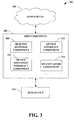
- Fig. 3 illustrates a block diagram of an exemplary system that facilitates interacting with a device within a radio frequency identification system.
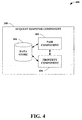
- Fig. 4 illustrates a block diagram of an exemplary system that facilitates communicating with a device.
- Fig. 5 illustrates a block diagram of an exemplary system that facilitates communicating with a device.
- Fig. 6 illustrates a block diagram of an exemplary system that facilitates communicating with a device.
- Fig. 7 illustrates a block diagram of an exemplary system that facilitates communicating with a device.
- Fig. 8 illustrates a block diagram of an exemplary system that facilitates communicating with a plurality of devices and associated providers.
- Fig. 9 illustrates a block diagram of an exemplary system that facilitates interacting with a device.
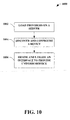
- Fig. 10 illustrates a flow chart of an exemplary methodology that facilitates providing uniform services for a device.
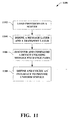
- Fig. 11 illustrates a flow chart of an exemplary methodology that facilitates providing uniform services for a device.
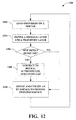
- Fig. 12 illustrates a flow chart of an exemplary methodology that facilitates providing uniform services for a device.
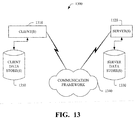
- Fig. 13 illustrates an exemplary networking environment, wherein the novel aspects of the subject invention can be employed.
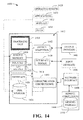
- Fig. 14 illustrates an exemplary operating environment, wherein the novel aspects of the subject invention can be employed.
- ком ⁇ онент can be a process running on a processor, a processor, an object, an executable, a program, and/or a computer.
- a component can be a process running on a processor, a processor, an object, an executable, a program, and/or a computer.
- an application running on a server and the server can be a component.
- One or more components can reside within a process and a component can be localized on one computer and/or distributed between two or more computers.
- Artificial intelligence based systems can be employed in connection with performing inference and/or probabilistic determinations and/or statistical-based determinations as described herein.
- the term "inference” refers generally to the process of reasoning about or inferring states of the system, environment, and/or user from a set of observations as captured via events and/or data. Inference can be employed to identify a specific context or action, or can generate a probability distribution over states, for example. The inference can be probabilistic - that is, the computation of a probability distribution over states of interest based on a consideration of data and events. Inference can also refer to techniques employed for composing higher-level events from a set of events and/or data.
- Such inference results in the construction of new events or actions from a set of observed events and/or stored event data, whether or not the events are correlated in close temporal proximity, and whether the events and data come from one or several event and data sources.
- Various classification schemes and/or systems e.g ., support vector machines, neural networks, expert systems, Bayesian belief networks, fuzzy logic, data fusion engines... ) can be employed in connection with performing automatic and/or inferred action in connection with the subject invention.
- Fig. 1 illustrates a system 100 that facilitates interacting with a device component to provide uniform communication and/or management.
- the system 100 can employ a device interface component 102 to provide an abstraction layer that communicates and manages a device component 104 in a uniform manner.
- the device interface component 102 can act as a "middle intermediary" between a server 106 and the at least one device component 104.
- the server 106 can be, for example, an RFID server, wherein at least one service (e.g. , publish, subscribe, query, poll, manage, monitor, update, etc .) and/or programmed computer process ( e.g ., related to manufacturing and/or shipping, etc. ) can be provided to the device component 104.
- at least one service e.g. , publish, subscribe, query, poll, manage, monitor, update, etc .
- programmed computer process e.g ., related to manufacturing and/or shipping, etc.
- the device interface component 102 can include a receiver component 108 that receives one or more of server data, a protocol translation that relates to a device, RFID server data, RFID device data, etc. It is to be appreciated that the device interface component 102 facilitates communicating uniformly to the device and exposing functionality of the device regardless of a device vendor and the protocol standard.
- the receiver component 108 can be either external and/or internal in relation to the device interface component 102.
- a device can be, but is not limited to, an RFID reader, an RFID writer, an RFID transmitter, an RFID device, a device, real-time sensor, a sensor, a device extensible to a web service, and a real-time event generation system, ...
- Device vendors e.g ., individual hardware vendor (IHV) that specialize in hardware manufacturing of a specific type of hardware device and associated software driver
- IHV hardware vendor
- the device interface component 102 can define an interface for a device vendor that provides services to the server 106 in a uniform manner. Therefore, server 106 can utilize the device interface component 102 to interact with the device component 104 with a uniform technique that provides device flexibility.
- the device interface component 102 can provide an interface and/or interfaces to delegate discovery, configuration, communication, and connection management of the device component 104. It is to be appreciated the device interface component 102 can interact with numerous device components 104, wherein provider(s) are associated to each device component 104.
- various legacy systems e.g ., wherein a legacy system is typically a reader and/or device that have proprietary protocols for communication that are obsolete in the face of new standards
- these legacy systems can employ the device interface component 102 allowing an interface and/or interfaces to provide multiple legacy devices and providers a uniform interaction with the server 106.
- the obsolete device component 104 and associated provider can be utilized to provide a variety of services and/or processes via the device interface component 102 and server 106.
- the device interface component 102 can be utilized in order to provide a uniform technique for interaction between a plurality of device components 104 and a server 106.
- the device components 104 can be, for instance, legacy devices, auto-identification devices, EPC-Crlobal compliant devices, etc. Additionally, it is to be appreciated that each device component 104 can have an associated provider (e.g ., EPC-G compliant provider, proprietary provider, legacy provider, ).
- the device interface component 102 can provide a uniform interaction between multiple providers utilizing various command sets for device components 104 and a server 106.
- the device interface component 102 can provide normalization across multiple standards representative of the numerous device components 104, a web service, and/or real time event generation systems (not shown).
- the device components 104 can be an RFID device and/or a sensor device.
- utilizing the device interface component 102 enables hardware innovations to surface to a higher level.
- the device interface component 102 can be implemented by a provider (not shown), which can be, for instance, a processor independent platform assembly.
- the provider can implement an interface and/or interfaces defined by the device interface component 102.
- the device interface component 102 interacts with the device component 104 by employing device specific commands.
- the device interface component 102 minimizes device specific details from the RFID server 106.
- Fig. 2 illustrates a system 200 that provides an overview in respect to the novelty of the subject invention.
- an RFID device vendor needs a uniform way of providing their services to a host layer running on an operating system platform, as each device supports a different command set, a protocol(s), and/or behavior.
- the Device Service Provider Interface is an abstraction layer for an RFID services platform to communicate with and manage RFID devices uniformly. This layer provides for normalization across multiple communication protocols, support for Legacy Readers and other Auto-ID devices in uniform manner, as well as providing the ability to surface key hardware innovations to the higher layers.
- the DSPI defines the abstract classes (for handling discovery, configuration, communication, and device & connection management) that device vendors can implement to provide services to the RFID services platform on the operating system in a uniform way.
- the providers can run under a RFID services host 202 as a managed entity, and could communicate with the device 204 and/or devices 204 itself via , for example, managed API, unmanaged code, a COM implementation, or Win 32 API's, based on the transport supported referred to as a host machine 206.
- a process instance app domain 208 can contain a process instance 210, wherein the process instance app domain 208 can interact with at least one device provider app domain 212.
- the device provider app domain 212 can contain a DSPI implementation 214 for a device, wherein there can be a plurality of devices 216 associated therewith. It is to be appreciated that there can be one to N devices, wherein N is an integer as depicted in the figure.
- Device Service Providers would fall under at least one of the following categories: 1) Pure Managed code implementation using one of the standard protocols [HTTP, TCP, SERIAL (e.g ., Samsys); 2) Managed code protocol implementation but calling unmanaged code (e.g . USB Reader device, a proxy connecting to a different protocol handler process); 3) Managed code wrapper for a proprietary protocol implemented as windows device driver (e.g ., Pure Printer drivers such as SATO)
- Fig. 3 illustrates a system 300 that facilitates interacting with a device to provide uniform techniques for communication and/or management.
- An RFID server 306 can communicate with an RFID device 304 by utilizing a device service provider interface (DSPI) component 302. It is to be appreciated that the RFID server 306 can communicate with a sensor (not shown) as well as any RFID device 304.
- An RFID device provider (not shown) can employ the DSPI component 302, which can define at least one DSPI component that facilitates interacting with the RFID server 306.
- the interfaces defined by the DSPI component 302 can be implemented by IHV's for protocol translation to expose device functionality to the DSPI component 302.
- the DSPI component 302 provides uniform interaction with an RFID server and a plurality of RFID devices 304.
- an RFID device 304 can be, but is not limited to, an RFID reader, an RFID writer, an RFID transmitter, ...
- the DSPI component 302 can further include a request response component 308 that facilitates handling messages with the RFID device 304.
- the request response component 308 defines a message exchange between the RFID server 306 and the RFID device(s) 304.
- the message exchange can be, for example, message pairs ( e.g ., where a first message can trigger a second message utilizing vendor specific commands), a request, a reply, a notification, an event, a property, a query, an acknowledgement, a flag, etc.
- the request response component 308 defines at least one message exchange that is asynchronous and/or synchronous. Thus, a message exchange from the request response component 308 that is asynchronous does not trigger an immediate response from a request.
- a legacy device and/or proprietary provider can implement the DSPI component 302 in order to utilize uniform communicative techniques.
- the provider that implements the DSPI component can be, for instance, a processor independent platform assembly.
- the DSPI component 302 defines an interface from which the assembly can implement in relation to the RFID device 304.
- the DSPI component 302 employs a uniform command set of which a plurality of devices and/or a plurality of providers can utilize in order to provide IHV services to the RFID server 306.
- the DSPI component 302 can include a device interface component 310.
- the device interface component 310 defines the message layer and/or the transport layer.
- the message layer and/or transport layer can be implemented by a markup language such as, but is not limited to, an extensible markup language (XML), a hypertext markup language (HTML), a standard generalized markup language (SGML), and an extensible hypertext markup language (XHTML).
- XML extensible markup language
- HTTP hypertext markup language
- SGML standard generalized markup language
- XHTML extensible hypertext markup language
- the transport layer can be independent of the message layer.
- the device interface component 310 delegates message and connection management. In order for communications and/or interactions with the RFID server 306 to persist, the device interface component 310 can define the message and transport layer.
- the device interface component 310 manages messaging with the RFID device 304 and RFID server 306 utilizing the message pairs (e.g ., defined by the request response component 308) and the message/transport layer (e.g., defined by the device interface component 310). Furthermore, the connection of each device is managed ( e.g ., controlled, established, determined, relinquished, monitored, etc .) by the device interface component 310 via the message/transport layer.
- the DSPI component 302 can include a device discovery interface component 312.
- the device discovery interface component 312 defines device discovery mechanism(s).
- discovery mechanisms can be, but are not limited to, discovery start, discovery stop, connection requirement data (e.g ., device id, provider name, etc. ), ...
- the device discovery interface component 312 efficiently instantiates one DSPI component per provider, wherein the devices associated to such vendor are handled ( e.g., controlled, managed, monitored, etc .).
- the provider can implement the device discovery interface component 312.
- the DSPI component 302 can further include an SPI container component 314 that loads the providers (not shown) into the RFID server 306. By loading the provider into the RFID server 306, the provider configuration and registration is handled by the SPI container component 314.
- the SPI container component 314 provides version and identification information relating to providers.
- SPI container component 314 is the uber-gateway to provider implementation.
- the SPI provider(s) can be, for instance, processor independent platform assemblies. It is to be appreciated that the provider(s) can utilize the drivers interchangeably.
- the providers can be processor independent software assemblies that enable the creation and/or use of markup language applications, processes, and websites as services that can share and/or combine information and functionality with each other by design, or platform, or smart device, to provide tailored solutions.
- Driver versioning problems can be solved utilizing such assembly versioning since different versions of a driver can exist on the server at a time.
- the assembly allows multiple versions to be utilized, wherein the correct version is available.
- Drivers written in such an assembly format are not susceptible to buffer overruns, errors, and the like. The exceptions from the driver can be isolated such that the server stability is unaffected.
- IHV's can digitally sign drivers to ensure authenticity and/or veracity.
- Fig. 4 illustrates a system 400 that facilitates interacting with a device to provide uniform techniques for communication and management.
- the request response component 308 can include a pair component 402 that provides message exchange pairs that allow a device (not shown) and a server (not shown) to communicate.
- the message exchanges can be defined as request response pairs that are asynchronous.
- the message exchange is matched ( e.g ., paired) utilizing identification.
- the identification can be, for instance, a message identification that is unique to a particular corresponding pair.
- the pair component 402 can support vendor specific commands ( e.g ., message exchange pairs, request response pairs, etc. ) .
- a command/routine e.g., "SendMessage()"discussed infra
- the pair component 402 can utilize a data store 404 wherein the message exchange pairs can be stored.
- the data store 404 can be an in-memory database within the DSPI (not shown) and/or on a remote server.
- the data store 404 can be employed to retain request response pairs that are supported by the DSPI component (not shown).
- the data store 404 can be, for example, either volatile memory or nonvolatile memory, or can include both volatile and nonvolatile memory.
- nonvolatile memory can include read only memory (ROM), programmable ROM (PROM), electrically programmable ROM (EPROM), electrically erasable programmable ROM (EEPROM), or flash memory.
- Volatile memory can include random access memory (RAM), which acts as external cache memory.
- RAM random access memory
- DRAM dynamic RAM
- SDRAM synchronous DRAM
- DDR SDRAM double data rate SDRAM
- ESDRAM enhanced SDRAM
- SLDRAM Synchlink DRAM
- RDRAM Rambus direct RAM
- DRAM direct Rambus dynamic RAM
- RDRAM Rambus dynamic RAM
- the pair component 402 supports a plurality of message exchange pairs.
- Table 1 illustrates a sample of suitable request response pairs (and a description) which can be utilized to communicate between a device and a server: Table 1 Command Response Description Writeld (string id, string passCode) Status Code and/or Error Writes ID to a tag.
- Id- Tag Id to write as a hex encoded string.
- passCode optional password as a hex encoded string. If Id is null, it is equivalent to a writePassCode command, GetTagData (string id) User Data as provider specific string Reads a particular tag's (user) data given by Tag Id. All user data present on the tag is returned without any fine grained access.
- Data string is in provider specified encoding.
- GetTagIds() List of Strings Reads all the tags and data available at the time of call and returns as a collection. It is a real time call which returns all the tags accessible by the device at that instant of time from one or more antennas.
- GetTagList() Tag List List List of ID/Source read entries in the tag list. ClearTagList() Status Code and/or Error Clears Tag list.
- GetTagMetaData(string id) Tag Details Reads a particular tag's details (type, manufacture number, blocks, etc. ) given by Tag Id.
- LockTag (string id, string lockCode) Status Code and/or Error Locks a particular tag. lockCode is needed if it was set earlier. Kill (string id, string killCode) Status Code and/or Error Kills a tag. killCode is needed if it was set earlier.
- AddReadFilter (string bitMask, bool incExc) Status Code and/or Error Adds a simple bit mask filter to the device.
- RemoveReadFilter(string bitMask, bool incExc) Status Code and/or Error Removes the specified filter from the device ClearReadFilters() Status Code and/or Error Clears all the filters in the device. Reboot() Status Code and/or Error Reboot the device.
- writePassCode (string id, string passCode) Status Code and/or Error Writes ID to a tag.
- Id - Tag Id to write as a hex encoded string.
- passCode optional password as a hex encoded string. If Id is null, it is equivalent to a writePassCode command.
- the pair component 402 can provide a reply and/or a notification (e.g ., received through "CmdResponseEvent” and "NotificationEvent” respectively).
- the notification event "ReadTagEvent” can be utilized in event mode and sent by the device to report a tag read/detect event.
- the request response component 308 can further include a property component 406 that can provide property pairs defined by the DSPI component (not shown).
- the property pairs can, for example, have substantially similar behavior to the message exchange pairs.
- the properties can be "get” or "set,” which do not throw exceptions.
- the properties can be manipulated by a common mechanism ( e.g ., requests sent via SendMessage() method, discussed infra ) .
- standard properties can be defined by the DSPI component (not shown), while the specific provider can define other properties.
- the provider(s) can support a property called REQUEST-TIMEOUT ( e.g ., in milliseconds) for a time-out request.
- the property component 406 can utilize the data store 404 to store the properties.
- the property component 406 supports a plurality of property pairs. For instance, the following table, Table 2, illustrates various property pairs (and a description) which can be utilized to communicate between a device and a server: Table 2 Command Response Description GetProperty(string propertyGroupName, string propertyName) Property object. NULL if no such property. Get the specified property. SetProperty(Property property) Status Code and/or Error Set the property. ApplyPropertyProfile(Property[] propertyProfile) Status Code and/or Error A plurality of properties can be applied at the same time using this method. Here's a scenario where such functionality will be useful: A set of properties need to be set for optimal performance of the device.
- All these can be specified as a profile in the device configuration. They can be applied at once by the server. GetProperty(string propertyGroupName, string propertyName) Property object. NULL if no such property. Get the specified property. SetProperty(Property property) Status Code and/or Error Set the property.
- the property component 406 supports a plurality of standard properties.
- Table 3 illustrates a standard property, specifically whether the property is read and/or write and a description: Table 3 Property Read/ Write Mandatory Description REQLTEST_TIMEOUT R/W Yes In milliseconds, timeout period for request messages. Provider sends a TIMEOUT response after this period has expired.
- the request response component 308 can utilize program code in order to utilize message exchange between a device and a server.
- the program code can be a markup language such as, but is not limited to, an extensible markup language (XML), a hypertext markup language (HTML), a standard generalized markup language (SGML), and an extensible hypertext markup language (XHTML).
- XML extensible markup language
- HTML hypertext markup language
- SGML standard generalized markup language
- XHTML extensible hypertext markup language
- a markup language can be utilized to provide a syntax for request, response, and notifications. It is to be appreciated that the request, notification, etc . can be represented as programmed objects in the DSPI component (not shown) to provide strong typing.
- Fig. 5 illustrates a system 500 that facilitates interacting with a device to provide uniform techniques for communication and management.
- the device interface component 310 can include a communication component 502 that facilitates defining a message layer and a transport layer. Moreover, the device interface component 310 further contains techniques for messaging and connection management. It is to be appreciated that the communication component 502 can contain at least one send channel and at least one receive channel to implement the message layer and the transport layer.
- the communication component 502 can include a send channel 504.
- the send channel can utilize "SendMessage()" in order to send information.
- the communication component 502 can have a first receive channel 506 and a second receive channel 508.
- the first receive channel 506 can utilize "CmdResponseEvent” for responses ( e.g ., for request), while the second receive channel 508 can utilize "NotificationEvent” for notifications.
- the response event can be for synchronous request-response commands, while the notifications can be for asynchronous, wherein notifications can be a tag list event, a reader management event, etc.
- the device interface component 310 can also utilize a "ProviderException.”
- the "ProviderException” is the top level exception for all the provider related exceptions. Any inner exception can be passed inside this exception.
- the following code can define a ProviderException Class:
- the communication component 502 can send messages to the device.
- the following code is an example of implementing "SendMessage()" to send a message:
- the code below can be implemented by the device interface component 310 in order to open the message layer for communication. It is to be appreciated the standard ML (SML) message requests are sent utilizing the following code: "DeviceInformation Devicelnformation ⁇ get ⁇ " provides device information relating to this device instance. It contains all information about this device.
- the device information class is provided at the time of discovery in the discovery event and from the device interface component 310.
- the device information class can be defined as follows: "void SendMessage (ICommand command);" is the command utilized to send all messages in the device layer.
- the device interface component 310 can also manage the connection maintained with a device. It is to be appreciated that the management of such connection can be for a plurality of devices associated to a provider. The connection to the device is maintained utilizing various functions (discussed infra ) . It is to be appreciated that the provider maintains the connection to the device until such connection is closed using the function "Close().”
- the connection management can be employed by utilizing the following code: "bool SetupConnection();” sets up a connection to the device ( e.g ., abstracted by this Devicelnterface instance). This method can utilize the following exception: ConnectionFailedException ( e.g ., connecting to the device failed).
- Fig. 6 illustrates a system 600 that facilitates interacting with a device to provide uniform techniques for communication and management.
- the device discovery interface component 312 can include an inform component 602 that informs the DSPI component (not shown) of a new device that is detected.
- the inform component 602 is extremely efficient such that one component is instantiated per provider so that the devices can be handled. It is to be appreciated that since the server may not have control over resources, the provider implements the device discovery interface component 312. Yet, the provider may implement such a device discovery interface component 312 and is not so limited. For example, the number of threads created can depend on the number of devices of a particular type.
- the device discovery interface component 312 can define the device discovery mechanism by utilizing an interface such as, but is not limited to, DeviceListenerInterface.
- the inform component 602 can provide discovery of a newly detected device by utilizing the following code: The discovery start and stop can throw the exception: "public class DiscoveryException : ApplicationException ⁇ ... ⁇ .”
- the "DiscoveryEventHandler” is a callback handler for all discovery events (e.g. , provider sends device discovery event to the host utilizing this event);
- StartDiscovery is the function to start the discovery of device;
- “StopDiscovery” is the function to stop discovering new devices.
- the above code utilizes device information object which includes information relating to the discovered RFID device.
- the device discovery interface component 312 further includes a connection component 604 that facilitates connecting to a device.
- the connection component 604 can utilize an XML string, such as "deviceIdXml", that encapsulates the information and/or data required to connect to the device.
- a schema can be employed by the connection component 604 that includes the following: a unique ID of a device, a provider name, a transport name, a standard transports, etc .
- the device information class provides information about the RFID device. This class is provided by the provider at the time of discovery in the discovery event and from the device interface component 310 in Fig. 3.
- connection information class can be used for connection to an RFID device.
- this object can be obtained from Devicelnformation object from the DiscoveryEvent.
- this object can be manually filled before calling GetDevice() on ServiceProviderInterface object.
- the connection information class can be defined as follows:
- Fig. 7 illustrates a system 700 that facilitates interacting with a device to provide uniform techniques for communication and management.
- the SPI providers can be, for instance, assemblies that provide a multitude of advantages (e.g. , .NET assemblies). It is to be appreciated the SPI container component 314 maintains driver state at a minimum. In other words, the amount of devices discovered and/or connected is unimportant to the SPI component 314.
- the SPI container component 314 can include a service provider component 702 that can implement a service provider interface.
- the service provider interface is the entry point for the DSPI component (not shown).
- a DSPI implementer requires the interface in order to utilize an entry point.
- methods in the interface can utilize the ProviderException.
- the following code can be employed: It is to be appreciated that a driver class supports the interface created above. Moreover, the "ProviderException" defined infra can be called. "ProviderInformation Providerlnformation ⁇ get; ⁇ ;" provides information about the DSPI provider, which can be utilized for information purposes by the DSPI host(s). A provider information class can be utilized to provide such information.
- the following can be utilized to define the provider information class: "Encoding UserDataEncoding ⁇ get; ⁇ ;” provides the encoding expected by the provider for user data (e.g. , ASCII, Hex, ).
- the function "void Init(string hosted, string initXml);” is the constructor of the provider. Host initializes the DSPI provider utilizing this method. "hostId” can be used for informational purposes by the provider, while “initXml” is provider specific XML ( e.g ., whose schema is specific to the provider), which can be utilized by the provider to initialize itself.
- the function "void Shutdown()" can be used when devices are still connected, wherein the server is responsible for closing such connections.
- DeviceListenerInterface GetDeviceListener() returns a reference to an object that supports, as cited in the code, Devicelnterface Listener interface (e.g ., device interface component 310) that is utilized for discovery.
- Devicelnterface Listener interface e.g ., device interface component 310
- DeviceInterface GetDevice(Connectionlnformation deviceConnectionInfo” implements ServiceProviderInterface interface to act as the factory for Devicelnterface interface.
- DeviceInterface interface abstracts an RFID device to which a host can communicate.
- the return value can be defined by the following table: Property Name - NULL Property Name - NON NULL Property Group Name - NULL Meta data for all global properties - as empty string versus property meta data, Meta data for named global property - as empty string versus property meta data; if this is not a global property return NULL Property Group Name - NON -NULL Meta data for all properties in this group as group name versus property meta data.
- “PropertyProfile GetIdealWriterPropertyProfile();” returns the optimal property for the RFID device which is in Writer role ( e.g ., synchronous commands mode) for this provider. It contains the set of properties which when applied, results in the writer operating optimally.
- the SPI container component 314 can include a driver component 704 to facilitate registering at least one driver with a server.
- the driver component 704 provides the driver registration with the server in order to allow verified and authentic drivers.
- the driver registration can utilize digital signatures that enable secured and/or authentic drivers that ensure compatibility and functionality.
- an IDriverManager interface can be implemented with the following code:
- the IDriverNianager interface can be supported by, for instance, an RFID accelerator.
- a client can utilize a .NET platform to remotely connect and manage drivers. As stated supra, .NET platform provides a variety of advantages relating to the use of drivers and versatility.
- the code "string LoadDriver (AssemblyQualifiedNamespace);” can be implemented by the driver component 704.
- the path can be of an assembly located on a local machine, wherein the following exceptions can be thrown: assembly not found; version of driver in assembly not supported by the server; and identifier of assembly not unique ( e.g., across the loaded drivers), wherein the identifier identifies a driver upon loading.
- the "providerInstanceId” is returned upon the correct load of a driver.
- the driver component 704 can utilize the function "void UnloadDriver (string providerInstanceId);” that provides the removal of the driver from the server configuration. The driver corresponding to identifier not found is an exception that can be thrown in relation to the function.
- Driver component 704 can implement the code, "string ListLoadedDrivers();” that facilitates managing drivers. It is to be appreciated that the driver component 704 can provide management, wherein the string returned from the function "string ListLoadedDrivers();” can be an XML string with the following format:
- the above code can create a complex type with the reference name, "Drivers.” Furthermore, the code contains a driver name (e.g., providerlnstanceld), a driver assembly name, and a driver version.
- Fig. 8 illustrates a system 800 that facilitates utilizing a device service provider interface (DSPI) component 802 to provide uniform communication and management for a plurality of devices and associated providers.
- Providers 804 can include a plurality of providers such as an EPC-G compliant provider 808, a first proprietary provider 810, and a second proprietary provider 812. It is to be appreciated that the providers 804 enable service to an associated device.
- the EPC-G compliant provider 808 can be associated to an EPC-Global device 814
- the first proprietary provider 810 can be associated to a first legacy device 816
- the second proprietary provider 812 can be associated to a second legacy device 818.
- a DSPI component 802 interacts through one of the existing providers 804 for the associated device (e.g ., the EPC-Global device 814, the first legacy device 816, and the second legacy device 818).
- the DSPI component 802 provides a uniform manner in which the providers 804 provide services to middleware products as each device supports a different set of commands.
- the DSPI component 802 defines interfaces for device vendors (e.g ., and associated devices) to uniformly provide services to an RFID server 806.
- the DSPI component 802 can support in the message layer commands specific to at least one of the providers 804.
- the provider specific commands can be sent utilizing the following command object:
- the object above contains the provider specific command as a string. Additional parameters can be passed in the ParameterCollection. Reply to the command is sent as a reply string and any additional data is put in the data object.
- a provider specific notification can be sent utilizing the following event object: This object contains an event id, vendor id, provider specific event name, and any provider specific data for the event.
- the DSPI provider can implement a tag list functionality.
- a tag list stores the tags detected by the device (e.g. , up to a buffer limit).
- the tag list eliminates duplicates utilizing DUPLICATE_ELIMINATION_TIME and stores them in the tag list.
- the tag list is utilized to store the detected tags at the device so that a host does not lose tags even if it is not connected to the provider.
- Tag list contains a collection of Tag entries, which is defined below:
- Tag stores a tag Id, optional tag data, optional tag type, optional time, and optional source.
- Source is stored as simple provider specific string (e.g ., Antennal). It is to be appreciated that the source names can be, but are not limited to, Antenna1, Antenna2, and so on and so forth.
- a bitmask filter can be applied to the tag ids of detected tags.
- Filter patterns can be implemented such as, for instance, utilizing zeros, ones, and x's, wherein an x represents a do not care.
- a filter is applied to the tag id of matching length only. In one example, filters are applied only to notifications. Synchronous commands do not apply these filters.
- a BitMaskReadFilter can be employed utilizing the following:
- At least one of the providers 804 can provide a set of tag commands which support a pass code. If a user sets the pass code utilizing the "WriteID" command, it will be applicable to all these secure operations. If the user had no pas code, all these will become normal commands. Pass codes will be specific to a tag.
- Fig. 9 illustrates a system 900 that facilitates utilizing a device service provider interface (DSPI) component 902 to provide uniform communication and/or management for a device.
- the DSPI component 902 facilitates communicating between an RFID server 906 and an RFID device 904 by providing uniform techniques for communication and management.
- a provider (not shown) associated to at least one RFID device 904 can implement the DSPI component 902.
- the provider can be a processor independent platform assembly that implements the interface(s) defined by the DSPI component 902.
- the DSPI component 902 can utilize a history component 908 that provides a log of activity based at least upon the DSPI component 902, the RFID server 906, and/or the RFID device 904.
- the history component can track and/or log information such as, for instance, provider lists, devices associated to providers, connection history, connection data, signal data, authentication data, etc.
- the activity log created by the history component 908 can be real-time data stream and/or stored data.
- the history component 908 can utilize a data store 914 to store such log activity and/or historic data. Such data store 914 is described in detail infra.
- the DSPI component 902 can interact with a security component 910 to provide additional security to the system 900.
- the security component 910 can allow authentication (e.g ., login and/or password), verification (e.g ., verifying such login and password), secured connection ( e.g ., based at least upon verification), security levels (e.g ., based on a user name and/or password), encryption, etc.
- the security component 910 can provide a secure connection, wherein information can be exchanged that allows providers to interact with and/or utilize interfaces defined by the DSPI component 902.
- the authentication and/or verification of the system 900 can increase the confidence of users regarding the drivers provided.
- the DSPI component 902 can utilize a learn component 912 to facilitate establishing communication between the RFID server 906 and the RFID device 904.
- the learn component 912 can utilize machine learning (e.g ., artificial intelligence) techniques in order to determine, for example, provider activity/behavior, device activity/behavior, security trends, etc.
- the learn component 912 can analyze the information associated to the history component 908 such as, for instance, historic data and/or activity logs to determine whether a provider can implement an interface defined by the DSPI component 902.
- the learn component 912 can analyze characteristics and/or behavior patterns determined based at least in part upon artificial intelligence techniques.
- the history component 908, the security component 910, and/or the learn component 912 can utilize the data store 914 in order to store data.
- the data store 914 can be located within the DSPI component 902 and/or on a remote server.
- the data store 914 can be, for example, either volatile memory or nonvolatile memory, or can include both volatile and nonvolatile memory.
- nonvolatile memory can include read only memory (ROM), programmable ROM (PROM), electrically programmable ROM (EPROM), electrically erasable programmable ROM (EEPROM), or flash memory.
- Volatile memory can include random access memory (RAM), which acts as external cache memory.
- RAM is available in many forms such as static RAM (SRAM), dynamic RAM (DRAM), synchronous DRAM (SDRAM), double data rate SDRAM (DDR SDRAM), enhanced SDRAM (ESDRAM), Synchlink DRAM (SLDRAM), Rambus direct RAM (RDRAM), direct Rambus dynamic RAM (DRDRAM), and Rambus dynamic RAM (RDRAM).
- SRAM static RAM
- DRAM dynamic RAM
- SDRAM synchronous DRAM
- DDR SDRAM double data rate SDRAM
- ESDRAM enhanced SDRAM
- SLDRAM Synchlink DRAM
- RDRAM Rambus direct RAM
- DRAM direct Rambus dynamic RAM
- RDRAM Rambus dynamic RAM
- Figs. 10-12 illustrate methodologies in accordance with the subject invention.
- the methodologies are depicted and described as a series of acts. It is to be understood and appreciated that the subject invention is not limited by the acts illustrated and/or by the order of acts, for example acts can occur in various orders and/or concurrently, and with other acts not presented and described herein. Furthermore, not all illustrated acts may be required to implement the methodologies in accordance with the subject invention.
- the methodologies could alternatively be represented as a series of interrelated states via a state diagram or events.
- Fig. 10 illustrates a methodology 1000 that facilitates communicating with a device by utilizing a uniform technique for interaction.
- providers can be loaded on a server.
- an SPI container can load the provider(s) onto an RFID server.
- the version of the SPI can be verified to be compatible with such server.
- the driver(s) can be registered with the RFID server in order to provide compatible driver(s) ( e.g ., digital verification).
- a device is discovered and configured.
- the discovery is efficient such that one component is instantiated per a provider and the devices can be utilized.
- the provider handles the discovery thread errors during the discovery process.
- a string can provide information required to connect and/or configure the device.
- the string can be in markup language format (e.g ., an extensible markup language (XML), a hypertext markup language (HTML), a standard generalized markup language (SGML), and an extensible hypertext markup language (XHTML), ...) having information such as, but is not limited to, a unique id of the device, a provider name, a transport name, etc.
- XML extensible markup language
- HTML hypertext markup language
- SGML standard generalized markup language
- XHTML extensible hypertext markup language
- an interface can be defined and utilized in order to provide a uniform service to the device.
- the interface(s) can be utilized by a provider in order to communicate with uniform techniques.
- the defined interfaces can provide discovery and configuration for new devices; and further communication can connection management for all devices ( e.g ., new and established).
- uniform technique(s) normalization is provided across a multitude of standards.
- Fig. 11 illustrates a methodology 1100 that facilitates communicating with a device.
- a provider is loaded onto an RFID server. Once authenticated, the provider is loaded, wherein a plurality of services can be provided uniformly by utilizing at least one interface.
- a message layer and/or a transport layer are defined. Messaging and/or connection managing is provided within the message layer and/or the transport layer. For instance, a send channel can utilize "SendMessage()" to send message exchanges. Additionally, a first receive channel for responses can implement "CmdResponseEvent," while a second receive channel for notifications can utilize "NotificationEvent.”
- the connection management can be provided utilizing an XML string. It is to be appreciated the provider can maintain a connection to a device until the connection is closed with the function "Close().”
- device(s) can be discovered and configured by utilizing the message layer and/or transport layer.
- the discovery and configuration of the device(s) is done with message exchange pairs.
- the message exchange pairs are exchanged between the server and the device. It is to be appreciated that the message exchange pairs are asynchronous and can be matched utilizing a message identification.
- the "SendMessage()" can be used to send requests to a device, while replies and notifications are received with "CmdResponseEvent” and "NotificationEvent” respectively.
- the message exchange pairs can utilize properties to configure the device(s). It is to be appreciated that standard properties can also be defined and implemented by the configuration and/or discovery process.
- an interface is defined and utilized to provide uniform service via the RFID server to the discovered and configured devices.
- Message exchange pairs can provide uniform techniques to communicate with existing and/or newly detected devices. It is to be appreciated that numerous interfaces can be defined for discovery, configuration, communication, and connection management.
- the method 1100 can provide an abstraction layer to communicate with and to manage devices uniformly.
- Fig. 12 illustrates a methodology 1200 that provides a uniform technique to communicate and/or manage a device.
- RFID providers are loaded onto an RFID server in order to provide services. It is to be appreciated that new providers are detected and loaded accordingly upon authentication and/or verification.
- a message layer and a transport layer are defined providing communication capabilities from a device service provider interface (DSPI) component and an RFID device.
- DSPI device service provider interface
- a determination is made whether a new device is detected. If a new device is detected, the process proceeds to 1208, where the device is connected, authenticated, and configured accordingly. If a new device is not detected, the process continues to 1210, where interfaces can be defined and utilized to provide uniform services to the detected (e.g ., discovered, verified, and/or authenticated) RFID devices.
- the process 1200 provides a continuous polling and/or a period determination on whether a new provider and/or new associated devices are present within the RFID server.
- the process can proceed to 1202 upon the detection of a new provider, wherein the provider can be loaded and associated devices can be discovered, connected, and authenticated.
- a new device can be established on a pre-existing provider.
- the process can discover and configure such a new device accordingly.
- a substantially continuous polling and/or a periodic check can employ the determination of new devices and/or providers.
- Figs. 13-14 and the following discussion is intended to provide a brief, general description of a suitable computing environment in which the various aspects of the subject invention may be implemented. While the invention has been described above in the general context of computer-executable instructions of a computer program that runs on a local computer and/or remote computer, those skilled in the art will recognize that the invention also may be implemented in combination with other program modules. Generally, program modules include routines, programs, components, data structures, etc ., that perform particular tasks and/or implement particular abstract data types.
- inventive methods may be practiced with other computer system configurations, including single-processor or multi-processor computer systems, minicomputers, mainframe computers, as well as personal computers, hand-held computing devices, microprocessor-based and/or programmable consumer electronics, and the like, each of which may operatively communicate with one or more associated devices.
- the illustrated aspects of the invention may also be practiced in distributed computing environments where certain tasks are performed by remote processing devices that are linked through a communications network. However, some, if not all, aspects of the invention may be practiced on stand-alone computers.
- program modules may be located in local and/or remote memory storage devices.
- Fig. 13 is a schematic block diagram of a sample-computing environment 1300 with which the subject invention can interact.
- the system 1300 includes one or more client(s) 1310.
- the client(s) 1310 can be hardware and/or software (e.g ., threads, processes, computing devices).
- the system 1300 also includes one or more server(s) 1320.
- the server(s) 1320 can be hardware and/or software (e.g ., threads, processes, computing devices).
- the servers 1320 can house threads to perform transformations by employing the subject invention, for example.
- the system 1300 includes a communication framework 1340 that can be employed to facilitate communications between the client(s) 1310 and the server(s) 1320.
- the client(s) 1310 are operably connected to one or more client data store(s) 1350 that can be employed to store information local to the client(s) 1310.
- the server(s) 1320 are operably connected to one or more server data store(s) 1330 that can be employed to store information local to the servers 1340.
- an exemplary environment 1400 for implementing various aspects of the invention includes a computer 1412.
- the computer 1412 includes a processing unit 1414, a system memory 1416, and a system bus 1418.
- the system bus 1418 couples system components including, but is not limited to, the system memory 1416 to the processing unit 1414.
- the processing unit 1414 can be any of various available processors. Dual microprocessors and other multiprocessor architectures also can be employed as the processing unit 1414.
- the system bus 1418 can be any of several types of bus structure(s) including the memory bus or memory controller, a peripheral bus or external bus, and/or a local bus using any variety of available bus architectures including, but are not limited to, Industrial Standard Architecture (ISA), Micro-Channel Architecture (MSA), Extended ISA (EISA), Intelligent Drive Electronics (IDE), VESA Local Bus (VLB), Peripheral Component Interconnect (PCI), Card Bus, Universal Serial Bus (USB), Advanced Graphics Port (AGP), Personal Computer Memory Card International Association bus (PCMCIA), Firewire (IEEE 1394), and Small Computer Systems Interface (SCSI).
- ISA Industrial Standard Architecture
- MSA Micro-Channel Architecture
- EISA Extended ISA
- IDE Intelligent Drive Electronics
- VLB VESA Local Bus
- PCI Peripheral Component Interconnect
- Card Bus Universal Serial Bus
- USB Universal Serial Bus
- AGP Advanced Graphics Port
- PCMCIA Personal Computer Memory Card International Association bus
- Firewire IEEE 1394
- SCSI Small Computer Systems
- the system memory 1416 includes volatile memory 1420 and nonvolatile memory 1422.
- the basic input/output system (BIOS) containing the basic routines to transfer information between elements within the computer 1412, such as during start-up, is stored in nonvolatile memory 1422.
- nonvolatile memory 1422 can include read only memory (ROM), programmable ROM (PROM), electrically programmable ROM (EPROM), electrically erasable programmable ROM (EEPROM), or flash memory.
- Volatile memory 1420 includes random access memory (RAM), which acts as external cache memory.
- RAM is available in many forms such as static RAM (SRAM), dynamic RAM (DRAM), synchronous DRAM (SDRAM), double data rate SDRAM (DDR SDRAM), enhanced SDRAM (ESDRAM), Synchlink DRAM (SLDRAM), Rambus direct RAM (RDRAM), direct Rambus dynamic RAM (DRDRAM), and Rambus dynamic RAM (RDRAM).
- SRAM static RAM
- DRAM dynamic RAM
- SDRAM synchronous DRAM
- DDR SDRAM double data rate SDRAM
- ESDRAM enhanced SDRAM
- SLDRAM Synchlink DRAM
- RDRAM Rambus direct RAM
- DRAM direct Rambus dynamic RAM
- RDRAM Rambus dynamic RAM
- Disk storage 1424 includes, but is not limited to, devices like a magnetic disk drive, floppy disk drive, tape drive, Jaz drive, Zip drive, LS-100 drive, flash memory card, or memory stick.
- disk storage 1424 can include storage media separately or in combination with other storage media including, but is not limited to, an optical disk drive such as a compact disk ROM device (CD-ROM), CD recordable drive (CD-R Drive), CD rewritable drive (CD-RW Drive) or a digital versatile disk ROM drive (DVD-ROM).
- an optical disk drive such as a compact disk ROM device (CD-ROM), CD recordable drive (CD-R Drive), CD rewritable drive (CD-RW Drive) or a digital versatile disk ROM drive (DVD-ROM).
- a removable or non-removable interface is typically used such as interface 1426.
- Fig. 14 describes software that acts as an intermediary between users and the basic computer resources described in the suitable operating environment 1400.
- Such software includes an operating system 1428.
- Operating system 1428 which can be stored on disk storage 1424, acts to control and allocate resources of the computer system 1412.
- System applications 1430 take advantage of the management of resources by operating system 1428 through program modules 1432 and program data 1434 stored either in system memory 1416 or on disk storage 1424. It is to be appreciated that the subject invention can be implemented with various operating systems or combinations of operating systems.
- Input devices 1436 include, but are not limited to, a pointing device such as a mouse, trackball, stylus, touch pad, keyboard, microphone, joystick, game pad, satellite dish, scanner, TV tuner card, digital camera, digital video camera, web camera, and the like. These and other input devices connect to the processing unit 1414 through the system bus 1418 via interface port(s) 1438.
- Interface port(s) 1438 include, for example, a serial port, a parallel port, a game port, and a universal serial bus (USB).
- Output device(s) 1440 use some of the same type of ports as input device(s) 1436.
- a USB port may be used to provide input to computer 1412, and to output information from computer 1412 to an output device 1440.
- Output adapter 1442 is provided to illustrate that there are some output devices 1440 like monitors, speakers, and printers, among other output devices 1440, which require special adapters.
- the output adapters 1442 include, by way of illustration and not limitation, video and sound cards that provide a means of connection between the output device 1440 and the system bus 1418. It should be noted that other devices and/or systems of devices provide both input and output capabilities such as remote computer(s) 1444.
- Computer 1412 can operate in a networked environment using logical connections to one or more remote computers, such as remote computer(s) 1444.
- the remote computer(s) 1444 can be a personal computer, a server, a router, a network PC, a workstation, a microprocessor based appliance, a peer device or other common network node and the like, and typically includes many or all of the elements described relative to computer 1412. For purposes of brevity, only a memory storage device 1446 is illustrated with remote computer(s) 1444.
- Remote computer(s) 1444 is logically connected to computer 1412 through a network interface 1448 and then physically connected via communication connection 1450.
- Network interface 1448 encompasses wire and/or wireless communication networks such as local-area networks (LAN) and wide-area networks (WAN).
- LAN technologies include Fiber Distributed Data Interface (FDDI), Copper Distributed Data Interface (CDDI), Ethernet, Token Ring and the like.
- WAN technologies include, but are not limited to, point-to-point links, circuit switching networks like Integrated Services Digital Networks (ISDN) and variations thereon, packet switching networks, and Digital Subscriber Lines (DSL).
- ISDN Integrated Services Digital Networks
- DSL Digital Subscriber Lines
- Communication connection(s) 1450 refers to the hardware/software employed to connect the network interface 1448 to the bus 1418. While communication connection 1450 is shown for illustrative clarity inside computer 1412, it can also be external to computer 1412.
- the hardware/software necessary for connection to the network interface 1448 includes, for exemplary purposes only, internal and external technologies such as, modems including regular telephone grade modems, cable modems and DSL modems, ISDN adapters, and Ethernet cards.
- the terms (including a reference to a "means") used to describe such components are intended to correspond, unless otherwise indicated, to any component which performs the specified function of the described component (e.g., a functional equivalent), even though not structurally equivalent to the disclosed structure, which performs the function in the herein illustrated exemplary aspects of the invention.
- the invention includes a system as well as a computer-readable medium having computer-executable instructions for performing the acts and/or events of the various methods of the invention.
Landscapes
- Business, Economics & Management (AREA)
- Engineering & Computer Science (AREA)
- Economics (AREA)
- Theoretical Computer Science (AREA)
- General Physics & Mathematics (AREA)
- Physics & Mathematics (AREA)
- Quality & Reliability (AREA)
- Operations Research (AREA)
- Marketing (AREA)
- Strategic Management (AREA)
- Tourism & Hospitality (AREA)
- Human Resources & Organizations (AREA)
- General Business, Economics & Management (AREA)
- Entrepreneurship & Innovation (AREA)
- Development Economics (AREA)
- Mobile Radio Communication Systems (AREA)
- Computer And Data Communications (AREA)
Applications Claiming Priority (3)
| Application Number | Priority Date | Filing Date | Title |
|---|---|---|---|
| US60628104P | 2004-09-01 | 2004-09-01 | |
| US60657704P | 2004-09-02 | 2004-09-02 | |
| US11/061,337 US7701341B2 (en) | 2004-09-01 | 2005-02-18 | Device service provider interface |
Publications (2)
| Publication Number | Publication Date |
|---|---|
| EP1632893A2 true EP1632893A2 (de) | 2006-03-08 |
| EP1632893A3 EP1632893A3 (de) | 2006-03-22 |
Family
ID=35502895
Family Applications (1)
| Application Number | Title | Priority Date | Filing Date |
|---|---|---|---|
| EP05107826A Withdrawn EP1632893A3 (de) | 2004-09-01 | 2005-08-26 | Dienstanbieter-Schnittstelle für ein Gerät |
Country Status (9)
| Country | Link |
|---|---|
| US (1) | US7701341B2 (de) |
| EP (1) | EP1632893A3 (de) |
| JP (1) | JP4974487B2 (de) |
| KR (1) | KR101183334B1 (de) |
| AU (1) | AU2005204231A1 (de) |
| BR (1) | BRPI0504756A (de) |
| CA (1) | CA2517860C (de) |
| MX (1) | MXPA05009275A (de) |
| TW (1) | TW200611169A (de) |
Cited By (11)
| Publication number | Priority date | Publication date | Assignee | Title |
|---|---|---|---|---|
| WO2007106283A1 (en) * | 2006-03-10 | 2007-09-20 | Microsoft Corporation | Rfid business process-decoupling of design and deployment time activities |
| WO2008002120A3 (es) * | 2006-06-30 | 2008-02-14 | Rfid De Mexico S A De C V | Sistema y metodo para optimizar recursosen una cadena de suministro o produccion usando rfid e inteligencia artificial |
| US7378966B2 (en) | 2006-01-04 | 2008-05-27 | Microsoft Corporation | RFID device groups |
| US7382260B2 (en) | 2004-09-01 | 2008-06-03 | Microsoft Corporation | Hot swap and plug-and-play for RFID devices |
| US7533812B2 (en) | 2004-09-01 | 2009-05-19 | Microsoft Corporation | Reader application markup language schema |
| WO2009128695A1 (es) * | 2008-04-16 | 2009-10-22 | Rfid Mexico S.A. De C.V. | Sistema de red rfid |
| US7675418B2 (en) | 2006-06-15 | 2010-03-09 | Microsoft Corporation | Synchronous command model for RFID-enabling applications |
| US7701341B2 (en) | 2004-09-01 | 2010-04-20 | Microsoft Corporation | Device service provider interface |
| US7868738B2 (en) | 2006-06-15 | 2011-01-11 | Microsoft Corporation | Device simulator framework for an RFID infrastructure |
| US7956724B2 (en) | 2006-06-15 | 2011-06-07 | Microsoft Corporation | Support for reliable end to end messaging of tags in an RFID infrastructure |
| US8098158B2 (en) | 2004-09-01 | 2012-01-17 | Microsoft Corporation | RFID server internals design |
Families Citing this family (75)
| Publication number | Priority date | Publication date | Assignee | Title |
|---|---|---|---|---|
| US8113418B2 (en) * | 2004-05-13 | 2012-02-14 | Cisco Technology, Inc. | Virtual readers for scalable RFID infrastructures |
| US7422152B2 (en) | 2004-05-13 | 2008-09-09 | Cisco Technology, Inc. | Methods and devices for providing scalable RFID networks |
| US7789308B2 (en) * | 2004-05-13 | 2010-09-07 | Cisco Technology, Inc. | Locating and provisioning devices in a network |
| US8604910B2 (en) * | 2004-07-13 | 2013-12-10 | Cisco Technology, Inc. | Using syslog and SNMP for scalable monitoring of networked devices |
| US8217756B2 (en) * | 2004-09-01 | 2012-07-10 | Microsoft Corporation | Rule-based filtering and alerting |
| US7551081B2 (en) * | 2004-11-10 | 2009-06-23 | Rockwell Automation Technologies, Inc. | Systems and methods that integrate radio frequency identification (RFID) technology with agent-based control systems |
| US7339476B2 (en) | 2004-11-10 | 2008-03-04 | Rockwell Automation Technologies, Inc. | Systems and methods that integrate radio frequency identification (RFID) technology with industrial controllers |
| US20060168112A1 (en) * | 2004-12-30 | 2006-07-27 | Jie Weng | Generic integration within an auto-id system |
| US7830256B2 (en) * | 2005-04-07 | 2010-11-09 | Microsoft Corporation | Method and system for setup of, and communication with, an RFID middleware server from an enterprise resource planning system server |
| US7636044B1 (en) | 2005-05-13 | 2009-12-22 | Rockwell Automation Technologies, Inc. | RFID tag programming, printing application, and supply chain/global registration architecture |
| US8131213B2 (en) * | 2005-06-15 | 2012-03-06 | Wfs Technologies Ltd. | Sea vessel tagging apparatus and system |
| US7953826B2 (en) * | 2005-07-14 | 2011-05-31 | Cisco Technology, Inc. | Provisioning and redundancy for RFID middleware servers |
| US7616117B2 (en) * | 2005-07-19 | 2009-11-10 | Rockwell Automation Technologies, Inc. | Reconciliation mechanism using RFID and sensors |
| US7388491B2 (en) | 2005-07-20 | 2008-06-17 | Rockwell Automation Technologies, Inc. | Mobile RFID reader with integrated location awareness for material tracking and management |
| US7764191B2 (en) | 2005-07-26 | 2010-07-27 | Rockwell Automation Technologies, Inc. | RFID tag data affecting automation controller with internal database |
| US7345585B2 (en) * | 2005-08-01 | 2008-03-18 | Cisco Technology, Inc. | Network based device for providing RFID middleware functionality |
| US8260948B2 (en) | 2005-08-10 | 2012-09-04 | Rockwell Automation Technologies, Inc. | Enhanced controller utilizing RFID technology |
| US7510110B2 (en) | 2005-09-08 | 2009-03-31 | Rockwell Automation Technologies, Inc. | RFID architecture in an industrial controller environment |
| US7931197B2 (en) | 2005-09-20 | 2011-04-26 | Rockwell Automation Technologies, Inc. | RFID-based product manufacturing and lifecycle management |
| US7446662B1 (en) | 2005-09-26 | 2008-11-04 | Rockwell Automation Technologies, Inc. | Intelligent RFID tag for magnetic field mapping |
| US20070075832A1 (en) * | 2005-09-30 | 2007-04-05 | Rockwell Automation Technologies, Inc. | RFID reader with programmable I/O control |
| US8025227B2 (en) | 2005-09-30 | 2011-09-27 | Rockwell Automation Technologies, Inc. | Access to distributed databases via pointer stored in RFID tag |
| US8698603B2 (en) | 2005-11-15 | 2014-04-15 | Cisco Technology, Inc. | Methods and systems for automatic device provisioning in an RFID network using IP multicast |
| US11206664B2 (en) | 2006-01-06 | 2021-12-21 | Proxense, Llc | Wireless network synchronization of cells and client devices on a network |
| US8001219B2 (en) * | 2006-03-16 | 2011-08-16 | Exceptional Innovation, Llc | User control interface for convergence and automation system |
| US7496627B2 (en) * | 2006-03-16 | 2009-02-24 | Exceptional Innovation, Llc | Automation control system having digital logging |
| US7587464B2 (en) | 2006-03-16 | 2009-09-08 | Exceptional Innovation, Llc | Device automation using networked device control having a web services for devices stack |
| US8155142B2 (en) * | 2006-03-16 | 2012-04-10 | Exceptional Innovation Llc | Network based digital access point device |
| US7966083B2 (en) | 2006-03-16 | 2011-06-21 | Exceptional Innovation Llc | Automation control system having device scripting |
| US8209398B2 (en) * | 2006-03-16 | 2012-06-26 | Exceptional Innovation Llc | Internet protocol based media streaming solution |
| US8725845B2 (en) | 2006-03-16 | 2014-05-13 | Exceptional Innovation Llc | Automation control system having a configuration tool |
| US8577484B2 (en) * | 2006-03-16 | 2013-11-05 | Exceptional Innovation, Llc | Customizable media device |
| US7509402B2 (en) * | 2006-03-16 | 2009-03-24 | Exceptional Innovation, Llc | Automation control system having a configuration tool and two-way ethernet communication for web service messaging, discovery, description, and eventing that is controllable with a touch-screen display |
| US7590703B2 (en) | 2006-03-27 | 2009-09-15 | Exceptional Innovation, Llc | Set top box for convergence and automation system |
| WO2007124453A2 (en) * | 2006-04-20 | 2007-11-01 | Exceptional Innovation Llc | Touch screen for convergence and automation system |
| US8412949B2 (en) | 2006-05-05 | 2013-04-02 | Proxense, Llc | Personal digital key initialization and registration for secure transactions |
| US7667968B2 (en) | 2006-05-19 | 2010-02-23 | Exceptional Innovation, Llc | Air-cooling system configuration for touch screen |
| US20080010535A1 (en) * | 2006-06-09 | 2008-01-10 | Microsoft Corporation | Automated and configurable system for tests to be picked up and executed |
| US8207822B2 (en) * | 2006-06-15 | 2012-06-26 | Microsoft Corporation | Support for batching of events, and shredding of batched events in the RFID infrastructure platform |
| US20080001711A1 (en) * | 2006-06-15 | 2008-01-03 | Microsoft Corporation | Reliability of execution for device provider implementations |
| WO2008073658A2 (en) * | 2006-11-09 | 2008-06-19 | Exceptional Innovation, Llc. | Portable device for convergence and automation solution |
| US9269221B2 (en) | 2006-11-13 | 2016-02-23 | John J. Gobbi | Configuration of interfaces for a location detection system and application |
| US20080174404A1 (en) * | 2007-01-23 | 2008-07-24 | Microsoft Corporation | Dynamic updates in rfid manager |
| US8245219B2 (en) * | 2007-01-25 | 2012-08-14 | Microsoft Corporation | Standardized mechanism for firmware upgrades of RFID devices |
| US7782203B2 (en) * | 2007-03-28 | 2010-08-24 | Microsoft Corporation | Strong typing of components in RFID business processes |
| WO2008148096A1 (en) | 2007-05-25 | 2008-12-04 | Exceptional Innovation, Llc | Customizable remote control device |
| US7904470B2 (en) * | 2007-06-13 | 2011-03-08 | Sap Ag | Discovery service for electronic data environment |
| US8659427B2 (en) | 2007-11-09 | 2014-02-25 | Proxense, Llc | Proximity-sensor supporting multiple application services |
| WO2009079666A1 (en) | 2007-12-19 | 2009-06-25 | Proxense, Llc | Security system and method for controlling access to computing resources |
| KR101478144B1 (ko) * | 2007-12-27 | 2015-01-02 | 삼성전자주식회사 | 알에프아이디 통신 방법 |
| US8508336B2 (en) * | 2008-02-14 | 2013-08-13 | Proxense, Llc | Proximity-based healthcare management system with automatic access to private information |
| JP4582506B2 (ja) * | 2008-03-26 | 2010-11-17 | ブラザー工業株式会社 | 情報提供システム |
| JP4614144B2 (ja) * | 2008-03-26 | 2011-01-19 | ブラザー工業株式会社 | 無線タグ識別情報管理システム |
| US7859412B2 (en) * | 2008-06-16 | 2010-12-28 | Xerox Corporation | System and method of monitoring modules of printing machines utilizing RFID tags |
| US8190725B2 (en) * | 2008-07-01 | 2012-05-29 | Microsoft Corporation | Standardized mechanism of remote management of embedded radio modules |
| US9024723B2 (en) * | 2008-08-29 | 2015-05-05 | Alcatel Lucent | Method and apparatus for cross-media use of RFID readers and RFID tags |
| US20100122209A1 (en) * | 2008-11-11 | 2010-05-13 | Jadak Llc | Multiple Platform Optical Imager Interface and Communication System |
| US9418205B2 (en) | 2010-03-15 | 2016-08-16 | Proxense, Llc | Proximity-based system for automatic application or data access and item tracking |
| US8631284B2 (en) * | 2010-04-30 | 2014-01-14 | Western Digital Technologies, Inc. | Method for providing asynchronous event notification in systems |
| US8762682B1 (en) | 2010-07-02 | 2014-06-24 | Western Digital Technologies, Inc. | Data storage apparatus providing host full duplex operations using half duplex storage devices |
| JP5935235B2 (ja) * | 2011-02-18 | 2016-06-15 | ソニー株式会社 | 通信装置、通信システムおよび通信方法 |
| US8857716B1 (en) | 2011-02-21 | 2014-10-14 | Proxense, Llc | Implementation of a proximity-based system for object tracking and automatic application initialization |
| US9264304B2 (en) | 2012-06-20 | 2016-02-16 | Reliance Jio Infocomm Usa, Inc. | Method and procedure for dynamic services orchestration that runs within an on device software container |
| US9015793B2 (en) | 2012-12-21 | 2015-04-21 | Mcafee, Inc. | Hardware management interface |
| US9419953B2 (en) | 2012-12-23 | 2016-08-16 | Mcafee, Inc. | Trusted container |
| US8850543B2 (en) | 2012-12-23 | 2014-09-30 | Mcafee, Inc. | Hardware-based device authentication |
| US20140181844A1 (en) * | 2012-12-23 | 2014-06-26 | Vincent Edward Von Bokern | Hardware management interface |
| US9449032B2 (en) * | 2013-04-22 | 2016-09-20 | Sap Se | Multi-buffering system supporting read/write access to different data source type |
| US9405898B2 (en) | 2013-05-10 | 2016-08-02 | Proxense, Llc | Secure element as a digital pocket |
| IN2014MU00227A (de) | 2014-01-22 | 2015-09-04 | Reliance Jio Infocomm Ltd | |
| EP3192323B1 (de) | 2014-09-15 | 2021-02-24 | Reliance JIO Infocomm USA, Inc. | Erweiterung von kommunikationsdiensten an eine energieverbrauchsvorrichtung unter verwendung einer proxy-vorrichtung |
| US9553843B1 (en) | 2014-10-08 | 2017-01-24 | Google Inc. | Service directory profile for a fabric network |
| US10114990B2 (en) | 2015-03-03 | 2018-10-30 | Purple Deck Media, Inc. | Networked computer system for remote RFID device management and tracking |
| EP3329655B1 (de) | 2015-07-30 | 2023-06-07 | Reliance JIO Infocomm USA, Inc. | Verfahren und system zum routing von ip-basierten nachrichten, sprach- und videoanrufen auf basis der parameter des netzwerks, mit dem die vorrichtung verbunden ist, und dem standort |
| JP7724109B2 (ja) * | 2021-09-01 | 2025-08-15 | 東芝テック株式会社 | タグ通信装置及び情報処理プログラム |
Family Cites Families (46)
| Publication number | Priority date | Publication date | Assignee | Title |
|---|---|---|---|---|
| JPH07296124A (ja) * | 1994-04-27 | 1995-11-10 | Oki Electric Ind Co Ltd | Icカード応用装置 |
| US5910776A (en) | 1994-10-24 | 1999-06-08 | Id Technologies, Inc. | Method and apparatus for identifying locating or monitoring equipment or other objects |
| US5650768A (en) | 1996-03-04 | 1997-07-22 | Eswaran; Kapali P. | Baggage claiming method and apparatus |
| US6175860B1 (en) | 1997-11-26 | 2001-01-16 | International Business Machines Corporation | Method and apparatus for an automatic multi-rate wireless/wired computer network |
| US7586398B2 (en) | 1998-07-23 | 2009-09-08 | Universal Electronics, Inc. | System and method for setting up a universal remote control |
| US20040016796A1 (en) | 1998-11-25 | 2004-01-29 | Diebold, Incorporated | Automated banking apparatus and method |
| US6677852B1 (en) | 1999-09-22 | 2004-01-13 | Intermec Ip Corp. | System and method for automatically controlling or configuring a device, such as an RFID reader |
| US6631363B1 (en) | 1999-10-11 | 2003-10-07 | I2 Technologies Us, Inc. | Rules-based notification system |
| GB9925958D0 (en) * | 1999-11-02 | 1999-12-29 | Bundred Nigel J | Therapeutic use |
| US6784802B1 (en) | 1999-11-04 | 2004-08-31 | Nordx/Cdt, Inc. | Real time monitoring of cable patch panel |
| US7171459B2 (en) | 2000-06-07 | 2007-01-30 | Microsoft Corporation | Method and apparatus for handling policies in an enterprise |
| US20020070865A1 (en) | 2000-09-29 | 2002-06-13 | Lancos Kenneth J. | System and method for creating a group of guests at a coverage area |
| US6883710B2 (en) | 2000-10-11 | 2005-04-26 | Amerasia International Technology, Inc. | Article tracking system and method |
| US20020183882A1 (en) | 2000-10-20 | 2002-12-05 | Michael Dearing | RF point of sale and delivery method and system using communication with remote computer and having features to read a large number of RF tags |
| US20020143624A1 (en) | 2001-03-31 | 2002-10-03 | Koninklijke Philips Electronics N.V. | Machine readable label for tokens and method of use |
| US6793127B2 (en) | 2001-04-04 | 2004-09-21 | Koninklijke Philips Electronics N.V. | Internet enabled resource constrained terminal for processing tags |
| US6732923B2 (en) | 2001-04-04 | 2004-05-11 | Ncr Corporation | Radio frequency identification system and method |
| US20030155413A1 (en) | 2001-07-18 | 2003-08-21 | Rozsa Kovesdi | System and method for authoring and providing information relevant to a physical world |
| US6908034B2 (en) | 2001-12-17 | 2005-06-21 | Zih Corp. | XML system |
| US7149753B2 (en) | 2002-01-11 | 2006-12-12 | Sap Aktiengesellschaft | Providing selective access to tracking information |
| US7969306B2 (en) | 2002-01-11 | 2011-06-28 | Sap Aktiengesellschaft | Context-aware and real-time item tracking system architecture and scenarios |
| US6843415B2 (en) | 2002-01-11 | 2005-01-18 | Sap Atkiengesellschaft | Event-based communication in a distributed item tracking system |
| US7287053B2 (en) | 2002-01-15 | 2007-10-23 | International Business Machines Corporation | Ad hoc data sharing in virtual team rooms |
| DE60208325T2 (de) | 2002-01-21 | 2006-08-03 | Hewlett-Packard Development Co., L.P., Houston | Ortungsvorrichtung eines Daten-Netz-Geräts |
| US7406439B2 (en) | 2002-01-31 | 2008-07-29 | International Business Machines Corporation | Inventory controls with radio frequency identification |
| US20030225928A1 (en) | 2002-05-28 | 2003-12-04 | Sun Microsystems, Inc. | Method, system, and program for managing access to a device by device specific components and operating system specific components |
| US20040046642A1 (en) | 2002-09-05 | 2004-03-11 | Honeywell International Inc. | Protocol for addressing groups of RFID tags |
| US20040111335A1 (en) | 2002-12-04 | 2004-06-10 | Black Charles Ronald | RFID space monitoring and asset inventory system |
| WO2005001669A2 (en) | 2003-02-21 | 2005-01-06 | Zachry Construction Corporation | Tagging and tracking system for assets and personnel of a commercial enterprise |
| EP1668575A4 (de) | 2003-04-07 | 2006-11-08 | Silverbrook Res Pty Ltd | Werbung auf standortbasis |
| US8103753B2 (en) | 2003-04-22 | 2012-01-24 | Microsoft Corporation | Distributing membership information for multi-party application layer sessions |
| US7380125B2 (en) | 2003-05-22 | 2008-05-27 | International Business Machines Corporation | Smart card data transaction system and methods for providing high levels of storage and transmission security |
| JP2004355306A (ja) | 2003-05-29 | 2004-12-16 | Hitachi Ltd | 端末装置、サービス提供サーバ及びrfタグシート |
| US20050062603A1 (en) | 2003-08-06 | 2005-03-24 | Oren Fuerst | Secure, networked and wireless access, storage and retrival system and method utilizing tags and modular nodes |
| US7155305B2 (en) | 2003-11-04 | 2006-12-26 | Universal Electronics Inc. | System and methods for home appliance identification and control in a networked environment |
| US7267275B2 (en) | 2003-11-04 | 2007-09-11 | Captech Ventures, Inc. | System and method for RFID system integration |
| US7237194B2 (en) | 2003-11-18 | 2007-06-26 | Microsoft Corporation | System and method for generating optimized binary representation of an object tree |
| GB2410867B (en) | 2004-02-06 | 2009-04-08 | Btg Int Ltd | Selection and arbitration method and system |
| JP2005279008A (ja) * | 2004-03-30 | 2005-10-13 | Brother Ind Ltd | 刺繍データ作成装置、刺繍データ作成方法、刺繍データ作成制御プログラム及び刺繍方法 |
| US7071825B2 (en) | 2004-04-26 | 2006-07-04 | Microsoft Corporation | Self-monitored active rack |
| US7204409B2 (en) * | 2004-09-01 | 2007-04-17 | Microsoft Corporation | Reader application markup language schema |
| US7557707B2 (en) * | 2004-09-01 | 2009-07-07 | Microsoft Corporation | RFID enabled information systems utilizing a business application |
| US7382260B2 (en) * | 2004-09-01 | 2008-06-03 | Microsoft Corporation | Hot swap and plug-and-play for RFID devices |
| US8217756B2 (en) | 2004-09-01 | 2012-07-10 | Microsoft Corporation | Rule-based filtering and alerting |
| US7701341B2 (en) | 2004-09-01 | 2010-04-20 | Microsoft Corporation | Device service provider interface |
| US7295116B2 (en) * | 2004-09-01 | 2007-11-13 | Microsoft Corporation | Architecture, programming model and API'S |
-
2005
- 2005-02-18 US US11/061,337 patent/US7701341B2/en active Active
- 2005-07-20 JP JP2005209986A patent/JP4974487B2/ja not_active Expired - Fee Related
- 2005-07-27 KR KR1020050068217A patent/KR101183334B1/ko not_active Expired - Lifetime
- 2005-08-02 TW TW094126259A patent/TW200611169A/zh unknown
- 2005-08-18 BR BRPI0504756-0A patent/BRPI0504756A/pt not_active IP Right Cessation
- 2005-08-24 AU AU2005204231A patent/AU2005204231A1/en not_active Abandoned
- 2005-08-26 EP EP05107826A patent/EP1632893A3/de not_active Withdrawn
- 2005-08-30 MX MXPA05009275A patent/MXPA05009275A/es active IP Right Grant
- 2005-08-31 CA CA2517860A patent/CA2517860C/en not_active Expired - Fee Related
Non-Patent Citations (1)
| Title |
|---|
| PARK K-L ET AL: "Design of a service-oriented middleware for making the global RFID system", CONF - PROCEEDINGS OF THE INTERNATIONAL CONFERENCE ON INTERNET COMPUTING; PROCEEDINGS OF THE INTERNATIONAL SYMPOSIUM ON WEB SERVICES AND APPLICATIONS, IC'04; 20040621 TO 20040624; LAS VEGAS, NV, USA, CSREA PRESS, US, vol. 2, 21 June 2004 (2004-06-21), pages 879 - 884, XP008181908, ISBN: 978-1-932415-45-2 * |
Cited By (14)
| Publication number | Priority date | Publication date | Assignee | Title |
|---|---|---|---|---|
| US8098158B2 (en) | 2004-09-01 | 2012-01-17 | Microsoft Corporation | RFID server internals design |
| US7382260B2 (en) | 2004-09-01 | 2008-06-03 | Microsoft Corporation | Hot swap and plug-and-play for RFID devices |
| US7533812B2 (en) | 2004-09-01 | 2009-05-19 | Microsoft Corporation | Reader application markup language schema |
| US7944355B2 (en) | 2004-09-01 | 2011-05-17 | Microsoft Corporation | Security techniques in the RFID framework |
| US7701341B2 (en) | 2004-09-01 | 2010-04-20 | Microsoft Corporation | Device service provider interface |
| US7378966B2 (en) | 2006-01-04 | 2008-05-27 | Microsoft Corporation | RFID device groups |
| US7756747B2 (en) | 2006-03-10 | 2010-07-13 | Microsoft Corporation | RFID business process-decoupling of design and deployment time activities |
| WO2007106283A1 (en) * | 2006-03-10 | 2007-09-20 | Microsoft Corporation | Rfid business process-decoupling of design and deployment time activities |
| US7675418B2 (en) | 2006-06-15 | 2010-03-09 | Microsoft Corporation | Synchronous command model for RFID-enabling applications |
| US7868738B2 (en) | 2006-06-15 | 2011-01-11 | Microsoft Corporation | Device simulator framework for an RFID infrastructure |
| US7956724B2 (en) | 2006-06-15 | 2011-06-07 | Microsoft Corporation | Support for reliable end to end messaging of tags in an RFID infrastructure |
| WO2008002120A3 (es) * | 2006-06-30 | 2008-02-14 | Rfid De Mexico S A De C V | Sistema y metodo para optimizar recursosen una cadena de suministro o produccion usando rfid e inteligencia artificial |
| WO2009128695A1 (es) * | 2008-04-16 | 2009-10-22 | Rfid Mexico S.A. De C.V. | Sistema de red rfid |
| EP2312491A4 (de) * | 2008-04-16 | 2017-09-20 | Rfid De Mexico S.a. De C.v. | Rfid-netzwerksystem |
Also Published As
| Publication number | Publication date |
|---|---|
| TW200611169A (en) | 2006-04-01 |
| KR20060092836A (ko) | 2006-08-23 |
| US20060053234A1 (en) | 2006-03-09 |
| JP2006072974A (ja) | 2006-03-16 |
| CA2517860A1 (en) | 2006-03-01 |
| KR101183334B1 (ko) | 2012-09-14 |
| JP4974487B2 (ja) | 2012-07-11 |
| MXPA05009275A (es) | 2006-03-03 |
| AU2005204231A1 (en) | 2006-03-16 |
| US7701341B2 (en) | 2010-04-20 |
| CA2517860C (en) | 2014-03-25 |
| BRPI0504756A (pt) | 2006-05-23 |
| EP1632893A3 (de) | 2006-03-22 |
Similar Documents
| Publication | Publication Date | Title |
|---|---|---|
| US7701341B2 (en) | Device service provider interface | |
| RU2421811C2 (ru) | Интерфейс поставщиков служб устройств | |
| US8098158B2 (en) | RFID server internals design | |
| US7204409B2 (en) | Reader application markup language schema | |
| US7994919B2 (en) | Systems and methods that integrate radio frequency identification (RFID) technology with agent-based control systems | |
| US8165928B2 (en) | Managing events within supply chain networks | |
| US7274291B2 (en) | Dynamic and hybrid RFID | |
| ZA200506980B (en) | Device service provider interface | |
| US20060058987A1 (en) | Architecture, programming model and API'S | |
| CN101300609A (zh) | 工业控制器环境中的rfid体系结构 | |
| WO2008068126A1 (en) | Communication and filtering of events among peer controllers in the same spatial region of a sensor network | |
| WO2003054753A2 (en) | E-receipt vertification system and method | |
| US7868738B2 (en) | Device simulator framework for an RFID infrastructure | |
| US7636044B1 (en) | RFID tag programming, printing application, and supply chain/global registration architecture | |
| Floerkemeier et al. | RFID applications: interfacing with readers | |
| HK1089270A (en) | Device service provider interface | |
| HK1089847A (en) | Rfid server internals design | |
| CN116433148A (zh) | 一种rfid射频门的自定义接口服务系统和方法 | |
| HK1089267A (en) | Architecture, programming model and api's for rfid |
Legal Events
| Date | Code | Title | Description |
|---|---|---|---|
| PUAI | Public reference made under article 153(3) epc to a published international application that has entered the european phase |
Free format text: ORIGINAL CODE: 0009012 |
|
| PUAL | Search report despatched |
Free format text: ORIGINAL CODE: 0009013 |
|
| AK | Designated contracting states |
Kind code of ref document: A2 Designated state(s): AT BE BG CH CY CZ DE DK EE ES FI FR GB GR HU IE IS IT LI LT LU LV MC NL PL PT RO SE SI SK TR |
|
| AX | Request for extension of the european patent |
Extension state: AL BA HR MK YU |
|
| AK | Designated contracting states |
Kind code of ref document: A3 Designated state(s): AT BE BG CH CY CZ DE DK EE ES FI FR GB GR HU IE IS IT LI LT LU LV MC NL PL PT RO SE SI SK TR |
|
| AX | Request for extension of the european patent |
Extension state: AL BA HR MK YU |
|
| 17P | Request for examination filed |
Effective date: 20060918 |
|
| REG | Reference to a national code |
Ref country code: HK Ref legal event code: DE Ref document number: 1089270 Country of ref document: HK |
|
| AKX | Designation fees paid |
Designated state(s): AT BE BG CH CY CZ DE DK EE ES FI FR GB GR HU IE IS IT LI LT LU LV MC NL PL PT RO SE SI SK TR |
|
| 17Q | First examination report despatched |
Effective date: 20061023 |
|
| RAP1 | Party data changed (applicant data changed or rights of an application transferred) |
Owner name: MICROSOFT TECHNOLOGY LICENSING, LLC |
|
| STAA | Information on the status of an ep patent application or granted ep patent |
Free format text: STATUS: THE APPLICATION IS DEEMED TO BE WITHDRAWN |
|
| 18D | Application deemed to be withdrawn |
Effective date: 20170304 |
|
| REG | Reference to a national code |
Ref country code: HK Ref legal event code: WD Ref document number: 1089270 Country of ref document: HK |