EP1631586B1 - Analogues peptidiques comprenant au moins un residu aza-beta 3 aminoacyle, et leurs utilisations, notamment en therapie - Google Patents
Analogues peptidiques comprenant au moins un residu aza-beta 3 aminoacyle, et leurs utilisations, notamment en therapie Download PDFInfo
- Publication number
- EP1631586B1 EP1631586B1 EP04767332A EP04767332A EP1631586B1 EP 1631586 B1 EP1631586 B1 EP 1631586B1 EP 04767332 A EP04767332 A EP 04767332A EP 04767332 A EP04767332 A EP 04767332A EP 1631586 B1 EP1631586 B1 EP 1631586B1
- Authority
- EP
- European Patent Office
- Prior art keywords
- arg
- gly
- peptide
- tyr
- leu
- Prior art date
- Legal status (The legal status is an assumption and is not a legal conclusion. Google has not performed a legal analysis and makes no representation as to the accuracy of the status listed.)
- Expired - Lifetime
Links
- 108090000765 processed proteins & peptides Proteins 0.000 title claims abstract description 301
- 125000000266 alpha-aminoacyl group Chemical group 0.000 title claims description 58
- 238000002560 therapeutic procedure Methods 0.000 title description 2
- 102000004169 proteins and genes Human genes 0.000 claims abstract description 67
- 108090000623 proteins and genes Proteins 0.000 claims abstract description 67
- 150000001413 amino acids Chemical class 0.000 claims abstract description 38
- 125000003088 (fluoren-9-ylmethoxy)carbonyl group Chemical group 0.000 claims abstract description 37
- 108010033040 Histones Proteins 0.000 claims abstract description 25
- 238000000034 method Methods 0.000 claims abstract description 22
- 238000000338 in vitro Methods 0.000 claims abstract description 19
- 239000008194 pharmaceutical composition Substances 0.000 claims abstract description 12
- 229960005486 vaccine Drugs 0.000 claims abstract description 10
- 108091008874 T cell receptors Proteins 0.000 claims abstract description 7
- 102000016266 T-Cell Antigen Receptors Human genes 0.000 claims abstract description 7
- 238000003745 diagnosis Methods 0.000 claims abstract description 7
- 231100000433 cytotoxic Toxicity 0.000 claims abstract description 5
- 230000001472 cytotoxic effect Effects 0.000 claims abstract description 5
- 108700018351 Major Histocompatibility Complex Proteins 0.000 claims abstract description 3
- 125000006239 protecting group Chemical group 0.000 claims abstract description 3
- 230000020382 suppression by virus of host antigen processing and presentation of peptide antigen via MHC class I Effects 0.000 claims abstract description 3
- 102100021489 Histone H4-like protein type G Human genes 0.000 claims abstract 3
- 102000004196 processed proteins & peptides Human genes 0.000 claims description 96
- 239000000178 monomer Substances 0.000 claims description 32
- 230000015572 biosynthetic process Effects 0.000 claims description 16
- 238000012360 testing method Methods 0.000 claims description 16
- PCFGFYKGPMQDBX-FEKONODYSA-N 78355-50-7 Chemical compound C([C@@H](C(=O)N[C@@H](CCSC)C(=O)N[C@@H](CCCNC(N)=N)C(=O)N[C@@H](CCCNC(N)=N)C(=O)N[C@@H](C(C)C)C(=O)NCC(=O)N[C@@H](CCCNC(N)=N)C(=O)N1[C@@H](CCC1)C(=O)N[C@@H](CCC(O)=O)C(=O)N[C@@H](CC=1C2=CC=CC=C2NC=1)C(=O)N[C@@H](CC=1C2=CC=CC=C2NC=1)C(=O)N[C@@H](CCSC)C(=O)N[C@@H](CC(O)=O)C(=O)N[C@@H](CC=1C=CC(O)=CC=1)C(=O)N[C@@H](CCC(N)=O)C(=O)N[C@@H](CCCCN)C(=O)N[C@@H](CCCNC(N)=N)C(=O)N[C@@H](CC=1C=CC(O)=CC=1)C(=O)NCC(=O)NCC(=O)N[C@@H](CC=1C=CC=CC=1)C(=O)N[C@@H](CC(C)C)C(O)=O)NC(=O)CNC(=O)CNC(=O)[C@@H](N)CC=1C=CC(O)=CC=1)C1=CC=CC=C1 PCFGFYKGPMQDBX-FEKONODYSA-N 0.000 claims description 14
- 108010069653 peptide E (adrenal medulla) Proteins 0.000 claims description 14
- 239000003153 chemical reaction reagent Substances 0.000 claims description 13
- 230000007170 pathology Effects 0.000 claims description 13
- 239000000427 antigen Substances 0.000 claims description 10
- 108091007433 antigens Proteins 0.000 claims description 10
- 102000036639 antigens Human genes 0.000 claims description 10
- 108010091748 peptide A Proteins 0.000 claims description 10
- 210000004899 c-terminal region Anatomy 0.000 claims description 9
- 101800005149 Peptide B Proteins 0.000 claims description 8
- 239000012472 biological sample Substances 0.000 claims description 8
- 108010005636 polypeptide C Proteins 0.000 claims description 8
- 238000001514 detection method Methods 0.000 claims description 7
- 238000011161 development Methods 0.000 claims description 6
- 230000008105 immune reaction Effects 0.000 claims description 6
- 238000001727 in vivo Methods 0.000 claims description 6
- 230000003302 anti-idiotype Effects 0.000 claims description 5
- 230000003053 immunization Effects 0.000 claims description 5
- 238000002360 preparation method Methods 0.000 claims description 5
- 201000000596 systemic lupus erythematosus Diseases 0.000 claims description 5
- 238000011282 treatment Methods 0.000 claims description 5
- 241001465754 Metazoa Species 0.000 claims description 4
- 230000024932 T cell mediated immunity Effects 0.000 claims description 4
- 238000006243 chemical reaction Methods 0.000 claims description 4
- 238000002405 diagnostic procedure Methods 0.000 claims description 4
- 239000003814 drug Substances 0.000 claims description 4
- 238000002649 immunization Methods 0.000 claims description 4
- 230000001939 inductive effect Effects 0.000 claims description 4
- 238000004519 manufacturing process Methods 0.000 claims description 4
- 238000010397 one-hybrid screening Methods 0.000 claims description 4
- 230000002265 prevention Effects 0.000 claims description 4
- 230000008569 process Effects 0.000 claims description 4
- 150000001412 amines Chemical group 0.000 claims description 3
- 229940079593 drug Drugs 0.000 claims description 3
- 230000003472 neutralizing effect Effects 0.000 claims description 3
- 230000002860 competitive effect Effects 0.000 claims 2
- 239000003550 marker Substances 0.000 claims 1
- 108020003175 receptors Proteins 0.000 claims 1
- 230000000638 stimulation Effects 0.000 abstract description 18
- 241000699670 Mus sp. Species 0.000 abstract description 12
- 210000001744 T-lymphocyte Anatomy 0.000 abstract description 11
- 230000004044 response Effects 0.000 abstract description 9
- 150000001875 compounds Chemical class 0.000 abstract description 5
- 230000000694 effects Effects 0.000 abstract description 4
- UFHFLCQGNIYNRP-UHFFFAOYSA-N Hydrogen Chemical group [H][H] UFHFLCQGNIYNRP-UHFFFAOYSA-N 0.000 abstract description 3
- 229910052739 hydrogen Inorganic materials 0.000 abstract description 3
- 239000001257 hydrogen Substances 0.000 abstract description 3
- ROHFNLRQFUQHCH-UHFFFAOYSA-N Leucine Chemical compound CC(C)CC(N)C(O)=O ROHFNLRQFUQHCH-UHFFFAOYSA-N 0.000 abstract description 2
- 125000001584 benzyloxycarbonyl group Chemical group C(=O)(OCC1=CC=CC=C1)* 0.000 abstract description 2
- 230000004663 cell proliferation Effects 0.000 abstract description 2
- 230000001413 cellular effect Effects 0.000 abstract description 2
- UYWQUFXKFGHYNT-UHFFFAOYSA-N phenylmethyl ester of formic acid Natural products O=COCC1=CC=CC=C1 UYWQUFXKFGHYNT-UHFFFAOYSA-N 0.000 abstract description 2
- 125000002924 primary amino group Chemical group [H]N([H])* 0.000 abstract description 2
- 125000005931 tert-butyloxycarbonyl group Chemical group [H]C([H])([H])C(OC(*)=O)(C([H])([H])[H])C([H])([H])[H] 0.000 abstract description 2
- IQFYYKKMVGJFEH-OFKYTIFKSA-N 1-[(2r,4s,5r)-4-hydroxy-5-(tritiooxymethyl)oxolan-2-yl]-5-methylpyrimidine-2,4-dione Chemical compound C1[C@H](O)[C@@H](CO[3H])O[C@H]1N1C(=O)NC(=O)C(C)=C1 IQFYYKKMVGJFEH-OFKYTIFKSA-N 0.000 abstract 1
- 239000002253 acid Substances 0.000 abstract 1
- 230000003110 anti-inflammatory effect Effects 0.000 abstract 1
- 125000003178 carboxy group Chemical group [H]OC(*)=O 0.000 abstract 1
- 201000010099 disease Diseases 0.000 abstract 1
- 208000037265 diseases, disorders, signs and symptoms Diseases 0.000 abstract 1
- 230000001506 immunosuppresive effect Effects 0.000 abstract 1
- 238000010348 incorporation Methods 0.000 abstract 1
- 230000006698 induction Effects 0.000 abstract 1
- 230000010534 mechanism of action Effects 0.000 abstract 1
- 239000000243 solution Substances 0.000 description 46
- XEKOWRVHYACXOJ-UHFFFAOYSA-N Ethyl acetate Chemical compound CCOC(C)=O XEKOWRVHYACXOJ-UHFFFAOYSA-N 0.000 description 44
- 235000018102 proteins Nutrition 0.000 description 38
- 239000000203 mixture Substances 0.000 description 34
- 235000001014 amino acid Nutrition 0.000 description 31
- 229940024606 amino acid Drugs 0.000 description 30
- RTZKZFJDLAIYFH-UHFFFAOYSA-N Diethyl ether Chemical compound CCOCC RTZKZFJDLAIYFH-UHFFFAOYSA-N 0.000 description 29
- 150000002500 ions Chemical class 0.000 description 26
- 102000006947 Histones Human genes 0.000 description 21
- 238000003756 stirring Methods 0.000 description 21
- 239000003921 oil Substances 0.000 description 20
- YMWUJEATGCHHMB-UHFFFAOYSA-N Dichloromethane Chemical compound ClCCl YMWUJEATGCHHMB-UHFFFAOYSA-N 0.000 description 19
- 239000012074 organic phase Substances 0.000 description 19
- 239000011734 sodium Substances 0.000 description 19
- XLYOFNOQVPJJNP-UHFFFAOYSA-N water Substances O XLYOFNOQVPJJNP-UHFFFAOYSA-N 0.000 description 19
- IAZDPXIOMUYVGZ-UHFFFAOYSA-N Dimethylsulphoxide Chemical compound CS(C)=O IAZDPXIOMUYVGZ-UHFFFAOYSA-N 0.000 description 18
- 239000002904 solvent Substances 0.000 description 18
- 235000019439 ethyl acetate Nutrition 0.000 description 13
- NHBKXEKEPDILRR-UHFFFAOYSA-N 2,3-bis(butanoylsulfanyl)propyl butanoate Chemical compound CCCC(=O)OCC(SC(=O)CCC)CSC(=O)CCC NHBKXEKEPDILRR-UHFFFAOYSA-N 0.000 description 12
- 238000003786 synthesis reaction Methods 0.000 description 12
- 241000861223 Issus Species 0.000 description 10
- 239000002671 adjuvant Substances 0.000 description 10
- 239000012429 reaction media Substances 0.000 description 10
- VYPSYNLAJGMNEJ-UHFFFAOYSA-N Silicium dioxide Chemical compound O=[Si]=O VYPSYNLAJGMNEJ-UHFFFAOYSA-N 0.000 description 9
- YXFVVABEGXRONW-UHFFFAOYSA-N Toluene Chemical compound CC1=CC=CC=C1 YXFVVABEGXRONW-UHFFFAOYSA-N 0.000 description 9
- ZMANZCXQSJIPKH-UHFFFAOYSA-N Triethylamine Chemical compound CCN(CC)CC ZMANZCXQSJIPKH-UHFFFAOYSA-N 0.000 description 9
- 238000001704 evaporation Methods 0.000 description 9
- 230000008020 evaporation Effects 0.000 description 9
- 239000007787 solid Substances 0.000 description 9
- QTBSBXVTEAMEQO-UHFFFAOYSA-N Acetic acid Chemical compound CC(O)=O QTBSBXVTEAMEQO-UHFFFAOYSA-N 0.000 description 8
- LFQSCWFLJHTTHZ-UHFFFAOYSA-N Ethanol Chemical compound CCO LFQSCWFLJHTTHZ-UHFFFAOYSA-N 0.000 description 7
- 150000001408 amides Chemical class 0.000 description 7
- OAKJQQAXSVQMHS-UHFFFAOYSA-N hydrazine Substances NN OAKJQQAXSVQMHS-UHFFFAOYSA-N 0.000 description 7
- -1 nitrogenous amino acids Chemical class 0.000 description 7
- 230000002829 reductive effect Effects 0.000 description 7
- KPYXMALABCDPGN-HYOZMBHHSA-N (4s)-5-[[(2s)-6-amino-1-[[(2s,3s)-1-[[(2s)-1-[[(2s)-1-[[(2s)-1-[[(2s)-1-[[(2r)-1-[[2-[[2-[[(1s)-3-amino-1-carboxy-3-oxopropyl]amino]-2-oxoethyl]amino]-2-oxoethyl]amino]-1-oxo-3-sulfanylpropan-2-yl]amino]-4-methyl-1-oxopentan-2-yl]amino]-1-oxopropan-2-yl]a Chemical compound NC(=O)C[C@@H](C(O)=O)NC(=O)CNC(=O)CNC(=O)[C@H](CS)NC(=O)[C@H](CC(C)C)NC(=O)[C@H](C)NC(=O)[C@H](C(C)C)NC(=O)[C@H](CC(C)C)NC(=O)[C@H]([C@@H](C)CC)NC(=O)[C@H](CCCCN)NC(=O)[C@H](CCC(O)=O)NC(=O)[C@@H](NC(=O)[C@H](CC(O)=O)NC(=O)CNC(=O)[C@@H](N)CCCCN)CC1=CC=C(O)C=C1 KPYXMALABCDPGN-HYOZMBHHSA-N 0.000 description 6
- WEVYAHXRMPXWCK-UHFFFAOYSA-N Acetonitrile Chemical compound CC#N WEVYAHXRMPXWCK-UHFFFAOYSA-N 0.000 description 6
- OKKJLVBELUTLKV-UHFFFAOYSA-N Methanol Chemical compound OC OKKJLVBELUTLKV-UHFFFAOYSA-N 0.000 description 6
- 125000001797 benzyl group Chemical group [H]C1=C([H])C([H])=C(C([H])=C1[H])C([H])([H])* 0.000 description 6
- 239000012267 brine Substances 0.000 description 6
- 210000004027 cell Anatomy 0.000 description 6
- 210000004698 lymphocyte Anatomy 0.000 description 6
- 108091005601 modified peptides Proteins 0.000 description 6
- 108010091742 peptide F Proteins 0.000 description 6
- RJSZPKZQGIKVAU-UXBJKDEOSA-N peptide f Chemical compound C([C@@H](C(=O)N[C@@H](CCSC)C(O)=O)NC(=O)CNC(=O)CNC(=O)[C@H](CC=1C=CC(O)=CC=1)NC(=O)[C@H](CCCNC(N)=N)NC(=O)[C@H](CCCCN)NC(=O)CNC(=O)[C@H](CC(C)C)NC(=O)[C@@H](NC(=O)[C@H](CCC(O)=O)NC(=O)CNC(=O)CNC(=O)[C@H](CC(N)=O)NC(=O)[C@H](C)NC(=O)[C@H](CCC(O)=O)NC(=O)[C@H](CCC(O)=O)NC(=O)[C@H](CCC(O)=O)NC(=O)[C@@H](NC(=O)[C@H](CCC(O)=O)NC(=O)[C@H](CC(C)C)NC(=O)[C@H]1N(CCC1)C(=O)[C@H](CC=1C=CC(O)=CC=1)NC(=O)[C@H](CC(C)C)NC(=O)[C@H](CCC(O)=O)NC(=O)[C@H](CC(O)=O)NC(=O)[C@H](CCSC)NC(=O)[C@H](CCCCN)NC(=O)[C@H](CCCCN)NC(=O)[C@H](CCSC)NC(=O)[C@H](CC=1C=CC=CC=1)NC(=O)CNC(=O)CNC(=O)[C@@H](N)CC=1C=CC(O)=CC=1)C(C)C)C(C)C)C1=CC=CC=C1 RJSZPKZQGIKVAU-UXBJKDEOSA-N 0.000 description 6
- 239000003208 petroleum Substances 0.000 description 6
- 239000000741 silica gel Substances 0.000 description 6
- 229910002027 silica gel Inorganic materials 0.000 description 6
- HPALAKNZSZLMCH-UHFFFAOYSA-M sodium;chloride;hydrate Chemical compound O.[Na+].[Cl-] HPALAKNZSZLMCH-UHFFFAOYSA-M 0.000 description 6
- 241000699729 Muridae Species 0.000 description 5
- 230000009471 action Effects 0.000 description 5
- 238000004587 chromatography analysis Methods 0.000 description 5
- 230000008878 coupling Effects 0.000 description 5
- 238000010168 coupling process Methods 0.000 description 5
- 238000005859 coupling reaction Methods 0.000 description 5
- 238000002474 experimental method Methods 0.000 description 5
- 230000002163 immunogen Effects 0.000 description 5
- 0 *C*C(CCC*C1(CC2)[S+]3CC*2[C@]1C3)OC(C1(CC1)*(*)O)=O Chemical compound *C*C(CCC*C1(CC2)[S+]3CC*2[C@]1C3)OC(C1(CC1)*(*)O)=O 0.000 description 4
- RYHBNJHYFVUHQT-UHFFFAOYSA-N 1,4-Dioxane Chemical compound C1COCCO1 RYHBNJHYFVUHQT-UHFFFAOYSA-N 0.000 description 4
- FWMNVWWHGCHHJJ-SKKKGAJSSA-N 4-amino-1-[(2r)-6-amino-2-[[(2r)-2-[[(2r)-2-[[(2r)-2-amino-3-phenylpropanoyl]amino]-3-phenylpropanoyl]amino]-4-methylpentanoyl]amino]hexanoyl]piperidine-4-carboxylic acid Chemical compound C([C@H](C(=O)N[C@H](CC(C)C)C(=O)N[C@H](CCCCN)C(=O)N1CCC(N)(CC1)C(O)=O)NC(=O)[C@H](N)CC=1C=CC=CC=1)C1=CC=CC=C1 FWMNVWWHGCHHJJ-SKKKGAJSSA-N 0.000 description 4
- DHMQDGOQFOQNFH-UHFFFAOYSA-N Glycine Chemical compound NCC(O)=O DHMQDGOQFOQNFH-UHFFFAOYSA-N 0.000 description 4
- CSNNHWWHGAXBCP-UHFFFAOYSA-L Magnesium sulfate Chemical compound [Mg+2].[O-][S+2]([O-])([O-])[O-] CSNNHWWHGAXBCP-UHFFFAOYSA-L 0.000 description 4
- 108010047956 Nucleosomes Proteins 0.000 description 4
- NQRYJNQNLNOLGT-UHFFFAOYSA-N Piperidine Chemical compound C1CCNCC1 NQRYJNQNLNOLGT-UHFFFAOYSA-N 0.000 description 4
- FAPWRFPIFSIZLT-UHFFFAOYSA-M Sodium chloride Chemical compound [Na+].[Cl-] FAPWRFPIFSIZLT-UHFFFAOYSA-M 0.000 description 4
- 239000008346 aqueous phase Substances 0.000 description 4
- ODKSFYDXXFIFQN-UHFFFAOYSA-N arginine Natural products OC(=O)C(N)CCCNC(N)=N ODKSFYDXXFIFQN-UHFFFAOYSA-N 0.000 description 4
- 230000002255 enzymatic effect Effects 0.000 description 4
- 239000002808 molecular sieve Substances 0.000 description 4
- OWIUPIRUAQMTTK-UHFFFAOYSA-M n-aminocarbamate Chemical compound NNC([O-])=O OWIUPIRUAQMTTK-UHFFFAOYSA-M 0.000 description 4
- 210000001623 nucleosome Anatomy 0.000 description 4
- 239000002244 precipitate Substances 0.000 description 4
- 239000000047 product Substances 0.000 description 4
- 238000006268 reductive amination reaction Methods 0.000 description 4
- 239000011347 resin Substances 0.000 description 4
- 229920005989 resin Polymers 0.000 description 4
- URGAHOPLAPQHLN-UHFFFAOYSA-N sodium aluminosilicate Chemical compound [Na+].[Al+3].[O-][Si]([O-])=O.[O-][Si]([O-])=O URGAHOPLAPQHLN-UHFFFAOYSA-N 0.000 description 4
- BEOOHQFXGBMRKU-UHFFFAOYSA-N sodium cyanoborohydride Chemical compound [Na+].[B-]C#N BEOOHQFXGBMRKU-UHFFFAOYSA-N 0.000 description 4
- DYHSDKLCOJIUFX-UHFFFAOYSA-N tert-butoxycarbonyl anhydride Chemical compound CC(C)(C)OC(=O)OC(=O)OC(C)(C)C DYHSDKLCOJIUFX-UHFFFAOYSA-N 0.000 description 4
- WKEOCOHKXRVQEU-UHFFFAOYSA-N 4-(ethoxymethoxy)benzaldehyde Chemical compound CCOCOC1=CC=C(C=O)C=C1 WKEOCOHKXRVQEU-UHFFFAOYSA-N 0.000 description 3
- WDYVUKGVKRZQNM-UHFFFAOYSA-N 6-phosphonohexylphosphonic acid Chemical compound OP(O)(=O)CCCCCCP(O)(O)=O WDYVUKGVKRZQNM-UHFFFAOYSA-N 0.000 description 3
- WFDIJRYMOXRFFG-UHFFFAOYSA-N Acetic anhydride Chemical compound CC(=O)OC(C)=O WFDIJRYMOXRFFG-UHFFFAOYSA-N 0.000 description 3
- 239000004475 Arginine Substances 0.000 description 3
- KDXKERNSBIXSRK-YFKPBYRVSA-N L-lysine Chemical compound NCCCC[C@H](N)C(O)=O KDXKERNSBIXSRK-YFKPBYRVSA-N 0.000 description 3
- OUYCCCASQSFEME-QMMMGPOBSA-N L-tyrosine Chemical compound OC(=O)[C@@H](N)CC1=CC=C(O)C=C1 OUYCCCASQSFEME-QMMMGPOBSA-N 0.000 description 3
- KDXKERNSBIXSRK-UHFFFAOYSA-N Lysine Natural products NCCCCC(N)C(O)=O KDXKERNSBIXSRK-UHFFFAOYSA-N 0.000 description 3
- 206010028980 Neoplasm Diseases 0.000 description 3
- 240000002390 Pandanus odoratissimus Species 0.000 description 3
- 235000005311 Pandanus odoratissimus Nutrition 0.000 description 3
- HEMHJVSKTPXQMS-UHFFFAOYSA-M Sodium hydroxide Chemical compound [OH-].[Na+] HEMHJVSKTPXQMS-UHFFFAOYSA-M 0.000 description 3
- 230000000890 antigenic effect Effects 0.000 description 3
- 239000007864 aqueous solution Substances 0.000 description 3
- 230000008901 benefit Effects 0.000 description 3
- 239000000706 filtrate Substances 0.000 description 3
- 125000004433 nitrogen atom Chemical group N* 0.000 description 3
- 239000011541 reaction mixture Substances 0.000 description 3
- 229920006395 saturated elastomer Polymers 0.000 description 3
- 239000012047 saturated solution Substances 0.000 description 3
- 239000000126 substance Substances 0.000 description 3
- 125000004213 tert-butoxy group Chemical group [H]C([H])([H])C(O*)(C([H])([H])[H])C([H])([H])[H] 0.000 description 3
- RNZCLXOBJLHYLC-UHFFFAOYSA-N tert-butyl n-(3,3-diethoxypropyl)carbamate Chemical compound CCOC(OCC)CCNC(=O)OC(C)(C)C RNZCLXOBJLHYLC-UHFFFAOYSA-N 0.000 description 3
- MLDSDVASYUUDLT-UHFFFAOYSA-N tert-butyl n-(3-oxopropyl)carbamate Chemical compound CC(C)(C)OC(=O)NCCC=O MLDSDVASYUUDLT-UHFFFAOYSA-N 0.000 description 3
- GIQHYOAEOMSKKV-UHFFFAOYSA-N tert-butyl n-(4-oxobutan-2-yl)carbamate Chemical compound O=CCC(C)NC(=O)OC(C)(C)C GIQHYOAEOMSKKV-UHFFFAOYSA-N 0.000 description 3
- PXFBZOLANLWPMH-UHFFFAOYSA-N 16-Epiaffinine Natural products C1C(C2=CC=CC=C2N2)=C2C(=O)CC2C(=CC)CN(C)C1C2CO PXFBZOLANLWPMH-UHFFFAOYSA-N 0.000 description 2
- RGHHSNMVTDWUBI-UHFFFAOYSA-N 4-hydroxybenzaldehyde Chemical compound OC1=CC=C(C=O)C=C1 RGHHSNMVTDWUBI-UHFFFAOYSA-N 0.000 description 2
- 239000004471 Glycine Substances 0.000 description 2
- 241000282414 Homo sapiens Species 0.000 description 2
- 239000004472 Lysine Substances 0.000 description 2
- 241000699666 Mus <mouse, genus> Species 0.000 description 2
- 102000035195 Peptidases Human genes 0.000 description 2
- 108091005804 Peptidases Proteins 0.000 description 2
- ISWSIDIOOBJBQZ-UHFFFAOYSA-N Phenol Chemical compound OC1=CC=CC=C1 ISWSIDIOOBJBQZ-UHFFFAOYSA-N 0.000 description 2
- 241000700605 Viruses Species 0.000 description 2
- 238000013459 approach Methods 0.000 description 2
- JHVLLYQQQYIWKX-UHFFFAOYSA-N benzyl 2-bromoacetate Chemical compound BrCC(=O)OCC1=CC=CC=C1 JHVLLYQQQYIWKX-UHFFFAOYSA-N 0.000 description 2
- PKOQSEJQFOHVPB-UHFFFAOYSA-N benzyl pyrazolidine-1-carboxylate Chemical compound C1CCNN1C(=O)OCC1=CC=CC=C1 PKOQSEJQFOHVPB-UHFFFAOYSA-N 0.000 description 2
- 239000003054 catalyst Substances 0.000 description 2
- 238000003776 cleavage reaction Methods 0.000 description 2
- 239000012230 colorless oil Substances 0.000 description 2
- 230000037029 cross reaction Effects 0.000 description 2
- 239000012043 crude product Substances 0.000 description 2
- 238000010511 deprotection reaction Methods 0.000 description 2
- 238000006073 displacement reaction Methods 0.000 description 2
- 238000001914 filtration Methods 0.000 description 2
- IRXSLJNXXZKURP-UHFFFAOYSA-N fluorenylmethyloxycarbonyl chloride Chemical compound C1=CC=C2C(COC(=O)Cl)C3=CC=CC=C3C2=C1 IRXSLJNXXZKURP-UHFFFAOYSA-N 0.000 description 2
- 125000000524 functional group Chemical group 0.000 description 2
- HHLFWLYXYJOTON-UHFFFAOYSA-N glyoxylic acid Chemical compound OC(=O)C=O HHLFWLYXYJOTON-UHFFFAOYSA-N 0.000 description 2
- 230000002519 immonomodulatory effect Effects 0.000 description 2
- 230000003993 interaction Effects 0.000 description 2
- 206010025135 lupus erythematosus Diseases 0.000 description 2
- 229910052943 magnesium sulfate Inorganic materials 0.000 description 2
- 235000019341 magnesium sulphate Nutrition 0.000 description 2
- 235000011837 pasties Nutrition 0.000 description 2
- 239000000816 peptidomimetic Substances 0.000 description 2
- 239000000843 powder Substances 0.000 description 2
- 235000019833 protease Nutrition 0.000 description 2
- 230000007017 scission Effects 0.000 description 2
- 239000011780 sodium chloride Substances 0.000 description 2
- 239000000725 suspension Substances 0.000 description 2
- 238000001308 synthesis method Methods 0.000 description 2
- 229940126577 synthetic vaccine Drugs 0.000 description 2
- BNWCETAHAJSBFG-UHFFFAOYSA-N tert-butyl 2-bromoacetate Chemical compound CC(C)(C)OC(=O)CBr BNWCETAHAJSBFG-UHFFFAOYSA-N 0.000 description 2
- DBGRZURIIFFWFO-UHFFFAOYSA-N tert-butyl hydrazinecarbonyl carbonate Chemical compound CC(C)(C)OC(=O)OC(=O)NN DBGRZURIIFFWFO-UHFFFAOYSA-N 0.000 description 2
- YJRYBYOCNLGREY-UHFFFAOYSA-N tert-butyl n-(3,3-diethoxybutyl)carbamate Chemical compound CCOC(C)(OCC)CCNC(=O)OC(C)(C)C YJRYBYOCNLGREY-UHFFFAOYSA-N 0.000 description 2
- 230000003612 virological effect Effects 0.000 description 2
- NMDDZEVVQDPECF-LURJTMIESA-N (2s)-2,7-diaminoheptanoic acid Chemical compound NCCCCC[C@H](N)C(O)=O NMDDZEVVQDPECF-LURJTMIESA-N 0.000 description 1
- NCNSBFDGXBKAKB-UHFFFAOYSA-N (methylsulfanyl)acetaldehyde Chemical compound CSCC=O NCNSBFDGXBKAKB-UHFFFAOYSA-N 0.000 description 1
- VEFLKXRACNJHOV-UHFFFAOYSA-N 1,3-dibromopropane Chemical compound BrCCCBr VEFLKXRACNJHOV-UHFFFAOYSA-N 0.000 description 1
- ASOKPJOREAFHNY-UHFFFAOYSA-N 1-Hydroxybenzotriazole Chemical compound C1=CC=C2N(O)N=NC2=C1 ASOKPJOREAFHNY-UHFFFAOYSA-N 0.000 description 1
- HELODTZNVFWOIK-UHFFFAOYSA-N 1-hydroxypyrazolidine Chemical compound ON1CCCN1 HELODTZNVFWOIK-UHFFFAOYSA-N 0.000 description 1
- ZDAADXQLFPSHLK-UHFFFAOYSA-N 2-(2-aminohydrazinyl)acetaldehyde Chemical class NNNCC=O ZDAADXQLFPSHLK-UHFFFAOYSA-N 0.000 description 1
- CUFZREVPGSPNCV-UHFFFAOYSA-N 2-(2-azaniumylhydrazinyl)acetate Chemical class NNNCC(O)=O CUFZREVPGSPNCV-UHFFFAOYSA-N 0.000 description 1
- UVPBTBMYZNTBRY-UHFFFAOYSA-N 2-o-benzyl 1-o-tert-butyl pyrazolidine-1,2-dicarboxylate Chemical compound CC(C)(C)OC(=O)N1CCCN1C(=O)OCC1=CC=CC=C1 UVPBTBMYZNTBRY-UHFFFAOYSA-N 0.000 description 1
- GEIABFPMHOXTKR-UHFFFAOYSA-N 3,3-diethoxybutan-1-amine Chemical compound CCOC(C)(CCN)OCC GEIABFPMHOXTKR-UHFFFAOYSA-N 0.000 description 1
- PXXMSHBZYAOHBD-UHFFFAOYSA-N 3,3-diethoxypropan-1-amine Chemical compound CCOC(CCN)OCC PXXMSHBZYAOHBD-UHFFFAOYSA-N 0.000 description 1
- 238000010600 3H thymidine incorporation assay Methods 0.000 description 1
- YGCGPEUVGHDMLO-UHFFFAOYSA-N 9h-fluoren-9-ylmethyl n-aminocarbamate Chemical compound C1=CC=C2C(COC(=O)NN)C3=CC=CC=C3C2=C1 YGCGPEUVGHDMLO-UHFFFAOYSA-N 0.000 description 1
- HAHYXYKFMHJMIE-UHFFFAOYSA-N C1C2NCC1C2 Chemical compound C1C2NCC1C2 HAHYXYKFMHJMIE-UHFFFAOYSA-N 0.000 description 1
- WASARRBJAALELD-UHFFFAOYSA-N CN1CC(C2)C2CC1 Chemical compound CN1CC(C2)C2CC1 WASARRBJAALELD-UHFFFAOYSA-N 0.000 description 1
- OKTJSMMVPCPJKN-UHFFFAOYSA-N Carbon Chemical compound [C] OKTJSMMVPCPJKN-UHFFFAOYSA-N 0.000 description 1
- 108010077544 Chromatin Proteins 0.000 description 1
- 108090000790 Enzymes Proteins 0.000 description 1
- 102000004190 Enzymes Human genes 0.000 description 1
- 125000000998 L-alanino group Chemical group [H]N([*])[C@](C([H])([H])[H])([H])C(=O)O[H] 0.000 description 1
- ROHFNLRQFUQHCH-YFKPBYRVSA-N L-leucine Chemical compound CC(C)C[C@H](N)C(O)=O ROHFNLRQFUQHCH-YFKPBYRVSA-N 0.000 description 1
- JZKXXXDKRQWDET-QMMMGPOBSA-N L-m-tyrosine Chemical compound OC(=O)[C@@H](N)CC1=CC=CC(O)=C1 JZKXXXDKRQWDET-QMMMGPOBSA-N 0.000 description 1
- 208000018359 Systemic autoimmune disease Diseases 0.000 description 1
- AYFVYJQAPQTCCC-UHFFFAOYSA-N Threonine Natural products CC(O)C(N)C(O)=O AYFVYJQAPQTCCC-UHFFFAOYSA-N 0.000 description 1
- 239000004473 Threonine Substances 0.000 description 1
- 240000008042 Zea mays Species 0.000 description 1
- SPEUIVXLLWOEMJ-UHFFFAOYSA-N acetaldehyde dimethyl acetal Natural products COC(C)OC SPEUIVXLLWOEMJ-UHFFFAOYSA-N 0.000 description 1
- 125000000539 amino acid group Chemical group 0.000 description 1
- 230000002788 anti-peptide Effects 0.000 description 1
- 229960001230 asparagine Drugs 0.000 description 1
- 238000003556 assay Methods 0.000 description 1
- 238000011914 asymmetric synthesis Methods 0.000 description 1
- 230000002238 attenuated effect Effects 0.000 description 1
- CBHOOMGKXCMKIR-UHFFFAOYSA-N azane;methanol Chemical compound N.OC CBHOOMGKXCMKIR-UHFFFAOYSA-N 0.000 description 1
- 210000003719 b-lymphocyte Anatomy 0.000 description 1
- 230000001580 bacterial effect Effects 0.000 description 1
- HSDAJNMJOMSNEV-UHFFFAOYSA-N benzyl chloroformate Chemical compound ClC(=O)OCC1=CC=CC=C1 HSDAJNMJOMSNEV-UHFFFAOYSA-N 0.000 description 1
- 230000004071 biological effect Effects 0.000 description 1
- 239000013060 biological fluid Substances 0.000 description 1
- 229910052799 carbon Inorganic materials 0.000 description 1
- 125000004432 carbon atom Chemical group C* 0.000 description 1
- 125000006297 carbonyl amino group Chemical group [H]N([*:2])C([*:1])=O 0.000 description 1
- 230000015556 catabolic process Effects 0.000 description 1
- 238000009903 catalytic hydrogenation reaction Methods 0.000 description 1
- 238000004113 cell culture Methods 0.000 description 1
- 210000000170 cell membrane Anatomy 0.000 description 1
- FCYRSDMGOLYDHL-UHFFFAOYSA-N chloromethoxyethane Chemical compound CCOCCl FCYRSDMGOLYDHL-UHFFFAOYSA-N 0.000 description 1
- 210000003483 chromatin Anatomy 0.000 description 1
- 239000007822 coupling agent Substances 0.000 description 1
- 238000006731 degradation reaction Methods 0.000 description 1
- 238000013461 design Methods 0.000 description 1
- 238000009792 diffusion process Methods 0.000 description 1
- 238000004090 dissolution Methods 0.000 description 1
- 239000012636 effector Substances 0.000 description 1
- 238000010828 elution Methods 0.000 description 1
- 238000006345 epimerization reaction Methods 0.000 description 1
- 238000000605 extraction Methods 0.000 description 1
- 238000003818 flash chromatography Methods 0.000 description 1
- 125000005519 fluorenylmethyloxycarbonyl group Chemical group 0.000 description 1
- 230000000574 ganglionic effect Effects 0.000 description 1
- 239000007789 gas Substances 0.000 description 1
- ZDXPYRJPNDTMRX-UHFFFAOYSA-N glutamine Natural products OC(=O)C(N)CCC(N)=O ZDXPYRJPNDTMRX-UHFFFAOYSA-N 0.000 description 1
- 210000002443 helper t lymphocyte Anatomy 0.000 description 1
- 238000004128 high performance liquid chromatography Methods 0.000 description 1
- 230000028996 humoral immune response Effects 0.000 description 1
- 150000002429 hydrazines Chemical class 0.000 description 1
- 125000004435 hydrogen atom Chemical group [H]* 0.000 description 1
- NPZTUJOABDZTLV-UHFFFAOYSA-N hydroxybenzotriazole Substances O=C1C=CC=C2NNN=C12 NPZTUJOABDZTLV-UHFFFAOYSA-N 0.000 description 1
- 239000005457 ice water Substances 0.000 description 1
- 210000000987 immune system Anatomy 0.000 description 1
- 230000016784 immunoglobulin production Effects 0.000 description 1
- 239000002955 immunomodulating agent Substances 0.000 description 1
- 238000002347 injection Methods 0.000 description 1
- 239000007924 injection Substances 0.000 description 1
- 238000004949 mass spectrometry Methods 0.000 description 1
- 239000000463 material Substances 0.000 description 1
- 239000012528 membrane Substances 0.000 description 1
- KFKXSMSQHIOMSO-UHFFFAOYSA-N methyl 2-oxoacetate Chemical compound COC(=O)C=O KFKXSMSQHIOMSO-UHFFFAOYSA-N 0.000 description 1
- 230000003278 mimic effect Effects 0.000 description 1
- 238000010172 mouse model Methods 0.000 description 1
- 229910052757 nitrogen Inorganic materials 0.000 description 1
- 239000002245 particle Substances 0.000 description 1
- 238000010647 peptide synthesis reaction Methods 0.000 description 1
- 230000000144 pharmacologic effect Effects 0.000 description 1
- 239000012071 phase Substances 0.000 description 1
- 238000001556 precipitation Methods 0.000 description 1
- 230000001737 promoting effect Effects 0.000 description 1
- 238000009877 rendering Methods 0.000 description 1
- 238000010898 silica gel chromatography Methods 0.000 description 1
- 238000010532 solid phase synthesis reaction Methods 0.000 description 1
- 125000000547 substituted alkyl group Chemical group 0.000 description 1
- 238000006467 substitution reaction Methods 0.000 description 1
- 230000001225 therapeutic effect Effects 0.000 description 1
- HNKJADCVZUBCPG-UHFFFAOYSA-N thioanisole Chemical compound CSC1=CC=CC=C1 HNKJADCVZUBCPG-UHFFFAOYSA-N 0.000 description 1
- ILWRPSCZWQJDMK-UHFFFAOYSA-N triethylazanium;chloride Chemical compound Cl.CCN(CC)CC ILWRPSCZWQJDMK-UHFFFAOYSA-N 0.000 description 1
- 238000001665 trituration Methods 0.000 description 1
- OUYCCCASQSFEME-UHFFFAOYSA-N tyrosine Natural products OC(=O)C(N)CC1=CC=C(O)C=C1 OUYCCCASQSFEME-UHFFFAOYSA-N 0.000 description 1
- 238000000825 ultraviolet detection Methods 0.000 description 1
- 238000002255 vaccination Methods 0.000 description 1
- 229960004854 viral vaccine Drugs 0.000 description 1
Images

Classifications
-
- A—HUMAN NECESSITIES
- A61—MEDICAL OR VETERINARY SCIENCE; HYGIENE
- A61K—PREPARATIONS FOR MEDICAL, DENTAL OR TOILETRY PURPOSES
- A61K39/00—Medicinal preparations containing antigens or antibodies
- A61K39/395—Antibodies; Immunoglobulins; Immune serum, e.g. antilymphocytic serum
-
- C—CHEMISTRY; METALLURGY
- C07—ORGANIC CHEMISTRY
- C07C—ACYCLIC OR CARBOCYCLIC COMPOUNDS
- C07C281/00—Derivatives of carbonic acid containing functional groups covered by groups C07C269/00 - C07C279/00 in which at least one nitrogen atom of these functional groups is further bound to another nitrogen atom not being part of a nitro or nitroso group
- C07C281/02—Compounds containing any of the groups, e.g. carbazates
-
- A—HUMAN NECESSITIES
- A61—MEDICAL OR VETERINARY SCIENCE; HYGIENE
- A61P—SPECIFIC THERAPEUTIC ACTIVITY OF CHEMICAL COMPOUNDS OR MEDICINAL PREPARATIONS
- A61P1/00—Drugs for disorders of the alimentary tract or the digestive system
- A61P1/16—Drugs for disorders of the alimentary tract or the digestive system for liver or gallbladder disorders, e.g. hepatoprotective agents, cholagogues, litholytics
-
- A—HUMAN NECESSITIES
- A61—MEDICAL OR VETERINARY SCIENCE; HYGIENE
- A61P—SPECIFIC THERAPEUTIC ACTIVITY OF CHEMICAL COMPOUNDS OR MEDICINAL PREPARATIONS
- A61P17/00—Drugs for dermatological disorders
-
- A—HUMAN NECESSITIES
- A61—MEDICAL OR VETERINARY SCIENCE; HYGIENE
- A61P—SPECIFIC THERAPEUTIC ACTIVITY OF CHEMICAL COMPOUNDS OR MEDICINAL PREPARATIONS
- A61P17/00—Drugs for dermatological disorders
- A61P17/06—Antipsoriatics
-
- A—HUMAN NECESSITIES
- A61—MEDICAL OR VETERINARY SCIENCE; HYGIENE
- A61P—SPECIFIC THERAPEUTIC ACTIVITY OF CHEMICAL COMPOUNDS OR MEDICINAL PREPARATIONS
- A61P19/00—Drugs for skeletal disorders
- A61P19/04—Drugs for skeletal disorders for non-specific disorders of the connective tissue
-
- A—HUMAN NECESSITIES
- A61—MEDICAL OR VETERINARY SCIENCE; HYGIENE
- A61P—SPECIFIC THERAPEUTIC ACTIVITY OF CHEMICAL COMPOUNDS OR MEDICINAL PREPARATIONS
- A61P25/00—Drugs for disorders of the nervous system
-
- A—HUMAN NECESSITIES
- A61—MEDICAL OR VETERINARY SCIENCE; HYGIENE
- A61P—SPECIFIC THERAPEUTIC ACTIVITY OF CHEMICAL COMPOUNDS OR MEDICINAL PREPARATIONS
- A61P25/00—Drugs for disorders of the nervous system
- A61P25/28—Drugs for disorders of the nervous system for treating neurodegenerative disorders of the central nervous system, e.g. nootropic agents, cognition enhancers, drugs for treating Alzheimer's disease or other forms of dementia
-
- A—HUMAN NECESSITIES
- A61—MEDICAL OR VETERINARY SCIENCE; HYGIENE
- A61P—SPECIFIC THERAPEUTIC ACTIVITY OF CHEMICAL COMPOUNDS OR MEDICINAL PREPARATIONS
- A61P29/00—Non-central analgesic, antipyretic or antiinflammatory agents, e.g. antirheumatic agents; Non-steroidal antiinflammatory drugs [NSAID]
-
- A—HUMAN NECESSITIES
- A61—MEDICAL OR VETERINARY SCIENCE; HYGIENE
- A61P—SPECIFIC THERAPEUTIC ACTIVITY OF CHEMICAL COMPOUNDS OR MEDICINAL PREPARATIONS
- A61P3/00—Drugs for disorders of the metabolism
- A61P3/08—Drugs for disorders of the metabolism for glucose homeostasis
- A61P3/10—Drugs for disorders of the metabolism for glucose homeostasis for hyperglycaemia, e.g. antidiabetics
-
- A—HUMAN NECESSITIES
- A61—MEDICAL OR VETERINARY SCIENCE; HYGIENE
- A61P—SPECIFIC THERAPEUTIC ACTIVITY OF CHEMICAL COMPOUNDS OR MEDICINAL PREPARATIONS
- A61P31/00—Antiinfectives, i.e. antibiotics, antiseptics, chemotherapeutics
- A61P31/04—Antibacterial agents
-
- A—HUMAN NECESSITIES
- A61—MEDICAL OR VETERINARY SCIENCE; HYGIENE
- A61P—SPECIFIC THERAPEUTIC ACTIVITY OF CHEMICAL COMPOUNDS OR MEDICINAL PREPARATIONS
- A61P31/00—Antiinfectives, i.e. antibiotics, antiseptics, chemotherapeutics
- A61P31/12—Antivirals
-
- A—HUMAN NECESSITIES
- A61—MEDICAL OR VETERINARY SCIENCE; HYGIENE
- A61P—SPECIFIC THERAPEUTIC ACTIVITY OF CHEMICAL COMPOUNDS OR MEDICINAL PREPARATIONS
- A61P31/00—Antiinfectives, i.e. antibiotics, antiseptics, chemotherapeutics
- A61P31/12—Antivirals
- A61P31/14—Antivirals for RNA viruses
-
- A—HUMAN NECESSITIES
- A61—MEDICAL OR VETERINARY SCIENCE; HYGIENE
- A61P—SPECIFIC THERAPEUTIC ACTIVITY OF CHEMICAL COMPOUNDS OR MEDICINAL PREPARATIONS
- A61P31/00—Antiinfectives, i.e. antibiotics, antiseptics, chemotherapeutics
- A61P31/12—Antivirals
- A61P31/14—Antivirals for RNA viruses
- A61P31/16—Antivirals for RNA viruses for influenza or rhinoviruses
-
- A—HUMAN NECESSITIES
- A61—MEDICAL OR VETERINARY SCIENCE; HYGIENE
- A61P—SPECIFIC THERAPEUTIC ACTIVITY OF CHEMICAL COMPOUNDS OR MEDICINAL PREPARATIONS
- A61P31/00—Antiinfectives, i.e. antibiotics, antiseptics, chemotherapeutics
- A61P31/12—Antivirals
- A61P31/14—Antivirals for RNA viruses
- A61P31/18—Antivirals for RNA viruses for HIV
-
- A—HUMAN NECESSITIES
- A61—MEDICAL OR VETERINARY SCIENCE; HYGIENE
- A61P—SPECIFIC THERAPEUTIC ACTIVITY OF CHEMICAL COMPOUNDS OR MEDICINAL PREPARATIONS
- A61P31/00—Antiinfectives, i.e. antibiotics, antiseptics, chemotherapeutics
- A61P31/12—Antivirals
- A61P31/20—Antivirals for DNA viruses
- A61P31/22—Antivirals for DNA viruses for herpes viruses
-
- A—HUMAN NECESSITIES
- A61—MEDICAL OR VETERINARY SCIENCE; HYGIENE
- A61P—SPECIFIC THERAPEUTIC ACTIVITY OF CHEMICAL COMPOUNDS OR MEDICINAL PREPARATIONS
- A61P37/00—Drugs for immunological or allergic disorders
- A61P37/02—Immunomodulators
- A61P37/04—Immunostimulants
-
- A—HUMAN NECESSITIES
- A61—MEDICAL OR VETERINARY SCIENCE; HYGIENE
- A61P—SPECIFIC THERAPEUTIC ACTIVITY OF CHEMICAL COMPOUNDS OR MEDICINAL PREPARATIONS
- A61P7/00—Drugs for disorders of the blood or the extracellular fluid
- A61P7/06—Antianaemics
-
- C—CHEMISTRY; METALLURGY
- C07—ORGANIC CHEMISTRY
- C07C—ACYCLIC OR CARBOCYCLIC COMPOUNDS
- C07C323/00—Thiols, sulfides, hydropolysulfides or polysulfides substituted by halogen, oxygen or nitrogen atoms, or by sulfur atoms not being part of thio groups
- C07C323/23—Thiols, sulfides, hydropolysulfides or polysulfides substituted by halogen, oxygen or nitrogen atoms, or by sulfur atoms not being part of thio groups containing thio groups and nitrogen atoms, not being part of nitro or nitroso groups, bound to the same carbon skeleton
- C07C323/46—Thiols, sulfides, hydropolysulfides or polysulfides substituted by halogen, oxygen or nitrogen atoms, or by sulfur atoms not being part of thio groups containing thio groups and nitrogen atoms, not being part of nitro or nitroso groups, bound to the same carbon skeleton having at least one of the nitrogen atoms, not being part of nitro or nitroso groups, further bound to other hetero atoms
- C07C323/48—Thiols, sulfides, hydropolysulfides or polysulfides substituted by halogen, oxygen or nitrogen atoms, or by sulfur atoms not being part of thio groups containing thio groups and nitrogen atoms, not being part of nitro or nitroso groups, bound to the same carbon skeleton having at least one of the nitrogen atoms, not being part of nitro or nitroso groups, further bound to other hetero atoms to nitrogen atoms
-
- C—CHEMISTRY; METALLURGY
- C07—ORGANIC CHEMISTRY
- C07K—PEPTIDES
- C07K14/00—Peptides having more than 20 amino acids; Gastrins; Somatostatins; Melanotropins; Derivatives thereof
- C07K14/435—Peptides having more than 20 amino acids; Gastrins; Somatostatins; Melanotropins; Derivatives thereof from animals; from humans
- C07K14/46—Peptides having more than 20 amino acids; Gastrins; Somatostatins; Melanotropins; Derivatives thereof from animals; from humans from vertebrates
- C07K14/47—Peptides having more than 20 amino acids; Gastrins; Somatostatins; Melanotropins; Derivatives thereof from animals; from humans from vertebrates from mammals
-
- A—HUMAN NECESSITIES
- A61—MEDICAL OR VETERINARY SCIENCE; HYGIENE
- A61K—PREPARATIONS FOR MEDICAL, DENTAL OR TOILETRY PURPOSES
- A61K38/00—Medicinal preparations containing peptides
-
- Y—GENERAL TAGGING OF NEW TECHNOLOGICAL DEVELOPMENTS; GENERAL TAGGING OF CROSS-SECTIONAL TECHNOLOGIES SPANNING OVER SEVERAL SECTIONS OF THE IPC; TECHNICAL SUBJECTS COVERED BY FORMER USPC CROSS-REFERENCE ART COLLECTIONS [XRACs] AND DIGESTS
- Y02—TECHNOLOGIES OR APPLICATIONS FOR MITIGATION OR ADAPTATION AGAINST CLIMATE CHANGE
- Y02A—TECHNOLOGIES FOR ADAPTATION TO CLIMATE CHANGE
- Y02A50/00—TECHNOLOGIES FOR ADAPTATION TO CLIMATE CHANGE in human health protection, e.g. against extreme weather
- Y02A50/30—Against vector-borne diseases, e.g. mosquito-borne, fly-borne, tick-borne or waterborne diseases whose impact is exacerbated by climate change
-
- Y—GENERAL TAGGING OF NEW TECHNOLOGICAL DEVELOPMENTS; GENERAL TAGGING OF CROSS-SECTIONAL TECHNOLOGIES SPANNING OVER SEVERAL SECTIONS OF THE IPC; TECHNICAL SUBJECTS COVERED BY FORMER USPC CROSS-REFERENCE ART COLLECTIONS [XRACs] AND DIGESTS
- Y02—TECHNOLOGIES OR APPLICATIONS FOR MITIGATION OR ADAPTATION AGAINST CLIMATE CHANGE
- Y02P—CLIMATE CHANGE MITIGATION TECHNOLOGIES IN THE PRODUCTION OR PROCESSING OF GOODS
- Y02P20/00—Technologies relating to chemical industry
- Y02P20/50—Improvements relating to the production of bulk chemicals
- Y02P20/55—Design of synthesis routes, e.g. reducing the use of auxiliary or protecting groups
Definitions
- the subject of the present invention is analogs of peptides or parent proteins, these peptide analogs comprising at least one aza- ⁇ 3 aminoacyl residue, as well as their uses in pharmaceutical compositions or for the diagnosis of pathologies in which the peptides or peptides are involved. parent proteins mentioned above.
- peptides have several major advantages over traditional preparations of attenuated or inactivated viruses, namely a simpler, chemically defined and perfectly controllable production, as well as a better stability at ambient temperature.
- Therapeutic approaches based on CD4 + T epitopes of self antigens are also provided.
- peptides In practice, however, the peptides often prove to be poorly immunogenic and do not make it possible to obtain high titers of antibodies capable of reacting with the native protein or the viral particle. These limitations on the use of peptides in the development of synthetic vaccines are probably related to significant biodegradability in biological fluids, poor diffusion across membrane systems and lack of target selectivity.
- the document FR 2 828 884 relates to the use of the hydrazinopeptoides of formula (I) below: for the preparation of a medicament intended in particular for the treatment of cancers.
- R 2 and R 3 may represent a hydrogen atom or an optionally substituted alkyl group of 1 to 10 carbon atoms.
- the object of the invention is more particularly to provide peptide analogues which are characterized by the introduction of monomers which do not have chiral carbon centers, thus making it possible to overcome the difficulties associated with asymmetric synthesis and the problems of epimerization.
- This family of peptide analogues is a new class of peptidomimetics, in which the residues (side chains) are carried by chiral nitrogen atoms with a non-fixed configuration, which gives them a great spatial adaptability.
- the correct positioning of the peptidomimetics constructed according to this principle in an enzymatic site occurs at the same time by the displacement of conformational and configurational equilibria.
- the invention also aims to provide pharmaceutical compositions comprising such peptide analogues, as well as in vitro diagnostic methods for pathologies involving the parent peptides from which these peptide analogs are derived, and kits for the implementation of these methods. .
- the invention relates to the above-mentioned use of hybrid peptides derived from the 88-99 epitope of histone H4 as the parent peptide, and corresponding to SEQ ID NO: 1, at least one of whose initial amino acids is substituted. by a residue analogous aza- ⁇ 3 amino acid, for the preparation of a drug, or vaccine, for the prevention or treatment of systemic lupus erythematosus.
- the invention relates more particularly to the aforementioned use of the hybrid peptide of formula SEQ ID NO: 2.
- the invention more particularly relates to the aforementioned use of the hybrid peptide of formula SEQ ID NO: 7.
- the subject of the invention is also hybrid peptides comprising at least one aza- ⁇ 3 amino acid, these hybrid peptides being analogs of peptides or parent proteins, said hybrid peptides comprising at least one initial amino acid of the parent peptide or protein, and from the epitope of histone H4 as the parent peptide, corresponding to SEQ ID NO: 1.
- the invention also relates to complexes between a hybrid peptide as defined above, and an element of the major histocompatibility complex (also referred to as MHC-hybrid complex), and optionally a T cell receptor (also referred to as MHC-hybrid complex). -receptor T).
- the invention relates more particularly to a complex between a hybrid peptide as defined above, and a T cell receptor.
- the invention also relates to pharmaceutical compositions, especially vaccines, comprising at least one hybrid peptide as defined above, in association or not with a physiologically acceptable vehicle.
- the invention more particularly relates to the abovementioned pharmaceutical compositions comprising at least one hybrid peptide as defined above, associated or not with a carrier molecule, protein or not, which can induce in vivo the production of antibodies neutralizing the exogenous protein. or endogenous responsible for the pathology, or induce in vivo a cytotoxic or auxiliary cellular immune response.
- the invention also relates to polyclonal or monoclonal hybrid anti-peptide antibodies as obtained by immunizing an animal with at least one hybrid peptide defined above, said antibodies being capable of forming a complex with these hybrid peptides, and or with the peptides or parent proteins corresponding thereto, and characterized in that they recognize the parent peptide or the parent protein with an affinity at least equal to that exhibited by the anti-parent peptide or parent anti-protein antibodies against the parent peptide or parent protein.
- the invention more particularly relates to the anti-idiotypic antibodies capable of forming a complex with the aforementioned antibodies, as obtained by immunization of an animal with said antibodies.
- the invention also relates to pharmaceutical compositions, especially vaccines, comprising at least one aforementioned anti-idiotype, in association with a physiologically acceptable vehicle.
- the invention more particularly relates to the aforementioned pharmaceutical compositions comprising at least one anti-idiotype as defined above, associated with a carrier molecule, protein or not, which can induce in vivo the production of antibodies neutralizing the exogenous protein or endogenous pathology, or induce in vivo a cytotoxic cellular immune response.
- the invention also relates to pharmaceutical compositions, comprising antibodies as defined above, in association or not with a physiologically acceptable vehicle.
- the sequence on which the inventors initially worked is a peptide of histone H4 (residues 88-99: YALKRQGRTLYG) which represents a minimum immunodominant CD4 + T epitope recognized by ganglionic Th cells of mice immunized against the nucleosome, basic structure of chromatin, consisting of DNA and the four histones H2A, H2B, H3 and H4. It has been shown in recent years that the nucleosome plays a key role as an antigen and immunogen in a systemic autoimmune disease, systemic lupus erythematosus, which currently affects 1 million Americans.
- This peptide of the C-terminal region of histone H4 has the important property of not being recognized by Th cells generated against isolated H4 protein, but only by Th cells generated against the nucleosome.
- Detailed studies of this peptide in the normal BALB / c mouse and using a mouse model of lupus (NZBxNZW mouse) provided information on the CD4 + and B cell T response (antibody production ) directed against this peptide.
- the method of the present invention makes it possible to introduce a wide variety of side chains, proteogenic or non-proteogenic, into selected positions. Other potential benefits also result, such as simplification of synthesis methods (removal of stereochemical problems) and greater resistance of such analogs to modified backbones against the action of peptidases. This allows on the one hand to mimic most natural and unnatural amino acids and on the other hand to introduce on the pseudopeptide backbone side chains likely to modulate its biophysical characteristics.
- the introduction of groups promoting the passage of these analogs through cell membranes (lipophilic chains) or increasing their solubility in the plasma medium (perfluorinated groups for example) allows us to modulate or even optimize the bioavailability of these compounds.
- This method is a new method for the synthesis of Fmoc-aza- ⁇ 3 amino acids (N ⁇ haa): A suspension of protected Fmoc-substituted hydrazine (1 eq) in 50 ml of EtOH, glyoxylic acid (1.1 eq) is added with stirring. After 0.5h, NaBH 3 CN (1.2eq) is added to the mixture, the pH is adjusted to 3-4 by addition of 2N HCl, after 0.5h the pH is adjusted to 1. After stirring for 10 min the mixture The reaction is concentrated by evaporation and then diluted by addition of 100 ml of ethyl acetate.
- the Fmoc-N ⁇ hAsp (OtBu) monomer is prepared by following the general reductive amination procedure starting from the hydrazine Fmoc NH-NHCH 2 CO 2 tBu described above.
- Fmoc NH-NH (CH 2 ) 2 SMe To a solution of Methyl Thio Acetaldehyde Dimethylacetal (5g, 36mmol) in CH 2 Cl 2 , 16ml of HCl (1%) is added. After stirring at ambient temperature for 0.5 h, a suspension of Fmoc cabazate (8.38 g, 33 mmol) in 100 ml of THF is added. After 10 min, 1 g of molecular sieve (4 ⁇ ) is added and the mixture is stirred for 12 h.
- the Fmoc-N ⁇ hMet-OH monomer is prepared by following the general reductive amination procedure starting from the hydrazine Fmoc NH-NH (CH 2 ) 2 SMe described above.
- Fmoc-NH-NHCH 2 (C 6 H 4 ) OCH 2 Et 5.6 g of Fmoc cabazate (22 mmol) is added with stirring to a solution of 4- (ethyloxymethyloxy) benzaldehyde (5.3 g, 29 mmol) in 100ml of dry THF at room temperature. After 10 min, 1 g of molecular sieve (4 ⁇ ) is added and the mixture is stirred for 1 h. 1.57 g of sodium cyanoborohydride (25 mmol) is added over 45 min and the pH is maintained at 3-4 by addition of a solution of HCl (2N). After 2 hours of stirring, the pH is adjusted to 1.
- the Fmoc-N ⁇ hTyr (OCH 2 OEt) -OH monomer is prepared by following the general reductive amination procedure starting from the hydrazine Fmoc-NH-NHCH 2 (C 6 H 4 ) OCH 2 OEt described above.
- Fmoc-NH-NH (CH 2 ) 3 NHBoc 5.08 g of Fmoc carbazate (20 mmol) is added to a stirred solution of 3-tert-butoxycarbonylaminopropanal (3.46 g, 20 mmol) in 100 ml of dry THF at room temperature. After 10min, 1g of molecular sieve (4 ⁇ ) is added and the mixture The reaction mixture is stirred for 12 hours. 1.26 g of sodium cyanoborohydride (20 mmol) is added in fractions over 45 minutes. The pH is maintained at 3-4 by addition of a 2N HCl solution. The mixture is stirred for a further 2 hours, then the pH is adjusted to 1.
- Fmoc-NH-NH (CH 2 ) 4 NHBoc 5.08 g of Fmoc carbazate (20 mmol) is added to a stirred solution of 3-tert-butoxycarbonylaminobutanal (3.46 g, 20 mmol) in 100 ml of dry THF at room temperature. After 10 min, 1 g of molecular sieve (4 ⁇ ) is added and the reaction mixture is stirred for 12 h. 1.26 g of sodium cyanoborohydride (20 mmol) is added in fractions over 45 minutes. The pH is maintained at 3-4 by addition of a 2N HCl solution. The mixture is stirred for a further 2 hours, then the pH is adjusted to 1.
- the Fmoc-N ⁇ hLys (Boc) -OH monomer is prepared by following the general reductive amination procedure starting from the hydrazine Fmoc -NH-NH (CH 2 ) 4 NHBoc described above.
- Fmoc-Aza- ⁇ 3 -Asn-OBn HCl gas is bubbled into a solution of BocAza- ⁇ 3 -AsnOBn (6.40 g) in 100 ml of DCM. The reaction medium is stirred for 1 night at room temperature and is then concentrated. The white solid obtained is triturated in ether and then filtered. It is placed in the presence of triethylamine (2.30 g, 1.2 eq) in DCM (60 ml). The clear solution is concentrated to give a pasty solid directly solubilized in a mixture of water / THF 1/1 (100mL).
- Fmoc-Aza- ⁇ 3 -Asn (NHTrt) -OBn A solution of Fmoc-Aza- ⁇ 3 -Asn (NHTrt) -OBn (180mg, 0.4mmol) in 2mL of AcOH are triphenylinethanol (102 mg, 1 eq), acetic anhydride (80 mg, 2eq) and 2 ⁇ l of concentrated H 2 SO 4 were added successively. The reaction medium, with stirring, is brought to 55 ° C for 1 hour and then allowed to cool to room temperature. The reaction medium is concentrated to a 1/3 to add 10 mL of ice water.
- Benzyl-pyrazolidine-1-carboxylate To a solution of protected hydrazine bis (5.33g, 20mmol) in DMF (40mL), NaH (80% in oil, 1.21g, 2.1eq) is added at 0 ° C. After stirring the reaction medium for 30 min at room temperature, 1,3-dibromopropane (4.04 g, 1 eq) is added and the mixture is stirred for 12 h. The mixture is poured into water (80mL) and extracted twice with AcOEt (2x75mL). The organic phase is washed with water and with the strand and dried over Na 2 SO 4 .
- the mixture is purified on a column by chromatography on silica gel (PE-AcOEt 75-25) and gives 5.00 g of benzyl tert-butyl pyrazolidine-1,2-dicarboxylate (82%), which is then deprotected by dissolution (5.00g, 16.3mmol) in 50mL DCM and saturation in HClg.
- dissolution 5.00g, 16.3mmol
- the mixture is concentrated and taken up in 30 ml of water.
- AcOEt (70mL) is added and the solution is neutralized by adding a saturated solution of NaHCO 3 .
- the organic phase is washed with water, dried over Na 2 SO 4 , and concentrated to give a colorless oil (3.30 g, 98%).
- the oil obtained is purified on a silica gel chromatography column (PE-AcOEt 70-30) to give 4.35 g of Z-Aza- ⁇ 3 -Proline tert- butyl ester in the form of an oil. (85%).
- Aza- ⁇ 3 -Proline tert- butyl ester 10% Pd / C (80 mg) is added to a solution of Z-Aza- ⁇ 3 -Proline tert- butyl ester (1.00 g, 3.12 mmol) in MeOH (10mL). The mixture is left stirring under a hydrogen atmosphere for 12 h (evolution controlled by TLC). The catalyst is filtered on celite and the filtrate is evaporated to give 0.58 g (99%) of Aza- ⁇ 3 -Proline tert- butyl ester in the form of an oil.
- Fmoc-Aza- ⁇ 3 -Proline tert-butyl ester To a solution of Aza- ⁇ 3 -Proline tert- butyl ester (0.58 g, 3.12 mmol) in THF / water (10/5 mL ), with stirring is added NaHCO 3 (0.52g, 2eq) then dropwise, a solution of FmocCl (0.97g, 1.2eq) in THF (10mL). After stirring for 12 h at room temperature, ether (50 mL) is added and the organic phase is removed, washed with brine, dried over Na 2 SO 4 , and then evaporated.
- Fmoc-Aza- ⁇ 3 -Proline A solution of Fmoc-Aza- ⁇ 3 -Proline tert- butyl ester (1.00 g, 2.5 mmol) in 10 ml of DCM is saturated with HCl and then stirred at room temperature during 5h. The solvent is evaporated, the mixture is taken up in water (20 ml) and then NaHCO 3 (N) solution is added until the pH is basic. The aqueous phase is extracted with ether, acidified with 2N HCl and extracted with AcOEt. The organic phase is washed with the dried brine on Na 2 SO 4 . After evaporation of the solvent the solid obtained is triturated in petroleum ether, Fmoc-Aza- ⁇ 3 -Proline (0.64 g, 74%) is obtained in the form of a white solid. Mp: 130 ° C
- the monomers described above can, like a protected amino acid, be integrated in selected positions of a peptide by synthesis on a solid support using an Fmoc strategy synthesis automaton in order to obtain hybrid peptides. They can also be combined to yield oligomers consisting exclusively of aza- ⁇ 3 -amino acid units.
- the DMF must not contain any amine capable of deprotecting the Fmoc group during the synthesis and the piperidine used for the deprotection steps is 99% pure.
- Diisopropylcarbodimide (DIPCDI) and 1-hydroxybenzotriazole (HOBt) are used as coupling agents.
- the resin (1.00 g) preloaded (at -0.2 mmol / g) with an amino acid residue or aza- ⁇ 3 -amino acid is placed in the reactor of the synthesizer.
- the couplings are carried out with four times the stoichiometry of amino acid or aza- ⁇ 3 -amino acid and a coupling time of 30 minutes, and depending on the amino acids or the aza- ⁇ 3 -amino acids used, double coupling or a coupling time of 60 minutes is necessary.
- the N-terminal end of the last grafted residue is deprotected automatically by a 20% solution of piperidine in DMF.
- the cleavage of the resin and the deprotection of the functional groups of the side chains are carried out simultaneously by the action of the reagent K (82.5% TFA, 5% phenol, 5% water, 5% thioanisole and 2.5% ethanedithiole).
- the resin is extracted from the reactor and rinsed with dichloromethane and then dried in a desiccator. It is placed in a flask and the freshly prepared cleavage cocktail K is added and the reaction medium is left stirring for 3 h at room temperature. The solution containing the hybrid peptide is then recovered by filtration of the resin on sintered material.
- the crude hybrid peptide is isolated by precipitation in ice-cold ether and sinter filtration. It is purified by HPLC on a C18 reverse phase column (250 ⁇ 4.6 mm) according to an elution gradient (solvent A: water + 0.1% TFA and solvent B acetonitrile + TFA 0.08%) 0% B to 70% B in 20min then 70% B at 0% B in 5 min, with a flow rate of 1.2 mL / min. UV detection is performed at 210 nm. The purity of the synthesized hybrid peptides is monitored by mass spectrometry using the ESI technique in acetonitrile / water (50/50).
- Peptide 88-99 of histone H4 H-Tyr-Ala-Leu-Lys-Arg-Gln-Gly-Arg-Thr-Leu-Tyr-Gly-OH
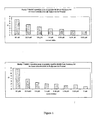
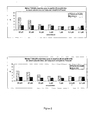
- the BALB / c mice were immunized with the parent peptide 88-99 H4 and in the cultures the T cells of these mice were restimulated with the same peptide or with the A-E analogs.
- Cell proliferation was measured by tritiated thymidine incorporation and stimulation index (IS) compared to wells without peptide was calculated.
- the tests are performed in triplicate and the experiment is performed several times in independent experiments.
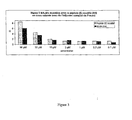
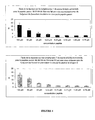
- the first results show that one of the modified peptides, namely the E analogue (IS of 7.7 to 90 ⁇ M), has an activity similar to, or even greater than, that of the parent peptide (IS of 6.7 at 90 ⁇ M).
- Peptide E crosses perfectly with parent peptide 88-99.
Landscapes
- Health & Medical Sciences (AREA)
- Chemical & Material Sciences (AREA)
- Life Sciences & Earth Sciences (AREA)
- Organic Chemistry (AREA)
- Medicinal Chemistry (AREA)
- General Health & Medical Sciences (AREA)
- Veterinary Medicine (AREA)
- Pharmacology & Pharmacy (AREA)
- Public Health (AREA)
- Animal Behavior & Ethology (AREA)
- General Chemical & Material Sciences (AREA)
- Nuclear Medicine, Radiotherapy & Molecular Imaging (AREA)
- Chemical Kinetics & Catalysis (AREA)
- Engineering & Computer Science (AREA)
- Bioinformatics & Cheminformatics (AREA)
- Virology (AREA)
- Molecular Biology (AREA)
- Oncology (AREA)
- Communicable Diseases (AREA)
- Immunology (AREA)
- Biomedical Technology (AREA)
- Diabetes (AREA)
- Neurosurgery (AREA)
- Neurology (AREA)
- Gastroenterology & Hepatology (AREA)
- Proteomics, Peptides & Aminoacids (AREA)
- Hematology (AREA)
- Genetics & Genomics (AREA)
- Biophysics (AREA)
- Biochemistry (AREA)
- Zoology (AREA)
- Toxicology (AREA)
- Dermatology (AREA)
- Mycology (AREA)
- Epidemiology (AREA)
- Microbiology (AREA)
- Psychiatry (AREA)
- Endocrinology (AREA)
- Physical Education & Sports Medicine (AREA)
- Pain & Pain Management (AREA)
Description
- La présente invention a pour objet des analogues de peptides ou protéines parents, ces analogues peptidiques, comprenant au moins un résidu aza-β3 aminoacyle, ainsi que leurs utilisations dans des compositions pharmaceutiques ou pour le diagnostic de pathologies dans lesquelles sont impliqués les peptides ou protéines parents susmentionnés.
- L'identification des régions antigéniques (ou épitopes) reconnues par les cellules T et la compréhension des bases moléculaires et cellulaires de la reconnaissance antigéniques sont considérées comme des étapes clés dans la conception et le développement de stratégies vaccinales et d'immunomodulation. L'immunisation à l'aide de peptides correspondant à des épitopes du non-soi (par exemple viraux, bactériens) ou du soi (par exemple tumoraux) pour induire des anticorps et/ou des lymphocytes T auxiliaires (Th) ou des lymphocytes cytotoxiques (CTL) spécifiques de la tumeur ou du virus, est aujourd'hui une stratégie particulièrement prometteuse dans le développement de vaccins synthétiques. Dans le cas des vaccins antiviraux par exemple, les peptides présentent plusieurs avantages majeurs sur les préparations traditionnelles de virus atténués ou inactivés, à savoir une production plus simple, chimiquement définie et parfaitement contrôlable, ainsi qu'une meilleure stabilité à température ambiante. Des approches thérapeutiques basées sur des épitopes T CD4+ d'antigènes du soi sont aussi proposées.
- En pratique, cependant, les peptides se révèlent souvent peu immunogènes et ne permettent pas d'obtenir des titres élevés d'anticorps capables de réagir avec la protéine native ou la particule virale. Ces limitations à l'utilisation des peptides dans le développement de vaccins synthétiques sont probablement liées à une biodégradabilité importante dans les fluides biologiques, une mauvaise diffusion à travers les systèmes membranaires et par le manque de sélectivité vis-à-vis de la cible.
- Différentes approches ont été développées pour "transformer" les peptides en molécules capables d'induire une réponse immune humorale ou cellulaire plus forte et plus spécifique. L'introduction dans des peptides antigéniques de liaisons pseudopeptidiques est une stratégie des plus intéressantes pour améliorer leurs caractéristiques physico-chimiques propres et leur aptitude à interagir avec les effecteurs du système immunitaire. Malgré les applications potentielles importantes dans le domaine du diagnostic, de la vaccination ou de l'immunomodulation, et l'étendue des connaissances de ces analogues acquises dans des domaines chimique et pharmacologique, les pseudopeptides sont encore peu utilisés en immunologie.
- L'article du Decker et al., The Journal of Immunology, 2000, 165: 654-662 concerne l'étude de l'histone H4 du nucléosome et l'identification d'un épitope particulier de celle-ci, l'épitope H4 (88-99). Cet article décrit également l'utilisation de cet épitope dans le cadre de la prévention ou du traitement du lupus érythémateux disséminé.
- Le document
FR 2 828 884 
- Dans ce document, R2 et R3 peuvent représenter un atome d'hydrogène ou un groupe alkyle de 1 à 10 atomes de carbone, éventuellement substitué.
- La présente invention a pour but de fournir des analogues peptidiques résistants aux enzymes de dégradation, et capables de mimer l'activité de divers peptides natifs, agents de vaccination ou d'immunomodulation.
- L'invention a plus particulièrement pour but de fournir des analogues peptidiques qui se caractérisent par l'introduction de monomères, ne présentant pas de centres chiraux carbonés, ce qui permet de s'affranchir des difficultés liées à la synthèse asymétrique et aux problèmes d'épimérisation. Cette famille d'analogues peptidiques constitue une nouvelle classe de peptidomimétiques, dans lesquels les résidus (chaînes latérales) sont portés par des atomes d'azote chiraux à configuration non fixée, ce qui leur confère une grande adaptabilité spatiale. Le positionnement correct des peptidomimétiques construits selon ce principe, dans un site enzymatique se produit à la fois par le déplacement d'équilibres conformationnel et configurationnel. L'action d'un tel composé, d'un point de vue stéréochimique, est équivalente à celle d'un mélange de diastéréoisomères en équilibre rapide, l'interaction avec le site enzymatique déplaçant l'équilibre vers le ou les stéréoisomères les plus affins. D'autres bénéfices potentiels peuvent également en résulter, tels que, d'un point de vue chimique, une simplification des méthodes de synthèse (suppression des problèmes stéréochimiques), et d'autre part, une plus grande résistance de tels analogues aux squelettes modifiés, vis-à-vis de l'action des peptidases. La synthèse préalable de ces monomères, autorise l'introduction d'une bonne diversité de chaînes latérales, aussi bien en série protéogénique que non protéogénique, et donc permet de moduler dans une certaine mesure, leur affinité et leur lipophilie.
- L'invention a également pour but de fournir des compositions pharmaceutiques comprenant de tels analogues peptidiques, ainsi que des méthodes de diagnostic in vitro de pathologies impliquant les peptides parents dont sont issus ces analogues peptidiques, et des kits pour la mise en oeuvre de ces méthodes.
- La présente invention a pour objet l'utilisation d'analogues de peptides ou protéines parents, ces analogues peptidiques, encore désignés peptides hybrides, comprenant au moins un résidu aza-β3-aminoacyle, à savoir :
- un résidu répondant à la formule (A) suivante lorsqu'il est situé en position N-terminale,

- un résidu répondant à la formule (B) suivante lorsqu'il est situé en position C-terminale,

- un résidu répondant à la formule (C) suivante lorsqu'il est situé dans la chaîne desdits peptides hybrides,

- Les peptides hybrides susmentionnés de l'invention, peuvent également être définis par la formule générale suivante (A) :
AA1-AA2-..............-AAn-1)-AAn (A)
dans laquelle : - * AA1 à AAn représentent :
- un aminoacide correspondant à un résidu aminoacyle situé à la même position dans le peptide ou la protéine parent dont les peptides hybrides sont issus,
- ou un résidu monomère aza-β3 aminoacyle analogue au résidu aminoacyle initialement présent à la même position dans le peptide ou la protéine parent dont les peptides hybrides sont issus, ledit monomère aza-β3 aminoacyle répondant aux formules (A), (B), ou (C) indiquées ci-dessus, suivant qu'il soit respectivement en position N-terminale, C-terminale, ou dans la chaîne desdits peptides hybrides, et dans lesquelles R1 est identique à la chaîne latérale de l'aminoacide initial du peptide ou de la protéine parent auquel correspondent ledit monomère aza-β3 aminoacyle,
- * et n représente un nombre entier de 4 à environ 100.
- L'invention a plus particulièrement pour objet l'utilisation susmentionnée de peptides hybrides de formule (I) suivante :
(I) aa1-Nαhaam-aan-Nαhaao-aap
dans laquelle : - aa1, aan et aap représentent un résidu aminoacyle, ou un enchaînement de résidus aminoacyles, correspondant aux résidus aminoacyles présents aux mêmes positions dans le peptide ou la protéine parent dont les peptides hybrides sont issus,
- Nαhaam et Nαhaao représentent un résidu monomère aza-β3 aminoacyle, ou un enchaînement de résidus monomères aza-β3 aminoacyles analogues aux résidus aminoacyles initialement présents à la même position dans le peptide ou la protéine parent dont les peptides hybrides sont issus, lesdits monomères aza-β3 aminoacyles répondant aux formules (A), (B), ou (C) indiquées ci-dessus, suivant qu'ils soient respectivement en position N-terminale, C-terminale, ou dans la chaîne desdits peptides hybrides, et dans lesquelles R1 est identique à la chaîne latérale de l'aminoacide initial du peptide ou de la protéine parent auquel correspondent lesdits monomères aza-β3 aminoacyles,
- 1, m, n, o, et p représentent zéro, ou un nombre entier compris entre 1 et 20, sous réserve que l'un au moins de m ou de o soit différent de zéro, et que le nombre minimum de résidus dans lesdits peptides hybrides de formule (I) soit de 4.
- L'invention concerne l'utilisation susmentionnée de peptides hybrides issus de l'épitope 88-99 de l'histone H4 à titre de peptide parent, et correspondant à SEQ ID NO : 1, dont l'un au moins des aminoacides initiaux est substitué par un résidu analogue aza-β3 aminoacide, pour la préparation d'un médicament, ou vaccin, destiné à la prévention ou au traitement du lupus érythémateux disséminé.
- A ce titre l'invention concerne plus particulièrement l'utilisation susmentionnée de peptides hybrides issus de l'épitope 88-99 défini ci-dessus, et ayant les formules suivantes :
- SEQ ID NO : 2 (ou peptide E):
88H2N-Tyr-Ala-Leu-Lys-Arg-Gln-Gly-Arg-Thr-Nα -hLeu-Tyr-Gly-OH99 - SEQ ID NO : 3 (ou peptide C):
88H2N-Tyr-Ala-Nα -hLeu-Lys-Arg-Gln-Gly-Arg-Thr-Leu-Tyr-Gly-OH99 - SEQ ID NO : 4 (ou peptide A):
88H2N-Tyr-Nα -hAla-Leu-Lys-Arg-Gln-Gly-Arg-Thr-Leu-Tyr-Gly-OH99 - SEQ ID NO : 5 (ou peptide B):
88H2N-Tyr-Nα -hAla-Nα -hLeu-Lys-Arg-Gln-Gly-Arg-Thr-Leu-Tyr-Gly-OH99 - SEQ ID NO : 6 (ou peptide D):
88H2N-Tyr-Ala-Leu-Nα -hLys-Arg-Gln-Gly-Arg-Thr-Leu-Tyr-Gly-OH99 - SEQ ID NO : 7 (ou peptide G):
88H2N-Tyr-Ala-Leu-Lys-Arg-Gln-Gly-Arg-Thr-Nα-hLeu-Nα-hTyr-Gly-OH99 - SEQ ID NO : 8 :
88H2N-Tyr-Ala-Leu-Lys-Arg-Gln-Nα -hGly-Arg-Thr-Leu-Tyr-Gly-OH99 - SEQ ID NO : 9 :
88H2N-Tyr-Ala-Leu-Lys-Arg-Gln-Gly-Nα-hArg-Thr-Leu-Tyr-Gly-OH99 - SEQ ID NO : 10 :
88H2N-Tyr-Ala-Leu-Lys-Nα-hArg-Gln-Gly-Arg-Thr-Leu-Tyr-Gly-OH99 - SEQ ID NO : 11 :
88H2N-Tyr-Ala-Leu-Lys-Arg-Gln-Gly-Arg-Thr-Leu-Nα-hTyr-Gly-OH99 - SEQ ID NO : 12 (ou peptide F):
88H2N-Nα-hTyr-Ala-Leu-Lys-Arg-Gln-Gly-Arg-Thr-Leu-Tyr-Gly-OH99 - SEQ ID NO : 13 (ou peptide H):
88H2N-Tyr-Ala-Leu-Lys-Arg-Gln-Gly-Arg-Thr-Leu-Tyr-Nα-hGly-OH99 - SEQ ID NO : 14 (ou peptide I):
88H2N-Tyr-Ala-Leu-Lys-Arg-Gln-Gly-Arg-Thr-N α-hLeu-N α-hTyr-N α-hGly-OH99 - L'invention concerne plus particulièrement l'utilisation susmentionnée du peptide hybride de formule SEQ ID NO : 2.
- L'invention concerne plus particulièrement l'utilisation susmentionnée du peptide hybride de formule SEQ ID NO : 7.
- L'invention a également pour objet les peptides hybrides comprenant au moins un aza-β3 aminoacide, ces peptides hybrides étant des analogues de peptides ou protéines parents, lesdits peptides hybrides comprenant au moins un aminoacide initial du peptide ou de la protéine parent, et etant issus de l'epitope de l'histone H4 à titre de peptide parent, correspondant à SEQ ID NO:1.
- L' invention concerne plus particulièrement les peptides hybrides tels que définis ci-dessus, et correspondant à la formule générale suivante (A) :
AA1-AA2-..............-AAn-1)-AAn (A)
dans laquelle : - * AA1 à AAn représentent :
- un aminoacide correspondant à un résidu aminoacyle situé à la même position dans le peptide ou la protéine parent dont les peptides hybrides sont issus,
- ou un résidu monomère aza-β3 aminoacyle analogue au résidu aminoacyle initialement présent à la même position dans le peptide ou la protéine parent dont les peptides hybrides sont issus, ledit monomère aza-β3 aminoacyle répondant aux formules (A), (B), ou (C) indiquées ci-dessus, suivant qu'il soit respectivement en position N-terminale, C-terminale, ou dans la chaîne desdits peptides hybrides, et dans lesquelles R1 est identique à la chaîne latérale de l'aminoacide initial du peptide ou de la protéine parent auquel correspondent ledit monomère aza-β3 aminoacyle,
- * et n représente un nombre entier de 4 à environ 100.
- A ce titre l'invention concerne plus particulièrement les peptides hybrides définis ci-dessus de formule (I) suivante :
(I) aa1-Nαhaam-aan-Nαhaao-aap
dans laquelle : - aa1, aan et aap représentent un résidu aminoacyle, ou un enchaînement de résidus aminoacyles, correspondant aux résidus aminoacyles présents aux mêmes positions dans le peptide ou la protéine parent dont les peptides hybrides sont issus,
- Nαhaam et Nαhaao représentent un résidu monomère aza-β3 aminoacyle, ou un enchaînement de résidus monomères aza-β3 aminoacyles, analogues aux résidus aminoacyles initialement présents à la même position dans le peptide ou la protéine parent dont les peptides hybrides sont issus, lesdits monomères aza-β3 aminoacyles répondant aux formules (A), (B), ou (C) mentionnées ci-dessus, suivant qu'ils soient respectivement en position N-terminale, C-terminale, ou dans la chaîne desdits peptides hybrides, et dans lesquelles R1 est identique à la chaîne latérale de l' aminoacide initial du peptide ou de la protéine parent auquel correspondent lesdits monomères aza-β3 aminoacyles,
- l, m, n, o, et p représentent zéro, ou un nombre entier compris entre 1 et 20, sous réserve que l'un au moins de m ou de o soit différent de zéro, que le nombre minimum de résidus dans lesdits peptides hybrides de formule (I) soit de 4, et l'un au moins de l, n, ou p soit différent de zéro.
- L'invention a plus particulièrement pour objet les peptides hybrides susmentionnés de formules suivantes :
- SEQ m NO : 2 (ou peptide E):
88H2N- Tyr-Ala-Leu-Lys-Arg-Gln-Gly-Arg- Thr-Nα-hLeu-Tyr-Gly-OH99 - SEQ ID NO : 3 (ou peptide C):
88H2N- Tyr-Ala-Nα-hLeu-Lys-Arg-Gln-Gly-Arg- Thr-Leu- Tyr-Gly-OH99 - SEQ ID NO 4 (ou peptide A):
88H2N- Tyr-Nα-hAla-Leu-Lys-Arg-Gln-Gly-Arg-Thr-Leu-Tyr-Gly-OH99 - SEQ ID NO : 5 (ou peptide B):
88H2N-Tyr-Nα-hAla-Nα-hLeu-Lys-Arg-Gln-Gly-Arg-Thr-Leu-Tyr-Gly-OH99 - SEQ ID NO : 6 (ou peptide D):
88H2N-Tyr-Ala-Leu-Nα-hLys-Arg-Gln-Gly-Arg-Thr-Leu-Tyr-Gly-OH99 - SEQ ID NO : 7 (ou peptide G):
88H2N-Tyr-Ala-Leu-Lys Arg-Gln-Gly-Arg-Thr-Nα-hLeu-Nα-hTyr-Gly-OH99 - SEQ ID NO : 8 :
88H2N- Tyr-Ala-Leu-Lys-Arg-Gln-Nα-hGly-Arg-Thr-Leu-Tyr-Gly-OH99 - SEQ ID NO : 9 :
88H2N- Tyr-Ala-Leu-Lys-Arg-Gln-Gly-Nα-hArg-Thr-Leu-Tyr-Gly-OH99 - SEQ ID NO : 10 :
88H2N-Tyr-Ala-Leu-Lys-Nα-hArg-Gln-Gly-Arg-Thr-Leu-Tyr-Gly-OH99 - SEQ ID NO : 11 :
88H2N-Tyr-Ala-Leu-Lys-Arg-Gln-Gly-Arg-Thr-Leu-Nα-hTyr-Gly-OH99 - SEQ ID NO : 12 (ou peptide F):
88H2N-Nα-hTyr-Ala-Leu-Lys-Arg-Gln-Gly-Arg-Thr-Leu-Tyr-Gly-OH99 - SEQ ID NO : 13 (ou peptide H):
88H2N-Tyr-Ala-Leu-Lys-Arg-Gln-Gly-Arg-Thr-Leu-Tyr-Nαt-hGly-OH99 - SEQ ID NO : 14 (ou peptide I):
88H2N-Tyr-Ala-Leu-Lys-Arg-Ghn-Gly-Arg-Thr-Nα-hLeu-Nα-hTyr-Nα-hGly-OH99 - SEQ ID NO : 16 (ou peptide A') :
- L'invention concerne plus particulièrement encore les peptides hybrides tels que définis ci-dessus de formule suivante:
- SEQ ID NO : 2 (ou peptide E):
88H2N-Tyr-Ala-Leu-Lys-Arg-Gln-Gly-Arg-Thr-Nα-hLeu-Tyr-Gly-OH99 - SEQ ID NO : 7 (ou peptide G) :
88H2N-Tyr-Ala-Leu-Lys-Arg-Gln-Gly-Arg-Thr-Nα-hLeu-Nα-hTyr-Gly-OH99 - L'invention concerne également les complexes entre un peptide hybride tel que défini ci-dessus, et un élément du complexe d'histocompatibilité majeur (encore désigné complexe MHC-hybride), et éventuellement un récepteur de cellules T (encore désigné complexe MHC-hybride-récepteur T).
- L'invention concerne plus particulièrement un complexe entre un peptide hybride tel que défini ci-dessus, et un récepteur de cellules T.
- L'invention a également pour objet une méthode de diagnostic in vitro de pathologies associées à la présence dans l'organisme d'un patient, d'une protéine exogène ou endogène, susceptible d'être directement ou indirectement impliquée dans le processus d'apparition et/ou de développement de ces pathologies, caractérisée en ce qu'elle comprend:
- la mise en contact d'un échantillon biologique provenant d'un patient susceptible d'être porteur d'anticorps dirigé contre ladite protéine, avec un peptide hybride tel que défini ci-dessus, ledit peptide hybride étant issu de tout ou partie de ladite protéine endogène ou exogène, ou issu d'un peptide susceptible d'être reconnu par des anticorps reconnaissant eux-mêmes la protéine exogène ou endogène, dans des conditions permettant la réaction entre les anticorps dirigés contre la protéine et susceptibles d'être présents dans l'échantillon biologique, et le susdit peptide hybride;
- la détection in vitro du complexe antigène / anticorps susceptible d'être formé à l'étape précédente ou
- la détection in vitro d'anticorps circulants chez le patient par un test de compétition en utilisant un anticorps anti-hybride.
- L'invention a également pour objet un nécessaire ou kit pour la mise en oeuvre d'une méthode de diagnostic in vitro telle que définie ci-dessus, comprenant:
- un peptide hybride issu de tout ou partie de la protéine endogène ou exogène, ou correspondant à un peptide susceptible d'être reconnu par des anticorps reconnaissant eux-mêmes la protéine exogène ou endogène,
- des réactifs pour rendre un milieu apte à la formation d'une réaction immunologique,
- des réactifs permettant de détecter le complexe antigène / anticorps qui a été produit à l'issue de la réaction immunologique, lesdits réactifs contenant éventuellement un marqueur ou étant susceptibles d'être reconnus à leur tour par un réactif marqué, plus particulièrement dans le cas où le peptide hybride ou les anticorps anti-hybrides susmentionnés ne sont pas marqués.
- L'invention concerne également les compositions pharmaceutiques, notamment les vaccins, comprenant au moins un peptide hybride tel que défini ci-dessus, en association ou non avec un véhicule physiologiquement acceptable.
- L'invention a plus particulièrement pour objet les compositions pharmaceutiques susmentionnées comprenant au moins un peptide hybride tel que défini ci-dessus, associé ou non à une molécule porteuse, protéique ou non, pouvant induire in vivo la production d'anticorps neutralisant la protéine exogène ou endogène responsable de la pathologie, ou induire in vivo une réponse immune cellulaire cytotoxique ou auxiliaire.
- L'invention concerne également les anticorps anti-peptides hybrides polyclonaux ou monoclonaux tels qu'obtenus par immunisation d'un animal avec au moins un peptide hybride défini ci-dessus, lesdits anticorps étant susceptibles de former un complexe avec ces peptides hybrides, et/ou avec les peptides ou protéines parents correspondant à ces derniers, et caractérisés en ce qu'ils reconnaissent le peptide parent ou la protéine parente avec une affinité au moins égale à celle présentée par les anticorps anti-peptide parent ou anti-protéine parente vis à vis du peptide parent ou de la protéine parente.
- L'invention a plus particulièrement pour objet les anticorps anti-idiotypes susceptibles de former un complexe avec les anticorps susmentionnés, tels qu'obtenus par immunisation d'un animal avec lesdits anticorps.
- L'invention concerne également une méthode de diagnostic in vitro de pathologies associées à la présence dans l'organisme d'un patient d'une protéine exogène ou endogène, susceptible d'être directement ou indirectement impliquée dans le processus d'apparition et/ou de développement de ces pathologies, ladite méthode étant caractérisée en ce qu'elle comprend:
- la mise en contact d'un échantillon biologique provenant d'un patient susceptible d'être porteur de ladite protéine, avec l'un au moins des anticorps susmentionnés, les anticorps étant avantageusement dirigés contre un peptide hybride issu de tout ou partie de ladite protéine endogène ou exogène, ou
dans des conditions permettant la réaction entre la protéine susceptible d'être présente dans l'échantillon biologique, et les susdits anticorps dirigés contre le susdit peptide hybride; - la détection in vitro du complexe antigène / anticorps susceptible d'être formé à l'étape précédente.
- L'invention a également pour objet un nécessaire ou kit pour la mise en oeuvre d'une méthode de diagnostic in vitro telle que définie ci-dessus, comprenant:
- des anticorps susmentionnés, dirigés contre ce peptide hybride;
- des réactifs pour rendre un milieu apte à la formation d'une réaction immunologique;
- des réactifs permettant de détecter le complexe antigène / anticorps qui a été produit à l'issue de.la réaction immunologique, lesdits réactifs contenant éventuellement un marqueur ou étant susceptibles d'être reconnus à leur tour par un réactif marqué, plus particulièrement dans le cas où le peptide hybride ou les anticorps anti-hybrides susmentionnés ne sont pas marqués.
- L'invention concerne également les compositions pharmaceutiques, notamment les vaccins, comprenant au moins un anti-idiotype susmentionné, en association avec un véhicule physiologiquement acceptable.
- L'invention a plus particulièrement pour objet les compositions pharmaceutiques susmentionnées comprenant au moins un anti-idiotype tel que défini ci-dessus, associé à une molécule porteuse, protéique ou non, pouvant induire in vivo la production d'anticorps neutralisant la protéine exogène ou endogène responsable de la pathologie, ou induire in vivo une réponse immune cellulaire cytotoxique.
- L'invention concerne également les compositions pharmaceutiques, comprenant des anticorps tels que définis ci-dessus, en association ou non avec un véhicule physiologiquement acceptable.
- L'invention sera davantage illustrée à l'aide de la description détaillée qui suit de la synthèse d'aza-β3 aminoacides, et de peptides hybrides les contenant, ainsi que de leur activité biologique.
- La séquence sur laquelle les Inventeurs ont travaillé dans un premier temps est un peptide de l'histone H4 (résidus 88-99: YALKRQGRTLYG) qui représente un épitope T CD4+ immunodominant minimum reconnu par des cellules Th ganglionnaires de souris immunisées contre du nucléosome, structure de base de la chromatine, formée d'ADN et des quatre histones H2A, H2B, H3 et H4. Il a été démontré ces dernières années que le nucléosome joue un rôle primordial en tant qu'antigène et immunogène dans une maladie autoimmune systémique, le lupus érythémateux disséminé, qui touche aujourd'hui 1 million d'Américains. Ce peptide de la région C-terminale de l'histone H4 a l'importante propriété de ne pas être reconnu par des cellules Th générées contre la protéine H4 isolée, mais seulement par les cellules Th générées contre le nucléosome. Des études détaillées de ce peptide chez la souris normale BALB/c et à l'aide d'un modèle murin de lupus (souris NZBxNZW) ont permis d'obtenir des informations concernant la réponse cellulaire T CD4+ et B (production d'anticorps) dirigées contre ce peptide.
- La synthèse de plusieurs analogues de ce peptide 88-99 de l'histone H4 a été réalisée en remplaçant avec succès différentes positions par leur analogue respectif Nαhaa, selon la méthodologie décrite ci-dessous.
- La synthèse décrite ci-après est celle d'aza-β3 peptides ou peptides hybrides incluant un ou plusieurs monomères aza-β3 amino acides, homologues azotés d'amino acides. Les chaînes latérales des monomères mimant les aminoacides sont portées par des atomes d'azote qui sont isoélectroniques des CHα, (atomes d'azote chiraux à configuration non fixée), ce qui leur confére une grande liberté conformationnelle. De plus, ces monomères ne possèdent aucun centre d'asymétrie de configuration fixée. Le positionnement correct de la chaîne peptidique dans un site enzymatique se produit à la fois par le déplacement d'équilibres conformationnel et configurationnel. L'action d'un tel composé, d'un point de vue stéréochimique, est équivalente à celle d'un mélange de diastéréoisomères en équilibre rapide, l'interaction avec le site enzymatique déplaçant l'équilibre vers le plus affine.
- La méthode de la présente invention permet d'introduire une grande variété de chaînes latérales, protéogéniques ou non protéogéniques, dans des positions choisies. D'autres bénéfices potentiels en résultent également tels qu'une simplification des méthodes de synthèse (suppression des problèmes stéréochimiques) et une plus grande résistance de tels analogues aux squelettes modifiés vis-à-vis de l'action des peptidases. Ceci permet d'une part de mimer la plupart des aminoacides naturels et non naturels et d'autre part d'introduire sur le squelette pseudopeptidique des chaînes latérales susceptibles de moduler ses caractéristiques biophysiques. L'introduction de groupements favorisant le passage de ces analogues à travers les membranes cellulaires (chaînes lipophiles) ou augmentant leur solubilité dans le milieu plasmatique (groupements perfluorés par exemple) nous permet de moduler, voire, d'optimiser la biodisponibilité de ces composés.
- Deux méthodologies de synthèse sont utilisées pour obtenir les monomères aza-β3-amino acides à partir des hydrazines convenablement substituées et protégées, selon la nature des chaînes latérales que l'on désire mimer.
- Soit par bromoacétylation d'hydrazines N,N'-disubstituées, la déprotection du monomère orthogonalement protégé conduisant à l'aza β3 amino acide désiré avec des rendements de l'ordre de 60-80 %.

Cette méthode consistant à réaliser une substitution nucléophile puis une déprotection a été publiée dans Synlett : New Monomers for Solid Phase Synthesis of Hydrazinopeptoides: the Nα-Substituted-Nβ-Protected hydrazinoglycines and Nα-Substituted-Nβ-Protected hydrazinoglycinals. A. Cheguillaume, I. Doubli-Bounoua, M. Baudy-Floc'h, P. Le Grel, Synlett 2000, 3, 331-334. - Cette méthode est une nouvelle méthode de synthèse des Fmoc-aza-β3amino acides (Nαhaa): A une suspension d'hydrazine substituée Fmoc protégée (1eq) dans 50ml d'EtOH, de l'acide glyoxylique (1.1eq) est ajouté sous agitation. Après 0.5h, NaBH3CN (1.2eq) est ajouté au mélange, le pH est ajusté à 3-4 par addition d'HCl 2N, après 0.5h supplémentaire le pH est ajusté à 1. Après 10 min d'agitation le mélange réactionnel est concentré par évaporation, puis dilué par addition de 100 mL d'acétate d'éthyle. La solution est lavée successivement par NaHCO3 (5%) et de la brine puis séchée sur Na2SO4. Après évaporation du solvant, on obtient le monomère Fmoc-aza-β3 amino acide avec des rendements de l'ordre de 82-87%.

- A une suspension de Fmoc carbazate (1eq) dans 50ml d'EtOH, de l'acide glyoxylique (1.1eq) est ajouté sous agitation. Après 0.5h, NaBH3CN (1.2 eq) est ajouté au mélange, le pH est ajusté à 3-4 par addition d'HCl 2N, après 0.5h supplémentaire le pH est ajusté à 1. Après 10 min d'agitation le mélange réactionnel est concentré par évaporation, puis dilué par addition de 100 mL d'acétate d'éthyle. La solution est lavée successivement par NaHCO3 (5%) et de la brine puis séchée sur Na2SO4. Après évaporation du solvant, on obtient le monomère Fmoc-aza-β3 glycine avec un rendement de 86%.
- mp: 122-124°C. 1H NMR (DMSO) : 3.75 (s, 2H, CH2), 4.25 (t, 1H, J = 6.8 Hz, CH), 4.50 (d, 2H, J= 6.8 Hz, CH2), 6.90 (br s, 1H, NH), 7.30-7.85 (m, 8H, Ar), 10.0 (s, 1H, OH). 13C NMR (DMSO): 162.90, 144.07, 141.59, 128.06, 127.38, 125.44, 120.30, 67.37, 58.00, 47.43. HRMS: (M+) Calc. pour C17H15N2O3 295.1082; Tr: 295.1083.
- a-2-1) Fmoc NH-NHCH2CO2tBu: A une solution de 2.54g de Fmoc carbazate (10 mmol) dans 10ml DMF, une solution de 1.95g de bromoacetate de tert-butyl (10mmol) dans 10ml de CH2Cl2 est ajoutée goutte à goutte sous agitation à température ambiante. Après 12h d'agitation, le solvant est partiellement évaporé et le résidu est purifié par chromatographie sur gel de silice (ethyl acetate / hexane 1/1) pour obtenir 2.79g (rendement: 76%) sous forme d'huile incolore qui cristallise lentement.
- mp.114-116°C. 1H NMR (CDCl3) 1.50 (s, 9H, tBu), 3.61 (d, 2H, CH2), 4.25 (t, 1H, J= 6.8 Hz, CH), 4.44 (d, 2H, J= 6.8 Hz, CH2), 6.90 (brs, 1H, NH), 7.20-7.80 (m, 13H, ar). 13C NMR (CDCl3): 171.55, 162.90, 144.07, 141.59, 128.06, 127.38, 125.44, 120.30, 82.21, 67.37, 53.10, 47.43, 28.42. C21H24N2O4 368.1736 Calc: C, 68.45; H, 6.57; N, 7.61; Tr., C, 68.56; H, 6.73; N, 7.62.
- Le monomère Fmoc-NαhAsp(OtBu) est préparé en suivant le mode opératoire général d'amination réductrice à partir de l'hydrazine Fmoc NH-NHCH 2 CO 2 tBu décrit plus haut
- 87% ; mp: 98-100°C. 1H NMR (CDCl3): 1.50 (s, 9H, tBu), 3.60 (m, 2H, CH2), 3.72 (m, 2H, CH2), 4.22 (t, 1H, J = 6.3 Hz, CH), 4.50 (d, 2H, J = 6.3 Hz, CH2), 7.20 (brs, 1H, NH), 7.22-7.84 (m, 8H, ar). 13C NMR (CDCl3): 171.23, 171.00, 158.03, 143.61, 141.76, 128.33, 127.59, 125.33, 120.50, 83.80, 68.19, 59.20, 58.80, 47.49, 28.53. HRMS: (M+) Calc.pour C23H26N2O6 426.1790; Tr: 426.1790 Anal. calc: C, 64.76; H, 6.15; N, 6.57; Tr, C, 64.84; H, 6.18; N, 6.58.
- a-3-1) Fmoc NH-NH(CH2)2SMe : A une solution de Methyl Thio Acetaldehyde Dimethylacetal (5g, 36mmol) dans CH2Cl2, 16ml d'HCl (1%) est additionné. Après agitation à température ambiante pendant 0.5h, une suspension de Fmoc cabazate (8.38g, 33mmol) dans 100ml de THF est additionnée. Après 10min, 1g de tamis moléculaire (4Å) est ajouté et le mélange est laissé sous agitation pendant 12h. 2.14g de cyanoborohydrure de sodium (34mmol) sont ensuite ajoutés par fractions sur une période de 45min, le pH étant maintenu à 3-4 par addition par une solution d'HCl 2N. Le mélange est agité pendant 2h supplémentaire, puis ajusté à pH 1. Le mélange est dilué dans 50ml d'acétate d'éthyle, neutralisé par NaHCO3 et lavé par de la brine. Les phases aqueuses sont extraites par 3x50ml de CH2Cl2. Les phases organiques sont rassemblées et séchées sur Na2SO4. Le solvant est évaporé et l'huile obtenue est reprise à l'ether de pétrole pour donner un précipité de 4.54g (42%).
- mp:132°C. 1H NMR (CDCl3): 2.15 (s, 3H, CH3), 2.64 (t, 2H, J= Hz, CH2), 3.12 (t, 2H, J = Hz, CH2), 4.25 (t, 1H, J = 6.6 Hz, CH), 4.52 (d, 2H, J = 6.6 Hz, CH2), 6.46 (brs, 1H, NH), 7.25-7.82 (m, 8H, ar), 8.21 (brs, 1H, NH). 13C NMR (CDCl3): 157.67, 144.05, 141.75, 128.21, 127.51, 125.39, 120.46, 67.41, 50.09, 47.58, 32.63, 15.66. Anal calc. pour C18H20O2N2S 328.1245: C, 65.83; H, 6.14; N, 8.54; S, 9.74. Tr: C, 65.90; H, 6.18; N, 8.62; S, 9.69.
- Le monomère Fmoc-NαhMet-OH est préparé en suivant le mode opératoire général d'amination réductrice à partir de l'hydrazine Fmoc NH-NH(CH 2 ) 2 SMe décrit plus haut
- 83%. 1H NMR (CDCl3): 2.15 (s, 3H, CH3), 2.55 (t, 2H, J= Hz, CH2), 3.15 (t, 2H, J = Hz, CH2), 3.69 (s, 2H, CH2), 4.20 (t, 1H, J = 6.6 Hz, CH), 4.50 (d, 2H, J = 6.6 Hz, CH2), 6.95 (brs, 1H, NH), 7.25-7.82 (m, 8H, ar), 9.24 (sl, 1H, OH). 13C NMR (CDCl3): 173.42, 156.02, 143.87, 141.76, 128.26, 127.54, 125.38, 120.45, 67.54, 59.18, 56.70, 47.56, 30.12, 16.09. HRMS [M+H]+ C20H23N2O4S Calc: 387.1379; Tr: 387.1379.
- a-4-1) 4-(ethyloxymethyloxy)benzaldehyde: A un mélange de 4-hydroxybenzaldehyde (5g, 0.041 mol) et de 12ml de triethylamine dans 30ml de THF est ajouté une solution de chloromethyl ethyl ether (5.65g, 0.06mol) dans 20ml THF à 0°C et le mélange esst agité à température ambiante pendant 2h. Le chlorhydrate de triéthylamine est filtré et le solvant est évaporé sous pression réduite pour donner le 4-ethyloxymethyloxy benzaldehyde sous forme d'huile (6.63g, 90%).
- 1H NMR (CDCl3): 1.30 (t, 3H, J = 7.1 Hz, CH3), 3.70 (q, 2H, J = 7.1 Hz, CH2), 5.25 (s, 2H, CH2), 7.15-7.80 (m, 4H, ar), 10.10 (s, 1H, CHO).
- a-4-2) Fmoc-NH-NHCH2(C6H4)OCH2OEt : 5.6g de Fmoc cabazate (22mmol) est ajouté sous agitation à une solution de 4-(ethyloxymethyloxy)benzaldehyde (5.3g, 29mmol) dans 100ml de THF sec à température ambiante. Après 10min, 1g de tamis moléculaire (4Å) est ajouté et le mélange est agité pendant 1h. 1.57g de cyanoborohydrure de sodium (25mmol) est ajouté en 45min et le pH est maintenu à 3-4 par addition d'une solution d'HCl (2N). Après 2h d'agitation, le pH est ajusté à 1. 50ml d'acétate d'éthyle sont alors additionné et le mélange est neutralisé par une solution saturée de NaHCO3. La phase aqueuse est extraite par CH2Cl2 (3x50ml). Les phases organiques sont séchées sur Na2SO4 et le solvant est évaporé sous pression réduite pour donner une huile qui par addition d'éther de pétrole donne un précipité blanc (5.34g, 58%).
- Mp: 113°C. 1H NMR (CDCl3): 1.30 (t, 3H, J = 7.1 Hz, CH3), 3.70 (q, 2H, J = 7.1 Hz, CH2), 3.98 (d, 2H, J= 6.8Hz, CH2), 4.25 (t, 1H, J= 6.8 Hz, CH), 4.50 (d, 2H, J= 6.8 Hz, CH2), 5.25 (s, 2H, CH2), 6.30 (brs, 1H, NH), 7.15-7.80 (m, 13H, ar), 8.21 (brs, 1H, NH). 13C NMR (CDCl3): 157.49, 144.06, 141.76, 130.70, 128.19, 127.50, 125.40, 120.44, 116.68, 93.58, 67.36, 64.65, 55.48, 47.60, 15.53. Anal.Calc : C25H26N2O4: 418.1892. C, 71.74 ; H, 6.27; N, 6.70; Tr : C, 71.78; H, 6.29; N, 6.70.
- Le monomère Fmoc-NαhTyr (OCH2OEt)-OH est préparé en suivant le mode opératoire général d'amination réductrice à partir de l'hydrazine Fmoc-NH-NHCH 2 (C 6 H 4 )OCH 2 OEt décrit plus haut
- 1H NMR (CDCl3): 1.25 (t, 3H, J= 7.0 Hz, CH3), 3.68 (q, 2H, J= 7.0 Hz, CH2), 3.70 (s, 2H, CH2), 4.05 (s, 2H, CH2), 4.20 (t, 1H, J= 6.8 Hz, CH), 4.50 (d, 2H, J= 6.8 Hz, CH2), 5.26 (s, 2H, CH2), 6.80 (brs, 1H, NH), 7.25-7.80 (m, 8H, ar), 8.60 (brs, 1H, NH), 9.80 (br s, 1H, OH). 13C NMR (CDCl3): 173.40, 157.68, 156.02, 143.93, 141.74, 131.04, 128.23, 127.55, 125.43, 120.43, 116.73, 93.48, 66.30, 64.68, 61.11, 59.00, 47.51, 15.61. HRMS [M+H]+ C27H29N2O6 Calc: 477.2026; Tr: 477.2023. Anal. Calc: C, 68.04; H, 5.93; N, 5.88; Tr: C, 68.00; H, 5.90; N, 5.87.
- a-5-1) 1-tert-Butoxycarbonylamino-3,3-diethoxypropane: Un mélange de di-tert-butyl dicarbonate (9g, 40 mmol.) dans le dioxane (40ml) est additionné goutte à goutte, à une solution, sous agitation et à 0°C, de 1-amino-3,3-diéthoxypropane (5.52g, 37 mmol) et de Et3N (4.04g, 40 mmol) dans 5ml dioxane. Après 2h, le mélange est agité à température ambiante 12h puis le solvent est évaporé. L'huile résiduelle est reprise par 10mL d'eau, acidifiée avec 30ml HCl (1%), puis extraite à l'acétate d'éthyle (60ml x 3). Les phases organiques sont séchées (MgSO4) et évaporées pour donner 8.89 g de 1-tert-Butoxycarbonyl-amino-3,3-diethoxypropane (90%).
- 1H NMR (CDCl3): 1.20 (t, 6H, J= 8.8 Hz, CH3), 1.40 (s, 9H, C(CH3)3), 1.60-2.00 (m, 2H, CH2C), 3.00-3.80 (m, 6H, OCH2+NHCH2), 4.50 (t, 1H, J= 6.4 Hz, CH), 5.05-5.10 (br, 1H, NH).
- a-5-2) 3-tert-Butoxycarbonylaminopropanal: Une solution de 1-tert-Butoxycarbonyl-amino-3,3-diethoxypropane (8.89g, 36mmol) dans 15ml d'acide acétique et 4ml d'eau est agitée à température ambiante pendant 10h, puis neutralisée par NaHCO3, reprise à l'acétate d'éthyle et lavée à brine. Les phases organiques sont évaporées à pression réduite pour donner 5.17g de 3-tert-butoxycarbonylaminopropanal (83%).
- 1H NMR (CDCl3). 1.45 (s, 9H, C(CH3)3), 2.60-2.80 (t, 2H, CCH2), 3.20-3.50 (m, 2H, NCH2), 5.10-5.20 (br s, 1H, NH), 9.86 (s, 1H, CHO).
- a-5-3) Fmoc-NH-NH(CH2)3 NHBoc: 5.08g de Fmoc carbazate (20mmol) est additionné à une solution sous agitation de 3-tert-Butoxycarbonylaminopropanal (3.46g, 20mmol) dans 100ml de THF sec à température ambiante. Après 10min, 1g de tamis moléculaire (4Å) est ajouté et le mélange réactionnel est agité pendant 12h. 1.26g de cyanoborohydrure de sodium (20mmol) est ajouté par fractions en 45min. Le pH est maintenu à 3-4 par addition d'une solution d'HCl 2N. Le mélange est agité pendant 2h supplémentaire, puis le pH est ajusté à 1. 50 mL d'acétate d'éthyle sont alors ajouté au mélange, la solution est neutralisée par NaHCO3. Le mélange est extrait par CH2Cl2 (3x50ml). Les phases organiques sont séchées (Na2SO4) et le solvant est évaporé pour donner une huile qui cristallise par addition d'éther de pétrole (4.27g, 52%).
- mp: 101°C. 1H NMR (DMSO) 1.40 (s, 9H, tBu), 1.50 (m, 2H, CH2), 2.68 (m, 2H, CH2), 2.98 (m, 2H, CH2), 4.24 (t, 1H, J = 6.9 Hz, CH), 4.32 (d, 2H, J = 6.9 Hz, CH2), 4.70-4.85 (brs, 1H, NH), 6.78 (brs, 1H, NH), 6.80 (brs, 1H, NH), 7.25-7.90 (m, 8H, ar). 13C NMR (DMSO) 157.21, 155.95, 144.18, 142.94, 127.98, 127.64, 125.59, 120.46, 77.71, 65.82, 47.08, 38.39, 28.62, 28.21. HRMS calc C23H29N3O4: 411.2158 Anal Calc C23H29N3O4: C, 67.12; H, 7.11; N, 10.22. Tr: C, 67.22; H, 7.19; N, 10.24.
- A une solution d'hydrazine Fmoc protégée Fmoc-NH-NH(CH2)3 NHBoc obtenue lors de l'étape précédente (3.7g, 9mmol) et de 2-bromoacetate de benzyle (2.66g, 11.6mmol) dans 20ml de toluène est ajoutée K2CO3 (802mg, 5.8mmol). Le mélange est porté à reflux sous agitation pendant 28h. La solution est filtrée et évaporée sous vide. Le brut est chromatographié sur gel de silice (ethyl acetate/hexane 1/3) pour donner 3.02g (60%) d'aza-β3-(Boc)homolysinate de benzyle sous forme d'huile qui précipite lentement.
- mp: 107°C.1H NMR (CDCl3) 1.50 (s, 9H, tBu), 1.62 (m, 2H, CH2), 2.97 (m, 2H, CH2), 3.24 (m, 2H, CH2), 3.75 (m, 2H, CH2), 4.20 (t, 1H, J= 6.9 Hz, CH), 4.50 (d, 2H, J = 6.9 Hz, CH2), 5.19 (s, 2H, CH2), 6.88 (brs, 1H, NH), 7.25-7.90 (m, 13H, Ar). 13C NMR(CDCl3): 171.23, 156.55, 155.50, 144.13, 141.77, 135.54, 129.13, 129.04, 128.84, 128.14, 127.47, 125.44, 120.40, 79.38, 67.09, 64.47, 57.63, 54.56, 47.67, 38.83, 28.85, 27.83. HRMS calc. : C32H37N3O6: 559.2682. Anal calc. C32H37N3O6: C, 68.66 ; H, 6.67; N, 7.51. Tr: C, 68.59; H, 6.86; N, 7.28.
- A une solution de d'aza-β3-(Boc)homolysinate de benzyle (0.56g, 1mmol) dans 4 mL de DCM, 2 mL de TFA sont ajoutés et la solution est agitée pendant 6h à température ambiante. Une évaporation sous pression réduite conduit à l'aza-β3-homolysinate de benzyle (0.41g, 92%) sous forme d'huile.
- L'aza-β3-homolysinate de benzyle (0.18g, 0.40mmol) en solution dans 5ml de CH2Cl2 est lentement additionné à une solution de (BocNH)2C=NTf (0.16g, 0.41mmol) [(BocHN)2C=NTf est préparé selon la méthodologie de Feichtinger, K; Zapf, C; Sings, H.L; Goodman, M. J.Org.Chem. 1998, 63, 3804] et de triéthylamine (0.64ml, 0.46mmol). Après agitation à température ambiante pendant 12h, la solution est lavée par une solution saturée de NaHCO3 (25ml) et la phase aqueuse est extraite par CH2Cl2 (3x50ml). Les phases organiques réunies sont séchées sur Na2SO4 et concentrées in vacuo. Le brut, purifié par flash chromatographie (ethyl acetate/hexane 1/2), conduit à l'aza-β3-arginate (N-Boc) de benzyle 0.23g (85%).
- mp: 70-72°C. 1H NMR (CDCl3) 1.39 (s, 18H, tBu), 1.60 (m, 2H, CH2), 2.80 (m, 2H, CH2), 3.32 (m, 2H, CH2), 3.66 (m, 2H, CH2), 4.24 (t, 1H, J = 7.1 Hz, CH), 4.45 (d, 2H, J= 7.1 Hz, CH2), 5.05 (s, 2H, CH2), 6.95 (brs, 1H, NH), 7.27-7.82 (m, 13H, Ar), 8.28 (brs, 1H, NH), 11.45(brs, 1H, NH). 13C NMR (CDCl3): 171.45, 170.80, 163.97, 156.57, 153.59, 144.17, 141.73, 135.67, 129.06, 128.91, 128.78, 128.09, 127.45, 125.47, 120.34, 83.35, 79.48, 66.93, 60.74, 58.04, 53.89, 47.64, 38.83, 28.67, 28.44, 27.45. HRMS C38H47N5O8 Calcd.701.3424 Anal. Calcd for C38H47N5O8 C, 65.02; H, 6.75; N, 9.98. Found: C, 65.10; H, 6.83; N, 9.98.
- 30mg de Pd/C à 10% sont ajoutés à une solution d'aza-β3-arginate (N-Boc) de benzyle (0.35g, 0.5mmol) dans 25ml d'éthanol sous atmosphère d'hydrogène. Le mélange est agité à température ambiante pendant 6h. Le catalyseur est filtré sur celite. La célite est lavé par EtOH (3x15ml) et le filtrat est évaporé pour conduire à 0.26g (89%) d'aza-β3-arginine (N-Boc) sous forme d'huile qui cristallise lentement.
- Mp: 94°C. 1H NMR (CDCl3) 1.38 (s, 9H, tBu), 1.39 (s, 9H, tBu), 1.62 (m, 2H, CH2), 2.89 (m, 2H, CH2), 3.38 (m, 2H, CH2), 3.60 (m, 2H, CH2), 4.14 (t, 1H, J = 7.1 Hz, CH), 4.40 (d, 2H, J = 7.1 Hz, CH2), 7.27-7.82 (m, 8H, Ar), 7.95 (br s, 1H, NH), 8.50 (br s, 1H, NH), 11.50 (br s, 1H, NH). 13C NMR (CDCl3): 171.35, 170.70, 163.90, 157.45, 153.57, 143.96, 141.75, 128.18, 127.52, 127.31, 125.44, 120.38, 83.35, 79.60, 67.42, 58.04, 53.89, 47.61, 38.83, 28.59, 28.46, 27.47. HRMS calc pour C31H41N5O8 (M+) 611.2955. Tr (M+) 611.2958. Anal. Calc. for C31H41N5O8: C, 60.85; H, 6.76; N, 11.45. Tr. C, 60.95; H, 6.78; N, 11.47.
- a-6-1) 1-tert-Butoxycarbonylamino-3,3-diethoxybutane: Un mélange de di-tert-butyl dicarbonate (9.6 g, 40 mmol.) dans le dioxane (40ml) est additionné goutte à goutte, à une solution, sous agitation et à 0°C, de 1-amino-3,3-diéthoxybutane (5.9, 37 mmol) et de Et3N (4.04g, 40 mmol) dans 5ml dioxane. Après 2h, le mélange est agité à température ambiante 12h puis le solvent est évaporé. L'huile résiduelle est reprise par 10mL d'eau, acidifiée avec 30ml HCl (1%), puis extraite à l'acétate d'éthyle (60ml x 3). Les phases organiques sont séchées (MgSO4) et évaporées pour donner 9.4 g de 1-tert-Butoxycarbonyl-amino-3,3-diethoxybutane (90%).
- 1H NMR (CDCl3): 1.20 (t, 6H, J = 8.8 Hz, CH3), 1.40 (s, 9H, C(CH3)3), 1.60-1.80 (m, 2H, CH2C), 3.15 (m, 2H NCH2), 3.48 (m, 2H, OCH2), 3. 85 (m, 2H, OCH2), 4.45 (t, 1H, J= 6.4 Hz, CH), 4.65-4.70 (br, 1H, NH).
- a-6-2) 3-tert-Butoxycarbonylaminobutanal : Une solution de 1-tert-Butoxycarbonyl-amino-3,3'-diethoxybutane (1.61g, 6.2 mmol) dans 12ml d'acide acétique et 6ml d'eau est agitée à température ambiante pendant 5h, puis neutralisée par NaHCO3, reprise à l'acétate d'éthyle et lavée à brine. Les phases organiques sont évaporées à pression réduite pour donner 1.27g d'une huile correspondant au 3-tert-butoxy carbonylaminobutanal en équilibre avec l'hydroxy-2 pyrazolidine.
- 1H NMR (CDCl3): 1.40 (s, 9H, C(CH3)3), 1.70-2.00 (m, 4H, CH2), 3.20-3.50 (m, 2H, CH2), 5.30-5.40 (br s, 1H, NH), 9.86 (s, CHO).
- a-6-3) Fmoc-NH-NH(CH2)4 NHBoc: 5.08g de Fmoc carbazate (20mmol) est additionné à une solution sous agitation de 3-tert-Butoxycarbonylaminobutanal (3.46g, 20mmol) dans 100ml de THF sec à température ambiante. Après 10min, 1g de tamis moléculaire (4Å) est ajouté et le mélange réactionnel est agité pendant 12h. 1.26g de cyanoborohydrure de sodium (20mmol) est ajouté par fractions en 45min. Le pH est maintenu à 3-4 par addition d'une solution d'HCl 2N. Le mélange est agité pendant 2h supplémentaire, puis le pH est ajusté à 1. 50 mL d'acétate d'éthyle sont alors ajouté au mélange, la solution est neutralisée par NaHCO3. Le mélange est extrait par CH2Cl2 (3x50ml). Les phases organiques sont séchées (Na2SO4) et le solvant est évaporé pour donner une huile qui cristallise par addition d'éther de pétrole (4.27g, 52%).
- 84%. mp: 149°C 1H NMR:(DMSO): 1.45 (s, 9H, tBu), 1.55 (m, 4H, 2CH2), 2.90 (m, 2H, CH2), 3.20 (m, 2H, CH2), 4.25 (t, 1H, J = 6.8 Hz, CH), 4.50 (d, 2H, J = 6.8 Hz, CH2), 4.65 (br s, 1H, NH), 6.45 (br s, 1H, NH), 7.30-7.85 (m, 8H, ar). 13C NMR (DMSO): 158.53, 156.06, 144.13, 141.07, 128.00, 127.41, 125.55, 120.44, 77.73, 65.82, 50.05, 47.05, 40.52, 28.58, 27.47, 24.93. Anal. Calc : C24H31N3O4 425.2314 C, 67.73; H, 7.35; N, 9.88; Tr: C, 67.70; H, 7.33; N, 9.87.
- Le monomère Fmoc-NαhLys(Boc)-OH est préparé en suivant le mode opératoire général d'amination réductrice à partir de l'hydrazine Fmoc -NH-NH(CH 2 ) 4 NHBoc décrit plus haut
- 82%.1H NMR (CDCl3): 1.45 (s, 9H, tBu), 1.55 (m, 4H, 2 CH2), 3.10 (m, 2H, CH2), 3.60 (m, 2H, CH2), 4.25 (t, 1H, J= 6.8 Hz, CH), 4.50 (d, 2H, J= 6.8 Hz, CH2), 4.80 (br s, 1H, NH), 6.90 (br s, 1H, NH), 7.30-7.85 (m, 8H, ar). 13C NMR (CDCl3): 170.97, 156.49, 156.00, 144.17, 141.76, 128.84, 128.14, 125.48, 120.40, 79.38, 67.04, 58.00, 56.52, 47.64, 40.53, 28.83, 27.68, 25.01. HRMS C26H33N3O6 [M+Na]+ Calc: 506.2267; Tr: 506.2265.
- a-7-1) Boc NH-NHCH2CONH2: A une solution de glyoxalate de méthyle (3 g ; 33,6mmol) dans le DCM (50mL) est ajouté du Boc carbazate (4,23g ; 0,95 eq). Le milieu réactionnel est laissé 12h sous agitation à température ambiante et est concentré pour donner un solide pâteux directement réduit par hydrogénation catalytique dans le méthanol (30mL) en présence de Pd/C (200mg) pendant 20h. Le milieu réactionnel est concentré puis une solution de méthanol ammoniacal 6N (13mL) est ajoutée. Le milieu réactionnel est laissé sous agitation pendant 48h à température ambiante puis est concentré. En présence d'éther diéthylique l'huile précipite pour donner le produit attendu sous forme d'un solide blanc (4,27g, 70%).
- RMN 1H (CDCl3) δ ppm: 1,49 (s, 9H, CH3) ; 3,56 (s, 2H, CH2) ; 5,88 (brs, 1H, NH) ; 6,43 (s, 1H, NH amide) ; 7,33 (s, 1H, NH amide).
- a-7-2) Boc-Aza-β3-Asn-OBn : A une solution d'amide (7,1g ; 37mmol) dans un mélange 1/1 toluène/DMF (70mL) est ajouté successivement le K2CO3 (4,6g ; 0,7eq) et le bromoacétate de benzyle (17,10g ; 2eq). Le milieu réactionnel est laissé sous agitation à 50°C pendant 5 jours puis il est concentré et repris avec 100mL de DCM. Après deux lavages à l'eau (2x50mL). La phase organique est séchée sur Na2SO4 puis est concentrée pour donner une pâte. La trituration dans l'éther diéthylique permet d'obtenir une poudre blanche (5,35g ; 42%) correspondant au produit attendu.
- RMN 1H (CDCl3) δ ppm: 1,45 (s, 9H, CH3) ; 3,61 (s, 2H, CH2) ; 3,77 (s, 2H, CH2) ; 5,21 (s, 2H, CH2) ; 5,50 (brs, 1H, NH) ; 6,94 (s, 1H, NH amide) ; 7,33-7,45 (m, 5H, Ar); 8,18 (s, 1H, NH amide).
- RMN 13C (CDCl3) δ ppm: 28,2 (CH3); 58,58 (CH2N) ; 60,89 (CH2N) ; 67,03 (CO2 CH2) ; 81,23 (C(CH3) ; 128,47 128,71 128,75 134,92 (C Ar) ; 155,75 (Boc CO) ; 170,32 (CO2Bn); 172,68 (CONH2).
- a-7-3) Fmoc-Aza-β3-Asn-OBn : On fait buller du HCI gazeux dans une solution de BocAza-β3-AsnOBn (6,40g) dans 100mL de DCM. Le milieu réactionnel est laissé sous agitation pendant 1 nuit à température ambiante puis est concentré. Le solide blanc obtenu est trituré dans l'éther puis est filtré. Il est mis en présence de triéthylamine (2,30g ; 1,2eq) dans le DCM (60mL). La solution limpide est concentrée pour donner un solide pâteux directement solubilisé dans un mélange eau/THF 1/1 (100mL). NaHCO3 (3,19g; 2eq) est ajouté ainsi qu'une solution de FmocCl (5,88g ; 1,2eq) dans le THF (50mL) goutte à goutte. Le milieu réactionnel est laissé sous agitation pendant 24h à température ambiante. Après ajout d'éther diéthylique (75mL) la phase organique est récupérée et est lavée avec une solution aqueuse saturée en NaCl. La phase organique est séchée sur Na2SO4 puis est concentrée pour donnée une huile marron. Le produit brut est purifié par chromatographie sur gel de silice (DCM/AcOEt 3/7 et 1/9) pour récupérer le produit attendu sous la forme d'une poudre blanche (g ; %).
- RMN 1H (CDCl3) δ ppm: 3,62 (s, 2H, CH2) ; 3,76 (s, 2H, CH2) ; 4,21 (t, 1H, CH Fmoc) ; 4,47 (d, 2H, CH2 Fmoc) ; 5,23 (s, 2H, CH2) ; 5,42 (brs, 1H, NH); 7,16 (s, 1H, NH amide) ; 7,28-7,56 (m, 9H, Ar); 7,56 (d, 2H, Ar) ; 7,78 (d, 2H, Ar) ; 7,94 (s, 1H, NH amide).
- RMN 13C (CDCl3) δ ppm: 49,24 (CH Fmoc) ; 60,51 (CH2N) ; 62,80 (CH2N) ; 69,19 (CH2 Fmoc) ; 69,37 (CO2 CH2); 122,17 127,09 129,24 129,96 130,54 130,63 130,66 130,71 137,00 143,44 145,58 (C Ar) ; 158,56 (Fmoc CO) ; 172,29 (CO2Bn) ; 174,32 (CONH2).
- a-7-4) Fmoc-Aza-β3-Asn(NHTrt)-OBn : A une solution de Fmoc-Aza-β3-Asn(NHTrt)-OBn (180mg, 0,4mmol) dans 2mL d'AcOH sont ajoutés successivement le triphénylinéthanol (102mg, 1eq), l'anhydride acétique (80mg, 2eq) et 2µL d'H2SO4 concentré. Le milieu réactionnel, sous agitation, est porté à 55°C pendant 1 heure puis est laissé refroidir à température ambiante. Le milieu réactionnel est concentré à son 1/3 pour ajouté 10mL d'eau glacial. Après extraction à l'AcOEt, la phase organique est lavée à l'eau et avec une solution aqueuse saturée en NaCl. La phase organique est séchée sur Na2SO4 puis est concentrée. L'huile obtenue est purifiée par chromatographie sur gel de silice (AcOEt/EP) pour récupérer 140mg (50%) de produit attendu sous la forme d'un solide blanc.
- RMN 1H (CDCl3) δ ppm: 3,70 (s, 2H, CH2) ; 3,82 (s, 2H, CH2) ; 4,12 (t, 1H, CH Fmoc) ; 4,26 (d, 2H, CH2 Fmoc) ; 5,24 (s, 2H, CH2) ; 7,28-7,60 (m, 26H, Ar); 7,81 (d, 2H, Ar) ; 9,47 (s, 1H, NH).
- a-8-1) ZNH-NHBoc: A une solution de Boc carbazate (7.93g, 60mmol) dans 60mL de CHCl3 est ajoutée une solution aqueuse de NaOH (2.4g, 1eq dans 60mL d'eau). Le mélange est refroidi dans un bain de glace et une solution de benzylchloroformate (10.24g 1eq) dans CHCl3 (60mL) est additionnée lentement , puis le mélange est maintenu à température ambiante sous agitation pendant 12h. La phase organique est ensuite lavée à l'eau, à la brine puis séchée sur Na2S04. Après évaporation du solvant le solide blanc obtenu est repris à l'éther de pétrole et filtré (14.17g, 89%).
- a-8-2) Benzyl-pyrazolidine-1-carboxylate: A une solution d'hydrazine bis protégée (5.33g, 20mmol) dans le DMF (40mL), NaH (80% in oil, 1.21g, 2.1eq) est ajouté à 0°C. Après agitation du milieu réactionnel pendant 30 min à temperature ambiante, le 1,3-dibromopropane (4.04g, 1eq) est ajouté et le mélange est agité pendant 12h. Le mélange est verse dans l'eau (80mL) et extrait deux fois avec AcOEt (2x75mL). La phase organique est lavée à l'eau, à la brine et séchée sur Na2SO4. Après evaporation du solvant, le mélange est purifié sur colonne par chromatographie sur gel de silice (PE-AcOEt 75-25) et conduit à 5.00g de benzyl tert-butyl pyrazolidine-1,2-dicarboxylate (82%), qui est ensuite déprotégé par dissolution (5.00g, 16.3mmol) dans 50mL DCM et saturation en HClg. Après 12h d'agitation à tempétature ambiante, le milieu est concentré et repris par 30mL d'eau. AcOEt (70mL) est ajouté et la solution est neutralisée par addition d'une solution saturée de NaHCO3. La phase organique est lavée à l'eau, séchée sur Na2SO4, et concentrée pour donner une huile incolore (3.30g, 98%).
- a-8-3) Z-Aza-β3-Proline tert-butyl ester: A une solution de benzyl-pyrazolidine-1-carboxylate (3.30g, 16mmol) dans le toluène (40mL) est ajouté K2C03 (1.55g, 0.7eq) et du bromoacetate de tert-butyl (4.68g, 1.5eq). Le mélange est agité pendant 4 jours à 75°C puis filter. Le filtrat est ensuite lave à l'eau, à la brine, puis séché sur Na2SO4. Après evaporation du solvant, l'huile obtenue est purifiée sur une colonne de chromatographie de gel de silice (PE-AcOEt 70-30) pour donner 4.35g de Z -Aza-β3-Proline tert-butyl ester sous forme d'huile (85%).
- 1H NMR (CDCl3): 1.49 (s, 9H, CH3), 2.16 (q, 2H, CH2), 3.24 (t, 2H, CH2), 3.51 (s, 2H, CH2), 3.65 (t, 2H, CH2), 5.22 (s, 2H, CH2), 7.30-7.49 (m, 5H, Ar).
- 13C NMR (CDCl3) : 26.11 CH2, 29.74 CH3, 47.09 54.97 60.22 N-CH2, 68.85 CH2, 83.06 C(CH3)3, 127.83 127.89 128.40 138.37 Car, 157.05 COCH2, 170.39 CO.
- a-8-4) Aza-β3-Proline tert-butyl ester : 10% Pd/C (80mg) est ajouté à une solution de Z -Aza-β3-Proline tert-butyl ester (1.00g, 3.12mmol) dans MeOH (10mL). Le mélange est laissé sous agitation et sous atmosphère d'hydrogène pendant 12h (évolution contrôlé par TLC). Le catalyseur est filtré sur célite et le filtrat est évaporé , on obtient 0.58g (99%) d'Aza-β3-Proline tert-butyl ester sous forme d'huile.
- 1H NMR (CDCl3): 1.50 (s, 9H, CH3), 2.01 (q, 2H, CH2), 2.90 (t, 2H, CH2), 3.03 (t, 2H, CH2), 3.39 (brs, 1H, NH), 3.51 (s, 2H, CH2).
- a-8-5) Fmoc-Aza-β3-Proline tert-butyl ester: A une solution d'Aza-β3-Proline tert-butyl ester (0.58g, 3.12mmol) dans THF/eau (10 / 5 mL), sous agitation est ajouté NaHCO3 (0.52g, 2eq) puis goutte à goutte, une solution de FmocCl (0.97g, 1.2eq) dans le THF (10mL). Après agitation pendant 12h à température ambiante de l'éther (50mL) est ajouté et la phase organique est prélevée, lavée à la brine, séchée sur Na2SO4, puis évaporée. L'huile obtenue est purifiée sur colonne de chromatographie de gel de silice (EP/EtOAc 9/1 and 6/4). On obtient 1.00g (79%) de Fmoc-Aza-β3-Proline tert-butyl ester sous forme d'huile.
- 1H NMR (CDCl3): 1.52 (s, 9H, CH3), 2.18 (q, 2H, CH2), 3.27 (t, 2H, CH2), 3.55(s, 2H, CH2), 3.65 (t, 2H; CH2), 4.33 (t, 1H, CH Fmoc), 4.46 (d, 2H, CH2 Fmoc), 7.30-7.88 (m, 8H, Ar).
- a-8-6) Fmoc-Aza-β3-Proline: Une solution de Fmoc-Aza-β3-Proline tert-butyl ester (1.00g, 2.5mmol) dans 10mL de DCM est saturée en HClg puis agitée à température ambiante pendant 5h. Le solvant est évaporé, le mélange est repris par de l'eau (20mL), puis l'on ajoute une solution NaHCO3 (N) jusqu'à pH basique. La phase aqueuse est extraite à l'éther, acidifiée par HCl 2N, puis extraite à l'AcOEt. La phase organique est lavée à la brine séchée sur Na2SO4. Après évaporation du solvant le solide obtenu est trituré dans l'éther de pétrole , on obtient la Fmoc-Aza-β3-Proline (0.64g, 74%) sous la forme d'un solide blanc. Mp : 130°C
- 1H NMR (CDCl3) : 2.01 (q, 2H, CH2), 2.89 (t, 2H, CH2), 3.34(s, 2H, CH2), 3.35 (t, 2H, CH2), 4.15 (t, 1H, CH Fmoc), 4.47 (d, 2H, CH2 Fmoc), 7.30-7.88 (m, 8H, Ar).
- 13C NMR (CDCl3) : 24.10 CH2, 43.47 N-CH2, 45.94 CH Fmoc, 54.12 59.98 N-CH2, 67.08 CH2 Fmoc, 118.80, 123.63, 125.95, 126.67, 140.13, 142.12 Car, 157.15 CO Fmoc, 169.70 COOH.
- HRMS [M+Na]+ C20H20N2O4Na calc:375.13208; tr. 375.1320.
- Les monomères décrits ci-dessus peuvent, à l'instar d'un amino acide protégé, être intégrés dans des positions choisies d'un peptide par synthèse sur support solide à l'aide d'un automate de synthèse à stratégie Fmoc afin d'obtenir des peptides hybrides. Ils peuvent également être associés pour conduire à des oligomères constitués exclusivement d'unités aza-β3-amino acides.
- La synthèse des peptides hybrides a été effectuée selon le schéma suivant :


- La synthèse des analogues peptidiques a été réalisée à l'aide d'un synthétiseur automatique modèle PepSyntheziser™ 9050, Milligen, fonctionnant en stratégie Fmoc en condition de flux continu. Les groupements fonctionnels des chaînes latérales des Fmoc-aminoacides sont protégés par les groupements protecteurs suivants: un groupement t-butoxycarbonyle (Boc) pour la Lysine (Lys), t-Butyl (tBu) pour la Tyrosine (Tyr) et la Thréonine (Thr), triphényhnéthyle (Trt) pour la Glutamine (Gln) et 2,2,4,5,6,-pentaméthyldihydrobenzofuran-5-sulfonyle (Pbf) pour l'Arginine (Arg). Le DMF ne doit contenir aucune amine susceptible de déprotéger le groupement Fmoc au cours de la synthèse et la pipéridine utilisée pour les étapes de déprotection est pure à 99%. Le diisopropylcarbodimide (DIPCDI) et le 1-hydroxybenzotriazole (HOBt) sont utilisés en tant qu'agents de couplage.
- La résine (1.00 g) préchargée (à - 0.2 mmol/g) par un résidu amino acide ou aza-β3-aminoacide est placée dans le réacteur du synthétiseur. Les couplages sont réalisés avec quatre fois la stoechiométrie en amino acide ou en aza-β3-aminoacide et un temps de couplage de 30 mn, et selon les amino acides ou les aza-β3-aminoacides utilisés, un double couplage ou un temps de couplage de 60 mn est nécessaire. Après chaque étape de couplage et en fin de synthèse, l'extrémité N-terminale du dernier résidu greffé est déprotégée automatiquement par une solution à 20% de pipéridine dans le DMF.
- Le clivage de la résine et la déprotection des groupements fonctionnels des chaînes latérales sont réalisés simultanément par action du réactif K (82.5 % TFA, 5 % phénol, 5 % eau, 5 % thioanisole et 2.5 % éthanedithiole). La résine est extraite du réacteur et rincée au dichlorométhane, puis séchée au dessiccateur. Elle est placée dans un ballon puis le cocktail de clivage K fraîchement préparé est ajouté et le milieu réactionnel est laissé sous agitation pendant 3 h à température ambiante. La solution contenant le peptide hybride est ensuite récupérée par filtration de la résine sur fritté. Après évaporation du solvant sous pression réduite jusqu'à un volume d'environ 2 mL, le peptide hybride brut est isolé par précipitation dans l'éther glacé et filtration sur fritté. Il est purifié par HPLC sur une colonne phase inverse C18 (250 x 4.6 mm) selon un gradient d'élution (solvant A : eau + TFA 0.1 % et solvant B acétonitrile + TFA 0.08 %) 0% B à 70% B en 20min puis 70% B à 0% B en 5 min, avec un débit de 1.2 mL / min. La détection UV est réalisée à 210 nm. La pureté des peptides hybrides synthétisés est contrôlée en spectrométrie de masse par la technique ESI dans un mélange acétonitrile / eau (50 / 50).
- La synthèse d'analogues du peptide 88-99 de l'histone H4, pour lequel nous avons remplacé avec succès différentes positions, a été réalisée selon cette méthodologie. Pour exemple les monomères Ala, Leu, Lys, Tyr, Gly ont été remplacés par leur analogue respectif NαhAla, NαhLeu, NαhLys, NαhTyr, NαhGly etc ...
- Peptide 88-99 de l'histone H4:
H-Tyr-Ala-Leu-Lys-Arg-Gln-Gly-Arg-Thr-Leu-Tyr-Gly-OH - Exemples de peptides hybrides préparés:
- SEQ ID NO : 2 (ou peptide E):
88H2N-Tyr-Ala-Leu-Lys-Arg-Gln-Gly-Arg- Thr-Nα-hLeu-Tyr-Gly-OH99
[M+H]+ = 1440.8 ([M+H]+ théorique = 1440.8) et pic de l'ion dichargé [M+2H]++ = 720.9. - SEQ ID NO: 3 (ou peptide C):
88H2N-Tyr-Ala-Nα-hLeu-Lys-Arg-Gln-Gly-Arg-Thr-Leu-Tyr-Gly-OH99
[M+H]+ = 1440.8 ([M+H]+ théorique = 1440.8) et pic de l'ion dichargé [M+2H]++ = 720.9. - SEQ ID NO : 4 (ou peptide A):
88H2N-Tyr-Nα -hAla-Leu-Lys-Arg-Gln-Gly-Arg-Thr-Leu-Tyr-Gly-OH99
[M+H]+ = 1440.8 ([M+H]+ théorique =1440.8) et pic de l'ion dichargé [M+2H]++ = 720.9. - SEQ ID NO : 5 (ou peptide B):
88H2N- Tyr-Nα -hAla-Nα -hLeu-Lys-Arg-Gln-Gly-Arg- Thr-Leu-Tyr-Gly-OH99
[M+H]+ = 145-5.8 ([M+H]+ théorique = 1440.8) et pic de l'ion dichargé [M+2H]++ = 728.4. - SEQ ID NO : 6 (ou peptide D):
88H2N- Tyr-Ala-Leu-Nα -hLys-Arg-Gln-Gly-Arg- Thr-Leu- Tyr-Gly-OH99
[M+H]+ = 1440.8 ([M+H]+ théorique =1440.8) et pic de l'ion dichargé [M+2H]++ = 720.9. - SEQ ID NO : 7 (ou peptide G) :
88H2N-Tyr-Ala-Leu-Lys-Arg-Gln-Gly-Arg-Thr-Nα-hLeu-Nα-hTyr-Gly-OH99
[M+H]+ = 1455.8 ([M+H]+ théorique = 1440.8) et pic de l'ion dichargé [M+2H]++ = 728.4. - SEQ ID NO : 8 :
88H2N- Tyr-Ala-Leu-Lys-Arg-Gln-Nα -hGly-Arg-Thr-Leu-Tyr-Gly-OH99
[M+H]+ = 1440.8 ([M+H]+ théorique = 1440.8) et pic de l'ion dichargé [M+2H]++ = 720.9. - SEQ ID NO : 9 :
88H2N-Tyr-Ala-Leu-Lys-Arg-Gln-Gly-Nα-hArg-Thr-Leu-Tyr-Gly-OH99
[M+H]+ = 1440.8 ([M+H]+ théorique = 1440.8) et pic de l'ion dichargé [M+2H]++ = 720.9. - SEQ ID NO : 10 :
88H2N- Tyr-Ala-Leu-Lys-N α-hArg-Gln-Gly-Arg- Thr-Leu- Tyr-Gly-OH99
[M+H]+ = 1440.8 ([M+H]+ théorique = 1440.8) et pic de l'ion dichargé [M+2H]++ = 720.9. - SEQ ID NO : 11 :
88H2N- Tyr-Ala-Leu-Lys-Arg-Gln-Gly-Arg- Thr-Leu-Nα -hTyr-Gly-OH99
[M+H]+ = 1440.8 ([M+H]+ théorique =1440.8) et pic de l'ion dichargé [M+2H]++ =720. - SEQ ID NO : 12 (ou peptide F):
"H2N-Nα-hTyr-Ala-Leu-Lys-Arg-Gln-Gly-Arg-Thr-Leu-Tyr-Gly-OH99
[M+H]+ = 1440.8 ([M+H]+ théorique = 1440.8) et pic de l'ion dichargé [M+2H]++ = 720.9. - SEQ ID NO : 13 (ou peptide H):
88H2N-Tyr-Ala-Leu-Lys-Arg-Gln-Gly-Arg- Thr-Leu- Tyr-N α-hGly-OH99
[M+H]+ = 1440.8 ([M+H]+ théorique = 1440.8) et pic de l'ion dichargé [M+2H]++ = 720.9. - SEQ ID NO : 14 (ou peptide I):
88H2N-Tyr-Ala-Leu-Lys-Arg-Gln-Gly-Arg-Thr-Nα-hLeu-Nα-hTyr-Nα-hGly-OH99
[M+H]+ = 1470.8 ([M+H]+ théorique = 1470.8) et pic de l'ion dichargé [M+2H]++= 735.9. - Les souris BALB/c ont été immunisées avec le peptide parent 88-99 H4 et dans les cultures les lymphocytes T de ces souris ont été restimulés avec le même peptide ou avec les analogues A-E. La prolifération cellulaire a été mesurée par l'incorporation de thymidine tritiée et l'indice de stimulation (IS) par rapport aux puits sans peptide a été calculé. Les tests sont réalisés en triplicat et l'expérience est réalisée plusieurs fois dans des expériences indépendantes. Les premiers résultats (voir figure 1) montrent qu'un des peptides modifiés, à savoir l'analogue E (IS de 7.7 à 90 µM) a une activité analogue, voir supérieure selon les expériences, à celle du peptide parent (IS de 6.7 à 90 µM).
- Par ailleurs une manip miroir de la précédente a été réalisée, à savoir des tests de réponse sur les lymphocytes T de souris injectées avec les peptides modifiés et stimulation ex vivo avec le peptide parent (88-99). Après injection des analogues, des analyses ont été réalisées sur des cultures de cellules avec lesdits analogues et le peptide parent 88-99. On observe les résultats suivants :
- 1) les peptides A et D sont immunogènes (induisent des réponses contre le peptide homologue) mais sans réaction croisée avec le peptide parent (voir figure 2).
- 2) le peptide E est immunogène et les cellules T générées réagissent par réaction croisée avec le peptide parent (voir figure 3).
- Le peptide E croise parfaitement avec le peptide parent 88-99.
- Les mêmes expériences ont été effectuées avec le peptide G, (correspondant à la séquence SEQ ID NO : 7).
- Les résultats (voir Figure 4) montrent que l'analogue G (IS de 16,6 à 100 µM) a une activité analogue à celle du peptide parent (IS de 16,9 à 100 µM).
- Par ailleurs, une expérience miroir de la précédente a été réalisée, à savoir expérience sur des souris injectées avec le peptide G et stimulation ex vivo avec des quantités croissantes du peptide parent (88-99). On observe que le peptide G est immunogène et que les cellules T générées contre ce peptide réagissent par réaction croisée avec le peptide homologue G et surtout avec le peptide parent avec la même intensité (voir Figure 5).
- Légende des figures :
- Figure 1 : Tests de réponse sur les lymphocytes T de souris BALB/c injectées avec le peptide parent 88-99 de l'histone H4 en sous cutanée avec de l'adjuvant de Freund, et stimulation ex-vivo avec le peptide parent ou l'analogue E ; L'indice de stimulation est indiqué en ordonnée, et les différentes concentrations en peptide sont indiquées en abscisse.
- Figure 2 : Tests de réponse sur les lymphocytes T de souris BALB/c injectées avec le peptide modifié 88-99 A ou avec le peptide modifié 88-99 D de l'histone H4 en sous cutanée avec de l'adjuvant de Freund. L'indice de stimulation est indiqué en ordonnée, et les différentes concentrations en peptide sont indiquées en abscisse.
- Figure 3 : Tests de réponse sur les lymphocytes T de souris BALB/c injectées avec le peptide modifié 88-99 E de l'histone H4 en sous cutanée avec de l'adjuvant de Freund. L'indice de stimulation est indiqué en ordonnée, et les différentes concentrations en peptide sont indiquées en abscisse.
- Figure 4 : Tests de réponse sur les lymphocytes T de souris BALB/c injectées avec le peptide parent 88-99 de l'histone H4 en sous cutanée avec de l'adjuvant de Freund, et stimulation ex vivo avec le peptide parent ou l'analogue G. L'indice de stimulation est indiqué en ordonnée, et les différentes concentrations en peptide sont indiquées en abscisse.
- Figure 5 : Tests de réponse sur les lymphocytes T de souris BALB/c injectées avec le peptide modifié 88-99 G de l'histone H4 en sous cutanée avec de l'adjuvant de Freund. L'indice de stimulation est indiqué en ordonnée, et les différentes concentrations en peptide sont indiquées en abscisse.
-
- Appella, E.; Loftus, D.J.; Sakaguchi, K.; Celis, E. Biomed. Pept. Proteins Nucleic Acids 1996, 1,177.
- Mézière, C.; Viguier, M.; Dumortier, H.; Lo-Man, R.; Leclerc, C.; Guillet, J.G.; Briand, J.P.; Muller, S. J. Immunol. 1997, 3230-3237.
- Briand, J.P.; Benkirane, N.; Guichard, G.; Newman, J.F.E.; Van Regenmortel, M.H.V.; Brown, F.; Muller, S. Proc. Natl. Acad. Sci. U.S.A. 1997, 94, 12545-12550.
- Liu, M.A. Nat. Med., 1998, 4, Suppl. 5, 503.
- Stemmer, C.; and Guichard, G. Exp. Opin. Ther. Patents 1998, 8 , 819-830.
- Ostankovitch, M, Guichard, G, Connan, F, Muller, S, Chaboissier, A, Hoebeke, J, Choppin, J, Briand, JP, Guillet, JG. J Immunol 1998; 161:200-8.
- Petit, M.C.; Benkirane, N.; Guichard, G.; Phan Chan Du, A.; Marraud, M.; Cung, M.T.; Briand, J.P.; Muller, S. J. Biol. Chem. 1999, 274, 3686-3692.
- Stemmer, C.; Quesnel, A.; Prévost-Blondel, A.; Zimmermann, C.; Muller, S.; Briand, J.P.; Pircher, H. J. Biol. Chem. 1999, 274, 5550-5555
- Ben Yedidia, T., Beignon, AS, Partidos, CD, Muller, S. and Amon, A. Mol. Immunol. 2002, 39, 323-331.
- Phan-Chan Du, A., Limal, D., Semetey, V., Dali, H., Jolivet, M., Desgranges, C., Cung, MT, Briand, JP, Petit, MC and Muller, S. J. Mol Biol. 2002, 323, 503-521.
- Decker, P., Le Moal, A. , Briand, J.P., Muller. S. J. Immunol. 2000, 165, 654-662.
-
- <110> CENTRE NATIONAL DE LA RECHERCHE SCIENTIFIQUE
- <120> ANALOGUES PEPTIDIQUES COMPRENANT AU MOINS UN RESIDU AZA-β3-AMINOACYLE, ET LEURS UTILISATIONS, NOTAMMENT EN THERAPIE
- <130> WOB 03 AQ CNR AZA3
- <150>
FR 03/06992
<151> 2003-06-11 - <160> 27
- <170> Patent In version 3.1
- <210> 1
<211> 12
<212> PRT
<213> Homo sapiens - <400> 1

- <210> 2
<211> 12
<212> PRT
<213> Séquence artificielle - <220>
<223> Peptide hybride - <220>
<221> MISC_FEATURE
<222> (10). .(10)
<223> Nalpha-hLeucine - <400> 2

- <210> 3
<211> 12
<212> PRT
<213> Séquence artificielle - <220>
<223> Peptide hybride - <220>
<221> MISC_FEATURE
<222> (3) .. (3)
<223> Nalpha-hLeucine - <400> 3

- <210> 4
<211> 12
<212> PRT
<213> Séquence artificielle - <220>
<223> Peptide hybride - <220>
<221> MISC_FEATURE
<222> (2).. (2)
<223> Nalpha-hAlanine - <400> 4

- <210> 5
<211> 12
<212> PRT
<213> Séquence artificielle - <220>
<223> Peptide hybride - <220>
<221> MISC_FEATURE
<222> (2)..(2)
<223> Nalpha-hAlanine - <220>
<221> MISC_FEATURE
<222> (3)..(3)
<223> Nalpha-hLeucine - <400> 5

- <210> 6
<211> 12
<212> PRT
<213> Séquence artificielle - <220>
<223> Peptide hybride - <220>
<221> MISC_FEATURE
<222> (4) .. (4)
<223> Nalpha-hLysine - <400> 6

- <210> 7
<211> 12
<212> PRT
<213> Séquence artificielle - <220>
<223> Peptide hybride - <220>
<221> MISC_FEATURE
<222> (10)..(10)
<223> Nalpha-hLeucine - <220>
<221> MISC_FEATURE
<222> (11)..(11)
<223> Nalpha-hTyrosine - <400> 7

- <210> 8
<211> 12
<212> PRT
<213> Séquence artificielle - <220>
<223> Peptide hybride - <220>
<221> MISC_FEATURE
<222> (7) .. (7)
<223> Nalpha-hGlycine - <400> 8

- <210> 9
<211> 12
<212> PRT
<213> Séquence artificielle - <220>
<223> Peptide hybride - <220>
<221> MISC_FEATURE
<222> (8) .. (8)
<223> Nalpha-hArginine - <400> 9

- <210> 10
<211> 12
<212> PRT
<213> Séquence artificielle - <220>
<223> Peptide hybride - <220>
<221> MISC_FEATURE
<222> (5)..(5)
<223> Nalpha-hArginine - <400> 10

- <210> 11
<211> 12
<212> PRT
<213> Séquence artificielle - <220>
<223> Peptide hybride - <220>
<221> MISC_FEATURE
<222> (11)..(11)
<223> Nalpha-hTyrosine - <400> 11

- <210> 12
<211> 12
<212> PRT
<213> Séquence artificielle - <220>
<223> peptide hybride - <220>
<221> MISC_FEATURE
<222> (1) .. (1)
<223> Nalpha-hTyrosine - <400> 12

- <210> 13
<211> 12
<212> PRT
<213> Séquence artificielle - <220>
<223> peptide hybride - <220>
<221> MISC_FEATURE
<222> (12)..(12)
<223> Nalpha-hGlycine - <400> 13

- <210> 14
<211> 12
<212> PRT
<213> Séquence artificielle - <220>
<223> peptide hybride - <220>
<221> MISC_FEATURE
<222> (10)..(10)
<223> Nalpha-hLeucine - <220>
<221> MISC_FEATURE
<222> (11)..(11)
<223> Nalpha-hTyrosine - <220>
<221> MISC_FEATURE
<222> (12)..(12)
<223> Nalpha-hGlycine - <400> 14

- <210> 15
<211> 13
<212> PRT
<213> Homo sapiens
<400> 15
Claims (18)
- Utilisation de peptides hybrides analogues de peptides ou protéines parents, ces peptides hybrides comprenant au moins un résidu aza-β3 aminoacyle, à savoir :* un résidu répondant à la formule (A) suivante lorsqu'il est situé en position N-terminale,dans laquelle R représente H ou un groupe protecteur de la fonction amine des aminoacides, tels que Fmoc, Boc, ou Z, et R1 représente une chaîne latérale choisie parmi celles des aminoacides,
 * un résidu répondant à la formule (B) suivante lorsqu'il est situé en position C-terminale,dans laquelle R1 représente une chaîne latérale choisie parmi celles des aminoacides,
 * un résidu répondant à la formule (C) suivante lorsqu'il est situé dans la chaîne desdits peptides hybrides,lesdits peptides hybrides étant caractérisés en ce qu'ils sont issus de l'épitope 88-99 de l'histone H4 à titre de peptide parent, correspondant à SEQ ID NO : 1, dont l'un au moins des aminoacides initiaux est substitué par un résidu analogue aza-β3 aminoacide, pour la préparation d'un médicament, ou vaccin, destiné à la prévention ou au traitement du lupus érythémateux disséminé.
- Utilisation selon la revendication 1, de peptides hybrides de formule (I) suivante :
(I) aa1-Nαhaam-aan-Nαhaao-aap
dans laquelle :- aa1, aan et aap représentent un résidu aminoacyle, ou un enchaînement de résidus aminoacyles, correspondant aux résidus aminoacyles présents aux mêmes positions dans le peptide ou la protéine parent dont les peptides hybrides sont issus,- Nαhaam et Nαhaao représentent un résidu monomère aza-β3aminoacyle, ou un enchaînement de résidus monomères aza-β3 aminoacyles, analogues aux résidus aminoacyles initialement présents à la même position dans le peptide ou la protéine parent dont les peptides hybrides sont issus, lesdits monomères aza-β3 aminoacyles répondant aux formules (A), (B), ou (C) indiquées dans la revendication 1, suivant qu'ils soient respectivement en position N-terminale, C-terminale, ou dans la chaîne desdits peptides hybrides, et dans lesquelles R1 est identique à la chaîne latérale de l'aminoacide initial du peptide ou de la protéine parent auquel correspondent lesdits monomères aza-β3 aminoacyles,- 1, m, n, o et p représentent zéro, ou un nombre entier compris entre 1 et 20, sous réserve que l'un au moins de m ou de o soit différent de zéro, et que le nombre minimum de résidus dans lesdits peptides hybrides de formule (I) soit de 4. - Utilisation selon la revendication 1, de peptides hybrides de formules suivantes :- SEQ ID NO : 2 (ou peptide E) :
88H2N- Tyr-Ala-Leu-Lys-Arg-Gln-Gly-Arg- Thr-Nα -hLeu- Tyr-Gly-OH99- SEQ ID NO : 3 (ou peptide C) :
88H2N-Tyr-Ala-N α-hLeu- Lys-Arg-Gln-Gly-Arg- Thr-Leu- Tyr-G ly-OH99- SEQ ID NO : 4 (ou peptide A) :
88H2N- Tyr-Nα-hAla-Leu-Lys-Arg-Gln-Gly-Arg- Thr-Leu- Tyr-Gly-OH99- SEQ ID NO : 5 (ou peptide B) :
88H2N-Tyr-Nα-hAla-Nα-hLeu-Lys-Arg-Gln-Gly-Arg-Thr-Leu-Tyr-Gly-OH99- SEQ ID NO : 6 (ou peptide D) :
88H2N-Tyr-Ala-Leu-Nα-hLys-Arg-Gln-Gly-Arg-Thr-Leu-Tyr-Gly-OH99- SEQ ID NO : 7 (ou peptide G) :
88H2N-Tyr-Ala-Leu-Lys-Arg-Gln-Gly-Arg-Thr-Nα -hLeu-Nα-hTyr-Gly-OH99- SEQ ID NO : 8 :
88H2N-Tyr-Ala-Leu-Lys-Arg-Gln-Nα-hGly-Arg-Thr-Leu-Tyr-Gly-OH99- SEQ ID NO : 9 :
88H2N-Tyr-Ala-Leu-Lys-Arg-Gln-Gly-Nα-hArg-Thr-Leu-Tyr-Gly-OH99- SEQ ID NO : 10 :
88H2N-Tyr-Ala-Leu-Lys-Nα-hArg-Gln-Gly-Arg-Thr-Leu-Tyr-Gly-OH99- SEQ ID NO : 11 :
88H2N-Tyr-Ala-Leu-Lys-Arg-Gln-Gly-Arg-Thr-Leu-Nα-hTyr-Gly-OH99- SEQ ID NO : 12 :
88H2N-Nα-hTyr-Ala-Leu-Lys-Arg-Gln-Gly-Arg-Thr-Leu-Tyr-Gly-OH99- SEQ ID NO : 13 :
88HN-Tyr-Ala-Leu-Lys-Arg-Gln-Gly-Arg-Thr-Leu-Tyr-Nα-hGly-OH99- SEQ ID NO:14:
88H2N-Tyr-Ala-Leu-Lys-Arg-Gln-Gly-Arg-Thr-Nα-hLeu-Nα-hTyr-Nα-hGly-OH99 - Utilisation selon la revendication 3, du peptide hybride de formule SEQ ID NO : 2, ou du peptide hybride de formule SEQ ID NO : 7.
- Peptides hybrides comprenant au moins un aza-β3 aminoacide, ces peptides hybrides étant des analogues de peptides ou protéines parents, lesdits peptides hybrides comprenant au moins un aminoacide initial du peptide ou de la protéine parent, et étant issus de l'épitope 88-99 de l'histone H4 à titre de peptide parent, correspondant à SEQ ID NO : 1.
- Peptides hybrides selon la revendication 5, de formule (I) suivante :
(I) aa1-Nαhaam-aan-Nαhaao-aap
dans laquelle :- aa1, aan et aap représentent un résidu aminoacyle, ou un enchaînement de résidus aminoacyles, correspondant aux résidus aminoacyles présents aux mêmes positions dans le peptide ou la protéine parent dont les peptides hybrides sont issus,- Nαhaam et Nαhaao représentent un résidu monomère aza-β3 aminoacyle, ou un enchaînement de résidus monomères aza-β3 aminoacyles, analogues aux résidus aminoacyles initialement présents à la même position dans le peptide ou la protéine parent dont les peptides hybrides sont issus, lesdits monomères aza-β3 aminoacyles répondant aux formules (A), (B), ou (C) indiquées dans la revendication 1, suivant qu'ils soient respectivement en position N-terminale, C-terminale, ou dans la chaîne desdits peptides hybrides, et dans lesquelles R1 est identique à la chaîne latérale de l'aminoacide initial du peptide ou de la protéine parent auquel correspondent lesdits monomères aza-β3 aminoacyles,- 1, m, n, o et p représentent zéro, ou un nombre entier compris entre 1 et 20, sous réserve que l'un au moins de m ou de o soit différent de zéro, que le nombre minimum de résidus dans lesdits peptides hybrides de formule (I) soit de 4, et l'un au moins de 1, n, ou p soit différent de zéro. - Peptides hybrides selon la revendication 5 ou 6, de formules suivantes :- SEQ ID NO : 2 (ou peptide E) :
88H2N-Tyr-Ala-Leu-Lys-Arg-Gln-Gly-Arg-Thr-Nα-hLeu-Tyr-Gly-OH99- SEQ ID NO : 3 (ou peptide C) :
88H2N-Tyr-Ala-Nα-hLeu-Lys-Arg-Gln-Gly-Arg-Thr-Leu-Tyr-Gly-OH99- SEQ ID NO : 4 (ou peptide A) :
88H2N-Tyr-Nα-hAla-Leu-Lys-Arg-Gln-Gly-Arg-Thr-Leu-Tyr-Gly-OH99- SEQ ID NO : 5 (ou peptide B) :
88H2N-Tyr-Nα-hAla-Nα-hLeu-Lys-Arg-Gln-Gly-Arg-Thr-Leu-Tyr-Gly-OH99- SEQ ID NO : 6 (ou peptide D) :
88H2N- Tyr-Ala-Leu-Nα-hLys-Arg-Gln-Gly-Arg- Thr-Leu- Tyr-Gly-OH99- SEQ ID NO : 7 (ou peptide G) :
88H2N-Tyr-Ala-Leu-Lys-Arg-Gln-Gly-Arg-Thr-Nα-hLeu-Nα-hTyr-Gly-OH99- SEQ ID NO : 8 :
88H2N-Tyr-Ala-Leu-Lys-Arg-Gln-Nα-hGly-Arg-Thr-Leu-Tyr-Gly-OH99- SEQ ID NO : 9 :
88H2N-Tyr-Ala-Leu-Lys-Arg-Gln-Gly-Nα-hArg-Thr-Leu-Tyr-Gly-OH99- SEQ ID NO : 10 :
88H2N-Tyr-Ala-Leu-Lys-Nα-hArg-Gln-Gly-Arg-Thr-Leu-Tyr-Gly-OH99- SEQ ID NO : 11 :
88H2N-Tyr-Ala-Leu-Lys-Arg-Gln-Gly-Arg-Thr-Leu-Nα-hTyr-Gly-OH99- SEQ ID NO : 12 (ou peptide F):
88H2N-Nα -hTyr-Ala-Leu-Lys-Arg-Gln-Gly-Arg-Thr-Leu-Tyr-Gly-OH99- SEQ ID NO : 13 (ou peptide H):
88H2N- Tyr-Ala-Leu-Lys-Arg-Gln-Gly-Arg- Thr-Leu-Tyr-Nα-hGly-OH99- SEQ ID NO : 14 (ou peptide I) :
88H2N-Tyr-Ala-Leu-Lys-Arg-Gln-Gly-Arg-Thr-Nα-hLeu-Nα-hTyr-Nα-hGly-OH99 - Peptides hybrides selon l'une des revendications 5 à 7, de formules suivantes :- SEQ ID NO : 2 (ou peptide E):
88H2N-Tyr-Ala-Leu-Lys-Arg-Gln-Gly-Arg-Thr-Nα-hLeu-Tyr-Gly-OH99- SEQ ID NO : 7 (ou peptide G) :
88H2N-Tyr-Ala-Leu-Lys-Arg-Gln-Gly-Arg- Thr-Nα-hLeu-Nα-hTyr-Gly-OH99 - Anticorps anti-peptides hybrides polyclonaux ou monoclonaux tels qu'obtenus par immunisation d'un animal avec au moins un peptide hybride défini dans l'une des revendications 1 à 8, lesdits anticorps étant susceptibles de former un complexe avec ces peptides hybrides, et/ou avec les peptides ou protéines parents correspondant à ces derniers, et caractérisés en ce qu'ils reconnaissent le peptide parent ou la protéine parente avec une affinité au moins égale à celle présentée par les anticorps anti-peptide parent ou anti-protéine parente vis à vis du peptide parent ou de la protéine parente.
- Anticorps anti-idiotypes susceptibles de former un complexe avec les anticorps selon la revendication 9, tels qu'obtenus par immunisation d'un animal avec lesdits anticorps selon la revendication 9.
- Complexe entre un peptide hybride tel que défini dans l'une des revendications 1 à 8, et un élément du complexe d'histocompatibilité majeur (encore désigné complexe MHC-hybride), et éventuellement un récepteur de cellules T (encore désigné complexe MHC-hybride-récepteur T).
- Complexe entre un peptide hybride tel que défini dans l'une des revendications 1 à 8, et un récepteur de cellules T.
- Méthode de diagnostic in vitro de pathologies associées à la présence dans l'organisme d'un patient, d'une protéine exogène ou endogène, susceptible d'être directement ou indirectement impliquée dans le processus d'apparition et/ou de développement de ces pathologies, caractérisée en ce qu'elle comprend :- la mise en contact d'un échantillon biologique provenant d'un patient susceptible d'être porteur d'anticorps dirigés contre ladite protéine, avec un peptide hybride tel que défini dans l'une des revendications 1 à 8, ledit peptide hybride étant issu de tout ou partie de ladite protéine endogène ou exogène, ou issu d'un peptide susceptible d'être reconnu par des anticorps reconnaissant eux-mêmes la protéine exogène ou endogène,
dans des conditions permettant la réaction entre les anticorps dirigés contre la protéine et susceptibles d'être présents dans l'échantillon biologique, et le susdit peptide hybride,- la détection in vitro du complexe antigène / anticorps susceptible d'être formé à l'étape précédente ou- la détection in vitro d'anticorps circulants chez le patient par un test de compétition en utilisant un anticorps anti-hybride. - Méthode de diagnostic in vitro de pathologies associées à la présence dans l'organisme d'un patient d'une protéine exogène ou endogène, susceptible d'être directement ou indirectement impliquée dans le processus d'apparition et/ou de développement de ces pathologies, ladite méthode étant caractérisée en ce qu'elle comprend :- la mise en contact d'un échantillon biologique provenant d'un patient susceptible d'être porteur de ladite protéine, avec l'un au moins des anticorps selon la revendication 9, les anticorps étant avantageusement dirigés contre un peptide hybride issu de tout ou partie de ladite protéine endogène ou exogène, ou
dans des conditions permettant la réaction entre la protéine susceptible d'être présente dans l'échantillon biologique, et les susdits anticorps dirigés contre le susdit peptide hybride,- la détection in vitro du complexe antigène / anticorps susceptible d'être formé à l'étape précédente, ou- la détection d'antigènes circulants chez le patient dans des tests de compétition en utilisant un peptide hybride tel que défini dans l'une des revendications 1 à 8. - Nécessaire ou kit pour la mise en oeuvre de méthodes de diagnostic in vitro selon la revendication 13 ou 14, comprenant :- un peptide hybride issu de tout ou partie de la protéine endogène ou exogène, ou correspondant à un peptide susceptible d'être reconnu par des anticorps reconnaissant eux-mêmes la protéine exogène ou endogène, ou bien des anticorps selon la revendication 9, dirigés contre ce peptide hybride ;- des réactifs pour rendre un milieu apte à la formation d'une réaction immunologique ;- des réactifs permettant de détecter le complexe antigène / anticorps qui a été produit à l'issue de la réaction immunologique, lesdits réactifs contenant éventuellement un marqueur ou étant susceptibles d'être reconnus à leur tour par un réactif marqué, plus particulièrement dans le cas où le peptide hybride ou les anticorps anti-hybrides susmentionnés ne sont pas marqués.
- Composition pharmaceutique, notamment vaccin, caractérisée en ce qu'elle comprend un peptide hybride tel que défini dans l'une des revendications 1 à 8, ou un anti-idiotype selon la revendication 10, en association ou non avec un véhicule physiologiquement acceptable.
- Composition pharmaceutique caractérisée en ce qu'elle comprend un peptide hybride tel que défini dans l'une des revendications 1 à 8, ou un anticorps anti-idiotype selon la revendication 10, associés à une molécule porteuse, protéique ou non, pouvant induire in vivo la production d'anticorps neutralisant la protéine exogène ou endogène responsable de la pathologie, ou induire in vivo une réponse immune cellulaire cytotoxique ou auxiliaire.
- Composition pharmaceutique, caractérisée en ce qu'elle comprend des anticorps selon la revendication 9, en association avec un véhicule physiologiquement acceptable.
Applications Claiming Priority (2)
| Application Number | Priority Date | Filing Date | Title |
|---|---|---|---|
| FR0306992A FR2855971B1 (fr) | 2003-06-11 | 2003-06-11 | Analogues peptidiques comprenant au moins un residu aza-beta3-aminoacyle, et leurs utilisations, notamment en therapie |
| PCT/FR2004/001467 WO2004111086A2 (fr) | 2003-06-11 | 2004-06-11 | ANALOGUES PEPTIDIQUES COMPRENANT AU MOINS UN RESIDU AZA-ß3 AMINOACYLE, ET LEURS UTILISATIONS, NOTAMMENT EN THERAPIE |
Publications (2)
| Publication Number | Publication Date |
|---|---|
| EP1631586A2 EP1631586A2 (fr) | 2006-03-08 |
| EP1631586B1 true EP1631586B1 (fr) | 2007-08-22 |
Family
ID=33484333
Family Applications (1)
| Application Number | Title | Priority Date | Filing Date |
|---|---|---|---|
| EP04767332A Expired - Lifetime EP1631586B1 (fr) | 2003-06-11 | 2004-06-11 | Analogues peptidiques comprenant au moins un residu aza-beta 3 aminoacyle, et leurs utilisations, notamment en therapie |
Country Status (7)
| Country | Link |
|---|---|
| US (1) | US9017673B2 (fr) |
| EP (1) | EP1631586B1 (fr) |
| AT (1) | ATE370966T1 (fr) |
| DE (1) | DE602004008460T2 (fr) |
| ES (1) | ES2293332T3 (fr) |
| FR (1) | FR2855971B1 (fr) |
| WO (1) | WO2004111086A2 (fr) |
Families Citing this family (5)
| Publication number | Priority date | Publication date | Assignee | Title |
|---|---|---|---|---|
| FR2922211B1 (fr) * | 2007-10-10 | 2009-12-04 | Centre Nat Rech Scient | Peptides cycliques comprenant au moins un residu azabeta3 aminoacycle et leurs utilisations |
| FR2925502B1 (fr) * | 2007-12-21 | 2010-01-15 | Serb | Pseudopeptides antimicrobiens, medicament et composition pharmaceutique les contenant. |
| FR2992319A1 (fr) * | 2012-06-22 | 2013-12-27 | Centre Nat Rech Scient | Peptides cycliques incluant alpha-amino et aza-beta 3 aminoacide en tant que fongicides |
| DE102013105144A1 (de) * | 2013-05-17 | 2014-11-20 | Arno Thaller | Pharmazeutisches Kombinationspräparat mit einem anti-idiotypischen Antikörperfragment |
| CN108129356A (zh) * | 2017-12-25 | 2018-06-08 | 杭州瑞岚得医疗科技有限公司 | 一种Fmoc-Aza-β3Asp(OtBu)-OH的合成方法 |
Family Cites Families (4)
| Publication number | Priority date | Publication date | Assignee | Title |
|---|---|---|---|---|
| US2097533A (en) * | 1936-06-01 | 1937-11-02 | John E Redford | Slack adjuster for air brakes |
| CA2097533A1 (fr) * | 1992-06-03 | 1993-12-04 | Simon Lemaire | Peptides ayant des fonctions neuroprotectrices et immunostimulatrices |
| WO2000064466A1 (fr) * | 1999-04-28 | 2000-11-02 | Northwestern University | Localisation d'autoepitopes de peptides majeurs pour lymphocytes t nucleosomes specifiques de lupus erythemateux aigu dissemine |
| FR2828884B1 (fr) * | 2001-08-27 | 2005-09-09 | Centre Nat Rech Scient | Hydrazinopeptoides et leurs utilisations dans le traitement des cancers |
-
2003
- 2003-06-11 FR FR0306992A patent/FR2855971B1/fr not_active Expired - Fee Related
-
2004
- 2004-06-11 DE DE200460008460 patent/DE602004008460T2/de not_active Expired - Lifetime
- 2004-06-11 ES ES04767332T patent/ES2293332T3/es not_active Expired - Lifetime
- 2004-06-11 US US10/560,163 patent/US9017673B2/en not_active Expired - Fee Related
- 2004-06-11 AT AT04767332T patent/ATE370966T1/de not_active IP Right Cessation
- 2004-06-11 WO PCT/FR2004/001467 patent/WO2004111086A2/fr not_active Ceased
- 2004-06-11 EP EP04767332A patent/EP1631586B1/fr not_active Expired - Lifetime
Also Published As
| Publication number | Publication date |
|---|---|
| ES2293332T3 (es) | 2008-03-16 |
| ATE370966T1 (de) | 2007-09-15 |
| US20110044974A1 (en) | 2011-02-24 |
| EP1631586A2 (fr) | 2006-03-08 |
| FR2855971A1 (fr) | 2004-12-17 |
| WO2004111086A2 (fr) | 2004-12-23 |
| WO2004111086A3 (fr) | 2005-09-15 |
| US9017673B2 (en) | 2015-04-28 |
| DE602004008460T2 (de) | 2008-06-12 |
| DE602004008460D1 (de) | 2007-10-04 |
| FR2855971B1 (fr) | 2013-01-11 |
Similar Documents
| Publication | Publication Date | Title |
|---|---|---|
| JP6847089B2 (ja) | Wt1抗原ペプチドコンジュゲートワクチン | |
| US7939627B2 (en) | Peptides comprising an epitope of the wilms tumor gene product | |
| EP0491628B1 (fr) | Lipopeptides inducteurs des lymphocytes T-cytotoxiques et utilisation comme vaccins | |
| EP1631586A2 (fr) | Analogues peptidiques comprenant au moins un residu aza-beta 3 aminoacyle, et leurs utilisations, notamment en therapie | |
| EP4578867A1 (fr) | Peptide cyclique ou sel de celui-ci, et inhibiteur de mdmx | |
| EP1206482B1 (fr) | Procede de couplage, en solution, entre un peptide et au moins un autre compose et ses applications | |
| US20250179120A1 (en) | Cyclic peptide or salt thereof, and mdmx inhibitor | |
| FR2864830A1 (fr) | Procede de synthese sur support solide de composes peptidiques, notamment de composes peptidiques comportant un residu arginine | |
| EP1140986B1 (fr) | Pseudopeptide, procede de synthese, reactif et applications | |
| FR2792631A1 (fr) | Support solide fonctionnalise pour la synthese de composes comportant au moins une fonction alpha oxoaldehyde et ses applications. | |
| WO1988008717A2 (fr) | Peptides actifs contre le paludisme | |
| FR2842812A1 (fr) | Procede de solubilisation de peptides hydrophobes et leur utilisation pour generer une reponse de type ctl antitumorale ou anti-infectueuse | |
| FR2797631A1 (fr) | Procede de couplage, en phase homogene, entre un peptide et au moins un autre compose et ses applications | |
| EP1440977A1 (fr) | Procédé de synthèse amélioré de dérivés diamides du tripeptide KPV |
Legal Events
| Date | Code | Title | Description |
|---|---|---|---|
| PUAI | Public reference made under article 153(3) epc to a published international application that has entered the european phase |
Free format text: ORIGINAL CODE: 0009012 |
|
| 17P | Request for examination filed |
Effective date: 20051209 |
|
| AK | Designated contracting states |
Kind code of ref document: A2 Designated state(s): AT BE BG CH CY CZ DE DK EE ES FI FR GB GR HU IE IT LI LU MC NL PL PT RO SE SI SK TR |
|
| AX | Request for extension of the european patent |
Extension state: AL HR LT LV MK |
|
| DAX | Request for extension of the european patent (deleted) | ||
| 17Q | First examination report despatched |
Effective date: 20060904 |
|
| GRAP | Despatch of communication of intention to grant a patent |
Free format text: ORIGINAL CODE: EPIDOSNIGR1 |
|
| GRAS | Grant fee paid |
Free format text: ORIGINAL CODE: EPIDOSNIGR3 |
|
| GRAA | (expected) grant |
Free format text: ORIGINAL CODE: 0009210 |
|
| AK | Designated contracting states |
Kind code of ref document: B1 Designated state(s): AT BE BG CH CY CZ DE DK EE ES FI FR GB GR HU IE IT LI LU MC NL PL PT RO SE SI SK TR |
|
| REG | Reference to a national code |
Ref country code: GB Ref legal event code: FG4D Free format text: NOT ENGLISH |
|
| REG | Reference to a national code |
Ref country code: CH Ref legal event code: EP |
|
| REG | Reference to a national code |
Ref country code: IE Ref legal event code: FG4D Free format text: LANGUAGE OF EP DOCUMENT: FRENCH |
|
| REF | Corresponds to: |
Ref document number: 602004008460 Country of ref document: DE Date of ref document: 20071004 Kind code of ref document: P |
|
| GBT | Gb: translation of ep patent filed (gb section 77(6)(a)/1977) |
Effective date: 20071203 |
|
| PG25 | Lapsed in a contracting state [announced via postgrant information from national office to epo] |
Ref country code: NL Free format text: LAPSE BECAUSE OF FAILURE TO SUBMIT A TRANSLATION OF THE DESCRIPTION OR TO PAY THE FEE WITHIN THE PRESCRIBED TIME-LIMIT Effective date: 20070822 Ref country code: FI Free format text: LAPSE BECAUSE OF FAILURE TO SUBMIT A TRANSLATION OF THE DESCRIPTION OR TO PAY THE FEE WITHIN THE PRESCRIBED TIME-LIMIT Effective date: 20070822 Ref country code: BG Free format text: LAPSE BECAUSE OF FAILURE TO SUBMIT A TRANSLATION OF THE DESCRIPTION OR TO PAY THE FEE WITHIN THE PRESCRIBED TIME-LIMIT Effective date: 20071122 |
|
| NLV1 | Nl: lapsed or annulled due to failure to fulfill the requirements of art. 29p and 29m of the patents act | ||
| PG25 | Lapsed in a contracting state [announced via postgrant information from national office to epo] |
Ref country code: AT Free format text: LAPSE BECAUSE OF FAILURE TO SUBMIT A TRANSLATION OF THE DESCRIPTION OR TO PAY THE FEE WITHIN THE PRESCRIBED TIME-LIMIT Effective date: 20070822 Ref country code: PL Free format text: LAPSE BECAUSE OF FAILURE TO SUBMIT A TRANSLATION OF THE DESCRIPTION OR TO PAY THE FEE WITHIN THE PRESCRIBED TIME-LIMIT Effective date: 20070822 |
|
| REG | Reference to a national code |
Ref country code: ES Ref legal event code: FG2A Ref document number: 2293332 Country of ref document: ES Kind code of ref document: T3 |
|
| REG | Reference to a national code |
Ref country code: IE Ref legal event code: FD4D |
|
| PG25 | Lapsed in a contracting state [announced via postgrant information from national office to epo] |
Ref country code: DK Free format text: LAPSE BECAUSE OF FAILURE TO SUBMIT A TRANSLATION OF THE DESCRIPTION OR TO PAY THE FEE WITHIN THE PRESCRIBED TIME-LIMIT Effective date: 20070822 Ref country code: GR Free format text: LAPSE BECAUSE OF FAILURE TO SUBMIT A TRANSLATION OF THE DESCRIPTION OR TO PAY THE FEE WITHIN THE PRESCRIBED TIME-LIMIT Effective date: 20071123 |
|
| PG25 | Lapsed in a contracting state [announced via postgrant information from national office to epo] |
Ref country code: SK Free format text: LAPSE BECAUSE OF FAILURE TO SUBMIT A TRANSLATION OF THE DESCRIPTION OR TO PAY THE FEE WITHIN THE PRESCRIBED TIME-LIMIT Effective date: 20070822 Ref country code: PT Free format text: LAPSE BECAUSE OF FAILURE TO SUBMIT A TRANSLATION OF THE DESCRIPTION OR TO PAY THE FEE WITHIN THE PRESCRIBED TIME-LIMIT Effective date: 20080122 Ref country code: IE Free format text: LAPSE BECAUSE OF FAILURE TO SUBMIT A TRANSLATION OF THE DESCRIPTION OR TO PAY THE FEE WITHIN THE PRESCRIBED TIME-LIMIT Effective date: 20070822 Ref country code: CZ Free format text: LAPSE BECAUSE OF FAILURE TO SUBMIT A TRANSLATION OF THE DESCRIPTION OR TO PAY THE FEE WITHIN THE PRESCRIBED TIME-LIMIT Effective date: 20070822 |
|
| PLBE | No opposition filed within time limit |
Free format text: ORIGINAL CODE: 0009261 |
|
| STAA | Information on the status of an ep patent application or granted ep patent |
Free format text: STATUS: NO OPPOSITION FILED WITHIN TIME LIMIT |
|
| PG25 | Lapsed in a contracting state [announced via postgrant information from national office to epo] |
Ref country code: SE Free format text: LAPSE BECAUSE OF FAILURE TO SUBMIT A TRANSLATION OF THE DESCRIPTION OR TO PAY THE FEE WITHIN THE PRESCRIBED TIME-LIMIT Effective date: 20071122 Ref country code: RO Free format text: LAPSE BECAUSE OF FAILURE TO SUBMIT A TRANSLATION OF THE DESCRIPTION OR TO PAY THE FEE WITHIN THE PRESCRIBED TIME-LIMIT Effective date: 20070822 |
|
| 26N | No opposition filed |
Effective date: 20080526 |
|
| PG25 | Lapsed in a contracting state [announced via postgrant information from national office to epo] |
Ref country code: MC Free format text: LAPSE BECAUSE OF NON-PAYMENT OF DUE FEES Effective date: 20080630 |
|
| REG | Reference to a national code |
Ref country code: CH Ref legal event code: PL |
|
| PG25 | Lapsed in a contracting state [announced via postgrant information from national office to epo] |
Ref country code: EE Free format text: LAPSE BECAUSE OF FAILURE TO SUBMIT A TRANSLATION OF THE DESCRIPTION OR TO PAY THE FEE WITHIN THE PRESCRIBED TIME-LIMIT Effective date: 20070822 |
|
| PG25 | Lapsed in a contracting state [announced via postgrant information from national office to epo] |
Ref country code: SI Free format text: LAPSE BECAUSE OF FAILURE TO SUBMIT A TRANSLATION OF THE DESCRIPTION OR TO PAY THE FEE WITHIN THE PRESCRIBED TIME-LIMIT Effective date: 20070822 Ref country code: LI Free format text: LAPSE BECAUSE OF NON-PAYMENT OF DUE FEES Effective date: 20080630 Ref country code: CH Free format text: LAPSE BECAUSE OF NON-PAYMENT OF DUE FEES Effective date: 20080630 |
|
| PG25 | Lapsed in a contracting state [announced via postgrant information from national office to epo] |
Ref country code: CY Free format text: LAPSE BECAUSE OF FAILURE TO SUBMIT A TRANSLATION OF THE DESCRIPTION OR TO PAY THE FEE WITHIN THE PRESCRIBED TIME-LIMIT Effective date: 20070822 |
|
| PG25 | Lapsed in a contracting state [announced via postgrant information from national office to epo] |
Ref country code: LU Free format text: LAPSE BECAUSE OF NON-PAYMENT OF DUE FEES Effective date: 20080611 Ref country code: HU Free format text: LAPSE BECAUSE OF FAILURE TO SUBMIT A TRANSLATION OF THE DESCRIPTION OR TO PAY THE FEE WITHIN THE PRESCRIBED TIME-LIMIT Effective date: 20080223 |
|
| PG25 | Lapsed in a contracting state [announced via postgrant information from national office to epo] |
Ref country code: TR Free format text: LAPSE BECAUSE OF FAILURE TO SUBMIT A TRANSLATION OF THE DESCRIPTION OR TO PAY THE FEE WITHIN THE PRESCRIBED TIME-LIMIT Effective date: 20070822 |
|
| REG | Reference to a national code |
Ref country code: FR Ref legal event code: PLFP Year of fee payment: 13 |
|
| REG | Reference to a national code |
Ref country code: FR Ref legal event code: PLFP Year of fee payment: 14 |
|
| REG | Reference to a national code |
Ref country code: FR Ref legal event code: PLFP Year of fee payment: 15 |
|
| PGFP | Annual fee paid to national office [announced via postgrant information from national office to epo] |
Ref country code: FR Payment date: 20210630 Year of fee payment: 18 Ref country code: IT Payment date: 20210609 Year of fee payment: 18 |
|
| PGFP | Annual fee paid to national office [announced via postgrant information from national office to epo] |
Ref country code: BE Payment date: 20210628 Year of fee payment: 18 Ref country code: GB Payment date: 20210622 Year of fee payment: 18 |
|
| PGFP | Annual fee paid to national office [announced via postgrant information from national office to epo] |
Ref country code: ES Payment date: 20210707 Year of fee payment: 18 |
|
| REG | Reference to a national code |
Ref country code: BE Ref legal event code: MM Effective date: 20220630 |
|
| GBPC | Gb: european patent ceased through non-payment of renewal fee |
Effective date: 20220611 |
|
| PG25 | Lapsed in a contracting state [announced via postgrant information from national office to epo] |
Ref country code: FR Free format text: LAPSE BECAUSE OF NON-PAYMENT OF DUE FEES Effective date: 20220630 |
|
| PG25 | Lapsed in a contracting state [announced via postgrant information from national office to epo] |
Ref country code: GB Free format text: LAPSE BECAUSE OF NON-PAYMENT OF DUE FEES Effective date: 20220611 Ref country code: BE Free format text: LAPSE BECAUSE OF NON-PAYMENT OF DUE FEES Effective date: 20220630 |
|
| REG | Reference to a national code |
Ref country code: ES Ref legal event code: FD2A Effective date: 20230727 |
|
| PG25 | Lapsed in a contracting state [announced via postgrant information from national office to epo] |
Ref country code: IT Free format text: LAPSE BECAUSE OF NON-PAYMENT OF DUE FEES Effective date: 20220611 |
|
| PGFP | Annual fee paid to national office [announced via postgrant information from national office to epo] |
Ref country code: DE Payment date: 20230613 Year of fee payment: 20 |
|
| PG25 | Lapsed in a contracting state [announced via postgrant information from national office to epo] |
Ref country code: ES Free format text: LAPSE BECAUSE OF NON-PAYMENT OF DUE FEES Effective date: 20220612 |
|
| REG | Reference to a national code |
Ref country code: DE Ref legal event code: R071 Ref document number: 602004008460 Country of ref document: DE |