EP1628968B1 - 4-imidazolin-2-one compounds - Google Patents
4-imidazolin-2-one compounds Download PDFInfo
- Publication number
- EP1628968B1 EP1628968B1 EP04728708A EP04728708A EP1628968B1 EP 1628968 B1 EP1628968 B1 EP 1628968B1 EP 04728708 A EP04728708 A EP 04728708A EP 04728708 A EP04728708 A EP 04728708A EP 1628968 B1 EP1628968 B1 EP 1628968B1
- Authority
- EP
- European Patent Office
- Prior art keywords
- hydroxy
- compound
- isopropyl
- ylamino
- dimethyl
- Prior art date
- Legal status (The legal status is an assumption and is not a legal conclusion. Google has not performed a legal analysis and makes no representation as to the accuracy of the status listed.)
- Expired - Lifetime
Links
- 0 C*C[N+](C*)[O-] Chemical compound C*C[N+](C*)[O-] 0.000 description 4
- RZDIBLWYFFIBAQ-UHFFFAOYSA-N C=C(N(CC1CCCC1)C=C1C2=CC=C[IH]C=C2)N1c(cc1)ccc1F Chemical compound C=C(N(CC1CCCC1)C=C1C2=CC=C[IH]C=C2)N1c(cc1)ccc1F RZDIBLWYFFIBAQ-UHFFFAOYSA-N 0.000 description 1
- BYHRBYQOOMCYRT-UHFFFAOYSA-N CCNCC(c1cc(Cl)ncc1)(OCC)OCC Chemical compound CCNCC(c1cc(Cl)ncc1)(OCC)OCC BYHRBYQOOMCYRT-UHFFFAOYSA-N 0.000 description 1
- MKWQFGOCSMRNAY-UHFFFAOYSA-N CCOC(CN)(c1cc(Cl)ncc1)OCC Chemical compound CCOC(CN)(c1cc(Cl)ncc1)OCC MKWQFGOCSMRNAY-UHFFFAOYSA-N 0.000 description 1
- NYJYFSGMYHSTNZ-UHFFFAOYSA-N Cc(cc1)ccc1N=O Chemical compound Cc(cc1)ccc1N=O NYJYFSGMYHSTNZ-UHFFFAOYSA-N 0.000 description 1
- FPPBIHAXXCFOPF-UHFFFAOYSA-N NC1=CC(C(N2c(cc3)ccc3F)=CC(CCc(cccc3)c3C#N)C2=O)=CC=C[IH]1 Chemical compound NC1=CC(C(N2c(cc3)ccc3F)=CC(CCc(cccc3)c3C#N)C2=O)=CC=C[IH]1 FPPBIHAXXCFOPF-UHFFFAOYSA-N 0.000 description 1
Classifications
-
- C—CHEMISTRY; METALLURGY
- C07—ORGANIC CHEMISTRY
- C07D—HETEROCYCLIC COMPOUNDS
- C07D401/00—Heterocyclic compounds containing two or more hetero rings, having nitrogen atoms as the only ring hetero atoms, at least one ring being a six-membered ring with only one nitrogen atom
- C07D401/02—Heterocyclic compounds containing two or more hetero rings, having nitrogen atoms as the only ring hetero atoms, at least one ring being a six-membered ring with only one nitrogen atom containing two hetero rings
- C07D401/04—Heterocyclic compounds containing two or more hetero rings, having nitrogen atoms as the only ring hetero atoms, at least one ring being a six-membered ring with only one nitrogen atom containing two hetero rings directly linked by a ring-member-to-ring-member bond
-
- A—HUMAN NECESSITIES
- A61—MEDICAL OR VETERINARY SCIENCE; HYGIENE
- A61P—SPECIFIC THERAPEUTIC ACTIVITY OF CHEMICAL COMPOUNDS OR MEDICINAL PREPARATIONS
- A61P19/00—Drugs for skeletal disorders
-
- A—HUMAN NECESSITIES
- A61—MEDICAL OR VETERINARY SCIENCE; HYGIENE
- A61P—SPECIFIC THERAPEUTIC ACTIVITY OF CHEMICAL COMPOUNDS OR MEDICINAL PREPARATIONS
- A61P25/00—Drugs for disorders of the nervous system
- A61P25/14—Drugs for disorders of the nervous system for treating abnormal movements, e.g. chorea, dyskinesia
- A61P25/16—Anti-Parkinson drugs
-
- A—HUMAN NECESSITIES
- A61—MEDICAL OR VETERINARY SCIENCE; HYGIENE
- A61P—SPECIFIC THERAPEUTIC ACTIVITY OF CHEMICAL COMPOUNDS OR MEDICINAL PREPARATIONS
- A61P25/00—Drugs for disorders of the nervous system
- A61P25/28—Drugs for disorders of the nervous system for treating neurodegenerative disorders of the central nervous system, e.g. nootropic agents, cognition enhancers, drugs for treating Alzheimer's disease or other forms of dementia
-
- A—HUMAN NECESSITIES
- A61—MEDICAL OR VETERINARY SCIENCE; HYGIENE
- A61P—SPECIFIC THERAPEUTIC ACTIVITY OF CHEMICAL COMPOUNDS OR MEDICINAL PREPARATIONS
- A61P29/00—Non-central analgesic, antipyretic or antiinflammatory agents, e.g. antirheumatic agents; Non-steroidal antiinflammatory drugs [NSAID]
-
- A—HUMAN NECESSITIES
- A61—MEDICAL OR VETERINARY SCIENCE; HYGIENE
- A61P—SPECIFIC THERAPEUTIC ACTIVITY OF CHEMICAL COMPOUNDS OR MEDICINAL PREPARATIONS
- A61P3/00—Drugs for disorders of the metabolism
- A61P3/08—Drugs for disorders of the metabolism for glucose homeostasis
- A61P3/10—Drugs for disorders of the metabolism for glucose homeostasis for hyperglycaemia, e.g. antidiabetics
-
- A—HUMAN NECESSITIES
- A61—MEDICAL OR VETERINARY SCIENCE; HYGIENE
- A61P—SPECIFIC THERAPEUTIC ACTIVITY OF CHEMICAL COMPOUNDS OR MEDICINAL PREPARATIONS
- A61P37/00—Drugs for immunological or allergic disorders
- A61P37/02—Immunomodulators
- A61P37/06—Immunosuppressants, e.g. drugs for graft rejection
-
- A—HUMAN NECESSITIES
- A61—MEDICAL OR VETERINARY SCIENCE; HYGIENE
- A61P—SPECIFIC THERAPEUTIC ACTIVITY OF CHEMICAL COMPOUNDS OR MEDICINAL PREPARATIONS
- A61P7/00—Drugs for disorders of the blood or the extracellular fluid
- A61P7/02—Antithrombotic agents; Anticoagulants; Platelet aggregation inhibitors
-
- A—HUMAN NECESSITIES
- A61—MEDICAL OR VETERINARY SCIENCE; HYGIENE
- A61P—SPECIFIC THERAPEUTIC ACTIVITY OF CHEMICAL COMPOUNDS OR MEDICINAL PREPARATIONS
- A61P9/00—Drugs for disorders of the cardiovascular system
- A61P9/10—Drugs for disorders of the cardiovascular system for treating ischaemic or atherosclerotic diseases, e.g. antianginal drugs, coronary vasodilators, drugs for myocardial infarction, retinopathy, cerebrovascula insufficiency, renal arteriosclerosis
-
- C—CHEMISTRY; METALLURGY
- C07—ORGANIC CHEMISTRY
- C07D—HETEROCYCLIC COMPOUNDS
- C07D401/00—Heterocyclic compounds containing two or more hetero rings, having nitrogen atoms as the only ring hetero atoms, at least one ring being a six-membered ring with only one nitrogen atom
- C07D401/14—Heterocyclic compounds containing two or more hetero rings, having nitrogen atoms as the only ring hetero atoms, at least one ring being a six-membered ring with only one nitrogen atom containing three or more hetero rings
-
- C—CHEMISTRY; METALLURGY
- C07—ORGANIC CHEMISTRY
- C07D—HETEROCYCLIC COMPOUNDS
- C07D403/00—Heterocyclic compounds containing two or more hetero rings, having nitrogen atoms as the only ring hetero atoms, not provided for by group C07D401/00
- C07D403/02—Heterocyclic compounds containing two or more hetero rings, having nitrogen atoms as the only ring hetero atoms, not provided for by group C07D401/00 containing two hetero rings
- C07D403/04—Heterocyclic compounds containing two or more hetero rings, having nitrogen atoms as the only ring hetero atoms, not provided for by group C07D401/00 containing two hetero rings directly linked by a ring-member-to-ring-member bond
-
- C—CHEMISTRY; METALLURGY
- C07—ORGANIC CHEMISTRY
- C07D—HETEROCYCLIC COMPOUNDS
- C07D403/00—Heterocyclic compounds containing two or more hetero rings, having nitrogen atoms as the only ring hetero atoms, not provided for by group C07D401/00
- C07D403/14—Heterocyclic compounds containing two or more hetero rings, having nitrogen atoms as the only ring hetero atoms, not provided for by group C07D401/00 containing three or more hetero rings
-
- C—CHEMISTRY; METALLURGY
- C07—ORGANIC CHEMISTRY
- C07D—HETEROCYCLIC COMPOUNDS
- C07D405/00—Heterocyclic compounds containing both one or more hetero rings having oxygen atoms as the only ring hetero atoms, and one or more rings having nitrogen as the only ring hetero atom
- C07D405/14—Heterocyclic compounds containing both one or more hetero rings having oxygen atoms as the only ring hetero atoms, and one or more rings having nitrogen as the only ring hetero atom containing three or more hetero rings
-
- C—CHEMISTRY; METALLURGY
- C07—ORGANIC CHEMISTRY
- C07D—HETEROCYCLIC COMPOUNDS
- C07D409/00—Heterocyclic compounds containing two or more hetero rings, at least one ring having sulfur atoms as the only ring hetero atoms
- C07D409/14—Heterocyclic compounds containing two or more hetero rings, at least one ring having sulfur atoms as the only ring hetero atoms containing three or more hetero rings
Definitions
- the present invention relates to a novel 4-imidazolin-2-one compound which has an excellent p38MAP kinase inhibitory action and is useful for a medicament.
- Mitogen-activated protein (MAP) kinase is a member of serine-threonine kinases which transfers a y -phosphate group of adenosine triphosphate (ATP) to a hydroxy of specific serine or threonine which constitutes a protein, and is involved in various cellular responses against extracellular signals.
- MAP kinase is an about 38 kDa protein and cloned as a homologue of MAP kinases.
- p38MAP kinase is activated by inflammatory cytokines such as tumor necrosis factor ⁇ (TNF- ⁇ ) and interleukin 1 (IL-1) , and by stimulation caused by stress such as ultraviolet irradiation.
- p38 MAP kinase recognizes various transcription factors and protein kinases as a substrate. It has been clearly shown that, being activated by p38 MAP kinase, these transcription factors and protein kinases become involved in promoting transcription, post-transcriptional regulation (e.g. stabilizing mRNA and promoting protein translation) or stabilizing proteins, etc. of various proteins including inflammatory cytokines, which are involved in inflammatory reactions.
- p38 MAP kinase is critically involved in the various inflammatory reactions by regulating the production and the signal transduction of inflammatory cytokines, and an inhibitor of p38 MAP kinase can highly expected to serve as a therapeutic agent for various diseases including inflammatory diseases.
- An object of the present invention is to provide a novel compound having an excellent p38 MAP kinase inhibitory action and is useful as a pharmaceutical.
- the present invention provides a compound selected from free base compounds of structures 399 to 478 as defined in claim 1, or pharmaceutically acceptable salt thereof.
- the present invention also provides a pharmaceutical composition
- a pharmaceutical composition comprising a compound of the present invention or a pharmaceutically acceptable salt thereof and a pharmaceutically acceptable carrier.
- the present invention relates to a method of inhibiting of p38 MAP kinase which comprises administering the compound of the present invention or a pharmaceutically acceptable salt thereof to a human in need thereof.
- the present invention also relates to a method of prophylaxis or treatment for diseases related to the activation of p38 MAP kinase or the excessive production of inflammatory mediators concerned with p38 MAP kinase, which comprises administering the compound of the present invention or a pharmaceutically acceptable salt thereof to a human in need thereof.
- the present invention relates to a method of prophylaxis or treatment for diseases selected from the group consisting of arthritis, inflammatory bowel disease, inflammatory dermal disease, inflammatory respiratory disease, inflammatory optical disease, nephritis, hepatitis, systemic inflammatory disease, shock, cerebrovascular disease, ischemic cardiac diseases, osteoporosis, multiple sclerosis, diabetes, malignant tumor, cachexia, Alzheimer's disease, Parkinson's disease, acquired immunodeficiency syndrome, arterial sclerosis, disseminated intravascular coagulation syndrome, rejection and graft-versus-host diseases by organ transplantation, which comprises administering the compound of the present invention or a pharmaceutically acceptable salt thereof to a human in need thereof.
- diseases selected from the group consisting of arthritis, inflammatory bowel disease, inflammatory dermal disease, inflammatory respiratory disease, inflammatory optical disease, nephritis, hepatitis, systemic inflammatory disease, shock, cerebrovascular disease, ischemic cardiac diseases, osteoporosis, multiple
- the present invention provides a compound of the present invention or a pharmaceutically acceptable salt thereof for use in the prophylaxis or treatment of any one of these diseases, and also provides the use of a compound of the present invention or a pharmaceutically acceptable salt thereof for the preparation of an agent for prophylaxis or treatment of any one of these diseases.
- alkyl is exemplified by a straight or branched chain C 1 -C 6 alkyl, and specifically, methyl, ethyl, propyl, isopropyl, butyl, isobutyl, pentyl, hexyl, etc. Preferred is a c 1 -c 4 alkyl.
- an optical isomer based on an asymmetric carbon can be present in the compounds of the present invention and their pharmaceutically acceptable salts, the present invention includes any of these optical isomers as well as mixtures thereof.
- the compounds of the invention can be used for a pharmaceutical use, in either a free form or in a form of a pharmaceutically acceptable salt.
- a pharmaceutically acceptable salt of a compound of the present invention is exemplified by an inorganic acid salt such as a hydrochloride, a sulfate, a phosphate and a hydrobromide, and an organic acid salt such as acetate, fumarate, oxalate, citrate, methanesulfonate, benzenesulfonate, tosylate and maleate, etc.
- a salt with a base for example, an alkali metal salt such as a sodium salt, a potassium salt, etc. and an alkaline earth metal such as a calcium salt.
- the compounds of the present invention include an internal salt and a solvate, such as a hydrate, of a structure as defined in claim 1.
- the compounds of the present invention or a pharmaceutically acceptable salt thereof have an excellent p38 MAP kinase inhibitory action and are useful for the prophylaxis and treatment for diseases related to the activation of p38 MAP kinase and the excessive production of inflammatory mediators concerned with p38 MAP kinase such as TNF- ⁇ , IL-1, etc. Therefore, the compounds of the present invention or a pharmaceutically acceptable salt thereof is expected to be useful for a therapeutic and prophylactic agent for inflammatory diseases, etc.
- arthritis rheumatoid arthritis, osteoarthritis, infectious arthritis, gouty arthritis, traumatic arthritis, synovitis, periarthritis, etc.
- inflammatory bowel disease ulcerative colitis, Crohn's disease, etc.
- inflammatory dermal disease' [psoriasis, dermatitis (atopic dermatitis, contact dermatitis , urticaria, eczema, etc.), etc.]
- inflammatory respiratory disease as asthma, bronchitis, pneumonia, pleurisy, pharyngitis, rhinitis, etc.
- inflammatory optical disease conjunctivitis, keratitis, uveitis, etc.
- nephritis hepatitis
- systemic inflammatory disease Behcet's syndrome, systemic lupus erythematosus, etc.
- shock septic shock, endotoxin shock, etc.
- cerebrovascular disease
- the compound of the present invention can be used in combination with one or more drugs selected from the group consisting of non-steroidal anti-inflammatory drugs, anti-rheumatic drugs, anti-cytokine drugs, immunosuppressants and steroids.
- non-steroidal anti-inflammatory drug examples include alcofenac, aceclofenac, sulindac, tolmetin, fenoprofen, thiaprofenic acid, tenoxicam, lornoxicam, aspirin, mefenamic acid, flufenamic acid, diclofenac, loxoprofen, phenylbutazone, indomethacin, ibuprofen, ketoprofen, naproxen, flurbiprofen, pranoprofen, piroxicam, zaltoprofen, celecoxib, rofecoxib, valdecoxib, salts thereof and the like.
- anti-rheumatic drug examples include gold preparation (Auranofin, etc.), penicillamine, bucillamine, lobenzarit, actarit, sulfasalazine, chloroquine, leflunomide, and the like.
- anti-cytokine drug examples include etanercept, infliximab, soluble TNF- ⁇ receptor, anti-TNF- ⁇ antibody, anti-interleukin-6 antibody, anti-interleukin-12 antibody and the like.
- immunosuppressant examples include methotrexate, cyclophosphamide, brequinar sodium, deoxyspergualin, mizoribine, 2-morphorinoethyl mycophenolate, rimexolone, cyclosporine, rapamycin, tacrolimus, gusperimus, azathiopurine and the like.
- Examples of the steroid include dexamethasone, betamethasone, triamcinolone, fluocinonide, prednisolone, methylprednisolone, cortisone acetate, hydrocortisone and the like.
- the compound of the present invention or a pharmaceutically acceptable salt thereof can be formulated into a pharmaceutical composition comprising a therapeutically effective amount of a compound of the present invention and a pharmaceutically acceptable carrier therefor.
- the pharmaceutically acceptable carriers include diluents, binders (e.g., syrup, gum arabic, gelatine, sorbit, tragacanth, polyvinylpyrrolidone), excipients (e.g., lactose, sucrose, corn starch, potassium phosphate, sorbit, glycine), lubricants (e.g., magnesium stearate, talc, polyethylene glycol, silica), disintegrants (e.g., potato starch) and wetting agents (e.g., sodium lauryl sulfate), and the like.
- binders e.g., syrup, gum arabic, gelatine, sorbit, tragacanth, polyvinylpyrrolidone
- excipients e
- the compound of the present invention or a pharmaceutically acceptable salt thereof can be administered orally or parenterally, and be used as an appropriate pharmaceutical preparation.
- an appropriate preparation for oral administration include solid preparations (tablets, granules, capsules, powders, etc.), solutions, suspensions and emulsions.
- Examples of an appropriate preparation for parenteral administration include suppository, injections or preparation for continuous infusion prepared using distilled water for injection, physiological saline or aqueous glucose solution, etc., or inhalant.
- An administration amount of the compound of the present invention or a pharmaceutically acceptable salt thereof depends on an administration method, age, body weight, and condition of the patient, and usually, it is preferably 0.003 to 30 mg/kg, and particularly preferably, 0.01 to 10 mg/kg.
- the compounds of the present invention and their pharmaceutically acceptable salts can be prepared suitably by a method selected from the following [Method A] to [Method D], however, it is not limited to these. Production method will be described in detail using the compound [Ia'] as follows.
- R is an alkyl, A-W- is 4-fluorophenyl, n is 0, Z is N or CH, and R 1 and R 2 have the same meanings as mentioned in claim 1)
- the compound [Ia'] of the present invention can be produced by reacting a compound [II] with a compound [III], followed by treating the reaction product with an acid.
- This reaction can be carried out in a solvent ( Journal of Medicinal Chemistry, 9, 858 (1966 )).
- the solvent there is no limitation as long as it does not affect the reaction, for example, there are mentioned tetrahydrofuran (THF), chloroform, methylene chloride, dioxane, ethyl acetate, ether, toluene, etc.
- THF tetrahydrofuran
- chloroform methylene chloride
- dioxane dioxane
- ethyl acetate ethyl acetate
- ether ethyl acetate
- toluene etc.
- the present reaction proceeds preferably at -20 to 80°C, particularly preferably at 0 to 30°C.
- an acid for an acid treatment there are mentioned, for example, hydrochloric acid, sulfuric acid, phosphoric acid, p-toluenesulfonic acid, methanesulfonic acid, etc.
- an alkyl of R in the formula [II] there are mentioned, for example, methyl, ethyl, propyl, butyl, etc., and particularly preferred are methyl and ethyl.
- A-W- is 4-fluorophenyl, Z is N or CH, Y is a halogen atom, hydroxy, or dihydroxyboranyl, n1 is 0, and R 1 and R 2 have the same meanings as in claim 1)
- the compound [I-B] which is categorized in the compound [Ia'] can be produced by reacting a compound [I-A]; with a compound [IV] for alkylation.
- Y in the formula [IV] is a halogen atom
- this reaction can be carried out in a solvent, in the presence of a base.
- a solvent can be used as long as it does not affect the reaction, and there are mentioned, for example, dimethylformamide (DMF), dimethylsulfoxide,1-methylpyrrolidone, 1,3,-dimethyl-2-imidazolidinone, etc.
- the base there are mentioned, for example, sodium hydride, sodium hydroxide, potassium t-butoxide, butyllithium, lithium diisopropylamide, etc.
- the reaction proceeds preferably at -20 to 100°C, particularly preferably at 0 to 30°C.
- the halogen atom at Y there are mentioned chlorine, bromine and iodine, and bromine and iodine are particularly preferred.
- the reaction can be carried out in a solvent, in the presence of an additive and an activator ( Synthesis, 1 (1981 )).
- Any solvent can be used as long as it does not affect the reaction, and there are mentioned, for example, methylene chloride, THF, dioxane, chloroform, etc.
- the additive there are mentioned, for example, triphenylphosphine, tributylphosphine, trimethylphosphine, etc.
- the activator there are mentioned, for example, diethyl azodicarboxylate, dimethyl azodicarboxylate, 1,1-azobis(N,N-dimethylformamide), 1,1-(azodicarbonyl)dipiperidine, etc.
- This reaction proceeds preferably at -30 to 100°C, and particularly preferably at 0 to 50°C.
- the reaction can be carried out in a solvent, in the presence of a catalyst and a base ( Tetrahedron Letters, 39, 2933 (1998 )) Any solvent can be used as long as it does not affect the reaction, and there are mentioned, for example, methylene chloride, chloroform, DMF, etc.
- a catalyst there are mentioned, for example, copper (II) acetate, etc.
- the base there are mentioned, for example, triethylamine, diisopropylethylamine, 4-methylmorpholine, pyridine, etc. This reaction proceeds preferably at -10 to 100°C, and particularly preferably at 20 to 60°C.
- the compound [I-C] can be produced by reacting a compound [V] with a compound [VI].
- the reaction between the compound [V] and the compound [VI] can be carried out in a solvent, in the presence of a catalyst, a base and an additive ( Journal of Organic Chemistry, 61, 7240 (1996 )).
- Any solvent can be used as long as it does not affect the redaction, and there are mentioned, for example, toluene, xylene, dimethoxyethane, dioxane, etc.
- the catalyst there are mentioned, for example, palladium acetate, bis (dibenzylideneacetone) dipalladium, etc.
- the base there are mentioned, for example, sodium t-butoxide, potassium t-butoxide, lithium t-butoxide, triethylamine, etc.
- the additive there are mentioned, for example, 2,2'-bis(diphenylphosphino)-1,1'binaphthyl, etc.
- the reaction proceeds preferably at 30 to 150°C, and particularly preferably at 60 to 80°C.
- the compound [I-D] can be produced by reacting a compound [IX] with a compound [VI].
- the reaction between the compound [IX] and the compound [VI] can be carried out in a solvent. Any solvent can be used as long as it does not affect the reaction, and there are mentioned, for example, dioxane, THF, DMF, dimethylsulfoxide, etc.
- the reaction proceeds preferably at 0 to 150 °C, and particularly preferably at 50 to 100°C.
- the compound [Ia'] produced above can also be derived to other compounds [Ia' ] by converting a functional group using properly a conventionally known organic chemistry reaction.
- Such a method for converting a functional group may be suitably selected depending on a kind of a desired functional group.
- the compound of the present invention obtained according to the above described [Method A] to [Method D] can be optionally converted to a pharmaceutically acceptable salt. Conversion to a pharmaceutically acceptable salt may be carried out by methods known to the person skilled in the art.
- the starting material [II] can be produced as follows. (wherein the symbols have the same meanings as the above.)
- the reaction for producing the compound [2] from the compound [1] and hydroxylamine can be carried out in a solvent. Any solvent can be used as long as it does not affect the reaction, and there are mentioned, for example, ethanol, methanol, etc.
- the reaction proceeds preferably at 0 to 150°C, and particularly preferably at 60 to 80°C.
- the reaction for producing the compound [3] from the compound [2] and tosyl chloride can be carried out in a solvent. Any solvent can be used as long as it does not affect the reaction, and there are mentioned, for example, methylene chloride, chloroform, THF, toluene, etc.
- As the base there are mentioned, for example, triethylamine, diisopropylethylamine, pyridine, etc.
- the reaction proceeds preferably at -20 to 80°C, and particularly preferably at 0 to 30°C.
- the reaction for producing the compound [3a] from the compound [3] can be carried out in a solvent, by reacting the compound [3] with sodium alkoxide, followed by treating the reactant with an acid.
- Any solvent can be used as long as it does not affect the reaction, and there are mentioned, for example, methanol, ethanol, dioxane, THF, dimethoxyethane, etc.
- the acid there are mentioned, for example, hydrogen chloride, etc.
- the reaction proceeds preferably at -20 to 60°C, and particularly preferably at 0 to 30°C.
- the reaction for producing the compound [II] from the compound [3a] can be carried out by reacting a corresponding aldehyde using a conventional reductive alkylation ( Journal of Organic Chemistry, 61, 3849(1996 )).
- a starting material [V] can be produced, for example, as follows. (wherein the symbols have the same meanings as the above.)
- the reaction for producing the compound [5] from the compound [4] and methyl lithium can be carried out in a solvent. Any solvent can be used as long as it does not affect the reaction, and there are mentioned, for example, THF, diethyl ether, dimethoxyethane, etc.
- the reaction proceeds preferably at -90 to 0°C, and particularly preferably at -60 to -40°C.
- the method for producing the compound [8] from the compound [5] via the compound [6] and the compound [7] can be carried out in a similar manner to the above-mentioned method for producing the compound [II] from the compound [1] via the compound [2] and the compound [3].
- reaction for producing the compound [9] from the compound [8] and the compound [III] can be carried out in a similar manner to the above-mentioned [Method A].
- reaction for producing the compound [V] from the compound [9] and the compound [IV] can be carried out in a similar manner to the above-mentioned [Method B].
- a starting material [IX] can be produced, for example, as follows. (wherein m is 1 or 2, and other symbols have the same meanings as the above.)
- the reaction for producing the compound [12] from the compound [10] and the compound [11] can be carried out in a solvent or without solvent. Any solvent can be used as long as it does not affect the reaction, and there are mentioned, for example, toluene, xylene, dioxane, etc.
- the reaction proceeds preferably at 50 to 150°C, and particularly preferably at 80 to 120°C.
- the reaction for producing the compound [13] from the compound [12] can be carried out by reacting the compound [12] with thiourea in a solvent, in the presence of a base, and then, by reacting an alkylating agent.
- Any solvent can be used as long as it does not affect the reaction, and there are mentioned, for example, methanol, THF, dioxane, etc.
- As the base there are mentioned, for example, sodium methoxide, sodium hydroxide, potassium t-butoxide, etc.
- the alkylating agent there are mentioned, for example, methyl iodide, dimethyl sulfate, etc.
- the reaction proceeds preferably at 0 to 100°C, and particularly preferably at 30 to 70°C.
- the reaction for producing the compound [14] from the compound [13] can be carried out in a solvent, in the presence of an acid.
- Any solvent can be used as long as it does not affect the reaction, and there are mentioned, for example, water, acetone, THF, dioxane, etc.
- the acid there are mentioned, for example, hydrochloric acid, sulfuric acid, phosphoric acid, p-toluenesulfonic acid, etc.
- the reaction proceeds preferably at -10 to 80°C, and particularly preferably at 0 to 30°C.
- the compound [14] can be also produced from the compound [15] via the compound [17].
- the reaction for producing the compound [17] from the compound [15] and the compound [16] can be carried out in a solvent, in the presence of a catalyst.
- Any solvent. can be used as long as it does not affect the reaction, and there are mentioned, for example, DMF, toluene, xylene, etc.
- the catalyst there are mentioned, for example, bis(triphenylphosphine)palladium dichloride, tetrakis(triphenylphosphine)palladium, etc.
- the reaction proceeds preferably at 50 to 150°C, and particularly preferably at 70 to 90°C.
- reaction for producing the compound [14] from the compound [17] can be carried out in a similar manner to the above-mentioned method for producing the compound [14] from the compound [13].
- reaction for producing the compound [20] from the compound [14] via the compound [18] and the compound [19]' can be carried out in a similar manner to the above-mentioned method for producing the compound [II] from the compound [1] via the compound [2] and the compound [3].
- reaction for producing the compound [21] from the compound [20] and the compound [III] can be carried out in a similar manner to the above-mentioned [Method A].
- the reaction for producing the compound [22] from the compound [21] can be carried out in a solvent, using an oxidizing agent.
- Any solvent can be used as long as it does not affect the reaction, and there are mentioned, for example, water, methanol, THF, dioxane, chloroform, methylene chloride, etc.
- the oxidizing agent there are mentioned, for example, Oxon (trade name, manufactured by DuPont Co. Ltd.), 3-chloroperoxybenzoic acid, hydrogen peroxide, etc.
- the reaction proceeds preferably at -20 to 60°C, and particularly preferably at -10 to 30°C.
- reaction for producing the compound [IX] from the compound [22] and the compound [IV] can be carried out in a similar manner to the above-mentioned [Method B].
- the compound [IX] can be also produced from the compound [21] via the compound [23].
- reaction for producing the compound [23] from the compound [21] and the compound [IV] can be carried out in a similar manner to the above-mentioned [Method B].
- reaction for producing the compound [IX] from the compound [23] can be carried out in a similar manner to the reaction for producing the compound [22] from the compound [21] .
- the above production methods it is possible to optionally protect or deprotect a functional group.
- the protecting group for the functional group those used in a field of conventional organic synthetic chemistry can be used, examples of which include those described in " Protective Groups in Organic Synthesis" by T. W. Greene, P. M. G. Wuts, (published by John Wiley and Sons, 1991 ).
- the method described in the above reference can be mentioned.
- each compound and each intermediate produced in the above production methods can be purified by means of a conventional method, for example, column chromatography, recrystallization, etc.
- a solvent for recrystallization there are mentioned, for example, an alcohol solvent such as methanol, ethanol, 2-propanol, etc., an ether solvent such as diethyl ether, etc., an ester solvent such as ethyl acetate, etc., an aromatic solvent such as toluene, etc., a ketone solvent such as acetone, etc., a hydrocarbon solvent such as hexane, etc., water, etc., and a mixed solvent thereof.
- the compounds of the present invention that are free bases can be converted to a pharmaceutically acceptable salt according to the conventional method, and recrystallization can be carried out afterwards.
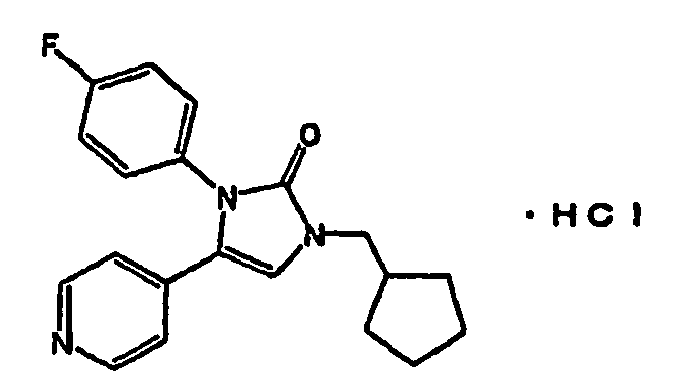
- Example 2 (a reference Example) 1-Cyclopentylmethyl-3-(9-fluorophenyl)-4-(pyridin-4-yl)-4-imidazolin-2-one ⁇ hydrochloride 128 mg of 1-(4-Fluorophenyl)-5-(pyridin-4-yl)-4-imidazolin-2-one (the compound of Example 1), 61 ⁇ l of cyclopentylmethanol, 197 mg of triphenylphosphine and 295 ⁇ l of diethyl azodicarboxylate were dissolved in 2.5 ml of methylene chloride, and the mixture was stirred at room temperature for 24 hours.
- the obtained compound was treated with hydrochloric acid, to give 75 mg of the title compound as powder.
- the reaction mixture was diluted by ethyl acetate, and insoluble matter was removed by filtration through Celite.
- To the filtrate was added 6N hydrochloric acid, and after separation, an aqueous layer was made alkaline with aqueous sodium bicarbonate solution.
- Example 80 (a reference Example)
- Example 63 To 146 mg of compound in Example 63 were added 0.2 ml of ethyl acetate and 1.7 ml of a 4N hydrogen chloride-ethyl acetate solution, and the mixture was stirred at room temperature for 3 hours. The reaction mixture was concentrated under reduced pressure, and ethyl acetate was added to the residue and powder was collected by filtration to give 128 mg of the title dompound. MS 462 ([M+H] + )
- Example 81 (a reference Example)
- Example 147 (a reference Example)
- Example 179 (a reference Example)
- Example 180 (a reference Example)
- Example 192 (a reference Example)
- Example 202 (a reference Example)
- Example 182 The compound of Example 182 was reacted with a corresponding halide in the same manner as in Reference example 1(6) to subject to alkylation to give the compound shown in Table 23, Table 23
- Example n R 1 MS ([M+H] + ) 202* 0 2-Methoxyethyl 371 *:Monohydrochloride
- Example 229 The compound of Example 229 was reacted with an acid halide in the same manner as in Example 14, to give the compound shown in Table 27.
- Table 27 Example n R 1 R 2 MS ([M+H] + ) 239* 0 Isopropyl Cyclopropylcarbonylamino 381 * :Monohydrochloride
- Example 147 The compound of Example 147 was subjected to alkylsulfonylation by the conventional manner to give the compounds in Table 54.
- Table 54 Example R 1 R 2 MS ([M+H] + ) 477* 1-Methanesulfonylpiperidin-4-yl Isopropylamino 474 478* 1-Ethanesulfonylpiperidin-4-yl Isopropylamino 488 *:monohydrochloride
- LPS lipopolysaccharide
- Tests were carried out to measure an inhibitory effects of the compounds of the present invention on LPS-stimulated TNF- ⁇ production in mice.
- mice (6-8 weeks old, female, available from Japan Charlesriver, Co.) were administered test compounds (10 mg/kg, p.o.) dissolved in 0.5% methyl cellulose and 0.2% PEG-60 hydrogenated caster oil (HCO60, available from Nikko Chemicals, Co.).
- HCO60 PEG-60 hydrogenated caster oil
- LPS E. coli 0111:B4, available from Difco, with a final concentration of 1 mg/kg adjusted by phosphate buffered saline
- blood was collected from abdominal vein of the mouse under diethyl ether anesthesia. The collected blood was subjected to centrifugation with 3000g to collect serum.
- TNF- ⁇ in the sera was measured by DuoSet mouse TNF- ⁇ ELISA kit (trade name, available from genzymeTECHNE).
- the compounds of the present invention significantly reduced the production of TNF- ⁇ as shown in Table 78.
- Table 78 Examples TNF- ⁇ inhibition rate 182 64% 202 57% 239 69% 296 52% 300 57%
- a novel 4-imidazolin-2-one compound having excellent p38MAP kinase inhibitory activity which is useful as a medicine, can be provided.
Landscapes
- Health & Medical Sciences (AREA)
- Organic Chemistry (AREA)
- Chemical & Material Sciences (AREA)
- Engineering & Computer Science (AREA)
- Bioinformatics & Cheminformatics (AREA)
- Chemical Kinetics & Catalysis (AREA)
- Public Health (AREA)
- General Chemical & Material Sciences (AREA)
- Medicinal Chemistry (AREA)
- Veterinary Medicine (AREA)
- Nuclear Medicine, Radiotherapy & Molecular Imaging (AREA)
- Animal Behavior & Ethology (AREA)
- Life Sciences & Earth Sciences (AREA)
- Pharmacology & Pharmacy (AREA)
- General Health & Medical Sciences (AREA)
- Biomedical Technology (AREA)
- Diabetes (AREA)
- Neurosurgery (AREA)
- Neurology (AREA)
- Immunology (AREA)
- Hematology (AREA)
- Transplantation (AREA)
- Urology & Nephrology (AREA)
- Vascular Medicine (AREA)
- Cardiology (AREA)
- Heart & Thoracic Surgery (AREA)
- Obesity (AREA)
- Hospice & Palliative Care (AREA)
- Endocrinology (AREA)
- Emergency Medicine (AREA)
- Psychiatry (AREA)
- Pain & Pain Management (AREA)
- Rheumatology (AREA)
- Psychology (AREA)
- Physical Education & Sports Medicine (AREA)
- Pharmaceuticals Containing Other Organic And Inorganic Compounds (AREA)
- Nitrogen Condensed Heterocyclic Rings (AREA)
- Plural Heterocyclic Compounds (AREA)
Abstract
Description
- The present invention relates to a novel 4-imidazolin-2-one compound which has an excellent p38MAP kinase inhibitory action and is useful for a medicament.
- Mitogen-activated protein (MAP) kinase is a member of serine-threonine kinases which transfers a y -phosphate group of adenosine triphosphate (ATP) to a hydroxy of specific serine or threonine which constitutes a protein, and is involved in various cellular responses against extracellular signals. p38 MAP kinase is an about 38 kDa protein and cloned as a homologue of MAP kinases.
- p38MAP kinase is activated by inflammatory cytokines such as tumor necrosis factor α (TNF-α) and interleukin 1 (IL-1) , and by stimulation caused by stress such as ultraviolet irradiation. p38 MAP kinase recognizes various transcription factors and protein kinases as a substrate. It has been clearly shown that, being activated by p38 MAP kinase, these transcription factors and protein kinases become involved in promoting transcription, post-transcriptional regulation (e.g. stabilizing mRNA and promoting protein translation) or stabilizing proteins, etc. of various proteins including inflammatory cytokines, which are involved in inflammatory reactions. From these findings, it is thought that p38 MAP kinase is critically involved in the various inflammatory reactions by regulating the production and the signal transduction of inflammatory cytokines, and an inhibitor of p38 MAP kinase can highly expected to serve as a therapeutic agent for various diseases including inflammatory diseases.
- As the inhibitors for p38 MAP kinase, there have been disclosed imidazole derivatives in PCT Japanese Provisional Patent Publication No.
2000-503304 2001-114690 2001-114779 US 3538104 discloses imidazol-2-ones with anti-inflammatory activity. - An object of the present invention is to provide a novel compound having an excellent p38 MAP kinase inhibitory action and is useful as a pharmaceutical.
- The present invention provides a compound selected from free base compounds of structures 399 to 478 as defined in claim 1, or pharmaceutically acceptable salt thereof.
- The present invention also provides a pharmaceutical composition comprising a compound of the present invention or a pharmaceutically acceptable salt thereof and a pharmaceutically acceptable carrier.
- The present invention relates to a method of inhibiting of p38 MAP kinase which comprises administering the compound of the present invention or a pharmaceutically acceptable salt thereof to a human in need thereof.
- The present invention also relates to a method of prophylaxis or treatment for diseases related to the activation of p38 MAP kinase or the excessive production of inflammatory mediators concerned with p38 MAP kinase, which comprises administering the compound of the present invention or a pharmaceutically acceptable salt thereof to a human in need thereof.
- The present invention relates to a method of prophylaxis or treatment for diseases selected from the group consisting of arthritis, inflammatory bowel disease, inflammatory dermal disease, inflammatory respiratory disease, inflammatory optical disease, nephritis, hepatitis, systemic inflammatory disease, shock, cerebrovascular disease, ischemic cardiac diseases, osteoporosis, multiple sclerosis, diabetes, malignant tumor, cachexia, Alzheimer's disease, Parkinson's disease, acquired immunodeficiency syndrome, arterial sclerosis, disseminated intravascular coagulation syndrome, rejection and graft-versus-host diseases by organ transplantation, which comprises administering the compound of the present invention or a pharmaceutically acceptable salt thereof to a human in need thereof. In particular, the present invention provides a compound of the present invention or a pharmaceutically acceptable salt thereof for use in the prophylaxis or treatment of any one of these diseases, and also provides the use of a compound of the present invention or a pharmaceutically acceptable salt thereof for the preparation of an agent for prophylaxis or treatment of any one of these diseases. As used below, "alkyl" is exemplified by a straight or branched chain C1-C6 alkyl, and specifically, methyl, ethyl, propyl, isopropyl, butyl, isobutyl, pentyl, hexyl, etc. Preferred is a c1-c4alkyl.
- Although an optical isomer based on an asymmetric carbon can be present in the compounds of the present invention and their pharmaceutically acceptable salts, the present invention includes any of these optical isomers as well as mixtures thereof. The compounds of the invention can be used for a pharmaceutical use, in either a free form or in a form of a pharmaceutically acceptable salt. A pharmaceutically acceptable salt of a compound of the present invention is exemplified by an inorganic acid salt such as a hydrochloride, a sulfate, a phosphate and a hydrobromide, and an organic acid salt such as acetate, fumarate, oxalate, citrate, methanesulfonate, benzenesulfonate, tosylate and maleate, etc. Further, in case of having a substituent such as carboxy, etc., there are mentioned a salt with a base (for example, an alkali metal salt such as a sodium salt, a potassium salt, etc. and an alkaline earth metal such as a calcium salt) .
- The compounds of the present invention include an internal salt and a solvate, such as a hydrate, of a structure as defined in claim 1.
- The compounds of the present invention or a pharmaceutically acceptable salt thereof have an excellent p38 MAP kinase inhibitory action and are useful for the prophylaxis and treatment for diseases related to the activation of p38 MAP kinase and the excessive production of inflammatory mediators concerned with p38 MAP kinase such as TNF-α, IL-1, etc. Therefore, the compounds of the present invention or a pharmaceutically acceptable salt thereof is expected to be useful for a therapeutic and prophylactic agent for inflammatory diseases, etc. such as arthritis (rheumatoid arthritis, osteoarthritis, infectious arthritis, gouty arthritis, traumatic arthritis, synovitis, periarthritis, etc.), inflammatory bowel disease (ulcerative colitis, Crohn's disease, etc.), inflammatory dermal disease' [psoriasis, dermatitis (atopic dermatitis, contact dermatitis , urticaria, eczema, etc.), etc.], inflammatory respiratory disease (asthma, bronchitis, pneumonia, pleurisy, pharyngitis, rhinitis, etc.), inflammatory optical disease (conjunctivitis, keratitis, uveitis, etc.), nephritis, hepatitis, systemic inflammatory disease (Behcet's syndrome, systemic lupus erythematosus, etc.), shock (septic shock, endotoxin shock, etc.), cerebrovascular disease (cerebral hemorrhage, cerebral infarction, cerebral edema, etc.), ischemic cardiac diseases (angina pectoris, cardiac infarction, congestive heart failure, etc.), osteoporosis, multiple sclerosis, diabetes, malignant tumor, cachexia, Alzheimer's disease, Parkinson's disease, acquired immunodeficiency syndrome, arterial sclerosis, disseminated intravascular coagulation syndrome, rejection and graft-versus-host diseases by organ transplantation, etc.
- The compound of the present invention can be used in combination with one or more drugs selected from the group consisting of non-steroidal anti-inflammatory drugs, anti-rheumatic drugs, anti-cytokine drugs, immunosuppressants and steroids.
- Examples of the non-steroidal anti-inflammatory drug include alcofenac, aceclofenac, sulindac, tolmetin, fenoprofen, thiaprofenic acid, tenoxicam, lornoxicam, aspirin, mefenamic acid, flufenamic acid, diclofenac, loxoprofen, phenylbutazone, indomethacin, ibuprofen, ketoprofen, naproxen, flurbiprofen, pranoprofen, piroxicam, zaltoprofen, celecoxib, rofecoxib, valdecoxib, salts thereof and the like.
- Examples of the anti-rheumatic drug include gold preparation (Auranofin, etc.), penicillamine, bucillamine, lobenzarit, actarit, sulfasalazine, chloroquine, leflunomide, and the like.
- Examples of the anti-cytokine drug include etanercept, infliximab, soluble TNF-α receptor, anti-TNF-α antibody, anti-interleukin-6 antibody, anti-interleukin-12 antibody and the like.
- Examples of the immunosuppressant include methotrexate, cyclophosphamide, brequinar sodium, deoxyspergualin, mizoribine, 2-morphorinoethyl mycophenolate, rimexolone, cyclosporine, rapamycin, tacrolimus, gusperimus, azathiopurine and the like.
- Examples of the steroid include dexamethasone, betamethasone, triamcinolone, fluocinonide, prednisolone, methylprednisolone, cortisone acetate, hydrocortisone and the like.
- When the compound of the present invention or pharmaceutically acceptable salt thereof is used in combination with one or more drugs above, two or more ingredients can be administered simultaneously, subsequently or separately with intervals.
- The compound of the present invention or a pharmaceutically acceptable salt thereof can be formulated into a pharmaceutical composition comprising a therapeutically effective amount of a compound of the present invention and a pharmaceutically acceptable carrier therefor. The pharmaceutically acceptable carriers include diluents, binders (e.g., syrup, gum arabic, gelatine, sorbit, tragacanth, polyvinylpyrrolidone), excipients (e.g., lactose, sucrose, corn starch, potassium phosphate, sorbit, glycine), lubricants (e.g., magnesium stearate, talc, polyethylene glycol, silica), disintegrants (e.g., potato starch) and wetting agents (e.g., sodium lauryl sulfate), and the like.
- The compound of the present invention or a pharmaceutically acceptable salt thereof can be administered orally or parenterally, and be used as an appropriate pharmaceutical preparation. Examples of an appropriate preparation for oral administration include solid preparations (tablets, granules, capsules, powders, etc.), solutions, suspensions and emulsions. Examples of an appropriate preparation for parenteral administration include suppository, injections or preparation for continuous infusion prepared using distilled water for injection, physiological saline or aqueous glucose solution, etc., or inhalant.
- An administration amount of the compound of the present invention or a pharmaceutically acceptable salt thereof depends on an administration method, age, body weight, and condition of the patient, and usually, it is preferably 0.003 to 30 mg/kg, and particularly preferably, 0.01 to 10 mg/kg.
- The compounds of the present invention and their pharmaceutically acceptable salts can be prepared suitably by a method selected from the following [Method A] to [Method D], however, it is not limited to these. Production method will be described in detail using the compound [Ia'] as follows.
-

- The compound [Ia'] of the present invention can be produced by reacting a compound [II] with a compound [III], followed by treating the reaction product with an acid. This reaction can be carried out in a solvent (Journal of Medicinal Chemistry, 9, 858 (1966)). As the solvent, there is no limitation as long as it does not affect the reaction, for example, there are mentioned tetrahydrofuran (THF), chloroform, methylene chloride, dioxane, ethyl acetate, ether, toluene, etc. The present reaction proceeds preferably at -20 to 80°C, particularly preferably at 0 to 30°C. Further, as an acid for an acid treatment, there are mentioned, for example, hydrochloric acid, sulfuric acid, phosphoric acid, p-toluenesulfonic acid, methanesulfonic acid, etc. Additionally, as an alkyl of R in the formula [II], there are mentioned, for example, methyl, ethyl, propyl, butyl, etc., and particularly preferred are methyl and ethyl.
-

- The compound [I-B] which is categorized in the compound [Ia'] can be produced by reacting a compound [I-A]; with a compound [IV] for alkylation.
- When Y in the formula [IV] is a halogen atom, this reaction can be carried out in a solvent, in the presence of a base. Any solvent can be used as long as it does not affect the reaction, and there are mentioned, for example, dimethylformamide (DMF), dimethylsulfoxide,1-methylpyrrolidone, 1,3,-dimethyl-2-imidazolidinone, etc. As the base, there are mentioned, for example, sodium hydride, sodium hydroxide, potassium t-butoxide, butyllithium, lithium diisopropylamide, etc. The reaction proceeds preferably at -20 to 100°C, particularly preferably at 0 to 30°C. Further, as the halogen atom at Y, there are mentioned chlorine, bromine and iodine, and bromine and iodine are particularly preferred.
- When Y in the formula [IV] is hydroxy, the reaction can be carried out in a solvent, in the presence of an additive and an activator (Synthesis, 1 (1981)). Any solvent can be used as long as it does not affect the reaction, and there are mentioned, for example, methylene chloride, THF, dioxane, chloroform, etc. As the additive, there are mentioned, for example, triphenylphosphine, tributylphosphine, trimethylphosphine, etc. As the activator, there are mentioned, for example, diethyl azodicarboxylate, dimethyl azodicarboxylate, 1,1-azobis(N,N-dimethylformamide), 1,1-(azodicarbonyl)dipiperidine, etc. This reaction proceeds preferably at -30 to 100°C, and particularly preferably at 0 to 50°C.
- When Y in the formula [IV] is dihydroxyboranyl, the reaction can be carried out in a solvent, in the presence of a catalyst and a base (Tetrahedron Letters, 39, 2933 (1998)) Any solvent can be used as long as it does not affect the reaction, and there are mentioned, for example, methylene chloride, chloroform, DMF, etc. As the catalyst, there are mentioned, for example, copper (II) acetate, etc. As the base, there are mentioned, for example, triethylamine, diisopropylethylamine, 4-methylmorpholine, pyridine, etc. This reaction proceeds preferably at -10 to 100°C, and particularly preferably at 20 to 60°C.
-

- The compound [I-C] can be produced by reacting a compound [V] with a compound [VI].
- The reaction between the compound [V] and the compound [VI] can be carried out in a solvent, in the presence of a catalyst, a base and an additive (Journal of Organic Chemistry, 61, 7240 (1996)). Any solvent can be used as long as it does not affect the redaction, and there are mentioned, for example, toluene, xylene, dimethoxyethane, dioxane, etc.
- As the catalyst, there are mentioned, for example, palladium acetate, bis (dibenzylideneacetone) dipalladium, etc. As the base, there are mentioned, for example, sodium t-butoxide, potassium t-butoxide, lithium t-butoxide, triethylamine, etc. As the additive, there are mentioned, for example, 2,2'-bis(diphenylphosphino)-1,1'binaphthyl, etc. The reaction proceeds preferably at 30 to 150°C, and particularly preferably at 60 to 80°C.
-

- The compound [I-D] can be produced by reacting a compound [IX] with a compound [VI].
- The reaction between the compound [IX] and the compound [VI] can be carried out in a solvent. Any solvent can be used as long as it does not affect the reaction, and there are mentioned, for example, dioxane, THF, DMF, dimethylsulfoxide, etc. The reaction proceeds preferably at 0 to 150 °C, and particularly preferably at 50 to 100°C.
- The compound [Ia'] produced above can also be derived to other compounds [Ia' ] by converting a functional group using properly a conventionally known organic chemistry reaction. Such a method for converting a functional group may be suitably selected depending on a kind of a desired functional group.
- The compound of the present invention obtained according to the above described [Method A] to [Method D] can be optionally converted to a pharmaceutically acceptable salt. Conversion to a pharmaceutically acceptable salt may be carried out by methods known to the person skilled in the art.
- In the following, production methods for starting materials used in the above methods are described.
- The starting material [II] can be produced as follows.

- The reaction for producing the compound [2] from the compound [1] and hydroxylamine can be carried out in a solvent. Any solvent can be used as long as it does not affect the reaction, and there are mentioned, for example, ethanol, methanol, etc. The reaction proceeds preferably at 0 to 150°C, and particularly preferably at 60 to 80°C.
- The reaction for producing the compound [3] from the compound [2] and tosyl chloride can be carried out in a solvent. Any solvent can be used as long as it does not affect the reaction, and there are mentioned, for example, methylene chloride, chloroform, THF, toluene, etc. As the base, there are mentioned, for example, triethylamine, diisopropylethylamine, pyridine, etc. The reaction proceeds preferably at -20 to 80°C, and particularly preferably at 0 to 30°C.
- The reaction for producing the compound [3a] from the compound [3] can be carried out in a solvent, by reacting the compound [3] with sodium alkoxide, followed by treating the reactant with an acid. Any solvent can be used as long as it does not affect the reaction, and there are mentioned, for example, methanol, ethanol, dioxane, THF, dimethoxyethane, etc. As the acid, there are mentioned, for example, hydrogen chloride, etc. The reaction proceeds preferably at -20 to 60°C, and particularly preferably at 0 to 30°C.
- The reaction for producing the compound [II] from the compound [3a] can be carried out by reacting a corresponding aldehyde using a conventional reductive alkylation (Journal of Organic Chemistry, 61, 3849(1996)).
- A starting material [V] can be produced, for example, as follows.

- The reaction for producing the compound [5] from the compound [4] and methyl lithium can be carried out in a solvent. Any solvent can be used as long as it does not affect the reaction, and there are mentioned, for example, THF, diethyl ether, dimethoxyethane, etc. The reaction proceeds preferably at -90 to 0°C, and particularly preferably at -60 to -40°C.
- The method for producing the compound [8] from the compound [5] via the compound [6] and the compound [7] can be carried out in a similar manner to the above-mentioned method for producing the compound [II] from the compound [1] via the compound [2] and the compound [3].
- The reaction for producing the compound [9] from the compound [8] and the compound [III] can be carried out in a similar manner to the above-mentioned [Method A].
- The reaction for producing the compound [V] from the compound [9] and the compound [IV] can be carried out in a similar manner to the above-mentioned [Method B].
- A starting material [IX] can be produced, for example, as follows.


- The reaction for producing the compound [12] from the compound [10] and the compound [11] can be carried out in a solvent or without solvent. Any solvent can be used as long as it does not affect the reaction, and there are mentioned, for example, toluene, xylene, dioxane, etc. The reaction proceeds preferably at 50 to 150°C, and particularly preferably at 80 to 120°C.
- The reaction for producing the compound [13] from the compound [12] can be carried out by reacting the compound [12] with thiourea in a solvent, in the presence of a base, and then, by reacting an alkylating agent. Any solvent can be used as long as it does not affect the reaction, and there are mentioned, for example, methanol, THF, dioxane, etc. As the base, there are mentioned, for example, sodium methoxide, sodium hydroxide, potassium t-butoxide, etc. As the alkylating agent, there are mentioned, for example, methyl iodide, dimethyl sulfate, etc. The reaction proceeds preferably at 0 to 100°C, and particularly preferably at 30 to 70°C.
- The reaction for producing the compound [14] from the compound [13] can be carried out in a solvent, in the presence of an acid. Any solvent can be used as long as it does not affect the reaction, and there are mentioned, for example, water, acetone, THF, dioxane, etc. As the acid, there are mentioned, for example, hydrochloric acid, sulfuric acid, phosphoric acid, p-toluenesulfonic acid, etc. The reaction proceeds preferably at -10 to 80°C, and particularly preferably at 0 to 30°C.
- The compound [14] can be also produced from the compound [15] via the compound [17].
- The reaction for producing the compound [17] from the compound [15] and the compound [16] can be carried out in a solvent, in the presence of a catalyst. Any solvent.can be used as long as it does not affect the reaction, and there are mentioned, for example, DMF, toluene, xylene, etc. As the catalyst, there are mentioned, for example, bis(triphenylphosphine)palladium dichloride, tetrakis(triphenylphosphine)palladium, etc. The reaction proceeds preferably at 50 to 150°C, and particularly preferably at 70 to 90°C.
- The reaction for producing the compound [14] from the compound [17] can be carried out in a similar manner to the above-mentioned method for producing the compound [14] from the compound [13].
- The reaction for producing the compound [20] from the compound [14] via the compound [18] and the compound [19]'can be carried out in a similar manner to the above-mentioned method for producing the compound [II] from the compound [1] via the compound [2] and the compound [3].
- The reaction for producing the compound [21] from the compound [20] and the compound [III] can be carried out in a similar manner to the above-mentioned [Method A].
- The reaction for producing the compound [22] from the compound [21] can be carried out in a solvent, using an oxidizing agent. Any solvent can be used as long as it does not affect the reaction, and there are mentioned, for example, water, methanol, THF, dioxane, chloroform, methylene chloride, etc. As the oxidizing agent, there are mentioned, for example, Oxon (trade name, manufactured by DuPont Co. Ltd.), 3-chloroperoxybenzoic acid, hydrogen peroxide, etc. The reaction proceeds preferably at -20 to 60°C, and particularly preferably at -10 to 30°C.
- The reaction for producing the compound [IX] from the compound [22] and the compound [IV] can be carried out in a similar manner to the above-mentioned [Method B].
- The compound [IX] can be also produced from the compound [21] via the compound [23].
- The reaction for producing the compound [23] from the compound [21] and the compound [IV] can be carried out in a similar manner to the above-mentioned [Method B].
- The reaction for producing the compound [IX] from the compound [23] can be carried out in a similar manner to the reaction for producing the compound [22] from the compound [21] .
- Incidentally, in the above production methods, it is possible to optionally protect or deprotect a functional group. As the protecting group for the functional group, those used in a field of conventional organic synthetic chemistry can be used, examples of which include those described in "Protective Groups in Organic Synthesis" by T. W. Greene, P. M. G. Wuts, (published by John Wiley and Sons, 1991). For conditions for introducing protecting groups or condition for de-protection, the method described in the above reference can be mentioned.
- Further, each compound and each intermediate produced in the above production methods can be purified by means of a conventional method, for example, column chromatography, recrystallization, etc. As a solvent for recrystallization, there are mentioned, for example, an alcohol solvent such as methanol, ethanol, 2-propanol, etc., an ether solvent such as diethyl ether, etc., an ester solvent such as ethyl acetate, etc., an aromatic solvent such as toluene, etc., a ketone solvent such as acetone, etc., a hydrocarbon solvent such as hexane, etc., water, etc., and a mixed solvent thereof. Further, the compounds of the present invention that are free bases can be converted to a pharmaceutically acceptable salt according to the conventional method, and recrystallization can be carried out afterwards.
- Hereinbelow, the present invention will be explained in more detail with reference to the following Examples, which should not be construed as limiting the scope of the present invention.
- Each of the following symbols used in the present specification represents the meaning as described below.
Me : methyl
Et : ethyl
THF: tetrahydrofuran
DMF: N,N-dimethylformamide
t- : tert- -

-

- 50 mg of 4-(2-Chloropyridin-4-yl)-3-(4-fluorophenyl)-1-(2-cyanobenzy 1) -4-imidazolin-2-one (a compound of Reference Example 1 (6)) , 79 µl of (S)-(-)-α-methylbenzylamine, 5.5 mg of palladium acetate, 15 mg of 2,2'-bis (diphenylphsophino)-1,1'-binaphthyl and 17 mg of sodium t-butoxide were suspended in 1 ml of toluene, and the mixture was stirred at 70°C for 18 hours, under nitrogen flow. The reaction mixture was diluted by ethyl acetate, and insoluble matter was removed by filtration through Celite. To the filtrate was added 6N hydrochloric acid, and after separation, an aqueous layer was made alkaline with aqueous sodium bicarbonate solution. The mixture was extracted with chloroform, washed with saturated brine, and dried over anhydrous magnesium sulfate. After concentration under reduced pressure, the residue was purified by silica gel column chromatography (hexane : ethyl acetate = 1 : 2) , to give 38 mg of the title compound as colorless powder.
- The compound in Table 1 was obtained by treating the corresponding starting material in a similar manner to that in Example 4.
Table 1 
Example R1 R2 Physical properties, etc. 5 2-Cyanophenyl 4-Methoxybenzylamino Melting point 167°C -

-

-

- A suspension of 50 mg of 4-(2-aminopyridin-4-yl)-1-(2-cyanobenzyl)-3-(4-fluorophenyl)-4-imidazolin-2-one (Compound of Example 13) and 20 µl of isobutyroyl chloride in methylene chloride was ice-cooled, and after adding 54 µl of triethylamine by dropwise, and the mixture was stirred at room temperature for 3 hours. Water was added to the reaction mixture, and the mixture was extracted with ethyl acetate, washed with brine and dried over anhydrous magnesium sulfate. After concentration under reduced pressure, the residue was purified by silica gel column chromatography (chloroform: acetone=20:1) to give 22 mg of the title compound (Example 14) as colorless crystal and 10 mg of the title compound (Example 15) as colorless crystal, respectively. Melting point:196°C (Example 14), 185-187°C (Example 15).
-

- A mixture of 70 mg of 1-(2-cyanobenzyl)-3-(4-fluorophenyl)-4-(2-methylsulfinylpyrimidin-4-yl)-4-imidazolin-2-one (Compound of Reference example 6 (2) or Reference example 7 (2)) , 60.6 mg of 3-aminopropanol and 2 ml of dioxane was stirred at 80°C for 5 hours. The reaction mixture was concentrated and then purified by silica gel column chromatography (chloroform: methanol=19:1) and crystallized from ether to give 44.6 mg of the title compound. Melting point: 166-167°C.
- The compound of Reference example 1(5) and the corresponding starting materials were subjected to N-alkylation in the same manner as in Example 2 or Reference example 1(6), and then, subjected to amination in the same manner as in Example 4 to give the compounds shown in Table 5.
Table 5 
Example R1 R2 MS
([M+H]+)55 4-Methoxyphenyl Isopropylamino 433 57 4-Methoxyphenyl (S)-1-(2-Pyridyl)ethyl-amino 495 61 cis-4-Methoxy-methoxycyclohexyl Isopropylamino 469 63 2-Fluorophenyl (1-t-Butoxycarbonyl-4-pi peridyl)amino 562 -

- To 146 mg of compound in Example 63 were added 0.2 ml of ethyl acetate and 1.7 ml of a 4N hydrogen chloride-ethyl acetate solution, and the mixture was stirred at room temperature for 3 hours. The reaction mixture was concentrated under reduced pressure, and ethyl acetate was added to the residue and powder was collected by filtration to give 128 mg of the title dompound.
MS 462 ([M+H]+) -

- To 2 ml of methanol was dissolved 148 mg of the compound in Example 61, 1 ml of conc. hydrochloric acid was added to the mixture and the resulting mixture was stirred at room temperature overnight. The reaction mixture was concentrated under reduced pressure, and the residue was neutralized with a 4N aqueous NaOH solution and extracted with chloroform. After drying and concentration, diethyl ether and diisopropyl ether were added to the residue and the resulting powder was collected by filtration to give 58 mg of the title compound.
MS 425 ([M+H]+) - The compound of Reference example 11 and.a corresponding starting compound were subjected to N-alkylation in the same manner as in Reference example 8, and then, the resulting compound was treated with a corresponding isocyanate to carry out cyclization in the same manner as in Example 1 to give the compound shown in Table 14.
Table 14 
Example R1 MS ([M+H]+). 147* 4-Piperidyl 396 *:Monohydrochloride -

- To 5 ml of 25% HBr-acetic acid solution was added 490 mg of the compound of Example 57, and the mixture was stirred at 70°C for 15 hours. After cooling the reaction mixture, an aqueous sodium bicarbonate solution was added to neutralize the mixture, and the resulting mixture was extracted with ethyl acetate, washed with brine and dried over magnesium sulfate. After concentration under reduced pressure, the residue was purified by silica gel column chromatography to give 237 mg of the title compound as colorless powder.
MS 482 ([M+H]+) -

- To 200 mg of the compound of Example 179 was added 2 ml of 25% HBr-acetic acid solution, and the mixture was stirred under heating at 80°C for 3 days. After cooling the reaction mixture, an aqueous sodium bicarbonate solution was added thereto to make alkaline, and the mixture was extracted with ethyl acetate, washed with.brine and dried over magnesium sulfate. After concentration under reduced pressure, the residue was purified by silica gel column chromatography to give 71 mg of the title compound as colorless powder.
MS 376 ([M+H]+) - By using the compound of Example 55, it was reacted in the same manner as in Examples 179 and 180 to give the compounds of Examples 181 and 182 shown in Table 20.
Table 20 
Example R1 n R2 MS ([M+H]+) 181 4-Hydroxyphenyl 1 Isopropylamino 419 182 Hydrogen atom 0 Isopropylamino 313 - The compound of Reference example 13 was subjected to amination in the same manner as in Example 4, and then, reacted with a corresponding isocyanate in the same manner as in Example 1, and,'if necessary, subjected to acetylation according to the conventional manner to give the compound shown in Table 22.
Table 22 
Example Ring A R2 MS
([M+H]+)192 Phenyl Isopropylamino 295 - The compound of Example 182 was reacted with a corresponding halide in the same manner as in Reference example 1(6) to subject to alkylation to give the compound shown in Table 23,
Table 23 
Example n R1 MS
([M+H]+)202* 0 2-Methoxyethyl 371 *:Monohydrochloride - The compound of Reference example 1(5) was reacted with a corresponding compound in the same manner as in Reference example 1 (6), subsequently the resulting compound was treated in the same manner as in Examples 5 and 13 to give the compound shown in Table 26. Incidentally, the compound of Example 229 was synthesized by using 2,4-dimethoxybenzyl in place of 4-methoxybenzyl, and deprotecting with conc. hydrochloric acid/THF (70°C).
Table 26 
Example n R1 MS ([M+H]+) 229 0 Isopropyl 313 *:Monohydrochloride - The compound of Example 229 was reacted with an acid halide in the same manner as in Example 14, to give the compound shown in Table 27.
Table 27 
Example n R1 R2 MS
([M+H]+)239* 0 Isopropyl Cyclopropylcarbonylamino 381 * :Monohydrochloride - The compound of Reference example 5(4) was reacted in the same manner as in Example 2 or Reference example 1 (6), oxidized with 3-chloroperoxybenzoic acid in the same manner as in Reference example 6(2), subsequently reacted with a corresponding amine in the same manner as in Example 17, and further, if necessary, t-butoxycarbonyl or methoxymethyl is removed in the same manner as in Example 80 or 81 to give the compounds shown in Table 33.
Table 33 
Example n R1 R2 MS
([M+H]+)300* 0 Ethyl trans-4-Hydroxycyclohexylamino 398 *: Monohydrochloride ; **:Dihydrochloride - The compound of Reference example 5 (4) was reacted in the same manner as in Example 2 or Reference example 1 (6), oxidized with 3-chloroperoxybenzoic acid in the same manner as in Reference example 6 (2), subsequently reacted with a corresponding amine in the same manner as in Example 17, and if necessary, t-butoxycarbonyl was removed in the same manner as in Example 80 to give the compound shown in Table 40.
Table 40 
Example R1 R2 MS
([M+H]+)378** Isopropyl 4-Piperidyl 397 **: Dihydrochloride - The compound of Reference example 5(4) and the corresponding starting materials were reacted in the same manner as in Reference example 1(6), oxidized with 3-chloroperbenzoic acid in the same manner as in Reference example 6 (2), subsequently reacted with the corresponding amine in the same manner as in Example 17, and, if necessary, subjected to removal of t-butoxycarbonyl in the same manner as in Example 80 to give the compounds in Tables 45 and 46.
Table 45 
Example R1 R2 MS ([M+H]+) 399* Ethyl 1,1-Dioxotetrahydrothiophen-3-ylamino 418 400* Ethyl trans-4-(Methylcarbamoyl)cyclohexylamino 439 401* Ethyl 1,5-Dimethyl-5-hydroxyhexylamino 428 402* Isopropyl 1,5-Dimethyl-5-hydroxyhexylamino 442 403* Ethyl cis-4-Hydroxy-4-methylcyclohexylamino 412 404* Isopropyl trans-4-Hydroxy-4-methylcyclohexylamino 426 405* Isopropyl trans-4-(1-Hydroxy-1-methylethyl)cyclohexylamino 454 406* Ethyl trans-4-Hydroxy-4-methylcyclohexylamino 412 407* Isopropyl cis-4-Hydroxy-4-methylcyclohexylamino 426 *:monohydrochloride Table 46 
Example R1 R2 MS ([M+H]+) 408* Ethyl trans-4-(1-Hydroxy-1-methylethyl) cyclohexylamino 440 409* Ethyl (S)-1,2-Dimethyl-2-hydroxypropylamino 386 410* Isopropyl (S)-1,2-Dimethyl-2-hydroxypropylamino 400 411* Ethyl 1,3-Dimethyl-3-hydroxybutylamino 400 412* Isopropyl 1,3-Dimethyl-3-hydroxybutylamino 414 413* Isopropyl 2-Mercapto-2-methylpropylamino 402 414* Isopropyl 1,1-Bishydroxymethylpropylamino 416 415* Isopropyl 2-Hydroxy-2-methylpropylamino 386 416** Ethyl 4-Piperidylamino 383 *:monohydrochloride; **:dihydrochloride - The compound of Reference example 5 (4) was reacted in the same manner as in Example 2 or Reference example 1 (6), reacted with methymagnesium bromide if necessary, subsequently oxidized with 3-chloroperbenzoic acid in the same manner as in Reference example 6(2), and reacted with the corresponding amine in the same manner as in Example 17 to give the compounds in Tables 47 and 48.
Table 47 
Example R1 R2 MS
([M+H]+)417* 1,2-Dimethyl-2-hydroxypropyl Isopropylamino 400 418* 1,2-Dimethyl-2-hydroxypropyl cis-4-Hydroxy-4-methylcyclohexylamino 470 419* 1,2-Dimethyl-2-hydroxypropyl (S)-1,2-Dimethyl-2-hydroxypropylamino 444 420* 1,2-Dimethyl-2-hydroxypropyl Trans-4-Hydroxy-4-methylcyclohexylamino 470 421* 2-Hydroxy-1,1,2-trimethylpropyl Isopropylamino 414 422* 2-Hydroxy-1,1,2-trimethylpropyl Trans-4-Hydroxy-4-methylcyclohexylamino 484 423* 3-Hydroxy-3-methylbutyl Isopropylamino 400 424* 3-Hydroxy-3-methylbutyl 1,1-Dimethyl-2-hydroxyethylamino 430 *:monohydrochloride Table 48 
Example R1 R2 MS
([M+H]+)425* 3-Hydroxy-3-methylbutyl 2,2-Dimethyl-3-hydroxypropylamino 444 426* 3-Hydroxy-3-methylbutyl 1-Hydroxymethylcyclopentylamino 456 427* 3-Hydroxy-3-methylbutyl trans-4-Hydroxy-4-methylcyclohexylamino 470 428* 3-Hydroxy-3-methylbutyl 4-Tetrahydropyranylamino 442 429* 3-Hydroxy-3-methylbutyl (R)-1,2-Dimethyl-2-hydroxypropylamino 444 430* 3-Hydroxy-3-methylbutyl (S)-1,2-Dimethyl-2-hydroxypropylamino 444 431* 3-Hydroxy-3-methylbutyl trans-4-Hydroxycyclohexylamino 456 432* 3-Hydroxy-3-methylbutyl 1-Methanesulfonylpiperidin-4-ylamino 519 433* 3-Hydroxy-3-methylbutyl 1-Ethanesulfonylpiperidin-4-ylamino 533 *:monohydrochloride - The compound of Reference example 5(3) and the corresponding starting materials were reacted in the same manner as in Reference example 9, oxidized with 3-chloroperbenzoic acid in the same manner as in Reference example 6(2), and subsequently reacted with the corresponding compound in the same manner as in Example 17 to give the compounds in Tables 49 to 51.
Table 49 
Example R1 R2 MS
([M+H]+)434* 4-Tetrahydropyranyl Isobutylamino 412 435* 4-Tetrahydropyranyl Isopropylamino 398 436* 4-Tetrahydropyranyl trans-4-Hydroxy-4-methylcyclohexylamino 468 437* 4-Tetrahydropyranyl Cyclopropylamino 396 438* 4-Tetrahydropyranyl 2,2-Dimethylpropylamino 426 439* 1-Acetylpiperidin-4-yl trans-4-Hydroxy-4-methylcyclohexylamino 509 440* 1-Acetylpiperidin-4-yl 2,2-Dimethylpropylamino 467 441* 1-Acetylpiperidin-4-yl Isopropylamino 439 442* 1-Acetylpiperidin-4-yl Isobutylamino 453 443* 1-Acetylpiperidin-4-yl Cyclopropylamino 437 444* 4-Tetrahydropyranyl (R)-1,2-Dimethyl-2-hydroxypropylamino 442 445* 4-Tetrahydropyranyl (S)-1,2-Dimethyl-2-hydroxypropylamino 442 446* 4-Tetrahydropyranyl (S)-2-Hydroxy-1-methylethylamino 414 *:monohydrochloride Table 50 
Example R1 R2 MS
([M+H]+)447* 4-Tetrahydropyra nyl (S)-1-Hydroxymethylpropylamino 428 448* 4-Tetrahydropyra nyl 1,1-Dimethyl-2-hydroxyethylamino 428 449* 4-Tetrahydropyra nyl 1-Acetylpiperidi 4-Tetrahydropyranylamino 1,1-Dimethyl-2-hydrox 440 450* n-4-yl 1-Acetylpiperidi yethylamino 4-Tetrahydropyranylam 469 451* n-4-yl ino (S)-1-Hydroxymethylpr 481 452* 1-Acetylpiperidi n-4-yl opylamino (S)-1,2-Dimethyl-2-hy 469 453* 1-Acetylpiperidi n-4-yl droxypropylamino 483 *:monohydrochloride Table 51 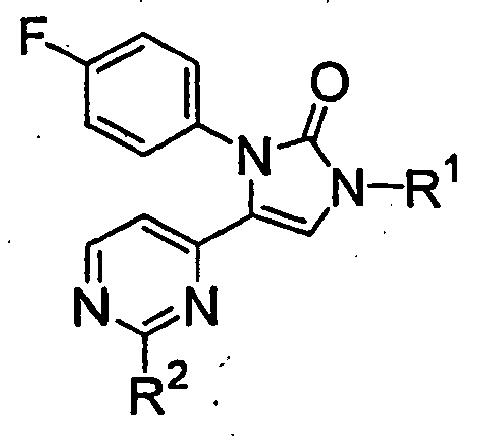
Example R1 R2 MS ([M+H]+) 454* 4-Tetrahydropyranyl trans-4-Hydroxycyclohexylamino 454 455* 1-Acetylpiperidin-4-yl trans-4-Hydroxycyclohexylamino 495 456* 1-Methanesulfonylpiperidin-4-yl trans-4-Hydroxycyclohexylamino 531 457* 1-Methanesulfonylpiperidin-4-yl trans-4-Hydroxy-4-methylcyclohexylamino 545 458* 1-Methanesulfonylpiperidin-4-yl Isopropylamino 475 459* 4-Tetrahydropyranyl 1-Methanesulfonylpiperidin-4-ylamino 517 460* 1-Acetylpiperidin-4-yl 1-Methanesulfonylpiperidin-4-ylamino 558 *:monohydrochloride - The compound of Example 378 or Example 416 was subjected to alkylsulfonylation and acylation by the conventional manner, or reacted with isocyanate to give the compounds in Tables 52 and 53.
Table 52 
Example R1 R2 MS
([M+H]+)461* Isopropyl 1-Acetylpiperidin-4-ylamino 439 462* Isopropyl 1-Methanesulfonylpiperidin-4-ylamino 475 463* Isopropyl 1-(Isopropylsulfonyl)piperidin-4-ylamino 503 464* Isopropyl 1-(Propylsulfonyl)piperidin-4-ylamino 503 465* Isopropyl 1-(Butylsulfonyl)piperidin-4-ylamino 517 466* Isopropyl 1-(Isobutyloxycarbonyl)piperidin-4-ylamino 497 467* Isopropyl 1-butyrylpiperidin-4-ylamino 467 468* Ethyl 1-Acetylpiperidin-4-ylamino 425 *:monohydrochloride Table 53 
Example R1 R2 MS
([M+H]+)469* Ethyl 1-Methanesulfonylpiperidin-4-ylamino 461 470* Ethyl 1-Ethanesulfonylpiperidin-4-ylamino 475 471* Isopropyl 1-Ethylcarbamoylpiperidin-4-ylamino 468 472* Isopropyl 1-Propylcarbamoylpiperidin-4-ylamino 482 473* Isopropyl 1-Isopropylcarbamoylpiperidin-4-ylamino 482 474* Isopropyl 1-Ethanesulfonylpiperidin-4-ylamino 489 475* Isopropyl 1-Methoxycarbonylpiperidin-4-ylamino 455 476* Isopropyl 1-Ethoxycarbonylpiperidin-4-ylamino 469 *:monohydrochloride - The compound of Example 147 was subjected to alkylsulfonylation by the conventional manner to give the compounds in Table 54.
Table 54 
Example R1 R2 MS
([M+H]+)477* 1-Methanesulfonylpiperidin-4-yl Isopropylamino 474 478* 1-Ethanesulfonylpiperidin-4-yl Isopropylamino 488 *:monohydrochloride -

- (1) In 440 ml of THF was suspended 22 g of 2-chloroisonicotinic acid, and under nitrogen flow, the mixture was cooled to -70 °C or lower, 245 ml of methyl lithium (1.14 M solution in diethyl ether) was added dropwise to the mixture. After stirring at the same temperature for an hour, a temperature of the mixture was raised to 0°C over an hour, and stirred at the same temperature for further an hour. To the reaction mixture was added 500 ml of water, and the reaction mixture was extracted with ethyl acetate, washed with brine and dried over magnesium sulfate. Activated charcoal was added to the mixture, and after filtration, the filtrate was concentrated under reduced pressure to give 19.5 g of 4-acetyl-2-chloropyridine as colorless crystals. Melting point: 36°C.
- (2) In 550 ml of ethanol were suspended 55.1 g of the compound obtained in (1), 49.2 g of hydroxylamine hydrochloride and 58.1 g of sodium acetate, and the mixture was refluxed under heating for an hour. After cooling the mixture to room temperature by allowing to stand, ethanol was distilled away under reduced pressure and precipitated crystals were collected by filtration and washed with water. The crystals were air-dried at 60°C overnight to give 55 g of 1-(2-chloropyridin-4-yl)ethanone oxime as colorless crystals. Melting point: 143°C.
- (3) In methylene chloride were suspended 105 g of the compound obtained in (2) and 123 g of tosyl chloride, and under ice-cooling, 94 ml of triethylamine was added dropwise to the mixture, and the mixture was raised to room temperature and stirred for 4 hours. To the reaction mixture was added 500 ml of water, and the mixture was extracted with methylene chloride, washed with brine and dried over magnesium sulfate. After filtration, the mixture was concentrated under reduced pressure, and the resulting crystals were collected by filtration and washed with isopropyl ether to give 192 g of 1-(2-chloropyridin-4-yl)ethanone oxime tosylate as colorless crystals. Melting point: 153°C.
- (4) Under nitrogen flow, 3.11 g of sodium metal was added to 220 ml of anhydrous ethanol at room temperature, and the mixture was dissolved under stirring. The solution was ice-cooled, and 40 g of the compound obtained in (3) was added thereto, then the mixture was stirred at room temperature for an hour. To the mixture was added 220 ml of anhydrous ether, and insoluble matters were removed. To the filtrate was added 62 ml of 4N hydrochloric acid/dioxane solution under ice-cooling and the mixture was stirred for 15 minutes. After the reaction mixture was concentrated under reduced pressure, the residue was dissolved in water and the solution was made alkaline by addition of potassium carbonate. This mixture was extracted with ethyl acetate several times, and the combined extracts were washed with brine and dried over magnesium sulfate. After concentration under reduced pressure, 100 ml of hexane was added to the residue and red insoluble matters were removed by filtration. The filtrate was concentrated under reduced pressure, hexane was again added to the concentrate and insoluble matters were removed by filtration through Celite. The filtrate was concentrated under reduced pressure and dried by a vacuum pump to give 26.9 g of 2-(2-chloropyridin-4-yl)-2,2-diethoxyethylamine as reddish oily product.
- (5) A solution, in which 20 g of the compound obtained in (4) was dissolved in 50 ml of THF, was water-cooled, and 11.2 g of 4-fluorophenylisocyanate was added dropwise thereto. After dropwise addition, the reaction mixture was concentrated under reduced pressure, and 30 ml of conc. hydrochloric acid was added to the obtained residue and the mixture was stirred at room temperature overnight. The reaction mixture was added to ice-cooled 180 ml of 2N aqueous NaOH solution to neutralize the mixture, and after collecting the precipitated crystals by filtration, the crystals were washed with water and ether. The crystals were air-dried at 60°C to give 22.3 g of 5-(2-chloropyridin-4-yl)-1-(4-fluorophenyl)-4-imidazolin-2-one as colorless crystals. Melting point: 270°C.
- (6) In 50 ml of DMF was suspended 10 g of the compound obtained in (5), and under ice-cooling, 1.46 g of 63% sodium hydride was added to the suspension, then the mixture was stirred at room' temperature for 30 minutes. The mixture was again ice-cooled, and after adding 7.44 g of 2-cyanobenzyl bromide, the mixture was stirred at room temperature for 3 hours. The reaction mixture was poured into 250 ml of ice-cold water, extracted with ethyl acetate. The extract was washed with water and brine, and dried over anhydrous magnesium sulfate. After concentration under reduced pressure, the residue was purified by silica gel column chromatography to give 11.4 g of 4-(2-chloropyridin-4-yl)-3-(4-fluorophenyl)-1-(2-cyanobenzyl)-4-imidazolin-2-one as colorless crystals. Melting point: 109°C.
-

- By using 4-acetylpyridine (commercially available product) as a starting material, the same treatments as in Reference examples 1(2) to (4) were carried out to give 2,2-diethoxy-2-pyridin-4-yl ethylamine as brownish oily product.
-
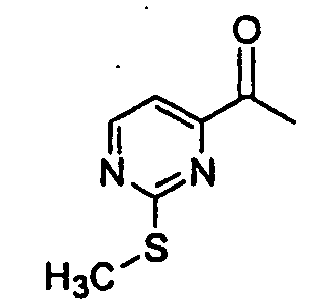
- (1) A mixture of 100 g of 3,3-dimethoxy-2-butanone and 99.2 g of N,N-dimethylformamide dimethylacetal was stirred at 100°C for 42 hours. After cooling the reaction mixture, the mixture was concentrated under reduced pressure to give 141 g of 1-dimethylamino-4,4-dimethoxy-1-penten-3-one.
- (2) In 800 ml of methanol was dissolved 141 g of the compound obtained in (1), and after adding 114 g of thiourea and 292 g of 28% sodium methoxide-methanol, the mixture was stirred at 70°C for 3 hours. The mixture was ice-cooled, and after adding 215 g of methyl iodide drowise, the mixture was stirred at room temperature for an hour. After concentration of the reaction mixture, water was added to the mixture and the resulting mixture was extracted with ethyl acetate. The organic layer was washed, dried and concentrated to give 142 g of 4-(1,1-dimethoxyethyl)-2-methylsulfanylpyrimidine.
- (3) In 570 ml of acetone was dissolved 142 g of the compound obtained in (2), and under ice-cooling, 114 ml of 6M hydrochloric acid was added to the solution and the mixture was stirred at room temperature for 3 hours. After adding 450 ml of water to the mixture, the solvent was removed and the residue was extracted with ethyl acetate. The organic layer was washed, dried and concentrated to give 107 g of 1-(2-methylsulfanylpyrimidin-4-yl)ethanone.
-
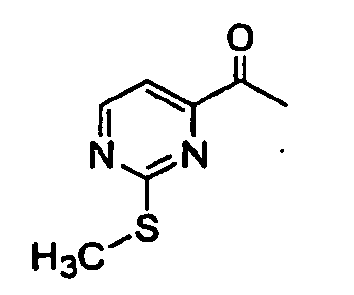
- (1) A mixture comprising 16.4 g of 4-chloro-2-methylsulfanylpyrimidine, 38 g of tributyl (1-ethoxyvinyl) tin, 1.43 g of bis(triphenylphosphine)palladium (II) dichloride and 100 ml of DMF was stirred at 80°C for 3 hours. After cooling the reaction mixture, 300 ml of ethyl acetate and 17.8 g of potassium fluoride were added to the mixture, and the resulting mixture was stirred at room temperature overnight. After filtration with Celite, the filtrate was washed, dried and concentrated. The residue was purified by silica gel column chromatography (hexane:ethylacetate=20:1) to give 18.9 g of 4-(1-ethoxyvinyl)-2-methylsulfanylpyrimidine.
- (2) In 200 ml of acetone was dissolved 18.9 g of the compound obtained in (1), 60 ml of 4M hydrochloric acid was added to the solution and the mixture was stirred at room temperature for an hour. The reaction mixture was added to a saturated aqueous sodium bicarbonate solution, and extracted with ethyl acetate. The organic layer was washed, dried and concentrated to give 15.9 g of 1-(2-methylsulfanylpyrimidin-4-yl)ethanone.
-

- (1) In 180 ml of methanol was dissolved 17.6 g of the compound obtained in Reference example 3 (3) or Reference example 4 (2), 14.5 g of hydroxylamine hydrochloride and 17.2 g of sodium acetate were added to the solution, and the mixture was refluxed under heating for 30 minutes. After cooling the reaction mixture, the solvent was removed, water was added to the residue and the mixture was extracted with ethyl acetate. The organic layer was washed, dried and concentrated. To the residue was added hexane and the precipitated crystals were collected by filtration to give 18.3 g of 1-(2-methylsulfanylpyrimidin-4-yl)ethanone oxime. Melting point: 150-152°C.
- (2) In 1200 ml of methylene chloride was suspended 89 g of the compound obtained in (1), and 81.2 ml of triethylamine and 102 g of tosyl chloride were added to the suspension, and the mixture was stirred at room temperature overnight. The reaction mixture was washed, dried and concentrated. To the residue was added diethyl ether and the precipitated crystals were collected by filtration to give 159 g of 1-(2-methylsulfanylpyrimidin-4- yl)ethanoneoxime tosylate. Melting point: 141-142°C.
- (3) To 30 ml of methanol solution containing 12.9 g of 28% sodium methoxide-methanol was added dropwise 120 ml of a THF solution containing 15 g of the compound obtained in (2) under ice-cooling, and the mixture was stirred at room temperature overnight. To the mixture was added 100 ml of 4M hydrochloric acid-dioxane solution under ice-cooling, and after stirring at room temperature for 4 hours, the reaction mixture was concentrated. The residue was added to an aqueous potassium carbonate solution and extracted with chloroform. The organic layer was dried and concentrated, and the residue was purified by silica gel column chromatography (chloroform:methanol= 15:1) to give 8.14 g of 2,2-dimethoxy-2-(2-methylsulfanylpyrimidin-4-yl)ethylamine.
- (4) To 120 ml of a THF solution containing 8 g of the compound obtained in (3) was added dropwise under ice-cooling 30 ml of a THF solution containing 4.78 g of 4-fluorophenyl isocyanate, and the mixture was stirred at room temperature for 30 minutes. After 120 ml of conc. hydrochloric acid was added to the mixture under ice-cooling, the resulting mixture was stirred at room temperature overnight. Precipitated crystals were collected by filtration, washed with water and ether, and dried to give 7.35 g of 1-(4-fluorophenyl)-5-(2-methylsulfanylpyrimidin-4-yl)-4-imidazolin-2-one. Melting point: 260-261°C.
-

- (1) To 40 ml of a DMF solution containing 2.6 g of the compound obtained in Reference example 5(4) was added 327 mg of sodium hydride at room temperature, and the mixture was stirred at room temperature for 30 minutes. To the mixture was added 1.77 g of 2-cyanobenzyl bromide, and after stirring at room temperature for 30 minutes, 33 mg of sodium hydride and 85 mg of 2-cyanobenzyl bromide were added to the mixture, and the resulting mixture was stirred at room temperature for an hour. Water was added to the reaction mixture and the mixture was extracted with ethyl acetate. The organic layer was washed, dried and concentrated, and crystallized from diethyl ether to give 3.28 g of 1-(2-cyanobenzyl)-3-(4-fluorophenyl)-4-(2-methylsulfanylpyrimidin-4-yl)-4-imidazolin-2-one. Melting point: 141-142°C.
- (2) To a chloroform solution containing 3.27 g of the compound obtained in (1) was added 2.03 g of 3-chloroperoxybenzoic acid at room temperature, and the mixture was stirred at room temperature for an hour. To the reaction mixture was added 1.16 g of calcium hydroxide and the mixture was stirred at room temperature for 2 hours, and then, filtered through Celite, and the filtrate was concentrated. The residue was crystallized from ethyl acetate to give 2.39 g of 1-(2-cyanobenzyl)-3-(4-fluorophenyl)-4-(2-methylsulfinylpyrimidin-4-yl)-4-imidazolin-2-one. Melting point: 133-136°C.
-

- (1) To 150 ml of a methanol solution containing 1.47 g of the compound obtained in Reference example 5 (4) was added dropwise 10 ml of an aqueous solution containing 1.79 g of Oxone® at room temperature. After 30 minutes and 2 hours, 2 ml of an aqueous solution containing 299 mg of Oxon® was added dropwise, and the mixture was stirred at room temperature for 2 hours. After removing insoluble matters by filtration, the filtrate was concentrated, an aqueous sodium bicarbonate solution was added to the concentrate and the mixture was extracted with chloroform. The organic layer was washed, dried and concentrated, and the precipitated crystals were collected by a mixed solvent of ethyl, acetate-ether (1:1) to give 1. 03 g of 1-(4-fluorophenyl)-5-(2-methylsulfinylpyrimidin-4-yl)-4-imidazolin-2-one. Melting point: 208-211°C (decomposed).
- (2) The compound (930 mg) obtained in (1) was,treated in the same manner as in the above-mentioned Reference example 6(1) to give 541 mg of 1-(2-cyanobenzyl)-3-(4-fluorophenyl)-4-(2-methylsulfinylpyrimidin-4-yl)-4-imidazolin-2-one.
-

- In 10 ml of methanol was dissolved 1. 0 g of the compound obtained in Reference example 1 (4), 0. 51 g of 2-fluorobenzaldehyde was added to the solution, and the mixture was stirred at room temperature for 30 minutes. To the mixture was added 155 mg of sodium borohydride, and the resulting mixture was further stirred at room temperature for an hour. After concentration under reduced pressure, water was added to the reside and the mixture was extracted with ethyl acetate. The extract was washed with brine and dried over anhydrous magnesium sulfate. After concentration under reduced pressure, the residue was purified by silica gel column chromatography (hexane:ethylacetate=2:1) to give 1.45 g the title compound as an oily product.
-

- The compound (5 g) obtained in Reference example 1(4) and a corresopnding starting material were treated in the same manner as in Reference example 8 to give 8.47 g of Compound (1) . Compound (1) (3 g) was treated in the same manner as in Example 1 to carry out cyclization, subsequently the resulting compound was dissolved in 20 ml of THF, 1.1 g of Boc2O was added thereto. The resulting mixture was stirred at room temperature for 30 minutes, concentrated under reduced pressure and diisopropyl ether was added to the residue, and the residue was collected by filtration to give 2.53 g of Compound (2).
-

- A mixture comprising 3.8 g of the compound obtained in Reference example 1 (4), 1. 7 ml of ethyl iodide and 3.0 ml of triethylamine was stirred at 50°C overnight. After neutralizing with 2N aqueous NaOH solution, the reaction mixture was extracted with chloroform and dried over anhydrous magnesium sulfate. The resulting mixture was purified by NH silica gel column chromatography (hexane: ethyl acetate=4:1) to give 1. 9 g of the title compound as an oily product.
-
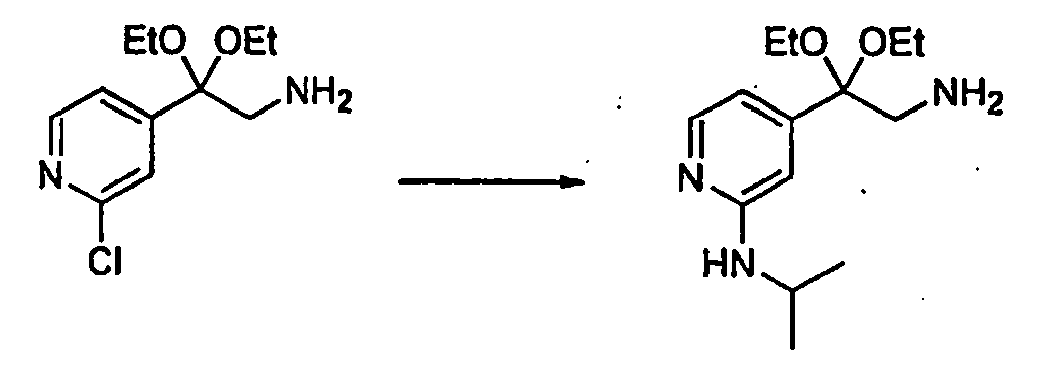
- In 75 ml of toluene were suspended 5. 0 g of the compound obtained in Reference example 1(4), 35 ml of isopropylamine, 458 mg of palladium acetate, 1.28 g of 2,2'-bis(diphenylphosphino)-1,1'-binaphthyl and 3.0 g of sodium t-butoxide, and under nitrogen flow, the mixture was stirred under heating at 70°C for 8 hours. After concentration under reduced pressure, water was added to the residue, and the mixture was extracted with chloroform, washed with brine and dried over anhydrous magnesium sulfate. After concentration under reduced pressure, the residue was purified by silica gel column chromatography (chloroform:methanol= 10:1) to give 4.3 g of the title compound as an oily product.
-

-

- The compound (5.0 g) obtained in Reference example 1(4) was reacted with 2,4-dimethoxybenzaldehyde in the same manner as in Reference example 8 to give 6.4 g of the title compound.
-

- The compound (1.39g) of Reference example 10 was reacted with 2,4-dimethoxybenzylamine in the same manner as in Reference example 11 to give 1.58 g of the title compound.
-

- The compound (10.0 g) of Reference example 1 (4) was reacted with a corresponding starting material in the same manner as in Reference example 8, and then, reacted with 2,4-dimethoxybenzylamine in the same manner as in Reference example 11 to give 9.75 g of the title compound.
-

-

- (1) In 30 ml of methylene chloride was dissolved 3.0 g of the compound of Reference example 5(3), 3.65 ml of triethylamine was added to the solution, and under ice-cooling, 3.35 g of benzyloxycarbonyl chloride was added dropwise to the mixture, and the mixture was stirred at room temperature overnight. The reaction mixture was washed with water and brine, and dried over anhydrous magnesium sulfate. After concentration under reduced pressure, the residue was purified by silica gel column chromatography to give 2.23 g of Compound (1) as colorless crystals.
MS 364 ([M+H]+) - (2) In 17 ml of DMF was dissolved 4.2 g of Compound (1), and under ice-cooling, 528 mg of sodium hydride was added to the solution, and the mixture was stirred at room temperature for an hour. The mixture was again ice-cooled, 1.39 ml of ethyl iodide was added thereto, and the resulting mixture was stirred at room temperature for 30 minutes. Water was added to the reaction mixture and the mixture was extracted with ethyl acetate, the extract was washed with water and brine, and dried over anhydrous magnesium sulfate. After concentration under reduced pressure, the residue was dissolved in 50 ml of chloroform, 6.26 g of 3-chloroperoxybenzoic acid was added to the mixture at room temperature, and the resulting mixture was stirred at the same temperature for 30 minutes. To the reaction mixture was added 2.58 g of calcium hydroxide and after stirring the mixture, the insoluble matters were removed by filtration. The filtrate was concentrated under reduced pressure, and purified by silica gel column chromatography to give 4.55 g of Compound (2) as a colorless oily product.
MS 423 ([M+H]+) - (3) In 30 ml of dioxane was dissolved 2.19 g of Compound (2), 1.65 g of trans-4-(Methoxymethoxy) cyclohexylamine and 1.08 ml of 1,1'-diisopropylethylamine were added to the solution, and the mixture was stirred at 100 °C for 14 hours. Water was added to the reaction mixture and the mixture was extracted with ethyl acetate, washed with brine and dried over anhydrous magnesium sulfate. After concentration under reduced pressure, the residue was purified by silica gel column chromatography to give 2.0 g of a brownish oily product. This product was dissolved in 40 ml of methanol, 1 g of 10% palladium-carbon was added thereto, and the mixture was subjected to catalytic reduction under hydrogen pressure (2.7 atm) for 2 hours. Palladium was removed by filtration, and after concentration under reduced pressure, the residue was purified by NH silica gel column chromatography to give 1.04 g of Compound (3) as a brownish oily product.
MS 369 ([M+H]+) - Tests were carried out to measure an inhibitory effects of the compounds of the present invention on LPS-stimulated TNF-α production in mice.
- To Balb/cAnNCrj mice (6-8 weeks old, female, available from Japan Charlesriver, Co.) were administered test compounds (10 mg/kg, p.o.) dissolved in 0.5% methyl cellulose and 0.2% PEG-60 hydrogenated caster oil (HCO60, available from Nikko Chemicals, Co.). After 30 minutes, LPS (E. coli 0111:B4, available from Difco, with a final concentration of 1 mg/kg adjusted by phosphate buffered saline) was administered (0.4 ml/head, i.p.). 90 minutes later, blood was collected from abdominal vein of the mouse under diethyl ether anesthesia. The collected blood was subjected to centrifugation with 3000g to collect serum. TNF-α in the sera was measured by DuoSet mouse TNF-α ELISA kit (trade name, available from genzymeTECHNE).
- As a result, the compounds of the present invention significantly reduced the production of TNF-α as shown in Table 78.
Table 78 Examples TNF-α inhibition rate 182 64% 202 57% 239 69% 296 52% 300 57% - According to the present invention, a novel 4-imidazolin-2-one compound having excellent p38MAP kinase inhibitory activity, which is useful as a medicine, can be provided.
Claims (9)
- A compound selected from free base compounds of structures 399 to 478, or a pharmaceutically acceptable salt thereof.

R1 R2 399 Ethyl 1,1-Dioxotetrahydrothiophen-3-ylamino 400 Ethyl trans-4-(Methylcarbamoyl)cyclohexylamino 401 Ethyl 1,5-Dimethyl-5-hydroxyhexylamino 402 Isopropyl 1,5-Dimethyl-5-hydroxyhexylamino 403 Ethyl cis-4-Hydroxy-4-methylcyclohexylamino 404 Isopropyl trans-4-Hydroxy-4-methylcyclohexylamino 405 Isopropyl trans-4-(1-Hydroxy-1-methylethyl)cyclohexylamino 406 Ethyl trans-4-Hydroxy-4-methylcyclohexylamino 407 Isopropyl cis-4-Hydroxy-4-methylcyclohexylamino 408 Ethyl trans-4-(1-Hydroxy-1-methylethyl)cyclohexylamino 409 Ethyl (S)-1,2-Dimethyl-2-hydroxypropylamino 410 Isopropyl (S)-1,2-Dimethyl-2-hydroxypropylamino 411 Ethyl 1,3-Dimethyl-3-hydroxybutylamino 412 Isopropyl 1,3-Dimethyl-3-hydroxybutylamino 413 Isopropyl 2-Mercapto-2-methylpropylamino 414 Isopropyl 1,1-Bishydroxymethylpropylamino 415 Isopropyl 2-Hydroxy-2-methylpropylamino 416 Ethyl 4-Piperidylamino 417 1,2-Dimethyl-2-hydroxypropyl Isopropylamino 418 1,2-Dimethyl-2-hydroxypropyl cis-4-Hydroxy-4-methylcyclohexylamino 419 1,2-Dimethyl-2-hydroxypropyl (S)-1,2-Dimethyl-2-hydroxypropylamino 420 1,2-Dimethyl-2-hydroxypropyl Trans-4-Hydroxy-4-methylcyclohexylamino 421 2-Hydroxy-1,1,2-trimethylpropyl Isopropylamino 422 2-Hydroxy-1,1,2-trimethylpropyl Trans-4-Hydroxy-4-methylcyclohexylamino 423 3-Hydroxy-3-methylbutyl Isopropylamino 424 3-Hydroxy-3-methylbutyl 1,1-Dimethyl-2-hydroxyethylamino 425 3-Hydroxy-3-methylbutyl 2,2-Dimethyl-3-hydroxypropylamino 426 3-Hydroxy-3-methylbutyl 1-Hydroxymethylcyclopentylamino 427 3-Hydroxy-3-methylbutyl trans-4-Hydroxy-4-methylcyclohexylamino 428 3-Hydroxy-3-methylbutyl 4-Tetrahydropyranylamino 429 3-Hydroxy-3-methylbutyl (R)-1,2-Dimethyl-2-hydroxypropylamino 430 3-Hydroxy-3-methylbutyl (S)-1,2-Dimethyl-2-hydroxypropylamino 431 3-Hydroxy-3-methylbutyl trans-4-Hydroxycyclohexylamino 432 3-Hydroxy-3-methylbutyl 1-Methanesulfonylpiperidin-4-ylamino 433 3-Hydroxy-3-methylbutyl 1-Ethanesulfonylpiperidin-4-ylamino 434 4-Tetrahydropyranyl Isobutylamino 435 4-Tetrahydropyranyl Isopropylamino 436 4-Tetrahydropyranyl trans-4-Hydroxy-4-methylcyclohexylamino 437 4-Tetrahydropyranyl Cyclopropylamino 438 4-Tetrahydropyranyl 2,2-Dimethylpropylamino 439 1-Acetylpiperidin-4-yl trans-4-Hydroxy-4-methylcyclohexylamino 440 1-Acetylpiperidin-4-yl 2,2-Dimethylpropylamino 441 1-Acetylpiperidin-4-yl Isopropylamino 442 1-Acetylpiperidin-4-yl Isobutylamino 443 1-Acetylpiperidin-4-yl Cyclopropylamino 444 4-Tetrahydropyranyl (R)-1,2-Dimethyl-2-hydroxypropylamino 445 4-Tetrahydropyranyl (S)-1,2-Dimethyl-2-hydroxypropylamino 446 4-Tetrahydropyranyl (S)-2-Hydroxy-1-methylethylamino 447 4-Tetrahydropyranyl (S)-1-Hydroxymethylpropylamino 448 4-Tetrahydropyranyl 1,1-Dimethyl-2-hydroxyethylamino 449 4-Tetrahydropyranyl 4-Tetrahydropyranylamino 450 1-Acetylpiperidin-4-yl 1,1-Dimethyl-2-hydroxyethylamino 451 1-Acetylpiperidin-4-yl 4-Tetrahydropyranylamino 452 1-Acetylpiperidin-4-yl (S)-1-Hydroxymethylpropylamino 453 1-Acetylpiperidin-4-yl (S)-1,2-Dimethyl-2-hydroxypropylamino 454 4-Tetrahydropyranyl trans-4-Hydroxycyclohexylamino 455 1-Acetylpiperidin-4-yl trans-4-Hydroxycyclohexylamino 456 1-Methanesulfonylpiperidin-4-yl trans-4-Hydroxycyclohexylamino 457 1-Methanesulfonylpip eridin-4-yl trans-4-Hydroxy-4-methylcy clohexylamino 458 1-Methanesulfonylpip eridin-4-yl Isopropylamino 459 4-Tetrahydropyranyl 1-Methanesulfonylpiperidin -4-ylamino 460 1-Acetylpiperidin-4-yl 1-Methanesulfonylpiperidin -4-ylamino 461 Isopropyl 1-Acetylpiperidin-4-ylamino 462 Isopropyl 1-Methanesulfonylpiperidin-4-ylamino 463 Isopropyl 1-(Isopropylsulfonyl)piperidin-4-ylamino 464 Isopropyl 1-(Propylsulfonyl)piperidin-4-ylamino 465 Isopropyl 1-(Butylsulfonyl)piperidin-4-ylamino 466 Isopropyl 1-(Isobutyloxycarbonyl)piperidin-4-ylamino 467 Isopropyl 1-butyrylpiperidin-4-ylamino 468 Ethyl 1-Acetylpiperidin-4-ylamino 469 Ethyl 1-Methanesulfonylpiperidin-4-ylamino 470 Ethyl 1-Ethanesulfonylpiperidin-4-ylamino 471 Isopropyl 1-Ethylcarbamoylpiperidin-4-ylamino 472 Isopropyl 1-Propylcarbamoylpiperidin-4-ylamino 473 Isopropyl 1-Isopropylcarbamoylpiperidin-4-ylamino 474 Isopropyl 1-Ethanesulfonylpiperidin-4-ylamino 475 Isopropyl 1-Methoxycarbonylpiperidin-4-ylamino 476 Isopropyl 1-Ethoxycarbonylpiperidin-4-ylamino 477 1-Methanesulfonylpiperidin-4-yl Isopropylamino 478 1-Ethanesulfonylpiperidin-4 -yl Isopropylamino - A compound according to claim 1 which is a free base compound of structure 415, or a pharmaceutically acceptable salt thereof.

example R1 R2 415 Isopropyl 2-Hydroxy-2-methylpropylamino - A compound according to claim 1 which is a free base compound of structure 417, or a pharmaceutically acceptable salt thereof.

example R1 R2 417 1,2-Dimethyl-2-hydroxypropyl Isopropylamino - A compound according to claim 1 which is a free base compound of structure 436, or a pharmaceutically acceptable salt thereof.

example R1 R2 436 4-Tetrahydropyranyl trans-4-Hydroxy-4-methyl cyclohexylamino - A compound according to claim 1 which is a free base compound of structure 460, or a pharmaceutically acceptable salt thereof.

example R1 R2 460 1-Acetylpiperidin-4-yl 1-Methanesulfonylpiperid in-4-ylamino - A pharmaceutical composition comprising the compound according to any one of Claims 1 to 5 or a pharmaceutically acceptable salt thereof, and a pharmaceutically acceptable carrier.
- Use of the compound according to any one of Claims 1 to 5 or a pharmaceutically acceptable salt thereof for the preparation of a p38 MAP kinase inhibitor.
- Use of the compound according to any one of Claims 1 to 5 or a pharmaceutically acceptable salt thereof for the preparation of an agent for prophylaxis or treatment for a disease selected from the group consisting of arthritis, inflammatory bowel disease, inflammatory dermal disease, inflammatory respiratory disease, inflammatory optical disease, nephritis, hepatitis, systemic inflammatory disease, shock, cerebrovascular disease, ischemic cardiac disease, osteoporosis, multiple sclerosis, diabetes, malignant tumor, cachexia, Alzheimer's disease, Parkinson's disease, acquired immunodeficiency syndrome, arterial sclerosis, disseminated intravascular coagulation syndrome, rejection and graft-versus-host diseases by organ transplantation.
- A compound according to any one of Claims 1 to 5 or a pharmaceutically acceptable salt thereof for use in the prophylaxis or treatment of a disease selected from the group consisting of arthritis, inflammatory bowel disease, inflammatory dermal disease, inflammatory respiratory disease, inflammatory optical disease, nephritis, hepatitis, systemic inflammatory disease, shock, cerebrovascular disease, ischemic cardiac disease, osteoporosis, multiple sclerosis, diabetes, malignant tumor, cachexia, Alzheimer's disease, Parkinson's disease, acquired immunodeficiency syndrome, arterial sclerosis, disseminated intravascular coagulation syndrome, rejection and graft-versus-host diseases by organ transplantation.
Priority Applications (1)
| Application Number | Priority Date | Filing Date | Title |
|---|---|---|---|
| PL04728708T PL1628968T3 (en) | 2003-04-21 | 2004-04-21 | 4-imidazolin-2-one compounds |
Applications Claiming Priority (2)
| Application Number | Priority Date | Filing Date | Title |
|---|---|---|---|
| JP2003116076 | 2003-04-21 | ||
| PCT/JP2004/005716 WO2004094404A1 (en) | 2003-04-21 | 2004-04-21 | 4-imidazolin-2-one compounds |
Publications (3)
| Publication Number | Publication Date |
|---|---|
| EP1628968A1 EP1628968A1 (en) | 2006-03-01 |
| EP1628968A4 EP1628968A4 (en) | 2008-03-05 |
| EP1628968B1 true EP1628968B1 (en) | 2011-04-06 |
Family
ID=33307974
Family Applications (1)
| Application Number | Title | Priority Date | Filing Date |
|---|---|---|---|
| EP04728708A Expired - Lifetime EP1628968B1 (en) | 2003-04-21 | 2004-04-21 | 4-imidazolin-2-one compounds |
Country Status (8)
| Country | Link |
|---|---|
| EP (1) | EP1628968B1 (en) |
| AT (1) | ATE504583T1 (en) |
| DE (1) | DE602004032130D1 (en) |
| DK (1) | DK1628968T3 (en) |
| ES (1) | ES2362877T3 (en) |
| PL (1) | PL1628968T3 (en) |
| PT (1) | PT1628968E (en) |
| WO (1) | WO2004094404A1 (en) |
Families Citing this family (10)
| Publication number | Priority date | Publication date | Assignee | Title |
|---|---|---|---|---|
| US11066404B2 (en) | 2018-10-11 | 2021-07-20 | Incyte Corporation | Dihydropyrido[2,3-d]pyrimidinone compounds as CDK2 inhibitors |
| US11384083B2 (en) | 2019-02-15 | 2022-07-12 | Incyte Corporation | Substituted spiro[cyclopropane-1,5′-pyrrolo[2,3-d]pyrimidin]-6′(7′h)-ones as CDK2 inhibitors |
| TW202100520A (en) | 2019-03-05 | 2021-01-01 | 美商英塞特公司 | Pyrazolyl pyrimidinylamine compounds as cdk2 inhibitors |
| WO2020205560A1 (en) | 2019-03-29 | 2020-10-08 | Incyte Corporation | Sulfonylamide compounds as cdk2 inhibitors |
| US11447494B2 (en) | 2019-05-01 | 2022-09-20 | Incyte Corporation | Tricyclic amine compounds as CDK2 inhibitors |
| US11440914B2 (en) | 2019-05-01 | 2022-09-13 | Incyte Corporation | Tricyclic amine compounds as CDK2 inhibitors |
| CN116348458A (en) | 2019-08-14 | 2023-06-27 | 因赛特公司 | Imidazolylpyrimidinylamine compounds as CDK2 inhibitors |
| CN119930611A (en) | 2019-10-11 | 2025-05-06 | 因赛特公司 | Dicyclomine as a CDK2 inhibitor |
| US11981671B2 (en) | 2021-06-21 | 2024-05-14 | Incyte Corporation | Bicyclic pyrazolyl amines as CDK2 inhibitors |
| US11976073B2 (en) | 2021-12-10 | 2024-05-07 | Incyte Corporation | Bicyclic amines as CDK2 inhibitors |
Family Cites Families (3)
| Publication number | Priority date | Publication date | Assignee | Title |
|---|---|---|---|---|
| US3538104A (en) * | 1969-02-28 | 1970-11-03 | Geigy Chem Corp | Pyridyl-2-imidazolones |
| US4532250A (en) * | 1983-11-23 | 1985-07-30 | American Hospital Supply Corporation | 5-Heteroarylimidazol-2-ones having cardiotonic activity |
| IL160874A0 (en) * | 2001-10-22 | 2004-08-31 | Tanabe Seiyaku Co | 4-imidazolin-2-one derivatives |
-
2004
- 2004-04-21 AT AT04728708T patent/ATE504583T1/en active
- 2004-04-21 DK DK04728708.1T patent/DK1628968T3/en active
- 2004-04-21 PL PL04728708T patent/PL1628968T3/en unknown
- 2004-04-21 WO PCT/JP2004/005716 patent/WO2004094404A1/en not_active Ceased
- 2004-04-21 PT PT04728708T patent/PT1628968E/en unknown
- 2004-04-21 DE DE602004032130T patent/DE602004032130D1/en not_active Expired - Lifetime
- 2004-04-21 ES ES04728708T patent/ES2362877T3/en not_active Expired - Lifetime
- 2004-04-21 EP EP04728708A patent/EP1628968B1/en not_active Expired - Lifetime
Also Published As
| Publication number | Publication date |
|---|---|
| PL1628968T3 (en) | 2011-09-30 |
| ATE504583T1 (en) | 2011-04-15 |
| DE602004032130D1 (en) | 2011-05-19 |
| DK1628968T3 (en) | 2011-07-25 |
| EP1628968A1 (en) | 2006-03-01 |
| EP1628968A4 (en) | 2008-03-05 |
| PT1628968E (en) | 2011-07-01 |
| WO2004094404A1 (en) | 2004-11-04 |
| ES2362877T3 (en) | 2011-07-14 |
Similar Documents
| Publication | Publication Date | Title |
|---|---|---|
| US7846933B2 (en) | 4-imidazolin-2-one compounds | |
| RU2140918C1 (en) | Trisubstituted imidazoles showing therapeutic properties, method of synthesis, pharmaceutical composition, method of treatment | |
| BG63769B1 (en) | 1,4,53-trisubstituted imidazoles, useful as cytokines | |
| JP2001526230A (en) | Heteroaryl-substituted imidazole compounds, pharmaceutical compositions and uses thereof | |
| EA001430B1 (en) | Novel substituted imadozole compounds | |
| HUP0301181A2 (en) | Imidazole derivatives as raf kinase inhibitors | |
| CZ392597A3 (en) | Imidazole compounds, process of their preparation pharmaceutical compositions containing thereof and treatment method | |
| MX2007008757A (en) | Substituted triazole derivatives as oxytocin antagonists. | |
| EP1439174B1 (en) | 4-IMIDAZOLIN-2-ONE COMPOUNDS AS p38 MAP KINASE INHIBITORS | |
| EA015681B1 (en) | Piperidin-4-yl-pyridazin-3-ylamine derivatives as fast dissociating dopamine 2 receptor antagonists | |
| JP2007505888A (en) | Substituted triazole derivatives as oxytocin antagonists | |
| EP1740578B1 (en) | 4- 2- (cycloalkylamino) pyrimidin-4-yl ] - (phenyl) - imidazolin-2- one derivatives as p38 map- kinase inhibitors for the treatment of inflammatory diseases | |
| JP2003206230A (en) | Cyanoheterocyclic derivative or its salt | |
| ES2362877T3 (en) | IMIDAZOLIN-2-ONA COMPOUNDS. | |
| US20070265289A1 (en) | 2-Aminopyrimidine Derivative | |
| JP2005022972A (en) | 4- (4-Pyridazinyl) pyrazole derivatives | |
| JP4356504B2 (en) | p38 MAP kinase inhibitor | |
| TW200948798A (en) | (5R)-1, 5-diaryl-4, 5-dihydro-1H-pyrazole-3-carboxamidine derivatives having CB1-antagonistic activity | |
| KR100257550B1 (en) | Novel pyridine derivatives and medicines using the same | |
| US6046331A (en) | Imidazolones and their use in treating benign prostatic hyperplasia and other disorders | |
| AU2004201666C1 (en) | 4-Imidazolin-2-one compounds | |
| HK1063462A (en) | 4-imidazolin-2-one compounds | |
| CZ20041085A3 (en) | Novel piperidinyl-alkylamino-pyridazinone derivatives, process of their preparation and pharmaceutical compositions in which the derivatives are comprised | |
| US20200392107A1 (en) | Cyclic amine derivative and medical use thereof | |
| WO2000078758A1 (en) | Novel imidazole derivatives |
Legal Events
| Date | Code | Title | Description |
|---|---|---|---|
| PUAI | Public reference made under article 153(3) epc to a published international application that has entered the european phase |
Free format text: ORIGINAL CODE: 0009012 |
|
| 17P | Request for examination filed |
Effective date: 20051117 |
|
| AK | Designated contracting states |
Kind code of ref document: A1 Designated state(s): AT BE BG CH CY CZ DE DK EE ES FI FR GB GR HU IE IT LI LU MC NL PL PT RO SE SI SK TR |
|
| DAX | Request for extension of the european patent (deleted) | ||
| RAP1 | Party data changed (applicant data changed or rights of an application transferred) |
Owner name: MITSUBISHI TANABE PHARMA CORPORATION |
|
| A4 | Supplementary search report drawn up and despatched |
Effective date: 20080205 |
|
| 17Q | First examination report despatched |
Effective date: 20091006 |
|
| GRAP | Despatch of communication of intention to grant a patent |
Free format text: ORIGINAL CODE: EPIDOSNIGR1 |
|
| RIN1 | Information on inventor provided before grant (corrected) |
Inventor name: NAKAJIMA, TATSUOC/O TANABE SEIYAKU CO., LTD. Inventor name: IMASHIRO, RITSUOC/O TANABE SEIYAKU CO., LTD. Inventor name: MIYOSHI, HIDETAKAC/O TANABE SEIYAKU CO., LTD. Inventor name: NAKANE, TETSUC/O TANABE SEIYAKU CO., LTD. Inventor name: OGASAWARA, AKIHITOC/O TANABE SEIYAKU CO., LTD. Inventor name: KUBO, AKIRAC/O TANABE SEIYAKU CO., LTD. |
|
| GRAS | Grant fee paid |
Free format text: ORIGINAL CODE: EPIDOSNIGR3 |
|
| GRAA | (expected) grant |
Free format text: ORIGINAL CODE: 0009210 |
|
| AK | Designated contracting states |
Kind code of ref document: B1 Designated state(s): AT BE BG CH CY CZ DE DK EE ES FI FR GB GR HU IE IT LI LU MC NL PL PT RO SE SI SK TR |
|
| REG | Reference to a national code |
Ref country code: GB Ref legal event code: FG4D |
|
| REG | Reference to a national code |
Ref country code: CH Ref legal event code: EP |
|
| REG | Reference to a national code |
Ref country code: IE Ref legal event code: FG4D |
|
| BECA | Be: change of holder's address |
Owner name: 2-6-18 KITAHAMA CHUO-KU, OSAKA-SHI OSAKA 541-8505 Effective date: 20110406 Owner name: MITSUBISHI TANABE PHARMA CORP. Effective date: 20110406 |
|
| REF | Corresponds to: |
Ref document number: 602004032130 Country of ref document: DE Date of ref document: 20110519 Kind code of ref document: P |
|
| REG | Reference to a national code |
Ref country code: DE Ref legal event code: R096 Ref document number: 602004032130 Country of ref document: DE Effective date: 20110519 |
|
| REG | Reference to a national code |
Ref country code: CH Ref legal event code: PCOW Free format text: MITSUBISHI TANABE PHARMA CORPORATION;2-6-18, KITAHAMA CHUO-KU OSAKA-SHI;OSAKA 541-8505 (JP) Ref country code: CH Ref legal event code: NV Representative=s name: PATENTANWAELTE SCHAAD, BALASS, MENZL & PARTNER AG |
|
| RAP2 | Party data changed (patent owner data changed or rights of a patent transferred) |
Owner name: MITSUBISHI TANABE PHARMA CORPORATION |
|
| REG | Reference to a national code |
Ref country code: PT Ref legal event code: SC4A Free format text: AVAILABILITY OF NATIONAL TRANSLATION Effective date: 20110620 |
|
| REG | Reference to a national code |
Ref country code: NL Ref legal event code: T3 |
|
| REG | Reference to a national code |
Ref country code: ES Ref legal event code: FG2A Ref document number: 2362877 Country of ref document: ES Kind code of ref document: T3 Effective date: 20110714 |
|
| REG | Reference to a national code |
Ref country code: DK Ref legal event code: T3 |
|
| REG | Reference to a national code |
Ref country code: SE Ref legal event code: TRGR |
|
| PG25 | Lapsed in a contracting state [announced via postgrant information from national office to epo] |
Ref country code: SI Free format text: LAPSE BECAUSE OF FAILURE TO SUBMIT A TRANSLATION OF THE DESCRIPTION OR TO PAY THE FEE WITHIN THE PRESCRIBED TIME-LIMIT Effective date: 20110406 |
|
| REG | Reference to a national code |
Ref country code: GR Ref legal event code: EP Ref document number: 20110401586 Country of ref document: GR Effective date: 20110829 |
|
| REG | Reference to a national code |
Ref country code: PL Ref legal event code: T3 |
|
| PG25 | Lapsed in a contracting state [announced via postgrant information from national office to epo] |
Ref country code: CY Free format text: LAPSE BECAUSE OF FAILURE TO SUBMIT A TRANSLATION OF THE DESCRIPTION OR TO PAY THE FEE WITHIN THE PRESCRIBED TIME-LIMIT Effective date: 20110406 Ref country code: FI Free format text: LAPSE BECAUSE OF FAILURE TO SUBMIT A TRANSLATION OF THE DESCRIPTION OR TO PAY THE FEE WITHIN THE PRESCRIBED TIME-LIMIT Effective date: 20110406 Ref country code: MC Free format text: LAPSE BECAUSE OF NON-PAYMENT OF DUE FEES Effective date: 20110430 |
|
| REG | Reference to a national code |
Ref country code: HU Ref legal event code: AG4A Ref document number: E011670 Country of ref document: HU |
|
| PG25 | Lapsed in a contracting state [announced via postgrant information from national office to epo] |
Ref country code: EE Free format text: LAPSE BECAUSE OF FAILURE TO SUBMIT A TRANSLATION OF THE DESCRIPTION OR TO PAY THE FEE WITHIN THE PRESCRIBED TIME-LIMIT Effective date: 20110406 Ref country code: CZ Free format text: LAPSE BECAUSE OF FAILURE TO SUBMIT A TRANSLATION OF THE DESCRIPTION OR TO PAY THE FEE WITHIN THE PRESCRIBED TIME-LIMIT Effective date: 20110406 |
|
| PLBE | No opposition filed within time limit |
Free format text: ORIGINAL CODE: 0009261 |
|
| STAA | Information on the status of an ep patent application or granted ep patent |
Free format text: STATUS: NO OPPOSITION FILED WITHIN TIME LIMIT |
|
| PG25 | Lapsed in a contracting state [announced via postgrant information from national office to epo] |
Ref country code: RO Free format text: LAPSE BECAUSE OF FAILURE TO SUBMIT A TRANSLATION OF THE DESCRIPTION OR TO PAY THE FEE WITHIN THE PRESCRIBED TIME-LIMIT Effective date: 20110406 Ref country code: SK Free format text: LAPSE BECAUSE OF FAILURE TO SUBMIT A TRANSLATION OF THE DESCRIPTION OR TO PAY THE FEE WITHIN THE PRESCRIBED TIME-LIMIT Effective date: 20110406 |
|
| 26N | No opposition filed |
Effective date: 20120110 |
|
| REG | Reference to a national code |
Ref country code: DE Ref legal event code: R097 Ref document number: 602004032130 Country of ref document: DE Effective date: 20120110 |
|
| PG25 | Lapsed in a contracting state [announced via postgrant information from national office to epo] |
Ref country code: LU Free format text: LAPSE BECAUSE OF NON-PAYMENT OF DUE FEES Effective date: 20110421 |
|
| PG25 | Lapsed in a contracting state [announced via postgrant information from national office to epo] |
Ref country code: BG Free format text: LAPSE BECAUSE OF FAILURE TO SUBMIT A TRANSLATION OF THE DESCRIPTION OR TO PAY THE FEE WITHIN THE PRESCRIBED TIME-LIMIT Effective date: 20110706 |
|
| REG | Reference to a national code |
Ref country code: FR Ref legal event code: PLFP Year of fee payment: 13 |
|
| PGFP | Annual fee paid to national office [announced via postgrant information from national office to epo] |
Ref country code: ES Payment date: 20160311 Year of fee payment: 13 Ref country code: TR Payment date: 20160318 Year of fee payment: 13 Ref country code: NL Payment date: 20160310 Year of fee payment: 13 |
|
| PGFP | Annual fee paid to national office [announced via postgrant information from national office to epo] |
Ref country code: PL Payment date: 20160308 Year of fee payment: 13 Ref country code: GR Payment date: 20160315 Year of fee payment: 13 Ref country code: FR Payment date: 20160309 Year of fee payment: 13 Ref country code: BE Payment date: 20160314 Year of fee payment: 13 |
|
| PGFP | Annual fee paid to national office [announced via postgrant information from national office to epo] |
Ref country code: GB Payment date: 20160420 Year of fee payment: 13 Ref country code: DE Payment date: 20160412 Year of fee payment: 13 Ref country code: IE Payment date: 20160411 Year of fee payment: 13 Ref country code: CH Payment date: 20160411 Year of fee payment: 13 |
|
| PGFP | Annual fee paid to national office [announced via postgrant information from national office to epo] |
Ref country code: AT Payment date: 20160330 Year of fee payment: 13 Ref country code: SE Payment date: 20160412 Year of fee payment: 13 Ref country code: DK Payment date: 20160412 Year of fee payment: 13 Ref country code: IT Payment date: 20160418 Year of fee payment: 13 Ref country code: HU Payment date: 20160317 Year of fee payment: 13 Ref country code: PT Payment date: 20160421 Year of fee payment: 13 |
|
| REG | Reference to a national code |
Ref country code: DE Ref legal event code: R119 Ref document number: 602004032130 Country of ref document: DE |
|
| REG | Reference to a national code |
Ref country code: DK Ref legal event code: EBP Effective date: 20170430 |
|
| REG | Reference to a national code |
Ref country code: CH Ref legal event code: PL |
|
| REG | Reference to a national code |
Ref country code: NL Ref legal event code: MM Effective date: 20170501 |
|
| REG | Reference to a national code |
Ref country code: AT Ref legal event code: MM01 Ref document number: 504583 Country of ref document: AT Kind code of ref document: T Effective date: 20170421 |
|
| GBPC | Gb: european patent ceased through non-payment of renewal fee |
Effective date: 20170421 |
|
| REG | Reference to a national code |
Ref country code: FR Ref legal event code: ST Effective date: 20171229 |
|
| PG25 | Lapsed in a contracting state [announced via postgrant information from national office to epo] |
Ref country code: AT Free format text: LAPSE BECAUSE OF NON-PAYMENT OF DUE FEES Effective date: 20170421 Ref country code: DE Free format text: LAPSE BECAUSE OF NON-PAYMENT OF DUE FEES Effective date: 20171103 Ref country code: FR Free format text: LAPSE BECAUSE OF NON-PAYMENT OF DUE FEES Effective date: 20170502 Ref country code: HU Free format text: LAPSE BECAUSE OF NON-PAYMENT OF DUE FEES Effective date: 20170422 Ref country code: NL Free format text: LAPSE BECAUSE OF NON-PAYMENT OF DUE FEES Effective date: 20170501 |
|
| PG25 | Lapsed in a contracting state [announced via postgrant information from national office to epo] |
Ref country code: SE Free format text: LAPSE BECAUSE OF NON-PAYMENT OF DUE FEES Effective date: 20170422 Ref country code: LI Free format text: LAPSE BECAUSE OF NON-PAYMENT OF DUE FEES Effective date: 20170430 Ref country code: GB Free format text: LAPSE BECAUSE OF NON-PAYMENT OF DUE FEES Effective date: 20170421 Ref country code: CH Free format text: LAPSE BECAUSE OF NON-PAYMENT OF DUE FEES Effective date: 20170430 Ref country code: GR Free format text: LAPSE BECAUSE OF NON-PAYMENT OF DUE FEES Effective date: 20171103 Ref country code: PT Free format text: LAPSE BECAUSE OF NON-PAYMENT OF DUE FEES Effective date: 20171023 |
|
| REG | Reference to a national code |
Ref country code: BE Ref legal event code: MM Effective date: 20170430 |
|
| PG25 | Lapsed in a contracting state [announced via postgrant information from national office to epo] |
Ref country code: DK Free format text: LAPSE BECAUSE OF NON-PAYMENT OF DUE FEES Effective date: 20170430 Ref country code: IE Free format text: LAPSE BECAUSE OF NON-PAYMENT OF DUE FEES Effective date: 20170421 |
|
| PG25 | Lapsed in a contracting state [announced via postgrant information from national office to epo] |
Ref country code: BE Free format text: LAPSE BECAUSE OF NON-PAYMENT OF DUE FEES Effective date: 20170430 Ref country code: IT Free format text: LAPSE BECAUSE OF NON-PAYMENT OF DUE FEES Effective date: 20170421 |
|
| REG | Reference to a national code |
Ref country code: ES Ref legal event code: FD2A Effective date: 20180705 |
|
| PG25 | Lapsed in a contracting state [announced via postgrant information from national office to epo] |
Ref country code: ES Free format text: LAPSE BECAUSE OF NON-PAYMENT OF DUE FEES Effective date: 20170422 |
|
| PG25 | Lapsed in a contracting state [announced via postgrant information from national office to epo] |
Ref country code: PL Free format text: LAPSE BECAUSE OF NON-PAYMENT OF DUE FEES Effective date: 20170421 |
|
| PG25 | Lapsed in a contracting state [announced via postgrant information from national office to epo] |
Ref country code: TR Free format text: LAPSE BECAUSE OF NON-PAYMENT OF DUE FEES Effective date: 20170421 |