EP1613112B1 - System und Endgerät mit Zweifachmodus - Google Patents
System und Endgerät mit Zweifachmodus Download PDFInfo
- Publication number
- EP1613112B1 EP1613112B1 EP03816598.1A EP03816598A EP1613112B1 EP 1613112 B1 EP1613112 B1 EP 1613112B1 EP 03816598 A EP03816598 A EP 03816598A EP 1613112 B1 EP1613112 B1 EP 1613112B1
- Authority
- EP
- European Patent Office
- Prior art keywords
- mobile communication
- communication mode
- base station
- gsm
- cdma
- Prior art date
- Legal status (The legal status is an assumption and is not a legal conclusion. Google has not performed a legal analysis and makes no representation as to the accuracy of the status listed.)
- Expired - Lifetime
Links
Images








Classifications
-
- H—ELECTRICITY
- H04—ELECTRIC COMMUNICATION TECHNIQUE
- H04W—WIRELESS COMMUNICATION NETWORKS
- H04W88/00—Devices specially adapted for wireless communication networks, e.g. terminals, base stations or access point devices
- H04W88/08—Access point devices
-
- H—ELECTRICITY
- H04—ELECTRIC COMMUNICATION TECHNIQUE
- H04W—WIRELESS COMMUNICATION NETWORKS
- H04W48/00—Access restriction; Network selection; Access point selection
- H04W48/08—Access restriction or access information delivery, e.g. discovery data delivery
- H04W48/10—Access restriction or access information delivery, e.g. discovery data delivery using broadcasted information
-
- H—ELECTRICITY
- H04—ELECTRIC COMMUNICATION TECHNIQUE
- H04W—WIRELESS COMMUNICATION NETWORKS
- H04W88/00—Devices specially adapted for wireless communication networks, e.g. terminals, base stations or access point devices
- H04W88/02—Terminal devices
- H04W88/06—Terminal devices adapted for operation in multiple networks or having at least two operational modes, e.g. multi-mode terminals
-
- H—ELECTRICITY
- H04—ELECTRIC COMMUNICATION TECHNIQUE
- H04W—WIRELESS COMMUNICATION NETWORKS
- H04W88/00—Devices specially adapted for wireless communication networks, e.g. terminals, base stations or access point devices
- H04W88/08—Access point devices
- H04W88/10—Access point devices adapted for operation in multiple networks, e.g. multi-mode access points
-
- H—ELECTRICITY
- H04—ELECTRIC COMMUNICATION TECHNIQUE
- H04W—WIRELESS COMMUNICATION NETWORKS
- H04W48/00—Access restriction; Network selection; Access point selection
- H04W48/18—Selecting a network or a communication service
Definitions
- This invention relates to a dual-mode system and dual-mode wireless terminal in mobile communications. More particularly, the invention relates to a dual-mode wireless terminal that is capable of communicating in both a first mobile communication mode and a second mobile communication mode in a dual-mode environment, and to a dual-mode system for communicating using this terminal.
- the present invention is used in a dual-mode environment in which a W-CDMA wireless system is made to coexist with the already existing wireless system GSM (Global System for Mobile Communication) or PDC (Personal Digital Cellular Telecommunication System) in Europe and Japan, etc.
- GSM Global System for Mobile Communication
- PDC Personal Digital Cellular Telecommunication System
- a portable terminal uses either a W-CDMA or GSM (or PDC) wireless system (communication mode).
- W-CDMA or GSM or PDC
- GSM Global System for Mobile communications
- the terminal In order to prepare for handover between base stations having different communication modes in such case, it is necessary for the terminal to ascertain whether there is a base station with both communication modes in the neighboring-cell. To achieve this, the terminal must periodically acquire information on base stations in the neighboring-cell even with regard to a communication mode that is not being used. At this time the terminal purposely starts up a communication unit conforming to a communication mode not in use and acquires information as to whether a base station in this unused communication mode exists in the neighboring-cell. The acquisition of information as to whether a base station in a communication mode currently being used is in the neighboring-cell is performed periodically.
- Fig. 24 is a diagram for describing an example of operation according to the prior art.
- a dual-mode terminal MS communicates with a W-CDMA base station BTS1 using a W-CDMA communication unit 1.
- the power supply of a GSM communication unit 2 is off at this time.
- GSM radio waves 4 are arriving from a GSM base station BTS2.
- a CPU (or DSP) 3 periodically issues a power-supply ON command PON to the GSM communication unit 2 and requests measurement of GSM radio waves (acquisition of neighboring-cell information), as indicated at (B) of Fig. 24 ).
- neighboring-cell information is thus gathered, it is necessary to perform acquisition of neighboring-cell information that entails starting up a communication unit of a communication mode that is not in use and measuring the level of the radio waves.
- Patent Reference 1 there is a mobile telephone system (Patent Reference 1) in which when a mobile telephone system (PHS) currently in use leaves the service area, position registration in another mobile telephone system (GSM) is performed promptly. This involves retrieving and saving all control channels used by GSM immediately after the power supply of the terminal is turned on and executing position registration processing using a saved control channel when the terminal leaves the PHS area. Further, in a case where normal communication cannot be performed by any of the stored control channels, all control channels used by GSM are retrieved and saved.
- Patent Reference 1 does not relate to soft handover, in which communication is continued by changing over from a communicating base station to a base station of a different wireless system without instantaneous interruption. Further, Patent Reference 1 cannot search for a neighboring cell during travel in a dual-mode system in which handover is performed between base stations of different wireless systems. Patent Reference 1, therefore, does not solve the above-mentioned problems.
- Patent Reference 1 Japanese Patent Application
- WO 00/42808 A1 relates to a method, node and wireless communication terminal for providing handover and roaming from a 3G communication system to a 2G communication system.
- the wireless communication terminal includes a transceiver capable of communicating with a node of both a third generation (3G) wireless communication network and a second generation (2G) wireless communication network, and a control means coupled to the receiver for receiving and identifying control channel information indicative of the 2G communication network from a downlink control channel at the 3G communication network.
- GB 2 231 161 A relates to a cordless telephone system comprising a cordless base station and at least one cordless mobile station which can also be used as a mobile station on a public cellular radio network.
- the cordless base station includes a receiver for receiving and decoding broadcast signals from base stations on the public cellular radio network to obtain data concerning the surrounding base stations. Such data is retransmitted by the cordless base station to the mobile station which stores it for subsequent use during handover to the public network.
- EP 0 954 195 A1 relates to a transmission method in a UMTS radio-telephone network allowing handover preparation towards a GSM cell while communicating in an UMTS cell.
- an object of the present invention is to so arrange it that whether base stations of mobile communication modes exist in the neighboring-cell can be recognized with little consumption of power in preparation for handover between base stations of different mobile communication modes in a dual-mode environment.
- Another object of the present invention is to so arrange it that whether base stations of mobile communication modes exist in the neighboring-cell can be recognized by turning on the power supply only of the unit conforming to the mobile communication mode currently in operation and leaving the power supplies of units conforming to other mobile communication modes off.
- the present invention is a dual-mode system for performing communication using a terminal equipped with first and second units capable of communicating in first and second mobile communication modes, respectively, in a dual-mode environment of a first mobile communication mode (e.g., W-CDMA) and a second mobile communication mode (e.g., GSM or PDC).
- a first mobile communication mode e.g., W-CDMA
- a second mobile communication mode e.g., GSM or PDC
- a base station of the first mobile communication mode communicates with the terminal in the first mobile communication mode and transmits a radio signal in the second mobile communication mode
- a base station of the second mobile communication mode communicates with the terminal in the second mobile communication mode and transmits a radio signal in the first mobile communication mode
- the first unit of the terminal communicates with the base station of the first mobile communication mode in the first mobile communication mode, receives the radio signal of the first mobile communication mode transmitted from the base station of the second mobile communication mode and determines based upon this radio signal whether the base station of the second mobile communication mode exists
- the second unit of the terminal communicates with the base station of the second mobile communication mode in the second mobile communication mode, receives the radio signal of the second mobile communication mode transmitted from the base station of the first mobile communication mode and determines based upon this radio signal whether the base station of the first mobile communication mode exists.
- the base station of the second mobile communication mode (GSM/PDC) is transmitting a radio signal that can be recognized in the first mobile communication mode and therefore the terminal receives this radio signal and ascertains whether the base station of the second mobile communication mode exists.
- the base station (W-CDMA) of the first mobile communication mode is transmitting a radio signal that can be recognized in the second mobile communication mode and therefore the terminal receives this radio signal and ascertains whether the base station of the second mobile communication mode exists.
- a second aspect of the present invention is a dual-mode wireless terminal capable of communicating in each of first and second mobile communication modes in a dual-mode environment of a first mobile communication mode and a second mobile communication mode.
- the dual-mode wireless terminal has first and second units for communicating in the first and second mobile communication modes, respectively, the first unit communicates with a base station of the first mobile communication mode in the first mobile communication mode, receives a radio signal of the first mobile communication mode transmitted from a base station of the second mobile communication mode and determines based upon this radio signal whether the base station of the second mobile communication mode exists, and the second unit communicates with the base station of the second mobile communication mode in the second mobile communication mode, receives the radio signal of the second mobile communication mode transmitted from the base station of the first mobile communication mode and determines based upon this radio signal whether the base station of the first mobile communication mode exists.
- the present invention relates to a dual-mode system that uses a terminal capable of employing both a W-CDMA system and a GSM/PDC system in a dual-mode environment of W-CDMA and GSM/PDC, wherein the object is for each of the base stations to send radio signals for recognizing each other's system and for the terminal to acquire information concerning neighboring cells without starting up one system even if the terminal is using the other system.
- mutual cell information information as to whether a base station exists
- current is not consumed excessively by starting up the other system in order to acquire cell information, and it is possible to hand over to the necessary system when required.
- Fig. 1 is a diagram useful in describing a principle whereby a W-CDMA unit 11 in a dual-mode portable terminal MS recognizes whether a GSM base station exists in the neighboring-cell while in communication with a W-CDMA base station BTS1.
- the W-CDMA base station BTS1 uses a radio signal 1 to provide service in W-CDMA.
- a GSM base station BTS2 uses a radio signal 2 to provide service in GSM but also transmits a radio signal 3 for W-CDMA in addition to the radio signal 2.
- a GSM transceiver 21 of the GSM base station BTS2 uses the radio signal 2 to provide service in GSM under the control of a controller (CPU) 23, and a W-CDMA transmitter 22 transmits the radio signal 3 for W-CDMA.
- the radio signal 3 is a W-CDMA broadcast signal that is constantly being transmitted.
- the dual-mode portable terminal MS communicates with the W-CDMA base station BTS1 using the first unit (W-CDMA unit) 11 that is capable of communicating in W-CDMA.
- the power supply of second unit (GSM unit) 12, which is capable of communicating in GSM is off.
- the W-CDMA unit 11 is also executing processing (a cell search) for periodically searching for another base station BTS in accordance with a command from a controller (CPU or DSP) 13. If the GSM base station BTS2 is transmitting W-CDMA radio waves (the radio signal 3), the W-CDMA unit 11 of the terminal MS judges that the base station BTS exists and executes processing for specifying the base station BTS from the receive signal.
- the W-CDMA unit 11 Since a radio signal for W-CDMA intrinsically contains a code that identifies the base station BTS, the W-CDMA unit 11 compares this code with a previously registered BTS code for GSM, whereby the W-CDMA unit 11 can recognize the existence of the BTS for GSM. In other words, the existence of the BTS for GSM can be recognized with the power supply of the GSM unit 12 being left off.
- Fig. 2 is a diagram useful in describing a principle whereby the GSM unit 12 in the dual-mode portable terminal MS recognizes the existence of a neighboring W-CDMA base station while in communication with the GSM base station BTS2.
- the GSM base station BTS2 provides service in GSM using the radio signal 1.
- the W-CDMA base station BTS1 uses the radio signal 2 to provide service in W-CDMA but also transmits the radio signal 3 for GSM in addition to the radio signal 2. That is, a W-CDMA transceiver 31 of the W-CDMA base station BTS1 uses the radio signal 2 to provide service in W-CDMA under the control of a controller (CPU) 33, and a GSM transmitter 32 transmits the radio signal 3 for GSM.
- the radio signal 3 is a GSM broadcast signal that is constantly being transmitted.
- the dual-mode portable terminal MS communicates with the GSM base station BTS2 using the GSM unit 12. It should be noted that the power supply of W-CDMA unit 11 is off. At this time the GSM unit 12 is also executing processing for periodically searching for another base station BTS in accordance with a command from the controller (CPU or DSP) 13. If the W-CDMA base station BTS1 is transmitting GSM radio waves (the radio signal 3), the GSM unit 12 of the terminal MS judges that the base station BTS exists and executes processing for specifying the base station BTS from the receive signal.
- the controller CPU or DSP
- the GSM unit 12 can recognize the existence of a base station BTS for W-CDMA by using a previously registered synchronization pattern of a BTS for W-CDMA. In other words, the existence of the BTS for W-CDMA can be recognized with the power supply of the W-CDMA unit 11 being left off.
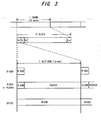
- Fig. 3 is a diagram useful in describing the frame format of a downstream signal from a W-CDMA base station to a mobile station and a downstream channel relating to the present invention.
- One frame is 10 msec and is composed of 15 slots S0 to S14.
- a primary synchronization channel P-SCH is used to achieve slot synchronization on a channel for cell search.
- the P-SCH is spread by a preset primary scrambling code PSC having a length of 256 chips and is deployed over the leading 66.7 ⁇ sec of every slot.
- the PSC is the same at all base stations.
- a secondary synchronization channel S-SCH is a channel for establishing frame synchronization with respect to the base station and for allowing the mobile station to recognize in which scramble group the base station (cell) belongs.
- the S-SCH is spread by secondary scrambling code SSC having a length of 256 chips and is deployed over the leading 66.7 ⁇ sec of every slot.
- 512 scrambling codes SC are prepared as base-station codes, and these are classified into 64 groups of eight codes each. In which group a base-station code belongs is identified, after which the base-station code can be identified by obtaining correlation between the receive signal and the eight scrambling codes that belong to the group.
- a primary common control channel PCCPCH is a downstream common channel, one exists for each base station and it is used to transmit BCH (notification information).
- the BCH contains all information relating to the base station and also includes type information as to whether the base station is a W-CDMA base station or GSM base station.
- a common pilot channel CPICH is a downstream common channel and one exists for each cell.
- the CPICH is spread by a base-station code.
- the terminal MS is capable of identifying the base-station code by calculating the correlation between each of the eight scrambling codes of the identified group and the common pilot channel CPICH.
- the W-CDMA transceiver 31 ( Fig. 2 ) of the W-CDMA base station BTS1 is fully equipped to execute W-CDMA communication.
- the W-CDMA transmitter 22 ( Fig. 1 ) of the GSM base station BTS2 spreads the channels by prescribed code using multipliers 41 to 44, as shown in Fig. 6 , combines the results of spreading by a combiner 45 and transmits the combined signal via a radio transmitter, which is not shown.
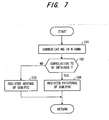
- Fig. 7 is a processing flowchart for identifying whether a neighboring GSM base station exists by constantly sending a P-SCH of W-CDMA from a GSM base station.
- the primary scrambling code PSC by which the W-CDMA base station spreads the P-SCH and the secondary scrambling code PSC by which the GSM base station spreads the P-SCH differ. Let the PSC of the GSM base station be Gp.
- the mobile station (dual-mode portable terminal) MS is in communication with the W-CDMA base station BTS1 (see Fig. 1 ), the power supply of the W-CDMA unit 11 is on and the power supply of the GSM unit 12 is off (step 101).
- the W-CDMA unit 11 conducts a search of neighboring base stations periodically, calculates the correlation between the code Gp and the receive signal and determines whether correlation has been obtained (whether slot synchronization has been achieved) (step 102). If correlation has not been obtained, the W-CDMA unit 11 judges that no GSM base station exists (step 103). If correlation has been obtained, then the W-CDMA unit 11 judges that a GSM base station exists (step 104) and control returns to start.
- the W-CDMA unit 11 measures the reception level and judges that a GSM base station exists at step 104 only if the reception level is greater than a set value.
- Figs. 8 and 9 are processing flowcharts for identifying whether a neighboring GSM base station exists by constantly sending a P-SCH and S-SCH of W-CDMA from a GSM base station.
- the spreading code (PSC) of P-SCH transmitted by the GSM base station is the same as the spreading code (PSC) of P-SCH transmitted by the W-CDMA base station.
- the group numbers of the scrambling codes used by the W-CDMA base station and the group numbers of the scrambling codes used by the GSM base station are classified as shown in Fig. 10 .
- the W-CDMA unit 11 holds this table. That is, it is assumed that group numbers 1 - 32 are scrambling-code groups used by the W-CDMA base station and that group numbers 33 - 64 are scrambling-code groups used by the GSM base station.
- the dual-mode portable terminal (mobile station) MS is in communication with the W-CDMA base station BTS1 (see Fig. 1 ), the power supply of the W-CDMA unit 11 is on and the power supply of the GSM unit 12 is off. Under these conditions, the W-CDMA unit 11 conducts a search of neighboring base stations periodically in accordance with a command from the controller 13 (step 201), calculates the correlation between the known primary scrambling code PSC and the receive signal and determines whether correlation has been obtained (whether slot synchronization has been achieved) (step 202). If correlation has not been obtained, the W-CDMA unit 11 continues with the cell search.
- the W-CDMA unit 11 construes that there is a cell present and updates the neighboring-cell detection table (step 203). Specifically, as shown in Fig. 9 , the W-CDMA unit 11 identifies the scrambling-code groups of the neighboring base station using S-SCH (step 203a). The W-CDMA unit 11 then detects the reception level with regard to each identified scrambling-code group, determines whether the reception level is greater than or less than a set level (step 203b), decides on deletion if the reception level is less (step 203c) and decides on registration of the group number, reception level and network type, etc., if the reception level is greater (203d).
- the W-CDMA unit 11 updates the neighboring-cell detection table based upon the decisions rendered at steps 203c, 203d (step 203e).
- Fig. 11 is an example of the neighboring-cell detection table. Three base stations exist in the neighboring-cell at present, and the group number, detection level (reception level) and network type (whether the base station is a W-CDMA base station or GSM base station) are recorded for each base station.
- the terminal MS measures the reception level of the neighboring base station in the standby state and during communication and updates the neighboring-cell detection table (step 204).
- the terminal MS checks to determine whether there has been a decline of the reception level from the communicating base station or a rise in the reception level from a neighboring base station (occurrence of an event) (step 205). If occurrence of an event is detected, the communicating base station BTS is notified of the event (step 206). An event occurs in a case where the level being detected by the terminal MS exceeds a threshold value based upon threshold-value information of the level of which is notified by BCCH during standby and by DCCH during communication from the base station BTS.
- the terminal MS effects a transition to the cell, which has been designated by the base station BTS, under the control of the controller 13.
- the controller 13 determines whether the cell that is the destination of the transition is a cell in a W-CDMA network or in a GSM network (step 208). In the case of a W-CDMA network, the existing cell is updated or handover is carried out (step 209). If the cell that is the destination of the transition is a cell in a GSM network, on the other hand, then the controller 13 starts up the GSM unit 12 (step 210) and determines whether the terminal MS is communicating (step 211). The controller executes handover processing (step 212) for handover to the GSM base station if the terminal MS is communicating and executes processing to change the cell (step 213) if the terminal MS is not communicating.
- Fig. 12 is a processing flowchart for identifying whether a neighboring GSM base station exists by constantly sending P-SCH, S-SCH and CPICH of W-CDMA from a GSM base station.
- the spreading code (PSC) of P-SCH transmitted by the GSM base station is the same as the spreading code (PSC) of P-SCH transmitted by the W-CDMA base station.
- the scrambling codes used by the W-CDMA base station and the scrambling codes used by the GSM base station are classified as shown in Fig. 13 .
- the W-CDMA unit 11 holds this table. That is, it is assumed that scrambling codes 0 - n are scrambling codes used by the W-CDMA base station and that scrambling codes (n+1) - 511 are scrambling codes used by the GSM base station.
- the dual-mode portable terminal MS is communicating with the W-CDMA base station BTS1 in the W-CDMA mode or is idle (step 301).
- the power supply of the W-CDMA unit 11 is on and the power supply of the GSM unit 12 is off. Under these conditions, the W-CDMA unit 11 is conducting a search of neighboring base stations (detecting establishment of slot synchronization) periodically using the known primary scramble code PSC in accordance with a command from the controller 13 (step 302). If establishment of slot synchronization is detected, the W-CDMA unit 11 identifies the scrambling-code groups of neighboring base stations using S-SCH (step 303). Next, the W-CDMA unit 11 detects scrambling codes of neighboring base stations (base-station codes) using CPICH (step 304).
- the W-CDMA unit 11 subsequently measures the reception level with regard to each detected scrambling code, determines whether the reception level is greater than or less than a set level, decides on deletion if the reception level is less, decides on registration of the scrambling code, reception level and network type, etc., if the reception level is greater, and updates the neighboring-cell detection table based upon the decisions rendered (step 306).
- Fig. 14 is an example of the neighboring-cell detection table. A number of base stations exist in the neighboring-cell at present, and the scrambling, detection level (reception level) and network type are recorded for each base station.
- Step 204 onward Processing similar to that from step 204 onward in Fig. 8 is subsequently executed. That is, the updating of the neighboring-cell detection table, handover and cell change processing are executed by each of the steps from step 204 onward.
- Fig. 15 is a processing flowchart for identifying whether a neighboring GSM base station exists by constantly sending P-SCH, S-SCH, CPICH and BCH of W-CDMA from a GSM base station.
- the spreading code (PSC) of P-SCH transmitted by the GSM base station is the same as the spreading code (PSC) of P-SCH transmitted by the W-CDMA base station.
- one base-station code has been assigned to the GSM base station.
- the dual-mode portable terminal MS is communicating with the W-CDMA base station BTS1 or is idle in the W-CDMA mode (step 401), as shown in Fig. 1 .
- the power supply of the W-CDMA unit 11 is on and the power supply of the GSM unit 12 is off. Under these conditions, the W-CDMA unit 11 is conducting a search of neighboring base stations periodically using the known primary scramble code PSC in accordance with a command from the controller 13 (step 402). If establishment of slot synchronization is detected, the W-CDMA unit 11 identifies the scrambling-code groups of neighboring base stations using S-SCH (step 403). Next, the W-CDMA unit 11 detects scrambling codes of neighboring base stations (base-station codes) using CPICH (step 404).
- P-CCPCH is despread to demodulate the BCH information (step 405) and the network type of the base station is identified based upon this BCH information (step 406). Further, the W-CDMA unit 11 subsequently measures the reception level with regard to each scrambling code identified (step 407), determines whether the reception level is greater than or less than a set level, decides on deletion if the reception level is less, decides on registration of the scrambling code, reception level and network type, etc., if the reception level is greater, and updates the neighboring-cell detection table based upon the decisions rendered (step 408).
- Step 204 onward Processing similar to that from step 204 onward in Fig. 8 is subsequently executed. That is, the updating of the neighboring-cell detection table, handover and cell change processing are executed by each of the steps from step 204 onward.
- Fig. 16 is a downstream-signal format of a GSM signal of a prescribed frequency.
- a hyperframe HF is composed of 2048 superframes SF
- one superframe SF is composed of, e.g., 26 multiframes MF
- one multiframe MF is composed of a TDMA frame of eight slots
- one TDMA frame consists of 148 bits, in which a tail bits TB are provided at both ends and a guard interval GP is provided.
- a 148-bit synchronization burst SB is inserted every ten frames. This synchronization burst is referred to as an SCH (synchronization channel). The timing of each frame can be ascertained accurately by establishing synchronization of the SCH.
- a 148-bit frequency correction burst FB is inserted every ten frames.
- This frequency correction burst FB is referred to as an FCCH (frequency correction channel).
- a clock signal having an accurate frequency can be generated by using FCCH.
- the notification channel BCCH and common control channel CCCH, etc., are transported by the multiframe MF.
- a prescribed frequency F1 and a prescribed SB pattern and FB pattern are assigned to the W-CDMA base station BTS1 ( Fig. 2 ).
- the W-CDMA base station BTS1 constantly transmits a GSM signal of the above-mentioned frequency F1 in which the SB pattern and FB pattern have been inserted every ten frames.
- the dual-mode portable terminal MS corrects the frequency to F1 using the FB pattern and determines whether a W-CDMA base station exists based upon whether or not synchronization has been established by the SB pattern.
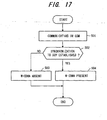
- Fig. 17 is a processing flowchart for identifying whether a neighboring GSB base station exists by constantly sending SCH, FCCH from the W-CDMA base station at the prescribed frequency F1. It is assumed that the dual-mode portable terminal MS knows the frequency F1, the pattern of the synchronization burst SB and the pattern of the frequency correction burst FB.
- the dual-mode portable terminal MS (see Fig. 2 ) is communicating with the GSM base station BTS2 in the GSM mode, the power supply of the GSM unit 12 is on and the power supply of the W-CDMA unit 11 is off (step 501).
- the GSM unit 12 is conducting a search of neighboring base stations periodically using the known frequency F1, synchronization burst pattern and frequency correction burst pattern in accordance with a command from the controller 13, corrects the frequency of the clock signal to F1 by FCCH and monitors whether establishment of synchronization using SCH (step 502).
- step 503 If synchronization to SCH is not established, it is judged that a W-CDMA base station does not exist (step 503). If synchronization to SCH is established, it is judged that a W-CDMA base station does exist (step 504). Control then returns to start and processing from this point onward is repeated.
- the GSM unit 12 measures the reception level and judges that a W-CDMA base station exists at step 504 only if the reception level is greater than a set value. Further, it is also possible to adopt an arrangement in which a W-CDMA base station is identified by changing the combination of the SB pattern and frequency assigned to the W-CDMA base station.
- Fig. 18 is a processing flowchart for identifying whether a neighboring GSB base station exists by constantly sending SCH, FCCH and BCCH from the W-CDMA base station.
- the prescribed frequency F1, synchronization burst pattern and frequency correction burst pattern have been assigned to the W-CDMA base station BTS1 ( Fig. 2 ).
- the W-CDMA base station BTS1 periodically transmits a GSM signal of the frequency F1 in which the SB pattern and FB pattern have been inserted every ten frames and the type information of the W-CDMA base station has been incorporated in the BCCH.
- the dual-mode portable terminal MS ( Fig. 2 ) is communicating with the GSM base station BTS2 in the GSM mode, the power supply of the GSM unit 12 is on and the power supply of the W-CDMA unit 11 is off (step 601).
- the GSM unit 12 is conducting a search of neighboring base stations periodically using the known frequency F1, synchronization burst pattern and frequency correction burst pattern in accordance with a command from the controller 13, corrects the frequency of the clock signal to F1 using FCCH and effects synchronization to the synchronization burst pattern of SCH (step 602).
- the GSM unit 12 demodulates BCCH (step 603) and identifies the fact that a W-CDMA base station exists in the neighboring-cell based upon the network-type information contained in the BCCH information (step 604).
- the GSM unit 12 measures the reception level from the W-CDMA base station (step 605), determines whether the reception level is greater than or less than a set level, decides that a W-CDMA base station does not exist if the reception level is less and decides that a W-CDMA base station exists if the reception level is greater (step 606). It should be noted that detailed information specifying the W-CDMA base station can be incorporated in the BCCH information.
- Fig. 19(A) is an explanatory view in which the dual-mode portable terminal MS performs handover owing to travel during communication with the W-CDMA base station BTS1.
- an area AR w in which a W-CDMA radio signal transmitted by the neighboring GSM base station BTS2 arrives, be made smaller than or equal to an area AR G in which GSM radio signals arrive. If the areas are thus set, a point at which the destination of communication is changed over from the W-CDMA base station BTS1 to the GSM base station BTS2 owing to movement by the dual-mode portable terminal MS while the terminal communicates with the W-CDMA base station BTS1 will be on the inner side of the area AR w .
- this point will be within a region in which GSM radio waves arrive reliably, and communication will not be interrupted.
- the area AR w in which W-CDMA radio waves arrive is larger than the area AR G in which GSM radio waves arrive, then the point at which the destination of communication is changed over from the W-CDMA base station BTS1 to the GSM base station BTS2 will be a region in which GSM radio waves do not arrive and communication will be interrupted.
- Fig. 19(B) is an explanatory view in which the dual-mode portable terminal MS performs handover owing to travel during communication with the GSM base station BTS2.
- an area AR G in which a GSM radio signal transmitted by the neighboring W-CDMA base station BTS1 arrives, be made smaller than or equal to an area AR w in which W-CDMA radio signals arrive. If the areas are thus set, a point at which the destination of communication is changed over from the GSM base station BTS2 to the W-CDMA base station BTS1 owing to movement of the dual-mode portable terminal MS while the terminal communicates with the GSM base station BTS2 will be on the inner side of the area AR G .
- this point will be within a region in which W-CDMA radio waves arrive reliably, and communication will not be interrupted.
- the area AR G in which GSM radio waves arrive is larger than the area AR w in which W-CDMA radio waves arrive, then the point at which the destination of communication is changed over from the GSM base station BTS2 to the W-CDMA base station BTS1 will be a region in which GSM radio waves do not arrive and communication will be interrupted.
- the case described is one in which the base station of the first wireless mode transmits the second radio signal constantly. That is, this is a case where the GSM base station BTS2 transmits the W-CDMA radio signal constantly and the W-CDMA base station BTS1 transmits the GSM radio signal constantly.
- the signals are transmitted constantly, a problem which arises is large power consumption by the base stations.
- the GSM base station BTS2 is equipped with a receiver (W-CDMA transceiver) 24 in addition to a W-CDMA transmitter.
- the GSM base station BTS2 starts transmitting the W-CDMA radio signal; when the W-CDMA radio signal 3 stops being received, the GSM base station BTS2 stops transmitting the W-CDMA radio signal.
- Fig. 20 corresponds to Fig. 1 and that the same components are designated by like reference characters.
- the W-CDMA base station BTS1 is equipped with a receiver (GSM transceiver) 34 in addition to a GSM transmitter.
- GSM transceiver GSM transceiver
- the W-CDMA base station BTS1 starts transmitting the GSM radio signal; when the GSM radio signal 3 stops being received, the W-CDMA base station BTS1 stops transmitting the GSM radio signal.
- Fig. 21 corresponds to Fig. 2 and that the same components are designated by like reference characters.
- Fig. 22 is an explanatory view of a procedure for a case where the dual-mode portable terminal MS searches for neighboring cells while communicating with the W-CDMA base station BTS1.
- the dual-mode portable terminal MS is communicating with the W-CDMA base station BTS1.
- the GSM base station BTS2 detects the W-CDMA radio signal 3 from the terminal MS (steps 701, 702) and ascertains the fact that a wireless terminal operating in the W-CDMA mode is present nearby. If the existence of the wireless terminal operating in the W-CDMA mode is detected, then the controller 23 of the GSM base station BTS2 starts up the transmitter of the W-CDMA transceiver 24 and starts transmitting the W-CDMA radio signal 2 (step 703).
- the dual-mode portable terminal MS is capable of identifying the existence of the GSM base station BTS2 when neighboring-cell information is acquired.
- Fig. 23 is a flowchart for describing operation of a dual-mode portable terminal.
- the controller 13 of the dual-mode portable terminal MS In a case where the controller 13 of the dual-mode portable terminal MS is traveling while communicating in the W-CDMA mode, the controller causes the W-CDMA unit 11 to acquire neighboring-cell information periodically (step 801). If a neighboring W-CDMA base station and a neighboring GSM base station are found, these are registered (steps 802, 803). The controller thenceforth performs monitoring to determine whether the radio signal being used in communication has degraded (step 804) and, if degradation has occurred, selects another base station BTS the conditions of whose radio waves are better. If a W-CDMA base station BTS has been registered at the time of BTS selection ("YES" at step 805), then a changeover is made to the W-CDMA base station between communication modes that are the same. In other words, handover is performed (step 806).
- step 805 if it is found at step 805 that a base station BTS in the same communication mode (a W-CDMA base station) is not present in the neighboring-cell, then it is determined whether a GSM base station BTS has been registered (step 807). If this base station exists, then the GSM unit 12 within the terminal is started up (step 808) and handover to GSM is performed after the necessary procedure is followed (step 809). The power supply of the W-CDMA system not used is subsequently turned off (step 810). It should be noted that if it is found at step 807 that a GSM base station BTS has not been registered, then a display indicating that the terminal is outside the communication area is presented (step 811) and processing is exited.
- a base station BTS in the same communication mode a W-CDMA base station
- consumption of a terminal battery can be suppressed.
- An example will be illustrated by calculation.
- consumed current in the W-CDMA unit 11 of the terminal is 200 mA
- consumed current in the controller (CPU) is 100 mA
- consumed current in the GSM unit 12 is 120 mA
- the interval at which neighboring-cell information of a GSM base station is acquired is 1 sec and that the acquisition period (from power-on to end of measurement) is 500 ms.
- consumption of current can be suppressed by an amount equivalent to about 23 minutes in comparison with the prior art.
- consumption of current can be suppressed by an amount equivalent to about 60 minutes in comparison with the prior art.
- the first wireless communication mode is described as being W-CDMA and the second wireless communication mode is described as being GSM above. However, the present invention is not limited to such case.
- the first wireless communication mode may be W-CDMA and the second wireless communication mode may be PDC.
- the present invention is applicable generally to any combination of communication modes.
Landscapes
- Engineering & Computer Science (AREA)
- Computer Networks & Wireless Communication (AREA)
- Signal Processing (AREA)
- Computer Security & Cryptography (AREA)
- Mobile Radio Communication Systems (AREA)
Claims (12)
- Dualmodus-System zum Durchführen von Kommunikation unter Verwendung eines Endgerät, das mit ersten und zweiten Einheiten ausgestattet ist, die in der Lage sind zum Kommunizieren in ersten bzw. zweiten Mobilkommunikationsmodi, in einer Dualmodus-Umgebung eines ersten Mobilkommunikationsmodus und eines zweiten Mobilkommunikationsmodus, gekennzeichnet durch:eine Basisstation des ersten Mobilkommunikationsmodus zum Kommunizieren mit einem Endgerät in einem ersten Mobilkommunikationsmodus und Senden eines Funksignals in dem zweiten Mobilkommunikationsmodus;eine Basisstation des zweiten Mobilkommunikationsmodus zum Kommunizieren mit einem Endgerät in dem zweiten Mobilkommunikationsmodus und Senden eines Funksignals in dem ersten Mobilkommunikationsmodus; undwobei die erste Einheit des Endgerät eingerichtet ist, während einer Kommunikation mit der Basisstation des ersten Mobilkommunikationsmodus in dem ersten Mobilkommunikationsmodus, zum Empfangen des Funksignals des ersten Mobilkommunikationsmodus, das von der Basisstation des zweiten Mobilkommunikationsmodus gesendet wird, und zum Bestimmen, basierend auf dem Funksignal, ob die Basisstation des zweiten Mobilkommunikationsmodus existiert, und wobei die zweite Einheit des Endgerät eingerichtet ist, während einer Kommunikation mit der Basisstation des zweiten Mobilkommunikationsmodus in dem zweiten Mobilkommunikationsmodus, zum Empfangen des Funksignals des zweiten Mobilkommunikationsmodus, das von der Basisstation des ersten Mobilkommunikationsmodus gesendet wird, und zum Bestimmen, basierend auf dem Funksignal, ob die Basisstation des ersten Mobilkommunikationsmodus existiert.
- Dualmodus-System nach Anspruch 1, dadurch gekennzeichnet, dass der erste Mobilkommunikationsmodus W-CDMA ist und der zweite Mobilkommunikationsmodus GSM oder PDC ist, eine GSM/PDC-Basisstation einen P-SCH als Funksignal des ersten Kommunikationsmodus sendet und das Endgerät die Existenz der GSM/PDC-Basisstation basierend darauf identifiziert, ob der P-SCH vorliegt oder nicht.
- Dualmodus-System nach Anspruch 1, dadurch gekennzeichnet, dass, wenn der erste Mobilkommunikationsmodus W-CDMA ist und der zweite Mobilkommunikationsmodus GSM oder PDC ist, eine GSM/PDC-Basisstation einen P-SCH und einen S-SCH als das Funksignal des ersten Kommunikationsmodus sendet und das Endgerät eine Korrespondenztabelle einer Korrespondenz zwischen Codegruppennummern und Netzwerkarten aufweist und eingerichtet ist zum Identifizieren einer Codegruppennummer einer NachbarBasisstation aus einem S-SCH und zum Identifizieren der Existenz der GSM/PDC-Basisstation aus der identifizierten Codegruppennummer der Basisstation und der Korrespondenztabelle.
- Dualmodus-System nach Anspruch 1, dadurch gekennzeichnet, dass, wenn der erste Mobilkommunikationsmodus W-CDMA ist und der zweite Mobilkommunikationsmodus GSM oder PDC ist, eine GSM/PDC-Basisstation einen P-SCH, einen S-SCH und einen CPICH als das Funksignal des ersten Kommunikationsmodus sendet und das Endgerät eine Korrespondenztabelle zwischen Scramblingcodes und Netzwerkarten aufweist und eingerichtet ist zum Identifizieren eines Scramblingcodes einer Nachbarbasisstation aus einem CPICH und die Existenz der GSM/PDC-Basisstation aus dem identifizierten Scramblingcode und der Korrespondenztabelle identifiziert.
- Dualmodus-System nach Anspruch 1, dadurch gekennzeichnet, dass, wenn der erste Mobilkommunikationsmodus W-CDMA ist und der zweite Mobilkommunikationsmodus GSM oder PDC ist, eine GSM/PDC-Basisstation einen P-SCH, einen S-SCH, einen CPICH und einen PCCPCH als das Funksignal des ersten Kommunikationsmodus sendet und das Endgerät eingerichtet ist zum Identifizieren der Existenz der GSM/PDC-Basisstation aus BCH-Informationen in dem PCCPCH.
- Dualmodus-System nach Anspruch 1, dadurch gekennzeichnet, dass ein Bereich, der von dem Funksignal des ersten Kommunikationsmodus, das von einer Basisstation des zweiten Kommunikationsmodus gesendet wird, kleiner oder gleich einem Bereich des zweiten Mobilkommunikationsmodus gemacht wird.
- Dualmodus-System nach Anspruch 1, dadurch gekennzeichnet, dass eine Basisstation des zweiten Mobilkommunikationsmodus einen Empfänger des ersten Mobilkommunikationsmodus zusätzlich zu einem Sender des ersten Mobilkommunikationsmodus aufweist und der Sender eingerichtet ist zum Senden eines Funksignals des ersten Mobilkommunikationsmodus, wenn ein Funksignal des ersten Mobilkommunikationsmodus von einem Endgerät empfangen wird, dass in dem ersten Mobilkommunikationsmodus kommuniziert.
- Dualmodus-System nach Anspruch 1, dadurch gekennzeichnet, dass eine W-CDMA-Basisstation eingerichtet ist zum Senden eines FCCH/SCH, der ein Synchronisationskanal ist, als das Funksignal des zweiten Kommunikationsmodus, wenn der erste Mobilkommunikationsmodus W-CDMA ist und der zweite Mobilkommunikationsmodus GSM oder PDC ist, und das Endgerät eingerichtet ist zum Identifizieren der Existenz der W-CDMA-Basisstation basierend auf einem Aufbau einer Synchronisation mit SCH.
- Dualmodus-System nach Anspruch 1, dadurch gekennzeichnet, dass eine W-CDMA-Basisstation eingerichtet ist zum Senden eines BCCH zusätzlich zu FCCH/SCH, der ein Synchronisationskanal ist, als ein Funksignal des zweiten Kommunikationsmodus, wenn der erste Mobilkommunikationsmodus W-CDMA ist und der zweite Mobilkommunikationsmodus GSM oder PDC ist, und das Endgerät eingerichtet ist zum Identifizieren der Existenz der W-CDMA-Basisstation unter Verwendung von Informationen in BCCH.
- Dualmodus-System nach Anspruch 1, dadurch gekennzeichnet, dass eine Basisstation des ersten Mobilkommunikationsmodus einen Empfänger des zweiten Mobilkommunikationsmodus zusätzlich zu einem Sender des zweiten Mobilkommunikationsmodus aufweist und der Sender eingerichtet ist zum Senden eines Funksignals des zweiten Mobilkommunikationsmodus, wenn ein Funksignal des zweiten Mobilkommunikationsmodus von einem in dem zweiten Mobilkommunikationsmodus kommunizierenden Endgerät empfangen wird.
- Dualmodus-System nach Anspruch 1, dadurch gekennzeichnet, dass ein Bereich, der von dem Funksignal des zweiten Mobilkommunikationsmodus erreicht wird, das von einer Basisstation des ersten Mobilkommunikationsmodus gesendet wird, kleiner oder gleich einem Bereich des ersten Mobilkommunikationsmodus gemacht wird.
- Dualmodus-Drahtlosendgerät, das in der Lage ist zum Kommunizieren in sowohl einem ersten als einem zweiten Mobilkommunikationsmodus in einer Dualmodus-Umgebung eines ersten Mobilkommunikationsmodus und eines zweiten Mobilkommunikationsmodus, gekennzeichnet durch:eine erste und eine zweite Einheit zum Kommunizieren in dem ersten bzw. zweiten Mobilkommunikationsmodus;wobei die erste Einheit eingerichtet ist, während einer Kommunikation mit einer Basisstation des ersten Mobilkommunikationsmodus in dem ersten Mobilkommunikationsmodus, zum Empfangen eines Funksignals des ersten Mobilkommunikationsmodus, das von der Basisstation des zweiten Mobilkommunikationsmodus gesendet wird, und zum Bestimmen, basierend auf dem Funksignal, ob die Basisstation des zweiten Mobilkommunikationsmodus existiert, undwobei die zweite Einheit eingerichtet ist, während einer Kommunikation mit der Basisstation des zweiten Mobilkommunikationsmodus in dem zweiten Mobilkommunikationsmodus, zum Empfangen des Funksignals des zweiten Mobilkommunikationsmodus, das von der Basisstation des ersten Mobilkommunikationsmodus gesendet wird, und zum Bestimmen, basierend auf dem Funksignal, ob die Basisstation des ersten Mobilkommunikationsmodus existiert.
Applications Claiming Priority (1)
| Application Number | Priority Date | Filing Date | Title |
|---|---|---|---|
| PCT/JP2003/004368 WO2004091244A1 (ja) | 2003-04-07 | 2003-04-07 | デュアルモードシステム及びデュアルモード無線端末 |
Publications (3)
| Publication Number | Publication Date |
|---|---|
| EP1613112A1 EP1613112A1 (de) | 2006-01-04 |
| EP1613112A4 EP1613112A4 (de) | 2011-01-19 |
| EP1613112B1 true EP1613112B1 (de) | 2015-06-10 |
Family
ID=33156434
Family Applications (1)
| Application Number | Title | Priority Date | Filing Date |
|---|---|---|---|
| EP03816598.1A Expired - Lifetime EP1613112B1 (de) | 2003-04-07 | 2003-04-07 | System und Endgerät mit Zweifachmodus |
Country Status (5)
| Country | Link |
|---|---|
| EP (1) | EP1613112B1 (de) |
| JP (1) | JP4083172B2 (de) |
| CN (2) | CN101400184B (de) |
| AU (1) | AU2003236274A1 (de) |
| WO (1) | WO2004091244A1 (de) |
Cited By (1)
| Publication number | Priority date | Publication date | Assignee | Title |
|---|---|---|---|---|
| US10560922B2 (en) | 2015-09-30 | 2020-02-11 | Huawei Technologies Co., Ltd. | Channel transmission method, base station, and terminal device |
Families Citing this family (27)
| Publication number | Priority date | Publication date | Assignee | Title |
|---|---|---|---|---|
| US20050111529A1 (en) * | 2001-02-22 | 2005-05-26 | Prairiecomm, Inc. | Tone detection using a cdma receiver |
| BR0318526A (pt) | 2003-10-03 | 2006-09-12 | Thomson Licensing | detecção de célula de sobreposição de múltiplas redes |
| JP2008527776A (ja) * | 2005-01-04 | 2008-07-24 | エスケーテレコム株式会社 | デュアルバンド/デュアルモードを支援する移動通信端末のハンドオーバ方法 |
| WO2006073211A1 (en) | 2005-01-05 | 2006-07-13 | Sk Telecom Co., Ltd. | Controlling method and data call handover method for dual bandual mode mobile communication terminal |
| WO2006073212A1 (en) | 2005-01-05 | 2006-07-13 | Sk Telecom Co., Ltd. | Dual band/dual mode mobile communication terminal and control method thereof |
| US20070064833A1 (en) * | 2005-09-12 | 2007-03-22 | Sahota Gurkanwal S | Multi-band radio frequency modulator |
| KR20070049397A (ko) | 2005-11-08 | 2007-05-11 | 주식회사 팬택앤큐리텔 | Wcdma 망에서 cdma 망으로의 핸드오버 방법 및핸드오버를 수행하는 이동통신단말기 |
| WO2007093234A1 (de) * | 2006-02-15 | 2007-08-23 | Siemens Aktiengesellschaft | Verfahren und vorrichtung zum senden von messberichten in einem funkkommunikationssystem |
| CN101427604A (zh) * | 2006-05-18 | 2009-05-06 | Ut斯达康(中国)有限公司 | PHS和WiMAX双模式基站 |
| CN101198150B (zh) * | 2006-12-06 | 2012-08-15 | 华为技术有限公司 | 在多制式无线网络中实现分路传输的方法、装置及系统 |
| CN101282568B (zh) * | 2007-04-03 | 2012-10-10 | 中兴通讯股份有限公司 | 一种联合支持多种接入的系统 |
| JP4429339B2 (ja) | 2007-07-17 | 2010-03-10 | 株式会社エヌ・ティ・ティ・ドコモ | 移動端末及び無線信号スキャン実行方法 |
| JP4615025B2 (ja) * | 2008-01-11 | 2011-01-19 | 富士通株式会社 | 移動通信システム、無線基地局、端末及び通信方法 |
| CN101252757B (zh) * | 2008-03-19 | 2016-01-13 | 华为技术有限公司 | 无线通信系统、无线通信模块和无线通信装置 |
| JP5354642B2 (ja) | 2008-04-09 | 2013-11-27 | 日本電気株式会社 | 無線通信システムおよびその通信方法 |
| KR20100056034A (ko) * | 2008-11-19 | 2010-05-27 | 삼성전자주식회사 | 동시대기 이동단말에서 네이버 셀 모니터링 방법 |
| US9775046B2 (en) * | 2009-06-26 | 2017-09-26 | Qualcomm, Incorporated | Power management |
| US8965293B2 (en) | 2009-06-26 | 2015-02-24 | Qualcomm Incorporated | Interference management |
| EP3267715A3 (de) * | 2010-05-06 | 2018-05-02 | Koninklijke KPN N.V. | Verfahren und telekommunikationsnetzwerk zur deaktivierung oder aktivierung einer zelle in solch einem netzwerk |
| JP5409932B2 (ja) * | 2010-11-30 | 2014-02-05 | 三菱電機株式会社 | 基地局装置および移動体通信システム |
| US9445334B2 (en) * | 2011-04-20 | 2016-09-13 | Qualcomm Incorporated | Switching between radio access technologies at a multi-mode access point |
| EP2595426B1 (de) * | 2011-11-15 | 2014-10-08 | Alcatel Lucent | Verfahren zur Änderung des Funkzugangspunktes eines Endgeräts in einem drahtlosen Telekommunikationsnetz vom Typ WiFi-DECT |
| JP5561499B2 (ja) * | 2012-07-03 | 2014-07-30 | 日本電気株式会社 | 無線通信システムおよびその通信方法 |
| CN104349330A (zh) * | 2013-08-05 | 2015-02-11 | 中兴通讯股份有限公司 | 一种辅助多模终端发现通信机会的方法、系统及设备 |
| CN112243300B (zh) * | 2019-07-19 | 2022-11-08 | 中国移动通信有限公司研究院 | 连接建立方法及装置 |
| CN115244983A (zh) * | 2020-03-23 | 2022-10-25 | 夏普株式会社 | 基站、终端、通信系统以及控制方法 |
| JPWO2021193106A1 (de) * | 2020-03-27 | 2021-09-30 |
Family Cites Families (9)
| Publication number | Priority date | Publication date | Assignee | Title |
|---|---|---|---|---|
| GB8910143D0 (en) | 1989-05-03 | 1989-06-21 | Penny & Giles Inductive Techno | Improvements relating to rotary position transducers |
| GB2357015B (en) * | 1997-01-08 | 2001-08-15 | Nec Technologies | Combining cordless and mobile telephone operation |
| JP3048137B2 (ja) | 1998-04-13 | 2000-06-05 | 日本電気株式会社 | デュアルバンド携帯電話機及び移動電話システム切替方法 |
| FR2778055B1 (fr) | 1998-04-28 | 2000-05-26 | Alsthom Cge Alcatel | Procede de transmission dans un reseau radiotelephonique umts,permettant de preparer un saut vers une cellule gsm pendant une communication dans une cellule umts |
| JP2000092541A (ja) * | 1998-09-08 | 2000-03-31 | Toshiba Corp | 無線通信システム、基地局装置、及び無線携帯機器 |
| US6567666B2 (en) * | 1998-12-02 | 2003-05-20 | Infineon Technologies North America Corp. | Forward link inter-generation soft handoff between 2G and 3G CDMA systems |
| US6594242B1 (en) * | 1999-01-14 | 2003-07-15 | Ericsson, Inc. | Broadcasting of two generation cellular system control channel information over a three generation control channel to support roaming and handover to two generation cellular networks |
| JP2001345731A (ja) * | 2000-06-06 | 2001-12-14 | Matsushita Electric Ind Co Ltd | マルチモード携帯電話端末 |
| JP3915022B2 (ja) * | 2001-12-03 | 2007-05-16 | 日本電気株式会社 | 移動体通信端末、移動体通信システム及び通信方法 |
-
2003
- 2003-04-07 CN CN2008101665702A patent/CN101400184B/zh not_active Expired - Fee Related
- 2003-04-07 EP EP03816598.1A patent/EP1613112B1/de not_active Expired - Lifetime
- 2003-04-07 AU AU2003236274A patent/AU2003236274A1/en not_active Abandoned
- 2003-04-07 JP JP2004570555A patent/JP4083172B2/ja not_active Expired - Fee Related
- 2003-04-07 CN CN038248387A patent/CN1695400B/zh not_active Expired - Fee Related
- 2003-04-07 WO PCT/JP2003/004368 patent/WO2004091244A1/ja not_active Ceased
Cited By (1)
| Publication number | Priority date | Publication date | Assignee | Title |
|---|---|---|---|---|
| US10560922B2 (en) | 2015-09-30 | 2020-02-11 | Huawei Technologies Co., Ltd. | Channel transmission method, base station, and terminal device |
Also Published As
| Publication number | Publication date |
|---|---|
| CN101400184B (zh) | 2012-11-28 |
| AU2003236274A1 (en) | 2004-11-01 |
| WO2004091244A1 (ja) | 2004-10-21 |
| CN1695400A (zh) | 2005-11-09 |
| JP4083172B2 (ja) | 2008-04-30 |
| EP1613112A4 (de) | 2011-01-19 |
| JPWO2004091244A1 (ja) | 2006-07-06 |
| CN101400184A (zh) | 2009-04-01 |
| EP1613112A1 (de) | 2006-01-04 |
| CN1695400B (zh) | 2011-07-20 |
Similar Documents
| Publication | Publication Date | Title |
|---|---|---|
| EP1613112A1 (de) | System und endgerät mit zweifachmodus | |
| US8682386B2 (en) | Dual-mode system and dual-mode wireless terminal | |
| US7409214B2 (en) | Cell search method for inter-system handover in a mobile station | |
| EP1119212B1 (de) | Einrichtung und Verfahren zur Weiterreichen von einem asynchronen nach einem sychronen Mobilkommunikationssystem | |
| KR100547723B1 (ko) | 이동통신시스템에서 인접 셀 경계 인식장치 및 방법 | |
| USRE40824E1 (en) | Mobile station handoff between different CDMA frequencies | |
| EP0965235B1 (de) | Gerät und verfahren zur drahtlosen übertragung | |
| EP1081976B1 (de) | Steuerungsverfahren zum Suchen benachbarten Zellen, Mobilstation und Mobilkommunikationssystem | |
| US20140293806A1 (en) | Method and System for Fast Cell Search Using PSYNC Process in a Multimode WCDMA Terminal | |
| JPH11355200A (ja) | 移動通信システム及びその通信制御方法並びにそれに用いる基地局及び移動局 | |
| WO2000055992A1 (en) | Synchronization and cell search method and apparatus for wireless communications | |
| EP1599984B1 (de) | Rahmensynchronisation und Verwürfelungscodeidentifikation in drahtlosen Kommunikationssystemen und Verfahren dafür | |
| KR20050050640A (ko) | 무선 통신 시스템 내에서 통신 채널을 떠나는 방법 | |
| US7978664B2 (en) | Method for modem switching for use with MM-MB terminal | |
| EP1096822B1 (de) | Vorrichtung und Verfahren für TDMA-TDD-basiertes Senden/Empfangen | |
| JP2002058075A (ja) | 無線通信システムの捕捉方法、無線通信システムの再捕捉向上方法および移動局 | |
| KR20010020093A (ko) | 무선 이동통신에서 파일럿 채널을 슬롯으로 구분하는 시스템 | |
| US20020137513A1 (en) | Communication terminal apparatus and radio communication method | |
| KR100698861B1 (ko) | 듀얼 모드 시스템 및 듀얼 모드 무선 단말 | |
| JP2007027877A (ja) | 通信端末装置及びハンドオーバ方法 | |
| EP1152624B1 (de) | Kommunikationsendgerät und drahtloses kommunikationsverfahren | |
| JP4615025B2 (ja) | 移動通信システム、無線基地局、端末及び通信方法 | |
| EP1091612A1 (de) | Methode zur Reduzierung von Weiterreichungen in einem Mobilfunksystem | |
| CN101835229B (zh) | 用于利用同步信息的方法和设备 | |
| KR20050077403A (ko) | 이동통신시스템에서 인접 셀 경계 인식장치 및 방법 |
Legal Events
| Date | Code | Title | Description |
|---|---|---|---|
| PUAI | Public reference made under article 153(3) epc to a published international application that has entered the european phase |
Free format text: ORIGINAL CODE: 0009012 |
|
| 17P | Request for examination filed |
Effective date: 20050330 |
|
| AK | Designated contracting states |
Kind code of ref document: A1 Designated state(s): AT BE BG CH CY CZ DE DK EE ES FI FR GB GR HU IE IT LI LU MC NL PT RO SE SI SK TR |
|
| AX | Request for extension of the european patent |
Extension state: AL LT LV MK |
|
| RIN1 | Information on inventor provided before grant (corrected) |
Inventor name: SASAKI, HIROSHIFJ MOBILE CORE TECHNOLOGIES CO., Inventor name: NAMATAME, KENICHIFJ MOBILE CORE TECHNOLOGIES CO., |
|
| DAX | Request for extension of the european patent (deleted) | ||
| RBV | Designated contracting states (corrected) |
Designated state(s): DE FR GB IT |
|
| A4 | Supplementary search report drawn up and despatched |
Effective date: 20101217 |
|
| 17Q | First examination report despatched |
Effective date: 20110322 |
|
| REG | Reference to a national code |
Ref country code: DE Ref legal event code: R079 Ref document number: 60347698 Country of ref document: DE Free format text: PREVIOUS MAIN CLASS: H04Q0007380000 Ipc: H04W0048100000 |
|
| GRAP | Despatch of communication of intention to grant a patent |
Free format text: ORIGINAL CODE: EPIDOSNIGR1 |
|
| RIC1 | Information provided on ipc code assigned before grant |
Ipc: H04W 88/06 20090101ALN20150122BHEP Ipc: H04W 48/10 20090101AFI20150122BHEP Ipc: H04W 48/18 20090101ALN20150122BHEP |
|
| INTG | Intention to grant announced |
Effective date: 20150210 |
|
| RIC1 | Information provided on ipc code assigned before grant |
Ipc: H04W 48/18 20090101ALN20150202BHEP Ipc: H04W 88/06 20090101ALN20150202BHEP Ipc: H04W 48/10 20090101AFI20150202BHEP |
|
| GRAS | Grant fee paid |
Free format text: ORIGINAL CODE: EPIDOSNIGR3 |
|
| GRAA | (expected) grant |
Free format text: ORIGINAL CODE: 0009210 |
|
| AK | Designated contracting states |
Kind code of ref document: B1 Designated state(s): DE FR GB IT |
|
| REG | Reference to a national code |
Ref country code: GB Ref legal event code: FG4D |
|
| REG | Reference to a national code |
Ref country code: DE Ref legal event code: R096 Ref document number: 60347698 Country of ref document: DE |
|
| REG | Reference to a national code |
Ref country code: FR Ref legal event code: PLFP Year of fee payment: 14 |
|
| REG | Reference to a national code |
Ref country code: DE Ref legal event code: R097 Ref document number: 60347698 Country of ref document: DE |
|
| PLBE | No opposition filed within time limit |
Free format text: ORIGINAL CODE: 0009261 |
|
| STAA | Information on the status of an ep patent application or granted ep patent |
Free format text: STATUS: NO OPPOSITION FILED WITHIN TIME LIMIT |
|
| 26N | No opposition filed |
Effective date: 20160311 |
|
| PGFP | Annual fee paid to national office [announced via postgrant information from national office to epo] |
Ref country code: GB Payment date: 20160202 Year of fee payment: 14 Ref country code: FR Payment date: 20160309 Year of fee payment: 14 |
|
| PGFP | Annual fee paid to national office [announced via postgrant information from national office to epo] |
Ref country code: DE Payment date: 20160202 Year of fee payment: 14 |
|
| PG25 | Lapsed in a contracting state [announced via postgrant information from national office to epo] |
Ref country code: IT Free format text: LAPSE BECAUSE OF NON-PAYMENT OF DUE FEES Effective date: 20160407 |
|
| REG | Reference to a national code |
Ref country code: DE Ref legal event code: R119 Ref document number: 60347698 Country of ref document: DE |
|
| GBPC | Gb: european patent ceased through non-payment of renewal fee |
Effective date: 20170407 |
|
| REG | Reference to a national code |
Ref country code: FR Ref legal event code: ST Effective date: 20171229 |
|
| PG25 | Lapsed in a contracting state [announced via postgrant information from national office to epo] |
Ref country code: DE Free format text: LAPSE BECAUSE OF NON-PAYMENT OF DUE FEES Effective date: 20171103 Ref country code: FR Free format text: LAPSE BECAUSE OF NON-PAYMENT OF DUE FEES Effective date: 20170502 |
|
| PG25 | Lapsed in a contracting state [announced via postgrant information from national office to epo] |
Ref country code: GB Free format text: LAPSE BECAUSE OF NON-PAYMENT OF DUE FEES Effective date: 20170407 |