CROSS-REFERENCE TO RELATED APPLICATIONS
This application claims the benefit of U.S. Provisional Application No.
60/580,001, filed 15 June 2004.
BACKGROUND OF THE INVENTION
Numerous steps are involved in the fabrication of microelectronic structures.
Within the manufacturing scheme of fabricating integrated circuits, selective etching of
semiconductor surfaces is sometimes required. Historically, a number of vastly different
types of etching processes, to selectively remove material has been successfully utilized
to varying degrees. Moreover, the selective etching of different layers, within the
microelectronic structure, is considered a critical and crucial step in the integrated circuit
fabrication process.
In the manufacture of semiconductors and semiconductor microcircuits, it is
frequently necessary to coat substrate materials with a polymeric organic substance.
Examples of some substrate materials includes titanium, copper, silicon dioxide coated
silicon wafer which may further include metallic elements of titanium, copper, and the
like. Typically, the polymeric organic substance is a photoresist material. This is a
material which will form an etch mask upon development after exposure to light. In
subsequent processing steps, at least a portion of the photoresist is removed from the
surface of the substrate. One common method of removing photoresist from a substrate
is by wet chemical means. The wet chemical compositions formulated to remove the
photoresist from the substrate should do so without corroding, dissolving, and/or dulling
the surface of any metallic circuitry; chemically altering the inorganic substrate; and/or
attacking the substrate itself. Another method of removing photoresist is by a dry ash
method where the photoresist is removed by plasma ashing using either oxygen or
forming gas such as hydrogen. The residues or by-products may be the photoresist
itself or a combination of the photoresist, underlying substrate and/or etch gases. These
residues or by-products are often referred to as sidewall polymers, veils or fences.
Increasingly, reactive ion etching (RIE) is the process of choice for pattern
transfer during via, metal line and trench formation. For instance, complex semiconductor
devices such as advanced DRAMS and microprocessors, which require
multiple layers of back end of line interconnect wiring, utilize RIE to produce vias, metal
lines and trench structures. Vias are used, through the interlayer dielectric, to provide
contact between one level of silicon, silicide or metal wiring and the next level of wiring.
Metal lines are conductive structures used as device interconnects. Trench structures
are used in the formation of metal line structures. Bottom antireflective coating (BARC)
and gap fill materials, which are typically highly cross-linked organic polymer materials,
are widely used in semiconductor substrates containing copper. Vias, metal lines and
trench structures typically expose metals and alloys such as Al-Cu, Cu, Ti, TiN, Ta, TaN,
W, TiW, silicon or a silicide such as a silicide of tungsten, titanium or cobalt. The RIE
process typically leaves a residue that may include re-sputtered oxide material as well as
possibly organic materials from photoresist and antireflective coating materials used to
lithographically define the vias, metal lines and or trench structures.
It would therefore be desirable to provide a selective cleaning composition and
process capable of removing residues such as, for example, remaining photoresist
and/or processing residues, such as for example, residues resulting from selective
etching using plasmas and/or RIE. Moreover, it would be desirable to provide a selective
cleaning composition and process, capable of removing residues such as photoresist
and etching residue, that exhibits high selectivity for the residue as compared to metals,
high dielectric constant materials (referred to herein as "high-k"), silicon, silicide and/or
interlevel dielectric materials including low dielectric constant materials (referred to
herein as "low-k"), such as deposited oxides that might also be exposed to the cleaning
composition. It would be desirable to provide a composition that is compatible to and
can be used with such sensitive low-k films as HSQ, MSQ, FOx, black diamond and
TEOS (tetraethylsilicate).
BRIEF SUMMARY OF THE INVENTION
The composition disclosed herein is capable of selectively removing residues
such as, for example, photoresist, gap fill, BARC and/or other polymeric material, and/or
inorganic material and processing residue from a substrate without attacking to any
undesired extent metal, low-k dielectric, and/or high-k dielectric materials that might also
be exposed to the composition. In certain embodiments, the composition disclosed
herein may effectively remove residues while providing minimal corrosion to copper upon
exposure.
In one aspect, there is provided a composition comprising: about 20 % to about
80 % by weight of an organic polar solvent; about 10 % to about 60 % by weight of
water; about 1 % to about 10% by weight of a quaternary ammonium compound;
optionally about 0.1 % to about 5 % by weight of a hydroxylamine provided that a mass
ratio of the hydroxylamine if present to quaternary ammonium compound is less than 3;
optionally about 0.1 % to about 10 % by weight of a fluoride ion source, and a mercapto-containing
corrosion inhibitor selected from the group consisting of a compound having a
following formula (I), a compound having a following formula (II), 2-mercaptothiazoline, 3-mercaptopropyl-trimethoxysilane,
and mixtures thereof
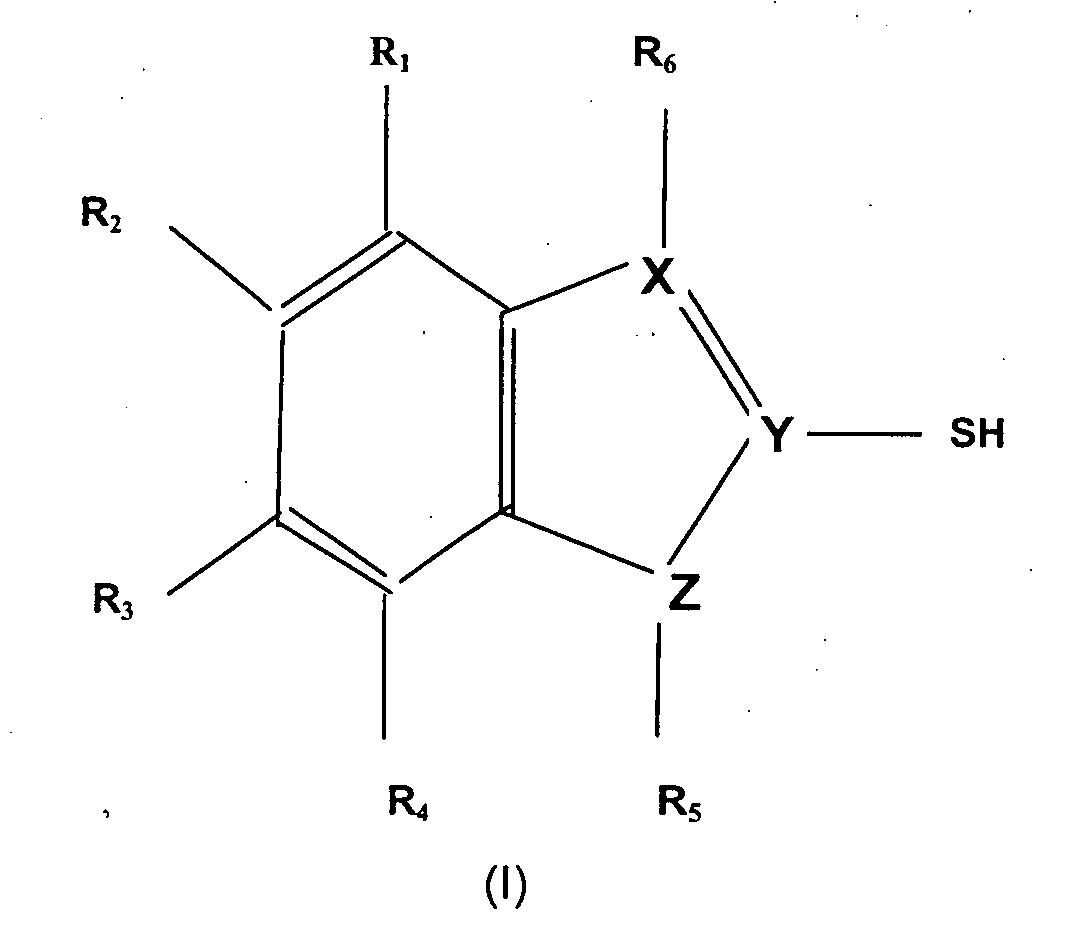
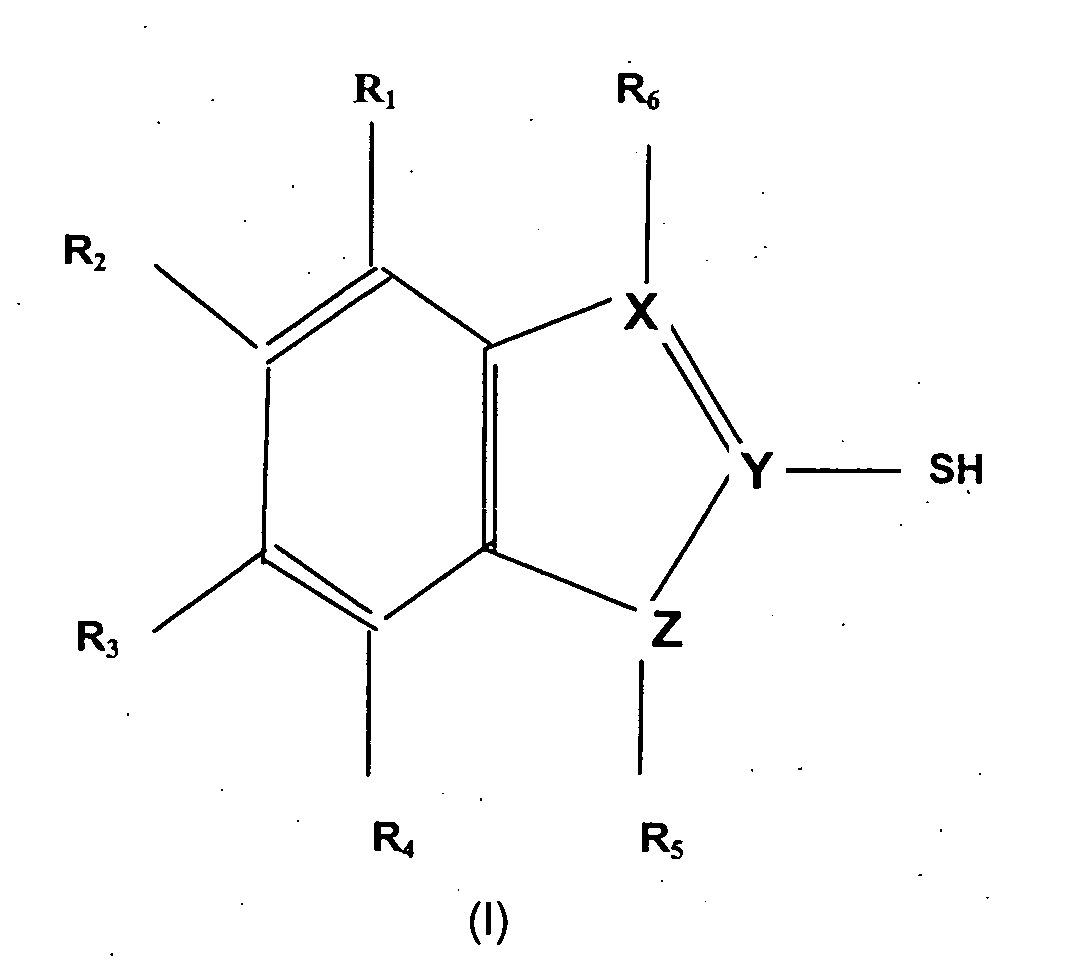
wherein X, Y, and Z are each independently selected from C, N, O, S, and P; R
1, R
2, R
3,
R
4, R
5, and R
6 are each independently an alkyl group having a formula C
nH
2n+1, wherein
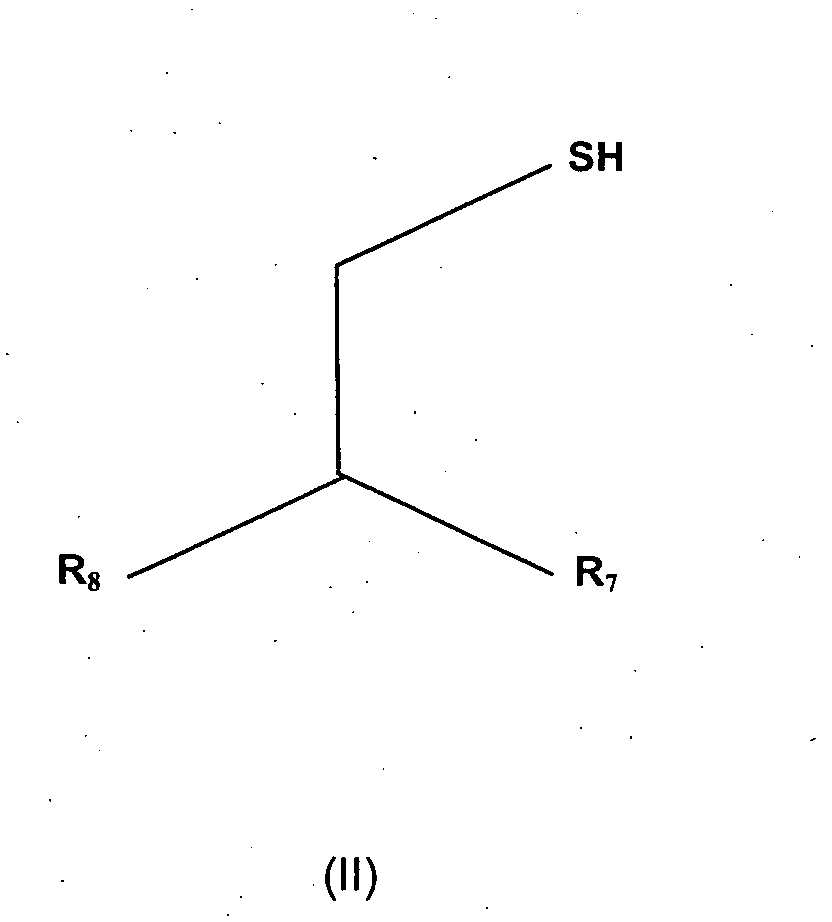
n ranges from 0 to 20; R
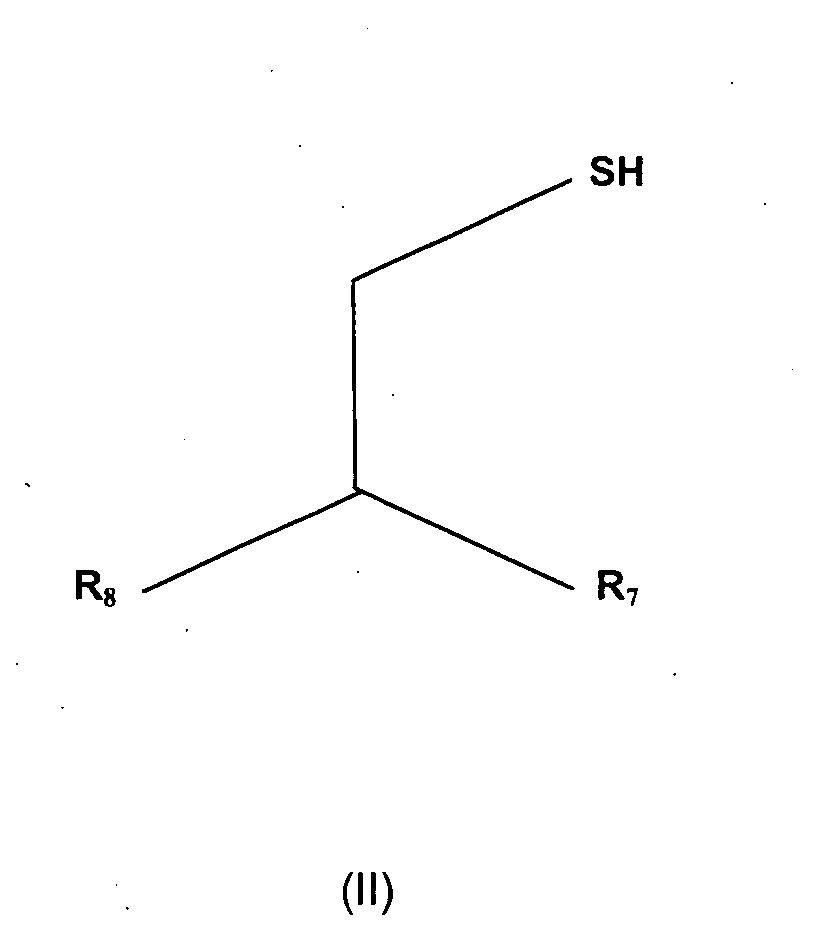
7 is one selected from H, -OH, -COOH, and -NH
2; and R
8 is one
selected from an alkyl group having a formula C
nH
2n-1, wherein n ranges from 0 to 20 or
an alkanol group having a formula C
nH
2nOH wherein n ranges from 0 to 20.
In another aspect, there is provided a composition comprising: about 20 % to
about 80 % by weight of an organic polar solvent; about 10 % to about 60 % by weight of
water; about 1 % to about 10% by weight of a quaternary ammonium compound; and a
mercapto-containing corrosion inhibitor selected from the group consisting of a
compound having a following formula (I), a compound having a following formula (II), 2-mercaptothiazoline,
3-mercaptopropyl-trimethoxysilane, and mixtures thereof
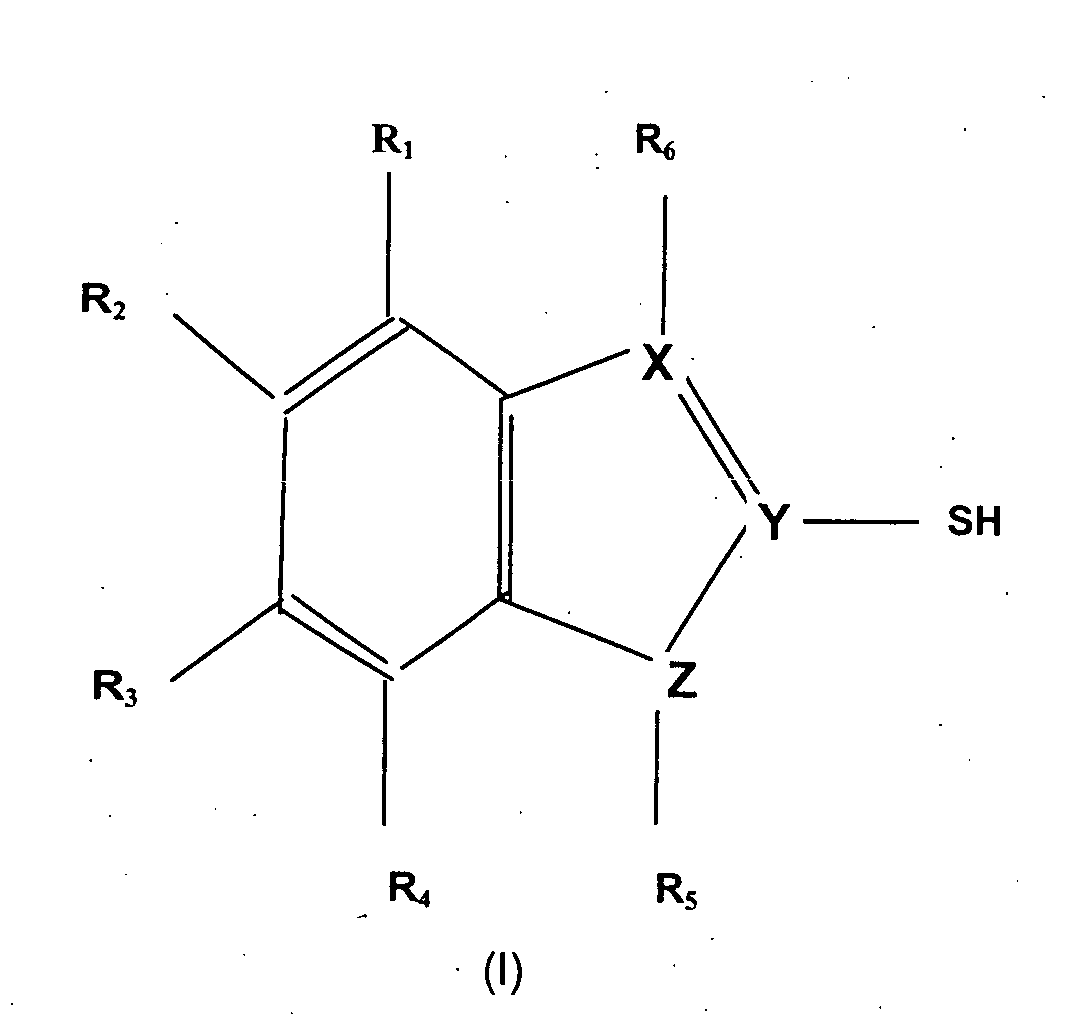
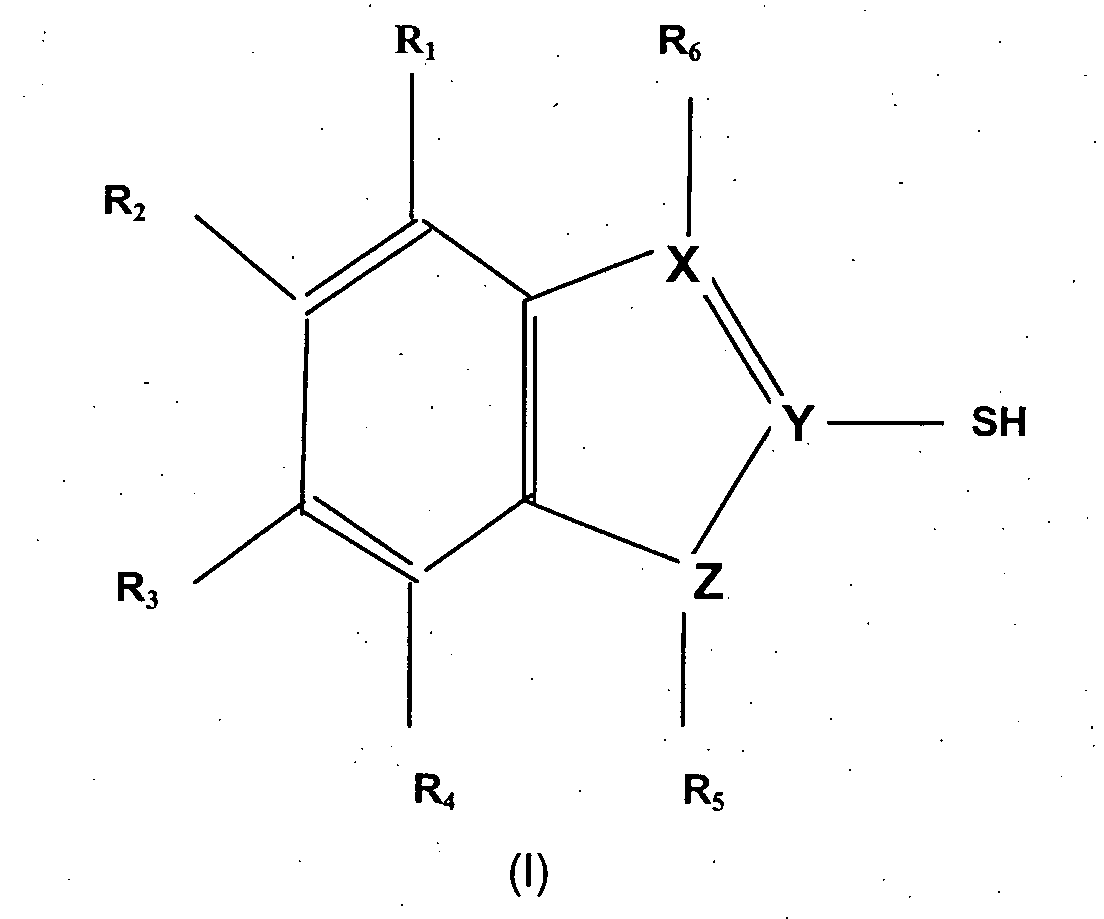
wherein X, Y, and Z are each independently selected from C, N, O, S, and P; R
1, R
2, R
3,
R
4, R
5, and R
6 are each independently an alkyl group having a formula C
nH
2n+1, wherein
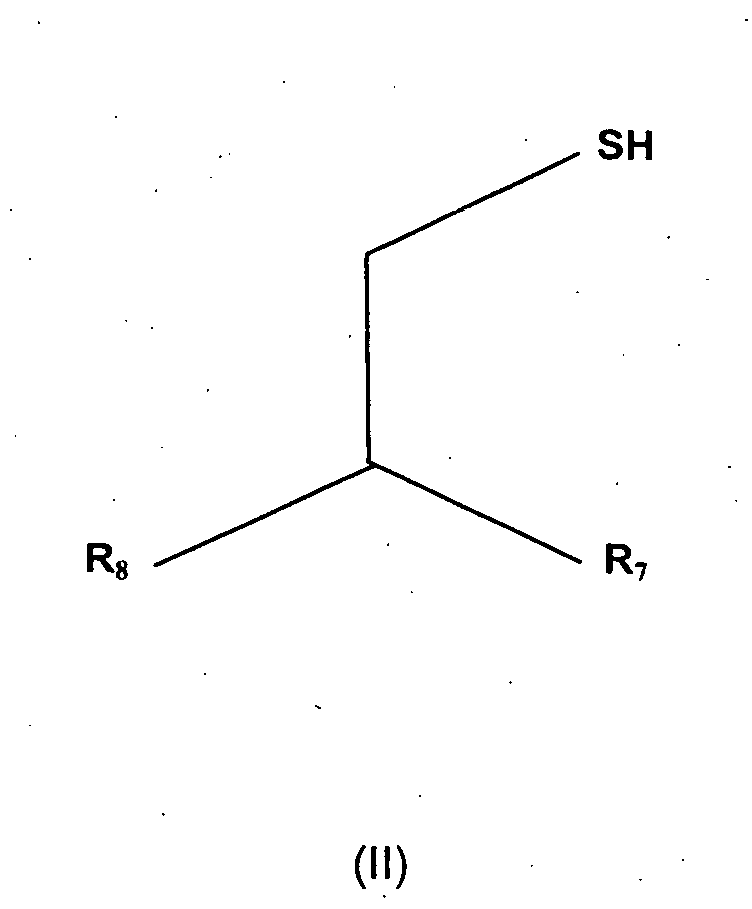
n ranges from 0 to 20; R
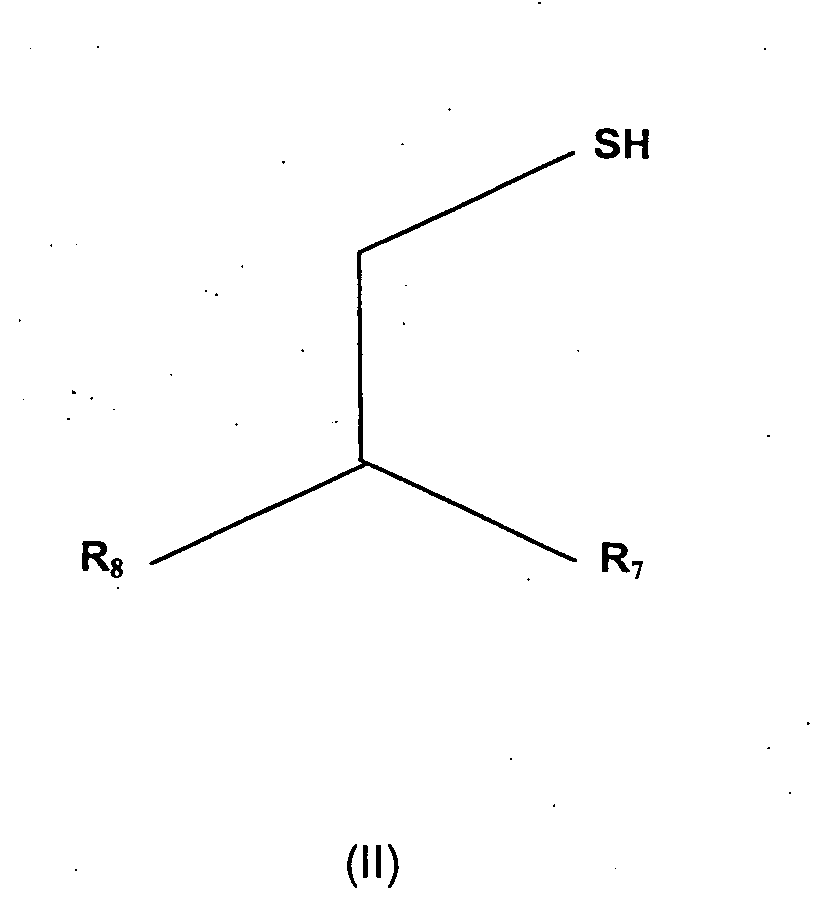
7 is one selected from H, -OH, -COOH, and -NH
2; and R
8 is one
selected from an alkyl group having a formula C
nH
2n+1, wherein n ranges from 0 to 20 or
an alkanol group having a formula C
nH
2nOH wherein n ranges from 0 to 20 and wherein
the composition is substantially free of a water-soluble amine.
In a further aspect, there is provided a composition, for removing residues from
a substrate comprising copper, comprising: an organic polar solvent; water; a quaternary
ammonium compound; optionally hydroxylamine provided that the mass ratio of
hydroxylamine if present to quaternary ammonium compound is less than 3; and a
mercapto-containing corrosion inhibitor selected from the group consisting of a
compound having a following formula (I), a compound having a following formula (II), 2-mercaptothiazoline,
3-mercaptopropyl-trimethoxysilane, and mixtures thereof
wherein X, Y, and Z are each independently selected from C, N, O, S, and P; R
1, R
2, R
3,
R
4, R
5, and R
5 are each independently an alkyl group having a formula C
nH
2n+1, wherein
n ranges from 0 to 20; R
7 is one selected from H, -OH, -COOH, and -NH
2; and R
8 is one
selected from an alkyl group having a formula C
nH
2n+1, wherein n ranges from 0 to 20 or
an alkanol group having a formula C
nH
2nOH wherein n ranges from 0 to 20 and wherein
the composition exhibits a copper etch rate that is less than 5 angstroms/minute.
Also disclosed herein is a method for removing residues from a substrate that
comprises contacting the substrate with the composition described herein.
DETAILED DESCRIPTION OF THE INVENTION
A composition and method comprising same for selectively removing residues
such as, for example, photoresist, gap fill, bottom antireflective coating (BARC) and other
polymeric materials and/or processing residues such as the residues generated by
etching are described herein. In a cleaning method involving substrates useful for
microelectronic devices, typical contaminants to be removed may include, for example,
organic compounds such as exposed and/or ashed photoresist material, ashed
photoresist residue, UV- or X-ray-hardened photoresist, C-F-containing polymers, low
and high molecular weight polymers, and other organic etch residues; inorganic
compounds such as metal oxides, ceramic particles from chemical mechanical
planarization (CMP) slurries and other inorganic etch residues; metal containing
compounds such as organometallic residues and metal organic compounds; ionic and
neutral, light and heavy inorganic (metal) species, moisture, and insoluble materials,
including particles generated by processing such as planarization and etching
processes. In one particular embodiment, residues removed are processing residues
such as those created by reactive ion etching.
The residues are typically present in a substrate that also includes metal,
silicon, silicate and/or interlevel dielectric materials such as, for example, deposited
silicon oxides and derivatized silicon oxides such as HSQ, MSQ, FOX, TEOS and spin-on
glass, chemical vapor deposited dielectric materials, low-k materials and/or high-k
materials such as hafnium silicate, hafnium oxide, barium strontium titanate (BST), TiO2,
TaO5, wherein both the residues and the metal, silicon, silicide, interlevel dielectric
materials, low-k and/or high-k materials will come in contact with the cleaning
composition. The composition and method disclosed herein provide for selectively
removing the residues such as photoresist, BARC, gap fill, and/or processing residues
without significantly attacking the metal, silicon, silicon dioxide, interlevel dielectric
materials, low-k and/or high-k materials. In certain embodiments, the substrate may
contain a metal, such as, but not limited to, copper; copper alloy, titanium, titanium
nitride, tantalum, tantalum nitride, tungsten, and/or titanium/tungsten alloys. In one
embodiment, the composition disclosed herein may be suitable for substrates containing
sensitive low-k -films. In one particular embodiment, residues removed are processing
residues such as those created by reactive ion etching.
The compositions disclosed herein may comprise from about 20 % to about
80% by weight of an organic polar solvent; from about 10 % to about 60% by weight of
water; from about 1 % to about 10% by weight of a quaternary ammonium compound;
optionally from about 0.1 % to about 5% by weight of a hydroxylamine provided that a
mass ratio of hydroxylamine if present to quaternary ammonium compound is less than
3; optionally from about 0.1 % to about 10 % by weight of a fluoride ion source, and a
mercapto-containing corrosion inhibitor selected from the group consisting of a
compound having a following formula (I), a compound having a following formula (II), 2-mercaptothiazoline,
3-mercaptopropyl-trimethoxysilane, and mixtures thereof
wherein X, Y, and Z are each independently selected from C, N, O, S, and P; R
1, R
2, R
3,
R
4, R
5, and R
5 are each independently an alkyl group having a formula C
nH
2n+1, wherein
n ranges from 0 to 20; R
7 is one selected from H, -OH, -COOH, and -NH
2; and R
8 is one
selected from an alkyl group having a formula C
nH
2n+1, wherein n ranges from 0 to 20 or
an alkanol group having a formula C
nH
2nOH wherein n ranges from 0 to 20. Mercapto-containing
corrosion inhibitors having the formulas (I) and (II) include mercapto organic
compounds such as mercapto alkane, mercapto alkanol, mercapto alanediol, and
mercapto aromatic compounds. In certain embodiments, the mercapto-containing
corrosion inhibitor may include 2-mercapto-5-methylbenzimidazole, 2-mercaptothiazoline,
3-mercapto-1,2-propanediol, 3-mercaptopropyl-trimethoxysilane,
and mixtures thereof. In alternative embodiments, the composition disclosed herein is
substantially free of a water soluble amine or any additional component that adversely
affects the stripping and cleaning ability of the composition or damages one or more
surfaces of the underlying substrate. In embodiments wherein the substrate contains,
inter alia, copper, the composition exhibits a copper etch rate of less than 5
angstroms/minute.
The composition disclosed herein contains an organic polar solvent that is
preferably water-soluble. Examples of organic polar solvents include, but are not limited
to, dimethylacetamide (DMAC), N-methyl pyrrolidinone (NMP), dimethylsulfoxide
(DMSO), dimethylformamide, N-methylformamide, formamide, dimethyl-2-piperidone
(DMPD), tetrahydrofurfuryl alcohol, glycerol, ethylene glycol, and other amides, alcohols
or sulfoxides, or multifunctional compounds, such as hydroxyamides or amino alcohols.
Further examples of the organic polar solvent include diols and polyols such as (C2- C20)
alkanediols and (C3- C20) alkanetriols, cyclic alcohols and substituted alcohols.
Particular examples of these auxiliary organic solvents are propylene glycol,
tetrahydrofurfuryl alcohol, diacetone alcohol and 1, 4-cyclohexanedimethanol. In certain
embodiments, the organic polar solvent may be DMSO, NMP, and/or DMAC. The
organic polar solvent enumerated above may be used alone or in combination with two
or more solvents.
In certain embodiments, the organic polar solvent may comprise a glycol ether.
Examples of glycol ethers include ethylene glycol monomethyl ether, ethylene glycol
monoethyl ether, ethylene glycol monobutyl ether, ethylene glycol dimethyl ether,
ethylene glycol diethyl ether, diethylene glycol monomethyl ether, diethylene glycol
monoethyl ether, diethylene glycol monopropyl ether, diethylene glycol monoisopropyl
ether, diethylene glycol monobutyl ether, diethylene glycol monoisobutyl either,
diethylene glycol monobenzyl ether, diethylene glycol dimethyl ether, diethylene glycol
diethyl ether, triethylene glycol monomethyl ether, triethylene glycol dimethyl ether,
polyethylene glycol monomethyl ether, diethylene glycol methyl ethyl ether, triethylene
glycol ethylene glycol monomethyl ether acetate, ethylene glycol monethyl ether acetate,
propylene glycol methyl ether acetate, propylene glycol monomethyl ether, propylene
glycol dimethyl ether, propylene glycol monobutyl ether, propylene glycol, monopropyl
ether, dipropylene glycol monomethyl ether, dipropylene glycol monopropyl ether,
dipropylene glycol monoisopropyl ether, dipropylene monobutyl ether, diproplylene glycol
diisopropyl ether, tripropylene glycol monomethyl ether, 1-methoxy-2-butanol, 2-methoxy-1-butanol,
2-methoxy-2-methylbutanol, 1,1-dimethoxyethane and 2-(2-butoxyethoxy)
ethanol.
Water is also present in the composition disclosed herein. It can be present
incidentally as a component of other elements, such as for example, an aqueous solution
comprising the fluoride ion source or quaternary ammonium compound, or it can be
added separately. Some non-limiting examples of water include deionized water, ultra
pure water, distilled water, doubly distilled water, or deionized water having a low metal
content. Preferably, water is present in amounts of from about 10 % to about 60% by
weight or from about 20 % to about 40 % by weight.
The composition also includes one or more quaternary ammonium compound
having the formula [N-R9R10R11R12]+ OH- wherein R9, R10, R11, and R12 are each
independently an alkyl group of 1 to 20 carbon atoms. The term "alkyl" refers to straight
or branched chain unsubstantiated hydrocarbon groups of 1 to 20 carbon atoms, or from
1 to 8 carbon atoms, or from 1 to 4 carbon atoms. Examples of suitable alkyl groups
include methyl, ethyl, propyl, isopropyl, butyl, and tertbutyl. The expression "lower alkyl"
refers to alkyl groups of 1 to 4 carbon atoms. Examples of suitable quaternary
ammonium compounds include tetramethylammonium hydroxide (TMAH),
tetraethylammonium hydroxide, tetrabutylammonium hydroxide (TBAH),
tetrapropylammonium hydroxide, trimethylethylammonium hydroxide, (2-hydroxyethyl)trimethylammonium
hydroxide, (2-hydroxyethyl)triethylammonium
hydroxide, (2-hydroxyethyl)tripropylammonium hydroxide, (1-hydroxypropyl)trimethylammonium
hydroxide, ethyltrimethylammonium hydroxide,
diethyldimethylammonium hydroxide and benzyltrimethylammonium hydroxide. The
quaternary ammonium compounds are present in an amount ranging from about 1 % to
about 10% or from about 5 % to about 10% by weight.
In certain embodiments, the composition may optionally include from about 0.1
% to about 5% by weight of a hydroxylamine or an acid salt thereof. In these
embodiments, the mass ratio of quaternary ammonium hydroxide to hydroxylamine is
less than 3. Exemplary hydroxylamines include diethylhydroxylamine and the lactic acid
and citric acid salts thereof. Ordinarily, hydroxylamines are not considered as being
compatible with copper because of their ability to etch. However, in the composition
disclosed herein these compounds surprisingly inhibit copper corrosion.
In other embodiments, the composition is substantially free of, or contains less
than 0.1 % by weight, of a water soluble amine.
In certain embodiments, the composition may optionally include a fluoride ion
source typically in an amount of from about 0.1 % to about 10% by weight, or from about
5 to about 10% by weight. Examples of certain fluoride ion sources include those of the
general formula R13R14R15R16NF where R13, R14, R15, and R16 are each independently
hydrogen, an alkanol group, an alkoxy group, an alkyl group or mixtures thereof.
Examples of such compounds include ammonium fluoride, tetramethyl ammonium
fluoride, tetraethyl ammonium fluoride, tetrabutyl ammonium fluoride, and mixtures
thereof. Still further examples of fluoride ion sources include fluoroboric acid,
hydrofluoric acid, fluoroborates, fluoroboric acid, tetrabutylammonium tetrafluoroborate,
aluminum hexafluoride, and choline fluoride. In still further embodiments, the fluoride ion
source is a fluoride salt of an aliphatic primary, secondary or tertiary amine can be used.
The compositions of the present disclosure can contain from about 0.1 to about
5% by weight of a mercapto-containing corrosion inhibitor selected from the group
consisting of a compound having a following formula (I), a compound having a following
formula (II), 2-mercaptothiazoline, 3-mercaptopropyl-trimethoxysilane, and mixtures
thereof
wherein X, Y, and Z are each independently selected from C, N, O, S, and P; R
1, R
2, R
3,
R
4, R
5, and R
6 are each independently an alkyl group having a formula C
nH
2n-1, wherein
n ranges from 0 to 20; R
7 is one selected from H, -OH, -COOH, and -NH
2; and R
8 is one
selected from an alkyl group having a formula C
nH
2n+1, wherein n ranges from 0 to 20 or
an alkanol group having a formula C
nH
2nOH wherein n ranges from 0 to 20. Specific
examples of mercapto-containing corrosion inhibitors include 2-mercapto-5-methylbenzimidazole
(a formula (I) compound), 3-mercapto-1,2-propanediol (which is
also referred to as thioglycerol and is a formula (II) compound), 2-mercaptothiazoline
(neither formula (I) nor (II) compounds), 3-mercaptopropyl-trimethoxysilane (neither
formula (I) nor (II) compounds) and mixtures thereof.
The composition disclosed herein may further comprise one or more additional
corrosion inhibitors in addition to the mercapto-containing corrosion inhibitors provided
that these additional corrosion inhibitors do not adversely effect the stripping and
cleaning performance of the composition nor damage the underlying substrate surface.
Examples of these additional corrosion inhibitors include, but are not limited to, organic
acids (e.g., anthranilic acid, gallic acid, benzoic acid, malonic acid, maleic acid, fumaric
acid, D,L-malic acid, isophthalic acid, phthalic acid, and lactic acid), organic acid salts,
catechol, benzotriazole (BZT), resorcinol, other phenols, acids or triazoles maleic
anhydride, phthalic anhydride, catechol, pyrogallol, esters of gallic acid, benzotriazole
(BZT), carboxybenzotriazole, fructose, ammonium thiosulfate, glycine,
tetramethylguanidine, iminodiacetic acid, dimethylacetoacetamide, trihydroxybenzene,
dihydroxybenzene, salicyclohydroxamic, and mixtures thereof.
The composition may also include one or more of the following additives:
surfactants, chelating agents, chemical modifiers, dyes, biocides, and other additives.
Additives may be added to the composition described herein provided that it does not
adversely affect the stripping and cleaning ability of the composition or the integrity of the
underlying metal, silicon, silicon dioxide, interlevel dielectric materials, low-k and/or high-k
materials. For example, if the composition if used to treat a substrate containing
copper, the composition does not include additional additives that would increase the
copper etch rate of the composition. Some examples of representative additives include
acetylenic alcohols and derivatives thereof, acetylenic diols (non-ionic alkoxylated and/or
self-emulsifiable acetylenic diol surfactants) and derivatives thereof, alcohols, quaternary
amines and di-amines, amides (including aprotic solvents such as dimethyl formamide
and dimethyl acetamide), alkyl alkanolamines (such as diethanolethylamine), and
chelating agents such as beta-diketones, beta-ketoimines, carboxylic acids, mallic acid
and tartaric acid based esters and diesters and derivatives thereof, and tertiary amines,
diamines and triamines.
The compositions disclosed herein may have a pH that ranges from about 10 to
about 14, or from about 11 to about 13.
Compositions disclosed herein are compatible with substrates containing low-k
films such as HSQ (FOx), MSQ, SiLK, etc. including those low-k films containing a
fluoride. The compositions are also effective in stripping photoresists including positive
and negative photoresists and plasma etch residues such as organic residues,
organometallic residues, inorganic residues, metallic oxides, or photoresist complexes at
low temperatures with very low corrosion of copper, and/or titanium containing
substrates. Moreover, the compositions are compatible with a variety of metal, silicon,
silicon dioxide, interlevel dielectric materials, low-k and/or high-k materials.
During the manufacturing process, a photoresist layer is coated on the
substrate. Using a photolithographic process, a pattern is defined on the photoresist
layer. The patterned photoresist layer is thus subjected to plasma etch by which the
pattern is transferred to the substrate. Etch residues are generated in the etch stage.
Some of the substrates used in this invention are ashed while some are not ashed.
When the substrates are ashed, the main residues to be cleaned are etchant residues. If
the substrates are not ashed, then the main residues to be cleaned or stripped are both
etch residues and photoresists.
The method described herein may be conducted by contacting a substrate
having a metal, organic or metal-organic polymer, inorganic salt, oxide, hydroxide, or
complex or combination thereof present as a film or residue, with the described
composition. The actual conditions, e.g. temperature, time, etc., depend on the nature
and the thickness of the material to be removed. In general, the substrate is contacted
or dipped into a vessel containing the composition at a temperature ranging from 20°C to
85°C, or from 20°C to 60°C, or from 20°C and 40°C. Typical time periods for exposure
of the substrate to the composition may range from, for example, 0.1 to 60 minutes, or 1
to 30 minutes, or 1 to 15 minutes. After contact with the composition, the substrate may
be rinsed and then dried. Drying is typically carried out under an inert atmosphere. In
certain embodiments, a deionized water rinse or rinse containing deionized water with
other additives may be employed before, during, and/or after contacting the substrate
with the composition described herein. However, the composition can be used in any
method known in the art that utilizes a cleaning fluid for the removal of photoresist, ash
or etch residues and/or residues.
EXAMPLES
The following examples are provided to further illustrate the composition and
method disclosed herein. In the following examples, all amounts are given in weight
percent and add up to 100 weight percent. The compositions disclosed herein were
prepared by mixing the components together in a vessel at room temperature until all
solids have dissolved.
For the following examples, one or more test substrates were placed in a 600
milliliter (ml) beaker that contained 400 ml of each exemplary composition. The 600 ml
beaker further included a 1" stir bar that rotated at 400 revolutions per minute. The
exemplary compositions having the wafer(s) contained therein were then heated at the
time and temperature provided in each example. After exposure to the exemplary
composition, the wafer(s) were rinsed with deionized water and dried with nitrogen gas.
The wafers were then evaluated using scanning electron microscopy (SEM) in a variety
of locations to determine, inter alia, the extent of photo resist removal, BARC or gap fill
removal, and underlying ILD damage.
Example 1: Removal of Photoresist Residues
Silicon wafer test substrates having a low-k, silicon oxide-containing dielectric
film and a photoresist pattern etched for a multi-layer interconnect were etched using a
plasma etching process. The substrates were then processed by immersing the
substrate in a variety of exemplary compositions and a comparative composition
provided in Table I for time and temperature described in Table II. A scanning electronic
microscope (SEM) was used to evaluate the cleaning performance. The cleaning
performance results are provided in Table II. The results provided in Table II illustrate
that that exemplary formulations 1A and 1 B can effectively clean photoresist.
| | Composition |
| Comparative Example 1 | Water: 20.0 wt % Ammonium Fluoride (NH4OH) (29% water solution): 20.0 wt% Dimethylsulfoxide (DMSO): 60.0 wt% |
| Example 1A | Tetramethyl ammonium hydroxide (TMAH) ( 25 % water solution) : 30.0 wt% Dimethylsulfoxide (DMSO): 68.5 wt% Hydroxylamine (HA) (50% water solution): 0.5 wt% 3-Mercapto-1,2-propanediol (thioglycerol) : 1.0 wt% Mass Ratio of HA /TMAH: 0.25/0.75 = 0.0333 |
| Example 1 B | TMAH ( 25 % water solution) : 30.0 wt% DMSO: 58.5 wt% DI Water: 10.0 wt% HA (50% water solution): 0.5 wt % 3-Mercapto-1,2-propanediol (thioglycerol) : 1.0 wt% Mass Ratio of HA /TMAH: 0.25/0.75 = 0.0333 |
| Composition | Process Temperature (°C) | Process Time (minutes) | Photoresist Cleaning Result |
| Comparative Example 1 | 75 | 40 | Not Clean |
| Example 1A | 65 | 40 | 90 % Clean |
| Example 1B | 65 | 40 | > 95% Clean |
Example 2 illustrates the effectiveness of various exemplary compositions for
removing polymeric materials such as gap fill or BARC material from a silicon wafer
substrate after plasma etching. Silicon wafer test substrates having a low-k, silicon
oxide-containing dielectric film, a BARC layer, and a photoresist pattern etched for a
multi-layer interconnect were etched using a plasma etching process. The substrates
were then processed by immersing the substrate in a variety of exemplary compositions
and comparative compositions provided in Table III for time and temperature described
in Table IV. A SEM was used to evaluate the cleaning performance and damage to the
underlying interlevel dielectric layer (ILD) and the results are provided in Table IV. The
results illustrate that the exemplary compositions, particularly compositions 2B and 2C,
can effectively clean gap fill or BARC material without attacking the ILD layer.
| | Composition |
| Comparative Example 2A | Water: 20.0 wt% TMAH ( 25 % water solution) : 30.0 wt% N-methyl pyrrolidinone (NMP) : 50 wt% |
| Comparative Example 2B | Water: 9.5 wt% TMAH ( 25% water solution) : 30.0 wt% DMSO : 55.0 wt% DEHA : 5.0 wt% SURFYNOL™ S485 : 0.5 wt% Mass Ratio of DEHA/TMAH: 5/7.5 = 0.667 |
| Example 2A | TMAH (25 % water solution): 30.0 wt% DMSO: 68.5 wt% 3-Mercapto-1,2-propanediol (thioglycerol) : 1.5 wt% |
| Example 2B | TMAH ( 25% water solution): 40.0 wt% DMSO : 58.0 wt% hydroxylamine ( 50% water solution): 1.0 wt% 3-Mercapto-1,2-propanediol (thioglycerol) : 1.0 wt% Mass Ratio of HA/TMAH: 0.5/10 = 0.05 |
| Example 2C | TMAH ( 25% water solution) : 40.0 wt% DMSO : 56.0 wt % TMAF (20% water solution) : 2.0 wt% hydroxylamine ( 50% water solution): 1.0 wt% 3-Mercapto-1,2-propanediol (thioglycerol) : 1.0 wt% Mass Ratio of HA/TMAH: 0.5/10 = 0.05 |
| Formulation | Process Temperature (°C) | Process Time (minutes) | Result |
| | | | Gap Fill Material Cleaning | ILD Damage |
| Comparative Example 2A | 75 | 30 | Not Clean | Yes |
| Comparative Example 2B | 75 | 40 | 50 % removed | Yes |
| Example 2A | 75 | 20 | Not Clean | No |
| Example 2B | 75 | 20 | 100% Removed | No |
| Example 2C | 75 | 20 | 100% Removed | No |
Example 3 illustrates the degree of metal corrosion present to a metal film when
substrates coated with a metal film are exposed to comparative and exemplary
compositions for varying time periods. A copper film was sputtered onto silicon oxide
wafer substrate. The initial thickness of the copper film on the wafers was measured
using the CDE ResMap 273 Four Point Probe. After determining the initial thickness,
test substrates were then immersed in the compositions provided in Table V at the
temperatures provided in Table VI for 5, 10, 20, 40 and 60 minute intervals. After
immersion in each time interval, the test substrates were removed from each
composition, rinsed for three minutes with deionized water, and completely dried under
nitrogen. Thickness measurements were determined at each time interval and graphed
using a "least squares fit" model on the results for each exemplary composition. The
calculated slope of the "least squares fit" model of each composition is the resultant etch
rate provided in angstroms/minute (Å/min). The copper etch rate is used the linear fit for
thickness change against to the immersed time. The summary of etch rates ("ER") are
provided in Table VI. Table VI illustrates that test substrates treated with the exemplary
compositions, particularly examples 3B through 3F, exhibited substantially lower copper
etch rates when compared to those substrates treated with comparative examples 3A
through 3D.
| | Composition |
| Comparative Example 3A | Water: 10.0 wt% TMAH ( 25% water solution) : 30.0 wt% DMSO : 59.0 wt% Hydroxylamine (HA)( 50% water solution) : 1.0 wt% Mass Ratio of HA/TMAH: 0.5/7.5 = 0.0667 |
| Comparative Example 3B | Water: 10.0 wt% TMAH ( 25% water solution) : 30.0 wt% DMSO : 57.5 wt% HA ( 50% water solution) : 0.5 wt% DEHA : 2.0 wt% Mass Ratio of HA and DEHA/TMAH: 2.25/7.5 = 0.3 |
| Comparative Example 3C | Water: 10.0 wt% TMAH ( 25% water solution) : 30.0 wt% DMSO : 58.5 wt% HA ( 50% water solution) : 0.5 wt% Gallic Acid : 1.0 wt% Mass Ratio of HA/TMAH: 0.25/7.5 = 0.0333 |
| Comparative Example 3D | Water: 10.0 wt% TMAH ( 25% water solution) : 30.0 wt% DMSO : 58.5 wt% HA ( 50% water solution) : 0.5 wt% Benzotriazole (BZT) : 1.0 wt% Mass Ratio of HA/TMAH: 0.25/7.5 = 0.0333 |
| Example 3A | TMAH ( 25% water solution) : 30.0 wt% DMSO : 68.0 wt% HA ( 50% water solution) : 1.0 wt% Mercaptobenzoxazole : 1.0 wt% Mass Ratio of HA/TMAH: 0.5/7.5 = 0.0667 |
| Example 3B | TMAH ( 25% water solution) : 30.0 wt% DMSO : 68.5 wt% HA ( 50% water solution) : 1.0 wt% 2-mercapto-5-methylbenzimidazole : 0.5 wt% Mass Ratio of HA/TMAH: 0.5/7.5 = 0.0667 |
| Example 3C | TMAH ( 25% water solution) : 30.0 wt% DMSO : 68.0 wt% HA ( 50% water solution) : 1.0 wt% 3-Mercapto-1,2-propanediol (thioglycerol) : 1.0 wt% Mass Ratio of HA/TMAH: 0.5/7.5 = 0.0667 |
| Example 3D | TMAH (25 % water solution): 40.0 wt% DMSO: 59 wt% 3-Mercapto-1,2-propanediol (thioglycerol) : 1.0 wt% |
| Example 3E | TMAH (25 % water solution): 40.0 wt% DMSO: 58.0% wt% 3-Mercapto-1,2-propanediol (thioglycerol) : 2.0 wt% |
| Example 3F | TMAH ( 25% water solution) : 30.0 wt% DMSO : 68.0 wt% HA ( 50% water solution) : 1.0 wt% Mercaptothiazoline : 1.0 wt% Mass Ratio of HA/TMAH: 0.5/7.5 = 0.0667 |
| Composition | Process Temperature (°C) | Cu Etch Rate (A/min) |
| Comparative Example 3A | 75 | 28 |
| Comparative Example 3B | 75 | 21 |
| Comparative Example 3C | 75 | 112 |
| Comparative Example 3D | 75 | 28 |
| Example 3A | 75 | 31 |
| Example 3B | 75 | 3 |
| Example 3C | 75 | 1 |
| Example 3D | 55 | 1 |
| Example 3E | 55 | 1 |
| Example 3F | 75 | 1 |