EP1609776A1 - Process for production of carbonyl compounds - Google Patents
Process for production of carbonyl compounds Download PDFInfo
- Publication number
- EP1609776A1 EP1609776A1 EP04722950A EP04722950A EP1609776A1 EP 1609776 A1 EP1609776 A1 EP 1609776A1 EP 04722950 A EP04722950 A EP 04722950A EP 04722950 A EP04722950 A EP 04722950A EP 1609776 A1 EP1609776 A1 EP 1609776A1
- Authority
- EP
- European Patent Office
- Prior art keywords
- group
- substituted
- compound
- unsubstituted
- formula
- Prior art date
- Legal status (The legal status is an assumption and is not a legal conclusion. Google has not performed a legal analysis and makes no representation as to the accuracy of the status listed.)
- Granted
Links
- 0 CNNC1(C(*)C1*)[N+]=[N-] Chemical compound CNNC1(C(*)C1*)[N+]=[N-] 0.000 description 1
Classifications
-
- C—CHEMISTRY; METALLURGY
- C07—ORGANIC CHEMISTRY
- C07C—ACYCLIC OR CARBOCYCLIC COMPOUNDS
- C07C45/00—Preparation of compounds having >C = O groups bound only to carbon or hydrogen atoms; Preparation of chelates of such compounds
- C07C45/27—Preparation of compounds having >C = O groups bound only to carbon or hydrogen atoms; Preparation of chelates of such compounds by oxidation
- C07C45/29—Preparation of compounds having >C = O groups bound only to carbon or hydrogen atoms; Preparation of chelates of such compounds by oxidation of hydroxy groups
-
- C—CHEMISTRY; METALLURGY
- C07—ORGANIC CHEMISTRY
- C07D—HETEROCYCLIC COMPOUNDS
- C07D317/00—Heterocyclic compounds containing five-membered rings having two oxygen atoms as the only ring hetero atoms
- C07D317/08—Heterocyclic compounds containing five-membered rings having two oxygen atoms as the only ring hetero atoms having the hetero atoms in positions 1 and 3
- C07D317/44—Heterocyclic compounds containing five-membered rings having two oxygen atoms as the only ring hetero atoms having the hetero atoms in positions 1 and 3 ortho- or peri-condensed with carbocyclic rings or ring systems
- C07D317/46—Heterocyclic compounds containing five-membered rings having two oxygen atoms as the only ring hetero atoms having the hetero atoms in positions 1 and 3 ortho- or peri-condensed with carbocyclic rings or ring systems condensed with one six-membered ring
- C07D317/48—Methylenedioxybenzenes or hydrogenated methylenedioxybenzenes, unsubstituted on the hetero ring
- C07D317/50—Methylenedioxybenzenes or hydrogenated methylenedioxybenzenes, unsubstituted on the hetero ring with only hydrogen atoms, hydrocarbon or substituted hydrocarbon radicals, directly attached to atoms of the carbocyclic ring
- C07D317/54—Radicals substituted by oxygen atoms
-
- C—CHEMISTRY; METALLURGY
- C07—ORGANIC CHEMISTRY
- C07C—ACYCLIC OR CARBOCYCLIC COMPOUNDS
- C07C45/00—Preparation of compounds having >C = O groups bound only to carbon or hydrogen atoms; Preparation of chelates of such compounds
- C07C45/27—Preparation of compounds having >C = O groups bound only to carbon or hydrogen atoms; Preparation of chelates of such compounds by oxidation
- C07C45/30—Preparation of compounds having >C = O groups bound only to carbon or hydrogen atoms; Preparation of chelates of such compounds by oxidation with halogen containing compounds, e.g. hypohalogenation
-
- C—CHEMISTRY; METALLURGY
- C07—ORGANIC CHEMISTRY
- C07C—ACYCLIC OR CARBOCYCLIC COMPOUNDS
- C07C67/00—Preparation of carboxylic acid esters
- C07C67/30—Preparation of carboxylic acid esters by modifying the acid moiety of the ester, such modification not being an introduction of an ester group
- C07C67/313—Preparation of carboxylic acid esters by modifying the acid moiety of the ester, such modification not being an introduction of an ester group by introduction of doubly bound oxygen containing functional groups, e.g. carboxyl groups
-
- C—CHEMISTRY; METALLURGY
- C07—ORGANIC CHEMISTRY
- C07C—ACYCLIC OR CARBOCYCLIC COMPOUNDS
- C07C67/00—Preparation of carboxylic acid esters
- C07C67/30—Preparation of carboxylic acid esters by modifying the acid moiety of the ester, such modification not being an introduction of an ester group
- C07C67/333—Preparation of carboxylic acid esters by modifying the acid moiety of the ester, such modification not being an introduction of an ester group by isomerisation; by change of size of the carbon skeleton
Definitions
- the present invention relates to a process for production of carbonyl compounds.
- Carbonyl compounds represented by aldehydes are important compounds as various chemicals and the synthetic intermediates for them.
- a method of oxidizing vic.-diols to cleave oxidatively a carbon-carbon bond to which a hydroxyl group of the above-mentioned vic.-diols is bonded is known.
- chromic acid e.g. J. Am. Chem. Soc., 1962, 84, 1252
- lead tetraacetate e.g. Chem. Ber., 1931, 64, 260
- method for oxidation using periodic acid or salt of periodic acid e.g. Bull.
- carbonyl compounds such as aldehydes are produced more advantageously industrially from vic.-diols.
- the present invention provides a process for the production of carbonyl compounds, characterized by reacting a diol represented by the formula (1); wherein R 1 , R 2 , R 3 and R 4 are the same or different, and independently represent a substituted or unsubstituted alkyl group, a substituted or unsubstituted aryl group, a substituted or unsubstituted aralkyl group, a substituted or unsubstituted acyl group, a substituted or unsubstituted alkoxycarbonyl group, a substituted or unsubstituted aryloxycarbonyl group, a substituted or unsubstituted aralkyloxycarbonyl group, carboxyl group or a hydrogen atom, or R 1 and R 2 or R 3 and R 4 are bonded together with the carbon atoms to which they are bonded to form a ring , provided that all of R 1 , R 2 , R 3 and R 4 are not hydrogen atom
- unsubstituted alkyl group examples include, for example, the linear, branched or cyclic alkyl group having 1 to 20 carbon atoms such as a methyl, ethyl, n-propyl, isopropyl, n-butyl, isobutyl, sec-butyl, tert-butyl, n-pentyl, hexyl, heptyl, octyl, nonyl, n-decyl, n-undecyl, n-dodecyl, n-tridecyl, n-tetradecyl, n-pentadecyl, n-hexadecyl, n-octadecyl, n-nonadecyl, n-icocyl, cyclopropyl, 2,2-dimethylcyclopropyl, cyclopentyl, cyclohexyl,
- substituted alkyl group examples include alkyl groups which are the above-mentioned alkyl groups substituted with a) an alkoxy group (e.g. a C1-4 alkoxy group such as a methoxy, ethoxy, n-propoxy, tert-butoxy group); b) an aryloxy group such as a phenoxy and naphthyloxy group; c) an aralkyloxy group such as a benzyloxy and naphthylmethoxy group; d) an alkoxycarbonyl group such as methoxycarbonyl and ethoxycarbonyl group; e) an aryloxycarbonyl group such as a phenoxycarbonyl group; f) an aralkyloxycarbonyl group such as a benzyloxycarbonyl group; g) a halogen atom such as a fluorine, chlorine and bromine atom; h) for example, a hydroxycarbonyl group;
- alkyl group substituted with thus substituent examples include, for example, a methoxymethyl, ethoxymethyl, methoxyethyl, methoxycarbonylmethyl, 1-ethoxycarbonyl-2,2-dimethyl-3-cyclopuropyl, 7-carboxyheptyl, phenoxymethyl, 4-chlorophenoxymethyl and benzyloxymethyl group.
- Examples of the unsubstituted aryl group include, for example, a phenyl and naphthyl group.
- Examples of the substituted aryl group include aryl groups substituted with a) the above-mentioned substituted or unsubstituted alkyl group, b) an aryl group such as a phenyl and naphthyl group, c) the above-mentioned alkoxyl group, d) an aralkyl group such as a benzyl and naphthyl group, e) the above-mentioned aryloxy group, f) the above-mentioned aralkyloxy group, g) an aryl group which includes a phenyl group substituted with a substituent such as the above-mentioned halogen atom or h) methylenedioxy group. Specific examples thereof include, for example, a 2-methylphenyl, 4-chlorophenyl, 4-methylphenyl,
- an alkyl group substituted with the above-mentioned substituted or unsubstituted aryl group for example, a linear, branched or cyclic alkyl group having 1 to 20 carbon atoms as the above, preferably a methyl or ethyl group
- aryl group for example, a linear, branched or cyclic alkyl group having 1 to 20 carbon atoms as the above, preferably a methyl or ethyl group
- benzyl 4-chlorobenzyl, 4-methylbenzyl, 4-methoxybenzyl, 3-phenoxybenzyl, 2,3,5,6-tetrafluorobenzyl, 2,3,5,6-tetrafluoro-4-methylbenzyl, 2,3,5,6-tetrafluoro-4-methoxybenzyl and 2,3,5,6-tetrafluoro-4-methoxymethylbenzyl group.
- substituted or unsubstituted acyl group examples include those which are composed of carbonyl groups and the above-mentioned substituted or unsubstituted alkyl, aryl or aralkyl groups, such as an acetyl, ethylcarbonyl, benzoyl and benzylcarbonyl group.
- substituted or unsubstituted alkoxycarboxy, aryloxycarbonyl and aralkyloxycarbonyl group include those which are composed of -O-(CO) group and the above-mentioned substituted or unsubstituted alkyl, aryl or aralkyl groups, such as a methoxycarbonyl, ethoxycarbonyl, phenoxycarbonyl and benzyloxycarbonyl group.
- Examples of the ring formed by bonding R 1 and R 2 or R 3 and R 4 together with the carbon atoms to which they are bonded include, for example, a substituted or unsubstituted cycloalkyl group (for example, a cycloalkyl group having 3 to 6 carbon atoms or a cycloalkenyl group having 5 to 6 carbon atoms which may be branched, and a cycloalkyl group having 3 to 6 carbon atoms, cycloalkyl group, or cycloalkenyl group having 5 to 6 carbon atoms which may be branched and are substituted with a substituent exemplified as the substituent of the above-mentioned substituted alkyl group such as a cyclopropane ring, a dimethylcyclopropane ring, a cyclobutane ring, a cyclopentane ring, a cyclohexane ring, a cyclopentene ring and
- diol (1) examples include, for example, pinacol, 2,3-butanediol, 1,2-cyclohexanediol, 1,2-cyclooctanediol, 1-methyl-1,2-cyclohexanediol, cyclohexene-1,2-diol, 1,2-indanediol, 1,2-diphenyl-1,2-ethanediol, 1,2:5,6-di-O-isopropylidene-mannitol, decalin-9,10-diol, 1,2-(methylenedioxy)-4-(propane-1,2-diol)benzene, 6,6-dimethyl-bicyclo[3.1.1]heptane-2,3-diol, 3,7,7-trimethyl-bicyclo[4.1.0]heptane-3,4-diol, 9,10-dihydroxyoctadecanoic acid, N,N,N,N-te
- the diol (1) a commercially available compound or a compound produced according to the known methods such as a method for reacting a corresponding epoxy compound with an alkali may be used.
- the diol (1) has an asymmetric carbon atom within the molecule
- the diol (1) has optically isomers and any one optical isomer thereof or a mixture thereof may be used in the present invention.
- trivalent bismuth compound examples include, for example, triarylbismuth compounds such as triphenylbismuth, tri(2-methoxyphenyl)bismuth, tri(4-methoxyphenyl)bismuth, trimesytylbismuth, and tri(4-fluorophenyl)bismuth, diarylalkylbismuth compounds such as diphenylmethylbismuth, trivalent bismuth halide compounds such as bismuth trichloride, preferably triarylbismuth compound.
- the amount of the bismuth compound used may be catalytic amount per 1 mole of the diol (1), and it is usually 0.001 to 1 mole, preferably about 0.005 to 0.05 mole per 1 mole of the diol (1).
- the base examples include, for example, alkali metal carbonates such as sodium carbonate, potassium carbonate and cesium carbonate, and alkali metal hydroxides such as lithium hydroxide, sodium hydroxide and potassium hydroxide, preferably alkali metal carbonate, especially preferably potassium carbonate.
- the amount of the base used is usually 1 mole or more per 1 mole of the diol (1), and there is no specific upper limit, and it is usually 10 moles or less per 1 mole of the diol (1).
- Examples of the inorganic bromine compound include, for example, bromine chloride and phosphorus tribromide.
- the amount of bromine or the inorganic bromine compound used is usually 1 mole or more per 1 mole of the diol (1), and there is no specific upper limit and it is usually 3 mole or less per 1 mole of the diol (1).
- Bromine or the inorganic bromine compound is used as it is or in the form of a solution obtained by dissolving with a solvent described below. Two or more kinds of bromine or the inorganic bromine compound may be added simultaneously, and the sum of the amount of each bromine or inorganic compound may be in a range of the above-mentioned amount.
- the present reaction may be carried out without using a solvent and preferably the reaction is carried out in the presence of a solvent.
- the solvent is not particularly limited in so far as it is inactive against the reaction and the diol (1) can dissolve in it.
- the solvent include, for example, water; alcohol solvents such as tert-butyl alcohol; alkylnitrile solvents such as acetonitrile and propionitrile; ether solvents such as diethyl ether, tert-butyl methyl ether and tetrahydrofuran; ester solvents such as ethyl acetate; and halogenated hydrocarbon solvents such as dichloromethane, dichloroethane, chloroform, carbon tetrachloride, chlorobenzene and dichlorobenzene.
- the solvent may be used alone or in the form of a mixture. The amount of the solvent used is not particularly limited.
- the reaction of the present invention is preferably carried out in the presence of an amide compound having at least one hydrogen atom on the nitrogen atom, or an imide compound having at least one hydrogen atom on the nitrogen atom (hereinafter simply referred to as the amide compound or the imide compound).
- the carbonyl compound can be obtained in better yield by carrying out the reaction according to thus embodiment.
- the amide compound or the imide compound include, for example, an amide compound such as acetamide, N-methylacetamide, ethanamide, propanamide, benzamide and N-methylbenzamide; and an imide compound such as succinimide, phthalimide and 1,2-cyclohexanedicarboxyimide.
- the amount of the amide compound or the imide compound may be catalytic amount per 1 mole of the diol (1), and it is usually 0.01 mole or more, preferably 0.05 mole or more. There is no specific upper limit, and it is usually 1 mole or less per 1 mole of the diol (1).
- the reaction temperature is usually about -10 to 100 oC.
- the present reaction proceeds by mixing the bismuth compound, the base, the diol (1), bromine or the inorganic bromine compound, and if necessary, the amide compound or imide compound.
- the mixing order is not particularly limited and usually, bromine or the inorganic bromine compound is added to the mixture of the diol (1), the bismuth compound, the base, and if necessary, the amide compound or imide compound.
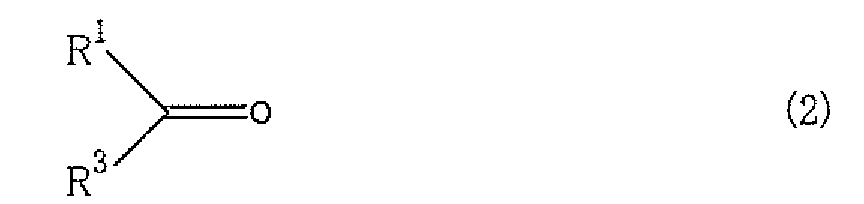
- the carbonyl compound represented by the formula (2) (hereinafter, simply referred to as the carbonyl compound (2)) and the carbonyl compound represented by the formula (3) (hereinafter, simply referred to as the carbonyl compound (3) ) are produced by reacting the diol (1) with bromine or the inorganic bromine compound in the presence of the bismuth compound and the base.
- the carbonyl compound (2) and the carbonyl compound (3) can be isolated by concentrating the obtained reaction mixture as it is or after filtering insolubles, if necessary.
- the carbonyl compound (2) and the carbonyl compound (3) can be also isolated by adding, if necessary, water and/or a water-insoluble solvent to the reaction mixture, then extracting and subsequently concentrating the obtained organic layer.
- the isolated carbonyl compound (2) and carbonyl compound (3) may be separated or purified by means such as distillation and/or column chromatography. It is preferable to neutralize the reaction mixture before concentration in order to prevent the carbonyl compound (2) and the carbonyl compound (3) from decomposing or condensing while concentrating.
- Examples of the obtained carbonyl compound (2) and carbonyl compound (3) include, for example, acetone, acetaldehyde, glutaraldehyde, adipoaldehyde, 5-acetyl-1-pentanal, benzaldehyde, 2,3-O-isopropylidene-glyceraldehyde, 1,6-cyclodecanedione, heliotropin, 3-formyl-2,2-dimethyl-cyclobutanacetaldehyde, 2,2-dimethyl-(3-oxopropyl)cyclopropanecarbaldehyde, nonylaldehyde, 9-oxononanonic acid, N,N-dimethylglyoxylamide and N-glyoxyloylpyrrolidine.
- substituted or unsubstituted alkyl group, the substituted or unsubstituted aryl group and the substituted or unsubstituted aralkyl group include the same groups as described above.
- R 5 represents preferably a linear, branched or cyclic alkyl group having 1 to 20 carbon atoms as the above, or an aralkyl group which may be substituted with at least one substituent selected from a) a halogen atom, b) an alkyl group such as a methyl and ethyl group, c) an alkoxy group such as a methoxy group, d) an alkoxyalkyl group such as a methoxymethyl group, and e) an aryloxy group such as a phenoxy group (e.g. a benzyl group).
- diol (4) examples include, for example, methyl 3,3-dimethyl-2-(2-methyl-1,2-dihydroxypropyl)cyclopropaneca rboxylate, ethyl 3,3-dimethyl-2-(2-methyl-1,2-dihydroxypropyl)cyclopropaneca rboxylate, isopropyl 3,3-dimethyl-2-(2-methyl-1,2-dihydroxypropyl)cyclopropaneca rboxylate, tert-butyl 3,3-dimethyl-2-(2-methyl-1,2-dihydroxypropyl)cyclopropaneca rboxylate, cyclohexyl 3,3-dimethyl-2-(2-methy2-1,2-dihydroxypropyl)cyclopropaneca rboxylate, menthyl 3,3-dimethyl-2-(2-methyl-1,2-dihydroxypropyl)cyclopropaneca rboxylate, benzyl 3,3-dimethyl-2-(
- diol (4) has a cis-isomer having the group shown by -CO 2 R and 2-methyl-1,2-dihydroxypropyl group on the same side with respect to the cyclopropane ring plane and a trans-isomer having the groups on the opposite side, and any one of the cis-isomer and the trans-isomer or a mixture thereof may be used in the present invention.
- the mixing ratio thereof is not limited particularly.
- diol (4) has optically isomers due to having asymmetric carbon atoms within the molecule and any one optical isomer thereof or a mixture thereof may be used in the present invention.
- the diol (4) can be produced according to the known method such as a method which is that the corresponding chryfelhemic acid ester is subjected to the oxidation treatment with hydrogen peroxide in the presence of a tungsten catalyst and then conducting reduction treatment (e.g. EP-1188735).
- Examples of the obtained aldehyde (5) include, for example, methyl 3,3-dimethyl-2-formylcyclopropanecarboxylate, ethyl 3,3-dimethyl-2-formylcyclopropanecarboxylate, isopropyl 3,3-dimethyl-2-formylcyclopropanecarboxylate, tert-butyl 3,3-dimethyl-2-formylcyclopropanecarboxylate, cyclohexyl 3,3-dimethyl-2-formylcyclopropanecarboxylate, menthyl 3,3-dimethyl-2-formylcyclopropanecarboxylate, benzyl 3,3-dimethyl-2-formylcyclopropanecarboxylate, 4-chlorobenzyl 3,3-dimethyl-2-formylcyclopropanecarboxylate, 2,3,5,6-tetrafluorobenzyl 3,3-dimethyl-2-formylcyclopropan
- the present reaction can be applied to the industrial process for production of the aldehyde (5) which is an important compound as the synthetic intermediates of pyrethroid household agents for epidemic prevention and insecticides.
- the reaction mixture was stirred for 30 minutes to effect reaction at the same temperature and then insoluble matter was removed from the reaction mixture by filtration, and the removed insoluble matter was washed with about 25 mL of acetonitrile, and 62.1 g of an organic phase containing methyl trans-3,3-dimethyl-2-formylcyclopropanecarboxylate was obtained. Content of methyl trans-3,3-dimethyl-2-formylcyclopropanecarboxylate:2.1 wt%. Yield:88 %.
- the reaction mixture was stirred for 30 minutes to effect reaction at the same temperature and then insoluble matter was removed from the reaction mixture by filtration, and the removed insoluble matter was washed with about 25 mL of acetonitrile, and 60.6 g of an organic phase containing methyl trans-3,3-dimethyl-2-formylcyclopropanecarboxylate was obtained.
- Content of methyl trans-3,3-dimethyl-2-formylcyclopropanecarboxylate 2.1 wt%. Yield:86 %.
- reaction mixture was stirred for 30 minutes to effect reaction at the same temperature and then insoluble matter was removed from the reaction mixture by filtration, and the removed insoluble matter was washed with about 25 mL of acetonitrile, and 59.4 g of an organic phase containing methyl trans-3,3-dimethyl-2-formylcyclopropanecarboxylate was obtained.
- Content of methyl trans-3,3-dimethyl-2-formylcyclopropanecarboxylate 2.4 wt%. Yield:97 %.
- reaction mixture was stirred for 30 minutes to effect reaction at the same temperature and then insoluble matter was removed from the reaction mixture by filtration, and the removed insoluble matter was washed with about 15 mL of acetonitrile, and 34.1 g of an organic phase containing heliotropin was obtained. Content of heliotropin:1.8 wt%. Yield:91 %.
- carbonyl compounds can be produced from vic-diols using inexpensive bromine and therefore it is advantageous industrially.
Landscapes
- Chemical & Material Sciences (AREA)
- Organic Chemistry (AREA)
- Organic Low-Molecular-Weight Compounds And Preparation Thereof (AREA)
- Low-Molecular Organic Synthesis Reactions Using Catalysts (AREA)
Abstract



Description



Content of heliotropin:1.8 wt%.
Yield:91 %.
Claims (13)
- A process for the production of carbonyl compounds, characterized by reacting a diol represented by the formula (1);wherein R1, R2, R3 and R4 are the same or different, and independently represent a substituted or unsubstituted alkyl group, a substituted or unsubstituted aryl group, a substituted or unsubstituted aralkyl group, a substituted or unsubstituted acyl group, a substituted or unsubstituted alkoxycarbonyl group, a substituted or unsubstituted aryloxycarbonyl group, a substituted or unsubstituted aralkyloxycarbonyl group, carboxyl group or a hydrogen atom, or R1 and R2 or R3 and R4 are bonded together with the carbon atoms to which they are bonded to form a ring , provided that all of R1, R2, R3 and R4 are not hydrogen atoms simultaneously; with bromine or an inorganic bromine compound in the presence of a trivalent bismuth compound and a base to form carbonyl compounds represented by the formula (2);
 wherein R1 and R3 are as defined above; and the formula (3);
 wherein R2 and R4 are as defined above.
- A process for the production according to claim 1, wherein the trivalent bismuth compound is a triarylbismuth compound.
- A process for the production according to claim 1, which is characterized in carrying out the reaction in the presence of an amide compound having at least one hydrogen atom on the nitrogen atom, or an imide compound having at least one hydrogen atom on the nitrogen atom.
- A process for the production according to claim 1, which is characterized in mixing previously a part of the diol represented by the formula (1), the bismuth compound and the base, and adding the remaining diol represented by the formula (1) and bromine or the inorganic bromine compound to the resulting mixture simultaneously.
- A process for the production according to claim 3, which is characterized in mixing previously a part of the diol represented by the formula (1), the bismuth compound, the base, and the amide compound having at least one hydrogen atom on the nitrogen atom or the imide compound having at least one hydrogen atom on the nitrogen atom, and adding the remaining diol represented by the formula (1) and bromine or the inorganic bromine compound to the resulting mixture simultaneously.
- A process for the production according to claim 2, wherein the triarylbismuth compound is triphenylbisumuth, tri(2-methoxyphenyl)bismuth, tri(4-methoxyphenyl)bismuth, trimesitylbismuth or tri(4-fluorophenyl)bismuth.
- A process for the production according to claim 3, wherein the amide compound having at least one hydrogen atom on the nitrogen atom, or the imide compound having at least one hydrogen atom on the nitrogen atom is acetamide, N-methylacetamide, ethanamide, propanamide, benzamide, N-methylbenzamide, succinimide, phthalimide, or 1,2-cyclohexanedicarboxyimide.
- A process for the production according to claim 1, wherein the inorganic bromine compound is bromine chloride or phosphorus tribromide.
- A process for the production according to claim 1, wherein the base is an alkali metal carbonate or alkali metal hydroxide.
- A process for the production according to claim 9, wherein the base is potassium carbonate.
- A process for the production according to claim 1, wherein the diol represented by the formula (1) is a compound represented by the formula (4)wherein R5 represents a substituted or unsubstituted alkyl group, a substituted or unsubstituted aryl group or a substituted or unsubstituted aralkyl group.

- A process for the production according to claim 6, wherein R5 is i) a linear, branched or cyclic alkyl group having 1 to 20 carbon atoms, or ii) an aralkyl group which may be substituted with at least one group selected from a) a halogen atom, b) an alkyl group, c) an alkoxy group, d) an alkoxyalkyl group and e) an aryloxy group.
- A process for the production according to claim 6, wherein R5 is i) a methyl group, or ii) a benzyl group which may be substituted with at least one group selected from a) a halogen atom, b) a methyl group, c) a methoxy group, d) a methoxymethyl group and e) a phenoxy group.
Applications Claiming Priority (3)
| Application Number | Priority Date | Filing Date | Title |
|---|---|---|---|
| JP2003093752 | 2003-03-31 | ||
| JP2003093752 | 2003-03-31 | ||
| PCT/JP2004/004069 WO2004087634A1 (en) | 2003-03-31 | 2004-03-24 | Process for production of carbonyl compounds |
Publications (3)
| Publication Number | Publication Date |
|---|---|
| EP1609776A1 true EP1609776A1 (en) | 2005-12-28 |
| EP1609776A4 EP1609776A4 (en) | 2006-09-06 |
| EP1609776B1 EP1609776B1 (en) | 2011-03-02 |
Family
ID=33127370
Family Applications (1)
| Application Number | Title | Priority Date | Filing Date |
|---|---|---|---|
| EP04722950A Expired - Lifetime EP1609776B1 (en) | 2003-03-31 | 2004-03-24 | Process for production of carbonyl compounds |
Country Status (7)
| Country | Link |
|---|---|
| US (1) | US7304185B2 (en) |
| EP (1) | EP1609776B1 (en) |
| KR (1) | KR101132997B1 (en) |
| CN (1) | CN100357249C (en) |
| DE (1) | DE602004031597D1 (en) |
| ES (1) | ES2359633T3 (en) |
| WO (1) | WO2004087634A1 (en) |
Families Citing this family (2)
| Publication number | Priority date | Publication date | Assignee | Title |
|---|---|---|---|---|
| USRE46234E1 (en) | 2009-03-27 | 2016-12-13 | Actamax Surgical Materials, Llc | Tissue adhesive and sealant comprising polyglycerol aldehyde |
| JP7557105B2 (en) * | 2023-02-20 | 2024-09-26 | 住友化学株式会社 | Cyclopropane carboxylic acid ester compounds and their uses |
Family Cites Families (1)
| Publication number | Priority date | Publication date | Assignee | Title |
|---|---|---|---|---|
| WO2003066566A1 (en) * | 2002-02-08 | 2003-08-14 | Sumitomo Chemical Company, Limited | Process for the production of trans-3,3-dimethyl-2-formlcyclopropane carboxylic acid esters |
-
2004
- 2004-03-24 CN CNB2004800075337A patent/CN100357249C/en not_active Expired - Fee Related
- 2004-03-24 EP EP04722950A patent/EP1609776B1/en not_active Expired - Lifetime
- 2004-03-24 DE DE602004031597T patent/DE602004031597D1/en not_active Expired - Lifetime
- 2004-03-24 WO PCT/JP2004/004069 patent/WO2004087634A1/en not_active Ceased
- 2004-03-24 KR KR1020057018309A patent/KR101132997B1/en not_active Expired - Fee Related
- 2004-03-24 ES ES04722950T patent/ES2359633T3/en not_active Expired - Lifetime
- 2004-03-24 US US10/549,310 patent/US7304185B2/en not_active Expired - Fee Related
Also Published As
| Publication number | Publication date |
|---|---|
| EP1609776A4 (en) | 2006-09-06 |
| CN1761640A (en) | 2006-04-19 |
| KR20050121228A (en) | 2005-12-26 |
| US7304185B2 (en) | 2007-12-04 |
| EP1609776B1 (en) | 2011-03-02 |
| DE602004031597D1 (en) | 2011-04-14 |
| US20060089506A1 (en) | 2006-04-27 |
| CN100357249C (en) | 2007-12-26 |
| WO2004087634A1 (en) | 2004-10-14 |
| ES2359633T3 (en) | 2011-05-25 |
| KR101132997B1 (en) | 2012-04-09 |
Similar Documents
| Publication | Publication Date | Title |
|---|---|---|
| Borissov et al. | Organocatalytic enantioselective desymmetrisation | |
| Rueping et al. | Metal‐Free, Enantioselective Strecker Reactions Catalyzed by Chiral BINOL and TADDOL Catalysts | |
| Ricci et al. | Organocatalytic enantioselective decarboxylative addition of malonic half thioesters to imines | |
| Liu et al. | An efficient and convenient approach to the total synthesis of sphingofungin | |
| EP1609776B1 (en) | Process for production of carbonyl compounds | |
| US6268525B1 (en) | Process for producing optically active chrysanthemic acid | |
| JP4428101B2 (en) | Method for producing carbonyl compound | |
| EP1120393B1 (en) | A process for producing 3,3-dimethyl-2-formylcyclopropane-carboxylic acid ester | |
| EP2684863B1 (en) | Iodoarene derivative, method for producing optically active spirolactone compound using same, and method for producing optically active cyclization adduct | |
| JP5192856B2 (en) | Process for producing oseltamivir and its related compounds | |
| US7985872B2 (en) | Method for producing olefin compound | |
| Srivastava et al. | Heterocyclic chiral auxiliaries in total synthesis of natural products | |
| US10870643B2 (en) | Method for manufacturing 1,3-dioxane-5-one | |
| Hayashi | Progress of Chiral Schiff Bases with C1 Symmetry in Metal‐Catalyzed Asymmetric Reactions | |
| Kryshtal et al. | Reactions of CH-acids with α, β-unsaturated aldehydes in ionic liquids | |
| WO2004087633A1 (en) | Process for producing aldehyde compound | |
| JP2004315505A (en) | Production method of aldehyde | |
| JP4182276B2 (en) | Method for producing aldehydes and ketones | |
| JP4682422B2 (en) | Process for producing 3,3-dimethyl-2-formylcyclopropanecarboxylic acid esters | |
| JP2002326971A (en) | Method for producing optically active chrysanthemic acid | |
| JPS6223732B2 (en) | ||
| JP2001181235A (en) | Method for producing optically active cyclopropanecarboxylic acids |
Legal Events
| Date | Code | Title | Description |
|---|---|---|---|
| PUAI | Public reference made under article 153(3) epc to a published international application that has entered the european phase |
Free format text: ORIGINAL CODE: 0009012 |
|
| 17P | Request for examination filed |
Effective date: 20050907 |
|
| AK | Designated contracting states |
Kind code of ref document: A1 Designated state(s): AT BE BG CH CY CZ DE DK EE ES FI FR GB GR HU IE IT LI LU MC NL PL PT RO SE SI SK TR |
|
| AX | Request for extension of the european patent |
Extension state: AL LT LV MK |
|
| DAX | Request for extension of the european patent (deleted) | ||
| RBV | Designated contracting states (corrected) |
Designated state(s): DE ES FR GB HU IT |
|
| A4 | Supplementary search report drawn up and despatched |
Effective date: 20060804 |
|
| RIC1 | Information provided on ipc code assigned before grant |
Ipc: C07C 69/757 20060101ALI20060801BHEP Ipc: C07D 317/54 20060101ALI20060801BHEP Ipc: C07C 67/313 20060101AFI20041019BHEP Ipc: C07B 41/06 20060101ALI20060801BHEP Ipc: C07C 45/29 20060101ALI20060801BHEP |
|
| 17Q | First examination report despatched |
Effective date: 20081126 |
|
| GRAP | Despatch of communication of intention to grant a patent |
Free format text: ORIGINAL CODE: EPIDOSNIGR1 |
|
| GRAS | Grant fee paid |
Free format text: ORIGINAL CODE: EPIDOSNIGR3 |
|
| GRAA | (expected) grant |
Free format text: ORIGINAL CODE: 0009210 |
|
| AK | Designated contracting states |
Kind code of ref document: B1 Designated state(s): DE ES FR GB HU IT |
|
| REG | Reference to a national code |
Ref country code: GB Ref legal event code: FG4D |
|
| REF | Corresponds to: |
Ref document number: 602004031597 Country of ref document: DE Date of ref document: 20110414 Kind code of ref document: P |
|
| REG | Reference to a national code |
Ref country code: DE Ref legal event code: R096 Ref document number: 602004031597 Country of ref document: DE Effective date: 20110414 |
|
| REG | Reference to a national code |
Ref country code: ES Ref legal event code: FG2A Ref document number: 2359633 Country of ref document: ES Kind code of ref document: T3 Effective date: 20110525 |
|
| REG | Reference to a national code |
Ref country code: HU Ref legal event code: AG4A Ref document number: E010806 Country of ref document: HU |
|
| PLBE | No opposition filed within time limit |
Free format text: ORIGINAL CODE: 0009261 |
|
| STAA | Information on the status of an ep patent application or granted ep patent |
Free format text: STATUS: NO OPPOSITION FILED WITHIN TIME LIMIT |
|
| 26N | No opposition filed |
Effective date: 20111205 |
|
| REG | Reference to a national code |
Ref country code: DE Ref legal event code: R097 Ref document number: 602004031597 Country of ref document: DE Effective date: 20111205 |
|
| PGFP | Annual fee paid to national office [announced via postgrant information from national office to epo] |
Ref country code: FR Payment date: 20120319 Year of fee payment: 9 Ref country code: HU Payment date: 20120314 Year of fee payment: 9 |
|
| PGFP | Annual fee paid to national office [announced via postgrant information from national office to epo] |
Ref country code: GB Payment date: 20120321 Year of fee payment: 9 Ref country code: IT Payment date: 20120317 Year of fee payment: 9 |
|
| PGFP | Annual fee paid to national office [announced via postgrant information from national office to epo] |
Ref country code: DE Payment date: 20120411 Year of fee payment: 9 |
|
| PGFP | Annual fee paid to national office [announced via postgrant information from national office to epo] |
Ref country code: ES Payment date: 20120419 Year of fee payment: 9 |
|
| GBPC | Gb: european patent ceased through non-payment of renewal fee |
Effective date: 20130324 |
|
| REG | Reference to a national code |
Ref country code: FR Ref legal event code: ST Effective date: 20131129 |
|
| REG | Reference to a national code |
Ref country code: DE Ref legal event code: R119 Ref document number: 602004031597 Country of ref document: DE Effective date: 20131001 |
|
| PG25 | Lapsed in a contracting state [announced via postgrant information from national office to epo] |
Ref country code: DE Free format text: LAPSE BECAUSE OF NON-PAYMENT OF DUE FEES Effective date: 20131001 Ref country code: GB Free format text: LAPSE BECAUSE OF NON-PAYMENT OF DUE FEES Effective date: 20130324 Ref country code: FR Free format text: LAPSE BECAUSE OF NON-PAYMENT OF DUE FEES Effective date: 20130402 |
|
| PG25 | Lapsed in a contracting state [announced via postgrant information from national office to epo] |
Ref country code: HU Free format text: LAPSE BECAUSE OF NON-PAYMENT OF DUE FEES Effective date: 20130325 Ref country code: IT Free format text: LAPSE BECAUSE OF NON-PAYMENT OF DUE FEES Effective date: 20130324 |
|
| REG | Reference to a national code |
Ref country code: ES Ref legal event code: FD2A Effective date: 20140609 |
|
| PG25 | Lapsed in a contracting state [announced via postgrant information from national office to epo] |
Ref country code: ES Free format text: LAPSE BECAUSE OF NON-PAYMENT OF DUE FEES Effective date: 20130325 |