EP1607943A1 - Information processing device, information recording device, information processing system, information recording method, information recording program, and storage medium - Google Patents
Information processing device, information recording device, information processing system, information recording method, information recording program, and storage medium Download PDFInfo
- Publication number
- EP1607943A1 EP1607943A1 EP04720735A EP04720735A EP1607943A1 EP 1607943 A1 EP1607943 A1 EP 1607943A1 EP 04720735 A EP04720735 A EP 04720735A EP 04720735 A EP04720735 A EP 04720735A EP 1607943 A1 EP1607943 A1 EP 1607943A1
- Authority
- EP
- European Patent Office
- Prior art keywords
- recording
- data area
- information
- layer
- area
- Prior art date
- Legal status (The legal status is an assumption and is not a legal conclusion. Google has not performed a legal analysis and makes no representation as to the accuracy of the status listed.)
- Granted
Links
Images






Classifications
-
- G—PHYSICS
- G11—INFORMATION STORAGE
- G11B—INFORMATION STORAGE BASED ON RELATIVE MOVEMENT BETWEEN RECORD CARRIER AND TRANSDUCER
- G11B20/00—Signal processing not specific to the method of recording or reproducing; Circuits therefor
- G11B20/10—Digital recording or reproducing
- G11B20/12—Formatting, e.g. arrangement of data block or words on the record carriers
- G11B20/1217—Formatting, e.g. arrangement of data block or words on the record carriers on discs
-
- G—PHYSICS
- G11—INFORMATION STORAGE
- G11B—INFORMATION STORAGE BASED ON RELATIVE MOVEMENT BETWEEN RECORD CARRIER AND TRANSDUCER
- G11B27/00—Editing; Indexing; Addressing; Timing or synchronising; Monitoring; Measuring tape travel
- G11B27/10—Indexing; Addressing; Timing or synchronising; Measuring tape travel
- G11B27/19—Indexing; Addressing; Timing or synchronising; Measuring tape travel by using information detectable on the record carrier
- G11B27/28—Indexing; Addressing; Timing or synchronising; Measuring tape travel by using information detectable on the record carrier by using information signals recorded by the same method as the main recording
- G11B27/32—Indexing; Addressing; Timing or synchronising; Measuring tape travel by using information detectable on the record carrier by using information signals recorded by the same method as the main recording on separate auxiliary tracks of the same or an auxiliary record carrier
- G11B27/327—Table of contents
- G11B27/329—Table of contents on a disc [VTOC]
-
- G—PHYSICS
- G11—INFORMATION STORAGE
- G11B—INFORMATION STORAGE BASED ON RELATIVE MOVEMENT BETWEEN RECORD CARRIER AND TRANSDUCER
- G11B20/00—Signal processing not specific to the method of recording or reproducing; Circuits therefor
- G11B20/10—Digital recording or reproducing
- G11B20/12—Formatting, e.g. arrangement of data block or words on the record carriers
- G11B20/1217—Formatting, e.g. arrangement of data block or words on the record carriers on discs
- G11B2020/1218—Formatting, e.g. arrangement of data block or words on the record carriers on discs wherein the formatting concerns a specific area of the disc
- G11B2020/1227—Formatting, e.g. arrangement of data block or words on the record carriers on discs wherein the formatting concerns a specific area of the disc one layer of multilayer disc
-
- G—PHYSICS
- G11—INFORMATION STORAGE
- G11B—INFORMATION STORAGE BASED ON RELATIVE MOVEMENT BETWEEN RECORD CARRIER AND TRANSDUCER
- G11B20/00—Signal processing not specific to the method of recording or reproducing; Circuits therefor
- G11B20/10—Digital recording or reproducing
- G11B20/12—Formatting, e.g. arrangement of data block or words on the record carriers
- G11B20/1217—Formatting, e.g. arrangement of data block or words on the record carriers on discs
- G11B2020/1218—Formatting, e.g. arrangement of data block or words on the record carriers on discs wherein the formatting concerns a specific area of the disc
- G11B2020/1228—Formatting, e.g. arrangement of data block or words on the record carriers on discs wherein the formatting concerns a specific area of the disc middle zone or outer guard area of a multilayer disc
-
- G—PHYSICS
- G11—INFORMATION STORAGE
- G11B—INFORMATION STORAGE BASED ON RELATIVE MOVEMENT BETWEEN RECORD CARRIER AND TRANSDUCER
- G11B20/00—Signal processing not specific to the method of recording or reproducing; Circuits therefor
- G11B20/10—Digital recording or reproducing
- G11B20/12—Formatting, e.g. arrangement of data block or words on the record carriers
- G11B20/1217—Formatting, e.g. arrangement of data block or words on the record carriers on discs
- G11B2020/1218—Formatting, e.g. arrangement of data block or words on the record carriers on discs wherein the formatting concerns a specific area of the disc
- G11B2020/1229—Formatting, e.g. arrangement of data block or words on the record carriers on discs wherein the formatting concerns a specific area of the disc lead-in area
-
- G—PHYSICS
- G11—INFORMATION STORAGE
- G11B—INFORMATION STORAGE BASED ON RELATIVE MOVEMENT BETWEEN RECORD CARRIER AND TRANSDUCER
- G11B20/00—Signal processing not specific to the method of recording or reproducing; Circuits therefor
- G11B20/10—Digital recording or reproducing
- G11B20/12—Formatting, e.g. arrangement of data block or words on the record carriers
- G11B20/1217—Formatting, e.g. arrangement of data block or words on the record carriers on discs
- G11B2020/1218—Formatting, e.g. arrangement of data block or words on the record carriers on discs wherein the formatting concerns a specific area of the disc
- G11B2020/1231—Formatting, e.g. arrangement of data block or words on the record carriers on discs wherein the formatting concerns a specific area of the disc lead-out area
-
- G—PHYSICS
- G11—INFORMATION STORAGE
- G11B—INFORMATION STORAGE BASED ON RELATIVE MOVEMENT BETWEEN RECORD CARRIER AND TRANSDUCER
- G11B2220/00—Record carriers by type
- G11B2220/20—Disc-shaped record carriers
- G11B2220/21—Disc-shaped record carriers characterised in that the disc is of read-only, rewritable, or recordable type
- G11B2220/213—Read-only discs
-
- G—PHYSICS
- G11—INFORMATION STORAGE
- G11B—INFORMATION STORAGE BASED ON RELATIVE MOVEMENT BETWEEN RECORD CARRIER AND TRANSDUCER
- G11B2220/00—Record carriers by type
- G11B2220/20—Disc-shaped record carriers
- G11B2220/21—Disc-shaped record carriers characterised in that the disc is of read-only, rewritable, or recordable type
- G11B2220/215—Recordable discs
-
- G—PHYSICS
- G11—INFORMATION STORAGE
- G11B—INFORMATION STORAGE BASED ON RELATIVE MOVEMENT BETWEEN RECORD CARRIER AND TRANSDUCER
- G11B2220/00—Record carriers by type
- G11B2220/20—Disc-shaped record carriers
- G11B2220/21—Disc-shaped record carriers characterised in that the disc is of read-only, rewritable, or recordable type
- G11B2220/215—Recordable discs
- G11B2220/216—Rewritable discs
-
- G—PHYSICS
- G11—INFORMATION STORAGE
- G11B—INFORMATION STORAGE BASED ON RELATIVE MOVEMENT BETWEEN RECORD CARRIER AND TRANSDUCER
- G11B2220/00—Record carriers by type
- G11B2220/20—Disc-shaped record carriers
- G11B2220/21—Disc-shaped record carriers characterised in that the disc is of read-only, rewritable, or recordable type
- G11B2220/215—Recordable discs
- G11B2220/218—Write-once discs
-
- G—PHYSICS
- G11—INFORMATION STORAGE
- G11B—INFORMATION STORAGE BASED ON RELATIVE MOVEMENT BETWEEN RECORD CARRIER AND TRANSDUCER
- G11B2220/00—Record carriers by type
- G11B2220/20—Disc-shaped record carriers
- G11B2220/23—Disc-shaped record carriers characterised in that the disc has a specific layer structure
- G11B2220/235—Multilayer discs, i.e. multiple recording layers accessed from the same side
-
- G—PHYSICS
- G11—INFORMATION STORAGE
- G11B—INFORMATION STORAGE BASED ON RELATIVE MOVEMENT BETWEEN RECORD CARRIER AND TRANSDUCER
- G11B2220/00—Record carriers by type
- G11B2220/20—Disc-shaped record carriers
- G11B2220/23—Disc-shaped record carriers characterised in that the disc has a specific layer structure
- G11B2220/235—Multilayer discs, i.e. multiple recording layers accessed from the same side
- G11B2220/237—Multilayer discs, i.e. multiple recording layers accessed from the same side having exactly two recording layers
-
- G—PHYSICS
- G11—INFORMATION STORAGE
- G11B—INFORMATION STORAGE BASED ON RELATIVE MOVEMENT BETWEEN RECORD CARRIER AND TRANSDUCER
- G11B2220/00—Record carriers by type
- G11B2220/20—Disc-shaped record carriers
- G11B2220/25—Disc-shaped record carriers characterised in that the disc is based on a specific recording technology
- G11B2220/2537—Optical discs
- G11B2220/2562—DVDs [digital versatile discs]; Digital video discs; MMCDs; HDCDs
-
- G—PHYSICS
- G11—INFORMATION STORAGE
- G11B—INFORMATION STORAGE BASED ON RELATIVE MOVEMENT BETWEEN RECORD CARRIER AND TRANSDUCER
- G11B2220/00—Record carriers by type
- G11B2220/20—Disc-shaped record carriers
- G11B2220/25—Disc-shaped record carriers characterised in that the disc is based on a specific recording technology
- G11B2220/2537—Optical discs
- G11B2220/2562—DVDs [digital versatile discs]; Digital video discs; MMCDs; HDCDs
- G11B2220/257—DVDs belonging to the plus family, i.e. +R, +RW, +VR
Definitions
- the present invention generally relates to a technology for optically recording information in an information-recording medium, and, more particularly, to an information-recording apparatus for recording information in a recordable information-recording medium such as a dual-layer DVD+R (Digital Versatile Disk + Recordable), etc.; an information-processing apparatus such as a PC connected to such information-recording apparatus so as to be used; and an information-processing system combining the apparatuses as described above, an information-recording method, a program for information recording, and a storage medium.
- a recordable information-recording medium such as a dual-layer DVD+R (Digital Versatile Disk + Recordable), etc.
- an information-processing apparatus such as a PC connected to such information-recording apparatus so as to be used
- an information-processing system combining the apparatuses as described above, an information-recording method, a program for information recording, and a storage medium.
- Recording-type DVD disks consisting of a DVR+R as a recordable-type DVD disk and a DVD+RW as a rewritable-type DVD disk, etc., have high playback compatibility with a single-side single-layer playback-only DVD disk. Research and development activities for increasing the speed and the capacity of these recording-type disks have been actively carried out.
- One of the recording-type disks as described above is a single-side dual-layer recordable DVD+R disk (below abbreviated as "a dual-layer DVD+R") having playback compatibility with a single-side dual-layer playback-only DVD disk.
- the dual-layer DVD+R with a recording capacity of 8.4 GB has almost twice the recording capacity of a conventional single-layer DVD+R with a recording capacity of 4.7 GB, and data recorded can be read out with a DVD player or a DVD-ROM drive enabled to reproduce data from the single-side dual-layer playback-only DVD disk.
- the single-side dual-layer playback-only DVD disk there are two types of track-path techniques, a Parallel Track Path (PTP) technique in which both the second-layer track and the first-layer track start at the inner radius and end at the outer radius, and an Opposite Track Path (OTP) technique in which the second-layer track starts at the outer radius and ends at the inner radius.
- PTP Parallel Track Path
- OTP Opposite Track Path
- the radial positions of the start addresses of the data areas of the first and the second layers are the same, both starting from a physical address of 30000H.
- a lead-out area is arranged.
- the radial position of the start address of the second-layer data area is equal to the radial position of the end address of the first-layer data area, the physical address of the start position of the second-layer data area being an address in which the end address of the first-layer data area is bit-inverted.
- the differential area becomes the lead-out area.
- the first-layer data-area end-address D1 and the second-layer data-area end-address D2 are such that D1 > D2, the differential area D1-D2 becomes the lead-out area.
- the area having data recorded in the first recording layer also has data recorded in the corresponding area of the second layer. This is to avoid an occurrence of a problem such as not being able to obtain address information because data are not recorded at the identical radial position in the second layer, for example, at the time user tries to reproduce the first-layer data, and the reading laser happens to focus on the second layer while in a seek for a target address, resulting in the first-layer data not being able to be reproduced.
- logical addresses in the dual-layer DVD are assigned continuously from the start address of the first-layer data area so that the logical addresses are continuous from the end address of the first-layer data area to the start address of the second-layer data area.
- an initial-data area is preset so that the physical addresses are assigned in the same manner as the playback-only dual-layer DVD across the extent of the initial-data area.
- the user uses the logical addresses to designate the recording area in the same manner as the reproducing process. Therefore, when the user performs data recording continuously, the recording is started from the start address of the first-layer data area and, once the recording has been completed up to the end address of the first-layer data area, the recording is continued from the start address of the second-layer data area.
- the user is enabled to perform a recording without being aware of the recording layer.
- the data recording of the user terminates in the middle of the second-layer data area or without recording on the second layer at all.
- the data recording of the user is completed in the middle of the second-layer data area or in a state with an unrecorded area existing within the second-layer data area, it results in a disk layout being incompatible with the playback-only dual-layer DVD disk as described when an unrecorded area within the second-layer data area remains.
- Patent Document 1 a playback-only dual-layer DVD disk having arranged in the second layer temporary file management information is proposed.
- a validation process in which test writing is performed per recording layer for different recording disks so that the disk having recorded data in the second layer has the recording data referred to according to the temporary file information.
- the example in the Patent Document 1 is such that the file format of the mass-produced playback-only dual-layer DVD itself is modified and in the validation process two recording-type DVD disks are recorded for validating the recording data per layer, making producing of a disk having a data structure completely identical to the playback-only DVD to be produced so as to perform a validation impossible.
- the validation according to the example in the Patent Document 1 the validation of data recorded on the second layer is performed according to the temporary file management information, making validation of the data recorded on the second layer from the file management information recorded on the first layer impossible.
- Patent Document 1
- an initial-data area is preset for the user to record the data in, so that in order to record in a data format completely identical to the playback-only DVD to be produced, means for setting as the data area a random area out of the preset initial-data area is required, although a countermeasure concerning this point has yet to be proposed.
- a recordable information-recording medium such as a dual-layer DVD+R (Digital Versatile Disk + Recordable), etc.
- an information-processing apparatus such as a PC connected to such information-recording apparatus so as to be used
- an information-processing system combining the apparatuses as described above, an information-re
- an apparatus for processing information which requests for recording of user data into an information-recording apparatus for recording in an information-recording medium having multiple recording layers, the layers each having a data area for recording the user data, and having a first recording layer to be a reference for determining a position of the data area in each of the recording layers, and a second recording layer excluding the first recording layer includes designating means for modifying the data area configured to make a designation to the information-recording apparatus regarding the size of the data area for the first recording layer within the extent of an initial-data area preset for the information-recording medium such that the data area to be used for the recording of the user data is allocated to the first recording layer and to the second recording layer.
- An apparatus for processing information in an embodiment of the invention enables, in an operation of recording in an information-recording medium having multiple recording layers, flexible handling in accordance with the data size, etc., of user data regardless of the extent of the initial-data area preset.
- an apparatus for recording information which makes a recording based on a request from an information-processing apparatus for recording of user data in an information-recording medium having multiple recording layers, each of the layers having a data area for recording the user data, and having a first recording layer to be a reference for determining a position of the data area in the respective recording layers, and a second recording layer excluding the first recording layer, includes means for modifying the data area configured to make a setting regarding the size of the data area for the first recording layer within the extent of an initial-data area preset for the information-recording medium upon receiving a designation of modifying the data area from the information-processing apparatus.
- An apparatus for recording information in an embodiment of the invention enables, in an operation of recording in an information-recording medium having multiple recording layers, flexible handling in accordance with the data size, etc., of user data regardless of the extent of the initial-data area preset.
- a system for processing information includes an apparatus for processing information which requests for recording of user data into an information-recording apparatus for recording in an information-recording medium having multiple recording layers, the layers each having a data area for recording the user data, and having a first recording layer to be a reference for determining a position of the data area in the respective recording layers, and a second recording layer excluding the first recording layer, including designating means for modifying the data area configured to make a designation to the information-recording apparatus regarding the size of the data area for the first recording layer within the extent of an initial-data area preset for the information-recording medium such that the data area to be used for the recording of the user data is allocated to the first recording layer and to the second recording layer, and an apparatus for recording information which makes a recording based on a request from an information-processing apparatus for recording of user data in an information-recording medium having multiple recording layers, each of the layers having a data area for recording the user data, and having a first recording layer to be
- a system for processing information in an embodiment of the invention enables, in an operation of recording in an information-recording medium having multiple recording layers, flexible handling in accordance with the data size, etc., of user data regardless of the extent of the initial-data area preset.
- a method of recording information for recording in an information-recording medium having multiple recording layers includes the step of modifying data areas for making a setting regarding the size of the data area for the first recording layer within the extent of an initial-data area preset for the information-recording medium.
- a method of recording information in an embodiment of the invention enables, in an operation of recording in an information-recording medium having multiple recording layers, flexible handling in accordance with the data size, etc., of user data regardless of the extent of the initial-data area preset.
- a method of recording information for making a recording based on a request from an information-processing apparatus for recording of user data in an information-recording medium having multiple recording layers, each of the layers having a data area for recording the user data, and having a first recording layer to be a reference for determining a position of the data area in the respective recording layers, and a second recording layer excluding the first recording layers includes the step of modifying the data area for making a setting regarding the size of the data area for the first recording layer within the extent of an initial-data area preset for the information-recording medium upon receiving a designation of modifying the data area from the information-processing apparatus.
- a method of recording information in an embodiment of the invention enables, in an operation of recording in an information-recording medium having multiple recording layers, flexible handling in accordance with the data size, etc., of user data regardless of the extent of the initial-data area preset.
- a program for recording information is installed in a computer provided in an information-recording apparatus for making a recording based on a request from an information-processing apparatus for recording of user data in an information-recording medium having multiple recording layers, each of the layers having a data area for recording the user data, and having a first recording layer to be a reference for determining a position of the data area in the respective recording layers, and a second recording layer excluding the first recording layer, and causing the computer to execute a function of modifying data areas for making a setting regarding the size of the data area for the first recording layer within the extent of an initial-data area preset for the information-recording medium upon receiving a designation of modifying of the data area from the information-processing apparatus.
- a program for recording information in an embodiment of the invention enables, in an operation of recording in an information-recording medium having multiple recording layers, flexible handling in accordance with the data size, etc., of user data regardless of the extent of the initial-data area preset.
- FIG. 1 is a block diagram illustrating a schematic configuration of an optical-disk apparatus 1 as an information-processing apparatus according to an embodiment of the invention.
- This optical-disk apparatus 1 is provided with a spindle motor 3 for rotationally driving an optical disk 2 as an information-recording medium, an optical-pickup apparatus 4, a laser-control circuit 5, a motor driver 6, a reproducing-signal processing circuit 7, a servo controller 8, a buffer RAM 9, a buffer manager 10, an interface 11, a ROM 12, a CPU 13 and a RAM 14, etc. It is to be noted that arrows illustrated within FIG. 1 illustrate representative flows of signals/information and not all of the interconnecting relationships among the respective blocks.
- optical disk 2 an example application for recording into a DVD+R standards-compatible dual-layer DVD+R is provided.
- the optical-pickup apparatus 4 is configured to include a semiconductor laser as a beam source, an optical system including an objective lens, etc., for guiding a laser beam emitted from this semiconductor laser onto a recording surface of the optical disk 2 as well as for guiding a returned beam reflected at the recording surface, an optical detector arranged at the optical-detecting position so as to optically-detect the returned beam, and a driving system (a focusing actuator, a tracking actuator, a seek motor, etc.)(not shown), etc.
- a driving system a focusing actuator, a tracking actuator, a seek motor, etc.
- the servo controller 8 generates a control signal for controlling the focusing actuator of the optical-pickup apparatus 4 based on a focus-error signal, and generates a control signal for controlling the tracking actuator of the optical-pickup apparatus 4 based on a track-error signal. These control signals are output at the servo controller 8 to the motor driver 6.
- the motor driver 6 drives the focusing actuator and the tracking actuator of the optical-pickup apparatus 4 based on the control signals from the servo controller 8. Moreover, the motor driver 6 controls the spindle motor 3 based on instructions of the CPU 13 so that the linear velocity of the optical disk 2 is set to be constant. Furthermore, the motor driver 6 drives the seek motor for the optical-pickup apparatus 4 and moves the optical-pickup apparatus 4 toward a target track of the optical disk 2 in the radial direction.
- the interface 11 is a bi-directional communications interface with a host (information-processing apparatus) 21 such as a PC, for instance.
- the ROM 12 which also serves as a storage medium has stored programs including a program for recording information as described below described in a code readable by the CPU 13.
- the CPU 13 controls the respective operations of each section as described above based on the program stored in the ROM 12, and temporarily stores in the RAM 14 the data, etc., necessary for control. It is to be noted that once the power of the optical-disk apparatus 1 is turned on, the program being stored in the ROM 12 is loaded (installed) into a main memory of the CPU 13 (not shown).
- the optical-disk apparatus 1 being connected to the host 21 constitutes an information-processing system 22.
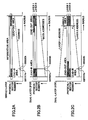
- FIG. 2A illustrates a single-side single-layer disk (below called “a single-layer disk")
- FIG. 2B illustrates a single-side dual-layer disk according to a PTP technique (below called “a PTP disk”
- FIG. 2C illustrates a single-side dual-layer disk according to an OTP technique (below called "an OTP disk”).
- the DVD disk basically has an information area consisting of a lead-in area, a data area, and a lead-out area, and has an information area per recording layer in case of the single-layer disk and the PTP disk.
- the OTP disk consists of one information area and has a middle area following the data area of layer 0 and preceding the data area of layer 1. Data reproducing is performed, from the inner radius to the outer radius for the single-layer disk, layers 0 and 1 of the PTP disk, and layer 0 of the OTP disk, and from the outer radius to the inner radius for the layer 1 of the OTP disk.
- the recording layers of the single-layer disk and the PTP disk are each assigned physical addresses (physical sector numbers) which are continuous from the lead-in area to the lead-out area.
- the physical addresses of the layer 1 are assigned the bit-inverted physical addresses of the layer 0 are so that the physical address increases from the middle area to the lead-out area.
- the start address of the data area in the layer 1 is an address having bit-inverted the end address in the layer 0.
- the start and the end addresses of the lead-in area, the start address of the data area, and the end address of the lead-out area are in the identical respective radial positions, and the start address of the lead-out area, or the end address of the data area may differ per recording layer.
- the differential area has the lead-out recorded.
- the start address of the lead-in area and the end address of the lead-out area, the data-area end address of the layer 0 and the data-area start address of the layer 1, and the start and end addresses of the middle area of the respective recording layers are in the identical radial positions, and the data-area start address of the layer 0 and the data-area end address of the layer 1 do not necessarily correspond.
- its differential area has the lead-out recorded.
- an example process of handling an unrecorded area that may result within the dual-layer DVD+R (the optical disk 2) is described as a reference example with reference to FIGS. 3A through 3D and FIGS. 4A through 4D.
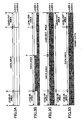
- an example process of handling an unrecorded area for the dual-layer DVD+R (the optical disk 2) according to the PTP technique, for example, complying with the playback-only DVD disk layout is described with reference to FIGS. 3A through 3D.
- FIG. 3A illustrates a layout of a dual-layer DVD+R in an unrecorded state without recording at all.
- a lead-in area, a data area, and a lead-out area exist in the respective recording layers of layer 0 as a first recording layer and layer 1 as s second recording layer.
- A indicates the position of the lead-in start address
- B indicates the start address of the data area
- C indicates the start address of the lead-out area
- D indicates the end address of the lead-out area
- the addresses A through D in the respective recording layers (layer 0, 1) are positioned in the identical radial positions of the optical disk 2.
- FIG. 3B through 3D illustrate an example process of handling when the user data recording is completed in the middle of the layer 1.
- FIG. 3B illustrates that the user data recording has been completed at the position of address X of the second layer (layer 1).
- an unrecorded area at and after the user data recording area is recorded with the lead-out.
- the area from address X to address D of the layer 1 is recorded as a predetermined unrecorded area with predetermined data of the lead-out. Therefore, while for the layer 0, the lead-in area is from address A to B, the data area is from address B to C, and the lead-out area is from address C to D, for the layer 1, the lead-in area is from address A to B, the data area is from address B to X, and the lead-out area is from address X to D.
- the disk layout is the same as that for the single-side dual-layer playback-only DVD-ROM, enabling a maintaining of compatibility with the single-side dual-layer playback-only DVD-ROM without any problem even when the user data recording has been completed in the middle of the data area of the second layer (layer 1).
- the lead-out may be recorded to the lead-out area (address C to D) of the layer 1. Therefore, for both layers 0 and 1, address A to B would be the lead-in area, address B to C would be the data area, and address C to D would be the lead-out area.
- the disk layout would be the same as the single-side dual-layer playback-only DVD-ROM, enabling a maintaining of compatibility with the single-side dual-layer playback-only DVD-ROM without any problem even when the user data recording is completed in the middle of the data area of the second layer (layer 1).
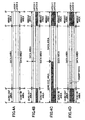
- FIG. 4A illustrates a layout of a dual-layer DVD+R in an unrecorded state without recording at all.
- layer 0 as a first recording layer exist from the inner radius of the disk a lead-in area, a data area, and a middle area; and in layer 1 a middle area, a data area, and a lead-out area exist from the outer radius of the disk.
- A is the start address of the lead-in area
- B is the start address of the data area of the layer
- C is the start address of the middle area of the layer
- D is the end address of the middle area of the layer 0.
- FIG. 4A A is the start address of the lead-in area
- B is the start address of the data area of the layer
- C is the start address of the middle area of the layer
- D is the end address of the middle area of the layer 0.
- D' illustrates the position of the start address of the middle area of the layer 1
- C' illustrates the position of the start address of the data area of the layer 1
- B' illustrates the position of the start address of the lead-out area
- A' illustrates the position of the position of the end address of the lead-out area
- the values of the pairs A and A', B and B', C and C', D and D' are such that for each pair, one of the addresses has bits which are inverted from the other address, the pairs being positioned in the identical radial positions of the optical disk 2.
- FIGS. 4B through 4D illustrate an example process of handling when the user data recording has been completed in the middle of the layer 1.
- FIG. 4B illustrates the fact that the user data recording has been completed at the position of address X of the second layer (layer 1).
- the unrecorded area at and after the user data recording area is recorded with the lead-out.
- the area from the address X to the address A' is recorded as a predetermined unrecorded area with predetermined data of the lead-out. Therefore, address A to B would be the lead-in area, address B to C would be the data area of the layer 0, address C to D would be the middle area of the layer 0, address D' to C' would be the middle area of the layer 1, address C' to X would be the data area of the layer 1, and the address X to A' would be the lead-out area.
- the disk layout would be the same as the single-side dual-layer playback-only DVD-ROM, enabling a maintaining of compatibility with the single-side dual-layer playback-only DVD-ROM without any problem even when the user data recording is completed in the middle of the data area of the second layer (layer 1).
- dummy data having a data attribute are recorded for the area excluding the user data recording area having the user data recorded out of the data area of the second recording layer (layer 1).
- the area from address X to address B' is recorded as a predetermined unrecorded area with predetermined data of dummy data having a predetermined data attribute.
- the lead-out may be recorded for the lead-out area (from address B' to A').
- address A to B would be the lead-in area
- address B to C would be the data area of the layer
- address C to D would be the middle area of the layer
- address D' to C' would be the middle area of the layer 1
- address C' to B' would be the data area of the layer 1
- address B' to A' would be the lead-out area.
- the disk layout would be the same as for a single-side dual-layer playback-only DVD-ROM, enabling a maintaining of compatibility with the single-side dual-layer playback-only DVD-ROM even when the user data recording has been completed in the middle of the data area of the second layer (layer 1).
- the DVD+R physical addresses are assigned for the whole area of the initial-data area preset so that logical addresses are uniquely determined for the area designated by the physical addresses. Moreover, the logical addresses are continuous from the end address of the data area in the first recording layer (layer 0) to the start address of the data area of the second recording layer (layer 1). Furthermore, the user recording data includes management data for managing the recording data, the management data being managed using the logical addresses as address information having recorded the user data entities. Therefore, simply dividing the user recording data at a random size so as to record on these multiple recording layers would lead to inconsistencies between the address information with the management data and the actually-recorded address information.
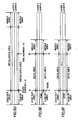
- the present embodiments make it possible to modify as the data area the area to be actually used for data recording within the extent of the initial-data area preset, the principle of one of the embodiments being described with reference to FIGS. 5A through 5F.
- This example is an example such that the desired data area is set based on the address designated by the host 21 within the extent of the initial-data area preset in the first recording layer (layer 0).
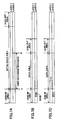
- FIGS. 5A through 5C illustrate an example of recording in a dual-layer DVD+R according to the PTP technique.
- FIG. 5A is a layout of the dual-layer DVD+R at an unrecorded state.
- recording layer 0 and recording layer 1 exists a lead-in area, an initial-data area, and a lead-out area.
- an end address B of the data area of the first recording layer (layer 0) is designated from the host 21 to the optical-disk apparatus 1 (designating means for modifying of data area) (A being the start address).
- the optical-disk apparatus 1 based on such address designation sets as the data area address A to B of the layer 0 and the layer 1, as the lead-out area a predetermined area following the address B, and then records information regarding these areas as described above in a SDCB (Session Disk Control Block) area within the lead-in area (the SDCB area to be described below.).
- SDCB Session Disk Control Block
- determining a modifying of the data area of the layer 0 as the reference leads to determining the extent of the data area of the layer 1.
- the logical addresses are assigned for address A to B of the layer 0 and address A to B of the layer 1, the address B of the layer 0 and the address A of the layer 1 being continuous logical addresses.
- FIG. 5C illustrates an open-session state. Therefore, when finally the user data recording is completely terminated and the compatibility with the playback-only dual-layer DVD disk is sought, if there is an unrecorded area in layer 1, predetermined data such as the lead-out and the dummy data, etc., may be recorded in the unrecorded area in accordance with the example process of handling as described with reference to FIGS. 3A through 3D, and finally the lead-out may be recorded so as to make a closed session.
- predetermined data such as the lead-out and the dummy data, etc.
- the size of the initial-data area is not kept but modified to the size of a desired data area so that the size of the resultant data area is smaller, enabling a reducing of the processing time period.
- modifying of the data area having received such address designation enables a simple realizing of recording in a data format completely identical to the playback-only DVD to be produced (a format in accordance with the size of the first layer of the original disk).
- FIGS. 5D through 5F illustrate an example recording into a dual-layer DVD+R according to the OTP technique.
- FIG. 5D illustrates a layout of a dual-layer DVD+R in an unrecorded state.
- a lead-in area, an initial-data area, and a middle area exist in the layer 0 from the inner radius of the disk, a lead-in area, an initial-data area, and a middle area exist in the layer 1, from the outer radius of the disk, a middle area, an initial-data area, and a lead-out area exist.
- an end address B of the data area of the first recording layer (layer 0) is designated from the host 21 to the optical-disk apparatus 1 (means of designating modifying data area).
- the optical-disk apparatus 1 upon receiving such address designation, modifies address A to B as the data area of the layer 0, a predetermined area following address B as the middle area of the layer 0, a predetermined area following address B' (in the direction of the outer radius) as the middle area of the layer 1, and address B' to address A' as the data area of the layer 1, and then records information regarding the data area on the SDCB area of the lead-in area.
- the values of the pairs A and A', B and B' are such that for each pair, one of the addresses has bits which are inverted from the other address, the pairs being positioned in the identical radial positions.
- determining the data area of the layer 0 to be the reference leads to determining the size of the data area of the layer 1.
- the logical addresses are assigned for address A to B of the layer 0 and address B' to A' of the layer 1, the logical addresses for the address B of the layer 0 and the address B' of the layer 1 being continuous.
- This example is an example such that a setting is performed based on a size designation of the desired data area from the host 21 within the extent of the initial-data area preset in the first recording layer (layer 0). It is to be noted that in the present embodiment the modifying of the data area is done for only the size designated from the start address of the data area.
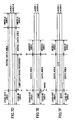
- FIGS. 6A to 6C illustrate an example recording into a dual-layer DVD+R according to the PTP technique.
- size C of the data area of the layer 0 is designated from the host 21 (means for designating modifying of data area).
- the optical-disk apparatus 1 sets address A (A being the start address of the data area) to (A+C) of the layers 0 and 1 as the data area, and a predetermined area at and following address (A+C) as the lead-out area, and then information regarding these areas is recorded in the SDCB area within the lead-in area.
- determining the data area of the layer 0 determines the size of the data area of the layer 1.
- the logical addresses are assigned for address A to (A+C) of the layer 0 and address A to (A+C) of the layer 1, the logical addresses for the address (A+C) of the layer 0 and the address A of the layer 1 being continuous.
- FIGS. 6D through 6F illustrate an example recording to a dual-layer DVD+R according to the OTP method.
- a size C of the data area of the first recording layer (layer 0) is designated from the host 21 (designating means of modifying of data area).
- the optical-disk apparatus 1 sets address A (A being the start address of the data area) to (A+C) as the data area of the layer 0, a predetermined area at and following (A+C) as the middle area of the layer 0, a predetermined area at and following (A+C)' as the middle area of the layer 1, and (A+C)' to A' as the data area of the layer 1, and then information regarding these areas is recorded in the SDCB area within the lead-in area.
- the values of the pairs A and A', (A+C) and (A+C)' are such that, for each pair, one of the addresses has bits which are inverted from the other address, the pairs being positioned in the identical radial positions.
- determining the data area of the layer 0 as the reference determines the size of the data area of the layer 1.
- the logical addresses are assigned for address A to (A+C) of the layer 0 and address (A+C)' to A' of the layer 1, the logical addresses for the address (A+C) of the layer 0 and the address (A+C)' of the layer 1 being continuous.
- FIGS. 7A through 7F This example is an example application to a case of modifying as the data area the recorded area out of the initial-data area preset in the first recording layer (layer 0). It is to be noted that, herein, setting as the data area the area recorded by the time of receiving a designation of completion notification of recording data in the first recording layer (layer 0) from the host 21 is assumed.
- FIGS. 7A through 7C illustrate an example recording in a dual-layer DVD+R according to the PTP technique.
- FIG. 7A it is assumed that a notification of completing recording in the first recording layer (layer 0) from the host 21 is received (designating means for modifying of data area).
- the optical-disk apparatus 1 sets address A to D of the layers 0 and 1 as the data area, and a predetermined area at and following the address D as the lead-out area, and then information regarding these areas is recorded in the SDCB area within the lead-in area.
- determining a modifying of the data area of the layer 0 as the reference determines the size of the data area of the layer 1.
- the logical addresses are assigned for address A to D of the layer 0, and address A to D of the layer 1, the logical addresses for the address D of the layer 0 and the address A of the layer 1 being continuous.
- FIGS. 7D through 7F illustrate an example recording in a dual-layer DVD+R according to the OTP technique.
- the optical-disk apparatus 1 modifies A to D as the data area of the layer 0, a predetermined area at and following D as the middle area of the layer 0, a predetermined area at and following D' (in the direction of the outer radius) as the middle area of the layer 1, and D' to A' as the data area of the layer 1, and then records information regarding these areas in the SDCB area within the lead-in area.
- the values of the pairs A and A', and D and D' are such that, for each pair, one of the addresses has bits which are inverted from the other address, the pairs being positioned in the identical radial positions.
- determining a modifying of the data area of the layer 0 determines the size of the data area of the layer 1.
- the logical addresses are assigned for address A to D of the layer 0, and address D' to A' of the layer 1, the logical addresses for the address D of the layer 0 and the address D' of the layer 1 being continuous.
- the SDCB Session Disk Control Block
- a multi-track called a fragment in the DVD+R
- the fragment information within the respective sessions being recorded in the SDCB area within the session lead-in.
- FIG. 8 illustrates an example format of such a SDCB.
- the SDCB contains descriptions of a contents descriptor, an unknown contents descriptor action, a drive ID, a session number, etc., as well as multiple (zero through N) session items as SDCB-specific information, each session item consisting of 16 bytes.
- Each session item further contains two types of items: a fragment item indicating information on fragments within the present session, and a previous session item indicating information on sessions previous to the present session.
- FIG. 9 illustrates an example format of a fragment item.
- fragment information items such as a fragment number, a fragment start address, a fragment end address, etc., are set so as to be described as management information.
- Such a fragment item is provided as one of the session items per fragment existing within the session.
- FIG. 10 illustrates an example format of a previous session item.
- session information items such as a previous session number, a previous session start address, and a previous session end address, etc., are set so as to be described as management information.
- FIG. 11 illustrates an example storage of information regarding data areas according to the present embodiment.
- a layer item as illustrated in FIG. 11 has been newly added to a session item within a SDCB.
- a layer item descriptor is an ID for indicating that this recording information describes a layer item and is recorded as "LYR".
- a layer number indicates the layer number, a layer start address and a layer end address indicate the start address and the end address, respectively, of the data area within the respective layers 0 and 1 so that this address information is recorded even when having been modified as described above.
- FIGS. 5A through 5F or in FIGS. 6A through 6F are described with reference to a schematic flowchart as illustrated in FIG. 12.
- This example assumes that a designating of modifying the data area is received from the host 21 so as to perform the modifying of that data area prior to an operation of recording user data.
- step S1 it is determined whether there exists a designating of modifying the data area regarding the first recording layer (layer 0) from the host 21 (S2). If it is affirmative (Y in S2), information regarding the extent of that data area (for example, address designation information and size designation information as described above) is obtained (S3), the data area is modified based on the designation information (S4), and then SDCB including information regarding the data area is recorded (updated) (S5).
- the information obtained in the Step S3 process is a data area end address in case of FIGS. 5A through 5F and a data area size in case of FIGS. 6A through 6F.
- the designated extent is set as the modified data area in the first recording layer (layer 0), and the lead-out area or the middle area is set following that data area.
- the extent of the data area in the second recording layer (layer 1) and the position of the lead-out area or the middle-area are determined.
- the process waits for a request for recording of user data from the host 21 (S6), and once the request for the recording of the data is received (Y in S6), the requested user data are recorded in the data area of the layer 0 (S7).
- the process determines whether recording in the whole area of the data area modified in Step S4 has been completed (S8), and if there remains an unrecorded data area in the layer 0 (N in S8), the process again waits for a request for recording of the user data from the host 21 (S6).
- the process determines whether the request for recording from the host 21 is completed (S11). If the request for recording of data has not been completed (N in S11), the process again waits for the request for the recording of data (S9), but if the request for the recording of the data has been completed (Y in S11), the process is terminated (S12).
- the recording timing, etc., of the lead-in area excluding the SDCB, the lead-out area, and the middle area is not taken into account specifically, so that the recording may be performed at a random timing.
- FIGS. 7A through 7F an example control of the process performed by the CPU 13 regarding the modifying of the data area as illustrated in FIGS. 7A through 7F is described with reference to a schematic flowchart illustrated in FIG. 13. It is assumed that this example modifies as the data area, the recorded area out of the initial-data area preset at the time of the designation of the completion notification of recording of data in the first recording layer (layer 0) from the host 21 during the operation of recording in the first recording layer (layer 0).
- the process waits for a request for recording of user data from the host 21 (S22), and upon receiving the request for recording of the user data (Y in S22), the requested data are recorded in the data area (the initial-data area) of the layer 0 (S23).
- the process determines whether recording in the whole area of the data area of the layer 0 has been completed (S24), and if the recording in the layer 0 has been completed (Y in S24), the process transfers to the recording in the layer 1 continuously (S28).
- the process determines whether the notification of completion of recording of the data in the first recording layer (the layer 0, herein) from the host 21 is received (S25), and if the notification of completion has been received (Y in S25), the data area of the layer 0 is modified (S26), and the SDCB containing information regarding this data area is recorded (S27).
- the recorded area at the time of receiving the designation of completion notification in the layer 0 is modified as the data area, and the lead-out area or the middle area is set following that data area.
- the extent of the data area in the second recording layer (layer 1) and the position of the lead-out area or the middle area are determined.
- Step S26 the process continues in which a recording in the data area of the layer 1 is performed.
- the process waits for a request for recording from the user from the host 21 (S28), and upon receiving the request for recording of the data (Y in S28), the requested data is recorded in the data area of the layer 1 (S29), and the process again waits for a request for recording of data from the host 21 (S28).
- the process determines whether the request for recording from the host 21 has been completed (S30). If the request for recording of the data has not been completed (N in S30), again the process waits for the request for recording of data from the host 21 (S28) and if the request for recording of the data has been completed (Y in S30), the process is terminated (S31).
- the recording timing, etc., of the lead-in area excluding SDCB, the lead-out area, and the middle area has not been taken into account specifically so that the recording may be performed at a random timing.
- the second recording layer is a single layer
- an information-recording medium is a dual-layer DVD+R
- the present invention may be applicable not only to the dual-layer DVD+R but also equally applicable to an information-recording medium having multiple recording layers, each layer having a data area for recording user data, and having a first recording layer to be a reference for determining the position of the data area in the recording layers, and a second recording layer exclusive of this first recording layer.
- it is applicable not only to the +R format, but also to the +RW format, -R/RW formats, etc..
- optical-disk apparatus 1 an information-recording apparatus
- host 22 an information-processing apparatus
Landscapes
- Engineering & Computer Science (AREA)
- Signal Processing (AREA)
- Optical Recording Or Reproduction (AREA)
- Signal Processing For Digital Recording And Reproducing (AREA)
- Management Or Editing Of Information On Record Carriers (AREA)
Abstract

Description
Claims (47)
- An apparatus for processing information, which requests for recording of user data into an information-recording apparatus for recording into an information-recording medium, having a plurality of recording layers, each of the layers having a data area for recording the user data, having a first recording layer to be a reference for determining a position of said data area in each of said recording layers, and a second recording layer excluding the first recording layer, comprising:designating means for modifying the data area configured to make a designation to said information-recording apparatus regarding size of the data area for said first recording layer within an extent of an initial-data area preset for said information-recording medium such that the data area to be used for the recording of the user data is allocated to said first recording layer and to said second recording layer.
- The apparatus for processing information as claimed in claim 1, wherein said designating means for modifying the data area is configured to make the designation such that the data area to be used for the recording of the user data is allocated so that the data size for recording on the first recording layer is greater than or equal to the data size for recording on the second recording layer.
- The apparatus for processing information as claimed in claim 1, wherein said designating means for modifying the data area is configured to designate, as the designation regarding the size of the data area, an end address of the data area within the extent of the initial-data area of said first recording layer.
- The apparatus for processing information as claimed in claim 1, wherein said designating means for modifying the data area is configured to designate, as the designation regarding the size of the data area, a size of the data area to be used for the recording of the user data within the extent of the initial-data area of said first recording layer.
- The apparatus for processing information as claimed in claim 1, wherein said designating means for modifying the data area is configured to designate, as the designation regarding the size of the data area, a notification of a completion of the recording on the first recording layer during the recording of the user data for the first recording layer within the extent of the initial-data area of said first recording layer.
- An apparatus for recording information which makes a recording based on a request from an information-processing apparatus for recording of user data in an information-recording medium having a plurality of recording layers, each of the layers having a data area for recording the user data, and having a first recording layer to be a reference for determining a position of said data area in each of said recording layers, and a second recording layer excluding the first recording layer, comprising:means for modifying the data area configured to make a setting regarding the size of the data area for said first recording layer within an extent of an initial-data area preset for said information-recording medium upon receiving a designation of modifying the data area from said information-processing apparatus.
- The apparatus for recording information as claimed in claim 6, wherein said information-recording medium is an information-recording medium to be recorded according to a Parallel Track Path (PTP) technique,
and said means for modifying the data area is configured to set a lead-out area following the data area to be set. - The apparatus for recording information as claimed in claim 6, wherein said information-recording medium is an information-recording medium to be recorded according to an Opposite Track Path (OTP) technique,
and said means for modifying the data area is configured to set a middle area following the data area to be set. - The apparatus for recording information as claimed in claim 6, wherein said means for modifying the data area is configured to set, based on an address designation as the designation of modifying the data area, an end address of the data area of said first recording layer as the setting regarding the size of the data area.
- The apparatus for recording information as claimed in claim 6, wherein said means for modifying the data area is configured to set, based on an area-size designation as the designation of modifying the data area, an area size of the data area of said first recording layer as the setting regarding the size of the data area.
- The apparatus for recording information as claimed in claim 6, wherein said means for modifying the data area is configured to set, based on a designation with a notification of a completion of the recording on said first layer as the designation of modifying the data area, a size of a recorded area of said first recording layer as the setting regarding the size of the data area.
- The apparatus for recording information as claimed in claim 6, further comprising:record-processing means configured to make the recording of the user data for the data area of said second recording layer subsequent to the recording of the user data for the modified data area of said first recording layer.
- The apparatus for recording information as claimed in claim 6, wherein said means for modifying data area is configured to record setting information regarding the size of the modified data area in a predetermined area of the information-recording medium.
- The apparatus for recording information as claimed in claim 6, wherein said information-recording medium is a DVD+R standards-compliant information-recording medium.
- The apparatus for recording information as claimed in claim 13, wherein said predetermined area for recording setting information regarding the size of the modified data area is a layer item within a SDCB (Session Disk Control Block).
- A system for processing information, comprising:an apparatus for processing information which requests for recording of user data into an information-recording apparatus for recording in an information-recording medium having a plurality of recording layers, each of the layers having a data area for recording the user data, and having a first recording layer to be a reference for determining a position of said data area in each of recording layers, and a second recording layer excluding the first recording layer, the apparatus for processing information including,designating means for modifying the data area configured to make a designation to said information-recording apparatus regarding the size of the data area for said first recording layer within an extent of an initial-data area preset for said information-recording medium such that the data area to be used for the recording of the user data is allocated to said first recording layer and to said second recording layer; andan apparatus for recording information which makes a recording based on a request from the information-processing apparatus for recording of user data in the information-recording medium having the plural recording layers, each of the layers having a data area for recording the user data, and having the first recording layer to be a reference for determining the position of said data area in said each of the recording layers, and the second recording layer excluding the first recording layer, the apparatus for recording information including,means for modifying the data area configured to make a setting regarding the size of the data area for said first recording layer within the extent of the initial-data area preset for said information-recording medium upon receiving a designation of modifying the data area from said information-processing apparatus.
- A method of recording information for recording in an information-recording medium having a plurality of recording layers, each of the layers having a data area for recording the user data, and having a first recording layer to be a reference for determining a position of said data area in said each of the recording layers, and a second recording layer excluding the first recording layer, comprising:the step of modifying the data area for making a setting regarding the size of the data area for said first recording layer within an extent of an initial-data area preset for said information-recording medium.
- The method of recording information as claimed in claim 17, wherein said information-recording medium is an information-recording medium to be recorded according to a Parallel Track Path (PTP) technique,
and said step of modifying the data area sets a lead-out area following the data area to be set. - The method of recording information as claimed in claim 17, wherein said information-recording medium is an information-recording medium to be recorded according to an Opposite Track Path (OTP) technique,
and said step of modifying the data area sets a middle area following the data area to be set. - The method of recording information as claimed in claim 17, wherein said step of modifying the data area sets, based on an address designation as the designation of modifying the data area, an end address of the data area of said first recording layer as the setting regarding the size of the data area.
- The method of recording information as claimed in claim 17, wherein said step of modifying the data area sets, based on an area-size designation as the designation of modifying the data area, an area size of the data area of said first recording layer as the setting regarding the size of the data area.
- The method of recording information as claimed in claim 17, wherein said step of modifying the data area sets, based on a designation with a notification of a completion of the recording on said first layer as the designation of modifying the data area, a size of recorded area of said first recording layer as the setting regarding the size of the data area.
- The method of recording information as claimed in claim 17, further comprising:a record-processing step of making the recording of the user data for the data area of said second recording layer subsequent to the recording of the user data for the modified data area of said first recording layer.
- The method of recording information as claimed in claim 17, wherein said step of modifying data area records setting information regarding the size of the modified data area in a predetermined area of the information-recording medium.
- The method of recording information as claimed in claim 17, wherein said information-recording medium is a DVD+R standards-compliant information-recording medium.
- The method of recording information as claimed in claim 24, wherein said predetermined area for recording setting information regarding the size of the modified data area is a layer item within a SDCB (Session Disk Control Block).
- A method of recording information for making a recording based on a request from an information-processing apparatus for recording of user data in an information-recording medium having a plurality of recording layers, each of the layers having a data area for recording the user data, and having a first recording layer to be a reference for determining a position of said data area in said each of the recording layers, and a second recording layer excluding the first recording layer, comprising:a step of modifying the data area for making a setting regarding the size of the data area for said first recording layer within an extent of an initial-data area preset for said information-recording medium upon receiving a designation of modifying the data area from said information-processing apparatus.
- The method of recording information as claimed in claim 27, wherein said information-recording medium is an information-recording medium to be recorded according to a Parallel Track Path (PTP) technique,
and said step of modifying the data area sets a lead-out area following the data area to be set. - The method of recording information as claimed in claim 27, wherein said information-recording medium is an information-recording medium to be recorded according to an Opposite Track Path (OTP) technique,
and said step of modifying the data area sets a middle area following the data area to be set. - The method of recording information as claimed in claim 27, wherein said step of modifying the data area sets, based on an address designation as the designation of modifying the data area, an end address of the data area of said first recording layer as the setting regarding the size of the data area.
- The method of recording information as claimed in claim 27, wherein said step of modifying the data area sets, based on an area-size designation as the designation of modifying the data area, an area size of the data area of said first recording layer as the setting regarding the size of the data area.
- The method of recording information as claimed in claim 27, wherein said step of modifying the data area sets, based on a designation with a notification of a completion of the recording on said first layer as the designation of modifying the data area, a size of recorded area of said first recording layer as the setting regarding the size of the data area.
- The method of recording information as claimed in claim 27, further comprising:a record-processing step of making the recording of the user data for the data area of said second recording layer subsequent to the recording of the user data for the modified data area of said first recording layer.
- The method of recording information as claimed in claim 27, wherein said step of modifying the data area records setting information regarding the size of the modified data area in a predetermined area of the information-recording medium.
- The method of recording information as claimed in claim 27, wherein said information-recording medium is a DVD+R standards-compliant information-recording medium.
- The method of recording information as claimed in claim 34, wherein said predetermined area for recording setting information regarding the size of the modified data area is a layer item within a SDCB (Session Disk Control Block).
- A program for recording information being installed in a computer provided in an information-recording apparatus for making a recording based on a request from an information-processing apparatus for recording of user data in an information-recording medium having a plurality of recording layers, each of the layers having a data area for recording the user data, and having a first recording layer to be a reference for determining a position of said data area in said each of the layers, and a second recording layer excluding the first recording layer, and causing said computer,
to execute a function of modifying the data area for making a setting regarding the size of the data area for said first recording layer within an extent of an initial-data area preset for said information-recording medium upon receiving a designation of modifying of the data area from said information-processing apparatus. - The program for recording information as claimed in claim 37, wherein said information-recording medium is an information-recording medium to be recorded according to a Parallel Track Path (PTP) technique,
and said function of modifying the data area sets a lead-out area following the data area to be set. - The program for recording information as claimed in claim 37, wherein said information-recording medium is an information-recording medium to be recorded according to an Opposite Track Path (OTP) technique,
and said function of modifying the data area sets a middle area following the data area to be set. - The program for recording information as claimed in claim 37, wherein said function of modifying data area sets, based on an address designation as the designation of modifying the data area, an end address of the data area of said first recording layer as the setting regarding the size of the data area.
- The program for recording information as claimed in claim 37, wherein said function of modifying the data area sets, based on an area-size designation as the designation of modifying the data area, an area size of the data area of said first recording layer as the setting regarding the size of the data area.
- The program for recording information as claimed in claim 37, wherein said function of modifying the data area sets, based on a designation with a notification of a completion of the recording on said first layer as the designation of modifying the data area, a size of recorded area of said first recording layer as the setting regarding the size of the data area.
- The program for recording information as claimed in claim 37 for causing said computer to execute a record-processing function of making the recording of the user data for the data area of said second recording layer subsequent to the recording of the user data for the modified data area of said first recording layer.
- The program for recording information as claimed in claim 37, wherein said function of modifying the data area records setting information regarding the size of the modified data area in a predetermined area of the information-recording medium.
- The program for recording information as claimed in claim 37, wherein said information-recording medium is a DVD+R standards-compliant information-recording medium.
- The program for recording information as claimed in claim 44, wherein said predetermined area is a layer item within a SDCB (Session Disk Control Block).
- A computer-readable storage medium having stored the program for recording information as claimed in claim 37.
Applications Claiming Priority (5)
| Application Number | Priority Date | Filing Date | Title |
|---|---|---|---|
| JP2003083320 | 2003-03-25 | ||
| JP2003083320 | 2003-03-25 | ||
| JP2003336920A JP2004310972A (en) | 2003-03-25 | 2003-09-29 | Information processing device, information recording device, information processing system, information recording method, information recording program, and storage medium |
| JP2003336920 | 2003-09-29 | ||
| PCT/JP2004/003429 WO2004086374A1 (en) | 2003-03-25 | 2004-03-15 | Information processing device, information recording device, information processing system, information recording method, information recording program, and storage medium |
Publications (3)
| Publication Number | Publication Date |
|---|---|
| EP1607943A1 true EP1607943A1 (en) | 2005-12-21 |
| EP1607943A4 EP1607943A4 (en) | 2011-06-22 |
| EP1607943B1 EP1607943B1 (en) | 2019-03-06 |
Family
ID=33100374
Family Applications (1)
| Application Number | Title | Priority Date | Filing Date |
|---|---|---|---|
| EP04720735.2A Expired - Lifetime EP1607943B1 (en) | 2003-03-25 | 2004-03-15 | Information processing device, information recording device, information recording method, information recording program, and storage medium |
Country Status (6)
| Country | Link |
|---|---|
| US (3) | US7016289B2 (en) |
| EP (1) | EP1607943B1 (en) |
| JP (1) | JP2004310972A (en) |
| ES (1) | ES2721802T3 (en) |
| TW (1) | TWI276066B (en) |
| WO (1) | WO2004086374A1 (en) |
Cited By (1)
| Publication number | Priority date | Publication date | Assignee | Title |
|---|---|---|---|---|
| EP1477983A1 (en) * | 2003-05-12 | 2004-11-17 | Sony Corporation | Multi-layer recording medium, recording apparatus and recording method |
Families Citing this family (28)
| Publication number | Priority date | Publication date | Assignee | Title |
|---|---|---|---|---|
| JP4089177B2 (en) * | 2000-10-25 | 2008-05-28 | 株式会社日立製作所 | Optical disc apparatus and interlayer jump method |
| JP4027726B2 (en) * | 2002-06-17 | 2007-12-26 | 株式会社リコー | Information recording / reproducing apparatus, information recording / reproducing method, program, recording medium, and information recording / reproducing system |
| JP3710790B2 (en) * | 2003-03-24 | 2005-10-26 | 株式会社リコー | Information recording method and apparatus |
| JP3584033B1 (en) * | 2003-03-25 | 2004-11-04 | 株式会社リコー | Information recording method, information recording device, program and storage medium |
| JP2004310972A (en) * | 2003-03-25 | 2004-11-04 | Ricoh Co Ltd | Information processing device, information recording device, information processing system, information recording method, information recording program, and storage medium |
| JP3594243B1 (en) * | 2003-03-25 | 2004-11-24 | 株式会社リコー | Optical information recording method, optical information recording device, information processing device, optical information recording medium |
| JP3734816B2 (en) * | 2003-03-25 | 2006-01-11 | 株式会社リコー | Optical information recording apparatus, optical information recording medium, optical information recording method, program, and storage medium |
| JP3954556B2 (en) * | 2003-03-25 | 2007-08-08 | 株式会社リコー | Information recording apparatus, information recording method, information recording program, and storage medium for storing information recording program |
| JP2007527078A (en) | 2003-07-01 | 2007-09-20 | コーニンクレッカ フィリップス エレクトロニクス エヌ ヴィ | Method for recording information on a multi-layer record carrier and apparatus for recording on a dual-layer record carrier |
| MXPA06001811A (en) * | 2003-08-19 | 2006-05-17 | Koninkl Philips Electronics Nv | Method of recording on a dual layer record carrier, and device for recording on a dual layer record carrier. |
| US7164640B2 (en) * | 2005-03-01 | 2007-01-16 | Ricoh Company, Ltd. | Information storage method that assures compatibility of writable medium with read only medium |
| KR100667753B1 (en) * | 2004-02-28 | 2007-01-11 | 삼성전자주식회사 | Information storage medium, method and apparatus for recording data |
| JP4037382B2 (en) * | 2004-03-11 | 2008-01-23 | 株式会社リコー | Defect management method, reproducing method, program and recording medium, information recording apparatus, and information reproducing apparatus |
| JP4095977B2 (en) | 2004-03-11 | 2008-06-04 | 株式会社リコー | Defect management method and information recording apparatus |
| WO2005116995A1 (en) * | 2004-05-27 | 2005-12-08 | Pioneer Corporation | Information recording medium, information recording device and method, and record controlling computer program |
| US7746754B2 (en) | 2004-06-14 | 2010-06-29 | Samsung Electronics Co., Ltd. | Method of allocating areas in optical disc, data recording and/or reproducing apparatus adopting the same, and optical disc therefor |
| KR100667755B1 (en) * | 2004-06-23 | 2007-01-11 | 삼성전자주식회사 | Optical disc having a plurality of recording layers, data recording method and apparatus therefor |
| KR101044938B1 (en) * | 2004-07-10 | 2011-06-28 | 삼성전자주식회사 | Information storage medium and recording / reproducing apparatus having a plurality of recording layers |
| KR100667764B1 (en) * | 2004-10-08 | 2007-01-12 | 삼성전자주식회사 | Optical recording medium, recording / reproducing method and recording / reproducing apparatus |
| KR100667766B1 (en) * | 2004-10-23 | 2007-01-11 | 삼성전자주식회사 | Information storage media, recording / reproducing apparatus, and recording / reproducing method |
| US20090231986A1 (en) * | 2005-04-27 | 2009-09-17 | Pioneer Corporation | Information recording apparatus and method, information reproducing apparatus and method, information recording medium, and computer program |
| JP2007048409A (en) * | 2005-08-12 | 2007-02-22 | Toshiba Corp | Information recording medium, information recording apparatus, and information recording method |
| JP2007080367A (en) * | 2005-09-13 | 2007-03-29 | Toshiba Corp | Information storage medium, information recording method, and information reproducing apparatus |
| US20070097808A1 (en) * | 2005-11-02 | 2007-05-03 | Sumitaka Maruyama | Information storage medium, recording method, and recording apparatus |
| JP4519761B2 (en) * | 2005-11-17 | 2010-08-04 | 株式会社東芝 | Multi-layer optical disc recording area determination method and recording / reproducing apparatus |
| WO2007066261A2 (en) * | 2005-12-06 | 2007-06-14 | Koninklijke Philips Electronics N.V. | Formatting multi-layer storage media. |
| EP1961008B1 (en) * | 2005-12-06 | 2019-05-08 | Koninklijke Philips N.V. | De-icing of multi-layer storage media |
| US20190158629A1 (en) * | 2017-11-17 | 2019-05-23 | GM Global Technology Operations LLC | Systems and methods to aggregate vehicle data from infotainment application accessories |
Family Cites Families (53)
| Publication number | Priority date | Publication date | Assignee | Title |
|---|---|---|---|---|
| US579525A (en) * | 1897-03-23 | System of circuits and apparatus for electric railways | ||
| AU3914895A (en) | 1994-11-30 | 1996-06-06 | Sony Corporation | Data recording medium and record/playback apparatus using the data recording medium |
| JPH08212561A (en) | 1994-11-30 | 1996-08-20 | Sony Corp | Data recording medium and recording / reproducing apparatus using the data recording medium |
| JPH08287474A (en) | 1995-04-10 | 1996-11-01 | Sony Corp | Data recording medium and recording / reproducing apparatus using the data recording medium |
| US5729525A (en) | 1995-06-21 | 1998-03-17 | Matsushita Electric Industrial Co., Ltd. | Two-layer optical disk |
| JP3756574B2 (en) * | 1995-06-21 | 2006-03-15 | 松下電器産業株式会社 | Double-layer optical disc |
| JP2871534B2 (en) * | 1995-06-26 | 1999-03-17 | 株式会社日立製作所 | Digital signal recording method, disk reproducing apparatus, and disk reproducing method |
| WO1997015050A1 (en) | 1995-10-19 | 1997-04-24 | Matsushita Electric Industrial Co., Ltd. | Information storage medium, information reproducing method, and information reproducing apparatus |
| TW304261B (en) * | 1996-03-12 | 1997-05-01 | Ibm | Tape pre-formatting with uniform data storage segments selectively mapped to fixed or variable sized independently addressable data storage partitions |
| JP3841468B2 (en) * | 1996-03-22 | 2006-11-01 | 富士通テン株式会社 | Multilayer disc and recording device for multilayer disc |
| JP3707137B2 (en) | 1996-07-04 | 2005-10-19 | ソニー株式会社 | Recording medium and playback device |
| US6002655A (en) | 1996-07-10 | 1999-12-14 | Hitachi, Ltd. | Optical disc apparatus accessing method and system therefor |
| JPH1079126A (en) | 1996-07-10 | 1998-03-24 | Hitachi Ltd | Access method for optical disk device |
| US6009058A (en) * | 1997-05-13 | 1999-12-28 | Hewlett-Packard Company | Method of reducing formatting time for rewritable compact disks by pre-formatting less than the entire standard logical format |
| JPH1125608A (en) | 1997-07-04 | 1999-01-29 | Sanyo Electric Co Ltd | Recording medium |
| JPH1131357A (en) | 1997-07-08 | 1999-02-02 | Pioneer Electron Corp | Information data recording method |
| JP3667978B2 (en) | 1998-03-19 | 2005-07-06 | 東芝デジタルメディアエンジニアリング株式会社 | Multi-layer optical disk playback device |
| JP3250989B2 (en) * | 1998-05-15 | 2002-01-28 | 松下電器産業株式会社 | Optical information recording medium, recording / reproducing method thereof, manufacturing method thereof, and optical information recording / reproducing apparatus |
| EP0957477A3 (en) | 1998-05-15 | 2003-11-05 | Matsushita Electric Industrial Co., Ltd. | Optical information recording medium, recording and reproducing method therefor and optical information recording and reproduction apparatus |
| JP2000004852A (en) | 1998-06-24 | 2000-01-11 | Sapporo Breweries Ltd | Low calorie carbonated beverage |
| JP2000048542A (en) * | 1998-07-31 | 2000-02-18 | Nippon Columbia Co Ltd | Data preparation method for multilayer disk |
| JP3994539B2 (en) * | 1998-08-25 | 2007-10-24 | ソニー株式会社 | Playback device |
| JP2000293947A (en) * | 1999-04-08 | 2000-10-20 | Matsushita Electric Ind Co Ltd | Optical disk, optical disk recording / reproducing apparatus and method |
| JP2001126255A (en) * | 1999-10-22 | 2001-05-11 | Sony Corp | Optical recording method and optical recording device |
| JP2001167509A (en) | 1999-12-03 | 2001-06-22 | Ricoh Co Ltd | Optical disk device, optical disk determination method, and information processing device |
| US6456854B1 (en) * | 2000-05-08 | 2002-09-24 | Leap Wireless International | System and method for locating and tracking mobile telephone devices via the internet |
| JP3860394B2 (en) | 2000-06-20 | 2006-12-20 | 株式会社リコー | Information reproducing method and information reproducing apparatus |
| JP4006184B2 (en) | 2001-01-30 | 2007-11-14 | 株式会社リコー | Information recording / reproducing method, information recording / reproducing apparatus, information processing apparatus, and computer program |
| CN1246837C (en) | 2001-04-17 | 2006-03-22 | 松下电器产业株式会社 | Optical disc manufacturing method, information recording/reproducing method, and information recording/reproducing device |
| JP2002324363A (en) | 2001-04-25 | 2002-11-08 | Ricoh Co Ltd | Information recording / reproducing device |
| JP3878442B2 (en) | 2001-07-30 | 2007-02-07 | 株式会社リコー | Information recording / reproducing apparatus and program |
| JP3947428B2 (en) * | 2001-09-10 | 2007-07-18 | 株式会社リコー | Information recording / reproducing apparatus and system thereof |
| JP3886800B2 (en) | 2001-12-19 | 2007-02-28 | 株式会社リコー | Data management information acquisition method, information reproducing apparatus, data management information acquisition program, and recording medium |
| JP4100913B2 (en) | 2002-01-15 | 2008-06-11 | 株式会社リコー | Information reproduction apparatus, data management information acquisition method, data management information acquisition program, storage medium, and reproduction system |
| JP2004005842A (en) | 2002-05-31 | 2004-01-08 | Ricoh Co Ltd | Recording method, recording medium, program and information recording medium, and information recording apparatus |
| JP4183553B2 (en) | 2002-09-19 | 2008-11-19 | 株式会社リコー | Recording method, program, recording medium, and information recording apparatus |
| JP4270991B2 (en) | 2002-10-11 | 2009-06-03 | 株式会社リコー | Information recording apparatus, information recording method, information recording program, storage medium storing information recording program, and information recording system |
| JP3867038B2 (en) | 2002-10-23 | 2007-01-10 | 株式会社リコー | Information recording apparatus, information recording method, program, and recording medium |
| JP4082670B2 (en) | 2003-01-23 | 2008-04-30 | 株式会社リコー | Recording method and information recording apparatus |
| JP2004310997A (en) * | 2003-03-24 | 2004-11-04 | Ricoh Co Ltd | Optical information recording medium, optical information recorder, information processor, program and information recording method |
| JP3710790B2 (en) * | 2003-03-24 | 2005-10-26 | 株式会社リコー | Information recording method and apparatus |
| JP3954556B2 (en) | 2003-03-25 | 2007-08-08 | 株式会社リコー | Information recording apparatus, information recording method, information recording program, and storage medium for storing information recording program |
| JP2004295948A (en) * | 2003-03-25 | 2004-10-21 | Ricoh Co Ltd | Optical information recording device, information processing device, optical information recording medium, optical information recording method, program, and storage medium |
| JP3594243B1 (en) * | 2003-03-25 | 2004-11-24 | 株式会社リコー | Optical information recording method, optical information recording device, information processing device, optical information recording medium |
| JP2004295940A (en) * | 2003-03-25 | 2004-10-21 | Ricoh Co Ltd | Test writing process control method, optical recording medium, optical information recording device, optical information recording program, and storage medium |
| JP3871060B2 (en) * | 2003-03-25 | 2007-01-24 | 株式会社リコー | Optical recording medium and information recording method |
| JP3734816B2 (en) * | 2003-03-25 | 2006-01-11 | 株式会社リコー | Optical information recording apparatus, optical information recording medium, optical information recording method, program, and storage medium |
| JP2004295950A (en) * | 2003-03-25 | 2004-10-21 | Ricoh Co Ltd | Optical information recording medium, optical information recording device, information processing device, optical information recording method, program, and storage medium |
| JP2004310972A (en) * | 2003-03-25 | 2004-11-04 | Ricoh Co Ltd | Information processing device, information recording device, information processing system, information recording method, information recording program, and storage medium |
| JP3584033B1 (en) | 2003-03-25 | 2004-11-04 | 株式会社リコー | Information recording method, information recording device, program and storage medium |
| JP3856449B2 (en) | 2003-04-24 | 2006-12-13 | 株式会社リコー | REPRODUCTION METHOD, PROGRAM, RECORDING MEDIUM, AND DRIVE DEVICE |
| US6876579B2 (en) * | 2003-08-04 | 2005-04-05 | Phison Electronics Corp. | Method writing data to a large block of a flash memory cell |
| JP3710799B2 (en) * | 2003-09-19 | 2005-10-26 | 株式会社リコー | Information recording method, information recording apparatus, and information recording system |
-
2003
- 2003-09-29 JP JP2003336920A patent/JP2004310972A/en active Pending
-
2004
- 2004-03-11 TW TW093106510A patent/TWI276066B/en not_active IP Right Cessation
- 2004-03-15 WO PCT/JP2004/003429 patent/WO2004086374A1/en not_active Ceased
- 2004-03-15 ES ES04720735T patent/ES2721802T3/en not_active Expired - Lifetime
- 2004-03-15 EP EP04720735.2A patent/EP1607943B1/en not_active Expired - Lifetime
- 2004-09-02 US US10/932,283 patent/US7016289B2/en not_active Expired - Lifetime
-
2006
- 2006-01-18 US US11/333,293 patent/US7447135B2/en not_active Expired - Lifetime
-
2008
- 2008-09-29 US US12/285,110 patent/US8000201B2/en not_active Expired - Fee Related
Cited By (2)
| Publication number | Priority date | Publication date | Assignee | Title |
|---|---|---|---|---|
| EP1477983A1 (en) * | 2003-05-12 | 2004-11-17 | Sony Corporation | Multi-layer recording medium, recording apparatus and recording method |
| US7940636B2 (en) | 2003-05-12 | 2011-05-10 | Sony Corporation | Recording medium, recording apparatus and recording method |
Also Published As
| Publication number | Publication date |
|---|---|
| US20090109824A1 (en) | 2009-04-30 |
| US20050030873A1 (en) | 2005-02-10 |
| TWI276066B (en) | 2007-03-11 |
| EP1607943A4 (en) | 2011-06-22 |
| WO2004086374A1 (en) | 2004-10-07 |
| ES2721802T3 (en) | 2019-08-05 |
| US7016289B2 (en) | 2006-03-21 |
| US8000201B2 (en) | 2011-08-16 |
| JP2004310972A (en) | 2004-11-04 |
| US20060120238A1 (en) | 2006-06-08 |
| TW200421280A (en) | 2004-10-16 |
| US7447135B2 (en) | 2008-11-04 |
| EP1607943B1 (en) | 2019-03-06 |
Similar Documents
| Publication | Publication Date | Title |
|---|---|---|
| US8000201B2 (en) | Information recording system with information recording and reproducing apparatus having a data recorder | |
| CN100550141C (en) | Information recording method, information recording device | |
| US7385897B2 (en) | Information recording device, information recording method, information recording program, and recording medium | |
| US7573799B2 (en) | Information recording method, information recording apparatus, program and computer readable information storage medium | |
| KR100808084B1 (en) | Information recording medium, recording method, information recording apparatus, computer readable recording medium recording a data structure, and computer readable recording medium of recording a program | |
| US7643383B2 (en) | Multiple layers optical recording for recording data over two or more layers | |
| JP4083651B2 (en) | Information recording method and information recording apparatus | |
| US7324422B2 (en) | Information storage method that assures compatibility of writable medium with read only medium | |
| JP3908967B2 (en) | Information recording device | |
| CN100530407C (en) | Information recording device and method | |
| EP1683153A2 (en) | Recording information on an otp disc | |
| JP2004342181A (en) | Information recording method, information recording device, information recording program, and storage medium | |
| WO2005112029A1 (en) | Recording method, information recording device, information reproducing device, program, recording medium, and computer program product | |
| JP4728750B2 (en) | Information recording apparatus and information recording method | |
| JP4083780B2 (en) | Information recording system | |
| JP4086819B2 (en) | Information recording method and apparatus | |
| EP1806741A1 (en) | Information recording method wherein compatibility with reproduction-only medium is maintained | |
| CN100421169C (en) | Information recording device, information recording method | |
| JP3954636B2 (en) | Recording system | |
| JP2006185559A (en) | Information recording / reproducing apparatus, information recording / reproducing method, program, and computer-readable recording medium | |
| JP2006313642A (en) | Information recording medium |
Legal Events
| Date | Code | Title | Description |
|---|---|---|---|
| PUAI | Public reference made under article 153(3) epc to a published international application that has entered the european phase |
Free format text: ORIGINAL CODE: 0009012 |
|
| 17P | Request for examination filed |
Effective date: 20050620 |
|
| AK | Designated contracting states |
Kind code of ref document: A1 Designated state(s): AT BE BG CH CY CZ DE DK EE ES FI FR GB GR HU IE IT LI LU MC NL PL PT RO SE SI SK TR |
|
| AX | Request for extension of the european patent |
Extension state: AL LT LV MK |
|
| DAX | Request for extension of the european patent (deleted) | ||
| RBV | Designated contracting states (corrected) |
Designated state(s): DE ES FR GB IT NL |
|
| A4 | Supplementary search report drawn up and despatched |
Effective date: 20110524 |
|
| 17Q | First examination report despatched |
Effective date: 20111222 |
|
| GRAP | Despatch of communication of intention to grant a patent |
Free format text: ORIGINAL CODE: EPIDOSNIGR1 |
|
| STAA | Information on the status of an ep patent application or granted ep patent |
Free format text: STATUS: GRANT OF PATENT IS INTENDED |
|
| INTG | Intention to grant announced |
Effective date: 20181024 |
|
| RIN1 | Information on inventor provided before grant (corrected) |
Inventor name: SASAKI, YOSHIYUKI |
|
| GRAS | Grant fee paid |
Free format text: ORIGINAL CODE: EPIDOSNIGR3 |
|
| GRAA | (expected) grant |
Free format text: ORIGINAL CODE: 0009210 |
|
| STAA | Information on the status of an ep patent application or granted ep patent |
Free format text: STATUS: THE PATENT HAS BEEN GRANTED |
|
| AK | Designated contracting states |
Kind code of ref document: B1 Designated state(s): DE ES FR GB IT NL |
|
| REG | Reference to a national code |
Ref country code: GB Ref legal event code: FG4D |
|
| REG | Reference to a national code |
Ref country code: DE Ref legal event code: R096 Ref document number: 602004053754 Country of ref document: DE |
|
| REG | Reference to a national code |
Ref country code: NL Ref legal event code: FP |
|
| REG | Reference to a national code |
Ref country code: ES Ref legal event code: FG2A Ref document number: 2721802 Country of ref document: ES Kind code of ref document: T3 Effective date: 20190805 |
|
| REG | Reference to a national code |
Ref country code: DE Ref legal event code: R097 Ref document number: 602004053754 Country of ref document: DE |
|
| PLBE | No opposition filed within time limit |
Free format text: ORIGINAL CODE: 0009261 |
|
| STAA | Information on the status of an ep patent application or granted ep patent |
Free format text: STATUS: NO OPPOSITION FILED WITHIN TIME LIMIT |
|
| 26N | No opposition filed |
Effective date: 20191209 |
|
| PGFP | Annual fee paid to national office [announced via postgrant information from national office to epo] |
Ref country code: IT Payment date: 20210329 Year of fee payment: 18 Ref country code: FR Payment date: 20210323 Year of fee payment: 18 Ref country code: NL Payment date: 20210319 Year of fee payment: 18 |
|
| PGFP | Annual fee paid to national office [announced via postgrant information from national office to epo] |
Ref country code: DE Payment date: 20210302 Year of fee payment: 18 Ref country code: GB Payment date: 20210324 Year of fee payment: 18 |
|
| PGFP | Annual fee paid to national office [announced via postgrant information from national office to epo] |
Ref country code: ES Payment date: 20210521 Year of fee payment: 18 |
|
| REG | Reference to a national code |
Ref country code: DE Ref legal event code: R119 Ref document number: 602004053754 Country of ref document: DE |
|
| REG | Reference to a national code |
Ref country code: NL Ref legal event code: MM Effective date: 20220401 |
|
| GBPC | Gb: european patent ceased through non-payment of renewal fee |
Effective date: 20220315 |
|
| PG25 | Lapsed in a contracting state [announced via postgrant information from national office to epo] |
Ref country code: NL Free format text: LAPSE BECAUSE OF NON-PAYMENT OF DUE FEES Effective date: 20220401 Ref country code: GB Free format text: LAPSE BECAUSE OF NON-PAYMENT OF DUE FEES Effective date: 20220315 Ref country code: FR Free format text: LAPSE BECAUSE OF NON-PAYMENT OF DUE FEES Effective date: 20220331 Ref country code: DE Free format text: LAPSE BECAUSE OF NON-PAYMENT OF DUE FEES Effective date: 20221001 |
|
| REG | Reference to a national code |
Ref country code: ES Ref legal event code: FD2A Effective date: 20230428 |
|
| PG25 | Lapsed in a contracting state [announced via postgrant information from national office to epo] |
Ref country code: IT Free format text: LAPSE BECAUSE OF NON-PAYMENT OF DUE FEES Effective date: 20220315 |
|
| PG25 | Lapsed in a contracting state [announced via postgrant information from national office to epo] |
Ref country code: ES Free format text: LAPSE BECAUSE OF NON-PAYMENT OF DUE FEES Effective date: 20220316 |