EP1602334A2 - Apparatus for delivery of a therapeutic agent to aneurysmal tissue - Google Patents
Apparatus for delivery of a therapeutic agent to aneurysmal tissue Download PDFInfo
- Publication number
- EP1602334A2 EP1602334A2 EP05010495A EP05010495A EP1602334A2 EP 1602334 A2 EP1602334 A2 EP 1602334A2 EP 05010495 A EP05010495 A EP 05010495A EP 05010495 A EP05010495 A EP 05010495A EP 1602334 A2 EP1602334 A2 EP 1602334A2
- Authority
- EP
- European Patent Office
- Prior art keywords
- poly
- treatment device
- acid
- aneurysmal
- coating
- Prior art date
- Legal status (The legal status is an assumption and is not a legal conclusion. Google has not performed a legal analysis and makes no representation as to the accuracy of the status listed.)
- Withdrawn
Links
Images


Classifications
-
- A—HUMAN NECESSITIES
- A61—MEDICAL OR VETERINARY SCIENCE; HYGIENE
- A61F—FILTERS IMPLANTABLE INTO BLOOD VESSELS; PROSTHESES; DEVICES PROVIDING PATENCY TO, OR PREVENTING COLLAPSING OF, TUBULAR STRUCTURES OF THE BODY, e.g. STENTS; ORTHOPAEDIC, NURSING OR CONTRACEPTIVE DEVICES; FOMENTATION; TREATMENT OR PROTECTION OF EYES OR EARS; BANDAGES, DRESSINGS OR ABSORBENT PADS; FIRST-AID KITS
- A61F2/00—Filters implantable into blood vessels; Prostheses, i.e. artificial substitutes or replacements for parts of the body; Appliances for connecting them with the body; Devices providing patency to, or preventing collapsing of, tubular structures of the body, e.g. stents
- A61F2/02—Prostheses implantable into the body
- A61F2/04—Hollow or tubular parts of organs, e.g. bladders, tracheae, bronchi or bile ducts
- A61F2/06—Blood vessels
- A61F2/07—Stent-grafts
-
- A—HUMAN NECESSITIES
- A61—MEDICAL OR VETERINARY SCIENCE; HYGIENE
- A61F—FILTERS IMPLANTABLE INTO BLOOD VESSELS; PROSTHESES; DEVICES PROVIDING PATENCY TO, OR PREVENTING COLLAPSING OF, TUBULAR STRUCTURES OF THE BODY, e.g. STENTS; ORTHOPAEDIC, NURSING OR CONTRACEPTIVE DEVICES; FOMENTATION; TREATMENT OR PROTECTION OF EYES OR EARS; BANDAGES, DRESSINGS OR ABSORBENT PADS; FIRST-AID KITS
- A61F2/00—Filters implantable into blood vessels; Prostheses, i.e. artificial substitutes or replacements for parts of the body; Appliances for connecting them with the body; Devices providing patency to, or preventing collapsing of, tubular structures of the body, e.g. stents
- A61F2/82—Devices providing patency to, or preventing collapsing of, tubular structures of the body, e.g. stents
- A61F2/86—Stents in a form characterised by the wire-like elements; Stents in the form characterised by a net-like or mesh-like structure
- A61F2/89—Stents in a form characterised by the wire-like elements; Stents in the form characterised by a net-like or mesh-like structure the wire-like elements comprising two or more adjacent rings flexibly connected by separate members
-
- A—HUMAN NECESSITIES
- A61—MEDICAL OR VETERINARY SCIENCE; HYGIENE
- A61F—FILTERS IMPLANTABLE INTO BLOOD VESSELS; PROSTHESES; DEVICES PROVIDING PATENCY TO, OR PREVENTING COLLAPSING OF, TUBULAR STRUCTURES OF THE BODY, e.g. STENTS; ORTHOPAEDIC, NURSING OR CONTRACEPTIVE DEVICES; FOMENTATION; TREATMENT OR PROTECTION OF EYES OR EARS; BANDAGES, DRESSINGS OR ABSORBENT PADS; FIRST-AID KITS
- A61F2230/00—Geometry of prostheses classified in groups A61F2/00 - A61F2/26 or A61F2/82 or A61F9/00 or A61F11/00 or subgroups thereof
- A61F2230/0002—Two-dimensional shapes, e.g. cross-sections
- A61F2230/0028—Shapes in the form of latin or greek characters
- A61F2230/0054—V-shaped
-
- A—HUMAN NECESSITIES
- A61—MEDICAL OR VETERINARY SCIENCE; HYGIENE
- A61F—FILTERS IMPLANTABLE INTO BLOOD VESSELS; PROSTHESES; DEVICES PROVIDING PATENCY TO, OR PREVENTING COLLAPSING OF, TUBULAR STRUCTURES OF THE BODY, e.g. STENTS; ORTHOPAEDIC, NURSING OR CONTRACEPTIVE DEVICES; FOMENTATION; TREATMENT OR PROTECTION OF EYES OR EARS; BANDAGES, DRESSINGS OR ABSORBENT PADS; FIRST-AID KITS
- A61F2250/00—Special features of prostheses classified in groups A61F2/00 - A61F2/26 or A61F2/82 or A61F9/00 or A61F11/00 or subgroups thereof
- A61F2250/0058—Additional features; Implant or prostheses properties not otherwise provided for
- A61F2250/0067—Means for introducing or releasing pharmaceutical products into the body
-
- A—HUMAN NECESSITIES
- A61—MEDICAL OR VETERINARY SCIENCE; HYGIENE
- A61K—PREPARATIONS FOR MEDICAL, DENTAL OR TOILETRY PURPOSES
- A61K9/00—Medicinal preparations characterised by special physical form
- A61K9/0012—Galenical forms characterised by the site of application
- A61K9/0019—Injectable compositions; Intramuscular, intravenous, arterial, subcutaneous administration; Compositions to be administered through the skin in an invasive manner
- A61K9/0024—Solid, semi-solid or solidifying implants, which are implanted or injected in body tissue
Definitions
- the field of the invention is the treatment of vascular abnormalities.
- This form of atherosclerotic vascular disease (hardening of the arteries) is characterized by degeneration in the arterial wall in which the wall weakens and balloons outward by thinning. Until the affected artery is removed or bypassed, a patient with an aortic aneurysm must live with the threat of aortic aneurysm rupture and death.
- Endovascular grafting involves the transluminal placement of a prosthetic arterial stent graft in the endoluminal position (within the lumen of the artery).
- a stent of tubular construction is introduced into the aneurytic blood vessel, typically from a remote location through a catheter introduced into a major blood vessel in the leg.
- a stent graft When inserted and deployed in a vessel, a stent graft acts as a prosthesis to maintain and restrict blood flow through the vessel.
- the stent graft typically has the form of an open-ended tubular element and most frequently is configured to enable its expansion from a small outside diameter which is sufficiently small to allow the stent graft to traverse the vessel to reach a site where it is to be deployed, to a large outside diameter sufficiently large to engage the inner lining of the vessel for retention at the site.
- Embodiments according to the present invention address the problem of aneurysm treatment and repair, particularly the problem of continued breakdown of aortic aneurysmal tissue. A consequence of such continued breakdown is rupture of the aneurysm.
- Methods and apparatus are provided for using a peri-aneurymsal treatment device incorporating a pharmaceutical agent to aid in stabilizing and healing the aneurysmal tissue.
- a peri-aneurysmal treatment device comprising a matrix for delivering at least one therapeutic agent to the outside of an aneurysmal site in a blood vessel.
- the matrix itself may be comprised of a biodegradable or non-biodegradable material, where the therapeutic agent or agents are formulated with the degradable or non-biodegradable matrix material.
- the matrix may comprise a biodegradable or non-biodegradable coating, where the therapeutic agent or agents are formulated with the coating.
- two or more therapeutic agents are delivered, with at least one therapeutic agent formulated as part of the matrix and the other therapeutic agent or agents formulated as part of the coating.
- the matrix of the peri-aneurymsal treatment device and/or the coating is made from a polymer.
- the polymer is a pH- or temperature-sensitive polymer.
- Therapeutic agents that can be used according to the present invention include metalloproteinase inhibitors, cyclooxygenase-2 inhibitors, anti-adhesion molecules, tetracycline-related compounds, beta blockers, NSAIDs, angiotensin converting enzyme inhibitors or any other therapeutic agent known to treat aneurysms.
- Embodiments of the invention further include methods of treating an aneurismal blood vessel comprising delivering a peri-aneurysmal device to the outside of an aneurismal site in a blood vessel.
- the peri-aneurymsal treatment device may be used in conjunction with a stent or stent graft, which bolsters the aneurysm from within the blood vessel.
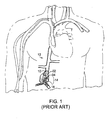
- Figure 1 is a schematic view of a human aortal aneurysm.
- Figure 2 is an exterior view of a descending aorta with a ribbon-type peri-aneurymsal treatment device in place.
- Figure 3 is a partial sectional view of a descending aorta with a bifurcated stent graft placed inside the aneurysmal site, and a peri-aneurymsal treatment device placed outside the aneurysmal site.
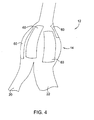
- Figure 4 is a view of a descending aorta with a patch- or sheet-like peri-aneurysmal device in place.
- Methods and apparatus for stabilizing and treating an aneurysmal site include implanting a peri-aneurysmal device that delivers a bioactive amount of one or more therapeutic agents to the outer wall of a blood vessel at the aneurysmal site.
- the peri-aneurysmal device is implanted in an individual by surgical means, preferably laparoscopic means, then serves as a delivery vehicle to deliver one or more therapeutic agents to the aneurysmal site.
- an aneurysmal blood vessel 02 in particular, there is an aneurysm of the aorta 12, such that the aorta or blood vessel wall 04 is enlarged at an aneurysmal site 14 and the diameter of the aorta 12 at the aneurysmal site 14 is on the order of over 100% to 300% of the diameter of a healthy aorta 12.
- the aneurysmal site 14 forms an aneurysmal bulge or sac 18. If left untreated, the aneurysmal sac 18 may continue to deteriorate, weaken, increase in size, and eventually tear or burst.
- FIG. 2 shows a blood vessel, in this embodiment an abdominal aorta 12 with an aneurismal portion 14.
- an abdominal aorta is shown; however, the present invention can be used to treat thoracic or brain aneurysms as well.
- a peri-aneurymsal treatment device 50 is shown wrapped around the outer wall of the aneurysmal region 14 of the blood vessel.
- the peri-aneurymsal treatment device is delivered to the outer wall of the blood vessel by surgical means, preferably laparoscopic means. Laparoscopic surgery involves the use of cameras and video monitors. First, a small cut is made in the skin, and then an inert, harmless gas such as carbon dioxide is introduced into the body cavity to expand it and create a large working space.
- FIG. 3 shows the transluminal placement of a prosthetic arterial stent graft 10, positioned in a blood vessel, in this embodiment, in, e.g., an abdominal aorta 12.
- the peri-aneurymsal treatment device of the present invention can be used in conjunction with such a stent graft.
- the prosthetic arterial stent spans, within the aorta 12, an aneurysmal portion 14 of the aorta 12.
- the aneurysmal portion 14 is formed due to a bulging of the aorta wall 16, in a location where the strength and resiliency or the aorta wall 16 is weakened.
- an aneurysmal sac 18 is formed of distended vessel wall tissue.
- the stent graft 10 is positioned spanning the sac 18 providing both a secure passageway for blood flow through the aorta 12 and sealing of the aneurysmal portion 14 of the aorta 12 from direct exposure to blood flow and pressure from the aorta 12.
- a ribbon-type, wrap around peri-aneurymsal treatment device 50 is shown wrapping or encircling the aneurismal area.
- the placement of the stent graft 10 in the aorta 12 is a technique well known to those skilled in the art, and essentially includes opening a blood vessel in the leg or other remote location and inserting the stent graft 10 contained inside a catheter (not shown) into the blood vessel.
- the catheter/stent graft combination is tracked through the remote vessel until the stent graft 10 is deployed in a position that spans the aneurysmal portion 14 of aorta 12.
- the bifurcated stent graft 10 shown in Figure 3 has a pair of branched sections 20, 22 bifurcating from a trunk portion 24.
- This style of stent graft 10 is typically composed of two separate pieces, and is positioned in place first by inserting a catheter with the trunk portion 24 into place through an artery in one leg, providing a first branched section 20 to the aneurysmal location through the catheter and attaching it to the trunk portion at the aneurysmal site.
- a second catheter with the second branched section 22 is inserted into place through an artery in the other leg of the patient, positioning the second branched section 22 adjacent to the trunk portion 24 and connecting it thereto.
- the procedure and attachment mechanisms for assembling the stent graft 10 in place in this configuration are well known in the art, and are disclosed in, e.g., Lombardi, et al., US Pat No. 6,203,568.
- Figure 4 shows an alternative peri-aneurymsal treatment device similar to that shown in Figures 2 and 3 applied to an abdominal aorta 12.
- the peri-aneurymsal treatment device 60 is a plurality of patches or sheets that are applied to the outer surface of the aneurismal area 14 of the blood vessel. In this embodiment, one or more sheets are delivered to the outer wall of the blood vessel, and wrapping the blood vessel is not required.
- the peri-aneurymsal treatment devices include a matrix, and may also include a coating compound applied to the matrix.
- the matrix of the peri-aneurysmal device itself may be biodegradable or non-biodegradable including a therapeutic agent formulated therewith (i.e., embedded in the polymer of the matrix or covalently bound to the polymer of the matrix); alternatively or in addition, the matrix of the peri-aneurysmal device can be either biodegradable or non-biodegradable and further comprise a compound that is used to coat or is otherwise applied to the matrix of the peri-aneurysmal device.
- the matrix (and coating, if present) must be of a composition that is easily manipulated and is malleable.
- the therapeutic agent or agents may be associated with the matrix or the coating or with both the matrix and the coating.
- the matrix of the peri-aneurysmal device and/or coating compound is adapted to exhibit a combination of physical characteristics such as biocompatibility, and, in some embodiments, biodegradability and bio-absorbability, while providing a delivery vehicle for release of one or more therapeutic agents that aid in the treatment of aneurysmal tissue.
- the coating compound used is biocompatible such that it results in no induction of inflammation or irritation when implanted, degraded or absorbed.
- the matrix of the peri-aneurysmal device and/or coating according to the present invention may be either biodegradable or non-biodegradable.
- biodegradable compositions include cellulose acetate, cellulose acetate proprionate, cellulose butyrate, cellulose proprionate, cellulose valerate, cumaroneindene polymer, dibutylaminohydroxypropyl ether, ethyl cellulose, ethylene-vinyl acetate copolymer, glycerol distearate, hydorxypropylmethyl celluolose phthalate, 2-methyl-5-vinylpyridine methylate-methacrylic acid copolymer, polyamino acids, polyanhydrides, polycaprolactone, polybutidiene, polyesters, aliphatic polyesters, polyhydroxybutyric acid, polymethyl methacrylate, polymethacrylic acid ester, polyolesters, polysaccharides, such as alginic acid, chi
- non-degradable polymers include poly(ethylene-vinyl acetate) (“EVA”) copolymers, silicone rubber, polyamides (nylon 6,6), polyurethane, poly(ester urethanes), poly(ether urethanes), poly(ester-urea), polypropylene, polyethylene, polycarbonate, polytetrafluoroethylene, expanded polytetrafluoroethylene, polyethylene teraphthalate (Dacron), polypropylene or their copolymers.
- EVA ethylene-vinyl acetate
- silicone rubber polyamides (nylon 6,6)
- polyurethane poly(ester urethanes), poly(ether urethanes), poly(ester-urea)
- polypropylene polyethylene, polycarbonate, polytetrafluoroethylene, expanded polytetrafluoroethylene, polyethylene teraphthalate (Dacron), polypropylene or their copolymers.
- polymers as described herein also can be blended or copolymerized in various compositions as required.
- the matrix of the peri-aneurysmal device and/or coating compounds can be fashioned with desired release characteristics and/or with specific desired properties.
- the matrix and/or coating compounds may be fashioned to release the therapeutic agent or agents upon exposure to a specific triggering event such as pH.
- pH-sensitive polymers include poly(acrylic acid) and its derivatives (including for example, homopolymers such as poly(aminocarboxylic acid); poly(acrylic acid); poly(methyl acrylic acid), copolymers of such homopolymers, and copolymers of poly(acrylic acid) and acrylmonomers such as those discussed above.
- pH sensitive polymers include polysaccharides such as cellulose acetate phthalate; hydroxypropylmethylcellulose phthalate; hydroxypropyl methylcellulose acetate succinate; cellulose acetate trimellilate; and chitosan.
- pH sensitive polymers include any mixture of a pH sensitive polymer and a water-soluble polymer.
- thermogelling polymers and their gelatin temperature include homopolymers such as poly(N-methyl-N-n-propylacrylamide)(19.8°C); poly(N-n-propylacrylamide)(21.5°C); poly(N-methyl-N-isopropylacrylamide)(22.3°C); poly(N-n-propylmethacrylamide(28.0°C); poly(N-isopropylacrylamide)(30.9°C); poly(N,n-diethylacrylamide)(32.0°C); poly(N-isopropylmethacrylamide)(44.0°C); poly(N-cyclopropylacrylamide)(45.5°C); poly(N-ethylmethyacrylamide)(50.0°C); poly(N-methyl-N-ethylacrylamide)(56.0°C); poly(N-cyclopropylmethacrylamide)(59.0°C); poly
- thermogelling polymers may be made by preparing copolymers between (among) monomers of the above, or by combining such homopolymers with other water-soluble polymers such as acrylmonomers (e.g., acrylic acid and derivatives thereof such as methylacrylic acid, acrylate and derivatives thereof such as butyl methacrylate, acrylamide and N-n-butyl acrylamide).
- acrylmonomers e.g., acrylic acid and derivatives thereof such as methylacrylic acid, acrylate and derivatives thereof such as butyl methacrylate, acrylamide and N-n-butyl acrylamide.
- thermogelling polymers include cellulose ether derivatives such as hydroxypropyl cellulose (41 °C); methyl cellulose (55°C); hydroxypropylmethyl cellulose (66°C); and ethylhydroxyethyl cellulose, and Pluronics such as F-127 (10-15 °C); L-122 (19°C); L-92 (26°C); L-81 (20°C); and L-61 (24°C).
- cellulose ether derivatives such as hydroxypropyl cellulose (41 °C); methyl cellulose (55°C); hydroxypropylmethyl cellulose (66°C); and ethylhydroxyethyl cellulose
- Pluronics such as F-127 (10-15 °C); L-122 (19°C); L-92 (26°C); L-81 (20°C); and L-61 (24°C).
- the polymer used may be obtained from various chemical companies known to those with skill in the art. However, because of the presence of unreacted monomers, low molecular weight oligomers, catalysts, and other impurities, it may be desirable (and, depending upon the materials used, may be necessary) to increase the purity of the polymer used.
- the purification process yields polymers of better-known, purer composition, and therefore increases both the predictability and performance of the mechanical characteristics of the coatings.
- the purification process will depend on the polymer or polymers chosen. Generally, in the purification process, the polymer is dissolved in a suitable solvent. Suitable solvents include (but are not limited to) methylene chloride, ethyl acetate, chloroform, and tetrahydrofuran.
- the polymer solution usually is then mixed with a second material that is miscible with the solvent, but in which the polymer is not soluble, so that the polymer (but not appreciable quantities of impurities or unreacted monomer) precipitates out of solution.
- a methylene chloride solution of the polymer may be mixed with heptane, causing the polymer to fall out of solution.
- the solvent mixture then is removed from the copolymer precipitate using conventional techniques.
- aneurysm results from the invasion of the cell wall by elastin-attacking proteins that occur naturally in the body, but for unknown reasons begin to congregate at certain blood vessel sites, attack the blood vessel structure and cause inflammation of the vessel.
- elastin-attacking proteins that occur naturally in the body, but for unknown reasons begin to congregate at certain blood vessel sites, attack the blood vessel structure and cause inflammation of the vessel.
- the elastin-attacking proteins and the resulting breakdown of tissue and inflammation are leading causes of aneurysm formation.
- the therapeutic agents described provide intervention in the aforementioned biochemical pathways and mechanisms, reduction in the level of the individual components responsible for aneurysmal growth, and elimination or limitation of the advance of the aneurysmal event.
- therapeutic agents are provided, alone or in combination, to address the inflammation- or elastin-attacking compounds, that cause the transition of a blood vessel from a healthy to an aneurysmal condition.
- the therapeutic agent or agents are released over time in the aneurysmal location, reducing the likelihood of further dilation and increasing the likelihood of successful repair of the aneurysm.
- the therapeutic agents described are those useful in suppressing proteins known to occur in and contribute to aneurysmal sites, reducing inflammation at the aneurysmal site, and reducing the adherence of elastin-attacking proteins at the aneurysmal site.
- MMP matrix metallproteinase
- NSAIDs NSAIDs
- antiinflammatory qualities that reduce inflammation at the aneurysmal site, as well as an ability to block MMP-9 formation.
- yet another class of agents, attachment inhibitors, prevent or reduce the attachment or adherence of elastin-attacking proteins or inflammation-causing compounds onto the vessel wall at the aneurysmal site.
- these therapeutic agents and other such agents, alone or in combination, when provided at an aneurysmal site directly affect or undermine the underlying sequence of events leading to aneurysm formation and progression.
- Cyclooxygenase-2 or "COX-2” is known to metabolize a fat in the body known as arachidonic acid or AA, a naturally occurring omega-6 fatty acid found in nearly all cell membranes in humans.
- Prostaglandin E2 (PGE2) is synthesized from the catalyzation of COX-2 and arachidonic acid and, when PGE2 is taken up by macrophages, it results in MMP-9 formation. Thus, if any of COX-2, PGE2 or AA are suppressed, then MMP-9 formation will be suppressed.
- COX-2 inhibitors can be provided at the aneurysmal site.
- COX-2 inhibitors include Celecoxib, Rofecoxib and Parecoxib, all of which are available in pharmacological preparations. Additionally, COX-2 inhibition has been demonstrated from administration of herbs such as green tea, ginger, turmeric, chamomile, Chinese gold-thread, barberry, baikal skullcap, Japanese knotweed, rosemary, hops, feverfew, and oregano; and other agents such as piroxican, mefenamic acid, meloxican, nimesulide, diclofenac, MF-tricyclide, raldecoxide, nambumetone, naproxen, herbimycin-A, and etoicoxib and it is specifically contemplated by the present invention that such additional COX-2 inhibiting materials may be formulated for use in an aneurysmal location.
- elastin-attacking proteins may be limited by interfering with the oxidation reaction between COX-2 and AA by reducing the capability of AA to oxidize. It is known that certain NSAIDs provide this function. For example, ketoralac tromethamine (Toradol) inhibits synthesis of progstaglandins including PGE2.
- other currently available NSAIDs including indomethacin, ketorolac, ibuprofen and aspirin, among others, reduce inflammation at the aneurysmal site, limiting the ability of elastin attacking proteins such as MMP-9 to enter into the cellular matrix of the blood vessel and degrade elastin.
- steroidal based anti-inflammatories such as methylprednisolone or dexamethasone may be provided to reduce the inflammation at the aneuysmal site.
- MMP-9 may still be present in the blood vessel. Therefore, another class of therapeutic agents useful in this application is that class that limits the ability of elastin-attacking proteins to adhere to the blood vessel wall, such as anti-adhesion molecules.
- Anti-adhesion molecules such as anti-CD18 monoclonal antibody, limit the capability of leukocytes that may have taken up MMP-9 to attach to the blood vessel wall, thereby preventing MMP-9 from having the opportunity to enter into the blood vessel cellular matrix and attack the elastin.
- tetracycline and related tetracycline-derivative compounds are other therapeutic agents contemplated to be used.
- the tetracycline may be an antimicrobial tetracycline compound, or it may be a tetracycline analogue having little or no significant antimicrobial activity.
- Preferred antimicrobial tetracycline compounds include, for example, tetracycline per se, as well as derivatives thereof.
- Preferred derivatives include, for example, doxycycline, aureomycin and chloromycin. If a tetracycline analogue having little or no antimicrobial activity is to be employed, it is preferred that the compound lack the dimethylamino group at position 4 of the ring structure.
- Such chemically-modified tetracyclines include, for example, 4-dedimethylaminotetracycline, 4-dedimethylamino-5-oxytetracycline, 4-dedimethylamino-7-chlorotetracycline, 4-hydroxy-4-dedimethylaminotetracycline, 5 a, 6-anhydro-4-hydroxy-4-dedimethylaminotetracycline, 6-demethyl-6-deoxy-4-dedimethylaminotetracycline, 4-dedimethylamino-12a-deoxytetracycline, and 6 ⁇ -deoxy-5-hydroxy-4-dedimethylaminotetracycline.
- tetracyclines modified at the 2-carbon position to produce a nitrile are useful as non-antibacterial, anti-metalloproteinase agents.
- tetracyclines modified for reduced antimicrobial activity include 6- ⁇ -benzylthiomethylenetetracycline, the mono-N-alkylated amide of tetracycline, 6-fluoro-6-demethyltetracycline, and 11- ⁇ -chlorotetracycline.
- the therapeutic agent delivered here the tetracycline compound
- the amount delivered preferably is an amount that has substantially no antibacterial activity, but which is effective for reducing pathology for inhibiting the undesirable consequences associated with aneurysms in blood vessels.
- the tetracycline compound can have been modified chemically to reduce or eliminate its antimicrobial properties.
- modified tetracyclines may be preferred in some embodiments of the present invention since they can be used at higher levels than antimicrobial tetracyclines, while avoiding certain disadvantages, such as the indiscriminate killing of beneficial microbes that often accompanies the use of antimicrobial or antibacterial amounts of such compounds. Because the therapeutic agents discussed are delivered to the outside of the blood vessel, they are far less likely to enter the circulation and be delivered systemically in the individual.
- Beta blockers are bioactive agents that reduce the symptoms associated with hypertension, cardiac arrhythmias, angina pectoris, migraine headaches, and other disorders related to the sympathetic nervous system. Beta blockers also are often administered after heart attacks to stabilize the heartbeat. Within the sympathetic nervous system, beta-adrenergic receptors are located mainly in the heart, lungs, kidneys and blood vessels.
- Beta-blockers compete with the nerve-stimulated hormone epinephrine for these receptor sites and thus interfere with the action of epinephrine, lowering blood pressure and heart rate, stopping arrhythmias, and preventing migraine headaches. Because it is also epinephrine that prepares the body for "fight or flight", in stressful or fearful situations, beta-blockers are sometimes used as anti-anxiety drugs, especially for stage fright and the like. There are two main beta receptors, beta 1 and beta 2. Some beta blockers are selective, such that they selectively block beta 1 receptors. Beta 1 receptors are responsible for the heart rate and strength of the heartbeat. Nonselective beta blockers block both beta 1 and beta 2 receptors. Beta 2 receptors are responsible for the function of smooth muscle.
- Beta blockers that may be used in the compounds and methods according to the present invention include acebutolol, atenolol, betaxolol, bisoprolol, carteolol, carvedilol, esmolol, labetolol, metoprolol, nadolol, penbutolol, pindolol, propranolol, and timolol, as well as other beta blockers known in the art.
- angiotensin II In addition to therapeutic agents that inhibit elastases or reduce inflammation are agents that inhibit formation of angiotensin II, known as angiotensin converting enzyme (ACE) inhibitors.
- ACE inhibitors are known to alter vascular wall remodeling, and are used widely in the treatment of hypertension, congestive heart failure, and other cardiovascular disorders.
- ACE inhibitors' antihypertensive effects these compounds are recognized as having influence on connective tissue remodeling after myocardial infarction or vascular wall injury.
- ACE inhibitors prevent the generation of angiotensin-II, and many of the effects of angiotensin-II involve activation of cellular AT1 receptors; thus, specific AT1 receptor antagonists have also been developed for clinical application.
- ACE is an ectoenzyme and a glycoprotein with an apparent molecular weight of 170,000 Da.
- Human ACE contains 1277 amino acid residues and has two homologous domains, each with a catalytic site and a region for binding Zn+2.
- ACE has a large amino-terminal extracellular domain and a 17-amino acid hydrophobic stretch that anchors the ectoenzyme to the cell membrane.
- Circulating ACE represents membrane ACE that has undergone proteolysis at the cell surface by a sectretase.
- ACE is a rather nonspecific enzyme and cleaves dipeptide units from substrates with diverse amino acid sequences. Preferred substrates have only one free carboxyl group in the carboxyl-terminal amino acid, and proline must not be the penultimate amino acid.
- ACE is identical to kininase II, which inactivates bradkinin and other potent vasodilator peptides. Although slow conversion of angiotensin I to angiontensin II occurs in plasma, the very rapid metabolism that occurs in vivo is due largely to the activity of membrane-bound ACE present on the luminal aspect of the vascular system--thus, the localized delivery of the ACE inhibitor contemplated provides a distinct advantage over prior art systemic modes of administration.
- ACE inhibitors are highly selective drugs. They do not interact directly with other components of the angiotensin system, and the principal pharmacological and clinical effects of ACE inhibitors seem to arise from suppression of synthesis of angiotensin II. Nevertheless, ACE is an enzyme with many substrates, and systemic administration of ACE inhibitors may not be optimal.
- ACE inhibitors have been synthesized. Many ACE inhibitors are ester-containing prodrugs that are 100 to 1000 times less potent ACE inhibitors than the active metabolites but have an increased bioavailability for oral administration than the active molecules.
- ACE inhibitors are approved for used in the United States.
- ACE inhibitors differ with regard to three properties: (1) potency; (2) whether ACE inhibition is due primarily to the drug itself or to conversion of a prodrug to an active metabolite; and (3) pharmacokinetics (i.e., the extent of absorption, effect of food on absorption, plasma half-life, tissue distribution, and mechanisms of elimination).
- pharmacokinetics i.e., the extent of absorption, effect of food on absorption, plasma half-life, tissue distribution, and mechanisms of elimination.
- fosinopril and spirapril which display balanced elimination by the liver and kidneys
- ACE inhibitors are cleared predominantly by the kidneys. Therefore, impaired renal function inhibits significantly the plasma clearance of most ACE inhibitors, and dosages of such ACE inhibitors should be reduced in patients with renal impairment.
- ACE inhibitors For systemic administration there is no compelling reason to favor one ACE inhibitor over another, since all ACE inhibitors effectively block the conversion of angiotensin I to angiontensin II and all have similar therapeutic indications, adverse-effect profiles and contraindications.
- ACE inhibitors for use in embodiments according to the present invention. ACE inhibitors differ markedly in their activity and whether they are administered as a prodrug, and this difference leads to the preferred locally-delivered ACE inhibitors according to the present invention.
- captopril (Capoten).
- Captopril was the first ACE inhibitor to be marketed, and is a potent ACE inhibitor with a Ki of 1.7 nM.
- Captopril is the only ACE inhibitor approved for use in the United States that contains a sulfhydryl moiety. Given orally, captopril is rapidly absorbed and has a bioavailability of about 75%. Peak concentrations in plasma occur within an hour, and the drug is cleared rapidly with a half-life of approximately 2 hours.
- the oral dose of captopril ranges from 6.25 to 150 mg two to three times daily, with 6.25 mg three times daily and 25 mg twice daily being appropriate for the initiation of therapy for heart failure and hypertension, respectively.
- lisinopril is a lysine analog of enalaprilat (the active form of enalapril (described below)). Unlike enalapril, lisinopril itself is active. In vitro, lisinopril is a slightly more potent ACE inhibitor than is enalaprilat, and is slowly, variably, and incompletely (about 30%) absorbed after oral administration; peak concentrations in the plasma are achieved in about 7 hours. Lisinopril is cleared as the intact compound in the kidney, and its half-life in the plasma is about 12 hours. Lisinopril does not accumulate in the tissues. The oral dosage of lisinopril ranges from 5 to 40 mg daily (single or divided dosage), with 5 and 10 mg daily being appropriate for the initiation of therapy for heart failure and hypertension, respectively.
- Enalapril (Vasotec) was the second ACE inhibitor approved in the United States. However, because enalapril is a prodrug that is not highly active and must be hydrolyzed by esterases in the liver to produce enalaprilat, the active form, enalapril is not a preferred ACE inhibitor of the present invention.
- fosinopril (Monopril), benazepril (Lotensin), fosinopril (Monopril), trandolapril (Mavik) (quinapril (Accupril), ramipril (Altace), moexipirl (Univasc) and perindopril (Aceon) are all prodrugs that require cleavage by hepatic esterases to transform them into active, ACE-inhibiting forms, and are not preferred ACE inhibitors.
- the active forms of these compounds i.e., the compounds that result from the prodrugs being converted by hepatic esterases--namely, enalaprilat (Vasotec injection), fosinoprilat, benazeprilat, trandolaprilat, quinaprilat, ramiprilat, moexiprilat, and perindoprilat-are suitable for use, and because of the localized drug delivery to the outside of the blood vessel, the bioavailability issues that affect the oral administration of the active forms of these agents are moot.
- the maximal dosage of the therapeutic to be administered is the highest dosage that effectively inhibits elastolytic, inflammatory or other aneurysmal activity, but does not cause undesirable or intolerable side effects.
- the dosage of the therapeutic agent or agents used will vary depending on properties of the coating, including its time-release properties, whether the coating is itself biodegradable, and other properties. Also, the dosage of the therapeutic agent or agents used will vary depending on the potency, pathways of metabolism, extent of absorption, half-life and mechanisms of elimination of the therapeutic agent itself. In any event, the practitioner is guided by skill and knowledge in the field, and embodiments according to the present invention include without limitation dosages that are effective to achieve the described phenomena.
- the therapeutic agent or agents may be linked by occlusion in the matrix and/or coating compound, bound by covalent linkages to the coating or to the matrix of the peri-aneurysmal device, or encapsulated in microcapsules that are associated with the matrix of the peri-aneurysmal device and are themselves biodegradable.
- the therapeutic agent or agents are provided in noncapsular formulations such as microspheres (ranging from nanometers to micrometers in size), pastes, threads of various size, films and sprays that are applied to the matrix of the peri-aneurysmal device.
- the biodegradable matrix of the peri-aneurysmal device and/or coating is formulated to deliver the therapeutic agent or agents over a period of several hours, days, or, months.
- “quick release” or “burst” coatings are provided that release greater than 10%, 20%, or 25% (w/v) of the therapeutic agent or agents over a period of 7 to 10 days.
- “slow release” therapeutic agent or agents are provided that release less than 1% (w/v) of a therapeutic agent over a period of 7 to 10 days.
- the therapeutic agent or agents of the present invention preferably should be stable for several months and capable of being produced and maintained under sterile conditions.
- both the matrix and coating may contain the same therapeutic compound or compounds; however, the chemical and/or time release properties of the matrix and coating may be adjusted to vary the release of the therapeutics.
- the matrix of the peri-aneurymsal treatment device with or without a coating may be fashioned in any thickness ranging from about 50 nm to about 500 ⁇ m, depending upon the particular use.
- the coating compound may be applied to the matrix as a "spray", which then solidifies into a film or coating.
- Such sprays may be prepared from microspheres of a wide array of sizes, including for example, from 0.1 ⁇ m to 3 ⁇ m, from 10 ⁇ m to 30 ⁇ m, and from 30 ⁇ m to 100 ⁇ m.
- the therapeutic agent or agents of the present invention also may be prepared in a variety of "paste" or gel forms that are then applied as a coating to the matrix.
- therapeutic coatings are provided that are liquid at one temperature (e.g., temperature greater than 37°C, such as 40°C, 45°C, 50°C, 55°C or 60°C), and solid or semi-solid at another temperature (e.g., ambient body temperature, or any temperature lower than 37°C).
- temperature e.g., temperature greater than 37°C, such as 40°C, 45°C, 50°C, 55°C or 60°C
- solid or semi-solid e.g., ambient body temperature, or any temperature lower than 37°C.
- Other pastes may be applied as a liquid, which solidify in vivo due to dissolution of a water-soluble component of the paste and precipitation of encapsulated drug into the aqueous body environment.
- the coating compounds of the present invention may be formed as a film.
- films are generally less than 5, 4, 3, 2, or 1 mm thick, more preferably less than 0.75 mm, 0.5 mm, 0.25 mm, or, 0.10 mm thick.
- Films can also be generated of thicknesses less than 50 ⁇ m, 25 ⁇ m or 10 ⁇ m.
- Such films are preferably flexible with a good tensile strength (e.g., greater than 50, preferably greater than 100, and more preferably greater than 150 or 200 N/cm2), have good adhesive properties (i.e., adhere to moist or wet surfaces), and have controlled permeability.
- the therapeutic coatings may also comprise additional ingredients such as surfactants (e.g., pluronics, such as F-127, L-122, L-101, L-92, L-81, and L-61).
- the matrix with or without a coating compound comprises a second coat which provides a physical barrier.
- barriers can include inert biodegradable materials such as gelatin, poly(lactide-co-glycolide)/methyl-poly(ethylene glycol) (PLGA/MePEG) film, poly(lactic acid) (PLA), or polyethylene glycol among others.
- PLA poly(lactic acid)
- PLGA/MePEG once the PLGA/ MePEG becomes exposed to blood, the MePEG will dissolve out of the PLGA, leaving channels through the PLGA to underlying layer of biologically active substance (e.g., poly-1-lysine, fibronectin, or chitosan), which then can initiate its biological activity.
- biologically active substance e.g., poly-1-lysine, fibronectin, or chitosan
- Protection of the matrix and/or coating also can be utilized by coating the surface with an inert molecule that prevents access to the active site through steric hindrance, or by coating the surface with an inactive form of the biologically active substance, which is later activated.
- the coating further can be coated readily with an enzyme, which causes either release of the therapeutic agent or agents or activates the therapeutic agent or agents. Indeed, alternating layers of the therapeutic coating with a protective coating may enhance the time-release properties of the coating overall.
- heparin Another example of a suitable second coating is heparin, which can be coated on top of therapeutic agent-containing coating.
- heparin delays coagulation. As the heparin or other anticoagulant dissolves away, the anticoagulant activity would stop, and the newly exposed therapeutic agent-containing coating could initiate its intended action.
- the matrix of the peri-aneurysmal device can be coated with an inactive form of the therapeutic agent or agents, which is then activated once the peri-aneurysmal device is deployed.
- activation could be achieved by applying another material onto the peri-aneurysmal device after it has been deployed.
- the matrix of the peri-aneurysmal device could be coated with an inactive form of the therapeutic agent or agents, applied in the usual manner.
Landscapes
- Health & Medical Sciences (AREA)
- Heart & Thoracic Surgery (AREA)
- Animal Behavior & Ethology (AREA)
- Cardiology (AREA)
- Oral & Maxillofacial Surgery (AREA)
- Transplantation (AREA)
- Engineering & Computer Science (AREA)
- Biomedical Technology (AREA)
- Gastroenterology & Hepatology (AREA)
- Pulmonology (AREA)
- Vascular Medicine (AREA)
- Life Sciences & Earth Sciences (AREA)
- General Health & Medical Sciences (AREA)
- Public Health (AREA)
- Veterinary Medicine (AREA)
- Pharmaceuticals Containing Other Organic And Inorganic Compounds (AREA)
- Acyclic And Carbocyclic Compounds In Medicinal Compositions (AREA)
- Surgical Instruments (AREA)
- Prostheses (AREA)
Abstract
Description
Claims (39)
- A peri-aneurysmal treatment device, comprising: a matrix locatable outside a blood vessel at an aneurysmal site; wherein the matrix delivers at least one therapeutic agent to the blood vessel at the aneurysmal site.
- The device of claim 1, wherein the peri-aneurysmal treatment device has a ribbon configuration.
- The device of claim 1, wherein the peri-aneurysmal treatment device has a sheet configuration.
- The treatment device of any of claims 1 to 3, wherein the peri-aneurysmal treatment device comprises a polymer.
- The treatment device of claim 4, wherein the polymer is biodegradable.
- The treatment device of claim 5, wherein the polymer is cellulose acetate, cellulose acetate proprionate, cellulose butyrate, cellulose proprionate, cellulose valerate, cumaroneindene polymer, dibutylaminohydroxypropyl ether, ethyl cellulose, ethylene-vinyl acetate copolymer, glycerol distearate, hydorxypropylmethyl celluolose phthalate, 2-methyl-5-vinylpyridine methylate-methacrylic acid copolymer, polyamino acids, polyanhydrides, polycaprolactone, polybutidiene, polyesters, aliphatic polyesters, polyhydroxybutyric acid, polymethyl methacrylate, polymethacrylic acid ester, polyolesters, polysaccharides, such as alginic acid, chitin, chitosan, chondroitin, dextrin, dextran, proteins such as albumin, casein, collagen, gelatin, fibrin, fibrinogen, hemoglobin, transfferrin, vinylchloride-propylene-vinylacetate copolymer, palmitic acid, stearic acid, behenic acid, aliphatic polyesters, hyaluronic acid, heparin, kearatin sulfate, starch, polystyrene, polyvinyl acetal diethylamino acetate, polyvinyl acetate, polyvinyl alcohol, polyvinyl butyral, polyvinyl formal, poly(D,L-lactide), poly(D,L-lactide-co-glycolide), poly(glycolide), poly(orthoglycolides), poly(orthoglycolide acrylates), poly(ortho acrylates), poly(hydroxybutyrate), poly(alkylcarbonate) and poly(orthoesters), poly(hydroxyvaleric acid), polydioxanone, poly(ethylene terephthalate), poly(malic acid), poly(tartronic acid), polyanhydrides, polyphosphazenes, or blends, admixtures, or co-polymers thereof.
- The treatment device of any of claims 4 to 6, wherein the therapeutic agent is covalently linked to the polymer.
- The treatment device of claim 4, wherein the polymer is not biodegradable.
- The treatment device of claim 8, wherein the polymer is poly(ethylene-vinyl acetate) ("EVA") copolymers, silicone rubber, polyamides (nylon 6,6), polyurethane, poly(ester urethanes), poly(ether urethanes), poly(ester-urea), polypropylene, polyethylene, polycarbonate, polytetrafluoroethylene, expanded polytetrafluoroethylene, polyethylene teraphthalate (Dacron), polypropylene or blends, admixtures, or co-polymers thereof.
- The treatment device of claim 4, wherein the polymer is a pH-sensitive polymer.
- The treatment device of claim 10, wherein the pH-sensitive polymer is poly(acrylic acid) or its derivatives; poly(acrylic acid); poly(methyl acrylic acid), copolymers of poly(acrylic acid) and acrylmonomers; cellulose acetate phthalate; hydroxypropylmethylcellulose phthalate; hydroxypropyl methylcellulose acetate succinate; cellulose acetate trimellilate; or chitosan.
- The treatment device of claim 4, wherein the polymer is a temperature-sensitive polymer.
- The treatment device of claim 12, wherein the temperature-sensitive polymer is poly(N-methyl-N-n-propylacrylamide; poly(N-n-propylacrylamide); poly(N-methyl-N-isopropylacrylamide); poly(N-n-propylmethacrylamide; poly(N-isopropylacrylamide); poly(N,n-diethylacrylamide); poly(N-isopropylmethacrylamide); poly(N-cyclopropylacrylamide); poly(N-ethylmethyacrylamide); poly(N-methyl-N-ethylacrylamide); poly(N-cyclopropylmethacrylamide); poly(N-ethylacrylamide); hydroxypropyl cellulose; methyl cellulose; hydroxypropylmethyl cellulose; and ethylhydroxyethyl cellulose, or pluronics F-127; L-122; L-92; L-81; or L-61 or copolymers thereof.
- The treatment device of any of claims 1 to 13, wherein the therapeutic agent is at least one of a metalloproteinase inhibitor, cyclooxygenase-2 inhibitor, anti-adhesion molecule, tetracycline-related compound, beta blocker, NSAID, or an angiotensin converting enzyme inhibitor.
- The treatment device of claim 14, wherein the cyclooxygenase-2 inhibitor is Celecoxib, Rofecoxib, Parecoxib, green tea, ginger, tumeric, chamomile, Chinese gold-thread, barberry, baikal skullcap, Japanese knotweed, rosemary, hops, feverfew, oregano, piroxican, mefenamic acid, meloxican, nimesulide, diclofenac, MF-tricyclide, raldecoxide, nambumetone, naproxen, herbimycin-A, or etoicoxib.
- The treatment device of claim 14 or 15, wherein the anti-adhesion molecule is anti-CD18 monoclonal antibody.
- The treatment device of any of claims 14 to 16, wherein the tetracycline-related compound is doxycycline, aureomycin, chloromycin, 4-dedimethylaminotetracycline, 4-dedimethylamino-5-oxytetracycline, 4-dedimethylamino-7-chlorotetracycline, 4-hydroxy-4-dedimethylaminotetracycline, 5 a, 6-anhydro-4-hydroxy-4-dedimethylaminotetracycline, 6-demethyl-6-deoxy-4-dedimethylaminotetracycline, 4-dedimethylamino-12a-deoxytetracycline, 6α-deoxy-5-hydroxy-4-dedimethylaminotetracycline, tetracyclinonitrile, 6-α-benzylthiomethylenetetracycline, 6-fluoro-6-demethyltetracycline, or 11-α-chlorotetracycline.
- The treatment device of any of claims 14 to 17, wherein the beta blocker is acebutolol, atenolol, betaxolol, bisoprolol, carteolol, carvedilol, esmolol, labetolol, metoprolol, nadolol, penbutolol, pindolol, propranolol, or timolol.
- The treatment device of any of claims 14 to 18, wherein the NSAID is indomethacin, ketorolac, ibuprofen or aspirin.
- The treatment device any of claims 14 to 19, wherein the angiotensin converting enzyme inhibitor is captopril or lisinopril, enalaprilat, fosinoprilat, benazeprilat, trandolaprilat, quinaprilat, ramiprilat, moexiprilat, or perindoprilat.
- The treatment device of any of claims 4 to 20, wherein the therapeutic agent is contained in a microsphere associated with the polymer.
- The treatment device of claim 21, wherein the microsphere is about 50 nm to 500 µm in size.
- The treatment device of claim 22, wherein a spray is prepared from microspheres of about 0.1 µm to about 100 µm in size.
- The treatment device of any of the preceding claims, wherein the therapeutic agent is applied as a coating to the peri-aneurysmal treatment device.
- The treatment device of claim 24, wherein the coating is applied as a paste, thread, film or spray.
- The treatment device of claim 25, wherein the film is from 10 µm to 5 mm thick.
- The treatment device of any of claims 24 to 26, further comprising a second coating deposed over the therapeutic coating.
- The treatment device of claim 27, wherein there are at least two therapeutic coatings, wherein each therapeutic coating is separated by a second coating.
- The treatment device of any of claims 24 to 28, wherein the coating is a biodegradable coating.
- The treatment device of claim 29, wherein the polymer is cellulose acetate, cellulose acetate proprionate, cellulose butyrate, cellulose proprionate, cellulose valerate, cumaroneindene polymer, dibutylaminohydroxypropyl ether, ethyl cellulose, ethylene-vinyl acetate copolymer, glycerol distearate, hydorxypropylmethyl celluolose phthalate, 2-methyl-5-vinylpyridine methylate-methacrylic acid copolymer, polyamino acids, polyanhydrides, polycaprolactone, polybutidiene, polyesters, aliphatic polyesters, polyhydroxybutyric acid, polymethyl methacrylate, polymethacrylic acid ester, polyolesters, polysaccharides, such as alginic acid, chitin, chitosan, chondroitin, dextrin, dextran, proteins such as albumin, casein, collagen, gelatin, fibrin, fibrinogen, hemoglobin, transfferrin, vinylchloride-propylene-vinylacetate copolymer, palmitic acid, stearic acid, behenic acid, aliphatic polyesters, hyaluronic acid, heparin, kearatin sulfate, starch, polystyrene, polyvinyl acetal diethylamino acetate, polyvinyl acetate, polyvinyl alcohol, polyvinyl butyral, polyvinyl formal, poly(D,L-lactide), poly(D,L-lactide-co-glycolide), poly(glycolide), poly(orthoglycolides), poly(orthoglycolide acrylates), poly(ortho acrylates), poly(hydroxybutyrate), poly(alkylcarbonate) and poly(orthoesters), poly(hydroxyvaleric acid), polydioxanone, poly(ethylene terephthalate), poly(malic acid), poly(tartronic acid), polyanhydrides, polyphosphazenes, or blends, admixtures, or co-polymers thereof.
- The treatment device of any of claims 24 to 30, wherein the coating is a time release coating.
- The treatment device of claim 31, wherein the time release coating releases from about 1% to about 25% of the therapeutic agent in the first 10 days.
- The treatment device of any of claims 24 to 32, wherein both the matrix and the coating comprise at least one therapeutic agent.
- The treatment device of any of claims 1 to 33, wherein the perianeurysmal treatment device is deployable by laparoscopic means.
- A method of treating an aneurysm, comprising applying the peri-aneurymsal treatment device of claim 1 to an aneurysmal site.
- A peri-aneurysmal treatment device, comprising a matrix locatable outside a blood vessel at an aneurysmal site, wherein the matrix comprises a coating and both the matrix and the coating comprise at least one therapeutic agent.
- The peri-aneurysmal treatment device of claim 36, wherein at least one therapeutic agent of the matrix and at least one therapeutic agent of the coating is the same therapeutic agent.
- The peri-aneurysmal treatment device of claim 36, wherein at least one therapeutic agent of the matrix and at least one therapeutic agent of the coating are different therapeutic agents.
- The peri-aneurysmal treatment device of any of claims 36 to 38, comprising a second coating.
Applications Claiming Priority (4)
| Application Number | Priority Date | Filing Date | Title |
|---|---|---|---|
| US57490304P | 2004-05-27 | 2004-05-27 | |
| US574903P | 2004-05-27 | ||
| US10/911,244 US20050266042A1 (en) | 2004-05-27 | 2004-08-04 | Methods and apparatus for treatment of aneurysmal tissue |
| US911244 | 2004-08-04 |
Publications (2)
| Publication Number | Publication Date |
|---|---|
| EP1602334A2 true EP1602334A2 (en) | 2005-12-07 |
| EP1602334A3 EP1602334A3 (en) | 2006-12-27 |
Family
ID=35033679
Family Applications (1)
| Application Number | Title | Priority Date | Filing Date |
|---|---|---|---|
| EP05010495A Withdrawn EP1602334A3 (en) | 2004-05-27 | 2005-05-13 | Apparatus for delivery of a therapeutic agent to aneurysmal tissue |
Country Status (2)
| Country | Link |
|---|---|
| US (1) | US20050266042A1 (en) |
| EP (1) | EP1602334A3 (en) |
Cited By (5)
| Publication number | Priority date | Publication date | Assignee | Title |
|---|---|---|---|---|
| WO2007133721A3 (en) * | 2006-05-12 | 2008-04-24 | Interleukin Genetics Inc | Food compositions and methods of treating periodontal disease |
| WO2009048395A1 (en) * | 2007-10-11 | 2009-04-16 | Milux Holding Sa | Method for controlling flow of blood in a vessel |
| WO2009048378A1 (en) * | 2007-10-11 | 2009-04-16 | Milux Holding Sa | Apparatus for controlling flow of blood in a vessel |
| WO2009048401A1 (en) * | 2007-10-11 | 2009-04-16 | Milux Holding Sa | A method for the treatment of aneurysm |
| US9662117B2 (en) | 2007-10-11 | 2017-05-30 | Peter Forsell | Apparatus for controlling flow in a bodily organ |
Families Citing this family (64)
| Publication number | Priority date | Publication date | Assignee | Title |
|---|---|---|---|---|
| US7611533B2 (en) | 1995-06-07 | 2009-11-03 | Cook Incorporated | Coated implantable medical device |
| US6503189B1 (en) | 1999-08-12 | 2003-01-07 | Obtech Medical Ag | Controlled anal incontinence disease treatment |
| US6471635B1 (en) | 2000-02-10 | 2002-10-29 | Obtech Medical Ag | Anal incontinence disease treatment with controlled wireless energy supply |
| US6464628B1 (en) | 1999-08-12 | 2002-10-15 | Obtech Medical Ag | Mechanical anal incontinence |
| US6482145B1 (en) | 2000-02-14 | 2002-11-19 | Obtech Medical Ag | Hydraulic anal incontinence treatment |
| CN1222254C (en) | 2000-02-10 | 2005-10-12 | 波滕西亚医疗公司 | Urinary Incontinence Treatment Using Wireless Energy Sources |
| DE60134585D1 (en) | 2000-02-10 | 2008-08-07 | Potencia Medical Ag | Controlled urinary incontinence treatment |
| WO2001047434A2 (en) | 2000-02-10 | 2001-07-05 | Potencia Medical Ag | Mechanical impotence treatment apparatus |
| WO2001050832A2 (en) | 2000-02-11 | 2001-07-19 | Potencia Medical Ag | Controlled impotence treatment |
| CN1400888A (en) | 2000-02-11 | 2003-03-05 | 波滕西亚医疗公司 | Impotence treatment apparatus with energy transforming means |
| US20030100929A1 (en) * | 2000-02-14 | 2003-05-29 | Peter Forsell | Controlled penile prosthesis |
| EP1255514B1 (en) | 2000-02-14 | 2006-04-26 | Potencia Medical AG | Male impotence prosthesis apparatus with wireless energy supply |
| US7442165B2 (en) | 2000-02-14 | 2008-10-28 | Obtech Medical Ag | Penile prosthesis |
| US7396540B2 (en) * | 2003-04-25 | 2008-07-08 | Medtronic Vascular, Inc. | In situ blood vessel and aneurysm treatment |
| JP5203192B2 (en) | 2005-07-27 | 2013-06-05 | クック メディカル テクノロジーズ エルエルシー | Stent / graft device and method for placement in open surgery |
| WO2008107885A2 (en) | 2007-03-05 | 2008-09-12 | Alon Shalev | Multi-component expandable supportive bifurcated endoluminal grafts and methods for using same |
| JP2011500135A (en) * | 2007-10-11 | 2011-01-06 | ミルックス・ホールディング・エスエイ | Implantable device for external urination control |
| WO2009048377A1 (en) * | 2007-10-11 | 2009-04-16 | Milux Holding Sa | Method for assisting flow in a heart |
| SI2214607T1 (en) * | 2007-10-11 | 2022-01-31 | Implantica Patent Ltd. | System for thermal treatment of hypertension, hypotension or aneurysm |
| US9877666B2 (en) * | 2007-10-11 | 2018-01-30 | Peter Forsell | Device for treatment of aneurysm |
| US8795153B2 (en) | 2007-10-11 | 2014-08-05 | Peter Forsell | Method for treating female sexual dysfunction |
| US8992409B2 (en) | 2007-10-11 | 2015-03-31 | Peter Forsell | Method for controlling flow in a bodily organ |
| WO2009048371A1 (en) * | 2007-10-11 | 2009-04-16 | Milux Holding Sa | A device for treatment of aneurysm |
| US8696543B2 (en) | 2007-10-11 | 2014-04-15 | Kirk Promotion Ltd. | Method for controlling flow of intestinal contents in a patient's intestines |
| WO2010042045A1 (en) | 2008-10-10 | 2010-04-15 | Milux Holding S.A. | A system, an apparatus, and a method for treating a sexual dysfunctional female patient |
| WO2009048397A1 (en) * | 2007-10-11 | 2009-04-16 | Milux Holding Sa | Method for assisting flow in a heart |
| WO2009048385A1 (en) * | 2007-10-11 | 2009-04-16 | Milux Holding Sa | A device for treatment of aneurysm |
| CN104548338B (en) * | 2007-10-11 | 2018-09-18 | 米卢克斯控股股份有限公司 | implantable device for external urinary control |
| BRPI0819215A2 (en) | 2007-10-26 | 2015-05-05 | Cook Critical Care Inc | Vascular conductor and delivery system for open surgical placement |
| US8486131B2 (en) * | 2007-12-15 | 2013-07-16 | Endospan Ltd. | Extra-vascular wrapping for treating aneurysmatic aorta in conjunction with endovascular stent-graft and methods thereof |
| CA2749771C (en) * | 2008-01-28 | 2018-05-01 | Milux Holding S.A. | A drainage device comprising an active filter |
| EP3476371B1 (en) * | 2008-01-29 | 2022-03-09 | Implantica Patent Ltd. | An apparatus for treating gerd |
| GB0816365D0 (en) * | 2008-09-08 | 2008-10-15 | Univ Belfast | Polymeric material |
| EP2349170B1 (en) | 2008-10-10 | 2023-09-27 | Implantica Patent Ltd. | Apparatus for the treatment of female sexual dysfunction |
| WO2010042012A1 (en) * | 2008-10-10 | 2010-04-15 | Milux Holding Sa | Heart help device, system, and method |
| US8475355B2 (en) * | 2008-10-10 | 2013-07-02 | Milux Holding S.A. | Heart help device, system, and method |
| CA3149150C (en) | 2008-10-10 | 2025-05-27 | Medicaltree Patent Ltd. | Heart help device, system, and method |
| WO2010042058A1 (en) | 2008-10-10 | 2010-04-15 | Milux Holding S.A. | An improved artificial valve |
| US10668196B2 (en) * | 2008-10-10 | 2020-06-02 | Peter Forsell | Heart assisting device |
| US10583234B2 (en) | 2008-10-10 | 2020-03-10 | Peter Forsell | Heart help device, system and method |
| AU2009302955B2 (en) | 2008-10-10 | 2017-01-05 | Implantica Patent Ltd. | Fastening means for implantable medical control assembly |
| CA2961767C (en) | 2009-06-23 | 2018-08-14 | Endospan Ltd. | Vascular prostheses for treating aneurysms |
| CA2767596C (en) | 2009-07-09 | 2015-11-24 | Endospan Ltd. | Apparatus for closure of a lumen and methods of using the same |
| US9949812B2 (en) | 2009-07-17 | 2018-04-24 | Peter Forsell | Vaginal operation method for the treatment of anal incontinence in women |
| US10952836B2 (en) | 2009-07-17 | 2021-03-23 | Peter Forsell | Vaginal operation method for the treatment of urinary incontinence in women |
| WO2011064782A2 (en) | 2009-11-30 | 2011-06-03 | Endospan Ltd. | Multi-component stent-graft system for implantation in a blood vessel with multiple branches |
| EP2509535B1 (en) | 2009-12-08 | 2016-12-07 | Endospan Ltd | Endovascular stent-graft system with fenestrated and crossing stent-grafts |
| US9468517B2 (en) | 2010-02-08 | 2016-10-18 | Endospan Ltd. | Thermal energy application for prevention and management of endoleaks in stent-grafts |
| US20110208289A1 (en) * | 2010-02-25 | 2011-08-25 | Endospan Ltd. | Flexible Stent-Grafts |
| US9526638B2 (en) | 2011-02-03 | 2016-12-27 | Endospan Ltd. | Implantable medical devices constructed of shape memory material |
| US9855046B2 (en) | 2011-02-17 | 2018-01-02 | Endospan Ltd. | Vascular bands and delivery systems therefor |
| WO2012117395A1 (en) | 2011-03-02 | 2012-09-07 | Endospan Ltd. | Reduced-strain extra- vascular ring for treating aortic aneurysm |
| US8574287B2 (en) | 2011-06-14 | 2013-11-05 | Endospan Ltd. | Stents incorporating a plurality of strain-distribution locations |
| EP2579811B1 (en) | 2011-06-21 | 2016-03-16 | Endospan Ltd | Endovascular system with circumferentially-overlapping stent-grafts |
| EP2729095B1 (en) | 2011-07-07 | 2016-10-26 | Endospan Ltd. | Stent fixation with reduced plastic deformation |
| US9433722B2 (en) * | 2011-08-09 | 2016-09-06 | Abbott Cardiovascular Systems Inc. | Vascular shield and delivery system |
| US9839510B2 (en) | 2011-08-28 | 2017-12-12 | Endospan Ltd. | Stent-grafts with post-deployment variable radial displacement |
| WO2013065040A1 (en) | 2011-10-30 | 2013-05-10 | Endospan Ltd. | Triple-collar stent-graft |
| US9597204B2 (en) | 2011-12-04 | 2017-03-21 | Endospan Ltd. | Branched stent-graft system |
| WO2013171730A1 (en) | 2012-05-15 | 2013-11-21 | Endospan Ltd. | Stent-graft with fixation elements that are radially confined for delivery |
| CN105208969B (en) | 2013-03-11 | 2017-10-20 | 恩多斯潘有限公司 | Multicomponent stent-graft system for aortic dissection |
| WO2015075708A1 (en) | 2013-11-19 | 2015-05-28 | Endospan Ltd. | Stent system with radial-expansion locking |
| EP3068339B1 (en) | 2014-12-18 | 2017-11-01 | Endospan Ltd. | Endovascular stent-graft with fatigue-resistant lateral tube |
| US9687366B2 (en) | 2015-06-19 | 2017-06-27 | Cordis Corporation | Endoleak mitigator for aneurysm stent-graft |
Family Cites Families (32)
| Publication number | Priority date | Publication date | Assignee | Title |
|---|---|---|---|---|
| US65546A (en) * | 1867-06-11 | Improved machine foe draining sugar | ||
| US5538504A (en) * | 1992-07-14 | 1996-07-23 | Scimed Life Systems, Inc. | Intra-extravascular drug delivery catheter and method |
| US20030203976A1 (en) * | 1993-07-19 | 2003-10-30 | William L. Hunter | Anti-angiogenic compositions and methods of use |
| US5681278A (en) * | 1994-06-23 | 1997-10-28 | Cormedics Corp. | Coronary vasculature treatment method |
| US5609629A (en) * | 1995-06-07 | 1997-03-11 | Med Institute, Inc. | Coated implantable medical device |
| KR19990064208A (en) * | 1995-10-13 | 1999-07-26 | 트랜스바스큘라, 인코포레이티드 | Methods and apparatus for bypassing arterial occlusion and / or performing other transvascular processes |
| US5824042A (en) * | 1996-04-05 | 1998-10-20 | Medtronic, Inc. | Endoluminal prostheses having position indicating markers |
| US5670161A (en) * | 1996-05-28 | 1997-09-23 | Healy; Kevin E. | Biodegradable stent |
| US5834449A (en) * | 1996-06-13 | 1998-11-10 | The Research Foundation Of State University Of New York | Treatment of aortic and vascular aneurysms with tetracycline compounds |
| US6387121B1 (en) * | 1996-10-21 | 2002-05-14 | Inflow Dynamics Inc. | Vascular and endoluminal stents with improved coatings |
| US6531154B1 (en) * | 1997-06-10 | 2003-03-11 | Brown University Research Foundation | Modulated release from biocompatible polymers |
| AU760408B2 (en) * | 1998-04-27 | 2003-05-15 | Surmodics, Inc. | Bioactive agent release coating |
| US6159239A (en) * | 1998-08-14 | 2000-12-12 | Prodesco, Inc. | Woven stent/graft structure |
| US6376742B1 (en) * | 1999-02-17 | 2002-04-23 | Richard J. Zdrahala | In vivo tissue engineering with biodegradable polymers |
| US6514515B1 (en) * | 1999-03-04 | 2003-02-04 | Tepha, Inc. | Bioabsorbable, biocompatible polymers for tissue engineering |
| US6364903B2 (en) * | 1999-03-19 | 2002-04-02 | Meadox Medicals, Inc. | Polymer coated stent |
| US6302870B1 (en) * | 1999-04-29 | 2001-10-16 | Precision Vascular Systems, Inc. | Apparatus for injecting fluids into the walls of blood vessels, body cavities, and the like |
| US6348050B1 (en) * | 1999-04-30 | 2002-02-19 | Medtronic, Inc. | Infusion systems for creating microenvironments in a living body |
| US6368346B1 (en) * | 1999-06-03 | 2002-04-09 | American Medical Systems, Inc. | Bioresorbable stent |
| US6371970B1 (en) * | 1999-07-30 | 2002-04-16 | Incept Llc | Vascular filter having articulation region and methods of use in the ascending aorta |
| US6338739B1 (en) * | 1999-12-22 | 2002-01-15 | Ethicon, Inc. | Biodegradable stent |
| US6902522B1 (en) * | 2000-06-12 | 2005-06-07 | Acorn Cardiovascular, Inc. | Cardiac disease treatment and device |
| KR100392501B1 (en) * | 2000-06-28 | 2003-07-22 | 동국제약 주식회사 | Preparation Method for Sustained Release Microparticles by Multiple Emulsion Method and Micropartic les Thereof |
| US6451373B1 (en) * | 2000-08-04 | 2002-09-17 | Advanced Cardiovascular Systems, Inc. | Method of forming a therapeutic coating onto a surface of an implantable prosthesis |
| US6648911B1 (en) * | 2000-11-20 | 2003-11-18 | Avantec Vascular Corporation | Method and device for the treatment of vulnerable tissue site |
| US20030004141A1 (en) * | 2001-03-08 | 2003-01-02 | Brown David L. | Medical devices, compositions and methods for treating vulnerable plaque |
| US20030181371A1 (en) * | 2001-12-28 | 2003-09-25 | Angiotech Pharmaceuticals, Inc. | Compositions and methods of using collajolie |
| US7101394B2 (en) * | 2002-05-02 | 2006-09-05 | Boston Scientific Scimed, Inc. | Energetically-controlled delivery of biologically active material from an implanted medical device |
| US20040254629A1 (en) * | 2003-04-25 | 2004-12-16 | Brian Fernandes | Methods and apparatus for treatment of aneurysmal tissue |
| US20050043786A1 (en) * | 2003-08-18 | 2005-02-24 | Medtronic Ave, Inc. | Methods and apparatus for treatment of aneurysmal tissue |
| WO2005037138A2 (en) * | 2003-10-14 | 2005-04-28 | Peacock James C Iii | Aneurysm treatment system and method |
| US20050266043A1 (en) * | 2004-05-27 | 2005-12-01 | Medtronic Vascular, Inc. | Methods and compounds for treatment of aneurysmal tissue |
-
2004
- 2004-08-04 US US10/911,244 patent/US20050266042A1/en not_active Abandoned
-
2005
- 2005-05-13 EP EP05010495A patent/EP1602334A3/en not_active Withdrawn
Cited By (5)
| Publication number | Priority date | Publication date | Assignee | Title |
|---|---|---|---|---|
| WO2007133721A3 (en) * | 2006-05-12 | 2008-04-24 | Interleukin Genetics Inc | Food compositions and methods of treating periodontal disease |
| WO2009048395A1 (en) * | 2007-10-11 | 2009-04-16 | Milux Holding Sa | Method for controlling flow of blood in a vessel |
| WO2009048378A1 (en) * | 2007-10-11 | 2009-04-16 | Milux Holding Sa | Apparatus for controlling flow of blood in a vessel |
| WO2009048401A1 (en) * | 2007-10-11 | 2009-04-16 | Milux Holding Sa | A method for the treatment of aneurysm |
| US9662117B2 (en) | 2007-10-11 | 2017-05-30 | Peter Forsell | Apparatus for controlling flow in a bodily organ |
Also Published As
| Publication number | Publication date |
|---|---|
| US20050266042A1 (en) | 2005-12-01 |
| EP1602334A3 (en) | 2006-12-27 |
Similar Documents
| Publication | Publication Date | Title |
|---|---|---|
| US20050266042A1 (en) | Methods and apparatus for treatment of aneurysmal tissue | |
| US20050043786A1 (en) | Methods and apparatus for treatment of aneurysmal tissue | |
| US20040215335A1 (en) | Methods and apparatus for treatment of aneurysmal tissue | |
| JP4987232B2 (en) | Medical devices using new polymers | |
| EP1357955B1 (en) | Drug delivery from stents | |
| ES2383374T3 (en) | PEC Polymer Coated Devices | |
| US20150297806A1 (en) | Free-standing biodegradable patch | |
| JP5153340B2 (en) | Drug release control composition and drug release medical device | |
| JP2007501095A (en) | Method for supplying anti-restenosis agent from stent | |
| CN101959542B (en) | Drug delivery system | |
| JP4588986B2 (en) | Implantable medical device | |
| EP1600122B1 (en) | Stent-graft for treatment of aneurysmal tissue | |
| US20060013852A1 (en) | Use of organic compounds | |
| WO2007119423A1 (en) | Substance to be placed in the living body | |
| US20120239131A1 (en) | Methods and apparatus for treatment of aneurysmal tissue | |
| EP1600181A2 (en) | Methods and compounds for treatment of aneurysmal tissue | |
| JP6449166B2 (en) | Drug-eluting stent graft | |
| JP2010155095A (en) | Medical instrument to be implanted in the body | |
| JP2012511396A (en) | Device and method for aneurysm treatment with fibrin-derived peptide B-β | |
| WO2004002548A1 (en) | Use of organic compounds | |
| MX2007008680A (en) | Methods of use of dual ppar agonist compounds and drug delivery devices containing such compounds. | |
| AU2009201507A1 (en) | Drug delivery systems for the prevention and treatment of vascular diseases comprising rapamycin and derivatives thereof |
Legal Events
| Date | Code | Title | Description |
|---|---|---|---|
| PUAI | Public reference made under article 153(3) epc to a published international application that has entered the european phase |
Free format text: ORIGINAL CODE: 0009012 |
|
| AK | Designated contracting states |
Kind code of ref document: A2 Designated state(s): AT BE BG CH CY CZ DE DK EE ES FI FR GB GR HU IE IS IT LI LT LU MC NL PL PT RO SE SI SK TR |
|
| AX | Request for extension of the european patent |
Extension state: AL BA HR LV MK YU |
|
| PUAL | Search report despatched |
Free format text: ORIGINAL CODE: 0009013 |
|
| AK | Designated contracting states |
Kind code of ref document: A3 Designated state(s): AT BE BG CH CY CZ DE DK EE ES FI FR GB GR HU IE IS IT LI LT LU MC NL PL PT RO SE SI SK TR |
|
| AX | Request for extension of the european patent |
Extension state: AL BA HR LV MK YU |
|
| 17P | Request for examination filed |
Effective date: 20070613 |
|
| AKX | Designation fees paid |
Designated state(s): DE ES FR GB IE IT |
|
| 17Q | First examination report despatched |
Effective date: 20080729 |
|
| STAA | Information on the status of an ep patent application or granted ep patent |
Free format text: STATUS: THE APPLICATION IS DEEMED TO BE WITHDRAWN |
|
| 18D | Application deemed to be withdrawn |
Effective date: 20091201 |