EP1594990B1 - Verfahren zur genomischen-instabilitäts-bestimung durch verwendung von 3d-mikroskopie und analyse - Google Patents
Verfahren zur genomischen-instabilitäts-bestimung durch verwendung von 3d-mikroskopie und analyse Download PDFInfo
- Publication number
- EP1594990B1 EP1594990B1 EP04713499.4A EP04713499A EP1594990B1 EP 1594990 B1 EP1594990 B1 EP 1594990B1 EP 04713499 A EP04713499 A EP 04713499A EP 1594990 B1 EP1594990 B1 EP 1594990B1
- Authority
- EP
- European Patent Office
- Prior art keywords
- organization
- telomeres
- cell
- telomeric
- telomere
- Prior art date
- Legal status (The legal status is an assumption and is not a legal conclusion. Google has not performed a legal analysis and makes no representation as to the accuracy of the status listed.)
- Expired - Lifetime
Links
- 238000000034 method Methods 0.000 title claims description 60
- 238000004458 analytical method Methods 0.000 title claims description 26
- 238000012544 monitoring process Methods 0.000 title claims description 14
- 238000000386 microscopy Methods 0.000 title claims description 6
- 208000031448 Genomic Instability Diseases 0.000 title description 33
- 210000004027 cell Anatomy 0.000 claims description 321
- 210000003411 telomere Anatomy 0.000 claims description 269
- 108091035539 telomere Proteins 0.000 claims description 269
- 102000055501 telomere Human genes 0.000 claims description 269
- 230000008520 organization Effects 0.000 claims description 177
- 238000012360 testing method Methods 0.000 claims description 80
- 210000000349 chromosome Anatomy 0.000 claims description 51
- 206010028980 Neoplasm Diseases 0.000 claims description 40
- 201000011510 cancer Diseases 0.000 claims description 29
- 230000008859 change Effects 0.000 claims description 19
- 230000022131 cell cycle Effects 0.000 claims description 14
- 230000010337 G2 phase Effects 0.000 claims description 11
- 230000002596 correlated effect Effects 0.000 claims description 6
- 230000000875 corresponding effect Effects 0.000 claims description 3
- 210000004940 nucleus Anatomy 0.000 description 92
- 241000699666 Mus <mouse, genus> Species 0.000 description 53
- 230000016507 interphase Effects 0.000 description 41
- 230000002759 chromosomal effect Effects 0.000 description 39
- 208000037265 diseases, disorders, signs and symptoms Diseases 0.000 description 32
- 101710135898 Myc proto-oncogene protein Proteins 0.000 description 30
- 102100038895 Myc proto-oncogene protein Human genes 0.000 description 30
- 101710150448 Transcriptional regulator Myc Proteins 0.000 description 30
- 208000007452 Plasmacytoma Diseases 0.000 description 29
- 230000002776 aggregation Effects 0.000 description 29
- 238000004220 aggregation Methods 0.000 description 29
- 210000004881 tumor cell Anatomy 0.000 description 28
- 201000010099 disease Diseases 0.000 description 23
- 210000004698 lymphocyte Anatomy 0.000 description 15
- 239000000523 sample Substances 0.000 description 15
- 210000001519 tissue Anatomy 0.000 description 15
- 210000003719 b-lymphocyte Anatomy 0.000 description 14
- 230000003831 deregulation Effects 0.000 description 14
- 230000004807 localization Effects 0.000 description 13
- 101100239628 Danio rerio myca gene Proteins 0.000 description 12
- 208000000102 Squamous Cell Carcinoma of Head and Neck Diseases 0.000 description 12
- 230000001419 dependent effect Effects 0.000 description 12
- 201000000459 head and neck squamous cell carcinoma Diseases 0.000 description 12
- 230000004075 alteration Effects 0.000 description 11
- 230000031864 metaphase Effects 0.000 description 10
- 206010006187 Breast cancer Diseases 0.000 description 9
- 208000026310 Breast neoplasm Diseases 0.000 description 9
- WSFSSNUMVMOOMR-UHFFFAOYSA-N Formaldehyde Chemical compound O=C WSFSSNUMVMOOMR-UHFFFAOYSA-N 0.000 description 9
- 208000035475 disorder Diseases 0.000 description 9
- FWBHETKCLVMNFS-UHFFFAOYSA-N 4',6-Diamino-2-phenylindol Chemical compound C1=CC(C(=N)N)=CC=C1C1=CC2=CC=C(C(N)=N)C=C2N1 FWBHETKCLVMNFS-UHFFFAOYSA-N 0.000 description 8
- WOVKYSAHUYNSMH-RRKCRQDMSA-N 5-bromodeoxyuridine Chemical compound C1[C@H](O)[C@@H](CO)O[C@H]1N1C(=O)NC(=O)C(Br)=C1 WOVKYSAHUYNSMH-RRKCRQDMSA-N 0.000 description 8
- 206010009944 Colon cancer Diseases 0.000 description 8
- 238000009826 distribution Methods 0.000 description 8
- 238000009396 hybridization Methods 0.000 description 8
- 238000003384 imaging method Methods 0.000 description 8
- NHBKXEKEPDILRR-UHFFFAOYSA-N 2,3-bis(butanoylsulfanyl)propyl butanoate Chemical compound CCCC(=O)OCC(SC(=O)CCC)CSC(=O)CCC NHBKXEKEPDILRR-UHFFFAOYSA-N 0.000 description 7
- 230000010190 G1 phase Effects 0.000 description 7
- 230000003595 spectral effect Effects 0.000 description 7
- DODQJNMQWMSYGS-QPLCGJKRSA-N 4-[(z)-1-[4-[2-(dimethylamino)ethoxy]phenyl]-1-phenylbut-1-en-2-yl]phenol Chemical compound C=1C=C(O)C=CC=1C(/CC)=C(C=1C=CC(OCCN(C)C)=CC=1)/C1=CC=CC=C1 DODQJNMQWMSYGS-QPLCGJKRSA-N 0.000 description 6
- 208000031404 Chromosome Aberrations Diseases 0.000 description 6
- 201000010273 Porphyria Cutanea Tarda Diseases 0.000 description 6
- 230000008711 chromosomal rearrangement Effects 0.000 description 6
- 231100000005 chromosome aberration Toxicity 0.000 description 6
- 230000011855 chromosome organization Effects 0.000 description 6
- 230000003287 optical effect Effects 0.000 description 6
- 239000003973 paint Substances 0.000 description 6
- 238000010422 painting Methods 0.000 description 6
- NUSQOFAKCBLANB-UHFFFAOYSA-N phthalocyanine tetrasulfonic acid Chemical compound C12=CC(S(=O)(=O)O)=CC=C2C(N=C2NC(C3=CC=C(C=C32)S(O)(=O)=O)=N2)=NC1=NC([C]1C=CC(=CC1=1)S(O)(=O)=O)=NC=1N=C1[C]3C=CC(S(O)(=O)=O)=CC3=C2N1 NUSQOFAKCBLANB-UHFFFAOYSA-N 0.000 description 6
- 230000008569 process Effects 0.000 description 6
- 102000004169 proteins and genes Human genes 0.000 description 6
- 108090000623 proteins and genes Proteins 0.000 description 6
- 230000005855 radiation Effects 0.000 description 6
- 238000011725 BALB/c mouse Methods 0.000 description 5
- 206010029260 Neuroblastoma Diseases 0.000 description 5
- 230000004913 activation Effects 0.000 description 5
- 208000029742 colonic neoplasm Diseases 0.000 description 5
- 230000000694 effects Effects 0.000 description 5
- 210000002950 fibroblast Anatomy 0.000 description 5
- MHMNJMPURVTYEJ-UHFFFAOYSA-N fluorescein-5-isothiocyanate Chemical compound O1C(=O)C2=CC(N=C=S)=CC=C2C21C1=CC=C(O)C=C1OC1=CC(O)=CC=C21 MHMNJMPURVTYEJ-UHFFFAOYSA-N 0.000 description 5
- 210000005260 human cell Anatomy 0.000 description 5
- 230000002062 proliferating effect Effects 0.000 description 5
- 230000033616 DNA repair Effects 0.000 description 4
- TWRXJAOTZQYOKJ-UHFFFAOYSA-L Magnesium chloride Chemical compound [Mg+2].[Cl-].[Cl-] TWRXJAOTZQYOKJ-UHFFFAOYSA-L 0.000 description 4
- 230000018199 S phase Effects 0.000 description 4
- 208000035199 Tetraploidy Diseases 0.000 description 4
- 230000001594 aberrant effect Effects 0.000 description 4
- 238000012512 characterization method Methods 0.000 description 4
- 238000004141 dimensional analysis Methods 0.000 description 4
- 238000001727 in vivo Methods 0.000 description 4
- 210000003923 intranuclear space Anatomy 0.000 description 4
- 231100001221 nontumorigenic Toxicity 0.000 description 4
- QTBSBXVTEAMEQO-UHFFFAOYSA-N Acetic acid Chemical compound CC(O)=O QTBSBXVTEAMEQO-UHFFFAOYSA-N 0.000 description 3
- 208000011691 Burkitt lymphomas Diseases 0.000 description 3
- OXSYGCRLQCGSAQ-UHFFFAOYSA-N CC1CCC2N(C1)CC3C4(O)CC5C(CCC6C(O)C(O)CCC56C)C4(O)CC(O)C3(O)C2(C)O Chemical compound CC1CCC2N(C1)CC3C4(O)CC5C(CCC6C(O)C(O)CCC56C)C4(O)CC(O)C3(O)C2(C)O OXSYGCRLQCGSAQ-UHFFFAOYSA-N 0.000 description 3
- 206010025323 Lymphomas Diseases 0.000 description 3
- OKKJLVBELUTLKV-UHFFFAOYSA-N Methanol Chemical compound OC OKKJLVBELUTLKV-UHFFFAOYSA-N 0.000 description 3
- 206010044685 Trisomy 11 Diseases 0.000 description 3
- 101000855964 Vigna mungo Vignain Proteins 0.000 description 3
- 208000027418 Wounds and injury Diseases 0.000 description 3
- 230000015572 biosynthetic process Effects 0.000 description 3
- 230000001413 cellular effect Effects 0.000 description 3
- 230000006378 damage Effects 0.000 description 3
- 230000007613 environmental effect Effects 0.000 description 3
- 210000000981 epithelium Anatomy 0.000 description 3
- 230000002068 genetic effect Effects 0.000 description 3
- 208000014674 injury Diseases 0.000 description 3
- 230000005865 ionizing radiation Effects 0.000 description 3
- 238000005259 measurement Methods 0.000 description 3
- 210000001948 pro-b lymphocyte Anatomy 0.000 description 3
- 230000008707 rearrangement Effects 0.000 description 3
- 230000008521 reorganization Effects 0.000 description 3
- 241000894007 species Species 0.000 description 3
- 238000002560 therapeutic procedure Methods 0.000 description 3
- 230000009495 transient activation Effects 0.000 description 3
- 230000005945 translocation Effects 0.000 description 3
- 208000005623 Carcinogenesis Diseases 0.000 description 2
- 201000009030 Carcinoma Diseases 0.000 description 2
- 206010008342 Cervix carcinoma Diseases 0.000 description 2
- 108020004414 DNA Proteins 0.000 description 2
- LFQSCWFLJHTTHZ-UHFFFAOYSA-N Ethanol Chemical compound CCO LFQSCWFLJHTTHZ-UHFFFAOYSA-N 0.000 description 2
- 238000012413 Fluorescence activated cell sorting analysis Methods 0.000 description 2
- 230000035519 G0 Phase Effects 0.000 description 2
- 108010034791 Heterochromatin Proteins 0.000 description 2
- 108700020796 Oncogene Proteins 0.000 description 2
- 206010033128 Ovarian cancer Diseases 0.000 description 2
- 206010061535 Ovarian neoplasm Diseases 0.000 description 2
- 206010060862 Prostate cancer Diseases 0.000 description 2
- 208000000236 Prostatic Neoplasms Diseases 0.000 description 2
- 206010039491 Sarcoma Diseases 0.000 description 2
- 208000006105 Uterine Cervical Neoplasms Diseases 0.000 description 2
- 230000009286 beneficial effect Effects 0.000 description 2
- 230000008901 benefit Effects 0.000 description 2
- 239000000090 biomarker Substances 0.000 description 2
- 210000004369 blood Anatomy 0.000 description 2
- 239000008280 blood Substances 0.000 description 2
- 230000036952 cancer formation Effects 0.000 description 2
- 231100000504 carcinogenesis Toxicity 0.000 description 2
- 201000010881 cervical cancer Diseases 0.000 description 2
- 239000003086 colorant Substances 0.000 description 2
- 238000003745 diagnosis Methods 0.000 description 2
- 238000010586 diagram Methods 0.000 description 2
- 210000001840 diploid cell Anatomy 0.000 description 2
- 238000004980 dosimetry Methods 0.000 description 2
- 238000002474 experimental method Methods 0.000 description 2
- 210000004458 heterochromatin Anatomy 0.000 description 2
- 238000010348 incorporation Methods 0.000 description 2
- 238000002372 labelling Methods 0.000 description 2
- 230000003902 lesion Effects 0.000 description 2
- 208000032839 leukemia Diseases 0.000 description 2
- 229910001629 magnesium chloride Inorganic materials 0.000 description 2
- 230000036210 malignancy Effects 0.000 description 2
- 239000000463 material Substances 0.000 description 2
- WSFSSNUMVMOOMR-NJFSPNSNSA-N methanone Chemical compound O=[14CH2] WSFSSNUMVMOOMR-NJFSPNSNSA-N 0.000 description 2
- 230000002018 overexpression Effects 0.000 description 2
- 238000009877 rendering Methods 0.000 description 2
- 230000002441 reversible effect Effects 0.000 description 2
- 210000004988 splenocyte Anatomy 0.000 description 2
- 230000000638 stimulation Effects 0.000 description 2
- 238000003860 storage Methods 0.000 description 2
- 230000004083 survival effect Effects 0.000 description 2
- 239000000725 suspension Substances 0.000 description 2
- 230000009466 transformation Effects 0.000 description 2
- 230000001052 transient effect Effects 0.000 description 2
- 238000012800 visualization Methods 0.000 description 2
- PRDFBSVERLRRMY-UHFFFAOYSA-N 2'-(4-ethoxyphenyl)-5-(4-methylpiperazin-1-yl)-2,5'-bibenzimidazole Chemical compound C1=CC(OCC)=CC=C1C1=NC2=CC=C(C=3NC4=CC(=CC=C4N=3)N3CCN(C)CC3)C=C2N1 PRDFBSVERLRRMY-UHFFFAOYSA-N 0.000 description 1
- 208000024893 Acute lymphoblastic leukemia Diseases 0.000 description 1
- 208000014697 Acute lymphocytic leukaemia Diseases 0.000 description 1
- 208000031261 Acute myeloid leukaemia Diseases 0.000 description 1
- 208000010839 B-cell chronic lymphocytic leukemia Diseases 0.000 description 1
- 208000032791 BCR-ABL1 positive chronic myelogenous leukemia Diseases 0.000 description 1
- WOVKYSAHUYNSMH-UHFFFAOYSA-N BROMODEOXYURIDINE Natural products C1C(O)C(CO)OC1N1C(=O)NC(=O)C(Br)=C1 WOVKYSAHUYNSMH-UHFFFAOYSA-N 0.000 description 1
- 208000003174 Brain Neoplasms Diseases 0.000 description 1
- 208000009458 Carcinoma in Situ Diseases 0.000 description 1
- 206010008263 Cervical dysplasia Diseases 0.000 description 1
- 108010077544 Chromatin Proteins 0.000 description 1
- 208000037051 Chromosomal Instability Diseases 0.000 description 1
- 208000010833 Chronic myeloid leukaemia Diseases 0.000 description 1
- 235000000385 Costus speciosus Nutrition 0.000 description 1
- 244000258136 Costus speciosus Species 0.000 description 1
- 206010061818 Disease progression Diseases 0.000 description 1
- 241000196324 Embryophyta Species 0.000 description 1
- 241000287828 Gallus gallus Species 0.000 description 1
- 206010017993 Gastrointestinal neoplasms Diseases 0.000 description 1
- 241000282412 Homo Species 0.000 description 1
- 108060003951 Immunoglobulin Proteins 0.000 description 1
- 206010058467 Lung neoplasm malignant Diseases 0.000 description 1
- 208000031422 Lymphocytic Chronic B-Cell Leukemia Diseases 0.000 description 1
- 241001465754 Metazoa Species 0.000 description 1
- 208000034578 Multiple myelomas Diseases 0.000 description 1
- 208000033761 Myelogenous Chronic BCR-ABL Positive Leukemia Diseases 0.000 description 1
- 208000033776 Myeloid Acute Leukemia Diseases 0.000 description 1
- 208000015914 Non-Hodgkin lymphomas Diseases 0.000 description 1
- 206010061902 Pancreatic neoplasm Diseases 0.000 description 1
- 108010047620 Phytohemagglutinins Proteins 0.000 description 1
- 206010035226 Plasma cell myeloma Diseases 0.000 description 1
- 208000006664 Precursor Cell Lymphoblastic Leukemia-Lymphoma Diseases 0.000 description 1
- 238000013459 approach Methods 0.000 description 1
- 230000004071 biological effect Effects 0.000 description 1
- 239000013060 biological fluid Substances 0.000 description 1
- 238000001574 biopsy Methods 0.000 description 1
- 210000000601 blood cell Anatomy 0.000 description 1
- 210000000481 breast Anatomy 0.000 description 1
- 230000030833 cell death Effects 0.000 description 1
- 210000001175 cerebrospinal fluid Anatomy 0.000 description 1
- 201000003565 cervix uteri carcinoma in situ Diseases 0.000 description 1
- 238000000701 chemical imaging Methods 0.000 description 1
- 238000002512 chemotherapy Methods 0.000 description 1
- 210000003483 chromatin Anatomy 0.000 description 1
- 208000032852 chronic lymphocytic leukemia Diseases 0.000 description 1
- 230000000295 complement effect Effects 0.000 description 1
- 238000004624 confocal microscopy Methods 0.000 description 1
- 230000001351 cycling effect Effects 0.000 description 1
- 238000013500 data storage Methods 0.000 description 1
- 230000003247 decreasing effect Effects 0.000 description 1
- 238000012217 deletion Methods 0.000 description 1
- 230000037430 deletion Effects 0.000 description 1
- 230000002074 deregulated effect Effects 0.000 description 1
- 238000001514 detection method Methods 0.000 description 1
- 230000029087 digestion Effects 0.000 description 1
- 230000003467 diminishing effect Effects 0.000 description 1
- 230000005750 disease progression Effects 0.000 description 1
- BFMYDTVEBKDAKJ-UHFFFAOYSA-L disodium;(2',7'-dibromo-3',6'-dioxido-3-oxospiro[2-benzofuran-1,9'-xanthene]-4'-yl)mercury;hydrate Chemical compound O.[Na+].[Na+].O1C(=O)C2=CC=CC=C2C21C1=CC(Br)=C([O-])C([Hg])=C1OC1=C2C=C(Br)C([O-])=C1 BFMYDTVEBKDAKJ-UHFFFAOYSA-L 0.000 description 1
- 239000003814 drug Substances 0.000 description 1
- 230000004064 dysfunction Effects 0.000 description 1
- 210000002257 embryonic structure Anatomy 0.000 description 1
- 239000002158 endotoxin Substances 0.000 description 1
- 208000037828 epithelial carcinoma Diseases 0.000 description 1
- 230000001605 fetal effect Effects 0.000 description 1
- 238000000684 flow cytometry Methods 0.000 description 1
- 239000011521 glass Substances 0.000 description 1
- 230000005484 gravity Effects 0.000 description 1
- 230000012010 growth Effects 0.000 description 1
- 210000004209 hair Anatomy 0.000 description 1
- 201000010536 head and neck cancer Diseases 0.000 description 1
- 208000014829 head and neck neoplasm Diseases 0.000 description 1
- 102000018358 immunoglobulin Human genes 0.000 description 1
- 201000004933 in situ carcinoma Diseases 0.000 description 1
- 230000006698 induction Effects 0.000 description 1
- 230000000977 initiatory effect Effects 0.000 description 1
- 230000003993 interaction Effects 0.000 description 1
- 238000011835 investigation Methods 0.000 description 1
- 210000002510 keratinocyte Anatomy 0.000 description 1
- 230000000670 limiting effect Effects 0.000 description 1
- 229920006008 lipopolysaccharide Polymers 0.000 description 1
- 210000005229 liver cell Anatomy 0.000 description 1
- 201000005202 lung cancer Diseases 0.000 description 1
- 208000020816 lung neoplasm Diseases 0.000 description 1
- 208000015486 malignant pancreatic neoplasm Diseases 0.000 description 1
- 210000004962 mammalian cell Anatomy 0.000 description 1
- 230000007246 mechanism Effects 0.000 description 1
- 201000001441 melanoma Diseases 0.000 description 1
- 230000011278 mitosis Effects 0.000 description 1
- 230000035773 mitosis phase Effects 0.000 description 1
- 230000000394 mitotic effect Effects 0.000 description 1
- 239000000203 mixture Substances 0.000 description 1
- 239000003068 molecular probe Substances 0.000 description 1
- 238000010172 mouse model Methods 0.000 description 1
- 230000001613 neoplastic effect Effects 0.000 description 1
- 210000002445 nipple Anatomy 0.000 description 1
- 208000002154 non-small cell lung carcinoma Diseases 0.000 description 1
- 210000000056 organ Anatomy 0.000 description 1
- 201000004228 ovarian endometrial cancer Diseases 0.000 description 1
- 201000002528 pancreatic cancer Diseases 0.000 description 1
- 208000008443 pancreatic carcinoma Diseases 0.000 description 1
- 230000036961 partial effect Effects 0.000 description 1
- 230000002093 peripheral effect Effects 0.000 description 1
- 230000001885 phytohemagglutinin Effects 0.000 description 1
- 210000001586 pre-b-lymphocyte Anatomy 0.000 description 1
- 230000001855 preneoplastic effect Effects 0.000 description 1
- 238000002360 preparation method Methods 0.000 description 1
- XJMOSONTPMZWPB-UHFFFAOYSA-M propidium iodide Chemical compound [I-].[I-].C12=CC(N)=CC=C2C2=CC=C(N)C=C2[N+](CCC[N+](C)(CC)CC)=C1C1=CC=CC=C1 XJMOSONTPMZWPB-UHFFFAOYSA-M 0.000 description 1
- 238000004445 quantitative analysis Methods 0.000 description 1
- 238000007634 remodeling Methods 0.000 description 1
- 230000008439 repair process Effects 0.000 description 1
- 230000010076 replication Effects 0.000 description 1
- 230000004044 response Effects 0.000 description 1
- 230000000284 resting effect Effects 0.000 description 1
- 210000003296 saliva Anatomy 0.000 description 1
- 230000011218 segmentation Effects 0.000 description 1
- 210000002966 serum Anatomy 0.000 description 1
- 210000004989 spleen cell Anatomy 0.000 description 1
- 230000003393 splenic effect Effects 0.000 description 1
- 208000022159 squamous carcinoma in situ Diseases 0.000 description 1
- 206010041823 squamous cell carcinoma Diseases 0.000 description 1
- 230000035882 stress Effects 0.000 description 1
- 208000024891 symptom Diseases 0.000 description 1
- 230000001360 synchronised effect Effects 0.000 description 1
- 238000013518 transcription Methods 0.000 description 1
- 238000012546 transfer Methods 0.000 description 1
- 230000007704 transition Effects 0.000 description 1
- 230000005748 tumor development Effects 0.000 description 1
- 208000029729 tumor suppressor gene on chromosome 11 Diseases 0.000 description 1
- 238000007492 two-way ANOVA Methods 0.000 description 1
- 208000022625 uterine cervix carcinoma in situ Diseases 0.000 description 1
- 230000035899 viability Effects 0.000 description 1
- 230000003612 virological effect Effects 0.000 description 1
Images






Classifications
-
- C—CHEMISTRY; METALLURGY
- C12—BIOCHEMISTRY; BEER; SPIRITS; WINE; VINEGAR; MICROBIOLOGY; ENZYMOLOGY; MUTATION OR GENETIC ENGINEERING
- C12Q—MEASURING OR TESTING PROCESSES INVOLVING ENZYMES, NUCLEIC ACIDS OR MICROORGANISMS; COMPOSITIONS OR TEST PAPERS THEREFOR; PROCESSES OF PREPARING SUCH COMPOSITIONS; CONDITION-RESPONSIVE CONTROL IN MICROBIOLOGICAL OR ENZYMOLOGICAL PROCESSES
- C12Q1/00—Measuring or testing processes involving enzymes, nucleic acids or microorganisms; Compositions therefor; Processes of preparing such compositions
- C12Q1/68—Measuring or testing processes involving enzymes, nucleic acids or microorganisms; Compositions therefor; Processes of preparing such compositions involving nucleic acids
-
- C—CHEMISTRY; METALLURGY
- C12—BIOCHEMISTRY; BEER; SPIRITS; WINE; VINEGAR; MICROBIOLOGY; ENZYMOLOGY; MUTATION OR GENETIC ENGINEERING
- C12Q—MEASURING OR TESTING PROCESSES INVOLVING ENZYMES, NUCLEIC ACIDS OR MICROORGANISMS; COMPOSITIONS OR TEST PAPERS THEREFOR; PROCESSES OF PREPARING SUCH COMPOSITIONS; CONDITION-RESPONSIVE CONTROL IN MICROBIOLOGICAL OR ENZYMOLOGICAL PROCESSES
- C12Q1/00—Measuring or testing processes involving enzymes, nucleic acids or microorganisms; Compositions therefor; Processes of preparing such compositions
- C12Q1/68—Measuring or testing processes involving enzymes, nucleic acids or microorganisms; Compositions therefor; Processes of preparing such compositions involving nucleic acids
- C12Q1/6813—Hybridisation assays
-
- C—CHEMISTRY; METALLURGY
- C12—BIOCHEMISTRY; BEER; SPIRITS; WINE; VINEGAR; MICROBIOLOGY; ENZYMOLOGY; MUTATION OR GENETIC ENGINEERING
- C12Q—MEASURING OR TESTING PROCESSES INVOLVING ENZYMES, NUCLEIC ACIDS OR MICROORGANISMS; COMPOSITIONS OR TEST PAPERS THEREFOR; PROCESSES OF PREPARING SUCH COMPOSITIONS; CONDITION-RESPONSIVE CONTROL IN MICROBIOLOGICAL OR ENZYMOLOGICAL PROCESSES
- C12Q1/00—Measuring or testing processes involving enzymes, nucleic acids or microorganisms; Compositions therefor; Processes of preparing such compositions
- C12Q1/68—Measuring or testing processes involving enzymes, nucleic acids or microorganisms; Compositions therefor; Processes of preparing such compositions involving nucleic acids
- C12Q1/6813—Hybridisation assays
- C12Q1/6816—Hybridisation assays characterised by the detection means
-
- C—CHEMISTRY; METALLURGY
- C12—BIOCHEMISTRY; BEER; SPIRITS; WINE; VINEGAR; MICROBIOLOGY; ENZYMOLOGY; MUTATION OR GENETIC ENGINEERING
- C12Q—MEASURING OR TESTING PROCESSES INVOLVING ENZYMES, NUCLEIC ACIDS OR MICROORGANISMS; COMPOSITIONS OR TEST PAPERS THEREFOR; PROCESSES OF PREPARING SUCH COMPOSITIONS; CONDITION-RESPONSIVE CONTROL IN MICROBIOLOGICAL OR ENZYMOLOGICAL PROCESSES
- C12Q1/00—Measuring or testing processes involving enzymes, nucleic acids or microorganisms; Compositions therefor; Processes of preparing such compositions
- C12Q1/68—Measuring or testing processes involving enzymes, nucleic acids or microorganisms; Compositions therefor; Processes of preparing such compositions involving nucleic acids
- C12Q1/6876—Nucleic acid products used in the analysis of nucleic acids, e.g. primers or probes
- C12Q1/6883—Nucleic acid products used in the analysis of nucleic acids, e.g. primers or probes for diseases caused by alterations of genetic material
- C12Q1/6886—Nucleic acid products used in the analysis of nucleic acids, e.g. primers or probes for diseases caused by alterations of genetic material for cancer
-
- C—CHEMISTRY; METALLURGY
- C12—BIOCHEMISTRY; BEER; SPIRITS; WINE; VINEGAR; MICROBIOLOGY; ENZYMOLOGY; MUTATION OR GENETIC ENGINEERING
- C12Q—MEASURING OR TESTING PROCESSES INVOLVING ENZYMES, NUCLEIC ACIDS OR MICROORGANISMS; COMPOSITIONS OR TEST PAPERS THEREFOR; PROCESSES OF PREPARING SUCH COMPOSITIONS; CONDITION-RESPONSIVE CONTROL IN MICROBIOLOGICAL OR ENZYMOLOGICAL PROCESSES
- C12Q2600/00—Oligonucleotides characterized by their use
- C12Q2600/156—Polymorphic or mutational markers
Definitions
- the present invention relates to methods for monitoring and determining genomic instability of a cell, in particular for the detection, monitoring and diagnosis of cell proliferative disorders such as cancer.
- the invention relates to three-dimensional analysis, and more specifically to characterization of the organization of telomeres and chromosomes.
- Telomeres are the ends of chromosomes. By crapping the chromosomes, they are responsible for chromosomal integrity to prevent genomic instability 1-3 . Telomeres have been previously found at the nuclear edge 4 , at the nuclear periphery 5 , throughout the entire nucleus 6 , in non-Rabl association 7 , and in association with the nucleolus 8 . Similarly, the nuclear organization of chromosomes has been described as non-random 9-13 or random 14 , based on two-dimensional (2D) imaging, three-dimensional (3D) reconstitution and mathematical modelling 15 . Organized territories of individual chromosomes have been observed in human 10-13 , chicken 16 and plant 17 . A regular nuclear organization has also been described for replication and transcription 18-21 . While all this points to a well-defined nuclear organization, studies on radiation-induced aberrations suggested a random chromosomal organization 14 .
- telomeres and chromosomes have elucidated the three-dimensional (3D) organization and localization of telomeres and chromosomes in 3D interphase nuclei of normal, immortalized and tumor cells. It has been established that, independent of species and cell type, the mammalian telomeres and chromosomes are organized dynamically and non-randomly in the 3D nucleus of normal cells. On the other hand, 3D nuclei from tumor cells display a new order of telomeric and chromosome organization including telomere aggregations and concomitantly, altered positioning of telomeres and chromosomes. This altered nuclear telomeric organization allows chromosomal rearrangements. The precise organization of the 3D genome or alterations thereof reflects the differences in genomic stability vs instability of normal vs. cancer cells.
- a method of monitoring or detecting genomic instability in a test cell comprising:
- the method may be used to detect or monitor disease, radiation and environmental exposure, and DNA repair and response in a cell.
- the method may be used to detect, monitor or diagnose cancer.
- the method may be used to monitor disease treatment, in particular cancer treatment.
- the system includes an input module for inputting image data of the 3D organization of telomeres and/or chromosomes and a characteristic module for finding a parameter of the 3D organization therefrom.
- telomeres and/or chromosomes may be used to characterize the 3D organization of telomeres and/or chromosomes. These parameters include a set of distances of the telomeres and/or chromosomes to a closest plane, the average of this set and the standard deviation of this set. Another parameter involves specifying the geometrical shape that best encompasses the organization of telomeres and/or chromosomes. The volume, intensity and shape of each the telomeres and/or chromosomes may also be used to characterize the 3D organization.
- telomeres and/or chromosomes may be used for several purposes, including to monitor or detect genomic instability in a cell, to monitor, detect or diagnose a disease, such as cancer, and to monitor disease treatment, such as cancer treatment.
- telomere dysfunction associated with tumor development and genomic instability 22,23 .
- Genomic instability is a complex process through which the genome of the affected cell becomes prone to transformation and ultimately transformed, and involves the genetic reorganization of the cellular genome.
- such genetic reorganization is readily observed in the 3D interphase nucleus, irrespective of the cell and tumor type. It is clearly visible when analyzing the 3D telomeric organization.
- genomic instability also becomes apparent when examining the territories occupied by individual chromosomes and the chromosomal alignment along the telomeric disk (see below).
- the 3D intranuclear space and organization of telomeres and chromosomes are clearly abrogated in tumor cells. Instead, a new order of complexity is generated in which genetic rearrangements become feasible through the illegitimate juxtaposition of genetic material that is otherwise found in different regions of the nucleus.
- the present inventors have used high resolution deconvolution microscopy and imaging to elucidate the three-dimensional (3D) organization of telomeres and chromosomes in the interphase nuclei of normal, immortalized and tumor cells. It has been found that telomeres and chromosomes from tumor cells form an altered organization, occupying a 3D space that differs from their normal counterparts.
- a method of monitoring or detecting genomic instability in a test cell comprising:
- the term "cell” includes more than one cell or a plurality of cells or portions of cells.
- the sample may be from any animal, in particular from humans, and may be biological fluids (such as blood, serum, saliva or cerebrospinal fluid), tissue, hair or organ.
- biological fluids such as blood, serum, saliva or cerebrospinal fluid
- tissue such as hair or organ.
- the "test cell” is a cell that is suspected of having a cell-proliferative disorder such as cancer.
- the test cell includes, but is not limited to, a cancer cell.
- the term cancer includes any cancer including, without limitation, cervical cancer, ovarian cancer, pancreatic cancer, head and neck cancer, squamous cell carcinoma, gastrointestinal cancer, breast cancer (such as carcinoma, ductal, lobular, and nipple), prostate cancer, non small cell lung cancer, Non-Hodgkin's lymphoma, multiple myeloma, leukemia (such as acute lymphocytic leukemia, chronic lymphocytic leukemia, acute myelogenous leukemia, and chronic myelogenous leukemia), brain cancer, neuroblastoma, sarcomas, colon cancer, plasmacytoma, head and neck squamous cell carcinoma, lymphoma, and cMyc-dependent tumors.
- the cancer includes, without limitation, colon cancer, neuroblastoma, plasmacytoma, head and neck squamous cell carcinoma, lymphoma, breast cancer and cMyc-dependent tumors.
- the sample can be any sample that contains the cancerous cells such as a biopsy from the tumor or blood.
- control cell refers to a normal, disease-free cell.
- three-dimensional (3D) analysis refers to any technique that allows the 3D visualization of cells, for example high resolution deconvolution microscopy.
- the 3D analysis is performed using the system described hereinbelow.
- telomere organization refers to the 3D arrangement of the telomeres and/or chromosomes during any phase of a cell cycle and includes such parameters as telomere and/or chromosome size, alignment, state of aggregation and the size of the 3D space that the telomeres and/or chromosomes occupy.
- Telomere organization also refers to the size and shape of the telomeric disk which is the organized structure formed when the telomeres condense and align during the late G2 phase of the cell cycle.
- state of aggregation refers to the size and shape of the aggregates of telomeres and/or chromosomes.
- the "change in telomeric and/or chromosomal organization in the test cell compared to the control cell” may be determined, for example by counting the number of telomeres in the cell, measuring the size of any telomere or telomere aggregate or characterizing 3D chromosomal organization during any phase of the cell cycle. If any telomere in the test cell is larger (i.e. form more aggregates), for example double the size, of those in the control cell, then this indicates the presence of genomic instability in the test cell.
- the telomeres in a test cell with genomic instability may also be fragmented and therefore appear smaller than those in the control cell.
- the change in telomeric organization in the test cell compared to the control cell is determined by monitoring the alignment of telomeres in the telomeric disk during the late G2 phase of the cell cycle as well as the size of the telomeric disk during the late G2 phase.
- the telomeres in a cell with genomic instability will fail to align in the way those in a control cell will align, and therefore the telomeric disk in cells with genomic instability will be distorted and occupy an enlarged space compared to controls.
- a change in chromosomal organization, positioning or alignment in the test cell compared to the control cell indicates the presence of genomic instability in the test cell. For example, the intermingling of genetic material is indicative of genomic instability.
- a change in telomeric and/or chromosomal organization in the test cell compared to the control cell may be determined by comparing parameters used to characterize the organization of telomeres and/or chromosomes. In a further embodiment, such parameters are determined or obtained using a system and/or method described hereinbelow.
- genomic instability in a cell is correlated with disease.
- the presence of genomic instability in a cell indicates the presence of a cell proliferative disorder in the cell. Therefore in an embodiment of the method the presence of genomic instability in a cell is indicative of a cell proliferative disorder.
- the presence of genomic instability in a cell indicates that the cell is a cancer cell. Therefore in an embodiment of the method the presence of genomic instability in a cell is indicative of cancer.
- the present disclosure also includes of method of detecting, monitoring disease in a test cell comprising:
- the disease is a cell proliferative disorder, for example, cancer.
- the cancer includes breast cancer, prostate cancer, lymphoma, leukemia, sarcoma, melanoma, head and neck squamous cell carcinoma, lung cancer, ovarian cancer and endometrial cancer.
- the method may also be used to monitor disease treatment.
- samples comprising test cell(s) from a patient with a cell proliferative disorder may be taken at various time points, for example before, during and after chemo or other forms of therapy, and the presence of genomic instability determined.
- the diminishing of genomic instability in the test cells over time would be indicative of successful therapy.
- an increase in or lack of change in the genomic instability of the test cells over time would be indicative of unsuccessful therapy.
- the present disclosure further relates to method of monitoring disease treatment in a test cell comprising:
- the method may be used to monitor radiation, environmental impact, injury and key proteins in DNA repair in a cell.
- a method of monitoring radiation, environmental impact, injury and key proteins in DNA repair in a test cell comprising:
- treatment is an approach for obtaining beneficial or desired results, including clinical results.
- beneficial or desired clinical results can include, but are not limited to, alleviation or amelioration of one or more symptoms or conditions, diminishment of extent of disease, stabilized (i.e. not worsening) state of disease, preventing spread of disease, delay or slowing of disease progression, amelioration or palliation of the disease state, and remission (whether partial or total), whether detectable or undetectable.
- Treatment can also mean prolonging survival as compared to expected survival if not receiving treatment.
- “Palliating" a disease or disorder means that the extent and/or undesirable clinical manifestations of a disorder or a disease state are lessened and/or time course of the progression is slowed or lengthened, as compared to not treating the disorder.
- the present disclosure relates to a method of monitoring or detecting genomic instability in a test cell comprising:
- the present disclosure also includes of method of detecting, monitoring disease in a test cell comprising:
- the present disclosure further relates to method of monitoring disease treatment in a test cell comprising:
- telomeres and/or chromosomes Described herein are methods and systems for characterizing the 3D organization of telomeres and/or chromosomes.
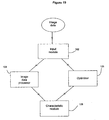
- Figure 19 shows a block diagram of a system 100 for characterizing a 3D organization of telomeres and/or chromosomes.
- the system 100 includes an input module 102, an image data processor 104, an optimizer 106 and a characteristic module 108.
- the input module 102 inputs image data of the 3D organization of telomeres and/or chromosomes.
- the input module 102 includes appropriate hardware and/or software, such as a CD-ROM and CD-ROM reader, or other data storage and reading means.
- the inputting performed by the input module 102 need not be from outside the system 100 to inside the system 100. Rather, in some embodiments, the inputting of data may describe the transfer of data from a permanent storage medium within the system 100, such as a hard disk of the system 100, to a volatile storage medium of the system 100, such as RAM.
- the image data can be obtained using regular or confocal microscopy and can include the intensities of one or more colors at pixels (totaling, for example, 300x300 or 500x500) that comprise an image of a nucleus.
- the image data can also be grey level image data of a nucleus that has been appropriately stained to highlight telomeres and/or chromosomes.
- Several images (on the order of 100) are obtained corresponding to slices along a particular axis.
- the image data may correspond to a total of about 2.5 ⁇ 10 7 pixels.
- the slices may be on the order of 100 nanometers apart. In this manner, the image data accounts for the 3D quality of the organization of telomeres and/or chromosomes.
- the confocal microscope is able to obtain the intensity of two colors, for example blue and green, of the nucleus at every pixel imaged, thereby doubling the amount of data points.
- a stain such as DAPI can be used to preferentially mark the heterochromatin material that comprises DNA.
- a second stain, such as cy3, together with an appropriate label, such as PNA telomere probe, can be used to mark the telomeric portion of the heterochromatin material.
- constrained iterative deconvolution of the image data to improve resolution.
- constrained iterative deconvolution may not be required if confocal, instead of regular, microscopy is used as the image data may be of superior resolution.
- other instruments such as an apotome, may be used to improve the quality of the image.
- Each blob identified as a telomere and/or chromosome has a non-negligible volume (for example, a small telomere may have a volume of 4x4x4 pixels, a large one a volume of 10x10x10, where the size of the nucleus may be approximately 200x200x100 pixels).
- a small telomere may have a volume of 4x4x4 pixels, a large one a volume of 10x10x10, where the size of the nucleus may be approximately 200x200x100 pixels.
- One possibility is to choose for this position the center of gravity of the telomere and/or chromosome, or more generally, the telomere and/or chromosome organization.
- the characteristic module 108 proceeds to find at least one parameter that can be used to characterize the 3D organization of telomeres and/or chromosomes.
- "Parameters used to characterize the organization of telomeres and/or chromosomes” include:
- telomeres that best encompasses the telomeres often approximates an oblate spheroid with a 1 approximately equal to a 2 . In such case, it is sufficient to specify just a 2 and a 3 .
- an oblateness ratio a 3 / a 1 or a 1 / a 3 , can be used to characterize the oblate spheroid describing the organization of the telomeres.
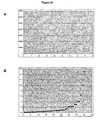
- Figure 20A shows a plot of i, where i denotes the ith telomere, versus I i , where the ordering of the telomeres, from left to right, is from lowest total intensity to highest total intensity.
- Figure 20B shows a similar plot except that the vertical axis is I i divided by the average total intensity over a sample set of cells.
- the sets can be used to calculate statistical measures such as an average, a median or a standard deviation.
- the parameters 1-5 outlined above characterize the 3D organization of the telomeres and/or chromosomes by focusing on the geometrical structure of the telomeres and/or chromosomes.
- Parameters 1 and 2 are motivated by the finding that, especially during the late G2 phase of the cell cycle, telomeres tend to lie on a plane.
- Parameters 1 and 2 measure deviations of telomeres from a planar arrangement.
- Parameter 3 attempts to describe, with features, such as the three principal axes of an ellipsoid or the oblateness ratio, the overall shape of the 3D organization. While parameters 1-3 are global geometric characteristics, dealing with the overall shape of the organization, parameters 4 and 5 are local geometric characteristics in the sense that they involve the geometry of each individual telomere.
- the final parameter is also local, involving the intensity of each individual telomere.
- the characterizations of the 3D organization of telomeres and/or chromosomes can be used for a number of purposes. For example, by comparing a parameter to a standard value, diseases may be monitored or diagnosed, as described above.
- the standard (control) values can arise from population studies, theoretical models, or the characterization of control cells.
- the characterizations of the 3D organization of telomeres and/or chromosomes can be used to monitor or detect genomic instability in a cell.
- Example 1 3D organization of telomeres and chromosomes in the nucleus of mammalian cells
- Table 1 summarizes the cells that were used in this study.
- Mouse primary cells were directly isolated from BALB/c mice. Human primary cells were obtained form healthy donors. Cell lines and culture conditions have been described elsewhere (HaCaT 25 , Pre-B 26 , BAF3 27 , Colo320DM 28 , SH-EP 29 ).
- the primary plasmacytoma DCPC21 was isolated from a BALB/c mouse 30 . Head and neck squamous cell carcinoma and control tissue were obtained from a patient at CancerCare Manitoba upon ethics approval and informed consent.
- Cells were fixed in four ways: i) following cytospin preparations, cells were fixed in 3.7% formaldehyde (1xPBS/50mM MgCl 2 ), ii) cells were allowed to grow on glass slides and were fixed in 3.7% formaldehyde, iii) cells were fixed in suspension with 3.7% formaldehyde, and iv) cells were fixed in methanol:acetic acid (3:1) according to standard protocols 31 . Tissue was fixed following cryosection (5mm sections were used) in 3.7% formaldehyde (1xPBS/50mM MgCl 2 ).
- Fluorescent activated cell sorter FACS
- FACS analysis primary lymphocytes were fixed in 70% ethanol and stained with propidium iodide (1 ⁇ g/ml) following RNAse (20 ⁇ g/ml) digestion. FACS profiles were obtained at 0, 24, 48, and 69 hours post stimulation.
- Cells were stained with Hoechst 33342 (Molecular Probes) at a final concentration of 1 ⁇ g / ml for 90 minutes at 37°C and 5% of CO2. Cells were sorted according to their DNA content (G0/G1, S and late G2 phases).
- Telomere FISH was performed as described 32 using a Cy3 labeled PNA telomere probe (DAKO, Glostrup, Denmark). Telomere hybridizations were specific as shown by metaphase hybridizations and the correct number of the telomeric signals observed at the ends of chromosomes prepared from primary cells ( Figure 1 ).
- Chromosome painting and spectral karyotyping Chromosome painting and spectral karyotyping.
- Chromosome painting was carried out according to standard protocols 31 using a chromosome 11 paint from CedarLane (Hornby, ON, Canada), and chromosome 1 and 21 paints from MetaSystems Group Inc. (Boston, MA, USA). Spectral karyotyping was carried out as described 30 using the mouse SKY kit from Applied Spectral Imaging Inc. (Carlsbad, CA, USA).
- a minimum of 20 cells and a maximum of 30 cells were analyzed by 3D imaging using Axioplan 2 (Zeiss) with 100W fluorescence, a cooled AxioCam HR B&W with 1x adaptor (Zeiss).
- DAPI, FITC and Cy3 filters were used in combination with Planapo 63x/1.4 oil (Zeiss).
- Axiovision 3.1 software with deconvolution module and rendering module were used (Zeiss). 80 and 160 sections were acquired at 100 and 200 nm respectively.
- the constrained iterative algorithm option was employed 33 and surfaces rendered in x, z and x, y axes.
- telomere volume is oblate.
- the x'y' plane of the spheroid should not necessarily be parallel to the microscope slide plane (described by xy), especially in those cases where tissue section are analyzed.
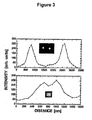
- the optical resolution and signal to noise ratio (SNR) are shown in Figure 3A .
- the images of two neighbor telomeres that are 1200 nm and 400 nm apart and the corresponding intensity along the line connecting the pair indicates the smallest telomere distance that can still be unambiguously distinguished. This optical resolution is good enough for studying the nuclear organization of the telomeres, even if close telomeres are indistinguishable.
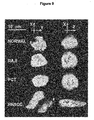
- Fig. 1 The findings for primary cells ( Fig. 1 ), immortalized cells ( Fig. 2 ), and tumor cells and tissue ( Figs. 3 and 4 ) are summarized below.
- Fig. 1 With a simplified model on dynamic telomeric localization illustrates the data for primary mouse and human lymphocytes in both 2D and 3D formats.
- 3D images are presented from the three-dimensional front view (3DF) and from the three-dimensional side view (3DS). 3D movies were obtained that further illustrate the 3D findings.
- the 3D movies are readily available upon request from Dr. Sabine Mai, Manitoba Institute of Cell Biology, CancerCare Manitoba, University of Manitoba, 675 McDermot Ave., Winnipeg, Manitoba.
- the telomeric organization is a dynamic cell cycle dependent process.
- the commonly used 2D-analysis does not allow for a precise localization of the telomeres within interphase nuclei.
- 3D analysis defines their exact nuclear location.
- the 3D data demonstrate that telomeres are highly ordered in the nuclear space of primary cells. In resting, non-cycling (G0/G1) primary mouse and human lymphocytes, telomeres are decondensed. At this time, the segment of the nuclear sphere that telomeres occupy is found consistently within a 680 mm 3 nuclear region in a total nuclear volume of 905 mm 3 ( Fig. 4A , panel a, and in 3D movies).
- telomeres condense prior to late G2 and are then located within a volume of 410 mm 3 ( Fig. 4A , panel b, and in 3D movies).
- the telomeres fully condense in late G2 and precisely align, forming an organized structure that has been designated the telomeric disk (TD) ( Fig. 4A , panel c, and in 3D movies).
- TD telomeric disk
- telomeres are evenly distributed throughout the disk.
- the TD occupies a 190 mm 3 volume of the central nuclear space ( Fig. 4A , panel c, and in 3D movies). Similar results on telomeric organization were recorded in primary human lymphocytes ( Fig.
- telomeric organization is found in the 3D nuclear space of different cell types and species and thus appears to be the common rule governing the dynamics of nuclear organization during normal cell cycle.
- telomeres are widely distributed throughout the nucleus in G0/G1 and S phases with a calculated a/c ratio of 0.9 ⁇ 0.4 which means a spherical- like volume.
- telomeres are not observed throughout the whole nucleus.
- Their 3D organization changes, with all the telomeres assuming a central structure that is herein called the telomeric disk (TD). This disk has never been reported before.
- TD telomeric disk
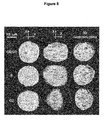
- Typical cells from different phases are shown in Figure 5 .
- the a/c ratio of these cells in G0/G1, S and late G2 phases is 0.8, 0.8 and 6 respectively and clearly shows the correlation of the a/c ratio with the telomere distribution and the organization of the TD that have been found in the G2 phase.
- the elongation of the telomeres along the Z axis relative to the XY plane has the same ratio as the point spread function of the present system and therefore is a result of the poorer optical resolution along the optical axis. This however, has a very small effect on the shape of the whole nucleus.
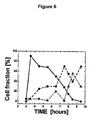
- Figure 6B shows the cell fractions as a function of time. Most cells (90%) form a TD 3.5 hours after BrdU incorporation. The fraction of metaphase cells peaks at 7.5 hours (65%) and the cell fraction of interphase cells that do not have a TD (and are interpreted as being in the G1 phase) peaks at 8.5 hours (57%).
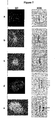
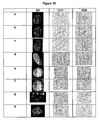
- telomeric organization is found in tumour cell lines ( FIG. 7c and d, and Fig. 10 ). More importantly, this new telomeric organization is not a tissue culture artifact but intrinsic to tumor cells, as demonstrated in Fig. 8 , panel b, and Fig. 8B , panels c and d, arrows.
- telomeres All tumor cells show large aggregates or aggregations of telomeres of various levels of complexity so that telomeres fail to properly align in the TD ( Figs. 7 and 8 ). This structural alteration coincides with the distortion of the TD ( Figs. 7 and 8 ). Moreover, aggregated or fused telomeres protrude outside of the TD space thus enlarging the TD space considerably ( Figs. 7 and 8 , see inserts and arrows). In addition, it is striking that individual non-aggregated or fused telomeres are also not properly integrated into the TD ( Figs. 7 and 8 ).
- telomeres of tumor cells form an altered telomeric organization, occupying a 3D space that differs from their normal counterparts.
- telomeres form aggregates and thus a partially altered TD.
- telomere aggregates are characterized by both a larger volume and a larger integrated intensity than their normal non-overlapping and non-aggregated counterparts. They are not observed in normal cells. Similar results on altered telomeric organization were also found in human neuroblastoma and colon carcinoma tumor cell lines.
- Tables 2 to 8 show the number of aggregates and the number of dividing telomeres in normal controls, immortalized cell lines, cancer cell lines and cancer samples.
- telomeres display an ordered localization in the 3D nuclear space ( Fig. 11A , panel a and Fig. 11B , panel a). Both mouse chromosomes 11 are consistently seen in two distinct territories in normal cells and properly aligned in the TD ( Fig. 11A , panel a). Surprisingly, the TD is maintained in immortalized mouse B cells with trisomy 11 ( Fig. 11A , panel b).
- telomeres and chromosomes of these cells perfectly align along the TD ( Fig. 11A , panel b).
- the 3D interphase nuclear space appears to tolerate an additional chromosome by aligning it along the TD.
- mouse spectral karyotyping for the same cells, it was found that all chromosomes properly align along the TD ( Fig. 11A , panel c).
- the 3D organization of chromosome 11 in mouse tumor cells was examined next. As illustrated in Fig.
- chromosome 11A panel d
- the order of chromosome 11 positioning is altered.
- the chromosomes 11 are dispersed widely throughout the 3D space of the nucleus ( Fig. 11A , panel d, 3DF chromosomes (chr)). Concomitantly, chromosomes 11 are also improperly aligned along the TD ( Fig. 11A , panel d, 3DS chr). Also, this TD shows some telomeric aggregations or aggregates, and one telomere is not integrated into the TD
- Fig.11A panel d, 3DS telomeres (t) (arrow)).
- Fig. 11B The localization of chromosomes 1 (green) and 21 (red) in human primary and tumor cells was investigated. There is a clear spatial organization of chromosomes 1 and 21 in primary human cells. Both chromosomes occupy distinct territories and properly align along the telomeric disk ( Fig. 11 B, panel a, 3DF chr and 3DS chr). Significantly, as highlighted in human colon cancer cells, this order is altered in human tumor cells ( Fig. 11B , panel b).
- Chromosomes 1 and 21 have left their distinct territories so that these two chromosomes are placed into illegitimate close proximity with each other. It was observed that their genetic material intermingles as evident by the mixed colour signatures of both chromosomes ( Fig. 11B , panel b, 3DF chr and 3DS chr). Thus, it appears that tumor cells can easily reorganize their genomes through the exchange of genetic material as their telomeres aggregate and chromosomes alter their 3D positions. This is the first time that chromosomal and telomeric rearrangements can be structurally linked to each other in the 3D compartment of the nucleus.
- Example 2 c-Myc deregulations alters 3D organization of telomeres and chromosomes of the interphase nucleus.
- BAF3 27 Pre-B 28
- the primary plasmacytoma DCPC21 was isolated from a BALB/c mouse 30 .
- v-abl/myc-induced plasmacytomas were collected from BALB/c mice.
- MycER was activated as described previously 27,28 .
- telomere FISH was performed as described 32 using a Cy3 labeled PNA telomere probe (DAKO, Glostrup, Denmark). Telomere hybridizations were specific as shown by metaphase hybridizations and the correct number of the telomeric signals observed at the ends of chromosomes prepared from primary cells.
- Chromosome painting was carried out according to standard protocols 31 using a mouse chromosome 11 (Cy3) and 15 (FITC) paints from CedarLane (Hornby, ON, Canada).
- SKY Mouse spectral karyotyping
- a minimum of 20 and a maximum of 30 nuclei were analyzed by 3D imaging using Axioplan 2 (Zeiss) with 100W fluorescence, a cooled AxioCam HR B&W with 1x adaptor (Zeiss).
- DAPI, FITC and Cy3 filters were used in combination with Planapo 63x/1.4 oil (Zeiss).
- Axiovision 3.1 software with deconvolution module and rendering module were used (Zeiss). 80-100 sections were acquired for each fluorochrome at 100 and 200 nm respectively.
- the constrained iterative algorithm option was employed 33 and surfaces rendered in x, z and x, y axes.
- telomere parameters and the distribution of telomeres inside the volume of the nucleus.
- the program segments the nucleus, counts the telomeres and analyzes the size shape and intensity of each one. Finally, the distribution of telomeres inside the nucleus was analyzed. It compared the volume of the nucleus itself (as calculated from the 3D DAPI image) with the volume and the shape of the volume that was occupied by the telomeres.
- telomere territories in normal and immortalized, nontumorigenic B cells Distinct and non-overlapping telomere territories in normal and immortalized, nontumorigenic B cells.
- the inventors examined whether the deregulation of the oncogene c- Myc affected the 3D organization of telomeres in the interphase nucleus.
- the effect of a transient activation of c-Myc was examined using two independent immortalized cell lines BAF3 37 and Pre-B 28 stably transfected with MycERTM 35 .
- a mouse model of c-Myc-dependent tumorigenesis the mouse plasmacytoma (PCT) 36 was studied.
- the first step of this study was the analysis of the 3D nuclear organization of telomeres in the non-MycER-activated BAF3 and Pre-B cells as well as in primary BALB/c B lymphocytes that served as a control for all BALB/c mouse PCTs.
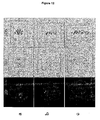
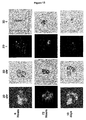
- telomeres of primary BALB/c B cells showed non-overlapping telomere territories (TTs) as determined by 3D imaging and mathematical analysis ( Fig. 12 , panel a).
- TTs telomere territories
- both Pre-B and BAF3 interphase nuclei also displayed distinct and non-overlapping TTs ( Fig. 12 , panels b and c) non distinguishable from TTs of the primary mouse B cell nuclei. This allowed the study of the effects of regulatable Myc activation on the 3D telomeric organization.
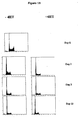
- Fig. 14 summarizes these findings graphically. These data indicate that the telomeres can alter their organization and form aggregates transiently and in a c-Myc-dependent fashion. Importantly, the reversal of the telomeric order to an almost original state was not due to growth arrest or cell death as confirmed by flow cytometry ( Fig. 15 ).
- CTs chromosome territories
- chromosomes 11 and 15 were found in their respective non-overlapping CTs ( Fig. 13 , panel a, 3D chr (chromosomes)).
- chromosomes 11 and 15 were observed in altered territories in which they shared overlapping illegitimate territories as documented by the mixed color signatures representing these two chromosomes ( Fig.
- Spectral karyotyping confirms chromosomal rearrangements and remodulation of 3D interphase nucleus.
- PCT mouse plasmacytoma in which c-Myc is constitutively activated through chromosomal or extrachromosomal translocation to one of the immunoglobulin loci was the in vivo model used 36,30 .
- PCTs induced by viral myc do not carry these translocations because myc is already constitutively activated due to virally-driven myc overexpression 37 .
- telomeres were analyzed by 3D imaging, and the telomeric organization of PCT interphase nuclei were examined.
- Primary BALB/c lymphocytes served as control ( Fig. 12 , panel a, Fig. 16 , panel a).
- the 3D intranuclear space of PCT nuclei exhibited an aberrant telomeric order, where telomeres formed aggregations and thus partially altered TDs ( Fig. 16 , panel b, arrows). This showed that an aberrant 3D nuclear organization of telomeres is consistently observed in primary PCTs but is absent in normal B cells.
- mouse chromosome 11 was chosen, since it constitutes the most frequent chromosomal aberration in v-abl/myc- induced PCTs 37 .
- the 3D organization of chromosomes 11 in primary mouse PCTs 36,37 was disrupted ( Fig. 16 a and b).
- a representative PCT with trisomy 11 showed altered positioning of one chromosome 11 as well as telomeric aggregations.
- chromosomes 11 displayed an ordered localization in the 3D nuclear space of primary B cells ( Fig. 16 ).
- Biomarkers can be defined as biological endpoints (such as cellular and molecular changes) used to indicate an exposure to ionizing radiation (IR), representing an early event that occurs as a result of IR interaction with living tissues.
- IR ionizing radiation
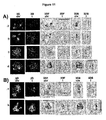
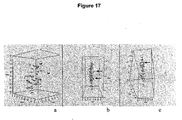
- the inventors have shown that gamma-irradiation alters the 3D organization of telomeres within short periods of time (12 hours) ( Fig. 17 ).
- Example 4 Telomeric organization in breast cancer tissue.
- telomeric aggregations were compared in six age- and grade-matched breast cancer patients, all were grade 3.
- Fig. 18 is a representative results for the breast cancer patients.
- Fig. 18 and Table 8 shows there is a significant difference in 3D telomeric volumes and telomeric aggregations between breast cancer cells and controls.
- LPS lipopolysaccharide
- PHA phytohemagglutinin
- telomeres Patient# Image# #aggregates #dividing telomeres Disk Colo 320 HSR 1 4 2 Yes 2 5 1 Yes 3 5 1 No 4 3 1 No 5 2 1 Yes 6 1 1 Yes 7 2 2 Yes 8 3 0 No 9 5 2 No 10 3 1 No 11 7 1 Yes 12 8 1 No 13 5 3 Yes 14 5 2 No 15 3 3 No 16 2 1 No 17 4 2 Yes 18 4 0 No 19 3 2 Yes 20 4 2 Yes 21 5 1 Yes Total Total # of aggregates Total # of dividing telomeres Disk 21 83 30 11 100% of cells have aggregates (21/21) 90.48% of cells have dividing telomeres (19/21) Human Colon Cancer: chromosome Colo cell with Chr1:Chr2 Patient# Image # Mixed chromosomes signature Colo 320 HSR 1 No 2 Yes 3 Yes 4 Yes 5 Yes 6 Yes 7 No 8 Yes 9 Yes 10 Yes 11 Yes 12 Yes 13 Yes 14 Yes 15 Yes Table 4 Shep-cyto-telo image# # aggregate (s) # dividing
Landscapes
- Chemical & Material Sciences (AREA)
- Life Sciences & Earth Sciences (AREA)
- Organic Chemistry (AREA)
- Health & Medical Sciences (AREA)
- Proteomics, Peptides & Aminoacids (AREA)
- Wood Science & Technology (AREA)
- Zoology (AREA)
- Engineering & Computer Science (AREA)
- Immunology (AREA)
- Analytical Chemistry (AREA)
- Genetics & Genomics (AREA)
- General Engineering & Computer Science (AREA)
- General Health & Medical Sciences (AREA)
- Biotechnology (AREA)
- Physics & Mathematics (AREA)
- Biochemistry (AREA)
- Bioinformatics & Cheminformatics (AREA)
- Biophysics (AREA)
- Molecular Biology (AREA)
- Microbiology (AREA)
- Pathology (AREA)
- Hospice & Palliative Care (AREA)
- Oncology (AREA)
- Measuring Or Testing Involving Enzymes Or Micro-Organisms (AREA)
- Investigating Or Analysing Biological Materials (AREA)
Claims (16)
- Verfahren zum Überwachen oder Erkennen von Krebs in einer Testzelle, welche aus einer Probe erhalten wird, die die Testzelle umfasst, wobei das Verfahren Folgendes umfasst:(a) Charakterisieren der dreidimensionalen (3D-) Telomerorganisation in der Testzelle unter Anwendung einer 3D-Analyse und(b) Vergleichen der 3D-Telomerorganisation in der Testzelle mit der einer nicht kanzerösen Referenzzelle, wobei eine Veränderung der 3D-Telomerorganisation in der Testzelle im Vergleich zu der Referenzzelle das Vorliegen von Krebs in der Testzelle anzeigt,wobei das Charakterisieren der 3D-Telomerorganisation mindestens eines aus dem Folgenden umfasst:A.(i) Eingeben von Bilddaten der 3D-Organisation von Telomeren;(ii) Verarbeiten der Bilddaten, um einen Satz von Koordinaten {(xi , yi , zi )}, i = 1,..., N, zu finden, wobei (xi , yi, zi ) eine Position des i-ten Telomers und/oder Chromosoms ist;(iii) Finden einer Ebene, die dem Satz von Koordinaten am nächsten liegt; und(iv) Finden eines Satzes von Abständen {di }, i = 1,...,N, wobei di der Abstand zwischen (xi , yi , zi ) und der Ebene ist, wobei der Satz {di } verwendet wird, um die 3D-Organisation zu charakterisieren;B.(i) Eingeben von Bilddaten der 3D-Organisation von Telomerstrukturen und(ii) Finden eines Ellipsoids, welches Hauptachsen a1, a2 und a3 aufweist, wobei das Ellipsoid ein abgeplattetes Ellipsoid ist, bei dem a1 ungefähr gleich a2 , und wobei ein Abplattungsverhältnis a3 /a1 oder a1 /a3 verwendet wird, um die 3D-Organisation zu charakterisieren;und/oderC.(i) Eingeben von Bilddaten der 3D-Organisation von Telomeren und(ii) Erhalten mindestens eines aus einem Satz von Intensitäten {Ii }, einem Satz von Volumina {Vi } und einem Satz von drei Dimensionen {(Dxi,Dyi,Dzi )}, i = 1, ..., N, aus den Bilddaten, wobei Ii eine Gesamtintensität oder eine mittlere Intensität ist, Vi ein Volumen ist und (Dxi, Dyi, Dzi ) Hauptachsen eines Ellipsoids sind, welches entsprechend das i-te Telomer und/oder Chromosom beschreibt, wobei der mindestens eine Satz verwendet wird, um die 3D-Organisation zu charakterisieren.
- Verfahren zum Überwachen der Krebsbehandlung in einer Testzelle, welche aus einer Probe erhalten wird, die die Testzelle umfasst, wobei das Verfahren Folgendes umfasst:(a) Charakterisieren der dreidimensionalen (3D-) Telomerorganisation in der Testzelle unter Anwendung einer 3D-Analyse und(b) Vergleichen der 3D-Telomerorganisation in der Testzelle mit der einer nicht kanzerösen Referenzzelle, wobei eine Veränderung der 3D-Telomerorganisation in der Testzelle im Vergleich zu der Referenzzelle mit der Krebsbehandlung in der Testzelle korreliert wird,wobei das Charakterisieren der 3D-Telomerorganisation mindestens eines aus dem Folgenden umfasst:A.(i) Eingeben von Bilddaten der 3D-Organisation von Telomeren;(ii) Verarbeiten der Bilddaten, um einen Satz von Koordinaten {(xi, yi , zi )}, i = 1, ...,N, zu finden, wobei (xi , yi, zi) eine Position des i-ten Telomers und/oder Chromosoms ist;(iii) Finden einer Ebene, die dem Satz von Koordinaten am nächsten liegt; und(iv) Finden eines Satzes von Abständen {di }, = 1,..., N, wobei di der Abstand zwischen (xi , yi , zi ) und der Ebene ist, wobei der Satz {di } verwendet wird, um die 3D-Organisation zu charakterisieren;B.(i) Eingeben von Bilddaten der 3D-Organisation von Telomerstrukturen und(ii) Finden eines Ellipsoids, welches Hauptachsen a1 , a2 und a3 aufweist, wobei das Ellipsoid ein abgeplattetes Ellipsoid ist, bei dem a1 ungefähr gleich a2 , und wobei ein Abplattungsverhältnis a3 /a1 oder a1 /a3 verwendet wird, um die 3D-Organisation zu charakterisieren;und/oderC.(i) Eingeben von Bilddaten der 3D-Organisation von Telomeren und(ii) Erhalten mindestens eines aus einem Satz von Intensitäten {Ii }, einem Satz von Volumina {Vi } und einem Satz von drei Dimensionen {(Dxi ,Dyi ,Dzi )}, i = 1,...,N, aus den Bilddaten, wobei Ii eine Gesamtintensität oder eine mittlere Intensität ist, Vi ein Volumen ist und (Dxi,Dyi ,Dzi ) Hauptachsen eines Ellipsoids sind, welches entsprechend das i-te Telomer und/oder Chromosom beschreibt, wobei der mindestens eine Satz verwendet wird, um die 3D-Organisation zu charakterisieren.
- Verfahren nach Anspruch 1 oder 2, wobei die Telomerorganisation durch ein Verfahren gekennzeichnet wird, umfassend:(i) Eingeben von Bilddaten der 3D-Organisation von Telomeren;(ii) Verarbeiten der Bilddaten, um einen Satz von Koordinaten {(x i , yi , zi )}, i = 1,...,N, zu finden, wobei (xi , yi , zi ) eine Position des i-ten Telomers und/oder Chromosoms ist;(iii) Finden einer Ebene, die dem Satz von Koordinaten am nächsten liegt; und(iv) Finden eines Satzes von Abständen {di }, i = 1,...,N, wobei di der Abstand zwischen (xi , yi , zi ) und der Ebene ist, wobei der Satz {di } verwendet wird, um die 3D-Organisation zu charakterisieren.
- Verfahren nach Anspruch 1, 2 oder 3, wobei die 3D-Organisation durch Bestimmen von mindestens einem aus
d und σ charakterisiert wird, wobeid der mittlere Abstand des Satzes von Abständen ist und σ die Standardabweichung des Satzes von Abständen ist. - Verfahren nach Anspruch 4, wobei das Vergleichen das Vergleichen des mindestens einen aus
d und σ mit einem entsprechenden Referenzwert umfasst. - Verfahren nach Anspruch 1 oder 2, wobei die Telomerorganisation durch ein Verfahren charakterisiert wird, umfassend:(i) Eingeben von Bilddaten der 3D-Organisation von Telomerstrukturen und(ii) Finden eines Ellipsoids, welches Hauptachsen a1 , a2 und a3 aufweist, wobei das Ellipsoid ein abgeplattetes Ellipsoid ist, bei dem a1 ungefähr gleich a2 , und wobei ein Abplattungsverhältnis a3 /a1 oder a1 /a3 verwendet wird, um die 3D-Organisation zu charakterisieren.
- Verfahren nach Anspruch 1 oder 2, wobei die Telomerorganisation durch ein Verfahren charakterisiert wird, umfassend:(i) Eingeben von Bilddaten der 3D-Organisation von Telomeren und/oder Chromosomen und(ii) Erhalten mindestens eines aus einem Satz von Intensitäten {Ii }, einem Satz von Volumina {Vi } und einem Satz von drei Dimensionen {(Dxi ,Dyi ,Dzi )}, i = 1,...,N, aus den Bilddaten, wobei Ii eine Gesamtintensität oder eine mittlere Intensität ist, Vi ein Volumen ist und (Dxi,Dyi,Dzi ) Hauptachsen eines Ellipsoids sind, welches entsprechend das i-te Telomer und/oder Chromosom beschreibt, wobei der mindestens eine Satz verwendet wird, um die 3D-Organisation zu charakterisieren.
- Verfahren nach Anspruch 1, 2 oder 7, wobei das Vergleichen das Vergleichen einer Größe, die aus mindestens einem erhalten wird, mit einem Referenzwert umfasst.
- Verfahren nach Anspruch 8, wobei die Größe ein Mittelwert der Elemente von {I i}, {Vi } oder (Dxi,Dyi,Dzi) ist.
- Verfahren nach einem der Ansprüche 1 bis 9, wobei es sich bei der 3D-Analyse um hochauflösende 3D-Mikroskopie handelt.
- Verfahren nach Anspruch 1 oder 2, wobei die Telomerorganisation durch eines oder mehreres aus Telomerausrichtung, Größe und Form eines Telomeraggregats und/oder einen von den Telomeren eingenommenen 3D-Raum charakterisiert wird.
- Verfahren nach einem der Ansprüche 1, 2 oder 11, wobei die Veränderung der Telomerorganisation in der Testzelle im Vergleich zu der Referenzzelle dadurch charakterisiert wird durch, dass eines oder mehreres aus dem Folgenden verglichen wird:(i) der Anzahl der Telomere;(ii) der Größe und Form eines Telomeraggregats;(iii)die Telomerausrichtung und/oder(iv) der 3D-Raum, der von den Telomeren eingenommen wird,in der Testzelle und der Referenzzelle.
- Verfahren nach einem der Ansprüche 1 bis 12, wobei die Veränderung der Telomerorganisation im Vergleich zu der Referenzzelle während einer beliebigen Phase eines Zellzyklus bestimmt wird.
- Verfahren nach einem der Ansprüche 1 bis 13, wobei die Telomerorganisation durch Vergleichen (i) der Ausrichtung von Telomeren in einer Telomerscheibe und/oder (ii) der Größe einer Telomerscheibe charakterisiert wird, wobei die Telomerscheibe die organisierte Struktur ist, die gebildet wird, wenn Telomere während der späten G2-Phase des Zellzyklus kondensieren und sich ausrichten.
- Verfahren nach Anspruch 14, wobei, wenn(i) die Ausrichtung von Telomeren in der Telomerscheibe der Testzelle im Vergleich zu der Ausrichtung von Telomeren in der Telomerscheibe der Referenzzelle verzerrt ist und/oder(ii) die Telomerscheibe in der Testzelle einen größeren oder kleineren Raum einnimmt als die Telomerscheibe in der Referenzzelle,die Testzelle eine Krebszelle ist.
- Verfahren nach Anspruch 12, wobei eine Veränderung der Größe und Form der Telomeraggregate in der Testzelle im Vergleich zu der Telomerorganisation in der Referenzzelle anzeigt, dass die Testzelle eine Krebszelle ist.
Applications Claiming Priority (3)
| Application Number | Priority Date | Filing Date | Title |
|---|---|---|---|
| US44854503P | 2003-02-21 | 2003-02-21 | |
| US448545P | 2003-02-21 | ||
| PCT/CA2004/000241 WO2004074500A2 (en) | 2003-02-21 | 2004-02-23 | Method of monitoring genomic instability using 3d microscopy and analysis |
Publications (3)
| Publication Number | Publication Date |
|---|---|
| EP1594990A2 EP1594990A2 (de) | 2005-11-16 |
| EP1594990B1 true EP1594990B1 (de) | 2015-12-02 |
| EP1594990B8 EP1594990B8 (de) | 2016-02-24 |
Family
ID=32908603
Family Applications (1)
| Application Number | Title | Priority Date | Filing Date |
|---|---|---|---|
| EP04713499.4A Expired - Lifetime EP1594990B8 (de) | 2003-02-21 | 2004-02-23 | Verfahren zur genomischen-instabilitäts-bestimung durch verwendung von 3d-mikroskopie und analyse |
Country Status (5)
| Country | Link |
|---|---|
| US (1) | US7801682B2 (de) |
| EP (1) | EP1594990B8 (de) |
| CA (1) | CA2515792C (de) |
| ES (1) | ES2567199T3 (de) |
| WO (1) | WO2004074500A2 (de) |
Families Citing this family (13)
| Publication number | Priority date | Publication date | Assignee | Title |
|---|---|---|---|---|
| CA2577623A1 (en) * | 2004-08-20 | 2006-02-23 | University Of Manitoba | Methods of diagnosis or detection using three-dimensional analysis |
| WO2006026714A2 (en) * | 2004-08-31 | 2006-03-09 | Board Of Regents, The University Of Texas System | Diagnosis and prognosis of cancer based on telomere length as measured on cytological specimens |
| CA2699434A1 (en) * | 2006-09-15 | 2008-04-24 | Mcgill University | Stroma derived predictor of breast cancer |
| CA2665100C (en) * | 2006-10-02 | 2017-01-03 | Cancercare Manitoba | Methods of detecting and monitoring cancer using 3d analysis of centromeres |
| US20100068701A1 (en) * | 2008-09-12 | 2010-03-18 | Yamada N Alice | Chromosome labeling method |
| CA2760873C (en) | 2011-12-02 | 2020-04-21 | Sabine Mai | Diagnostic methods for hematological disorders |
| CA2771621A1 (en) * | 2011-12-15 | 2013-06-15 | Sabine Mai | Methods for diagnosing alzheimer's disease |
| CA2775315C (en) * | 2012-04-24 | 2021-02-09 | Sabine Mai | Methods for characterizing and isolating circulating tumor cell subpopulations |
| CA2856419C (en) * | 2013-09-20 | 2018-06-26 | Sabine Mai | Methods for evaluating alzheimer's disease and disease severity |
| WO2015104763A1 (ja) * | 2014-01-07 | 2015-07-16 | ソニー株式会社 | 分析システム、分析プログラム及び分析方法 |
| US9784666B2 (en) * | 2014-09-11 | 2017-10-10 | 3D Signatures Holdings Inc. | Methods for assessing cancer cells using granulometry |
| US10929641B2 (en) * | 2018-08-07 | 2021-02-23 | Cytognomix Inc. | Smart microscope system for radiation biodosimetry |
| CN109948951B (zh) * | 2019-04-01 | 2022-06-24 | 吉林大学 | 一种播种作业后种子分布均匀性评价方法 |
Family Cites Families (1)
| Publication number | Priority date | Publication date | Assignee | Title |
|---|---|---|---|---|
| US6007994A (en) * | 1995-12-22 | 1999-12-28 | Yale University | Multiparametric fluorescence in situ hybridization |
-
2004
- 2004-02-23 ES ES04713499.4T patent/ES2567199T3/es not_active Expired - Lifetime
- 2004-02-23 CA CA2515792A patent/CA2515792C/en not_active Expired - Lifetime
- 2004-02-23 EP EP04713499.4A patent/EP1594990B8/de not_active Expired - Lifetime
- 2004-02-23 US US10/546,152 patent/US7801682B2/en active Active
- 2004-02-23 WO PCT/CA2004/000241 patent/WO2004074500A2/en not_active Ceased
Non-Patent Citations (1)
| Title |
|---|
| C. R. COWAN: "The Polar Arrangement of Telomeres in Interphase and Meiosis. Rabl Organization and the Bouquet", PLANT PHYSIOLOGY, vol. 125, no. 2, 1 February 2001 (2001-02-01), pages 532 - 538, XP055020969, ISSN: 0032-0889, DOI: 10.1104/pp.125.2.532 * |
Also Published As
| Publication number | Publication date |
|---|---|
| US7801682B2 (en) | 2010-09-21 |
| WO2004074500A3 (en) | 2004-11-04 |
| WO2004074500A2 (en) | 2004-09-02 |
| CA2515792C (en) | 2019-01-15 |
| EP1594990B8 (de) | 2016-02-24 |
| ES2567199T3 (es) | 2016-04-20 |
| CA2515792A1 (en) | 2004-09-02 |
| EP1594990A2 (de) | 2005-11-16 |
| US20070031831A1 (en) | 2007-02-08 |
Similar Documents
| Publication | Publication Date | Title |
|---|---|---|
| Vandesompele et al. | Genetic heterogeneity of neuroblastoma studied by comparative genomic hybridization | |
| EP1594990B1 (de) | Verfahren zur genomischen-instabilitäts-bestimung durch verwendung von 3d-mikroskopie und analyse | |
| Shuster et al. | A consistent pattern of RIN1 rearrangements in oral squamous cell carcinoma cell lines supports a breakage‐fusion‐bridge cycle model for 11q13 amplification | |
| Ko et al. | Value of 18F-FDG uptake on PET/CT and CEA level to predict epidermal growth factor receptor mutations in pulmonary adenocarcinoma | |
| US20020098535A1 (en) | Class characterization of circulating cancer cells isolated from body fluids and methods of use | |
| Bockmühl et al. | CGH pattern of esthesioneuroblastoma and their metastases | |
| EP1979000A2 (de) | Verfahren zur erfassung von krebszellen unter verwendung eines virus | |
| Raman et al. | Cyst fluid biomarkers-diagnosis and prediction of malignancy for cystic lesions of the pancreas | |
| Pang et al. | Differential diagnosis and treatment of salivary secretory carcinoma and acinic cell carcinoma | |
| Taslerová et al. | Arrangement of chromosome 11 and 22 territories, EWSR1 and FLI1 genes, and other genetic elements of these chromosomes in human lymphocytes and Ewing sarcoma cells | |
| Egbivwie et al. | FGFR1 expression and role in migration in low and high grade pediatric gliomas | |
| Kees et al. | Enhanced MYCN expression and lsochromosome 17q in pineoblastoma cell lines | |
| Hieber et al. | Chromosomal rearrangements in post‐Chernobyl papillary thyroid carcinomas: Evaluation by spectral karyotyping and automated interphase FISH | |
| EP2066816B1 (de) | Verfahren zum nachweis und zur überwachung einer krebserkrankung mittels 3d-analyse von zentromeren | |
| Gandhi et al. | Gene position within chromosome territories correlates with their involvement in distinct rearrangement types in thyroid cancer cells | |
| Italiano et al. | Monosomy 7 and absence of 12q amplification in two cases of spindle cell liposarcomas | |
| Okada et al. | Comparison of numerical change of epidermal growth factor receptor gene among pre-and postradiation glioma, and gliosis, and its clinical use | |
| Mazloumi et al. | Combined study of cytogenetics and fluorescence in situ hybridization (FISH) analysis in childhood acute lymphoblastic leukemia (ALL) in a tertiary cancer centre in South India | |
| Feng et al. | Expression of DNA topoisomerase II-α: Clinical significance in laryngeal carcinoma | |
| EP1799851A1 (de) | Diagnose- oder nachweisverfahren mit dreidimensionaler analyse | |
| Mark et al. | Trisomy 8 in Stage I and Stage III Ovarian Cancer Detected by Fluorescencein SituHybridization | |
| US20190264289A1 (en) | Methods for characterizing and isolating circulating tumor cell subpopulations | |
| Seong et al. | Philadelphia chromosome-positive myeloid cells in the peripheral blood of chronic myelogenous leukemia patients: comparison with the frequency detected in cycling cells of the bone marrow. | |
| Kawauchi et al. | Genomic instability and DNA ploidy are linked to DNA copy number aberrations of 8p23 and 22q11. 23 in gastric cancers | |
| Toida et al. | Analysis of ameloblastomas by comparative genomic hybridization and fluorescence in situ hybridization |
Legal Events
| Date | Code | Title | Description |
|---|---|---|---|
| PUAI | Public reference made under article 153(3) epc to a published international application that has entered the european phase |
Free format text: ORIGINAL CODE: 0009012 |
|
| 17P | Request for examination filed |
Effective date: 20050913 |
|
| AK | Designated contracting states |
Kind code of ref document: A2 Designated state(s): AT BE BG CH CY CZ DE DK EE ES FI FR GB GR HU IE IT LI LU MC NL PT RO SE SI SK TR |
|
| AX | Request for extension of the european patent |
Extension state: AL LT LV MK |
|
| DAX | Request for extension of the european patent (deleted) | ||
| GRAP | Despatch of communication of intention to grant a patent |
Free format text: ORIGINAL CODE: EPIDOSNIGR1 |
|
| INTG | Intention to grant announced |
Effective date: 20141030 |
|
| GRAS | Grant fee paid |
Free format text: ORIGINAL CODE: EPIDOSNIGR3 |
|
| GRAA | (expected) grant |
Free format text: ORIGINAL CODE: 0009210 |
|
| RAP1 | Party data changed (applicant data changed or rights of an application transferred) |
Owner name: 3D SIGNATURES INC. |
|
| AK | Designated contracting states |
Kind code of ref document: B1 Designated state(s): AT BE BG CH CY CZ DE DK EE ES FI FR GB GR HU IE IT LI LU MC NL PT RO SE SI SK TR |
|
| REG | Reference to a national code |
Ref country code: GB Ref legal event code: FG4D |
|
| RIN1 | Information on inventor provided before grant (corrected) |
Inventor name: MOSHIR, SHARAREH Inventor name: VERMOLEN, BARTHOLOMEUS J. Inventor name: MAI, SABINE Inventor name: CHUANG, TONY, CHIH, YUAN Inventor name: GARINI, YUVAL |
|
| REG | Reference to a national code |
Ref country code: AT Ref legal event code: REF Ref document number: 763664 Country of ref document: AT Kind code of ref document: T Effective date: 20151215 Ref country code: CH Ref legal event code: EP |
|
| REG | Reference to a national code |
Ref country code: IE Ref legal event code: FG4D |
|
| RAP2 | Party data changed (patent owner data changed or rights of a patent transferred) |
Owner name: 3D SIGNATURES INC. |
|
| REG | Reference to a national code |
Ref country code: DE Ref legal event code: R096 Ref document number: 602004048302 Country of ref document: DE |
|
| REG | Reference to a national code |
Ref country code: FR Ref legal event code: PLFP Year of fee payment: 13 |
|
| REG | Reference to a national code |
Ref country code: NL Ref legal event code: MP Effective date: 20160302 |
|
| REG | Reference to a national code |
Ref country code: AT Ref legal event code: MK05 Ref document number: 763664 Country of ref document: AT Kind code of ref document: T Effective date: 20151202 |
|
| REG | Reference to a national code |
Ref country code: ES Ref legal event code: FG2A Ref document number: 2567199 Country of ref document: ES Kind code of ref document: T3 Effective date: 20160420 |
|
| PG25 | Lapsed in a contracting state [announced via postgrant information from national office to epo] |
Ref country code: AT Free format text: LAPSE BECAUSE OF FAILURE TO SUBMIT A TRANSLATION OF THE DESCRIPTION OR TO PAY THE FEE WITHIN THE PRESCRIBED TIME-LIMIT Effective date: 20151202 Ref country code: NL Free format text: LAPSE BECAUSE OF FAILURE TO SUBMIT A TRANSLATION OF THE DESCRIPTION OR TO PAY THE FEE WITHIN THE PRESCRIBED TIME-LIMIT Effective date: 20151202 Ref country code: FI Free format text: LAPSE BECAUSE OF FAILURE TO SUBMIT A TRANSLATION OF THE DESCRIPTION OR TO PAY THE FEE WITHIN THE PRESCRIBED TIME-LIMIT Effective date: 20151202 Ref country code: GR Free format text: LAPSE BECAUSE OF FAILURE TO SUBMIT A TRANSLATION OF THE DESCRIPTION OR TO PAY THE FEE WITHIN THE PRESCRIBED TIME-LIMIT Effective date: 20160303 Ref country code: BE Free format text: LAPSE BECAUSE OF NON-PAYMENT OF DUE FEES Effective date: 20160229 Ref country code: SE Free format text: LAPSE BECAUSE OF FAILURE TO SUBMIT A TRANSLATION OF THE DESCRIPTION OR TO PAY THE FEE WITHIN THE PRESCRIBED TIME-LIMIT Effective date: 20151202 |
|
| PG25 | Lapsed in a contracting state [announced via postgrant information from national office to epo] |
Ref country code: IT Free format text: LAPSE BECAUSE OF FAILURE TO SUBMIT A TRANSLATION OF THE DESCRIPTION OR TO PAY THE FEE WITHIN THE PRESCRIBED TIME-LIMIT Effective date: 20151202 Ref country code: CZ Free format text: LAPSE BECAUSE OF FAILURE TO SUBMIT A TRANSLATION OF THE DESCRIPTION OR TO PAY THE FEE WITHIN THE PRESCRIBED TIME-LIMIT Effective date: 20151202 |
|
| PG25 | Lapsed in a contracting state [announced via postgrant information from national office to epo] |
Ref country code: EE Free format text: LAPSE BECAUSE OF FAILURE TO SUBMIT A TRANSLATION OF THE DESCRIPTION OR TO PAY THE FEE WITHIN THE PRESCRIBED TIME-LIMIT Effective date: 20151202 Ref country code: PT Free format text: LAPSE BECAUSE OF FAILURE TO SUBMIT A TRANSLATION OF THE DESCRIPTION OR TO PAY THE FEE WITHIN THE PRESCRIBED TIME-LIMIT Effective date: 20160404 Ref country code: SK Free format text: LAPSE BECAUSE OF FAILURE TO SUBMIT A TRANSLATION OF THE DESCRIPTION OR TO PAY THE FEE WITHIN THE PRESCRIBED TIME-LIMIT Effective date: 20151202 Ref country code: RO Free format text: LAPSE BECAUSE OF FAILURE TO SUBMIT A TRANSLATION OF THE DESCRIPTION OR TO PAY THE FEE WITHIN THE PRESCRIBED TIME-LIMIT Effective date: 20151202 |
|
| REG | Reference to a national code |
Ref country code: DE Ref legal event code: R097 Ref document number: 602004048302 Country of ref document: DE |
|
| PG25 | Lapsed in a contracting state [announced via postgrant information from national office to epo] |
Ref country code: LU Free format text: LAPSE BECAUSE OF FAILURE TO SUBMIT A TRANSLATION OF THE DESCRIPTION OR TO PAY THE FEE WITHIN THE PRESCRIBED TIME-LIMIT Effective date: 20160223 Ref country code: MC Free format text: LAPSE BECAUSE OF FAILURE TO SUBMIT A TRANSLATION OF THE DESCRIPTION OR TO PAY THE FEE WITHIN THE PRESCRIBED TIME-LIMIT Effective date: 20151202 |
|
| REG | Reference to a national code |
Ref country code: CH Ref legal event code: PL |
|
| PLBE | No opposition filed within time limit |
Free format text: ORIGINAL CODE: 0009261 |
|
| STAA | Information on the status of an ep patent application or granted ep patent |
Free format text: STATUS: NO OPPOSITION FILED WITHIN TIME LIMIT |
|
| PG25 | Lapsed in a contracting state [announced via postgrant information from national office to epo] |
Ref country code: DK Free format text: LAPSE BECAUSE OF FAILURE TO SUBMIT A TRANSLATION OF THE DESCRIPTION OR TO PAY THE FEE WITHIN THE PRESCRIBED TIME-LIMIT Effective date: 20151202 Ref country code: LI Free format text: LAPSE BECAUSE OF NON-PAYMENT OF DUE FEES Effective date: 20160229 Ref country code: CH Free format text: LAPSE BECAUSE OF NON-PAYMENT OF DUE FEES Effective date: 20160229 |
|
| 26N | No opposition filed |
Effective date: 20160905 |
|
| PG25 | Lapsed in a contracting state [announced via postgrant information from national office to epo] |
Ref country code: SI Free format text: LAPSE BECAUSE OF FAILURE TO SUBMIT A TRANSLATION OF THE DESCRIPTION OR TO PAY THE FEE WITHIN THE PRESCRIBED TIME-LIMIT Effective date: 20151202 |
|
| REG | Reference to a national code |
Ref country code: IE Ref legal event code: MM4A |
|
| PG25 | Lapsed in a contracting state [announced via postgrant information from national office to epo] |
Ref country code: BE Free format text: LAPSE BECAUSE OF FAILURE TO SUBMIT A TRANSLATION OF THE DESCRIPTION OR TO PAY THE FEE WITHIN THE PRESCRIBED TIME-LIMIT Effective date: 20151202 |
|
| PG25 | Lapsed in a contracting state [announced via postgrant information from national office to epo] |
Ref country code: IE Free format text: LAPSE BECAUSE OF NON-PAYMENT OF DUE FEES Effective date: 20160223 |
|
| REG | Reference to a national code |
Ref country code: FR Ref legal event code: PLFP Year of fee payment: 14 |
|
| REG | Reference to a national code |
Ref country code: FR Ref legal event code: PLFP Year of fee payment: 15 |
|
| PG25 | Lapsed in a contracting state [announced via postgrant information from national office to epo] |
Ref country code: HU Free format text: LAPSE BECAUSE OF FAILURE TO SUBMIT A TRANSLATION OF THE DESCRIPTION OR TO PAY THE FEE WITHIN THE PRESCRIBED TIME-LIMIT; INVALID AB INITIO Effective date: 20040223 Ref country code: CY Free format text: LAPSE BECAUSE OF FAILURE TO SUBMIT A TRANSLATION OF THE DESCRIPTION OR TO PAY THE FEE WITHIN THE PRESCRIBED TIME-LIMIT Effective date: 20151202 |
|
| PG25 | Lapsed in a contracting state [announced via postgrant information from national office to epo] |
Ref country code: TR Free format text: LAPSE BECAUSE OF FAILURE TO SUBMIT A TRANSLATION OF THE DESCRIPTION OR TO PAY THE FEE WITHIN THE PRESCRIBED TIME-LIMIT Effective date: 20151202 |
|
| PG25 | Lapsed in a contracting state [announced via postgrant information from national office to epo] |
Ref country code: BG Free format text: LAPSE BECAUSE OF FAILURE TO SUBMIT A TRANSLATION OF THE DESCRIPTION OR TO PAY THE FEE WITHIN THE PRESCRIBED TIME-LIMIT Effective date: 20151202 |
|
| PGFP | Annual fee paid to national office [announced via postgrant information from national office to epo] |
Ref country code: FR Payment date: 20230220 Year of fee payment: 20 Ref country code: ES Payment date: 20230309 Year of fee payment: 20 |
|
| PGFP | Annual fee paid to national office [announced via postgrant information from national office to epo] |
Ref country code: GB Payment date: 20230214 Year of fee payment: 20 Ref country code: DE Payment date: 20230214 Year of fee payment: 20 |
|
| P01 | Opt-out of the competence of the unified patent court (upc) registered |
Effective date: 20230527 |
|
| REG | Reference to a national code |
Ref country code: DE Ref legal event code: R071 Ref document number: 602004048302 Country of ref document: DE |
|
| REG | Reference to a national code |
Ref country code: GB Ref legal event code: PE20 Expiry date: 20240222 |
|
| REG | Reference to a national code |
Ref country code: ES Ref legal event code: FD2A Effective date: 20240405 |
|
| PG25 | Lapsed in a contracting state [announced via postgrant information from national office to epo] |
Ref country code: ES Free format text: LAPSE BECAUSE OF EXPIRATION OF PROTECTION Effective date: 20240224 |
|
| PG25 | Lapsed in a contracting state [announced via postgrant information from national office to epo] |
Ref country code: ES Free format text: LAPSE BECAUSE OF EXPIRATION OF PROTECTION Effective date: 20240224 Ref country code: GB Free format text: LAPSE BECAUSE OF EXPIRATION OF PROTECTION Effective date: 20240222 |