EP1593697A1 - Polyvinyl ethers having silicon-containing functional groups or atomic groups at the end and process for production thereof - Google Patents
Polyvinyl ethers having silicon-containing functional groups or atomic groups at the end and process for production thereof Download PDFInfo
- Publication number
- EP1593697A1 EP1593697A1 EP03733330A EP03733330A EP1593697A1 EP 1593697 A1 EP1593697 A1 EP 1593697A1 EP 03733330 A EP03733330 A EP 03733330A EP 03733330 A EP03733330 A EP 03733330A EP 1593697 A1 EP1593697 A1 EP 1593697A1
- Authority
- EP
- European Patent Office
- Prior art keywords
- group
- hydrogen atom
- ruthenium
- polyvinyl ether
- aralkyl
- Prior art date
- Legal status (The legal status is an assumption and is not a legal conclusion. Google has not performed a legal analysis and makes no representation as to the accuracy of the status listed.)
- Granted
Links
Images


Classifications
-
- C—CHEMISTRY; METALLURGY
- C08—ORGANIC MACROMOLECULAR COMPOUNDS; THEIR PREPARATION OR CHEMICAL WORKING-UP; COMPOSITIONS BASED THEREON
- C08F—MACROMOLECULAR COMPOUNDS OBTAINED BY REACTIONS ONLY INVOLVING CARBON-TO-CARBON UNSATURATED BONDS
- C08F16/00—Homopolymers and copolymers of compounds having one or more unsaturated aliphatic radicals, each having only one carbon-to-carbon double bond, and at least one being terminated by an alcohol, ether, aldehydo, ketonic, acetal or ketal radical
- C08F16/12—Homopolymers and copolymers of compounds having one or more unsaturated aliphatic radicals, each having only one carbon-to-carbon double bond, and at least one being terminated by an alcohol, ether, aldehydo, ketonic, acetal or ketal radical by an ether radical
- C08F16/14—Monomers containing only one unsaturated aliphatic radical
Definitions
- the present invention belongs to the technical field of polymeric materials, and particularly relates to polyvinyl ethers having a silicon-containing functional or atomic group at the terminal thereof and a method for producing the same.
- Polyvinyl ethers are industrially important materials as they are used as materials for electronic parts, lubricants, adhesives and so on. Realization of the ability to provide a polyvinyl ether with a reactive silicon-containing functional group, such as silyl group or siloxy group, at the terminal thereof, can be expected to lead to the creation of a variety of novel functional materials, by combining another compound (molecule) with the polyvinyl ether via such functional group or by replacing the functional group with another functional group. However, no concrete means are available for obtaining such a polyvinyl ester.
- the paper of Crivello et al. relates to a polymerization process including an isomeric reaction of an allyl ether to a vinyl ether.
- a polymerization process including an isomeric reaction of an allyl ether to a vinyl ether.
- the polymerization of the vinyl ether while the molecular weight and molecular weight distribution of the polymer produced are set out, only one working example is given and no elucidation is found regarding the molecular structure of the polymer, including its terminal structure. In the above-mentioned patent application, nothing whatsoever is said regarding either the terminal structure of the polymer or the molecular weight and the molecular weight distribution of the polyvinyl ether.
- the object of the present invention is to provide a polyvinyl ether having a silicon-containing functional group or atomic group, such as silyl group or siloxy group, at the terminal thereof and also a method for producing such polyvinyl ether as a novel polyvinyl ether.
- the present inventors previously achieved inventions relating to the production of a polyether by the polymerization of a cyclic ether and also the production of a silalkylenesiloxane by the polymerization of a cyclic siloxane, using a catalyst composed of a polynuclear ruthenium-carbonyl complex, a new type of polymerization catalyst which is totally different from the conventional polymerization catalysts (Japanese Patent Application Publication No.59021/2001: PCT/JP00/07531).
- the present inventors have made continued studies and accomplished the present invention based on a surprising finding that the polynuclear ruthenium-carbonyl complex when used in combination with a specific silane compound serves as a highly-active catalyst for the polymerization of a general type of (i.e. non-cyclic) vinyl ether as well as that of the cyclic vinyl ether, thereby enabling the production of the above-mentioned objective polyvinyl ether.
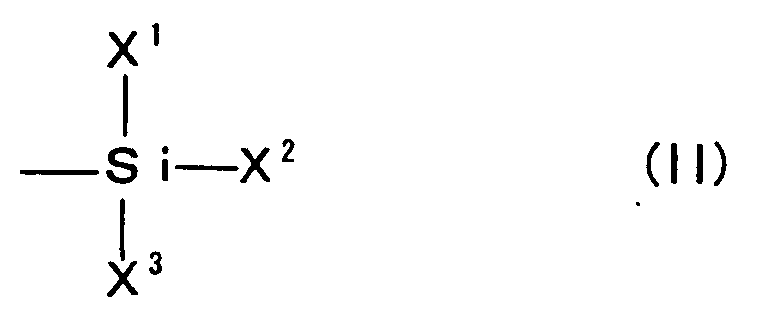
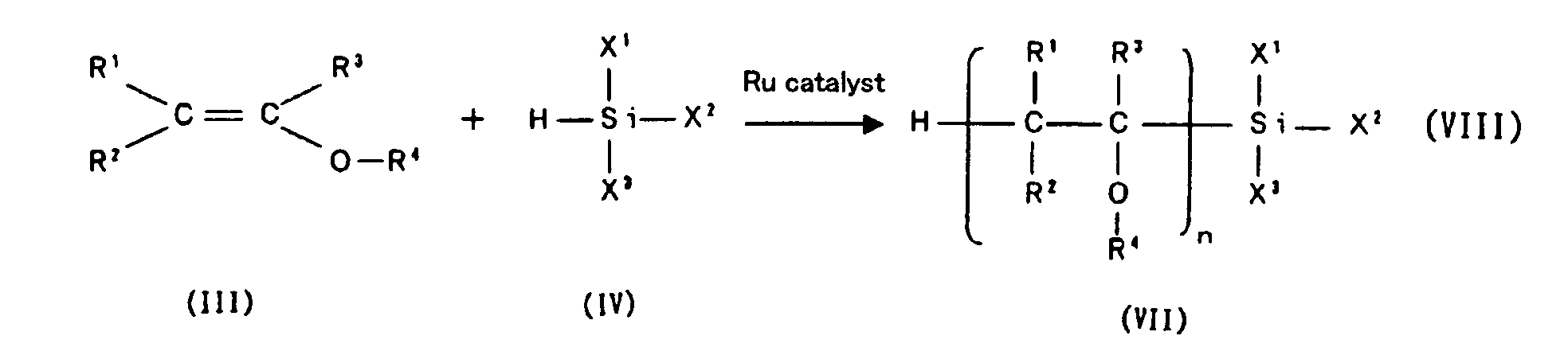
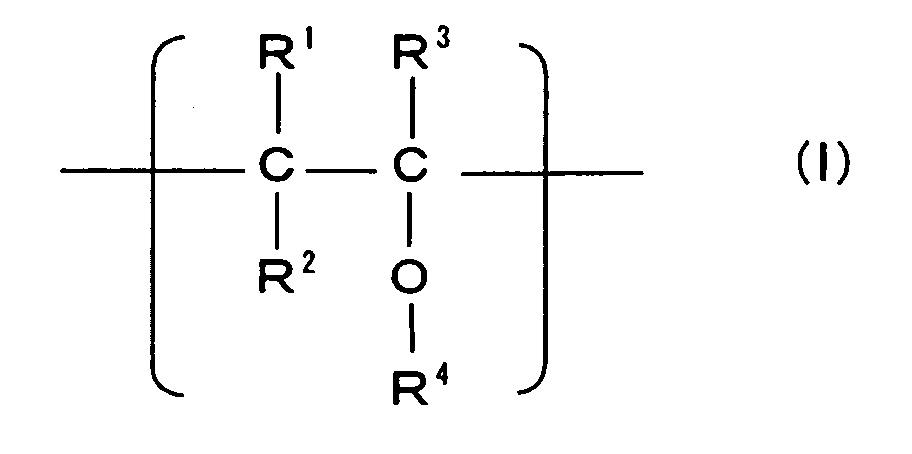
- a polyvinyl ether composed of a repeating unit represented by the following formula (I) and having a hydrogen atom at one terminal thereof and a silicon-containing functional group or atomic group represented by the following formula (II) at the other terminal thereof
- R 1 , R 2 and R 3 are the same or different and each independently represents a hydrogen atom or a hydrocarbon group having 1 to 8 carbon atoms and R 4 represents an alkyl group, a cycloalkyl group, an aryl group, an aralkyl group or a silyl group.
- X 1 , X 2 and X 3 are the same or different and each independently represents a hydrogen atom, a halogen atom, an amino group, an alkyl group, an alkoxy group, a thioalkyl group, an alkylamino group, an aryl group, an arylamino group, an aralkyl group, a vinyl group, or a heterocyclic group.
- a method for preparing the above-mentioned polyvinyl ether which comprises allowing, in the presence of a catalyst composed of a polynuclear ruthenium-carbonyl complex in which carbonyl groups coordinate with two to four ruthenium atoms, a vinylether compound expressed by the following formula (III) (wherein R 1 , R 2 and R 3 are the same or different and each independently represents a hydrogen atom or a hydrocarbon group having 1 to 8 carbon atoms, and R 4 represents an alkyl group, a cycloalkyl group, an aryl group, an aralkyl group, a silyl group or a substituted derivative thereof) to react with a silane compound expressed by the following formula (IV): (wherein X 1 , X 2 and X 3 are the same or different and each independently represents a hydrogen atom, a halogen atom, an amino group, an alkyl group, an alkoxy group, a
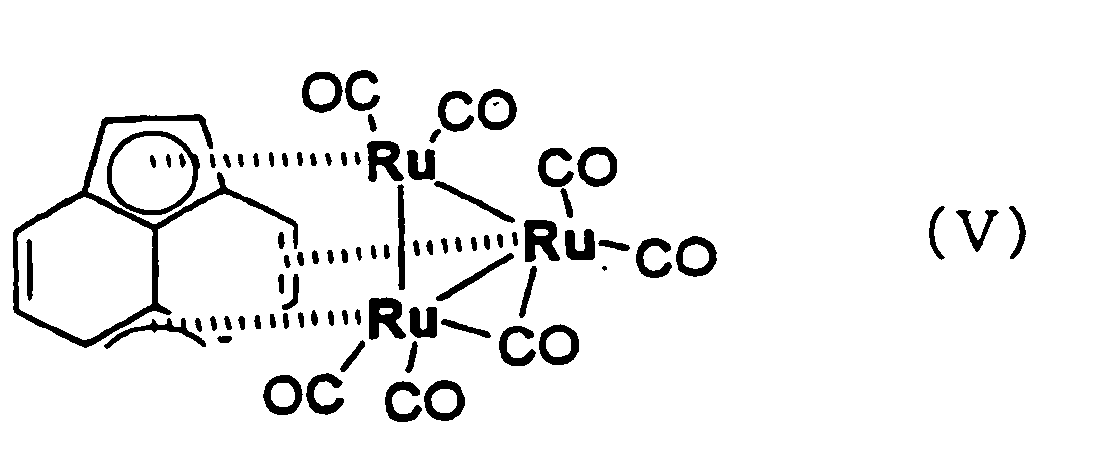
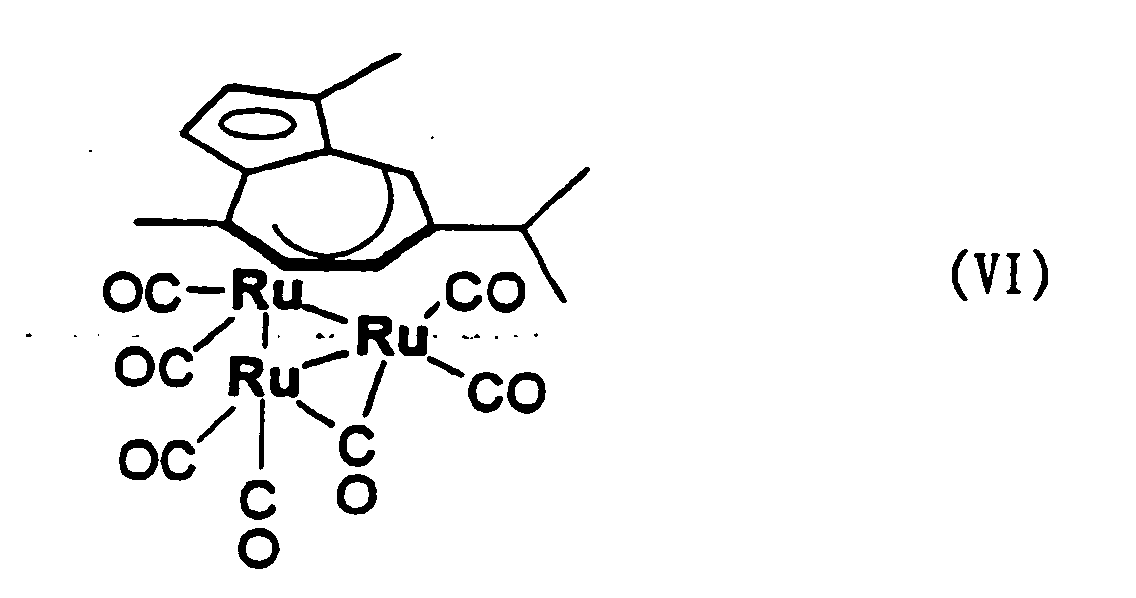
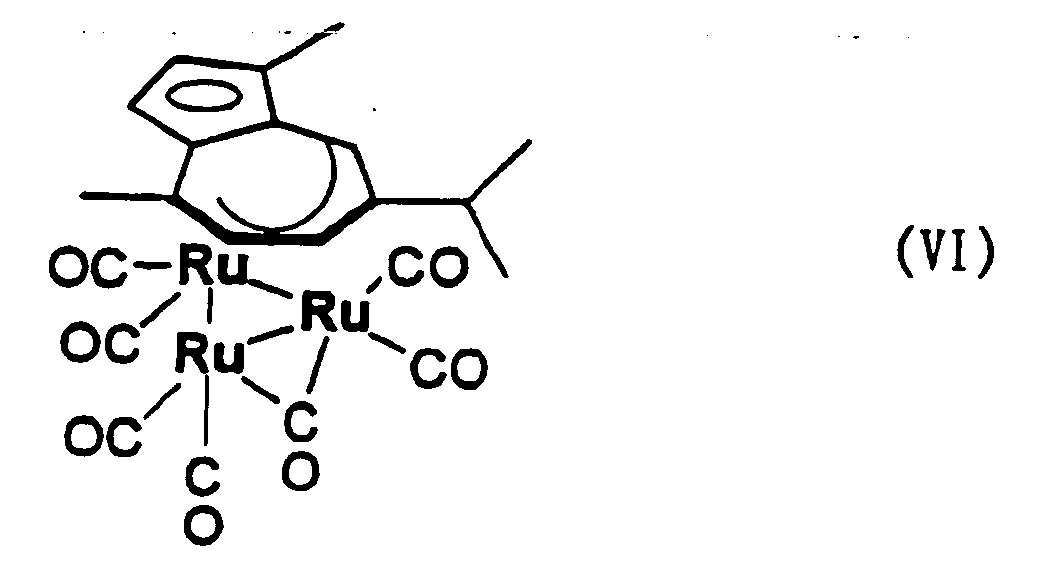
- the most preferred polynuclear ruthenium-carbonyl complex as the catalyst is a tri-nuclear ruthenium-carbonyl complex selected from among those expressed by the following formulae (V) and (VI), which contain coordinating acenaphthylene and coordinating azulene, respectively.
- Fig.1 there are exemplified polynuclear ruthenium carbonyl complexes, for use as a catalyst in the present invention, in which carbonyl groups coordinate with two to four ruthenium atoms.
- a polynuclear ruthenium carbonyl complex serves as a catalyst for the polymerization of the vinylether compound, in the presence of the silane compound, to produce the polyvinyl ether having a silicon-containing functional group at the terminal thereof, in which the polynuclear ruthenium carbonyl complex catalyst is advantageous over cobalt carbonyl complex catalysts such as Co 2 (CO) 8 and platinum catalysts such as H 2 PtCl 6 ⁇ 6H 2 O, the conventionally well known polymerization catalysts, in that it exhibits a higher activity even in a low catalyst concentration while producing polymers with a narrow molecular weight distribution (cf. the working examples to be described later).
- cobalt carbonyl complex catalysts such as Co 2 (CO) 8
- platinum catalysts
- Particularly excellent and efficient catalysts for the polymerization reaction of the vinyl ether compound in the presence of the silane compound are tri-nuclear ruthenium-carbonyl complexes as expressed by the formula 1 in Fig.1 (the aforementioned formula (V)) and by the formula 5 in Fig.1 (the aforementioned (VI)), containing coordinating acenaphthylene and coordinating azulene, respectively.
- the polymerization is carried out with the above-mentioned polynuclear ruthenium carbonyl compound as the catalyst in the presence of the silane compound, it is possible to produce the polyvinyl ether having a silicon-containing functional group or atomic group from a variety of known or available vinyl ether compounds.
- R 1 , R 2 and R 3 are generally a hydrogen atom but may each independently be selected from among a hydrogen atom and a hydrocarbon group having 1 to 8 carbon atoms.
- the hydrocarbon groups having 1 to 8 carbon atoms may include alkyl groups, aryl groups and aralkyl groups in which an alkyl group having 1 to 5 carbon atoms is particularly preferred.
- R 4 represents an alkyl group, a cycloalkyl group, an aryl group, an aralkyl group or a silyl group, in which such functional groups may be substituted.
- the number of carbon atoms in the alkyl group, the cycloalkyl group, the aryl group or the aralkyl group is generally, but is not limited to, in the range of 1 to 10.
- R 4 include, but are not limited to, methyl group, ethyl group, n-propyl group, isopropyl group, n-butyl group, isobutyl group, n-octyl group, cyclohexyl group, phenyl group, benzyl group, 2-ethoxyethyl group, phenoxyethyl group, 2-chloroethyl group, trimethylsilyl group, and triethylsilyl group.
- X1, X2 and X3 are the same or different and each independently represents a hydrogen atom, a halogen atom, an amino group, an alkyl group, an alkoxy group, a thioalkyl group, an alkylamino group, an aryl group, an arylamino group, an aralkyl group, a vinyl group, or a heterocyclic group.
- the number of carbon atoms in such groups is generally, but is not limited to, 1 to 18.
- a preferable example of the heterocyclic group is piridyl group.
- the vinyl ether compound by allowing, in the presence of a catalyst composed of a polynuclear ruthenium-carbonyl complex such as those expressed by the formula (V) or (VI), the vinyl ether compound to react with the silane compound as mentioned above, there can be prepared the polyvinyl ether composed of a repeating unit represented by the aforementioned formula (I) and having a hydrogen atom at one terminal thereof and a silicon-containing functional or atomic group represented by the aforementioned formula (II) at the other terminal thereof. More specifically the polyvinyl ether thus prepared can be expressed by the following formula (VII):
- the molecular weight of the polyvinyl ether prepared in accordance with the present invention is not restricted, but is generally in the range of approx, 500 to 500,000 as number-average molecular weight measured by GPC (gel permeation chromatography).
- n in the formula (VII) expresses a number (integer) corresponding to such molecular weight.
- the reaction for the preparation of the polyvinyl ether according to the present invention can be carried out under a mild condition, i.e. at atmospheric pressure at a temperature of 5 to 90°C.
- the reaction can be done either by a solution polymerization or by a bulk polymerization, between which the solution polymerization is more preferred.
- solvents suitable for use in the solvent polymerization include 1,4-dioxane, Tetrahydropyran, diethyl ether, tert-butyl methyl ether, and toluene. While the reaction time depends upon such factors as the reaction temperature and the catalyst concentration, it is generally in the range of one minute to four hours.
- Me denotes methyl group
- Et denotes ethyl group
- Ph denotes phenyl group
- Mn denotes number-average molecular weight
- Mw denotes weight-average molecular weight
- GPC denotes gel permeation chromatography.
- Example 1 Syntheses of polyvinyl butyl ether and other materials
- the molecular weight of the white solid material was determined by GPC, and the material was also subjected to the measurement of IR, 1 H and 13 C NMR spectra.
- FIG.2 shows the GPC chart. The assignment of the IR and NMR data are summarized below. From these results the white solid material was identified to be polyvinyl tert-butyl ether.
- IR spectrum (KBr): 2979, 1474, 1389, 1362, 1253, 1230, 1195, 1105, 1059, 1006 cm -1 .
- 1 H NMR spectrum in C 6 D 6 , inner reference C 6 H 6 , ⁇ (ppm) 1.35(br, tBu), 1.96(br, CH 2 ), 3.88(br, CH).
- the polynuclear ruthenium-carbonyl complex catalyst according to the present invention was compared with the conventionally proposed cobalt complex catalyst and the platinum complex catalyst with respect to catalyst performance for the polymerization reaction of the vinyl ether.
- the polynuclear ruthenium-carbonyl complex catalyst was the same Ru catalyst as used in Example 1, while the cobalt complex catalyst was Co 2 (CO) 8 and the platinum complex catalyst was H 2 PtCl 6 •6H 2 O.
- the procedure of the reactions and the analysis of products were made in the same manner as in Example 1.
- the polymerization reactions were carried out at room temperature with tBuVE as the monomer (the starting vinyl ether) and HSiMe 2 Ph as the silane compound in which the ratio of the monomer to the silane was 10 : 1.
- the ruthenium complex used in the present invention is very advantageous over the cobalt complex and the platinum complex in that it is more reactive for the vinyl ether polymerization reaction thus producing, at a lower catalyst concentration, the polyvinyl ether even with a narrow molecular weight distribution.
- the polymerization reactions were further carried out in the same manner using different types of the silane (the silane compound).
- the results are summarized in Table 4.
- the monomer (the starting vinyl ether) was tBuVE for Run No.6 and iBuVE for the other Runs. Run No.
- the vinyl ether polymerization reaction proceeded efficiently with all types of the silane compounds.
- the product polymers had a narrow molecular weight distribution with a Mn / Mn value of approx. 1.5 to 3.0, including the polymer with the extremely low value of 1.5 when tBuVE was used.
- FIG.3 shows the chemical formula of the product polymer (the polyvinyl ether), at the upper part of the figure, as well as a schematic structure of such polymer, at the lower part of the figure, from which the NMR data can be assigned to the respective hydrogen atoms and carbon atoms.
- FIG.4 shows the 1 H NMR spectrogram while FIG.5 shows the 13 C NMR spectrogram.
- the respective positions denoted by the capital alphabetical letters in FIG.4 and FIG.5 correspond to the respective positions denoted by the small alphabetical letters in the formula shown in FIG.3.
- the product polymer is composed of the repeating units of iso-butyl ether group corresponding to the starting monomer and has a hydrogen atom at one terminal thereof and PhMe 2 Si group corresponding to the silane at the other terminal thereof.
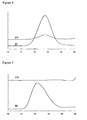
- the terminal structure of polyvinyl isobutyl ether prepared in accordance with the present invention was also ascertained via GPC. It is known that, in the case of a polymer having an UV-reactive substituent such as phenyl group within the repeating unit, the GPC profile detected by UV detector resembles to that by RI detector. GPC data for the polymer synthesized from the silane having a phenyl group bound was therefore compared with GPC data for the polymer synthesized from the silane not having phenyl group. As a result, it was ascertained that, only for the polymer from the phenyl group-containing silane, the GPC profile detected by UV detector resembles that by RI detector.
- FIG.6 shows the GPC chart of the polymer synthesized from the silane having a phenyl group
- FIG.7 shows the GPC chart of the polymer from the silane not having phenyl group.
- the present invention realizes, for the first time, the synthesis of polyvinyl ether having a reactive silicon-containing functional or atomic group at the terminal thereof.
- the polyvinyl ether obtained in accordance with the present invention will contribute to the development of novel materials with new characteristics, as it is easy to bind the polymer with another type of compound (molecule) by modifying the reactive silicon-containing functional or atomic group thereof to another type of functional group.
- the present invention is also of great significance in that it enables the production of polymers with a narrow molecular weight distribution, which is one of the highly demanded properties for a polymer for industrial use
Landscapes
- Chemical & Material Sciences (AREA)
- Health & Medical Sciences (AREA)
- Chemical Kinetics & Catalysis (AREA)
- Medicinal Chemistry (AREA)
- Polymers & Plastics (AREA)
- Organic Chemistry (AREA)
- Addition Polymer Or Copolymer, Post-Treatments, Or Chemical Modifications (AREA)
- Polymerization Catalysts (AREA)
Abstract
Description


to react with a silane compound expressed by the following formula (IV):


IR spectrum (KBr): 2979, 1474, 1389, 1362, 1253, 1230, 1195, 1105, 1059, 1006 cm-1.
1H NMR spectrum : in C6D6, inner reference C6H6,
δ (ppm) 1.35(br, tBu), 1.96(br, CH2), 3.88(br, CH).
13C NMR spectrum : in C6D6, inner reference C6H6,
δ (ppm) 29.7((CH3)3C), 46.1((CH3)3C), 66.9, 67.5, 68.1(CH2), 72.8, 73.1, 73.4(CH).
| Run No. | monomer | Reaction time (min.) | Mn | Mw/Mn | Conversion (%) | Yield (%) |
| 1 | iBuVE | 60 | 10000 | 2.7 | 95 | 98 |
| 2 | tBuVE | 10 | 9000 | 1.4 | 96 | 92 |
| 3 | nBuVE | 120 | 12000 | 2.1 | 96 | 82 |
| 4 | | 20 | 10000 | 2.8 | 100 | 69 |
| Monomer/Silane = 10 : 1 Catalyst Concentration : 0.1mol% |
| Complex | Catalyst (mol%) | Reaction Time (hr) | Conversion (%) | Yield (%) | Mn | Mw/Mn |
| Ru Complex | 0.1 | 0.02 | 95 | 85 | 9000 | 1.2 |
| Ru Complex* | 0.01 | 4 | 84 | 75 | 7000 | 2.3 |
| Co2(CO)8 | 0.1 | 0.1 | 100 | 84 | 7000 | 2.8 |
| Co2(CO)8** | 0.01 | 24 | No reaction | Unmeasurable | Unmeasurable | Unmeasurable |
| H2PtCl6·6H2O | 0.1 | 1 | Unmeasurable | < 10 | Unmeasurable | Unmeasurable |
| *** H2PtCl6·6H2O | 0.01 | 24 | No reaction | Unmeasurable | Unmeasurable | Unmeasurable |
| Run No. | Monomer / Silane | Catalyst Concentration (mol%) | Reaction Temperature (°C) | Reaction Time (min.) | Mn | Mw/Mn | Conversion (%) | |
| 1 | 1:0.01 | 0.1 | 23 | 180 | 29000 | 6.5 | 24 | 36 |
| 2 | 1 : 0.1 | 0.1 | 23 | 60 | 10000 | 2.7 | 95 | 98 |
| 3 | 1 : 1 | 0.1 | 23 | 60 | 2000 | 2.1 | 91 | 61 |
| 4 | 1 : 0.1 | 0.1 | 60 | 40 | 6500 | 3.4 | 99 | 82 |
| 5 | 1 : 0.1 | 0.1 | 80 | 40 | 4800 | 3.4 | 98 | 90 |
| Run No. | Silane | Reaction Time (min.) | Mn | Mw/Mn | Conversion (%) | Yield (%) |
| 1 | HSiMe2Ph | 60 | 10000 | 2.7 | 95 | 98 |
| 2 | HSiMe2Et | 1 | 22000 | 3.4 | 98 | 96 |
| 3 | | 5 | 13000 | 2.8 | 95 | 85 |
| 4 | (HSiMe2CH2)2 | 120 | 4000 | 2.8 | 90 | 57 |
| 5 | HSi(OEt)3 | 480 | 13000 | 2.5 | 100 | 78 |
| 6 | HSiMe2(CH=CH2) | 240 | 22000 | 1.6 | 92 | 78 |
| Monomer / Silane = 10 : 1, | ||||||
| Reaction Temperature : Room Temperature | ||||||
| Catalyst Concentration : 0.1 mol % |
1H NMR (C6D6, rt): δ 0.3(s, 6H, Ha), 7,55(d, 2H, Hb), 7.20(m, 3H, Hc and Hd), 0.7-0.8(doublets, 2H, He), 1.2(m, 1H, Hf), 1.6-2.1(br, Hg), 3.6-3.8(br, Hh), 3.0-3.4(br, Hi), 1.9(m, Hj), 0.99(brs, Hk), 3.4(t, 2H, Hm), 3.0(d, 2H, Hn), 1.2(m, 1H, Ho), 0.9(d, 6H, Hp).
13C NMR(C6D6,rt): δ -2.7(Ca), 134(Cb), 128(Cc), 131(Cd), 136(ipso-PhSi), 4.9-6.0(Ce), 39-42(Cg), 74(Ch), 76(Ci), 29(Cj), 20(Ck), 78(Cm), 67(Cn), 14(Cp).
Claims (3)
- A polyvinyl ether composed of a repeating unit represented by the following formula (I) and having a hydrogen atom at one terminal thereof and a silicon-containing functional group or atomic group represented by the following formula (II) at the other terminal thereof(wherein R1, R2 and R3 are the same or different and each independently represents a hydrogen atom or a hydrocarbon group having 1 to 8 carbon atoms and R4 represents an alkyl group, a cycloalkyl group, an aryl group, an aralkyl group, a silyl group, or a substituted derivative thereof.)
 (wherein X1, X2 and X3 are the same or different and each independently represents a hydrogen atom, a halogen atom, an amino group, an alkyl group, an alkoxy group, a thioalkyl group, an alkylamino group, an aryl group, an arylamino group, an aralkyl group, a vinyl group, or a heterocyclic group.)
- A method for preparing the polyvinyl ether as defined by claim 1, which comprises allowing, in the presence of a catalyst composed of a polynuclear ruthenium-carbonyl complex in which carbonyl groups coordinate with two to four ruthenium atoms, a vinylether compound expressed by the following formula (III) to react with a silane compound expressed by the following formula (IV):(wherein R1, R2 and R3 are the same or different and each independently represents a hydrogen atom or a hydrocarbon group having 1 to 8 carbon atoms, and R4 represents an alkyl group, a cycloalkyl group, an aryl group, an aralkyl group, a silyl group or a substituted derivative thereof.)
 (wherein X1, X2 and X3 are the same or different and each independently represents a hydrogen atom, a halogen atom, an amino group, an alkyl group, an alkoxy group, a thioalkyl group, an alkylamino group, an aryl group, an arylamino group, an aralkyl group, a vinyl group, or a heterocyclic group.)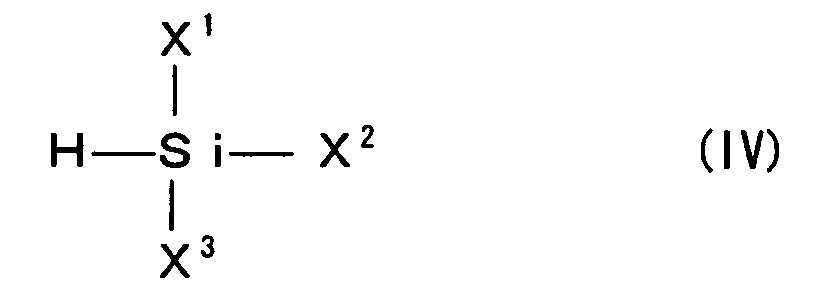
- A method of preparing the polyvinyl ether as defined by claim 2, in which the polynuclear ruthenium-carbonyl complex is a tri-nuclear ruthenium-carbonyl complex selected from among those expressed by the following formulae (V) and (VI), which contain coordinating acenaphthylene and coordinating azulene, respectively.

Applications Claiming Priority (3)
| Application Number | Priority Date | Filing Date | Title |
|---|---|---|---|
| JP2003031998A JP3884713B2 (en) | 2003-02-10 | 2003-02-10 | Polyvinyl ether having a silicon-containing functional group or an atomic group at the terminal and method for producing the same |
| JP2003031998 | 2003-02-10 | ||
| PCT/JP2003/007309 WO2004069883A1 (en) | 2003-02-10 | 2003-06-10 | Polyvinyl ethers having silicon-containing functional groups or atomic groups at the end and process for production thereof |
Publications (3)
| Publication Number | Publication Date |
|---|---|
| EP1593697A1 true EP1593697A1 (en) | 2005-11-09 |
| EP1593697A4 EP1593697A4 (en) | 2006-04-05 |
| EP1593697B1 EP1593697B1 (en) | 2007-09-12 |
Family
ID=32844323
Family Applications (1)
| Application Number | Title | Priority Date | Filing Date |
|---|---|---|---|
| EP03733330A Expired - Lifetime EP1593697B1 (en) | 2003-02-10 | 2003-06-10 | Process for production of polyvinyl ethers having silicon-containing functional groups or atomic groups at the end |
Country Status (5)
| Country | Link |
|---|---|
| US (1) | US7425599B2 (en) |
| EP (1) | EP1593697B1 (en) |
| JP (1) | JP3884713B2 (en) |
| DE (1) | DE60316350T2 (en) |
| WO (1) | WO2004069883A1 (en) |
Families Citing this family (1)
| Publication number | Priority date | Publication date | Assignee | Title |
|---|---|---|---|---|
| JP4771737B2 (en) * | 2005-04-28 | 2011-09-14 | 信越化学工業株式会社 | Method for producing a polymer having a polyvinyl ether moiety and an organopolysiloxane moiety |
Family Cites Families (6)
| Publication number | Priority date | Publication date | Assignee | Title |
|---|---|---|---|---|
| JPS54123192A (en) * | 1978-03-16 | 1979-09-25 | Kanegafuchi Chem Ind Co Ltd | Novel vinyl resin |
| JPH0733405B2 (en) * | 1987-11-18 | 1995-04-12 | 株式会社トクヤマ | Method for producing silyl vinyl ether polymer |
| US5247044A (en) * | 1989-09-01 | 1993-09-21 | General Electric Company | Synthetic method for the synthesis of silicon polyether copolymers |
| JP3364249B2 (en) * | 1992-09-28 | 2003-01-08 | 東レ・ダウコーニング・シリコーン株式会社 | Polymerization method of polymerizable vinyl compound |
| JPH11343303A (en) * | 1998-06-01 | 1999-12-14 | Nippon Shokubai Co Ltd | Production of polyvinyl ether and catalyst used for its production |
| JP3478765B2 (en) * | 1999-08-24 | 2003-12-15 | 科学技術振興事業団 | Ring-opening polymerization of cyclic ethers using ruthenium carbonyl complexes and silylated linear polyethers obtained therefrom |
-
2003
- 2003-02-10 JP JP2003031998A patent/JP3884713B2/en not_active Expired - Fee Related
- 2003-06-10 EP EP03733330A patent/EP1593697B1/en not_active Expired - Lifetime
- 2003-06-10 US US10/543,251 patent/US7425599B2/en not_active Expired - Fee Related
- 2003-06-10 WO PCT/JP2003/007309 patent/WO2004069883A1/en not_active Ceased
- 2003-06-10 DE DE60316350T patent/DE60316350T2/en not_active Expired - Lifetime
Also Published As
| Publication number | Publication date |
|---|---|
| DE60316350D1 (en) | 2007-10-25 |
| DE60316350T2 (en) | 2008-03-20 |
| WO2004069883A1 (en) | 2004-08-19 |
| JP3884713B2 (en) | 2007-02-21 |
| EP1593697A4 (en) | 2006-04-05 |
| US20060142510A1 (en) | 2006-06-29 |
| EP1593697B1 (en) | 2007-09-12 |
| US7425599B2 (en) | 2008-09-16 |
| JP2004238584A (en) | 2004-08-26 |
Similar Documents
| Publication | Publication Date | Title |
|---|---|---|
| JP4499342B2 (en) | Method for producing nitrogen-containing organic compound containing SiH group | |
| US5252766A (en) | Method for producing polysilanes | |
| KR102205883B1 (en) | [Bis(trihydrocarbylsilyl)aminosilyl] functionalized styrene and its preparation method | |
| KR20070112857A (en) | Manufacturing method of monodisperse and narrowly dispersed monofunctional silicon | |
| JPH04334551A (en) | Polymerization catalyst of hydrosilane | |
| EP1164156B1 (en) | Method of polymerizing silalkylenesiloxane | |
| Tortosa et al. | Homogeneous and Heterogeneous Polymerization of ε‐Caprolactone by Neodymium Alkoxides Prepared In Situ | |
| EP0410443A1 (en) | Organosilane compounds | |
| EP0661331A2 (en) | Silicon-containing polymer, process for preparing the same and monomer thereof | |
| EP0669363A2 (en) | Process for preparing polyorganosilane | |
| JPH0717753B2 (en) | Method for producing polysilanes | |
| JP3661810B2 (en) | Method for producing hydroxyl group-containing siloxane compound | |
| EP1593697B1 (en) | Process for production of polyvinyl ethers having silicon-containing functional groups or atomic groups at the end | |
| JP2862336B2 (en) | Both-terminal-modified olefin polymer and method for producing the same | |
| JP2000086755A (en) | Polymerization catalyst composition of propylene oxide | |
| EP2738187B1 (en) | Process for the manufacture of vinyl chloride-containing copolymers | |
| JP2947596B2 (en) | Silethynylsiloxane copolymer and method for producing the same | |
| JP4265117B2 (en) | Method for producing novel silsesquioxane having protected catechol group | |
| Majchrzak et al. | An efficient catalytic synthesis and characterization of new styryl-ferrocenes and their trans-π-conjugated organosilicon materials | |
| EP0661332A2 (en) | Silicon-containing reactive polymer and curable resin composition comprising the same | |
| JP4771737B2 (en) | Method for producing a polymer having a polyvinyl ether moiety and an organopolysiloxane moiety | |
| US7253243B2 (en) | Organosilicon compounds and method of manufacturing the same | |
| HUT63442A (en) | Process for producing katalyst system usable inproduction of polyethylene, as well as polymerization process by using sameb | |
| JP3043780B2 (en) | Ethylene polymer and method for producing the same | |
| JPH07309879A (en) | Heat-resistant silicon-based polymer, its production and organic silicon compound to be used in the production of the polymer |
Legal Events
| Date | Code | Title | Description |
|---|---|---|---|
| PUAI | Public reference made under article 153(3) epc to a published international application that has entered the european phase |
Free format text: ORIGINAL CODE: 0009012 |
|
| 17P | Request for examination filed |
Effective date: 20050825 |
|
| AK | Designated contracting states |
Kind code of ref document: A1 Designated state(s): AT BE BG CH CY CZ DE DK EE ES FI FR GB GR HU IE IT LI LU MC NL PT RO SE SI SK TR |
|
| A4 | Supplementary search report drawn up and despatched |
Effective date: 20060222 |
|
| RBV | Designated contracting states (corrected) |
Designated state(s): DE FR GB |
|
| GRAP | Despatch of communication of intention to grant a patent |
Free format text: ORIGINAL CODE: EPIDOSNIGR1 |
|
| RTI1 | Title (correction) |
Free format text: PROCESS FOR PRODUCTION OF POLYVINYL ETHERS HAVING SILICON-CONTAINING FUNCTIONAL GROUPS OR ATOMIC GROUPS AT THE END |
|
| GRAS | Grant fee paid |
Free format text: ORIGINAL CODE: EPIDOSNIGR3 |
|
| GRAA | (expected) grant |
Free format text: ORIGINAL CODE: 0009210 |
|
| AK | Designated contracting states |
Kind code of ref document: B1 Designated state(s): DE FR GB |
|
| REG | Reference to a national code |
Ref country code: GB Ref legal event code: FG4D |
|
| REF | Corresponds to: |
Ref document number: 60316350 Country of ref document: DE Date of ref document: 20071025 Kind code of ref document: P |
|
| ET | Fr: translation filed | ||
| PLBE | No opposition filed within time limit |
Free format text: ORIGINAL CODE: 0009261 |
|
| STAA | Information on the status of an ep patent application or granted ep patent |
Free format text: STATUS: NO OPPOSITION FILED WITHIN TIME LIMIT |
|
| 26N | No opposition filed |
Effective date: 20080613 |
|
| PGFP | Annual fee paid to national office [announced via postgrant information from national office to epo] |
Ref country code: DE Payment date: 20130605 Year of fee payment: 11 Ref country code: GB Payment date: 20130605 Year of fee payment: 11 |
|
| PGFP | Annual fee paid to national office [announced via postgrant information from national office to epo] |
Ref country code: FR Payment date: 20130624 Year of fee payment: 11 |
|
| REG | Reference to a national code |
Ref country code: DE Ref legal event code: R119 Ref document number: 60316350 Country of ref document: DE |
|
| GBPC | Gb: european patent ceased through non-payment of renewal fee |
Effective date: 20140610 |
|
| REG | Reference to a national code |
Ref country code: FR Ref legal event code: ST Effective date: 20150227 |
|
| REG | Reference to a national code |
Ref country code: DE Ref legal event code: R119 Ref document number: 60316350 Country of ref document: DE Effective date: 20150101 |
|
| PG25 | Lapsed in a contracting state [announced via postgrant information from national office to epo] |
Ref country code: DE Free format text: LAPSE BECAUSE OF NON-PAYMENT OF DUE FEES Effective date: 20150101 |
|
| PG25 | Lapsed in a contracting state [announced via postgrant information from national office to epo] |
Ref country code: FR Free format text: LAPSE BECAUSE OF NON-PAYMENT OF DUE FEES Effective date: 20140630 Ref country code: GB Free format text: LAPSE BECAUSE OF NON-PAYMENT OF DUE FEES Effective date: 20140610 |