EP1592799B1 - Annexin-promotor und verwendung bei der expression transgener gene in pflanzen - Google Patents
Annexin-promotor und verwendung bei der expression transgener gene in pflanzen Download PDFInfo
- Publication number
- EP1592799B1 EP1592799B1 EP04710744A EP04710744A EP1592799B1 EP 1592799 B1 EP1592799 B1 EP 1592799B1 EP 04710744 A EP04710744 A EP 04710744A EP 04710744 A EP04710744 A EP 04710744A EP 1592799 B1 EP1592799 B1 EP 1592799B1
- Authority
- EP
- European Patent Office
- Prior art keywords
- promoter
- plant
- seq
- nucleic acid
- gene
- Prior art date
- Legal status (The legal status is an assumption and is not a legal conclusion. Google has not performed a legal analysis and makes no representation as to the accuracy of the status listed.)
- Expired - Lifetime
Links
- 230000014509 gene expression Effects 0.000 title claims description 82
- 108090000623 proteins and genes Proteins 0.000 title description 98
- 108050008874 Annexin Proteins 0.000 title description 83
- 102000000412 Annexin Human genes 0.000 title description 81
- 230000009261 transgenic effect Effects 0.000 title description 19
- 241000196324 Embryophyta Species 0.000 claims description 132
- 150000007523 nucleic acids Chemical group 0.000 claims description 66
- 244000068988 Glycine max Species 0.000 claims description 54
- 235000010469 Glycine max Nutrition 0.000 claims description 53
- 239000002773 nucleotide Substances 0.000 claims description 35
- 125000003729 nucleotide group Chemical group 0.000 claims description 35
- 239000012634 fragment Substances 0.000 claims description 34
- 238000000034 method Methods 0.000 claims description 34
- 108091026890 Coding region Proteins 0.000 claims description 25
- 230000001105 regulatory effect Effects 0.000 claims description 20
- 238000004519 manufacturing process Methods 0.000 claims description 14
- 230000001276 controlling effect Effects 0.000 claims description 10
- 238000003259 recombinant expression Methods 0.000 claims description 7
- 230000001131 transforming effect Effects 0.000 claims description 7
- 102000004190 Enzymes Human genes 0.000 claims description 4
- 108090000790 Enzymes Proteins 0.000 claims description 4
- 230000008117 seed development Effects 0.000 claims description 3
- 235000020978 long-chain polyunsaturated fatty acids Nutrition 0.000 claims 2
- 108020004414 DNA Proteins 0.000 description 47
- 101000655391 Homo sapiens General transcription factor IIH subunit 3 Proteins 0.000 description 45
- 101000721629 Lettuce infectious yellows virus (isolate United States/92) RNA-binding P34 protein Proteins 0.000 description 45
- 101000960978 Paralithodes camtschaticus Paralithocin 3 Proteins 0.000 description 45
- 102100032863 General transcription factor IIH subunit 3 Human genes 0.000 description 44
- 108091032973 (ribonucleotides)n+m Proteins 0.000 description 38
- 210000004027 cell Anatomy 0.000 description 37
- 239000013615 primer Substances 0.000 description 37
- 238000003752 polymerase chain reaction Methods 0.000 description 26
- 108091028043 Nucleic acid sequence Proteins 0.000 description 22
- 108020004999 messenger RNA Proteins 0.000 description 22
- 108091034117 Oligonucleotide Proteins 0.000 description 19
- 102000004169 proteins and genes Human genes 0.000 description 14
- 210000001519 tissue Anatomy 0.000 description 14
- 241000219194 Arabidopsis Species 0.000 description 13
- 230000000694 effects Effects 0.000 description 12
- VZCCETWTMQHEPK-UHFFFAOYSA-N gamma-Linolensaeure Natural products CCCCCC=CCC=CCC=CCCCCC(O)=O VZCCETWTMQHEPK-UHFFFAOYSA-N 0.000 description 12
- VZCCETWTMQHEPK-QNEBEIHSSA-N gamma-linolenic acid Chemical compound CCCCC\C=C/C\C=C/C\C=C/CCCCC(O)=O VZCCETWTMQHEPK-QNEBEIHSSA-N 0.000 description 12
- 235000020664 gamma-linolenic acid Nutrition 0.000 description 12
- 229960002733 gamolenic acid Drugs 0.000 description 12
- 239000000047 product Substances 0.000 description 11
- 230000009466 transformation Effects 0.000 description 11
- 238000013519 translation Methods 0.000 description 11
- 108020005544 Antisense RNA Proteins 0.000 description 10
- 239000002299 complementary DNA Substances 0.000 description 10
- 239000003184 complementary RNA Substances 0.000 description 10
- 108700005334 Glycine max P34 Proteins 0.000 description 9
- 238000012408 PCR amplification Methods 0.000 description 9
- 238000004458 analytical method Methods 0.000 description 9
- 238000012217 deletion Methods 0.000 description 8
- 230000037430 deletion Effects 0.000 description 8
- 210000002257 embryonic structure Anatomy 0.000 description 8
- 108700008625 Reporter Genes Proteins 0.000 description 7
- 229920001184 polypeptide Polymers 0.000 description 7
- 102000004196 processed proteins & peptides Human genes 0.000 description 7
- 108090000765 processed proteins & peptides Proteins 0.000 description 7
- 239000013598 vector Substances 0.000 description 7
- 108010037138 Linoleoyl-CoA Desaturase Proteins 0.000 description 6
- 108020004511 Recombinant DNA Proteins 0.000 description 6
- 230000000295 complement effect Effects 0.000 description 6
- 108020004707 nucleic acids Proteins 0.000 description 6
- 102000039446 nucleic acids Human genes 0.000 description 6
- 239000013612 plasmid Substances 0.000 description 6
- 239000013600 plasmid vector Substances 0.000 description 6
- 108091092195 Intron Proteins 0.000 description 5
- 238000009825 accumulation Methods 0.000 description 5
- 230000000692 anti-sense effect Effects 0.000 description 5
- 238000003556 assay Methods 0.000 description 5
- 230000004927 fusion Effects 0.000 description 5
- 230000008488 polyadenylation Effects 0.000 description 5
- 108091033319 polynucleotide Proteins 0.000 description 5
- 102000040430 polynucleotide Human genes 0.000 description 5
- 239000002157 polynucleotide Substances 0.000 description 5
- 238000012545 processing Methods 0.000 description 5
- 238000012163 sequencing technique Methods 0.000 description 5
- 230000000392 somatic effect Effects 0.000 description 5
- 238000010186 staining Methods 0.000 description 5
- 238000011144 upstream manufacturing Methods 0.000 description 5
- 102100034544 Acyl-CoA 6-desaturase Human genes 0.000 description 4
- 241000701489 Cauliflower mosaic virus Species 0.000 description 4
- 108700037728 Glycine max beta-conglycinin Proteins 0.000 description 4
- 240000008042 Zea mays Species 0.000 description 4
- 235000002017 Zea mays subsp mays Nutrition 0.000 description 4
- 150000001413 amino acids Chemical group 0.000 description 4
- 238000010276 construction Methods 0.000 description 4
- 108010083391 glycinin Proteins 0.000 description 4
- 238000010369 molecular cloning Methods 0.000 description 4
- 230000002018 overexpression Effects 0.000 description 4
- 239000002243 precursor Substances 0.000 description 4
- 230000008929 regeneration Effects 0.000 description 4
- 238000011069 regeneration method Methods 0.000 description 4
- 230000002123 temporal effect Effects 0.000 description 4
- 238000013518 transcription Methods 0.000 description 4
- 230000035897 transcription Effects 0.000 description 4
- 241000589155 Agrobacterium tumefaciens Species 0.000 description 3
- 241000219198 Brassica Species 0.000 description 3
- 235000011331 Brassica Nutrition 0.000 description 3
- 240000002791 Brassica napus Species 0.000 description 3
- 101100448444 Caenorhabditis elegans gsp-3 gene Proteins 0.000 description 3
- 101100448445 Caenorhabditis elegans gsp-4 gene Proteins 0.000 description 3
- 102100022887 GTP-binding nuclear protein Ran Human genes 0.000 description 3
- 108700039691 Genetic Promoter Regions Proteins 0.000 description 3
- 101000774835 Heteractis crispa PI-stichotoxin-Hcr2o Proteins 0.000 description 3
- 101000620756 Homo sapiens GTP-binding nuclear protein Ran Proteins 0.000 description 3
- 108091027974 Mature messenger RNA Proteins 0.000 description 3
- 241000544198 Muscisaxicola alpinus Species 0.000 description 3
- 101100393821 Saccharomyces cerevisiae (strain ATCC 204508 / S288c) GSP2 gene Proteins 0.000 description 3
- 108010016634 Seed Storage Proteins Proteins 0.000 description 3
- JLCPHMBAVCMARE-UHFFFAOYSA-N [3-[[3-[[3-[[3-[[3-[[3-[[3-[[3-[[3-[[3-[[3-[[5-(2-amino-6-oxo-1H-purin-9-yl)-3-[[3-[[3-[[3-[[3-[[3-[[5-(2-amino-6-oxo-1H-purin-9-yl)-3-[[5-(2-amino-6-oxo-1H-purin-9-yl)-3-hydroxyoxolan-2-yl]methoxy-hydroxyphosphoryl]oxyoxolan-2-yl]methoxy-hydroxyphosphoryl]oxy-5-(5-methyl-2,4-dioxopyrimidin-1-yl)oxolan-2-yl]methoxy-hydroxyphosphoryl]oxy-5-(6-aminopurin-9-yl)oxolan-2-yl]methoxy-hydroxyphosphoryl]oxy-5-(6-aminopurin-9-yl)oxolan-2-yl]methoxy-hydroxyphosphoryl]oxy-5-(6-aminopurin-9-yl)oxolan-2-yl]methoxy-hydroxyphosphoryl]oxy-5-(6-aminopurin-9-yl)oxolan-2-yl]methoxy-hydroxyphosphoryl]oxyoxolan-2-yl]methoxy-hydroxyphosphoryl]oxy-5-(5-methyl-2,4-dioxopyrimidin-1-yl)oxolan-2-yl]methoxy-hydroxyphosphoryl]oxy-5-(4-amino-2-oxopyrimidin-1-yl)oxolan-2-yl]methoxy-hydroxyphosphoryl]oxy-5-(5-methyl-2,4-dioxopyrimidin-1-yl)oxolan-2-yl]methoxy-hydroxyphosphoryl]oxy-5-(5-methyl-2,4-dioxopyrimidin-1-yl)oxolan-2-yl]methoxy-hydroxyphosphoryl]oxy-5-(6-aminopurin-9-yl)oxolan-2-yl]methoxy-hydroxyphosphoryl]oxy-5-(6-aminopurin-9-yl)oxolan-2-yl]methoxy-hydroxyphosphoryl]oxy-5-(4-amino-2-oxopyrimidin-1-yl)oxolan-2-yl]methoxy-hydroxyphosphoryl]oxy-5-(4-amino-2-oxopyrimidin-1-yl)oxolan-2-yl]methoxy-hydroxyphosphoryl]oxy-5-(4-amino-2-oxopyrimidin-1-yl)oxolan-2-yl]methoxy-hydroxyphosphoryl]oxy-5-(6-aminopurin-9-yl)oxolan-2-yl]methoxy-hydroxyphosphoryl]oxy-5-(4-amino-2-oxopyrimidin-1-yl)oxolan-2-yl]methyl [5-(6-aminopurin-9-yl)-2-(hydroxymethyl)oxolan-3-yl] hydrogen phosphate Polymers Cc1cn(C2CC(OP(O)(=O)OCC3OC(CC3OP(O)(=O)OCC3OC(CC3O)n3cnc4c3nc(N)[nH]c4=O)n3cnc4c3nc(N)[nH]c4=O)C(COP(O)(=O)OC3CC(OC3COP(O)(=O)OC3CC(OC3COP(O)(=O)OC3CC(OC3COP(O)(=O)OC3CC(OC3COP(O)(=O)OC3CC(OC3COP(O)(=O)OC3CC(OC3COP(O)(=O)OC3CC(OC3COP(O)(=O)OC3CC(OC3COP(O)(=O)OC3CC(OC3COP(O)(=O)OC3CC(OC3COP(O)(=O)OC3CC(OC3COP(O)(=O)OC3CC(OC3COP(O)(=O)OC3CC(OC3COP(O)(=O)OC3CC(OC3COP(O)(=O)OC3CC(OC3COP(O)(=O)OC3CC(OC3COP(O)(=O)OC3CC(OC3CO)n3cnc4c(N)ncnc34)n3ccc(N)nc3=O)n3cnc4c(N)ncnc34)n3ccc(N)nc3=O)n3ccc(N)nc3=O)n3ccc(N)nc3=O)n3cnc4c(N)ncnc34)n3cnc4c(N)ncnc34)n3cc(C)c(=O)[nH]c3=O)n3cc(C)c(=O)[nH]c3=O)n3ccc(N)nc3=O)n3cc(C)c(=O)[nH]c3=O)n3cnc4c3nc(N)[nH]c4=O)n3cnc4c(N)ncnc34)n3cnc4c(N)ncnc34)n3cnc4c(N)ncnc34)n3cnc4c(N)ncnc34)O2)c(=O)[nH]c1=O JLCPHMBAVCMARE-UHFFFAOYSA-N 0.000 description 3
- YRKCREAYFQTBPV-UHFFFAOYSA-N acetylacetone Chemical compound CC(=O)CC(C)=O YRKCREAYFQTBPV-UHFFFAOYSA-N 0.000 description 3
- 238000000137 annealing Methods 0.000 description 3
- 230000001580 bacterial effect Effects 0.000 description 3
- 230000003247 decreasing effect Effects 0.000 description 3
- 238000011161 development Methods 0.000 description 3
- 230000018109 developmental process Effects 0.000 description 3
- 235000014113 dietary fatty acids Nutrition 0.000 description 3
- 229930195729 fatty acid Natural products 0.000 description 3
- 239000000194 fatty acid Substances 0.000 description 3
- 150000004665 fatty acids Chemical class 0.000 description 3
- 230000002068 genetic effect Effects 0.000 description 3
- 238000002955 isolation Methods 0.000 description 3
- 230000004048 modification Effects 0.000 description 3
- 238000012986 modification Methods 0.000 description 3
- 108010058731 nopaline synthase Proteins 0.000 description 3
- 229920000642 polymer Polymers 0.000 description 3
- 230000032361 posttranscriptional gene silencing Effects 0.000 description 3
- 238000012216 screening Methods 0.000 description 3
- LWTDZKXXJRRKDG-KXBFYZLASA-N (-)-phaseollin Chemical compound C1OC2=CC(O)=CC=C2[C@H]2[C@@H]1C1=CC=C3OC(C)(C)C=CC3=C1O2 LWTDZKXXJRRKDG-KXBFYZLASA-N 0.000 description 2
- JXCKZXHCJOVIAV-UHFFFAOYSA-N 6-[(5-bromo-4-chloro-1h-indol-3-yl)oxy]-3,4,5-trihydroxyoxane-2-carboxylic acid;cyclohexanamine Chemical compound [NH3+]C1CCCCC1.O1C(C([O-])=O)C(O)C(O)C(O)C1OC1=CNC2=CC=C(Br)C(Cl)=C12 JXCKZXHCJOVIAV-UHFFFAOYSA-N 0.000 description 2
- 235000017060 Arachis glabrata Nutrition 0.000 description 2
- 244000105624 Arachis hypogaea Species 0.000 description 2
- 235000010777 Arachis hypogaea Nutrition 0.000 description 2
- 235000018262 Arachis monticola Nutrition 0.000 description 2
- 101710094135 Beta-conglycinin alpha' subunit Proteins 0.000 description 2
- 235000006008 Brassica napus var napus Nutrition 0.000 description 2
- 229920000742 Cotton Polymers 0.000 description 2
- 102000004594 DNA Polymerase I Human genes 0.000 description 2
- 108010017826 DNA Polymerase I Proteins 0.000 description 2
- YQYJSBFKSSDGFO-UHFFFAOYSA-N Epihygromycin Natural products OC1C(O)C(C(=O)C)OC1OC(C(=C1)O)=CC=C1C=C(C)C(=O)NC1C(O)C(O)C2OCOC2C1O YQYJSBFKSSDGFO-UHFFFAOYSA-N 0.000 description 2
- 244000299507 Gossypium hirsutum Species 0.000 description 2
- 244000020551 Helianthus annuus Species 0.000 description 2
- 235000003222 Helianthus annuus Nutrition 0.000 description 2
- 235000007688 Lycopersicon esculentum Nutrition 0.000 description 2
- 101710202365 Napin Proteins 0.000 description 2
- 108700026244 Open Reading Frames Proteins 0.000 description 2
- 101710163504 Phaseolin Proteins 0.000 description 2
- 108700001094 Plant Genes Proteins 0.000 description 2
- 241000201976 Polycarpon Species 0.000 description 2
- 101100173636 Rattus norvegicus Fhl2 gene Proteins 0.000 description 2
- 240000003768 Solanum lycopersicum Species 0.000 description 2
- 244000061456 Solanum tuberosum Species 0.000 description 2
- 235000002595 Solanum tuberosum Nutrition 0.000 description 2
- 108010043934 Sucrose synthase Proteins 0.000 description 2
- 108090000848 Ubiquitin Proteins 0.000 description 2
- 235000005824 Zea mays ssp. parviglumis Nutrition 0.000 description 2
- 235000016383 Zea mays subsp huehuetenangensis Nutrition 0.000 description 2
- 230000003321 amplification Effects 0.000 description 2
- 101150099875 atpE gene Proteins 0.000 description 2
- 238000004364 calculation method Methods 0.000 description 2
- 238000006243 chemical reaction Methods 0.000 description 2
- 210000003763 chloroplast Anatomy 0.000 description 2
- 235000005822 corn Nutrition 0.000 description 2
- 230000008878 coupling Effects 0.000 description 2
- 238000010168 coupling process Methods 0.000 description 2
- 238000005859 coupling reaction Methods 0.000 description 2
- 230000001419 dependent effect Effects 0.000 description 2
- 230000001214 effect on cellular process Effects 0.000 description 2
- 230000013020 embryo development Effects 0.000 description 2
- 238000005516 engineering process Methods 0.000 description 2
- 239000003623 enhancer Substances 0.000 description 2
- 230000007613 environmental effect Effects 0.000 description 2
- 241001233957 eudicotyledons Species 0.000 description 2
- 230000006870 function Effects 0.000 description 2
- 238000010353 genetic engineering Methods 0.000 description 2
- 101150054900 gus gene Proteins 0.000 description 2
- 230000001744 histochemical effect Effects 0.000 description 2
- 230000001939 inductive effect Effects 0.000 description 2
- 230000005764 inhibitory process Effects 0.000 description 2
- 235000009973 maize Nutrition 0.000 description 2
- 238000007857 nested PCR Methods 0.000 description 2
- 238000003199 nucleic acid amplification method Methods 0.000 description 2
- 239000002245 particle Substances 0.000 description 2
- 235000020232 peanut Nutrition 0.000 description 2
- 230000010152 pollination Effects 0.000 description 2
- 235000020777 polyunsaturated fatty acids Nutrition 0.000 description 2
- 230000001124 posttranscriptional effect Effects 0.000 description 2
- 230000008569 process Effects 0.000 description 2
- 230000009467 reduction Effects 0.000 description 2
- 230000004044 response Effects 0.000 description 2
- 108091008146 restriction endonucleases Proteins 0.000 description 2
- 108091092562 ribozyme Proteins 0.000 description 2
- 238000002741 site-directed mutagenesis Methods 0.000 description 2
- 239000002689 soil Substances 0.000 description 2
- 230000001629 suppression Effects 0.000 description 2
- 230000005030 transcription termination Effects 0.000 description 2
- 230000002103 transcriptional effect Effects 0.000 description 2
- 238000012546 transfer Methods 0.000 description 2
- 238000001262 western blot Methods 0.000 description 2
- KHWCHTKSEGGWEX-RRKCRQDMSA-N 2'-deoxyadenosine 5'-monophosphate Chemical compound C1=NC=2C(N)=NC=NC=2N1[C@H]1C[C@H](O)[C@@H](COP(O)(O)=O)O1 KHWCHTKSEGGWEX-RRKCRQDMSA-N 0.000 description 1
- NCMVOABPESMRCP-SHYZEUOFSA-N 2'-deoxycytosine 5'-monophosphate Chemical compound O=C1N=C(N)C=CN1[C@@H]1O[C@H](COP(O)(O)=O)[C@@H](O)C1 NCMVOABPESMRCP-SHYZEUOFSA-N 0.000 description 1
- LTFMZDNNPPEQNG-KVQBGUIXSA-N 2'-deoxyguanosine 5'-monophosphate Chemical compound C1=2NC(N)=NC(=O)C=2N=CN1[C@H]1C[C@H](O)[C@@H](COP(O)(O)=O)O1 LTFMZDNNPPEQNG-KVQBGUIXSA-N 0.000 description 1
- MWMOPIVLTLEUJO-UHFFFAOYSA-N 2-oxopropanoic acid;phosphoric acid Chemical compound OP(O)(O)=O.CC(=O)C(O)=O MWMOPIVLTLEUJO-UHFFFAOYSA-N 0.000 description 1
- 101710168820 2S seed storage albumin protein Proteins 0.000 description 1
- 241001133760 Acoelorraphe Species 0.000 description 1
- 241000589156 Agrobacterium rhizogenes Species 0.000 description 1
- 108700021822 Arabidopsis oleosin Proteins 0.000 description 1
- 235000011293 Brassica napus Nutrition 0.000 description 1
- 101100494448 Caenorhabditis elegans cab-1 gene Proteins 0.000 description 1
- 240000006432 Carica papaya Species 0.000 description 1
- 235000009467 Carica papaya Nutrition 0.000 description 1
- 244000020518 Carthamus tinctorius Species 0.000 description 1
- 235000003255 Carthamus tinctorius Nutrition 0.000 description 1
- 241000701459 Caulimovirus Species 0.000 description 1
- 108010022172 Chitinases Proteins 0.000 description 1
- 241000718430 Comocladia glabra Species 0.000 description 1
- 108020004635 Complementary DNA Proteins 0.000 description 1
- 102000053602 DNA Human genes 0.000 description 1
- 108010076804 DNA Restriction Enzymes Proteins 0.000 description 1
- 230000007067 DNA methylation Effects 0.000 description 1
- 239000003155 DNA primer Substances 0.000 description 1
- 241000588724 Escherichia coli Species 0.000 description 1
- 108010046335 Ferredoxin-NADP Reductase Proteins 0.000 description 1
- 241000701484 Figwort mosaic virus Species 0.000 description 1
- 108090000331 Firefly luciferases Proteins 0.000 description 1
- 108010073178 Glucan 1,4-alpha-Glucosidase Proteins 0.000 description 1
- 102100022624 Glucoamylase Human genes 0.000 description 1
- 108010060309 Glucuronidase Proteins 0.000 description 1
- 108010068370 Glutens Proteins 0.000 description 1
- 101001036905 Glycine max Beta-conglycinin beta subunit 1 Proteins 0.000 description 1
- 108010043121 Green Fluorescent Proteins Proteins 0.000 description 1
- 102000002812 Heat-Shock Proteins Human genes 0.000 description 1
- 108010004889 Heat-Shock Proteins Proteins 0.000 description 1
- 241000238631 Hexapoda Species 0.000 description 1
- 108010033040 Histones Proteins 0.000 description 1
- 101001059454 Homo sapiens Serine/threonine-protein kinase MARK2 Proteins 0.000 description 1
- 240000005979 Hordeum vulgare Species 0.000 description 1
- 235000007340 Hordeum vulgare Nutrition 0.000 description 1
- 229930010555 Inosine Natural products 0.000 description 1
- UGQMRVRMYYASKQ-KQYNXXCUSA-N Inosine Chemical compound O[C@@H]1[C@H](O)[C@@H](CO)O[C@H]1N1C2=NC=NC(O)=C2N=C1 UGQMRVRMYYASKQ-KQYNXXCUSA-N 0.000 description 1
- 102100034343 Integrase Human genes 0.000 description 1
- 241000209510 Liliopsida Species 0.000 description 1
- 244000061176 Nicotiana tabacum Species 0.000 description 1
- 235000002637 Nicotiana tabacum Nutrition 0.000 description 1
- 101710089395 Oleosin Proteins 0.000 description 1
- 240000007594 Oryza sativa Species 0.000 description 1
- 235000007164 Oryza sativa Nutrition 0.000 description 1
- 244000046052 Phaseolus vulgaris Species 0.000 description 1
- 235000010627 Phaseolus vulgaris Nutrition 0.000 description 1
- 101150090155 R gene Proteins 0.000 description 1
- 108091034057 RNA (poly(A)) Proteins 0.000 description 1
- 230000006819 RNA synthesis Effects 0.000 description 1
- 108010092799 RNA-directed DNA polymerase Proteins 0.000 description 1
- 108091028664 Ribonucleotide Proteins 0.000 description 1
- 108010003581 Ribulose-bisphosphate carboxylase Proteins 0.000 description 1
- 101150014136 SUC2 gene Proteins 0.000 description 1
- 102100028904 Serine/threonine-protein kinase MARK2 Human genes 0.000 description 1
- 108010039811 Starch synthase Proteins 0.000 description 1
- 229930006000 Sucrose Natural products 0.000 description 1
- CZMRCDWAGMRECN-UGDNZRGBSA-N Sucrose Chemical compound O[C@H]1[C@H](O)[C@@H](CO)O[C@@]1(CO)O[C@@H]1[C@H](O)[C@@H](O)[C@H](O)[C@@H](CO)O1 CZMRCDWAGMRECN-UGDNZRGBSA-N 0.000 description 1
- 102000003673 Symporters Human genes 0.000 description 1
- 108090000088 Symporters Proteins 0.000 description 1
- 108700026226 TATA Box Proteins 0.000 description 1
- 244000299461 Theobroma cacao Species 0.000 description 1
- 235000009470 Theobroma cacao Nutrition 0.000 description 1
- 108700009124 Transcription Initiation Site Proteins 0.000 description 1
- 108700019146 Transgenes Proteins 0.000 description 1
- 235000021307 Triticum Nutrition 0.000 description 1
- 244000098338 Triticum aestivum Species 0.000 description 1
- 101710162629 Trypsin inhibitor Proteins 0.000 description 1
- 229940122618 Trypsin inhibitor Drugs 0.000 description 1
- 102000044159 Ubiquitin Human genes 0.000 description 1
- 101001036768 Zea mays Glucose-1-phosphate adenylyltransferase large subunit 1, chloroplastic/amyloplastic Proteins 0.000 description 1
- 108010055615 Zein Proteins 0.000 description 1
- 239000002253 acid Substances 0.000 description 1
- UDMBCSSLTHHNCD-KQYNXXCUSA-N adenosine 5'-monophosphate Chemical compound C1=NC=2C(N)=NC=NC=2N1[C@@H]1O[C@H](COP(O)(O)=O)[C@@H](O)[C@H]1O UDMBCSSLTHHNCD-KQYNXXCUSA-N 0.000 description 1
- 239000011543 agarose gel Substances 0.000 description 1
- 238000013459 approach Methods 0.000 description 1
- 101150090348 atpC gene Proteins 0.000 description 1
- 101150035600 atpD gene Proteins 0.000 description 1
- 101150103189 atpG gene Proteins 0.000 description 1
- 101150048329 atpH gene Proteins 0.000 description 1
- 108091008324 binding proteins Proteins 0.000 description 1
- 230000015572 biosynthetic process Effects 0.000 description 1
- 230000010307 cell transformation Effects 0.000 description 1
- 230000001413 cellular effect Effects 0.000 description 1
- 239000007795 chemical reaction product Substances 0.000 description 1
- 229930002868 chlorophyll a Natural products 0.000 description 1
- ATNHDLDRLWWWCB-AENOIHSZSA-M chlorophyll a Chemical compound C1([C@@H](C(=O)OC)C(=O)C2=C3C)=C2N2C3=CC(C(CC)=C3C)=[N+]4C3=CC3=C(C=C)C(C)=C5N3[Mg-2]42[N+]2=C1[C@@H](CCC(=O)OC\C=C(/C)CCC[C@H](C)CCC[C@H](C)CCCC(C)C)[C@H](C)C2=C5 ATNHDLDRLWWWCB-AENOIHSZSA-M 0.000 description 1
- 229930002869 chlorophyll b Natural products 0.000 description 1
- NSMUHPMZFPKNMZ-VBYMZDBQSA-M chlorophyll b Chemical compound C1([C@@H](C(=O)OC)C(=O)C2=C3C)=C2N2C3=CC(C(CC)=C3C=O)=[N+]4C3=CC3=C(C=C)C(C)=C5N3[Mg-2]42[N+]2=C1[C@@H](CCC(=O)OC\C=C(/C)CCC[C@H](C)CCC[C@H](C)CCCC(C)C)[C@H](C)C2=C5 NSMUHPMZFPKNMZ-VBYMZDBQSA-M 0.000 description 1
- 238000012258 culturing Methods 0.000 description 1
- IERHLVCPSMICTF-XVFCMESISA-N cytidine 5'-monophosphate Chemical compound O=C1N=C(N)C=CN1[C@H]1[C@H](O)[C@H](O)[C@@H](COP(O)(O)=O)O1 IERHLVCPSMICTF-XVFCMESISA-N 0.000 description 1
- GYOZYWVXFNDGLU-XLPZGREQSA-N dTMP Chemical compound O=C1NC(=O)C(C)=CN1[C@@H]1O[C@H](COP(O)(O)=O)[C@@H](O)C1 GYOZYWVXFNDGLU-XLPZGREQSA-N 0.000 description 1
- 239000005547 deoxyribonucleotide Substances 0.000 description 1
- 125000002637 deoxyribonucleotide group Chemical group 0.000 description 1
- 238000013461 design Methods 0.000 description 1
- 201000010099 disease Diseases 0.000 description 1
- 208000037265 diseases, disorders, signs and symptoms Diseases 0.000 description 1
- 238000004520 electroporation Methods 0.000 description 1
- 238000011156 evaluation Methods 0.000 description 1
- 239000003925 fat Substances 0.000 description 1
- 235000019197 fats Nutrition 0.000 description 1
- 230000004720 fertilization Effects 0.000 description 1
- 230000030279 gene silencing Effects 0.000 description 1
- ZDXPYRJPNDTMRX-UHFFFAOYSA-N glutamine Natural products OC(=O)C(N)CCC(N)=O ZDXPYRJPNDTMRX-UHFFFAOYSA-N 0.000 description 1
- 230000012010 growth Effects 0.000 description 1
- 239000001963 growth medium Substances 0.000 description 1
- RQFCJASXJCIDSX-UUOKFMHZSA-N guanosine 5'-monophosphate Chemical compound C1=2NC(N)=NC(=O)C=2N=CN1[C@@H]1O[C@H](COP(O)(O)=O)[C@@H](O)[C@H]1O RQFCJASXJCIDSX-UUOKFMHZSA-N 0.000 description 1
- 230000002363 herbicidal effect Effects 0.000 description 1
- 238000004128 high performance liquid chromatography Methods 0.000 description 1
- 229940088597 hormone Drugs 0.000 description 1
- 239000005556 hormone Substances 0.000 description 1
- 230000006872 improvement Effects 0.000 description 1
- 238000000338 in vitro Methods 0.000 description 1
- 230000008595 infiltration Effects 0.000 description 1
- 238000001764 infiltration Methods 0.000 description 1
- 230000000977 initiatory effect Effects 0.000 description 1
- 229960003786 inosine Drugs 0.000 description 1
- 238000003780 insertion Methods 0.000 description 1
- 230000037431 insertion Effects 0.000 description 1
- 150000002500 ions Chemical class 0.000 description 1
- 229930027917 kanamycin Natural products 0.000 description 1
- SBUJHOSQTJFQJX-NOAMYHISSA-N kanamycin Chemical compound O[C@@H]1[C@@H](O)[C@H](O)[C@@H](CN)O[C@@H]1O[C@H]1[C@H](O)[C@@H](O[C@@H]2[C@@H]([C@@H](N)[C@H](O)[C@@H](CO)O2)O)[C@H](N)C[C@@H]1N SBUJHOSQTJFQJX-NOAMYHISSA-N 0.000 description 1
- 229960000318 kanamycin Drugs 0.000 description 1
- 229930182823 kanamycin A Natural products 0.000 description 1
- 150000002632 lipids Chemical class 0.000 description 1
- 229920002521 macromolecule Polymers 0.000 description 1
- 210000001161 mammalian embryo Anatomy 0.000 description 1
- 239000003550 marker Substances 0.000 description 1
- 239000000463 material Substances 0.000 description 1
- 230000007246 mechanism Effects 0.000 description 1
- 230000000442 meristematic effect Effects 0.000 description 1
- 230000004060 metabolic process Effects 0.000 description 1
- 238000000520 microinjection Methods 0.000 description 1
- 239000000203 mixture Substances 0.000 description 1
- 235000021281 monounsaturated fatty acids Nutrition 0.000 description 1
- 235000016709 nutrition Nutrition 0.000 description 1
- 239000003921 oil Substances 0.000 description 1
- 235000019198 oils Nutrition 0.000 description 1
- LWTDZKXXJRRKDG-UHFFFAOYSA-N phaseollin Natural products C1OC2=CC(O)=CC=C2C2C1C1=CC=C3OC(C)(C)C=CC3=C1O2 LWTDZKXXJRRKDG-UHFFFAOYSA-N 0.000 description 1
- 230000000243 photosynthetic effect Effects 0.000 description 1
- 230000008635 plant growth Effects 0.000 description 1
- 210000001938 protoplast Anatomy 0.000 description 1
- 101150096384 psaD gene Proteins 0.000 description 1
- 101150032357 psaE gene Proteins 0.000 description 1
- 101150027686 psaF gene Proteins 0.000 description 1
- 150000003212 purines Chemical class 0.000 description 1
- 150000003230 pyrimidines Chemical class 0.000 description 1
- 230000023276 regulation of development, heterochronic Effects 0.000 description 1
- 230000022532 regulation of transcription, DNA-dependent Effects 0.000 description 1
- 230000003252 repetitive effect Effects 0.000 description 1
- 230000010076 replication Effects 0.000 description 1
- 230000000717 retained effect Effects 0.000 description 1
- 230000002441 reversible effect Effects 0.000 description 1
- 238000012552 review Methods 0.000 description 1
- 239000002336 ribonucleotide Substances 0.000 description 1
- 125000002652 ribonucleotide group Chemical group 0.000 description 1
- 235000009566 rice Nutrition 0.000 description 1
- 230000005562 seed maturation Effects 0.000 description 1
- 238000002864 sequence alignment Methods 0.000 description 1
- 230000035939 shock Effects 0.000 description 1
- 239000005720 sucrose Substances 0.000 description 1
- 238000003786 synthesis reaction Methods 0.000 description 1
- 238000012360 testing method Methods 0.000 description 1
- 210000002377 thylakoid Anatomy 0.000 description 1
- 101150007587 tpx gene Proteins 0.000 description 1
- 239000002753 trypsin inhibitor Substances 0.000 description 1
- DJJCXFVJDGTHFX-XVFCMESISA-N uridine 5'-monophosphate Chemical compound O[C@@H]1[C@H](O)[C@@H](COP(O)(O)=O)O[C@H]1N1C(=O)NC(=O)C=C1 DJJCXFVJDGTHFX-XVFCMESISA-N 0.000 description 1
- 235000015112 vegetable and seed oil Nutrition 0.000 description 1
- 230000003612 virological effect Effects 0.000 description 1
- 108700026215 vpr Genes Proteins 0.000 description 1
Images


Classifications
-
- C—CHEMISTRY; METALLURGY
- C07—ORGANIC CHEMISTRY
- C07H—SUGARS; DERIVATIVES THEREOF; NUCLEOSIDES; NUCLEOTIDES; NUCLEIC ACIDS
- C07H21/00—Compounds containing two or more mononucleotide units having separate phosphate or polyphosphate groups linked by saccharide radicals of nucleoside groups, e.g. nucleic acids
- C07H21/04—Compounds containing two or more mononucleotide units having separate phosphate or polyphosphate groups linked by saccharide radicals of nucleoside groups, e.g. nucleic acids with deoxyribosyl as saccharide radical
-
- C—CHEMISTRY; METALLURGY
- C12—BIOCHEMISTRY; BEER; SPIRITS; WINE; VINEGAR; MICROBIOLOGY; ENZYMOLOGY; MUTATION OR GENETIC ENGINEERING
- C12N—MICROORGANISMS OR ENZYMES; COMPOSITIONS THEREOF; PROPAGATING, PRESERVING, OR MAINTAINING MICROORGANISMS; MUTATION OR GENETIC ENGINEERING; CULTURE MEDIA
- C12N15/00—Mutation or genetic engineering; DNA or RNA concerning genetic engineering, vectors, e.g. plasmids, or their isolation, preparation or purification; Use of hosts therefor
- C12N15/09—Recombinant DNA-technology
- C12N15/63—Introduction of foreign genetic material using vectors; Vectors; Use of hosts therefor; Regulation of expression
- C12N15/79—Vectors or expression systems specially adapted for eukaryotic hosts
- C12N15/82—Vectors or expression systems specially adapted for eukaryotic hosts for plant cells, e.g. plant artificial chromosomes (PACs)
- C12N15/8216—Methods for controlling, regulating or enhancing expression of transgenes in plant cells
- C12N15/8222—Developmentally regulated expression systems, tissue, organ specific, temporal or spatial regulation
- C12N15/823—Reproductive tissue-specific promoters
- C12N15/8234—Seed-specific, e.g. embryo, endosperm
Definitions
- This invention relates to a plant promoter, in particular, to an annexin promoter and subfragments thereof and their use in regulating expression of at least one heterologous nucleic acid fragment in plants.
- the proper regulatory signals must be present and be in the proper location with respect to the gene in order to obtain expression of the newly inserted gene in the plant cell.
- These regulatory signals include a promoter region, a 5' non-translated leader sequence and a 3' transcription termination/polyadenylation sequence.
- a promoter is a DNA sequence that directs cellular machinery of a plant to produce RNA from the contiguous coding sequence downstream (3') of the promoter.
- the promoter region influences the rate, developmental stage, and cell type in which the RNA transcript of the gene is made.
- the RNA transcript is processed to produce messenger RNA (mRNA) which serves as a template for translation of the RNA sequence into the amino acid sequence of the encoded polypeptide.
- mRNA messenger RNA
- the 5' non-translated leader sequence is a region of the mRNA upstream of the protein coding region that may play a role in initiation and translation of the mRNA.
- the 3' transcription termination/polyadenylation signal is a non-translated region downstream of the protein coding region that functions in the plant cells to cause termination of the RNA transcript and the addition of polyadenylate nucleotides to the 3' end of the RNA.
- promoters are able to direct RNA synthesis at a higher rate than others. These are called “strong promoters”. Certain other promoters have been shown to direct RNA production at higher levels only in particular types of cells or tissues and are often referred to as “tissue specific promoters".
- tissue specific promoters many seed storage protein genes' promoters have been well characterized and widely used, such as the phaseolin gene promoter of Phaseolus vulgaris, the helianthinin gene of sunflower, the ⁇ -conglycinin gene of soybean ( Chen et al., (1989) Dev. Genet. 10, 112-122 ), the napin gene promoter of Brassica napus ( Ellerstrom et al, (1996) Plant Mol. Biol.
- inducible promoters direct RNA production in response to certain environmental factors, such as heat shock, light, hormones, ion concentrations etc.
- promoters Since the patterns of expression of a chimeric gene (or genes) introduced into a plant are controlled using promoters, there is an ongoing interest in the isolation and identification of novel promoters which are capable of controlling expression of a chimeric gene or (genes). Of particular interest are promoters that express only in the developing seeds. Another desirable feature of a promoter would be an expression pattern that occurs very soon after pollination in the developing seed.
- This invention concerns an isolated nucleic acid fragment comprising a seed-specific promoter wherein said promoter (i) consists of the nucleotide sequence set forth in SEQ ID NO: 1, or a nucleotide sequence with 95% identity to the sequence set forth in SEQ ID NO: 1 and which is capable of controlling expression of a coding sequence or functional RNA in a similar manner to the sequence set forth in SEQ ID NO: 1; or (ii) is a fragment of the nucleotide sequence set forth in SEQ ID NO: 1 and comprises the nucleotide sequence set forth in any one of SEQ ID NOs: 13-22, or a nucleotide sequence with 95% identity to any of the sequences set forth in any one of SEQ ID NOs: 13-22 and which is capable of controlling expression of a coding sequence or functional RNA in a similar manner to the corresponding sequence set forth in any one of SEQ ID NOs: 13-22.
- this invention concerns a chimeric gene comprising at least one heterologous nucleic acid fragment operably linked to the promoter of the invention.
- this invention concerns plants comprising this chimeric gene and seeds obtained from such plants.
- this invention concerns a method of regulating, e.g. increasing or decreasing the expression of at least one heterologous nucleotide sequence in a plant which comprises:
- this invention concerns an isolated nucleic acid fragment comprising a seed specific plant annexin promoter.
- SEQ ID NO:1 is the DNA sequence comprising a 2012 nucleotide soybean annexin promoter.
- SEQ ID NO:2 is the DNA sequence comprising a 1408 nucleotide soybean P34 promoter.
- SEQ ID NO:3 is an oligonucleotide primer used in the first PCR amplification of the annexin promoter.
- SEQ ID NO:4 is an oligonucleotide primer used in the second nested PCR amplification of the annexin promoter.
- SEQ ID NO:5 is an oligonucleotide primer used in the first PCR amplification of the P34 promoter.
- SEQ ID NO:6 is an oligonucleotide primer used in the second nested PCR amplification of the P34 promoter.
- SEQ ID NO:7 is an oligonucleotide primer used in the PCR amplification of the annexin promoter when paired with SEQ ID NO:8 or 11.
- SEQ ID NO:8 is an oligonucleotide primer used in the PCR amplification of the annexin promoter when paired with SEQ ID NO:7.
- SEQ ID NO:9 is an oligonucleotide primer used in the PCR amplification of the P34 promoter when paired with SEQ ID NO:10 or 12.
- SEQ ID NO:10 is an oligonucleotide primer used in the PCR amplification of the P34 promoter when paired with SEQ ID NO:9.
- SEQ ID NO:11 is an oligonucleotide primer used in the PCR amplification of the annexin promoter when paired with SEQ ID NO:7.
- SEQ ID NO:12 is an oligonucleotide primer used in the PCR amplification of the annexin promoter when paired with SEQ ID NO:9.
- SEQ ID NO:13 is a 93.6% truncated form of the annexin promoter (SEQ ID NO:1).
- SEQ ID NO:14 is a 85.4% truncated form of the annexin promoter (SEQ ID NO:1).
- SEQ ID NO:15 is a 77.2% truncated form of the annexin promoter (SEQ ID NO:1).
- SEQ ID NO:16 is a 67.9% truncated form of the annexin promoter (SEQ ID NO:1).
- SEQ ID NO:17 is a 57.7% truncated form of the annexin promoter (SEQ ID NO:1).
- SEQ ID NO:18 is a 48.1 % truncated form of the annexin promoter (SEQ ID NO:1).
- SEQ ID NO:19 is a 38.3% truncated form of the annexin promoter (SEQ ID NO:1).
- SEQ ID NO:20 is a 29.0% truncated form of the annexin promoter (SEQ ID NO:1).
- SEQ ID NO:21 is a 21.2% truncated form of the annexin promoter (SEQ ID NO:1).
- SEQ ID NO:22 is a 8.6% truncated form of the annexin promoter (SEQ ID NO:1).
- an "isolated nucleic acid fragment” is a polymer of ribonucleotides (RNA) or deoxyribonucleotides (DNA) that is single- or double-stranded, optionally containing synthetic, non-natural or altered nucleotide bases.
- An isolated nucleic acid fragment in the form of DNA may be comprised of one or more segments of cDNA, genomic DNA or synthetic DNA.
- polynucleotide polynucleotide sequence
- nucleic acid sequence nucleic acid sequence
- nucleic acid fragment nucleic acid fragment
- a polynucleotide in the form of a polymer of DNA may be comprised of one or more segments of cDNA, genomic DNA, synthetic DNA, or mixtures thereof.
- Nucleotides are referred to by a single letter designation as follows: "A” for adenylate or deoxyadenylate (for RNA or DNA, respectively), “C” for cytidylate or deoxycytidylate, “G” for guanylate or deoxyguanylate, “U” for uridylate, “T” for deoxythymidylate, “R” for purines (A or G), “Y” for pyrimidines (C or T), "K” for G or T, “H” for A or C or T, “I” for inosine, and “N” for any nucleotide.
- A for adenylate or deoxyadenylate (for RNA or DNA, respectively)
- C for cytidylate or deoxycytidylate
- G for guanylate or deoxyguanylate
- U for uridylate
- T for deoxythymidylate
- R for purines
- fragment that is functionally equivalent and “functionally equivalent subfragment” are used interchangeably herein. These terms refer to a portion or subsequence of an isolated nucleic acid fragment in which the ability to alter gene expression or produce a certain phenotype is retained whether or not the fragment or subfragment encodes an active enzyme.
- the fragment or subfragment can be used in the design of chimeric genes to produce the desired phenotype in a transformed plant. Chimeric genes can be designed for use in co-suppression or antisense by linking a nucleic acid fragment or subfragment thereof, whether or not it encodes an active enzyme, in the appropropriate orientation relative to a plant promoter sequence.
- substantially similar and “corresponding substantially” as used herein refer to nucleic acid fragments wherein changes in one or more nucleotide bases does not affect the ability of the nucleic acid fragment to mediate gene expression or produce a certain phenotype. These terms also refer to modifications of the nucleic acid fragments of the instant invention such as deletion or insertion of one or more nucleotides that do not substantially alter the functional properties of the resulting nucleic acid fragment relative to the initial, unmodified fragment. It is therefore understood, as those skilled in the art will appreciate, that the invention encompasses more than the specific exemplary sequences.
- substantially similar nucleic acid sequences encompassed by this invention are also defined by their ability to hybridize, under moderately stringent conditions (for example, 0.5 X SSC, 0.1 % SDS, 60° C) with the sequences exemplified herein, or to any portion of the nucleotide sequences reported herein and which are functionally equivalent to the promoter of the invention.
- Substantially similar nucleic acid sequences disclosed herein are sequences that are 80% identical to the nucleic acid fragments reported herein or which are 80% identical to any portion of the nucleotide sequences reported herein, e.g.
- nucleic acid fragments which are 90% identical to the nucleic acid sequences reported herein, or which are 90% identical to any portion of the nucleotide sequences reported herein.
- Substantially similar nucleic acid sequences encompassed by this invention are nucleic acid fragments which are 95% identical to the nucleic acid sequences reported herein. It is well understood by one skilled in the art that many levels of sequence identity are useful in identifying related polynucleotide sequences. Useful examples of percent identities are those listed above, or also preferred is any integer percentage from 80% to 100%.
- GAP PENALTY 10
- GAP LENGTH PENALTY 10
- KTUPLE 2
- GAP PENALTY 5
- a "substantial portion" of an amino acid or nucleotide sequence comprises enough of the amino acid sequence of a polypeptide or the nucleotide sequence of a gene to afford putative identification of that polypeptide or gene, either by manual evaluation of the sequence by one skilled in the art, or by computer-automated sequence comparison and identification using algorithms such as BLAST ( Altschul, S. F., et al., (1993) J. Mol. Biol. 215:403-410 ) and Gapped Blast ( Altschul, S. F. et al., (1997) Nucleic Acids Res. 25:3389-3402 ).
- “Desaturase” is a polypeptide which can desaturate one or more fatty acids to produce a mono- or poly-unsaturated fatty acid or precursor which is of interest.
- Gene refers to a nucleic acid fragment that expresses a specific protein, including regulatory sequences preceding (5' non-coding sequences) and following (3' non-coding sequences) the coding sequence.
- “Native gene” refers to a gene as found in nature with its own regulatory sequences.
- Endogenous gene refers to a native gene in its natural location in the genome of an organism.
- a “foreign” gene refers to a gene not normally found in the host organism, but that is introduced into the host organism by gene transfer.
- Foreign genes can comprise native genes inserted into a non-native organism, or chimeric genes.
- a “transgene” is a gene that has been introduced into the genome by a transformation procedure.
- heterologous nucleic acid fragment refers to a nucleic acid fragment comprising a nucleic acid sequence that is different from the nucleic acid sequence comprising the plant promoter of the invention.
- Coding sequence refers to a DNA sequence that codes for a specific amino acid sequence.
- Regulatory sequences refer to nucleotide sequences located upstream (5' non-coding sequences), within, or downstream (3' non-coding sequences) of a coding sequence, and which influence the transcription, RNA processing or stability, or translation of the associated coding sequence. Regulatory sequences may include, but are not limited to, promoters, translation leader sequences, introns, and polyadenylation recognition sequences.
- Promoter refers to a DNA sequence capable of controlling the expression of a coding sequence or functional RNA.
- the promoter sequence consists of proximal and more distal upstream elements, the latter elements often referred to as enhancers.
- an “enhancer” is a DNA sequence which can stimulate promoter activity and may be an innate element of the promoter or a heterologous element inserted to enhance the level or tissue-specificity of a promoter. Promoters may be derived in their entirety from a native gene, or be composed of different elements derived from different promoters found in nature, or even comprise synthetic DNA segments.
- promoters may direct the expression of a gene in different tissues or cell types, or at different stages of development, or in response to different environmental conditions. Promoters which cause a gene to be expressed in most cell types at most times are commonly referred to as "constitutive promoters". New promoters of various types useful in plant cells are constantly being discovered; numerous examples may be found in the compilation by Okamuro and Goldberg (1989, Biochemistry of Plants 15:1-82 ). It is further recognized that since in most cases the exact boundaries of regulatory sequences have not been completely defined, DNA fragments of some variation may have identical promoter activity.
- an "intron” is an intervening sequence in a gene that is transcribed into RNA but is then excised in the process of generating the mature mRNA. The term is also used for the excised RNA sequences.
- An "exon” is a portion of the sequence of a gene that is transcribed and is found in the mature messenger RNA derived from the gene, but is not necessarily a part of the sequence that encodes the final gene product.
- nopaline synthase (NOS) promoter Ebert et al. (1987) Proc. Natl. Acad. Sci. U.S.A. 84:5745-5749
- OCS octapine synthase
- caulimovirus promoters such as the cauliflower mosaic virus (CaMV) 19S promoter ( Lawton et al. (1987) Plant Mol. Biol. 9:315-324 ), the CaMV 35S promoter ( Odell et al.
- the figwort mosaic virus 35S promoter the light inducible promoter from the small subunit of rubisco
- the Adh promoter Walker et al. (1987) Proc. Natl. Acad. Sci. U.S.A. 84:6624-66280
- the sucrose synthase promoter Yang et al. (1990) Proc. Natl. Acad. Sci. U.S.A. 87:4144-4148
- the R gene complex promoter Chandler et al. (1989) Plant Cell 1:1175-1183
- the chlorophyll a/b binding protein gene promoter etc.
- promoters for the potato tuber ADPGPP genes are, the sucrose synthase promoter, the granule bound starch synthase promoter, the glutelin gene promoter, the maize waxy promoter, Bristle gene promoter, and Shrunken 2 promoter, the acid chitinase gene promoter, and the zein gene promoters (15 kD, 16 kD, 19 kD, 22 kD, and 27 kD; Perdersen et al. (1982) cell 29:1015-1026 ), A plethora of promoters is described in WO 00/18963, published on April 6, 2000 .
- tissue-specific promoters include, but are not limited to, the chloroplast glutamine synthase (GS2) promoter ( Edwards et al. (1990) Proc. Natl. Acad. Sci. U.S.A. 87:3459-3463 ), the chloroplast fructose-1,6-biophosphatase promoter ( Lloyd et al. (1991) Mol. Gen. Genet.
- translation leader sequence refers to a DNA sequence located between the promoter sequence of a gene and the coding sequence.
- the translation leader sequence is present in the fully processed mRNA upstream of the translation start sequence.
- the translation leader sequence may affect processing of the primary transcript to mRNA, mRNA stability or translation efficiency. Examples of translation leader sequences have been described ( Turner, R. and Foster, G. D. (1995) Molecular Biotechnology 3:225 ).
- the "3' non-coding sequences” refer to DNA sequences located downstream of a coding sequence and include polyadenylation recognition sequences and other sequences encoding regulatory signals capable of affecting mRNA processing or gene expression.
- the polyadenylation signal is usually characterized by affecting the addition of polyadenylic acid tracts to the 3' end of the mRNA precursor.
- the use of different 3' non-coding sequences is exemplified by Ingelbrecht et al., (1989) Plant Cell 1:671-680 .
- RNA transcript refers to a product resulting from RNA polymerase-catalyzed transcription of a DNA sequence.
- a primary transcript When an RNA transcript is a perfect complementary copy of a DNA sequence, it is referred to as a primary transcript or it may be a RNA sequence derived from posttranscriptional processing of a primary transcript and is referred to as a mature RNA.
- Messenger RNA (“mRNA”) refers to RNA that is without introns and that can be translated into protein by the cell.
- cDNA refers to a DNA that is complementary to and synthesized from an mRNA template using the enzyme reverse transcriptase. The cDNA can be single-stranded or converted into the double-stranded by using the klenow fragment of DNA polymerase I.
- Sense RNA refers to RNA transcript that includes mRNA and so can be translated into protein within a cell or in vitro.
- Antisense RNA refers to a RNA transcript that is complementary to all or part of a target primary transcript or mRNA and that blocks expression or transcripts accumulation of a target gene ( U.S. Patent No. 5,107,065 ). The complementarity of an antisense RNA may be with any part of the specific gene transcript, i.e. at the 5' non-coding sequence, 3' non-coding sequence, introns, or the coding sequence.
- “Functional RNA” refers to antisense RNA, ribozyme RNA, or other RNA that may not be translated but yet has an effect on cellular processes.
- Sense RNA refers to RNA transcript that includes the mRNA and so can be translated into protein by the cell.
- Antisense RNA refers to a RNA transcript that is complementary to all or part of a target primary transcript or mRNA and that blocks the expression of a target gene ( U.S. Patent No. 5,107,065 ). The complementarity of an antisense RNA may be with any part of the specific gene transcript, i.e., at the 5' non-coding sequence, 3' non-coding sequence, introns, or the coding sequence.
- “Functional RNA” refers to antisense RNA, ribozyme RNA, or other RNA that may not be translated but yet has an effect on cellular processes.
- operably linked refers to the association of nucleic acid sequences on a single nucleic acid fragment so that the function of one is affected by the other.
- a promoter is operably linked with a coding sequence when it is capable of affecting the expression of that coding sequence (i.e., that the coding sequence is under the transcriptional control of the promoter).
- Coding sequences can be operably linked to regulatory sequences in sense or antisense orientation.
- expression refers to the production of a functional end-product e.g., a mRNA or a protein (precursor or mature).
- expression cassette refers to a discrete nucleic acid fragment into which a nucleic acid sequence or fragment can be moved.
- Expression or overexpression of a gene involves transcription of the gene and translation of the mRNA into a precursor or mature protein.
- Antisense inhibition refers to the production of antisense RNA transcripts capable of suppressing the expression of the target protein.
- Overexpression refers to the production of a gene product in transgenic organisms that exceeds levels of production in normal or non-transformed organisms.
- Co-suppression refers to the production of sense RNA transcripts capable of suppressing the expression or transcript accumulation of identical or substantially similar foreign or endogenous genes ( U.S. Patent No. 5,231,020 ). The mechanism of co-suppression may be at the DNA level (such as DNA methylation), at the transcriptional level, or at posttranscriptional level.
- Antisense inhibition refers to the production of antisense RNA transcripts capable of suppressing the expression of the target protein.
- Codon refers to the production of sense RNA transcripts capable of suppressing the expression of identical or substantially similar foreign or endogenous genes ( U.S. Patent No. 5,231,020 ). Co-suppression constructs in plants previously have been designed by focusing on overexpression of a nucleic acid sequence having homology to an endogenous mRNA, in the sense orientation, which results in the reduction of all RNA having homology to the overexpressed sequence (see Vaucheret et al. (1998) Plant J. 16:651-659 ; and Gura (2000) Nature 404:804-808 ).
- altered expression refers to the production of gene product(s) in transgenic organisms in amounts or proportions that differ significantly from the amount of the gene product(s) produced by the corresponding wild-type organisms.
- Transformation refers to the transfer of a nucleic acid fragment into the genome of a host organism, resulting in genetically stable inheritance. Host organisms containing the transformed nucleic acid fragments are referred to as “transgenic” organisms.
- the preferred method of corn cell transformation is use of particle-accelerated or “gene gun” transformation technology ( Klein et al. (1987) Nature (London) 327:70-73 ; U.S. Patent No. 4,945,050 ).
- Standard recombinant DNA and molecular cloning techniques used herein are well known in the art and are described more fully in Sambrook, J., Fritsch, E. F. and Maniatis, T., Molecular Cloning: A Laboratory Manual; Cold Spring Harbor Laboratory Press, Cold Spring Harbor, 1989 (hereinafter "Sambrook et al., 1989 ") or Ausubel, F. M., Brent, R., Kingston, R. E., Moore, D. D., Seidman, J. G., Smith, J. A. and Struhl, K. (eds.), Current Protocols in Molecular Biology , John Wiley and Sons, New York, 1990 (hereinafter "Ausubel et al., 1990").
- PCR or “Polymerase Chain Reaction” is a technique for the synthesis of large quantities of specific DNA segments, consists of a series of repetitive cycles (Perkin Elmer Cetus Instruments, Norwalk, CT). Typically, the double stranded DNA is heat denatured, the two primers complementary to the 3' boundaries of the target segment are annealed at low temperature and then extended at an intermediate temperature. One set of these three consecutive steps comprises a cycle.
- An "expression construct” is a plasmid vector or a subfragment thereof comprising the instant chimeric gene.
- the choice of plasmid vector is dependent upon the method that will be used to transform host plants. The skilled artisan is well aware of the genetic elements that must be present on the plasmid vector in order to successfully transform, select and propagate host cells containing the chimeric gene. The skilled artisan will also recognize that different independent transformation events will result in different levels and patterns of expression ( Jones et al., (1985) EMBO J. 4:2411-2418 ; De Almeida et al., (1989) Mol. Gen. Genetics 218:78-86 ), and thus that multiple events must be screened in order to obtain lines displaying the desired expression level and pattern. Such screening may be accomplished by Southern analysis of DNA, Northern analysis of mRNA expression, Western analysis of protein expression, or phenotypic analysis.
- annexin, or P34 polypeptides are known to be present in seeds, the promoters responsible for expression of these polypeptides, and the developmental timing of these promoters, have not been previously described. It was not possible to predict, before the studies reported herein, whether any annexin, or P34, gene was controlled by a seed-specific promoter. It is demonstrated herein that seed-specific annexin, or P34, promoters do, in fact, exist in plants, and that such promoters can be readily isolated and used by one skilled in the art.
- This invention concerns an isolated nucleic acid fragment comprising a seed-specific plant annexin promoter.
- This invention also concerns an isolated nucleic acid fragment comprising a promoter wherein said promoter consists of the nucleotide sequence set forth in SEQ ID NO:1, or said promoter consists of a fragment or subfragment that is substantially similar and functionally equivalent to the nucleotide sequence set forth in SEQ ID NO:1.
- a nucleic acid fragment that is functionally equivalent to the instant annexin, promoter is any nucleic acid fragment that is capable of controlling the expression of a coding sequence or functional RNA in a similar manner to the annexin promoter.
- the expression patterns of annexin, or P34, promoters are set forth in Examples 2 and 3.
- the promoter activity of the soybean genomic DNA fragment upstream of the annexin, or P34, protein coding sequence was assessed by linking the fragment to a reporter gene, the E. coli ⁇ -glucuronidase gene (GUS) ( Jefferson (1987) Plant Mol. Biol. Rep. 5:387-405 ), transforming the annexin, or P34, promoter::GUS expression cassette into Arabidopsis, and analyzing GUS expression in various cell types of the transgenic plants (see Example 2). GUS expression was restricted to the seeds although all parts of the transgenic plants were analyzed. These results indicated that the nucleic acid fragment contained seed specific promoters.
- GUS E. coli ⁇ -glucuronidase gene
- this invention concerns a recombinant DNA construct comprising at least one heterologous nucleic acid fragment operably linked to any promoter, or combination of promoter elements, of the present invention.
- Recombinant DNA constructs can be constructed by operably linking to a heterologous nucleic acid fragment the nucleic acid fragment of the invention, i.e., an isolated nucleic acid fragment comprising a seed-specific promoter wherein said promoter: (i) consists of the nucleotide sequence set forth in SEQ ID NO: 1, or a nucleotide sequence with 95% identity to the sequence set forth in SEQ ID NO: 1 and which is capable of controlling expression of a coding sequence or functional RNA in a similar manner to the sequence set forth in SEQ ID NO: 1; or (ii) is a fragment of the nucleotide sequence set forth in SEQ ID NO: 1 and comprises the nucleotide sequence set forth in any one of SEQ ID NOs: 13-22, or a nucleotide sequence with 9
- Any heterologous nucleic acid fragment can be used to practice the invention. The selection will depend upon the desired application or phenotype to be achieved.
- the various nucleic acid sequences can be manipulated so as to provide for the nucleic acid sequences in the proper orientation. It is believed that various combinations of promoter elements as described herein may be useful in practicing the present invention.
- Plasmid vectors comprising the instant recombinant DNA constructs can then be constructed.
- the choice of plasmid vector is dependent upon the method that will be used to transform host cells. The skilled artisan is well aware of the genetic elements that must be present on the plasmid vector in order to successfully transform, select and propagate host cells containing the chimeric gene.
- the particular method of regeneration will depend on the starting plant tissue and the particular plant species to be regenerated.
- the regeneration, development and cultivation of plants from single plant protoplast transformants or from various transformed explants is well known in the art ( Weissbach and Weissbach, (1988) In.: Methods for Plant Molecular Biology, (Eds.), Academic Press, Inc., San Diego, CA ).
- This regeneration and growth process typically includes the steps of selection of transformed cells, culturing those individualized cells through the usual stages of embryonic development through the rooted plantlet stage. Transgenic embryos and seeds are similarly regenerated. The resulting transgenic rooted shoots are thereafter planted in an appropriate plant growth medium such as soil.
- the regenerated plants are self-pollinated to provide homozygous transgenic plants. Otherwise, pollen obtained from the regenerated plants is crossed to seed-grown plants of agronomically important lines. Conversely, pollen from plants of these important lines is used to pollinate regenerated plants.
- a transgenic plant of the present invention containing a desired polypeptide is cultivated using methods well known to one skilled in the art.
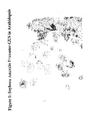
- the bacterial GUS gene can be successfully expressed in Arabidopsis embryos (see Figures 1 and 2 ). Furthermore, a gene encoding delta-6 desaturase from M. alpina can also be successfully expressed by this promoter in transgenic soybeans, as depicted in Figure 4 . This further validates the application of the annexin promoter of the invention or the P34 promoter in plant genetic engineering practice.
- the level of activity of the annexin, or P34, promoter is comparable to that of many known strong promoters, such as the CaMV 35S promoter ( Atanassova et al., (1998) Plant Mol. Biol. 37:275-285 ; Battraw and Hall, (1990) Plant Mol. Biol. 15:527-538 ; Holtorf et al., (1995) Plant Mol. Biol. 29:637-646 ; Jefferson et al., (1987) EMBO J. 6:3901-3907 ; Wilmink et al., (1995) Plant Mol. Biol.
- annexin promoter of the instant invention or the P34 promoter especially useful when seed specific expression of a target heterologous nucleic acid fragment is required.
- Another useful feature of the annexin promoter is its expression profile in developing seeds.
- the annexin promoter of the invention is most active in developing seeds at early stages (within 10 days after pollination) and is largely quiescent in later stages (see Figure 3 ).
- the expression profile of the claimed annexin promoter is different from that of many seed-specific promoters, e.g., seed storage protein promoters, which often provide highest activity in later stages of development ( Chen et al., (1989) Dev. Genet.
- the P34 promoter has a more conventional expression profile but remains distinct from other known seed specific promoters (see Figure 3 ).
- the annexin, or P34, promoter will be a very attractive candidate when overexpression, or suppression, of a gene in embryos is desired at an early developing stage. For example, it may be desirable to overexpress a gene regulating early embryo development or a gene involved in the metabolism prior to seed maturation.
- annexin promoter of the invention or the P34 promoter is to construct chimeric genes that can be used to reduce expression of at least one heterologous nucleic acid fragment in a plant cell.
- a chimeric gene designed for cosuppression of a heterologous nucleic acid fragment can be constructed by linking the fragment to the annexin promoter of the present invention or the P34 promoter.
- a chimeric gene designed to express antisense RNA for a heterologous nucleic acid fragment can be constructed by linking the fragment in reverse orientation to the annexin promoter of the present invention or the P34 promoter. (See U.S. Patent No. 5,107,065 for methodology to block plant gene expression via antisense RNA.) Either the cosuppression or antisense chimeric gene can be introduced into plants via transformation. Transformants wherein expression of the heterologous nucleic acid fragment is decreased or eliminated are then selected.
- This invention also concerns a method of regulating, e.g. increasing or decreasing the expression of at least one heterologous nucleic acid fragment in a plant cell which comprises:
- Transformation and selection can be accomplished using methods well-known to those skilled in the art including, but not limited to, the methods described herein.
- soybean annexin and P34 promoters were isolated using a polymerase chain reaction (PCR) based approach. Soybean genomic DNA was digested to completion with a DNA restriction enzyme that generates blunt ends (Dral, EcoRV, Pvull, or Stul, for example) according to standard protocols.
- the Universal GenomeWalkerTM system from ClonetechTM (user manual PT3042-1) was used to ligate adaptors to the ends of the genomic DNA fragments. Nested primers are also supplied that are specific for the adaptor sequence (AP1 and AP2, for the first and second adaptor primer respectively).
- GSP1 and GSP2 Two gene specific primers (GSP1 and GSP2) were designed for the soybean annexin gene based on the 5' coding sequences in annexin cDNA in DuPont EST database.
- the oligonucleotide sequences of the GSP1 and GSP2 primers have the sequences shown below (SEQ ID NO:3 and 4).
- the AP1 and the GSP1 primers were used in the first round PCR using each of the adaptor ligated genomic DNA populations (Dral, EcoRV, Pvull, or Stul) under conditions defined in the GenomeWalkerTM protocol. Cycle conditions were 94°C for 4 minutes; 94°C for 2 second and 72°C for 3 min, 7 cycles; 94°C for 2 second and 67°C for 3 minutes, 32 cycles; 67°C for 4 minutes.
- the products from each of the first run PCRs were diluted 50-fold. One microliter from each of the diluted products was used as templates for the second PCR with the AP2 and GSP2 as primers.
- Cycle conditions were 94°C for 4 minutes; 94°C for 2 second and 72°C for 3 min, 5 cycles; 94°C for 2 second and 67°C for 3 minutes, 20 cycles; 67°C for 3 minutes. Agarose gels were run to determine which PCR gave an optimal fragment length.
- a 2.1 kb genomic fragment was detected and isolated from the EcoRV-digested genomic DNA reaction. The genomic fragment was digested with BamH I and Sal I and cloned into Bluescript KS + vector for sequencing. Finally, sequencing data indicated that this genomic fragment contained a 2012 bp soybean annexin promoter sequence as shown in SEQ ID NO:1.
- GSP3 and GSP4 Two gene specific primers (GSP3 and GSP4) were designed for the soybean P34 gene based on the 5' coding sequences in P34 cDNA in NCBI Genebank (J05560).
- the oligonucleotide sequences of the GSP3 and GSP4 primers have the sequences shown below (SEQ ID NOs:5 and 6).
- oligonucleotides were designed to re-amplify the annexin promoter with either BamH I or Nco I sites (underlined below in SEQ ID NOs: 7 and 8, respectively).
- the oligonucleotide sequences of these two oligonucleotides are shown in SEQ ID NOs:7 and 8.
- oligonucleotides with either BamH I or Nco I sites at the 5' ends were designed to re-amplify the P34 promoter.
- the oligonucleotide sequences of these two PCR primers are shown in SEQ ID NOs:9 and 10.
- the chimeric promoter-GUS recombinant constructs were cloned as a BamH I-Sal I fragment into the Agrobacterium tumefaciens binary vector pZBL120 to create pJS90 and pJS91.
- the binary vector pZBL120 is the same as the pZBL1 binary vector as described in US Patent No. 5,968,793 (ATCC# 209128) except the NOS promoter was replaced with a 963 bp 35S promoter (NCBI accession number V00141 from nucleotide 6494 to 7456) in the Nos/P-nptII-OCS 3' gene.
- the new 35S promoter-nptll-OCS 3' gene serves as a kanamycin resistance plant selection market in pZBL120.
- the pJS90 and pJS91 binary vector constructions were transformed into Agrobacterium tumefaciens LBA4404, which was then used to inoculate Arabidopsis plants by Vacuum infiltration ( Guang-Ning Ye et. al., Plant Journal 19, 249-257,1999 ).
- the Arabidopsis seeds of primary transformants were selected by 100mg/l Kan on MS culture plates.
- the Kan resistant seedlings were transferred into soil and analyzed for GUS activity in seeds, leaves, stems, flowers and silique coats.
- the GUS activity was analyzed by histochemical staining by X-Gluc and quantitative fluorometric MUG GUS assay as described by Jefferson (Plant Mol. Biol. Rep. 5:387-405, 1987 ).
- both soybean annexin promoter and P34 promoter provide very specific GUS expression in seeds (dark seeds are stained blue in the figures). Other parts of transformed plants, such as leaves, stems, flowers and silique coats, did not exhibit GUS staining (data not shown).
- the annexin promoter is much stronger than the p34 promoter is for seed specific expression.
- the annexin gene is expressed in a very early stage of seed development, as compared to a mid-late stage gene P34 and other seed storage protein genes.
- GLA accumulation in soybean somatic embryos was detected when the M. alpina delta 6 desaturase gene was under the control of a variety of soybean seed specific promoters.
- very strong seed specific promoters such as soybean beta-conglycinin alpha' subunit promoter, soybean Glycinin Gy1 promoter, GLA level is about 35-40%.
- soybean annexin promoter the level of GLA reaches about 40% of total fatty acids.
- soybean P34 promoter GLA level is about 8%. All these results demonstrated that the soybean annexin and P34 promoters are functional in soybean somatic embryos to produce a novel fatty acid GLA.
- the soybean annexin promoter contains the consensus core promoter sequences known as CCAAT box, TATA box and transcription start site.
- the annexin promoter also contains several seed-specific/ABA responsive elements, such as the RY-G-box seed-specific coupling elements (CATGCAA, CATGCCT, CATGCAG, CTACGTCA, TAACGTGC), ACAC elements (CCTACACTCT, CCAACACTGG, TATACACTCC, TGTACACATA, TTCACACCAT, ACAACACTTT, CTAACACGAT), GTGT elements (ATGGTGTTTA, GTAGTGTGAA, AATGTGTTAT, CATGTGTAAA) and AT-rich sequences. All these conserved elements, individually or in combination, can be very important for the temporal and tissue-specific gene expression of the soybean annexin promoter.
- the soybean P34 promoter contains two putative TATA boxes (TATATA and TATATATA).
- the P34 promoter also contains several seed-specific/ABA responsive elements, such as the RY-G-box seed-specific coupling elements (CATGCAG, CATGCAA, CATGCTA, ACACGTTA, AGACGTGT, GGACGTATACACGTTT, TTACGTAT), ACAC elements (CAACACGT, AAACACACAT, ATACACGT), GTGT elements (GACGTGTACG, GCAGTGTCGA, CATGTGTGAA, ACTGTGTGCT, TTTGTGTTAG).
- RY-G-box seed-specific coupling elements CATGCAG, CATGCAA, CATGCTA, ACACGTTA, AGACGTGT, GGACGTATACACGTTT, TTACGTAT
- ACAC elements CAACACGT, AAACACACAT, ATACACGT
- GTGT elements GACGTGTACG, GCAGTGTCGA, CATGTGTGAA, ACT
- Figure 5 shows the ten different deletion fragments that were tested for the annexin promoter (SEQ ID NOs:13-22).
- the consensus elements identified in Example 4 are shown as boxes.
- the fragment lengths are 1883 bp, 1719 bp, 1553 bp, 1367 bp, 1160 bp, 967 bp, 770 bp, 584 bp, 425 bp, and 174 bp (SEQ ID NOs:13-22 respectively).
Landscapes
- Health & Medical Sciences (AREA)
- Life Sciences & Earth Sciences (AREA)
- Genetics & Genomics (AREA)
- Chemical & Material Sciences (AREA)
- Engineering & Computer Science (AREA)
- Biomedical Technology (AREA)
- Organic Chemistry (AREA)
- Biochemistry (AREA)
- Biotechnology (AREA)
- Molecular Biology (AREA)
- General Health & Medical Sciences (AREA)
- Zoology (AREA)
- General Engineering & Computer Science (AREA)
- Wood Science & Technology (AREA)
- Bioinformatics & Cheminformatics (AREA)
- Pregnancy & Childbirth (AREA)
- Biophysics (AREA)
- Physics & Mathematics (AREA)
- Plant Pathology (AREA)
- Cell Biology (AREA)
- Microbiology (AREA)
- Reproductive Health (AREA)
- Developmental Biology & Embryology (AREA)
- Breeding Of Plants And Reproduction By Means Of Culturing (AREA)
- Micro-Organisms Or Cultivation Processes Thereof (AREA)
- Agricultural Chemicals And Associated Chemicals (AREA)
- Cultivation Of Plants (AREA)
Claims (13)
- Isoliertes Nucleinsäurefragment, umfassend einen Samen-spezifischen Promotor, wobei der Promotor:(i) aus der Nucleotidsequenz, angegeben in SEQ ID NO: 1, oder einer Nucleotidsequenz mit 95% Identität zu der Sequenz, angegeben in SEQ ID NO: 1, besteht und diese fähig ist, die Expression einer Codierungssequenz oder funktionellen RNA in einer ähnlichen Weise wie die Sequenz, angegeben in SEQ ID NO: 1, zu steuern; oder(ii) ein Fragment der Nucleotidsequenz, angegeben in SEQ ID NO: 1, ist und die Nucleotidsequenz, angegeben in irgendeiner von den SEQ ID NOs: 13-22, oder eine Nucleotidsequenz mit 95% Identität zu irgendeiner von den Sequenzen, angegeben in irgendeiner von den SEQ ID NOs: 13-22, umfaßt und diese fähig ist, die Expression einer Codierungssequenz oder funktionellen RNA in einer ähnlichen Weise wie die entsprechende Sequenz, angegeben in irgendeiner von den SEQ ID NOs: 13-22, zu steuern.
- Isoliertes Nucleinsäurefragment nach Anspruch 1, wobei der Promotor aus der Nucleotidsequenz, angegeben in einer von den SEQ ID NOs: 13-22, besteht.
- Isoliertes Nucleinsäurefragment nach Anspruch 1 oder Anspruch 2, wobei der Promotor ein Sojabohnen-Promotor ist.
- Rekombinantes Expressionskonstrukt, umfassend mindestens ein heterologes Nucleinsäurefragment, operabel verknüpft mit irgendeinem von den isolierten Nucleinsäureftagmenten der Ansprüche 1 bis 3.
- Pflanze, umfassend in ihrem Genom das rekombinante Expressionskonstrukt von Anspruch 4.
- Pflanze von Anspruch 5, wobei die Pflanze aus der Gruppe, bestehend aus zweikeimblättrigen Pflanzen, ausgewählt ist.
- Pflanze von Anspruch 6, wobei die Pflanze eine Sojabohne ist.
- Rekombinantes Expressionskonstrukt von Anspruch 4, wobei das heterologe Nucleinsäurefragment ein Enzym, verbunden mit der Erzeugung von mindestens einer langkettigen mehrfach ungesättigten Fettsäure, codiert.
- Verfahren zum Regulieren der Expression von mindestens einer heterologen Nucleotidsequenz in einer Pflanze, welches umfaßt:(a) Transformieren einer Pflanzenzelle mit dem rekombinanten Expressionskonstrukt von Anspruch 4;(b) Züchten von fertilen reifen Pflanzen aus der transformierten Pflanzenzelle von Schritt (a); und(c) Auswählen von Pflanzen, umfassend eine transformierte Pflanzenzelle, exprimierend die heterologe Nucleotidsequenz.
- Verfahren von Anspruch 9, wobei die Pflanze eine Sojabohnenpflanze ist.
- Verfahren von Anspruch 9, wobei das heterologe Nucleinsäurefragment ein Enzym, verbunden mit der Erzeugung von mindestens einer langkettige mehrfach ungesättigten Fettsäure, codiert.
- Verfahren zum Regulieren der Expression von mindestens einer heterologen Nucleotidsequenz in einer Pflanze, welches umfaßt:(a) Transformieren einer Pflanzenzelle mit einem rekombinanten Expressionskonstrukt, umfassend mindestens ein heterologes Nucleinsäurefragment, operabel verknüpft mit dem isolierten Nucleinsäurefragment von einem der Ansprüche 1 bis 3;(b) Züchten von fertilen reifen Pflanzen aus der transformierten Pflanzenzelle von Schritt (a); und(c) Auswählen von Pflanzen, umfassend eine transformierte Pflanzenzelle, exprimierend die heterologe Nucleotidsequenz während der frühen Samenentwicklung.
- Samen, erhältlich von einer Pflanze, wie definiert in irgendeinem der Ansprüche 5 bis 7, wobei der Samen in seinem Genom das rekombinante Expressionskonstrukt von Anspruch 4 umfaßt.
Applications Claiming Priority (3)
| Application Number | Priority Date | Filing Date | Title |
|---|---|---|---|
| US44683303P | 2003-02-12 | 2003-02-12 | |
| US446833P | 2003-02-12 | ||
| PCT/US2004/005757 WO2004071178A2 (en) | 2003-02-12 | 2004-02-12 | Annexin and p34 promoters and use in expression of transgenic genes in plants |
Publications (3)
| Publication Number | Publication Date |
|---|---|
| EP1592799A2 EP1592799A2 (de) | 2005-11-09 |
| EP1592799A4 EP1592799A4 (de) | 2006-10-11 |
| EP1592799B1 true EP1592799B1 (de) | 2010-04-28 |
Family
ID=32869559
Family Applications (1)
| Application Number | Title | Priority Date | Filing Date |
|---|---|---|---|
| EP04710744A Expired - Lifetime EP1592799B1 (de) | 2003-02-12 | 2004-02-12 | Annexin-promotor und verwendung bei der expression transgener gene in pflanzen |
Country Status (5)
| Country | Link |
|---|---|
| US (2) | US7129089B2 (de) |
| EP (1) | EP1592799B1 (de) |
| BR (1) | BRPI0406469B8 (de) |
| CA (1) | CA2512588C (de) |
| WO (1) | WO2004071178A2 (de) |
Families Citing this family (28)
| Publication number | Priority date | Publication date | Assignee | Title |
|---|---|---|---|---|
| AU2004290051A1 (en) | 2003-11-12 | 2005-05-26 | E.I. Dupont De Nemours And Company | Delta-15 desaturases suitable for altering levels of polyunsaturated fatty acids in oilseed plants and oleaginous yeast |
| US7550651B2 (en) | 2004-06-25 | 2009-06-23 | E.I. Du Pont De Nemours And Company | Delta-8 desaturase and its use in making polyunsaturated fatty acids |
| US7169969B2 (en) * | 2004-11-08 | 2007-01-30 | E. I. Du Pont De Nemours And Company | PM29 and LEA3 promoters and use in expression of transgenic genes in plants |
| DK1951866T3 (da) | 2005-11-23 | 2014-10-27 | Du Pont | Delta-9-elongaser og anvendelse heraf til fremstilling af flerumættede fedtsyrer |
| US7943823B2 (en) | 2006-04-28 | 2011-05-17 | E.I. Du Pont De Nemours And Company | Delta-8 desaturase and its use in making polyunsaturated fatty acids |
| US7678560B2 (en) * | 2006-05-17 | 2010-03-16 | E.I. Du Pont De Nemours And Company | Δ 5 desaturase and its use in making polyunsaturated fatty acids |
| US20110016581A1 (en) | 2006-10-23 | 2011-01-20 | E.I. Du Pont De Nemours And Company | Delta-8 desaturases and their use in making polyunsaturated fatty acids |
| US7709239B2 (en) * | 2006-12-07 | 2010-05-04 | E.I. Du Pont De Nemours And Company | Mutant Δ8 desaturase genes engineered by targeted mutagenesis and their use in making polyunsaturated fatty acids |
| US8389808B2 (en) | 2007-02-12 | 2013-03-05 | E.I. Du Pont De Nemours And Company | Production of arachidonic acid in oilseed plants |
| US7794701B2 (en) | 2007-04-16 | 2010-09-14 | E.I. Du Pont De Nemours And Company | Δ-9 elongases and their use in making polyunsaturated fatty acids |
| US8957280B2 (en) | 2007-05-03 | 2015-02-17 | E. I. Du Pont De Nemours And Company | Delta-5 desaturases and their use in making polyunsaturated fatty acids |
| US8395021B2 (en) * | 2007-05-08 | 2013-03-12 | The Ohio State University Research Foundation | Highly active soybean promoter from the SUBI-3 polyubiquitin gene and uses thereof |
| EP2147109B1 (de) | 2007-05-24 | 2014-03-19 | E. I. Du Pont de Nemours and Company | Dgat-gene aus yarrowia lipolytica für erhöhte samenfettproduktion sowie veränderte fettsäureprofile in sojabohnen |
| EP2620501A3 (de) | 2008-05-23 | 2013-10-02 | E. I. du Pont de Nemours and Company | DGAT-Gene aus ölhaltigen Organismen für erhöhte Samenfettproduktion sowie veränderte Fettsäureprofile bei Ölsamenpflanzen |
| WO2009143397A2 (en) | 2008-05-23 | 2009-11-26 | E. I. Du Pont De Nemours And Company | Novel dgat genes for increased seed storage lipid production and altered fatty acid profiles in oilseed plants |
| CA2743707A1 (en) | 2008-12-04 | 2010-06-10 | Pioneer Hi-Bred International, Inc. | Methods and compositions for enhanced yield by targeted expression of knotted1 |
| EP2504441B1 (de) | 2009-11-23 | 2020-07-22 | E. I. du Pont de Nemours and Company | Saccharosetransportergene für steigerung des lipidgehaltes der pflanzensamen |
| EP2516638A1 (de) | 2009-12-24 | 2012-10-31 | E.I. Du Pont De Nemours And Company | Proteinsequenzen der pflanzenmembrangebundenen o-acyl-transferase (mboat)-familie und ihre verwendung zur modifizierung von säurezusammensetzungen |
| CA2808002A1 (en) | 2010-08-26 | 2012-03-01 | E. I. Du Pont De Nemours And Company | Mutant hpgg motif and hdash motif delta-5 desaturases and their use in making polyunsaturated fatty acids |
| WO2013040259A1 (en) * | 2011-09-13 | 2013-03-21 | E. I. Du Pont De Nemours And Company | Soybean bbi3 promoter and its use in embryo-specific expression of transgenic genes in plants |
| CA2860220C (en) | 2011-12-22 | 2021-07-13 | E. I. Du Pont De Nemours And Company | Use of the soybean or medicago truncatula sucrose synthase promoter to increase plant seed oil content |
| WO2013138408A1 (en) | 2012-03-14 | 2013-09-19 | E. I. Du Pont De Nemours And Company | Nucleotide sequences encoding fasciated ear3 (fea3) and methods of use thereof |
| EP2825025A1 (de) | 2012-03-14 | 2015-01-21 | E. I. Du Pont de Nemours and Company | Nukleotidsequenzen zur codierung von streifen-ear4 (fea4) und verfahren zur verwendung davon |
| US20150059019A1 (en) | 2012-03-14 | 2015-02-26 | E I Du Pont De Nemours And Company | Agronomic characteristics of plants through abph2 |
| WO2014150721A1 (en) * | 2013-03-15 | 2014-09-25 | E. I. Du Pont De Nemours And Company | Soybean agb1 promoter and its use in tissue-specific expression of transgenic genes in plants |
| CA2918911A1 (en) | 2013-07-31 | 2015-02-05 | E.I. Du Pont De Nemours And Company | Modification of soybean seed composition to enhance feed, food and other industrial applications of soybean products |
| WO2015048016A2 (en) | 2013-09-24 | 2015-04-02 | E. I. Du Pont De Nemours And Company | Fasciated inflorescence (fin) sequences and methods of use |
| WO2015164457A1 (en) | 2014-04-22 | 2015-10-29 | E. I. Du Pont De Nemours And Company | Plastidic carbonic anhydrase genes for oil augmentation in seeds with increased dgat expression |
Family Cites Families (11)
| Publication number | Priority date | Publication date | Assignee | Title |
|---|---|---|---|---|
| US5107065A (en) | 1986-03-28 | 1992-04-21 | Calgene, Inc. | Anti-sense regulation of gene expression in plant cells |
| US5188958A (en) | 1986-05-29 | 1993-02-23 | Calgene, Inc. | Transformation and foreign gene expression in brassica species |
| US5004863B2 (en) | 1986-12-03 | 2000-10-17 | Agracetus | Genetic engineering of cotton plants and lines |
| US5416011A (en) | 1988-07-22 | 1995-05-16 | Monsanto Company | Method for soybean transformation and regeneration |
| US5231020A (en) | 1989-03-30 | 1993-07-27 | Dna Plant Technology Corporation | Genetic engineering of novel plant phenotypes |
| US5589583A (en) * | 1990-01-11 | 1996-12-31 | Monsanto Company | Plant promoter |
| GB9703146D0 (en) | 1997-02-14 | 1997-04-02 | Innes John Centre Innov Ltd | Methods and means for gene silencing in transgenic plants |
| CN1202246C (zh) | 1998-04-08 | 2005-05-18 | 联邦科学和工业研究组织 | 获得修饰表型的方法和措施 |
| AU6277599A (en) | 1998-10-01 | 2000-04-17 | Monsanto Company | Methods for breeding for and screening of soybean plants with enhanced yields, and soybean plants with enhanced yields |
| US6177613B1 (en) * | 1999-01-08 | 2001-01-23 | Pioneer Hi-Bred International, Inc. | Seed-preferred promoter |
| JP2004512020A (ja) | 2000-06-23 | 2004-04-22 | イー・アイ・デュポン・ドウ・ヌムール・アンド・カンパニー | 組換え構築物ならびにこれを遺伝子発現を減少させる際に用いる方法 |
-
2004
- 2004-02-11 US US10/776,889 patent/US7129089B2/en not_active Expired - Lifetime
- 2004-02-12 CA CA2512588A patent/CA2512588C/en not_active Expired - Lifetime
- 2004-02-12 EP EP04710744A patent/EP1592799B1/de not_active Expired - Lifetime
- 2004-02-12 BR BRPI0406469A patent/BRPI0406469B8/pt active IP Right Grant
- 2004-02-12 WO PCT/US2004/005757 patent/WO2004071178A2/en not_active Ceased
-
2006
- 2006-10-10 US US11/545,178 patent/US20070033673A1/en not_active Abandoned
Also Published As
| Publication number | Publication date |
|---|---|
| BRPI0406469A (pt) | 2005-12-06 |
| US20040158052A1 (en) | 2004-08-12 |
| EP1592799A4 (de) | 2006-10-11 |
| EP1592799A2 (de) | 2005-11-09 |
| WO2004071178A2 (en) | 2004-08-26 |
| BRPI0406469B8 (pt) | 2022-12-06 |
| CA2512588C (en) | 2013-04-30 |
| BRPI0406469B1 (pt) | 2019-07-16 |
| US20070033673A1 (en) | 2007-02-08 |
| WO2004071178A3 (en) | 2005-03-24 |
| CA2512588A1 (en) | 2004-08-26 |
| US7129089B2 (en) | 2006-10-31 |
Similar Documents
| Publication | Publication Date | Title |
|---|---|---|
| EP1592799B1 (de) | Annexin-promotor und verwendung bei der expression transgener gene in pflanzen | |
| US6777591B1 (en) | Legume-like storage protein promoter isolated from flax and methods of expressing proteins in plant seeds using the promoter | |
| US9493782B2 (en) | Inducible promoter sequences for regulated expression and methods of use | |
| WO1998008962A1 (en) | Early seed 5' regulatory sequence | |
| CA2384973A1 (en) | Seed-preferred promoter from maize | |
| CN1376204B (zh) | 亚麻种子特异性启动子 | |
| US7291765B2 (en) | PM29 and LEA3 promoters and use in expression of transgenic genes in plants | |
| EP2607377B1 (de) | Expressionskassetten zur saatspezifischen expression bei pflanzen | |
| CA2845581A1 (en) | Soybean atps promoter and its use in constitutive expression of transgenic genes in plants | |
| CA2845599A1 (en) | Soybean bbi3 promoter and its use in embryo-specific expression of transgenic genes in plants | |
| CA2310304C (en) | Flax seed specific promoters | |
| US7750139B2 (en) | Nucleic acids from sesame plants | |
| CA2383376A1 (en) | Flax seed specific promoters | |
| AU1468401A (en) | Seed-preferred promoter from barley |
Legal Events
| Date | Code | Title | Description |
|---|---|---|---|
| PUAI | Public reference made under article 153(3) epc to a published international application that has entered the european phase |
Free format text: ORIGINAL CODE: 0009012 |
|
| 17P | Request for examination filed |
Effective date: 20050728 |
|
| AK | Designated contracting states |
Kind code of ref document: A2 Designated state(s): AT BE BG CH CY CZ DE DK EE ES FI FR GB GR HU IE IT LI LU MC NL PT RO SE SI SK TR |
|
| AX | Request for extension of the european patent |
Extension state: AL LT LV MK |
|
| DAX | Request for extension of the european patent (deleted) | ||
| RBV | Designated contracting states (corrected) |
Designated state(s): IT |
|
| REG | Reference to a national code |
Ref country code: DE Ref legal event code: 8566 |
|
| A4 | Supplementary search report drawn up and despatched |
Effective date: 20060908 |
|
| 17Q | First examination report despatched |
Effective date: 20070404 |
|
| RTI1 | Title (correction) |
Free format text: ANNEXIN PROMOTER AND USE IN EXPRESSION OF TRANSGENIC GENES IN PLANTS |
|
| GRAC | Information related to communication of intention to grant a patent modified |
Free format text: ORIGINAL CODE: EPIDOSCIGR1 |
|
| GRAP | Despatch of communication of intention to grant a patent |
Free format text: ORIGINAL CODE: EPIDOSNIGR1 |
|
| GRAS | Grant fee paid |
Free format text: ORIGINAL CODE: EPIDOSNIGR3 |
|
| GRAA | (expected) grant |
Free format text: ORIGINAL CODE: 0009210 |
|
| AK | Designated contracting states |
Kind code of ref document: B1 Designated state(s): IT |
|
| PLBE | No opposition filed within time limit |
Free format text: ORIGINAL CODE: 0009261 |
|
| STAA | Information on the status of an ep patent application or granted ep patent |
Free format text: STATUS: NO OPPOSITION FILED WITHIN TIME LIMIT |
|
| 26N | No opposition filed |
Effective date: 20110131 |
|
| PGFP | Annual fee paid to national office [announced via postgrant information from national office to epo] |
Ref country code: IT Payment date: 20230110 Year of fee payment: 20 |