EP1592171B1 - Stille Datenpfad Fehlererkennung - Google Patents
Stille Datenpfad Fehlererkennung Download PDFInfo
- Publication number
- EP1592171B1 EP1592171B1 EP05300327A EP05300327A EP1592171B1 EP 1592171 B1 EP1592171 B1 EP 1592171B1 EP 05300327 A EP05300327 A EP 05300327A EP 05300327 A EP05300327 A EP 05300327A EP 1592171 B1 EP1592171 B1 EP 1592171B1
- Authority
- EP
- European Patent Office
- Prior art keywords
- datapath
- egress
- ingress
- count
- pdu count
- Prior art date
- Legal status (The legal status is an assumption and is not a legal conclusion. Google has not performed a legal analysis and makes no representation as to the accuracy of the status listed.)
- Expired - Lifetime
Links
Images

Classifications
-
- H—ELECTRICITY
- H04—ELECTRIC COMMUNICATION TECHNIQUE
- H04L—TRANSMISSION OF DIGITAL INFORMATION, e.g. TELEGRAPHIC COMMUNICATION
- H04L41/00—Arrangements for maintenance, administration or management of data switching networks, e.g. of packet switching networks
- H04L41/06—Management of faults, events, alarms or notifications
- H04L41/0681—Configuration of triggering conditions
-
- H—ELECTRICITY
- H04—ELECTRIC COMMUNICATION TECHNIQUE
- H04L—TRANSMISSION OF DIGITAL INFORMATION, e.g. TELEGRAPHIC COMMUNICATION
- H04L41/00—Arrangements for maintenance, administration or management of data switching networks, e.g. of packet switching networks
- H04L41/06—Management of faults, events, alarms or notifications
- H04L41/0654—Management of faults, events, alarms or notifications using network fault recovery
- H04L41/0659—Management of faults, events, alarms or notifications using network fault recovery by isolating or reconfiguring faulty entities
-
- H—ELECTRICITY
- H04—ELECTRIC COMMUNICATION TECHNIQUE
- H04L—TRANSMISSION OF DIGITAL INFORMATION, e.g. TELEGRAPHIC COMMUNICATION
- H04L43/00—Arrangements for monitoring or testing data switching networks
- H04L43/16—Threshold monitoring
Definitions
- the invention is directed to communication networks and in particular to an apparatus and method for detection of silent datapath failures.
- PDU transmission protocol data units
- CRC Cyclic Redundancy check
- OAM-CC operations, administration and maintenance
- An OAM (operation, administration and maintenance) cell is a specially tagged ATM cell specified to support ATM network maintenance features like connectivity verification, alarm surveillance, continuity check, and performance monitoring.
- OAM-CC is not supported by all network equipment makes (network equipment supliers).
- the operational impact of configuring and monitoring large networks with thousands of connections becomes significant.
- OAM-CC can detect a datapath issue, it cannot isolate the cause (node, card) and therefore fails to reduce the fault isolation time and any related revenue loss issues. For these reasons, this solution is declined by many network customers.
- Another conventional solution for datapath fault detection includes measuring the traffic at each node along the datapath using customized, offline testers. These testers generally provide counters at ingress and egress ends of the datapath for counting the number of PDUs traversing these ends. The values of the counters over a preset period of time are compared to determine if cell loss or cell addition has occurred at the respective node.
- this tester since this tester is a stand-alone device, the traffic needs to be stopped during the measurement, thus adversely affecting subscriber services. Also, these measurements take place after an end-user complains to the service provider about a failure.
- On-line counters may also be used, as described in the co-pending US Patent Application SN 10/717,377 , entitled “Method And Apparatus For Detection Of Transmission Unit Loss And/Or Replication", Steven Driediger et al. filed on 19 November, 2003, and assigned to Alcatel.
- aggregate per connection coherent counters are kept on ingress and egress line cards and periodically compared. This mechanism requires bounded latency through the switch fabric but subtle traffic loss or replication is also detected.
- this method adds complexity to PDU latency measurements as the PDU's traverse the fabric. This is because it is difficult to accurately measure and track the PDU's since latency is continuously changing.
- US 6188674 discloses a method for packet loss measurement in highspeed switches by identifying traffic flows in the ingress side of switches, and measuring packets losses for the identifies flows on the egress side of the switches. Specifically, on the ingress side of the switch, the last packet of each fixed size incoming packet block is marked to make it distinct from other packets in the block. On the egress side, the packet flow is monitored and the packets are counted using the block size as a counting modulo. The value of this counter at the receipt of a marked packets is used to update the number of packets that do not make their way across the switch. This method only requires two marking counters per distinct flow, one at ingress and one at egress, and two other counters at the egress per each measured flow. It is also efficient, as it can achieve any degree of accuracy with little implementation cost.
- the invention is directed to a switched communication network that enables establishing a datapath over a switching node of the network.
- the invention provides an apparatus for silent datapath failure detection at the node comprising an ingress statistics unit for collecting an ingress protocol data unit (PDU) count over a time interval at an ingress port of the node associated with the datapath; an egress statistics unit for collecting an egress PDU count over the time interval at an egress node at the node associated with the datapath; means for comparing the ingress PDU count and the egress PDU count and generating an error signal in case of a mismatch between the ingress PDU count and the egress PDU count; and means for alarming the mismatch and specifying a type of datapath failure associated with the error signal.
- PDU protocol data unit
- a traffic manager is provided at a switching node of such a communication network.
- the traffic manager comprises: means for determining an egress count including all egress traffic PDU's in the datapath counted at the egress port over a period of time; and means for comparing the egress count with an ingress count and generating an error signal in the case of a mismatch between the ingress count and the egress count, wherein the ingress count includes all ingress traffic PDU's in the datapath counted at the ingress port over the period of time.
- a traffic manager is provided at a switching node of a communication network.
- the traffic manager comprises: means for determining an ingress count including all ingress traffic PDU's in the datapath counted at the ingress port over a period of time; and means for comparing the ingress count with an egress count and generating an error signal in the case of a mismatch between the ingress count and the egress count, wherein the egress count includes all egress traffic PDU's in the datapath counted at the egress port over the period of time.
- a method for silent datapath failure detection is also provided for a switched communication network of the type that enables establishing a datapath over a switching node of the network.
- the method includes the steps of: at an ingress port associated with the datapath, collecting an ingress PDU count over a time interval; at an egress port associated with the datapath, collecting an egress PDU count over the time interval; identifying the ingress port associated with the egress port whenever the egress PDU count violates a threshold; and comparing the ingress PDU count with the egress PDU count and generating an error signal in case of a mismatch between the ingress PDU count and the egress PDU count.
- the apparatus and method of the invention enables a network provider to isolate the fault to a certain node, and to a certain pair of line cards without live traffic interruption. This improves the node availability by reducing the fault detection and isolation times, thereby reducing the node's mean time-to-repair (MTTR).
- MTTR mean time-to-repair
- the fault detection time can be controlled by selecting the statistics collection time, so that fast detection may be obtained.
- the invention proposed herein does not consume any network bandwidth as for example the OAM-CC mechanism does.
- a silent failure is a disruption in a connection-oriented datapath that causes the datapath traffic to become unidirectional or to partially or completely stop flowing, and this is not detected except by the end-user.
- the invention provides a means for actively monitoring a node of a communications network for silent datapath disruptions caused within the node.
- Figure 1 illustrates a datapath 10 connecting two end-points over a switched network 1 .
- a data aggregation unit 5 combines the traffic from a plurality of local users connected to node A and a data distribution unit 5' distributes the traffic received at node B over network 1 between a plurality of local users.
- the invention enables the network provider to detect linecard and switching fabric failures for which traditional error detection mechanisms such as CRC and OAM CC checks are not feasible.
- the invention enables locating the failure at node C and furthermore, enables locating the pair of cards at this node causing the failure.
- datapath 10 may be a bidirectional point-to-point connection as shown at 10', or a unidirectional point-to-multipoint connection as shown at 10", as shown in Figure 1A .
- FIG 2 shows the datapath from an ingress port to an egress port at node C of network 1 (see Figure 1 ). More precisely, this figure illustrates a linecard 20, 20' and the switch fabric 15, which are the main elements along the datapath.
- the linecard is illustrated here as two distinct units 20, 20' one comprising the ingress (input) logic and the other, the egress (output) logic. Note that a datapath may use the ingress and egress logic of the same linecard, or of two distinct linecards.
- Ingress logic 20 comprises in general terms a line interface 21, a traffic manager 22 with the associated memory 23, and a backplane interface 24.
- the line interface 21 on ingress logic 20 accommodates a plurality of ingress ports, such as ports Pi1 to Pin.
- Index 'i' indicates an ingress (input) port and "n" indicates the maximum number of ingress ports on the respective card.
- Line interface 21 includes the line receivers for physically terminating the respective line. Interface 21 forwards the PDU's to traffic manager 22, illustrated in further details in Figure 2 . Traffic manager 22 examines the PDU header, verifies the header integrity and provides the PDU to the backplane interface 24 and the switching fabric 15.
- network 1 is an ATM network
- ATM is a transmission protocol based upon asynchronous time division multiplexing using fixed length protocol data units called cells. These cells typically have a length of 53 bytes (octets), each cell containing 48 octets of user data (payload) and 5 octets of network information (header).
- the header of a cell contains address information which allows the network to route the cell over the network from the entry point to the exit, and also includes error correction information. It is however to be understood that the invention is applicable to other types of connection-oriented services (Ethernet, MPLS, FR).
- traffic manager 22 is responsible for extracting OAM (operation, administration and maintenance) cells and executing the operations required by these cells. Furthermore, traffic manager 22 calculates the local routing/switching information (fabric header) for the input cells so that they are routed correctly by the switching fabric.
- the fabric routing information is obtained based on the origin and destination address in the cell header and established using look-up tables in memory 23 (preferably a random addressable memory). In the case of an ATM cell, this fabric header is preferably 7 bytes long.
- Traffic manager 22 may also provide cell header detection and correction via CRC checks. Most fault locations can be monitored using error detection (e.g. CRC); however corruption of preliminary header bytes at the line ingress interface remains at risk in many current implementations. For example, Alcatel's ATM line cards actually use a number of different devices (such as ATMC and ATLAS) for this functionality, which can come from different vendors, such as Motorola or PMC Sierra. It is apparent that a fault at the memory 23 cannot be detected by calculating the CRC at manager 22, since unit 22 performs the CRC on the header bits prior to buffering the cells in memory 23. This may result in errors in routing the PDU along the correct datapath 10.
- error detection e.g. CRC
- CRC error detection
- a fault at the memory 23 cannot be detected by calculating the CRC at manager 22, since unit 22 performs the CRC on the header bits prior to buffering the cells in memory 23. This may result in errors in routing the PDU along the correct datapath 10.
- the ingress logic 20 also interfaces with the switching fabric 15 over a backplane interface 24, as shown by links from unit 20 to fabric 15 denoted with Bo1-Bom.
- a housekeeping processor 25 is used for the general tasks enabling proper operation of the interfaces 21, 24 and manager 22.
- the links from fabric 15 to egress logic 20' are denoted with Bi'1-Bi'm.
- the traffic manager 22' performs similar tasks to the tasks performed by manager 22 on the PDU's received from the backplane interface 24', namely local traffic routing, policing, OAM insertion, stripping of the internal fabric header, and addition of CRC bytes to the cell header to enable downstream header corruption detection.
- Traffic manager 22' forwards the cells to the egress line interface 21' which then routes the cells to a transmitter corresponding to an appropriate egress port Pe'1-Pe'k for conveying the traffic to the next node, where index 'e' indicates an egress (output) port and "k" indicates the maximum number of output ports on the respective card. It is to be noted that the number of input ports on a card may differ from the number of output ports, and that two cards may have different numbers of such ports.
- datapath 10 uses a point-to-point (P2P) bidirectional connection, only the forward direction being illustrated for simplification.
- the datapath 10 at node C runs in this example from ingress port Pi1 on ingress logic 20 over link Bo2 at the exit of backplane interface 24, is switched by fabric 15 from Bo2 on link Bi'j, and then routed from backplane interface 24' on egress port Pe'k.
- backplane connection is used herein for a trail from an exit pin on backplane interface 24, over fabric 15, to an input pin on backplane interface 24'.
- the traffic managers 22, 22' assume that every cell received by the switching node must egress the switch in the case of a P2P connection 10', or must be replicated in a case of a P2mP connection 10".
- any cell which is originated and/or terminated within the node itself should be excluded from the endpoint statistics count. This includes the OAM cells inserted by the ingress card into the fabric, and extracted by the egress card. This also includes any cells sourced/ terminated by the node and used for real-time flow control.
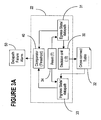
- FIG 3A illustrates a block diagram of the apparatus for detection of silent datapath failures according to the invention.
- ingress and egress traffic managers 22, 22' collect the respective ingress and egress statistics at the connection level, such as on datapath 10, as shown by blocks 31 and 33.
- the statistics are maintained on a per datapath basis and preferably refer only to the cells received at the input of the node and respectively transmitted at an output of the node (excluding any cells sourced/ terminated by the node).
- the statistics may be collected in the respective memory 23, 23' (see Figure 2 ), or may use separate memory means.
- the statistics are collected over a preset period of time, denoted here with T, as shown by reset unit 34. If any egress cell count is zero over a full interval T, determined by a decision unit 30, then the ingress interface for that datapath is determined, using e.g. the node's cross-connection information 32. The corresponding linecard for that egress interface is contacted to determine the ingress cell count available at 33. It is to be noted that a variant where the comparison between the ingress and egress statistics is made continuously is also possible, in which case a decision unit 30 is not necessary.
- ingress and egress statistics are collected over a rather large time interval T (15 minutes).
- T time interval
- the present invention may use this existent feature.
- the present invention may use shorter intervals, in which case the statistics do not need to rely on an entire such interval. Using shorter intervals would enable faster alarming of datapath disruption errors.
- the ingress cell count is non-zero for an egress count of zero, as determined by a comparator 40, the datapath is alarmed as shown at 50, since the complete lack of cells transmitted at the egress indicates a datapath disruption.
- the phrase "non-zero count of ingress cells” should be taken to mean “enough ingress cells to allow at least one to reach the egress side, given maximum expected switch latency and max expected traffic rate of the datapath". If this threshold is too low, a datapath failure alarm could be erroneously raised when no such failure exists.
- the comparator 40 uses a plurality of thresholds rather than just one "zero" threshold, in order to rule out cases of congestion, linecard resets, etc.
- the thresholds may be determined based on experiments and may be provided for various states of operation for the respective node or datapath.
- the result of the comparison against the respective threshold is sent to the node controller, where a failure detection and diagnosis unit 40 establishes the cause of the discrepancy between the ingress and egress statistics.
- the datapath is alarmed as shown at 50 only if the valid cases of discrepancies were eliminated.
- the decision unit 30 could employ an egress statistics threshold to decide whether or not the datapath is suspected of traffic failure, instead of checking for non-zero egress statistics.
- a discrepancy between mating ingress and egress cell counts of a datapath could be alarmed if congestion could be discounted as the cause (e.g. CBR or high priority connections) and the discrepancy was substantial, the determination of which would depend on the connection's bandwidth. That is, the egress cell count is not zero because the datapath disruption occurred partway through the interval.
- a datapath alarm could be inhibited if a zero count of egress cells and a non-zero count of ingress cells over a partial interval are observed, and the shortened interval was due to a verifiable card reset, or creation of the connection.
- another interval of statistics may be required before a determination whether to alarm a datapath or not is made.
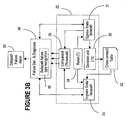
- failure detection and diagnosis unit 40 which monitors the ingress/ egress statistics, may be provided with additional means for detecting the type of datapath failure, as shown in dotted lines at 45.
- Unit 45 enables the operator to distinguish the failure type by providing specific messages for various types of silent datapath failures. For example, unit 45 enables the operator to recognize an eventual corruption of the ingress or/and egress statistics being stored in memory 23, 23'. This occurrence, even if atypical, will result in a small number of cases where an alarm may be raised when no traffic loss is occurring, or may be not raised when real traffic loss is occurring. In this situation, unit 45 provides a specific alarm message to the operator indicating that the alarm was raised by a statistics corruption.
- datapath failure type recognition unit 45 may use the failure data to trigger automatic recovery of the datapath, such as local connection repair, or connection re-route (if the connection is switched).
- ingress and egress cell count statistics are collected periodically on connections provided by the node.
- a datapath's mating pair of ingress and egress statistics are substantially mismatched in a way that can not be explained by verifiable normal behavior of the node or traffic affecting fault conditions for which alarms have already been raised, then the datapath is alarmed at 50.
Landscapes
- Engineering & Computer Science (AREA)
- Computer Networks & Wireless Communication (AREA)
- Signal Processing (AREA)
- Data Exchanges In Wide-Area Networks (AREA)
- Maintenance And Management Of Digital Transmission (AREA)
Claims (30)
- Einrichtung zur geräuschlosen Erkennung eines Datenpfadfehlers an einem Vermittlungsknoten (C) eines vermittelten Kommunikationsnetzwerks, welches den Aufbau eines Datenpfads über den besagten Knoten des besagten Netzwerks ermöglicht, dadurch gekennzeichnet, dass sie umfasst:Eine Eingangsstatistikeinheit (33) für die Erfassung einer Zählung von eingehenden Protokolldateneinheiten, PDU, einschließlich aller eingehenden Verkehrs-PDUs in dem besagten Datenpfad {aus dem vorherigen Anspruch 12} über ein Zeitintervall (T), an einem Eingangsport (Pi) des besagten mit dem besagten Datenpfad assoziierten Knotens (C);eine Ausgangsstatistikeinheit (31) für die Erfassung einer Zählung von ausgehenden PDUs, einschließlich aller ausgehenden Verkehrs-PDUs, in dem besagten Datenpfad über das besagte Zeitintervall (T) an einem Ausgangsport (Pe) des besagten mit dem besagten Datenpfad assoziierten Knotens (C);Mittel zum Vergleichen (35, 40) der besagten Zählung von eingehenden PDUs mit der besagten Zählung von ausgehenden PDUs;Mittel (40) zum Erzeugen (40) eines Fehlersignals im Fall einer Diskrepanz zwischen der besagten Zählung von eingehenden PDUs und der besagten Zählung von ausgehenden PDUs; undMittel zum Alarmieren (50) der besagten Diskrepanz und zum Spezifizieren einer mit dem besagten Fehlersignal assoziierten Datenpfadfehlerart.
- Einrichtung nach Anspruch 1, weiterhin umfassend Mittel zum Zurücksetzen (34) der besagten Zählung von ausgehenden PDUs und der besagten Zählung von eingehenden PDUs nach der besagten Zeitspanne (T).
- Einrichtung nach Anspruch 1 oder 2, wobei das besagte Erzeugungsmittel (40) jedes Mal, wenn die besagte Zählung von ausgehenden PDUs Null ist und die besagte Zählung von eingehenden PDUs nicht Null ist, das besagte Fehlersignal erzeugt.
- Einrichtung nach einem beliebigen der Ansprüche 1 bis 3, weiterhin umfassend eine Entscheidungseinheit (30) zum Vergleichen der besagten Zählung von ausgehenden PDUs mit einem Grenzwert, und, jedes Mal, wenn die besagte Zählung von ausgehenden PDUs den besagten Grenzwert übertritt, zum Identifizieren der besagten Zählung von eingehenden PDUs, welche dem besagten Eingangsport entspricht, und zum Triggern der besagten Vergleichsmittel (35, 40).
- Einrichtung nach Anspruch 4, weiterhin umfassend eine Cross-Connect-Tabelle (32) mit Routing-Daten, wobei die besagte Entscheidungseinheit (30) Mittel zum Triggern des Zugriffs auf die besagte Cross-Connect-Tabelle (32) umfasst, um den besagten mit dem besagten Ausgangsport (Pe) assoziierten Eingangsport (Pi) zu ermitteln, wenn die besagte Zählung der Ausgänge den besagten Grenzwert übertritt.
- Einrichtung nach Anspruch 4 oder 5, wobei die besagte Entscheidungseinheit (30) eine Mehrzahl von Grenzwerten verwendet, wobei ein jeder der Grenzwerte einem bestimmten Betriebsmodus des besagten Knotens (C) entspricht.
- Einrichtung nach einem beliebigen der Ansprüche 4 bis 6, wobei die besagte Entscheidungseinheit (30) einen zusätzlichen Grenzwert verwendet, um eine Überlastung von einem Datenpfadfehler zu unterscheiden.
- Einrichtung nach einem beliebigen der Ansprüche 4 bis 7, wobei die besagte Entscheidungseinheit (30) einen zusätzlichen Grenzwert verwendet, um Rücksetzungen der Leitungskarte von einem Datenpfadfehler zu unterscheiden.
- Einrichtung nach einem beliebigen der Ansprüche 1 bis 8, wobei das besagte Erzeugungsmittel (40) jedes Mal, wenn die besagte Zählung von ausgehenden PDUs einen vorgegebenen Grenzwert übertritt, ein spezifisches Fehlersignal erzeugt.
- Einrichtung nach Anspruch 9, wobei das besagte Alarmierungsmittel (50) jedem besagten spezifischen Fehlersignal eine spezifische Datenpfadfehlernachricht zuordnet, welche den Datenpfadfehler, der das besagte spezifische Fehlersignal ausgelöst hat, identifiziert.
- Einrichtung nach einem beliebigen der Ansprüche 1 bis 10, weiterhin umfassend eine Datenpfadfehlerart-Erkennungseinheit (45) zum Empfangen des besagten Fehlersignals und zum Bereitstellen von zusätzlichen Daten, die für eine Diskrepanz zwischen der besagten Zählung von ausgehenden PDUs und der besagten Zählung von eingehenden PDUs relevant sind, an das besagte Alarmierungsmittel (50).
- Einrichtung nach einem beliebigen der Ansprüche 4 bis 11, weiterhin umfassend eine Datenpfadfehlerart-Erkennungseinheit (45) zum Bereitstellen von Diagnosedaten, welche die Art des Datenpfadfehlers, der zum Übertreten des besagten Grenzwerts geführt hat, angeben, an das besagte Alarmierungsmittel (50).
- Einrichtung nach einem beliebigen der Ansprüche 1 bis 12, wobei die besagte Zählung von Eingängen oder Ausgängen jedes Mal, wenn sich der besagte Eingangsport (Pi) und der besagte Ausgangsport (Pe) auf unterschiedlichen Leitungskarten (20, 20') befinden, über eine Rückwandplatinen-Schnittstelle (24) bereitgestellt wird.
- Verfahren zur geräuschlosen Erkennung eines Datenpfadfehlers für ein vermitteltes Kommunikationsnetzwerk, welches den Aufbau eines Datenpfads über einen Vermittlungsknoten (C) des besagten Netzwerks ermöglicht, dadurch gekennzeichnet, dass es die folgenden Schritte umfasst:Erfassen einer Zählung von eingehenden PDUs über ein Zeitintervall (T), an einem mit dem besagten Datenpfad assoziierten Eingangsport (Pi);Erfassen einer Zählung von ausgehenden PDUs über das besagte Zeitintervall (T) an einem mit dem besagten Datenpfad assoziierten Ausgangsport (Pe);Identifizieren, jedes Mal, wenn die besagte Zählung von ausgehenden PDUs einen Grenzwert übertritt, des besagten mit dem besagten Ausgangsport (Pe) assoziierten Eingangsports (Pi);Vergleichen der besagten Zählung von eingehenden PDUs mit der besagten Zählung von ausgehenden PDUs; undErzeugen eines Fehlersignals im Fall einer Diskrepanz zwischen der besagten Zählung von eingehenden PDUs und der besagten Zählung von ausgehenden PDUs.
- Verfahren nach Anspruch 14, weiterhin umfassend das Zurücksetzen der besagten Zählung von eingehenden PDUs und der besagten Zählung von ausgehenden PDUs nach dem besagten Zeitintervall (T).
- Verfahren nach Anspruch 14, weiterhin umfassend das Alarmieren der besagten bestimmten Diskrepanz und das Zuordnen einer spezifischen Datenpfadfehlernachricht zu dem besagten Fehlersignal zum Identifizieren einer Art des Datenpfadfehlers, welcher das besagte Fehlersignal ausgelöst hat.
- Verfahren nach Anspruch 14, wobei die besagte PDU entweder eine ATM-Zelle, ein Ethernet-Rahmen oder ein Frame- Relay-Rahmen ist.
- Verfahren nach Anspruch 14, wobei die besagte Zählung von eingehenden PDUs und die besagte Zählung von ausgehenden PDUs in einem lokalen Speicher (23, 23') auf einer jeweils mit dem besagten Eingangsport (Pi) und dem besagten Ausgangsport (Pe) assoziierten Leistungskarte (20, 20') erfasst werden.
- Verfahren nach Anspruch 14, wobei der besagte Schritt des Vergleichens umfasst:Vergleichen der besagten Zählung von ausgehenden PDUs mit einem Grenzwert,jedes Mal, wenn die besagte Zählung von ausgehenden PDUs den besagten Grenzwert übertritt, Identifizieren der besagten dem besagten Eingangsport (Pi) entsprechenden Zählung von eingehenden PDUs; undBewerten der besagten Zählung von eingehenden PDUs und der besagten Zählung von ausgehenden PDUs im Kontext des besagten Fehlersignals, um eine Art des Datenpfadfehlers zu identifizieren.
- Verfahren nach Anspruch 14, wobei der besagte Schritt des Vergleichens jedes Mal, wenn die besagte Zählung von ausgehenden PDUs einen spezifischen Grenzwert übertritt, das Erzeugen eines spezifischen Fehlersignals umfasst.
- Verfahren nach Anspruch 18, weiterhin umfassend das Zuordnen einer Datenpfadalarmnachricht zu jedem besagten spezifischen Fehlersignal zum Identifizieren einer jeweiligen Datenpfadfehlerart.
- Verfahren nach Anspruch 14, weiterhin umfassend das automatische Triggern der Wiederherstellung des besagten Datenpfads in Reaktion auf das besagte Fehlersignal.
- Verfahren nach Anspruch 14, wobei der besagte Schritt des Identifizierens den Zugriff auf eine Cross-Connect-Tabelle (32) an dem besagten Knoten (C) umfasst, um den besagten Eingangsport (Pi), welcher dem besagten Ausgangsport (Pe) auf dem besagten Datenpfad entspricht, zu ermitteln.
- Verfahren nach Anspruch 14, wobei der besagte Grenzwert unter Berücksichtigung der dem besagten Datenpfad zugeteilten Bandbreite festgelegt wird.
- Verfahren nach Anspruch 14, wobei der besagte Grenzwert Null für das Alarmieren einer Datenpfadunterbrechung ist.
- Verfahren nach Anspruch 14, wobei der besagte Schritt des Identifizierens eine Mehrzahl von Grenzwerten verwendet, von denen ein jeder einer Art der zulässigen Diskrepanz zwischen der besagten Zählung von ausgehenden PDUs und der besagten Zählung von eingehenden PDUs entspricht.
- Verfahren nach Anspruch 26, wobei einer der besagten Grenzwerte für das Ermitteln, ob eine Datenpfadunterbrechung auf halbem Wege innerhalb des besagten Zeitintervalls (T) aufgetreten ist, verwendet wird.
- Verfahren nach Anspruch 26, wobei einer der besagten Grenzwerte zum Ermitteln, ob die besagte bestimmte Diskrepanz entweder auf eine Zurücksetzung der Leitungskarte oder die Einrichtung eines neuen Datenpfads zurückzuführen ist, verwendet wird.
- Verfahren nach Anspruch 26, wobei jeder besagte Grenzwert mit einem vorgegebenen Zeitintervall (T) für das Messen der besagten Zählung von ausgehenden PDUs assoziiert ist.
- Verfahren nach Anspruch 26, wobei einer der besagten Grenzwerte für das Ermitteln einer Korruption entweder der besagten Zählung von eingehenden PDUs oder der besagten Zählung von ausgehenden PDUs verwendet wird.
Applications Claiming Priority (2)
| Application Number | Priority Date | Filing Date | Title |
|---|---|---|---|
| US834129 | 2004-04-29 | ||
| US10/834,129 US7489642B2 (en) | 2004-04-29 | 2004-04-29 | Silent datapath failure detection |
Publications (3)
| Publication Number | Publication Date |
|---|---|
| EP1592171A2 EP1592171A2 (de) | 2005-11-02 |
| EP1592171A3 EP1592171A3 (de) | 2006-02-15 |
| EP1592171B1 true EP1592171B1 (de) | 2012-08-29 |
Family
ID=34942572
Family Applications (2)
| Application Number | Title | Priority Date | Filing Date |
|---|---|---|---|
| EP05300326A Withdrawn EP1655892A1 (de) | 2004-04-29 | 2005-04-27 | Stille Datenpfad Fehlererkennung |
| EP05300327A Expired - Lifetime EP1592171B1 (de) | 2004-04-29 | 2005-04-27 | Stille Datenpfad Fehlererkennung |
Family Applications Before (1)
| Application Number | Title | Priority Date | Filing Date |
|---|---|---|---|
| EP05300326A Withdrawn EP1655892A1 (de) | 2004-04-29 | 2005-04-27 | Stille Datenpfad Fehlererkennung |
Country Status (2)
| Country | Link |
|---|---|
| US (1) | US7489642B2 (de) |
| EP (2) | EP1655892A1 (de) |
Families Citing this family (8)
| Publication number | Priority date | Publication date | Assignee | Title |
|---|---|---|---|---|
| US7436774B2 (en) * | 2004-05-27 | 2008-10-14 | Alcatel Lucent | Communication network connection rerouting methods and systems |
| US20060002306A1 (en) * | 2004-06-30 | 2006-01-05 | Ronald Brown | Failure detection of path information corresponding to a transmission path |
| CN100395994C (zh) * | 2005-06-23 | 2008-06-18 | 华为技术有限公司 | 自动交换光网络中通道故障的处理方法 |
| DE102005059021B4 (de) * | 2005-12-08 | 2016-06-30 | Volkswagen Ag | Eingebettetes System und Verfahren zum Betreiben eines eingebetteten Systems mit verbesserter Kennzeichnung von fehlerhaften ausgetauschten Signalen |
| CN101631342A (zh) * | 2009-08-20 | 2010-01-20 | 中兴通讯股份有限公司 | 用于接入服务网络的退出idle通道建立方法和装置 |
| US8711708B2 (en) | 2012-07-24 | 2014-04-29 | Accedian Networks Inc. | Automatic setup of reflector instances |
| US9306830B2 (en) * | 2013-01-30 | 2016-04-05 | Accedian Networks Inc. | Layer-3 performance monitoring sectionalization |
| US11271776B2 (en) * | 2019-07-23 | 2022-03-08 | Vmware, Inc. | Logical overlay network monitoring |
Family Cites Families (8)
| Publication number | Priority date | Publication date | Assignee | Title |
|---|---|---|---|---|
| US5394408A (en) * | 1992-02-10 | 1995-02-28 | Nec Corporation | Policing control apparatus |
| JP3525656B2 (ja) * | 1996-12-06 | 2004-05-10 | 株式会社日立製作所 | パケット交換機、および輻輳通知方式 |
| JPH11127155A (ja) * | 1997-10-20 | 1999-05-11 | Fujitsu Ltd | 交換機 |
| US6188674B1 (en) * | 1998-02-17 | 2001-02-13 | Xiaoqiang Chen | Method and apparatus for packet loss measurement in packet networks |
| US6363056B1 (en) * | 1998-07-15 | 2002-03-26 | International Business Machines Corporation | Low overhead continuous monitoring of network performance |
| US6763024B1 (en) * | 1999-10-14 | 2004-07-13 | Alcatel Canada Inc. | Method and devices for cell loss detection in ATM telecommunication devices |
| US6831890B1 (en) * | 2000-10-31 | 2004-12-14 | Agilent Technologies, Inc. | Measuring network performance parameters in data communication networks |
| US7876693B2 (en) * | 2002-06-04 | 2011-01-25 | Alcatel-Lucent Usa Inc. | Testing and error recovery across multiple switching fabrics |
-
2004
- 2004-04-29 US US10/834,129 patent/US7489642B2/en not_active Expired - Fee Related
-
2005
- 2005-04-27 EP EP05300326A patent/EP1655892A1/de not_active Withdrawn
- 2005-04-27 EP EP05300327A patent/EP1592171B1/de not_active Expired - Lifetime
Also Published As
| Publication number | Publication date |
|---|---|
| EP1592171A3 (de) | 2006-02-15 |
| US7489642B2 (en) | 2009-02-10 |
| EP1655892A1 (de) | 2006-05-10 |
| US20050243731A1 (en) | 2005-11-03 |
| EP1592171A2 (de) | 2005-11-02 |
Similar Documents
| Publication | Publication Date | Title |
|---|---|---|
| US8953456B2 (en) | Ethernet OAM performance management | |
| US6654923B1 (en) | ATM group protection switching method and apparatus | |
| US5764626A (en) | Rate-matched cell identification and modification, replacement, or insertion for test and measurement of ATM network virtual connections | |
| EP1646183B1 (de) | Verfahren und Vorrichtung zur nicht-intrusiven Messung der Verzögerungsänderung von Datenverkehr in Kommunikationsnetzwerken | |
| US8243592B2 (en) | Methods and systems for automatically rerouting data in a data network | |
| US8045475B2 (en) | Method and apparatus for providing availability metrics for measurement and management of ethernet services | |
| KR101360120B1 (ko) | 링크 집성 그룹 접속을 구비한 네트워크에서 접속성 장애 관리(cfm) | |
| US10015066B2 (en) | Propagation of frame loss information by receiver to sender in an ethernet network | |
| US20050099951A1 (en) | Ethernet OAM fault detection and verification | |
| US20050099954A1 (en) | Ethernet OAM network topography discovery | |
| US20050099955A1 (en) | Ethernet OAM fault isolation | |
| US20050099949A1 (en) | Ethernet OAM domains and ethernet OAM frame format | |
| US20050071453A1 (en) | Service performance correlation (SPC) and service fault correlation (SFC) for managing services transported over circuit-oriented and connectionless networks | |
| US8295175B2 (en) | Service metrics for managing services transported over circuit-oriented and connectionless networks | |
| US7839795B2 (en) | Carrier Ethernet with fault notification | |
| US8634324B2 (en) | Method and apparatus for providing signature based predictive maintenance in communication networks | |
| Farkouh | Managing ATM-based broadband networks | |
| EP1592171B1 (de) | Stille Datenpfad Fehlererkennung | |
| US8625439B2 (en) | System and method for communicating alarms between devices of a packet network | |
| US6898177B1 (en) | ATM protection switching method and apparatus | |
| US7046693B1 (en) | Method and system for determining availability in networks | |
| US7860023B2 (en) | Layer 2 network rule-based non-intrusive testing verification methodology | |
| JP4477512B2 (ja) | パケット通信における物理回線監視方法 | |
| KR20040063494A (ko) | 인터넷 트래픽 특성을 이용한 회선의 안정성 진단 장치 및그 방법 | |
| Clark | Operation and Maintenance (OAM) of ATM Networks |
Legal Events
| Date | Code | Title | Description |
|---|---|---|---|
| PUAI | Public reference made under article 153(3) epc to a published international application that has entered the european phase |
Free format text: ORIGINAL CODE: 0009012 |
|
| AK | Designated contracting states |
Kind code of ref document: A2 Designated state(s): AT BE BG CH CY CZ DE DK EE ES FI FR GB GR HU IE IS IT LI LT LU MC NL PL PT RO SE SI SK TR |
|
| AX | Request for extension of the european patent |
Extension state: AL BA HR LV MK YU |
|
| PUAL | Search report despatched |
Free format text: ORIGINAL CODE: 0009013 |
|
| AK | Designated contracting states |
Kind code of ref document: A3 Designated state(s): AT BE BG CH CY CZ DE DK EE ES FI FR GB GR HU IE IS IT LI LT LU MC NL PL PT RO SE SI SK TR |
|
| AX | Request for extension of the european patent |
Extension state: AL BA HR LV MK YU |
|
| 17P | Request for examination filed |
Effective date: 20060816 |
|
| AKX | Designation fees paid |
Designated state(s): AT BE BG CH CY CZ DE DK EE ES FI FR GB GR HU IE IS IT LI LT LU MC NL PL PT RO SE SI SK TR |
|
| 17Q | First examination report despatched |
Effective date: 20061103 |
|
| RAP1 | Party data changed (applicant data changed or rights of an application transferred) |
Owner name: ALCATEL LUCENT |
|
| GRAP | Despatch of communication of intention to grant a patent |
Free format text: ORIGINAL CODE: EPIDOSNIGR1 |
|
| RAP1 | Party data changed (applicant data changed or rights of an application transferred) |
Owner name: ALCATEL LUCENT |
|
| GRAS | Grant fee paid |
Free format text: ORIGINAL CODE: EPIDOSNIGR3 |
|
| GRAA | (expected) grant |
Free format text: ORIGINAL CODE: 0009210 |
|
| AK | Designated contracting states |
Kind code of ref document: B1 Designated state(s): AT BE BG CH CY CZ DE DK EE ES FI FR GB GR HU IE IS IT LI LT LU MC NL PL PT RO SE SI SK TR |
|
| REG | Reference to a national code |
Ref country code: GB Ref legal event code: FG4D |
|
| REG | Reference to a national code |
Ref country code: CH Ref legal event code: EP |
|
| REG | Reference to a national code |
Ref country code: AT Ref legal event code: REF Ref document number: 573545 Country of ref document: AT Kind code of ref document: T Effective date: 20120915 |
|
| REG | Reference to a national code |
Ref country code: IE Ref legal event code: FG4D |
|
| REG | Reference to a national code |
Ref country code: DE Ref legal event code: R096 Ref document number: 602005035864 Country of ref document: DE Effective date: 20121025 |
|
| REG | Reference to a national code |
Ref country code: AT Ref legal event code: MK05 Ref document number: 573545 Country of ref document: AT Kind code of ref document: T Effective date: 20120829 |
|
| REG | Reference to a national code |
Ref country code: NL Ref legal event code: VDEP Effective date: 20120829 |
|
| REG | Reference to a national code |
Ref country code: LT Ref legal event code: MG4D Effective date: 20120829 |
|
| PG25 | Lapsed in a contracting state [announced via postgrant information from national office to epo] |
Ref country code: IS Free format text: LAPSE BECAUSE OF FAILURE TO SUBMIT A TRANSLATION OF THE DESCRIPTION OR TO PAY THE FEE WITHIN THE PRESCRIBED TIME-LIMIT Effective date: 20121229 Ref country code: AT Free format text: LAPSE BECAUSE OF FAILURE TO SUBMIT A TRANSLATION OF THE DESCRIPTION OR TO PAY THE FEE WITHIN THE PRESCRIBED TIME-LIMIT Effective date: 20120829 Ref country code: CY Free format text: LAPSE BECAUSE OF FAILURE TO SUBMIT A TRANSLATION OF THE DESCRIPTION OR TO PAY THE FEE WITHIN THE PRESCRIBED TIME-LIMIT Effective date: 20120829 Ref country code: LT Free format text: LAPSE BECAUSE OF FAILURE TO SUBMIT A TRANSLATION OF THE DESCRIPTION OR TO PAY THE FEE WITHIN THE PRESCRIBED TIME-LIMIT Effective date: 20120829 Ref country code: FI Free format text: LAPSE BECAUSE OF FAILURE TO SUBMIT A TRANSLATION OF THE DESCRIPTION OR TO PAY THE FEE WITHIN THE PRESCRIBED TIME-LIMIT Effective date: 20120829 |
|
| PG25 | Lapsed in a contracting state [announced via postgrant information from national office to epo] |
Ref country code: SI Free format text: LAPSE BECAUSE OF FAILURE TO SUBMIT A TRANSLATION OF THE DESCRIPTION OR TO PAY THE FEE WITHIN THE PRESCRIBED TIME-LIMIT Effective date: 20120829 Ref country code: PT Free format text: LAPSE BECAUSE OF FAILURE TO SUBMIT A TRANSLATION OF THE DESCRIPTION OR TO PAY THE FEE WITHIN THE PRESCRIBED TIME-LIMIT Effective date: 20121231 Ref country code: BE Free format text: LAPSE BECAUSE OF FAILURE TO SUBMIT A TRANSLATION OF THE DESCRIPTION OR TO PAY THE FEE WITHIN THE PRESCRIBED TIME-LIMIT Effective date: 20120829 Ref country code: SE Free format text: LAPSE BECAUSE OF FAILURE TO SUBMIT A TRANSLATION OF THE DESCRIPTION OR TO PAY THE FEE WITHIN THE PRESCRIBED TIME-LIMIT Effective date: 20120829 Ref country code: GR Free format text: LAPSE BECAUSE OF FAILURE TO SUBMIT A TRANSLATION OF THE DESCRIPTION OR TO PAY THE FEE WITHIN THE PRESCRIBED TIME-LIMIT Effective date: 20121130 |
|
| PG25 | Lapsed in a contracting state [announced via postgrant information from national office to epo] |
Ref country code: CZ Free format text: LAPSE BECAUSE OF FAILURE TO SUBMIT A TRANSLATION OF THE DESCRIPTION OR TO PAY THE FEE WITHIN THE PRESCRIBED TIME-LIMIT Effective date: 20120829 Ref country code: ES Free format text: LAPSE BECAUSE OF FAILURE TO SUBMIT A TRANSLATION OF THE DESCRIPTION OR TO PAY THE FEE WITHIN THE PRESCRIBED TIME-LIMIT Effective date: 20121210 Ref country code: NL Free format text: LAPSE BECAUSE OF FAILURE TO SUBMIT A TRANSLATION OF THE DESCRIPTION OR TO PAY THE FEE WITHIN THE PRESCRIBED TIME-LIMIT Effective date: 20120829 Ref country code: EE Free format text: LAPSE BECAUSE OF FAILURE TO SUBMIT A TRANSLATION OF THE DESCRIPTION OR TO PAY THE FEE WITHIN THE PRESCRIBED TIME-LIMIT Effective date: 20120829 Ref country code: DK Free format text: LAPSE BECAUSE OF FAILURE TO SUBMIT A TRANSLATION OF THE DESCRIPTION OR TO PAY THE FEE WITHIN THE PRESCRIBED TIME-LIMIT Effective date: 20120829 Ref country code: RO Free format text: LAPSE BECAUSE OF FAILURE TO SUBMIT A TRANSLATION OF THE DESCRIPTION OR TO PAY THE FEE WITHIN THE PRESCRIBED TIME-LIMIT Effective date: 20120829 |
|
| PG25 | Lapsed in a contracting state [announced via postgrant information from national office to epo] |
Ref country code: PL Free format text: LAPSE BECAUSE OF FAILURE TO SUBMIT A TRANSLATION OF THE DESCRIPTION OR TO PAY THE FEE WITHIN THE PRESCRIBED TIME-LIMIT Effective date: 20120829 Ref country code: SK Free format text: LAPSE BECAUSE OF FAILURE TO SUBMIT A TRANSLATION OF THE DESCRIPTION OR TO PAY THE FEE WITHIN THE PRESCRIBED TIME-LIMIT Effective date: 20120829 Ref country code: IT Free format text: LAPSE BECAUSE OF FAILURE TO SUBMIT A TRANSLATION OF THE DESCRIPTION OR TO PAY THE FEE WITHIN THE PRESCRIBED TIME-LIMIT Effective date: 20120829 |
|
| PLBE | No opposition filed within time limit |
Free format text: ORIGINAL CODE: 0009261 |
|
| STAA | Information on the status of an ep patent application or granted ep patent |
Free format text: STATUS: NO OPPOSITION FILED WITHIN TIME LIMIT |
|
| PG25 | Lapsed in a contracting state [announced via postgrant information from national office to epo] |
Ref country code: BG Free format text: LAPSE BECAUSE OF FAILURE TO SUBMIT A TRANSLATION OF THE DESCRIPTION OR TO PAY THE FEE WITHIN THE PRESCRIBED TIME-LIMIT Effective date: 20121129 |
|
| 26N | No opposition filed |
Effective date: 20130530 |
|
| REG | Reference to a national code |
Ref country code: DE Ref legal event code: R097 Ref document number: 602005035864 Country of ref document: DE Effective date: 20130530 |
|
| REG | Reference to a national code |
Ref country code: FR Ref legal event code: GC Effective date: 20131018 |
|
| PG25 | Lapsed in a contracting state [announced via postgrant information from national office to epo] |
Ref country code: MC Free format text: LAPSE BECAUSE OF FAILURE TO SUBMIT A TRANSLATION OF THE DESCRIPTION OR TO PAY THE FEE WITHIN THE PRESCRIBED TIME-LIMIT Effective date: 20120829 |
|
| REG | Reference to a national code |
Ref country code: CH Ref legal event code: PL |
|
| REG | Reference to a national code |
Ref country code: IE Ref legal event code: MM4A |
|
| PG25 | Lapsed in a contracting state [announced via postgrant information from national office to epo] |
Ref country code: CH Free format text: LAPSE BECAUSE OF NON-PAYMENT OF DUE FEES Effective date: 20130430 Ref country code: LI Free format text: LAPSE BECAUSE OF NON-PAYMENT OF DUE FEES Effective date: 20130430 |
|
| PG25 | Lapsed in a contracting state [announced via postgrant information from national office to epo] |
Ref country code: IE Free format text: LAPSE BECAUSE OF NON-PAYMENT OF DUE FEES Effective date: 20130427 |
|
| REG | Reference to a national code |
Ref country code: FR Ref legal event code: RG Effective date: 20141016 |
|
| REG | Reference to a national code |
Ref country code: FR Ref legal event code: PLFP Year of fee payment: 11 |
|
| PG25 | Lapsed in a contracting state [announced via postgrant information from national office to epo] |
Ref country code: TR Free format text: LAPSE BECAUSE OF FAILURE TO SUBMIT A TRANSLATION OF THE DESCRIPTION OR TO PAY THE FEE WITHIN THE PRESCRIBED TIME-LIMIT Effective date: 20120829 |
|
| PG25 | Lapsed in a contracting state [announced via postgrant information from national office to epo] |
Ref country code: LU Free format text: LAPSE BECAUSE OF NON-PAYMENT OF DUE FEES Effective date: 20130427 Ref country code: HU Free format text: LAPSE BECAUSE OF FAILURE TO SUBMIT A TRANSLATION OF THE DESCRIPTION OR TO PAY THE FEE WITHIN THE PRESCRIBED TIME-LIMIT; INVALID AB INITIO Effective date: 20050427 |
|
| REG | Reference to a national code |
Ref country code: FR Ref legal event code: PLFP Year of fee payment: 12 |
|
| PGFP | Annual fee paid to national office [announced via postgrant information from national office to epo] |
Ref country code: GB Payment date: 20160421 Year of fee payment: 12 Ref country code: DE Payment date: 20160421 Year of fee payment: 12 |
|
| PGFP | Annual fee paid to national office [announced via postgrant information from national office to epo] |
Ref country code: FR Payment date: 20160421 Year of fee payment: 12 |
|
| REG | Reference to a national code |
Ref country code: DE Ref legal event code: R119 Ref document number: 602005035864 Country of ref document: DE |
|
| GBPC | Gb: european patent ceased through non-payment of renewal fee |
Effective date: 20170427 |
|
| REG | Reference to a national code |
Ref country code: FR Ref legal event code: ST Effective date: 20171229 |
|
| PG25 | Lapsed in a contracting state [announced via postgrant information from national office to epo] |
Ref country code: FR Free format text: LAPSE BECAUSE OF NON-PAYMENT OF DUE FEES Effective date: 20170502 Ref country code: DE Free format text: LAPSE BECAUSE OF NON-PAYMENT OF DUE FEES Effective date: 20171103 |
|
| PG25 | Lapsed in a contracting state [announced via postgrant information from national office to epo] |
Ref country code: GB Free format text: LAPSE BECAUSE OF NON-PAYMENT OF DUE FEES Effective date: 20170427 |