EP1588709A1 - Vitamin comprising pyroloquinoline quinone and use thereof - Google Patents
Vitamin comprising pyroloquinoline quinone and use thereof Download PDFInfo
- Publication number
- EP1588709A1 EP1588709A1 EP04706352A EP04706352A EP1588709A1 EP 1588709 A1 EP1588709 A1 EP 1588709A1 EP 04706352 A EP04706352 A EP 04706352A EP 04706352 A EP04706352 A EP 04706352A EP 1588709 A1 EP1588709 A1 EP 1588709A1
- Authority
- EP
- European Patent Office
- Prior art keywords
- pqq
- lysine
- aminoadipate
- coenzyme
- pyrroloquinoline quinone
- Prior art date
- Legal status (The legal status is an assumption and is not a legal conclusion. Google has not performed a legal analysis and makes no representation as to the accuracy of the status listed.)
- Withdrawn
Links
Images




Classifications
-
- C—CHEMISTRY; METALLURGY
- C07—ORGANIC CHEMISTRY
- C07D—HETEROCYCLIC COMPOUNDS
- C07D471/00—Heterocyclic compounds containing nitrogen atoms as the only ring hetero atoms in the condensed system, at least one ring being a six-membered ring with one nitrogen atom, not provided for by groups C07D451/00 - C07D463/00
- C07D471/02—Heterocyclic compounds containing nitrogen atoms as the only ring hetero atoms in the condensed system, at least one ring being a six-membered ring with one nitrogen atom, not provided for by groups C07D451/00 - C07D463/00 in which the condensed system contains two hetero rings
- C07D471/04—Ortho-condensed systems
-
- A—HUMAN NECESSITIES
- A61—MEDICAL OR VETERINARY SCIENCE; HYGIENE
- A61K—PREPARATIONS FOR MEDICAL, DENTAL OR TOILETRY PURPOSES
- A61K31/00—Medicinal preparations containing organic active ingredients
- A61K31/33—Heterocyclic compounds
- A61K31/395—Heterocyclic compounds having nitrogen as a ring hetero atom, e.g. guanethidine or rifamycins
- A61K31/435—Heterocyclic compounds having nitrogen as a ring hetero atom, e.g. guanethidine or rifamycins having six-membered rings with one nitrogen as the only ring hetero atom
- A61K31/47—Quinolines; Isoquinolines
- A61K31/4738—Quinolines; Isoquinolines ortho- or peri-condensed with heterocyclic ring systems
- A61K31/4745—Quinolines; Isoquinolines ortho- or peri-condensed with heterocyclic ring systems condensed with ring systems having nitrogen as a ring hetero atom, e.g. phenantrolines
-
- A—HUMAN NECESSITIES
- A61—MEDICAL OR VETERINARY SCIENCE; HYGIENE
- A61P—SPECIFIC THERAPEUTIC ACTIVITY OF CHEMICAL COMPOUNDS OR MEDICINAL PREPARATIONS
- A61P3/00—Drugs for disorders of the metabolism
- A61P3/02—Nutrients, e.g. vitamins, minerals
-
- A—HUMAN NECESSITIES
- A61—MEDICAL OR VETERINARY SCIENCE; HYGIENE
- A61P—SPECIFIC THERAPEUTIC ACTIVITY OF CHEMICAL COMPOUNDS OR MEDICINAL PREPARATIONS
- A61P43/00—Drugs for specific purposes, not provided for in groups A61P1/00-A61P41/00
Definitions
- the present invention relates to pyrroloquinoline quinone acting as a coenzyme for 2-aminoadipate 6-semialdehyde dehydrogenase and a use thereof.
- nicotinamide compounds NAD and NADP
- flavin compounds FAD and FMN
- PQQ pyrroloquinoline quinone
- PQQ functions as a coenzyme for dehydrogenases of various prokaryotes such as Escherichi ⁇ coli.
- PQQ is contained not only in prokaryotes but also in plants (vegetables) and animals (meats).
- PQQ-deficient mice have fragility in the skin, osteolathyrism-like skeletal abnormality, and a decrease in immune response.
- the present invention provides a method of using pyrroloquinoline quinone as a coenzyme for 2-aminoadipate 6-semialdehyde dehydrogenase.
- the present invention provides a method for converting 2-aminoadipate 6-semialdehyde into 2-aminoadipic acid, which comprises allowing 2-aminoadipate 6-semialdehyde dehydrogenase to act on 2-aminoadipate 6-semialdehyde in the presence of pyrroloquinoline quinone.
- the present invention provides a vitamin preparation which comprises pyrroloquinoline quinone as a coenzyme for 2-aminoadipate 6-semialdehyde dehydrogenase.
- Figure 1 shows a lysine metabolic pathway in a mammal and yeast.
- lysine degradative pathway Two pathways, that are, a saccharopine route (upper) and a pipecolate route (lower), exist in a lysine degradative pathway (filled arrows) in the mammal.
- the lysine degradative pathway in the yeast is indicated with open arrows. Double-headed arrows represent autonomic reactions.
- 2-aminoadipate 6-semialdehyde (AAS) and ⁇ 1 -piperideine-6-carboxylate (P6C) are in an equilibrium state in living bodies.
- LYS2 is post-translationally 4'-phosphopantetheinylated catalyzed by LYS5.
- AASS represents AAS synthetase
- AASDH represents AAS dehydrogenase
- mLYS5 represents a mammalian homologue of yeast LYS5.
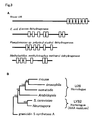
- FIG. 2 shows the structure of mouse U26.
- An adenylation domain (Pfam00501), a thiolation domain (Pfam00550), and a PQQ-binding motif (Pfam01011) are indicated with pink, green, and light blue, respectively.
- Figure 3 shows a comparison between the mouse U26 protein and other types of related proteins.
- Figure 4 shows a tissue distribution of the expression of mU26 mRNA.
- a blot was purchased from Clontech, and 32 P-labeled mU26 cDNA was used as a probe. 2 ⁇ g of poly(A) + RNA was electrophoresed in each lane.
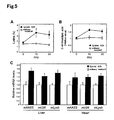
- Figure 5 shows the effects of high lysine feedstuff on the mRNA level of a lysine metabolic enzyme.
- Figure 6 shows the level of lysine in blood and the level of 2-aminoadipic acid in blood in PQQ-deficient mice.
- AAS dehydrogenase AAS dehydrogenase
- AASDH 2-aminoadipate 6-semialdehyde
- AAA 2-aminoadipic acid
- PQQ has not generally been considered as vitamin.
- the present inventors have demonstrated that the AAA concentration in blood is significantly low in PQQ-deficient mice. This fact shows that PQQ is essential for the activity of AASDH, and thus, the biochemical role of PQQ (namely, an oxidization-reduction coenzyme essential for lysine metabolism), which had remained unknown to date, has been clarified. From these results, it can be said that PQQ is ready for being considered as a novel vitamin.
- 2-aminoadipate 6-semialdehyde dehydrogenase has been identified for the first time as an enzyme that utilizes pyrroloquinoline quinone as a coenzyme.
- the present invention includes all methods of using pyrroloquinoline quinone as a coenzyme for 2-aminoadipate 6-semialdehyde dehydrogenase.
- a specific example of the aforementioned methods of using pyrroloquinoline quinone may be a method for converting 2-aminoadipate 6-semialdehyde into 2-aminoadipic acid, which comprises allowing 2-aminoadipate 6-semialdehyde dehydrogenase to act on 2-aminoadipate 6-semialdehyde in the presence of pyrroloquinoline quinone.
- Such a reaction includes both the case of performing the reaction in vivo, and the case of performing the reaction in vitro (that is, including both the case of performing the reaction in cells, and the case of performing it in a test tube).
- 2-aminoadipate 6-semialdehyde is a known substance. This substance is described, for example, in Aspen A.J. et al., The preparation and some properties of ⁇ -aminoadipic- ⁇ -semialdehyde ( ⁇ 1 -piperideine-6-carboxylic acid), Biochemistry 1, 600-605 (1962); Sacksteder K. A. et al., Identification of the ⁇ -aminoadipic semialdehyde synthase gene, which is defective in familial hyperlysinemia, Am. J. Hum. Genet. 66, 1736-1743 (2000); etc.
- pyrroloquinoline quinone is also a known substance, and is available from Sigma-Aldrich Japan K. K., Wako Pure Chemical Industries, Ltd., or other companies.
- nucleotide sequence of 2-aminoadipate 6-semialdehyde dehydrogenase and the amino acid sequence thereof have been registered in public database. These sequences are shown in SEQ ID NOS: 1 and 2 in the sequence listing of the present specification, respectively.
- 2-aminioadipate 6-semialdehyde dehydrogenase When the isolated and purified 2-aminioadipate 6-semialdehyde dehydrogenase is required, that is, when the aforementioned conversion reaction of the present invention is carried out in a test tube for example, a gene encoding the above enzyme is cloned, the cloned gene is incorporated into an expression vector, and the vector is then introduced into a host, so as to transform it. Thereafter, the obtained transformant is cultured, and 2-aminoadipate 6-semialdehyde dehydrogenase is recovered, isolated and purified from the obtained culture according to common methods.
- a recombinant protein according to the aforementioned gene recombination technique can be carried out by methods that have been known to persons skilled in the art.
- a conversion reaction of the present invention when carried out in living bodies or in cells, such a conversion reaction may be carried out using 2-aminoadipate 6-semialdehyde dehydrogenase that has originally existed in such living bodies or cells.
- the present invention provides a vitamin preparation which comprises pyrroloquinoline quinone as a coenzyme for 2-aminoadipate 6-semialdehyde dehydrogenase.
- vitamin means a group of substances essential for normal metabolism, growth and development, or the control of cell functions, which function together with enzymes, coenzymes, or other substances.
- vitamin is a trace amount of nutrient, and the amount required thereof cannot be fully synthesized in vivo. Thus, it must be taken from food or the like.
- the dosage form of the vitamin preparation of the present invention is not particularly limited.
- An appropriate dosage form can be selected from dosage forms for oral administration or parenteral administration.
- Examples of a dosage form suitable for oral administration may include a tablet, a capsule, a powder, a granule, a parvule, a syrup, a solution, an emulsion, a suspension, and a chewable tablet.
- Examples of a dosage form suitable for parenteral administration may include an injection (for example, a subcutaneous injection, an intramuscular injection, an intravenous injection, etc.), a drop, and a medicine for external use (for example, percutaneous absorption agents such as an ointment, an adhesive preparation, or tapes).
- Preferred dosage forms may include those suitable for drop administration (central venous hyperalimentation), percutaneous administration, and oral administration.
- Liquid preparations suitable for oral administration such as a solution, an emulsion, or a syrup, can be produced using water, sugars such as sucrose, sorbit or fructose, glycols such as polyethylene glycol or propylene glycol, oils such as sesame oil, olive oil or soybean oil, antiseptics such as p-hydroxybenzoic acid esters, or flavors such as strawberry flavor or peppermint flavor.
- sugars such as sucrose, sorbit or fructose
- glycols such as polyethylene glycol or propylene glycol
- oils such as sesame oil, olive oil or soybean oil
- antiseptics such as p-hydroxybenzoic acid esters
- flavors such as strawberry flavor or peppermint flavor.
- solid preparations such as a capsule, a tablet, a powder, or a granule can be produced by using excipients such as lactose, glucose, sucrose, or mannite, disintegrators such as starch or sodium alginate, lubricants such as magnesium stearate or talc, binders such as polyvinyl alcohol, hydroxypropylcellulose, or gelatin, surfactants such as fatty acid ester, plasticizers such as glycerin, and so on.
- excipients such as lactose, glucose, sucrose, or mannite
- disintegrators such as starch or sodium alginate
- lubricants such as magnesium stearate or talc
- binders such as polyvinyl alcohol, hydroxypropylcellulose, or gelatin
- surfactants such as fatty acid ester
- plasticizers such as glycerin, and so on.
- drops or preparations for external use which are suitable for parenteral administration, preferably comprise, as an active ingredient, PQQ that is dissolved or suspended in a sterilized water-type medium.
- a solution can be prepared by using an aqueous medium that is a saline solution, a glucose solution, or a mixture consisting of a saline solution and a glucose solution.
- One or more supplementary components selected from the group consisting of glycols, oils, flavors, antiseptics, excipients, disintegrators, lubricants, binders, surfactants, and plasticizers may be added to preparations used for parenteral administration.
- vitamin preparation of the present invention known vitamins that are used for various types of pharmaceuticals, quasi drugs, or food products may also be added to the vitamin preparation of the present invention.
- the following components may be added to the vitamin preparation of the present invention: retinol acetate, retinol palmitate, vitamin A oil, cod liver oil, extra-strong cod liver oil, ergocalciferol, cholecalciferol, d- ⁇ -tocopherol acetate, dl- ⁇ -tocopherol acetate, d- ⁇ -tocopherol, dl- ⁇ -tocopherol, flavin adenin dinucleotide sodium, riboflavin, riboflavin sodium phosphate, riboflavin tetrabutyrate, pyridoxine hydrochloride, pyridoxal phosphate, hydroxocobalamin hydrochloride, hydroxocobalamin acetate, cyanocobalamin, hydroxocobalamin, nicotinic acid
- the ratio of pyrroloquinoline quinone (PQQ) contained in the vitamin preparation of the present invention is not particularly limited. It is generally approximately between 0.0001% and 10% by weight, and preferably approximately between 0.0002% and 0.5% by weight.
- the amount of pyrroloquinoline quinone (PQQ) contained in a single vitamin preparation is within a range generally approximately between 0.001 and 10 mg, and preferably approximately between 0.002 and 5 mg.
- the dosage of the vitamin preparation of the present invention and the number of administrations thereof can appropriately be determined depending on various factors such as the age, body weight, and symptoms of a patient.
- the dosage of pyrroloquinoline quinone (PQQ) as an active ingredient is generally approximately between 5 and 1,000 ⁇ g/kg of body weight, and preferably approximately between 15 and 500 ⁇ g/kg of body weight, per day.
- the vitamin preparation of the present invention can be administered to humans and other types of any given animals (for example, mammals, birds, etc.).
- Pyrroloquinoline quinone (PQQ) used in the present invention is not only singly used as a vitamin preparation, but also it can be mixed into drinkable preparations such as nutritional drinks, or into health food as a food additive.
- Specific examples of a product comprising pyrroloquinoline quinone (PQQ) may include health foods and supplementary foods including beverages, which are generally called soft drink, drinkable preparation, health food, specified health food, functional food, function activating food, nutritional supplementary food, supplement, feed, feed additive, etc.
- foods and beverages may include all types of foods and beverages including: confectioneries such as chewing gum, chocolate, candy, confection, jelly, cookie, biscuit, or yogurt; frozen desserts such as ice cream or ice lolly; beverages such as tea, soft drink (including juice, coffee, cocoa, etc.), nutritional drink, or drink used in beauty treatment; bread; ham; soup; jam; spaghetti; and frozen foods.
- confectioneries such as chewing gum, chocolate, candy, confection, jelly, cookie, biscuit, or yogurt
- frozen desserts such as ice cream or ice lolly
- beverages such as tea, soft drink (including juice, coffee, cocoa, etc.), nutritional drink, or drink used in beauty treatment; bread; ham; soup; jam; spaghetti; and frozen foods.
- pyrroloquinoline quinone PQQ
- PQ can also be added to condiments or food additives.
- PQQ can be used for skin care products and hair care products such as cosmetics, shampoos, or hair growth agents. Still further, it can also be used for products for maintaining oral hygiene
- pyrroloquinoline quinone as a coenzyme for 2-aminoadipate 6-semialdehyde dehydrogenase are exhibited, and various symptoms caused by the absence of PQQ can be thereby prevented, alleviated, or treated.
- symptoms caused by the absence of PQQ may include fragility in the skin, osteolathyrism-like skeletal abnormality, and a decrease in immune response.
- LYS2 that is 2-aminoadipic acid (AAA) reductase of yeast (S. cerevisiae) has an adenylation (A) domain and a thiolation (T) domain.
- A adenylation
- T thiolation
- NRPS non-ribosome peptide synthetase
- PQQ is a molecule, which is used as a coenzyme that causes oxidization (receiving electrons) for dehydrogenase of bacteria (Goodwin, P.M. et al. (1998) Adv. Microb. Physiol. 40, 1-80). From the fact that U26 has A/T domains and PQQ-binding motifs, it was assumed that U26 is aminoadipate 6-semialdehyde dehydrogenase (AASDH) of Drosophila melanogaster. However, since there was only a little information regarding lysine metabolism in insects, mammalian homologues of Drosophila melanogaster U26 (dU26) were studied.
- AASDH aminoadipate 6-semialdehyde dehydrogenase
- the cDNA of mouse U26 encodes a protein of 1,100 amino acid residues.
- mU26 also has a single A domain and a single T domain on the N-terminal side thereof, and has consecutive PQQ-binding sequences on the C-terminal side thereof ( Figure 2).
- Figure 2A the A/T domains of mU26, dU26, and yeast LYS2 were aligned and compared.
- Example 2 AAS-AAA oxidoreductase family is present in phylogenetic analysis
- U26 homologues of mouse, Drosophila melanogaster, Caenorhabditis elegans, and Arabidopsis thaliana were classified into a single cluster.
- AAA reductase formed another cluster. This pattern of dendrogram of being divided into branches corresponds to the pattern of phylogeny of eukaryotes. This shows that the U26 homologue and the AAA reductase have a common ancestral gene. This analysis suggested that a group of these proteins including the U26 homologue forms a novel enzyme family that catalyzes an oxidization-reduction reaction AAS ⁇ AAA.
- Example 3 mU26 is transcribed in many tissues of mouse
- AAS synthetase that converts lysine into AAS is transcribed in many organ tissues (Papes, F. et al. (1999) Biochem. J. 344, 555-563; and Sacksteder, K. A. et al. (2000) Am. J. Hum. Genet. 66, 1736-1743; refer to Figure 1). It was examined whether or not the gene expression of mU26 also exhibits a wide tissue distribution. Northern blotting analysis was carried out using poly(A) + RNA extracted from various tissues (wherein a block sheet was purchased from Clontech). As a result, it was found that the mU26 gene was expressed in all the examined tissues ( Figure 4).
- the cDNA probe of mU26 labeled with the radioisotope 32 P was hybridized with 3 types of transcribed products with different lengths in all the tissues. Since mRNA comprising a large deletion in the translation region thereof had not been detected in the RT-PCR experiment (data is not shown), it was considered that these 3 types of transcribed products are splice variants in the 3'-non-translation region.
- the overall expression pattern of mU26 was similar to that of AASS, and their mRNA was expressed at a high level in the heart, liver, and kidney.
- Example 4 Expression of mU26 is enhanced by inception of high lysine feedstuff
- mice Whether or not mU26 is associated with lysine metabolism in mammals was examined using mice. Whether or not mU26 mRNA is increased by inception of feedstuff containing a large amount of lysine was analyzed. Feedstuff containing free lysine at an amount 2,000 times larger than that contained in ordinary feedstuff (obtained by adding 40 mg of L-lysine-hydrochloride to 1 g of ordinary feedstuff) was given to mice. Ten days after inception of such high lysine feedstuff, the amounts of lysine and AAA in blood were significantly increased, and such high level was maintained even on the 20 th day ( Figures 5A, B). The amounts of lysine and AAA in blood were measured as follows.
- the peripheral blood (15 ⁇ l) was collected from the tail of a mouse, and trichloroacetic acid (final concentration: 4%) was added thereto.
- the mixture was centrifuged (18,000 x g), and the obtained supernatant was subjected to an amino acid analyzer (L-8500A; Hitachi), so as to quantify ordinary amino acids including lysine.
- an amino acid analyzer L-8500A; Hitachi
- the supernatant obtained after centrifugation was hydrolyzed in the presence of 5 M hydrochloric acid (110°C, 2 hours), and it was then exsiccated.
- the resultant was dissolved in diluted hydrochloric acid, and it was then subjected to an amino acid analyzer again.
- Saccharopine and AAS contained in the blood were not detected with the amino acid analyzer using a ninhydrin reaction, probably because the amounts were extremely small.
- AAS has extremely high reactivity (unstable) under conditions in living bodies (Basso, L.V. et al. (1962) J. Biol. Chem. 237, 2239-2245), it is considered that detection of AAS in blood would be most difficult.
- the mRNA level of mU26 in the liver and heart was measured on the 20 th day after the mice had been fed with high lysine feedstuff.
- the mRNA level was quantified by the real-time PCR method (ABI 7000) using SYBR Green PCR Master Mix available from Applied Biosystems. The following primers were used for PCR.
- mGAPDH real-time PCR method
- mice fed with high lysine feedstuff was 1.6 times (in the liver) and 1.4 times (in the heart) higher than that of mice fed with ordinary feedstuff (Figure 5C).
- the mRNA level of mAASS and that of mLys5 were measured at the same time.
- both the mRNA levels were increased in the liver and heart of the mice fed with high lysine feedstuff.
- Example 5 The level of aminoadipic acid in blood is decreased in PQQ-deficient mice
- feedstuff containing no PQQ was given to mice, and such influence was examined.
- Chemically defined feedstuff (to which no PQQ was added or 100 ng PQQ ⁇ 2Na was added per gram of feedstuff) was produced in accordance with the publication (Killgore, J. et al. (1989) Science 245, 850-852; Steinberg, F. M. et al. (1994) J. Nutr. 124, 744-753).
- the thus produced feedstuff was given to virgin female mice (ICR, 4-week-old) for 20 days.
- the levels of various amino acids and AAA in blood were measured by the above-described method.
- 2-aminoadipate 6-semialdehyde hydrogenase has been identified as an enzyme that utilizes pyrroloquinoline quinone (PQQ) as a coenzyme in mammals.
- PQQ pyrroloquinoline quinone
- an oxidization-reduction reaction, with which PQQ is associated as a coenzyme in vivo, has been specified, and the biochemical role of PQQ in vivo has been clarified.
- a novel vitamin preparation can be provided by using PQQ.
Landscapes
- Health & Medical Sciences (AREA)
- Chemical & Material Sciences (AREA)
- Organic Chemistry (AREA)
- Life Sciences & Earth Sciences (AREA)
- Veterinary Medicine (AREA)
- Public Health (AREA)
- General Health & Medical Sciences (AREA)
- Medicinal Chemistry (AREA)
- Animal Behavior & Ethology (AREA)
- Pharmacology & Pharmacy (AREA)
- General Chemical & Material Sciences (AREA)
- Nuclear Medicine, Radiotherapy & Molecular Imaging (AREA)
- Engineering & Computer Science (AREA)
- Chemical Kinetics & Catalysis (AREA)
- Bioinformatics & Cheminformatics (AREA)
- Epidemiology (AREA)
- Nutrition Science (AREA)
- Diabetes (AREA)
- Hematology (AREA)
- Obesity (AREA)
- Enzymes And Modification Thereof (AREA)
- Nitrogen Condensed Heterocyclic Rings (AREA)
- Pharmaceuticals Containing Other Organic And Inorganic Compounds (AREA)
Abstract
It is an object of the present invention to clarify the biochemical role of
pyrroloquinoline quinone (PQQ) in living bodies by identifying an enzyme that uses
PQQ as a coenzyme in mammals and then by clarifying the oxidation-reduction reaction,
with which PQQ is associated as a coenzyme in living bodies. The present invention
provides a method of using pyrroloquinoline quinone as a coenzyme for 2-aminoadipate
6-semialdehyde dehydrogenase.
Description
The present invention relates to pyrroloquinoline quinone acting as a coenzyme
for 2-aminoadipate 6-semialdehyde dehydrogenase and a use thereof.
When amino acids or sugars are decomposed in bodies, various organic
substances function as cofactors of metabolizing enzymes. Among these cofactors,
nicotinamide compounds (NAD and NADP) and flavin compounds (FAD and FMN)
have been known as oxidation-reduction coenzymes supporting an oxidation-reduction
reaction. In 1979, a novel oxidoreductase that supports methanol dehydrogenase of
methanol-assimilating bacteria was discovered, and it was named as pyrroloquinoline
quinone (which is abbreviated as PQQ at time, and the chemical structure of which is
shown below).

Thereafter, it has become clear that PQQ functions as a coenzyme for
dehydrogenases of various prokaryotes such as Escherichiα coli. Unexpectedly, it has
been clarified that PQQ is contained not only in prokaryotes but also in plants
(vegetables) and animals (meats). As a result of experiments in which mice were fed
with feedstuff that contained no PQQ, it was found that various types of abnormalities
were developed due to the absence of PQQ. PQQ-deficient mice have fragility in the
skin, osteolathyrism-like skeletal abnormality, and a decrease in immune response.
Although such PQQ-deficient mice were able to become pregnant, a majority of mothers
ate their newborn pups after the birth. Moreover, the growth of surviving pups mice
was unfavorable. These abnormalities were recovered by addition of a small amount of
PQQ to feedstuff (800 ng or more per gram of feedstuff). PQQ can be synthesized only
by certain types of bacteria. The amount of PQQ synthesized by enteric bacteria is
below a measurable level. Thus, it has been suggested that for mammals PQQ is an
important nutrient, which should be incepted from the outside. However, the
biochemical role of PQQ in living bodies has remained unknown (Killgore, J., Smidt, C.,
Duich, L., Romero-Chapman, N., Tinker, D., Reiser, K., Melko, M., Hyde, D., and
Rucker, R.B. (1989) Nutritional importance of pyrroloquinoline quinone. Science 245,
850-852; Smidt, C.R., Bean-Knudsen, D., Kirsch, D.G., and Rucker, R.B. (1991) Does
the intestinal microflora synthesize pyrroloquinoline quinone? Biofactors 3, 53-59;
Steinberg, F.M., Gershwin, M.E., and Rucker, R.B. (1994) Dietary pyrroloquinoline
quinone: growth and immune response in BALB/c mice. J. Nutr. 124, 744-753; and Stites,
T.E., Mitchell, A.E., and Rucker, R.B. (2000) Physiological importance of quinoenzymes
and the o-quinone family of cofactors. J. Nutr. 130, 719-727).
It is an object of the present invention to clarify the biochemical role of
pyrroloquinoline quinone (PQQ) in living bodies by identifying an enzyme that uses
PQQ as a coenzyme in mammals and then by clarifying the oxidation-reduction reaction,
with which PQQ is associated as a coenzyme in living bodies. It is another object of the
present invention to provide a novel vitamin preparation by focusing attention on the
biochemical role of PQQ in living bodies.
As a result of intensive studies directed towards achieving the aforementioned
objects, the present inventors have succeeded in identifying 2-aminoadipate
6-semialdehyde dehydrogenase as an enzyme that uses pyrroloquinoline quinone (PQQ)
as a coenzyme in mammals. In addition, as a result of the identification of this enzyme,
it was confirmed that PQQ is an important nutrient as a novel type of vitamin in animals
including humans.
That is to say, the present invention provides a method of using pyrroloquinoline
quinone as a coenzyme for 2-aminoadipate 6-semialdehyde dehydrogenase.
In another aspect, the present invention provides a method for converting
2-aminoadipate 6-semialdehyde into 2-aminoadipic acid, which comprises allowing
2-aminoadipate 6-semialdehyde dehydrogenase to act on 2-aminoadipate 6-semialdehyde
in the presence of pyrroloquinoline quinone.
In further another aspect, the present invention provides a vitamin preparation
which comprises pyrroloquinoline quinone as a coenzyme for 2-aminoadipate
6-semialdehyde dehydrogenase.
Figure 1 shows a lysine metabolic pathway in a mammal and yeast.
Two pathways, that are, a saccharopine route (upper) and a pipecolate route
(lower), exist in a lysine degradative pathway (filled arrows) in the mammal. The
lysine degradative pathway in the yeast (S. cerevisiae) is indicated with open arrows.
Double-headed arrows represent autonomic reactions. For example, 2-aminoadipate
6-semialdehyde (AAS) and Δ1-piperideine-6-carboxylate (P6C) are in an equilibrium
state in living bodies. LYS2 is post-translationally 4'-phosphopantetheinylated
catalyzed by LYS5. AASS represents AAS synthetase; AASDH represents AAS
dehydrogenase; and mLYS5 represents a mammalian homologue of yeast LYS5.
Figure 2 shows the structure of mouse U26.
An adenylation domain (Pfam00501), a thiolation domain (Pfam00550), and a
PQQ-binding motif (Pfam01011) are indicated with pink, green, and light blue,
respectively.
Figure 3 shows a comparison between the mouse U26 protein and other types of
related proteins.
Figure 4 shows a tissue distribution of the expression of mU26 mRNA.
A blot was purchased from Clontech, and 32P-labeled mU26 cDNA was used as
a probe. 2 µg of poly(A)+RNA was electrophoresed in each lane.
Figure 5 shows the effects of high lysine feedstuff on the mRNA level of a
lysine metabolic enzyme.
Figure 6 shows the level of lysine in blood and the level of 2-aminoadipic acid
in blood in PQQ-deficient mice.
The mice were fed with feedstuff, to which PQQ had not been added (-PQQ) or
had been added (+PQQ) and which had chemically been limited, for 20 days.
Thereafter, the peripheral blood was collected therefrom, and amino acids contained in
the blood were quantified using an amino acid analyzer. The amount of lysine (A) was
indicated with a percentage to the total amount of amino acids in blood. The amount of
2-aminoadipic acid was normalized with lysine (B) or glycine (C). The horizontal line
represents the mean value of mice in each group. The amount of lysine was not
significantly different between PQQ-deficient mice and PQQ-added mice (t = 0.16, d. f.
= 11). However, the amount of 2-aminoadipic acid in the blood of PQQ-deficient mice
was reduced more significantly than that in the blood of PQQ-added mice (*: p = 0.01;
**: p = 0.05).
The embodiments of the present invention will be described in detail below.
With regard to lysine metabolism in higher eukaryotes, an enzyme (AAS
dehydrogenase; AASDH) that catalyzes a reaction of oxidizing 2-aminoadipate
6-semialdehyde (AAS) to convert it into 2-aminoadipic acid (AAA) has not yet been
identified to date. The present inventors have isolated a novel gene encoding this
enzyme (AAS dehydrogenase; AASDH) from a mouse. Moreover, the present inventors
have found a motif binding with PQQ in the gene product. Thus, it was shown that this
is a novel enzyme that utilizes PQQ in eukaryotes. It has been suggested so far that
PQQ is an important nutrient for mammals. However, since the biochemical role of
PQQ in living bodies has remained unknown, PQQ has not generally been considered as
vitamin. The present inventors have demonstrated that the AAA concentration in blood
is significantly low in PQQ-deficient mice. This fact shows that PQQ is essential for
the activity of AASDH, and thus, the biochemical role of PQQ (namely, an
oxidization-reduction coenzyme essential for lysine metabolism), which had remained
unknown to date, has been clarified. From these results, it can be said that PQQ is
ready for being considered as a novel vitamin.
As stated above, according to the present invention, 2-aminoadipate
6-semialdehyde dehydrogenase has been identified for the first time as an enzyme that
utilizes pyrroloquinoline quinone as a coenzyme. The present invention includes all
methods of using pyrroloquinoline quinone as a coenzyme for 2-aminoadipate
6-semialdehyde dehydrogenase. A specific example of the aforementioned methods of
using pyrroloquinoline quinone may be a method for converting 2-aminoadipate
6-semialdehyde into 2-aminoadipic acid, which comprises allowing 2-aminoadipate
6-semialdehyde dehydrogenase to act on 2-aminoadipate 6-semialdehyde in the presence
of pyrroloquinoline quinone. Such a reaction includes both the case of performing the
reaction in vivo, and the case of performing the reaction in vitro (that is, including both
the case of performing the reaction in cells, and the case of performing it in a test tube).
2-aminoadipate 6-semialdehyde is a known substance. This substance is
described, for example, in Aspen A.J. et al., The preparation and some properties of
α-aminoadipic-δ-semialdehyde (Δ1-piperideine-6-carboxylic acid), Biochemistry 1,
600-605 (1962); Sacksteder K. A. et al., Identification of the α-aminoadipic
semialdehyde synthase gene, which is defective in familial hyperlysinemia, Am. J. Hum.
Genet. 66, 1736-1743 (2000); etc. In addition, pyrroloquinoline quinone is also a
known substance, and is available from Sigma-Aldrich Japan K. K., Wako Pure Chemical
Industries, Ltd., or other companies.
The nucleotide sequence of 2-aminoadipate 6-semialdehyde dehydrogenase and
the amino acid sequence thereof have been registered in public database. These
sequences are shown in SEQ ID NOS: 1 and 2 in the sequence listing of the present
specification, respectively.
When the isolated and purified 2-aminioadipate 6-semialdehyde dehydrogenase
is required, that is, when the aforementioned conversion reaction of the present invention
is carried out in a test tube for example, a gene encoding the above enzyme is cloned, the
cloned gene is incorporated into an expression vector, and the vector is then introduced
into a host, so as to transform it. Thereafter, the obtained transformant is cultured, and
2-aminoadipate 6-semialdehyde dehydrogenase is recovered, isolated and purified from
the obtained culture according to common methods. The production of a recombinant
protein according to the aforementioned gene recombination technique can be carried out
by methods that have been known to persons skilled in the art. On the other hand, when
the aforementioned conversion reaction of the present invention is carried out in living
bodies or in cells, such a conversion reaction may be carried out using 2-aminoadipate
6-semialdehyde dehydrogenase that has originally existed in such living bodies or cells.
As stated above, based on the findings of the present invention, PQQ has been
recognized as a novel vitamin for the first time. That is to say, the present invention
provides a vitamin preparation which comprises pyrroloquinoline quinone as a coenzyme
for 2-aminoadipate 6-semialdehyde dehydrogenase.
The term "vitamin" means a group of substances essential for normal
metabolism, growth and development, or the control of cell functions, which function
together with enzymes, coenzymes, or other substances. In addition, vitamin is a trace
amount of nutrient, and the amount required thereof cannot be fully synthesized in vivo.
Thus, it must be taken from food or the like.
The dosage form of the vitamin preparation of the present invention is not
particularly limited. An appropriate dosage form can be selected from dosage forms for
oral administration or parenteral administration. Examples of a dosage form suitable
for oral administration may include a tablet, a capsule, a powder, a granule, a parvule, a
syrup, a solution, an emulsion, a suspension, and a chewable tablet. Examples of a
dosage form suitable for parenteral administration may include an injection (for example,
a subcutaneous injection, an intramuscular injection, an intravenous injection, etc.), a
drop, and a medicine for external use (for example, percutaneous absorption agents such
as an ointment, an adhesive preparation, or tapes). However, examples are not limited
thereto. Preferred dosage forms may include those suitable for drop administration
(central venous hyperalimentation), percutaneous administration, and oral administration.
Liquid preparations suitable for oral administration, such as a solution, an
emulsion, or a syrup, can be produced using water, sugars such as sucrose, sorbit or
fructose, glycols such as polyethylene glycol or propylene glycol, oils such as sesame oil,
olive oil or soybean oil, antiseptics such as p-hydroxybenzoic acid esters, or flavors such
as strawberry flavor or peppermint flavor. Moreover, solid preparations such as a
capsule, a tablet, a powder, or a granule can be produced by using excipients such as
lactose, glucose, sucrose, or mannite, disintegrators such as starch or sodium alginate,
lubricants such as magnesium stearate or talc, binders such as polyvinyl alcohol,
hydroxypropylcellulose, or gelatin, surfactants such as fatty acid ester, plasticizers such
as glycerin, and so on.
Injections, drops or preparations for external use, which are suitable for
parenteral administration, preferably comprise, as an active ingredient, PQQ that is
dissolved or suspended in a sterilized water-type medium. In the case of an injection
for example, a solution can be prepared by using an aqueous medium that is a saline
solution, a glucose solution, or a mixture consisting of a saline solution and a glucose
solution. One or more supplementary components selected from the group consisting of
glycols, oils, flavors, antiseptics, excipients, disintegrators, lubricants, binders,
surfactants, and plasticizers may be added to preparations used for parenteral
administration.
Moreover, known vitamins that are used for various types of pharmaceuticals,
quasi drugs, or food products may also be added to the vitamin preparation of the present
invention. Specifically, the following components may be added to the vitamin
preparation of the present invention: retinol acetate, retinol palmitate, vitamin A oil, cod
liver oil, extra-strong cod liver oil, ergocalciferol, cholecalciferol, d-α-tocopherol acetate,
dl-α-tocopherol acetate, d-α-tocopherol, dl-α-tocopherol, flavin adenin dinucleotide
sodium, riboflavin, riboflavin sodium phosphate, riboflavin tetrabutyrate, pyridoxine
hydrochloride, pyridoxal phosphate, hydroxocobalamin hydrochloride,
hydroxocobalamin acetate, cyanocobalamin, hydroxocobalamin, nicotinic acid, nicotinic
acid amide, panthenol, calcium pantothenate, sodium pantothenate, biotin, a mixture of
potassium aspartate and magnesium in equal proportions, inositol hexanicotinate,
ursodesoxycholic acid, L-cysteine hydrochloride, L-cysteine, orotic acid, γ-oryzanol,
calcium glycerophosphate, calcium gluconate, precipitated calcium carbonate, calcium
lactate, anhydrous dibasic calcium phosphate, dibasic calcium phosphate,
glucuronolactone, glucuronamide, sodium chondroitin sulfate, etc. Persons skilled in
the art may add one or more selected from the aforementioned components to the vitamin
preparation of the present invention at an appropriate mixing ratio.
The ratio of pyrroloquinoline quinone (PQQ) contained in the vitamin
preparation of the present invention is not particularly limited. It is generally
approximately between 0.0001% and 10% by weight, and preferably approximately
between 0.0002% and 0.5% by weight. For example, the amount of pyrroloquinoline
quinone (PQQ) contained in a single vitamin preparation is within a range generally
approximately between 0.001 and 10 mg, and preferably approximately between 0.002
and 5 mg.
The dosage of the vitamin preparation of the present invention and the number
of administrations thereof can appropriately be determined depending on various factors
such as the age, body weight, and symptoms of a patient. The dosage of
pyrroloquinoline quinone (PQQ) as an active ingredient is generally approximately
between 5 and 1,000 µg/kg of body weight, and preferably approximately between 15
and 500 µg/kg of body weight, per day. The vitamin preparation of the present
invention can be administered to humans and other types of any given animals (for
example, mammals, birds, etc.).
Pyrroloquinoline quinone (PQQ) used in the present invention is not only singly
used as a vitamin preparation, but also it can be mixed into drinkable preparations such
as nutritional drinks, or into health food as a food additive. Specific examples of a
product comprising pyrroloquinoline quinone (PQQ) may include health foods and
supplementary foods including beverages, which are generally called soft drink,
drinkable preparation, health food, specified health food, functional food, function
activating food, nutritional supplementary food, supplement, feed, feed additive, etc.
Specific examples of the aforementioned foods and beverages may include all types of
foods and beverages including: confectioneries such as chewing gum, chocolate, candy,
confection, jelly, cookie, biscuit, or yogurt; frozen desserts such as ice cream or ice lolly;
beverages such as tea, soft drink (including juice, coffee, cocoa, etc.), nutritional drink,
or drink used in beauty treatment; bread; ham; soup; jam; spaghetti; and frozen foods.
Moreover, pyrroloquinoline quinone (PQQ) can also be added to condiments or food
additives. Furthermore, PQQ can be used for skin care products and hair care products
such as cosmetics, shampoos, or hair growth agents. Still further, it can also be used for
products for maintaining oral hygiene, such as toothpaste or mouthwash.
By administering the vitamin preparation of the present invention, the
biochemical functions of pyrroloquinoline quinone (PQQ) as a coenzyme for
2-aminoadipate 6-semialdehyde dehydrogenase are exhibited, and various symptoms
caused by the absence of PQQ can be thereby prevented, alleviated, or treated.
Examples of such symptoms caused by the absence of PQQ may include fragility in the
skin, osteolathyrism-like skeletal abnormality, and a decrease in immune response.
The present invention will be more specifically described in the following
examples. However, these examples are not intended to limit the scope of the present
invention.
LYS2 that is 2-aminoadipic acid (AAA) reductase of yeast (S. cerevisiae) has an
adenylation (A) domain and a thiolation (T) domain. These domains are structures
found also in non-ribosome peptide synthetase (NRPS) of bacteria or molds (Morris, M.
E. et al. (1991) Gene 98, 141-145; Ehmann, D. E. et al. (1999) Biochemistry 38,
6171-6177; and Konz, D. et al. (1999) Chem. Biol. 6, R39-R48, as a review of NRPS).
First, a gene product that has both the A domain and the T domain was searched
through the genomic sequence database of fruit fly (Drosophila melanogaster).
According to the TBlast search method based on sequences in which the A/T domains are
conserved, EBONY (Accession No. CAA11962 to public database) and U26
(AAF52679) were found. Both these gene products had a single A domain and a single
T domain. It has been considered that EBONY is β-alanyl dopamine synthetase
(Hovemann, B.T. et al. (1998) Gene 221, 1-9), but the functions of U26 have remained
unknown. It is important that several PQQ-binding motifs exist in the C-terminal
region of U26. PQQ is a molecule, which is used as a coenzyme that causes oxidization
(receiving electrons) for dehydrogenase of bacteria (Goodwin, P.M. et al. (1998) Adv.
Microb. Physiol. 40, 1-80). From the fact that U26 has A/T domains and PQQ-binding
motifs, it was assumed that U26 is aminoadipate 6-semialdehyde dehydrogenase
(AASDH) of Drosophila melanogaster. However, since there was only a little
information regarding lysine metabolism in insects, mammalian homologues of
Drosophila melanogaster U26 (dU26) were studied. When human genomic sequence
was searched by the TBlastN method, a sequence that is homologous with dU26 was
found in the 4th chromosome q12. Based on this sequence, a mouse homologue was
isolated (Figure 2A). The nucleotide sequence and amino acid sequence of mouse U26
(m26) are shown in SEQ ID NOS: 1 and 2 in the sequence listing. The following
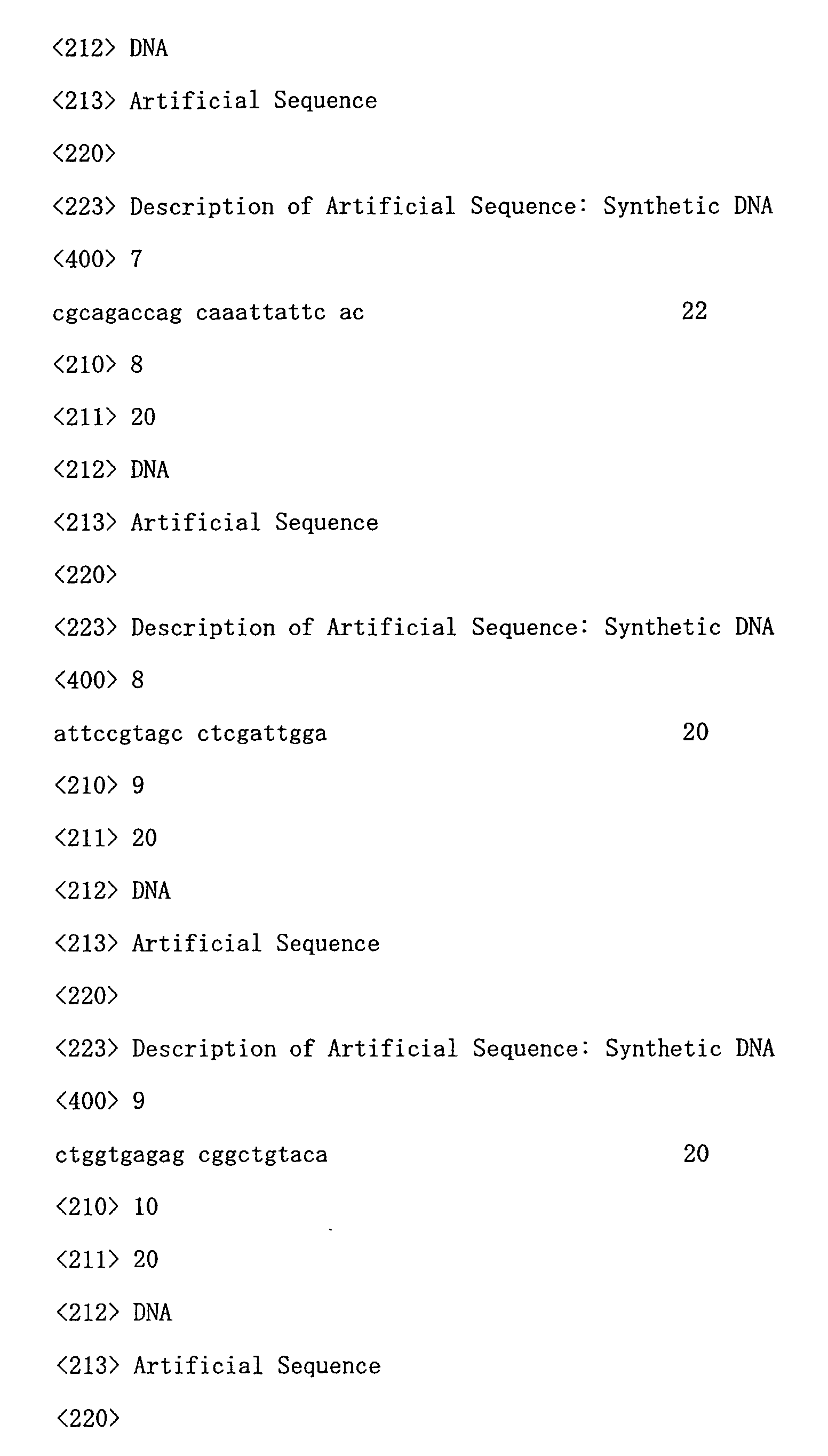
synthetic DNA primers were used for reverse transcription (RT)-PCR for obtaining
cDNA containing the full-length coding region.


The cDNA of mouse U26 (mU26) encodes a protein of 1,100 amino acid
residues. When the mouse U26 is compared with dU26, 23% of their amino acid
residues were identical, and 43% of their amino acid residues were similar. mU26 also
has a single A domain and a single T domain on the N-terminal side thereof, and has
consecutive PQQ-binding sequences on the C-terminal side thereof (Figure 2). Using
ClustalW program, the A/T domains of mU26, dU26, and yeast LYS2 were aligned and
compared (Figure 2A). Several extremely well conserved portions were detected, and
almost all these portions corresponded to core sequences that are essential for
recognizing substrates (generally, amino acids) in NRPS (Konz, D. et al. (1999) Chem.
Biol. 6, R39-R48). This means that U26 binds to substrates using the A/T domains, as
in the case of NRPS or LYS2. In addition, 7-repetitive PQQ-binding motifs exist in the
C-terminal region of mU26 (Figures 2, 3A). It has been known that PQQ-dependent
dehydrogenase of bacteria also has a structure consisting of 6- or 7-repetitive
PQQ-binding motifs (Mathews, F. S. (1995) Methods Enzymol. 258, 191-216). The
domain structure of mU26 corresponds to the above structure. These results (Figure
3A) support the assumption that mU26 is dehydrogenase utilizing PQQ as an
oxidization-reduction coenzyme.
As a result of the TBlastN search based on the sequence of mU26, it was found
that nematode (Caenorhabditis elegans) and Arabidopsis (Arabidopsis thaliana) also
have U26 homologues (CAB04944 and BAA97455, respectively). Both homologues
had been registered in database as hypothetical proteins (hypothetical proteins predicted
from genomic sequences). As with mU26 and dU26, these U26 homologues have a
single A domain and a single T domain on the N-terminal side thereof, and have
PQQ-binding motifs on the C-terminal side thereof (data is not shown). The fact that a
wide range of higher eukaryotes have a U26 homologue matches with the fact that
animals or higher plants have a lysine degradative pathway via 2-aminoadipate
6-semialdehyde (AAS).
Thus, based on theory of molecular evolution, such a U26 homologue and AAA
reductase (yeast and Neurospora crassa) were analyzed. Based on the amino acid
sequences of the A/T domains that are commonly observed in these proteins, molecular
cladograms were produced. Gramicidin S synthetase A of Bacillus brevis (Stachelhaus,
T. et al. (1995) J. Biol. Chem. 270, 6163-6169), which is a well-analyzed NRPS, was
used as an outgroup (Figure 3B). U26 homologues of mouse, Drosophila melanogaster,
Caenorhabditis elegans, and Arabidopsis thaliana were classified into a single cluster.
AAA reductase formed another cluster. This pattern of dendrogram of being divided
into branches corresponds to the pattern of phylogeny of eukaryotes. This shows that
the U26 homologue and the AAA reductase have a common ancestral gene. This
analysis suggested that a group of these proteins including the U26 homologue forms a
novel enzyme family that catalyzes an oxidization-reduction reaction AAS ←→ AAA.
AAS synthetase (AASS) that converts lysine into AAS is transcribed in many
organ tissues (Papes, F. et al. (1999) Biochem. J. 344, 555-563; and Sacksteder, K. A. et
al. (2000) Am. J. Hum. Genet. 66, 1736-1743; refer to Figure 1). It was examined
whether or not the gene expression of mU26 also exhibits a wide tissue distribution.
Northern blotting analysis was carried out using poly(A)+RNA extracted from various
tissues (wherein a block sheet was purchased from Clontech). As a result, it was found
that the mU26 gene was expressed in all the examined tissues (Figure 4). The cDNA
probe of mU26 labeled with the radioisotope 32P was hybridized with 3 types of
transcribed products with different lengths in all the tissues. Since mRNA comprising a
large deletion in the translation region thereof had not been detected in the RT-PCR
experiment (data is not shown), it was considered that these 3 types of transcribed
products are splice variants in the 3'-non-translation region. The overall expression
pattern of mU26 was similar to that of AASS, and their mRNA was expressed at a high
level in the heart, liver, and kidney.
Whether or not mU26 is associated with lysine metabolism in mammals was
examined using mice. Whether or not mU26 mRNA is increased by inception of
feedstuff containing a large amount of lysine was analyzed. Feedstuff containing free
lysine at an amount 2,000 times larger than that contained in ordinary feedstuff (obtained
by adding 40 mg of L-lysine-hydrochloride to 1 g of ordinary feedstuff) was given to
mice. Ten days after inception of such high lysine feedstuff, the amounts of lysine and
AAA in blood were significantly increased, and such high level was maintained even on
the 20th day (Figures 5A, B). The amounts of lysine and AAA in blood were measured
as follows. The peripheral blood (15 µl) was collected from the tail of a mouse, and
trichloroacetic acid (final concentration: 4%) was added thereto. The mixture was
centrifuged (18,000 x g), and the obtained supernatant was subjected to an amino acid
analyzer (L-8500A; Hitachi), so as to quantify ordinary amino acids including lysine.
For quantification of AAA, the supernatant obtained after centrifugation was hydrolyzed
in the presence of 5 M hydrochloric acid (110°C, 2 hours), and it was then exsiccated.
The resultant was dissolved in diluted hydrochloric acid, and it was then subjected to an
amino acid analyzer again. Saccharopine and AAS contained in the blood were not
detected with the amino acid analyzer using a ninhydrin reaction, probably because the
amounts were extremely small. In addition, since AAS has extremely high reactivity
(unstable) under conditions in living bodies (Basso, L.V. et al. (1962) J. Biol. Chem. 237,
2239-2245), it is considered that detection of AAS in blood would be most difficult.
The mRNA level of mU26 in the liver and heart (a relative value with respect to
the mRNA level of mouse glyceraldehydes 3-phosphate dehydrogenase [mGAPDH]) was
measured on the 20th day after the mice had been fed with high lysine feedstuff. The
mRNA level was quantified by the real-time PCR method (ABI 7000) using SYBR
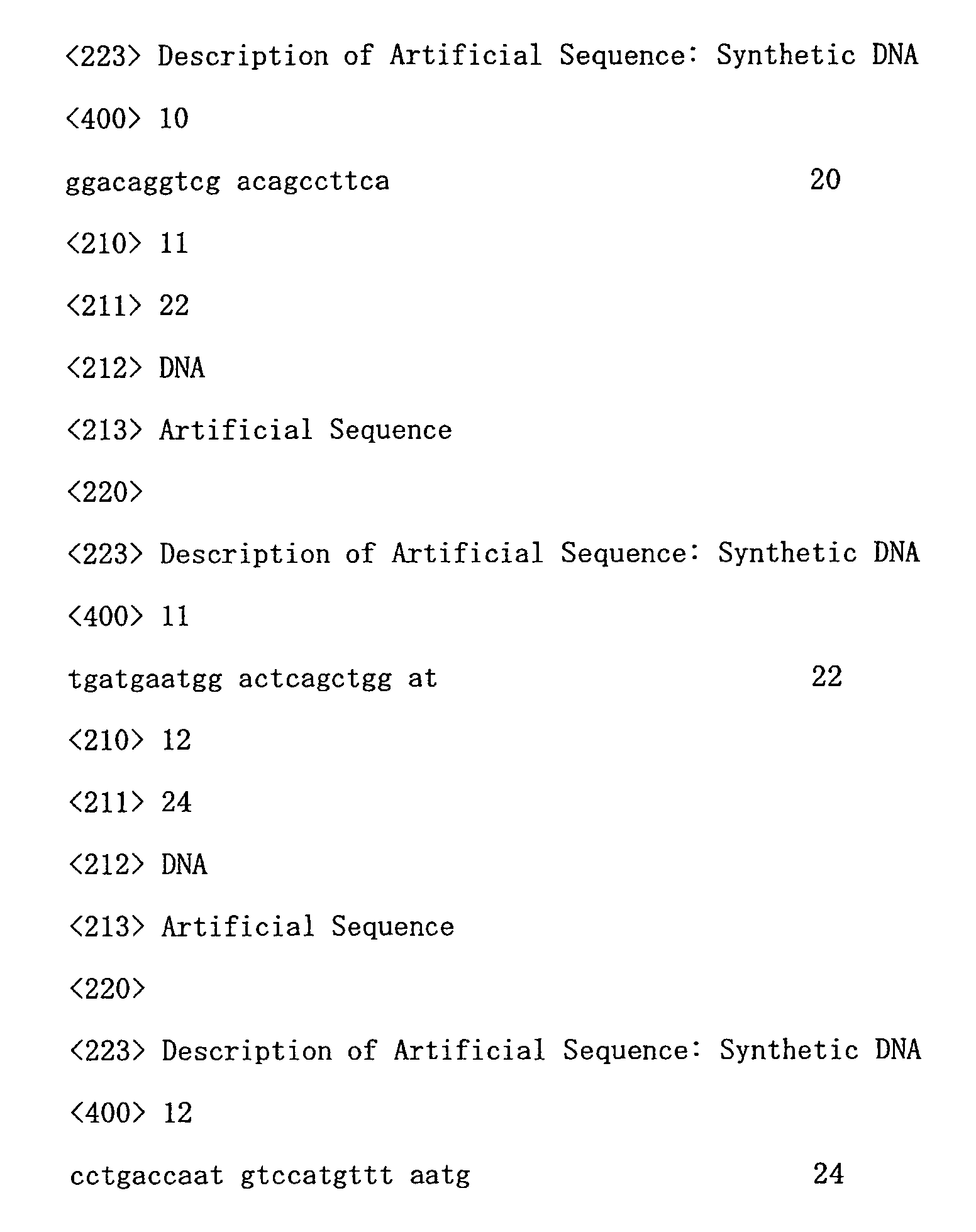
Green PCR Master Mix available from Applied Biosystems. The following primers
were used for PCR.
mGAPDH



mGAPDH
As a result, it was found that the mU26 mRNA level of mice fed with high
lysine feedstuff was 1.6 times (in the liver) and 1.4 times (in the heart) higher than that of
mice fed with ordinary feedstuff (Figure 5C). As a control, the mRNA level of mAASS
and that of mLys5 (mouse homologues of yeast Lys5; see Fig.1) were measured at the
same time. As a result, it was found that both the mRNA levels were increased in the
liver and heart of the mice fed with high lysine feedstuff. These experimental results
show that a feedback system exists in the lysine metabolic system and that mU26 in
addition to mAASS and mLYS5 is associated with lysine decomposition.
In order to clarify the role of PQQ influenced on AASDH activity, feedstuff
containing no PQQ was given to mice, and such influence was examined. Chemically
defined feedstuff (to which no PQQ was added or 100 ng PQQ·2Na was added per gram
of feedstuff) was produced in accordance with the publication (Killgore, J. et al. (1989)
Science 245, 850-852; Steinberg, F. M. et al. (1994) J. Nutr. 124, 744-753). The thus
produced feedstuff was given to virgin female mice (ICR, 4-week-old) for 20 days. The
levels of various amino acids and AAA in blood were measured by the above-described
method. As a result, it was found that the amount of lysine is not changed by inception
of PQQ-deficient feedstuff (Figure 6A), and that a well-balanced metabolism is
conducted regarding lysine molecules themselves. As stated above, saccharopine and
AAS were not detected, but it was found that the level of AAA in blood was significantly
decreased in PQQ-deficient mice (Figures 6B, C). Such AAA reduction was always
significantly observed, regardless of the type of amino acid (for example, glycine; Figure
6C) with which the amount of AAA was normalized. In particular, when normalization
was carried out with the amount of lysine, AAA was reduced most clearly (Figure 6B).
These results suggested that AASDH activity (that is, mU26) is reduced in PQQ-deficient
mice, and that PQQ is required as an oxidization-reduction coenzyme for AASDH.
According to the present invention, 2-aminoadipate 6-semialdehyde
hydrogenase has been identified as an enzyme that utilizes pyrroloquinoline quinone
(PQQ) as a coenzyme in mammals. As a result, an oxidization-reduction reaction, with
which PQQ is associated as a coenzyme in vivo, has been specified, and the biochemical
role of PQQ in vivo has been clarified. According to the present invention, a novel
vitamin preparation can be provided by using PQQ.





Claims (3)
- A method of using pyrroloquinoline quinone as a coenzyme for 2-aminoadipate 6-semialdehyde dehydrogenase.
- A method for converting 2-aminoadipate 6-semialdehyde into 2-aminoadipic acid, which comprises allowing 2-aminoadipate 6-semialdehyde dehydrogenase to act on 2-aminoadipate 6-semialdehyde in the presence of pyrroloquinoline quinone.
- A vitamin preparation which comprises pyrroloquinoline quinone as a coenzyme for 2-aminoadipate 6-semialdehyde dehydrogenase.
Applications Claiming Priority (3)
| Application Number | Priority Date | Filing Date | Title |
|---|---|---|---|
| JP2003021499A JP2004345954A (en) | 2003-01-30 | 2003-01-30 | Vitamin composed of pyrroloquinoline quinone and its use |
| JP2003021499 | 2003-01-30 | ||
| PCT/JP2004/000870 WO2004093877A1 (en) | 2003-01-30 | 2004-01-29 | Vitamin comprising pyroloquinoline quinone and use thereof |
Publications (1)
| Publication Number | Publication Date |
|---|---|
| EP1588709A1 true EP1588709A1 (en) | 2005-10-26 |
Family
ID=33307859
Family Applications (1)
| Application Number | Title | Priority Date | Filing Date |
|---|---|---|---|
| EP04706352A Withdrawn EP1588709A1 (en) | 2003-01-30 | 2004-01-29 | Vitamin comprising pyroloquinoline quinone and use thereof |
Country Status (5)
| Country | Link |
|---|---|
| US (1) | US20060194828A1 (en) |
| EP (1) | EP1588709A1 (en) |
| JP (1) | JP2004345954A (en) |
| CN (1) | CN1771038A (en) |
| WO (1) | WO2004093877A1 (en) |
Cited By (1)
| Publication number | Priority date | Publication date | Assignee | Title |
|---|---|---|---|---|
| EP3199154A4 (en) * | 2014-09-22 | 2018-02-28 | National University Corporation Nagoya University | Novel life-prolonging agent, life-prolonging method making use of same, novel dual oxidase activator, method for activating dual oxidase, manufacture of life-prolonging agent, and manufacture of dual oxidase activator |
Families Citing this family (6)
| Publication number | Priority date | Publication date | Assignee | Title |
|---|---|---|---|---|
| CN101228963B (en) * | 2008-01-25 | 2011-09-28 | 上海医学生命科学研究中心有限公司 | Fortified food containing pyrroloquinoline quinone |
| CN103239451A (en) * | 2012-02-10 | 2013-08-14 | 上海医学生命科学研究中心有限公司 | Application of pyrroloquinoline quinone in treatment and/or prevention of liver fibrosis |
| CN104644552B (en) * | 2015-02-06 | 2018-01-09 | 中国农业科学院饲料研究所 | Provisions tonic and its application in a kind of embryo of promotion growth of meat chicken |
| CN105816344B (en) * | 2015-12-28 | 2018-08-17 | 天津伊瑞雅生物科技有限公司 | A kind of composition containing pyrroloquinoline quinone and N-acetylneuraminic acid |
| CN111537788A (en) * | 2020-05-25 | 2020-08-14 | 珠海格力电器股份有限公司 | Variable frequency motor power correction method and electric equipment |
| CN114990043B (en) * | 2022-06-28 | 2024-04-30 | 滨州医学院 | Engineering bacteria for lysine metabolism and construction method and application thereof |
-
2003
- 2003-01-30 JP JP2003021499A patent/JP2004345954A/en active Pending
-
2004
- 2004-01-29 US US10/543,594 patent/US20060194828A1/en not_active Abandoned
- 2004-01-29 EP EP04706352A patent/EP1588709A1/en not_active Withdrawn
- 2004-01-29 WO PCT/JP2004/000870 patent/WO2004093877A1/en not_active Ceased
- 2004-01-29 CN CNA2004800090341A patent/CN1771038A/en active Pending
Non-Patent Citations (1)
| Title |
|---|
| See references of WO2004093877A1 * |
Cited By (2)
| Publication number | Priority date | Publication date | Assignee | Title |
|---|---|---|---|---|
| EP3199154A4 (en) * | 2014-09-22 | 2018-02-28 | National University Corporation Nagoya University | Novel life-prolonging agent, life-prolonging method making use of same, novel dual oxidase activator, method for activating dual oxidase, manufacture of life-prolonging agent, and manufacture of dual oxidase activator |
| US10053459B2 (en) | 2014-09-22 | 2018-08-21 | National University Corporation Nagoya University | Life-extending agent, life extension method using the life-extending agent, novel dual oxidase activator, method for activating dual oxidase, production of life-extending agent, and production of dual oxidase activator |
Also Published As
| Publication number | Publication date |
|---|---|
| US20060194828A1 (en) | 2006-08-31 |
| JP2004345954A (en) | 2004-12-09 |
| CN1771038A (en) | 2006-05-10 |
| WO2004093877A1 (en) | 2004-11-04 |
Similar Documents
| Publication | Publication Date | Title |
|---|---|---|
| US11878002B2 (en) | Methods and materials for using Ruminococcus gnavus or Clostridium sporogenes to treat gastrointestinal disorders | |
| Santos et al. | Pseudovitamin is the corrinoid produced by Lactobacillus reuteri CRL1098 under anaerobic conditions | |
| Vaidya et al. | Mitochondrial evolution and functions in malaria parasites | |
| EP3868866A1 (en) | Saccharomyces cerevisiae kwon p-1,2,3 which produce aldehyde dehydrogenase and glutathione | |
| US12023369B2 (en) | Use of collagen hydrolysate for improving endurance performance and for stimulating lipid catabolism | |
| EP2484355B1 (en) | Laminin-332 production stimulating composition | |
| BR112017004712B1 (en) | RECOMBINANT HOST THAT PRODUCES AN ESTEVIOL GLYCOSIDE PRECURSOR, METHODS FOR PRODUCING AN ESTEVIOL GLYCOSIDE PRECURSOR, AN ESTEVIOL OR ONE OR MORE ESTEVIOL GLYCOSIDES, CULTURE OF THE HOST HOST AND LISTED DITO | |
| KR20130001163A (en) | Lifespan extending agent | |
| Clarke | New advances in coenzyme Q biosynthesis | |
| JP7449526B2 (en) | Composition for the production of equol derivatives | |
| US20060194828A1 (en) | Vitamin comprising pyroloquinoline quinone and use thereof | |
| CN1917856B (en) | Oral skin moisturizer and functional food and beverage | |
| KR20230023376A (en) | Recombinant yeast introduced with a gene encoding retinol dehydrogenase and manufacturing method the same | |
| WO2000057871A2 (en) | Methods for identifying agents that inhibit serum aging factors and uses and compositions thereof | |
| TWI865739B (en) | Variant of genus yarrowia and method of preparing fat using the same | |
| US20230042430A1 (en) | Therapeutic Engineered Microbial Cell System and Methods for Treating Hyperuricemia and Gout | |
| Jonassen et al. | 12 Genetic Analysis of Coenzyme Q Biosynthesis | |
| US6878514B1 (en) | Methods for identifying agents that inhibit serum aging factors and uses and compositions thereof | |
| KR20210142692A (en) | Novel Lactic Acid Bacterial Strains to Promote Calcium Absorption - Peptides and Related Products | |
| JP4468831B2 (en) | Fermented acerola product containing a large amount of γ-aminobutyric acid and method for producing the same | |
| KR20190120779A (en) | Polyamine high yeast and food and drink composition comprising the same | |
| KR20190056179A (en) | Method for producing agarotriose and prebiotics use thereof | |
| RU2845853C1 (en) | SACCHAROMYCES CEREVISIAE Kwon P-1 STRAIN, WHICH PRODUCES ALDEHYDE DEHYDROGENASE AND GLUTATHIONE | |
| RU2817101C1 (en) | Variant of genus yarrowia and method of producing fat using same | |
| Toyama | Pyrroloquinoline quinone (PQQ) |
Legal Events
| Date | Code | Title | Description |
|---|---|---|---|
| PUAI | Public reference made under article 153(3) epc to a published international application that has entered the european phase |
Free format text: ORIGINAL CODE: 0009012 |
|
| 17P | Request for examination filed |
Effective date: 20050728 |
|
| AK | Designated contracting states |
Kind code of ref document: A1 Designated state(s): AT BE BG CH CY CZ DE DK EE ES FI FR GB GR HU IE IT LI LU MC NL PT RO SE SI SK TR |
|
| AX | Request for extension of the european patent |
Extension state: AL LT LV MK |
|
| DAX | Request for extension of the european patent (deleted) | ||
| STAA | Information on the status of an ep patent application or granted ep patent |
Free format text: STATUS: THE APPLICATION HAS BEEN WITHDRAWN |
|
| 18W | Application withdrawn |
Effective date: 20080212 |