EP1588698A2 - Verfahren zur Herstellung und Screeening von Stoffen für die Verwendung in pharmazeutischen Aerosolformulierungen - Google Patents
Verfahren zur Herstellung und Screeening von Stoffen für die Verwendung in pharmazeutischen Aerosolformulierungen Download PDFInfo
- Publication number
- EP1588698A2 EP1588698A2 EP05251622A EP05251622A EP1588698A2 EP 1588698 A2 EP1588698 A2 EP 1588698A2 EP 05251622 A EP05251622 A EP 05251622A EP 05251622 A EP05251622 A EP 05251622A EP 1588698 A2 EP1588698 A2 EP 1588698A2
- Authority
- EP
- European Patent Office
- Prior art keywords
- solution
- derivative
- formulation
- dosage form
- metered dose
- Prior art date
- Legal status (The legal status is an assumption and is not a legal conclusion. Google has not performed a legal analysis and makes no representation as to the accuracy of the status listed.)
- Withdrawn
Links
- 239000000203 mixture Substances 0.000 title claims abstract description 62
- 238000009472 formulation Methods 0.000 title claims abstract description 52
- 238000000034 method Methods 0.000 title claims abstract description 41
- 230000008569 process Effects 0.000 title claims abstract description 21
- 238000004519 manufacturing process Methods 0.000 title claims abstract description 11
- 238000012216 screening Methods 0.000 title claims abstract description 10
- 239000000463 material Substances 0.000 title claims abstract 4
- 239000008249 pharmaceutical aerosol Substances 0.000 title abstract description 4
- 239000002245 particle Substances 0.000 claims abstract description 64
- 239000003814 drug Substances 0.000 claims abstract description 46
- 229940079593 drug Drugs 0.000 claims abstract description 32
- LFQSCWFLJHTTHZ-UHFFFAOYSA-N Ethanol Chemical compound CCO LFQSCWFLJHTTHZ-UHFFFAOYSA-N 0.000 claims description 44
- 239000000443 aerosol Substances 0.000 claims description 33
- 229960002052 salbutamol Drugs 0.000 claims description 33
- NDAUXUAQIAJITI-UHFFFAOYSA-N albuterol Chemical compound CC(C)(C)NCC(O)C1=CC=C(O)C(CO)=C1 NDAUXUAQIAJITI-UHFFFAOYSA-N 0.000 claims description 32
- 238000000151 deposition Methods 0.000 claims description 32
- 230000008021 deposition Effects 0.000 claims description 32
- 150000003839 salts Chemical class 0.000 claims description 30
- 239000002904 solvent Substances 0.000 claims description 26
- 239000000725 suspension Substances 0.000 claims description 25
- 239000012296 anti-solvent Substances 0.000 claims description 19
- XLYOFNOQVPJJNP-UHFFFAOYSA-N water Substances O XLYOFNOQVPJJNP-UHFFFAOYSA-N 0.000 claims description 19
- 239000000546 pharmaceutical excipient Substances 0.000 claims description 18
- 239000002552 dosage form Substances 0.000 claims description 12
- 230000000694 effects Effects 0.000 claims description 12
- 238000006243 chemical reaction Methods 0.000 claims description 11
- 238000001556 precipitation Methods 0.000 claims description 11
- 238000012384 transportation and delivery Methods 0.000 claims description 11
- 229940071648 metered dose inhaler Drugs 0.000 claims description 10
- 230000015572 biosynthetic process Effects 0.000 claims description 9
- 238000009826 distribution Methods 0.000 claims description 9
- 239000000126 substance Substances 0.000 claims description 9
- 238000011065 in-situ storage Methods 0.000 claims description 8
- 239000004094 surface-active agent Substances 0.000 claims description 8
- 230000008859 change Effects 0.000 claims description 7
- IMZMKUWMOSJXDT-UHFFFAOYSA-N cromoglycic acid Chemical compound O1C(C(O)=O)=CC(=O)C2=C1C=CC=C2OCC(O)COC1=CC=CC2=C1C(=O)C=C(C(O)=O)O2 IMZMKUWMOSJXDT-UHFFFAOYSA-N 0.000 claims description 5
- 239000010419 fine particle Substances 0.000 claims description 5
- 150000003431 steroids Chemical class 0.000 claims description 5
- 229940124630 bronchodilator Drugs 0.000 claims description 4
- 239000000376 reactant Substances 0.000 claims description 4
- 229940109248 cromoglycate Drugs 0.000 claims description 3
- 239000002270 dispersing agent Substances 0.000 claims description 3
- 150000002148 esters Chemical class 0.000 claims description 3
- 150000007524 organic acids Chemical class 0.000 claims description 3
- 230000002685 pulmonary effect Effects 0.000 claims description 3
- 229960000265 cromoglicic acid Drugs 0.000 claims description 2
- 238000001212 derivatisation Methods 0.000 claims description 2
- 229940112141 dry powder inhaler Drugs 0.000 claims description 2
- 239000012453 solvate Substances 0.000 claims description 2
- 150000001735 carboxylic acids Chemical class 0.000 claims 2
- 230000002411 adverse Effects 0.000 claims 1
- 238000002955 isolation Methods 0.000 claims 1
- 239000008194 pharmaceutical composition Substances 0.000 claims 1
- 230000000699 topical effect Effects 0.000 claims 1
- 239000000243 solution Substances 0.000 description 46
- VZCYOOQTPOCHFL-UHFFFAOYSA-N trans-butenedioic acid Natural products OC(=O)C=CC(O)=O VZCYOOQTPOCHFL-UHFFFAOYSA-N 0.000 description 24
- VZCYOOQTPOCHFL-UPHRSURJSA-N maleic acid Chemical compound OC(=O)\C=C/C(O)=O VZCYOOQTPOCHFL-UPHRSURJSA-N 0.000 description 22
- ZQPPMHVWECSIRJ-KTKRTIGZSA-N oleic acid Chemical compound CCCCCCCC\C=C/CCCCCCCC(O)=O ZQPPMHVWECSIRJ-KTKRTIGZSA-N 0.000 description 20
- 239000003380 propellant Substances 0.000 description 16
- 229940049964 oleate Drugs 0.000 description 15
- 239000007787 solid Substances 0.000 description 12
- 239000006184 cosolvent Substances 0.000 description 11
- BLUGYPPOFIHFJS-UUFHNPECSA-N (2s)-n-[(2s)-1-[[(3r,4s,5s)-3-methoxy-1-[(2s)-2-[(1r,2r)-1-methoxy-2-methyl-3-oxo-3-[[(1s)-2-phenyl-1-(1,3-thiazol-2-yl)ethyl]amino]propyl]pyrrolidin-1-yl]-5-methyl-1-oxoheptan-4-yl]-methylamino]-3-methyl-1-oxobutan-2-yl]-3-methyl-2-(methylamino)butanamid Chemical compound CN[C@@H](C(C)C)C(=O)N[C@@H](C(C)C)C(=O)N(C)[C@@H]([C@@H](C)CC)[C@H](OC)CC(=O)N1CCC[C@H]1[C@H](OC)[C@@H](C)C(=O)N[C@H](C=1SC=CN=1)CC1=CC=CC=C1 BLUGYPPOFIHFJS-UUFHNPECSA-N 0.000 description 10
- 208000007934 ACTH-independent macronodular adrenal hyperplasia Diseases 0.000 description 10
- 150000001875 compounds Chemical class 0.000 description 10
- PEDCQBHIVMGVHV-UHFFFAOYSA-N Glycerine Chemical compound OCC(O)CO PEDCQBHIVMGVHV-UHFFFAOYSA-N 0.000 description 9
- 239000002253 acid Substances 0.000 description 9
- 210000004072 lung Anatomy 0.000 description 7
- RTZKZFJDLAIYFH-UHFFFAOYSA-N Diethyl ether Chemical compound CCOCC RTZKZFJDLAIYFH-UHFFFAOYSA-N 0.000 description 6
- 230000008901 benefit Effects 0.000 description 6
- 238000004090 dissolution Methods 0.000 description 6
- 238000003786 synthesis reaction Methods 0.000 description 6
- 150000007513 acids Chemical class 0.000 description 5
- 239000002585 base Substances 0.000 description 5
- 239000003153 chemical reaction reagent Substances 0.000 description 5
- 238000005516 engineering process Methods 0.000 description 5
- 210000002345 respiratory system Anatomy 0.000 description 5
- 239000013078 crystal Substances 0.000 description 4
- 230000003993 interaction Effects 0.000 description 4
- 239000000843 powder Substances 0.000 description 4
- 238000002360 preparation method Methods 0.000 description 4
- -1 salbutamol ester Chemical class 0.000 description 4
- 230000001225 therapeutic effect Effects 0.000 description 4
- 230000007704 transition Effects 0.000 description 4
- HODFCFXCOMKRCG-UHFFFAOYSA-N bitolterol mesylate Chemical compound CS([O-])(=O)=O.C1=CC(C)=CC=C1C(=O)OC1=CC=C(C(O)C[NH2+]C(C)(C)C)C=C1OC(=O)C1=CC=C(C)C=C1 HODFCFXCOMKRCG-UHFFFAOYSA-N 0.000 description 3
- 239000003795 chemical substances by application Substances 0.000 description 3
- 239000003118 drug derivative Substances 0.000 description 3
- VZCYOOQTPOCHFL-OWOJBTEDSA-L fumarate(2-) Chemical compound [O-]C(=O)\C=C\C([O-])=O VZCYOOQTPOCHFL-OWOJBTEDSA-L 0.000 description 3
- 239000007789 gas Substances 0.000 description 3
- 239000007788 liquid Substances 0.000 description 3
- 150000002688 maleic acid derivatives Chemical class 0.000 description 3
- 238000005259 measurement Methods 0.000 description 3
- 230000008018 melting Effects 0.000 description 3
- 238000002844 melting Methods 0.000 description 3
- QIQXTHQIDYTFRH-UHFFFAOYSA-N octadecanoic acid Chemical compound CCCCCCCCCCCCCCCCCC(O)=O QIQXTHQIDYTFRH-UHFFFAOYSA-N 0.000 description 3
- 239000002244 precipitate Substances 0.000 description 3
- WRIDQFICGBMAFQ-UHFFFAOYSA-N (E)-8-Octadecenoic acid Natural products CCCCCCCCCC=CCCCCCCC(O)=O WRIDQFICGBMAFQ-UHFFFAOYSA-N 0.000 description 2
- YFMFNYKEUDLDTL-UHFFFAOYSA-N 1,1,1,2,3,3,3-heptafluoropropane Chemical compound FC(F)(F)C(F)C(F)(F)F YFMFNYKEUDLDTL-UHFFFAOYSA-N 0.000 description 2
- LQJBNNIYVWPHFW-UHFFFAOYSA-N 20:1omega9c fatty acid Natural products CCCCCCCCCCC=CCCCCCCCC(O)=O LQJBNNIYVWPHFW-UHFFFAOYSA-N 0.000 description 2
- QSBYPNXLFMSGKH-UHFFFAOYSA-N 9-Heptadecensaeure Natural products CCCCCCCC=CCCCCCCCC(O)=O QSBYPNXLFMSGKH-UHFFFAOYSA-N 0.000 description 2
- QTBSBXVTEAMEQO-UHFFFAOYSA-M Acetate Chemical compound CC([O-])=O QTBSBXVTEAMEQO-UHFFFAOYSA-M 0.000 description 2
- CSCPPACGZOOCGX-UHFFFAOYSA-N Acetone Chemical compound CC(C)=O CSCPPACGZOOCGX-UHFFFAOYSA-N 0.000 description 2
- KUVIULQEHSCUHY-XYWKZLDCSA-N Beclometasone Chemical compound C1CC2=CC(=O)C=C[C@]2(C)[C@]2(Cl)[C@@H]1[C@@H]1C[C@H](C)[C@@](C(=O)COC(=O)CC)(OC(=O)CC)[C@@]1(C)C[C@@H]2O KUVIULQEHSCUHY-XYWKZLDCSA-N 0.000 description 2
- GUBGYTABKSRVRQ-QKKXKWKRSA-N Lactose Natural products OC[C@H]1O[C@@H](O[C@H]2[C@H](O)[C@@H](O)C(O)O[C@@H]2CO)[C@H](O)[C@@H](O)[C@H]1O GUBGYTABKSRVRQ-QKKXKWKRSA-N 0.000 description 2
- AFVFQIVMOAPDHO-UHFFFAOYSA-N Methanesulfonic acid Chemical compound CS(O)(=O)=O AFVFQIVMOAPDHO-UHFFFAOYSA-N 0.000 description 2
- 239000005642 Oleic acid Substances 0.000 description 2
- ZQPPMHVWECSIRJ-UHFFFAOYSA-N Oleic acid Natural products CCCCCCCCC=CCCCCCCCC(O)=O ZQPPMHVWECSIRJ-UHFFFAOYSA-N 0.000 description 2
- NKANXQFJJICGDU-QPLCGJKRSA-N Tamoxifen Chemical compound C=1C=CC=CC=1C(/CC)=C(C=1C=CC(OCCN(C)C)=CC=1)/C1=CC=CC=C1 NKANXQFJJICGDU-QPLCGJKRSA-N 0.000 description 2
- WNLRTRBMVRJNCN-UHFFFAOYSA-L adipate(2-) Chemical compound [O-]C(=O)CCCCC([O-])=O WNLRTRBMVRJNCN-UHFFFAOYSA-L 0.000 description 2
- 238000004220 aggregation Methods 0.000 description 2
- 238000013019 agitation Methods 0.000 description 2
- 238000013459 approach Methods 0.000 description 2
- SRSXLGNVWSONIS-UHFFFAOYSA-M benzenesulfonate Chemical compound [O-]S(=O)(=O)C1=CC=CC=C1 SRSXLGNVWSONIS-UHFFFAOYSA-M 0.000 description 2
- 229960004620 bitolterol Drugs 0.000 description 2
- NEHMKBQYUWJMIP-UHFFFAOYSA-N chloromethane Chemical compound ClC NEHMKBQYUWJMIP-UHFFFAOYSA-N 0.000 description 2
- OROGSEYTTFOCAN-DNJOTXNNSA-N codeine Chemical compound C([C@H]1[C@H](N(CC[C@@]112)C)C3)=C[C@H](O)[C@@H]1OC1=C2C3=CC=C1OC OROGSEYTTFOCAN-DNJOTXNNSA-N 0.000 description 2
- 239000000839 emulsion Substances 0.000 description 2
- 230000007613 environmental effect Effects 0.000 description 2
- 150000002170 ethers Chemical class 0.000 description 2
- 239000013020 final formulation Substances 0.000 description 2
- 229960002714 fluticasone Drugs 0.000 description 2
- 239000012458 free base Substances 0.000 description 2
- 239000011521 glass Substances 0.000 description 2
- NOESYZHRGYRDHS-UHFFFAOYSA-N insulin Chemical compound N1C(=O)C(NC(=O)C(CCC(N)=O)NC(=O)C(CCC(O)=O)NC(=O)C(C(C)C)NC(=O)C(NC(=O)CN)C(C)CC)CSSCC(C(NC(CO)C(=O)NC(CC(C)C)C(=O)NC(CC=2C=CC(O)=CC=2)C(=O)NC(CCC(N)=O)C(=O)NC(CC(C)C)C(=O)NC(CCC(O)=O)C(=O)NC(CC(N)=O)C(=O)NC(CC=2C=CC(O)=CC=2)C(=O)NC(CSSCC(NC(=O)C(C(C)C)NC(=O)C(CC(C)C)NC(=O)C(CC=2C=CC(O)=CC=2)NC(=O)C(CC(C)C)NC(=O)C(C)NC(=O)C(CCC(O)=O)NC(=O)C(C(C)C)NC(=O)C(CC(C)C)NC(=O)C(CC=2NC=NC=2)NC(=O)C(CO)NC(=O)CNC2=O)C(=O)NCC(=O)NC(CCC(O)=O)C(=O)NC(CCCNC(N)=N)C(=O)NCC(=O)NC(CC=3C=CC=CC=3)C(=O)NC(CC=3C=CC=CC=3)C(=O)NC(CC=3C=CC(O)=CC=3)C(=O)NC(C(C)O)C(=O)N3C(CCC3)C(=O)NC(CCCCN)C(=O)NC(C)C(O)=O)C(=O)NC(CC(N)=O)C(O)=O)=O)NC(=O)C(C(C)CC)NC(=O)C(CO)NC(=O)C(C(C)O)NC(=O)C1CSSCC2NC(=O)C(CC(C)C)NC(=O)C(NC(=O)C(CCC(N)=O)NC(=O)C(CC(N)=O)NC(=O)C(NC(=O)C(N)CC=1C=CC=CC=1)C(C)C)CC1=CN=CN1 NOESYZHRGYRDHS-UHFFFAOYSA-N 0.000 description 2
- 229960001361 ipratropium bromide Drugs 0.000 description 2
- QXJSBBXBKPUZAA-UHFFFAOYSA-N isooleic acid Natural products CCCCCCCC=CCCCCCCCCC(O)=O QXJSBBXBKPUZAA-UHFFFAOYSA-N 0.000 description 2
- 239000008101 lactose Substances 0.000 description 2
- 239000004973 liquid crystal related substance Substances 0.000 description 2
- 238000011068 loading method Methods 0.000 description 2
- BQJCRHHNABKAKU-KBQPJGBKSA-N morphine Chemical compound O([C@H]1[C@H](C=C[C@H]23)O)C4=C5[C@@]12CCN(C)[C@@H]3CC5=CC=C4O BQJCRHHNABKAKU-KBQPJGBKSA-N 0.000 description 2
- 235000005985 organic acids Nutrition 0.000 description 2
- 229940124531 pharmaceutical excipient Drugs 0.000 description 2
- 239000004033 plastic Substances 0.000 description 2
- 239000000047 product Substances 0.000 description 2
- 230000001105 regulatory effect Effects 0.000 description 2
- 230000000241 respiratory effect Effects 0.000 description 2
- 239000007921 spray Substances 0.000 description 2
- 238000003860 storage Methods 0.000 description 2
- 238000012385 systemic delivery Methods 0.000 description 2
- 238000010792 warming Methods 0.000 description 2
- AKNNEGZIBPJZJG-MSOLQXFVSA-N (-)-noscapine Chemical compound CN1CCC2=CC=3OCOC=3C(OC)=C2[C@@H]1[C@@H]1C2=CC=C(OC)C(OC)=C2C(=O)O1 AKNNEGZIBPJZJG-MSOLQXFVSA-N 0.000 description 1
- FRCHKSNAZZFGCA-UHFFFAOYSA-N 1,1-dichloro-1-fluoroethane Chemical compound CC(F)(Cl)Cl FRCHKSNAZZFGCA-UHFFFAOYSA-N 0.000 description 1
- HBAQYPYDRFILMT-UHFFFAOYSA-N 8-[3-(1-cyclopropylpyrazol-4-yl)-1H-pyrazolo[4,3-d]pyrimidin-5-yl]-3-methyl-3,8-diazabicyclo[3.2.1]octan-2-one Chemical class C1(CC1)N1N=CC(=C1)C1=NNC2=C1N=C(N=C2)N1C2C(N(CC1CC2)C)=O HBAQYPYDRFILMT-UHFFFAOYSA-N 0.000 description 1
- LRFVTYWOQMYALW-UHFFFAOYSA-N 9H-xanthine Chemical class O=C1NC(=O)NC2=C1NC=N2 LRFVTYWOQMYALW-UHFFFAOYSA-N 0.000 description 1
- CPELXLSAUQHCOX-UHFFFAOYSA-M Bromide Chemical compound [Br-] CPELXLSAUQHCOX-UHFFFAOYSA-M 0.000 description 1
- JGLMVXWAHNTPRF-CMDGGOBGSA-N CCN1N=C(C)C=C1C(=O)NC1=NC2=CC(=CC(OC)=C2N1C\C=C\CN1C(NC(=O)C2=CC(C)=NN2CC)=NC2=CC(=CC(OCCCN3CCOCC3)=C12)C(N)=O)C(N)=O Chemical compound CCN1N=C(C)C=C1C(=O)NC1=NC2=CC(=CC(OC)=C2N1C\C=C\CN1C(NC(=O)C2=CC(C)=NN2CC)=NC2=CC(=CC(OCCCN3CCOCC3)=C12)C(N)=O)C(N)=O JGLMVXWAHNTPRF-CMDGGOBGSA-N 0.000 description 1
- LERNTVKEWCAPOY-VOGVJGKGSA-N C[N+]1(C)[C@H]2C[C@H](C[C@@H]1[C@H]1O[C@@H]21)OC(=O)C(O)(c1cccs1)c1cccs1 Chemical compound C[N+]1(C)[C@H]2C[C@H](C[C@@H]1[C@H]1O[C@@H]21)OC(=O)C(O)(c1cccs1)c1cccs1 LERNTVKEWCAPOY-VOGVJGKGSA-N 0.000 description 1
- 201000009030 Carcinoma Diseases 0.000 description 1
- 201000003883 Cystic fibrosis Diseases 0.000 description 1
- 108090000371 Esterases Proteins 0.000 description 1
- VEXZGXHMUGYJMC-UHFFFAOYSA-N Hydrochloric acid Chemical compound Cl VEXZGXHMUGYJMC-UHFFFAOYSA-N 0.000 description 1
- 102000004877 Insulin Human genes 0.000 description 1
- 108090001061 Insulin Proteins 0.000 description 1
- JVTAAEKCZFNVCJ-UHFFFAOYSA-M Lactate Chemical compound CC(O)C([O-])=O JVTAAEKCZFNVCJ-UHFFFAOYSA-M 0.000 description 1
- 229910002651 NO3 Inorganic materials 0.000 description 1
- NHNBFGGVMKEFGY-UHFFFAOYSA-N Nitrate Chemical compound [O-][N+]([O-])=O NHNBFGGVMKEFGY-UHFFFAOYSA-N 0.000 description 1
- 238000001016 Ostwald ripening Methods 0.000 description 1
- CBENFWSGALASAD-UHFFFAOYSA-N Ozone Chemical compound [O-][O+]=O CBENFWSGALASAD-UHFFFAOYSA-N 0.000 description 1
- 229910019142 PO4 Inorganic materials 0.000 description 1
- 229920002565 Polyethylene Glycol 400 Polymers 0.000 description 1
- 206010036590 Premature baby Diseases 0.000 description 1
- OFOBLEOULBTSOW-UHFFFAOYSA-N Propanedioic acid Natural products OC(=O)CC(O)=O OFOBLEOULBTSOW-UHFFFAOYSA-N 0.000 description 1
- GIIZNNXWQWCKIB-UHFFFAOYSA-N Serevent Chemical compound C1=C(O)C(CO)=CC(C(O)CNCCCCCCOCCCCC=2C=CC=CC=2)=C1 GIIZNNXWQWCKIB-UHFFFAOYSA-N 0.000 description 1
- 241001486863 Sprattus sprattus Species 0.000 description 1
- QAOWNCQODCNURD-UHFFFAOYSA-L Sulfate Chemical compound [O-]S([O-])(=O)=O QAOWNCQODCNURD-UHFFFAOYSA-L 0.000 description 1
- 206010042618 Surgical procedure repeated Diseases 0.000 description 1
- 239000004098 Tetracycline Substances 0.000 description 1
- MKFFGUZYVNDHIH-UHFFFAOYSA-N [2-(3,5-dihydroxyphenyl)-2-hydroxyethyl]-propan-2-ylazanium;sulfate Chemical compound OS(O)(=O)=O.CC(C)NCC(O)C1=CC(O)=CC(O)=C1.CC(C)NCC(O)C1=CC(O)=CC(O)=C1 MKFFGUZYVNDHIH-UHFFFAOYSA-N 0.000 description 1
- 239000008186 active pharmaceutical agent Substances 0.000 description 1
- 239000000654 additive Substances 0.000 description 1
- 238000012382 advanced drug delivery Methods 0.000 description 1
- 230000002776 aggregation Effects 0.000 description 1
- 239000000556 agonist Substances 0.000 description 1
- BNPSSFBOAGDEEL-UHFFFAOYSA-N albuterol sulfate Chemical compound OS(O)(=O)=O.CC(C)(C)NCC(O)C1=CC=C(O)C(CO)=C1.CC(C)(C)NCC(O)C1=CC=C(O)C(CO)=C1 BNPSSFBOAGDEEL-UHFFFAOYSA-N 0.000 description 1
- 150000001336 alkenes Chemical class 0.000 description 1
- AKNNEGZIBPJZJG-UHFFFAOYSA-N alpha-noscapine Natural products CN1CCC2=CC=3OCOC=3C(OC)=C2C1C1C2=CC=C(OC)C(OC)=C2C(=O)O1 AKNNEGZIBPJZJG-UHFFFAOYSA-N 0.000 description 1
- 150000001413 amino acids Chemical class 0.000 description 1
- 229940035676 analgesics Drugs 0.000 description 1
- 230000000954 anitussive effect Effects 0.000 description 1
- 239000000730 antalgic agent Substances 0.000 description 1
- 239000003242 anti bacterial agent Substances 0.000 description 1
- 230000003266 anti-allergic effect Effects 0.000 description 1
- 239000000043 antiallergic agent Substances 0.000 description 1
- 229940088710 antibiotic agent Drugs 0.000 description 1
- 239000000739 antihistaminic agent Substances 0.000 description 1
- 229940125715 antihistaminic agent Drugs 0.000 description 1
- 239000002246 antineoplastic agent Substances 0.000 description 1
- 239000003434 antitussive agent Substances 0.000 description 1
- 229940124584 antitussives Drugs 0.000 description 1
- 239000000010 aprotic solvent Substances 0.000 description 1
- 239000000596 artificial lung surfactant Substances 0.000 description 1
- 208000006673 asthma Diseases 0.000 description 1
- 239000012298 atmosphere Substances 0.000 description 1
- 150000007514 bases Chemical class 0.000 description 1
- 238000010923 batch production Methods 0.000 description 1
- 229940092705 beclomethasone Drugs 0.000 description 1
- 229960000585 bitolterol mesylate Drugs 0.000 description 1
- 230000036760 body temperature Effects 0.000 description 1
- 210000003123 bronchiole Anatomy 0.000 description 1
- 239000000168 bronchodilator agent Substances 0.000 description 1
- KFVUXNKQQOUCAH-UHFFFAOYSA-N butan-1-ol;propan-2-ol Chemical compound CC(C)O.CCCCO KFVUXNKQQOUCAH-UHFFFAOYSA-N 0.000 description 1
- 238000004364 calculation method Methods 0.000 description 1
- 125000002843 carboxylic acid group Chemical group 0.000 description 1
- 239000000969 carrier Substances 0.000 description 1
- UCKZMPLVLCKKMO-LHLIQPBNSA-N cephamycin Chemical compound S1CC(C)=C(C(O)=O)N2C(=O)[C@@H](C)[C@]21OC UCKZMPLVLCKKMO-LHLIQPBNSA-N 0.000 description 1
- 238000002144 chemical decomposition reaction Methods 0.000 description 1
- KYKAJFCTULSVSH-UHFFFAOYSA-N chloro(fluoro)methane Chemical compound F[C]Cl KYKAJFCTULSVSH-UHFFFAOYSA-N 0.000 description 1
- 235000019504 cigarettes Nutrition 0.000 description 1
- 229960004126 codeine Drugs 0.000 description 1
- 230000000295 complement effect Effects 0.000 description 1
- 239000012141 concentrate Substances 0.000 description 1
- 230000001143 conditioned effect Effects 0.000 description 1
- 239000000470 constituent Substances 0.000 description 1
- 238000010276 construction Methods 0.000 description 1
- 238000002425 crystallisation Methods 0.000 description 1
- 230000001419 dependent effect Effects 0.000 description 1
- 230000001066 destructive effect Effects 0.000 description 1
- 230000001627 detrimental effect Effects 0.000 description 1
- UREBDLICKHMUKA-CXSFZGCWSA-N dexamethasone Chemical compound C1CC2=CC(=O)C=C[C@]2(C)[C@]2(F)[C@@H]1[C@@H]1C[C@@H](C)[C@@](C(=O)CO)(O)[C@@]1(C)C[C@@H]2O UREBDLICKHMUKA-CXSFZGCWSA-N 0.000 description 1
- 229960003957 dexamethasone Drugs 0.000 description 1
- 235000014113 dietary fatty acids Nutrition 0.000 description 1
- 238000009792 diffusion process Methods 0.000 description 1
- 229960000920 dihydrocodeine Drugs 0.000 description 1
- RBOXVHNMENFORY-DNJOTXNNSA-N dihydrocodeine Chemical compound C([C@H]1[C@H](N(CC[C@@]112)C)C3)C[C@H](O)[C@@H]1OC1=C2C3=CC=C1OC RBOXVHNMENFORY-DNJOTXNNSA-N 0.000 description 1
- XYYVYLMBEZUESM-UHFFFAOYSA-N dihydrocodeine Natural products C1C(N(CCC234)C)C2C=CC(=O)C3OC2=C4C1=CC=C2OC XYYVYLMBEZUESM-UHFFFAOYSA-N 0.000 description 1
- 230000003292 diminished effect Effects 0.000 description 1
- 201000010099 disease Diseases 0.000 description 1
- 208000037265 diseases, disorders, signs and symptoms Diseases 0.000 description 1
- 230000002708 enhancing effect Effects 0.000 description 1
- 210000000981 epithelium Anatomy 0.000 description 1
- 230000032050 esterification Effects 0.000 description 1
- 238000005886 esterification reaction Methods 0.000 description 1
- 238000011156 evaluation Methods 0.000 description 1
- 230000008020 evaporation Effects 0.000 description 1
- 238000001704 evaporation Methods 0.000 description 1
- 229930195729 fatty acid Natural products 0.000 description 1
- 239000000194 fatty acid Substances 0.000 description 1
- 150000004665 fatty acids Chemical class 0.000 description 1
- MGNNYOODZCAHBA-GQKYHHCASA-N fluticasone Chemical compound C1([C@@H](F)C2)=CC(=O)C=C[C@]1(C)[C@]1(F)[C@@H]2[C@@H]2C[C@@H](C)[C@@](C(=O)SCF)(O)[C@@]2(C)C[C@@H]1O MGNNYOODZCAHBA-GQKYHHCASA-N 0.000 description 1
- OROGSEYTTFOCAN-UHFFFAOYSA-N hydrocodone Natural products C1C(N(CCC234)C)C2C=CC(O)C3OC2=C4C1=CC=C2OC OROGSEYTTFOCAN-UHFFFAOYSA-N 0.000 description 1
- 238000000338 in vitro Methods 0.000 description 1
- 238000002664 inhalation therapy Methods 0.000 description 1
- 229940125396 insulin Drugs 0.000 description 1
- 238000011835 investigation Methods 0.000 description 1
- KEWHKYJURDBRMN-ZEODDXGYSA-M ipratropium bromide hydrate Chemical compound O.[Br-].O([C@H]1C[C@H]2CC[C@@H](C1)[N@@+]2(C)C(C)C)C(=O)C(CO)C1=CC=CC=C1 KEWHKYJURDBRMN-ZEODDXGYSA-M 0.000 description 1
- 150000002576 ketones Chemical class 0.000 description 1
- 239000000787 lecithin Substances 0.000 description 1
- 235000010445 lecithin Nutrition 0.000 description 1
- 150000002632 lipids Chemical class 0.000 description 1
- 239000000314 lubricant Substances 0.000 description 1
- 230000002535 lyotropic effect Effects 0.000 description 1
- 239000011976 maleic acid Substances 0.000 description 1
- 230000007246 mechanism Effects 0.000 description 1
- FJQXCDYVZAHXNS-UHFFFAOYSA-N methadone hydrochloride Chemical compound Cl.C=1C=CC=CC=1C(CC(C)N(C)C)(C(=O)CC)C1=CC=CC=C1 FJQXCDYVZAHXNS-UHFFFAOYSA-N 0.000 description 1
- 229960005181 morphine Drugs 0.000 description 1
- PLPRGLOFPNJOTN-UHFFFAOYSA-N narcotine Natural products COc1ccc2C(OC(=O)c2c1OC)C3Cc4c(CN3C)cc5OCOc5c4OC PLPRGLOFPNJOTN-UHFFFAOYSA-N 0.000 description 1
- RQTOOFIXOKYGAN-UHFFFAOYSA-N nedocromil Chemical compound CCN1C(C(O)=O)=CC(=O)C2=C1C(CCC)=C1OC(C(O)=O)=CC(=O)C1=C2 RQTOOFIXOKYGAN-UHFFFAOYSA-N 0.000 description 1
- 229960004398 nedocromil Drugs 0.000 description 1
- 229960004708 noscapine Drugs 0.000 description 1
- 150000002894 organic compounds Chemical class 0.000 description 1
- 238000006053 organic reaction Methods 0.000 description 1
- 239000003960 organic solvent Substances 0.000 description 1
- 238000004806 packaging method and process Methods 0.000 description 1
- 239000000734 parasympathomimetic agent Substances 0.000 description 1
- 230000001499 parasympathomimetic effect Effects 0.000 description 1
- 229940005542 parasympathomimetics Drugs 0.000 description 1
- 150000002960 penicillins Chemical class 0.000 description 1
- WTWWXOGTJWMJHI-UHFFFAOYSA-N perflubron Chemical compound FC(F)(F)C(F)(F)C(F)(F)C(F)(F)C(F)(F)C(F)(F)C(F)(F)C(F)(F)Br WTWWXOGTJWMJHI-UHFFFAOYSA-N 0.000 description 1
- 229960001217 perflubron Drugs 0.000 description 1
- 230000002093 peripheral effect Effects 0.000 description 1
- 239000000825 pharmaceutical preparation Substances 0.000 description 1
- NBIIXXVUZAFLBC-UHFFFAOYSA-K phosphate Chemical compound [O-]P([O-])([O-])=O NBIIXXVUZAFLBC-UHFFFAOYSA-K 0.000 description 1
- 239000010452 phosphate Substances 0.000 description 1
- 150000003904 phospholipids Chemical class 0.000 description 1
- 238000006116 polymerization reaction Methods 0.000 description 1
- 229920000136 polysorbate Polymers 0.000 description 1
- 102000004196 processed proteins & peptides Human genes 0.000 description 1
- 108090000765 processed proteins & peptides Proteins 0.000 description 1
- 239000000651 prodrug Substances 0.000 description 1
- 229940002612 prodrug Drugs 0.000 description 1
- 230000002035 prolonged effect Effects 0.000 description 1
- 102000004169 proteins and genes Human genes 0.000 description 1
- 108090000623 proteins and genes Proteins 0.000 description 1
- 229940014063 qvar Drugs 0.000 description 1
- 238000009877 rendering Methods 0.000 description 1
- 230000029058 respiratory gaseous exchange Effects 0.000 description 1
- 230000036412 respiratory physiology Effects 0.000 description 1
- 238000002644 respiratory therapy Methods 0.000 description 1
- 238000012552 review Methods 0.000 description 1
- 229960004017 salmeterol Drugs 0.000 description 1
- 239000012266 salt solution Substances 0.000 description 1
- 239000000523 sample Substances 0.000 description 1
- 238000004513 sizing Methods 0.000 description 1
- 239000000779 smoke Substances 0.000 description 1
- 241000894007 species Species 0.000 description 1
- 238000003892 spreading Methods 0.000 description 1
- 230000007480 spreading Effects 0.000 description 1
- 230000002311 subsequent effect Effects 0.000 description 1
- KDYFGRWQOYBRFD-UHFFFAOYSA-L succinate(2-) Chemical compound [O-]C(=O)CCC([O-])=O KDYFGRWQOYBRFD-UHFFFAOYSA-L 0.000 description 1
- 235000000346 sugar Nutrition 0.000 description 1
- 150000008163 sugars Chemical class 0.000 description 1
- 150000003456 sulfonamides Chemical class 0.000 description 1
- 150000003467 sulfuric acid derivatives Chemical class 0.000 description 1
- 229910021653 sulphate ion Inorganic materials 0.000 description 1
- 239000006228 supernatant Substances 0.000 description 1
- 230000008337 systemic blood flow Effects 0.000 description 1
- 229940065721 systemic for obstructive airway disease xanthines Drugs 0.000 description 1
- 229960001603 tamoxifen Drugs 0.000 description 1
- 238000003419 tautomerization reaction Methods 0.000 description 1
- 238000012360 testing method Methods 0.000 description 1
- 235000019364 tetracycline Nutrition 0.000 description 1
- 150000003522 tetracyclines Chemical class 0.000 description 1
- 229940040944 tetracyclines Drugs 0.000 description 1
- 229940124597 therapeutic agent Drugs 0.000 description 1
- 231100001274 therapeutic index Toxicity 0.000 description 1
- 229960000257 tiotropium bromide Drugs 0.000 description 1
- JOXIMZWYDAKGHI-UHFFFAOYSA-N toluene-4-sulfonic acid Chemical compound CC1=CC=C(S(O)(=O)=O)C=C1 JOXIMZWYDAKGHI-UHFFFAOYSA-N 0.000 description 1
- 238000013022 venting Methods 0.000 description 1
- 229950000339 xinafoate Drugs 0.000 description 1
Images




Classifications
-
- A—HUMAN NECESSITIES
- A61—MEDICAL OR VETERINARY SCIENCE; HYGIENE
- A61K—PREPARATIONS FOR MEDICAL, DENTAL OR TOILETRY PURPOSES
- A61K9/00—Medicinal preparations characterised by special physical form
- A61K9/0012—Galenical forms characterised by the site of application
- A61K9/007—Pulmonary tract; Aromatherapy
- A61K9/0073—Sprays or powders for inhalation; Aerolised or nebulised preparations generated by other means than thermal energy
-
- A—HUMAN NECESSITIES
- A61—MEDICAL OR VETERINARY SCIENCE; HYGIENE
- A61K—PREPARATIONS FOR MEDICAL, DENTAL OR TOILETRY PURPOSES
- A61K31/00—Medicinal preparations containing organic active ingredients
- A61K31/13—Amines
- A61K31/135—Amines having aromatic rings, e.g. ketamine, nortriptyline
- A61K31/137—Arylalkylamines, e.g. amphetamine, epinephrine, salbutamol, ephedrine or methadone
-
- A—HUMAN NECESSITIES
- A61—MEDICAL OR VETERINARY SCIENCE; HYGIENE
- A61P—SPECIFIC THERAPEUTIC ACTIVITY OF CHEMICAL COMPOUNDS OR MEDICINAL PREPARATIONS
- A61P11/00—Drugs for disorders of the respiratory system
- A61P11/08—Bronchodilators
Definitions
- the present invention relates to pharmaceutical aerosol formulations, and in particular the processes of particle production, improved screening techniques for solution based aerosols, and the subsequent manipulation of aerosol cloud deposition patterns and morphology of drug derivatives.
- inhaled pharmaceuticals to specific locations of the respiratory tract is preferred, as diseases are not distributed homogeneously throughout the lung.
- cystic fibrosis may be distributed throughout the tracheobronchial tract.
- Asthma has been identified to localise within the large upper, central or smaller lower bronchial airways, whereas, at a specific regionalised locations carcinomas have a predilection for bifurcations. Martonen, T., B. (1992). The behaviour of cigarette smoke in human airways. Am Ind. Hyg .Assoc. J. 53: 6-15.
- the respiratory tract has been identified as route for systemic delivery, and, so, particle sizes of the therapeutic agents essential for enhanced delivery: for systemic delivery, particles should, ideally, be less than 1 ⁇ m in MMAD.
- the peripheral regions of airways, the terminal bronchioles and the alveolar region, are separated from the systemic blood circulation via a very thin epithelium ( ⁇ 0.2 ⁇ m). As deposition is dominated by diffusion in this region of the lung, the small particle size, coupled with large residence time and the large cross-sectional area of the alveoli make this an ideal delivery vehicle for portal entry.
- the dose delivered from the system must be consistent and the respirable fraction suitable for the intended use.
- the packaging of the device and formulation is required to protect the physico-chemical integrity of the medicament and excipients, and not detrimentally interact with formulation, the system must also be easily transportable and be 'patient friendly'.
- pressurised metered dose inhaler focuses on pressurised metered dose inhaler, but is in no way intended to be limited to this one inhalation dosage form, and those skilled in the art will appreciate technologies described can be equally applied to other forms via the inhaled route or equally other routes of administration: orally, bucally, topically parentally or the like. With respect to the pressurised metered dose inhaler flexibility can be designed into the invention from the disclosed information.
- salbutamol as the sulphate salt derivative is generally formulated as a suspension in a pressurised metered dose inhaler, utilising a HFA propellant.
- HFA propellants are being phased out due to their detrimental effect on the environment: chlorofluorocarbons namely chloromethane and dichlorofluoroethane.
- HFA 134(a) (1, 1, 1, 2-Tetrafluoroetane) and hydrofluorocarbon 227ea (1, 1, 1, 2, 3, 3, 3-heptafluoroethane) are viewed as being less destructive to the ozone than their chlorofluorocarbon counterparts and, furthermore, they are toxilogically acceptable to mammalian based respiratory physiology.
- salbutamol has been formulated as a suspension based product, in a two stage manufacturing process for use in aerosol preparations with non-chlorinated propellants. It is assumed persons of adequate knowledge and skill will have an appreciation of the dosage form, and will be aware of the intricacies of componentry and formulations.
- Several techniques are described in the literature to produce such systems (See Purewal., T., S., and Grant., D., J ., W. (1998). Metered dose inhaler technology. Interpharm Press Inc, Buffalo Grove, IL, USA).
- Solution based pMDI systems would seem initially to be the preferred dosage form.
- soluble ionic forms of drugs in organic solvent systems. Indeed it is has been found that the solubility of salt forms is generally lower in aprotic solvents than that of free bases or acids. This is affirmed from the level of ethanol in tornalate (Bitolterol Mesylate), presently at 38%w/w.
- Organic compounds, particularly steroids are suited to solution inhalers due to their solubility levels in both propellants and ethanol.
- the present invention provides advantages with respect to several areas of aerosol technology suitable for use within inhalation route.
- a process for screening and production of particles either as a batch process at standard temperature or from a pressurised system i.e. at pressures greater than standard atmosphere.
- This screening technique effectively enables the feasibility of producing stable solution formulations or by manipulation of reaction thermodynamics and kinetics suspension or emulsion systems by precipitation of active(s) from solution(s) by use of an antisolvent or anti-solvents.
- the resulting use of screened derivatives can be then be utilised to change particle size distributions and morphology of the active to enhance and direct deposition.
- Certain characteristics of the preferred formulations exhibit desirable physico-chemical stability, and can be manipulated for targeted delivery and may elicit extended duration depending upon the salt and the formulation.
- the technique described may be utilised to produce particles for use in dry powder inhalers, nebulisers electrohdrodynamic systems or the like.
- a number of actives and lactose excipients may be dissolved in a suitable solvent and crash precipitated from antisolvents such as ethers, esters, ketones, at room temperature and pressure or from pressurised anti-solvents such as Hydrofluoroalkanes Alkanes, Alkenes or compressed liquefied gases singly or in combination.
- antisolvents such as ethers, esters, ketones
- pressurised anti-solvents such as Hydrofluoroalkanes Alkanes, Alkenes or compressed liquefied gases singly or in combination.
- any suitable compressed liquefied, or compressed gas in combination may be utilised.
- the temperature and pressure of reactants and or anti-solvents may be manipulated as required to alter particle size or morphology.
- toxilogically acceptable co-solvents agents such as ethanol or water or combinations can be utilised.
- Solubility, of a drug salt derivative, to an appreciable extent, in solvents miscible with the propellant(s) provides a simple yet robust screening method. For example, taking the current example salbutamol sulphate manufactured by this method precipitated almost instantaneously from an ethanol solution. Several other salts also crystallised from solution rendering them suitable as suspensions. The maleate salt was stable as a solution in ethanol, even at ultra low temperatures and had to be precipitated by use of an antisolvent.
- Another scope of the invention includes multiple combinations of active medicaments in solution, e.g. bronchodilator salt - steroid - parasymapthomimetic agent (salbutamol maleate-fluticasone propionate- ipratropium bromide) can be produced. High solid loadings of combination actives may lead to further manipulations of particle size distributions of the aerosol cloud.
- Salmeterol is currently delivered as the Xinafoate salt.
- the maleate or oleate my improve solubility to allow manipulation as a solution or precipitation as a suspension at a range of reaction temperatures or pressures.
- Some combinations may benefit from one or two drugs in solution and one or two in suspension. Skilled artisans will delineate such combinations. Probable combinations may incorporate the same drug as a mixture of solution and suspension so as to have a bi-modal distribution.
- Preferred aerosol formulations of the invention comprise a therapeutic amount of a salt parent compound or derivative either singly or as a combination, a propellant or group of propellants selected from the group consisting of HFA 134(a) and or HFA 227 and mixtures thereof, and co-solvents, dispersants and excipients, in an amount to effect solubility of said salts and to dictate evaporation and hygroscopic processes.
- propellants may be taken from the following illustrative non-constrictive examples: decapentane, perfluorooctylbromide ... etc.
- the invention described discloses the steps that can be taken to manipulate and model the effects of particle deposition from first principles: from drug derivative synthesis, selection of stable pharmaceutical aerosol formulations, screened to produce solution or suspension derivatives either in bulk or in situ (the canister) and the subsequent effects on particle morphology that may allow manipulation of particle size depositions to deposit to selected locations of the lung. It has been further discovered that from such manipulations that the particle morphology can be altered to change physical state on deposition. Derivatives can be deposited as solids or possibly more advantageously as diffusely spread "liquid crystals", which is not apparent in the solid form. Surfactant like preparations, which phase transition at body temperature from conventional crystalline solids with elevated melting points/phase temperatures are not known, and is counterintuitive as phase transition temperatures of the solid usually dictate the physical form. A selection of derivatives are included in table 0.
- the first stage of experimentation dictated the synthesis of ethanol soluble derivatives of a model respiratory therapeutic.
- the beta 2 agonist salbutamol was chosen for this phase. This compound is preferred, but not intended to be in any way limiting as other active pharmaceutical ingredients may be employed.
- the derivatives chosen were selected as they covered extremes of water solubility.
- the co-solvent used to screen derivative solubility and formulation approach was ethanol.
- Ethanol is a preferred co-solvent as it is toxilogically acceptable and miscible with HFA propellants, however, other acceptable co-solvents may be used for example glycerol, ployacohols, sugars isopropanol butanol etc.
- a comprehensive list can be taken from texts such as the handbook of pharmaceutical excipients.
- Ethanol and water mixtures may be utilised. For solution aerosols a single phase is required when in the final formulation, but equally a suspension or emulsion may results and be utilised.
- bronchodilator was a basic compound acids requisite for salt formation (from pKa values) were selected.
- Organic acids proved suitable and are preferred but any suitable acid may be used.
- carboxylic unsaturated organic acids were highly ethanol soluble although low molecular weight unsaturated acids such as butyric proved useful.
- acid adducts indicated improved solubility over their trans counterparts: salbutamol maleate was ethanol soluble whereas salbutamol fumarate was not.
- Preferentially precipitated or solvated species may result from careful selection of reagents and forms of the active described.
- Preferentially precipitated or solvated compounds can be isolated either in bulk or in-situ for use.
- a solution of the salt can be prepared by stoichiometric reaction between drug and acid.
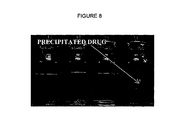
- Solution concentrates can be prepared over a range of concentrations for example from 0.1-100% w/w but can be adjusted for concentrations dependent on solubility, clinical efficacy, and temperature. These are then charged to the appropriate vessel in a required concentration and a metering valve crimped on the vessel. Depending on the concentration and volume of the solution antisolvent is charged through the vessel to initiate precipitation. The amount and rate can be manipulated to give desired character of particles ex-actuator. (See figure 8)
- oleic acid Approximately 0.33g (0.001 moles) of oleic acid was dissolved in 10ml of acetone with warming. To this solution was added approximately 0.25g (0.001 moles) of salbutamol base, which formed a milky suspension formed. The vessel was sealed and the suspension heated with serial venting until complete dissolution of the base. The solution was then chilled, and an oil then formed, which was re-dissolved by agitation at room temperature. A white precipitate formed after several minutes.
- drug salt adducts may be two active compounds ultimately forming a single drug.
- a basic compound such as salbutamol
- an acidic compound such as cromoglycic acid
- bronchodilators and steroids may be employed.
- Other auxiliary examples may comprise one or more active compounds in solution but co medicaments may be in solution or suspension.
- Such further actives may include but not be limited to analgesics such as codeine, morphine Tetrahydocannabinol or dihydrocodeine; anti allergics such as cromoglycate or nedocromil; antibiotics such as penecillins, cephamycin, sulphonamides or tetracyclines; antihistamines such as methapyrilines; antitussives such as noscapine, xanthines or thephylines; steroids such as beclomethasone diproiponate, fluticasone, dexamethasone and the like; parasympathomimetics such as ipratropium bromide and oxitrpium bromide and tiotropium bromide; therapeutic peptides and proteins or amino acids such as insulin and anticancer agents such as methotreax
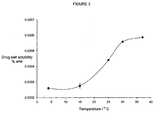
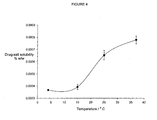
- Figures 3 and 4 indicates the solubility profiles of the respective salts synthesised.
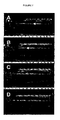
- To formulate stable ethanol soluble derivatives an empirical approach was taken whereby formulations were prepared in plastic coated glass bottles with co-solvent levels ranging from 1-50% w/w respectively. The mass of derivative was formulated at a level to give an equivalent to 100mcg of free base per actuation from the metering valve. Results from the formulations are depicted in figure 5 for the maleate salt 6 for the oleate salt and 7 to illustrate the precipitation technique by 7 controlled precipitation by the use of a second antisolvent: water on formulations of salbutamol maleate.
- a solution aerosol is formed and a controlled precipitation is produced from a combination of anti-solvents.
- the drug precipitates from a HFA 134(a) and water mixture.
- HFA 134(a) water and 134a
- the solution was stable at room temperature but precipitated at low temperatures particularly ⁇ -20°C. This leads to facilitate those skilled in the art to try various combinations and permutations of reaction conditions.
- the nature/chemical composition of the reagents, temperature of reagents, pressure of reagents and order of addition can all be utilised to give the desired particle size.
- the use of water is a further embodiment of the invention. In small concentrations water is soluble in the new HFA propellants. As an example actives with a high solubility may be dissolved in water and "crash precipitated" by use of a suitable anti-solvents occidentalwhile illustrated.
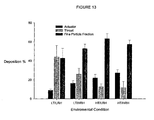
- figures 8-13 delineate a range of particle sizes resulting from a selection of drug and said reaction conditions after emanation from a metered dose inhaler.
- Precipitated drug and excipients combinations can be left as an in situ formulation or the anti-solvents removed and the powdered medicament used externally: within a dry powder inhaler.
- Drug excipients combinations manufactured from this method may allow improvements in powder flow and de-aggregation and improved stability of medicaments that are affected by moisture. Indeed it may be that those skilled in the art may produce particle for use in other dosage forms not related to inhalation therapy as the method of manufacture is suitable for thermally labile compounds.
- the above formulation forms a suspension when stored at sub-zero temperatures indicating that temperature of components are important during particle size of formulations
- Formulations of salt derivatives whether prepared by the following method but any suitable method can be utilise.
- Plastic coated glass pMDI bottles (St Gobain, France) were weighed on a balance and tared after first undergoing a rinse with clean and dry compressed air. Drug was weighed accurately by difference in order to give an equivalent of 100mcg freebase as related to molecular mass of the salt and the same procedure repeated for absolute ethanol (Fisher scientific).
- a continuous sprat valve was crimped on (Bespak, Kings Lynn, UK), according to manufacturers specifications and the bottle then sonicated (Decon FS 3006) for several minutes to induce complete dissolution of the drug. The bottle was then dried and once again tared on the balance.
- HFA 134(a) was subsequently charged through the valve using a Pamasol 2002 hand gasser crimper (DH Industries, Laindon, Essex, UK). The final formulation preparation was sonicated for a further several minutes for completeness. Formulations were then stored at specified temperatures and assessed periodically. All solutions were prepared in duplicate. 10% w/w ethanol : 90% w/w HFA 134(a) formulations were prepared. This is in no way intended to limit the extent of the formulations.
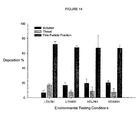
- Tables 2,3 and 4 and figures 13 and 14 indicate the effects of salt selection on critical particle size parameters.
- Throat deposition and fine particle fraction are two major descriptors of emitted aerosol clouds.
- the fine particle fraction is unaffected by environment, whereas the water-soluble derivative was.
- a reduced deposition may be required, which can be achieved by utilisation of said derivatives.
- reduced throat deposition of drugs is possible; for drugs that cause candiasis e.g. steroids this would be of immense benefit. From the data generated metered dose inhalers of this type would benefit from high temperature and humidity of intake air along with the aerosol.
- the MMAD was 2.08 microns and 37° C the MMAD was 1.67 microns, whereas at 20% w/w co-solvent and 4°C the MMAD was 2.30 microns and 37° C the MMAD was 1.96 microns respectively.
- Particles that emanate from varying forms of inhalers exhibit differing morphologies.
- particles emitted from dry powder inhalers consist of crystals of peculiar habits related to the active and lactose carriers. Depending on the drug and blend of carrier the particles these will exhibit changes in morphology and associated deposition patterns when they interact with warm and humid conditions of the human lung.
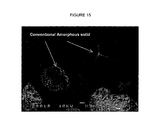
- Those from pressurised metered dose inhalers are effectively equivalent to spray dried particles and as such are amorphous solids. As such these deposit at specific locations of the lung as indicated from in vitro measurements via andersen cascade impactor.
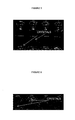
- drug salt derivative changed the morphology of the particles.
- fatty acid oleic acid which has been a conventional surfactant for CFC inhalers and used as a valve lubricant indicated a liquid and not a solid particle and had been modified and had acquired surfactant like nature.
- Surfactants have been routinely used in respiratory medicine. Morley. C. J., Bangham. A.B., Miller. N., Davis. J.A. (1981) Dry artificial lung surfactant and its effect on very premature babies. The Lancet.
- phospholipids are essentially lyotropic liquid crystals and as such are influenced by solvent interactions; depending on the concentration of lipid, solvent-induced aggregation of the constituents results in a complex range of structures.
- Formulations of which have been manufactured to phase transition and spread at an air water interface have been manufactured to phase transition and spread at an air water interface.
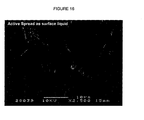
- the oleate salt spread as a surfactant, but had a higher phase transition temperature than the lab ambient and did so without a liquid air interface.
- This spreading ability it is theorised can be utilised to deliver active medicaments to cover more receptors and negotiate obstructions in the lung to reach its desired target SALT ANION MELTING POINT (approx.) °C Acetate ND Fumarate ND Lactate ND NB the Fumarate was insoluble in ethanol even though its only difference to the maleate was the trans arrangement of the carboxylic acid groups.
- Adipate 192 Stearate 108 NB The adipate and state mp differs from that described by Jashnani et al probably due to the solvents used in the synthesis Mesylate Degrades after 124 Besylate Degrades after 138 Tosylate Approx 160 Succinate 186 Nitrate 147 Phosphate 201 Hydrochloride 188 Maleate 130 Sulphate 200 Oleate 77 Salt Derivative Theoretical Solubility % w/w 0°C 4°C 25°C 37°C Maleate 13.231 15.797 37.047 57.251 Stearate 1.417 1.931 8.559 18.307 Oleate 9.261 12.305 48.280 97.033 Drug derivative Low Temp Low RH Low Temp High RH High Temp Low RH High Temp High RH Maleate 1.48 1.35 1.11 1.21 Oleate 1.27 1.42 0.87 1.13 %Deposited at Location LT/LRH LT/HRH HT/LRH HT/HRH
Landscapes
- Health & Medical Sciences (AREA)
- Veterinary Medicine (AREA)
- Animal Behavior & Ethology (AREA)
- Public Health (AREA)
- Chemical & Material Sciences (AREA)
- Pharmacology & Pharmacy (AREA)
- Life Sciences & Earth Sciences (AREA)
- Medicinal Chemistry (AREA)
- General Health & Medical Sciences (AREA)
- Pulmonology (AREA)
- Engineering & Computer Science (AREA)
- Bioinformatics & Cheminformatics (AREA)
- Epidemiology (AREA)
- General Chemical & Material Sciences (AREA)
- Organic Chemistry (AREA)
- Emergency Medicine (AREA)
- Chemical Kinetics & Catalysis (AREA)
- Otolaryngology (AREA)
- Nuclear Medicine, Radiotherapy & Molecular Imaging (AREA)
- Medicinal Preparation (AREA)
- Pharmaceuticals Containing Other Organic And Inorganic Compounds (AREA)
- Investigating Or Analysing Biological Materials (AREA)
- Medicines Containing Antibodies Or Antigens For Use As Internal Diagnostic Agents (AREA)
Applications Claiming Priority (2)
| Application Number | Priority Date | Filing Date | Title |
|---|---|---|---|
| GB0406069 | 2004-03-17 | ||
| GBGB0406069.5A GB0406069D0 (en) | 2004-03-17 | 2004-03-17 | Process |
Publications (2)
| Publication Number | Publication Date |
|---|---|
| EP1588698A2 true EP1588698A2 (de) | 2005-10-26 |
| EP1588698A3 EP1588698A3 (de) | 2006-08-16 |
Family
ID=32117920
Family Applications (1)
| Application Number | Title | Priority Date | Filing Date |
|---|---|---|---|
| EP05251622A Withdrawn EP1588698A3 (de) | 2004-03-17 | 2005-03-17 | Verfahren zur Herstellung und Screeening von Stoffen für die Verwendung in pharmazeutischen Aerosolformulierungen |
Country Status (2)
| Country | Link |
|---|---|
| EP (1) | EP1588698A3 (de) |
| GB (2) | GB0406069D0 (de) |
Cited By (1)
| Publication number | Priority date | Publication date | Assignee | Title |
|---|---|---|---|---|
| WO2007020204A3 (en) * | 2005-08-12 | 2007-06-07 | Boehringer Ingelheim Pharma | Hfc solution formulations for inhalation containing salbutamol hydrochloride or salbutamol citrate |
Family Cites Families (7)
| Publication number | Priority date | Publication date | Assignee | Title |
|---|---|---|---|---|
| GB8825892D0 (en) * | 1988-11-04 | 1988-12-07 | Fisons Plc | Pharmaceutical composition |
| IT1303671B1 (it) * | 1998-07-28 | 2001-02-23 | Nicox Sa | Sali dell'acido nitrico con farmaci attivi nel trattamento dipatologie del sistema respiratorio |
| GB0016040D0 (en) * | 2000-06-29 | 2000-08-23 | Glaxo Group Ltd | Novel process for preparing crystalline particles |
| GB0015981D0 (en) * | 2000-06-29 | 2000-08-23 | Glaxo Group Ltd | Novel process for preparing crystalline particles |
| GB0125604D0 (en) * | 2001-10-25 | 2001-12-19 | Glaxo Group Ltd | Novel process |
| GB0201400D0 (en) * | 2002-01-22 | 2002-03-13 | Glaxo Group Ltd | Novel apparatus and process |
| US7582284B2 (en) * | 2002-04-17 | 2009-09-01 | Nektar Therapeutics | Particulate materials |
-
2004
- 2004-03-17 GB GBGB0406069.5A patent/GB0406069D0/en not_active Ceased
-
2005
- 2005-02-17 GB GB0503296A patent/GB2412065A/en not_active Withdrawn
- 2005-03-17 EP EP05251622A patent/EP1588698A3/de not_active Withdrawn
Cited By (1)
| Publication number | Priority date | Publication date | Assignee | Title |
|---|---|---|---|---|
| WO2007020204A3 (en) * | 2005-08-12 | 2007-06-07 | Boehringer Ingelheim Pharma | Hfc solution formulations for inhalation containing salbutamol hydrochloride or salbutamol citrate |
Also Published As
| Publication number | Publication date |
|---|---|
| GB2412065A (en) | 2005-09-21 |
| EP1588698A3 (de) | 2006-08-16 |
| GB0503296D0 (en) | 2005-03-23 |
| GB0406069D0 (en) | 2004-04-21 |
Similar Documents
| Publication | Publication Date | Title |
|---|---|---|
| ES2774367T3 (es) | Composiciones para el suministro respiratorio de agentes activos y métodos y sistemas asociados | |
| CN102149438B (zh) | 用于提高结晶度的方法 | |
| US8337816B2 (en) | Dry powder medicament formulations | |
| AU2013246926B2 (en) | Aggregate particles | |
| CA2405659A1 (en) | Particulate composition | |
| JP2018505192A (ja) | ピリミド[6,1−a]イソキノリン−4−オン化合物の塩 | |
| US20090291146A1 (en) | Process for manufacturing lactose | |
| KR20160002733A (ko) | 항무스카린성 화합물의 입자 크기 감소 | |
| Sun | Supercritical fluid particle design of DPI formulations | |
| GB2412065A (en) | Compositions comprising particulate derivatives (especially salts) of pharmaceutical compounds for use in aerosols or metered dose inhalers | |
| US20110020244A1 (en) | Pharmaceutical compositions | |
| AU2015201037B2 (en) | Respiratory delivery of active agents |
Legal Events
| Date | Code | Title | Description |
|---|---|---|---|
| PUAI | Public reference made under article 153(3) epc to a published international application that has entered the european phase |
Free format text: ORIGINAL CODE: 0009012 |
|
| AK | Designated contracting states |
Kind code of ref document: A2 Designated state(s): AT BE BG CH CY CZ DE DK EE ES FI FR GB GR HU IE IS IT LI LT LU MC NL PL PT RO SE SI SK TR |
|
| AX | Request for extension of the european patent |
Extension state: AL BA HR LV MK YU |
|
| PUAL | Search report despatched |
Free format text: ORIGINAL CODE: 0009013 |
|
| AK | Designated contracting states |
Kind code of ref document: A3 Designated state(s): AT BE BG CH CY CZ DE DK EE ES FI FR GB GR HU IE IS IT LI LT LU MC NL PL PT RO SE SI SK TR |
|
| AX | Request for extension of the european patent |
Extension state: AL BA HR LV MK YU |
|
| RIC1 | Information provided on ipc code assigned before grant |
Ipc: A61K 9/00 20060101ALI20060713BHEP Ipc: A61K 9/12 20060101AFI20050906BHEP |
|
| 17P | Request for examination filed |
Effective date: 20070213 |
|
| AKX | Designation fees paid |
Designated state(s): AT BE BG CH CY CZ DE DK EE ES FI FR GB GR HU IE IS IT LI LT LU MC NL PL PT RO SE SI SK TR |
|
| 17Q | First examination report despatched |
Effective date: 20070702 |
|
| GRAP | Despatch of communication of intention to grant a patent |
Free format text: ORIGINAL CODE: EPIDOSNIGR1 |
|
| GRAS | Grant fee paid |
Free format text: ORIGINAL CODE: EPIDOSNIGR3 |
|
| STAA | Information on the status of an ep patent application or granted ep patent |
Free format text: STATUS: THE APPLICATION IS DEEMED TO BE WITHDRAWN |
|
| 18D | Application deemed to be withdrawn |
Effective date: 20091001 |