EP1588508B1 - Verfahren zur implementierung einerdynamischen frequenzauswahl (dfs) und eines merkmals der vorübergehendenkanalauswahl für wlan-einrichtungen - Google Patents
Verfahren zur implementierung einerdynamischen frequenzauswahl (dfs) und eines merkmals der vorübergehendenkanalauswahl für wlan-einrichtungen Download PDFInfo
- Publication number
- EP1588508B1 EP1588508B1 EP04704867.3A EP04704867A EP1588508B1 EP 1588508 B1 EP1588508 B1 EP 1588508B1 EP 04704867 A EP04704867 A EP 04704867A EP 1588508 B1 EP1588508 B1 EP 1588508B1
- Authority
- EP
- European Patent Office
- Prior art keywords
- channel
- radar
- channels
- access point
- list
- Prior art date
- Legal status (The legal status is an assumption and is not a legal conclusion. Google has not performed a legal analysis and makes no representation as to the accuracy of the status listed.)
- Expired - Lifetime
Links
- 238000000034 method Methods 0.000 title claims description 64
- 230000005540 biological transmission Effects 0.000 claims description 24
- 238000001228 spectrum Methods 0.000 claims description 15
- 230000007480 spreading Effects 0.000 claims description 13
- VYLDEYYOISNGST-UHFFFAOYSA-N bissulfosuccinimidyl suberate Chemical compound O=C1C(S(=O)(=O)O)CC(=O)N1OC(=O)CCCCCCC(=O)ON1C(=O)C(S(O)(=O)=O)CC1=O VYLDEYYOISNGST-UHFFFAOYSA-N 0.000 claims 4
- 230000001105 regulatory effect Effects 0.000 description 52
- 230000008569 process Effects 0.000 description 37
- 230000008859 change Effects 0.000 description 29
- 238000001514 detection method Methods 0.000 description 27
- 238000004891 communication Methods 0.000 description 10
- 238000005259 measurement Methods 0.000 description 10
- 230000006870 function Effects 0.000 description 7
- 230000000737 periodic effect Effects 0.000 description 5
- 230000033228 biological regulation Effects 0.000 description 4
- 230000003247 decreasing effect Effects 0.000 description 2
- 230000001934 delay Effects 0.000 description 2
- 230000000694 effects Effects 0.000 description 2
- 230000002045 lasting effect Effects 0.000 description 2
- 238000012419 revalidation Methods 0.000 description 2
- 238000012512 characterization method Methods 0.000 description 1
- 230000001186 cumulative effect Effects 0.000 description 1
- 230000007423 decrease Effects 0.000 description 1
- 230000003111 delayed effect Effects 0.000 description 1
- 230000001788 irregular Effects 0.000 description 1
- 230000007257 malfunction Effects 0.000 description 1
- 230000007246 mechanism Effects 0.000 description 1
- 238000012986 modification Methods 0.000 description 1
- 230000004048 modification Effects 0.000 description 1
- 238000012545 processing Methods 0.000 description 1
- 238000011084 recovery Methods 0.000 description 1
- 230000004044 response Effects 0.000 description 1
Images




Classifications
-
- H—ELECTRICITY
- H04—ELECTRIC COMMUNICATION TECHNIQUE
- H04W—WIRELESS COMMUNICATION NETWORKS
- H04W16/00—Network planning, e.g. coverage or traffic planning tools; Network deployment, e.g. resource partitioning or cells structures
- H04W16/14—Spectrum sharing arrangements between different networks
-
- H—ELECTRICITY
- H04—ELECTRIC COMMUNICATION TECHNIQUE
- H04L—TRANSMISSION OF DIGITAL INFORMATION, e.g. TELEGRAPHIC COMMUNICATION
- H04L1/00—Arrangements for detecting or preventing errors in the information received
- H04L1/22—Arrangements for detecting or preventing errors in the information received using redundant apparatus to increase reliability
-
- H—ELECTRICITY
- H04—ELECTRIC COMMUNICATION TECHNIQUE
- H04L—TRANSMISSION OF DIGITAL INFORMATION, e.g. TELEGRAPHIC COMMUNICATION
- H04L12/00—Data switching networks
- H04L12/28—Data switching networks characterised by path configuration, e.g. LAN [Local Area Networks] or WAN [Wide Area Networks]
-
- H—ELECTRICITY
- H04—ELECTRIC COMMUNICATION TECHNIQUE
- H04L—TRANSMISSION OF DIGITAL INFORMATION, e.g. TELEGRAPHIC COMMUNICATION
- H04L5/00—Arrangements affording multiple use of the transmission path
- H04L5/02—Channels characterised by the type of signal
- H04L5/06—Channels characterised by the type of signal the signals being represented by different frequencies
-
- H—ELECTRICITY
- H04—ELECTRIC COMMUNICATION TECHNIQUE
- H04L—TRANSMISSION OF DIGITAL INFORMATION, e.g. TELEGRAPHIC COMMUNICATION
- H04L63/00—Network architectures or network communication protocols for network security
- H04L63/16—Implementing security features at a particular protocol layer
- H04L63/162—Implementing security features at a particular protocol layer at the data link layer
-
- H—ELECTRICITY
- H04—ELECTRIC COMMUNICATION TECHNIQUE
- H04W—WIRELESS COMMUNICATION NETWORKS
- H04W12/00—Security arrangements; Authentication; Protecting privacy or anonymity
- H04W12/06—Authentication
-
- H—ELECTRICITY
- H04—ELECTRIC COMMUNICATION TECHNIQUE
- H04W—WIRELESS COMMUNICATION NETWORKS
- H04W24/00—Supervisory, monitoring or testing arrangements
- H04W24/04—Arrangements for maintaining operational condition
-
- H—ELECTRICITY
- H04—ELECTRIC COMMUNICATION TECHNIQUE
- H04W—WIRELESS COMMUNICATION NETWORKS
- H04W72/00—Local resource management
- H04W72/02—Selection of wireless resources by user or terminal
-
- G—PHYSICS
- G01—MEASURING; TESTING
- G01S—RADIO DIRECTION-FINDING; RADIO NAVIGATION; DETERMINING DISTANCE OR VELOCITY BY USE OF RADIO WAVES; LOCATING OR PRESENCE-DETECTING BY USE OF THE REFLECTION OR RERADIATION OF RADIO WAVES; ANALOGOUS ARRANGEMENTS USING OTHER WAVES
- G01S7/00—Details of systems according to groups G01S13/00, G01S15/00, G01S17/00
- G01S7/02—Details of systems according to groups G01S13/00, G01S15/00, G01S17/00 of systems according to group G01S13/00
- G01S7/021—Auxiliary means for detecting or identifying radar signals or the like, e.g. radar jamming signals
-
- H—ELECTRICITY
- H04—ELECTRIC COMMUNICATION TECHNIQUE
- H04L—TRANSMISSION OF DIGITAL INFORMATION, e.g. TELEGRAPHIC COMMUNICATION
- H04L63/00—Network architectures or network communication protocols for network security
- H04L63/08—Network architectures or network communication protocols for network security for authentication of entities
-
- H—ELECTRICITY
- H04—ELECTRIC COMMUNICATION TECHNIQUE
- H04W—WIRELESS COMMUNICATION NETWORKS
- H04W16/00—Network planning, e.g. coverage or traffic planning tools; Network deployment, e.g. resource partitioning or cells structures
- H04W16/02—Resource partitioning among network components, e.g. reuse partitioning
- H04W16/10—Dynamic resource partitioning
-
- H—ELECTRICITY
- H04—ELECTRIC COMMUNICATION TECHNIQUE
- H04W—WIRELESS COMMUNICATION NETWORKS
- H04W24/00—Supervisory, monitoring or testing arrangements
-
- H—ELECTRICITY
- H04—ELECTRIC COMMUNICATION TECHNIQUE
- H04W—WIRELESS COMMUNICATION NETWORKS
- H04W36/00—Hand-off or reselection arrangements
- H04W36/06—Reselecting a communication resource in the serving access point
-
- H—ELECTRICITY
- H04—ELECTRIC COMMUNICATION TECHNIQUE
- H04W—WIRELESS COMMUNICATION NETWORKS
- H04W72/00—Local resource management
- H04W72/50—Allocation or scheduling criteria for wireless resources
- H04W72/54—Allocation or scheduling criteria for wireless resources based on quality criteria
-
- H—ELECTRICITY
- H04—ELECTRIC COMMUNICATION TECHNIQUE
- H04W—WIRELESS COMMUNICATION NETWORKS
- H04W84/00—Network topologies
- H04W84/02—Hierarchically pre-organised networks, e.g. paging networks, cellular networks, WLAN [Wireless Local Area Network] or WLL [Wireless Local Loop]
- H04W84/10—Small scale networks; Flat hierarchical networks
- H04W84/12—WLAN [Wireless Local Area Networks]
Definitions
- the present invention relates to wireless local area network (WLAN) devices and particularly to techniques in WLAN devices for performing startup scans for radar, identifying backup channels for a channel switch, and efficiently changing channels in the event of radar detection in the operating channel.
- WLAN wireless local area network
- Wireless local area network (WLAN) devices operating in the 5 GHz spectrum coexist with radar systems.
- Various regulatory standards e.g. the draft European Telecommunications Standards Institute (ETSI) EN 301 893, version V1.2.1, published 2002-07
- ETSI European Telecommunications Standards Institute
- DFS dynamic frequency selection
- Regulatory standards typically provide simple guidelines for radar detection and/or avoidance of co-channel radar. For example, current European regulatory standards require that a 60 second scan of each allowed channel be completed before operation commences. Moreover, upon detection of a radar signal on the current operating channel, the WLAN device (i.e. an access point or a station) must cease communication within a short timeframe, e.g. 0.2-1.0 sec. Note that pending revisions to the European regulatory standards may require that aggregate transmission time of an access point or station be limited to a total of 260 ms counting from the instant a radar is detected. Other regulatory domains have proposed similar guidelines. For example, a draft IEEE 802.11h specification (which adapts the 802.11a standard to European regulations) suggests that stations respond to a channel switch announcement frame from an access point by ceasing data transmission, thereby avoiding harmful interference to the co-channel radar system.
- McFarland also teaches one technique to cease transmissions between an access point and its associated stations upon detection of radar.
- a point coordination function (PCF) which is provided in the IEEE 802.11 standard, can be used to control which stations transmit and when they transmit.
- PCF point coordination function
- a PCF beacon which is sent by an access point, announces the beginning of a polling period, wherein all stations must wait until polled by that access point before transmitting.
- the access point can perform a radar detection cycle.
- the access point can proceed with normal PCF polling.
- DFS dynamic frequency selection
- the startup routine of a wireless device is typically time critical. Specifically, stations (and their human users) could think that a lengthy startup routine is a product fault. Access points may restart in response to an ineffective startup scan of available channels, thereby significantly decreasing the usability and the availability of a wireless network.
- Some regulatory domains require relatively long periods of time to verify that a channel is radar-free. For example, European regulations require that each channel be scanned for 60 seconds to determine whether it is radar-free. Therefore, this requirement must be met while still minimizing the time spent for the startup routine.
- the access point populates a short list of backup channels (e.g. one or two) during initial startup and stores this short list during normal operation.
- Backup channels can advantageously be used to perform a fast and non-disruptive channel switch in case radar is detected on the current channel.
- the access point can quickly scan multiple channels for radar.
- normal operation can begin on the first channel that is found without radar.
- the access point or one or more stations at the request of the access point can perform short background scans to identify additional radar-free channels. The scanning process can continue until one or two backup radar-free channels are found.
- the radar-free channel(s) can be stored in the access point for use during a future channel switch event.
- the timing of these scans will advantageously vary, thereby avoiding the possibility that radar on the backup channel is transmitting radar bursts with a timing exactly coincident with the short periods during which the access point or station is not performing the short scans of the channel.
- multiple short background scans performed during normal operation on a selected backup channel results in effectively a full (e.g. 60 sec) scan for radars, as required by some regulatory standards.
- radar can transmit significant energy in multiple adjacent (i.e. both below and above) channels to the current channel of the WLAN device. Therefore, in accordance with one feature of the invention, selection of the backup channels can be performed to reduce the likelihood that the new channel is adjacent in frequency to the current channel. This selection process also advantageously meets the European requirement for uniform spreading of channels of operation. Moreover, because many legacy stations will not be capable of operating in some portions of the 5 GHz spectrum, i.e. the sub-band of 5470-5725 MHz, the selection process can be weighted such that most or all stations currently associated with the access point will be capable of operation on the new channel.
- the access point can build a list of backup channels by choosing one channel from each sub-band in 5 GHz (i.e. 5150-5250 MHz, 5250-5350 MHz, and 5470-5725 MHz).
- 5150-5250 MHz, 5250-5350 MHz, and 5470-5725 MHz the random choice of channels distributed within each sub-band (as opposed to the random choice of channels using the complete range of channels) results in a pseudo-random list of backup channels that is weighted toward the lower end of the spectrum (i.e. 5150-5350 MHz).
- an access point that minimizes channel selection in this large sub-band can increase the likelihood of compatibility with such legacy devices.
- the access point can also consider the presence of other WLAN devices already operating in certain bands.
- a BSS-free channel list is populated from an allowed channel list of the current regional domain.
- the access point preferably chooses its backup channels from this BSS-free channel list. However, if the number of backup channels is too low, then the access point can instead choose its backup channels from the allowed channel list to remain in compliance with channel spreading rules.
- the access point can choose its backup channel from a radar-free channel list that is, in general, furthest in frequency (i.e. above or below) the current channel on which radar was detected.
- the channel switch process can advantageously prioritize the selection of backup channels in the sub-band of 5150-5350 MHz, which as noted above are less likely to contain radar energy and more likely to allow legacy stations to operate. For example, if the current channel is in the sub-band of 5250-5350 MHz and at least one backup channel is in the sub-band of 5150-5250 MHz, then the access point can set the new channel to the lowest channel in the radar-free channel list.
- the access point can set the new channel to the highest channel in the radar-free channel list.
- the access point can set the new channel to the lowest channel in the radar-free channel list.
- the access point can broadcast a channel switch frame to all stations, thereby ensuring that all stations capable of interpreting this message will cease data transmission immediately.
- the access point can broadcast an additional control frame, i.e. a de-authenticate frame, to all stations.
- This de-authenticate frame which is understood by all stations, causes them to immediately stop transmitting data to the access point and to revert back to a startup state.
- the de-authenticate frame is sent after the designated channel switch time. Without this timing, most if not all 802.11h compliant stations would respond to the de-authenticate frame by immediately ceasing communication with the access point, therefore losing the ability to perform the desired non-disruptive channel switch initiated by the channel switch process.
- any 802.11h compliant station that did receive, understand, and accept the channel switch frame will move from the current channel of operation before the de-authenticate frame is sent by the access point.
- any non-802.11h compliant (i.e. legacy) stations will quickly cease their operation, thereby reducing harmful interference to co-channel radars as well as decreasing the time necessary to detect that the access point has left the channel and to initiate recovery procedures.
- a method of performing a startup operation for an access point in a regulatory domain is also provided.
- the regulatory domain has a frequency spreading requirement and the access point can only communicate using allowed channels in a spectrum.
- an allowed channel list can be populated with the allowed channels.
- a BSS-free channel list can be populated with any allowed channels having acceptable levels of current WLAN transmission thereon. Then, a radar-free channel list can be populated using the BSS-free channel list and the allowed channel list.
- a first channel can be randomly selected from the radar-free channel list. If the first channel is in a first sub-band and the regulatory domain exempts scanning in the first sub-band, then the first channel can be designated as a current channel, a backup channel can be selected from the radar-free channel list in the first sub-band without scanning, and operation of the access point can begin with the first channel.
- a radar scan can be performed on each channel in the radar-free channel list, except any channel in the first sub-band.
- a radar scan can be performed on each channel in the radar-free channel list. In these two cases, any channel with radar in the radar-free channel list can be deleted. The above steps can be repeated until a predetermined number of channels remain in the radar-free channel list. At this point, a first channel in the radar-free channel list can be chosen and normal operation of the access point can begin with the first channel.
- the access point when radar is detected, can advantageously select a new channel from the radar-free channel list for operation without additional radar scanning.
- an access point should perform a 60 second radar scan "immediately" preceding operation on a non-radar-exempt channel (i.e. a channel that requires radar detection). Therefore, the radar scans performed during startup and refresh may not satisfy this requirement.
- a continuous 60 second radar scan commencing upon detection of radar on current channel would undesirably result in the access point interrupting operation with its current associated stations.
- the access point upon a channel change operation initiated due to detection of radar on the current channel, if the new channel selected is in a radar-exempt sub-band, then the access point can immediately recommence operation on this new channel. In other words, regardless of the regulatory domain's interpretation of the channel availability check, the 60 second scan is not required to commence operation in a radar-exempt sub-band. Note that the new channel is selected using a pseudo-random channel algorithm and therefore also meets uniform spreading rules.
- the access point can select a temporary new channel in a radar-exempt sub-band.
- the temporary new channel can be selected at random.
- the access point can store information regarding channel traffic and the access point can select the radar-exempt channel with the least traffic. Normal operation can continue in this temporary new channel until such time that the access point has completed an aggregate background radar scan of the previously selected new channel. If radars are detected in the previous new channel, then the access point can select another channel from the radar-free channel list and perform another aggregate background scan. If no radars are detected during the aggregate background radar scan, then the access point can quickly switch from the temporary new channel to the previous new channel. Using this channel switching technique, users of the network advantageously experience no interruption of service because only fast-channel changes and background scanning are used to meet the applicable regulatory requirements.
- techniques for performing startup scans for radar, determining an acceptable backup channel for a channel switch, and efficiently changing channels in the case of radar detection in the operating channel advantageously meet current regulatory standards governing DFS while minimizing network startup delays and disruption to users during a radar event.
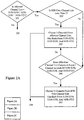
- FIG. 1 illustrates an exemplary process for backup channel selection during startup/restart of an access point.
- an access point can look up the channels allowed by the regulatory domain in which the access point will be operating.
- the access point can access a lookup table (LUT) that includes known regulatory domains and associated allowed channels of operation. If the regulatory domain is Europe, then the allowed channels are within the following frequency ranges (also called sub-bands herein): 5150-5250 MHz (4 channels), 5250-5350 MHz (4 channels), and 5470-5725 MHz (11 channels). These allowed channels can be added to an allowed channel list. This process is called "populating" a list herein.
- LUT lookup table
- the access point can perform a startup scan for Basic Service Sets (BSSs) on the allowed channel list.
- BSS Basic Service Sets
- a BSS is a set of IEEE 802.11 compliant devices that operate as a full-connected wireless network.
- the access point can populate a BSS-free channel list of allowed channels that are currently transmission free or have an acceptable level of current WLAN transmission thereon.
- the access point can populate a radar-free channel list using a process described in reference to Figure 2 .
- two or three candidate channels are included in the radar-free channel list. Note that at this point, these candidate channels are not yet tested for radar.
- the access point can perform a radar scan on each candidate channel in the radar-free channel list.
- this radar scan conforms to the current European standard of 60 seconds for each channel.
- the access point can delete any channel in which radar signals were detected from the radar-free channel list.
- the radar-free channel list will have 0, 1, 2, or 3 channels.
- step 105 if the radar-free channel list contains two or more channels, then the access point can randomly choose a channel from the radar-free channel list and set that channel as the current channel of operation in step 106. At this point, the access point can delete the current channel from the radar-free channel list, thereby leaving either one or two backup channels in this list. The access point can retain the radar-free channel list for backup in case radar is detected in the current channel. In step 107, the access point can begin beaconing and performing normal operations on the current channel. In one embodiment, the BSS-free channel list can be discarded after step 106 to conserve valuable storage area.
- the access point can send a console message indicating that an insufficient number of channels were found clear of radars. Then, the process can return to step 101 to repeat the startup operation.
- the WLAN device can store the channel number(s) on which radar was detected along with a timestamp of the radar event associated with the channel(s). In one embodiment, this information can be stored in non-volatile memory. During normal operation, the timestamp can be updated periodically to countdown the required period (e.g. 30 minutes) at which time the non-reoccupancy flag can be removed.
- the candidate radar-free channel list (per Figure 1 , step 103) can be compared against the channel numbers(s) stored in non-volatile memory and appropriate channels can be removed.
- This list of non-reoccupancy channels can be flushed upon the 2 nd subsequent restart of the WLAN device using a separate lifetime flag (which could also be stored & decremented in non-volatile memory) that counts the number of restarts since the non-reoccupancy channel numbers were stored.
- non-reoccupancy list requiring no real-time-clock or time-stamping of individual channels in the list can be implemented as follows.
- the list of non-occupancy channels can be compiled as described above and new channels can be saved to non-volatile memory immediately after radar is detected.
- the entire list of non-reoccupancy channels is only reset after 30 minutes from the time that any channel is added to the list. If the device is reset or rebooted as a result of detection of radar or other causes, then the existing non-reoccupancy list is checked at startup and a new 30 minute timer is started. Only after a continuous 30 minute period has elapsed (during which no new channels are added to the list), will the list stored in non-volatile memory be cleared.
- the radar-free channel list should be populated in step 103 with certain considerations in mind. Specifically, the selection of backup channels should reduce the risk of a channel switch operation resulting in the access point moving to a channel in which the radar is still operating. Regulatory requirements do not currently dictate that a 5 GHz WLAN device take specific measures to avoid moving to a new channel occupied by radars after radar is detected in the current channel, other than the requirement that the new channel was previously checked for radars during an initial startup scan.
- radars may operate across wider transmission bandwidths than the WLAN device.
- some radars called frequency agile radars, may intentionally switch operation across multiple adjacent frequencies in a band of spectrum.
- other radars such as transportable, airborne, or even fixed radars can operate intermittently or with a lengthy and irregular directional scanning sequence (a meteorological radar for instance).
- WLAN devices located nearby radars will receive significant energy in channels adjacent to the current channel of operation.
- moving to a channel in which radar energy is still present is quite possible in the real world.
- a conventional backup channel list even if refreshed per regulatory requirements (described in reference to Figure 3A ), may not protect against the access point performing a channel switch to a backup channel that either has radar or may be undesirably close in frequency to a channel with radar.
- Such a channel switch could require yet another channel switch with its associated disruption to network operation. This problem can be further complicated by the regulatory requirement to spread operation of WLAN devices across the full range of available spectrum.
- backup channel selection i.e. populating the radar-free channel list
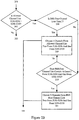
- Figures 2A , 2B , and 2C illustrate an exemplary weighted process for populating a radar-free channel list.
- the access point can populate the radar-free channel list using the allowed channel list and the BSS-free channel list.
- two or three channels weighted toward the lower end of the spectrum can be chosen, thereby significantly improving legacy device support.
- step 201 if the allowed channel list includes channels having frequencies between 5150-5250 MHz, 5250-5350 MHz, as well as 5470-5725 MHz, then the access point determines whether the BSS-free channel list has less than two channels in step 204. In other words, if two or more channels currently have no (or an acceptable level of) transmission from other Basic Service Sets, then those channels would preferably be used for backup channels in case radar is detected on the current channel. If the BSS-free channel list does not have less than two channels, i.e.
- the process can determine whether the BSS-free channel list includes at least one channel in each of the 5150-5250 MHz, 5250-5350 MHz, and 5470-5725 MHz sub-bands in step 206. If the BSS-free channel list includes at least one channel in each of the 5150-5250 MHz, 5250-5350 MHz, and 5470-5725 MHz sub-bands, then the access point can pseudo-randomly choose three channels from the BSS-free channel list in step 207. In one embodiment, one channel can be chosen from each of 5150-5250 MHz, 5250-5350 MHz, and 5470-5725 MHz (hence, the selection is deemed to be "pseudo-random").
- the access point can pseudo-randomly choose three channels from the allowed channel list in step 207.
- one channel can be selected from each sub-band, i.e. 5150-5250 MHz, 5250-5350 MHz, and 5470-5725 MHz.
- step 202 if the allowed channel list includes channels having frequencies only between 5150-5250 MHz and 5250-5350 MHz, then the access point determines whether the BSS-free channel list has less than two channels in step 208. If not, then the process can determine whether the BSS-free channel list includes at least two channels in the 5150-5250 MHz sub-band and at least one channel in the 5250-5350 MHz sub-band in step 210. If the BSS-free channel list includes at least two channels in the 5150-5250 MHz sub-band and at least one channel in the 5250-5350 MHz sub-band, then the access point can pseudo-randomly choose three channels from the BSS-free channel list in step 211. In one embodiment, two channels can be chosen from the 5150-5250 MHz sub-band and one channel can be chosen from the 5250-5350 MHz sub-band.
- the access point can pseudo-randomly choose three channels from the allowed channel list in step 209.
- two channels can be selected from the frequency range 5150-5250 MHz and one channel can be selected from the frequency range 5250-5350 MHz.
- step 203 if the allowed channel list includes channels having frequencies only between 5150-5250 MHz, then the access point determines whether the BSS-free channel list has less than two channels in step 212. If not, then the access point can randomly choose two channels from the BSS-free channel list in step 214. On the other hand, if the BSS-free channel list has less than two channels, then the access point can randomly choose two channels from the allowed channel list in step 213. In the case of the allowed channel list including frequencies only between 5150-5250 MHz, the choice of only two channels (steps 211/212) is adequate and desirable due to the less likely presence of radar signals in this sub-band. Moreover, reducing the number of channels in the radar-free channel list from three to two channels can advantageously reduce startup times while maintaining the required channel spreading.
- the above steps can be modified to consider relative level of BSS activity on the occupied channels.
- the access point can build a histogram of received signal strength (RSSI) levels and traffic levels from BSS signals received in each allowed channel. Those channels with combined RSSI & traffic levels constituting the lowest values can populate the BSS-free channel list. In this manner, the BSS-free channel list can still be used to populate the radar-free channel list even in the cases where some BSS traffic is present on most or all allowed channels. This process advantageously reduces the likelihood of the access point operating on a channel with heavy co-channel BSS traffic.
- RSSI received signal strength
- a single absolute RSSI threshold value can be used instead of a histogram of values.
- allowed channels found to contain minimal and/or acceptable levels of BSS traffic can populate the BSS-free channel list.
- BSS traffic below a minimal RSSI value will have no real impact on the operation of the access point and therefore can safely be ignored.
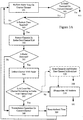
- FIGS 3A and 3B illustrate one embodiment of a radar scan that can be performed by an access point during normal operation.
- ongoing radar scanning of the current channel is required. This scanning is performed during normal operation on the current channel per step 301 to ensure compliance with regulatory requirements. If radar is detected on the current channel, as determined in step 302, then the process proceeds to step 311, which is explained in reference to Figure 3B .
- the access point determines whether a refresh time has been reached in step 303.
- the refresh time refers to a time period during which the backup channels in the radar-free channel list should be re-checked for radar. Specifically, some regulatory specifications require that a WLAN device rescan any channel in the radar-free channel list, otherwise the access point cannot change to that backup channel during a channel switch operation. A 24-hour period is typical for this refresh period. Per European requirements, the access point must perform another 60 second scan for radar on each backup channel during the refresh period. If the refresh time is not reached in step 303, then the access point returns to step 301 and continues to perform a periodic radar scan on the current channel. If the refresh time is reached, then the access point pauses normal operation and rescans the backup channels in the radar-free channel list in step 304.
- Refresh scanning is preferably performed at set times rather than attempting to refresh at the unpredictable time of a channel switch due to radar detection in the current channel. Specifically, sending a channel switch announcement and ceasing operation on a channel can be performed in a much shorter timeframe than the 60 seconds required to perform a scan of each backup channel. Therefore, to save time during channel switching and reduce disruption of the network, refresh scanning should be done during normal operation. However, interrupting operation of the wireless network (even if scheduled for after hours) for a 60 second refresh operation on even one of the backup channels could result in all stations losing communication with higher layer protocols and applications as well as possible loss of data or other unacceptable interruptions.
- one exemplary refresh operation includes the access point using short (e.g. 2-5 sec) periodic background scanning of each backup channel to meet the 60 second aggregate scan time, thereby meeting regulatory requirements while minimizing user and network impact.
- short periodic background scanning of each backup channel can be used to perform short periodic background scanning of each backup channel (see, for example, Figure 6B ).
- identifying a short backup list with 1 or 2 channels can advantageously ensure that refreshing of the backup channels can be done significantly faster compared to refreshing a larger list.
- using the short periodic refresh scan can dramatically reduce or even eliminate disruption of network operation.
- the access point can attempt a revalidation of a deleted channel at a predetermined interval (e.g. 30 min). If radar is not found during revalidation, then that channel can be added back to the radar-free channel list. If at least one backup channel remains in the radar-free channel list (as determined in step 307) or if radar is not detected in step 305, then the access point can recommence its normal operation on the current channel in step 308 and reset the refresh time in step 309. At this point, the access point can return to step 301 to scan for radar on the current channel.
- a predetermined interval e.g. 30 min
- the access point can disassociate with all stations in step 310. At this point, the access point can return to step 101 for a startup (or restart) scan. In another embodiment, the access point can perform background scanning (e.g. periodic scanning in 200 ms increments) of any allowed channels in step 320 until one radar-free channel is identified and added to the radar-free channel list. Then, the process can proceed to step 308. In one embodiment, if a radar-free channel cannot be found, then the process could proceed to step 310, i.e. disassociation of all stations.
- Figure 3B illustrates an exemplary selection process for a new channel after radar is detected in the current channel.
- the access point ceases current transmission on that channel and refuses new association requests.
- the access point can characterize the current channel according to sub-band (e.g. 5150-5250 MHz, 5250-5350 MHz, and 5470-5725 MHz) and respond based on this characterization.
- certain regulatory domains may not require radar scanning in predetermined sub-bands that have few if any radars.
- the U.S. and European regulatory domains do not currently require radar scanning in the 5150-5250 MHz sub-band.
- the U.S. does not require radar scanning in the 5725-5850 MHz sub-band.
- a sub-band that does not require radar scanning is called a radar-exempt sub-band herein. Therefore, if radar is detected in a channel in step 302, then current transmission can be in either the 5250-5350 MHz sub-band or the 5470-5725 MHz sub-band.
- the access point can advantageously set its new channel to the lowest channel in the radar-free channel list in step 315.
- the access point can set its new channel to the highest channel in the radar-free channel list in step 317.
- the access point can set its new channel to the lowest channel in the radar-free channel list in step 319. After setting its new channel, the access point can proceed to a channel switching technique described in reference to Figures 4A and 4B .
- the access point when radar is detected, can advantageously select a channel from the radar-free channel list for operation without additional radar scanning.
- U.S. Patent Application Serial No. 10/406,049 discusses this type of channel switching technique in further detail.
- an access point should perform a 60 second radar scan "immediately" preceding operation on a non-radar-exempt channel (i.e. a channel that requires radar detection). Therefore, the radar scans performed during startup (step 104) and refresh (step 304) may not satisfy this requirement.
- a continuous 60 second radar scan would undesirably result in the access point interrupting operation with its current associated stations.
- the access point can immediately recommence operation on this new channel.
- the 60 second scan is not required to commence operation in a radar-exempt sub-band.
- the new channel is selected using a pseudo-random channel algorithm and therefore also meets uniform spreading rules.
- step 402 can select a temporary new channel in a radar-exempt sub-band (e.g. 5150-5250 MHz or 5725-5850 MHz).
- the temporary new channel can be selected at random.
- the access point can store information regarding channel traffic and step 402 can include selecting the radar-exempt channel with the least traffic. Normal operation can continue in this temporary new channel until such time that the access point has completed a radar scan of the previously selected new channel (i.e. the new channel selected by one of steps 315, 316, and 317), as described below in reference to Figure 4B .
- the temporary new channel can be used as the new channel and the switching steps described in Figure 4B need not be performed.
- the access point may transmit control and/or management frames up to a maximum move time (MaxMoveTime) (e.g. 10.24 sec) as provided by current regulations.
- MaxMoveTime e.g. 10.24 sec
- the access point should perform the channel change as quickly as possible (that is, on the order of less than 3 sec).
- the access point can quickly disassociate with non-802.11h compliant stations because they are not capable of acting on a channel change frame broadcast by the access point.
- the access point can advantageously maintain association with most 802.11h compliant stations on a new channel via a channel switching technique described in reference to steps 403-410.
- the access point can broadcast a channel change frame to its associated stations.
- the 802.11h compliant stations upon receiving the channel change frame should respond by ceasing normal data transmissions and changing their transmitting channel to the new channel at the channel switch time designated in the channel change frame.
- some 802.11h compliant stations could be sleeping or otherwise miss the channel change frame (e.g. due to interference from ongoing co-channel radar pulses or system malfunction).
- the access point determines whether a channel change time is expired. If the channel change time is not expired, then the access point can repeat the broadcast of the channel change frame in step 405 up to the MaxMoveTime, but typically for a duration less than 3 seconds. If the channel change time is expired, then the access point can broadcast a de-authenticate frame to any remaining stations on the old channel in step 406. The broadcasted de-authenticate frame, which silences all stations and results in disassociation with the access point, is sent only after the expiration of a channel switch time. This timing prevents 802.11h compliant stations from receiving the de-authenticate frame (which would otherwise result in such stations immediately disconnecting from the access point rather than perform the less disruptive channel change procedure).
- any resulting disassociation does not contradict the IEEE 802.11h standard or regulatory requirements.
- a station upon losing contact with the access point, a station is programmed to cease data transmission within 1 second, thereby causing limited, if any, impact to any radar systems.
- these disassociated stations can quickly re-associate with the access point (discussed in reference to step 409) on the new channel or associate with a new access point on yet another channel.
- step 407 the access point moves to the new channel and commences sending beacons on this new channel.
- step 408 the access point can recommence communication with 802.11h compliant stations that successfully moved to the new channel.
- step 409 the access point can associate with any stations that became disassociated during the channel switch and/or with any new stations requesting association. The access point can continue with its normal operation in step 410.
- Step 420 determines whether the new channel of operation is temporary. If not, then the process returns to step 301 to perform radar scan (if necessary) on the channel. If the new channel is temporary, then step 421 can perform a background channel check on the previous channel chosen by the pseudo-random, weighted algorithm (e.g. steps 317 or 319). Notably, this background channel check can use an aggregate of scan times to satisfy the 60 second scan requirement. This background channel check can be performed solely by the access point or with assistance from any available station that positively responds to a request to perform a portion of this 60 second scan.
- step 425 can remove the temporary new channel designation and return to step 403 to initiate a second fast-channel change using the previous new channel. In this manner, after performing steps 403-408, operation will recommence on this newly scanned channel.
- step 425 can remove the temporary new channel designation and return to step 403 to initiate a second fast-channel change using the previous new channel.
- step 304 Because this channel has already undergone a continuous 60 second radar scan during access point startup and perhaps even an aggregate 60 second background scan during a refresh cycle (see step 304), there is a high likelihood that the background scan performed in step 422 will find no radars. However, if radars are detected, then step 423 can mark that channel for non-occupancy and choose another channel from the radar-free channel list. At this point, step 424 can perform an aggregate 60 second radar scan on this new channel. The process can then return to step 422. Note that until the channel passes this background scan, the access point can advantageously continue to operate normally in the temporary channel.
- Figure 5 illustrates an exemplary channel change process that can be performed in a WLAN station.
- This channel change process advantageously allows the station to remain compliant with the IEEE 802.11h standard, remain compatible with non-802.11h access points, and yet conform to mandatory European requirements.
- step 501 the station determines whether it has received a channel change or de-authenticate frame from an access point. If a channel change frame is received, then the station ceases all transmission and responds with an acknowledgement in step 502. If the station supports the new channel, as determined in step 503, then the station sets its operation for the new channel in step 504. In one embodiment, re-authentication of the station is not necessary in step 504.
- the station is ready to hear signals (i.e. beacons) from the access point on the new channel.
- the appropriate time to wait to hear the access point in step 505 includes the time necessary for an access point to change channels plus the time for a predetermined number of beacons (e.g. seven beacons) to be sent by that access point. Note that various timers within the station can be frozen during this channel change either using this or different timing.
- the station If the station hears the access point on the new channel in step 505, then the station can recommence operation on the new channel in step 507. On the other hand, if the station does not hear the access point on the new channel, then the station can begin a normal passive scan sequence on all allowed channels in step 506. If the station receives a de-authenticate frame from an access point, then the station immediately ceases all transmission in step 509. This cessation is generally not preceded with an acknowledgement by the station to the access point. Note that the de-authenticate frame may be transmitted when a non-802.11h access point (i.e.
- a legacy access point responds to radar detection or when the station has missed a channel change frame from an 802.11h access point (recall that the access point sends a de-authenticate frame before leaving the channel). Once the de-authenticate frame is received, the station can begin scan sequences on the allowed channels in step 506.
- the station may also be configured with a relatively short missed beacon timer (e.g. 1 second beacon interval X 2 missed beacons) to further protect radars in the situation where the station receives neither a de-authenticate frame nor a channel change frame. In this case, within 2 seconds after the access point vacates the current channel due to a radar event, the station would cease all transmission. Shorter values for the missed beacon timer may result in degraded station performance with marginal links to the access point.
- a relatively short missed beacon timer e.g. 1 second beacon interval X 2 missed beacons
- the station can be configured to disable adhoc communication using any 5GHz channel and to force a passive scan in step 506.
- This configuration ensures that the station will not transmit on any 5 GHz channel until after an access point has checked for radars and commences sending beacons.
- regulatory requirements allow stations not capable of detecting radar to remain under control of a 'Master' device, e.g. an access point, which is responsible for checking for radars before and during use of any channel.
- the embodiment described in Figure 5 allows station devices with no radar detection feature to comply with regulatory requirements while maintaining providing efficient startup and ongoing operation when operating in regions in which DFS is required.
- the station can be configured to enable adhoc communication and to perform an active scan in step 506, although such a station is not required to do either.
- stations capable of detecting radar could be configured to perform a passive scan in step 506.
- the access point can further reduce startup time by enlisting the help of one or more associated stations that are capable of performing the radar detection function.
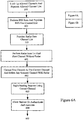
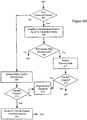
- Figures 6A and 6B illustrates an exemplary startup operation in which stations can assist the access point in the radar detection function.
- the access point can use steps 101-103, as described in reference to Figure 1 , for populating the radar-free channel list.
- the access point can perform a 60 second radar scan on a randomly selected channel in the radar-free channel list. This scanning can continue until the access point finds a first channel without radar. Any scanned channels including radar can be deleted from the radar-free channel list.
- the access point can choose the first radar-free channel as the current channel, remove this channel from the radar-free channel list, and begin sending beacons on that channel in step 603. Note that because the backup channels are not yet selected, the startup time can be significantly reduced compared with the process described in reference to Figure 1 .
- the access point can allow stations to authenticate and associate. If at least one new station has associated with the access point, as determined in step 605, then, before sending or receiving data frames, the access point can immediately send a Basic Measurement Request frame to an associated station in step 606. In one embodiment, the access point can send the frame to the station that first requested association. This signal requests the station to scan a candidate channel in the radar-free channel list for radar. The access point can request that the scan be limited to a short duration (e.g. 2-5 sec). In one embodiment, the access point can identify a channel for the station to scan. For example, the channel identification process can include steps substantially similar to steps 312-319 (that is, instead of setting the backup channel to the current channel, the candidate channel would be scanned for radar).
- the station may be incapable or unwilling to accept and perform the measurement request on the designated channel, as determined in step 607. If the station responds that it will not make the radar measurement (e.g. refuses, is incapable, or does not respond to the request at all), then the access point can determine if there is another newly associated station in step 605. If so, then the process continues with step 606. If there is not another newly associated station that will make the measurement, then the access point will indicate to any associated station(s) that communication will be delayed for a predetermined period of time while the access point itself switches to the alternate channel and performs a short scan for radar in step 609.
- the access point will indicate to any associated station(s) that communication will be delayed for a predetermined period of time while the access point itself switches to the alternate channel and performs a short scan for radar in step 609.
- the duration of the access point scan can be short enough to ensure continued network operation, e.g. 100 to 200 ms.
- the stations can be informed to cease transmission for this period (plus a short buffer time for the access point to switch out of and back to the current channel of operation) using a point coordination function (PCF) of the access point in combination with an appropriate Contention Free Period value, which results in a long NAV value in the station.
- PCF point coordination function
- the PCF which is provided by the IEEE 802.11 standard, allows an access point to control the timing of transmissions from its associated stations.
- the access point broadcasts that it will poll each station and the station can only respond after being polled.
- the NAV value indicates the minimum time that a station must wait until trying to communicate with the access point again.
- the access point can return to the current channel of operation, reset the NAV and PCF and continue to listen for radar on the current channel.
- the access point can repeat its scan on that backup channel. Assuming a scan/rest time of 200 ms, the access point would repeat the process 300 times to meet an exemplary regulatory requirement of a 60 second scan for a backup channel.
- the access point can set the refresh time for that backup channel. On the other hand, if the candidate backup channel has radar, then the access point can delete that channel from the radar-free channel list. Note that if the access point detects radar on the current channel before any backup channels in the radar-free channel list have been identified from the candidate backup channels, then the access point typically restarts (i.e. returns to step 101, in either Figure 1 or Figure 6A ).
- the access point can determine whether another candidate backup channel from the radar-free channel list should be scanned (i.e. if the number of radar-free backup channels is less than a predetermined number, such as 2). If not, then normal WLAN operation can begin in step 612. If so, then the access point can return to the current channel, send beacons, and listen for any additional stations requesting association in step 611. The process then returns to step 605.
- step 605 the access point could proceed directly to step 609 to alternately perform short checks for radar on a different channel and send beacons on the current channel of operation until a full scan has been performed.
- step 607 if the newly associated station responds that it will make the radar measurement, then that station proceeds to make the radar measurement in step 613.
- the access point can delete that channel from the radar-free channel list and another un-scanned candidate backup channel from that list can be used in the next scan.
- step 614 the access point can determine whether another backup channel is needed. If not, then normal operation can begin in step 612. If so, then the access point can determine whether another newly associated station is available in step 605. The steps described in reference to Figure 6B can be repeated until full scanning has occurred for each backup channel.
- the scanning of the desired number of backup channels in the radar-free channel list can be performed quickly.
- the access point can request one associated station to scan one channel and also request another station to scan another channel.
- the desired two backup channels can be found and added to the radar-free channel list in 60-120 seconds. Note that if two scans are being performed substantially in parallel and only one additional backup channel is needed, then the first channel found to be without radar will be designated the backup channel (wherein the access point could then immediately stop scanning of the second channel).
- startup of the WLAN network can begin a number of minutes faster compared to the access point itself scanning 3 or more channels during startup.
- a station is allowed to associate after only one channel is found to be radar-free, thereby ensuring that communication between the access point and that station can begin immediately upon completion of its scan period, if applicable.
- an associated station is not allowed to begin transmitting or receiving data until the station indicates it will not make the measurement, has performed a full scan of one channel on the radar-free channel list, or the desired number of backup channels is provided, the associated station will not begin any applications that may be interrupted.
- the access point can repeatedly request a station to perform short (e.g. 2-5 sec) scans on one backup channel (using the Basic Measurement Request) until these short scans cumulatively meet the regulatory requirements for radar scan (e.g. 60 seconds on each backup channel).
- short scans e.g. 2-5 sec
- the access point can continue to request that each newly associated station perform a short scan on one of the not yet scanned candidate channels listed in the radar-free channel list.
- the startup delay for any new station is limited to the required cumulative scan time (e.g. 60 sec).
- the access point will not make this request if the station is re-associating with the access point, thereby avoiding disrupting receipt of data that may be queued or otherwise disrupting any latency-sensitive application currently running on the station.
- the scan times associated with the access point and the stations are illustrative only and not limiting.
- Other embodiments of the invention can include different, i.e. longer or shorter, scan times depending on device, system, and/or political considerations.
- DFS has been described in detail in reference to European regulations, other countries may soon promulgate rules regarding DFS.
- certain organizations such as the International Telecommunications Union (which currently includes 144 member countries worldwide) are working on a global allocation to harmonize the 5 GHz spectrum.
- many regional domains around the world may adopt rules that make DFS a requirement, although not all regional domains may specify the same implementation details.
- station devices could be periodically requested to scan for radar in multiple channels.
- an access point could implement certain other defined scanning periods and sequences. During these defined scanning periods, a series of capable stations could search for radar in multiple channels in parallel, thereby significantly improving access point performance
- each backup channel can have its own refresh time.
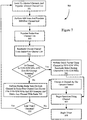
- a startup process 700 can take into account whether a regulatory domain exempts WLAN devices from detecting radars in the 5150-5250 MHz sub-band. If exempted, the WLAN devices can use a fast startup procedure that still meets mandated spreading requirements. In one embodiment, process 700, after being called by a main routine, can perform steps 101-103 (described in reference to Figure 1 ).
- a channel can be randomly selected from the radar-free channel list. Note that this random selection is required to maintain compliance with spreading rules (i.e. to prevent WLAN devices from choosing channels in 5150-5250 MHz for startup each time). If the selected channel is in the 5150-5250 MHz sub-band and the regulatory domain exempts scanning for channels in this sub-band, then a quick start routine can be performed in step 703. In this quick start routine, process 700 can advantageously bypass all startup radar scanning (normally lasting 60 seconds or longer). Of importance, this bypass is acceptable because a regulatory domain that exempts scanning in the 5150-5250 MHz sub-band does not allow radar in this sub-band. Therefore, if the selected channel is in the 5150-5250 MHz sub-band, then the selected channel has a high enough probability of not having radar that the selected channel can be designated the current channel of operation.
- a backup channel can also be randomly selected from the 5150-5250 MHz sub-band in step 703.
- the backup channel also resides in 5150-5250 MHz sub-band, the need for a radar scan (normally lasting 60 seconds or longer) for selecting the backup channel can also be eliminated. Note that selection of the backup channel from the 5150-5250 MHz sub-band (rather than a random choice from among all available channels) does not contradict the spreading rules because the use of this backup channel is not likely to occur in practice.
- the backup channel will not be called because radar would typically not be detected in the current channel.
- the selection of the backup channel can be performed in step 703 to account for the rare event that radar, although prohibited in this sub-band, is detected in the current channel.
- normal operation on the current channel may commence in step 107.
- Step 704. if the current channel is not the 5150-5250 MHz sub-band or if the regulatory domain does not exempt scanning in this sub-band, then a startup radar scan can be performed on each channel in the radar-free channel list in step 704. Note that if the regulatory domain does exempt scanning, then any scanning of channels in the radar-free channel list in the 5150-5250 MHz sub-band can be skipped. Steps 105-108 can then be performed as described in reference to Figure 1 . Accordingingly, it is intended that the scope of the invention be defined by the following Claims and their equivalents.
Landscapes
- Engineering & Computer Science (AREA)
- Signal Processing (AREA)
- Computer Networks & Wireless Communication (AREA)
- Computer Security & Cryptography (AREA)
- General Engineering & Computer Science (AREA)
- Computing Systems (AREA)
- Computer Hardware Design (AREA)
- Radar, Positioning & Navigation (AREA)
- Remote Sensing (AREA)
- Physics & Mathematics (AREA)
- General Physics & Mathematics (AREA)
- Mobile Radio Communication Systems (AREA)
- Radar Systems Or Details Thereof (AREA)
Claims (4)
- Ein Verfahren zum Befüllen einer Backup-Kanalliste für eine WLAN-Einrichtung (WLAN = wireless local area network), die in einem Spektrum betreibbar ist, wobei das Verfahren Folgendes aufweist:Durchführen eines Nachschlagevorgangs bezüglich gestatteter Kanäle innerhalb gestatteter Subbänder (101) zum Erzeugen einer Liste von Kandidatenkanälen;Gewichten der Kandidatenkanäle basierend auf einer tatsächlichen und potentiellen Nutzung von gestatteten Subbändern in dem Spektrum durch Vergeben einer Präferenz zuerst (201, 202, 203) an Kanäle in Richtung des unteren Endes des Spektrums und als zweites (204-214) an Kanäle, die aktuell keine Sendung von anderen BSSs (BSS = Basic Service Set) haben; undAuswählen von Kanälen aus den gestatteten Subbändern gemäß der Gewichtung zum Erreichen vorgeschriebener Kanalspreizungsanforderungen.
- Verfahren nach Anspruch 1, wobei das Auswählen weiter bevorzugtes Auswählen aufweist von:Kanälen von wenigstens einem von jedem der unterschiedlichen Subbänder (205, 209) gegenüber Kanälen, die aktuell keine Sendung von anderen BSSs (205, 206, 207) haben, wenn sie von weniger als allen gestatteten Subbändern (206) sind.
- Verfahren nach Anspruch 1, wobei die Präferenz hinsichtlich Kanälen, die aktuell keine Sendung von anderen Basic Service Sets bzw. BSSs haben, weiter Kanäle umfasst, die einen Pegel einer aktuellen WLAN-Sendung haben, der unter einem akzeptablen Pegel liegt.
- Eine WLAN-Einrichtung, die Mittel aufweist zum Befüllen einer Backup-Kanalliste für eine WLAN-Einrichtung (WLAN = wireless local area network), die in einem Spektrum betreibbar ist, und die weiter Mittel aufweist zum:Durchführen eines Nachschlagevorgangs bezüglich gestatteter Kanäle innerhalb gestatteter Subbänder (101) zum Erzeugen einer Liste von Kandidatenkanälen;Gewichten der Kandidatenkanäle basierend auf einer tatsächlichen und potentiellen Nutzung von gestatteten Subbändern in dem Spektrum durch Vergeben einer Präferenz zuerst (201, 202, 203) an Kanäle in Richtung des unteren Endes des Spektrums und als zweites (204-214) an Kanäle, die aktuell keine Sendung von anderen BSSs (BSS = Basic Service Set) haben; undAuswählen von Kanälen aus den gestatteten Subbändern gemäß der Gewichtung zum Erreichen vorgeschriebener Kanalspreizungsanforderungen.
Priority Applications (1)
| Application Number | Priority Date | Filing Date | Title |
|---|---|---|---|
| EP17178844.1A EP3247059B1 (de) | 2003-01-30 | 2004-01-23 | Verfahren zur implementierung einer dynamischen frequenzauswahl (dfs) und eines merkmals der vorübergehenden kanalauswahl für wlan-vorrichtungen |
Applications Claiming Priority (7)
| Application Number | Priority Date | Filing Date | Title |
|---|---|---|---|
| US44406603P | 2003-01-30 | 2003-01-30 | |
| US444066P | 2003-01-30 | ||
| US406049 | 2003-04-02 | ||
| US10/406,049 US7606193B2 (en) | 2003-01-30 | 2003-04-02 | Methods for implementing a dynamic frequency selection (DFS) feature for WLAN devices |
| US10/730,883 US6870815B2 (en) | 2003-01-30 | 2003-12-08 | Methods for implementing a dynamic frequency selection (DFS) and a temporary channel selection feature for WLAN devices |
| US730883 | 2003-12-08 | ||
| PCT/US2004/001860 WO2004070988A2 (en) | 2003-01-30 | 2004-01-23 | Dynamic frequency selection and temporary channel selection |
Related Child Applications (2)
| Application Number | Title | Priority Date | Filing Date |
|---|---|---|---|
| EP17178844.1A Division-Into EP3247059B1 (de) | 2003-01-30 | 2004-01-23 | Verfahren zur implementierung einer dynamischen frequenzauswahl (dfs) und eines merkmals der vorübergehenden kanalauswahl für wlan-vorrichtungen |
| EP17178844.1A Division EP3247059B1 (de) | 2003-01-30 | 2004-01-23 | Verfahren zur implementierung einer dynamischen frequenzauswahl (dfs) und eines merkmals der vorübergehenden kanalauswahl für wlan-vorrichtungen |
Publications (3)
| Publication Number | Publication Date |
|---|---|
| EP1588508A2 EP1588508A2 (de) | 2005-10-26 |
| EP1588508A4 EP1588508A4 (de) | 2011-06-22 |
| EP1588508B1 true EP1588508B1 (de) | 2017-08-02 |
Family
ID=32854266
Family Applications (2)
| Application Number | Title | Priority Date | Filing Date |
|---|---|---|---|
| EP17178844.1A Expired - Lifetime EP3247059B1 (de) | 2003-01-30 | 2004-01-23 | Verfahren zur implementierung einer dynamischen frequenzauswahl (dfs) und eines merkmals der vorübergehenden kanalauswahl für wlan-vorrichtungen |
| EP04704867.3A Expired - Lifetime EP1588508B1 (de) | 2003-01-30 | 2004-01-23 | Verfahren zur implementierung einerdynamischen frequenzauswahl (dfs) und eines merkmals der vorübergehendenkanalauswahl für wlan-einrichtungen |
Family Applications Before (1)
| Application Number | Title | Priority Date | Filing Date |
|---|---|---|---|
| EP17178844.1A Expired - Lifetime EP3247059B1 (de) | 2003-01-30 | 2004-01-23 | Verfahren zur implementierung einer dynamischen frequenzauswahl (dfs) und eines merkmals der vorübergehenden kanalauswahl für wlan-vorrichtungen |
Country Status (4)
| Country | Link |
|---|---|
| US (1) | US6870815B2 (de) |
| EP (2) | EP3247059B1 (de) |
| KR (1) | KR101041677B1 (de) |
| WO (1) | WO2004070988A2 (de) |
Families Citing this family (151)
| Publication number | Priority date | Publication date | Assignee | Title |
|---|---|---|---|---|
| JP4046961B2 (ja) * | 2001-09-03 | 2008-02-13 | キヤノン株式会社 | 位置検出方法、位置検出装置、露光装置及び露光方法 |
| US6891496B2 (en) * | 2002-05-03 | 2005-05-10 | Atheros Communications, Inc. | Method and apparatus for physical layer radar pulse detection and estimation |
| US20060171335A1 (en) * | 2005-02-03 | 2006-08-03 | Michael Yuen | Backup channel selection in wireless LANs |
| US7606573B1 (en) | 2002-09-27 | 2009-10-20 | Autocell Laboratories, Inc. | Wireless switched network |
| US7107032B2 (en) * | 2003-01-08 | 2006-09-12 | Mediatek Inc. | Radar detection method for radio local area networks |
| US7606193B2 (en) * | 2003-01-30 | 2009-10-20 | Atheros Communications, Inc. | Methods for implementing a dynamic frequency selection (DFS) feature for WLAN devices |
| US7366537B2 (en) * | 2003-02-24 | 2008-04-29 | Autocell Laboratories, Inc. | Wireless network apparatus and system |
| US7869822B2 (en) * | 2003-02-24 | 2011-01-11 | Autocell Laboratories, Inc. | Wireless network apparatus and system field of the invention |
| US7359676B2 (en) * | 2003-04-21 | 2008-04-15 | Airdefense, Inc. | Systems and methods for adaptively scanning for wireless communications |
| US7453857B2 (en) * | 2003-05-09 | 2008-11-18 | Koninklijke Philips Electronics N.V. | Measuring medium activity patterns in wireless networks and deriving information from the activity patterns |
| SE525337C2 (sv) * | 2003-06-24 | 2005-02-01 | Infineon Technologies Ag | Förfarande och anordning för att minska den genomsnittliga tiden som behövs för en kommunikationsenhet att ansluta sig till ett kommunikationsnätverk |
| US20040264394A1 (en) * | 2003-06-30 | 2004-12-30 | Boris Ginzburg | Method and apparatus for multi-channel wireless LAN architecture |
| JP4211529B2 (ja) * | 2003-08-06 | 2009-01-21 | 日本電気株式会社 | チャネル選択方法及びそれに用いる無線局並びにプログラム |
| US8190162B2 (en) * | 2003-09-15 | 2012-05-29 | Broadcom Corporation | Radar detection circuit for a WLAN transceiver |
| KR100574517B1 (ko) * | 2003-10-28 | 2006-04-27 | 삼성전자주식회사 | 무선 개인영역 네트워크에서의 브로드캐스트 방법 및 그방법을 사용하는 통신시스템 |
| US7450904B2 (en) * | 2004-01-08 | 2008-11-11 | Interdigital Technology Corporation | Escape mechanism for a wireless local area network |
| JP3828546B2 (ja) * | 2004-01-26 | 2006-10-04 | 株式会社東芝 | 無線通信装置、無線通信方法及び無線通信プログラム |
| JP4349142B2 (ja) * | 2004-02-09 | 2009-10-21 | ソニー株式会社 | 無線通信装置及び無線通信方法、並びにコンピュータ・プログラム |
| US7366169B1 (en) | 2004-02-18 | 2008-04-29 | Autocell Laboratories, Inc. | Apparatus for scanning radio frequency channels |
| US7969937B2 (en) | 2004-03-23 | 2011-06-28 | Aruba Networks, Inc. | System and method for centralized station management |
| US9432848B2 (en) | 2004-03-23 | 2016-08-30 | Aruba Networks, Inc. | Band steering for multi-band wireless clients |
| US7684783B1 (en) | 2004-03-23 | 2010-03-23 | Autocell Laboratories, Inc. | System and method for authenticating devices in a wireless network |
| US7965686B1 (en) | 2004-03-26 | 2011-06-21 | Autocell Laboratories, Inc. | Selecting a wireless access point when load information is not provided by all access points |
| US7835701B2 (en) * | 2004-03-29 | 2010-11-16 | Edgewater Computer Systems, Inc. | Detecting and eliminating spurious energy in communications systems via multi-channel processing |
| US7043277B1 (en) | 2004-05-27 | 2006-05-09 | Autocell Laboratories, Inc. | Automatically populated display regions for discovered access points and stations in a user interface representing a wireless communication network deployed in a physical environment |
| US7283848B1 (en) | 2004-05-27 | 2007-10-16 | Autocell Laboratories, Inc. | System and method for generating display objects representing areas of coverage, available bandwidth and channel selection for wireless devices in a wireless communication network |
| US7774028B1 (en) | 2004-05-27 | 2010-08-10 | Autocell Laboratories, Inc. | System and method for stateful representation of wireless network devices in a user interface to a wireless communication environment planning and management system |
| US7660263B1 (en) | 2004-05-27 | 2010-02-09 | Autocell Laboratories, Inc. | Graphical representations of associations between devices in a wireless communication network indicating available throughput and channel selection |
| US7280067B2 (en) * | 2004-06-01 | 2007-10-09 | Newlogic Technologies Gmbh | Radar detector and radar detecting method for WLAN systems according to 802.11 wireless communication standards |
| US7236790B2 (en) * | 2004-06-03 | 2007-06-26 | Intel Corporation | Distributed radar detection for WLAN |
| US7230566B2 (en) * | 2004-08-03 | 2007-06-12 | Cisco Technology, Inc. | Radar protection device for wireless networks |
| KR100703683B1 (ko) * | 2004-08-27 | 2007-04-05 | 삼성전자주식회사 | 무선 네트워크 장치 및 이를 이용한 채널 이동 방법 |
| WO2006052759A2 (en) * | 2004-11-05 | 2006-05-18 | Meshnetworks, Inc. | System and method for dynamic frequency selection in a multihopping wireless network |
| US20060171327A1 (en) * | 2005-02-03 | 2006-08-03 | Autocell Laboratories, Inc. | Interference source recognition for wireless LANs |
| US20060171304A1 (en) * | 2005-02-03 | 2006-08-03 | Hill David R | WLAN background scanning |
| US20060171326A1 (en) * | 2005-02-03 | 2006-08-03 | Autocell Laboratories, Inc. | Remedial actions for interference in wireless LANs |
| US8345643B1 (en) | 2005-02-03 | 2013-01-01 | Piccata Fund Limited Liability Company | Exception processing for wireless roaming |
| US20060171305A1 (en) * | 2005-02-03 | 2006-08-03 | Autocell Laboratories, Inc. | Access point channel forecasting for seamless station association transition |
| US7505751B1 (en) | 2005-02-09 | 2009-03-17 | Autocell Laboratories, Inc. | Wireless mesh architecture |
| US8909945B2 (en) | 2005-04-08 | 2014-12-09 | Interdigital Technology Corporation | Method for transmit and receive power control in mesh systems |
| US20060242457A1 (en) * | 2005-04-08 | 2006-10-26 | Interdigital Technology Corporation | Method and apparatus for coordinating seamless channel switching in a mesh network |
| US7813370B2 (en) * | 2005-04-25 | 2010-10-12 | Autocell Laboratories, Inc. | Facilitating wireless spectrum migration |
| US7773944B2 (en) | 2005-06-06 | 2010-08-10 | Autocell Laboratories, Inc. | RF domains |
| JP2007005897A (ja) * | 2005-06-21 | 2007-01-11 | Toshiba Corp | 無線通信装置、無線通信方法及び無線通信システム |
| US7636550B2 (en) * | 2005-06-23 | 2009-12-22 | Autocell Laboratories, Inc. | System and method for determining channel quality in a wireless network |
| US7505434B1 (en) | 2005-06-23 | 2009-03-17 | Autocell Laboratories, Inc. | VLAN tagging in WLANs |
| US7633901B2 (en) * | 2005-06-23 | 2009-12-15 | Autocell Laboratories, Inc. | Co-channel congestion method and apparatus |
| US7548750B2 (en) * | 2005-09-13 | 2009-06-16 | Cisco Technology, Inc. | System and method for detection of primary spectrum users |
| US20080219201A1 (en) * | 2005-09-16 | 2008-09-11 | Koninklijke Philips Electronics, N.V. | Method of Clustering Devices in Wireless Communication Network |
| KR101243685B1 (ko) * | 2005-09-16 | 2013-03-14 | 코닌클리케 필립스 일렉트로닉스 엔.브이. | 동적 스펙트럼 액세스 무선 시스템에서 통신 액세스를복구하는 방법 |
| US7424269B2 (en) * | 2005-09-29 | 2008-09-09 | Intel Corporation | System, method and device of radar detection |
| US8018894B2 (en) * | 2005-09-30 | 2011-09-13 | Interdigital Technology Corporation | Method and apparatus for implementing a blind seamless channel change |
| EP1935126B1 (de) * | 2005-10-14 | 2013-09-25 | Electronics and Telecommunications Research Institute | Verfahren zur frequenzkanalzuweisung unter verwendung effektiver spektrum-messung in einem mehrfach-fa-system |
| KR100785799B1 (ko) | 2005-10-14 | 2007-12-13 | 한국전자통신연구원 | 다중 주파수채널 시스템에서 효율적인 스펙트럼 센싱을이용한 채널 할당 방법 |
| EP1988403A3 (de) | 2005-10-24 | 2011-03-23 | Mitsubishi Electric Information Technology Centre Europe B.V. | Analyse von Impulszügen |
| US7688782B2 (en) * | 2005-11-03 | 2010-03-30 | Symbol Technologies, Inc. | Method and system for managing multi-channel communication |
| US8411616B2 (en) | 2005-11-03 | 2013-04-02 | Piccata Fund Limited Liability Company | Pre-scan for wireless channel selection |
| CN100518066C (zh) * | 2005-11-11 | 2009-07-22 | 鸿富锦精密工业(深圳)有限公司 | 频道扫描装置及其频道扫描方法 |
| US20090219909A1 (en) * | 2005-11-16 | 2009-09-03 | Gwangzeen Ko | Method for switching and managing frequency access in cognitive radio system, base station and subscriber station using the same |
| EP1804424A1 (de) * | 2005-12-27 | 2007-07-04 | THOMSON Licensing | Verfahren zur dynamischen Kanalwahl in einem drahtlosem lokalen Netz |
| US20070201416A1 (en) * | 2006-02-27 | 2007-08-30 | Ajay Malik | Methods and apparatus for a self-healing WLAN |
| KR100781521B1 (ko) * | 2006-05-03 | 2007-12-03 | 삼성전자주식회사 | 무선 네트워크 환경 하에서 기기의 변경을 발견하는 방법및 장치 |
| US7620397B2 (en) * | 2006-06-27 | 2009-11-17 | Motorola, Inc. | Method for managing scanning of channels in a wireless network |
| US7623060B1 (en) | 2006-06-29 | 2009-11-24 | Marvell International Ltd. | Systems and methods for detecting radar |
| JP4899665B2 (ja) | 2006-06-30 | 2012-03-21 | 富士通株式会社 | 無線通信システム、無線通信装置、無線通信方法及び無線通信プログラム |
| US8281392B2 (en) | 2006-08-11 | 2012-10-02 | Airdefense, Inc. | Methods and systems for wired equivalent privacy and Wi-Fi protected access protection |
| KR100772417B1 (ko) * | 2006-09-26 | 2007-11-01 | 삼성전자주식회사 | 다이렉트 링크를 이용한 무선네트워크 통신 방법 및 그장치 |
| US8050627B2 (en) | 2006-12-15 | 2011-11-01 | Motorola Mobility, Inc. | Method and system for predictive sensing of periodic intermittent interference |
| US20080146155A1 (en) * | 2006-12-15 | 2008-06-19 | Motorola, Inc. | Method and system for reliable detection and avoidance of periodic intermittent interference |
| US20080159210A1 (en) * | 2007-01-03 | 2008-07-03 | Texas Instruments, Inc. | System and method for automatic channel selection |
| US7570193B2 (en) * | 2007-01-22 | 2009-08-04 | Bandspeed, Inc. | Detecting and recognizing long duration waveforms |
| US7596461B2 (en) * | 2007-07-06 | 2009-09-29 | Cisco Technology, Inc. | Measurement of air quality in wireless networks |
| US8116687B2 (en) * | 2007-07-25 | 2012-02-14 | Freescale Semiconductor, Inc. | Dynamic frequency selection in wireless devices |
| US7944886B2 (en) * | 2007-08-21 | 2011-05-17 | Cisco Technology, Inc. | Infrastructure-based enabling indication for dynamic frequency selection in wireless networks |
| JP4575409B2 (ja) | 2007-08-22 | 2010-11-04 | 株式会社東芝 | 無線通信装置 |
| US8179862B2 (en) * | 2007-10-02 | 2012-05-15 | Motorola Mobility, Inc. | Method for preventing co-channel operation with radar systems |
| US20090160696A1 (en) * | 2007-12-21 | 2009-06-25 | Ralink Technology Corporation | Configurable radar detection and avoidance system for wireless ofdm tranceivers |
| KR20090095434A (ko) * | 2008-03-03 | 2009-09-09 | 삼성전자주식회사 | 무선 통신 시스템에서 다중 주파수 밴드를 이용한 신호송수신 시스템 및 방법 |
| US8085734B2 (en) | 2008-03-14 | 2011-12-27 | Lantiq Deutschland Gmbh | System and method for dynamic receive diversity allocation |
| JP5153468B2 (ja) * | 2008-06-12 | 2013-02-27 | キヤノン株式会社 | 無線通信装置及びその通信方法 |
| KR101572792B1 (ko) * | 2008-10-09 | 2015-12-11 | 코닌클리케 필립스 엔.브이. | 메시―유형 네트워크들에서의 채널 전환 |
| US8081615B2 (en) * | 2008-10-10 | 2011-12-20 | Mediatek Inc. | Method and apparatus to allow coexistence between wireless devices |
| KR101521095B1 (ko) * | 2009-01-12 | 2015-05-20 | 삼성전자주식회사 | 무선 통신 채널 제어 방법 및 시스템 |
| US8305971B2 (en) * | 2009-01-13 | 2012-11-06 | Cisco Technology, Inc. | Utilizing persistent interference information for radio channel selection |
| JP4856736B2 (ja) * | 2009-05-18 | 2012-01-18 | 株式会社バッファロー | 無線通信装置、無線通信システムおよび無線通信方法 |
| FR2947415A1 (fr) * | 2009-06-29 | 2010-12-31 | France Telecom | Procede de gestion d’une ressource de frequence correspondant a un canal alloue a un equipement, programme d’ordinateur, equipement et signal correspondants |
| KR20110031135A (ko) * | 2009-09-18 | 2011-03-24 | 한국전자통신연구원 | 무선 통신 시스템에서 데이터 전송 장치 및 방법 |
| KR101708631B1 (ko) * | 2010-05-18 | 2017-02-21 | 엘지전자 주식회사 | 무선 통신을 이용한 영상표시장치 및 그 동작 방법 |
| KR101708632B1 (ko) * | 2010-05-18 | 2017-02-21 | 엘지전자 주식회사 | 무선 통신을 이용한 영상표시장치 및 그 동작 방법 |
| ES2754950T3 (es) * | 2010-08-25 | 2020-04-21 | Utc Fire & Security Corp | Agilidad de frecuencia para sistemas inalámbricos integrados |
| EP2512169B1 (de) | 2011-04-11 | 2015-11-25 | Fluidmesh Networks S.r.l. | Verwaltung von Funkfrequenzen in einem drahtlosen oder hybriden Maschennetzwerk |
| US20140301328A1 (en) * | 2011-12-20 | 2014-10-09 | Bob Daniel Yacovitch | Wireless Access Point Alternate Settings |
| US9119079B2 (en) | 2012-01-27 | 2015-08-25 | Airties Kablosuz Iletisim San. Ve Dis Tic. A.S. | System and method to avoid interference with radar systems |
| KR101641975B1 (ko) * | 2012-08-09 | 2016-07-22 | 엘지전자 주식회사 | 무선 통신시스템에서 스테이션의 하향링크 신호 수신 방법 |
| US9408087B2 (en) | 2013-02-06 | 2016-08-02 | General Electric Company | Systems and methods for dynamic frequency selection for interference avoidance |
| JP6217098B2 (ja) * | 2013-03-22 | 2017-10-25 | 株式会社バッファロー | 無線通信装置および無線通信用チャネル選択方法 |
| US9882593B2 (en) * | 2013-05-30 | 2018-01-30 | Celeno Communications (Israel) Ltd. | Coexistence between primary chains and auxiliary receiver chain in a WLAN device |
| US9877330B2 (en) * | 2013-05-30 | 2018-01-23 | Celeno Communications (Israel) Ltd. | WLAN device with auxiliary receiver chain |
| US20150063321A1 (en) * | 2013-09-04 | 2015-03-05 | Qualcomm Incorporated | Radar detection |
| US9167382B2 (en) * | 2014-03-10 | 2015-10-20 | Interlite Aktiebolag | Method and system for wireless communication |
| JP2016019190A (ja) * | 2014-07-09 | 2016-02-01 | 株式会社東芝 | 無線通信装置および無線通信方法 |
| WO2016025908A2 (en) | 2014-08-15 | 2016-02-18 | US LADAR, Inc. | Methods and systems for ladar transmission |
| US9699663B1 (en) * | 2015-02-20 | 2017-07-04 | Kathryn Jovancevic | Spectrum sharing system |
| US20170034707A1 (en) * | 2015-07-27 | 2017-02-02 | Qualcomm Incorporated | Intelligent dynamic frequency selection techniques |
| US9832791B2 (en) * | 2015-08-04 | 2017-11-28 | Network Performance Research Group Llc | Method and apparatus for use of simultaneous multiple channels in the dynamic frequency selection band in wireless networks |
| US9699786B2 (en) | 2015-09-07 | 2017-07-04 | Network Performance Research Group Llc | Method and apparatus for integrating radio agent data in network organization of dynamic channel selection in wireless networks |
| US9622089B1 (en) | 2015-11-25 | 2017-04-11 | Network Performance Research Group | Cloud DFS super master systems and methods |
| US10104665B2 (en) | 2015-08-10 | 2018-10-16 | Network Performance Research Group Llc | Method and apparatus for providing dynamic frequency selection spectrum access in peer-to-peer wireless networks |
| US9807619B2 (en) | 2015-08-04 | 2017-10-31 | Network Performance Research Group Llc | Methods and apparatuses for use of simultaneous multiple channels in the dynamic frequency selection band in wireless networks |
| US9439197B1 (en) | 2015-08-10 | 2016-09-06 | Planetary Network Technologies, Inc. | Method and apparatus for directed adaptive control of dynamic channel selection in wireless networks |
| US20170142728A1 (en) * | 2015-08-04 | 2017-05-18 | Network Performance Research Group Llc | Multiple detector coordination for monitoring of multiple channels in the dynamic frequency selection band |
| US9924518B2 (en) | 2015-08-10 | 2018-03-20 | Network Performance Research Group Llc | Method and apparatus for dynamic channel selection device |
| US9807625B2 (en) | 2015-08-10 | 2017-10-31 | Network Performance Research Group Llc | Method and apparatus for using time shifted analysis based on gathering non-encrypted information from packets |
| CN106454964B (zh) * | 2015-08-13 | 2020-04-28 | 华为技术有限公司 | 一种通信方法及通信设备 |
| US9843494B2 (en) | 2015-09-01 | 2017-12-12 | Microsoft Technology Licensing, Llc | Channel availability checks with device monitoring |
| US9622161B1 (en) * | 2015-10-23 | 2017-04-11 | Belden, Inc. | Systems and methods for obtaining available channels for fast channel switching |
| US9806971B2 (en) * | 2015-11-19 | 2017-10-31 | EVA Automation, Inc. | Restricted-signal confirmation for high-throughput links |
| BR112018010637A2 (pt) * | 2015-11-24 | 2018-11-13 | Thomson Licensing | método e dispositivo para a conexão do ponto de acesso à estação |
| US10368247B2 (en) | 2015-11-25 | 2019-07-30 | Network Performance Research Group Llc | Cloud DFS super master detector location systems and methods |
| US9930670B2 (en) | 2015-11-25 | 2018-03-27 | Network Performance Research Group Llc | System, method, and apparatus for setting device geolocation via location proxies |
| US9839038B2 (en) | 2015-11-25 | 2017-12-05 | Network Performance Research Group Llc | System, method, and apparatus for setting a regulatory operating mode of a device |
| US10908262B2 (en) | 2016-02-18 | 2021-02-02 | Aeye, Inc. | Ladar transmitter with optical field splitter/inverter for improved gaze on scan area portions |
| US10782393B2 (en) | 2016-02-18 | 2020-09-22 | Aeye, Inc. | Ladar receiver range measurement using distinct optical path for reference light |
| US9933513B2 (en) | 2016-02-18 | 2018-04-03 | Aeye, Inc. | Method and apparatus for an adaptive ladar receiver |
| US10042159B2 (en) | 2016-02-18 | 2018-08-07 | Aeye, Inc. | Ladar transmitter with optical field splitter/inverter |
| KR102105685B1 (ko) | 2016-07-15 | 2020-04-29 | 주식회사 케이티 | 무선랜 기반 데이터 트래픽 전송을 위한 최적 dfs 채널 선택 방법, 장치 및 컴퓨터 프로그램 |
| JP6744783B2 (ja) | 2016-08-17 | 2020-08-19 | キヤノン株式会社 | 情報処理装置とその制御方法、及びプログラム |
| KR20180049525A (ko) * | 2016-11-03 | 2018-05-11 | 삼성전자주식회사 | 전자 장치 및 전자 장치의 무선 연결 제어 방법 |
| EP3541035B1 (de) * | 2016-12-01 | 2022-10-26 | Huawei Technologies Co., Ltd. | Verfahren und vorrichtung zur auswahl von kanälen |
| US9736845B1 (en) * | 2017-01-03 | 2017-08-15 | Network Performance Research Group Llc | Over the air signaling of dynamic frequency selection (DFS) operating parameters to client devices |
| GB2580535A (en) * | 2017-01-08 | 2020-07-22 | Ocado Innovation Ltd | Wireless communication system with detectors for extraneous received signals |
| GB2558587B (en) | 2017-01-08 | 2020-12-09 | Ocado Innovation Ltd | Wireless communication system with detectors for extraneous received signals |
| US10209349B2 (en) | 2017-02-17 | 2019-02-19 | Aeye, Inc. | Method and system for ladar pulse deconfliction to detect and track other ladar systems |
| CN110870368A (zh) | 2017-06-13 | 2020-03-06 | 舒尔获得控股公司 | 并行使用及扫描无线信道 |
| JP6468329B2 (ja) * | 2017-09-11 | 2019-02-13 | 株式会社バッファロー | 無線通信装置および無線通信用チャネル選択方法 |
| US10663596B2 (en) | 2017-09-15 | 2020-05-26 | Aeye, Inc. | Ladar receiver with co-bore sited camera |
| US10893447B2 (en) * | 2018-01-18 | 2021-01-12 | Cable Television Laboratories, Inc. | Systems and methods for improved Wi-Fi coexistence with radar |
| EP3804388A1 (de) * | 2018-05-30 | 2021-04-14 | ARRIS Enterprises LLC | Lastausgleich unter bändern und zugangspunkten in einem drahtlosen netzwerk |
| FR3083043B1 (fr) * | 2018-06-26 | 2021-05-07 | Sagemcom Broadband Sas | Procede de gestion d'un canal de communication |
| US11405793B2 (en) | 2019-09-30 | 2022-08-02 | Shure Acquisition Holdings, Inc. | Concurrent usage and scanning of wireless channels for direct DFS to DFS channel switching |
| US11855914B2 (en) * | 2019-11-27 | 2023-12-26 | Cisco Technology, Inc. | Performing distributed dynamic frequency selection using a shared cache |
| US11405791B2 (en) | 2020-06-25 | 2022-08-02 | Hewlett Packard Enterprise Development Lp | System and method for optimizing a channel switch mechanism between DFS channels |
| US11805112B2 (en) * | 2021-02-08 | 2023-10-31 | Cisco Technology, Inc. | Enhanced multi-factor authentication based on physical and logical proximity to trusted devices and users |
| US11619740B2 (en) | 2021-03-26 | 2023-04-04 | Aeye, Inc. | Hyper temporal lidar with asynchronous shot intervals and detection intervals |
| US20220317249A1 (en) | 2021-03-26 | 2022-10-06 | Aeye, Inc. | Hyper Temporal Lidar with Switching Between a Baseline Scan Mode and a Pulse Burst Mode |
| US11630188B1 (en) | 2021-03-26 | 2023-04-18 | Aeye, Inc. | Hyper temporal lidar with dynamic laser control using safety models |
| US11460553B1 (en) | 2021-03-26 | 2022-10-04 | Aeye, Inc. | Hyper temporal lidar with dynamic laser control using different mirror motion models for shot scheduling and shot firing |
| US20220308187A1 (en) | 2021-03-26 | 2022-09-29 | Aeye, Inc. | Hyper Temporal Lidar Using Multiple Matched Filters to Determine Target Retro-Reflectivity |
| US20230044929A1 (en) | 2021-03-26 | 2023-02-09 | Aeye, Inc. | Multi-Lens Lidar Receiver with Multiple Readout Channels |
| US11635495B1 (en) | 2021-03-26 | 2023-04-25 | Aeye, Inc. | Hyper temporal lidar with controllable tilt amplitude for a variable amplitude scan mirror |
| CN115802404A (zh) * | 2022-11-23 | 2023-03-14 | 北京小米移动软件有限公司 | 信道占用方法以及装置、电子设备及存储介质 |
Family Cites Families (8)
| Publication number | Priority date | Publication date | Assignee | Title |
|---|---|---|---|---|
| US5355522A (en) | 1992-06-26 | 1994-10-11 | Motorola, Inc. | Frequency selection method and apparatus |
| JP3525518B2 (ja) | 1994-10-13 | 2004-05-10 | ヤマハ株式会社 | データ転送装置 |
| US6493666B2 (en) * | 1998-09-29 | 2002-12-10 | William M. Wiese, Jr. | System and method for processing data from and for multiple channels |
| US6483828B1 (en) * | 1999-02-10 | 2002-11-19 | Ericsson, Inc. | System and method for coding in a telecommunications environment using orthogonal and near-orthogonal codes |
| EP1248477A1 (de) * | 2001-04-03 | 2002-10-09 | Telefonaktiebolaget L M Ericsson (Publ) | Methode und Gerät zur Steuerung einer dynamischen Frequenzauswahl in einem Mobilfunksystem |
| US6697013B2 (en) | 2001-12-06 | 2004-02-24 | Atheros Communications, Inc. | Radar detection and dynamic frequency selection for wireless local area networks |
| US6891496B2 (en) | 2002-05-03 | 2005-05-10 | Atheros Communications, Inc. | Method and apparatus for physical layer radar pulse detection and estimation |
| US7257086B2 (en) | 2002-08-27 | 2007-08-14 | Terabeam Corporation | Method and system for effectuating network routing over primary and backup channels |
-
2003
- 2003-12-08 US US10/730,883 patent/US6870815B2/en not_active Expired - Lifetime
-
2004
- 2004-01-23 EP EP17178844.1A patent/EP3247059B1/de not_active Expired - Lifetime
- 2004-01-23 KR KR1020057013828A patent/KR101041677B1/ko not_active Expired - Fee Related
- 2004-01-23 WO PCT/US2004/001860 patent/WO2004070988A2/en not_active Ceased
- 2004-01-23 EP EP04704867.3A patent/EP1588508B1/de not_active Expired - Lifetime
Non-Patent Citations (1)
| Title |
|---|
| None * |
Also Published As
| Publication number | Publication date |
|---|---|
| KR20050102626A (ko) | 2005-10-26 |
| KR101041677B1 (ko) | 2011-06-15 |
| US20040156336A1 (en) | 2004-08-12 |
| EP1588508A2 (de) | 2005-10-26 |
| WO2004070988A3 (en) | 2004-10-07 |
| US6870815B2 (en) | 2005-03-22 |
| EP3247059B1 (de) | 2020-05-06 |
| EP1588508A4 (de) | 2011-06-22 |
| WO2004070988A2 (en) | 2004-08-19 |
| EP3247059A1 (de) | 2017-11-22 |
Similar Documents
| Publication | Publication Date | Title |
|---|---|---|
| EP1588508B1 (de) | Verfahren zur implementierung einerdynamischen frequenzauswahl (dfs) und eines merkmals der vorübergehendenkanalauswahl für wlan-einrichtungen | |
| US7606193B2 (en) | Methods for implementing a dynamic frequency selection (DFS) feature for WLAN devices | |
| US7848305B2 (en) | Techniques for accessing a wireless communication system with tune-away capability | |
| EP0745297B1 (de) | Robuste frequenzverwaltung und -gewinnung in einem drahtlosen lokalen netzwerk mit frequenzsprungfunkgeräten | |
| EP1433288B1 (de) | Drahtloses kommunikationssystem mit erkennung von fremdstrahlungsquellen | |
| US20180199342A1 (en) | Background scan with dynamic time and frequency switching | |
| US7701962B2 (en) | Wireless communication apparatus and wireless communication method | |
| US8873470B2 (en) | Method of recovering communication access in dynamic spectrum access wireless systems | |
| EP2628333A1 (de) | Verfahren und vorrichtung zur aktivierung von geplanten übertragungen | |
| US6327468B1 (en) | Method and apparatus for relocating a beacon in a wireless system | |
| JP2006521737A (ja) | 無線周波妨害から保護するための方法および装置 | |
| HUE033433T2 (en) | Procedures for Dynamic Frequency Selection (DFS) and Temporary Channel Selection Feature for WLAN Devices | |
| US9706441B2 (en) | Method and a device for regulating transmissions in a telecommunications network | |
| CN115699953B (zh) | 免许可频谱中装置之间的通信 | |
| CN109392058B (zh) | 基于无线网络的智能扫描的实现方法、装置、站点及接入点 | |
| CN112672431A (zh) | 随机接入方法和装置 | |
| GB2356109A (en) | Prioritised channel scanning |
Legal Events
| Date | Code | Title | Description |
|---|---|---|---|
| PUAI | Public reference made under article 153(3) epc to a published international application that has entered the european phase |
Free format text: ORIGINAL CODE: 0009012 |
|
| 17P | Request for examination filed |
Effective date: 20050630 |
|
| AK | Designated contracting states |
Kind code of ref document: A2 Designated state(s): AT BE BG CH CY CZ DE DK EE ES FI FR GB GR HU IE IT LI LU MC NL PT RO SE SI SK TR |
|
| AX | Request for extension of the european patent |
Extension state: AL LT LV MK |
|
| DAX | Request for extension of the european patent (deleted) | ||
| A4 | Supplementary search report drawn up and despatched |
Effective date: 20110524 |
|
| 17Q | First examination report despatched |
Effective date: 20110921 |
|
| RAP1 | Party data changed (applicant data changed or rights of an application transferred) |
Owner name: QUALCOMM ATHEROS, INC. |
|
| RAP1 | Party data changed (applicant data changed or rights of an application transferred) |
Owner name: QUALCOMM INCORPORATED |
|
| STAA | Information on the status of an ep patent application or granted ep patent |
Free format text: STATUS: EXAMINATION IS IN PROGRESS |
|
| GRAP | Despatch of communication of intention to grant a patent |
Free format text: ORIGINAL CODE: EPIDOSNIGR1 |
|
| STAA | Information on the status of an ep patent application or granted ep patent |
Free format text: STATUS: GRANT OF PATENT IS INTENDED |
|
| INTG | Intention to grant announced |
Effective date: 20170215 |
|
| GRAS | Grant fee paid |
Free format text: ORIGINAL CODE: EPIDOSNIGR3 |
|
| GRAA | (expected) grant |
Free format text: ORIGINAL CODE: 0009210 |
|
| STAA | Information on the status of an ep patent application or granted ep patent |
Free format text: STATUS: THE PATENT HAS BEEN GRANTED |
|
| AK | Designated contracting states |
Kind code of ref document: B1 Designated state(s): AT BE BG CH CY CZ DE DK EE ES FI FR GB GR HU IE IT LI LU MC NL PT RO SE SI SK TR |
|
| REG | Reference to a national code |
Ref country code: GB Ref legal event code: FG4D |
|
| REG | Reference to a national code |
Ref country code: CH Ref legal event code: EP Ref country code: AT Ref legal event code: REF Ref document number: 915522 Country of ref document: AT Kind code of ref document: T Effective date: 20170815 |
|
| REG | Reference to a national code |
Ref country code: IE Ref legal event code: FG4D |
|
| REG | Reference to a national code |
Ref country code: DE Ref legal event code: R096 Ref document number: 602004051608 Country of ref document: DE |
|
| REG | Reference to a national code |
Ref country code: FR Ref legal event code: PLFP Year of fee payment: 15 |
|
| REG | Reference to a national code |
Ref country code: NL Ref legal event code: FP |
|
| REG | Reference to a national code |
Ref country code: HU Ref legal event code: AG4A Ref document number: E033433 Country of ref document: HU |
|
| REG | Reference to a national code |
Ref country code: AT Ref legal event code: MK05 Ref document number: 915522 Country of ref document: AT Kind code of ref document: T Effective date: 20170802 |
|
| PG25 | Lapsed in a contracting state [announced via postgrant information from national office to epo] |
Ref country code: AT Free format text: LAPSE BECAUSE OF FAILURE TO SUBMIT A TRANSLATION OF THE DESCRIPTION OR TO PAY THE FEE WITHIN THE PRESCRIBED TIME-LIMIT Effective date: 20170802 Ref country code: SE Free format text: LAPSE BECAUSE OF FAILURE TO SUBMIT A TRANSLATION OF THE DESCRIPTION OR TO PAY THE FEE WITHIN THE PRESCRIBED TIME-LIMIT Effective date: 20170802 |
|
| PG25 | Lapsed in a contracting state [announced via postgrant information from national office to epo] |
Ref country code: BG Free format text: LAPSE BECAUSE OF FAILURE TO SUBMIT A TRANSLATION OF THE DESCRIPTION OR TO PAY THE FEE WITHIN THE PRESCRIBED TIME-LIMIT Effective date: 20171102 Ref country code: GR Free format text: LAPSE BECAUSE OF FAILURE TO SUBMIT A TRANSLATION OF THE DESCRIPTION OR TO PAY THE FEE WITHIN THE PRESCRIBED TIME-LIMIT Effective date: 20171103 |
|
| PG25 | Lapsed in a contracting state [announced via postgrant information from national office to epo] |
Ref country code: RO Free format text: LAPSE BECAUSE OF FAILURE TO SUBMIT A TRANSLATION OF THE DESCRIPTION OR TO PAY THE FEE WITHIN THE PRESCRIBED TIME-LIMIT Effective date: 20170802 Ref country code: DK Free format text: LAPSE BECAUSE OF FAILURE TO SUBMIT A TRANSLATION OF THE DESCRIPTION OR TO PAY THE FEE WITHIN THE PRESCRIBED TIME-LIMIT Effective date: 20170802 Ref country code: CZ Free format text: LAPSE BECAUSE OF FAILURE TO SUBMIT A TRANSLATION OF THE DESCRIPTION OR TO PAY THE FEE WITHIN THE PRESCRIBED TIME-LIMIT Effective date: 20170802 |
|
| REG | Reference to a national code |
Ref country code: DE Ref legal event code: R097 Ref document number: 602004051608 Country of ref document: DE |
|
| REG | Reference to a national code |
Ref country code: DE Ref legal event code: R082 Ref document number: 602004051608 Country of ref document: DE Representative=s name: MAUCHER JENKINS, DE Ref country code: DE Ref legal event code: R082 Ref document number: 602004051608 Country of ref document: DE Representative=s name: MAUCHER JENKINS PATENTANWAELTE & RECHTSANWAELT, DE |
|
| PG25 | Lapsed in a contracting state [announced via postgrant information from national office to epo] |
Ref country code: EE Free format text: LAPSE BECAUSE OF FAILURE TO SUBMIT A TRANSLATION OF THE DESCRIPTION OR TO PAY THE FEE WITHIN THE PRESCRIBED TIME-LIMIT Effective date: 20170802 Ref country code: SK Free format text: LAPSE BECAUSE OF FAILURE TO SUBMIT A TRANSLATION OF THE DESCRIPTION OR TO PAY THE FEE WITHIN THE PRESCRIBED TIME-LIMIT Effective date: 20170802 |
|
| PLBE | No opposition filed within time limit |
Free format text: ORIGINAL CODE: 0009261 |
|
| STAA | Information on the status of an ep patent application or granted ep patent |
Free format text: STATUS: NO OPPOSITION FILED WITHIN TIME LIMIT |
|
| 26N | No opposition filed |
Effective date: 20180503 |
|
| PG25 | Lapsed in a contracting state [announced via postgrant information from national office to epo] |
Ref country code: SI Free format text: LAPSE BECAUSE OF FAILURE TO SUBMIT A TRANSLATION OF THE DESCRIPTION OR TO PAY THE FEE WITHIN THE PRESCRIBED TIME-LIMIT Effective date: 20170802 |
|
| REG | Reference to a national code |
Ref country code: CH Ref legal event code: PL |
|
| PG25 | Lapsed in a contracting state [announced via postgrant information from national office to epo] |
Ref country code: LU Free format text: LAPSE BECAUSE OF NON-PAYMENT OF DUE FEES Effective date: 20180123 |
|
| REG | Reference to a national code |
Ref country code: IE Ref legal event code: MM4A |
|
| REG | Reference to a national code |
Ref country code: BE Ref legal event code: MM Effective date: 20180131 |
|
| PG25 | Lapsed in a contracting state [announced via postgrant information from national office to epo] |
Ref country code: LI Free format text: LAPSE BECAUSE OF NON-PAYMENT OF DUE FEES Effective date: 20180131 Ref country code: CH Free format text: LAPSE BECAUSE OF NON-PAYMENT OF DUE FEES Effective date: 20180131 Ref country code: BE Free format text: LAPSE BECAUSE OF NON-PAYMENT OF DUE FEES Effective date: 20180131 |
|
| PG25 | Lapsed in a contracting state [announced via postgrant information from national office to epo] |
Ref country code: IE Free format text: LAPSE BECAUSE OF NON-PAYMENT OF DUE FEES Effective date: 20180123 |
|
| PG25 | Lapsed in a contracting state [announced via postgrant information from national office to epo] |
Ref country code: MC Free format text: LAPSE BECAUSE OF FAILURE TO SUBMIT A TRANSLATION OF THE DESCRIPTION OR TO PAY THE FEE WITHIN THE PRESCRIBED TIME-LIMIT Effective date: 20170802 |
|
| PG25 | Lapsed in a contracting state [announced via postgrant information from national office to epo] |
Ref country code: TR Free format text: LAPSE BECAUSE OF FAILURE TO SUBMIT A TRANSLATION OF THE DESCRIPTION OR TO PAY THE FEE WITHIN THE PRESCRIBED TIME-LIMIT Effective date: 20170802 |
|
| PG25 | Lapsed in a contracting state [announced via postgrant information from national office to epo] |
Ref country code: PT Free format text: LAPSE BECAUSE OF FAILURE TO SUBMIT A TRANSLATION OF THE DESCRIPTION OR TO PAY THE FEE WITHIN THE PRESCRIBED TIME-LIMIT Effective date: 20170802 |
|
| PG25 | Lapsed in a contracting state [announced via postgrant information from national office to epo] |
Ref country code: CY Free format text: LAPSE BECAUSE OF FAILURE TO SUBMIT A TRANSLATION OF THE DESCRIPTION OR TO PAY THE FEE WITHIN THE PRESCRIBED TIME-LIMIT Effective date: 20170802 |
|
| PGFP | Annual fee paid to national office [announced via postgrant information from national office to epo] |
Ref country code: FR Payment date: 20211222 Year of fee payment: 19 Ref country code: GB Payment date: 20211228 Year of fee payment: 19 |
|
| PGFP | Annual fee paid to national office [announced via postgrant information from national office to epo] |
Ref country code: NL Payment date: 20211220 Year of fee payment: 19 |
|
| PGFP | Annual fee paid to national office [announced via postgrant information from national office to epo] |
Ref country code: DE Payment date: 20211216 Year of fee payment: 19 |
|
| PGFP | Annual fee paid to national office [announced via postgrant information from national office to epo] |
Ref country code: IT Payment date: 20220117 Year of fee payment: 19 Ref country code: ES Payment date: 20220209 Year of fee payment: 19 |
|
| PGFP | Annual fee paid to national office [announced via postgrant information from national office to epo] |
Ref country code: FI Payment date: 20221227 Year of fee payment: 20 |
|
| PGFP | Annual fee paid to national office [announced via postgrant information from national office to epo] |
Ref country code: HU Payment date: 20221219 Year of fee payment: 20 |
|
| REG | Reference to a national code |
Ref country code: DE Ref legal event code: R119 Ref document number: 602004051608 Country of ref document: DE |
|
| REG | Reference to a national code |
Ref country code: NL Ref legal event code: MM Effective date: 20230201 |
|
| GBPC | Gb: european patent ceased through non-payment of renewal fee |
Effective date: 20230123 |
|
| PG25 | Lapsed in a contracting state [announced via postgrant information from national office to epo] |
Ref country code: NL Free format text: LAPSE BECAUSE OF NON-PAYMENT OF DUE FEES Effective date: 20230201 Ref country code: GB Free format text: LAPSE BECAUSE OF NON-PAYMENT OF DUE FEES Effective date: 20230123 Ref country code: DE Free format text: LAPSE BECAUSE OF NON-PAYMENT OF DUE FEES Effective date: 20230801 |
|
| PG25 | Lapsed in a contracting state [announced via postgrant information from national office to epo] |
Ref country code: FR Free format text: LAPSE BECAUSE OF NON-PAYMENT OF DUE FEES Effective date: 20230131 |
|
| PG25 | Lapsed in a contracting state [announced via postgrant information from national office to epo] |
Ref country code: IT Free format text: LAPSE BECAUSE OF NON-PAYMENT OF DUE FEES Effective date: 20230123 |
|
| REG | Reference to a national code |
Ref country code: ES Ref legal event code: FD2A Effective date: 20240401 |
|
| PG25 | Lapsed in a contracting state [announced via postgrant information from national office to epo] |
Ref country code: ES Free format text: LAPSE BECAUSE OF NON-PAYMENT OF DUE FEES Effective date: 20230124 |
|
| PG25 | Lapsed in a contracting state [announced via postgrant information from national office to epo] |
Ref country code: ES Free format text: LAPSE BECAUSE OF NON-PAYMENT OF DUE FEES Effective date: 20230124 |