EP1586637A1 - Novel nitrile hydratase - Google Patents
Novel nitrile hydratase Download PDFInfo
- Publication number
- EP1586637A1 EP1586637A1 EP03780752A EP03780752A EP1586637A1 EP 1586637 A1 EP1586637 A1 EP 1586637A1 EP 03780752 A EP03780752 A EP 03780752A EP 03780752 A EP03780752 A EP 03780752A EP 1586637 A1 EP1586637 A1 EP 1586637A1
- Authority
- EP
- European Patent Office
- Prior art keywords
- amino acid
- sequence
- nitrile hydratase
- subunit
- acid sequence
- Prior art date
- Legal status (The legal status is an assumption and is not a legal conclusion. Google has not performed a legal analysis and makes no representation as to the accuracy of the status listed.)
- Granted
Links
Images


Classifications
-
- C—CHEMISTRY; METALLURGY
- C12—BIOCHEMISTRY; BEER; SPIRITS; WINE; VINEGAR; MICROBIOLOGY; ENZYMOLOGY; MUTATION OR GENETIC ENGINEERING
- C12Y—ENZYMES
- C12Y402/00—Carbon-oxygen lyases (4.2)
- C12Y402/01—Hydro-lyases (4.2.1)
- C12Y402/01084—Nitrile hydratase (4.2.1.84)
-
- C—CHEMISTRY; METALLURGY
- C12—BIOCHEMISTRY; BEER; SPIRITS; WINE; VINEGAR; MICROBIOLOGY; ENZYMOLOGY; MUTATION OR GENETIC ENGINEERING
- C12N—MICROORGANISMS OR ENZYMES; COMPOSITIONS THEREOF; PROPAGATING, PRESERVING, OR MAINTAINING MICROORGANISMS; MUTATION OR GENETIC ENGINEERING; CULTURE MEDIA
- C12N9/00—Enzymes; Proenzymes; Compositions thereof; Processes for preparing, activating, inhibiting, separating or purifying enzymes
- C12N9/88—Lyases (4.)
-
- C—CHEMISTRY; METALLURGY
- C12—BIOCHEMISTRY; BEER; SPIRITS; WINE; VINEGAR; MICROBIOLOGY; ENZYMOLOGY; MUTATION OR GENETIC ENGINEERING
- C12N—MICROORGANISMS OR ENZYMES; COMPOSITIONS THEREOF; PROPAGATING, PRESERVING, OR MAINTAINING MICROORGANISMS; MUTATION OR GENETIC ENGINEERING; CULTURE MEDIA
- C12N15/00—Mutation or genetic engineering; DNA or RNA concerning genetic engineering, vectors, e.g. plasmids, or their isolation, preparation or purification; Use of hosts therefor
- C12N15/09—Recombinant DNA-technology
- C12N15/11—DNA or RNA fragments; Modified forms thereof; Non-coding nucleic acids having a biological activity
- C12N15/52—Genes encoding for enzymes or proenzymes
Definitions
- the present invention relates to a novel nitrile hydratase, as well as to a gene encoding the enzyme, to a plasmid containing the gene, to a transformant strain as transformed with the plasmid, to a method for producing a nitrile hydratase using the transformant strain, and to a method for processing a nitrile compound with a culture obtained from cultivating the transformant strain, with the cultivated cells or with a product obtained by processing the cultivated cells, to produce a corresponding amide compound.
- the invention relates to a process for modifying the properties of an enzyme having the activity of nitrile hydratase. Furthermore, the invention relates to an enzyme with modified properties, as well as to a gene encoding the enzyme, to a plasmid containing the gene, to a transformant strain transformed with the plasmid, to a method for producing a nitrile hydratase using the transformant strain, and to a method for processing a nitrile compound with a culture obtained from cultivating the transformant strain, with the cultivated cells or with a product obtained by processing the cultivated cells, to produce a corresponding amide compound.
- the invention is useful in the field of material production using a biological catalyst.
- a nitrile hydratase which is an enzyme having the nitrile-hydrating activity to convert a nitrile group of various compounds to an amide group by hydration, and a number of microorganism strains producing the above-mentioned enzyme have been introduced.
- attempts have been being made to clone the gene of the enzyme for the purpose of expressing a large amount of the enzyme through genetic engineering means using the gene of the enzyme.
- Rhodococcus rhodochrous strain J1 deposited under the Budapest Treaty with the International Patent Organism Depositary at the National Institute of Advanced Industrial Science and Technology, Tsukuba Central 6, 1-1-1 Higashi, Tsukuba-shi, Ibaraki-ken, Japan, under the deposit number FERM BP-1478
- Pseudonocardia thermophila this strain is in storage in the Japan collection of Microorganisms at RIKEN BioResource Center, 2-1 Hirosawa, Wako-shi, Saitama-ken 351-0198, Japan, under the accession number JCM3095 and may be freely distributed to anyone upon request.
- it is deposited under the Budapest Treaty with the International Patent Organism Depositary at the National Institute of Advanced Industrial Science and Technology, under the deposit number FERM BP-7379) are known (see Patent Documents 1 and 3).
- nitrile hydratase has been isolated from these strains, and it has been confirmed that this enzyme consists of two types of polypeptides generally referred to as an ⁇ -subunit and a ⁇ -subunit. Further, the gene of the nitrile hydratase has been isolated from these strains, and the amino acid sequence and the base sequence for the enzyme have been identified.
- the plasmid which can express the nitrile hydratase in a transformant and the strain transformed with this plasmid (for example, TG1/pNHJ10H and MT-10822: under the Budapest Treaty, the former is deposited with the International Patent Organism Depositary at the National Institute of Advanced Industrial Science and Technology under the deposit number FERM BP-2777, and the latter is deposited with the International Patent Organism Depositary at the National Institute of Advanced Industrial Science and Technology, Tsukuba Central 6, 1-1-1 Higashi, Tsukuba-shi, Ibaraki-ken, Japan, under the deposit number FERM BP-5785, as of February 7, 1996) have been prepared.
- the enzyme comprises a dimer having the ⁇ -subunit and the ⁇ -subunit which are in association as the fundamental structural unit, and the dimers are further associated to form tetramers, octamers or dodecamers (depending on the biological species of origin) in order to express the activity.
- the region or structure forming the active center has been identified, and it is known that the active center is not at an exposed position on the external side of the enzyme where direct contact is made with the reaction solvent, but at a position where it looks like being embedded inside the enzyme.
- a region represented by the sequence X 1 CXLC 1 SC 2 X 2 X 3 X 4 X 5 (wherein, C corresponds to cysteine, X to serine or threonine, L to leucine, C 1 to cysteine sulfinic acid (cysteine sulfinic acid ⁇ 3-sulfinoalanine), S to serine, and C 2 to cysteine sulfenic acid (cysteine sulfenic acid ⁇ S-hydroxy-cysteine); and X 1 , X 2 , X 3 , X 4 and X 5 represent arbitrary amino acid, respectively) in the amino acid sequence of the ⁇ -subunit is known as the region responsible for the coordination of the metal atom to the active center (see Non-patent Documents 2 to 4).
- Patent Document 5 in the case of producing a nitrile hydratase having the enzymatic activity by expressing a gene that codes for nitrile hydratase using a host cell, there exists a protein which is involved in the activation of the enzyme.
- another advantage of the invention is to provide a specific technique relating to a method comprising modification of one or more properties of nitrile hydratase such as the enzymatic activity, substrate specificity, V max , K m , thermal stability, stability against the substrate, stability against the product or the like, without impairing the enzyme's original activity. More specifically, it is to provide a method for modifying the properties by introducing into the nitrile hydratase gene a mutation which effects a change in the stereostructure of the nitrile hydratase.
- Patent Document 4 a novel substitution mutation site that is not disclosed in the above-mentioned publication and determined the base sequence of the gene after the introduction of the mutation. Furthermore, they produced a plasmid containing the gene and a transformant strain transformed with the plasmid. They have also made extensive studies on preparing the enzyme using the strain or processing a nitrile compound using a culture obtained from cultivating the transformant strain, with the cultivated cells or with a product obtained by processing the cultivated cells, to produce a corresponding amide compound. As a result, the invention was completed.
- the ⁇ -subunit of the nitrile hydratase according to the invention is characterized in that it has an amino acid sequence containing mutation in which at least one amino acid of the 36 th , 71 st , 148 th and 204 th amino acids in the amino acid sequence of the ⁇ -subunit as set forth in SEQ ID NO: 1 in the Sequence Listing is substituted by another amino acid.
- the ⁇ -subunit of the nitrile hydratase according to the invention is characterized in that it has an amino acid sequence containing mutation in which at least one amino acid of the 10 th , 32 nd , 37 th , 41 st , 46 th , 48 th , 51 st , 72 nd , 118 th , 127 th , 146 th , 160 th , 186 th and 217 th amino acids in the amino acid sequence of the ⁇ -subunit as set forth in SEQ ID NO: 2 in the Sequence Listing is substituted by another amino acid.
- the nitrile hydratase according to the invention is characterized in that it comprises an ⁇ -subunit and a ⁇ -subunit, and at least one of these subunits has the above-mentioned mutation.
- the gene encoding the ⁇ -subunit of the nitrile hydratase according to the invention is characterized in that it codes for an amino acid sequence having mutation in the ⁇ -subunit.
- the gene encoding the ⁇ -subunit of the nitrile hydratase according to the invention is characterized in that it codes for an amino acid sequence having mutation in the ⁇ -subunit.
- the gene encoding the nitrile hydratase according to the invention is characterized in that it comprises the gene encoding the ⁇ -subunit and the gene encoding the ⁇ -subunit, and at least one of these subunits has the above-mentioned mutation.
- the plasmid of the invention is characterized in having any one of the above-mentioned genes.
- the transformant of the invention is characterized in that it is obtained by transformation of a host cell using the plasmid.
- the production of the nitrile hydratase of the invention is characterized in comprising a step of recovering the nitrile hydratase from the transformant, a culture obtained from cultivation of the transformants, or the product obtained from the processing of the transformants or the culture.
- the method for producing an amide compound according to the invention is characterized in comprising a step of bringing a nitrile compound into contact with the nitrile hydratase in an aqueous medium to convert the nitrile compound to a corresponding amide compound.
- the inventors specified a region to be subjected to mutation, based on the aspect of novelty, and implemented the method for modifying a nitrile hydratase by applying alteration such as substitution, insertion or deletion at the amino acids in the amino acid sequence which correspond to the amino acid residues forming the region.
- the inventors specified the region to be modified in accordance with the purpose, by carrying out an assiduous interpretation with reference to the stereostructure of the nitrile hydratase as disclosed in the Non-patent Documents 2, 3 and 4 and in PDB ID NOs: 1AHJ, 2AHJ and 1IRE.
- the stereostructure specified the region which forms a cavity through which a substrate passes from the outside of the enzyme toward the active center or a product passes from the active center toward the outside of the enzyme, and the region which forms an associative interface between the ⁇ -subunit and the ⁇ -subunit which is involved in the formation of dimers or an interface involved in the association of dimers.
- the method for applying alteration such as substitution, insertion or deletion into an amino acid sequence is not particularly limited and may be exemplified by the technique of mutagenesis which employs the gene recombination technology.
- the inventors observed how the method for modification changes the properties of nitrile hydratase, by determining the base sequence of the gene after the above-mentioned alteration, producing a plasmid containing the gene and a transformant strain transformed with the gene or the plasmid, and then performing the production of the enzyme using the transformant strain or the processing of a nitrile compound with a culture obtained from cultivating the transformant strain, with the cultivated cells or with a product obtained by processing the cultivated cells, to produce a corresponding amide compound. After a close examination on the alteration at various sites in the amino acid sequence constituting the nitrile hydratase to be modified, and on various modified enzymes obtained therefrom, the inventors eventually accomplished the invention.
- the invention relates to, in addition to the above-described features, the following [1] to [22]:
- the invention provides the amino acid sequence and the base sequence of the gene of a Pseudonocardia thermophila -derived nitrile hydratase which has a novel mutation point that does not change the fundamental function of nitrile hydratase. It also provides a plasmid containing the gene, a transformant containing the plasmid, a method for producing the enzyme using the transformant, and a method for processing a nitrile compound by using the transformant to produce a corresponding amide compound.
- the invention provides a method for modifying an enzyme having the nitrile hydratase activity before modification, by using the means characterized in changing the stereostructure of the enzyme having the nitrile hydratase activity.
- an effect may be achieved that one or more properties selected from the enzyme activity, substrate specificity, V max , K m , thermal stability, stability against the substrate, stability against the product or the like is modified.
- the invention provides a nitrile hydratase having a novel mutation point, and a gene encoding the polypeptide chain constituting the enzyme.
- the invention provides a plasmid containing the gene, a transformant containing the gene or the plasmid, a method for producing the enzyme using the transformant, and a method for processing a nitrile compound by using the transformant to produce a corresponding amide compound.
- bla indicates the ORF encoding ⁇ -lactamase.
- ColE1-ori indicates the replication-starting site in a ColE1 system.
- lacZ indicates the promoter and operator region in pUC18-derived lactose operon.
- NH ⁇ indicates the ORF encoding the ⁇ -subunit of Pseudonocardia thermophila -derived nitrile hydratase.
- NH ⁇ indicates the ORF encoding the ⁇ -subunit of Pseudonocardia thermophila -derived nitrile hydratase.
- P16 indicates the ORF encoding a protein characterized in being involved in the activation of Pseudonocardia thermophila -derived nitrile hydratase.
- nhhA indicates the ORF encoding the ⁇ -subunit of Rhodococcus rhodochrous strain J1-derived nitrile hydratase.
- nhhB indicates the ORF encoding the ⁇ -subunit of Rhodococcus rhodochrous strain J1-derived nitrile hydratase.
- the nitrile hydratase of the invention is obtained by introducing mutation into an enzyme having the nitrile hydratase activity, and for example, it is obtained by introducing mutation into Pseudonocardia thermophila -derived nitrile hydratase.
- nitrile hydratase fundamentally consisted of the amino acid sequences as set forth in SEQ ID NOs: 1 and 2 in the Sequence Listing, in which amino acid at one or more predetermined sites in the amino acid sequence is substituted by another amino acid.
- the invention comprises a nitrile hydratase having as its constituent the ⁇ -subunit represented by the sequence of 205 amino acids as set forth in SEQ ID NO: 1 in the Sequence Listing, in which at least one amino acid in the amino acid sequence is substituted by another amino acid; a nitrile hydratase having as its constituent the ⁇ -subunit represented by the sequence of 438 amino acids in total which constitute the ⁇ -subunit represented by the sequence of 233 amino acids as set forth in SEQ ID NO: 2 in the Sequence Listing, in which at least one amino acid in the amino acid sequence is substituted by another amino acid; and a nitrile hydratase having both of the above-mentioned substitution cases as its constituent.
- the specific amino acid sequence used for the nitrile hydratase obtained by introducing mutation into Pseudonocardia thermophila -derived nitrile hydratase includes the following:
- Each of the above-mentioned mutations at least makes it possible to maintain the nitrile hydratase activity before modification.
- the nitrile hydratase obtained by introducing mutation into Pseudonocardia thermophila -derived nitrile hydratase consists of the following constituents having an amino acid sequence selected from the above (a-0) to (b-2):
- substitution, insertion and deletion of amino acids may occur within the scope of not impairing the nitrile hydratase activity intended by mutation at the specific sites.
- the nitrile hydratase gene obtained by introducing mutation into Pseudonocardia thermophila -derived nitrile hydratase contains the gene encoding the ⁇ -subunit of nitrile hydratase and the gene encoding the ⁇ -subunit of nitrile hydratase.
- genes involved in the invention mention may be made of those subjected to introduction of mutation into the gene of Pseudonocardia thermophila -derived nitrile hydratase, and they include the gene encoding the amino acid sequence of the ⁇ -subunit; the gene encoding the ⁇ -subunit; and the nitrile hydratase gene having both of the gene encoding the ⁇ -subunit and the gene encoding the ⁇ -subunit.
- the base sequence encoding the amino acid sequence of the ⁇ -subunit of SEQ ID NO: 1 which serves as the bases for the above-mentioned mutations the base sequence of SEQ ID NO: 3 is preferable.
- the base sequence encoding the amino acid sequence of the ⁇ -subunit of SEQ ID NO: 2 which serves as the bases for the above-mentioned mutations the base sequence of SEQ ID NO: 4 is preferable.
- the mutation of (a-1) above which is based on SEQ ID NO: 3 can be obtained by substituting at least one base sequence among the 106 th to 108 th , 211 th to 213 th , 442 nd to 444 th , and 610 th to 612 th of the base sequence of SEQ ID NO: 3, by another base sequence.
- the mutation of (a-2) above which is based on SEQ ID NO: 3 can be obtained by the substitution of a portion of the base sequence obtained by substituting at least one base sequence among the 16 th to 18 th , 55 th to 57 th , 112 th to 114 th , 229 th to 231 st , 268 th to 270 th , 304 th to 306 th , 316 th to 318 th , 376 th to 378 th , 388 th to 390 th , 424 th to 426 th , 436 th to 438 th , 559 th to 561 st , 580 th to 582 nd , and 607 th to 609 th of the base sequence of SEQ ID NO: 3, by another base sequence.
- the mutation of (b-1) above which is based on SEQ ID NO: 4 can be obtained by the substitution of a portion of the base sequence obtained by substituting at least one base sequence among the 28 th to 30 th , 94 th to 96 th , 109 th to 111 th , 121 st to 123 rd , 136 th to 138 th , 142 nd to 144 th , 151 st to 153 rd , 214 th to 216 th , 352 nd to 354 th , 379 th to 381 st , 436 th to 438 th , 478 th to 480 th , 556 th to 558 th , and 649 th to 651 st of the base sequence of SEQ ID NO: 4, by another base sequence.
- the mutation of (b-2) above which is based on SEQ ID NO: 4 can be obtained by the substitution of a portion of the base sequence obtained by substituting at least one base sequence among the 58 th to 60 th , 61 st to 63 rd , 322 nd to 324 th , 598 th to 600 th , and 634 th to 636 th of the base sequence of SEQ ID NO: 4, by another base sequence.
- substitutions are carried out within the scope such that the activity of the nitrile hydratase into which at least one of the ⁇ - and ⁇ -subunits encoded by the respective genes is combined and inserted, maintains or improves the state before substitution. Also, there is no particular limitation on the means for introducing mutation.
- nitrile hydratase genes of the invention may have additional mutations involving substitution, insertion or deletion of bases, within the scope that the gene can function as the template for the protein having the nitrile hydratase activity.
- Such additional mutations may be exemplified by the following. Even in the case where transcription and translation are carried out using a gene having a certain base sequence as the template, depending on conditions such as the type of the host cell incorporating the gene, the components or composition of the nutrition medium used in cultivation, the temperature or pH during cultivation, or the like, modification by enzymes within the host cell after expression of the gene can lead to production of mutants in which one or two or more amino acids near the N-terminal in the Sequence Listing are deleted, or one or two or more amino acids are newly added at the N-terminal, with the intended enzymatic action being still maintained. For this reason, such mutant nitrile hydratases are also to be included in the scope of invention.
- the plasmid for the production of the nitrile hydratase of the invention can be prepared by using the nitrile hydratase genes. Specific examples thereof may include the following:
- the transformant or strain of the invention is obtained by transforming an arbitrary host cell using the plasmid.
- the method for production of nitrile hydratase of the invention comprises a step of producing nitrile hydratase by cultivating the transformant or strain.
- the method for production of amide compound of the invention comprises a step of bringing a culture obtained by the cultivation of such transformant or strain producing nitrile hydratase, the cultivated cells or a product obtained by processing the cultivated cells into contact with a nitrile compound in a medium to produce a corresponding amide compound.
- the nitrile hydratase activity means the activity of hydrating a nitrile compound into a corresponding amide compound.
- the enzyme having this activity is in general characterized in that it comprises two types of polypeptide chains called the ⁇ -subunit and the ⁇ -subunit as the constituent, and the nitrile hydratase gene refers to the two amino acid sequences having the feature of forming those two polypeptide chains or to the base sequences constituting the two ORFs having the feature of encoding the amino acid sequences.
- the polypeptide consisting of the amino acid sequence as set forth in SEQ ID NO: 98 in the Sequence Listing as well as Chain A in the stereostructure of nitrile hydratase as set forth in PDB ID NO: 1IRE is the ⁇ -subunit; and the polypeptide consisting of the amino acid sequence as set forth in SEQ ID NO: 99 in the Sequence Listing as well as Chain B in the stereostructure of nitrile hydratase as set forth in PDB ID NO: 1IRE is the ⁇ -subunit.
- ORF composed of the base sequence as set forth in SEQ ID NO: 100 in the Sequence Listing and the ORF composed of the base sequence as set forth in SEQ ID NO: 101 in the Sequence Listing are referred to as the nitrile hydratase gene.
- the polypeptide consisting of the amino acid sequence that is encoded by the ORF formed by the 704 th to 1315 th of the base sequence as set forth in SEQ ID NO: 104 in the Sequence Listing is the ⁇ -subunit; the polypeptide consisting of the amino acid sequence that is encoded by the ORF formed by the 1 st to 690 th of the base sequence as set forth in SEQ ID NO: 104 in the Sequence Listing is the ⁇ -subunit; and the two ORFs encoded by the base sequence as set forth in SEQ ID NO: 104 in the Sequence Listing are the nitrile hydratase gene.
- the method for modification as used in the invention means a method directed to changing the stereostructure of an enzyme having the nitrile hydratase activity before modification for the purpose of changing one or more properties among the enzymatic activity, substrate specificity, V max , K m , thermal stability, stability against the substrate and stability against the product, without impairing the original nitrile hydratase activity.
- the method comprises a step of specifying, based on an interpretation of the stereostructure, the region forming a cavity through which a substrate passes from the outside of the enzyme toward the active center or a product passes from the active center toward the outside of the enzyme, and/or the region forming an associative interface between the ⁇ -subunit and the ⁇ -subunit which is involved in the formation of dimers or an interface which is involved in the association of dimers, and applying alterations such as substitution, insertion or deletion at one or more amino acids in the amino acid sequence which correspond to the amino acid residues that are present in the regions.
- amino acid residues corresponding to those present in the region forming an associative interface between the ⁇ -subunit and the ⁇ -subunit which is involved in the formation of dimers or an interface which is involved in the association of dimers mention may be made of the amino acid residues corresponding to the 2 nd helix as counted from the N-terminal of Chain A and the 2 nd helix as counted from the N-terminal of Chain B in the nitrile hydratase stereostructure as set forth in PDB ID NO: 1IRE, to the region extending from the 36 th threonine to the 48 th asparagine of the amino acid sequence as set forth in SEQ ID NO: 98 in the Sequence Listing, and to the region extending from the 112 th lysine to the 127 th leucine of the amino acid sequence as set forth in SEQ ID NO: 99 in the Sequence Listing; the amino acid residues corresponding to the 36 th , 71 st , 148 th
- the amino acid residues constituting the region that forms a cavity through which a substrate passes from the outside of the enzyme toward the active center or a product passes from the active center toward the outside of the enzyme, the amino acid residues whose alteration leads to a change in the cavity size and further controls the easiness or difficulty in passing of the substrate/product
- the invention includes any method for modification, comprising a step of applying alterations such as substitution, insertion or deletion at amino acids in the amino acid sequence which correspond to at least one amino acid residues as specified in the above-described manner in a subject nitrile hydratase ( Pseudonocardia thermophila JCM3095-derived one may be mentioned as a representative example).
- the invention also includes the method for modification by aligning a nitrile hydratase (for example, a Rhodococcus rhodochrous strain J1-derived nitrile hydratase) derived from a biological species other than Pseudonocardia thermophila JCM3095 with the stereostructure or the amino acid sequence of Pseudonocardia thermophila JCM3095-derived nitrile hydratase, finding the amino acid residues corresponding to the above-mentioned amino acid residues and altering the amino acids in the corresponding amino acid sequences.
- a nitrile hydratase for example, a Rhodococcus rhodochrous strain J1-derived nitrile hydratase
- the means used to implementing alignment based on the stereostructure or amino acid sequence is not particularly limited.
- software for genomic sequence interpretation such as DNASIS (manufactured by Hitachi Software Engineering Co., Ltd.) or a free software ClustalW or BLAST may be mentioned; and
- software for predicting protein stereostructure such as Modeler and Homology (products by Accelrys Software, Inc.) may be mentioned.
- the means for introducing mutation to alter amino acids in the amino acid sequence corresponding to amino acid residues is not particularly limited. But, an example may include a method for introducing mutation of substituting an amino acid in the amino acid sequence with another amino acid by means of recombinant gene technology.
- any changes in the amino acid sequence or base sequence resulting from a mutation additionally introduced in addition to the intentionally introduced mutation substitution, insertion or deletion of an amino acid or a base may occur within the scope of not impairing the desired nitrile hydratase activity achieved by the intended introduction of mutation.
- Such additionally introduced mutation may be exemplified by the following. Even in the case where transcription and translation are carried out using a gene having a certain base sequence as the template, depending on conditions such as the type of the host cell incorporating the gene, the components or composition of the nutrition medium used in cultivation, the temperature or pH during cultivation, or the like, modification by enzymes inside the host cell after expression of the gene can lead to production of mutants in which one or two or more amino acids near the N-terminal in the Sequence Listing are deleted, or one or two or more amino acids are newly added at the N-terminal, with the initial enzymatic action being still maintained. For this reason, such method for modification resulting in mutant nitrile hydratases is also to be included in the scope of invention.
- nitrile hydratases before modification which serve as the subject for the method for modification according to the invention
- a Rhodococcus rhodochrous strain J1-derived nitrile hydratase and a Pseudonocardia thermophila JCM3095-derived nitrile hydratase may be mentioned.
- a nitrile hydratase comprising as its constituents the polypeptide chain formed by an amino acid sequence which is homologous to the amino acid sequence encoded by the ORF which is formed by the 1 st to 690 th of the base sequence as set forth in SEQ ID NO: 104 in the Sequence Listing and the polypeptide chain formed by an amino acid sequence which is homologous to the amino acid sequence encoded by the ORF which is formed by the 704 th to 1315 th of the base sequence as set forth in SEQ ID NO: 104 in the Sequence Listing; a nitrile hydratase comprising as its constituents the polypeptide chain formed from the amino acid sequence as set forth in SEQ ID NO: 98 in the Sequence Listing and the polypeptide chain formed from the amino acid sequence as set forth in SEQ ID NO: 99 in the Sequence Listing.
- the nitrile hydratase before modification which serve as the subject for the method for modification according to the invention may also include a nitrile hydratase comprising as its constituents the polypeptide formed from an amino acid sequence which shows homology of 40% or greater with the amino acid sequence as set forth in SEQ ID NO: 98 in the Sequence Listing and the polypeptide formed from an amino acid sequence which shows homology of 25% or greater with the amino acid sequence as set forth in SEQ ID NO: 99 in the Sequence Listing.
- Examples of the polypeptide formed from an amino acid sequence which shows homology of 40% or greater with the amino acid sequence as set forth in SEQ ID NO: 98 in the Sequence Listing may include the polypeptide formed from the amino acid sequence as set forth in SEQ ID NO: 98 in the Sequence Listing; the polypeptide formed from an amino acid sequence in which arbitrary alteration such as substitution, insertion or deletion is applied to at least one site of the amino acid sequence as set forth in SEQ ID NO: 98; the polypeptide formed from an amino acid sequence in which at least one amino acid selected from the 6 th , 19 th , 38 th , 77 th , 90 th , 102 nd , 106 th , 126 th , 130 th , 142 nd , 146 th , 187 th , 194 th and 203 rd amino acids in the amino acid sequence as set forth in SEQ ID NO: 98 in the Sequence Listing is substituted by another amino acid; the polypeptide formed from an amino
- polypeptide formed from an amino acid sequence which shows homology of 40% or greater with the amino acid sequence as set forth in SEQ ID NO: 98 in the Sequence Listing is characterized, in some cases, in that it is a polypeptide containing a region represented by X 1 CXLC 1 SC 2 X 2 X 3 X 4 X 5 (wherein C corresponds to cysteine, X to serine or threonine, L to leucine, C 1 to cysteine sulfinic acid (cysteine sulfinic acid ⁇ 3-sulfinoalanine), S to serine, and C 2 to cysteine sulfenic acid (cysteine sulfenic acid ⁇ S-hydroxy-cysteine); and X 1 , X 2 , X 3 , X 4 and X 5 represent arbitrary amino acid, respectively) in the sequence.
- polypeptide is also characterized, in some cases, in that X 1 is valine, X 4 is tryptophan, and X 5 is proline.
- polypeptide is also characterized, in some cases, in that X 2 is tyrosine and X 3 is proline.
- the polypeptide is in some cases characterized in being bonded to a metal atom via the region represented by X 1 CXLC 1 SC 2 X 2 X 3 X 4 X 5 .
- this metal is in some cases characterized in being cobalt.
- Examples of the polypeptide formed from an amino acid sequence which shows homology of 25% or greater with the amino acid sequence as set forth in SEQ ID NO: 99 in the Sequence Listing may include the polypeptide formed from the amino acid sequence as set forth in SEQ ID NO: 99 in the Sequence Listing; the polypeptide formed from an amino acid sequence in which arbitrary alteration such as substitution, insertion or deletion is applied to at least one site of the amino acid sequence as set forth in SEQ ID NO: 99 in the Sequence Listing; the polypeptide formed from an amino acid sequence in which at least one amino acid selected from the 20 th , 21 st , 108 th , 200 th and 212 th amino acids in the amino acid sequence as set forth in SEQ ID NO: 99 in the Sequence Listing is substituted by another amino acid; the polypeptide formed from an amino acid sequence that is homologous to the amino acid sequence encoded by the ORF which is formed by the 1 st to 690 th of the base sequence as set forth in SEQ ID NO: 104 in the Sequence
- Rhodococcus rhodochrous strain J1-derived nitrile hydratase since it is a nitrile hydratase comprising as its constituents the polypeptide formed from the amino acid sequence that is encoded by the ORF which is formed by the 704 th to 1315 th of the base sequence as set forth in SEQ ID NO: 104 in the Sequence Listing, and the polypeptide formed from the amino acid sequence that is encoded by the ORF which is formed by the 1 st to 690 th of the base sequence as set forth in SEQ ID NO: 104 in the Sequence Listing, it is included in the scope of nitrile hydratase before modification, which is the subject of the method for modification according to the invention.
- Pseudonocardia thermophila JCM3095-derived nitrile hydratase is a nitrile hydratase comprising as its constituents the polypeptide formed from the amino acid sequence as set forth in SEQ ID NO: 98 in the Sequence Listing and the polypeptide formed from the amino acid sequence as set forth in SEQ ID NO: 99 in the Sequence Listing, it is also included in the scope of nitrile hydratase before modification, which is the subject of the method for modification according to the invention.
- nitrile hydratase derived from Pseudonocardia thermophila JCM3095-derived nitrile hydratase
- a nitrile hydratase derived from Pseudonocardia thermophila JCM3095-derived nitrile hydratase is also included in the scope of nitrile hydratase before modification, which is the subject of the method for modification according to the invention.
- a modified enzyme means a nitrile hydratase obtained by carrying out the method for modification using an enzyme having the nitrile hydratase activity as the subject of the method.
- An example thereof may include a modified enzyme characterized in being obtained by changing the character of a nitrile hydratase before modification by using the above-described methods for modification.
- the change in the substrate specificity may be mentioned as one representative example.
- a modified enzyme as obtained according to the method for modifying the invention is one that has undergone a change in the substrate specificity, the modified enzyme is included in the scope of modified enzyme according to the invention.
- the reaction is carried out, on the one hand, using acrylonitrile as the substrate to produce acrylamide, and on the other hand, using methacrylonitrile as the substrate to produce methacrylamide, and the molar ratio of the two products may be compared.
- a modified enzyme which results in a change such that the value of [moles of produced methacrylamide] ⁇ [moles of produced acrylamide] has increased as compared with the value obtained by an enzyme before modification, can be said to have undergone a change in character to facilitate the reaction using a nitrile compound with larger bulkiness as the substrate.
- a modified enzyme which results in a change such that the value has decreased can be said to have undergone a change in character to facilitate the reaction using a nitrile compound with smaller bulkiness as the substrate.
- Trp which corresponds to the 48 th of the amino acid sequence encoded by the ORF that is formed by the 1 st to 690 th of the base sequence as set forth in SEQ ID NO: 104 in the Sequence Listing to another amino acid residue
- the enzyme showed a change in character to facilitate the reaction using a nitrile compound with larger bulkiness as the substrate, as compared with the subject before modification.
- the protein showing the change of character as achieved as such is included in the scope of modified enzyme according to the invention.
- modified enzyme obtained by such combining of mutation sites is also included in the scope of modified enzyme according to the invention.
- the gene encoding a modified enzyme means the two amino acid sequences having the feature of forming the two types of polypeptide chains which constitute the modified enzyme, or the base sequences forming the two ORFs having the feature of encoding the amino acid sequences.
- the plasmid having the feature of containing the gene means the plasmid having the feature of containing in its sequence, the base sequences forming the two ORFs which have the feature of encoding the two amino acid sequences that are characterized in forming the two polypeptide chains constituting the modified enzyme.
- the plasmid can have, in addition to the gene according to the invention, a constitution which enables the production of a modified enzyme by means of a transformant or a strain obtained by transforming an arbitrary host cell, such as the regulatory region necessary for the expression of each gene, the region necessary for autonomous replication or the like.
- the arbitrary host cell as used herein may be exemplified by Escherichia coli as used in an embodiment of the below-described Examples, though not intended to be limited to this. Use can be also made of other microorganisms such as Bacillus species such as Bacillus subtilis , yeast or Streptomyces species.
- the regulatory region necessary for expression may include a promoter sequence (including the transcription-regulating operator sequence), a ribosome binding sequence (SD sequence), a transcription-terminating sequence and the like.
- the promoter sequence may include the trp promoter of E.coli-derived tryptophan operon, the lac promoter of lactose operon, the lambda-phage-derived PL promoter and PR promoter, or the B. subtilis-derived gluconic acid synthetase promoter (gnt), the alkali protease promoter (apr), the neutral protease promoter (npr), the ⁇ -amylase promoter (amy) and the like. Further, artificially designed or improved sequences such as the tac promoter or trc promoter can be also used.
- the ribosome binding sequence may be exemplified by the E. coli-derived sequence, B. subtilis -derived sequence or the original sequences of Rhodococcus or Pseudonocardia, but it is not particularly limited as long as it works in a desired host cell such as E. coli or B. subtilis .
- a consensus sequence comprising a series of 4 or more consecutive bases that are complementary to the 3'-terminal region of 16S ribosome RNA can be prepared by DNA synthesis and used.
- the transcription-terminating sequence is not essentially required, but one that is not ⁇ factor-dependent, for example, lipoprotein terminator, trp operon terminator or the like may be used.
- sequence order of these regulatory regions on a plasmid is preferably such that the promoter sequence and the ribosome binding sequence are located further upstream to the 5'-terminal than the gene according to the invention, and the transcription-terminating sequence is preferably located further downstream to the 3'-terminal than the gene according to the invention.
- the base sequences respectively encoding the ORFs which constitute the gene according to the invention may be expressed as individual independent cistrons by means of such regulatory regions, or may be expressed as a polycistron by means of a common regulatory region.
- Examples of the plasmid vector satisfying the above requirements may include pBR322, pUC18, pBluescript, pKK223-3 and pSC101, which have a region capable of autonomous replication in E. coli, or pUB110, pTZ4, pC194, ⁇ 11, ⁇ 1 and ⁇ 105 which have a region capable of autonomous replication in B. subtilis, and the like. Further, examples of the plasmid vector capable of autonomous replication in two or more species of host cells may include pHV14, TRp7, YEp7 and pBS7.
- nitrile hydratase having the desired activity to express the gene according to the invention When a nitrile hydratase having the desired activity to express the gene according to the invention is produced, a protein involved in the activation of nitrile hydratase may be required in some cases.
- a protein involved in the activation of nitrile hydratase is a protein having the property such that the presence or absence of the expression of the protein directly controls the activation of nitrile hydratase, and it can be exemplified by the protein involved in the activation of Pseudonocardia thermophila -derived nitrile hydratase (nitrile hydratase-activating protein) as described in Patent Document 4. More specifically, the nitrile hydratase-activating protein may be exemplified by one constituted by the sequence of 144 amino acids as presented in the amino acid sequence of SEQ ID NO: 102.
- mutant proteins obtained by substitution, insertion or deletion of amino acids in part of the amino acid sequence of SEQ ID NO: 102 are to be included in the nitrile hydratase-activating protein, as long as they are involved in the activation of nitrile hydratase.
- mutant proteins mention may be made of those having mutation such as substitution, insertion or deletion of one or more amino acids with respect to the amino acid sequence of SEQ ID NO: 102 and maintaining the property involved in the activation of nitrile hydratase.
- the gene encoding the nitrile hydratase-activating protein is not particularly limited as long as it is a gene that codes for the nitrile hydratase-activating protein. Such gene may be exemplified by the gene having the base sequence which codes for the amino acid sequence of SEQ ID NO: 102 and the genes that code for the mutant proteins. Further, as a preferred example of the gene encoding the nitrile hydratase-activating protein, the gene having the base sequence of SEQ ID NO: 103 may be mentioned.
- a gene encoding the nitrile hydratase-activating protein functions as the gene encoding the nitrile hydratase-activating protein, even though it is a sequence having substitution, insertion or deletion of one or two or more bases with respect to the base sequence as set forth in SEQ ID NO: 103, then the gene is to be included in the scope of genes encoding the nitrile hydratase-activating protein.
- ORF of the gene is included into the plasmid of the invention together with the two ORFs forming the gene according to the invention.
- the order of these ORFs on the plasmid is not particularly limited.
- three ORFs may be regulated by the same regulatory region; two of the ORFs may be regulated by the same regulatory region, the other one of the ORFs being regulated by a regulatory region different from the former; or the three ORFs may be each regulated by different regulatory regions.
- a method of constructing the plasmid of the invention by inserting the gene according to the invention into such vector plasmid, together with those regions necessary for expression of the activity of the modified enzyme according to the invention, or a method of transforming a desired host cell using the plasmid and a method of producing nitrile hydratase in the transformant use can be made of those general methods and host cells known in the art of molecular biology, biological engineering and genetic engineering as described in, for example, "Molecular Cloning, 3 rd ed.” (J. Sambrook et al., Cold Spring Harbor Laboratory Press, 2001) or the like.
- the transformant characterized in being obtained by transformation includes those obtained by transforming a host cell using the gene or plasmid according to the invention.
- a method of inoculating the transformant in a culture medium and then incubating it at a suitable cultivating temperature in general, 20°C to 50°C may be mentioned.
- LB medium, M9 medium or the like is generally used as the culture medium for cultivating the transformant, and metal ions may be added to such medium.
- the metal ion to be added may be Fe ion and Co ion.
- the amount of addition may be, for example, 0.1 ⁇ g/mL or greater.
- a modified enzyme characterized in comprising a step of recovering a modified enzyme from a culture obtained by cultivating the transformant, the cultivated cells, or a product of processing the culture or cells according to the invention
- a method comprising a step of bringing the desired nitrile compound into contact with a purification product or a crude enzyme product of the enzyme, with a culture for the transformant according to the invention, with a transformant obtained from the culture, or with a product of processing the transformant, in a solvent.
- the product of processing as used herein includes an extract or a disruption product of the transformant, a post-separation product such as a crude enzyme product obtained by isolating the nitrile hydratase activated fraction from such extract or disruption product, an enzyme purification product obtained by further purification or the like; and an immobilization product in which the transformant, or an extract, a disruption product or a post-separation product of the transformant is immobilized by suitable means.
- the contact temperature is not particularly limited, but it is preferably in the temperature range of not deactivating the nitrile hydratase, and more preferably from the freezing point or higher to 60°C or lower.
- nitrile compound there is no particular limitation as long as it is a compound which can act as the substrate for the modified enzyme of the invention, and examples may include nitrile compounds having 2 to 4 carbon atoms, such as acetonitrile, propionitrile, acrylonitrile, methacrylonitrile, n-butyronitrile, isobutyronitrile, crotononitrile, ⁇ -hydroxyisobutyronitrile and the like.
- concentration of such nitrile compound in the solvent is not particularly limited.
- the reaction temperature is, though not particularly limited, preferably in the range of not deactivating the nitrile hydratase, and more preferably from the freezing point or higher to 50°C or lower.
- LA PCR in vitro mutagenesis Kit For the substitution with Met for the 6 th Leu in the ⁇ -subunit, introduction of site-specific mutation was performed using a "LA PCR in vitro mutagenesis Kit” (manufactured by Takara Shuzo Co., Ltd.).
- LA PCR in vitro mutagenesis Kit is simply referred to as the kit.
- the kit was handled on the basis of the principle thereof and in accordance with the manufacturer's instructions for the kit.
- PCR reaction No. 1 Using 10 ng of pPT-DB1 as the template, PCRs of two different types were carried out.
- thermal denaturation 98°C
- annealing 55°C
- 72°C chain extension
- a reaction system of 50 ⁇ l in total comprising 50 pmols of an MUT4 primer (having the sequence as forth in SEQ ID No: 9 in the Sequence Listing) and 50 pmols of an M13 primer RV (having the sequence as forth in SEQ ID No: 10 in the Sequence Listing) (for the composition of the system, the manufacturer's instructions for the kit were followed) was used, and the reaction was carried out following the same procedure as the PCR reaction No. 1. After completion of the PCR reaction Nos. 1 and 2, 5 ⁇ l of the reaction mixture was subjected to agarose gel electrophoresis (where the agarose concentration was 1.0% by weight), and an assay of the DNA amplification product was carried out.
- This assay revealed the production of the amplified DNA products in the both PCR reactions. From each of these PCR reaction mixtures, the excess primers and dNTP were removed using Microcon 100 (manufactured by Takara Shuzo Co., Ltd.), and then TE was added to each of the mixtures to prepare 50 ⁇ l each of TE solutions.
- An annealing solution of 47.5 ⁇ l in total containing 0.5 ⁇ l of both of the above TE solutions (for the composition of the system, the manufacturer's instructions for the kit were followed) was prepared, and this solution was subjected to annealing by performing thermal denaturation of the solution at 98°C for 10 minutes, subsequently cooling the solution to 37°C at a constant cooling rate over a period of 60 minutes, and then maintaining it at 37°C for 15 minutes.
- 0.5 ⁇ l of TaKaRa LA Taq was added, and the solution was heated at 72°C for 3 minutes, thus completing the formation of heterologous double-stranded DNA. This was then subjected to PCR reaction No. 3.
- PCR reaction No. 3 For the PCR reaction No.
- reaction system of 50 ⁇ l in total comprising 50 pmols of an M13 primer M4 (having the sequence as forth in SEQ ID No: 8 in the Sequence Listing) and 50 pmols of an M13 primer RV (having the sequence as forth in SEQ ID No: 10 in the Sequence Listing) was used, and the reaction consisted of 25 PCR cycles, in which one PCR cycle comprised thermal denaturation (98°C) for 15 seconds, annealing (55°C) for 30 seconds and chain extension (72°C) for 120 seconds. After completion of the PCR reaction No.
- the resulting agarose melt was then subjected to phenol/chloroform extraction and ethanol precipitation to purify the DNA fragment.
- purified DNA fragment was finally dissolved in 10 ⁇ l of TE.
- the amplified DNA fragment of about 2 kbp thus purified was cleaved by means of restriction endonucleases EcoRI and HindIII, and then subjected to phenol/chloroform extraction and ethanol precipitation to purify the DNA fragment.
- purified DNA fragment was finally dissolved in 10 ⁇ l of TE.
- pPT-DB1 was cleaved by means of EcoRI and HindIII, and then subjected to agarose gel electrophoresis (using Type VII low-melting-point agarose, a product by Sigma Corporation; agarose concentration of 0.7%).
- An agarose fragment comprising only the DNA fragment of about 2.7 kbp was cut out of the agarose gel.
- the thus-cut agarose fragment (about 0.1 g) was finely pulverized, suspended in 1 ml of the TE solution, and kept at 55°C for 1 hour, whereby the agarose fragment was completely melted.
- the resulting agarose melt was subjected to phenol/chloroform extraction and ethanol precipitation to purify the DNA fragment.
- DNA fragment was finally dissolved in 10 ⁇ l of TE.
- DNA fragments of about 2 kbp and of about 2.7 kbp were subjected to DNA ligation, using a DNA ligation kit (manufactured by Takara Shuzo Co., Ltd.).
- a competent cell of E. coli HB101 manufactured by Toyobo Co., Ltd. was transformed with the reaction product to obtain a transformant No. 1.
- the conversion and the selectivity were determined in the following manner in the production of the amide compound using the obtained transformant.
- the cells were separated from the resulting culture by centrifugation (5,000G ⁇ 15 minutes), and then resuspending the cells in 50 ml of physiological saline, followed by another centrifugation (5,000G ⁇ 15 minutes).
- 0.1 g of the cells was suspended in 20 ml of an aqueous solution (pH 7.0) of 50 mM potassium phosphate. To this, 1 ml of acrylonitrile or methacrylonitrile was added, and this mixture was gently stirred at 10°C for 1 hour to react.
- reaction solution contained only an amide compound (acrylamide or methacrylamide) of a molar amount corresponding to the amount of the added nitrile compound (acrylonitrile or methacrylonitrile), and that the nitrile compound (acrylonitrile or methacrylonitrile) and the corresponding organic acid (acrylic acid or methacrylic acid) were absent. That is, the conversion and the selectivity were 100%, respectively.
- amide compound acrylamide or methacrylamide
- the plasmid was prepared from the cells by alkaline SDS extraction.
- the base sequence of the nitrile hydratase gene was determined by the dideoxy chain termination method using a sequencing kit and an Autosequencer 373A manufactured by ABI. The results are shown in Table 1, in which it is known that the 6 th Leu in the ⁇ -subunit of the nitrile hydratase from the clone shown therein was substituted with Met.
- the plasmid DNA pPT-DB1 was subjected to introduction of site-specific mutation in the same manner as in Reference Example 1.
- PCRs of two different types were carried out.
- a reaction system of 50 ⁇ l in total comprising 50 pmols of the primer having the sequence as forth in SEQ ID No: 11 in the Sequence Listing and 50 pmols of an M13 primer M4 (having the sequence as forth in SEQ ID No: 8 in the Sequence Listing) (for the composition of the system, the manufacturer's instructions for the kit were followed) was used, and the reaction consisted of 25 PCR cycles, in which one PCR cycle comprised thermal denaturation (98°C) for 15 seconds, annealing (55°C) for 30 seconds and chain extension (72°C) for 120 seconds.
- PCR reaction No. 2 For the PCR reaction No. 2, a reaction system of 50 ⁇ l in total comprising 50 pmols of an MUT4 primer (having the sequence as forth in SEQ ID No: 9 in the Sequence Listing) and 50 pmols of an M13 primer RV (having the sequence as forth in SEQ ID No: 10 in the Sequence Listing) (for the composition of the system, the manufacturer's instructions for the kit were followed) was used, and the reaction was carried out following the same procedure as the PCR reaction No. 1. After completion of the PCR reaction Nos.
- the plasmid was prepared from the cells by alkaline SDS extraction.
- the base sequence of the nitrile hydratase gene was determined by the dideoxy chain termination method using a sequencing kit and an Autosequencer 373A manufactured by ABI. The results are shown in Table 2, in which it is known that the 6 th Leu in the ⁇ -subunit of the nitrile hydratase from the clone shown therein was substituted with Thr.
- the plasmid DNA pPT-DB1 was subjected to introduction of site-specific mutation in the same manner as in Reference Example 1.
- PCRs of two different types were carried out.
- a reaction system of 50 ⁇ l in total comprising 50 pmols of the primer having the sequence as forth in SEQ ID No: 12 in the Sequence Listing and 50 pmols of an M13 primer M4 (having the sequence as forth in SEQ ID No: 8 in the Sequence Listing) (for the composition of the system, the manufacturer's instructions for the kit were followed) was used, and the reaction consisted of 25 PCR cycles, in which one PCR cycle comprised thermal denaturation (98°C) for 15 seconds, annealing (55°C) for 30 seconds and chain extension (72°C) for 120 seconds.
- PCR reaction No. 2 For the PCR reaction No. 2, a reaction system of 50 ⁇ l in total comprising 50 pmols of an MUT4 primer (having the sequence as forth in SEQ ID No: 9 in the Sequence Listing) and 50 pmols of an M13 primer RV (having the sequence as forth in SEQ ID No: 10 in the Sequence Listing) (for the composition of the system, the manufacturer's instructions for the kit were followed) was used, and the reaction was carried out following the same procedure as the PCR reaction No. 1. After completion of the PCR reaction Nos.
- the plasmid was prepared from the cells by alkaline SDS extraction.
- the base sequence of the nitrile hydratase gene was determined by the dideoxy chain termination method using a sequencing kit and an Autosequencer 373A manufactured by ABI. The results are shown in Table 3, in which it is known that the 6 th Leu in the ⁇ -subunit of the nitrile hydratase from the clone shown therein was substituted with Ala.
- the plasmid DNA pPT-DB1 was subjected to introduction of site-specific mutation in the same manner as in Reference Example 1.
- PCRs of two different types were carried out.
- a reaction system of 50 ⁇ l in total comprising 50 pmols of the primer having the sequence as forth in SEQ ID No: 13 in the Sequence Listing and 50 pmols of an M13 primer M4 (having the sequence as forth in SEQ ID No: 8 in the Sequence Listing) (for the composition of the system, the manufacturer's instructions for the kit were followed) was used, and the reaction consisted of 25 PCR cycles, in which one PCR cycle comprised thermal denaturation (98°C) for 15 seconds, annealing (55°C) for 30 seconds and chain extension (72°C) for 120 seconds.
- PCR reaction No. 2 For the PCR reaction No. 2, a reaction system of 50 ⁇ l in total comprising 50 pmols of an MUT4 primer (having the sequence as forth in SEQ ID No: 9 in the Sequence Listing) and 50 pmols of an M13 primer RV (having the sequence as forth in SEQ ID No: 10 in the Sequence Listing) (for the composition of the system, the manufacturer's instructions for the kit were followed) was used, and the reaction was carried out following the same procedure as the PCR reaction No. 1. After completion of the PCR reaction Nos.
- the plasmid was prepared from the cells by alkaline SDS extraction.
- the base sequence of the nitrile hydratase gene was determined by the dideoxy chain termination method using a sequencing kit and an Autosequencer 373A manufactured by ABI. The results are shown in Table 4, in which it is known that the 6 th Leu in the ⁇ -subunit of the nitrile hydratase from the clone shown therein was substituted with Val.
- the plasmid DNA pPT-DB1 was subjected to introduction of site-specific mutation in the same manner as in Reference Example 1.
- PCRs of two different types were carried out.
- a reaction system of 50 ⁇ l in total comprising 50 pmols of the primer having the sequence as forth in SEQ ID No: 14 in the Sequence Listing and 50 pmols of an M13 primer M4 (having the sequence as forth in SEQ ID No: 8 in the Sequence Listing) (for the composition of the system, the manufacturer's instructions for the kit were followed) was used, and the reaction consisted of 25 PCR cycles, in which one PCR cycle comprised thermal denaturation (98°C) for 15 seconds, annealing (55°C) for 30 seconds and chain extension (72°C) for 120 seconds.
- PCR reaction No. 2 For the PCR reaction No. 2, a reaction system of 50 ⁇ l in total comprising 50 pmols of an MUT4 primer (having the sequence as forth in SEQ ID No: 9 in the Sequence Listing) and 50 pmols of an M13 primer RV (having the sequence as forth in SEQ ID No: 10 in the Sequence Listing) (for the composition of the system, the manufacturer's instructions for the kit were followed) was used, and the reaction was carried out following the same procedure as the PCR reaction No. 1. After completion of the PCR reaction Nos.
- the plasmid was prepared from the cells by alkaline SDS extraction.
- the base sequence of the nitrile hydratase gene was determined by the dideoxy chain termination method using a sequencing kit and an Autosequencer 373A manufactured by ABI. The results are shown in Table 5, in which it is known that the 19 th Ala in the ⁇ -subunit of the nitrile hydratase from the clone shown therein was substituted with Val.
- the plasmid DNA pPT-DB1 was subjected to introduction of site-specific mutation in the same manner as in Reference Example 1.
- PCRs of two different types were carried out.
- a reaction system of 50 ⁇ l in total comprising 50 pmols of the primer having the sequence as forth in SEQ ID No: 15 in the Sequence Listing and 50 pmols of an M13 primer M4 (having the sequence as forth in SEQ ID No: 8 in the Sequence Listing) (for the composition of the system, the manufacturer's instructions for the kit were followed) was used, and the reaction consisted of 25 PCR cycles, in which one PCR cycle comprised thermal denaturation (98°C) for 15 seconds, annealing (55°C) for 30 seconds and chain extension (72°C) for 120 seconds.
- PCR reaction No. 2 For the PCR reaction No. 2, a reaction system of 50 ⁇ l in total comprising 50 pmols of an MUT4 primer (having the sequence as forth in SEQ ID No: 9 in the Sequence Listing) and 50 pmols of an M13 primer RV (having the sequence as forth in SEQ ID No: 10 in the Sequence Listing) (for the composition of the system, the manufacturer's instructions for the kit were followed) was used, and the reaction was carried out following the same procedure as the PCR reaction No. 1. After completion of the PCR reaction Nos.
- the plasmid was prepared from the cells by alkaline SDS extraction.
- the base sequence of the nitrile hydratase gene was determined by the dideoxy chain termination method using a sequencing kit and an Autosequencer 373A manufactured by ABI. The results are shown in Table 6, in which it is known that the 38 th Met in the ⁇ -subunit of the nitrile hydratase from the clone shown therein was substituted with Leu.
- the plasmid DNA pPT-DB1 was subjected to introduction of site-specific mutation in the same manner as in Reference Example 1.
- PCRs of two different types were carried out.
- a reaction system of 50 ⁇ l in total comprising 50 pmols of the primer having the sequence as forth in SEQ ID No: 16 in the Sequence Listing and 50 pmols of an M13 primer M4 (having the sequence as forth in SEQ ID No: 8 in the Sequence Listing) (for the composition of the system, the manufacturer's instructions for the kit were followed) was used, and the reaction consisted of 25 PCR cycles, in which one PCR cycle comprised thermal denaturation (98°C) for 15 seconds, annealing (55°C) for 30 seconds and chain extension (72°C) for 120 seconds.
- PCR reaction No. 2 For the PCR reaction No. 2, a reaction system of 50 ⁇ l in total comprising 50 pmols of an MUT4 primer (having the sequence as forth in SEQ ID No: 9 in the Sequence Listing) and 50 pmols of an M13 primer RV (having the sequence as forth in SEQ ID No: 10 in the Sequence Listing) (for the composition of the system, the manufacturer's instructions for the kit were followed) was used, and the reaction was carried out following the same procedure as the PCR reaction No. 1. After completion of the PCR reaction Nos.
- the plasmid was prepared from the cells by alkaline SDS extraction.
- the base sequence of the nitrile hydratase gene was determined by the dideoxy chain termination method using a sequencing kit and an Autosequencer 373A manufactured by ABI. The results are shown in Table 7, in which it is known that the 77 th Thr in the ⁇ -subunit of the nitrile hydratase from the clone shown therein was substituted with Ser. Clone Number Mutated Site (in ⁇ -subunit) Change in Amino Acid Sequence Change in Base Sequence Before Substitution After Substitution Before Substitution After Substitution No. 7 77 th position in ⁇ -subunit Thr Ser ACC TCC
- the plasmid DNA pPT-DB1 was subjected to introduction of site-specific mutation in the same manner as in Reference Example 1.
- PCRs of two different types were carried out.
- a reaction system of 50 ⁇ l in total comprising 50 pmols of the primer having the sequence as forth in SEQ ID No: 17 in the Sequence Listing and 50 pmols of an M13 primer M4 (having the sequence as forth in SEQ ID No: 8 in the Sequence Listing) (for the composition of the system, the manufacturer's instructions for the kit were followed) was used, and the reaction consisted of 25 PCR cycles, in which one PCR cycle comprised thermal denaturation (98°C) for 15 seconds, annealing (55°C) for 30 seconds and chain extension (72°C) for 120 seconds.
- PCR reaction No. 2 For the PCR reaction No. 2, a reaction system of 50 ⁇ l in total comprising 50 pmols of an MUT4 primer (having the sequence as forth in SEQ ID No: 9 in the Sequence Listing) and 50 pmols of an M13 primer RV (having the sequence as forth in SEQ ID No: 10 in the Sequence Listing) (for the composition of the system, the manufacturer's instructions for the kit were followed) was used, and the reaction was carried out following the same procedure as the PCR reaction No. 1. After completion of the PCR reaction Nos.
- the plasmid was prepared from the cells by alkaline SDS extraction.
- the base sequence of the nitrile hydratase gene was determined by the dideoxy chain termination method using a sequencing kit and an Autosequencer 373A manufactured by ABI. The results are shown in Table 8, in which it is known that the 90 th Gly in the ⁇ -subunit of the nitrile hydratase from the clone shown therein was substituted with Ala.
- the plasmid DNA pPT-DB1 was subjected to introduction of site-specific mutation in the same manner as in Reference Example 1.
- PCRs of two different types were carried out.
- a reaction system of 50 ⁇ l in total comprising 50 pmols of the primer having the sequence as forth in SEQ ID No: 18 in the Sequence Listing and 50 pmols of an M13 primer M4 (having the sequence as forth in SEQ ID No: 8 in the Sequence Listing) (for the composition of the system, the manufacturer's instructions for the kit were followed) was used, and the reaction consisted of 25 PCR cycles, in which one PCR cycle comprised thermal denaturation (98°C) for 15 seconds, annealing (55°C) for 30 seconds and chain extension (72°C) for 120 seconds.
- PCR reaction No. 2 For the PCR reaction No. 2, a reaction system of 50 ⁇ l in total comprising 50 pmols of an MUT4 primer (having the sequence as forth in SEQ ID No: 9 in the Sequence Listing) and 50 pmols of an M13 primer RV (having the sequence as forth in SEQ ID No: 10 in the Sequence Listing) (for the composition of the system, the manufacturer's instructions for the kit were followed) was used, and the reaction was carried out following the same procedure as the PCR reaction No. 1. After completion of the PCR reaction Nos.
- the plasmid was prepared from the cells by alkaline SDS extraction.
- the base sequence of the nitrile hydratase gene was determined by the dideoxy chain termination method using a sequencing kit and an Autosequencer 373A manufactured by ABI. The results are shown in Table 9, in which it is known that the 102 nd Val in the ⁇ -subunit of the nitrile hydratase from the clone shown therein was substituted with Ala.
- the plasmid DNA pPT-DB1 was subjected to introduction of site-specific mutation in the same manner as in Reference Example 1.
- PCRs of two different types were carried out.
- a reaction system of 50 ⁇ l in total comprising 50 pmols of the primer having the sequence as forth in SEQ ID No: 19 in the Sequence Listing and 50 pmols of an M13 primer M4 (having the sequence as forth in SEQ ID No: 8 in the Sequence Listing) (for the composition of the system, the manufacturer's instructions for the kit were followed) was used, and the reaction consisted of 25 PCR cycles, in which one PCR cycle comprised thermal denaturation (98°C) for 15 seconds, annealing (55°C) for 30 seconds and chain extension (72°C) for 120 seconds.
- PCR reaction No. 2 For the PCR reaction No. 2, a reaction system of 50 ⁇ l in total comprising 50 pmols of an MUT4 primer (having the sequence as forth in SEQ ID No: 9 in the Sequence Listing) and 50 pmols of an M13 primer RV (having the sequence as forth in SEQ ID No: 10 in the Sequence Listing) (for the composition of the system, the manufacturer's instructions for the kit were followed) was used, and the reaction was carried out following the same procedure as the PCR reaction No. 1. After completion of the PCR reaction Nos.
- the plasmid was prepared from the cells by alkaline SDS extraction.
- the base sequence of the nitrile hydratase gene was determined by the dideoxy chain termination method using a sequencing kit and an Autosequencer 373A manufactured by ABI. The results are shown in Table 10, in which it is known that the 106 th Val in the ⁇ -subunit of the nitrile hydratase from the clone shown therein was substituted with Ile.
- the plasmid DNA pPT-DB1 was subjected to introduction of site-specific mutation in the same manner as in Reference Example 1.
- PCRs of two different types were carried out.
- a reaction system of 50 ⁇ l in total comprising 50 pmols of the primer having the sequence as forth in SEQ ID No: 20 in the Sequence Listing and 50 pmols of an M13 primer M4 (having the sequence as forth in SEQ ID No: 8 in the Sequence Listing) (for the composition of the system, the manufacturer's instructions for the kit were followed) was used, and the reaction consisted of 25 PCR cycles, in which one PCR cycle comprised thermal denaturation (98°C) for 15 seconds, annealing (55°C) for 30 seconds and chain extension (72°C) for 120 seconds.
- thermal denaturation 98°C
- annealing 55°C
- chain extension 72°C
- PCR reaction No. 2 For the PCR reaction No. 2, a reaction system of 50 ⁇ l in total comprising 50 pmols of an MUT4 primer (having the sequence as forth in SEQ ID No: 9 in the Sequence Listing) and 50 pmols of an M13 primer RV (having the sequence as forth in SEQ ID No: 10 in the Sequence Listing) (for the composition of the system, the manufacturer's instructions for the kit were followed) was used, and the reaction was carried out following the same procedure as the PCR reaction No. 1. After completion of the PCR reaction Nos.
- the plasmid was prepared from the cells by alkaline SDS extraction.
- the base sequence of the nitrile hydratase gene was determined by the dideoxy chain termination method using a sequencing kit and an Autosequencer 373A manufactured by ABI. The results are shown in Table 11, in which it is known that the 126 th Phe in the ⁇ -subunit of the nitrile hydratase from the clone shown therein was substituted with Tyr.
- the plasmid DNA pPT-DB1 was subjected to introduction of site-specific mutation in the same manner as in Reference Example 1.
- PCRs of two different types were carried out.
- a reaction system of 50 ⁇ l in total comprising 50 pmols of the primer having the sequence as forth in SEQ ID No: 21 in the Sequence Listing and 50 pmols of an M13 primer M4 (having the sequence as forth in SEQ ID No: 8 in the Sequence Listing) (for the composition of the system, the manufacturer's instructions for the kit were followed) was used, and the reaction consisted of 25 PCR cycles, in which one PCR cycle comprised thermal denaturation (98°C) for 15 seconds, annealing (55°C) for 30 seconds and chain extension (72°C) for 120 seconds.
- PCR reaction No. 2 For the PCR reaction No. 2, a reaction system of 50 ⁇ l in total comprising 50 pmols of an MUT4 primer (having the sequence as forth in SEQ ID No: 9 in the Sequence Listing) and 50 pmols of an M13 primer RV (having the sequence as forth in SEQ ID No: 10 in the Sequence Listing) (for the composition of the system, the manufacturer's instructions for the kit were followed) was used, and the reaction was carried out following the same procedure as the PCR reaction No. 1. After completion of the PCR reaction Nos.
- the plasmid was prepared from the cells by alkaline SDS extraction.
- the base sequence of the nitrile hydratase gene was determined by the dideoxy chain termination method using a sequencing kit and an Autosequencer 373A manufactured by ABI. The results are shown in Table 12, in which it is known that the 130 th Gln in the ⁇ -subunit of the nitrile hydratase from the clone shown therein was substituted with Glu.
- the plasmid DNA pPT-DB1 was subjected to introduction of site-specific mutation in the same manner as in Reference Example 1.
- PCRs of two different types were carried out.
- a reaction system of 50 ⁇ l in total comprising 50 pmols of the primer having the sequence as forth in SEQ ID No: 22 in the Sequence Listing and 50 pmols of an M13 primer M4 (having the sequence as forth in SEQ ID No: 8 in the Sequence Listing) (for the composition of the system, the manufacturer's instructions for the kit were followed) was used, and the reaction consisted of 25 PCR cycles, in which one PCR cycle comprised thermal denaturation (98°C) for 15 seconds, annealing (55°C) for 30 seconds and chain extension (72°C) for 120 seconds.
- PCR reaction No. 2 For the PCR reaction No. 2, a reaction system of 50 ⁇ l in total comprising 50 pmols of an MUT4 primer (having the sequence as forth in SEQ ID No: 9 in the Sequence Listing) and 50 pmols of an M13 primer RV (having the sequence as forth in SEQ ID No: 10 in the Sequence Listing) (for the composition of the system, the manufacturer's instructions for the kit were followed) was used, and the reaction was carried out following the same procedure as the PCR reaction No. 1. After completion of the PCR reaction Nos.
- the plasmid was prepared from the cells by alkaline SDS extraction.
- the base sequence of the nitrile hydratase gene was determined by the dideoxy chain termination method using a sequencing kit and an Autosequencer 373A manufactured by ABI. The results are shown in Table 13, in which it is known that the 142 nd Leu in the ⁇ -subunit of the nitrile hydratase from the clone shown therein was substituted with Val.
- the plasmid DNA pPT-DB1 was subjected to introduction of site-specific mutation in the same manner as in Reference Example 1.
- PCRs of two different types were carried out.
- a reaction system of 50 ⁇ l in total comprising 50 pmols of the primer having the sequence as forth in SEQ ID No: 23 in the Sequence Listing and 50 pmols of an M13 primer M4 (having the sequence as forth in SEQ ID No: 8 in the Sequence Listing) (for the composition of the system, the manufacturer's instructions for the kit were followed) was used, and the reaction consisted of 25 PCR cycles, in which one PCR cycle comprised thermal denaturation (98°C) for 15 seconds, annealing (55°C) for 30 seconds and chain extension (72°C) for 120 seconds.
- PCR reaction No. 2 For the PCR reaction No. 2, a reaction system of 50 ⁇ l in total comprising 50 pmols of an MUT4 primer (having the sequence as forth in SEQ ID No: 9 in the Sequence Listing) and 50 pmols of an M13 primer RV (having the sequence as forth in SEQ ID No: 10 in the Sequence Listing) (for the composition of the system, the manufacturer's instructions for the kit were followed) was used, and the reaction was carried out following the same procedure as the PCR reaction No. 1. After completion of the PCR reaction Nos.
- the plasmid was prepared from the cells by alkaline SDS extraction.
- the base sequence of the nitrile hydratase gene was determined by the dideoxy chain termination method using a sequencing kit and an Autosequencer 373A manufactured by ABI. The results are shown in Table 14, in which it is known that the 146 th Glu in the ⁇ -subunit of the nitrile hydratase from the clone shown therein was substituted with Asp.
- the plasmid DNA pPT-DB1 was subjected to introduction of site-specific mutation in the same manner as in Reference Example 1.
- PCRs of two different types were carried out.
- a reaction system of 50 ⁇ l in total comprising 50 pmols of the primer having the sequence as forth in SEQ ID No: 24 in the Sequence Listing and 50 pmols of an M13 primer M4 (having the sequence as forth in SEQ ID No: 8 in the Sequence Listing) (for the composition of the system, the manufacturer's instructions for the kit were followed) was used, and the reaction consisted of 25 PCR cycles, in which one PCR cycle comprised thermal denaturation (98°C) for 15 seconds, annealing (55°C) for 30 seconds and chain extension (72°C) for 120 seconds.
- PCR reaction No. 2 For the PCR reaction No. 2, a reaction system of 50 ⁇ l in total comprising 50 pmols of an MUT4 primer (having the sequence as forth in SEQ ID No: 9 in the Sequence Listing) and 50 pmols of an M13 primer RV (having the sequence as forth in SEQ ID No: 10 in the Sequence Listing) (for the composition of the system, the manufacturer's instructions for the kit were followed) was used, and the reaction was carried out following the same procedure as the PCR reaction No. 1. After completion of the PCR reaction Nos.
- the plasmid was prepared from the cells by alkaline SDS extraction.
- the base sequence of the nitrile hydratase gene was determined by the dideoxy chain termination method using a sequencing kit and an Autosequencer 373A manufactured by ABI. The results are shown in Table 15, in which it is known that the 187 th Ala in the ⁇ -subunit of the nitrile hydratase from the clone shown therein was substituted with Thr.
- the plasmid DNA pPT-DB1 was subjected to introduction of site-specific mutation in the same manner as in Reference Example 1.
- PCRs of two different types were carried out.
- a reaction system of 50 ⁇ l in total comprising 50 pmols of the primer having the sequence as forth in SEQ ID No: 25 in the Sequence Listing and 50 pmols of an M13 primer M4 (having the sequence as forth in SEQ ID No: 8 in the Sequence Listing) (for the composition of the system, the manufacturer's instructions for the kit were followed) was used, and the reaction consisted of 25 PCR cycles, in which one PCR cycle comprised thermal denaturation (98°C) for 15 seconds, annealing (55°C) for 30 seconds and chain extension (72°C) for 120 seconds.
- thermal denaturation 98°C
- annealing 55°C
- chain extension 72°C
- PCR reaction No. 2 For the PCR reaction No. 2, a reaction system of 50 ⁇ l in total comprising 50 pmols of an MUT4 primer (having the sequence as forth in SEQ ID No: 9 in the Sequence Listing) and 50 pmols of an M13 primer RV (having the sequence as forth in SEQ ID No: 10 in the Sequence Listing) (for the composition of the system, the manufacturer's instructions for the kit were followed) was used, and the reaction was carried out following the same procedure as the PCR reaction No. 1. After completion of the PCR reaction Nos.
- the plasmid was prepared from the cells by alkaline SDS extraction.
- the base sequence of the nitrile hydratase gene was determined by the dideoxy chain termination method using a sequencing kit and an Autosequencer 373A manufactured by ABI. The results are shown in Table 16, in which it is known that the 194 th Ser in the ⁇ -subunit of the nitrile hydratase from the clone shown therein was substituted with Leu. Clone Number Mutated Site (in ⁇ -subunit) Change in Amino Acid Sequence Change in Base Sequence Before Substitution After Substitution Before Substitution After Substitution No. 16 194 th position in ⁇ -subunit Ser Leu TCG TTG
- the plasmid DNA pPT-DB1 was subjected to introduction of site-specific mutation in the same manner as in Reference Example 1.
- PCRs of two different types were carried out.
- a reaction system of 50 ⁇ l in total comprising 50 pmols of the primer having the sequence as forth in SEQ ID No: 26 in the Sequence Listing and 50 pmols of an M13 primer M4 (having the sequence as forth in SEQ ID No: 8 in the Sequence Listing) (for the composition of the system, the manufacturer's instructions for the kit were followed) was used, and the reaction consisted of 25 PCR cycles, in which one PCR cycle comprised thermal denaturation (98°C) for 15 seconds, annealing (55°C) for 30 seconds and chain extension (72°C) for 120 seconds.
- thermal denaturation 98°C
- annealing 55°C
- chain extension 72°C
- PCR reaction No. 2 For the PCR reaction No. 2, a reaction system of 50 ⁇ l in total comprising 50 pmols of an MUT4 primer (having the sequence as forth in SEQ ID No: 9 in the Sequence Listing) and 50 pmols of an M13 primer RV (having the sequence as forth in SEQ ID No: 10 in the Sequence Listing) (for the composition of the system, the manufacturer's instructions for the kit were followed) was used, and the reaction was carried out following the same procedure as the PCR reaction No. 1. After completion of the PCR reaction Nos.
- the plasmid was prepared from the cells by alkaline SDS extraction.
- the base sequence of the nitrile hydratase gene was determined by the dideoxy chain termination method using a sequencing kit and an Autosequencer 373A manufactured by ABI. The results are shown in Table 17, in which it is known that the 203 rd Ala in the ⁇ -subunit of the nitrile hydratase from the clone shown therein was substituted with Glu.
- the plasmid DNA pPT-DB1 was subjected to introduction of site-specific mutation in the same manner as in Reference Example 1.
- PCRs of two different types were carried out.
- a reaction system of 50 ⁇ l in total comprising 50 pmols of the primer having the sequence as forth in SEQ ID No: 27 in the Sequence Listing and 50 pmols of an M13 primer M4 (having the sequence as forth in SEQ ID No: 8 in the Sequence Listing) (for the composition of the system, the manufacturer's instructions for the kit were followed) was used, and the reaction consisted of 25 PCR cycles, in which one PCR cycle comprised thermal denaturation (98°C) for 15 seconds, annealing (55°C) for 30 seconds and chain extension (72°C) for 120 seconds.
- PCR reaction No. 2 For the PCR reaction No. 2, a reaction system of 50 ⁇ l in total comprising 50 pmols of an MUT4 primer (having the sequence as forth in SEQ ID No: 9 in the Sequence Listing) and 50 pmols of an M13 primer RV (having the sequence as forth in SEQ ID No: 10 in the Sequence Listing) (for the composition of the system, the manufacturer's instructions for the kit were followed) was used, and the reaction was carried out following the same procedure as the PCR reaction No. 1. After completion of the PCR reaction Nos.
- the plasmid was prepared from the cells by alkaline SDS extraction.
- the base sequence of the nitrile hydratase gene was determined by the dideoxy chain termination method using a sequencing kit and an Autosequencer 373A manufactured by ABI. The results are shown in Table 18, in which it is known that the 20 th Ala in the ⁇ -subunit of the nitrile hydratase from the clone shown therein was substituted with Val.
- the plasmid DNA pPT-DB1 was subjected to introduction of site-specific mutation in the same manner as in Reference Example 1.
- PCRs of two different types were carried out.
- a reaction system of 50 ⁇ l in total comprising 50 pmols of the primer having the sequence as forth in SEQ ID No: 28 in the Sequence Listing and 50 pmols of an M13 primer M4 (having the sequence as forth in SEQ ID No: 8 in the Sequence Listing) (for the composition of the system, the manufacturer's instructions for the kit were followed) was used, and the reaction consisted of 25 PCR cycles, in which one PCR cycle comprised thermal denaturation (98°C) for 15 seconds, annealing (55°C) for 30 seconds and chain extension (72°C) for 120 seconds.
- PCR reaction No. 2 For the PCR reaction No. 2, a reaction system of 50 ⁇ l in total comprising 50 pmols of an MUT4 primer (having the sequence as forth in SEQ ID No: 9 in the Sequence Listing) and 50 pmols of an M13 primer RV (having the sequence as forth in SEQ ID No: 10 in the Sequence Listing) (for the composition of the system, the manufacturer's instructions for the kit were followed) was used, and the reaction was carried out following the same procedure as the PCR reaction No. 1. After completion of the PCR reaction Nos.
- the plasmid was prepared from the cells by alkaline SDS extraction.
- the base sequence of the nitrile hydratase gene was determined by the dideoxy chain termination method using a sequencing kit and an Autosequencer 373A manufactured by ABI. The results are shown in Table 19, in which it is known that the 21 st Asp in the ⁇ -subunit of the nitrile hydratase from the clone shown therein was substituted with Asn.
- the plasmid DNA pPT-DB1 was subjected to introduction of site-specific mutation in the same manner as in Reference Example 1.
- PCRs of two different types were carried out.
- a reaction system of 50 ⁇ l in total comprising 50 pmols of the primer having the sequence as forth in SEQ ID No: 29 in the Sequence Listing and 50 pmols of an M13 primer M4 (having the sequence as forth in SEQ ID No: 8 in the Sequence Listing) (for the composition of the system, the manufacturer's instructions for the kit were followed) was used, and the reaction consisted of 25 PCR cycles, in which one PCR cycle comprised thermal denaturation (98°C) for 15 seconds, annealing (55°C) for 30 seconds and chain extension (72°C) for 120 seconds.
- PCR reaction No. 2 For the PCR reaction No. 2, a reaction system of 50 ⁇ l in total comprising 50 pmols of an MUT4 primer (having the sequence as forth in SEQ ID No: 9 in the Sequence Listing) and 50 pmols of an M13 primer RV (having the sequence as forth in SEQ ID No: 10 in the Sequence Listing) (for the composition of the system, the manufacturer's instructions for the kit were followed) was used, and the reaction was carried out following the same procedure as the PCR reaction No. 1. After completion of the PCR reaction Nos.
- the plasmid was prepared from the cells by alkaline SDS extraction.
- the base sequence of the nitrile hydratase gene was determined by the dideoxy chain termination method using a sequencing kit and an Autosequencer 373A manufactured by ABI. The results are shown in Table 20, in which it is known that the 108 th Glu in the ⁇ -subunit of the nitrile hydratase from the clone shown therein was substituted with Asp.
- the plasmid DNA pPT-DB1 was subjected to introduction of site-specific mutation in the same manner as in Reference Example 1.
- PCRs of two different types were carried out.
- a reaction system of 50 ⁇ l in total comprising 50 pmols of the primer having the sequence as forth in SEQ ID No: 30 in the Sequence Listing and 50 pmols of an M13 primer M4 (having the sequence as forth in SEQ ID No: 8 in the Sequence Listing) (for the composition of the system, the manufacturer's instructions for the kit were followed) was used, and the reaction consisted of 25 PCR cycles, in which one PCR cycle comprised thermal denaturation (98°C) for 15 seconds, annealing (55°C) for 30 seconds and chain extension (72°C) for 120 seconds.
- PCR reaction No. 2 For the PCR reaction No. 2, a reaction system of 50 ⁇ l in total comprising 50 pmols of an MUT4 primer (having the sequence as forth in SEQ ID No: 9 in the Sequence Listing) and 50 pmols of an M13 primer RV (having the sequence as forth in SEQ ID No: 10 in the Sequence Listing) (for the composition of the system, the manufacturer's instructions for the kit were followed) was used, and the reaction was carried out following the same procedure as the PCR reaction No. 1. After completion of the PCR reaction Nos.
- the plasmid was prepared from the cells by alkaline SDS extraction.
- the base sequence of the nitrile hydratase gene was determined by the dideoxy chain termination method using a sequencing kit and an Autosequencer 373A manufactured by ABI. The results are shown in Table 21, in which it is known that the 108 th Glu in the ⁇ -subunit of the nitrile hydratase from the clone shown therein was substituted with Pro.
- the plasmid DNA pPT-DB1 was subjected to introduction of site-specific mutation in the same manner as in Reference Example 1.
- PCRs of two different types were carried out.
- a reaction system of 50 ⁇ l in total comprising 50 pmols of the primer having the sequence as forth in SEQ ID No: 31 in the Sequence Listing and 50 pmols of an M13 primer M4 (having the sequence as forth in SEQ ID No: 8 in the Sequence Listing) (for the composition of the system, the manufacturer's instructions for the kit were followed) was used, and the reaction consisted of 25 PCR cycles, in which one PCR cycle comprised thermal denaturation (98°C) for 15 seconds, annealing (55°C) for 30 seconds and chain extension (72°C) for 120 seconds.
- PCR reaction No. 2 For the PCR reaction No. 2, a reaction system of 50 ⁇ l in total comprising 50 pmols of an MUT4 primer (having the sequence as forth in SEQ ID No: 9 in the Sequence Listing) and 50 pmols of an M13 primer RV (having the sequence as forth in SEQ ID No: 10 in the Sequence Listing) (for the composition of the system, the manufacturer's instructions for the kit were followed) was used, and the reaction was carried out following the same procedure as the PCR reaction No. 1. After completion of the PCR reaction Nos.
- the plasmid was prepared from the cells by alkaline SDS extraction.
- the base sequence of the nitrile hydratase gene was determined by the dideoxy chain termination method using a sequencing kit and an Autosequencer 373A manufactured by ABI. The results are shown in Table 22, in which it is known that the 108 th Glu in the ⁇ -subunit of the nitrile hydratase from the clone shown therein was substituted with Ser. Clone Number Mutated Site (in ⁇ -subunit) Change in Amino Acid Sequence Change in Base Sequence Before Substitution After Substitution Before Substitution After Substitution No. 22 108 th position in ⁇ -subunit Glu Ser GAG TCG
- the plasmid DNA pPT-DB1 was subjected to introduction of site-specific mutation in the same manner as in Reference Example 1.
- PCRs of two different types were carried out.
- a reaction system of 50 ⁇ l in total comprising 50 pmols of the primer having the sequence as forth in SEQ ID No: 32 in the Sequence Listing and 50 pmols of an M13 primer M4 (having the sequence as forth in SEQ ID No: 8 in the Sequence Listing) (for the composition of the system, the manufacturer's instructions for the kit were followed) was used, and the reaction consisted of 25 PCR cycles, in which one PCR cycle comprised thermal denaturation (98°C) for 15 seconds, annealing (55°C) for 30 seconds and chain extension (72°C) for 120 seconds.
- PCR reaction No. 2 For the PCR reaction No. 2, a reaction system of 50 ⁇ l in total comprising 50 pmols of an MUT4 primer (having the sequence as forth in SEQ ID No: 9 in the Sequence Listing) and 50 pmols of an M13 primer RV (having the sequence as forth in SEQ ID No: 10 in the Sequence Listing) (for the composition of the system, the manufacturer's instructions for the kit were followed) was used, and the reaction was carried out following the same procedure as the PCR reaction No. 1. After completion of the PCR reaction Nos.
- the plasmid was prepared from the cells by alkaline SDS extraction.
- the base sequence of the nitrile hydratase gene was determined by the dideoxy chain termination method using a sequencing kit and an Autosequencer 373A manufactured by ABI. The results are shown in Table 23, in which it is known that the 108 th Glu in the ⁇ -subunit of the nitrile hydratase from the clone shown therein was substituted with Arg.
- the plasmid DNA pPT-DB1 was subjected to introduction of site-specific mutation in the same manner as in Reference Example 1.
- PCRs of two different types were carried out.
- a reaction system of 50 ⁇ l in total comprising 50 pmols of the primer having the sequence as forth in SEQ ID No: 33 in the Sequence Listing and 50 pmols of an M13 primer M4 (having the sequence as forth in SEQ ID No: 8 in the Sequence Listing) (for the composition of the system, the manufacturer's instructions for the kit were followed) was used, and the reaction consisted of 25 PCR cycles, in which one PCR cycle comprised thermal denaturation (98°C) for 15 seconds, annealing (55°C) for 30 seconds and chain extension (72°C) for 120 seconds.
- PCR reaction No. 2 For the PCR reaction No. 2, a reaction system of 50 ⁇ l in total comprising 50 pmols of an MUT4 primer (having the sequence as forth in SEQ ID No: 9 in the Sequence Listing) and 50 pmols of an M13 primer RV (having the sequence as forth in SEQ ID No: 10 in the Sequence Listing) (for the composition of the system, the manufacturer's instructions for the kit were followed) was used, and the reaction was carried out following the same procedure as the PCR reaction No. 1. After completion of the PCR reaction Nos.
- the plasmid was prepared from the cells by alkaline SDS extraction.
- the base sequence of the nitrile hydratase gene was determined by the dideoxy chain termination method using a sequencing kit and an Autosequencer 373A manufactured by ABI. The results are shown in Table 24, in which it is known that the 108 th Glu in the ⁇ -subunit of the nitrile hydratase from the clone shown therein was substituted with Cys.
- the plasmid DNA pPT-DB1 was subjected to introduction of site-specific mutation in the same manner as in Reference Example 1.
- PCRs of two different types were carried out.
- a reaction system of 50 ⁇ l in total comprising 50 pmols of the primer having the sequence as forth in SEQ ID No: 34 in the Sequence Listing and 50 pmols of an M13 primer M4 (having the sequence as forth in SEQ ID No: 8 in the Sequence Listing) (for the composition of the system, the manufacturer's instructions for the kit were followed) was used, and the reaction consisted of 25 PCR cycles, in which one PCR cycle comprised thermal denaturation (98°C) for 15 seconds, annealing (55°C) for 30 seconds and chain extension (72°C) for 120 seconds.
- PCR reaction No. 2 For the PCR reaction No. 2, a reaction system of 50 ⁇ l in total comprising 50 pmols of an MUT4 primer (having the sequence as forth in SEQ ID No: 9 in the Sequence Listing) and 50 pmols of an M13 primer RV (having the sequence as forth in SEQ ID No: 10 in the Sequence Listing) (for the composition of the system, the manufacturer's instructions for the kit were followed) was used, and the reaction was carried out following the same procedure as the PCR reaction No. 1. After completion of the PCR reaction Nos.
- the plasmid was prepared from the cells by alkaline SDS extraction.
- the base sequence of the nitrile hydratase gene was determined by the dideoxy chain termination method using a sequencing kit and an Autosequencer 373A manufactured by ABI. The results are shown in Table 25, in which it is known that the 108 th Glu in the ⁇ -subunit of the nitrile hydratase from the clone shown therein was substituted with Leu.
- the plasmid DNA pPT-DB1 was subjected to introduction of site-specific mutation in the same manner as in Reference Example 1.
- PCRs of two different types were carried out.
- a reaction system of 50 ⁇ l in total comprising 50 pmols of the primer having the sequence as forth in SEQ ID No: 35 in the Sequence Listing and 50 pmols of an M13 primer M4 (having the sequence as forth in SEQ ID No: 8 in the Sequence Listing) (for the composition of the system, the manufacturer's instructions for the kit were followed) was used, and the reaction consisted of 25 PCR cycles, in which one PCR cycle comprised thermal denaturation (98°C) for 15 seconds, annealing (55°C) for 30 seconds and chain extension (72°C) for 120 seconds.
- PCR reaction No. 2 For the PCR reaction No. 2, a reaction system of 50 ⁇ l in total comprising 50 pmols of an MUT4 primer (having the sequence as forth in SEQ ID No: 9 in the Sequence Listing) and 50 pmols of an M13 primer RV (having the sequence as forth in SEQ ID No: 10 in the Sequence Listing) (for the composition of the system, the manufacturer's instructions for the kit were followed) was used, and the reaction was carried out following the same procedure as the PCR reaction No. 1. After completion of the PCR reaction Nos.
- the plasmid was prepared from the cells by alkaline SDS extraction.
- the base sequence of the nitrile hydratase gene was determined by the dideoxy chain termination method using a sequencing kit and an Autosequencer 373A manufactured by ABI. The results are shown in Table 26, in which it is known that the 108 th Glu in the ⁇ -subunit of the nitrile hydratase from the clone shown therein was substituted with Thr.
- Clone Number Mutated Site (in ⁇ -subunit) Change in Amino Acid Sequence Change in Base Sequence Before Substitution After Substitution Before Substitution After Substitution No. 26 108 th position in ⁇ -subunit Glu Thr GAG ACG
- the plasmid DNA pPT-DB1 was subjected to introduction of site-specific mutation in the same manner as in Reference Example 1.
- PCRs of two different types were carried out.
- a reaction system of 50 ⁇ l in total comprising 50 pmols of the primer having the sequence as forth in SEQ ID No: 36 in the Sequence Listing and 50 pmols of an M13 primer M4 (having the sequence as forth in SEQ ID No: 8 in the Sequence Listing) (for the composition of the system, the manufacturer's instructions for the kit were followed) was used, and the reaction consisted of 25 PCR cycles, in which one PCR cycle comprised thermal denaturation (98°C) for 15 seconds, annealing (55°C) for 30 seconds and chain extension (72°C) for 120 seconds.
- PCR reaction No. 2 For the PCR reaction No. 2, a reaction system of 50 ⁇ l in total comprising 50 pmols of an MUT4 primer (having the sequence as forth in SEQ ID No: 9 in the Sequence Listing) and 50 pmols of an M13 primer RV (having the sequence as forth in SEQ ID No: 10 in the Sequence Listing) (for the composition of the system, the manufacturer's instructions for the kit were followed) was used, and the reaction was carried out following the same procedure as the PCR reaction No. 1. After completion of the PCR reaction Nos.
- the plasmid was prepared from the cells by alkaline SDS extraction.
- the base sequence of the nitrile hydratase gene was determined by the dideoxy chain termination method using a sequencing kit and an Autosequencer 373A manufactured by ABI. The results are shown in Table 27, in which it is known that the 200 th Ala in the ⁇ -subunit of the nitrile hydratase from the clone shown therein was substituted with Asp.
- the plasmid DNA pPT-DB1 was subjected to introduction of site-specific mutation in the same manner as in Reference Example 1.
- PCRs of two different types were carried out.
- a reaction system of 50 ⁇ l in total comprising 50 pmols of the primer having the sequence as forth in SEQ ID No: 37 in the Sequence Listing and 50 pmols of an M13 primer M4 (having the sequence as forth in SEQ ID No: 8 in the Sequence Listing) (for the composition of the system, the manufacturer's instructions for the kit were followed) was used, and the reaction consisted of 25 PCR cycles, in which one PCR cycle comprised thermal denaturation (98°C) for 15 seconds, annealing (55°C) for 30 seconds and chain extension (72°C) for 120 seconds.
- PCR reaction No. 2 For the PCR reaction No. 2, a reaction system of 50 ⁇ l in total comprising 50 pmols of an MUT4 primer (having the sequence as forth in SEQ ID No: 9 in the Sequence Listing) and 50 pmols of an M13 primer RV (having the sequence as forth in SEQ ID No: 10 in the Sequence Listing) (for the composition of the system, the manufacturer's instructions for the kit were followed) was used, and the reaction was carried out following the same procedure as the PCR reaction No. 1. After completion of the PCR reaction Nos.
- the plasmid was prepared from the cells by alkaline SDS extraction.
- the base sequence of the nitrile hydratase gene was determined by the dideoxy chain termination method using a sequencing kit and an Autosequencer 373A manufactured by ABI. The results are shown in Table 28, in which it is known that the 200 th Ala in the ⁇ -subunit of the nitrile hydratase from the clone shown therein was substituted with Ile.
- the plasmid DNA pPT-DB1 was subjected to introduction of site-specific mutation in the same manner as in Reference Example 1.
- PCRs of two different types were carried out.
- a reaction system of 50 ⁇ l in total comprising 50 pmols of the primer having the sequence as forth in SEQ ID No: 38 in the Sequence Listing and 50 pmols of an M13 primer M4 (having the sequence as forth in SEQ ID No: 8 in the Sequence Listing) (for the composition of the system, the manufacturer's instructions for the kit were followed) was used, and the reaction consisted of 25 PCR cycles, in which one PCR cycle comprised thermal denaturation (98°C) for 15 seconds, annealing (55°C) for 30 seconds and chain extension (72°C) for 120 seconds.
- PCR reaction No. 2 For the PCR reaction No. 2, a reaction system of 50 ⁇ l in total comprising 50 pmols of an MUT4 primer (having the sequence as forth in SEQ ID No: 9 in the Sequence Listing) and 50 pmols of an M13 primer RV (having the sequence as forth in SEQ TD No: 10 in the Sequence Listing) (for the composition of the system, the manufacturer's instructions for the kit were followed) was used, and the reaction was carried out following the same procedure as the PCR reaction No. 1. After completion of the PCR reaction Nos.
- the plasmid was prepared from the cells by alkaline SDS extraction.
- the base sequence of the nitrile hydratase gene was determined by the dideoxy chain termination method using a sequencing kit and an Autosequencer 373A manufactured by ABI. The results are shown in Table 29, in which it is known that the 200 th Ala in the ⁇ -subunit of the nitrile hydratase from the clone shown therein was substituted with Val.
- the plasmid DNA pPT-DB1 was subjected to introduction of site-specific mutation in the same manner as in Reference Example 1.
- PCRs of two different types were carried out.
- a reaction system of 50 ⁇ l in total comprising 50 pmols of the primer having the sequence as forth in SEQ ID No: 39 in the Sequence Listing and 50 pmols of an M13 primer M4 (having the sequence as forth in SEQ ID No: 8 in the Sequence Listing) (for the composition of the system, the manufacturer's instructions for the kit were followed) was used, and the reaction consisted of 25 PCR cycles, in which one PCR cycle comprised thermal denaturation (98°C) for 15 seconds, annealing (55°C) for 30 seconds and chain extension (72°C) for 120 seconds.
- PCR reaction No. 2 For the PCR reaction No. 2, a reaction system of 50 ⁇ l in total comprising 50 pmols of an MUT4 primer (having the sequence as forth in SEQ ID No: 9 in the Sequence Listing) and 50 pmols of an M13 primer RV (having the sequence as forth in SEQ ID No: 10 in the Sequence Listing) (for the composition of the system, the manufacturer's instructions for the kit were followed) was used, and the reaction was carried out following the same procedure as the PCR reaction No. 1. After completion of the PCR reaction Nos.
- the plasmid was prepared from the cells by alkaline SDS extraction.
- the base sequence of the nitrile hydratase gene was determined by the dideoxy chain termination method using a sequencing kit and an Autosequencer 373A manufactured by ABI. The results are shown in Table 30, in which it is known that the 200 th Ala in the ⁇ -subunit of the nitrile hydratase from the clone shown therein was substituted with Glu.
- the plasmid DNA pPT-DB1 was subjected to introduction of site-specific mutation in the same manner as in Reference Example 1.
- PCRs of two different types were carried out.
- a reaction system of 50 ⁇ l in total comprising 50 pmols of the primer having the sequence as forth in SEQ ID No: 40 in the Sequence Listing and 50 pmols of an M13 primer M4 (having the sequence as forth in SEQ ID No: 8 in the Sequence Listing) (for the composition of the system, the manufacturer's instructions for the kit were followed) was used, and the reaction consisted of 25 PCR cycles, in which one PCR cycle comprised thermal denaturation (98°C) for 15 seconds, annealing (55°C) for 30 seconds and chain extension (72°C) for 120 seconds.
- PCR reaction No. 2 For the PCR reaction No. 2, a reaction system of 50 ⁇ l in total comprising 50 pmols of an MUT4 primer (having the sequence as forth in SEQ ID No: 9 in the Sequence Listing) and 50 pmols of an M13 primer RV (having the sequence as forth in SEQ ID No: 10 in the Sequence Listing) (for the composition of the system, the manufacturer's instructions for the kit were followed) was used, and the reaction was carried out following the same procedure as the PCR reaction No. 1. After completion of the PCR reaction Nos.
- the plasmid was prepared from the cells by alkaline SDS extraction.
- the base sequence of the nitrile hydratase gene was determined by the dideoxy chain termination method using a sequencing kit and an Autosequencer 373A manufactured by ABI. The results are shown in Table 31, in which it is known that the 212 th Ser in the ⁇ -subunit of the nitrile hydratase from the clone shown therein was substituted with Tyr.
- PCR reaction No. 1 Using 1 ⁇ g of the plasmid DNA of the clone No. 11 as the template, PCR of two different types was carried out.
- a reaction system of 50 ⁇ l in total comprising 50 pmols of the primer having the sequence as forth in SEQ ID No: 14 in the Sequence Listing and 50 pmols of an M13 primer M4 (having the sequence as forth in SEQ ID No: 8 in the Sequence Listing) (for the composition of the system, the manufacturer's instructions for the kit were followed) was used, and the reaction consisted of 25 PCR cycles, in which one PCR cycle comprised thermal denaturation (98°C) for 15 seconds, annealing (55°C) for 30 seconds and chain extension (72°C) for 120 seconds.
- thermal denaturation 98°C
- annealing 55°C
- 72°C chain extension
- PCR reaction No. 2 For the PCR reaction No. 2, a reaction system of 50 ⁇ l in total comprising 50 pmols of an MUT4 primer (having the sequence as forth in SEQ ID No: 9 in the Sequence Listing) and 50 pmols of an M13 primer RV (having the sequence as forth in SEQ ID No: 10 in the Sequence Listing) (for the composition of the system, the manufacturer's instructions for the kit were followed) was used, and the reaction was carried out following the same procedure as the PCR reaction No. 1. After completion of the PCR reaction Nos.
- the plasmid was prepared from the cells by alkaline SDS extraction.
- the base sequence of the nitrile hydratase gene was determined by the dideoxy chain termination method using a sequencing kit and an Autosequencer 373A manufactured by ABI. The results are shown in Table 32, in which it is known that the 19 th Ala in the ⁇ -subunit in the wild nitrile hydratase was substituted with Val and the 126 th Phe in the same was substituted with Tyr.
- PCRs of two different types were carried out.
- a reaction system of 50 ⁇ l in total comprising 50 pmols of the primer having the sequence as forth in SEQ ID No: 7 in the Sequence Listing and 50 pmols of an M13 primer M4 (having the sequence as forth in SEQ ID No: 8 in the Sequence Listing) (for the composition of the system, the manufacturer's instructions for the kit were followed) was used, and the reaction consisted of 25 PCR cycles, in which one PCR cycle comprised thermal denaturation (98°C) for 15 seconds, annealing (55°C) for 30 seconds and chain extension (72°C) for 120 seconds.
- thermal denaturation 98°C
- annealing 55°C
- chain extension 72°C
- PCR reaction No. 2 For the PCR reaction No. 2, a reaction system of 50 ⁇ l in total comprising 50 pmols of an MUT4 primer (having the sequence as forth in SEQ ID No: 9 in the Sequence Listing) and 50 pmols of an M13 primer RV (having the sequence as forth in SEQ ID No: 10 in the Sequence Listing) (for the composition of the system, the manufacturer's instructions for the kit were followed) was used, and the reaction was carried out following the same procedure as the PCR reaction No. 1. After completion of the PCR reaction Nos.
- the plasmid was prepared from the cells by alkaline SDS extraction.
- the base sequence of the nitrile hydratase gene was determined by the dideoxy chain termination method using a sequencing kit and an Autosequencer 373A manufactured by ABI. The results are shown in Table 33, in which it is known that the 6 th Leu in the ⁇ -subunit in the wild nitrile hydratase was substituted with Met, the 19 th Ala in the same was substituted with Val and the 126 th Phe in the same was substituted with Tyr.
- PCRs of two different types were carried out.
- a reaction system of 50 ⁇ l in total comprising 50 pmols of the primer having the sequence as forth in SEQ ID No: 11 in the Sequence Listing and 50 pmols of an M13 primer M4 (having the sequence as forth in SEQ ID No: 8 in the Sequence Listing) (for the composition of the system, the manufacturer's instructions for the kit were followed) was used, and the reaction consisted of 25 PCR cycles, in which one PCR cycle comprised thermal denaturation (98°C) for 15 seconds, annealing (55°C) for 30 seconds and chain extension (72°C) for 120 seconds.
- PCR reaction No. 2 For the PCR reaction No. 2, a reaction system of 50 ⁇ l in total comprising 50 pmols of an MUT4 primer (having the sequence as forth in SEQ ID No: 9 in the Sequence Listing) and 50 pmols of an M13 primer RV (having the sequence as forth in SEQ ID No: 10 in the Sequence Listing) (for the composition of the system, the manufacturer's instructions for the kit were followed) was used, and the reaction was carried out following the same procedure as the PCR reaction No. 1. After completion of the PCR reaction Nos.
- the plasmid was prepared from the cells by alkaline SDS extraction.
- the base sequence of the nitrile hydratase gene was determined by the dideoxy chain termination method using a sequencing kit and an Autosequencer 373A manufactured by ABI. The results are shown in Table 34, in which it is known that the 6 th Leu in the ⁇ -subunit in the wild nitrile hydratase was substituted with Thr, the 19 th Ala in the same was substituted with Val and the 126 th Phe in the same was substituted with Tyr.
- PCRs of two different types were carried out.
- a reaction system of 50 ⁇ l in total comprising 50 pmols of the primer having the sequence as forth in SEQ ID No: 12 in the Sequence Listing and 50 pmols of an M13 primer M4 (having the sequence as forth in SEQ ID No: 8 in the Sequence Listing) (for the composition of the system, the manufacturer's instructions for the kit were followed) was used, and the reaction consisted of 25 PCR cycles, in which one PCR cycle comprised thermal denaturation (98°C) for 15 seconds, annealing (55°C) for 30 seconds and chain extension (72°C) for 120 seconds.
- PCR reaction No. 2 For the PCR reaction No. 2, a reaction system of 50 ⁇ l in total comprising 50 pmols of an MUT4 primer (having the sequence as forth in SEQ ID No: 9 in the Sequence Listing) and 50 pmols of an M13 primer RV (having the sequence as forth in SEQ ID No: 10 in the Sequence Listing) (for the composition of the system, the manufacturer's instructions for the kit were followed) was used, and the reaction was carried out following the same procedure as the PCR reaction No. 1. After completion of the PCR reaction Nos.
- the plasmid was prepared from the cells by alkaline SDS extraction.
- the base sequence of the nitrile hydratase gene was determined by the dideoxy chain termination method using a sequencing kit and an Autosequencer 373A manufactured by ABI. The results are shown in Table 35, in which it is known that the 6 th Leu in the ⁇ -subunit in the wild nitrile hydratase was substituted with Ala, the 19 th Ala in the same was substituted with Val and the 126 th Phe in the same was substituted with Tyr.
- PCRs of two different types were carried out.
- a reaction system of 50 ⁇ l in total comprising 50 pmols of the primer having the sequence as forth in SEQ ID No: 29 in the Sequence Listing and 50 pmols of an M13 primer M4 (having the sequence as forth in SEQ ID No: 8 in the Sequence Listing) (for the composition of the system, the manufacturer's instructions for the kit were followed) was used, and the reaction consisted of 25 PCR cycles, in which one PCR cycle comprised thermal denaturation (98°C) for 15 seconds, annealing (55°C) for 30 seconds and chain extension (72°C) for 120 seconds.
- thermal denaturation 98°C
- annealing 55°C
- chain extension 72°C
- PCR reaction No. 2 For the PCR reaction No. 2, a reaction system of 50 ⁇ l in total comprising 50 pmols of an MUT4 primer (having the sequence as forth in SEQ ID No: 9 in the Sequence Listing) and 50 pmols of an M13 primer RV (having the sequence as forth in SEQ ID No: 10 in the Sequence Listing) (for the composition of the system, the manufacturer's instructions for the kit were followed) was used, and the reaction was carried out following the same procedure as the PCR reaction No. 1. After completion of the PCR reaction Nos.
- the plasmid was prepared from the cells by alkaline SDS extraction.
- the base sequence of the nitrile hydratase gene was determined by the dideoxy chain termination method using a sequencing kit and an Autosequencer 373A manufactured by ABI. The results are shown in Table 36, in which it is known that the 108 th Glu in the ⁇ -subunit in the wild nitrile hydratase was substituted with Asp and the 212 th Ser in the same was substituted with Tyr.
- PCRs of two different types were carried out.
- a reaction system of 50 ⁇ l in total comprising 50 pmols of the primer having the sequence as forth in SEQ ID No: 32 in the Sequence Listing and 50 pmols of an M13 primer M4 (having the sequence as forth in SEQ ID No: 8 in the Sequence Listing) (for the composition of the system, the manufacturer's instructions for the kit were followed) was used, and the reaction consisted of 25 PCR cycles, in which one PCR cycle comprised thermal denaturation (98°C) for 15 seconds, annealing (55°C) for 30 seconds and chain extension (72°C) for 120 seconds.
- PCR reaction No. 2 For the PCR reaction No. 2, a reaction system of 50 ⁇ l in total comprising 50 pmols of an MUT4 primer (having the sequence as forth in SEQ ID No: 9 in the Sequence Listing) and 50 pmols of an M13 primer RV (having the sequence as forth in SEQ ID No: 10 in the Sequence Listing) (for the composition of the system, the manufacturer's instructions for the kit were followed) was used, and the reaction was carried out following the same procedure as the PCR reaction No. 1. After completion of the PCR reaction Nos.
- the plasmid was prepared from the cells by alkaline SDS extraction.
- the base sequence of the nitrile hydratase gene was determined by the dideoxy chain termination method using a sequencing kit and an Autosequencer 373A manufactured by ABI. The results are shown in Table 37, in which it is known that the 108 th Glu in the ⁇ -subunit in the wild nitrile hydratase was substituted with Arg and the 212 th Ser in the same was substituted with Tyr.
- PCRs of two different types were carried out.
- a reaction system of 50 ⁇ l in total comprising 50 pmols of the primer having the sequence as forth in SEQ ID No: 36 in the Sequence Listing and 50 pmols of an M13 primer M4 (having the sequence as forth in SEQ ID No: 8 in the Sequence Listing) (for the composition of the system, the manufacturer's instructions for the kit were followed) was used, and the reaction consisted of 25 PCR cycles, in which one PCR cycle comprised thermal denaturation (98°C) for 15 seconds, annealing (55°C) for 30 seconds and chain extension (72°C) for 120 seconds.
- PCR reaction No. 2 For the PCR reaction No. 2, a reaction system of 50 ⁇ l in total comprising 50 pmols of an MUT4 primer (having the sequence as forth in SEQ ID No: 9 in the Sequence Listing) and 50 pmols of an M13 primer RV (having the sequence as forth in SEQ ID No: 10 in the Sequence Listing) (for the composition of the system, the manufacturer's instructions for the kit were followed) was used, and the reaction was carried out following the same procedure as the PCR reaction No. 1. After completion of the PCR reaction Nos.
- the plasmid was prepared from the cells by alkaline SDS extraction.
- the base sequence of the nitrile hydratase gene was determined by the dideoxy chain termination method using a sequencing kit and an Autosequencer 373A manufactured by ABI. The results are shown in Table 38, in which it is known that the 200 th Ala in the ⁇ -subunit in the wild nitrile hydratase was substituted with Asp and the 212 th Ser in the same was substituted with Tyr.
- PCRs of two different types were carried out.
- a reaction system of 50 ⁇ l in total comprising 50 pmols of the primer having the sequence as forth in SEQ ID No: 39 in the Sequence Listing and 50 pmols of an M13 primer M4 (having the sequence as forth in SEQ ID No: 8 in the Sequence Listing) (for the composition of the system, the manufacturer's instructions for the kit were followed) was used, and the reaction consisted of 25 PCR cycles, in which one PCR cycle comprised thermal denaturation (98°C) for 15 seconds, annealing (55°C) for 30 seconds and chain extension (72°C) for 120 seconds.
- PCR reaction No. 2 For the PCR reaction No. 2, a reaction system of 50 ⁇ l in total comprising 50 pmols of an MUT4 primer (having the sequence as forth in SEQ ID No: 9 in the Sequence Listing) and 50 pmols of an M13 primer RV (having the sequence as forth in SEQ ID No: 10 in the Sequence Listing) (for the composition of the system, the manufacturer's instructions for the kit were followed) was used, and the reaction was carried out following the same procedure as the PCR reaction No. 1. After completion of the PCR reaction Nos.
- the plasmid was prepared from the cells by alkaline SDS extraction.
- the base sequence of the nitrile hydratase gene was determined by the dideoxy chain termination method using a sequencing kit and an Autosequencer 373A manufactured by ABI. The results are shown in Table 39, in which it is known that the 200 th Ala in the ⁇ -subunit in the wild nitrile hydratase was substituted with Glu and the 212 th Ser in the same was substituted with Tyr.
- LA PCR in vitro mutagenesis Kit For the substitution with Met for the 36 th Thr in the ⁇ -subunit, introduction of site-specific mutation was performed using a "LA PCR in vitro mutagenesis Kit” (manufactured by Takara Shuzo Co., Ltd.).
- LA PCR in vitro mutagenesis Kit is simply referred to as the kit.
- the kit was handled on the basis of the principle thereof and in accordance with the manufacturer's instructions for the kit.
- PCR reaction No. 1 Using 10 ng of pPT-DB1 as the template, PCRs of two different types were carried out.
- thermal denaturation 98°C
- annealing 55°C
- 72°C chain extension
- a reaction system of 50 ⁇ l in total comprising 50 pmols of an MUT4 primer (having the sequence as forth in SEQ ID No: 9 in the Sequence Listing) and 50 pmols of an M13 primer RV (having the sequence as forth in SEQ ID No: 10 in the Sequence Listing) (for the composition of the system, the manufacturer's instructions for the kit were followed) was used, and the reaction was carried out following the same procedure as the PCR reaction No. 1. After completion of the PCR reaction Nos.
- An annealing solution of 47.5 ⁇ l in total containing 0.5 ⁇ l of both of the above TE solutions (for the composition of the system, the manufacturer's instructions for the kit were followed) was prepared, and this solution was subjected to annealing by performing thermal denaturation of the solution at 98°C for 10 minutes, subsequently cooling the solution to 37°C at a constant cooling rate over a period of 60 minutes, and then maintaining it at 37°C for 15 minutes.
- 0.5 ⁇ l of TaKaRa LA Taq was added, and the solution was heated at 72°C for 3 minutes, thus completing the formation of heterologous double-stranded DNA. This was then subjected to PCR reaction No. 3.
- PCR reaction No. 3 For the PCR reaction No.
- reaction system of 50 ⁇ l in total comprising 50 pmols of an M13 primer M4 (having the sequence as forth in SEQ ID No: 8 in the Sequence Listing) and 50 pmols of an M13 primer RV (having the sequence as forth in SEQ ID No: 10 in the Sequence Listing) was used, and the reaction consisted of 25 PCR cycles, in which one PCR cycle comprised thermal denaturation (98°C) for 15 seconds, annealing (55°C) for 30 seconds and chain extension (72°C) for 120 seconds.
- the thus-cut agarose fragment (about 0.1 g) was finely pulverized, suspended in 1 ml of a TE solution, and kept at 55°C for 1 hour, whereby the agarose fragment was completely melted.
- the resulting agarose melt was then subjected to phenol/chloroform extraction and ethanol precipitation to purify the DNA fragment.
- purified DNA fragment was finally dissolved in 10 ⁇ l of TE.
- the amplified DNA fragment of about 2 kbp thus purified was cleaved by means of restriction endonucleases EcoRI and HindIII, and then subjected to phenol/chloroform extraction and ethanol precipitation to purify the DNA fragment.
- purified DNA fragment was finally dissolved in 10 ⁇ l of TE.
- pPT-DB1 was cleaved by means of EcoRI and HindIII, and then subjected to agarose gel electrophoresis (using Type VII low-melting-point agarose, a product by Sigma Corporation; agarose concentration of 0.7%).
- An agarose fragment comprising only the DNA fragment of about 2.7 kbp was cut out of the agarose gel.
- the thus-cut agarose fragment (about 0.1 g) was finely pulverized, suspended in 1 ml of the TE solution, and kept at 55°C for 1 hour, whereby the agarose fragment was completely melted.
- the resulting agarose melt was subjected to phenol/chloroform extraction and ethanol precipitation to purify the DNA fragment.
- DNA fragment was finally dissolved in 10 ⁇ l of TE.
- DNA fragments of about 2 kbp and of about 2.7 kbp were subjected to DNA ligation, using a DNA ligation kit (manufactured by Takara Shuzo Co., Ltd.).
- a competent cell of E. coli HB101 manufactured by Toyobo Co., Ltd. was transformed with the reaction product to obtain a transformant No. 40.
- the plasmid was prepared from the cells by alkaline SDS extraction.
- the base sequence of the nitrile hydratase gene was determined by the dideoxy chain termination method using a sequencing kit and an Autosequencer 373A manufactured by ABI. The results are shown in Table 40, in which it is known that the 36 th Thr in the ⁇ -subunit of the nitrile hydratase from the clone was substituted with Met.
- the plasmid DNA pPT-DB1 was subjected to introduction of site-specific mutation in the same manner as in Example 1.
- PCRs of two different types were carried out.
- a reaction system of 50 ⁇ l in total comprising 50 pmols of the primer having the sequence as forth in SEQ ID No: 42 in the Sequence Listing and 50 pmols of an M13 primer M4 (having the sequence as forth in SEQ ID No: 8 in the Sequence Listing) (for the composition of the system, the manufacturer's instructions for the kit were followed) was used, and the reaction consisted of 25 PCR cycles, in which one PCR cycle comprised thermal denaturation (98°C) for 15 seconds, annealing (55°C) for 30 seconds and chain extension (72°C) for 120 seconds.
- thermal denaturation 98°C
- annealing 55°C
- chain extension 72°C
- PCR reaction No. 2 For the PCR reaction No. 2, a reaction system of 50 ⁇ l in total comprising 50 pmols of an MUT4 primer (having the sequence as forth in SEQ ID No: 9 in the Sequence Listing) and 50 pmols of an M13 primer RV (having the sequence as forth in SEQ ID No: 10 in the Sequence Listing) (for the composition of the system, the manufacturer's instructions for the kit were followed) was used, and the reaction was carried out following the same procedure as the PCR reaction No. 1. After completion of the PCR reaction Nos.
- the plasmid was prepared from the cells by alkaline SDS extraction.
- the base sequence of the nitrile hydratase gene was determined by the dideoxy chain termination method using a sequencing kit and an Autosequencer 373A manufactured by ABI. The results are shown in Table 41, in which it is known that the 71 st Arg in the ⁇ -subunit of the nitrile hydratase from the clone was substituted with His.
- the plasmid DNA pPT-DB1 was subjected to introduction of site-specific mutation in the same manner as in Example 1.
- PCRs of two different types were carried out.
- a reaction system of 50 ⁇ l in total comprising 50 pmols of the primer having the sequence as forth in SEQ ID No: 43 in the Sequence Listing and 50 pmols of an M13 primer M4 (having the sequence as forth in SEQ ID No: 8 in the Sequence Listing) (for the composition of the system, the manufacturer's instructions for the kit were followed) was used, and the reaction consisted of 25 PCR cycles, in which one PCR cycle comprised thermal denaturation (98°C) for 15 seconds, annealing (55°C) for 30 seconds and chain extension (72°C) for 120 seconds.
- thermal denaturation 98°C
- annealing 55°C
- chain extension 72°C
- PCR reaction No. 2 For the PCR reaction No. 2, a reaction system of 50 ⁇ l in total comprising 50 pmols of an MUT4 primer (having the sequence as forth in SEQ ID No: 9 in the Sequence Listing) and 50 pmols of an M13 primer RV (having the sequence as forth in SEQ ID No: 10 in the Sequence Listing) (for the composition of the system, the manufacturer's instructions for the kit were followed) was used, and the reaction was carried out following the same procedure as the PCR reaction No. 1. After completion of the PCR reaction Nos.
- the plasmid was prepared from the cells by alkaline SDS extraction.
- the base sequence of the nitrile hydratase gene was determined by the dideoxy chain termination method using a sequencing kit and an Autosequencer 373A manufactured by ABI. The results are shown in Table 42, in which it is known that the 148 th Gly in the ⁇ -subunit of the nitrile hydratase from the clone was substituted with Asp.
- Clone Number Mutated Site (in ⁇ -subunit) Change in Amino Acid Sequence Change in Base Sequence Before Substitution After Substitution Before Substitution After Substitution No. 42 148 th position in ⁇ -subunit Gly Asp GGC GAC
- the plasmid DNA pPT-DB1 was subjected to introduction of site-specific mutation in the same manner as in Example 1.
- PCRs of two different types were carried out.
- a reaction system of 50 ⁇ l in total comprising 50 pmols of the primer having the sequence as forth in SEQ ID No: 44 in the Sequence Listing and 50 pmols of an M13 primer M4 (having the sequence as forth in SEQ ID No: 8 in the Sequence Listing) (for the composition of the system, the manufacturer's instructions for the kit were followed) was used, and the reaction consisted of 25 PCR cycles, in which one PCR cycle comprised thermal denaturation (98°C) for 15 seconds, annealing (55°C) for 30 seconds and chain extension (72°C) for 120 seconds.
- thermal denaturation 98°C
- annealing 55°C
- chain extension 72°C
- PCR reaction No. 2 For the PCR reaction No. 2, a reaction system of 50 ⁇ l in total comprising 50 pmols of an MUT4 primer (having the sequence as forth in SEQ ID No: 9 in the Sequence Listing) and 50 pmols of an M13 primer RV (having the sequence as forth in SEQ ID No: 10 in the Sequence Listing) (for the composition of the system, the manufacturer's instructions for the kit were followed) was used, and the reaction was carried out following the same procedure as the PCR reaction No. 1. After completion of the PCR reaction Nos.
- the plasmid was prepared from the cells by alkaline SDS extraction.
- the base sequence of the nitrile hydratase gene was determined by the dideoxy chain termination method using a sequencing kit and an Autosequencer 373A manufactured by ABI. The results are shown in Table 43, in which it is known that the 204 th Val in the ⁇ -subunit of the nitrile hydratase from the clone was substituted with Arg.
- the plasmid DNA pPT-DB1 was subjected to introduction of site-specific mutation in the same manner as in Example 1.
- PCRs of two different types were carried out.
- a reaction system of 50 ⁇ l in total comprising 50 pmols of the primer having the sequence as forth in SEQ ID No: 45 in the Sequence Listing and 50 pmols of an M13 primer M4 (having the sequence as forth in SEQ ID No: 8 in the Sequence Listing) (for the composition of the system, the manufacturer's instructions for the kit were followed) was used, and the reaction consisted of 25 PCR cycles, in which one PCR cycle comprised thermal denaturation (98°C) for 15 seconds, annealing (55°C) for 30 seconds and chain extension (72°C) for 120 seconds.
- thermal denaturation 98°C
- annealing 55°C
- chain extension 72°C
- PCR reaction No. 2 For the PCR reaction No. 2, a reaction system of 50 ⁇ l in total comprising 50 pmols of an MUT4 primer (having the sequence as forth in SEQ ID No: 9 in the Sequence Listing) and 50 pmols of an M13 primer RV (having the sequence as forth in SEQ ID No: 10 in the Sequence Listing) (for the composition of the system, the manufacturer's instructions for the kit were followed) was used, and the reaction was carried out following the same procedure as the PCR reaction No. 1. After completion of the PCR reaction Nos.
- the plasmid was prepared from the cells by alkaline SDS extraction.
- the base sequence of the nitrile hydratase gene was determined by the dideoxy chain termination method using a sequencing kit and an Autosequencer 373A manufactured by ABI. The results are shown in Table 44, in which it is known that the 204 th Val in the ⁇ -subunit of the nitrile hydratase from the clone was substituted with Lys.
- the plasmid DNA pPT-DB1 was subjected to introduction of site-specific mutation in the same manner as in Example 1.
- PCRs of two different types were carried out.
- a reaction system of 50 ⁇ l in total comprising 50 pmols of the primer having the sequence as forth in SEQ ID No: 46 in the Sequence Listing and 50 pmols of an M13 primer M4 (having the sequence as forth in SEQ ID No: 8 in the Sequence Listing) (for the composition of the system, the manufacturer's instructions for the kit were followed) was used, and the reaction consisted of 25 PCR cycles, in which one PCR cycle comprised thermal denaturation (98°C) for 15 seconds, annealing (55°C) for 30 seconds and chain extension (72°C) for 120 seconds.
- thermal denaturation 98°C
- annealing 55°C
- chain extension 72°C
- PCR reaction No. 2 For the PCR reaction No. 2, a reaction system of 50 ⁇ l in total comprising 50 pmols of an MUT4 primer (having the sequence as forth in SEQ ID No: 9 in the Sequence Listing) and 50 pmols of an M13 primer RV (having the sequence as forth in SEQ ID No: 10 in the Sequence Listing) (for the composition of the system, the manufacturer's instructions for the kit were followed) was used, and the reaction was carried out following the same procedure as the PCR reaction No. 1. After completion of the PCR reaction Nos.
- the plasmid was prepared from the cells by alkaline SDS extraction.
- the base sequence of the nitrile hydratase gene was determined by the dideoxy chain termination method using a sequencing kit and an Autosequencer 373A manufactured by ABI. The results are shown in Table 45, in which it is known that the 204 th Val in the ⁇ -subunit of the nitrile hydratase from the clone was substituted with Trp.
- Table 45 in which it is known that the 204 th Val in the ⁇ -subunit of the nitrile hydratase from the clone was substituted with Trp.
- the plasmid DNA pPT-DB1 was subjected to introduction of site-specific mutation in the same manner as in Example 1.
- PCRs of two different types were carried out.
- a reaction system of 50 ⁇ l in total comprising 50 pmols of the primer having the sequence as forth in SEQ ID No: 47 in the Sequence Listing and 50 pmols of an M13 primer M4 (having the sequence as forth in SEQ ID No: 8 in the Sequence Listing) (for the composition of the system, the manufacturer's instructions for the kit were followed) was used, and the reaction consisted of 25 PCR cycles, in which one PCR cycle comprised thermal denaturation (98°C) for 15 seconds, annealing (55°C) for 30 seconds and chain extension (72°C) for 120 seconds.
- thermal denaturation 98°C
- annealing 55°C
- chain extension 72°C
- PCR reaction No. 2 For the PCR reaction No. 2, a reaction system of 50 ⁇ l in total comprising 50 pmols of an MUT4 primer (having the sequence as forth in SEQ ID No: 9 in the Sequence Listing) and 50 pmols of an M13 primer RV (having the sequence as forth in SEQ ID No: 10 in the Sequence Listing) (for the composition of the system, the manufacturer's instructions for the kit were followed) was used, and the reaction was carried out following the same procedure as the PCR reaction No. 1. After completion of the PCR reaction Nos.
- the plasmid was prepared from the cells by alkaline SDS extraction.
- the base sequence of the nitrile hydratase gene was determined by the dideoxy chain termination method using a sequencing kit and an Autosequencer 373A manufactured by ABI. The results are shown in Table 46, in which it is known that the 204 th Val in the ⁇ -subunit of the nitrile hydratase from the clone was substituted with Thr.
- the plasmid DNA pPT-DB1 was subjected to introduction of site-specific mutation in the same manner as in Example 1.
- PCRs of two different types were carried out.
- a reaction system of 50 ⁇ l in total comprising 50 pmols of the primer having the sequence as forth in SEQ ID No: 48 in the Sequence Listing and 50 pmols of an M13 primer M4 (having the sequence as forth in SEQ ID No: 8 in the Sequence Listing) (for the composition of the system, the manufacturer's instructions for the kit were followed) was used, and the reaction consisted of 25 PCR cycles, in which one PCR cycle comprised thermal denaturation (98°C) for 15 seconds, annealing (55°C) for 30 seconds and chain extension (72°C) for 120 seconds.
- thermal denaturation 98°C
- annealing 55°C
- chain extension 72°C
- PCR reaction No. 2 For the PCR reaction No. 2, a reaction system of 50 ⁇ l in total comprising 50 pmols of an MUT4 primer (having the sequence as forth in SEQ ID No: 9 in the Sequence Listing) and 50 pmols of an M13 primer RV (having the sequence as forth in SEQ ID No: 10 in the Sequence Listing) (for the composition of the system, the manufacturer's instructions for the kit were followed) was used, and the reaction was carried out following the same procedure as the PCR reaction No. 1. After completion of the PCR reaction Nos.
- the plasmid was prepared from the cells by alkaline SDS extraction.
- the base sequence of the nitrile hydratase gene was determined by the dideoxy chain termination method using a sequencing kit and an Autosequencer 373A manufactured by ABI. The results are shown in Table 47, in which it is known that the 10 th Thr in the ⁇ -subunit of the nitrile hydratase from the clone shown therein was substituted with Asp.
- the plasmid DNA pPT-DB1 was subjected to introduction of site-specific mutation in the same manner as in Example 1.
- PCRs of two different types were carried out.
- a reaction system of 50 ⁇ l in total comprising 50 pmols of the primer having the sequence as forth in SEQ ID No: 49 in the Sequence Listing and 50 pmols of an M13 primer M4 (having the sequence as forth in SEQ ID No: 8 in the Sequence Listing) (for the composition of the system, the manufacturer's instructions for the kit were followed) was used, and the reaction consisted of 25 PCR cycles, in which one PCR cycle comprised thermal denaturation (98°C) for 15 seconds, annealing (55°C) for 30 seconds and chain extension (72°C) for 120 seconds.
- thermal denaturation 98°C
- annealing 55°C
- chain extension 72°C
- PCR reaction No. 2 For the PCR reaction No. 2, a reaction system of 50 ⁇ l in total comprising 50 pmols of an MUT4 primer (having the sequence as forth in SEQ ID No: 9 in the Sequence Listing) and 50 pmols of an M13 primer RV (having the sequence as forth in SEQ ID No: 10 in the Sequence Listing) (for the composition of the system, the manufacturer's instructions for the kit were followed) was used, and the reaction was carried out following the same procedure as the PCR reaction No. 1. After completion of the PCR reaction Nos.
- the plasmid was prepared from the cells by alkaline SDS extraction.
- the base sequence of the nitrile hydratase gene was determined by the dideoxy chain termination method using a sequencing kit and an Autosequencer 373A manufactured by ABI. The results are shown in Table 48, in which it is known that the 10 th Thr in the ⁇ -subunit of the nitrile hydratase from the clone shown therein was substituted with Glu.
- the plasmid DNA pPT-DB1 was subjected to introduction of site-specific mutation in the same manner as in Example 1.
- PCRs of two different types were carried out.
- a reaction system of 50 ⁇ l in total comprising 50 pmols of the primer having the sequence as forth in SEQ ID No: 50 in the Sequence Listing and 50 pmols of an M13 primer M4 (having the sequence as forth in SEQ ID No: 8 in the Sequence Listing) (for the composition of the system, the manufacturer's instructions for the kit were followed) was used, and the reaction consisted of 25 PCR cycles, in which one PCR cycle comprised thermal denaturation (98°C) for 15 seconds, annealing (55°C) for 30 seconds and chain extension (72°C) for 120 seconds.
- thermal denaturation 98°C
- annealing 55°C
- chain extension 72°C
- PCR reaction No. 2 For the PCR reaction No. 2, a reaction system of 50 ⁇ l in total comprising 50 pmols of an MUT4 primer (having the sequence as forth in SEQ ID No: 9 in the Sequence Listing) and 50 pmols of an M13 primer RV (having the sequence as forth in SEQ ID No: 10 in the Sequence Listing) (for the composition of the system, the manufacturer's instructions for the kit were followed) was used, and the reaction was carried out following the same procedure as the PCR reaction No. 1. After completion of the PCR reaction Nos.
- the plasmid was prepared from the cells by alkaline SDS extraction.
- the base sequence of the nitrile hydratase gene was determined by the dideoxy chain termination method using a sequencing kit and an Autosequencer 373A manufactured by ABI. The results are shown in Table 49, in which it is known that the 10 th Thr in the ⁇ -subunit of the nitrile hydratase from the clone shown therein was substituted with Trp.
- the plasmid DNA pPT-DB1 was subjected to introduction of site-specific mutation in the same manner as in Example 1.
- PCRs of two different types were carried out.
- a reaction system of 50 ⁇ l in total comprising 50 pmols of the primer having the sequence as forth in SEQ ID No: 51 in the Sequence Listing and 50 pmols of an M13 primer M4 (having the sequence as forth in SEQ ID No: 8 in the Sequence Listing) (for the composition of the system, the manufacturer's instructions for the kit were followed) was used, and the reaction consisted of 25 PCR cycles, in which one PCR cycle comprised thermal denaturation (98°C) for 15 seconds, annealing (55°C) for 30 seconds and chain extension (72°C) for 120 seconds.
- thermal denaturation 98°C
- annealing 55°C
- chain extension 72°C
- PCR reaction No. 2 For the PCR reaction No. 2, a reaction system of 50 ⁇ l in total comprising 50 pmols of an MUT4 primer (having the sequence as forth in SEQ ID No: 9 in the Sequence Listing) and 50 pmols of an M13 primer RV (having the sequence as forth in SEQ ID No: 10 in the Sequence Listing) (for the composition of the system, the manufacturer's instructions for the kit were followed) was used, and the reaction was carried out following the same procedure as the PCR reaction No. 1. After completion of the PCR reaction Nos.
- the plasmid was prepared from the cells by alkaline SDS extraction.
- the base sequence of the nitrile hydratase gene was determined by the dideoxy chain termination method using a sequencing kit and an Autosequencer 373A manufactured by ABI. The results are shown in Table 50, in which it is known that the 10 th Thr in the ⁇ -subunit of the nitrile hydratase from the clone shown therein was substituted with Gly.
- the plasmid DNA pPT-DB1 was subjected to introduction of site-specific mutation in the same manner as in Example 1.
- PCRs of two different types were carried out.
- a reaction system of 50 ⁇ l in total comprising 50 pmols of the primer having the sequence as forth in SEQ ID No: 52 in the Sequence Listing and 50 pmols of an M13 primer M4 (having the sequence as forth in SEQ ID No: 8 in the Sequence Listing) (for the composition of the system, the manufacturer's instructions for the kit were followed) was used, and the reaction consisted of 25 PCR cycles, in which one PCR cycle comprised thermal denaturation (98°C) for 15 seconds, annealing (55°C) for 30 seconds and chain extension (72°C) for 120 seconds.
- thermal denaturation 98°C
- annealing 55°C
- chain extension 72°C
- PCR reaction No. 2 For the PCR reaction No. 2, a reaction system of 50 ⁇ l in total comprising 50 pmols of an MUT4 primer (having the sequence as forth in SEQ ID No: 9 in the Sequence Listing) and 50 pmols of an M13 primer RV (having the sequence as forth in SEQ ID No: 10 in the Sequence Listing) (for the composition of the system, the manufacturer's instructions for the kit were followed) was used, and the reaction was carried out following the same procedure as the PCR reaction No. 1. After completion of the PCR reaction Nos.
- the plasmid was prepared from the cells by alkaline SDS extraction.
- the base sequence of the nitrile hydratase gene was determined by the dideoxy chain termination method using a sequencing kit and an Autosequencer 373A manufactured by ABI. The results are shown in Table 51, in which it is known that the 10 th Thr in the ⁇ -subunit of the nitrile hydratase from the clone shown therein was substituted with Tyr.
- the plasmid DNA pPT-DB1 was subjected to introduction of site-specific mutation in the same manner as in Example 1.
- PCRs of two different types were carried out.
- a reaction system of 50 ⁇ l in total comprising 50 pmols of the primer having the sequence as forth in SEQ ID No: 53 in the Sequence Listing and 50 pmols of an M13 primer M4 (having the sequence as forth in SEQ ID No: 8 in the Sequence Listing) (for the composition of the system, the manufacturer's instructions for the kit were followed) was used, and the reaction consisted of 25 PCR cycles, in which one PCR cycle comprised thermal denaturation (98°C) for 15 seconds, annealing (55°C) for 30 seconds and chain extension (72°C) for 120 seconds.
- thermal denaturation 98°C
- annealing 55°C
- chain extension 72°C
- PCR reaction No. 2 For the PCR reaction No. 2, a reaction system of 50 ⁇ l in total comprising 50 pmols of an MUT4 primer (having the sequence as forth in SEQ ID No: 9 in the Sequence Listing) and 50 pmols of an M13 primer RV (having the sequence as forth in SEQ ID No: 10 in the Sequence Listing) (for the composition of the system, the manufacturer's instructions for the kit were followed) was used, and the reaction was carried out following the same procedure as the PCR reaction No. 1. After completion of the PCR reaction Nos.
- the plasmid was prepared from the cells by alkaline SDS extraction.
- the base sequence of the nitrile hydratase gene was determined by the dideoxy chain termination method using a sequencing kit and an Autosequencer 373A manufactured by ABI. The results are shown in Table 52, in which it is known that the 10 th Thr in the ⁇ -subunit of the nitrile hydratase from the clone shown therein was substituted with Cys.
- Table 52 in which it is known that the 10 th Thr in the ⁇ -subunit of the nitrile hydratase from the clone shown therein was substituted with Cys.
- the plasmid DNA pPT-DB1 was subjected to introduction of site-specific mutation in the same manner as in Example 1.
- PCRs of two different types were carried out.
- a reaction system of 50 ⁇ l in total comprising 50 pmols of the primer having the sequence as forth in SEQ ID No: 54 in the Sequence Listing and 50 pmols of an M13 primer M4 (having the sequence as forth in SEQ ID No: 8 in the Sequence Listing) (for the composition of the system, the manufacturer's instructions for the kit were followed) was used, and the reaction consisted of 25 PCR cycles, in which one PCR cycle comprised thermal denaturation (98°C) for 15 seconds, annealing (55°C) for 30 seconds and chain extension (72°C) for 120 seconds.
- thermal denaturation 98°C
- annealing 55°C
- chain extension 72°C
- PCR reaction No. 2 For the PCR reaction No. 2, a reaction system of 50 ⁇ l in total comprising 50 pmols of an MUT4 primer (having the sequence as forth in SEQ ID No: 9 in the Sequence Listing) and 50 pmols of an M13 primer RV (having the sequence as forth in SEQ ID No: 10 in the Sequence Listing) (for the composition of the system, the manufacturer's instructions for the kit were followed) was used, and the reaction was carried out following the same procedure as the PCR reaction No. 1. After completion of the PCR reaction Nos.
- the plasmid was prepared from the cells by alkaline SDS extraction.
- the base sequence of the nitrile hydratase gene was determined by the dideoxy chain termination method using a sequencing kit and an Autosequencer 373A manufactured by ABI. The results are shown in Table 53, in which it is known that the 32 nd Val in the ⁇ -subunit of the nitrile hydratase from the clone shown therein was substituted with Gly.
- the plasmid DNA pPT-DB1 was subjected to introduction of site-specific mutation in the same manner as in Example 1.
- PCRs of two different types were carried out.
- a reaction system of 50 ⁇ l in total comprising 50 pmols of the primer having the sequence as forth in SEQ ID No: 55 in the Sequence Listing and 50 pmols of an M13 primer M4 (having the sequence as forth in SEQ ID No: 8 in the Sequence Listing) (for the composition of the system, the manufacturer's instructions for the kit were followed) was used, and the reaction consisted of 25 PCR cycles, in which one PCR cycle comprised thermal denaturation (98°C) for 15 seconds, annealing (55°C) for 30 seconds and chain extension (72°C) for 120 seconds.
- thermal denaturation 98°C
- annealing 55°C
- chain extension 72°C
- PCR reaction No. 2 For the PCR reaction No. 2, a reaction system of 50 ⁇ l in total comprising 50 pmols of an MUT4 primer (having the sequence as forth in SEQ ID No: 9 in the Sequence Listing) and 50 pmols of an M13 primer RV (having the sequence as forth in SEQ ID No: 10 in the Sequence Listing) (for the composition of the system, the manufacturer's instructions for the kit were followed) was used, and the reaction was carried out following the same procedure as the PCR reaction No. 1. After completion of the PCR reaction Nos.
- the plasmid was prepared from the cells by alkaline SDS extraction.
- the base sequence of the nitrile hydratase gene was determined by the dideoxy chain termination method using a sequencing kit and an Autosequencer 373A manufactured by ABI. The results are shown in Table 54, in which it is known that the 37 th Phe in the ⁇ -subunit of the nitrile hydratase from the clone shown therein was substituted with Thr.
- the plasmid DNA pPT-DB1 was subjected to introduction of site-specific mutation in the same manner as in Example 1.
- PCRs of two different types were carried out.
- a reaction system of 50 ⁇ l in total comprising 50 pmols of the primer having the sequence as forth in SEQ ID No: 56 in the Sequence Listing and 50 pmols of an M13 primer M4 (having the sequence as forth in SEQ ID No: 8 in the Sequence Listing) (for the composition of the system, the manufacturer's instructions for the kit were followed) was used, and the reaction consisted of 25 PCR cycles, in which one PCR cycle comprised thermal denaturation (98°C) for 15 seconds, annealing (55°C) for 30 seconds and chain extension (72°C) for 120 seconds.
- thermal denaturation 98°C
- annealing 55°C
- chain extension 72°C
- PCR reaction No. 2 For the PCR reaction No. 2, a reaction system of 50 ⁇ l in total comprising 50 pmols of an MUT4 primer (having the sequence as forth in SEQ ID No: 9 in the Sequence Listing) and 50 pmols of an M13 primer RV (having the sequence as forth in SEQ ID No: 10 in the Sequence Listing) (for the composition of the system, the manufacturer's instructions for the kit were followed) was used, and the reaction was carried out following the same procedure as the PCR reaction No. 1. After completion of the PCR reaction Nos.
- the plasmid was prepared from the cells by alkaline SDS extraction.
- the base sequence of the nitrile hydratase gene was determined by the dideoxy chain termination method using a sequencing kit and an Autosequencer 373A manufactured by ABI. The results are shown in Table 55, in which it is known that the 37 th Phe in the ⁇ -subunit of the nitrile hydratase from the clone shown therein was substituted with Ala.
- the plasmid DNA pPT-DB1 was subjected to introduction of site-specific mutation in the same manner as in Example 1.
- PCRs of two different types were carried out.
- a reaction system of 50 ⁇ l in total comprising 50 pmols of the primer having the sequence as forth in SEQ ID No: 57 in the Sequence Listing and 50 pmols of an M13 primer M4 (having the sequence as forth in SEQ ID No: 8 in the Sequence Listing) (for the composition of the system, the manufacturer's instructions for the kit were followed) was used, and the reaction consisted of 25 PCR cycles, in which one PCR cycle comprised thermal denaturation (98°C) for 15 seconds, annealing (55°C) for 30 seconds and chain extension (72°C) for 120 seconds.
- thermal denaturation 98°C
- annealing 55°C
- chain extension 72°C
- PCR reaction No. 2 For the PCR reaction No. 2, a reaction system of 50 ⁇ l in total comprising 50 pmols of an MUT4 primer (having the sequence as forth in SEQ ID No: 9 in the Sequence Listing) and 50 pmols of an M13 primer RV (having the sequence as forth in SEQ ID No: 10 in the Sequence Listing) (for the composition of the system, the manufacturer's instructions for the kit were followed) was used, and the reaction was carried out following the same procedure as the PCR reaction No. 1. After completion of the PCR reaction Nos.
- the plasmid was prepared from the cells by alkaline SDS extraction.
- the base sequence of the nitrile hydratase gene was determined by the dideoxy chain termination method using a sequencing kit and an Autosequencer 373A manufactured by ABI. The results are shown in Table 56, in which it is known that the 37 th Phe in the ⁇ -subunit of the nitrile hydratase from the clone shown therein was substituted with Leu. Clone Number Mutated Site (in ⁇ -subunit) Change in Amino Acid Sequence Change in Base Sequence Before Substitution After Substitution Before Substitution After Substitution No. 56 37 th position in ⁇ -subunit Phe Leu TTC CTC
- the plasmid DNA pPT-DB1 was subjected to introduction of site-specific mutation in the same manner as in Example 1.
- PCRs of two different types were carried out.
- a reaction system of 50 ⁇ l in total comprising 50 pmols of the primer having the sequence as forth in SEQ ID No: 58 in the Sequence Listing and 50 pmols of an M13 primer M4 (having the sequence as forth in SEQ ID No: 8 in the Sequence Listing) (for the composition of the system, the manufacturer's instructions for the kit were followed) was used, and the reaction consisted of 25 PCR cycles, in which one PCR cycle comprised thermal denaturation (98°C) for 15 seconds, annealing (55°C) for 30 seconds and chain extension (72°C) for 120 seconds.
- thermal denaturation 98°C
- annealing 55°C
- chain extension 72°C
- PCR reaction No. 2 For the PCR reaction No. 2, a reaction system of 50 ⁇ l in total comprising 50 pmols of an MUT4 primer (having the sequence as forth in SEQ ID No: 9 in the Sequence Listing) and 50 pmols of an M13 primer RV (having the sequence as forth in SEQ ID No: 10 in the Sequence Listing) (for the composition of the system, the manufacturer's instructions for the kit were followed) was used, and the reaction was carried out following the same procedure as the PCR reaction No. 1. After completion of the PCR reaction Nos.
- the plasmid was prepared from the cells by alkaline SDS extraction.
- the base sequence of the nitrile hydratase gene was determined by the dideoxy chain termination method using a sequencing kit and an Autosequencer 373A manufactured by ABI. The results are shown in Table 57, in which it is known that the 37 th Phe in the ⁇ -subunit of the nitrile hydratase from the clone shown therein was substituted with Ile.
- the plasmid DNA pPT-DB1 was subjected to introduction of site-specific mutation in the same manner as in Example 1.
- PCRs of two different types were carried out.
- a reaction system of 50 ⁇ l in total comprising 50 pmols of the primer having the sequence as forth in SEQ ID No: 59 in the Sequence Listing and 50 pmols of an M13 primer M4 (having the sequence as forth in SEQ ID No: 8 in the Sequence Listing) (for the composition of the system, the manufacturer's instructions for the kit were followed) was used, and the reaction consisted of 25 PCR cycles, in which one PCR cycle comprised thermal denaturation (98°C) for 15 seconds, annealing (55°C) for 30 seconds and chain extension (72°C) for 120 seconds.
- thermal denaturation 98°C
- annealing 55°C
- chain extension 72°C
- PCR reaction No. 2 For the PCR reaction No. 2, a reaction system of 50 ⁇ l in total comprising 50 pmols of an MUT4 primer (having the sequence as forth in SEQ ID No: 9 in the Sequence Listing) and 50 pmols of an M13 primer RV (having the sequence as forth in SEQ ID No: 10 in the Sequence Listing) (for the composition of the system, the manufacturer's instructions for the kit were followed) was used, and the reaction was carried out following the same procedure as the PCR reaction No. 1. After completion of the PCR reaction Nos.
- the plasmid was prepared from the cells by alkaline SDS extraction.
- the base sequence of the nitrile hydratase gene was determined by the dideoxy chain termination method using a sequencing kit and an Autosequencer 373A manufactured by ABI. The results are shown in Table 58, in which it is known that the 37 th Phe in the ⁇ -subunit of the nitrile hydratase from the clone shown therein was substituted with Val.
- the plasmid DNA pPT-DB1 was subjected to introduction of site-specific mutation in the same manner as in Example 1.
- PCRs of two different types were carried out.
- a reaction system of 50 ⁇ l in total comprising 50 pmols of the primer having the sequence as forth in SEQ ID No: 60 in the Sequence Listing and 50 pmols of an M13 primer M4 (having the sequence as forth in SEQ ID No: 8 in the Sequence Listing) (for the composition of the system, the manufacturer's instructions for the kit were followed) was used, and the reaction consisted of 25 PCR cycles, in which one PCR cycle comprised thermal denaturation (98°C) for 15 seconds, annealing (55°C) for 30 seconds and chain extension (72°C) for 120 seconds.
- thermal denaturation 98°C
- annealing 55°C
- chain extension 72°C
- PCR reaction No. 2 For the PCR reaction No. 2, a reaction system of 50 ⁇ l in total comprising 50 pmols of an MUT4 primer (having the sequence as forth in SEQ ID No: 9 in the Sequence Listing) and 50 pmols of an M13 primer RV (having the sequence as forth in SEQ ID No: 10 in the Sequence Listing) (for the composition of the system, the manufacturer's instructions for the kit were followed) was used, and the reaction was carried out following the same procedure as the PCR reaction No. 1. After completion of the PCR reaction Nos.
- the plasmid was prepared from the cells by alkaline SDS extraction.
- the base sequence of the nitrile hydratase gene was determined by the dideoxy chain termination method using a sequencing kit and an Autosequencer 373A manufactured by ABI. The results are shown in Table 59, in which it is known that the 41 st Phe in the ⁇ -subunit of the nitrile hydratase from the clone shown therein was substituted with Glu.
- Clone Number Mutated Site (in ⁇ -subunit) Change in Amino Acid Sequence Change in Base Sequence Before Substitution After Substitution Before Substitution After Substitution No. 59 41 st position in ⁇ -subunit Phe Glu TTC GAA
- the plasmid DNA pPT-DB1 was subjected to introduction of site-specific mutation in the same manner as in Example 1.
- PCRs of two different types were carried out.
- a reaction system of 50 ⁇ l in total comprising 50 pmols of the primer having the sequence as forth in SEQ ID No: 61 in the Sequence Listing and 50 pmols of an M13 primer M4 (having the sequence as forth in SEQ ID No: 8 in the Sequence Listing) (for the composition of the system, the manufacturer's instructions for the kit were followed) was used, and the reaction consisted of 25 PCR cycles, in which one PCR cycle comprised thermal denaturation (98°C) for 15 seconds, annealing (55°C) for 30 seconds and chain extension (72°C) for 120 seconds.
- thermal denaturation 98°C
- annealing 55°C
- chain extension 72°C
- PCR reaction No. 2 For the PCR reaction No. 2, a reaction system of 50 ⁇ l in total comprising 50 pmols of an MUT4 primer (having the sequence as forth in SEQ ID No: 9 in the Sequence Listing) and 50 pmols of an M13 primer RV (having the sequence as forth in SEQ ID No: 10 in the Sequence Listing) (for the composition of the system, the manufacturer's instructions for the kit were followed) was used, and the reaction was carried out following the same procedure as the PCR reaction No. 1. After completion of the PCR reaction Nos.
- the plasmid was prepared from the cells by alkaline SDS extraction.
- the base sequence of the nitrile hydratase gene was determined by the dideoxy chain termination method using a sequencing kit and an Autosequencer 373A manufactured by ABI. The results are shown in Table 60, in which it is known that the 41 st Phe in the ⁇ -subunit of the nitrile hydratase from the clone shown therein was substituted with Thr.
- the plasmid DNA pPT-DB1 was subjected to introduction of site-specific mutation in the same manner as in Example 1.
- PCRs of two different types were carried out.
- a reaction system of 50 ⁇ l in total comprising 50 pmols of the primer having the sequence as forth in SEQ ID No: 62 in the Sequence Listing and 50 pmols of an M13 primer M4 (having the sequence as forth in SEQ ID No: 8 in the Sequence Listing) (for the composition of the system, the manufacturer's instructions for the kit were followed) was used, and the reaction consisted of 25 PCR cycles, in which one PCR cycle comprised thermal denaturation (98°C) for 15 seconds, annealing (55°C) for 30 seconds and chain extension (72°C) for 120 seconds.
- thermal denaturation 98°C
- annealing 55°C
- chain extension 72°C
- PCR reaction No. 2 For the PCR reaction No. 2, a reaction system of 50 ⁇ l in total comprising 50 pmols of an MUT4 primer (having the sequence as forth in SEQ ID No: 9 in the Sequence Listing) and 50 pmols of an M13 primer RV (having the sequence as forth in SEQ ID No: 10 in the Sequence Listing) (for the composition of the system, the manufacturer's instructions for the kit were followed) was used, and the reaction was carried out following the same procedure as the PCR reaction No. 1. After completion of the PCR reaction Nos.
- the plasmid was prepared from the cells by alkaline SDS extraction.
- the base sequence of the nitrile hydratase gene was determined by the dideoxy chain termination method using a sequencing kit and an Autosequencer 373A manufactured by ABI. The results are shown in Table 61, in which it is known that the 41 st Phe in the ⁇ -subunit of the nitrile hydratase from the clone shown therein was substituted with Ala.
- the plasmid DNA pPT-DB1 was subjected to introduction of site-specific mutation in the same manner as in Example 1.
- PCRs of two different types were carried out.
- a reaction system of 50 ⁇ l in total comprising 50 pmols of the primer having the sequence as forth in SEQ ID No: 63 in the Sequence Listing and 50 pmols of an M13 primer M4 (having the sequence as forth in SEQ ID No: 8 in the Sequence Listing) (for the composition of the system, the manufacturer's instructions for the kit were followed) was used, and the reaction consisted of 25 PCR cycles, in which one PCR cycle comprised thermal denaturation (98°C) for 15 seconds, annealing (55°C) for 30 seconds and chain extension (72°C) for 120 seconds.
- thermal denaturation 98°C
- annealing 55°C
- chain extension 72°C
- PCR reaction No. 2 For the PCR reaction No. 2, a reaction system of 50 ⁇ l in total comprising 50 pmols of an MUT4 primer (having the sequence as forth in SEQ ID No: 9 in the Sequence Listing) and 50 pmols of an M13 primer RV (having the sequence as forth in SEQ ID No: 10 in the Sequence Listing) (for the composition of the system, the manufacturer's instructions for the kit were followed) was used, and the reaction was carried out following the same procedure as the PCR reaction No. 1. After completion of the PCR reaction Nos.
- the plasmid was prepared from the cells by alkaline SDS extraction.
- the base sequence of the nitrile hydratase gene was determined by the dideoxy chain termination method using a sequencing kit and an Autosequencer 373A manufactured by ABI. The results are shown in Table 62, in which it is known that the 41 st Phe in the ⁇ -subunit of the nitrile hydratase from the clone shown therein was substituted with Leu. Clone Number Mutated Site (in ⁇ -subunit) Change in Amino Acid Sequence Change in Base Sequence Before Substitution After Substitution Before Substitution After Substitution No. 62 41 st position in ⁇ -subunit Phe Leu TTC CTC
- the plasmid DNA pPT-DB1 was subjected to introduction of site-specific mutation in the same manner as in Example 1.
- PCRs of two different types were carried out.
- a reaction system of 50 ⁇ l in total comprising 50 pmols of the primer having the sequence as forth in SEQ ID No: 64 in the Sequence Listing and 50 pmols of an M13 primer M4 (having the sequence as forth in SEQ ID No: 8 in the Sequence Listing) (for the composition of the system, the manufacturer's instructions for the kit were followed) was used, and the reaction consisted of 25 PCR cycles, in which one PCR cycle comprised thermal denaturation (98°C) for 15 seconds, annealing (55°C) for 30 seconds and chain extension (72°C) for 120 seconds.
- thermal denaturation 98°C
- annealing 55°C
- chain extension 72°C
- PCR reaction No. 2 For the PCR reaction No. 2, a reaction system of 50 ⁇ l in total comprising 50 pmols of an MUT4 primer (having the sequence as forth in SEQ ID No: 9 in the Sequence Listing) and 50 pmols of an M13 primer RV (having the sequence as forth in SEQ ID No: 10 in the Sequence Listing) (for the composition of the system, the manufacturer's instructions for the kit were followed) was used, and the reaction was carried out following the same procedure as the PCR reaction No. 1. After completion of the PCR reaction Nos.
- the plasmid was prepared from the cells by alkaline SDS extraction.
- the base sequence of the nitrile hydratase gene was determined by the dideoxy chain termination method using a sequencing kit and an Autosequencer 373A manufactured by ABI. The results are shown in Table 63, in which it is known that the 41 st Phe in the ⁇ -subunit of the nitrile hydratase from the clone shown therein was substituted with Ile.
- the plasmid DNA pPT-DB1 was subjected to introduction of site-specific mutation in the same manner as in Example 1.
- PCRs of two different types were carried out.
- a reaction system of 50 ⁇ l in total comprising 50 pmols of the primer having the sequence as forth in SEQ ID No: 65 in the Sequence Listing and 50 pmols of an M13 primer M4 (having the sequence as forth in SEQ ID No: 8 in the Sequence Listing) (for the composition of the system, the manufacturer's instructions for the kit were followed) was used, and the reaction consisted of 25 PCR cycles, in which one PCR cycle comprised thermal denaturation (98°C) for 15 seconds, annealing (55°C) for 30 seconds and chain extension (72°C) for 120 seconds.
- thermal denaturation 98°C
- annealing 55°C
- chain extension 72°C
- PCR reaction No. 2 For the PCR reaction No. 2, a reaction system of 50 ⁇ l in total comprising 50 pmols of an MUT4 primer (having the sequence as forth in SEQ ID No: 9 in the Sequence Listing) and 50 pmols of an M13 primer RV (having the sequence as forth in SEQ ID No: 10 in the Sequence Listing) (for the composition of the system, the manufacturer's instructions for the kit were followed) was used, and the reaction was carried out following the same procedure as the PCR reaction No. 1. After completion of the PCR reaction Nos.
- the plasmid was prepared from the cells by alkaline SDS extraction.
- the base sequence of the nitrile hydratase gene was determined by the dideoxy chain termination method using a sequencing kit and an Autosequencer 373A manufactured by ABI. The results are shown in Table 64, in which it is known that the 41 st Phe in the ⁇ -subunit of the nitrile hydratase from the clone shown therein was substituted with Val.
- the plasmid DNA pPT-DB1 was subjected to introduction of site-specific mutation in the same manner as in Example 1.
- PCRs of two different types were carried out.
- a reaction system of 50 ⁇ l in total comprising 50 pmols of the primer having the sequence as forth in SEQ ID No: 66 in the Sequence Listing and 50 pmols of an M13 primer M4 (having the sequence as forth in SEQ ID No: 8 in the Sequence Listing) (for the composition of the system, the manufacturer's instructions for the kit were followed) was used, and the reaction consisted of 25 PCR cycles, in which one PCR cycle comprised thermal denaturation (98°C) for 15 seconds, annealing (55°C) for 30 seconds and chain extension (72°C) for 120 seconds.
- thermal denaturation 98°C
- annealing 55°C
- chain extension 72°C
- PCR reaction No. 2 For the PCR reaction No. 2, a reaction system of 50 ⁇ l in total comprising 50 pmols of an MUT4 primer (having the sequence as forth in SEQ ID No: 9 in the Sequence Listing) and 50 pmols of an M13 primer RV (having the sequence as forth in SEQ ID No: 10 in the Sequence Listing) (for the composition of the system, the manufacturer's instructions for the kit were followed) was used, and the reaction was carried out following the same procedure as the PCR reaction No. 1. After completion of the PCR reaction Nos.
- the plasmid was prepared from the cells by alkaline SDS extraction.
- the base sequence of the nitrile hydratase gene was determined by the dideoxy chain termination method using a sequencing kit and an Autosequencer 373A manufactured by ABI. The results are shown in Table 65, in which it is known that the 46 th Met in the ⁇ -subunit of the nitrile hydratase from the clone shown therein was substituted with Gly.
- the plasmid DNA pPT-DB1 was subjected to introduction of site-specific mutation in the same manner as in Example 1.
- PCRs of two different types were carried out.
- a reaction system of 50 ⁇ l in total comprising 50 pmols of the primer having the sequence as forth in SEQ ID No: 67 in the Sequence Listing and 50 pmols of an M13 primer M4 (having the sequence as forth in SEQ ID No: 8 in the Sequence Listing) (for the composition of the system, the manufacturer's instructions for the kit were followed) was used, and the reaction consisted of 25 PCR cycles, in which one PCR cycle comprised thermal denaturation (98°C) for 15 seconds, annealing (55°C) for 30 seconds and chain extension (72°C) for 120 seconds.
- thermal denaturation 98°C
- annealing 55°C
- chain extension 72°C
- PCR reaction No. 2 For the PCR reaction No. 2, a reaction system of 50 ⁇ l in total comprising 50 pmols of an MUT4 primer (having the sequence as forth in SEQ ID No: 9 in the Sequence Listing) and 50 pmols of an M13 primer RV (having the sequence as forth in SEQ ID No: 10 in the Sequence Listing) (for the composition of the system, the manufacturer's instructions for the kit were followed) was used; and the reaction was carried out following the same procedure as the PCR reaction No. 1. After completion of the PCR reaction Nos.
- the plasmid was prepared from the cells by alkaline SDS extraction.
- the base sequence of the nitrile hydratase gene was determined by the dideoxy chain termination method using a sequencing kit and an Autosequencer 373A manufactured by ABI. The results are shown in Table 66, in which it is known that the 46 th Met in the ⁇ -subunit of the nitrile hydratase from the clone shown therein was substituted with Tyr.
- the plasmid DNA pPT-DB1 was subjected to introduction of site-specific mutation in the same manner as in Example 1.
- PCRs of two different types were carried out.
- a reaction system of 50 ⁇ l in total comprising 50 pmols of the primer having the sequence as forth in SEQ ID No: 68 in the Sequence Listing and 50 pmols of an M13 primer M4 (having the sequence as forth in SEQ ID No: 8 in the Sequence Listing) (for the composition of the system, the manufacturer's instructions for the kit were followed) was used, and the reaction consisted of 25 PCR cycles, in which one PCR cycle comprised thermal denaturation (98°C) for 15 seconds, annealing (55°C) for 30 seconds and chain extension (72°C) for 120 seconds.
- thermal denaturation 98°C
- annealing 55°C
- chain extension 72°C
- PCR reaction No. 2 For the PCR reaction No. 2, a reaction system of 50 ⁇ l in total comprising 50 pmols of an MUT4 primer (having the sequence as forth in SEQ ID No: 9 in the Sequence Listing) and 50 pmols of an M13 primer RV (having the sequence as forth in SEQ ID No: 10 in the Sequence Listing) (for the composition of the system, the manufacturer's instructions for the kit were followed) was used, and the reaction was carried out following the same procedure as the PCR reaction No. 1. After completion of the PCR reaction Nos.
- the plasmid was prepared from the cells by alkaline SDS extraction.
- the base sequence of the nitrile hydratase gene was determined by the dideoxy chain termination method using a sequencing kit and an Autosequencer 373A manufactured by ABI. The results are shown in Table 67, in which it is known that the 46 th Met in the ⁇ -subunit of the nitrile hydratase from the clone shown therein was substituted with Leu. Clone Number Mutated Site (in ⁇ -subunit) Change in Amino Acid Sequence Change in Base Sequence Before Substitution After Substitution Before Substitution After Substitution No. 67 46 th position in ⁇ -subunit Met Leu ATG CTG
- the plasmid DNA pPT-DB1 was subjected to introduction of site-specific mutation in the same manner as in Example 1.
- PCRs of two different types were carried out.
- a reaction system of 50 ⁇ l in total comprising 50 pmols of the primer having the sequence as forth in SEQ ID No: 69 in the Sequence Listing and 50 pmols of an M13 primer M4 (having the sequence as forth in SEQ ID No: 8 in the Sequence Listing) (for the composition of the system, the manufacturer's instructions for the kit were followed) was used, and the reaction consisted of 25 PCR cycles, in which one PCR cycle comprised thermal denaturation (98°C) for 15 seconds, annealing (55°C) for 30 seconds and chain extension (72°C) for 120 seconds.
- thermal denaturation 98°C
- annealing 55°C
- chain extension 72°C
- PCR reaction No. 2 For the PCR reaction No. 2, a reaction system of 50 ⁇ l in total comprising 50 pmols of an MUT4 primer (having the sequence as forth in SEQ ID No: 9 in the Sequence Listing) and 50 pmols of an M13 primer RV (having the sequence as forth in SEQ ID No: 10 in the Sequence Listing) (for the composition of the system, the manufacturer's instructions for the kit were followed) was used, and the reaction was carried out following the same procedure as the PCR reaction No. 1. After completion of the PCR reaction Nos.
- the plasmid was prepared from the cells by alkaline SDS extraction.
- the base sequence of the nitrile hydratase gene was determined by the dideoxy chain termination method using a sequencing kit and an Autosequencer 373A manufactured by ABI. The results are shown in Table 68, in which it is known that the 46 th Met in the ⁇ -subunit of the nitrile hydratase from the clone shown therein was substituted with Lys.
- the plasmid DNA pPT-DB1 was subjected to introduction of site-specific mutation in the same manner as in Example 1.
- PCRs of two different types were carried out.
- a reaction system of 50 ⁇ l in total comprising 50 pmols of the primer having the sequence as forth in SEQ ID No: 70 in the Sequence Listing and 50 pmols of an M13 primer M4 (having the sequence as forth in SEQ ID No: 8 in the Sequence Listing) (for the composition of the system, the manufacturer's instructions for the kit were followed) was used, and the reaction consisted of 25 PCR cycles, in which one PCR cycle comprised thermal denaturation (98°C) for 15 seconds, annealing (55°C) for 30 seconds and chain extension (72°C) for 120 seconds.
- thermal denaturation 98°C
- annealing 55°C
- chain extension 72°C
- PCR reaction No. 2 For the PCR reaction No. 2, a reaction system of 50 ⁇ l in total comprising 50 pmols of an MUT4 primer (having the sequence as forth in SEQ ID No: 9 in the Sequence Listing) and 50 pmols of an M13 primer RV (having the sequence as forth in SEQ ID No: 10 in the Sequence Listing) (for the composition of the system, the manufacturer's instructions for the kit were followed) was used, and the reaction was carried out following the same procedure as the PCR reaction No. 1. After completion of the PCR reaction Nos.
- the plasmid was prepared from the cells by alkaline SDS extraction.
- the base sequence of the nitrile hydratase gene was determined by the dideoxy chain termination method using a sequencing kit and an Autosequencer 373A manufactured by ABI. The results are shown in Table 69, in which it is known that the 46 th Met in the ⁇ -subunit of the nitrile hydratase from the clone shown therein was substituted with Asp.
- the plasmid DNA pPT-DB1 was subjected to introduction of site-specific mutation in the same manner as in Example 1.
- PCRs of two different types were carried out.
- a reaction system of 50 ⁇ l in total comprising 50 pmols of the primer having the sequence as forth in SEQ ID No: 71 in the Sequence Listing and 50 pmols of an M13 primer M4 (having the sequence as forth in SEQ ID No: 8 in the Sequence Listing) (for the composition of the system, the manufacturer's instructions for the kit were followed) was used, and the reaction consisted of 25 PCR cycles, in which one PCR cycle comprised thermal denaturation (98°C) for 15 seconds, annealing (55°C) for 30 seconds and chain extension (72°C) for 120 seconds.
- thermal denaturation 98°C
- annealing 55°C
- chain extension 72°C
- PCR reaction No. 2 For the PCR reaction No. 2, a reaction system of 50 ⁇ l in total comprising 50 pmols of an MUT4 primer (having the sequence as forth in SEQ ID No: 9 in the Sequence Listing) and 50 pmols of an M13 primer RV (having the sequence as forth in SEQ ID No: 10 in the Sequence Listing) (for the composition of the system, the manufacturer's instructions for the kit were followed) was used, and the reaction was carried out following the same procedure as the PCR reaction No. 1. After completion of the PCR reaction Nos.
- the plasmid was prepared from the cells by alkaline SDS extraction.
- the base sequence of the nitrile hydratase gene was determined by the dideoxy chain termination method using a sequencing kit and an Autosequencer 373A manufactured by ABI. The results are shown in Table 70, in which it is known that the 48 th Leu in the ⁇ -subunit of the nitrile hydratase from the clone shown therein was substituted with Gly.
- Clone Number Mutated Site (in ⁇ -subunit) Change in Amino Acid Sequence Change in Base Sequence Before Substitution After Substitution Before Substitution After Substitution No. 70 48 th position in ⁇ -subunit Leu Gly CTG GGG
- the plasmid DNA pPT-DB1 was subjected to introduction of site-specific mutation in the same manner as in Example 1.
- PCRs of two different types were carried out.
- a reaction system of 50 ⁇ l in total comprising 50 pmols of the primer having the sequence as forth in SEQ ID No: 72 in the Sequence Listing and 50 pmols of an M13 primer M4 (having the sequence as forth in SEQ ID No: 8 in the Sequence Listing) (for the composition of the system, the manufacturer's instructions for the kit were followed) was used, and the reaction consisted of 25 PCR cycles, in which one PCR cycle comprised thermal denaturation (98°C) for 15 seconds, annealing (55°C) for 30 seconds and chain extension (72°C) for 120 seconds.
- PCR reaction No. 2 For the PCR reaction No. 2, a reaction system of 50 ⁇ l in total comprising 50 pmols of an MUT4 primer (having the sequence as forth in SEQ ID No: 9 in the Sequence Listing) and 50 pmols of an M13 primer RV (having the sequence as forth in SEQ ID No: 10 in the Sequence Listing) (for the composition of the system, the manufacturer's instructions for the kit were followed) was used, and the reaction was carried out following the same procedure as the PCR reaction No. 1. After completion of the PCR reaction Nos.
- the plasmid was prepared from the cells by alkaline SDS extraction.
- the base sequence of the nitrile hydratase gene was determined by the dideoxy chain termination method using a sequencing kit and an Autosequencer 373A manufactured by ABI. The results are shown in Table 71, in which it is known that the 48 th Leu in the ⁇ -subunit of the nitrile hydratase from the clone shown therein was substituted with Ala.
- the plasmid DNA pPT-DB1 was subjected to introduction of site-specific mutation in the same manner as in Example 1.
- PCRs of two different types were carried out.
- a reaction system of 50 ⁇ l in total comprising 50 pmols of the primer having the sequence as forth in SEQ ID No: 73 in the Sequence Listing and 50 pmols of an M13 primer M4 (having the sequence as forth in SEQ ID No: 8 in the Sequence Listing) (for the composition of the system, the manufacturer's instructions for the kit were followed) was used, and the reaction consisted of 25 PCR cycles, in which one PCR cycle comprised thermal denaturation (98°C) for 15 seconds, annealing (55°C) for 30 seconds and chain extension (72°C) for 120 seconds.
- thermal denaturation 98°C
- annealing 55°C
- chain extension 72°C
- PCR reaction No. 2 For the PCR reaction No. 2, a reaction system of 50 ⁇ l in total comprising 50 pmols of an MUT4 primer (having the sequence as forth in SEQ ID No: 9 in the Sequence Listing) and 50 pmols of an M13 primer RV (having the sequence as forth in SEQ ID No: 10 in the Sequence Listing) (for the composition of the system, the manufacturer's instructions for the kit were followed) was used, and the reaction was carried out following the same procedure as the PCR reaction No. 1. After completion of the PCR reaction Nos.
- the plasmid was prepared from the cells by alkaline SDS extraction.
- the base sequence of the nitrile hydratase gene was determined by the dideoxy chain termination method using a sequencing kit and an Autosequencer 373A manufactured by ABI. The results are shown in Table 72, in which it is known that the 48 th Leu in the ⁇ -subunit of the nitrile hydratase from the clone shown therein was substituted with Val.
- Clone Number Mutated Site (in ⁇ -subunit) Change in Amino Acid Sequence Change in Base Sequence Before Substitution After Substitution Before Substitution After Substitution No. 72 48 th position in ⁇ -subunit Leu Val CTG GTG
- the plasmid DNA pPT-DB1 was subjected to introduction of site-specific mutation in the same manner as in Example 1.
- PCRs of two different types were carried out.
- a reaction system of 50 ⁇ l in total comprising 50 pmols of the primer having the sequence as forth in SEQ ID No: 74 in the Sequence Listing and 50 pmols of an M13 primer M4 (having the sequence as forth in SEQ ID No: 8 in the Sequence Listing) (for the composition of the system, the manufacturer's instructions for the kit were followed) was used, and the reaction consisted of 25 PCR cycles, in which one PCR cycle comprised thermal denaturation (98°C) for 15 seconds, annealing (55°C) for 30 seconds and chain extension (72°C) for 120 seconds.
- thermal denaturation 98°C
- annealing 55°C
- chain extension 72°C
- PCR reaction No. 2 For the PCR reaction No. 2, a reaction system of 50 ⁇ l in total comprising 50 pmols of an MUT4 primer (having the sequence as forth in SEQ ID No: 9 in the Sequence Listing) and 50 pmols of an M13 primer RV (having the sequence as forth in SEQ ID No: 10 in the Sequence Listing) (for the composition of the system, the manufacturer's instructions for the kit were followed) was used, and the reaction was carried out following the same procedure as the PCR reaction No. 1. After completion of the PCR reaction Nos.
- the plasmid was prepared from the cells by alkaline SDS extraction.
- the base sequence of the nitrile hydratase gene was determined by the dideoxy chain termination method using a sequencing kit and an Autosequencer 373A manufactured by ABI. The results are shown in Table 73, in which it is known that the 48 th Leu in the ⁇ -subunit of the nitrile hydratase from the clone shown therein was substituted with Ser. Clone Number Mutated Site (in ⁇ -subunit) Change in Amino Acid Sequence Change in Base Sequence Before Substitution After Substitution Before Substitution After Substitution No. 73 48 th position in ⁇ -subunit Leu Ser CTG TCG
- the plasmid DNA pPT-DB1 was subjected to introduction of site-specific mutation in the same manner as in Example 1.
- PCRs of two different types were carried out.
- a reaction system of 50 ⁇ l in total comprising 50 pmols of the primer having the sequence as forth in SEQ ID No: 75 in the Sequence Listing and 50 pmols of an M13 primer M4 (having the sequence as forth in SEQ ID No: 8 in the Sequence Listing) (for the composition of the system, the manufacturer's instructions for the kit were followed) was used, and the reaction consisted of 25 PCR cycles, in which one PCR cycle comprised thermal denaturation (98°C) for 15 seconds, annealing (55°C) for 30 seconds and chain extension (72°C) for 120 seconds.
- thermal denaturation 98°C
- annealing 55°C
- chain extension 72°C
- PCR reaction No. 2 For the PCR reaction No. 2, a reaction system of 50 ⁇ l in total comprising 50 pmols of an MUT4 primer (having the sequence as forth in SEQ ID No: 9 in the Sequence Listing) and 50 pmols of an M13 primer RV (having the sequence as forth in SEQ ID No: 10 in the Sequence Listing) (for the composition of the system, the manufacturer's instructions for the kit were followed) was used, and the reaction was carried out following the same procedure as the PCR reaction No. 1. After completion of the PCR reaction Nos.
- the plasmid was prepared from the cells by alkaline SDS extraction.
- the base sequence of the nitrile hydratase gene was determined by the dideoxy chain termination method using a sequencing kit and an Autosequencer 373A manufactured by ABI. The results are shown in Table 74, in which it is known that the 48 th Leu in the ⁇ -subunit of the nitrile hydratase from the clone shown therein was substituted with Thr.
- the plasmid DNA pPT-DB1 was subjected to introduction of site-specific mutation in the same manner as in Example 1.
- PCRs of two different types were carried out.
- a reaction system of 50 ⁇ l in total comprising 50 pmols of the primer having the sequence as forth in SEQ ID No: 76 in the Sequence Listing and 50 pmols of an M13 primer M4 (having the sequence as forth in SEQ ID No: 8 in the Sequence Listing) (for the composition of the system, the manufacturer's instructions for the kit were followed) was used, and the reaction consisted of 25 PCR cycles, in which one PCR cycle comprised thermal denaturation (98°C) for 15 seconds, annealing (55°C) for 30 seconds and chain extension (72°C) for 120 seconds.
- thermal denaturation 98°C
- annealing 55°C
- chain extension 72°C
- PCR reaction No. 2 For the PCR reaction No. 2, a reaction system of 50 ⁇ l in total comprising 50 pmols of an MUT4 primer (having the sequence as forth in SEQ ID No: 9 in the Sequence Listing) and 50 pmols of an M13 primer RV (having the sequence as forth in SEQ ID No: 10 in the Sequence Listing) (for the composition of the system, the manufacturer's instructions for the kit were followed) was used, and the reaction was carried out following the same procedure as the PCR reaction No. 1. After completion of the PCR reaction Nos.
- the plasmid was prepared from the cells by alkaline SDS extraction.
- the base sequence of the nitrile hydratase gene was determined by the dideoxy chain termination method using a sequencing kit and an Autosequencer 373A manufactured by ABI. The results are shown in Table 75, in which it is known that the 48 th Leu in the ⁇ -subunit of the nitrile hydratase from the clone shown therein was substituted with Arg.
- Clone Number Mutated Site (in ⁇ -subunit) Change in Amino Acid Sequence Change in Base Sequence Before Substitution After Substitution Before Substitution After Substitution No. 75 48 th position in ⁇ -subunit Leu Arg CTG CGG
- the plasmid DNA pPT-DB1 was subjected to introduction of site-specific mutation in the same manner as in Example 1.
- PCRs of two different types were carried out.
- a reaction system of 50 ⁇ l in total comprising 50 pmols of the primer having the sequence as forth in SEQ ID No: 77 in the Sequence Listing and 50 pmols of an M13 primer M4 (having the sequence as forth in SEQ ID No: 8 in the Sequence Listing) (for the composition of the system, the manufacturer's instructions for the kit were followed) was used, and the reaction consisted of 25 PCR cycles, in which one PCR cycle comprised thermal denaturation (98°C) for 15 seconds, annealing (55°C) for 30 seconds and chain extension (72°C) for 120 seconds.
- thermal denaturation 98°C
- annealing 55°C
- chain extension 72°C
- PCR reaction No. 2 For the PCR reaction No. 2, a reaction system of 50 ⁇ l in total comprising 50 pmols of an MUT4 primer (having the sequence as forth in SEQ ID No: 9 in the Sequence Listing) and 50 pmols of an M13 primer RV (having the sequence as forth in SEQ ID No: 10 in the Sequence Listing) (for the composition of the system, the manufacturer's instructions for the kit were followed) was used, and the reaction was carried out following the same procedure as the PCR reaction No. 1. After completion of the PCR reaction Nos.
- the plasmid was prepared from the cells by alkaline SDS extraction.
- the base sequence of the nitrile hydratase gene was determined by the dideoxy chain termination method using a sequencing kit and an Autosequencer 373A manufactured by ABI. The results are shown in Table 76, in which it is known that the 51 st Phe in the ⁇ -subunit of the nitrile hydratase from the clone shown therein was substituted with Ala.
- the plasmid DNA pPT-DB1 was subjected to introduction of site-specific mutation in the same manner as in Example 1.
- PCRs of two different types were carried out.
- a reaction system of 50 ⁇ l in total comprising 50 pmols of the primer having the sequence as forth in SEQ ID No: 78 in the Sequence Listing and 50 pmols of an M13 primer M4 (having the sequence as forth in SEQ ID No: 8 in the Sequence Listing) (for the composition of the system, the manufacturer's instructions for the kit were followed) was used, and the reaction consisted of 25 PCR cycles, in which one PCR cycle comprised thermal denaturation (98°C) for 15 seconds, annealing (55°C) for 30 seconds and chain extension (72°C) for 120 seconds.
- PCR reaction No. 2 For the PCR reaction No. 2, a reaction system of 50 ⁇ l in total comprising 50 pmols of an MUT4 primer (having the sequence as forth in SEQ ID No: 9 in the Sequence Listing) and 50 pmols of an M13 primer RV (having the sequence as forth in SEQ ID No: 10 in the Sequence Listing) (for the composition of the system, the manufacturer's instructions for the kit were followed) was used, and the reaction was carried out following the same procedure as the PCR reaction No. 1. After completion of the PCR reaction Nos.
- the plasmid was prepared from the cells by alkaline SDS extraction.
- the base sequence of the nitrile hydratase gene was determined by the dideoxy chain termination method using a sequencing kit and an Autosequencer 373A manufactured by ABI. The results are shown in Table 77, in which it is known that the 51 st Phe in the ⁇ -subunit of the nitrile hydratase from the clone shown therein was substituted with Val.
- the plasmid DNA pPT-DB1 was subjected to introduction of site-specific mutation in the same manner as in Example 1.
- PCRs of two different types were carried out.
- a reaction system of 50 ⁇ l in total comprising 50 pmols of the primer having the sequence as forth in SEQ ID No: 79 in the Sequence Listing and 50 pmols of an M13 primer M4 (having the sequence as forth in SEQ ID No: 8 in the Sequence Listing) (for the composition of the system, the manufacturer's instructions for the kit were followed) was used, and the reaction consisted of 25 PCR cycles, in which one PCR cycle comprised thermal denaturation (98°C) for 15 seconds, annealing (55°C) for 30 seconds and chain extension (72°C) for 120 seconds.
- thermal denaturation 98°C
- annealing 55°C
- chain extension 72°C
- PCR reaction No. 2 For the PCR reaction No. 2, a reaction system of 50 ⁇ l in total comprising 50 pmols of an MUT4 primer (having the sequence as forth in SEQ ID No: 9 in the Sequence Listing) and 50 pmols of an M13 primer RV (having the sequence as forth in SEQ ID No: 10 in the Sequence Listing) (for the composition of the system, the manufacturer's instructions for the kit were followed) was used, and the reaction was carried out following the same procedure as the PCR reaction No. 1. After completion of the PCR reaction Nos.
- the plasmid was prepared from the cells by alkaline SDS extraction.
- the base sequence of the nitrile hydratase gene was determined by the dideoxy chain termination method using a sequencing kit and an Autosequencer 373A manufactured by ABI. The results are shown in Table 78, in which it is known that the 72 nd Trp in the ⁇ -subunit of the nitrile hydratase from the clone shown therein was substituted with Phe.
- the plasmid DNA pPT-DB1 was subjected to introduction of site-specific mutation in the same manner as in Example 1.
- PCRs of two different types were carried out.
- a reaction system of 50 ⁇ l in total comprising 50 pmols of the primer having the sequence as forth in SEQ ID No: 80 in the Sequence Listing and 50 pmols of an M13 primer M4 (having the sequence as forth in SEQ ID No: 8 in the Sequence Listing) (for the composition of the system, the manufacturer's instructions for the kit were followed) was used, and the reaction consisted of 25 PCR cycles, in which one PCR cycle comprised thermal denaturation (98°C) for 15 seconds, annealing (55°C) for 30 seconds and chain extension (72°C) for 120 seconds.
- thermal denaturation 98°C
- annealing 55°C
- chain extension 72°C
- PCR reaction No. 2 For the PCR reaction No. 2, a reaction system of 50 ⁇ l in total comprising 50 pmols of an MUT4 primer (having the sequence as forth in SEQ ID No: 9 in the Sequence Listing) and 50 pmols of an M13 primer RV (having the sequence as forth in SEQ ID No: 10 in the Sequence Listing) (for the composition of the system, the manufacturer's instructions for the kit were followed) was used, and the reaction was carried out following the same procedure as the PCR reaction No. 1. After completion of the PCR reaction Nos.
- the plasmid was prepared from the cells by alkaline SDS extraction.
- the base sequence of the nitrile hydratase gene was determined by the dideoxy chain termination method using a sequencing kit and an Autosequencer 373A manufactured by ABI. The results are shown in Table 79, in which it is known that the 118 th Phe in the ⁇ -subunit of the nitrile hydratase from the clone shown therein was substituted with Ala.
- the plasmid DNA pPT-DB1 was subjected to introduction of site-specific mutation in the same manner as in Example 1.
- PCRs of two different types were carried out.
- a reaction system of 50 ⁇ l in total comprising 50 pmols of the primer having the sequence as forth in SEQ ID No: 81 in the Sequence Listing and 50 pmols of an M13 primer M4 (having the sequence as forth in SEQ ID No: 8 in the Sequence Listing) (for the composition of the system, the manufacturer's instructions for the kit were followed) was used, and the reaction consisted of 25 PCR cycles, in which one PCR cycle comprised thermal denaturation (98°C) for 15 seconds, annealing (55°C) for 30 seconds and chain extension (72°C) for 120 seconds.
- thermal denaturation 98°C
- annealing 55°C
- chain extension 72°C
- PCR reaction No. 2 For the PCR reaction No. 2, a reaction system of 50 ⁇ l in total comprising 50 pmols of an MUT4 primer (having the sequence as forth in SEQ ID No: 9 in the Sequence Listing) and 50 pmols of an M13 primer RV (having the sequence as forth in SEQ ID No: 10 in the Sequence Listing) (for the composition of the system, the manufacturer's instructions for the kit were followed) was used, and the reaction was carried out following the same procedure as the PCR reaction No. 1. After completion of the PCR reaction Nos.
- the plasmid was prepared from the cells by alkaline SDS extraction.
- the base sequence of the nitrile hydratase gene was determined by the dideoxy chain termination method using a sequencing kit and an Autosequencer 373A manufactured by ABI. The results are shown in Table 80, in which it is known that the 118 th Phe in the ⁇ -subunit of the nitrile hydratase from the clone shown therein was substituted with Leu. Clone Number Mutated Site (in ⁇ -subunit) Change in Amino Acid Sequence Change in Base Sequence Before Substitution After Substitution Before Substitution After Substitution No. 80 118 th position in ⁇ -subunit Phe Leu TTC CTC
- the plasmid DNA pPT-DB1 was subjected to introduction of site-specific mutation in the same manner as in Example 1.
- PCRs of two different types were carried out.
- a reaction system of 50 ⁇ l in total comprising 50 pmols of the primer having the sequence as forth in SEQ ID No: 82 in the Sequence Listing and 50 pmols of an M13 primer M4 (having the sequence as forth in SEQ ID No: 8 in the Sequence Listing) (for the composition of the system, the manufacturer's instructions for the kit were followed) was used, and the reaction consisted of 25 PCR cycles, in which one PCR cycle comprised thermal denaturation (98°C) for 15 seconds, annealing (55°C) for 30 seconds and chain extension (72°C) for 120 seconds.
- thermal denaturation 98°C
- annealing 55°C
- chain extension 72°C
- PCR reaction No. 2 For the PCR reaction No. 2, a reaction system of 50 ⁇ l in total comprising 50 pmols of an MUT4 primer (having the sequence as forth in SEQ ID No: 9 in the Sequence Listing) and 50 pmols of an M13 primer RV (having the sequence as forth in SEQ ID No: 10 in the Sequence Listing) (for the composition of the system, the manufacturer's instructions for the kit were followed) was used, and the reaction was carried out following the same procedure as the PCR reaction No. 1. After completion of the PCR reaction Nos.
- the plasmid was prepared from the cells by alkaline SDS extraction.
- the base sequence of the nitrile hydratase gene was determined by the dideoxy chain termination method using a sequencing kit and an Autosequencer 373A manufactured by ABI. The results are shown in Table 81, in which it is known that the 118 th Phe in the ⁇ -subunit of the nitrile hydratase from the clone shown therein was substituted with Ile.
- the plasmid DNA pPT-DB1 was subjected to introduction of site-specific mutation in the same manner as in Example 1.
- PCRs of two different types were carried out.
- a reaction system of 50 ⁇ l in total comprising 50 pmols of the primer having the sequence as forth in SEQ ID No: 83 in the Sequence Listing and 50 pmols of an M13 primer M4 (having the sequence as forth in SEQ ID No: 8 in the Sequence Listing) (for the composition of the system, the manufacturer's instructions for the kit were followed) was used, and the reaction consisted of 25 PCR cycles, in which one PCR cycle comprised thermal denaturation (98°C) for 15 seconds, annealing (55°C) for 30 seconds and chain extension (72°C) for 120 seconds.
- thermal denaturation 98°C
- annealing 55°C
- chain extension 72°C
- PCR reaction No. 2 For the PCR reaction No. 2, a reaction system of 50 ⁇ l in total comprising 50 pmols of an MUT4 primer (having the sequence as forth in SEQ ID No: 9 in the Sequence Listing) and 50 pmols of an M13 primer RV (having the sequence as forth in SEQ ID No: 10 in the Sequence Listing) (for the composition of the system, the manufacturer's instructions for the kit were followed) was used, and the reaction was carried out following the same procedure as the PCR reaction No. 1. After completion of the PCR reaction Nos.
- the plasmid was prepared from the cells by alkaline SDS extraction.
- the base sequence of the nitrile hydratase gene was determined by the dideoxy chain termination method using a sequencing kit and an Autosequencer 373A manufactured by ABI. The results are shown in Table 82, in which it is known that the 118 th Phe in the ⁇ -subunit of the nitrile hydratase from the clone shown therein was substituted with Val.
- the plasmid DNA pPT-DB1 was subjected to introduction of site-specific mutation in the same manner as in Example 1.
- PCRs of two different types were carried out.
- a reaction system of 50 ⁇ l in total comprising 50 pmols of the primer having the sequence as forth in SEQ ID No: 84 in the Sequence Listing and 50 pmols of an M13 primer M4 (having the sequence as forth in SEQ ID No: 8 in the Sequence Listing) (for the composition of the system, the manufacturer's instructions for the kit were followed) was used, and the reaction consisted of 25 PCR cycles, in which one PCR cycle comprised thermal denaturation (98°C) for 15 seconds, annealing (55°C) for 30 seconds and chain extension (72°C) for 120 seconds.
- PCR reaction No. 2 For the PCR reaction No. 2, a reaction system of 50 ⁇ l in total comprising 50 pmols of an MUT4 primer (having the sequence as forth in SEQ ID No: 9 in the Sequence Listing) and 50 pmols of an M13 primer RV (having the sequence as forth in SEQ ID No: 10 in the Sequence Listing) (for the composition of the system, the manufacturer's instructions for the kit were followed) was used, and the reaction was carried out following the same procedure as the PCR reaction No. 1. After completion of the PCR reaction Nos.
- the plasmid was prepared from the cells by alkaline SDS extraction.
- the base sequence of the nitrile hydratase gene was determined by the dideoxy chain termination method using a sequencing kit and an Autosequencer 373A manufactured by ABI. The results are shown in Table 83, in which it is known that the 127 th Leu in the ⁇ -subunit of the nitrile hydratase from the clone shown therein was substituted with Ala.
- Clone Number Mutated Site (in ⁇ -subunit) Change in Amino Acid Sequence Change in Base Sequence Before Substitution After Substitution Before Substitution After Substitution No. 83 127 th position in ⁇ -subunit Leu Ala CTG GCG
- the plasmid DNA pPT-DB1 was subjected to introduction of site-specific mutation in the same manner as in Example 1.
- PCRs of two different types were carried out.
- a reaction system of 50 ⁇ l in total comprising 50 pmols of the primer having the sequence as forth in SEQ ID No: 85 in the Sequence Listing and 50 pmols of an M13 primer M4 (having the sequence as forth in SEQ ID No: 8 in the Sequence Listing) (for the composition of the system, the manufacturer's instructions for the kit were followed) was used, and the reaction consisted of 25 PCR cycles, in which one PCR cycle comprised thermal denaturation (98°C) for 15 seconds, annealing (55°C) for 30 seconds and chain extension (72°C) for 120 seconds.
- thermal denaturation 98°C
- annealing 55°C
- chain extension 72°C
- PCR reaction No. 2 For the PCR reaction No. 2, a reaction system of 50 ⁇ l in total comprising 50 pmols of an MUT4 primer (having the sequence as forth in SEQ ID No: 9 in the Sequence Listing) and 50 pmols of an M13 primer RV (having the sequence as forth in SEQ ID No: 10 in the Sequence Listing) (for the composition of the system, the manufacturer's instructions for the kit were followed) was used, and the reaction was carried out following the same procedure as the PCR reaction No. 1. After completion of the PCR reaction Nos.
- the plasmid was prepared from the cells by alkaline SDS extraction.
- the base sequence of the nitrile hydratase gene was determined by the dideoxy chain termination method using a sequencing kit and an Autosequencer 373A manufactured by ABI. The results are shown in Table 84, in which it is known that the 127 th Leu in the ⁇ -subunit of the nitrile hydratase from the clone shown therein was substituted with Val.
- the plasmid DNA pPT-DB1 was subjected to introduction of site-specific mutation in the same manner as in Example 1.
- PCRs of two different types were carried out.
- a reaction system of 50 ⁇ l in total comprising 50 pmols of the primer having the sequence as forth in SEQ ID No: 86 in the Sequence Listing and 50 pmols of an M13 primer M4 (having the sequence as forth in SEQ ID No: 8 in the Sequence Listing) (for the composition of the system, the manufacturer's instructions for the kit were followed) was used, and the reaction consisted of 25 PCR cycles, in which one PCR cycle comprised thermal denaturation (98°C) for 15 seconds, annealing (55°C) for 30 seconds and chain extension (72°C) for 120 seconds.
- thermal denaturation 98°C
- annealing 55°C
- chain extension 72°C
- PCR reaction No. 2 For the PCR reaction No. 2, a reaction system of 50 ⁇ l in total comprising 50 pmols of an MUT4 primer (having the sequence as forth in SEQ ID No: 9 in the Sequence Listing) and 50 pmols of an M13 primer RV (having the sequence as forth in SEQ ID No: 10 in the Sequence Listing) (for the composition of the system, the manufacturer's instructions for the kit were followed) was used, and the reaction was carried out following the same procedure as the PCR reaction No. 1. After completion of the PCR reaction Nos.
- the plasmid was prepared from the cells by alkaline SDS extraction.
- the base sequence of the nitrile hydratase gene was determined by the dideoxy chain termination method using a sequencing kit and an Autosequencer 373A manufactured by ABI. The results are shown in Table 85, in which it is known that the 127 th Leu in the ⁇ -subunit of the nitrile hydratase from the clone shown therein was substituted with Ser. Clone Number Mutated Site (in ⁇ -subunit) Change in Amino Acid Sequence Change in Base Sequence Before Substitution After Substitution Before Substitution After Substitution No. 85 127 th position in ⁇ -subunit Leu Ser CTG TCG
- the plasmid DNA pPT-DB1 was subjected to introduction of site-specific mutation in the same manner as in Example 1.
- PCRs of two different types were carried out.
- a reaction system of 50 ⁇ l in total comprising 50 pmols of the primer having the sequence as forth in SEQ ID No: 87 in the Sequence Listing and 50 pmols of an M13 primer M4 (having the sequence as forth in SEQ ID No: 8 in the Sequence Listing) (for the composition of the system, the manufacturer's instructions for the kit were followed) was used, and the reaction consisted of 25 PCR cycles, in which one PCR cycle comprised thermal denaturation (98°C) for 15 seconds, annealing (55°C) for 30 seconds and chain extension (72°C) for 120 seconds.
- thermal denaturation 98°C
- annealing 55°C
- chain extension 72°C
- PCR reaction No. 2 For the PCR reaction No. 2, a reaction system of 50 ⁇ l in total comprising 50 pmols of an MUT4 primer (having the sequence as forth in SEQ ID No: 9 in the Sequence Listing) and 50 pmols of an M13 primer RV (having the sequence as forth in SEQ ID No: 10 in the Sequence Listing) (for the composition of the system, the manufacturer's instructions for the kit were followed) was used, and the reaction was carried out following the same procedure as the PCR reaction No. 1. After completion of the PCR reaction Nos.
- the plasmid was prepared from the cells by alkaline SDS extraction.
- the base sequence of the nitrile hydratase gene was determined by the dideoxy chain termination method using a sequencing kit and an Autosequencer 373A manufactured by ABI. The results are shown in Table 86, in which it is known that the 146 th Arg in the ⁇ -subunit of the nitrile hydratase from the clone shown therein was substituted with Gly.
- the plasmid DNA pPT-DB1 was subjected to introduction of site-specific mutation in the same manner as in Example 1.
- PCRs of two different types were carried out.
- a reaction system of 50 ⁇ l in total comprising 50 pmols of the primer having the sequence as forth in SEQ ID No: 88 in the Sequence Listing and 50 pmols of an M13 primer M4 (having the sequence as forth in SEQ ID No: 8 in the Sequence Listing) (for the composition of the system, the manufacturer's instructions for the kit were followed) was used, and the reaction consisted of 25 PCR cycles, in which one PCR cycle comprised thermal denaturation (98°C) for 15 seconds, annealing (55°C) for 30 seconds and chain extension (72°C) for 120 seconds.
- thermal denaturation 98°C
- annealing 55°C
- chain extension 72°C
- PCR reaction No. 2 For the PCR reaction No. 2, a reaction system of 50 ⁇ l in total comprising 50 pmols of an MUT4 primer (having the sequence as forth in SEQ ID No: 9 in the Sequence Listing) and 50 pmols of an M13 primer RV (having the sequence as forth in SEQ ID No: 10 in the Sequence Listing) (for the composition of the system, the manufacturer's instructions for the kit were followed) was used, and the reaction was carried out following the same procedure as the PCR reaction No. 1. After completion of the PCR reaction Nos.
- the plasmid was prepared from the cells by alkaline SDS extraction.
- the base sequence of the nitrile hydratase gene was determined by the dideoxy chain termination method using a sequencing kit and an Autosequencer 373A manufactured by ABI. The results are shown in Table 87, in which it is known that the 160 th Arg in the ⁇ -subunit of the nitrile hydratase from the clone shown therein was substituted with Leu. Clone Number Mutated Site (in ⁇ -subunit) Change in Amino Acid Sequence Change in Base Sequence Before Substitution After Substitution Before Substitution After Substitution No. 87 160 th position in ⁇ -subunit Arg Leu CGG CTG
- the plasmid DNA pPT-DB1 was subjected to introduction of site-specific mutation in the same manner as in Example 1.
- PCRs of two different types were carried out.
- a reaction system of 50 ⁇ l in total comprising 50 pmols of the primer having the sequence as forth in SEQ ID No: 89 in the Sequence Listing and 50 pmols of an M13 primer M4 (having the sequence as forth in SEQ ID No: 8 in the Sequence Listing) (for the composition of the system, the manufacturer's instructions for the kit were followed) was used, and the reaction consisted of 25 PCR cycles, in which one PCR cycle comprised thermal denaturation (98°C) for 15 seconds, annealing (55°C) for 30 seconds and chain extension (72°C) for 120 seconds.
- thermal denaturation 98°C
- annealing 55°C
- chain extension 72°C
- PCR reaction No. 2 For the PCR reaction No. 2, a reaction system of 50 ⁇ l in total comprising 50 pmols of an MUT4 primer (having the sequence as forth in SEQ ID No: 9 in the Sequence Listing) and 50 pmols of an M13 primer RV (having the sequence as forth in SEQ ID No: 10 in the Sequence Listing) (for the composition of the system, the manufacturer's instructions for the kit were followed) was used, and the reaction was carried out following the same procedure as the PCR reaction No. 1. After completion of the PCR reaction Nos.
- the plasmid was prepared from the cells by alkaline SDS extraction.
- the base sequence of the nitrile hydratase gene was determined by the dideoxy chain termination method using a sequencing kit and an Autosequencer 373A manufactured by ABI. The results are shown in Table 88, in which it is known that the 160 th Arg in the ⁇ -subunit of the nitrile hydratase from the clone shown therein was substituted with Trp.
- the plasmid DNA pPT-DB1 was subjected to introduction of site-specific mutation in the same manner as in Example 1.
- PCRs of two different types were carried out.
- a reaction system of 50 ⁇ l in total comprising 50 pmols of the primer having the sequence as forth in SEQ ID No: 90 in the Sequence Listing and 50 pmols of an M13 primer M4 (having the sequence as forth in SEQ ID No: 8 in the Sequence Listing) (for the composition of the system, the manufacturer's instructions for the kit were followed) was used, and the reaction consisted of 25 PCR cycles, in which one PCR cycle comprised thermal denaturation (98°C) for 15 seconds, annealing (55°C) for 30 seconds and chain extension (72°C) for 120 seconds.
- thermal denaturation 98°C
- annealing 55°C
- chain extension 72°C
- PCR reaction No. 2 For the PCR reaction No. 2, a reaction system of 50 ⁇ l in total comprising 50 pmols of an MUT4 primer (having the sequence as forth in SEQ ID No: 9 in the Sequence Listing) and 50 pmols of an M13 primer RV (having the sequence as forth in SEQ ID No: 10 in the Sequence Listing) (for the composition of the system, the manufacturer's instructions for the kit were followed) was used, and the reaction was carried out following the same procedure as the PCR reaction No. 1. After completion of the PCR reaction Nos.
- the plasmid was prepared from the cells by alkaline SDS extraction.
- the base sequence of the nitrile hydratase gene was determined by the dideoxy chain termination method using a sequencing kit and an Autosequencer 373A manufactured by ABI. The results are shown in Table 89, in which it is known that the 186 th Leu in the ⁇ -subunit of the nitrile hydratase from the clone shown therein was substituted with Glu.
- the plasmid DNA pPT-DB1 was subjected to introduction of site-specific mutation in the same manner as in Example 1.
- PCRs of two different types were carried out.
- a reaction system of 50 ⁇ l in total comprising 50 pmols of the primer having the sequence as forth in SEQ ID No: 91 in the Sequence Listing and 50 pmols of an M13 primer M4 (having the sequence as forth in SEQ ID No: 8 in the Sequence Listing) (for the composition of the system, the manufacturer's instructions for the kit were followed) was used, and the reaction consisted of 25 PCR cycles, in which one PCR cycle comprised thermal denaturation (98°C) for 15 seconds, annealing (55°C) for 30 seconds and chain extension (72°C) for 120 seconds.
- thermal denaturation 98°C
- annealing 55°C
- chain extension 72°C
- PCR reaction No. 2 For the PCR reaction No. 2, a reaction system of 50 ⁇ l in total comprising 50 pmols of an MUT4 primer (having the sequence as forth in SEQ ID No: 9 in the Sequence Listing) and 50 pmols of an M13 primer RV (having the sequence as forth in SEQ ID No: 10 in the Sequence Listing) (for the composition of the system, the manufacturer's instructions for the kit were followed) was used, and the reaction was carried out following the same procedure as the PCR reaction No. 1. After completion of the PCR reaction Nos.
- the plasmid was prepared from the cells by alkaline SDS extraction.
- the base sequence of the nitrile hydratase gene was determined by the dideoxy chain termination method using a sequencing kit and an Autosequencer 373A manufactured by ABI. The results are shown in Table 90, in which it is known that the 186 th Leu in the ⁇ -subunit of the nitrile hydratase from the clone shown therein was substituted with Asp.
- Clone Number Mutated Site (in ⁇ -subunit) Change in Amino Acid Sequence Change in Base Sequence Before Substitution After Substitution Before Substitution After Substitution No. 90 186 th position in ⁇ -subunit Leu Asp CTG GAT
- the plasmid DNA pPT-DB1 was subjected to introduction of site-specific mutation in the same manner as in Example 1.
- PCRs of two different types were carried out.
- a reaction system of 50 ⁇ l in total comprising 50 pmols of the primer having the sequence as forth in SEQ ID No: 92 in the Sequence Listing and 50 pmols of an M13 primer M4 (having the sequence as forth in SEQ ID No: 8 in the Sequence Listing) (for the composition of the system, the manufacturer's instructions for the kit were followed) was used, and the reaction consisted of 25 PCR cycles, in which one PCR cycle comprised thermal denaturation (98°C) for 15 seconds, annealing (55°C) for 30 seconds and chain extension (72°C) for 120 seconds.
- thermal denaturation 98°C
- annealing 55°C
- chain extension 72°C
- PCR reaction No. 2 For the PCR reaction No. 2, a reaction system of 50 ⁇ l in total comprising 50 pmols of an MUT4 primer (having the sequence as forth in SEQ ID No: 9 in the Sequence Listing) and 50 pmols of an M13 primer RV (having the sequence as forth in SEQ ID No: 10 in the Sequence Listing) (for the composition of the system, the manufacturer's instructions for the kit were followed) was used, and the reaction was carried out following the same procedure as the PCR reaction No. 1. After completion of the PCR reaction Nos.
- the plasmid was prepared from the cells by alkaline SDS extraction.
- the base sequence of the nitrile hydratase gene was determined by the dideoxy chain termination method using a sequencing kit and an Autosequencer 373A manufactured by ABI. The results are shown in Table 91, in which it is known that the 186 th Leu in the ⁇ -subunit of the nitrile hydratase from the clone shown therein was substituted with Lys.
- Table 91 in which it is known that the 186 th Leu in the ⁇ -subunit of the nitrile hydratase from the clone shown therein was substituted with Lys.
- the plasmid DNA pPT-DB1 was subjected to introduction of site-specific mutation in the same manner as in Example 1.
- PCRs of two different types were carried out.
- a reaction system of 50 ⁇ l in total comprising 50 pmols of the primer having the sequence as forth in SEQ ID No: 93 in the Sequence Listing and 50 pmols of an M13 primer M4 (having the sequence as forth in SEQ ID No: 8 in the Sequence Listing) (for the composition of the system, the manufacturer's instructions for the kit were followed) was used, and the reaction consisted of 25 PCR cycles, in which one PCR cycle comprised thermal denaturation (98°C) for 15 seconds, annealing (55°C) for 30 seconds and chain extension (72°C) for 120 seconds.
- thermal denaturation 98°C
- annealing 55°C
- chain extension 72°C
- PCR reaction No. 2 For the PCR reaction No. 2, a reaction system of 50 ⁇ l in total comprising 50 pmols of an MUT4 primer (having the sequence as forth in SEQ ID No: 9 in the Sequence Listing) and 50 pmols of an M13 primer RV (having the sequence as forth in SEQ ID No: 10 in the Sequence Listing) (for the composition of the system, the manufacturer's instructions for the kit were followed) was used, and the reaction was carried out following the same procedure as the PCR reaction No. 1. After completion of the PCR reaction Nos.
- the plasmid was prepared from the cells by alkaline SDS extraction.
- the base sequence of the nitrile hydratase gene was determined by the dideoxy chain termination method using a sequencing kit and an Autosequencer 373A manufactured by ABI. The results are shown in Table 92, in which it is known that the 186 th Leu in the ⁇ -subunit of the nitrile hydratase from the clone shown therein was substituted with Arg.
- Clone Number Mutated Site (in ⁇ -subunit) Change in Amino Acid Sequence Change in Base Sequence Before Substitution After Substitution Before Substitution After Substitution No. 92 186 th position in ⁇ -subunit Leu Arg CTG CGG
- the plasmid DNA pPT-DB1 was subjected to introduction of site-specific mutation in the same manner as in Example 1.
- PCRs of two different types were carried out.
- a reaction system of 50 ⁇ l in total comprising 50 pmols of the primer having the sequence as forth in SEQ ID No: 94 in the Sequence Listing and 50 pmols of an M13 primer M4 (having the sequence as forth in SEQ ID No: 8 in the Sequence Listing) (for the composition of the system, the manufacturer's instructions for the kit were followed) was used, and the reaction consisted of 25 PCR cycles, in which one PCR cycle comprised thermal denaturation (98°C) for 15 seconds, annealing (55°C) for 30 seconds and chain extension (72°C) for 120 seconds.
- thermal denaturation 98°C
- annealing 55°C
- chain extension 72°C
- PCR reaction No. 2 For the PCR reaction No. 2, a reaction system of 50 ⁇ l in total comprising 50 pmols of an MUT4 primer (having the sequence as forth in SEQ ID No: 9 in the Sequence Listing) and 50 pmols of an M13 primer RV (having the sequence as forth in SEQ ID No: 10 in the Sequence Listing) (for the composition of the system, the manufacturer's instructions for the kit were followed) was used, and the reaction was carried out following the same procedure as the PCR reaction No. 1. After completion of the PCR reaction Nos.
- the plasmid was prepared from the cells by alkaline SDS extraction.
- the base sequence of the nitrile hydratase gene was determined by the dideoxy chain termination method using a sequencing kit and an Autosequencer 373A manufactured by ABI. The results are shown in Table 93, in which it is known that the 186 th Leu in the ⁇ -subunit of the nitrile hydratase from the clone shown therein was substituted with Asn.
- the plasmid DNA pPT-DB1 was subjected to introduction of site-specific mutation in the same manner as in Example 1.
- PCRs of two different types were carried out.
- a reaction system of 50 ⁇ l in total comprising 50 pmols of the primer having the sequence as forth in SEQ ID No: 95 in the Sequence Listing and 50 pmols of an M13 primer M4 (having the sequence as forth in SEQ ID No: 8 in the Sequence Listing) (for the composition of the system, the manufacturer's instructions for the kit were followed) was used, and the reaction consisted of 25 PCR cycles, in which one PCR cycle comprised thermal denaturation (98°C) for 15 seconds, annealing (55°C) for 30 seconds and chain extension (72°C) for 120 seconds.
- thermal denaturation 98°C
- annealing 55°C
- chain extension 72°C
- PCR reaction No. 2 For the PCR reaction No. 2, a reaction system of 50 ⁇ l in total comprising 50 pmols of an MUT4 primer (having the sequence as forth in SEQ ID No: 9 in the Sequence Listing) and 50 pmols of an M13 primer RV (having the sequence as forth in SEQ ID No: 10 in the Sequence Listing) (for the composition of the system, the manufacturer's instructions for the kit were followed) was used, and the reaction was carried out following the same procedure as the PCR reaction No. 1. After completion of the PCR reaction Nos.
- the plasmid was prepared from the cells by alkaline SDS extraction.
- the base sequence of the nitrile hydratase gene was determined by the dideoxy chain termination method using a sequencing kit and an Autosequencer 373A manufactured by ABI. The results are shown in Table 94, in which it is known that the 186 th Leu in the ⁇ -subunit of the nitrile hydratase from the clone shown therein was substituted with Ser. Clone Number Mutated Site (in ⁇ -subunit) Change in Amino Acid Sequence Change in Base Sequence Before Substitution After Substitution Before Substitution After Substitution No. 94 186 th position in ⁇ -subunit Leu Ser CTG TCG
- the plasmid DNA pPT-DB1 was subjected to introduction of site-specific mutation in the same manner as in Example 1.
- PCRs of two different types were carried out.
- a reaction system of 50 ⁇ l in total comprising 50 pmols of the primer having the sequence as forth in SEQ ID No: 96 in the Sequence Listing and 50 pmols of an M13 primer M4 (having the sequence as forth in SEQ ID No: 8 in the Sequence Listing) (for the composition of the system, the manufacturer's instructions for the kit were followed) was used, and the reaction consisted of 25 PCR cycles, in which one PCR cycle comprised thermal denaturation (98°C) for 15 seconds, annealing (55°C) for 30 seconds and chain extension (72°C) for 120 seconds.
- thermal denaturation 98°C
- annealing 55°C
- chain extension 72°C
- PCR reaction No. 2 For the PCR reaction No. 2, a reaction system of 50 ⁇ l in total comprising 50 pmols of an MUT4 primer (having the sequence as forth in SEQ ID No: 9 in the Sequence Listing) and 50 pmols of an M13 primer RV (having the sequence as forth in SEQ ID No: 10 in the Sequence Listing) (for the composition of the system, the manufacturer's instructions for the kit were followed) was used, and the reaction was carried out following the same procedure as the PCR reaction No. 1. After completion of the PCR reaction Nos.
- the plasmid was prepared from the cells by alkaline SDS extraction.
- the base sequence of the nitrile hydratase gene was determined by the dideoxy chain termination method using a sequencing kit and an Autosequencer 373A manufactured by ABI. The results are shown in Table 95, in which it is known that the 186 th Leu in the ⁇ -subunit of the nitrile hydratase from the clone shown therein was substituted with Gly.
- Clone Number Mutated Site (in ⁇ -subunit) Change in Amino Acid Sequence Change in Base Sequence Before Substitution After Substitution Before Substitution After Substitution No. 95 186 th position in ⁇ -subunit Leu Gly CTG GGG
- the plasmid DNA pPT-DB1 was subjected to introduction of site-specific mutation in the same manner as in Example 1.
- PCRs of two different types were carried out.
- a reaction system of 50 ⁇ l in total comprising 50 pmols of the primer having the sequence as forth in SEQ ID No: 97 in the Sequence Listing and 50 pmols of an M13 primer M4 (having the sequence as forth in SEQ ID No: 8 in the Sequence Listing) (for the composition of the system, the manufacturer's instructions for the kit were followed) was used, and the reaction consisted of 25 PCR cycles, in which one PCR cycle comprised thermal denaturation (98°C) for 15 seconds, annealing (55°C) for 30 seconds and chain extension (72°C) for 120 seconds.
- thermal denaturation 98°C
- annealing 55°C
- chain extension 72°C
- PCR reaction No. 2 For the PCR reaction No. 2, a reaction system of 50 ⁇ l in total comprising 50 pmols of an MUT4 primer (having the sequence as forth in SEQ ID No: 9 in the Sequence Listing) and 50 pmols of an M13 primer RV (having the sequence as forth in SEQ ID No: 10 in the Sequence Listing) (for the composition of the system, the manufacturer's instructions for the kit were followed) was used, and the reaction was carried out following the same procedure as the PCR reaction No. 1. After completion of the PCR reaction Nos.
- the plasmid was prepared from the cells by alkaline SDS extraction.
- the base sequence of the nitrile hydratase gene was determined by the dideoxy chain termination method using a sequencing kit and an Autosequencer 373A manufactured by ABI. The results are shown in Table 96, in which it is known that the 217 th Asp in the ⁇ -subunit of the nitrile hydratase from the clone shown therein was substituted with Gly.
- PCR reaction No. 1 a reaction system of 50 ⁇ l in total comprising 50 pmols of the primer having the sequence as forth in SEQ ID No: 41 in the Sequence Listing and 50 pmols of an M13 primer M4 (having the sequence as forth in SEQ ID No: 8 in the Sequence Listing) (for the composition of the system, the manufacturer's instructions for the kit were followed) was used, and the reaction consisted of 25 PCR cycles, in which one PCR cycle comprised thermal denaturation (98°C) for 15 seconds, annealing (55°C) for 30 seconds and chain extension (72°C) for 120 seconds.
- thermal denaturation 98°C
- annealing 55°C
- 72°C chain extension
- a reaction system of 50 ⁇ l in total comprising 50 pmols of an MUT4 primer (having the sequence as forth in SEQ ID No: 9 in the Sequence Listing) and 50 pmols of an M13 primer RV (having the sequence as forth in SEQ ID No: 10 in the Sequence Listing) (for the composition of the system, the manufacturer's instructions for the kit were followed) was used, and the reaction was carried out following the same procedure as the PCR reaction No. 1. After completion of the PCR reaction Nos.
- the plasmid was prepared from the cells by alkaline SDS extraction.
- the base sequence of the nitrile hydratase gene was determined by the dideoxy chain termination method using a sequencing kit and an Autosequencer 373A manufactured by ABI. The results are shown in Table 97, in which it is known that the 36 th Thr in the ⁇ -subunit in the wild nitrile hydratase was substituted with Met and the 126 th Phe in the same was substituted with Tyr.
- PCR reaction No. 1 a reaction system of 50 ⁇ l in total comprising 50 pmols of the primer having the sequence as forth in SEQ ID No: 43 in the Sequence Listing and 50 pmols of an M13 primer M4 (having the sequence as forth in SEQ ID No: 8 in the Sequence Listing) (for the composition of the system, the manufacturer's instructions for the kit were followed) was used, and the reaction consisted of 25 PCR cycles, in which one PCR cycle comprised thermal denaturation (98°C) for 15 seconds, annealing (55°C) for 30 seconds and chain extension (72°C) for 120 seconds.
- thermal denaturation 98°C
- annealing 55°C
- 72°C chain extension
- a reaction system of 50 ⁇ l in total comprising 50 pmols of an MUT4 primer (having the sequence as forth in SEQ ID No: 9 in the Sequence Listing) and 50 pmols of an M13 primer RV (having the sequence as forth in SEQ ID No: 10 in the Sequence Listing) (for the composition of the system, the manufacturer's instructions for the kit were followed) was used, and the reaction was carried out following the same procedure as the PCR reaction No. 1. After completion of the PCR reaction Nos.
- the plasmid was prepared from the cells by alkaline SDS extraction.
- the base sequence of the nitrile hydratase gene was determined by the dideoxy chain termination method using a sequencing kit and an Autosequencer 373A manufactured by ABI. The results are shown in Table 98, in which it is known that the 14 th Gly in the ⁇ -subunit in the wild nitrile hydratase was substituted with Asp and the 204 th Val in the same was substituted with Arg.
- PCRs of two different types were carried out.
- a reaction system of 50 ⁇ l in total comprising 50 pmols of the primer having the sequence as forth in SEQ ID No: 78 in the Sequence Listing and 50 pmols of an M13 primer M4 (having the sequence as forth in SEQ ID No: 8 in the Sequence Listing) (for the composition of the system, the manufacturer's instructions for the kit were followed) was used, and the reaction consisted of 25 PCR cycles, in which one PCR cycle comprised thermal denaturation (98°C) for 15 seconds, annealing (55°C) for 30 seconds and chain extension (72°C) for 120 seconds.
- thermal denaturation 98°C
- annealing 55°C
- chain extension 72°C
- PCR reaction No. 2 For the PCR reaction No. 2, a reaction system of 50 ⁇ l in total comprising 50 pmols of an MUT4 primer (having the sequence as forth in SEQ ID No: 9 in the Sequence Listing) and 50 pmols of an M13 primer RV (having the sequence as forth in SEQ ID No: 10 in the Sequence Listing) (for the composition of the system, the manufacturer's instructions for the kit were followed) was used, and the reaction was carried out following the same procedure as the PCR reaction No. 1. After completion of the PCR reaction Nos.
- the plasmid was prepared from the cells by alkaline SDS extraction.
- the base sequence of the nitrile hydratase gene was determined by the dideoxy chain termination method using a sequencing kit and an Autosequencer 373A manufactured by ABI. The results are shown in Table 99, in which it is known that the 51 st Phe in the ⁇ -subunit in the wild nitrile hydratase was substituted with Val and the 108 th Glu in the same was substituted with Asp.
- PCR reaction No. 1 a reaction system of 50 ⁇ l in total comprising 50 pmols of the primer having the sequence as forth in SEQ ID No: 29 in the Sequence Listing and 50 pmols of an M13 primer M4 (having the sequence as forth in SEQ ID No: 8 in the Sequence Listing) (for the composition of the system, the manufacturer's instructions for the kit were followed) was used, and the reaction consisted of 25 PCR cycles, in which one PCR cycle comprised thermal denaturation (98°C) for 15 seconds, annealing (55°C) for 30 seconds and chain extension (72°C) for 120 seconds.
- thermal denaturation 98°C
- annealing 55°C
- 72°C chain extension
- a reaction system of 50 ⁇ l in total comprising 50 pmols of an MUT4 primer (having the sequence as forth in SEQ ID No: 9 in the Sequence Listing) and 50 pmols of an M13 primer RV (having the sequence as forth in SEQ ID No: 10 in the Sequence Listing) (for the composition of the system, the manufacturer's instructions for the kit were followed) was used, and the reaction was carried out following the same procedure as the PCR reaction No. 1. After completion of the PCR reaction Nos.
- the plasmid was prepared from the cells by alkaline SDS extraction.
- the base sequence of the nitrile hydratase gene was determined by the dideoxy chain termination method using a sequencing kit and an Autosequencer 373A manufactured by ABI. The results are shown in Table 100, in which it is known that the 108 th Glu in the ⁇ -subunit in the wild nitrile hydratase was substituted with Asp and the 200 th Ala in the same was substituted with Glu.
- PCRs of two different types were carried out.
- a reaction system of 50 ⁇ l in total comprising 50 pmols of the primer having the sequence as forth in SEQ ID No: 83 in the Sequence Listing and 50 pmols of an M13 primer M4 (having the sequence as forth in SEQ ID No: 8 in the Sequence Listing) (for the composition of the system, the manufacturer's instructions for the kit were followed) was used, and the reaction consisted of 25 PCR cycles, in which one PCR cycle comprised thermal denaturation (98°C) for 15 seconds, annealing (55°C) for 30 seconds and chain extension (72°C) for 120 seconds.
- thermal denaturation 98°C
- annealing 55°C
- chain extension 72°C
- PCR reaction No. 2 For the PCR reaction No. 2, a reaction system of 50 ⁇ l in total comprising 50 pmols of an MUT4 primer (having the sequence as forth in SEQ ID No: 9 in the Sequence Listing) and 50 pmols of an M13 primer RV (having the sequence as forth in SEQ ID No: 10 in the Sequence Listing) (for the composition of the system, the manufacturer's instructions for the kit were followed) was used, and the reaction was carried out following the same procedure as the PCR reaction No. 1. After completion of the PCR reaction Nos.
- the plasmid was prepared from the cells by alkaline SDS extraction.
- the base sequence of the nitrile hydratase gene was determined by the dideoxy chain termination method using a sequencing kit and an Autosequencer 373A manufactured by ABI. The results are shown in Table 101, in which it is known that the 118 th Phe in the ⁇ -subunit in the wild nitrile hydratase was substituted with Val and the 200 th Ala in the same was substituted with Glu.
- PCRs of two different types were carried out.
- a reaction system of 50 ⁇ l in total comprising 50 pmols of the primer having the sequence as forth in SEQ ID No: 89 in the Sequence Listing and 50 pmols of an M13 primer M4 (having the sequence as forth in SEQ ID No: 8 in the Sequence Listing) (for the composition of the system, the manufacturer's instructions for the kit were followed) was used, and the reaction consisted of 25 PCR cycles, in which one PCR cycle comprised thermal denaturation (98°C) for 15 seconds, annealing (55°C) for 30 seconds and chain extension (72°C) for 120 seconds.
- thermal denaturation 98°C
- annealing 55°C
- chain extension 72°C
- PCR reaction No. 2 For the PCR reaction No. 2, a reaction system of 50 ⁇ l in total comprising 50 pmols of an MUT4 primer (having the sequence as forth in SEQ ID No: 9 in the Sequence Listing) and 50 pmols of an M13 primer RV (having the sequence as forth in SEQ ID No: 10 in the Sequence Listing) (for the composition of the system, the manufacturer's instructions for the kit were followed) was used, and the reaction was carried out following the same procedure as the PCR reaction No. 1. After completion of the PCR reaction Nos.
- the plasmid was prepared from the cells by alkaline SDS extraction.
- the base sequence of the nitrile hydratase gene was determined by the dideoxy chain termination method using a sequencing kit and an Autosequencer 373A manufactured by ABI. The results are shown in Table 102, in which it is known that the 160 th Arg in the ⁇ -subunit in the wild nitrile hydratase was substituted with Trp and the 186 th Leu in the same was substituted with Arg.
- PCR reaction No. 1 a reaction system of 50 ⁇ l in total comprising 50 pmols of the primer having the sequence as forth in SEQ ID No: 11 in the Sequence Listing and 50 pmols of an M13 primer M4 (having the sequence as forth in SEQ ID No: 8 in the Sequence Listing) (for the composition of the system, the manufacturer's instructions for the kit were followed) was used, and the reaction consisted of 25 PCR cycles, in which one PCR cycle comprised thermal denaturation (98°C) for 15 seconds, annealing (55°C) for 30 seconds and chain extension (72°C) for 120 seconds.
- thermal denaturation 98°C
- annealing 55°C
- 72°C chain extension
- a reaction system of 50 ⁇ l in total comprising 50 pmols of an MUT4 primer (having the sequence as forth in SEQ ID No: 9 in the Sequence Listing) and 50 pmols of an M13 primer RV (having the sequence as forth in SEQ ID No: 10 in the Sequence Listing) (for the composition of the system, the manufacturer's instructions for the kit were followed) was used, and the reaction was carried out following the same procedure as the PCR reaction No. 1. After completion of the PCR reaction Nos.
- the plasmid was prepared from the cells by alkaline SDS extraction.
- the base sequence of the nitrile hydratase gene was determined by the dideoxy chain termination method using a sequencing kit and an Autosequencer 373A manufactured by ABI. The results are shown in Table 103, in which it is known that the 6 th Leu in the ⁇ -subunit in the wild nitrile hydratase was substituted with Thr, the 36 th Thr in the same was substituted with Met and the 126 th Phe in the same was substituted with Tyr.
- PCR reaction No. 1 a reaction system of 50 ⁇ l in total comprising 50 pmols of the primer having the sequence as forth in SEQ ID No: 42 in the Sequence Listing and 50 pmols of an M13 primer M4 (having the sequence as forth in SEQ ID No: 8 in the Sequence Listing) (for the composition of the system, the manufacturer's instructions for the kit were followed) was used, and the reaction consisted of 25 PCR cycles, in which one PCR cycle comprised thermal denaturation (98°C) for 15 seconds, annealing (55°C) for 30 seconds and chain extension (72°C) for 120 seconds.
- thermal denaturation 98°C
- annealing 55°C
- 72°C chain extension
- a reaction system of 50 ⁇ l in total comprising 50 pmols of an MUT4 primer (having the sequence as forth in SEQ ID No: 9 in the Sequence Listing) and 50 pmols of an M13 primer RV (having the sequence as forth in SEQ ID No: 10 in the Sequence Listing) (for the composition of the system, the manufacturer's instructions for the kit were followed) was used, and the reaction was carried out following the same procedure as the PCR reaction No. 1. After completion of the PCR reaction Nos.
- the plasmid was prepared from the cells by alkaline SDS extraction.
- the base sequence of the nitrile hydratase gene was determined by the dideoxy chain termination method using a sequencing kit and an Autosequencer 373A manufactured by ABI. The results are shown in Table 104, in which it is known that the 19 th Ala in the ⁇ -subunit in the wild nitrile hydratase was substituted with Val, the 71 st Arg in the same was substituted with His and the 126 th Phe in the same was substituted with Tyr.
- PCR reaction No. 1 a reaction system of 50 ⁇ l in total comprising 50 pmols of the primer having the sequence as forth in SEQ ID No: 41 in the Sequence Listing and 50 pmols of an M13 primer M4 (having the sequence as forth in SEQ ID No: 8 in the Sequence Listing) (for the composition of the system, the manufacturer's instructions for the kit were followed) was used, and the reaction consisted of 25 PCR cycles, in which one PCR cycle comprised thermal denaturation (98°C) for 15 seconds, annealing (55°C) for 30 seconds and chain extension (72°C) for 120 seconds.
- thermal denaturation 98°C
- annealing 55°C
- 72°C chain extension
- a reaction system of 50 ⁇ l in total comprising 50 pmols of an MUT4 primer (having the sequence as forth in SEQ ID No: 9 in the Sequence Listing) and 50 pmols of an M13 primer RV (having the sequence as forth in SEQ ID No: 10 in the Sequence Listing) (for the composition of the system, the manufacturer's instructions for the kit were followed) was used, and the reaction was carried out following the same procedure as the PCR reaction No. 1. After completion of the PCR reaction Nos.
- the plasmid was prepared from the cells by alkaline SDS extraction.
- the base sequence of the nitrile hydratase gene was determined by the dideoxy chain termination method using a sequencing kit and an Autosequencer 373A manufactured by ABI. The results are shown in Table 105, in which it is known that the 36 th Thr in the ⁇ -subunit in the wild nitrile hydratase was substituted with Met, the 148 th Gly in the same was substituted with Asp and the 204 th Val in the same was substituted with Arg. Clone Number Mutated Site (in ⁇ -subunit) Change in Amino Acid Sequence Change in Base Sequence Wild Type Mutant Wild Type Mutant No. 105 36 th position in ⁇ -subunit Thr Met ACG ATG 148 th position in ⁇ -subunit Gly Asp GGC GAC 204 th position in ⁇ -subunit Val Arg GTC CGC
- PCR reaction No. 1 a reaction system of 50 ⁇ l in total comprising 50 pmols of the primer having the sequence as forth in SEQ ID No: 48 in the Sequence Listing and 50 pmols of an M13 primer M4 (having the sequence as forth in SEQ ID No: 8 in the Sequence Listing) (for the composition of the system, the manufacturer's instructions for the kit were followed) was used, and the reaction consisted of 25 PCR cycles, in which one PCR cycle comprised thermal denaturation (98°C) for 15 seconds, annealing (55°C) for 30 seconds and chain extension (72°C) for 120 seconds.
- thermal denaturation 98°C
- annealing 55°C
- 72°C chain extension
- a reaction system of 50 ⁇ l in total comprising 50 pmols of an MUT4 primer (having the sequence as forth in SEQ ID No: 9 in the Sequence Listing) and 50 pmols of an M13 primer RV (having the sequence as forth in SEQ ID No: 10 in the Sequence Listing) (for the composition of the system, the manufacturer's instructions for the kit were followed) was used, and the reaction was carried out following the same procedure as the PCR reaction No. 1. After completion of the PCR reaction Nos.
- the plasmid was prepared from the cells by alkaline SDS extraction.
- the base sequence of the nitrile hydratase gene was determined by the dideoxy chain termination method using a sequencing kit and an Autosequencer 373A manufactured by ABI. The results are shown in Table 106, in which it is known that the 10 th Thr in the ⁇ -subunit in the wild nitrile hydratase was substituted with Asp, the 118 th Phe in the same was substituted with Val and the 200 th Ala in the same was substituted with Glu.
- PCRs of two different types were carried out.
- a reaction system of 50 ⁇ l in total comprising 50 pmols of the primer having the sequence as forth in SEQ ID No: 57 in the Sequence Listing and 50 pmols of an M13 primer M4 (having the sequence as forth in SEQ ID No: 8 in the Sequence Listing) (for the composition of the system, the manufacturer's instructions for the kit were followed) was used, and the reaction consisted of 25 PCR cycles, in which one PCR cycle comprised thermal denaturation (98°C) for 15 seconds, annealing (55°C) for 30 seconds and chain extension (72°C) for 120 seconds.
- thermal denaturation 98°C
- annealing 55°C
- chain extension 72°C
- PCR reaction No. 2 For the PCR reaction No. 2, a reaction system of 50 ⁇ l in total comprising 50 pmols of an MUT4 primer (having the sequence as forth in SEQ ID No: 9 in the Sequence Listing) and 50 pmols of an M13 primer RV (having the sequence as forth in SEQ ID No: 10 in the Sequence Listing) (for the composition of the system, the manufacturer's instructions for the kit were followed) was used, and the reaction was carried out following the same procedure as the PCR reaction No. 1. After completion of the PCR reaction Nos.
- the plasmid was prepared from the cells by alkaline SDS extraction.
- the base sequence of the nitrile hydratase gene was determined by the dideoxy chain termination method using a sequencing kit and an Autosequencer 373A manufactured by ABI. The results are shown in Table 107, in which it is known that the 37 th Phe in the ⁇ -subunit in the wild nitrile hydratase was substituted with Leu, the 108 th Glu in the same was substituted with Asp and the 200 th Ala in the same was substituted with Glu.
- PCRs of two different types were carried out.
- a reaction system of 50 ⁇ l in total comprising 50 pmols of the primer having the sequence as forth in SEQ ID No: 59 in the Sequence Listing and 50 pmols of an M13 primer M4 (having the sequence as forth in SEQ ID No: 8 in the Sequence Listing) (for the composition of the system, the manufacturer's instructions for the kit were followed) was used, and the reaction consisted of 25 PCR cycles, in which one PCR cycle comprised thermal denaturation (98°C) for 15 seconds, annealing (55°C) for 30 seconds and chain extension (72°C) for 120 seconds.
- thermal denaturation 98°C
- annealing 55°C
- chain extension 72°C
- PCR reaction No. 2 For the PCR reaction No. 2, a reaction system of 50 ⁇ l in total comprising 50 pmols of an MUT4 primer (having the sequence as forth in SEQ ID No: 9 in the Sequence Listing) and 50 pmols of an M13 primer RV (having the sequence as forth in SEQ ID No: 10 in the Sequence Listing) (for the composition of the system, the manufacturer's instructions for the kit were followed) was used, and the reaction was carried out following the same procedure as the PCR reaction No. 1. After completion of the PCR reaction Nos.
- the plasmid was prepared from the cells by alkaline SDS extraction.
- the base sequence of the nitrile hydratase gene was determined by the dideoxy chain termination method using a sequencing kit and an Autosequencer 373A manufactured by ABI. The results are shown in Table 108, in which it is known that the 37 th Phe in the ⁇ -subunit in the wild nitrile hydratase was substituted with Val, the 108 th Glu in the same was substituted with Asp and the 200 th Ala in the same was substituted with Glu.
Landscapes
- Health & Medical Sciences (AREA)
- Life Sciences & Earth Sciences (AREA)
- Chemical & Material Sciences (AREA)
- Genetics & Genomics (AREA)
- Organic Chemistry (AREA)
- Engineering & Computer Science (AREA)
- Wood Science & Technology (AREA)
- Bioinformatics & Cheminformatics (AREA)
- Zoology (AREA)
- General Engineering & Computer Science (AREA)
- General Health & Medical Sciences (AREA)
- Biochemistry (AREA)
- Biomedical Technology (AREA)
- Biotechnology (AREA)
- Molecular Biology (AREA)
- Microbiology (AREA)
- Medicinal Chemistry (AREA)
- Physics & Mathematics (AREA)
- Biophysics (AREA)
- Plant Pathology (AREA)
- Enzymes And Modification Thereof (AREA)
- Micro-Organisms Or Cultivation Processes Thereof (AREA)
- Preparation Of Compounds By Using Micro-Organisms (AREA)
Abstract
Description
- Non-patent Document 1: Kobayashi M, Nishiyama M, Nagasawa T, Horinouchi S, Beppu T, Yamada H. Cloning, nucleotide sequence and expression in Escherichia coli of two cobalt-containing nitrile hydratase genes from Rhodococcus rhodochrous J1. Biochim Biophys Acta. 1991 Dec 2; 1129 (1): 23-33.
- Non-patent Document 2: Huang W, Jia J, Cummings J, Nelson M, Schneider G, Lindqvist Y. Crystal structure of nitrile hydratase reveals a novel iron centre in a novel fold. Structure. 1997 May 15; 5(5): 691-9.
- Non-patent Document 3: Nagashima S, Nakasako M, Dohmae N, Tsujimura M, Takio K, Odaka M, Yohda M, Kamiya N, Endo I. Novel non-heme iron center of nitrile hydratase with a claw setting of oxygen atoms. Nat Struct Biol. 1998 May; 5(5): 347-51.
- Non-patent Document 4: Miyanaga, A., Fushinobu, S., Ito, K., and Wakagi, T. Crystal structure of cobalt-containing nitrile hydratase. Biochem. Biochem Biophys Res Commun. 2001 Nov 16; 288 (5) : 1169-74.
bla indicates the ORF encoding β-lactamase.
ColE1-ori indicates the replication-starting site in a ColE1 system.
lacZ indicates the promoter and operator region in pUC18-derived lactose operon.
NHα indicates the ORF encoding the α-subunit of Pseudonocardia thermophila-derived nitrile hydratase.
NHβ indicates the ORF encoding the β-subunit of Pseudonocardia thermophila-derived nitrile hydratase.
P16 indicates the ORF encoding a protein characterized in being involved in the activation of Pseudonocardia thermophila-derived nitrile hydratase.
nhhA indicates the ORF encoding the α-subunit of Rhodococcus rhodochrous strain J1-derived nitrile hydratase.
nhhB indicates the ORF encoding the β-subunit of Rhodococcus rhodochrous strain J1-derived nitrile hydratase.
| Clone Number | Mutated Site (in α-subunit) | Change in Amino Acid Sequence | Change in Base Sequence | ||
| Before Substitution | After Substitution | Before Substitution | After Substitution | ||
| No. 1 | 6th position in α-subunit | Leu | Met | CTG | ATG |
| Clone Number | Mutated Site (in α-subunit) | Change in Amino Acid Sequence | Change in Base Sequence | ||
| Before Substitution | After Substitution | Before Substitution | After Substitution | ||
| No. 2 | 6th position in α-subunit | Leu | Thr | CTG | ACG |
| Clone Number | Mutated Site (in α-subunit) | Change in Amino Acid Sequence | Change in Base Sequence | ||
| Before Substitution | After Substitution | Before Substitution | After Substitution | ||
| No. 3 | 6th position in α-subunit | Leu | Ala | CTG | GCG |
| Clone Number | Mutated Site (in α-subunit) | Change in Amino Acid Sequence | Change in Base Sequence | ||
| Before Substitution | After Substitution | Before Substitution | After Substitution | ||
| No. 4 | 6th position in α-subunit | Leu | Val | CTG | GTG |
| Clone Number | Mutated Site (in α-subunit) | Change in Amino Acid Sequence | Change in Base Sequence | ||
| Before Substitution | After Substitution | Before Substitution | After Substitution | ||
| No. 5 | 19th position in α-subunit | Ala | Val | GCG | GTG |
| Clone Number | Mutated Site (in α-subunit) | Change in Amino Acid Sequence | Change in Base Sequence | ||
| Before Substitution | After Substitution | Before Substitution | After Substitution | ||
| No. 6 | 38th position in α-subunit | Met | Leu | ATG | TTG |
| Clone Number | Mutated Site (in α-subunit) | Change in Amino Acid Sequence | Change in Base Sequence | ||
| Before Substitution | After Substitution | Before Substitution | After Substitution | ||
| No. 7 | 77th position in α-subunit | Thr | Ser | ACC | TCC |
| Clone Number | Mutated Site (in α-subunit) | Change in Amino Acid Sequence | Change in Base Sequence | ||
| Before Substitution | After Substitution | Before Substitution | After Substitution | ||
| No. 8 | 90th position in α-subunit | Gly | Ala | GGC | GCC |
| Clone Number | Mutated Site (in α-subunit) | Change in Amino Acid Sequence | Change in Base Sequence | ||
| Before Substitution | After Substitution | Before Substitution | After Substitution | ||
| No. 9 | 102nd position in α-subunit | Val | Ala | GTC | GCC |
| Clone Number | Mutated Site (in α-subunit) | Change in Amino Acid Sequence | Change in Base Sequence | ||
| Before Substitution | After Substitution | Before Substitution | After Substitution | ||
| No. 10 | 106th position in α-subunit | Val | Ile | GTC | ATC |
| Clone Number | Mutated Site (in α-subunit) | Change in Amino Acid Sequence | Change in Base Sequence | ||
| Before Substitution | After Substitution | Before Substitution | After Substitution | ||
| No. 11 | 126th position in α-subunit | Phe | Tyr | TTC | TAC |
| Clone Number | Mutated Site (in α-subunit) | Change in Amino Acid Sequence | Change in Base Sequence | ||
| Before Substitution | After Substitution | Before Substitution | After Substitution | ||
| No. 12 | 130th position in α-subunit | Gln | Glu | CAG | GAG |
| Clone Number | Mutated Site (in α-subunit) | Change in Amino Acid Sequence | Change in Base Sequence | ||
| Before Substitution | After Substitution | Before Substitution | After Substitution | ||
| No. 13 | 142nd position in α-subunit | Leu | Val | CTG | GTG |
| Clone Number | Mutated Site (in α-subunit) | Change in Amino Acid Sequence | Change in Base Sequence | ||
| Before Substitution | After Substitution | Before Substitution | After Substitution | ||
| No. 14 | 146th position in α-subunit | Glu | Asp | GAG | GAC |
| Clone Number | Mutated Site (in α-subunit) | Change in Amino Acid Sequence | Change in Base Sequence | ||
| Before Substitution | After Substitution | Before Substitution | After Substitution | ||
| No. 15 | 187th position in α-subunit | Ala | Thr | GCC | ACC |
| Clone Number | Mutated Site (in α-subunit) | Change in Amino Acid Sequence | Change in Base Sequence | ||
| Before Substitution | After Substitution | Before Substitution | After Substitution | ||
| No. 16 | 194th position in α-subunit | Ser | Leu | TCG | TTG |
| Clone Number | Mutated Site (in α-subunit) | Change in Amino Acid Sequence | Change in Base Sequence | ||
| Before Substitution | After Substitution | Before Substitution | After Substitution | ||
| No. 17 | 203rd position in α-subunit | Ala | Glu | GCG | GAG |
| Clone Number | Mutated Site (in β-subunit) | Change in Amino Acid Sequence | Change in Base Sequence | ||
| Before Substitution | After Substitution | Before Substitution | After Substitution | ||
| No. 18 | 20th position in β-subunit | Ala | Val | GCG | GTG |
| Clone Number | Mutated Site (in β-subunit) | Change in Amino Acid Sequence | Change in Base Sequence | ||
| Before Substitution | After Substitution | Before Substitution | After Substitution | ||
| No. 19 | 21st position in β-subunit | Asp | Asn | GAC | AAC |
| Clone Number | Mutated Site (in β-subunit) | Change in Amino Acid Sequence | Change in Base Sequence | ||
| Before Substitution | After Substitution | Before Substitution | After Substitution | ||
| No. 20 | 108th position in β-subunit | Glu | Asp | GAG | GAT |
| Clone Number | Mutated Site (in β-subunit) | Change in Amino Acid Sequence | Change in Base Sequence | ||
| Before Substitution | After Substitution | Before Substitution | After Substitution | ||
| No. 21 | 108th position in β-subunit | Glu | Pro | GAG | CCG |
| Clone Number | Mutated Site (in β-subunit) | Change in Amino Acid Sequence | Change in Base Sequence | ||
| Before Substitution | After Substitution | Before Substitution | After Substitution | ||
| No. 22 | 108th position in β-subunit | Glu | Ser | GAG | TCG |
| Clone Number | Mutated Site (in β-subunit) | Change in Amino Acid Sequence | Change in Base Sequence | ||
| Before Substitution | After Substitution | Before Substitution | After Substitution | ||
| No. 23 | 108th position in β-subunit | Glu | Arg | GAG | CGG |
| Clone Number | Mutated Site (in β-subunit) | Change in Amino Acid Sequence | Change in Base Sequence | ||
| Before Substitution | After Substitution | Before Substitution | After Substitution | ||
| No. 24 | 108th position in β-subunit | Glu | Cys | GAG | TGC |
| Clone Number | Mutated Site (in β-subunit) | Change in Amino Acid Sequence | Change in Base Sequence | ||
| Before Substitution | After Substitution | Before Substitution | After Substitution | ||
| No. 25 | 108th position in β-subunit | Glu | Leu | GAG | CTG |
| Clone Number | Mutated Site (in β-subunit) | Change in Amino Acid Sequence | Change in Base Sequence | ||
| Before Substitution | After Substitution | Before Substitution | After Substitution | ||
| No. 26 | 108th position in β-subunit | Glu | Thr | GAG | ACG |
| Clone Number | Mutated Site (in β-subunit) | Change in Amino Acid Sequence | Change in Base Sequence | ||
| Before Substitution | After Substitution | Before Substitution | After Substitution | ||
| No. 27 | 200th position in β-subunit | Ala | Asp | GCC | GAC |
| Clone Number | Mutated Site (in β-subunit) | Change in Amino Acid Sequence | Change in Base Sequence | ||
| Before Substitution | After Substitution | Before Substitution | After Substitution | ||
| No. 28 | 200th position in β-subunit | Ala | Ile | GCC | ATC |
| Clone Number | Mutated Site (in β-subunit) | Change in Amino Acid Sequence | Change in Base Sequence | ||
| Before Substitution | After Substitution | Before Substitution | After Substitution | ||
| No. 29 | 200th position in β-subunit | Ala | Val | GCC | GTC |
| Clone Number | Mutated Site (in β-subunit) | Change in Amino Acid Sequence | Change in Base Sequence | ||
| Before Substitution | After Substitution | Before Substitution | After Substitution | ||
| No. 30 | 200th position in β-subunit | Ala | Glu | GCC | GAG |
| Clone Number | Mutated Site (in β-subunit) | Change in Amino Acid Sequence | Change in Base Sequence | ||
| Before Substitution | After Substitution | Before Substitution | After Substitution | ||
| No. 31 | 212th position in β-subunit | Ser | Tyr | TCC | TAC |
| Clone Number | Mutated Site (in α-subunit) | Change in Amino Acid Sequence | Change in Base Sequence | ||
| Wild Type | Mutant | Wild Type | Mutant | ||
| No. 32 | 19th position in α-subunit | Ala | Val | GCG | GTG |
| 126th position in α-subunit | Phe | Tyr | TTC | TAC |
| Clone Number | Mutated Site (in α-subunit) | Change in Amino Acid Sequence | Change in Base Sequence | ||
| Wild Type | Mutant | Wild Type | Mutant | ||
| No. 33 | 6th position in α-subunit | Leu | Met | CTG | ATG |
| 19th position in α-subunit | Ala | Val | GCG | GTG | |
| 126th position in α-subunit | Phe | Tyr | TTC | TAC |
| Clone Number | Mutated Site (in α-subunit) | Change in Amino Acid Sequence | Change in Base Sequence | ||
| Wild Type | Mutant | Wild Type | Mutant | ||
| No. 34 | 6th position in α-subunit | Leu | Thr | CTG | ACG |
| 19th position in α-subunit | Ala | Val | GCG | GTG | |
| 126th position in α-subunit | Phe | Tyr | TTC | TAC |
| Clone Number | Mutated Site (in α-subunit) | Change in Amino Acid Sequence | Change in Base Sequence | ||
| Wild Type | Mutant | Wild Type | Mutant | ||
| No. 35 | 6th position in α-subunit | Leu | Ala | CTG | GCG |
| 19th position in α-subunit | Ala | Val | GCG | GTG | |
| 126th position in α-subunit | Phe | Tyr | TTC | TAC |
| Clone Number | Mutated Site (in β-subunit) | Change in Amino Acid Sequence | Change in Base Sequence | ||
| Wild Type | Mutant | Wild Type | Mutant | ||
| No. 36 | 108th position in β-subunit | Glu | Asp | GAG | GAT |
| 212th position in β-subunit | Ser | Tyr | TCC | TAC |
| Clone Number | Mutated Site (in β-subunit) | Change in Amino Acid Sequence | Change in Base Sequence | ||
| Wild Type | Mutant | Wild Type | Mutant | ||
| No. 37 | 108th position in β-subunit | Glu | Arg | GAG | CGG |
| 212th position in β-subunit | Ser | Tyr | TCC | TAC |
| Clone Number | Mutated Site (in β-subunit) | Change in Amino Acid Sequence | Change in Base Sequence | ||
| Wild Type | Mutant | Wild Type | Mutant | ||
| No. 38 | 200th position in β-subunit | Ala | Asp | GCC | GAC |
| 212th position in β-subunit | Ser | Tyr | TCC | TAC |
| Clone Number | Mutated Site (in β-subunit) | Change in Amino Acid Sequence | Change in Base Sequence | ||
| Wild Type | Mutant | Wild Type | Mutant | ||
| No. 39 | 200th position in β-subunit | Ala | Glu | GCC | GAG |
| 212th position in β-subunit | Ser | Tyr | TCC | TAC |
| Clone Number | Mutated Site (in α-subunit) | Change in Amino Acid Sequence | Change in Base Sequence | ||
| Before Substitution | After Substitution | Before Substitution | After Substitution | ||
| No. 40 | 36th position in α-subunit | Thr | Met | ACG | ATG |
| Clone Number | Mutated Site (in α-subunit) | Change in Amino Acid Sequence | Change in Base Sequence | ||
| Before Substitution | After Substitution | Before Substitution | After Substitution | ||
| No. 41 | 71st position in α-subunit | Arg | His | CGT | CAT |
| Clone Number | Mutated Site (in α-subunit) | Change in Amino Acid Sequence | Change in Base Sequence | ||
| Before Substitution | After Substitution | Before Substitution | After Substitution | ||
| No. 42 | 148th position in α-subunit | Gly | Asp | GGC | GAC |
| Clone Number | Mutated Site (in α-subunit) | Change in Amino Acid Sequence | Change in Base Sequence | ||
| Before Substitution | After Substitution | Before Substitution | After Substitution | ||
| No. 43 | 204th position in α-subunit | Val | Arg | GTC | CGC |
| Clone Number | Mutated Site (in α-subunit) | Change in Amino Acid Sequence | Change in Base Sequence | ||
| Before Substitution | After Substitution | Before Substitution | After Substitution | ||
| No. 44 | 204th position in α-subunit | Val | Lys | GTC | AAA |
| Clone Number | Mutated Site (in α-subunit) | Change in Amino Acid Sequence | Change in Base Sequence | ||
| Before Substitution | After Substitution | Before Substitution | After Substitution | ||
| No. 45 | 204th position in α-subunit | Val | Trp | GTC | TGG |
| Clone Number | Mutated Site (in α-subunit) | Change in Amino Acid Sequence | Change in Base Sequence | ||
| Before Substitution | After Substitution | Before Substitution | After Substitution | ||
| No. 46 | 204th position in α-subunit | Val | Thr | GTC | ACC |
| Clone Number | Mutated Site (in β-subunit) | Change in Amino Acid Sequence | Change in Base Sequence | ||
| Before Substitution | After Substitution | Before Substitution | After Substitution | ||
| No. 47 | 10th position in β-subunit | Thr | Asp | ACC | GAC |
| Clone Number | Mutated Site (in β-subunit) | Change in Amino Acid Sequence | Change in Base Sequence | ||
| Before Substitution | After Substitution | Before Substitution | After Substitution | ||
| No. 48 | 10th position in β-subunit | Thr | Glu | ACC | GAA |
| Clone Number | Mutated Site (in β-subunit) | Change in Amino Acid Sequence | Change in Base Sequence | ||
| Before Substitution | After Substitution | Before Substitution | After Substitution | ||
| No. 49 | 10th position in β-subunit | Thr | Trp | ACC | TGG |
| Clone Number | Mutated Site (in β-subunit) | Change in Amino Acid Sequence | Change in Base Sequence | ||
| Before Substitution | After Substitution | Before Substitution | After Substitution | ||
| No. 50 | 10th position in β-subunit | Thr | Gly | ACC | GGC |
| Clone Number | Mutated Site (in β-subunit) | Change in Amino Acid Sequence | Change in Base Sequence | ||
| Before Substitution | After Substitution | Before Substitution | After Substitution | ||
| No. 51 | 10th position in β-subunit | Thr | Tyr | ACC | TAC |
| Clone Number | Mutated Site (in β-subunit) | Change in Amino Acid Sequence | Change in Base Sequence | ||
| Before Substitution | After Substitution | Before Substitution | After Substitution | ||
| No. 52 | 10th position in β-subunit | Thr | Cys | ACC | TGC |
| Clone Number | Mutated Site (in β-subunit) | Change in Amino Acid Sequence | Change in Base Sequence | ||
| Before Substitution | After Substitution | Before Substitution | After Substitution | ||
| No. 53 | 32nd position in β-subunit | Val | Gly | GTC | GGC |
| Clone Number | Mutated Site (in β-subunit) | Change in Amino Acid Sequence | Change in Base Sequence | ||
| Before Substitution | After Substitution | Before Substitution | After Substitution | ||
| No. 54 | 37th position in β-subunit | Phe | Thr | TTC | ACC |
| Clone Number | Mutated Site (in β-subunit) | Change in Amino Acid Sequence | Change in Base Sequence | ||
| Before Substitution | After Substitution | Before Substitution | After Substitution | ||
| No. 55 | 37th position in β-subunit | Phe | Ala | TTC | GCC |
| Clone Number | Mutated Site (in β-subunit) | Change in Amino Acid Sequence | Change in Base Sequence | ||
| Before Substitution | After Substitution | Before Substitution | After Substitution | ||
| No. 56 | 37th position in β-subunit | Phe | Leu | TTC | CTC |
| Clone Number | Mutated Site (in β-subunit) | Change in Amino Acid Sequence | Change in Base Sequence | ||
| Before Substitution | After Substitution | Before Substitution | After Substitution | ||
| No. 57 | 37th position in β-subunit | Phe | Ile | TTC | ATC |
| Clone Number | Mutated Site (in β-subunit) | Change in Amino Acid Sequence | Change in Base Sequence | ||
| Before Substitution | After Substitution | Before Substitution | After Substitution | ||
| No. 58 | 37th position in β-subunit | Phe | Val | TTC | GTC |
| Clone Number | Mutated Site (in β-subunit) | Change in Amino Acid Sequence | Change in Base Sequence | ||
| Before Substitution | After Substitution | Before Substitution | After Substitution | ||
| No. 59 | 41st position in β-subunit | Phe | Glu | TTC | GAA |
| Clone Number | Mutated Site (in β-subunit) | Change in Amino Acid Sequence | Change in Base Sequence | ||
| Before Substitution | After Substitution | Before Substitution | After Substitution | ||
| No. 60 | 41st position in β-subunit | Phe | Thr | TTC | ACC |
| Clone Number | Mutated Site (in β-subunit) | Change in Amino Acid Sequence | Change in Base Sequence | ||
| Before Substitution | After Substitution | Before Substitution | After Substitution | ||
| No. 61 | 41st position in β-subunit | Phe | Ala | TTC | GCC |
| Clone Number | Mutated Site (in β-subunit) | Change in Amino Acid Sequence | Change in Base Sequence | ||
| Before Substitution | After Substitution | Before Substitution | After Substitution | ||
| No. 62 | 41st position in β-subunit | Phe | Leu | TTC | CTC |
| Clone Number | Mutated Site (in β-subunit) | Change in Amino Acid Sequence | Change in Base Sequence | ||
| Before Substitution | After Substitution | Before Substitution | After Substitution | ||
| No. 63 | 41st position in β-subunit | Phe | Ile | TTC | ATC |
| Clone Number | Mutated Site (in β-subunit) | Change in Amino Acid Sequence | Change in Base Sequence | ||
| Before Substitution | After Substitution | Before Substitution | After Substitution | ||
| No. 64 | 41st position in β-subunit | Phe | Val | TTC | GTC |
| Clone Number | Mutated Site (in β-subunit) | Change in Amino Acid Sequence | Change in Base Sequence | ||
| Before Substitution | After Substitution | Before Substitution | After Substitution | ||
| No. 65 | 46th position in β-subunit | Met | Gly | ATG | GGG |
| Clone Number | Mutated Site (in β-subunit) | Change in Amino Acid Sequence | Change in Base Sequence | ||
| Before Substitution | After Substitution | Before Substitution | After Substitution | ||
| No. 66 | 46th position in β-subunit | Met | Tyr | ATG | TAT |
| Clone Number | Mutated Site (in β-subunit) | Change in Amino Acid Sequence | Change in Base Sequence | ||
| Before Substitution | After Substitution | Before Substitution | After Substitution | ||
| No. 67 | 46th position in β-subunit | Met | Leu | ATG | CTG |
| Clone Number | Mutated Site (in β-subunit) | Change in Amino Acid Sequence | Change in Base Sequence | ||
| Before Substitution | After Substitution | Before Substitution | After Substitution | ||
| No. 68 | 46th position in β-subunit | Met | Lys | ATG | AAG |
| Clone Number | Mutated Site (in β-subunit) | Change in Amino Acid Sequence | Change in Base Sequence | ||
| Before Substitution | After Substitution | Before Substitution | After Substitution | ||
| No. 69 | 46th position in β-subunit | Met | Asp | ATG | GAT |
| Clone Number | Mutated Site (in β-subunit) | Change in Amino Acid Sequence | Change in Base Sequence | ||
| Before Substitution | After Substitution | Before Substitution | After Substitution | ||
| No. 70 | 48th position in β-subunit | Leu | Gly | CTG | GGG |
| Clone Number | Mutated Site (in β-subunit) | Change in Amino Acid Sequence | Change in Base Sequence | ||
| Before Substitution | After Substitution | Before Substitution | After Substitution | ||
| No. 71 | 48th position in β-subunit | Leu | Ala | CTG | GCG |
| Clone Number | Mutated Site (in β-subunit) | Change in Amino Acid Sequence | Change in Base Sequence | ||
| Before Substitution | After Substitution | Before Substitution | After Substitution | ||
| No. 72 | 48th position in β-subunit | Leu | Val | CTG | GTG |
| Clone Number | Mutated Site (in β-subunit) | Change in Amino Acid Sequence | Change in Base Sequence | ||
| Before Substitution | After Substitution | Before Substitution | After Substitution | ||
| No. 73 | 48th position in β-subunit | Leu | Ser | CTG | TCG |
| Clone Number | Mutated Site (in β-subunit) | Change in Amino Acid Sequence | Change in Base Sequence | ||
| Before Substitution | After Substitution | Before Substitution | After Substitution | ||
| No. 74 | 48th position in β-subunit | Leu | Thr | CTG | ACG |
| Clone Number | Mutated Site (in β-subunit) | Change in Amino Acid Sequence | Change in Base Sequence | ||
| Before Substitution | After Substitution | Before Substitution | After Substitution | ||
| No. 75 | 48th position in β-subunit | Leu | Arg | CTG | CGG |
| Clone Number | Mutated Site (in β-subunit) | Change in Amino Acid Sequence | Change in Base Sequence | ||
| Before Substitution | After Substitution | Before Substitution | After Substitution | ||
| No. 76 | 51st position in β-subunit | Phe | Ala | TTC | GCC |
| Clone Number | Mutated Site (in β-subunit) | Change in Amino Acid Sequence | Change in Base Sequence | ||
| Before Substitution | After Substitution | Before Substitution | After Substitution | ||
| No. 77 | 51st position in β-subunit | Phe | Val | TTC | GTC |
| Clone Number | Mutated Site (in β-subunit) | Change in Amino Acid Sequence | Change in Base Sequence | ||
| Before Substitution | After Substitution | Before Substitution | After Substitution | ||
| No. 78 | 72nd position in β-subunit | Trp | Phe | TGG | TTT |
| Clone Number | Mutated Site (in β-subunit) | Change in Amino Acid Sequence | Change in Base Sequence | ||
| Before Substitution | After Substitution | Before Substitution | After Substitution | ||
| No. 79 | 118th position in β-subunit | Phe | Ala | TTC | GCC |
| Clone Number | Mutated Site (in β-subunit) | Change in Amino Acid Sequence | Change in Base Sequence | ||
| Before Substitution | After Substitution | Before Substitution | After Substitution | ||
| No. 80 | 118th position in β-subunit | Phe | Leu | TTC | CTC |
| Clone Number | Mutated Site (in β-subunit) | Change in Amino Acid Sequence | Change in Base Sequence | ||
| Before Substitution | After Substitution | Before Substitution | After Substitution | ||
| No. 81 | 118th position in β-subunit | Phe | Ile | TTC | ATC |
| Clone Number | Mutated Site (in β-subunit) | Change in Amino Acid Sequence | Change in Base Sequence | ||
| Before Substitution | After Substitution | Before Substitution | After Substitution | ||
| No. 82 | 118th position in β-subunit | Phe | Val | TTC | GTC |
| Clone Number | Mutated Site (in β-subunit) | Change in Amino Acid Sequence | Change in Base Sequence | ||
| Before Substitution | After Substitution | Before Substitution | After Substitution | ||
| No. 83 | 127th position in β-subunit | Leu | Ala | CTG | GCG |
| Clone Number | Mutated Site (in β-subunit) | Change in Amino Acid Sequence | Change in Base Sequence | ||
| Before Substitution | After Substitution | Before Substitution | After Substitution | ||
| No. 84 | 127th position in β-subunit | Leu | Val | CTG | GTG |
| Clone Number | Mutated Site (in β-subunit) | Change in Amino Acid Sequence | Change in Base Sequence | ||
| Before Substitution | After Substitution | Before Substitution | After Substitution | ||
| No. 85 | 127th position in β-subunit | Leu | Ser | CTG | TCG |
| Clone Number | Mutated Site (in β-subunit) | Change in Amino Acid Sequence | Change in Base Sequence | ||
| Before Substitution | After Substitution | Before Substitution | After Substitution | ||
| No. 86 | 146th position in β-subunit | Arg | Gly | CGG | GGG |
| Clone Number | Mutated Site (in β-subunit) | Change in Amino Acid Sequence | Change in Base Sequence | ||
| Before Substitution | After Substitution | Before Substitution | After Substitution | ||
| No. 87 | 160th position in β-subunit | Arg | Leu | CGG | CTG |
| Clone Number | Mutated Site (in β-subunit) | Change in Amino Acid Sequence | Change in Base Sequence | ||
| Before Substitution | After Substitution | Before Substitution | After Substitution | ||
| No. 88 | 160th position in β-subunit | Arg | Trp | CGG | TGG |
| Clone Number | Mutated Site (in β-subunit) | Change in Amino Acid Sequence | Change in Base Sequence | ||
| Before Substitution | After Substitution | Before Substitution | After Substitution | ||
| No. 89 | 186th position in β-subunit | Leu | Glu | CTG | GAG |
| Clone Number | Mutated Site (in β-subunit) | Change in Amino Acid Sequence | Change in Base Sequence | ||
| Before Substitution | After Substitution | Before Substitution | After Substitution | ||
| No. 90 | 186th position in β-subunit | Leu | Asp | CTG | GAT |
| Clone Number | Mutated Site (in β-subunit) | Change in Amino Acid Sequence | Change in Base Sequence | ||
| Before Substitution | After Substitution | Before Substitution | After Substitution | ||
| No. 91 | 186th position in β-subunit | Leu | Lys | CTG | AAG |
| Clone Number | Mutated Site (in β-subunit) | Change in Amino Acid Sequence | Change in Base Sequence | ||
| Before Substitution | After Substitution | Before Substitution | After Substitution | ||
| No. 92 | 186th position in β-subunit | Leu | Arg | CTG | CGG |
| Clone Number | Mutated Site (in β-subunit) | Change in Amino Acid Sequence | Change in Base Sequence | ||
| Before Substitution | After Substitution | Before Substitution | After Substitution | ||
| No. 93 | 186th position in β-subunit | Leu | Asn | CTG | AAC |
| Clone Number | Mutated Site (in β-subunit) | Change in Amino Acid Sequence | Change in Base Sequence | ||
| Before Substitution | After Substitution | Before Substitution | After Substitution | ||
| No. 94 | 186th position in β-subunit | Leu | Ser | CTG | TCG |
| Clone Number | Mutated Site (in β-subunit) | Change in Amino Acid Sequence | Change in Base Sequence | ||
| Before Substitution | After Substitution | Before Substitution | After Substitution | ||
| No. 95 | 186th position in β-subunit | Leu | Gly | CTG | GGG |
| Clone Number | Mutated Site (in β-subunit) | Change in Amino Acid Sequence | Change in Base Sequence | ||
| Before Substitution | After Substitution | Before Substitution | After Substitution | ||
| No. 96 | 217th position in β-subunit | Asp | Gly | GAC | GGC |
| Clone Number | Mutated Site (in α-subunit) | Change in Amino Acid Sequence | Change in Base Sequence | ||
| Wild Type | Mutant | Wild Type | Mutant | ||
| No. 97 | 36th position in α-subunit | Thr | Met | ACG | ATG |
| 126th position in α-subunit | Phe | Tyr | TTC | TAC |
| Clone Number | Mutated Site (in α-subunit) | Change in Amino Acid Sequence | Change in Base Sequence | ||
| Wild Type | Mutant | Wild Type | Mutant | ||
| No. 98 | 148th position in α-subunit | Gly | Asp | GGC | GAC |
| 204th position in α-subunit | Val | Arg | GTC | CGC |
| Clone Number | Mutated Site (in β-subunit) | Change in Amino Acid Sequence | Change in Base Sequence | ||
| Wild Type | Mutant | Wild Type | Mutant | ||
| No. 99 | 51st position in β-subunit | Phe | Val | TTC | GTC |
| 108th position in β-subunit | Glu | Asp | GAG | GAT |
| Clone Number | Mutated Site (in β-subunit) | Change in Amino Acid Sequence | Change in Base Sequence | ||
| Wild Type | Mutant | Wild Type | Mutant | ||
| No. 100 | 108th position in β-subunit | Glu | Asp | GAG | GAT |
| 200th position in β-subunit | Ala | Glu | GCC | GAC |
| Clone Number | Mutated Site (in β-subunit) | Change in Amino Acid Sequence | Change in Base Sequence | ||
| Wild Type | Mutant | Wild Type | Mutant | ||
| No. 101 | 118th position in β-subunit | Phe | Val | TTC | GTC |
| 200th position in β-subunit | Ala | Glu | GCC | GAC |
| Clone Number | Mutated Site (in β-subunit) | Change in Amino Acid Sequence | Change in Base Sequence | ||
| Wild Type | Mutant | Wild Type | Mutant | ||
| No. 102 | 160th position in β-subunit | Arg | Trp | CGG | TGG |
| 186th position in β-subunit | Leu | Arg | CTG | CGG |
| Clone Number | Mutated Site (in α-subunit) | Change in Amino Acid Sequence | Change in Base Sequence | ||
| Wild Type | Mutant | Wild Type | Mutant | ||
| No. 103 | 6th position in α-subunit | Leu | Thr | CTG | ACG |
| 36th position in α-subunit | Thr | Met | ACG | ATG | |
| 126th position in α-subunit | Phe | Tyr | TTC | TAC |
| Clone Number | Mutated Site (in α-subunit) | Change in Amino Acid Sequence | Change in Base Sequence | ||
| Wild Type | Mutant | Wild Type | Mutant | ||
| No. 104 | 19th position in α-subunit | Ala | Val | GCG | GTG |
| 71st position in α-subunit | Arg | His | CGT | CAT | |
| 126th position in α-subunit | Phe | Tyr | TTC | TAC |
| Clone Number | Mutated Site (in α-subunit) | Change in Amino Acid Sequence | Change in Base Sequence | ||
| Wild Type | Mutant | Wild Type | Mutant | ||
| No. 105 | 36th position in α-subunit | Thr | Met | ACG | ATG |
| 148th position in α-subunit | Gly | Asp | GGC | GAC | |
| 204th position in α-subunit | Val | Arg | GTC | CGC |
| Clone Number | Mutated Site (in β-subunit) | Change in Amino Acid Sequence | Change in Base Sequence | ||
| Wild Type | Mutant | Wild Type | Mutant | ||
| No. 106 | 10th position in β-subunit | Thr | Asp | ACC | GAC |
| 118th position in β-subunit | Phe | Val | TTC | GTC | |
| 200th position in β-subunit | Ala | Glu | GCC | GAC |
| Clone Number | Mutated Site (in β-subunit) | Change in Amino Acid Sequence | Change in Base Sequence | ||
| Wild Type | Mutant | Wild Type | Mutant | ||
| No. 107 | 37th position in β-subunit | Phe | Leu | TTC | CTC |
| 108th position in β-subunit | Glu | Asp | GAG | GAT | |
| 200th position in β-subunit | Ala | Glu | GCC | GAC |
| Clone Number | Mutated Site (in β-subunit) | Change in Amino Acid Sequence | Change in Base Sequence | ||
| Wild Type | Mutant | Wild Type | Mutant | ||
| No. 108 | 37th position in β-subunit | Phe | Val | TTC | GTC |
| 108th position in β-subunit | Glu | Asp | GAG | GAT | |
| 200th position in β-subunit | Ala | Glu | GCC | GAC |
| Clone Number | Mutated Site (in β-subunit) | Change in Amino Acid Sequence | Change in Base Sequence | ||
| Wild Type | Mutant | Wild Type | Mutant | ||
| No. 109 | 41st position in β-subunit | Phe | Ile | TTC | ATC |
| 51st position in β-subunit | Phe | Val | TTC | GTC | |
| 108th position in β-subunit | Glu | Asp | GAG | GAT |
| Clone Number | Mutated Site (in β-subunit) | Change in Amino Acid Sequence | Change in Base Sequence | ||
| Wild Type | Mutant | Wild Type | Mutant | ||
| No. 110 | 46th position in β-subunit | Met | Lys | ATG | AAG |
| 108th position in β-subunit | Glu | Arg | GAG | CGG | |
| 212th position in β-subunit | Ser | Tyr | TCC | TAC |
| Clone Number | Mutated Site (in β-subunit) | Change in Amino Acid Sequence | Change in Base Sequence | ||
| Wild Type | Mutant | Wild Type | Mutant | ||
| No. 111 | 48th position in β-subunit | Leu | Val | CTG | GTG |
| 108th position in β-subunit | Glu | Arg | GAG | CGG | |
| 212th position in β-subunit | Ser | Tyr | TCC | TAC |
| Clone Number | Mutated Site (in β-subunit) | Change in Amino Acid Sequence | Change in Base Sequence | ||
| Wild Type | Mutant | Wild Type | Mutant | ||
| No. 112 | 127th position in β-subunit | Leu | Ser | CTG | TCG |
| 160th position in β-subunit | Arg | Trp | CGG | TGG | |
| 186th position in β-subunit | Leu | Arg | CTG | CGG |
| Clone Number | Mutated Site | Change in Amino Acid Sequence | Change in Base Sequence | ||
| Wild Type | Mutant | Wild Type | Mutant | ||
| No. 113 | 6th position in α-subunit | Leu | Thr | CTG | ACG |
| 19th position in α-subunit | Ala | Val | GCG | GTG | |
| 126th position in α-subunit | Phe | Tyr | TTC | TAC | |
| 46th position in β-subunit | Met | Lys | ATG | AAG | |
| 108th position in β-subunit | Glu | Arg | GAG | CGG | |
| 212th position in β-subunit | Ser | Tyr | TCC | TAC |
| Clone Number | Mutated Site | Change in Amino Acid Sequence | Change in Base Sequence | ||
| Wild Type | Mutant | Wild Type | Mutant | ||
| No. 114 | 6th position in α-subunit | Leu | Thr | CTG | ACG |
| 19th position in α-subunit | Ala | Val | GCG | GTG | |
| 126th position in α-subunit | Phe | Tyr | TTC | TAC | |
| 48th position in β-subunit | Leu | Val | CTG | GTG | |
| 108th position in β-subunit | Glu | Arg | GAG | CGG | |
| 212th position in β-subunit | Ser | Tyr | TCC | TAC |
| Clone Number | Mutated Site | Change in Amino Acid Sequence | Change in Base Sequence | ||
| Wild Type | Mutant | Wild Type | Mutant | ||
| No. 115 | 6th position in α-subunit | Leu | Ala | CTG | GCG |
| 19th position in α-subunit | Ala | Val | GCG | GTG | |
| 126th position in α-subunit | Phe | Tyr | TTC | TAC | |
| 127th position in β-subunit | Leu | Ser | CTG | TCG | |
| 160th position in β-subunit | Arg | Trp | CGG | TGG | |
| 186th position in β-subunit | Leu | Arg | CTG | CGG |
| Clone Number | Mutated Site | Change in Amino Acid Sequence | Change in Base Sequence | ||
| Wild Type | Mutant | Wild Type | Mutant | ||
| No. 116 | 6th position in α-subunit | Leu | Thr | CTG | ACG |
| 36th position in α-subunit | Thr | Met | ACG | ATG | |
| 126th position in α-subunit | Phe | Tyr | TTC | TAC | |
| 10th position in β-subunit | Thr | Asp | ACC | GAC | |
| 118th position in β-subunit | Phe | Val | TTC | GTC | |
| 200th position in β-subunit | Ala | Glu | GCC | GAC |
| Clone Number | Mutated Site | Change in Amino Acid Sequence | Change in Base Sequence | ||
| Wild Type | Mutant | Wild Type | Mutant | ||
| No. 117 | 19th position in α-subunit | Ala | Val | GCG | GTG |
| 71st position in α-subunit | Arg | His | CGT | CAT | |
| 126th position in α-subunit | Phe | Tyr | TTC | TAC | |
| 37th position in β-subunit | Phe | Leu | TTC | CTC | |
| 108th position in β-subunit | Glu | Asp | GAG | GAT | |
| 200th position in β-subunit | Ala | Glu | GCC | GAC |
| Clone Number | Mutated Site | Change in Amino Acid Sequence | Change in Base Sequence | ||
| Wild Type | Mutant | Wild Type | Mutant | ||
| No. 118 | 19th position in α-subunit | Ala | Val | GCG | GTG |
| 71st position in α-subunit | Arg | His | CGT | CAT | |
| 126th position in α-subunit | Phe | Tyr | TTC | TAC | |
| 37th position in β-subunit | Phe | Val | TTC | GTC | |
| 108th position in β-subunit | Glu | Asp | GAG | GAT | |
| 200th position in β-subunit | Ala | Glu | GCC | GAC |
| Clone Number | Mutated Site | Change in Amino Acid Sequence | Change in Base Sequence | ||
| Wild Type | Mutant | Wild Type | Mutant | ||
| No. 119 | 36th position in α-subunit | Thr | Met | ACG | ATG |
| 148th position in α-subunit | Gly | Asp | GGC | GAC | |
| 204th position in α-subunit | Val | Arg | GTC | CGC | |
| 41st position in β-subunit | Phe | Ile | TTC | ATC | |
| 51st position in β-subunit | Phe | Val | TTC | GTC | |
| 108th position in β-subunit | Glu | Asp | GAG | GAT |
| Clone Number | Mutated Site | Change in Amino Acid Sequence | Change in Base Sequence | ||
| Wild Type | Mutant | Wild Type | Mutant | ||
| No. 120 | 148th position in α-subunit | Gly | Asp | GGC | GAC |
| 204th position in α-subunit | Val | Arg | GTC | CGC | |
| 108th position in β-subunit | Glu | Asp | GAG | GAT | |
| 200th position in β-subunit | Ala | Glu | GCC | GAC |
Medium composition;
Glucose: 10.0 g/L, potassium dihydrogen phosphate: 0.5 g/L, dipotassium hydrogen phosphate: 0.5 g/L, magnesium sulfate·heptahydrate: 0.5 g/L, yeast extract: 1.0 g/L, peptone: 7.5 g/L, urea: 7.5 g/L, cobalt chloride·hexahydrate: 10.0 mg/L, pH 7.2
Medium composition;
Yeast extract: 5.0 g/L, polypeptone: 10.0 g/L, NaCl: 5.0 g/L, cobalt chloride·hexahydrate: 10.0 mg/L, ferric sulfate·heptahydrate: 40.0 mg/L, pH 7.5
| Number | Mutated site | Change in amino acid sequence | Change in base sequence | ||
| Before mutation | After mutation | Before mutation | After mutation | ||
| No. 201 | 48th position in β-subunit | Trp | Tyr | tgg | tat |
| No. 202 | 48th position in β-subunit | Trp | Val | tgg | gtg |
| No. 203 | 48th position in β-subunit | Trp | Ala | tgg | gcg |
| No. 204 | 48th position in β-subunit | Trp | Gly | tgg | ggg |
| Number | Mutated site | Change in amino acid sequence | Change in base sequence | ||
| Before mutation | After mutation | Before mutation | After mutation | ||
| No. 40 | 36th position in α-subunit | Thr | Met | acg | atg |
| No. 40a | 36th position in α-subunit | Thr | Ser | acg | tcg |
| No. 40b | 36th position in α-subunit | Thr | Ala | acg | gcg |
| No. 40c | 36th position in α-subunit | Thr | Gly | acg | ggg |
| No. 40d | 36th position in α-subunit | Thr | Trp | acg | tgg |
| Number | Mutated site | Change in amino acid sequence | Change in base sequence | ||
| Before mutation | After mutation | Before mutation | After mutation | ||
| No. 40e | 48th position in α-subunit | Asn | Gln | aac | caa |
| No. 40f | 48th position in α-subunit | Asn | Glu | aac | gaa |
| Number | Mutated site | Change in amino acid sequence | Change in base sequence | ||
| Before mutation | After mutation | Before mutation | After mutation | ||
| No. 41 | 71st position in α-subunit | Arg | His | cgt | cat |
| Number | Mutated site | Change in amino acid sequence | Change in base sequence | ||
| Before mutation | After mutation | Before mutation | After mutation | ||
| No. 42 | 148th position in α-subunit | Gly | Asp | ggc | gac |
| Number | Mutated site | Change in amino acid sequence | Change in base sequence | ||
| Before mutation | After mutation | Before mutation | After mutation | ||
| No. 42a | 188th position in α-subunit | Thr | Gly | acc | ggc |
| Number | Mutated site | Change in amino acid sequence | Change in base sequence | ||
| Before mutation | After mutation | Before mutation | After mutation | ||
| No. 43 | 204th position in α-subunit | Val | Arg | gtc | cgc |
| No. 44 | 204th position in α-subunit | Val | Lys | gtc | aaa |
| No. 45 | 204th position in α-subunit | Val | Trp | gtc | tgg |
| No. 46 | 204th position in α-subunit | Val | Thr | gtc | acc |
| Number | Mutated site | Change in amino acid sequence | Change in base sequence | ||
| Before mutation | After mutation | Before mutation | After mutation | ||
| No. 47 | 10th position in β-subunit | Thr | Asp | acc | gac |
| No. 48 | 10th position in β-subunit | Thr | Glu | acc | gaa |
| No. 49 | 10th position in β-subunit | Thr | Trp | acc | tgg |
| No. 50 | 10th position in β-subunit | Thr | Gly | acc | ggc |
| No. 51 | 10th position in β-subunit | Thr | Tyr | acc | tac |
| No. 52 | 10th position in β-subunit | Thr | Cys | acc | tgc |
| Number | Mutated site | Change in amino acid sequence | Change in base sequence | ||
| Before mutation | After mutation | Before mutation | After mutation | ||
| No. 53 | 32nd positon in β-subunit | Val | Gly | gtc | ggc |
| Number | Mutated site | Change in amino acid sequence | Change in base sequence | ||
| Before mutation | After mutation | Before mutation | After mutation | ||
| No. 53a | 33rd position in β-subunit | Ala | Val | gcg | gtg |
| No. 53b | 33rd position in β-subunit | Ala | Met | gcg | atg |
| Number | Mutated site | Change in amino acid sequence | Change in base sequence | ||
| Before mutation | After mutation | Before mutation | After mutation | ||
| No. 54 | 37th position in β-subunit | Phe | Thr | ttc | acc |
| No. 55 | 37th position in β-subunit | Phe | Ala | ttc | gcc |
| No. 56 | 37th position in β-subunit | Phe | Leu | ttc | ctc |
| No. 57 | 37th position in β-subunit | Phe | Ile | ttc | atc |
| No. 58 | 37th position in β-subunit | Phe | Val | ttc | gtc |
| Number | Mutated site | Change in amino acid sequence | Change in base sequence | ||
| Before mutation | After mutation | Before mutation | After mutation | ||
| No. 58a | 40th position in β-subunit | Thr | Val | acg | gtg |
| No. 58b | 40th position in β-subunit | Thr | Leu | acg | ctg |
| No. 58c | 40th position in β-subunit | Thr | Ile | acg | att |
| Number | Mutated site | Change in amino acid sequence | Change in base sequence | ||
| Before mutation | After mutation | Before mutation | After mutation | ||
| No. 59 | 41st position in β-subunit | Phe | Glu | ttc | gaa |
| No. 60 | 41st position in β-subunit | Phe | Thr | ttc | acc |
| No. 61 | 41st position in β-subunit | Phe | Ala | ttc | gcc |
| No. 62 | 41st position in β-subunit | Phe | Leu | ttc | ctc |
| No. 63 | 41st position in β-subunit | Phe | Ile | ttc | atc |
| No. 64 | 41st position in β-subunit | Phe | Val | ttc | gtc |
| Number | Mutated site | Change in amino acid sequence | Change in base sequence | ||
| Before mutation | After mutation | Before mutation | After mutation | ||
| No. 65 | 46th position in β-subunit | Met | Gly | atg | ggg |
| No. 66 | 46th position in β-subunit | Met | Tyr | atg | tat |
| No. 67 | 46th position in β-subunit | Met | Leu | atg | ctg |
| No. 68 | 46th position in β-subunit | Met | Lys | atg | aag |
| No. 69 | 46th position in β-subunit | Met | Asp | atg | gat |
| Number | Mutated site | Change in amino acid sequence | Change in base sequence | ||
| Before mutation | After mutation | Before mutation | After mutation | ||
| No. 70 | 48th position in β-subunit | Leu | Gly | ctg | ggg |
| No. 71 | 48th position in β-subunit | Leu | Ala | ctg | gcg |
| No. 72 | 48th position in β-subunit | Leu | Val | ctg | gtg |
| No. 73 | 48th position in β-subunit | Leu | Ser | ctg | tcg |
| No. 74 | 48th position in β-subunit | Leu | Thr | ctg | acg |
| No. 75 | 48th position in β-subunit | Leu | Arg | ctg | cgg |
| Number | Mutated site | Change in amino acid sequence | Change in base sequence | ||
| Before mutation | After mutation | Before mutation | After mutation | ||
| No. 76 | 51st position in β-subunit | Phe | Ala | ttc | gcc |
| No. 77 | 51st position in β-subunit | Phe | Val | ttc | gtc |
| Number | Mutated site | Change in amino acid sequence | Change in base sequence | ||
| Before mutation | After mutation | Before mutation | After mutation | ||
| No. 77a | 61st position in β-subunit | Ala | Val | gcc | gtc |
| No. 77b | 61st position in β-subunit | Ala | Leu | gcc | ctc |
| No. 77c | 61st position in β-subunit | Ala | Gly | gcc | ggc |
| No. 77d | 61st position in β-subunit | Ala | Ser | gcc | tcg |
| No. 77e | 61st position in β-subunit | Ala | Thr | gcc | acg |
| No. 77f | 61st position in β-subunit | Ala | Trp | gcc | tgg |
| Number | Mutated site | Change in amino acid sequence | Change in base sequence | ||
| Before mutation | After mutation | Before mutation | After mutation | ||
| No. 78 | 72nd position in β-subunit | Trp | Phe | tgg | ttt |
| Number | Mutated site | Change in amino acid sequence | Change in base sequence | ||
| Before mutation | After mutation | Before mutation | After mutation | ||
| No. 78a | 112th position in β-subunit | Lys | Val | aag | gtg |
| No. 78b | 112th position in β-subunit | Lys | Ile | aag | att |
| Number | Mutated site | Change in amino acid sequence | Change in base sequence | ||
| Before mutation | After mutation | Before mutation | After mutation | ||
| No. 79 | 118th position in β-subunit | Phe | Ala | ttc | gcc |
| No. 80 | 118th position in β-subunit | Phe | Leu | ttc | ctc |
| No. 81 | 118th position in β-subunit | Phe | Ile | ttc | atc |
| No. 82 | 118th position in β-subunit | Phe | Val | ttc | gtc |
| Number | Mutated site | Change in amino acid sequence | Change in base sequence | ||
| Before mutation | After mutation | Before mutation | After mutation | ||
| No. 83 | 127th position in β-subunit | Leu | Ala | ctg | gcg |
| No. 84 | 127th position in β-subunit | Leu | Val | ctg | gtg |
| No. 85 | 127th position in β-subunit | Leu | Ser | ctg | tcg |
| Number | Mutated site | Change in amino acid sequence | Change in base sequence | ||
| Before mutation | After mutation | Before mutation | After mutation | ||
| No. 86 | 146th position in β-subunit | Arg | Gly | cgg | ggg |
| Number | Mutated site | Change in amino acid sequence | Change in base sequence | ||
| Before mutation | After mutation | Before mutation | After mutation | ||
| No. 86a | 150th position in β-subunit | Ala | Ser | gcg | tcg |
| No. 86b | 150th position in β-subunit | Ala | Asn | gcg | aat |
| Number | Mutated site | Change in amino acid sequence | Change in base sequence | ||
| Before mutation | After mutation | Before mutation | After mutation | ||
| No. 87 | 160th position in β-subunit | Arg | Leu | cgg | ctg |
| No. 88 | 160th position in β-subunit | Arg | Trp | cgg | tgg |
| No. 88a | 160th position in β-subunit | Arg | Met | cgg | atg |
| No. 88b | 160th position in β-subunit | Arg | Cys | cgg | tgt |
| Number | Mutated site | Change in amino acid sequence | Change in base sequence | ||
| Before mutation | After mutation | Before mutation | After mutation | ||
| No. 88c | 168th position in β-subunit | Thr | acg | Glu | gag |
| Number | Mutated site | Change in amino acid sequence | Change in base sequence | ||
| Before mutation | After mutation | Before mutation | After mutation | ||
| No. 88d | 171st position in β-subunit | Lys | aag | Ala | gcg |
| Number | Mutated site | Change in amino acid sequence | Change in base sequence | ||
| Before mutation | After mutation | Before mutation | After mutation | ||
| No. 88e | 176th position in β-subunit | Tyr | Ala | tac | gcc |
| No. 88f | 176th position in β-subunit | Tyr | Met | tac | atg |
| No. 88g | 176th position in β-subunit | Tyr | Cys | tac | tgc |
| No. 88h | 176th position in β-subunit | Tyr | Thr | tac | acc |
| Number | Mutated site | Change in amino acid sequence | Change in base sequence | ||
| Before mutation | After mutation | Before mutation | After mutation | ||
| No. 89 | 186th position in β-subunit | Leu | Glu | ctg | gag |
| No. 90 | 186th position in β-subunit | Leu | Asp | ctg | gat |
| No. 91 | 186th position in β-subunit | Leu | Lys | ctg | aag |
| No. 92 | 186th position in β-subunit | Leu | Arg | ctg | cgg |
| No. 93 | 186th position in β-subunit | Leu | Asn | ctg | aac |
| No. 94 | 186th position in β-subunit | Leu | Ser | ctg | tcg |
| No. 95 | 186th position in β-subunit | Leu | Gly | ctg | ggg |
| Number | Mutated site | Change in amino acid sequence | Change in base sequence | ||
| Before mutation | After mutation | Before mutation | After mutation | ||
| No. 96 | 217th position in β-subunit | Asp | Gly | gac | ggc |
| No. 96a | 217th position in β-subunit | Asp | Val | gac | gtc |
| No. 96b | 217th position in β-subunit | Asp | Leu | gac | ctc |
| No. 96c | 217th position in β-subunit | Asp | Met | gac | atg |
| No. 96d | 217th position in β-subunit | Asp | Cys | gac | tgt |
| No.96e | 217th position in β-subunit | Asp | Ser | gac | agc |
| No. 96f | 217th position in β-subunit | Asp | Thr | gac | acc |
| No. 96g | 217th position in β-subunit | Asp | His | gac | cac |
| Number | Mutated site | Change in amino acid sequence | Change in base sequence | ||
| Before mutation | After mutation | Before mutation | After mutation | ||
| No. 96h | 218th position in β-subunit | Cys | Met | tgc | atg |
| No. 96i | 218th position in β-subunit | Cys | Ser | tgc | tcc |
| Number | 48th amino acid in β-subunit (base sequence) | Ratio of hydration activation (relative ratio) |
| [case with methacrylonitrile as substrate] ÷ [case with acrylonitrile as substrate] | ||
| No. 200 | Trp (tgg) | 0.41 (100%) |
| No. 201 | Tyr (tat) | 0.87 (211%) |
| No. 202 | Val (gtg) | 0.79 (192%) |
| No. 203 | Ala (gcg) | 0.67 (163%) |
| No. 204 | Gly (ggg) | 0.82 (198%) |
| Number | Ratio of hydration activation (relative ratio) | Ratio of hydration activation (relative ratio) |
| [case with methacrylonitrile as substrate] ÷ [case with acrylonitrile as substrate] | [case with acrylonitrile as substrate] ÷ [case with methacrylonitrile as substrate] | |
| No. 0 | 0.189 (100%) | 5.29 (100%) |
| No. 40 | 0.219 (116%) | 4.55 (86%) |
| No. 40e | 0.211 (112%) | 4.71 (89%) |
| No. 40f | 0.206 (109%) | 4.87 (92%) |
| No. 42 | 0.200 (106%) | 4.97 (94%) |
| No. 42a | 0.202 (107%) | 4.92 (93%) |
| No. 43 | 0.185 (98%) | 5.40 (102%) |
| No. 44 | 0.185 (98%) | 5.40 (102%) |
| No. 45 | 0.187 (99%) | 5.34 (101%) |
| No. 46 | 0.185 (98%) | 5.40 (102%) |
| No. 47 | 0.181 (96%) | 5.50 (104%) |
| No. 48 | 0.187 (99%) | 5.34 (101%) |
| No. 49 | 0.208 (110%) | 4.81 (91%) |
| No. 50 | 0.198 (105%) | 5.03 (95%) |
| No. 51 | 0.187 (99%) | 5.34 (101%) |
| No. 52 | 0.202 (107%) | 4.92 (93%) |
| No. 54 | 0.153 (81%) | 6.51 (123%) |
| No. 55 | 0.159 (84%) | 6.30 (119%) |
| No. 56 | 0.204 (108%) | 4.92 (93%) |
| No. 57 | 0.168 (89%) | 5.92 (112%) |
| Number | Ratio of hydration activation (relative ratio) | Ratio of hydration activation (relative ratio) |
| [case with methacrylonitrile as substrate] ÷ [case with acrylonitrile as substrate] | [case with acrylonitrile as substrate] ÷ [case with methacrylonitrile as substrate] | |
| No. 58 | 0.159 (84%) | 6.30 (119%) |
| No. 59 | 0.183 (97%) | 5.45 (103%) |
| No. 60 | 0.160 (85%) | 6.24 (118%) |
| No. 61 | 0.195 (103%) | 5.13 (97%) |
| No. 62 | 0.210 (111%) | 4.76 (90%) |
| No. 63 | 0.198 (105%) | 5.03 (95%) |
| No. 64 | 0.155 (82%) | 6.45 (122%) |
| No. 65 | 0.206 (109%) | 4.87 (92%) |
| No. 66 | 0.180 (95%) | 5.55 (105%) |
| No. 67 | 0.172 (91%) | 5.82 (110%) |
| No. 68 | 0.399 (211%) | 2.49 (47%) |
| No. 69 | 0.259 (137%) | 3.86 (73%) |
| No. 70 | 0.212 (112%) | 4.71 (89%) |
| No. 71 | 0.223 (118%) | 4.50 (85%) |
| No. 72 | 0.206 (109%) | 4.87 (92%) |
| No. 73 | 0.229 (121%) | 4.39 (83%) |
| No. 74 | 0.233 (123%) | 4.28 (81%) |
| No. 75 | 0.204 (108%) | 4.92 (93%) |
| No. 76 | 0.191 (101%) | 5.24 (99%) |
| No. 77 | 0.271 (142%) | 3.70 (70%) |
| Number | Ratio of hydration activation (relative ratio) | Ratio of hydration activation (relative ratio) |
| [case with methacrylonitrile as substrate] ÷ [case with acrylonitrile as substrate] | [case with acrylonitrile as substrate] ÷ [case with methacrylonitrile as substrate] | |
| No. 78 | 0.268 (137%) | 3.86 (73%) |
| No. 79 | 0.170 (90%) | 5.87 (111%) |
| No. 80 | 0.183 (97%) | 5.45 (103%) |
| No. 81 | 0.180 (95%) | 5.56 (105%) |
| No. 82 | 0.164 (87%) | 6.08 (115%) |
| No. 83 | 0.174 (92%) | 5.77 (109%) |
| No. 84 | 0.208 (110%) | 4.81 (91%) |
| No. 85 | 0.164 (87%) | 6.08 (115%) |
| No. 87 | 0.176 (93%) | 5.71 (108%) |
| No. 88 | 0.166 (88%) | 6.03 (114%) |
| No. 89 | 0.191 (101%) | 5.24 (99%) |
| No. 90 | 0.197 (104%) | 5.08 (96%) |
| No. 91 | 0.187 (99%) | 5.34 (101%) |
| No. 92 | 0.185 (98%) | 5.40 (102%) |
| No. 93 | 0.187 (99%) | 5.34 (101%) |
| No. 94 | 0.193 (102%) | 5.18 (98%) |
| No. 95 | 0.187 (99%) | 5.34 (101%) |

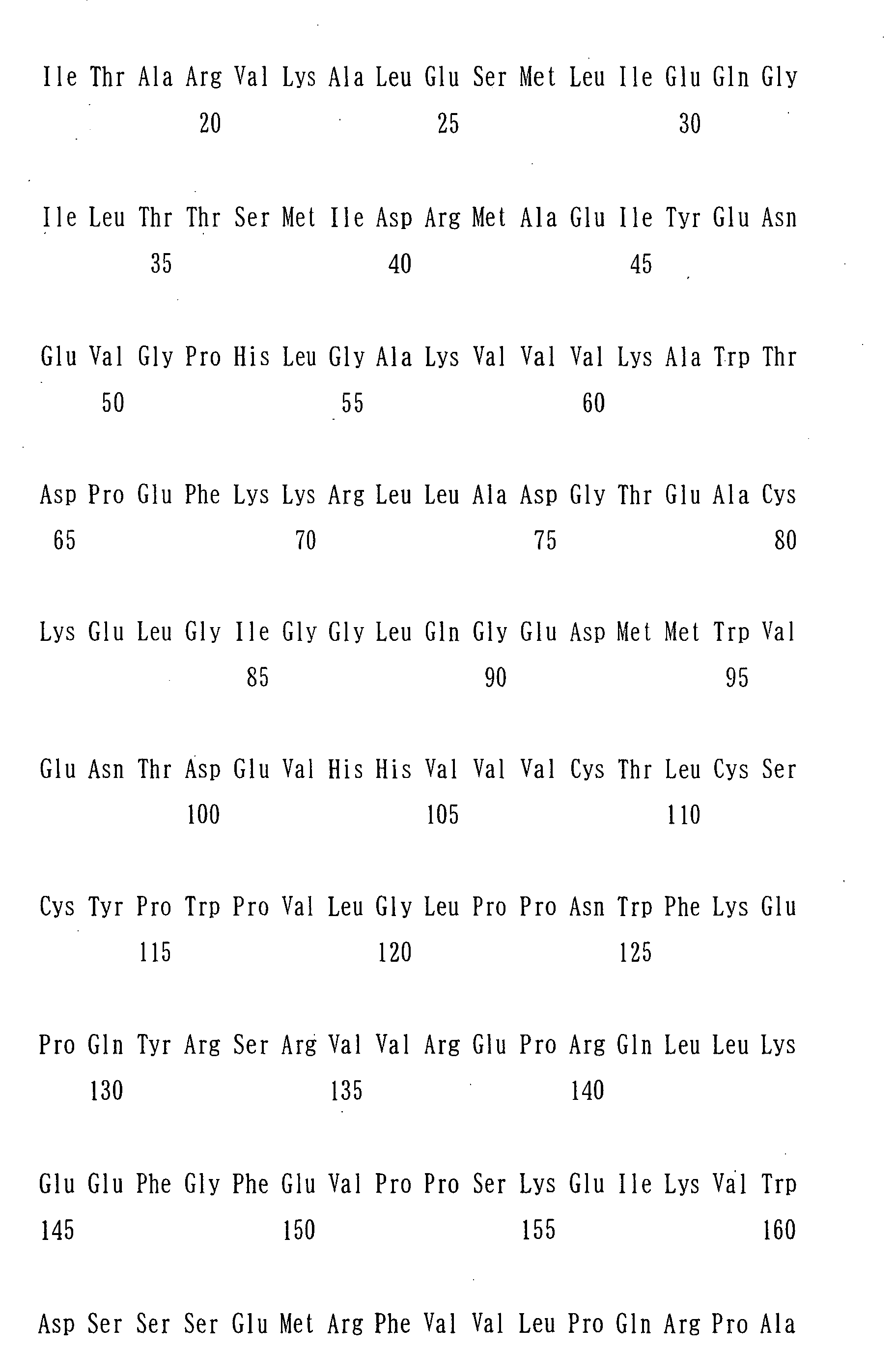


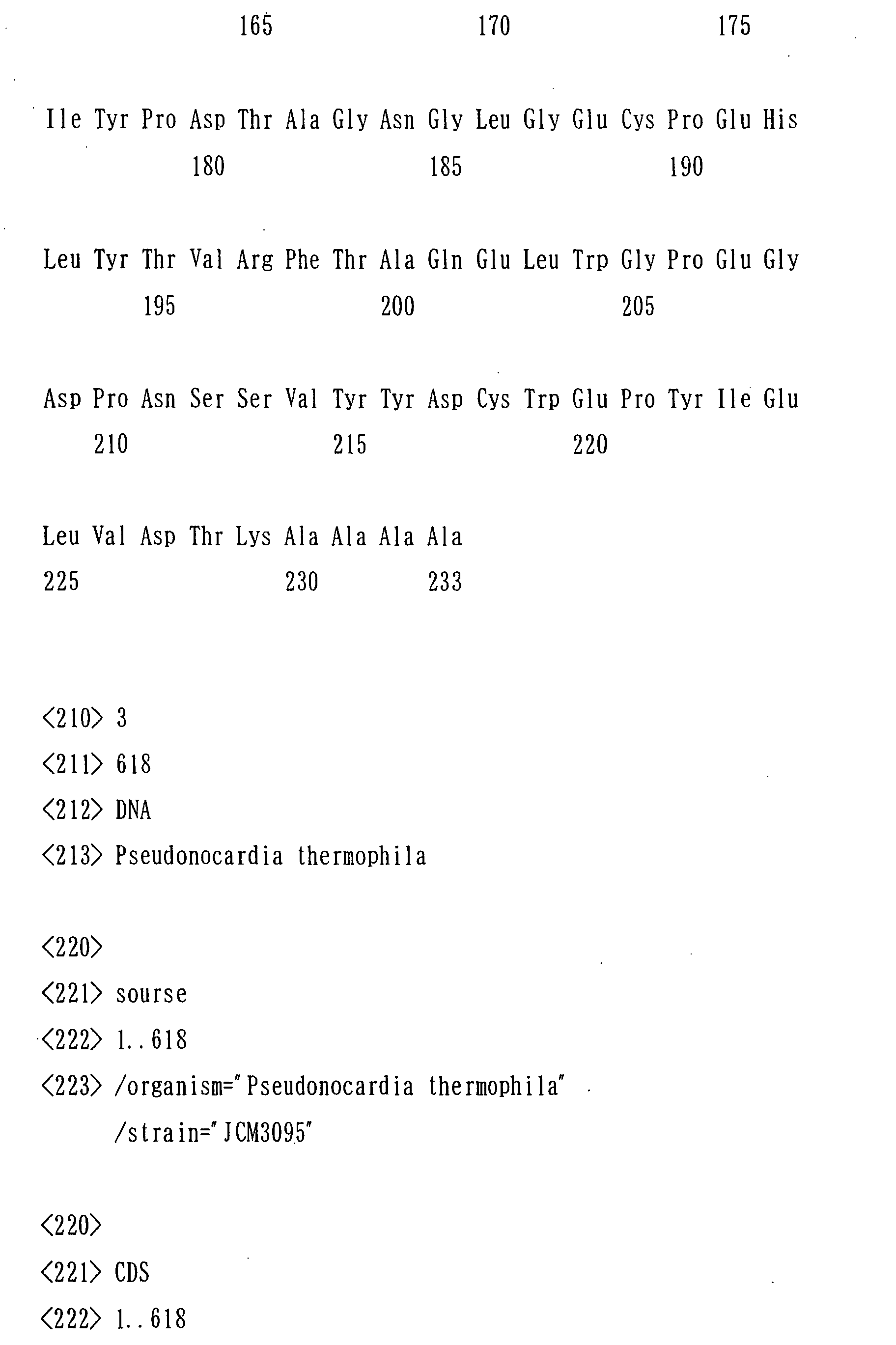

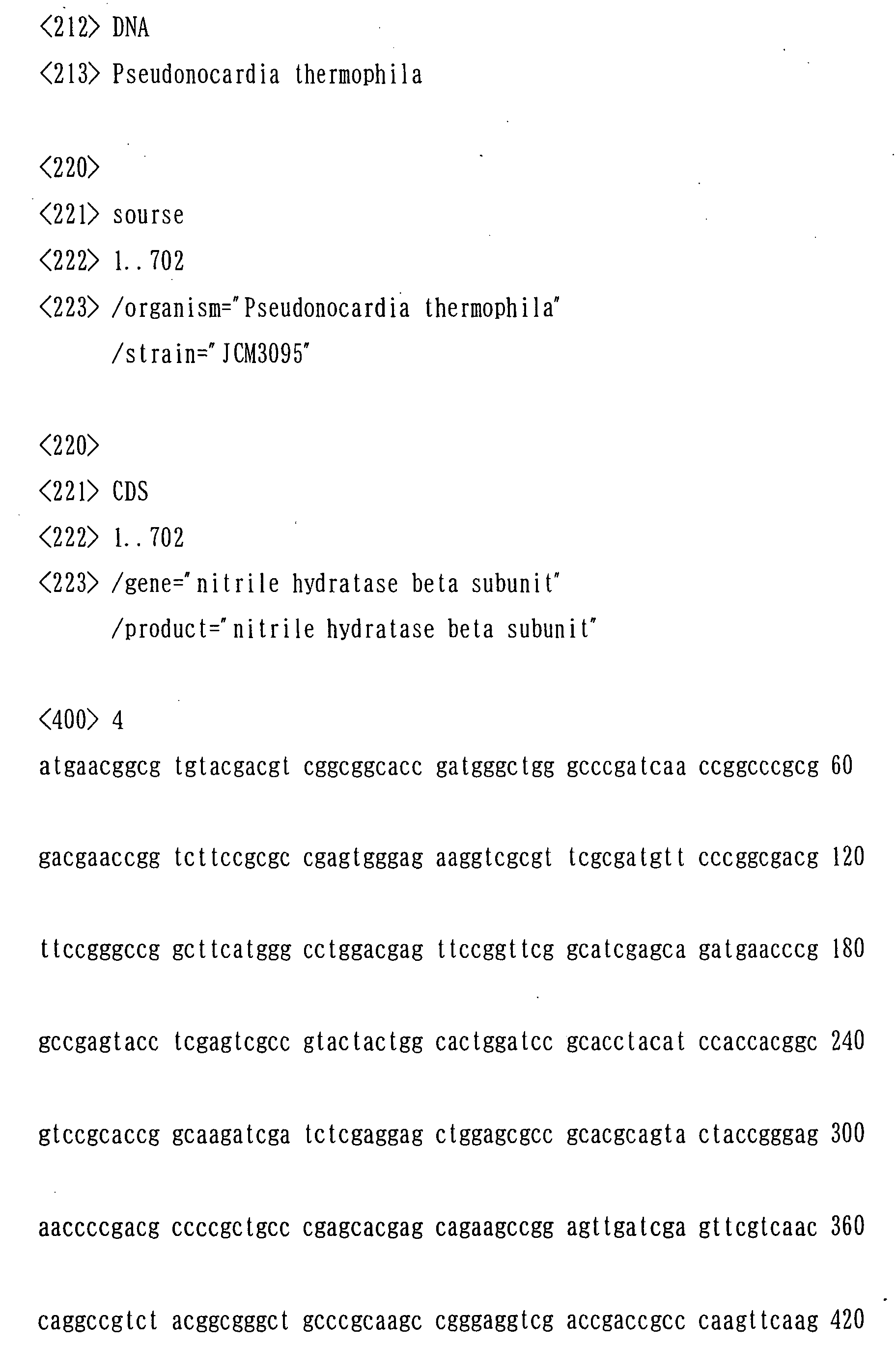

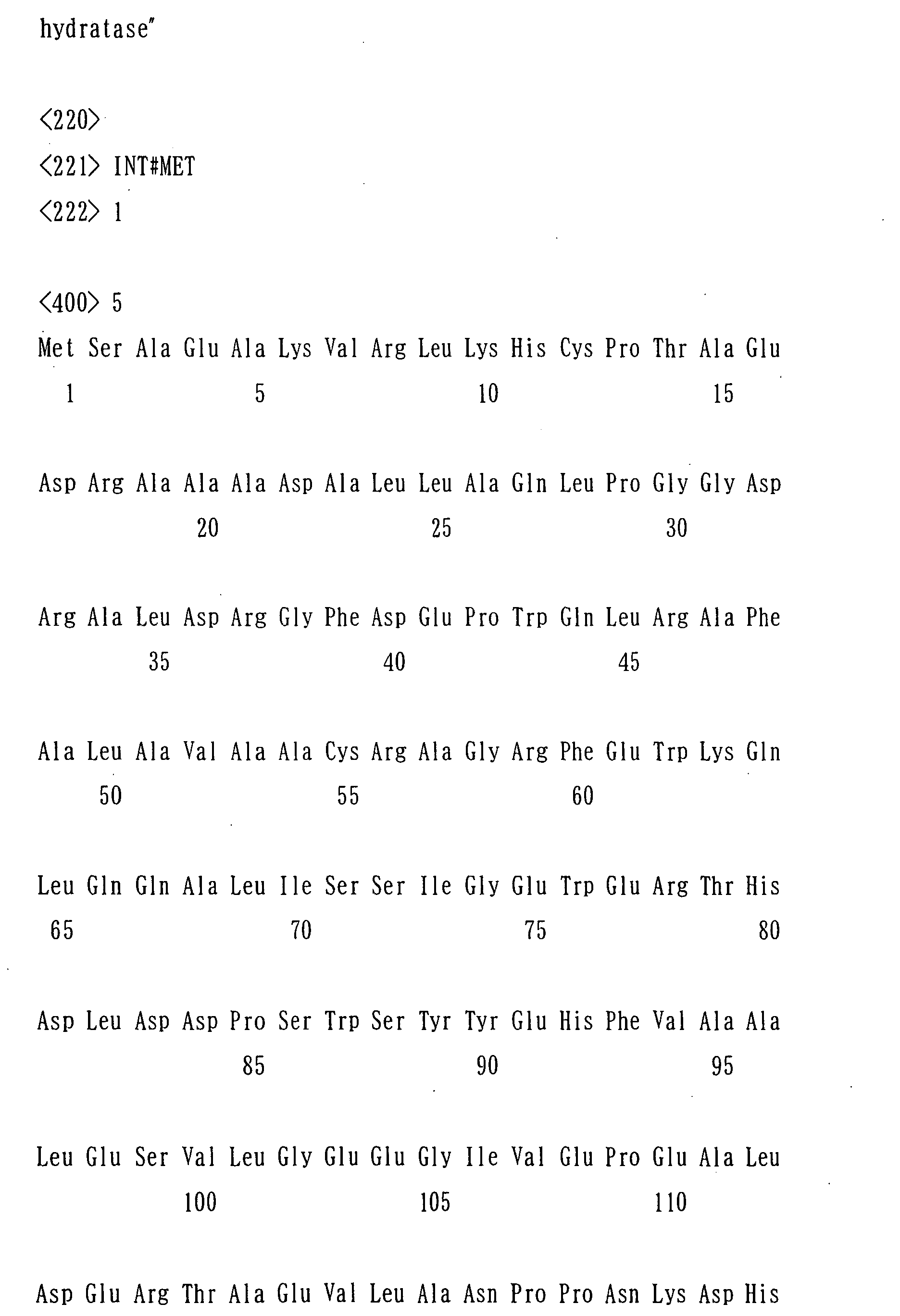


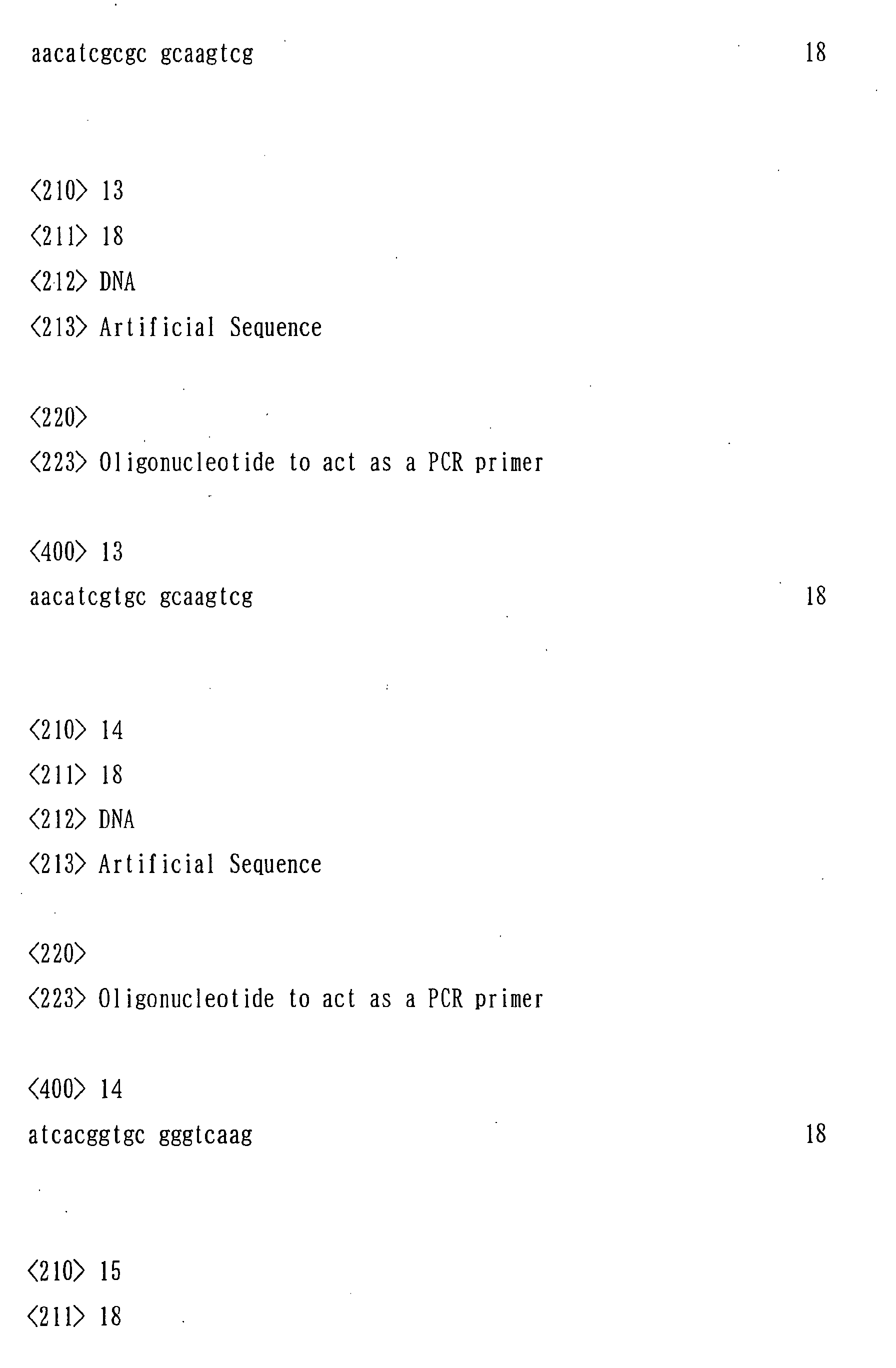
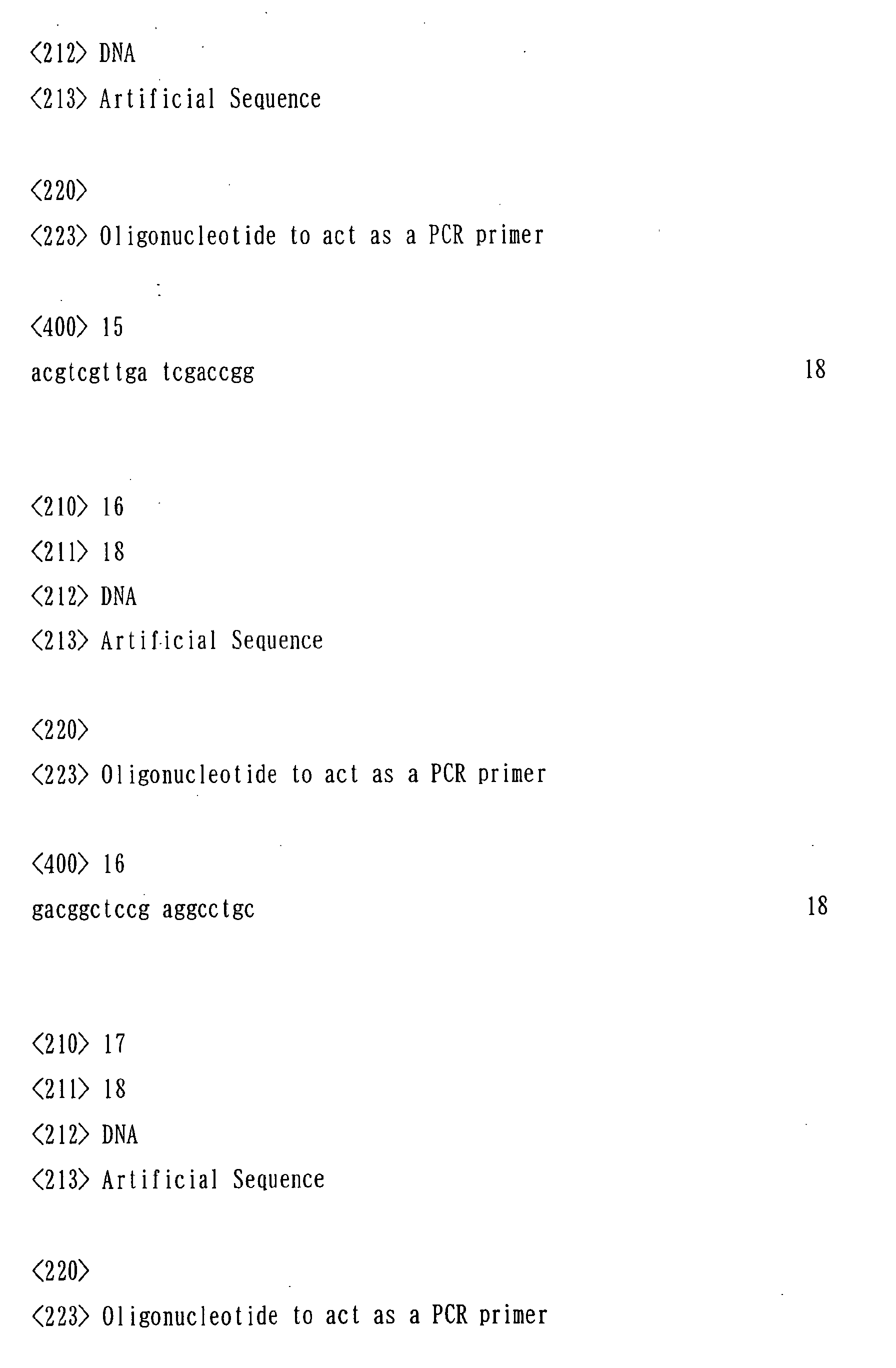


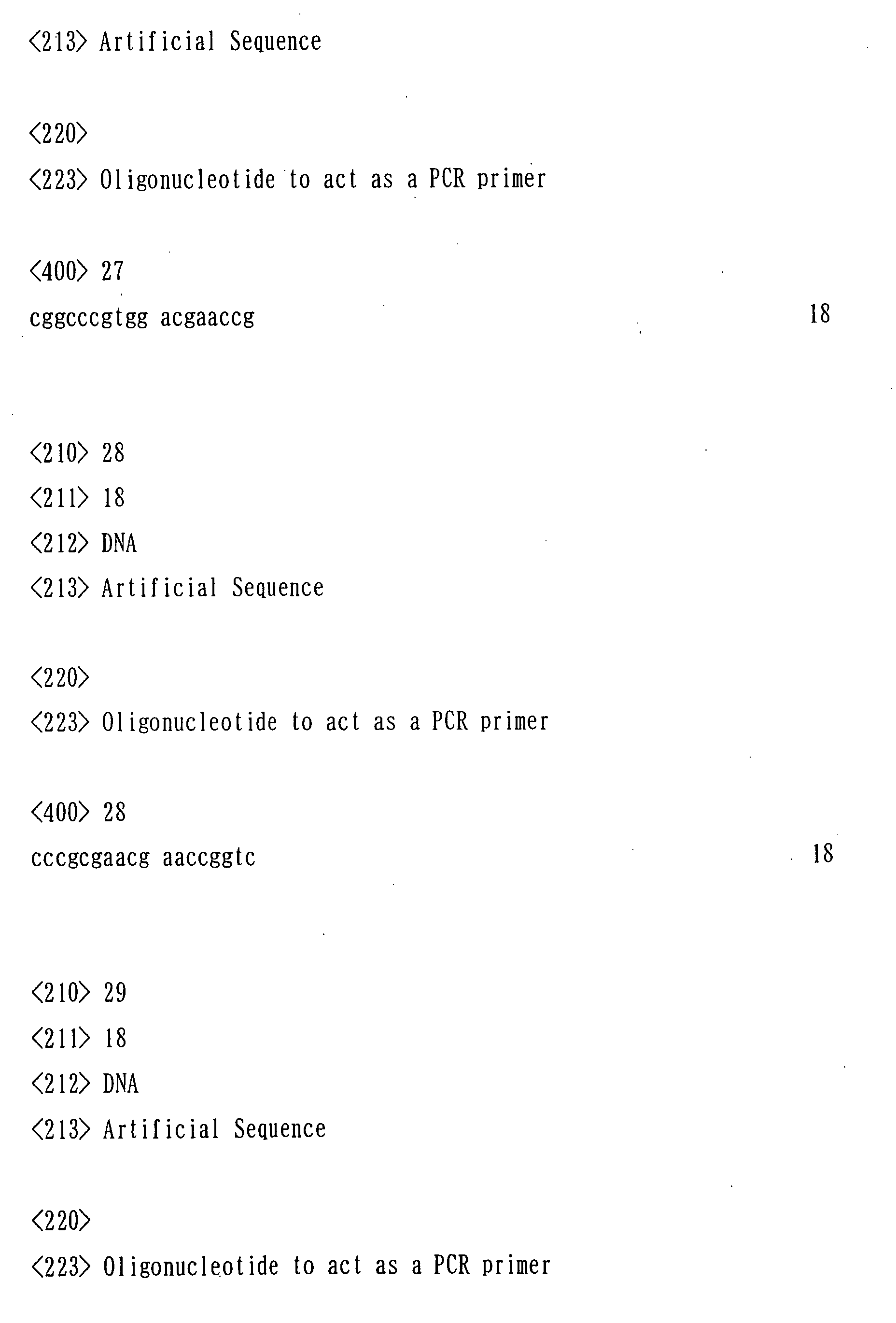
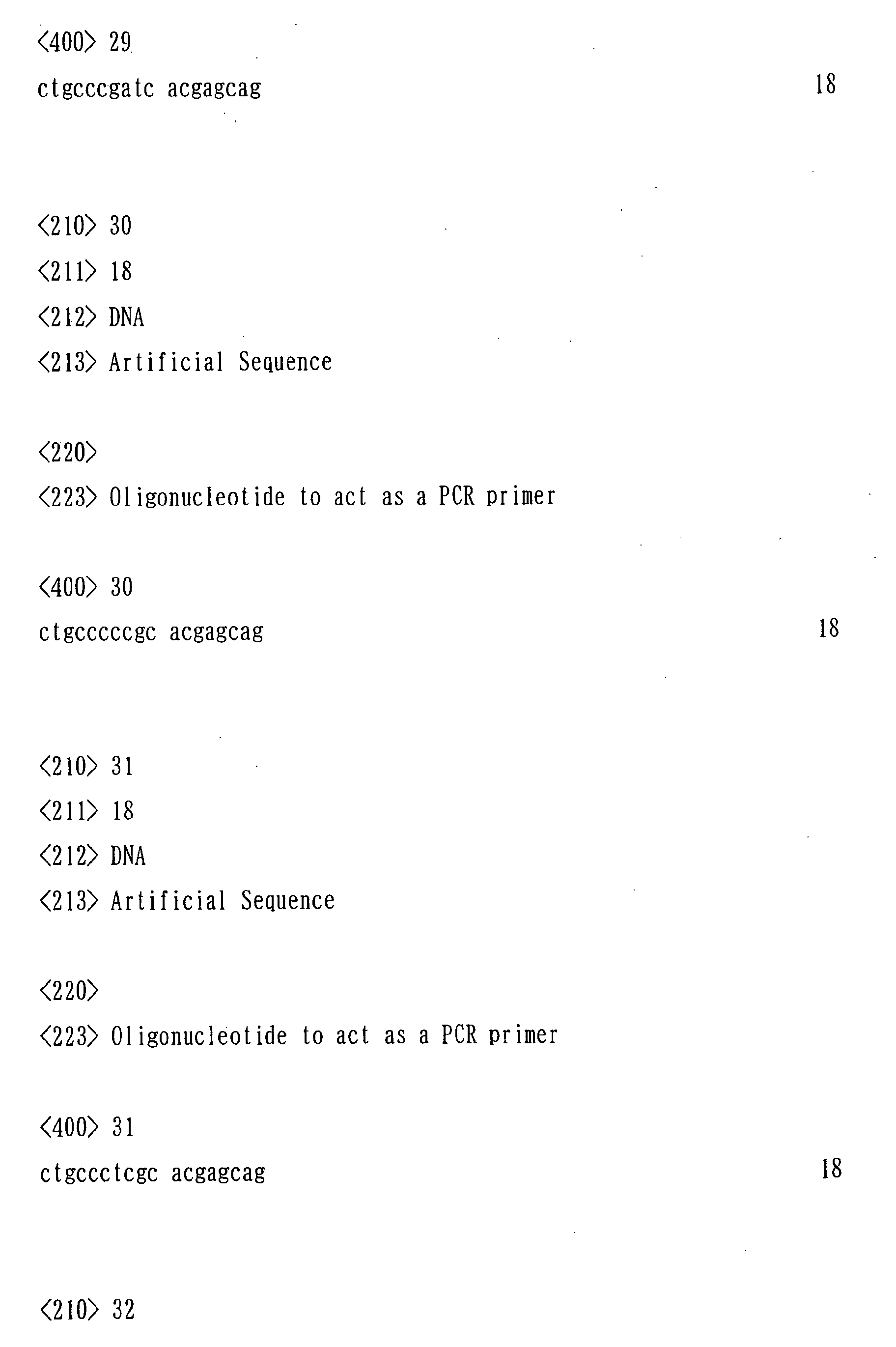
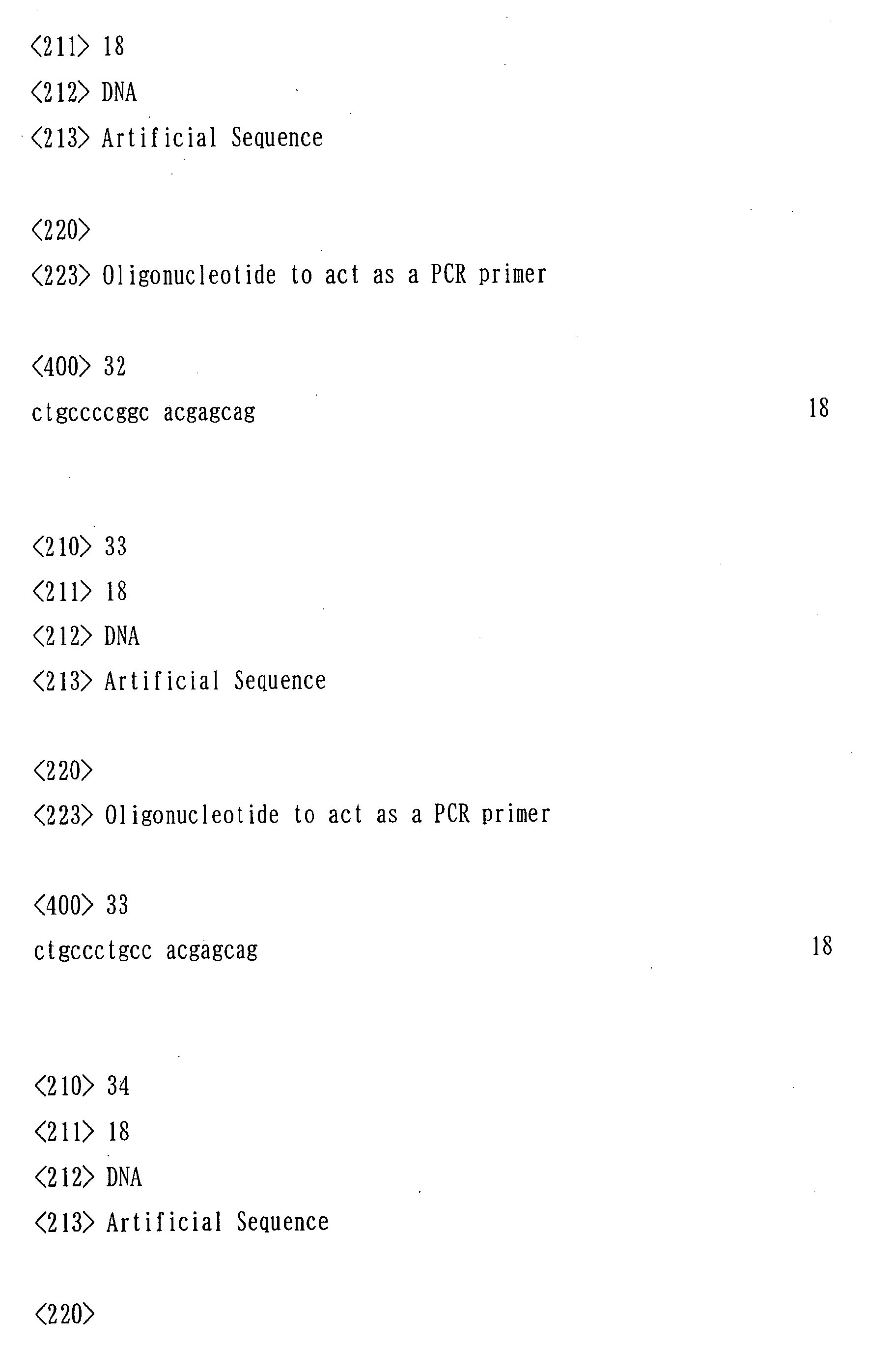
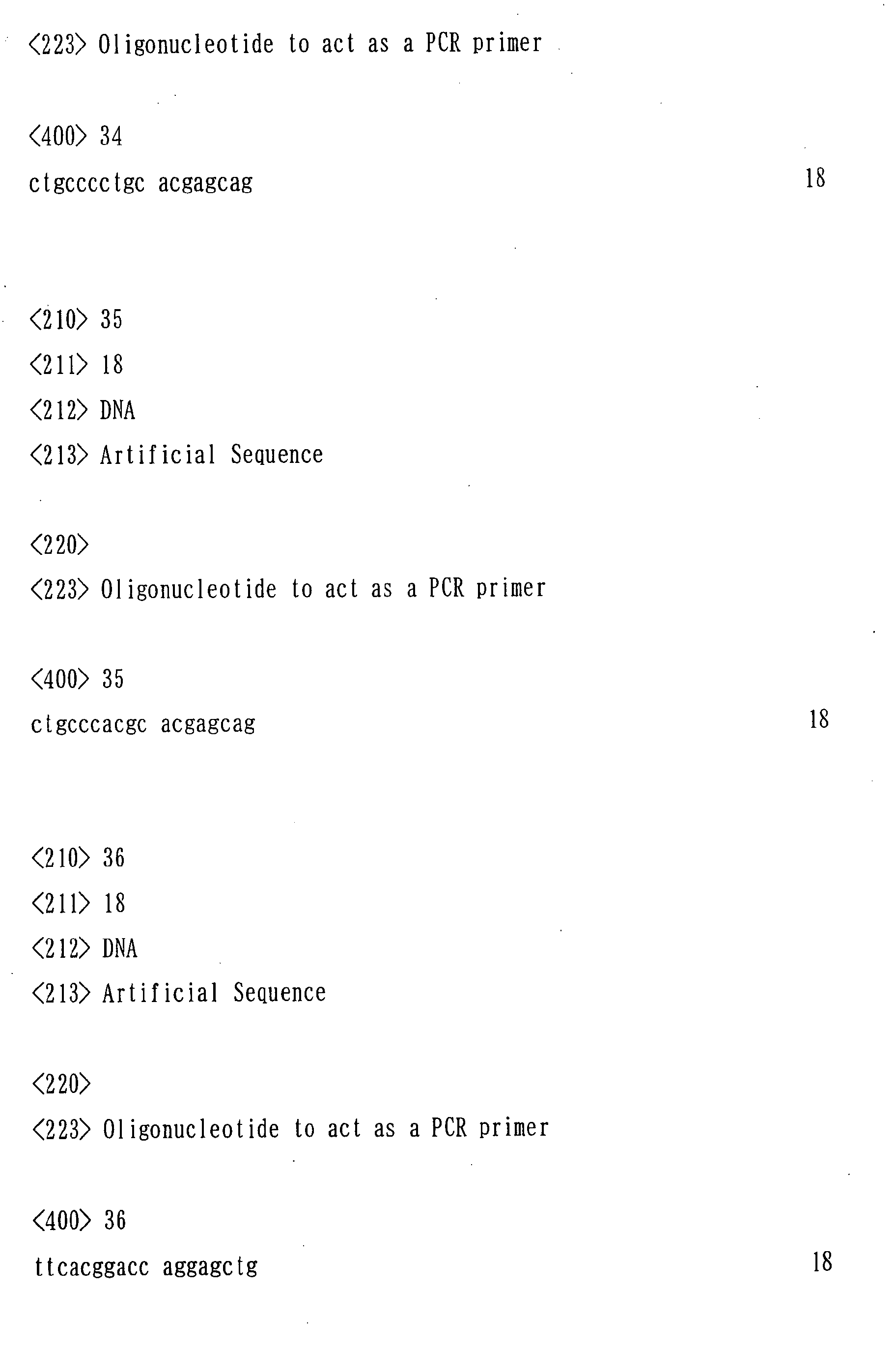


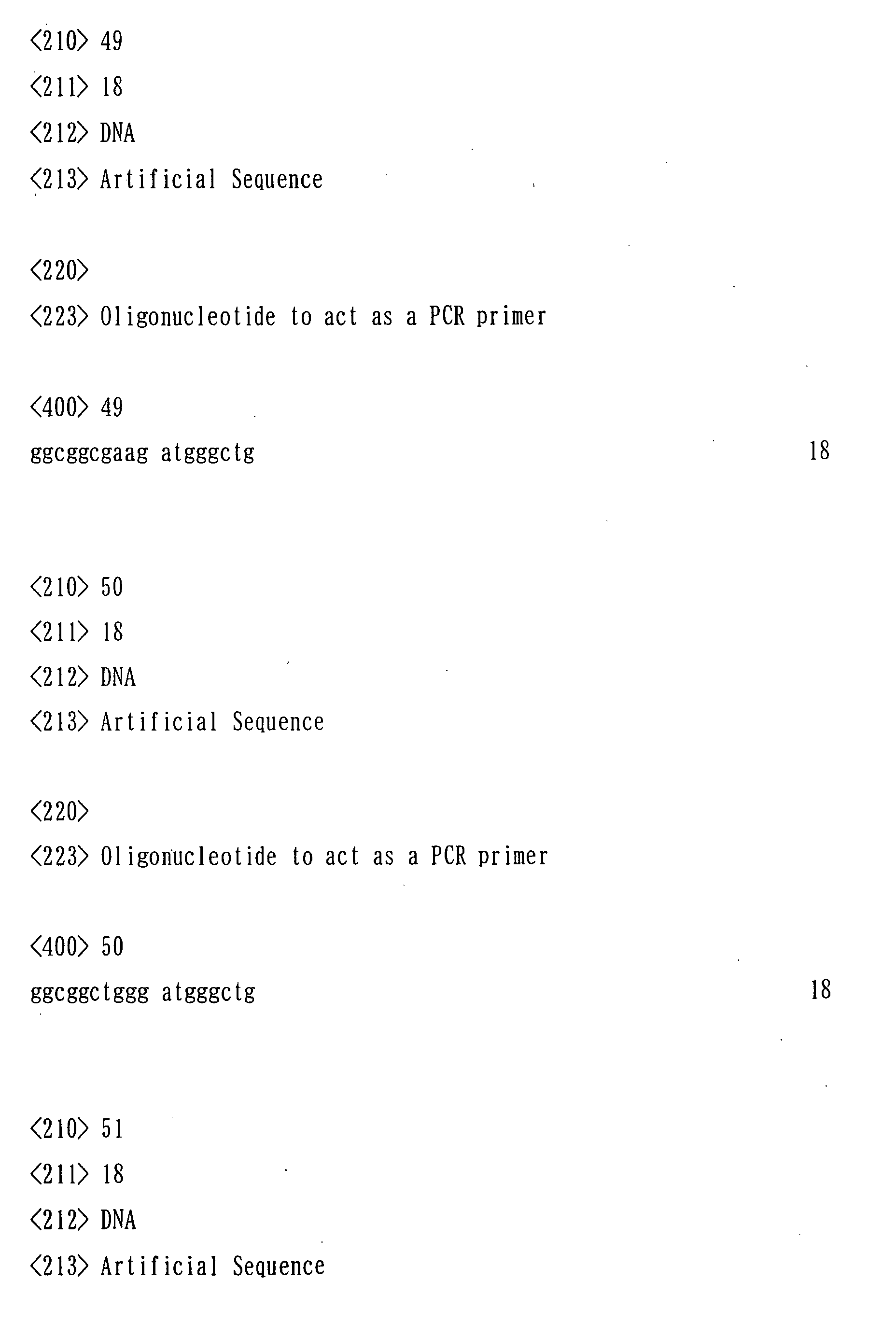


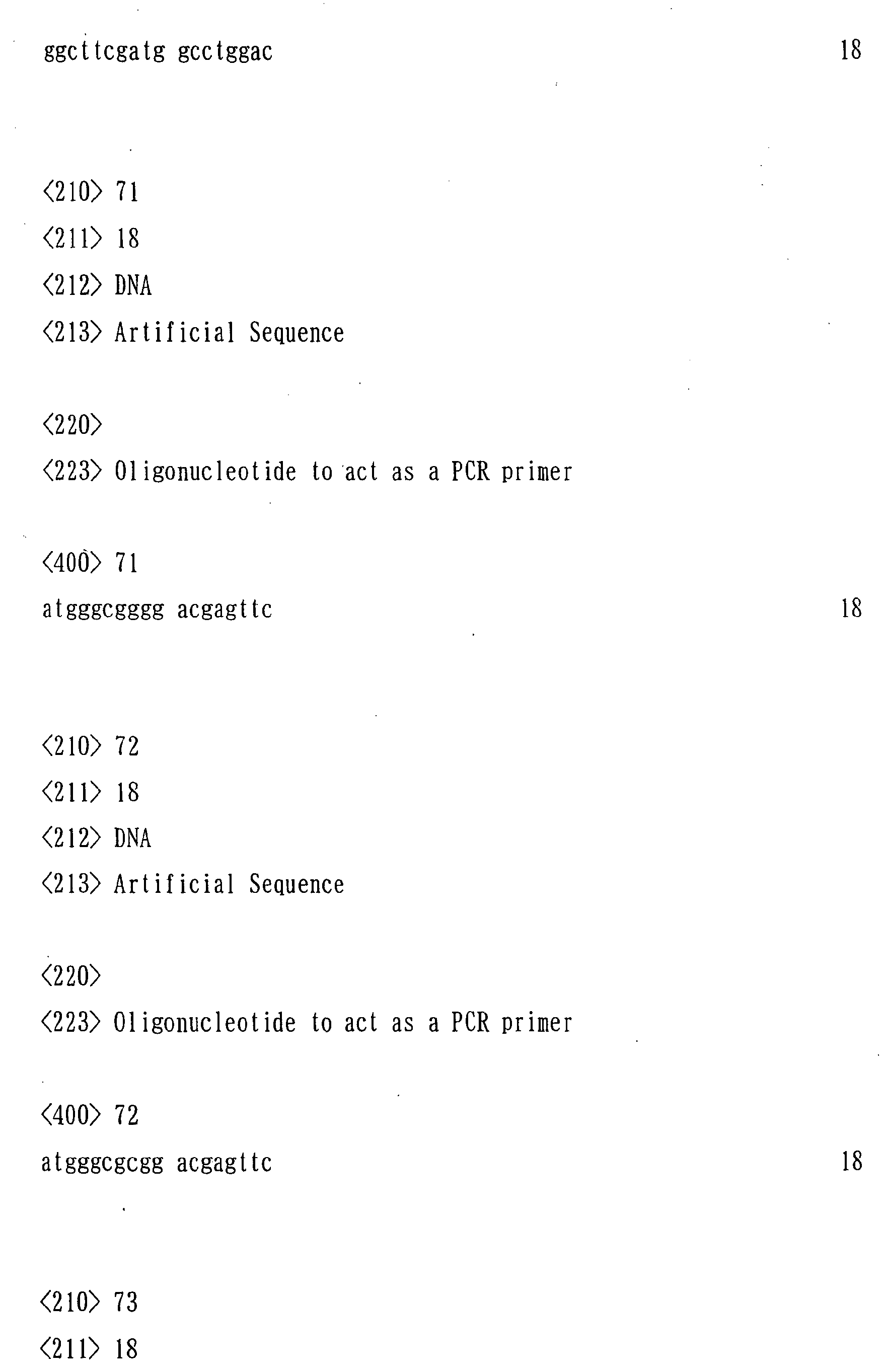
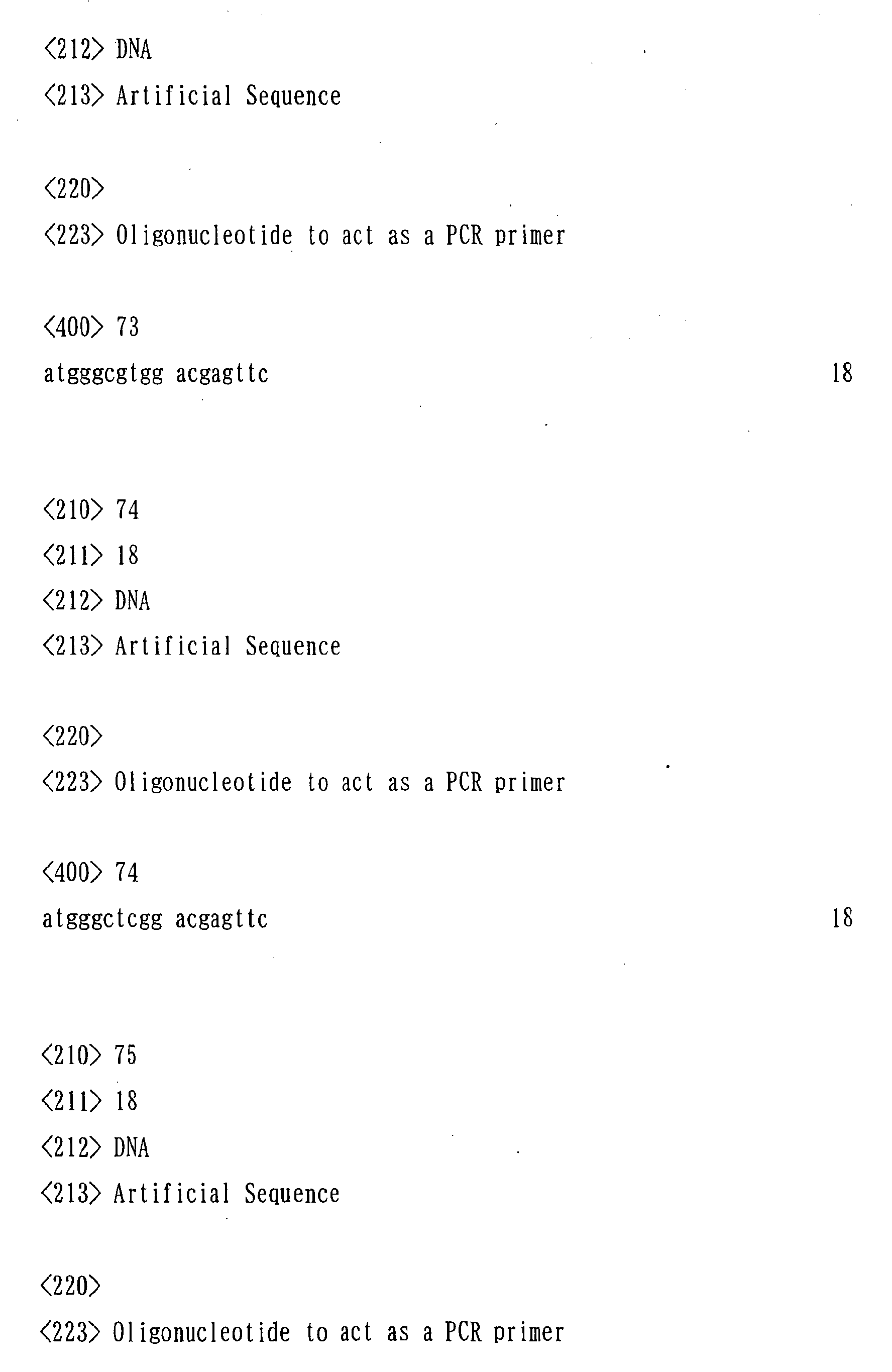
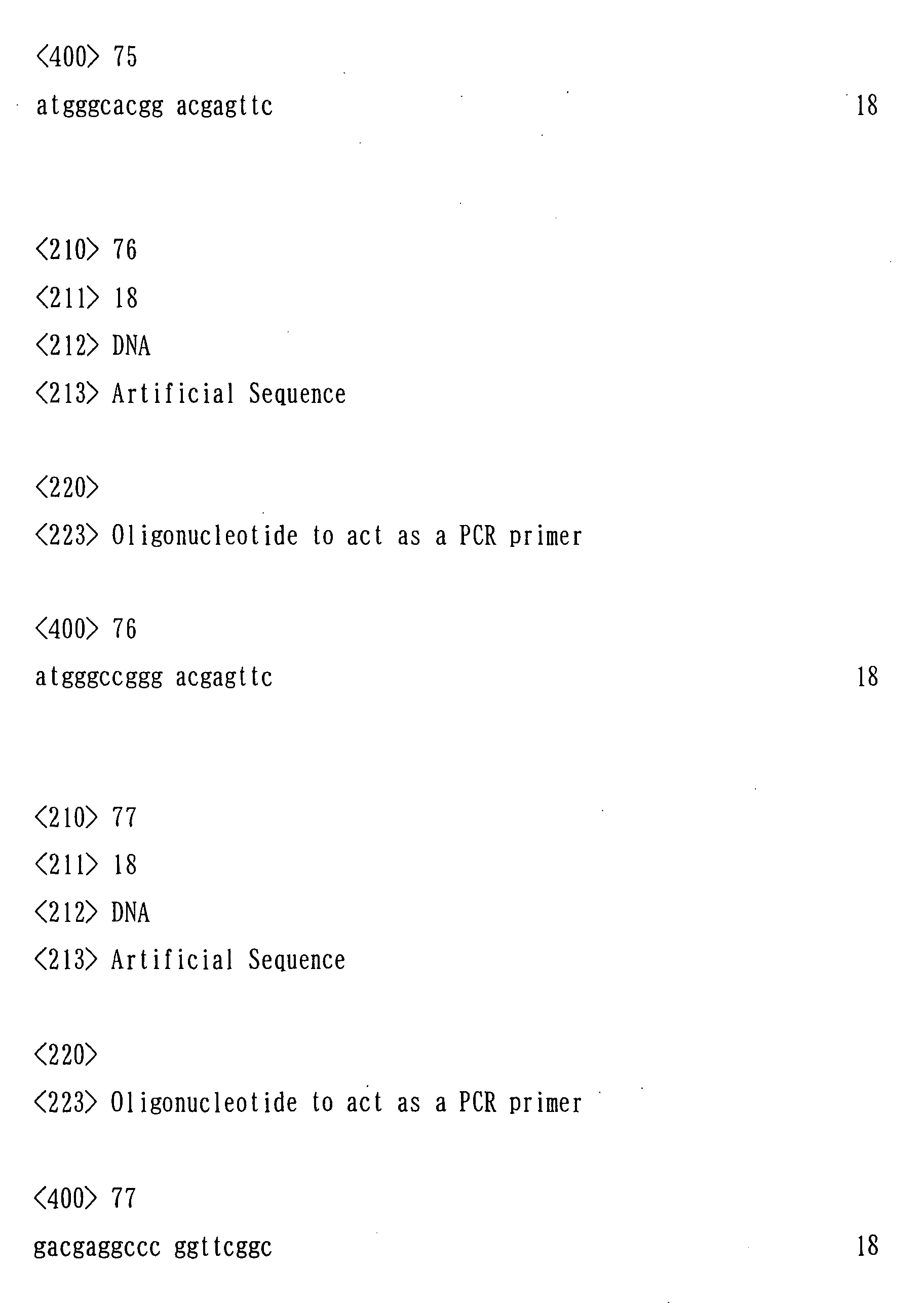
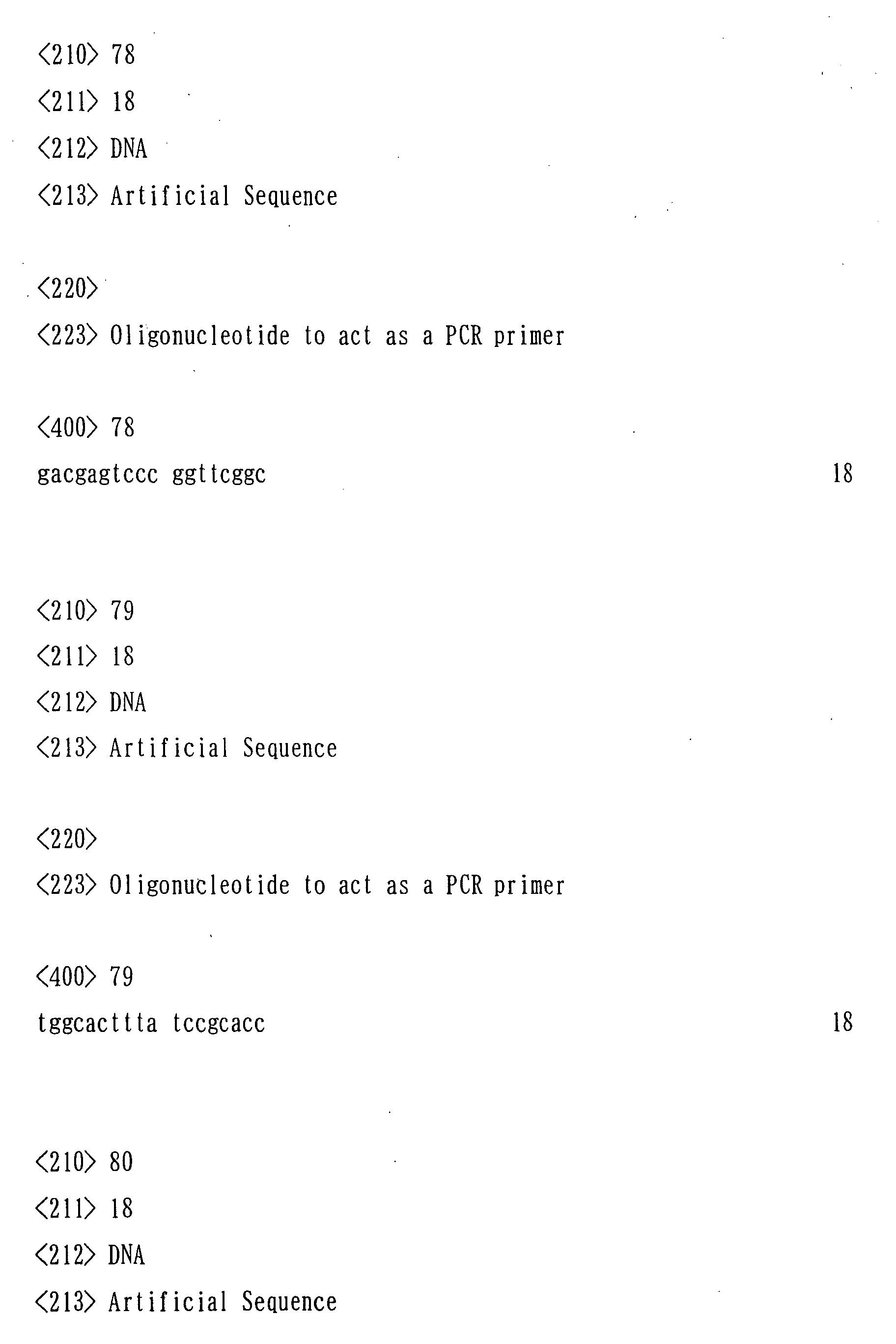


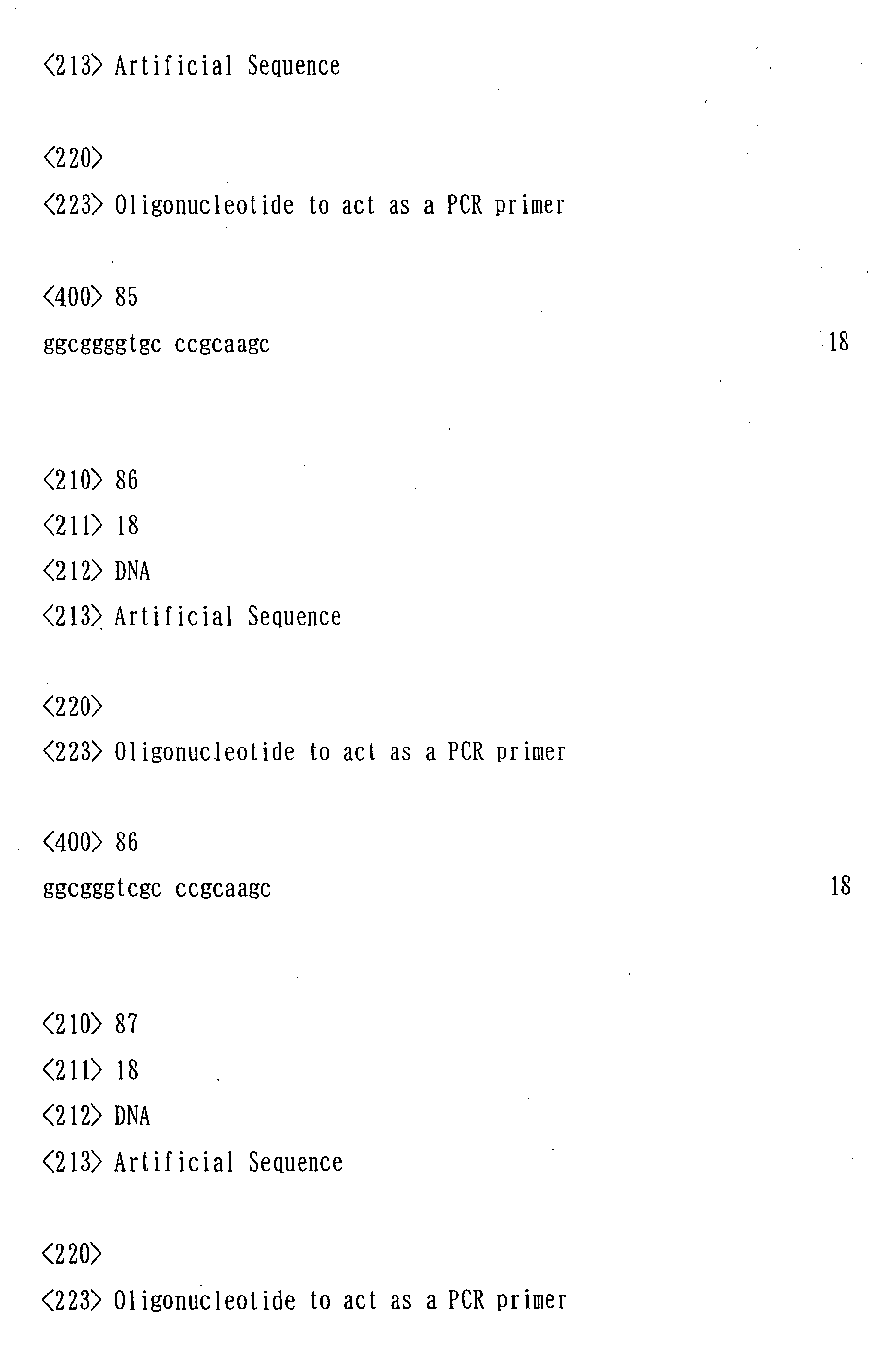
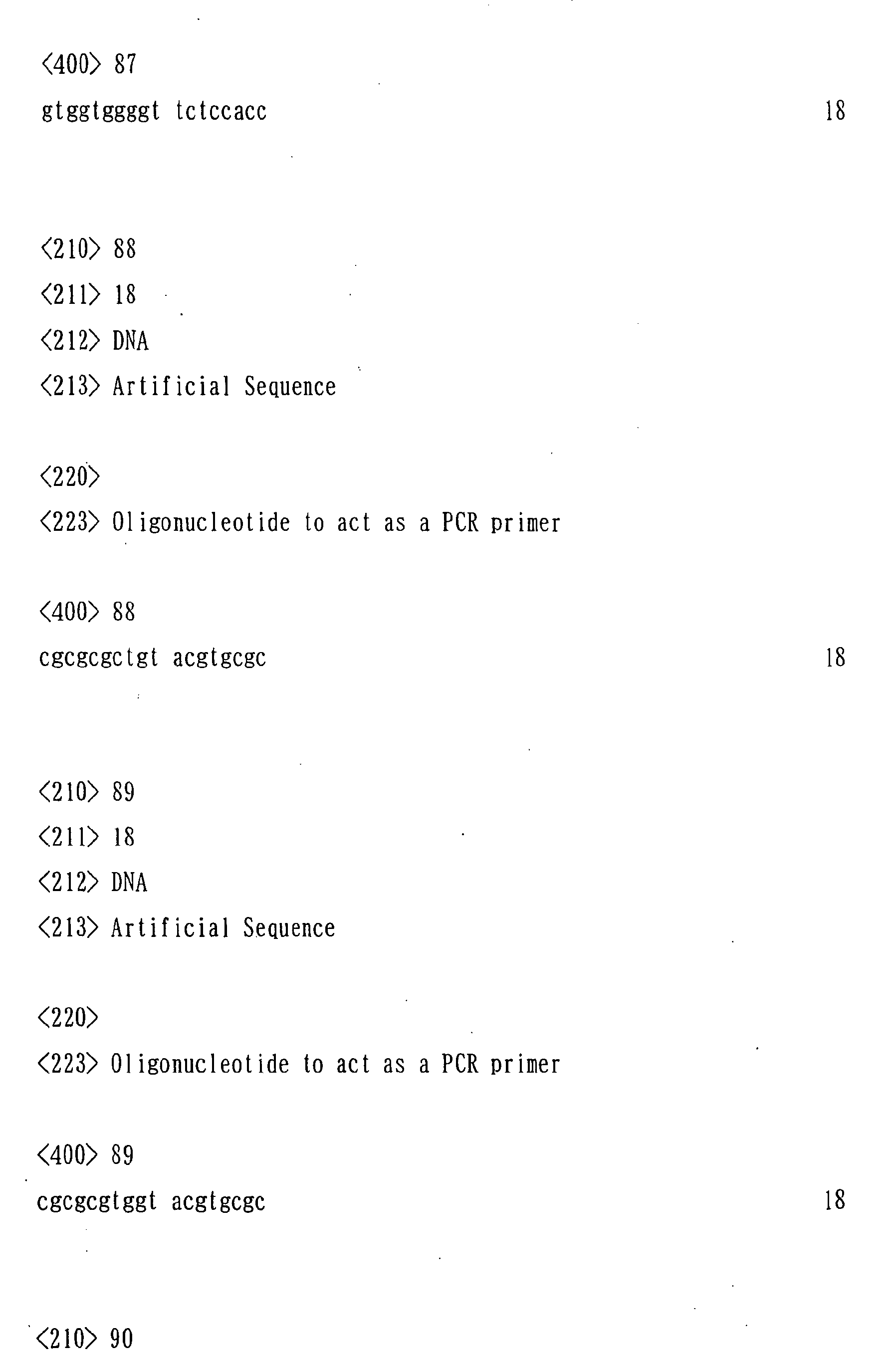
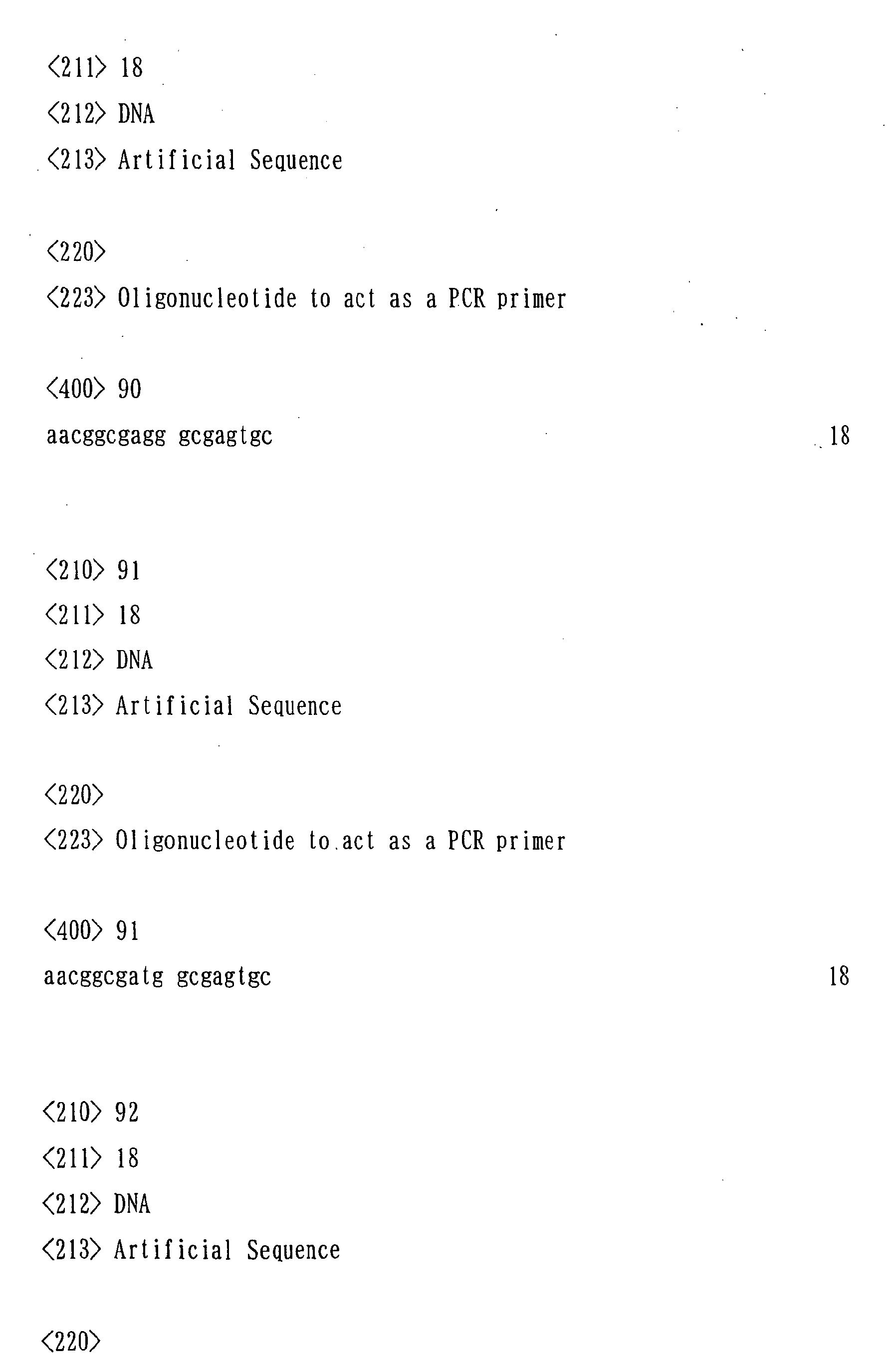


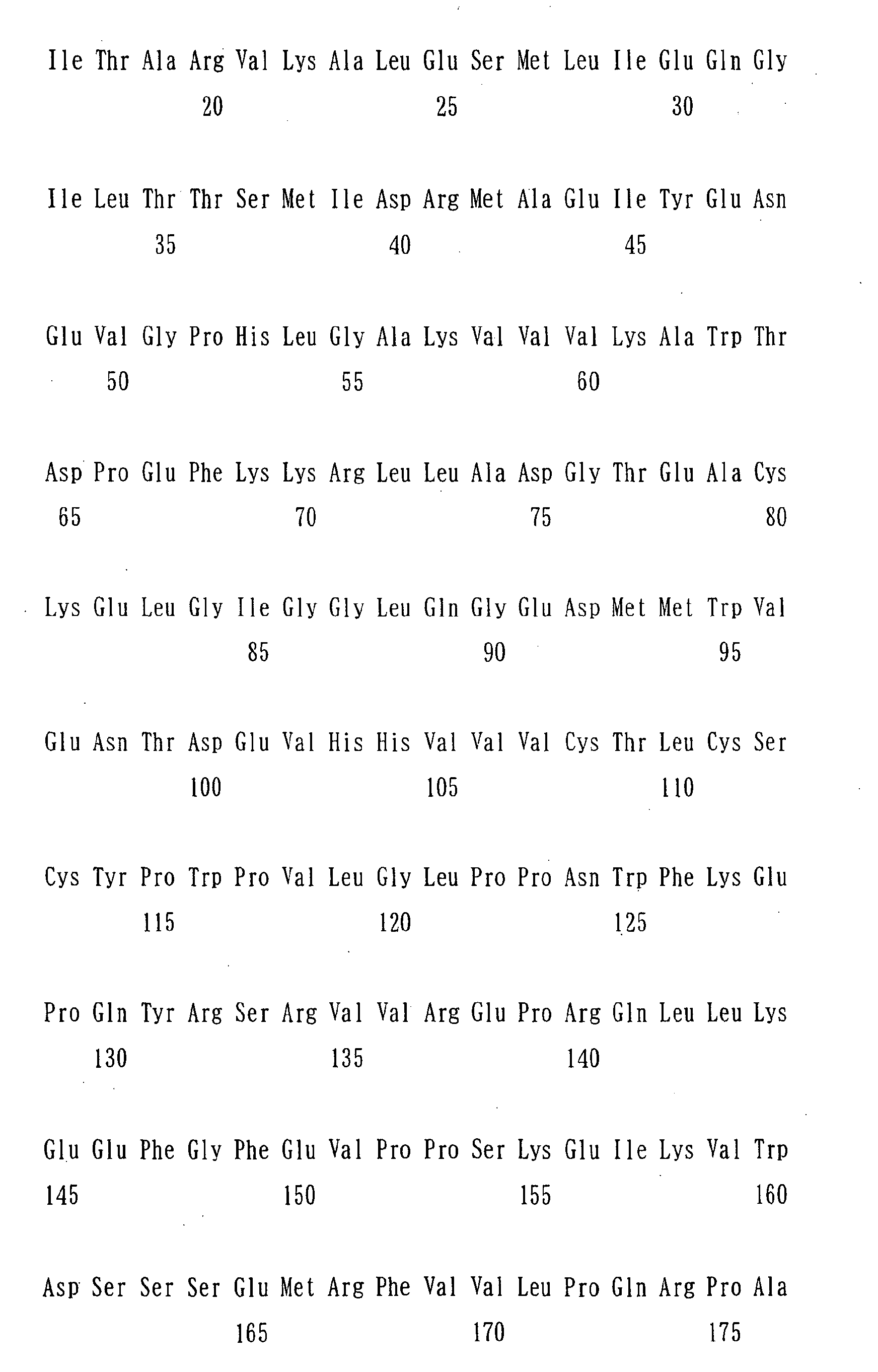


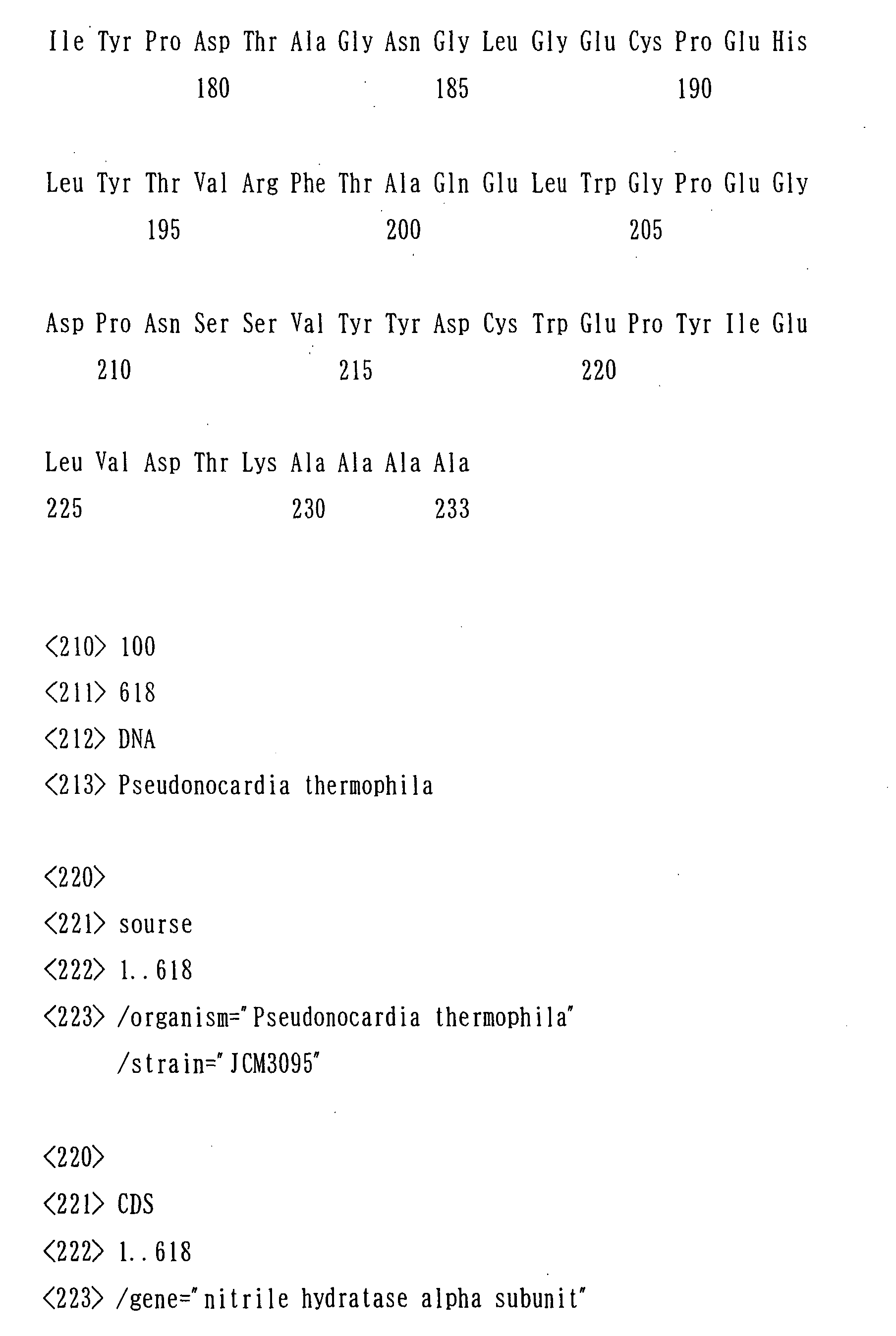
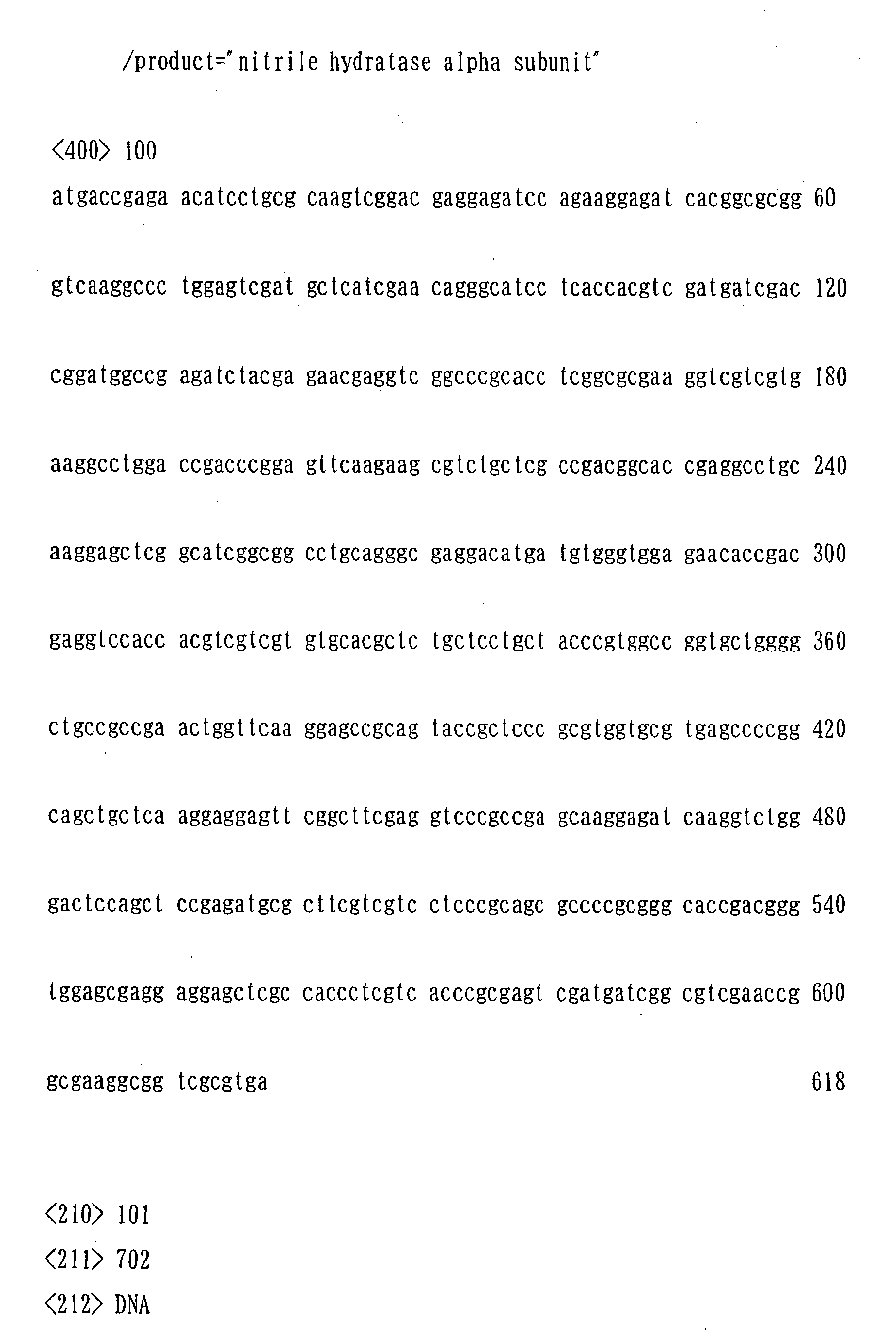
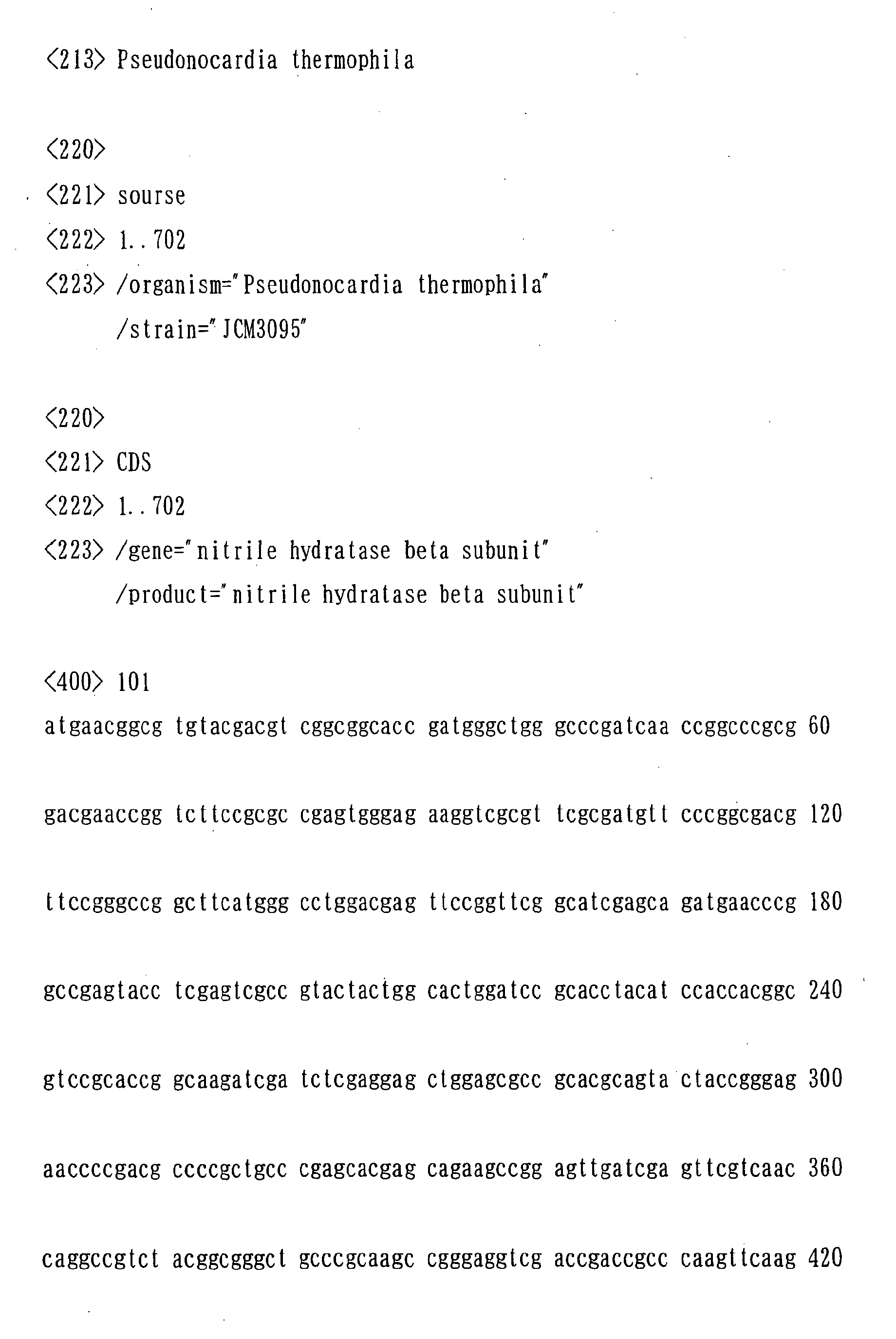


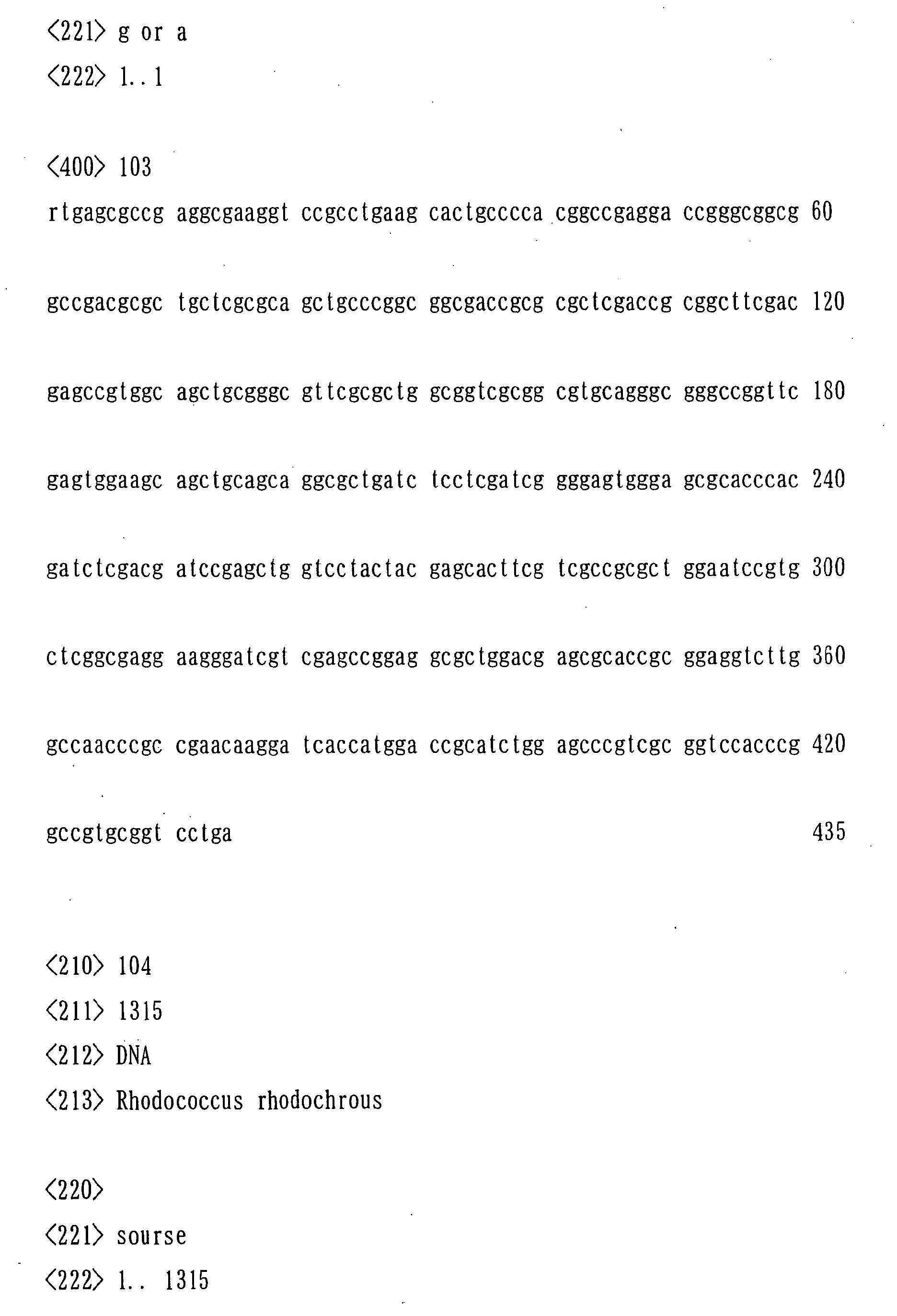


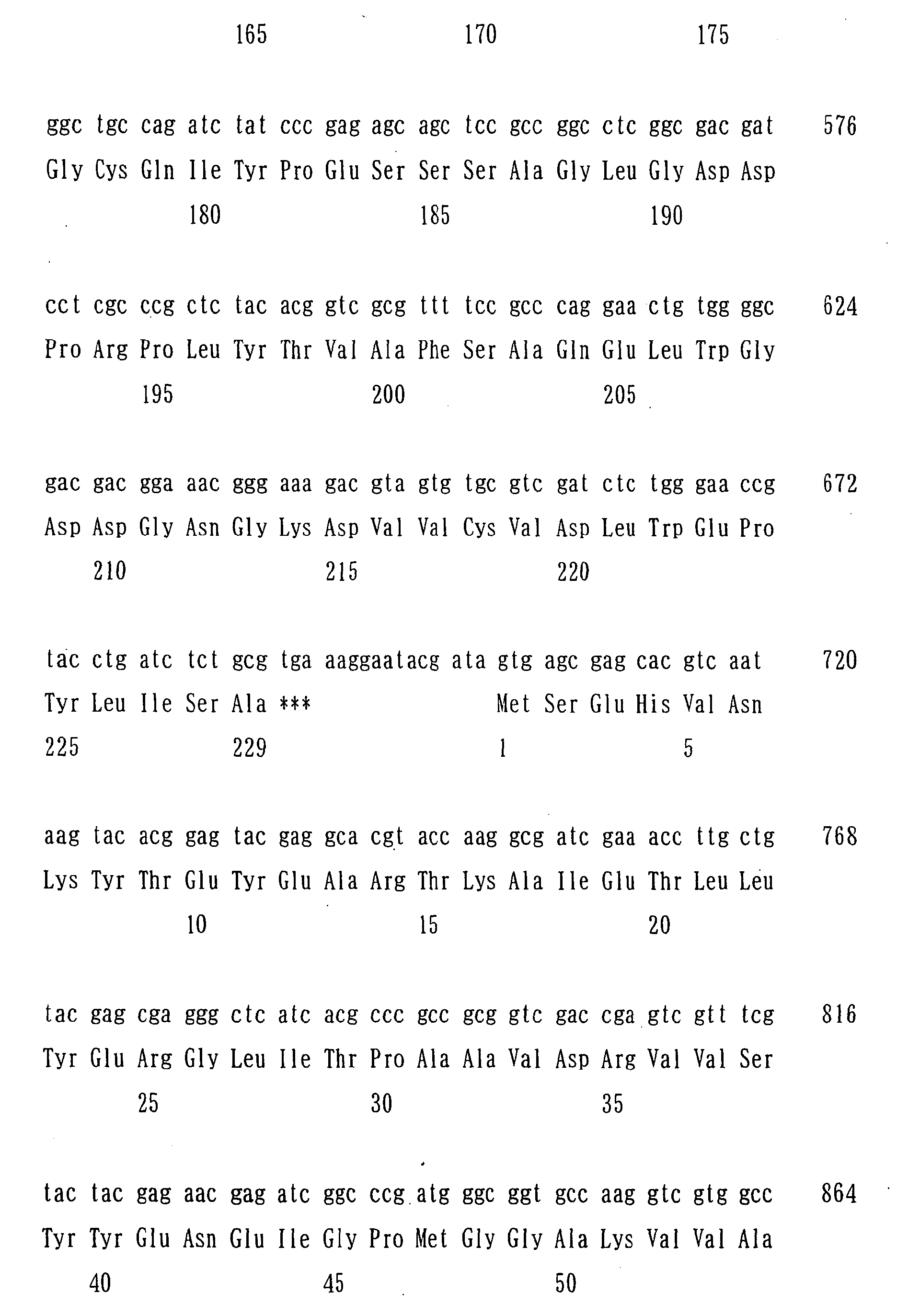

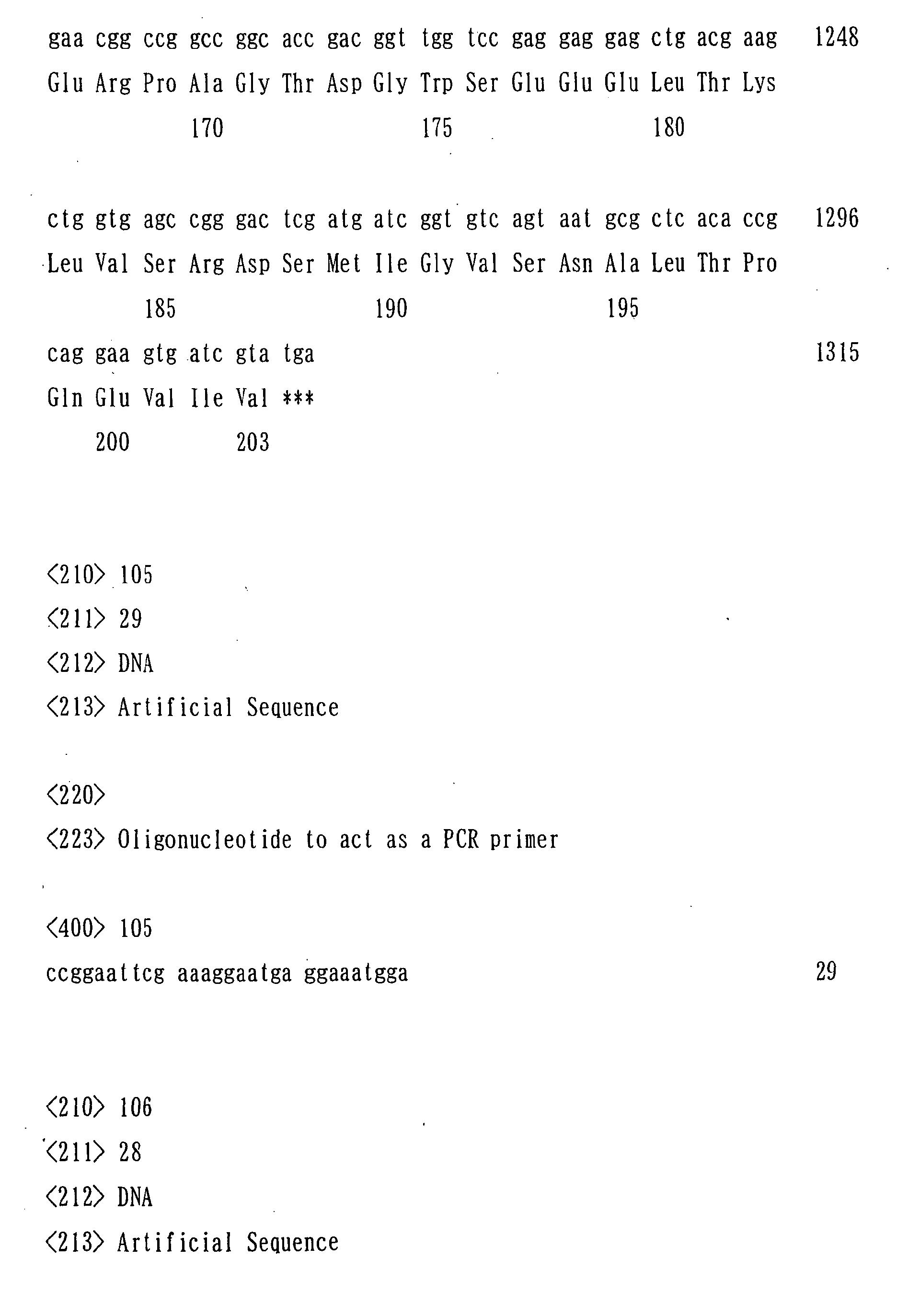


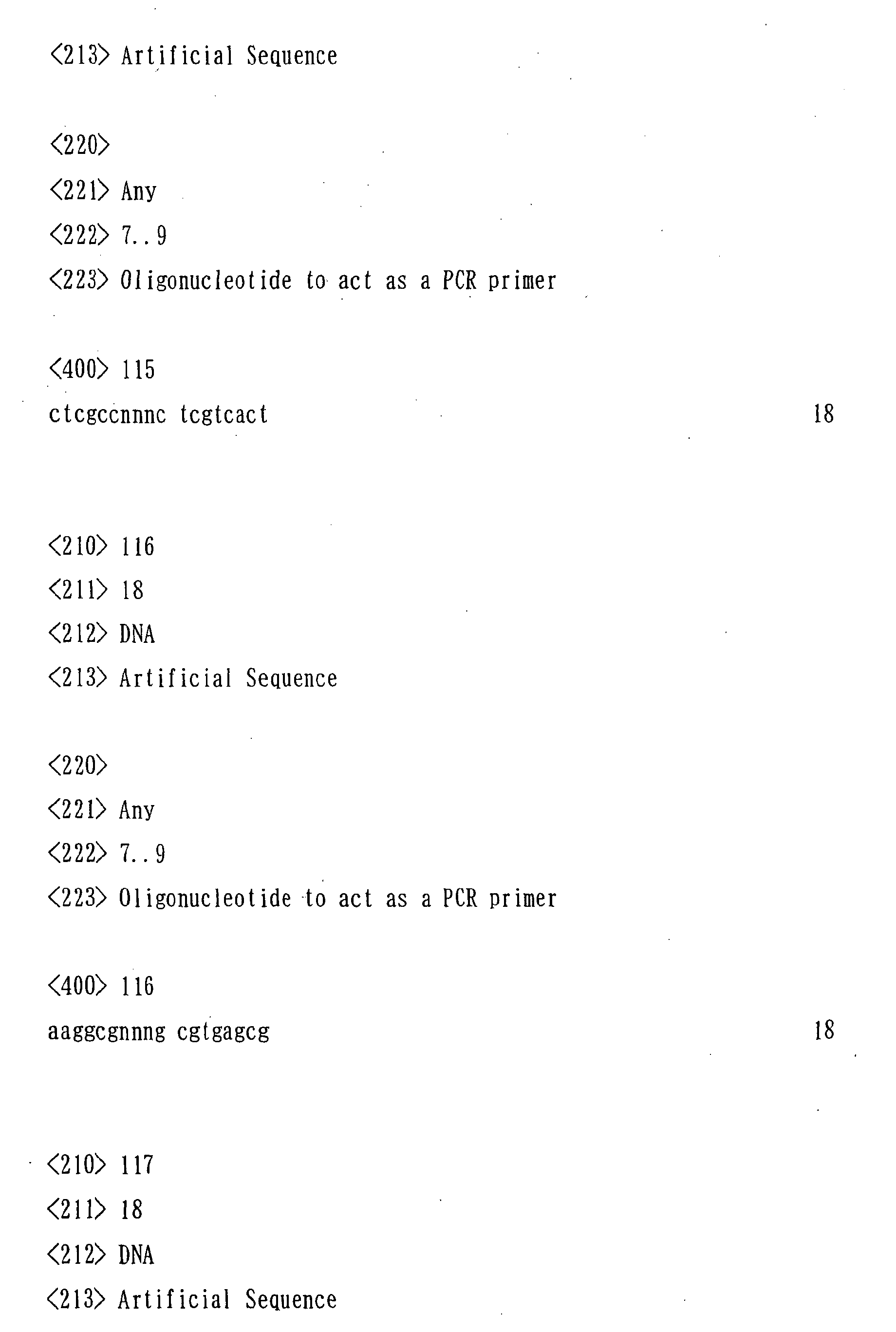

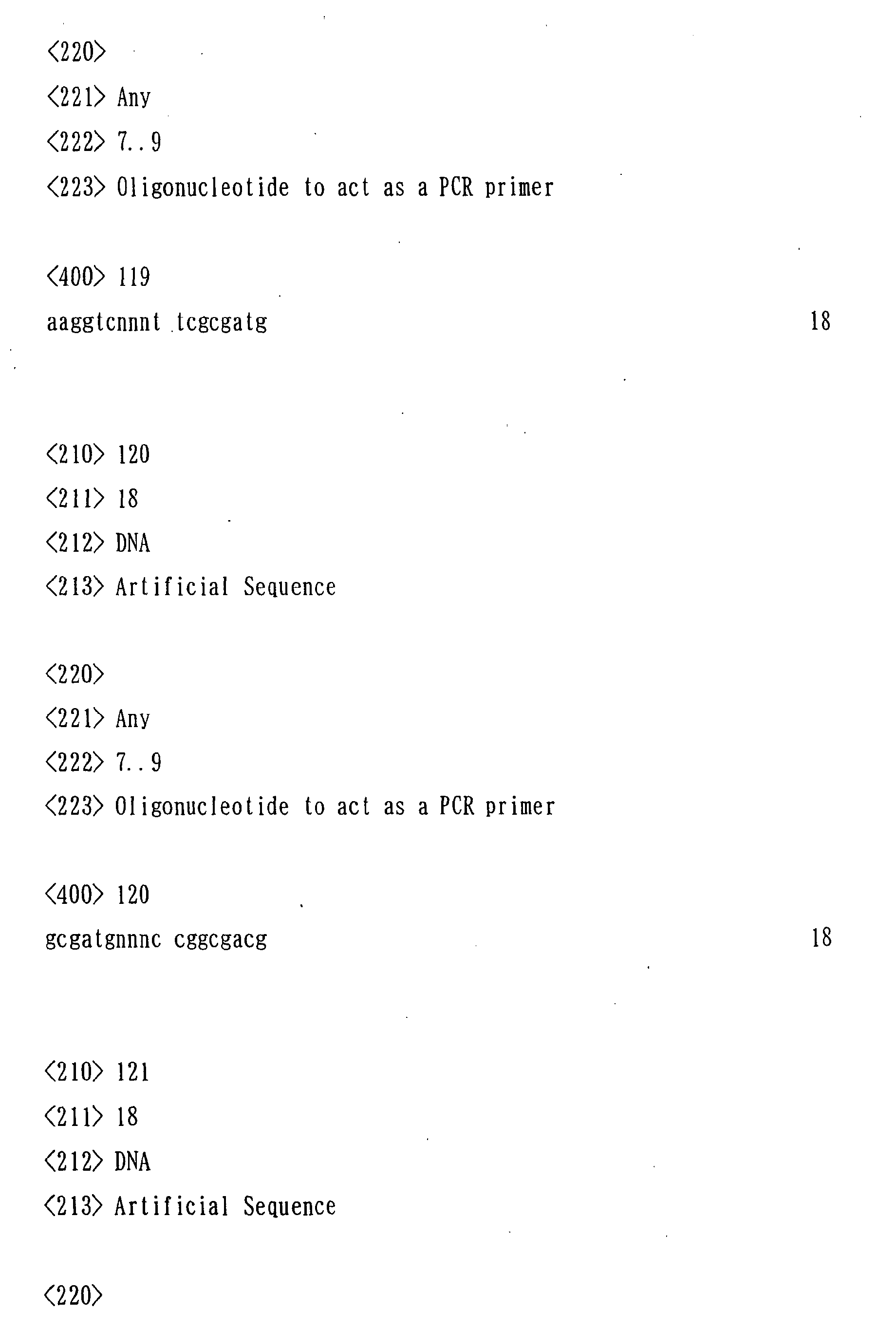
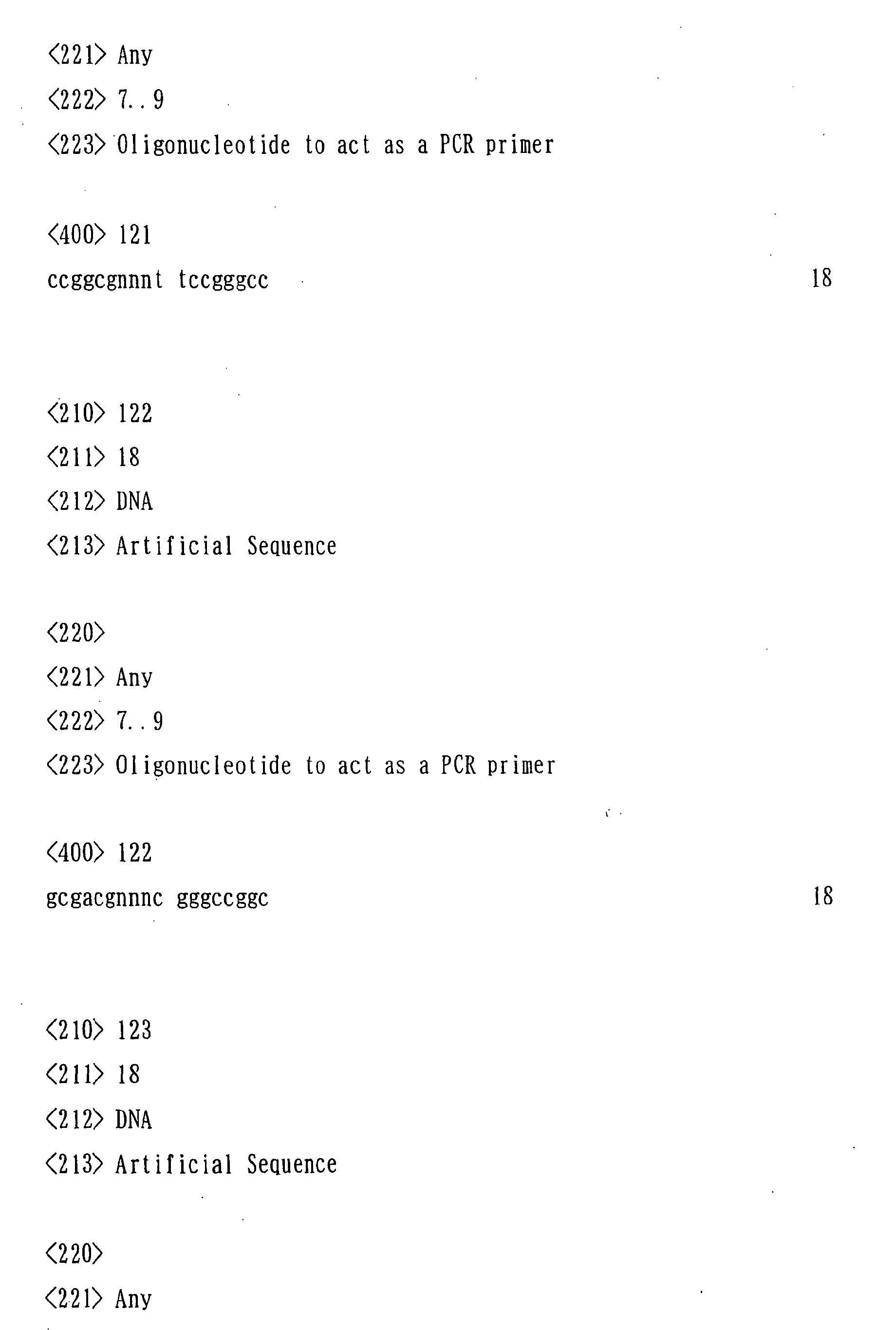


Claims (77)
- A nitrile hydratase comprising an α-subunit and a β-subunit, wherein the α-subunit has an amino acid sequence in which at least one amino acid of the 36th, 71st, 148th and 204th amino acids in the amino acid sequence of SEQ ID NO: 1 in the Sequence Listing is substituted by another amino acid.
- The nitrile hydratase according to claim 1, wherein at least one amino acid of the 6th, 19th, 38th, 77th, 90th, 102nd, 106th, 126th, 130th, 142nd, 146th, 187th, 194th and 203rd amino acids in the amino acid sequence of the α-subunit is further substituted by another amino acid.
- The nitrile hydratase according to claim 1 or 2, wherein the β-subunit has the amino acid sequence of SEQ ID NO: 2 in the Sequence Listing.
- The nitrile hydratase according to claim 3, wherein at least one amino acid of the 10th, 32nd, 37th, 41st, 46th, 48th, 51st, 72nd, 118th, 127th, 146th, 160th, 186th and 217th amino acids in the amino acid sequence of the β-subunit is further substituted by another amino acid.
- The nitrile hydratase according to claim 4, wherein at least one amino acid of the 20th, 21st, 108th, 200th and 212th amino acids in the amino acid sequence of the β-subunit is further substituted by another amino acid.
- The nitrile hydratase according to any one of claims 1 to 5, wherein at sites other than the amino acid substitution sites in the amino acid sequence carried by at least one of the β-subunit and the α-subunit, one or several amino acids are subject to substitution, insertion or deletion within the scope of not impairing the nitrile hydratase activity.
- A nitrile hydratase comprising an α-subunit and a β-subunit, wherein the β-subunit has an amino acid sequence in which at least one amino acid of the 10th, 32nd, 37th, 41st, 46th, 48th, 51st, 72nd, 118th, 127th, 146th, 160th, 186th and 217th amino acids in the amino acid sequence of SEQ ID NO: 2 in the Sequence Listing is substituted by another amino acid.
- The nitrile hydratase according to claim 7, wherein at least one amino acid of the 20th, 21st, 108th, 200th and 212th amino acids in the amino acid sequence of the β-subunit is further substituted by another amino acid.
- The nitrile hydratase according to claim 7 or 8, wherein the α-subunit has the amino acid sequence of SEQ ID NO: 1 in the Sequence Listing.
- The nitrile hydratase according to claim 9, wherein at least one amino acid of the 36th, 71st, 148th and 204th amino acids of the α-subunit is substituted by another amino acid.
- The nitrile hydratase according to claim 10, wherein at least one amino acid of the 6th, 19th, 38th, 77th, 90th, 102nd, 106th, 126th, 130th, 142nd, 146th, 187th, 194th and 203rd amino acids in the amino acid sequence of the α-subunit is further substituted by another amino acid.
- The nitrile hydratase according to any one of claims 7 to 11, wherein at sites other than the amino acid substitution sites in the amino acid sequence carried by at least one of the β-subunit and the α-subunit, one or several amino acids are subject to substitution, insertion or deletion within the scope of not impairing the nitrile hydratase activity.
- A gene encoding the amino acid sequence of the α-subunit of nitrile hydratase, wherein the amino acid sequence is an amino acid sequence in which at least one amino acid of the 36th, 71st, 148th and 204th amino acids in the amino acid sequence of SEQ ID NO: 1 in the Sequence Listing is substituted by another amino acid.
- The gene according to claim 13, wherein at least one amino acid of the 6th, 19th, 38th, 77th, 90th, 102nd, 106th, 126th, 130th, 142nd, 146th, 187th, 194th and 203rd amino acids in the amino acid sequence is further substituted by another amino acid.
- The gene according to claim 13 or 14, wherein at sites other than the amino acid substitution sites carried by the amino acid sequence of the α-subunit, one or several amino acids are subject to substitution, insertion or deletion within the scope of not impairing the nitrile hydratase activity.
- The gene according to claim 13, wherein it has a base sequence obtained by substituting at least one base sequence among the 106th to 108th, 211th to 213th, 442nd to 444th, and 610th to 612th of the base sequence of SEQ ID NO: 3 in the Sequence Listing with another base sequence.
- The gene according to claim 16, wherein at least one base sequence among the 16th to 18th, 55th to 57th, 112th to 114th, 229th to 231st, 268th to 270th, 304th to 306th, 316th to 318th, 376th to 378th, 388th, to 390th, 424th to 426th, 436th to 438th, 559th to 561st, 580th to 582nd, and 607th to 609th of the base sequence is further substituted by another base sequence.
- A gene encoding the amino acid sequence of the β-subunit of nitrile hydratase, wherein the amino acid sequence is an amino acid sequence in which at least one amino acid of the 10th, 32nd, 37th, 41st, 46th, 48th, 51st, 72nd, 118th, 127th, 146th, 160th, 186th and 217th amino acids in the amino acid sequence of SEQ ID NO: 2 in the Sequence Listing is substituted by another amino acid.
- The gene according to claim 18, wherein at least one amino acid of the 20th, 21st, 108th, 200th and 212th amino acids in the amino acid sequence is further substituted by another amino acid.
- The gene according to claim 18 or 19, wherein at sites other than the amino acid substitution sites carried by the amino acid sequence of the β-subunit, one or several amino acids are subject to substitution, insertion or deletion within the scope of not impairing the nitrile hydratase activity.
- The gene according to claim 18, having a base sequence which is obtained by substituting at least one base sequence among the 28th to 30th, 94th to 96th, 109th to 111th, 121st to 123rd, 136th to 138th, 142nd to 144th, 151st to 153rd, 214th to 216th, 352nd to 354th, 379th to 381st, 436th to 438th, 478th to 480th, 556th to 558th, and 649th to 651st of the base sequence as set forth in SEQ ID NO: 4 in the Sequence Listing with another base sequence.
- The gene according to claim 21, wherein at least one base sequence among the 58th to 60th, 61st to 63rd, 322nd to 324th, 598th to 600th, and 634th to 636th of the base sequence is further substituted by another base sequence.
- A gene encoding the nitrile hydratase, comprising the gene which codes for the amino acid sequence of the α-subunit and the gene which codes for the amino acid sequence of the β-subunit of nitrile hydratase, wherein the amino acid sequence of the α-subunit is an amino acid sequence in which at least one amino acid of the 36th, 71st, 148th and 204th amino acids in the amino acid sequence of SEQ ID NO: 1 in the Sequence Listing is substituted by another amino acid.
- The gene according to claim 23, wherein at least one amino acid of the 6th, 19th, 38th, 77th, 90th, 102nd, 106th, 126th, 130th, 142nd, 146th, 187th, 194th and 203rd amino acids in the amino acid sequence of the α-subunit is further substituted by another amino acid.
- The gene according to claim 23 or 24, wherein at sites other than the amino acid substitution sites carried by the amino acid sequence of the α-subunit, one or several amino acids are subject to substitution, insertion or deletion within the scope of not impairing the nitrile hydratase activity.
- The gene according to claim 23, wherein the gene encoding the amino acid sequence of the α-subunit has a base sequence obtained by substituting at least one base sequence among the 106th to 108th, 211th to 213th, 442nd to 444th, and 610th to 612th of the base sequence of SEQ ID NO: 3 in the Sequence Listing with another base sequence.
- The gene according to claim 26, wherein at least one base sequence among the 16th to 18th, 55th to 57th, 112th to 114th, 229th to 231st, 268th to 270th, 304th to 306th, 316th to 318th, 376th to 378th, 388th 390th, 424th to 426th, 436th to 438th, 559th to 561st, 580th to 582nd, and 607th to 609th of the base sequence is further substituted by another base sequence.
- The gene according to any one of claims 23 to 27, wherein the amino acid sequence of the β-subunit is the amino acid sequence of SEQ ID NO: 2 in the Sequence Listing.
- The gene according to any one of claims 23 to 27, wherein the amino acid sequence of the β-subunit is an amino acid sequence in which at least one amino acid of the 10th, 32nd, 37th, 41st, 46th, 48th, 51st, 72nd, 118th, 127th, 146th, 160th, 186th and 217th amino acids in the amino acid sequence of SEQ ID NO: 2 is substituted by another amino acid.
- The gene according to claim 29, wherein at least one amino acid of the 20th, 21st, 108th, 200th and 212th amino acids in the amino acid sequence of the β-subunit is further substituted by another amino acid.
- The gene according to claim 29 or 30, wherein at sites other than the amino acid substitution sites carried by the amino acid sequence of the β-subunit, one or several amino acids are subject to substitution, insertion or deletion within the scope of not impairing the nitrile hydratase activity.
- The gene according to claim 28, wherein the gene encoding the amino acid sequence of the β-subunit has the base sequence of SEQ ID NO: 4 in the Sequence Listing.
- The gene according to claim 29, wherein the gene encoding the amino acid sequence of the β-subunit has a base sequence obtained by substituting at least one base sequence among the 28th to 30th, 94th to 96th, 109th to 111th, 121st to 123rd, 136th to 138th, 142nd to 144th, 151st to 153rd, 214th to 216th, 352nd to 354th, 379th to 381st, 436th to 438th, 478th to 480th, 556th to 558th, and 649th to 651st of the base sequence as set forth in SEQ ID NO: 4 in the Sequence Listing with another base sequence.
- The gene according to claim 33, wherein at least one base sequence among the 58th to 60th, 61st to 63rd, 322nd to 324th, 598th to 600th, and 634th to 636th of the base sequence is further substituted by another base sequence.
- A gene encoding the nitrile hydratase, comprising the gene which codes for the amino acid sequence of the α-subunit and the gene which codes for the amino acid sequence of the β-subunit of nitrile hydratase, wherein the amino acid sequence of the β-subunit is an amino acid sequence in which at least one amino acid of the 10th, 32nd, 37th, 41st, 46th, 48th, 51st, 72nd, 118th, 127th, 146th, 160th, 186th and 217th amino acids in the amino acid sequence of SEQ ID NO: 2 in the Sequence Listing is substituted by another amino acid.
- The gene according to claim 35, wherein at least one amino acid of the 20th, 21st, 108th, 200th and 212th amino acids in the amino acid sequence is further substituted by another amino acid.
- The gene according to claim 35 or 36, wherein at sites other than the amino acid substitution sites carried by the amino acid sequence of the β-subunit, one or several amino acids are subject to substitution, insertion or deletion within the scope of not impairing the nitrile hydratase activity.
- The gene according to claim 35, wherein the base sequence encoding the amino acid sequence of the β-subunit has a base sequence obtained by substituting at least one base sequence among the 28th to 30th, 94th to 96th, 109th to 111th, 121st to 123rd, 136th to 138th, 142nd to 144th, 151st to 153rd, 214th to 216th, 352nd to 354th, 379th to 381st, 436th to 438th, 478th to 480th, 556th to 558th, and 649th to 651st of the base sequence as set forth in SEQ ID NO: 4 in the Sequence Listing with another base sequence.
- The gene according to claim 38, wherein at least one base sequence among the 58th to 60th, 61st to 63rd, 322nd to 324th, 598th to 600th, and 634th to 636th of the base sequence is further substituted by another base sequence.
- The gene according to any one of claims 35 to 39, wherein the amino acid sequence of the α-subunit has the amino acid sequence of SEQ ID NO: 1 in the Sequence Listing.
- The gene according to any one of claims 35 to 39, wherein the amino acid sequence of the α-subunit is an amino acid sequence in which at least one amino acid of the 36th, 71st, 148th and 204th amino acids in the amino acid sequence of SEQ ID NO: 1 in the Sequence Listing.
- The gene according to claim 41, wherein at least one amino acid of the 6th, 19th, 38th, 77th, 90th, 102nd, 106th, 126th, 130th, 142nd, 146th, 187th, 194th and 203rd amino acids in the amino acid sequence of the α-subunit is further substituted by another amino acid.
- The gene according to claim 41 or 42, wherein at sites other than the amino acid substitution sites carried by the amino acid sequence of the α-subunit, one or several amino acids are subject to substitution, insertion or deletion within the scope of not impairing the nitrile hydratase activity.
- The gene according to claim 40, wherein the gene encoding the amino acid sequence of the α-subunit has the base sequence of SEQ ID NO: 3 in the Sequence Listing.
- The gene according to claim 41, wherein the gene encoding the amino acid sequence of the α-subunit has a base sequence obtained by substituting at least one base sequence among the 106th to 108th, 211th to 213th, 442nd to 444th, and 610th to 612th of the base sequence of SEQ ID NO: 3 in the Sequence Listing with another base sequence.
- The gene according to claim 45, wherein at least one base sequence among the 16th to 18th, 55th to 57th, 112th to 114th, 229th to 231st, 268th to 270th, 304th to 306th, 316th to 318th, 376th to 378th, 388th to 390th, 424th to 426th, 436th to 438th, 559th to 561st, 580th to 582nd, and 607th to 609th of the base sequence is further substituted by another base sequence.
- A plasmid having the gene encoding the nitrile hydratase according to any one of claims 1 to 12.
- The plasmid according to claim 47, wherein the gene encoding the α-subunit of the nitrile hydratase is the base sequence of SEQ ID NO: 3 or the gene according to any one of claims 13 to 17.
- The plasmid according to claim 47 or 48, wherein the gene encoding the β-subunit of the nitrile hydratase is the base sequence of SEQ ID NO: 4 or the gene according to any one of claims 18 to 22.
- A plasmid having the gene encoding the nitrile hydratase according to any one of claims 23 to 46.
- The plasmid according to any one of claims 47 to 50, which comprises the constitution for the expression of the nitrile hydratase in a host cell.
- A transformant obtained by transforming a host cell with the plasmid according to claim 51.
- A method for production of nitrile hydratase, comprising a step of cultivating the transformant according to claim 52 in a culture medium and producing a nitrile hydratase based on the nitrile hydratase gene carried by the plasmid in the transformant.
- The method for production according to claim 53, further comprising a step of recovering nitrile hydratase from the transformant after the cultivation, the culture and a product of processing them.
- A method for production of nitrile compound by bringing a nitrile compound into contact with a nitrile hydratase in an aqueous medium to obtain a corresponding nitrile compound, wherein the nitrile hydratase is one according to any one of claims 1 to 12.
- A method for modifying an enzyme having the nitrile hydratase activity, which comprises changing one or more properties selected from the enzymatic activity, substrate specificity, Vmax, Km, thermal stability, stability against the substrate and stability against the product, by specifying certain amino acid residues and performing substitution, insertion or deletion at one or more sites of the specified amino acid residues according to the following procedure:(a) aligning the amino acid sequence of the enzyme having the nitrile hydratase activity before modification, with the amino acid sequence as set forth in SEQ ID NO: 98 in the Sequence Listing and the amino acid sequence as set forth in SEQ ID NO: 99 in the Sequence Listing,(b) specifying, based on the results of the alignment, the amino acid residues corresponding to the region extending from the 36th threonine to the 48th asparagine in the amino acid sequence as set forth in SEQ ID NO: 98 in the Sequence Listing, and to the region extending from the 31st lysine to the 51st phenylalanine and to the region extending from the 112th lysine to the 127th leucine in the amino acid sequence as set forth in SEQ ID NO: 99 in the Sequence Listing, and(c) performing substitution, insertion or deletion at one or more sites of the specified amino acid residues.
- A method for modifying an enzyme having the nitrile hydratase activity, which comprises changing one or more properties selected from the enzymatic activity, substrate specificity, Vmax, Km, thermal stability, stability against the substrate and stability against the product, by specifying certain amino acid residues and performing substitution, insertion or deletion at one or more sites of the specified amino acid residues according to the following procedure:(d) aligning the amino acid sequence of the enzyme having the nitrile hydratase activity before modification, with the amino acid sequence as set forth in SEQ ID NO: 98 in the Sequence Listing and the amino acid sequence as set forth in SEQ ID NO: 99 in the Sequence Listing,(e) specifying, based on the results of the alignment, the amino acid residues corresponding to the 36th, 48th, 71st, 148th, 188th and 204th of the amino acid sequence as set forth in SEQ ID NO: 98 in the Sequence Listing, and of the amino acid residues corresponding to the 10th, 32nd, 33rd, 37th, 40th, 41st, 46th, 48th, 51st, 61st, 72nd, 112th, 118th, 127th, 146th, 150th, 160th, 168th, 171st, 176th, 186th, 217th and 218th of the amino acid sequence as set forth in SEQ ID NO: 99 in the Sequence Listing, and(f) performing substitution, insertion or deletion at one or more sites of the specified amino acid residues.
- A method for modifying an enzyme having the nitrile hydratase activity, which comprises changing one or more properties selected from the enzymatic activity, substrate specificity, Vmax, Km, thermal stability, stability against the substrate and stability against the product, by specifying certain amino acid residues and performing substitution, insertion or deletion at one or more sites of the specified amino acid residues according to the following procedure:(g) inferring the stereostructure of the enzyme having the nitrile hydratase activity before modification by carrying out an alignment based on the nitrile hydratase stereostructure and the amino acid sequence as set forth in PDB (Protein Data Bank) ID NO: 1IRE,(h) specifying, based on the stereostructure inferred, the amino acid residues in the regions corresponding to the 2nd helix as counted from the N-terminal in Chain 1IRE: A, and to the 1st helix and the 2nd helix from the N-terminal, the loop portions inserted in the latter helices and the 3rd helix as counted from the C-terminal in Chain 1IRE: B in the nitrile hydratase stereostructure as set forth in PDB ID NO: 1IRE, and(i) performing substitution, insertion or deletion at one or more sites of the specified amino acid residues.
- A method for modifying an enzyme having the nitrile hydratase activity, which comprises changing one or more properties selected from the enzymatic activity, substrate specificity, Vmax, Km, thermal stability, stability against the substrate and stability against the product, by specifying certain amino acid residues and performing substitution, insertion or deletion at one or more sites of the specified amino acid residues according to the following procedure:(j) inferring the stereostructure of the enzyme having the nitrile hydratase activity before modification by carrying out an alignment based on the nitrile hydratase stereostructure and the amino acid sequence as set forth in PDB ID NO: 1IRE,(k) specifying, based on the stereostructure inferred, the four amino acid residues such as the amino acid residues which correspond to the 89th amino acid residue glutamine and the 165th amino acid residue glutamic acid as counted from the N-terminal in Chain A, and the amino acid residues which correspond to the 37th amino acid residue phenylalanine and the 48th amino acid leucine as counted from the N-terminal in Chain B in the nitrile hydratase stereostructure as set forth in PDB ID NO: 1IRE,(l) specifying the amino acid residues whose side-chain front-end heavy atoms are located within 5Å of radius in the respective stereostructures having each of the side-chain front-end heavy atoms of the four above-specified amino acid residues as the point center, and(m) performing substitution, insertion or deletion at one or more of the amino acid residues specified in the above (1).
- A method for modifying an enzyme having the nitrile hydratase activity, which comprises changing one or more properties selected from the enzymatic activity, substrate specificity, Vmax, Km, thermal stability, stability against the substrate and stability against the product, by specifying certain amino acid residues and performing substitution, insertion or deletion at one or more sites of the specified amino acid residues according to the following procedure:(n) inferring the stereostructure of the enzyme having the nitrile hydratase activity before modification by carrying out an alignment based on the nitrile hydratase stereostructure and the amino acid sequence as set forth in PDB ID NO: 1IRE,(o) specifying, based on the inferred stereostructure, the region which forms a cavity through which a substrate passes from the outside of the enzyme toward the active center, or a product passes from the active center to the outside of the enzyme,(p) specifying, among the amino acid residues constituting the above-specified region, the amino acid residues whose alteration leads to a change in the cavity size and further controls the easiness or difficulty in passing of the substrate/product, and(q) performing substitution, insertion or deletion at one or more of the amino acid residues specified in the above (p).
- A method for modifying an enzyme having the nitrile hydratase activity, which comprises changing one or more properties selected from the enzymatic activity, substrate specificity, Vmax, Km, thermal stability, stability against the substrate and stability against the product, by specifying certain amino acid residues and performing substitution, insertion or deletion at one or more sites of the specified amino acid residues according to the following procedure:(r) inferring the stereostructure of the enzyme having the nitrile hydratase activity before modification by carrying out an alignment based on the nitrile hydratase stereostructure and the amino acid sequence as set forth in PDB ID NO: 1IRE,(s) specifying, based on the stereostructure inferred, the four amino acid residues such as the amino acid residues which correspond to the 89th amino acid glutamine (A89Q) and the 165th amino acid glutamic acid (A165E) as counted from the N-terminal in Chain A, and the amino acid residues which correspond to the 37th amino acid phenylalanine (B37F) and the 48th amino acid leucine (B48L) as counted from the N-terminal in Chain B in the nitrile hydratase stereostructure as set forth in PDB ID NO: 1IRE,(t) specifying the amino acid residues which effect a change in at least one of d1 to d3, when the shortest distance between the heavy atoms of the amino acid residue corresponding to A165E and of the amino acid residue corresponding to B48L is designated as d1; the shortest distance between the heavy atoms of the amino acid residue corresponding to A89Q and of the amino acid residue corresponding to B48L as d2; and the shortest distance between the heavy atoms of the amino acid residue corresponding to B37F and of the amino acid residue corresponding to B48L as d3, and(u) performing substitution, insertion or deletion at one or more sites of the specified amino acid residues.
- The method for modification according to claim 61, wherein the step of (t) is replaced by the following step (t'):(t') specifying the amino acid residues which effect a change in at least one of d1 to d5, when the shortest distance between the heavy atoms of the amino acid residue corresponding to A165E and of the amino acid residue corresponding to B48L is designated as d1; the shortest distance between the heavy atoms of the amino acid residue corresponding to A89Q and of the amino acid residue corresponding to B48L as d2; the shortest distance between the heavy atoms of the amino acid residue corresponding to B37F and of the amino acid residue corresponding to B48L is designated as d3; the shortest distance between the heavy atoms of the amino acid residue corresponding to A165E and of the amino acid residue corresponding to B37F as d4; and the shortest distance between the heavy atoms of the amino acid residue corresponding to A89Q and of the amino acid residue corresponding to B37F as d5.
- The method for modification according to any one of claims 56 to 62, wherein the enzyme having the nitrile hydratase activity before modification comprises the two polypeptides [A] and [B] of the following:[A] a polypeptide consisting of an amino acid sequence which shows homology of at least 40% with the amino acid sequence as set forth in SEQ ID NO: 98 in the Sequence Listing, and[B] a polypeptide consisting of an amino acid sequence which shows homology of at least 25% with the amino acid sequence as set forth in SEQ ID NO: 99 in the Sequence Listing.
- The method for modification according to claim 63, characterized in that the polypeptide of [A] is the polypeptide of the following [C], and the polypeptide of [B] is the polypeptide of the following [D] :[C] a polypeptide consisting of any amino acid sequence selected from the amino acid sequence as set forth in SEQ ID NO: 98 in the Sequence Listing; the amino acid sequence in which substitution, insertion or deletion has been implemented at one or more sites in the amino acid sequence as set forth in SEQ ID NO: 98 in the Sequence Listing; and the amino acid sequence in which at least one amino acid of the 6th, 19th, 38th, 77th, 90th, 102nd, 106th, 126th, 130th, 142nd, 146th, 187th, 194th and 203rd amino acids in the amino acid sequence as set forth in SEQ ID NO: 98 in the Sequence Listing is substituted by another amino acid, and[D] a polypeptide consisting of any amino acid sequence selected from the amino acid sequence as set forth in SEQ ID NO: 99 in the Sequence Listing; the amino acid sequence in which substitution, insertion or deletion has been implemented at one or more sites in the amino acid sequence as set forth in SEQ ID NO: 99 in the Sequence Listing; and the amino acid sequence in which at least one amino acid of the 20th, 21st, 108th, 200th and 212th amino acids in the amino acid sequence as set forth in SEQ ID NO: 99 in the Sequence Listing is substituted by another amino acid.
- The method for modification according to claim 63, wherein the polypeptide of [A] is the polypeptide of the following [E], and the polypeptide of [B] is the polypeptide of the following [F]:[E] a polypeptide consisting of an amino acid sequence showing homology with the amino acid sequence which is encoded by the open reading frame (ORF) composed of from the 704th to 1315th of the base sequence as set forth in SEQ ID NO: 104 in the Sequence Listing, and[F] a polypeptide consisting of an amino acid sequence showing homology with the amino acid sequence which is encoded by the ORF composed of from the 1st to 680th of the base sequence as set forth in SEQ ID NO: 104 in the Sequence Listing.
- A method for modifying an enzyme having the nitrile hydratase activity, which comprises changing one or more properties selected from the enzymatic activity, substrate specificity, Vmax, Km, thermal stability, stability against the substrate and stability against the product, by specifying certain amino acid residues and performing substitution, insertion or deletion at one or more sites of the specified amino acid residues according to the following procedure:(d') aligning the amino acid sequence of the enzyme having the nitrile hydratase activity before modification, with the amino acid sequence as set forth in SEQ ID NO: 99 in the Sequence Listing,(e') specifying, based on the results of the alignment, the amino acid residues corresponding to the 48th and 51st in the amino acid sequence as set forth in SEQ ID NO: 99 in the Sequence Listing, and(f') performing substitution, insertion or deletion at one or more sites of the specified amino acid residues, wherein among the two polypeptides constituting the enzyme having the nitrile hydratase activity before modification, one is the polypeptide of [E] according to claim 65 and the other is the polypeptide of [F] according to claim 65.
- The method for modification according to claim 63, wherein the polypeptide of [A] is the polypeptide of the following [G]:[G] a polypeptide containing the region as represented by the amino acid sequence X1CXLC1SC2X2X3X4X5 (wherein C corresponds to cysteine, X to serine or threonine, L to leucine, C1 to cysteine sulfinic acid (cysteine sulfinic acid·3-sulfinoalanine), S to serine, and C2 to cysteine sulfenic acid (cysteine sulfenic acid·S-hydroxy-cysteine); and X1, X2, X3, X4 and X5 represent arbitrary amino acid, respectively).
- The method for modification according to claim 67, wherein X1 is valine, X4 is tryptophan, and X5 is praline.
- The method for modification according to claim 68, wherein X2 is tyrosine and X3 is praline.
- The method for modification according to any one of claims 67 to 69, wherein bonding with a metal atom is located in the region represented by X1CXLC1SC2X2X3X4X5.
- The method for modification according to claim 70, wherein the metal atom is a cobalt atom.
- A modified enzyme obtained by the method for modification according to any one of claims 56 to 71.
- The gene encoding the modified enzyme according to claim 72.
- A plasmid containing the gene according to claim 73.
- A transformant obtained by transformation of a microorganism with the gene according to claim 73 or the plasmid according to claim 74.
- A method for production of a modified enzyme, comprising the step of recovering a modified enzyme from a culture obtained from cultivating the transformant according to claim 75, the cultivated cells or a product obtained from the processing of the culture or the cultivated cells.
- A method for production of an amide compound, comprising the step of bringing the modified enzyme that is obtained from a culture obtained from cultivating the transformant according to claim 75, the cultivated cells or a product obtained from the processing of the culture or the cultivated cells, or the method for production according to claim 76, into contact with a nitrile compound in a solvent to convert the nitrile compound to a corresponding amide compound.
Applications Claiming Priority (5)
| Application Number | Priority Date | Filing Date | Title |
|---|---|---|---|
| JP2002368360 | 2002-12-19 | ||
| JP2002368360A JP2004194588A (en) | 2002-12-19 | 2002-12-19 | New nitrile hydratase |
| JP2003379280 | 2003-11-10 | ||
| JP2003379280 | 2003-11-10 | ||
| PCT/JP2003/016014 WO2004056990A1 (en) | 2002-12-19 | 2003-12-15 | Novel nitrile hydratase |
Publications (3)
| Publication Number | Publication Date |
|---|---|
| EP1586637A1 true EP1586637A1 (en) | 2005-10-19 |
| EP1586637A4 EP1586637A4 (en) | 2008-03-19 |
| EP1586637B1 EP1586637B1 (en) | 2014-02-26 |
Family
ID=32684188
Family Applications (1)
| Application Number | Title | Priority Date | Filing Date |
|---|---|---|---|
| EP03780752.6A Expired - Lifetime EP1586637B1 (en) | 2002-12-19 | 2003-12-15 | Novel nitrile hydratase |
Country Status (7)
| Country | Link |
|---|---|
| US (1) | US7595184B2 (en) |
| EP (1) | EP1586637B1 (en) |
| JP (1) | JP2004194588A (en) |
| KR (5) | KR100785549B1 (en) |
| CN (4) | CN103215242A (en) |
| AU (2) | AU2003289338A1 (en) |
| WO (1) | WO2004056990A1 (en) |
Cited By (1)
| Publication number | Priority date | Publication date | Assignee | Title |
|---|---|---|---|---|
| EP1767624A4 (en) * | 2004-05-26 | 2007-07-11 | Mitsubishi Rayon Eng | IMPROVED NITRILE HYDRATASE |
Families Citing this family (23)
| Publication number | Priority date | Publication date | Assignee | Title |
|---|---|---|---|---|
| EP1842907A1 (en) | 2006-04-07 | 2007-10-10 | B.R.A.I.N. Ag | A group of novel enantioselective microbial nitrile hydratases with broad substrate specificity |
| JP5069032B2 (en) * | 2007-04-04 | 2012-11-07 | ダイヤニトリックス株式会社 | Improved nitrile hydratase |
| US8871484B2 (en) | 2008-11-14 | 2014-10-28 | Mitsui Chemicals, Inc. | Nitrile hydratase variant |
| JP5532618B2 (en) * | 2009-01-30 | 2014-06-25 | 三菱レイヨン株式会社 | Improved nitrile hydratase and method for producing the same |
| CN102575273B (en) | 2009-04-30 | 2015-01-28 | 三井化学株式会社 | Process for production of 3-mercaptopropionic acid or salt thereof |
| CN103649312B (en) | 2011-05-31 | 2017-03-22 | 三菱丽阳株式会社 | Improved nitrile hydratase |
| EP2719760B1 (en) | 2011-06-07 | 2016-06-29 | Mitsubishi Rayon Co., Ltd. | Improved nitrile hydratase |
| CN102517271B (en) * | 2011-12-13 | 2013-04-03 | 清华大学 | Mutant nitrile hydratase |
| AU2015270032B2 (en) | 2014-06-06 | 2018-11-29 | Mitsubishi Chemical Corporation | Improved nitrile hydratase |
| CN104725476B (en) * | 2015-03-31 | 2018-10-16 | 清华大学 | A kind of hook formation oligopeptides and its application |
| JP6757422B2 (en) * | 2016-12-28 | 2020-09-16 | 三井化学株式会社 | A mutant nitrile hydratase, a nucleic acid encoding the mutant nitrile hydrase, an expression vector and transformant containing the nucleic acid, a method for producing the mutant nitrile hydrase, and a method for producing an amide compound. |
| KR20190049109A (en) | 2017-11-01 | 2019-05-09 | (주)대화정공 | Pulley manufacturing method |
| KR102068615B1 (en) | 2019-04-08 | 2020-01-21 | (주)대화정공 | Pulley manufacturing method |
| KR102146408B1 (en) | 2019-04-08 | 2020-08-21 | (주)대화정공 | Pulley manufacturing method |
| CN111690675B (en) * | 2019-08-01 | 2022-07-19 | 安徽瑞邦生物科技有限公司 | Recombinant bacterium for expressing nitrile hydratase mutant and preparation method and application thereof |
| CN115322981B (en) * | 2020-11-20 | 2023-07-25 | 江南大学 | Nitrile hydratase mutant and application thereof in preparation of amide compounds |
| CN112522245A (en) * | 2020-12-09 | 2021-03-19 | 江南大学 | Modification and application of nitrile hydratase amino acid motif |
| CN113151234B (en) * | 2021-04-13 | 2022-08-12 | 浙江工业大学 | Nitrile hydratase lysine mutant HBA-K2H2R, encoding gene and application |
| CN113444714B (en) * | 2021-07-29 | 2022-06-21 | 浙江大学杭州国际科创中心 | Beta subunit mutant nitrile hydratase mutant and application thereof |
| CN114317507B (en) * | 2021-11-30 | 2024-07-02 | 清华大学 | Nitrile hydratase mutant and application thereof |
| EP4549571A1 (en) * | 2022-06-30 | 2025-05-07 | Mitsui Chemicals, Inc. | Mutant nitrile hydratase, nucleic acid encoding mutant nitrile hydratase, vector and transformant containing nucleic acid, production method of mutant nitrile hydratase, and production method of amide compound |
| CN115772514B (en) * | 2022-11-03 | 2025-03-04 | 无锡新晨宇生物工程有限公司 | Modification of the amino acid motif of a nitrile hydratase substrate channel for the preparation of cinnamamide |
| EP4600368A1 (en) * | 2024-02-09 | 2025-08-13 | Adisseo France S.A.S. | A method for enzymatic production of an amide compound |
Family Cites Families (6)
| Publication number | Priority date | Publication date | Assignee | Title |
|---|---|---|---|---|
| MX169933B (en) * | 1987-09-18 | 1993-08-02 | Hideaki Yamada | PROCEDURE FOR THE BIOLOGICAL PRODUCTION OF AMIDES |
| AU627648B2 (en) | 1990-02-28 | 1992-08-27 | Teruhiko Beppu | Dna fragment encoding a polypeptide having nitrile hydratase activity, a transformant containing the gene and a process for the production of amides using the transformant |
| JPH0856684A (en) | 1994-08-16 | 1996-03-05 | Mitsui Toatsu Chem Inc | Method for producing amide compound by microorganism |
| JP3380133B2 (en) | 1996-02-14 | 2003-02-24 | 三井化学株式会社 | Novel nitrile hydratase |
| DE69739026D1 (en) * | 1996-02-14 | 2008-11-20 | Mitsui Chemicals Inc | Nitrile hydratase, its derivatives and process for the preparation of compounds |
| JP3408737B2 (en) | 1998-03-16 | 2003-05-19 | 三井化学株式会社 | Protein involved in nitrile hydratase activation and gene encoding the same |
-
2002
- 2002-12-19 JP JP2002368360A patent/JP2004194588A/en active Pending
-
2003
- 2003-12-15 KR KR1020067026865A patent/KR100785549B1/en not_active Expired - Lifetime
- 2003-12-15 US US10/539,560 patent/US7595184B2/en not_active Expired - Lifetime
- 2003-12-15 KR KR1020067026866A patent/KR100785548B1/en not_active Expired - Lifetime
- 2003-12-15 WO PCT/JP2003/016014 patent/WO2004056990A1/en not_active Ceased
- 2003-12-15 CN CN2012105742117A patent/CN103215242A/en active Pending
- 2003-12-15 AU AU2003289338A patent/AU2003289338A1/en not_active Abandoned
- 2003-12-15 KR KR1020077015994A patent/KR100794001B1/en not_active Expired - Lifetime
- 2003-12-15 CN CN2012105742761A patent/CN103103175A/en active Pending
- 2003-12-15 KR KR1020057011335A patent/KR100825147B1/en not_active Expired - Lifetime
- 2003-12-15 CN CN2010101672031A patent/CN101892211A/en active Pending
- 2003-12-15 KR KR1020077024119A patent/KR100819228B1/en not_active Expired - Lifetime
- 2003-12-15 CN CNA2003801069930A patent/CN1729288A/en active Pending
- 2003-12-15 EP EP03780752.6A patent/EP1586637B1/en not_active Expired - Lifetime
-
2010
- 2010-06-28 AU AU2010202683A patent/AU2010202683B2/en not_active Expired
Cited By (3)
| Publication number | Priority date | Publication date | Assignee | Title |
|---|---|---|---|---|
| EP1767624A4 (en) * | 2004-05-26 | 2007-07-11 | Mitsubishi Rayon Eng | IMPROVED NITRILE HYDRATASE |
| US7645605B2 (en) | 2004-05-26 | 2010-01-12 | Mitsubishi Rayon Co., Ltd | Heat-resistant nitrile hydratase |
| US7803578B2 (en) | 2004-05-26 | 2010-09-28 | Mitsubishi Rayon Co., Ltd. | Heat-resistant nitrile hydratase |
Also Published As
| Publication number | Publication date |
|---|---|
| AU2010202683A1 (en) | 2010-07-15 |
| CN103103175A (en) | 2013-05-15 |
| AU2003289338A1 (en) | 2004-07-14 |
| KR20070110146A (en) | 2007-11-15 |
| JP2004194588A (en) | 2004-07-15 |
| KR100785549B1 (en) | 2007-12-12 |
| CN1729288A (en) | 2006-02-01 |
| AU2010202683B2 (en) | 2012-01-19 |
| KR20050089972A (en) | 2005-09-09 |
| KR100825147B1 (en) | 2008-04-24 |
| KR20070007393A (en) | 2007-01-15 |
| CN103215242A (en) | 2013-07-24 |
| KR100819228B1 (en) | 2008-04-03 |
| KR20070087054A (en) | 2007-08-27 |
| US7595184B2 (en) | 2009-09-29 |
| WO2004056990A1 (en) | 2004-07-08 |
| EP1586637A4 (en) | 2008-03-19 |
| KR100785548B1 (en) | 2007-12-12 |
| EP1586637B1 (en) | 2014-02-26 |
| US20070009985A1 (en) | 2007-01-11 |
| KR100794001B1 (en) | 2008-01-10 |
| KR20070011620A (en) | 2007-01-24 |
| CN101892211A (en) | 2010-11-24 |
Similar Documents
| Publication | Publication Date | Title |
|---|---|---|
| AU2010202683B2 (en) | Novel nitrile hydratase | |
| JP4510351B2 (en) | Novel carbonyl reductase, its gene, and its use | |
| US5910432A (en) | Nitrile hydratase | |
| EP0774512A2 (en) | A method for production of protein using molecular chaperon | |
| JP3408737B2 (en) | Protein involved in nitrile hydratase activation and gene encoding the same | |
| CN110079516A (en) | Improved nitrile hydratase | |
| JP4216700B2 (en) | Method for modifying an enzyme having nitrile hydratase activity | |
| CN100516197C (en) | Process for producing d-n-carbamoyl-alpha-amino acids | |
| JP4216719B2 (en) | Halogen compound-resistant novel formate dehydrogenase and method for producing the same | |
| JPWO2006062189A1 (en) | Transformant expressing nitrile hydratase | |
| JPH0638766A (en) | Uricase gene and production of uricase | |
| US12024729B2 (en) | Polypeptide having cephalosporin C acylase activity and use thereof | |
| JP2005102511A (en) | New alcohol dehydrogenase and its gene | |
| JP2000175685A (en) | Sarcosine oxidase and method for producing the same | |
| KR100941304B1 (en) | New Nucleoside Hydrolase I | |
| JP2023141245A (en) | Method for producing 3-hydroxycarboxylic acid compound or salt thereof | |
| JP2004113040A (en) | New flavin reductase and dna encoding the enzyme and transformed cell transformed with the dna | |
| JP2000060563A (en) | Aldehyde dehydrogenase, its gene, recombinant DNA and method for producing aldehyde dehydrogenase |
Legal Events
| Date | Code | Title | Description |
|---|---|---|---|
| PUAI | Public reference made under article 153(3) epc to a published international application that has entered the european phase |
Free format text: ORIGINAL CODE: 0009012 |
|
| 17P | Request for examination filed |
Effective date: 20050713 |
|
| AK | Designated contracting states |
Kind code of ref document: A1 Designated state(s): AT BE BG CH CY CZ DE DK EE ES FI FR GB GR HU IE IT LI LU MC NL PT RO SE SI SK TR |
|
| RBV | Designated contracting states (corrected) |
Designated state(s): DE FR GB NL |
|
| RIC1 | Information provided on ipc code assigned before grant |
Ipc: C12N 9/78 20060101ALI20080207BHEP Ipc: C12N 15/09 20060101ALI20080207BHEP Ipc: C12N 15/55 20060101AFI20080207BHEP |
|
| A4 | Supplementary search report drawn up and despatched |
Effective date: 20080220 |
|
| 17Q | First examination report despatched |
Effective date: 20080701 |
|
| GRAP | Despatch of communication of intention to grant a patent |
Free format text: ORIGINAL CODE: EPIDOSNIGR1 |
|
| INTG | Intention to grant announced |
Effective date: 20130912 |
|
| GRAS | Grant fee paid |
Free format text: ORIGINAL CODE: EPIDOSNIGR3 |
|
| GRAA | (expected) grant |
Free format text: ORIGINAL CODE: 0009210 |
|
| AK | Designated contracting states |
Kind code of ref document: B1 Designated state(s): DE FR GB NL |
|
| REG | Reference to a national code |
Ref country code: GB Ref legal event code: FG4D |
|
| REG | Reference to a national code |
Ref country code: NL Ref legal event code: T3 |
|
| REG | Reference to a national code |
Ref country code: DE Ref legal event code: R096 Ref document number: 60345764 Country of ref document: DE Effective date: 20140410 |
|
| REG | Reference to a national code |
Ref country code: DE Ref legal event code: R097 Ref document number: 60345764 Country of ref document: DE |
|
| PLBE | No opposition filed within time limit |
Free format text: ORIGINAL CODE: 0009261 |
|
| STAA | Information on the status of an ep patent application or granted ep patent |
Free format text: STATUS: NO OPPOSITION FILED WITHIN TIME LIMIT |
|
| 26N | No opposition filed |
Effective date: 20141127 |
|
| REG | Reference to a national code |
Ref country code: DE Ref legal event code: R097 Ref document number: 60345764 Country of ref document: DE Effective date: 20141127 |
|
| REG | Reference to a national code |
Ref country code: FR Ref legal event code: PLFP Year of fee payment: 13 |
|
| REG | Reference to a national code |
Ref country code: FR Ref legal event code: PLFP Year of fee payment: 14 |
|
| REG | Reference to a national code |
Ref country code: FR Ref legal event code: PLFP Year of fee payment: 15 |
|
| PGFP | Annual fee paid to national office [announced via postgrant information from national office to epo] |
Ref country code: NL Payment date: 20221222 Year of fee payment: 20 Ref country code: GB Payment date: 20221222 Year of fee payment: 20 Ref country code: FR Payment date: 20221222 Year of fee payment: 20 Ref country code: DE Payment date: 20221213 Year of fee payment: 20 |
|
| REG | Reference to a national code |
Ref country code: DE Ref legal event code: R071 Ref document number: 60345764 Country of ref document: DE |
|
| REG | Reference to a national code |
Ref country code: NL Ref legal event code: MK Effective date: 20231214 |
|
| REG | Reference to a national code |
Ref country code: GB Ref legal event code: PE20 Expiry date: 20231214 |
|
| PG25 | Lapsed in a contracting state [announced via postgrant information from national office to epo] |
Ref country code: GB Free format text: LAPSE BECAUSE OF EXPIRATION OF PROTECTION Effective date: 20231214 |
|
| PG25 | Lapsed in a contracting state [announced via postgrant information from national office to epo] |
Ref country code: GB Free format text: LAPSE BECAUSE OF EXPIRATION OF PROTECTION Effective date: 20231214 |