EP1586460A1 - Planographic printing plate material and preparing process of planographic printing plate - Google Patents
Planographic printing plate material and preparing process of planographic printing plate Download PDFInfo
- Publication number
- EP1586460A1 EP1586460A1 EP05252117A EP05252117A EP1586460A1 EP 1586460 A1 EP1586460 A1 EP 1586460A1 EP 05252117 A EP05252117 A EP 05252117A EP 05252117 A EP05252117 A EP 05252117A EP 1586460 A1 EP1586460 A1 EP 1586460A1
- Authority
- EP
- European Patent Office
- Prior art keywords
- printing plate
- planographic printing
- compounds
- acid
- photosensitive composition
- Prior art date
- Legal status (The legal status is an assumption and is not a legal conclusion. Google has not performed a legal analysis and makes no representation as to the accuracy of the status listed.)
- Granted
Links
Classifications
-
- B—PERFORMING OPERATIONS; TRANSPORTING
- B41—PRINTING; LINING MACHINES; TYPEWRITERS; STAMPS
- B41C—PROCESSES FOR THE MANUFACTURE OR REPRODUCTION OF PRINTING SURFACES
- B41C1/00—Forme preparation
- B41C1/10—Forme preparation for lithographic printing; Master sheets for transferring a lithographic image to the forme
- B41C1/1008—Forme preparation for lithographic printing; Master sheets for transferring a lithographic image to the forme by removal or destruction of lithographic material on the lithographic support, e.g. by laser or spark ablation; by the use of materials rendered soluble or insoluble by heat exposure, e.g. by heat produced from a light to heat transforming system; by on-the-press exposure or on-the-press development, e.g. by the fountain of photolithographic materials
-
- B—PERFORMING OPERATIONS; TRANSPORTING
- B41—PRINTING; LINING MACHINES; TYPEWRITERS; STAMPS
- B41C—PROCESSES FOR THE MANUFACTURE OR REPRODUCTION OF PRINTING SURFACES
- B41C1/00—Forme preparation
- B41C1/10—Forme preparation for lithographic printing; Master sheets for transferring a lithographic image to the forme
- B41C1/1008—Forme preparation for lithographic printing; Master sheets for transferring a lithographic image to the forme by removal or destruction of lithographic material on the lithographic support, e.g. by laser or spark ablation; by the use of materials rendered soluble or insoluble by heat exposure, e.g. by heat produced from a light to heat transforming system; by on-the-press exposure or on-the-press development, e.g. by the fountain of photolithographic materials
- B41C1/1016—Forme preparation for lithographic printing; Master sheets for transferring a lithographic image to the forme by removal or destruction of lithographic material on the lithographic support, e.g. by laser or spark ablation; by the use of materials rendered soluble or insoluble by heat exposure, e.g. by heat produced from a light to heat transforming system; by on-the-press exposure or on-the-press development, e.g. by the fountain of photolithographic materials characterised by structural details, e.g. protective layers, backcoat layers or several imaging layers
-
- B—PERFORMING OPERATIONS; TRANSPORTING
- B41—PRINTING; LINING MACHINES; TYPEWRITERS; STAMPS
- B41C—PROCESSES FOR THE MANUFACTURE OR REPRODUCTION OF PRINTING SURFACES
- B41C2201/00—Location, type or constituents of the non-imaging layers in lithographic printing formes
- B41C2201/02—Cover layers; Protective layers
-
- B—PERFORMING OPERATIONS; TRANSPORTING
- B41—PRINTING; LINING MACHINES; TYPEWRITERS; STAMPS
- B41C—PROCESSES FOR THE MANUFACTURE OR REPRODUCTION OF PRINTING SURFACES
- B41C2201/00—Location, type or constituents of the non-imaging layers in lithographic printing formes
- B41C2201/14—Location, type or constituents of the non-imaging layers in lithographic printing formes characterised by macromolecular organic compounds, e.g. binder, adhesives
-
- B—PERFORMING OPERATIONS; TRANSPORTING
- B41—PRINTING; LINING MACHINES; TYPEWRITERS; STAMPS
- B41C—PROCESSES FOR THE MANUFACTURE OR REPRODUCTION OF PRINTING SURFACES
- B41C2210/00—Preparation or type or constituents of the imaging layers, in relation to lithographic printing forme preparation
- B41C2210/02—Positive working, i.e. the exposed (imaged) areas are removed
-
- B—PERFORMING OPERATIONS; TRANSPORTING
- B41—PRINTING; LINING MACHINES; TYPEWRITERS; STAMPS
- B41C—PROCESSES FOR THE MANUFACTURE OR REPRODUCTION OF PRINTING SURFACES
- B41C2210/00—Preparation or type or constituents of the imaging layers, in relation to lithographic printing forme preparation
- B41C2210/06—Developable by an alkaline solution
-
- B—PERFORMING OPERATIONS; TRANSPORTING
- B41—PRINTING; LINING MACHINES; TYPEWRITERS; STAMPS
- B41C—PROCESSES FOR THE MANUFACTURE OR REPRODUCTION OF PRINTING SURFACES
- B41C2210/00—Preparation or type or constituents of the imaging layers, in relation to lithographic printing forme preparation
- B41C2210/20—Preparation or type or constituents of the imaging layers, in relation to lithographic printing forme preparation characterised by inorganic additives, e.g. pigments, salts
-
- B—PERFORMING OPERATIONS; TRANSPORTING
- B41—PRINTING; LINING MACHINES; TYPEWRITERS; STAMPS
- B41C—PROCESSES FOR THE MANUFACTURE OR REPRODUCTION OF PRINTING SURFACES
- B41C2210/00—Preparation or type or constituents of the imaging layers, in relation to lithographic printing forme preparation
- B41C2210/22—Preparation or type or constituents of the imaging layers, in relation to lithographic printing forme preparation characterised by organic non-macromolecular additives, e.g. dyes, UV-absorbers, plasticisers
-
- B—PERFORMING OPERATIONS; TRANSPORTING
- B41—PRINTING; LINING MACHINES; TYPEWRITERS; STAMPS
- B41C—PROCESSES FOR THE MANUFACTURE OR REPRODUCTION OF PRINTING SURFACES
- B41C2210/00—Preparation or type or constituents of the imaging layers, in relation to lithographic printing forme preparation
- B41C2210/24—Preparation or type or constituents of the imaging layers, in relation to lithographic printing forme preparation characterised by a macromolecular compound or binder obtained by reactions involving carbon-to-carbon unsaturated bonds, e.g. acrylics, vinyl polymers
-
- Y—GENERAL TAGGING OF NEW TECHNOLOGICAL DEVELOPMENTS; GENERAL TAGGING OF CROSS-SECTIONAL TECHNOLOGIES SPANNING OVER SEVERAL SECTIONS OF THE IPC; TECHNICAL SUBJECTS COVERED BY FORMER USPC CROSS-REFERENCE ART COLLECTIONS [XRACs] AND DIGESTS
- Y10—TECHNICAL SUBJECTS COVERED BY FORMER USPC
- Y10S—TECHNICAL SUBJECTS COVERED BY FORMER USPC CROSS-REFERENCE ART COLLECTIONS [XRACs] AND DIGESTS
- Y10S430/00—Radiation imagery chemistry: process, composition, or product thereof
- Y10S430/1053—Imaging affecting physical property or radiation sensitive material, or producing nonplanar or printing surface - process, composition, or product: radiation sensitive composition or product or process of making binder containing
- Y10S430/1055—Radiation sensitive composition or product or process of making
- Y10S430/114—Initiator containing
-
- Y—GENERAL TAGGING OF NEW TECHNOLOGICAL DEVELOPMENTS; GENERAL TAGGING OF CROSS-SECTIONAL TECHNOLOGIES SPANNING OVER SEVERAL SECTIONS OF THE IPC; TECHNICAL SUBJECTS COVERED BY FORMER USPC CROSS-REFERENCE ART COLLECTIONS [XRACs] AND DIGESTS
- Y10—TECHNICAL SUBJECTS COVERED BY FORMER USPC
- Y10S—TECHNICAL SUBJECTS COVERED BY FORMER USPC CROSS-REFERENCE ART COLLECTIONS [XRACs] AND DIGESTS
- Y10S430/00—Radiation imagery chemistry: process, composition, or product thereof
- Y10S430/1053—Imaging affecting physical property or radiation sensitive material, or producing nonplanar or printing surface - process, composition, or product: radiation sensitive composition or product or process of making binder containing
- Y10S430/1055—Radiation sensitive composition or product or process of making
- Y10S430/114—Initiator containing
- Y10S430/115—Cationic or anionic
-
- Y—GENERAL TAGGING OF NEW TECHNOLOGICAL DEVELOPMENTS; GENERAL TAGGING OF CROSS-SECTIONAL TECHNOLOGIES SPANNING OVER SEVERAL SECTIONS OF THE IPC; TECHNICAL SUBJECTS COVERED BY FORMER USPC CROSS-REFERENCE ART COLLECTIONS [XRACs] AND DIGESTS
- Y10—TECHNICAL SUBJECTS COVERED BY FORMER USPC
- Y10S—TECHNICAL SUBJECTS COVERED BY FORMER USPC CROSS-REFERENCE ART COLLECTIONS [XRACs] AND DIGESTS
- Y10S430/00—Radiation imagery chemistry: process, composition, or product thereof
- Y10S430/1053—Imaging affecting physical property or radiation sensitive material, or producing nonplanar or printing surface - process, composition, or product: radiation sensitive composition or product or process of making binder containing
- Y10S430/1055—Radiation sensitive composition or product or process of making
- Y10S430/127—Spectral sensitizer containing
-
- Y—GENERAL TAGGING OF NEW TECHNOLOGICAL DEVELOPMENTS; GENERAL TAGGING OF CROSS-SECTIONAL TECHNOLOGIES SPANNING OVER SEVERAL SECTIONS OF THE IPC; TECHNICAL SUBJECTS COVERED BY FORMER USPC CROSS-REFERENCE ART COLLECTIONS [XRACs] AND DIGESTS
- Y10—TECHNICAL SUBJECTS COVERED BY FORMER USPC
- Y10S—TECHNICAL SUBJECTS COVERED BY FORMER USPC CROSS-REFERENCE ART COLLECTIONS [XRACs] AND DIGESTS
- Y10S430/00—Radiation imagery chemistry: process, composition, or product thereof
- Y10S430/145—Infrared
-
- Y—GENERAL TAGGING OF NEW TECHNOLOGICAL DEVELOPMENTS; GENERAL TAGGING OF CROSS-SECTIONAL TECHNOLOGIES SPANNING OVER SEVERAL SECTIONS OF THE IPC; TECHNICAL SUBJECTS COVERED BY FORMER USPC CROSS-REFERENCE ART COLLECTIONS [XRACs] AND DIGESTS
- Y10—TECHNICAL SUBJECTS COVERED BY FORMER USPC
- Y10S—TECHNICAL SUBJECTS COVERED BY FORMER USPC CROSS-REFERENCE ART COLLECTIONS [XRACs] AND DIGESTS
- Y10S430/00—Radiation imagery chemistry: process, composition, or product thereof
- Y10S430/146—Laser beam
Definitions
- the present invention relates to a planographic printing plate material of a photopolymerization type used for a computer to plate system (hereafter it is called as a CTP system) and to a preparation method employing the sam e. More particularly, the present invention relates to a planographic printing plate material of a photopolymerization type which improves a storage stability, a performance stability and developing properties, and also to a method of preparing a planographic printing plate employing the same.
- CTP computer to plate
- Proposed as polymerization initiators employed in a polymerizable photosensitive layer are s-triazine compounds having a trichloromethyl group described, for example, in Japanese Patent Publication Open to Public Inspection (hereinafter refereed to as JP-A) Nos. 48-36281, 54-74887, and 64-35548, iron arene complexes and peroxides described, for example, in JP-A No. 59-219307, monoalkyltriaryl borates described, for example, in JP-A Nos. 62-150242, 62-143044, and 64-35548, titanocene compounds described, for example, in JP-A Nos. 63-41483 and 2-291.
- An object of the present invention is to provide a photosensitive composition exhibiting high sensitivity and high printing durability, and a planographic printing plate material using the same composition.
- An aspect of the present invention includes a photosensitive composition, containing:
- the present invention can provide a planographic printing plate material exhibiting high sensitivity and high printing durability.
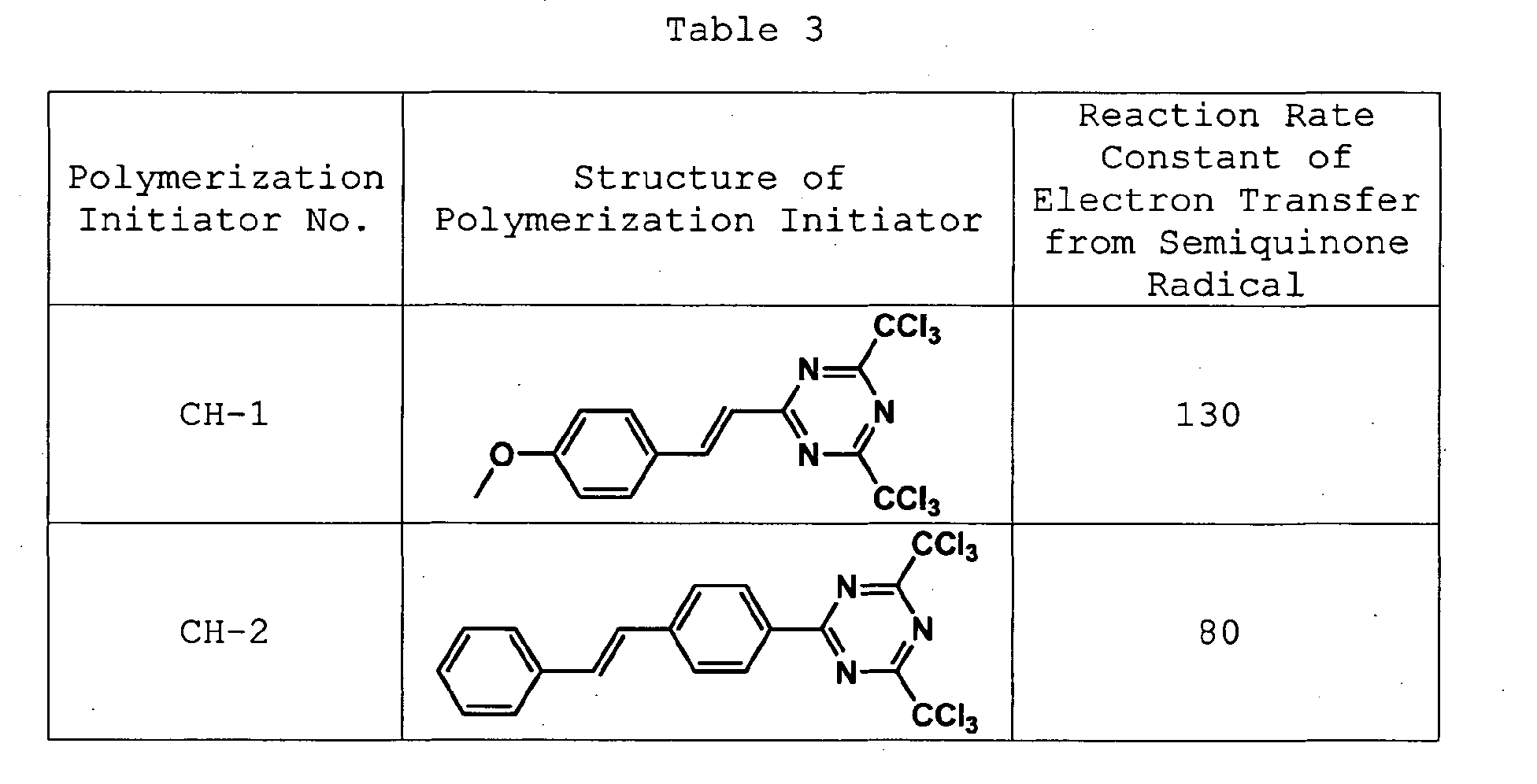
- the reaction rate constant with the semiquinone radical refers to the reaction rate constant of electron transfer from a semiquinone radical to a polymerization initiator, when the polymerization initiator is allowed to react with the semiquinone radical anion, which serves an electron donor. It is possible to determine the above reaction rate constant employing the methods described in J. Am. Chem. Soc., 1998, 120, 9220 - 9227, as well as Eur. J. Inorg. Chem., 2000, 1557 - 1562. More specifically, it refers to the value determined employing the measurement method described below.
- Time when the semiquinone radical anion solution is injected is taken as the initiation time, and absorbance at 450 nm is determined over the elapse of time.
- Polymerization initiators according to the present invention are compounds of an electron transfer reaction rate constant of 200 - 1.0 x 10 8 of an electron transfer from semiquinone radical anions to the polymerizations initiators, when allowed to react with the semiquinone radical anions as an electron donor.
- the structures are not particularly limited. Listed as preferable examples may be halogen compounds having carbon-halogen bond(s) as well as porphyrin metal complex compounds.
- a photopolymerization initiator exhibiting a predetermined amount of electron accepting property produces a photopolymer of high sensitivity. It was considered that the photopolymerization initiator would act as an electron acceptor in the course of a photo reaction.An electron accepting property of the photopolymerization initiator can be quantitatively evaluated by measuring an electron transfer reaction rate with a specific electron donor compound. In this invention, a semiquinone radical anion was selected as a specific electron donor compound. When the photopolymerization initiator has an electron transfer reaction rate with a semiquinone radical anion of not less than 200, an obtained photopolymer exhibits high sensitivity. While an electron transfer reaction rate is larger than 1.0 x 10 -8 , storage stability of the photopolymerization initiator is found to be decreased.
- halogen compounds having carbon-halogen bond(s) preferred are those having a plurality of carbon-halogen bonds in the molecule, and compounds, which have chlorine and bromine as a halogen, are preferably employed.
- Porphyrin metal complex compounds as described herein, refer to metal complexes of the compounds having a porphyrin skeleton.
- the used amount of polymerization initiators according to the present invention is preferably in the range of 0.01 - 30 percent by weight with respect to the total weight of nonvolatile components of the light-sensitive compositions, but is most preferably in the range of 0.5 - 20 percent by weight.
- Light-sensitive compositions employed in the present invention may incorporate other polymerization initiators together with the polymerization initiators according to the present invention.
- Examples of usable polymerization initiators include compounds capable of forming radicals described in Japanese Patent Publication to Public Inspection (under PCT Application) No. 2002-537419 and polymerization initiators described in JP-A Nos. 2001-175006, 2002-278057, and 2003-5363. Other than these, if described, employed may be onium salts having at least two cation portions in one molecule described in JP-A No. 2003-76010, N-nitrosoamine based compounds described in JP-A No. 2001-133966, compounds, which thermally generate radicals described in JP-A No. 2001-34374, compounds which thermally generate acids or radicals described in JP-A No. 2002-6482, borate compounds described in JP-A No.
- the following are preferably listed as examples of a second polymerization initiator which can be used in combination with a first polymerization initiator contained in the photosensitive composition of the present invention.
- a triaryl sulfonium compound a diaryl iodonium compound, a trihalomethyltriazine compound, an acylphosphine oxide compound, a benzoin derivative, and an N-phenylglycine derivative, a titanocene compound, a hexaaryl bisimidazole compound, and an iron arene complex compound.
- a titanocene compound is listed as a particularly preferable second polymerization initiator used in combination with a first polymerization initiator.
- titanocenes Di-cyclopentadienyl-Ti-di-chloride, dicyclopentadienyl-Ti-bisphenyl, dicyclopentadienyl-Ti-bis-2,3,4,5,6-pentafluorobenzene-1-yl, dicyclopentadienyl-Ti-bis-2,3,5,6-tetrafluorobenzene-1-yl, dicyclopentadienyl-Ti-bis-2,4,6-trifluorobenzene-1-yl, dicyclopentadienyl-Ti-bis-2,6-difluorobenzene-1-yl, dicyclopentadienyl-Ti-bis-2,4-difluorobenzene-1-yl, di-methylcyclopentadienyl-Ti-bis-2,3,4,5,6-penta fluorobenzene-1-yl, di-methyl cyclopentadienyl
- hexaarylbisimidazole compound can also be listed as a preferable second polymerization initiator which can be combined with.
- HABI hexaarylbisimidazole
- Preferable derivatives thereof are as follows: 2,4,5,2',4',5'-hexaphenylbisimidazole, 2,2'-bis(2-chlorophenyl)-4,5,4',5'-tetraphenylbisimidazole, 2,2'-bis(2-bromophenyl)-4,5,4',5'-tetraphenylbis imidazole, 2,2'-bis(2,4-dichlorophenyl)-4,5,4',5'-tetraphenylbis imidazole, 2,2'-bis(2-chlorophenyl)-4,5,4' ,5'-tetrakis(3-methoxyphenyl)bisimidazole, 2,2'-bis(2-chlorophenyl)-4,5,4', 5'-tetrakis (3,4,5-trimethoxyphenyl)bisimidazole, 2,5,2',5'-tetrakis(2-chlorophenyl
- Another listed second polymerization initiators are iron arene compounds.
- iron-arene complex examples include JP-A No. 59-219307. Specifically preferred are, ⁇ -benzene-( ⁇ - cyclopentadienyl)iron hexafluorophosphate, ⁇ -cumene-( ⁇ -cyclopentadienyl)iron hexafluorophosphate, ⁇ -fluorene-( ⁇ - cyclopentadienyl)iron hexafluorophosphate, ⁇ -naphthalene-( ⁇ -cyclopentadienyl) iron hexafluorophosphate, ⁇ -xylene-( ⁇ - cyclopentadienyl)iron hexafluorophosphate and ⁇ -benzene-( ⁇ -cyclopentadienyl)iron tetrafluoroborate
- polymerization initiators listed are sulfonium salt compounds and iodonium salt compounds.
- sulfonium salt compounds and iodonium salt compounds include the compounds described in JP-A Nos. 2001-343742, 2002-6482, 2002-116539, 2002-148790, 2002-268217, 2002-341519, 2003-076010, and 2003-5363.
- diazo resins as a photopolymerization initiator.
- diazo resins Listed as preferred diazo resins are those described in JP-A No. 10-31307.
- the added amount of simultaneously usable polymerization initiators in an image forming layer is optional. It is preferably in the range of 0.1 - 20 percent by weight in photosensitive compositions, but is more preferably in the range of 0.8 - 15 percent by weight.
- Preferred embodiments are such that polymerization initiators, described as above, are simultaneously employed in the light-sensitive compositions of the present invention.
- preferred embodiments include the light-sensitive compositions described in the aforesaid claims 1 - 3, wherein in addition to aforesaid polymerization initiator (B), titanocene compounds are incorporated as a polymerization initiator, the light-sensitive compositions described in the aforesaid claims 1 - 3, wherein, in addition to aforesaid polymerization initiator (B), hexaarylbisimidazole compounds are incorporated as a polymerization initiator, the light-sensitive compositions described in aforesaid claims 1 - 3, wherein in addition to aforesaid polymerization initiator (B), iron arene compounds are incorporated as a polymerization initiator, and the light-sensitive compositions described in aforesaid claims 1 - 3, wherein in addition to aforesaid polymerization initiator (B), at least one of the compounds, selected from triarylsulfonium salt compounds and diaryliodonium salt compounds, is incorporated as
- the sensitizing dyes according to the present invention are dyes having a maximum adsorption wavelength near the wavelength of light used as an exposure light source.
- a laser having wavelengths in the range of from visible to near-infrared region is preferably listed.
- dyes When as a recording light source, violet lasers or ultraviolet lasers, which have been widely used in recent years, are employed, dyes are preferred which exhibit absorption in the wavelength region of the light emitted by those lasers. Specifically, dyes are preferred which exhibit a maximum absorption between 350 nm and 450 nm, but those are more preferred which exhibit a maximum absorption between 350 and 420 nm.
- Structures of dyes are not particularly limited. Listed as dyes are optical brightening dyes described in JP-A No. 2003-295426, sensitizing dyes of JP-A No. 2003-21901, compounds having the structures represented by General Formula (I) of JP-A No. 2003-21895, compounds having the structures represented by General Formula (I) of JP-A No. 21894, sensitizing dyes having the specified structures of JA-A No. 2002-351072, sensitizing dyes having the specified structures of JP-A No. 2002-351071, sensitizing dyes having specified structures (being a pyrrolopyrrole ring) of JP-A No. 2002-351065, sensitizing dyes of JP-A No.
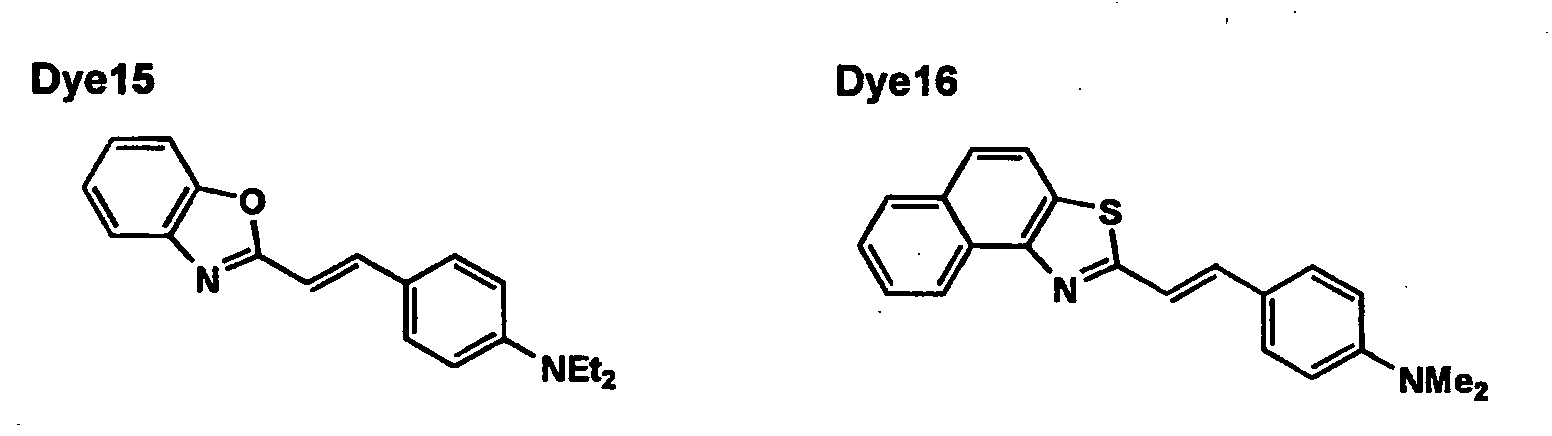
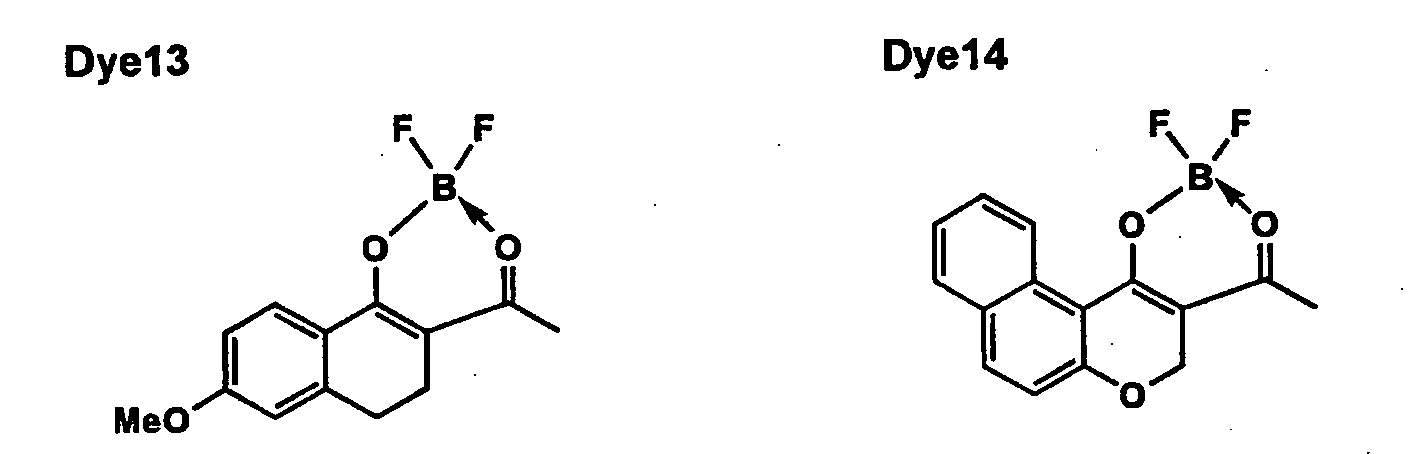
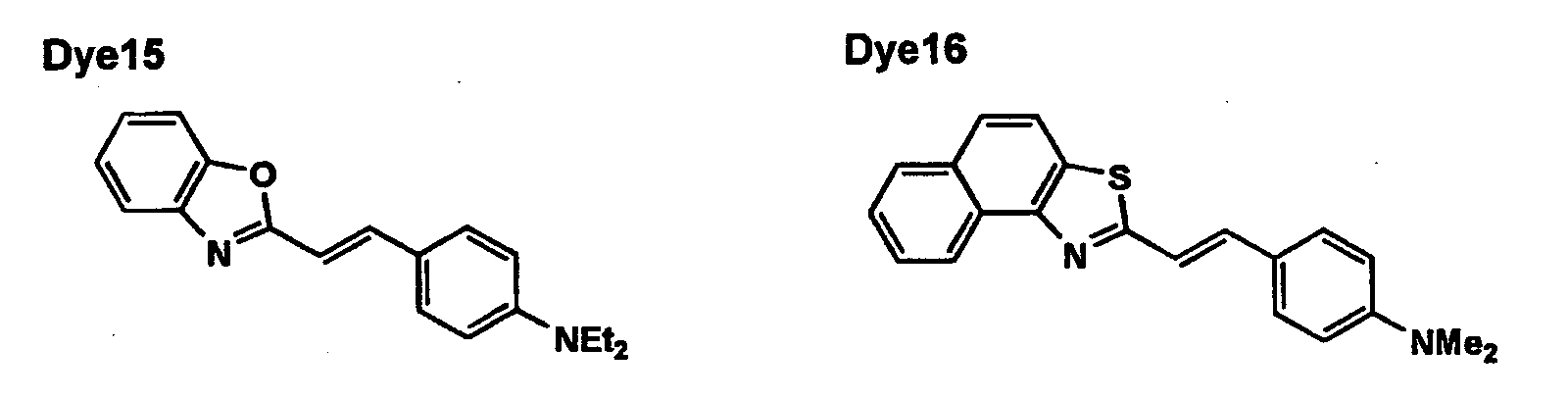
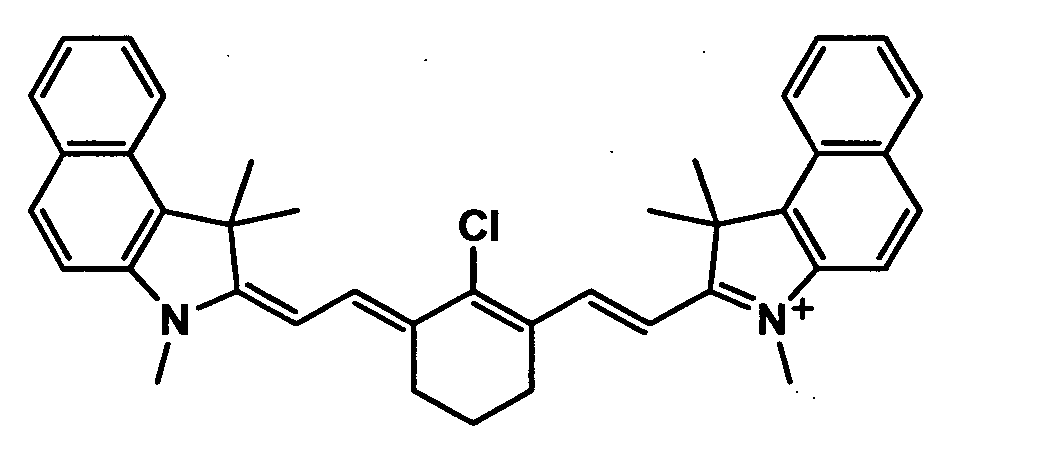
- sensitizing dyes are coumarin compounds as shown in Dyes 1 - 8, merocyanine dyes as shown in Dyes 9 - 11, boron compounds as shown in Dyes 12 - 14, pyrylium salt compounds as shown in Dyes 17 - 18, and cyanine dyes as shown in Dyes 19 - 24.
- usable sensitizing dyes are not limited thereto.
- preferred dyes are those which exhibit a maximum absorption between 700 and 1,100 nm, but more preferred dyes are which exhibit absorption between 750 and 900 nm.
- dyes corresponding to near infrared laser beam sources are, for example, cyanine dyes as well as squarylium dyes. In view of ease of synthesis and cost concerns, particularly preferred are cyanine dyes. Specific examples of cyanine dyes include those described in JP-A No. 2003-76010.
- the content of sensitizing dyes in light-sensitive compositions is optional in cases corresponding to any of the light sources. However, the content is preferably in the range of 0.1 - 20 percent by weight in the light-sensitive compositions.
- the above content is more preferably 0.8 - 15 percent by weight.
- the added amount when applied to light-sensitive layer of light-sensitive lithographic plate materials, the added amount is preferable that which results in absorbance of reflection spectra employing an integrating sphere in the range of 0.2 - 2.0. The added amount is more preferable one which results in an absorbance of 0.3 - 1.2.
- sensitizing dyes can be used solely or in combination thereof.
- the ethylenically unsaturated compound in the invention is a compound having a ethylenically unsaturated group in the compound and is capable of polymerizing.
- Suitably used examples for the present invention are, generally known radical polymerization monomers, polyfunctional monomers having an ethylenic double bond capable of addition polymerization used for common UV curing resins, or poly-functional oligomers.
- the ethylenically unsaturated compounds are not specifically limited, however, preferred examples thereof include a monofunctional acrylate such as 2-ethylhexyl acrylate, 2-hydroxypropyl acrylate, glycerol acrylate, tetrahydrofurfuryl acrylate, phenoxyethyl acrylate, nonylphenoxyethyl acrylate, tetrahydrofurfuryl-oxyethyl acrylate, tetrahydrofurfuryloxyhexanorideacrylate, an ester of 1,3-dioxane- ⁇ -caprolactone adduct with acrylic acid, or 1,3-dioxolane acrylate; a methacrylate, itaconate, crotonate or maleate alternative of the above acrylate; a bifunctional acrylate such as ethyleneglycol diacrylate, triethyleneglycol diacrylate, pentaerythritol diacrylate, hydroquinone
- a prepolymer can also be used as the above-described monomers. Examples of prepolymers are listed below. It can be preferably used prepolymers prepared from oligomers having an appropriate molecular weight by introducing an acrylic group or a methacrylic group in the molecule to yield a photopolymerization property.
- the prepolymer may be used solely or may be used in combination of two or more, and the prepolymer may be used in combination of the above-described monomers or oligomers.
- the prepolymer examples include polyester (meth)acrylate obtained by incorporating (meth)acrylic acid in a polyester of a polybasic acid such as adipic acid, trimellitic acid, maleic acid, phthalic acid, terephthalic acid, himic acid, malonic acid, succinic acid, glutaric acid, itaconic acid, pyromellitic acid, fumaric acid, pimelic acid, sebacic acid, dodecanoic acid or tetrahydrophthalic acid with a polyol such as ethylene glycol, ethylene glycol, diethylene glycol, propylene oxide, 1,4-butane diol, triethylene glycol, tetraethylene glycol, polyethylene glycol, glycerin, trimethylol propane, pentaerythritol, sorbitol, 1,6-hexanediol or 1,2,6-hexanetriol; an epoxyacrylate such as bisphenol A ⁇ epichlorhydrin ⁇ (meth
- the light sensitive composition or light sensitive layer of the planographic printing plate material of the invention may contain a monomer such as a phosphazene monomer, triethylene glycol, an EO modified isocyanuric acid diacrylate, an EO modified isocyanuric acid triacrylate, dimethyloltricyclodecane diacrylate, trimethylolpropane acrylate benzoate, an alkylene glycol acrylate, or a urethane modified acrylate, or an addition polymerizable oligomer or prepolymer having a structural unit derived from the above monomer.
- a monomer such as a phosphazene monomer, triethylene glycol, an EO modified isocyanuric acid diacrylate, an EO modified isocyanuric acid triacrylate, dimethyloltricyclodecane diacrylate, trimethylolpropane acrylate benzoate, an alkylene glycol acrylate, or a urethane modified acrylate, or an addition
- the ethylenically unsaturated compound used in the invention is a phosphate compound having at least one (meth)acryloyl group.
- the phosphate compound is a compound having a (meth)acryloyl group in which at least one hydroxyl group of phosphoric acid is esterified.
- the ethylenically unsaturated compound used in the invention is not limited, as long as it has a (meth)acryloyl group.
- a polymerizable compound having an ethylenically unsaturated bond and containing a tertiary amino group in the molecule it is preferable to use a polymerizable compound having an ethylenically unsaturated bond and containing a tertiary amino group in the molecule.
- the structure of the preferred compound is not specifically limited, however, preferred compounds are tertiary amino compounds having a hydroxyl group modified with glycidyl methacrylate, methacryloyl chloride or acryloyl chloride. More specifically, the compounds disclosed in JP-A Nos. 1-165613, 1-203413 and 1-197213 may be preferably used.
- a polyalcohol having a tertiary amino group in the molecule such as a polyalcohol having a tertiary amino group in the molecule, a diisocyanate compound, a reaction product of a polymerizable compound having an ethylenically unsaturated bond and a hydroxyl group in the molecule.
- a polymerizable compound having an ethylenically unsaturated bond and a hydroxyl group in the molecule is preferably used such as a polyalcohol having a tertiary amino group in the molecule, a diisocyanate compound, a reaction product of a polymerizable compound having an ethylenically unsaturated bond and a hydroxyl group in the molecule.
- Specifically preferable compound is a compound having a tertiary amino group and an amido bond.
- Triethanolamine N-methyldiethanolamine, N-ethyl diethanolamine, N-n-butyl diethanolamine, N-tert-butyl diethanolamine, N, N-di(hydroxyethyl)aniline, N, N, N', N'-tetra-2-hydroxypropylethylenediamine, p-tolyl diethanolamine, and N, N, N', N'-tetra-2-hydroxyethyl ethylenediamine, N, N-bis(2-hydroxypropyl)aniline, aryl diethanolamine, 3-(dimethylamino)-1, 2-propanediol, 3-diethyl amino-1, 2-propanediol, N, N-di(n-propyl)amino-2, 3-propanediol, N, N-di(iso-propyl)amino-2, 3-propanediol, and 3-(N-methyl-N-benzylamino)-1, 2-prop
- the present invention is not limited to these.
- the present invention is not limited to these.
- MH-1 to MH-13 are cited as compounds having a hydroxyl group and an ethylenic double bond capable of addition polymerization in the molecule, it is not limited to these.
- 2-hydroxyethyl methacrylate 2-hydroxyethyl acrylate
- 4-hydroxybutyl acrylate 2-hydroxypropylene-1, 3-dimethacrylate
- 2-hydroxypropylene-1-methacrylate-3-acrylate 2-hydroxypropylene-1-methacrylate
- reaction products between polyalcohol containing a tertiary amino group in the molecule, a diisocyanate compound, and a compound containing the ethylene nature double bond and a hydroxyl group capable of polymerization are shown below.
- acrylate or alkyl acrylate described in JP-A Nos. 1-105238 and 2-127404 can be used.
- a polymer binder used in the present invention is capable of holding elements in the photosensitive layer of the planographic printing material.
- polymer binders are, an acrylic polymer, polyvinyl butyral resin, polyurethane resin, polyamide resin, polyester resin, epoxy resin, phenol resin, polycarbonate, polyvinyl butyral resin, polyvinyl formal resin, shellac and other known natural resin. The combination of two or more may be used.
- an alkali soluble polymer particularly preferred for the present invention is an alkali soluble polymer.
- the alkali soluble polymer refers to a polymer having an acid value and is preferably a copolymer having various structures described later.
- a polyacrylate resin, a polyvinylbutyral resin, a polyurethane resin, a polyamide resin, a polyester resin, an epoxy resin, a phenol resin, a polycarbonate resin, a polyvinyl butyral resin, a polyvinyl formal resin, a shellac resin, or another natural resin is preferably used.
- These resins can be used as an admixture of two or more thereof.
- polymers having a hydroxyl group or a carboxyl group are preferably used, and polymers having a carboxyl group are more preferably used.
- a vinyl copolymer is preferably used which is obtained by copolymerization of an acryl monomer, and more preferred is a copolymer containing (a) a carboxyl group-containing monomer unit and (b) an alkyl (meth)acrylate unit as the copolymerization component.
- carboxyl group-containing monomer examples include an ⁇ , ⁇ -unsaturated carboxylic acid, for example, acrylic acid, methacrylic acid, maleic acid, maleic anhydride, itaconic acid, itaconic anhydride or a carboxylic acid such as a half ester of phthalic acid with 2-hydroxymethacrylic acid.
- an ⁇ , ⁇ -unsaturated carboxylic acid for example, acrylic acid, methacrylic acid, maleic acid, maleic anhydride, itaconic acid, itaconic anhydride or a carboxylic acid such as a half ester of phthalic acid with 2-hydroxymethacrylic acid.
- alkyl methacrylate and alkyl acrylate include an unsubstituted alkyl ester such as: methyl methacrylate, ethyl methacrylate, propyl methacrylate, butyl methacrylate, amyl methacrylate, hexyl methacrylate, heptyl methacrylate, octyl methacrylate, nonyl methacrylate, decyl methacrylate, undecyl methacrylate, or dodecyl methacrylate; and methyl methacrylate, ethyl methacrylate, propyl methacrylate, butyl methacrylate, amyl methacrylate, hexyl methacrylate, heptyl methacrylate, octyl methacrylate, nonyl methacrylate, decyl methacrylate, undecyl methacrylate, or dodecyl methacrylate, a unsubsti
- a monomer unit derived from the monomer described in the following items (1) through (14) can be used.
- Polymerization initiators are not particularly limited and include azobis based radical generating agents such as 2,2'-azobisisobutylnitrile (AIBN) or 2.2'-azobis(2-methylbutyronitrile). Further, the used amount of these polymerizations initiators is commonly 0.05 - 10.0 parts by weight with respect to 100 parts by weight of the total monomers employed to form copolymers (preferably 0.1 - 5 parts by weight). Further listed as solvents employed during the solution polymerization are ketone based, ester based, and aromatic organic solvents.
- solvents for acryl based polymers such as toluene, ethyl acetate, benzene, methyl cellosolve, ethyl cellosolve, acetone, or methyl ethyl ketone.
- solvents at a boiling point of 60 - 120 °C preferred are solvents at a boiling point of 60 - 120 °C.
- a reaction temperature of 40 - 120 °C preferably 60 - 110 °C
- a reaction time of 3 - 10 hours preferably 5 - 8 hours
- mercaptan based solvents e.g., n-octylmercaptan, n-dodecylmercaptan, t-dodecylmercaptan, and mercaptoethanol
- carbon tetrachloride based solvents e.g., carbon tetrachloride, butyl chloride, and propylene chloride. It is also possible to appropriately choose the mixing ratio of these solvents with the above solvents used for reactions depending on monomers and solvents used for the reaction as well as reaction conditions.
- polymer binders according to the present invention are vinyl based polymers having a carboxyl group, as well as polymerizable double bonds on the side chain.
- polymer binders are unsaturated bond containing vinyl based copolymers which are obtained by allowing the carboxyl group in the molecule of the above vinyl based polymers to undergo addition reaction of the compounds having a (meth)acryloyl group as well as an epoxy group in the molecule.
- compounds having an unsaturated bond as well as an epoxy group in the molecule are glycidyl acrylate and glycidyl methacrylate, as well as epoxy groups containing unsaturated compounds described in JP-A No. 11-271969.
- the above polymer binders may also be prepared in such a manner that hydroxyl groups in the above vinyl based polymers undergo addition reaction with compounds having a (meth)acryloyl group as well as an isocyanate group in the molecule.
- polymer binders are unsaturated bond containing vinyl based copolymers.
- compounds having an unsaturated bond as well as an isocyanate group in the molecule are vinyl isocyanate, (meth)acryl isocyanate, 2-(meth)acroyloxyethyl isocyanate, m- or p-isopropenyl- ⁇ , ⁇ '-dimethylbenzyl isocyanate.
- reaction may be performed in such a manner that, for example, the reaction temperatures is commonly 20 - 100 °C, is preferably 40 - 80 °C, but is most preferably lower than or equal to the boiling point (under refluxing) of the used solvents, while reactions time is commonly 2 - 10 hours, but is preferably 3 - 6 hours.
- the solvents used in the polymerization reaction of the above vinyl system copolymer are listed as examples of the solvents to be used. After the completion of the polymerization, the used solvent can be used without removing for the next reaction to introduce an unsaturated compound having an alicyclic epoxy group.
- the reaction can be performed under existence of a catalyst or a polymerization inhibitor if needed.
- a catalyst an amine compound and an ammonium chloride compound are preferable.
- Triethyl benzyl ammonium chloride is listed as an example of an ammonium chloride compound.
- the amount of the compound to be added is form 0.01-20.0 wt% of the unsaturated compound having an alicyclic epoxy group used in the reaction.
- hydroquinone As polymerization inhibitors, a hydroquinone, hydroquinone monomethyl ether, 2,6-di-tert-butyl-4-methylphenol are listed. The amount used is 0.01-5.0 wt% of the unsaturated compound having an alicyclic epoxy group used in the reaction.
- the progress of the reaction can be checked by measuring the acid value of the reaction system. The reaction is stopped when the acid value becomes 0.
- reaction may be performed in such a manner that, for example, the reaction temperatures is commonly 20 - 100 °C, is preferably 40 - 80 °C, but is most preferably lower than or equal to the boiling point (during refluxing) of the used solvents, while reaction time is commonly 2 - 10 hours, but is preferably 3 - 6 hours.
- used solvents are those which are used in the polymerization reaction of the aforementioned copolymers.
- catalysts are tin based or amine based compounds, specific examples of which include dibutyl tin laurate and triethylamine. It is preferable that catalysts are added in an amount of 0.01 - 20.0 percent by weight with respect to used compounds having a double bond.
- polymerization inhibitors are hydroquinone, hydroquinone monomethyl ether, and 2.6-t-butyl-4-methylphenol.
- the used amount is customarily 0.01 - 5.0 percent by weight with respect to the used unsaturated compounds having an isocyanate group.
- the progress of the reaction is monitored by determining the presence of an isocyanato group in the reaction system, while measuring the infrared absorption spectra (IR) and when no absorption is evident, the reaction may be terminated.
- the amount of the above vinyl based polymers having an carboxyl group as well as a polymerizable double bond on the side chain is preferably 50 - 100 percent by weight with respect to the total polymer binding agents, but is more preferably 100 percent by weight.
- the amount of polymer binding agents in a light-sensitive composition which is formed as a light-sensitive layer upon being coated is preferably in the range of 10 - 90 percent by weight, is more preferably in the range of 15 - 70 percent by weight, but is most preferably in the range of 20 - 50 percent by weight in view of the resulting increase in photographic speed.
- added to light-sensitive compositions as well as a light-sensitive layer according to the present invention may be polymerization inhibitors such as hindered phenol based compounds or hindered amine based compounds.
- hindered-phenol compound 2,6-di-t-butyl-p-cresol, butylatedhydroxyanisole, 2,2'-methylenebis(4-methyl-6-t-butylphenol), 4,4'-butylidenebis(3-methyl-6-t-butylphenol), tetrakis-[methylene-3-(3',5'-di- t-butyl-4'-hydroxyphenyl)propionate]methane, bis[3,3'-bis-(4'-hydroxy-3'-t-butylphenyl)butyric acid] glycol ester, 2-t-butyl-6-(3-t-butyl-2-hydroxy-5-methylbenzyl)-4-methylphenyl acrylate, and 2-[1-(2-hydroxy-3, 5-di-t-pentylphenyl)ethyl]-4,6-di- t-pentyl phenyl acrylate.
- (meth)acrylates such as, 2-t-butyl-6-(3-t-butyl-2-hydroxy-5-methylbenzyl)-4-methylphenyl (meth)acrylate, 2-[1-(2-hydroxy-3,5-di-t-pentylphenyl) ethyl]-4,6-di-t-pentylphenyl (meth)acrylate.
- a hindered amine compound are as follows: Bis(1,2,2,6,6-pentamethyl-4-piperidyl)sebacate, Bis(2,2,6,6-tetramethyl-4-piperidyl)sebacate, 1-[2-[3-(3,5-di-t-butylhydroxyphenyl)propionyloxy]ethyl]-4-[3-(3, 5-di-t-butyl-4-hydroxyphenyl)propionyloxy]-2,2,6,6-tetramethylpiperidine, 4-benzoyloxy-2,2,6,6-tetramethylpiperidine, 8-acetyl-3-dodecyl-7,7,9,9-tetramethyl-1,3,8-triazaspiro [4.5]decane-2,4-dion.
- the added amount of polymerization inhibitors is preferably about 0.01 - about 5 percent by weight with respect to the weight of the total solids of the above compositions. Further, if desired, in order to minimize polymerization inhibition due to oxygen, behenic acid or higher fatty acid derivatives such as behenic acid amide may be added or localized onto the surface of the light-sensitive layer during the drying process after coating. The added amount of higher fatty acid derivatives is preferably about 0.5 - 10 percent by weight with respect to the total composition.
- colorants Suitably employed as colorants may be those known in the art including commercially available products. Listed as examples may be those described in the newly revised edition, "Senryo Binran (Pigments Handbook)", edited by Nippon Ganryo Gijutsu Kyokai (Seibundo Shinkosha) and Color Index Binran (Color Index Handbook).
- pigments Listed as types of pigments are black pigments, yellow pigments, red pigments, brown pigments, violet pigments, blue pigments, green pigments, fluorescent pigments, and metal powder pigments.
- specific examples include inorganic pigments (titanium oxide, carbon black, graphite, zinc oxide, Prussian Blue, cadmium sulfide, iron oxide, as well as chromates of lead, zinc, barium and calcium), in addition to organic pigments (azo based, thioindigo based, anthraquinone based, anthoanthrone based, triphenoxazine based pigments, bat dye pigments, phthalocyanine pigments and derivatives thereof, and quinacridone pigments).
- inorganic pigments titanium oxide, carbon black, graphite, zinc oxide, Prussian Blue, cadmium sulfide, iron oxide, as well as chromates of lead, zinc, barium and calcium
- organic pigments azo based, thioindigo
- the reflection absorption of pigments is preferably at most 0.05 which is determined at the wavelength of the used laser beam, employing an integrating sphere.
- the added amount of pigments is preferably 0.1 - 10 percent by weight with respect to the solids of the above compositions, but is more preferably 0.1 - 5 percent by weight.
- surface active agents as a coatability improving agent within a range amount which does not adversely affect the performance of the present invention.
- fluorine based surface active agents preferred are fluorine based surface active agents.
- additives such as inorganic fillers as well as plasticizers such as dioctyl phthalate, dimethyl phthalate, and tricresyl phosphate.
- plasticizers such as dioctyl phthalate, dimethyl phthalate, and tricresyl phosphate. The added amount of these is preferably at most 10 percent with respect to the total solids.
- the light-sensitive compositions and light-sensitive layers according to the present invention incorporate aminophenol compounds such as (2,4,6-tris(dimethylaminomethyl)phenol), as well as mercapto group containing compounds such as 2-mercaptobenzothaizole, 2-mercaptobenzoxazole, or 2-mercaptobenzodiazole.
- aminophenol compounds such as (2,4,6-tris(dimethylaminomethyl)phenol
- mercapto group containing compounds such as 2-mercaptobenzothaizole, 2-mercaptobenzoxazole, or 2-mercaptobenzodiazole.
- the content of these phenols and mercapto group containing compounds is preferably 0.2 - 10 percent by weight, but is more preferably 0.5 - 5 percent by weight.
- a solvent used for preparing a coating mixture containing a photosensitive composition to produce a photosensitive layer of the present invention examples are as follows.
- Derivatives of alcohol and polyalcohol such as: sec-butanol, isobutanol, n-hexanol, the benzyl alcohol, diethylene glycol, the triethylene glycol, tetraethylene glycol, 1,5-pentanediol; ethers such as: propyleneglycol monobutyl ether, dipropyleneglycol monomethyl ether, and tripropylene glycol monomethyl ether; ketones and aldehydes such as: Diacetone alcohol, ketohexamethylene, methylcyclohexanone; and esters such as: ethyl lactate, butyl lactate, oxalic-acid diethyl, and methyl benzoate.
- a support of the present invention is a plate or a film which is capable of holding an photosensitive layer, and is preferably has a hydrophilic surface on which the photosensitive layer is provided.
- a plate of a metal such as aluminum, stainless steel, chromium or nickel, or a plastic film such as a polyester film, a polyethylene film or a polypropylene film, which is deposited or laminated with the above-described metal can be used.
- the aluminum plate is preferably used, and may be a pure aluminum plate or an aluminum alloy plate.
- the aluminum alloy there can be used various ones including an alloy of aluminum and a metal such as silicon, copper, manganese, magnesium, chromium, zinc, lead, bismuth, nickel, titanium, sodium or iron.
- the aluminum support is used after being treated surface roughening so as to give a water holding capacity.
- the support in the invention is subjected to degreasing treatment for removing rolling oil prior to surface roughening (graining).
- the degreasing treatments include degreasing treatment employing solvents such as trichlene and thinner, and an emulsion degreasing treatment employing an emulsion such as kerosene or triethanol. It is also possible to use an aqueous alkali solution such as caustic soda for the degreasing treatment. When an aqueous alkali solution such as caustic soda is used for the degreasing treatment, it is possible to remove soils and an oxidized film which can not be removed by the above-mentioned degreasing treatment alone.
- the resulting support is preferably subjected to desmut treatment in an aqueous solution of an acid such as phosphoric acid, nitric acid, sulfuric acid, chromic acid, or a mixture thereof, since smut is produced on the surface of the support.
- the surface roughening methods include a mechanical surface roughening method and an electrolytic surface roughening method electrolytically etching the support surface.
- the mechanical surface roughening methods used for the present invention are not specifically limited, however, brush roughening and horning roughening are preferred.
- the electrochemical surface roughening methods used for the present invention are also not specifically limited, however, it is preferable to carry out the electrochemical surface roughening in an acidic electrolytic solution.
- an acidic or basic solution so as to eliminate waste aluminum materials remained on the surface of the support.
- acids are, sulfuric acid, persulphuric acid, hydrofluoric acid, phosphoric acid, nitric acid and hydrochloric acid.
- bases are, sodium hydroxide and potassium hydroxide.
- an alkali aqueous solution is preferred.
- An amount of aluminum to be dissolved is preferably, from 0.5 to 5 g/m 2 .
- the mechanical surface roughening methods and the electrochemical surface roughening methods may be employed solely or it may be combined: at first, carry out a mechanical surface roughening method; and then carry out a electrochemical surface roughening method.
- anode oxidation treatment After surface roughening treatment, it may be applied anode oxidation treatment.
- the anode oxidation methods used for the present invention are not specifically limited. Usually known anode oxidation methods may be employed. By carrying out the anode oxidation treatment, an oxidized coating is formed on the support.
- the support having been subjected to anode oxidation treatment may be further subjected to sealing treatment when required.
- the sealing treatment may be carried out using the methods such as hot water treatment, boiling water treatment, vapor treatment, sodium silicate treatment, bichromate salt aqueous solution treatment, nitrite salt treatment and ammonium acetate treatment.
- a water soluble resin e.g., a polymer or a copolymer having a polyvinylphosphinic acid group or a sulphonic acid group in the side chain
- polyacrylic acid e.g., polyacrylic acid
- a water soluble metallic salt e.g., zinc borate
- sol-gel treatment described in JP-A No. 5-304358 which forms a covalent bond between a functional group and a radical by an addition reaction, is also preferably used.
- a planographic printing plate material can be obtained by preparing a light sensitive composition, coating the liquid on the support according to a coating conventional method, and drying.
- the coating method include an air doctor coating method, a blade coating method, a wire bar coating method, a knife coating method, a dip coating method, a reverse roll coating method, a gravure coating method, a cast coating method, a curtain coating method, and an extrusion coating method.
- the drying temperature of the coated light sensitive layer is preferably from 60 to 160 °C, more preferably from 80 to 140 °C, and still more preferably from 90 to 120 °C.
- a protective layer (an oxygen shielding layer) is preferably provided on the light sensitive layer. It is preferred that the protective layer is highly soluble in the developer as described later (generally an alkaline solution).
- the compounds included in the protective layer are, polyvinyl alcohol, polysaccharide, polyvinylpyrrolidone, polyethylene glycol, gelatin, glue, casein, hydroxyethyl cellulose, carboxymethyl cellulose, methyl cellulose, hydroxyethyl starch, gum arabic, sucrose octaacetate, ammonium alginate, sodium alginate, polyvinyl amine, polyethylene oxide, polystyrene sulfonic acid, polyacrylic acid, or a water soluble polyamide and polyvinylpyrrolidone copolymer. These compounds may be used in the protective layer forming composition solely or in combination of two or more.
- the above-listed compound is dissolved in an appropriate solvent, and then used for coating.
- the protective layer is coated on the photopolymerizable light sensitive layer and drying.
- the thickness of the protective layer is preferably 0.1 to 5.0 ⁇ m, and more preferably 0.5 to 3.0 ⁇ m.
- the protective layer may further contain a surfactant or a matting agent.
- the coating methods for the protective layer may be suitably applied the methods listed for the above-described photosensitive layer.
- the drying temperature of the coated protective layer is preferably lower than that of the photosensitive layer. It is preferably 10°C lower or more than the drying temperature of the photosensitive layer, more preferably, it is 20 °C lower or more and the upper limit is about 50 °C.
- the drying temperature of the coated protective layer is preferably lower than a glass transition temperature (Tg) of the binder included in the photosensitive layer.
- Tg glass transition temperature
- the difference between the drying temperature of the protective layer and a glass transition temperature (Tg) of the binder included in the photosensitive layer is preferably not less than 20 °C, and more preferably not less than 40 °C, and upper limit is about 60°C.
- the photosensitive printing plate material of the present invention can be processed to obtain a printing plate.
- Examples of a light source for exposing the planographic printing material are as follows: laser, LED, xenon lamp, xenon flash lamp, halogen lamp, carbon arc lamp, metal halide lamp, tungsten lamp, high pressure mercury lamp and non-electrode lamp.
- a laser scanning method by means of a laser beam there are a method of scanning on an outer surface of a cylinder, a method of scanning on an inner surface of a cylinder and a method of scanning on a plane.
- laser beam exposure is conducted while a drum around which a recording material is wound is rotated, in which main scanning is represented by the rotation of the drum, while sub-scanning is represented by the movement of the laser beam.
- a recording material is fixed on the inner surface of a drum, a laser beam is emitted from the inside, and main scanning is carried out in the circumferential direction by rotating a part of or an entire part of an optical system, while sub-scanning is carried out in the axial direction by moving straight a part of or an entire part of the optical system in parallel with a shaft of the drum.
- main scanning by means of a laser beam is carried out through a combination of a polygon mirror, a galvanometer mirror and an F ⁇ lens, and sub-scanning is carried out by moving a recording medium.
- the method of scanning on an outer surface of a cylinder is suitable for high density image recording, since it is easily construct an optical system and it is possible to decrease the distance between a light source and the recording material.
- the exposed planographic printing material it is preferable to heat the exposed planographic printing material prior to development or during the development.
- This heating treatment pre-heating
- a pre-heat roller When pre-heating is applied to the planographic printing material in an auto-processor to develop the material, a pre-heat roller may be used to heat the material at a predetermined range of the temperature prior to the development. Other heating methods using a ceramic heater or a heating fun may also be applicable.
- An example of a pre-heating roller contains at least one pair of rollers having a heating means inside of the roller.
- a roller having a heating means inside of the roller it may be used a roller containing a metal pipe having a high heat conductivity (e.g., aluminum and iron), inside of the pipe being provided with a heating material such as a nichrome wire and the outside of the pipe being coated with a plastic such as polyethylene, polystyrene, TEFLON R .
- the detail of a pre-heating roller may be referred to JP-A No. 64-80962.
- the imagewise exposed light sensitive layer, which are cured are at exposed portions is developed with an alkali developer, whereby the light sensitive layer at exposed portions are removed to form an image.
- the imagewise exposed light sensitive layer, which are cured are at exposed portions is developed with an alkali developer, whereby the light sensitive layer at exposed portions are removed to form an image.
- a conventional alkali aqueous solution can be used as a developer for the present invention.
- the photosensitive printing plate material may be heated during the preparation of the printing plate.
- the printing plate after being developed may be treated with water, a rinse solution containing a surface active agent, a finisher solution or a protective gum solution containing Arabic gum or starch.
- Printing is carried out with a printing apparatus using the planographic printing plate after image formation on the photosensitive planographic printing material of the present invention.
- the present invention is not limited by a kind of printing apparatus, printing sheet, printing ink, or wetting water.
- the weight average molecular weight determined employing GPC was approximately 35,000, the glass transition temperature (Tg) determined employing differential scanning colorimetry (DSC) was approximately 85°C, while the acid value was 70.
- a 0.3 mm thick aluminum plate (material 1050, tempered at H16) was degreased while immersed into a 5 percent aqueous sodium hydroxide solution maintained at 65 °C for one minute and subsequently washed with water.
- the resulting degreased aluminum plate was subjected to neutralization while immersed in a 10 percent hydrochloric acid solution for one minute and then again washed with water.
- the resulting aluminum plate was subjected to electrolytic surface roughening for 60 seconds in a 0.3 weight percent aqueous nitric acid solution at 25 °C, employing an alternating current at conditions of 25 °C and a current density of 100 A/dm 2 , and was then subjected to a desmutting treatment for 10 seconds in a 5 percent aqueous sodium hydroxide solution maintained at 60 °C.
- the resulting surface-roughened aluminum plate, which had been subjected to the desmutting treatment was further subjected to an anodic treatment in a 15 percent sulfuric acid solution under conditions of 25 °C, a current density of 10 A /dm 2 , and a voltage of 15 V for one minute.
- the center line mean roughness (Ra) of the support surface was 0.65 ⁇ m.
- Light-sensitive Layer Liquid Coating Composition 1 of the following composition was applied onto above Support 1 employing a wire bar to result in 2.0 g/m 2 when dried, and dried for 1.5 minutes at 95 °C. Subsequently, Oxygen Blocking Layer Liquid Coating Composition 1 was applied employing a wire bar to result in 1.5 g/m 2 when dried, and dried at 75 °C for 15 minutes, whereby a light-sensitive lithographic printing plate material was obtained.
- Polyvinyl alcohol (GOSENOL AL-05, produced by Nippon Synthetic Chemical Industry Co., Ltd.) 85.0 parts Polyvinylpyrrolidone (LUBITECH K-30, produced by BASF) 15.0 parts SURFINOL 465 (produced by Air Products Co.) 0.2 parts Water 900 parts
- Light-sensitive lithographic printing plate samples prepared as above, were image-exposed at a resolution of 2,400 dpi (dpi, as described herein, refers to the number of dots per 2.54 cm), employing a CTP plate setter TIGER CAT (produced by ECRM Co.) fitted with a 30 mW violet laser.
- a CTP automatic processor Raster Polymer, produced by Glunz & Jensen Co.
- a pre-heating section which brought the plate surface to 105 °C
- a pre-washing section to remove the oxygen blocking layer
- a development section filled with a developer having the following compositions
- a washing section to remove the developer adhered onto the plate surface
- a liquid gum composition (GW-3 produced by Mitsubishi Chemical Corp. was diluted by a factor of two) to protect line image portions, and a processing section, whereby a lithographic printing plate was obtained.
- Light-sensitive Layer Liquid Coating Composition 2 having the following composition, was applied onto aforesaid Support 1, employing a wire bar to result in 2.0 g/m 2 when dried, and subsequently the resulting coating was dried at 95 °C for 1.5 minutes, whereby a light-sensitive lithographic printing plate material was obtained.
- Photographic speed and plate life were evaluated in the same manner as Examples 1 - 4, except that a plate setter (TREND SETTER 3244, produced by Creo Co.) provided with a light source of 830 nm was used for image exposure, and RAPTOR THERMAL (produced by Glunz & Jensen Co.) having neither a pre-heating section nor a pre-washing section was employed as a CPT automatic processor. Table 4 shows the results.
- Example No. Polymerization Initiator (weight parts) Photographic Speed ( ⁇ J/cm 2 ) Plate Life (as number of printed sheets)
- Example 10 P-1(4.0) 100 350,000 sheets
- Example 11 P-4(4.0) I-1(3.0) 80 at least 400,000 sheets
- Example 12 P-2(2.0) I-4(3.0) 60 at least 400,000 sheets
- Example 13 P-3(4.0) I-5(3.0) 80 at least 400,000 sheets
- Example 17 H-5(2.0) I-5(3.0) 60 at least 400,000 sheets
- Example 18 H-5(2.0) I-6(3.0) 60 at least 400,000 sheets
- Example 19 H-6(4.0) I-1(3.0) 100 up to 350,000 sheets Comparative Example 3 CH-1(4.0) I-5(3.0) 250 up to 200,000 sheets Comparative Example 4 CH-2(
Landscapes
- Physics & Mathematics (AREA)
- Optics & Photonics (AREA)
- Thermal Sciences (AREA)
- Engineering & Computer Science (AREA)
- Manufacturing & Machinery (AREA)
- Materials For Photolithography (AREA)
- Photosensitive Polymer And Photoresist Processing (AREA)
Abstract
Description
wherein the photopolymerization initiator exhibits a reaction rate constant with a semiquinone radical anion in the range of 1.0 x 10⁴ to 1.0 x 10⁸ (mol-1· l · s-1) .
wherein the photopolymerization initiator is a halide compound having a carbon-halogen bond in the molecule.
wherein the photopolymerization initiator is a porphyrin metal complex.
wherein the sensitizing dye is a coumarin derivative.
wherein the sensitizing dye is a styryl dye.
wherein the sensitizing dye is a boron containing compound.
wherein the sensitizing dye is a cyanine dye.
wherein the sensitizing dye is a squarylium dye.

| No. | Structure of Polymerization Initiator | Reaction Rate Constant of Electron Transfer from Semiquinone Radical Anions |
| H-1 | *1 | 900 |
| H-2 | *2 | 900 |
| H-3 | *3 | 700 |
| H-4 | *4 | 600 |
| H-5 | *5 | 600 |
| H-6 | *6 | 250 |
| P-1 | *7 | 1.3 x 10⁴ |
| P-2 | *8 | 8.6 x 10⁴ |
| P-3 | *9 | 2.0 x 10⁵ |
| P-4 | *10 | 5.8 x 10⁶ |
| P-5 | *11 | 5.4 x 10⁷ |



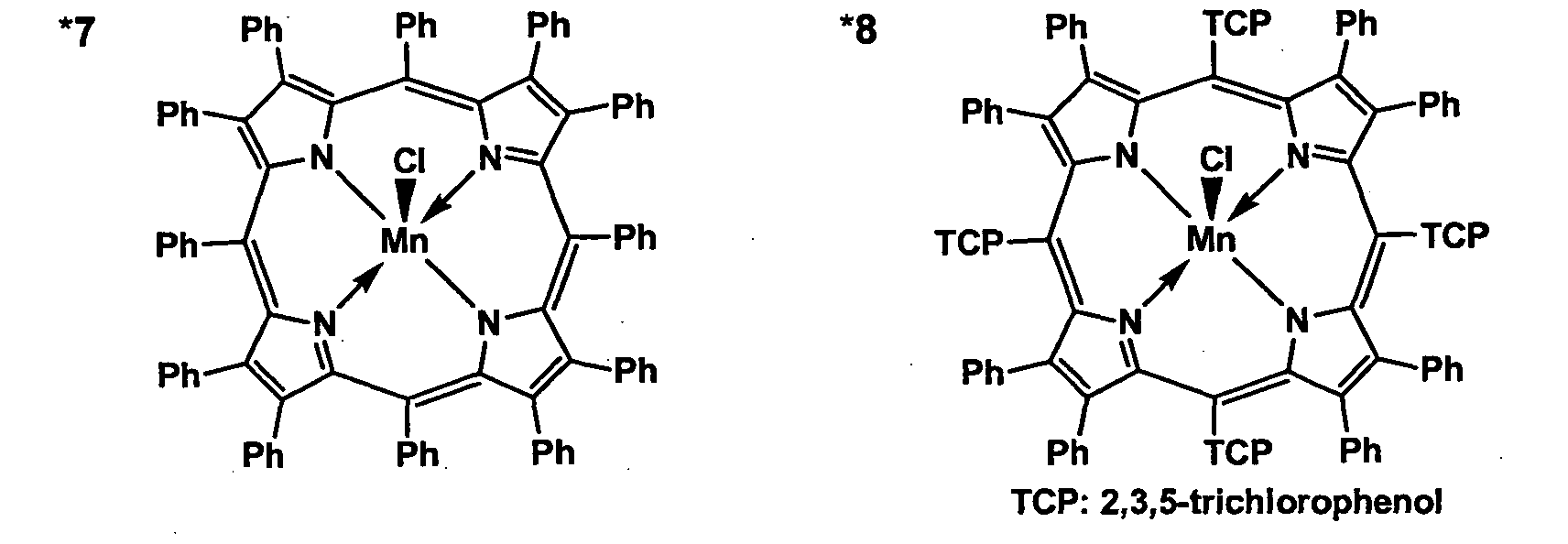
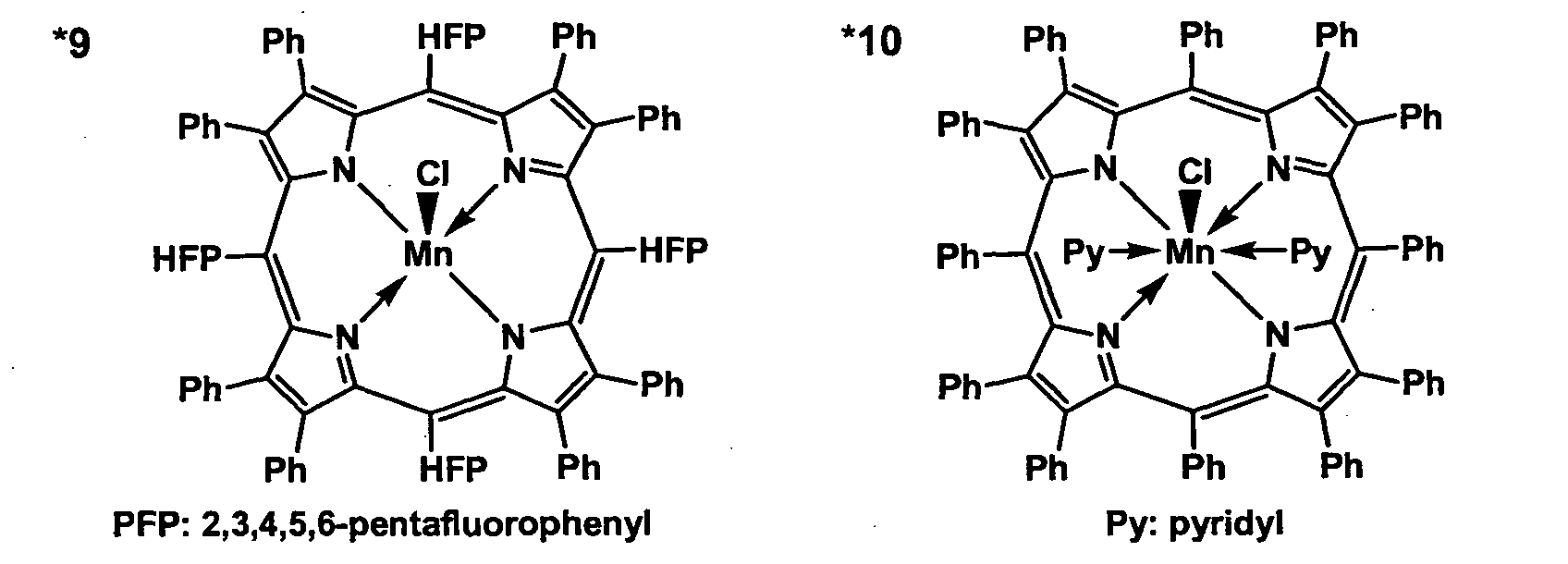

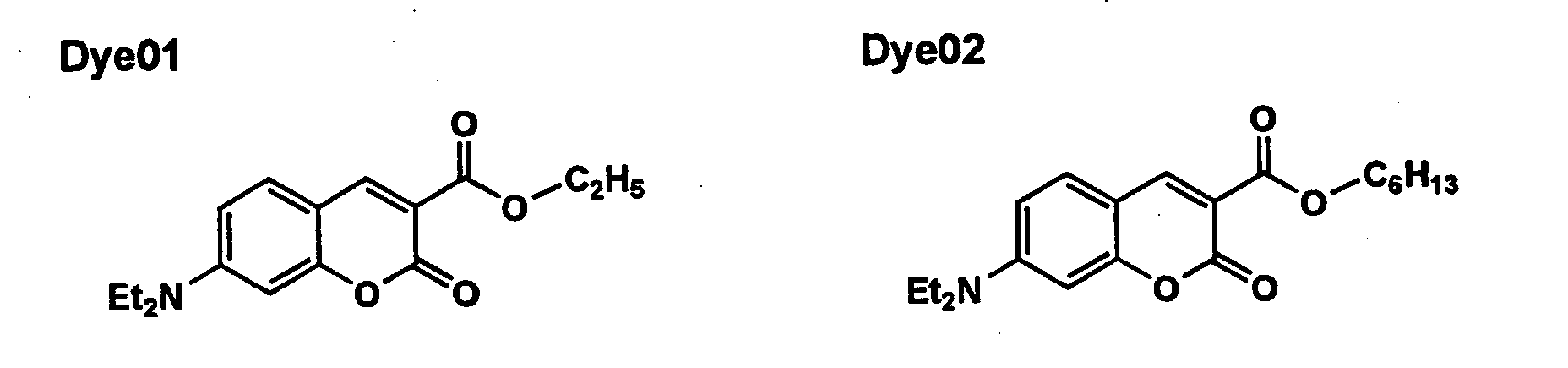
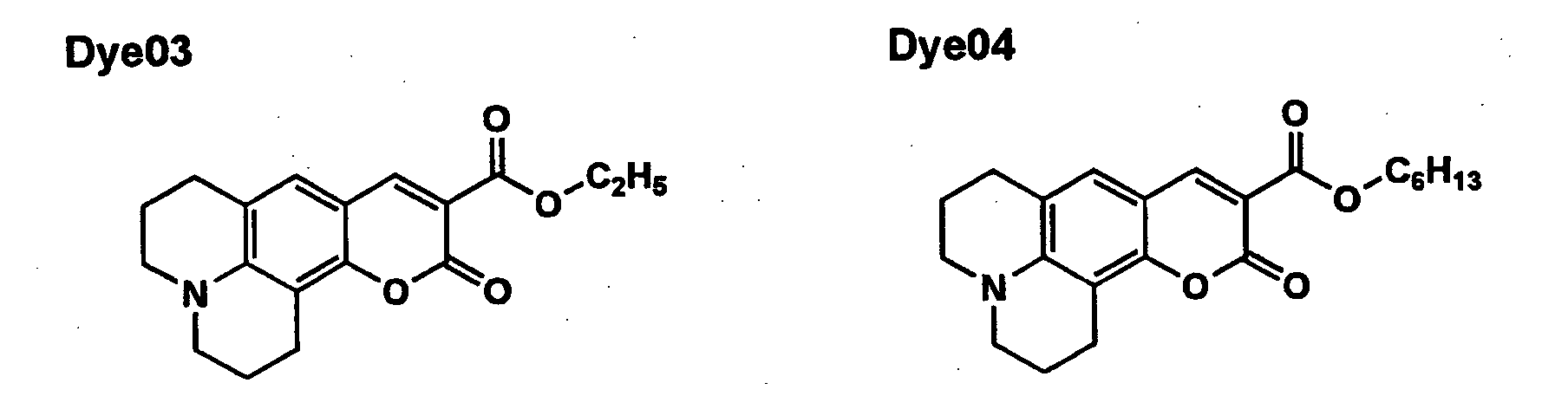





a cyclic alkyl ester such as: cyclohexyl methacrylate or cyclohexyl acrylate, and a substituted alkyl ester such as: benzyl methacrylate, 2-chloroethyl methacrylate, N,N-dimethylaminoethyl methacrylate, or glycidyl methacrylate, benzyl acrylate, 2-chloroethyl acrylate, N,N-dimethylaminoethyl acrylate, or glycidyl methacrylate.
| Polymerization Initiator listed in Table 2 | Added amount listed in Table 2 |
| Sensitizing dye listed in Table 2 | Added amount listed in Table 2 |
| Polymer Binder 1 solution (in terms of solids) | 45.0 parts |
| Multifunctional Oligomer M-8 (as above) | 30.0 parts |
| Tetraethylene glycol dimethacrylate | 5.0 parts |
| 30% phthalocyanine pigment dispersion (MH1454, produced by Mikuni Color Co.) | 10.0 parts |
| 2-t-Butyl-6-(3-t-butyl-2-hydroxy-5-methylbenzyl)-4-methylphenyl acrylate (SUMILIZER GS, produced by Sumitomo 3M Corp.) | 0.5 part |
| Bis(2,2,6,6-tetramethyl-4-piperidyl)sebacate (SANOL LS- 770, produced by Sankyo Life Tech Co.) | 0.2 part |
| 2-Mercaptobenzothiazole | 1.5 parts |
| 2,4,6-tris(dimethylaminomethyl)phenol | 1.5 parts |
| Fluorine based surface active agent (F-178k, produced by Dainippon Ink and Chemicals, Inc.) | 0.5 part |
| Methyl ethyl ketone | 80 parts |
| Cyclohexanone | 820 parts |
| Polyvinyl alcohol (GOSENOL AL-05, produced by Nippon Synthetic Chemical Industry Co., Ltd.) | 85.0 parts |
| Polyvinylpyrrolidone (LUBITECH K-30, produced by BASF) | 15.0 parts |
| SURFINOL 465 (produced by Air Products Co.) | 0.2 parts |
| Water | 900 parts |
| Potassium Silicate A | 8.0 percent by weight |
| NEWCOL B-13SN (produced by Nippon Nyukazai Co., Ltd.) | 3.0 percent by weight |
| Potassium hydroxide | in an amount to reach 12.3 pH |
| Example No. | Polymerization Initiator (weight parts) |
Sensitizing Dye (weight parts) |
Photographic Speed (µJ/cm2) |
Plate Life (number of printed sheets) |
| Example 1 | P-1(4.0) | Dye14 (4.0) |
20 | up to 300,000 sheets |
| Example 2 | P-4(2.0) I-1(3.0) |
Dye02 (4.0) |
10 | at least 400,000 sheets |
| Example 3 | P-2(2.0) I-3(3:0) |
Dye03 (4.0) |
15 | at least 400,000 sheets |
| Example 4 | P-3(4.0) I-4 (3.0) |
Dye11 (2.0) |
10 | at least 400,000 sheets |
| Example 5 | H-1(4.0) | Dye04 (4.0) |
20 | up to 350,000 sheets |
| Example 6 | H-1(2.0) I-4(3.0) |
Dye15 (2.0) |
15 | at least 400,000 sheets |
| Example 7 | H-5(2.0) I-1(3.0) |
Dye01 (4.0) |
7 | at least 400,000 sheets |
| Example 8 | H-5(2.0) I-4(3.0) |
Dye16 (2.0) |
15 | at least 400,000 sheets |
| Example 9 | H-6(4.0) I-3(3.0) |
Dye04 (4.0) |
10 | at least 400,000 sheets |
| Comparative Example 1 | CH-1(4.0) I-3(3.0) |
Dye04 (4.0) |
50 | up to 150,000 sheets |
| Comparative Example2 | CH-2(4.0) | Dye16 (4.0) |
100 | up to 50,000 sheets |
| I-1: η-cumene-(η-cyclopentadienyl)iron hexafluorophosphate | ||||
| I-2: di-methylcyclopentadienyl-Ti-bis-2,4-difluorophenyl-1-yl | ||||
| I-3: bis(cyclopentadienyl)-bis(2,6-difluoro-3-(pyri-1-yl)phenyl)titanium | ||||
| I-4: 2,2'-bis(2-chlorophenyl)-4,5,4',5'-tetraphenylbisimidazole |
| Polymerization Initiator Table 4 | Added amount listed in listed in Table 4 |
| Sensitizing dye IR-Dye01 | 2.5 parts |
| Binder 1 solution (in terms of solids) | 45.0 parts |
| Multifunctional Oligomer M-8 (as above) | 30.0 parts |
| Tetraethylene glycol dimethacrylate | 5.0 parts |
| 30% phthalocyanine pigment dispersion (MH1454, produced by Mikuni Color Co.) | 10.0 parts |
| 2-t-Butyl-6-(3-t-butyl-2-hydroxy-5-methylbenzyl)-4-methylphenyl acrylate (SUMILIZER GS, produced by Sumitomo 3M Corp.) | 0.5 part |
| Bis(2,2,6,6-tetramethyl-4-piperidyl)sebacate (SANOL LS770, produced by Sankyo Life Tech Co.) | 0.2 part |
| 2-Mercaptobenzothiazole | 1.5 parts |
| Fluorine based surface active agent (F-178k, produced by Dainippon Ink and Chemicals Inc.) | 0.5 part |
| Methyl ethyl ketone | 80 parts |
| Cyclohexanone | 820 parts |
| Example No. | Polymerization Initiator (weight parts) |
Photographic Speed (µJ/cm2) |
Plate Life (as number of printed sheets) |
| Example 10 | P-1(4.0) | 100 | 350,000 sheets |
| Example 11 | P-4(4.0) I-1(3.0) |
80 | at least 400,000 sheets |
| Example 12 | P-2(2.0) I-4(3.0) |
60 | at least 400,000 sheets |
| Example 13 | P-3(4.0) I-5(3.0) |
80 | at least 400,000 sheets |
| Example 14 | P-3(4.0) I-6(3.0) |
80 | at least 400,000 sheets |
| Example 15 | H-1(4.0) | 80 | at least 400,000 sheets |
| H-1(2.0) I-4(3.0) |
50 | at least 400,000 sheets | |
| Example 17 | H-5(2.0) I-5(3.0) |
60 | at least 400,000 sheets |
| Example 18 | H-5(2.0) I-6(3.0) |
60 | at least 400,000 sheets |
| Example 19 | H-6(4.0) I-1(3.0) |
100 | up to 350,000 sheets |
| Comparative Example 3 | CH-1(4.0) I-5(3.0) |
250 | up to 200,000 sheets |
| Comparative Example 4 | CH-2(4.0) | 350 | up to 150,000 sheets |
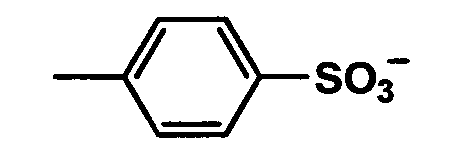
| I-5: tri(4-isopropylphenyl)sulfonium p- toluenesulfonate | |||
| I-6: bis(4-(1,1-dimethylpropyl)phenyl)iodonium p-toluenesulfonate |
Claims (12)
- A photosensitive composition, comprising:wherein the photopolymerization initiator exhibits a reaction rate constant with a semiquinone radical anion in the range of 2.0 x 10² to 1.0 x 10⁸ (mol-1· l · s-1) .(A) a sensitizing dye;(B) a photopolymerization initiator;(c) a polymerizable compound having an ethylenically unsaturated bond; and(D) a polymer binder,
- The photosensitive composition of claim 1,
wherein the photopolymerization initiator exhibits a reaction rate constant with a semiquinone radical anion in the range of 1. 0 x 104 to 1. 0 x 108 (mol-1 · l · s-1). - The photosensitive composition of claim 1,
wherein the photopolymerization initiator is a halide compound having a carbon-halogen bond in the molecule. - The photosensitive composition of claim 1,
wherein the photopolymerization initiator is a porphyrin metal complex. - The photosensitive composition of claim 1,
wherein the sensitizing dye is a coumarin derivative. - The photosensitive composition of claim 1,
wherein the sensitizing dye is a styryl dye. - The photosensitive composition of claim 1,
wherein the sensitizing dye is a boron containing compound. - The photosensitive composition of claim 1,
wherein the sensitizing dye is a cyanine dye. - The photosensitive composition of claim 1,
wherein the sensitizing dye is a squarylium dye. - A planographic printing plate material, comprising a support having thereon a photosensitive layer containing the photosensitive composition of claim 1.
- A method of forming a planographic printing plate, comprising the steps of:irradiating a portion of the planographic printing plate material of claim 10 with a laser having an emission wavelength between 350 and 450 nm so as to polymerize the polymerizable compound in the irradiated portion; anddeveloping the irradiated planographic printing plate material to eliminate a non-irradiated portion of the planographic printing plate material.
- A method of forming a planographic printing plate, comprising the steps of:irradiating a portion of the planographic printing plate material of claim 10 with a laser having an emission wavelength between 750 and 900 nm so as to polymerize the polymerizable compound in.the irradiated portion; anddeveloping the irradiated planographic printing plate material to eliminate a non-irradiated portion of the planographic printing plate material.
Applications Claiming Priority (2)
| Application Number | Priority Date | Filing Date | Title |
|---|---|---|---|
| JP2004116914A JP2005300908A (en) | 2004-04-12 | 2004-04-12 | Photosensitive composition and photosensitive lithographic printing plate material |
| JP2004116914 | 2004-04-12 |
Publications (2)
| Publication Number | Publication Date |
|---|---|
| EP1586460A1 true EP1586460A1 (en) | 2005-10-19 |
| EP1586460B1 EP1586460B1 (en) | 2007-03-07 |
Family
ID=34940712
Family Applications (1)
| Application Number | Title | Priority Date | Filing Date |
|---|---|---|---|
| EP05252117A Ceased EP1586460B1 (en) | 2004-04-12 | 2005-04-04 | Photosensitive composition, planographic printing plate material, and preparing process of planographic printing plate |
Country Status (4)
| Country | Link |
|---|---|
| US (1) | US7326517B2 (en) |
| EP (1) | EP1586460B1 (en) |
| JP (1) | JP2005300908A (en) |
| DE (1) | DE602005000649D1 (en) |
Cited By (1)
| Publication number | Priority date | Publication date | Assignee | Title |
|---|---|---|---|---|
| US9275406B2 (en) | 2007-07-13 | 2016-03-01 | Hewlett-Packard Development Company, L.P. | Method and system of vending a copy of a digital image |
Families Citing this family (3)
| Publication number | Priority date | Publication date | Assignee | Title |
|---|---|---|---|---|
| EP1852744A1 (en) * | 2005-02-25 | 2007-11-07 | Konica Minolta Medical & Graphic, Inc. | Photosensitive lithographic printing plate material |
| US20070202438A1 (en) * | 2006-02-24 | 2007-08-30 | Konica Minolta Medical & Graphic, Inc. | Light sensitive planographic printing plate material and its manufacturing process |
| WO2014196464A1 (en) * | 2013-06-07 | 2014-12-11 | 株式会社Adeka | Colored photosensitive composition and novel compound |
Citations (11)
| Publication number | Priority date | Publication date | Assignee | Title |
|---|---|---|---|---|
| JPS4836281A (en) | 1971-09-03 | 1973-05-28 | ||
| JPS5474887A (en) | 1977-11-29 | 1979-06-15 | Fuji Photo Film Co Ltd | Photo-polymerizable composition |
| JPS59219307A (en) | 1983-05-18 | 1984-12-10 | チバ−ガイギ−・アクチエンゲゼルシヤフト | Curable composition, polymerization and use |
| JPS62143044A (en) | 1985-11-20 | 1987-06-26 | サイカラー・インコーポレーテッド | Photosetting composition containing dye borate complex and photosensitive material using the same |
| JPS62150242A (en) | 1985-11-20 | 1987-07-04 | サイカラー・インコーポレーテッド | Photosensitive material containing ion dye compound as initiator |
| JPS6314183A (en) | 1986-07-07 | 1988-01-21 | Ricoh Co Ltd | Electrostatic latent image developing device |
| JPS6435548A (en) | 1987-07-31 | 1989-02-06 | Fuji Photo Film Co Ltd | Photopolymerizable composition |
| JPH02291A (en) | 1987-12-01 | 1990-01-05 | Ciba Geigy Ag | Titanocene, method of usining it, n-substituted pyrrole |
| EP1288720A1 (en) * | 2001-08-29 | 2003-03-05 | Fuji Photo Film Co., Ltd. | Plate-making method of printing plate |
| EP1391784A2 (en) * | 2002-08-22 | 2004-02-25 | Fuji Photo Film Co., Ltd. | Polymerizable composition and negative-working planographic printing plate precursor using the same |
| EP1403710A1 (en) * | 2002-09-26 | 2004-03-31 | Fuji Photo Film Co., Ltd. | Polymerizable composition |
Family Cites Families (12)
| Publication number | Priority date | Publication date | Assignee | Title |
|---|---|---|---|---|
| DE3710282A1 (en) | 1987-03-28 | 1988-10-13 | Hoechst Ag | PHOTOPOLYMERIZABLE MIXTURE AND RECORDING MATERIAL MADE THEREOF |
| JPS63243102A (en) * | 1987-03-30 | 1988-10-11 | Agency Of Ind Science & Technol | Photo-setting resin composition |
| DE3832032A1 (en) | 1988-09-21 | 1990-03-22 | Hoechst Ag | PHOTOPOLYMERIZABLE MIXTURE AND RECORDING MATERIAL MANUFACTURED THEREOF |
| JP3158888B2 (en) * | 1994-08-18 | 2001-04-23 | 信越化学工業株式会社 | Polysilane composition |
| JPH10161309A (en) * | 1996-11-26 | 1998-06-19 | Fuji Photo Film Co Ltd | Photosensitive resin composition, photosensitive sheet and production of metallic circuit board |
| JP3907144B2 (en) * | 1998-04-09 | 2007-04-18 | 富士フイルム株式会社 | Method for producing lithographic printing plate, lithographic printing plate precursor for laser scanning exposure, and photopolymerizable composition |
| JP2002082429A (en) * | 2000-09-08 | 2002-03-22 | Fuji Photo Film Co Ltd | Negative type image recording material |
| JP2003280184A (en) * | 2002-03-25 | 2003-10-02 | Konica Corp | Image forming material, package for image forming material and image recording method |
| JP2004163918A (en) * | 2002-10-23 | 2004-06-10 | Konica Minolta Holdings Inc | Photosensitive composition and photosensitive planographic printing plate |
| JP2004191472A (en) * | 2002-12-09 | 2004-07-08 | Konica Minolta Holdings Inc | Photosensitive composition and photosensitive lithographic printing plate |
| DE102004015253A1 (en) * | 2003-03-31 | 2005-03-17 | Mitsubishi Paper Mills Ltd. | A process for producing a photosensitive lithographic printing plate and a method of processing the same |
| JP2005275347A (en) * | 2004-02-27 | 2005-10-06 | Konica Minolta Medical & Graphic Inc | Photosensitive composition and photosensitive lithographic printing plate |
-
2004
- 2004-04-12 JP JP2004116914A patent/JP2005300908A/en active Pending
-
2005
- 2005-04-04 EP EP05252117A patent/EP1586460B1/en not_active Ceased
- 2005-04-04 DE DE602005000649T patent/DE602005000649D1/en not_active Expired - Lifetime
- 2005-04-04 US US11/098,624 patent/US7326517B2/en not_active Expired - Lifetime
Patent Citations (11)
| Publication number | Priority date | Publication date | Assignee | Title |
|---|---|---|---|---|
| JPS4836281A (en) | 1971-09-03 | 1973-05-28 | ||
| JPS5474887A (en) | 1977-11-29 | 1979-06-15 | Fuji Photo Film Co Ltd | Photo-polymerizable composition |
| JPS59219307A (en) | 1983-05-18 | 1984-12-10 | チバ−ガイギ−・アクチエンゲゼルシヤフト | Curable composition, polymerization and use |
| JPS62143044A (en) | 1985-11-20 | 1987-06-26 | サイカラー・インコーポレーテッド | Photosetting composition containing dye borate complex and photosensitive material using the same |
| JPS62150242A (en) | 1985-11-20 | 1987-07-04 | サイカラー・インコーポレーテッド | Photosensitive material containing ion dye compound as initiator |
| JPS6314183A (en) | 1986-07-07 | 1988-01-21 | Ricoh Co Ltd | Electrostatic latent image developing device |
| JPS6435548A (en) | 1987-07-31 | 1989-02-06 | Fuji Photo Film Co Ltd | Photopolymerizable composition |
| JPH02291A (en) | 1987-12-01 | 1990-01-05 | Ciba Geigy Ag | Titanocene, method of usining it, n-substituted pyrrole |
| EP1288720A1 (en) * | 2001-08-29 | 2003-03-05 | Fuji Photo Film Co., Ltd. | Plate-making method of printing plate |
| EP1391784A2 (en) * | 2002-08-22 | 2004-02-25 | Fuji Photo Film Co., Ltd. | Polymerizable composition and negative-working planographic printing plate precursor using the same |
| EP1403710A1 (en) * | 2002-09-26 | 2004-03-31 | Fuji Photo Film Co., Ltd. | Polymerizable composition |
Cited By (1)
| Publication number | Priority date | Publication date | Assignee | Title |
|---|---|---|---|---|
| US9275406B2 (en) | 2007-07-13 | 2016-03-01 | Hewlett-Packard Development Company, L.P. | Method and system of vending a copy of a digital image |
Also Published As
| Publication number | Publication date |
|---|---|
| US20050260524A1 (en) | 2005-11-24 |
| DE602005000649D1 (en) | 2007-04-19 |
| JP2005300908A (en) | 2005-10-27 |
| US7326517B2 (en) | 2008-02-05 |
| EP1586460B1 (en) | 2007-03-07 |
Similar Documents
| Publication | Publication Date | Title |
|---|---|---|
| US7011928B2 (en) | Image formation method of planographic printing plate material | |
| US7285375B2 (en) | Photosensitive composition, photosensitive lithography plate and method for producing lithography plate | |
| US7169535B2 (en) | Photosensitive composition and photosensitive lithographic printing plate | |
| US7147989B2 (en) | Photosensitive composition, planographic printing plate and processing method of planograhic printing plate | |
| US20060210918A1 (en) | Negative working light sensitive planographic printing plate material and planographic printing plate manufacturing process | |
| JP4345513B2 (en) | Photosensitive planographic printing plate | |
| EP1586460B1 (en) | Photosensitive composition, planographic printing plate material, and preparing process of planographic printing plate | |
| US7273692B2 (en) | Planographic printing plate material and planographic printing plate preparing process | |
| US6890702B2 (en) | Light sensitive composition and light sensitive planographic printing plate precursor | |
| US7316892B2 (en) | Process of preparing planographic printing plate | |
| US7192690B2 (en) | Process of preparing planographic printing plate | |
| US20050214687A1 (en) | Process of preparing planographic printing plate | |
| JP2007206600A (en) | Photosensitive lithographic printing plate material and plate making method using same | |
| EP1688792A1 (en) | Light sensitive planographic printing plate material and planographic printing plate manufacturing method therefrom | |
| US20090053648A1 (en) | Light sensitive planographic printing plate material | |
| EP1715382A1 (en) | Process of preparing planographic printing plate | |
| JP2005275347A (en) | Photosensitive composition and photosensitive lithographic printing plate | |
| US20050233248A1 (en) | Planographic printing plate material and planographic printing plate preparing process | |
| US20070015086A1 (en) | Photosensitive composition, photosensitive planographic printing plate material, and image forming method of photosensitive planographic printing plate material | |
| US20080038667A1 (en) | Light sensitive planographic printing plate material | |
| JP2007041355A (en) | Lithographic printing plate material and method for making lithographic printing plate using the same | |
| US20100221663A1 (en) | Light sensitive planographic printing plate material, and image formation method employing the same | |
| US20090042134A1 (en) | Photosensitive composition, photosensitive planographic printing plate material, and image forming method of photosensitive planographic printing plate material | |
| JP2007078952A (en) | Photosensitive lithographic printing plate material and method for making lithographic printing plate using the same | |
| JP2007240926A (en) | Lithographic printing plate material and plate making method for lithographic printing plate material |
Legal Events
| Date | Code | Title | Description |
|---|---|---|---|
| PUAI | Public reference made under article 153(3) epc to a published international application that has entered the european phase |
Free format text: ORIGINAL CODE: 0009012 |
|
| AK | Designated contracting states |
Kind code of ref document: A1 Designated state(s): AT BE BG CH CY CZ DE DK EE ES FI FR GB GR HU IE IS IT LI LT LU MC NL PL PT RO SE SI SK TR |
|
| AX | Request for extension of the european patent |
Extension state: AL BA HR LV MK YU |
|
| 17P | Request for examination filed |
Effective date: 20060316 |
|
| AKX | Designation fees paid |
Designated state(s): DE FR GB |
|
| GRAP | Despatch of communication of intention to grant a patent |
Free format text: ORIGINAL CODE: EPIDOSNIGR1 |
|
| RTI1 | Title (correction) |
Free format text: PHOTOSENSITIVE COMPOSITION, PLANOGRAPHIC PRINTING PLATE MATERIAL, AND PREPARING PROCESS OF PLANOGRAPHIC PRINTING PLATE |
|
| GRAS | Grant fee paid |
Free format text: ORIGINAL CODE: EPIDOSNIGR3 |
|
| GRAA | (expected) grant |
Free format text: ORIGINAL CODE: 0009210 |
|
| AK | Designated contracting states |
Kind code of ref document: B1 Designated state(s): DE FR GB |
|
| REG | Reference to a national code |
Ref country code: GB Ref legal event code: FG4D |
|
| REF | Corresponds to: |
Ref document number: 602005000649 Country of ref document: DE Date of ref document: 20070419 Kind code of ref document: P |
|
| PG25 | Lapsed in a contracting state [announced via postgrant information from national office to epo] |
Ref country code: DE Free format text: LAPSE BECAUSE OF FAILURE TO SUBMIT A TRANSLATION OF THE DESCRIPTION OR TO PAY THE FEE WITHIN THE PRESCRIBED TIME-LIMIT Effective date: 20070608 |
|
| EN | Fr: translation not filed | ||
| PLBE | No opposition filed within time limit |
Free format text: ORIGINAL CODE: 0009261 |
|
| STAA | Information on the status of an ep patent application or granted ep patent |
Free format text: STATUS: NO OPPOSITION FILED WITHIN TIME LIMIT |
|
| 26N | No opposition filed |
Effective date: 20071210 |
|
| PG25 | Lapsed in a contracting state [announced via postgrant information from national office to epo] |
Ref country code: FR Free format text: LAPSE BECAUSE OF FAILURE TO SUBMIT A TRANSLATION OF THE DESCRIPTION OR TO PAY THE FEE WITHIN THE PRESCRIBED TIME-LIMIT Effective date: 20071026 |
|
| PG25 | Lapsed in a contracting state [announced via postgrant information from national office to epo] |
Ref country code: FR Free format text: LAPSE BECAUSE OF FAILURE TO SUBMIT A TRANSLATION OF THE DESCRIPTION OR TO PAY THE FEE WITHIN THE PRESCRIBED TIME-LIMIT Effective date: 20070307 |
|
| PGFP | Annual fee paid to national office [announced via postgrant information from national office to epo] |
Ref country code: GB Payment date: 20090401 Year of fee payment: 5 |
|
| GBPC | Gb: european patent ceased through non-payment of renewal fee |
Effective date: 20100404 |
|
| PG25 | Lapsed in a contracting state [announced via postgrant information from national office to epo] |
Ref country code: GB Free format text: LAPSE BECAUSE OF NON-PAYMENT OF DUE FEES Effective date: 20100404 |