EP1585478B1 - Verwendung von synergistischen lytischen enzymen aus bakteriophagen zur vorbeugung und behandlung bakterieller infektionen - Google Patents
Verwendung von synergistischen lytischen enzymen aus bakteriophagen zur vorbeugung und behandlung bakterieller infektionen Download PDFInfo
- Publication number
- EP1585478B1 EP1585478B1 EP03808560A EP03808560A EP1585478B1 EP 1585478 B1 EP1585478 B1 EP 1585478B1 EP 03808560 A EP03808560 A EP 03808560A EP 03808560 A EP03808560 A EP 03808560A EP 1585478 B1 EP1585478 B1 EP 1585478B1
- Authority
- EP
- European Patent Office
- Prior art keywords
- lytic enzymes
- cpl
- pal
- enzymes
- combination
- Prior art date
- Legal status (The legal status is an assumption and is not a legal conclusion. Google has not performed a legal analysis and makes no representation as to the accuracy of the status listed.)
- Expired - Lifetime
Links
Images

Classifications
-
- A—HUMAN NECESSITIES
- A61—MEDICAL OR VETERINARY SCIENCE; HYGIENE
- A61L—METHODS OR APPARATUS FOR STERILISING MATERIALS OR OBJECTS IN GENERAL; DISINFECTION, STERILISATION OR DEODORISATION OF AIR; CHEMICAL ASPECTS OF BANDAGES, DRESSINGS, ABSORBENT PADS OR SURGICAL ARTICLES; MATERIALS FOR BANDAGES, DRESSINGS, ABSORBENT PADS OR SURGICAL ARTICLES
- A61L2/00—Disinfection or sterilisation of materials or objects, in general; Accessories therefor
- A61L2/16—Disinfection or sterilisation of materials or objects, in general; Accessories therefor using chemical substances
- A61L2/18—Liquid substances
-
- A—HUMAN NECESSITIES
- A01—AGRICULTURE; FORESTRY; ANIMAL HUSBANDRY; HUNTING; TRAPPING; FISHING
- A01N—PRESERVATION OF BODIES OF HUMANS OR ANIMALS OR PLANTS OR PARTS THEREOF; BIOCIDES, e.g. AS DISINFECTANTS, AS PESTICIDES OR AS HERBICIDES; PEST REPELLANTS OR ATTRACTANTS; PLANT GROWTH REGULATORS
- A01N63/00—Biocides, pest repellants or attractants, or plant growth regulators containing microorganisms, viruses, microbial fungi, animals or substances produced by, or obtained from, microorganisms, viruses, microbial fungi or animals, e.g. enzymes or fermentates
- A01N63/50—Isolated enzymes; Isolated proteins
-
- A—HUMAN NECESSITIES
- A61—MEDICAL OR VETERINARY SCIENCE; HYGIENE
- A61K—PREPARATIONS FOR MEDICAL, DENTAL OR TOILETRY PURPOSES
- A61K38/00—Medicinal preparations containing peptides
- A61K38/16—Peptides having more than 20 amino acids; Gastrins; Somatostatins; Melanotropins; Derivatives thereof
- A61K38/43—Enzymes; Proenzymes; Derivatives thereof
- A61K38/46—Hydrolases (3)
- A61K38/47—Hydrolases (3) acting on glycosyl compounds (3.2), e.g. cellulases, lactases
-
- A—HUMAN NECESSITIES
- A61—MEDICAL OR VETERINARY SCIENCE; HYGIENE
- A61K—PREPARATIONS FOR MEDICAL, DENTAL OR TOILETRY PURPOSES
- A61K38/00—Medicinal preparations containing peptides
- A61K38/16—Peptides having more than 20 amino acids; Gastrins; Somatostatins; Melanotropins; Derivatives thereof
- A61K38/43—Enzymes; Proenzymes; Derivatives thereof
- A61K38/46—Hydrolases (3)
- A61K38/50—Hydrolases (3) acting on carbon-nitrogen bonds, other than peptide bonds (3.5), e.g. asparaginase
-
- A—HUMAN NECESSITIES
- A61—MEDICAL OR VETERINARY SCIENCE; HYGIENE
- A61L—METHODS OR APPARATUS FOR STERILISING MATERIALS OR OBJECTS IN GENERAL; DISINFECTION, STERILISATION OR DEODORISATION OF AIR; CHEMICAL ASPECTS OF BANDAGES, DRESSINGS, ABSORBENT PADS OR SURGICAL ARTICLES; MATERIALS FOR BANDAGES, DRESSINGS, ABSORBENT PADS OR SURGICAL ARTICLES
- A61L2/00—Disinfection or sterilisation of materials or objects, in general; Accessories therefor
- A61L2/16—Disinfection or sterilisation of materials or objects, in general; Accessories therefor using chemical substances
- A61L2/23—Solid materials, e.g. granules, powders, blocks or tablets
-
- A—HUMAN NECESSITIES
- A61—MEDICAL OR VETERINARY SCIENCE; HYGIENE
- A61P—SPECIFIC THERAPEUTIC ACTIVITY OF CHEMICAL COMPOUNDS OR MEDICINAL PREPARATIONS
- A61P31/00—Antiinfectives, i.e. antibiotics, antiseptics, chemotherapeutics
- A61P31/04—Antibacterial agents
-
- C—CHEMISTRY; METALLURGY
- C12—BIOCHEMISTRY; BEER; SPIRITS; WINE; VINEGAR; MICROBIOLOGY; ENZYMOLOGY; MUTATION OR GENETIC ENGINEERING
- C12Y—ENZYMES
- C12Y302/00—Hydrolases acting on glycosyl compounds, i.e. glycosylases (3.2)
- C12Y302/01—Glycosidases, i.e. enzymes hydrolysing O- and S-glycosyl compounds (3.2.1)
- C12Y302/01017—Lysozyme (3.2.1.17)
-
- C—CHEMISTRY; METALLURGY
- C12—BIOCHEMISTRY; BEER; SPIRITS; WINE; VINEGAR; MICROBIOLOGY; ENZYMOLOGY; MUTATION OR GENETIC ENGINEERING
- C12Y—ENZYMES
- C12Y305/00—Hydrolases acting on carbon-nitrogen bonds, other than peptide bonds (3.5)
- C12Y305/01—Hydrolases acting on carbon-nitrogen bonds, other than peptide bonds (3.5) in linear amides (3.5.1)
- C12Y305/01028—N-Acetylmuramoyl-L-alanine amidase (3.5.1.28)
Definitions
- the invention relates to compositions comprising a combination of at least two bacteriophage lytic enzymes, wherein said enzymes ar Cpl-1 and Pal, and its used for the treatment of bacterial infections or for sanitizing or decontaminating porous or non-porous surfaces.
- Streptococcus pneumoniae colonize the nasopharynx in many adults and even more children (50% and up), where they are believed to have their reservoir ( Robinson et al. 2001, JAMA 285(13): 1729-1735 ). Elimination or reduction of those colonizing organisms could have a major impact on the occurrence of local and systemic pneumococcal disease.
- New conjugate vaccines for children are being tested extensively and reveal a number of unsolved problems, such as the choice of included serotypes and serotype replacement in colonized children ( Pelton et aL 2000, Vaccine 19 Suppl. 1:S96-99 ).
- the use of a substance that can specifically eliminate all serotypes of S. pneumoniae from the nasopharynx is likely to reduce the bacterial load in the community and enhance herd immunity in combination with a vaccine ( Barbour et aL 1995, J. Infect Dis. 171(1):93-98 ).
- This substance which is designated Pal, is an enzyme from a pneumococcal bacteriophage that can specifically digest any pneumococcal cell wall within seconds, resulting in rapid death of the organism ( Loeffler et al. Science 294(5549):2170-2172 ).
- Amidases which cleave the peptidoglycan between N-acetylmuramic acid and L-alanine
- muramidases such as lysozyme, which cleave the glycosidic bond between N-acetylmuramic acid and N-acetylglucosamine ( Garcia et al. 1997, Microb. Drug Resist. 3(2):165-176 ). Cleavage with either of these enzymes results in a weakening in the cell wall, which leads to the externalization of the cytoplasmic, membrane and ultimate lysis.
- the present invention provides the use of a therapeutically effective synergistic combination of bacteriophage derived lytic enzymes Cpl-1 and Pal for use in the treatment and prevention of bacterial diseases and infections, including those diseases and infections that are resistant to treatment with antibiotics such as, but not limited to, penicillin.
- the infections to be treated are any infections caused by a bacterium whose cell wall contains peptidoglycan. These include both gram positive and gram negative organisms.
- the infections are caused by a streptococcus.
- the infections are caused by Streptococcus pneumoniae:
- the at least two bacteriophage derived lytic enzymes used in the present invention the amidase Pal and the muramidase (lysozyme) Cpl-1.
- the amidase Pal has a molecular weight (MW) of 34kD and the lysozyme Cpl-1 is a phage lysozyme with a MW of 39kD.
- the two enzymes exhibit synergistic bacteriocidal or bacteriostatic activity in vitro and in vivo .
- the lytic enzymes decrease the occurrence or severity of local and systemic pneumococcal disease. In another preferred embodiment, the lytic enzymes prevent or eliminate pneumococcal colonization.
- the synergistic lytic enzymes are isolated from the phage of disease-causing bacteria.
- the lytic enzymes are preferably isolated from gram positive bacteria. More preferably, the lytic enzymes are isolated from Streptococci.
- a further embodiment, of the present invention includes use of a combination of lytic enzymes stated above in the method for decontamination of inanimate objects and surfaces, for example, surgical instruments.
- the present invention extends to the use of the lytic enzymes of the invention for the preparation of a composition for the prevention and elimination of bacterial colonization.
- the local and systemic bacterial infections to be treated with the compositions of the present invention are any bacteria having peptidoglycan in their cell wall, including but not limited to, streptococcal organisms.
- the streptococcal infections to be treated are caused by Streptococcus pneumoniae .
- the pharmaceutical composition comprising the combination of lytic enzymes, Pal and Cpl-1, may take into account the nature of the infection, and will determine whether the best mode for delivery to the site of the infection is via intravenous delivery, intramuscular delivery, subcutaneous delivery, or other means for providing the most effective and expeditious treatment of the infection.
- the invention further provides for an anti-microbial composition for sanitizing or decontaminating porous or non-porous surfaces comprising at least two bacteriophage derived synergistic lytic enzymes stated above.
- a further embodiment of the invention provides for an antimicrobial composition suitable for decontaminating inanimate solid surfaces suspected of containing infectious bacteria by treating the surfaces with a bacteriocidal or bacteriostatically effective amount of the antimicrobial composition.
- the present invention extends to the use of the lytic enzymes of the invention for the preparation of a composition for the decontamination of inanimate objects and surfaces, such as surgical instruments or other equipment used in various treatment regimens, such as dialysis equipment, in a hospital setting, prior to use of these objects or instruments for treating patients, or porous surfaces e.g. textiles, carpeting.
- compositions comprising the combination of the at least two synergistic bacteriophage lytic enzymes stated above useful for sanitizing or decontaminating porous surfaces e.g. textiles, carpeting.
- the composition of the at least two bacteriophage lytic enzymes stated above may be used to decontaminate veterinarian surgical or examination areas, where such areas may be thought to harbor infectious organisms susceptible to the bacteriostatic or bacteriocidal activity of the above stated combination.
- the combination of at least two bacteriophage derived lytic enzymes may be combined with other bacteriostatic or bacteriocidal agents useful for decontamination of inanimate solid surfaces suspected of containing infectious bacteria, or for decontamination of porous surfaces.
- the invention further provides for a screening method for identifying agents capable of enhancing the activity of Pal and Cpl-1, comprising:
- Figure 1 shows the killing of 5 strains of S. pneumoniae with 1U/ml Pal, Cpl-1 or a combination of both in 30 seconds (DCC 1335, open bar; DCC 1355, hatched; DCC 1420, stippled; DCC 1494, filled, DCC 1490, cross-hatched).
- the combination of the two enzymes shows more than additive killing on a logarithmic scale.
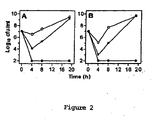
- Figure 2 shows time-kill curves for S. pneumoniae strains DCC 1355 (A) and DCC 1494 (B) with Pal (filled circles), Cpl-1 (open circles) and a combination of both (stars) at 0.25 [minimal inhibitory concentration (MIC)] each (12.5 U/ml Pal and Cpl-1 for DCC 1355, 12.5U /ml Pal and 6.25 U/ml Cpl-1 for DCC 1494).
- MIC minimum inhibitory concentration
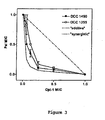
- Figure 3 shows an isobologram of the checkerboard synergy testing method, showing results for S. pneumoniae strains DCC 1490 and DCC 1355. For each well along the inhibitory line, enzyme concentrations (fractions of their MIC) were entered in an X/Y plot. Error bars show standard error of means. The two dashed lines illustrate theoretical curves.
- references to “the method” include one or more methods, and/or steps of the type described herein and/or which will become apparent to those persons skilled in the art upon reading this disclosure and so forth.
- Treatment refers to the administration of medicine or the performance of medical procedures with respect to a patient, for either prophylaxis (prevention) or to cure the infirmity or malady in the instance where the patient is afflicted.
- a “therapeutically effective amount” is an amount sufficient to decrease or prevent the symptoms associated with the bacterial infection.
- a “prophylactically effective amount” is an amount sufficient to prevent a bacterial infection or the symptoms associated with the infection.
- a "bacteriostatic" amount as used herein is used to describe an amount of the combination of each of the synergistic enzymes, or a composition comprising the at least two, or the at least three, or the at least four, synergistic enzymes, sufficient to inhibit the growth of the infectious organisms.
- a "bacteriocidal” amount as used herein is used to describe an amount of the combination of each of the synergistic enzymes, or a composition comprising the at least two, or the at least three, or the at least four, synergistic enzymes, sufficient to kill the infectious organisms.
- “Synergy” or “synergistic” amount or activity refers to the effects of a combination of antimicrobial agents (such as the lytic enzymes described herein), wherein the antimicrobial activity of the combination is greater than the sum of the activity of the individual antimicrobial agents.
- Peptidoglycan is a thick rigid layer that is found in both gram positive and gram negative bacterial cells. It is composed of an overlapping lattice of two sugars that are crosslinked by amino acid bridges. The exact molecular makeup of these layers is species specific. The two sugars are N-acetyl glucosamine (NAG) and N-acetyl muramic acid (NAM). Attached to NAM is a side chain generally of four amino acids. The crossbridge is most commonly composed of L-alanine, D-alanine, D-glutamic acid, and diamino pimelic acid (DPA). The D-amino acids are different than the L-amino acids found in proteins.
- D-amino acids have the identical structure and composition as L-amino acids except that they are mirror images of the L amino acids. Most biological systems have evolved to commonly handle only the L form of compounds. Bacteria however use the D-aminoacids in their cell walls and have enzymes called racemases to convert between D and L forms.
- the NAM, NAG and amino acid side chain form a single peptidoglycan unit that can link with other units via covalent bonds to form a repeating polymer.
- the polymer is further strengthened by cross links between the D-glutamic acid of one unit and DPA of the next glycan tetrapeptide.
- peptide composed of glycine, serine and threonine in between the crossbridges.
- the degree of cross-linking determines the degree of rigidity.
- the peptidoglycan is a heavily cross-linked woven structure that wraps around the cell. It is very thick with peptidoglycan accounting for 50% of the weight of the cell and 90% of the weight of the cell wall. Electron micrographs show the peptidoglycan to be 20-80 nm thick. In gram negative bacteria the peptidoglycan is much thinner with only 15-20% of the cell wall being made up of peptidoglycan which is only intermittently cross-linked.
- the peptidoglycan can be thought of as a strong, woven mesh that holds the cell shape. It is not a barrier to solutes, the openings in the mesh are large and all types of molecules can pass through them.
- the cell wall is the site of action of many important antibiotics and antibacterial agents.
- an “amidase” is an enzyme that catalyzes the hydrolysis of an amide to an acid and ammonium.
- a “muramidase” is a glycosidase enzyme that hydrolyzes the bond between N-acetyl muramic acid and N-acetylglucosamine.
- glucoseaminidase or " ⁇ -N-acetylglucosaminidase” is an enzyme that cleaves all non-reducing terminal ⁇ -linked N-acetylglucosamine.
- “Lysozyme” is a muramidase that hydrolyzes the bond between N-acetyl muramic acid and N-acetyl glucosamine, thus cleaving an important polymer of the cell wall of many bacteria.
- endopeptidase refers to any of a large group of enzymes that catalyze the hydrolysis of peptide bonds in the interior of a polypeptide chain or protein molecule.
- Colonization refers to the presence of bacteria within a persons body, however, the bacteria do not cause a disease.
- the present invention provides the use of the above stated combination for treating or preventing bacterial infections, due to administering to a subject in need of such therapy a therapeutically effective or a prophylactically effective amount of combination of bacteriophage derived lytic enzymes Cpl-1 and Pal and a suitable carrier for delivery of the lytic enzymes to the site of infection. While an additive anti-microbial effect of the enzymes may have been predicted, it was not until the time of the present invention that the unexpected synergistic antimicrobial effect using at least two different lytic enzymes obtained from a bacteriophage was demonstrated.
- the pharmaceutical composition comprising the above stated composition is for treating patients suffering from bacterial infections, or for preventing bacterial infections in patients susceptible to infections with bacteria having peptidoglycan in their cell wall.
- the anti-microbial compositions for sanitizing or decontaminating inanimate objects and surfaces comprising a combination of any of the lytic enzymes described herein are also objects of the present invention.
- Pal and Cpl-1 two purified bacteriophage lytic enzymes, were tested for their in vitro activity, alone and in combination, against several serotypes of Streptococcus pneumoniae , including penicillin-resistant strains.
- the enzymes demonstrated synergy in their ability to cleave the bacterial peptidoglycan and thus may be more efficient for the prevention and elimination of pneumococcal colonization.
- the effect of the two bacteriophage lytic enzymes described herein provides a new mechanism for killing bacterial cells due to their combined synergistic lytic effect on the cell walls of both penicillin sensitive and penicillin resistant streptococci. This combination may play an important role in cleaving the peptidoglycan in bacterial cell walls and thus may be more efficient for the prevention and elimination of pneumococcal colonization.
- the findings in the present application suggest that a search for other combinations of this type of enzyme, or for mimics of the dual enzymatic and synergistic activity may prove to be a useful strategy for identifying a new class of antimicrobial agents and treatment modalities.
- the Cpl-1 expressing E. coli DH5 ⁇ (pJML6) was constructed as follows: The Cpl-1 gene was amplified from Cpl-1 total phage DNA with a primer pair designed according to the published GenBank sequence number Z47794, flanked by XbaI and HindIII restriction sites, transcriptional start and stop codons, and a ribosomal binding site. Activity of the enzyme was also monitored by exposing S. pneumoniae strain DCC 1490 (serogroup 14), grown to log phase and resuspended in sterile saline, to an equal volume of serial 2-fold dilutions of the enzymes for 15 minutes in a microtiter plate. The reciprocal of the highest dilution that decreased the optical density by half (from a starting point of 0.5) was defined as the activity in U/ml. The specific activity of a freshly produced and purified batch for both enzymes is approximately 1U/ug.
- the antimicrobial activity of the synergistic lytic enzymes of the present invention advantageously permits treatment of bacterial infection in any animal, particularly mammals, and more particularly humans.
- Other animals that can be treated include, but are not limited to, pets (dogs, cats, rodents, ferrets, etc.); laboratory animals (rats, mice, rabbits, hamsters, guinea pigs, etc.); farm animals; and wild animals, e.g., in a zoo.
- the synergistic lytic enzymes of the present invention may be used therapeutically to inhibit the growth of bacteria comprising cell walls that are susceptible to the activity of the synergistic lytic enzymes.
- the methods of this invention may also be applied prophylactically to prevent a patient from becoming sick after an exposure to a potentially infectious bacterium. Without being bound to a theory, this growth inhibition may occur by cleavage of the chemical bonds within the peptidoglycan structure of the bacterial cell wall. This cleavage may weaken the cell wall structure to physical and osmotic stresses, thereby increasing chances for cell wall rupture.
- This invention may include embodiments wherein bacterial infections of the respiratory tract, nasal cavity, the throat, the mouth and the sinus cavities are treated. Other methods which accomplish delivery of the synergistic lytic enzyme-containing compositions to any site of infection are also suitable and are possible embodiments of the present invention.
- the at least two lytic enzymes of the present invention can also be used successfully prophylactically on medical instruments, e.g., as a sterilization agent.
- the synergistic lytic enzymes prevent development of infections.
- the lytic enzymes may be implanted by including recombinant cells that produce the protein in the device, e.g., for coronary or peripheral arterial shunts.
- the foregoing synergistic lytic enzymes provide for use in the prophylaxis and treatment of pneumonia, particularly in a hospital setting.
- the invention provides composition for use in treatment comprising administering to a subject an effective amount of a combination of the invention.
- the compound is substantially purified (e . g ., substantially free from substances that limit its effect or produce undesired side-effects).
- the patient or subject is preferably an animal, including but not limited to animals such as monkeys, cows, pigs, horses, chickens, cats, dogs, etc., and is preferably a mammal, and most preferably human.
- a non-human mammal is the subject.
- a human mammal is the subject.
- a compound of the invention e . g ., encapsulation in liposomes, microparticles, or microcapsules.
- Methods of introduction can be enteral or parenteral and include but are not limited to intradermal, intramuscular, intraperitoneal, intravenous, subcutaneous, intranasal, epidural, topical and oral routes.
- the compounds may be administered by any convenient route, for example by infusion or bolus injection, by absorption through epithelial or mucocutaneous linings ( e . g ., oral mucosa, rectal and intestinal mucosa, etc.) and may be administered together with other biologically active agents. Administration can be systemic or local.
- intraventricular injection may be facilitated by an intraventricular catheter, for example, attached to a reservoir, such as an Ommaya reservoir.
- Pulmonary administration can also be employed, e . g ., by use of an inhaler or nebulizer, and formulation with an aerosolizing agent.
- compositions comprising purified Pal and Cpl-1 for therapeutic use in treatment and/or prevention of bacterial infections.
- One embodiment features treatment of a wide range of infections including those caused by gram positive, gram negative or mycobacterial infection with pharmaceutical compositions containing acceptable carriers and excipients.
- a further embodiment may include a pharmaceutical composition designed for use in topical treatment of bacterial infections.
- Another embodiment may include a pharmaceutical composition designed for use in treatment of systemic infections, or infections that are non-responsive to other antibiotic modalities.
- compositions comprise a therapeutically effective amount of an agent, and a pharmaceutically acceptable carrier.
- pharmaceutically acceptable means approved by a regulatory agency of the Federal or a state government or listed in the U.S. Pharmacopeia or other generally recognized pharmacopeia for use in animals, and more particularly in humans.
- carrier refers to a diluent, adjuvant, excipient, or vehicle with which the therapeutic is administered.
- Such pharmaceutical carriers can be sterile liquids, such as water and oils, including those of petroleum, animal, vegetable or synthetic origin, such as peanut oil, soybean oil, mineral oil, sesame oil and the like. Water is a preferred carrier when the pharmaceutical composition is administered intravenously.
- Saline solutions and aqueous dextrose and glycerol solutions can also be employed as liquid carriers, particularly for injectable solutions.
- suitable pharmaceutical excipients include starch, glucose, lactose, sucrose, gelatin, malt, rice, flour, chalk, silica gel, sodium stearate, glycerol monostearate, talc, sodium chloride, dried skim milk, glycerol, propylene, glycol, water, ethanol and the like.
- the composition if desired, can also contain minor amounts of wetting or emulsifying agents, or pH buffering agents. These compositions can take the form of solutions, suspensions, emulsion, tablets, pills, capsules, powders, sustained-release formulations and the like.
- composition can be formulated as a suppository, with traditional binders and carriers such as triglycerides.
- Oral formulation can include standard carriers such as pharmaceutical grades of mannitol, lactose, starch, magnesium stearate, sodium saccharine, cellulose, magnesium carbonate, etc. Examples of suitable pharmaceutical carriers are described in "Remington's Pharmaceutical Sciences” by E.W. Martin.
- Such compositions will contain a therapeutically effective amount of the compound, preferably in purified form, together with a suitable amount of carrier so as to provide the form for proper administration to the subject.
- the formulation should suit the mode of administration.
- the present invention thus provides a method of enhancing the antimicrobial effects of bacteriophage derived lytic enzymes, which, when used alone, show the benefit of killing certain bacteria through their deleterious effect on the peptidoglycan in the cell wall.
- an amidase Pal together with a lysozyme, Cpl-1
- the effects of this combination are synergistic rather than additive, as shown in the present application.
- the compositions of the instant application provide for a combined preparation for simultaneous or sequential administration for the treatment of or the prevention of bacterial infections.
- this administration of the synergistic lytic enzymes is repeated over a period of several or multiple days.
- amidase Pal is used concurrently with the muramidase, (lysozyme) Cpl-1
- the amount of amidase Pal to be used as described in the present invention varies according to the degree of the effective amount required for treating specific bacterial infections.
- the amount of lysozyme Cpl-1 to be used as described in the present invention also varies according to the degree of the effective amount required for treating specific bacterial infections.
- the preferred amount of each will be titrated to achieve the desired effective dose level. Procedures for titrating the most effective dose level of each enzyme are known to those skilled in the art.
- the bacterial infections for which a composition containing Pal and Cpl-1 is a particularly suitable treament include infections caused by streptococcus, including S. pneumoniae , although the invention should not be construed to be limited to one particular organism.
- a low melting wax such as a mixture of fatty acid glycerides or cocoa butter is first melted, and the active ingredient is dispersed homogeneously therein as by stirring. The molten homogeneous mixture is then poured into convenient sized molds, allowed to cool and thereby solidify.
- Liquid form preparations include solutions, suspensions and emulsions. As an example may be mentioned water or water-propylene glycol solutions for parenteral injection.
- solid form preparations which are intended to be converted, shortly before use, to liquid form preparations for either oral or parenteral administration.
- liquid forms include solutions, suspensions and emulsions.
- the lytic enzymes of the present invention may also be deliverable transdermally.
- the transdermal compositions can take the form of creams, lotions, aerosols and/or emulsions and can be included in a transdermal patch of the matrix or reservoir type as are conventional in the art for this purpose.
- the pharmaceutical preparation is in unit dosage form.
- the preparation is subdivided into unit doses containing appropriate quantities of the active component, e.g., an effective amount to achieve the desired purpose.
- the actual dosage employed may be varied depending upon the requirements of the patient and the severity of the condition being treated. Determination of the proper dosage for a particular situation is within the skill of the art. For convenience, the total daily dosage may be divided and administered in portions during the day, if desired.
- the combination of lytic enzymes may be administered using conventional techniques such as oral administration.
- Intravenous administration is preferable for a continuous dosing therapy regimen.
- Oral administration can be utilized for a repeat dosing regimen.
- the amidase Pal can be administered separately prior to, or concurrent with the lysozyme Cpl-1.
- the amidase part can be administered with Cpl-1 as unit dosage form to facilitate patient dosing.
- Such combination dosage forms may be in any of the above-described dosage forms, but, as noted above, are preferably in oral or intravenous forms.
- the amidase and the lysozyme can be packaged in a kit form.
- the amidase and the lysozyme would be individually formulated into particular dosage forms for the particular route of administration, and contain instructions for the administration of the contents.
- such a kit may be in the form of a blister package with separately formulated oral dosage forms of the amidase and the lysozyme.
- the composition is formulated in accordance with routine procedures as a pharmaceutical composition adapted for intravenous administration to human beings.
- compositions for intravenous administration are solutions in sterile isotonic aqueous buffer.
- the composition may also include a solubilizing agent and a local anesthetic such as lidocaine to ease pain at the site of the injection.
- the ingredients are supplied either separately or mixed together in unit dosage form, for example, as a dry lyophilized powder or water free concentrate in a hermetically sealed container such as an ampoule or sachette indicating the quantity of active agent.
- composition is to be administered by infusion, it can be dispensed with an infusion bottle containing sterile pharmaceutical grade water or saline.
- an ampoule of sterile water for injection or saline can be provided so that the ingredients may be mixed prior to administration.
- the amount of the compound of the invention which will be effective in the treatment of infectious diseases wherein the bacteria contain the Pal and Cpl-1 enzymes can be determined by standard clinical techniques based on the present description.
- in vitro assays may optionally be employed to help identify optimal dosage ranges.
- the precise dose to be employed in the formulation will also depend on the route of administration, and the seriousness of the disease or disorder, and should be decided according to the judgment of the practitioner and each subject's circumstances. Effective doses may be extrapolated from dose-response curves derived from in vitro or animal model test systems.
- the invention also provides a pharmaceutical pack or kit comprising one or more containers filled with one or more of the ingredients of the pharmaceutical compositions of the invention.
- a pharmaceutical pack or kit comprising one or more containers filled with one or more of the ingredients of the pharmaceutical compositions of the invention.
- Optionally associated with such container(s) can be a notice in the form prescribed by a governmental agency regulating the manufacture, use or sale of pharmaceuticals or biological products, which notice reflects (a) approval by the agency of manufacture, use or sale for human administration, (b) directions for use, or both.
- compositions of the invention may be desirable to administer the pharmaceutical compositions of the invention locally to the area in need of treatment; this may be achieved, for example, and not by way of limitation, by local infusion during surgery, by topical application, by injection, by means of a catheter, or by means of an implant, said implant being of a porous, non-porous, or gelatinous material, including membranes, such as sialastic membranes, or fibers or co-polymers such as Elvax (see Ruan et al , 1992, Proc Natl Acad Sci USA, 89:10872-10876 ).
- administration can be by direct injection by aerosol inhaler.
- the Pal and Cpl-1 combination can be delivered in a vesicle, in particular a liposome (see Langer (1990) Science 249:1527-1533 ; Treat et al., in Liposomes in the Therapy of Infectious Disease and Cancer, Lopez-Berestein and Fidler (eds.), Liss, New York, pp. 353-365 (1989 ); Lopez-Berestein, ibid., pp. 317-327 ; see generally ibid.)
- the Pal and Cpl-1 combination can be delivered in a controlled release system.
- a pump may be used (see Langer, supra ; Sefton (1987) CRC Crit. Ref. Biomed. Eng. 14:201 ; Buchwald et al. (1980) Surgery 88:507 ; Saudek et al. (1989) N. Engl. J. Med. 321:574 ).
- polymeric materials can be used (see Medical Applications of Controlled Release, Langer and Wise (eds.), CRC Pres., Boca Raton, Florida (1974 ); Controlled Drug Bioavailability, Drug Product Design and Performance, Smolen and Ball (eds.), Wiley, New York (1984 ); Ranger and Peppas, J. (1983) Macromol. Sci. Rev. Macromol. Chem. 23:61 ; see also Levy et al. (1985) Science 228:190 ; During et al. (1989) Ann. Neurol. 25:351 ; Howard et al. (1989) J. Neurosurg. 71:105 ).
- a controlled release system can be placed in proximity of the therapeutic target, i.e., the airways, thus requiring only a fraction of the systemic dose (see, e . g ., Goodson, in Medical Applications of Controlled Release (1984) supra, vol. 2, pp. 115-138 ).
- Other suitable controlled release systems are discussed in the review by Langer (1990) Science 249:1527-1533 .
- the lytic enzymes described herein can be administered to a patient at therapeutically effective doses to treat certain diseases or disorders.
- a therapeutically effective dose refers to that amount of a therapeutic sufficient to result in a healthful benefit in the treated subject.
- a prophylactically effective dose refers to that amount of a prophylactic sufficient to result in prevention of a disease in a patient.
- the precise dose of the therapeutic embodied by this invention, to be employed in the formulation, will depend on the route of administration, and the nature of the patient's disease, and should be decided according to the judgment of the practitioner and each patient's circumstances according to standard clinical techniques.
- the term "inhibit” or “inhibition” means to reduce by a measurable amount.
- Experimental evidence of inhibition may include observing the elimination of a bacterial infection in an animal model. Effective doses may thus be extrapolated from dose-response curves derived from animal model test systems.
- Toxicity and therapeutic efficacy of the lytic enzymes can be determined by standard pharmaceutical procedures in cell cultures or experimental animals, e.g., for determining the LD 50 (the dose lethal to 50% of the population) and the ED 50 (the dose therapeutically effective in 50% of the population).
- the dose ratio between toxic and therapeutic effects is the therapeutic index and it can be expressed as the ratio LD 50 /ED 50 .
- Therapeutics that exhibit large therapeutic indices are preferred. While therapeutics that exhibit toxic side effects can be used, care should be taken to design a delivery system that targets such compounds to the site of affected tissue in order to minimize potential damage to uninfected cells and, thereby, reduce side effects.
- the data obtained from the in vitro bacterial growth inhibition and cell lysis assays and animal studies can be used in formulating a range of dosage for use in humans.
- the dosage of lytic enzymes containing compositions lies preferably within a range of concentrations that include the ED 50 with little or no toxicity.
- the dosage can vary within this range depending upon the dosage form employed and the route of administration utilized.
- the therapeutically effective dose can be estimated initially from in vitro bacterial growth inhibition and cell lysis assays.
- a dose can be formulated in animal models to achieve a lytic enzyme concentration range that includes the IC 50 (i.e., the concentration of the test compound which achieves a half-maximal inhibition of symptoms).
- Such information can be used to more accurately determine useful doses in humans.
- the efficacy of a particular dosage in eliminating, for example, a bacterial throat infection may be measured by a traditional throat culture swab assay. Any method which provides data as to the number of bacteria present at the site of infection would be suitable for these purposes.
- the enzymes should be present in an amount sufficient to provide an effective number of enzyme units in contact with the oral cavity or respiratory tract. Having too few enzyme units in contact with the oral cavity or the respiratory tract, even over a long period of time, will not produce as beneficial an effect as desired.
- any dosage form employed should provide for an approximate minimum number of units for the amount of time that the dosage will provide enzyme to the oral cavity or the respiratory tract.
- the concentration of the active units of enzymes believed to provide for an effective amount or dosage of enzymes may be in the range of from about 100 units to about 100,000 units in the environment of the nasal and oral passages. Within that broader range, dosages of from about 100 units to about 10,000 units are believed to be acceptable.
- Such units can be contained in smaller volumes of carrier such as liquid or saliva, e.g. 1 ml or less (e.g. in the case of a lozenge) or can be contained in larger dosage volumes such as a gargle of several mls. Generally, therefore, larger volumes of carrier will require a greater total number of units to achieve an effective concentration of active enzyme.
- acceptable concentrations can be from about 100 units/ml to about 100,000 units/ml of fluid in the environment of the nasal or oral passages. Within this range, concentrations from about 100 units/ml to about 10,000 units/ml are acceptable.
- the time exposure to the active enzyme units likely will influence the desired concentration of active enzyme units employed in the dosage per ml.
- carriers that are considered to provide prolonged release could provide a lower concentration of active enzyme units per ml, but over a longer period of time.
- a shorter duration treatment e.g., a gargle
- Any dosage form containing sufficient lytic enzyme to provide effective concentrations of active enzyme at the site of infection or to provide a sufficient prophylactic effect are well within the bounds of routine experimentation and therefore, well within the scope of the instant invention.
- the composition of the present invention is envisioned for sanitizing or decontaminating inanimate non-porous or porous objects using a bactericidal or bacteriostatically effective amount of the combination of the at least two synergistic bacteriophage lytic enzymes, wherein said at least two enzymes are Cpl-1 and Pal.
- the composition of the present invention for this particular use may be employed for reducing the microbial population of surgical instruments, surgical gowns, examination areas, and other medical or veterinarian tools or instruments.
- composition of the present invention may be employed for disinfecting dental instruments.
- the composition containing Pal and Cpl-1 can prevent a potential infection which may arise from the use of instruments or equipment that are contaminated with bacteria which may be susceptible to the killing activity of Pal and Cpl-1.
- the amount of each lytic enzyme for use in the composition would be determined through standard methods of titration for anti-microbial activity known to those skilled in the art.
- compositions of the present invention for sanitizing or for disinfectant use may include other additives.
- additives include one or more anti-microbial agents, including other lytic enzymes, or bacteriocins, or chelating agents.
- Other agents that enhance the permeability of the antibacterial agents or lytic enzymes are also contemplated.
- composition may include other agents that function to stabilize the bacteriophage derived lytic enzymes. It is envisioned that the composition may be provided in liquid form, as a spray, as a gel, as a foam, or as a powder.
- compositions of the present invention may include surfactants such as an alkyl glycoside or an alkenyl glycoside, an alkoxylated alcohol, an alkoxylated carboxylic acid, a sorbitan ester, a polyethoxylated derivative of a sorbitan ester, a polyglycerol ester, a sucrate, an ester of fatty acid with a polyalcohol and/or a polyalkylene glycol.
- surfactants such as an alkyl glycoside or an alkenyl glycoside, an alkoxylated alcohol, an alkoxylated carboxylic acid, a sorbitan ester, a polyethoxylated derivative of a sorbitan ester, a polyglycerol ester, a sucrate, an ester of fatty acid with a polyalcohol and/or a polyalkylene glycol.
- surfactants such as an alkyl glycoside or an alkenyl glycoside, an alkoxylated
- a second therapeutic agent may be an embodiment of this invention.
- the second therapeutic agent may be administered to the patient as a part of the lytic enzyme composition or in the form of a separate composition which comprises only said second therapeutic agent.
- a non-limiting exemplary list of suitable second therapeutic agents includes penicillin, synthetic penicillins bacitracin, methicillin, cephalosporin, polymyxin, cefaclor.
- antifingal compositions may be coadministered with the lytic enzyme containing compositions of this invention (separately or within the same composition as the lytic enzyme)
- antifungal agents may include Amphotericin B, Carbol-Fuchsin, Ciclopirox, Clotrimzole, Econazole, Haloprogin, Ketoconazole, Mafenide, Miconazole, Naftifine, Nystatin, Oxiconazole Silver, Sulfadiazine, Sulconazole, Terbinafine, Tioconazole, Tolnaftate, Undecylenic acid, flucytosine, miconazole, or others.
- compositions of the present invention may further comprise antiviral agents.
- antiviral agents may include zinc containing substances, such as zinc gluconate.
- anesthetic agents may be included in the compositions of the present invention. Suitable anaesthetics may include aspirin, acetaminophen, phenol, benzocaine, diphenhydramine, kaolin-pectin and Xylocaine.
- decongestants and antihistamines may be included in compositions of the invention. Suitable decongestants may include pseudoephedrine, phenylpropanolamine and phenylephrine; antihistamines may include brompheniramine or chlorpheniramine.
- the invention further provides a screening method.
- Such screening method is also envisioned for identifying agents capable of enhancing the activity of Pal and Cpl-1, comprising :
- E. coli DH5 ⁇ (pMSP11) expressing Pal and double-stranded DNA from the pneumococcal phage Cpl-1 were used in the present studies ( Sheehan et al. 1997, Mol. Microbiol. 25(4): 717-725 ).
- the Cpl-1 expressing E. coli DH5 ⁇ (pJML6) was constructed as follows: The Cpl-1 gene was amplified from Cpl-1 total phage DNA with a primer pair designed according to the published GenBank sequence number Z47794, flanked by XbaI and HindIII restriction sites, transcriptional start and stop codons, and a ribosomal binding site.
- Both enzymes were stored and assayed in 50mM phosphate buffer (pH 7.0) containing 1mM DTT and 1mM BDTA (hereafter called enzyme buffer). Activity was measured by exposing S. pneumoniae strain DCC 1490 (serogroup 14), grown to log-phase and resuspended in sterile saline, to and equal volume of serial 2-fold dilutions of the enzymes for 15 minutes in a microtiter plate. The reciprocal of the highest dilution that decreased the optical density by half (from a starting point of 0.5) was defined as the activity in U/ml. The specific activity of a freshly produced and purified batch for both enzymes is approximately 1U/ ⁇ g.
- the fractional inhibitory concentration index ( ⁇ PIC) [i.e., the sum of the fractions of both MICs that showed inhibition) was calculated.
- a ⁇ FIC of ⁇ 0.5 was interpreted as synergy.
- the MICs were 50-200 U/ml for Pal and 25-50 U/ml for Cpl-1 in all tested strains. Transcription of the enzyme concentrations along the inhibitory line on the microtiter plate into an isobologram revealed curves with a characteristic shape of synergy. The results of strains DCC 1490 and DCC 1355 are shown in figure 3 .
- the ⁇ FIC for all strains was ⁇ 0.5.
Landscapes
- Health & Medical Sciences (AREA)
- Life Sciences & Earth Sciences (AREA)
- Chemical & Material Sciences (AREA)
- General Health & Medical Sciences (AREA)
- Engineering & Computer Science (AREA)
- Organic Chemistry (AREA)
- Animal Behavior & Ethology (AREA)
- Public Health (AREA)
- Veterinary Medicine (AREA)
- Zoology (AREA)
- Epidemiology (AREA)
- Bioinformatics & Cheminformatics (AREA)
- Medicinal Chemistry (AREA)
- Proteomics, Peptides & Aminoacids (AREA)
- Wood Science & Technology (AREA)
- General Chemical & Material Sciences (AREA)
- Pharmacology & Pharmacy (AREA)
- Chemical Kinetics & Catalysis (AREA)
- General Engineering & Computer Science (AREA)
- Gastroenterology & Hepatology (AREA)
- Biochemistry (AREA)
- Genetics & Genomics (AREA)
- Immunology (AREA)
- Biotechnology (AREA)
- Environmental Sciences (AREA)
- Dentistry (AREA)
- Agronomy & Crop Science (AREA)
- Virology (AREA)
- Microbiology (AREA)
- Pest Control & Pesticides (AREA)
- Plant Pathology (AREA)
- Nuclear Medicine, Radiotherapy & Molecular Imaging (AREA)
- Communicable Diseases (AREA)
- Oncology (AREA)
- Medicines That Contain Protein Lipid Enzymes And Other Medicines (AREA)
- Medicines Containing Material From Animals Or Micro-Organisms (AREA)
- Food Preservation Except Freezing, Refrigeration, And Drying (AREA)
- Micro-Organisms Or Cultivation Processes Thereof (AREA)
Claims (12)
- Kombination von:(a) mindestens zwei von Bakteriophagen stammenden lytischen Enzymen und(b) einem geeigneten Träger für die Verabreichung der lytischen Enzyme an eine Stelle bakterieller Infektion,zur Verwendung in der Therapie,
wobei die mindestens zwei von Bakteriophagen stammenden lytischen Enzyme Cpl-1 und Pal sind. - Verwendung von mindestens zwei von Bakterien stammenden lytischen Enzymen in der Herstellung eines Medikaments für die Vorbeugung oder Behandlung von bakteriellen Infektionen, wobei die mindestens zwei von Bakteriophagen stammenden lytischen Enzyme Cpl-1 und Pal sind.
- Pharmazeutische Zusammensetzung, umfassend:(a) mindestens zwei therapeutisch wirksame, synergistische von Bakteriophagen stammende lytische Enzyme und(b) einen Träger, der für die Verabreichung der lytischen Enzyme an die Stelle der Infektion geeignet ist,wobei die mindestens zwei von Bakteriophagen stammenden lytischen Enzyme Cpl-1 und Pal sind.
- Antimikrobielle Zusammensetzung für das Desinfizieren oder Dekontaminieren poröser oder nicht-poröser Oberflächen, umfassend mindestens zwei von Bakteriophagen stammende synergistische, lytische Enzyme, wobei die mindestens zwei von Bakteriophagen stammenden lytischen Enzyme Cpl-1 und Pal sind.
- Kombination, Verwendung, pharmazeutische Zusammensetzung oder antimikrobielle Zusammensetzung nach einem der vorhergehenden Ansprüche, wobei die bakteriellen Infektionen durch Streptococcus pneumoniae verursacht sind.
- Kombination, Verwendung, pharmazeutische Zusammensetzung oder antimikrobielle Zusammensetzung nach einem der vorhergehenden Ansprüche, wobei die lytischen Enzyme das Auftreten oder die Schwere von lokaler und systemischer, durch Pneumokokken verursachter Erkrankung mindern.
- Kombination, Verwendung, pharmazeutische Zusammensetzung oder antimikrobielle Zusammensetzung nach einem der vorhergehenden Ansprüche, wobei die lytischen Enzyme die Besiedlung mit Pneumokokken verhindern oder beseitigen.
- Kombination, Verwendung, pharmazeutische Zusammensetzung oder antimikrobielle Zusammensetzung nach einem der vorhergehenden Ansprüche, wobei die mindestens zwei lytischen Enzyme aus dem Phagen von Krankheit verursachenden Bakterien isoliert sind und wobei die Krankheit verursachenden Bakterien gram-positive Bakterien sind.
- Kombination, Verwendung, pharmazeutische Zusammensetzung oder antimikrobielle Zusammensetzung nach Anspruch 8, wobei die gram-positiven Bakterien Streptococcus sind.
- Kombination, Verwendung, pharmazeutische Zusammensetzung oder antimikrobielle Zusammensetzung nach Anspruch 9, wobei der Streptococcus Streptococcus pneumoniae ist.
- Screeningverfahren für das Identifizieren von Mitteln, die befähigt sind, die synergistische Aktivität der Kombination von Pal und Cpl-1 zu verbessern, umfassend:(a) Herstellen von gereinigtem Pal und Cpl-1,(b) Inkontaktbringen des Pal und Cpl-1 mit einem Bakterium, das radioaktiv markiertes Peptidoglykan in der Zellwand aufweist, in der Anwesenheit oder Abwesenheit einer Testverbindung unter Bedingungen, die Bindung an das Peptidoglykan ermöglichen, und(c) Bestimmen der Menge der Peptidoglykanspaltung,wobei ein Mittel, das befähigt ist, die kombinierte Aktivität von Pal und Cpl-1 zu verbessern, identifiziert wird, wenn die Freisetzung von Radioaktivität in der Anwesenheit, aber nicht in der Abwesenheit des Mittels, verbessert wird.
- Verfahren zum Dekontaminieren von unbelebten Oberflächen, die im Verdacht stehen, infektiöse Bakterien zu enthalten, umfassend das Behandeln der Oberflächen mit einer bakteriozidal oder bakteriostatisch wirksamen Menge der antimikrobiellen Zusammensetzung nach Anspruch 4.
Applications Claiming Priority (3)
| Application Number | Priority Date | Filing Date | Title |
|---|---|---|---|
| US43607702P | 2002-12-23 | 2002-12-23 | |
| US436077P | 2002-12-23 | ||
| PCT/US2003/041229 WO2004058182A2 (en) | 2002-12-23 | 2003-12-23 | Use of synergistic bacteriophage lytic enzymes for prevention and treatment of bacterial infections |
Publications (3)
| Publication Number | Publication Date |
|---|---|
| EP1585478A2 EP1585478A2 (de) | 2005-10-19 |
| EP1585478A4 EP1585478A4 (de) | 2007-09-26 |
| EP1585478B1 true EP1585478B1 (de) | 2010-03-17 |
Family
ID=32682335
Family Applications (1)
| Application Number | Title | Priority Date | Filing Date |
|---|---|---|---|
| EP03808560A Expired - Lifetime EP1585478B1 (de) | 2002-12-23 | 2003-12-23 | Verwendung von synergistischen lytischen enzymen aus bakteriophagen zur vorbeugung und behandlung bakterieller infektionen |
Country Status (7)
| Country | Link |
|---|---|
| US (1) | US20060159671A1 (de) |
| EP (1) | EP1585478B1 (de) |
| AT (1) | ATE460920T1 (de) |
| AU (1) | AU2003303338C1 (de) |
| CA (1) | CA2511492A1 (de) |
| DE (1) | DE60331781D1 (de) |
| WO (1) | WO2004058182A2 (de) |
Families Citing this family (8)
| Publication number | Priority date | Publication date | Assignee | Title |
|---|---|---|---|---|
| US20090191254A1 (en) * | 2004-12-06 | 2009-07-30 | The Govt. Of The U.S.A., Centers For Disease Control And Prevention | Inhibition of biofilm formation using bacteriophage |
| EP1888088A4 (de) * | 2005-05-26 | 2012-07-04 | Chr Hansen As | Bakterienkontrolle in tierhaltesystemen |
| US9474831B2 (en) | 2008-12-04 | 2016-10-25 | Gearbox, Llc | Systems, devices, and methods including implantable devices with anti-microbial properties |
| EP2764093B1 (de) | 2011-10-05 | 2018-04-18 | The Rockefeller University | Dimere bacteriophagen-lysine |
| US12594285B2 (en) | 2016-02-25 | 2026-04-07 | Applied Biological Laboratories, Inc. | Compositions and methods for protecting against airborne pathogens and irritants |
| US12447166B2 (en) | 2016-02-25 | 2025-10-21 | Applied Biological Laboratories, Inc. | Compositions and methods for protecting against airborne pathogens and irritants |
| EP3419629A4 (de) | 2016-02-25 | 2019-10-30 | Applied Biological Laboratories, Inc. | Zusammensetzungen und verfahren zum schutz gegen luftbürtige pathogene und reizmittel |
| US11541105B2 (en) | 2018-06-01 | 2023-01-03 | The Research Foundation For The State University Of New York | Compositions and methods for disrupting biofilm formation and maintenance |
Family Cites Families (7)
| Publication number | Priority date | Publication date | Assignee | Title |
|---|---|---|---|---|
| US4957686A (en) * | 1990-02-06 | 1990-09-18 | Norris Alan H | Use of bacteriophages to inhibit dental caries |
| WO1995027043A1 (en) * | 1994-04-05 | 1995-10-12 | Exponential Biotherapies, Inc. | Antibacterial therapy with genotypically modified bacteriophage |
| US6254866B1 (en) * | 1997-10-31 | 2001-07-03 | New Horizons Diagnostics Corporation | Use of phage associated lytic enzymes for treating bacterial infections of the digestive tract |
| US6056954A (en) * | 1997-10-31 | 2000-05-02 | New Horizons Diagnostics Corp | Use of bacterial phage associated lysing enzymers for the prophylactic and therapeutic treatment of various illnesses |
| US6264945B1 (en) * | 1997-10-31 | 2001-07-24 | Vincent A Fischetti | Parenteral use of bacterial phage associated lysing enzymes for the therapeutic treatment of bacterial infections |
| US6277399B1 (en) * | 1997-10-31 | 2001-08-21 | New Horizon Diagnostics Corporation | Composition incorporating bacterial phage associated lysing enzymes for treating dermatological infections |
| ATE313341T1 (de) * | 2000-01-11 | 2006-01-15 | Intralytix Inc | Polymermischungen als bioabbaubare matrizen zur herstellung von biokompositen |
-
2003
- 2003-12-23 WO PCT/US2003/041229 patent/WO2004058182A2/en not_active Ceased
- 2003-12-23 AU AU2003303338A patent/AU2003303338C1/en not_active Ceased
- 2003-12-23 CA CA002511492A patent/CA2511492A1/en not_active Abandoned
- 2003-12-23 US US10/540,666 patent/US20060159671A1/en not_active Abandoned
- 2003-12-23 EP EP03808560A patent/EP1585478B1/de not_active Expired - Lifetime
- 2003-12-23 AT AT03808560T patent/ATE460920T1/de not_active IP Right Cessation
- 2003-12-23 DE DE60331781T patent/DE60331781D1/de not_active Expired - Lifetime
Also Published As
| Publication number | Publication date |
|---|---|
| CA2511492A1 (en) | 2004-07-15 |
| EP1585478A2 (de) | 2005-10-19 |
| US20060159671A1 (en) | 2006-07-20 |
| DE60331781D1 (de) | 2010-04-29 |
| AU2003303338C1 (en) | 2009-11-26 |
| ATE460920T1 (de) | 2010-04-15 |
| AU2003303338B2 (en) | 2009-04-09 |
| AU2003303338A1 (en) | 2004-07-22 |
| EP1585478A4 (de) | 2007-09-26 |
| WO2004058182A2 (en) | 2004-07-15 |
| WO2004058182A3 (en) | 2006-01-12 |
Similar Documents
| Publication | Publication Date | Title |
|---|---|---|
| US11827911B2 (en) | Chimeric bacteriophage lysin with activity against Staphylococci bacteria | |
| Borysowski et al. | Bacteriophage endolysins as a novel class of antibacterial agents | |
| Hermoso et al. | Taking aim on bacterial pathogens: from phage therapy to enzybiotics | |
| CN115887627A (zh) | 用于革兰氏阳性菌检测和治疗的链球菌属细菌噬菌体溶素 | |
| RS55230B1 (sr) | Himerni polipeptidi i njihova primena u bakterijskoj dekolonizaciji | |
| JP2014519485A (ja) | コンパニオン動物および家畜におけるグラム陽性細菌を処置するためのStreptococcusバクテリオファージリシン | |
| EP1585478B1 (de) | Verwendung von synergistischen lytischen enzymen aus bakteriophagen zur vorbeugung und behandlung bakterieller infektionen | |
| US20020187136A1 (en) | Use of bacterial phage associated lysing enzymes for treating various illnesses | |
| JP7549343B2 (ja) | 宿主細菌特異的ナノ粒子 | |
| US20210198644A1 (en) | Recombinant lysins | |
| Borysowski et al. | Enzybiotics and their potential applications in medicine | |
| US20040105852A1 (en) | Parenteral composition for treating bacterial illnesses | |
| EP3873917A1 (de) | Zusammensetzungen und verfahren mit lysocinen als biotechnologisch hergestellte antimikrobielle mittel zur verwendung beim targeting gramnegativer bakterien | |
| HK1259718A1 (zh) | 用於革兰氏阳性菌检测和治疗的链球菌属细菌噬菌体溶素 | |
| BORYSOWSKI¹ et al. | ΕΝΖΥBIOTICS AND THEIR POTENTIAL APPLICATIONS IN MEDICINE | |
| AU2006201041A1 (en) | The parenteral use of bacterial phage associated lysing enzymes for the therapeutic treatment of bacterial infections |
Legal Events
| Date | Code | Title | Description |
|---|---|---|---|
| PUAI | Public reference made under article 153(3) epc to a published international application that has entered the european phase |
Free format text: ORIGINAL CODE: 0009012 |
|
| 17P | Request for examination filed |
Effective date: 20050722 |
|
| AK | Designated contracting states |
Kind code of ref document: A2 Designated state(s): AT BE BG CH CY CZ DE DK EE ES FI FR GB GR HU IE IT LI LU MC NL PT RO SE SI SK TR |
|
| AX | Request for extension of the european patent |
Extension state: AL LT LV MK |
|
| PUAK | Availability of information related to the publication of the international search report |
Free format text: ORIGINAL CODE: 0009015 |
|
| DAX | Request for extension of the european patent (deleted) | ||
| RIC1 | Information provided on ipc code assigned before grant |
Ipc: A61K 9/00 20060101AFI20060224BHEP Ipc: A61K 38/43 20060101ALI20060224BHEP |
|
| RIC1 | Information provided on ipc code assigned before grant |
Ipc: A61K 38/43 20060101ALI20070814BHEP Ipc: A61K 9/00 20060101AFI20060224BHEP Ipc: A61L 2/00 20060101ALI20070814BHEP |
|
| A4 | Supplementary search report drawn up and despatched |
Effective date: 20070824 |
|
| 17Q | First examination report despatched |
Effective date: 20080313 |
|
| GRAP | Despatch of communication of intention to grant a patent |
Free format text: ORIGINAL CODE: EPIDOSNIGR1 |
|
| GRAS | Grant fee paid |
Free format text: ORIGINAL CODE: EPIDOSNIGR3 |
|
| GRAA | (expected) grant |
Free format text: ORIGINAL CODE: 0009210 |
|
| AK | Designated contracting states |
Kind code of ref document: B1 Designated state(s): AT BE BG CH CY CZ DE DK EE ES FI FR GB GR HU IE IT LI LU MC NL PT RO SE SI SK TR |
|
| REG | Reference to a national code |
Ref country code: GB Ref legal event code: FG4D |
|
| REG | Reference to a national code |
Ref country code: CH Ref legal event code: EP |
|
| REG | Reference to a national code |
Ref country code: IE Ref legal event code: FG4D |
|
| REF | Corresponds to: |
Ref document number: 60331781 Country of ref document: DE Date of ref document: 20100429 Kind code of ref document: P |
|
| REG | Reference to a national code |
Ref country code: NL Ref legal event code: VDEP Effective date: 20100317 |
|
| PG25 | Lapsed in a contracting state [announced via postgrant information from national office to epo] |
Ref country code: AT Free format text: LAPSE BECAUSE OF FAILURE TO SUBMIT A TRANSLATION OF THE DESCRIPTION OR TO PAY THE FEE WITHIN THE PRESCRIBED TIME-LIMIT Effective date: 20100317 Ref country code: FI Free format text: LAPSE BECAUSE OF FAILURE TO SUBMIT A TRANSLATION OF THE DESCRIPTION OR TO PAY THE FEE WITHIN THE PRESCRIBED TIME-LIMIT Effective date: 20100317 Ref country code: SI Free format text: LAPSE BECAUSE OF FAILURE TO SUBMIT A TRANSLATION OF THE DESCRIPTION OR TO PAY THE FEE WITHIN THE PRESCRIBED TIME-LIMIT Effective date: 20100317 |
|
| PG25 | Lapsed in a contracting state [announced via postgrant information from national office to epo] |
Ref country code: GR Free format text: LAPSE BECAUSE OF FAILURE TO SUBMIT A TRANSLATION OF THE DESCRIPTION OR TO PAY THE FEE WITHIN THE PRESCRIBED TIME-LIMIT Effective date: 20100618 Ref country code: RO Free format text: LAPSE BECAUSE OF FAILURE TO SUBMIT A TRANSLATION OF THE DESCRIPTION OR TO PAY THE FEE WITHIN THE PRESCRIBED TIME-LIMIT Effective date: 20100317 Ref country code: SE Free format text: LAPSE BECAUSE OF FAILURE TO SUBMIT A TRANSLATION OF THE DESCRIPTION OR TO PAY THE FEE WITHIN THE PRESCRIBED TIME-LIMIT Effective date: 20100317 Ref country code: BE Free format text: LAPSE BECAUSE OF FAILURE TO SUBMIT A TRANSLATION OF THE DESCRIPTION OR TO PAY THE FEE WITHIN THE PRESCRIBED TIME-LIMIT Effective date: 20100317 Ref country code: CY Free format text: LAPSE BECAUSE OF FAILURE TO SUBMIT A TRANSLATION OF THE DESCRIPTION OR TO PAY THE FEE WITHIN THE PRESCRIBED TIME-LIMIT Effective date: 20100317 Ref country code: EE Free format text: LAPSE BECAUSE OF FAILURE TO SUBMIT A TRANSLATION OF THE DESCRIPTION OR TO PAY THE FEE WITHIN THE PRESCRIBED TIME-LIMIT Effective date: 20100317 Ref country code: ES Free format text: LAPSE BECAUSE OF FAILURE TO SUBMIT A TRANSLATION OF THE DESCRIPTION OR TO PAY THE FEE WITHIN THE PRESCRIBED TIME-LIMIT Effective date: 20100628 Ref country code: NL Free format text: LAPSE BECAUSE OF FAILURE TO SUBMIT A TRANSLATION OF THE DESCRIPTION OR TO PAY THE FEE WITHIN THE PRESCRIBED TIME-LIMIT Effective date: 20100317 |
|
| PG25 | Lapsed in a contracting state [announced via postgrant information from national office to epo] |
Ref country code: SK Free format text: LAPSE BECAUSE OF FAILURE TO SUBMIT A TRANSLATION OF THE DESCRIPTION OR TO PAY THE FEE WITHIN THE PRESCRIBED TIME-LIMIT Effective date: 20100317 Ref country code: CZ Free format text: LAPSE BECAUSE OF FAILURE TO SUBMIT A TRANSLATION OF THE DESCRIPTION OR TO PAY THE FEE WITHIN THE PRESCRIBED TIME-LIMIT Effective date: 20100317 Ref country code: BG Free format text: LAPSE BECAUSE OF FAILURE TO SUBMIT A TRANSLATION OF THE DESCRIPTION OR TO PAY THE FEE WITHIN THE PRESCRIBED TIME-LIMIT Effective date: 20100617 |
|
| PLBE | No opposition filed within time limit |
Free format text: ORIGINAL CODE: 0009261 |
|
| STAA | Information on the status of an ep patent application or granted ep patent |
Free format text: STATUS: NO OPPOSITION FILED WITHIN TIME LIMIT |
|
| PG25 | Lapsed in a contracting state [announced via postgrant information from national office to epo] |
Ref country code: PT Free format text: LAPSE BECAUSE OF FAILURE TO SUBMIT A TRANSLATION OF THE DESCRIPTION OR TO PAY THE FEE WITHIN THE PRESCRIBED TIME-LIMIT Effective date: 20100719 Ref country code: DK Free format text: LAPSE BECAUSE OF FAILURE TO SUBMIT A TRANSLATION OF THE DESCRIPTION OR TO PAY THE FEE WITHIN THE PRESCRIBED TIME-LIMIT Effective date: 20100317 |
|
| 26N | No opposition filed |
Effective date: 20101220 |
|
| PG25 | Lapsed in a contracting state [announced via postgrant information from national office to epo] |
Ref country code: IT Free format text: LAPSE BECAUSE OF FAILURE TO SUBMIT A TRANSLATION OF THE DESCRIPTION OR TO PAY THE FEE WITHIN THE PRESCRIBED TIME-LIMIT Effective date: 20100317 |
|
| PG25 | Lapsed in a contracting state [announced via postgrant information from national office to epo] |
Ref country code: MC Free format text: LAPSE BECAUSE OF NON-PAYMENT OF DUE FEES Effective date: 20101231 |
|
| REG | Reference to a national code |
Ref country code: CH Ref legal event code: PL |
|
| GBPC | Gb: european patent ceased through non-payment of renewal fee |
Effective date: 20101223 |
|
| REG | Reference to a national code |
Ref country code: FR Ref legal event code: ST Effective date: 20110831 |
|
| PG25 | Lapsed in a contracting state [announced via postgrant information from national office to epo] |
Ref country code: LI Free format text: LAPSE BECAUSE OF NON-PAYMENT OF DUE FEES Effective date: 20101231 Ref country code: CH Free format text: LAPSE BECAUSE OF NON-PAYMENT OF DUE FEES Effective date: 20101231 Ref country code: FR Free format text: LAPSE BECAUSE OF NON-PAYMENT OF DUE FEES Effective date: 20110103 Ref country code: IE Free format text: LAPSE BECAUSE OF NON-PAYMENT OF DUE FEES Effective date: 20101223 |
|
| PG25 | Lapsed in a contracting state [announced via postgrant information from national office to epo] |
Ref country code: GB Free format text: LAPSE BECAUSE OF NON-PAYMENT OF DUE FEES Effective date: 20101223 Ref country code: DE Free format text: LAPSE BECAUSE OF NON-PAYMENT OF DUE FEES Effective date: 20110701 |
|
| REG | Reference to a national code |
Ref country code: DE Ref legal event code: R119 Ref document number: 60331781 Country of ref document: DE Effective date: 20110701 |
|
| PG25 | Lapsed in a contracting state [announced via postgrant information from national office to epo] |
Ref country code: LU Free format text: LAPSE BECAUSE OF NON-PAYMENT OF DUE FEES Effective date: 20101223 Ref country code: HU Free format text: LAPSE BECAUSE OF FAILURE TO SUBMIT A TRANSLATION OF THE DESCRIPTION OR TO PAY THE FEE WITHIN THE PRESCRIBED TIME-LIMIT Effective date: 20100918 |
|
| PG25 | Lapsed in a contracting state [announced via postgrant information from national office to epo] |
Ref country code: TR Free format text: LAPSE BECAUSE OF FAILURE TO SUBMIT A TRANSLATION OF THE DESCRIPTION OR TO PAY THE FEE WITHIN THE PRESCRIBED TIME-LIMIT Effective date: 20100317 |