EP1585030B1 - Automatic Capitalization Through User Modeling - Google Patents
Automatic Capitalization Through User Modeling Download PDFInfo
- Publication number
- EP1585030B1 EP1585030B1 EP05102510A EP05102510A EP1585030B1 EP 1585030 B1 EP1585030 B1 EP 1585030B1 EP 05102510 A EP05102510 A EP 05102510A EP 05102510 A EP05102510 A EP 05102510A EP 1585030 B1 EP1585030 B1 EP 1585030B1
- Authority
- EP
- European Patent Office
- Prior art keywords
- capitalization
- word
- words
- model
- computer
- Prior art date
- Legal status (The legal status is an assumption and is not a legal conclusion. Google has not performed a legal analysis and makes no representation as to the accuracy of the status listed.)
- Expired - Lifetime
Links
Images
Classifications
-
- G—PHYSICS
- G06—COMPUTING OR CALCULATING; COUNTING
- G06F—ELECTRIC DIGITAL DATA PROCESSING
- G06F40/00—Handling natural language data
- G06F40/20—Natural language analysis
- G06F40/232—Orthographic correction, e.g. spell checking or vowelisation
-
- E—FIXED CONSTRUCTIONS
- E03—WATER SUPPLY; SEWERAGE
- E03F—SEWERS; CESSPOOLS
- E03F5/00—Sewerage structures
- E03F5/04—Gullies inlets, road sinks, floor drains with or without odour seals or sediment traps
- E03F5/042—Arrangements of means against overflow of water, backing-up from the drain
-
- E—FIXED CONSTRUCTIONS
- E03—WATER SUPPLY; SEWERAGE
- E03F—SEWERS; CESSPOOLS
- E03F5/00—Sewerage structures
- E03F5/04—Gullies inlets, road sinks, floor drains with or without odour seals or sediment traps
- E03F2005/0416—Gullies inlets, road sinks, floor drains with or without odour seals or sediment traps with an odour seal
- E03F2005/0417—Gullies inlets, road sinks, floor drains with or without odour seals or sediment traps with an odour seal in the form of a valve
Definitions
- the present invention relates to automatic text correction.
- the present invention relates to automatic capitalization.
- Text generated from user input often includes capitalization errors. This is especially common in text generated by speech recognition systems. Although such recognition systems typically include simple rules for capitalizing the first word of each sentence and a small set of known names, they consistently fail to capitalize many words in the text. As a result, the capitalization error rate is around 5% for speech recognition systems. This represents a significant contribution to the errors present in the text provided by the speech recognition system.
- the capitalization rules are developed based on a large corpus of documents.
- the systems use a large corpus because it is thought that a large corpus will provide better coverage of possible capitalization forms and will thus provide a more accurate capitalization system.
- US 2002/099744 A1 relates to restoring correct capitalization in text using a capitalization recovery system.
- This system employs a corpus of training text and various dictionaries.
- the training corpus should be of text with correct punctuation and capitalization, and this corpus is related to the input text from the source.
- the employed dictionaries are, for example, a singles or singleton dictionary, a phrase dictionary, a capitalization dictionary, a title dictionary and an abbreviations dictionary.
- the capitalization dictionary stores the number of times a word occurs in each of the following forms: all lower case, capitalized, all upper case, and at the start of a sentence. Thus, the capitalization dictionary allows the probability that any given word should be capitalized to be estimated.
- each entry in the singleton dictionary consists of a term string (the term in all lower case), the length of the shortest phrase that the term has, the length of the longest phrase that the term has and the optional preferred spelling for the term.
- Each entry of the phrase dictionary includes a phrase string (the phrase in all lower case) and the optional preferred spelling for the phrase if the capitalized form of the phrase is other than the default.
- a method of automatically capitalizing text utilizes a capitalization model.
- the capitalization model is trained from data that is taken from documents associated with a particular user.
- documents that are authored by the user such as e-mails, are used to train the model.
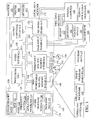
- FIG. 1 illustrates an example of a suitable computing system environment 100 on which the invention may be implemented.
- the computing system environment 100 is only one example of a suitable computing environment and is not intended to suggest any limitation as to the scope of use or functionality of the invention. Neither should the computing environment 100 be interpreted as having any dependency or requirement relating to any one or combination of components illustrated in the exemplary operating environment 100.
- the invention is operational with numerous other general purpose or special purpose computing system environments or configurations.
- Examples of well-known computing systems, environments, and/or configurations that may be suitable for use with the invention include, but are not limited to, personal computers, server computers, hand-held or laptop devices, multiprocessor systems, microprocessor-based systems, set top boxes, programmable consumer electronics, network PCs, minicomputers, mainframe computers, telephony systems, distributed computing environments that include any of the above systems or devices, and the like.
- the invention may be described in the general context of computer-executable instructions, such as program modules, being executed by a computer.
- program modules include routines, programs, objects, components, data structures, etc. that perform particular tasks or implement particular abstract data types.
- the invention is designed to be practiced in distributed computing environments where tasks are performed by remote processing devices that are linked through a communications network.
- program modules are located in both local and remote computer storage media including memory storage devices.
- an exemplary system for implementing the invention includes a general-purpose computing device in the form of a computer 110.
- Components of computer 110 may include, but are not limited to, a processing unit 120, a system memory 130, and a system bus 121 that couples various system components including the system memory to the processing unit 120.
- the system bus 121 may be any of several types of bus structures including a memory bus or memory controller, a peripheral bus, and a local bus using any of a variety of bus architectures.
- such architectures include Industry Standard Architecture (ISA) bus, Micro Channel Architecture (MCA) bus, Enhanced ISA (EISA) bus, Video Electronics Standards Association (VESA) local bus, and Peripheral Component Interconnect (PCI) bus also known as Mezzanine bus.
- ISA Industry Standard Architecture
- MCA Micro Channel Architecture
- EISA Enhanced ISA
- VESA Video Electronics Standards Association
- PCI Peripheral Component Interconnect
- Computer 110 typically includes a variety of computer readable media.
- Computer readable media can be any available media that can be accessed by computer 110 and includes both volatile and nonvolatile media, removable and non-removable media.
- Computer readable media may comprise computer storage media and communication media.
- Computer storage media includes both volatile and nonvolatile, removable and non-removable media implemented in any method or technology for storage of information such as computer readable instructions, data structures, program modules or other data.
- Computer storage media includes, but is not limited to, RAM, ROM, EEPROM, flash memory or other memory technology, CD-ROM, digital versatile disks (DVD) or other optical disk storage, magnetic cassettes, magnetic tape, magnetic disk storage or other magnetic storage devices, or any other medium which can be used to store the desired information and which can be accessed by computer 110.
- Communication media typically embodies computer readable instructions, data structures, program modules or other data in a modulated data signal such as a carrier wave or other transport mechanism and includes any information delivery media.
- modulated data signal means a signal that has one or more of its characteristics set or changed in such a manner as to encode information in the signal.
- communication media includes wired media such as a wired network or direct-wired connection, and wireless media such as acoustic, RF, infrared and other wireless media. Combinations of any of the above should also be included within the scope of computer readable media.
- the system memory 130 includes computer storage media in the form of volatile and/or nonvolatile memory such as read only memory (ROM) 131 and random access memory (RAM) 132.
- ROM read only memory
- RAM random access memory
- BIOS basic input/output system
- RAM 132 typically contains data and/or program modules that are immediately accessible to and/or presently being operated on by processing unit 120.
- FIG. 1 illustrates operating system 134, application programs 135, other program modules 136, and program data 137.
- the computer 110 may also include other removable/non-removable volatile/nonvolatile computer storage media.
- FIG. 1 illustrates a hard disk drive 141 that reads from or writes to non-removable, nonvolatile magnetic media, a magnetic disk drive 151 that reads from or writes to a removable, nonvolatile magnetic disk 152, and an optical disk drive 155 that reads from or writes to a removable, nonvolatile optical disk 156 such as a CD ROM or other optical media.
- removable/non-removable, volatile/nonvolatile computer storage media that can be used in the exemplary operating environment include, but are not limited to, magnetic tape cassettes, flash memory cards, digital versatile disks, digital video tape, solid state RAM, solid state ROM, and the like.
- the hard disk drive 141 is typically connected to the system bus 121 through a non-removable memory interface such as interface 140, and magnetic disk drive 151 and optical disk drive 155 are typically connected to the system bus 121 by a removable memory interface, such as interface 150.
- hard disk drive 141 is illustrated as storing operating system 144, application programs 145, other program modules 146, and program data 147. Note that these components can either be the same as or different from operating system 134, application programs 135, other program modules 136, and program data 137. Operating system 144, application programs 145, other program modules 146, and program data 147 are given different numbers here to illustrate that, at a minimum, they are different copies.
- a user may enter commands and information into the computer 110 through input devices such as a keyboard 162, a microphone 163, and a pointing device 161, such as a mouse, trackball or touch pad.
- Other input devices may include a joystick, game pad, satellite dish, scanner, or the like.
- a monitor 191 or other type of display device is also connected to the system bus 121 via an interface, such as a video interface 190.
- computers may also include other peripheral output devices such as speakers 197 and printer 196, which may be connected through an output peripheral interface 195.
- the computer 110 is operated in a networked environment using logical connections to one or more remote computers, such as a remote computer 180.
- the remote computer 180 may be a personal computer, a hand-held device, a server, a router, a network PC, a peer device or other common network node, and typically includes many or all of the elements described above relative to the computer 110.
- the logical connections depicted in FIG. 1 include a local area network (LAN) 171 and a wide area network (WAN) 173, but may also include other networks.
- LAN local area network
- WAN wide area network
- Such networking environments are commonplace in offices, enterprise-wide computer networks, intranets and the Internet.
- the computer 110 When used in a LAN networking environment, the computer 110 is connected to the LAN 171 through a network interface or adapter 170. When used in a WAN networking environment, the computer 110 typically includes a modem 172 or other means for establishing communications over the WAN 173, such as the Internet.
- the modem 172 which may be internal or external, may be connected to the system bus 121 via the user input interface 160, or other appropriate mechanism.
- program modules depicted relative to the computer 110, or portions thereof may be stored in the remote memory storage device.
- FIG. 1 illustrates remote application programs 185 as residing on remote computer 180. It will be appreciated that the network connections shown are exemplary and other means of establishing a communications link between the computers may be used.
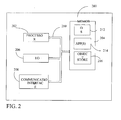
- FIG. 2 is a block diagram of a mobile device 200, which is an exemplary computing environment.
- Mobile device 200 includes a microprocessor 202, memory 204, input/output (I/O) components 206, and a communication interface 208 for communicating with remote computers or other mobile devices.
- I/O input/output
- the afore-mentioned components are coupled for communication with one another over a suitable bus 210.
- Memory 204 is implemented as non-volatile electronic memory such as random access memory (RAM) with a battery back-up module (not shown) such that information stored in memory 204 is not lost when the general power to mobile device 200 is shut down.
- RAM random access memory
- a portion of memory 204 is preferably allocated as addressable memory for program execution, while another portion of memory 204 is preferably used for storage, such as to simulate storage on a disk drive.
- Memory 204 includes an operating system 212, application programs 214 as well as an object store 216.
- operating system 212 is preferably executed by processor 202 from memory 204.
- Operating system 212 in one example, is a WINDOWS® CE brand operating system commercially available from Microsoft Corporation.
- Operating system 212 is preferably designed for mobile devices, and implements database features that can be utilized by applications 214 through a set of exposed application programming interfaces and methods.
- the objects in object store 216 are maintained by applications 214 and operating system 212, at least partially in response to calls to the exposed application programming interfaces and methods.
- Communication interface 208 represents numerous devices and technologies that allow mobile device 200 to send and receive information.
- the devices include wired and wireless modems, satellite receivers and broadcast tuners to name a few.
- Mobile device 200 can also be directly connected to a computer to exchange data therewith.
- communication interface 208 can be an infrared transceiver or a serial or parallel communication connection, all of which are capable of transmitting streaming information.
- Input/output components 206 include a variety of input devices such as a touch-sensitive screen, buttons, rollers, and a microphone as well as a variety of output devices including an audio generator, a vibrating device, and a display.
- input devices such as a touch-sensitive screen, buttons, rollers, and a microphone
- output devices including an audio generator, a vibrating device, and a display.
- the devices listed above are by way of example and need not all be present on mobile device 200.
- other input/output devices may be attached to or found with mobile device 200 within the scope of the present invention.
- a capitalization model is built for a specific user by relying on documents authored by or associated with the user.
- the size of the capitalization model is reduced while making the capitalization model more accurate for the particular user.
- the capitalization model built from the user's data includes the forms of capitalization that the user wants to use and does not include capitalization forms that the user does not find acceptable.
- the capitalization model of the present invention is more efficient and more accurate.
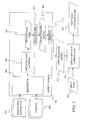
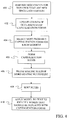
- FIGS. 3 and 4 provide a block diagram and a flow diagram, respectively, which illustrate the formation and use of a capitalization model under embodiments of the present invention.
- a harvester 300 of a model update unit 301 of FIG. 3 harvests documents such as application documents 302 and e-mails 304 that are associated with a user.
- harvester 300 is periodically run and only retrieves documents that were not present when the harvester was last run.
- harvester 300 only harvests documents that were authored by the user. These include documents written by the user and e-mails sent by the user including e-mails that are forwarded or replied to by the user. As such, an e-mail written by someone else can be attributed to the user if the user forwards or replies to the e-mail.
- any document opened by a user is harvested by harvester 300.
- documents stored on the user's local machine rather than on a network are harvested by harvester 300.
- directories located on a network that are associated with a user are also searched by harvester 300 to locate documents for the capitalization training.
- a capitalization counter 306 updates counts of occurrences of capitalization forms based on the text harvested by harvester 300. This is done preferably paragraph by paragraph. Only the paragraphs without a high percentage of capitalized words are used for counting. During this update step, counter 306 treats each unique combination of capitalized and lower case letters for a segment of text as a separate capitalization form. Thus, "State Department” and "STATE DEPARTMENT” represent two different capitalization forms for the text segment "state department".
- a segment of text can include a single word or as shown in this example, a sequence of words. In addition, the segments can be limited to a set of specific lengths such as one word or two words, or may not have their lengths limited in any manner.
- capitalization counter 306 determines if the segment appears in an occurrence list 308. If the segment does not appear in occurrence list 308 and does not include capitalization, it is ignored. If the segment does not appear in occurrence list 308 and only includes capitalization because one of the words in the segment is at the beginning of the sentence, the segment is also ignored. If the segment appears in occurrence list 308 and/or the segment includes capitalization, a count for the capitalization form of the segment is incremented in occurrence list 308.
- occurrence list 308 consists of primary entries for each segment in lower case form with sub-entries for each capitalization form of the segment.
- occurrence list 308 can have a format of: where the primary entry consists of the "segment” in all lower case, and a total_occurrences value that indicates the total number of times the segment appears in the documents, regardless of the capitalization form of the segment.
- Each sub-entry consists of a specific capitalization form such as, "cap_form1, “cap_form2", and “cap_formn” and a count such as “occurrence 1", “occurrence 2", and "occurrence n", that provide the number of times each respective capitalization form was found in the documents.
- the primary entry would include the form “state” with a total_occurrences value of seven, one of the sub-entries would be for "State” with an occurrence value of two, and one of the sub-entries would be for "STATE” with an occurrence value of four.
- a new sub-entry for the capitalization form is added if a primary entry for the segment was already present in occurrence list 308 and the total occurrences count in the primary entry is incremented by one. If the segment was not present in occurrence list 308, a primary entry for the segment is added to occurrence list 308 together with a sub-entry for the specific capitalization form that was encountered in the training data. If a capitalization form that is present in occurrence list 308 is encountered, the total occurrence count for the segment is incremented by one and the occurrence count for the specific capitalization form is incremented by one.
- the total occurrence count in the primary entry for the segment is incremented by one without incrementing any of the capitalization forms of the word. Note that if a lower case example of a segment is encountered in the training data and there is no primary entry for the segment, the segment is ignored.
- the segments consist of word pairs and single words.
- word pairs will be stored when both words in the word pair include some form of capitalization or when one word in the word pair includes some form of capitalization and the second word in the word pair consists of a single word preposition that connects the capitalized word in the word pair to another capitalized word.
- the phrase "University of Washington” one word pair would be formed for "University of” and a second word pair would be formed for "of Washington.”
- Each of these word pairs would be placed as a sub-entry beneath a separate primary entry in occurrence list 308.
- any sequence of words that includes at least one capitalized letter can be stored as a separate entry in occurrence list 308.
- Such systems require a large amount of memory since a large number of unique strings will need to be stored.
- a word pair can be stored for two words in a document
- a single word entry for the capitalized words in the word pair is not created. For example, if "University of" is found in the document, a single word pair entry "University of” will be placed or updated in occurrence list 308. However, an entry for "University” alone will not be updated in occurrence list 308.
- capitalization counter 306 applies different weights to occurrences depending on the relationship between the user and the document in which the segment appears. In one particular example, a weight of one is applied to an occurrence count if the document is authored by the user and a lower weight, such as .5 or .1, is applied to the occurrence count if the document is not authored by the user but is associated with the user.
- a rule builder 307 selects the most probable capitalization forms for each segment in occurrence list 308. Under one example, this is done by selecting the capitalization form with the largest occurrence count. During this selection process, the lower case form for the segment is considered to be a possible capitalization form for the segment. The count for the lower case form of a segment is derived by subtracting the sum of the occurrence counts for all of the capitalization forms other than the lower case form from the total occurrence count for the segment. If the resulting difference is greater than all of the occurrence counts for the various capitalization forms, the lower case form of the word is selected as the most probable capitalization form.
- rule builder 307 constructs a set of capitalization rules 309 at step 405.
- a pruning element 310 then prunes certain capitalization rules at step 406. Specifically, if a more generic rule for a capitalized word is present after step 404, the relatively specific rules are removed. For example, if "Microsoft” is present, the more specific entry “from Microsoft” is removed. Similarly, if “Microsoft” and “Office” are both present, an entry for "Microsoft Office” would be removed. Note that all of the words with capitalization in a sequence of words must be present in smaller segments in order to remove the larger segment. For example, if "Office” was not present in the above example, then the entry for "Microsoft Office” would not be removed even though “Microsoft” is in the list.
- pruning element 310 sorts the remaining rules to allow for efficient searching.
- the entries are divided into a one-word group and a two-word group. Note that the entries in each group only include the proper capitalization form for the segment represented by the entry.
- the selected capitalization forms can be grouped according to the first word in the sequences of words.
- these capitalization forms are stored in the following structure:
- top entry includes the word that is the index for all sequence of words that begin with this word, and maxlength is the number of words found in the longest sequence of words stored below the index.
- subentries that each consist of a sequence of words followed by a number indicating the number of words in the sequence. Multiple entries having the same length but different sequences of words may be included under the index entry. In the example above, one of the sub word entries is for the sequence of words "word word2" and the length of the sequence is indicated as being "2".
- the sorted rules formed in step 408 are placed as a capitalization model 312 that is applied to a text 314 by a capitalization correction unit 316 at step 410.
- capitalization correction unit 316 searches capitalization model 312 for proper capitalization forms of words found in text 314 and then replaces the words in text 314 with the capitalization forms it finds to create text with capitalization 318.
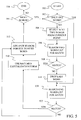
- the methods for searching for the capitalization forms depend in part on how the capitalization forms were stored in capitalization model 312. Two separate methods for searching for the capitalization forms are discussed in the flow diagrams of FIGS. 5 and 6 .
- the method of FIG. 5 is used when the capitalization model is stored as two separate lists, one for single words, and one for two-word pairs.
- the process of FIG. 5 begins at step 500 and continues at step 502 where the current text string in text 314 is examined to determine if it contains only one word. If the text string contains more than one word, the process continues at step 504 where the next two words in text 314 are selected.
- the selected words are searched for in the two-word list of the capitalization model to determine if there is a match in the two-word list. Because the two-word list contains word pairs in capitalization form and the two words selected from text 314 may not be capitalized, this search is performed using case insensitive comparisons.
- the matched capitalization forms from the two-word lists are used in capitalized text 318 in place of the text that was in text 314 at step 510.
- a search pointer is advanced to the next word in text 314 at step 512.
- the process determines if there are more words after the current search pointer at step 514. If there are no more words, the process ends at step 516. If there are more words, the process returns to step 502 to see if there is only one word remaining. If there is more than one word, steps 504, 506 and 508 are repeated.
- step 508 If a match for the selected two-word pair in input text 314 cannot be found at step 508, the last word in the pair is dropped at step 518. This produces a single search word that is used to search the one-word list at step 520. Similarly, if only one word is left in the current sentence of input text 314 at step 502, that single word is used to search the one-word list for a match at step 520.
- the search pointer is advanced to the point after the single word that matched the one-word list entry.
- the search pointer is advanced to the point after the single word at step 512 and the form of the single word from text 314 is placed in text 318. The process then continues at step 514 to determine if there are more words in the input text.
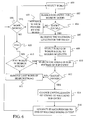
- FIG. 6 provides a flow diagram for applying a capitalization model when the capitalization model is stored as word string entries that are indexed by the first word of each word string.
- a word is selected from text 314.
- the selected word is searched for in the capitalization model.
- a search is performed to determine if the word is found as a top entry for an index structure that consists of the top entry and a set of sub-entries, one for each string that is headed by the word in the top entry.
- the top entry of each index structure also includes the length of the longest string that is found as a sub-entry under the top entry.
- step 605 advances the search pointer by one word and then the process determines if there are more words in input text 314 at step 606. If there are more words, the process returns to step 600 and steps 600, 602 and 604 are repeated.
- the maximum length associated with that top entry is retrieved at step 607.
- the maximum length is used to select a string of additional words from text 314 at step 608. This string is appended to the first selected word to form a search string. For example, if the maxlength of the entry is three, then the next two words in text 314 would be selected and appended to the previously selected word to form the search string.
- a search for the selected string is performed on the sub-entries under the matching top entry that have the same length as the length of the search string. If no match is found at step 612, the last word in the search string is removed at step 613. The new search string is then examined at step 615 to determine if it contains any words. If the search string does not contain any words, the process ends at step 620. If the search string contains at least one word, a new search for the smaller string is performed at step 610. Thus, step 610, 612, 613 and 615 are repeated until the search string becomes small enough that a match is found at step 612 or there are no further words in the search string.
- the matching string in capitalization model 312 is used in place of the search string in capitalized text 318 at step 614.
- the search pointer is advanced to the end of the matched string in text 314 at step 616. The process then returns to step 606 to determine if there are more words in text 314. If there are more words, the process returns to step 600. If there are no more words, the process ends at step 620.
- the present invention reduces the size of capitalization model 312 and makes capitalization model 312 more accurate. Also, by allowing the model to be periodically updated from user data, the model can learn new forms of capitalization as they are adopted by the user.
Landscapes
- Engineering & Computer Science (AREA)
- Theoretical Computer Science (AREA)
- Health & Medical Sciences (AREA)
- Physics & Mathematics (AREA)
- General Physics & Mathematics (AREA)
- General Engineering & Computer Science (AREA)
- Artificial Intelligence (AREA)
- Audiology, Speech & Language Pathology (AREA)
- Computational Linguistics (AREA)
- General Health & Medical Sciences (AREA)
- Water Supply & Treatment (AREA)
- Public Health (AREA)
- Hydrology & Water Resources (AREA)
- Life Sciences & Earth Sciences (AREA)
- Machine Translation (AREA)
- Document Processing Apparatus (AREA)
- Management, Administration, Business Operations System, And Electronic Commerce (AREA)
- Organic Low-Molecular-Weight Compounds And Preparation Thereof (AREA)
- Acyclic And Carbocyclic Compounds In Medicinal Compositions (AREA)
- Information Retrieval, Db Structures And Fs Structures Therefor (AREA)
Applications Claiming Priority (2)
| Application Number | Priority Date | Filing Date | Title |
|---|---|---|---|
| US819023 | 2004-04-06 | ||
| US10/819,023 US7827025B2 (en) | 2004-04-06 | 2004-04-06 | Efficient capitalization through user modeling |
Publications (3)
| Publication Number | Publication Date |
|---|---|
| EP1585030A2 EP1585030A2 (en) | 2005-10-12 |
| EP1585030A3 EP1585030A3 (en) | 2006-07-12 |
| EP1585030B1 true EP1585030B1 (en) | 2011-01-26 |
Family
ID=34912696
Family Applications (1)
| Application Number | Title | Priority Date | Filing Date |
|---|---|---|---|
| EP05102510A Expired - Lifetime EP1585030B1 (en) | 2004-04-06 | 2005-03-30 | Automatic Capitalization Through User Modeling |
Country Status (7)
| Country | Link |
|---|---|
| US (1) | US7827025B2 (enExample) |
| EP (1) | EP1585030B1 (enExample) |
| JP (1) | JP4672418B2 (enExample) |
| KR (1) | KR101122887B1 (enExample) |
| CN (1) | CN1680935B (enExample) |
| AT (1) | ATE497213T1 (enExample) |
| DE (1) | DE602005026077D1 (enExample) |
Families Citing this family (28)
| Publication number | Priority date | Publication date | Assignee | Title |
|---|---|---|---|---|
| AU2002316581A1 (en) | 2001-07-03 | 2003-01-21 | University Of Southern California | A syntax-based statistical translation model |
| US7620538B2 (en) | 2002-03-26 | 2009-11-17 | University Of Southern California | Constructing a translation lexicon from comparable, non-parallel corpora |
| US8548794B2 (en) | 2003-07-02 | 2013-10-01 | University Of Southern California | Statistical noun phrase translation |
| US8296127B2 (en) | 2004-03-23 | 2012-10-23 | University Of Southern California | Discovery of parallel text portions in comparable collections of corpora and training using comparable texts |
| US8666725B2 (en) | 2004-04-16 | 2014-03-04 | University Of Southern California | Selection and use of nonstatistical translation components in a statistical machine translation framework |
| US8886517B2 (en) | 2005-06-17 | 2014-11-11 | Language Weaver, Inc. | Trust scoring for language translation systems |
| US8676563B2 (en) | 2009-10-01 | 2014-03-18 | Language Weaver, Inc. | Providing human-generated and machine-generated trusted translations |
| US10319252B2 (en) | 2005-11-09 | 2019-06-11 | Sdl Inc. | Language capability assessment and training apparatus and techniques |
| US8943080B2 (en) | 2006-04-07 | 2015-01-27 | University Of Southern California | Systems and methods for identifying parallel documents and sentence fragments in multilingual document collections |
| US8886518B1 (en) * | 2006-08-07 | 2014-11-11 | Language Weaver, Inc. | System and method for capitalizing machine translated text |
| US8433556B2 (en) | 2006-11-02 | 2013-04-30 | University Of Southern California | Semi-supervised training for statistical word alignment |
| US9122674B1 (en) | 2006-12-15 | 2015-09-01 | Language Weaver, Inc. | Use of annotations in statistical machine translation |
| US8468149B1 (en) | 2007-01-26 | 2013-06-18 | Language Weaver, Inc. | Multi-lingual online community |
| US8615389B1 (en) | 2007-03-16 | 2013-12-24 | Language Weaver, Inc. | Generation and exploitation of an approximate language model |
| US8831928B2 (en) | 2007-04-04 | 2014-09-09 | Language Weaver, Inc. | Customizable machine translation service |
| US8825466B1 (en) | 2007-06-08 | 2014-09-02 | Language Weaver, Inc. | Modification of annotated bilingual segment pairs in syntax-based machine translation |
| US8972855B2 (en) * | 2008-12-16 | 2015-03-03 | At&T Intellectual Property I, L.P. | Method and apparatus for providing case restoration |
| US8990064B2 (en) | 2009-07-28 | 2015-03-24 | Language Weaver, Inc. | Translating documents based on content |
| US8380486B2 (en) | 2009-10-01 | 2013-02-19 | Language Weaver, Inc. | Providing machine-generated translations and corresponding trust levels |
| US10417646B2 (en) | 2010-03-09 | 2019-09-17 | Sdl Inc. | Predicting the cost associated with translating textual content |
| US11003838B2 (en) | 2011-04-18 | 2021-05-11 | Sdl Inc. | Systems and methods for monitoring post translation editing |
| US8694303B2 (en) | 2011-06-15 | 2014-04-08 | Language Weaver, Inc. | Systems and methods for tuning parameters in statistical machine translation |
| US8886515B2 (en) | 2011-10-19 | 2014-11-11 | Language Weaver, Inc. | Systems and methods for enhancing machine translation post edit review processes |
| US8942973B2 (en) | 2012-03-09 | 2015-01-27 | Language Weaver, Inc. | Content page URL translation |
| US10261994B2 (en) | 2012-05-25 | 2019-04-16 | Sdl Inc. | Method and system for automatic management of reputation of translators |
| US9152622B2 (en) | 2012-11-26 | 2015-10-06 | Language Weaver, Inc. | Personalized machine translation via online adaptation |
| US9213694B2 (en) | 2013-10-10 | 2015-12-15 | Language Weaver, Inc. | Efficient online domain adaptation |
| US10733235B2 (en) * | 2015-06-09 | 2020-08-04 | Patricia Henery | Aid for dyslexic readers |
Citations (1)
| Publication number | Priority date | Publication date | Assignee | Title |
|---|---|---|---|---|
| WO2004010323A2 (en) * | 2002-07-23 | 2004-01-29 | Research In Motion Limted | Systems and methods of building and using custom word lists |
Family Cites Families (13)
| Publication number | Priority date | Publication date | Assignee | Title |
|---|---|---|---|---|
| JP2644995B2 (ja) | 1986-09-09 | 1997-08-25 | 株式会社東芝 | 文書処理方法 |
| DE4323241A1 (de) * | 1993-07-12 | 1995-02-02 | Ibm | Verfahren und Computersystem zur Suche fehlerhafter Zeichenketten in einem Text |
| US5761689A (en) * | 1994-09-01 | 1998-06-02 | Microsoft Corporation | Autocorrecting text typed into a word processing document |
| CN1180204A (zh) * | 1996-05-02 | 1998-04-29 | 微软公司 | 大写和无重音文本的词典处理的方法和系统 |
| US5819265A (en) | 1996-07-12 | 1998-10-06 | International Business Machines Corporation | Processing names in a text |
| US6618697B1 (en) * | 1999-05-14 | 2003-09-09 | Justsystem Corporation | Method for rule-based correction of spelling and grammar errors |
| US6981040B1 (en) * | 1999-12-28 | 2005-12-27 | Utopy, Inc. | Automatic, personalized online information and product services |
| US6490549B1 (en) * | 2000-03-30 | 2002-12-03 | Scansoft, Inc. | Automatic orthographic transformation of a text stream |
| JP2002169834A (ja) | 2000-11-20 | 2002-06-14 | Hewlett Packard Co <Hp> | 文書のベクトル解析を行うコンピュータおよび方法 |
| US6922809B2 (en) * | 2001-01-25 | 2005-07-26 | International Business Machines Corporation | Method and apparatus providing capitalization recovery for text |
| JP2003167901A (ja) | 2001-11-29 | 2003-06-13 | Kddi Corp | 協調フィルタリング方法、協調フィルタリング装置及び協調フィルタリングプログラム |
| US6873996B2 (en) * | 2003-04-16 | 2005-03-29 | Yahoo! Inc. | Affinity analysis method and article of manufacture |
| US7447627B2 (en) * | 2003-10-23 | 2008-11-04 | Microsoft Corporation | Compound word breaker and spell checker |
-
2004
- 2004-04-06 US US10/819,023 patent/US7827025B2/en not_active Expired - Fee Related
-
2005
- 2005-03-30 DE DE602005026077T patent/DE602005026077D1/de not_active Expired - Lifetime
- 2005-03-30 EP EP05102510A patent/EP1585030B1/en not_active Expired - Lifetime
- 2005-03-30 AT AT05102510T patent/ATE497213T1/de not_active IP Right Cessation
- 2005-04-06 KR KR1020050028607A patent/KR101122887B1/ko not_active Expired - Fee Related
- 2005-04-06 CN CN2005100650848A patent/CN1680935B/zh not_active Expired - Fee Related
- 2005-04-06 JP JP2005110069A patent/JP4672418B2/ja not_active Expired - Fee Related
Patent Citations (1)
| Publication number | Priority date | Publication date | Assignee | Title |
|---|---|---|---|---|
| WO2004010323A2 (en) * | 2002-07-23 | 2004-01-29 | Research In Motion Limted | Systems and methods of building and using custom word lists |
Also Published As
| Publication number | Publication date |
|---|---|
| JP4672418B2 (ja) | 2011-04-20 |
| CN1680935A (zh) | 2005-10-12 |
| DE602005026077D1 (de) | 2011-03-10 |
| KR20060045535A (ko) | 2006-05-17 |
| US20050228642A1 (en) | 2005-10-13 |
| JP2005302023A (ja) | 2005-10-27 |
| EP1585030A3 (en) | 2006-07-12 |
| ATE497213T1 (de) | 2011-02-15 |
| US7827025B2 (en) | 2010-11-02 |
| EP1585030A2 (en) | 2005-10-12 |
| CN1680935B (zh) | 2011-05-11 |
| KR101122887B1 (ko) | 2012-03-22 |
Similar Documents
| Publication | Publication Date | Title |
|---|---|---|
| EP1585030B1 (en) | Automatic Capitalization Through User Modeling | |
| US7024351B2 (en) | Method and apparatus for robust efficient parsing | |
| CN113282689B (zh) | 基于领域知识图谱的检索方法、装置 | |
| US7783476B2 (en) | Word extraction method and system for use in word-breaking using statistical information | |
| CN106649783B (zh) | 一种同义词挖掘方法和装置 | |
| US8463593B2 (en) | Natural language hypernym weighting for word sense disambiguation | |
| US5896321A (en) | Text completion system for a miniature computer | |
| CN1135485C (zh) | 利用计算机系统的日文文本字的识别 | |
| CA2390784C (en) | A method and system for theme-based word sense ambiguity reduction | |
| US20050021545A1 (en) | Very-large-scale automatic categorizer for Web content | |
| US20070213983A1 (en) | Spell checking system including a phonetic speller | |
| Ahmed et al. | Revised n-gram based automatic spelling correction tool to improve retrieval effectiveness | |
| WO2006083939A2 (en) | Prioritization of search responses system and method | |
| WO2005041063A1 (en) | Information retrieval | |
| JPH1153384A (ja) | キーワード抽出装置及びキーワード抽出方法並びにキーワード抽出プログラムを格納したコンピュータ読み取り可能な記録媒体 | |
| CN101639830A (zh) | 一种输入过程中的中文术语自动纠错方法 | |
| US7599828B2 (en) | Grammatically correct contraction spelling suggestions for french | |
| EP2162838B1 (en) | Phonetic search using normalized string | |
| CN111191105A (zh) | 政务信息的搜索方法、装置、系统、设备及存储介质 | |
| TW548600B (en) | Method and system for identifying attributes of new words in non-segmented text | |
| US7580942B2 (en) | Indexing and ranking processes for directory assistance services | |
| JP3531222B2 (ja) | 類似文字列検索装置 | |
| US20040243411A1 (en) | Method and apparatus for compressing asymmetric clustering language models | |
| Van Delden et al. | Supervised and unsupervised automatic spelling correction algorithms | |
| US20050102278A1 (en) | Expanded search keywords |
Legal Events
| Date | Code | Title | Description |
|---|---|---|---|
| PUAI | Public reference made under article 153(3) epc to a published international application that has entered the european phase |
Free format text: ORIGINAL CODE: 0009012 |
|
| AK | Designated contracting states |
Kind code of ref document: A2 Designated state(s): AT BE BG CH CY CZ DE DK EE ES FI FR GB GR HU IE IS IT LI LT LU MC NL PL PT RO SE SI SK TR |
|
| AX | Request for extension of the european patent |
Extension state: AL BA HR LV MK YU |
|
| PUAL | Search report despatched |
Free format text: ORIGINAL CODE: 0009013 |
|
| AK | Designated contracting states |
Kind code of ref document: A3 Designated state(s): AT BE BG CH CY CZ DE DK EE ES FI FR GB GR HU IE IS IT LI LT LU MC NL PL PT RO SE SI SK TR |
|
| AX | Request for extension of the european patent |
Extension state: AL BA HR LV MK YU |
|
| 17P | Request for examination filed |
Effective date: 20070110 |
|
| AKX | Designation fees paid |
Designated state(s): AT BE BG CH CY CZ DE DK EE ES FI FR GB GR HU IE IS IT LI LT LU MC NL PL PT RO SE SI SK TR |
|
| 17Q | First examination report despatched |
Effective date: 20080617 |
|
| GRAP | Despatch of communication of intention to grant a patent |
Free format text: ORIGINAL CODE: EPIDOSNIGR1 |
|
| GRAS | Grant fee paid |
Free format text: ORIGINAL CODE: EPIDOSNIGR3 |
|
| GRAA | (expected) grant |
Free format text: ORIGINAL CODE: 0009210 |
|
| AK | Designated contracting states |
Kind code of ref document: B1 Designated state(s): AT BE BG CH CY CZ DE DK EE ES FI FR GB GR HU IE IS IT LI LT LU MC NL PL PT RO SE SI SK TR |
|
| REG | Reference to a national code |
Ref country code: GB Ref legal event code: FG4D |
|
| REG | Reference to a national code |
Ref country code: CH Ref legal event code: EP |
|
| REG | Reference to a national code |
Ref country code: IE Ref legal event code: FG4D |
|
| REF | Corresponds to: |
Ref document number: 602005026077 Country of ref document: DE Date of ref document: 20110310 Kind code of ref document: P |
|
| REG | Reference to a national code |
Ref country code: DE Ref legal event code: R096 Ref document number: 602005026077 Country of ref document: DE Effective date: 20110310 |
|
| REG | Reference to a national code |
Ref country code: NL Ref legal event code: VDEP Effective date: 20110126 |
|
| LTIE | Lt: invalidation of european patent or patent extension |
Effective date: 20110126 |
|
| PG25 | Lapsed in a contracting state [announced via postgrant information from national office to epo] |
Ref country code: IS Free format text: LAPSE BECAUSE OF FAILURE TO SUBMIT A TRANSLATION OF THE DESCRIPTION OR TO PAY THE FEE WITHIN THE PRESCRIBED TIME-LIMIT Effective date: 20110526 Ref country code: SE Free format text: LAPSE BECAUSE OF FAILURE TO SUBMIT A TRANSLATION OF THE DESCRIPTION OR TO PAY THE FEE WITHIN THE PRESCRIBED TIME-LIMIT Effective date: 20110126 Ref country code: PT Free format text: LAPSE BECAUSE OF FAILURE TO SUBMIT A TRANSLATION OF THE DESCRIPTION OR TO PAY THE FEE WITHIN THE PRESCRIBED TIME-LIMIT Effective date: 20110526 Ref country code: GR Free format text: LAPSE BECAUSE OF FAILURE TO SUBMIT A TRANSLATION OF THE DESCRIPTION OR TO PAY THE FEE WITHIN THE PRESCRIBED TIME-LIMIT Effective date: 20110427 Ref country code: LT Free format text: LAPSE BECAUSE OF FAILURE TO SUBMIT A TRANSLATION OF THE DESCRIPTION OR TO PAY THE FEE WITHIN THE PRESCRIBED TIME-LIMIT Effective date: 20110126 Ref country code: ES Free format text: LAPSE BECAUSE OF FAILURE TO SUBMIT A TRANSLATION OF THE DESCRIPTION OR TO PAY THE FEE WITHIN THE PRESCRIBED TIME-LIMIT Effective date: 20110507 |
|
| PG25 | Lapsed in a contracting state [announced via postgrant information from national office to epo] |
Ref country code: SI Free format text: LAPSE BECAUSE OF FAILURE TO SUBMIT A TRANSLATION OF THE DESCRIPTION OR TO PAY THE FEE WITHIN THE PRESCRIBED TIME-LIMIT Effective date: 20110126 Ref country code: BG Free format text: LAPSE BECAUSE OF FAILURE TO SUBMIT A TRANSLATION OF THE DESCRIPTION OR TO PAY THE FEE WITHIN THE PRESCRIBED TIME-LIMIT Effective date: 20110426 Ref country code: NL Free format text: LAPSE BECAUSE OF FAILURE TO SUBMIT A TRANSLATION OF THE DESCRIPTION OR TO PAY THE FEE WITHIN THE PRESCRIBED TIME-LIMIT Effective date: 20110126 Ref country code: CY Free format text: LAPSE BECAUSE OF FAILURE TO SUBMIT A TRANSLATION OF THE DESCRIPTION OR TO PAY THE FEE WITHIN THE PRESCRIBED TIME-LIMIT Effective date: 20110126 Ref country code: PL Free format text: LAPSE BECAUSE OF FAILURE TO SUBMIT A TRANSLATION OF THE DESCRIPTION OR TO PAY THE FEE WITHIN THE PRESCRIBED TIME-LIMIT Effective date: 20110126 Ref country code: BE Free format text: LAPSE BECAUSE OF FAILURE TO SUBMIT A TRANSLATION OF THE DESCRIPTION OR TO PAY THE FEE WITHIN THE PRESCRIBED TIME-LIMIT Effective date: 20110126 Ref country code: AT Free format text: LAPSE BECAUSE OF FAILURE TO SUBMIT A TRANSLATION OF THE DESCRIPTION OR TO PAY THE FEE WITHIN THE PRESCRIBED TIME-LIMIT Effective date: 20110126 Ref country code: FI Free format text: LAPSE BECAUSE OF FAILURE TO SUBMIT A TRANSLATION OF THE DESCRIPTION OR TO PAY THE FEE WITHIN THE PRESCRIBED TIME-LIMIT Effective date: 20110126 |
|
| PG25 | Lapsed in a contracting state [announced via postgrant information from national office to epo] |
Ref country code: MC Free format text: LAPSE BECAUSE OF NON-PAYMENT OF DUE FEES Effective date: 20110331 Ref country code: DK Free format text: LAPSE BECAUSE OF FAILURE TO SUBMIT A TRANSLATION OF THE DESCRIPTION OR TO PAY THE FEE WITHIN THE PRESCRIBED TIME-LIMIT Effective date: 20110126 Ref country code: EE Free format text: LAPSE BECAUSE OF FAILURE TO SUBMIT A TRANSLATION OF THE DESCRIPTION OR TO PAY THE FEE WITHIN THE PRESCRIBED TIME-LIMIT Effective date: 20110126 |
|
| REG | Reference to a national code |
Ref country code: CH Ref legal event code: PL |
|
| PG25 | Lapsed in a contracting state [announced via postgrant information from national office to epo] |
Ref country code: SK Free format text: LAPSE BECAUSE OF FAILURE TO SUBMIT A TRANSLATION OF THE DESCRIPTION OR TO PAY THE FEE WITHIN THE PRESCRIBED TIME-LIMIT Effective date: 20110126 Ref country code: RO Free format text: LAPSE BECAUSE OF FAILURE TO SUBMIT A TRANSLATION OF THE DESCRIPTION OR TO PAY THE FEE WITHIN THE PRESCRIBED TIME-LIMIT Effective date: 20110126 Ref country code: CZ Free format text: LAPSE BECAUSE OF FAILURE TO SUBMIT A TRANSLATION OF THE DESCRIPTION OR TO PAY THE FEE WITHIN THE PRESCRIBED TIME-LIMIT Effective date: 20110126 |
|
| PLBE | No opposition filed within time limit |
Free format text: ORIGINAL CODE: 0009261 |
|
| STAA | Information on the status of an ep patent application or granted ep patent |
Free format text: STATUS: NO OPPOSITION FILED WITHIN TIME LIMIT |
|
| 26N | No opposition filed |
Effective date: 20111027 |
|
| REG | Reference to a national code |
Ref country code: IE Ref legal event code: MM4A |
|
| PG25 | Lapsed in a contracting state [announced via postgrant information from national office to epo] |
Ref country code: IE Free format text: LAPSE BECAUSE OF NON-PAYMENT OF DUE FEES Effective date: 20110330 Ref country code: LI Free format text: LAPSE BECAUSE OF NON-PAYMENT OF DUE FEES Effective date: 20110331 Ref country code: CH Free format text: LAPSE BECAUSE OF NON-PAYMENT OF DUE FEES Effective date: 20110331 |
|
| REG | Reference to a national code |
Ref country code: DE Ref legal event code: R097 Ref document number: 602005026077 Country of ref document: DE Effective date: 20111027 |
|
| PG25 | Lapsed in a contracting state [announced via postgrant information from national office to epo] |
Ref country code: IT Free format text: LAPSE BECAUSE OF FAILURE TO SUBMIT A TRANSLATION OF THE DESCRIPTION OR TO PAY THE FEE WITHIN THE PRESCRIBED TIME-LIMIT Effective date: 20110126 |
|
| PG25 | Lapsed in a contracting state [announced via postgrant information from national office to epo] |
Ref country code: LU Free format text: LAPSE BECAUSE OF NON-PAYMENT OF DUE FEES Effective date: 20110330 |
|
| PG25 | Lapsed in a contracting state [announced via postgrant information from national office to epo] |
Ref country code: TR Free format text: LAPSE BECAUSE OF FAILURE TO SUBMIT A TRANSLATION OF THE DESCRIPTION OR TO PAY THE FEE WITHIN THE PRESCRIBED TIME-LIMIT Effective date: 20110126 |
|
| PG25 | Lapsed in a contracting state [announced via postgrant information from national office to epo] |
Ref country code: HU Free format text: LAPSE BECAUSE OF FAILURE TO SUBMIT A TRANSLATION OF THE DESCRIPTION OR TO PAY THE FEE WITHIN THE PRESCRIBED TIME-LIMIT Effective date: 20110126 |
|
| REG | Reference to a national code |
Ref country code: DE Ref legal event code: R082 Ref document number: 602005026077 Country of ref document: DE Representative=s name: GRUENECKER, KINKELDEY, STOCKMAIR & SCHWANHAEUS, DE |
|
| REG | Reference to a national code |
Ref country code: GB Ref legal event code: 732E Free format text: REGISTERED BETWEEN 20150115 AND 20150121 |
|
| REG | Reference to a national code |
Ref country code: DE Ref legal event code: R081 Ref document number: 602005026077 Country of ref document: DE Owner name: MICROSOFT TECHNOLOGY LICENSING, LLC, REDMOND, US Free format text: FORMER OWNER: MICROSOFT CORP., REDMOND, WASH., US Effective date: 20150126 Ref country code: DE Ref legal event code: R082 Ref document number: 602005026077 Country of ref document: DE Representative=s name: GRUENECKER PATENT- UND RECHTSANWAELTE PARTG MB, DE Effective date: 20150126 |
|
| REG | Reference to a national code |
Ref country code: FR Ref legal event code: TP Owner name: MICROSOFT TECHNOLOGY LICENSING, LLC, US Effective date: 20150724 |
|
| REG | Reference to a national code |
Ref country code: FR Ref legal event code: PLFP Year of fee payment: 12 |
|
| REG | Reference to a national code |
Ref country code: FR Ref legal event code: PLFP Year of fee payment: 13 |
|
| PGFP | Annual fee paid to national office [announced via postgrant information from national office to epo] |
Ref country code: FR Payment date: 20170213 Year of fee payment: 13 Ref country code: DE Payment date: 20170321 Year of fee payment: 13 |
|
| PGFP | Annual fee paid to national office [announced via postgrant information from national office to epo] |
Ref country code: GB Payment date: 20170329 Year of fee payment: 13 |
|
| REG | Reference to a national code |
Ref country code: DE Ref legal event code: R119 Ref document number: 602005026077 Country of ref document: DE |
|
| GBPC | Gb: european patent ceased through non-payment of renewal fee |
Effective date: 20180330 |
|
| PG25 | Lapsed in a contracting state [announced via postgrant information from national office to epo] |
Ref country code: DE Free format text: LAPSE BECAUSE OF NON-PAYMENT OF DUE FEES Effective date: 20181002 |
|
| PG25 | Lapsed in a contracting state [announced via postgrant information from national office to epo] |
Ref country code: GB Free format text: LAPSE BECAUSE OF NON-PAYMENT OF DUE FEES Effective date: 20180330 |
|
| PG25 | Lapsed in a contracting state [announced via postgrant information from national office to epo] |
Ref country code: FR Free format text: LAPSE BECAUSE OF NON-PAYMENT OF DUE FEES Effective date: 20180331 |