EP1584751A1 - Procédé de traitement de sol avec utilisation d'au moins un système d'électrodes monopolaires coaxiales et dispositif de mise en oeuvre - Google Patents
Procédé de traitement de sol avec utilisation d'au moins un système d'électrodes monopolaires coaxiales et dispositif de mise en oeuvre Download PDFInfo
- Publication number
- EP1584751A1 EP1584751A1 EP05290570A EP05290570A EP1584751A1 EP 1584751 A1 EP1584751 A1 EP 1584751A1 EP 05290570 A EP05290570 A EP 05290570A EP 05290570 A EP05290570 A EP 05290570A EP 1584751 A1 EP1584751 A1 EP 1584751A1
- Authority
- EP
- European Patent Office
- Prior art keywords
- zone
- polarity
- soil
- partially
- electrodes
- Prior art date
- Legal status (The legal status is an assumption and is not a legal conclusion. Google has not performed a legal analysis and makes no representation as to the accuracy of the status listed.)
- Granted
Links
- 239000002689 soil Substances 0.000 title claims abstract description 55
- 238000000034 method Methods 0.000 title claims abstract description 49
- 238000011282 treatment Methods 0.000 title claims abstract description 40
- 230000008569 process Effects 0.000 title claims description 13
- 230000005684 electric field Effects 0.000 claims abstract description 18
- 230000018044 dehydration Effects 0.000 claims abstract description 17
- 238000006297 dehydration reaction Methods 0.000 claims abstract description 17
- 238000005086 pumping Methods 0.000 claims description 10
- 238000009413 insulation Methods 0.000 claims description 9
- RTAQQCXQSZGOHL-UHFFFAOYSA-N Titanium Chemical compound [Ti] RTAQQCXQSZGOHL-UHFFFAOYSA-N 0.000 claims description 8
- 229910001220 stainless steel Inorganic materials 0.000 claims description 8
- 239000010935 stainless steel Substances 0.000 claims description 8
- 239000010936 titanium Substances 0.000 claims description 8
- 229910052719 titanium Inorganic materials 0.000 claims description 8
- 230000000994 depressogenic effect Effects 0.000 claims description 7
- 239000007788 liquid Substances 0.000 claims description 7
- 239000000203 mixture Substances 0.000 claims description 6
- 238000005067 remediation Methods 0.000 claims description 6
- 230000000750 progressive effect Effects 0.000 claims description 4
- 230000004913 activation Effects 0.000 claims description 3
- 230000000881 depressing effect Effects 0.000 claims description 3
- 229910052741 iridium Inorganic materials 0.000 claims description 3
- GKOZUEZYRPOHIO-UHFFFAOYSA-N iridium atom Chemical compound [Ir] GKOZUEZYRPOHIO-UHFFFAOYSA-N 0.000 claims description 3
- 150000002736 metal compounds Chemical class 0.000 claims description 3
- KJTLSVCANCCWHF-UHFFFAOYSA-N Ruthenium Chemical compound [Ru] KJTLSVCANCCWHF-UHFFFAOYSA-N 0.000 claims description 2
- ATJFFYVFTNAWJD-UHFFFAOYSA-N Tin Chemical compound [Sn] ATJFFYVFTNAWJD-UHFFFAOYSA-N 0.000 claims description 2
- 229910052787 antimony Inorganic materials 0.000 claims description 2
- WATWJIUSRGPENY-UHFFFAOYSA-N antimony atom Chemical compound [Sb] WATWJIUSRGPENY-UHFFFAOYSA-N 0.000 claims description 2
- 230000009849 deactivation Effects 0.000 claims description 2
- 239000012212 insulator Substances 0.000 claims description 2
- 229910052707 ruthenium Inorganic materials 0.000 claims description 2
- 229910052715 tantalum Inorganic materials 0.000 claims description 2
- GUVRBAGPIYLISA-UHFFFAOYSA-N tantalum atom Chemical compound [Ta] GUVRBAGPIYLISA-UHFFFAOYSA-N 0.000 claims description 2
- 229910052718 tin Inorganic materials 0.000 claims description 2
- 230000035515 penetration Effects 0.000 claims 1
- 230000009471 action Effects 0.000 abstract description 3
- XLYOFNOQVPJJNP-UHFFFAOYSA-N water Substances O XLYOFNOQVPJJNP-UHFFFAOYSA-N 0.000 description 54
- 239000010802 sludge Substances 0.000 description 17
- 208000005156 Dehydration Diseases 0.000 description 14
- 239000000463 material Substances 0.000 description 10
- 239000004927 clay Substances 0.000 description 8
- 238000005370 electroosmosis Methods 0.000 description 8
- 238000007596 consolidation process Methods 0.000 description 7
- 239000003344 environmental pollutant Substances 0.000 description 7
- 238000005065 mining Methods 0.000 description 7
- 231100000719 pollutant Toxicity 0.000 description 7
- 239000007787 solid Substances 0.000 description 6
- 229910052751 metal Inorganic materials 0.000 description 5
- 239000002184 metal Substances 0.000 description 5
- -1 polyethylenes Polymers 0.000 description 5
- 241000894007 species Species 0.000 description 5
- 125000000129 anionic group Chemical group 0.000 description 4
- 230000008901 benefit Effects 0.000 description 4
- 239000011575 calcium Substances 0.000 description 4
- 150000001768 cations Chemical class 0.000 description 4
- 229910052500 inorganic mineral Inorganic materials 0.000 description 4
- 239000011707 mineral Substances 0.000 description 4
- 150000002823 nitrates Chemical class 0.000 description 4
- 150000002825 nitriles Chemical class 0.000 description 4
- 238000002347 injection Methods 0.000 description 3
- 239000007924 injection Substances 0.000 description 3
- 150000002739 metals Chemical class 0.000 description 3
- 239000004800 polyvinyl chloride Substances 0.000 description 3
- 229920000915 polyvinyl chloride Polymers 0.000 description 3
- 239000000047 product Substances 0.000 description 3
- 238000011084 recovery Methods 0.000 description 3
- 238000012360 testing method Methods 0.000 description 3
- OYPRJOBELJOOCE-UHFFFAOYSA-N Calcium Chemical compound [Ca] OYPRJOBELJOOCE-UHFFFAOYSA-N 0.000 description 2
- VGGSQFUCUMXWEO-UHFFFAOYSA-N Ethene Chemical compound C=C VGGSQFUCUMXWEO-UHFFFAOYSA-N 0.000 description 2
- 239000005977 Ethylene Substances 0.000 description 2
- 239000004698 Polyethylene Substances 0.000 description 2
- 239000004743 Polypropylene Substances 0.000 description 2
- 239000000440 bentonite Substances 0.000 description 2
- 229910000278 bentonite Inorganic materials 0.000 description 2
- SVPXDRXYRYOSEX-UHFFFAOYSA-N bentoquatam Chemical compound O.O=[Si]=O.O=[Al]O[Al]=O SVPXDRXYRYOSEX-UHFFFAOYSA-N 0.000 description 2
- 239000006227 byproduct Substances 0.000 description 2
- 229910052791 calcium Inorganic materials 0.000 description 2
- 238000004140 cleaning Methods 0.000 description 2
- 239000003245 coal Substances 0.000 description 2
- 230000006378 damage Effects 0.000 description 2
- 238000005553 drilling Methods 0.000 description 2
- 238000005265 energy consumption Methods 0.000 description 2
- 238000011065 in-situ storage Methods 0.000 description 2
- 238000005259 measurement Methods 0.000 description 2
- 239000004033 plastic Substances 0.000 description 2
- 229920003023 plastic Polymers 0.000 description 2
- 229920000573 polyethylene Polymers 0.000 description 2
- 229920000642 polymer Polymers 0.000 description 2
- 229920001155 polypropylene Polymers 0.000 description 2
- 239000010970 precious metal Substances 0.000 description 2
- 239000000725 suspension Substances 0.000 description 2
- XFXPMWWXUTWYJX-UHFFFAOYSA-N Cyanide Chemical compound N#[C-] XFXPMWWXUTWYJX-UHFFFAOYSA-N 0.000 description 1
- 241000196324 Embryophyta Species 0.000 description 1
- 229910002651 NO3 Inorganic materials 0.000 description 1
- 229920000459 Nitrile rubber Polymers 0.000 description 1
- 208000025174 PANDAS Diseases 0.000 description 1
- 229910019142 PO4 Inorganic materials 0.000 description 1
- 208000021155 Paediatric autoimmune neuropsychiatric disorders associated with streptococcal infection Diseases 0.000 description 1
- 240000000220 Panda oleosa Species 0.000 description 1
- 235000016496 Panda oleosa Nutrition 0.000 description 1
- 229910000831 Steel Inorganic materials 0.000 description 1
- 102000000591 Tight Junction Proteins Human genes 0.000 description 1
- 108010002321 Tight Junction Proteins Proteins 0.000 description 1
- 240000001398 Typha domingensis Species 0.000 description 1
- 230000003213 activating effect Effects 0.000 description 1
- 230000006978 adaptation Effects 0.000 description 1
- 229910052782 aluminium Inorganic materials 0.000 description 1
- XAGFODPZIPBFFR-UHFFFAOYSA-N aluminium Chemical compound [Al] XAGFODPZIPBFFR-UHFFFAOYSA-N 0.000 description 1
- 150000001450 anions Chemical class 0.000 description 1
- 238000013459 approach Methods 0.000 description 1
- 229910052785 arsenic Inorganic materials 0.000 description 1
- RQNWIZPPADIBDY-UHFFFAOYSA-N arsenic atom Chemical compound [As] RQNWIZPPADIBDY-UHFFFAOYSA-N 0.000 description 1
- 230000015556 catabolic process Effects 0.000 description 1
- 230000008859 change Effects 0.000 description 1
- 150000001875 compounds Chemical class 0.000 description 1
- 239000000470 constituent Substances 0.000 description 1
- 238000010276 construction Methods 0.000 description 1
- 238000011109 contamination Methods 0.000 description 1
- 238000005336 cracking Methods 0.000 description 1
- 238000005202 decontamination Methods 0.000 description 1
- 230000003588 decontaminative effect Effects 0.000 description 1
- 238000006731 degradation reaction Methods 0.000 description 1
- 238000001035 drying Methods 0.000 description 1
- 230000000694 effects Effects 0.000 description 1
- 239000007772 electrode material Substances 0.000 description 1
- 239000000284 extract Substances 0.000 description 1
- 238000000605 extraction Methods 0.000 description 1
- 230000002349 favourable effect Effects 0.000 description 1
- 235000013305 food Nutrition 0.000 description 1
- 230000005484 gravity Effects 0.000 description 1
- 238000003780 insertion Methods 0.000 description 1
- 230000037431 insertion Effects 0.000 description 1
- 230000003993 interaction Effects 0.000 description 1
- 238000009421 internal insulation Methods 0.000 description 1
- 239000000314 lubricant Substances 0.000 description 1
- 238000004519 manufacturing process Methods 0.000 description 1
- 239000011159 matrix material Substances 0.000 description 1
- 229910044991 metal oxide Inorganic materials 0.000 description 1
- 150000004706 metal oxides Chemical class 0.000 description 1
- 239000005416 organic matter Substances 0.000 description 1
- NBIIXXVUZAFLBC-UHFFFAOYSA-K phosphate Chemical compound [O-]P([O-])([O-])=O NBIIXXVUZAFLBC-UHFFFAOYSA-K 0.000 description 1
- 239000010452 phosphate Substances 0.000 description 1
- 238000007789 sealing Methods 0.000 description 1
- 239000013049 sediment Substances 0.000 description 1
- 239000002002 slurry Substances 0.000 description 1
- 229910021647 smectite Inorganic materials 0.000 description 1
- 230000006641 stabilisation Effects 0.000 description 1
- 238000011105 stabilization Methods 0.000 description 1
- 239000010959 steel Substances 0.000 description 1
- 239000000126 substance Substances 0.000 description 1
- 239000006228 supernatant Substances 0.000 description 1
- 210000001578 tight junction Anatomy 0.000 description 1
- 238000012546 transfer Methods 0.000 description 1
- 229920002554 vinyl polymer Polymers 0.000 description 1
- 238000005406 washing Methods 0.000 description 1
- 239000002699 waste material Substances 0.000 description 1
Images






Classifications
-
- E—FIXED CONSTRUCTIONS
- E02—HYDRAULIC ENGINEERING; FOUNDATIONS; SOIL SHIFTING
- E02D—FOUNDATIONS; EXCAVATIONS; EMBANKMENTS; UNDERGROUND OR UNDERWATER STRUCTURES
- E02D3/00—Improving or preserving soil or rock, e.g. preserving permafrost soil
- E02D3/11—Improving or preserving soil or rock, e.g. preserving permafrost soil by thermal, electrical or electro-chemical means
Definitions
- the invention relates to a soil treatment method including the use of at least one system coaxial monopolar electrodes depressed at least part in the ground.
- the invention also relates to a device intended more particularly for the implementation of such a process.
- the invention finally relates to the use of such a method or device for dewatering and / or decontamination of sludge quarrying and / or mining products and / or by-products of mining.
- Lagooning quarry sludge is a practice common. We also find this practice in the mining sector, whether for residues of coal mining or for mining sludge various metals. Indeed, sands, gravels, minerals or other materials, extracts from the soil, are generally required be washed with water during or after extraction. So we end up with the presence of lagoons. These lagoons are spaces with a mixture liquid-solid that is to say mud, with generally a majority proportion of liquid that is the most often at least partly supernatant. These lagoons pose problems in terms of environment and security (ground more or less moving). Natural consolidation of these lagoons is even longer than the climate regional is wet. For example, in Normandy, in France, it takes more than ten years for earthworks can maneuver on the surface of lagoons careers.
- the method and the device according to the invention solve the problems of the prior art, in that they allow, by the use of at least one coaxial monopolar electrodes system, preferably a plurality of electrode systems monopolar coaxial, to process, mainly from dehydrate and / or depollute, the interior of a soil (eg a quarry lagoon) through the use said one or more electrode systems planted vertically in said soil, usually from the area.
- the depollution according to the invention comprises the possible treatment of pollutants, mainly ionic and / or ionizable species, organic and / or mineral.
- the dehydration according to the invention is usually associated with a pumping system generally on the surface of the quarry, which allows to extract the water.
- step a) is generally such that the placement of said second polarity zone is such that said zone of second polarity also discovers at less partially an insulating zone, located generally at least partly between the said zone of first polarity and said second polarity zone.
- said stem comprises an alternation areas of first polarity and insulating areas.
- an alternation of zones of first polarity and insulating areas means at least two successions of a zone of first polarity and a zone insulation, an estate consisting of a zone of first polarity followed by an insulating zone, the zones first polarity usually adjacent to each one or two insulating zones, the insulating zones adjoining usually each one or two prime areas polarity.
- said electrode system once embedded in the soil preferably has one end superior off the ground, that is, above the soil surface as it will be explained later, at least one zone of second polarity in the ground, and a lower end having at least one zone of first polarity in the ground. So, in step b), the current flows and there is a difference of potential between the zone of first polarity discovered by the second polarity zone and said zone of second polarity, usually separated from the second polarity at least partially by at least one insulating area.
- oil is meant according to the invention any surface on which one could walk, including essentially a more or less hydrated material the constituents are essentially original geological and / or pedological, whether in place naturally and / or following at least one human intervention. Sludge basically of mineral origin, including quarry slurries, are included in this definition, even if it can not be walk safely (ground more or less moving).
- sludge is meant according to the invention a mixture solid-liquid, with usually more liquid than solid.
- the liquid is water and the solid is a clay or any other finely divided material.
- a sludge contains a amount of solid of at least 50 g / l in the liquid.
- a career mud can understand about 800g / l of clay in water, ie 50 to 60% by weight of dry matter, for a density of about 1.8.
- coaxial monopolar electrode system an electrode system, comprising at least one zone of first polarity, for anode example, and at least one second zone polarity, contrary, for example cathodic, that is to say generally comprising at least one anode and at least less a cathode.
- this system includes within it the two polarities, and not one polarity.
- This electrode system is polarized under the action of an electric field, by example by closing a circuit comprising at minus one generator across polarity zones opposite. It therefore works most often to voltage constant.
- electrode is meant according to the invention cathode or anode.
- a zone of first polarity is usually either cathodic or anodic
- a zone of second polarity, polarity contrary to that of the zone of first polarity is either anodic or cathodic.
- Activation step b) allows the treatment, mainly by electro-osmosis and / or electromigration, water and ionized species present in the soil near said system of electrodes, that is to say in an area of influence around the system. Consequently, according to the invention, thanks choice wise and adapted polarity zones contrary, water and ionized species (ie from ionic and / or ionizable species) are able to migrate to the second polarity zone.
- Such a zone of influence is necessarily limited in size, and depends on many parameters such as the nature of the soil, its water content and / or its pollution, the geometry, nature and number of systems electrodes etc.
- Such an area of influence is easily known to those skilled in each case he approaches, at least after a few tests on the soil undergoing treatment according to the invention. he it is not possible to define it precisely in advance, even if the person skilled in the art usually practicing such treatment can know its order of magnitude.
- the coaxial form of the systems of electrodes allows that possible cracks, which can be generated during the treatment process according to the invention, appear radially so as not to hinder the passage of the electric field.
- step d) is such that the ascent partial of the second polarity zone allows for discover at least partially a new area of first polarity and at least partially a new insulating zone, that is to say a succession of zones of first polarity and insulating area.
- the new zone insulation is usually located at least in part between said new zone of first polarity and said second polarity zone.
- said method comprises the dismantling of any zone of second polarity superfluous.
- any zone of second polarity superfluous For example, when the realization of step d), it is brought to the surface an area of second polarity that is no longer useful, and which is superfluous. It is possible to predict that this second polarity zone is completely dismountable or in part.
- the method according to the invention can understand the disassembly of said second zone superfluous polarity.
- the process according to the invention comprises at least less partially, preferably substantially totally, a pumping of liquid, usually comprising water, on the surface of the soil.
- the hollow tube constituting at least partially the second polarity zone usually includes at least an insulating inner zone, usually on practically all its length.
- the method according to the invention makes it possible dehydrate or even consolidate soils, especially Quarry mud lagoons.
- the consolidation of these soils is advantageously from the bottom of the humidified space even drowned, that is to say from the bottom of the lagoon to the area.
- such a consolidation is possible under water, ie if the surface is submerged under a certain thickness of water, by example at least 1.5 meters (inclusive).
- Out of the ground therefore means according to the invention usually in atmospheric air and / or in water.
- the invention therefore advantageously compared in the state of the art, thanks to the use clever and combined of at least one electrode system geometry and an implementation of a second polarity zone movement to the surface, discovering at least one zone of first polarity, one progressive dehydration from the bottom of the lagoon even a consolidation, even under water.
- Another advantage of the method according to the invention is a low energy consumption, because the space between the first polarity zone and the second polarity zone is generally minimum, ie relatively low.
- Such a space is generally dimensioned according to various parameters such as for example the number of electrode systems; the geometry of each electrode system; the quantity a priori of water to be eliminated; the ionic or ionizable species pollution that can be treated according to the method of the invention.
- Another advantage of the process according to the invention is the relative ease of implementation of the system or systems electrode.
- the electrode system being mainly consisting of assemblable parts called sections, Depressing the electrode system into the ground through a progressive process of embedding and successive assembling sections to each other, said process comprising at least one step at least partial depression of at least one section, creating a set of sections at least in part depressed, followed by at least one assembly step at least partial of at least one other stretch to the set of at least partially embedded section (s).
- a such embodiment advantageously allows to facilitate the insertion of the electrode system into the ground.
- such an assembly comprises at least screwing.
- such a particular mode of realization allows the implementation relatively simple of the method according to the invention, since it is a question of vertically short sections of system of electrodes, to screw one or more new sections short on these, to push in again and start again until you reach the bottom of the "pond” (where most of the soil is humidified drowned).
- the electrode systems used are or are not two with two similar ones, both in dimensions and in geometry and / or in polarity.
- the method according to the invention is such that a plurality of electrode systems are used, said electrode systems being preferably practically all, preferably all, of polarities identical (that is, areas of the same polarity have the same sign), and proceed to the different steps, preferably substantially simultaneously, for each of said electrode systems.
- a soil for example a lagoon of several hectares is done simply by implanting as many systems electrodes as needed.
- the number of systems of electrodes varies according to different parameters such as the surface of the soil to be treated.
- the geometry of the electrode systems determines at least partly the zone of influence of these systems electrode.
- all systems of electrodes are of virtually identical geometry but it is also possible according to the invention that they are at least partially geometrically different, ie at least two, or more two of them are of substantially different.
- dehydrated lagoons even consolidated thus obtained are the first to be obtained effectively and for a reasonable period of time by a method of using electrode systems monopolar coaxial, which shows a progress considerable extent of the invention in relation to the state of the technical.
- activation of the electrode system is understood to mean placing in an electric field. Such placing in the electric field allows the treatment water or even ionic and ionizable species in the soil, as previously explained. Voltage imposed is generally substantially constant, and the intensity varies according to the parameters such as nature of the ground...
- the invention also relates to a method of soil dehydration and / or soil remediation comprising at least one soil treatment method, particular career, according to the invention.
- the invention also relates to a device for soil treatment comprising at least one system coaxial monopolar electrodes substantially rectilinear, said electrode system comprising at least least one rod comprising at least one zone of first polarity and at least one insulating zone, and at least one hollow tube at least partially surrounding said rod and at least partially constituting a second zone polarity able to slide at least partially around said rod, said electrode system being adapted to be put under an electric field.
- the electrode system is usually preferably able to be depressed at least partially in the ground, most often so, once depressed in the soil, to have a top end out of floor and a lower end with a zone of first polarity in the ground.
- a means of depression in the soil is for example a sharp form and beveled of the lower end to be depressed in the ground.
- Said rod preferably comprises an alternation of areas of first polarity and insulating areas.
- said second polarity zone is in in addition able to be reassembled at least partially towards the up so that you can discover at least one new zone of first polarity, preferably a new alternation of zone of first polarity and zone insulation, and if possible as often as necessary.
- the second polarity zone is suitable to be disassembled at least partially, preferably almost totally.
- the device comprises at least means for activating the electrode system, that is to say at least one means for placing the electrode system.
- the electrode system is mainly consisting of assemblable parts called sections, and even more preferably such a assembly comprises at least one screwing.
- the zone of first polarity or second polarity when it is cathodic, generally includes preference is mainly made of steel stainless steel (or stainless steel) or non-stainless steel, preferably stainless steel. In case she mainly consists of non-stainless steel, this is a consumable electrode.
- the zone of second polarity or first polarity when it is anodic, generally includes preferably consists mainly of (of) titanium, preferably entirely of titanium, covered with less a metal compound, precious or not, said compound of metal, precious or not, being chosen preferably in the group consisting of ruthenium, iridium, tantalum, tin, and antimony, in less partially oxidized or not, and mixtures thereof.
- the insulating zone of said rod mainly includes plastic such as at least one polymeric compound selected from the group consisting of polyvinyl chloride, polyethylenes (all densities), polypropylenes (all densities), and their mixtures.
- plastic such as at least one polymeric compound selected from the group consisting of polyvinyl chloride, polyethylenes (all densities), polypropylenes (all densities), and their mixtures.
- the rod can for example in a first version be entirely a bar made up of titanium coated with precious metal and comprising regular intervals, over said titanium, a sheath for example heat shrinkable typically HDPE (Poly High Density Ethylene) forming insulating areas.
- a second version, less expensive, of this example is a stem made of alternating parts, one of the parts with titanium uncoated with precious metal and covered with such HDPE sheath, and the others parts consisting of titanium coated with metal precious.
- the hollow tube constituting at least partially the second polarity zone comprises at less an inner insulating zone usually on practically all its length.
- that internal insulation zone usually includes plastic such as at least one selected polymeric compound in the group formed by polyvinyl chloride, the polyethylenes (all densities), polypropylenes (all densities), and their mixtures.
- the device according to the invention further comprises at least one placement means (i.e. setting up by depressing at least partially in the ground), mechanical or manual, of at least one system electrode.
- at least one placement means i.e. setting up by depressing at least partially in the ground
- mechanical or manual of at least one system electrode.
- Such a means of investment is generally Manual for low thicknesses and weak floor resistors, for example at least one cattail or a hammer. Otherwise, such a means is mechanical; he for example includes at least one drill.
- the electrode systems used are or are not two with two similar ones, both in dimensions and in geometry and / or in polarity.
- the device of the invention comprises a plurality of systems electrodes, said electrode systems being of preferably all, preferably all, of identical polarities, that is to say that the zones of first polarity are the same polarity and that the zones of second polarity are of the same polarity.
- the number of electrode systems varies according to different parameters such as the lagoon surface to be treated as explicit previously.
- the device according to the invention is particularly adapted for implementing the method according to the invention as previously described.
- the invention relates to the use of a device as described above, for the soil dehydration and / or soil remediation, especially quarry sludge (quarry lagoon) and / or mining products and / or by-products mining.
- quarry sludge quadrry lagoon
- mining products especially / or by-products mining.
- a zone of second polarity is cathodic and zones of first polarity are anodic.
- the phenomenon of electro-osmosis gradually leads to at least partially, preferably practically total, water to the cathode zone. So, as and when measurement of the treatment of the lagoon, we slide the second polarity zone upwards along the zones insulating and first polarity which are kept fixed. So we force the water to go up along the system of electrodes to the cathode and thus gradually to the surface. The water thus gradually returned to surface is particularly easy to pump, and possibly to recycle.
- This treatment is accompanied of a depollution when there is presence in the soil of cations for example of metals. These cations go back towards the surface with the water in which they are dissolved. This is particularly effective in the case recent pollution, that is to say typically some months.
- the invention also allows an inorganic depollution, mainly in the case where a zone of second polarity is anodic and zones of first polarity are cathodic. As the treatment progresses, the second polarity zone is slid upwards along the insulating and first polarity zones which are kept fixed.
- the phenomenon of electromigration gradually leads at least partially, preferably almost completely, the polluting anions that are for example nitrate ions NO 3 - and / or cyanide CN - , to the anode and therefore to the surface.
- the water and the cations possibly present in the water, such as calcium Ca 2+ are driven by electro-osmosis phenomenon and gravity towards the cathode zone, and therefore towards the bottom; it is therefore generally necessary to provide at least one water supply system to the electrode system from the inside and / or the outside of the tube, to avoid excessive dehydration that would significantly disturb the phenomenon of electromigration.
- Such use is very significant in the case of accidental pollution, for example nitrates from a soil above a water table. It makes it possible to sustainably protect said layer of pollution by treating said soil.
- the invention also allows an injection of water to the bottom of a soil such as a sump.
- the treatment according to the invention makes it possible to circulate the water towards the bottom of the soil, without the risk of abrupt rise of the sheet and without the need to manufacture a well.
- a zone of second polarity is anodic and a zone of first polarity is cathodic, and located at the end of the rod which otherwise consists of an insulating zone.
- the electrode system thus formed can advantageously pass through more or less impermeable clay layers without significantly altering their impermeability.
- the cathode is located below said layers in a permeable zone.
- the clay also makes it possible to filter the water passing through it.
- the water (and the cations possibly present in the water, such as Ca 2+ calcium), is gradually driven at least partially, preferably substantially completely, to the cathode zone, and thus to the bottom.
- the water can thus pass through said clay layer.
- Figure 1 represents, schematically, a system 12 coaxial monopolar electrodes with movable sliding cathode 1 according to the invention.
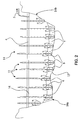
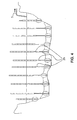
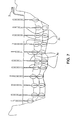
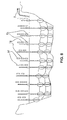
- FIG. 2 to 9 show, so schematic, a three-phase treatment for dehydrate a lagoon 14 of quarry sludge according to the invention, by a device comprising the system 12 of electrodes in FIG. 1.
- FIG. beginning of treatment Figures 3 and 4 represent a partial rise of the cathodes (a moving cathode electrode)
- Figure 5 shows a disassembly of superfluous cathode parts
- FIG. a partial rise of the cathodes
- figure 8 represents a disassembly of cathodic parts superfluous
- Figure 9 represents a setting in the field electrical end of treatment.
- Figure 10 is a schematic representation of a other system 13 concentric monopolar electrodes with sliding anode 9 mobile according to the invention.
- Figure 1 represents, schematically, a system 12 coaxial monopolar electrodes with movable sliding cathode 1 according to the invention.
- She comprises a sliding mobile cathode 1 having a interior insulation (not shown), a set 2 of insulating zones fixed on a set 3 of anode zones fixed.
- the cathode 1 may consist of parts 1a, 1b, 1c, 1d, 1e, 1f, 1g and 1h (not shown on the figure 1).
- the set 2 of insulating areas consists of parts 2a, 2b, 2c and 2d, and that the whole 3 of anode zones consists of the zones anodic 3a, 3b, 3c, 3d and 3e. Only insulating areas 2a and anode 3a are discovered by the cathode 1.
- FIGS. 2 to 9 show, so schematic, a three-phase treatment for dehydrate a lagoon 14 of quarry mud according to the invention. They correspond, as it will be explained hereinafter, to a first system 12 of electrodes according to the invention, as represented for example on the figure 1. This treatment will serve us, after description FIGS. 2 to 9, to illustrate the advantages of the invention.
- FIG. 2 represents the beginning of treatment of lagoon 14, bottom 15 and surface 16, of quarry sludge, in which were set up at least eleven systems 12 of electrodes such as shown in Figure 1.
- Water 4 rises above of the surface 16, a part 14a already dried out of the lagoon 14 is located above the bottom 15 thereof, and part 14b not yet dried or wet (or drowned) of Lagoon 14 is located above part 14a.
- zones 7 intermediaries which are also gradually dried up.
- the set of zones 8 and zones 7 corresponds to the Part 14a dried up.
- Arrows 6 illustrate the upward movement of water to cathode 1, which causes a capillary rise towards the surface 16.
- the water 4 that appeared above the surface 16 of the lagoon 14 is pumped by at least one pipe 5, the pumping being symbolically represented by an arrow.
- the pumping being symbolically represented by an arrow.
- Figure 3 symbolizes the beginning of the recovery of cathodes 1. It shows that in addition to the anode zone 3a departure and the insulating zone 2a of departure, it was discovered a new anodic zone 3b on each 12 system of electrodes.
- Figure 4 shows the end of the recovery of cathodes 1.
- the anodic zone 3b discovered previously (see Figure 3)
- the anodic zones 3a and insulator 2a which are now discovered.
- Figure 5 shows the dismantling of the parts unnecessary cathodic 1a, and possibly 1b, 1c, 1d and 1e cathodes 1, according to the length of each system 12 of starting electrodes and therefore of each cathode 1.
- Figure 6 shows the reinstatement under the electric field of lagoon 14.
- new arrows appear 6a upwelling to the surface 16, new 8a dewatering zones around the systems 12 of electrodes, and new zones 7a intermediate between zones 8a.
- the pumping is always illustrated by the pipe 5 of pumping.
- Figure 8 shows the dismantling of the parts superfluous 1f, and possibly 1g and 1h cathodes 1.
- Figure 9 shows a third phase of dewatering by repositioning in an electric field including again dewatering zones 8b with the systems 12 of electrodes, the upwelling 4 to the surface 16 being indicated by the arrows 6b, and zones intermediate 7b of junction between zones dewatering 8b.
- this second phase we distinguishes a 14th wet part of the lagoon 14, which is smaller than the wet part 14c of the second phase, and a dry portion 14f, which corresponds to zones 8b and 7b, and which is more important than the 14d dry zone of the second phase.
- the pumping is always illustrated by the pipe 5 of pumping.
- the systems 12 electrodes are extracted from lagoon 14 to be possibly reconditioned for reuse on another yard or on that same lagoon 14 when she will be full again.
- Such repackaging includes generally at least one cleaning and / or at least one restoring deposit on at least one electrode. he there is then only to empty the lagoon 14 to the tracto-shovel if necessary, lagoon 14 dehydrated and consolidated now being accessible to construction machinery.
- FIG 10 is a schematic representation of a other system 13 coaxial monopolar electrodes with movable sliding anode 9 according to the invention.
- the system 13 electrode comprises a sliding anode 9 isolated to inside (insulation not shown) and lubricated to outside such as water or bentonite, and a set of 10 isolated insulating areas fixed on a set 11 fixed cathode zones.
- the anode 9 can be consisting of parts 9a, 9b, etc. (not shown)
- the set of 10 insulating zones is constituted insulating areas 10a, 10b, 10c and 10d
- the set 11 of cathode zones consists of zones 11a, 11b, 11c, 11d and 11e. Only insulating area 10a and cathode zone 11a are discovered by the anode 9.
- FIG. 10 represents a system 13 of electrode for progressive destruction of pollutants organic matter and / or to return to the surface of a soil of anionic pollutants (such as nitrates and / or cyanides).
- the electrode system 13 of FIG. remediation of soil 14 and / or water table polluted by at least one anionic species for example selected from the group consisting of nitrates and cyanides.
- Said anionic species can be traced back to surface 16 to facilitate his treatment that can be biological and / electrochemical in the case of cyanides, and / or physico-chemical and / or phytoremediation (or treatment with at least one plant).
- the device comprising this system 13 electrodes can help prevent contamination of a water table that is not yet affected by the pollution of said anionic species.
- the insulating zone (s) it is possible to have additional means to change the influence of electrode systems. For example it is possible to extend the insulating zone (s) to widen the areas of electric field influences and so decrease the number of electrode systems needed to cover an area of several hectares.
- an electrode system by example and preferably by increasing the number of sections of which the system is preferably of electrodes, to go deeper within the lagoon.
- the zones of first polarity here anodic zones
- the mechanical forces are thus advantageously limited.
- the area around the first zone of first polarity discovered becomes too resistant, we go up the second polarity zone what is the cathode, the distance between the cathode and the nearest anode is always the same, with a water content always favorable to the passage of the current.
- the phenomena of electro-osmosis concern at least in part the lagoon dehydration applications of sludge or settlement of sediment in a reservoir of water.
- the phenomenon of electromigration which allows generally to go back at least in part to the surface of mineral pollution and / or which favors the in-situ destruction of organic pollution, concerns mainly the depollution applications.
- electro-osmosis will help to clean up at least partially while electromigration will not dehydrate. In this case we arranges to avoid drying out the anode or even lubricates the outside of the sliding anode with example of the bentonite sludge conventionally used during drilling.
- the electrode materials in particular deposits on one or other of the electrodes, on the connection of the electrodes, that is to say to choose a device with sliding anode or sliding cathode, on the adaptation of the material draining possibly present on the cathode and on injection of water, dissolved products or suspensions, at different levels of each electrode system.
- the injection of suspensions, at different levels of the electrode system can be used to lubricate a sliding anode.
- the invention has been successfully tested on the dehydration of quarry lagoons and sludge unpolluted dredging.
- the maximum working depth for the tip of the anode was systematically 2 meters deep.
- the activated part of the anode was 30 cm long and of diameter 20 mm with a point forming an angle of 15 ° with respect to the axis of the anode. Sections of 50 cm about were assembled by screwing.
- the material of the anode was titanium coated with metal oxides of which mostly iridium (type DSA).
- the length of insulation was 97 cm, made of Poly material High Density Ethylene (HDPE) as a material heat shrinkable placed directly on the anode.
- HDPE Poly material High Density Ethylene
- the cathode was about 150 cm long for a outer diameter of 48.5 mm, an inner diameter of 27 mm (insulation included), and stainless steel outer material food and PVC interior material (Poly Chloride Vinyl).
- the length of each cathode section was about 560 mm. This particular piece was complemented by additional parts internal cathode sealing and subjection from the cathode to the anode.
- the tight junction between cathode sections was provided by a flat seal in nitrile rubber.
- the total length of the electrode system was about 350 cm.
- the system was set up by hand and supported by a support that distributed its weight (about 15 kg) over 1 m 2 .
- the initial concentration of the sludge is of the order of 40% after 6 years without addition of aggregate washing water in this one. No upwelling is observed after several hours in an identical hole without system electrode.
- the volume of water raised is about 500 ml in two hours.
- the amount of water recovered in two hours is characteristic of the zone of influence of the system of electrodes for a given configuration. On the other hand it is not representative of the amount of water that would be increased over a longer period, per unit of time. Within two hours, the process has everything just the time to initiate the rise of water (which comes about two meters deep), the nominal flow not yet reached. It would probably take several days for it to be reached.
Landscapes
- Engineering & Computer Science (AREA)
- Structural Engineering (AREA)
- Life Sciences & Earth Sciences (AREA)
- General Life Sciences & Earth Sciences (AREA)
- Soil Sciences (AREA)
- Environmental & Geological Engineering (AREA)
- Agronomy & Crop Science (AREA)
- Mining & Mineral Resources (AREA)
- Paleontology (AREA)
- Civil Engineering (AREA)
- General Engineering & Computer Science (AREA)
- Water Treatment By Electricity Or Magnetism (AREA)
- Investigation Of Foundation Soil And Reinforcement Of Foundation Soil By Compacting Or Drainage (AREA)
- Treatment Of Sludge (AREA)
- Processing Of Solid Wastes (AREA)
Abstract
Description
Claims (24)
- Procédé de traitement de sol comprenant les étapes successives suivantes:a) Au moins un enfoncement sensiblement vertical au moins partiel dans le sol (14) d'au moins un système (12;13) d'électrodes monopolaires coaxiales sensiblement rectiligne, ledit système (12;13) d'électrodes comprenant au moins une tige (2,3;10,11) comportant au moins une zone de première polarité (3a,3b,3c,3d,3e; 11a,11b,11c,11d,11e) et au moins une zone isolante (2a,2b,2c,2d;10a,10b,10c,10d), et au moins un tube creux (1,9) coaxial à ladite tige (2,3;10,11), entourant au moins partiellement ladite tige (2,3;10,11) et constituant au moins partiellement une zone de seconde polarité (1;9) apte à coulisser au moins partiellement autour de ladite tige (2,3;10,11), ladite zone de seconde polarité (1;9) étant placée de façon à découvrir au moins une zone de première polarité (3;11) dudit système (12;13) d'électrodes,b) Une mise sous champ électrique du système (12;13) d'électrodes.
- Procédé selon la revendication 1 comprenant de plus au moins une succession des étapes successives suivantes :c) Une désactivation du système (12;13) d'électrodes par arrêt au moins partiel du champ électrique,d) Une remontée partielle de la zone de seconde polarité (1;9) permettant de découvrir au moins une nouvelle zone de première polarité (3a,3b,3c,3d,3e) et/ou au moins une zone isolante (2a,2b,2c,2d)e) Une remise sous champ électrique du système (12;13) d'électrodes.
- Procédé selon l'une des revendications précédentes tel que ladite tige (2,3;10,11) comprend une alternance de zones de première polarité (3a,3b,3c,3d,3e ;11a,11b,11c,11d,11e) et de zones isolantes (2a,2b,2c,2d ;10a,10b,10c,10d),
- Procédé selon l'une des revendications précédentes tel que ledit système (12;13) d'électrodes une fois enfoncé dans le sol (14) présente une extrémité supérieure au-dessus de la surface (16) du sol (14), au moins une zone de seconde polarité (1;9) dans le sol (14), et une extrémité inférieure comportant au moins une zone de première polarité (3;11) dans le sol (14).
- Procédé selon l'une des revendications précédentes tel que ladite zone de seconde polarité (1;9) est placée de façon à découvrir la zone de première polarité (3a;11a) située le plus près de l'extrémité inférieure de ladite tige (2,3;10,11).
- Procédé selon l'une des revendications précédentes comprenant le démontage de toute zone ou partie de zone de seconde polarité (1a,1b,1c,1d,1e,1f,1g,1h) superflue.
- Procédé selon l'une des revendications précédentes comprenant au moins partiellement un pompage (5) de liquide en surface (16) du sol (14).
- Procédé selon l'une des revendications précédentes dans lequel, le système (12;13) d'électrodes étant principalement constitué de parties assemblables appelées tronçons, l'enfoncement du système (12;13) d'électrodes dans le sol (14) s'effectue par un processus progressif d'enfoncement et d'assemblage successifs des tronçons les uns aux autres, ledit processus comprenant au moins une étape d'enfoncement au moins partiel d'au moins un tronçon, créant un ensemble de tronçon(s) au moins en partie enfoncé, suivie d'au moins une étape d'assemblage au moins partiel d'au moins un autre tronçon à l'ensemble de tronçon(s) au moins en partie enfoncé déjà constitué.
- Procédé selon la revendication précédente dans lequel l'assemblage comprend au moins un vissage.
- Procédé selon l'une des revendications précédentes dans lequel on utilise une pluralité de systèmes (12;13) d'électrodes, lesdits systèmes (12;13) d'électrodes étant pratiquement tous de polarités identiques, et on procède aux différentes étapes pour chacun desdits systèmes (12;13) d'électrodes.
- Procédé de déshydratation de sol et/ou de dépollution de sol comprenant au moins un procédé de traitement de sol selon l'une des revendications précédentes.
- Dispositif de traitement de sol comprenant au moins un système (12;13) d'électrodes monopolaires coaxiales sensiblement rectiligne, ledit système (12;13) d'électrodes comprenant au moins une tige (2,3;10,11) comprenant au moins une zone de première polarité (3a,3b,3c,3d,3e;11a,11b,11c,11d,11e) et au moins une zone isolante (2a,2b,2c,2d;10a,10b,10c,10d), et au moins un tube creux (1;9) coaxial à ladite tige (2,3;10,11), entourant au moins partiellement ladite tige (2,3;10,11) et constituant au moins partiellement une zone de seconde polarité (1;9) apte à coulisser au moins partiellement autour de ladite tige (2,3;10,11), ledit système (12;13) d'électrodes étant de plus apte à être activée.
- Dispositif selon la revendication précédente dans lequel ledit système (12) d'électrode est en outre apte à être enfoncée au moins partiellement dans le sol (14).
- Dispositif selon l'une des revendications 12 ou 13 dans lequel la zone de seconde polarité (1) est apte à être démontée (1a,1b,1c,1d,1e,1f,1g,1h) au moins partiellement.
- Dispositif selon l'une des revendications 12 à 14 comprenant au moins un moyen d'activation du système (12;13) d'électrodes.
- Dispositif selon l'une des revendications 12 à 15 dans lequel le système (12;13) d'électrodes est principalement constitué de parties assemblables.
- Dispositif selon l'une des revendications 12 à 16 dans lequel, lorsqu'elle est cathodique, la zone de première polarité (3a,3b,3c,3d,3e;11a,11b,11c,11d,11e) ou de seconde polarité (1;9) comprend de l'acier inoxydable ou de l'acier non inoxydable.
- Dispositif selon l'une des revendications 12 à 17 dans lequel, lorsqu'elle est anodique, la zone de seconde polarité (1;9) ou de première polarité (3a,3b,3c,3d,3e;11a,11b,11c,11d,11e) comprend du titane recouvert d'au moins un composé de métal, précieux ou non.
- Dispositif selon la revendication précédente dans lequel ledit composé de métal, précieux ou non, est choisi dans le groupe formé par le ruthénium, l'iridium, le tantale, l'étain, et l'antimoine, sous des formes au moins partiellement oxydées ou non, et leurs mélanges.
- Dispositif selon l'une des revendications 12 à 19 dans lequel le tube creux (1;9) constituant au moins partiellement la zone de seconde polarité (1;9) comprend au moins une zone isolante intérieure sur pratiquement toute sa longueur.
- Dispositif selon l'une des revendications 12 à 20 comprenant en outre au moins un moyen de placement, mécanique ou manuel, d'au moins un système (12;13) d'électrodes.
- Dispositif selon l'une des revendications 12 à 19 comprenant une pluralité de systèmes (12;13) d'électrodes, lesdits systèmes (12;13) d'électrodes étant pratiquement tous de polarités identiques.
- Dispositif selon l'une des revendications 12 à 22 destiné à la mise en oeuvre d'un procédé selon l'une des revendications 1 à 9.
- Utilisation d'un dispositif selon l'une des revendications 12 à 21 pour la déshydratation de sol et/ou pour la dépollution de sol.
Applications Claiming Priority (2)
| Application Number | Priority Date | Filing Date | Title |
|---|---|---|---|
| FR0403793A FR2868793B1 (fr) | 2004-04-09 | 2004-04-09 | Procede de traitement de sol avec utilisation d'au moins un systeme d'electrodes monopolaires coaxiales et dispositif de mise en oeuvre |
| FR0403793 | 2004-04-09 |
Publications (2)
| Publication Number | Publication Date |
|---|---|
| EP1584751A1 true EP1584751A1 (fr) | 2005-10-12 |
| EP1584751B1 EP1584751B1 (fr) | 2007-04-04 |
Family
ID=34896739
Family Applications (1)
| Application Number | Title | Priority Date | Filing Date |
|---|---|---|---|
| EP20050290570 Expired - Lifetime EP1584751B1 (fr) | 2004-04-09 | 2005-03-15 | Procédé de traitement de sol avec utilisation d'au moins un système d'électrodes monopolaires coaxiales et dispositif de mise en oeuvre |
Country Status (4)
| Country | Link |
|---|---|
| EP (1) | EP1584751B1 (fr) |
| DE (1) | DE602005000788T2 (fr) |
| ES (1) | ES2286769T3 (fr) |
| FR (1) | FR2868793B1 (fr) |
Cited By (4)
| Publication number | Priority date | Publication date | Assignee | Title |
|---|---|---|---|---|
| CN104452737A (zh) * | 2014-11-26 | 2015-03-25 | 禹顺生态建设有限公司 | 一种堤防软基快速处理施工方法 |
| CN105970913A (zh) * | 2016-05-06 | 2016-09-28 | 扬州大学 | 电渗微生物灌浆改性砂土和粉土的方法 |
| CN108655166A (zh) * | 2018-03-16 | 2018-10-16 | 谢宁汉 | 一种修复土壤污染的方法 |
| CN114749474A (zh) * | 2022-04-27 | 2022-07-15 | 广东工业大学 | 有机污染土壤的修复装置 |
Families Citing this family (2)
| Publication number | Priority date | Publication date | Assignee | Title |
|---|---|---|---|---|
| RU2405938C1 (ru) * | 2009-06-29 | 2010-12-10 | Государственное образовательное учреждение высшего профессионального образования "Санкт-Петербургский государственный горный институт имени Г.В. Плеханова (технический университет)" | Способ крепления горных выработок с термоупрочнением неустойчивых пород |
| WO2020240263A1 (fr) | 2019-05-31 | 2020-12-03 | Ecole Polytechnique Federale De Lausanne (Epfl) | Système et procédé de consolidation de sol |
Citations (3)
| Publication number | Priority date | Publication date | Assignee | Title |
|---|---|---|---|---|
| WO2001002626A1 (fr) * | 1999-07-01 | 2001-01-11 | Atraverda Limited | Electrode |
| US6255551B1 (en) * | 1999-06-04 | 2001-07-03 | General Electric Company | Method and system for treating contaminated media |
| US20020125144A1 (en) * | 2001-03-08 | 2002-09-12 | Alexander Itsekson | System and method for electrochemical stabilization of soil and the strengthened soil structure resultting from the above method |
-
2004
- 2004-04-09 FR FR0403793A patent/FR2868793B1/fr not_active Expired - Fee Related
-
2005
- 2005-03-15 EP EP20050290570 patent/EP1584751B1/fr not_active Expired - Lifetime
- 2005-03-15 DE DE602005000788T patent/DE602005000788T2/de not_active Expired - Lifetime
- 2005-03-15 ES ES05290570T patent/ES2286769T3/es not_active Expired - Lifetime
Patent Citations (3)
| Publication number | Priority date | Publication date | Assignee | Title |
|---|---|---|---|---|
| US6255551B1 (en) * | 1999-06-04 | 2001-07-03 | General Electric Company | Method and system for treating contaminated media |
| WO2001002626A1 (fr) * | 1999-07-01 | 2001-01-11 | Atraverda Limited | Electrode |
| US20020125144A1 (en) * | 2001-03-08 | 2002-09-12 | Alexander Itsekson | System and method for electrochemical stabilization of soil and the strengthened soil structure resultting from the above method |
Cited By (5)
| Publication number | Priority date | Publication date | Assignee | Title |
|---|---|---|---|---|
| CN104452737A (zh) * | 2014-11-26 | 2015-03-25 | 禹顺生态建设有限公司 | 一种堤防软基快速处理施工方法 |
| CN105970913A (zh) * | 2016-05-06 | 2016-09-28 | 扬州大学 | 电渗微生物灌浆改性砂土和粉土的方法 |
| CN108655166A (zh) * | 2018-03-16 | 2018-10-16 | 谢宁汉 | 一种修复土壤污染的方法 |
| CN114749474A (zh) * | 2022-04-27 | 2022-07-15 | 广东工业大学 | 有机污染土壤的修复装置 |
| CN114749474B (zh) * | 2022-04-27 | 2023-04-11 | 广东工业大学 | 有机污染土壤的修复装置 |
Also Published As
| Publication number | Publication date |
|---|---|
| FR2868793B1 (fr) | 2006-07-07 |
| FR2868793A1 (fr) | 2005-10-14 |
| DE602005000788D1 (de) | 2007-05-16 |
| DE602005000788T2 (de) | 2008-01-10 |
| ES2286769T3 (es) | 2007-12-01 |
| EP1584751B1 (fr) | 2007-04-04 |
Similar Documents
| Publication | Publication Date | Title |
|---|---|---|
| EP0067781B1 (fr) | Procédé et dispositif électrique de récupération assistée de pétrole | |
| EP0345131B1 (fr) | Procédé d'abandon rapide de grandes cavités lessivées en sel gemme | |
| FR2550182A1 (fr) | Procede de denitrification des eaux souterraines en vue de leur potabilisation | |
| EP1584751B1 (fr) | Procédé de traitement de sol avec utilisation d'au moins un système d'électrodes monopolaires coaxiales et dispositif de mise en oeuvre | |
| CA2930771A1 (fr) | Systeme de traitement des sols, geocomposite pour un tel systeme et procede de consolidation de sols | |
| FR2793279A1 (fr) | Procede et dispositif pour traiter les perforations d'un puits | |
| Barica | Salinization of groundwater in arid zones | |
| CN107428560A (zh) | 基质和/或基质内容物的处理中的改进 | |
| FR2735524A1 (fr) | Methode de recuperation assistee de fluides petroliers dans un gisement souterrain | |
| EP0608238B1 (fr) | Systeme de decontamination utilisant l'electricite et l'extraction par le vide | |
| FR3063292A1 (fr) | Suspension polyphasique de polymere et son utilisation | |
| CN100544846C (zh) | 从被污染的土壤中去除污染物的方法 | |
| JP2002001299A (ja) | 汚染土壌の浄化方法 | |
| EP1584381A1 (fr) | Procédé de traitement de sol avec utilisation d'électrodes bipolaires et dispositif de mise en oeuvre | |
| CA2087225C (fr) | Procede et installation pour le stockage de dechets solidifies | |
| BE1032736B1 (fr) | Écumeur de surface amélioré avec éléments chauffants pour une meilleure collecte des fluides visqueux | |
| WO2007125186A1 (fr) | Procede de depollution d'une nappe phreatique et dispositif pour sa mise en œuvre | |
| FR2689040A1 (fr) | Procédé pour dépolluer un stock de déchets, qui comporte des substances nocives nécessitant d'être éliminées. | |
| FR2882279A1 (fr) | Dispositif de traitement de sol subaquatique | |
| FR2878260A1 (fr) | Ensemble a electrode bipolaire, dispositif le comprenant et procede de depollution et/ou neutralisation de sol utilisant ledit dispositif. | |
| RU11551U1 (ru) | Противофильтрационный экран хранилищ | |
| WO2026068359A1 (fr) | Dispositif et procédé de chauffage in situ de sol par les micro-ondes | |
| FR2694314A1 (fr) | Procédé de traitement des sols pollués et dispositif pour sa mise en Óoeuvre. | |
| FR2888134A1 (fr) | Dispositif de traitement de sol et procede de mise en oeuvre en dessalage et/ou depollution | |
| Meriste et al. | Remediation of a leachate pond by on-site treatment methods |
Legal Events
| Date | Code | Title | Description |
|---|---|---|---|
| PUAI | Public reference made under article 153(3) epc to a published international application that has entered the european phase |
Free format text: ORIGINAL CODE: 0009012 |
|
| AK | Designated contracting states |
Kind code of ref document: A1 Designated state(s): AT BE BG CH CY CZ DE DK EE ES FI FR GB GR HU IE IS IT LI LT LU MC NL PL PT RO SE SI SK TR |
|
| AX | Request for extension of the european patent |
Extension state: AL BA HR LV MK YU |
|
| RIN1 | Information on inventor provided before grant (corrected) |
Inventor name: BATICLE, PASCAL Inventor name: SALLANDIER, THIERRY |
|
| 17P | Request for examination filed |
Effective date: 20060322 |
|
| AKX | Designation fees paid |
Designated state(s): DE ES FR GB IT |
|
| GRAP | Despatch of communication of intention to grant a patent |
Free format text: ORIGINAL CODE: EPIDOSNIGR1 |
|
| GRAS | Grant fee paid |
Free format text: ORIGINAL CODE: EPIDOSNIGR3 |
|
| GRAA | (expected) grant |
Free format text: ORIGINAL CODE: 0009210 |
|
| AK | Designated contracting states |
Kind code of ref document: B1 Designated state(s): DE ES FR GB IT |
|
| REG | Reference to a national code |
Ref country code: GB Ref legal event code: FG4D Free format text: NOT ENGLISH |
|
| REF | Corresponds to: |
Ref document number: 602005000788 Country of ref document: DE Date of ref document: 20070516 Kind code of ref document: P |
|
| GBT | Gb: translation of ep patent filed (gb section 77(6)(a)/1977) |
Effective date: 20070704 |
|
| REG | Reference to a national code |
Ref country code: ES Ref legal event code: FG2A Ref document number: 2286769 Country of ref document: ES Kind code of ref document: T3 |
|
| PLBE | No opposition filed within time limit |
Free format text: ORIGINAL CODE: 0009261 |
|
| STAA | Information on the status of an ep patent application or granted ep patent |
Free format text: STATUS: NO OPPOSITION FILED WITHIN TIME LIMIT |
|
| 26N | No opposition filed |
Effective date: 20080107 |
|
| PGFP | Annual fee paid to national office [announced via postgrant information from national office to epo] |
Ref country code: DE Payment date: 20120315 Year of fee payment: 8 |
|
| PGFP | Annual fee paid to national office [announced via postgrant information from national office to epo] |
Ref country code: IT Payment date: 20120327 Year of fee payment: 8 Ref country code: GB Payment date: 20120320 Year of fee payment: 8 |
|
| PGFP | Annual fee paid to national office [announced via postgrant information from national office to epo] |
Ref country code: FR Payment date: 20120413 Year of fee payment: 8 |
|
| PGFP | Annual fee paid to national office [announced via postgrant information from national office to epo] |
Ref country code: ES Payment date: 20120323 Year of fee payment: 8 |
|
| GBPC | Gb: european patent ceased through non-payment of renewal fee |
Effective date: 20130315 |
|
| REG | Reference to a national code |
Ref country code: FR Ref legal event code: ST Effective date: 20131129 |
|
| REG | Reference to a national code |
Ref country code: DE Ref legal event code: R119 Ref document number: 602005000788 Country of ref document: DE Effective date: 20131001 |
|
| PG25 | Lapsed in a contracting state [announced via postgrant information from national office to epo] |
Ref country code: DE Free format text: LAPSE BECAUSE OF NON-PAYMENT OF DUE FEES Effective date: 20131001 Ref country code: FR Free format text: LAPSE BECAUSE OF NON-PAYMENT OF DUE FEES Effective date: 20130402 Ref country code: GB Free format text: LAPSE BECAUSE OF NON-PAYMENT OF DUE FEES Effective date: 20130315 |
|
| PG25 | Lapsed in a contracting state [announced via postgrant information from national office to epo] |
Ref country code: IT Free format text: LAPSE BECAUSE OF NON-PAYMENT OF DUE FEES Effective date: 20130315 |
|
| REG | Reference to a national code |
Ref country code: ES Ref legal event code: FD2A Effective date: 20140610 |
|
| PG25 | Lapsed in a contracting state [announced via postgrant information from national office to epo] |
Ref country code: ES Free format text: LAPSE BECAUSE OF NON-PAYMENT OF DUE FEES Effective date: 20130316 |