EP1584334A2 - Zusammensetzungen enthaltend Methacholine Lösungen - Google Patents
Zusammensetzungen enthaltend Methacholine Lösungen Download PDFInfo
- Publication number
- EP1584334A2 EP1584334A2 EP04255015A EP04255015A EP1584334A2 EP 1584334 A2 EP1584334 A2 EP 1584334A2 EP 04255015 A EP04255015 A EP 04255015A EP 04255015 A EP04255015 A EP 04255015A EP 1584334 A2 EP1584334 A2 EP 1584334A2
- Authority
- EP
- European Patent Office
- Prior art keywords
- methacholine
- solution
- formulation
- buffer
- formulation according
- Prior art date
- Legal status (The legal status is an assumption and is not a legal conclusion. Google has not performed a legal analysis and makes no representation as to the accuracy of the status listed.)
- Withdrawn
Links
- 229960002329 methacholine Drugs 0.000 title claims abstract description 127
- NZWOPGCLSHLLPA-UHFFFAOYSA-N methacholine Chemical compound C[N+](C)(C)CC(C)OC(C)=O NZWOPGCLSHLLPA-UHFFFAOYSA-N 0.000 title claims abstract description 127
- 239000000203 mixture Substances 0.000 title claims abstract description 123
- 238000009472 formulation Methods 0.000 title claims abstract description 114
- 238000012360 testing method Methods 0.000 claims abstract description 31
- 238000000034 method Methods 0.000 claims abstract description 28
- 239000000243 solution Substances 0.000 claims description 74
- 229960002931 methacholine chloride Drugs 0.000 claims description 50
- JHPHVAVFUYTVCL-UHFFFAOYSA-M methacholine chloride Chemical compound [Cl-].C[N+](C)(C)CC(C)OC(C)=O JHPHVAVFUYTVCL-UHFFFAOYSA-M 0.000 claims description 50
- 239000008351 acetate buffer Substances 0.000 claims description 38
- QTBSBXVTEAMEQO-UHFFFAOYSA-M Acetate Chemical compound CC([O-])=O QTBSBXVTEAMEQO-UHFFFAOYSA-M 0.000 claims description 24
- FAPWRFPIFSIZLT-UHFFFAOYSA-M Sodium chloride Chemical compound [Na+].[Cl-] FAPWRFPIFSIZLT-UHFFFAOYSA-M 0.000 claims description 24
- 239000007853 buffer solution Substances 0.000 claims description 24
- 239000007979 citrate buffer Substances 0.000 claims description 24
- 238000004128 high performance liquid chromatography Methods 0.000 claims description 24
- 239000011780 sodium chloride Substances 0.000 claims description 16
- OKKJLVBELUTLKV-UHFFFAOYSA-N Methanol Chemical compound OC OKKJLVBELUTLKV-UHFFFAOYSA-N 0.000 claims description 15
- 238000002360 preparation method Methods 0.000 claims description 15
- 239000012086 standard solution Substances 0.000 claims description 11
- XLYOFNOQVPJJNP-UHFFFAOYSA-N water Substances O XLYOFNOQVPJJNP-UHFFFAOYSA-N 0.000 claims description 10
- 239000000825 pharmaceutical preparation Substances 0.000 claims description 8
- 150000003839 salts Chemical class 0.000 claims description 8
- 239000000872 buffer Substances 0.000 claims description 7
- 239000003795 chemical substances by application Substances 0.000 claims description 7
- OKIZCWYLBDKLSU-UHFFFAOYSA-M N,N,N-Trimethylmethanaminium chloride Chemical compound [Cl-].C[N+](C)(C)C OKIZCWYLBDKLSU-UHFFFAOYSA-M 0.000 claims description 6
- 239000000463 material Substances 0.000 claims description 5
- KRKNYBCHXYNGOX-UHFFFAOYSA-K Citrate Chemical group [O-]C(=O)CC(O)(CC([O-])=O)C([O-])=O KRKNYBCHXYNGOX-UHFFFAOYSA-K 0.000 claims description 4
- 239000003480 eluent Substances 0.000 claims description 4
- 238000012544 monitoring process Methods 0.000 claims description 4
- 229940127557 pharmaceutical product Drugs 0.000 claims description 4
- 239000003755 preservative agent Substances 0.000 claims description 4
- 238000001914 filtration Methods 0.000 claims description 3
- 229910000402 monopotassium phosphate Inorganic materials 0.000 claims description 3
- 235000019796 monopotassium phosphate Nutrition 0.000 claims description 3
- GNSKLFRGEWLPPA-UHFFFAOYSA-M potassium dihydrogen phosphate Chemical group [K+].OP(O)([O-])=O GNSKLFRGEWLPPA-UHFFFAOYSA-M 0.000 claims description 3
- GVBFBKODLPVQOA-UHFFFAOYSA-N heptane-1-sulfonic acid;sodium Chemical compound [Na].CCCCCCCS(O)(=O)=O GVBFBKODLPVQOA-UHFFFAOYSA-N 0.000 claims description 2
- 230000036512 infertility Effects 0.000 claims description 2
- 230000002441 reversible effect Effects 0.000 claims description 2
- 230000001954 sterilising effect Effects 0.000 claims description 2
- LWIHDJKSTIGBAC-UHFFFAOYSA-K tripotassium phosphate Chemical compound [K+].[K+].[K+].[O-]P([O-])([O-])=O LWIHDJKSTIGBAC-UHFFFAOYSA-K 0.000 claims 4
- 238000002405 diagnostic procedure Methods 0.000 claims 2
- 229910000160 potassium phosphate Inorganic materials 0.000 claims 2
- 235000011009 potassium phosphates Nutrition 0.000 claims 2
- 239000003708 ampul Substances 0.000 claims 1
- 230000002335 preservative effect Effects 0.000 claims 1
- 208000002200 Respiratory Hypersensitivity Diseases 0.000 abstract description 2
- 230000010085 airway hyperresponsiveness Effects 0.000 abstract description 2
- 239000012301 solution-based formulation Substances 0.000 abstract description 2
- 239000000047 product Substances 0.000 description 34
- 239000003085 diluting agent Substances 0.000 description 31
- QTBSBXVTEAMEQO-UHFFFAOYSA-N Acetic acid Chemical compound CC(O)=O QTBSBXVTEAMEQO-UHFFFAOYSA-N 0.000 description 30
- 238000003860 storage Methods 0.000 description 29
- 239000008363 phosphate buffer Substances 0.000 description 27
- 239000012535 impurity Substances 0.000 description 22
- 239000000523 sample Substances 0.000 description 18
- 238000011084 recovery Methods 0.000 description 14
- 238000010790 dilution Methods 0.000 description 9
- 239000012895 dilution Substances 0.000 description 9
- 239000008186 active pharmaceutical agent Substances 0.000 description 8
- 229940088679 drug related substance Drugs 0.000 description 8
- 239000012537 formulation buffer Substances 0.000 description 8
- 230000004044 response Effects 0.000 description 8
- 235000017281 sodium acetate Nutrition 0.000 description 8
- 238000004659 sterilization and disinfection Methods 0.000 description 8
- BDKLKNJTMLIAFE-UHFFFAOYSA-N 2-(3-fluorophenyl)-1,3-oxazole-4-carbaldehyde Chemical compound FC1=CC=CC(C=2OC=C(C=O)N=2)=C1 BDKLKNJTMLIAFE-UHFFFAOYSA-N 0.000 description 7
- 239000007924 injection Substances 0.000 description 7
- 238000002347 injection Methods 0.000 description 7
- 229940087562 sodium acetate trihydrate Drugs 0.000 description 7
- HEMHJVSKTPXQMS-UHFFFAOYSA-M Sodium hydroxide Chemical compound [OH-].[Na+] HEMHJVSKTPXQMS-UHFFFAOYSA-M 0.000 description 6
- 208000006673 asthma Diseases 0.000 description 6
- 239000006172 buffering agent Substances 0.000 description 6
- 230000007774 longterm Effects 0.000 description 6
- 230000014759 maintenance of location Effects 0.000 description 6
- 238000003556 assay Methods 0.000 description 5
- 239000008366 buffered solution Substances 0.000 description 5
- 230000029058 respiratory gaseous exchange Effects 0.000 description 5
- 238000010561 standard procedure Methods 0.000 description 5
- 210000000115 thoracic cavity Anatomy 0.000 description 5
- 230000008859 change Effects 0.000 description 4
- 230000000694 effects Effects 0.000 description 4
- -1 hydrogen ions Chemical class 0.000 description 4
- 239000000126 substance Substances 0.000 description 4
- WVDDGKGOMKODPV-UHFFFAOYSA-N Benzyl alcohol Chemical compound OCC1=CC=CC=C1 WVDDGKGOMKODPV-UHFFFAOYSA-N 0.000 description 3
- 206010006482 Bronchospasm Diseases 0.000 description 3
- 238000004458 analytical method Methods 0.000 description 3
- 230000007885 bronchoconstriction Effects 0.000 description 3
- 230000003139 buffering effect Effects 0.000 description 3
- 230000015556 catabolic process Effects 0.000 description 3
- 238000006731 degradation reaction Methods 0.000 description 3
- 238000003745 diagnosis Methods 0.000 description 3
- BNIILDVGGAEEIG-UHFFFAOYSA-L disodium hydrogen phosphate Chemical compound [Na+].[Na+].OP([O-])([O-])=O BNIILDVGGAEEIG-UHFFFAOYSA-L 0.000 description 3
- 229910000397 disodium phosphate Inorganic materials 0.000 description 3
- 235000019800 disodium phosphate Nutrition 0.000 description 3
- 229940079593 drug Drugs 0.000 description 3
- 239000011521 glass Substances 0.000 description 3
- 239000006199 nebulizer Substances 0.000 description 3
- XKRFYHLGVUSROY-UHFFFAOYSA-N Argon Chemical compound [Ar] XKRFYHLGVUSROY-UHFFFAOYSA-N 0.000 description 2
- IJGRMHOSHXDMSA-UHFFFAOYSA-N Atomic nitrogen Chemical compound N#N IJGRMHOSHXDMSA-UHFFFAOYSA-N 0.000 description 2
- CPELXLSAUQHCOX-UHFFFAOYSA-M Bromide Chemical compound [Br-] CPELXLSAUQHCOX-UHFFFAOYSA-M 0.000 description 2
- VEXZGXHMUGYJMC-UHFFFAOYSA-M Chloride anion Chemical compound [Cl-] VEXZGXHMUGYJMC-UHFFFAOYSA-M 0.000 description 2
- NTYJJOPFIAHURM-UHFFFAOYSA-N Histamine Chemical compound NCCC1=CN=CN1 NTYJJOPFIAHURM-UHFFFAOYSA-N 0.000 description 2
- 206010020751 Hypersensitivity Diseases 0.000 description 2
- 239000004677 Nylon Substances 0.000 description 2
- VMHLLURERBWHNL-UHFFFAOYSA-M Sodium acetate Chemical compound [Na+].CC([O-])=O VMHLLURERBWHNL-UHFFFAOYSA-M 0.000 description 2
- 230000002378 acidificating effect Effects 0.000 description 2
- 239000000443 aerosol Substances 0.000 description 2
- NDAUXUAQIAJITI-UHFFFAOYSA-N albuterol Chemical compound CC(C)(C)NCC(O)C1=CC=C(O)C(CO)=C1 NDAUXUAQIAJITI-UHFFFAOYSA-N 0.000 description 2
- 208000026935 allergic disease Diseases 0.000 description 2
- 230000007815 allergy Effects 0.000 description 2
- 230000001580 bacterial effect Effects 0.000 description 2
- 239000008364 bulk solution Substances 0.000 description 2
- 238000004364 calculation method Methods 0.000 description 2
- 238000011109 contamination Methods 0.000 description 2
- 230000006378 damage Effects 0.000 description 2
- 208000037265 diseases, disorders, signs and symptoms Diseases 0.000 description 2
- 239000003814 drug Substances 0.000 description 2
- 229940126534 drug product Drugs 0.000 description 2
- 238000011156 evaluation Methods 0.000 description 2
- 239000007789 gas Substances 0.000 description 2
- 230000036541 health Effects 0.000 description 2
- 238000011835 investigation Methods 0.000 description 2
- 238000002386 leaching Methods 0.000 description 2
- 229920001684 low density polyethylene Polymers 0.000 description 2
- 239000004702 low-density polyethylene Substances 0.000 description 2
- 238000004519 manufacturing process Methods 0.000 description 2
- 238000005259 measurement Methods 0.000 description 2
- 239000012528 membrane Substances 0.000 description 2
- 238000012986 modification Methods 0.000 description 2
- 230000004048 modification Effects 0.000 description 2
- 229920001778 nylon Polymers 0.000 description 2
- 238000007427 paired t-test Methods 0.000 description 2
- 239000008194 pharmaceutical composition Substances 0.000 description 2
- SCVFZCLFOSHCOH-UHFFFAOYSA-M potassium acetate Chemical compound [K+].CC([O-])=O SCVFZCLFOSHCOH-UHFFFAOYSA-M 0.000 description 2
- 239000000843 powder Substances 0.000 description 2
- 230000008569 process Effects 0.000 description 2
- 230000009325 pulmonary function Effects 0.000 description 2
- 238000012552 review Methods 0.000 description 2
- 229960002052 salbutamol Drugs 0.000 description 2
- 238000012546 transfer Methods 0.000 description 2
- 239000003643 water by type Substances 0.000 description 2
- XWTYSIMOBUGWOL-UHFFFAOYSA-N (+-)-Terbutaline Chemical group CC(C)(C)NCC(O)C1=CC(O)=CC(O)=C1 XWTYSIMOBUGWOL-UHFFFAOYSA-N 0.000 description 1
- KUVIULQEHSCUHY-XYWKZLDCSA-N Beclometasone Chemical compound C1CC2=CC(=O)C=C[C@]2(C)[C@]2(Cl)[C@@H]1[C@@H]1C[C@H](C)[C@@](C(=O)COC(=O)CC)(OC(=O)CC)[C@@]1(C)C[C@@H]2O KUVIULQEHSCUHY-XYWKZLDCSA-N 0.000 description 1
- 206010067482 No adverse event Diseases 0.000 description 1
- 206010057190 Respiratory tract infections Diseases 0.000 description 1
- 208000027418 Wounds and injury Diseases 0.000 description 1
- 159000000021 acetate salts Chemical class 0.000 description 1
- OIPILFWXSMYKGL-UHFFFAOYSA-N acetylcholine Chemical compound CC(=O)OCC[N+](C)(C)C OIPILFWXSMYKGL-UHFFFAOYSA-N 0.000 description 1
- 229960004373 acetylcholine Drugs 0.000 description 1
- 239000013566 allergen Substances 0.000 description 1
- 229940040526 anhydrous sodium acetate Drugs 0.000 description 1
- 229910052786 argon Inorganic materials 0.000 description 1
- 230000001174 ascending effect Effects 0.000 description 1
- 238000012865 aseptic processing Methods 0.000 description 1
- 229950000210 beclometasone dipropionate Drugs 0.000 description 1
- 235000019445 benzyl alcohol Nutrition 0.000 description 1
- 230000005540 biological transmission Effects 0.000 description 1
- 230000015572 biosynthetic process Effects 0.000 description 1
- 230000010083 bronchial hyperresponsiveness Effects 0.000 description 1
- 239000004044 bronchoconstricting agent Substances 0.000 description 1
- 230000003435 bronchoconstrictive effect Effects 0.000 description 1
- 210000000038 chest Anatomy 0.000 description 1
- 238000012790 confirmation Methods 0.000 description 1
- 239000000356 contaminant Substances 0.000 description 1
- 239000013068 control sample Substances 0.000 description 1
- 238000007796 conventional method Methods 0.000 description 1
- 239000003246 corticosteroid Substances 0.000 description 1
- 230000007423 decrease Effects 0.000 description 1
- 230000001419 dependent effect Effects 0.000 description 1
- 239000002274 desiccant Substances 0.000 description 1
- 238000013461 design Methods 0.000 description 1
- 238000001514 detection method Methods 0.000 description 1
- 230000006866 deterioration Effects 0.000 description 1
- LOKCTEFSRHRXRJ-UHFFFAOYSA-I dipotassium trisodium dihydrogen phosphate hydrogen phosphate dichloride Chemical compound P(=O)(O)(O)[O-].[K+].P(=O)(O)([O-])[O-].[Na+].[Na+].[Cl-].[K+].[Cl-].[Na+] LOKCTEFSRHRXRJ-UHFFFAOYSA-I 0.000 description 1
- 238000011037 discontinuous sequential dilution Methods 0.000 description 1
- 201000010099 disease Diseases 0.000 description 1
- 208000035475 disorder Diseases 0.000 description 1
- 238000004090 dissolution Methods 0.000 description 1
- 239000013020 final formulation Substances 0.000 description 1
- 239000012467 final product Substances 0.000 description 1
- 229960000289 fluticasone propionate Drugs 0.000 description 1
- WMWTYOKRWGGJOA-CENSZEJFSA-N fluticasone propionate Chemical compound C1([C@@H](F)C2)=CC(=O)C=C[C@]1(C)[C@]1(F)[C@@H]2[C@@H]2C[C@@H](C)[C@@](C(=O)SCF)(OC(=O)CC)[C@@]2(C)C[C@@H]1O WMWTYOKRWGGJOA-CENSZEJFSA-N 0.000 description 1
- 229960001340 histamine Drugs 0.000 description 1
- 239000001257 hydrogen Substances 0.000 description 1
- 229910052739 hydrogen Inorganic materials 0.000 description 1
- 230000007062 hydrolysis Effects 0.000 description 1
- 238000006460 hydrolysis reaction Methods 0.000 description 1
- 239000005414 inactive ingredient Substances 0.000 description 1
- 238000010348 incorporation Methods 0.000 description 1
- 231100000037 inhalation toxicity test Toxicity 0.000 description 1
- 208000014674 injury Diseases 0.000 description 1
- OEXHQOGQTVQTAT-JRNQLAHRSA-N ipratropium Chemical compound O([C@H]1C[C@H]2CC[C@@H](C1)[N@@+]2(C)C(C)C)C(=O)C(CO)C1=CC=CC=C1 OEXHQOGQTVQTAT-JRNQLAHRSA-N 0.000 description 1
- 229960001888 ipratropium Drugs 0.000 description 1
- 238000009533 lab test Methods 0.000 description 1
- 239000007788 liquid Substances 0.000 description 1
- 230000000813 microbial effect Effects 0.000 description 1
- 238000002156 mixing Methods 0.000 description 1
- 239000002858 neurotransmitter agent Substances 0.000 description 1
- 229910052757 nitrogen Inorganic materials 0.000 description 1
- 208000007892 occupational asthma Diseases 0.000 description 1
- 238000010979 pH adjustment Methods 0.000 description 1
- 230000004526 pharmaceutical effect Effects 0.000 description 1
- 239000000546 pharmaceutical excipient Substances 0.000 description 1
- 239000002953 phosphate buffered saline Substances 0.000 description 1
- 235000011056 potassium acetate Nutrition 0.000 description 1
- 229960004109 potassium acetate Drugs 0.000 description 1
- 230000003389 potentiating effect Effects 0.000 description 1
- 230000009467 reduction Effects 0.000 description 1
- 238000007430 reference method Methods 0.000 description 1
- 230000004043 responsiveness Effects 0.000 description 1
- 238000005464 sample preparation method Methods 0.000 description 1
- 239000012488 sample solution Substances 0.000 description 1
- 239000001632 sodium acetate Substances 0.000 description 1
- NLJMYIDDQXHKNR-UHFFFAOYSA-K sodium citrate Chemical compound O.O.[Na+].[Na+].[Na+].[O-]C(=O)CC(O)(CC([O-])=O)C([O-])=O NLJMYIDDQXHKNR-UHFFFAOYSA-K 0.000 description 1
- 229960000999 sodium citrate dihydrate Drugs 0.000 description 1
- REFMEZARFCPESH-UHFFFAOYSA-M sodium;heptane-1-sulfonate Chemical compound [Na+].CCCCCCCS([O-])(=O)=O REFMEZARFCPESH-UHFFFAOYSA-M 0.000 description 1
- 239000007787 solid Substances 0.000 description 1
- 238000013125 spirometry Methods 0.000 description 1
- 230000006641 stabilisation Effects 0.000 description 1
- 230000003019 stabilising effect Effects 0.000 description 1
- 238000011105 stabilization Methods 0.000 description 1
- 239000012899 standard injection Substances 0.000 description 1
- 239000008174 sterile solution Substances 0.000 description 1
- 239000008223 sterile water Substances 0.000 description 1
- 229960000195 terbutaline Drugs 0.000 description 1
- 238000010998 test method Methods 0.000 description 1
- 230000001225 therapeutic effect Effects 0.000 description 1
- 238000003828 vacuum filtration Methods 0.000 description 1
- 230000003442 weekly effect Effects 0.000 description 1
Images

Classifications
-
- A—HUMAN NECESSITIES
- A61—MEDICAL OR VETERINARY SCIENCE; HYGIENE
- A61K—PREPARATIONS FOR MEDICAL, DENTAL OR TOILETRY PURPOSES
- A61K31/00—Medicinal preparations containing organic active ingredients
- A61K31/21—Esters, e.g. nitroglycerine, selenocyanates
- A61K31/215—Esters, e.g. nitroglycerine, selenocyanates of carboxylic acids
- A61K31/22—Esters, e.g. nitroglycerine, selenocyanates of carboxylic acids of acyclic acids, e.g. pravastatin
- A61K31/221—Esters, e.g. nitroglycerine, selenocyanates of carboxylic acids of acyclic acids, e.g. pravastatin with compounds having an amino group, e.g. acetylcholine, acetylcarnitine
-
- A—HUMAN NECESSITIES
- A61—MEDICAL OR VETERINARY SCIENCE; HYGIENE
- A61K—PREPARATIONS FOR MEDICAL, DENTAL OR TOILETRY PURPOSES
- A61K49/00—Preparations for testing in vivo
-
- A—HUMAN NECESSITIES
- A61—MEDICAL OR VETERINARY SCIENCE; HYGIENE
- A61P—SPECIFIC THERAPEUTIC ACTIVITY OF CHEMICAL COMPOUNDS OR MEDICINAL PREPARATIONS
- A61P11/00—Drugs for disorders of the respiratory system
-
- A—HUMAN NECESSITIES
- A61—MEDICAL OR VETERINARY SCIENCE; HYGIENE
- A61P—SPECIFIC THERAPEUTIC ACTIVITY OF CHEMICAL COMPOUNDS OR MEDICINAL PREPARATIONS
- A61P11/00—Drugs for disorders of the respiratory system
- A61P11/06—Antiasthmatics
-
- A—HUMAN NECESSITIES
- A61—MEDICAL OR VETERINARY SCIENCE; HYGIENE
- A61K—PREPARATIONS FOR MEDICAL, DENTAL OR TOILETRY PURPOSES
- A61K9/00—Medicinal preparations characterised by special physical form
- A61K9/0012—Galenical forms characterised by the site of application
- A61K9/007—Pulmonary tract; Aromatherapy
- A61K9/0073—Sprays or powders for inhalation; Aerolised or nebulised preparations generated by other means than thermal energy
- A61K9/0078—Sprays or powders for inhalation; Aerolised or nebulised preparations generated by other means than thermal energy for inhalation via a nebulizer such as a jet nebulizer, ultrasonic nebulizer, e.g. in the form of aqueous drug solutions or dispersions
Definitions
- the present invention pertains to chemically and physically stable, sterile pharmaceutical compositions containing methacholine and particularly to compositions formulated as a solution in a unit dose or multi-dose vials for inhalation in bronchoprovocation testing.
- Methacholine is a synthetic derivative of the neurotransmitter acetylcholine that is commonly used in bronchoprovocation tests for the evaluation of non-specific airway responsiveness.
- Methacholine challenge testing MCT is the principal test used to measure bronchial hyper-responsiveness and, therefore, is a key laboratory test used in the diagnosis of asthma (e.g. Hargreave, F.E. et al (1981) J Allergy Clin Immunol, 68:347-355).
- Methacholine is a potent bronchoconstrictor which causes a greater degree of airway narrowing in patients with asthma compared to non-asthmatics.
- the patient's pulmonary function e.g. FEV 1
- FEV 1 pulmonary function
- a certain degree e.g. 20% drop in FEV 1
- MCT is used by physicians to assess the airway hyper-responsiveness of the subject, which may then be used to diagnose disorders such as asthma.
- MCT is also useful in providing a measure of the severity of the disease.
- a specific application of MCT is in the confirmation or diagnosis of occupational asthma.
- MCT MCT-Coupled Device
- the widespread use of MCT is limited for a number of reasons as outlined herein.
- the test is technically difficult to perform and time consuming since it is performed by having the subject use a nebulizer or spirometer to inhale up to about 10 different ascending concentrations of methacholine (usually doubling doses), which are prepared at or near the time of performing the test.
- Methacholine is an extremely hygroscopic material and caution during solution preparation is required, for example, by handling the methacholine powder in a very low humidity environment. Once the methacholine is in solution, a technician must prepare solutions having different concentrations by sequential dilution, which is time consuming, prone to error and, therefore, costly.
- solutions in the range of from 0.025 mg/ml to 25.0 mg/ml are employed in MCT. While solutions of > 0.3 mg/ml may be stable for at least five months when stored at 4°C, solutions having lower concentrations of methacholine exhibit reduced stability (Wanger, J.S. et al. (2003) American Thoracic Society International Annual Meeting - Seattle, Washington, A046 [Poster E32])). As a result of the observed instability of methacholine solutions it has been necessary to prepare solutions used in MCT at the time of testing. Alternatively, the solutions are prepared for a test and any left over solution is stored for only a short period of time.
- Juniper, E. F. et al observed that methacholine in solution does not release free hydrogen ions (in Juniper, E. F. et al "Histamine and Methacholine Inhalation Tests: Tidal Breathing Method" Canadian Thoracic Society, Astra Draco AB, Lund Sweden, 1994). As a result, the authors suggested that the pH of methacholine solutions is stable at all concentrations and a buffered diluent is not required.
- Methacholine will, however, rapidly decompose as a result of hydrolysis as the pH of the solution increase above 6. Furthermore, it has been found that solutions having lower concentrations of methacholine lose potency faster when stored at room temperature than solutions having higher concentrations (Watson, B.L. et al (1998) Respir. Med. 92:588-592; and Rosenfeld, J. et al. (1984) J. Chromatogr. 287:433-437). Watson et al. also demonstrated that solutions with a methacholine concentration of between 2.5 to 20 mg/ml exhibit improved stability at pH values of 4, 5 and 6 when stored at 4°C or 27°C, in comparison to similar solutions having pH values above 6. Watson et al. made no distinction between the effect of pH values within the range tested or between the buffer systems tested. Stability studies were not performed on solutions that have methacholine concentrations below 2.5 mg/ml.
- An object of the present invention is to provide a sterile solution based inhalation formulation of methacholine.
- it is an object of the present invention to provide inhalation formulations of methacholine that are stable and ready-to-use, for example, in bronchoprovocation testing as well as a process for the manufacture of such formulations.
- an inhalable, stable formulation comprising methacholine chloride at a concentration of from 0.025 to 25 mg/ml dissolved in a buffer solution having a pH in the range of about 4 to about 5.
- a method of preparing an inhalable, stable formulation comprising methacholine chloride at a concentration of from 0.025 to 25 mg/ml dissolved in a buffer solution having a pH in the range of about 4 to about 5, said method comprising the steps of: (a) dissolving methacholine chloride in the buffer solution; and (b) sterilising the solution formed in step (a) by aseptic filtration.
- a packaged pharmaceutical product comprising an inhalable, stable formulation comprising methacholine chloride at a concentration of from 0.025 to 25 mg/ml dissolved in a buffer solution having a pH in the range of about 4 to about 5, in a sealable sterile container.
- an inhalable, stable formulation comprising methacholine chloride at a concentration of from 0.025 to 25 mg/ml dissolved in a buffer solution having a pH in the range of about 4 to about 5, for performing bronchoprovocation testing on a subject.
- a method for determining the amount of methacholine chloride present in a sample comprising the steps of: (a) injecting an aliquot of the sample into a high pressure liquid chromatography (HPLC) column; (b) monitoring the eluent from the HPLC column and estimating a peak area for methacholine from the sample; (c) injecting an aliquot of a standard solution of methacholine chloride into the HPLC column, which standard solution contains a known concentration of methacholine chloride; (d) monitoring the eluent from the HPLC column and estimating a peak area for methacholine from the standard solution; and, subsequently, (e) calculating from the peak areas obtained in steps (b) and (d) the amount of methacholine chloride in the sample, wherein, the HPLC column is a reverse phase column and the column is eluted using a mobile phase comprising tetramethylammonium chloride.
- HPLC column is a reverse phase column and the
- the present invention provides stable, ready-to-use formulations of methacholine.
- the compositions of the present invention are formulated using acetate buffer comprising approximately 4.5 - 8.5 mM acetate and having a pH between 4 and 5.
- the formulations can be prepared without added preservative agent(s).
- ready-to-use refers to sterile formulations of methacholine in which methacholine is present at concentrations that are suitable for use in bronchoprovocation testing without mixing, dilution or any modification prior to administration to the patient.
- the formulations of the present invention comprise methacholine in the form of a pharmaceutically acceptable salt such as, but not limited to, chloride or bromide. It should be understood that any reference to "methacholine” throughout this application is intended to refer to such pharmaceutically acceptable salts of methacholine.
- the stable, ready-to-use formulations of the present invention contain methacholine at a concentration that is suitable for use in MCT.
- concentration of methacholine used in MCT is typically within the range of between 0.025 mg/ml to 25 mg/ml methacholine.
- the American Thoracic Society guidelines suggest the use of methacholine formulations having methacholine concentrations between 0.0625 mg/ml and 16 mg/ml and further include recommended dosing schedules.
- solutions having concentrations within the range of 0.03 mg/ml to 16 mg/mL methacholine have been approved by the Therapeutic Products Directorate of Health Canada, for use in bronchoprovocation testing.
- the formulations of the present invention can be prepared in accordance with a predetermined dosing schedule, such as those recommended by the American Thoracic Society, which are as follows:
- the formulations of the present invention comprise a buffer solution having a pH between about 4 and about 5.
- the pH of the buffer solution is between 4.5 and 5.0 or, advantageously, it is between 4.5 and 4.7.
- a "buffer solution” is a solution of any acidic or basic agent having sufficient buffering capacity to maintain the pH of the solution within about 4 and about 5.
- the buffer solution is a solution that, by virtue of its pH, is capable of stabilising methacholine solutions and thereby preventing or reducing the formation of impurities by degradation of the methacholine.
- the acidic or basic agent used in the formulations of the present invention is one that does not independently cause bronchoirritation or bronchoconstriction.
- the term "buffer solution” thus includes solutions of a buffering agent, such as acetate or citrate, or salts thereof, and/or mixtures thereof.
- the buffer solution is preferably an acetate buffer solution.
- the buffer solution is prepared by dissolving a suitable amount of at least one buffering agent, or a salt thereof, in a pharmaceutically acceptable diluent.
- the diluent will be water, which is preferably sterile water.
- the amount of buffering agent dissolved in the diluent is dependent on the type of agent used and the pharmaceutically acceptable concentrations of that agent.
- the amount of the buffering agent should be as high as possible, in order to maximise buffering capacity, without going beyond pharmaceutically acceptable limits. Such pharmaceutically acceptable limits will change depending on the nature of the buffering agent.
- the pH is verified to be within the range of about 4 and about 5. If the pH is not within this range then the pH is adjusted to a pH value between about 4 and about 5 using standard techniques.
- the buffer solution is an acetate buffer solution having an acetate concentration within the range of about 4.5 - 8.5 mM, which is advantageously about 4.8 mM.
- the acetate buffer can be prepared using any pharmaceutically acceptable acetate salt, such as, but not limited to, anhydrous sodium acetate, sodium acetate trihydrate and potassium acetate.
- a method for the preparation of a stable, ready-to-use methacholine formulation comprises the step of preparing a buffer solution having a pH of between about 4 and about 5.
- the buffered solution may be prepared using standard methods known to workers skilled in the art.
- a 4.8 mM acetate buffer solution can be prepared from sodium acetate trihydrate by first dissolving an amount of sodium acetate trihydrate in an appropriate volume of water to produce a solution containing approximately 0.07% by weight sodium acetate trihydrate and then adjusting the pH of the solution, using an acetic acid or sodium hydroxide solution, to a pH value between 4 and 5.
- a 1N acetic acid or 1N sodium hydroxide solution is used for pH adjustments.
- the pH is adjusted to a pH value of between 4.5 and 5.0 or, more advantageously, between 4.5 and 4.7.
- the target osmolality for a lower concentration i.e. 0.0625 mg/ml
- the target osmolality for a higher concentration i.e. 16 mg/ml
- NaCl has the added effect of assisting in the stabilization of methacholine solutions at low pH, wherein "low pH” is considered to be pH 5 and lower. The presence of the NaCl helps to maintain the pH of the formulation within the pH range of from 4 to 5.
- Methacholine in the form of a pharmaceutically acceptable salt such as, but not limited to, chloride or bromide is then added to the buffered solution.
- the pharmaceutically acceptable salt is methacholine chloride.
- Methacholine chloride should be stored with a desiccant and weighed under dry and inert conditions (e.g nitrogen) with a very low relative humidity since it is extremely hygroscopic. Once the methacholine salt has been completely dissolved in the solution, the resulting formulation is filter sterilised and dispensed into appropriate containers with a suitable closure to maintain sterility.
- a bulk formulation is prepared and subsequently diluted using the acetate buffered solution (containing sodium chloride, if used) to the desired concentration.
- the dilution step may be performed before or after aseptic filter sterilisation.
- filter sterilisation is performed prior to dilution
- the acetate buffered solution used for dilution is first filter sterilised and the dilution is performed using aseptic techniques.
- formulations of the present invention are filter sterilised and maintained under aseptic conditions during any subsequent dilution step, addition of a preservative agent is not necessary. When the formulations are packaged for multiple dosing, rather than a single dose use, it may be desirable to add a preservative agent to the final concentrations.
- the formulations of the present invention are formulated as solutions for inhalation and packaged in sealed unit dose or multi-dose containers, such as vials or ampoules, which are optionally labelled, and/or stored, with directions for use of the formulations in bronchoprovocation testing.
- the containers used for storage of the methacholine formulations of the present invention must consist of a material that is non-reactive (i.e. does not react with methacholine) and resistant to damage or deterioration due to long term exposure to a solution having a pH between 4 and 5.
- the formulations of the present invention can be stored in an amber glass vial or a clear glass vial, such as a Type I, glass vial, or a low density polyethylene (LDPE) unit dose nebule, such as those used for ipratropium or salbutamol inhalation solutions.
- a clear glass vial such as a Type I, glass vial, or a low density polyethylene (LDPE) unit dose nebule, such as those used for ipratropium or salbutamol inhalation solutions.
- LDPE low density polyethylene
- a preferred vial volume is one suitable for multi-dose use, which would allow repeated withdrawal of sample.
- the increased stability attained with the formulations of the invention allow multi-dose solution-based formulation.
- the vial When a light sensitive component, such as benzyl alcohol is present, the vial is protected from intense light. Generally it is sufficient to store the vial in a darkened refrigerator or within an opaque box. However, the vial walls can comprise light transmission reducing materials. For example, translucent amber or brown vials or an opaque vial can be used.
- the selection of a suitable closure consisting of a suitable stopper and a suitable fastening device will be based on compatibility of different types of stoppers with the selected formulation.
- kits containing one or more unit dose or multi-dose containers each containing a formulation of the present invention having the same or different concentration of methacholine.
- the formulations of the present invention can be tested to ensure that they meet the requirements for use, for example, in MCT. Chemical and physical characteristics such as pH, osmolality, colour and clarity can be determined using standard techniques that would be well known to technicians skilled in the field of pharmaceutical formulation. In addition, the formulations can be tested for the presence of microbial or particulate contaminants using standard techniques. Various assays can also be employed for confirming the presence and quantity of methacholine and/or chemical impurities (known or unknown) in the formulations. Such assays may be based on, for example, gas chromatographic (GC) or high pressure liquid chromatographic (HPLC) techniques. In the case of HPLC techniques, it has now been found that incorporation of tetramethylammonium chloride in the mobile phase stabilized the methacholine during assay, thereby making methacholine detection possible.
- GC gas chromatographic
- HPLC high pressure liquid chromatographic
- the formulations of the present invention are useful for performing bronchoprovocation testing in a subject.
- bronchoprovocation testing the formulation of the present invention is aerosolised and inhaled by the subject to be tested.
- Such testing may be performed using, for example, a nebulizer or spirometer.
- Example 1 From a review of the data presented in Example 1, the performance of the acetate buffered formulation (0.07% sodium acetate trihydrate) was similar to that of a citrate buffered formulation (0.8%).
- the United States' Food and Drug Administration (FDA) has an Inactive Ingredient Guide (IIG) that provides a listing of excipients, alone with minimum and maximum concentration ranges at which they are found in approved pharmaceutical drug products. The guidance, which has not been updated since 1996, continues to be reference by Agency reviewers. It is known that, prior to 1997, acetate buffers were not found in products delivered by inhalation. It was, however, common in injectable products to include sodium acetate trihydrate at levels between 0.00006 - 0.2%. The 0.07% level used in the formulations of Example 1 is well within this range. It was also known that citrate buffers found in inhalation products were present at levels that did not exceed 0.1%.
- IIG Inactive Ingredient Guide
- Each of the formulated drug product configurations was stored under elevated (i.e. 40°C, 60°C) temperature conditions and subsequently evaluated for changes in product potency, impurity/degradation levels and pH following a two week storage period.
- the results are summarised in the following tables, wherein the range indicated for the "Known impurities” relates the amount of each individual known impurity detected by HPLC.
- the control sample representing the same test formulation, was maintained at ambient (i.e. room temperature) conditions.
- acetate buffer system (pH 4) has a greater buffering capacity than the citrate buffer system (pH 5) when used in methacholine formulations. This was particularly apparent when considering the pH performance of the 16 mg/ml formulations stored under elevated temperature conditions.
- the product stability (i.e. potency) was improved when processed to pH 5 for the 16 mg/ml formulations whereas the product stability was improved when processed to pH 4 for the 0.0625 mg/ml formulation.
- the long term stability of formulations of the present invention was demonstrated by testing methacholine formulations for various properties at monthly intervals over a nine month period of time. A 24 month stability study is ongoing. A further stability study was performed over a six month period of time under accelerated conditions (i.e. 40°C storage temperature).
- the methacholine formulations were prepared using methacholine chloride dissolved in a 4.8 mM acetate buffer solution with a target pH of 4.5 - 4.7.
- the results are summarised in the following tables. These tables also identify the reference methods used to determine characteristics of the methacholine solutions. These are standard techniques well known in the field (USP 26 for standard testing methods).
- Tables 18 - 26 The data provided in Tables 18 - 26 was obtained using vials that were stored in an inverted position. In order to confirm that no leaching of the vials had taken place, data was also obtained using vials that had been stored in an upright position. The data obtained following storage of the formulations at 40°C, in 75% relative humidity, for 6 months in vials maintained in an upright position is provided in Table 27.
- the expected relative retention time of methacholine chloride is about 7 minutes.
- the tailing factor of the methacholine peak must not exceed 3.0.
- the relative standard deviation of methacholine peak areas from replicate injections of standard solution may not exceed 2.0%.
- the second standard preparation should be within 98.0% to 102.0% of the first standard preparation.
- Duplicate sample injections may be made following satisfactory evaluation of standard injection results.
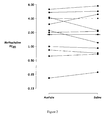
- the formulation of the present invention is pharmaceutically equivalent to a methacholine formulation prepared using a conventional isotonic saline diluent.
- the conventional diluent was sterile 0.9% isotonic saline.
- the acetate diluent was prepared using 90 mg/10 ml (0.9%) sodium chloride and 6.6 mg/10 ml sodium acetate trihydate (0.066%).
- Doubling concentrations of methacholine from 0.03 to 8.0 mg/ml were prepared in the two diluents, given a two-week shelf life, and stored in the fridge at 4° C.
- Methacholine challenge was performed by the standard 2 minute tidal breathing method (Cockcroft, D.W., et al (1977) Clin Allergy , 7:235-243). Aerosols were generated from a Bennett Twin jet nebulizer calibrated to an output of 0.13 ml/minute. Subjects wore nose clips and inhaled aerosols via a loose-fitting facemask for 2 minutes of tidal breathing. Diluent was inhaled initially followed by doubling concentrations of methacholine with a 5 minute interval between the start of one concentration and the start of the next. Spirometry was initially measured in triplicate.
- Subjects attended the laboratory on two days at the same time of day within a one-week period. On each day, a methacholine challenge was done starting at the same concentration, one with saline diluent, and one with acetate diluent. The order of tests were randomized in an alternating fashion; odd numbered subjects performed the saline diluent methacholine challenge on Day 1 and even numbered subjects the acetate diluent test on Day 1. The pH of each methacholine dilution was measured for both diluents prior to inhalation.
- PC 20 values were log transformed for analysis.
- the primary endpoint was the methacholine PC 20 compared by paired t-test.
Landscapes
- Health & Medical Sciences (AREA)
- Veterinary Medicine (AREA)
- Public Health (AREA)
- General Health & Medical Sciences (AREA)
- Animal Behavior & Ethology (AREA)
- Life Sciences & Earth Sciences (AREA)
- Pharmacology & Pharmacy (AREA)
- Chemical & Material Sciences (AREA)
- Pulmonology (AREA)
- Medicinal Chemistry (AREA)
- Bioinformatics & Cheminformatics (AREA)
- Chemical Kinetics & Catalysis (AREA)
- General Chemical & Material Sciences (AREA)
- Organic Chemistry (AREA)
- Engineering & Computer Science (AREA)
- Nuclear Medicine, Radiotherapy & Molecular Imaging (AREA)
- Epidemiology (AREA)
- Emergency Medicine (AREA)
- Pharmaceuticals Containing Other Organic And Inorganic Compounds (AREA)
- Medicinal Preparation (AREA)
Applications Claiming Priority (2)
| Application Number | Priority Date | Filing Date | Title |
|---|---|---|---|
| CA2463001 | 2004-04-01 | ||
| CA002463001A CA2463001C (en) | 2004-04-01 | 2004-04-01 | Solution based methacholine formulations |
Publications (2)
| Publication Number | Publication Date |
|---|---|
| EP1584334A2 true EP1584334A2 (de) | 2005-10-12 |
| EP1584334A3 EP1584334A3 (de) | 2006-10-04 |
Family
ID=32831638
Family Applications (1)
| Application Number | Title | Priority Date | Filing Date |
|---|---|---|---|
| EP04255015A Withdrawn EP1584334A3 (de) | 2004-04-01 | 2004-08-20 | Zusammensetzungen enthaltend Methacholine Lösungen |
Country Status (2)
| Country | Link |
|---|---|
| EP (1) | EP1584334A3 (de) |
| CA (2) | CA2463001C (de) |
Cited By (3)
| Publication number | Priority date | Publication date | Assignee | Title |
|---|---|---|---|---|
| CN110950767A (zh) * | 2018-09-26 | 2020-04-03 | 北京泰德制药股份有限公司 | 一种氯化乙酰甲胆碱新晶型及其制备方法 |
| CN111635327A (zh) * | 2020-06-19 | 2020-09-08 | 北京磐谷英汇科技有限公司 | 一种氯化乙酰甲胆碱的无定形晶型及其制备方法 |
| CN112255323A (zh) * | 2020-08-27 | 2021-01-22 | 广东省农业科学院农产品公共监测中心 | 一种用于液相色谱-质谱检测的新型氯增强离子化试剂及其应用 |
Family Cites Families (3)
| Publication number | Priority date | Publication date | Assignee | Title |
|---|---|---|---|---|
| US5570683A (en) * | 1990-12-05 | 1996-11-05 | The General Hospital Corporation | Methods and devices for treating pulmonary vasoconstriction and asthma |
| AU772798B2 (en) * | 1999-04-21 | 2004-05-06 | 1355540 Ontario Inc. | Formulations for detecting asthma |
| US7754242B2 (en) * | 2002-03-20 | 2010-07-13 | Alkermes, Inc. | Inhalable sustained therapeutic formulations |
-
2004
- 2004-04-01 CA CA002463001A patent/CA2463001C/en not_active Expired - Lifetime
- 2004-04-01 CA CA002619590A patent/CA2619590A1/en not_active Abandoned
- 2004-08-20 EP EP04255015A patent/EP1584334A3/de not_active Withdrawn
Cited By (5)
| Publication number | Priority date | Publication date | Assignee | Title |
|---|---|---|---|---|
| CN110950767A (zh) * | 2018-09-26 | 2020-04-03 | 北京泰德制药股份有限公司 | 一种氯化乙酰甲胆碱新晶型及其制备方法 |
| CN110950767B (zh) * | 2018-09-26 | 2022-10-28 | 北京泰德制药股份有限公司 | 一种氯化乙酰甲胆碱晶型及其制备方法 |
| CN111635327A (zh) * | 2020-06-19 | 2020-09-08 | 北京磐谷英汇科技有限公司 | 一种氯化乙酰甲胆碱的无定形晶型及其制备方法 |
| CN112255323A (zh) * | 2020-08-27 | 2021-01-22 | 广东省农业科学院农产品公共监测中心 | 一种用于液相色谱-质谱检测的新型氯增强离子化试剂及其应用 |
| CN112255323B (zh) * | 2020-08-27 | 2021-06-18 | 广东省农业科学院农业质量标准与监测技术研究所 | 一种用于液相色谱-质谱检测的新型氯增强离子化试剂及其应用 |
Also Published As
| Publication number | Publication date |
|---|---|
| EP1584334A3 (de) | 2006-10-04 |
| CA2619590A1 (en) | 2004-08-08 |
| CA2463001A1 (en) | 2004-08-08 |
| CA2463001C (en) | 2008-02-26 |
Similar Documents
| Publication | Publication Date | Title |
|---|---|---|
| Seemungal et al. | Long-term erythromycin therapy is associated with decreased chronic obstructive pulmonary disease exacerbations | |
| Martí‐Carvajal et al. | Antibiotics for treating acute chest syndrome in people with sickle cell disease | |
| Beasley et al. | Preservatives in nebulizer solutions: risks without benefit | |
| EP2036549B1 (de) | Neuartige Zusammensetzung | |
| Shi et al. | Subcutaneous Injection Site Pain of Formulation Matrices: Shi et al. | |
| Cockcroft et al. | Importance of evaporative water losses during standardized nebulized inhalation provocation tests | |
| EP1584334A2 (de) | Zusammensetzungen enthaltend Methacholine Lösungen | |
| US20050222267A1 (en) | Solution based methacholine formulations | |
| Kopec et al. | Chemical analysis of freshly prepared and stored capsaicin solutions: implications for tussigenic challenges | |
| AU2017376960B2 (en) | Micafungin compositions | |
| US20070020193A1 (en) | Dronabinol compositions and methods for using same | |
| WO2005094901A1 (en) | Formulations and methods to prepare inhalable buffered methacholine chloride solutions. | |
| Barranco et al. | 4 Diagnosis of Aspirin-Induced Asthma Combining the Bronchial and the Oral Challenge Tests: A Pilot Study | |
| Herjavecz et al. | Efficacy of once-and twice-daily administration of budesonide via Turbuhaler® as initial therapy in patients with mild persistent asthma | |
| Tronde et al. | Pharmacokinetics of budesonide and formoterol administered via 1 pressurized metered‐dose inhaler in patients with asthma and COPD | |
| Gulley et al. | Sterility and stability testing of preservative-free albuterol | |
| Friciu et al. | Stability of N-Acetylcysteine 60 mg/mL in extemporaneously compounded injectable solutions | |
| Axelsson et al. | Effects of inhaled corticosteroids on growth in children with persistent asthma: Impact of drug molecules and delivery devices-An overview of Cochrane reviews | |
| Hanania | Evaluating the safety of COPD medications: an evidence-based review | |
| Yagoub et al. | In-use stability studies of two veterinary medicinal products: albendazole and oxytetracycline | |
| US12295932B2 (en) | Succinylcholine chloride prefilled syringe | |
| Aulton | Product stability and stability testing | |
| Njue | Quality Assessment of Four Fixed Dose Combination Anti-Tuberculosis Drugs in Government Facilities in Mombasa, Kilifi, Kwale and Nairobi Counties | |
| Law | Stability of preservative-free tobramycin in half-normal saline | |
| Bajantri MD et al. | Pulmonary & Critical Care Insider: Issue 4 |
Legal Events
| Date | Code | Title | Description |
|---|---|---|---|
| PUAI | Public reference made under article 153(3) epc to a published international application that has entered the european phase |
Free format text: ORIGINAL CODE: 0009012 |
|
| AK | Designated contracting states |
Kind code of ref document: A2 Designated state(s): AT BE BG CH CY CZ DE DK EE ES FI FR GB GR HU IE IT LI LU MC NL PL PT RO SE SI SK TR |
|
| AX | Request for extension of the european patent |
Extension state: AL HR LT LV MK |
|
| RIC1 | Information provided on ipc code assigned before grant |
Ipc: 7G 01N 33/00 B Ipc: 7G 01N 30/00 B Ipc: 7A 61P 11/06 B Ipc: 7A 61P 11/00 B Ipc: 7A 61K 31/221 A |
|
| PUAL | Search report despatched |
Free format text: ORIGINAL CODE: 0009013 |
|
| AK | Designated contracting states |
Kind code of ref document: A3 Designated state(s): AT BE BG CH CY CZ DE DK EE ES FI FR GB GR HU IE IT LI LU MC NL PL PT RO SE SI SK TR |
|
| AX | Request for extension of the european patent |
Extension state: AL HR LT LV MK |
|
| 17P | Request for examination filed |
Effective date: 20070404 |
|
| AKX | Designation fees paid |
Designated state(s): AT BE BG CH CY CZ DE DK EE ES FI FR GB GR HU IE IT LI LU MC NL PL PT RO SE SI SK TR |
|
| 17Q | First examination report despatched |
Effective date: 20100111 |
|
| STAA | Information on the status of an ep patent application or granted ep patent |
Free format text: STATUS: THE APPLICATION IS DEEMED TO BE WITHDRAWN |
|
| 18D | Application deemed to be withdrawn |
Effective date: 20100722 |