EP1583294A2 - Transaction de paiement dans une communication radio poste à poste - Google Patents
Transaction de paiement dans une communication radio poste à poste Download PDFInfo
- Publication number
- EP1583294A2 EP1583294A2 EP04256567A EP04256567A EP1583294A2 EP 1583294 A2 EP1583294 A2 EP 1583294A2 EP 04256567 A EP04256567 A EP 04256567A EP 04256567 A EP04256567 A EP 04256567A EP 1583294 A2 EP1583294 A2 EP 1583294A2
- Authority
- EP
- European Patent Office
- Prior art keywords
- content
- communication
- radio terminal
- client
- carrier
- Prior art date
- Legal status (The legal status is an assumption and is not a legal conclusion. Google has not performed a legal analysis and makes no representation as to the accuracy of the status listed.)
- Granted
Links
Images









Classifications
-
- H—ELECTRICITY
- H04—ELECTRIC COMMUNICATION TECHNIQUE
- H04L—TRANSMISSION OF DIGITAL INFORMATION, e.g. TELEGRAPHIC COMMUNICATION
- H04L67/00—Network arrangements or protocols for supporting network services or applications
- H04L67/01—Protocols
- H04L67/10—Protocols in which an application is distributed across nodes in the network
- H04L67/104—Peer-to-peer [P2P] networks
-
- G—PHYSICS
- G06—COMPUTING OR CALCULATING; COUNTING
- G06Q—INFORMATION AND COMMUNICATION TECHNOLOGY [ICT] SPECIALLY ADAPTED FOR ADMINISTRATIVE, COMMERCIAL, FINANCIAL, MANAGERIAL OR SUPERVISORY PURPOSES; SYSTEMS OR METHODS SPECIALLY ADAPTED FOR ADMINISTRATIVE, COMMERCIAL, FINANCIAL, MANAGERIAL OR SUPERVISORY PURPOSES, NOT OTHERWISE PROVIDED FOR
- G06Q20/00—Payment architectures, schemes or protocols
- G06Q20/08—Payment architectures
- G06Q20/10—Payment architectures specially adapted for electronic funds transfer [EFT] systems; specially adapted for home banking systems
-
- H—ELECTRICITY
- H04—ELECTRIC COMMUNICATION TECHNIQUE
- H04L—TRANSMISSION OF DIGITAL INFORMATION, e.g. TELEGRAPHIC COMMUNICATION
- H04L63/00—Network architectures or network communication protocols for network security
- H04L63/10—Network architectures or network communication protocols for network security for controlling access to devices or network resources
-
- H—ELECTRICITY
- H04—ELECTRIC COMMUNICATION TECHNIQUE
- H04L—TRANSMISSION OF DIGITAL INFORMATION, e.g. TELEGRAPHIC COMMUNICATION
- H04L67/00—Network arrangements or protocols for supporting network services or applications
- H04L67/50—Network services
- H04L67/56—Provisioning of proxy services
- H04L67/563—Data redirection of data network streams
-
- H—ELECTRICITY
- H04—ELECTRIC COMMUNICATION TECHNIQUE
- H04W—WIRELESS COMMUNICATION NETWORKS
- H04W76/00—Connection management
- H04W76/10—Connection setup
- H04W76/14—Direct-mode setup
-
- H—ELECTRICITY
- H04—ELECTRIC COMMUNICATION TECHNIQUE
- H04L—TRANSMISSION OF DIGITAL INFORMATION, e.g. TELEGRAPHIC COMMUNICATION
- H04L2463/00—Additional details relating to network architectures or network communication protocols for network security covered by H04L63/00
- H04L2463/101—Additional details relating to network architectures or network communication protocols for network security covered by H04L63/00 applying security measures for digital rights management
-
- H—ELECTRICITY
- H04—ELECTRIC COMMUNICATION TECHNIQUE
- H04L—TRANSMISSION OF DIGITAL INFORMATION, e.g. TELEGRAPHIC COMMUNICATION
- H04L67/00—Network arrangements or protocols for supporting network services or applications
- H04L67/01—Protocols
- H04L67/04—Protocols specially adapted for terminals or networks with limited capabilities; specially adapted for terminal portability
-
- H—ELECTRICITY
- H04—ELECTRIC COMMUNICATION TECHNIQUE
- H04L—TRANSMISSION OF DIGITAL INFORMATION, e.g. TELEGRAPHIC COMMUNICATION
- H04L67/00—Network arrangements or protocols for supporting network services or applications
- H04L67/01—Protocols
- H04L67/06—Protocols specially adapted for file transfer, e.g. file transfer protocol [FTP]
Definitions
- the present invention relates to a method of data transmission, particularly but not exclusively for sending content having commercial value (so-called pay content) in a communication system having plural radio terminals which carry out communication through predetermined communication network (e.g., cellphone network or the like) using a predetermined first communication scheme (e.g., CDMA scheme or the like) and which carry out peer-to-peer communication using a predetermined second communication scheme (e.g., infrared communication, communication adhering to Bluetooth standards), and having a carrier which carries out communication using the first communication scheme between the terminals.
- predetermined communication network e.g., cellphone network or the like
- a predetermined first communication scheme e.g., CDMA scheme or the like
- peer-to-peer communication e.g., infrared communication, communication adhering to Bluetooth standards
- the invention also relates to a radio terminal and a carrier suitable for the sending method.
- a sending/receiving system of content using the peer-to-peer communication (ad hoc communication) (e.g., see Japanese Patent Application Laid-open No.2003-333079 (JP-A) and JP-A 2002-209028.
- JP-A 2003-333079 discloses a system in which a radio terminal receives commercial content which advertises content from a sending server which sends content, and if the radio terminal sends the commercial content to another radio terminal, the sender radio terminal receives a discount coupon that can be used when buying the content advertised by the advertising content.
- JP-A 2002-209028 discloses a system in which when content is sent to an ending terminal from a starting terminal through an ad hoc network, a relay terminal is interposed between the starting terminal and the ending terminal.
- the starting terminal sends the content to the relay terminal
- the relay terminal sends the content to the ending terminal
- the relay terminal charges a fee for the service against the starting terminal and the ending terminal.
- JP-A 2002-209028 only charges a fee for service of relay of the relay terminal in the direct communication between radio terminals. Since there is no function to grasp the entire system, it is difficult to prevent pay content from being dispersed or distributed without limitation.
- the present invention has been made in view of the above circumstances and provides a sending method of pay content capable of sending the pay content using peer-to-peer communication while securing the sending safety.
- the invention also provides a radio terminal and a carrier suitable for carrying out the sending method.
- the present invention provides a sending method of content (such as electronic data, video, audio files and the like) in a communication system carrying out communication through a predetermined network by a predetermined first communication scheme and including a plurality of radio terminals that carry out a peer- to-peer communication by a predetermined second communication scheme and a carrier that carries out communication by the first communication scheme with each of the plurality of radio terminals.
- the method involves the following steps:
- the credits or charges may be money or have monetary value (e.g. cellphone airtime).
- the charging step is particularly applicable where the content has commercial value, i.e. so-called pay content.
- the carrier sends the content to all the radio terminals which desire to receive it, and transfer of the content between radio terminals is prohibited.
- the carrier usually carries out communication with an extremely large number of radio terminals, if the carrier must send the content each time, this takes a long time due to low baud rates, and the receiving radio terminal must bear a considerable connection fee for receiving the content in addition to having to pay for the content itself.
- the present invention increases the efficiency of data traffic on a communications network such as a cellphone network.
- the carrier grasps all information concerning sending and transferring of the content, and can appropriately charge or credit fees.
- the method may further include a sending step in which the first radio terminal receives the content from the carrier through communication using the first communication scheme, and the sending step is carried out before the transfer permission receiving step.
- the data transmission method of the invention is also applied to a case in which a radio terminal that obtains content through peer-to-peer communication, transfers the content to another radio terminal.
- the carrier may send the pay content to a radio terminal (here, first radio terminal) using the first communication scheme.
- the communication system may include, in addition to the carrier, a content offering server which sends content, and the sending method further includes a sending step in which the first radio terminal receives the content from the content offering server, the sending step being carried out before the transfer permission receiving step.
- the carrier charges fees concerning sending and receiving operations of the content against the first radio terminal, the second radio terminal and the content offering server.
- the method may employ the content offering server that provides the content, separately from the carrier.
- the content offering server is put under the umbrella of the carrier, the carrier can grasp the transfer of content and appropriately charge a fee if required.
- the transfer step and the completion notification step may be carried out by direct peer-to-peer communication between the first radio terminal and the second radio terminal, or the transfer step and the completion notification step may be carried out by peer-to-peer communication between the first radio terminal and the second radio terminal relayed by at least one of the plurality of radio terminals as a third radio terminal.
- the carrier credits/charges fees concerning the sending and receiving operation of content to the first, second and third radio terminals.
- the transfer step and the completion notification step when it is impossible to carry out peer-to-peer communication between the first radio terminal and the second radio terminal directly or via relay by at least one of plural radio terminals as a third radio terminal, communication is carried out utilizing a communication path at least partially including a communication path using the first communication scheme having the carrier interposed in the communication path.
- the present invention also provides any one of plural radio terminals each carrying out communication using a predetermined first communication scheme between the radio terminal and a carrier which carries out communication through a predetermined communication network using the first communication scheme, and each carrying out peer-to-peer communication using a predetermined second communication scheme with each of the plural radio terminals, wherein the one of the plural radio terminals includes:
- the present invention also provides a carrier which carries out communication through a predetermined communication network using a predetermined first communication scheme and which carries out communication using the first communication scheme with each of plural radio terminals which carries out peer-to-peer communication using a predetermined second communication scheme, wherein the carrier includes:
- the following description refers to "pay content”, or content which is paid for by a client (user, customer).
- the present invention is not necessarily restricted to this, and may be employed for transmission of any valuable data, namely data which is not to be freely reproduced.
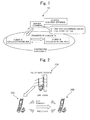
- Fig. 1 shows a concept of a first communication system that realizes a first embodiment of a sending method of content according to the present invention.
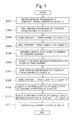
- Fig. 2 shows a usage pattern of the first communication system.
- the first communication system shown in the drawings contacts the clients on line.
- the first communication system includes a carrier which supplies content to the clients, a client A of the clients which receives the content, and a client B which receives the content through the client A, and the first communication system charges a fee for that service against the client A and the client B at the carrier.
- Fig. 1 shows a server 10 functioning as a carrier as well as a content provider, and clients A, B that are represented by two cellular phones 20A, 30B contracting the server 10.
- communication is carried out between a relay base station 10A which is corresponding to and is connected to the server 10, and the cellular phones 20A, 30B which are corresponding to the clients A, B using a normal radiotelephone communication scheme such as GSM, CDMA or the like.
- a communication scheme forpeer-to-peer communication such as IrDa, Bluetooth, wireless LAN, UWB or the like.
- the client A (cellular phone 20A) receives the content from the carrier (server 10) which also functions as a content offerer, and the content is sent from the client A (cellular phone 20A) to another client B (cellular phone 30B) by the peer-to-peer communication. This sending operation is carried out after the client A is permitted by the server 10 (carrier). If the client B (cellular phone 30B) receives the content, the client B (cellular phone 30B) notifies the client A (cellular phone 20A) that the receiving operation was completed through the peer-to-peer communication, and client A reports to the server 10 the completion of the transfer operation of the content to the client B (cellular phone 30B).
- the server 10 (carrier) charges a minus fee as a transaction fee against the client A (pays the transaction fee to the client A), and charges the fee of the content against the client B.
- the fee of the content that the client A first bought from the server 10 is also charged separately, but attention is paid to the transfer of the content from the client A to the client B.
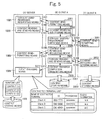
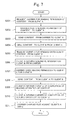
- Figs. 3, 4 and 5 are a schematic view, a flowchart and a functional block diagram showing flows of communication when
- a server denoted by (A) includes content send-permission requesting means 1001, content reading and sending means 1002, content send-permitting means 1003, client charging means 1004 and content storing means 1005.
- Items of content e.g, programs, music files, videos
- client charging means 1004 and content storing means 1005.
- Items of content e.g, programs, music files, videos
- client charging means 1004 and content storing means 1005.
- Items of content e.g, programs, music files, videos
- Items of content e.g, programs, music files, videos
- Charging information for each client is also included in this information.
- a managing company of the server periodically collects charges from the clients based on the charging information.
- the client A (cellular phone 20A) denoted by (B) in the Figs includes content send-permitting means 2001, content receiving and storing means 2002, content sending-requirement obtaining means 2003, content send-permission requesting means 2004, content reading and sending means 2005, content transfer completion transmitting means 2006, and content storing means 2007.
- the client B (cellular phone 30B) labeled (C) in the Figs includes content send-permitting means 3001, content receiving and storing means 3002, and content storing means 3003.
- Communication is carried out between the server and the client A through a normal radiotelephone line, and peer-to-peer communication is carried out between the client A and the client B.
- the content storing means 1005, the content storing means 2007 and the content storing means 3003 are shown outside the boxes (A) (B) and (C) in the Figure for convenience, but they are constituent elements of the server, client A and client B, respectively. The same can be said for each of the following examples.
- the content send-permission requesting means 1001 of the server requests the content send-permitting means 2001 for permission of sending the content (step S101), and the content send-permitting means 2001 of the client A permits the content send-permission requesting means 1001 to send the content (step S102).
- the content reading and sending means 1002 of the server reads the required content from the content storing means 1005, and sends the content to the client A (step S103).
- the client A receives the content sent from the server using the content receiving and storing means 2002, and stores the same in the content storing means 2007.
- the client A sells the content to the client B by means of the content sending-requirement obtaining means 2003 (step S104).
- the client B informs the content sending-requirement obtaining means 2003 of the client A to that effect (step S105).
- the client A requests the server to permit the transfer of the content to the client B by means of the content send-permission requesting means 2004 (step S106).
- the server receives the request by means of the content send-permitting means 1003, and permits the content send-permission requesting means 2004 of the client A to transfer the content to the client B (step S107).
- the client A reads the required content from the content storing means 2007 by means of the content reading and sending means 2005, and sends the same to the client B (step S108).
- the client B receives the sent content by means of the content receiving and storing means 3002, and stores the same in the content storing means 3003, and notifies the content reading and sending means 2005 of the completion of the receipt (step S109).
- the client A receives the notification of the receipt completion from the client B, and reports the server that the transfer of the content to the client B is completed by means of the content transfer completion transmitting means 2006 (step S110).
- the transfer completion notification is sent to the client charging means 1004, and the client charging means charges fees against the clients A, B (step S111).
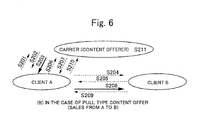
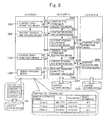
- Figs. 6 to 8 are respectively a schematic view of the communication system, a flowchart and a functional block diagram showing flows of communication when
- the server includes content send-permitting means 1006 instead of the content send-permission requesting means 1001 shown in Fig. 5, and the client A includes content send-permission requesting means 2008 instead of the content send-permitting means 2001 shown in Fig. 5.
- the content send-permission requesting means 2008 of the client A requests the server to send content (step S201).
- the server receives the request by means of the content send-permitting means 1006, permits the content send-permission requesting means 2008 of the client A to send the content (step S202), the content reading and sending means 1002 reads the requested content from the content storing means 1005, and sends the content to the client A (step S203).
- Subsequent steps S204 to 211 are the same as steps S104 to 111 and thus, explanation thereof will be omitted.
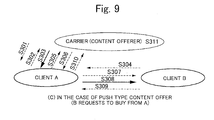
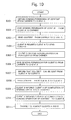
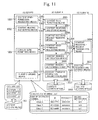
- Figs. 9 to 11 are respectively a schematic view of the communication system, a flowchart and a functional block diagram showing flows of communication when
- the client A includes content receiving-request receiving means 2009 and content sending notification means 2010 instead of the content sending- requirement obtaining means 2003 in the example shown in Fig. 5.
- the client B includes content receiving request transmitting means 3004 instead of the content send-permitting means 3001 shown in Fig. 5.
- steps S301 to 303 are the same as steps S101 to 103 and thus, explanation thereof will be omitted.
- step S304 the content receiving request transmitting means 3004 of the client B requests the content receiving-request receiving means 2009 of the client A to send content (step S304). Then the content send-permission requesting means 2004 of the client A contacts the content send-permitting means 1003 of the server and receives permission to send the content to the client B (steps S305 and 306 which are the same as steps 106 and 107 of the example shown in Figs. 3 to 5). The content sending notification means 2010 informs the content receiving request transmitting means 3004 of the client B that the content can be sent (step S307).
- steps S303 to 311 are the same as steps S108 to 111 and thus, explanation thereof will be omitted.
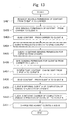
- Figs. 12 to 14 are respectively a schematic view of the communication system, a flowchart and a functional block diagram showing flows of communication when
- Steps S401 to 403 are the same as steps S201 to 203 in the example shown in Figs. 6 to 8, and steps S404 to 411 are the same as steps S304 to 311 in the example shown in Figs. 9 to 11 and thus, explanation thereof will be omitted.
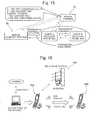
- Fig. 15 shows a concept of a second communication system that realizes a second embodiment of a sending method of content according to the present invention.
- Fig. 16 shows a usage pattern of the second communication system.
- the second communication system contracts (contacts) the clients on line, and contracts the content offerer.
- the second communication system includes the carrier which contracts clients using ad hoc connection between the clients, a content supplier which supplies content to the clients, a client A of the clients who receives the content, and a client B who receives the content through the client A. If the content are supplied from the content supplier to the client B through the client A, the second communication system charges fees against the clients A, B and the content supplier by means of the carrier.
- the server 10 functions as the carrier, but a server 40 which functions as the content offerer is provided independently from the server 10.
- the client A accesses a predetermined access point on the internet line by contract with the carrier (server 10), and can obtain desired content from the server 40 through the Internet by buying from the server 40 having the content offerer or by requesting by himself or herself (client A).
- a personal computer shown in Fig. 16 obtains the desired content through the Internet, and the content is transferred from the personal computer to the portable terminal 20A through the peer-to-peer communication.
- the personal computer and the cellular phone 20A shown in Fig. 16 are corresponding to the client A.
- the personal computer may access the predetermined access point, and the cellular phone 20A may receive the content directly from the relay base station 10A.
- the cellular phone 20A itself may access the access point.
- the carrier (server 10) and the content offerer (server 40) frequently make contact with each other, the carrier (server 10) always informs the content offerer (server 40) of latest information concerning a subscriber (contractor) to this system, and whenever the content offerer (server 40) sends the content to the client, the carrier (server 10) is informed of which client receives which content.
- the client A transfers the content to the client B (cellular phone 30B) through the peer-to-peer communication, but the client A (cellular phone 20A) transfers the content after being permitted by the server 10 (carrier), and if the client B (cellular phone 30B) receives the content, the client A (cellular phone 20A) is informed of the completion of receipt, and the client A reports to the carrier (server 10) that the transfer is completed.
- the carrier (server 10) charges a minus fee against the client A and refunds the transaction fee, charges a fee of the content against the client B, and pays the fee of the content by the minus fee to the content offerer, and charges the transaction fee (the transaction fee to be paid to the client A + profit of the carrier).
- a fee for content that the client A first purchased from the server 40 is charged, but here, the billing when the client A transfers the content to the client B is shown.
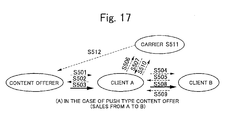
- Figs. 17 to 19 are respectively a schematic view of the communication system, a flowchart and a functional block diagram showing flows of communication when
- (D) content means the server 40 on the side of the content offerer shown in Fig. 15.
- (D) is called a content server so as to distinguish it from the server (server 10 of the carrier shown in Fig. 15) denoted by (A) in Fig. 19.
- the server (D) in Fig. 19 includes content send-permission requesting means 4001, content reading and sending means 4002, content fee receiving means 4003 and content storing means 4004.
- the content send-permission requesting means 1001, the content reading and sending means 1002 and the content storing means 1005 which respectively correspond to the content send-permission requesting means 4001, the content reading and sending means 4002 and the content storing means 4004 of server (D) in Fig. 19 are included in server (A).
- the content send-permission requesting means 4001, the content reading and sending means 4002 and the content storing means 4004 are included in the server (D) for sharing a role with server (A).
- server (A) does not include the content send-permission requesting means 1001, the content reading and sending means 1002 and the content storing means 1005 which are included in server (A) in Fig. 5.
- Server (A) in Fig. 19 includes the content send-permitting means 1003 and the client charging means 1004 which are the same constituent elements as those of server (A) in Fig. 5, and further includes content charge paying means 1007.
- the constituent elements of client A, labeled (B) in Fig. 19, are the same as those of the example of client A in Fig. 5 except that the communication partner is changed from server (A) to (D).
- the structure of the client B labeled (C) in Fig. 19 is the same as that of the client B in Fig. 5.
- the content send-permission requesting means 4001 of server (D) requests the content send-permitting means 2001 of the client A for permission of sending content (step S501), and the content send-permitting means 2001 of the client A permits the content send-permission requesting means 4001 of the content to send the content (step S502).
- the content reading and sending means 4002 of server (D) reads the requested content from the content storing means 4004, and sends the content to the client A (step S503).
- the client A receives the content sent from server (D) by means of the content receiving and storing means 2002, and stores the same in the content storing means 2007.
- steps S504 to 510 are the same as steps S104 to 111 in the example shown in Figs. 3 to 5 and thus, explanation thereof will be omitted.
- step S511 the client charging means 1004 charges a fee like in step S111 in the example shown in Figs. 3 to 5, and a charging operation against server (A) (content offerer shown in Fig. 5) is also included, and this point is different from step S111.
- server (A) content offerer shown in Fig. 5
- step S512 the content charge paying means 1007 of server (A) pays the content fee (transaction fee subtracted from content fee) to server (D), and the paid content fee is received by the content fee receiving means 4003 of server (D).
- the payments of the content fees are made in terms of data, and actual settlement of payments is made at a later date, e.g., on the same day every month.
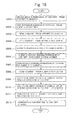
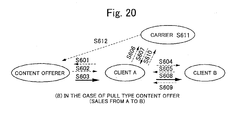
- Figs. 20 to 22 are respectively a schematic view of the communication system, a flowchart and a functional block diagram showing flows of communication when
- server (D) includes content send-permitting means 4005 instead of the content send-permission requesting means 4001 shown in Fig. 19, and the client A includes the content send-permission requesting means 2008 instead of the content send-permitting means 2001 shown in Fig. 19.
- the content send-permission requesting means 2008 of the client A requests the server (D) to send content (step S601).
- Server (D) receives the request by means of the content send-permitting means 4005, sends back the permission to the content send-permission requesting means 2008 of the client A (step S602), the content reading and sending means 4002 reads the requested content from the content storing means 4004, and sends the content to the client A (step S603).
- steps S604 to 612 are the same as steps S504 to 512 in the example shown in Figs. 17 to 19 and thus, explanation thereof will be omitted.
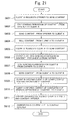
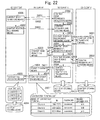
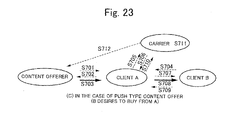
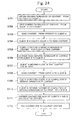
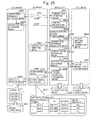
- Figs. 23 to 25 are respectively a schematic view of the communication system, a flowchart and a functional block diagram showing flows of communication when
- the client A includes content receiving-request receiving means 2009 and content sending notification means 2010 instead of the content sending-requirement obtaining means 2003 in the example shown in Fig. 19.
- steps S701 to 703 are the same as steps S501 to 503 in the example shown in Figs. 17 to 19 and thus, explanation thereof will be omitted.
- step S704 the content receiving request transmitting means 3004 of the client B informs the content receiving-request receiving means 2009 of the client A that the content receiving request transmitting means 3004 desires to receive content (step S704).
- the content send-permission requesting means 2004 of the client A makes contact with the server content send-permitting means 1003 of server (A), the content send-permitting means 1003 permits the content send-permission requesting means 2004 to send the content to the client B (steps S705 and 706 which are the same as steps 506 and 507 in the example shown in Figs. 17 to 19), and the content sending notification means 2010 informs the content receiving request transmitting means 3004 of the client B that the content can be sent (step S707).
- steps S708 to 712 are the same as steps S508 to 512 in the example shown in Figs. 17 to 19 and thus, explanation thereof will be omitted.
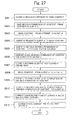
- Figs. 26 to 28 are respectively a schematic view of the communication system, a flowchart and a functional block diagram showing flows of communication when
- Steps S801 to 803 are the same as steps S601 to 603 in the example shown in Figs. 20 to 22.
- Steps S804 to 812 are the same as steps S704 to 712 in the example shown in Figs. 23 to 25. Explanation of the same portions will be omitted.
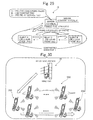
- Fig.29 shows a concept of a third communication system that realizes a third embodiment of a sending method of content according to the present invention.
- Fig. 30 shows a usage pattern of the communication system.
- the third communication system shown in the drawings contacts the clients on line.
- the first communication system includes a carrier which supplies content to the clients, a client A of the clients which receives the content, a client B which receives the content through the client A, and a relay C through which content is supplied between the client A and the client B.
- Content is supplied to the client B through the client A and the client C, and the third communication system charges a fee for that service against the client A, the client B and the client C at the carrier.
- the third communication system is different from the first communication system shown in Figs. 1 and 2 in that a cellular phone 50C as the relay C exists between the client A (cellular phone 20A) as a sender of the content and the client B (cellular phone 30B) as a receiver of the content.
- the cellular phone 50C as the relay C is also a cellular phone contracting the carrier (server 10).
- Some or many cellular phones 50C as the relay C may exist in series between the cellular phone 20A and the cellular phone 30B, and the content may relayed from the cellular phone 20A to the cellular phone 30B in succession.
- it is preferable that some or many transfer paths are arranged in parallel so that the content is reliably transferred from the cellular phone 20A to the cellular phone 30B.
- the minimum structure i.e., a case in which the relay of transfer of content from the client A (cellular phone 20A) to the client B (cellular phone 30B) has only one path and only one relay C of the one path is used will be explained.
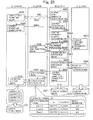
- Figs. 31 to 33 are respectively a schematic view of the communication system, a flowchart and a functional block diagram showing flows of communication when
- a relay C denoted by (E) in the Figures, exists between the client A and the client B.
- the relay C includes content sending-request relay means 5001 and content relay means 5002.
- Steps S901 to 903, 906 to 907 and 910 to 911 in the example shown in Figs. 31 to 33 are the same as steps S101 to 103, 106 to 107 and 110 to 111 in the example shown in Figs. 3 to 5 and thus, explanation thereof will be omitted.
- the content sending-requirement obtaining means 2003 of the client A sells content directly to the content send-permitting means 3001 of the client B (step S104), the content send-permitting means 3001 of the client B responses the sales and directly informs the content sending-requirement obtaining means 2003 of the client A of the sending permission of the content (step S105).
- the content send-permitting means 3001 of the client B responses the sales and directly informs the content sending-requirement obtaining means 2003 of the client A of the sending permission of the content (step S105).
- the content sending-requirement obtaining means 2003 of the client A sells content to the content send-permitting means 3001 of the client B through the content sending-request relay means 5001 of the relay C (step S904), the content send-permitting means 3001 of the client B responses the sales, and informs the content sending-requirement obtaining means 2003 of the client A of the sending permission of the content through the content sending-request relay means 5001 of the relay C.
- the content reading and sending means 2005 of the client A reads content to be sent to the client B from the content storing means 2007, and sends the content directly to the client B (step S108), the client B receives the sent content by means of the content receiving and storing means 3002 and stores the same in the content storing means 3003, and directly informs the content reading and sending means 2005 of the client A of the completion of the receipt (step S109).
- the content reading and sending means 2005 of the client A reads content to be sent to the client B from the content storing means 2007, and sends the content directly to the client B (step S108)
- the client B receives the sent content by means of the content receiving and storing means 3002 and stores the same in the content storing means 3003, and directly informs the content reading and sending means 2005 of the client A of the completion of the receipt (step S109).
- the content reading and sending means 2005 of the client A sends the content which is to be sent to the client B, to the client B through the content relay means 5002 of the relay C (step S908), and the content receiving and storing means 3002 of the client B inform the content reading and sending means 2005 of the client A of the completion of receipt through the content relay means 5002 of the relay C (step S909).
- the example shown in Fig. 31 to 33 explained here is different from the example shown in Figs. 1 to 3 in that the relay C exists between the client A and the client B, and communication is carried out between the client A and the client B through the relay C, i.e., by means of the peer-to-peer communication between the client A and the relay C and the peer-to-peer communication between the client B and the relay C.
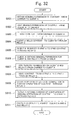
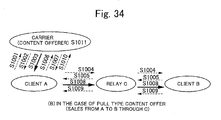
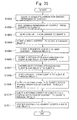
- Figs. 34 to 36 are respectively a schematic view of the communication system, a flowchart and a functional block diagram showing flows of communication when
- Steps S1001 to 1003, 1006 to 1007 and 1010 to 1011 in the example shown in Figs. 34 to 36 are the same as steps S201 to 203, 206 to 207 and 210 to 211 in the example shown in Figs. 6 to 8 and thus, explanation thereof will be omitted.
- Steps S1004 to 1005 and 1008 to 1009 and 1010 in the example shown in Figs. 34 to 36 are the same as steps S904 to 905 and 908 to 909 in the example shown in Figs. 31 to 33 and thus, explanation thereof will be omitted.
- the example shown in Fig. 34 to 36 explained here is different from the example shown in Figs. 4 to 6 in that the relay C exists between the client A and the client B, and communication is carried out between the client A and the client B through the relay C, i.e., by means of the peer-to-peer communication between the client A and the relay C and the peer-to-peer communication between the client B and the relay C.
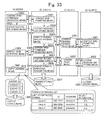
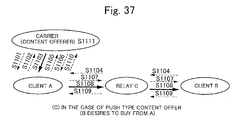
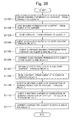
- Figs. 37 to 39 are respectively a schematic view of the communication system, a flowchart and a functional block diagram showing flows of communication when
- the example shown in Figs. 37 to 39 includes a server, client A and client B which have the same structures as those of the server, client A and client B in the example shown in Figs. 9 to 11, and includes the relay C having content receiving request relay means 5003 and content relay means 5002 between client A and client B.
- Steps S1101 to 1103, 1105 to 1106 and 1110 to 1111 in the example shown in Figs. 37 to 39 are the same as steps S301 to 303, 305 to 306 and 310 to 311 in the example shown in Figs. 9 to 11 and thus, explanation thereof will be omitted.
- step S304 in step S304 as shown in Fig. 11, the content receiving request transmitting means 3004 of the client B directly inform the content receiving-request receiving means 2009 of the client A that the client B desires to receive content (step S304), the content send-permission requesting means 2004 of the client A makes contact with the server content send-permitting means 1003 to receive the sending permission of the content to the client B (steps S305 and 306) and then, the content sending notification means 2010 directly informs the content receiving request transmitting means 3004 of the client B that the content can be sent (step S307).
- communication between the client A and the client B is carried out through the content receiving request relay means 5003 of the relay C.
- steps S1108 and 1109 also, communication between the client A and the client B is carried out through the content relay means 5002 of the relay C.
- Steps S1008 and 1109 are the same as steps S908, 909; 1008 and 1009 in the examples shown in Figs. 31 to 33 and Figs. 34 to 36 (see Figs. 33 and 36) and thus, explanation thereof will be omitted.
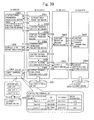
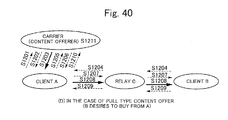
- Figs. 40 to 42 are respectively a schematic view of the communication system, a flowchart and a functional block diagram showing flows of communication when
- Steps S1201 to 1203, 1205 to 1206, and 1210 to 1211 in the example shown in Figs. 40 to 42 are the same as steps S401 to 403, 405 to 406 and 410 to 411 in the example explained with reference to Figs. 12 to 14 and thus, explanation thereof will be omitted.
- Steps S1204, 1207, 1208 to 1209 in the example shown in Figs. 40 to 42 are the same as steps 1104, 1107, and 1108 to 1109 in the example shown in Figs. 37 to 39 and thus, explanation thereof will be omitted.
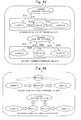
- Fig. 43 is an explanatory view of a determining method of the relay C, wherein part (a) of Fig. 43 shows a case in which the relay C is determined by P2P (peer-to-peer communication), and part (b) of Fig. 43 shows a case in which the relay C is determined by the carrier (server 10). Outline of the determining method of the relay will be explained.
- the client A receives permission of search of the relay C from the carrier (step S11) and then, the client A requests the relay (candidate) C to relay the client B.
- the relay (candidate) C tries to carry out communication with the client B (step S13), the relay (candidate) C can make contact with the client B and obtains agreement of relay from the client B (step S14), the relay (candidate) C informs the client A that the relay is possible (step S15).
- the client A informs the carrier that relay C is used as the relay of communication between the client A and the client B (step S16).
- the client A when carrier is allowed to determine the relay C, the client A requests the carrier to determine the relay between the client B and client A (step S21).
- the carrier makes contact with the relay (candidate) C and the client B (steps S22 and 23) and obtains agreement of communication that relay (candidate) C is used as the relay from the client B (step S24), and obtains agreement of relay from the relay (candidate) C (step S25).
- the carrier informs the client A that communication can be carried out between the client A and the client B through the relay C (step S26).
- Fig. 44 shows means which more reliably secure the communication path between the client A and the client B.
- Part (a) of Fig. 44 is a schematic view showing that an auxiliary path is prepared by P2P communication.
- the peer-to-peer communication of a cellular phone which subscribes to this communication system has a broadcasting function in a narrow area for example, communication paths including the auxiliary path are previously prepared by asking cellular phones for relay using the broadcasting function. With this, content can be transferred from the client A to the client B more reliably.
- Part (b) of Fig. 44 is a schematic view showing that a portion of a communication path is a communication path flowing through a carrier.
- the carrier may function as a portion of the communication path.
- the communication speed between the cellular phone and the carrier is slow, and if the carrier functions as a portion of the communication path, time required for transferring the content from the client A to the client B is increased.
- the carrier can function as a portion of the communication path as shown in part (b) of Fig. 44 as the last means for caution's sake.
- the present invention provides a data transmission method in a communication system which carries out communication through a predetermined communication network (e.g., cellphone network or the like) using a predetermined first communication scheme (e.g., CDMA scheme or the like).
- the method includes the use of radio terminals to carry out peer-to-peer communication using a predetermined second communication scheme (e.g., infrared communication, communication adhering to Bluetooth standards), and a carrier which carries out communication using the first communication scheme with each of the terminals.
- a predetermined second communication scheme e.g., infrared communication, communication adhering to Bluetooth standards
- a carrier which carries out communication using the first communication scheme with each of the terminals.
- the carrier After the content is transferred to the second radio terminal, the carrier is informed of completion of transfer operation. Preferably, especially the content has a commercial value, a corresponding fee is paid or charged automatically to the users of the radio terminals.
- the method is useful for distributing restricted, commercially valuable and/or copyrighted material over a public network whilst making efficient use of network resources.
Landscapes
- Engineering & Computer Science (AREA)
- Business, Economics & Management (AREA)
- Computer Networks & Wireless Communication (AREA)
- Signal Processing (AREA)
- Accounting & Taxation (AREA)
- Finance (AREA)
- Economics (AREA)
- General Physics & Mathematics (AREA)
- Computing Systems (AREA)
- Development Economics (AREA)
- Computer Security & Cryptography (AREA)
- Computer Hardware Design (AREA)
- Strategic Management (AREA)
- Physics & Mathematics (AREA)
- General Business, Economics & Management (AREA)
- General Engineering & Computer Science (AREA)
- Theoretical Computer Science (AREA)
- Telephonic Communication Services (AREA)
- Information Transfer Between Computers (AREA)
- Management, Administration, Business Operations System, And Electronic Commerce (AREA)
- Mobile Radio Communication Systems (AREA)
- Meter Arrangements (AREA)
- Telephone Function (AREA)
Applications Claiming Priority (2)
| Application Number | Priority Date | Filing Date | Title |
|---|---|---|---|
| JP2004102943A JP4299176B2 (ja) | 2004-03-31 | 2004-03-31 | 有料コンテンツの配信方法、無線端末、およびキャリア |
| JP2004102943 | 2004-03-31 |
Publications (3)
| Publication Number | Publication Date |
|---|---|
| EP1583294A2 true EP1583294A2 (fr) | 2005-10-05 |
| EP1583294A3 EP1583294A3 (fr) | 2008-02-13 |
| EP1583294B1 EP1583294B1 (fr) | 2011-09-21 |
Family
ID=34880021
Family Applications (1)
| Application Number | Title | Priority Date | Filing Date |
|---|---|---|---|
| EP04256567A Expired - Lifetime EP1583294B1 (fr) | 2004-03-31 | 2004-10-25 | Transaction de paiement dans une communication radio poste à poste |
Country Status (3)
| Country | Link |
|---|---|
| US (1) | US7366502B2 (fr) |
| EP (1) | EP1583294B1 (fr) |
| JP (1) | JP4299176B2 (fr) |
Cited By (1)
| Publication number | Priority date | Publication date | Assignee | Title |
|---|---|---|---|---|
| CN104010069A (zh) * | 2013-02-26 | 2014-08-27 | 北京开心人信息技术有限公司 | 一种实时匹配通信终端的方法及服务器 |
Families Citing this family (19)
| Publication number | Priority date | Publication date | Assignee | Title |
|---|---|---|---|---|
| US7730485B2 (en) * | 2004-08-10 | 2010-06-01 | At&T Intellectual Property I, L.P. | System and method for advertising to a Wi-Fi device |
| JP2007336090A (ja) * | 2006-06-13 | 2007-12-27 | Fujitsu Ltd | 携帯無線通信装置、サービス中継プログラム、サービス中継システムおよびサービス中継方法 |
| US8560634B2 (en) | 2007-10-17 | 2013-10-15 | Dispersive Networks, Inc. | Apparatus, systems and methods utilizing dispersive networking |
| US8539098B2 (en) * | 2007-10-17 | 2013-09-17 | Dispersive Networks, Inc. | Multiplexed client server (MCS) communications and systems |
| US20090164600A1 (en) * | 2007-12-19 | 2009-06-25 | Concert Technology Corporation | System and method for place-shifting media items |
| JP2009181379A (ja) * | 2008-01-31 | 2009-08-13 | Kddi Corp | コンテンツ配信システム |
| US7975003B1 (en) * | 2008-02-05 | 2011-07-05 | Sprint Spectrum L.P. | Method for tracking payable media content transactions |
| JP2009200562A (ja) * | 2008-02-19 | 2009-09-03 | Nec Engineering Ltd | 無線通信端末 |
| KR101190966B1 (ko) | 2008-10-22 | 2012-10-12 | 에스케이플래닛 주식회사 | 근거리 무선 통신망을 통해 데이터 서비스를 제공하기 위한콘텐츠 제공 시스템 및 방법과 이를 위한 cpns 서버와이동통신 단말기 |
| KR101285119B1 (ko) * | 2008-11-13 | 2013-07-17 | 에스케이플래닛 주식회사 | 관련 컨텐츠 제공 시스템, 제공 방법, 서비스 서버, 종단 단말기 및 저장 매체 |
| JP5369914B2 (ja) * | 2009-06-09 | 2013-12-18 | 富士通株式会社 | 通信制御方法、通信制御装置、通信制御プログラム、および端末装置 |
| JP5499913B2 (ja) * | 2010-06-02 | 2014-05-21 | ソニー株式会社 | 通信装置、通信方法及び通信システム |
| US8726335B2 (en) * | 2010-06-28 | 2014-05-13 | Fujitsu Limited | Consigning authentication method |
| US9467448B2 (en) * | 2010-06-28 | 2016-10-11 | Fujitsu Limited | Consigning authentication method |
| KR101752674B1 (ko) * | 2010-11-15 | 2017-06-30 | 삼성전자 주식회사 | 통화 중계 기능 지원 시스템 및 지원 방법 |
| US8955110B1 (en) | 2011-01-14 | 2015-02-10 | Robert W. Twitchell, Jr. | IP jamming systems utilizing virtual dispersive networking |
| US8941659B1 (en) | 2011-01-28 | 2015-01-27 | Rescon Ltd | Medical symptoms tracking apparatus, methods and systems |
| PT106125A (pt) * | 2012-01-31 | 2013-07-31 | Orlando Fernandes De Sousa Cruz | Dispositivo portátil para pagamentos eletrónicos |
| JP6630478B2 (ja) * | 2015-02-27 | 2020-01-15 | 株式会社メガチップス | ソフトウェア配信システム、ソフトウェア配信方法、プログラムおよびサーバ |
Family Cites Families (8)
| Publication number | Priority date | Publication date | Assignee | Title |
|---|---|---|---|---|
| US5629980A (en) | 1994-11-23 | 1997-05-13 | Xerox Corporation | System for controlling the distribution and use of digital works |
| JP2002209028A (ja) | 2001-01-10 | 2002-07-26 | Mitsubishi Electric Corp | アドホックネットワークにおける課金方法 |
| US7212785B2 (en) * | 2001-06-07 | 2007-05-01 | Hewlett-Packard Development Company, L.P. | Local file transfer |
| ATE452390T1 (de) * | 2001-08-03 | 2010-01-15 | Ericsson Telefon Ab L M | Verfahren und vorrichtungen für bezahlungen zwischen endgeräten |
| JP3994707B2 (ja) * | 2001-09-17 | 2007-10-24 | 株式会社日立製作所 | 情報通信ネットワークシステムの課金方法および端末装置 |
| US7981143B2 (en) * | 2003-09-10 | 2011-07-19 | Spinal Llc | Linear fastener system and method for use |
| JP2003333079A (ja) | 2002-05-16 | 2003-11-21 | Skyley Networks:Kk | ワイヤレスネットワークにおいてマルチホップピア・ツー・ピア通信を行うための方法及び配信サーバ |
| US7415268B2 (en) * | 2004-03-02 | 2008-08-19 | Nokia Corporation | Method and apparatus to provide charging for ad-hoc service provisioning between trusted parties and between untrusted parties |
-
2004
- 2004-03-31 JP JP2004102943A patent/JP4299176B2/ja not_active Expired - Fee Related
- 2004-10-21 US US10/969,038 patent/US7366502B2/en not_active Expired - Fee Related
- 2004-10-25 EP EP04256567A patent/EP1583294B1/fr not_active Expired - Lifetime
Cited By (2)
| Publication number | Priority date | Publication date | Assignee | Title |
|---|---|---|---|---|
| CN104010069A (zh) * | 2013-02-26 | 2014-08-27 | 北京开心人信息技术有限公司 | 一种实时匹配通信终端的方法及服务器 |
| CN104010069B (zh) * | 2013-02-26 | 2016-05-25 | 北京开心人信息技术有限公司 | 一种实时匹配通信终端的方法及服务器 |
Also Published As
| Publication number | Publication date |
|---|---|
| JP2005294918A (ja) | 2005-10-20 |
| EP1583294B1 (fr) | 2011-09-21 |
| US7366502B2 (en) | 2008-04-29 |
| EP1583294A3 (fr) | 2008-02-13 |
| JP4299176B2 (ja) | 2009-07-22 |
| US20050222858A1 (en) | 2005-10-06 |
Similar Documents
| Publication | Publication Date | Title |
|---|---|---|
| EP1583294B1 (fr) | Transaction de paiement dans une communication radio poste à poste | |
| JP4404929B2 (ja) | 複数の手段によるポータブルデバイスサービスの支払い | |
| US8396459B2 (en) | Cellular communications system for providing non-real time subscription data and related methods | |
| US20080098105A1 (en) | Method, apparatus, and system for communication-information management, wireless-communication device, and relay device | |
| CN101517961A (zh) | 自组织通信网络中的计费 | |
| KR101782939B1 (ko) | 더콜 중개 생활 서비스 시스템 및 방법 | |
| CN101496443B (zh) | 使得具有未使用带宽的运营商能够获得用户的方法和装置 | |
| JP2007213399A (ja) | 電子マネー決済システム、加入者端末、加入者端末の決済方法及びプログラム | |
| KR100966463B1 (ko) | 가입자별 맞춤 컨텐츠를 제공하는 무선랜 서비스 방법 | |
| KR20020007650A (ko) | 이동 단말기를 이용한 인터넷 광고 | |
| JP3606221B2 (ja) | 携帯電話広告配信システム | |
| KR100752470B1 (ko) | 무선 이동 단말기의 결제요금을 이용한 보험 서비스제공방법 | |
| EP1890501B1 (fr) | Appareil de communication cellulaire mobile pour le chargement des données d'abonnement en temps non reèl et procédé analogue | |
| JP2004133582A (ja) | 利益還元システム | |
| EP2048865A2 (fr) | Dispositif et procédé de sélection d'une source de paiement pour services de communication | |
| JP2001309443A (ja) | 移動通信網による広告システム及びその方法 | |
| KR20200027212A (ko) | 무선 멀티홉 네트워크에서 무선 신호 중계 참여 유도 방법 | |
| WO2009005405A2 (fr) | Système de communications mobiles avec accès au fournisseur de contenu | |
| WO2009005403A2 (fr) | Système de communications mobiles |
Legal Events
| Date | Code | Title | Description |
|---|---|---|---|
| PUAI | Public reference made under article 153(3) epc to a published international application that has entered the european phase |
Free format text: ORIGINAL CODE: 0009012 |
|
| AK | Designated contracting states |
Kind code of ref document: A2 Designated state(s): AT BE BG CH CY CZ DE DK EE ES FI FR GB GR HU IE IT LI LU MC NL PL PT RO SE SI SK TR |
|
| AX | Request for extension of the european patent |
Extension state: AL HR LT LV MK |
|
| PUAL | Search report despatched |
Free format text: ORIGINAL CODE: 0009013 |
|
| AK | Designated contracting states |
Kind code of ref document: A3 Designated state(s): AT BE BG CH CY CZ DE DK EE ES FI FR GB GR HU IE IT LI LU MC NL PL PT RO SE SI SK TR |
|
| AX | Request for extension of the european patent |
Extension state: AL HR LT LV MK |
|
| 17P | Request for examination filed |
Effective date: 20080806 |
|
| 17Q | First examination report despatched |
Effective date: 20080909 |
|
| AKX | Designation fees paid |
Designated state(s): DE FR GB |
|
| REG | Reference to a national code |
Ref country code: DE Ref legal event code: R079 Ref document number: 602004034420 Country of ref document: DE Free format text: PREVIOUS MAIN CLASS: H04L0012560000 Ipc: H04L0029080000 |
|
| GRAP | Despatch of communication of intention to grant a patent |
Free format text: ORIGINAL CODE: EPIDOSNIGR1 |
|
| RIC1 | Information provided on ipc code assigned before grant |
Ipc: H04L 29/06 20060101ALN20110304BHEP Ipc: H04L 29/08 20060101AFI20110304BHEP |
|
| GRAS | Grant fee paid |
Free format text: ORIGINAL CODE: EPIDOSNIGR3 |
|
| GRAA | (expected) grant |
Free format text: ORIGINAL CODE: 0009210 |
|
| AK | Designated contracting states |
Kind code of ref document: B1 Designated state(s): DE FR GB |
|
| REG | Reference to a national code |
Ref country code: GB Ref legal event code: FG4D |
|
| RAP2 | Party data changed (patent owner data changed or rights of a patent transferred) |
Owner name: FUJITSU LIMITED |
|
| REG | Reference to a national code |
Ref country code: DE Ref legal event code: R096 Ref document number: 602004034420 Country of ref document: DE Effective date: 20111208 |
|
| PLBE | No opposition filed within time limit |
Free format text: ORIGINAL CODE: 0009261 |
|
| STAA | Information on the status of an ep patent application or granted ep patent |
Free format text: STATUS: NO OPPOSITION FILED WITHIN TIME LIMIT |
|
| 26N | No opposition filed |
Effective date: 20120622 |
|
| REG | Reference to a national code |
Ref country code: DE Ref legal event code: R097 Ref document number: 602004034420 Country of ref document: DE Effective date: 20120622 |
|
| REG | Reference to a national code |
Ref country code: FR Ref legal event code: PLFP Year of fee payment: 13 |
|
| REG | Reference to a national code |
Ref country code: FR Ref legal event code: PLFP Year of fee payment: 14 |
|
| PGFP | Annual fee paid to national office [announced via postgrant information from national office to epo] |
Ref country code: FR Payment date: 20170918 Year of fee payment: 14 |
|
| PGFP | Annual fee paid to national office [announced via postgrant information from national office to epo] |
Ref country code: DE Payment date: 20171018 Year of fee payment: 14 |
|
| PGFP | Annual fee paid to national office [announced via postgrant information from national office to epo] |
Ref country code: GB Payment date: 20171025 Year of fee payment: 14 |
|
| REG | Reference to a national code |
Ref country code: DE Ref legal event code: R119 Ref document number: 602004034420 Country of ref document: DE |
|
| GBPC | Gb: european patent ceased through non-payment of renewal fee |
Effective date: 20181025 |
|
| PG25 | Lapsed in a contracting state [announced via postgrant information from national office to epo] |
Ref country code: DE Free format text: LAPSE BECAUSE OF NON-PAYMENT OF DUE FEES Effective date: 20190501 |
|
| PG25 | Lapsed in a contracting state [announced via postgrant information from national office to epo] |
Ref country code: FR Free format text: LAPSE BECAUSE OF NON-PAYMENT OF DUE FEES Effective date: 20181031 |
|
| PG25 | Lapsed in a contracting state [announced via postgrant information from national office to epo] |
Ref country code: GB Free format text: LAPSE BECAUSE OF NON-PAYMENT OF DUE FEES Effective date: 20181025 |