EP1583103A1 - Erzeugung und Auswahl von in einer Testumgebung zu verwendenden Adressen - Google Patents
Erzeugung und Auswahl von in einer Testumgebung zu verwendenden Adressen Download PDFInfo
- Publication number
- EP1583103A1 EP1583103A1 EP05102066A EP05102066A EP1583103A1 EP 1583103 A1 EP1583103 A1 EP 1583103A1 EP 05102066 A EP05102066 A EP 05102066A EP 05102066 A EP05102066 A EP 05102066A EP 1583103 A1 EP1583103 A1 EP 1583103A1
- Authority
- EP
- European Patent Office
- Prior art keywords
- address
- addresses
- attributes
- class
- list
- Prior art date
- Legal status (The legal status is an assumption and is not a legal conclusion. Google has not performed a legal analysis and makes no representation as to the accuracy of the status listed.)
- Ceased
Links
- 238000012795 verification Methods 0.000 title claims abstract description 14
- 238000012360 testing method Methods 0.000 claims abstract description 27
- 238000000034 method Methods 0.000 claims description 21
- 230000008859 change Effects 0.000 claims description 4
- 238000004590 computer program Methods 0.000 claims description 3
- 238000003860 storage Methods 0.000 claims description 2
- 230000006870 function Effects 0.000 description 46
- 230000008569 process Effects 0.000 description 5
- 230000008878 coupling Effects 0.000 description 4
- 238000010168 coupling process Methods 0.000 description 4
- 238000005859 coupling reaction Methods 0.000 description 4
- 238000012545 processing Methods 0.000 description 4
- 238000013507 mapping Methods 0.000 description 3
- 230000006399 behavior Effects 0.000 description 2
- 230000008901 benefit Effects 0.000 description 2
- 238000013461 design Methods 0.000 description 2
- 238000010586 diagram Methods 0.000 description 2
- 238000004519 manufacturing process Methods 0.000 description 2
- 230000007246 mechanism Effects 0.000 description 2
- 238000004088 simulation Methods 0.000 description 2
- 230000001419 dependent effect Effects 0.000 description 1
- 238000002360 preparation method Methods 0.000 description 1
Images




Classifications
-
- G—PHYSICS
- G11—INFORMATION STORAGE
- G11C—STATIC STORES
- G11C29/00—Checking stores for correct operation ; Subsequent repair; Testing stores during standby or offline operation
- G11C29/56—External testing equipment for static stores, e.g. automatic test equipment [ATE]; Interfaces therefor
-
- G—PHYSICS
- G11—INFORMATION STORAGE
- G11C—STATIC STORES
- G11C29/00—Checking stores for correct operation ; Subsequent repair; Testing stores during standby or offline operation
- G11C29/56—External testing equipment for static stores, e.g. automatic test equipment [ATE]; Interfaces therefor
- G11C29/56004—Pattern generation
Definitions
- This invention relates, in general, to verifying components under test in a verification environment, and in particular, to controlling the generation and selection of addresses to be employed during verification of components under test.
- a component under test is typically a simulated component that has test scenarios applied thereto to verify whether the component is behaving as expected.
- the test scenarios are selected to stress the component to ensure that the component when stressed still acts appropriately. For example, if the component under test is a unit of memory, then test scenarios are applied against the unit of memory to verify that the data ultimately stored in the memory is the correct data.
- One test scenario that is typically applied to a component under test is a scenario that causes stressful address conflicts. Addresses are provided to requestors and those requestors target the component under test using the provided addresses. The goal is to stress the component under test to verify how well the component responds.
- the present invention provides a method as claimed in claim 1; and corresponding system and computer program products.
- FIG. 1 depicts one embodiment of a computing environment to incorporate and use one or more aspects of the present invention
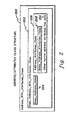
- FIG. 2 depicts one example of an address/attributes class structure employed in accordance with an aspect of the present invention
- FIG. 3 depicts one example of a selector/generator class structure used in accordance with an aspect of the present invention
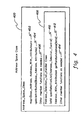
- FIG. 4 depicts one example of an address space class employed in accordance with an aspect of the present invention
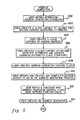
- FIG. 5 depicts one embodiment of the logic associated with preparing for address generation, in accordance with an aspect of the present invention
- FIG. 6 depicts one embodiment of the logic associated with preparing for address selection, in accordance with an aspect of the present invention
- FIG. 7 depicts one embodiment of an overview of address generation, in accordance with an aspect of the present invention.
- FIG. 8 depicts one embodiment of an overview of address selection, in accordance with an aspect of the present invention.
- FIG. 9 depicts one embodiment of the logic associated with generating and selecting an address, in accordance with an aspect of the present invention.
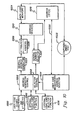
- FIG. 10 depicts a pictorial overview of address generation and selection, in accordance with an aspect of the present invention.
- a capability is provided to control the generation and selection of addresses to be employed in verifying components under test, such as electrical components of a simulated computing environment.
- address generation is tightly coupled with address selection to be able to specifically select a particular type of address to be forwarded to a component being verified in, for instance, a pseudo-random functional verification environment.
- Addresses are generated that have user defined attributes associated therewith and a particular generated address is selected based on a user defined filter.
- This capability may be used to verify many types of components in various systems, including systems based on the ESA/390 architecture offered by IBM®. (IBM® is a registered trademark of International Business Machines Corporation, Armonk, New York, U.S.A. ESA/390 and other names used herein may be registered trademarks, trademarks or product names of International Business Machines Corporation or other companies.)
- a computing environment 100 is based on the UNIX architecture and includes, for instance, an eServer pSeries, offered by International Business Machines Corporation, Armonk, New York.
- Computing environment 100 includes a central processing unit (CPU) 102, a memory 104 (e.g., main memory) and one or more input/output (I/O) devices 106 coupled to one another via, for example, one or more buses
- CPU central processing unit
- memory 104 e.g., main memory
- I/O input/output
- Central processing unit 102 executes an operating system, such as AIX, offered by International Business Machines Corporation, Armonk, New York. Further, in one example, central processing unit 102 executes a simulator 110 used to verify components under test. The simulator emulates a particular component being verified allowing test scenarios to be applied against the emulated component to stress the component and obtain the results. There are various types of simulators that can be used for verification, including, for instance, high level design simulators or cycle simulators. One example of a cycle simulator is ZFS employed by International Business Machines Corporation, Armonk, New York.
- Central processing unit 102 also executes, in accordance with an aspect of the present invention, logic 112 used to generate and select addresses to be employed in verifying components under test (e.g., simulated components).
- the generated and selected addresses are provided to the simulator for use by the simulator in verifying emulated components. Further, information may be provided by the simulator to the logic indicating, for instance, the name of the component being tested.
- Address generation/selection logic 112 provides a tight coupling between address generation and address selection to ensure that one or more types of addresses desired to verify a component are generated and then selected for use.
- the addresses to be generated are based on criteria that will ultimately be used to select an address.
- various data structures are defined using, for instance, C++. Examples of these structures are described prior to describing the logic.
- An address with attributes class 200 includes a base address with attributes class 202 having a base address class 204 and an address attributes class 206.
- Base address class 204 includes a generated address
- address attributes class 206 includes one or more attributes for the address.
- address attributes class 206 includes a base address attributes class 208 designating user specified attributes to be associated with the address, such as data patterns of interest (e.g., a lock byte being zero or non-zero); type of address (e.g., absolute, virtual, guest, host, etc.); location of address; indication of an address being updated; a private indicator specifying who (e.g., component, function) can use the address; store queue indicators; line lock indicators; other indicators; etc., and other address attributes 210, such as data, directory state information, etc. Any information associated with an address can be designated as an attribute. If an attribute is user defined, then it is included in the user specified attributes. Attributes can be forced on, off or randomized.
- An address selector control class 300 includes, for instance, a selector user function 302 employed to install a function 303 used to test the acceptability of a selected address, and a function 304 to uninstall function 303, when that function is no longer desired. It also includes one or more address selection variables 305 including, for instance, one or more address constraints, such as a designated range, and/or one or more address attributes, etc. It further includes zero or more additional address selection member functions 306. These member functions may include user defined functions that enable addresses to be filtered based on various information associated with the address, address attributes, and/or information that exists in the simulation environment.
- Address selector control class 300 also includes an address generator control class 308.
- This control class includes a generator user function 310 employed to install a function 311 used to test the acceptability of a generated address, as well as a function 312 to uninstall function 311, when the function is no longer desired.
- Generator user function 310 also provides additional generation functions that may be more complex and not easily described in the class structure. For example, they may include constraints, behaviors, attributes and/or relationships thereof that are implemented via the functions and registered with the class.
- Address selector control class 300 further includes one or more address generation variables 313 including, for instance, address attributes, address constraints, etc.
- An address space class 400 includes a mapping 402 of an address and its associated attributes; an update function 404 that allows the mapping to be updated; and zero or more other member functions 406, as desired.
- Address space class 400 also includes an address selection list handler class 408 having, for instance, an address selector control function 410 used to create a list of addresses that includes one or more of the generated addresses that satisfy a selector filter. It also includes an address with attributes function 412 used to select an address from the list. Further, address selection list handler class 408 may also include zero or more member functions 414, as needed or desired.
- address selection list handler class 408 having, for instance, an address selector control function 410 used to create a list of addresses that includes one or more of the generated addresses that satisfy a selector filter. It also includes an address with attributes function 412 used to select an address from the list. Further, address selection list handler class 408 may also include zero or more member functions 414, as needed or desired.
- a user defines one or more address generation attributes that are interesting to the user, STEP 500.
- the user creates a class capable of holding the defined address generation attributes (e.g., address attributes class 206), STEP 502.
- the user also creates a class capable of holding an address (e.g., base address class 204), STEP 504, and a class capable of holding both the attributes and the address (e.g., base address with attributes class 202), STEP 506.
- the user creates a class capable of installing any defined user address generation functions, plus any other functions which may be helpful during address generation (e.g., address generator control class 308), STEP 508.
- the user also defines and creates any complex functions needed or desired to aid in the address generation process, STEP 510. Thereafter, the user installs the complex functions into the address generator control class using supplied function calls, STEP 512.
- the user creates an address generator, which is part of a general address generator class, STEP 514.
- the generator creates an address based on the address generator control class and adds the address/attributes to a common address space class (see FIG. 4).
- the address generator may include a random number generator that creates an address to which attributes may be associated. This completes the steps associated with preparing for address generation.
- steps are also taken to prepare for address selection, as described with reference to FIG. 6.
- the user defines address selection attributes that are interesting to the user, STEP 600.
- the selection attributes correspond to generation attributes to provide a tight coupling between address generation and address selection.
- the user adds any missing attributes to the address attributes class, described above, STEP 602.
- the user also creates a class capable of installing any defined user address selection functions, plus any other functions which may be helpful during address selection, STEP 604.
- This class is referred to as the address selector control class and it inherits from the address generator control class.
- the user defines and creates any complex functions needed or desired to aid in the address selection process, STEP 606.
- the user then installs the defined functions into the address selector control class using supplied function calls, STEP 608.
- the user calls a general address selector to create an address list, STEP 610.
- the general address selector makes a copy of the selector control, which the general address space uses to maintain the address list.
- the general address space is capable of holding one or more selector controls.
- Each general address selector is capable of maintaining one or more address lists. This concludes the steps associated with preparing for address selection.
- an address space class is also created. This class is to hold the address/attribute class structure and is to supply methods for updating the address attributes in the address attributes class. This class is also able to use a selector to provide the user with a list of addresses which match the selector, and to update the address list, if any dependent address attribute changes state.
- the user is able to open an address list based on a given address selector.
- the address generator and address selector use a common set of address attributes, there is a tight coupling of the address generator/selector mechanism. This enables the achievement of better verification results.
- addresses may be generated and then selected.
- An overview of the logic associated with generating addresses is described with reference to FIG. 7.
- the address generator control class is initialized 700. As one example, it is initialized with desired constraints, attributes, data and other fields, as shown at 702. At least some of this information is retrieved from the base address with attributes class 202 (FIG. 2). Further, since some constraints and behaviors are not easily described in this class structure, they are implemented by describing the relationship via a function. The function, if defined, is registered with the generator class and a pointer to the function is included in the address generator control class, as shown at 702 (FIG. 7). There may be zero or more of these user functions.
- the generator control class once initialized with the desired information, is then passed 704 to a general address generator class 706.
- the general address generator class is called by the user code.
- General address generator class 706 generates a list of addresses 708 with values, attributes and data that meet the constraint criteria. This list of generated addresses is usually made available as a single set of addresses to all of the requestors, although it need not be.
- An address selector control class used as a filter input to select a subset of addresses from a list of generated addresses is initialized 800. As one example, it is initialized with desired constraints, attributes, etc., as well as with zero or more pointers to zero or more optional user functions, as shown at 802. At least some of the information is retrieved from the base address with attributes class. The addresses can be filtered based on the value of the addresses or the address attributes. Furthermore, through the use of custom user defined functions, addresses can be filtered based on other information associated with the address or information which exists in the simulation environment.
- the selector control class once initialized, is passed 804 to a general address selector class 806.
- the general address selector class is called by user code.
- General address selector class 806 uses one or more filters to select addresses from the list of generated addresses that match the filtered criteria. The one or more addresses that match are placed in a list 808.
- the generated address list has two main usage forms.
- the first form is the public permanent list which is created at some point and used repeatedly during the test case to select addresses which meet the filter criteria.
- the same public address list can be referenced by more than one requestor (e.g., the one to apply the addresses to the component under test, such as a CPU), if the filter criteria matches exactly.
- a permanent address list is generally public and the filters used to generate it do not change. Thus, two permanent lists with the same filters will be identical, so that they can be easily shared.
- the second form is a private temporary list which is generally used to visit all of the addresses that meet the filter criteria once, in random or sequential order. The list is usually destroyed with use as each address is removed after it is visited.
- the temporary list tends to be private as the intention of usage is to visit each address in the list and remove it along the way leaving an empty list.
- a temporary list can be public to allow multiple requestors to visit each address once across their combined actions. Since permanent lists are used over time and the attributes and data associated with the addresses may change, these lists may be updated and/or invalidated. Temporary lists are not usually updated.
- the list is updated when attribute information for an address changes states.
- Built-in filter functions which use the address attributes automatically identify the address attributes which would trigger an update.
- User filter functions which are based on address attributes can register a subset of the attributes which would trigger an update. Attributes updates are directed through the main address list which manages the subset address lists created with filters so that the subset lists can be updated when needed due to address attributes changing.
- FIG. 9 describes one embodiment of the logic associated with generating and selecting addresses
- FIG. 10 depicts a pictorial overview of the process. Both figures are referenced in the following discussion. Reference numerals beginning with 9 can be found in FIG. 9 and those beginning with 10 can be found in FIG. 10.
- a user defines one or more constraints and/or one or more attributes to be used to generate an address, STEPS 900 (FIG. 9) and 1000 (FIG. 10).
- the constraints specify certain requirements, such as an address is to be within a specific range.
- the attributes define characteristics of or associated with the address, as described above. The user defined constraints and/or attributes are passed to an address generator control 1002.
- An address is then generated that meets the constraints, STEP 902.
- general address generator 1004 is used to generate an address 1006 that meets the constraints specified in address generator control 1002.
- Control 1002 may also call one or more optional user code generator functions 1008 in order to apply one or more complex user constraints to the address generation logic.
- the address generator uses the constraints and the zero or more functions to create the address.
- attributes 1009 Assigned to the address are one or more attributes 1009, which are obtained from address generator control 1002.
- the generated address is then placed in address space 1010, along with the associated attributes, STEP 904.
- the mapping function of the address space class maps one or more defined attributes to the address, and places the address along with its attributes in a list in the address space.
- This list behaves, in one example, as a database in that queries may be selected thereon. In one example, one list is provided; however, in other examples, a plurality of lists may be provided.
- a filter is created and passed to a selector control 1012, STEP 906.
- a user code requestor's address selector 1014 creates a filter based on user defined selection attributes and passes the filter to selector control 1012.
- the selector control may optionally call one or more user functions 1016 to provide more complex selection criteria.
- the selector control is input to a general address selector 1017 that parses the addresses in the address space and creates a list of addresses 1018 based on the filter, STEP 908.
- list 1018 includes the one or more addresses that meet the selected criteria.
- a requestor may request a specific type of address, STEP 910.
- user code requestor's address selector 1014 of the simulated environment requests 1020 an address from address list 1018.
- the requestor receives the requested address, STEP 912, and applies it to a component under test 1022.
- Component under test 1022 is monitored by user code monitors 1024 to ensure the component is operating properly. Further, the user code monitors detect when one or more of the attributes have changed, which triggers the general address selectors to run the filters that may be affected by the change causing one or more addresses to be added to and/or deleted from list 1018. For example, monitors 1024 communicate one or more changes to address space 1010. Address space 1010 informs general address space selector 1017 via a function call causing selector 1017 to rerun one or more filters resulting in one or more changes to address list(s) 1018.
- Described in detail above is a capability for facilitating the generation and selection of addresses to be used in a verification environment.
- the generation and selection is tightly coupled to ensure that desired addresses to be selected have been generated. This enhances the verification process by ensuring that addresses that can stress a particular component have been generated, and thus, can be selected.
- addresses which are shared among multiple requestors and can result in address conflicts can be denoted, as well as addresses which are reserved for a subset of requestors or for a particular requestor which is often valuable during the early life of the design cycle when the address conflict logic may not be present or working properly. Addresses that are to be fetched from a particular location or marked as having been updated or both can be identified by using attributes.
- a capability for assigning attributes to an address.
- the attributes include user attributes and/or other attribute information, such as data, directory state information, storage protection keys, etc.
- the capability provides a uniform mechanism for assigning and relating attributes to addresses in the verification environment. Furthermore, a user can easily sort and group the addresses into lists based on the attributes. This ability allows the user to focus on various specific address attributes in the verification process.
- Attributes can be forced on, off, or randomized.
- a particular address can have bits forced on, off , or randomized, as well as having its value constrained within a specified address range or ranges.
- the attribute information for generation can be extended to contain any information associated with an address. For example, some addresses may contain data in which the data may have patterns of interest, like lock bytes being zero or non-zero. In cases where it is impractical to represent information related to the address of an attribute, an extension is provided which enables a custom user defined filter to be written in code.
- Sets of addresses are stored in address lists. These address lists are constructed based on address attributes plus the optional custom user defined filter. Class functions are supplied for finding particular addresses or selecting random addresses among other things.
- the generated and selected addresses can be provided to one or more requestors for use in a verification environment to stress a particular component under test. For instance, if the component under test is memory, addresses may be provided to one or more CPUs to test, for instance, cache coherency.
- Addresses can be selected at runtime (e.g., when a job is running) by using an input file that is input to the address selector.
- the input file specifies the filter to be used.
- attributes can be defined at runtime by using an input file that is input to the user code defines constraints and attributes.
- One or more aspects of the present invention can be included in an article of manufacture (e.g., one or more computer program products) having, for instance, computer usable media.
- the media has therein, for instance, computer readable program code means or logic (e.g., instructions, code, commands, etc.) to provide and facilitate the capabilities of the present invention.
- the article of manufacture can be included as a part of a computer system or sold separately.
- At least one program storage device readable by a machine embodying at least one program of instructions executable by the machine to perform the capabilities of the present invention can be provided.
Landscapes
- Test And Diagnosis Of Digital Computers (AREA)
- Storage Device Security (AREA)
- Debugging And Monitoring (AREA)
Applications Claiming Priority (2)
| Application Number | Priority Date | Filing Date | Title |
|---|---|---|---|
| US10/817,091 US7213122B2 (en) | 2004-04-02 | 2004-04-02 | Controlling the generation and selection of addresses to be used in a verification environment |
| US817091 | 2004-04-02 |
Publications (1)
| Publication Number | Publication Date |
|---|---|
| EP1583103A1 true EP1583103A1 (de) | 2005-10-05 |
Family
ID=34887776
Family Applications (1)
| Application Number | Title | Priority Date | Filing Date |
|---|---|---|---|
| EP05102066A Ceased EP1583103A1 (de) | 2004-04-02 | 2005-03-16 | Erzeugung und Auswahl von in einer Testumgebung zu verwendenden Adressen |
Country Status (2)
| Country | Link |
|---|---|
| US (1) | US7213122B2 (de) |
| EP (1) | EP1583103A1 (de) |
Families Citing this family (3)
| Publication number | Priority date | Publication date | Assignee | Title |
|---|---|---|---|---|
| US7945823B2 (en) * | 2006-03-02 | 2011-05-17 | Netlogic Microsystems, Inc. | Programmable address space built-in self test (BIST) device and method for fault detection |
| US20080262821A1 (en) * | 2007-04-19 | 2008-10-23 | International Business Machines Corporation | Method, apparatus, and computer program product for dynamically managing simulated addresses |
| TW201001224A (en) * | 2008-06-24 | 2010-01-01 | Inventec Corp | Address-simulation device and method thereof |
Citations (3)
| Publication number | Priority date | Publication date | Assignee | Title |
|---|---|---|---|---|
| US4835774A (en) * | 1986-05-19 | 1989-05-30 | Advantest Corporation | Semiconductor memory test system |
| US5930814A (en) * | 1996-09-03 | 1999-07-27 | Credence Systems Corporation | Computer system and method for synthesizing a filter circuit for filtering out addresses greater than a maximum address |
| US6658610B1 (en) * | 2000-09-25 | 2003-12-02 | International Business Machines Corporation | Compilable address magnitude comparator for memory array self-testing |
Family Cites Families (16)
| Publication number | Priority date | Publication date | Assignee | Title |
|---|---|---|---|---|
| US3794813A (en) * | 1972-07-28 | 1974-02-26 | Mosler Safe Co | Verification system |
| US4862399A (en) * | 1987-08-31 | 1989-08-29 | General Electric Company | Method for generating efficient testsets for a class of digital circuits |
| US5029171A (en) * | 1989-05-25 | 1991-07-02 | Hughes Aircraft Company | Test vector generation system |
| US5444717A (en) * | 1992-12-18 | 1995-08-22 | Digital Equipment Corporation | Method for providing minimal size test vector sets |
| US5488573A (en) * | 1993-09-02 | 1996-01-30 | Matsushita Electric Industrial Co., Ltd. | Method for generating test programs |
| US5583787A (en) * | 1994-03-08 | 1996-12-10 | Motorola Inc. | Method and data processing system for determining electrical circuit path delays |
| EP0685794A1 (de) * | 1994-06-01 | 1995-12-06 | Advanced Micro Devices, Inc. | System zum Erzeugen von Fliesskomma-Prüfvektoren |
| US5724504A (en) * | 1995-06-01 | 1998-03-03 | International Business Machines Corporation | Method for measuring architectural test coverage for design verification and building conformal test |
| US5708774A (en) * | 1996-07-23 | 1998-01-13 | International Business Machines Corporation | Automated testing of software application interfaces, object methods and commands |
| US6028983A (en) | 1996-09-19 | 2000-02-22 | International Business Machines Corporation | Apparatus and methods for testing a microprocessor chip using dedicated scan strings |
| US5729554A (en) * | 1996-10-01 | 1998-03-17 | Hewlett-Packard Co. | Speculative execution of test patterns in a random test generator |
| US6292765B1 (en) * | 1997-10-20 | 2001-09-18 | O-In Design Automation | Method for automatically searching for functional defects in a description of a circuit |
| US6233669B1 (en) * | 1998-10-30 | 2001-05-15 | Hewlett-Packard Company | Memory address generator capable of row-major and column-major sweeps |
| US6539477B1 (en) * | 2000-03-03 | 2003-03-25 | Chameleon Systems, Inc. | System and method for control synthesis using a reachable states look-up table |
| JP3833984B2 (ja) * | 2002-10-28 | 2006-10-18 | 株式会社東芝 | テストベクタの生成装置、テストベクタの生成方法、半導体集積回路の故障解析装置、およびテストベクタを生成するためのプログラム |
| US7024258B2 (en) * | 2003-03-17 | 2006-04-04 | Siemens Building Technologies, Inc. | System and method for model-based control of a building fluid distribution system |
-
2004
- 2004-04-02 US US10/817,091 patent/US7213122B2/en not_active Expired - Fee Related
-
2005
- 2005-03-16 EP EP05102066A patent/EP1583103A1/de not_active Ceased
Patent Citations (3)
| Publication number | Priority date | Publication date | Assignee | Title |
|---|---|---|---|---|
| US4835774A (en) * | 1986-05-19 | 1989-05-30 | Advantest Corporation | Semiconductor memory test system |
| US5930814A (en) * | 1996-09-03 | 1999-07-27 | Credence Systems Corporation | Computer system and method for synthesizing a filter circuit for filtering out addresses greater than a maximum address |
| US6658610B1 (en) * | 2000-09-25 | 2003-12-02 | International Business Machines Corporation | Compilable address magnitude comparator for memory array self-testing |
Also Published As
| Publication number | Publication date |
|---|---|
| US20050240817A1 (en) | 2005-10-27 |
| US7213122B2 (en) | 2007-05-01 |
Similar Documents
| Publication | Publication Date | Title |
|---|---|---|
| US5913022A (en) | Loading hardware pattern memory in automatic test equipment for testing circuits | |
| DE112012003716B4 (de) | Erzeugen von kompiliertem Code, der Registeraktivität angibt | |
| Huck et al. | Architectural support for translation table management in large address space machines | |
| US8464225B2 (en) | Method and system for adaptive, generic code instrumentation using run-time or load-time generated inheritance information for diagnosis and monitoring application performance and failure | |
| US7111280B2 (en) | System and method for implementing a project facility | |
| US7836106B2 (en) | Method, apparatus and computer program product for change management in a data processing environment | |
| EP0547759A2 (de) | Dynamische Programmverknüpfung zwischen Programmadressbereichen im Nicht-Überwachungsmodus | |
| US20160259713A1 (en) | Method and system for determining functional tests to execute based on code coverage | |
| JPH03142643A (ja) | データベース管理装置および方法 | |
| US10338910B2 (en) | Multi-tenant upgrading | |
| CA2145671A1 (en) | Shared library locating system | |
| CN104679500B (zh) | 实体类自动生成实现方法及装置 | |
| US7133816B2 (en) | Test quality through resource reallocation | |
| CN101271402A (zh) | 一种调用函数的方法及系统 | |
| De Jong et al. | Zero-downtime SQL database schema evolution for continuous deployment | |
| US20060026584A1 (en) | Explicit linking of dynamic link libraries | |
| CN113986775A (zh) | 一种risc-v cpu验证中页表项生成方法、系统及装置 | |
| EP3929727A1 (de) | Bytecode-transformationen unter verwendung von virtuellen artefakten | |
| US7213122B2 (en) | Controlling the generation and selection of addresses to be used in a verification environment | |
| US20020129336A1 (en) | Automatic symbol table selection in a multi-cell environment | |
| CN120704982A (zh) | 一种监视方法、装置、验证设备、介质及程序 | |
| US20080262821A1 (en) | Method, apparatus, and computer program product for dynamically managing simulated addresses | |
| US6671664B1 (en) | Management of uncommitted register values during random program generation | |
| US20040163078A1 (en) | Method for rapidly prototyping, testing and verifying application software | |
| US11429356B2 (en) | Composition enablement for partner and customer extensibility of inversion of control objects |
Legal Events
| Date | Code | Title | Description |
|---|---|---|---|
| PUAI | Public reference made under article 153(3) epc to a published international application that has entered the european phase |
Free format text: ORIGINAL CODE: 0009012 |
|
| AK | Designated contracting states |
Kind code of ref document: A1 Designated state(s): AT BE BG CH CY CZ DE DK EE ES FI FR GB GR HU IE IS IT LI LT LU MC NL PL PT RO SE SI SK TR |
|
| AX | Request for extension of the european patent |
Extension state: AL BA HR LV MK YU |
|
| 17P | Request for examination filed |
Effective date: 20051022 |
|
| AKX | Designation fees paid |
Designated state(s): AT BE BG CH CY CZ DE DK EE ES FI FR GB GR HU IE IS IT LI LT LU MC NL PL PT RO SE SI SK TR |
|
| STAA | Information on the status of an ep patent application or granted ep patent |
Free format text: STATUS: THE APPLICATION HAS BEEN REFUSED |
|
| 18R | Application refused |
Effective date: 20070707 |